Glass Top Living Room Tables
Glass Top Living Room Tables
-
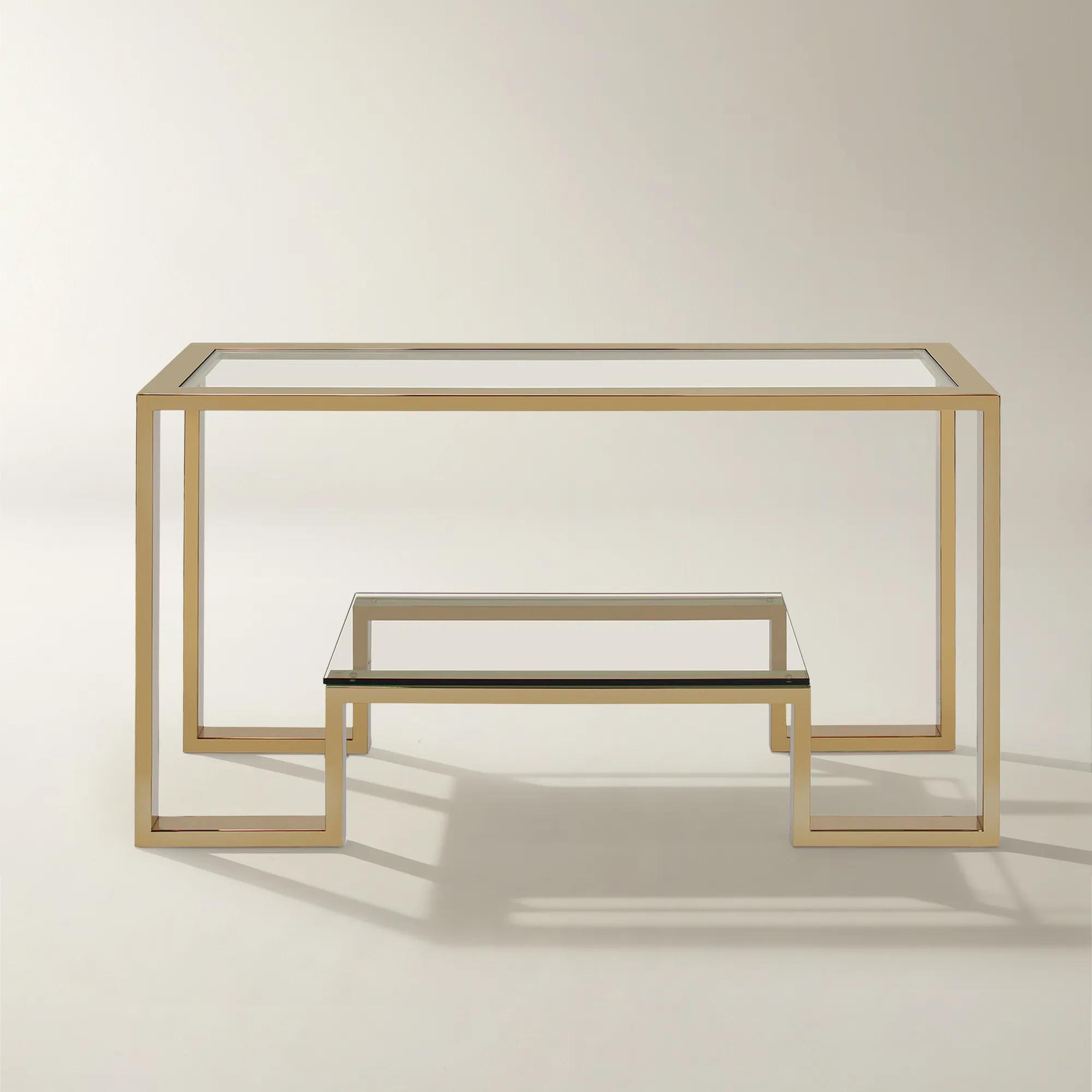
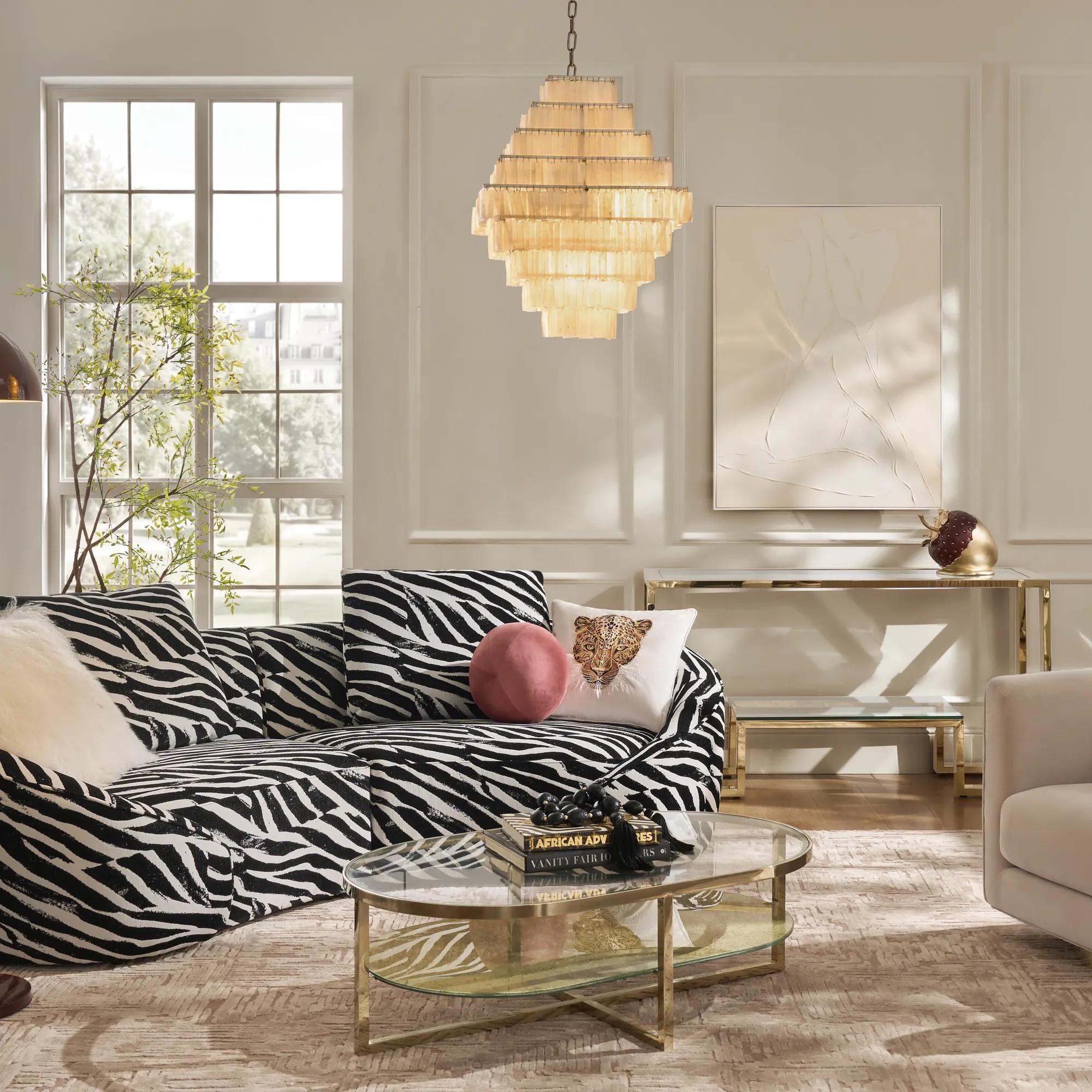 Duplicity Rectangular Gold Stainless Steel Console Table With Glass Top (59")$1399
A modern console table crafted from stainless steel and tempered glass with a floating bottom shelf.
Add To Cart -
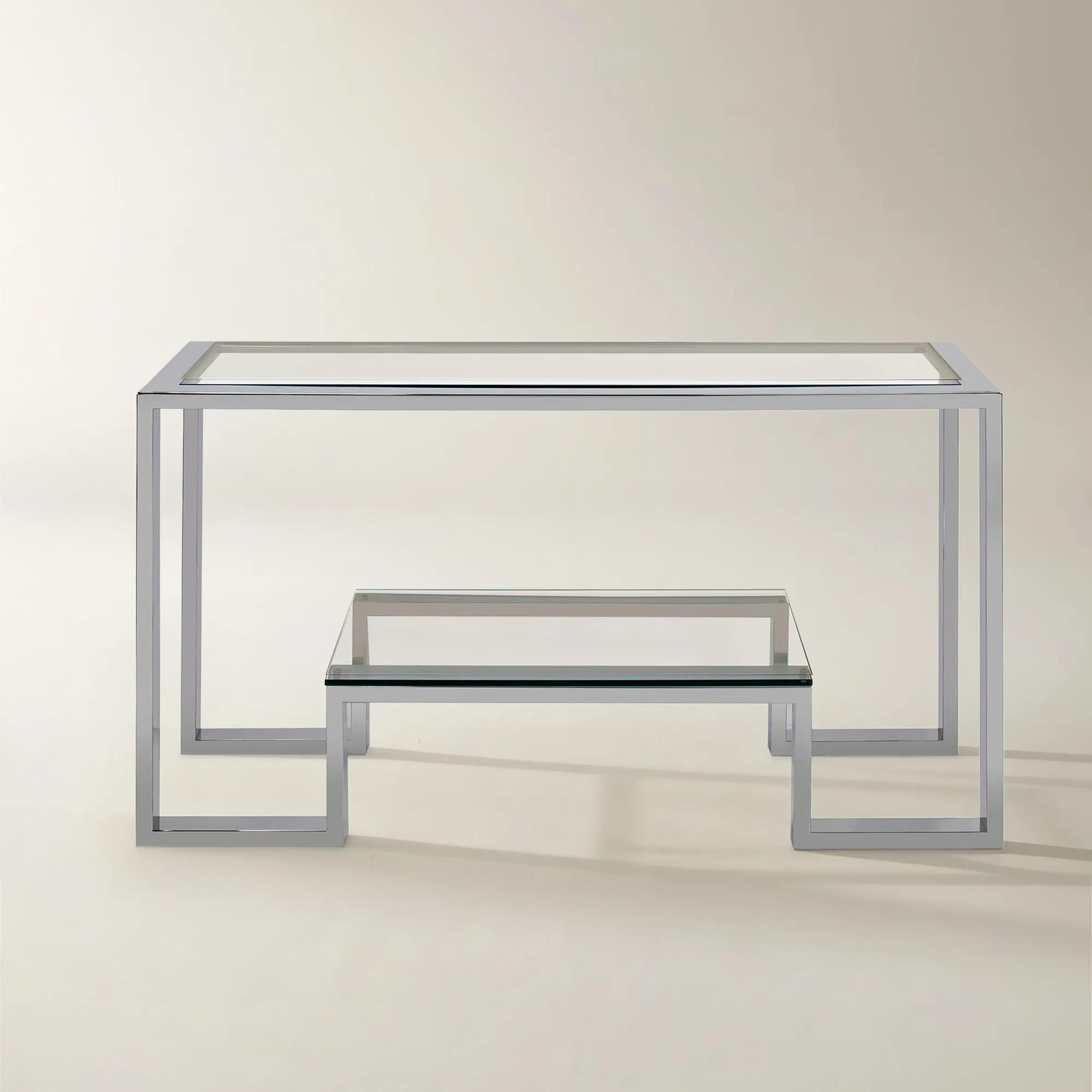
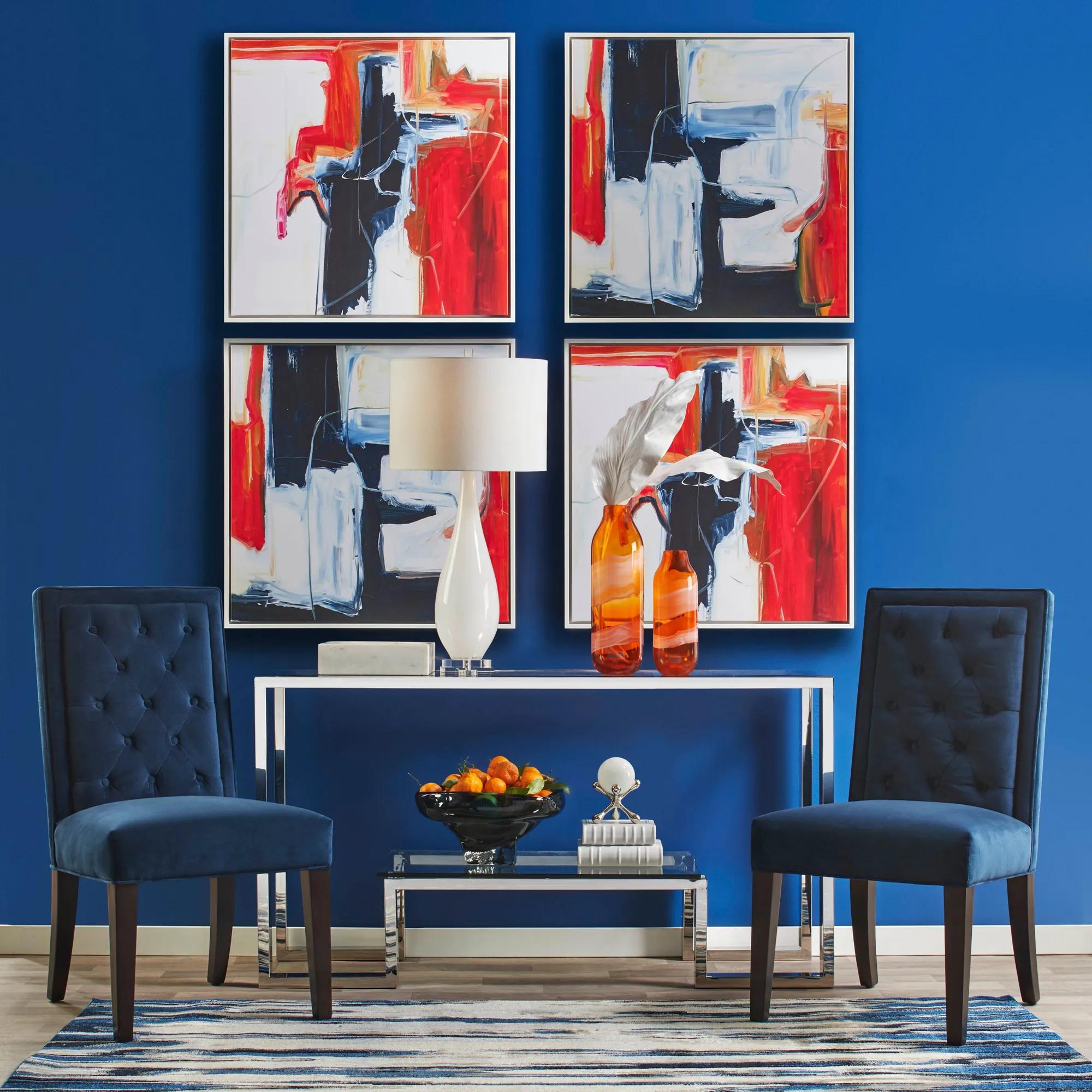 Duplicity Rectangular Silver Stainless Steel Console Table With Glass Top (59")$1399
A modern console table crafted from stainless steel and tempered glass with a floating bottom shelf.
Add To Cart -
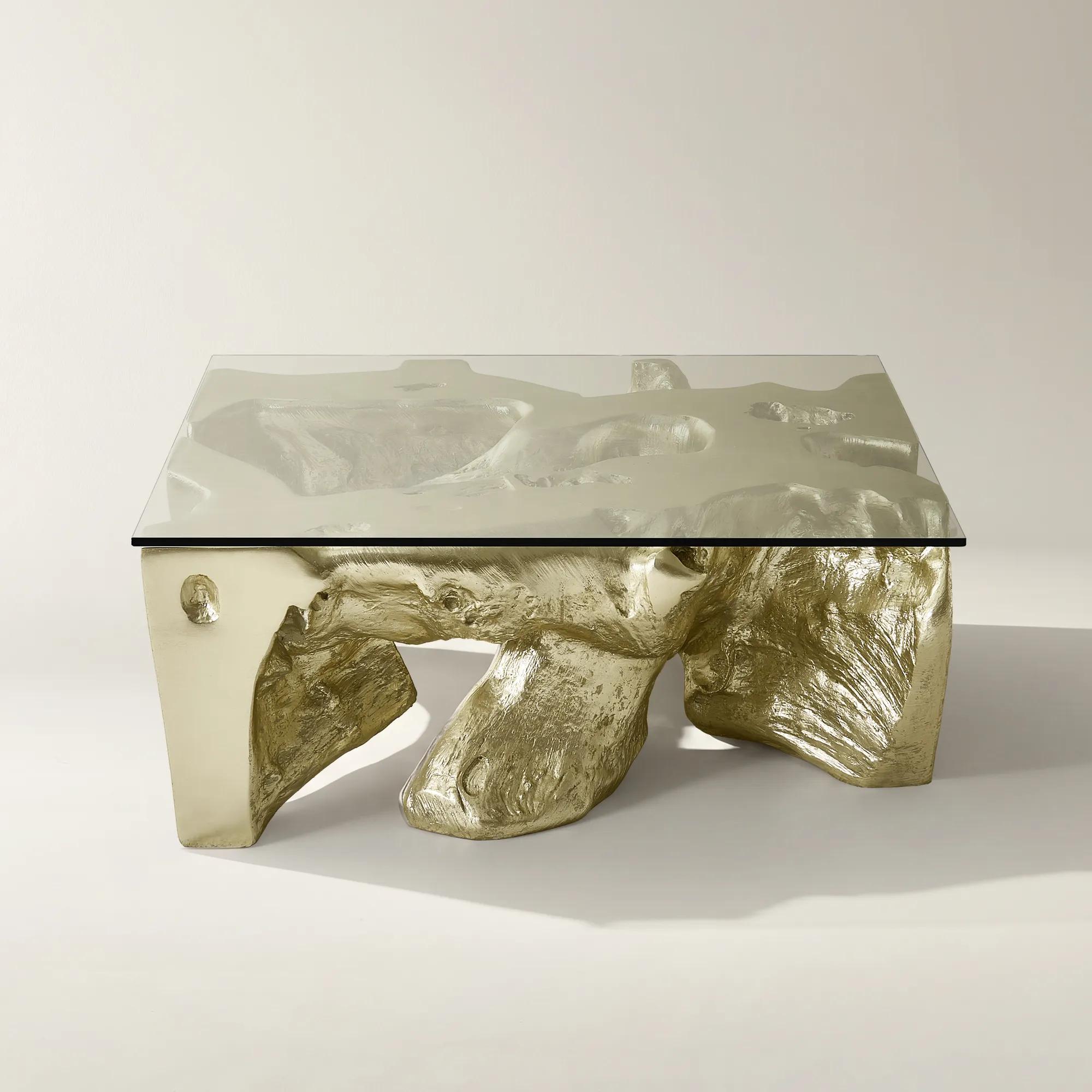 Sequoia Champagne Gold Resin Coffee Table With Glass Top (44")$2299
A sculptural resin coffee table with a champagne gold leaf finish and a clear tempered glass top.
Add To Cart -
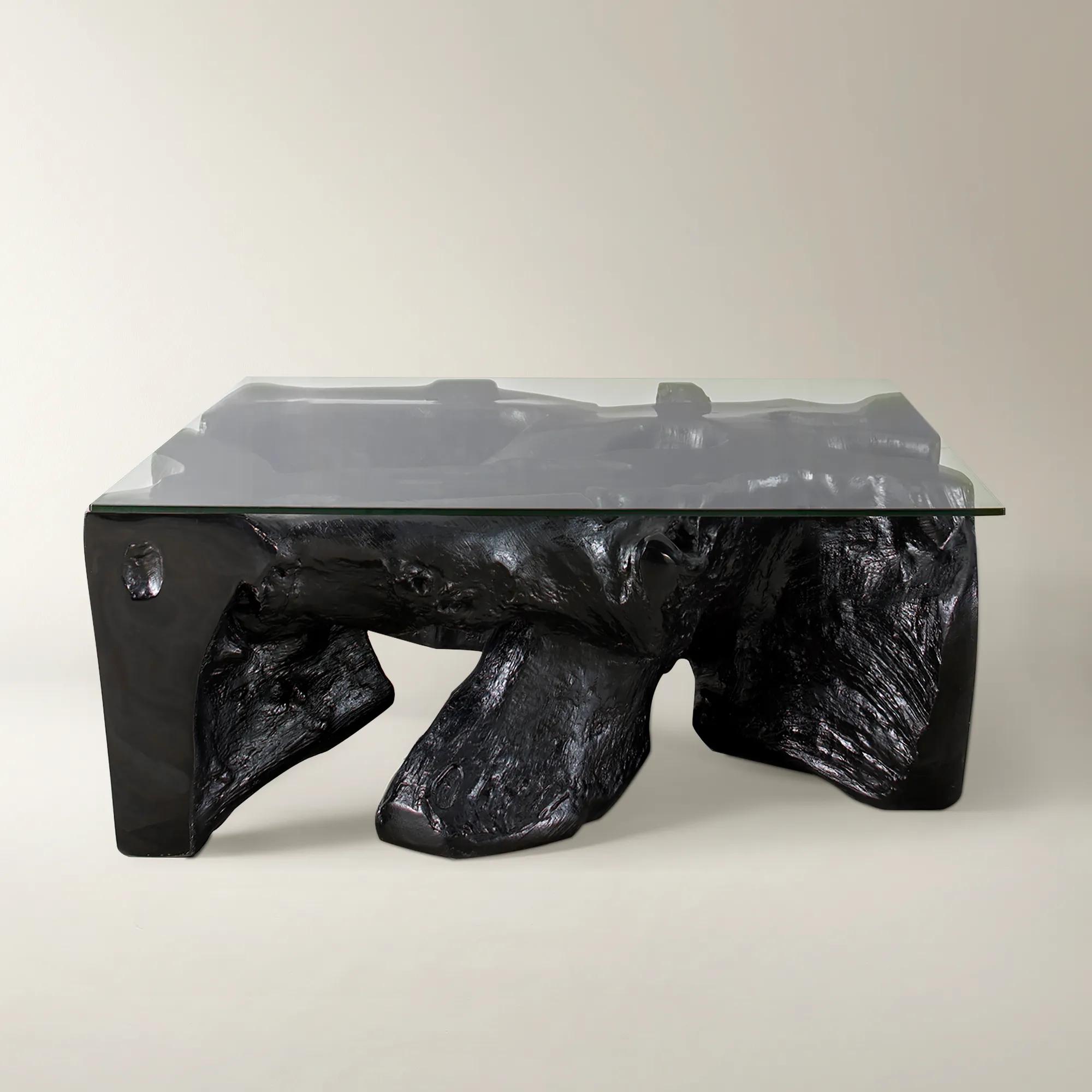
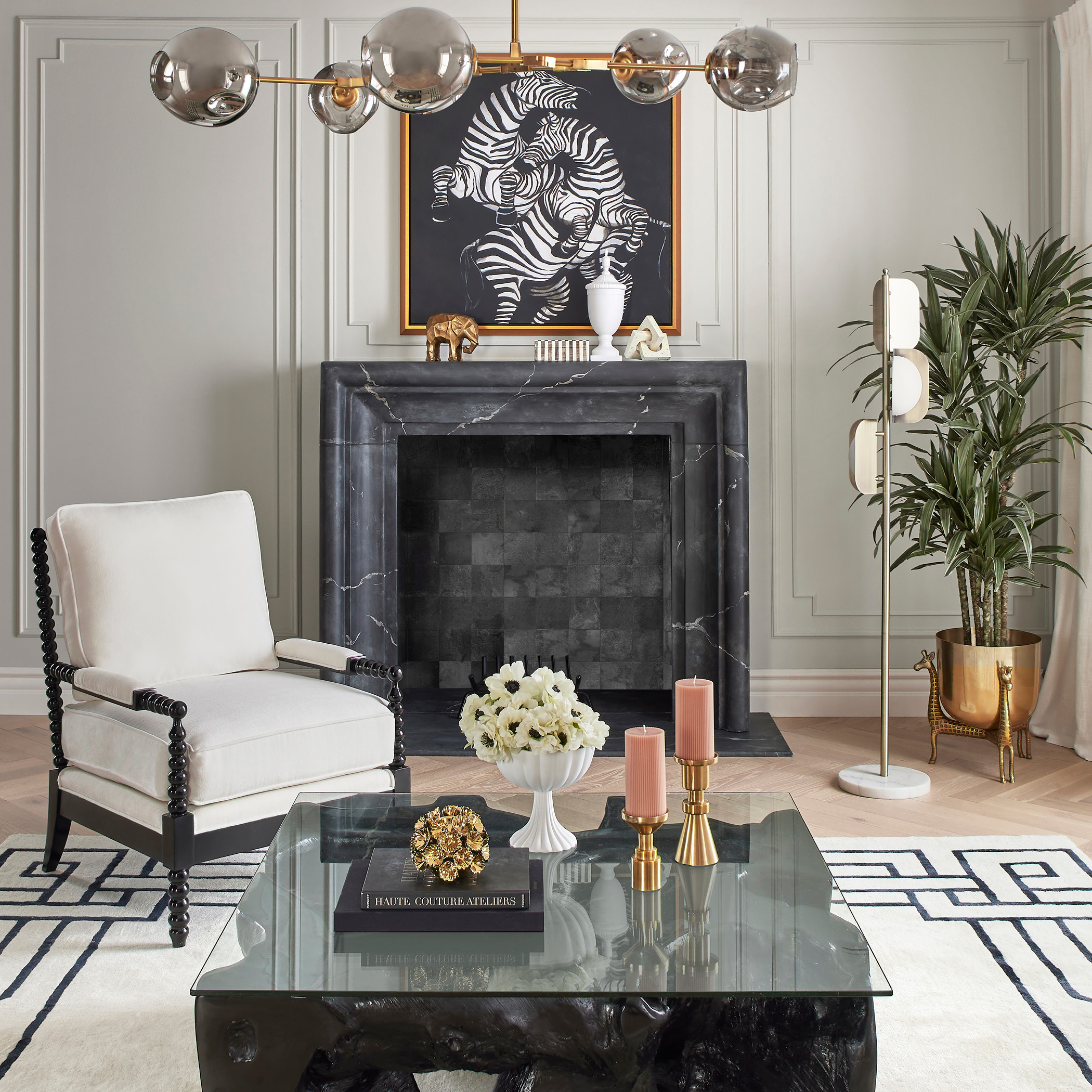 Sequoia Black Resin Coffee Table With Glass Top (44")$2299
A sculptural black coffee table crafted from resin and polished stone fragments for indoor or outdoor use.
Add To Cart -
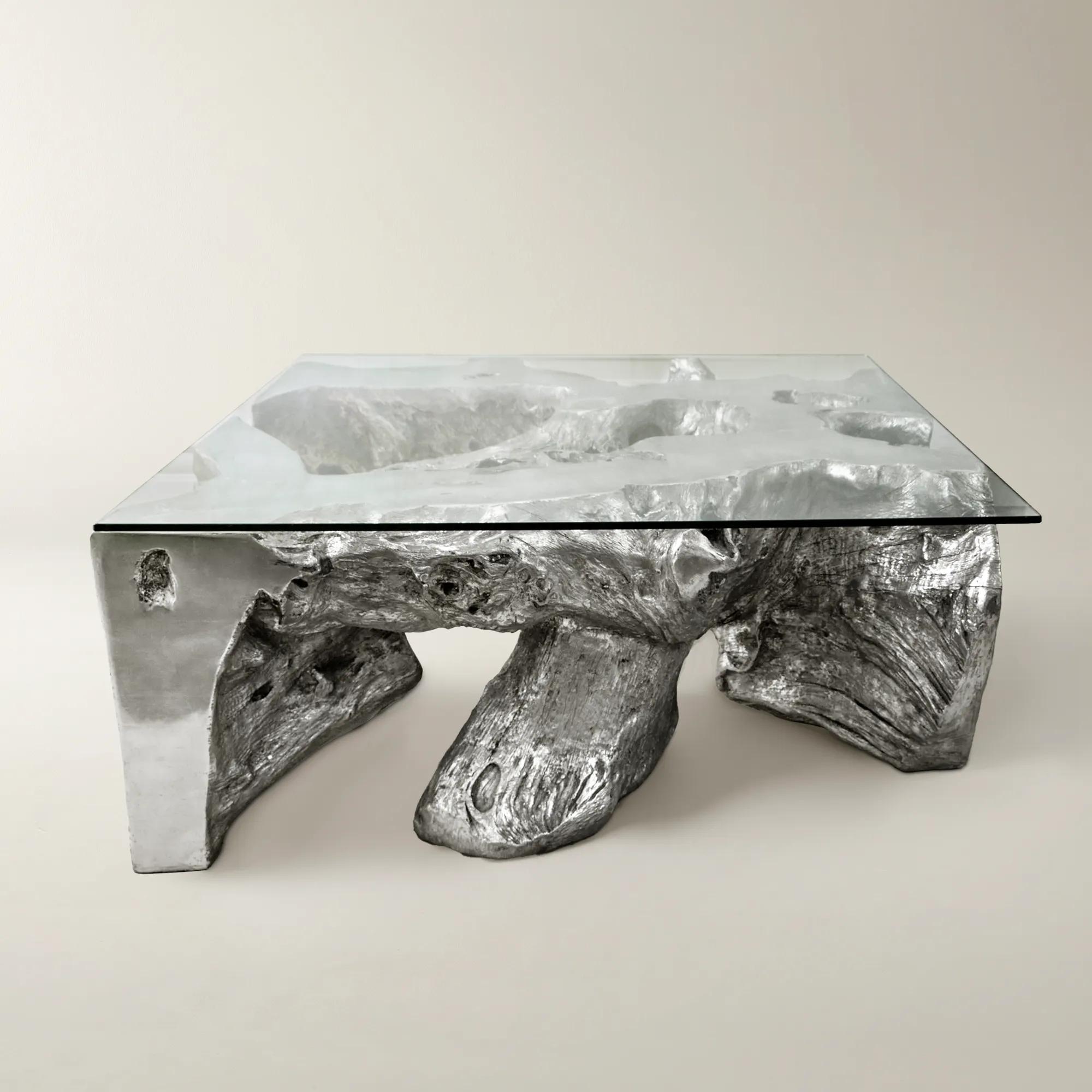 Sequoia Silver Resin Coffee Table With Glass Top (44")$2299
A sculptural coffee table featuring a hand-applied silver leaf resin base and a tempered glass top.
Add To Cart -
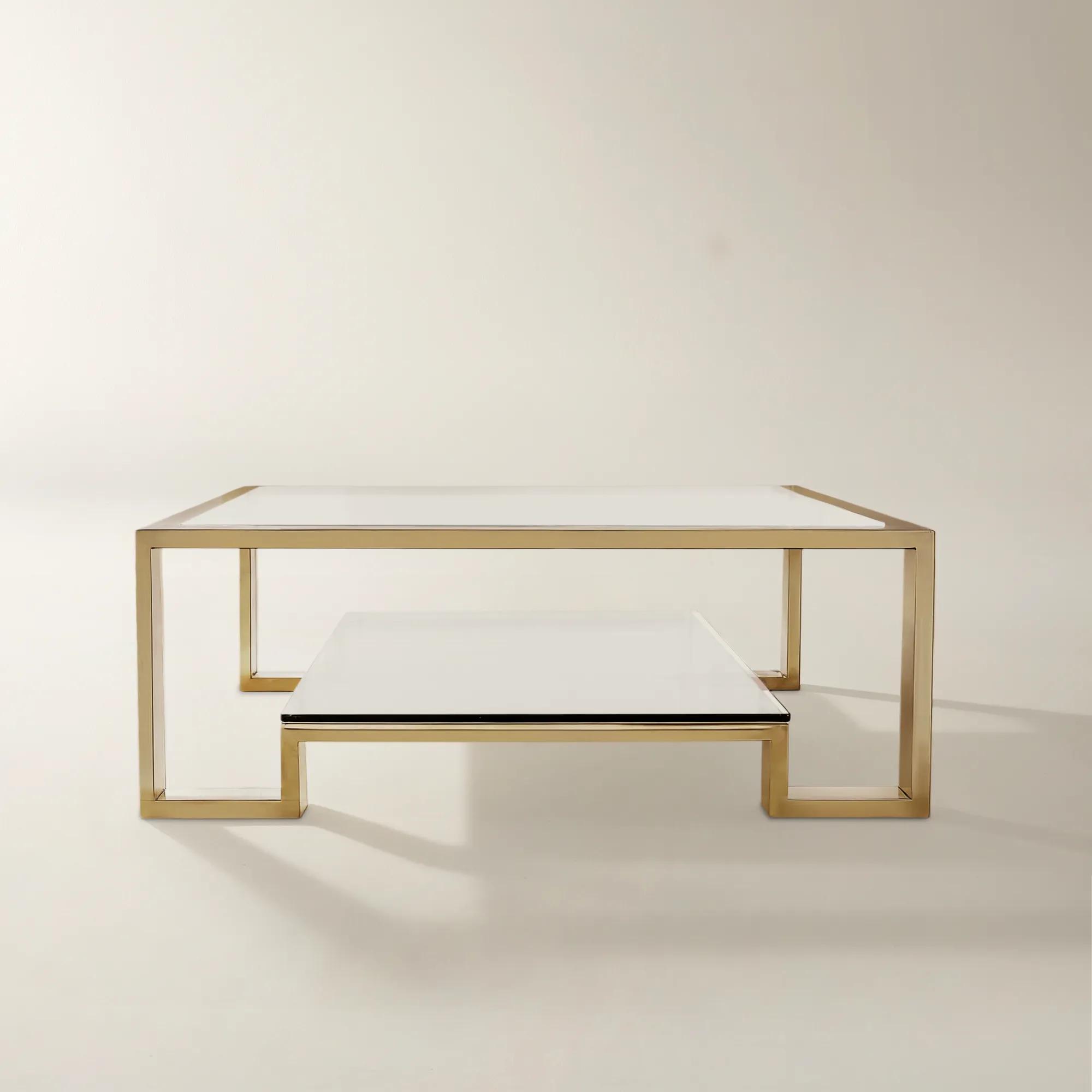 Duplicity Rectangular Gold Stainless Steel Coffee Table With Glass Top (50")$1399
A modern coffee table featuring a stainless steel frame, tempered glass top, and floating storage shelf.
Add To Cart -
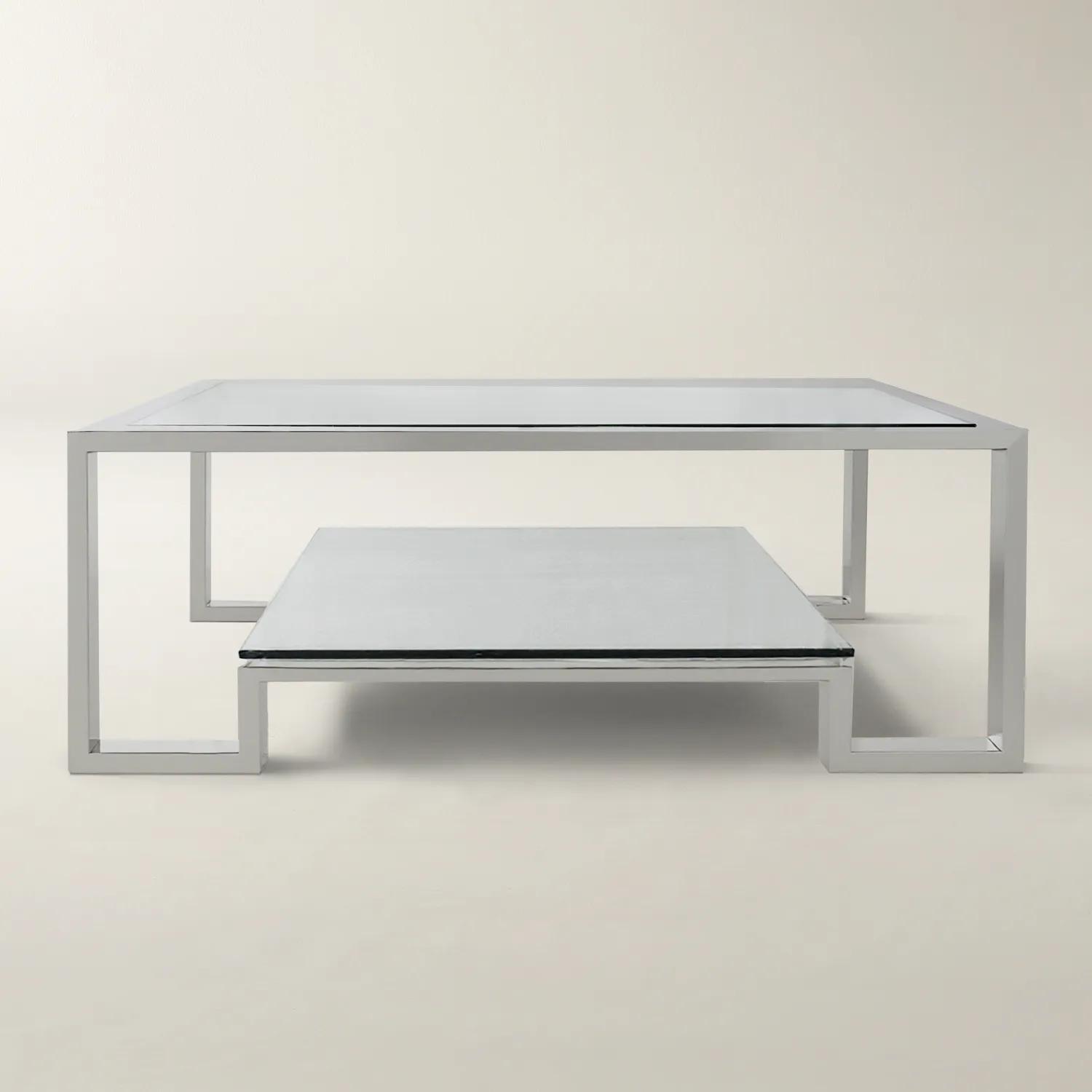
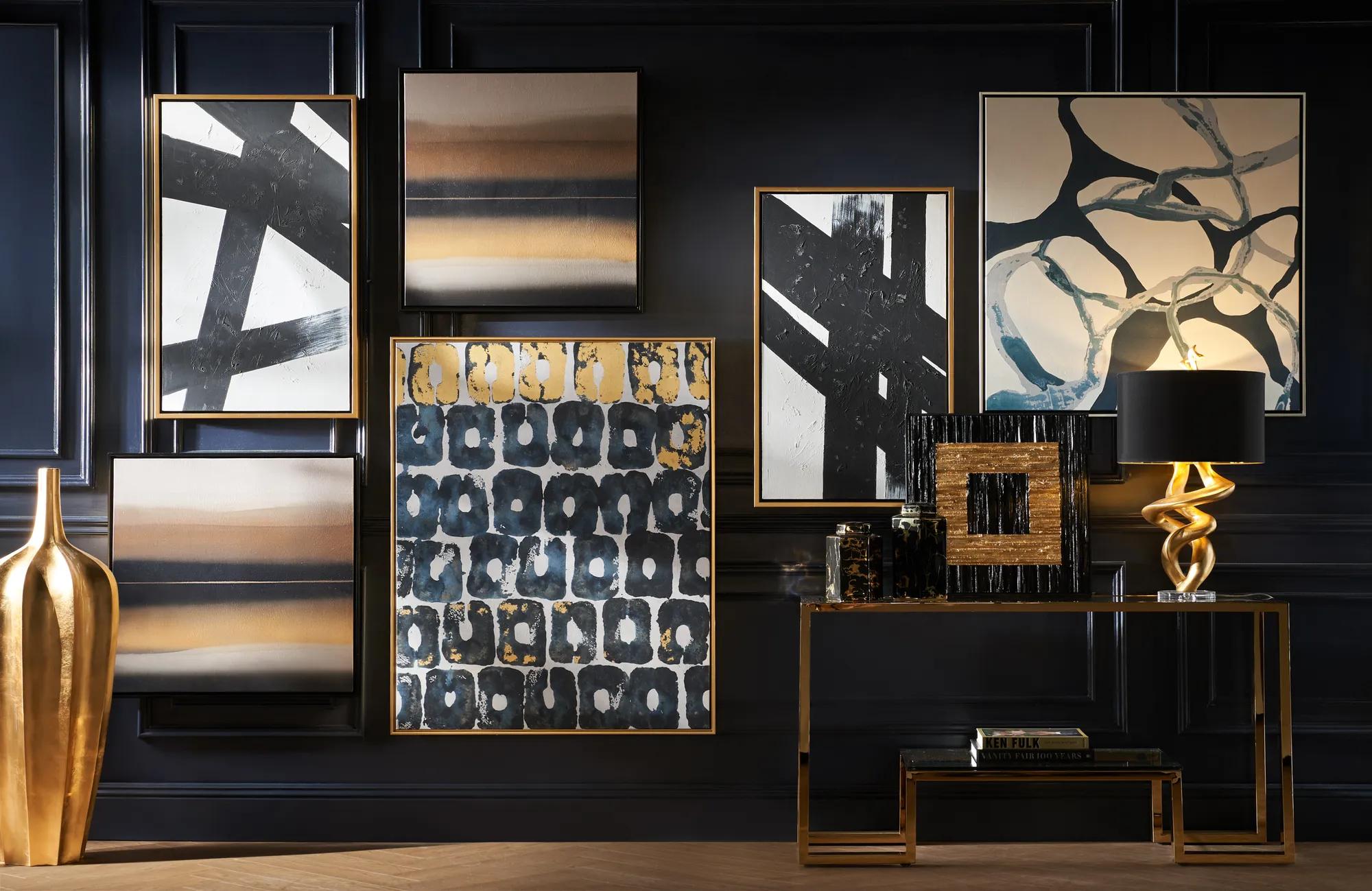 Duplicity Rectangular Silver Stainless Steel Coffee Table With Glass Top (50")$1399
A modern coffee table featuring a stainless steel frame, tempered glass top, and floating bottom shelf.
Add To Cart -
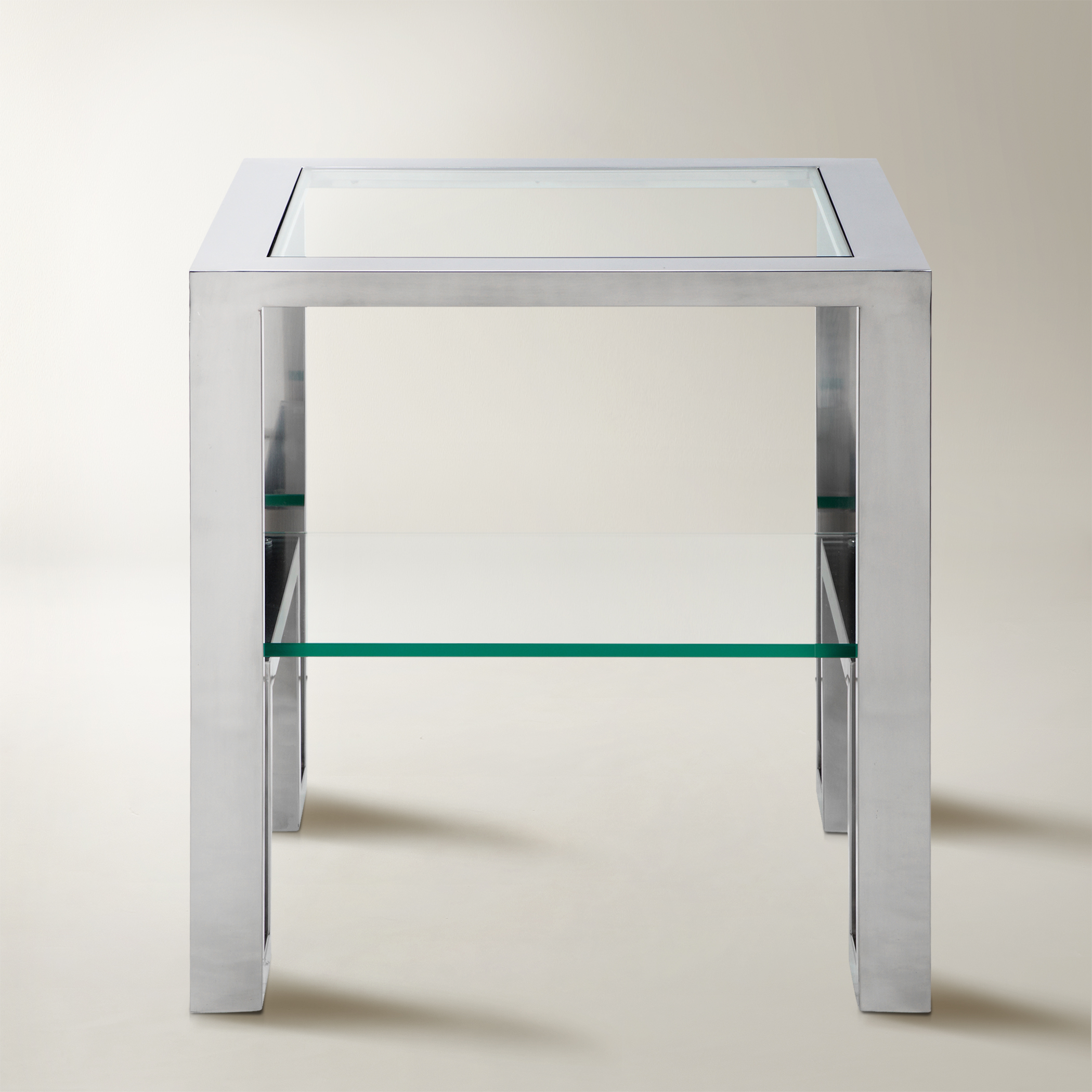
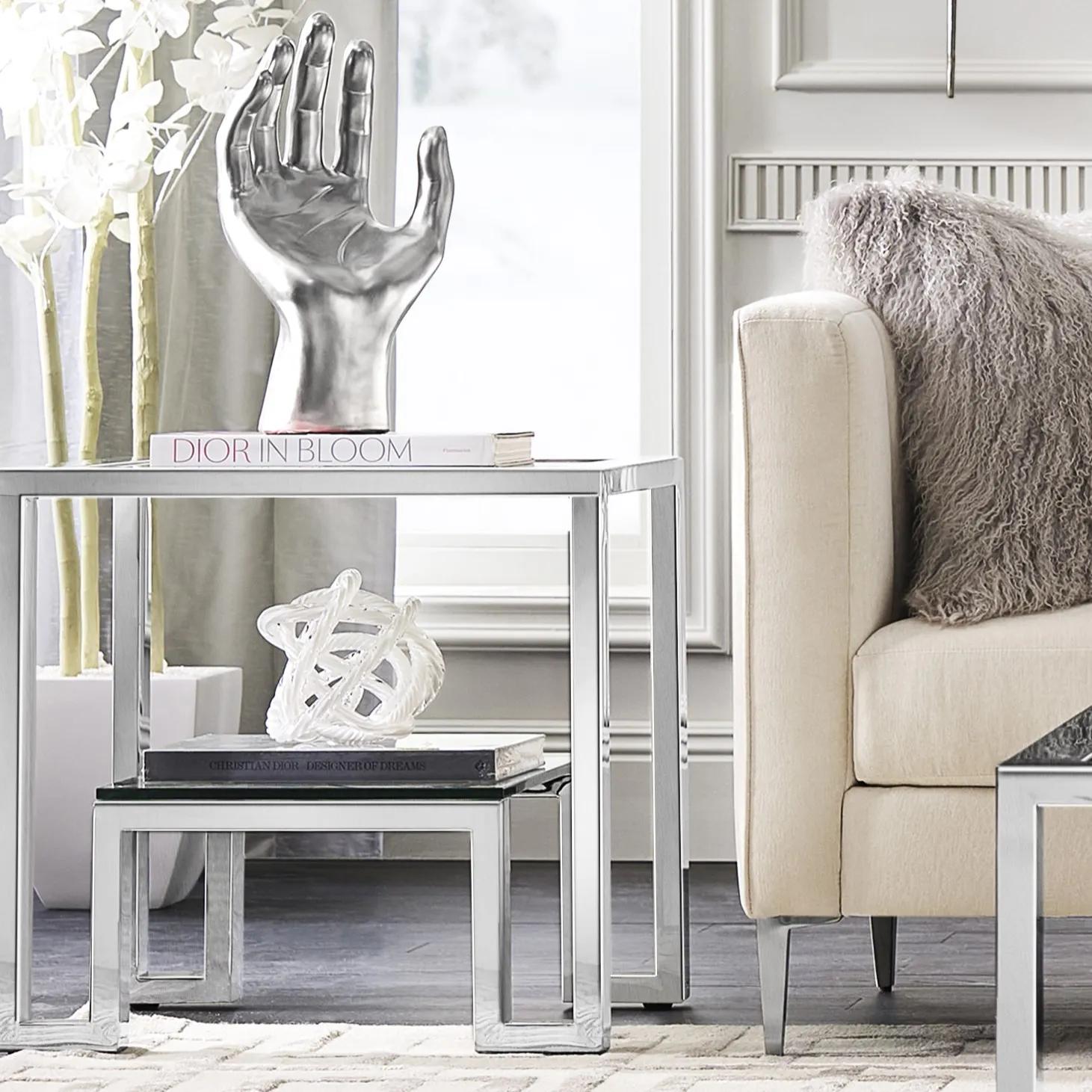 Duplicity Square Silver Stainless Steel End Table With Glass Top (24")$749
A modern end table featuring a stainless steel frame, tempered glass top, and floating bottom shelf.
Add To Cart -
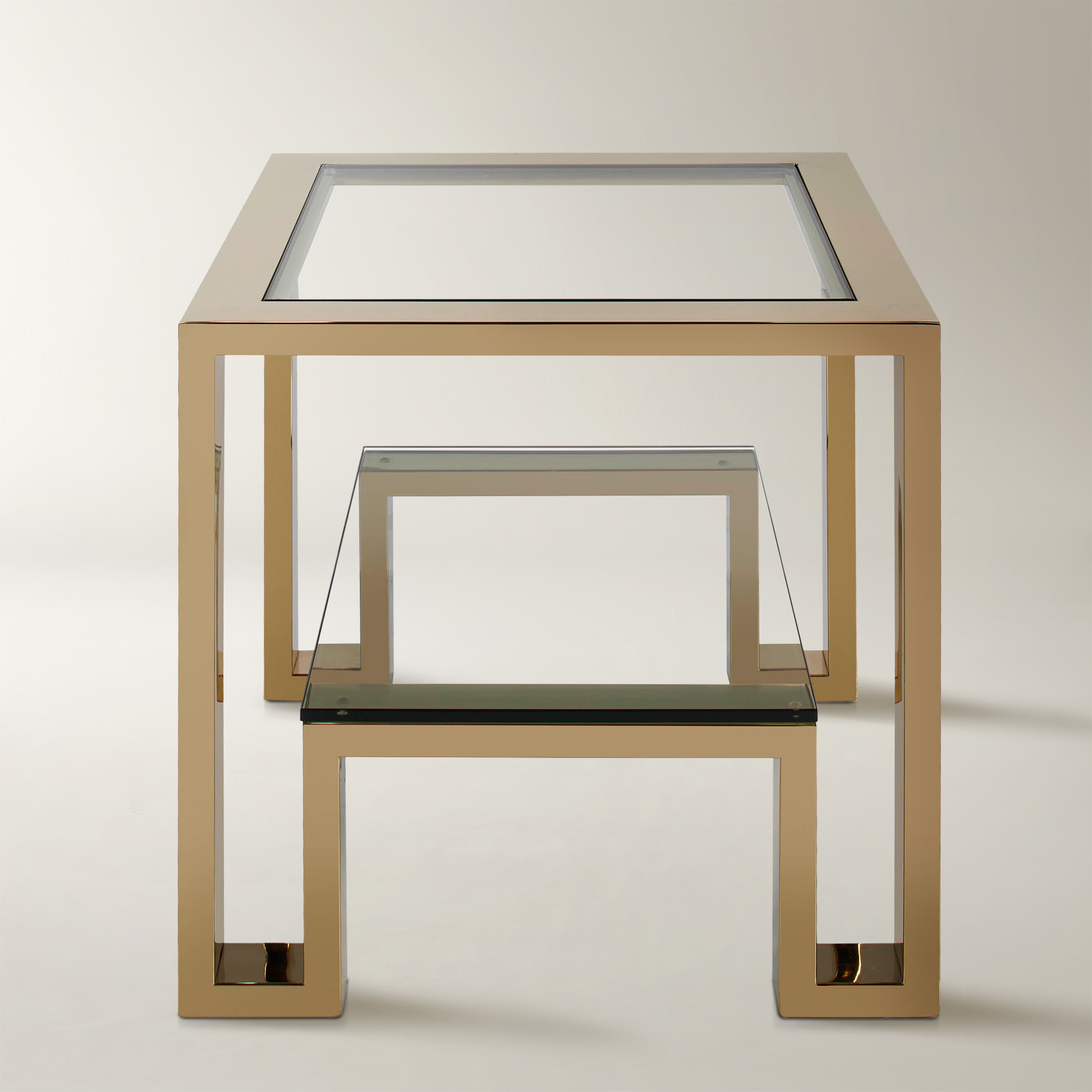 Duplicity Square Gold Stainless Steel End Table With Glass Top (24")$749
A modern end table crafted from stainless steel and tempered glass with a floating bottom shelf.
Add To Cart -
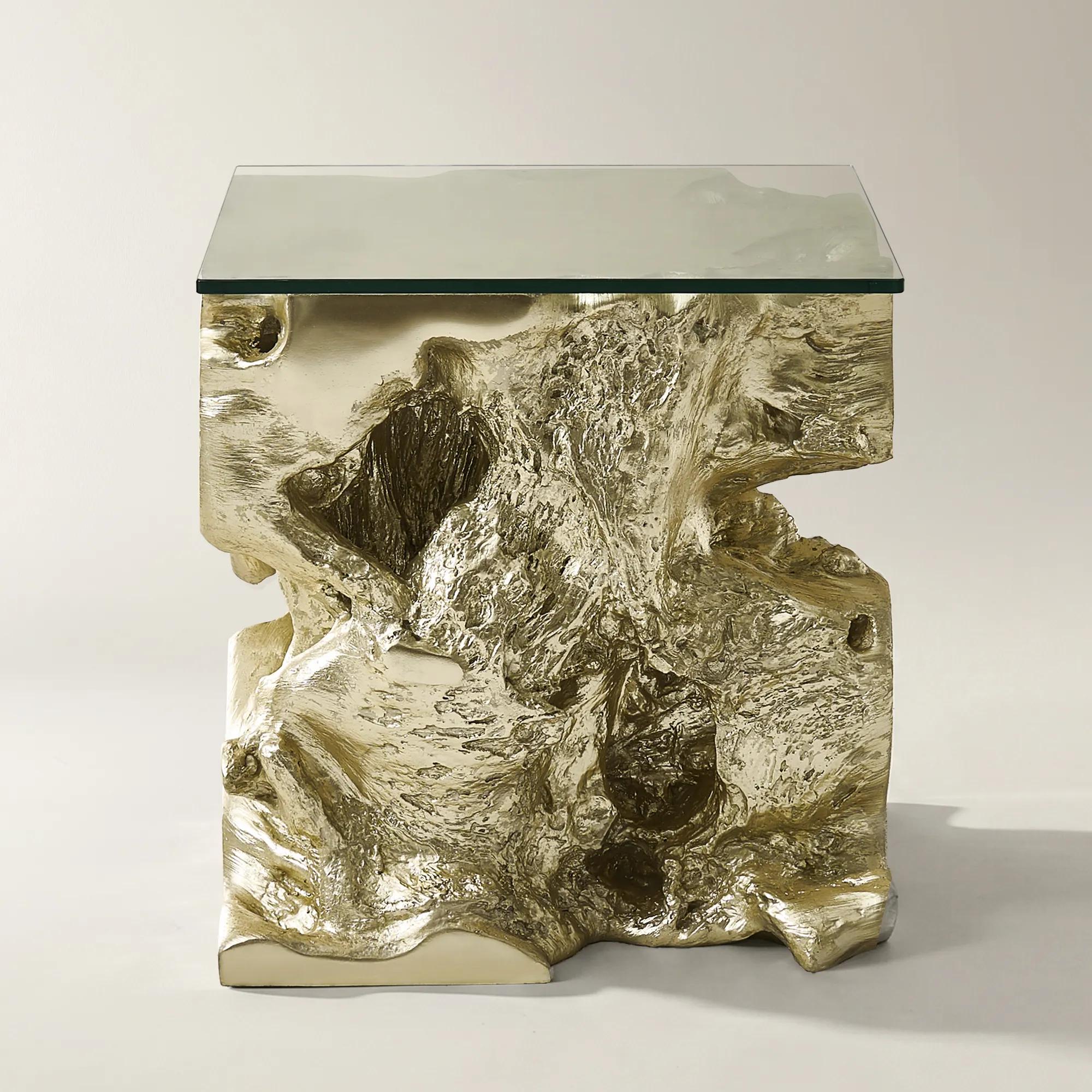 Sequoia Champagne Gold Resin End Table With Glass Top (22")$999
A sculptural resin end table with a champagne gold leaf finish and a clear tempered glass top.
Add To Cart -
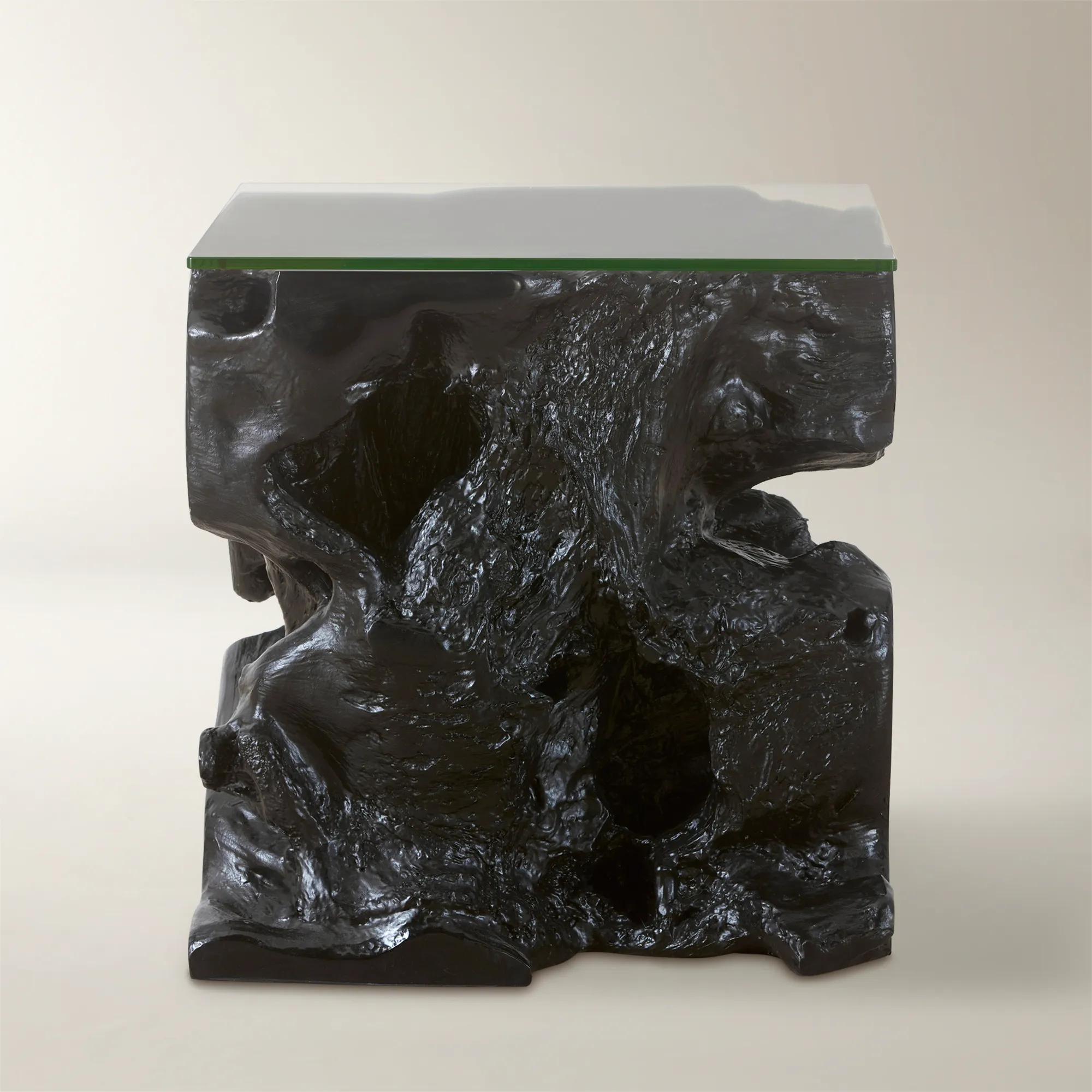 Sequoia Black Resin End Table With Glass Top (22")$999
A sculptural black resin and stone end table inspired by Acacia roots, suitable for indoor or outdoor use.
Add To Cart -
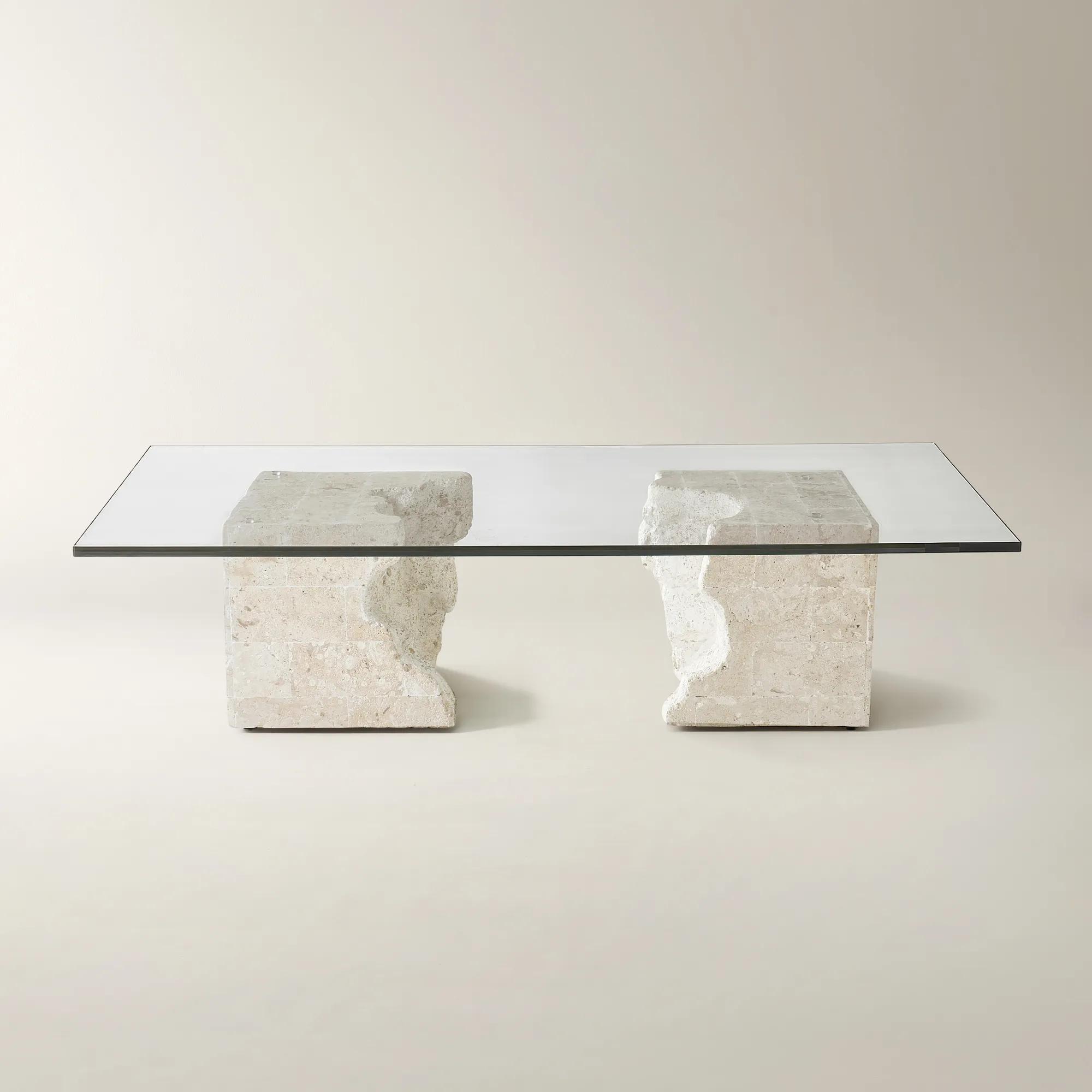 Cairo Rectangular Mactan Stone Coffee Table With Glass Top (70.87")$1999
A contemporary coffee table featuring a clear tempered glass top floating above hand-carved Mactan stone bases.
Add To Cart -
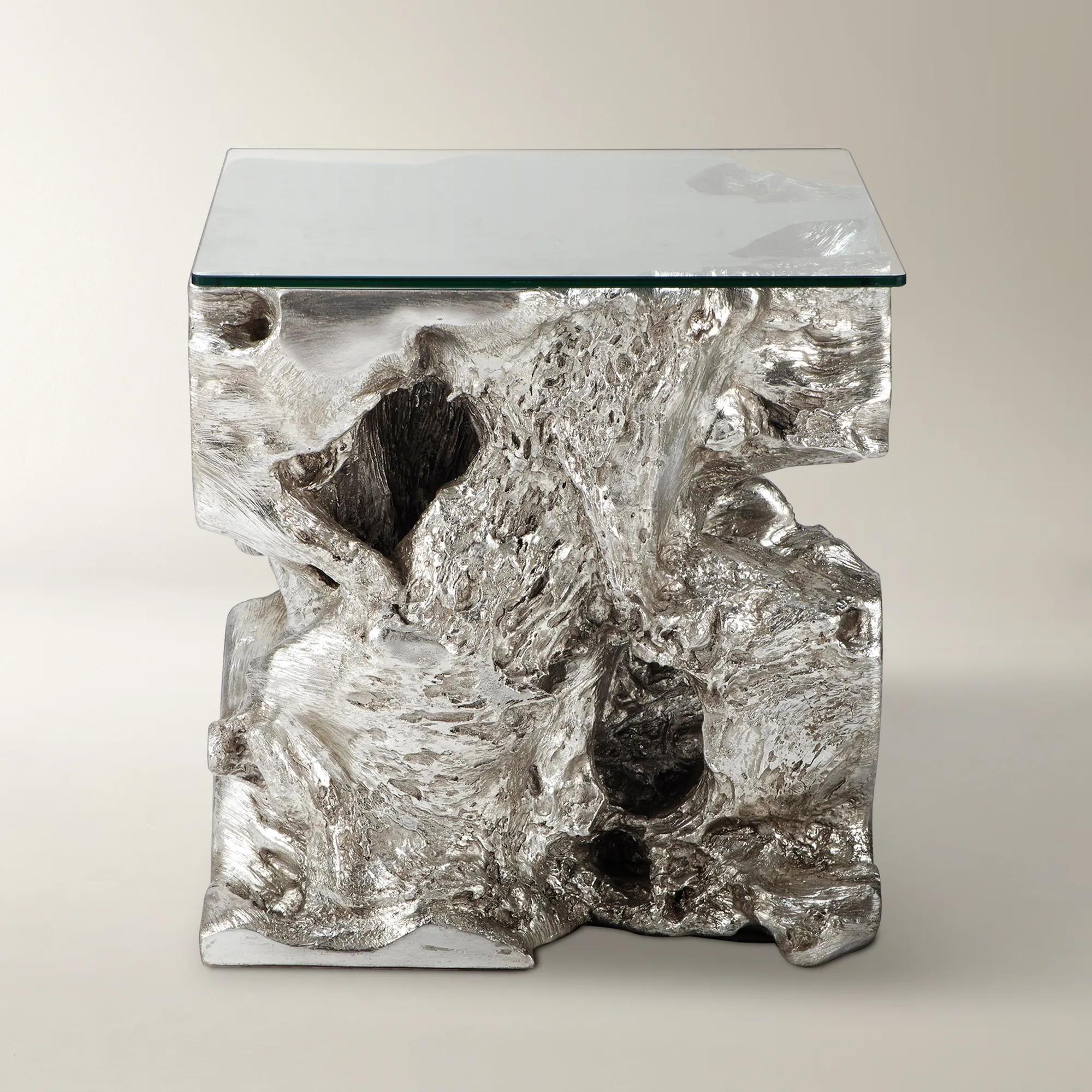 Sequoia Silver Resin End Table With Glass Top (22")$999
A sculptural end table featuring a silver leaf resin base and tempered glass top for modern elegance.
Add To Cart -
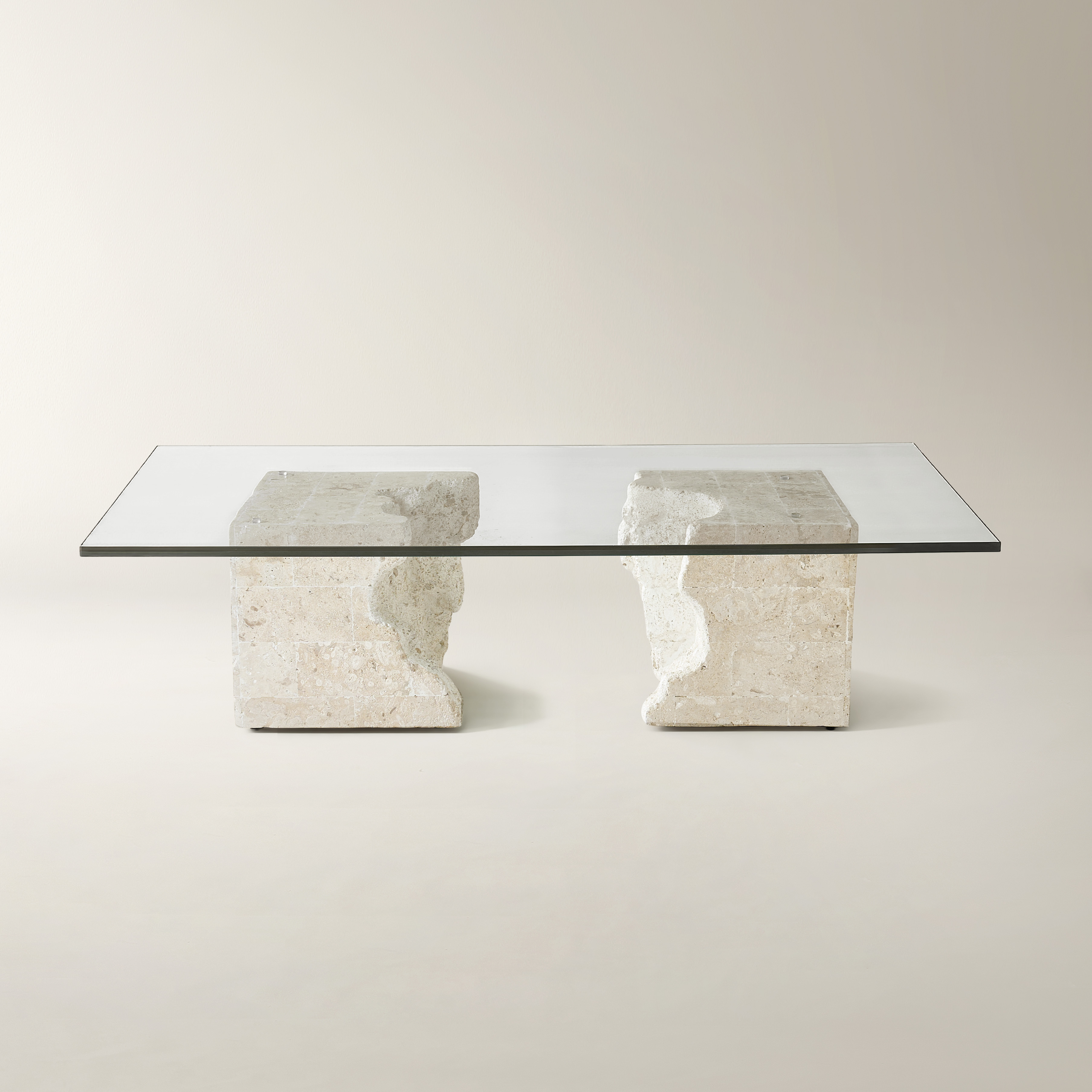 Cairo Rectangular Mactan Stone Coffee Table With Glass Top (63")$1899
A contemporary coffee table featuring a clear tempered glass top floating above hand-carved Mactan stone bases.
Add To Cart -
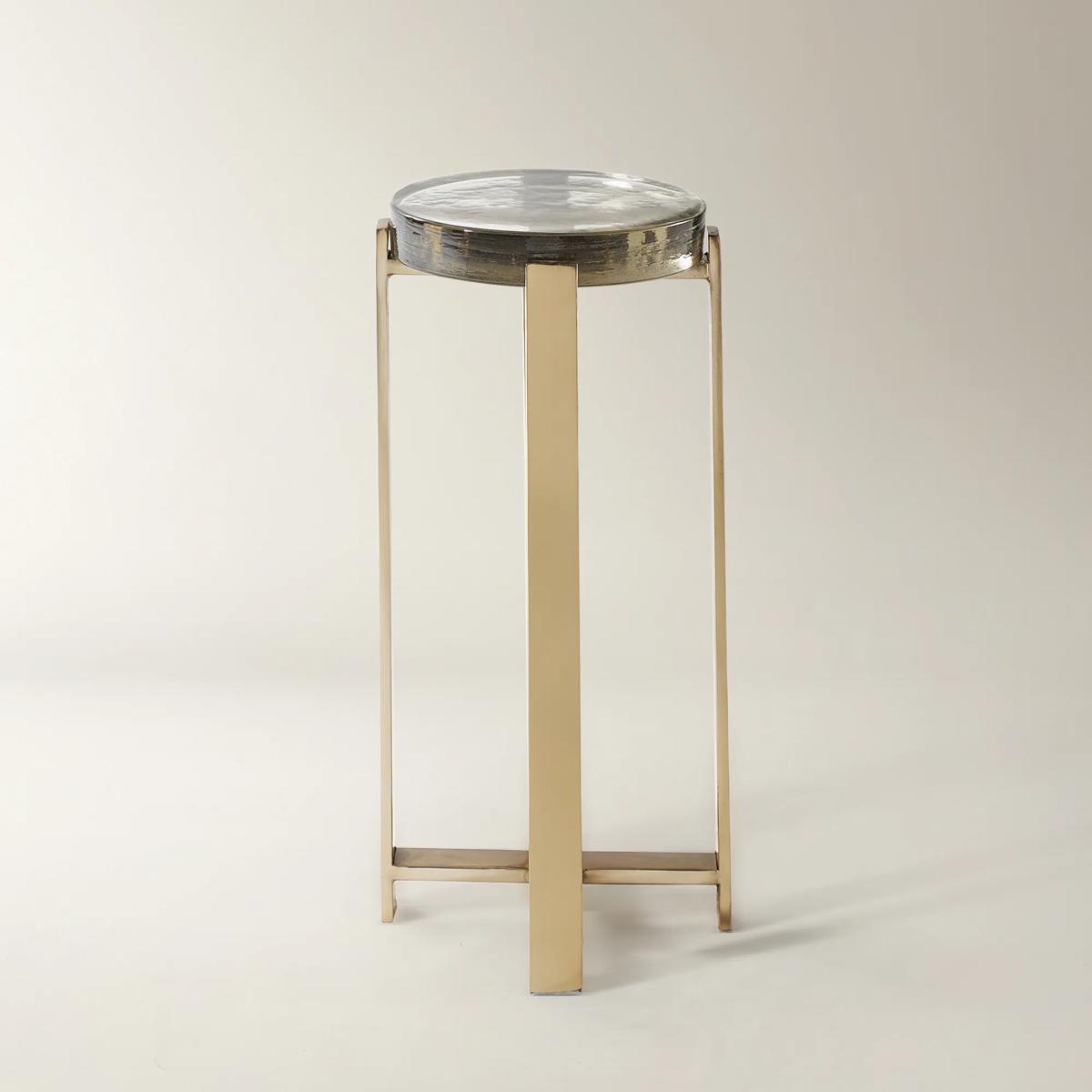
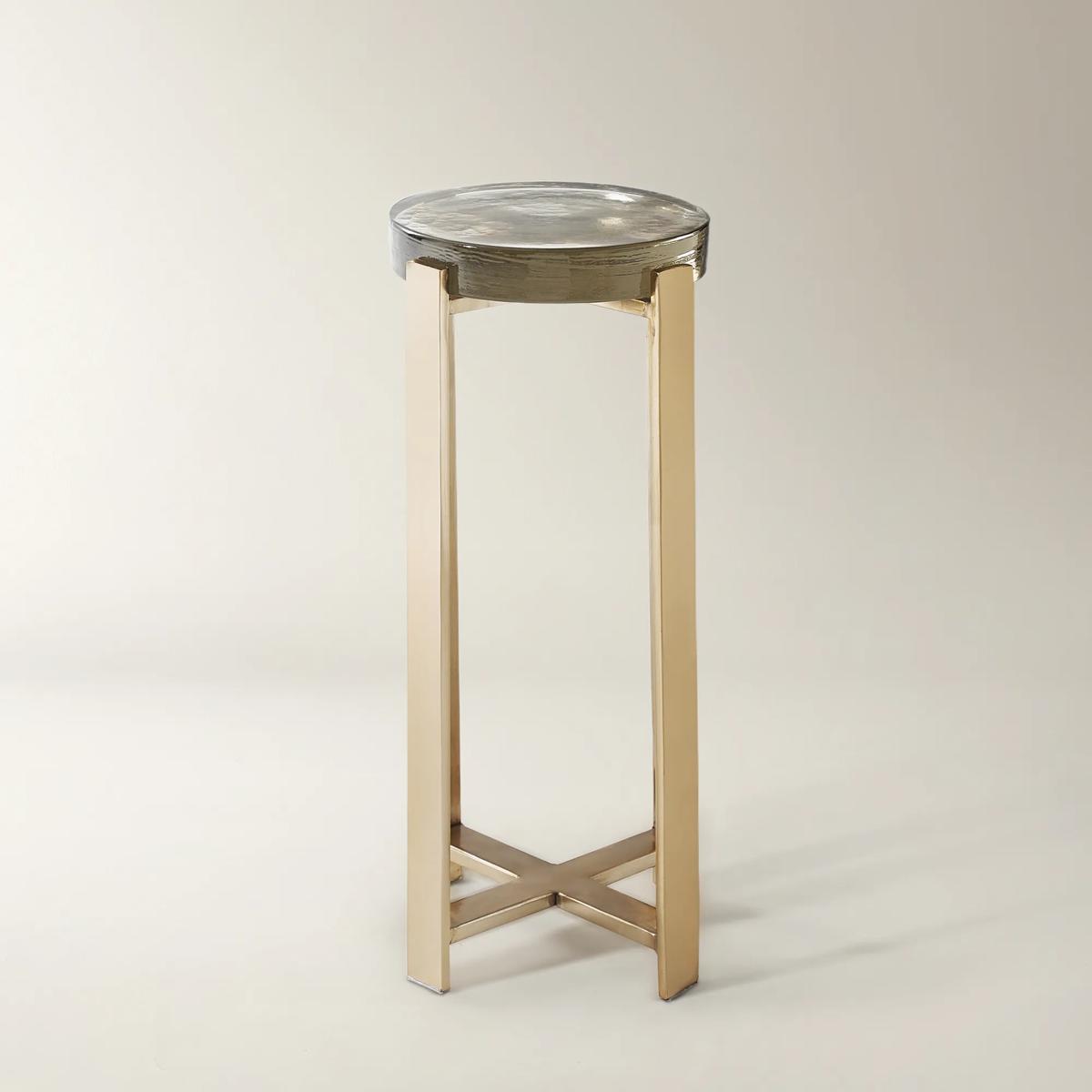 Lyra Round Brass Metal Side Table With Glass Top (10.75")$259
A sculptural side table featuring a thick cast glass top and lustrous brass-finished metal base.
Add To Cart -
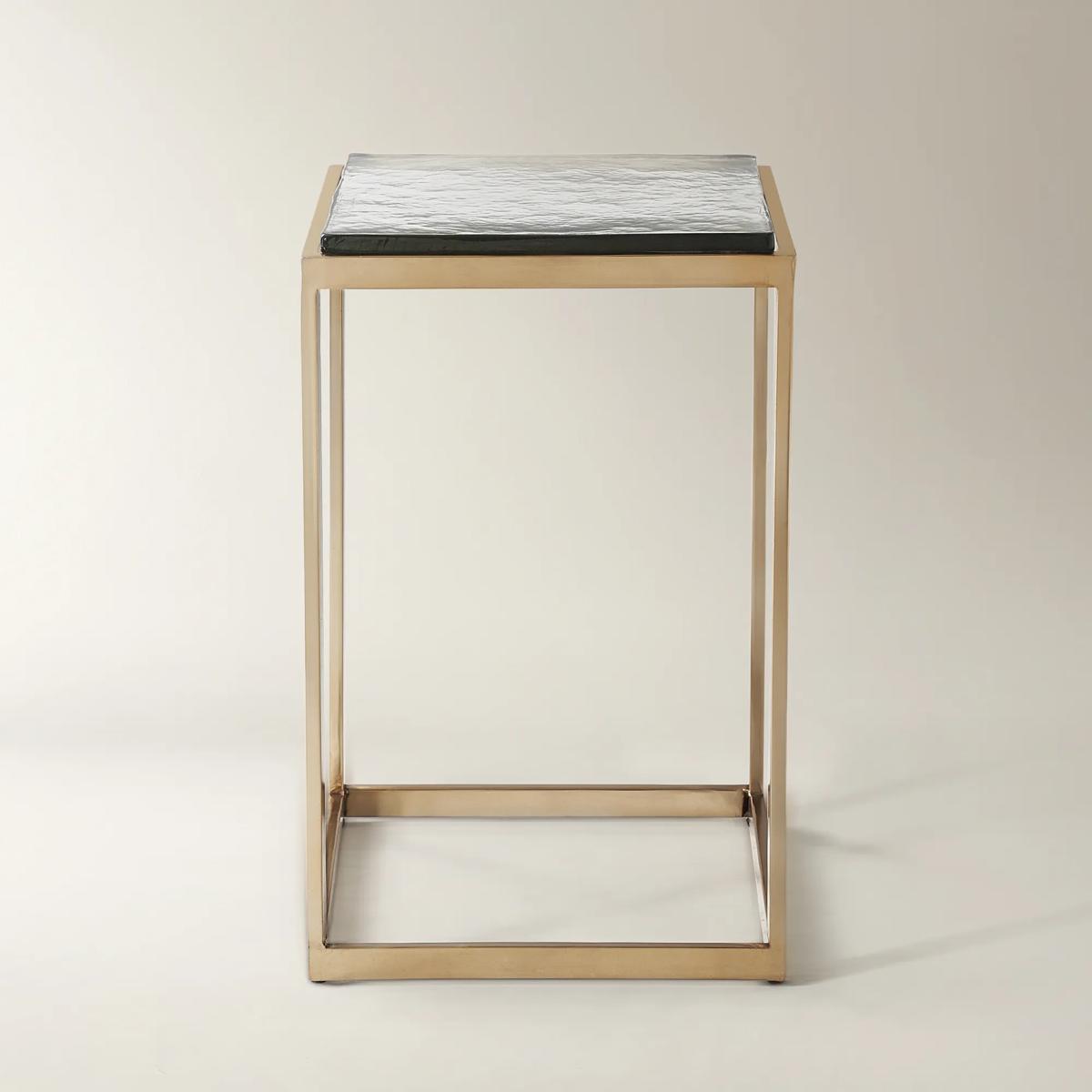
 Lyra Square Brass Metal Side Table With Glass Top (13.8")$239
A sculptural side table featuring a thick cast glass top and a lustrous brass-finished metal base.
Add To Cart -
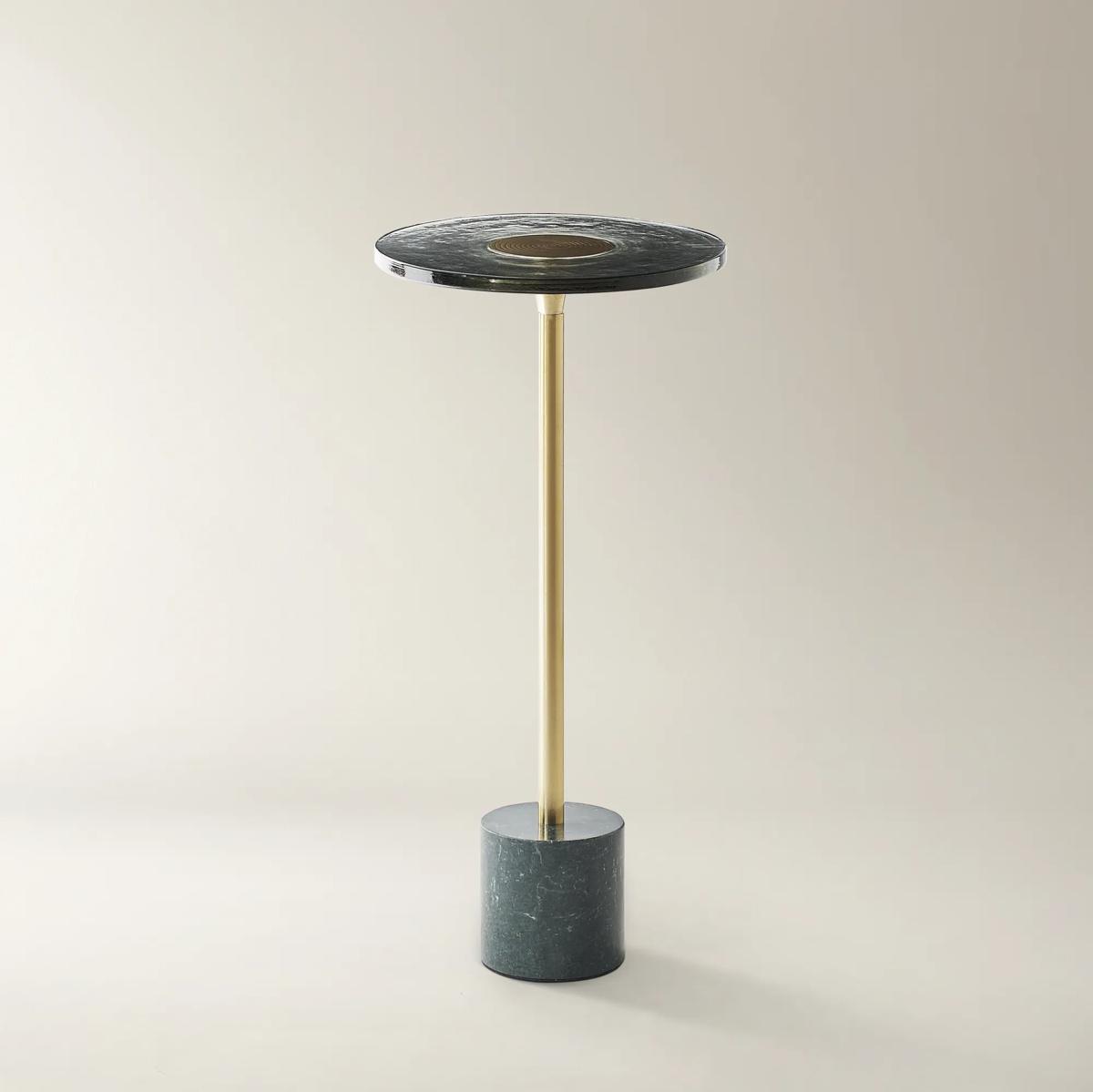
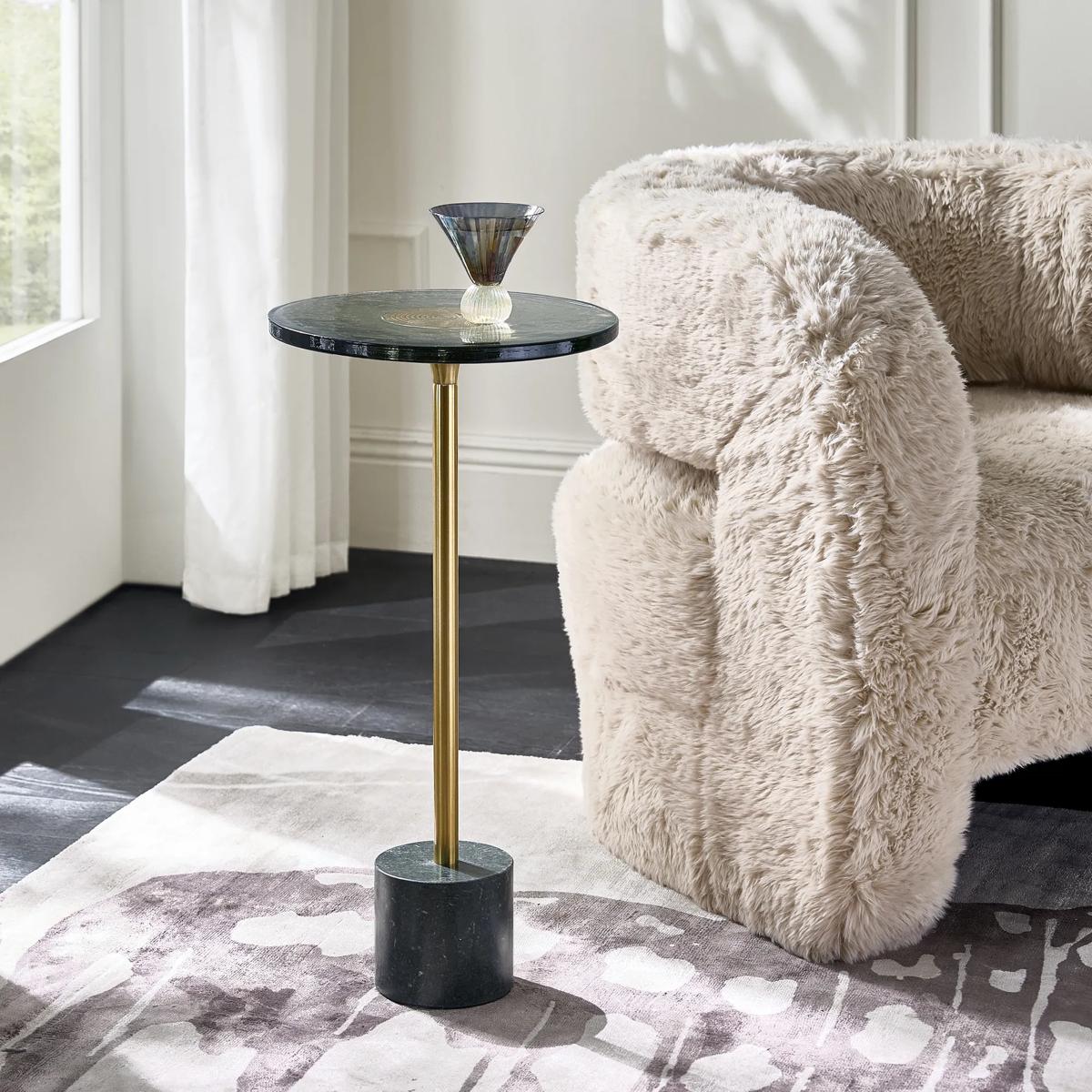 Seraphy Round Green Metal Side Table With Glass Top (13.75")$179
A modern side table featuring a green cast glass top, brass-finished post, and Indian green marble base.
Add To Cart -
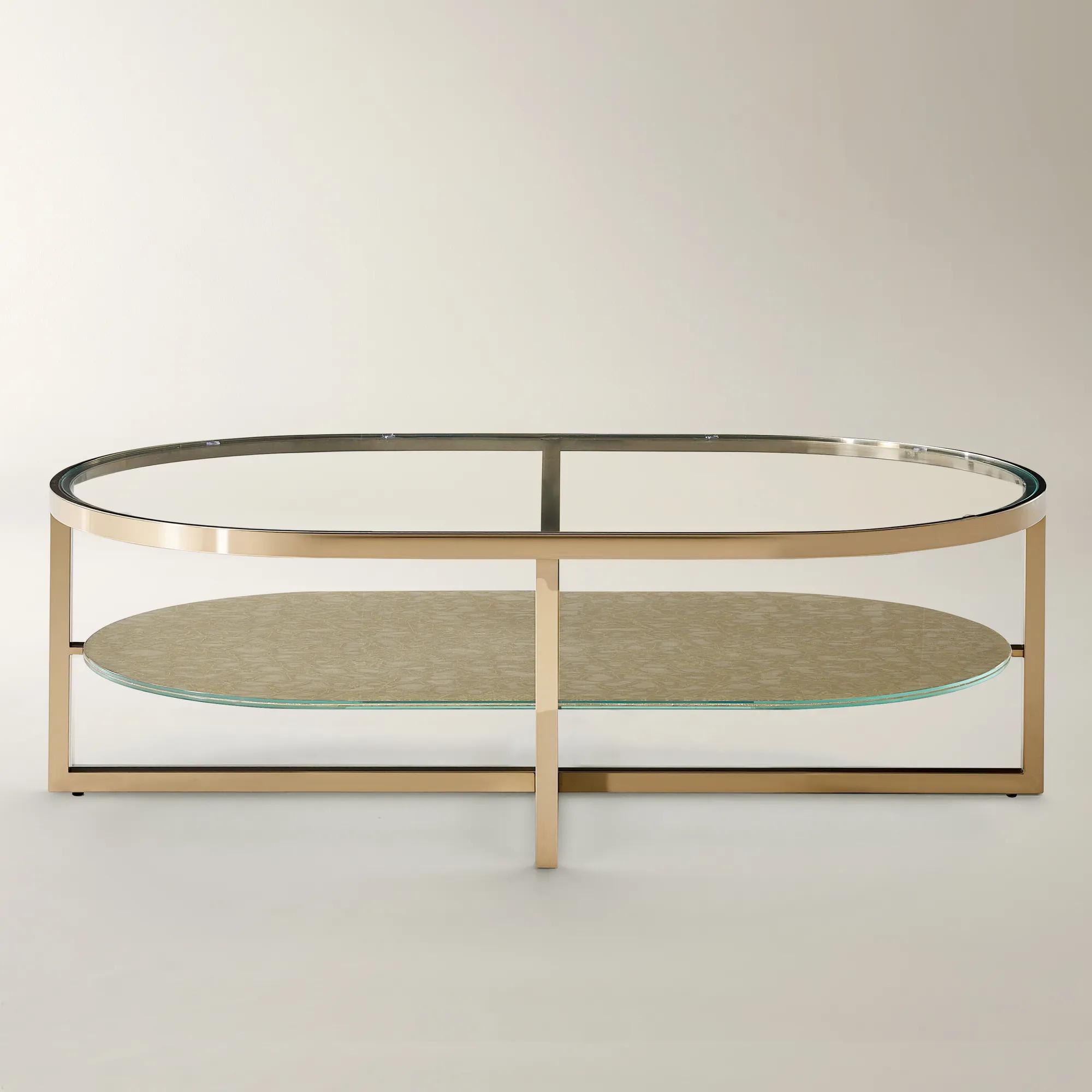
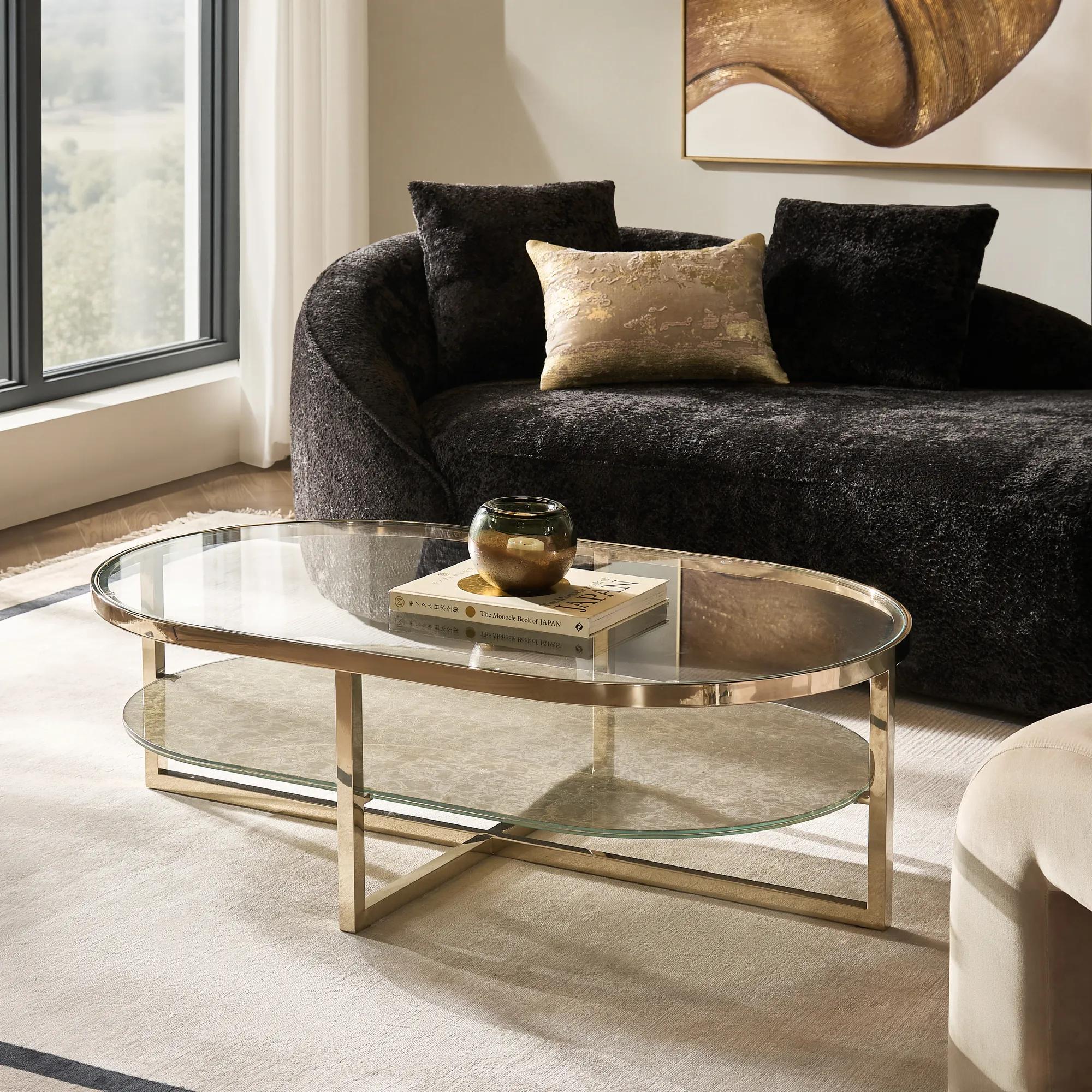 Duality Oval Fabric-Laminated Glass Coffee Table (47")$999
A modern oval coffee table featuring a tempered glass top, fabric-laminated shelf, and soft gold stainless steel frame.
Add To Cart -
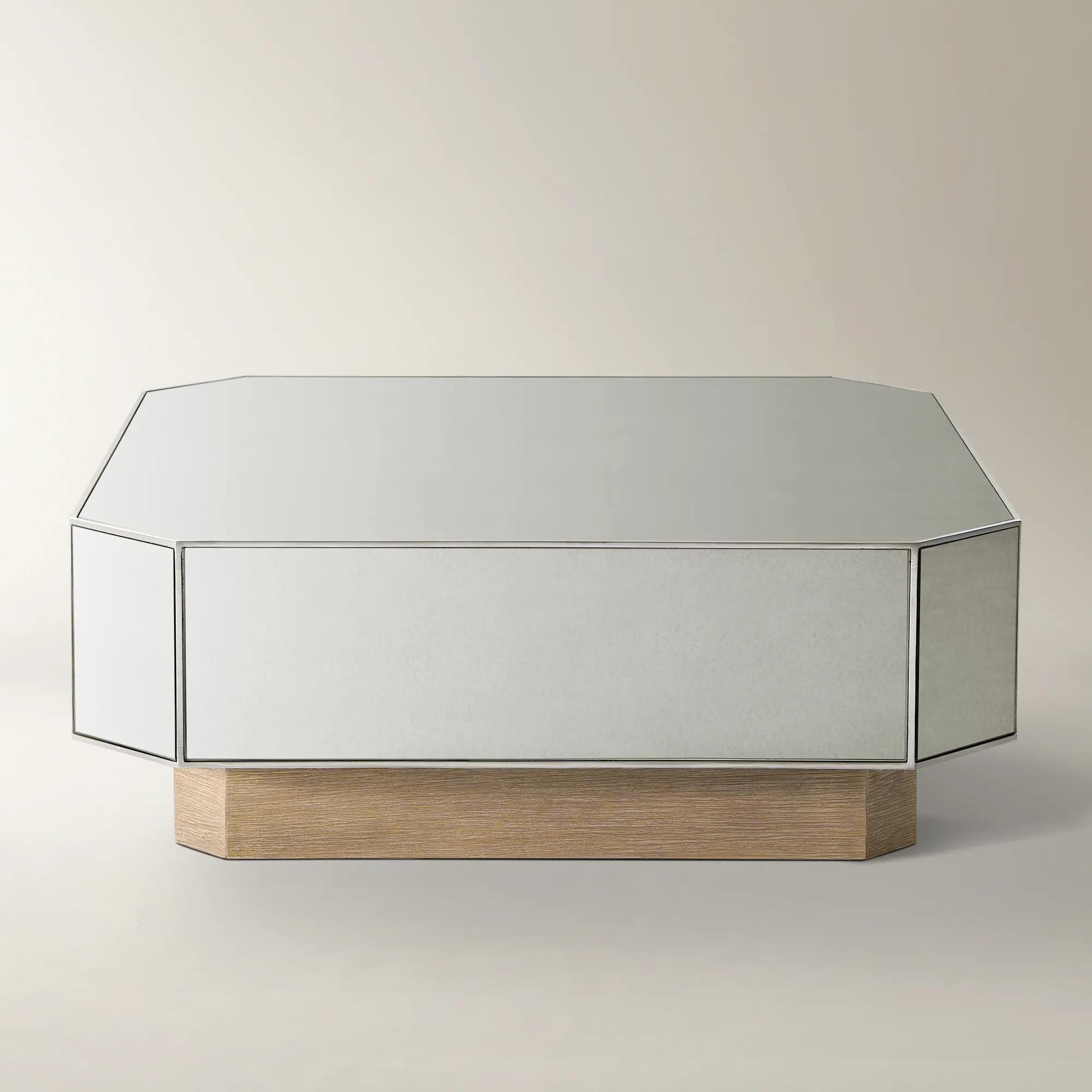 Glimmer Silver Mirrored Coffee Table (44")$1699
A luminous coffee table featuring an antique silver mirror top and warm oak veneer base with handcrafted details.
Add To Cart -
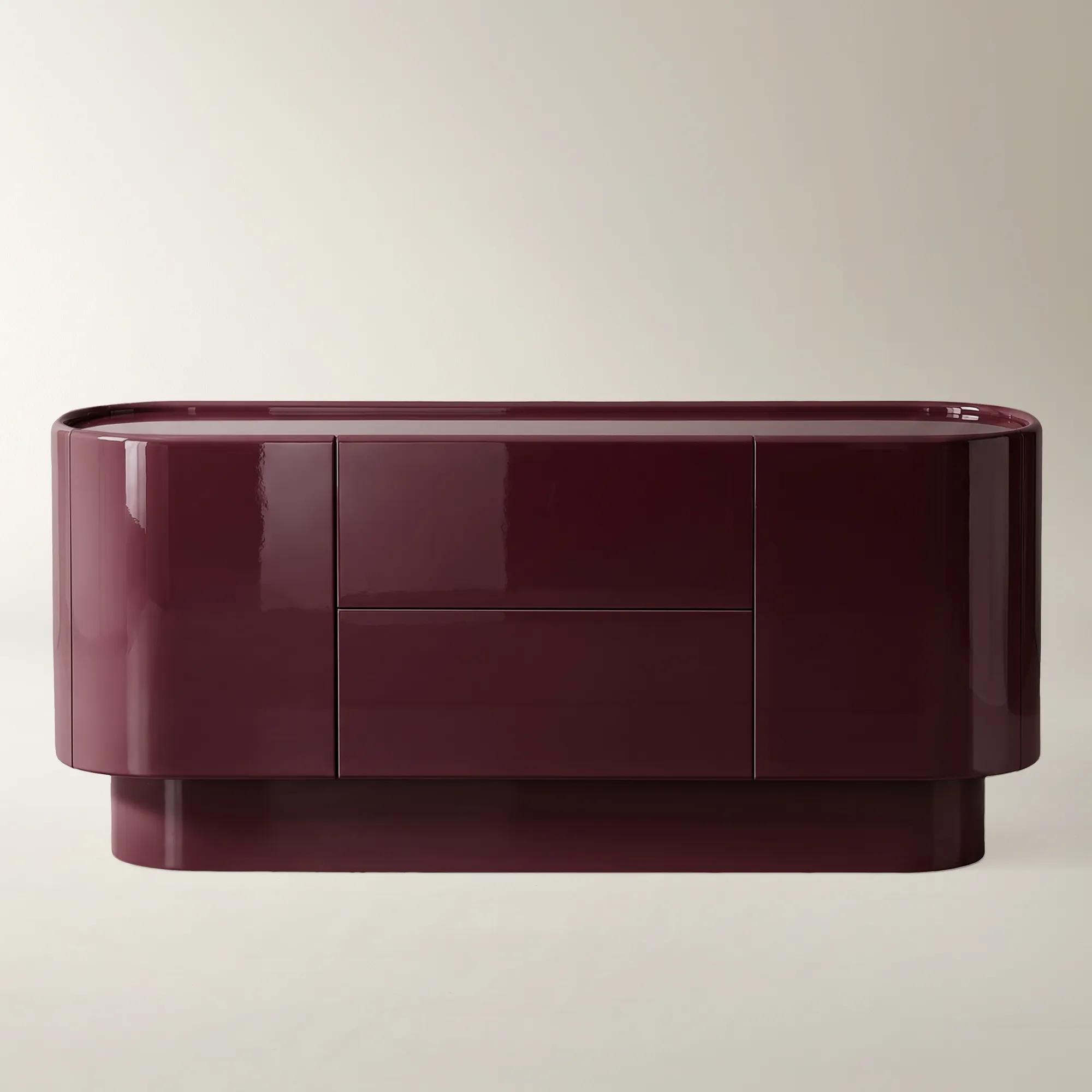 Velar Lacquered Ox Blood Buffet With Glass Top (70")$2099
A sculptural ox blood buffet featuring high-gloss lacquer, back-painted glass top, and illuminated mirrored storage.
Add To Cart -
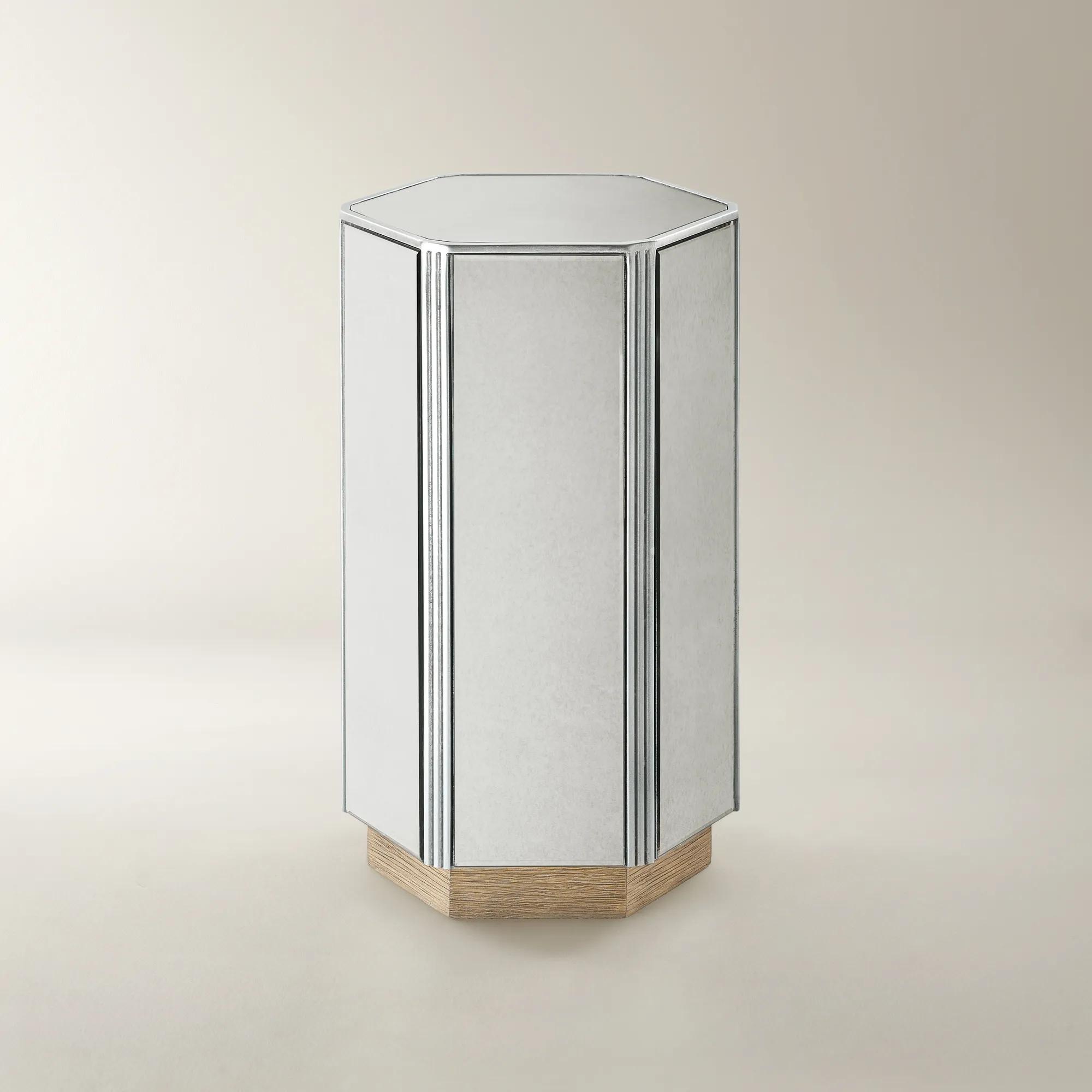 Glimmer Silver Mirrored End Table (12")$399
A chic side table featuring an antique silver mirror top and warm oak veneer base with handcrafted details.
Add To Cart -
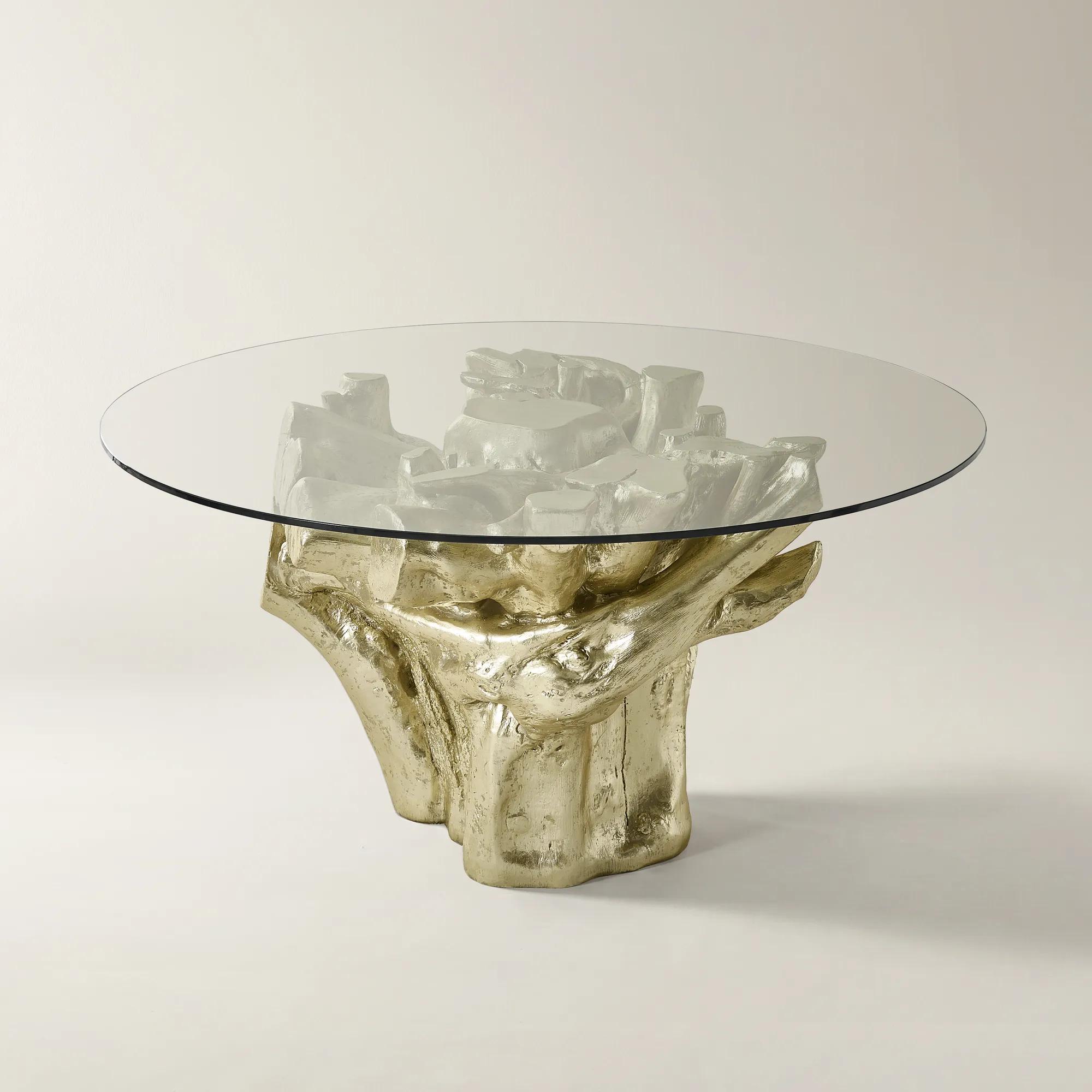 Sequoia Champagne Gold Resin Dining Table With Glass Top (60")$2199
A sculptural resin dining table with a champagne gold leaf base and a clear tempered glass top.
Add To Cart -
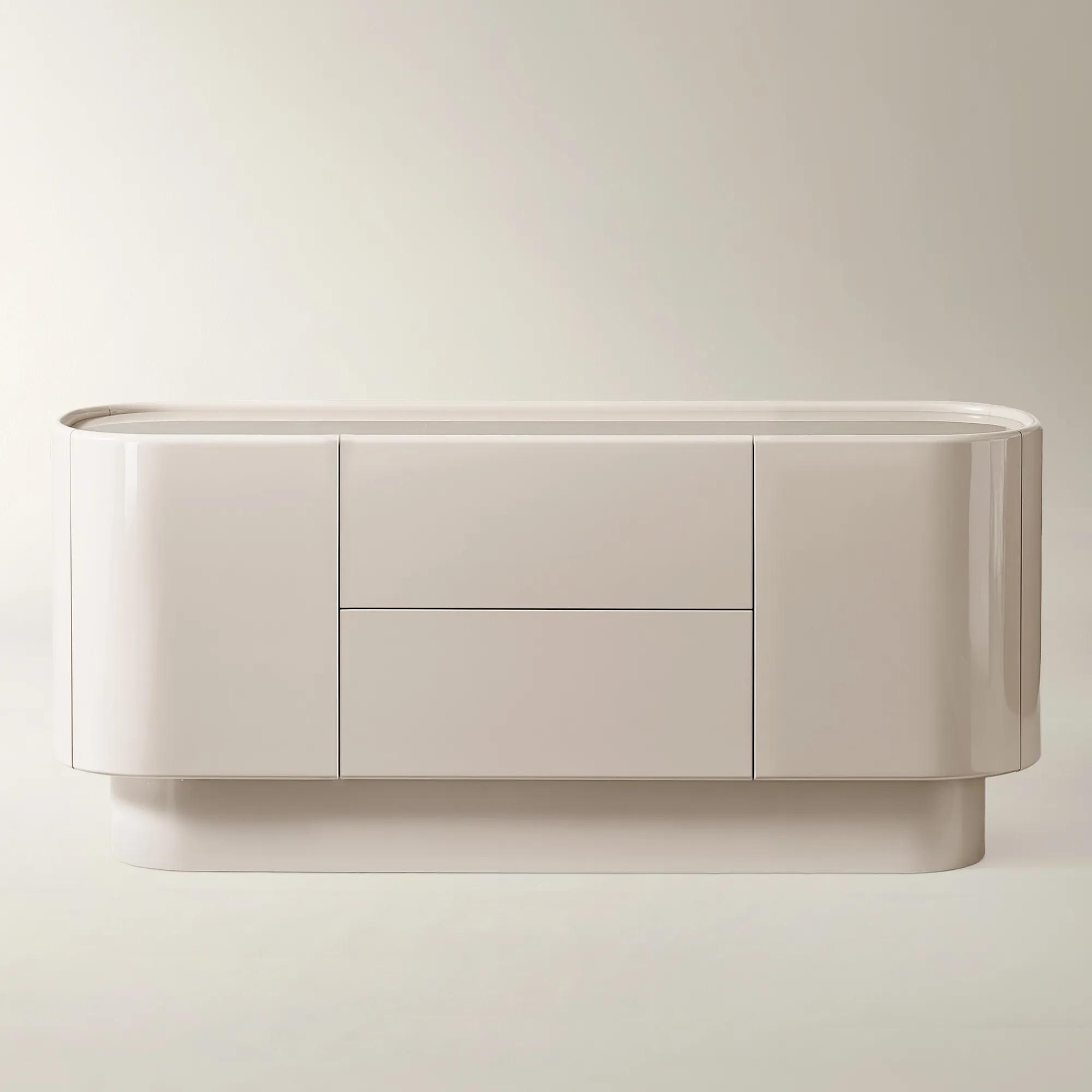
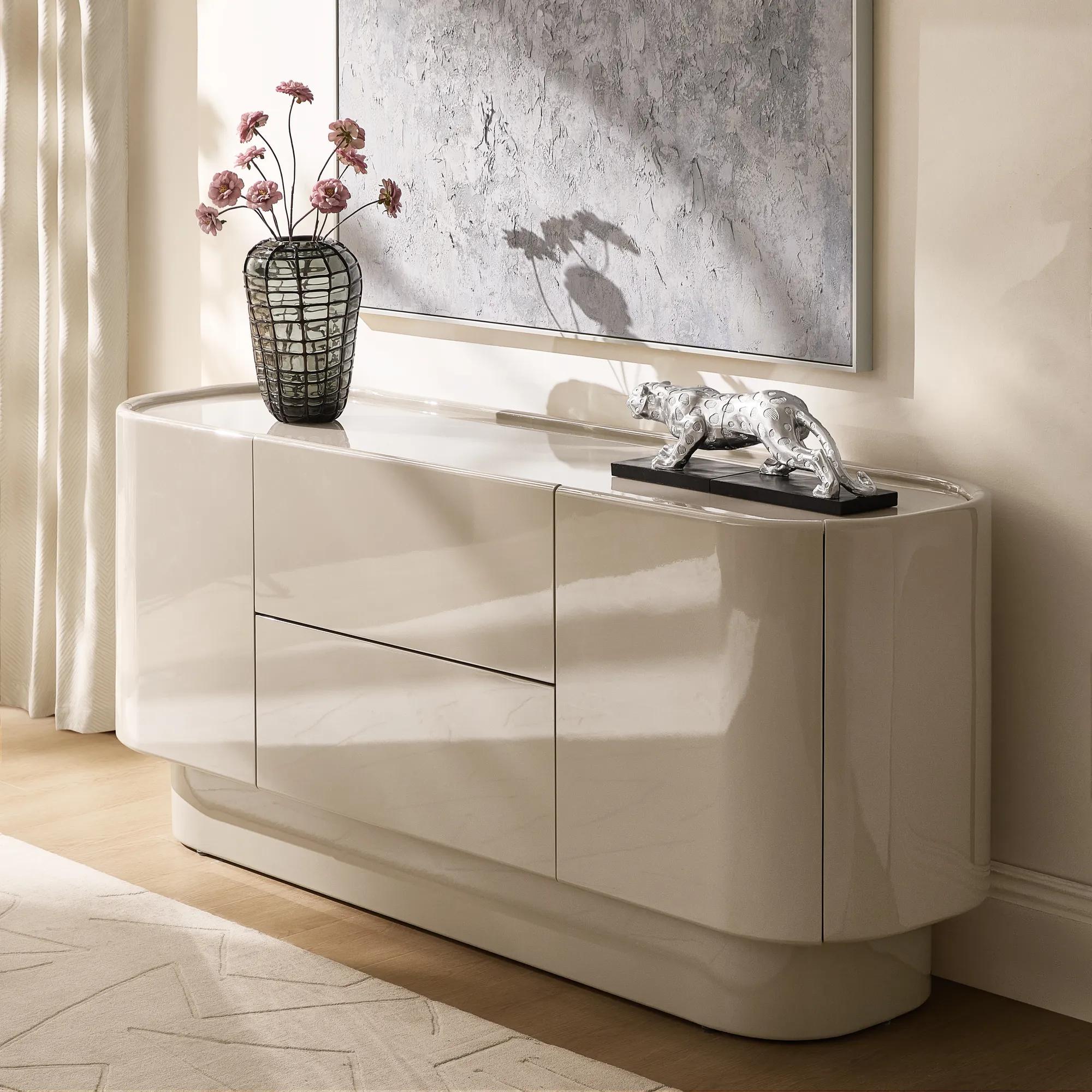 Velar Lacquered Turtle Dove Buffet With Glass Top (70")$2099
A sleek turtle dove buffet featuring high-gloss lacquer, tempered glass, and illuminated mirrored interior storage.
Add To Cart -
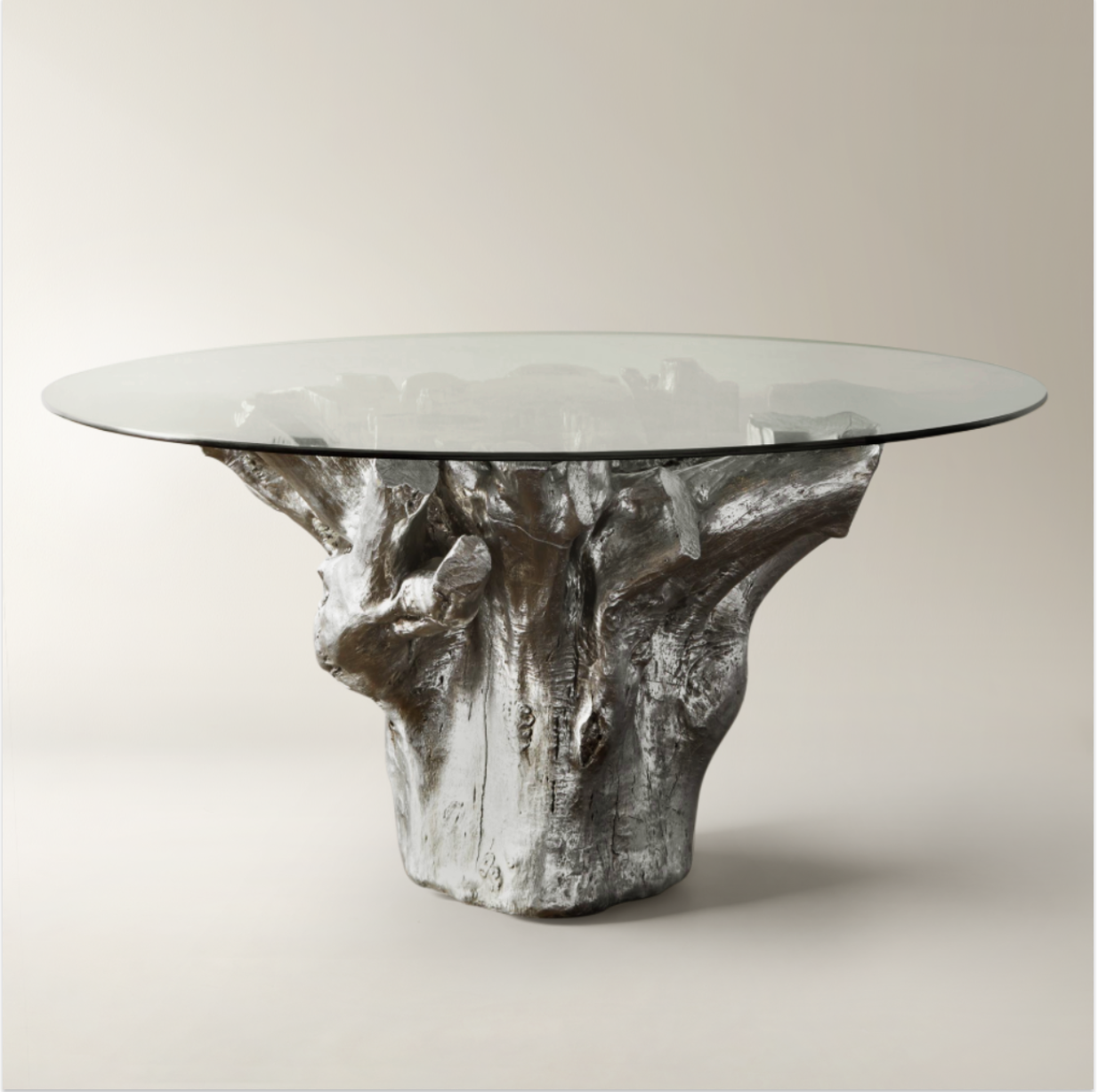 Sequoia Silver Resin Dining Table With Glass Top (60")$2199
A sculptural resin base with hand-applied silver leaf supports a round tempered glass top for modern elegance.
Add To Cart

Glass Top Living Room Tables
Glass top living room tables invite a sense of luminous artistry into your space, transforming the ordinary into the extraordinary with every gleam and reflection. Their crystalline surfaces capture and scatter light, creating a stage for curated vignettes and conversation-worthy moments. Whether anchoring a bold seating arrangement or offering a sculptural focal point, glass top living room tables embody modern glamour and effortless sophistication—an invitation to showcase your most inspired style in the heart of your home.
Glass-top living room tables pair a transparent or tinted surface with a supporting base, creating a place for everyday essentials without concealing the design beneath. The category includes coffee tables that anchor a seating arrangement, end tables that bring a polished surface beside a sofa or chair, and console tables that add dimension behind seating or along a wall. Their distinctive appeal comes from contrast: a substantial silhouette can feel visually light, while an intricate base becomes part of the room’s composition rather than disappearing beneath an opaque top. A clear glass coffee table allows the pattern of a rug to remain visible, giving richly layered spaces room to breathe. Smoked or tinted glass introduces a moodier note, particularly alongside deep upholstery, sculptural lighting, and art with saturated color. The base shapes that expression just as strongly as the glass itself. Metal frames can range from slender architectural lines to sweeping curves, with gold-tone finishes lending warmth, silver-tone finishes creating a luminous accent, and dark finishes drawing a precise outline. Wood bases introduce grain and natural variation, while stone bases offer mineral texture and a grounded presence. Material descriptions matter here: solid wood, wood veneer, metal, and stone each bring different characteristics and care requirements, even when their silhouettes feel similar. Clear glass also makes construction part of the visual experience, bringing joints, supports, and decorative details into view. A carefully composed base can read almost like sculpture beneath the surface, giving a practical table the presence of an art object. Round and oval glass-top tables soften an arrangement filled with straight-lined seating; rectangular and square shapes establish a more tailored rhythm. In a room with a dramatic sectional, a transparent top can balance the upholstery’s volume. Beside a curved accent chair, a compact glass side table offers a delicate counterpoint, leaving the chair’s shape in full view. The effect is expressive rather than crowded, with each material contributing its own texture, reflection, and sense of scale.
Proportion gives glass-top living room tables their place in the room. A coffee table generally looks balanced at about two-thirds the length of the sofa, with a surface close to the height of the seat cushions or slightly lower. These are useful starting points rather than fixed rules, especially with deep sectionals, low-profile seating, or arrangements built around several accent chairs. Approximately 14 to 18 inches between the coffee table and seating usually leaves space to reach a drink comfortably while allowing room for legs; main walking routes need more generous clearance. Measuring the entire footprint matters as much as measuring the glass, since an angled leg or sculptural base may extend beyond the edge. Rectangular glass coffee tables suit many longer sofas, while square designs can hold their own within a broad sectional arrangement. Round tables offer an easy visual flow between separate seats, and oval tops bring an elongated surface without projecting corners. End tables work best when their tops sit near the adjacent arm height, keeping a lamp, book, or beverage within comfortable reach. A console behind a sofa should feel proportionate to the back rather than rising awkwardly above it. For spaces that call for coordinated surfaces beyond the central coffee table, Glass Top Occasional Tables extend the same interplay of transparency and structure throughout the seating area. Matching silhouettes can create a deliberate, composed effect, while a shared finish can connect different shapes without making every piece identical. Lower shelves add another layer for art books or a decorative box, although their contents remain visible through a clear top. Nesting designs, where included in a table’s construction, can offer separate surfaces for entertaining while occupying a more compact arrangement between gatherings. For a living room that welcomes conversation, reading, and occasional movie nights, those practical distinctions matter as much as the finish. The strongest arrangement gives each seat access to a useful surface while allowing the furniture, rug, and artwork to retain their individual presence.
Glass brings brilliance to a room, but its lasting appeal depends on the type of glass, the quality of its support, and everyday handling. Tempered glass is heat-treated for greater strength than ordinary annealed glass and, if broken, typically fragments into small pieces rather than large shards; it is not unbreakable or immune to scratches. Product specifications should confirm whether a top is tempered, how it attaches to the base, and what weight it is designed to support. Thickness alone does not establish durability, since edge finishing, support placement, and construction also influence performance. A stable base and properly seated top are especially important in a busy living room, and a table surface is never intended for sitting, standing, or climbing. Rounded or oval edges may reduce encounters with projecting corners, but glass furniture still warrants thoughtful placement in homes with young children or energetic pets. Clear surfaces can be less noticeable at a glance, making an unobstructed walking route particularly valuable. For routine care, a soft, lint-free cloth and a cleaner approved for the glass help preserve clarity; applying cleaner to the cloth rather than flooding the surface limits runoff onto the frame. Abrasive pads can scratch glass, and metal, wood, and stone bases need care suited to their own finishes. Coasters protect against moisture and marks, while a protective pad beneath a vase or decorative object helps prevent scratches from rough undersides. Hot serving pieces belong on an appropriate protective mat rather than directly on the glass. Fingerprints and dust are more visible on a transparent surface, a consideration for households that prefer less frequent maintenance. Styling can remain sumptuous without covering every inch: a low tray, a beautifully bound book, and one sculptural accent create depth while leaving space for a guest’s glass. With considered proportions and attentive care, a glass-top table brings both purpose and visual drama to the living room, allowing the surrounding design to shine through.
FAQs
Glass top living room tables introduce a sense of openness and sophistication, allowing natural light to move freely through the room and highlighting the artistry of the table’s base. Their reflective surfaces amplify surrounding colors and textures, creating a visually dynamic focal point that elevates any decor style.
Absolutely. Glass top tables are remarkably versatile, seamlessly complementing both modern and traditional interiors. Their transparent nature allows them to blend with a variety of materials and finishes, making them an elegant choice whether paired with sleek metals or classic wood bases.
Glass top tables serve as a perfect canvas for artistic expression. Layering decorative trays, sculptural vases, or stacks of art books beneath the glass draws the eye to the table’s base and the treasures displayed. Seasonal florals, metallic accents, or candles can also add drama and personality to the vignette.
Design enthusiasts, new homeowners, newlyweds, or anyone passionate about interior style would be delighted by the gift of a glass top living room table. Its timeless appeal and adaptability make it a thoughtful present for those looking to make a statement or refresh their living space.
The interplay of transparency and reflection in a glass top table draws attention to the sculptural qualities of its base and the carefully chosen decor around it. By capturing and magnifying light, a glass top table can transform a living room into a luminous, gallery-like setting where every detail is celebrated.