Modern Coffee Tables For Living Room
Modern Coffee Tables For Living Room
-
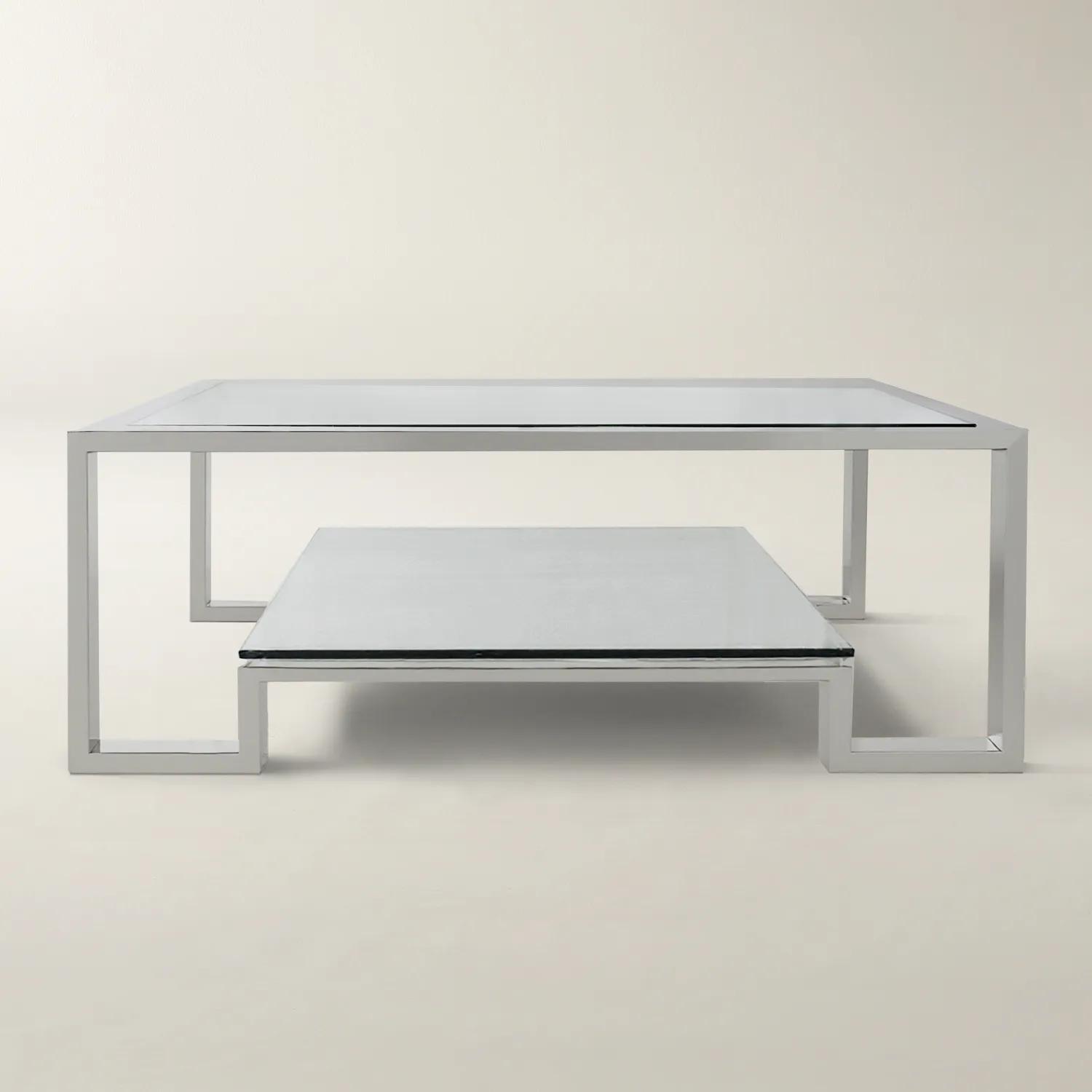
 Duplicity Rectangular Silver Stainless Steel Coffee Table With Glass Top (50")$1399
A modern coffee table featuring a stainless steel frame, tempered glass top, and floating bottom shelf.
Add To Cart -
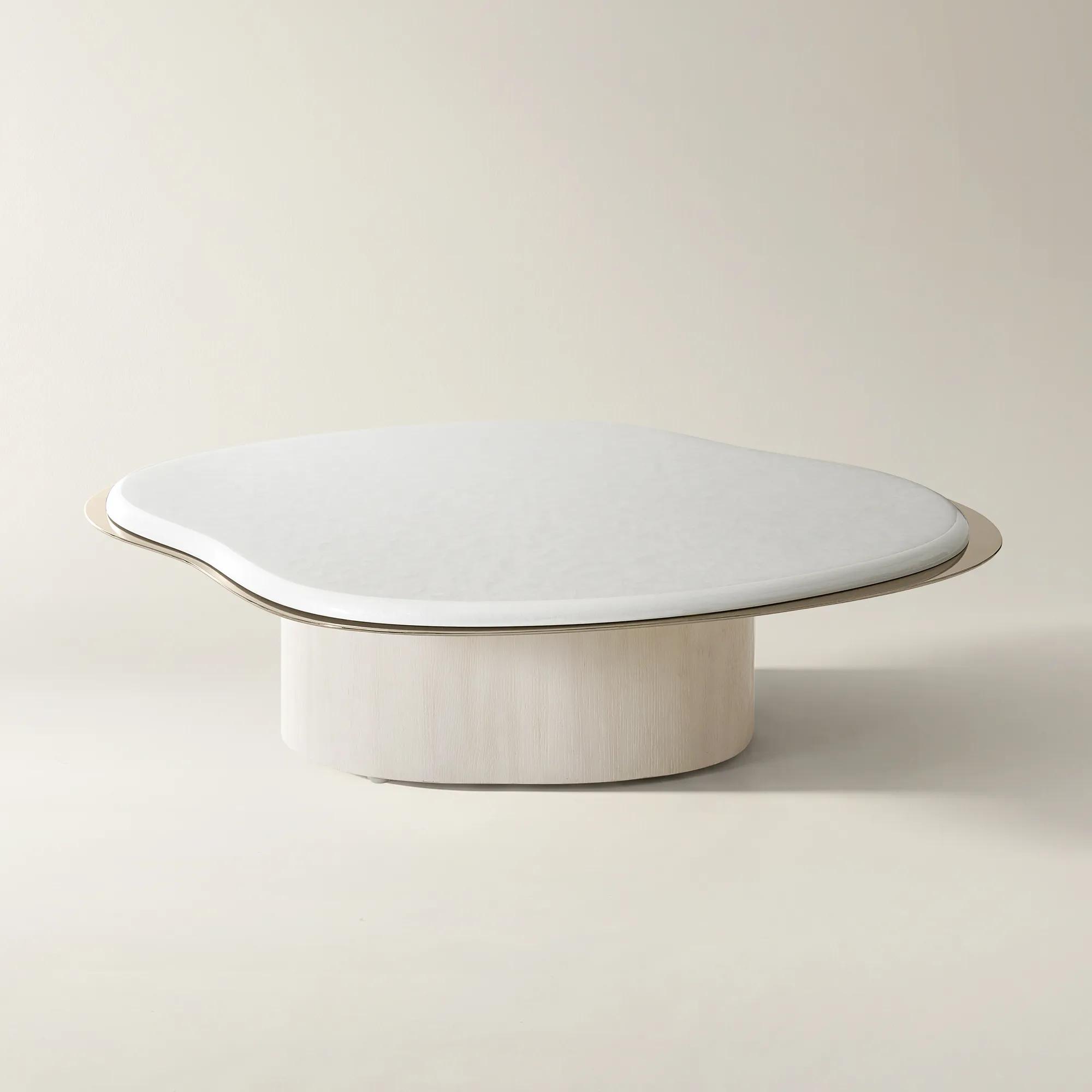
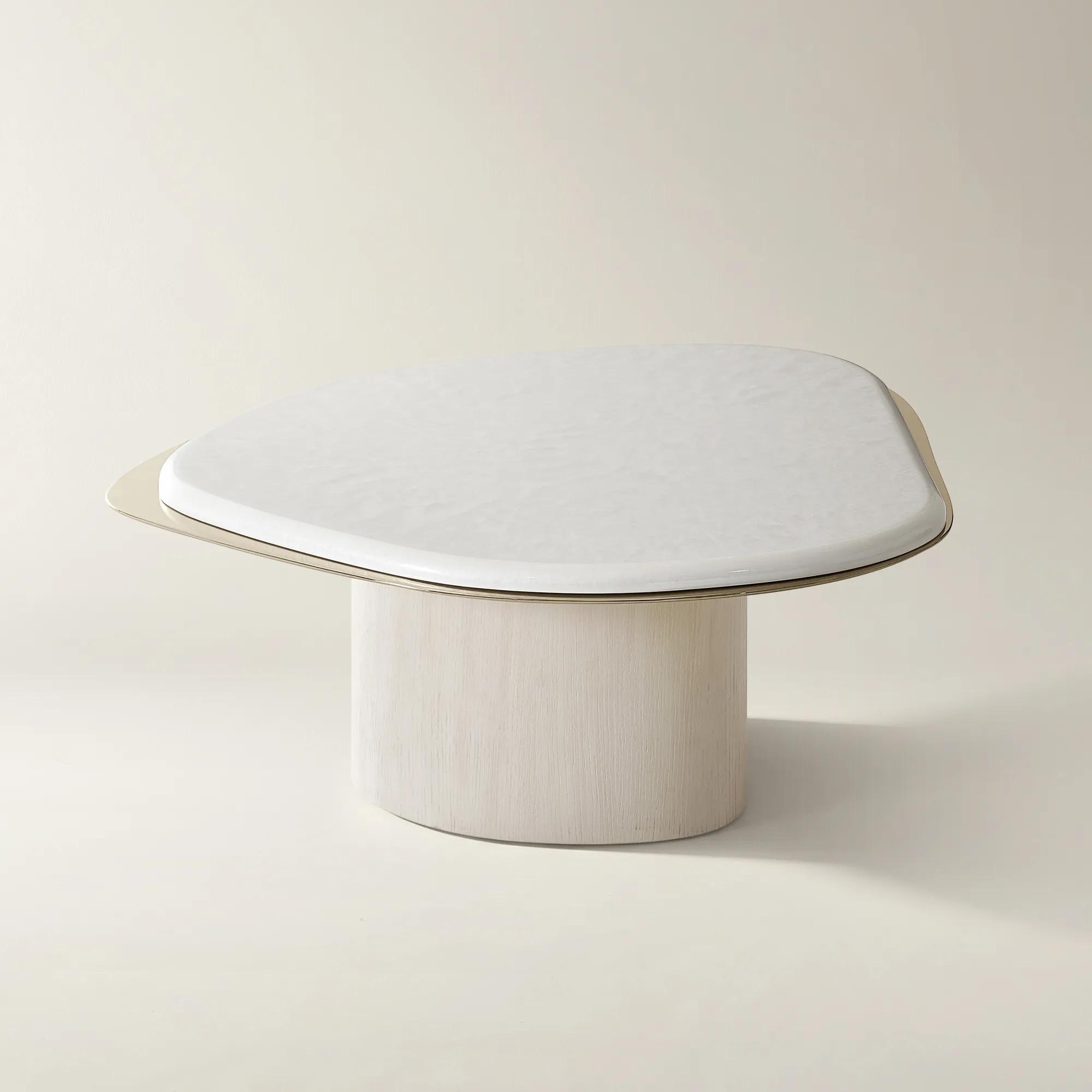
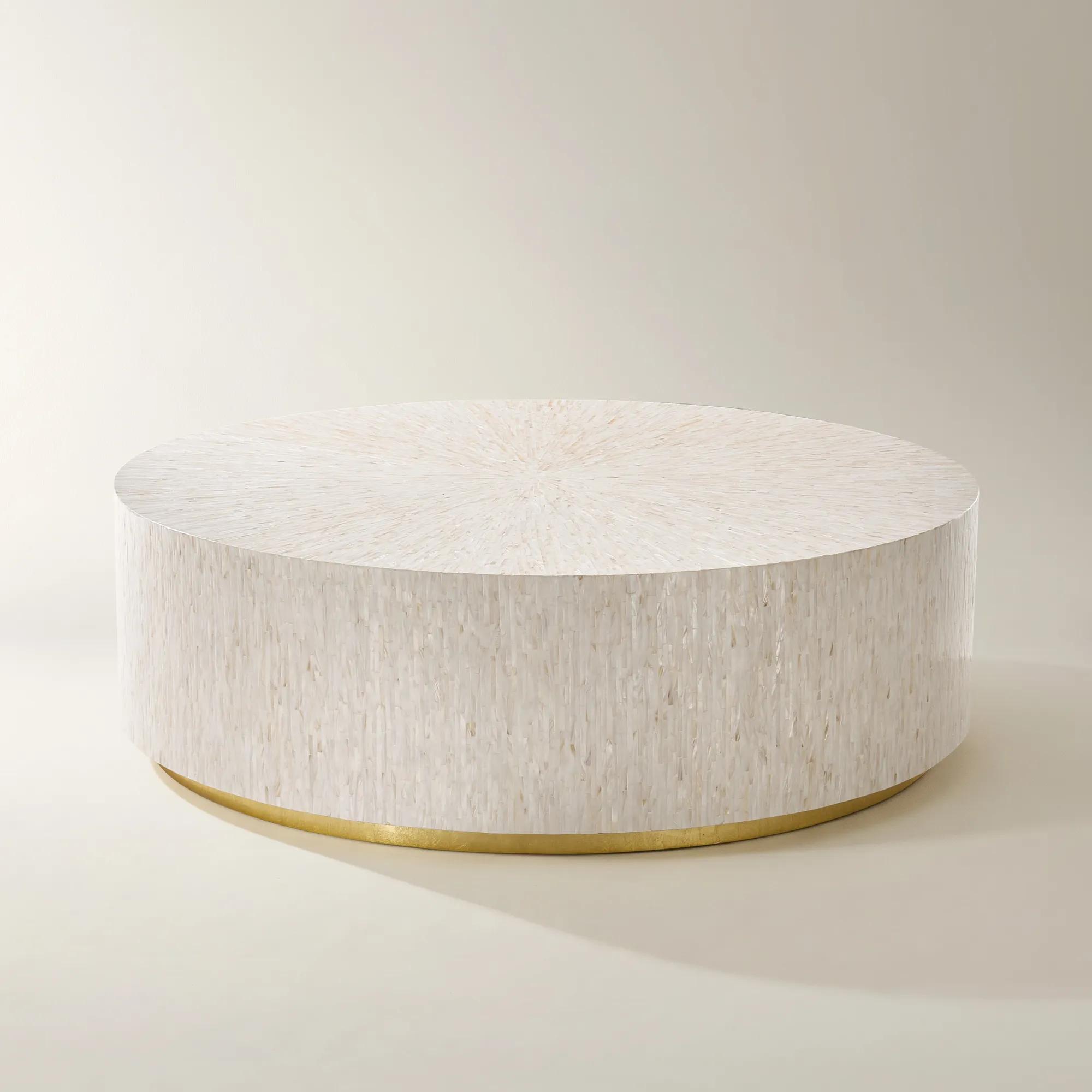 Alexandria Round Mosaic Platinum Coffee Table (52")$1399
A luminous mother-of-pearl mosaic coffee table with a sculptural round form and gold leaf–accented base.
Add To Cart -
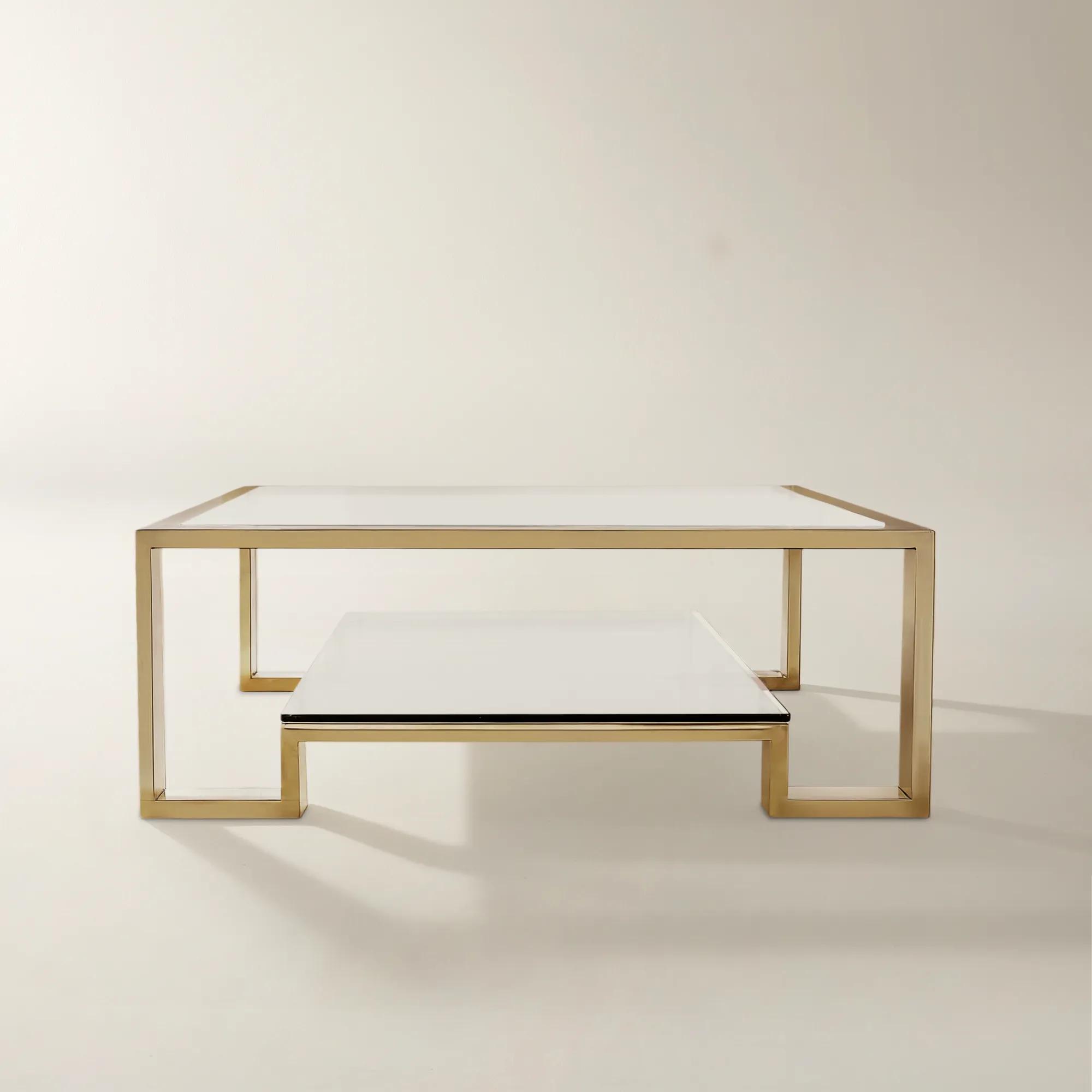 Duplicity Rectangular Gold Stainless Steel Coffee Table With Glass Top (50")$1399
A modern coffee table featuring a stainless steel frame, tempered glass top, and floating storage shelf.
Add To Cart -
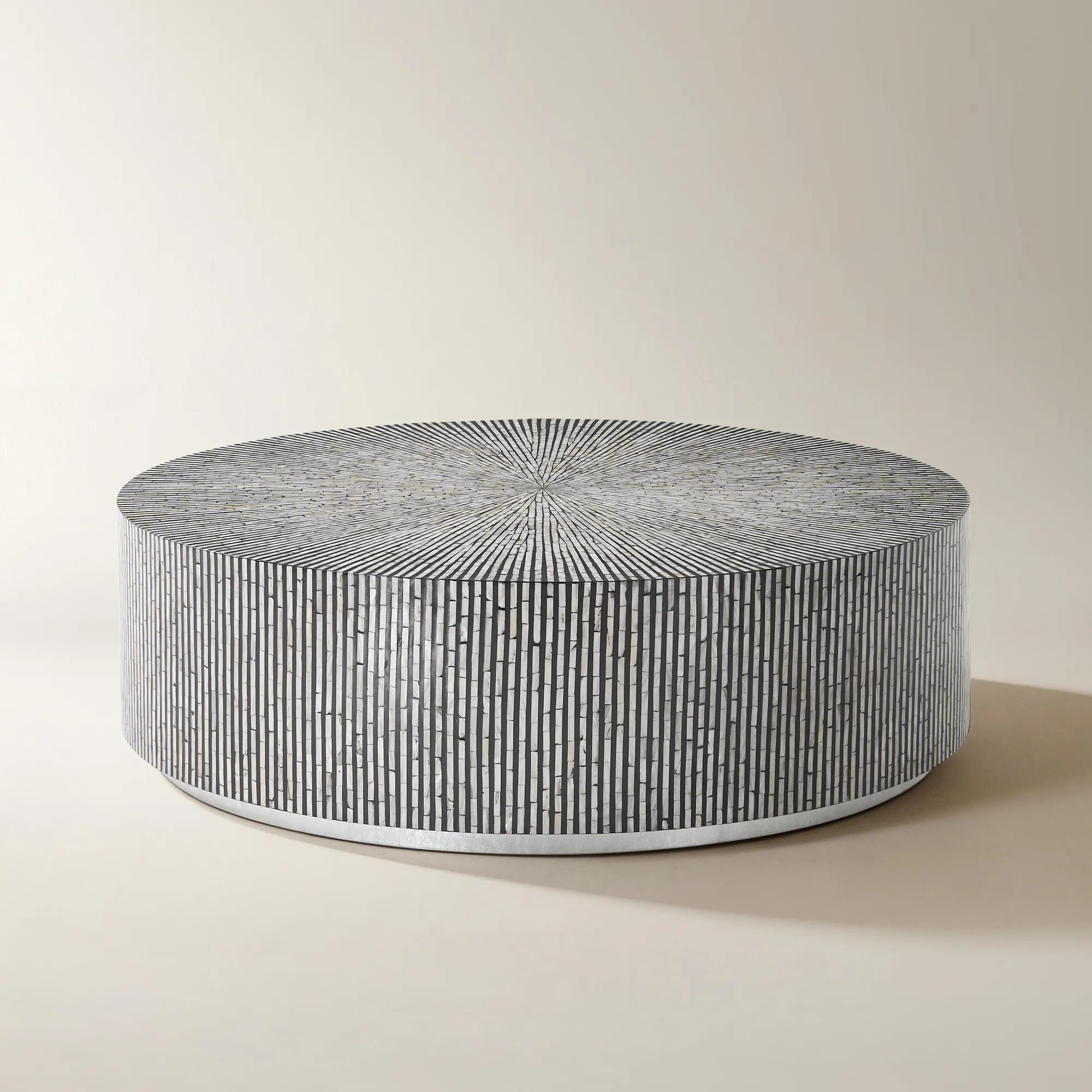
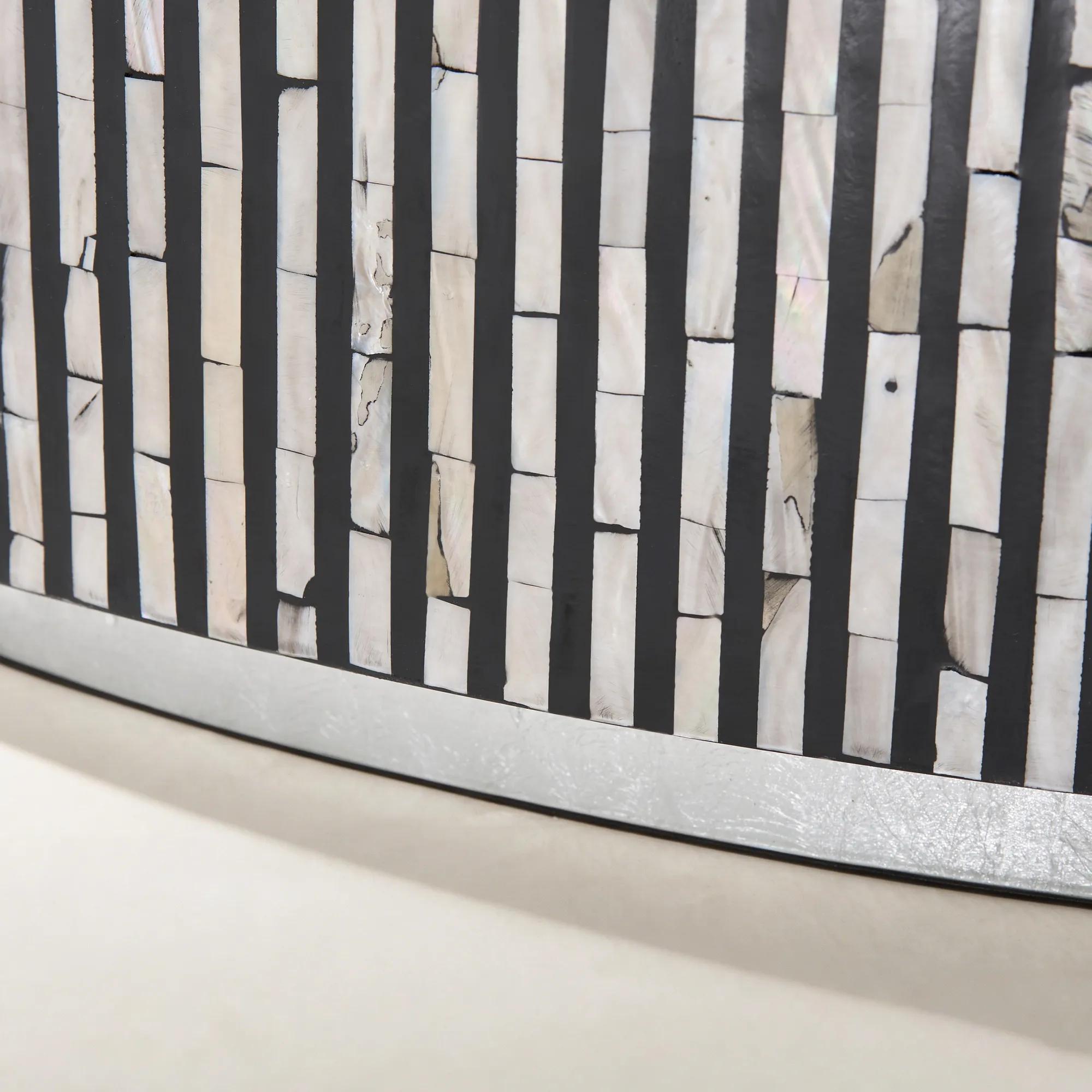 Marina Round Mosaic Black Coffee Table (52")$1399
A sculptural black coffee table featuring hand-applied mother-of-pearl mosaic and a silver leaf base.
Add To Cart -
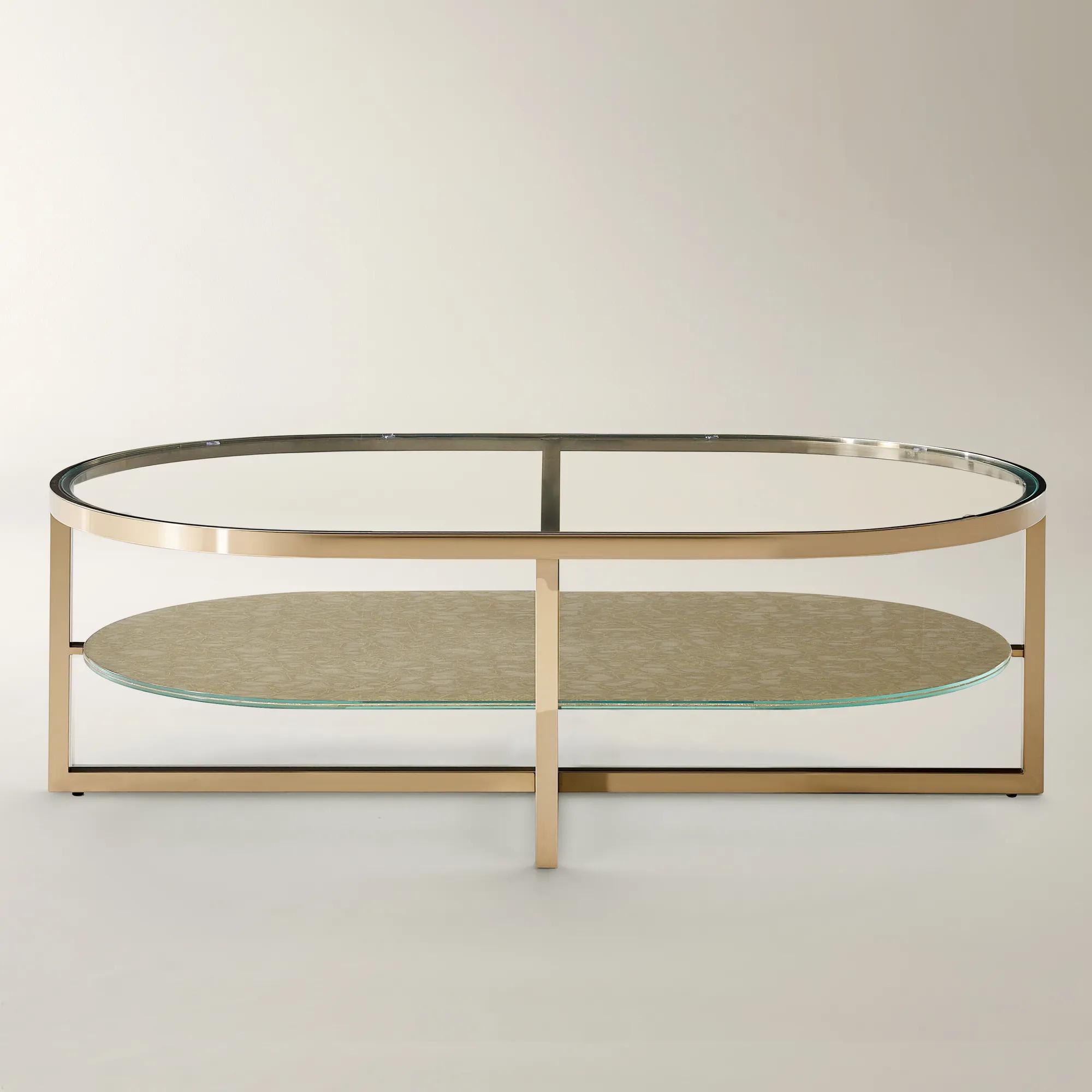
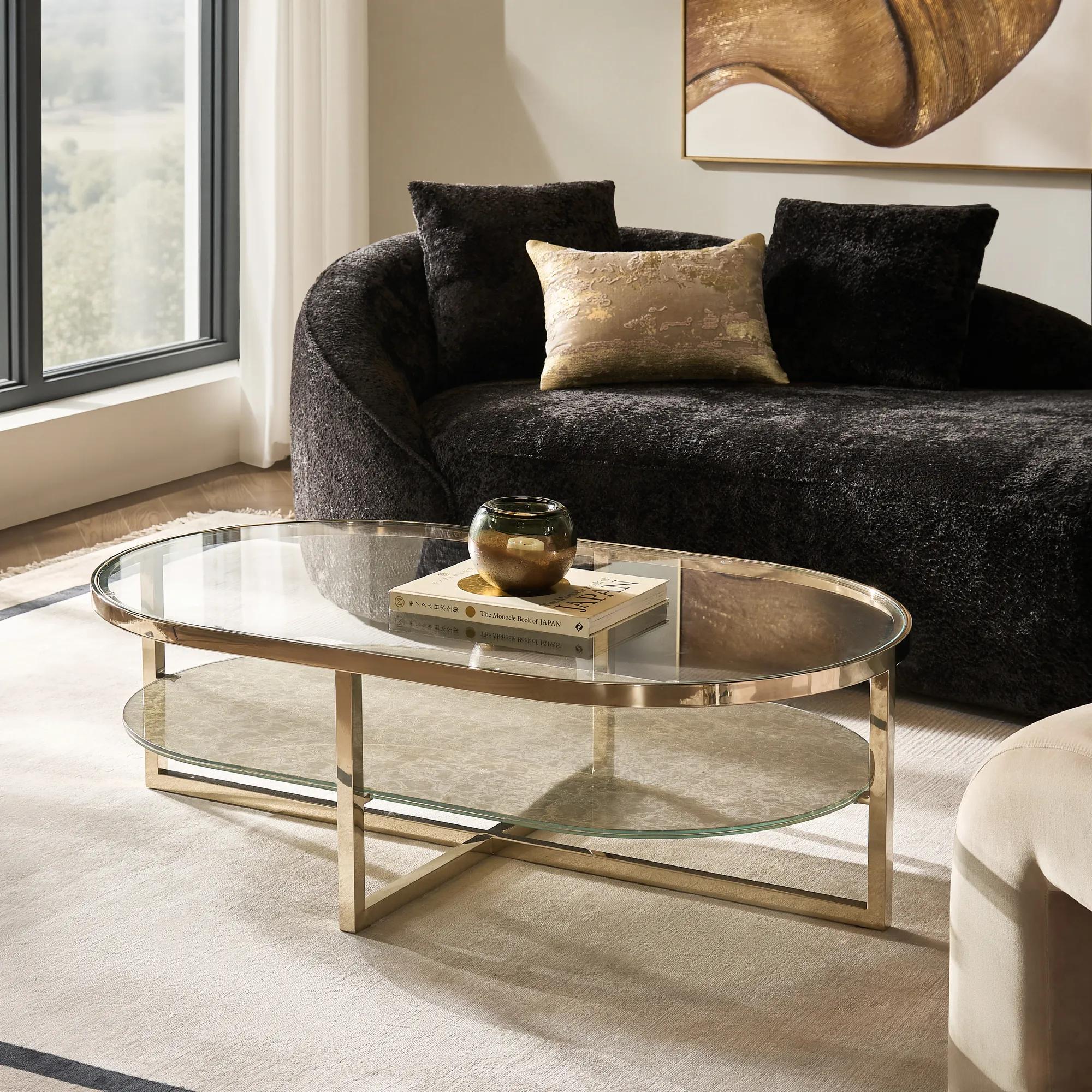 Duality Oval Fabric-Laminated Glass Coffee Table (47")$999
A modern oval coffee table featuring a tempered glass top, fabric-laminated shelf, and soft gold stainless steel frame.
Add To Cart -
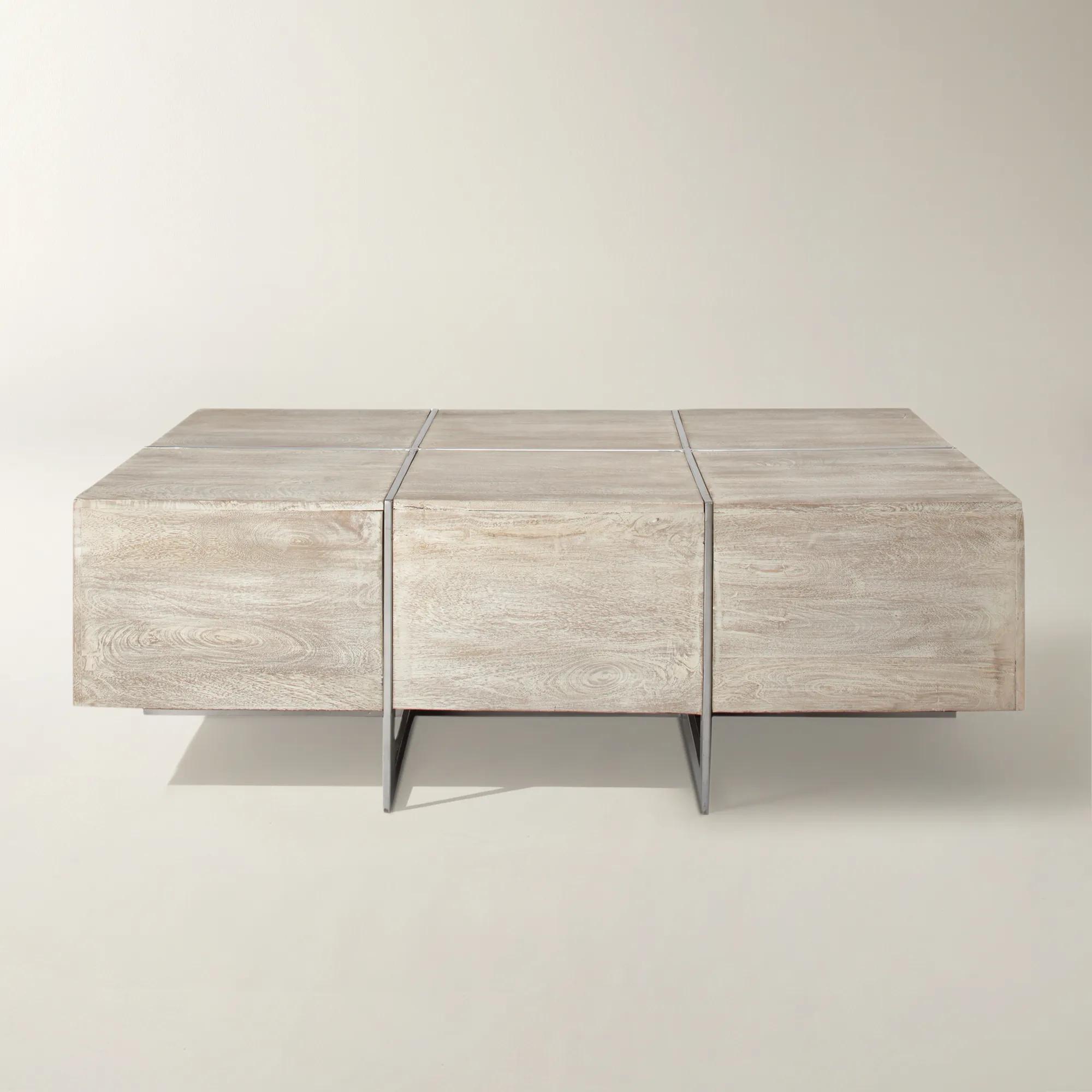
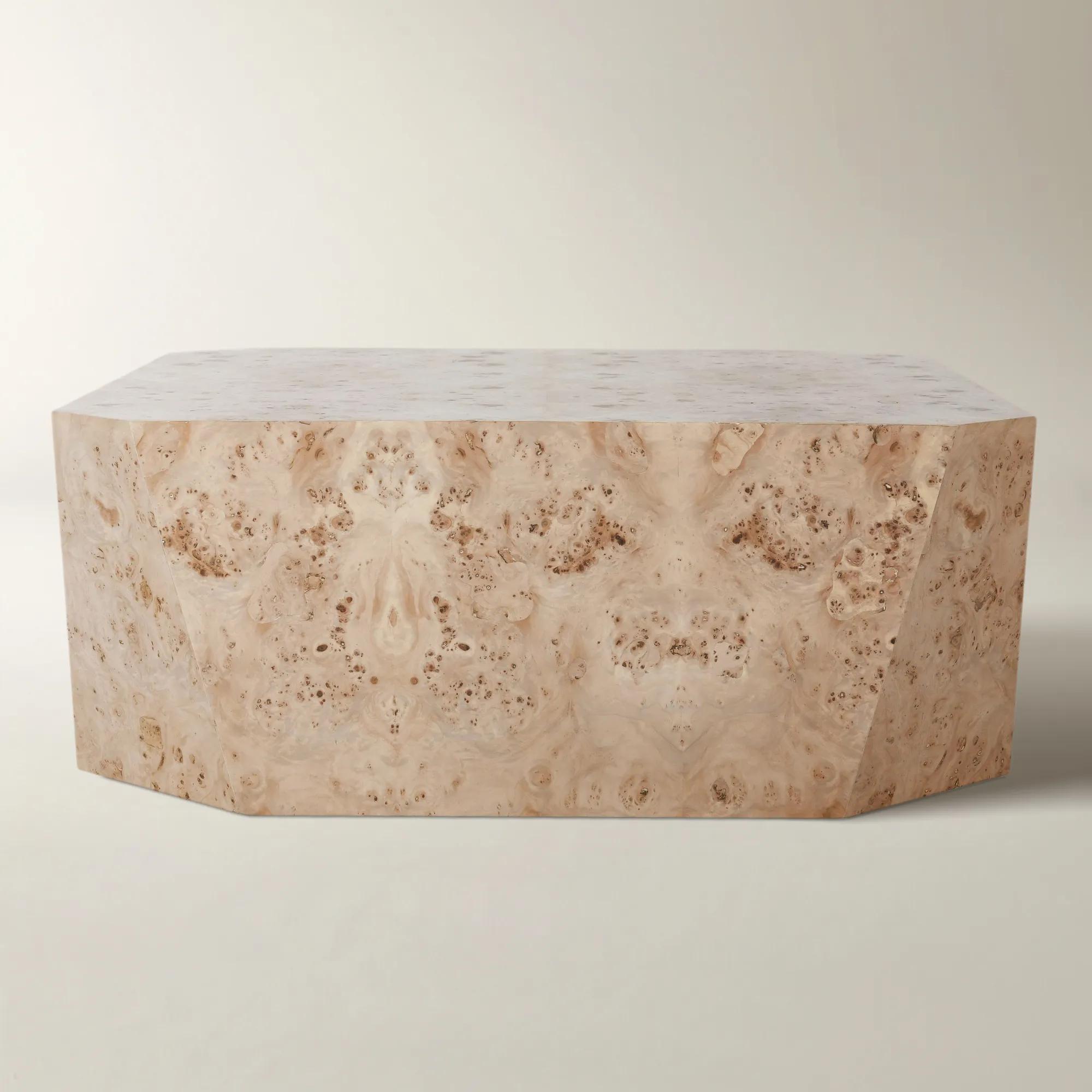
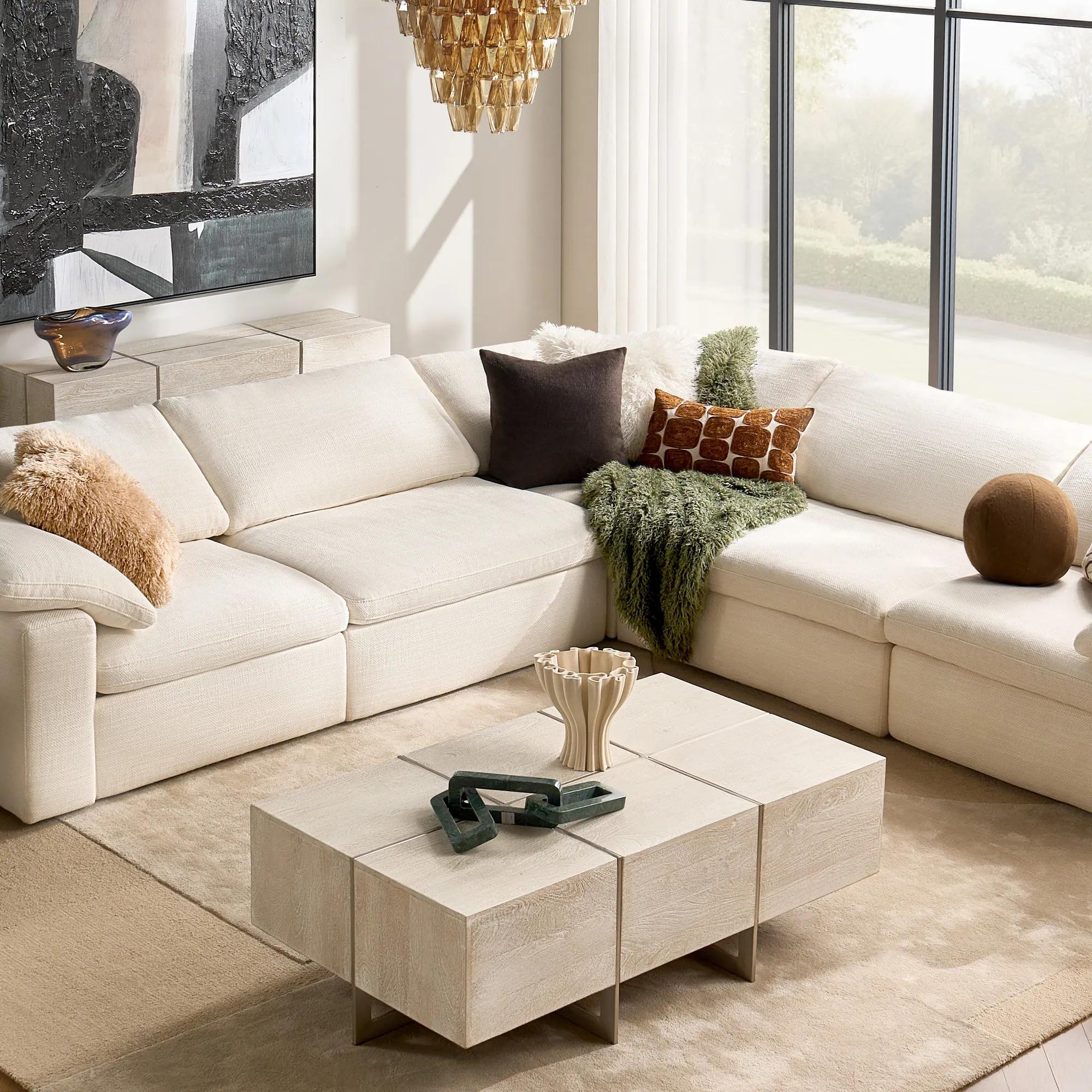 Clifton Rectangular Natural Mango Wood Coffee Table (54")$1299
A handcrafted mango wood table with a whitewashed finish and antiqued silver iron legs for organic appeal.
Add To Cart -
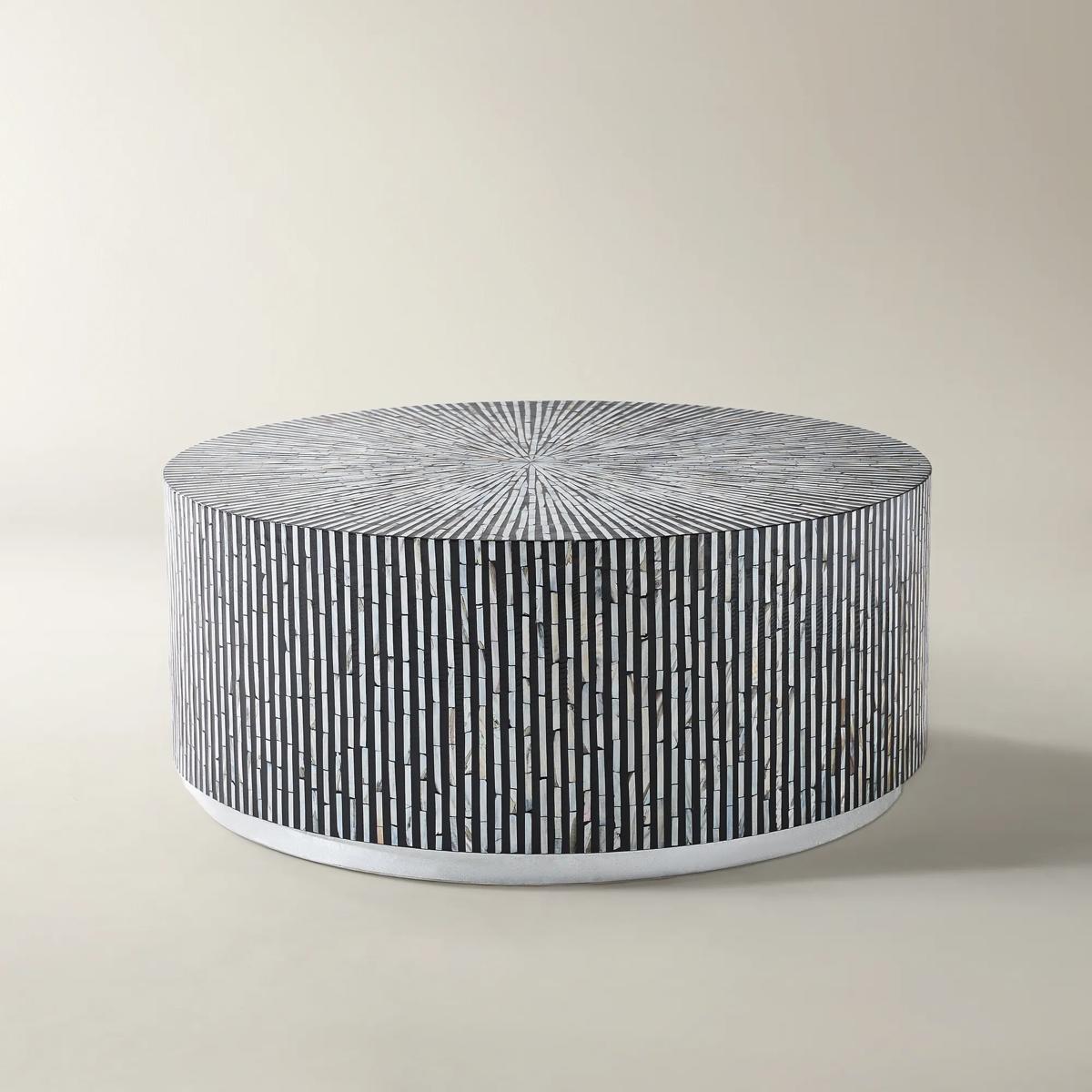
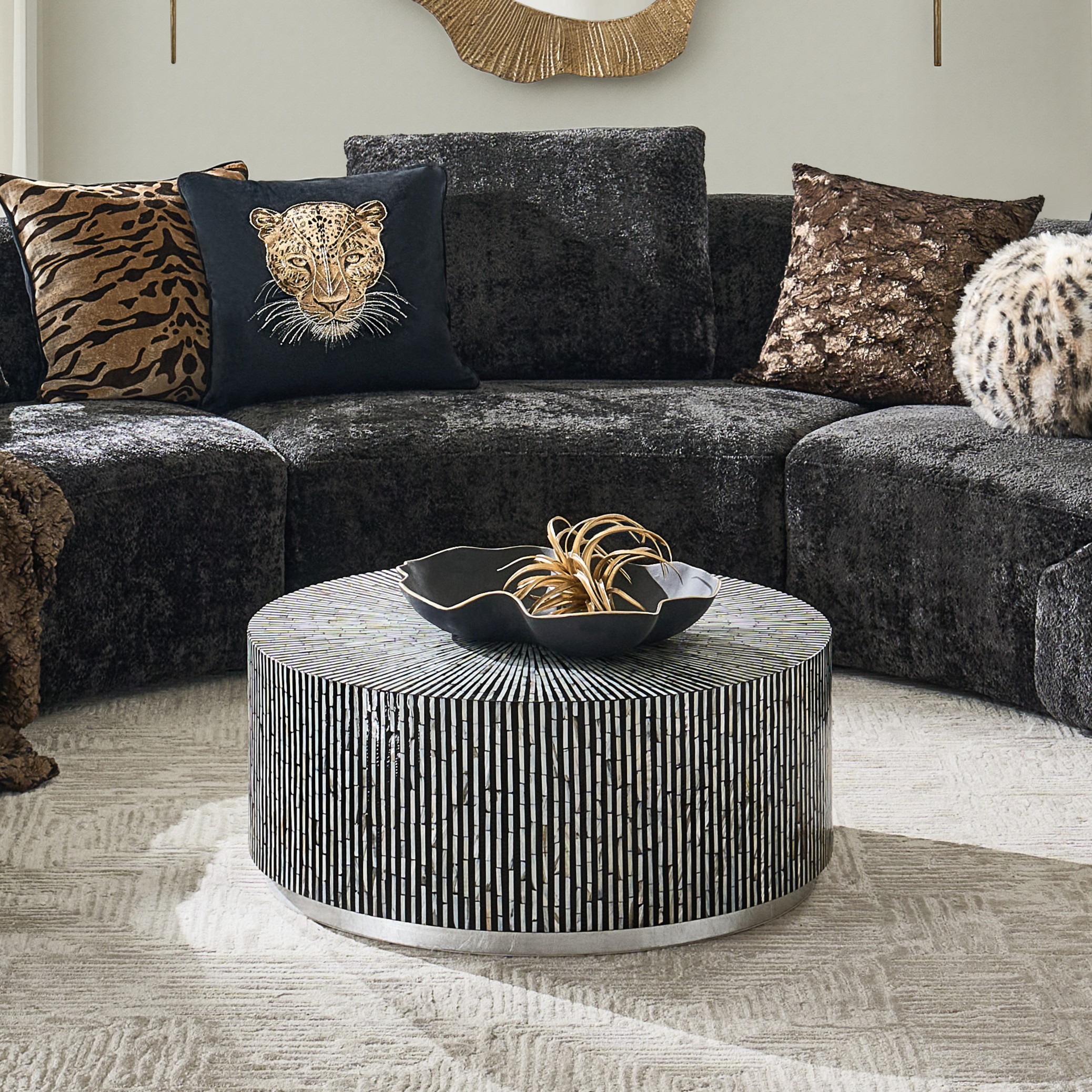 Marina Round Mosaic Black Coffee Table (35.8")$799
A handcrafted round coffee table featuring iridescent mother-of-pearl inlay and a silver leaf base.
Add To Cart -
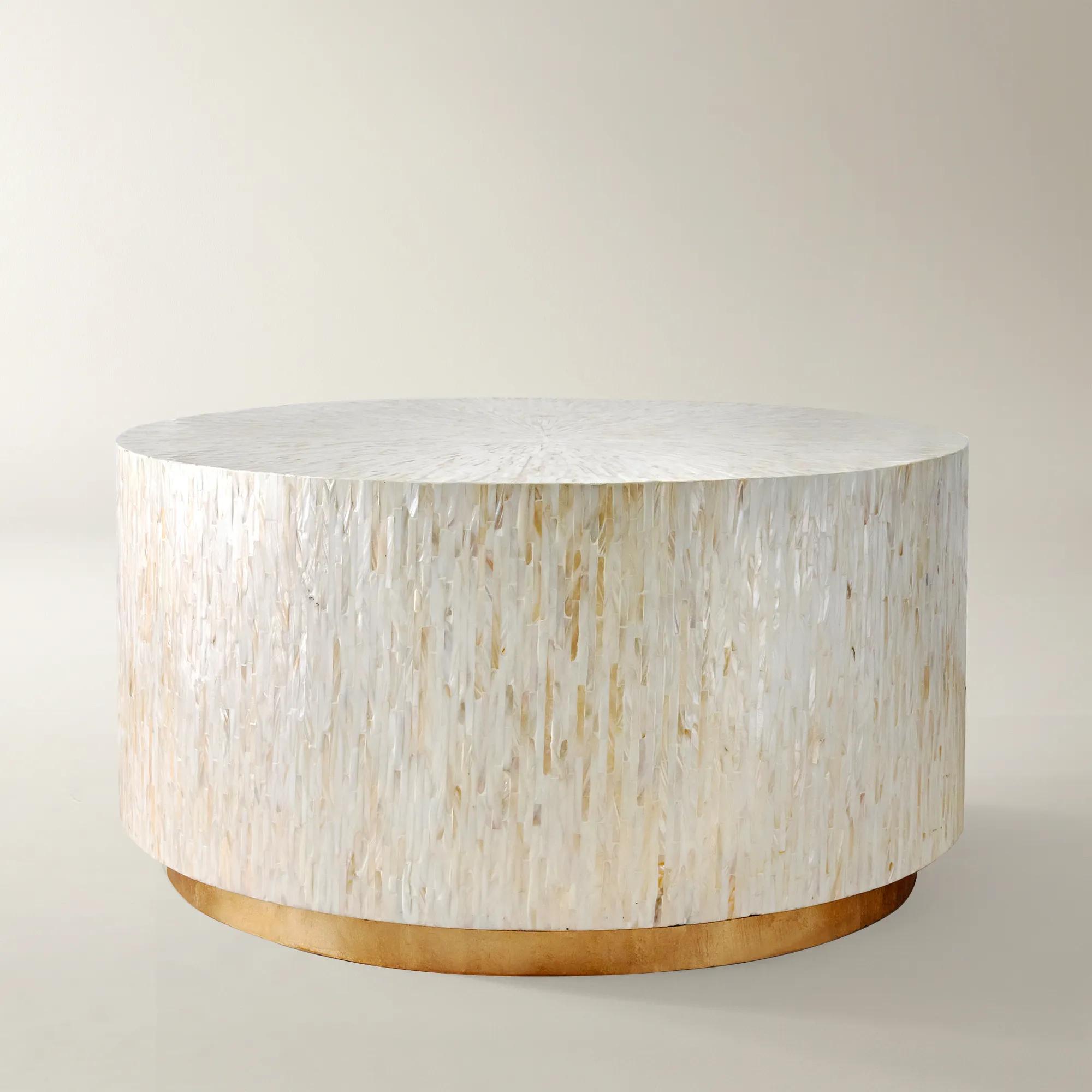
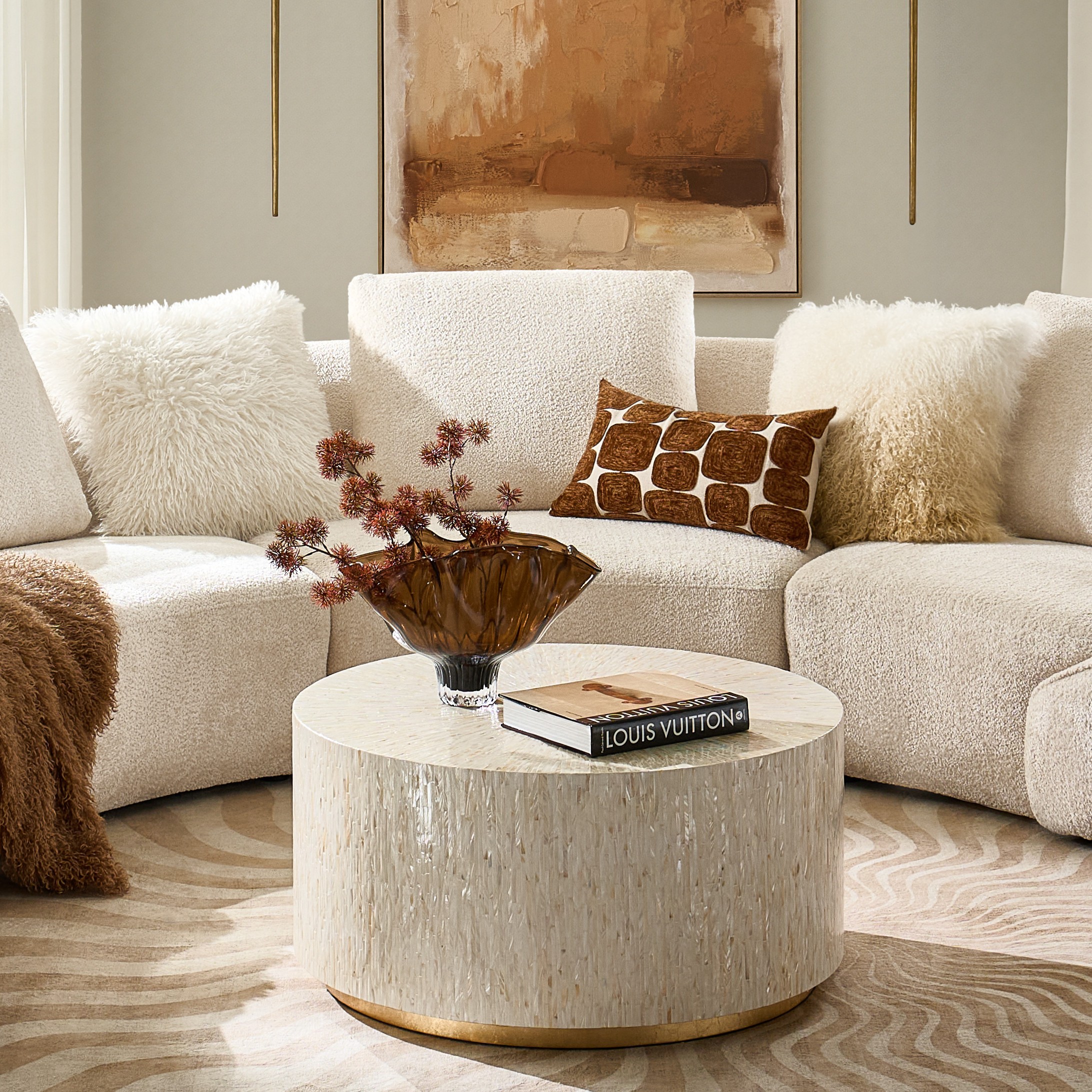 Alexandria Round Mosaic Platinum Coffee Table (36")$799
A luminous ivory coffee table featuring hand-applied mother-of-pearl mosaic and a gold leaf-accented base.
Add To Cart -
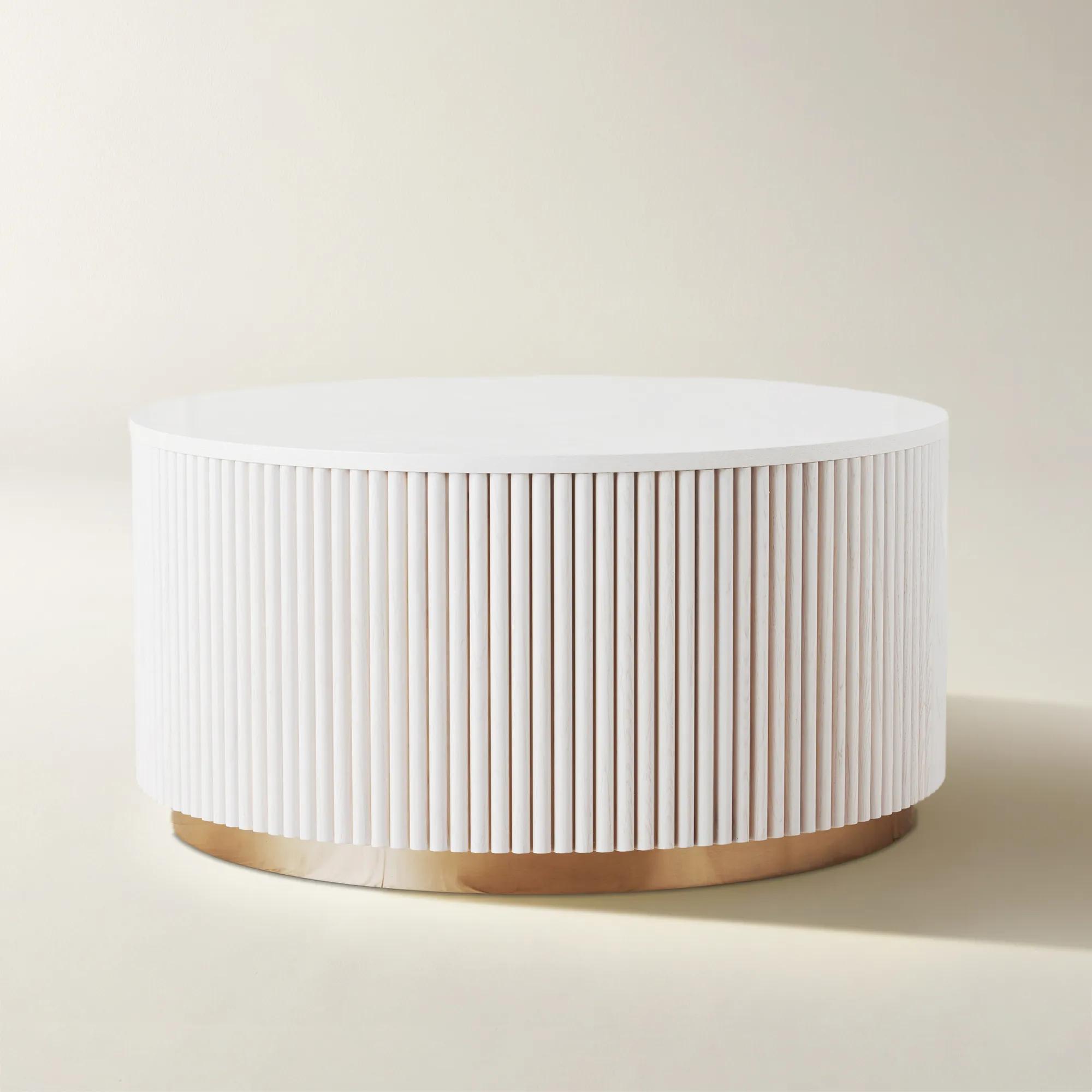
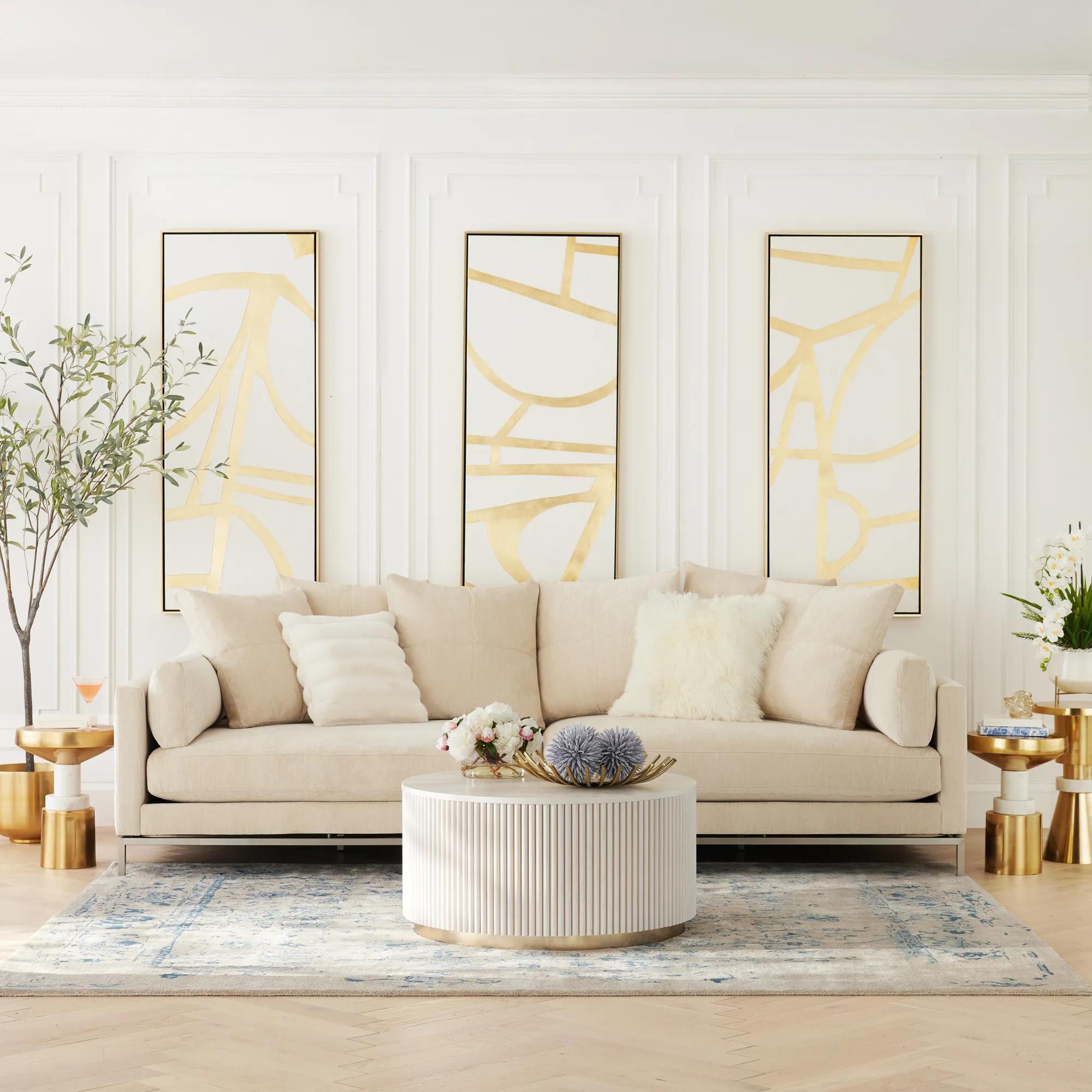 Natalia Round Reeded Whitewashed Ash Wood Coffee Table (36")$1299
A striking coffee table featuring reeded ash wood sides, a smooth top, and a whitewashed finish.
Add To Cart -
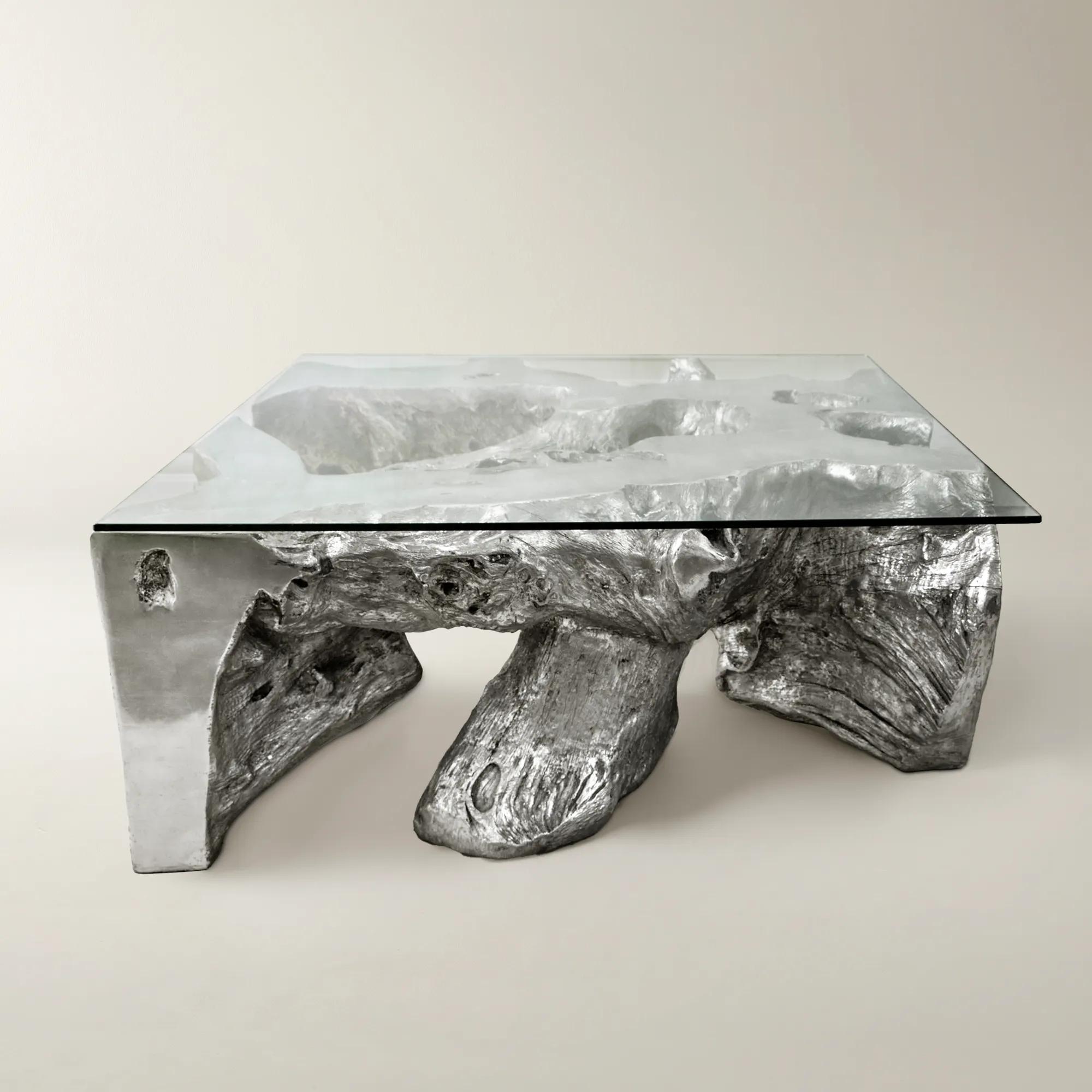 Sequoia Silver Resin Coffee Table With Glass Top (44")$2299
A sculptural coffee table featuring a hand-applied silver leaf resin base and a tempered glass top.
Add To Cart -
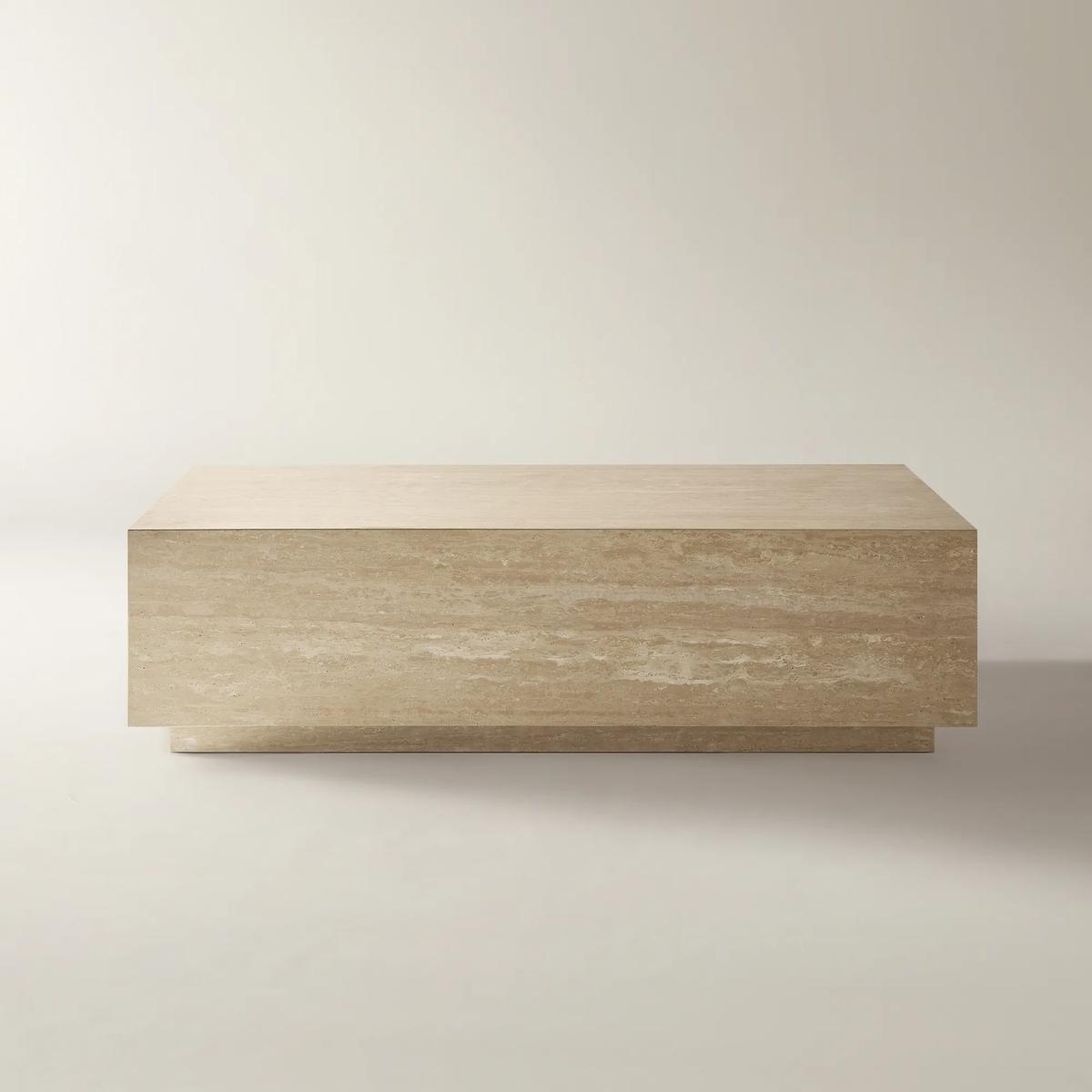
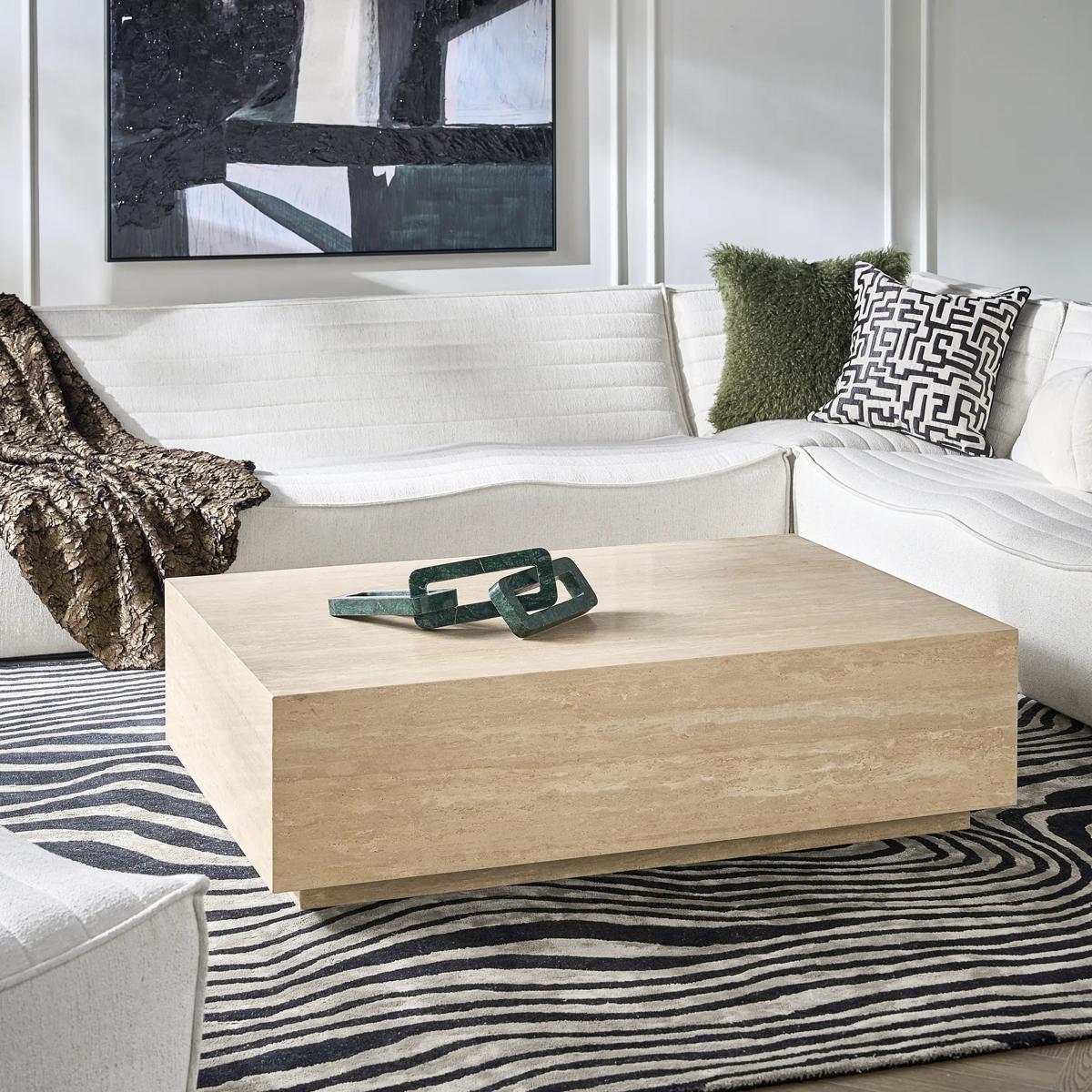 Vanta Rectangular Travertine Coffee Table (54")$2599
A sculptural travertine coffee table with an aluminum honeycomb core and recessed plinth base.
Add To Cart -
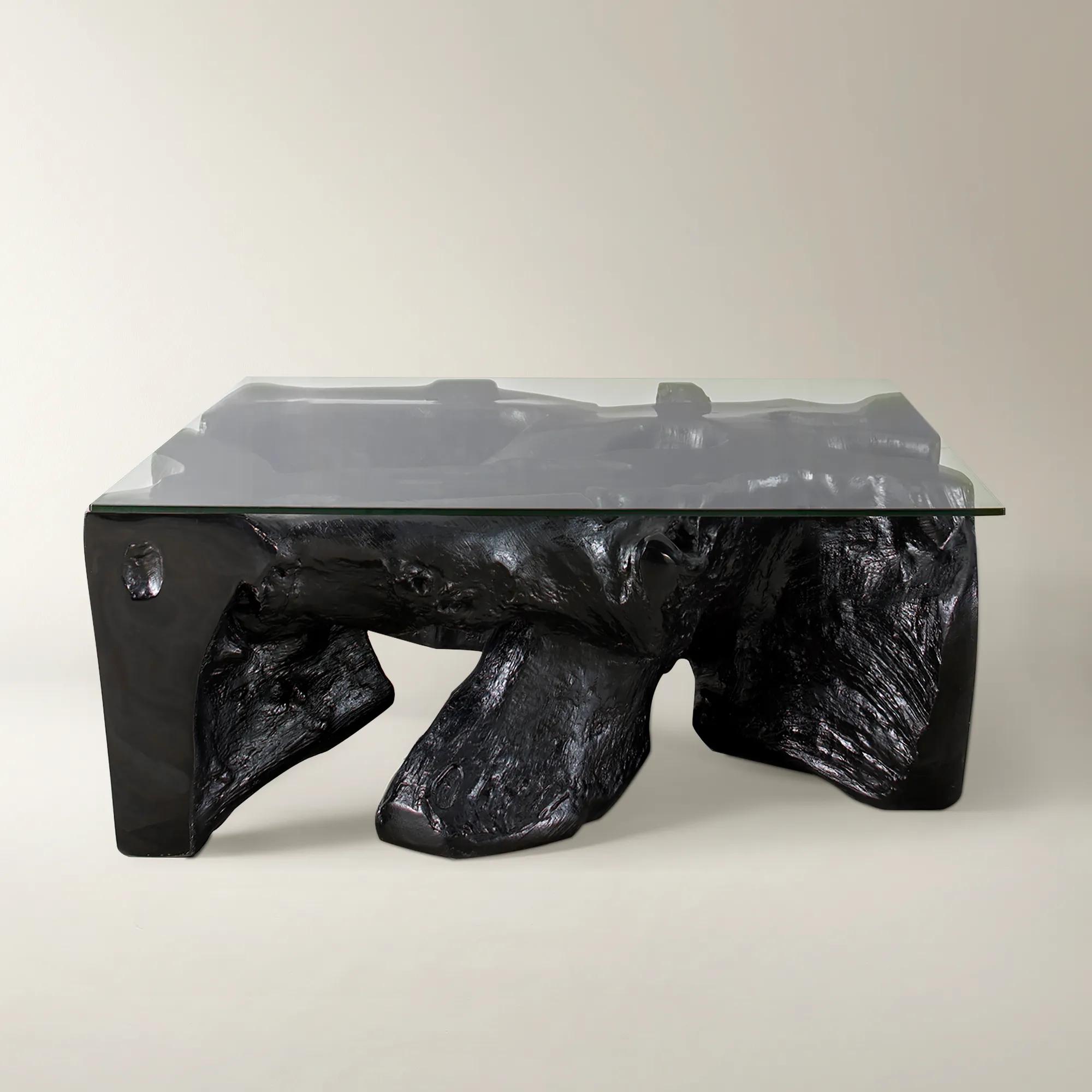
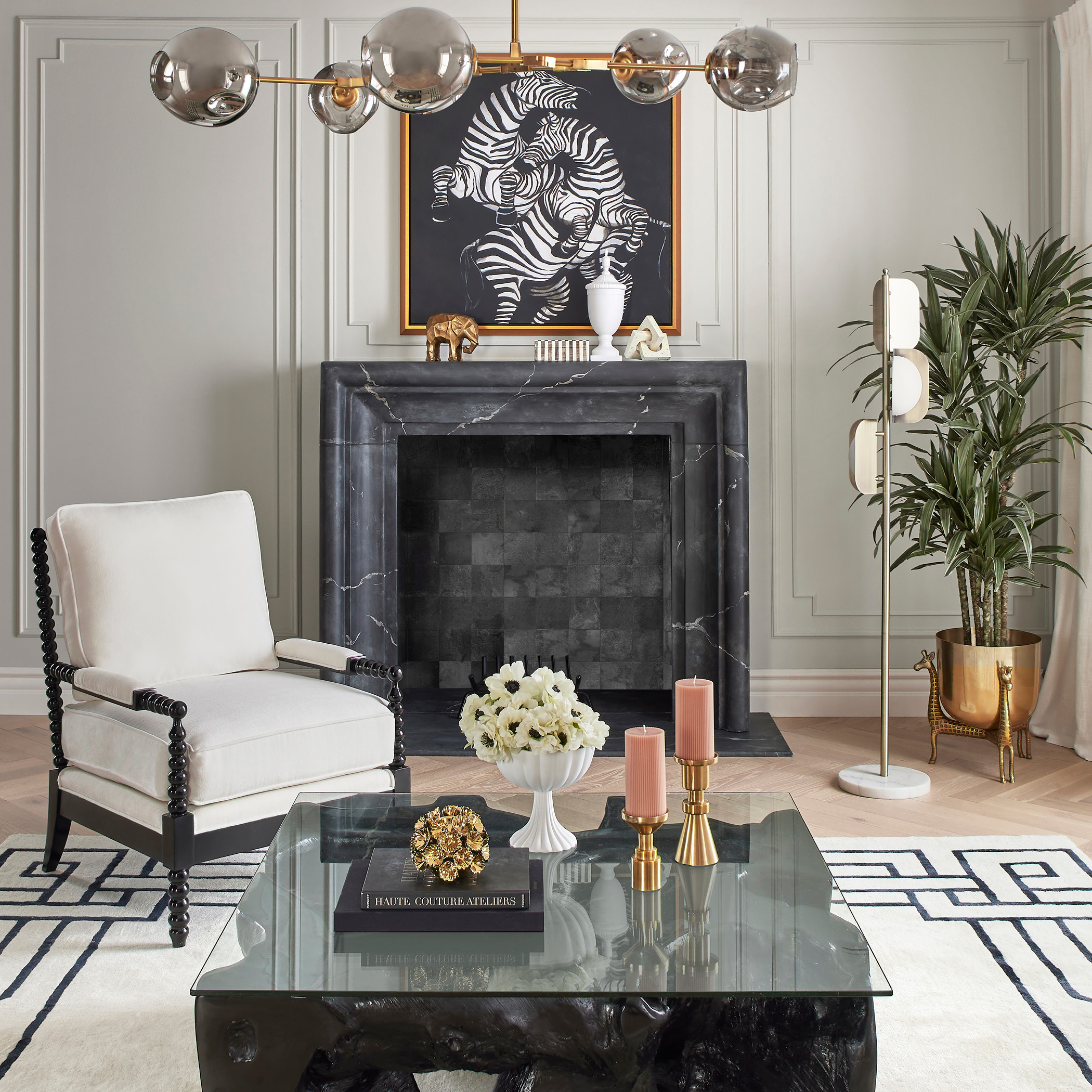 Sequoia Black Resin Coffee Table With Glass Top (44")$2299
A sculptural black coffee table crafted from resin and polished stone fragments for indoor or outdoor use.
Add To Cart -
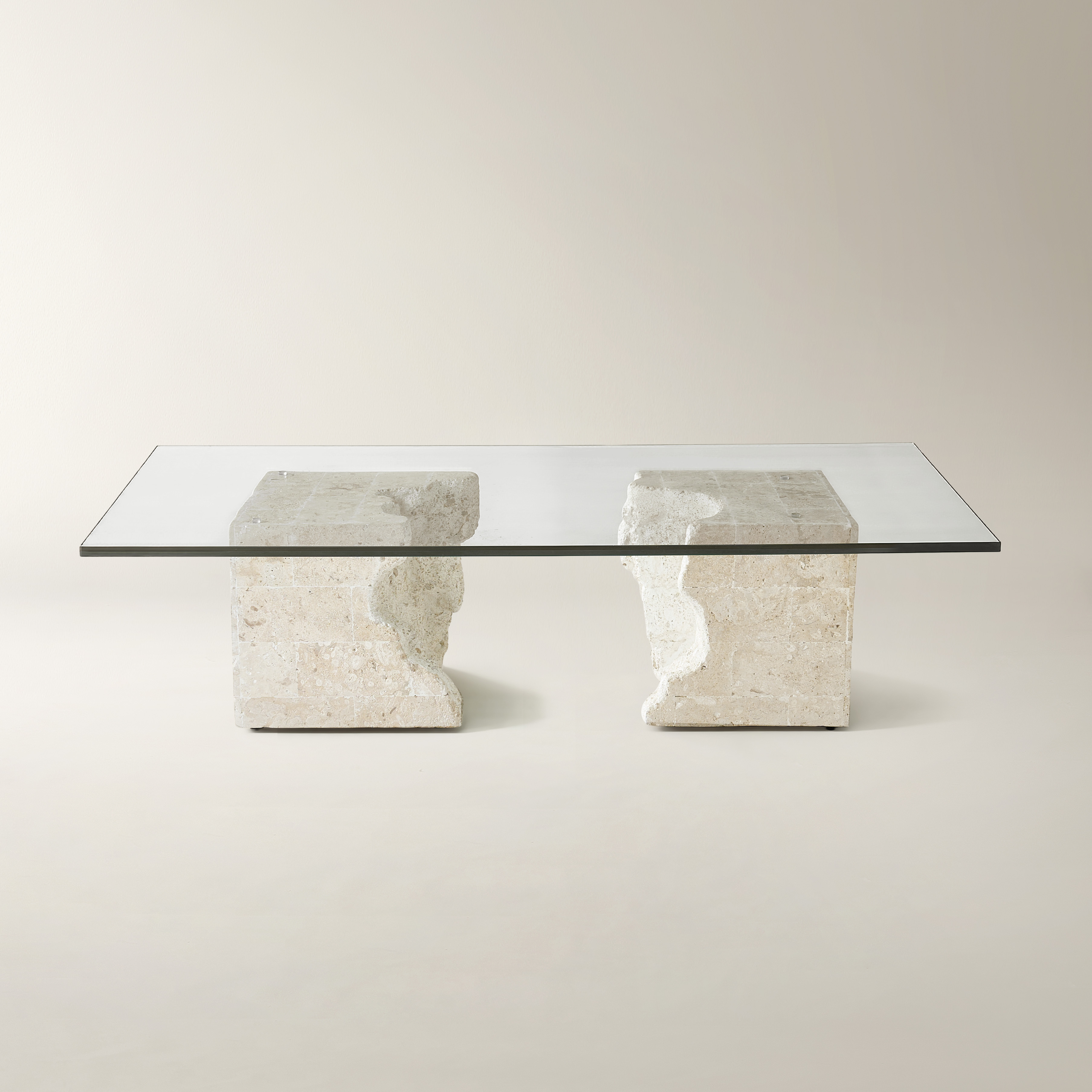 Cairo Rectangular Mactan Stone Coffee Table With Glass Top (63")$1899
A contemporary coffee table featuring a clear tempered glass top floating above hand-carved Mactan stone bases.
Add To Cart -
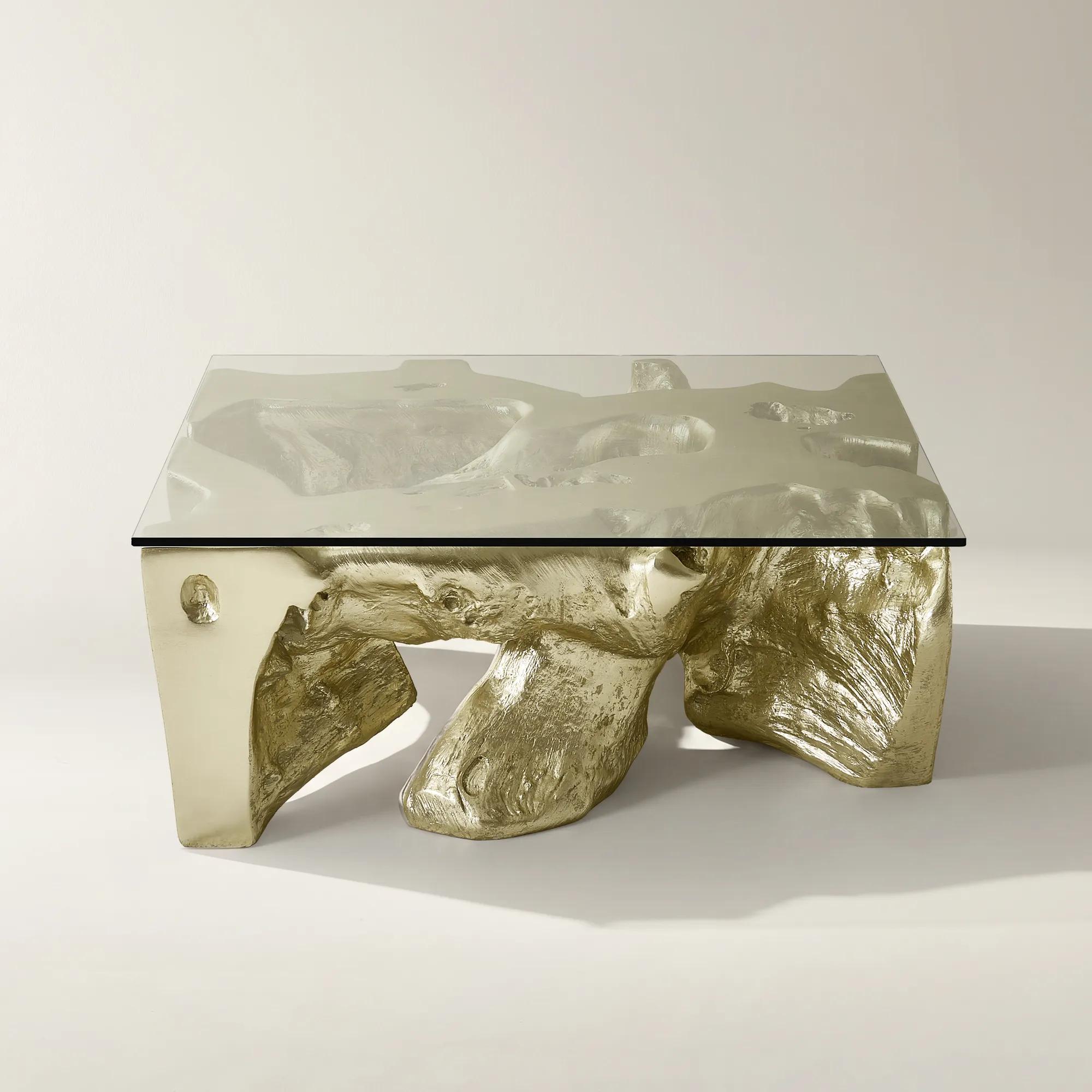 Sequoia Champagne Gold Resin Coffee Table With Glass Top (44")$2299
A sculptural resin coffee table with a champagne gold leaf finish and a clear tempered glass top.
Add To Cart -
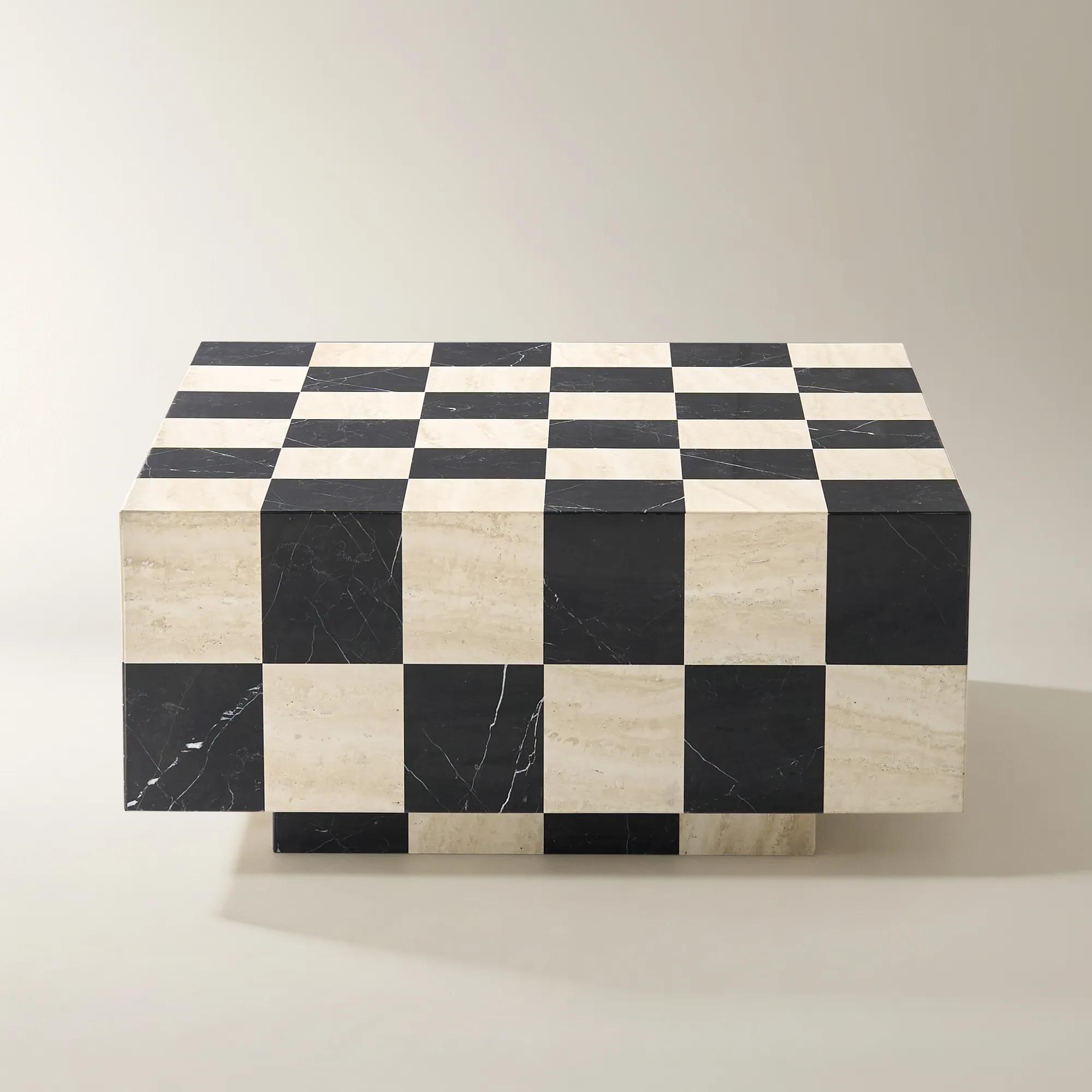
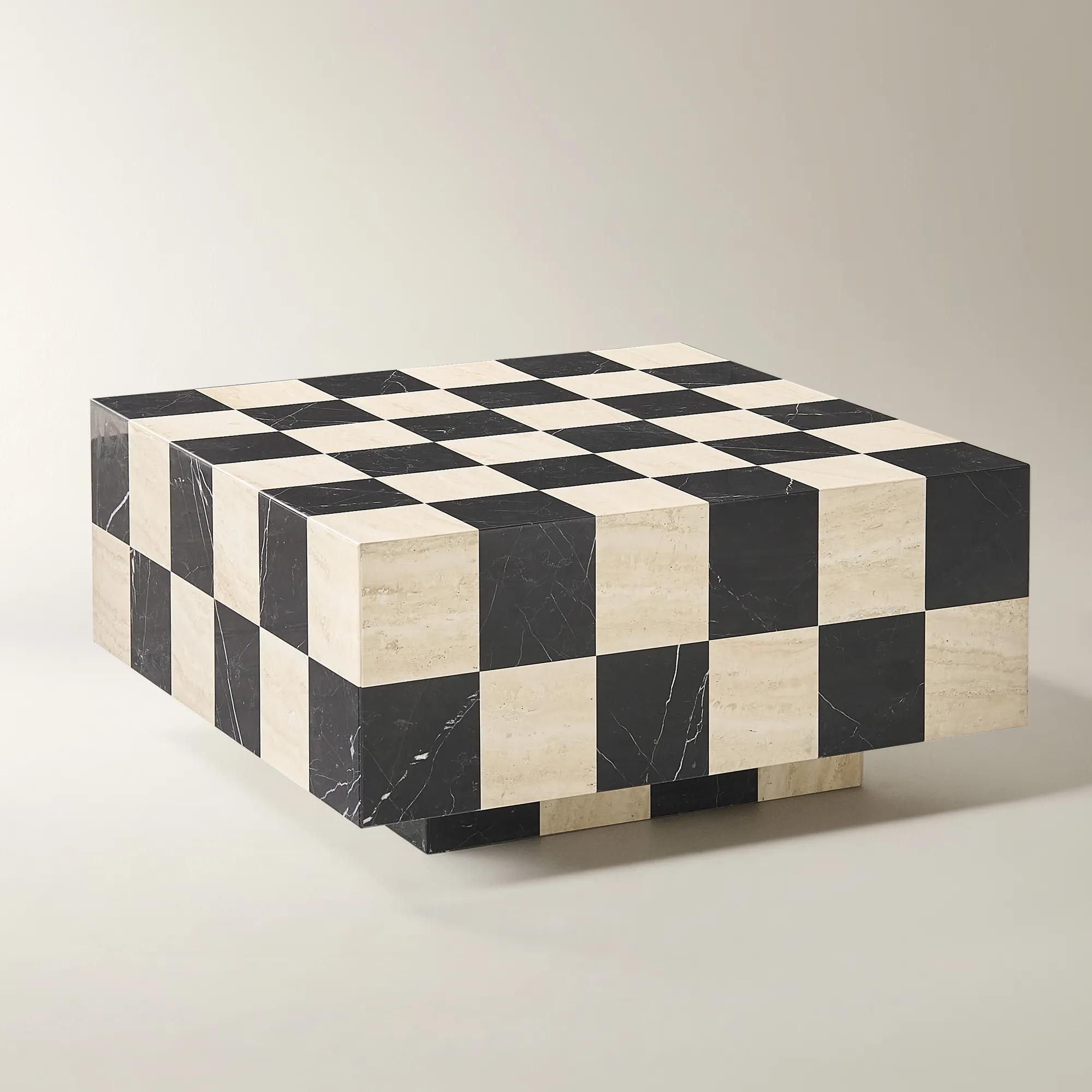 Chessa Square Chequered Marble Coffee Table (31.9")$1699
A striking coffee table featuring a dimensional black marble and travertine checkerboard mosaic with polished finish.
Add To Cart -
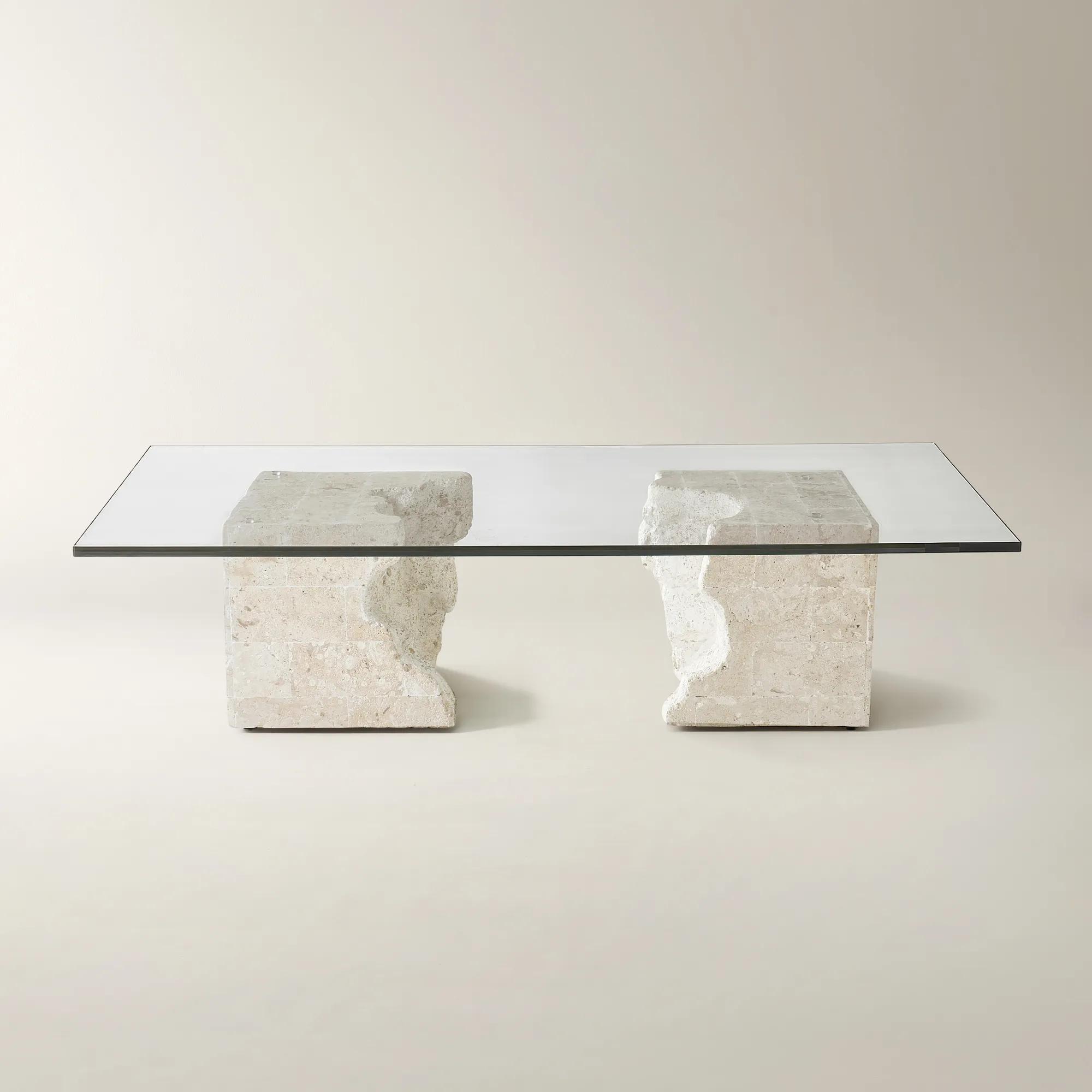 Cairo Rectangular Mactan Stone Coffee Table With Glass Top (70.87")$1999
A contemporary coffee table featuring a clear tempered glass top floating above hand-carved Mactan stone bases.
Add To Cart -
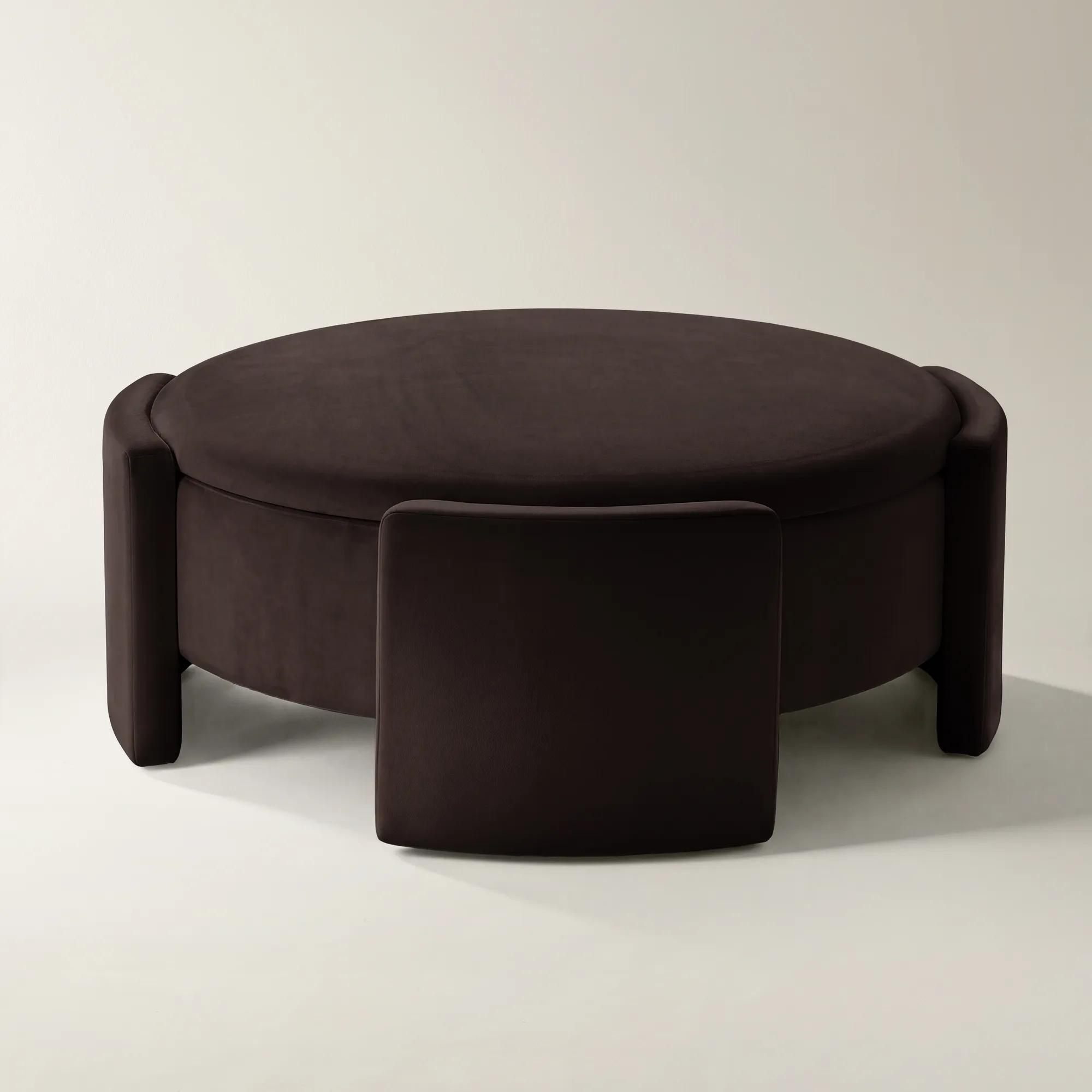
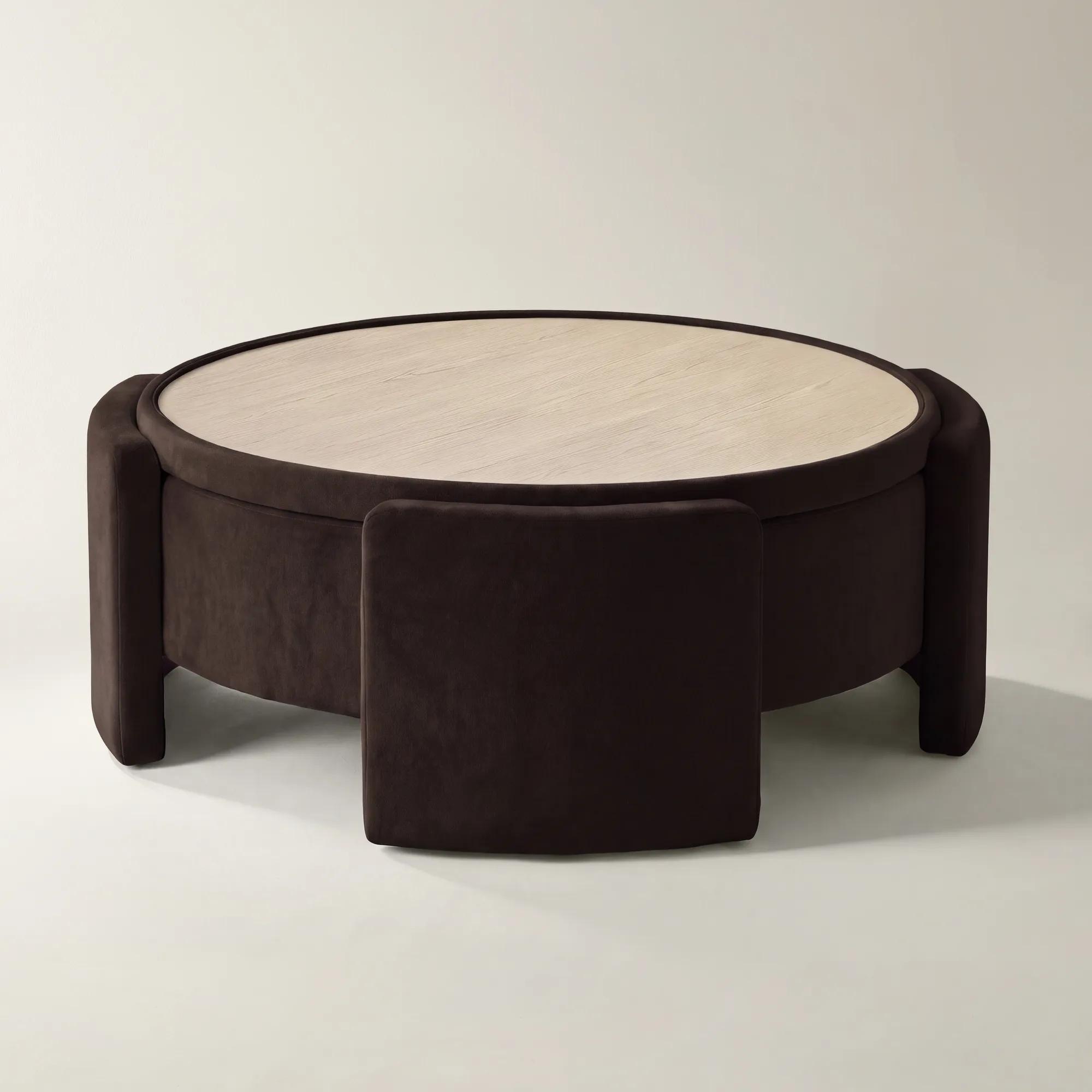 Jora Round Dark Chocolate Velvet Storage Coffee Table With Reversible Tabletop (47.7")$799
A dark chocolate velvet coffee table with hidden storage and a reversible velvet-and-rubberwood tabletop.
Add To Cart -

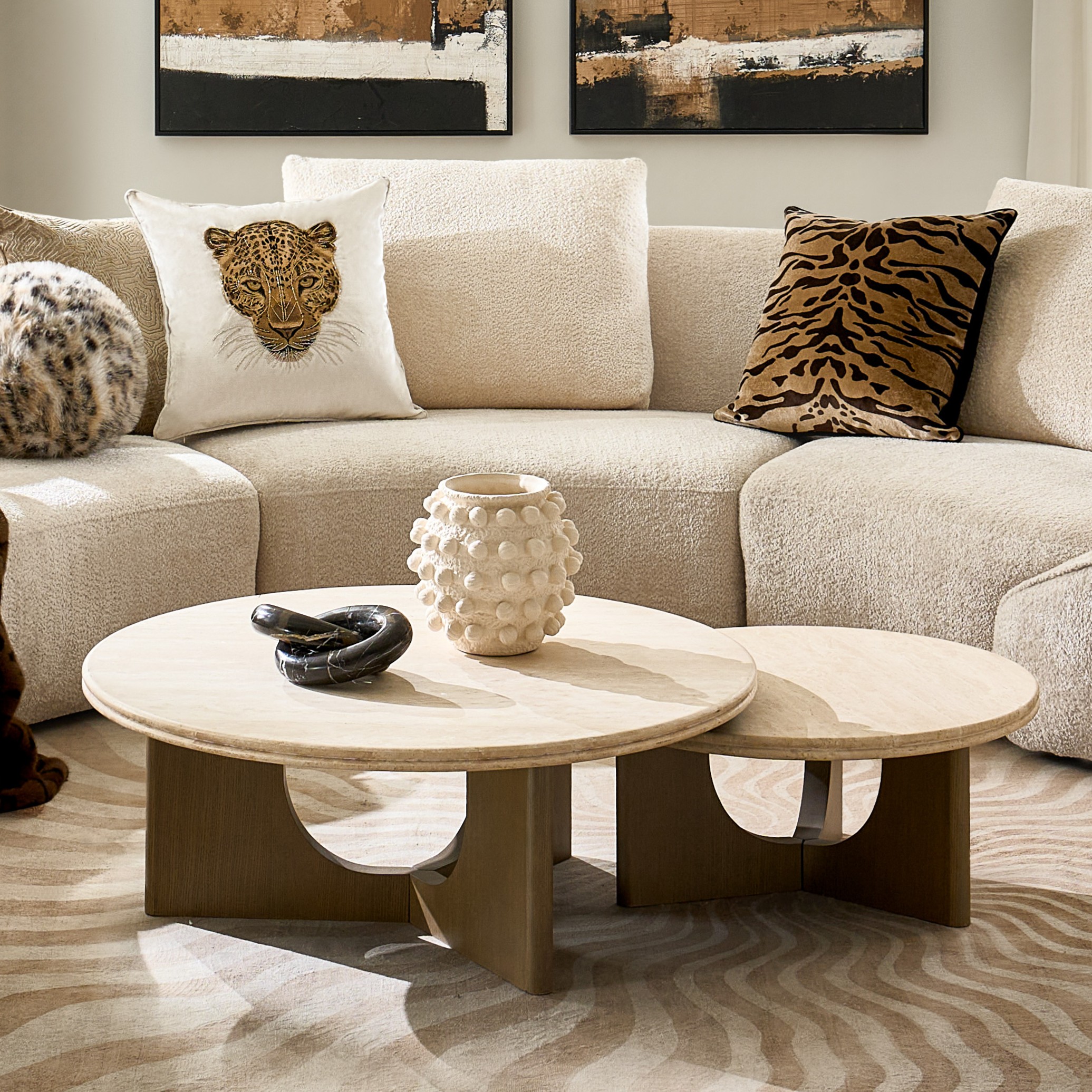 Bond Round Travertine and Wood Coffee Table (29.25")$699
A genuine travertine stone coffee table with warm ivory-gold tones atop a solid natural ash base.
Add To Cart -
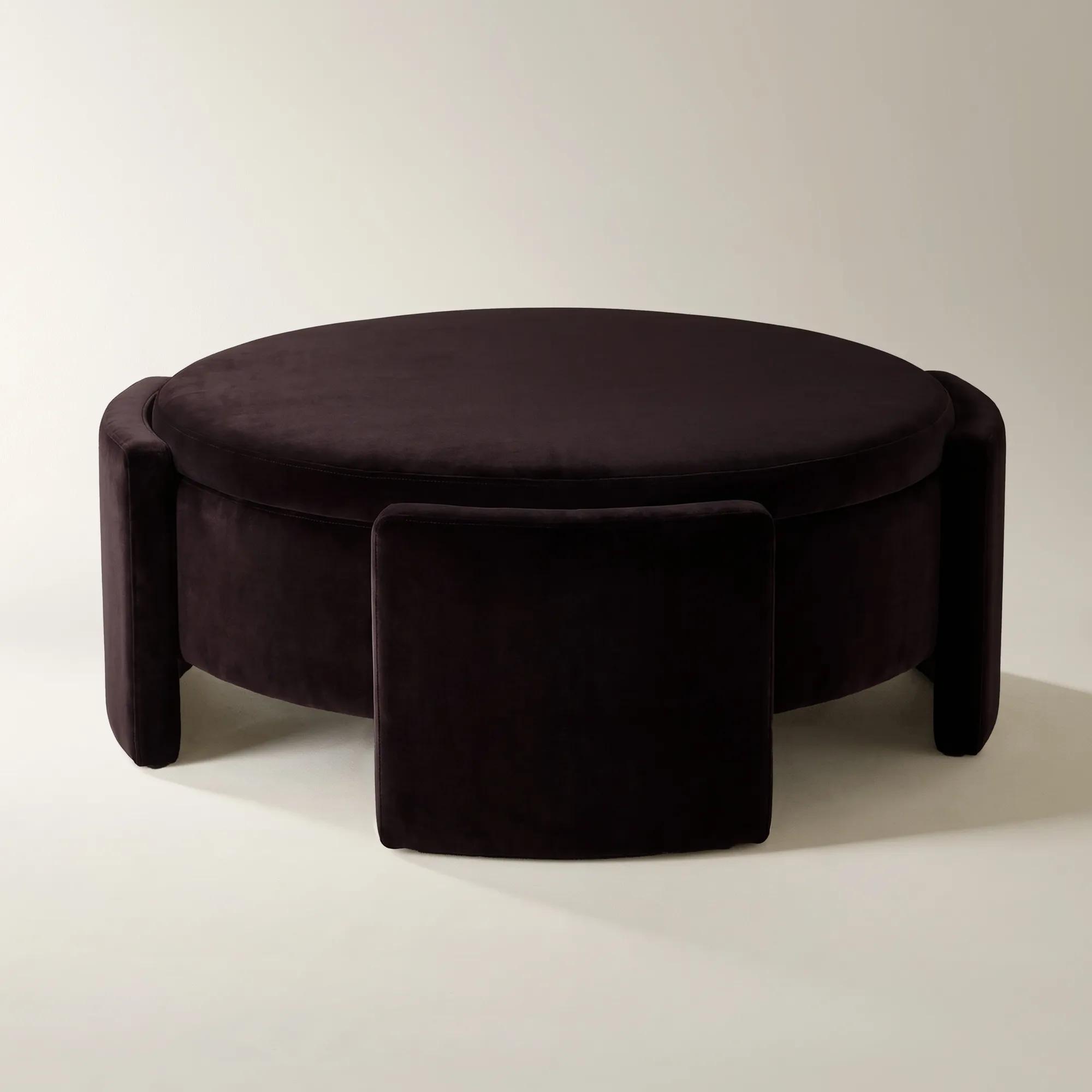
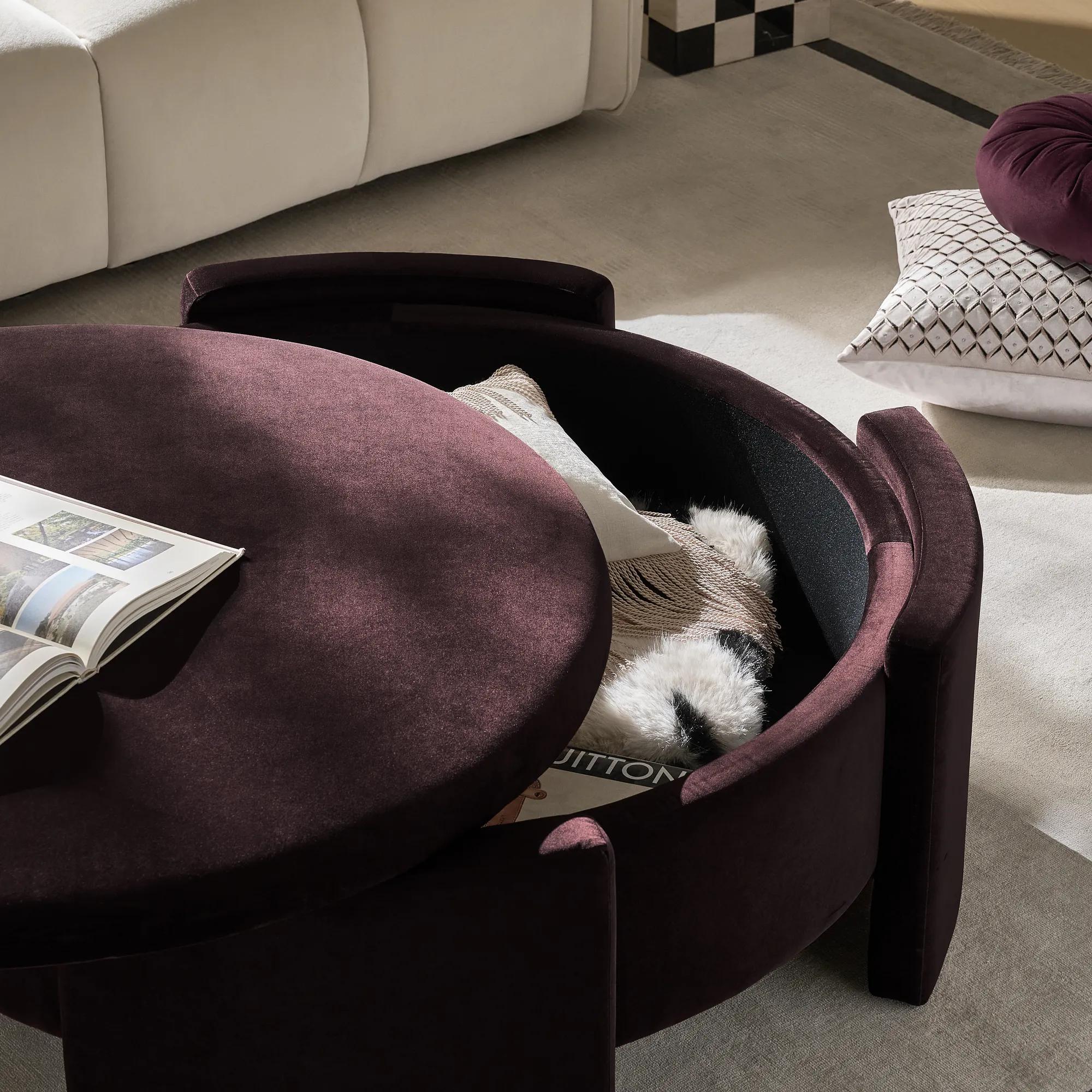 Jora Round Fig Velvet Storage Coffee Table With Reversible Tabletop (47.7")$799
A round fig velvet coffee table featuring a reversible wood tabletop and hidden interior storage.
Add To Cart -
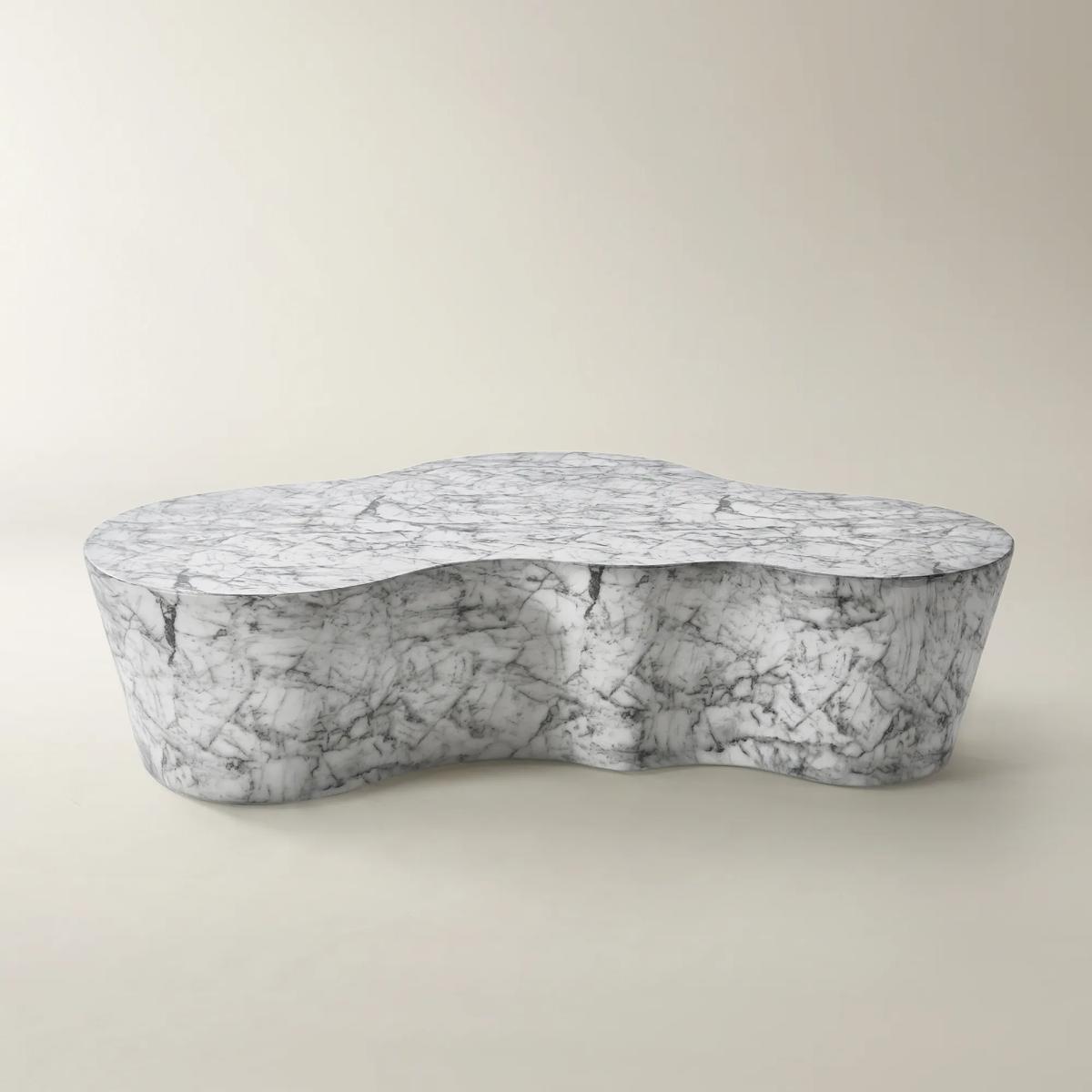
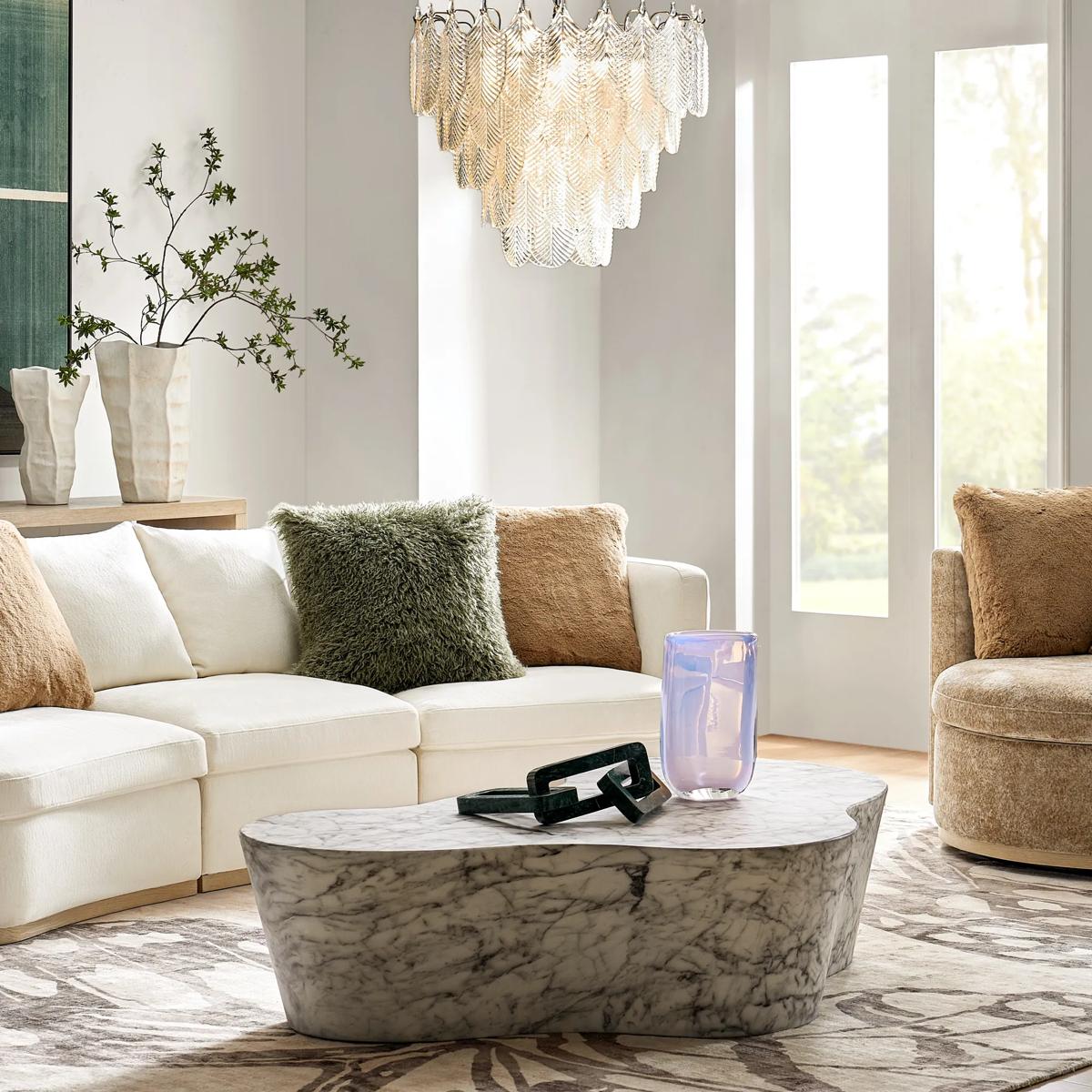 Petra White Concrete Indoor/Outdoor Coffee Table (59.4")$1099
A sculptural white concrete coffee table with cloud-like contours and marble-look veining, suitable indoors or outdoors.
Add To Cart -
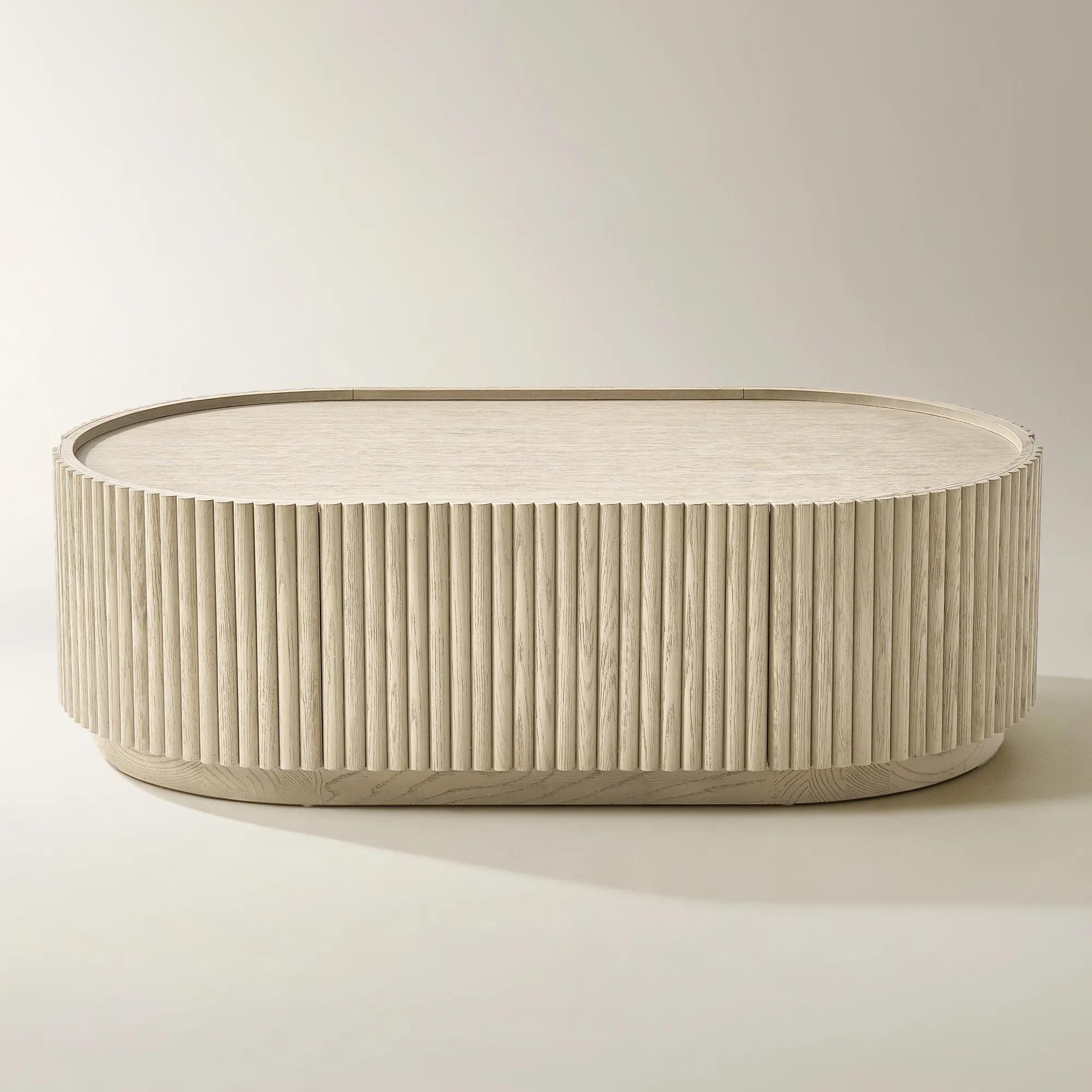
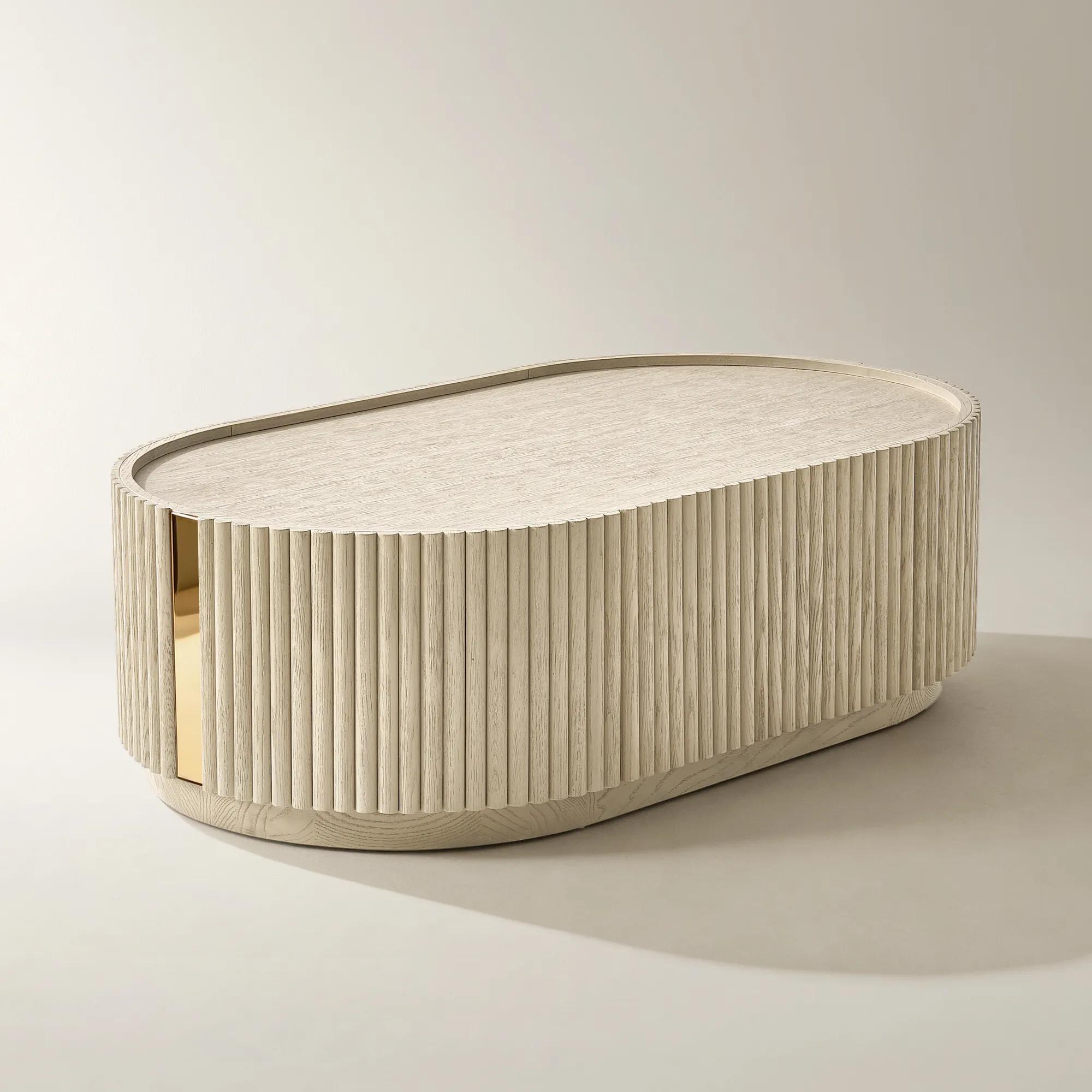 Stria Oval Reeded White Oak Coffee Table with Drawer (52")$1399
A reeded white oak coffee table with soft gold accents, recessed tabletop, and concealed soft-close drawer.
Add To Cart -
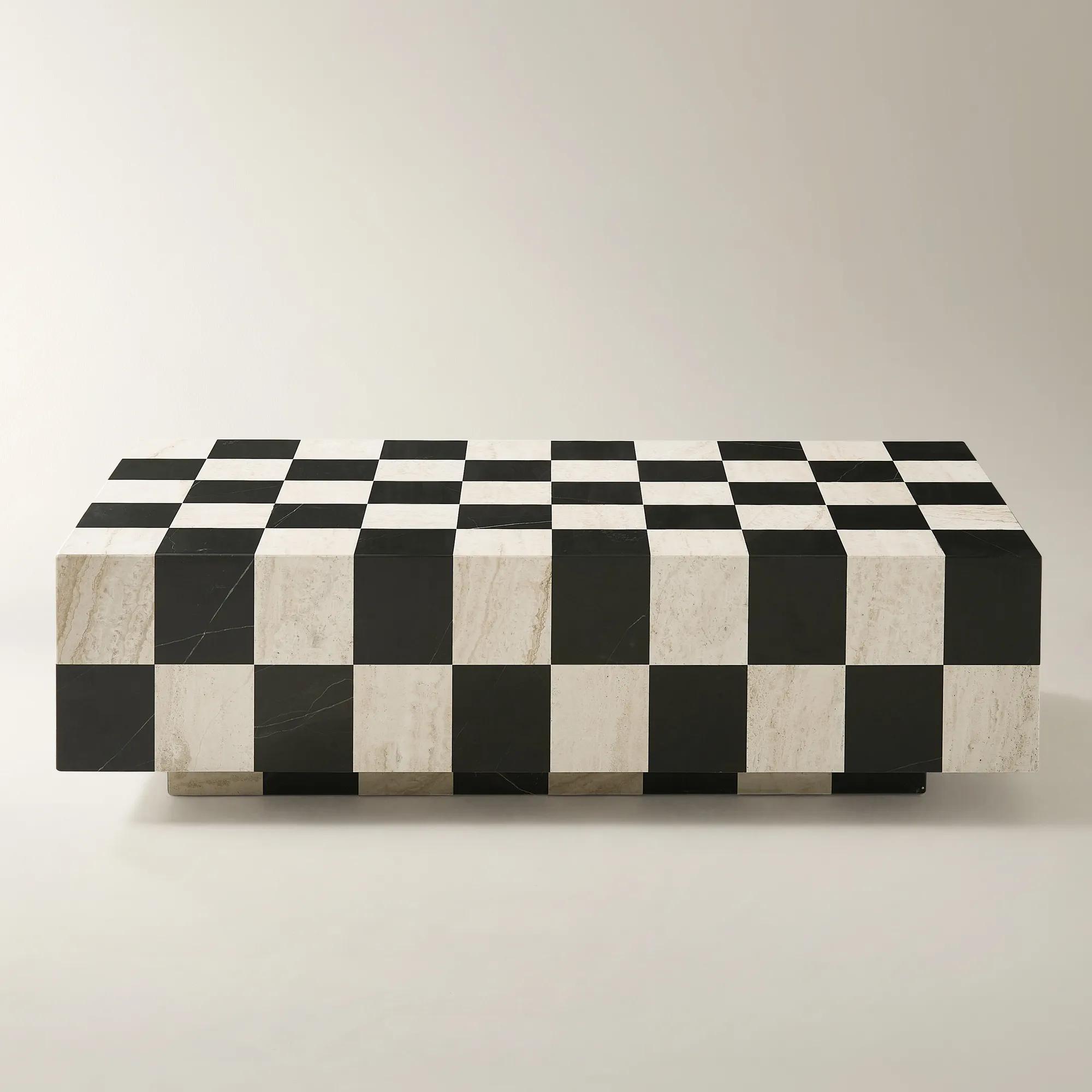 Chessa Rectangular Chequered Marble Coffee Table (53.1")$2399
A sculptural coffee table featuring polished black marble and travertine checkerboard mosaic with a monolithic silhouette.
Add To Cart -
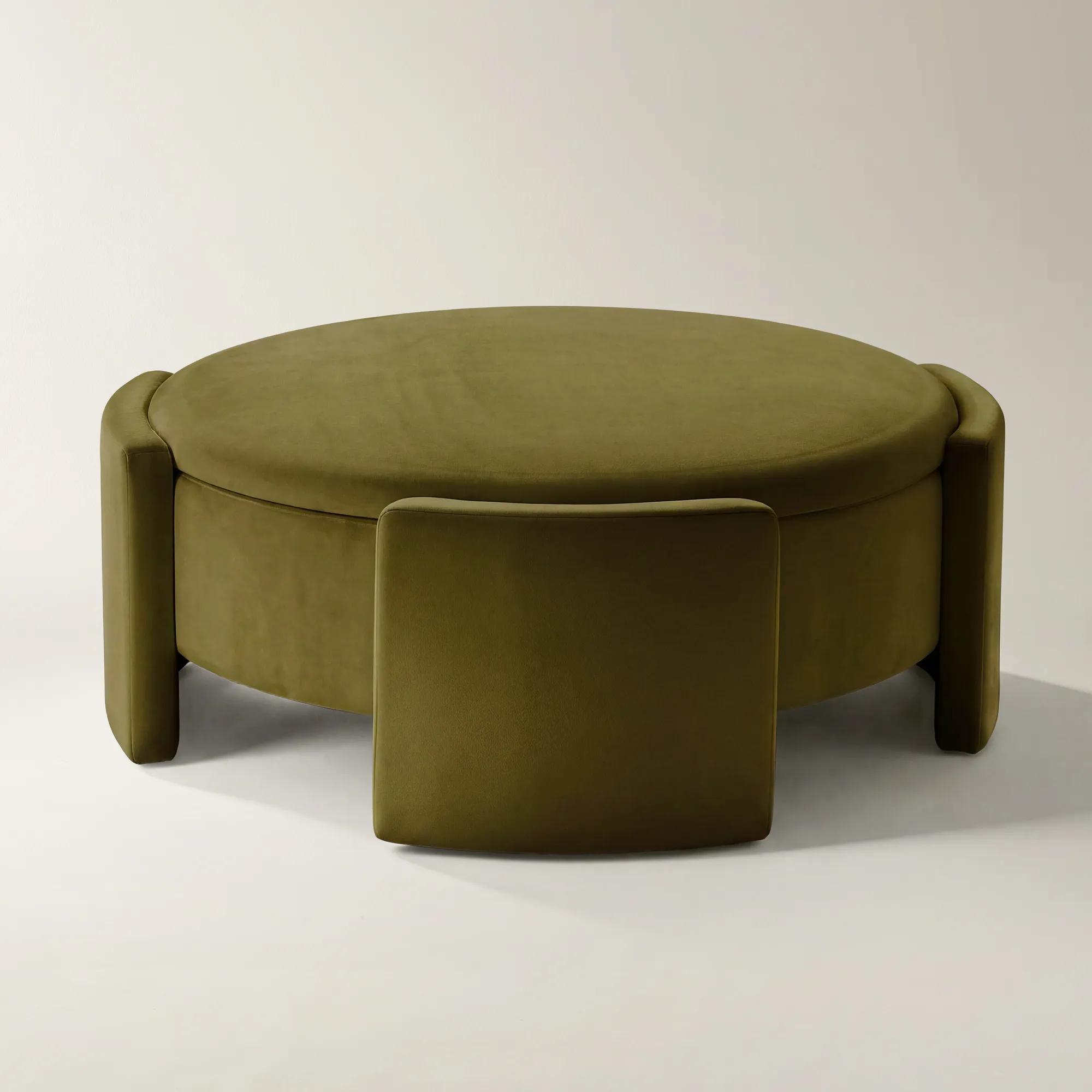
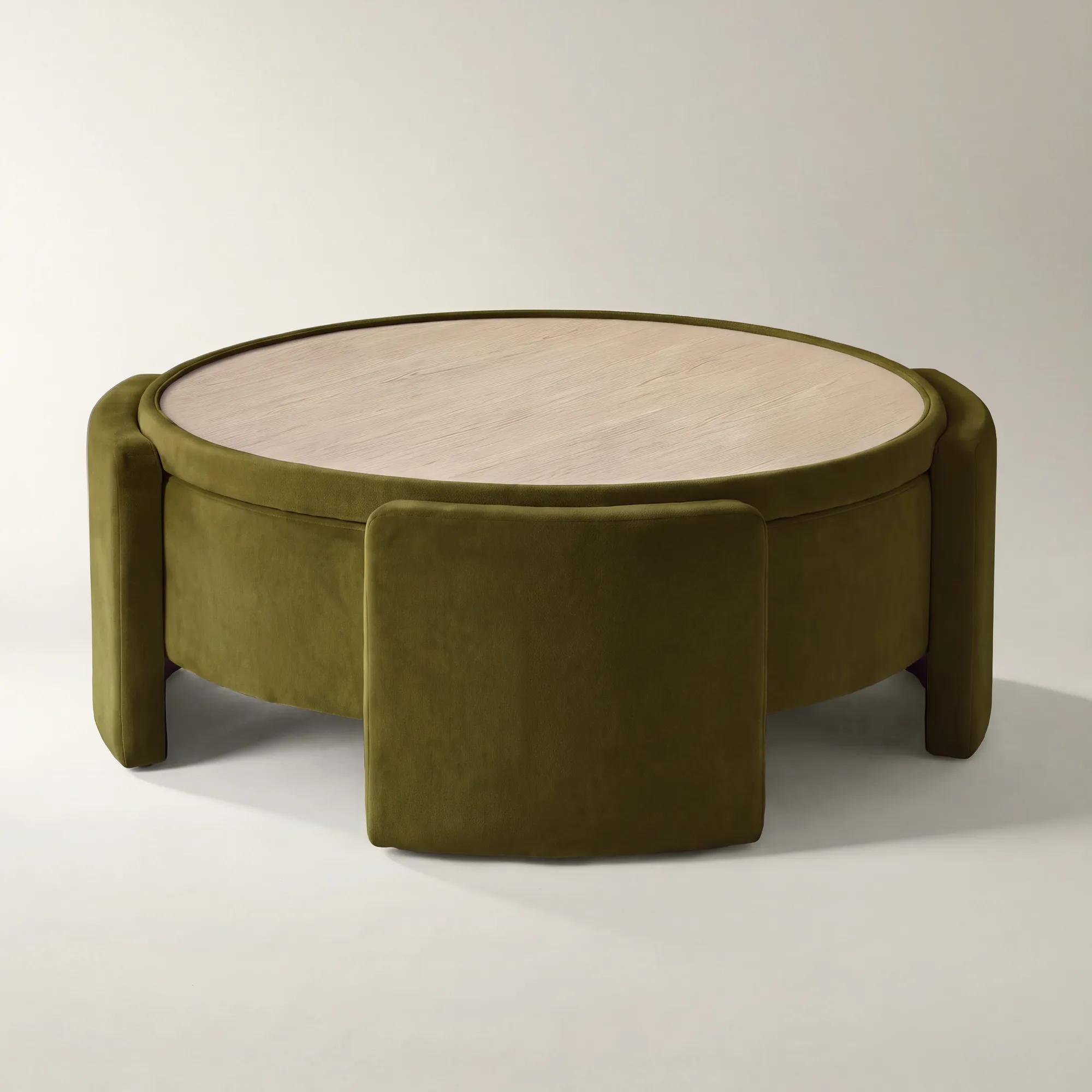 Jora Round Deep Olive Velvet Storage Coffee Table With Reversible Tabletop (47.7")$799
A deep olive velvet coffee table with a reversible tabletop and hidden storage.
Add To Cart -
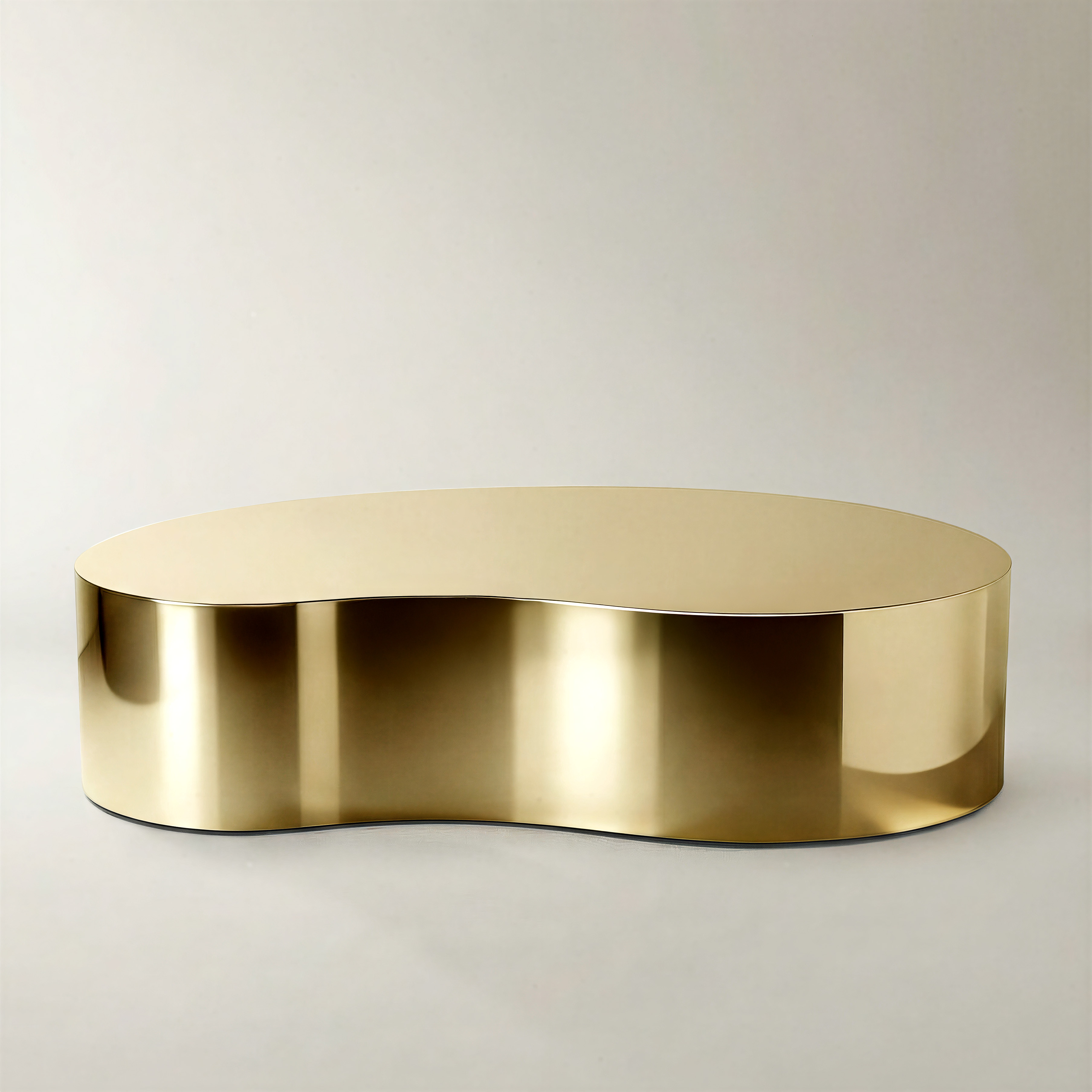
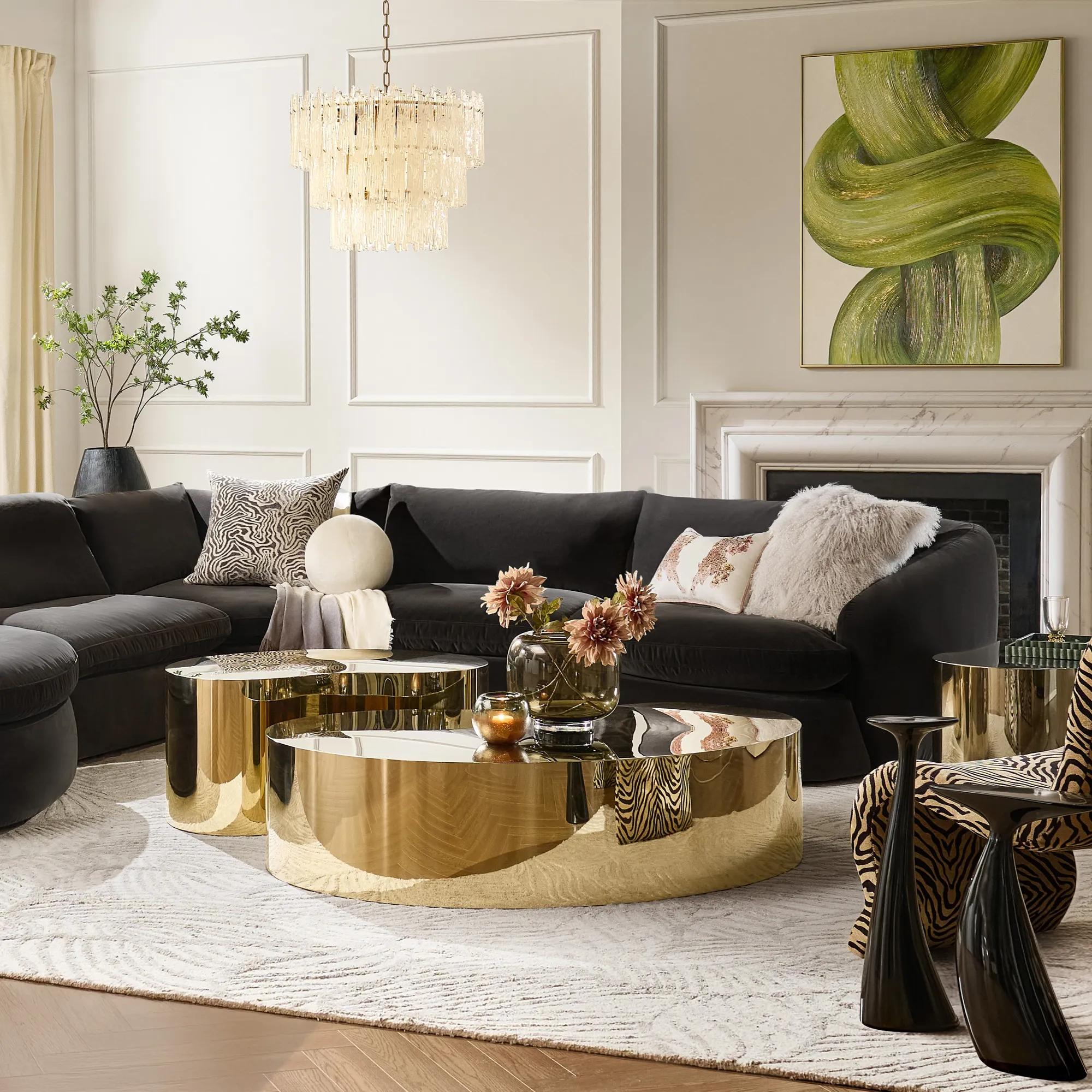 Aurea Soft Gold Coffee Table (57")$1399
A sculptural coffee table crafted from stainless steel with a high-gloss soft gold finish and rounded edges.
Add To Cart

Modern Coffee Tables For Living Room
Explore modern coffee tables for your living room, with contemporary silhouettes that bring a distinctive focal point to your seating area. Consider shape, scale, and surface space to find a table that complements your sofa and accent chairs, leaves room to move, and sets the stage for a beautifully composed display.
Modern coffee tables for living rooms give the space between a sofa and its surrounding chairs a distinct point of view. More than a surface for drinks or an art book, the coffee table establishes the room’s visual rhythm: low and expansive for a lounge-like setting, curved and sculptural for a softer composition, or sharply defined for an architectural statement. Modern design leaves room for each expression, pairing purposeful proportions with materials that deserve a closer look. A clear glass top allows the pattern of a rug to remain visible, while a substantial stone surface introduces natural movement through veining and tonal variation. Wood brings depth through grain, color, and texture; metal contributes a crisp outline or a gleaming accent that catches light from nearby lamps. Mirrored surfaces can amplify the surrounding palette, especially when balanced with sumptuous upholstery and richly textured textiles. These materials create different moods rather than a single prescribed look. A dark wood table beside an ivory sofa feels grounded and graphic, while a pale stone silhouette framed by curved seating reads as quietly monumental. Polished finishes lend a more luminous presence, and brushed or matte treatments offer a restrained counterpoint to lustrous fabrics and metallic accessories. The base matters as much as the top: an open frame reveals more floor, a pedestal emphasizes the tabletop’s shape, and a solid plinth gives the arrangement sculptural weight. Round, oval, square, and rectangular forms each establish a different relationship with the seating around them. Nesting configurations introduce layered heights and flexible placement, while a single generous surface creates a composed focal point. The most compelling combinations carry a connection through the room without repeating every detail. A subtle metal accent can echo a light fixture, or a rounded tabletop can respond to the sweep of an accent chair. That balance allows the coffee table to feel intentional and expressive, with enough presence to anchor the room and enough restraint to let the surrounding design unfold.
Scale gives that visual statement its ease. A coffee table should relate to the sofa’s length, the seating height, and the paths people take through the room, not simply fill an open rectangle on the floor. A length around two-thirds of the sofa can provide a useful sense of proportion, although sectional layouts, unusually deep seating, and multiple conversation areas may call for a different balance. A tabletop near seat height, or slightly lower, generally keeps a drink or book within comfortable reach. Leaving approximately 14 to 18 inches between the table and the seating often provides legroom without making the surface feel distant; main walkways may need considerably more clearance. In a compact living room, a rounded edge or visually open base can ease the composition, provided the actual dimensions leave sufficient room to move. Glass may look light, but its footprint still deserves the same attention as a solid tabletop. An oval shape can complement a long sofa while softening the corners near a busy passage. Square forms often sit comfortably within the embrace of a sectional, and round tables can draw separate chairs into a more intimate conversation setting. Intended use adds another layer to the choice. A living room arranged for entertaining benefits from a surface that accommodates glasses and small plates without requiring every decorative accent to be moved. A reading-focused retreat may call for room to spread an oversized book beside a shaded lamp nearby. In a shared household, concealed storage can keep remotes and other everyday objects from interrupting an otherwise polished arrangement. Open shelving offers a different effect, turning a small selection of books into part of the design while preserving access. Nesting tables allow smaller surfaces to move toward individual seats when company arrives, then gather into a layered composition afterward. For homes with young children or frequent activity, rounded profiles and stable construction deserve particular consideration, though no shape or material eliminates the need for thoughtful placement. Daily comfort and visual drama belong in the same room.
Materials and finishes also shape how a modern coffee table lives over time. Natural stone can offer extraordinary character, with variations in veining, small surface features, and shifts in tone that distinguish one slab from another. Its care depends on the stone and finish; some surfaces require sealing, and acid-sensitive stones such as marble can etch when exposed to citrus, wine, or certain cleaners. Coasters, trays, and prompt attention to spills help preserve the surface without concealing its artistry. Glass rewards gentle, regular cleaning with a clear view of the base beneath it, although fingerprints and dust may be more apparent on transparent or highly reflective finishes. Tempered glass, when specified, has different breakage characteristics from ordinary glass, but edges still need protection from hard impacts. Wood surfaces benefit from protection against standing moisture, concentrated heat, and prolonged direct sunlight, while care for metal depends on whether the finish is plated, painted, polished, or otherwise treated. Soft cloths and material-appropriate cleaning products are generally more suitable than abrasive pads or harsh chemicals; the manufacturer’s care directions should take precedence. Durability rests on the entire construction, including the stability of the base, the support beneath the top, and the quality of the finish, rather than on the material name alone. A coffee table remains a surface for living and display, not a substitute for seating unless expressly designed for that purpose. Styling can be equally considered without feeling untouchable. A sculptural vessel, a low arrangement, and a stack of substantial books create variation in height while leaving an open area for everyday use. A tray gathers smaller objects into a defined composition and can introduce contrast against glass, stone, or wood. For a distinctly architectural expression, high-end designer coffee tables for modern living rooms offer another perspective on proportion, material, and presence. Whether the surrounding space is richly layered or edited around a few commanding forms, the coffee table brings those choices into focus, giving everyday rituals a beautifully considered setting.
FAQs
Modern coffee tables pair distinctive silhouettes with intentional details, from sculptural bases to sleek, uninterrupted surfaces. Whether understated or richly expressive, they create a focal point that brings your living room’s design into sharper focus.
Glass, marble, wood, and metal each bring a different expression to modern coffee tables. Glass introduces visual lightness, marble showcases striking natural veining, and wood adds warmth. Gleaming metal or glossy lacquer finishes lend a more glamorous note.
Look for a shared design element, such as a finish, color, or curved silhouette, rather than matching every piece. A polished metal coffee table can echo metallic accents throughout the room, while richly grained wood creates an expressive contrast against sumptuous upholstered seating.
Compose a deliberate vignette with art books, a sculptural object, and a decorative tray. Contrast textures—such as glossy ceramics against natural stone—and leave portions of the tabletop exposed so its finish remains part of the composition. The result should feel collected, not crowded.
Round and oval coffee tables introduce fluid lines, while square and rectangular silhouettes create a more architectural mood. Organic or asymmetrical shapes bring an artful twist. Choose a shape that echoes your room’s visual rhythm or creates a deliberate contrast with its existing lines.