Coffee Tables For Contemporary Living Rooms
Coffee Tables For Contemporary Living Rooms
-
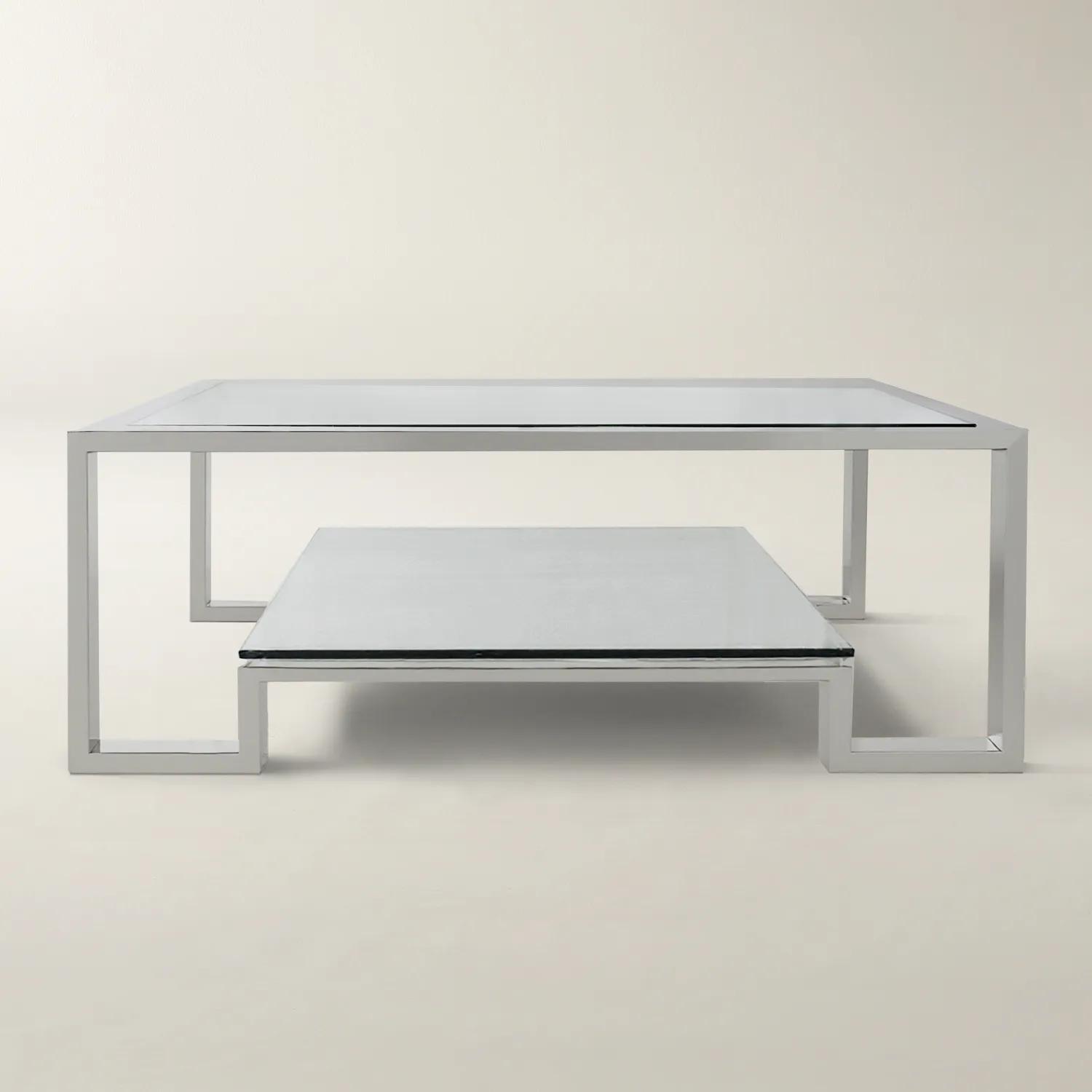
 Duplicity Rectangular Silver Stainless Steel Coffee Table With Glass Top (50")$1399
A modern coffee table featuring a stainless steel frame, tempered glass top, and floating bottom shelf.
Add To Cart -
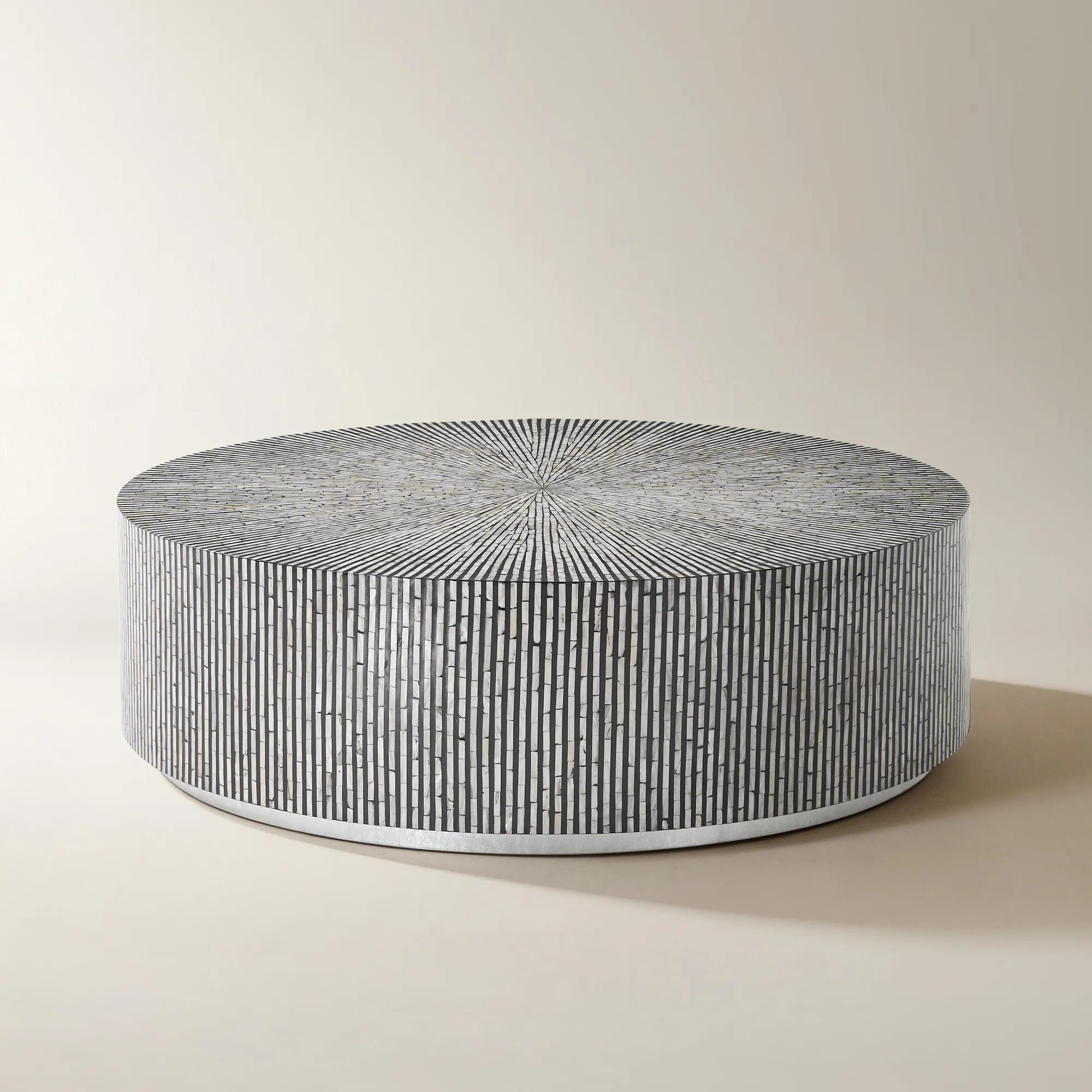
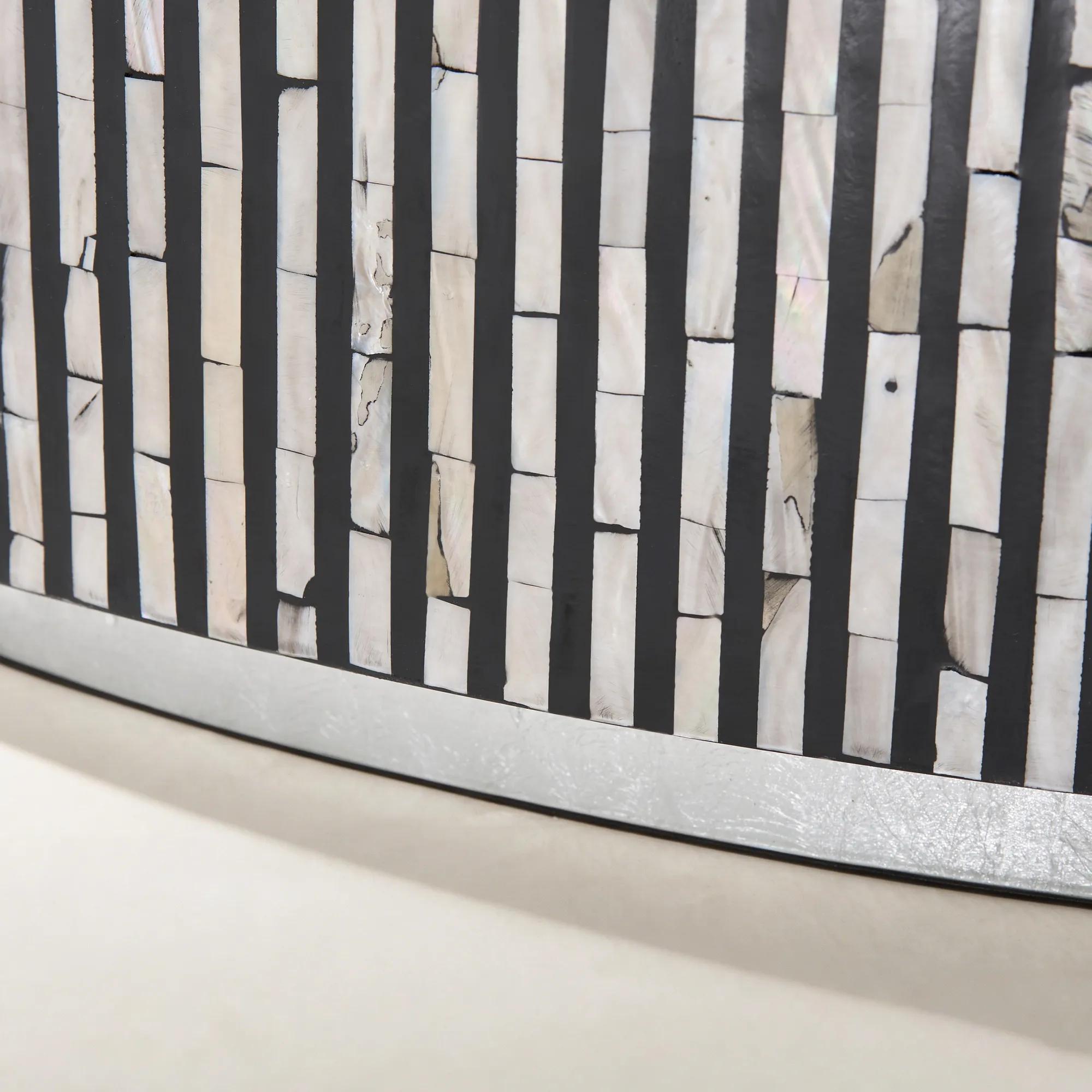 Marina Round Mosaic Black Coffee Table (52")$1399
A sculptural black coffee table featuring hand-applied mother-of-pearl mosaic and a silver leaf base.
Add To Cart -
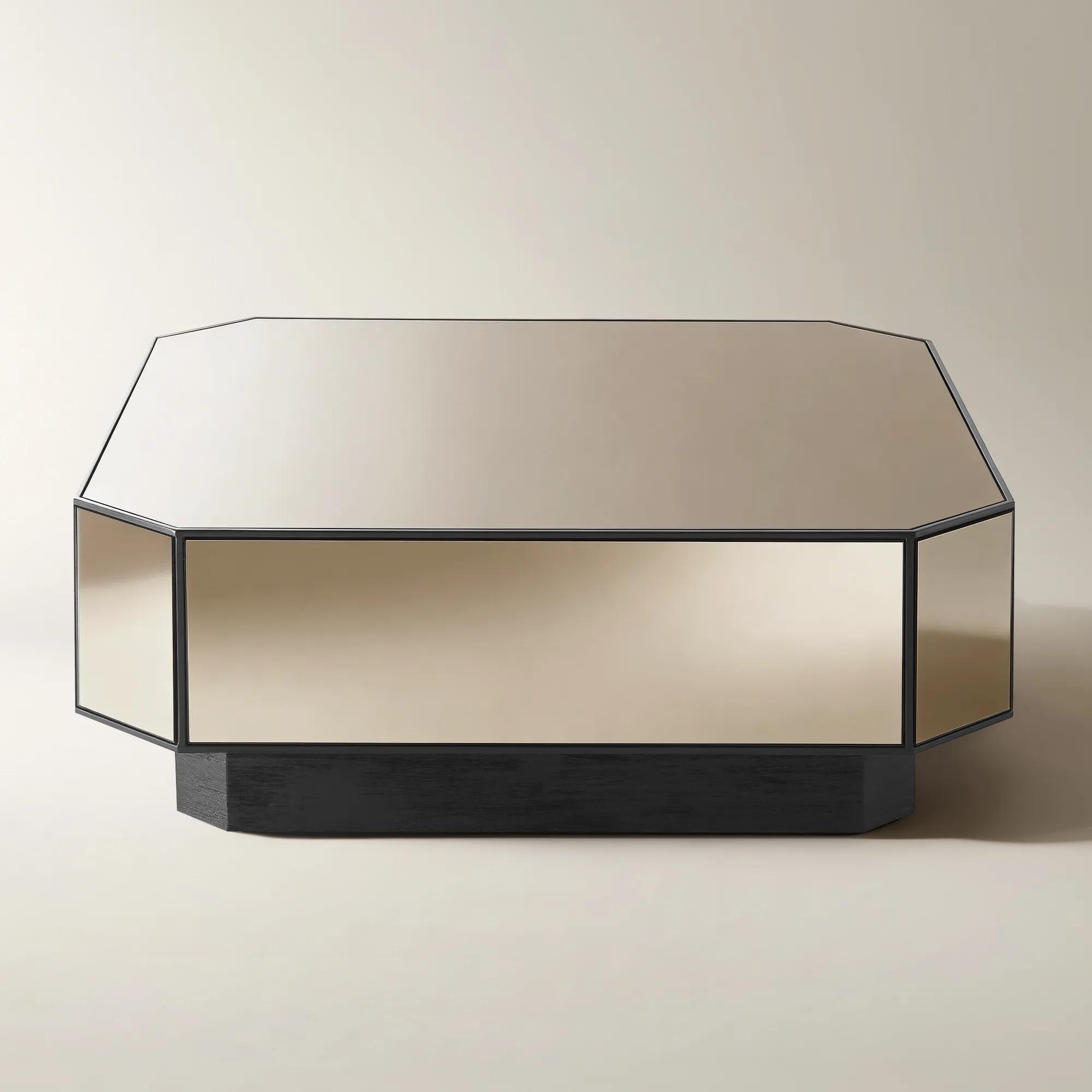 Glimmer Bronze Mirrored Coffee Table (44")$1699
A sculptural coffee table featuring bronze mirror panels and a black oak base for modern sophistication.
Add To Cart -
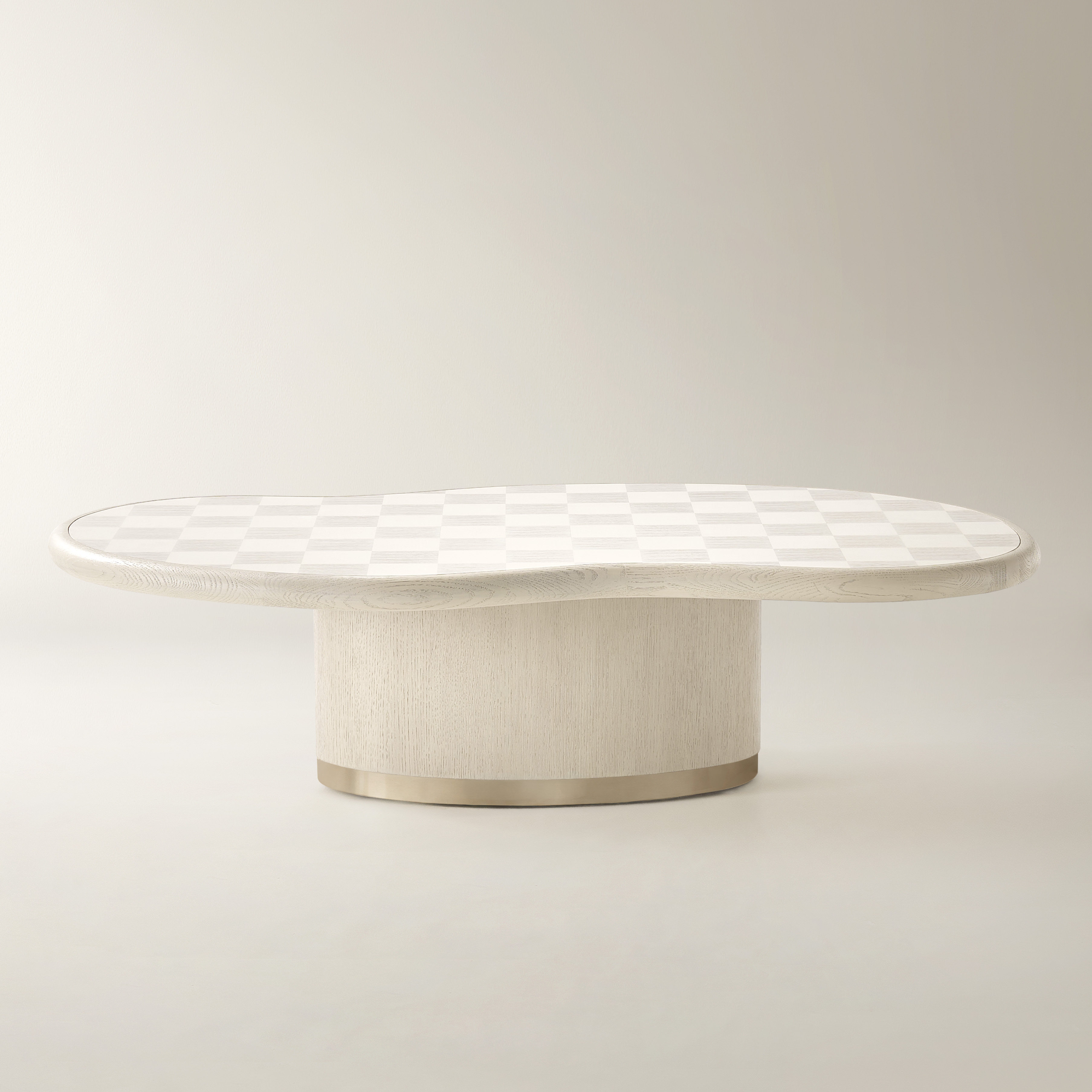 Vetra Checkerboard Oak and Maple Coffee Table (60")$1299
A sculptural coffee table featuring a hand-arranged oak and maple checkerboard top with gold-accented base.
Add To Cart -
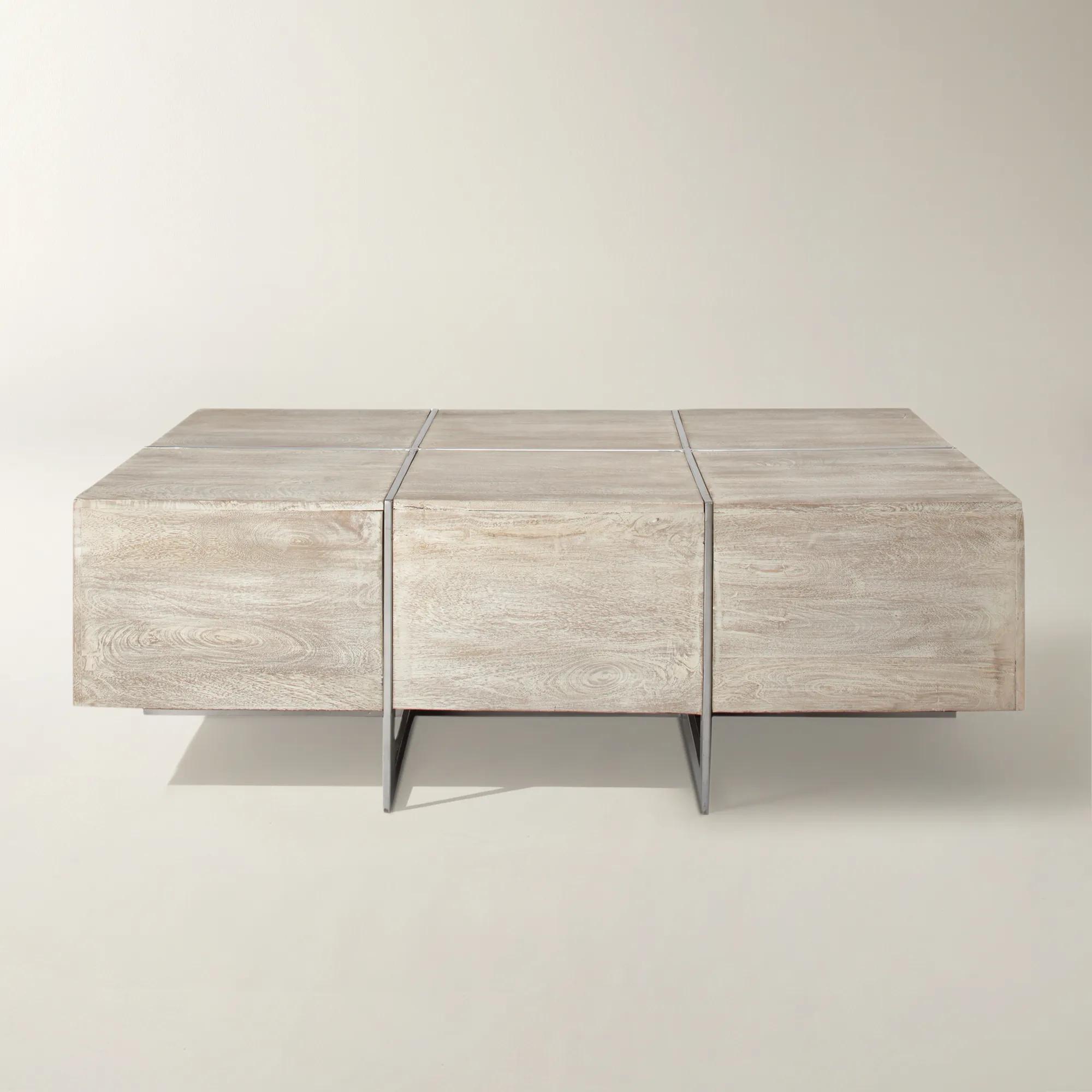
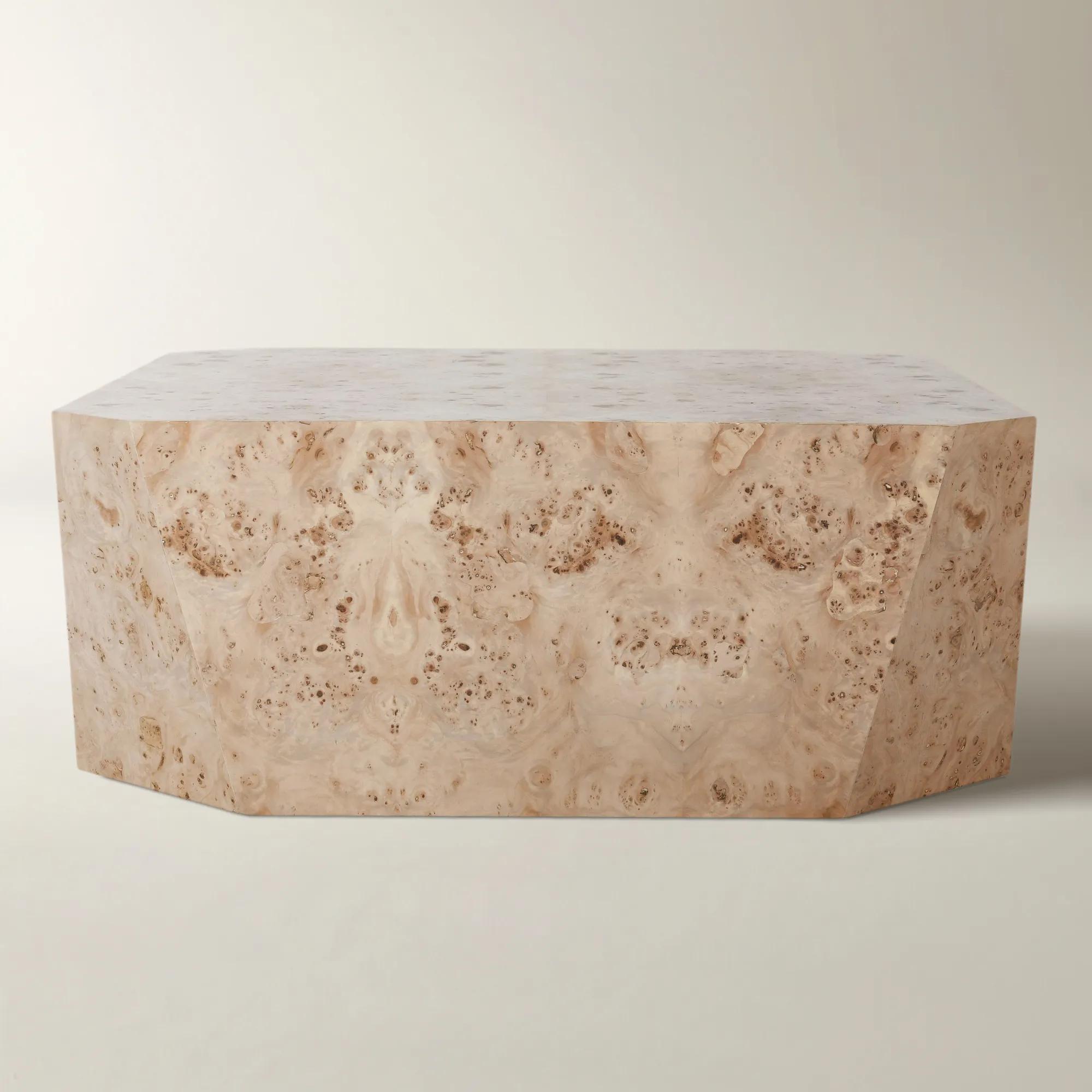
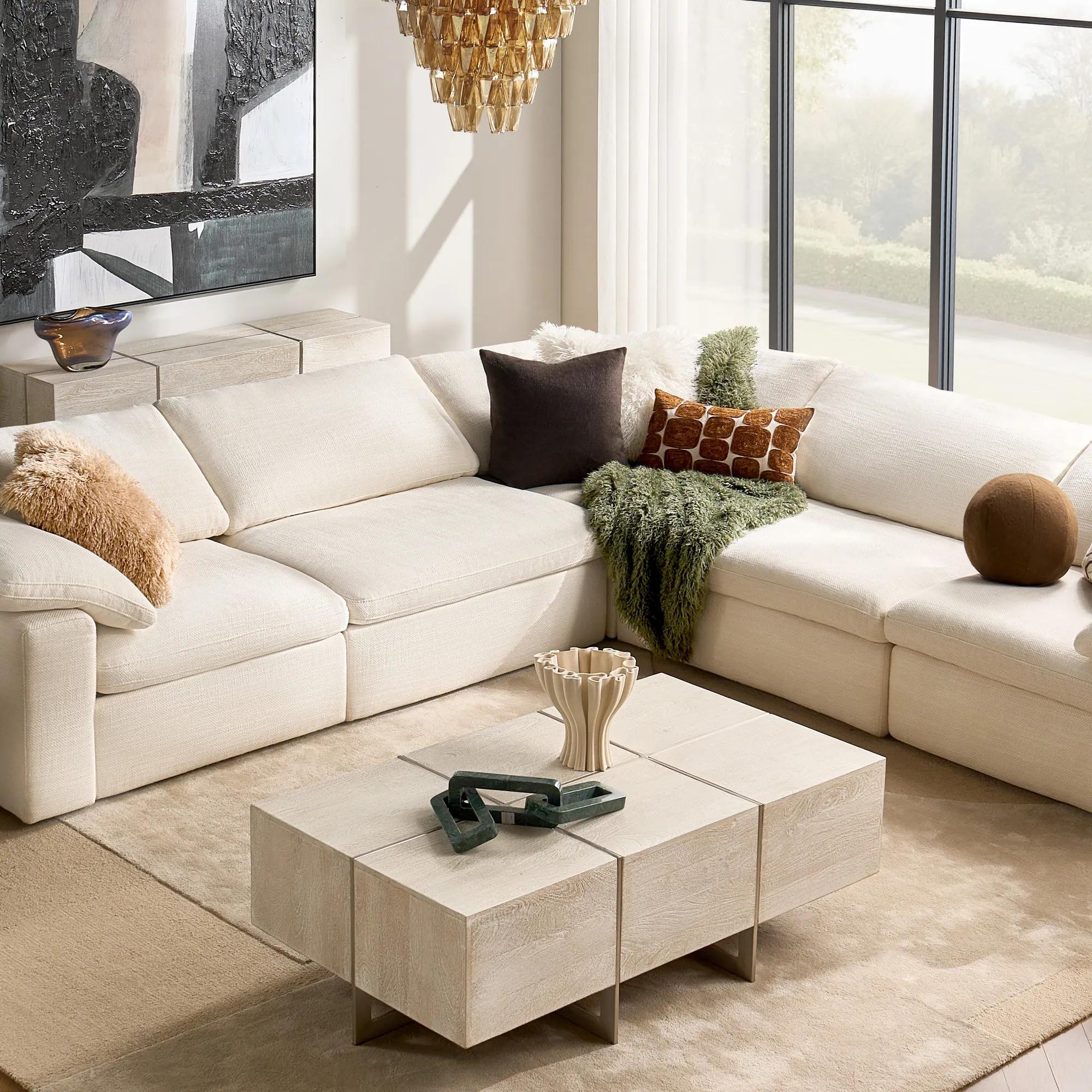 Clifton Rectangular Natural Mango Wood Coffee Table (54")$1299
A handcrafted mango wood table with a whitewashed finish and antiqued silver iron legs for organic appeal.
Add To Cart -
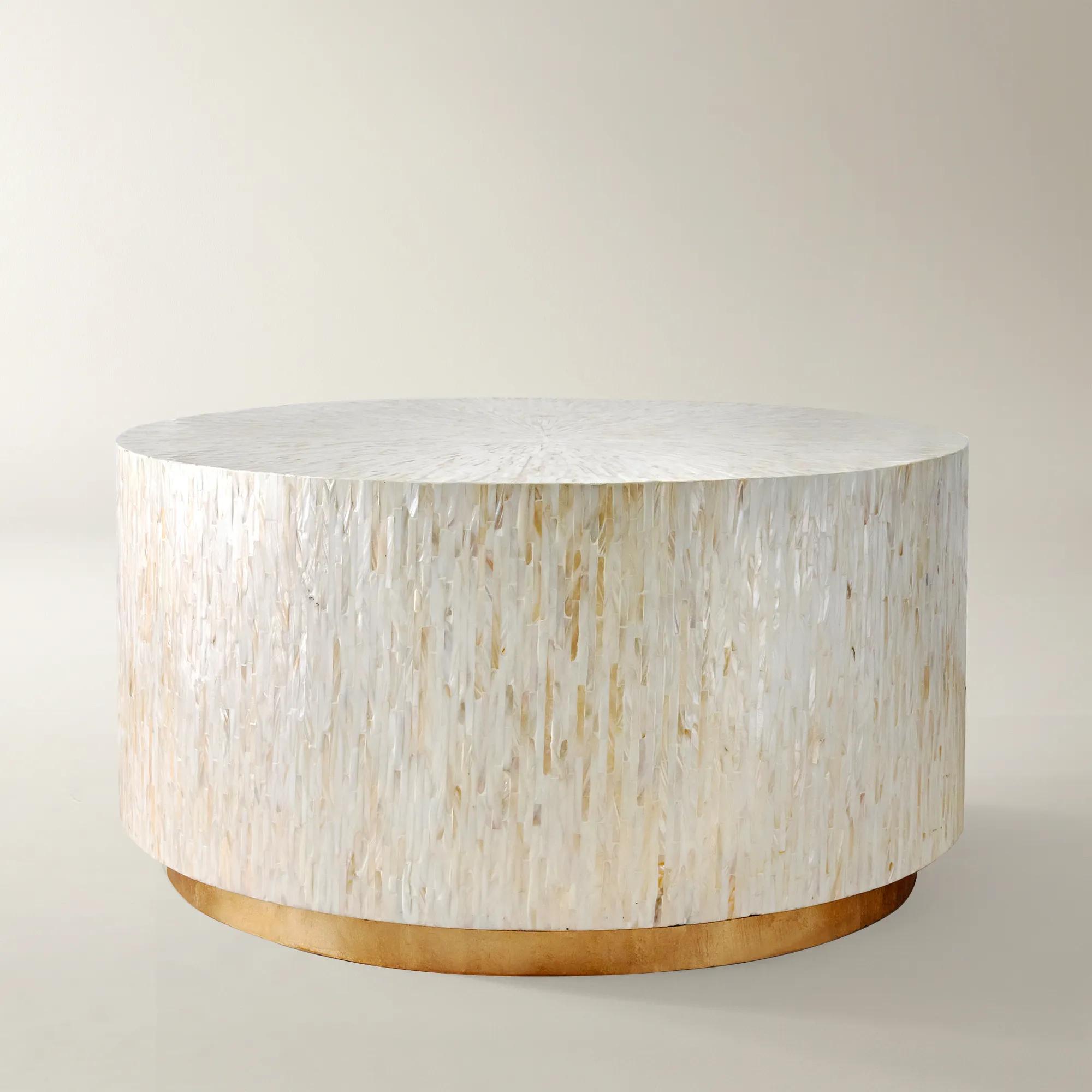
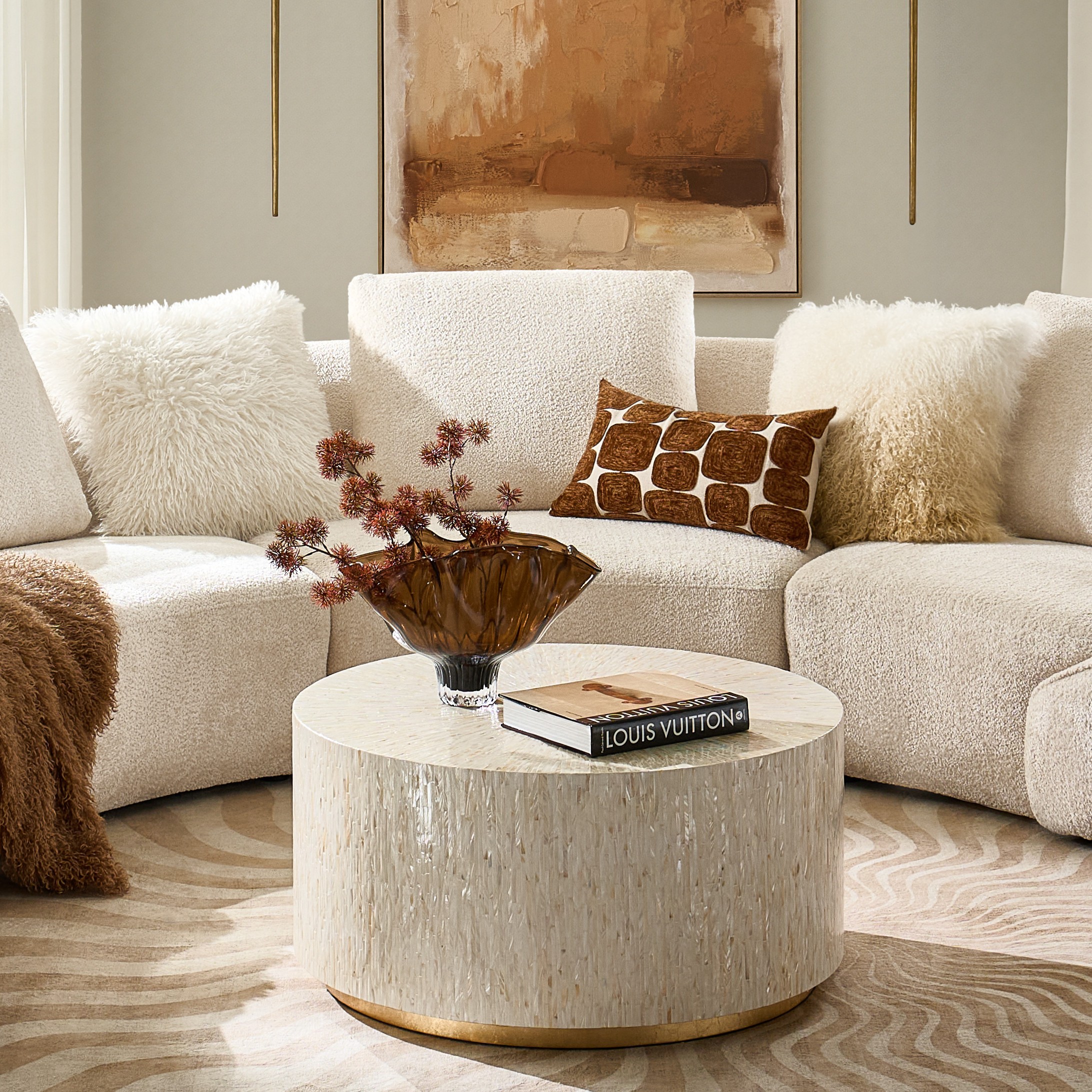 Alexandria Round Mosaic Platinum Coffee Table (36")$799
A luminous ivory coffee table featuring hand-applied mother-of-pearl mosaic and a gold leaf-accented base.
Add To Cart -
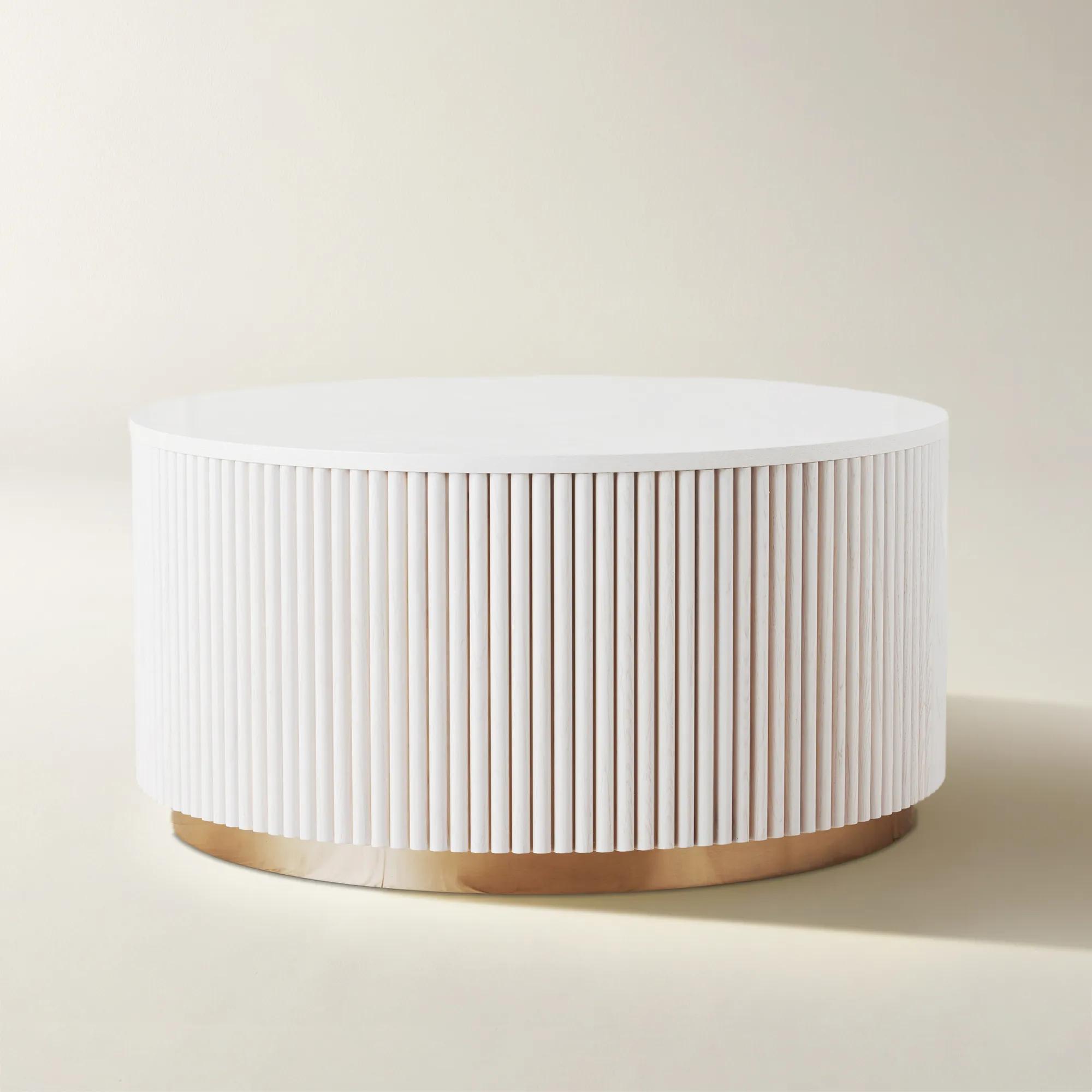
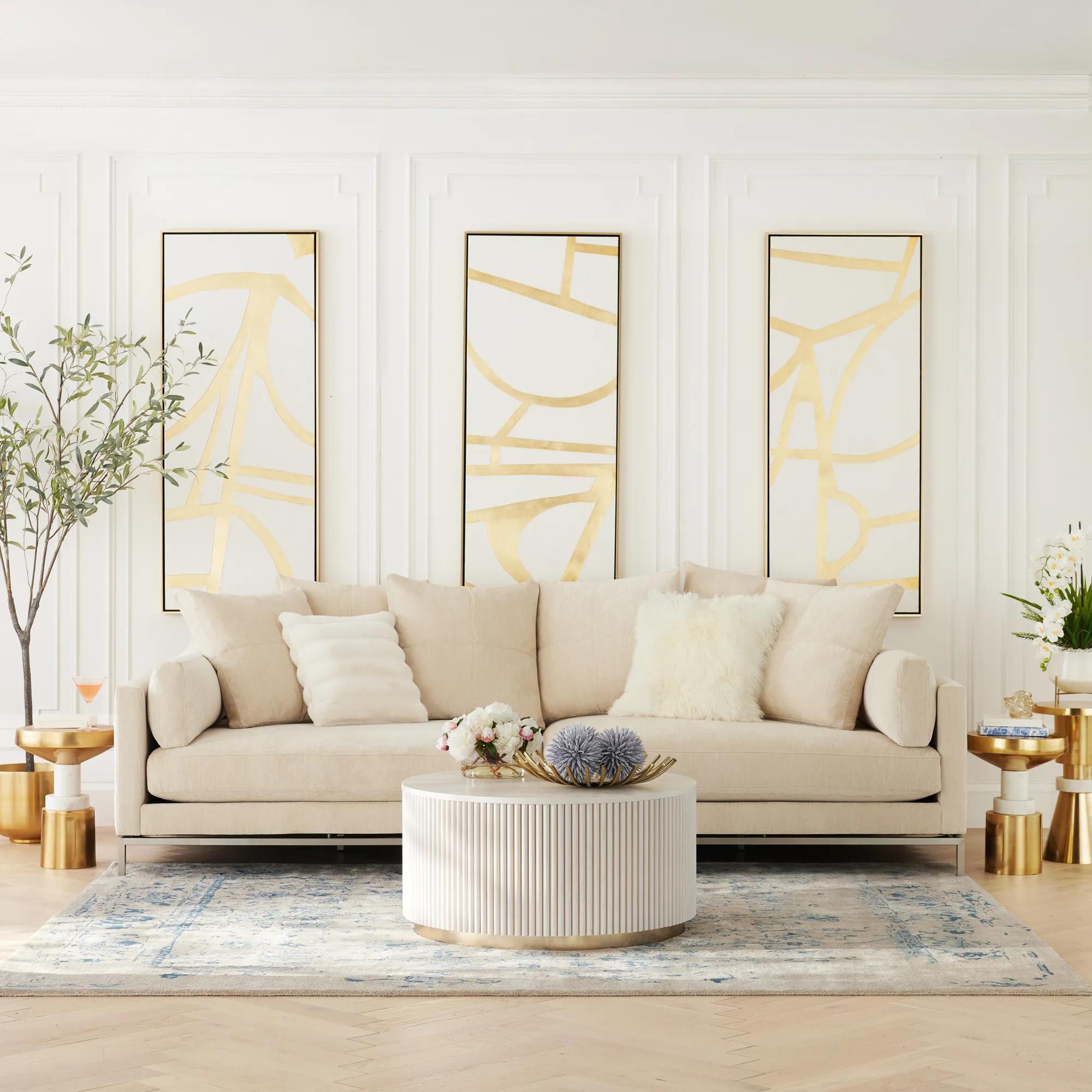 Natalia Round Reeded Whitewashed Ash Wood Coffee Table (36")$1299
A striking coffee table featuring reeded ash wood sides, a smooth top, and a whitewashed finish.
Add To Cart -
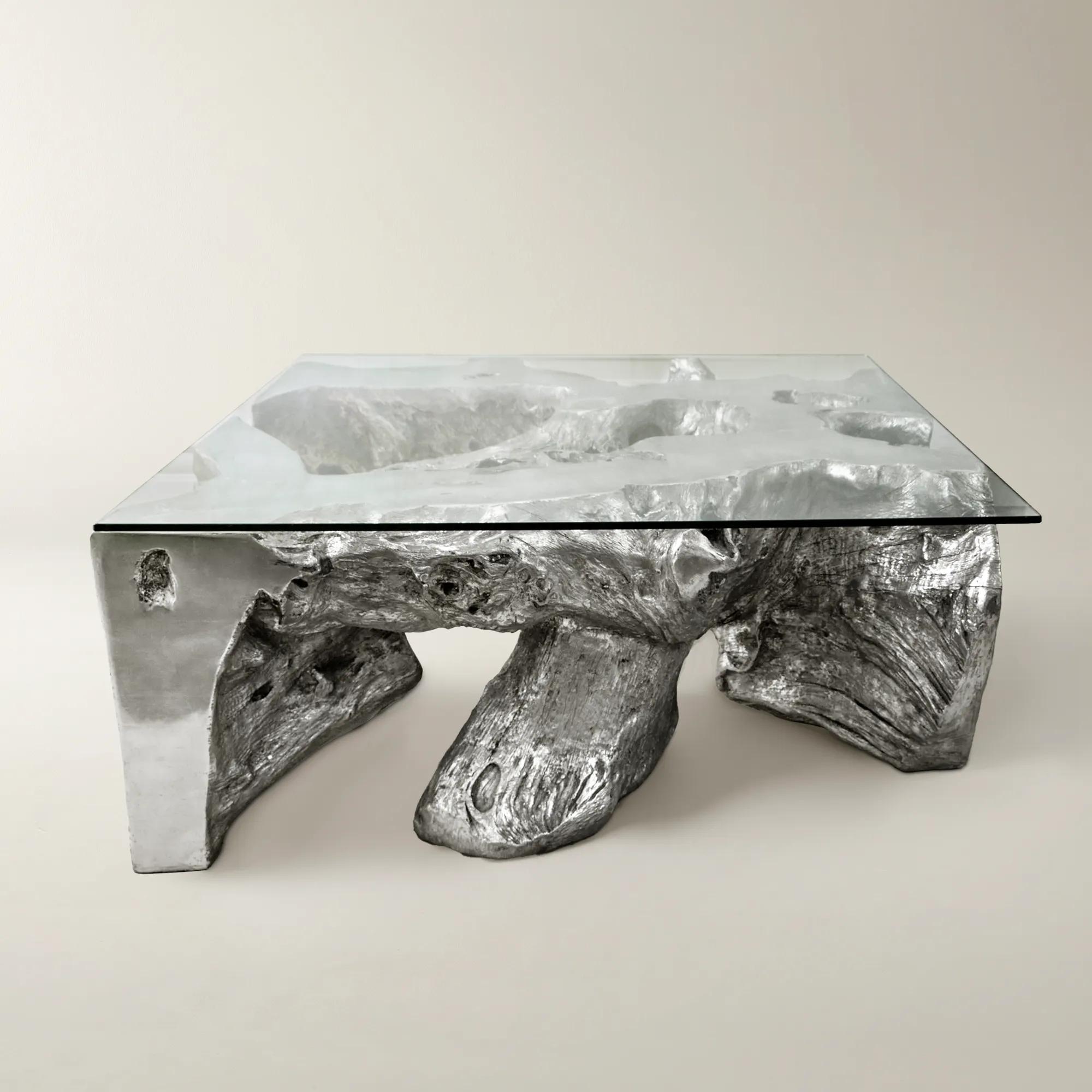 Sequoia Silver Resin Coffee Table With Glass Top (44")$2299
A sculptural coffee table featuring a hand-applied silver leaf resin base and a tempered glass top.
Add To Cart -
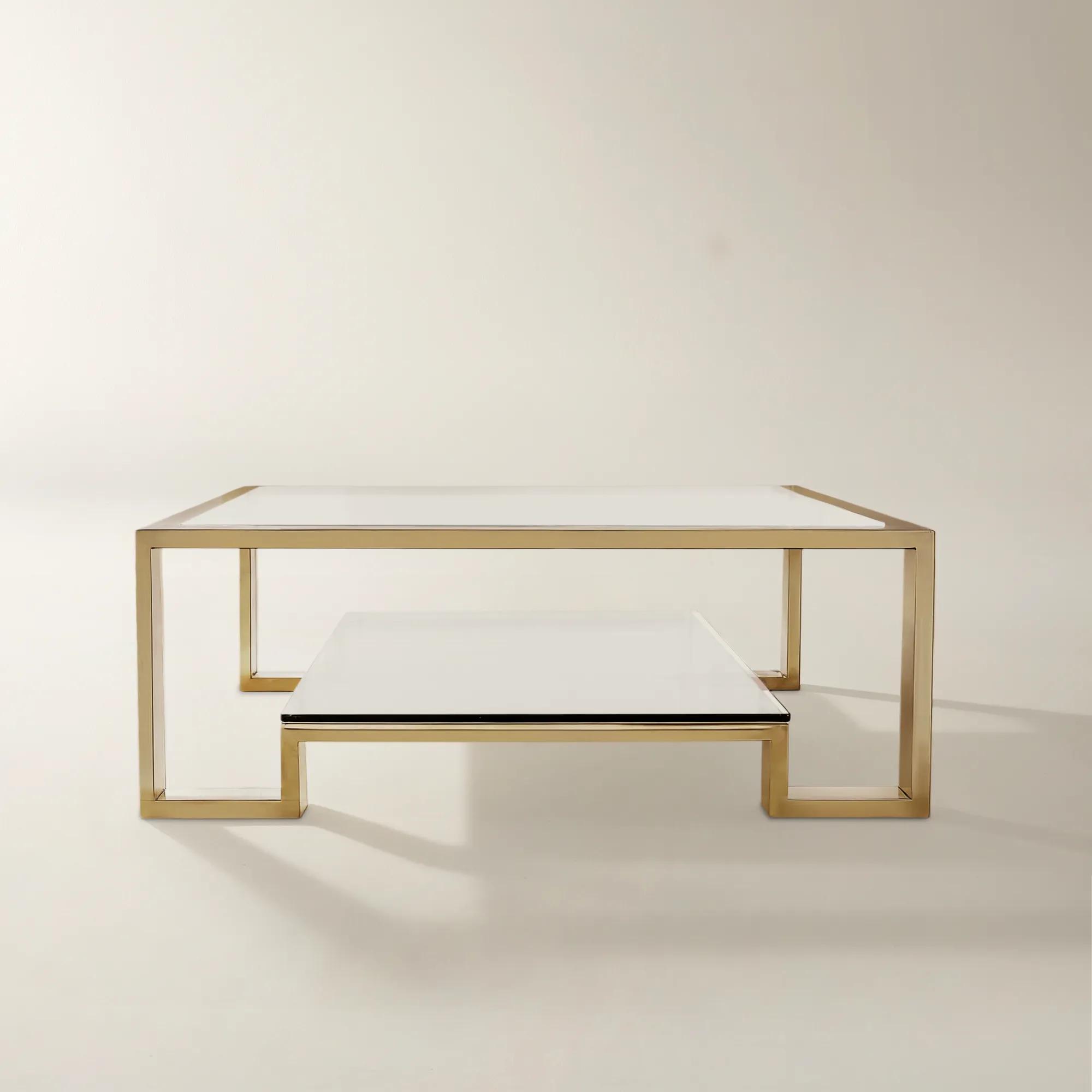 Duplicity Rectangular Gold Stainless Steel Coffee Table With Glass Top (50")$1399
A modern coffee table featuring a stainless steel frame, tempered glass top, and floating storage shelf.
Add To Cart -
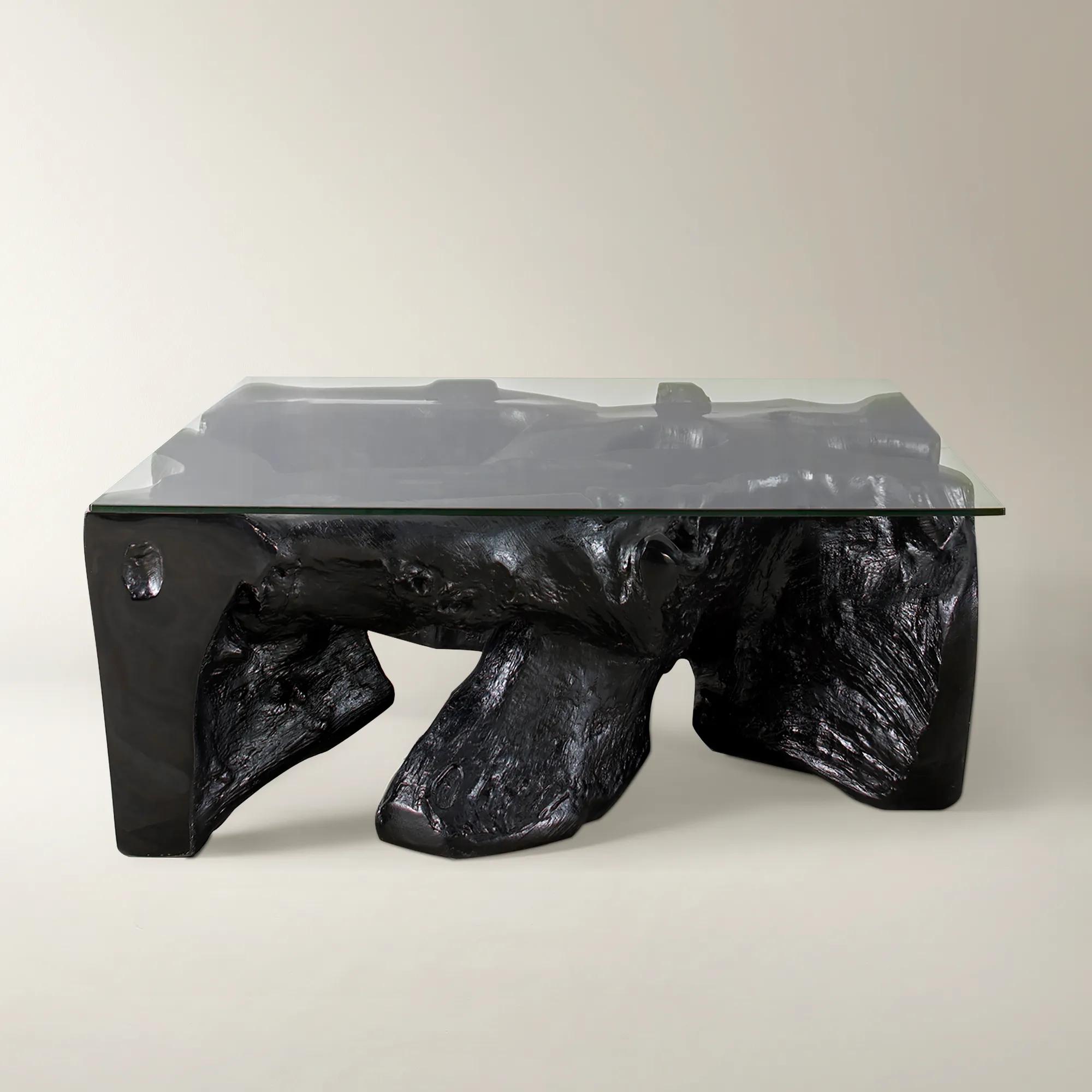
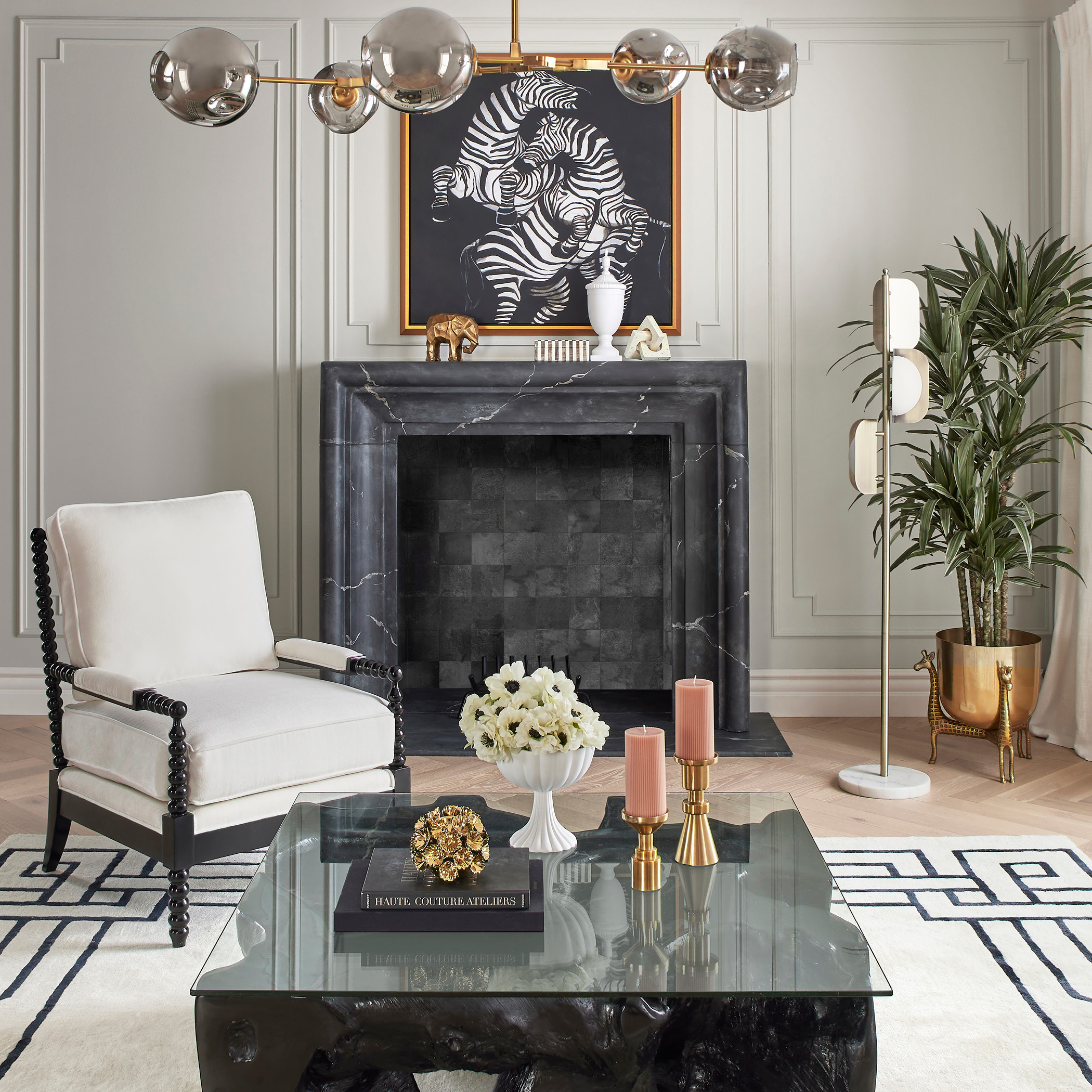 Sequoia Black Resin Coffee Table With Glass Top (44")$2299
A sculptural black coffee table crafted from resin and polished stone fragments for indoor or outdoor use.
Add To Cart -
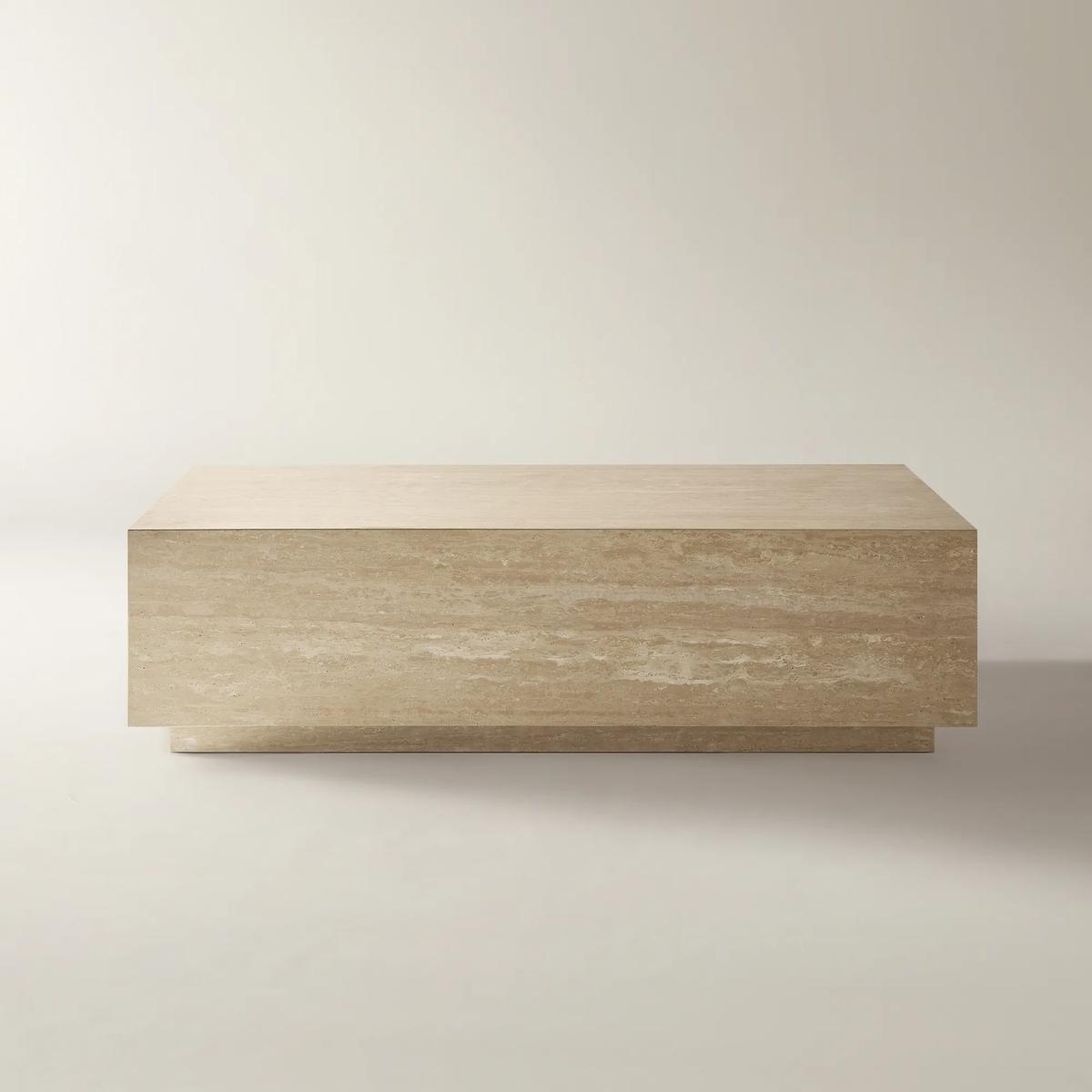
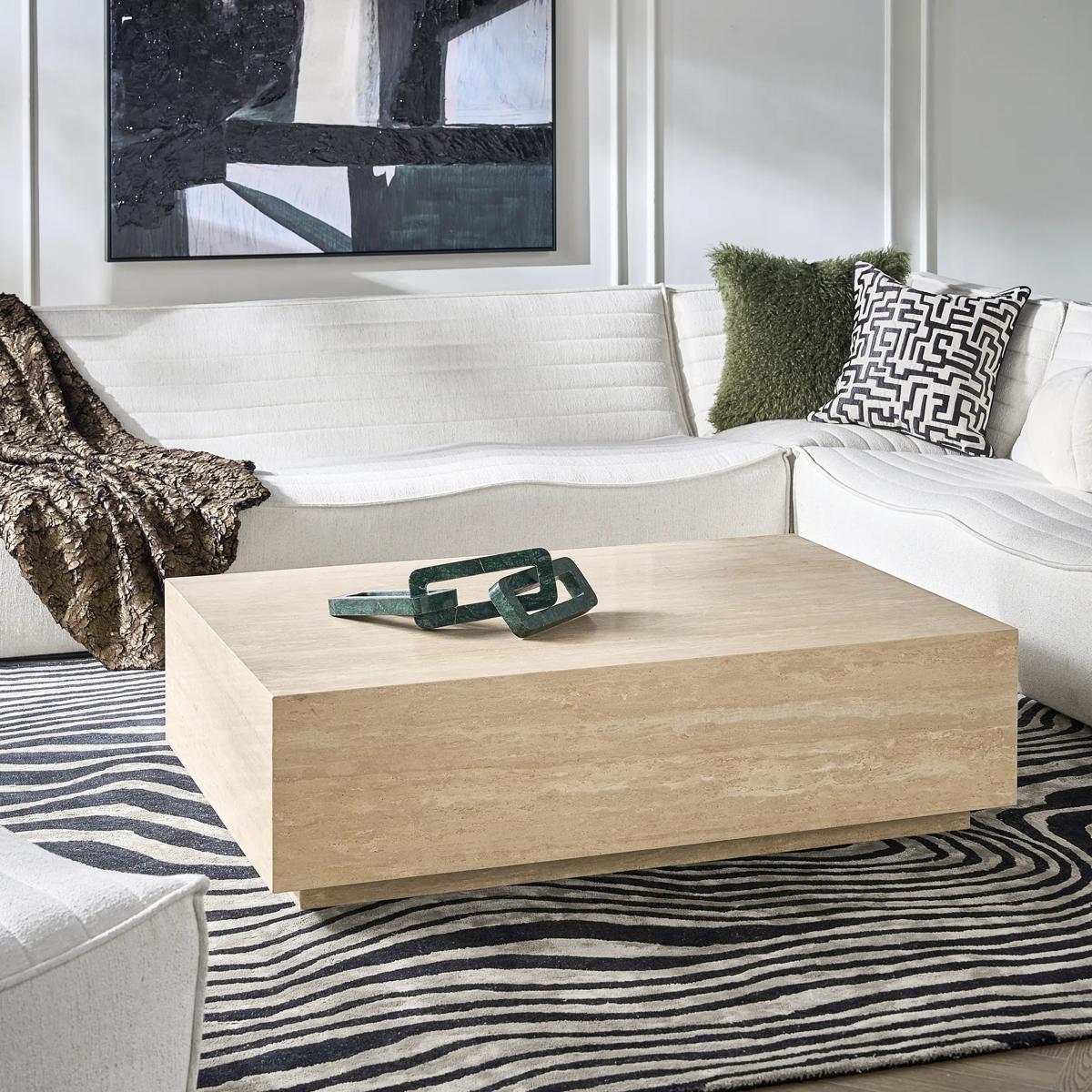 Vanta Rectangular Travertine Coffee Table (54")$2599
A sculptural travertine coffee table with an aluminum honeycomb core and recessed plinth base.
Add To Cart -
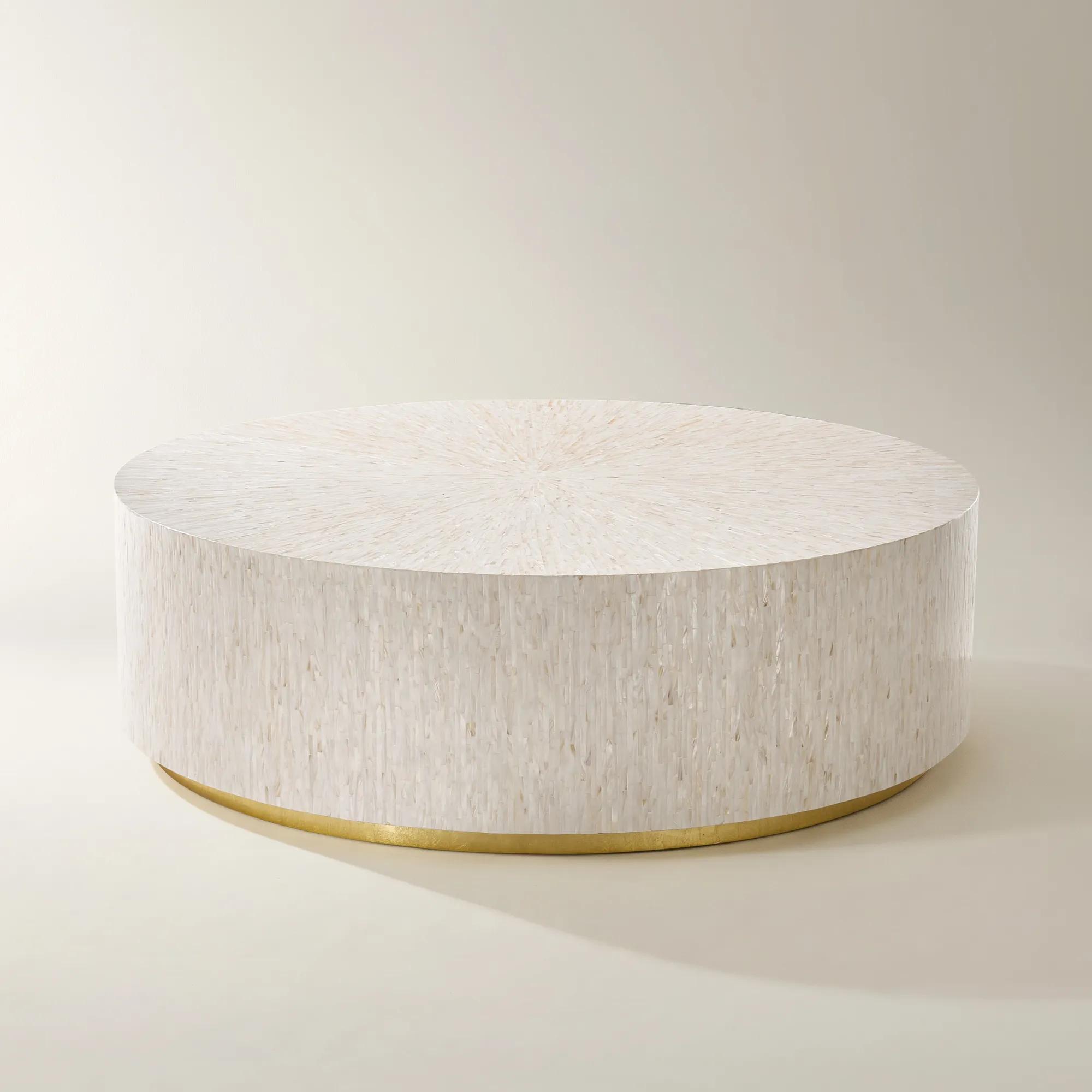 Alexandria Round Mosaic Platinum Coffee Table (52")$1399
A luminous mother-of-pearl mosaic coffee table with a sculptural round form and gold leaf–accented base.
Add To Cart -
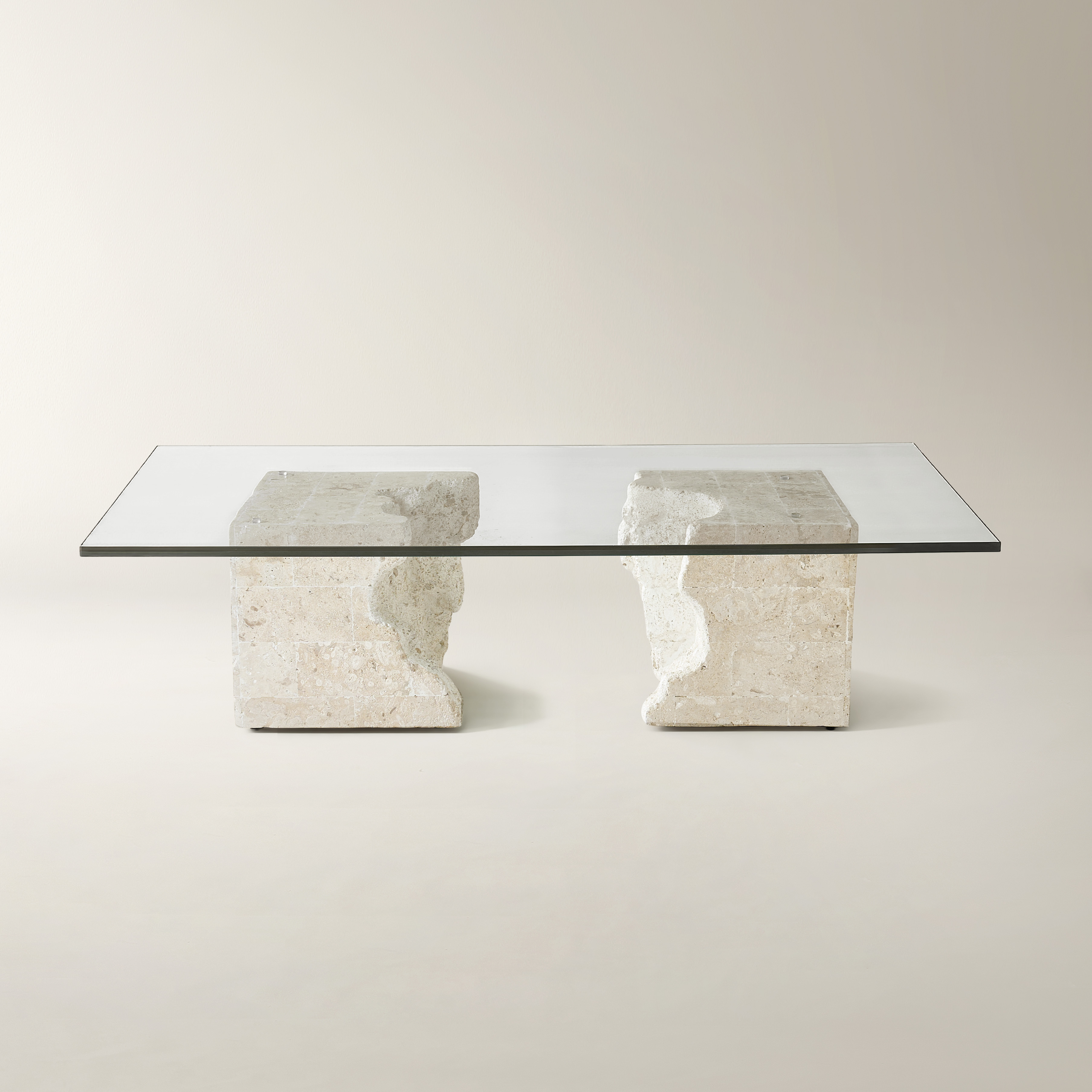 Cairo Rectangular Mactan Stone Coffee Table With Glass Top (63")$1899
A contemporary coffee table featuring a clear tempered glass top floating above hand-carved Mactan stone bases.
Add To Cart -
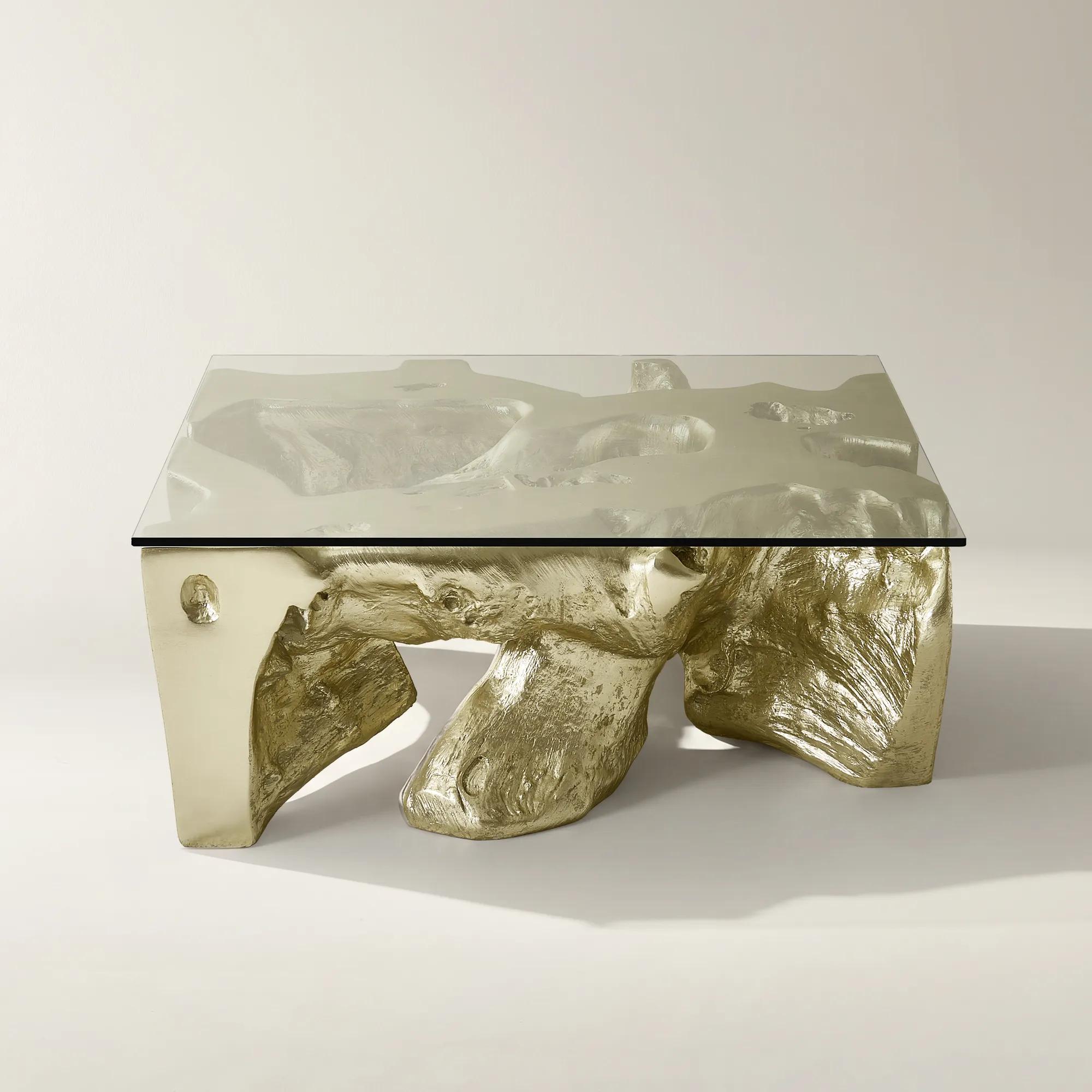 Sequoia Champagne Gold Resin Coffee Table With Glass Top (44")$2299
A sculptural resin coffee table with a champagne gold leaf finish and a clear tempered glass top.
Add To Cart -
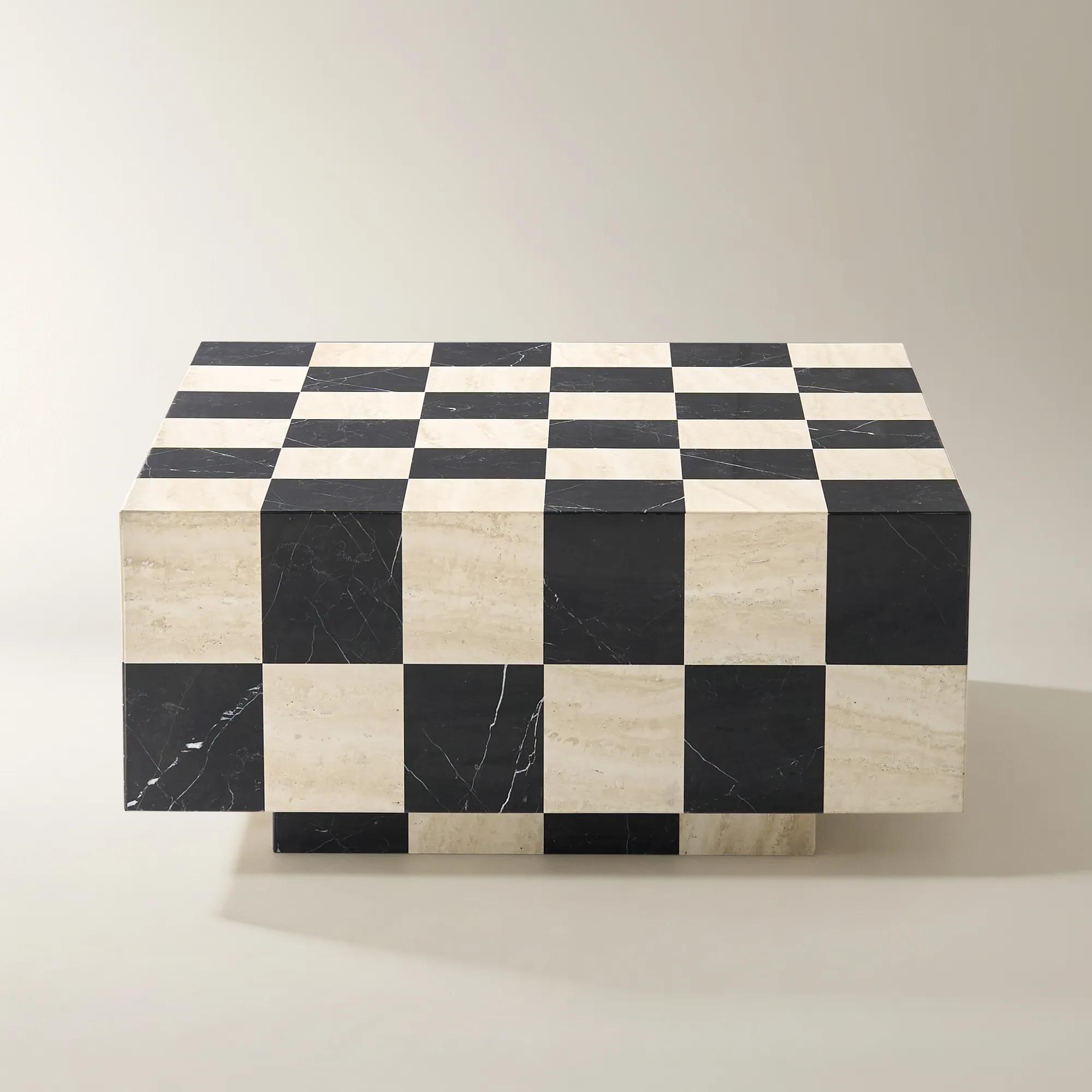
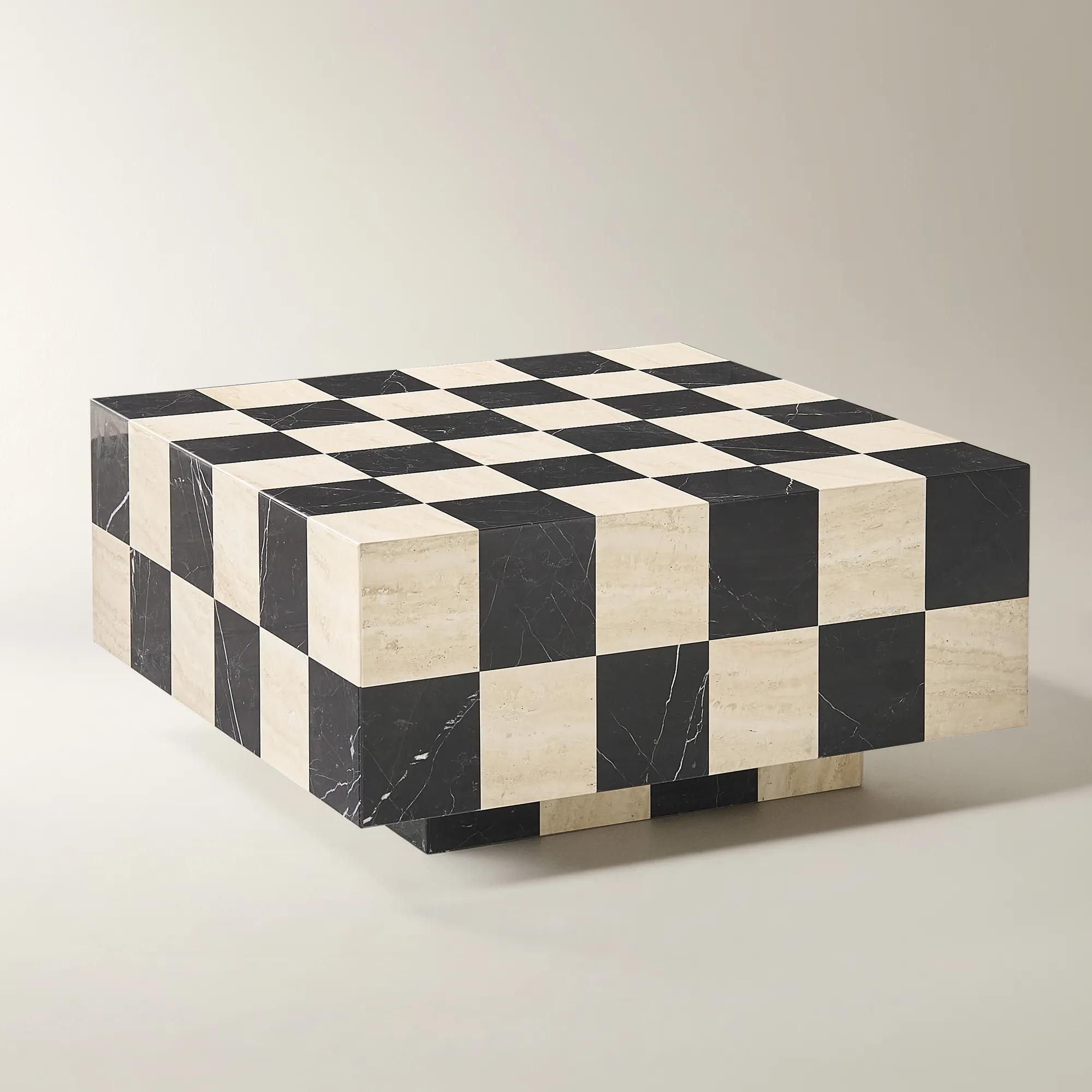 Chessa Square Chequered Marble Coffee Table (31.9")$1699
A striking coffee table featuring a dimensional black marble and travertine checkerboard mosaic with polished finish.
Add To Cart -
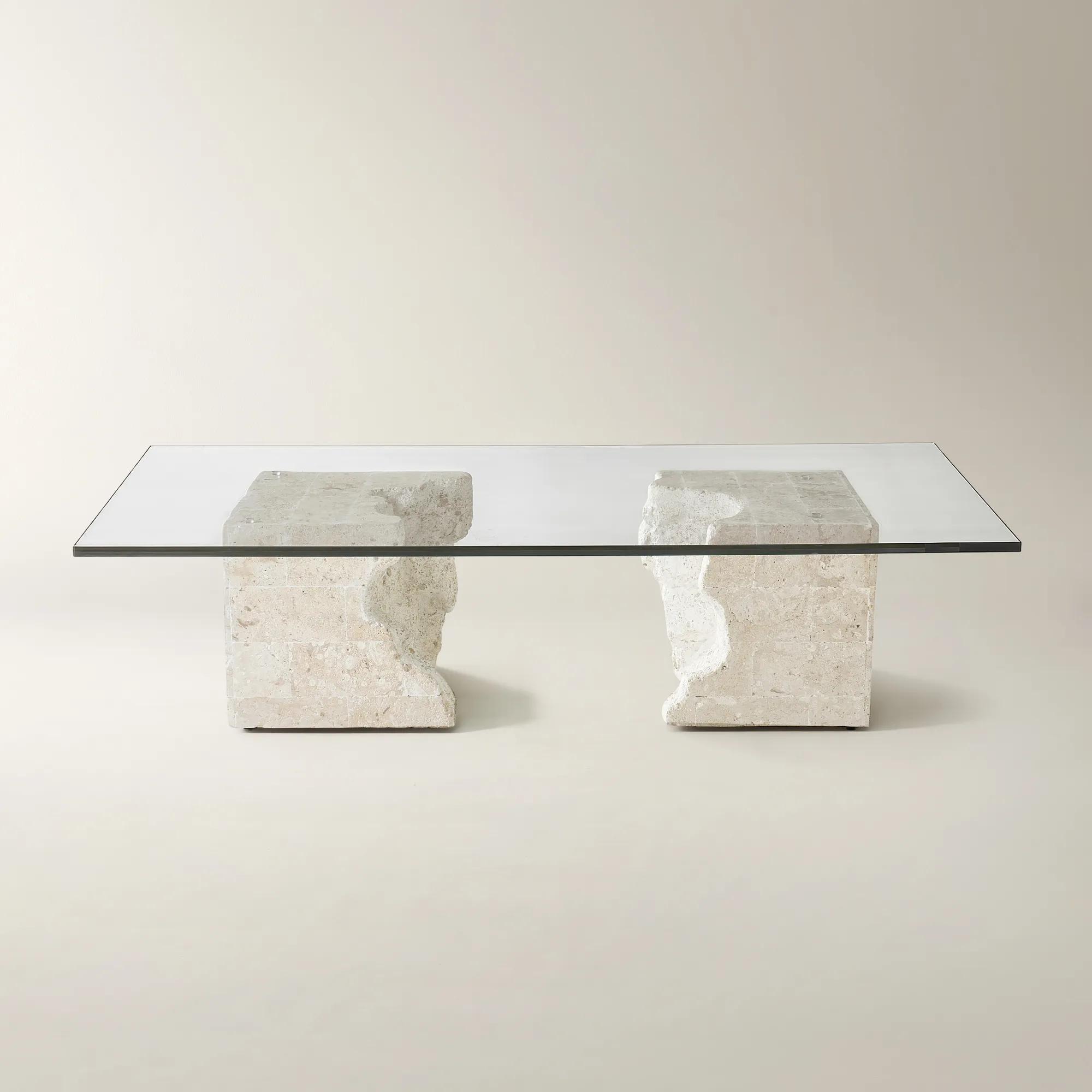 Cairo Rectangular Mactan Stone Coffee Table With Glass Top (70.87")$1999
A contemporary coffee table featuring a clear tempered glass top floating above hand-carved Mactan stone bases.
Add To Cart -
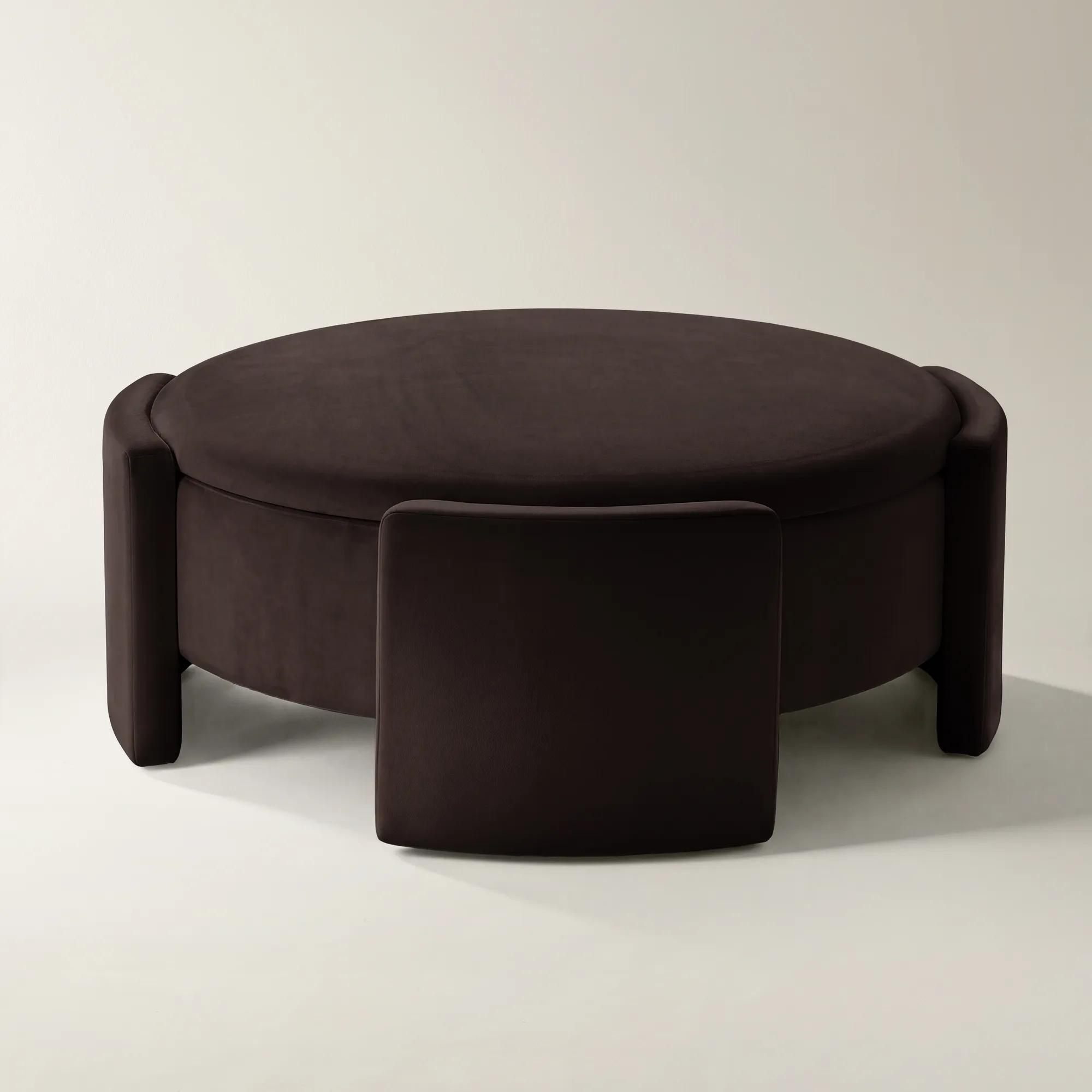
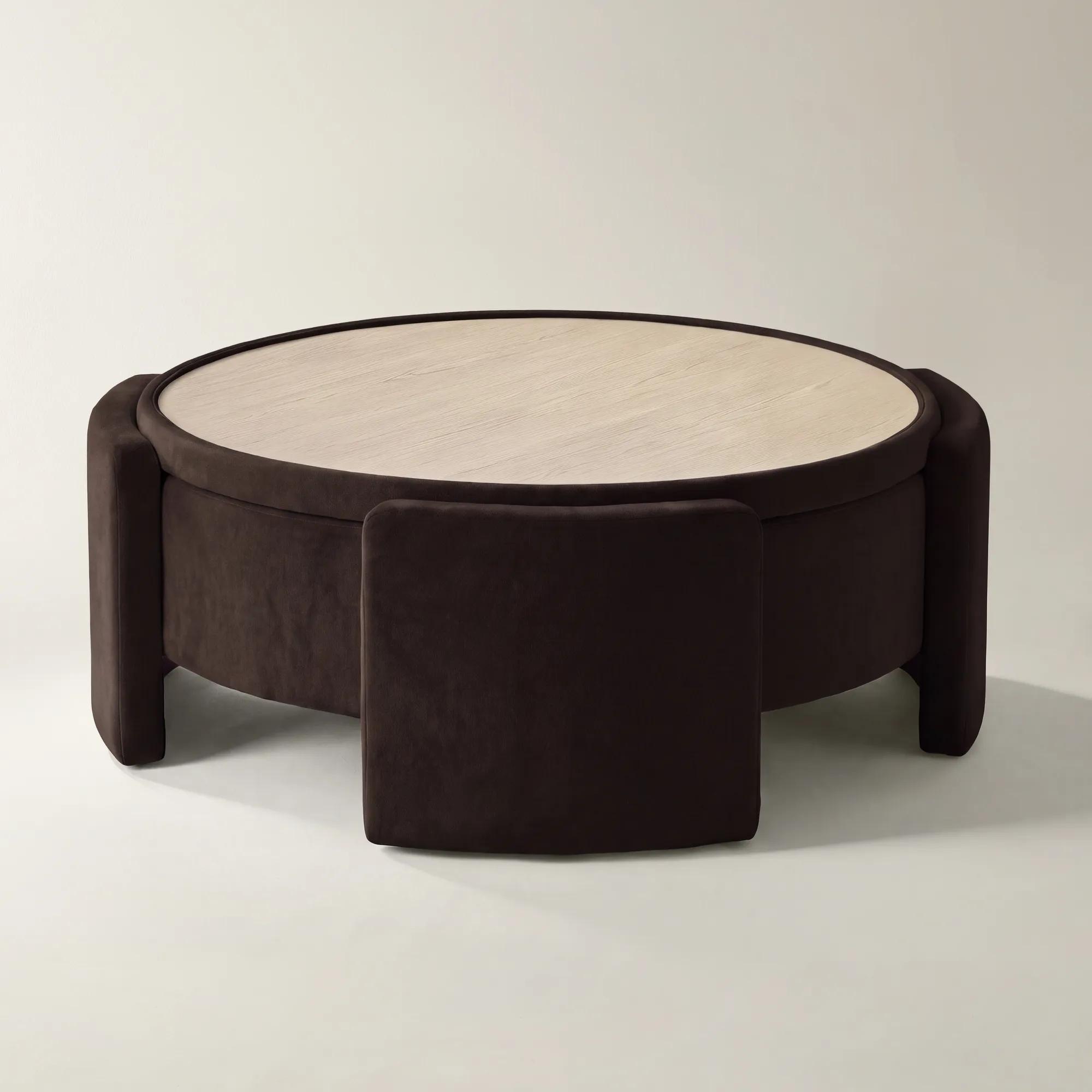 Jora Round Dark Chocolate Velvet Storage Coffee Table With Reversible Tabletop (47.7")$799
A dark chocolate velvet coffee table with hidden storage and a reversible velvet-and-rubberwood tabletop.
Add To Cart -

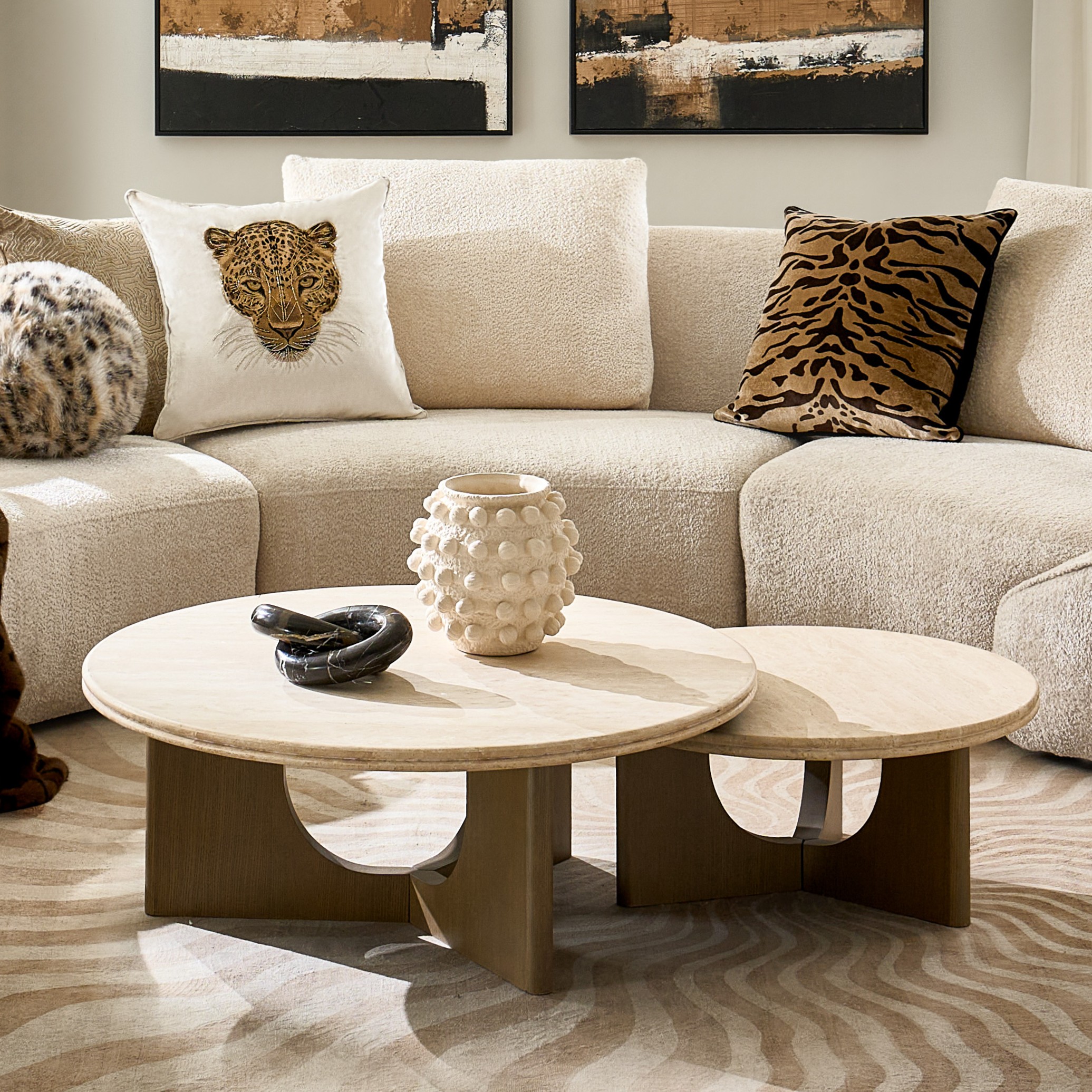 Bond Round Travertine and Wood Coffee Table (29.25")$699
A genuine travertine stone coffee table with warm ivory-gold tones atop a solid natural ash base.
Add To Cart -
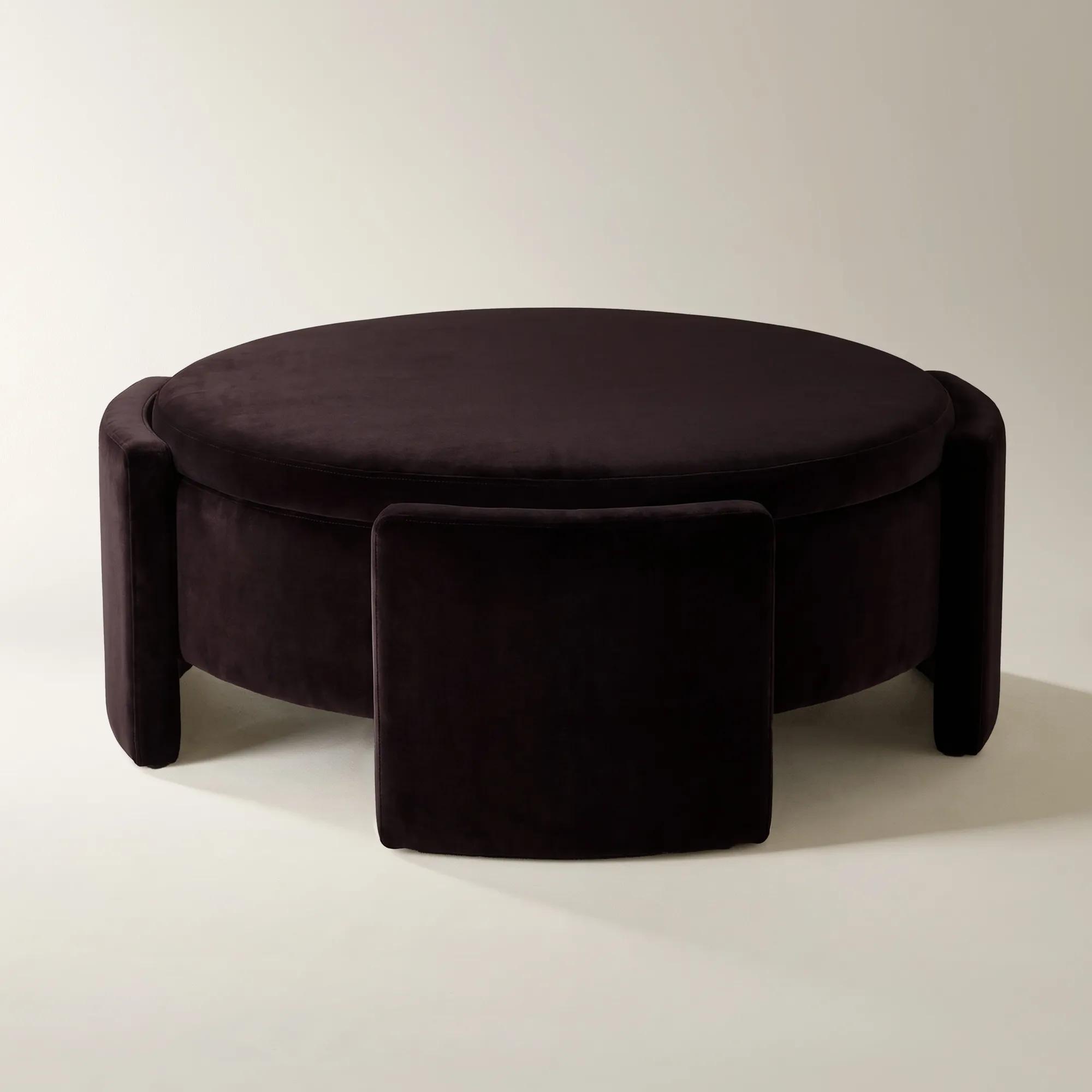
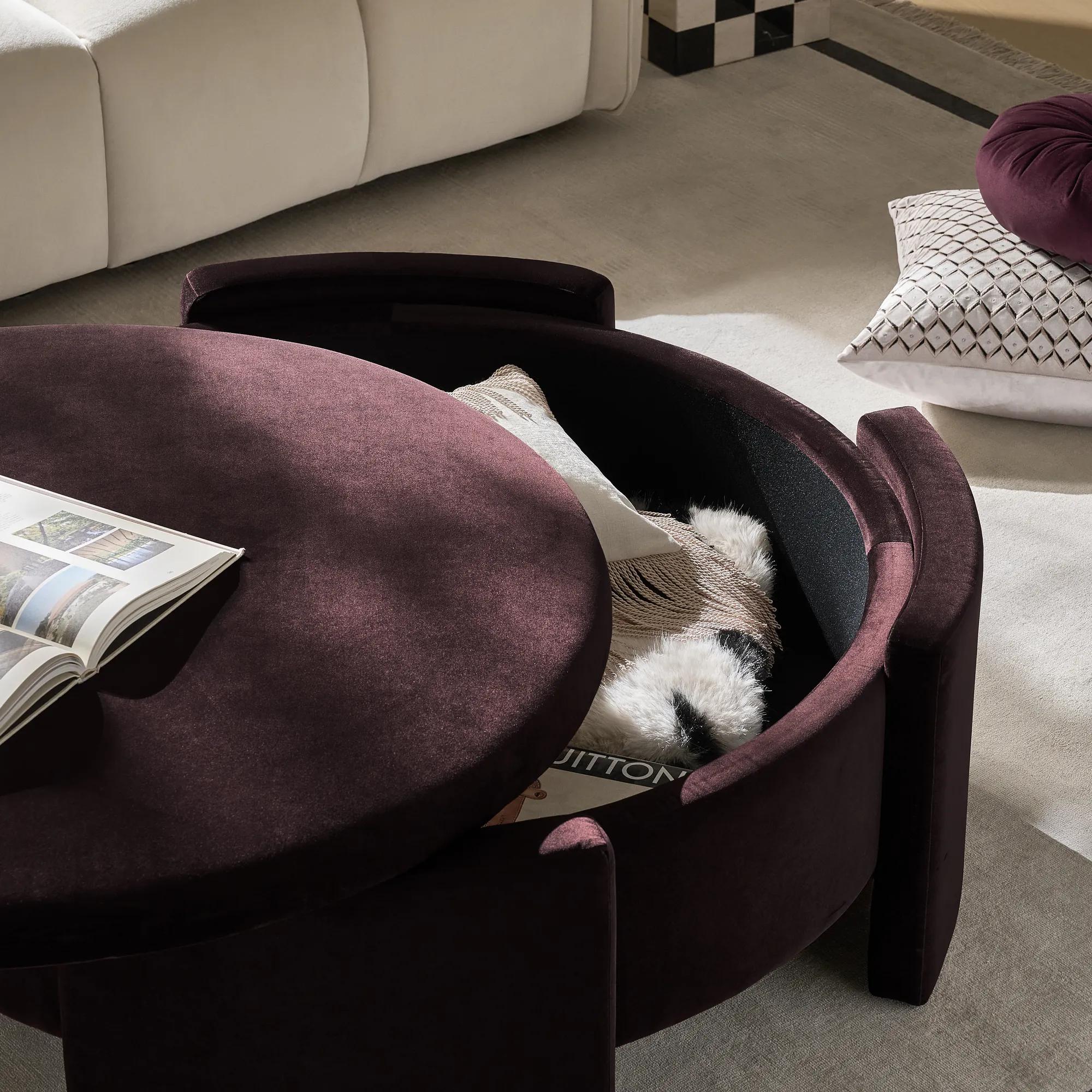 Jora Round Fig Velvet Storage Coffee Table With Reversible Tabletop (47.7")$799
A round fig velvet coffee table featuring a reversible wood tabletop and hidden interior storage.
Add To Cart -
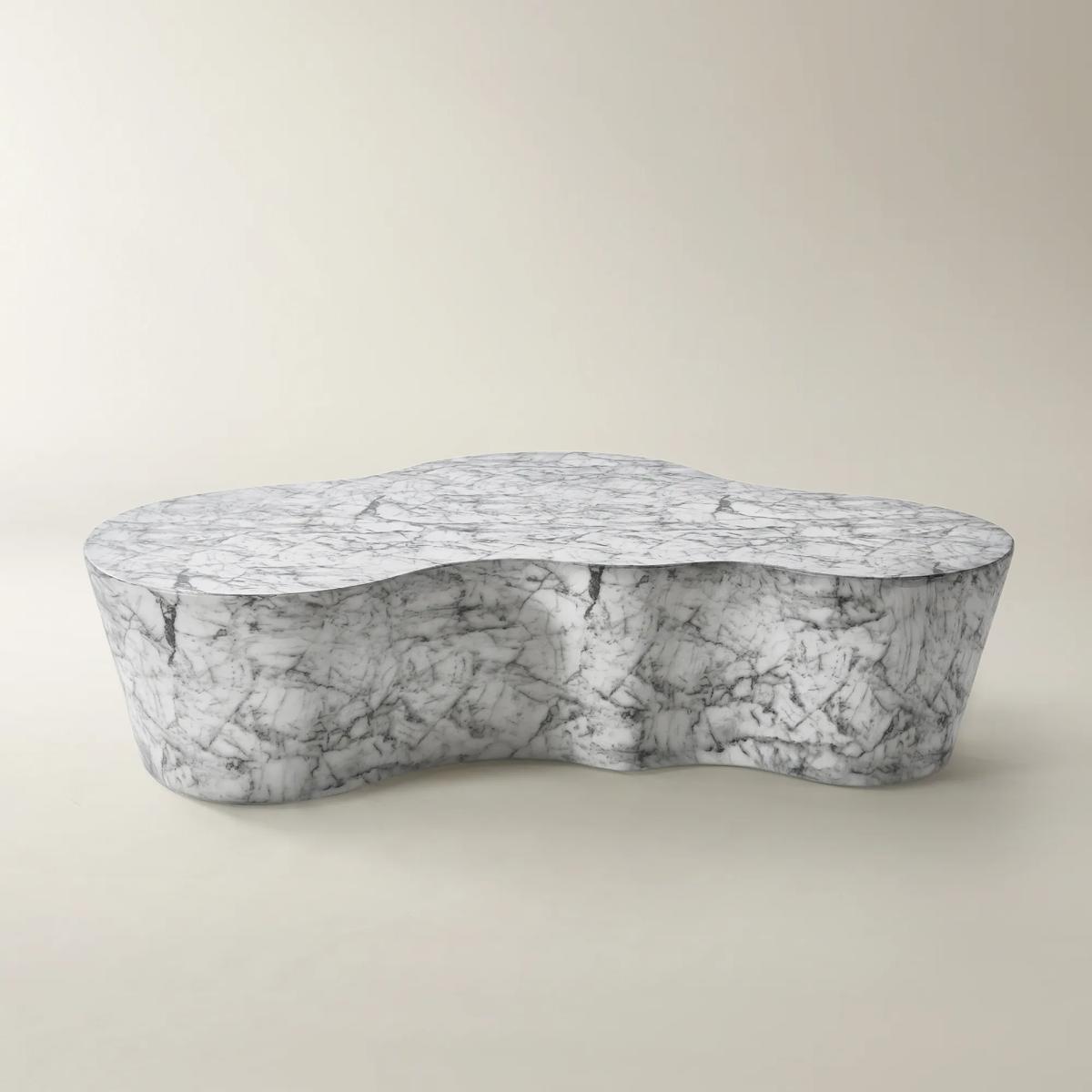
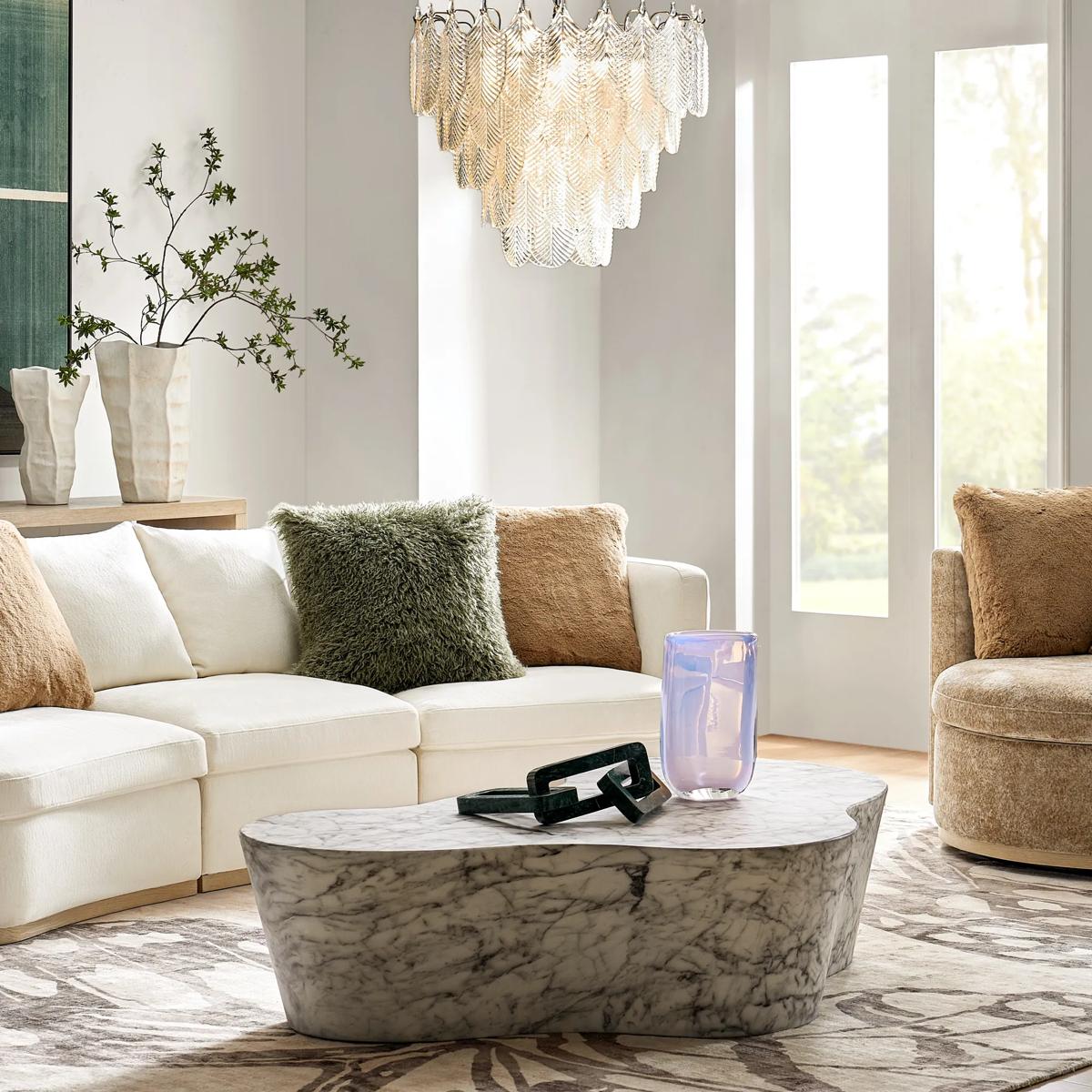 Petra White Concrete Indoor/Outdoor Coffee Table (59.4")$1099
A sculptural white concrete coffee table with cloud-like contours and marble-look veining, suitable indoors or outdoors.
Add To Cart -
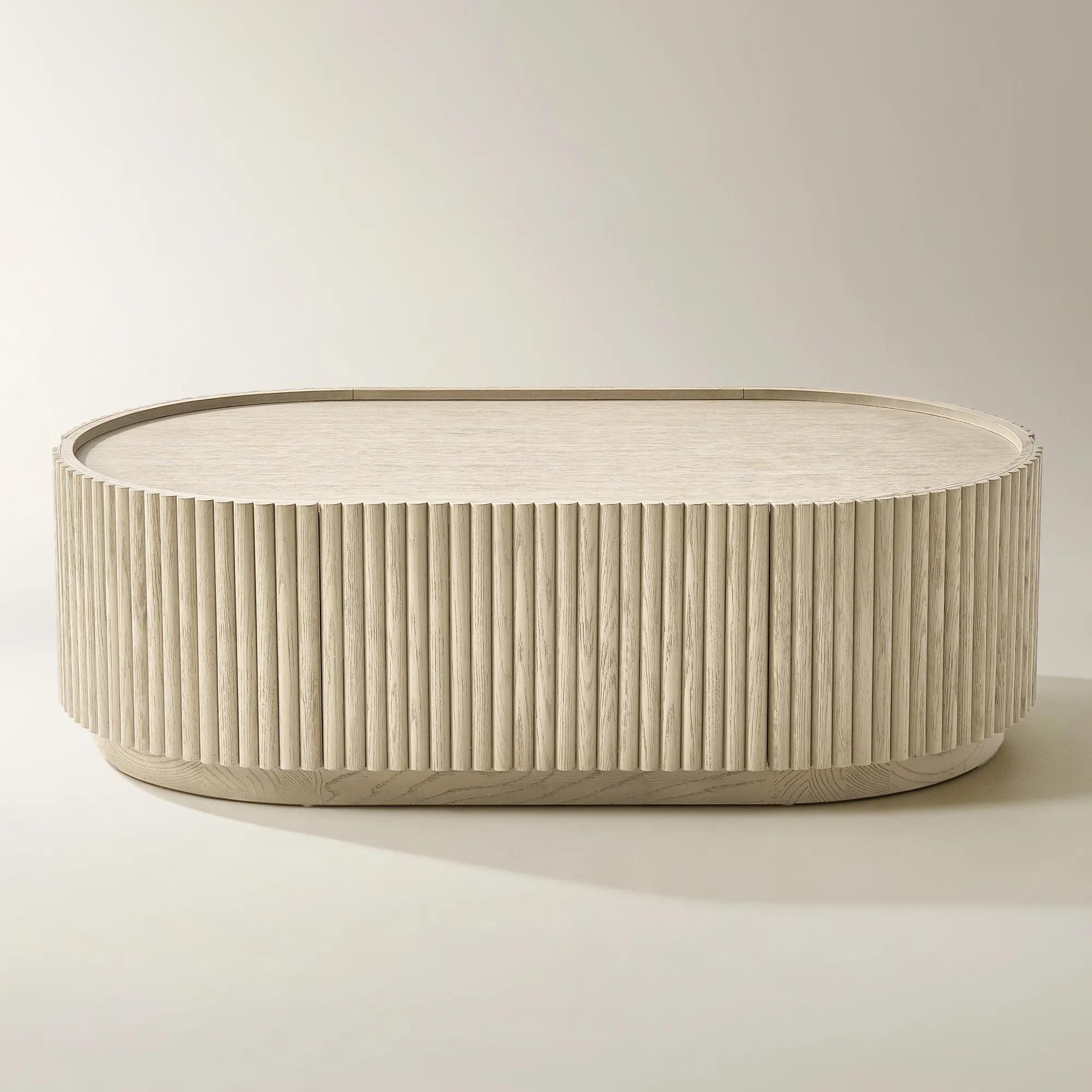
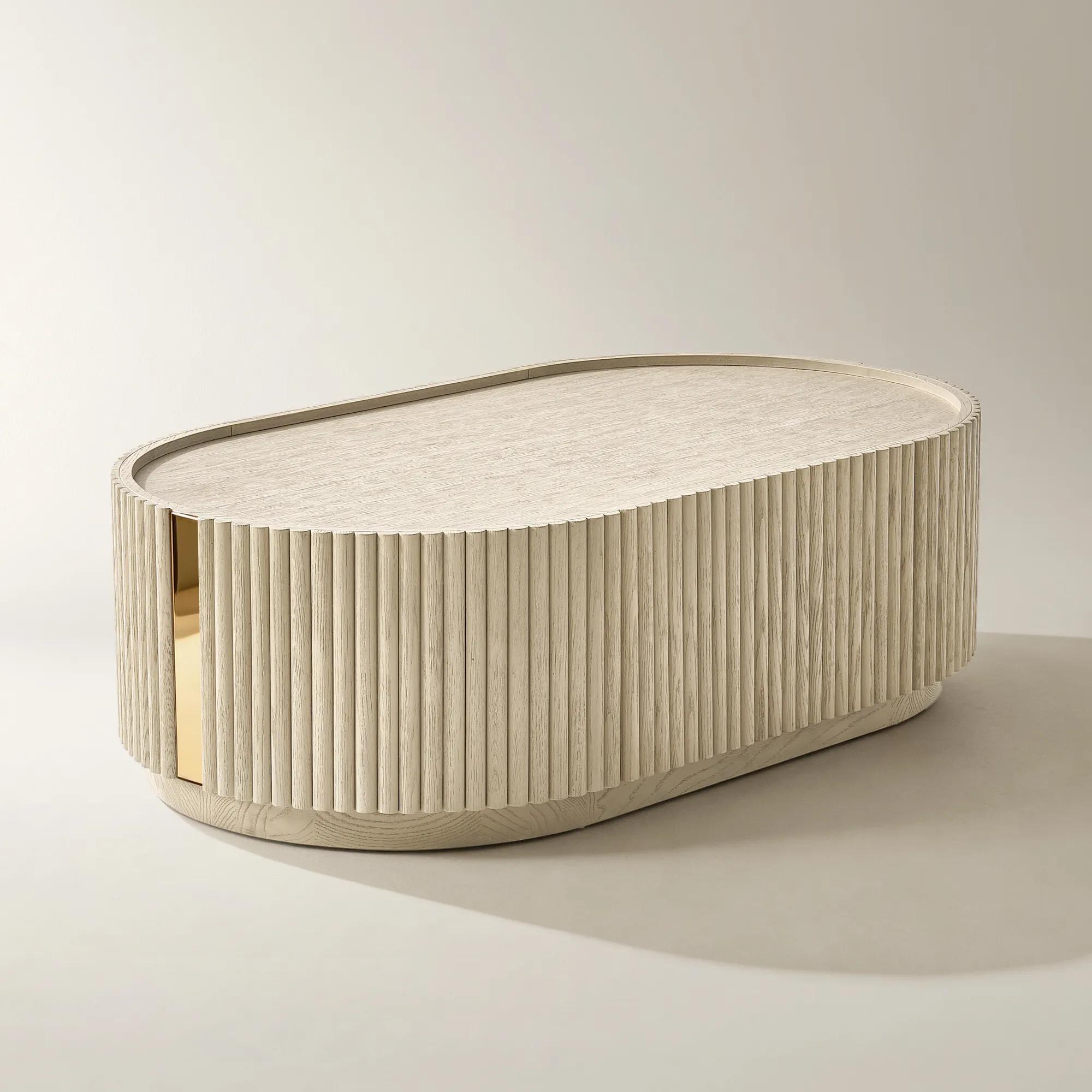 Stria Oval Reeded White Oak Coffee Table with Drawer (52")$1399
A reeded white oak coffee table with soft gold accents, recessed tabletop, and concealed soft-close drawer.
Add To Cart -
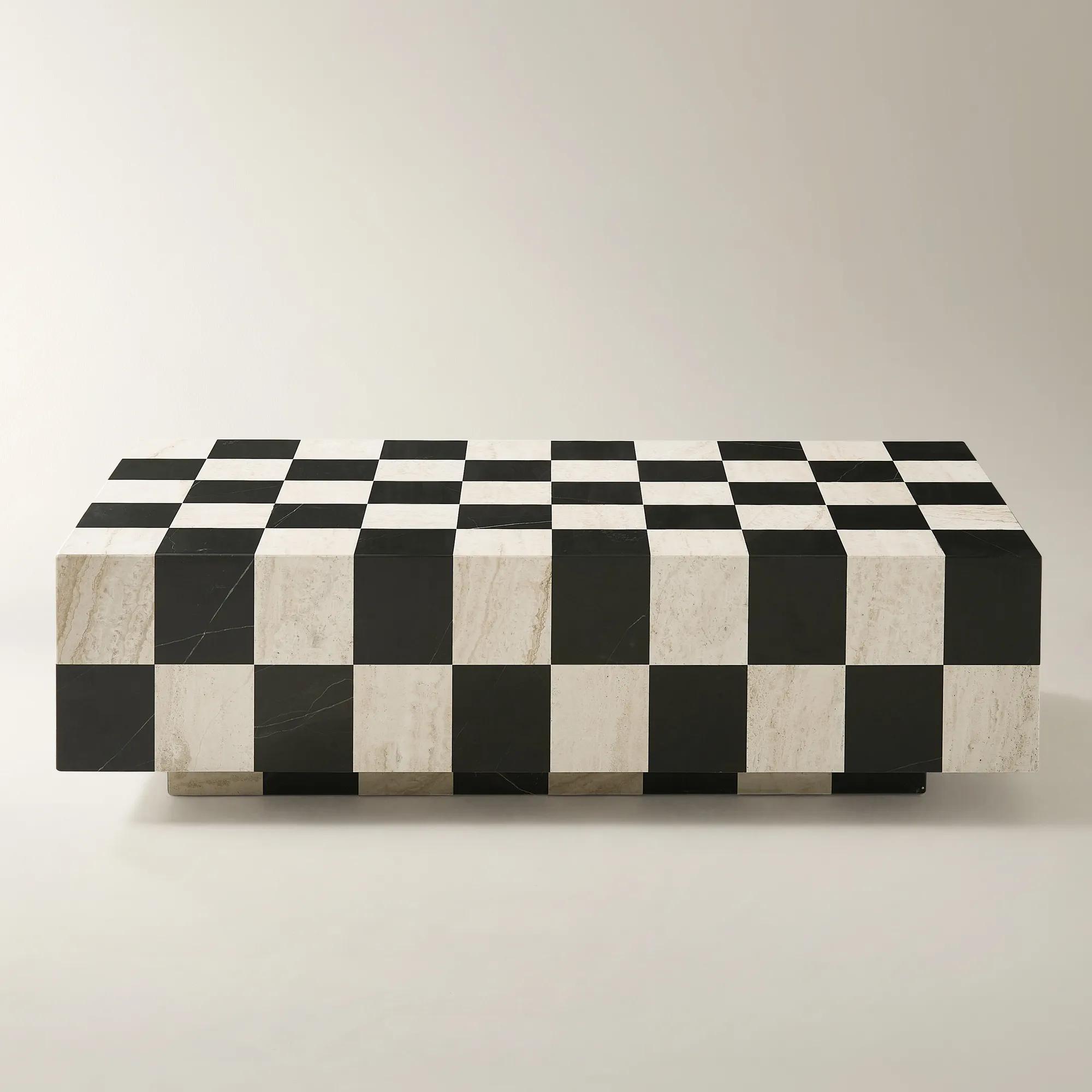 Chessa Rectangular Chequered Marble Coffee Table (53.1")$2399
A sculptural coffee table featuring polished black marble and travertine checkerboard mosaic with a monolithic silhouette.
Add To Cart -
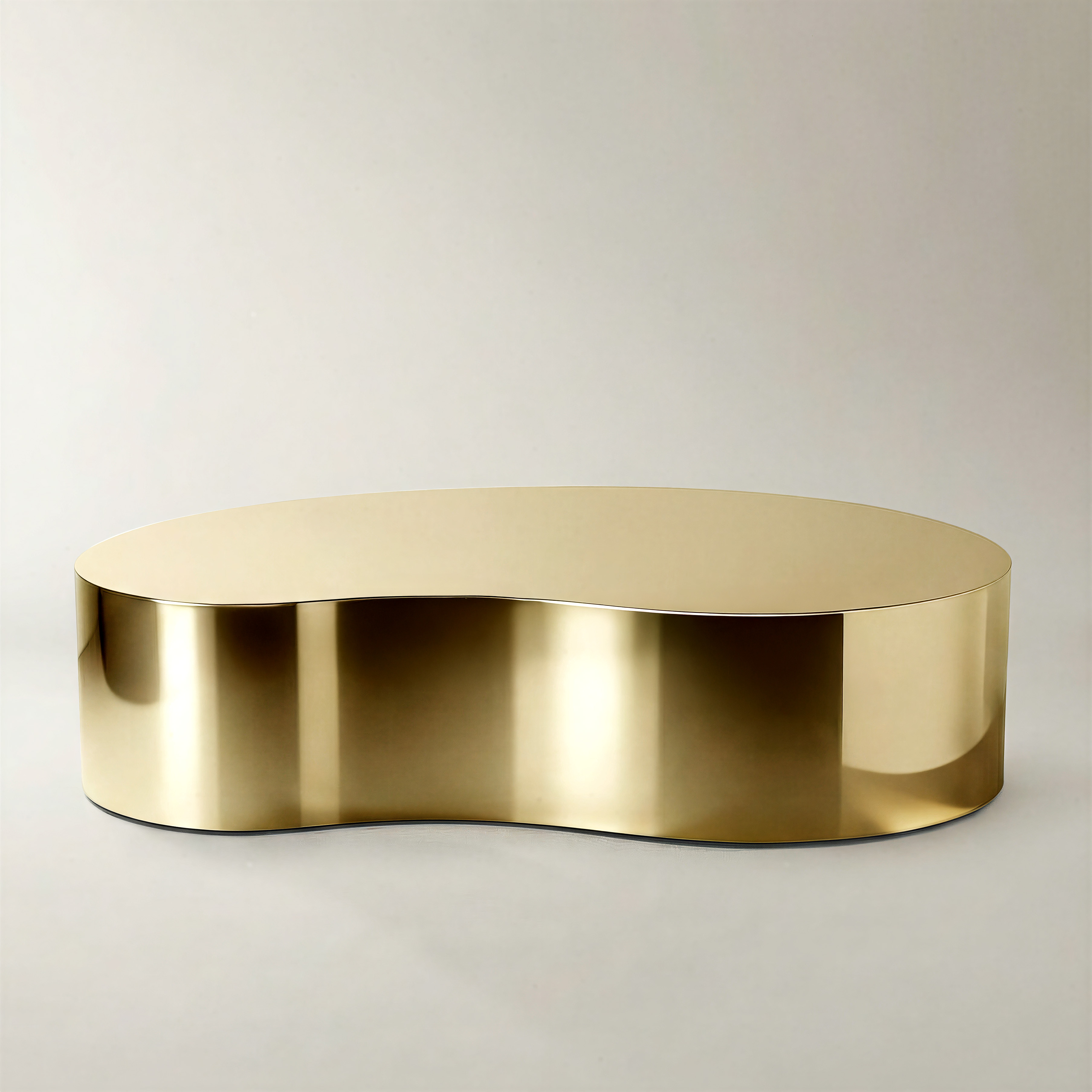
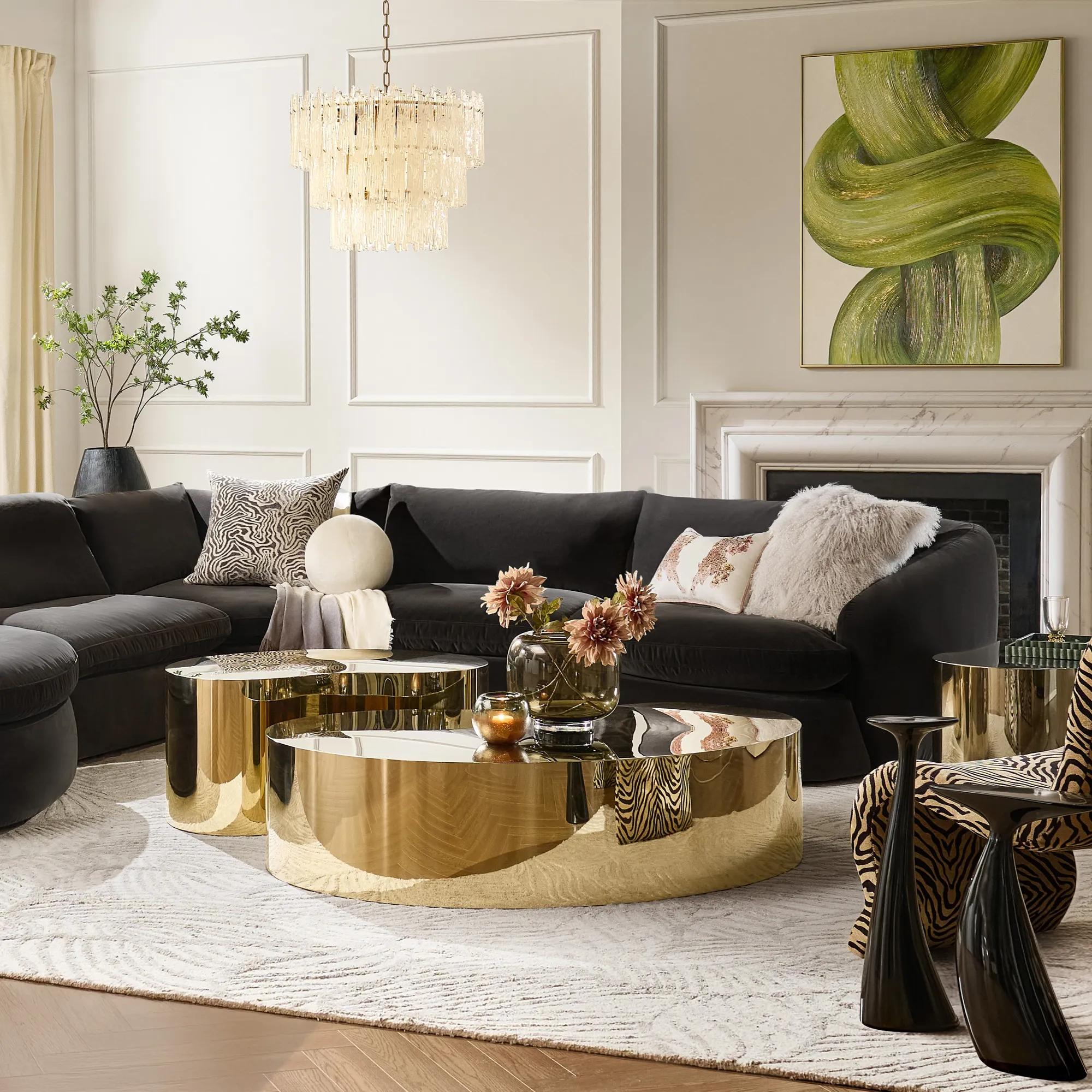 Aurea Soft Gold Coffee Table (57")$1399
A sculptural coffee table crafted from stainless steel with a high-gloss soft gold finish and rounded edges.
Add To Cart -
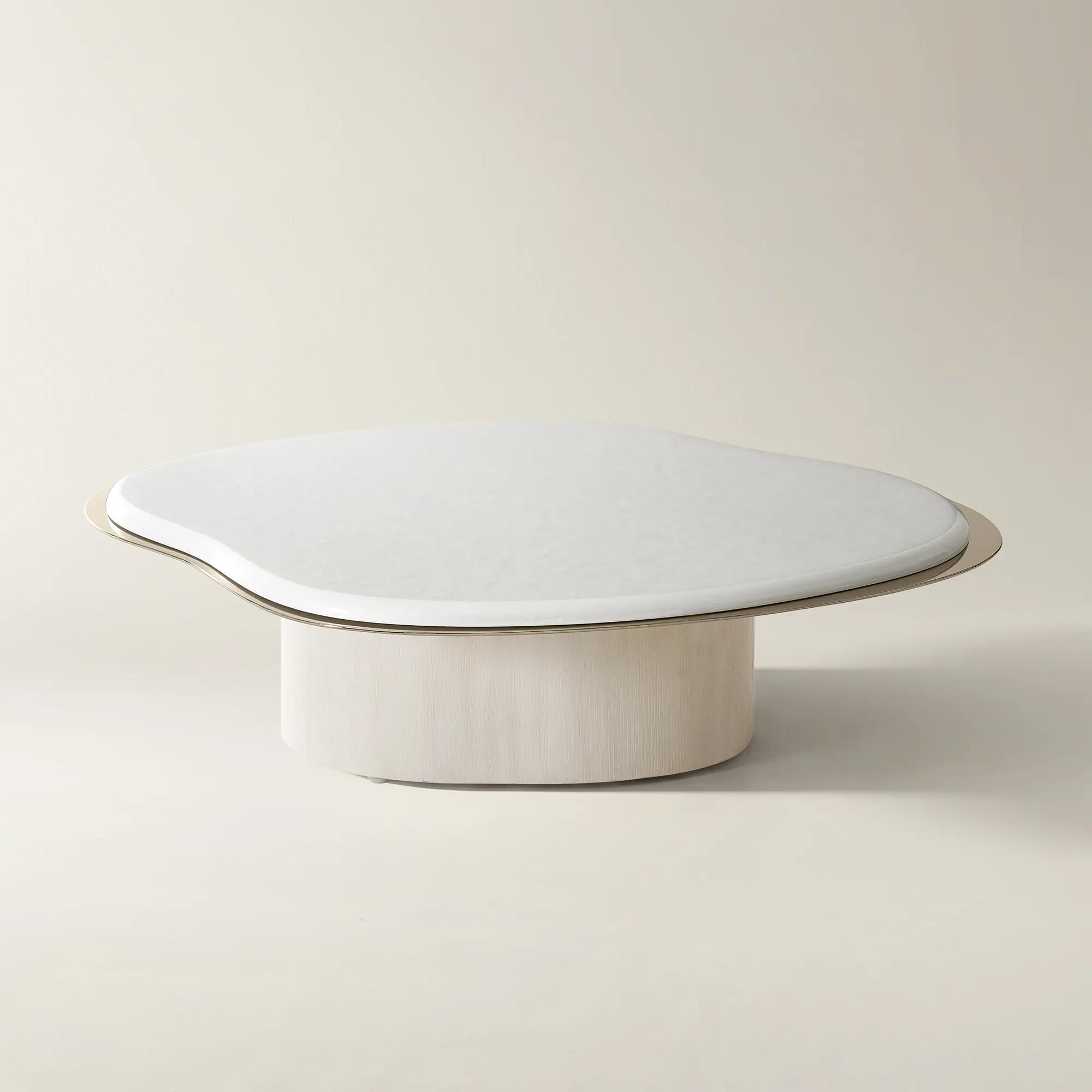
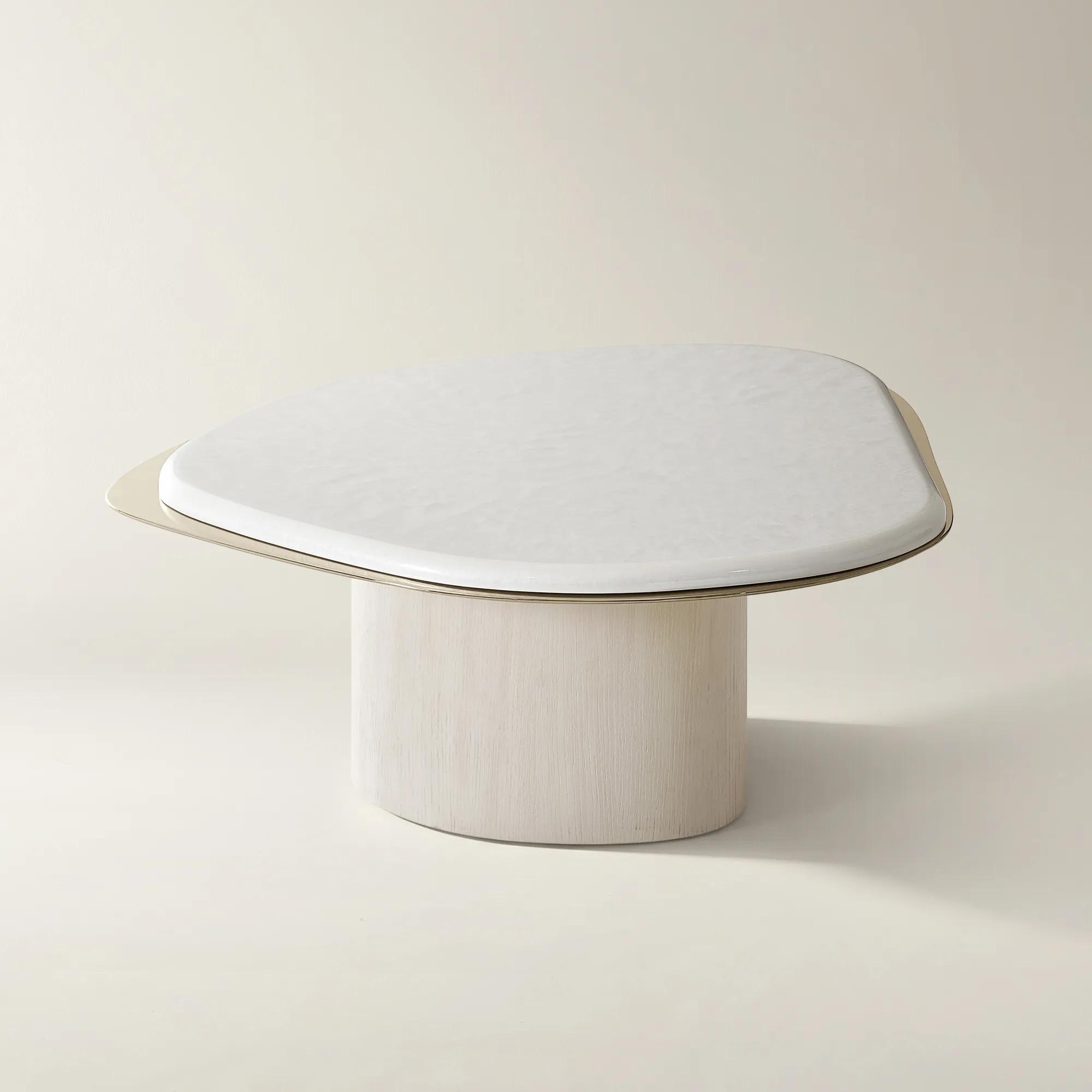
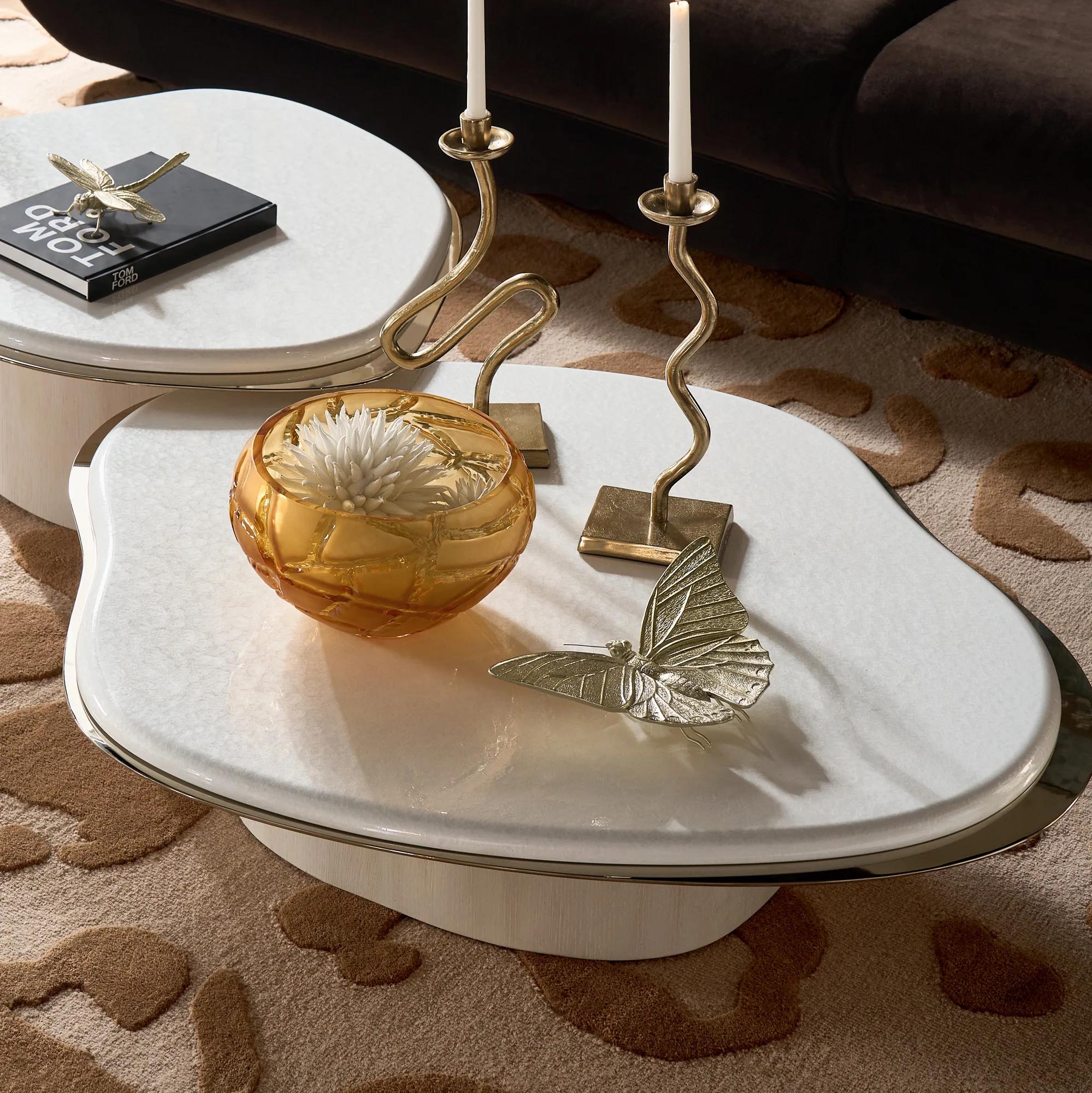 Lumina Bleached Oak Coffee Table With Pearl Lacquered Top (41")$1199
A sculptural coffee table featuring a pearl lacquered top, bleached oak base, and champagne gold trim.
Add To Cart

Coffee Tables For Contemporary Living Rooms
Explore coffee tables for contemporary living rooms that bring modern style and a confident focal point to your seating area. Find a design that balances your sofa’s proportions, complements the room’s finishes, and leaves space to move comfortably. Consider the tabletop’s everyday role, too: a surface for entertaining, displaying art books, or composing a dramatic decorative vignette.
Coffee tables for contemporary living rooms bring architecture, artistry, and everyday rituals into a single focal point. Set against a generously upholstered sofa or a pair of sculptural accent chairs, the right table gives the seating arrangement definition without interrupting its flow. Its surface might hold a ceramic vessel, an oversized art book, or a tray of drinks, but its silhouette does just as much work: a sweeping oval softens angular upholstery, a crisp rectangle reinforces a tailored room, and a round form creates an inviting center for conversation. Contemporary design leaves room for expression, from restrained profiles with striking proportions to luminous finishes that give an otherwise quiet space a glamorous edge. A transparent top can reveal the pattern of a rug beneath it, while a substantial wood or stone surface introduces visual weight and a sense of permanence. Scale makes these contrasts feel intentional. A table approximately two-thirds the length of a sofa often offers a balanced starting point, though the arrangement of chairs, the depth of the seating, and the shape of the room all influence the ideal fit. A surface near the height of the sofa cushions keeps drinks and books within comfortable reach; a markedly lower profile creates a different, more lounge-like effect. Allowing roughly 14 to 18 inches between the table and the sofa typically provides room to move while preserving that easy reach, with additional clearance where people regularly walk through the space. In a room anchored by a sectional, the table should relate to the usable seating area rather than simply echo the sofa’s overall length. Rounded corners can ease circulation around a chaise, while a square silhouette can bring coherence to seating arranged on several sides. These proportions allow a coffee table to feel like part of the room’s composition, not an object placed in its center after everything else is finished.
Materials establish both the mood of a contemporary coffee table and the attention it will need over time. Glass lends a light, luminous presence that suits rooms where an expressive rug or distinctive table base deserves to remain visible. It also shows fingerprints, dust, and drink rings readily, making regular wiping part of maintaining its clarity. Tempered glass offers greater resistance to impact than ordinary glass, but it is not unbreakable, and exposed edges still warrant care. Wood introduces depth through grain, tonal variation, and the contrast between a smooth top and a sculpted base. Solid wood and veneered surfaces have different constructions, yet either can bring richness to a contemporary setting when the finish and proportions are thoughtfully resolved. Coasters, protective pads beneath decorative objects, and prompt attention to spills help preserve that finish; repeated exposure to moisture or direct sunlight can affect its appearance. Stone offers a more dramatic language, with veining that can turn a broad tabletop into an abstract composition. Natural marble and other porous stones may stain or react to acidic liquids, so their care requirements deserve attention before they become the landing place for coffee cups, sparkling water, or an evening cocktail. Sealers can help protect certain stones, but they do not make every surface impervious to damage. Metal brings another dimension, whether through a softly brushed finish, a dark architectural frame, or a polished surface that catches the light. Protective feet can help reduce contact between a base and the flooring, while careful handling helps prevent scratches on gleaming finishes. Lacquered surfaces create a sleek field of color or sheen, though abrasive cleaners and rough accessories can dull their effect. Across materials, the manufacturer’s care instructions should determine cleaning methods, and soft cloths are generally preferable to abrasive tools. Durability also depends on construction, stability, edge design, and how the table will be used. A household with young children, energetic pets, or frequent guests may place particular value on secure bases, forgiving shapes, and surfaces suited to daily activity.
The most compelling coffee tables balance their visual presence with the habits of the people gathered around them. For someone who loves to entertain, a generous top offers space for a serving tray without displacing every decorative object. For an avid reader, a shelf or enclosed compartment can keep books, remotes, and small essentials close at hand while preserving a composed surface. Open shelving makes storage part of the display, so the objects beneath the tabletop contribute to the room’s palette and texture. Enclosed storage creates a quieter impression, especially in a living room that also serves as a place for family games or relaxed conversation. Nesting forms can offer flexibility when seating shifts, provided their heights, stability, and placement suit the space. A lift-top mechanism may support occasional tasks, though its operating clearance and intended load should be considered rather than assuming every coffee table can function as a desk or dining surface. Styling brings these practical qualities into focus. A low bowl, a stack of substantial books, and one taller sculptural accent can create depth without crowding the tabletop; leaving open space preserves room for the cup, plate, or magazine that arrives later. On a veined stone surface, a restrained arrangement lets the material hold attention. On clear glass, objects with distinct shapes can stand out against the layers visible beneath them. The surrounding furniture need not match exactly to feel connected. Repeating a finish, a curved line, or a particular wood tone can establish continuity across a coffee table and nearby accent pieces, while deliberate contrasts keep the room expressive. Complementary forms among Stylish Living Room Tables can help extend that composition beyond the central seating area. Whether the room belongs to a devoted host, a design enthusiast, or a household that gathers for conversation at the end of the day, a thoughtfully proportioned coffee table gives those moments a beautiful setting. Its lasting appeal comes from the relationship between a distinctive silhouette, a tactile surface, and the ease with which it belongs to daily life.
FAQs
Contemporary coffee tables pair clean silhouettes with expressive materials and artful details. Sculptural bases, fluid curves, and striking contrasts give these living room centerpieces their distinctive presence. Look for a design that brings clarity to your furniture arrangement while adding a bold point of view.
Glass, marble, metal, and richly grained wood each bring a distinct mood to a contemporary living room. Glass creates an airy, luminous impression, while marble introduces dramatic veining and natural artistry. Polished metal lends a gleaming accent, and wood adds warmth and depth. Mixed-material coffee tables layer these qualities for a more expressive composition.
Create a curated composition with art books, a sculptural object, and a decorative tray that gives the arrangement definition. Contrast textures—such as glossy ceramic against natural stone—and leave portions of the tabletop exposed so its material remains part of the story. A restrained color palette lets distinctive forms command attention.
Round and oval coffee tables introduce fluidity alongside tailored upholstery, while square and rectangular designs echo crisp architectural lines. Organic shapes bring an unexpected, gallery-inspired quality to the room. Choose a silhouette that either repeats the geometry of your furnishings or creates a deliberate contrast.
A contemporary coffee table does not need to match every finish in the room. A more layered look comes from repeating a color, material, or design detail while allowing the table its own identity. A metallic base can echo decorative accents, for example, while a richly grained wood top creates a warm counterpoint to sumptuous velvet seating.