Glass Top Display Tables
Glass Top Display Tables
-
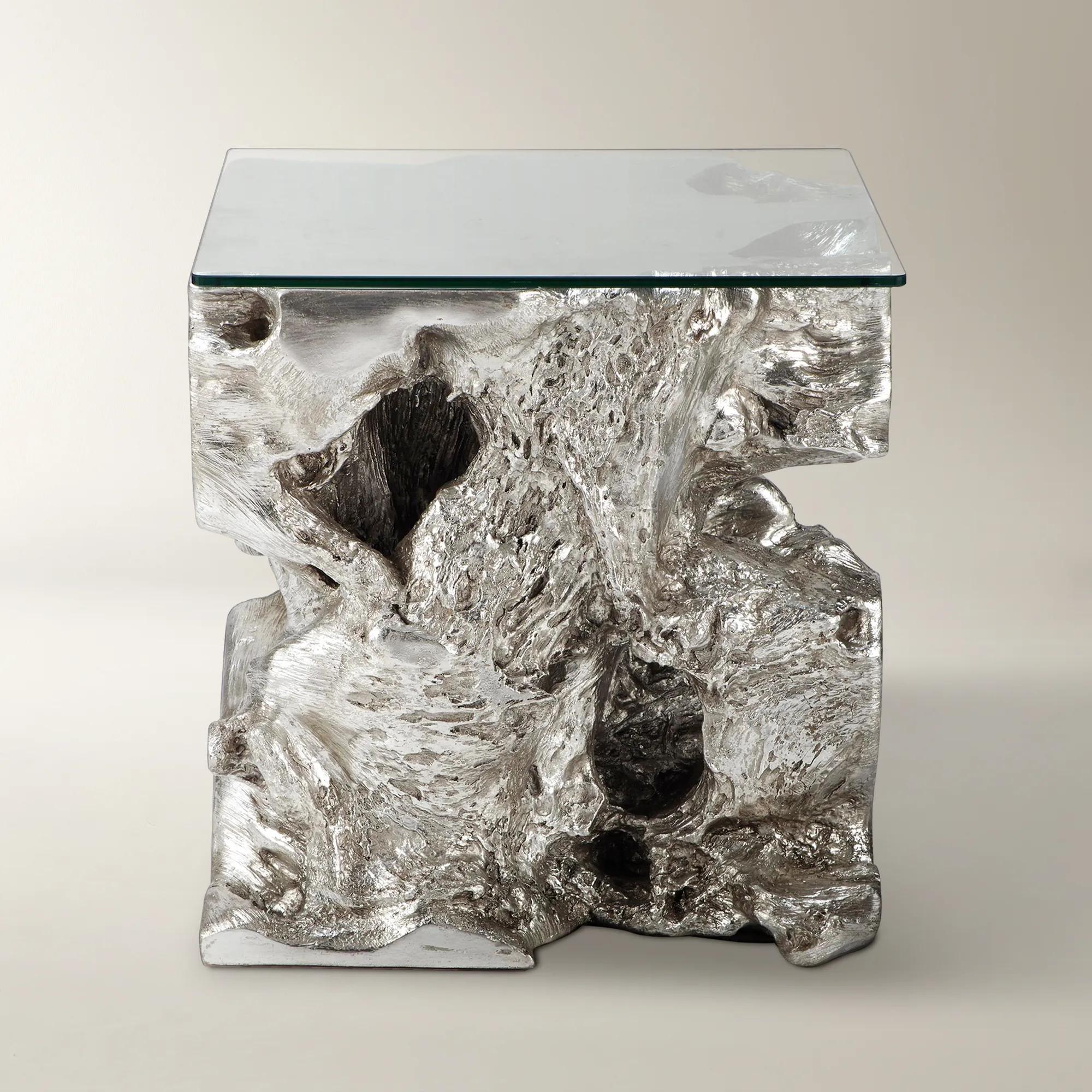 Sequoia Silver Resin End Table With Glass Top (22")$999
A sculptural end table featuring a silver leaf resin base and tempered glass top for modern elegance.
Add To Cart -
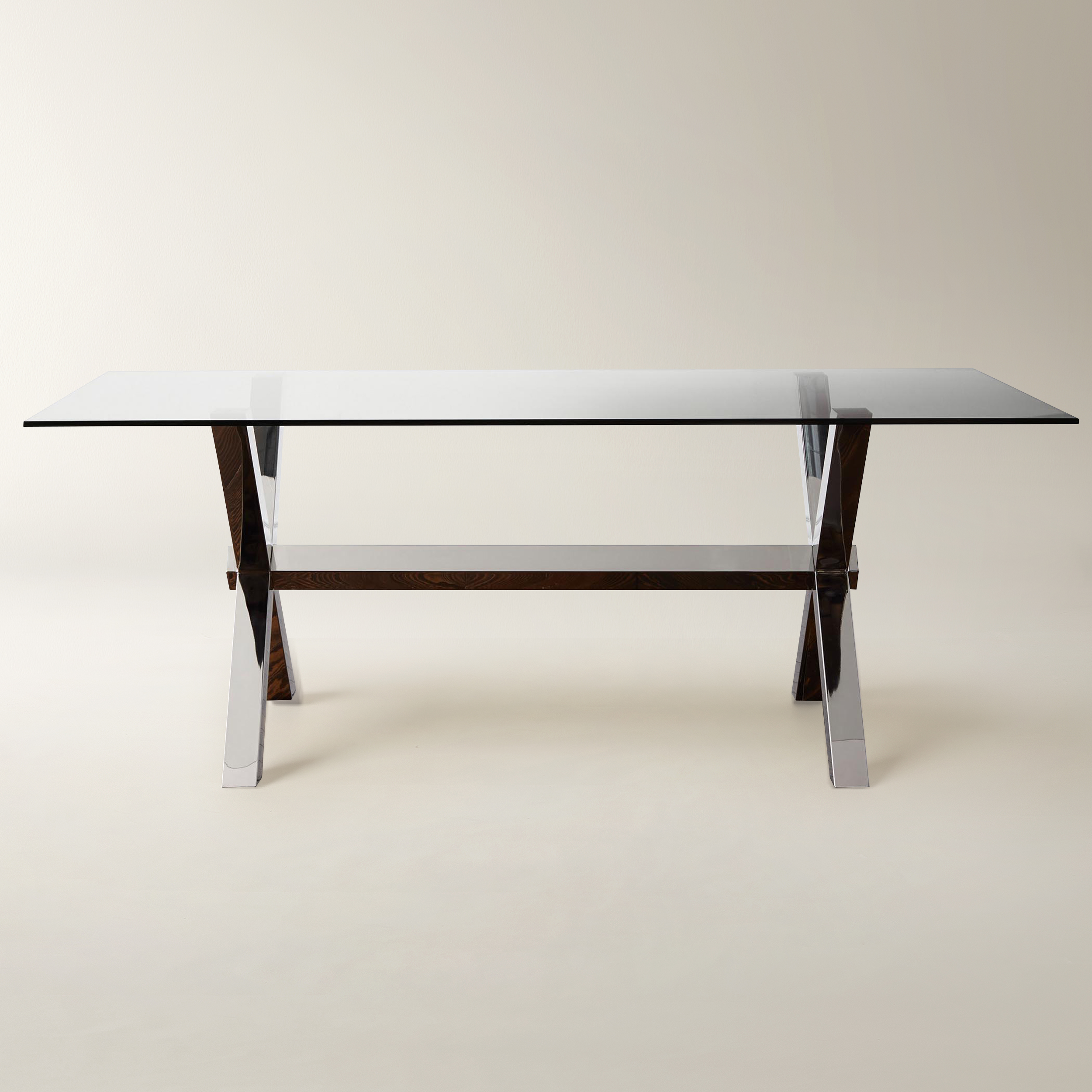
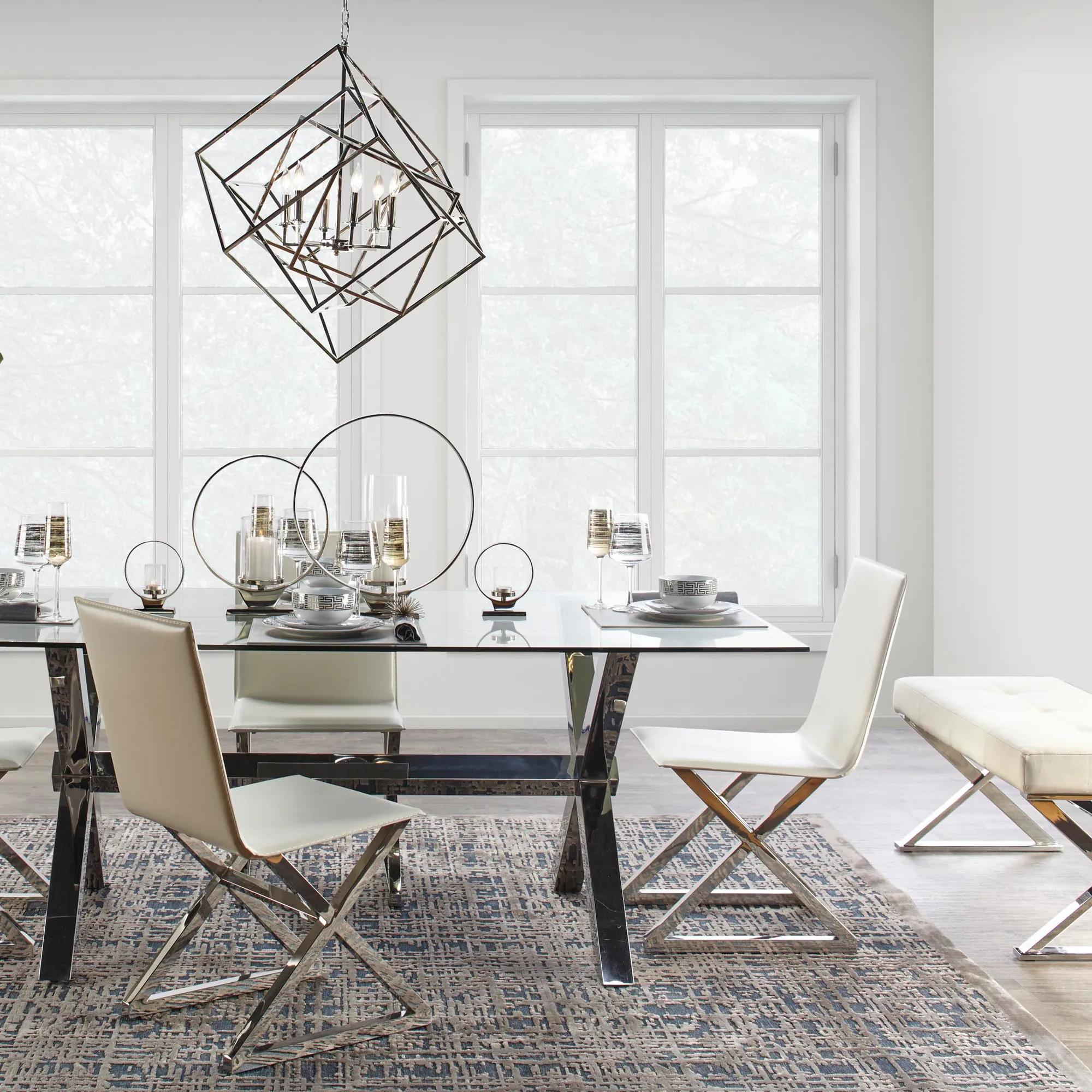 Axis Rectangular Silver Dining Table With Glass Top (78")$1199
A contemporary dining table featuring a polished stainless steel base and durable tempered glass top.
Add To Cart -
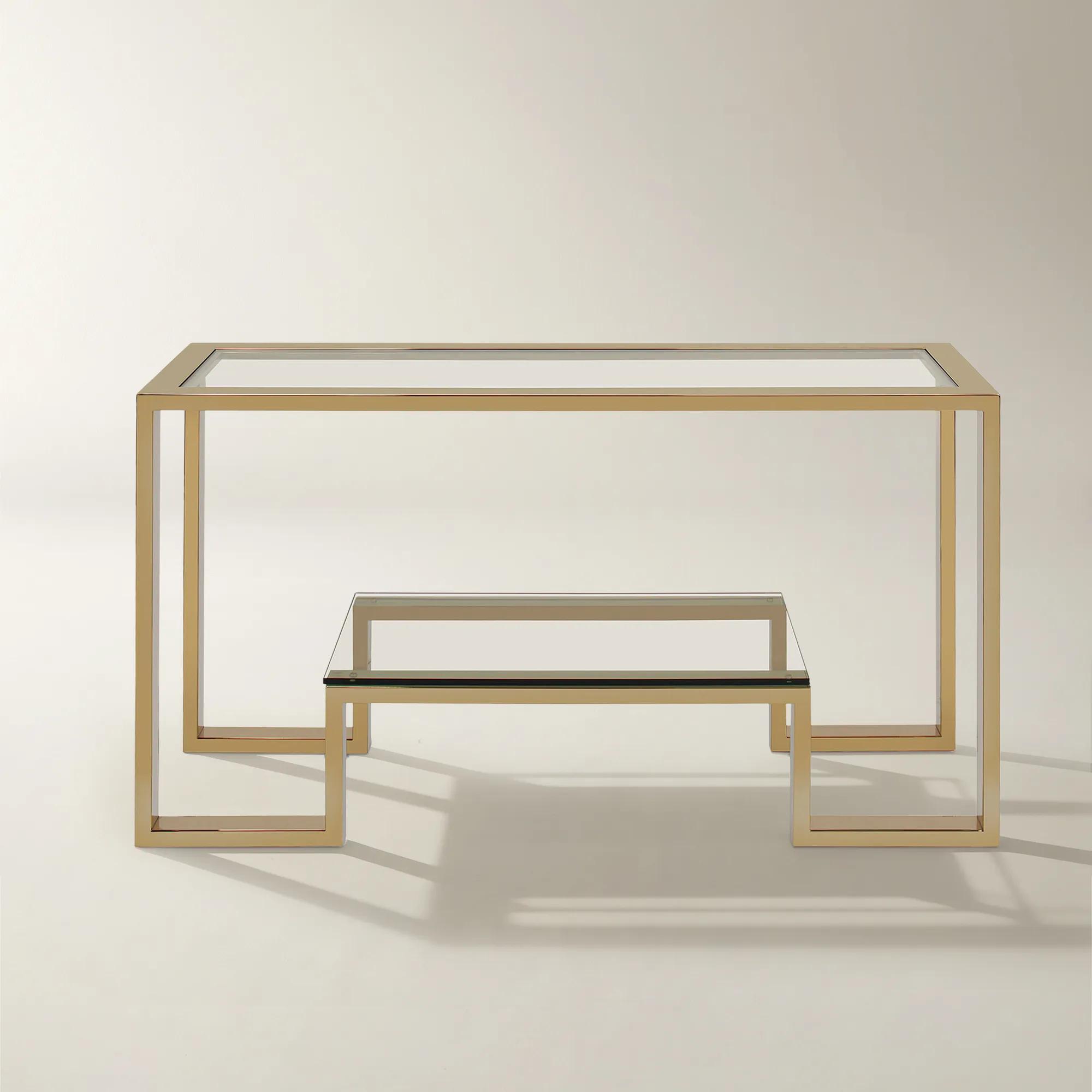
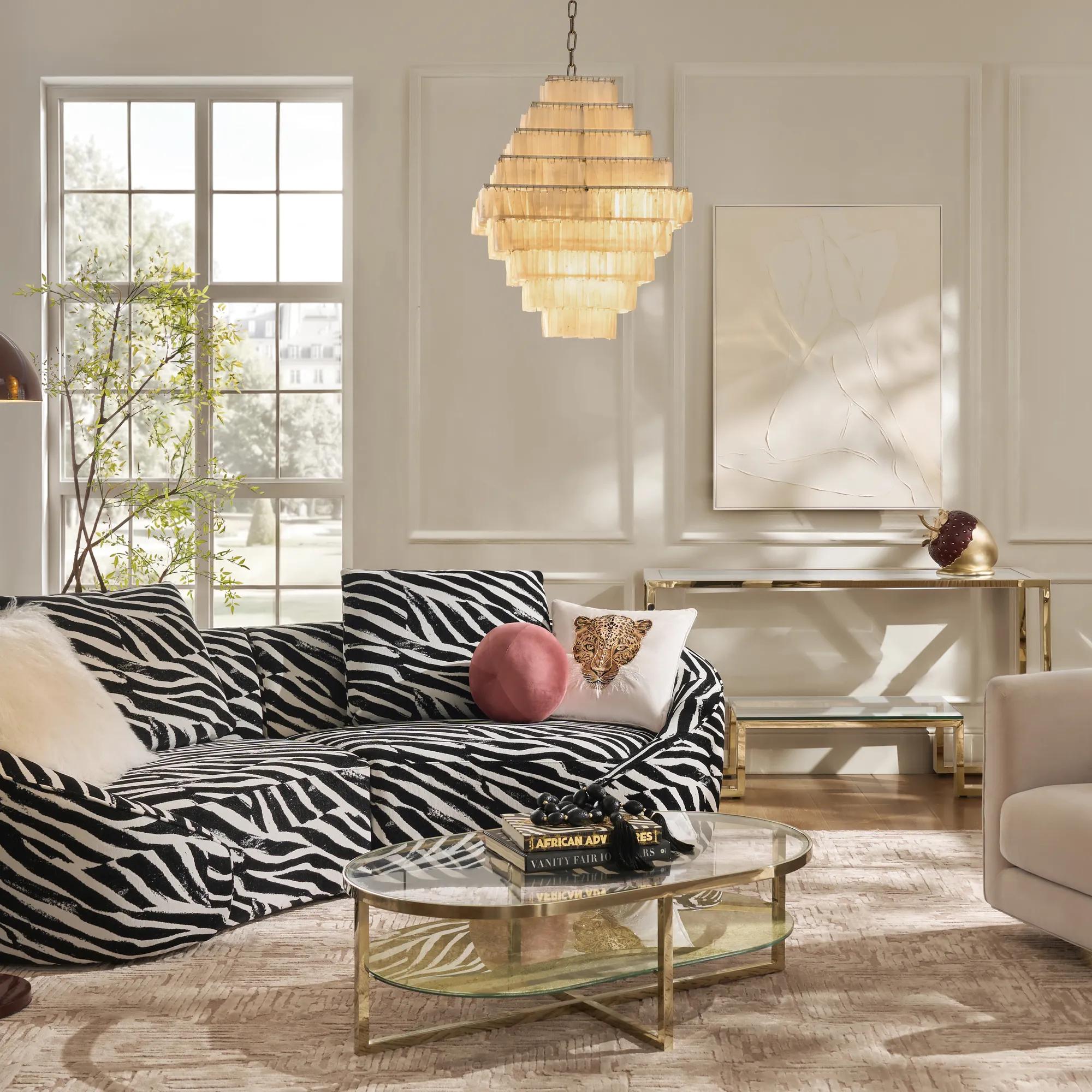 Duplicity Rectangular Gold Stainless Steel Console Table With Glass Top (59")$1399
A modern console table crafted from stainless steel and tempered glass with a floating bottom shelf.
Add To Cart -
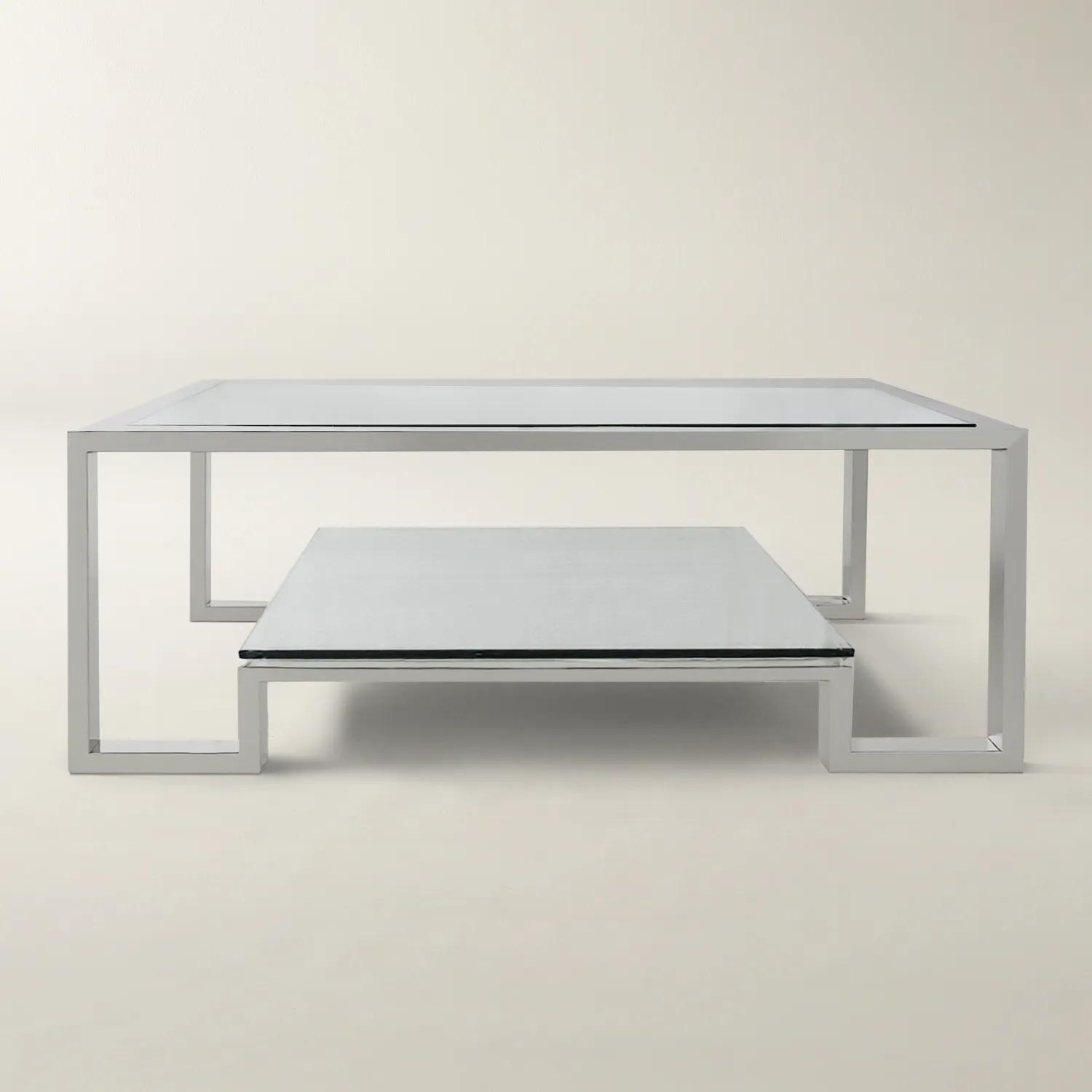
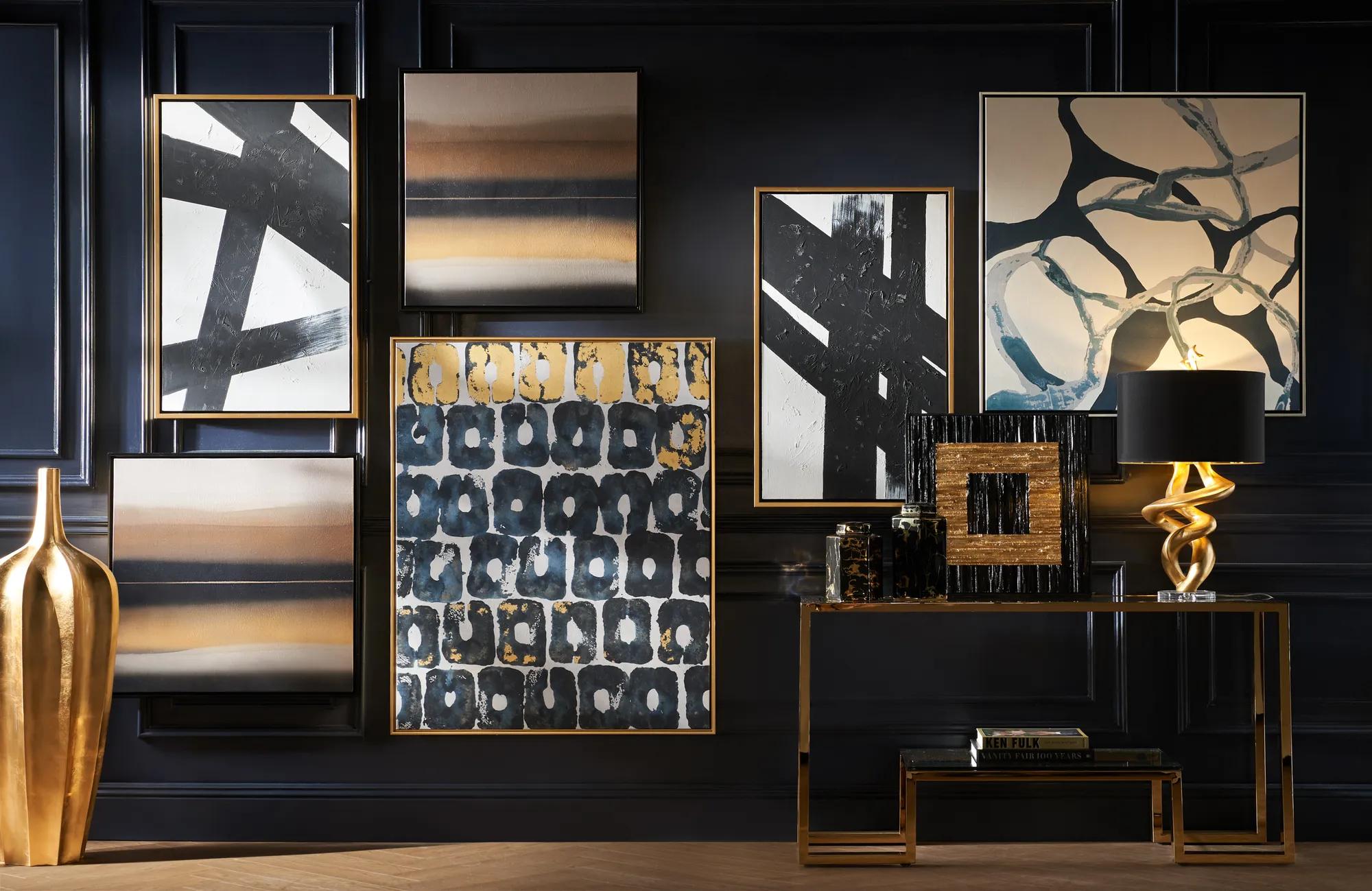 Duplicity Rectangular Silver Stainless Steel Coffee Table With Glass Top (50")$1399
A modern coffee table featuring a stainless steel frame, tempered glass top, and floating bottom shelf.
Add To Cart -
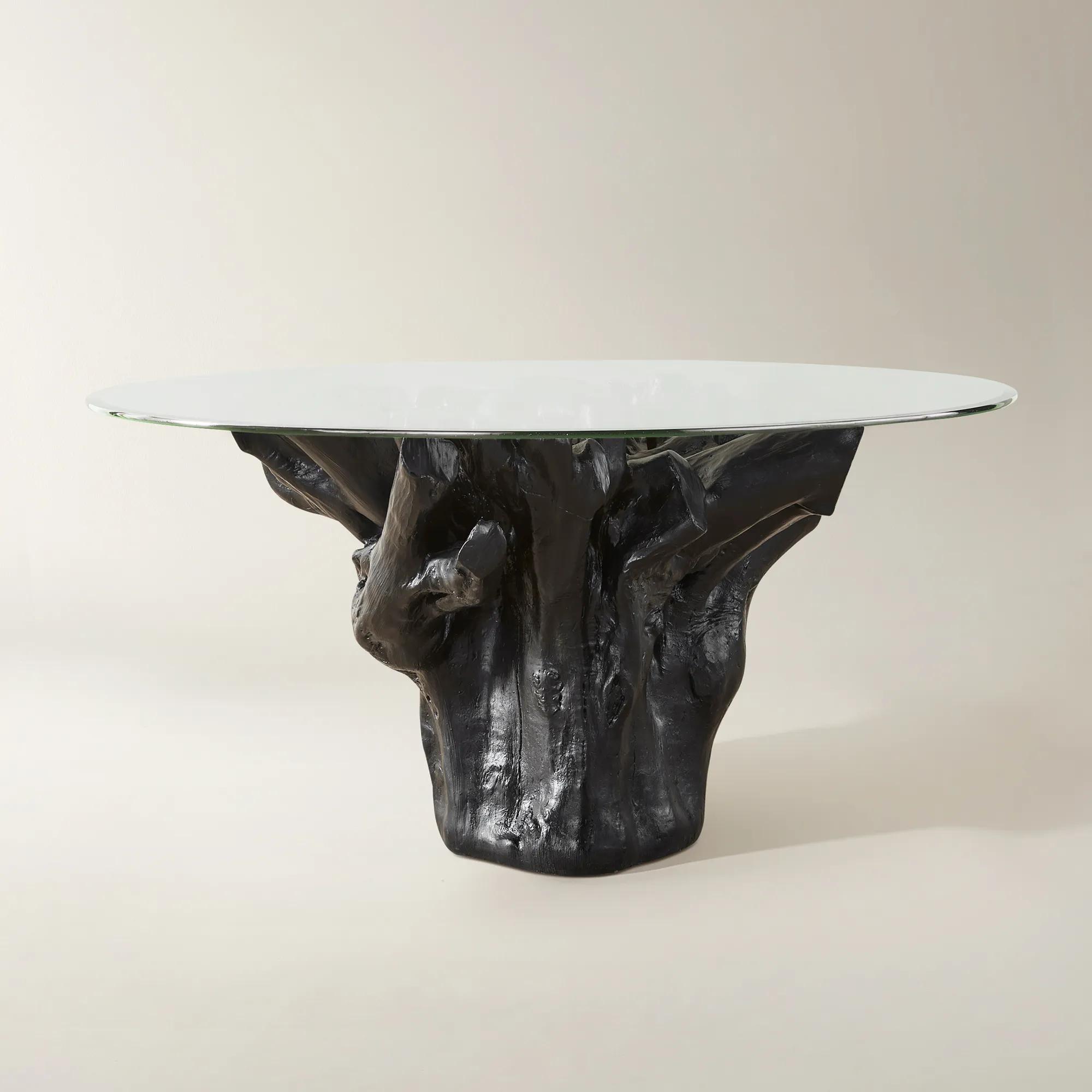 Sequoia Black Resin Dining Table With Glass Top (60")$2299
A sculptural black resin base with real stone fragments supports a round tempered glass top for organic elegance.
Add To Cart -
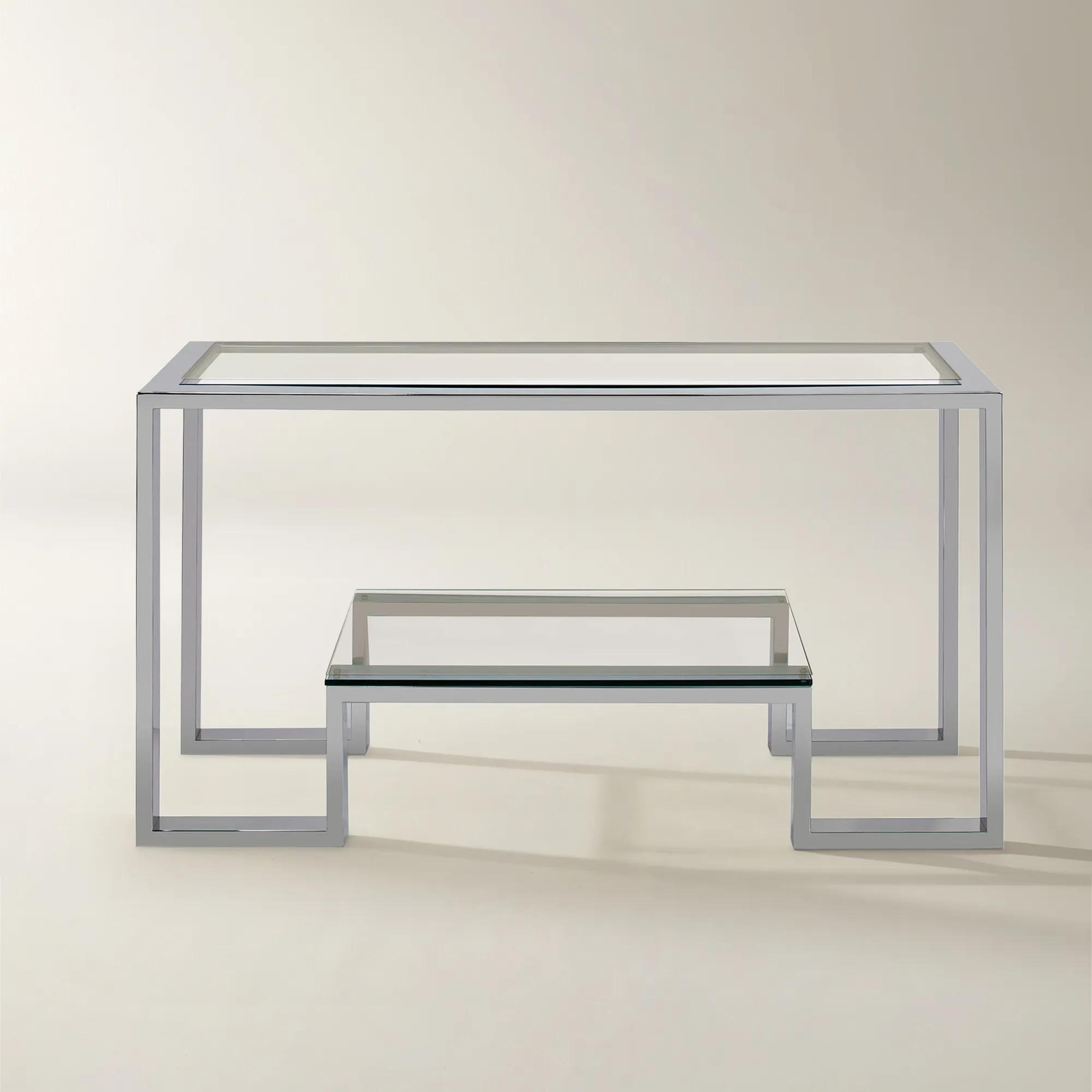
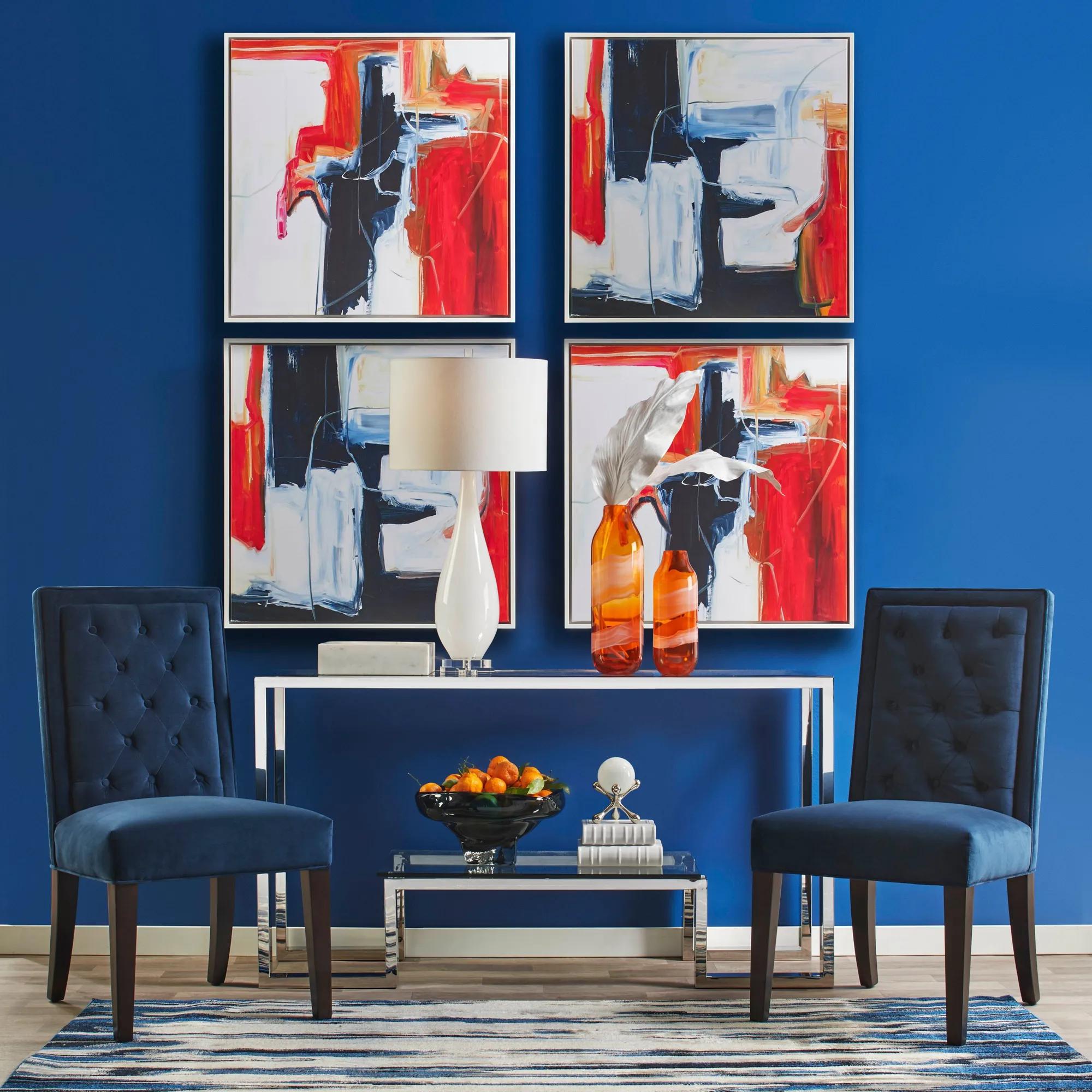 Duplicity Rectangular Silver Stainless Steel Console Table With Glass Top (59")$1399
A modern console table crafted from stainless steel and tempered glass with a floating bottom shelf.
Add To Cart -
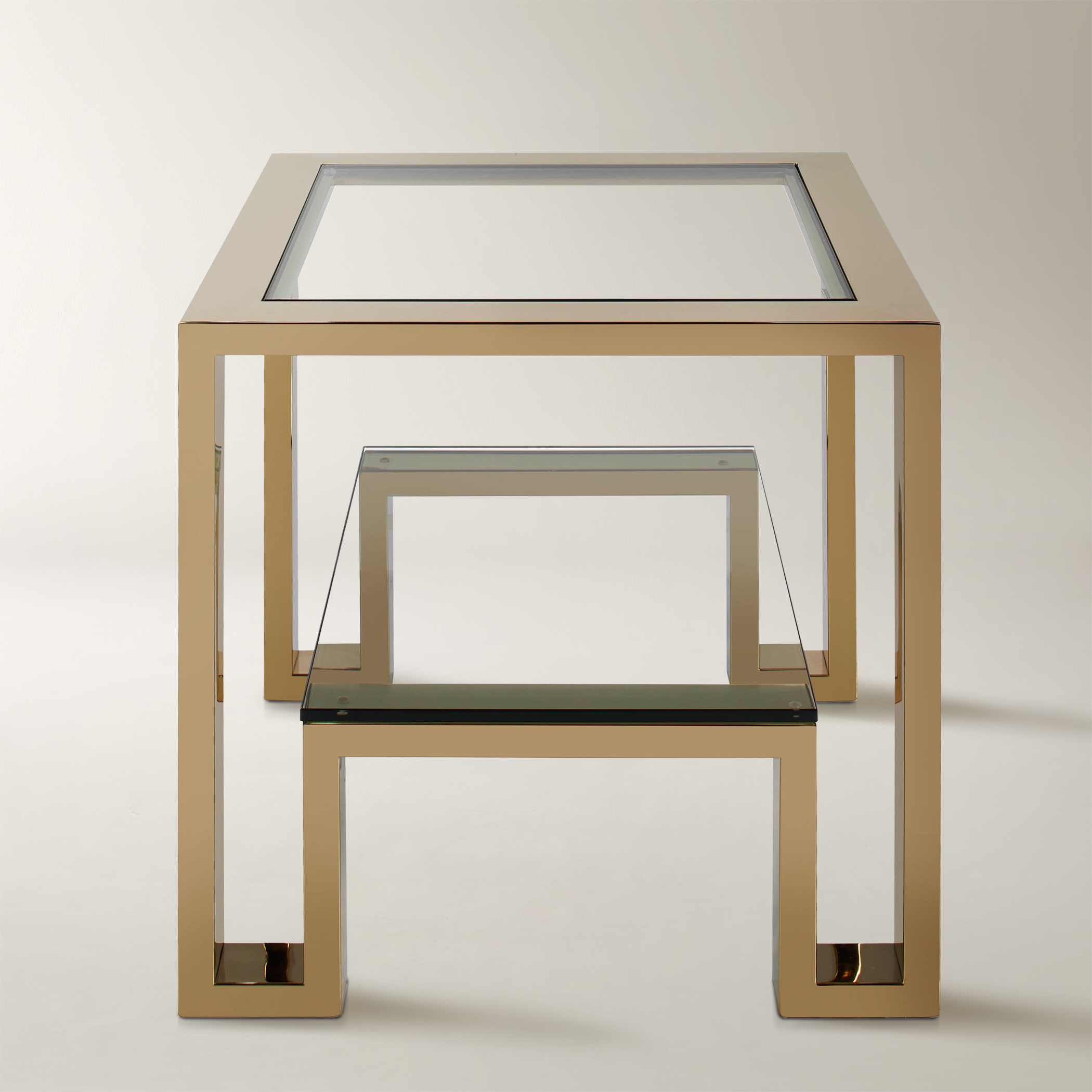 Duplicity Square Gold Stainless Steel End Table With Glass Top (24")$749
A modern end table crafted from stainless steel and tempered glass with a floating bottom shelf.
Add To Cart -
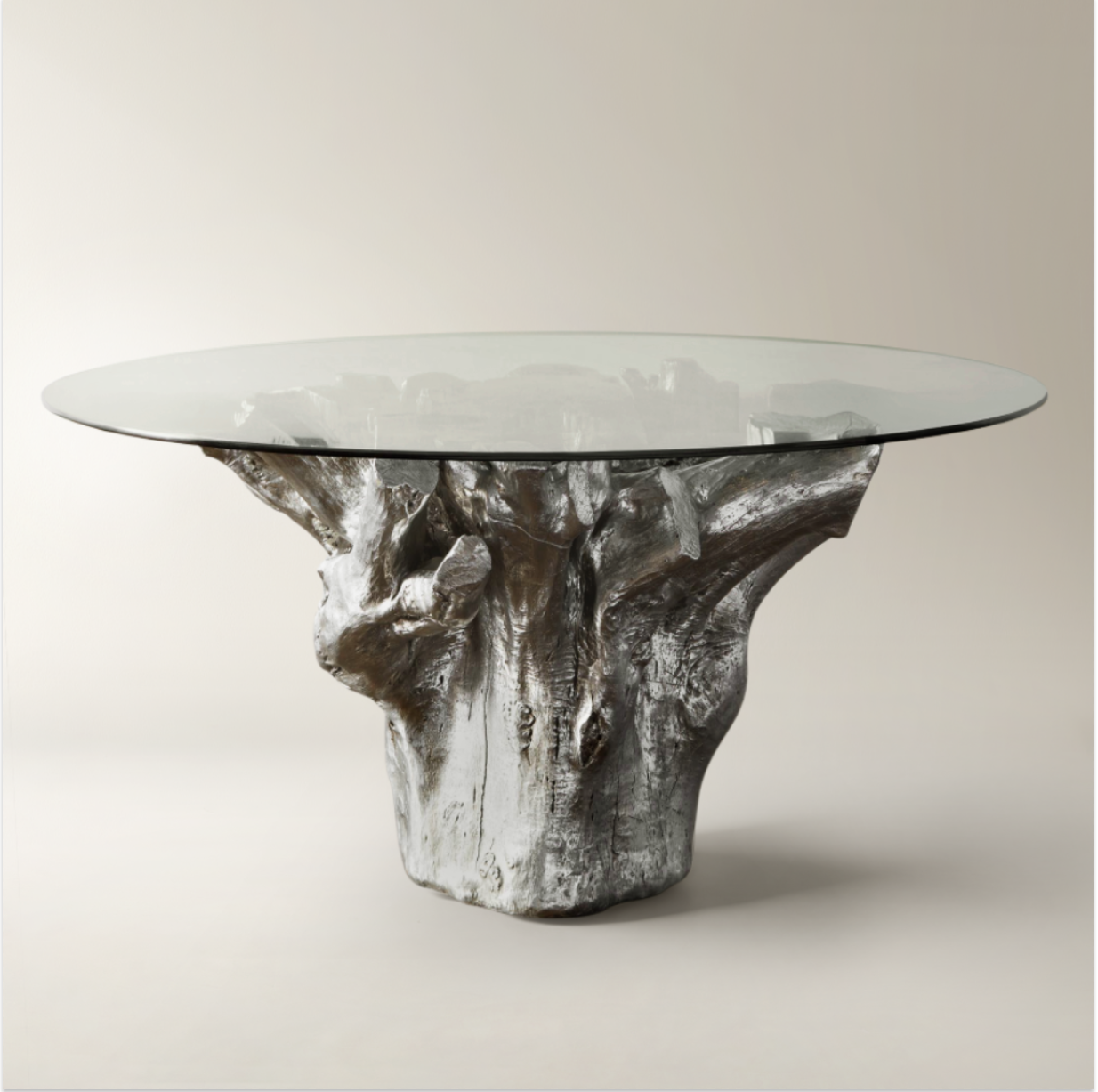 Sequoia Silver Resin Dining Table With Glass Top (60")$2199
A sculptural resin base with hand-applied silver leaf supports a round tempered glass top for modern elegance.
Add To Cart -
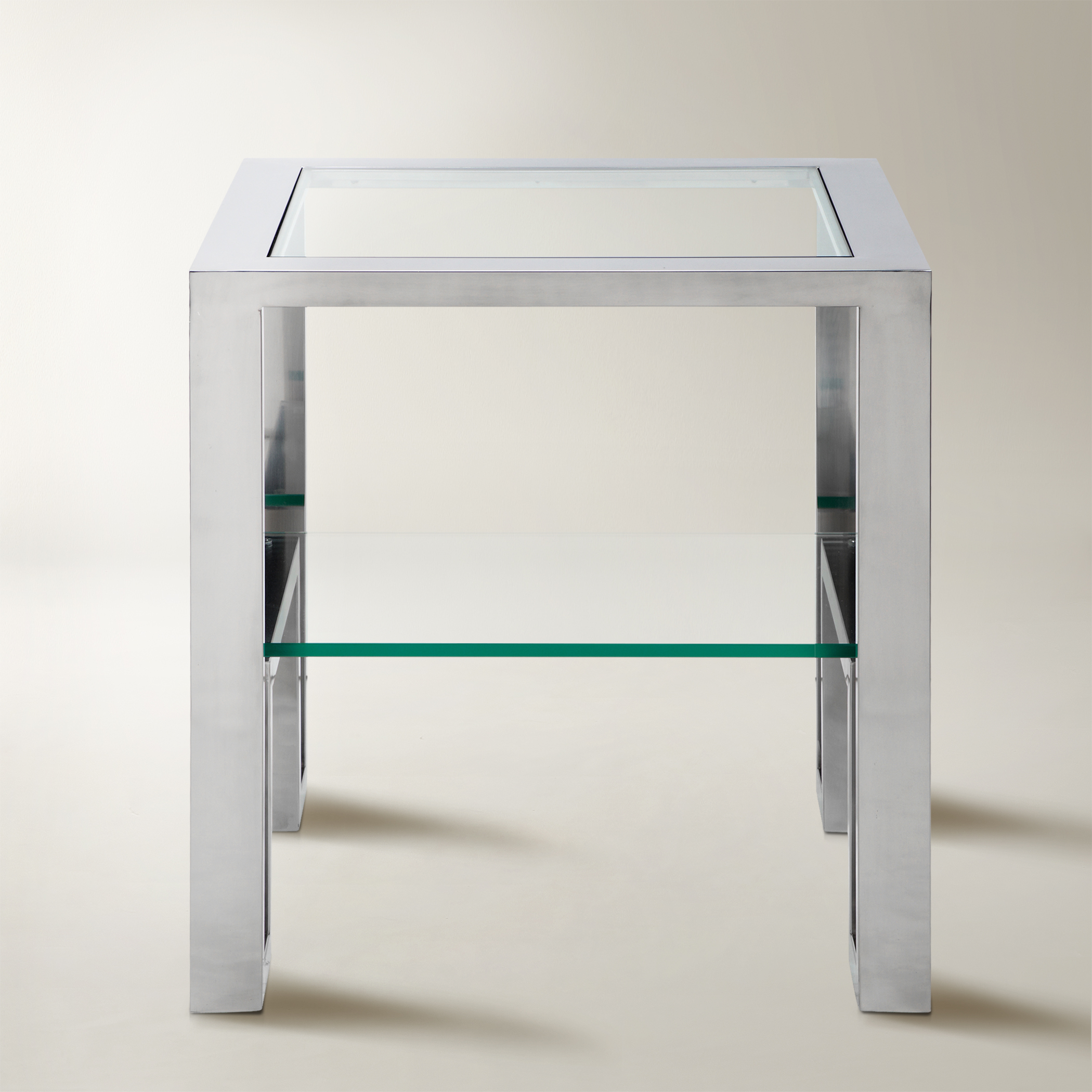
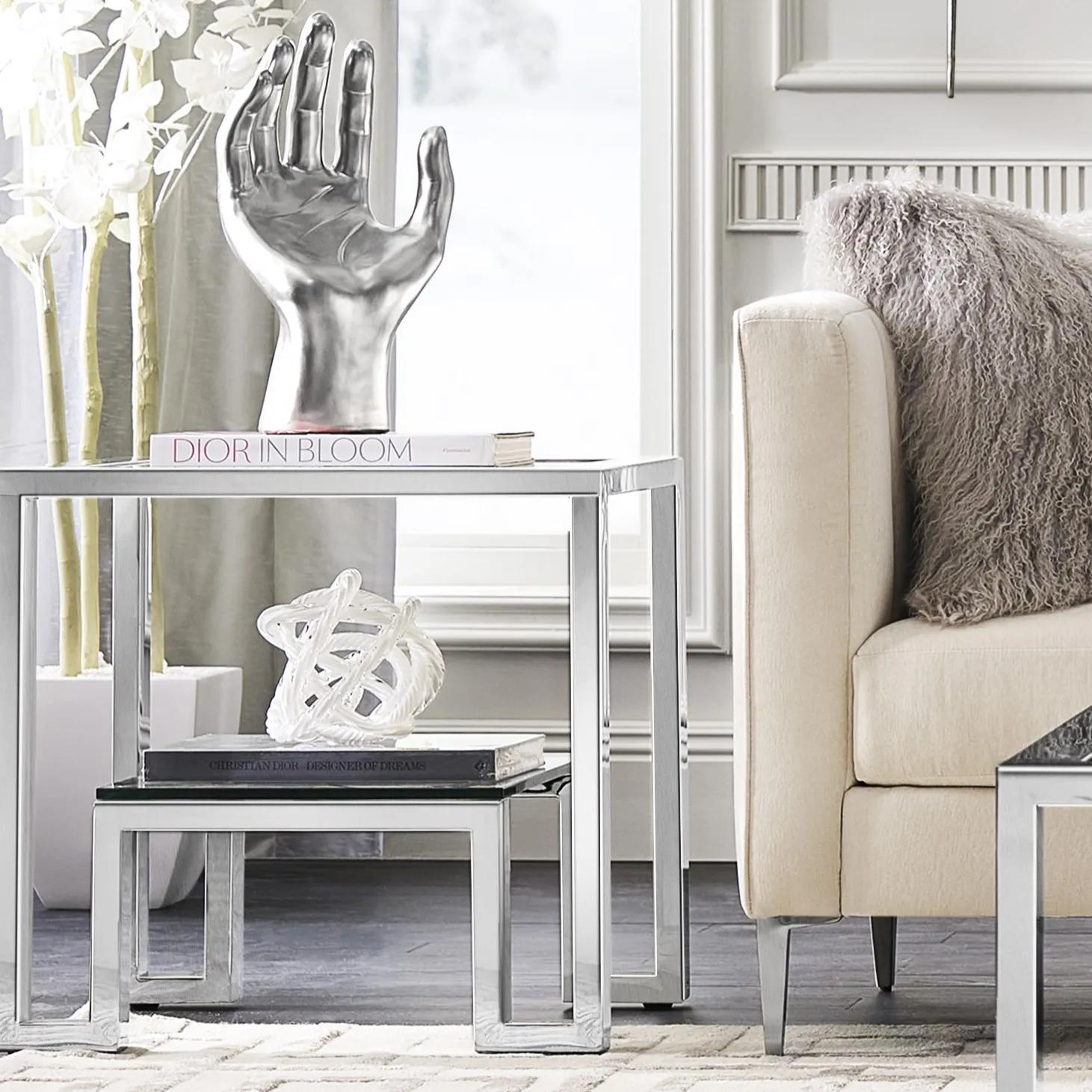 Duplicity Square Silver Stainless Steel End Table With Glass Top (24")$749
A modern end table featuring a stainless steel frame, tempered glass top, and floating bottom shelf.
Add To Cart -
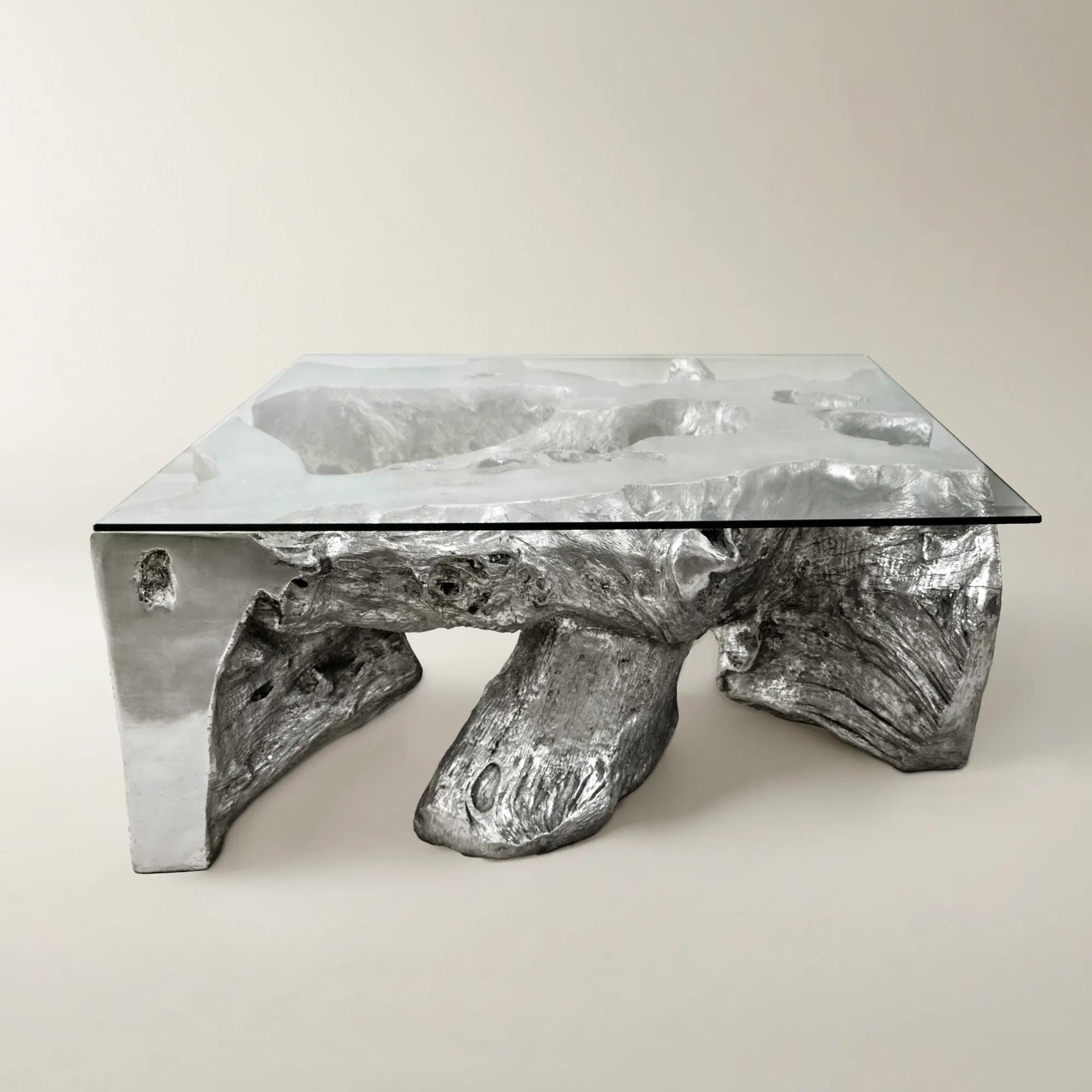 Sequoia Silver Resin Coffee Table With Glass Top (44")$2299
A sculptural coffee table featuring a hand-applied silver leaf resin base and a tempered glass top.
Add To Cart -
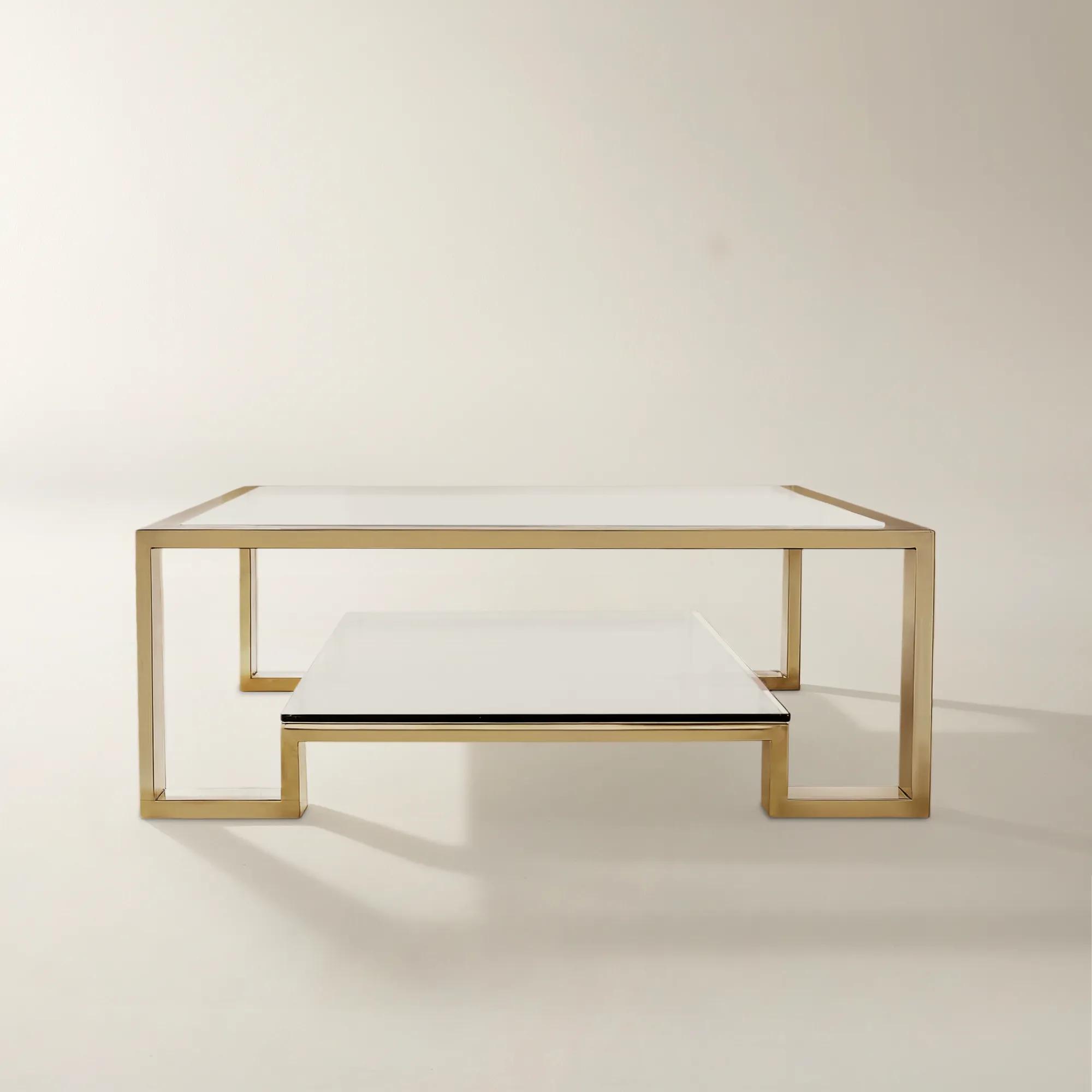 Duplicity Rectangular Gold Stainless Steel Coffee Table With Glass Top (50")$1399
A modern coffee table featuring a stainless steel frame, tempered glass top, and floating storage shelf.
Add To Cart -
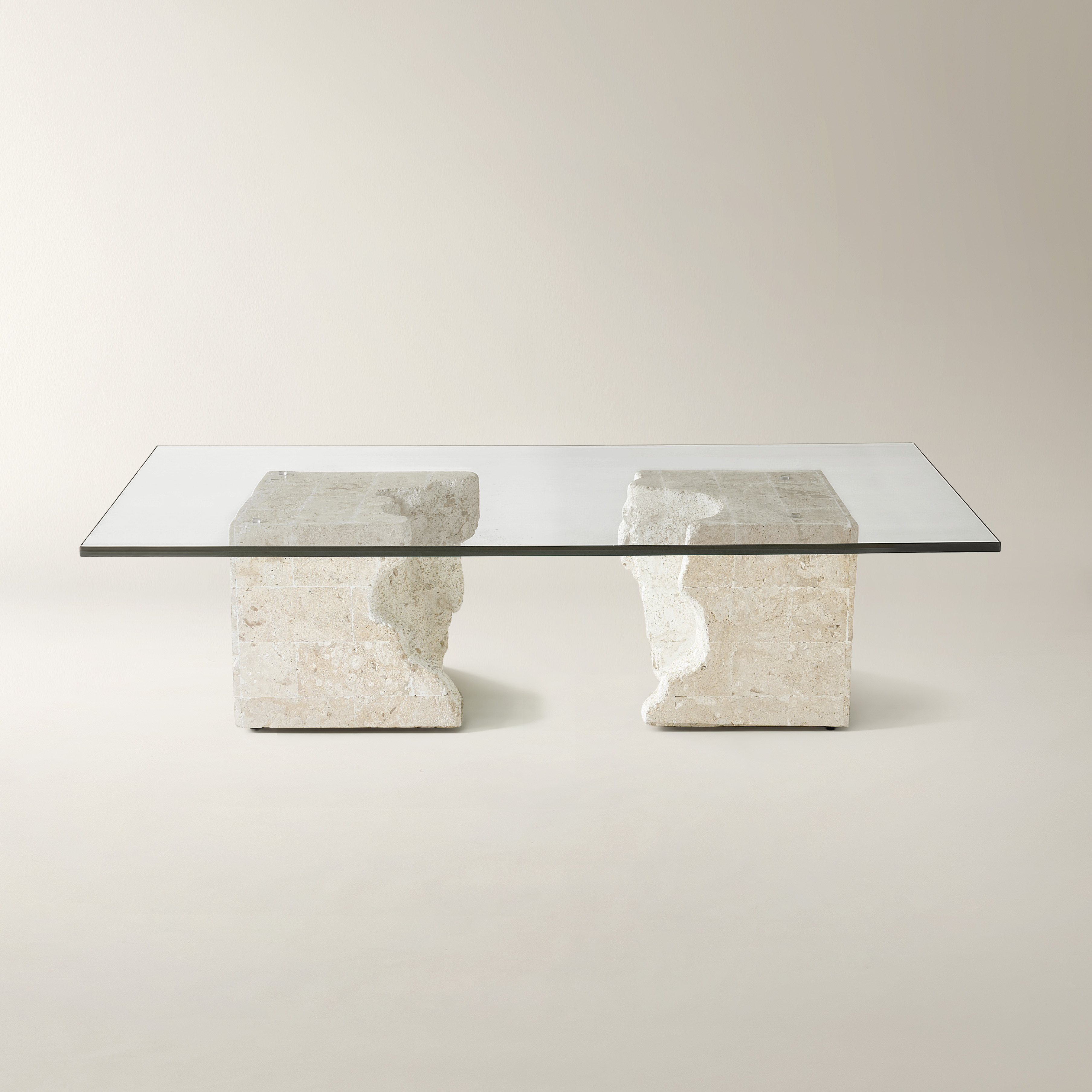 Cairo Rectangular Mactan Stone Coffee Table With Glass Top (63")$1899
A contemporary coffee table featuring a clear tempered glass top floating above hand-carved Mactan stone bases.
Add To Cart -
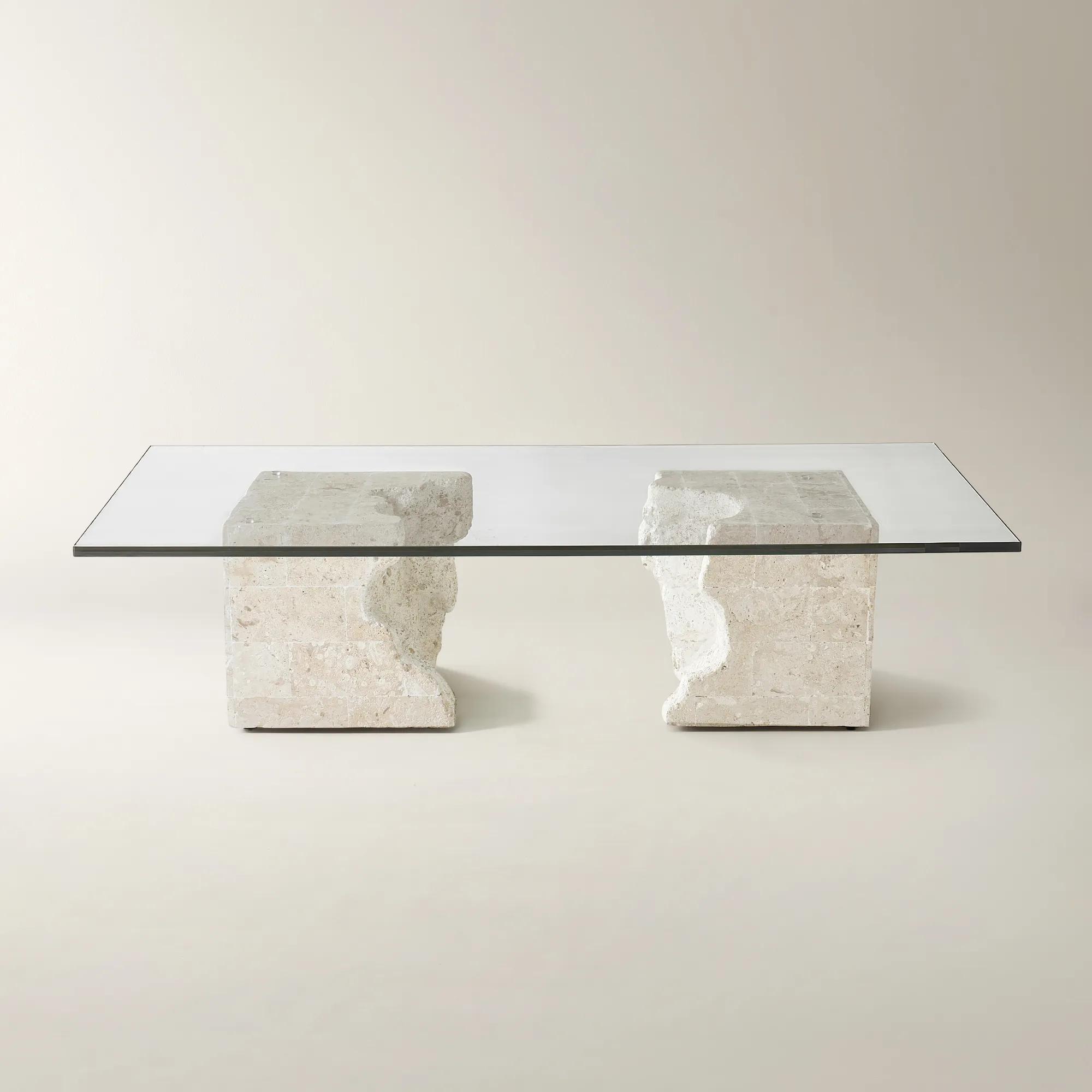 Cairo Rectangular Mactan Stone Coffee Table With Glass Top (70.87")$1999
A contemporary coffee table featuring a clear tempered glass top floating above hand-carved Mactan stone bases.
Add To Cart -
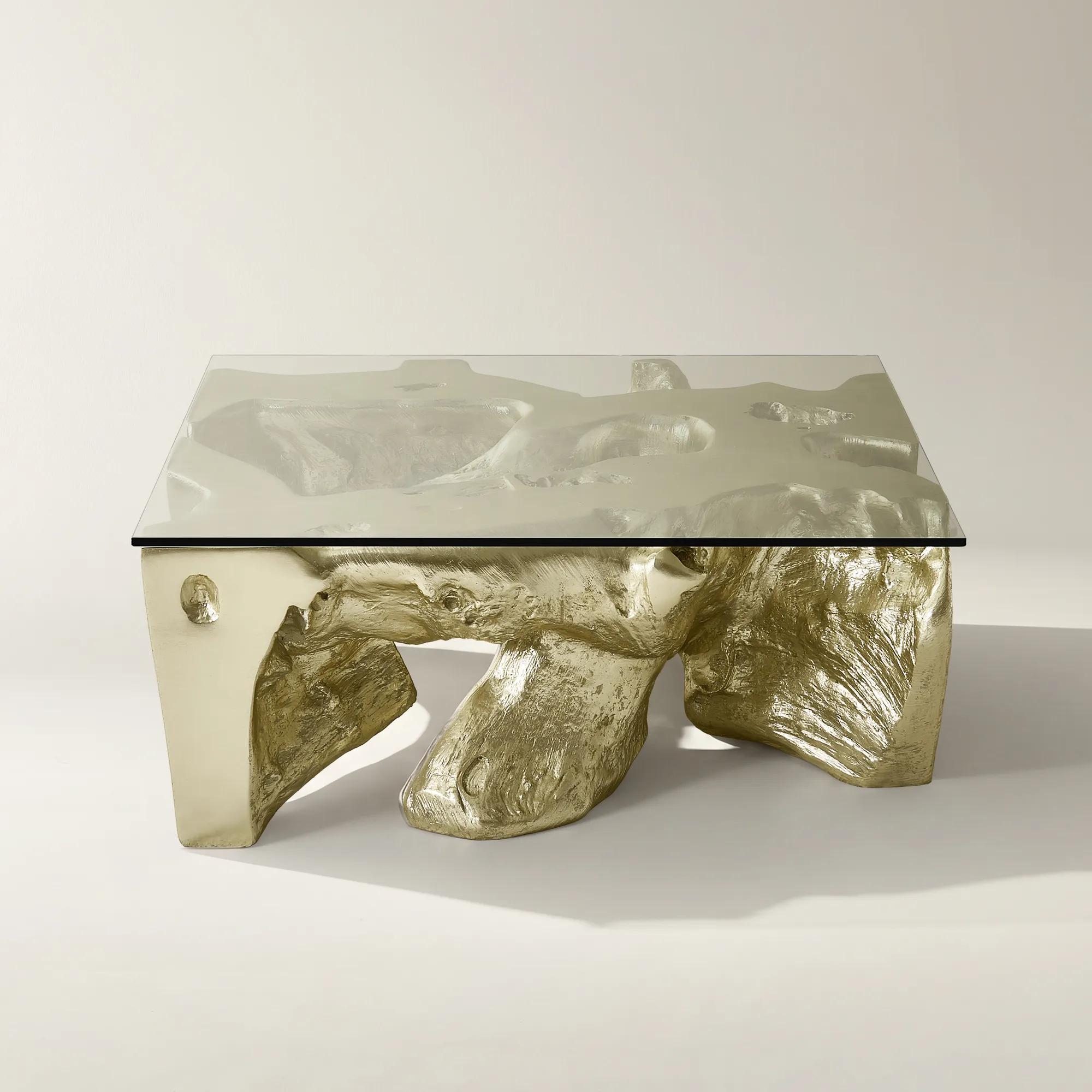 Sequoia Champagne Gold Resin Coffee Table With Glass Top (44")$2299
A sculptural resin coffee table with a champagne gold leaf finish and a clear tempered glass top.
Add To Cart -
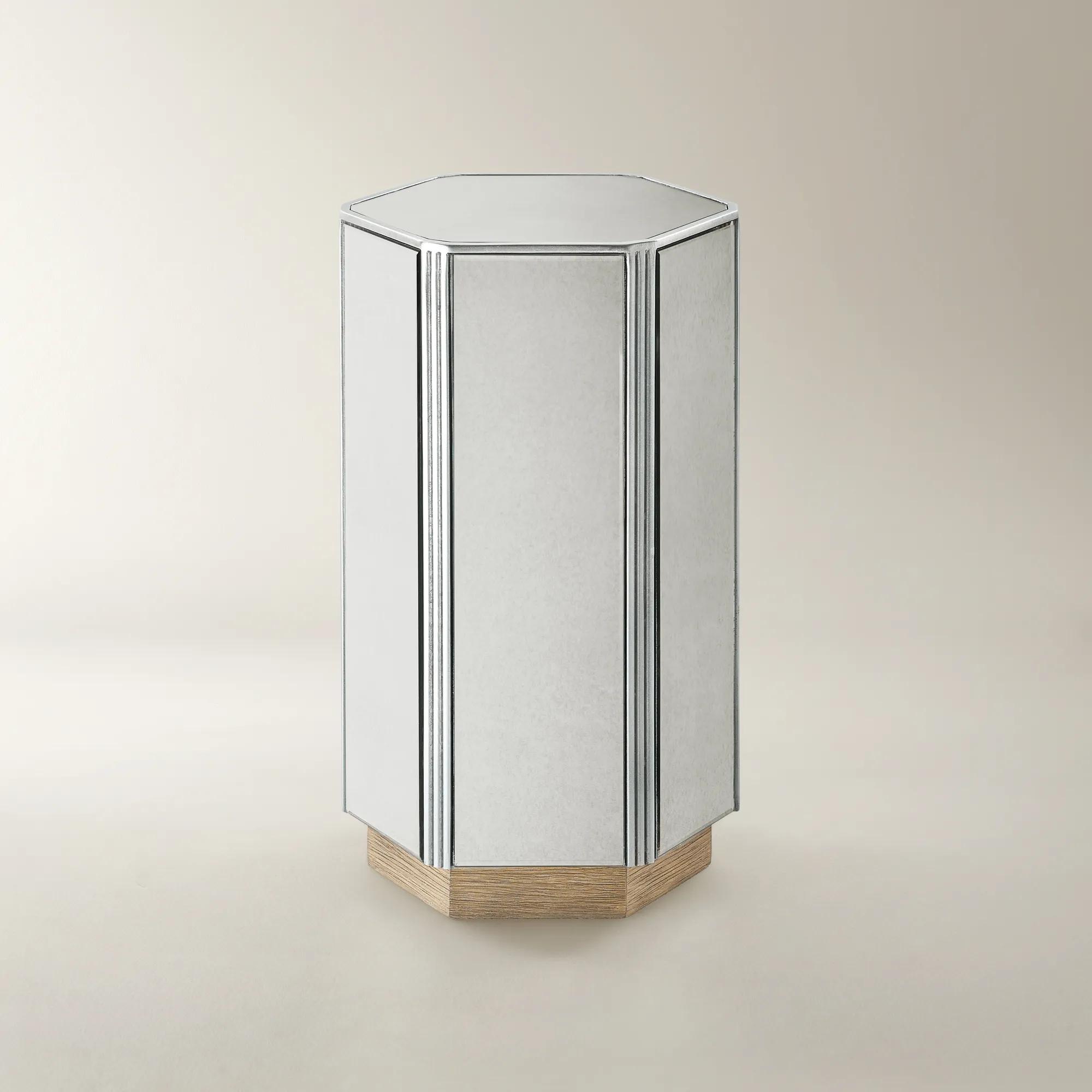 Glimmer Silver Mirrored End Table (12")$399
A chic side table featuring an antique silver mirror top and warm oak veneer base with handcrafted details.
Add To Cart -
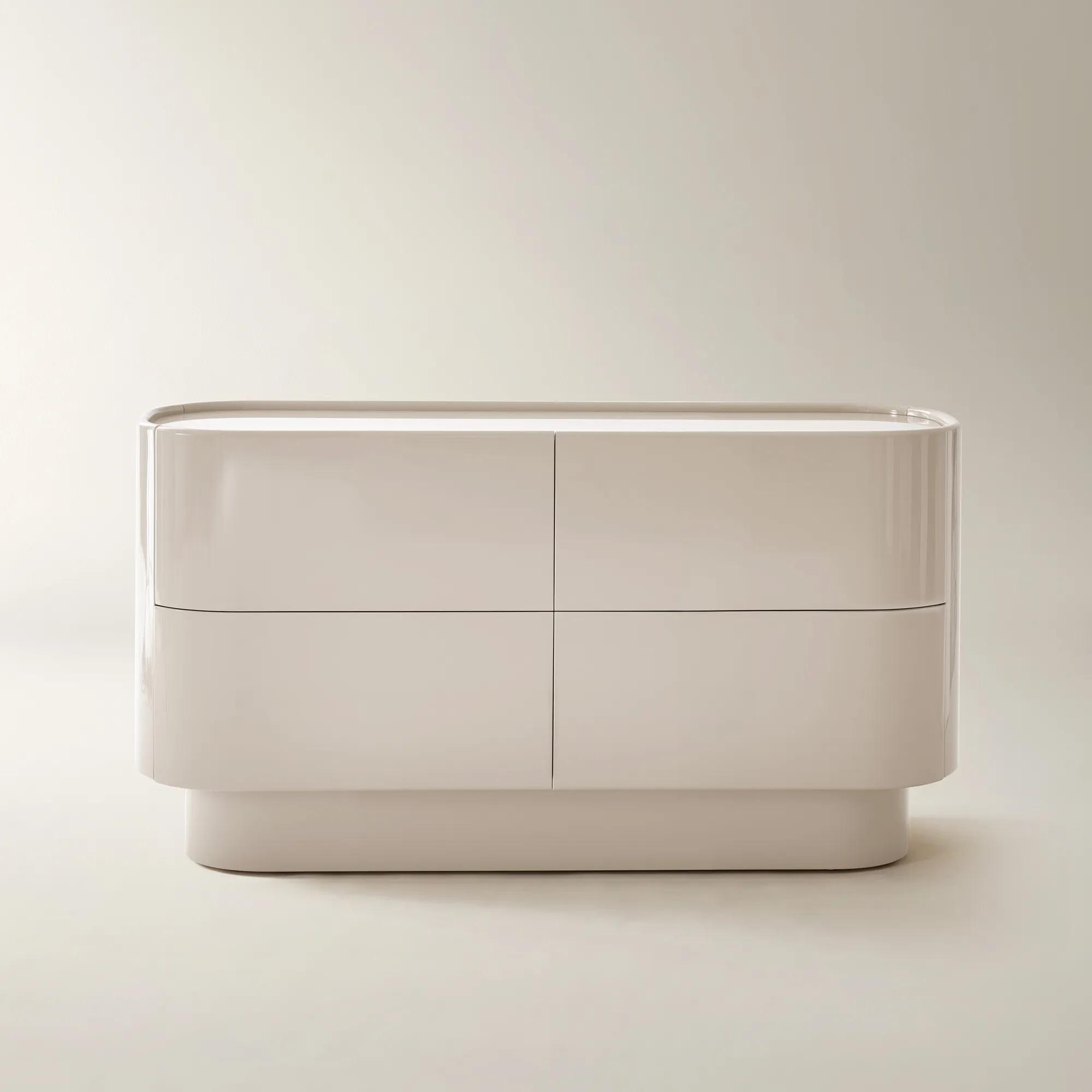 Velar Lacquered Turtle Dove 4-Drawer Dresser With Glass Top (66")$1899
A sculptural dresser in turtle dove lacquer with a back-painted glass top and soft-close velvet-lined drawers.
Add To Cart -
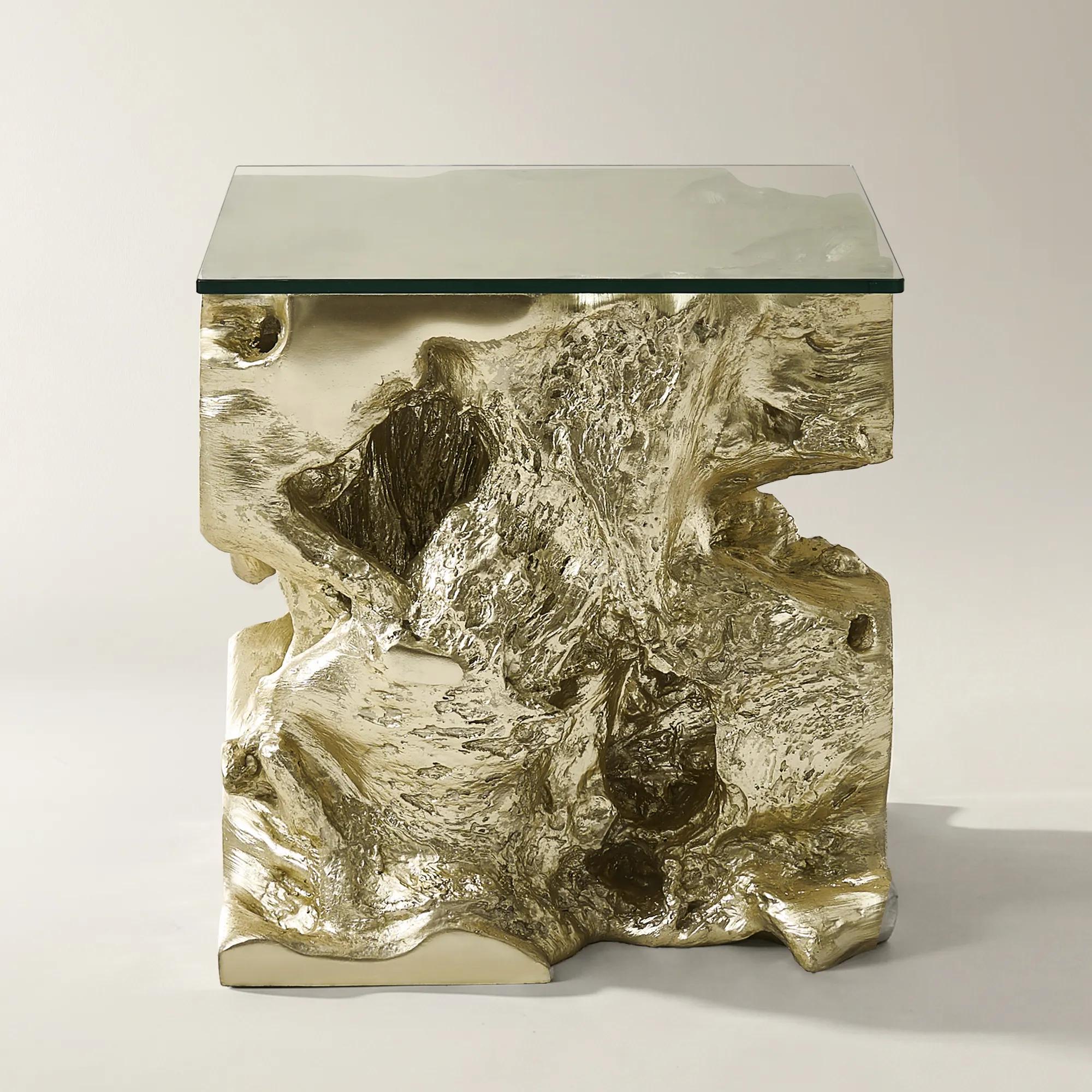 Sequoia Champagne Gold Resin End Table With Glass Top (22")$999
A sculptural resin end table with a champagne gold leaf finish and a clear tempered glass top.
Add To Cart -
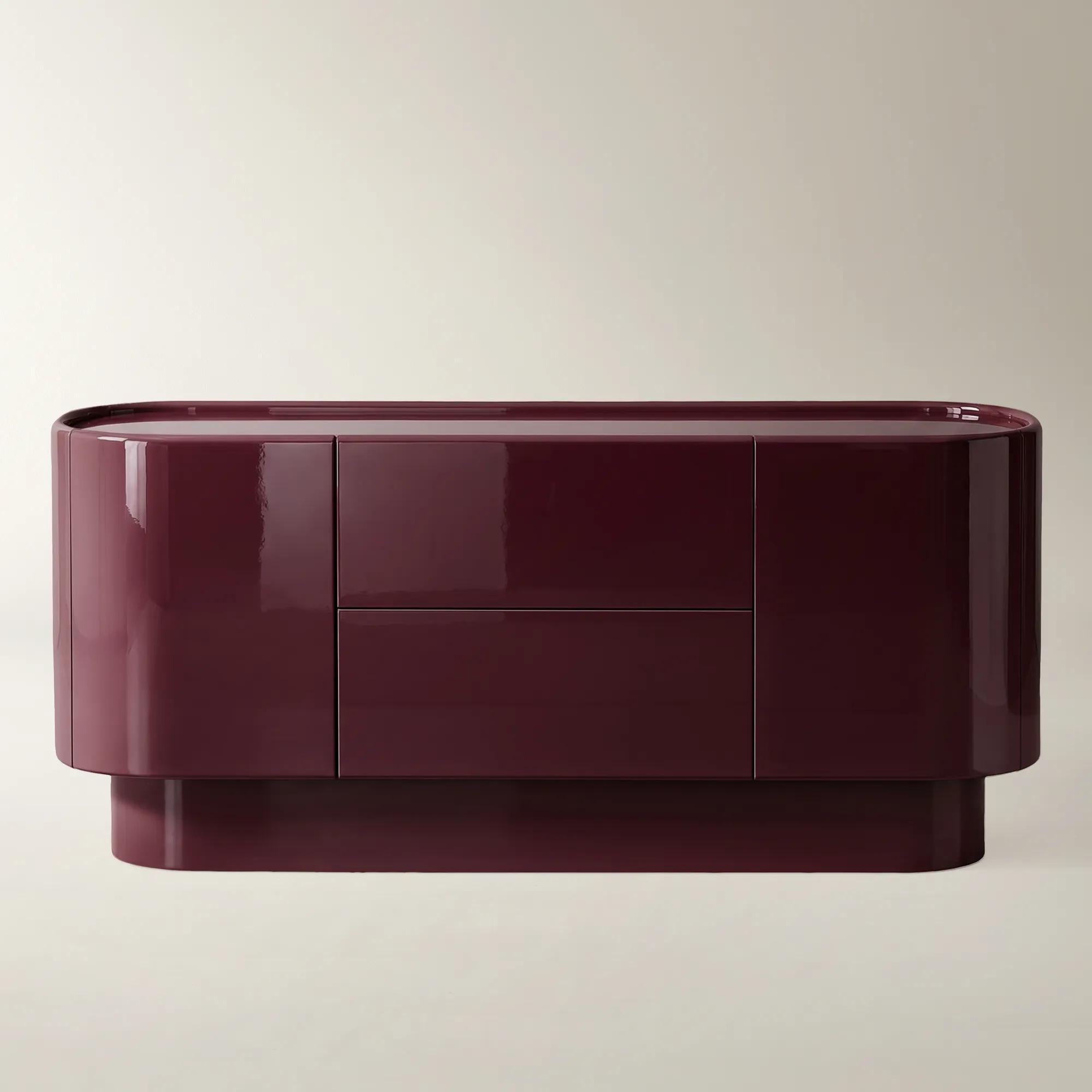 Velar Lacquered Ox Blood Buffet With Glass Top (70")$1899
A sculptural ox blood buffet featuring high-gloss lacquer, back-painted glass top, and illuminated mirrored storage.
Add To Cart -
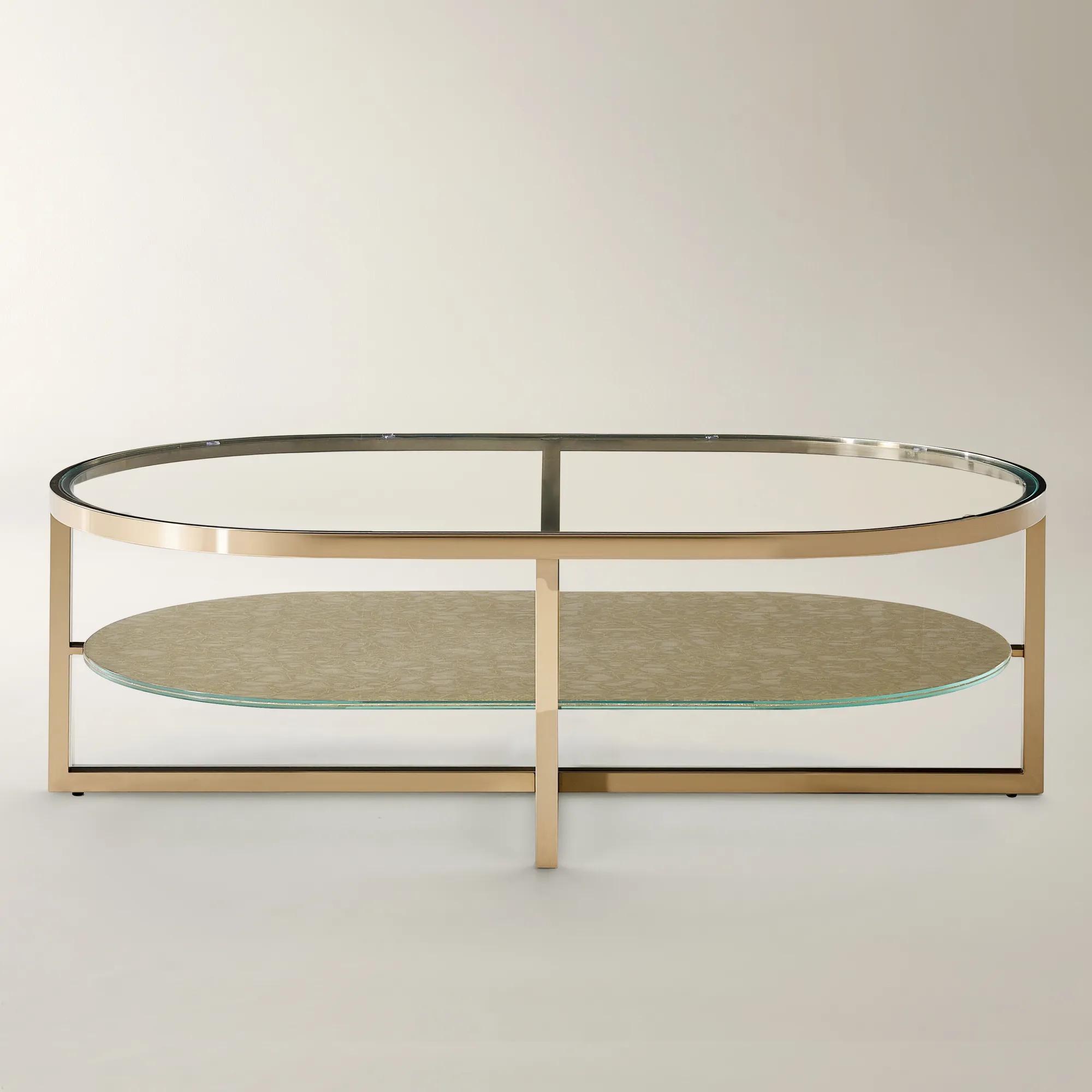
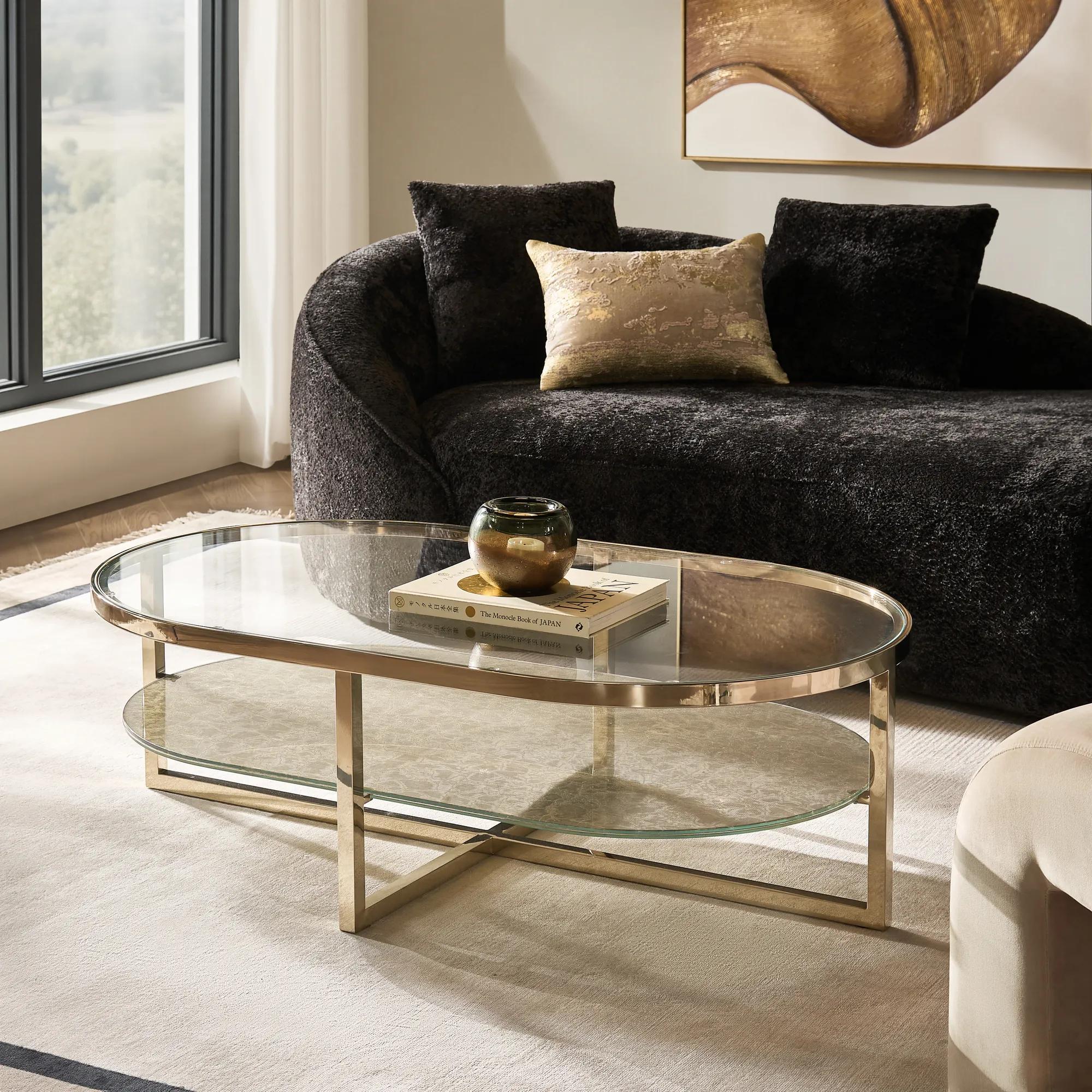 Duality Oval Fabric-Laminated Glass Coffee Table (47")$999
A modern oval coffee table featuring a tempered glass top, fabric-laminated shelf, and soft gold stainless steel frame.
Add To Cart -
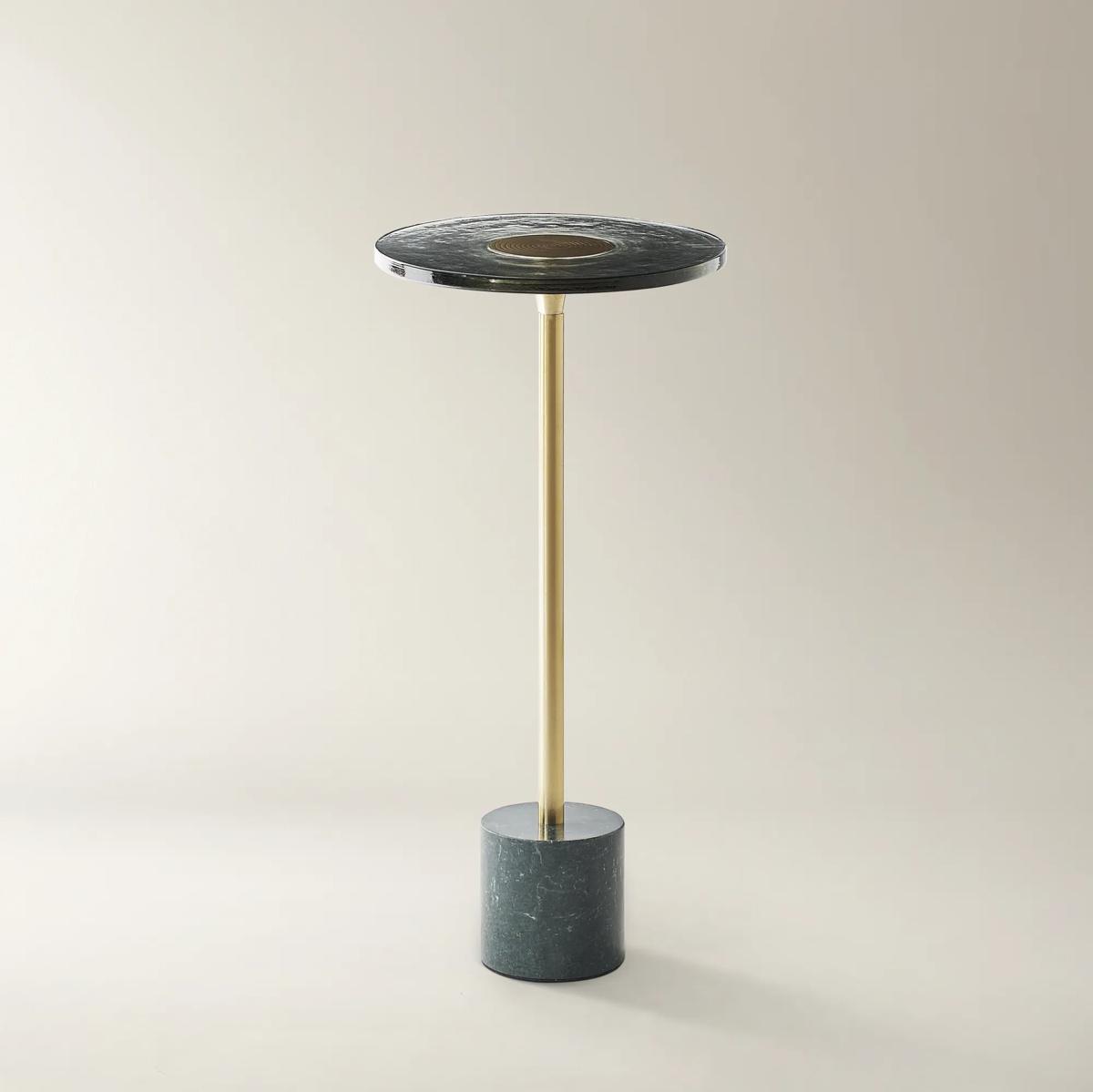
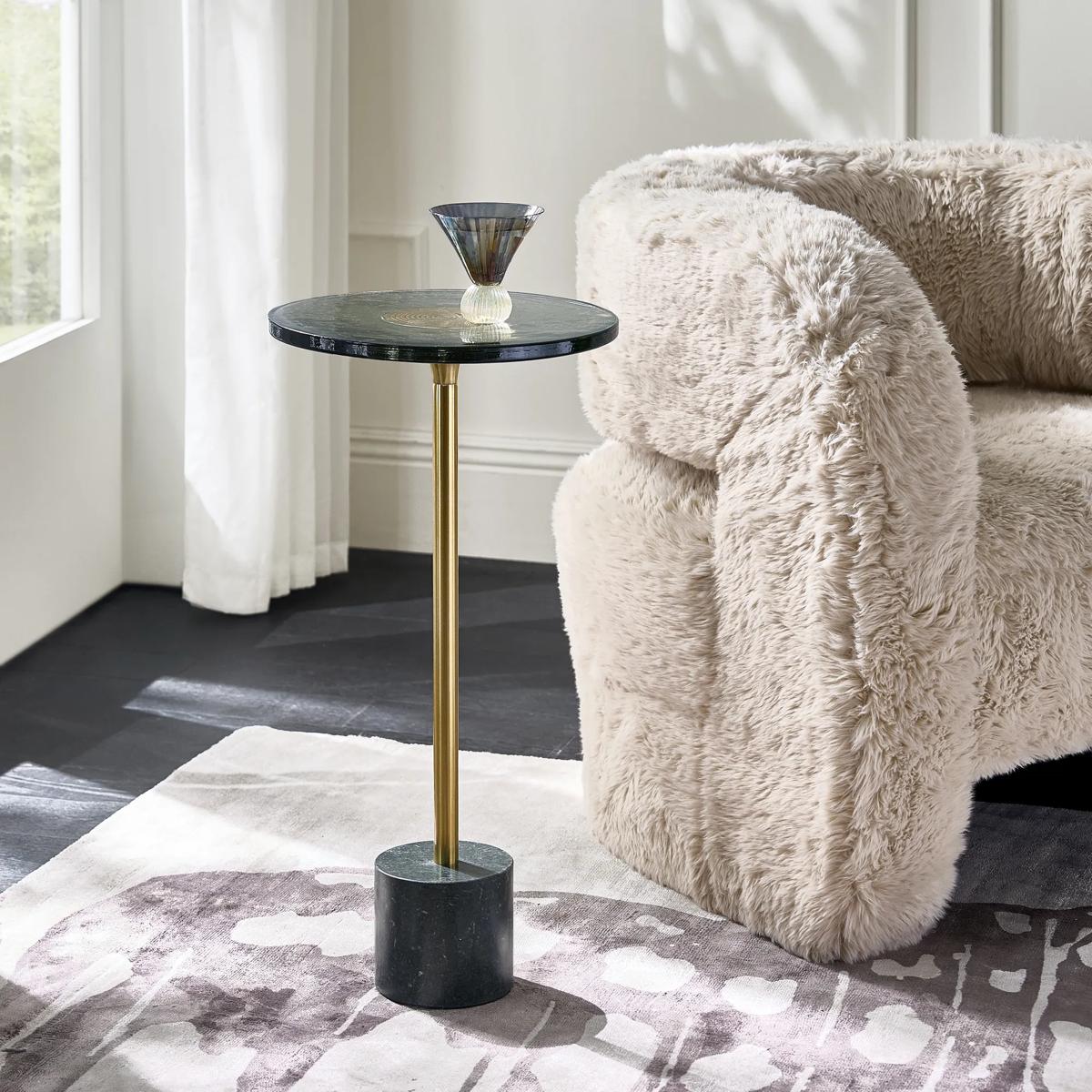 Seraphy Round Green Metal Side Table With Glass Top (13.75")$179
A modern side table featuring a green cast glass top, brass-finished post, and Indian green marble base.
Add To Cart -
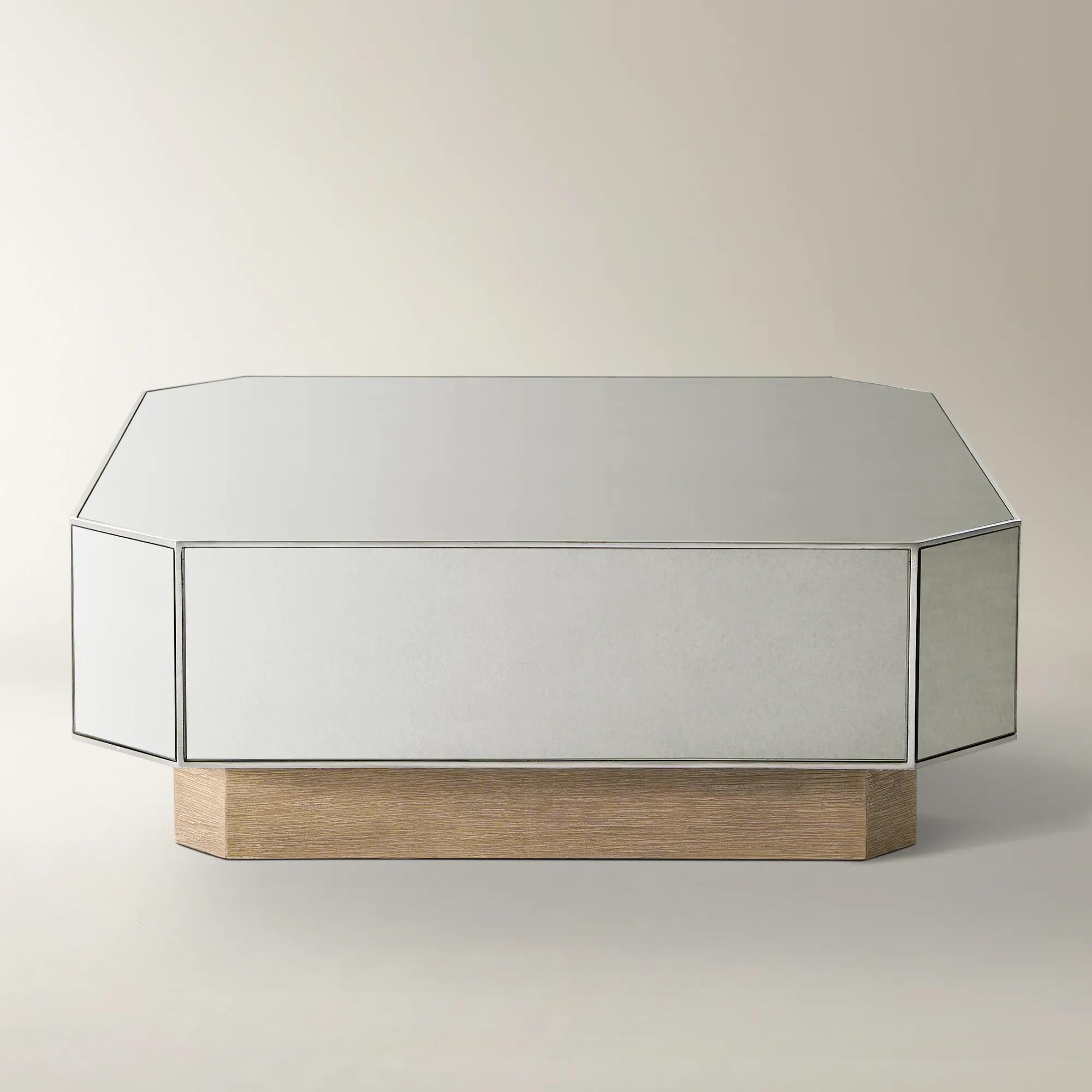 Glimmer Silver Mirrored Coffee Table (44")$1499
A luminous coffee table featuring an antique silver mirror top and warm oak veneer base with handcrafted details.
Add To Cart -
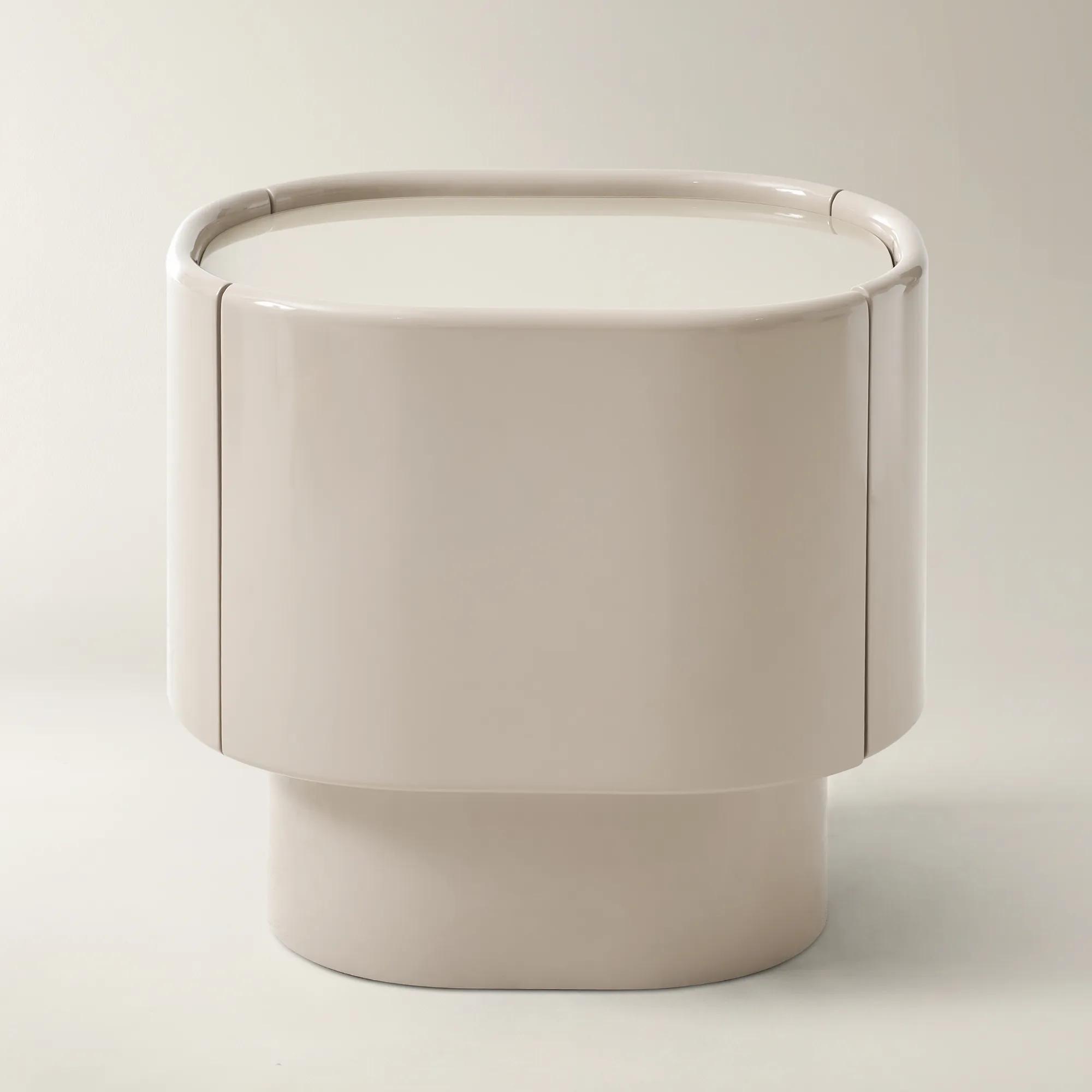 Velar Lacquered Turtle Dove 1-Drawer Nightstand With Glass Top (24")$649
A sculptural nightstand in turtle dove lacquer with a tone-on-tone glass top and velvet-lined drawer.
Add To Cart -
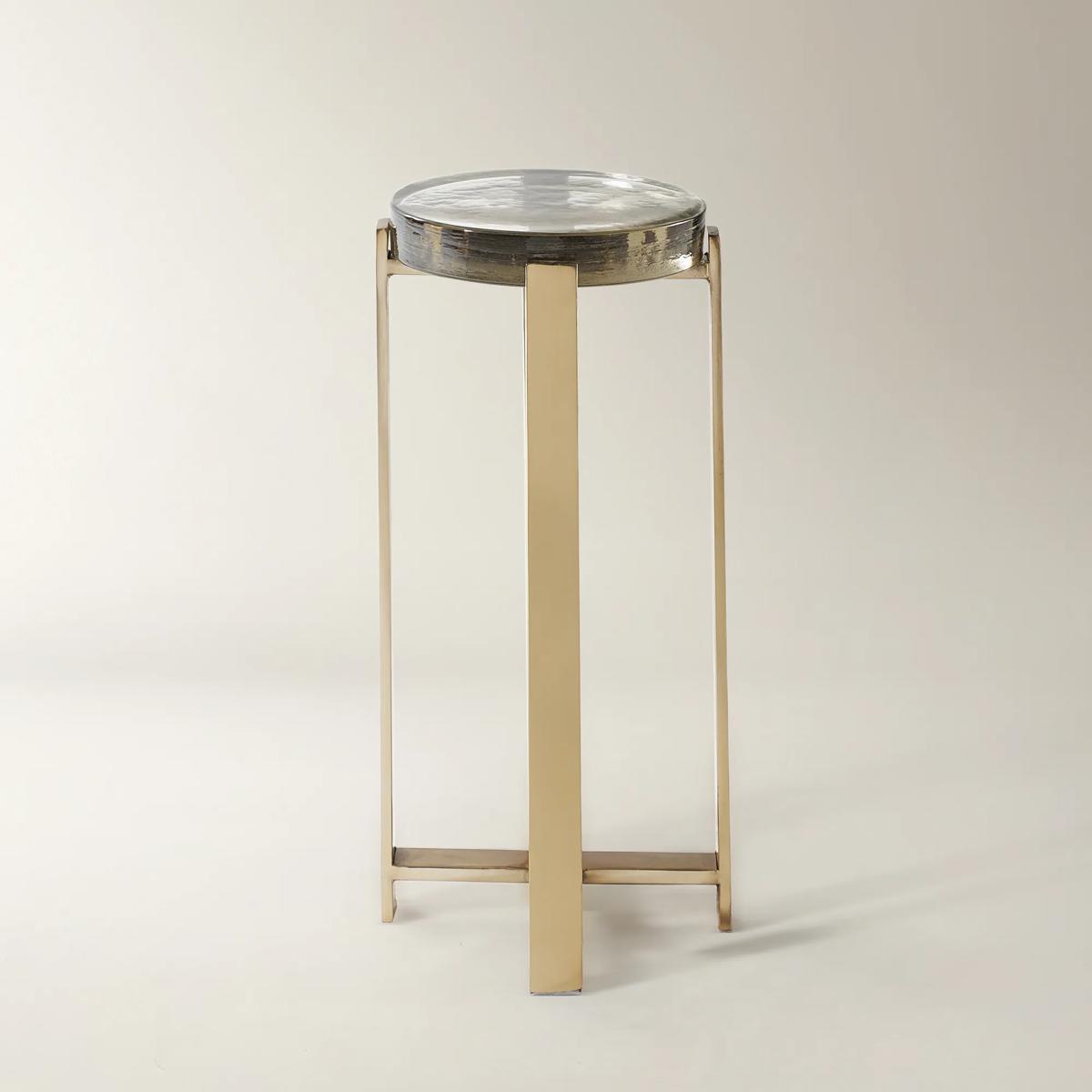
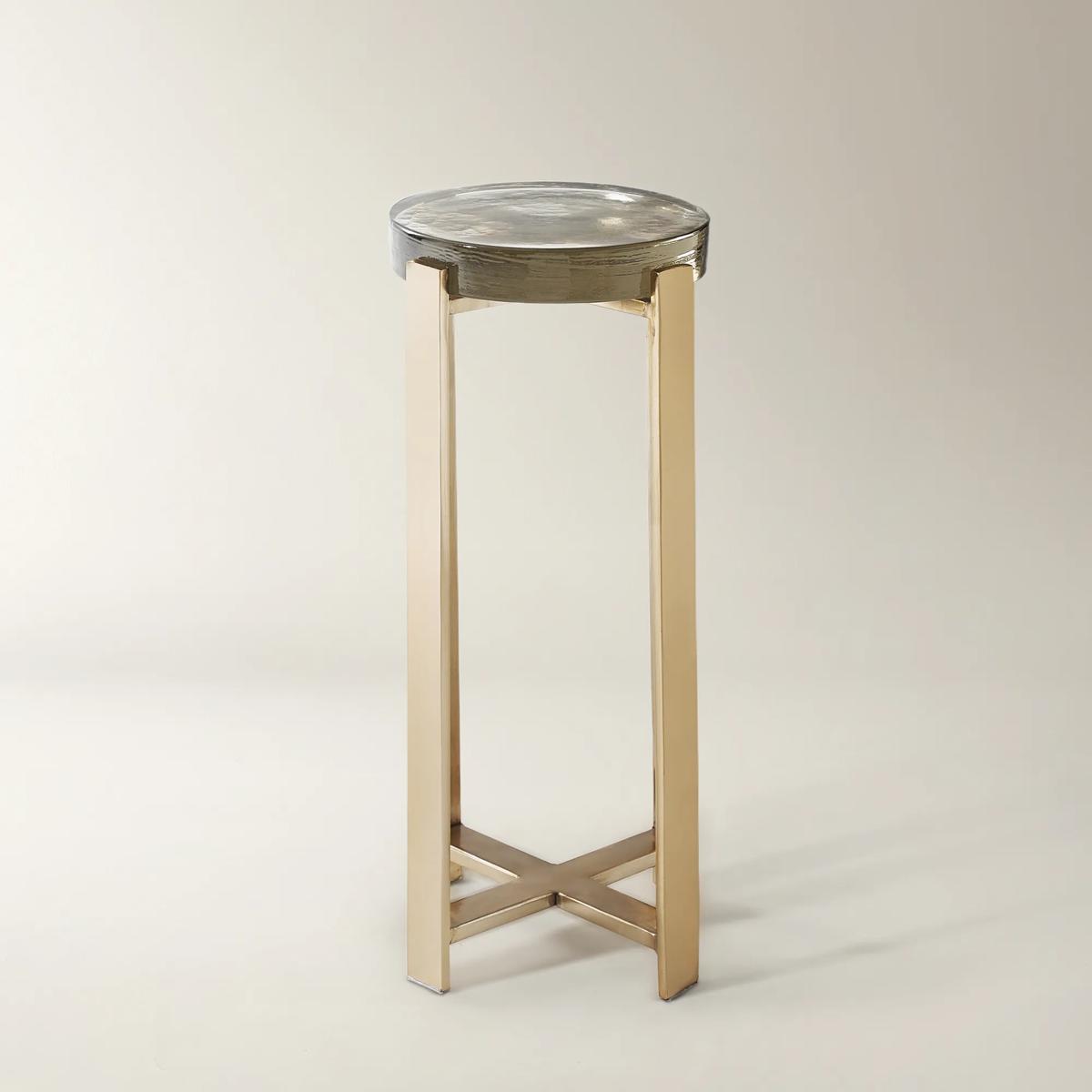 Lyra Round Brass Metal Side Table With Glass Top (10.75")$259
A sculptural side table featuring a thick cast glass top and lustrous brass-finished metal base.
Add To Cart -
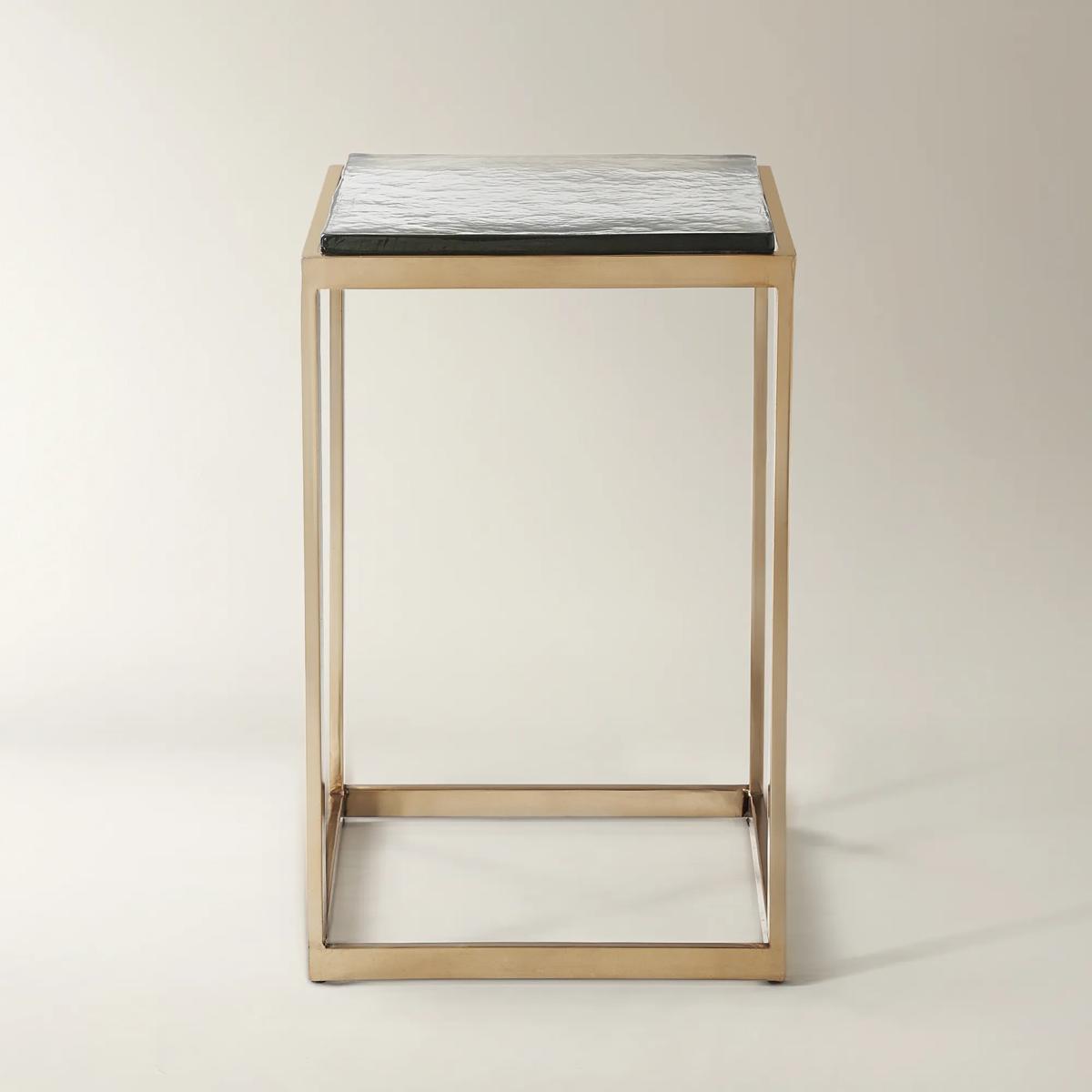
.jpg?w=1200&h=1200) Lyra Square Brass Metal Side Table With Glass Top (13.8")$239
Lyra Square Brass Metal Side Table With Glass Top (13.8")$239A sculptural side table featuring a thick cast glass top and a lustrous brass-finished metal base.
Add To Cart

Glass Top Display Tables
Glass Top Display Tables invite you to curate your most cherished treasures with a flourish of modern artistry. Each piece transforms everyday living into an exhibition of taste, reflecting light and layering intrigue throughout your space. With their luminous surfaces and sculptural bases, Glass Top Display Tables become the stage for your personal narrative—elevating collections, artifacts, or objets d’art into a captivating focal point. Let your home tell its story with clarity, confidence, and a touch of brilliance.
Glass top display tables pair a functional tabletop with a clear view of the objects arranged beneath it, turning a personal collection into part of a room’s design. A true shadow box display table has a recessed compartment under the glass, while an open-shelf design presents books, ceramics, or sculptural objects on a lower tier. Both create depth without the visual weight of a solid tabletop, but an enclosed compartment offers more protection from incidental contact and settling dust, depending on its construction. The effect is especially compelling in a living room: a low table can frame a collection of architectural photographs, polished stones, or inherited keepsakes while leaving the surface above available for everyday use. Glass top display coffee tables establish a generous focal point in front of a sofa; smaller accent and end tables bring the same sense of discovery beside a reading chair or at the edge of a seating arrangement. Console-style designs can lend an entryway the atmosphere of a private gallery, provided their proportions leave a comfortable passage. The appeal lies in that balance of expression and purpose. A carefully composed display feels intimate, yet the transparent surface gives it presence from several angles. For collectors, design enthusiasts, and anyone with meaningful objects usually tucked into drawers, these tables offer a way to live with treasured details rather than reserve them for occasional viewing. Their character changes with the frame: gleaming metal creates a crisp, luminous outline, richly finished wood adds warmth and substance, and a mirrored interior can amplify the sparkle of glass or metallic accents. A display does not need to fill every inch to feel dramatic. A single expressive object, a small grouping of related pieces, and enough space to appreciate their silhouettes often create a stronger composition than a crowded arrangement. The table becomes both furniture and a personal exhibition, with the glass acting as a quiet boundary between daily activity and the story underneath.
Construction determines how gracefully a glass top display table performs beyond its first impression. Tempered glass is generally stronger than ordinary annealed glass and, if broken, breaks into small fragments rather than large, sharp shards, although it is not unbreakable or scratchproof. Product specifications should identify the glass type, thickness, support system, and weight limits; a substantial-looking top alone does not establish how much weight a table can safely hold. Smooth, well-finished edges and a stable frame matter just as much as visual polish, particularly in a frequently used seating area. Wood frames may feature solid wood, veneers, or engineered components, each with its own construction and care requirements, while metal frames rely on sound joints and a protective finish for lasting performance. For enclosed designs, the access method deserves close attention. Some compartments open through a hinged or removable top, while others use a sliding panel or pull-out drawer. A hinged lid needs room to open safely, a removable pane requires careful handling and a secure place to rest, and a drawer needs unobstructed clearance beside the table. Interior depth is equally important: measure the tallest object intended for the display, including any stand or liner, and allow clearance beneath the glass rather than letting the object touch it. A shallow compartment may suit photographs and textiles but not a tall mineral specimen or a sculptural bowl. Measure the full table footprint against the room, too. In a typical living room, approximately 14 to 18 inches between a sofa and coffee table often provides a comfortable balance of reach and legroom, though individual layouts and accessibility needs vary. A coffee table near the height of the sofa seat generally feels convenient, while an end table should sit within easy reach of the adjacent chair arm. In narrower rooms, rounded corners can soften circulation paths, but glass still demands thoughtful placement in homes with active children or pets. For boutiques or studios, commercial display tables may require locking access and construction suited to frequent handling; residential furniture should not be assumed to offer those features.
The most memorable arrangements connect the contents beneath the glass to the room around them without making every surface compete for attention. In a space with sumptuous upholstery and a large-scale artwork, a restrained collection of pale ceramics or monochrome photographs can give the eye a place to settle. Against quieter furnishings, jewel-toned objects, metallic details, or richly textured keepsakes introduce a more expressive note. Arrange pieces at varied angles, but keep the composition legible from the seats where it will most often be seen. Flat objects benefit from archival-quality supports when preservation matters, and delicate textiles or photographs should be kept out of direct sunlight; ordinary tabletop glass does not necessarily provide meaningful protection against fading. An enclosed display is also not automatically airtight, humidity-controlled, or suitable for museum-level conservation. Exceptionally fragile or valuable pieces may need a dedicated protective case instead. For a broader look at tables that emphasize transparency, reflective finishes, and sculptural bases, Decorative Glass Top Tables offers a related design perspective, while the defining consideration for a display table remains how clearly and securely it presents the objects beneath its surface. Daily care helps preserve that clarity. Remove loose grit before wiping, use a soft lint-free cloth, and follow the manufacturer’s directions for a compatible cleaner. Applying cleaner to the cloth rather than flooding the surface helps keep moisture away from frame joints, liners, and displayed contents. Avoid abrasive pads, protect the glass from gritty-bottomed pottery, and use coasters or suitable protective pads beneath drinks and decorative objects. Keep hot serving pieces off the glass unless an appropriate heat-resistant barrier is used, and never sit or stand on the tabletop. Periodically check supports, hinges, and drawer hardware according to the care instructions, and discontinue use if the glass becomes chipped or cracked. These practical details protect the table’s more expressive purpose: giving cherished objects a visible place in everyday life. Chosen with the recipient’s space and collection in mind, a glass top display table can also make a distinctive housewarming or wedding gift, offering a lasting setting for memories still taking shape.
FAQs
Glass top display tables are remarkably versatile, harmonizing beautifully with a range of décor styles. For a modern aesthetic, pair with sculptural metallic accents or monochromatic ceramics. In more classic settings, layer antique books or heirloom collectibles beneath the glass for a sense of curated history. The transparency of glass also makes these tables ideal for showcasing bold textiles, art prints, or organic elements like botanicals and geodes—allowing every detail to shine without visual clutter.
Absolutely. Glass top display tables are designed to be both resilient and elegant, making them a striking choice for entryways, living rooms, and other frequently used spaces. Their sleek surfaces are easy to maintain, and the visual lightness of glass helps open up even the busiest areas, preventing them from feeling overcrowded. When styled thoughtfully, these tables can withstand daily life while elevating the overall atmosphere.
A glass top display table is the perfect foundation for ever-changing seasonal displays. In winter, try layering shimmering ornaments, frosted pinecones, or silver candlesticks beneath the glass for a touch of festive glamour. As the seasons shift, swap in fresh florals, seashells, or autumnal foliage to keep your space feeling current and inspired. The transparent surface allows you to experiment with color, texture, and height, making each vignette uniquely yours.
Yes, a glass top display table is a thoughtful and memorable gift for a variety of milestones—housewarmings, weddings, anniversaries, or even significant birthdays. Its timeless design and transformative potential make it a cherished addition to any home, offering the recipient a blank canvas to showcase their own stories, treasures, and style.
The space beneath a glass top display table is an invitation to express your individuality. Consider arranging a collection of art books, displaying a series of framed photographs, or layering textiles for added depth. For a dramatic touch, incorporate mirrored trays or metallic sculptures to play with light and reflection. Seasonal botanicals, curated curiosities, or even a rotating gallery of art prints can transform the table into a dynamic focal point that evolves with your mood and the moment.
.jpeg?w=2999&h=3000)