Contemporary Glass Top Tables
Contemporary Glass Top Tables
-
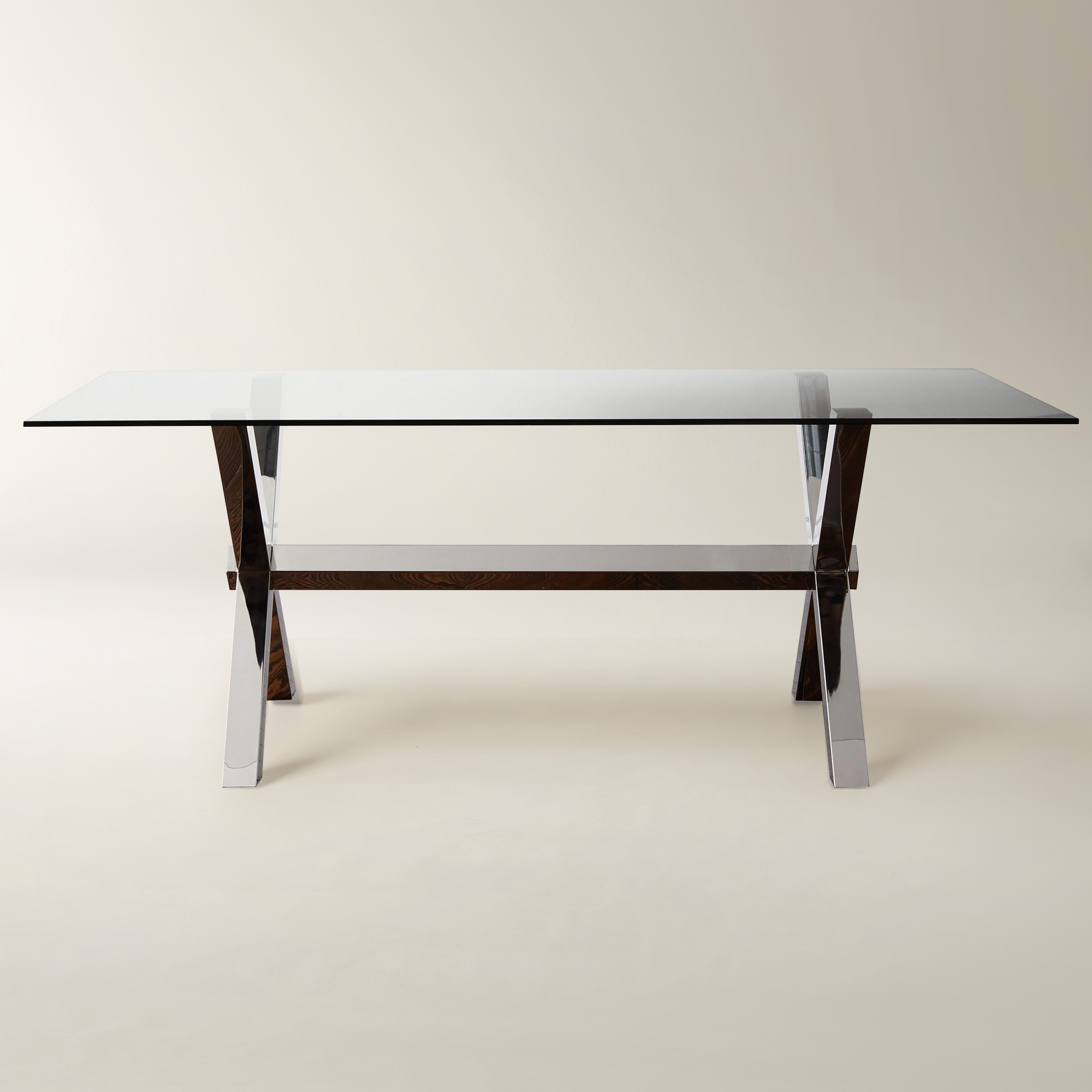
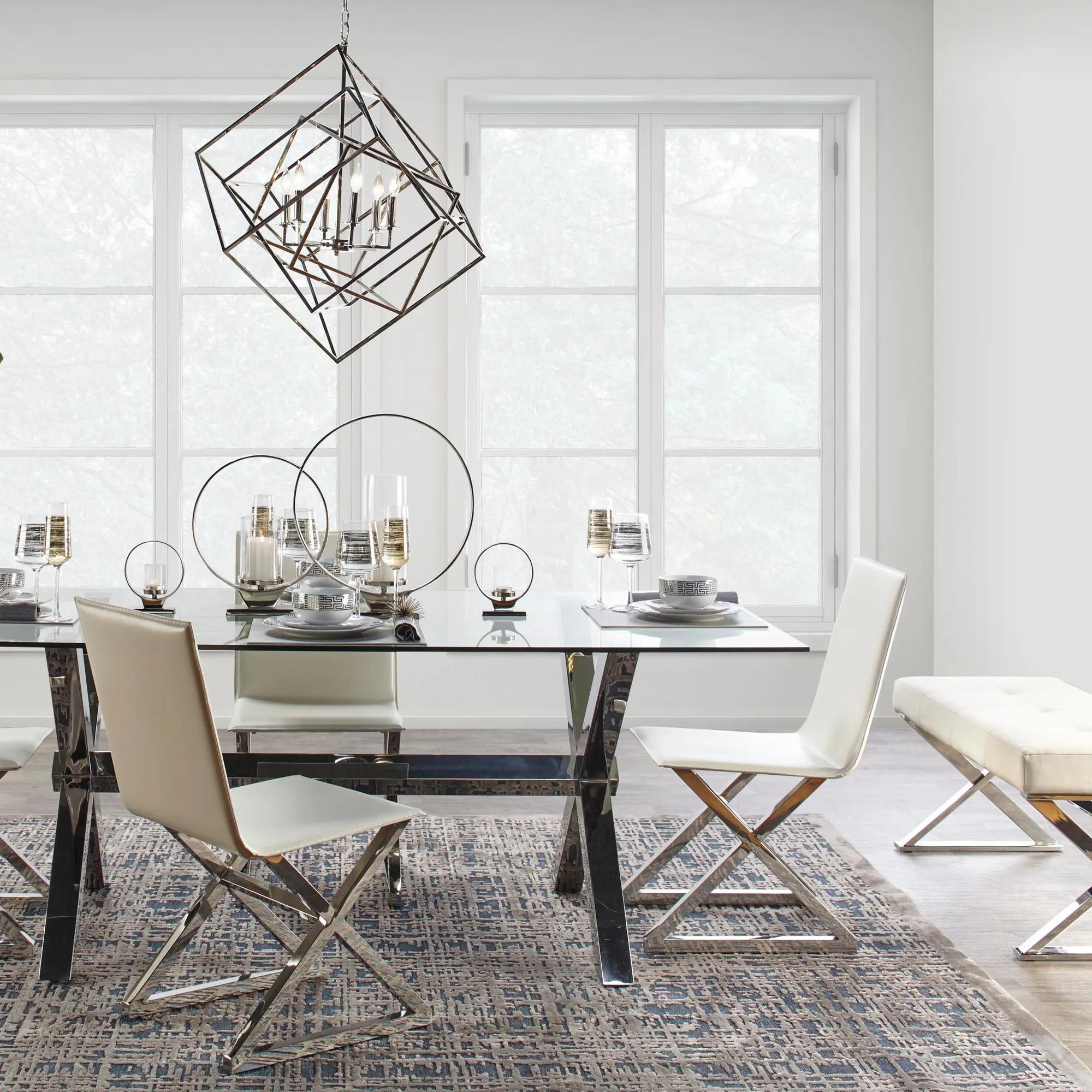 Axis Rectangular Silver Dining Table With Glass Top (78")$1199
A contemporary dining table featuring a polished stainless steel base and durable tempered glass top.
Add To Cart -
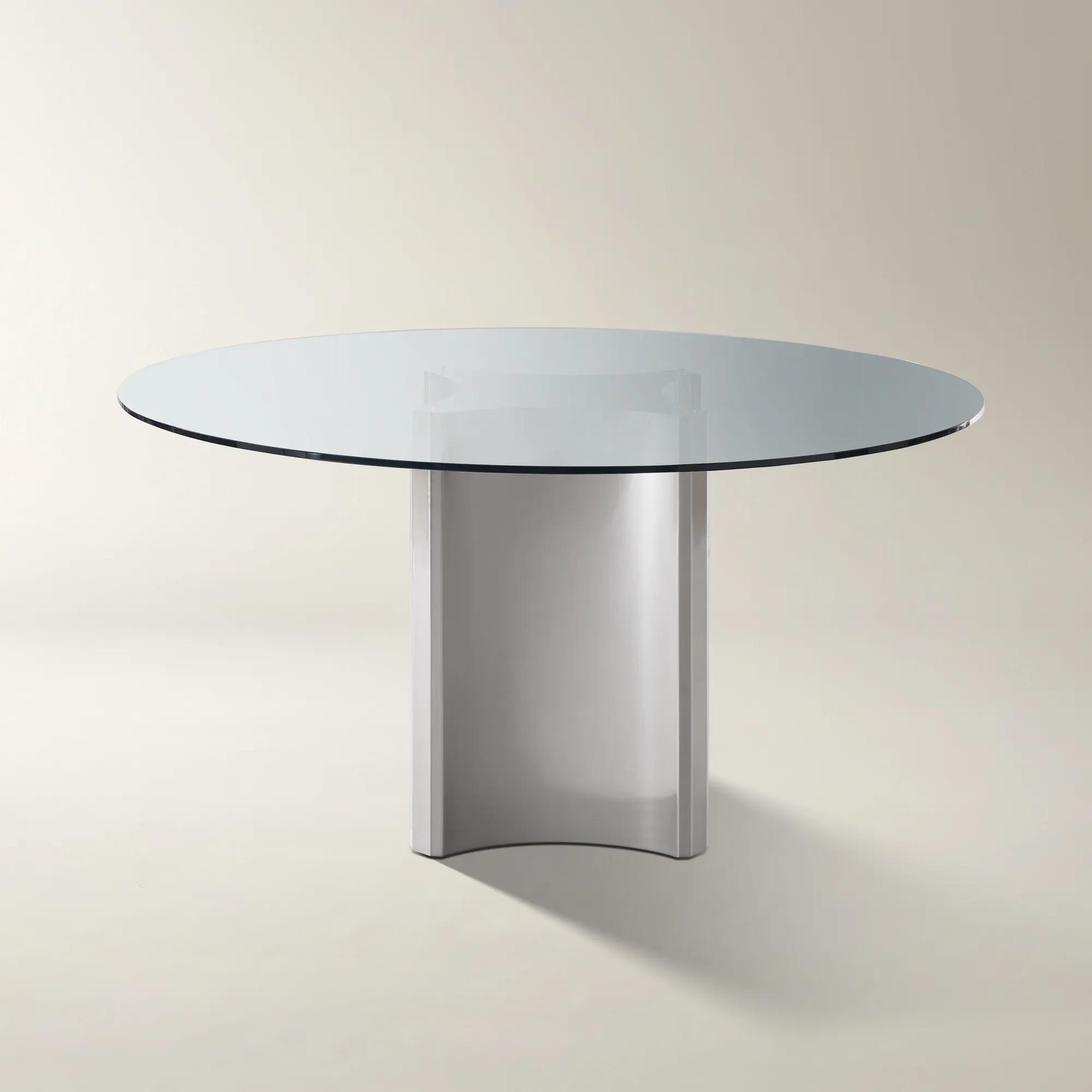 Ventane Round Clear Glass and Stainless steel Dining Table (58")$1499
A modern dining table featuring a clear tempered glass top and polished stainless steel base with anti-fingerprint finish.
Add To Cart -
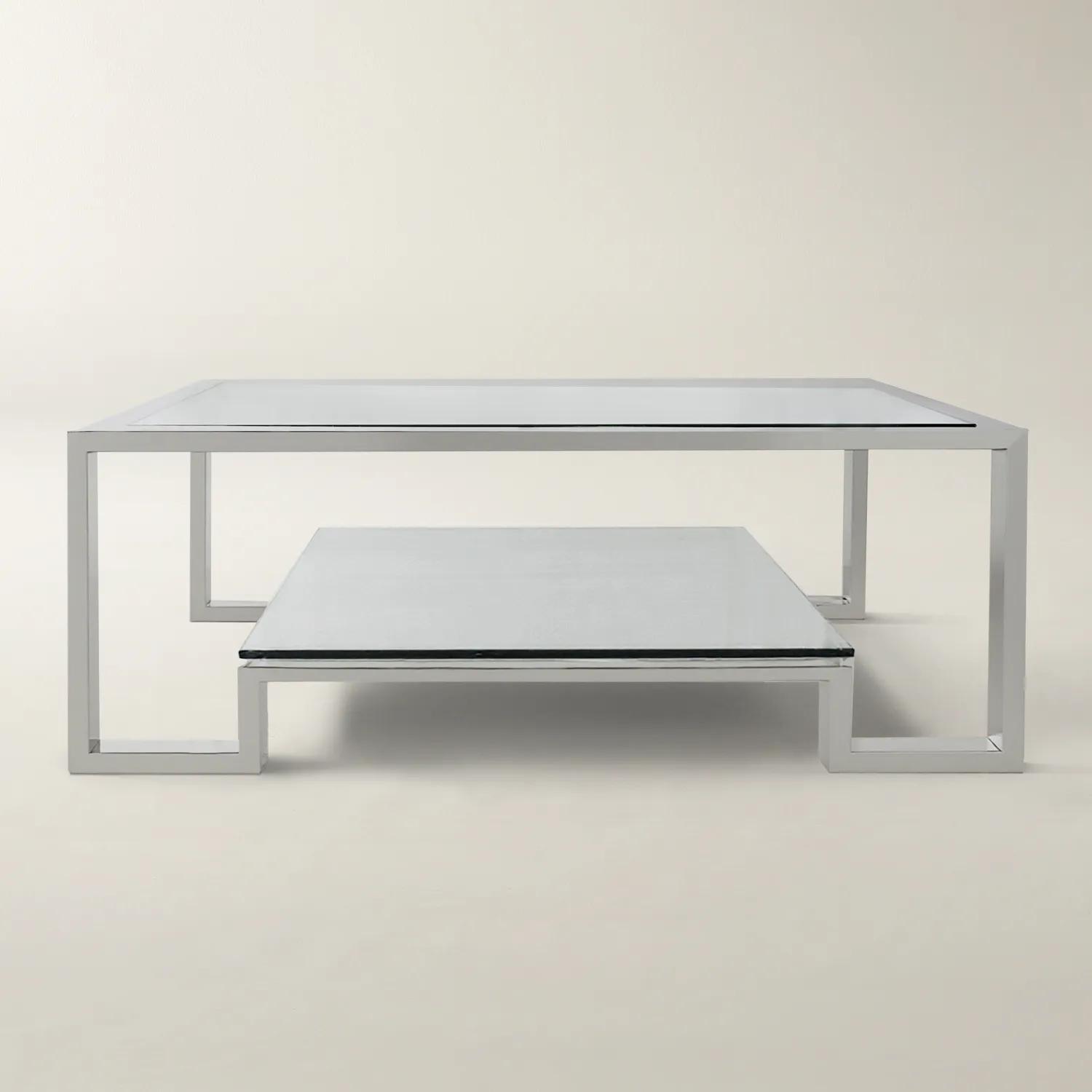
 Duplicity Rectangular Silver Stainless Steel Coffee Table With Glass Top (50")$1399
A modern coffee table featuring a stainless steel frame, tempered glass top, and floating bottom shelf.
Add To Cart -
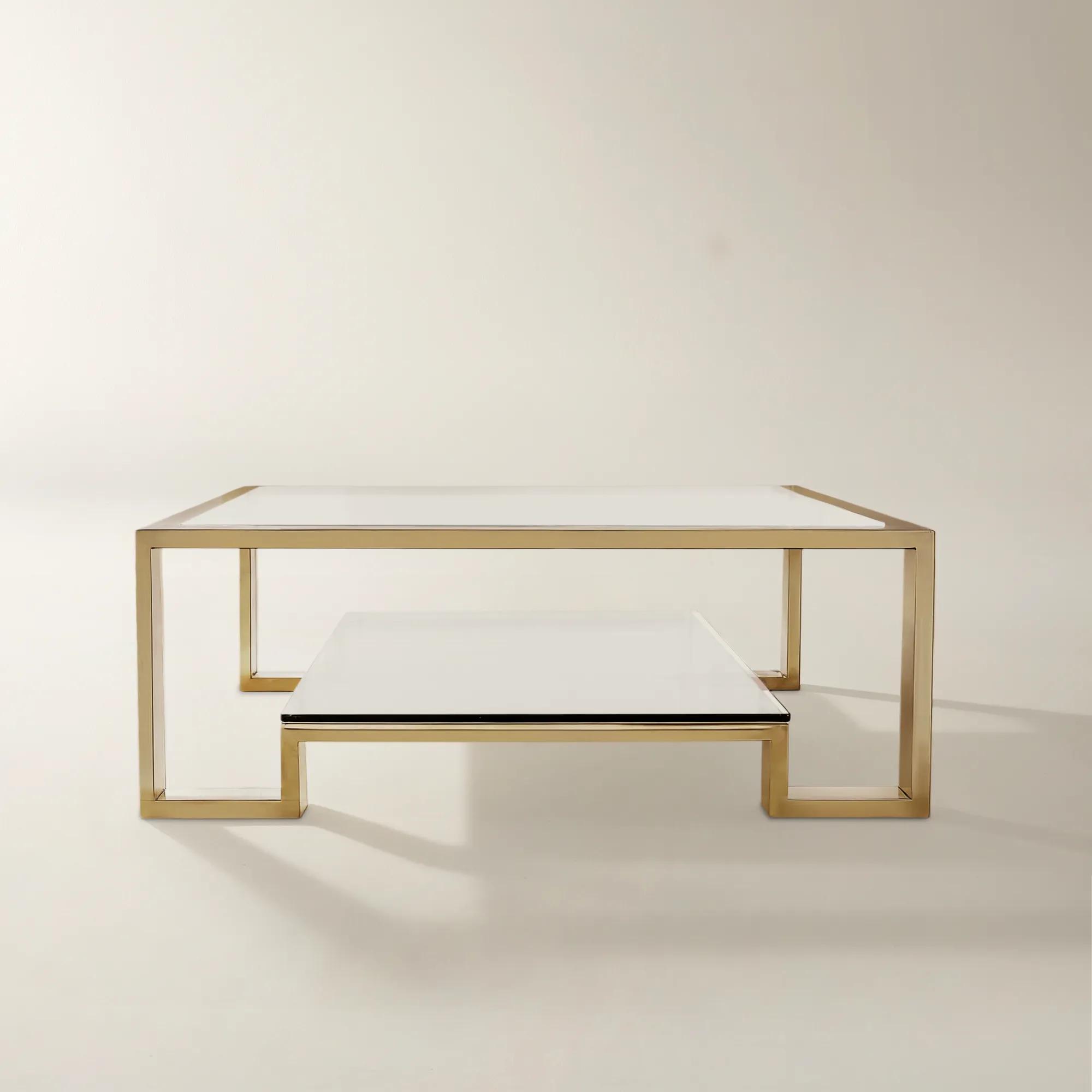 Duplicity Rectangular Gold Stainless Steel Coffee Table With Glass Top (50")$1399
A modern coffee table featuring a stainless steel frame, tempered glass top, and floating storage shelf.
Add To Cart -
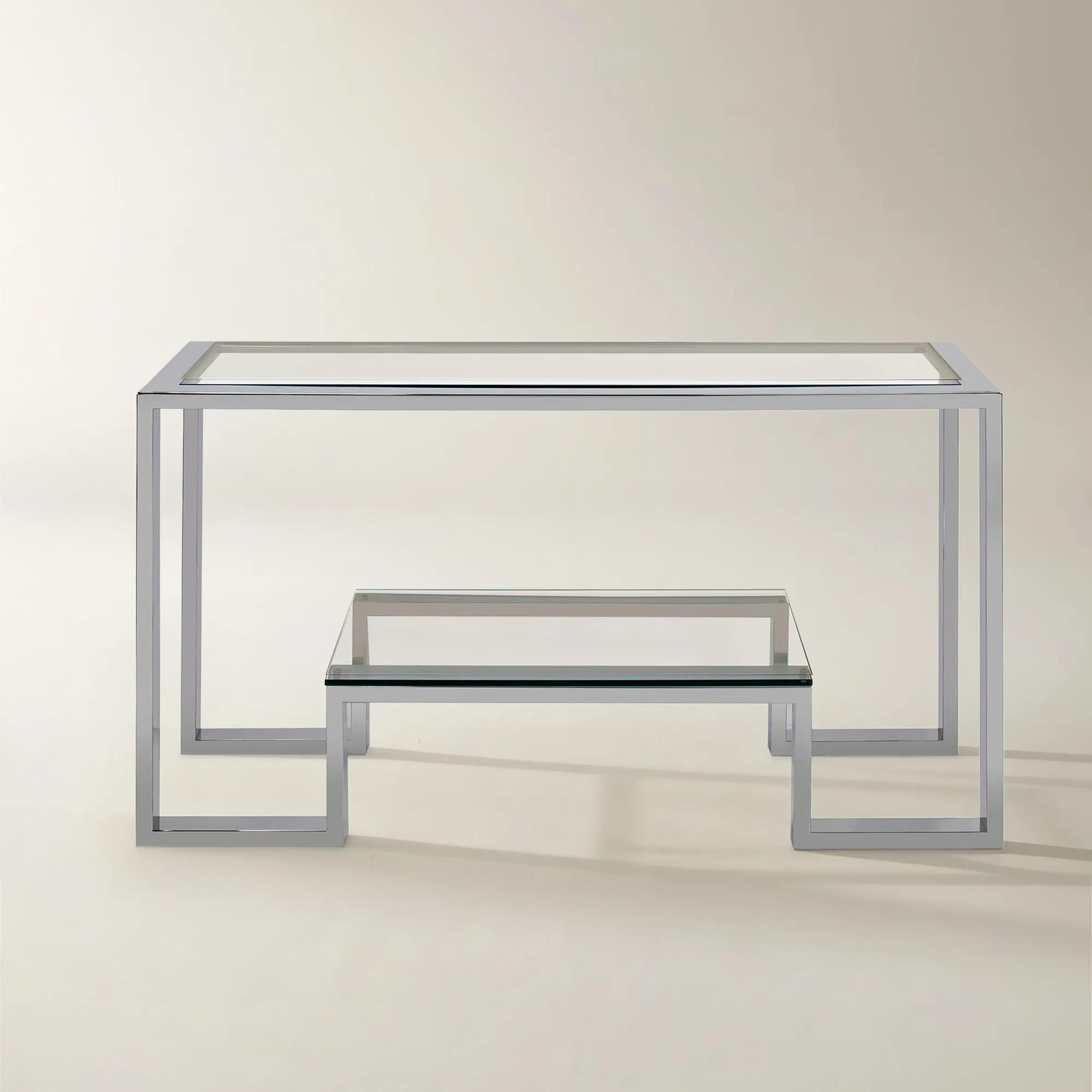
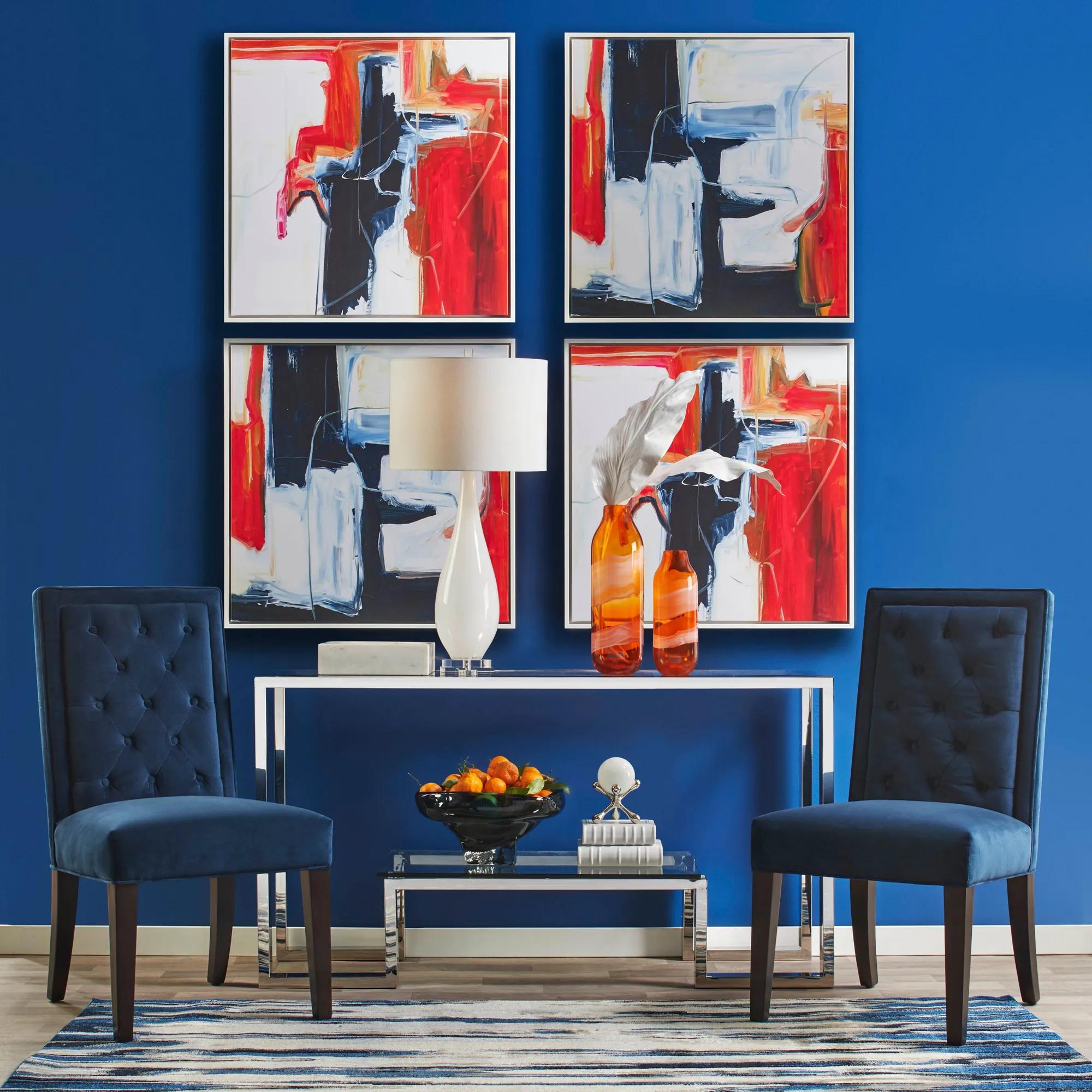 Duplicity Rectangular Silver Stainless Steel Console Table With Glass Top (59")$1399
A modern console table crafted from stainless steel and tempered glass with a floating bottom shelf.
Add To Cart -
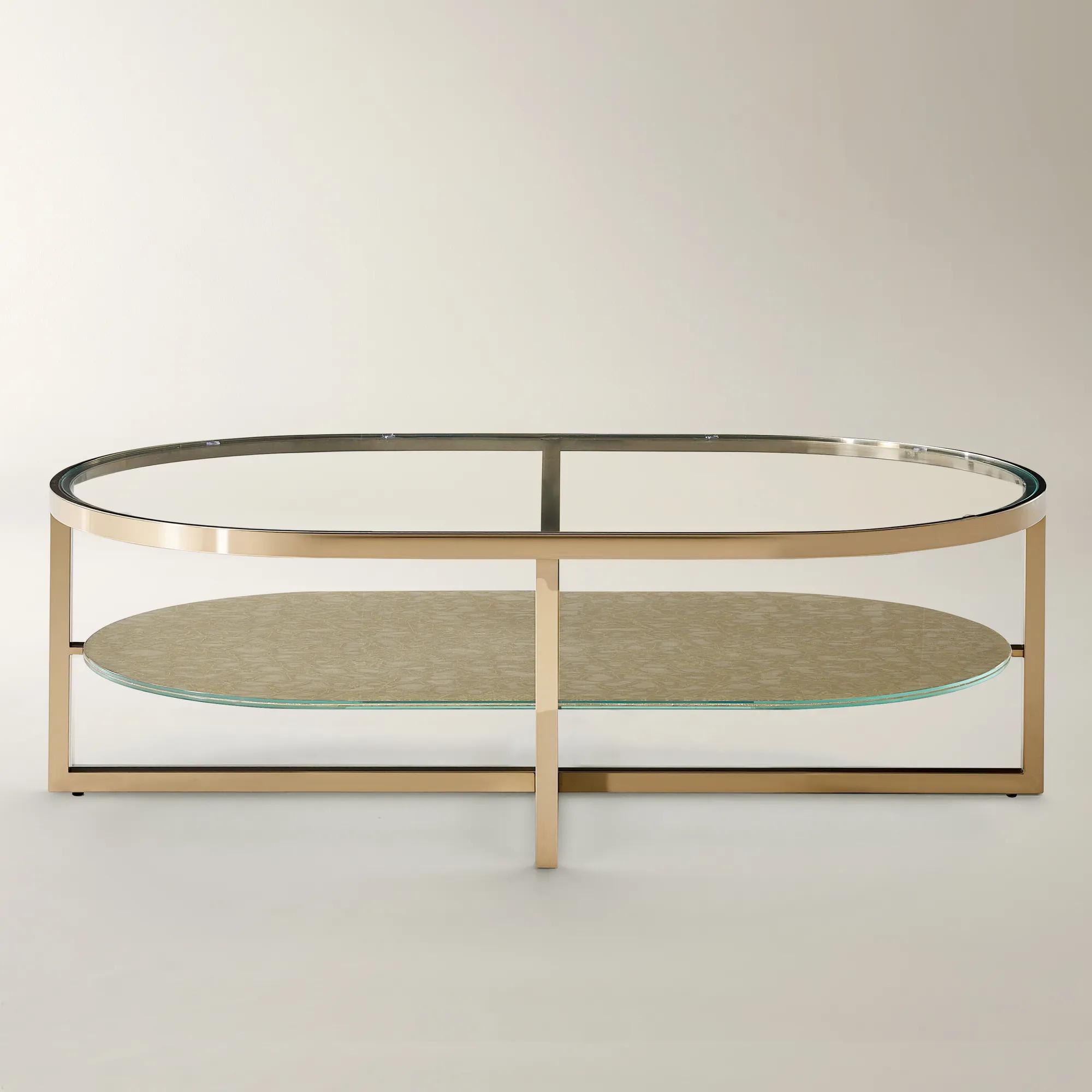
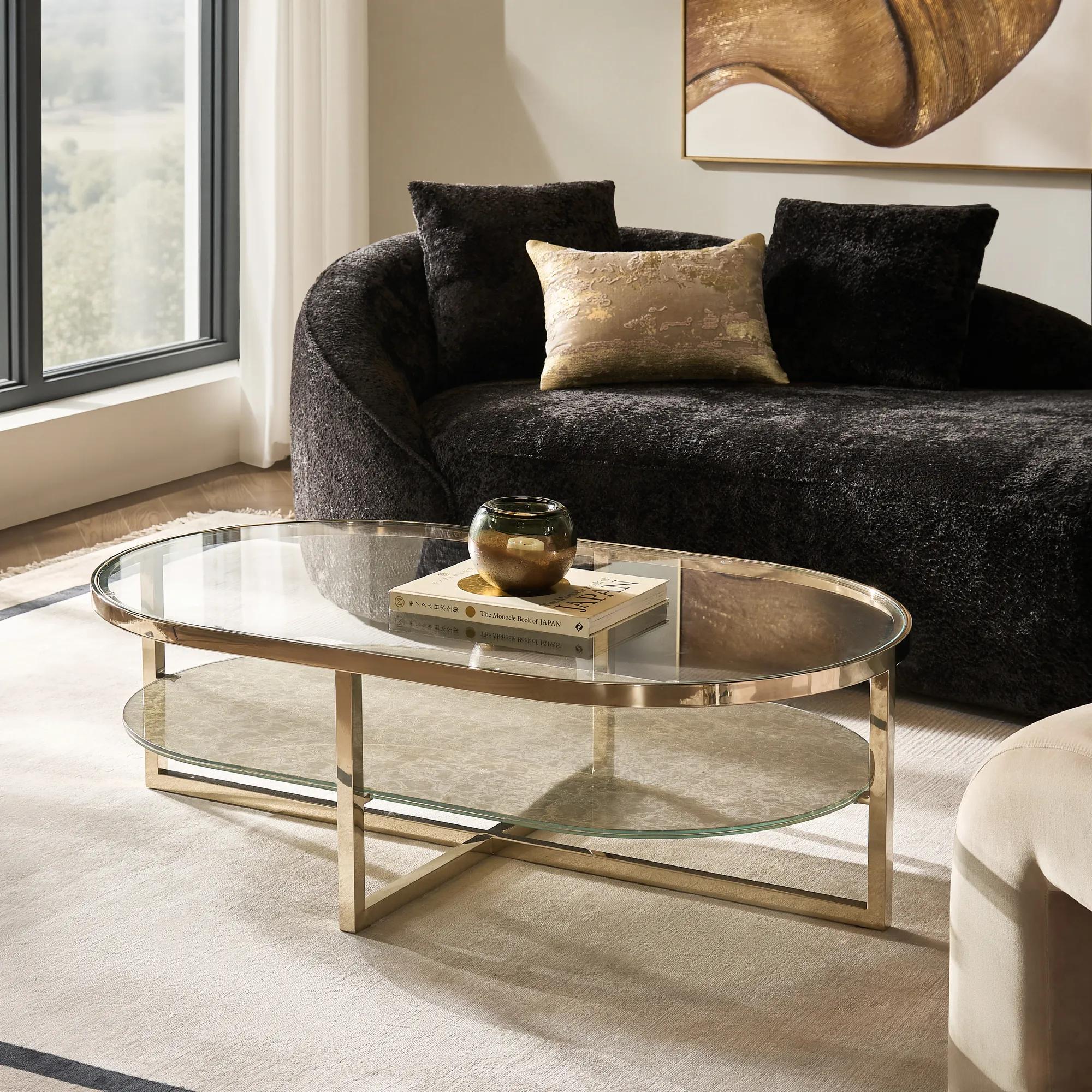 Duality Oval Fabric-Laminated Glass Coffee Table (47")$999
A modern oval coffee table featuring a tempered glass top, fabric-laminated shelf, and soft gold stainless steel frame.
Add To Cart -
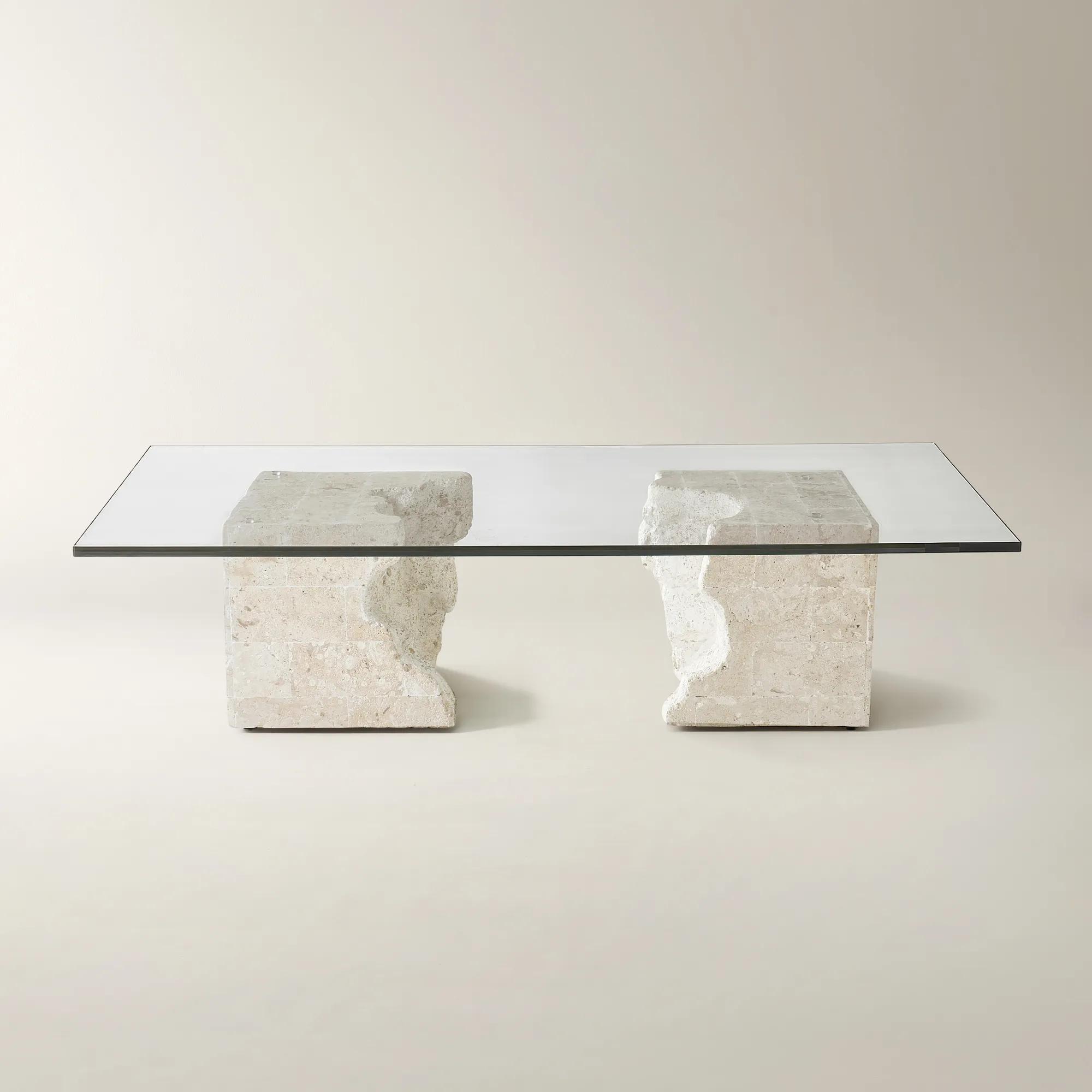 Cairo Rectangular Mactan Stone Coffee Table With Glass Top (70.87")$1999
A contemporary coffee table featuring a clear tempered glass top floating above hand-carved Mactan stone bases.
Add To Cart -
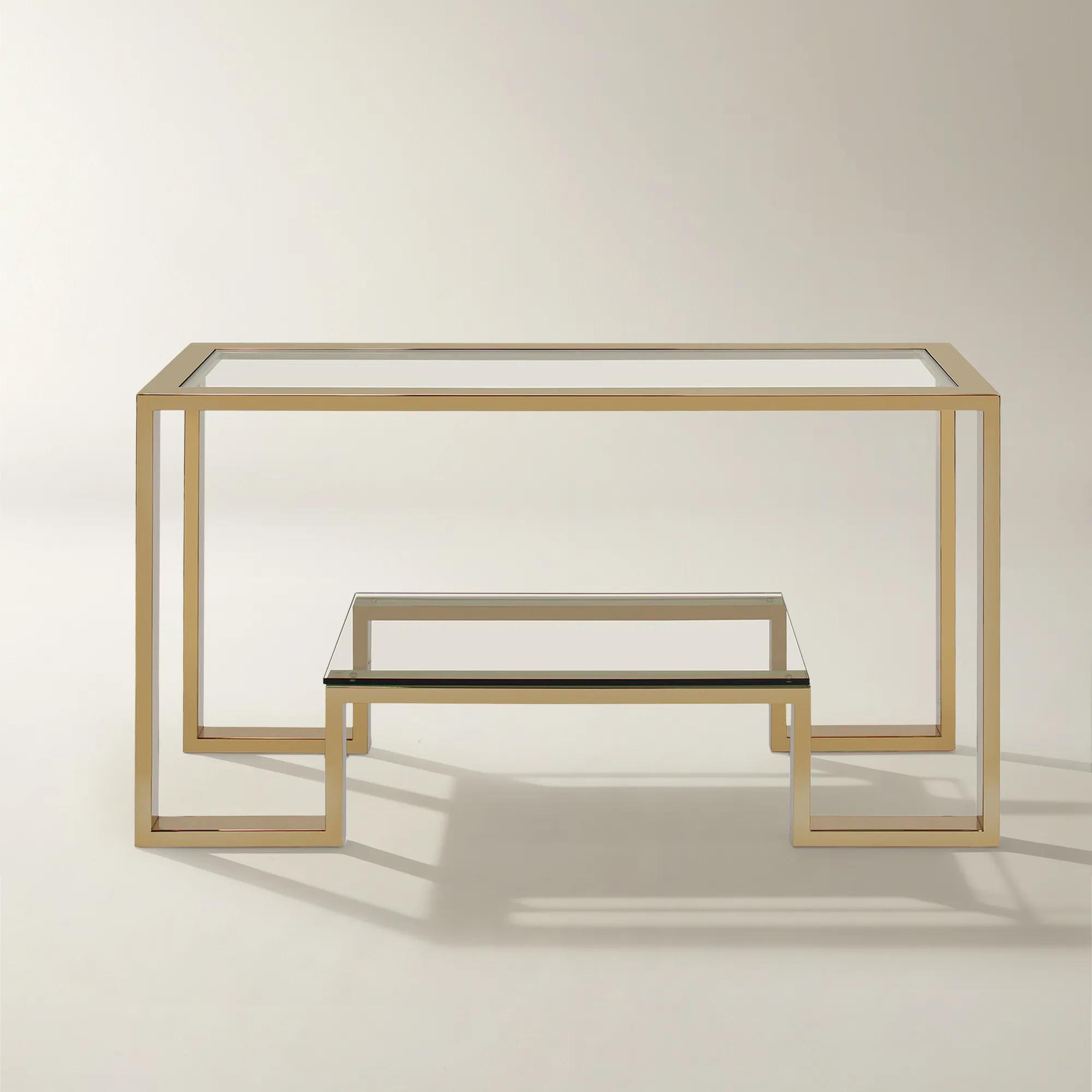
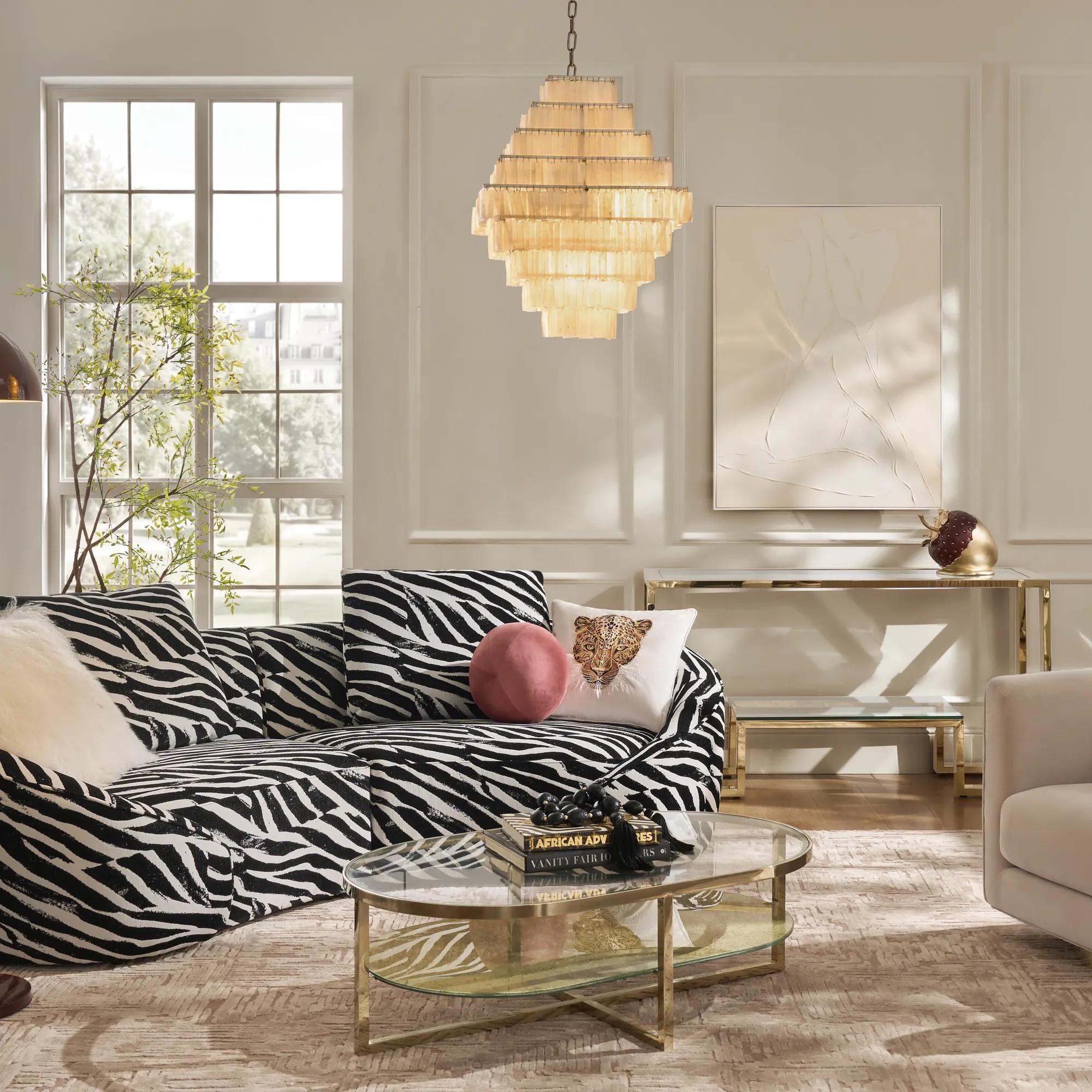 Duplicity Rectangular Gold Stainless Steel Console Table With Glass Top (59")$1399
A modern console table crafted from stainless steel and tempered glass with a floating bottom shelf.
Add To Cart -
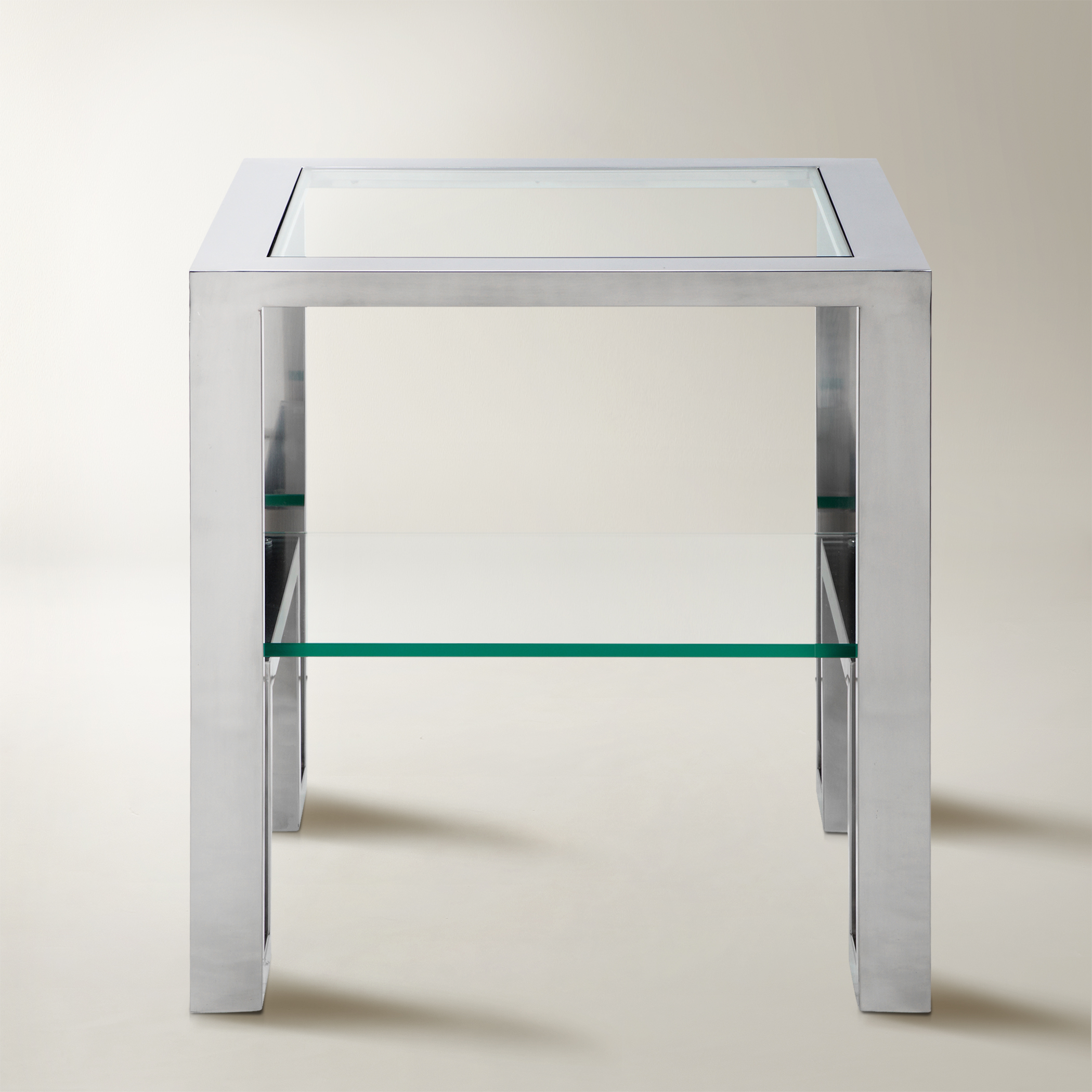
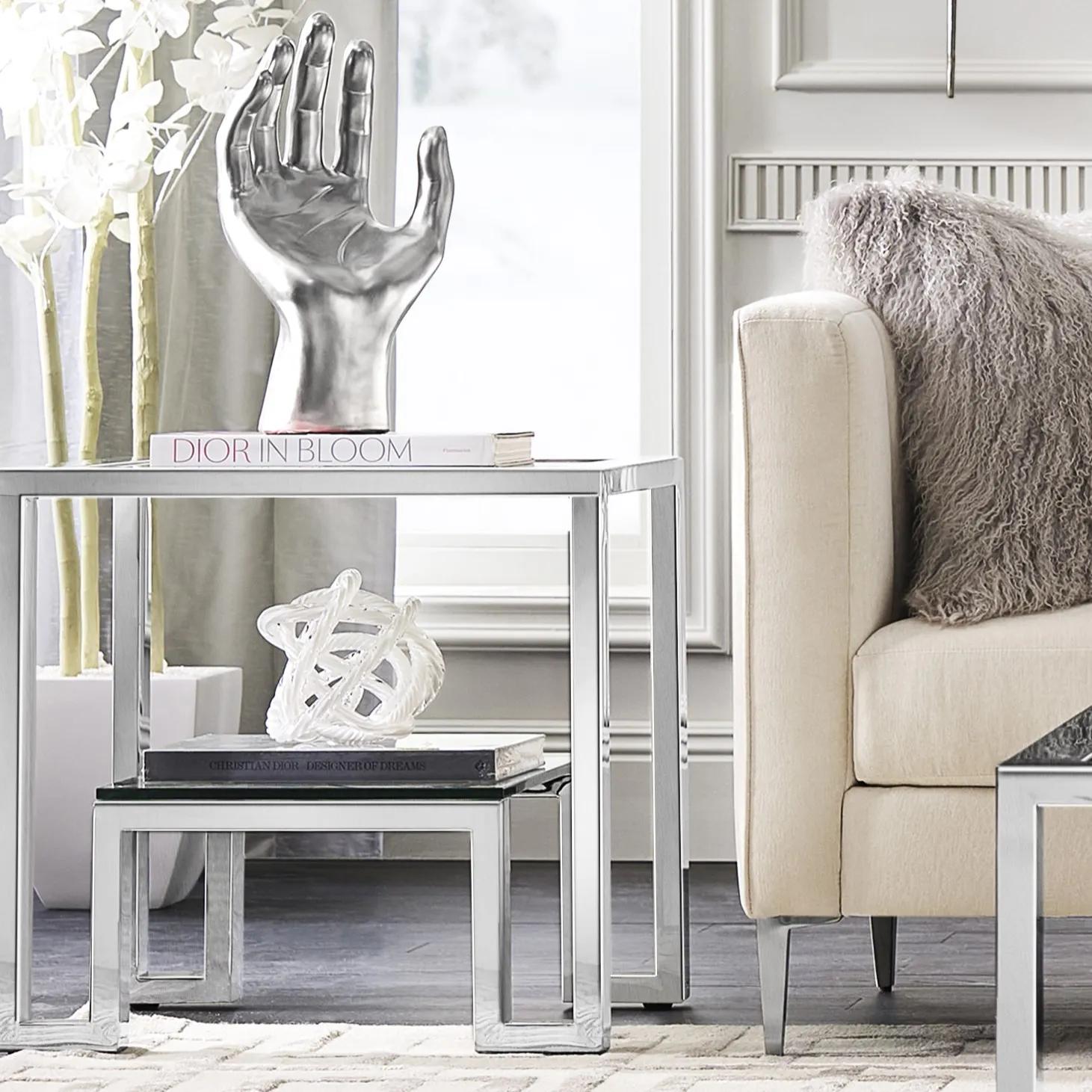 Duplicity Square Silver Stainless Steel End Table With Glass Top (24")$749
A modern end table featuring a stainless steel frame, tempered glass top, and floating bottom shelf.
Add To Cart -
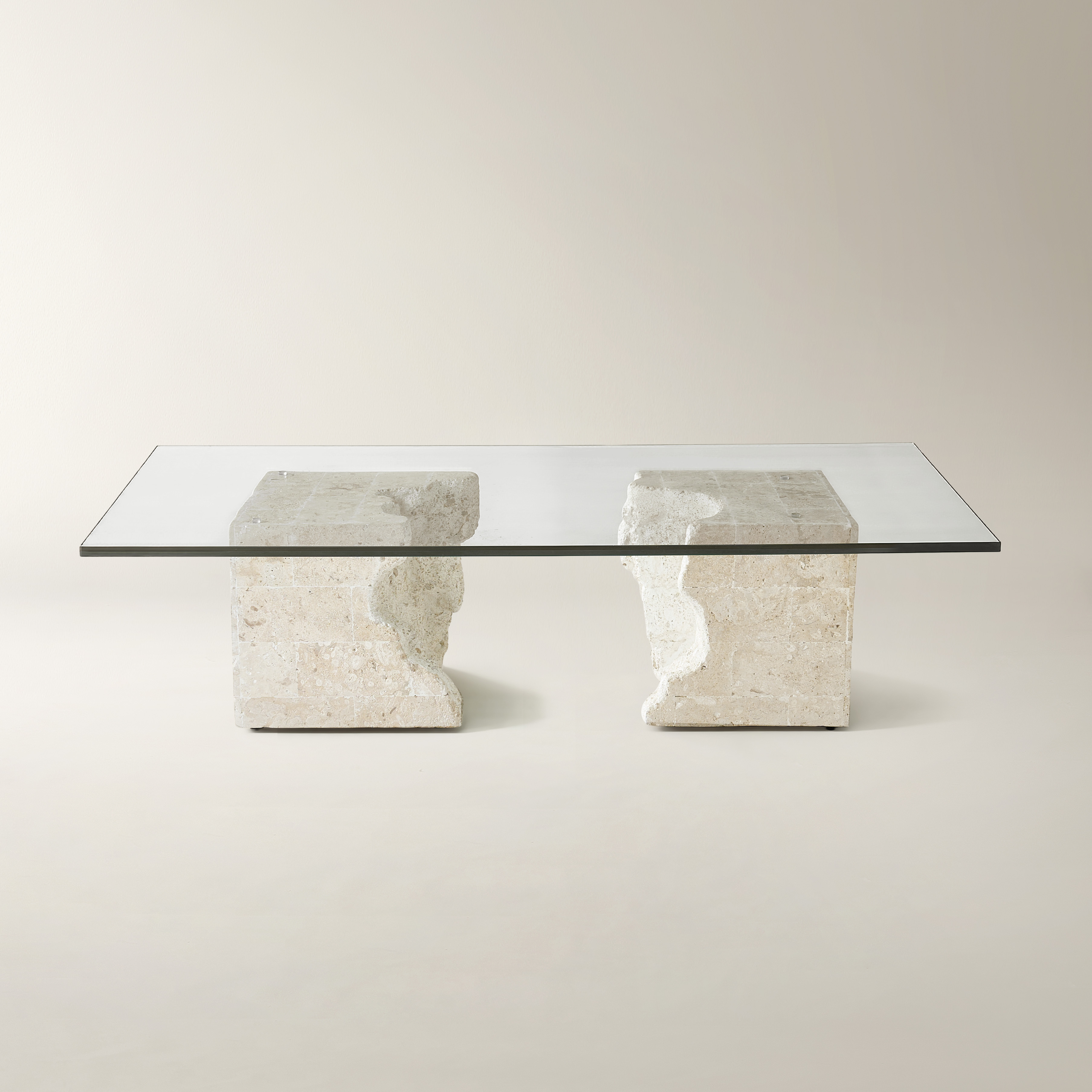 Cairo Rectangular Mactan Stone Coffee Table With Glass Top (63")$1899
A contemporary coffee table featuring a clear tempered glass top floating above hand-carved Mactan stone bases.
Add To Cart -
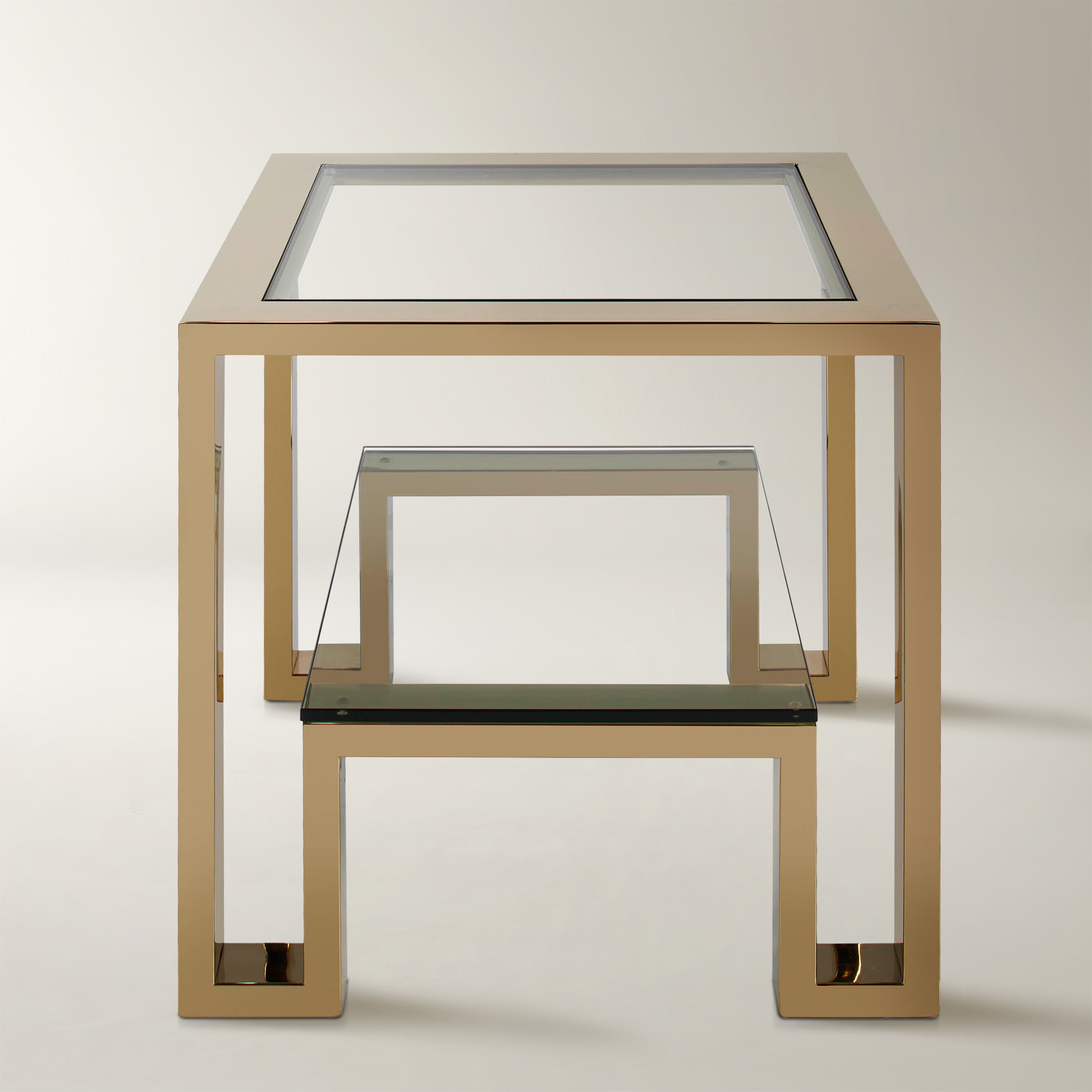 Duplicity Square Gold Stainless Steel End Table With Glass Top (24")$749
A modern end table crafted from stainless steel and tempered glass with a floating bottom shelf.
Add To Cart -
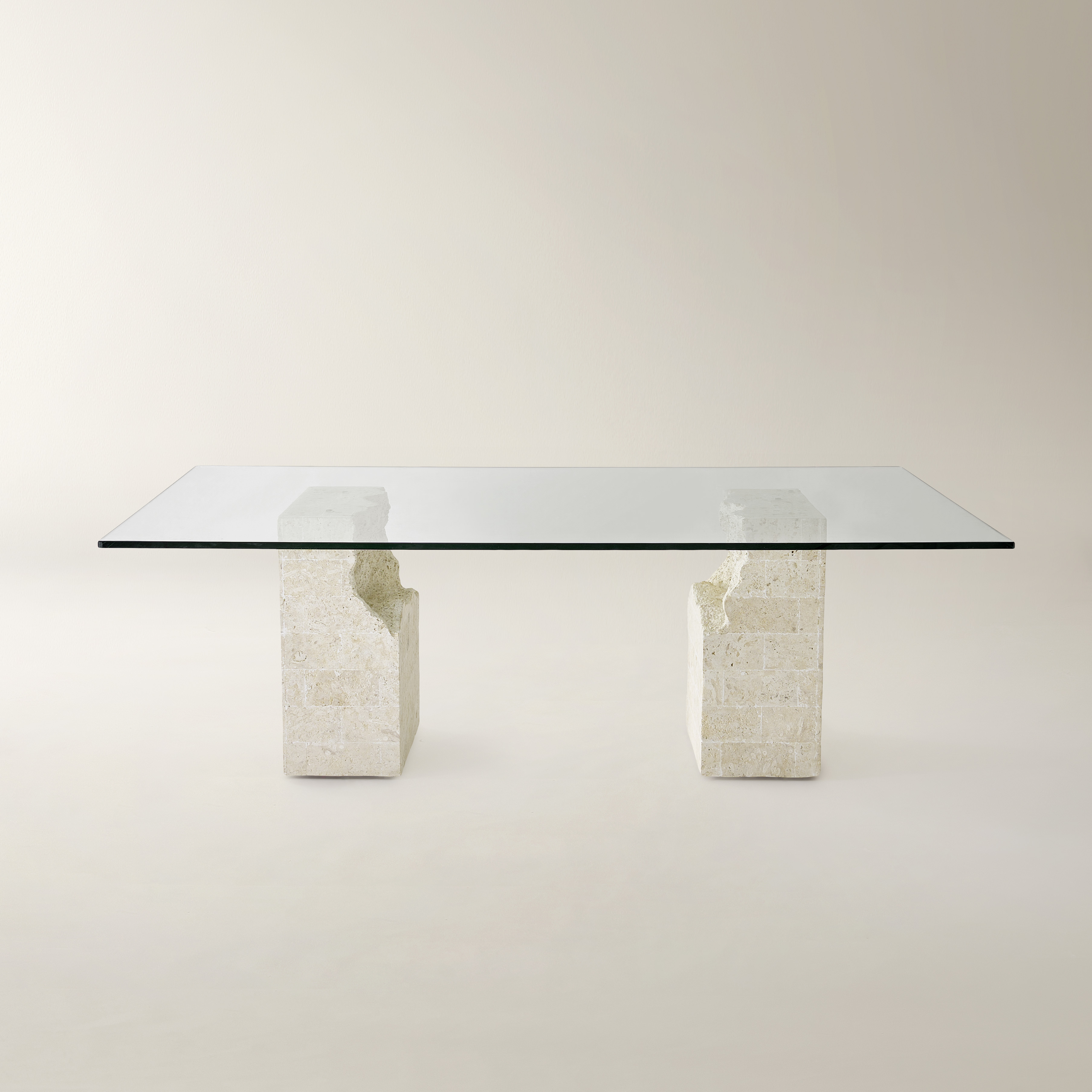 Cairo Rectangular Mactan Stone Dining Table With Glass Top (86.6")$2399
A contemporary dining table featuring a clear tempered glass top over hand-carved Mactan stone bases.
Add To Cart -
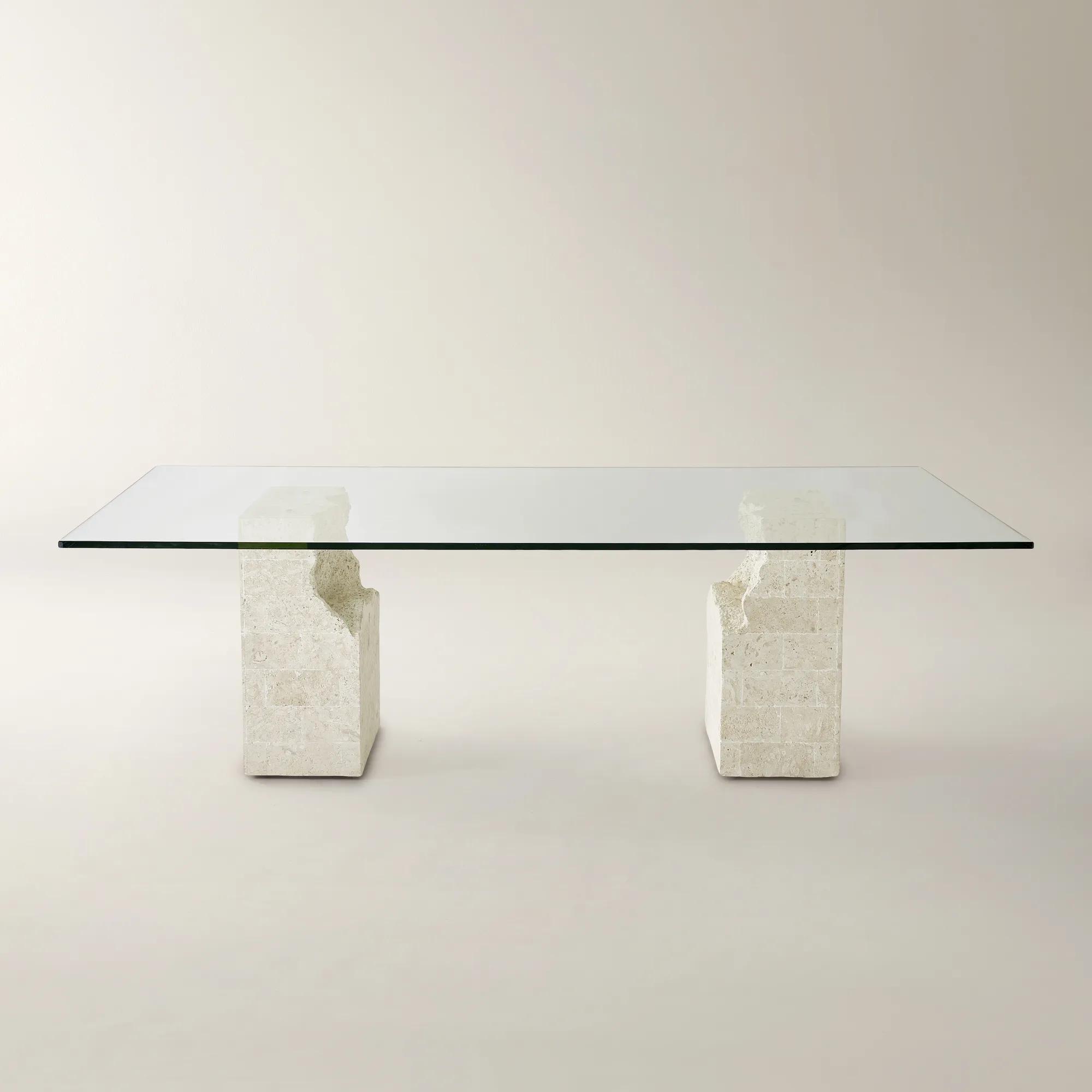 Cairo Rectangular Mactan Stone Dining Table With Glass Top (96")$2599
A contemporary dining table featuring a clear tempered glass top over hand-carved Mactan stone bases.
Add To Cart -
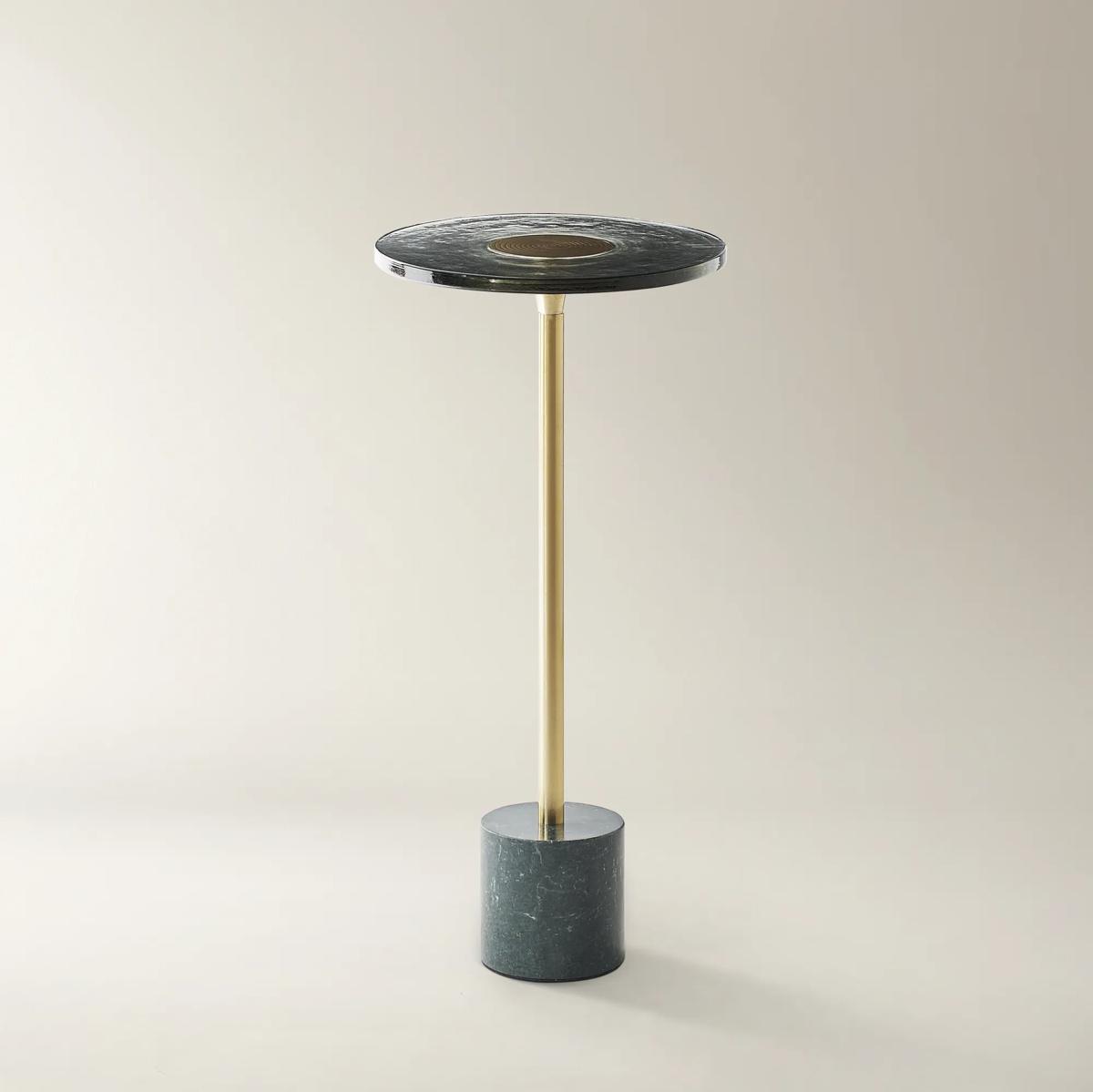
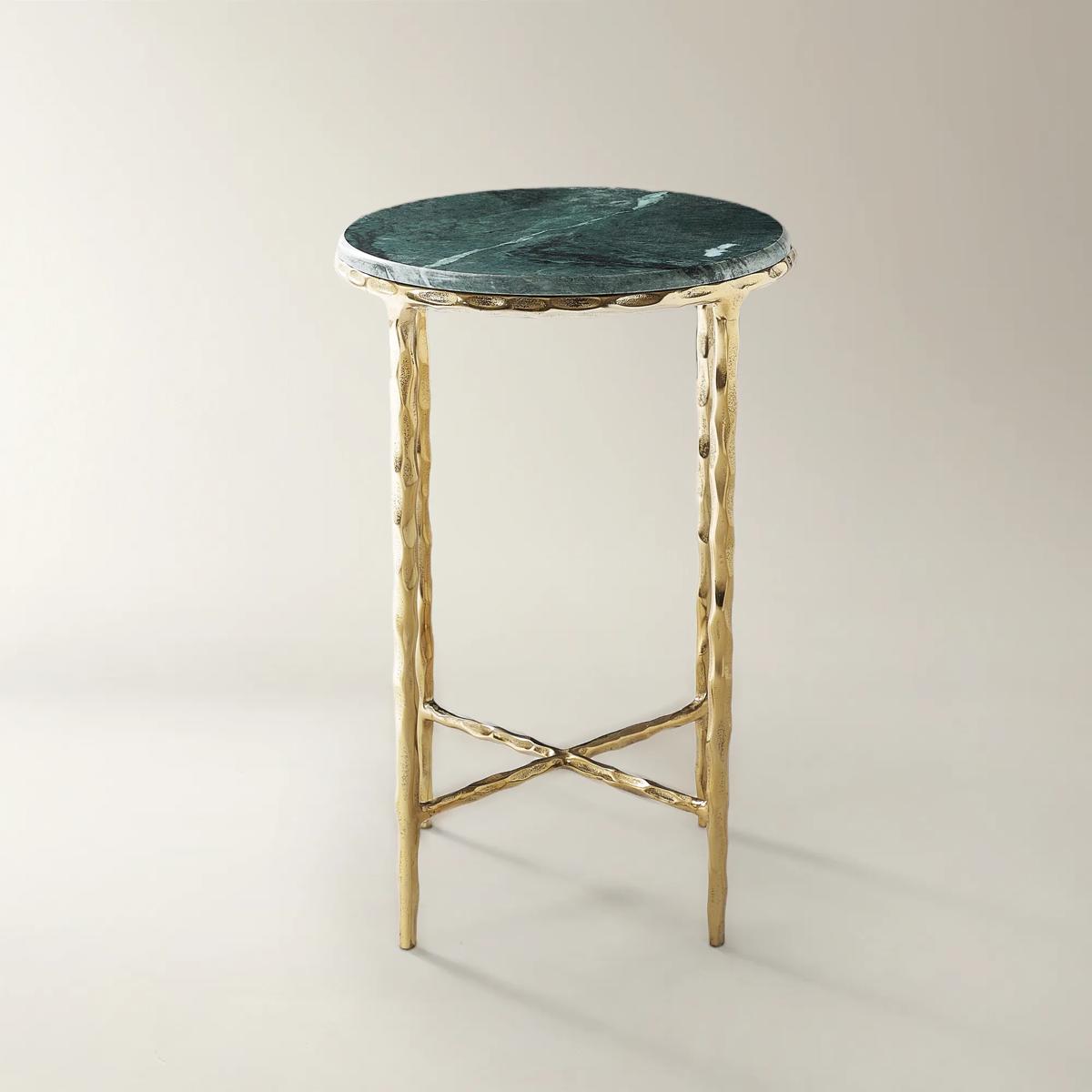
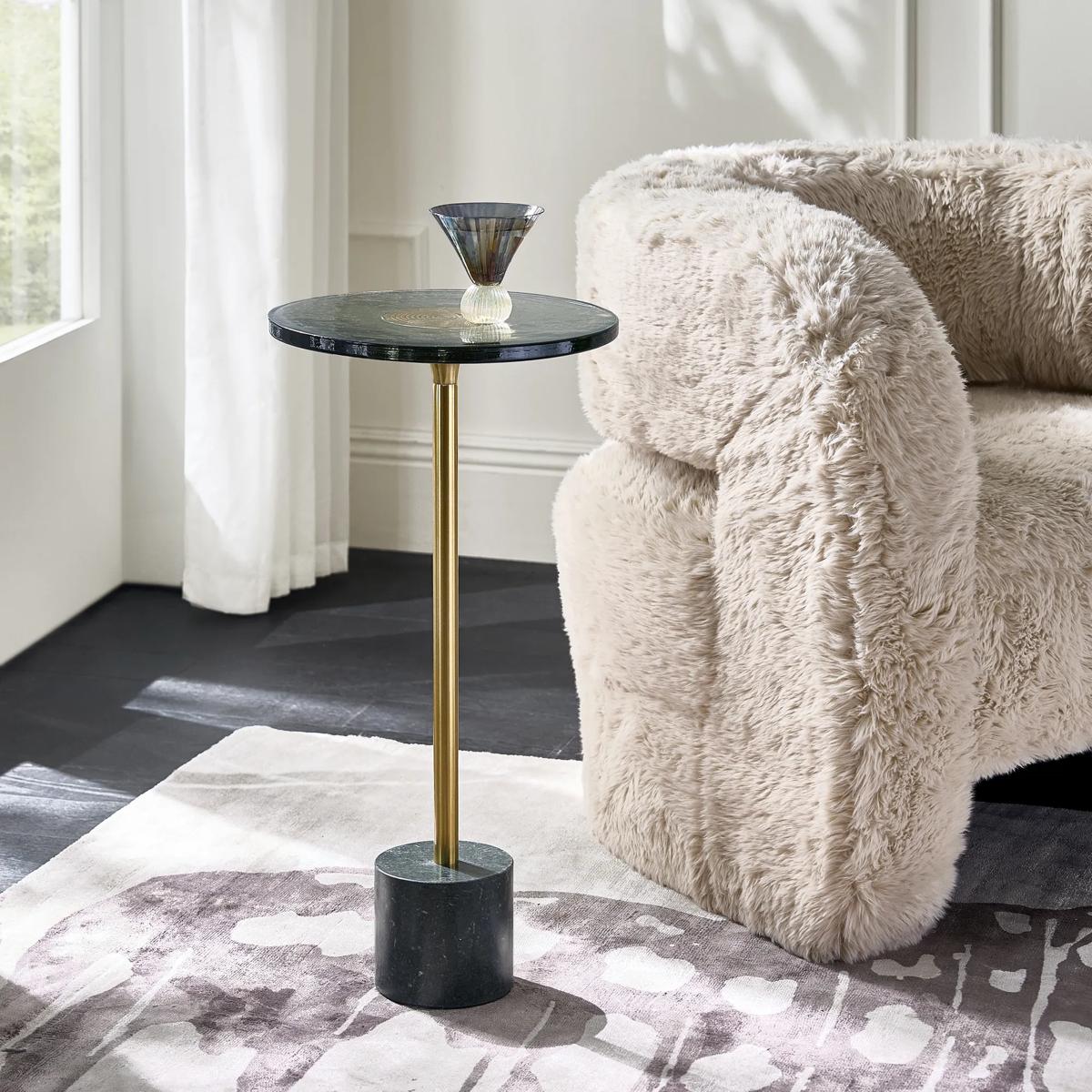 Seraphy Round Green Metal Side Table With Glass Top (13.75")$179
A modern side table featuring a green cast glass top, brass-finished post, and Indian green marble base.
Add To Cart -
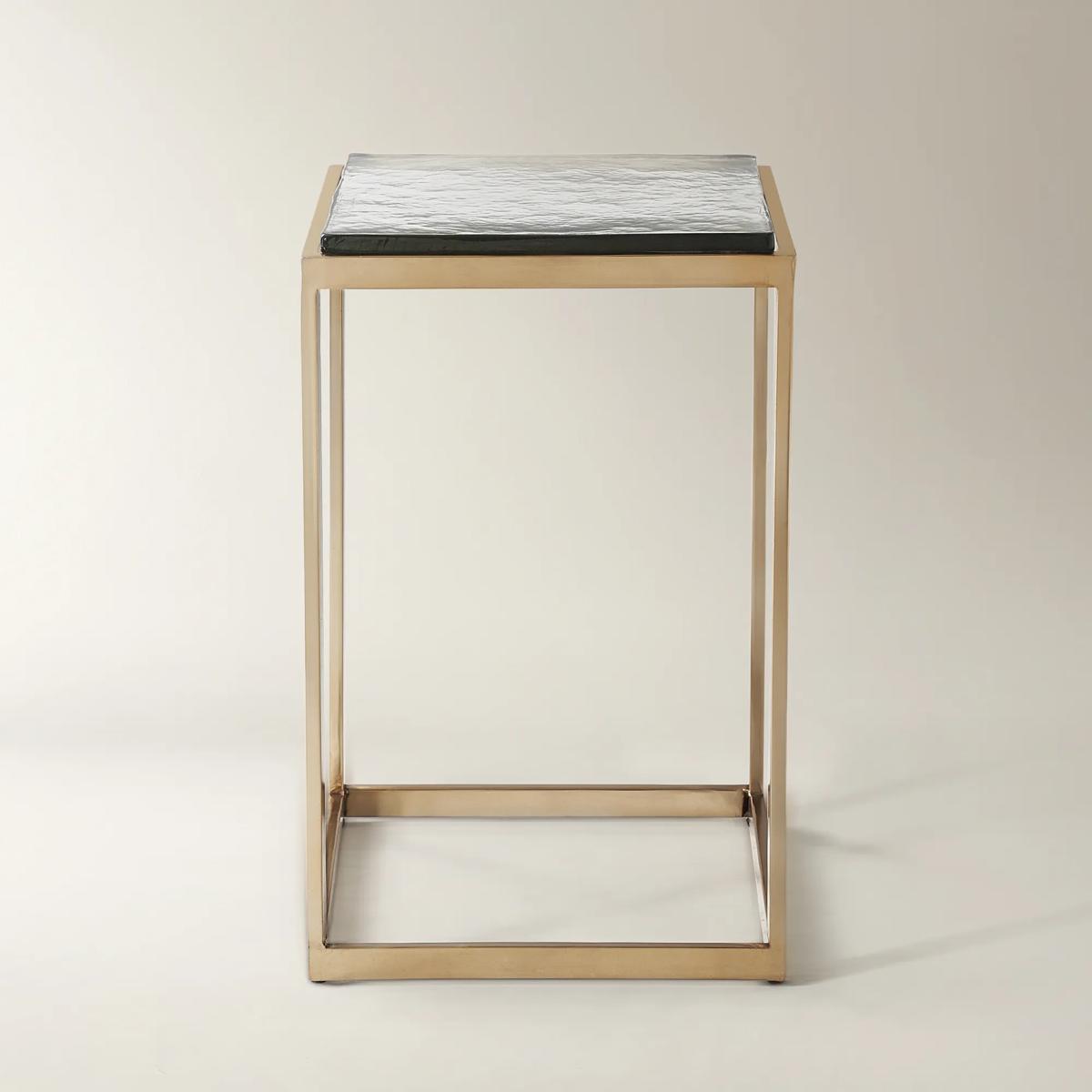
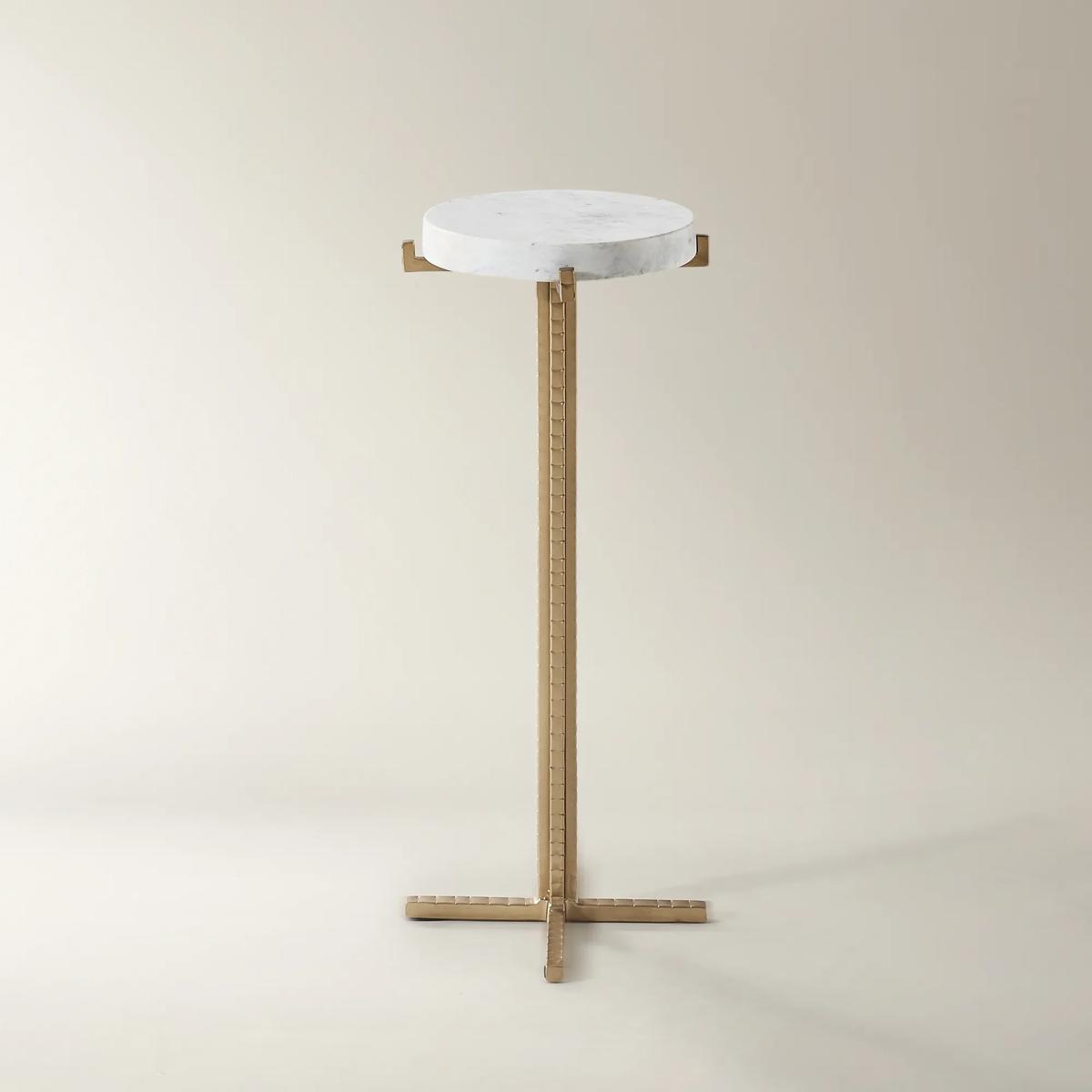
 Lyra Square Brass Metal Side Table With Glass Top (13.8")$239
A sculptural side table featuring a thick cast glass top and a lustrous brass-finished metal base.
Add To Cart -
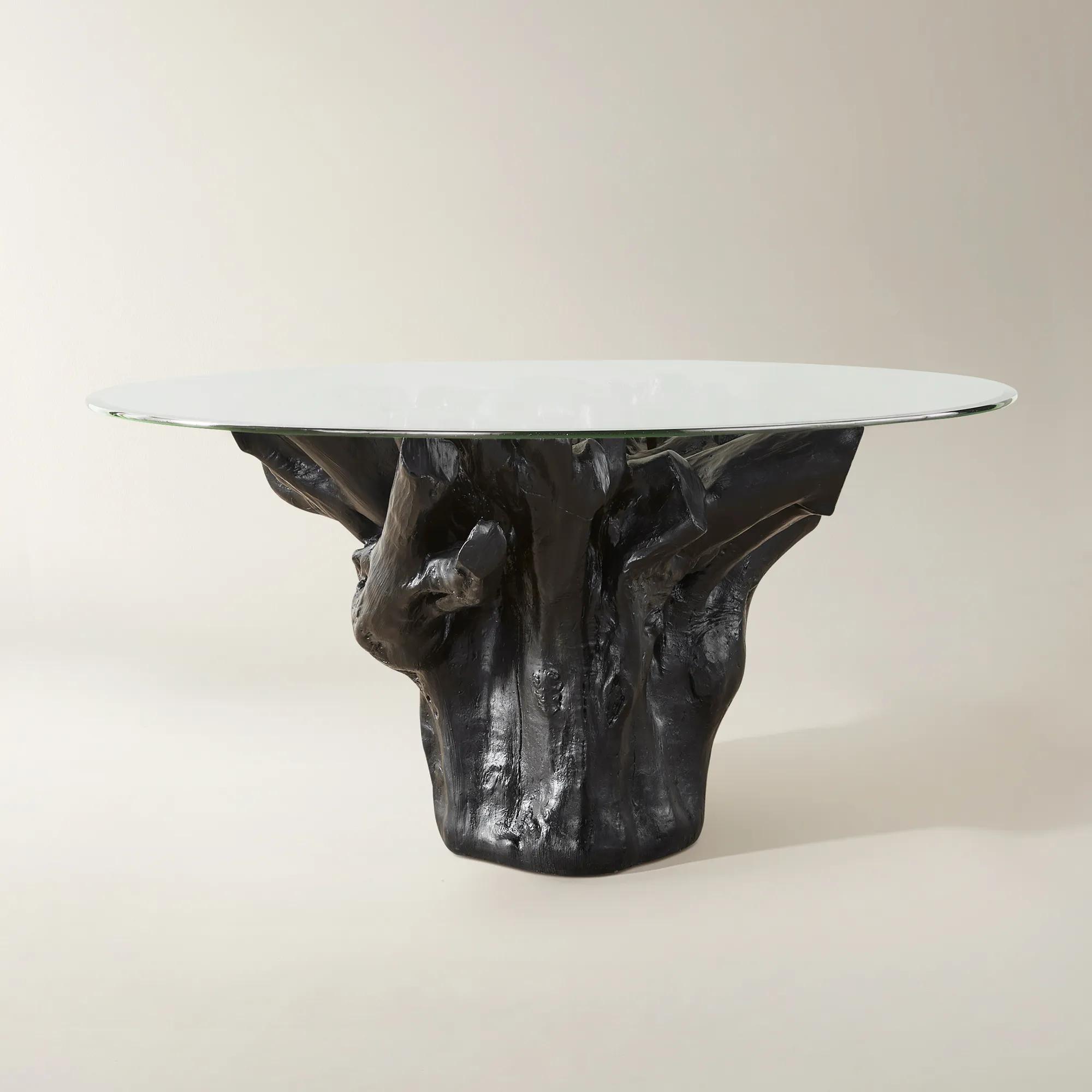 Sequoia Black Resin Dining Table With Glass Top (60")$2299
A sculptural black resin base with real stone fragments supports a round tempered glass top for organic elegance.
Add To Cart -
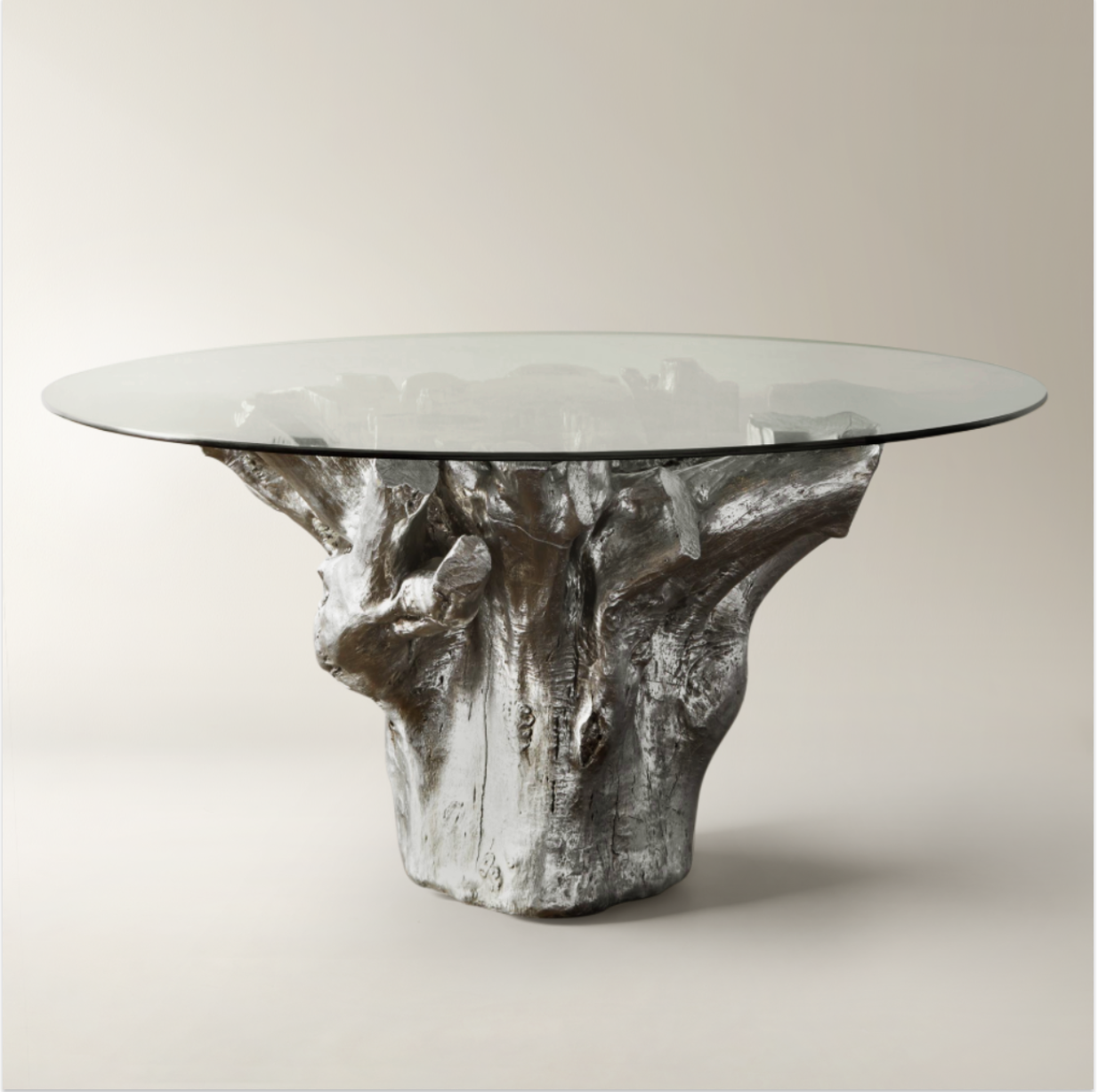 Sequoia Silver Resin Dining Table With Glass Top (60")$2199
A sculptural resin base with hand-applied silver leaf supports a round tempered glass top for modern elegance.
Add To Cart -
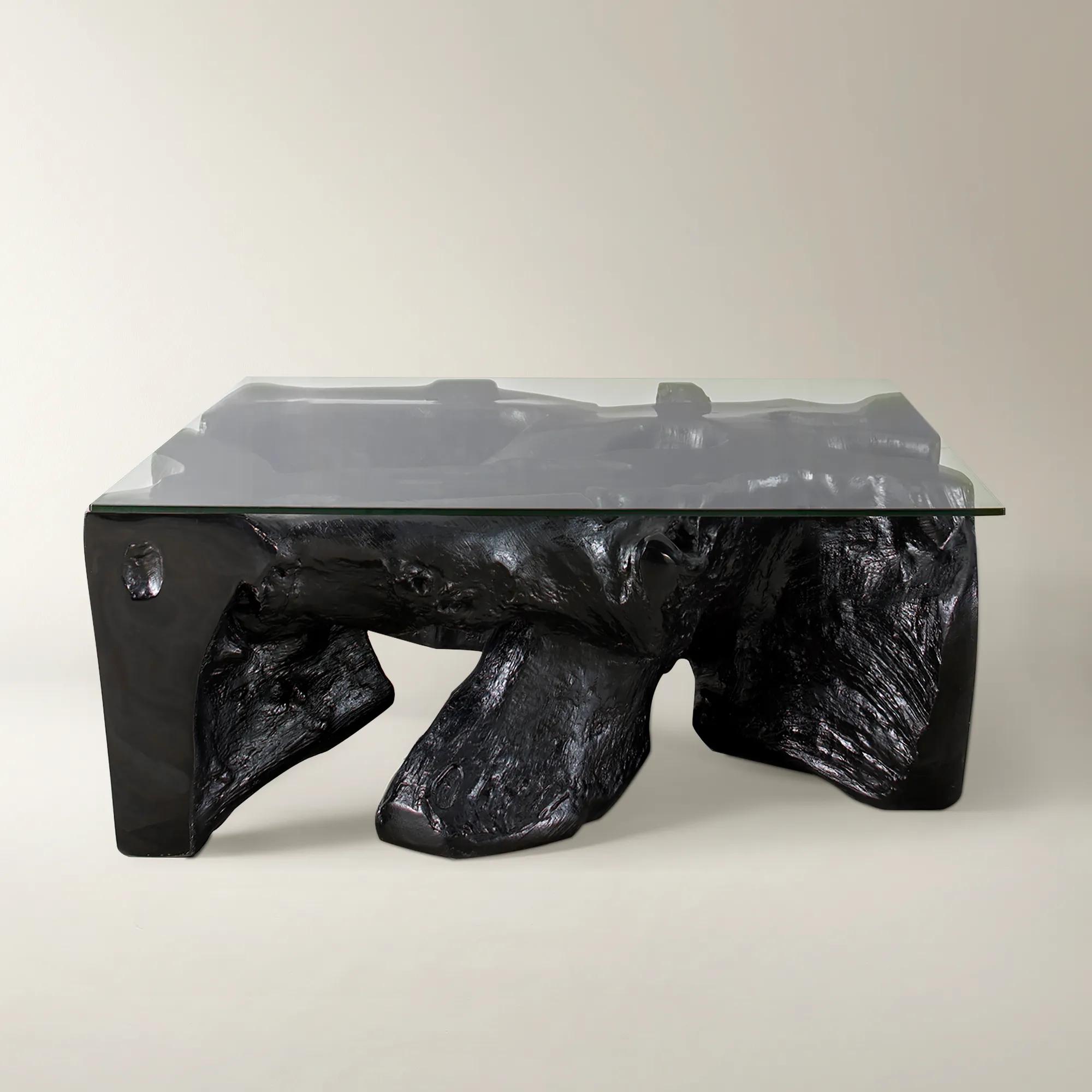
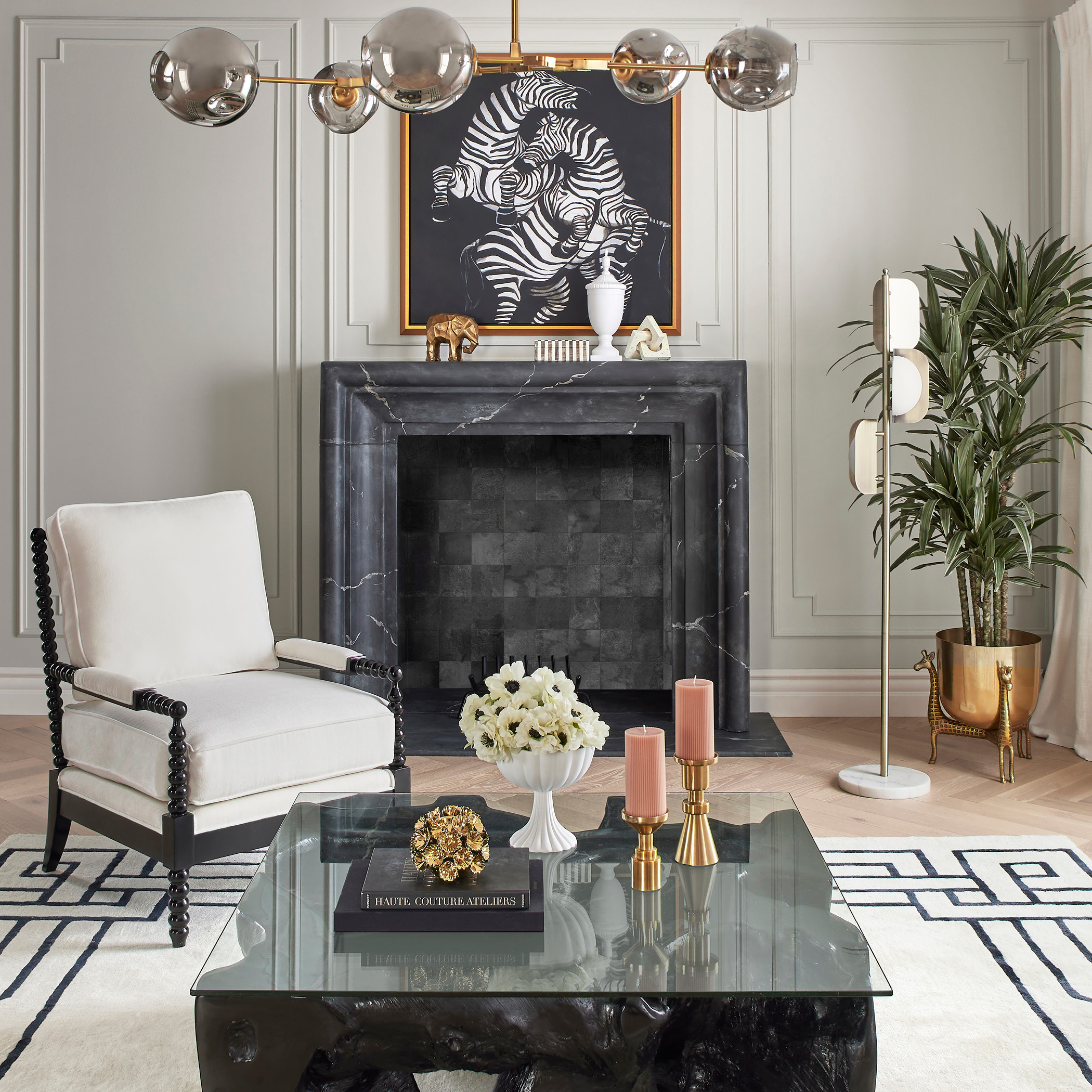 Sequoia Black Resin Coffee Table With Glass Top (44")$2299
A sculptural black coffee table crafted from resin and polished stone fragments for indoor or outdoor use.
Add To Cart -
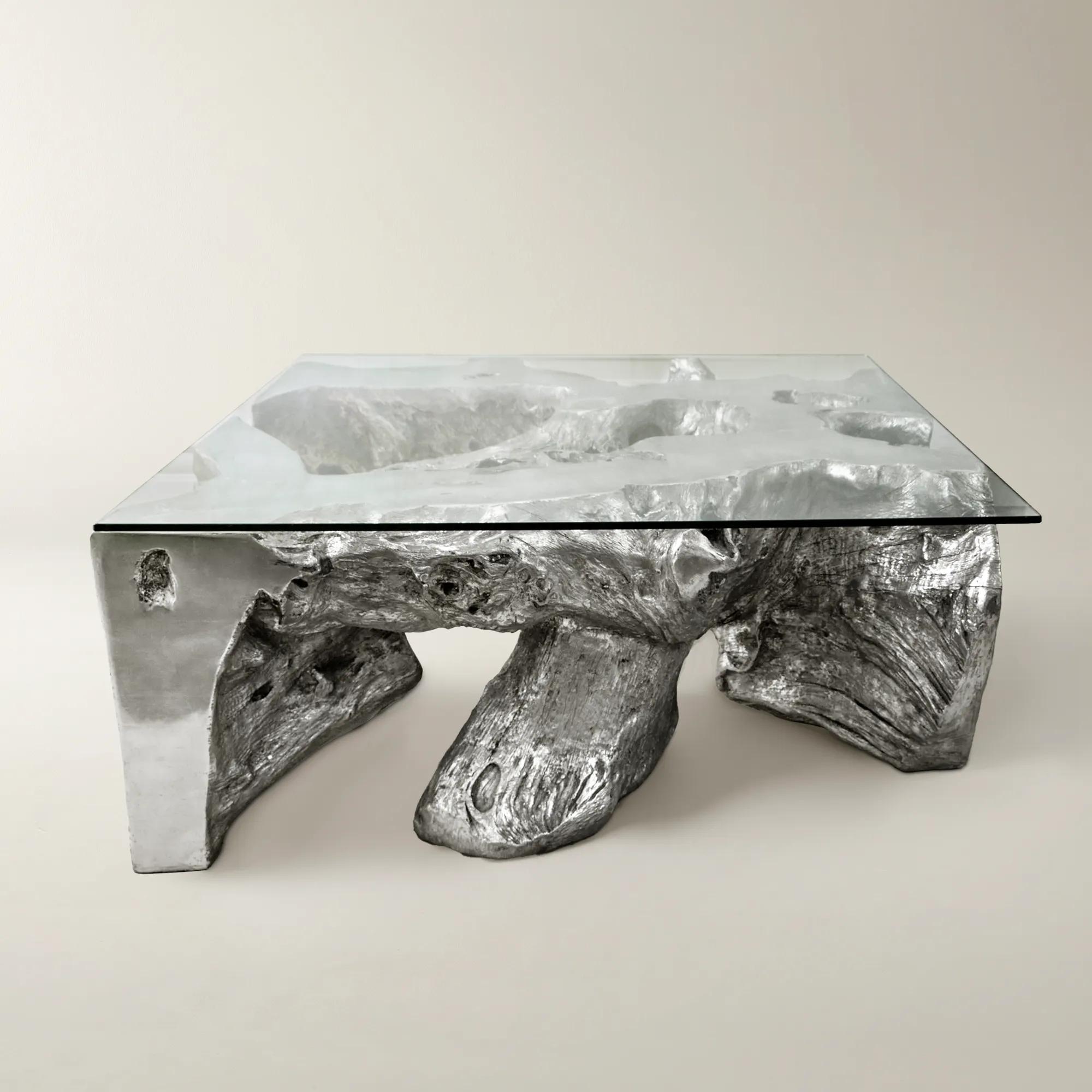 Sequoia Silver Resin Coffee Table With Glass Top (44")$2299
A sculptural coffee table featuring a hand-applied silver leaf resin base and a tempered glass top.
Add To Cart -
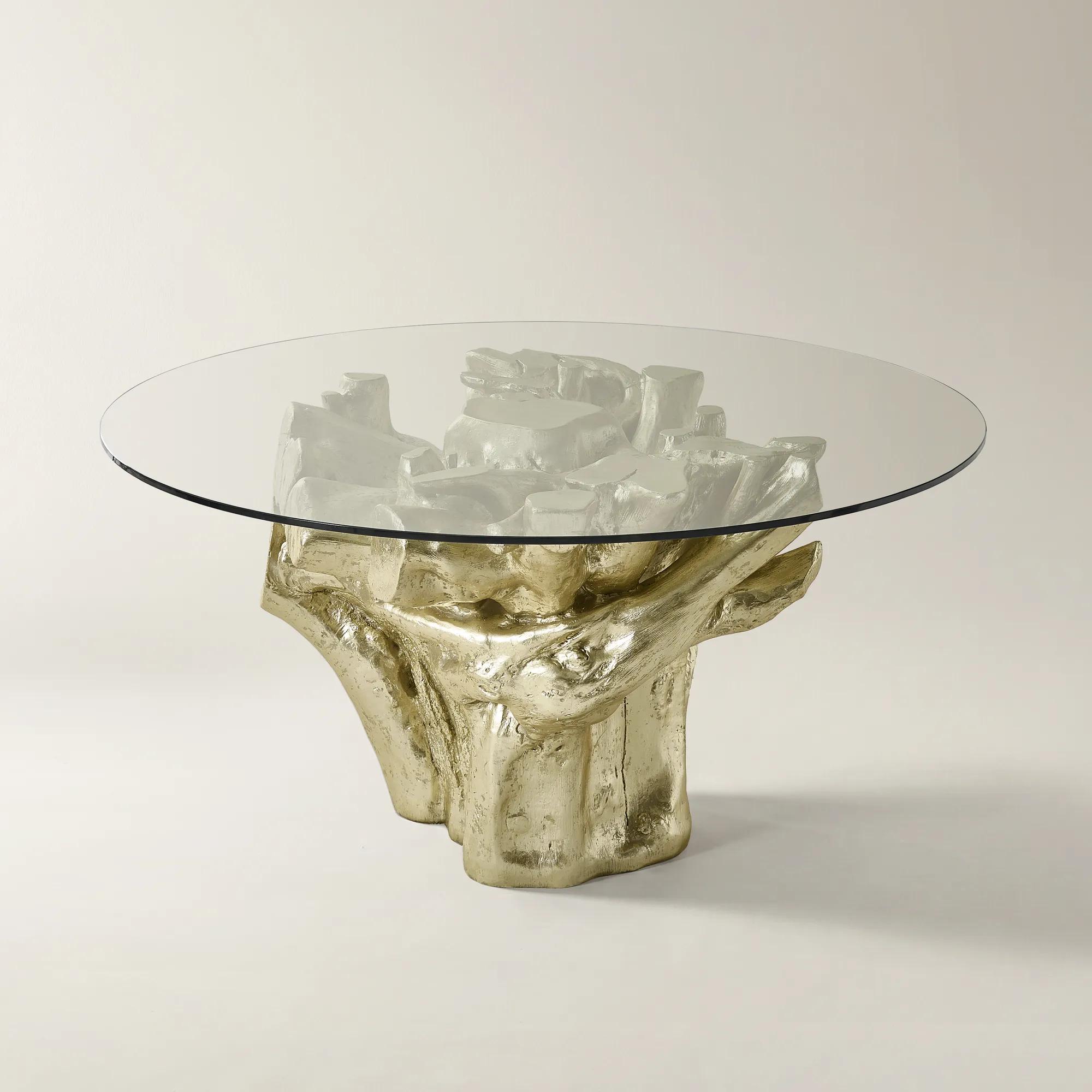 Sequoia Champagne Gold Resin Dining Table With Glass Top (60")$2199
A sculptural resin dining table with a champagne gold leaf base and a clear tempered glass top.
Add To Cart -
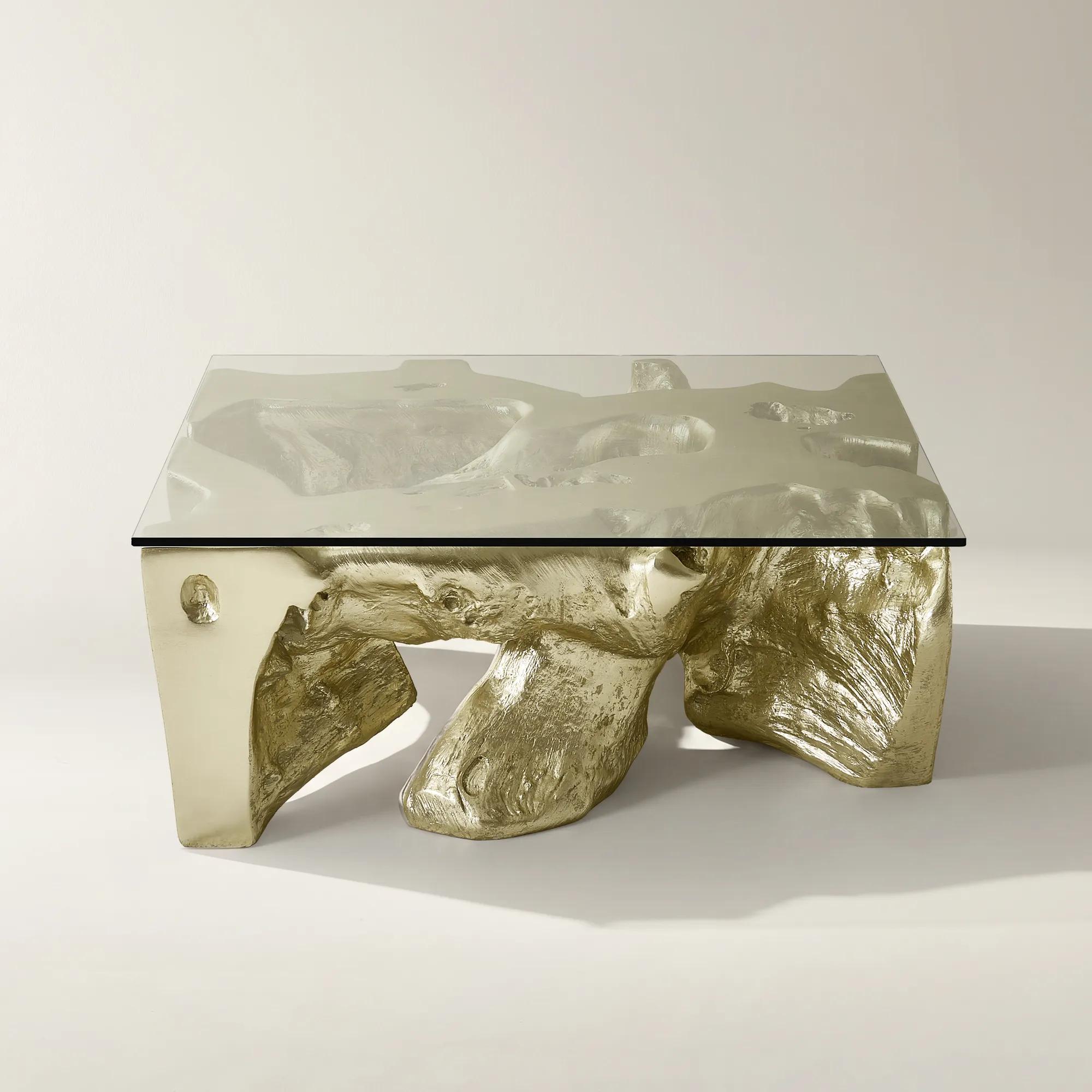 Sequoia Champagne Gold Resin Coffee Table With Glass Top (44")$2299
A sculptural resin coffee table with a champagne gold leaf finish and a clear tempered glass top.
Add To Cart -
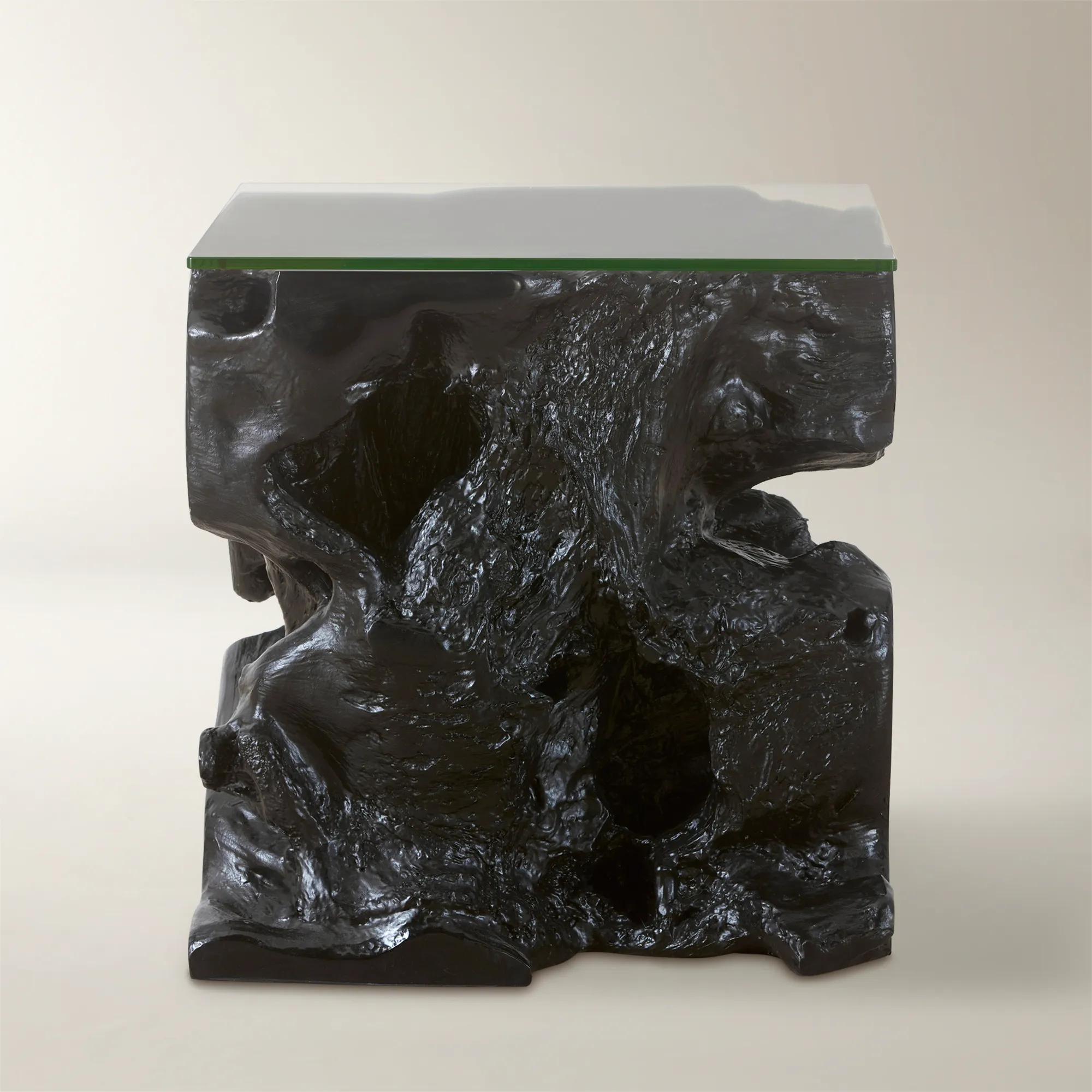 Sequoia Black Resin End Table With Glass Top (22")$999
A sculptural black resin and stone end table inspired by Acacia roots, suitable for indoor or outdoor use.
Add To Cart -
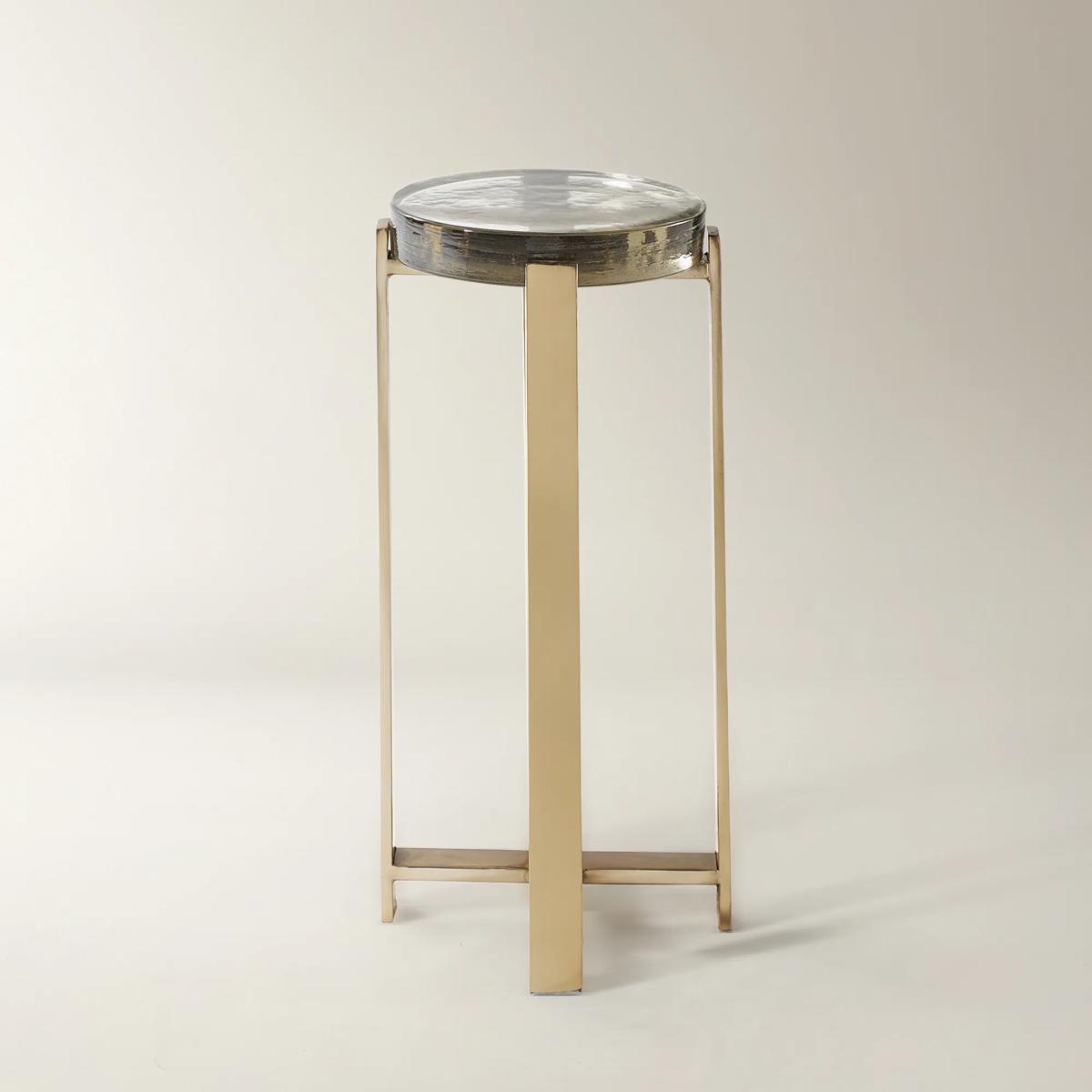
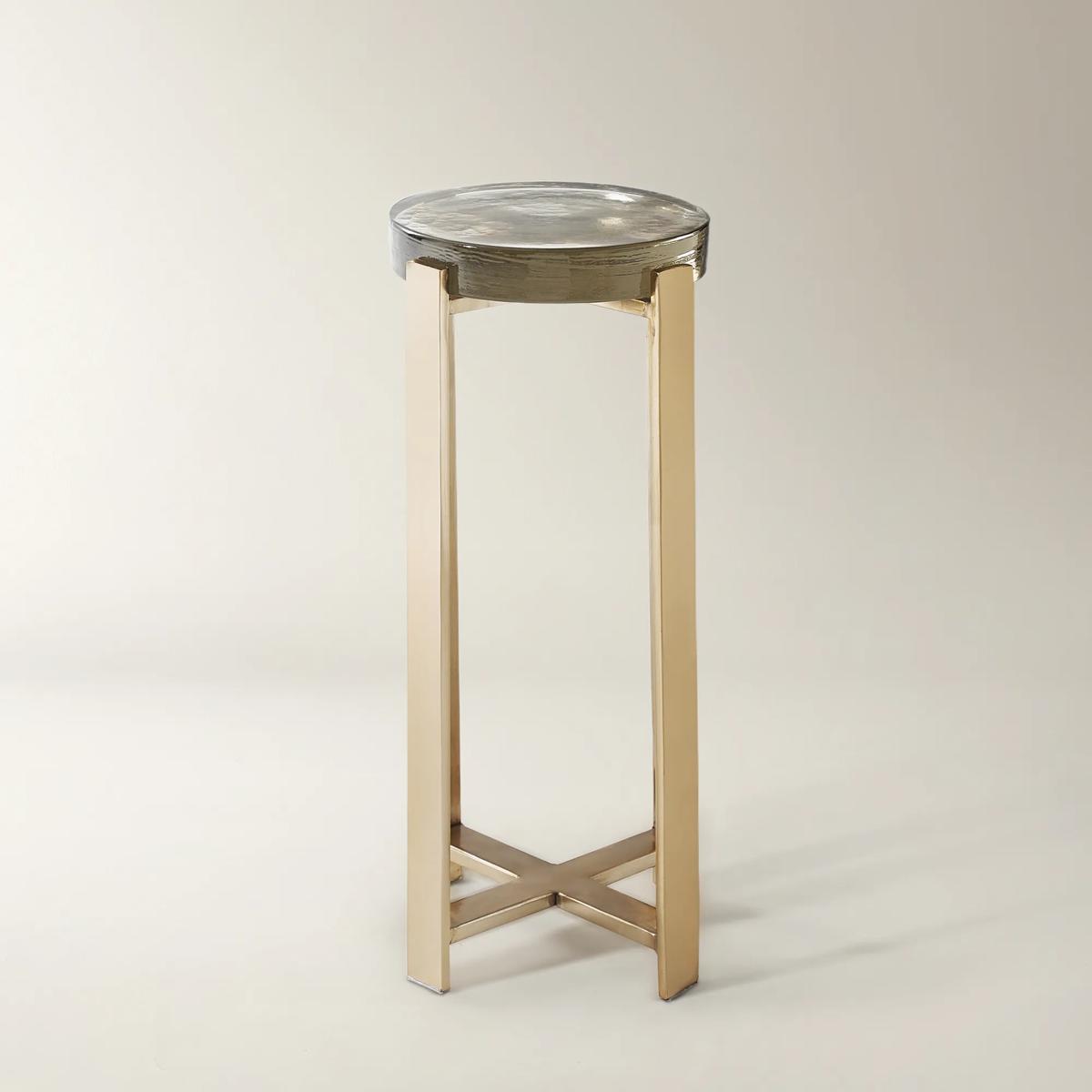 Lyra Round Brass Metal Side Table With Glass Top (10.75")$259
A sculptural side table featuring a thick cast glass top and lustrous brass-finished metal base.
Add To Cart -
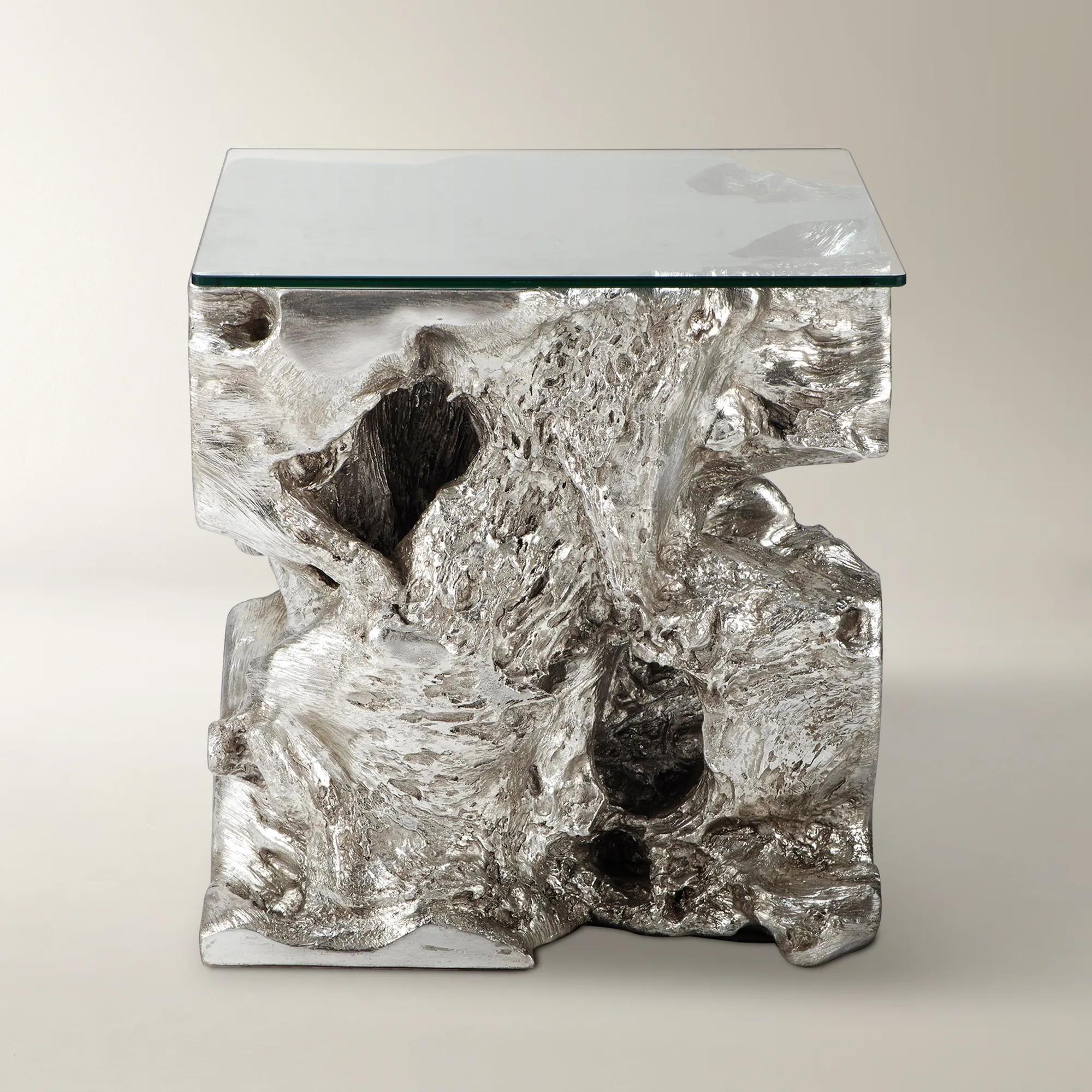 Sequoia Silver Resin End Table With Glass Top (22")$999
A sculptural end table featuring a silver leaf resin base and tempered glass top for modern elegance.
Add To Cart

Contemporary Glass Top Tables
Contemporary Glass Top Tables invite a sense of luminous sophistication into every room, transforming ordinary surfaces into works of art. With their striking clarity and sculptural presence, these tables become instant focal points, reflecting light and amplifying the drama of your décor. Each piece is designed to elevate your space with a modern edge, offering a canvas where bold style meets everyday elegance. Whether anchoring a living room or punctuating a dining area, Contemporary Glass Top Tables deliver effortless glamour and refined artistry, perfect for those who crave interiors that dazzle and inspire.
Contemporary glass top tables pair transparent or tinted glass surfaces with expressive metal, wood, or stone bases, bringing architectural presence to a room without creating the visual weight of a solid tabletop. Their appeal lies in that contrast: a substantial foundation beneath a surface that allows light, pattern, and texture to remain visible. In a dining room, clear glass reveals the curve of an upholstered chair and the artistry of a pedestal base; in a living room, it preserves the intricate design of a rug beneath a coffee table. The result is an open composition with room for both dramatic furnishings and carefully chosen details. Metal bases can introduce crisp geometry, with polished chrome reflecting surrounding colors and brass-tone finishes lending a warmer gleam. Wood adds grain and organic character, while marble and other stone bases bring distinctive veining and a grounded, sculptural quality. Clear glass emphasizes transparency, whereas smoked or tinted glass creates a more atmospheric effect and may soften the visibility of what sits below. Shape also influences the mood. A round glass dining table gathers seating around a central focal point, an oval top offers elongated elegance with curved ends, and a rectangular surface establishes a strong line in a generously proportioned dining area. Square coffee tables can anchor broad seating arrangements, while narrower rectangular designs complement longer sofas. Beyond dining and conversation areas, glass top console tables lend definition to an entryway or the space behind a sofa, and end tables provide a refined surface beside a favorite chair. These tables suit interiors that celebrate expressive design, from tailored contemporary rooms to richly layered spaces with velvet upholstery, oversized artwork, and gleaming accents. For another interpretation of glass as a design element, Decorative Glass Top Tables offer a related perspective on the interplay between surface and form. Across these silhouettes, the transparent top gives the base an unusually prominent role: its lines become part of the room’s visual composition rather than a detail concealed beneath a solid surface.
Proportion determines how comfortably a glass top table belongs in its setting. Transparency can make a compact room feel less crowded, but it does not reduce the table’s actual footprint; generous circulation and a well-scaled base remain essential. In dining areas, about 36 inches between the table edge and a wall or nearby furniture generally allows chairs to pull out, while additional room is useful wherever people need to pass behind seated guests. Allowing roughly 24 inches of tabletop width per diner provides a practical starting point, although broad chairs, substantial place settings, and the placement of table legs can call for more space. A central pedestal may offer greater freedom for chair placement, but its shape still needs to leave comfortable room for feet and knees. For a living room arrangement, a coffee table positioned approximately 14 to 18 inches from the sofa keeps drinks and books within reach while allowing movement. A top close to the height of the sofa seat, or slightly lower, usually feels balanced; an end table near arm height makes a lamp or glass easier to reach. Materials and construction deserve equal attention. Tempered glass is commonly used for contemporary tabletops because it is stronger than ordinary annealed glass and breaks into smaller fragments rather than long shards, though it is not unbreakable or scratchproof. Glass thickness varies with the dimensions, span, edge treatment, and support system. Tops around 3/8 inch or 1/2 inch thick appear in many furniture designs, but thickness alone does not establish strength or suitability; the complete construction and stated weight capacity matter. Secure connections, a stable base, and properly fitted supports help the surface perform as intended. Finished edges offer a more considered appearance, and rounded profiles may be preferable in busy circulation areas. Households with young children should consider exposed corners, climbing risks, and the particular demands of glass furniture. Even a substantial table is intended to support ordinary dining or decorative use, not to serve as a seat or step.
The lasting beauty of a glass top table depends on thoughtful everyday care, especially because a transparent surface makes fingerprints, dust, and water marks more noticeable. A clean microfiber cloth and a cleaner approved for the glass finish generally provide a clear, streak-free result; abrasive pads and gritty cloths can leave scratches that interrupt its polished appearance. Spraying cleaner onto the cloth rather than directly over the table helps keep liquid away from joints, mounting hardware, and bases with different care requirements. Wood, plated metal, and natural stone each need their own suitable cleaning method, and acidic cleaners can damage some stone surfaces. Coasters, placemats, and protective pads beneath decorative objects help prevent avoidable marks. Ceramics with rough undersides, heavy bowls, and objects dragged across the top deserve particular care, while hot cookware should rest on an appropriate trivet rather than directly on the glass. Chips, cracks, or loose fittings warrant prompt attention according to the table’s care instructions. Styling can be equally deliberate. On a dining table, individual placemats allow the glass and base to remain visible, creating a layered setting with linen napkins, luminous glassware, and sculptural dinnerware. A low centerpiece keeps faces in view and lets the table’s form remain part of the occasion. On a coffee table, a small grouping of art books, a decorative vessel, and a tray creates depth without covering the entire surface; felt-backed accessories offer an added measure of protection. A console can frame a large artwork with a pair of lamps, while a compact glass top side table introduces a polished accent beside richly textured upholstery. These pieces are particularly appealing to hosts who enjoy an expressive dining setting, apartment dwellers seeking visual openness, and design enthusiasts who want a distinctive base to share the spotlight. A smaller accent table can also make a thoughtful housewarming or wedding gift when its dimensions and finish suit the recipient’s space. With considered placement and attentive care, glass brings clarity to a richly furnished room, allowing every surrounding texture and silhouette to contribute to the scene.
FAQs
Glass top tables offer a unique blend of visual lightness and modern sophistication. Their transparent surfaces amplify natural light, making rooms feel more spacious and open, while their sleek lines and sculptural bases add an artistic focal point to any setting. These tables effortlessly complement a variety of textures and colors, allowing you to layer in plush fabrics, metallic accents, or bold art pieces for a truly curated look.
To create a dramatic statement, consider pairing your glass top table with striking decorative objects such as oversized vases, gleaming metallic trays, or a curated stack of art books. Play with contrasting textures—think velvet, marble, or mirrored accessories—to enhance the table’s reflective qualities. For a seasonal touch in winter, adorn the surface with crystal candleholders or a sculptural centerpiece that catches the light.
Absolutely. Glass top tables are versatile enough to elevate any room in your home. In living rooms, they serve as luminous coffee or side tables; in entryways, a glass console table creates a welcoming moment of grandeur. Even home offices benefit from the clarity and elegance of a glass desk, transforming everyday tasks into rituals of beauty and focus.
Contemporary glass top tables often feature bases crafted from materials like gleaming chrome, brushed gold, sculpted wood, or even acrylic. Each base material brings its own personality—metallics evoke a sense of glamor, wood adds warmth and artistry, and acrylic offers a seamless, modern edge. The interplay of these materials with glass creates a dynamic visual story within your space.
A contemporary glass top table makes a memorable gift for design enthusiasts, newlyweds setting up their first home, or anyone celebrating a significant milestone. It’s a thoughtful choice for those who appreciate artistic expression and transformative interiors, offering them a statement piece that elevates everyday living and serves as a lasting symbol of style and sophistication.