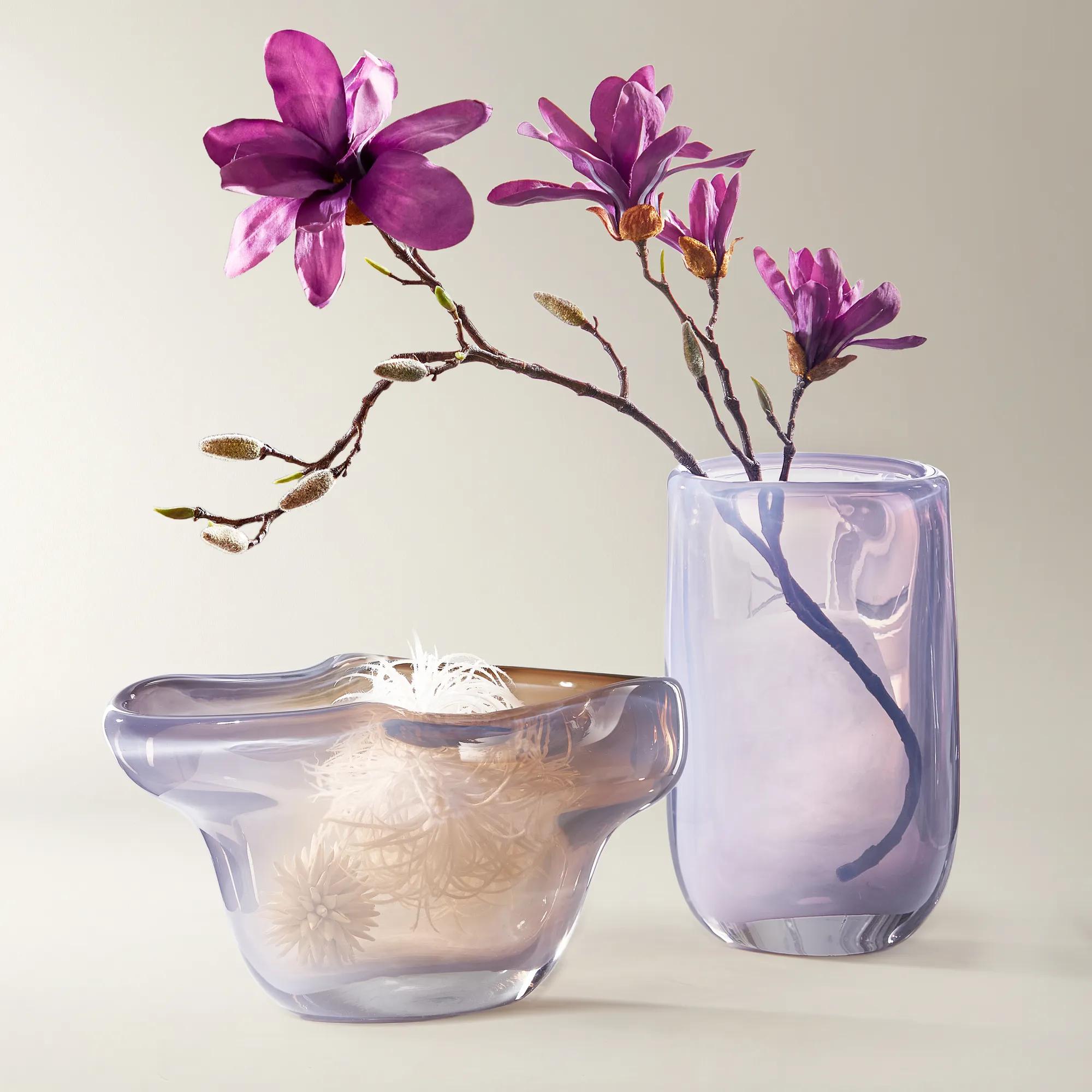
Low-Profile Dining Table Centerpieces
Low-Profile Dining Table Centerpieces
-
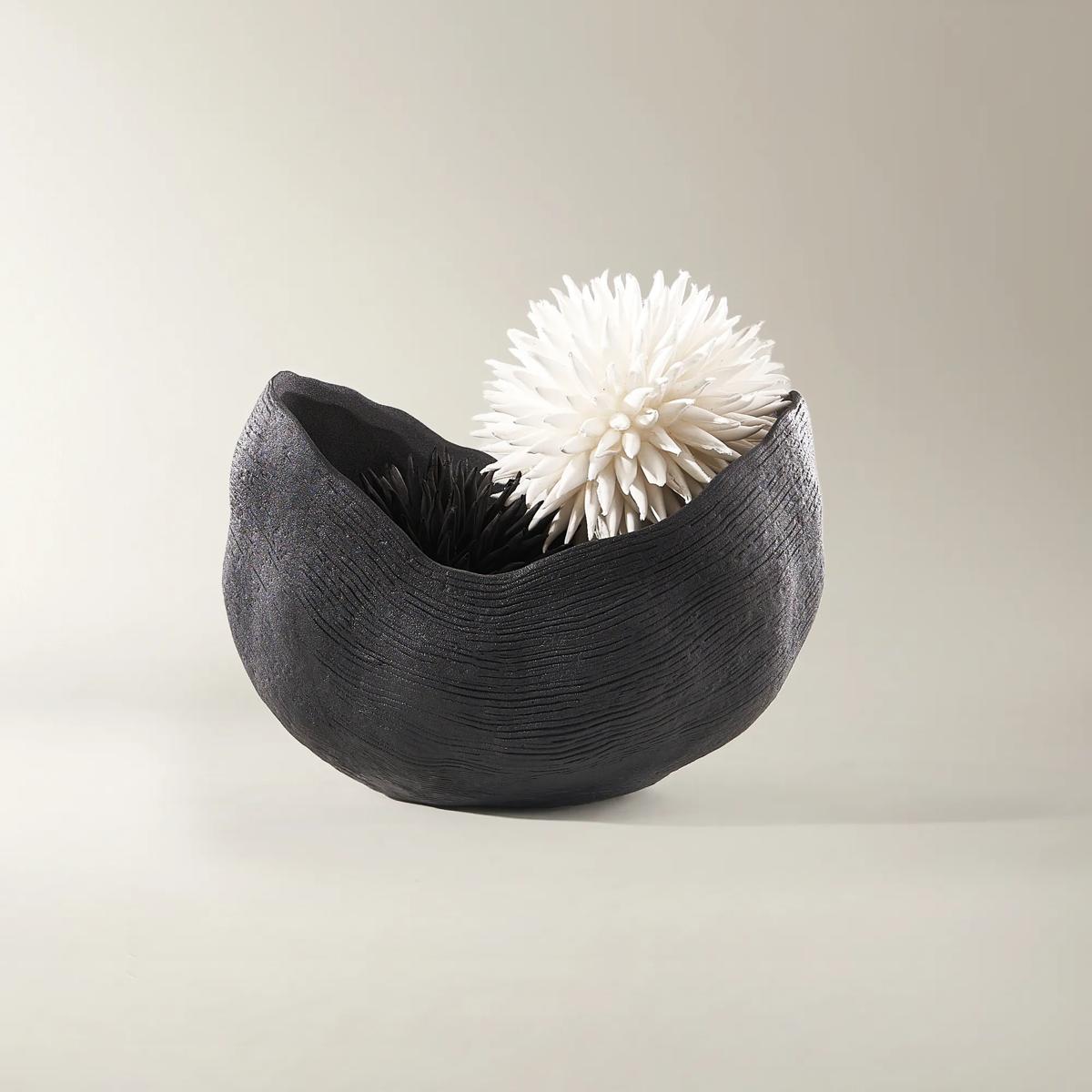 Baz Bowl - Black$119
A sculptural black porcelain bowl with a matte, ridged texture for bold, modern decor accents.
Add To Cart -
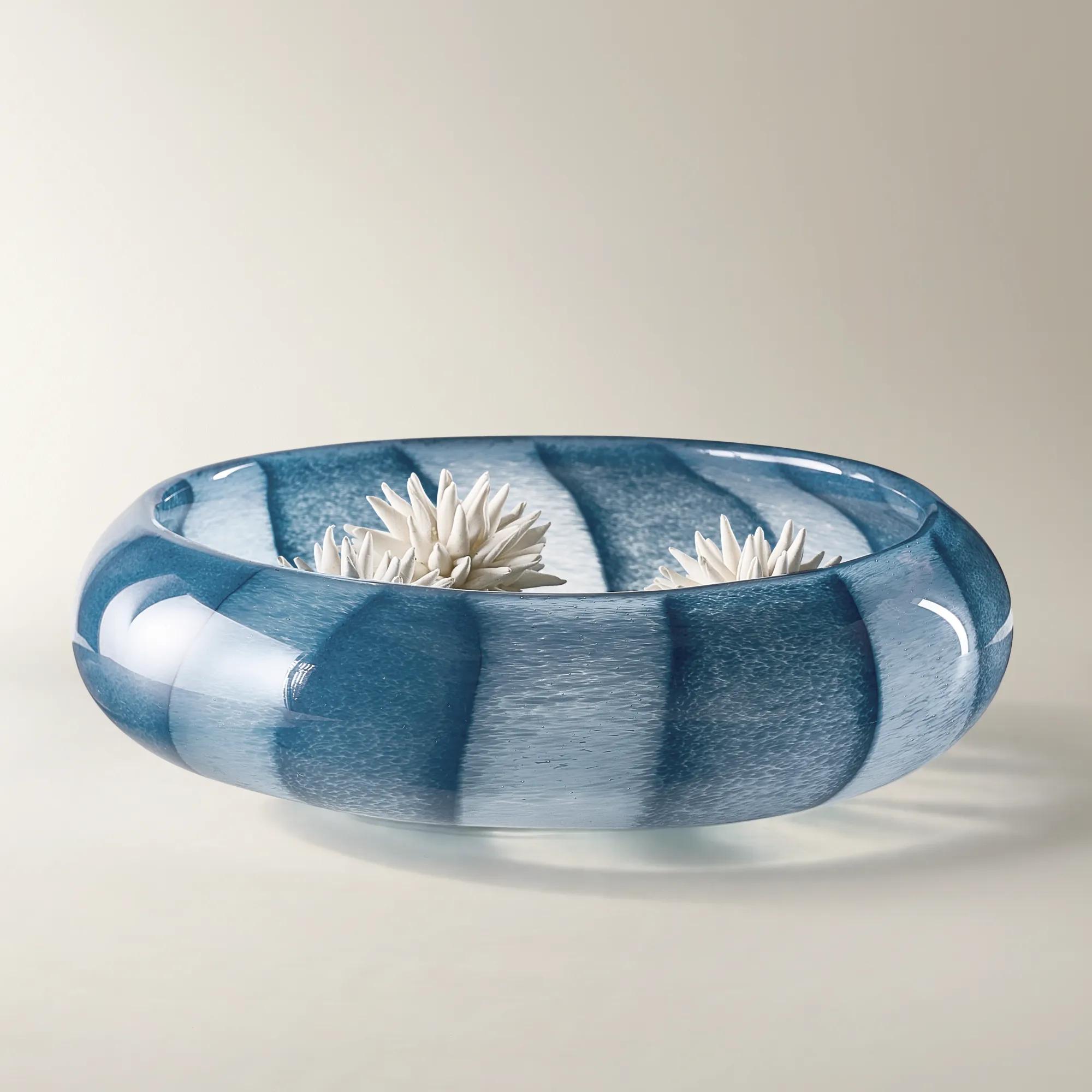 Jonah Mouth Blown Dusty Blue Glass Decorative Bowl 11.75" x 3.5"$89
A handblown glass bowl featuring dusty blue stripes and a sculptural, low rounded silhouette for decor.
Add To Cart -
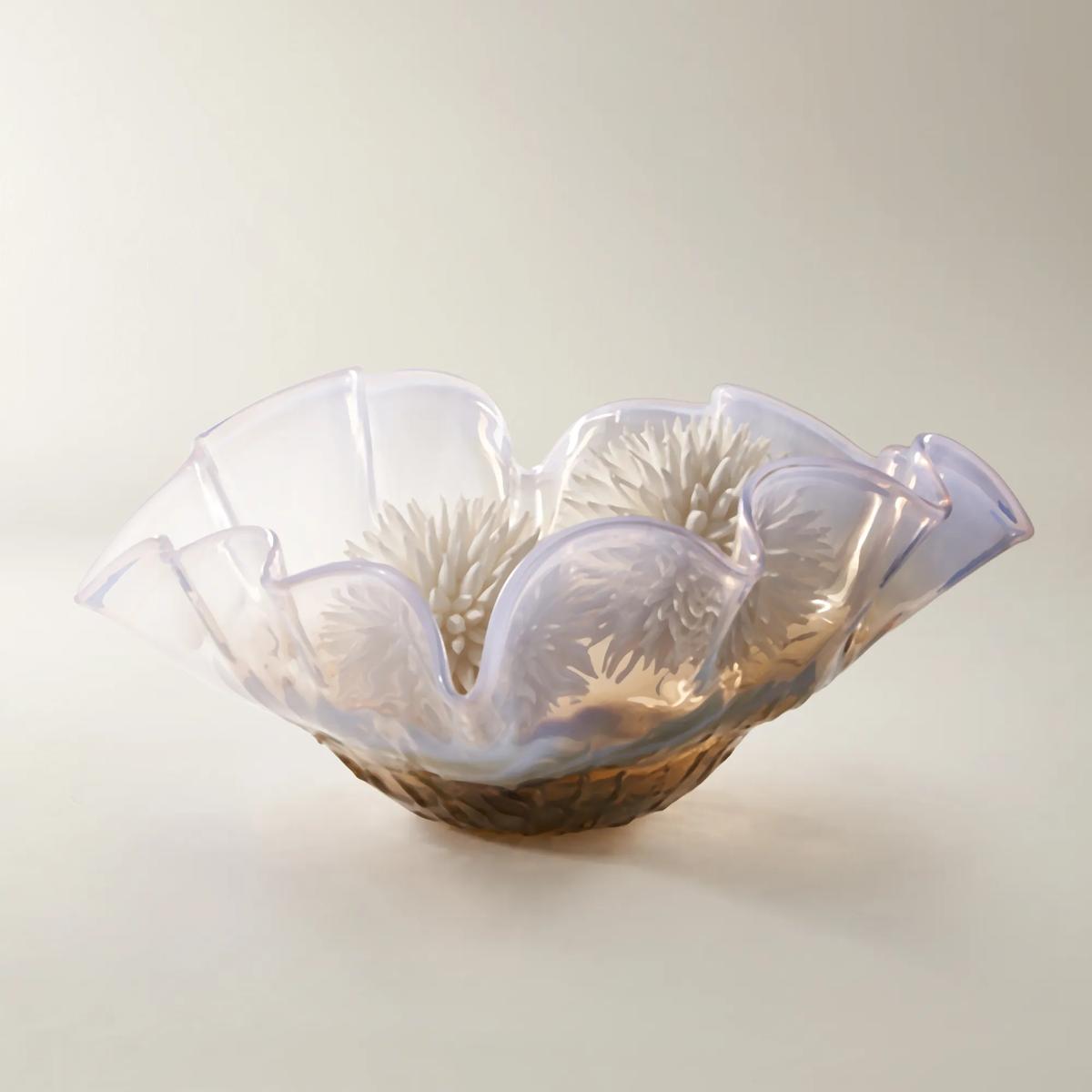
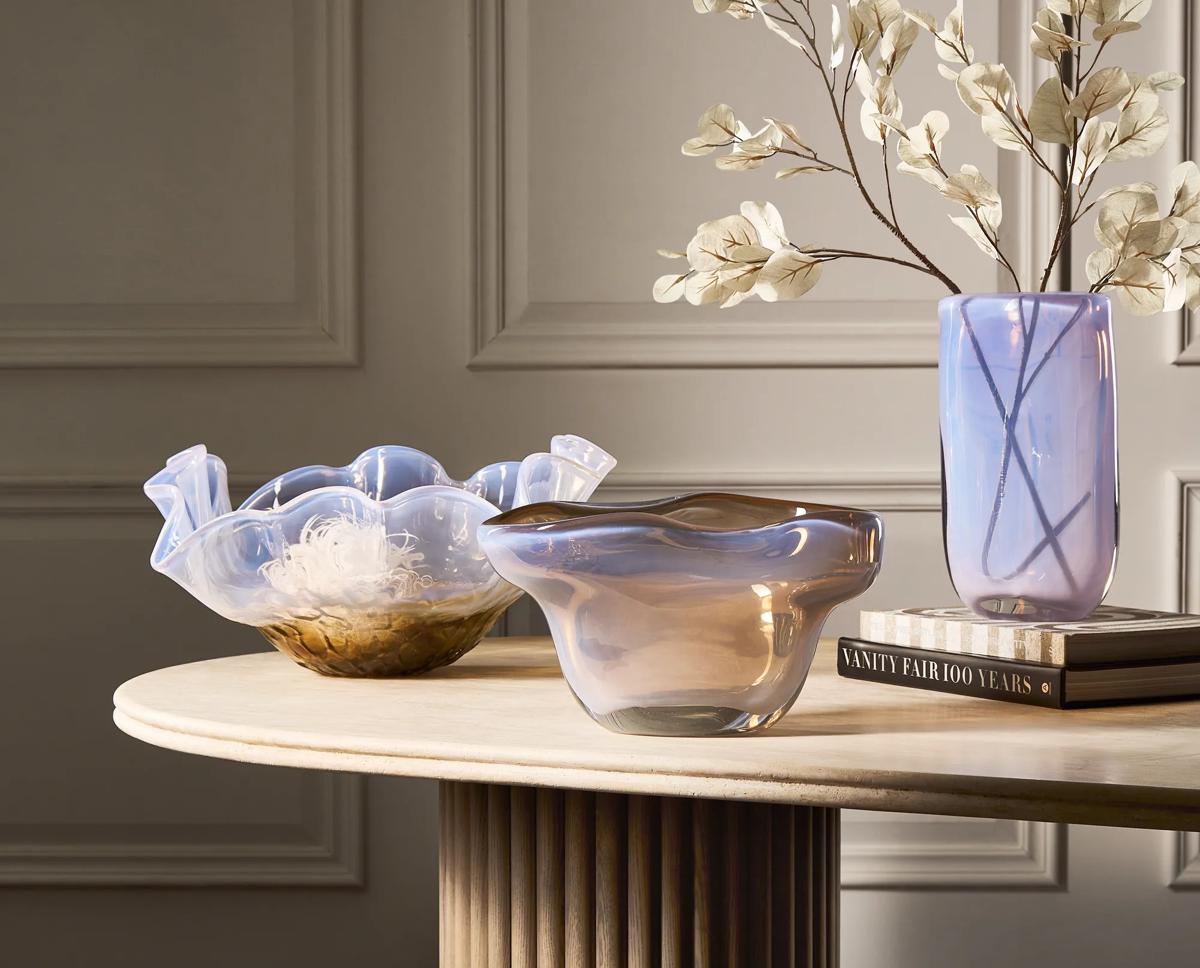 Glacier Glass Bowl$269
A hand-blown glass bowl featuring scalloped edges and swirling lavender and amber hues for artistic elegance.
Add To Cart -
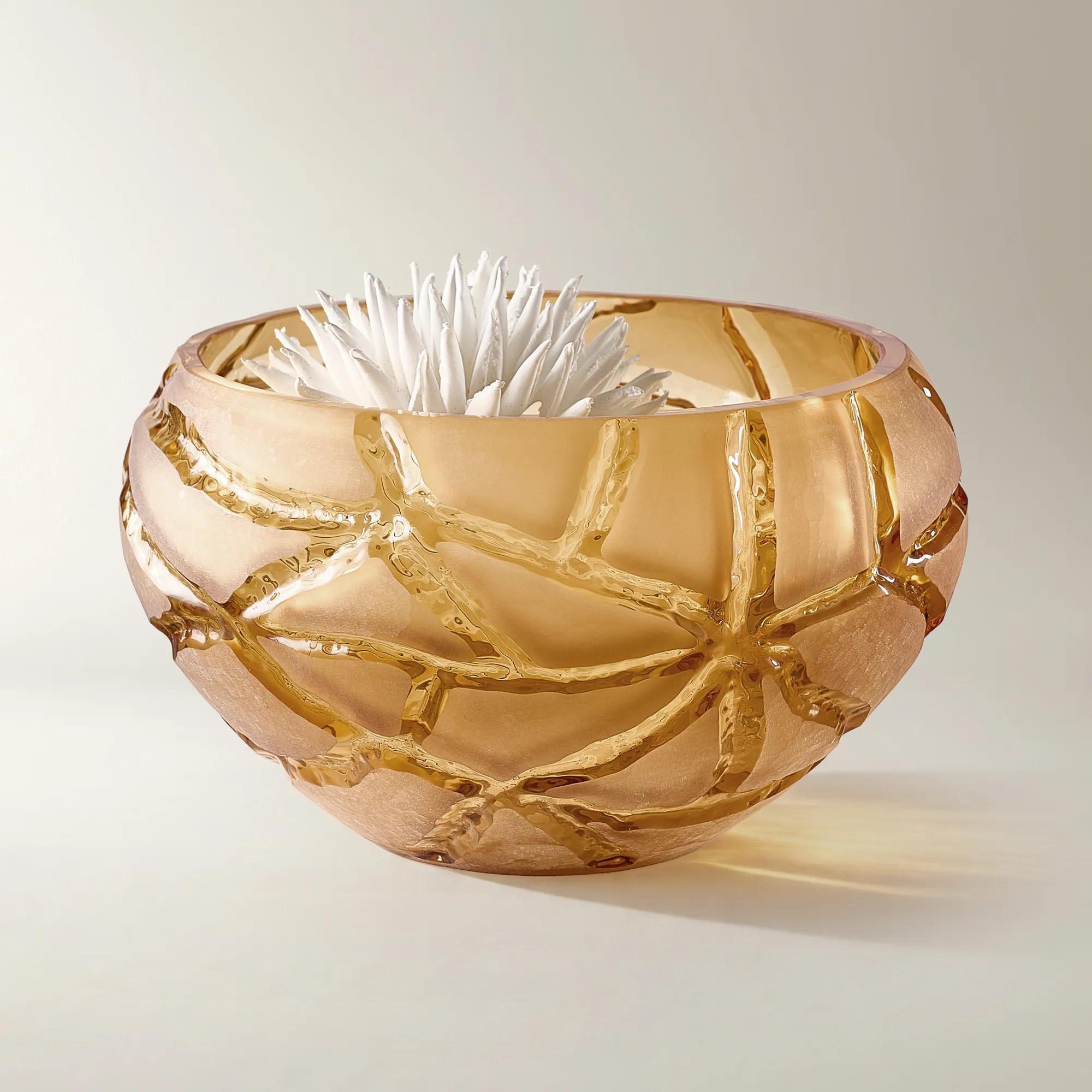 Rowen Mouth Blown Honey Gold Glass Decorative Bowl 11" x 6.25"$129
A handblown glass bowl in honey gold with a textured surface for a luminous, sculptural accent.
Add To Cart -
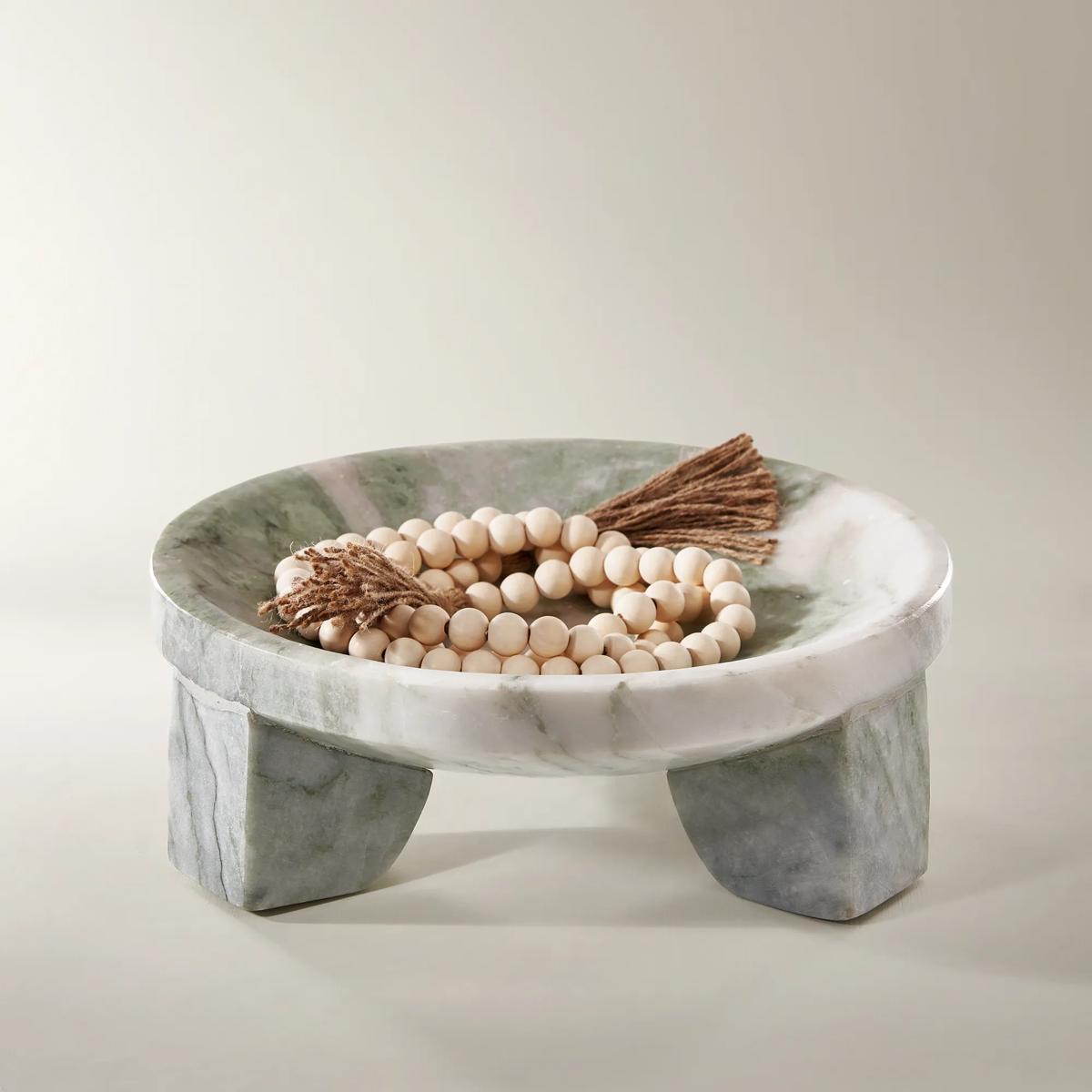
 Light Green Marble Footed Bowl$199
A hand-carved onyx bowl featuring soft green marbling and sculptural feet for organic elegance.
Add To Cart -
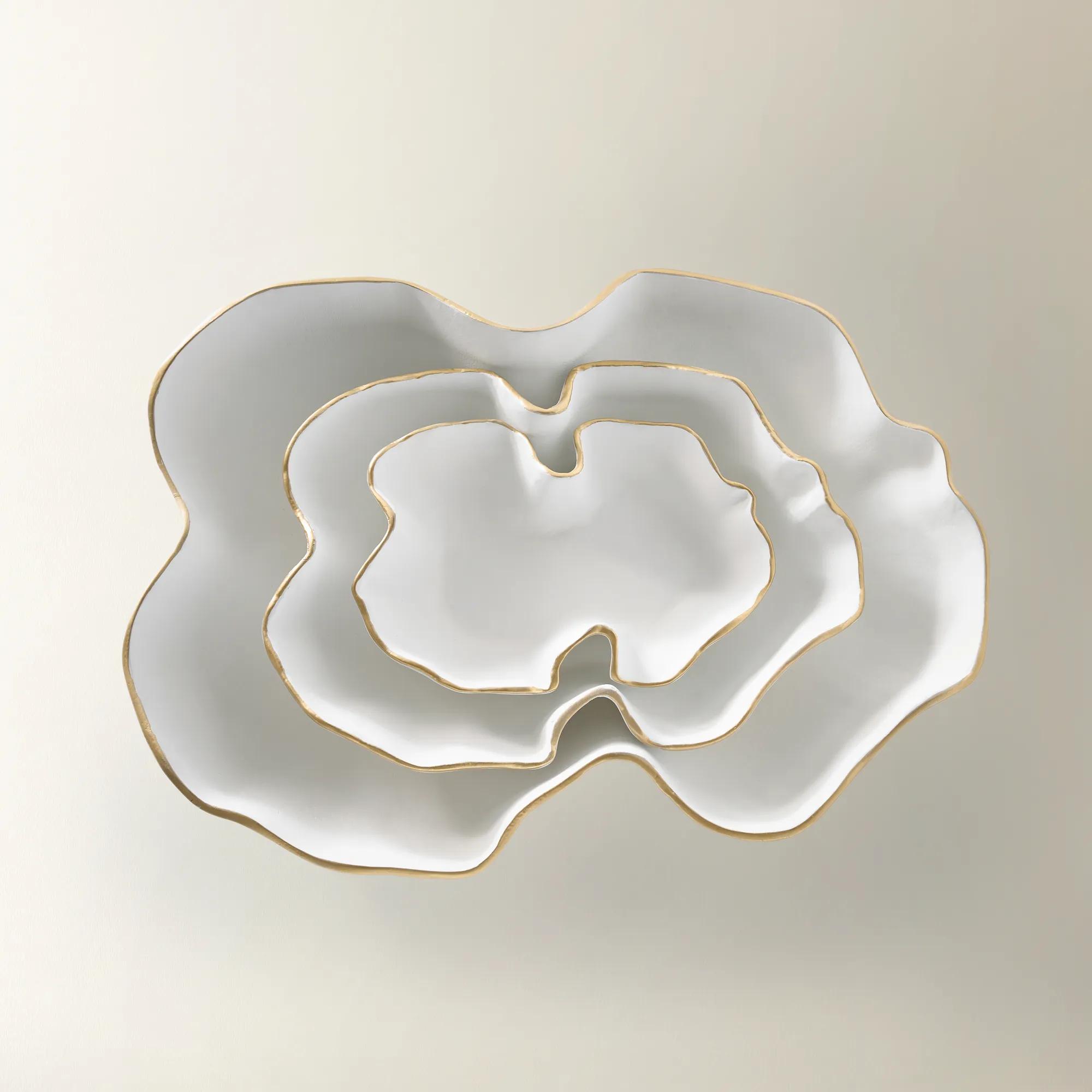 Lava White Gold Aluminum Decorative Nesting Bowls$39
A glossy white aluminum bowl with a golden rim, offering modern elegance for decorative display.
Add To Cart -
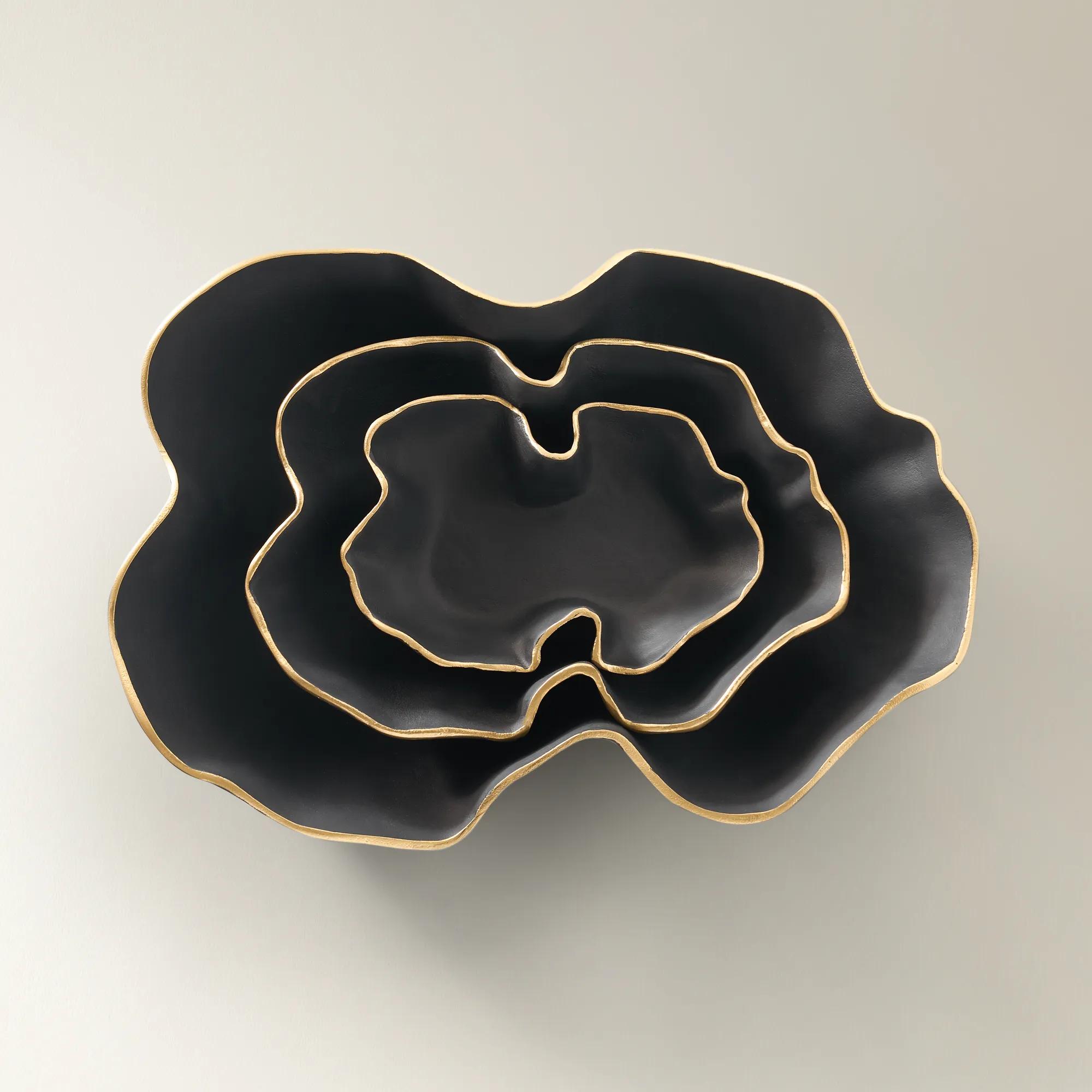 Lava Black Gold Aluminum Decorative Nesting Bowls$39
A deep black aluminum bowl with golden edges, featuring an organic, volcanic-inspired design for decorative display.
Add To Cart -

 Collins Hand-Cast Gold Aluminum Decorative Pedestal Bowl 23.5" x 5"$79
A gold nickel-plated aluminum bowl with a rectangular pedestal base for striking decorative display.
Add To Cart -
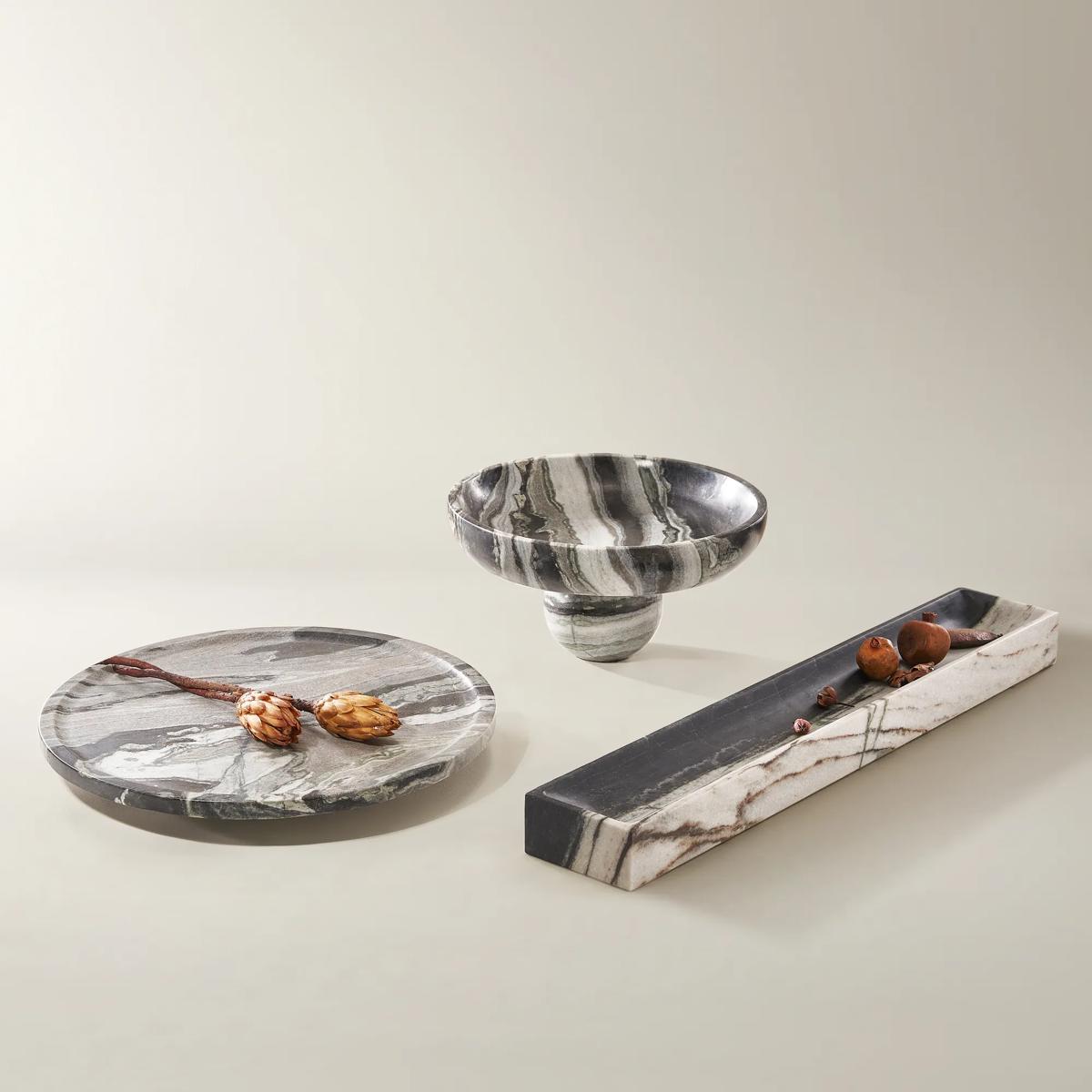
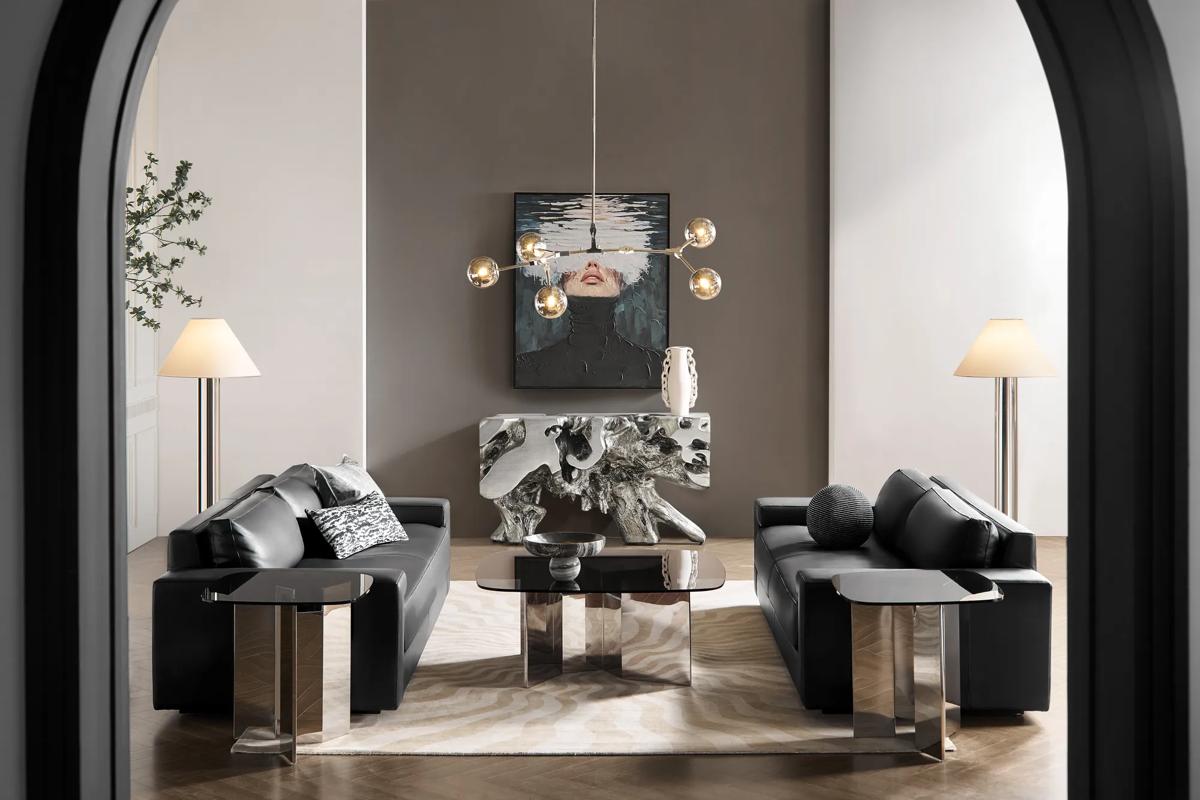 Luxe Marble Collection$119
A striking black marble decor collection featuring unique veining and elegant footed bowl, tray, and riser.
Add To Cart -
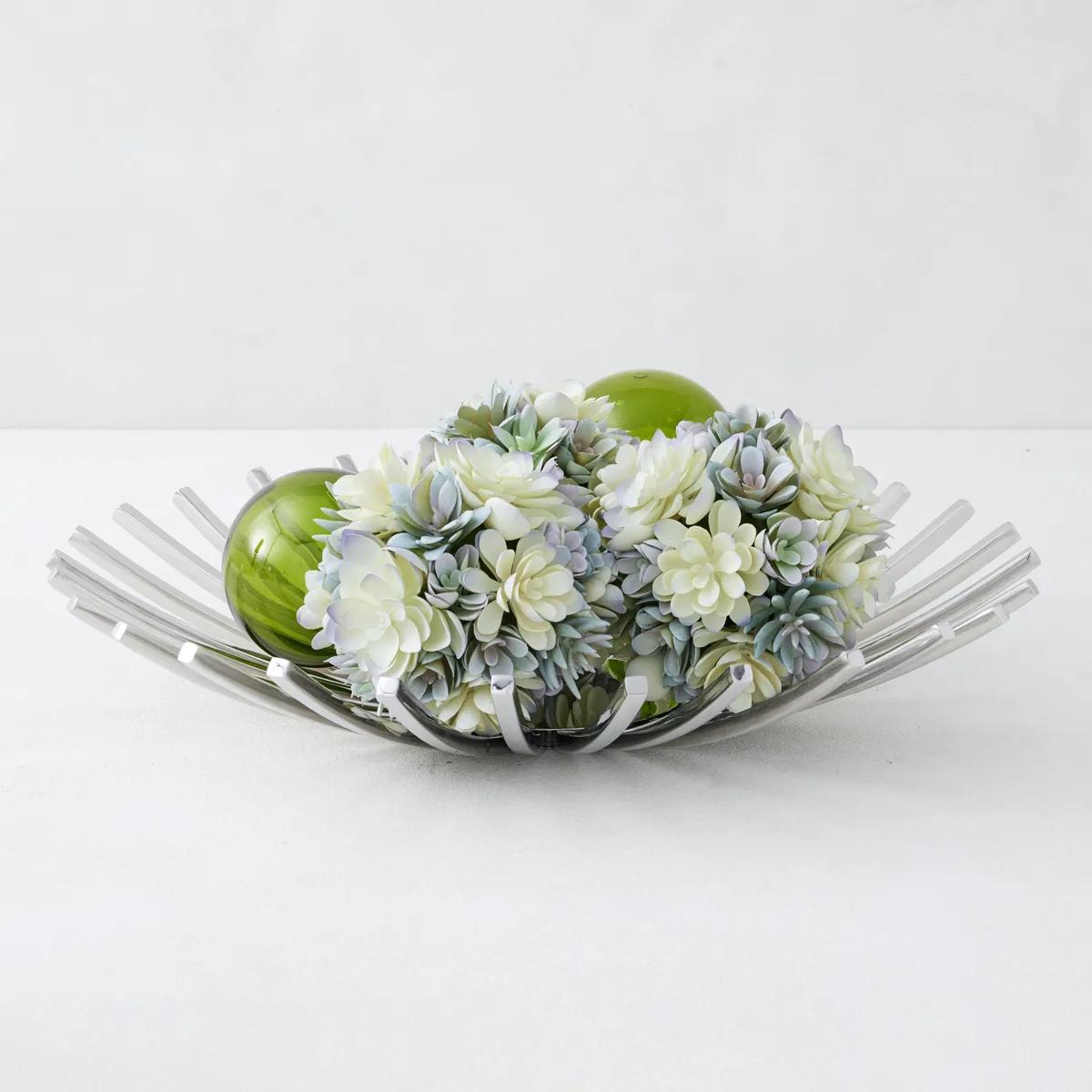
 Jupiter Plate$129
A polished stainless steel plate that adds modern brightness to any contemporary decor arrangement.
Add To Cart -
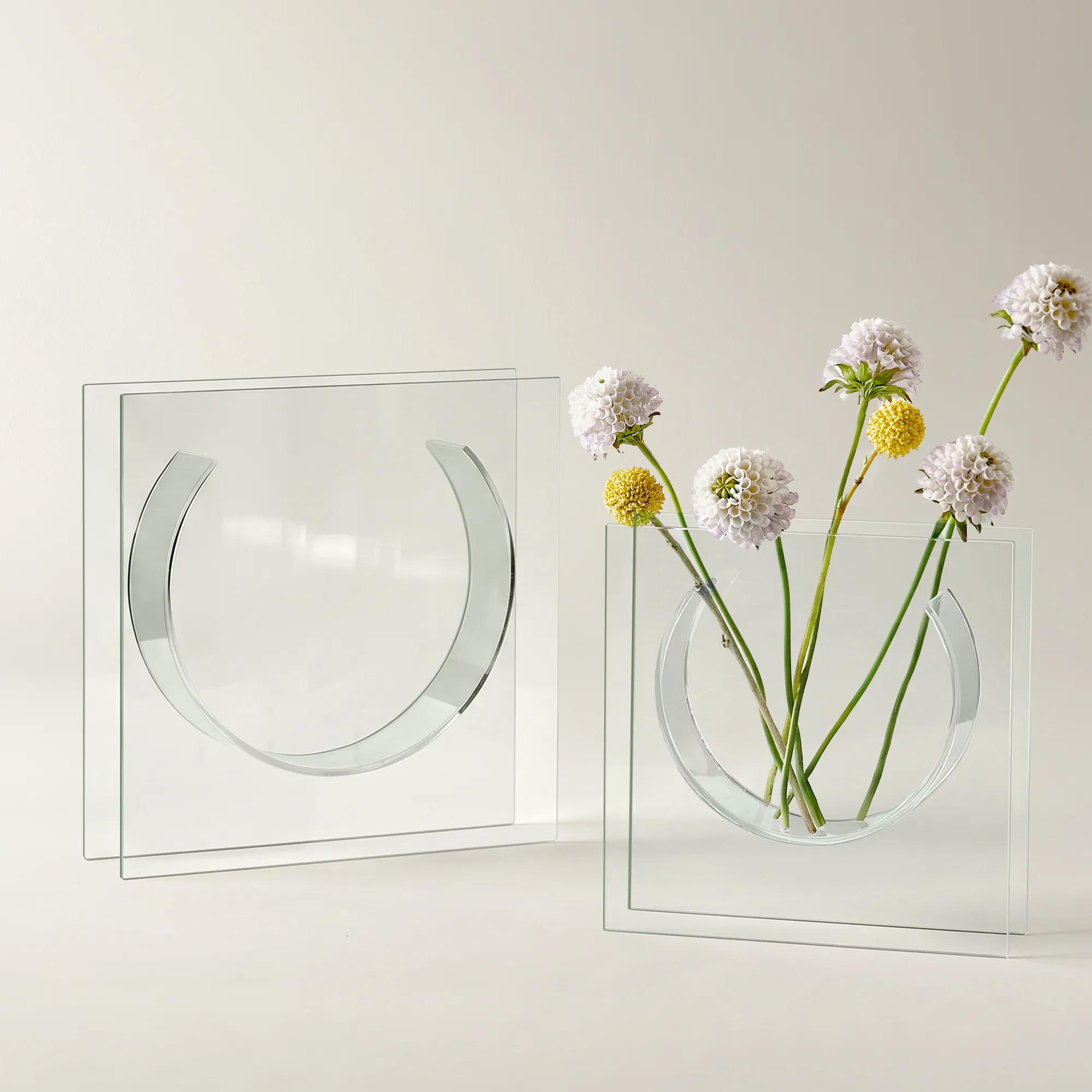
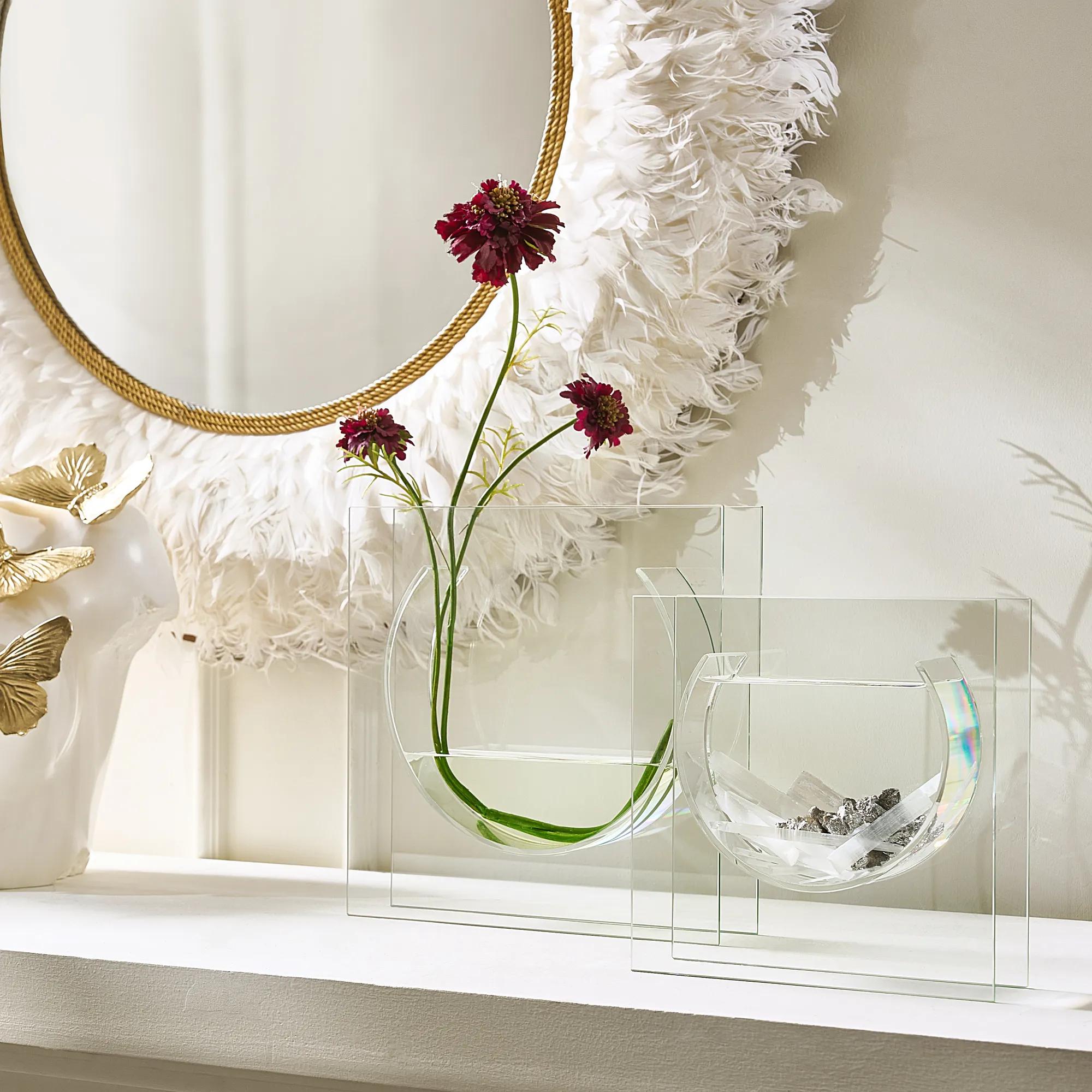 Solaris Clear Glass Vases$29
A clear glass vase with an elliptical bowl and bold modern design between two glass panels.
Add To Cart -
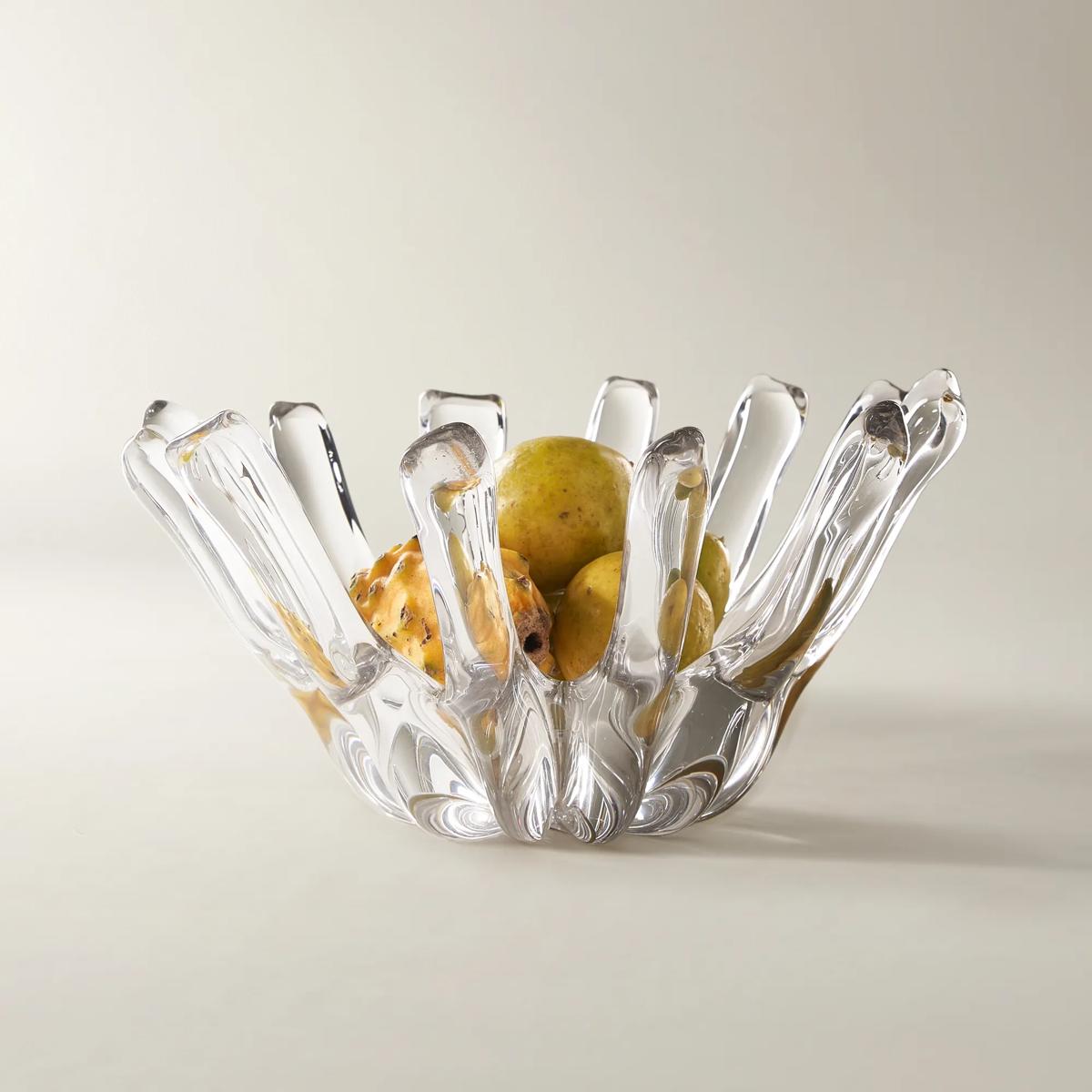
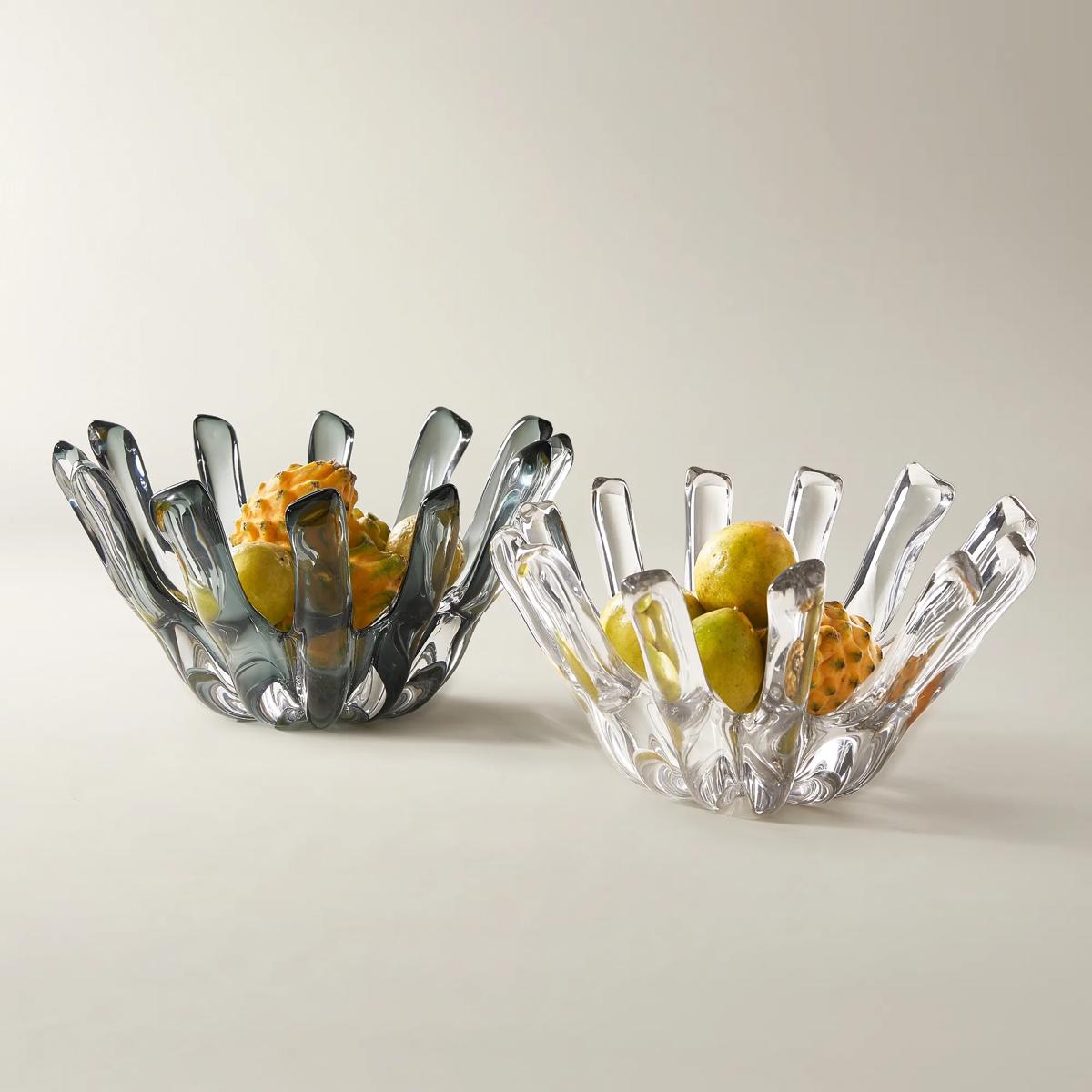 Bossa Clear Handblown Glass Decorative Bowl 13" x 7"$129
A hand-blown clear glass bowl featuring an expressive, sculptural form for modern decorative displays.
Add To Cart -
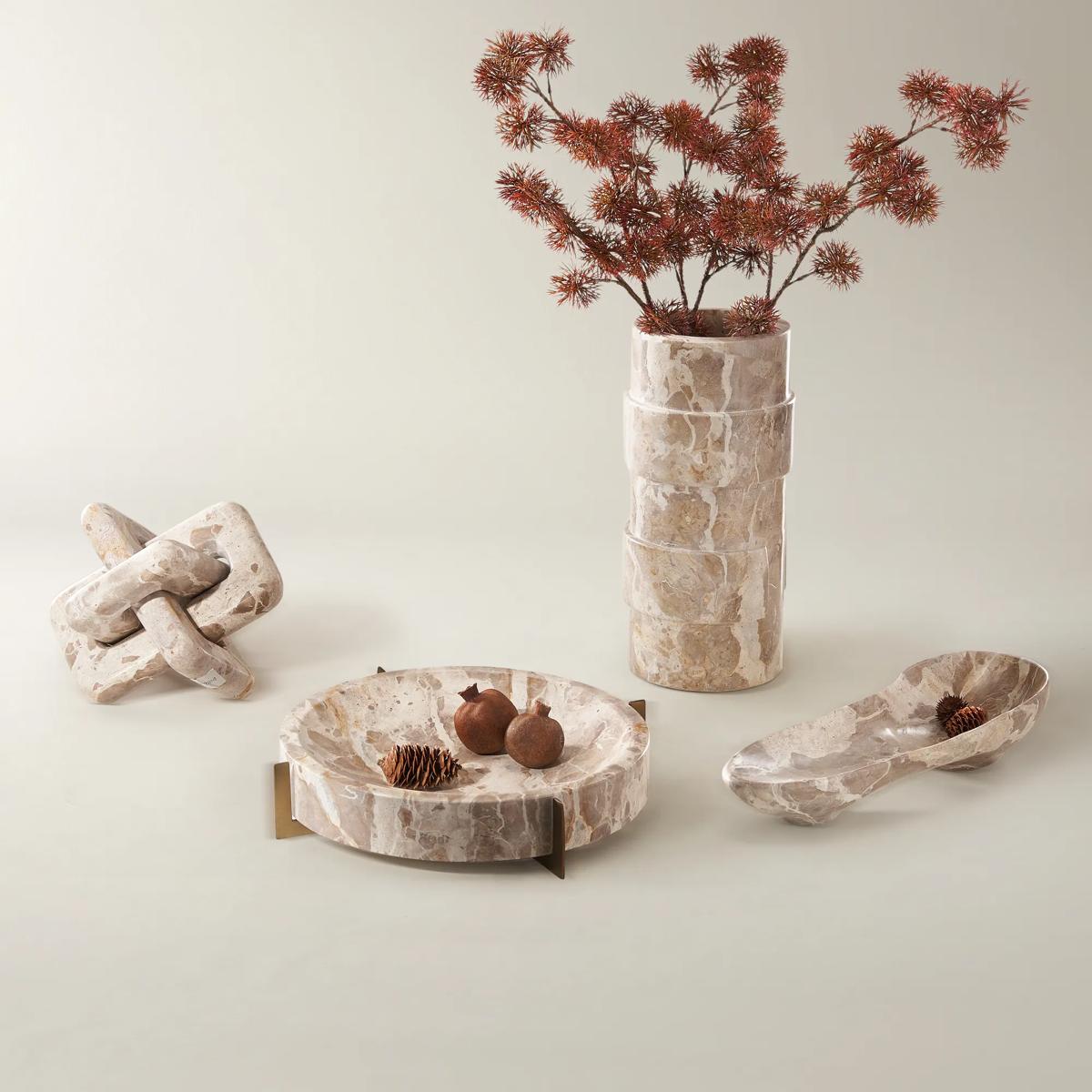
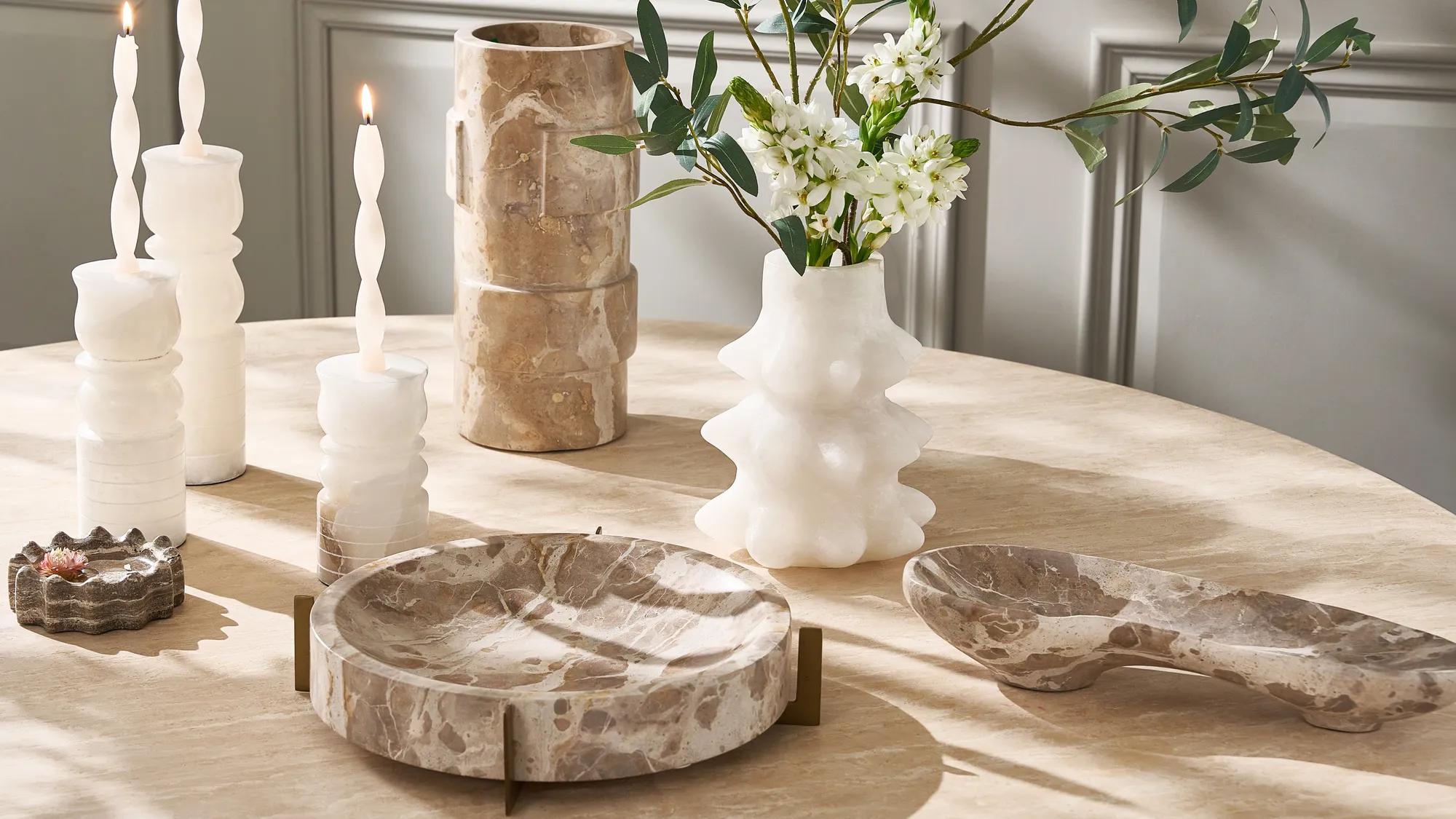 Neutral Marble Collection$109
A handcrafted marble decor collection featuring unique veining, natural neutral tones, and elegant metal accents.
Add To Cart -

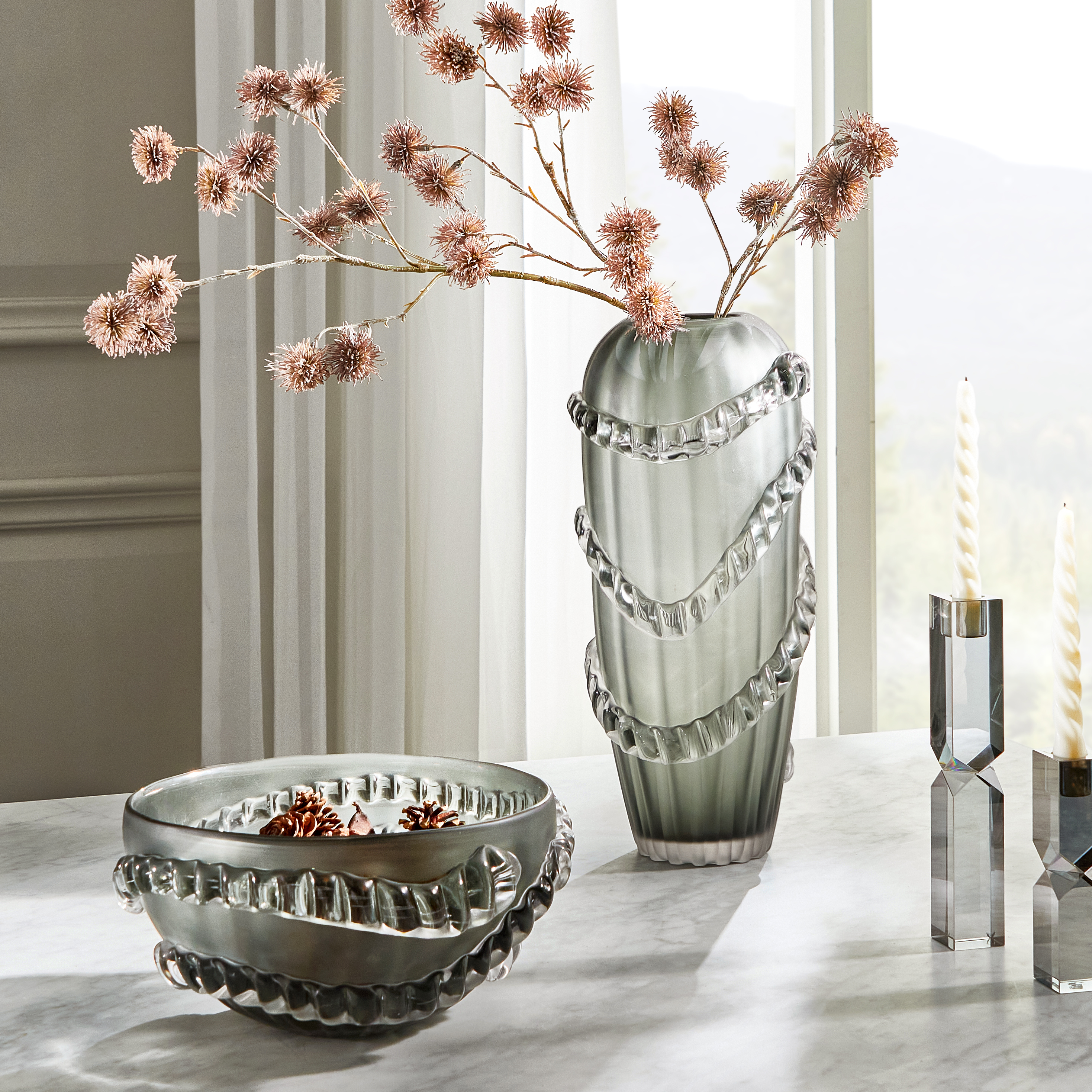 Helix Glass Collection$129
A hand-blown dark gray glass piece featuring fluted bodies and rippling sculptural ribbons for modern elegance.
Add To Cart -

 Odessey Collection$99
A shiny silver porcelain accent piece perfect for adding modern elegance to any decorative display.
Add To Cart -
 Calla Mouth Blown Blue Glass Decorative Bowl 15.35" x 5.7"$79
A handblown blue glass bowl featuring unique curves and translucent artistry for striking decorative appeal.
Add To Cart -
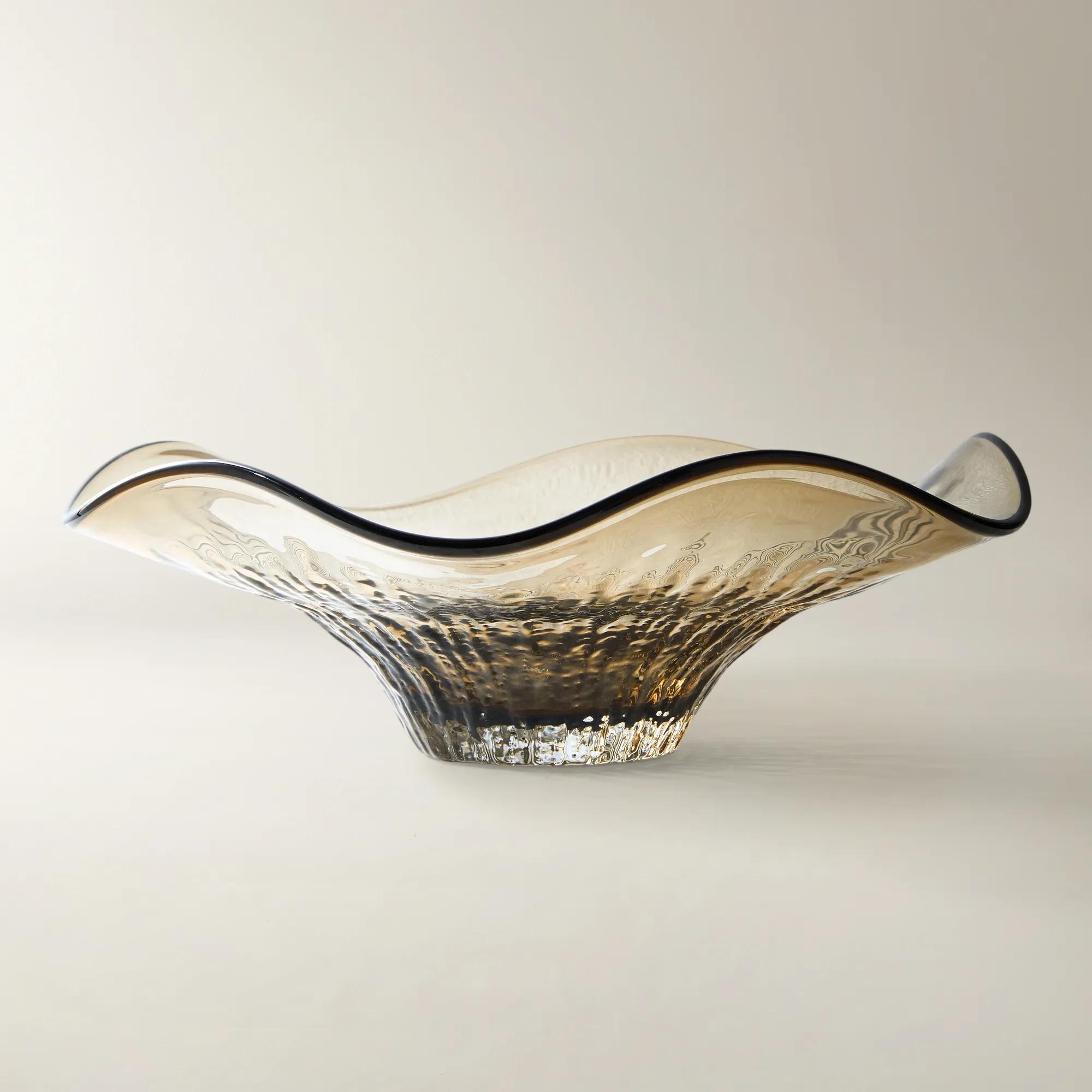 Corsi Brown Handblown Glass Decorative Bowl 15.35" x 5.1"$99
A hand-blown glass bowl in warm amber with organic shape and intricate textural details.
Add To Cart -
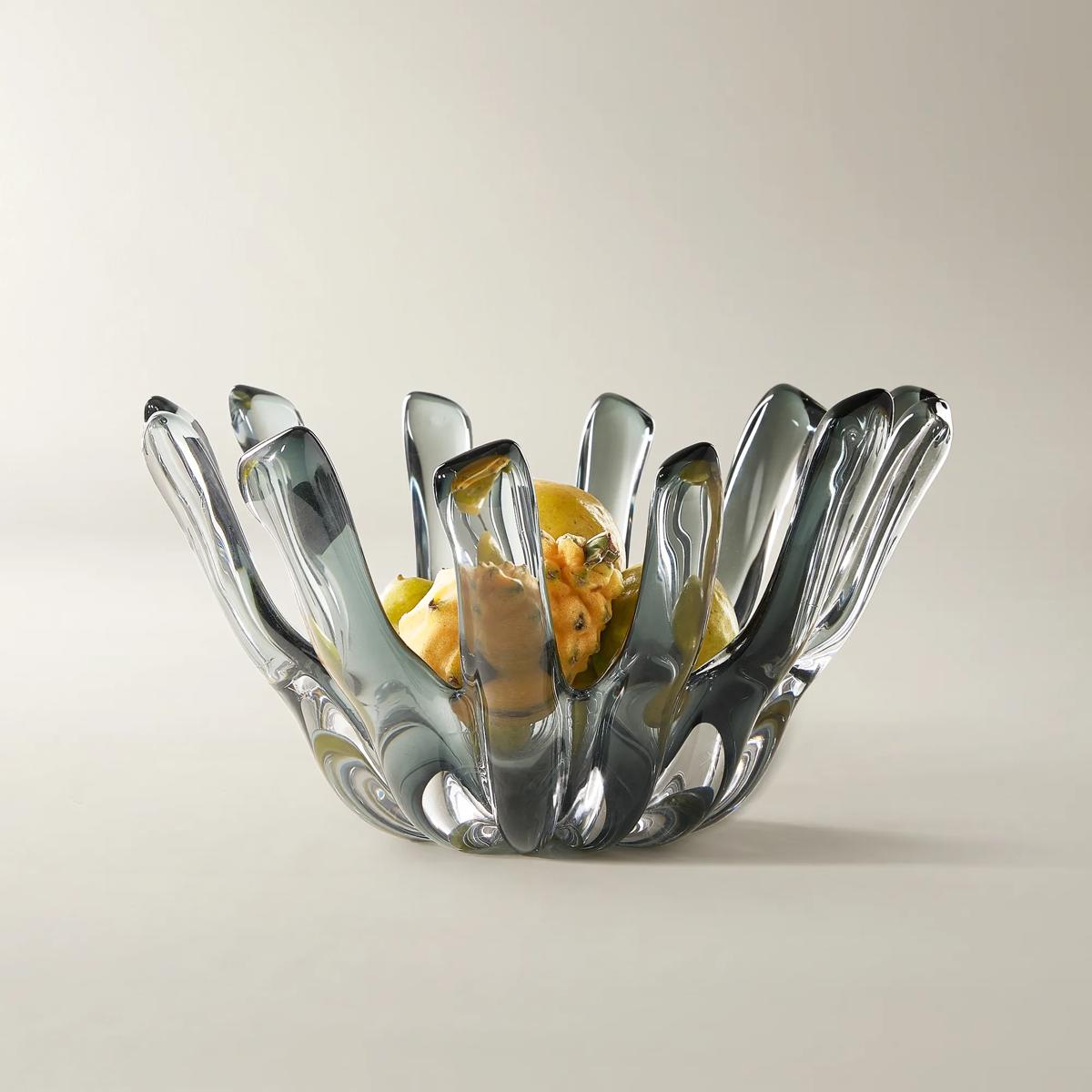 Bossa Smoke Handblown Glass Decorative Bowl 13" x 7"$129
A hand-blown smoky grey glass bowl featuring an expressive, sculptural design for modern decorative displays.
Add To Cart -
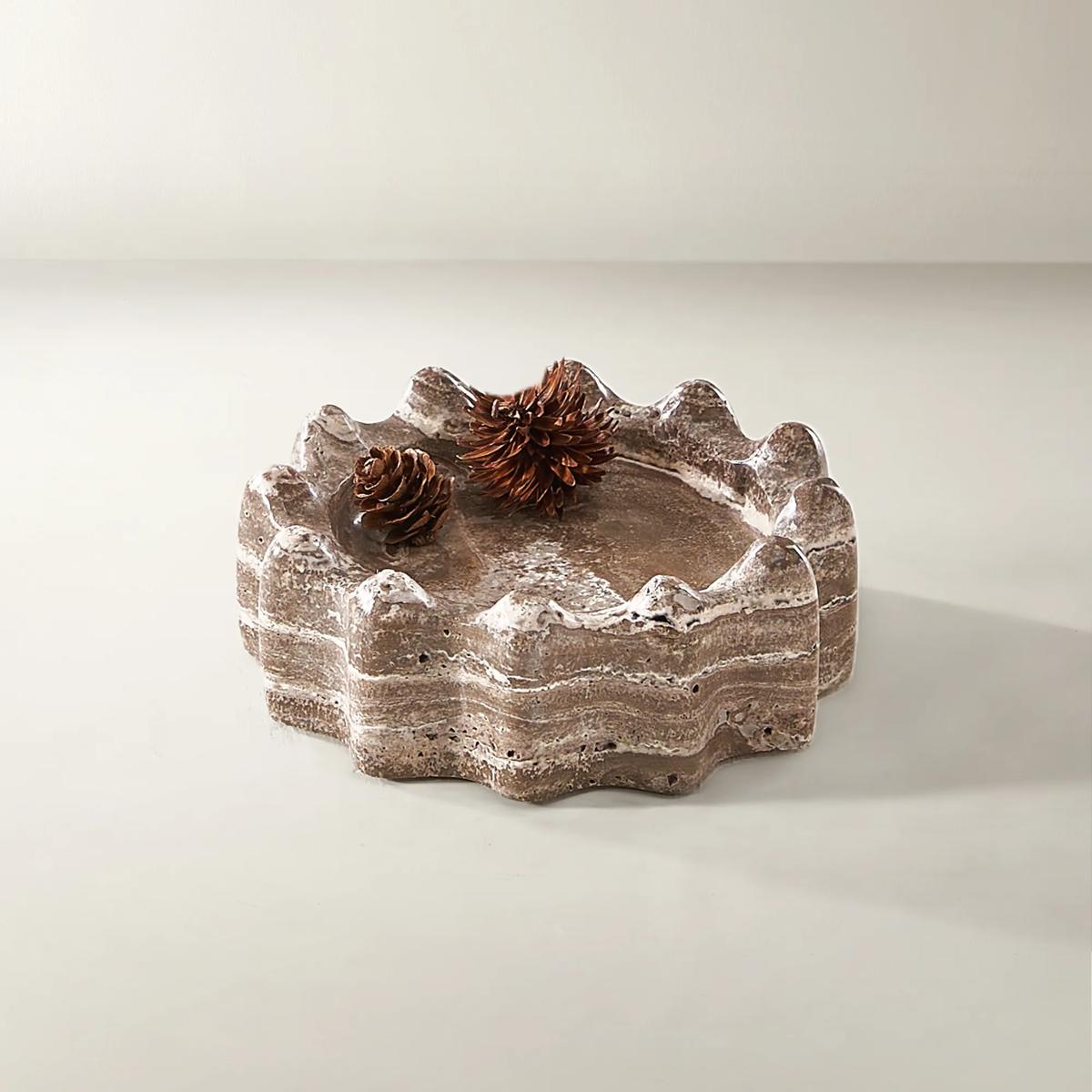 Flora Marble Catchall - Small$89
A hand-carved sand travertine catchall featuring unique veining and undulating, flower-inspired edges.
Add To Cart -
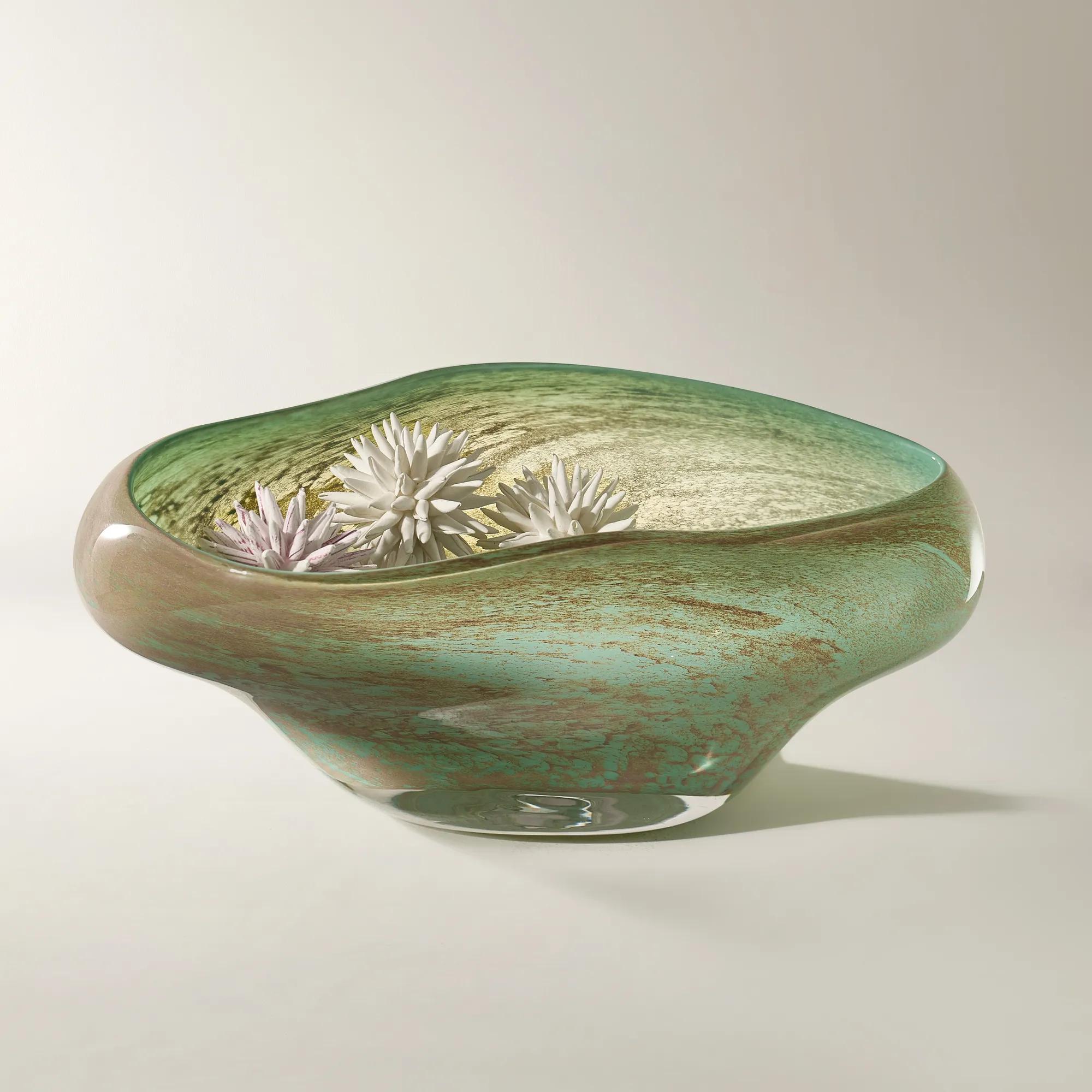
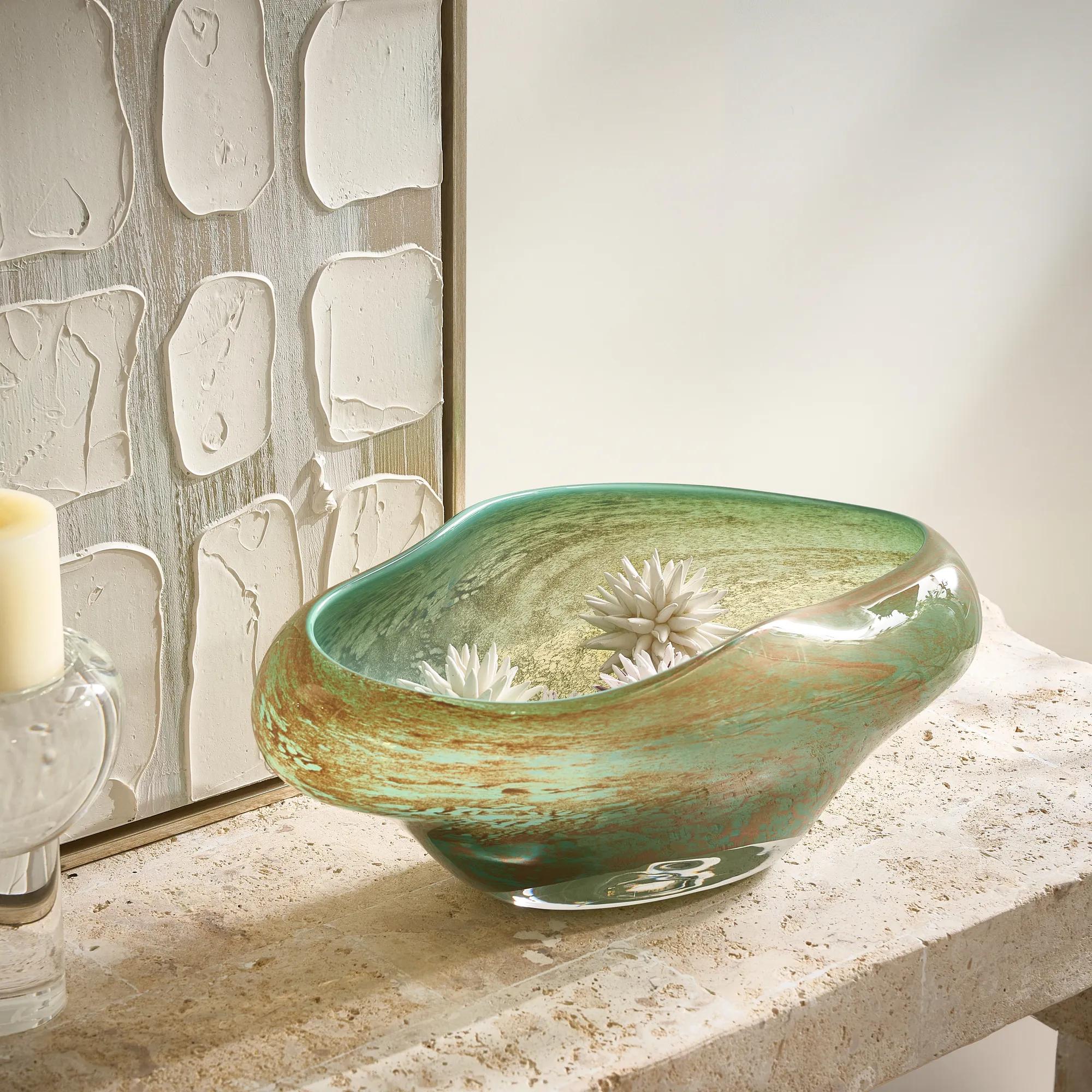 Green Mist Glass Bowl$179
A green glass bowl adding modern elegance to decorative displays.
Add To Cart -
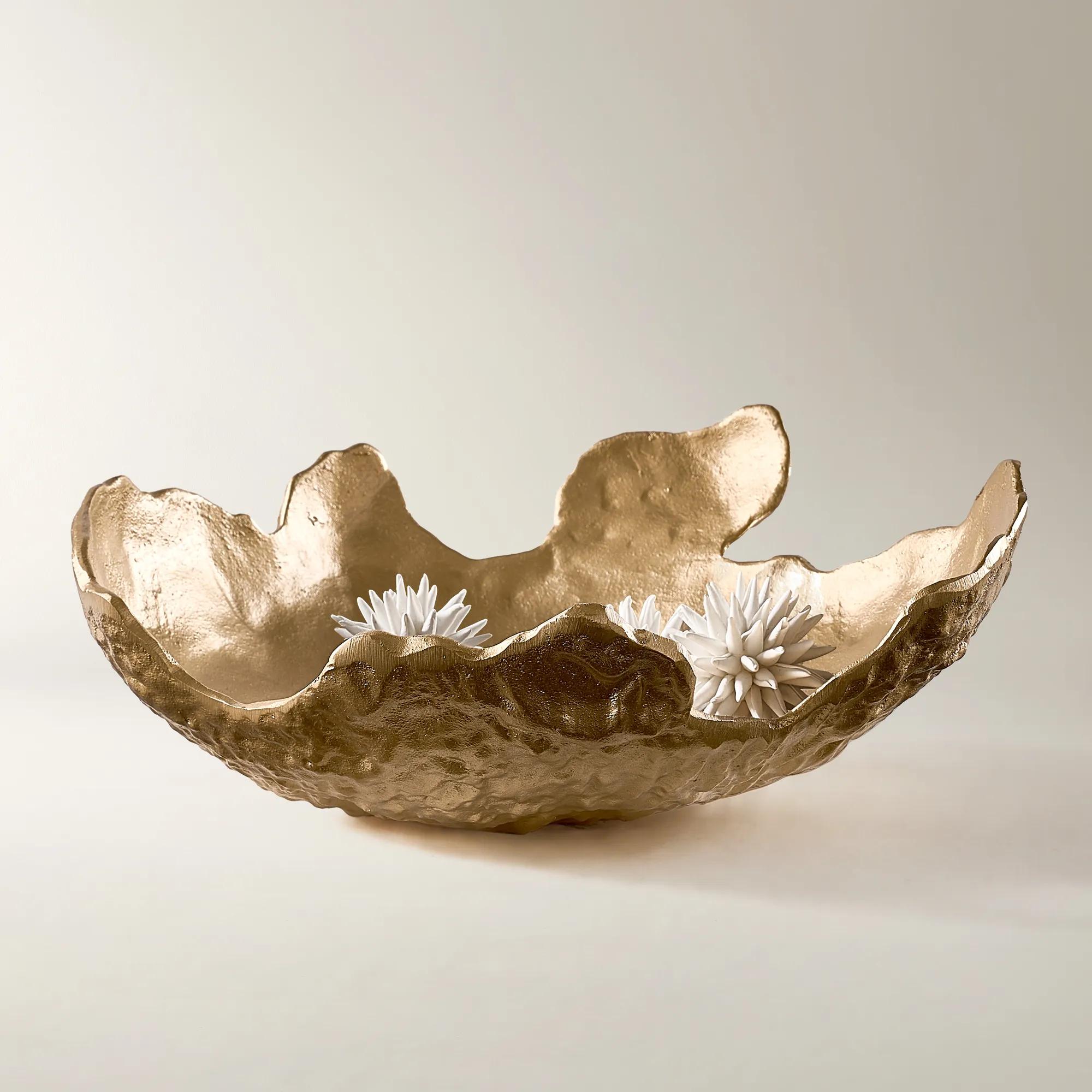 Crush Gold Aluminum Decorative Bowl 16" x 5.75"$169
A sculptural aluminum bowl with a soft gold finish and organic, crushed silhouette for modern decor.
Add To Cart -
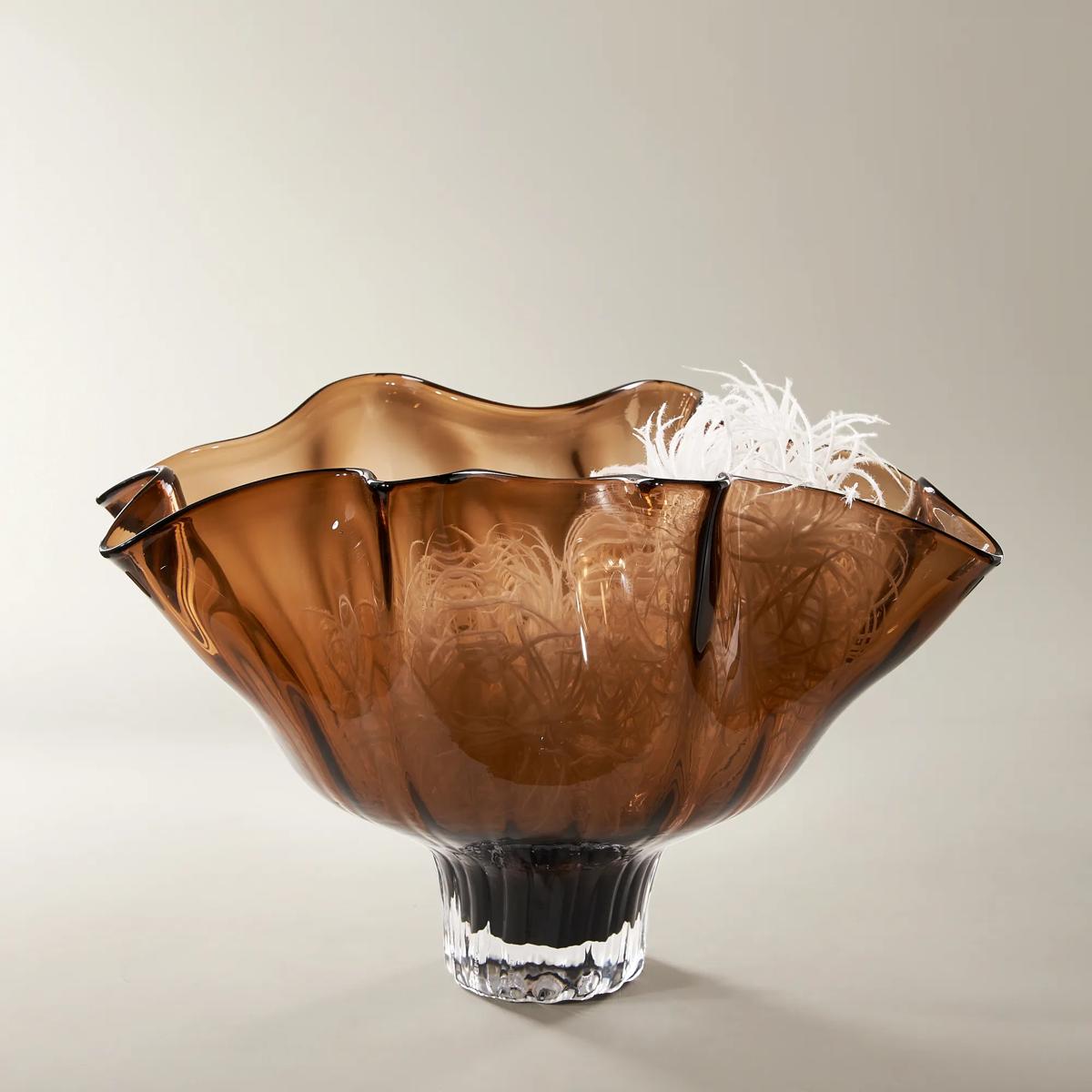
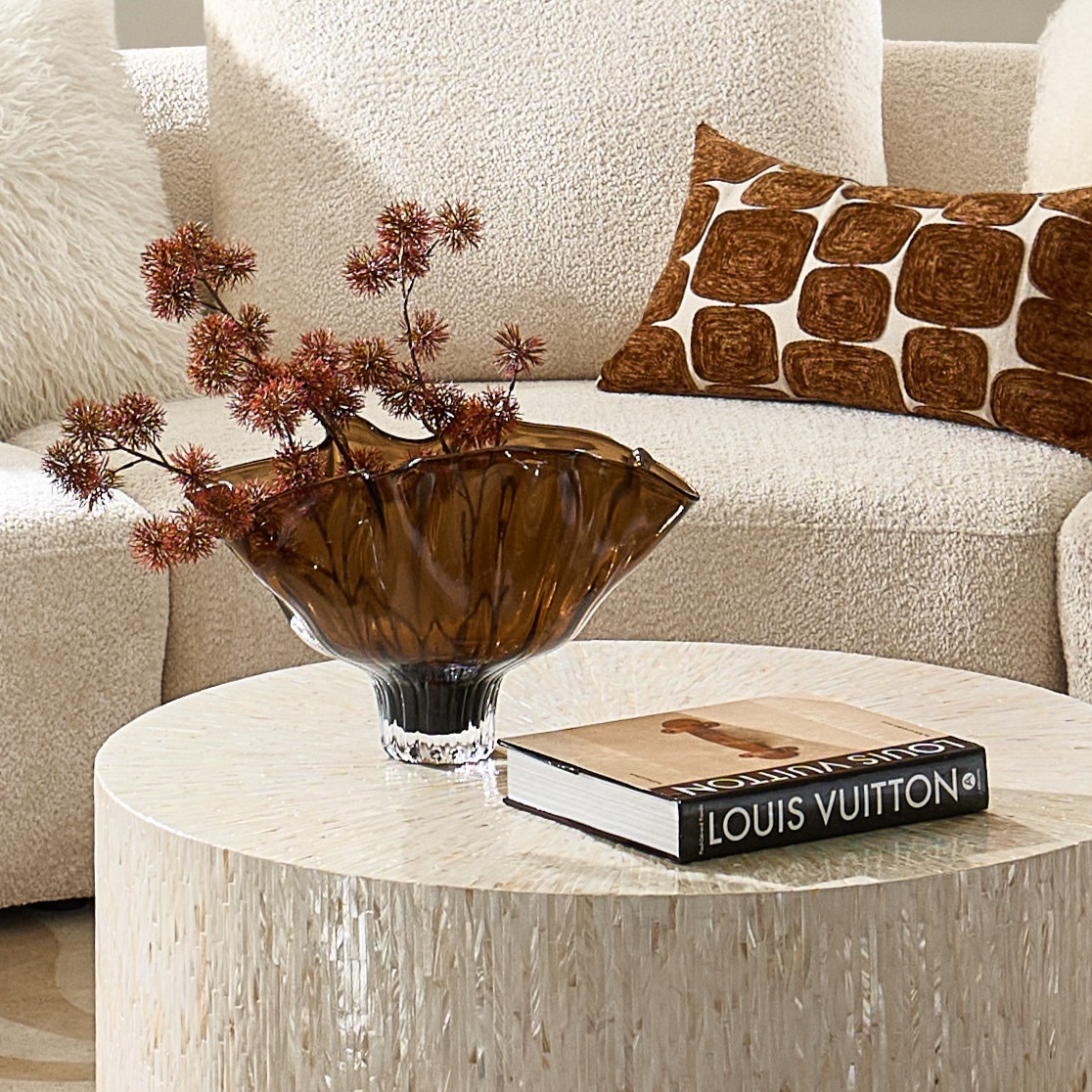 Coco Mouthblown Brown Glass Bowl 17" x 9.75"$139
A hand-blown brown glass bowl with an undulating rim and clear tapered base for sculptural elegance.
Add To Cart -
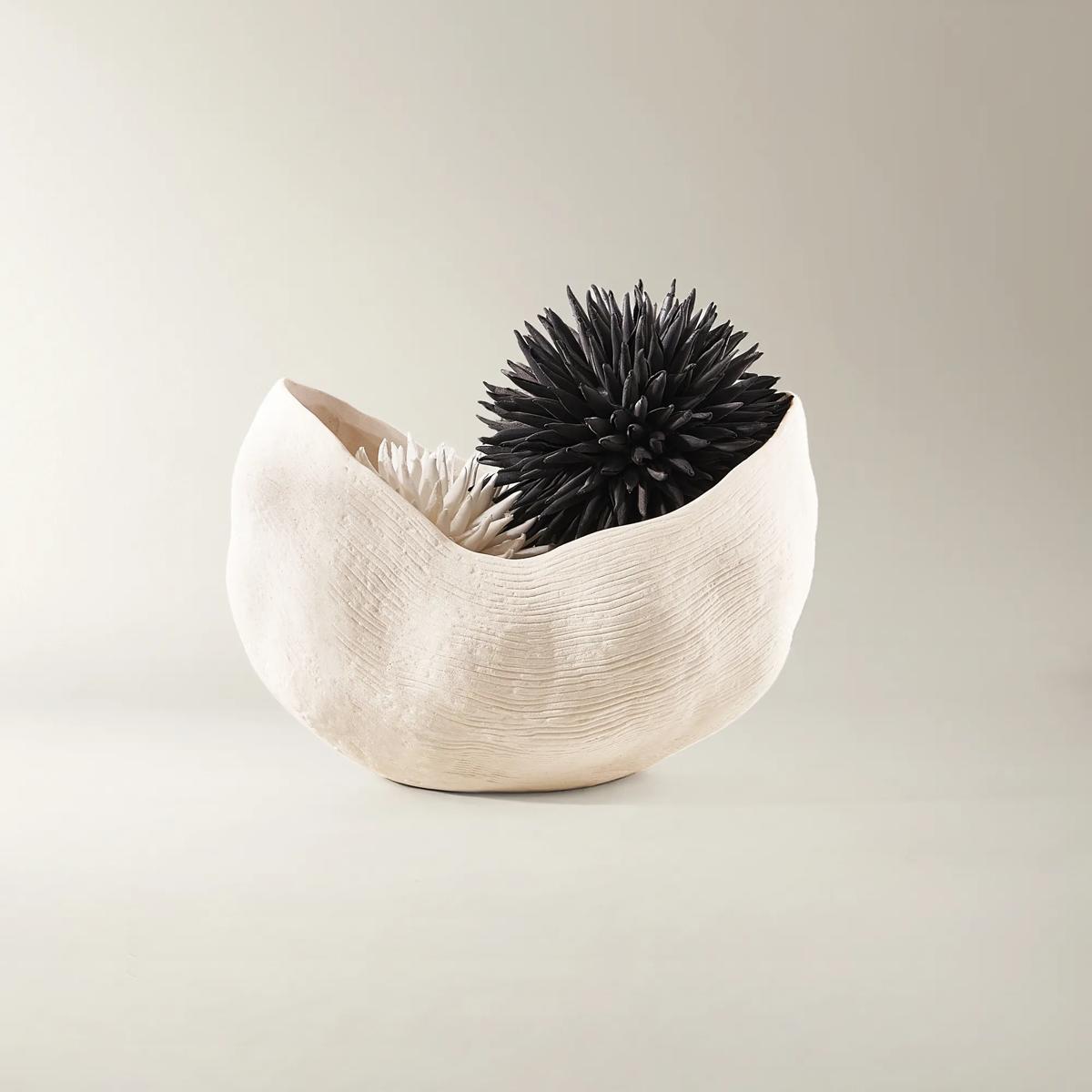 Baz Ivory Porcelain Bowl$119
A sculptural ivory porcelain bowl with a matte, textured finish and organic, free-flowing silhouette.
Add To Cart -
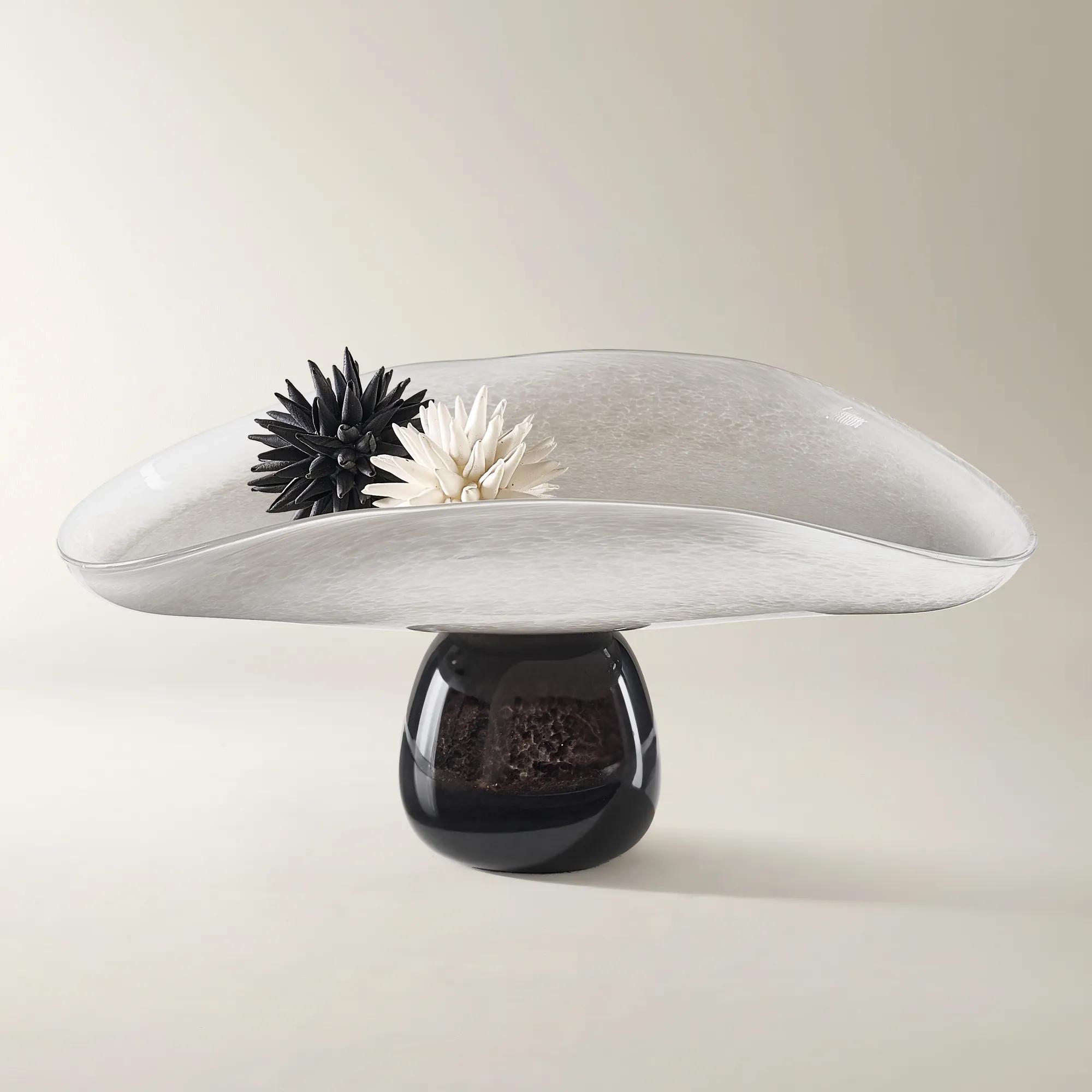 Elois Mouth Blown White Black Pedestal Bowl 14.5" x 7"$149
A handblown glass pedestal bowl featuring striking black and white contrast for a sculptural, modern accent.
Add To Cart

Low-Profile Dining Table Centerpieces
Explore low-profile dining table centerpieces that bring visual drama to your tablescape while keeping sightlines open for conversation. The selection centers on lower silhouettes that make an impression without overwhelming the table. Choose a size that complements your table’s proportions and leaves room for place settings and serving dishes.
Low-profile dining table centerpieces are decorative arrangements that sit below seated eye level, typically staying under approximately 10 to 14 inches in total height so conversation can flow across the table. Their appeal is not simply their modest stature; it is the way they concentrate texture, reflection, and sculptural detail where everyone can appreciate them. Shallow decorative bowls, elongated trays, compact vessels, and low floral arrangements bring a composed focal point to the dining room without placing a visual barrier between guests. A gleaming surface can catch the light beneath a chandelier, while a broad, organically shaped bowl introduces movement against the precise lines of place settings. Overall height includes everything in the arrangement, from the base of a vessel to its tallest stem or decorative accent. The most comfortable proportion depends on the table and chairs, so the view from a seated position matters more than a measurement alone. A centerpiece near the lower end of that height range often feels especially natural on an intimate table. Shape is equally important. An elongated arrangement follows the lines of a rectangular dining table, while a rounded silhouette echoes a circular tabletop without favoring one seat over another. On a square table, a compact composition can establish a strong center while preserving space around each setting. Width deserves the same consideration as height: even a shallow centerpiece can overwhelm the dining surface if it crowds glasses, elbows, or serving dishes. A generous border of visible tabletop gives the arrangement definition and keeps the setting gracious rather than congested. For households that regularly serve shared dishes, a contained arrangement on a single tray can be moved as dinner arrives. For a dining table that remains dressed between gatherings, a broad, low sculpture offers presence without requiring an elaborate setting around it. The drama comes from proportion and finish, not from obstructing the room.
Materials give low dining table centerpieces much of their character, influencing both their visual impact and their everyday care. Clear glass creates a luminous effect, allowing the grain of a wood table or the veining of a stone surface to remain visible beneath it. Faceted glass and crystal introduce more pronounced sparkle, particularly in a room with layered lighting. Ceramic offers a different kind of richness: a smooth glaze feels polished and tailored, while a textured surface adds depth to an otherwise sleek dining arrangement. Natural stone brings substantial weight and distinctive markings, although its care needs vary by composition and finish. Metal introduces another expressive note, from the restrained glow of a brushed surface to the sharp reflections of a highly polished finish. Warm metallic tones can soften a monochromatic setting; cooler finishes can sharpen the contrast against dark wood or richly colored upholstery. These combinations feel most deliberate when one finish leads and the others provide supporting detail. Durability, however, is not determined by appearance alone. Thin glass rims, projecting sculptural details, and delicate applied finishes may require more careful handling than their substantial silhouettes suggest. A stable base is particularly valuable on a table used daily, and smooth undersides or suitable protective pads help reduce the risk of scratching the tabletop. Care should follow the material and the maker’s instructions, especially for plated metals, porous stone, and decorative coatings. A soft cloth is often appropriate for routine dusting; abrasive cleaners and rough scrubbing can damage sensitive surfaces. Fresh floral arrangements need a watertight vessel or liner to protect both the centerpiece and the table beneath it. Candle arrangements require holders intended for that purpose, appropriate clearance from nearby decorations, and protection from heat. Decorative bowls and trays should hold unwrapped food only when explicitly designated food-safe. Attention to these details allows an expressive dining display to remain as considered in daily use as it appears when the room is set for guests.
The most compelling low-profile dining table decor feels connected to the way the room is lived in. A couple who enjoy lingering over dinner may prefer a single shallow vessel with a generous, open silhouette, leaving the surrounding surface free for a beautifully set meal. Frequent hosts may favor a long, cohesive arrangement that gives each end of the table something to admire without competing with the food. In a dining area shared with a living room, a low centerpiece preserves the visual connection between spaces and allows artwork, upholstery, and lighting to remain part of the composition. Compact floral arrangements introduce softness, but their character depends on more than color. Closely gathered blooms create a plush, concentrated shape, while a few carefully placed stems can emphasize the contours of the vessel. Fresh flowers bring fragrance and natural variation, although strongly scented varieties may compete with a meal; faux botanicals offer lasting structure and benefit from regular dusting. A sculptural centerpiece needs no flowers at all when its surface, outline, or scale provides sufficient interest. Negative space around an expressive form can feel every bit as luxurious as an abundant arrangement. Within the broader world of Centerpiece Ideas for Dining Tables, low silhouettes offer a particularly intimate approach: the table becomes a setting for connection, with artistry woven into the experience rather than standing between guests. These pieces can also make thoughtful wedding, anniversary, or housewarming gifts, especially when their proportions and finishes suit the recipient’s dining space. A versatile vessel allows personal expression through flowers or decorative accents, while a distinctive sculptural form suits someone who appreciates a finished statement. Whether the mood is quietly luminous or boldly reflective, the strongest centerpiece has a clear relationship to its surroundings. It gives the dining table identity, leaves room for the rituals of a meal, and makes even an unoccupied room feel deliberately composed.
FAQs
Consider a sculptural bowl, an artfully arranged decorative tray, or a composition of trailing botanicals. Choose one expressive focal point, then introduce a few complementary accents. The result feels curated and dramatic without competing with the rest of your tablescape.
Pair a distinctive silhouette with an intentional palette. A sweeping organic form can soften angular place settings, while a geometric arrangement brings definition to a fluid dining space. Leave areas of the tabletop unadorned so each sculptural detail has room to command attention.
Echo one detail from your dinnerware, such as its color, finish, or motif, rather than matching every element. Pair richly patterned plates with a more restrained centerpiece, or give understated settings an expressive focal point. Repeated accents create cohesion; contrasting textures add depth.
Keep the central composition in place and transform its surroundings. Layer in richly textured linens, distinctive napkin rings, and coordinated place settings for a more ceremonial mood. A considered accent color can connect the centerpiece to the occasion while preserving its sculptural character.
Let color and botanical character tell the seasonal story. Fresh greens and soft floral tones suggest spring, while saturated hues and branching forms bring autumnal drama. For winter, introduce luminous accents and a richly layered palette. Retain a signature decorative element to make each arrangement feel distinctly yours.