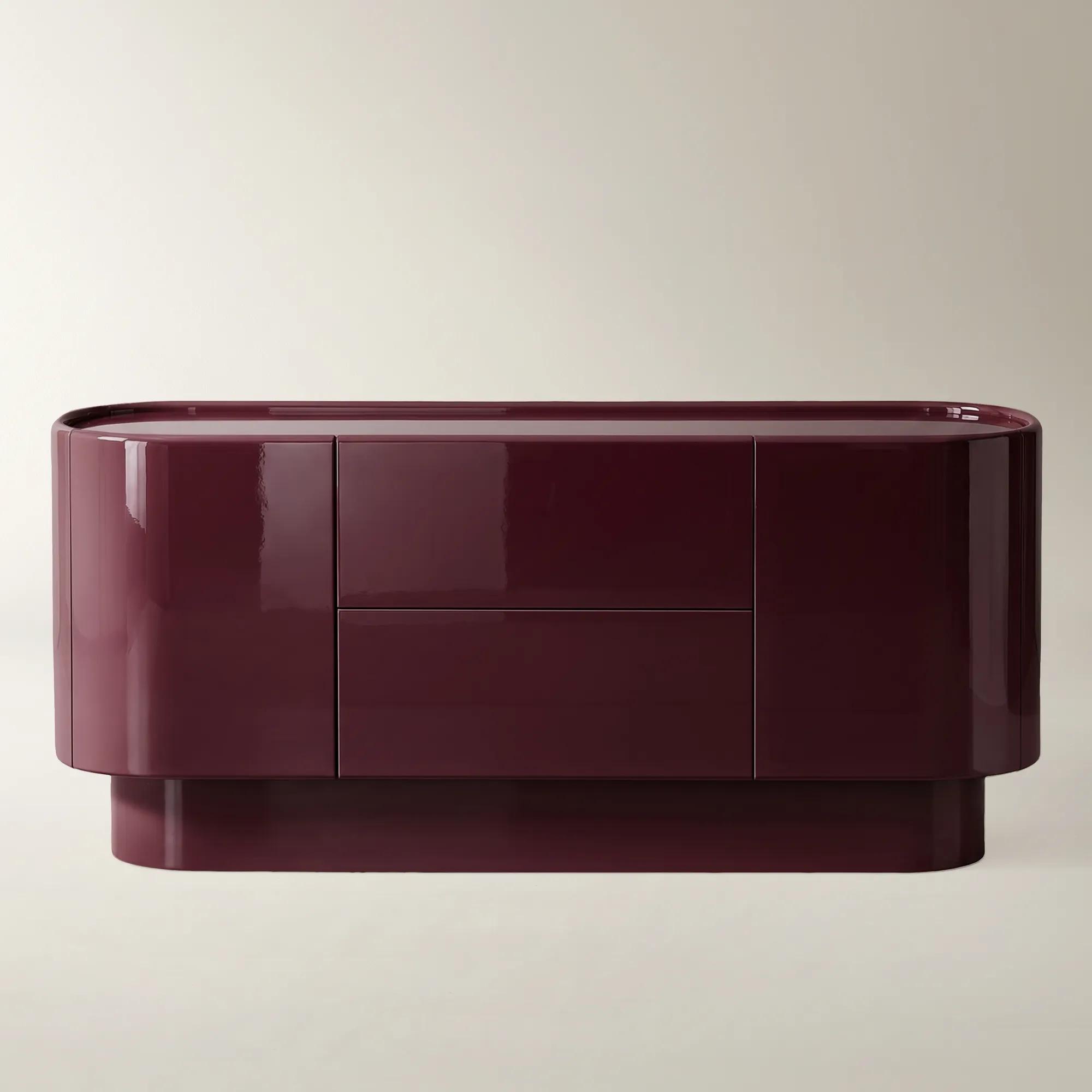
Handleless Sideboards With Concealed Storage
Handleless Sideboards With Concealed Storage
-
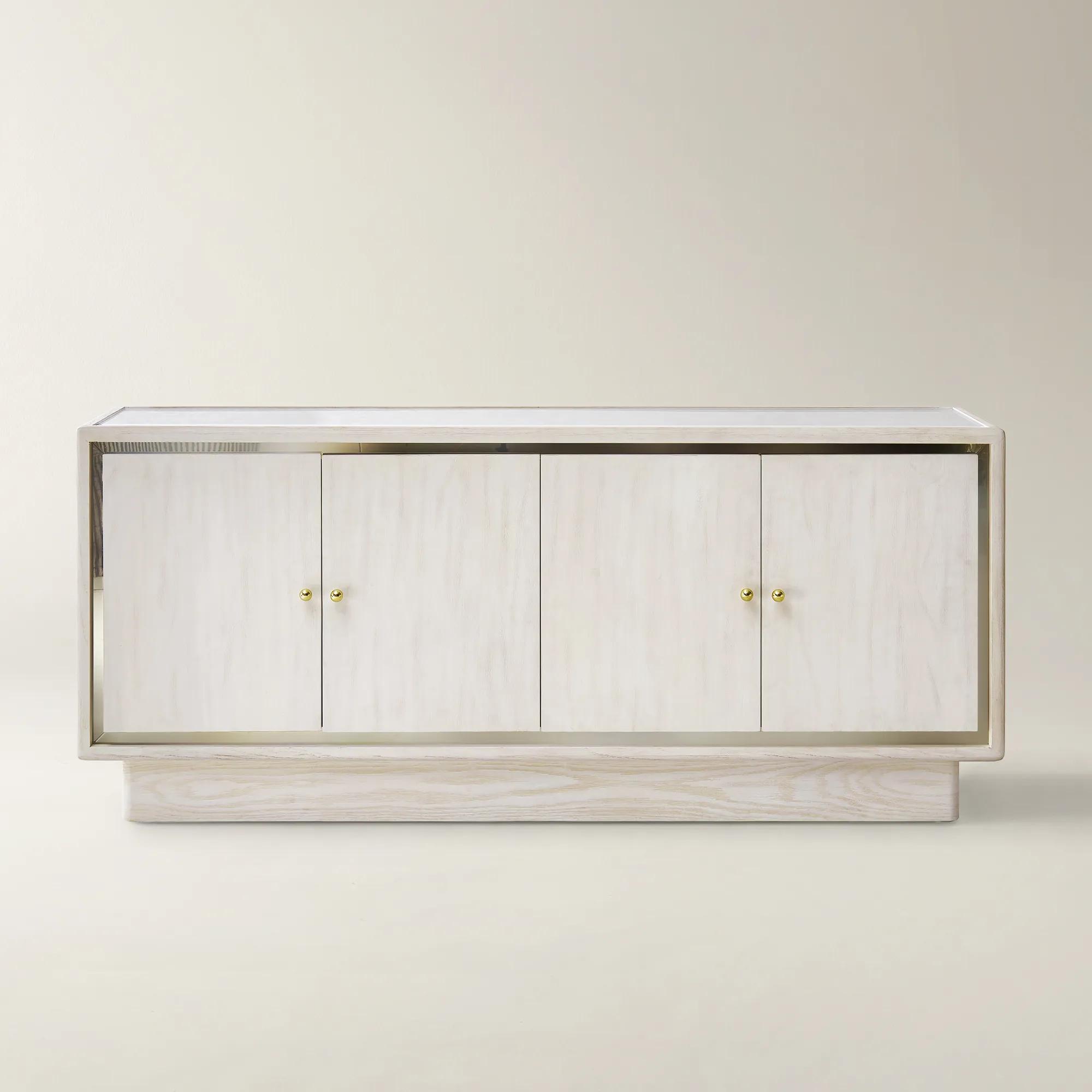
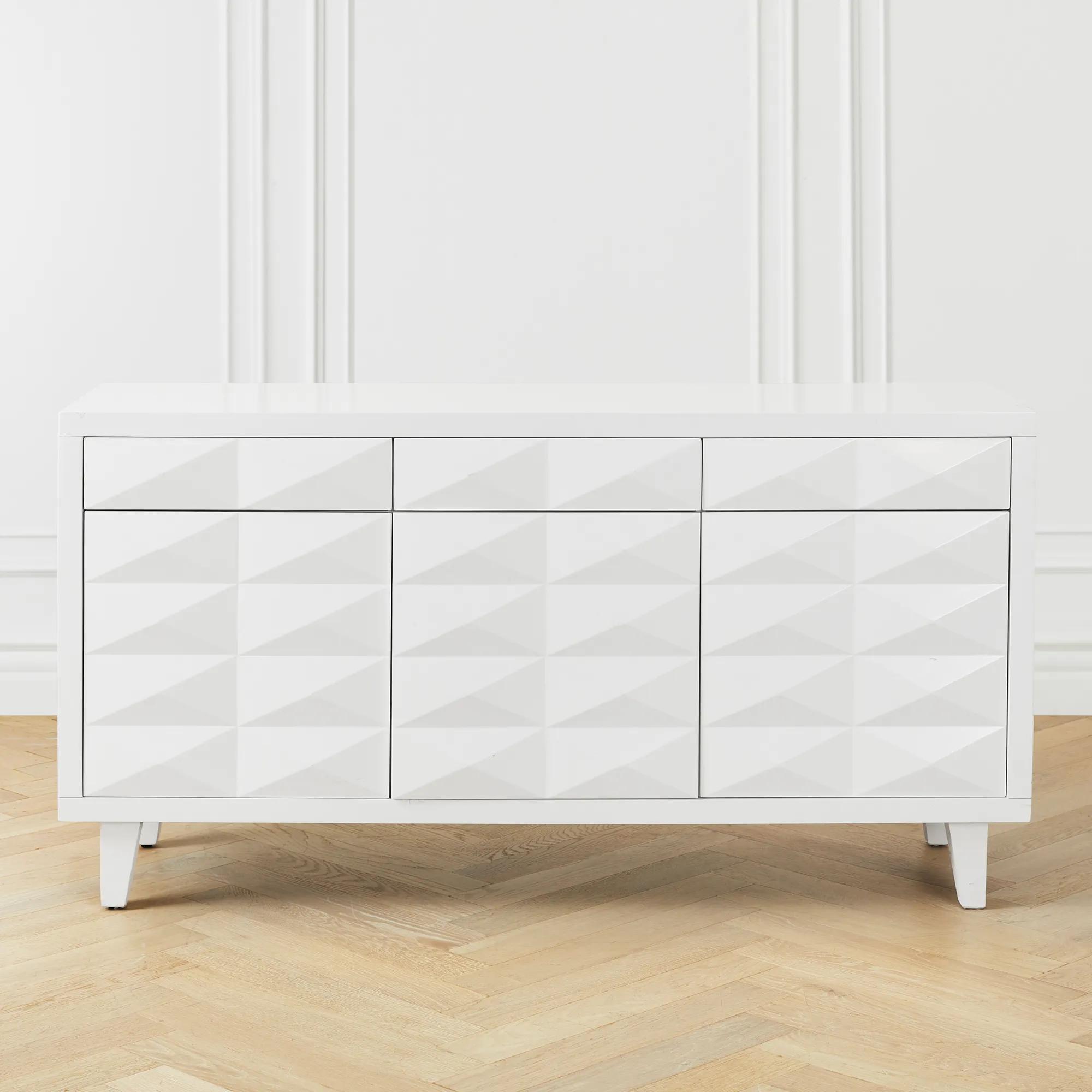 Palmer White Wood Cabinet (66.5")$1649
A sleek white hardwood cabinet with geometric detailing, three drawers, and push-latch doors for modern storage.
Add To Cart -
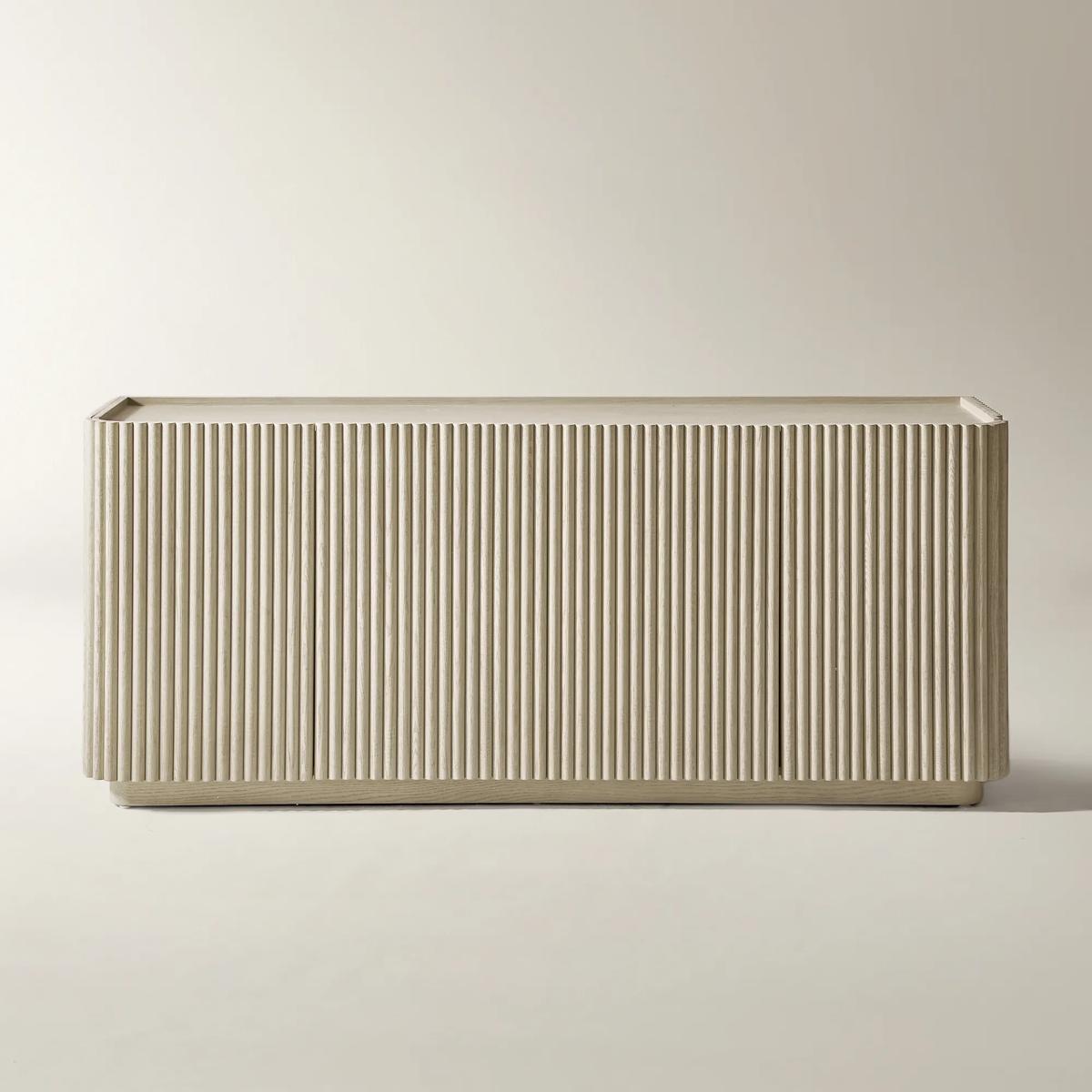
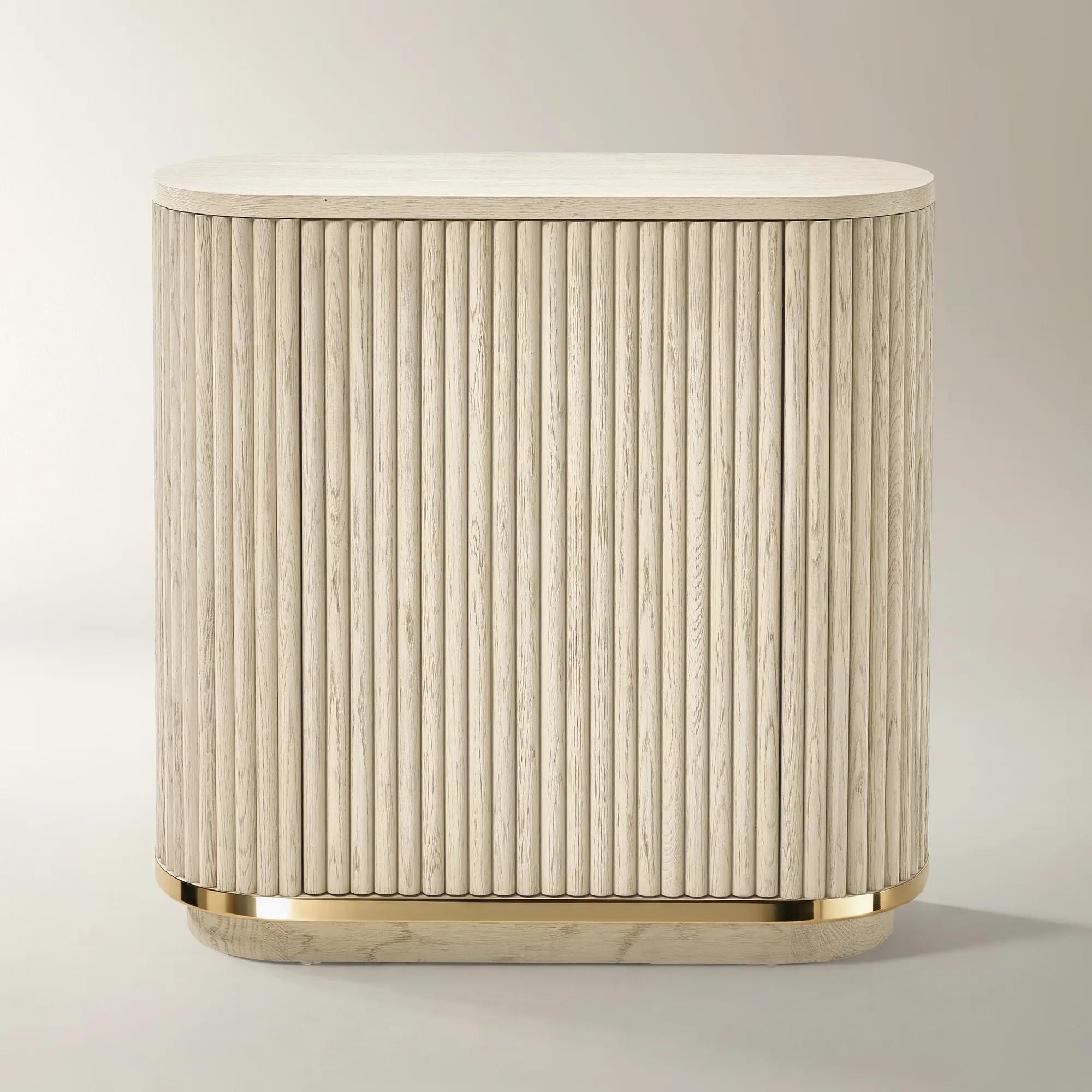 Stria Reeded White Oak Buffet (36")$1399
A modern buffet featuring vertical reeded white oak, soft gold metal trim, and push-to-open doors.
Add To Cart -
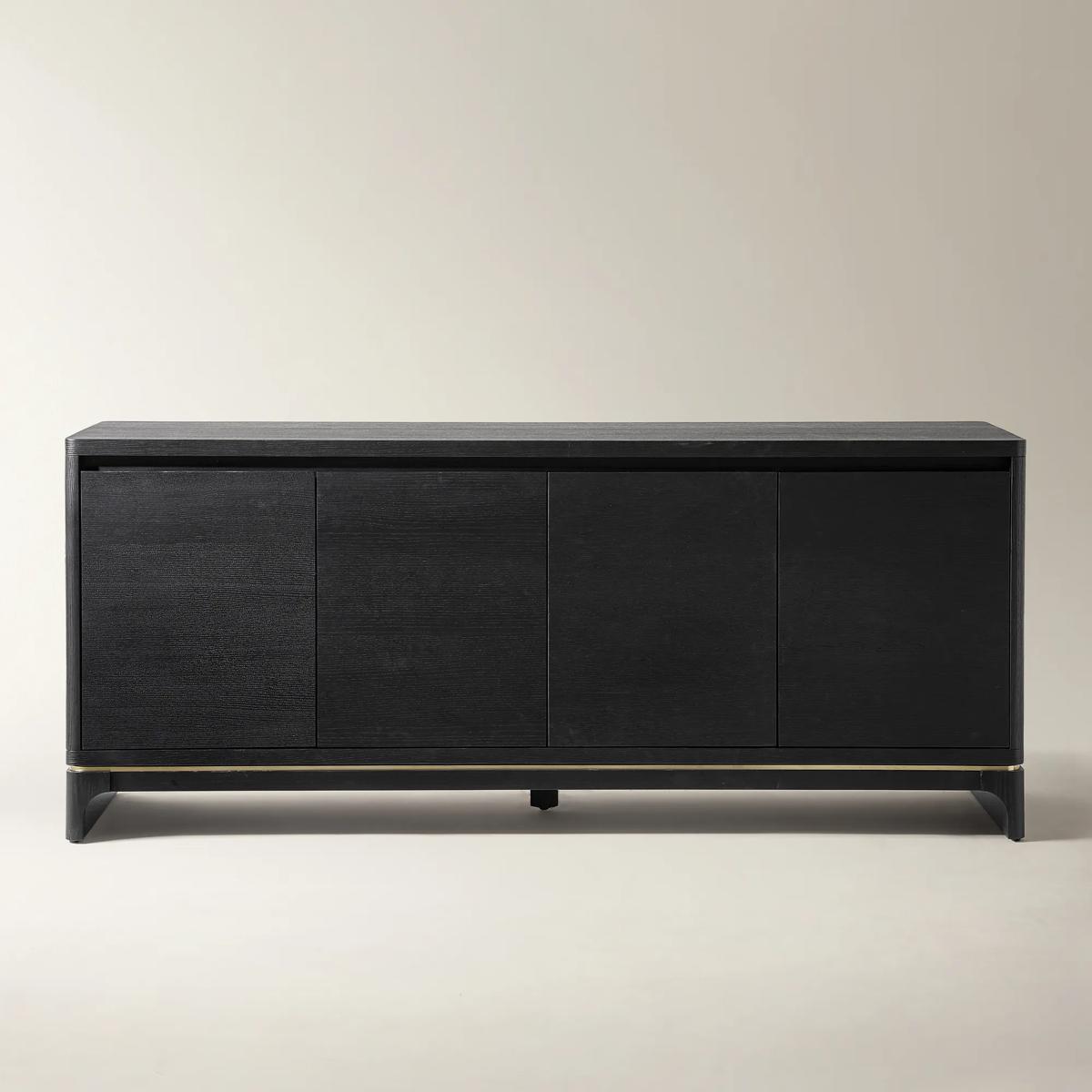
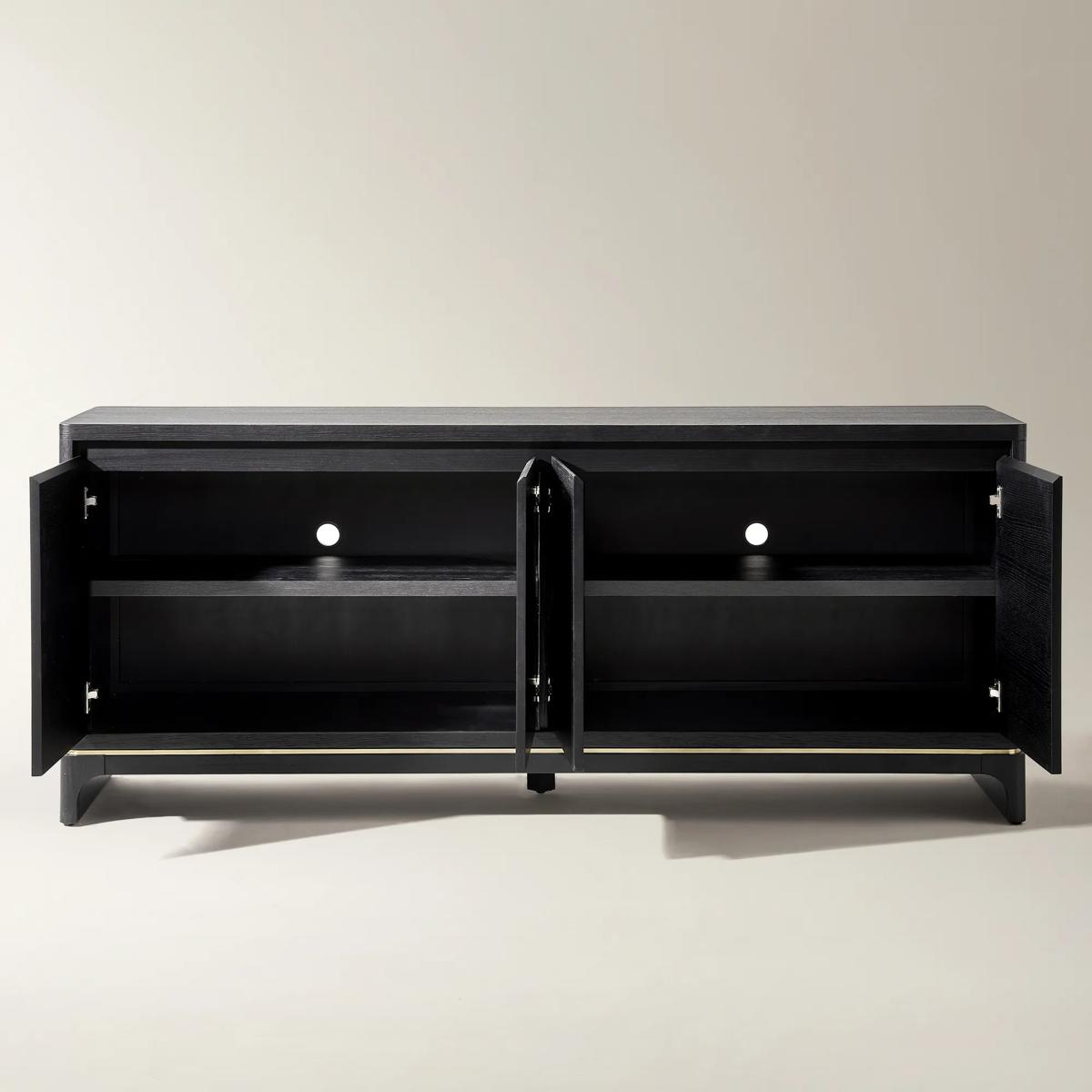 Vanta Black Oak Buffet (72")$1999
A matte black oak sideboard with gold stainless steel trim and concealed pulls for modern, elegant storage.
Add To Cart -
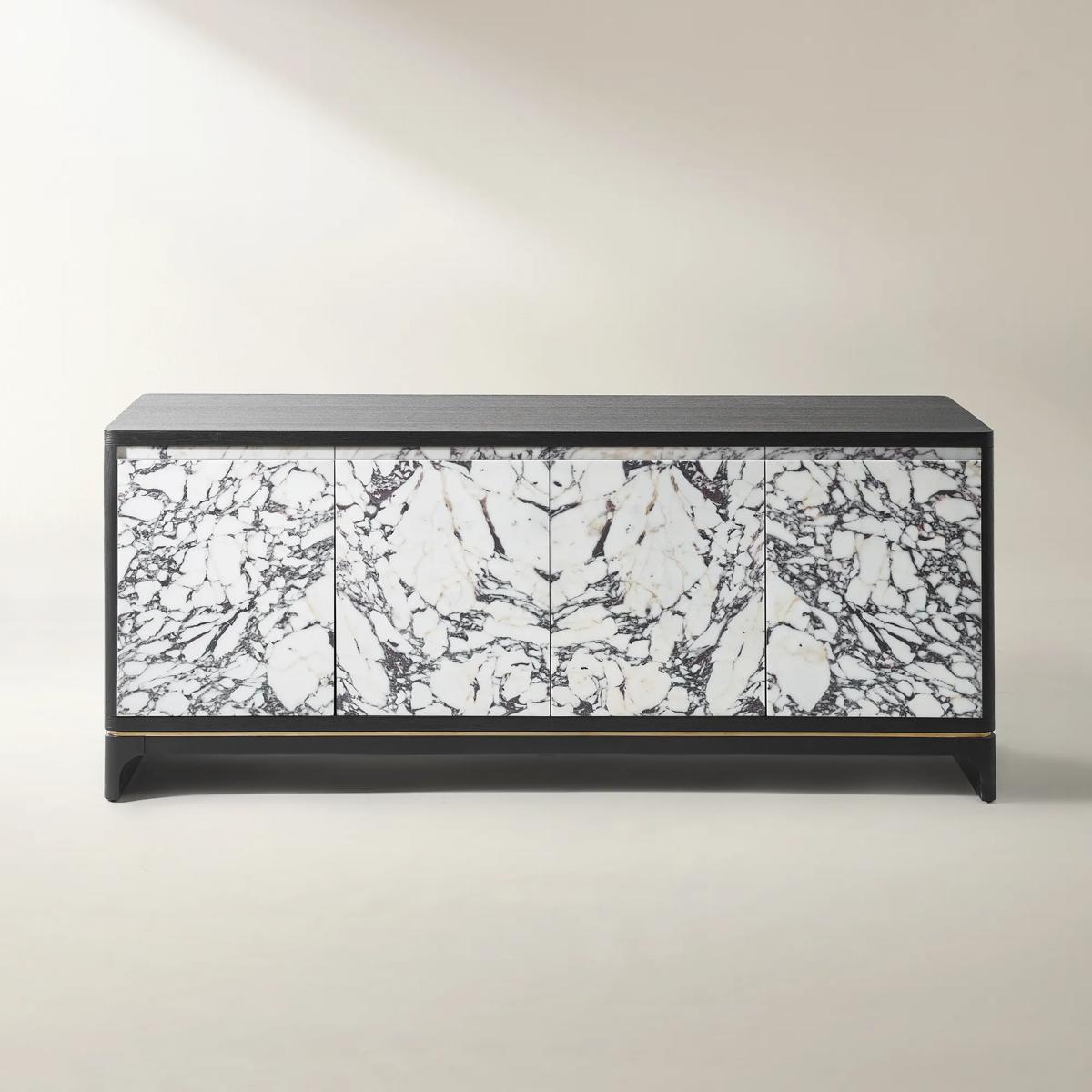
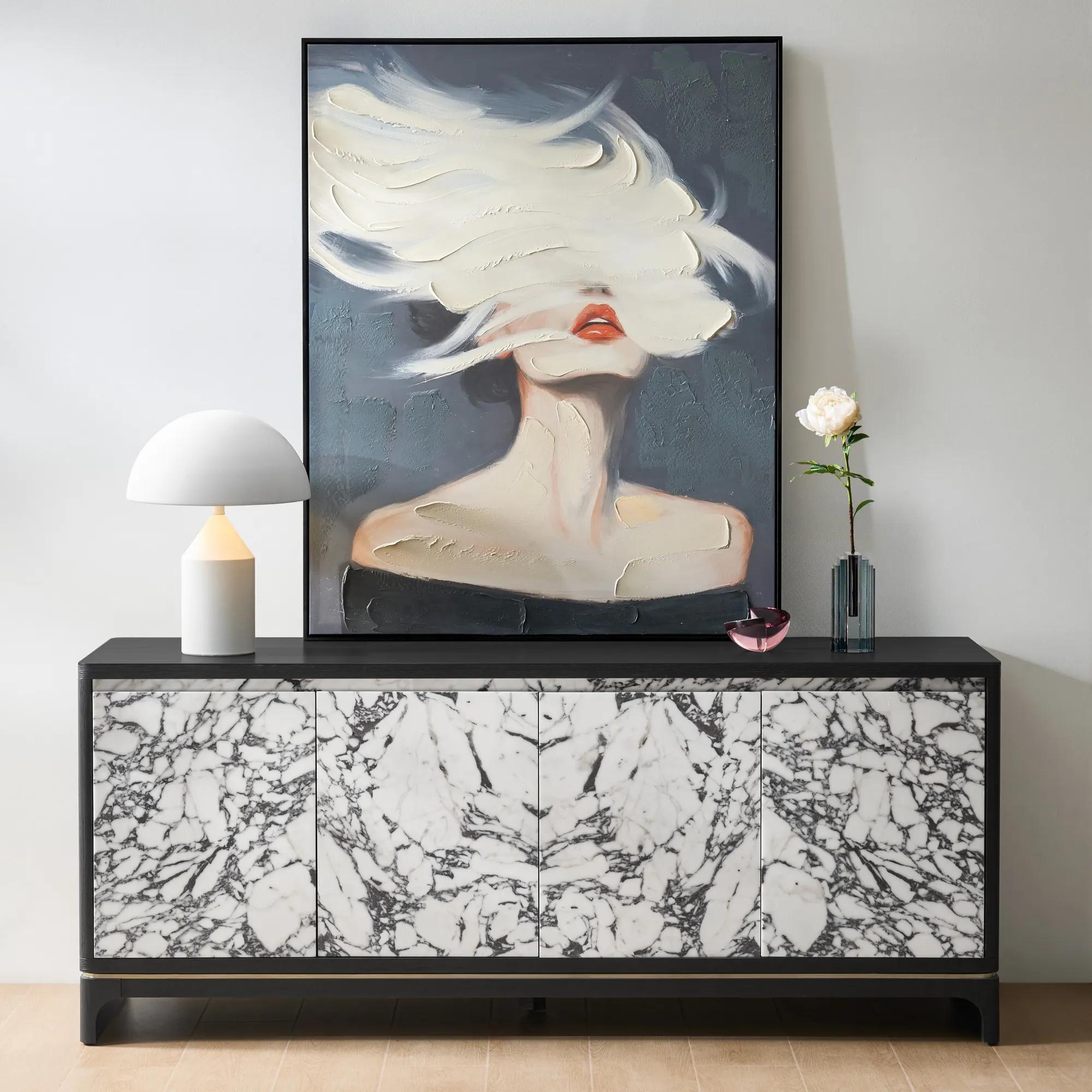 Vanta Black Oak And Calacatta Marble Buffet (72")$2699
A striking matte black oak sideboard featuring genuine Calacatta Viola marble fronts with dramatic violet veining.
Add To Cart

Handleless Sideboards With Concealed Storage
A handleless sideboard gives everyday essentials a place behind closed doors while letting the furniture’s silhouette take center stage. Explore sideboards with concealed storage for dining linens, serveware, and living room necessities. Look for an interior arrangement that suits your routines and a finish that brings depth, texture, or luminous contrast to your room.
Handleless sideboards with concealed storage pair uninterrupted cabinet fronts with enclosed compartments, creating a composed backdrop for rooms rich in texture, art, and personality. Instead of projecting knobs or pulls, these designs use push-to-open mechanisms, touch latches, or recessed finger channels to access doors and drawers. The result is an architectural silhouette that lets the finish, proportions, and surrounding décor command attention. A dark wood-grain surface can lend depth beneath an oversized abstract painting; a luminous lacquered finish can bring a polished counterpoint to velvet dining chairs. Behind those expressive surfaces, concealed storage keeps the practical layers of a home out of sight: dinner plates, serving bowls, folded linens, board games, or the paperwork that otherwise gathers on a console. Unlike open shelving, enclosed compartments allow everyday necessities to remain accessible without becoming part of the room’s visual composition. Interior arrangements vary, with shelves offering space for stacked dishes and drawers providing shallower storage for flatware, napkin rings, and entertaining accessories. Adjustable shelves, where included, make room for taller pitchers or serving pieces, while divided compartments help separate delicate objects from heavier essentials. Handleless describes the exterior access design, not a single opening system: a push-latch door responds to pressure, while a recessed pull provides a discreet grip along an edge or channel. Soft-close hardware is a separate feature and should not be assumed simply because a cabinet has no visible handles. For households that entertain frequently, the appeal is especially tangible. Serving pieces stay near the dining table, extra linens remain within reach, and the top becomes a gracious landing place for a tray before dinner. In a living room, the same furniture category can conceal puzzles, albums, and accessories beneath a sculptural lamp. These sideboards suit anyone who appreciates a room with a strong point of view but prefers its everyday contents behind closed doors. Their restraint is in the hardware, not in the atmosphere they can create.
Materials and construction shape both the character of a handleless sideboard and its suitability for daily use. Solid wood brings natural grain variation and responds to changes in indoor humidity; wood veneer offers the beauty of real wood across a supporting substrate, often allowing broad surfaces to display a consistent grain pattern. Engineered wood construction differs by composition and finish, so durability depends on more than the material name alone. Stable joinery, well-fitted doors, secure hinges, and appropriately supported shelves all matter when a cabinet will hold substantial stacks of dinnerware. Lacquered, painted, mirrored, and glass-accented surfaces create different effects: gloss catches surrounding light, matte finishes soften reflections, and mirrored details introduce depth alongside upholstered seating or a richly patterned rug. None of these finishes should be presumed scratchproof or waterproof. Frequently touched fronts also deserve consideration, particularly on darker or highly reflective surfaces where fingerprints may be more noticeable. Proportion is equally important. A sideboard needs enough interior depth for the objects it will hold, not merely an exterior footprint that fits the wall. Oversized platters, tall vases, and folded tablecloths each demand different compartment dimensions; shelf load limits matter when storing ceramics or glassware. In a dining room, generous clearance between the cabinet and nearby chairs allows guests to sit comfortably while doors and drawers remain usable. Along a hallway, a shallower profile can preserve the walking path without sacrificing a defined place for household essentials. Door swing, full drawer extension, baseboards, floor vents, and nearby outlets can all affect placement. The delivery route matters, too, especially where stair turns or narrow doorways limit access. A raised base can give a substantial cabinet a lighter visual presence, while a plinth base emphasizes a grounded, architectural form. Larger dining spaces may accommodate the broader proportions associated with Large Storage Sideboards for Dining Rooms, particularly when tableware, serving pieces, and linens need dedicated space together. The strongest fit balances that interior capacity with a silhouette that leaves the room feeling intentional rather than crowded.
The lasting appeal of concealed-storage furniture depends on how comfortably it supports the routines around it. A dining sideboard can hold the pieces used for intimate dinners and larger gatherings alike, with frequently reached-for dishes on accessible shelves and less-used serving vessels stored separately. Drawers keep small accessories from disappearing behind larger objects, while shelf liners suitable for the finish can help cushion delicate tableware. In an entryway, enclosed storage creates a more composed arrival, provided the cabinet’s dimensions and interior layout suit the belongings intended for it. A sideboard used near a television requires more scrutiny: enclosed furniture is not automatically designed for electronics, and components may need dedicated ventilation, cable access, and clearances specified by their manufacturers. Heavy objects belong low in the cabinet, and anti-tip restraints should be installed according to the furniture manufacturer’s directions, especially in homes with children. Care begins with the particular surface rather than a universal cleaning treatment. A soft cloth and finish-appropriate cleaning method help preserve the exterior; abrasive pads, harsh solvents, and excess moisture can damage many decorative finishes. Spills deserve prompt attention, and coasters or protective trays help shield the top from condensation, heat, and accidental marks. Sliding a ceramic vase across lacquer or dragging a metal tray over veneer can leave damage that careful lifting would avoid. Hinges and touch-latch mechanisms also benefit from considerate use, with alignment or adjustment handled according to the supplied instructions rather than forced pressure. Above the cabinet, a few deliberately scaled objects allow the furniture’s lines to remain legible: a broad ceramic vessel, a luminous lamp, or a framed work with enough presence to anchor the wall. Leaving open surface around those accents preserves space for serving and keeps the composition from feeling overfilled. With thoughtful proportions, suitable materials, and an interior arranged around actual belongings, a handleless sideboard becomes a quietly capable foundation for an expressive room—concealing the necessities while giving art, texture, and personal style room to flourish.
FAQs
A handleless sideboard has no projecting knobs or handles on its fronts. Doors or drawers may use push-to-open hardware or concealed finger pulls, allowing the surface detailing and silhouette to remain visually uninterrupted.
No. Push-to-open describes how a door or drawer releases with a press, while soft-close describes a mechanism that slows its closing motion. A sideboard may have one feature, both, or a different opening system, so review the individual hardware details.
The terms often overlap. A buffet is traditionally associated with dining storage and serving, while sideboard is also used for similar furniture elsewhere in the home. For concealed storage, focus on the doors, drawers, and interior arrangement rather than the name alone.
Yes. In a living room, it can conceal entertaining essentials and everyday belongings; in an entryway, it can create an elegant place to organize items out of view. Choose the interior configuration around what you intend to store and let the exterior complement the room’s design.
Follow the care instructions for the specific materials and finish. A soft, dry cloth is commonly recommended for routine dusting, while wood, metal, and natural stone may require different treatment. Avoid assuming that one cleaner is suitable for every surface.