Round Coffee Tables With Concealed Storage | Z Gallerie
Round Coffee Tables With Concealed Storage | Z Gallerie
-
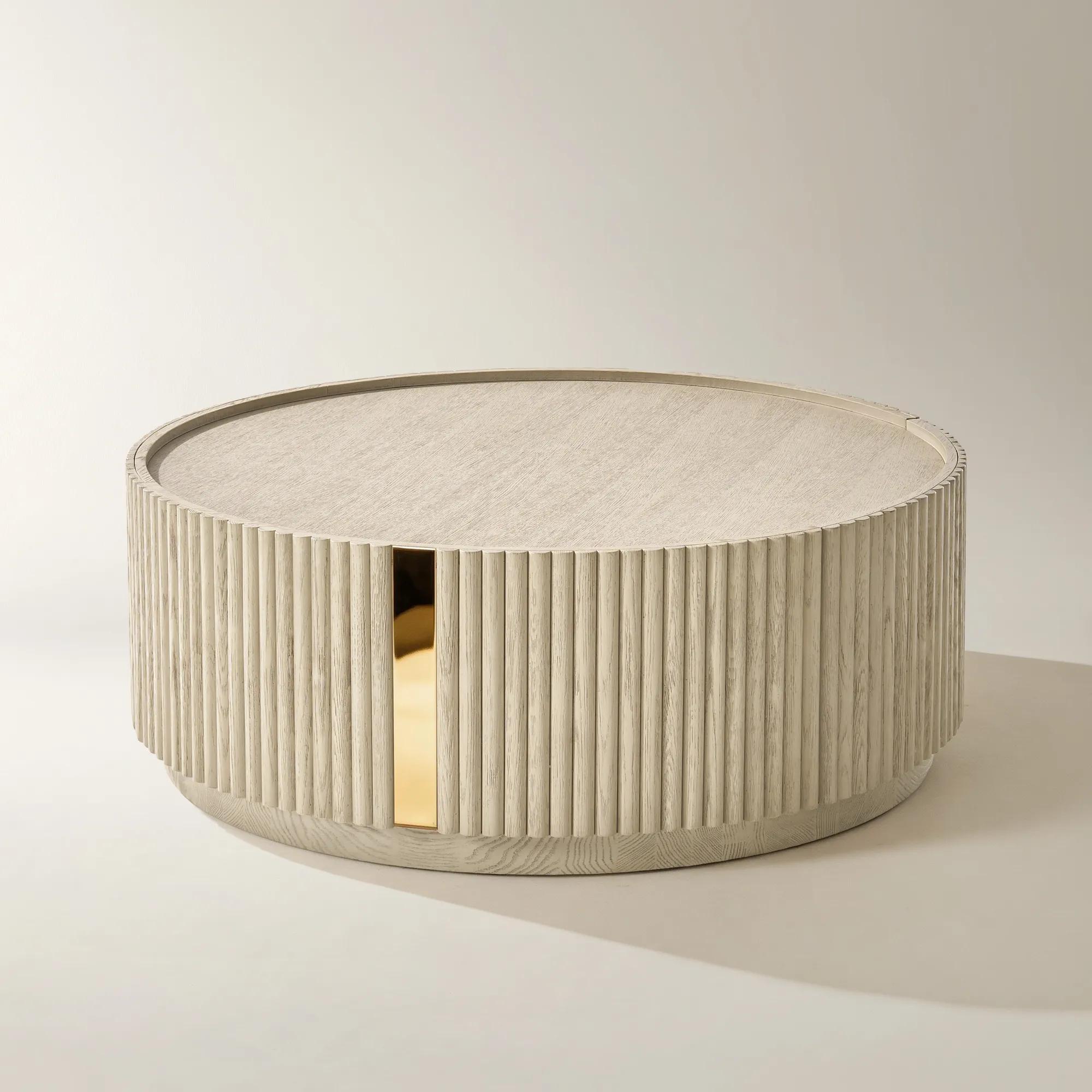 Stria Round Reeded White Oak Coffee Table with Drawer (42.3")$1499
A round coffee table featuring reeded white oak, soft gold metal trim, and a concealed soft-close drawer.
Add To Cart -
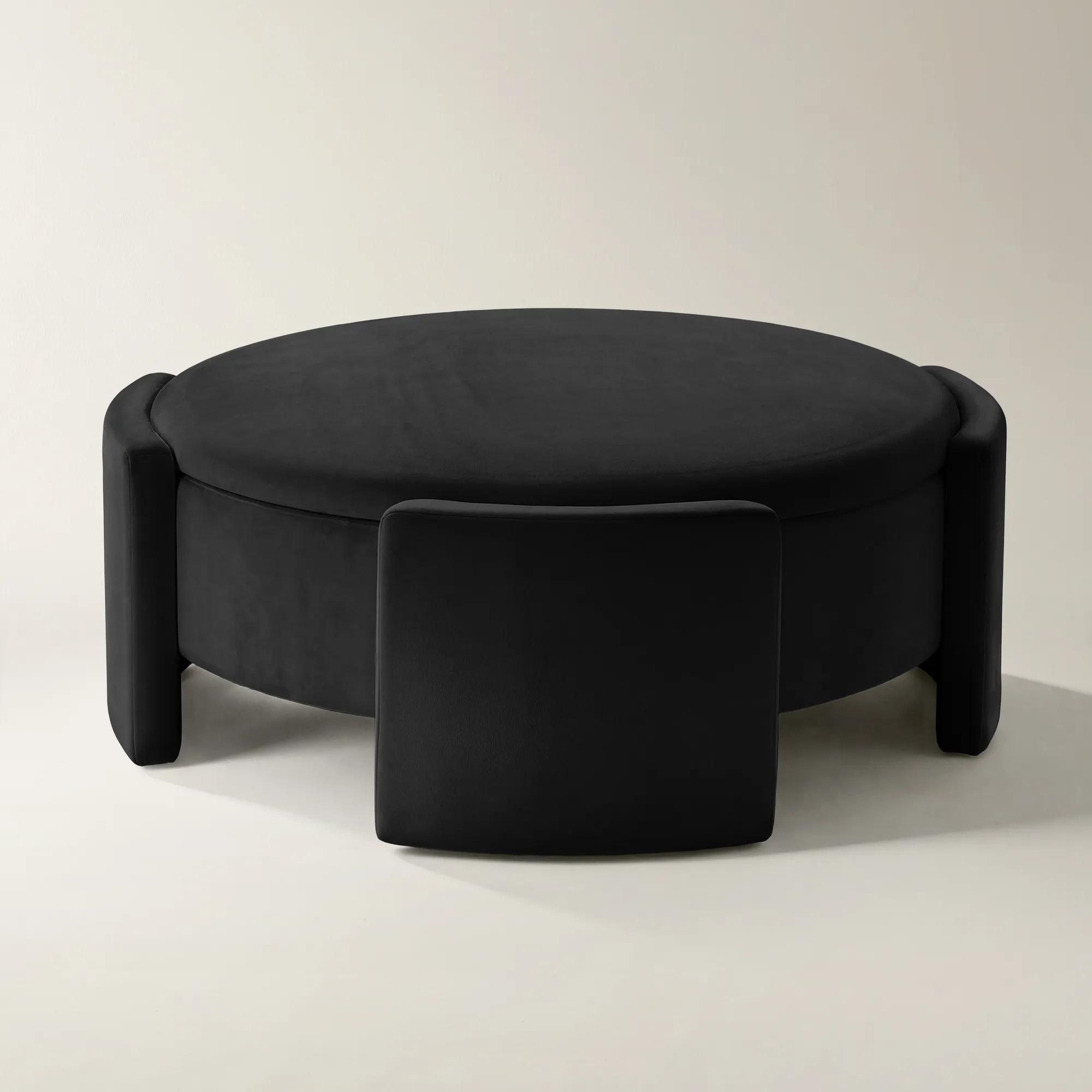
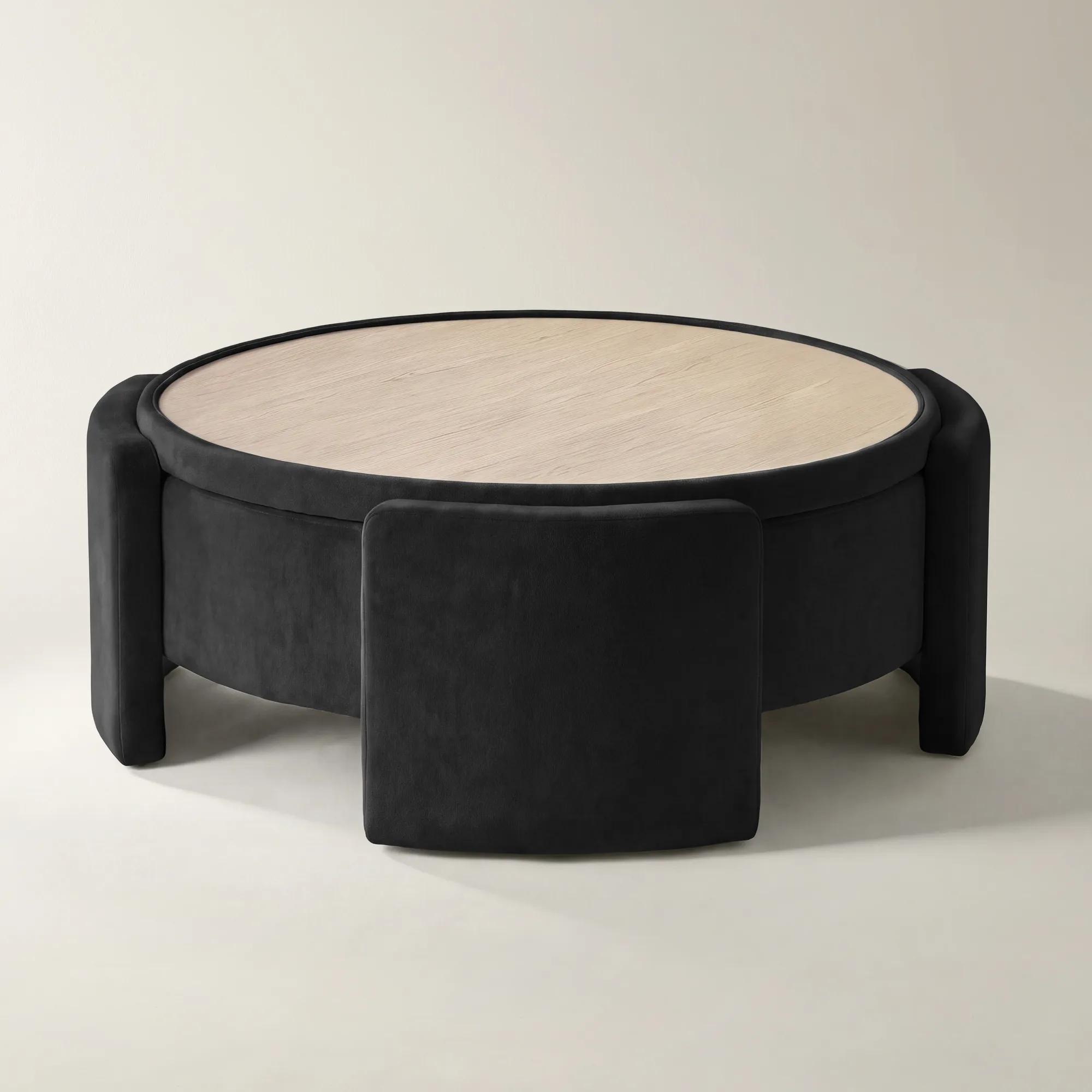 Jora Round Charcoal Velvet Storage Coffee Table With Reversible Tabletop (47.7")$799
A charcoal velvet coffee table with reversible wood veneer tabletop offers hidden storage and sculptural style.
Add To Cart -
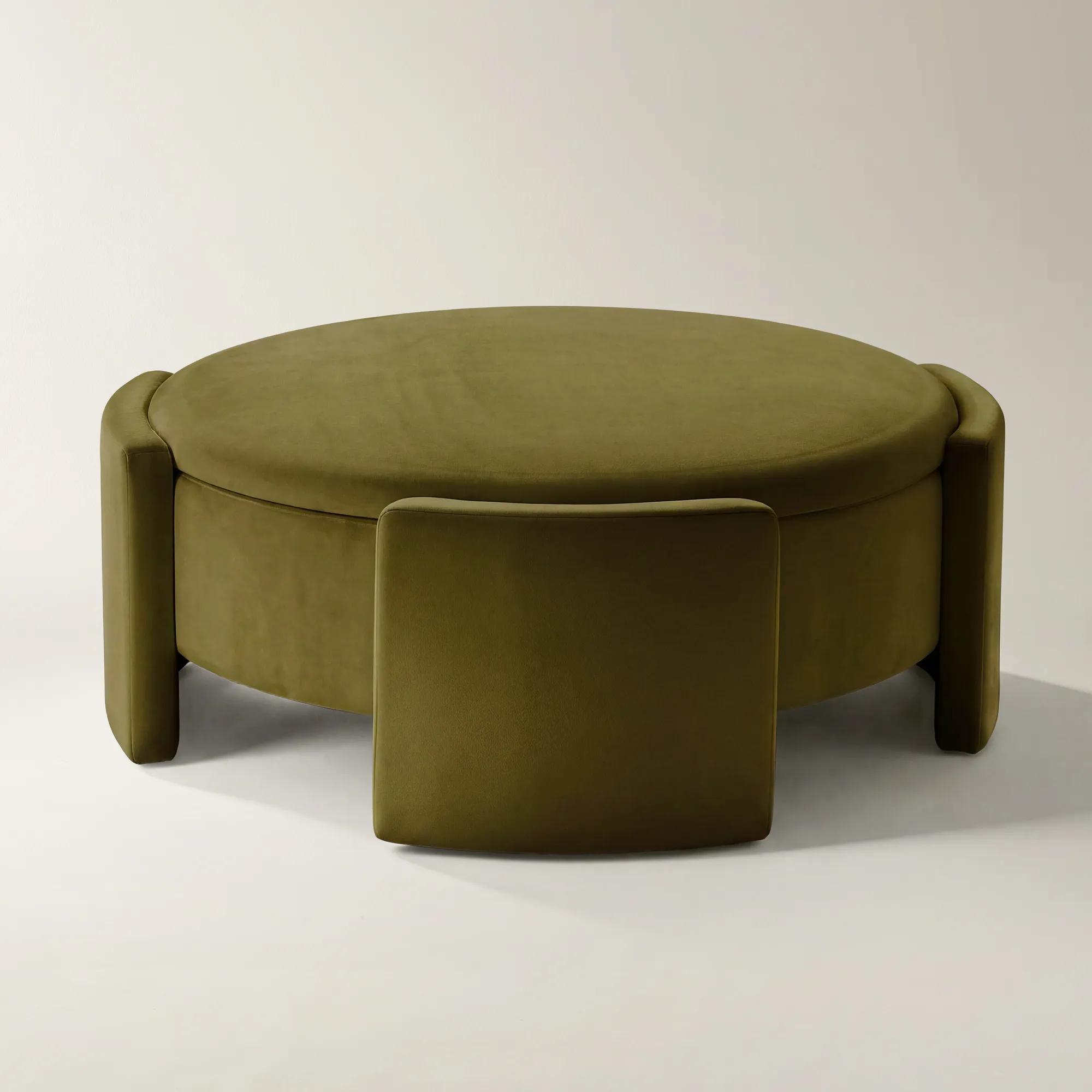
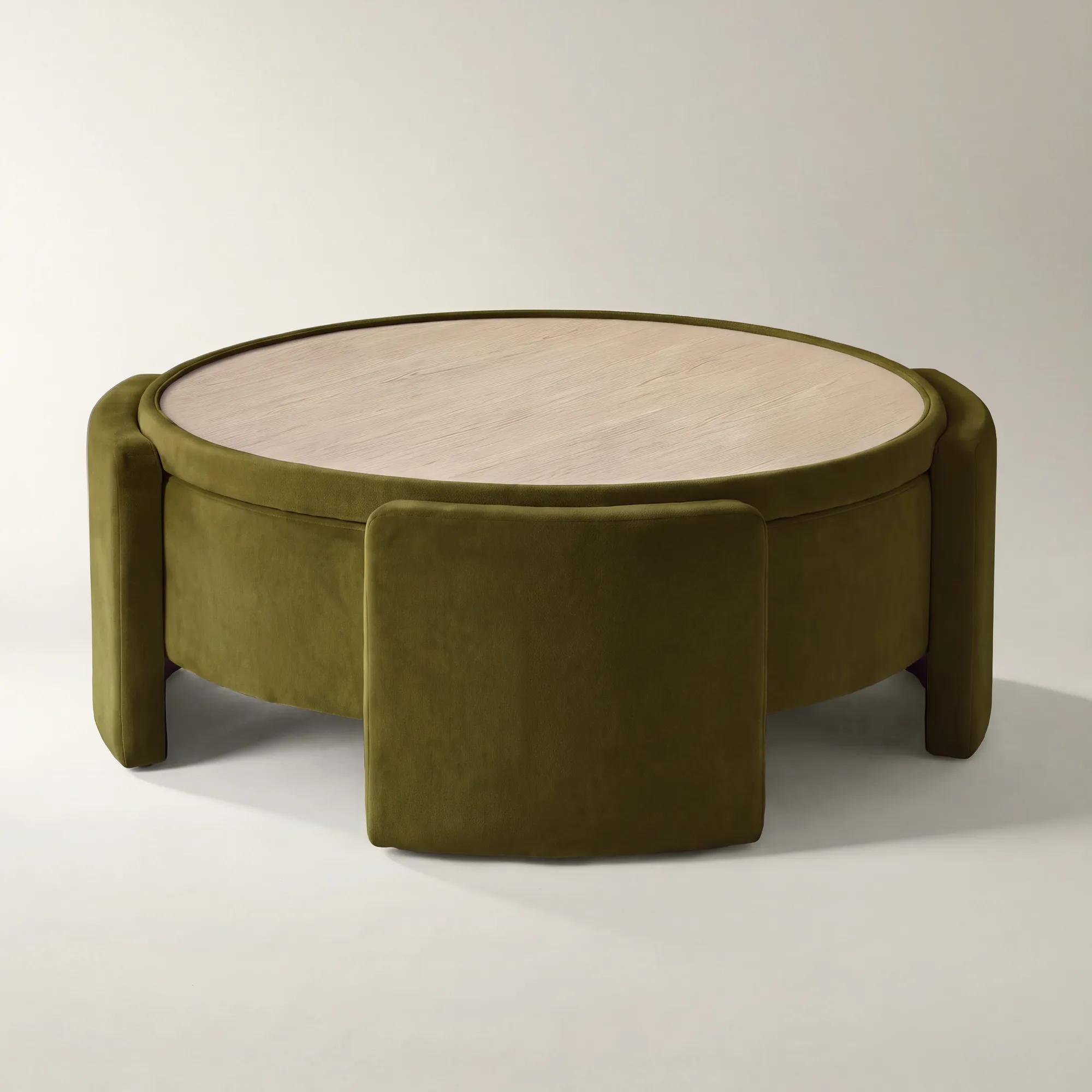 Jora Round Deep Olive Velvet Storage Coffee Table With Reversible Tabletop (47.7")$799
A deep olive velvet coffee table with a reversible tabletop and hidden storage.
Add To Cart -
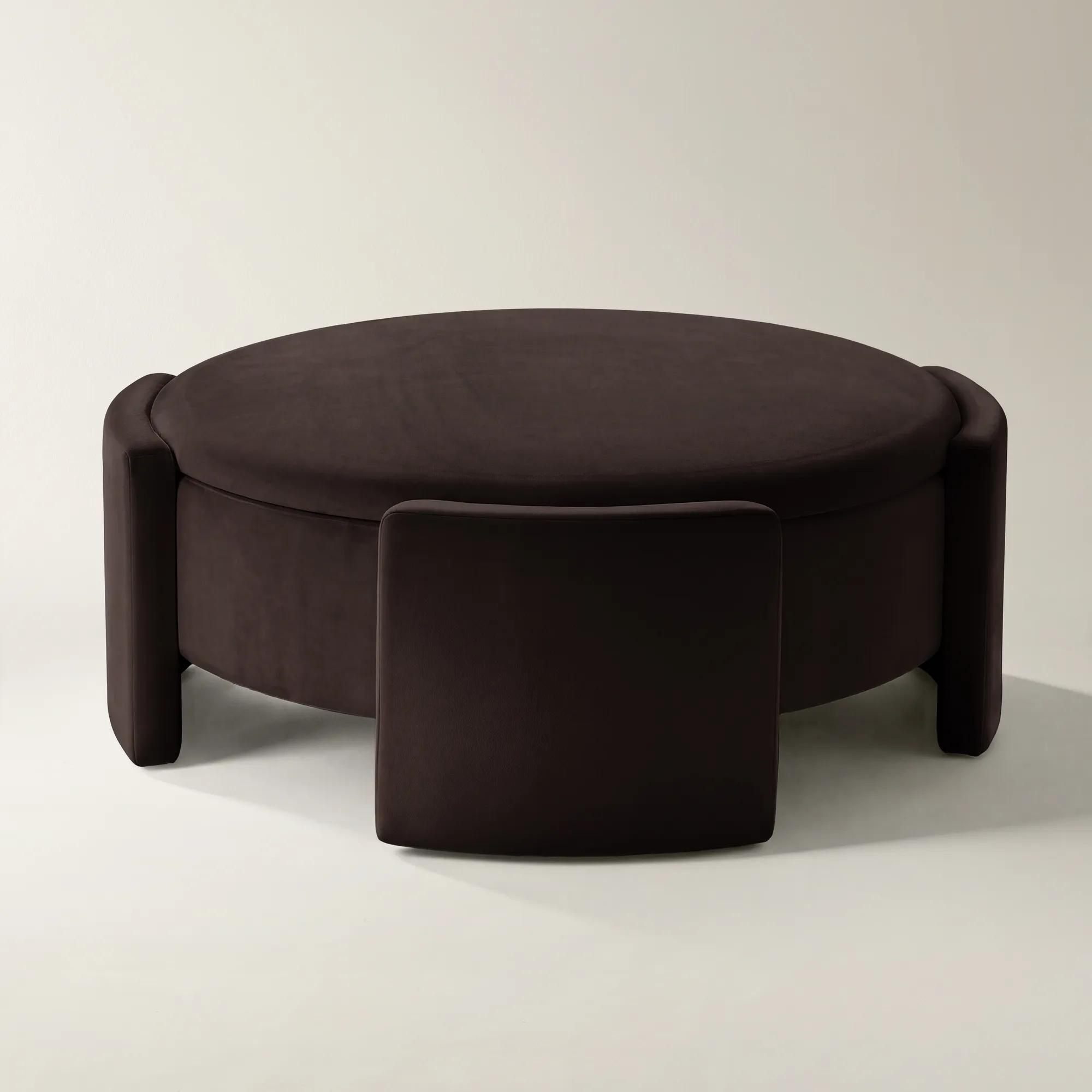
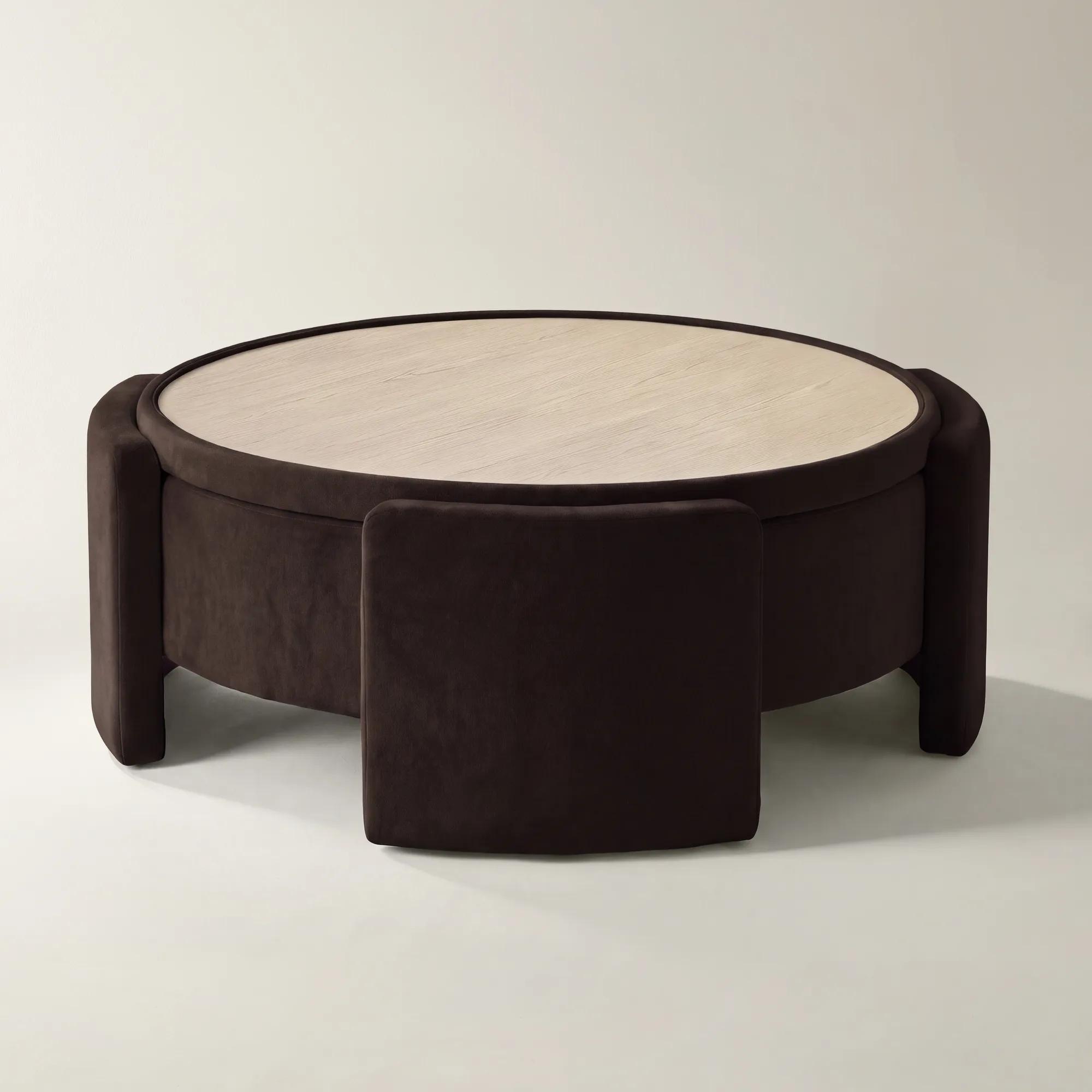 Jora Round Dark Chocolate Velvet Storage Coffee Table With Reversible Tabletop (47.7")$799
A dark chocolate velvet coffee table with hidden storage and a reversible velvet-and-rubberwood tabletop.
Add To Cart -
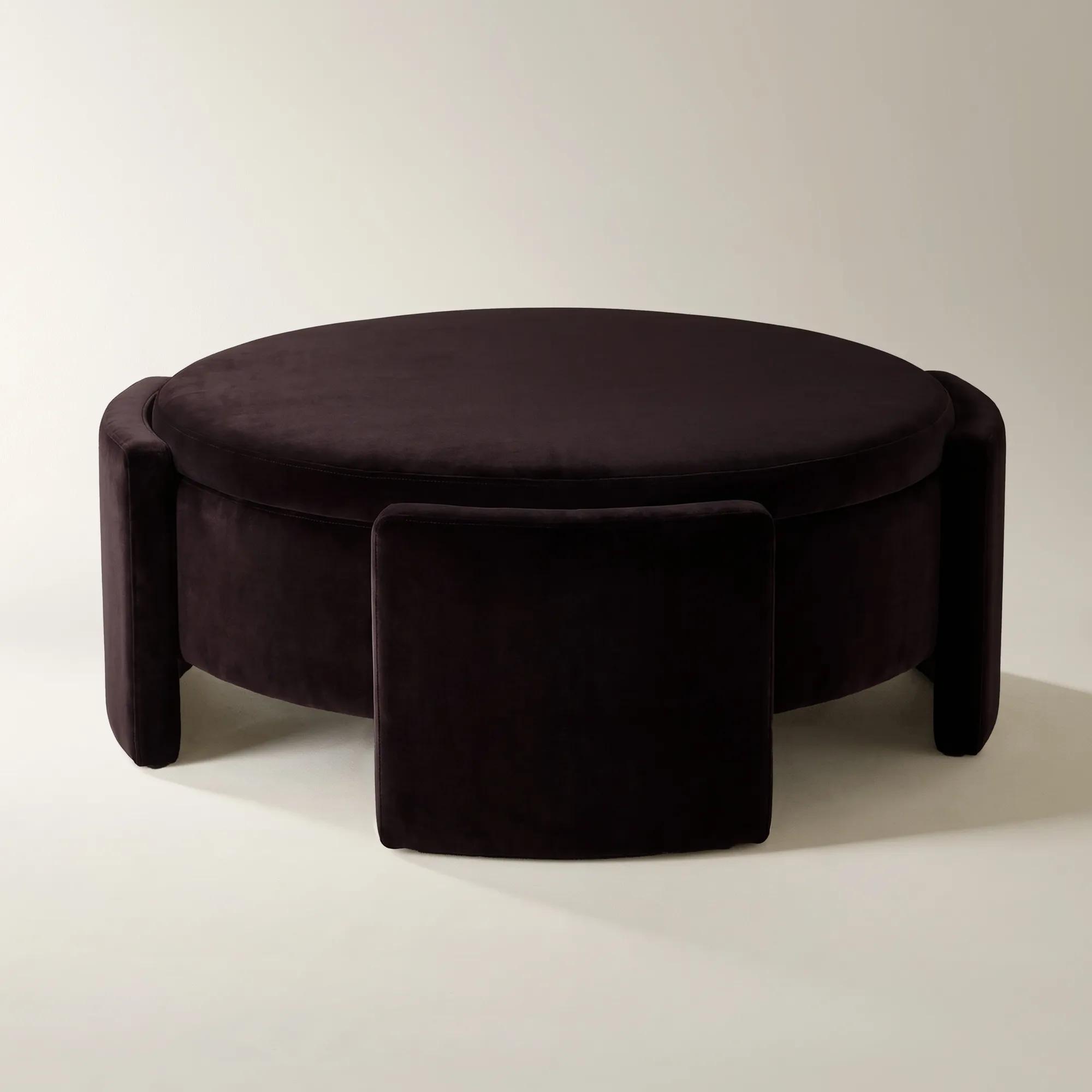
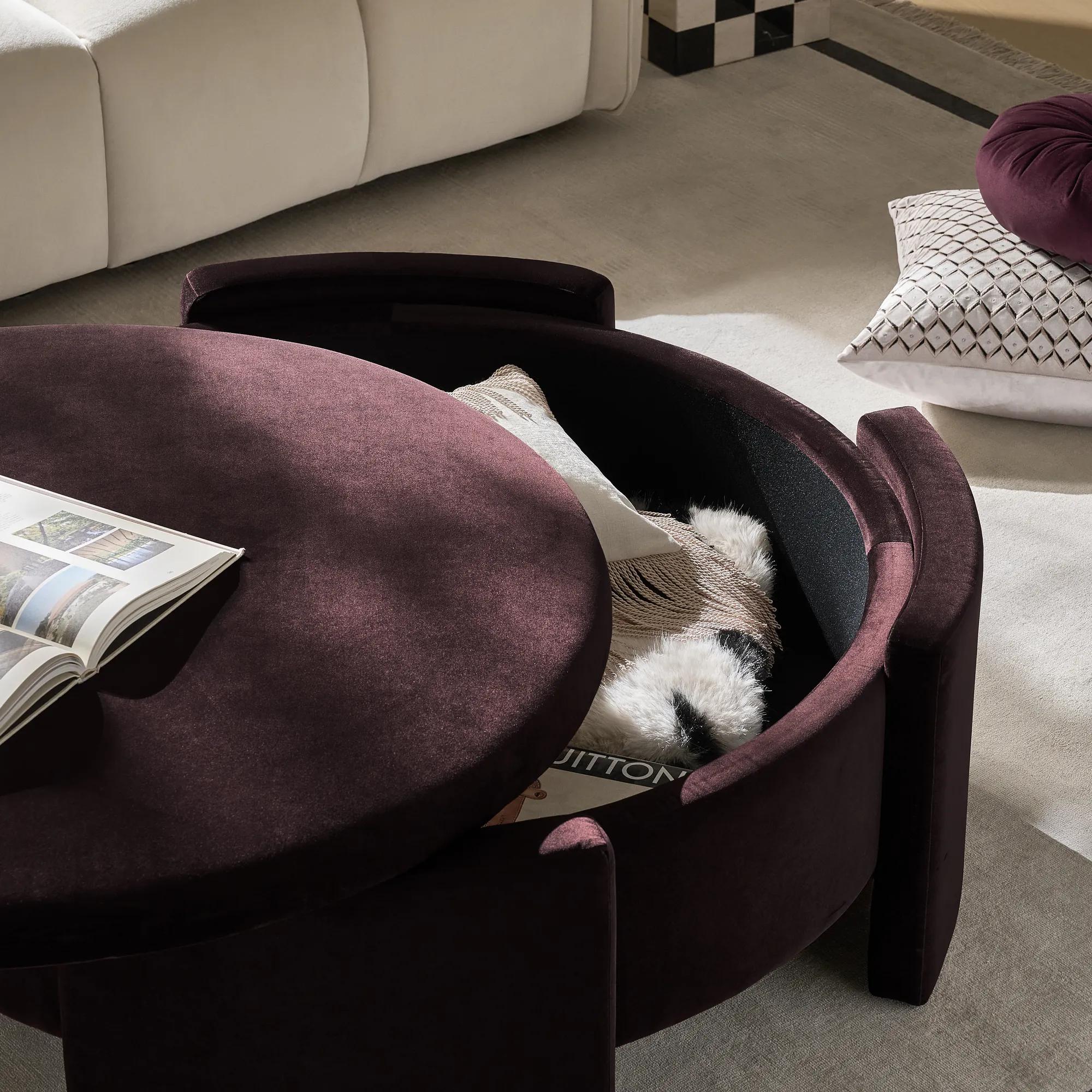 Jora Round Fig Velvet Storage Coffee Table With Reversible Tabletop (47.7")$799
A round fig velvet coffee table featuring a reversible wood tabletop and hidden interior storage.
Add To Cart -
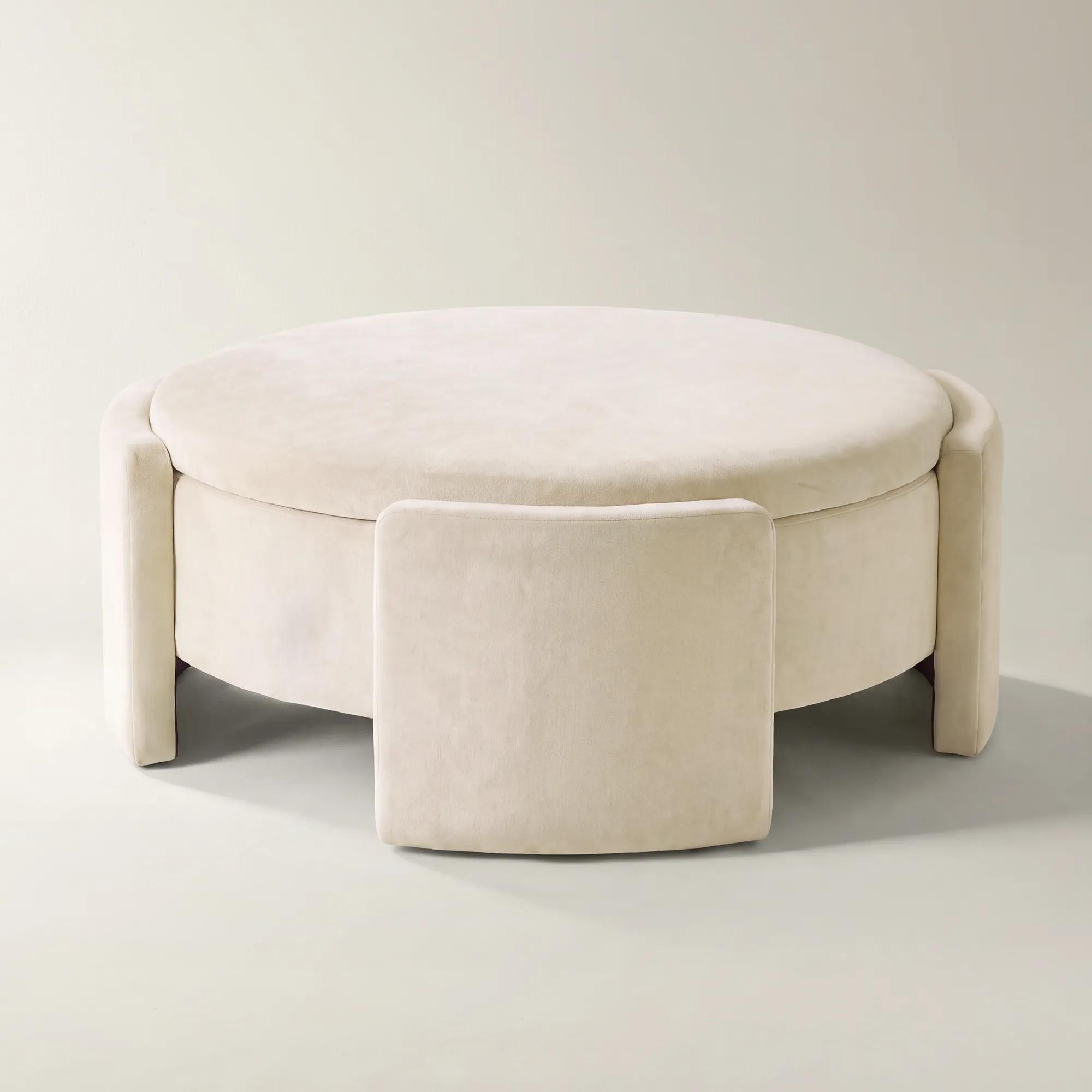
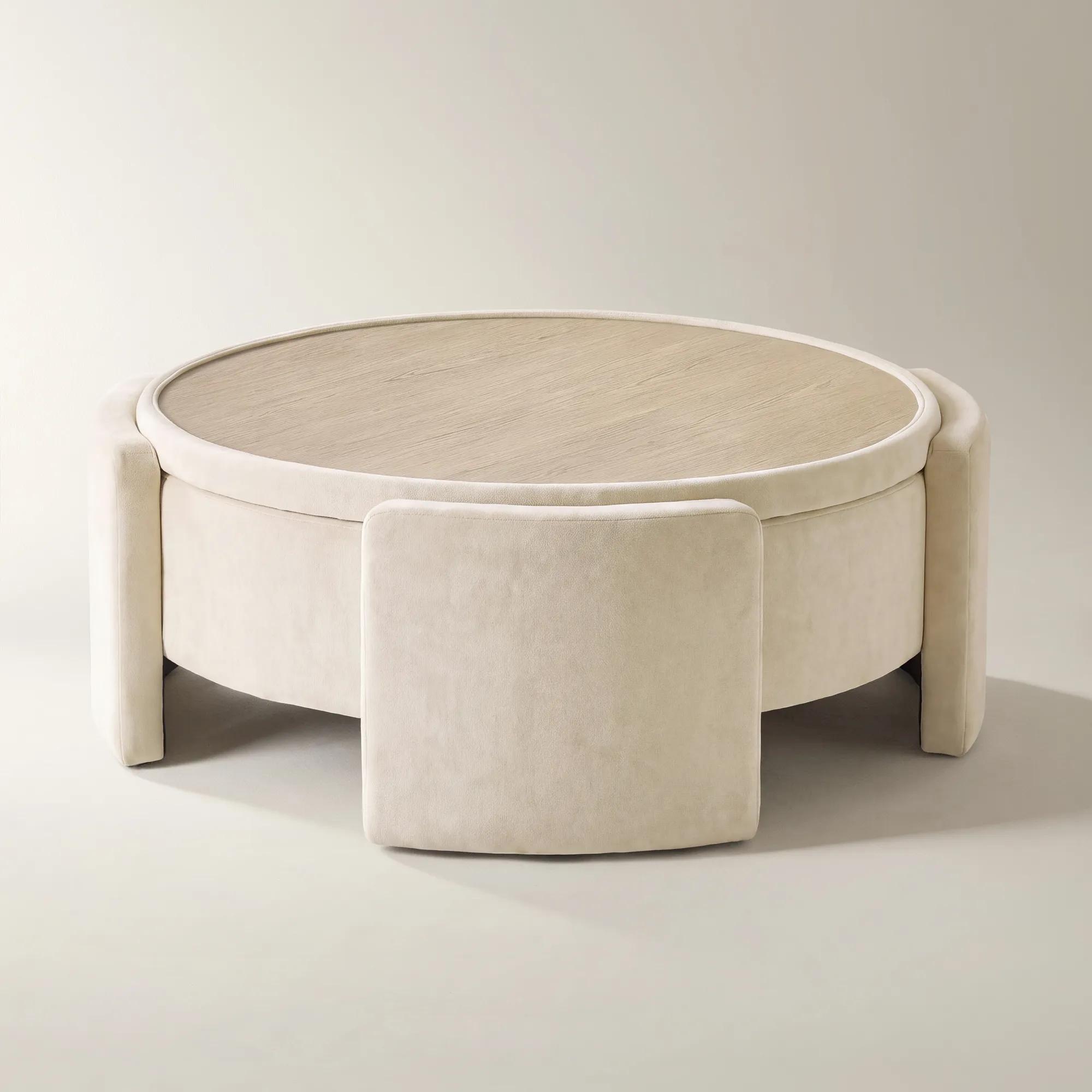 Jora Round Oatmeal Velvet Storage Coffee Table With Reversible Tabletop (47.7")$799
A round oatmeal velvet coffee table with hidden storage and a reversible velvet and wood tabletop.
Add To Cart -
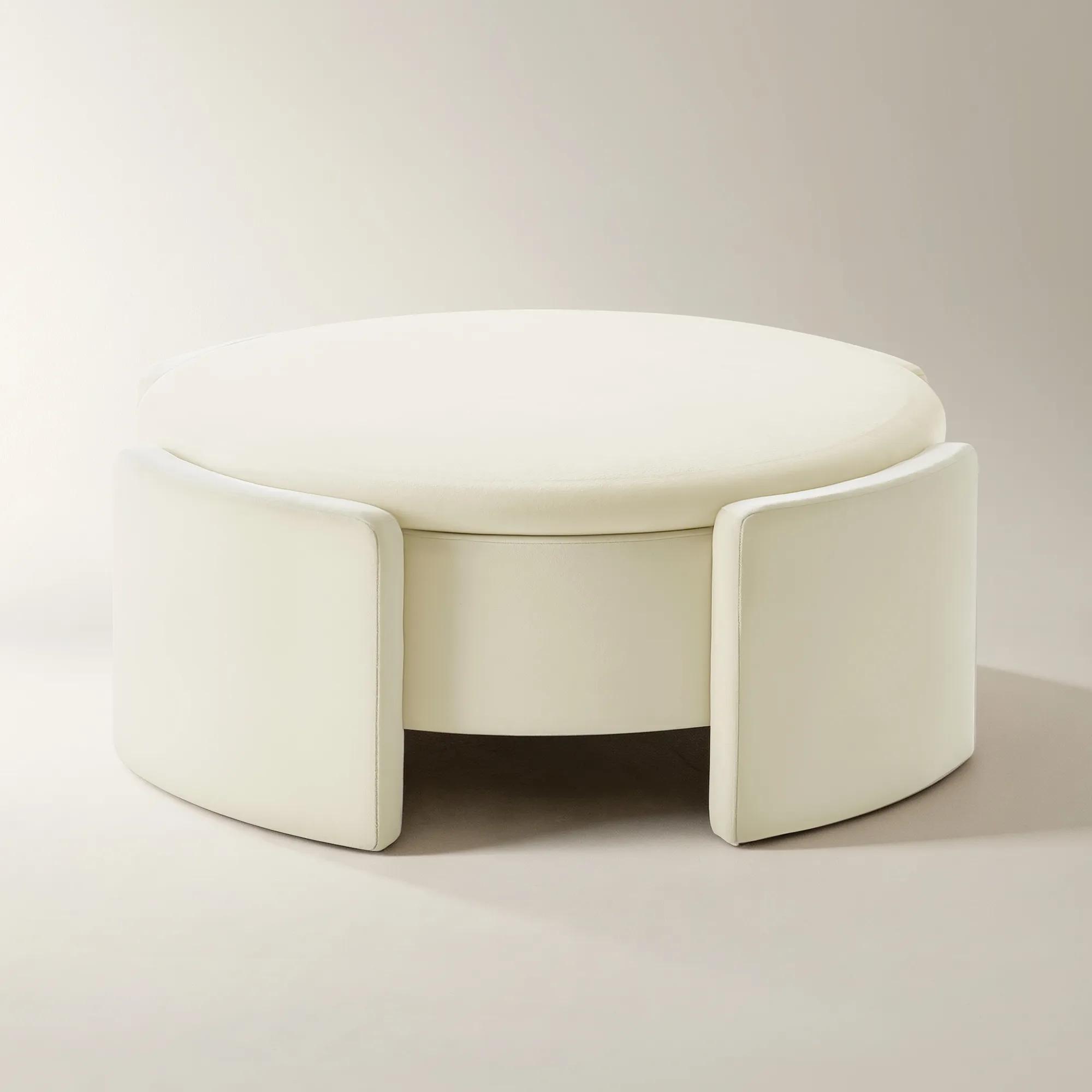
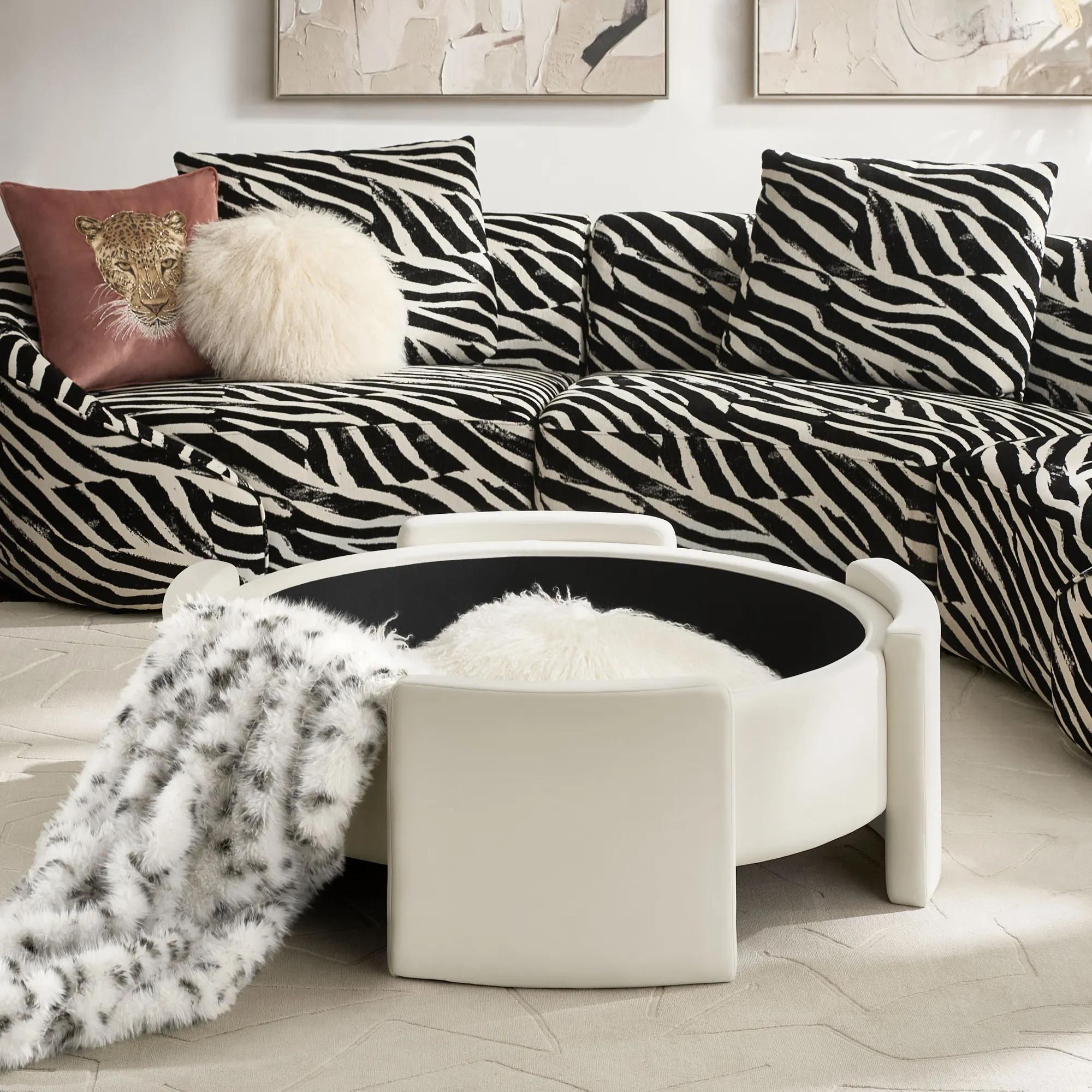 Jora Round Cloud Velvet Storage Coffee Table With Reversible Tabletop (47.7")$799
A round coffee table featuring plush velvet upholstery, reversible wood tabletop, and hidden interior storage.
Add To Cart

Round Coffee Tables With Concealed Storage | Z Gallerie
A round coffee table with concealed storage brings sculptural presence to your living room while keeping everyday essentials out of sight. Explore circular silhouettes that balance expressive design with hidden organization, leaving the surface ready for artful accents. Compare proportions, finishes, and storage access to choose a centerpiece that complements your seating and the way you unwind.
Round coffee tables with concealed storage bring a sculptural centerpiece and a discreet organizational layer to the living room. Their circular silhouette softens the lines of a sofa or sectional, while an enclosed compartment keeps everyday necessities out of the spotlight. The result is a surface that feels composed rather than crowded: a place for a dramatic vase, a favorite art book, and the evening’s refreshments, with less visual competition from remotes, chargers, and spare throws. Concealed storage can take several forms, including a lift-off lid, an integrated drawer, or a reversible tabletop that covers an interior compartment. Each configuration changes how the table functions. A broad interior cavity can accommodate folded blankets or larger accessories, while a drawer gives smaller essentials a defined home without requiring the entire tabletop to be cleared. Where a reversible top is part of the design, contrasting surfaces can introduce another layer of texture and versatility; the appropriate use of each side depends on its construction and care requirements. These distinctions matter in spaces that serve several purposes, from an apartment living room that doubles as a gathering place to a family lounge where games and reading materials circulate throughout the day. A round storage coffee table keeps those activities close at hand without making them the room’s defining feature. Its curved outline also offers a softer visual counterpoint to angular seating, geometric rugs, and architectural shelving. In a richly layered interior, that curve can feel especially expressive, balancing crisp upholstery with a generous, uninterrupted form. For someone who loves an artfully styled room but still needs practical places to put things, hidden storage supports both instincts. The beauty is not simply that belongings disappear; it is that the table preserves room for the objects worth displaying, giving a sculptural bowl or luminous accent the breathing space it deserves.
Materials and proportions give round coffee tables with hidden storage much of their character. Wood and wood veneers bring grain, tonal variation, and warmth to a circular form, while reeded or fluted detailing can turn the base into an architectural statement. Engineered wood may be used within the structure, sometimes beneath veneer or upholstery; overall durability depends on the quality of the construction, finish, joinery, and moving components rather than a single material label. Velvet or other upholstered exteriors introduce a sumptuous contrast to smooth tabletops, particularly alongside tailored seating and gleaming decorative accents. Metal trim can sharpen the silhouette with a restrained flash of light, allowing a substantial storage piece to feel polished rather than purely practical. Surface texture also influences the room’s mood: pronounced grain creates depth, a smooth finish emphasizes the circular shape, and channel-like detailing adds rhythm without relying on additional accessories. Beyond appearance, the right fit depends on the relationship between the table, the seating, and the routes through the room. A round outline has no projecting corners, but its full diameter still needs to leave comfortable passage around nearby furniture. Approximately 14 to 18 inches between the table and seating is a common starting point, with additional room needed wherever drawers open or people regularly pass. A tabletop near the height of the sofa cushions generally keeps drinks and reading materials within comfortable reach. In a sectional arrangement, the most useful position allows access from the seats used most often without obstructing the main walkway. Storage access deserves equal consideration: a removable lid needs a convenient place to rest, while a drawer requires unobstructed clearance in its opening direction. Interior dimensions matter more than the exterior silhouette when the goal is to stow a particular throw, game box, or stack of magazines. A substantial drum-shaped table may create a bold visual anchor, but its usable capacity will depend on the thickness of its walls, its base construction, and the storage mechanism inside.
Thoughtful care helps preserve the finish, texture, and movement that make a concealed-storage coffee table satisfying to use. Coasters and protective trays provide a barrier beneath beverages, while spills are best addressed promptly using the cleaning method specified for the material. Wood and veneered surfaces generally benefit from a soft cloth and protection from standing moisture, excessive heat, and abrasive cleaners. Upholstered sections require fabric-appropriate care; a velvet exterior, for example, should not automatically be treated with the same cleaner used on a wood top. Direct sunlight can affect some finishes and fabrics over time, making placement part of long-term care as well as room composition. Drawers, lids, and reversible surfaces should be handled as intended, with attention to weight limits and any instructions for moving or lifting components. An upholstered appearance alone does not mean a table is designed for sitting, and concealed compartments are not a substitute for storage intended for medications, sharp objects, or other belongings that require secure access. For everyday organization, a few small containers inside the compartment can separate charging cords from remotes and keep delicate accessories from shifting against heavier objects. On top, a tray can gather frequently used pieces into a single arrangement, though a lift-off design works best when the display remains easy to move. A lower arrangement of objects maintains sightlines across the room, allowing the table’s rounded profile and surface detailing to remain visible. This balance of expressive form and discreet function can extend beyond the main seating area; the Bedroom Storage Stools | Z Gallerie collection brings a related approach to dressing spaces and bedroom vignettes. Within the living room, a round coffee table with concealed storage gives everyday rituals an elegant setting, holding the necessities of a well-used space beneath a surface that remains ready for conversation, entertaining, or a quiet hour with a book. Its presence can be bold, its contents discreet, and its role unmistakably central to the room.
FAQs
Concealed storage keeps contents behind a drawer front or beneath a tabletop rather than on display. It lets the table’s silhouette take visual priority, while an open shelf makes books and accessories part of the room’s decorative composition.
Consider how you prefer to reach your essentials. A drawer may allow access without disturbing the tabletop arrangement, while a compartment beneath the top may require moving decorative objects first. Review each design’s opening method and interior layout before choosing.
Start with the objects you regularly use near your seating, such as remotes, reading material, or small entertainment accessories. Group similar items together, and reserve space for folded throws only if the compartment’s dimensions accommodate them.
Create a focused arrangement with a few pieces of contrasting heights, leaving the opening area unobstructed. For designs accessed beneath the tabletop, gathering accents on a tray can make the arrangement easier to move before opening the compartment.
A coordinated room does not require matching finishes. Repeat a color or texture from your seating for cohesion, or introduce a contrasting material to give the table a distinct presence. Let one element command attention while the surrounding pieces enrich the composition.