Contemporary Coffee Tables With Storage
Contemporary Coffee Tables With Storage
-
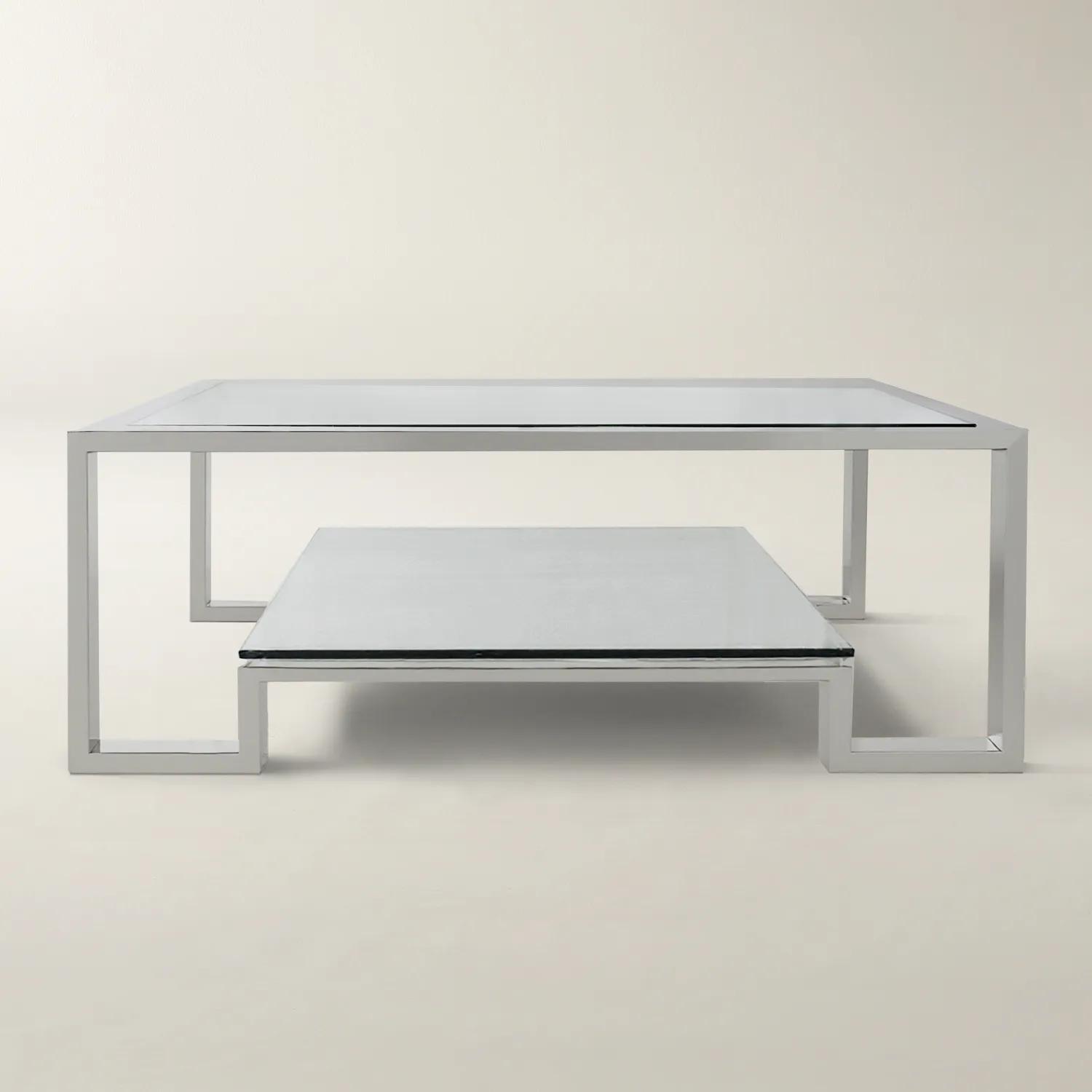
 Duplicity Rectangular Silver Stainless Steel Coffee Table With Glass Top (50")$1399
A modern coffee table featuring a stainless steel frame, tempered glass top, and floating bottom shelf.
Add To Cart -
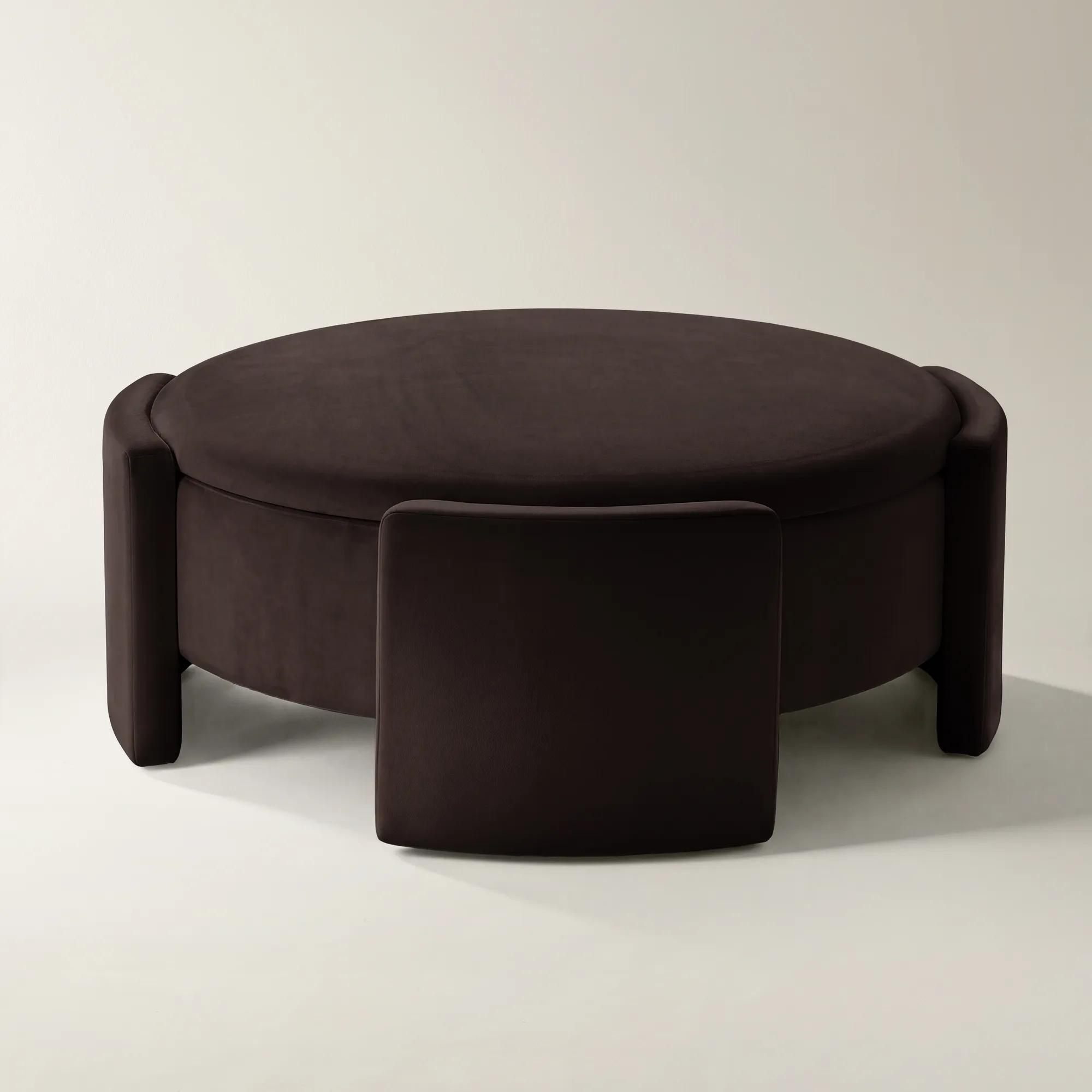
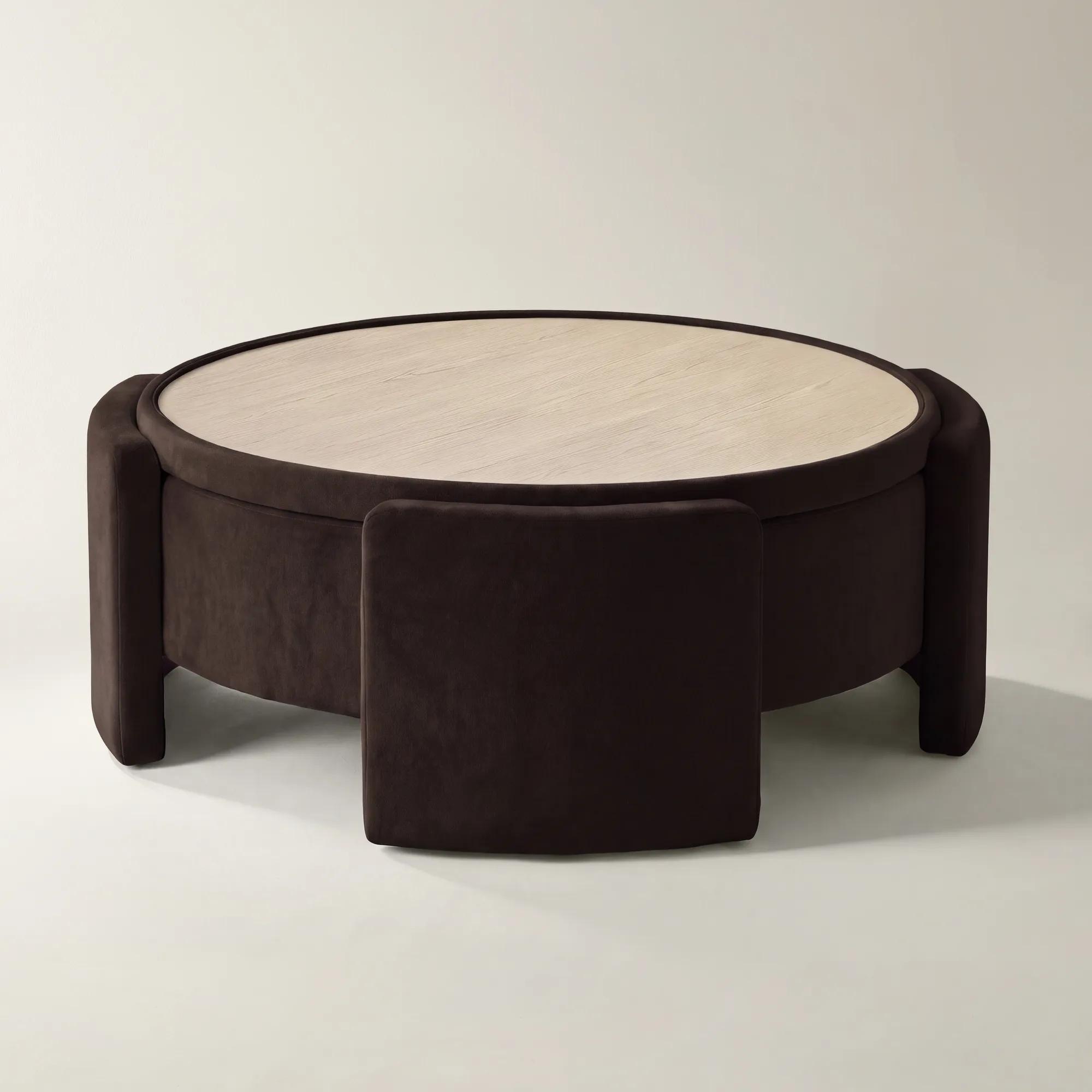 Jora Round Dark Chocolate Velvet Storage Coffee Table With Reversible Tabletop (47.7")$799
A dark chocolate velvet coffee table with hidden storage and a reversible velvet-and-rubberwood tabletop.
Add To Cart -
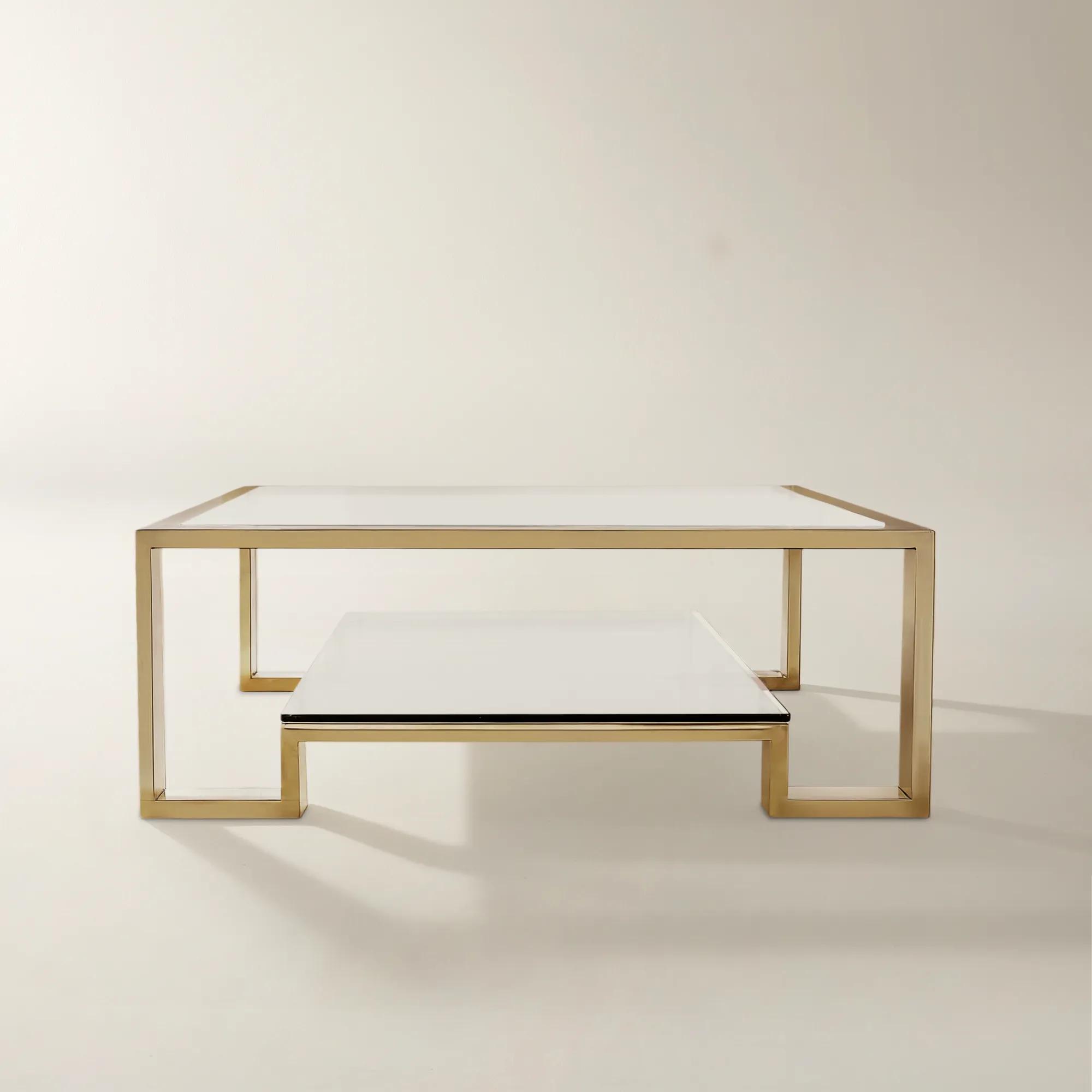 Duplicity Rectangular Gold Stainless Steel Coffee Table With Glass Top (50")$1399
A modern coffee table featuring a stainless steel frame, tempered glass top, and floating storage shelf.
Add To Cart -
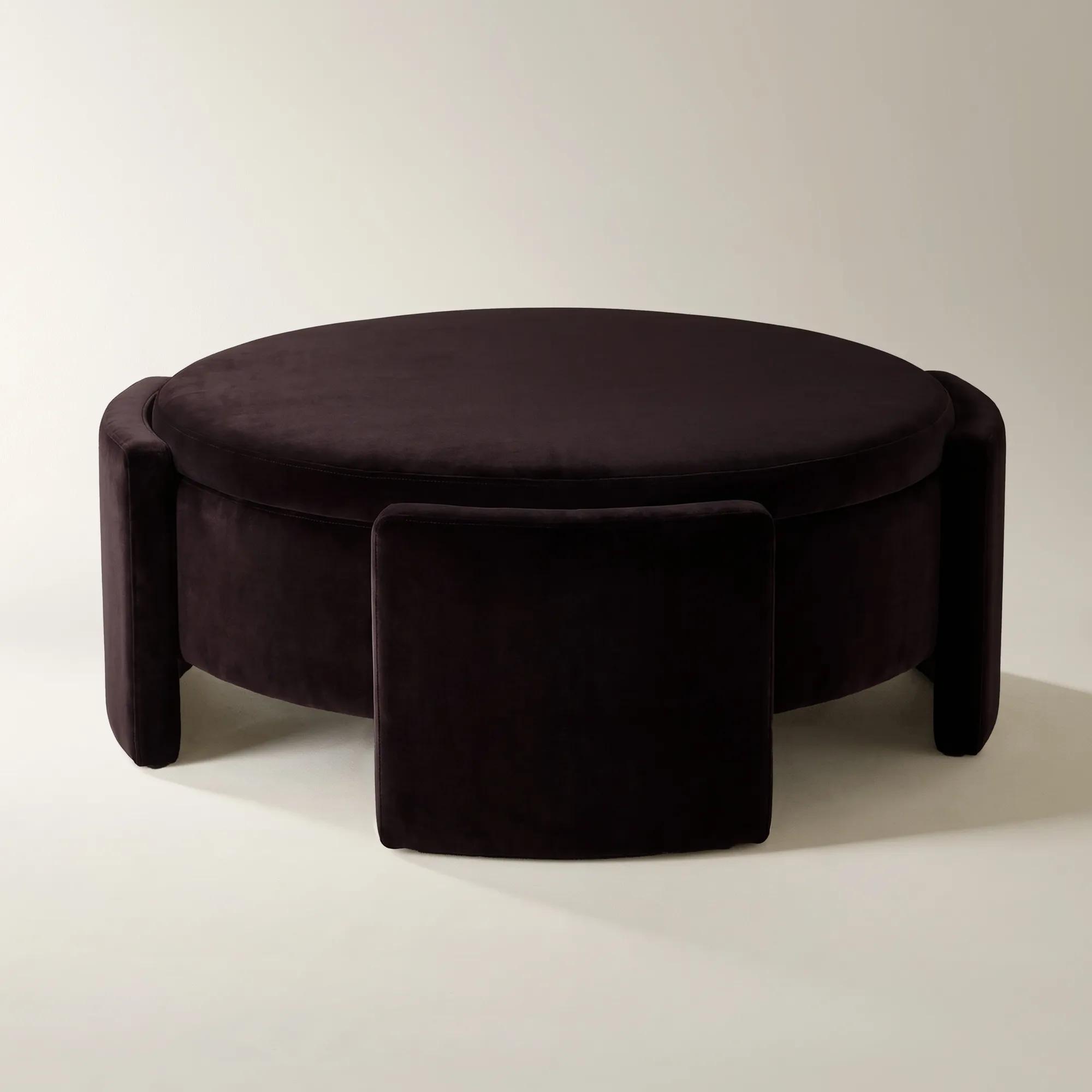
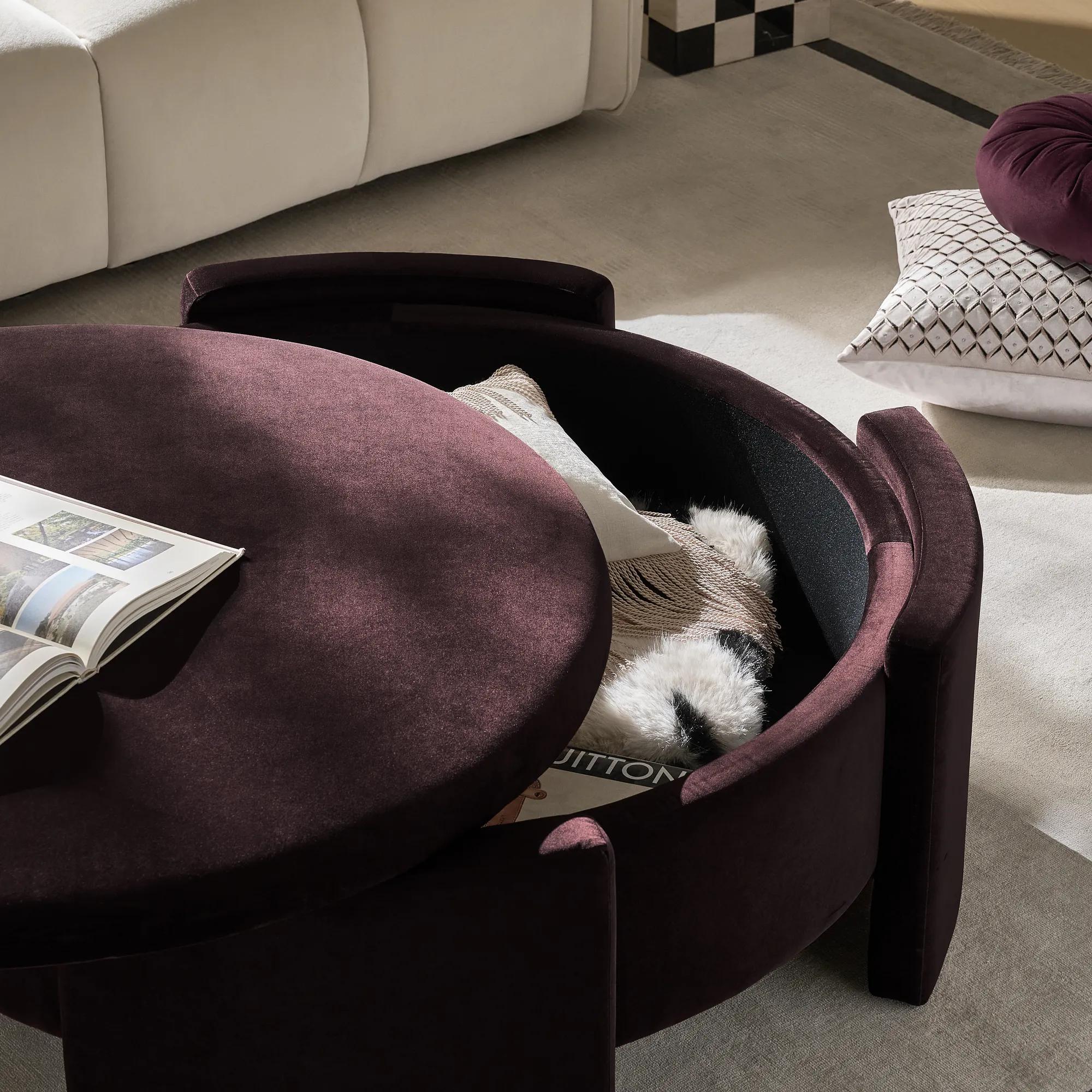 Jora Round Fig Velvet Storage Coffee Table With Reversible Tabletop (47.7")$799
A round fig velvet coffee table featuring a reversible wood tabletop and hidden interior storage.
Add To Cart -
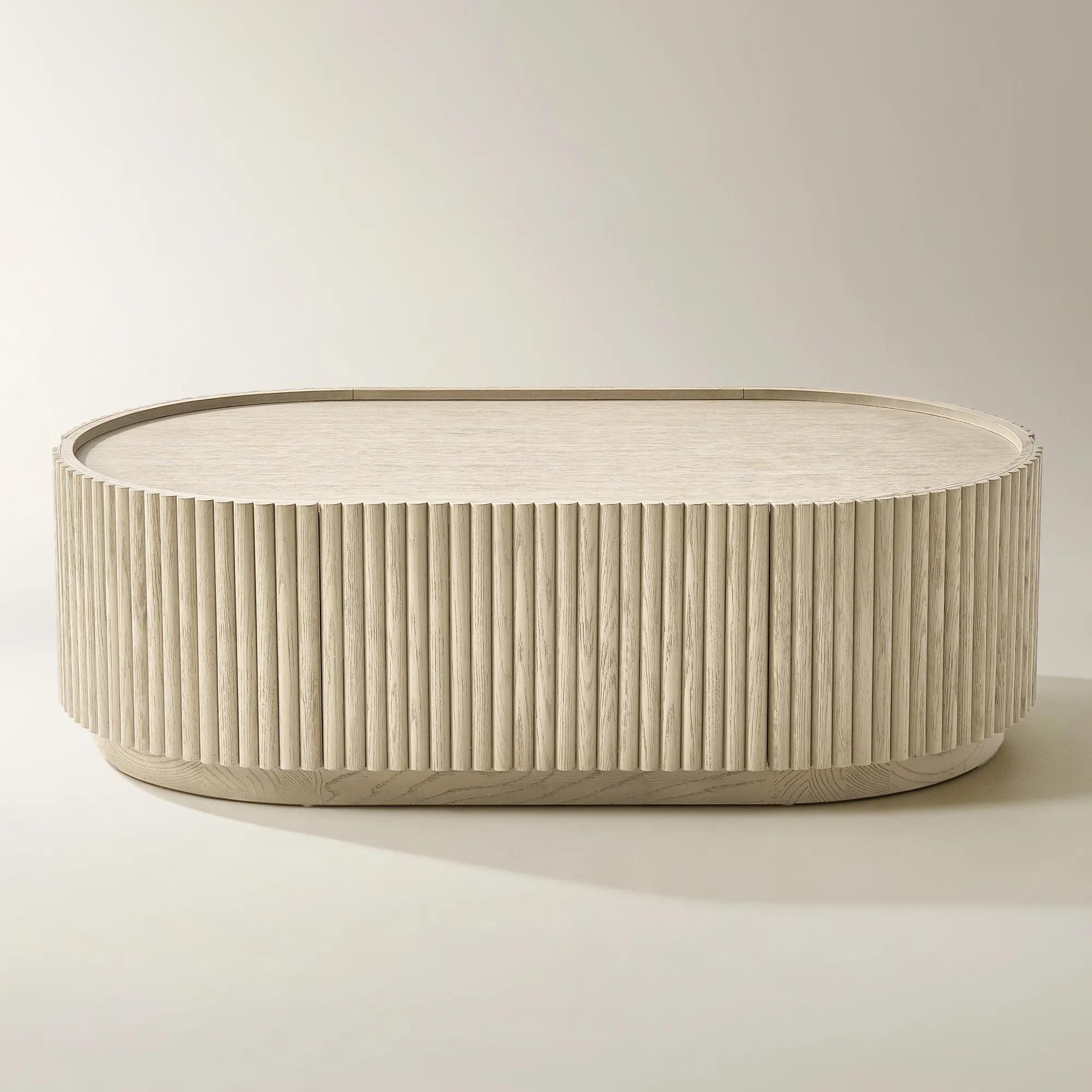
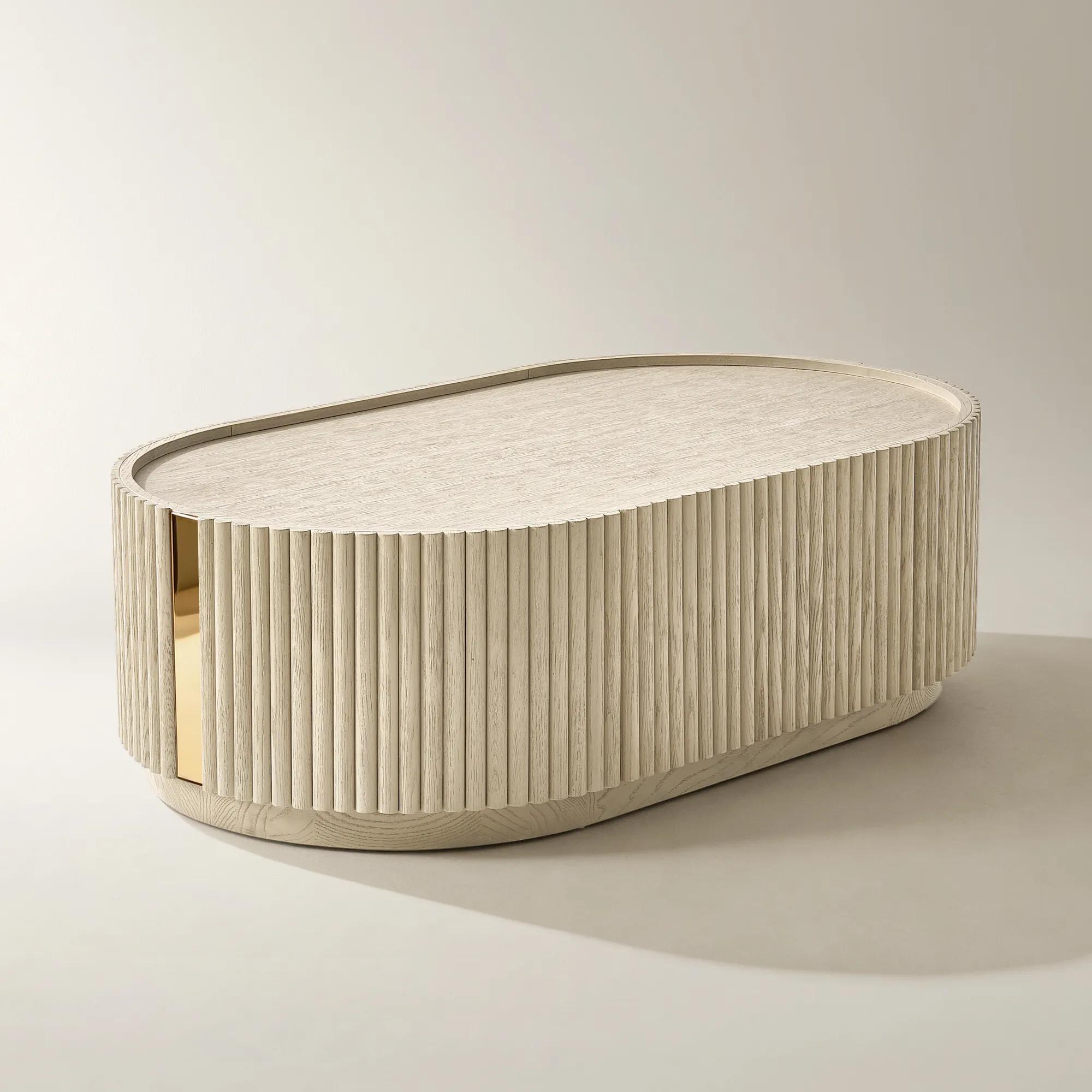 Stria Oval Reeded White Oak Coffee Table with Drawer (52")$1399
A reeded white oak coffee table with soft gold accents, recessed tabletop, and concealed soft-close drawer.
Add To Cart -
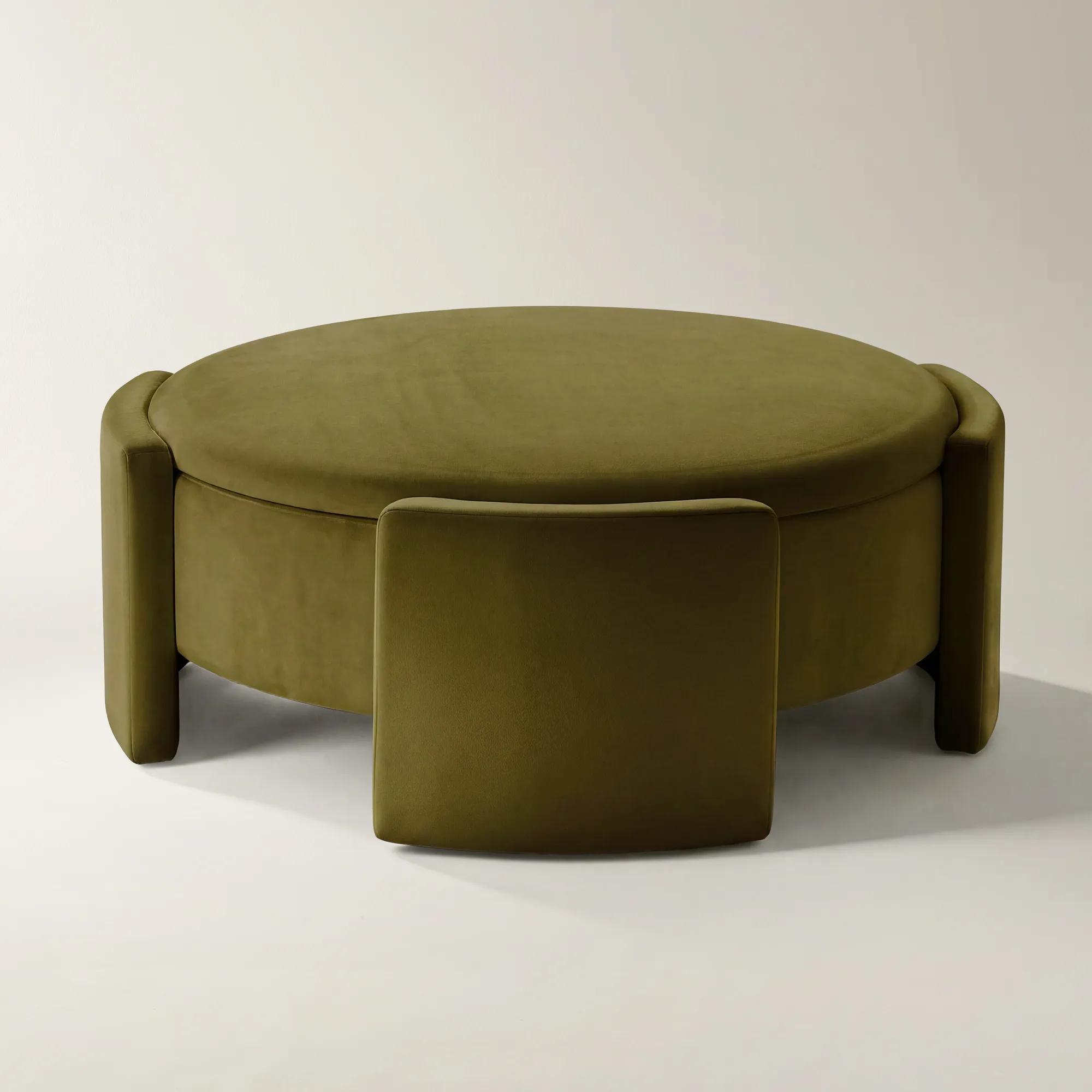
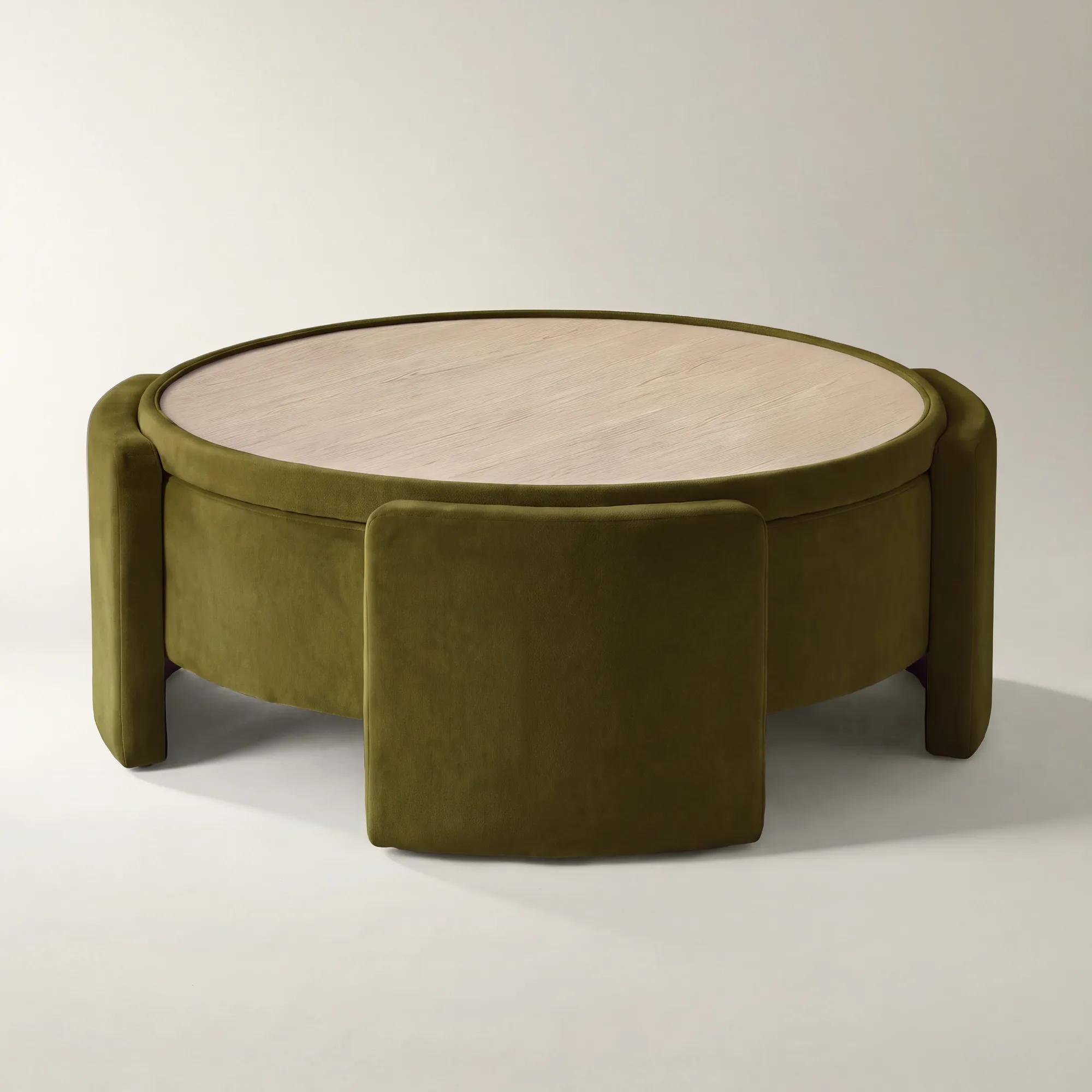 Jora Round Deep Olive Velvet Storage Coffee Table With Reversible Tabletop (47.7")$799
A deep olive velvet coffee table with a reversible tabletop and hidden storage.
Add To Cart -
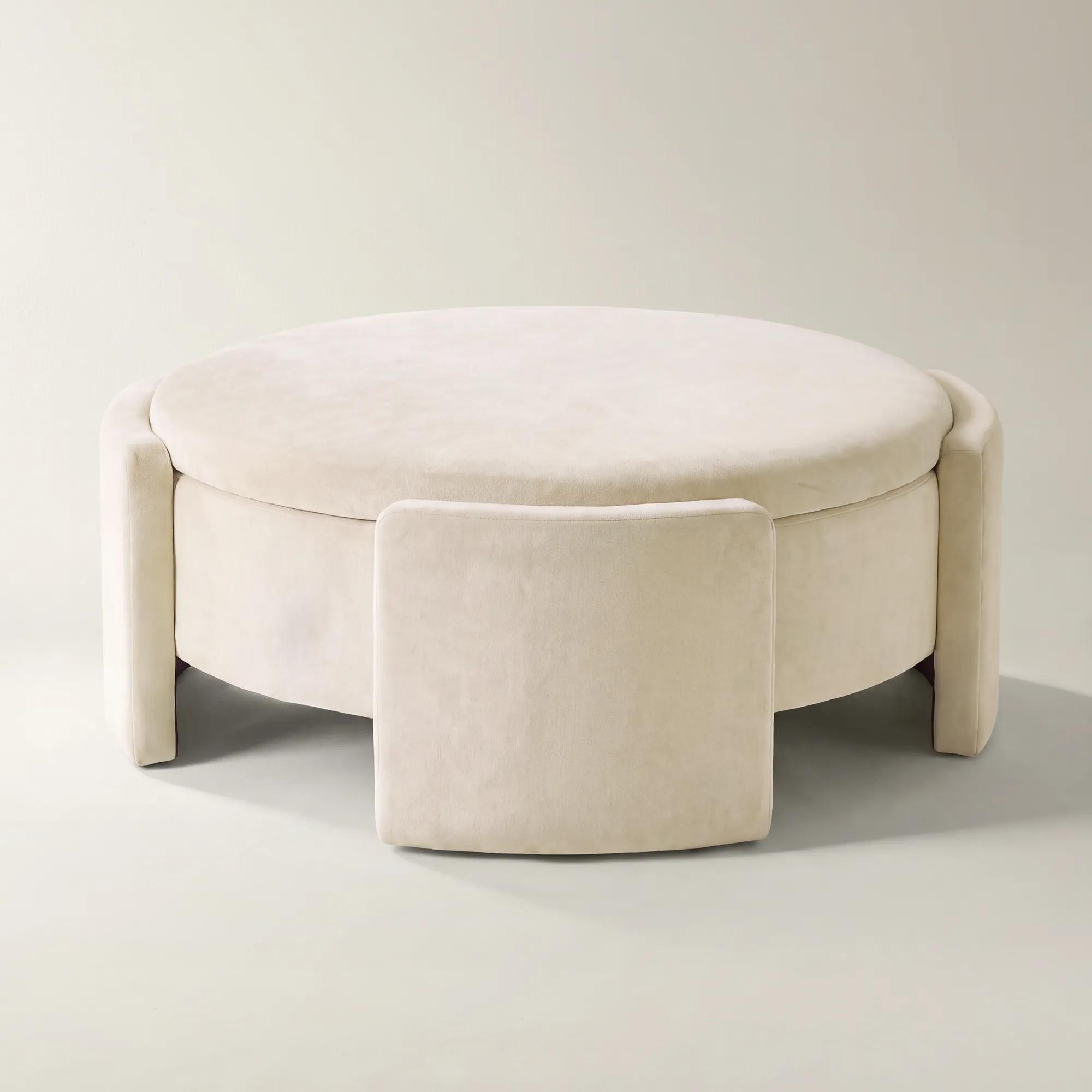
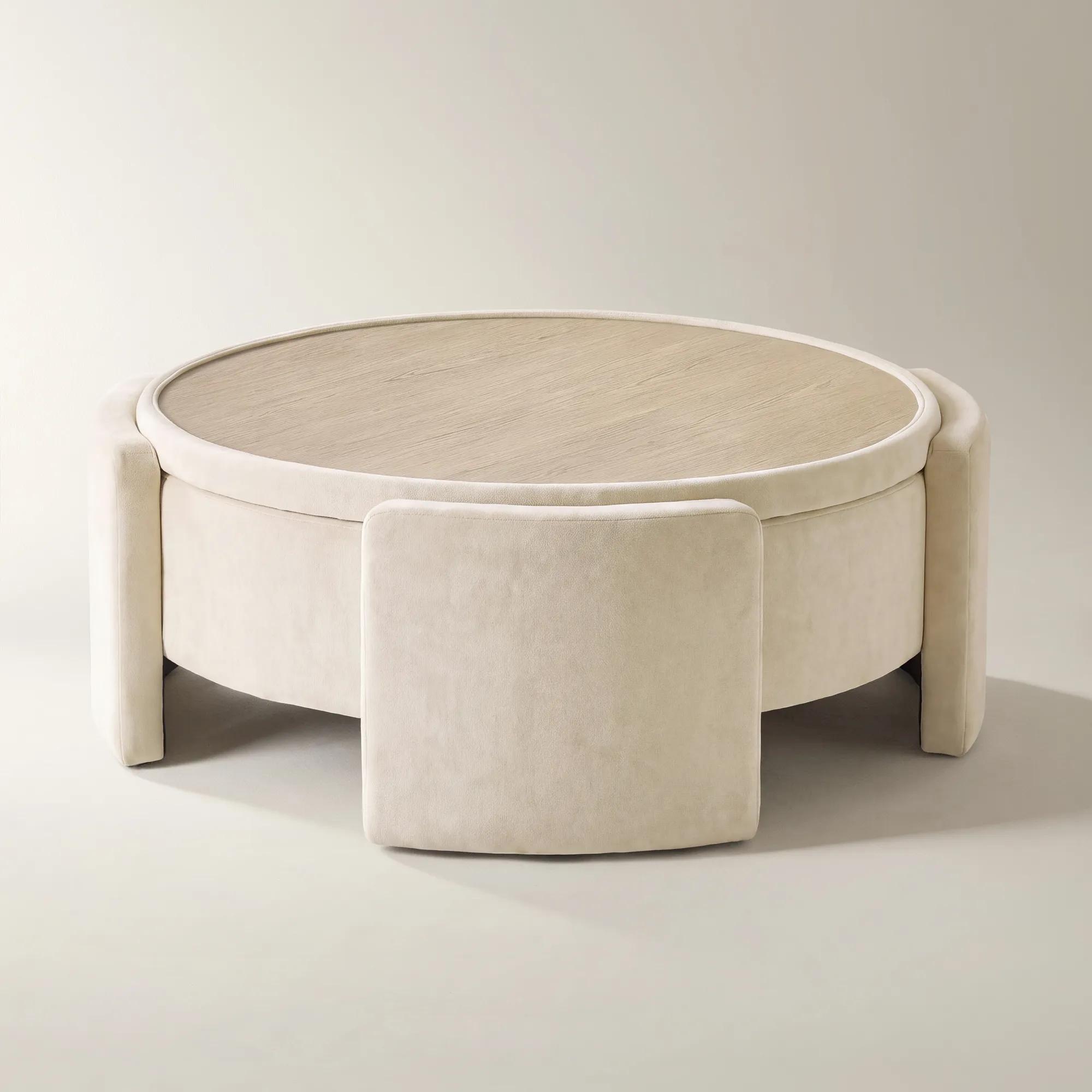 Jora Round Oatmeal Velvet Storage Coffee Table With Reversible Tabletop (47.7")$799
A round oatmeal velvet coffee table with hidden storage and a reversible velvet and wood tabletop.
Add To Cart -
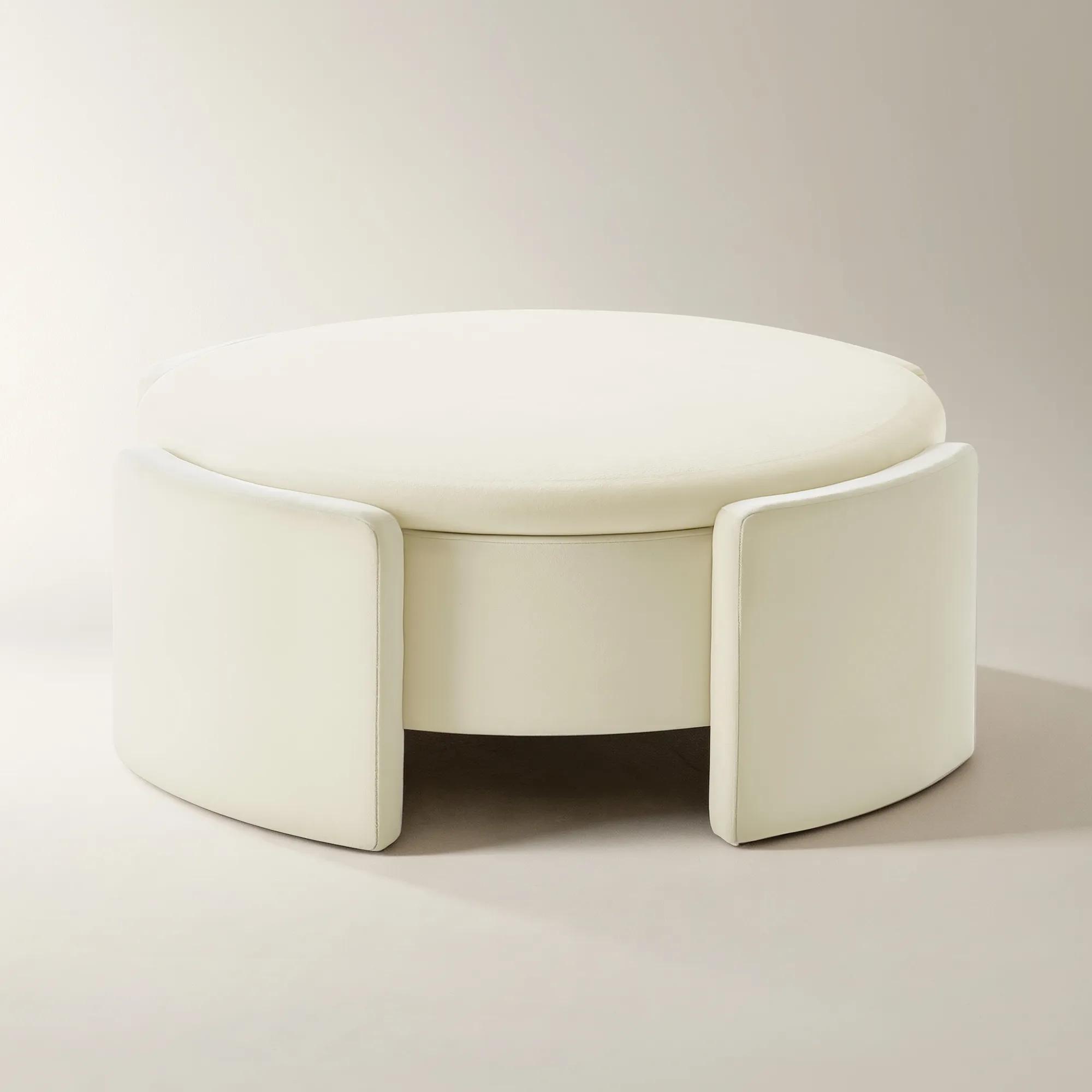
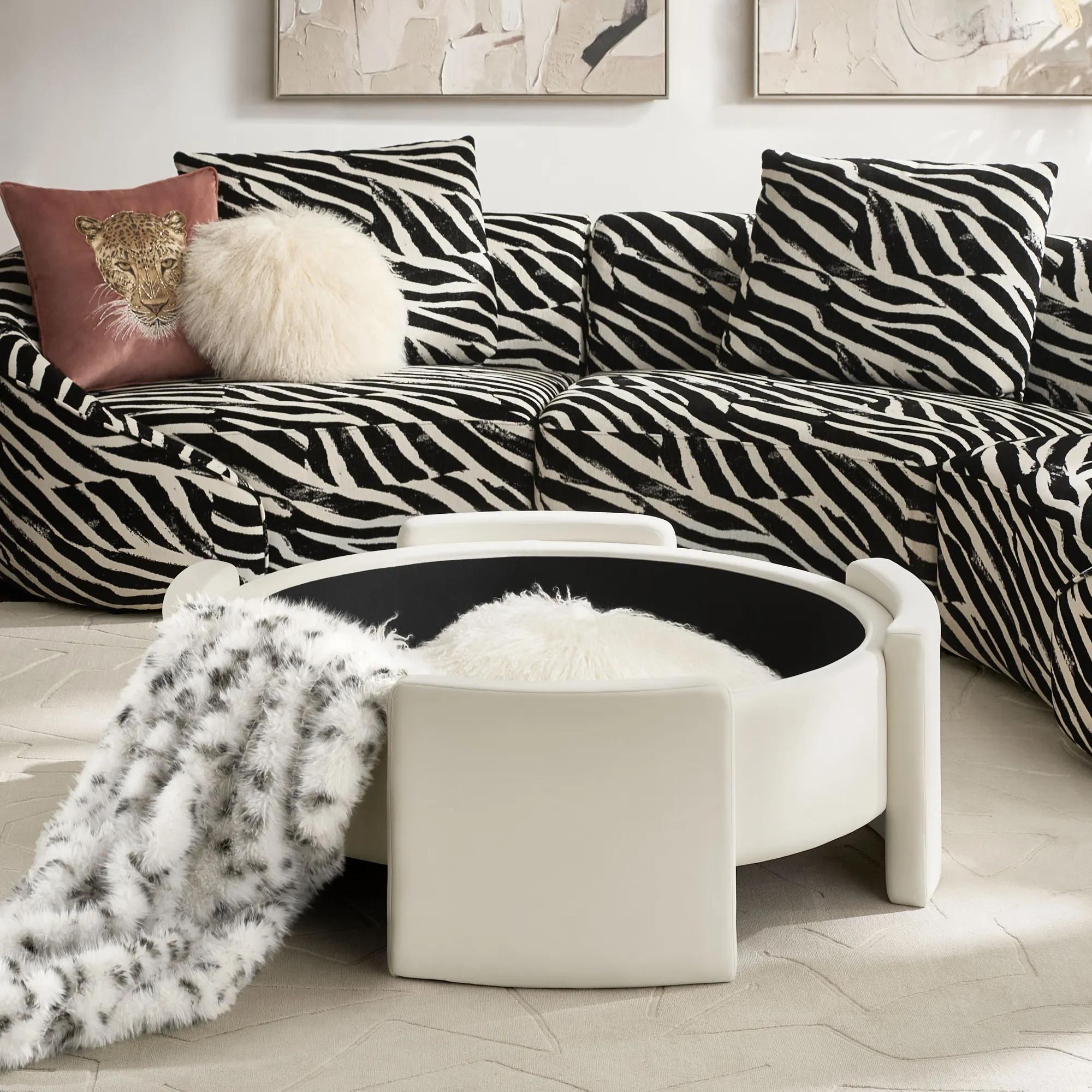 Jora Round Cloud Velvet Storage Coffee Table With Reversible Tabletop (47.7")$799
A round coffee table featuring plush velvet upholstery, reversible wood tabletop, and hidden interior storage.
Add To Cart -
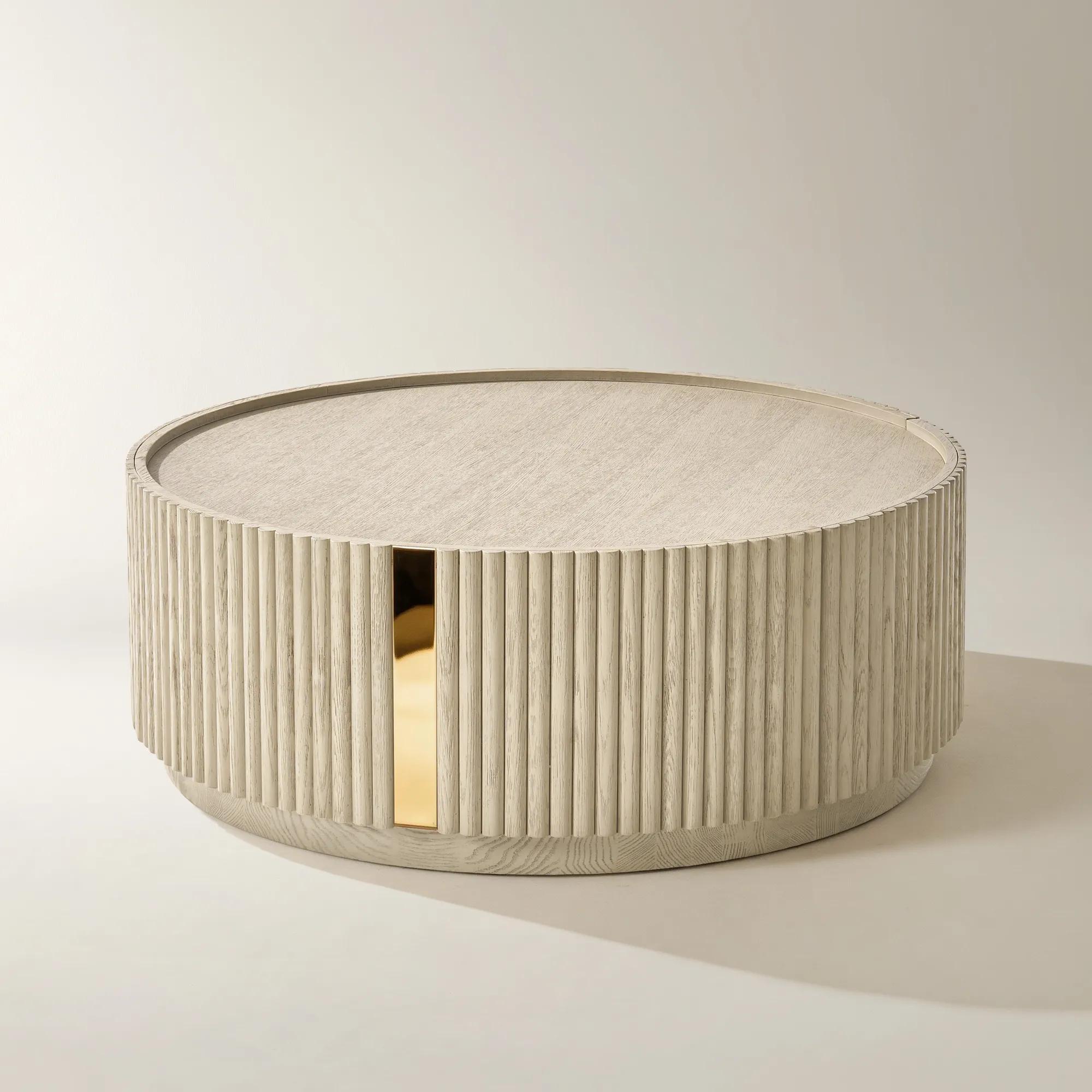 Stria Round Reeded White Oak Coffee Table with Drawer (42.3")$1499
A round coffee table featuring reeded white oak, soft gold metal trim, and a concealed soft-close drawer.
Add To Cart -
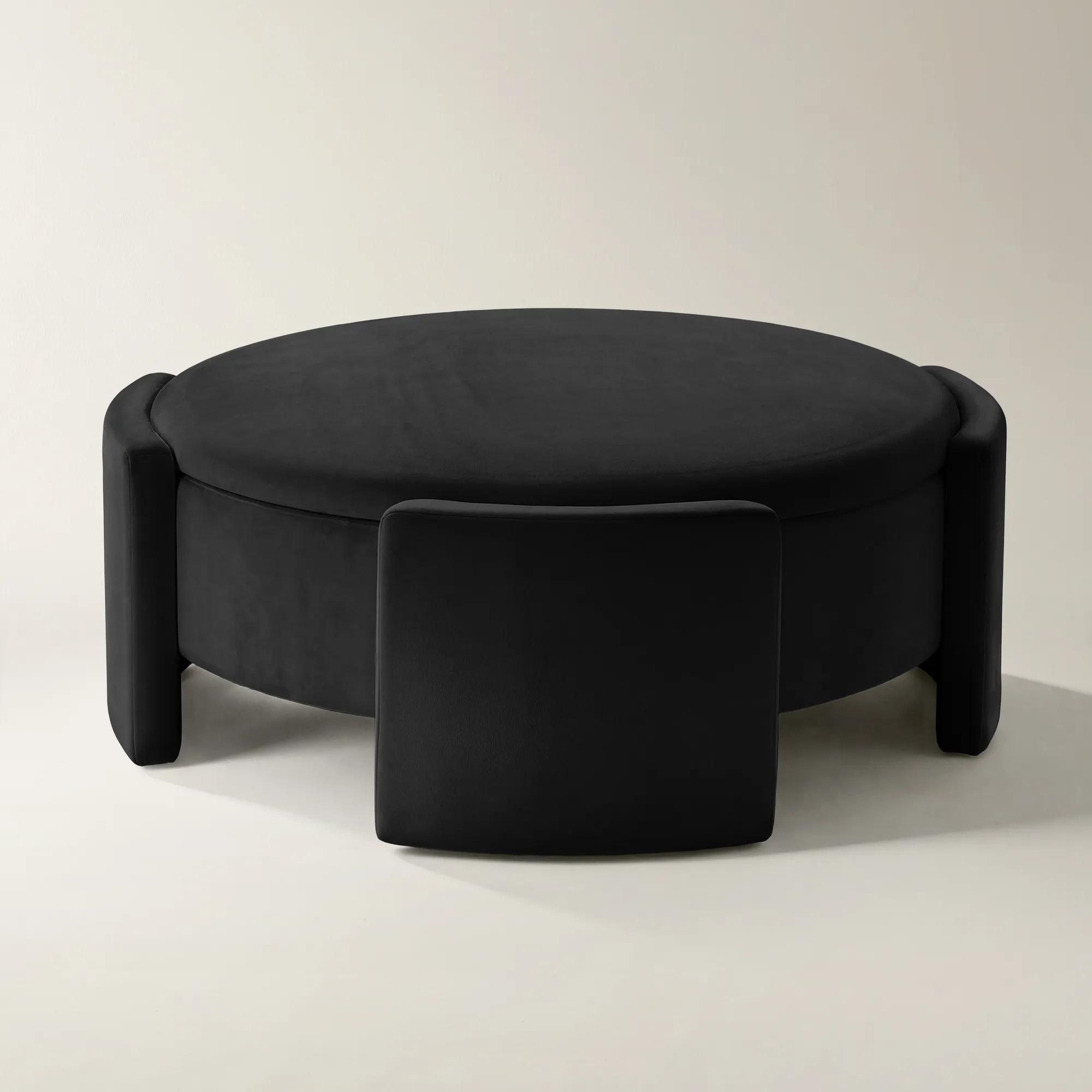
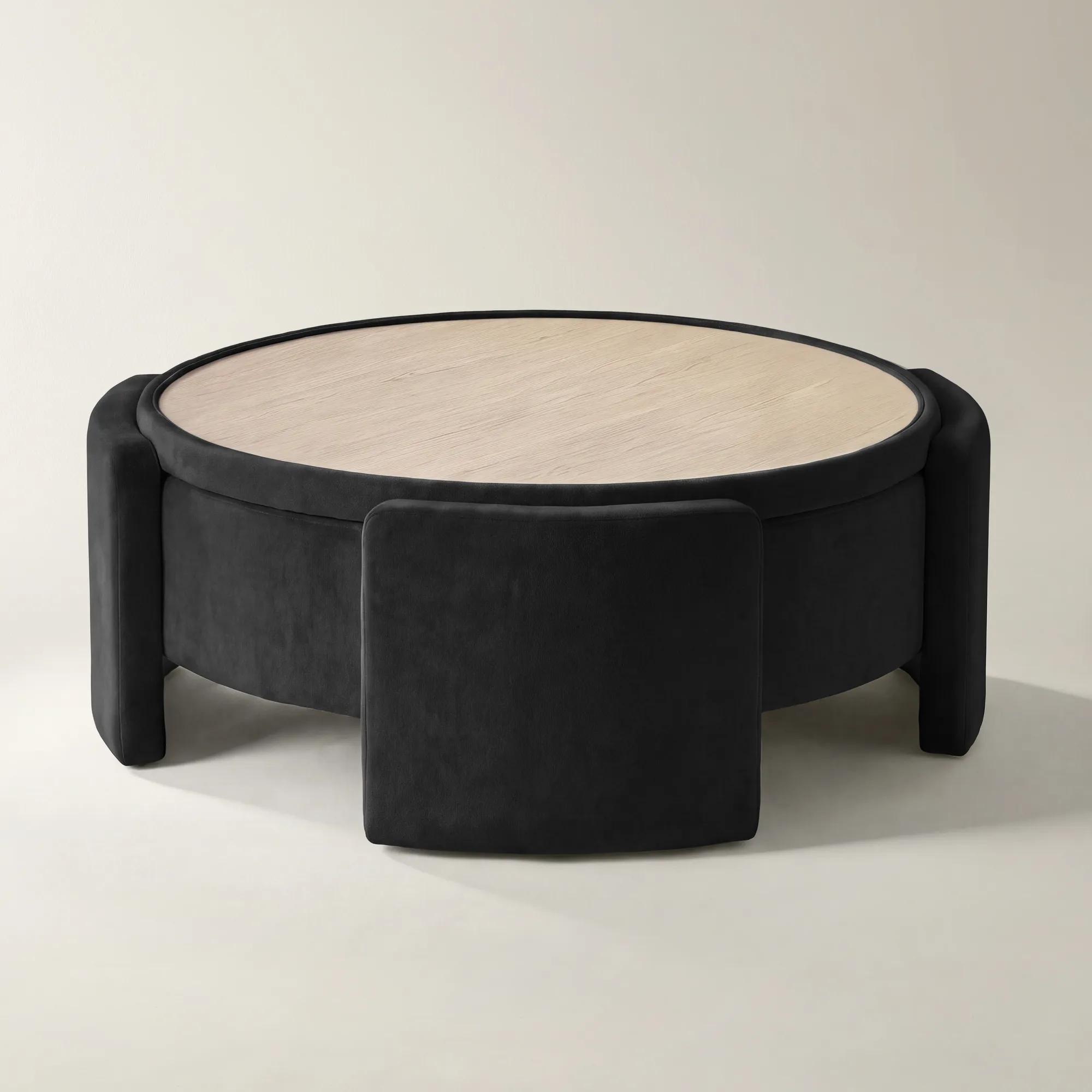 Jora Round Charcoal Velvet Storage Coffee Table With Reversible Tabletop (47.7")$799
A charcoal velvet coffee table with reversible wood veneer tabletop offers hidden storage and sculptural style.
Add To Cart -
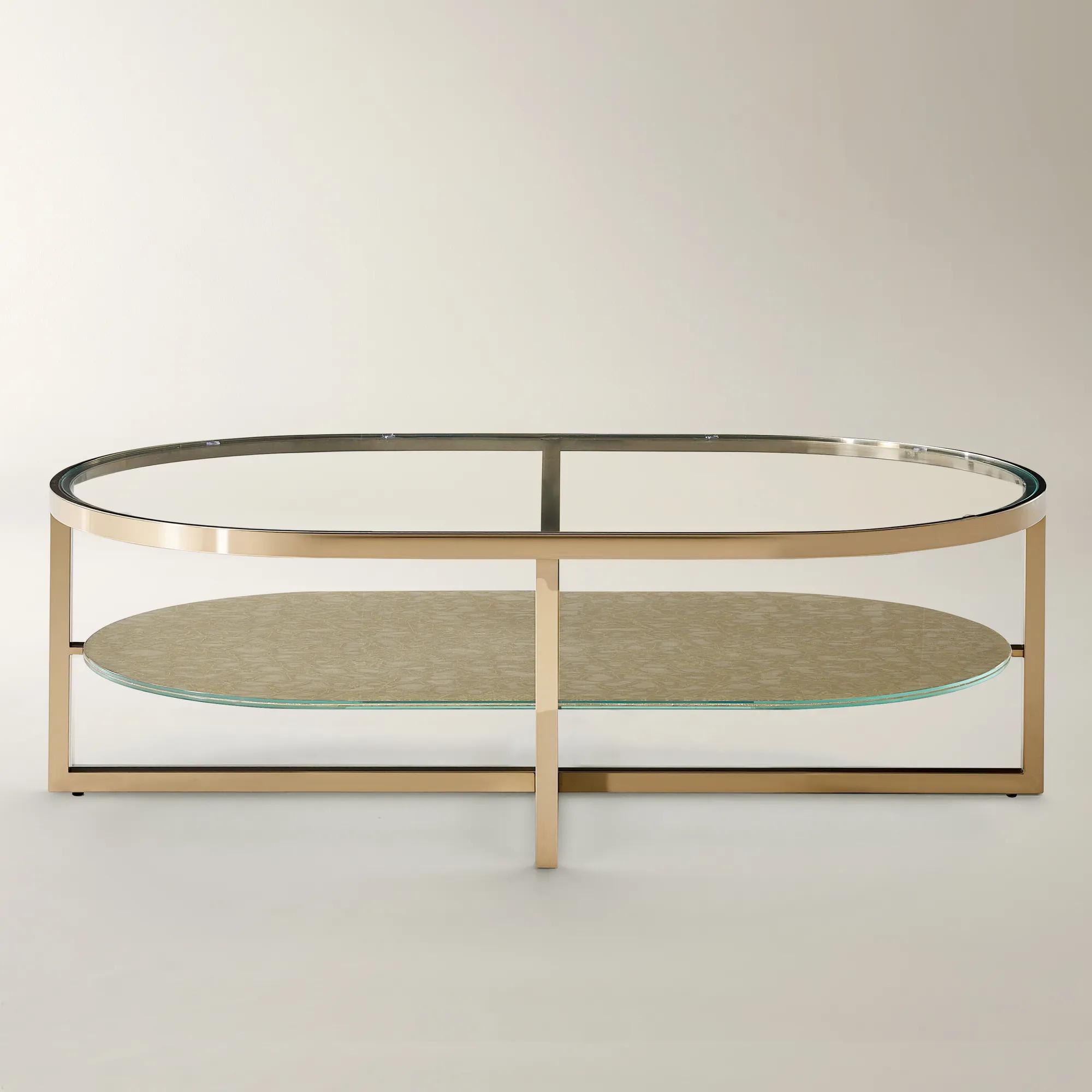
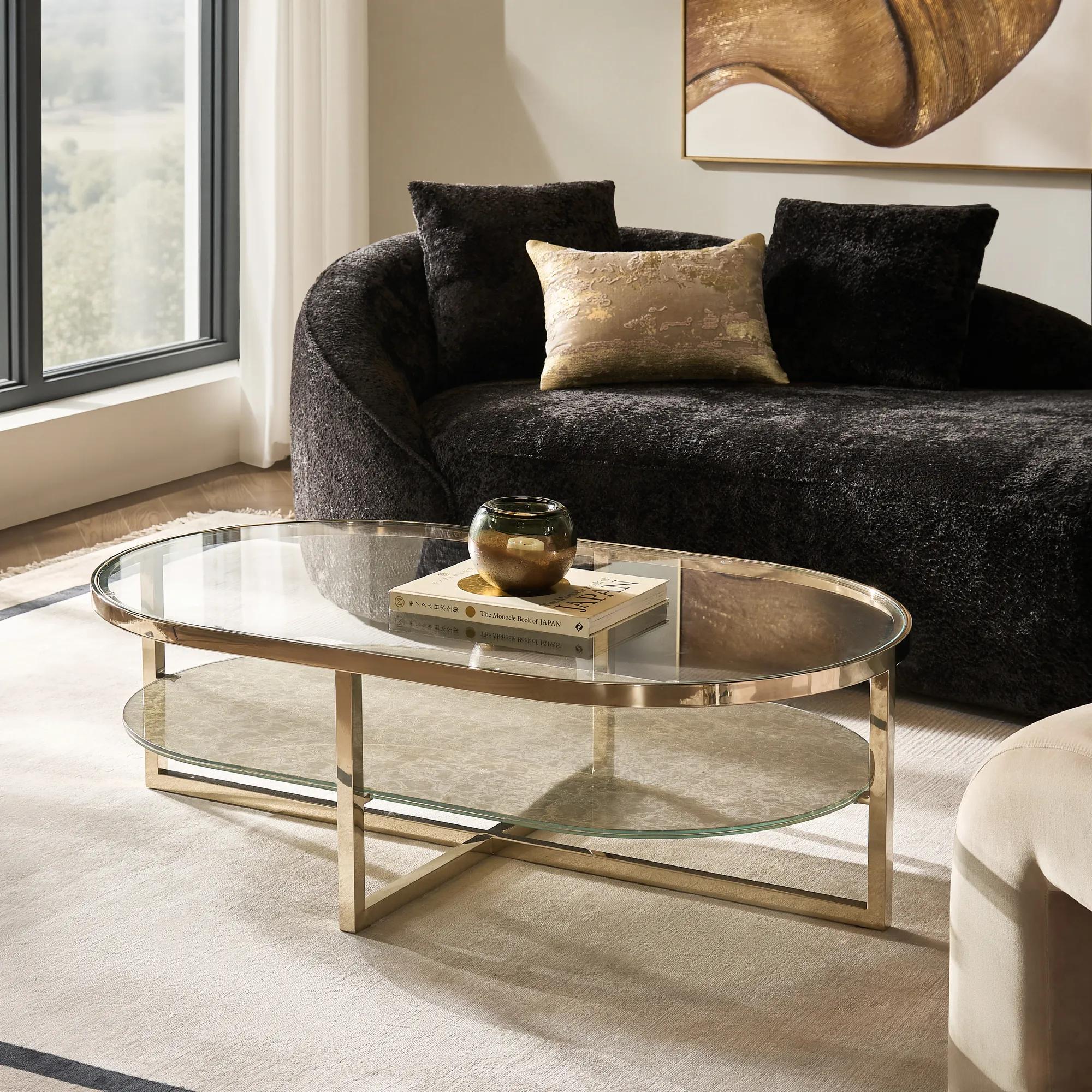 Duality Oval Fabric-Laminated Glass Coffee Table (47")$999
An oval coffee table with a clear tempered-glass top, fabric-laminated shelf, and soft gold stainless-steel frame.
Add To Cart

Contemporary Coffee Tables With Storage
Contemporary coffee tables with storage bring modern style and everyday organization to the center of your living room. As you explore the selection, consider proportions that complement your seating, tabletop space for a curated display, and storage capacity suited to the essentials you want within reach. The right balance creates a polished focal point without letting clutter compete for attention.
Contemporary coffee tables with storage combine a central surface for serving and display with drawers, concealed compartments, open shelves, or lift-top interiors that keep living room essentials close at hand. Their appeal lies in the balance: a sculptural focal point with room for the objects that make a space feel lived in, without allowing those objects to dominate the composition. A beautifully proportioned table can anchor a velvet sofa, echo the curves of an accent chair, or introduce a gleaming contrast to a richly textured rug. Beneath that expressive exterior, storage gives remote controls, reading glasses, charging cables, and favorite magazines a designated place. Different configurations create different experiences. Drawers conceal smaller belongings while leaving the tabletop undisturbed, making them especially useful when a decorative bowl or an artful arrangement deserves a permanent position. Open shelving brings another layer to the vignette, framing oversized books, a shallow basket, or a neatly folded throw beneath the main surface. Enclosed compartments offer greater visual calm when the contents are less decorative, from game controllers to the accessories that accompany an evening of entertaining. A lift-top design may provide both concealed storage and an elevated surface, although its suitability for dining or working depends on the mechanism, dimensions, and stated use. These distinctions matter in a living room that moves between quiet conversation, family gatherings, and a place to settle with a book. Storage does not have to erase personality; it creates breathing room around the pieces worth displaying. A restrained arrangement of collected objects feels more intentional when everyday necessities have a home below. For apartment dwellers, households with shared living areas, and anyone who prefers an expressive interior without a crowded tabletop, a contemporary storage coffee table brings order to the room while preserving its sense of drama.
Material and finish shape both the table’s presence and the attention it requires over time. Wood introduces depth through grain, tone, and the subtle variation that makes a broad surface visually compelling. Solid wood can develop character with use, while veneered construction brings a real wood surface over a supporting core; neither description alone establishes overall quality. Joinery, edge treatment, drawer alignment, and the stability of the base all contribute to how confidently a table performs. Painted and lacquered finishes offer a more polished statement, whether the effect is softly luminous or boldly reflective, but they benefit from protection against scratches and prolonged contact with moisture. Metal can lend definition through slender framing, sculptural bases, or hardware that catches the light, with finish-specific care helping preserve its appearance. Glass creates an airy visual layer and allows the objects on a lower shelf to become part of the composition, though fingerprints and everyday marks remain more visible. Stone and stone-look surfaces bring mineral pattern and a substantial visual presence, but their maintenance needs vary considerably. Natural marble, for example, may stain or etch when exposed to acidic liquids, while engineered surfaces follow their own manufacturer-specific care requirements. The sculptural appeal of Contemporary Stone Coffee Tables also complements interiors where additional storage lives in a nearby cabinet or upholstered ottoman. Whatever the surface, coasters and protective pads help separate daily use from lasting marks, and spills are best addressed promptly according to the care instructions. A soft cloth and an appropriate cleaner are generally a more considered choice than an abrasive pad or an all-purpose chemical treatment. Durability also extends beyond the tabletop: drawer runners, hinges, shelf supports, and lift mechanisms carry the rhythm of repeated use. Smooth operation, suitable weight limits, and hardware maintained as directed help preserve the pleasure of a piece that is opened, closed, styled, and enjoyed every day.
The most compelling fit considers the entire seating arrangement, not simply the space available in its center. A coffee table often feels balanced at roughly two-thirds the length of the sofa, with a surface close to seat-cushion height, although deep seating, sculptural silhouettes, and personal preferences can shift those proportions. About 14 to 18 inches between the table and surrounding seating commonly allows comfortable reach and movement; a busy route through the room may need more clearance. Storage introduces another dimension to that footprint. A drawer needs space to extend without meeting an ottoman, and a lift-top needs clearance to rise without disturbing nearby objects or the people seated beside it. The direction of access matters, too: storage facing the primary sofa may be convenient for one arrangement, while access from more than one side can better suit a conversation area. Rectangular forms establish a strong relationship with a long sofa, square tables can hold their own within generous sectionals, and round or oval silhouettes soften the geometry of closely grouped seating. Curved edges may also make circulation more comfortable, though they do not replace appropriate supervision or product-specific safety precautions around children. In a household with young children, heavy lids and moving mechanisms deserve particular attention, including any manufacturer guidance on safe operation. Daily rituals help determine which storage feels most natural. A reader may appreciate a shelf deep enough for substantial books, while a household that gathers for games may prefer a compartment that accommodates boxed sets without forcing them into place. Someone who occasionally works from the sofa may value space for a laptop and accessories, provided the table is intended to support that use. The result is a room with a composed center: generous enough for a serving tray, distinctive enough to command attention, and thoughtfully arranged to let beautiful materials and personal objects take the spotlight.
FAQs
Contemporary coffee tables with storage pair expressive, modern design with places to tuck away everyday essentials. Look for sculptural silhouettes, geometric details, and storage integrated into the table’s form. The appeal is both visual and personal: a striking centerpiece that leaves room for a thoughtfully composed living space.
Open storage makes your favorite books and decorative objects part of the room’s composition. Concealed storage, such as drawers or enclosed compartments, keeps everyday belongings out of the spotlight. Choose open storage for a curated, gallery-inspired look, concealed storage for an uninterrupted silhouette, or a combination for both display and discretion.
Create a deliberate arrangement with an art book, a sculptural object, and a decorative tray. Vary the forms while leaving portions of the tabletop bare so the table’s design can command attention. If the table has open storage, treat that area as another layer of the vignette rather than filling every available surface.
Let the coffee table echo one element already present in the room, such as a finish, color, or curved silhouette. Then introduce contrast elsewhere: a sharply geometric table can bring definition to plush seating, while rounded forms can soften an angular arrangement. The result should feel collected and expressive, not rigidly matched.
Reserve concealed compartments for living room essentials such as remotes, reading materials, and coasters. Use open shelves to showcase art books or a carefully chosen decorative accent. Think of visible storage as an extension of your styling: each object should contribute to the room’s story, with everyday necessities kept discreetly behind the scenes.