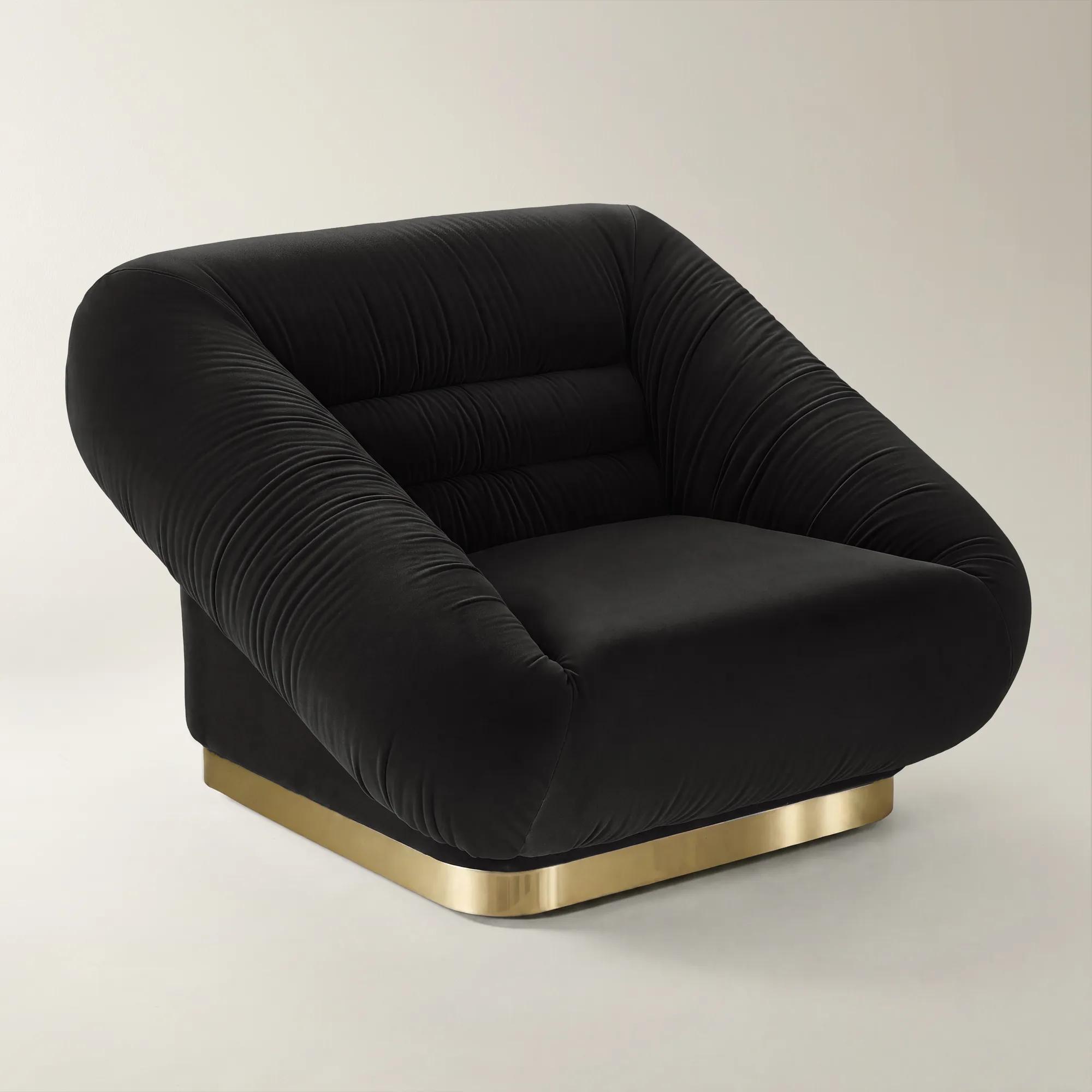
Accent Chairs For Open Concept Living
Accent Chairs For Open Concept Living
-
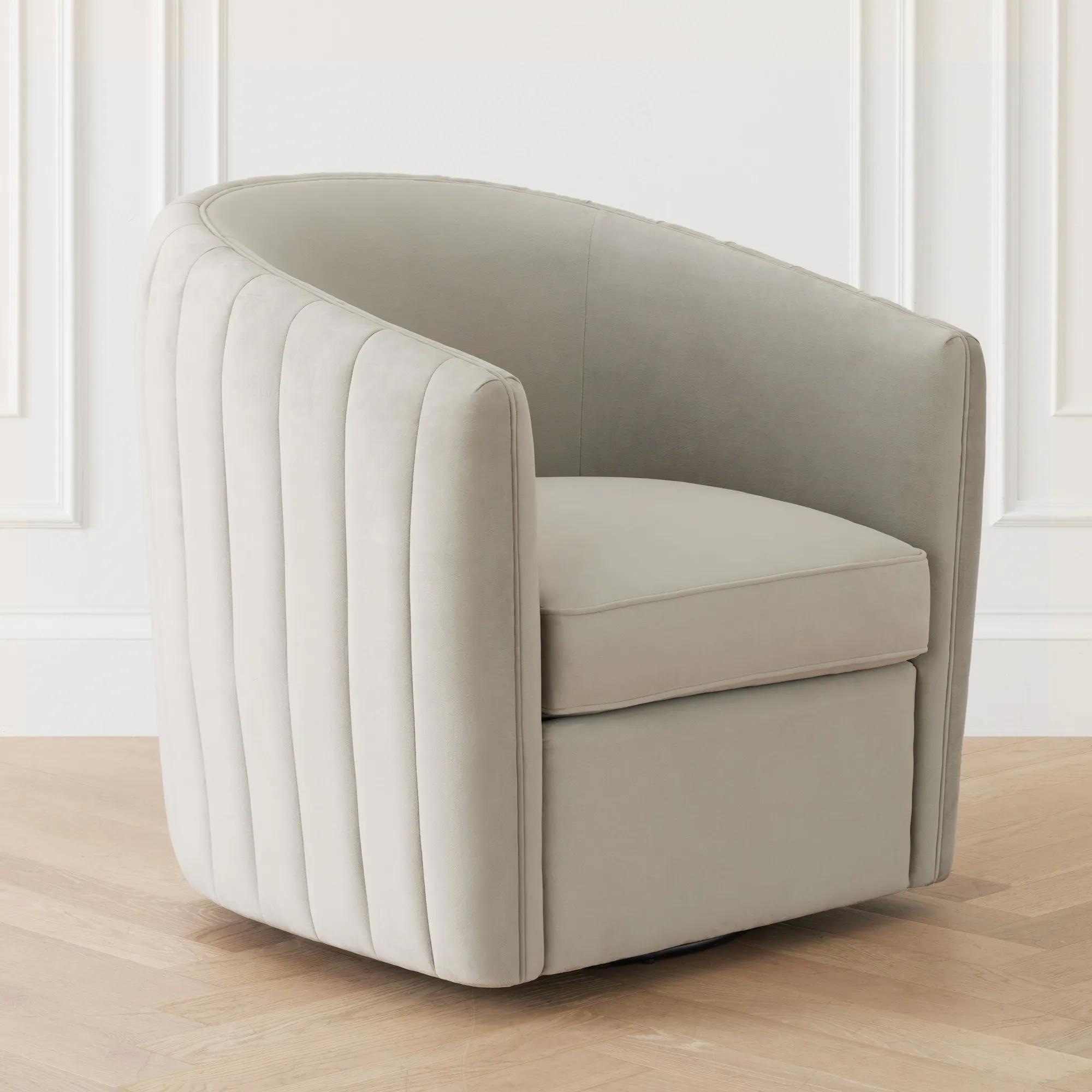
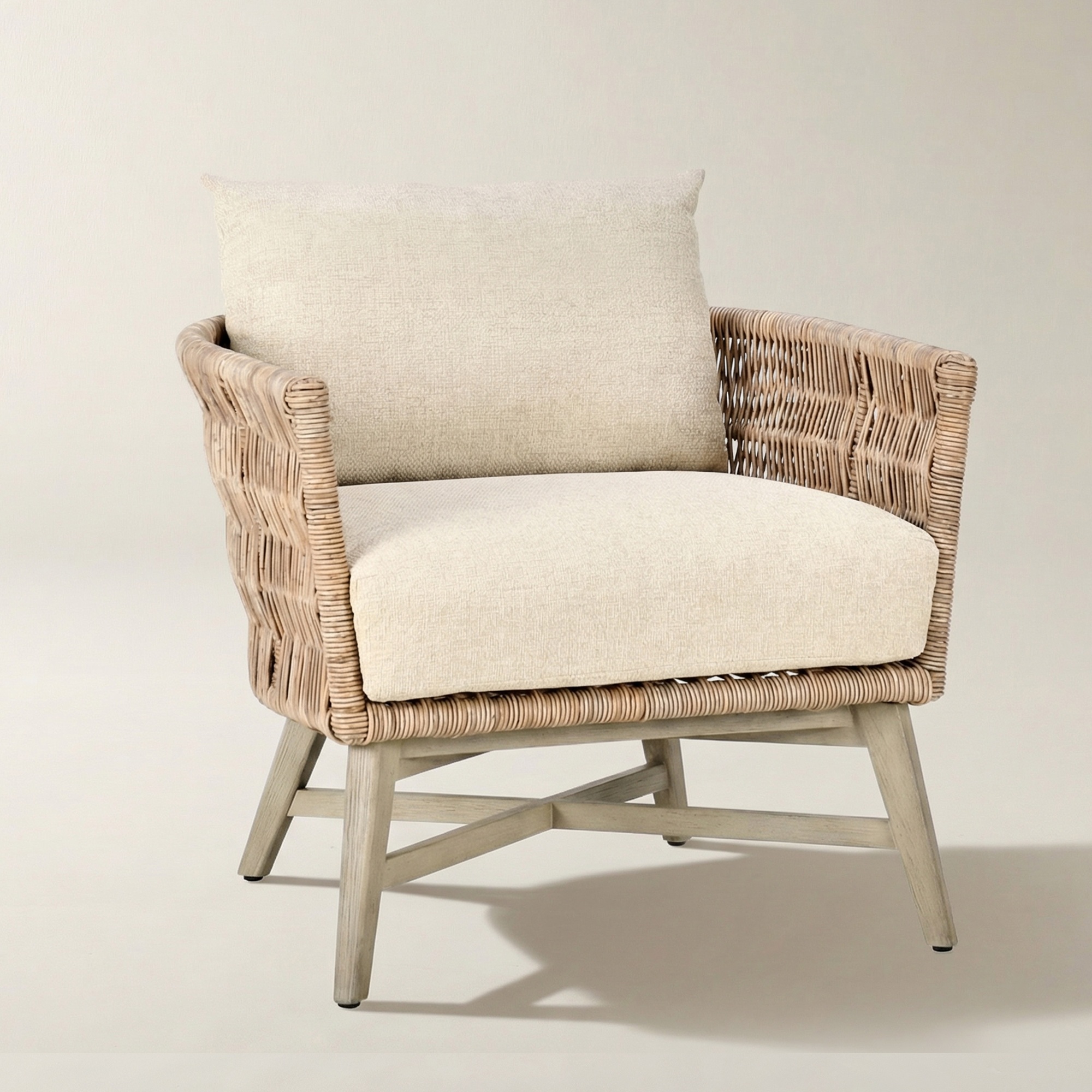
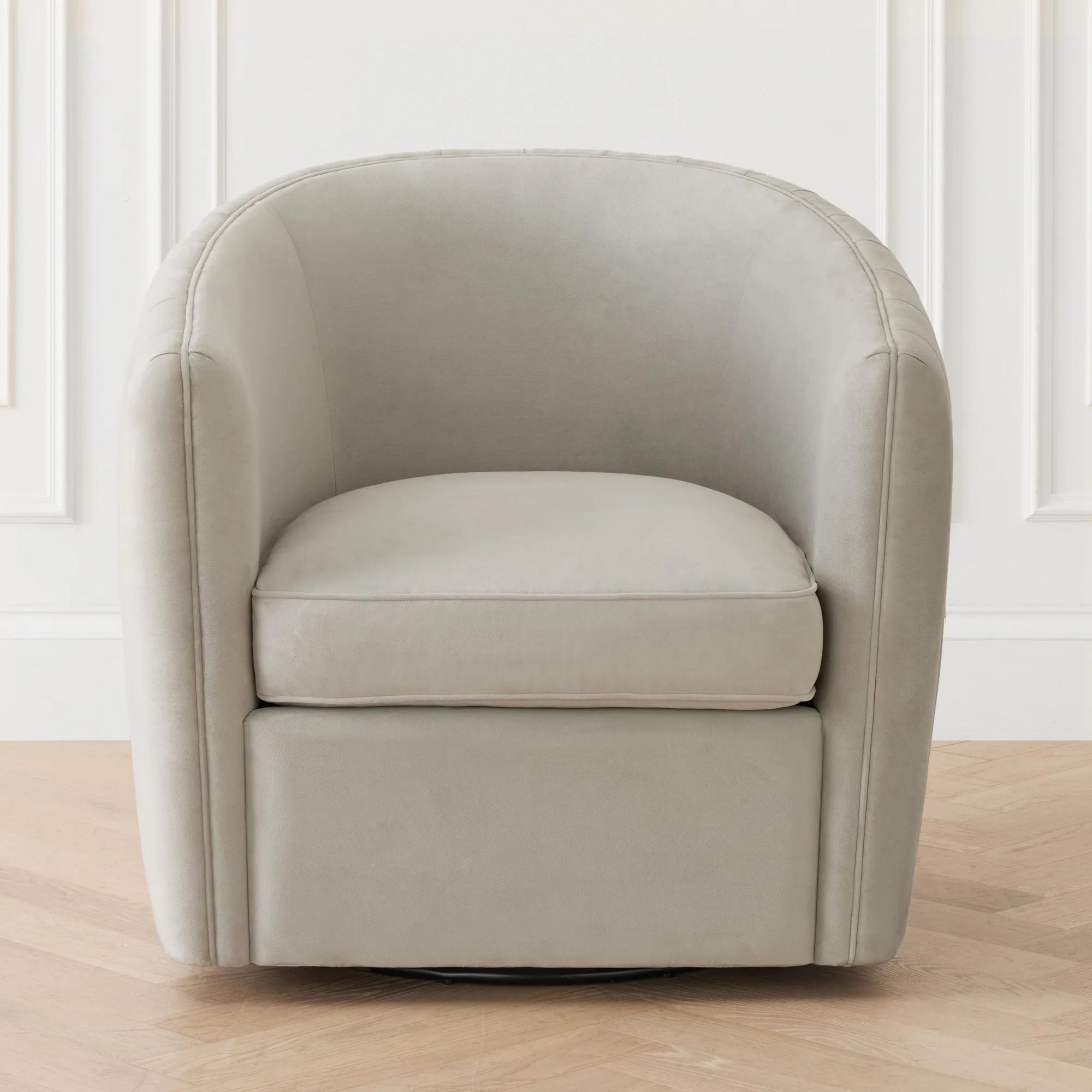 Aria Channeled Swivel Chair$1199
A modern barrel chair in kiln-dried hardwood with channeled velvet upholstery and a smooth swivel base.
Add To Cart -
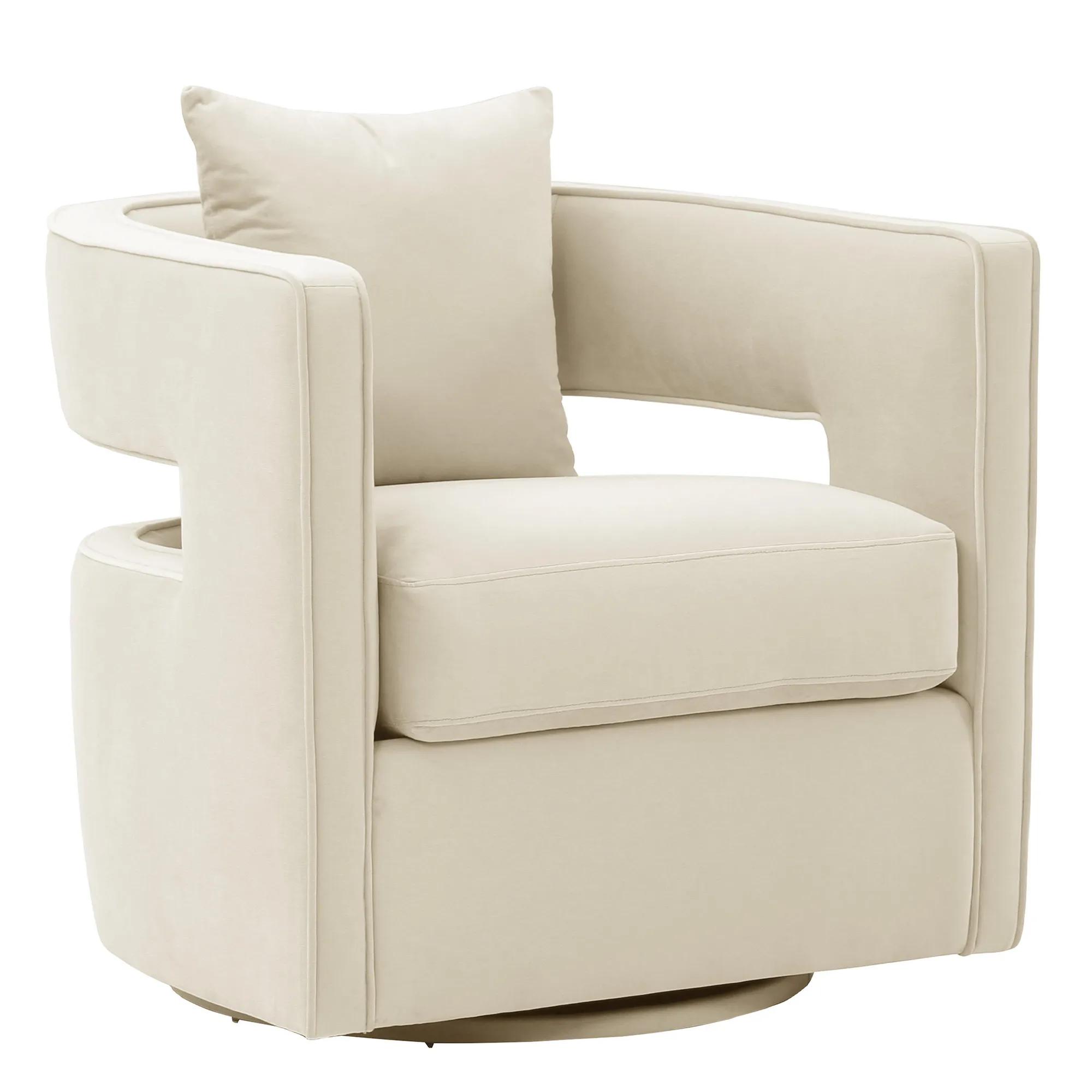
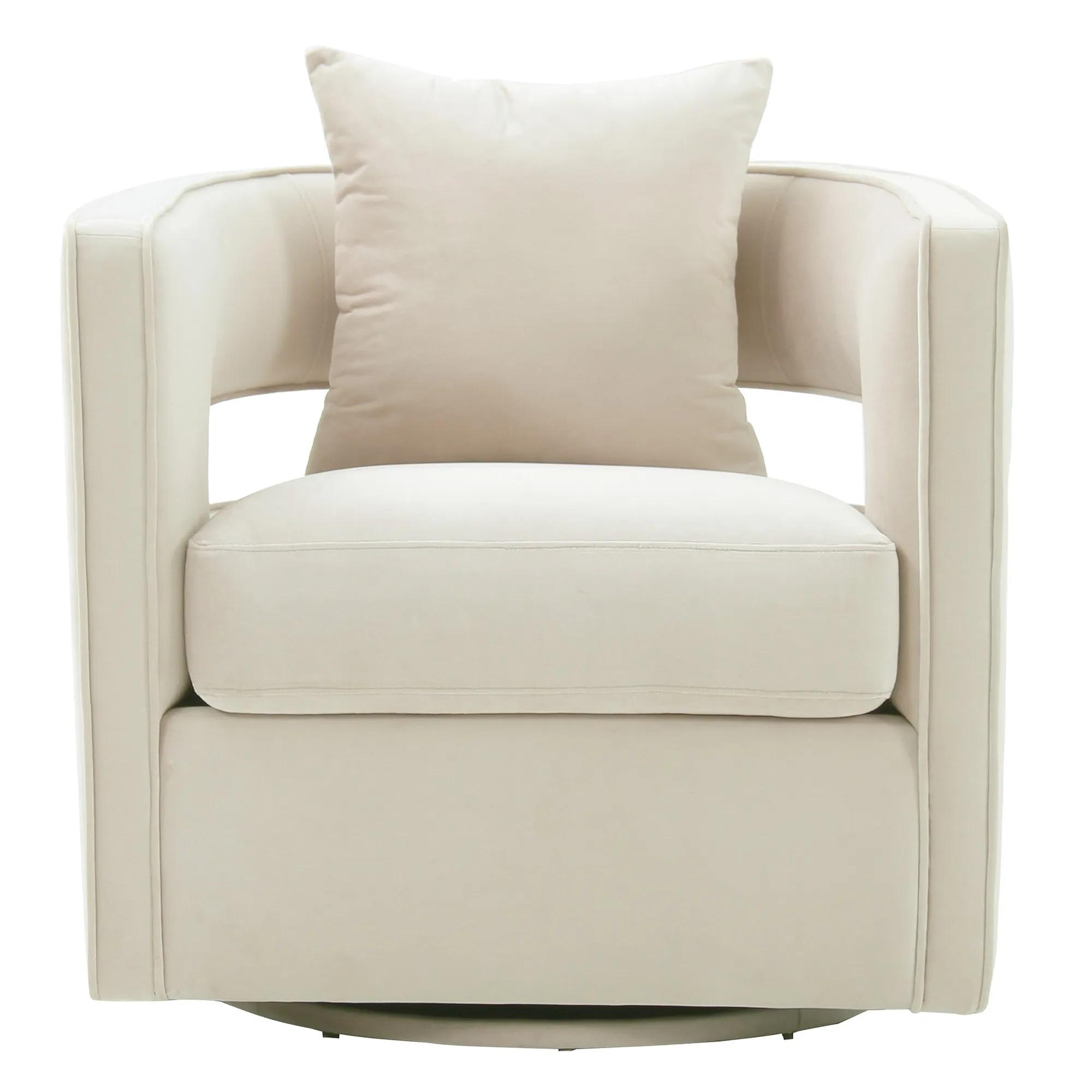 Lottie Cream Velvet Swivel Accent Chair$999
A glamorous cream velvet swivel chair featuring a barrel back, cutout arms, and plush foam cushioning.
Add To Cart -
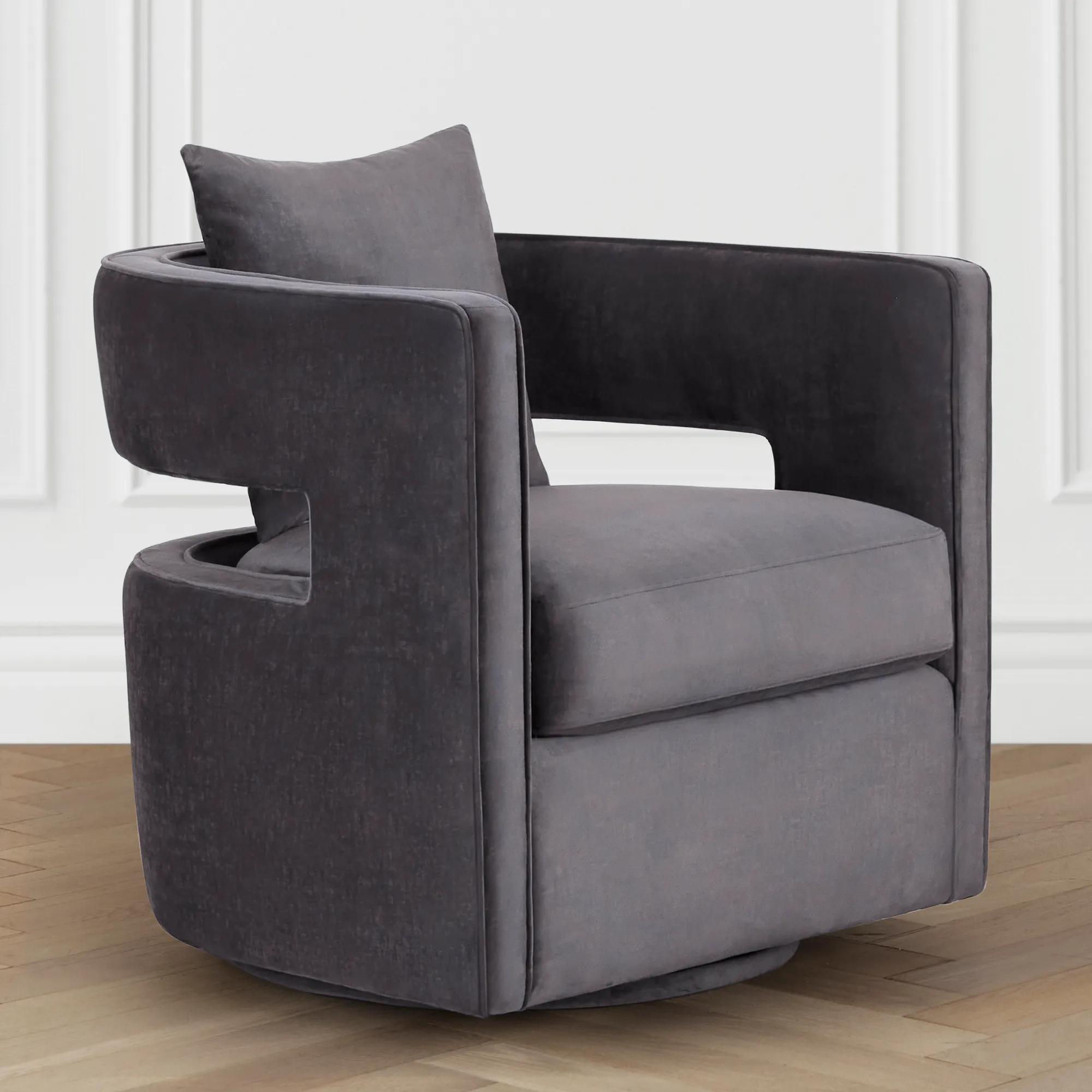 Lottie Grey Velvet Swivel Accent Chair$999
A glamorous grey velvet swivel chair featuring a barrel back, cutout arms, and plush foam cushioning.
Add To Cart -

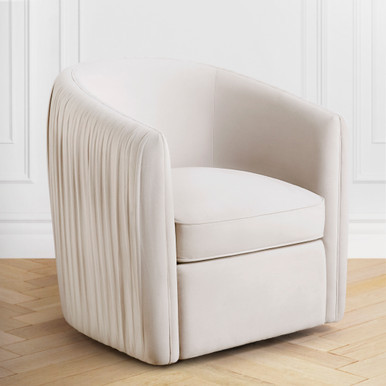
 Aria Pleated Swivel Chair$1349
A barrel-style swivel chair in kiln-dried hardwood, shown in Bella Velvet Pearl with pleated tailoring.
Add To Cart -
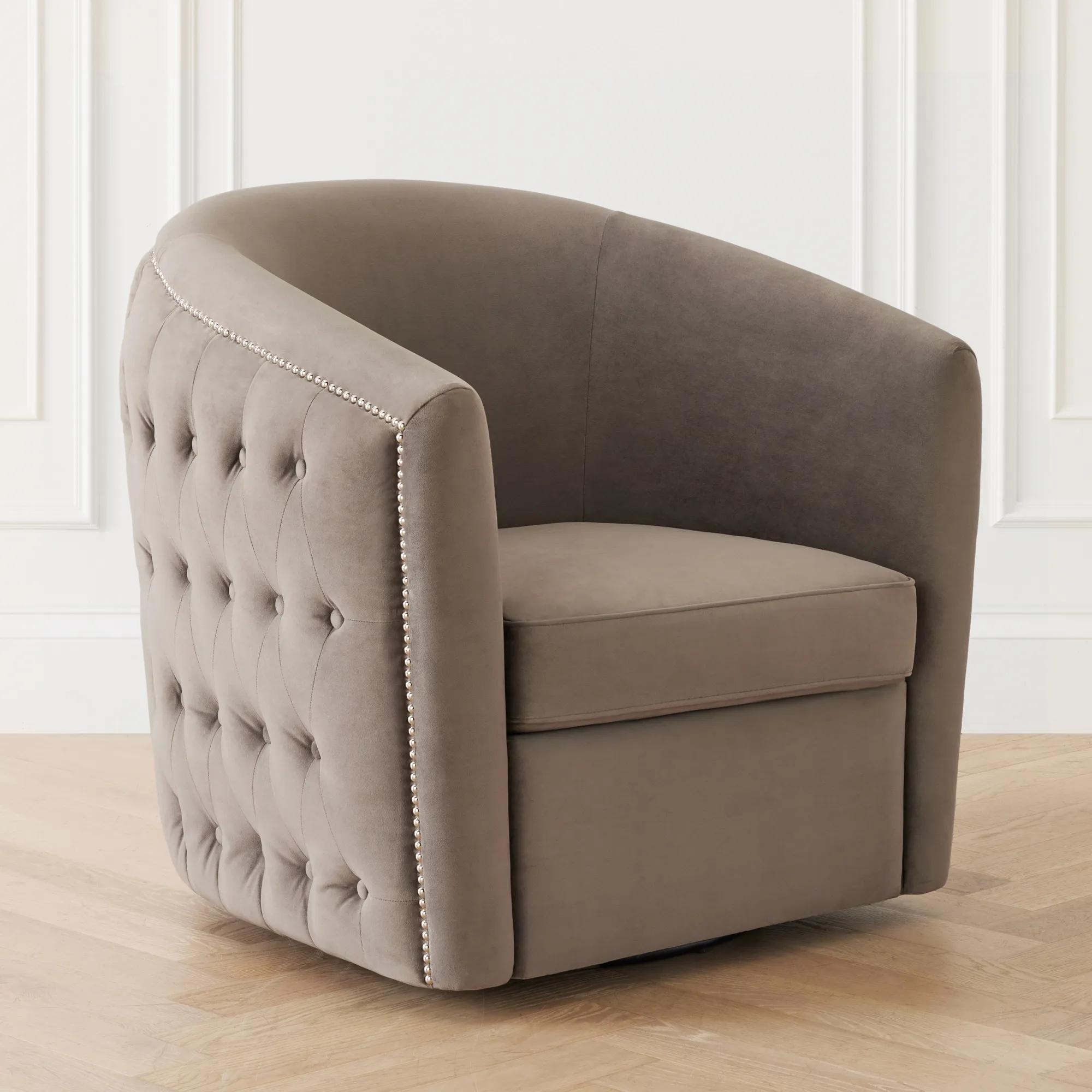
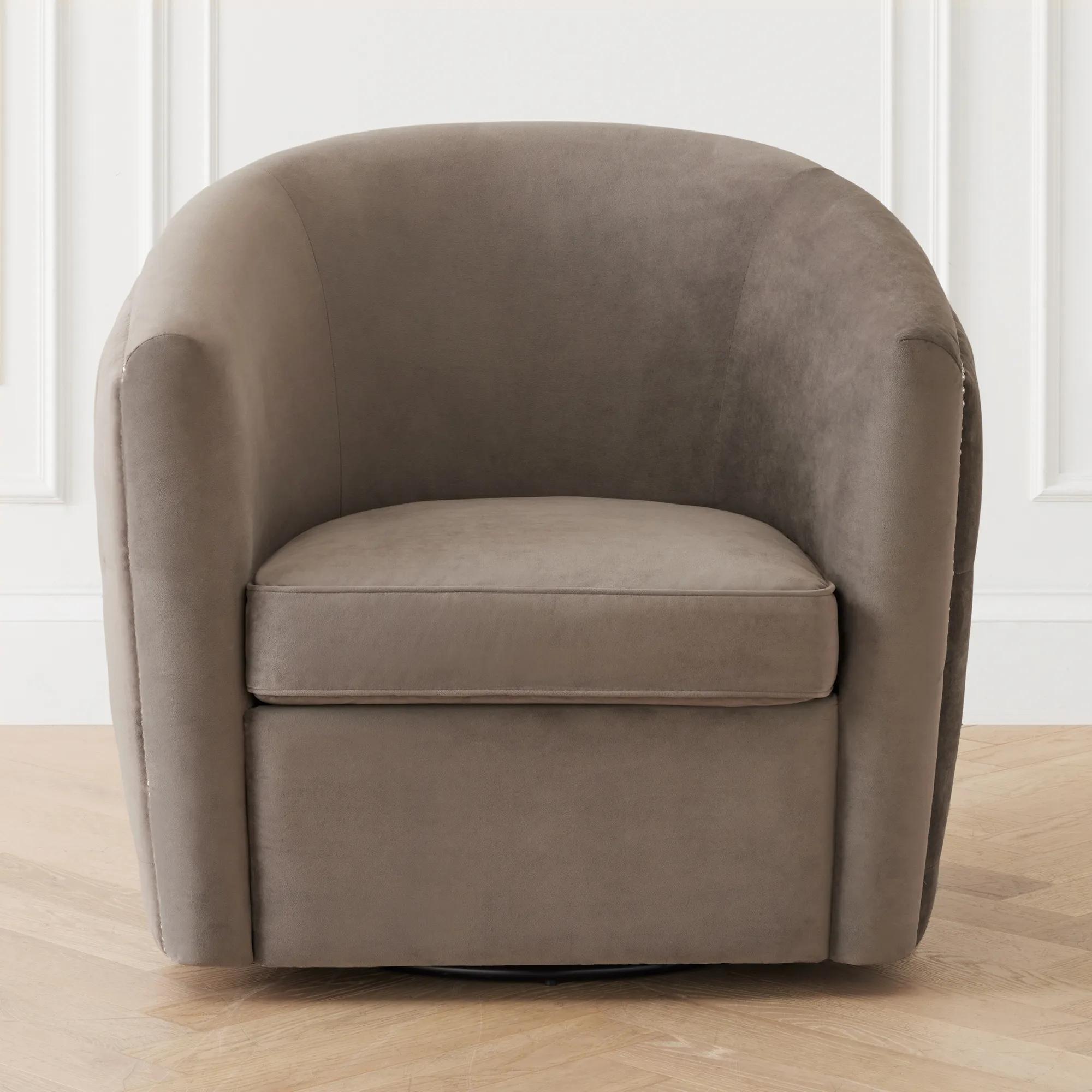 Aria Tufted Swivel Chair$1449
A barrel silhouette chair in Bella Velvet Otter with tufted detailing, kiln-dried hardwood, and swivel base.
Add To Cart -
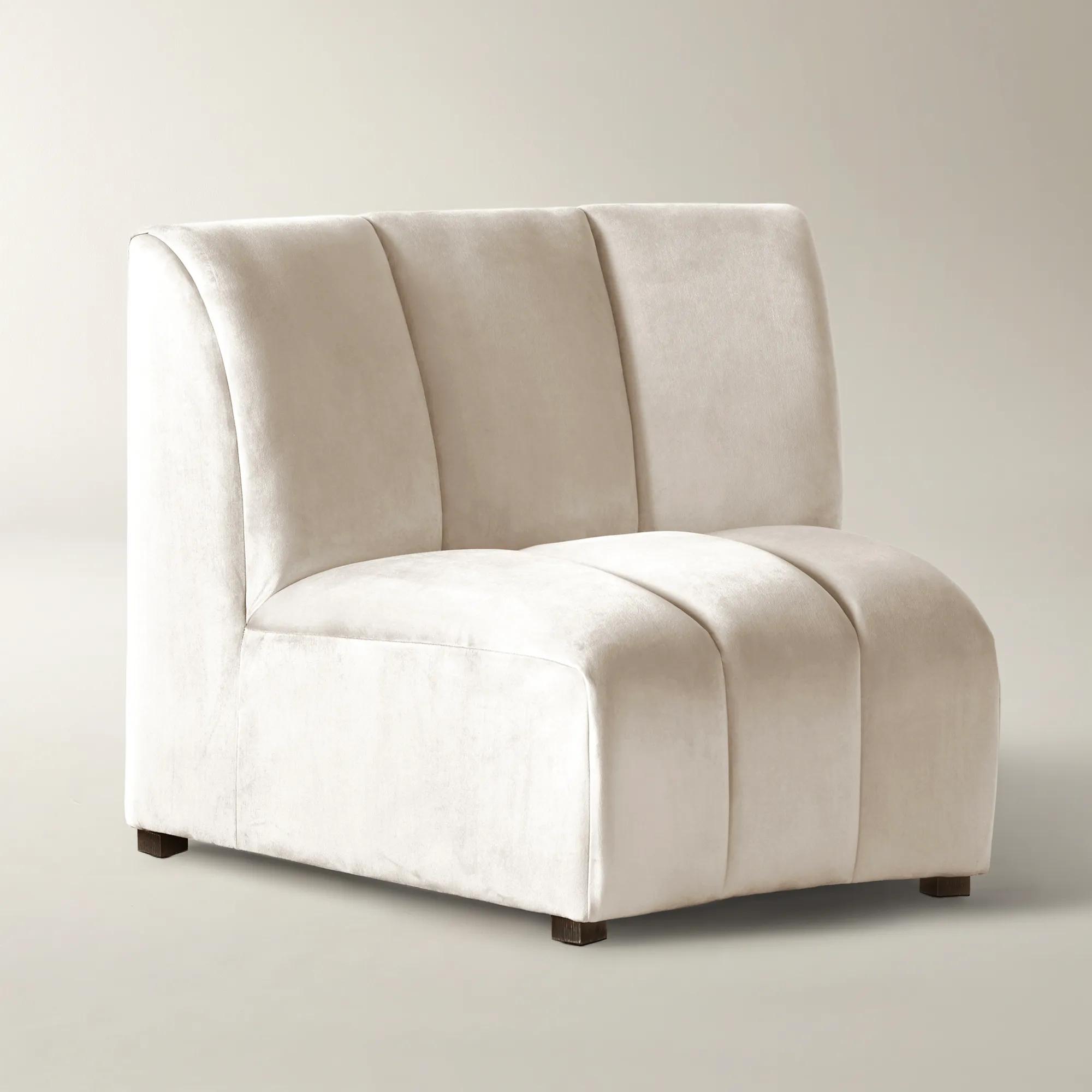 Jayce Channel-Tufted Ivory Velvet Armless Chair$949
A modern armless chair in water-repellent, stain-resistant Velvet Ivory with deep channel tufting and plush padding.
Add To Cart -
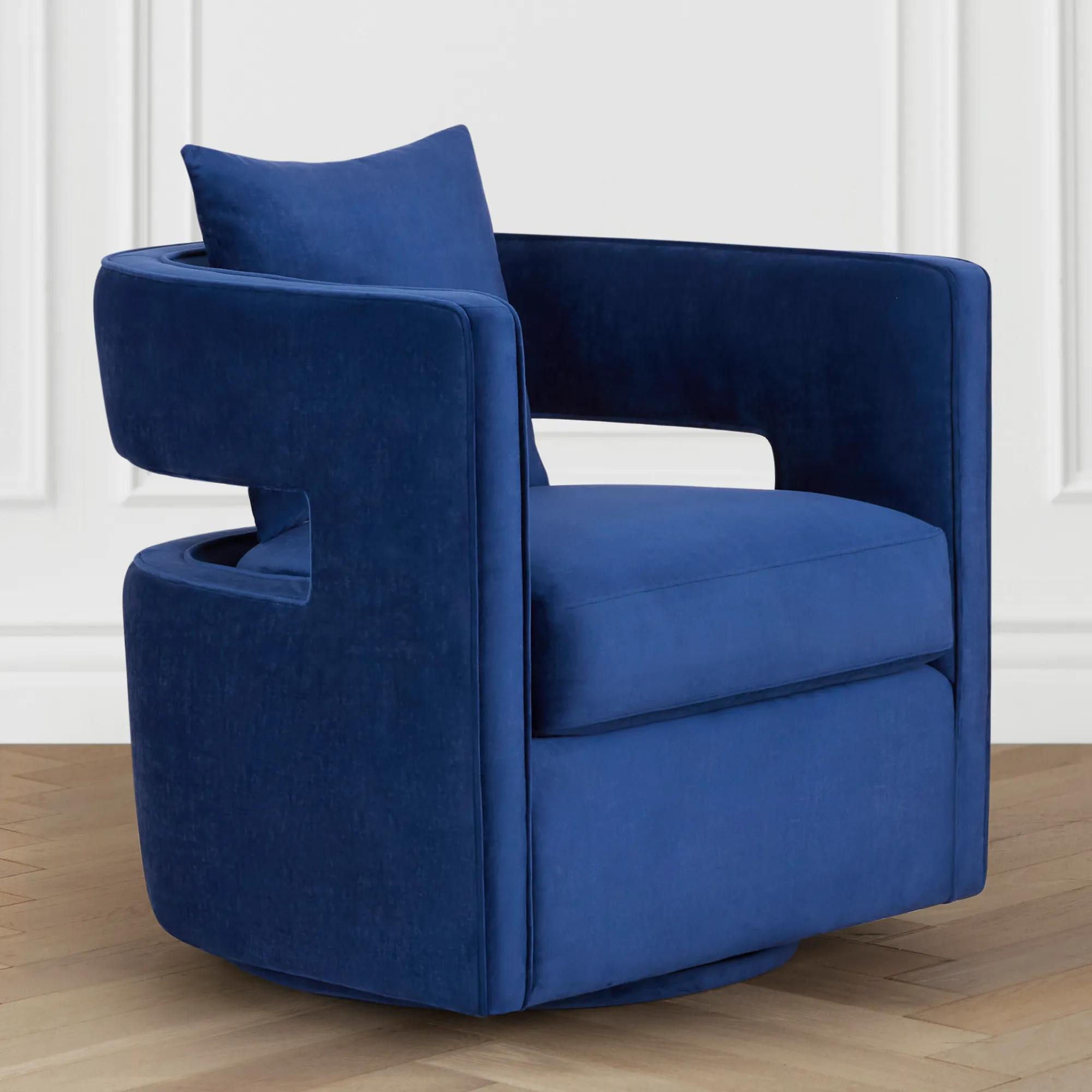
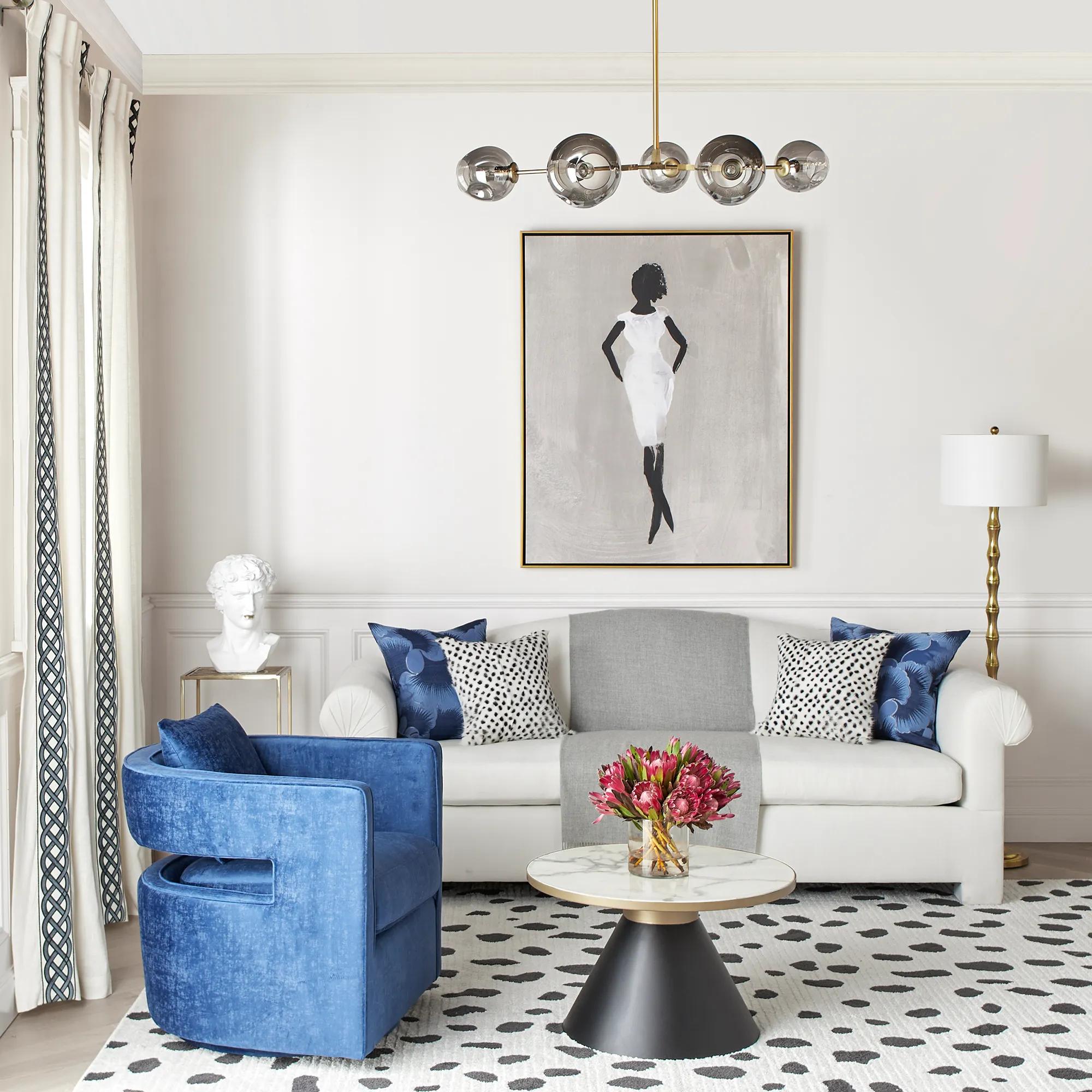 Lottie Navy Velvet Swivel Accent Chair$999
A glamorous navy velvet swivel chair featuring a barrel back, cutout arms, and plush foam cushioning.
Add To Cart -
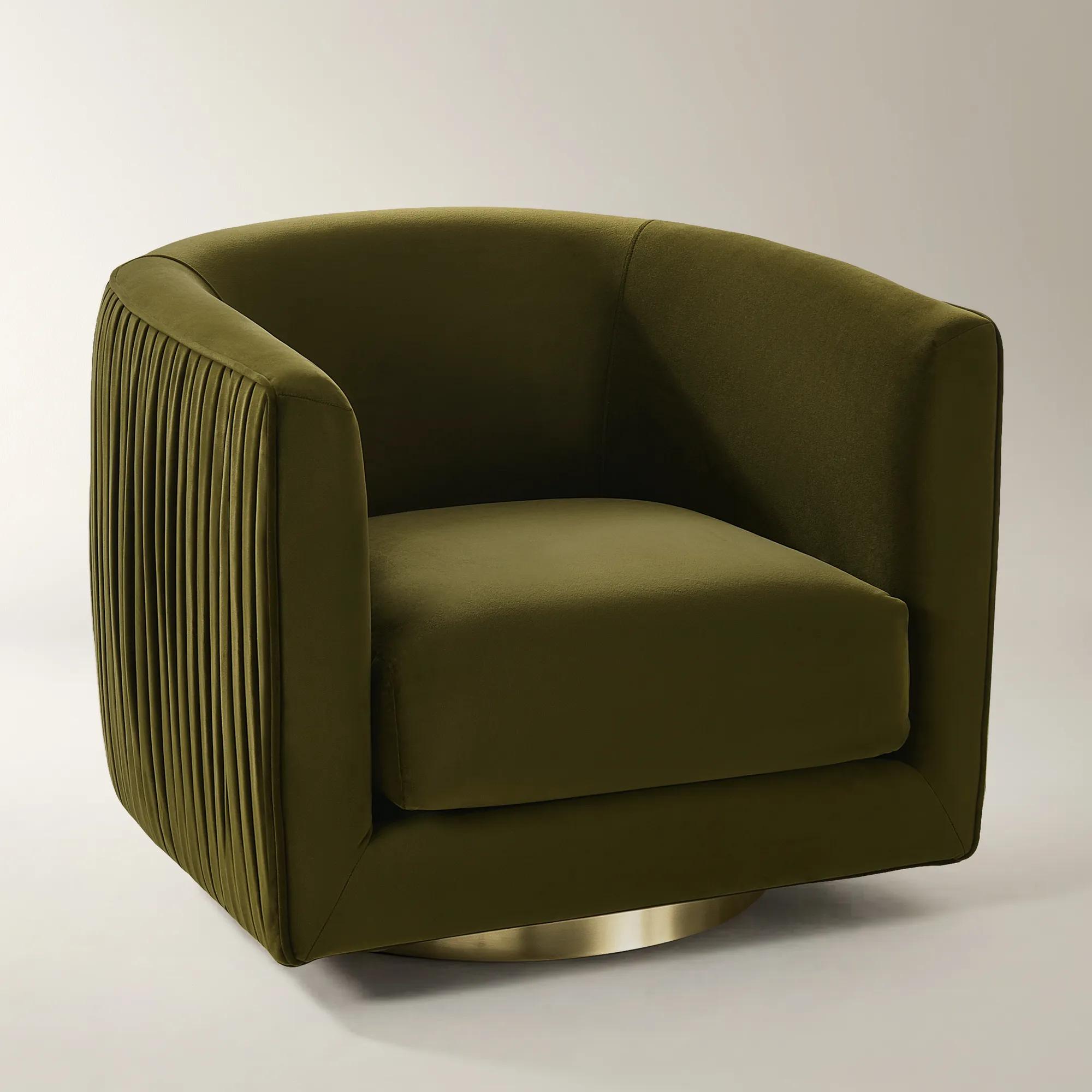
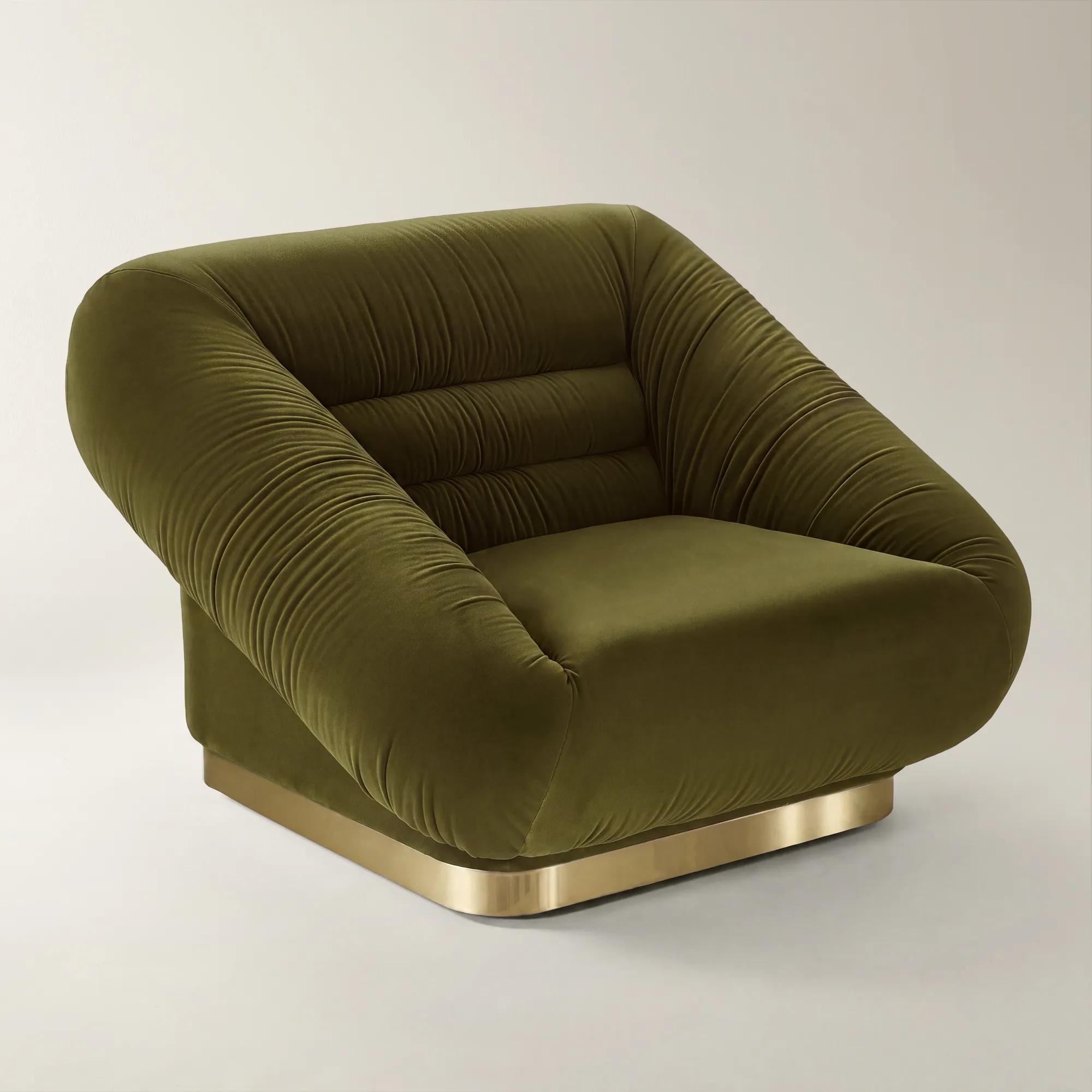
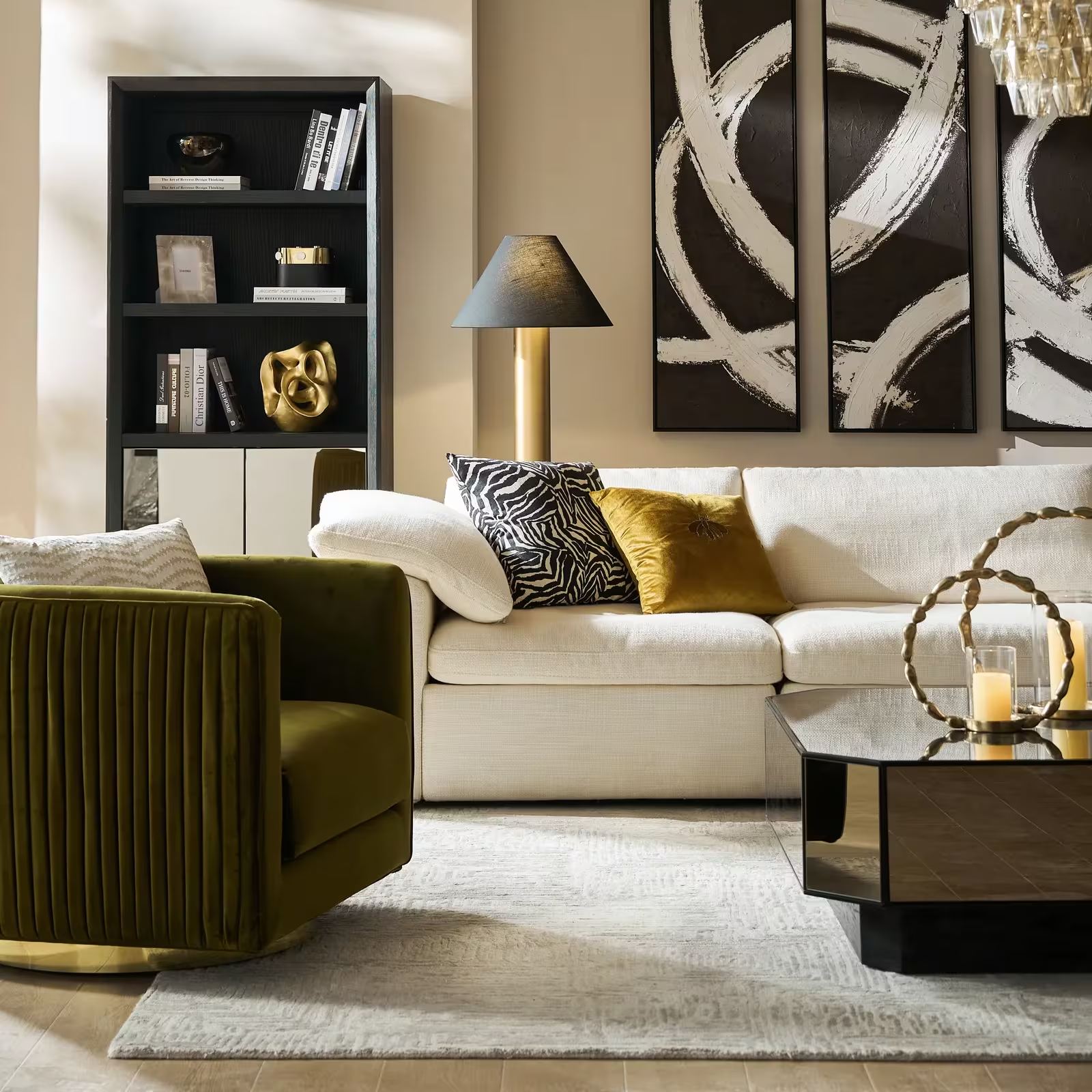 Lyssa Pleated Deep Olive Velvet Swivel Accent Chair$1099
A deep olive green velvet accent chair featuring pleated panels, smooth curves, and a 360-degree swivel base.
Add To Cart -
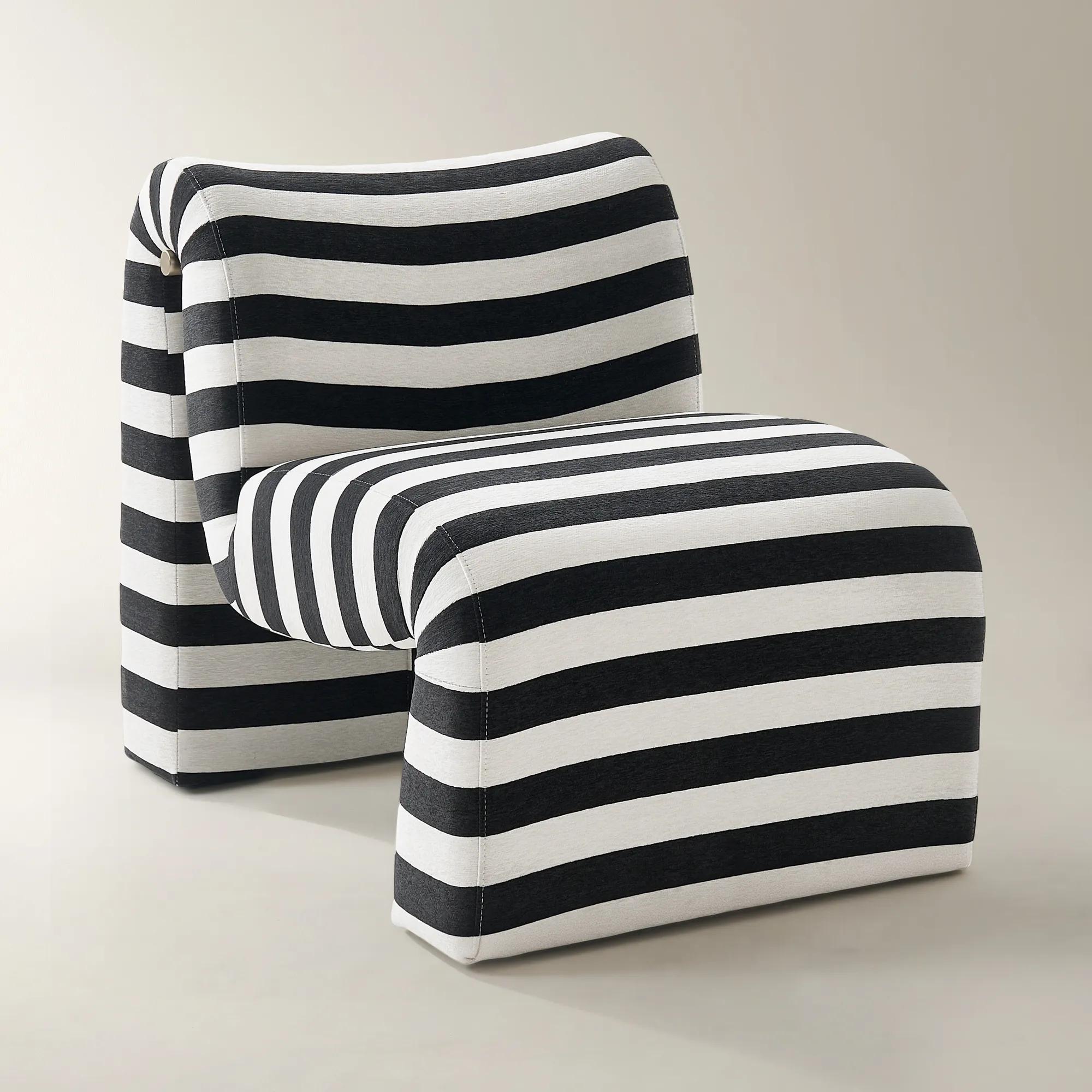 Cora Stripe Chenille Accent Chair$899
A bold black-and-white striped accent chair featuring water-repellent chenille and a gold stainless-steel inlay.
Add To Cart -
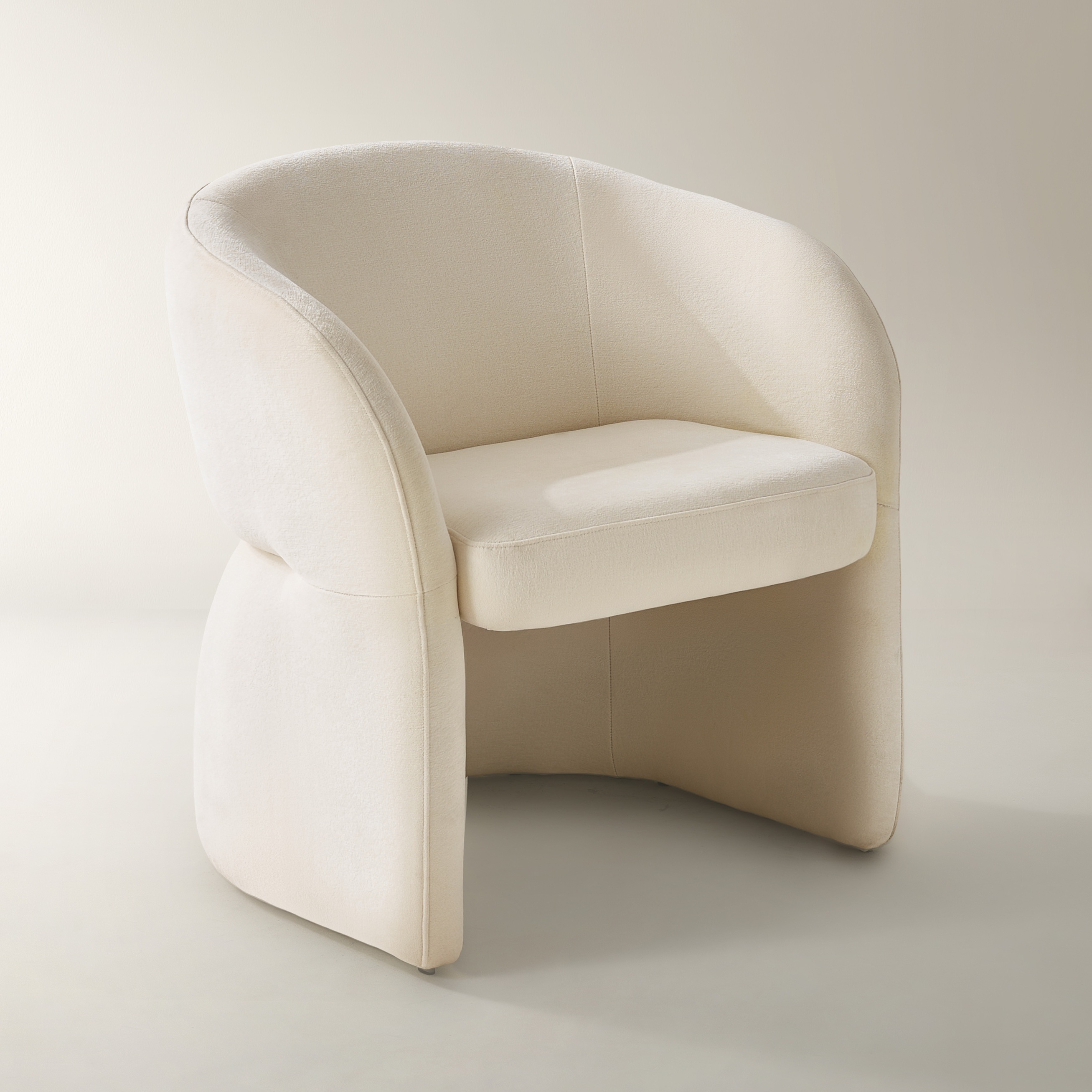
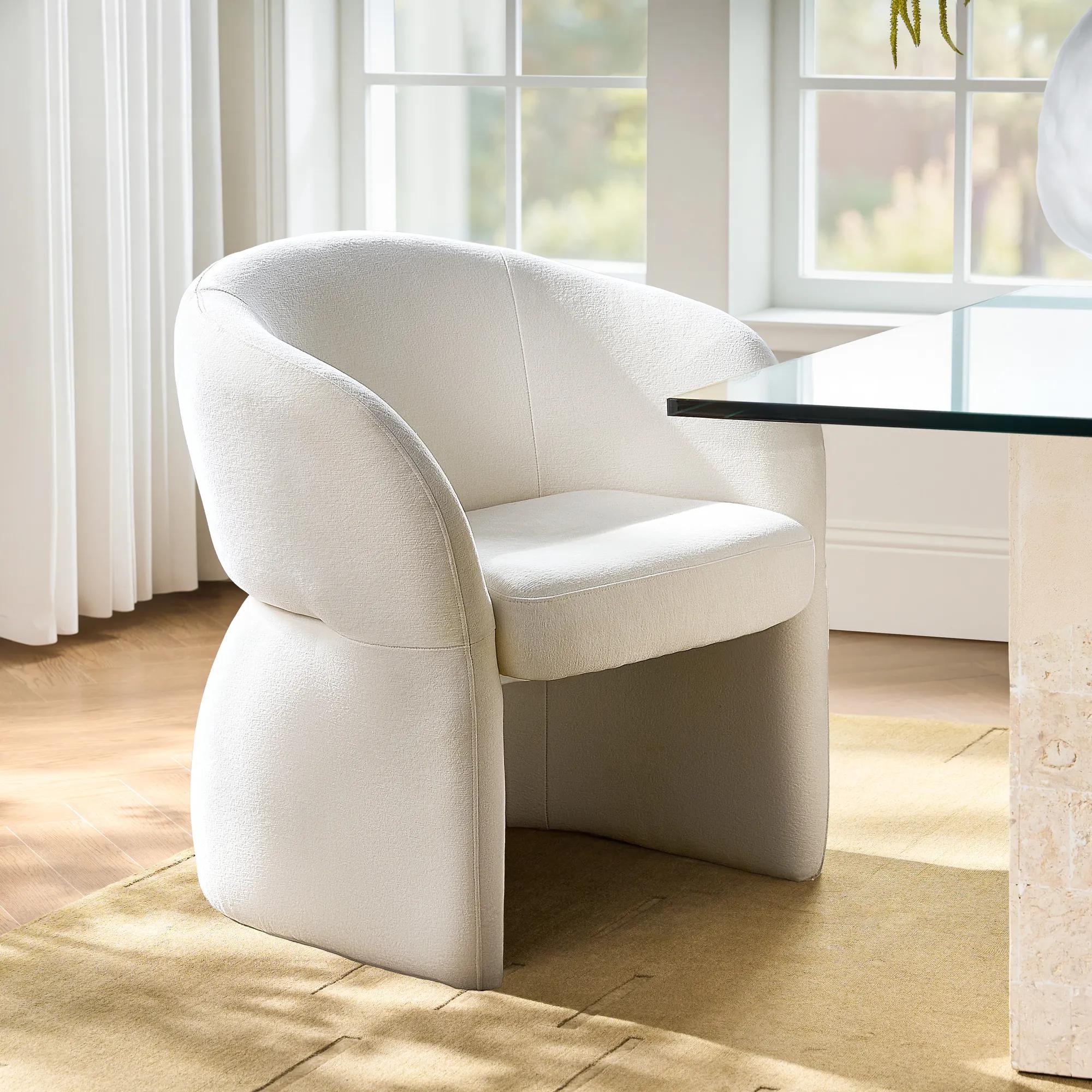 Sierra Oatmeal Velvet Dining Chair$499
An elegant accent chair in oatmeal velvet with gracefully arched arms, curved back, and plush cushioning.
Add To Cart -
.jpg?w=1200&h=1200)
 Stria Light Brown Chenille Swivel Accent Chair$1399
Stria Light Brown Chenille Swivel Accent Chair$1399A light brown chenille accent chair featuring triple-layer cushioning, a 360° swivel, and a solid oak base.
Add To Cart -
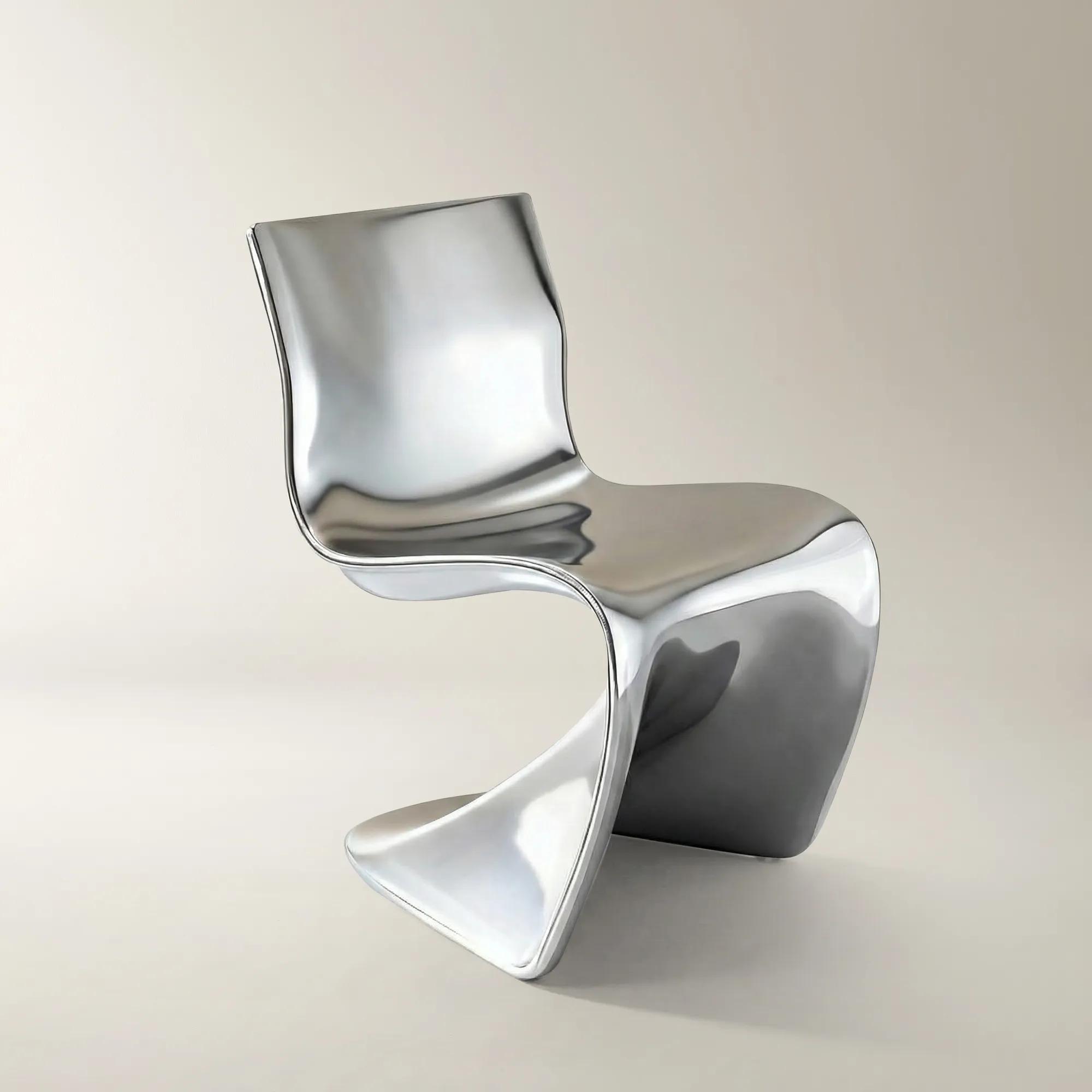
.jpg?w=1200&h=1200) Sasha Chrome Dining Chair$899
Sasha Chrome Dining Chair$899A sculptural accent chair crafted from polished chrome-finished fiberglass for a sleek, modern statement.
Add To Cart -
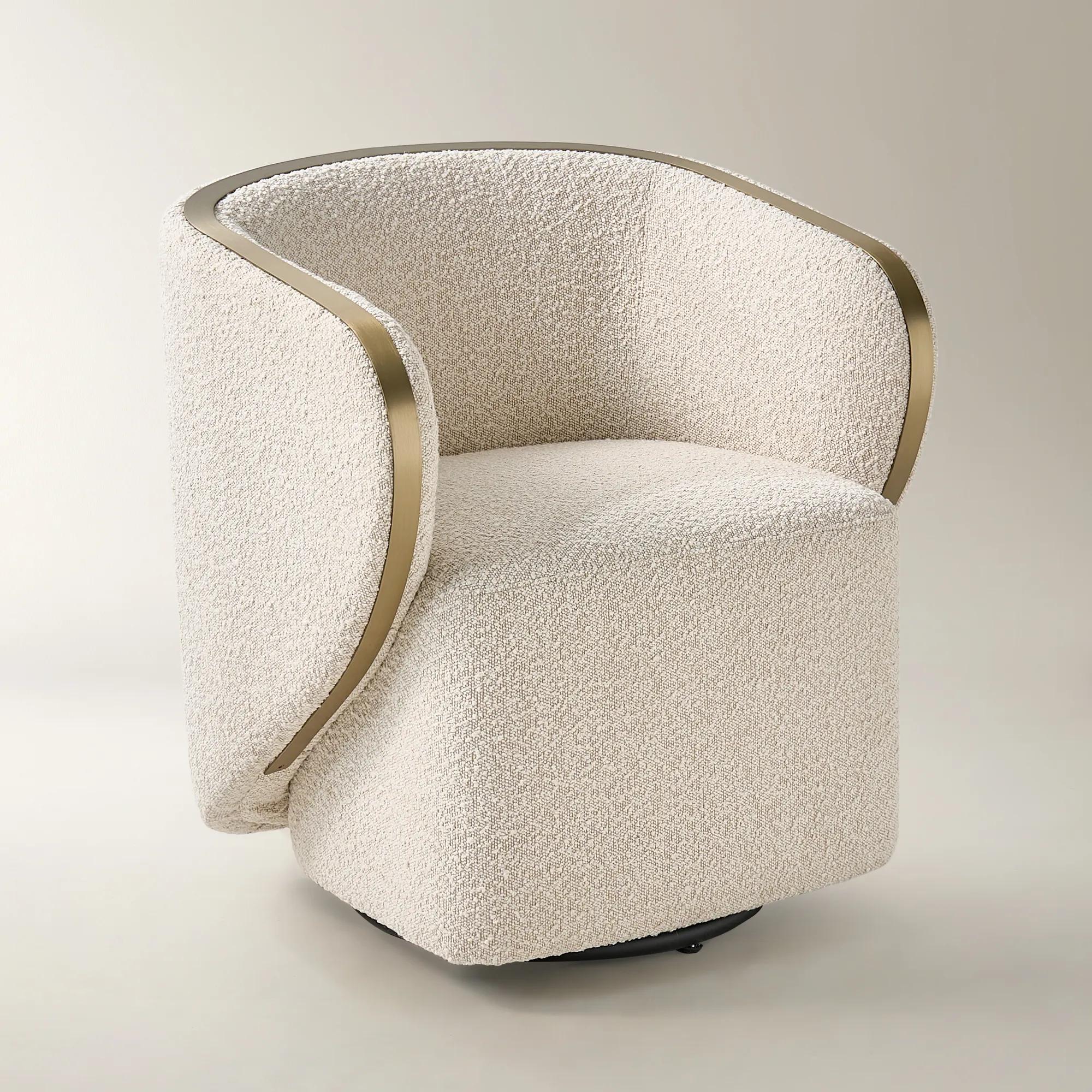 Nova Ivory Performance Boucle Swivel Dining Chair$599
An ivory boucle swivel chair featuring a sculptural wraparound silhouette and elegant metallic trim accents.
Add To Cart -
-6.jpg?w=1200&h=1200) Stria Roasted Pecan Velvet Swivel Dining Chair With Oak Base$599
Stria Roasted Pecan Velvet Swivel Dining Chair With Oak Base$599A khaki chenille swivel armchair with a handcrafted solid oak base and plush, modern comfort.
Add To Cart -
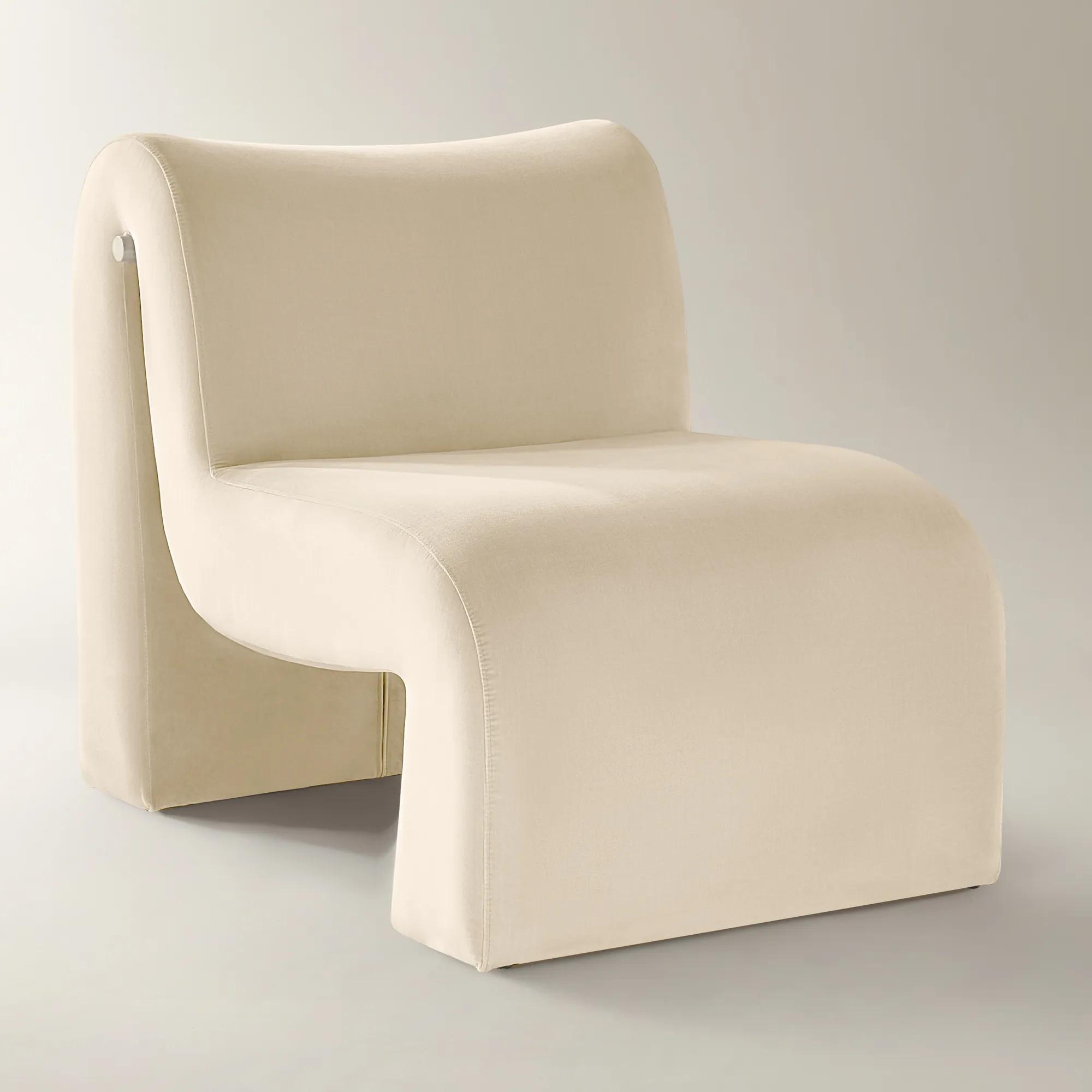 Cora Ivory Velvet Accent Chair$899
A sculpted ivory velvet chair featuring a continuous curved silhouette and a gold stainless-steel accent.
Add To Cart -
.jpg?w=1200&h=1200)
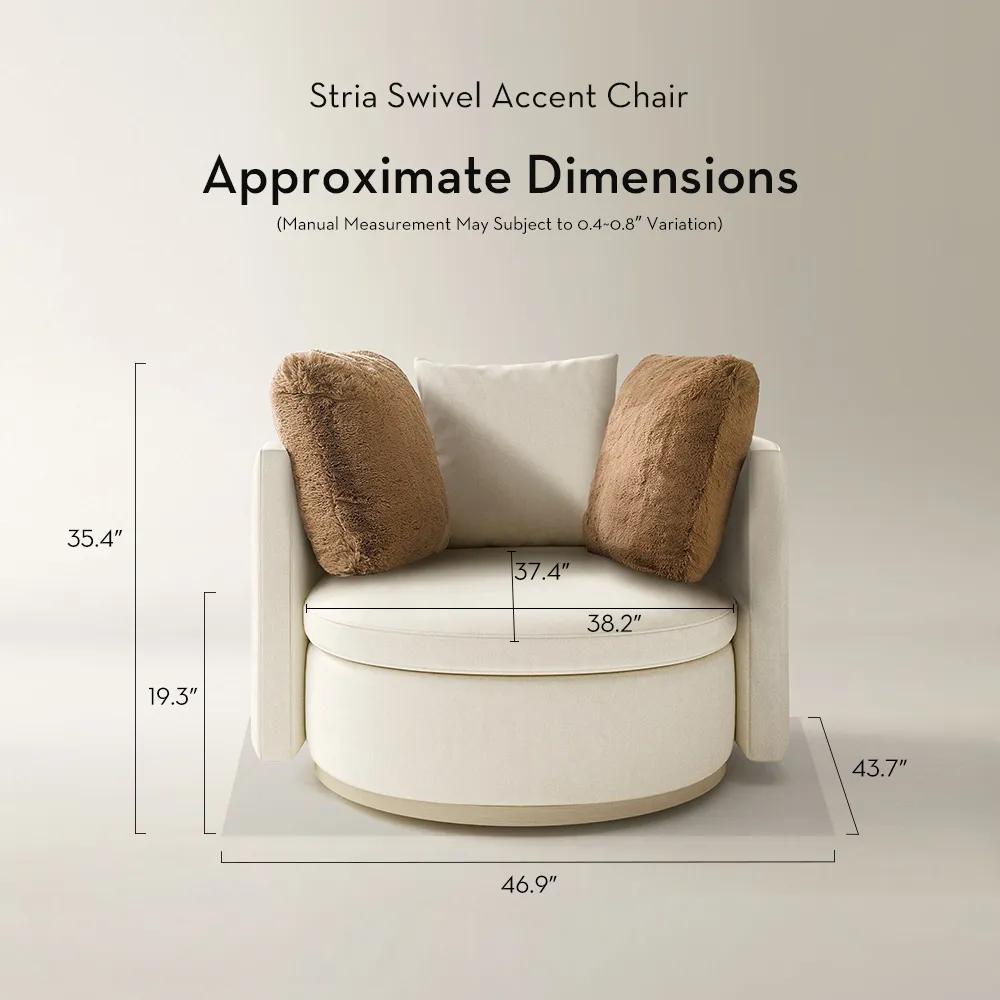 Stria Ivory Chenille Swivel Accent Chair$1399
An ivory chenille accent chair with triple-layer cushioning, ergonomic curves, and a smooth 360-degree swivel.
Add To Cart -
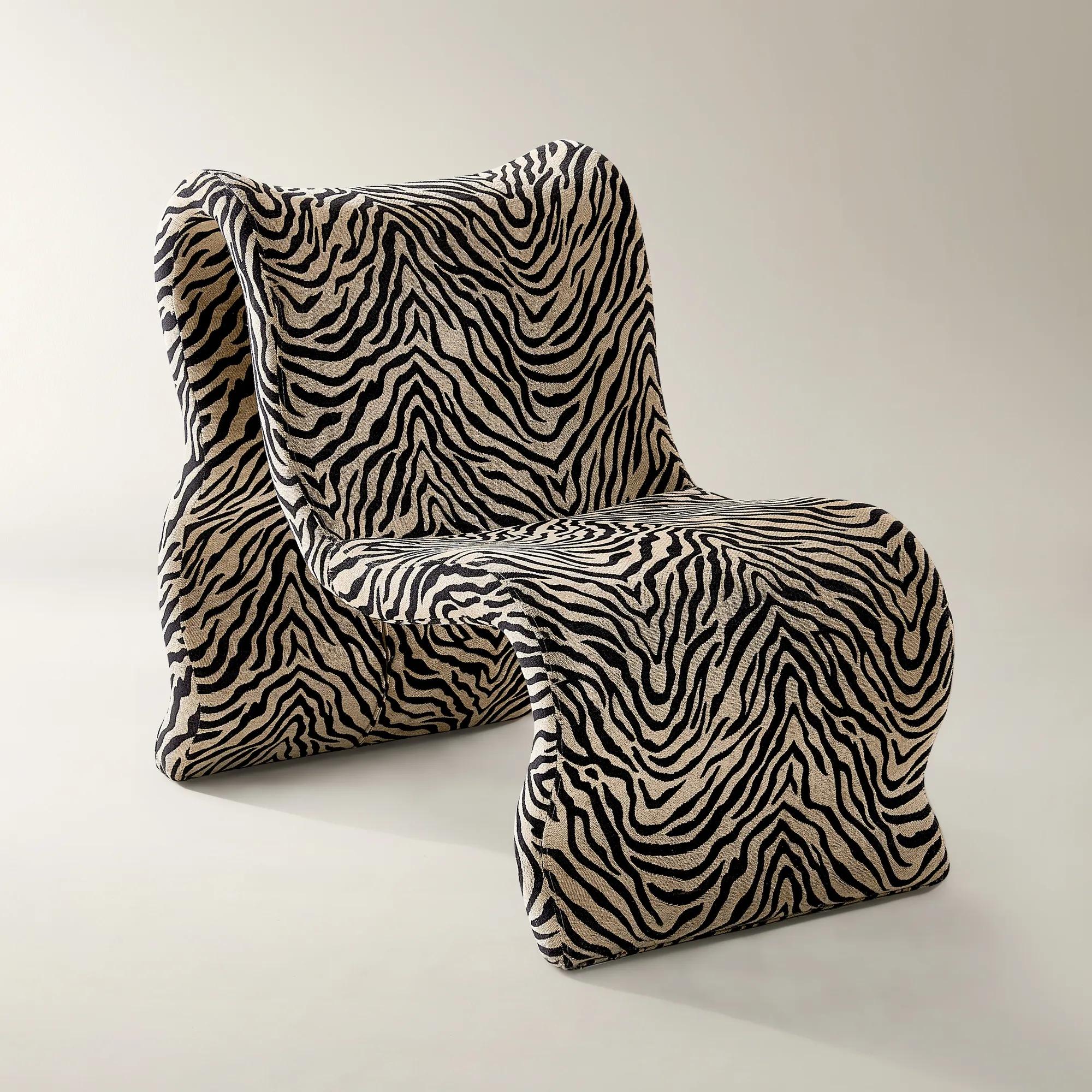
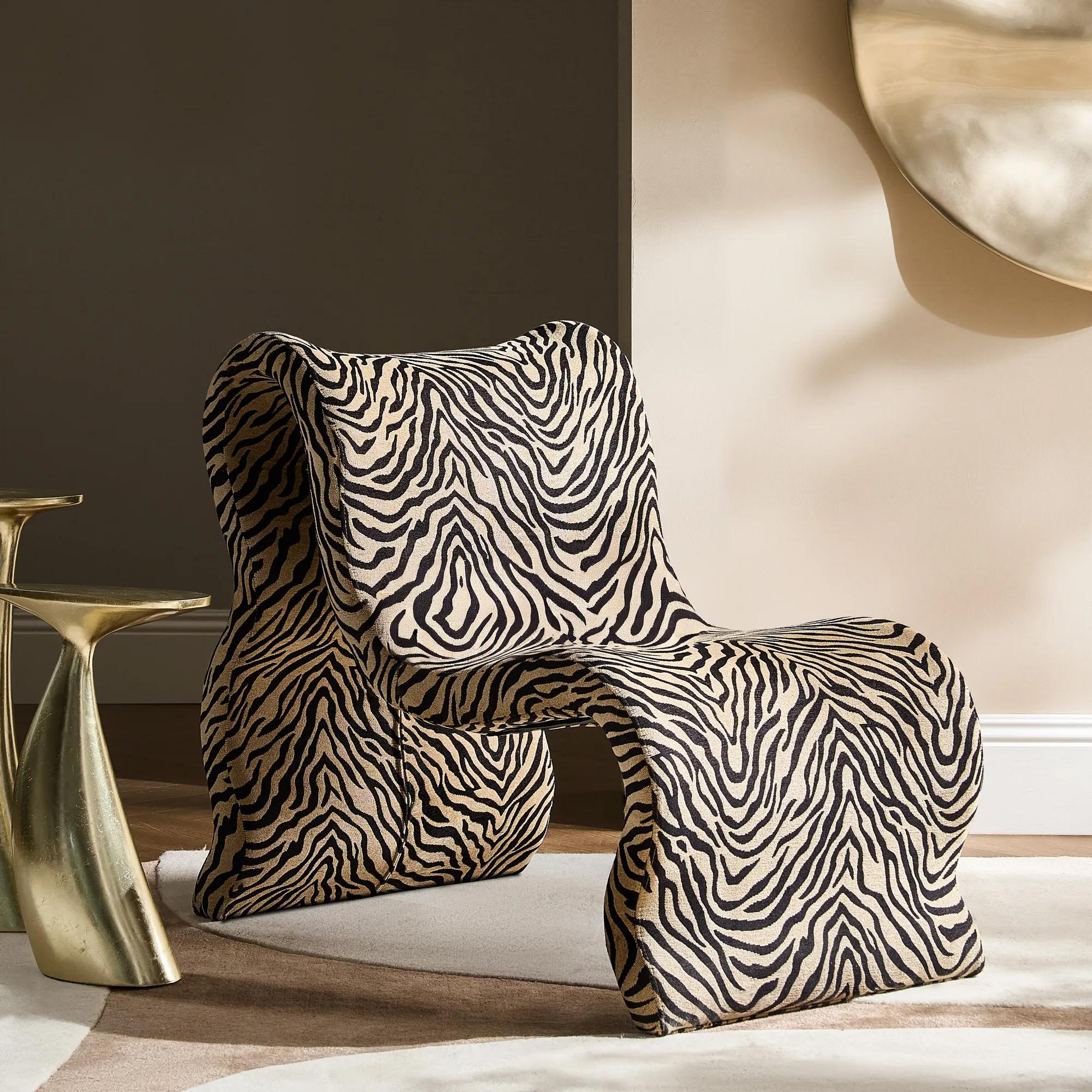 Romy Zebra Chenille Accent Chair$999
A sculptural accent chair featuring bold zebra-print chenille upholstery and a continuous wave-like silhouette.
Add To Cart -
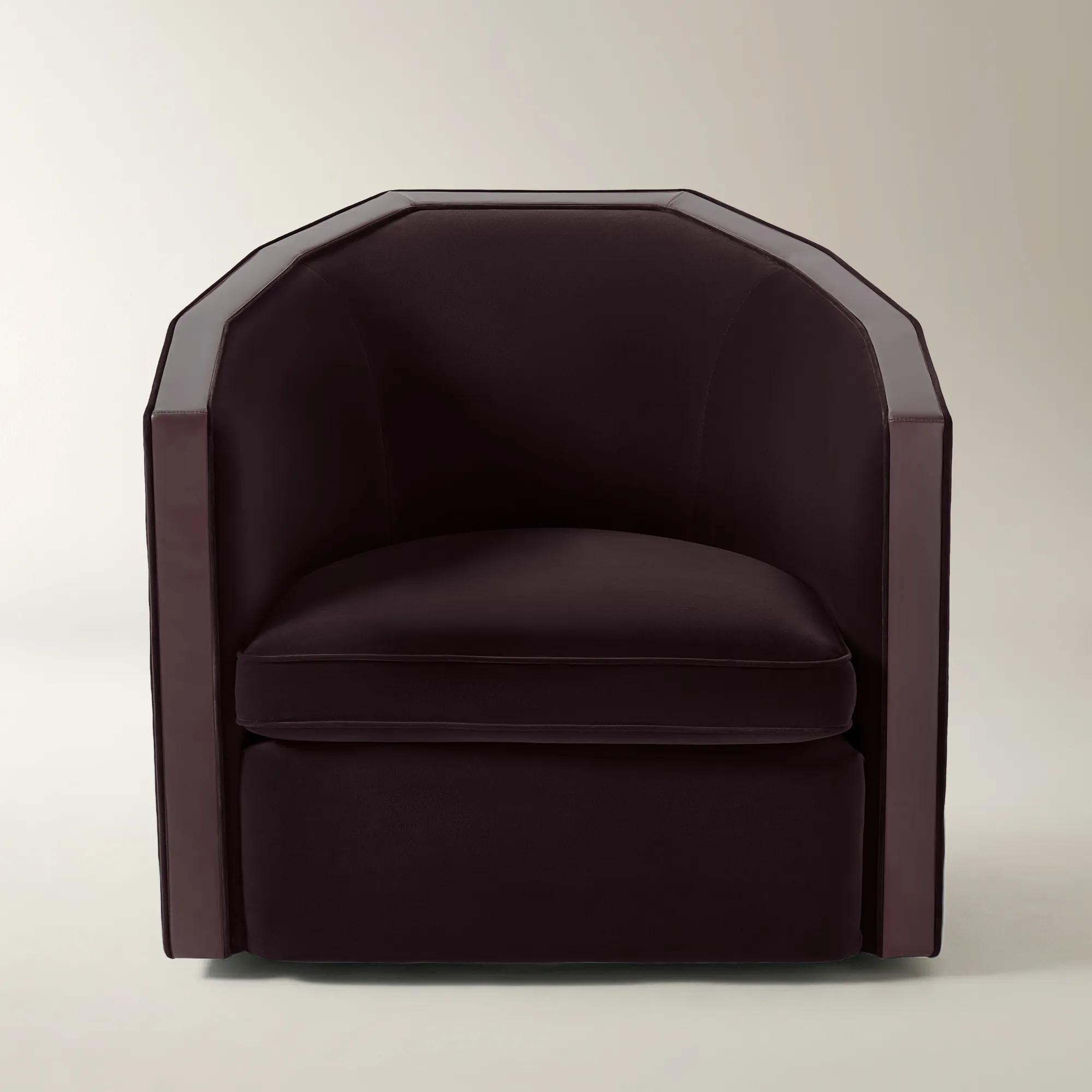
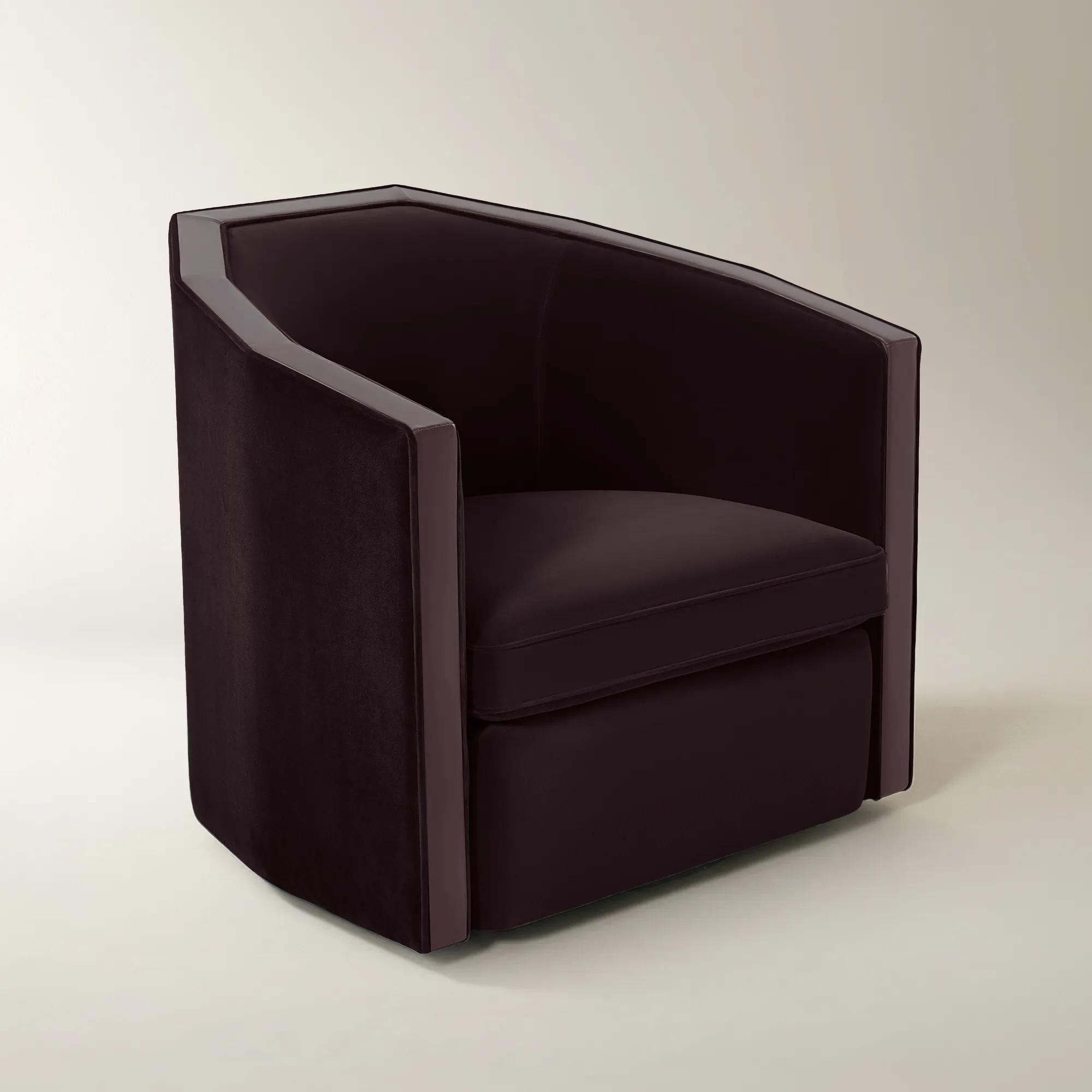 Vesper Fig Velvet With Leather Swivel Accent Chair$999
A modern accent chair featuring fig velvet upholstery, tonal leather trim, and a smooth 360° swivel base.
Add To Cart -
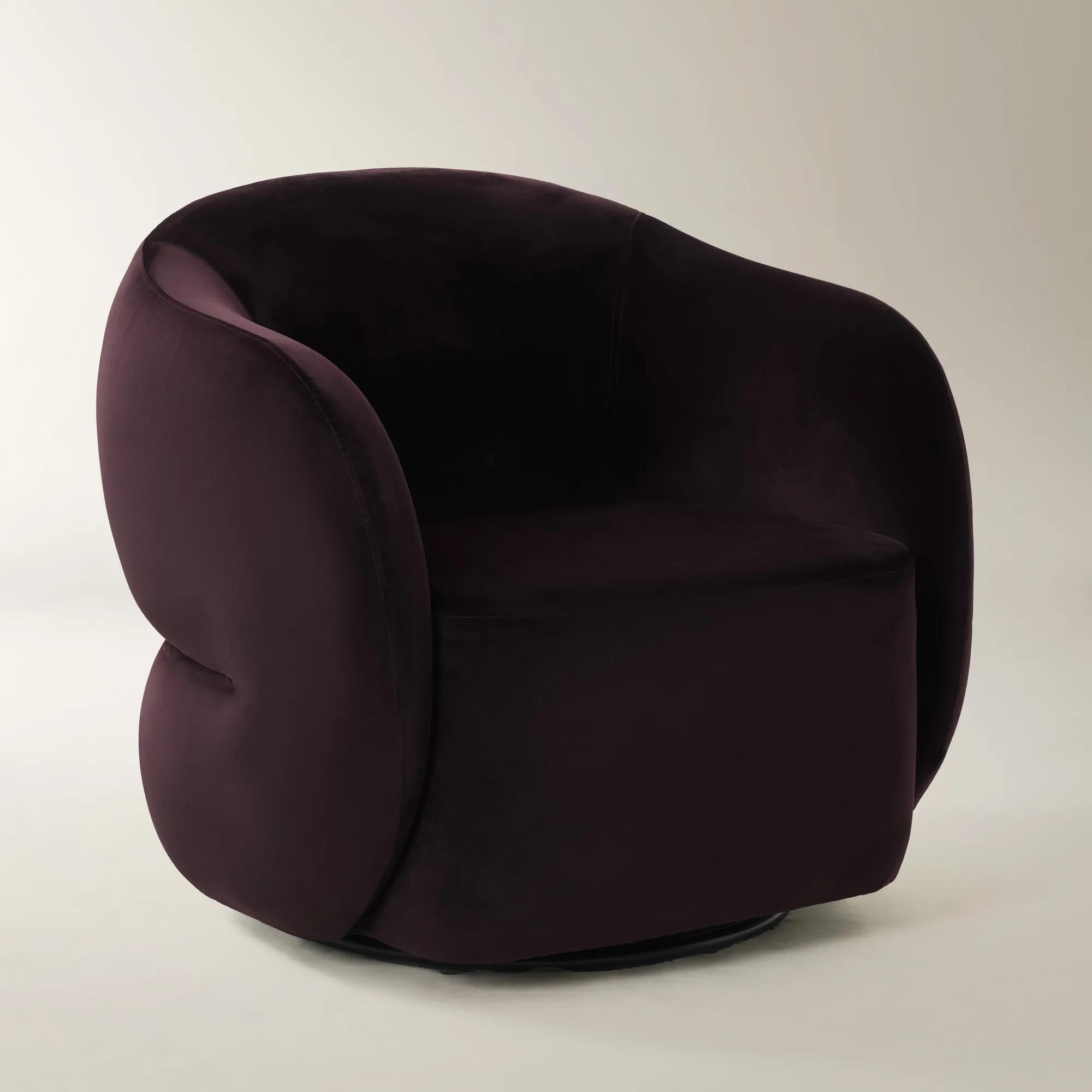 Sierra Fig Velvet Swivel Accent Chair$799
A modern accent chair in plush fig velvet with a wraparound back and smooth 360° swivel base.
Add To Cart -
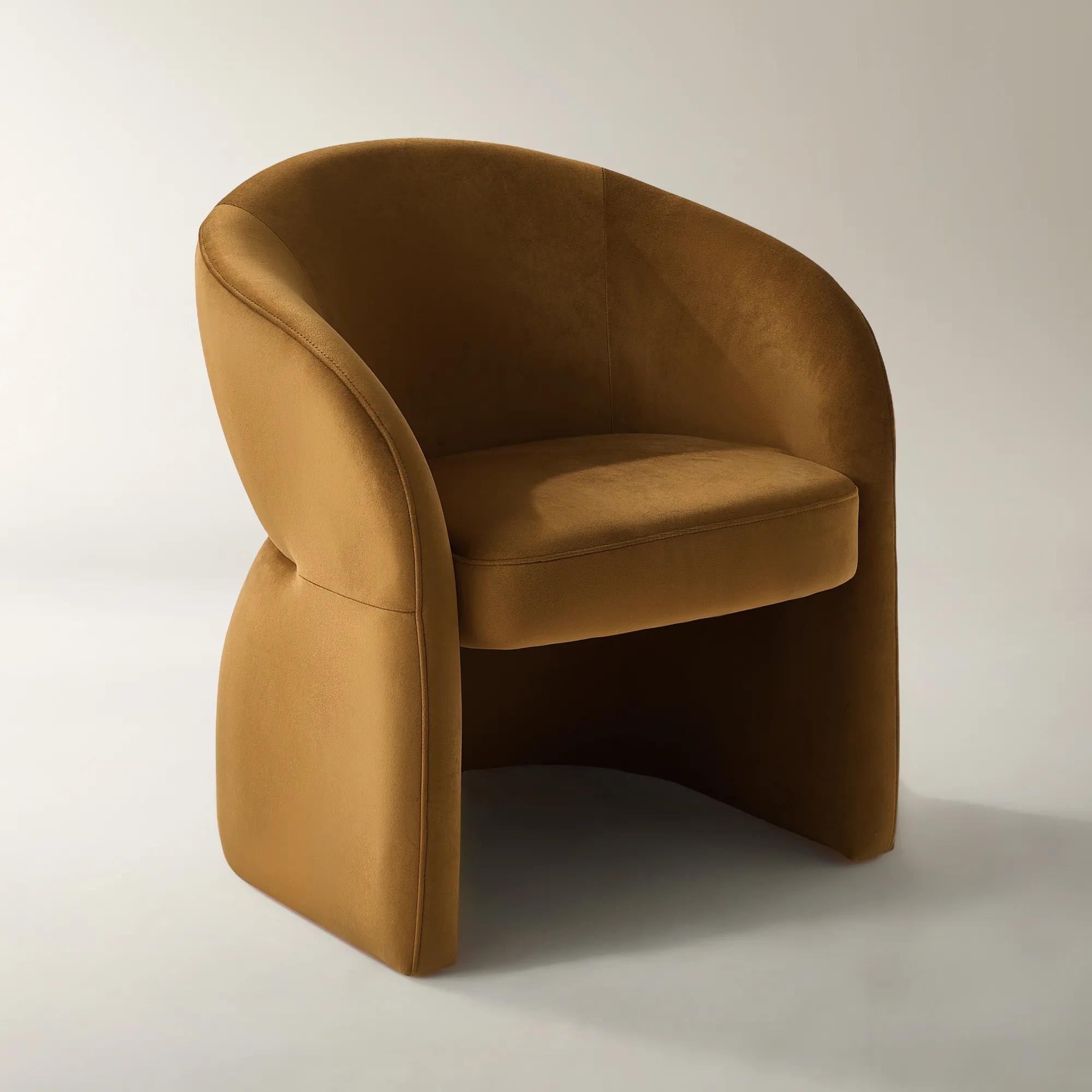
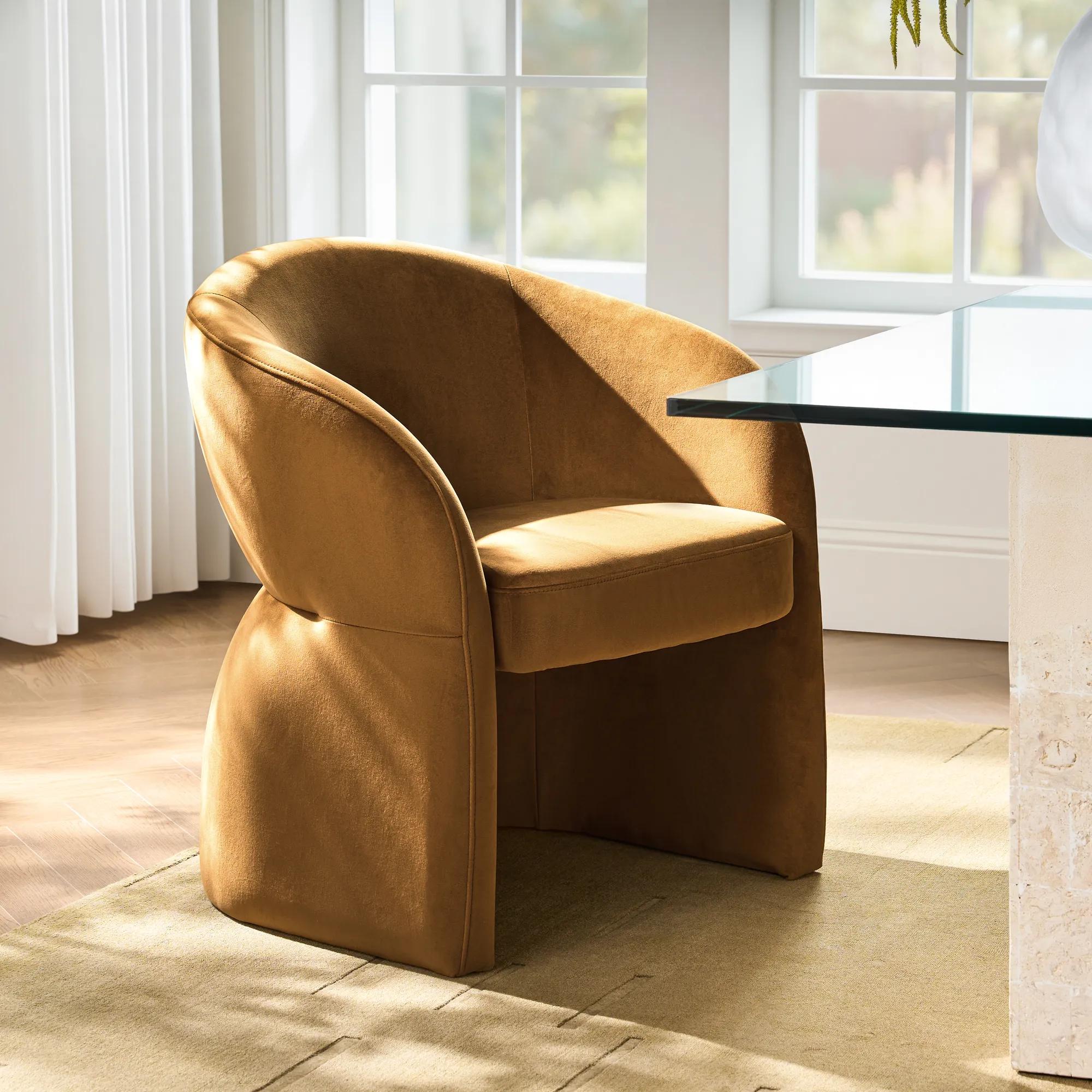 Sierra Roasted Pecan Velvet Dining Chair$499
A sculptural accent chair in roasted pecan velvet with arched arms, curved back, and plush cushioning.
Add To Cart -
.jpg?w=1200&h=1200) Stria Ivory Chenille Swivel Dining Chair With Oak Base$599
Stria Ivory Chenille Swivel Dining Chair With Oak Base$599An inviting ivory chenille arm chair with a solid oak swivel base and hand-crafted details.
Add To Cart -
.jpg?w=1200&h=1200)
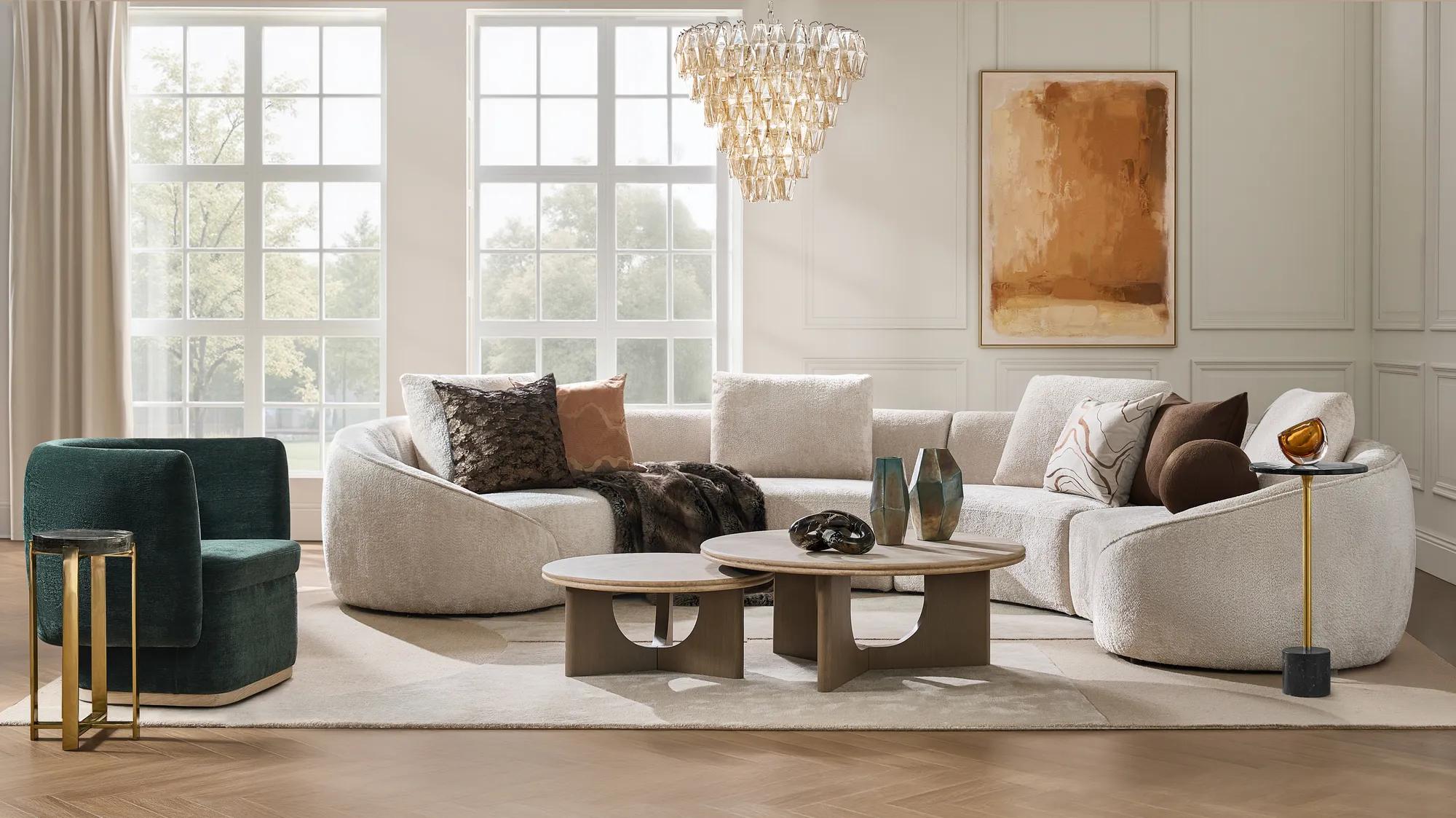 Stria Green Chenille Swivel Dining Chair With Oak Base$599
A green chenille arm chair with a solid oak swivel base, offering cozy comfort and modern versatility.
Add To Cart -
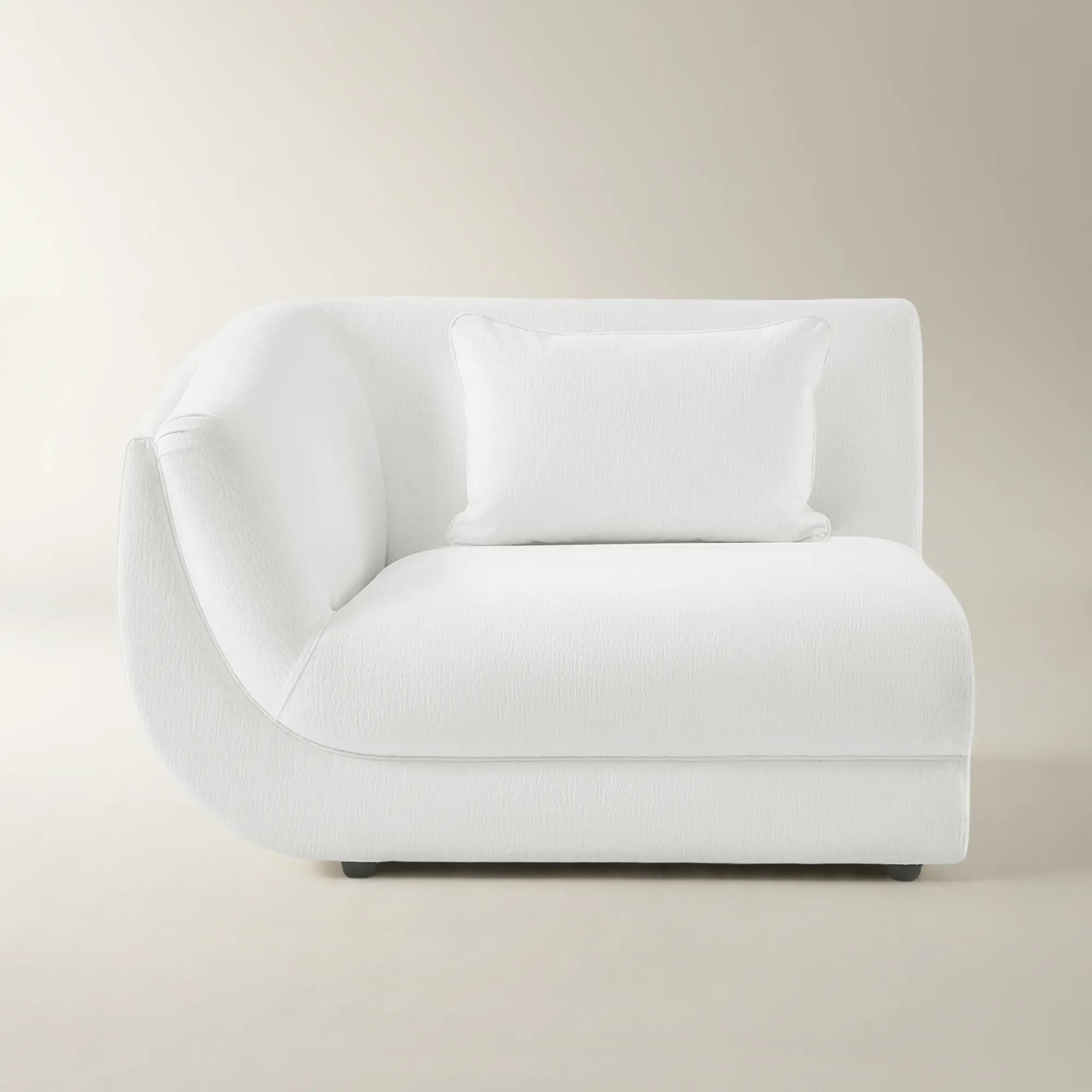 Curvia White Performance Chenille Indoor/Outdoor Left-Arm Chair$1349
A sculptural white chenille chair with plush cushioning, moisture-resistant backing, and indoor/outdoor versatility.
Add To Cart -
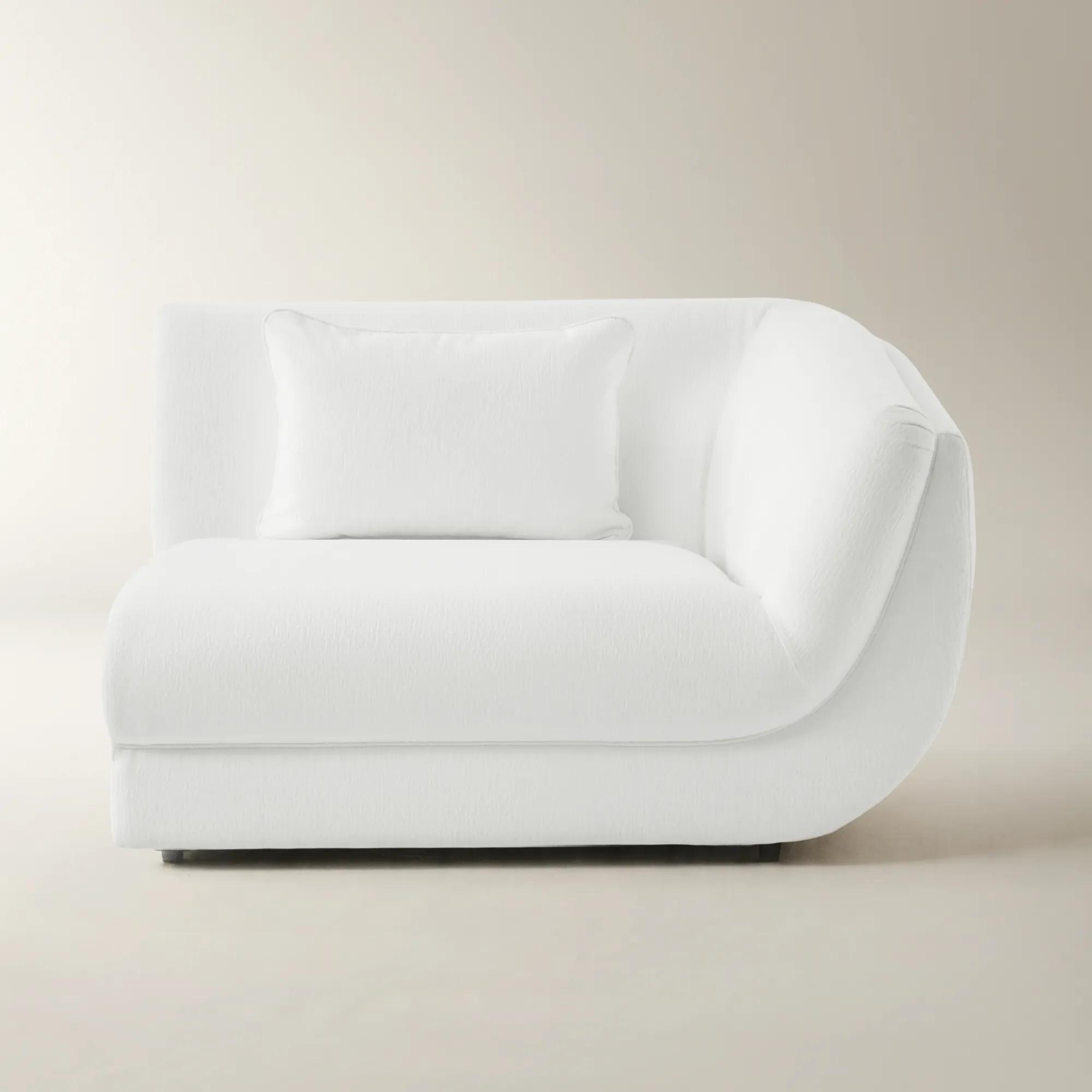 Curvia White Performance Chenille Indoor/Outdoor Right-Arm Chair$1349
A sculptural right-arm chair in white performance chenille, designed for plush comfort indoors or outdoors.
Add To Cart

Accent Chairs For Open Concept Living
Accent chairs for open concept living are more than mere seating—they are sculptural statements, conversation starters, and the finishing touch that unites a grand space. In a setting where boundaries dissolve and every angle is on display, these chairs invite you to curate moments of drama and intimacy amidst the expanse. Whether poised as a bold focal point or artfully layered into a flowing arrangement, each accent chair becomes an opportunity to express your unique vision—infusing your home with luxurious comfort, irresistible allure, and undeniable personality. Elevate your open concept living with pieces designed to captivate from every vantage.
Accent chairs for open concept living bring definition, movement, and a sense of occasion to rooms where the living area, kitchen, dining space, and entryway share one continuous story. Rather than closing off each zone with walls, these chairs create elegant visual boundaries through shape, scale, color, and placement. A pair of sculptural seats can frame a conversation area while preserving the expansive sightlines that make an open floor plan feel luminous and welcoming. A single dramatic chair can occupy an empty corner near a window, fireplace, or console, transforming overlooked space into a destination for reading, morning coffee, or an evening glass of wine. Look for silhouettes that feel polished from every angle, especially when the back of the chair faces a kitchen island or dining table. Open arms, exposed legs, gently curved backs, and visually lighter profiles allow light to travel through the room, helping the arrangement feel composed rather than crowded. Swivel accent chairs are especially compelling in multi-use spaces because they can pivot toward the sofa during conversation, turn toward the television for relaxed viewing, or face the kitchen when guests gather around the island. Their 360-degree mobility supports the natural rhythm of entertaining without requiring anyone to drag furniture across the floor. For more compact layouts, barrel, tub, and bucket-style chairs offer enveloping comfort within a relatively contained footprint. They soften the geometry of a large sectional or long sofa while adding an intimate note to the overall composition. In expansive rooms, two matching chairs can establish symmetry, while mismatched silhouettes in a related finish create a more collected, expressive effect.
Proportion is essential when selecting accent chairs for open concept living. A chair should feel generous enough for lingering yet scaled to preserve clear walkways between the seating area, kitchen, dining zone, and nearby doors. As a practical starting point, many open-plan arrangements benefit from chairs approximately 26 to 32 inches wide and about 29 to 31 inches deep, though the ideal dimensions depend on the size of the sofa, the distance between furnishings, and the room’s circulation pattern. Leave enough breathing room for people to move comfortably around the chair, particularly in homes where guests naturally travel between the island and living area during gatherings. Place accent chairs at an intentional angle toward the center of the conversation zone instead of lining every piece against the perimeter walls. This arrangement feels more inviting and helps unify furniture that serves different purposes across the room. In a smaller footprint, chairs with raised legs or a narrow frame can maintain an airy impression; in a loft-like setting with generous proportions, a fuller upholstered form can provide welcome intimacy and visual weight. Upholstery is an opportunity to introduce contrast rather than create a matched suite. A smooth leather finish can bring tailored luminosity beside a textured sofa, while boucle, chenille, velvet, and woven linen-blends add tactile depth that invites touch. Consider how the fabric will perform in daily life: durable, easy-care upholstery is a thoughtful choice for households with children, pets, or frequent entertaining, while richly colored velvet or delicate textural details may be best positioned in a quieter reading nook. Neutral upholstery can bridge several zones with ease, while jewel tones, graphic patterns, and metallic accents give the chair a more theatrical role. When the surrounding architecture is restrained, a dramatic chair becomes artwork with a seat; when the room already features expressive rugs, lighting, or wall decor, a quieter silhouette can provide a moment of visual calm.
These versatile seats suit a wide range of homes and lifestyles, from a city apartment where every inch must work beautifully to a generous great room designed for long evenings with friends. They are particularly useful for households that need flexible seating without committing to another large sofa. A swivel chair beside the kitchen can keep the cook connected to conversation, while a compact accent chair near the dining area gives a guest a comfortable place to settle after a meal. In homes with an open staircase or broad entry, a chair and small side table can create a graceful pause between the front door and the main living area. Accent chairs also make memorable housewarming gifts for someone settling into a new home, newlyweds shaping a shared space, or design-minded hosts who enjoy refreshing their rooms with expressive pieces. For a coordinated dining and living arrangement, explore Upholstered Dining Chairs For Open Concept Spaces to carry the same sense of comfort and artistry into the adjoining area. During the cooler months, richly upholstered chairs make open rooms feel warmer and more layered, especially when positioned near a softly glowing lamp, a textured throw, or a gleaming side table. The most successful choice is one that balances comfort with presence: a chair that supports relaxed conversation, welcomes an unexpected guest, and adds enough distinction to make the entire room feel deliberately composed. With the right scale, orientation, and material, an accent chair does more than fill an available corner. It gives an open concept interior a new cadence, guiding the eye, shaping the flow, and turning everyday living into a more beautifully considered experience.
FAQ List
Accent chairs are masterful at defining distinct zones within open concept layouts, such as creating intimate conversation areas or highlighting a reading nook. Their sculptural presence adds visual interest and helps guide the eye, ensuring each area feels intentional and beautifully connected.
Open concept spaces thrive on a balance of cohesion and contrast. Sleek, modern silhouettes like those found in soho concept furniture bring a sense of urban sophistication, while bohemian accent chairs infuse warmth and character. Mixing materials and finishes allows you to reflect your personal style while maintaining harmony throughout the space.
For open concept living, opt for durable yet luxurious fabrics such as performance velvet, boucle, or textured weaves that stand up to daily use while exuding elegance. Metallic accents, acrylic frames, or sculpted wood can add a layer of artistry without sacrificing resilience.
Absolutely. Accent chairs make exceptional gifts, offering both style and function. They provide a bold design statement and versatile seating, making them perfect for those embarking on a new chapter or seeking to refresh their living environment with a touch of drama.
Accent chairs are ideal for celebrating the seasons—think plush, jewel-toned upholstery for autumnal warmth or crisp, linen fabrics for a summer refresh. Their mobility allows you to reimagine your layout with each season, ensuring your open concept space always feels current and inspired.