Unique Modern Side Tables
Unique Modern Side Tables
-
 Thalia Glossy Black Side Table Set Of 2 (8"-12.5")$599
A sculptural duo of glossy black fiberglass tables with fluid lines and mirror-like lacquered finish.
Add To Cart -
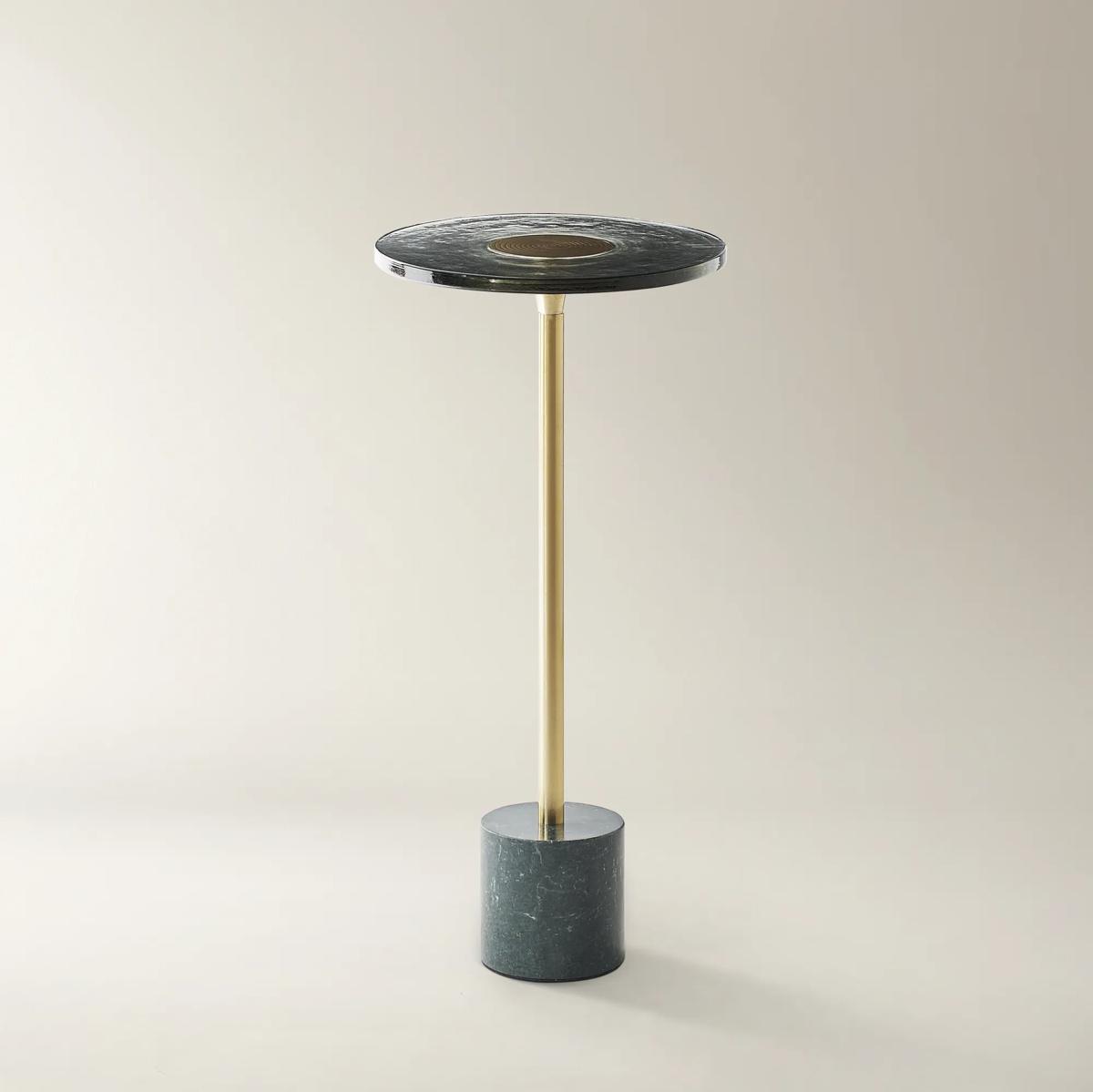
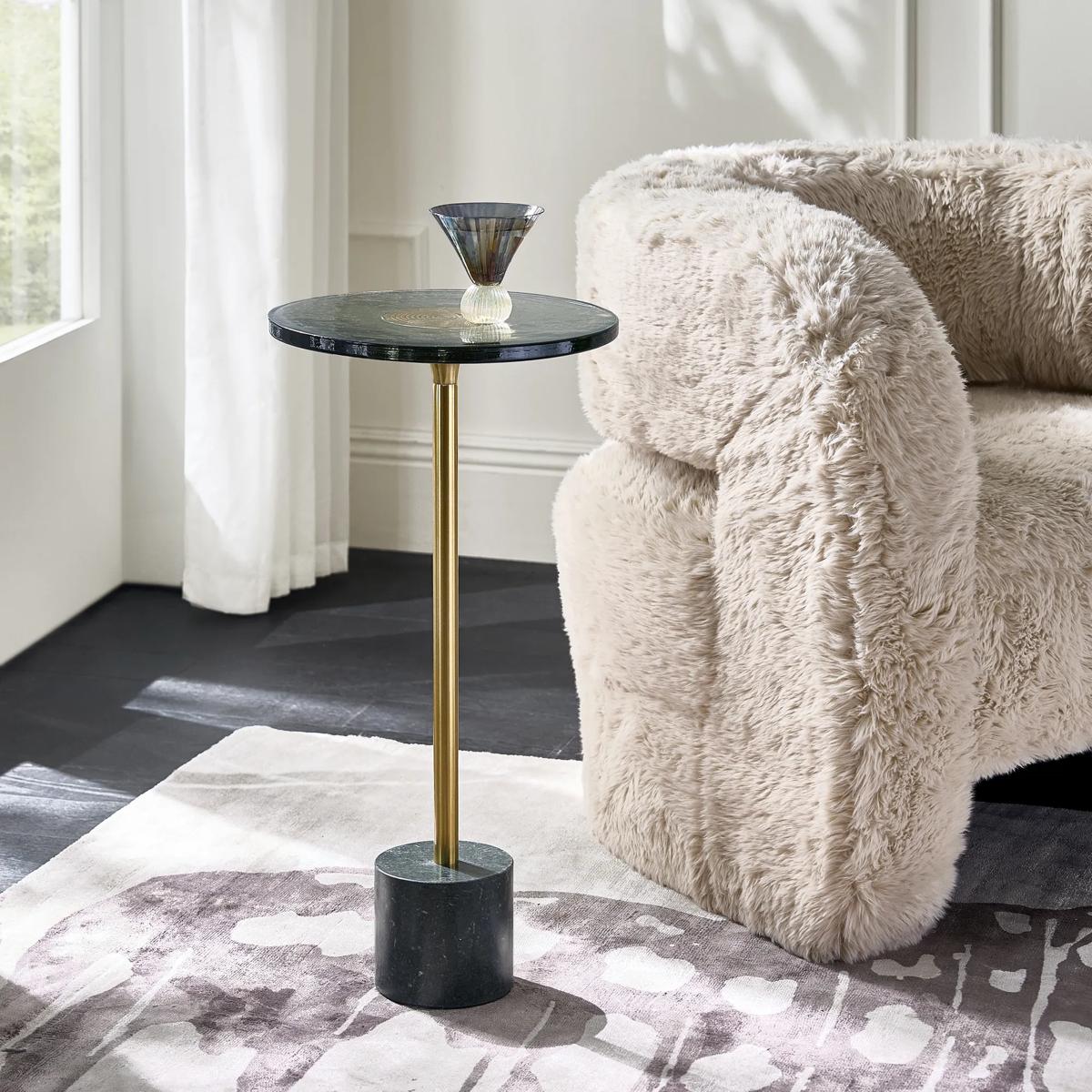 Seraphy Round Green Metal Side Table With Glass Top (13.75")$179
A modern side table featuring a green cast glass top, brass-finished post, and Indian green marble base.
Add To Cart -
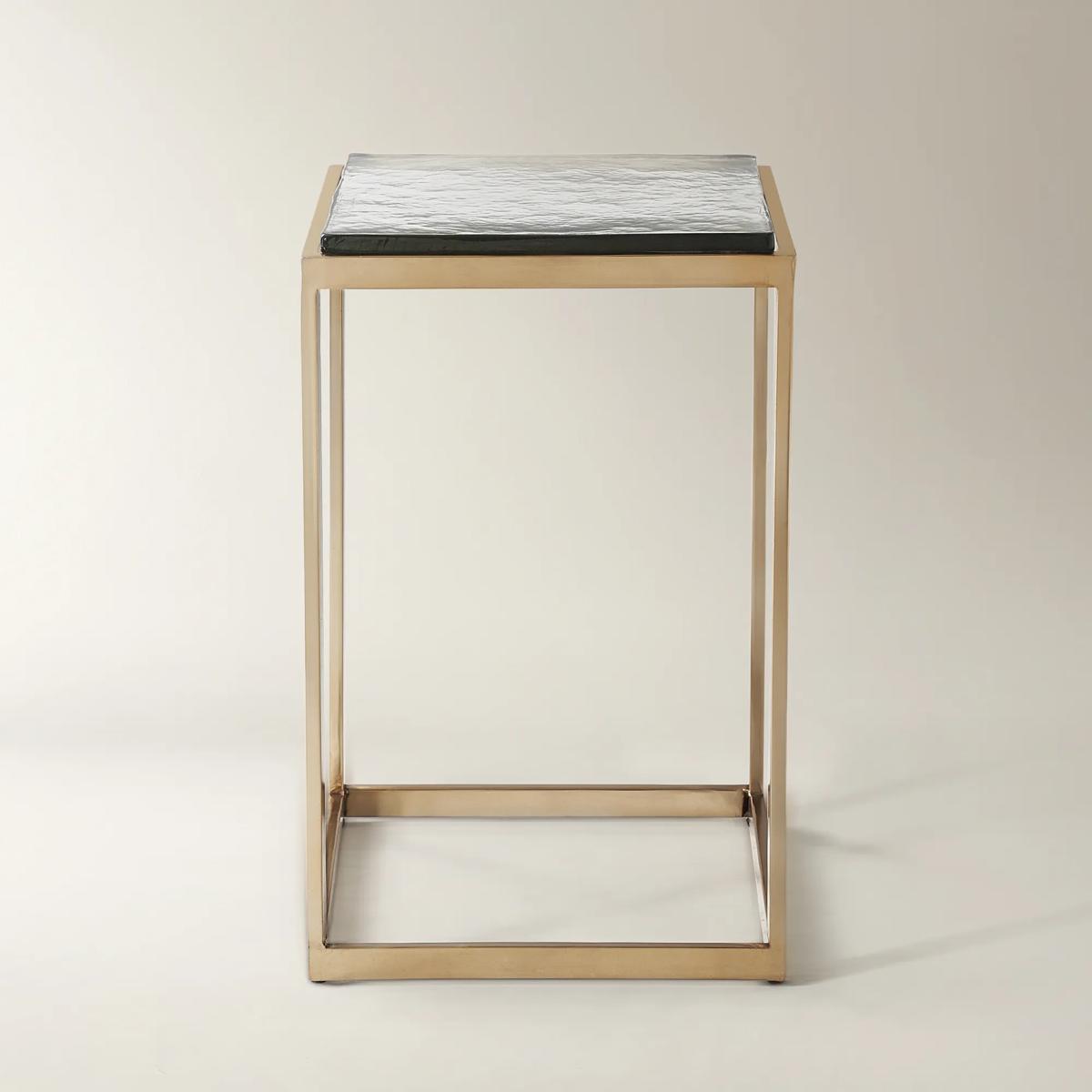
 Lyra Square Brass Metal Side Table With Glass Top (13.8")$239
A sculptural side table featuring a thick cast glass top and a lustrous brass-finished metal base.
Add To Cart -
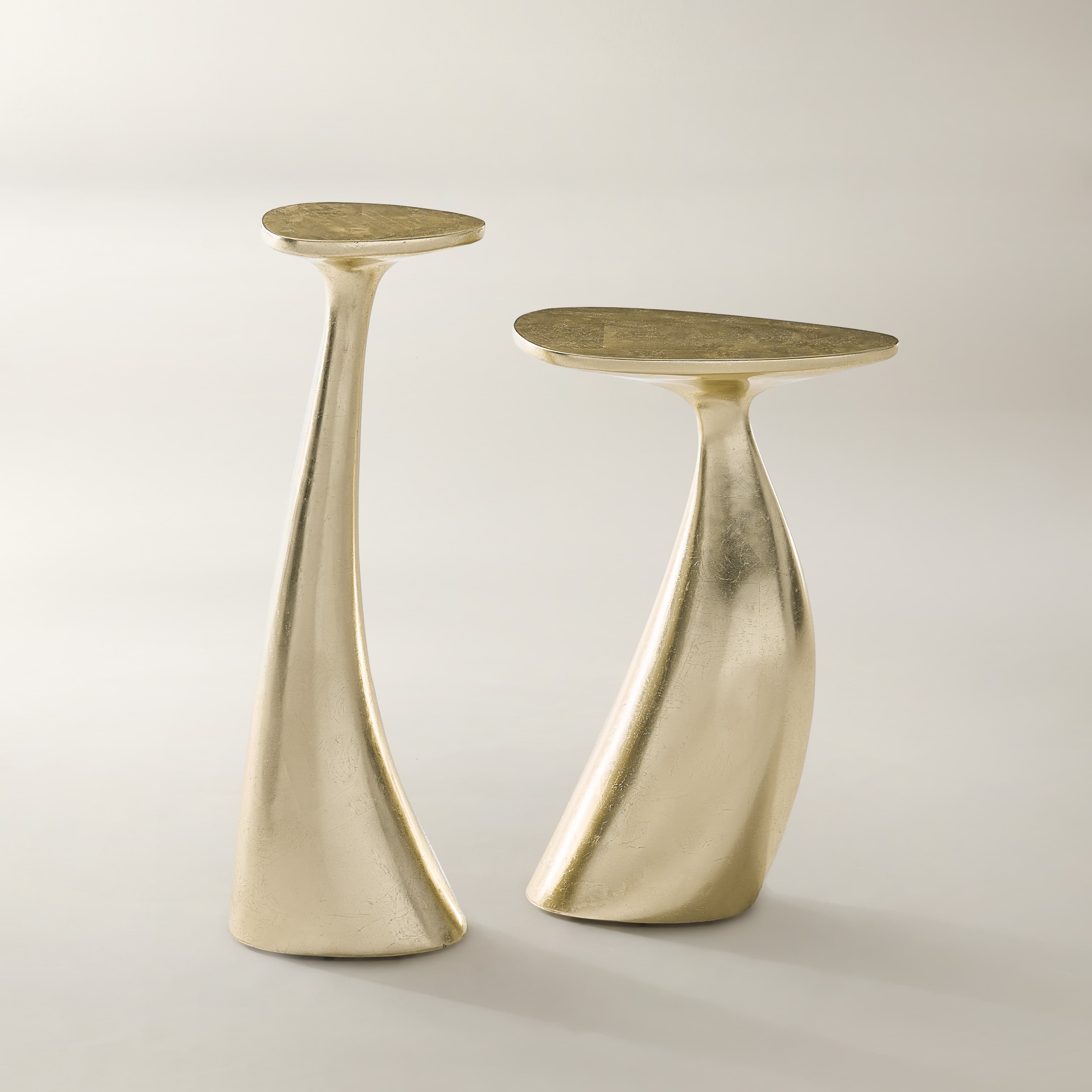 Thalia Soft Gold Side Table Set Of 2 (8"-12.5")$699
A sculptural duo of gold leaf fiberglass tables with fluid lines and a warm, luminous finish.
Add To Cart -
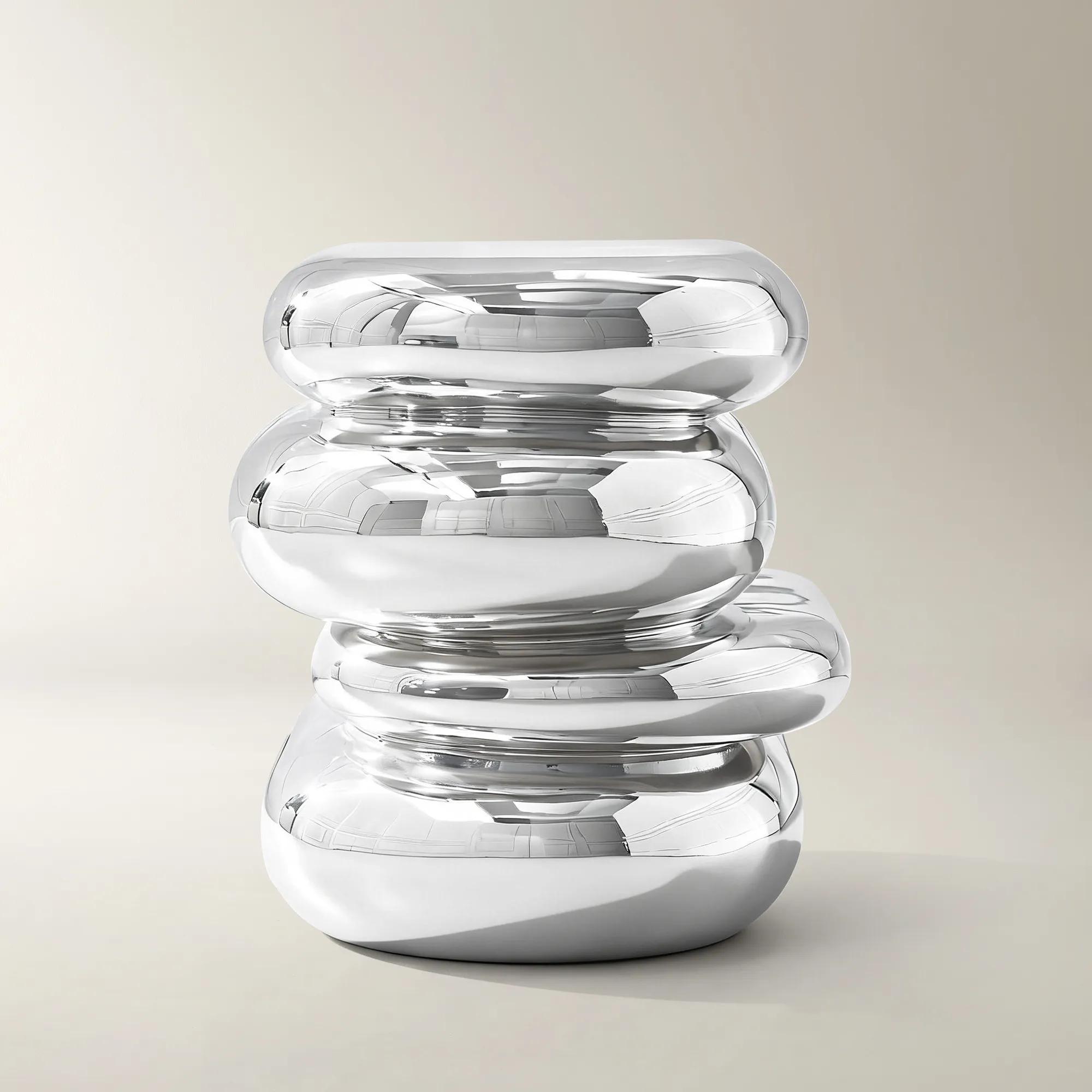 Forma Stacked Chrome Side Table (19.9")$699
A sculptural accent table crafted from seamless fiberglass with a reflective chrome finish and rounded tiers.
Add To Cart -
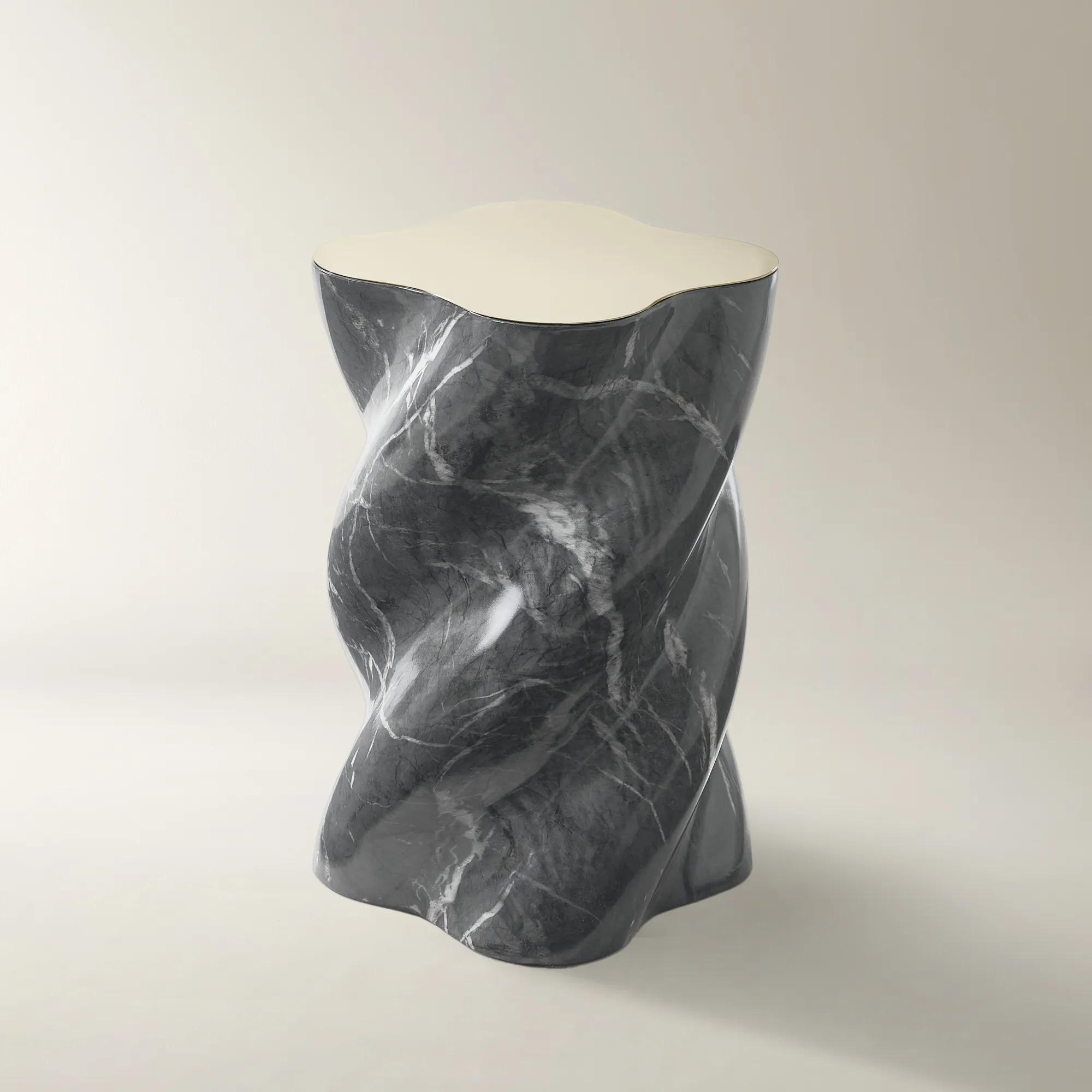 Vega Bvlgary Black Concrete Indoor/Outdoor Side Table With Stainless Steel Top (13.8")$459
A black concrete side table with a sculptural pedestal, removable stainless-steel top, and marble-inspired finish.
Add To Cart -
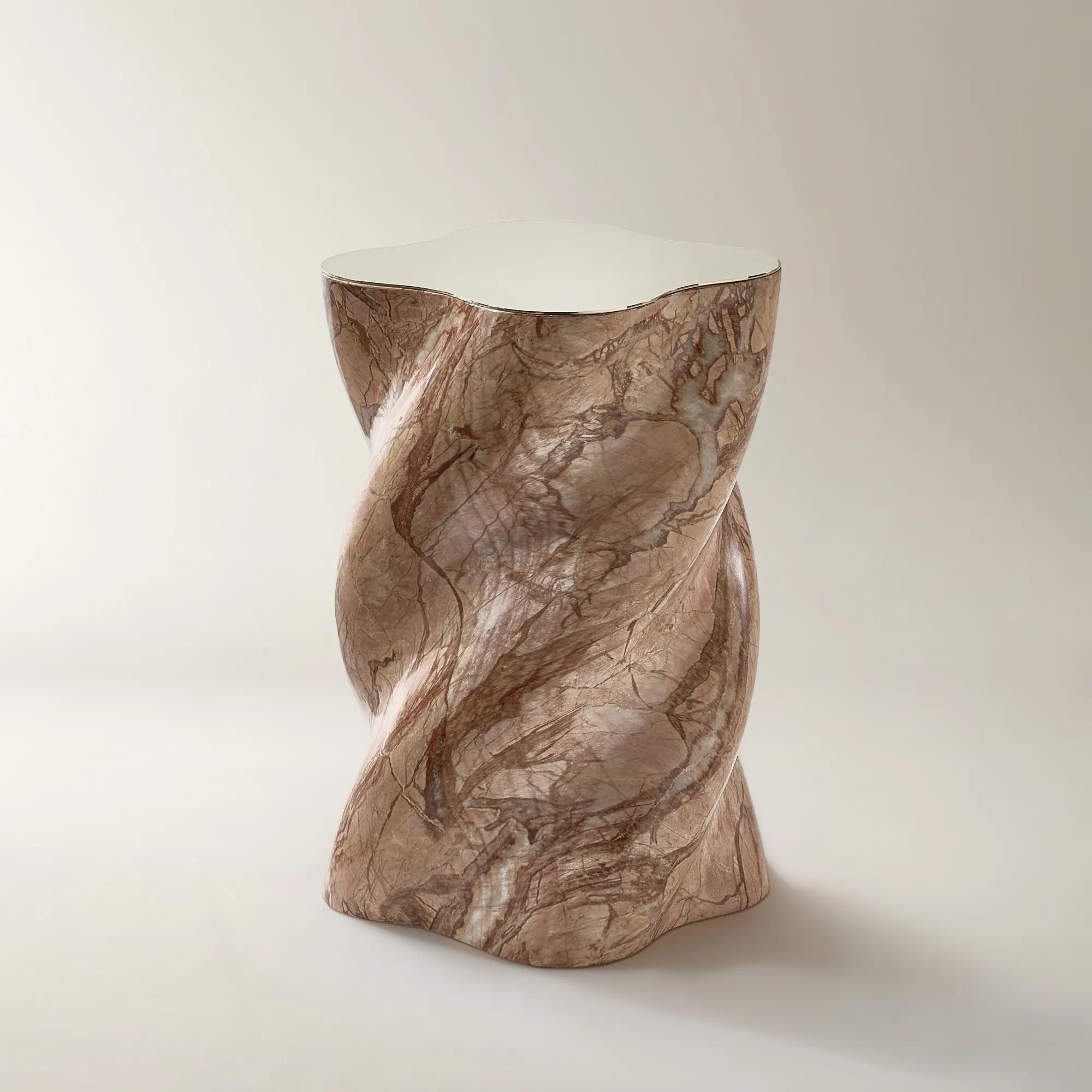
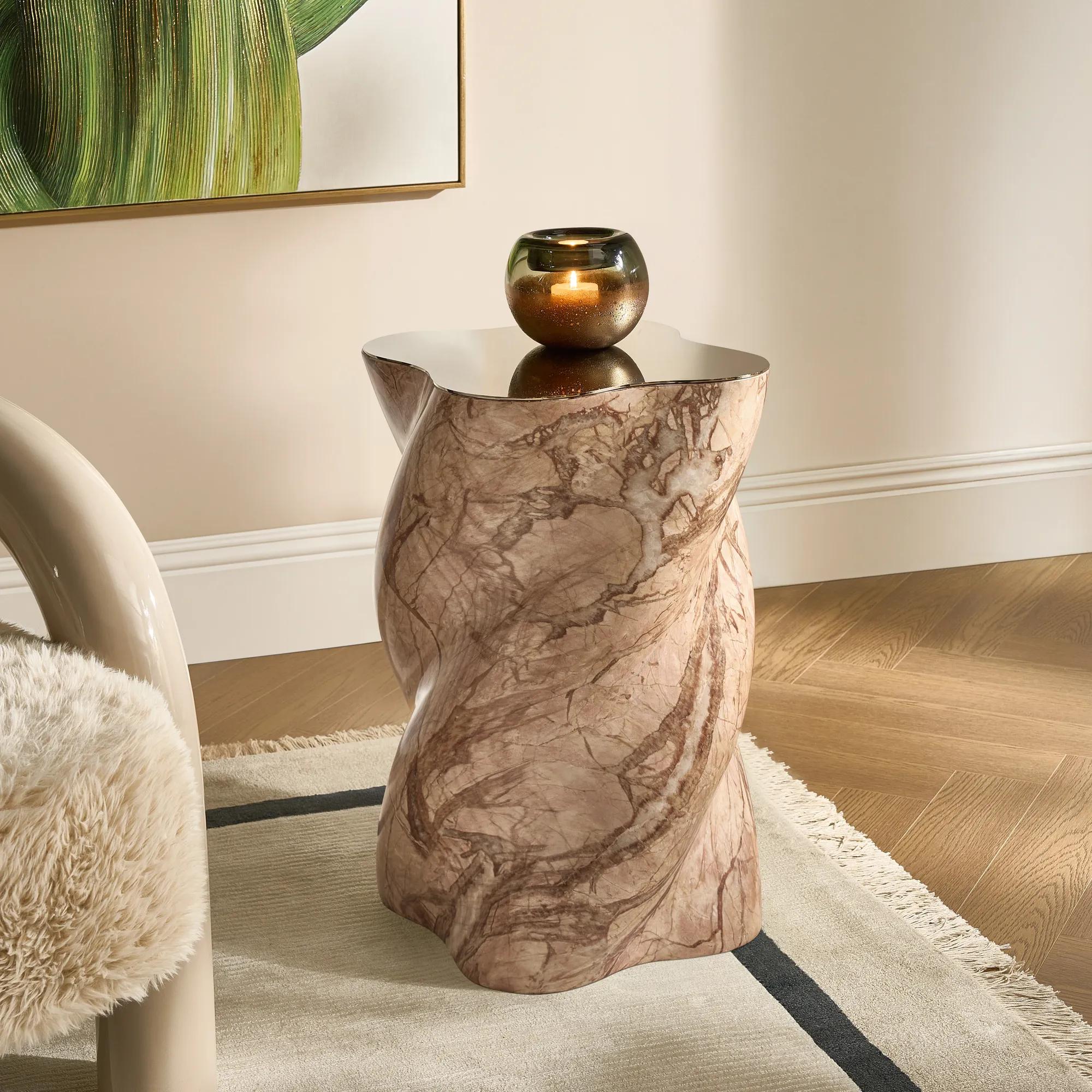 Vega Concrete Indoor/Outdoor Side Table With Stainless Steel Top (13.8")$459
A black, orange, or green concrete side table with removable stainless-steel top and marble-inspired veining.
Add To Cart -
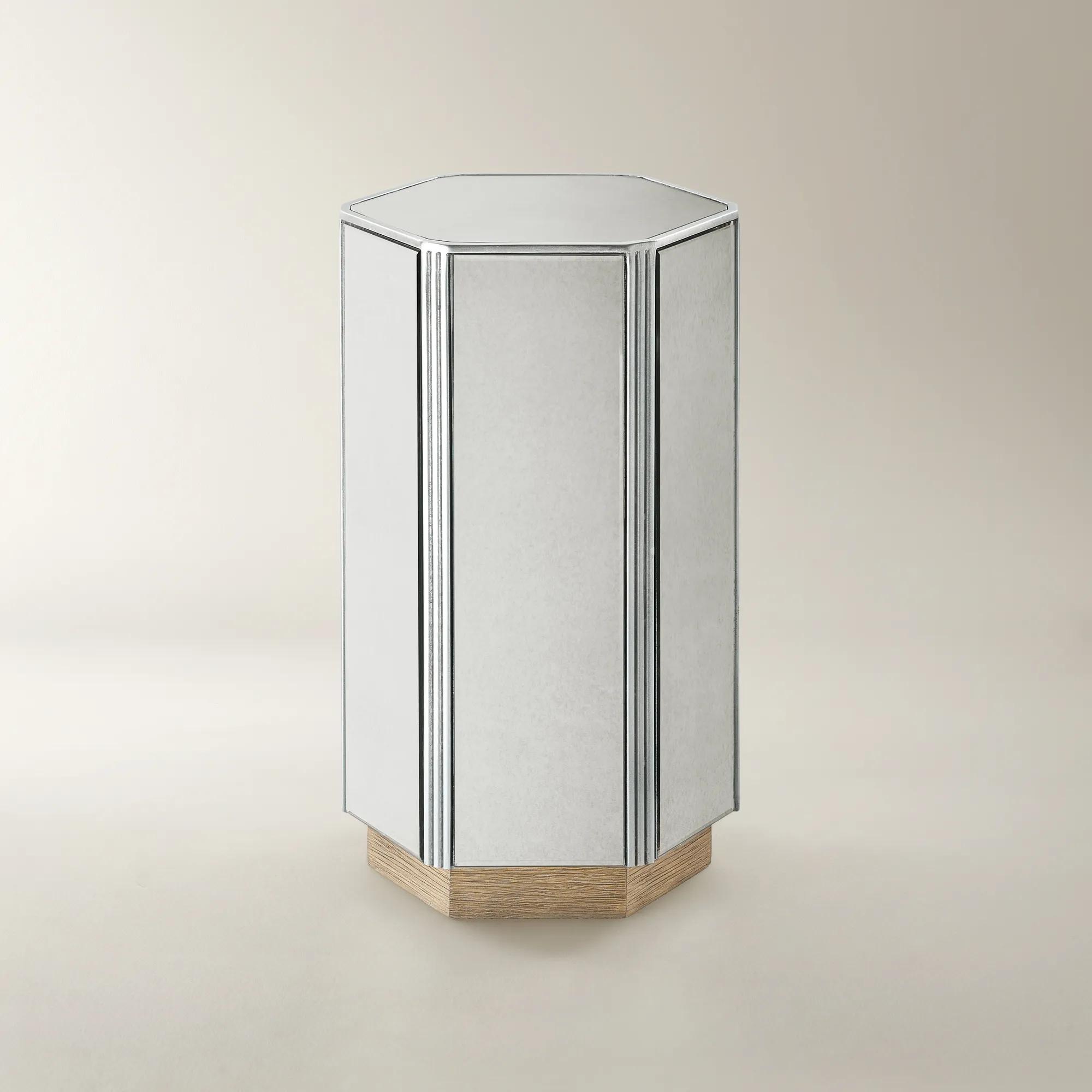 Glimmer Silver Mirrored End Table (12")$399
A chic side table featuring an antique silver mirror top and warm oak veneer base with handcrafted details.
Add To Cart -
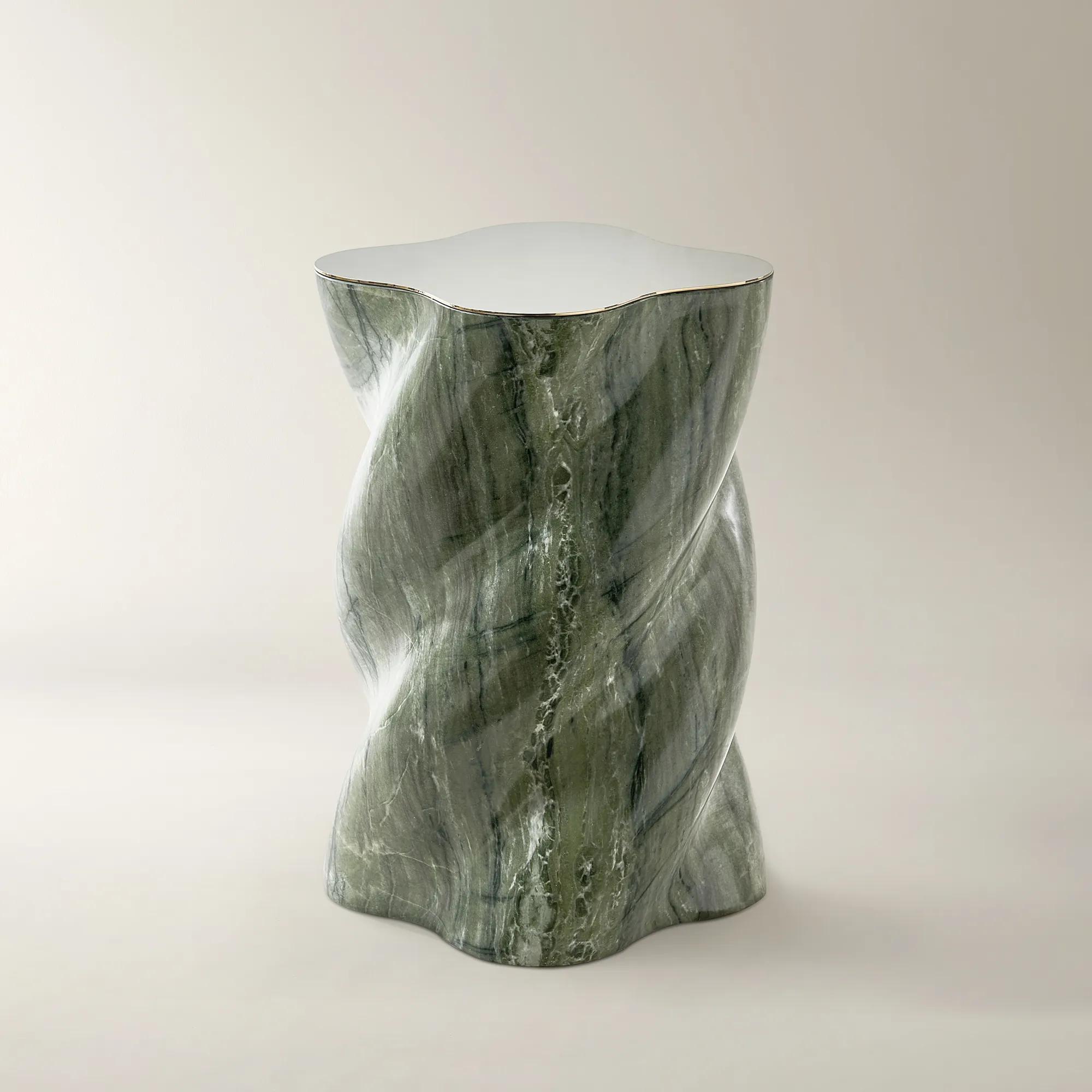 Vega Malachite Green Concrete Indoor/Outdoor Side Table With Stainless Steel Top (13.8")$459
A green concrete side table with a sculptural pedestal, marble-inspired finish, and removable stainless-steel top.
Add To Cart -
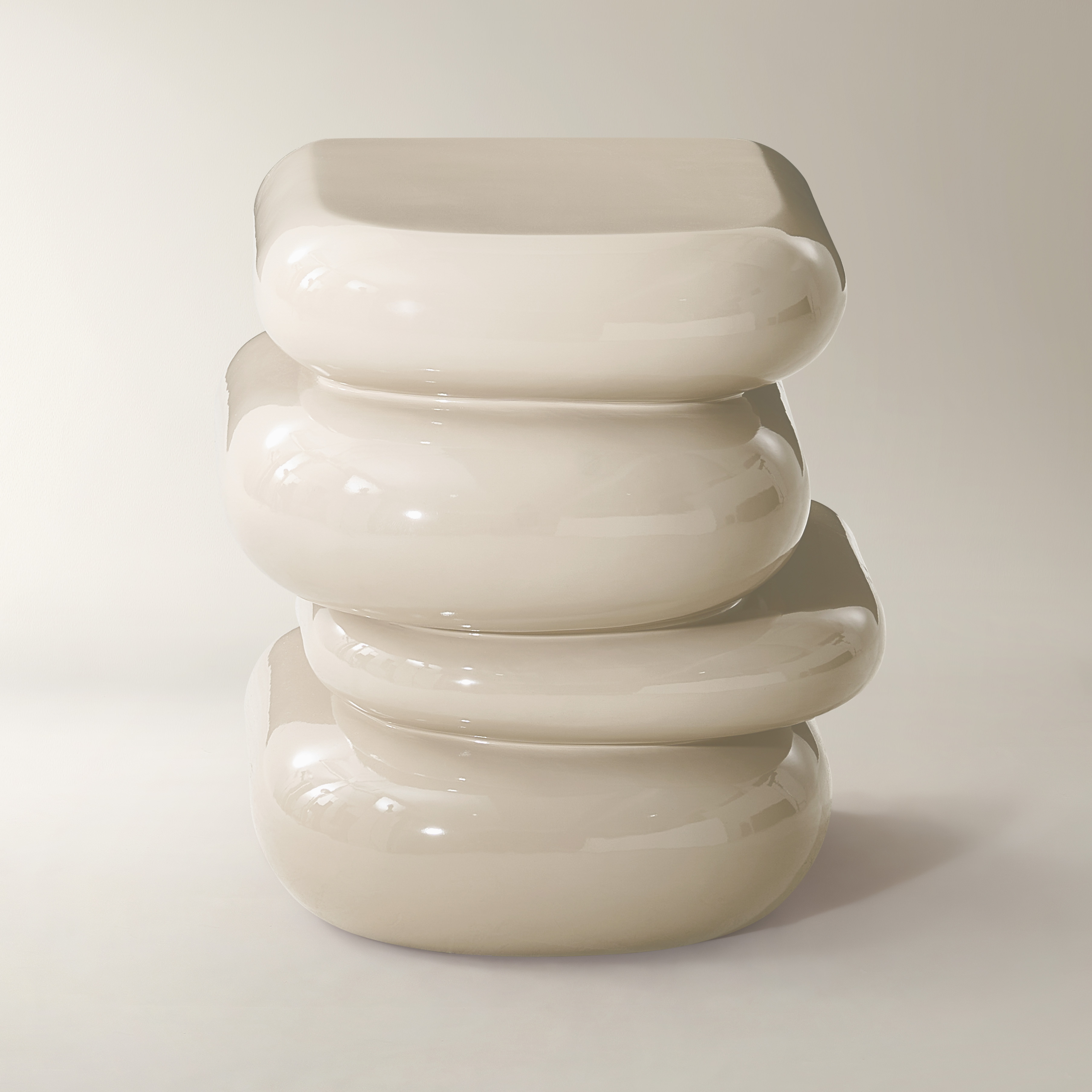
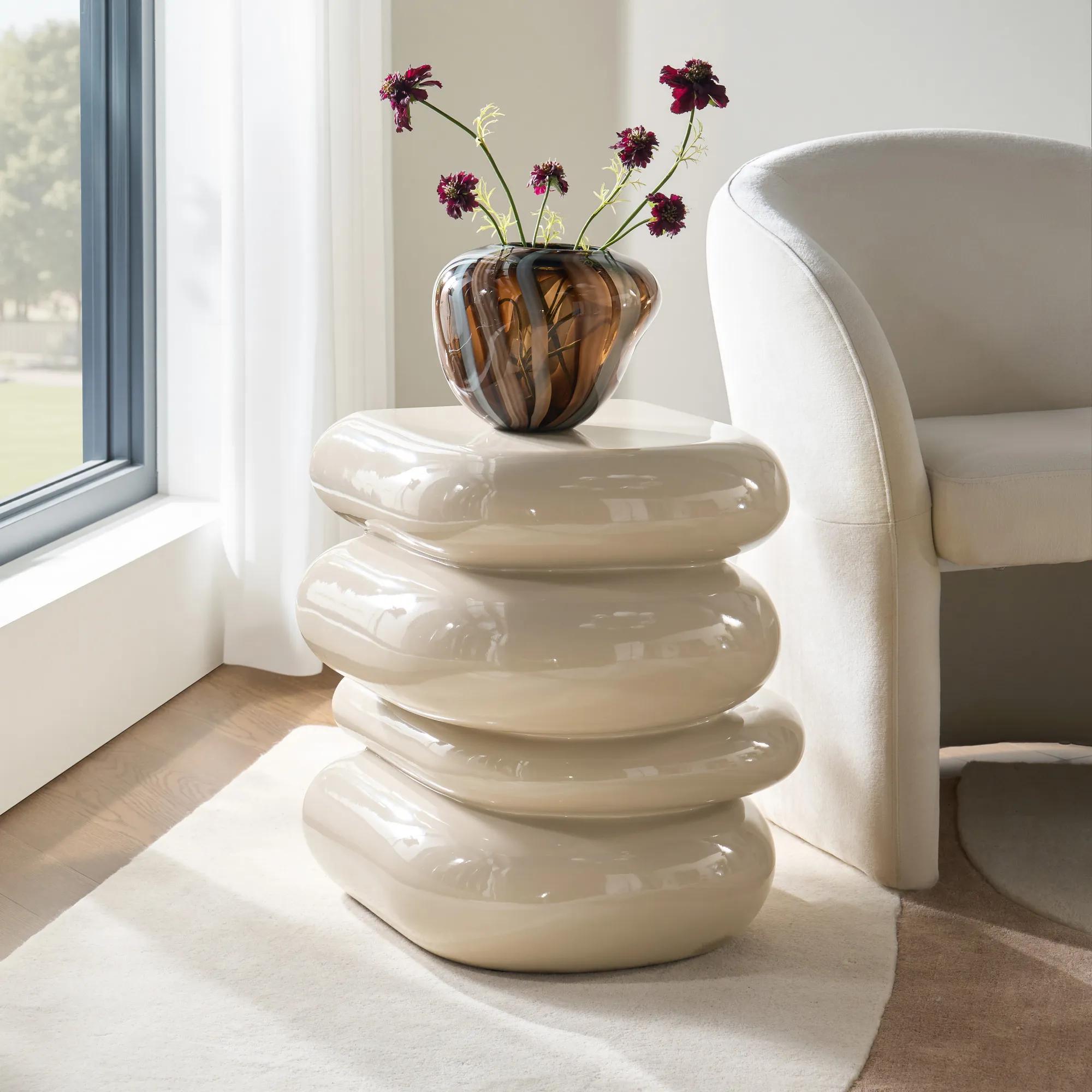 Forma Stacked Turtle Dove Side Table (19.9")$499
A sculptural accent table crafted from high-gloss turtle dove fiberglass with softly stacked, rounded tiers.
Add To Cart -
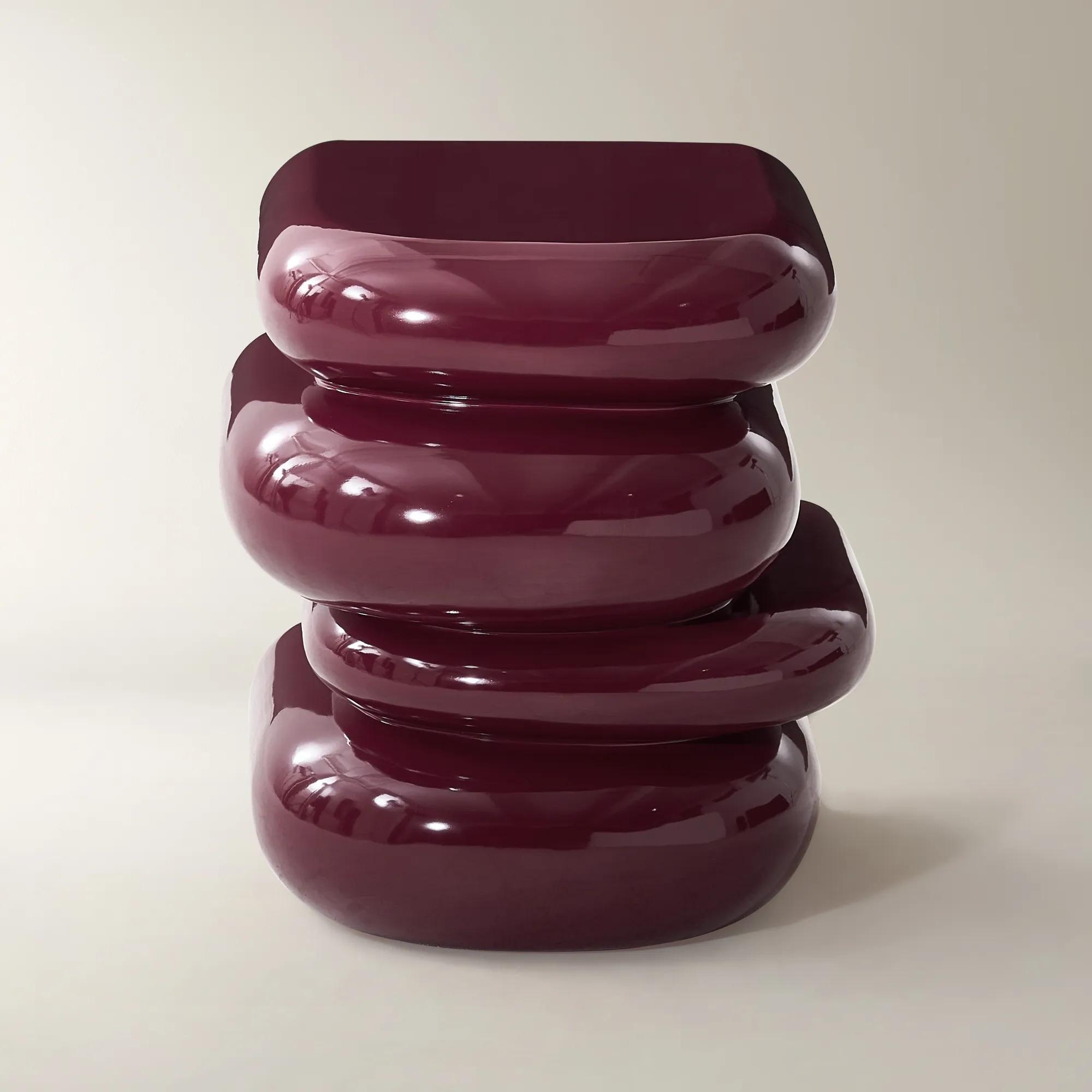 Forma Stacked Ox Blood Side Table (19.9")$499
A sculptural accent table crafted from high-gloss ox blood fiberglass with softly stacked, rounded tiers.
Add To Cart -
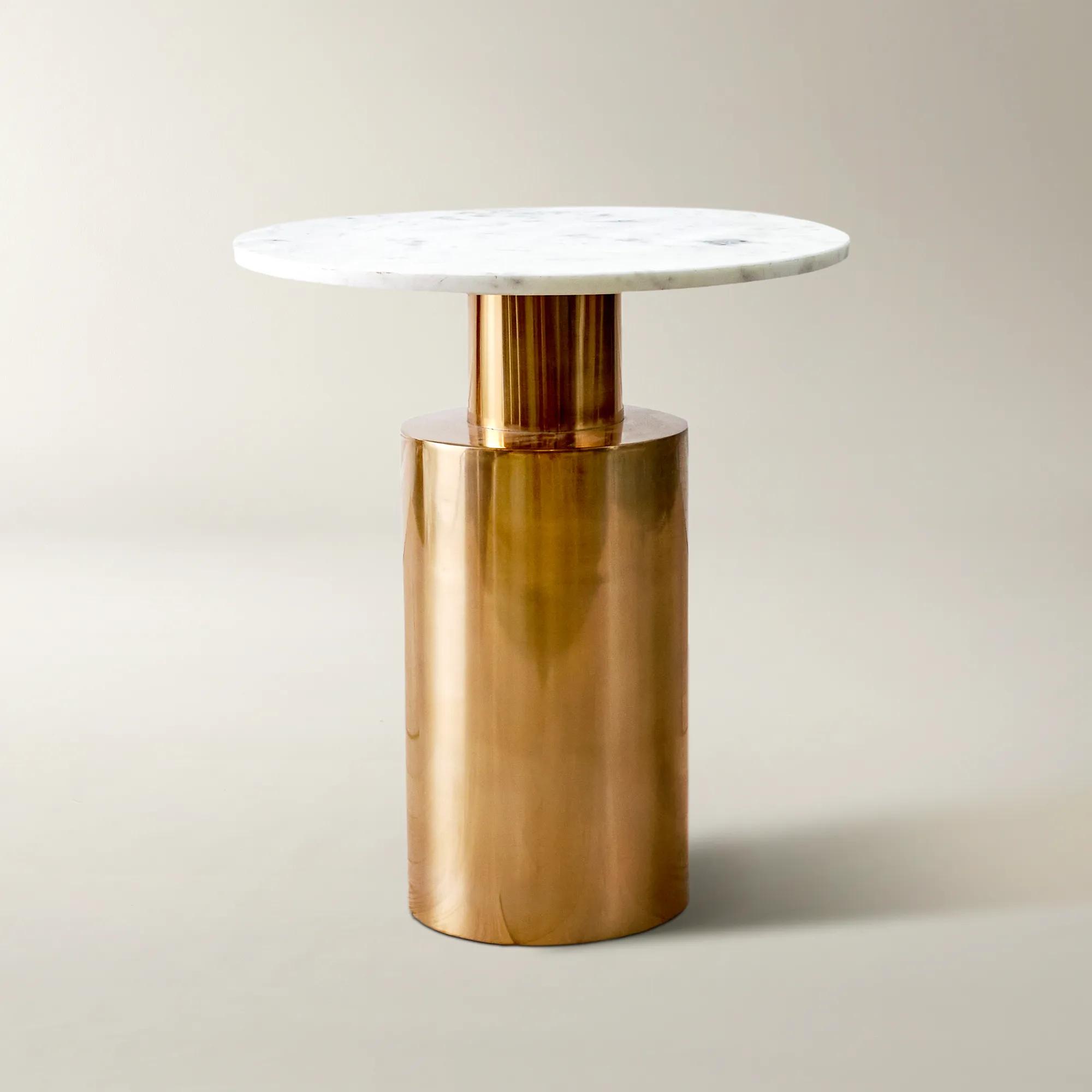
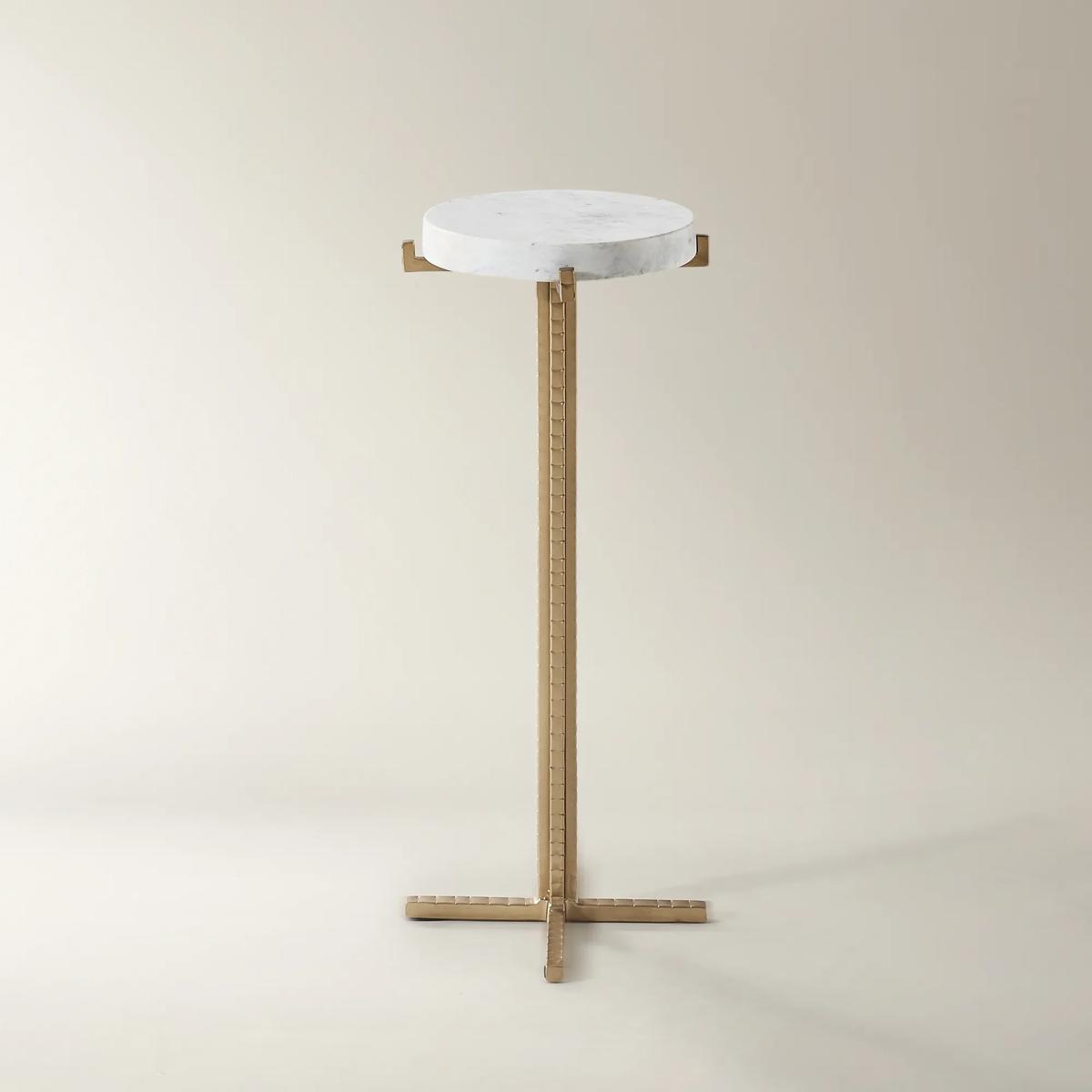 Anya Round White Marble Side Table (10")$199
A sculptural side table featuring a genuine white marble top and gold-finished metal pedestal base.
Add To Cart -
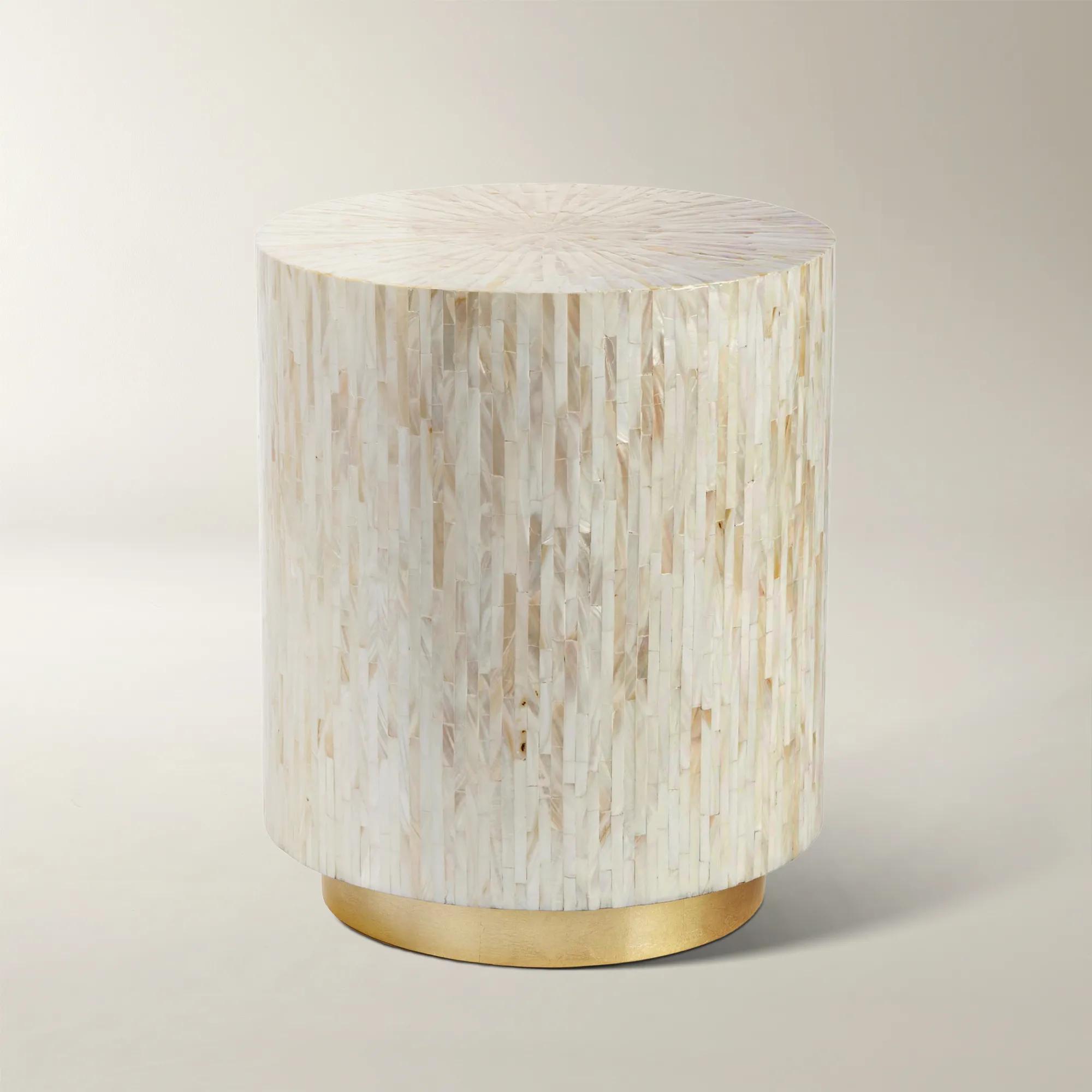 Alexandria Round Mosaic Platinum End Table (13.75")$299
A glamorous accent table featuring hand-applied mother-of-pearl mosaic and a gold leaf-accented base.
Add To Cart -
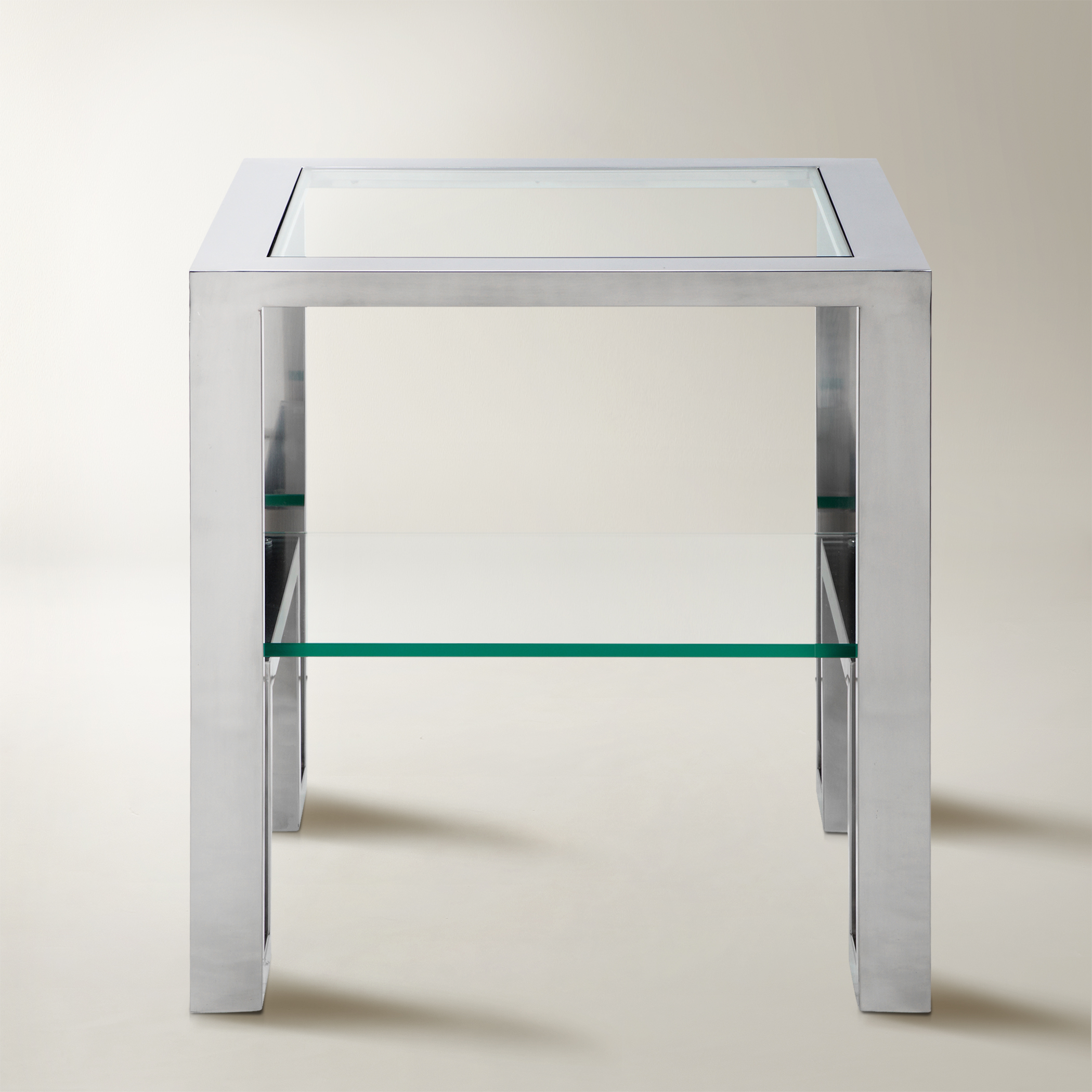
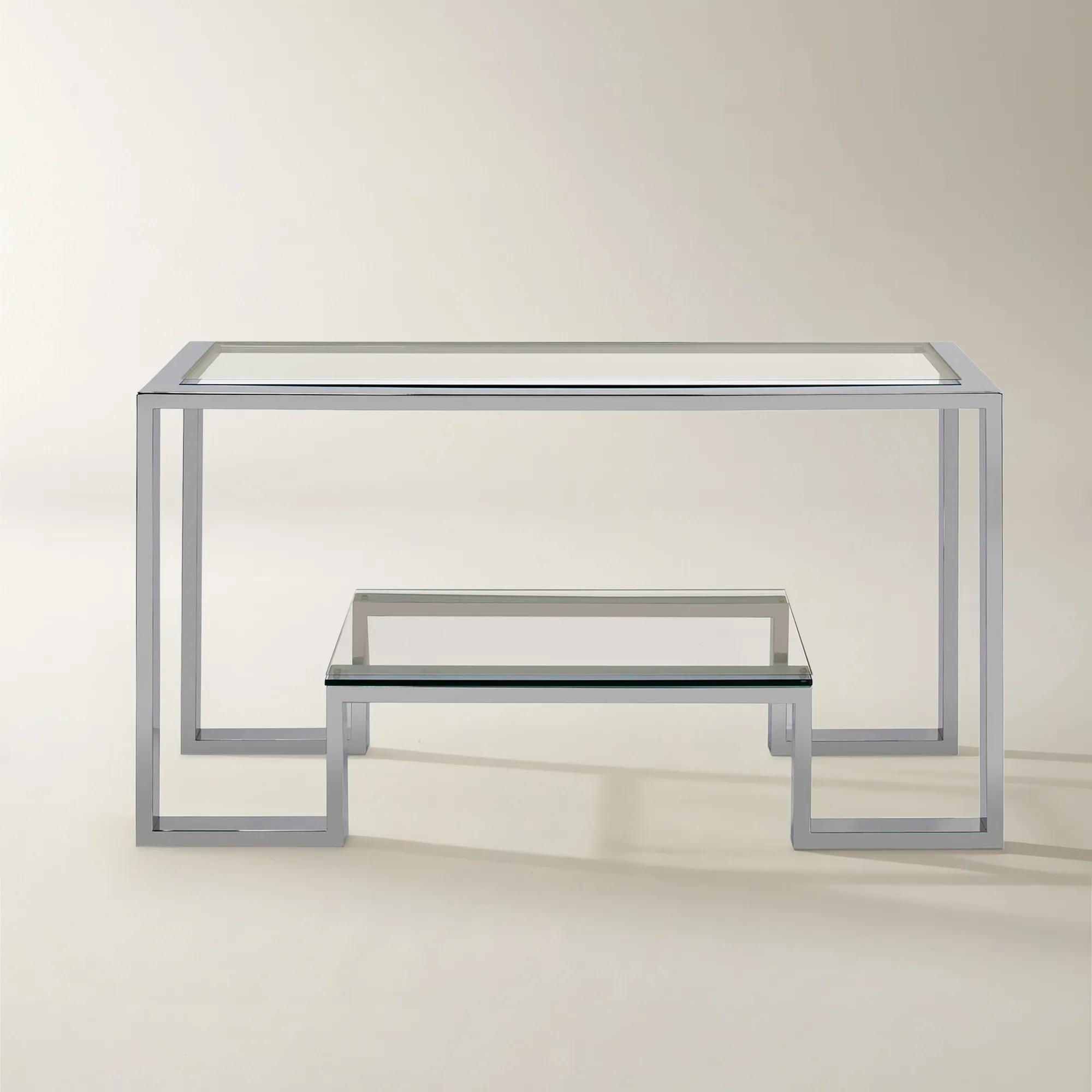
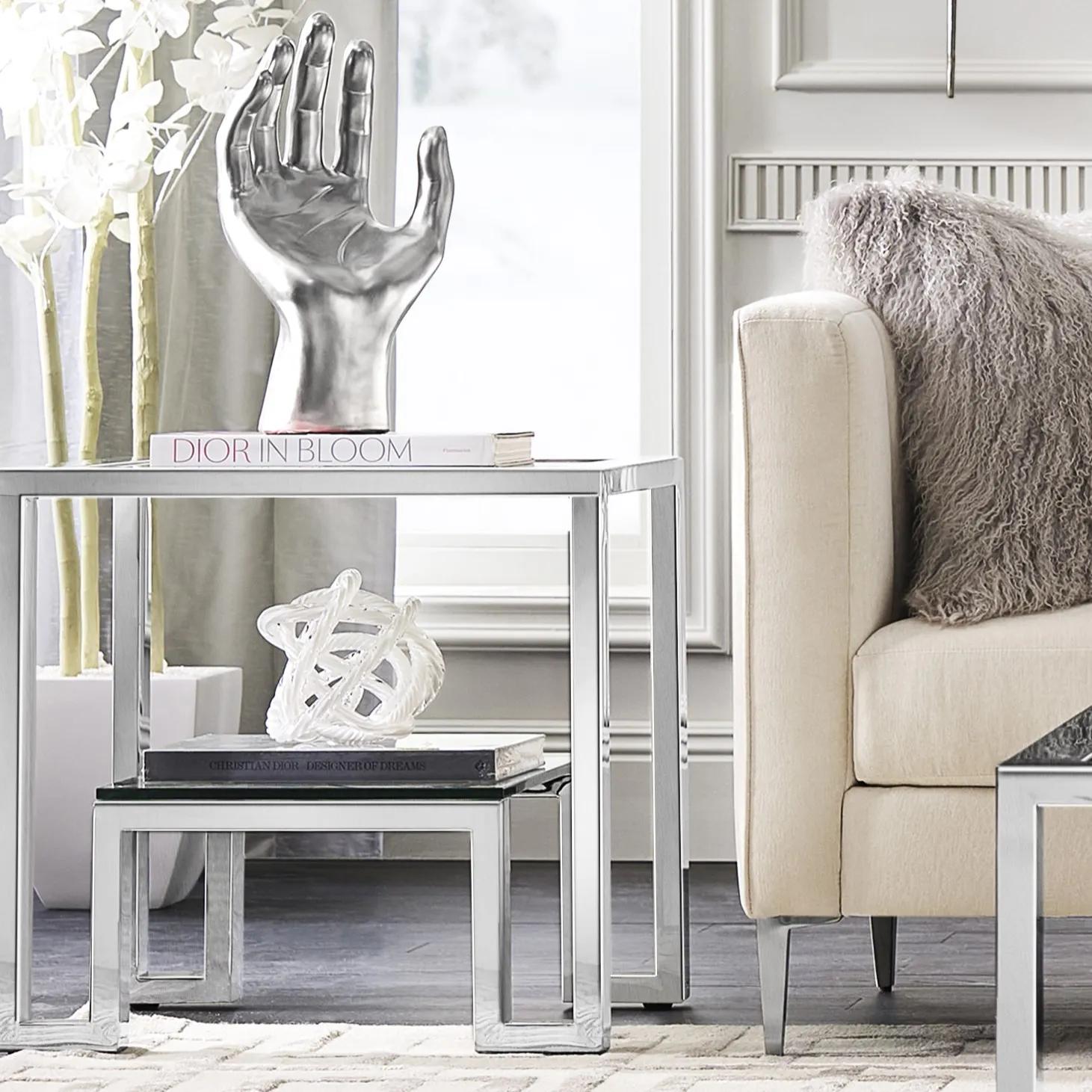 Duplicity Square Silver Stainless Steel End Table With Glass Top (24")$749
A modern end table featuring a stainless steel frame, tempered glass top, and floating bottom shelf.
Add To Cart -
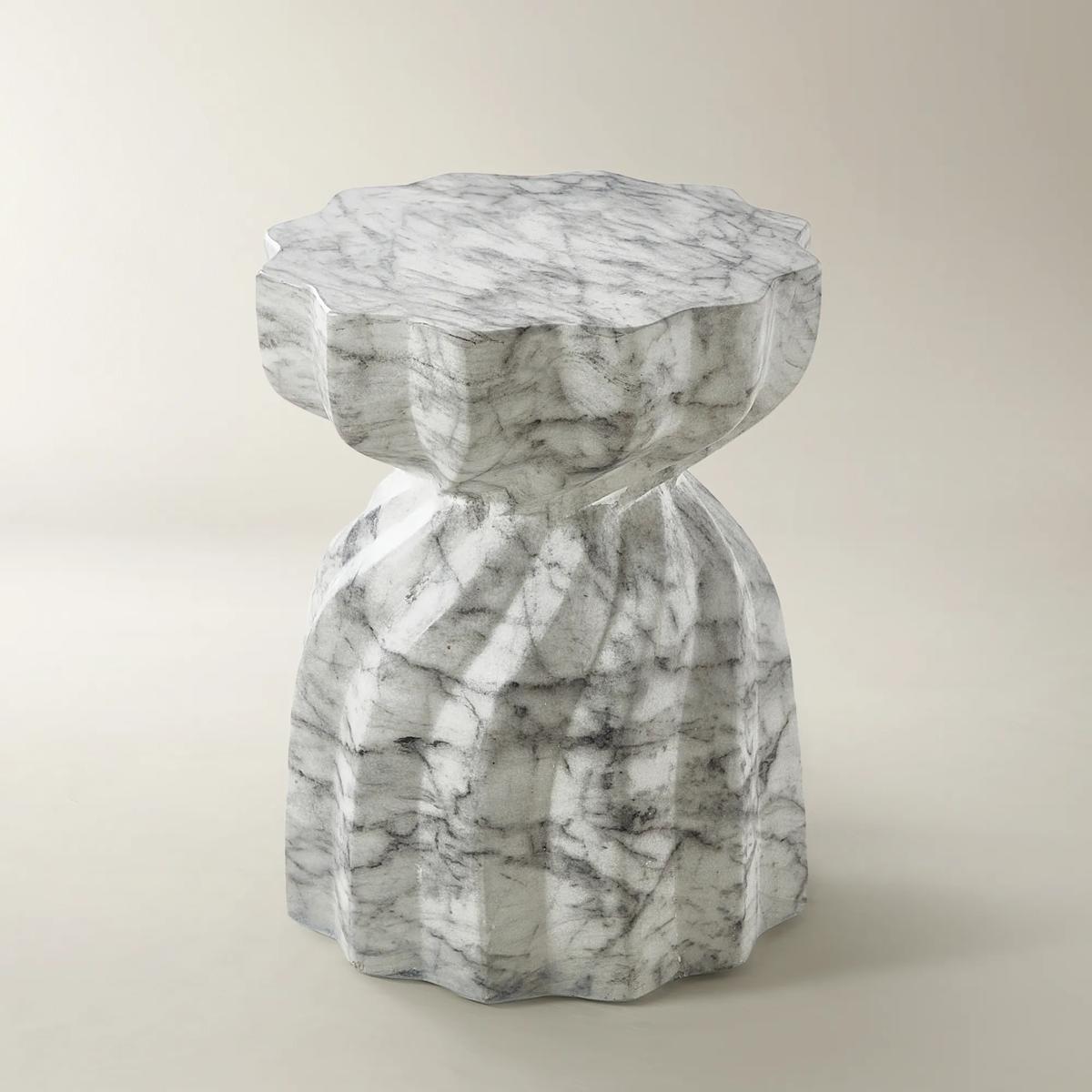
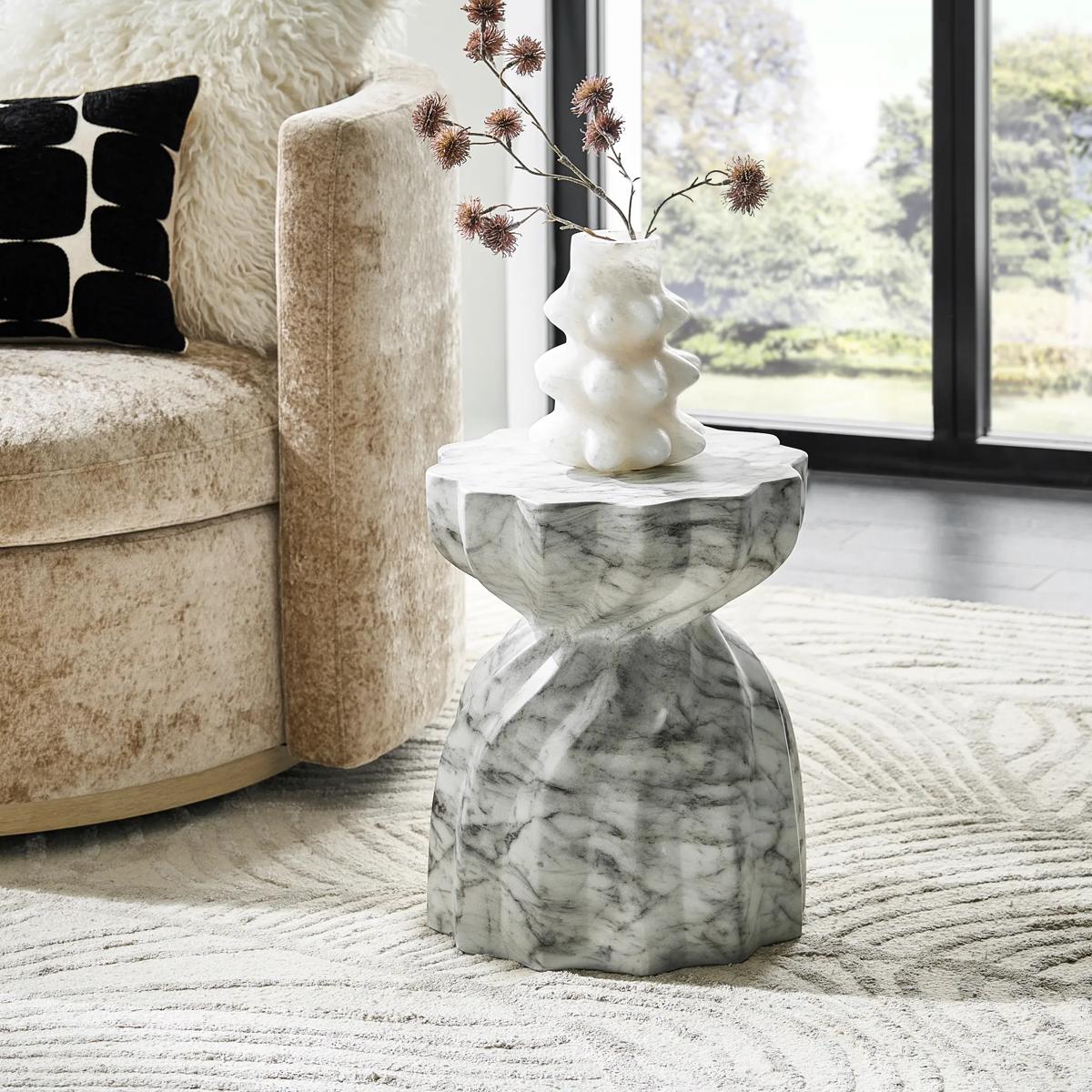 Lithia Scalloped White Concrete Indoor/Outdoor Side Table (15")$349
A white concrete side table with a scalloped silhouette and marble-look finish for indoor-outdoor living.
Add To Cart -
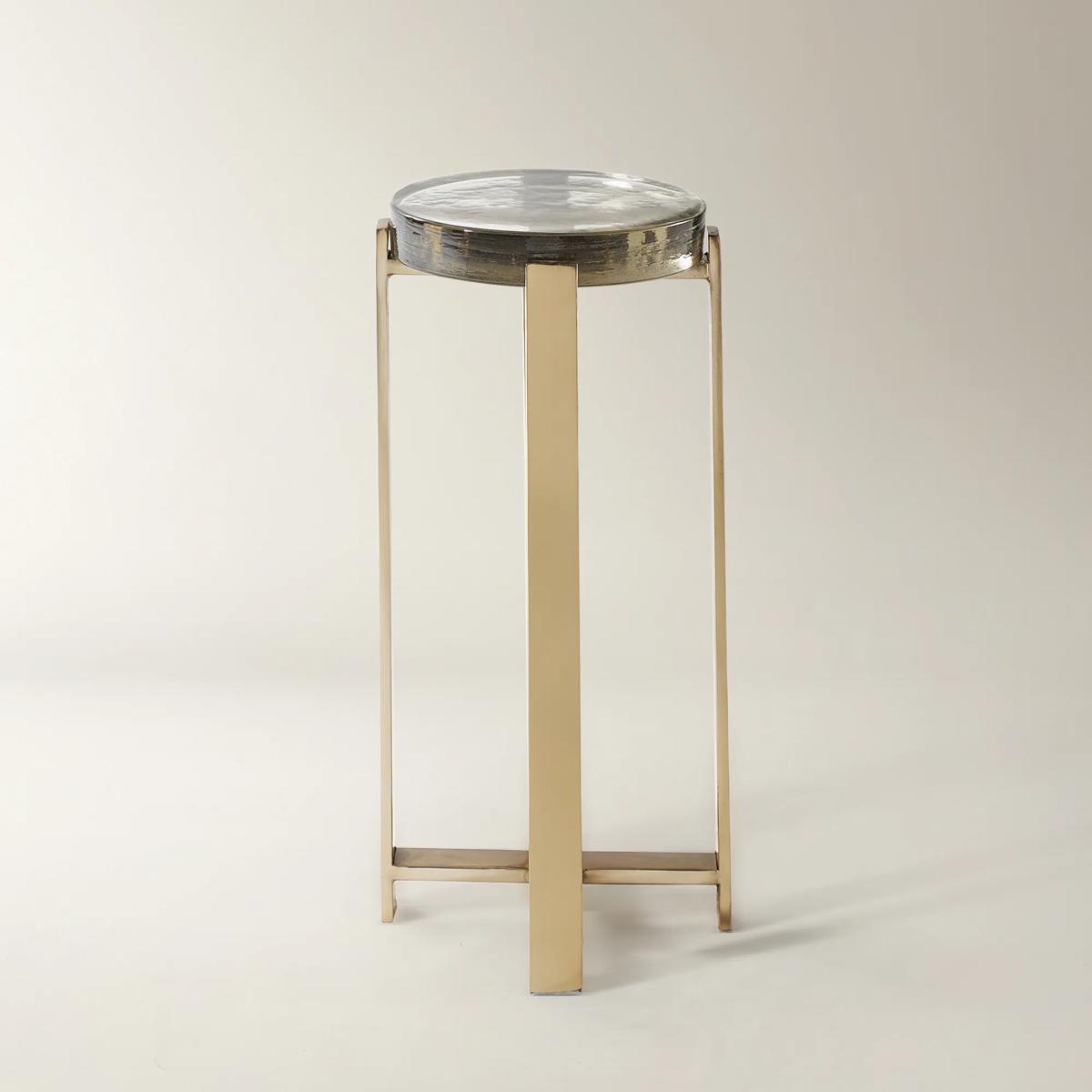
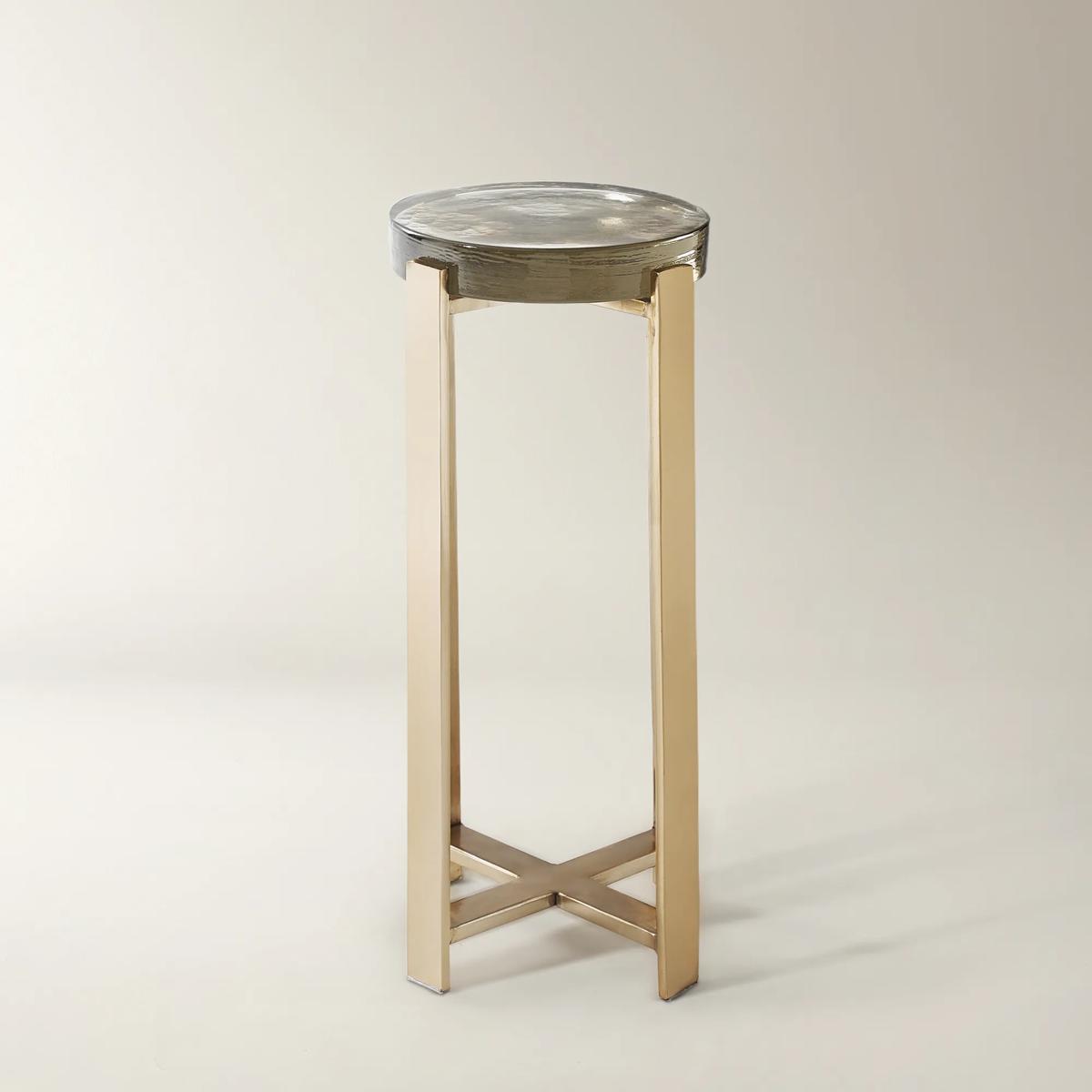 Lyra Round Brass Metal Side Table With Glass Top (10.75")$259
A sculptural side table featuring a thick cast glass top and lustrous brass-finished metal base.
Add To Cart -
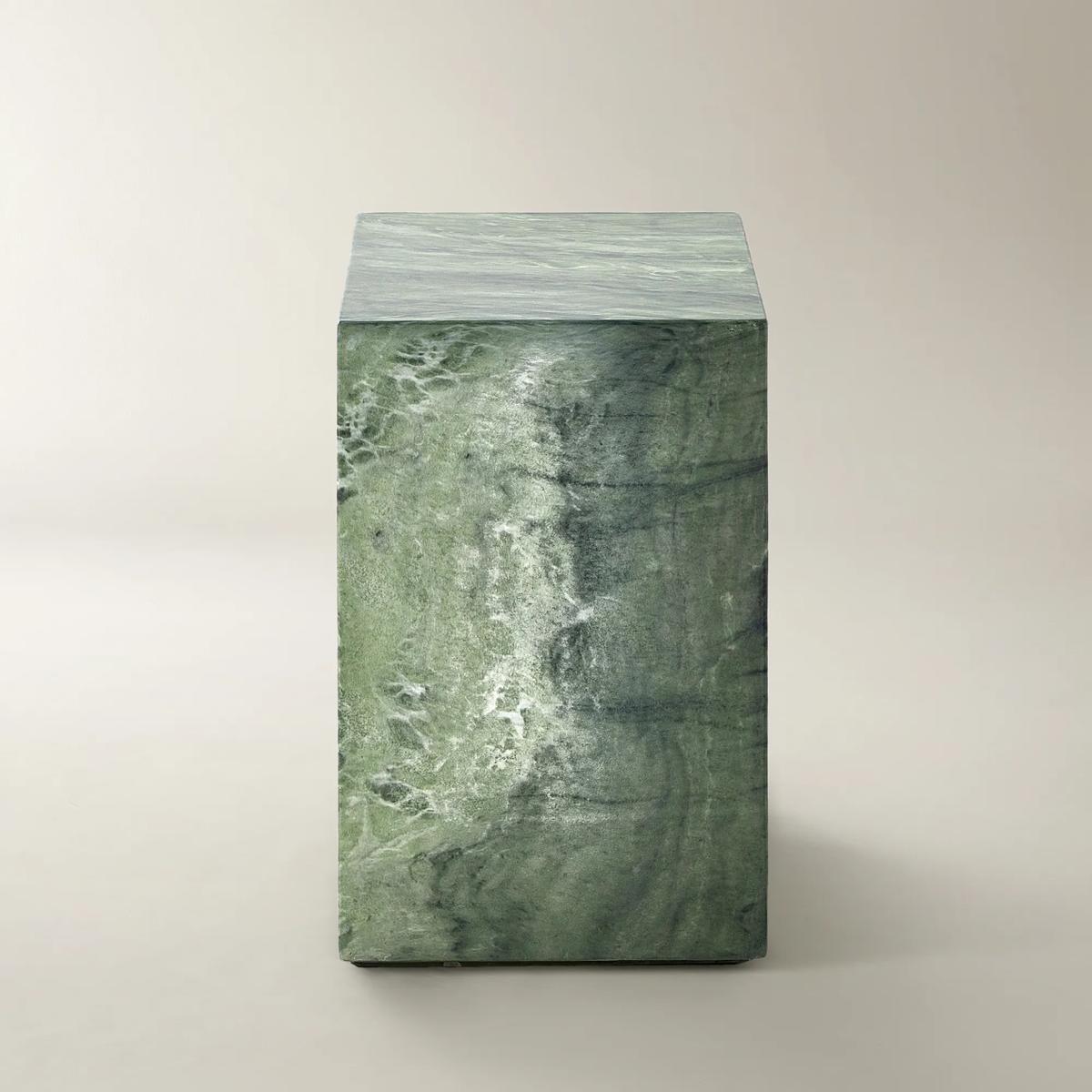
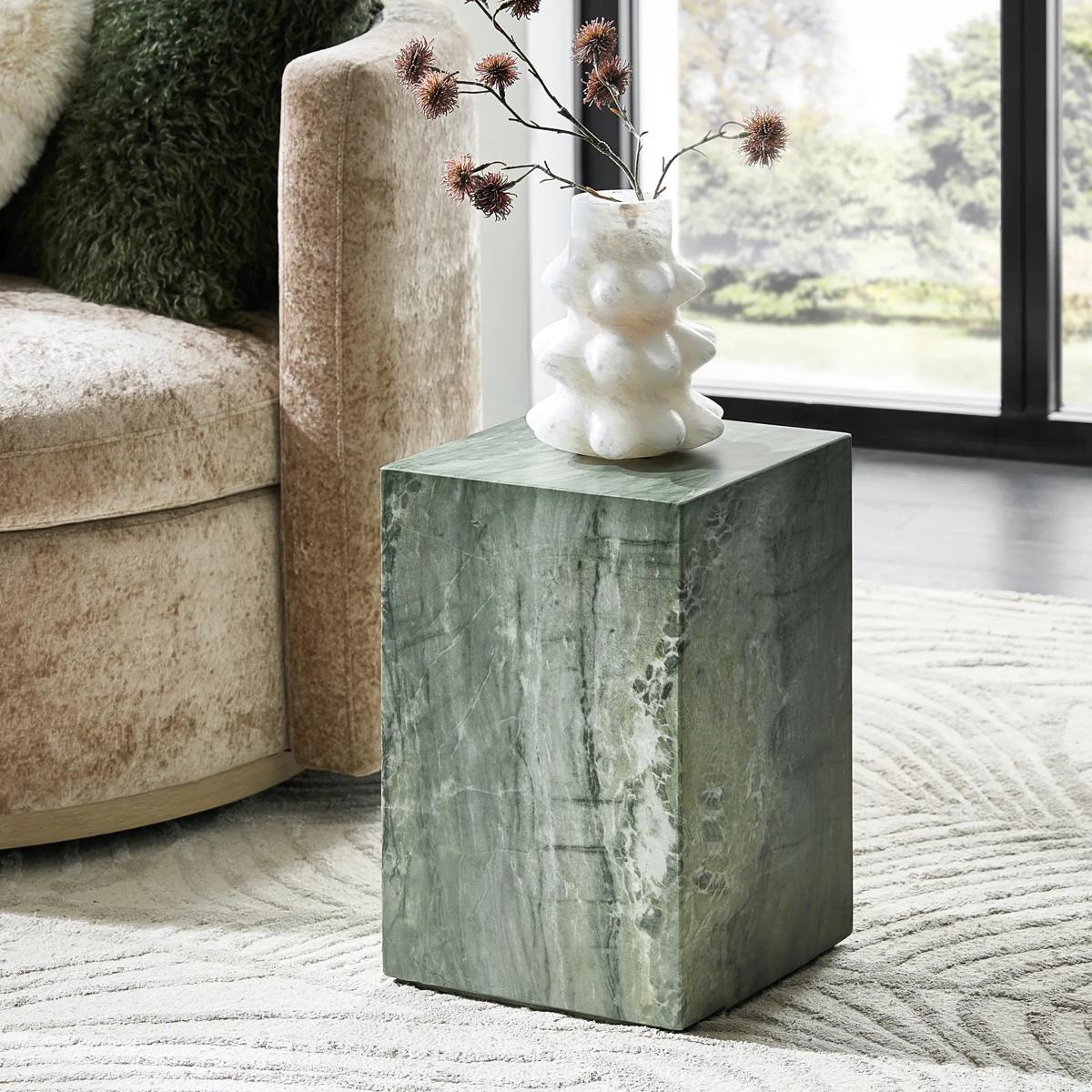 Strata Square Green Concrete Indoor/Outdoor Side Table (11.8")$299
A green concrete side table with marble-look veining and a sculptural cuboid form for indoor use.
Add To Cart -

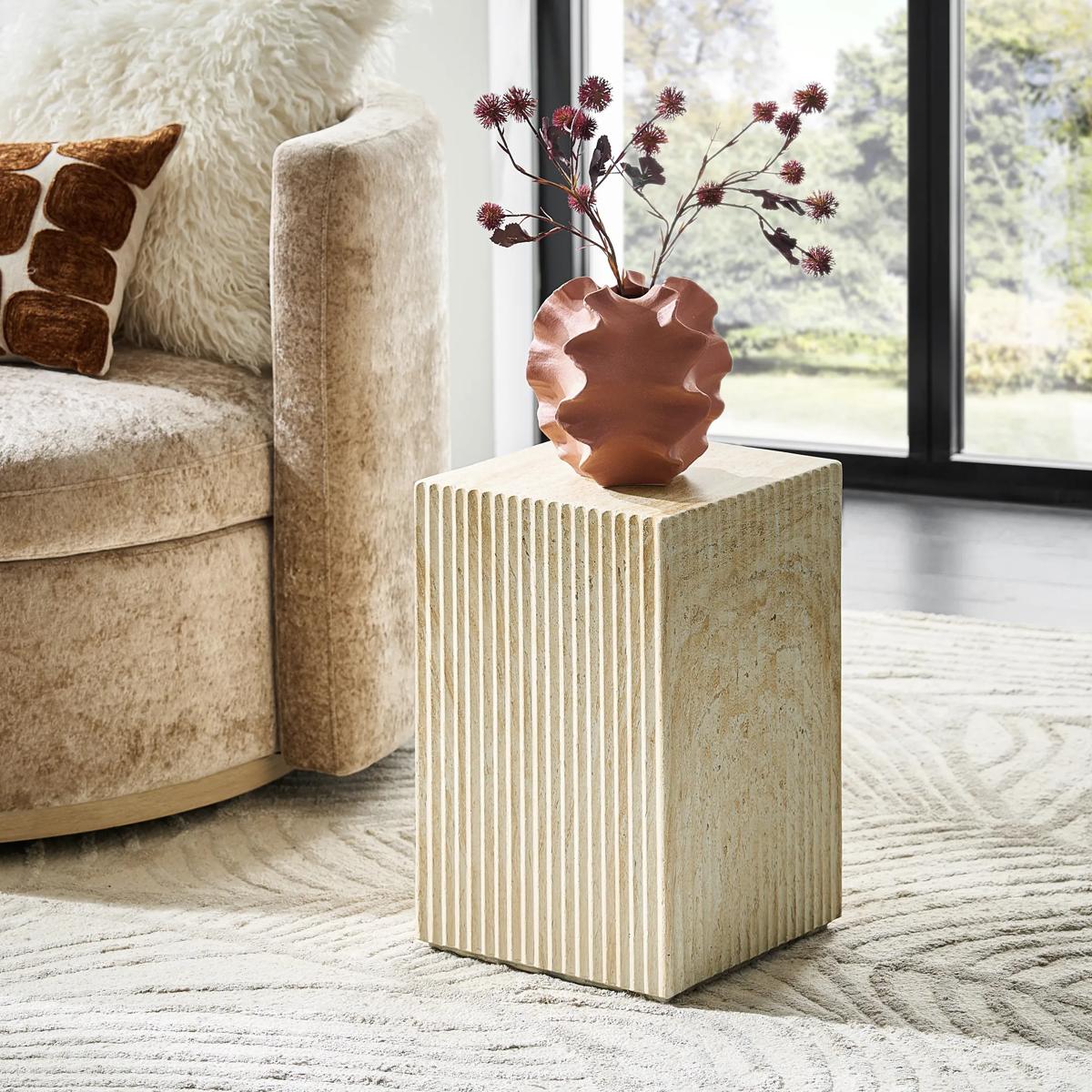 Strata Square Travertine Concrete Indoor/Outdoor Side Table (11.8")$299
A natural travertine-look concrete side table with sculptural cuboid geometry for indoor or covered outdoor spaces.
Add To Cart -
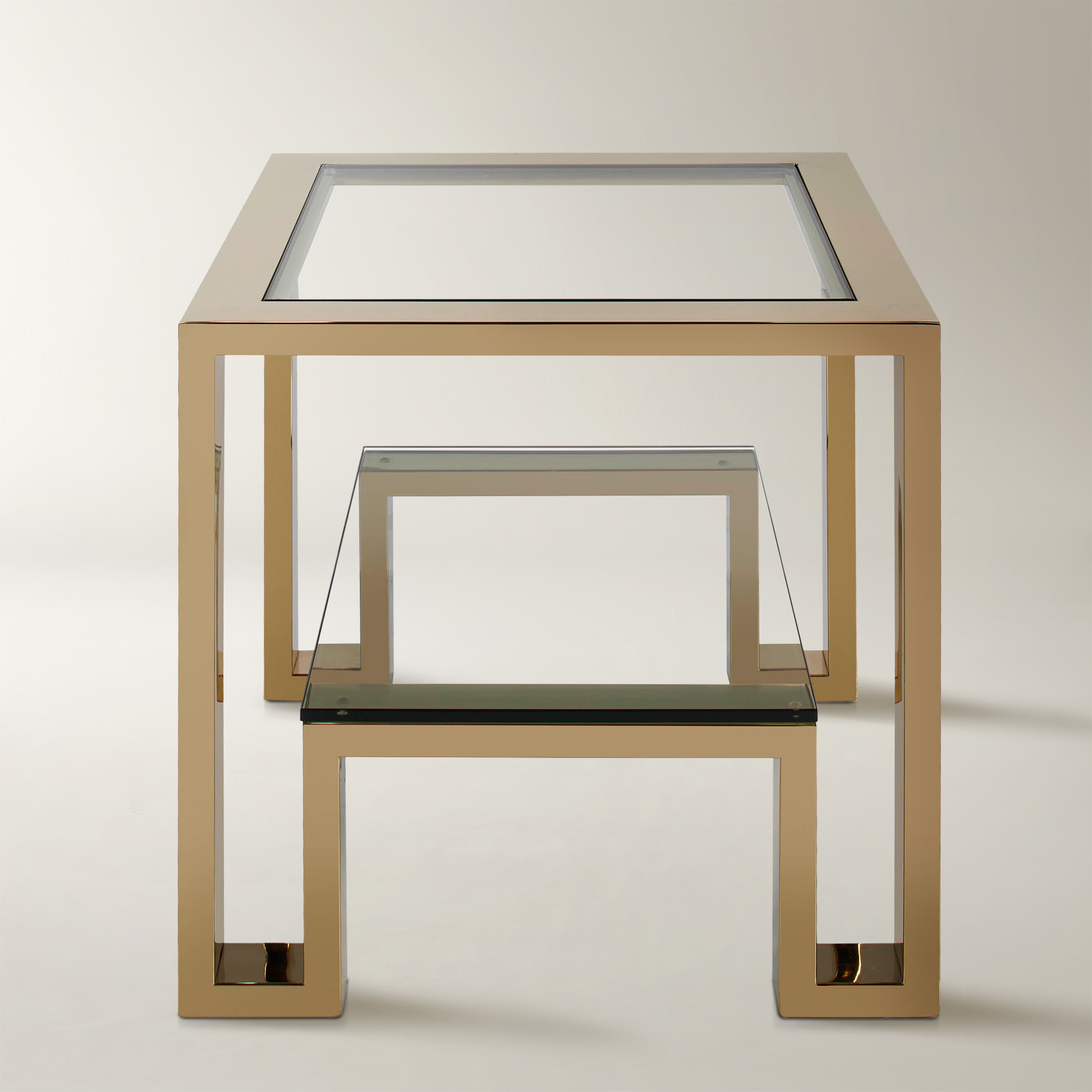 Duplicity Square Gold Stainless Steel End Table With Glass Top (24")$749
A modern end table crafted from stainless steel and tempered glass with a floating bottom shelf.
Add To Cart -
 Strata Round Green Concrete Indoor/Outdoor Side Table (15")$349
A green concrete side table with rounded geometry and a marble-look finish for indoor-outdoor use.
Add To Cart -
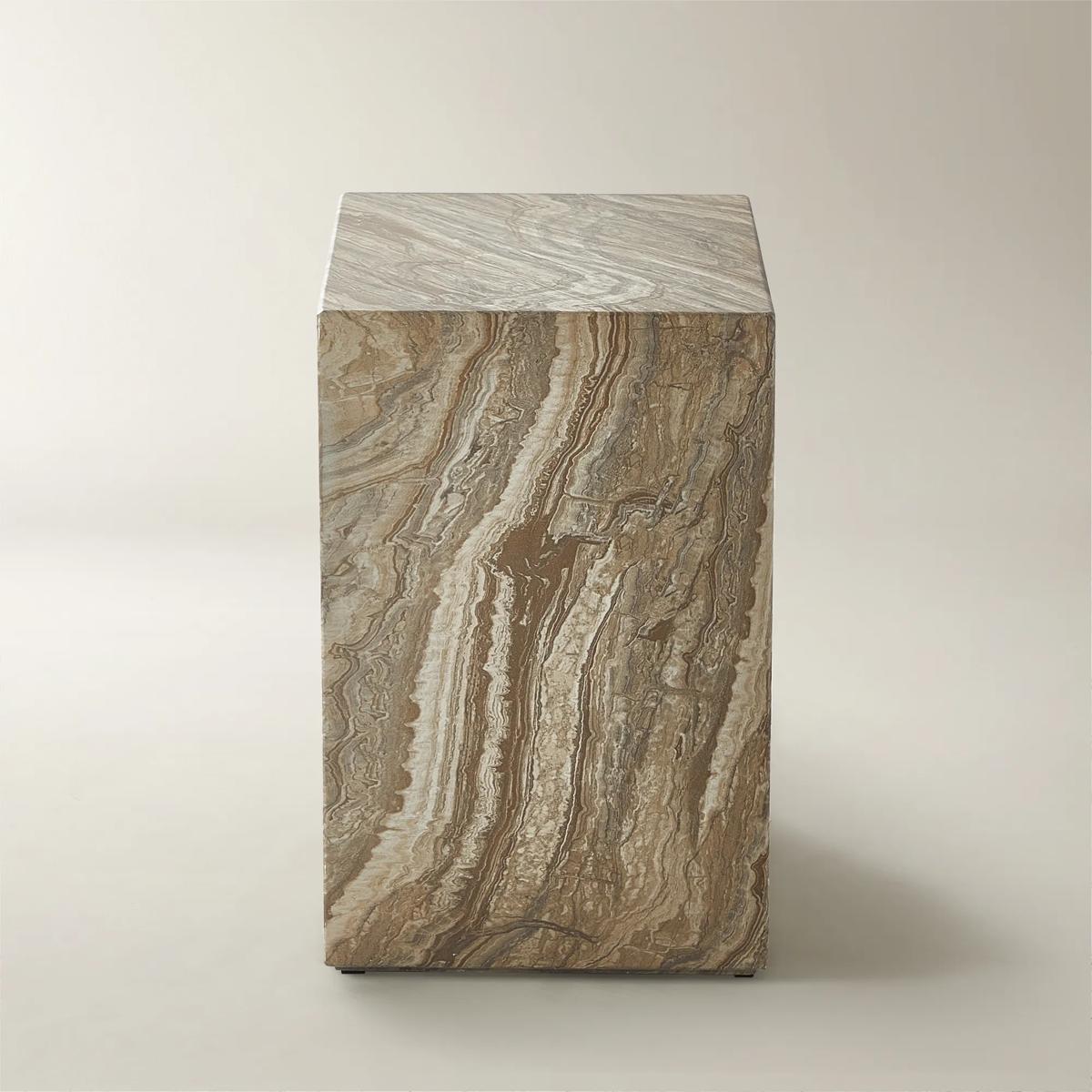
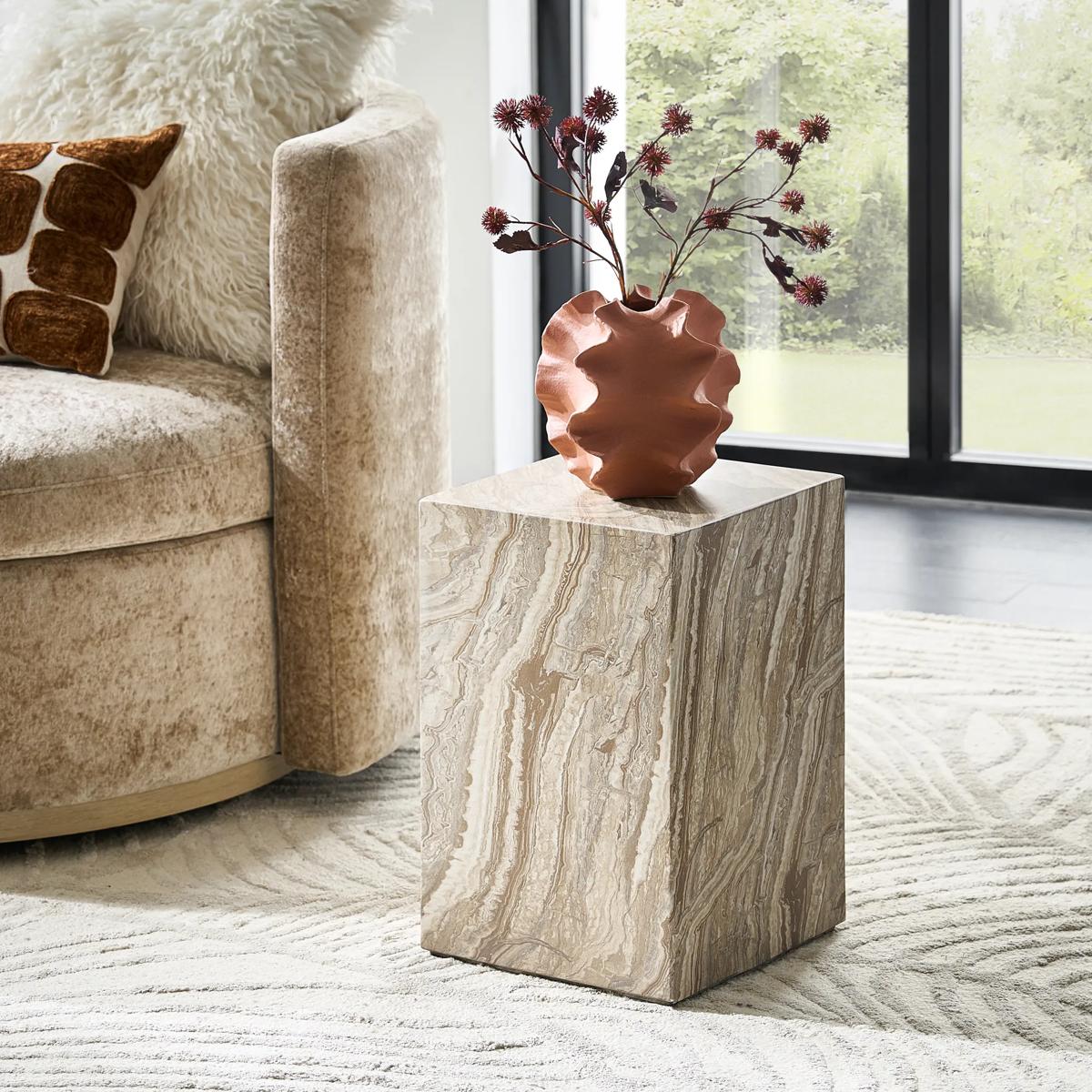 Strata Square Brown Concrete Indoor/Outdoor Side Table (11.8")$299
A brown concrete side table with a sculptural cuboid profile and marble-look finish, indoors or outdoors.
Add To Cart -
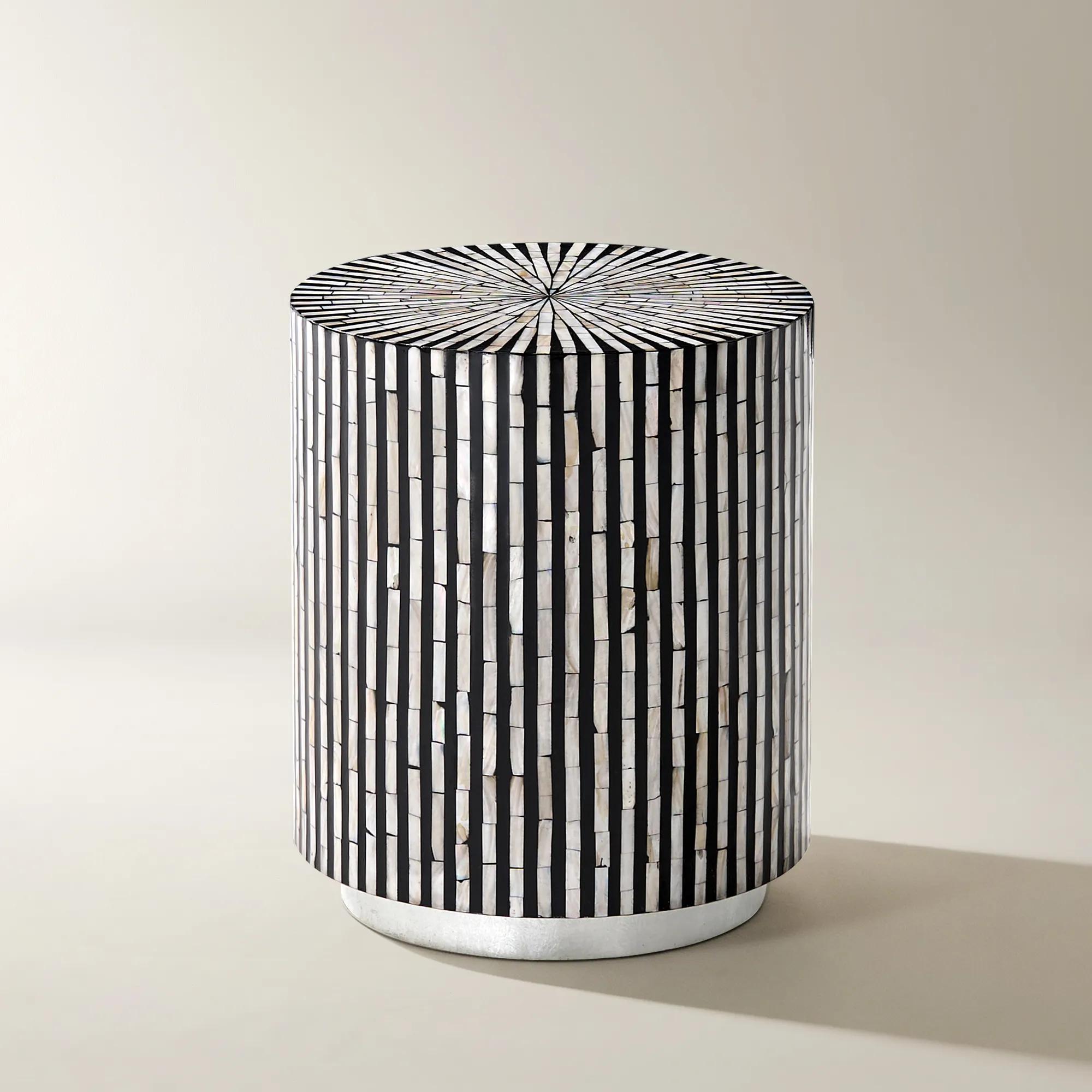
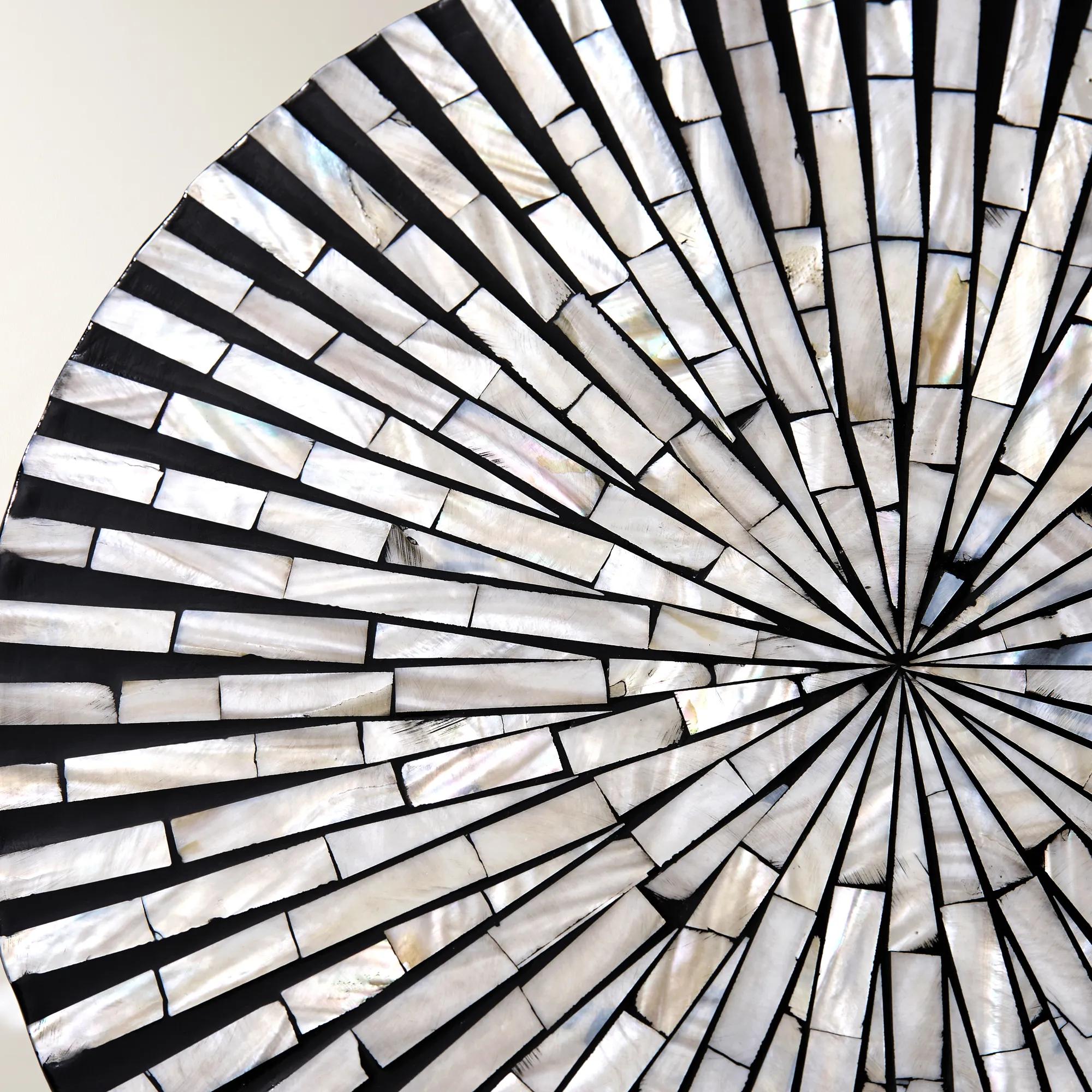 Marina Round Mosaic Black End Table (13.75")$299
A sculptural black end table featuring hand-applied mother-of-pearl mosaic and a silver leaf–accented base.
Add To Cart -
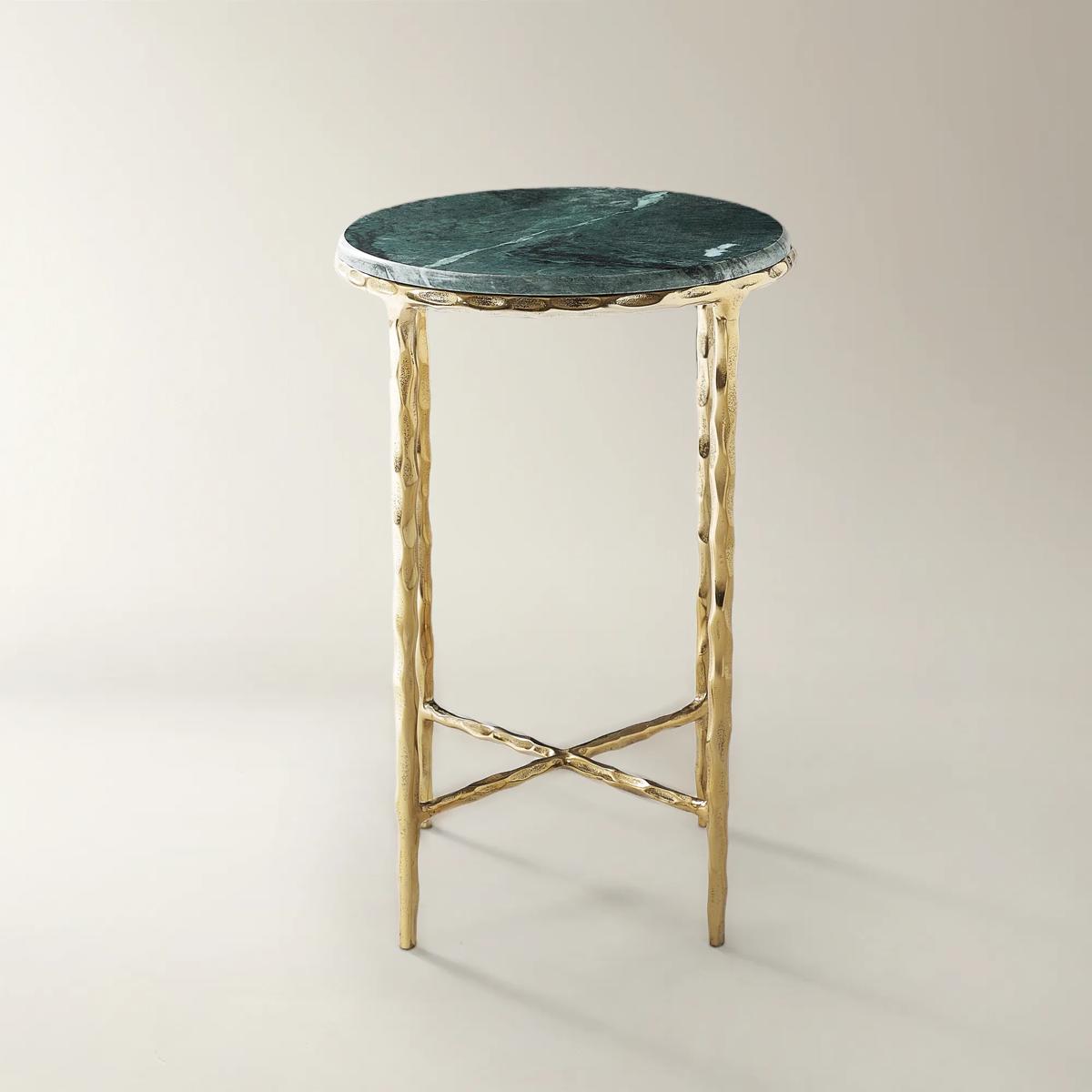
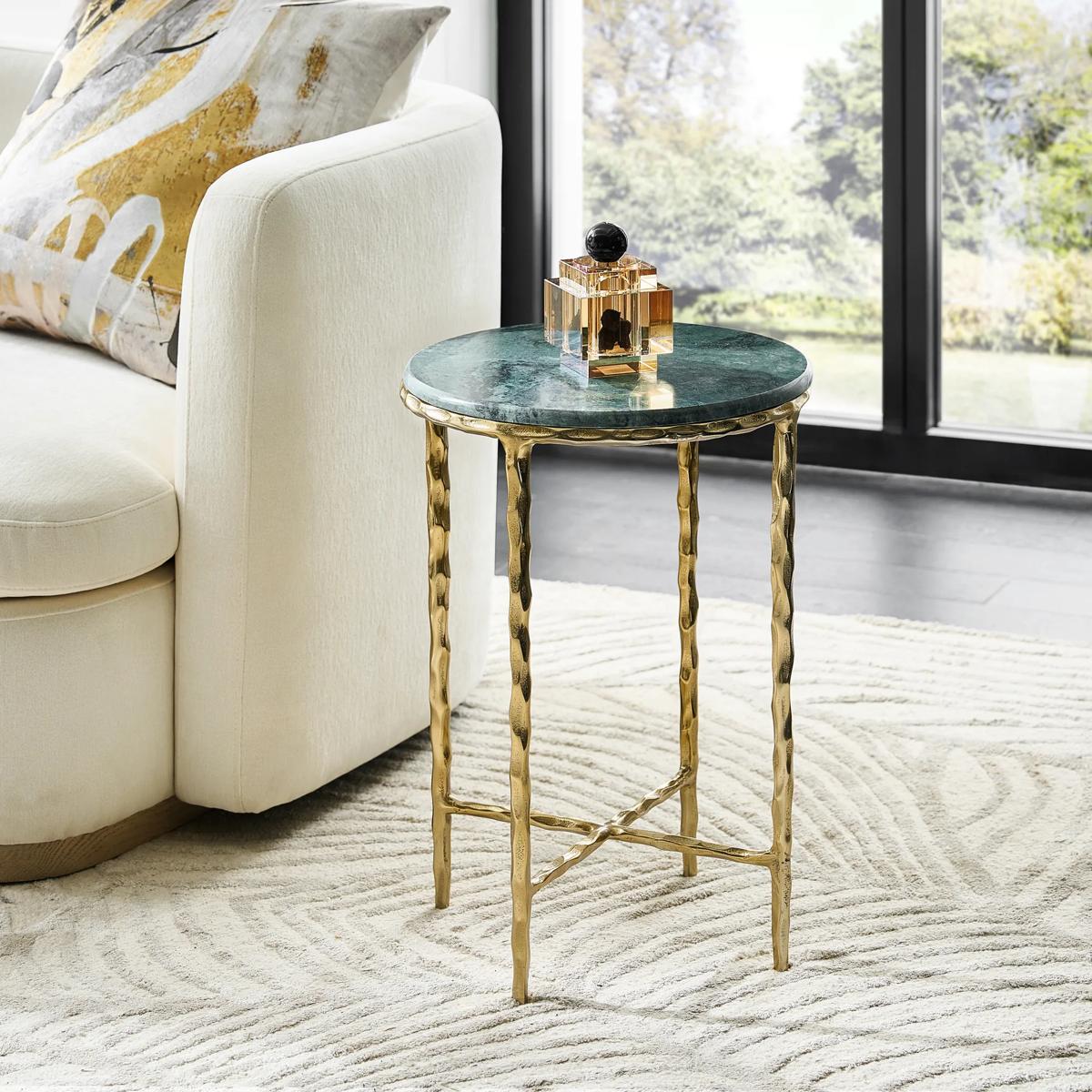 Juliet Round Green Marble Side Table (15")$269
A striking side table featuring a deep green Indian marble top and a hand-hammered metal base.
Add To Cart -
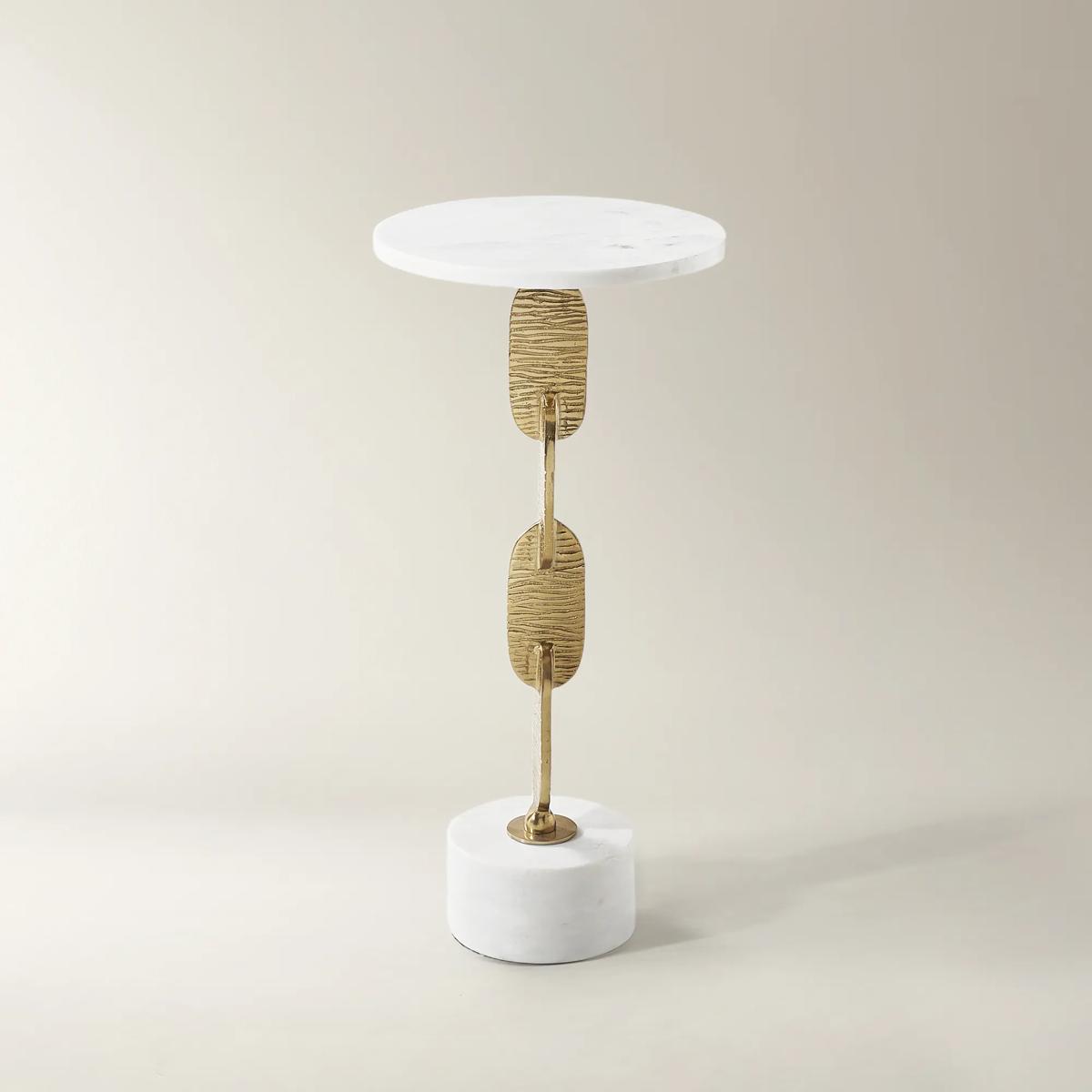
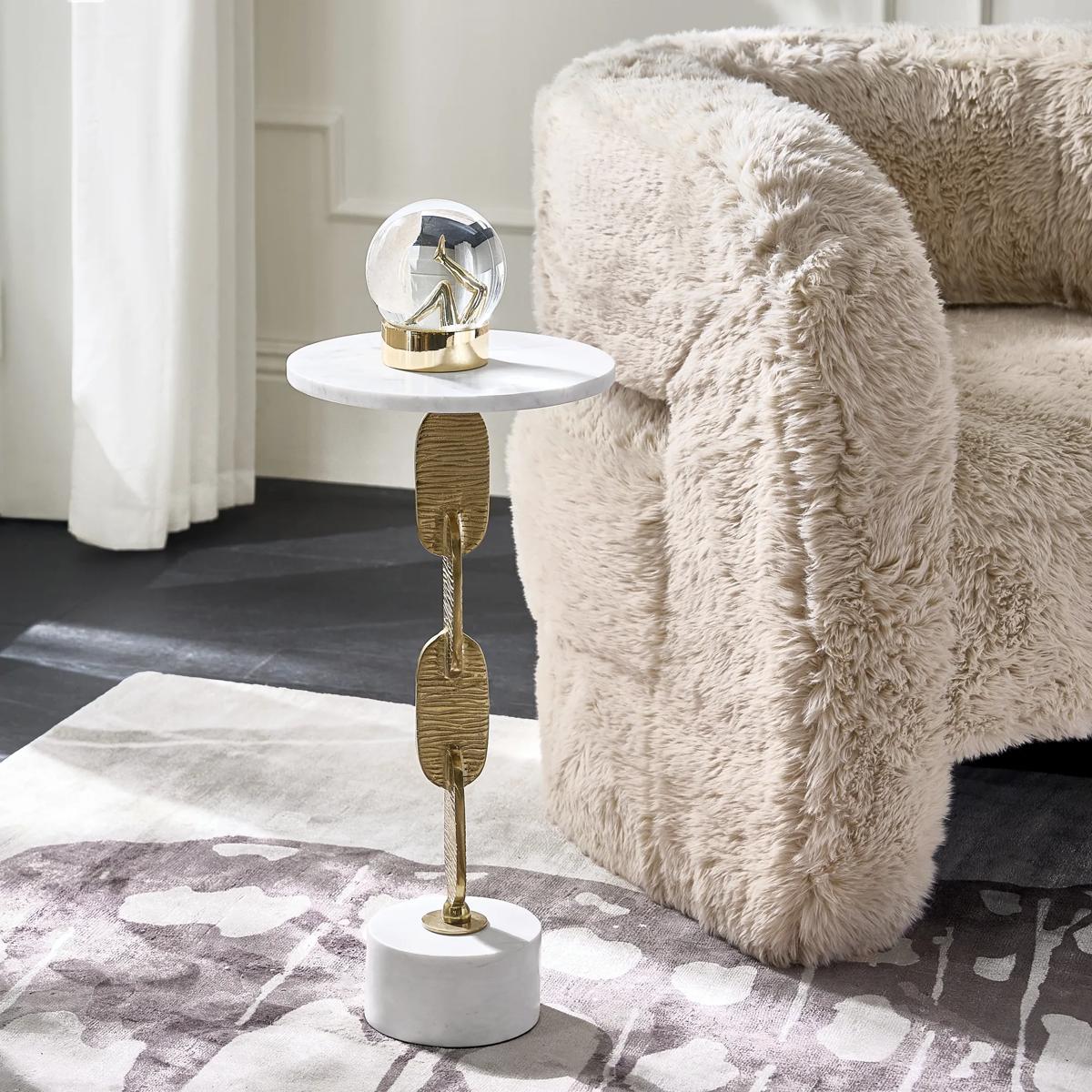 Luna Round White Marble Side Table (11.25")$199
A sculptural side table featuring a genuine white marble top and an open gold-finished metal frame.
Add To Cart

Unique Modern Side Tables
Unique Modern Side Tables are the unsung heroes of inspired interiors, offering a stage for artistry and self-expression in every corner. Each piece is an invitation to indulge your passion for the unexpected, transforming functional surfaces into sculptural statements that spark conversation and delight the senses. Whether you crave gleaming metallics, bold silhouettes, or avant-garde finishes, these side tables infuse your space with a sense of curated drama and undeniable sophistication. Elevate your living room, bedroom, or entryway with designs that celebrate individuality and turn everyday moments into extraordinary experiences.
Unique modern side tables combine sculptural design with an everyday surface for a lamp, a drink, or a favorite book. Their distinction comes from proportion, silhouette, material, and finish: a rounded pedestal beneath a crisp tabletop, an open geometric base that frames the room beyond it, or a substantial stone form with expressive natural veining. These details give a compact piece the presence of sculpture without sacrificing its purpose. Beside a sumptuous sofa, a gleaming metallic accent introduces contrast; alongside a tailored lounge chair, richly grained wood brings depth and warmth. Glass and clear acrylic create a lighter visual impression, allowing a dramatic rug or upholstered silhouette to remain visible, while opaque stone and substantial wood forms give a seating arrangement a grounded focal point. Polished finishes reflect light and surrounding color, whereas brushed or textured surfaces offer a more restrained shimmer. The most compelling compositions balance those effects rather than repeating the same finish across every surface. A side table can echo the curve of a chair, pick up a metallic detail in a lamp, or introduce an entirely different geometry that makes the room feel more expressive. For interiors defined by strong lines and structural forms, Unique Architectural Side Tables offer a related design direction, with an emphasis on the relationship between shape, balance, and negative space. Modern accent tables also work beyond the main seating area: a sculptural silhouette can punctuate a quiet bedroom corner, bring definition to a dressing area, or give a reading nook its finishing detail. Styling can remain selective when the table itself has a distinctive form. A ceramic vessel, a small stack of art books, or a single shaded lamp gives the surface purpose while leaving its contours visible. The result is an interior that feels composed but personal, with even its smallest furnishings contributing to the larger visual story.
Scale determines whether a modern side table feels effortless beside the furniture it serves. For a sofa or armchair, a tabletop near arm height generally makes drinks and reading materials easier to reach; low, deep seating often calls for a different proportion than a tall, upright chair. Many side tables fall around 22 to 28 inches high, but the neighboring seat is a better reference than a standard measurement alone. Armless seating deserves particular attention because the surface should feel accessible from a relaxed seated position without becoming an obstacle. Tabletop width and depth matter just as much. A slim pedestal can provide a graceful landing place beside a single chair, while a broader surface better accommodates a lamp, coasters, and a book without crowding. A lamp base should sit fully on the tabletop, with enough surrounding space for the table’s other intended uses. The base footprint also deserves a close look: an expansive sculptural support can occupy more floor space than the top suggests, and projecting feet may interfere with a narrow walking route. Rounded tables soften the lines around sectional sofas and curved seating, though clear passage remains important regardless of shape. Square or rectangular profiles can align neatly with a sofa arm, while nesting designs offer separate surfaces that can be drawn closer to guests and brought together afterward. A cantilevered or C-shaped profile may extend over a seat, provided its base clears the furniture underneath. In a bedroom, a side table used as a nightstand needs a comfortable relationship to mattress height and enough surface for bedside essentials. Open shelves or drawers can support different routines, but storage capacity should be considered alongside visual weight. A pair of tables need not match exactly to feel harmonious; similar heights, a shared finish, or related curves can create continuity while allowing each side of a room its own character.
Materials influence both the atmosphere of unique modern side tables and the attention they need over time. Natural marble and other stones bring individual variations in veining and color, making the surface itself a source of artistry. Stone can be substantial, so weight matters when a table will be moved frequently, and porous varieties may require sealing according to the manufacturer’s instructions. Coasters and prompt spill cleanup help protect vulnerable surfaces; acidic liquids can etch some natural stones even when they have been sealed. Wood offers grain, tonal variation, and a tactile counterpoint to polished metal or glass. Solid wood and wood veneer have different construction characteristics, but neither should be assumed immune to moisture, heat, or scratches. Protective pads beneath decorative objects help preserve the finish without diminishing the display. Metal care depends on the finish: plated, painted, lacquered, and uncoated surfaces may require different treatment, and abrasive cleaners can dull or damage decorative coatings. Glass contributes clarity and reflected light, though edges still deserve protection from impact. Clear acrylic offers a similarly open effect with its own care requirements, including a soft cloth and a cleaner specifically approved for the material. Across materials, manufacturer care directions take priority over an all-purpose cleaning routine. Durability depends on construction and stability as well as surface hardness; secure connections, a balanced base, and use within the stated weight limit matter more than a substantial appearance alone. Side tables are intended to support everyday objects, not to serve as seating or steps. In an active household, a stable silhouette and thoughtfully positioned edges can be as valuable as a striking finish. For a housewarming or wedding gift, a distinctive accent table can become a lasting part of someone’s home when its dimensions and style suit the recipient’s space. Whether furnishing a first apartment, refining a living room, or completing a private retreat, the right table brings practical ease and a confident point of view—an intimate surface with the power to shape the entire room.
FAQs
A unique modern side table serves as both a functional accent and a statement piece, infusing your space with personality and flair. Its sculptural form or unexpected materials can anchor a vignette, draw the eye, and create a sense of curated artistry—transforming even the simplest room into a bold expression of your style.
Modern side tables shine when styled with intention. Layer books with striking covers, add a sculptural vase, or place a gleaming tray for jewelry and candles. Play with height and texture—mixing in metallic objects, lush greenery, or artful ceramics—to create a look that feels both chic and personal.
A modern side table makes a memorable gift for design lovers, recent graduates, newlyweds, or anyone setting up a new home. It’s also a thoughtful gesture for friends who value self-expression and enjoy curating their spaces with pieces that reflect their individuality.
Look for side tables that feature details, materials, or silhouettes that resonate with your personal taste—whether that’s bold geometry, luxe finishes, or unexpected color. If you’re drawn to discovery and artistic expression, let your intuition guide you toward pieces that spark joy and feel uniquely yours.
Statement side tables are versatile and can enliven any room—living rooms, bedrooms, entryways, or reading nooks. They’re particularly impactful in spaces that need a touch of drama or a focal point, serving as both functional surfaces and conversation starters wherever they’re placed.