Unique Round Glass Tables
Unique Round Glass Tables
-
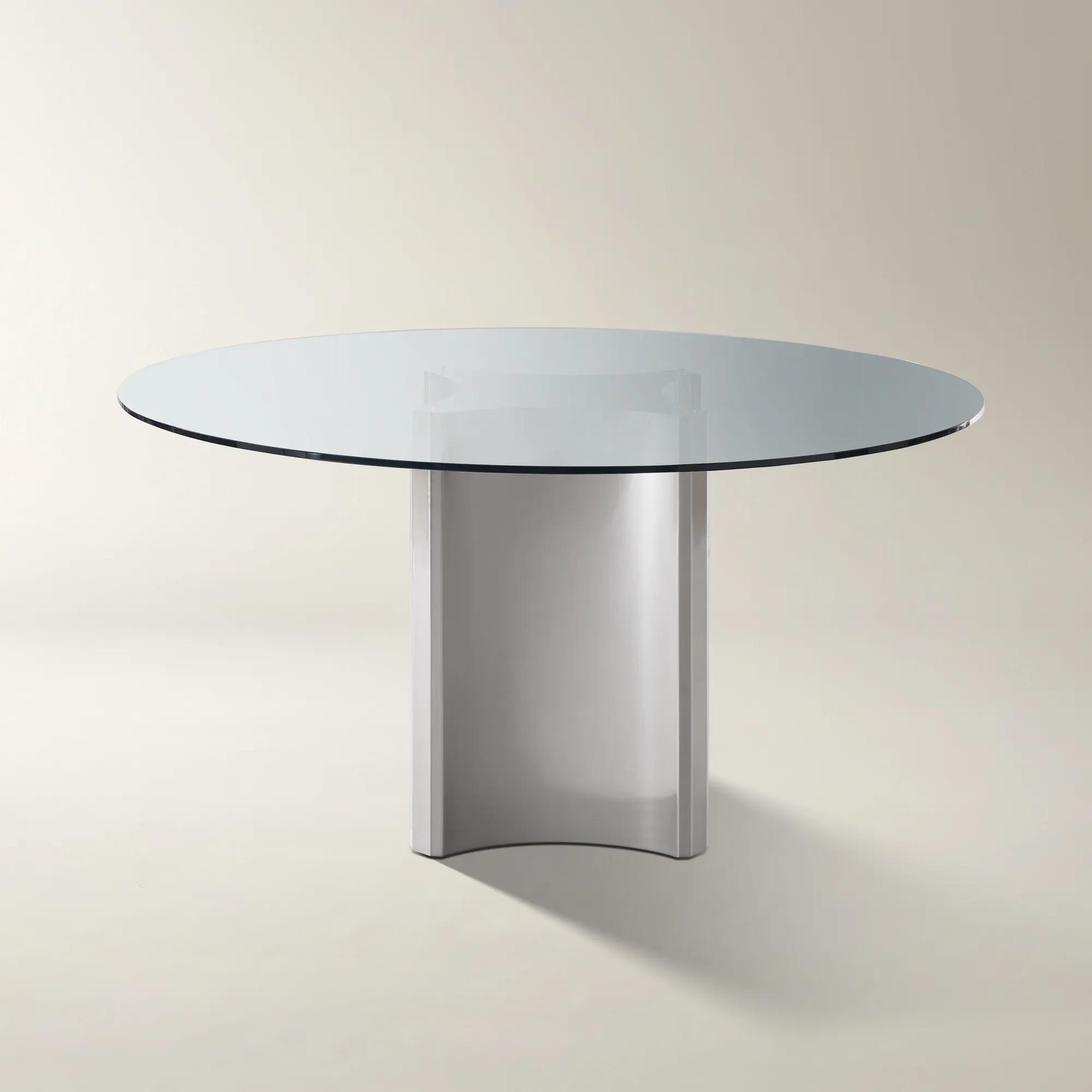 Ventane Round Clear Glass and Stainless steel Dining Table (58")$1499
A modern dining table featuring a clear tempered glass top and polished stainless steel base with anti-fingerprint finish.
Add To Cart -
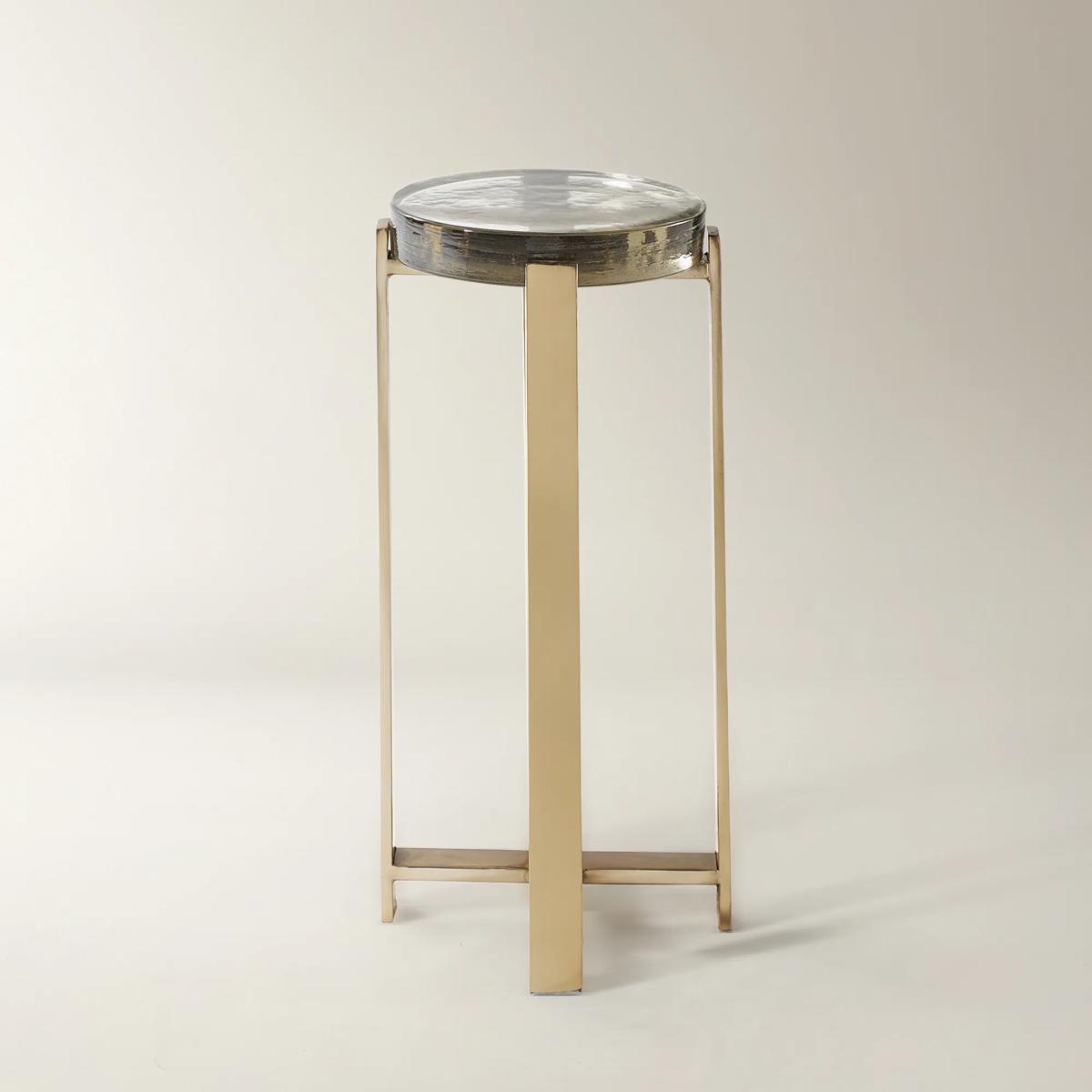
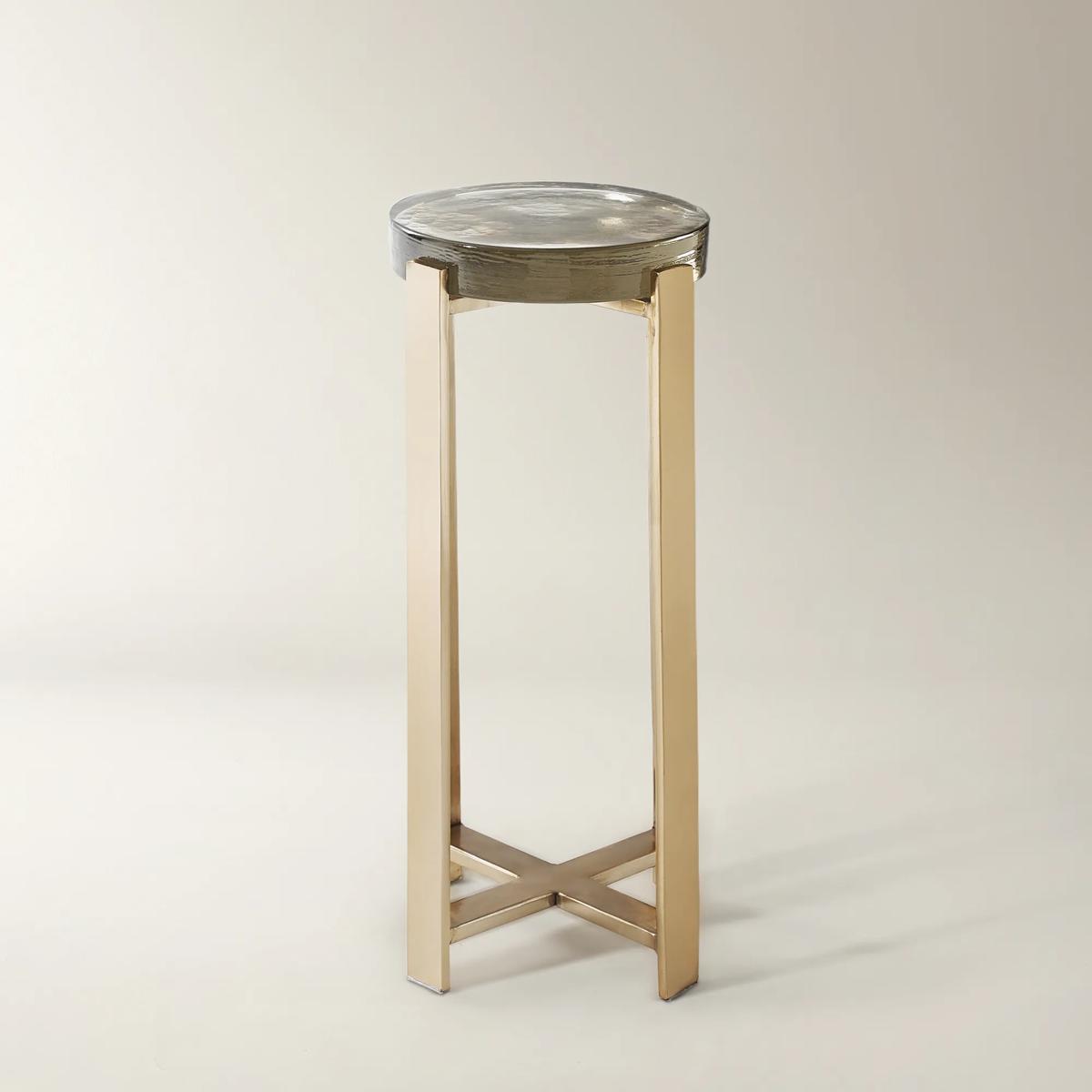 Lyra Round Brass Metal Side Table With Glass Top (10.75")$259
A sculptural side table featuring a thick cast glass top and lustrous brass-finished metal base.
Add To Cart -
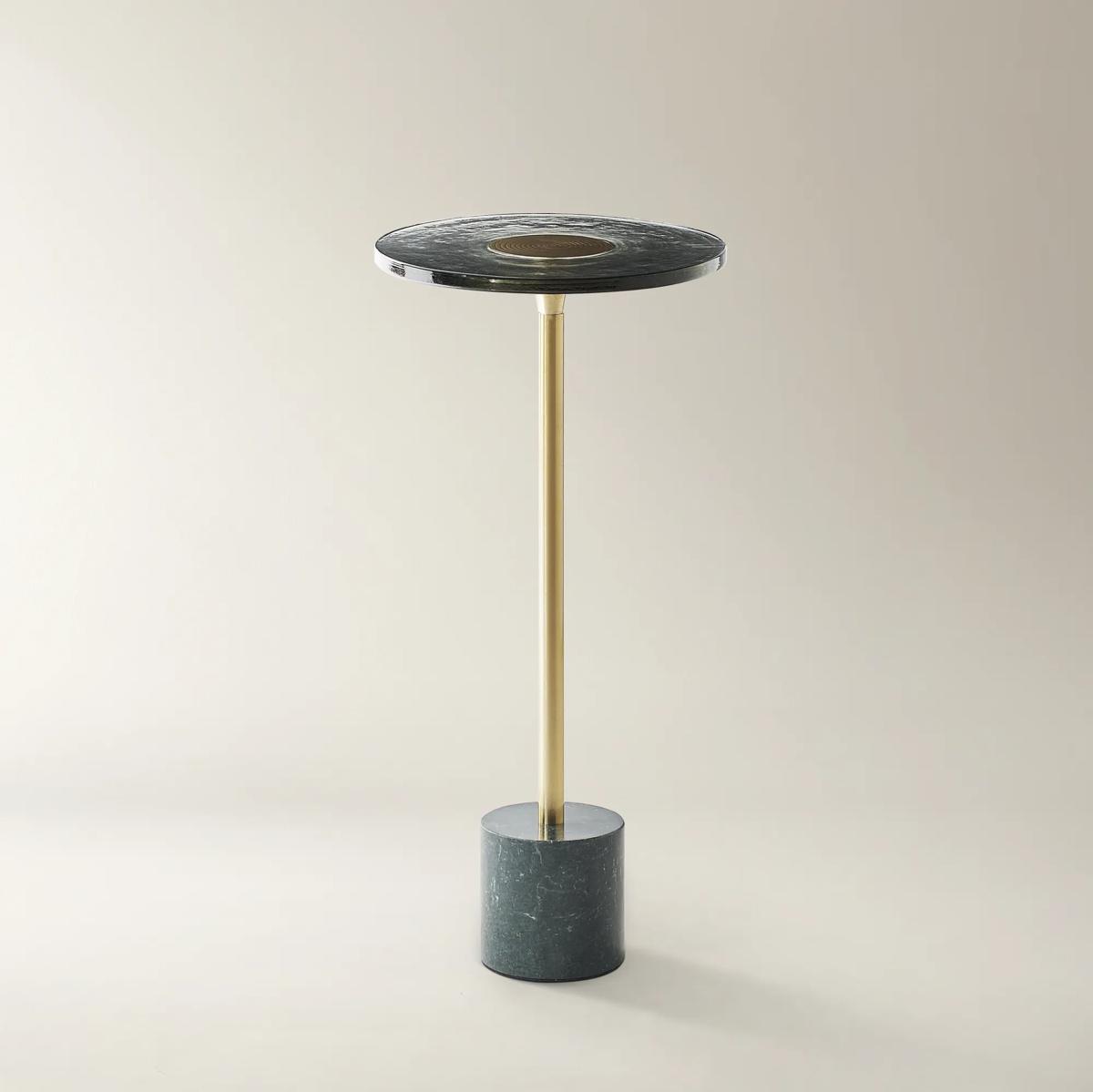
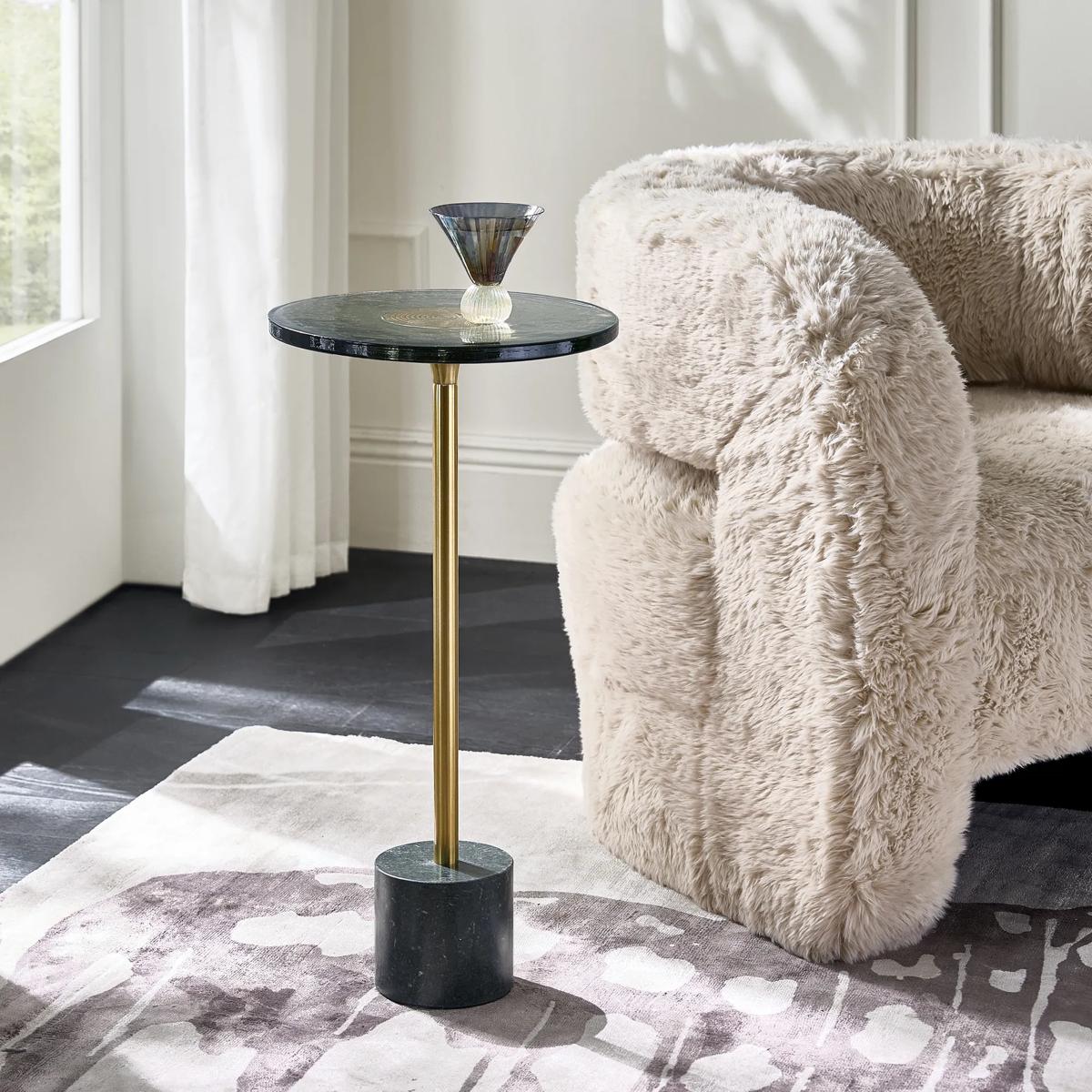 Seraphy Round Green Metal Side Table With Glass Top (13.75")$179
A modern side table featuring a green cast glass top, brass-finished post, and Indian green marble base.
Add To Cart -
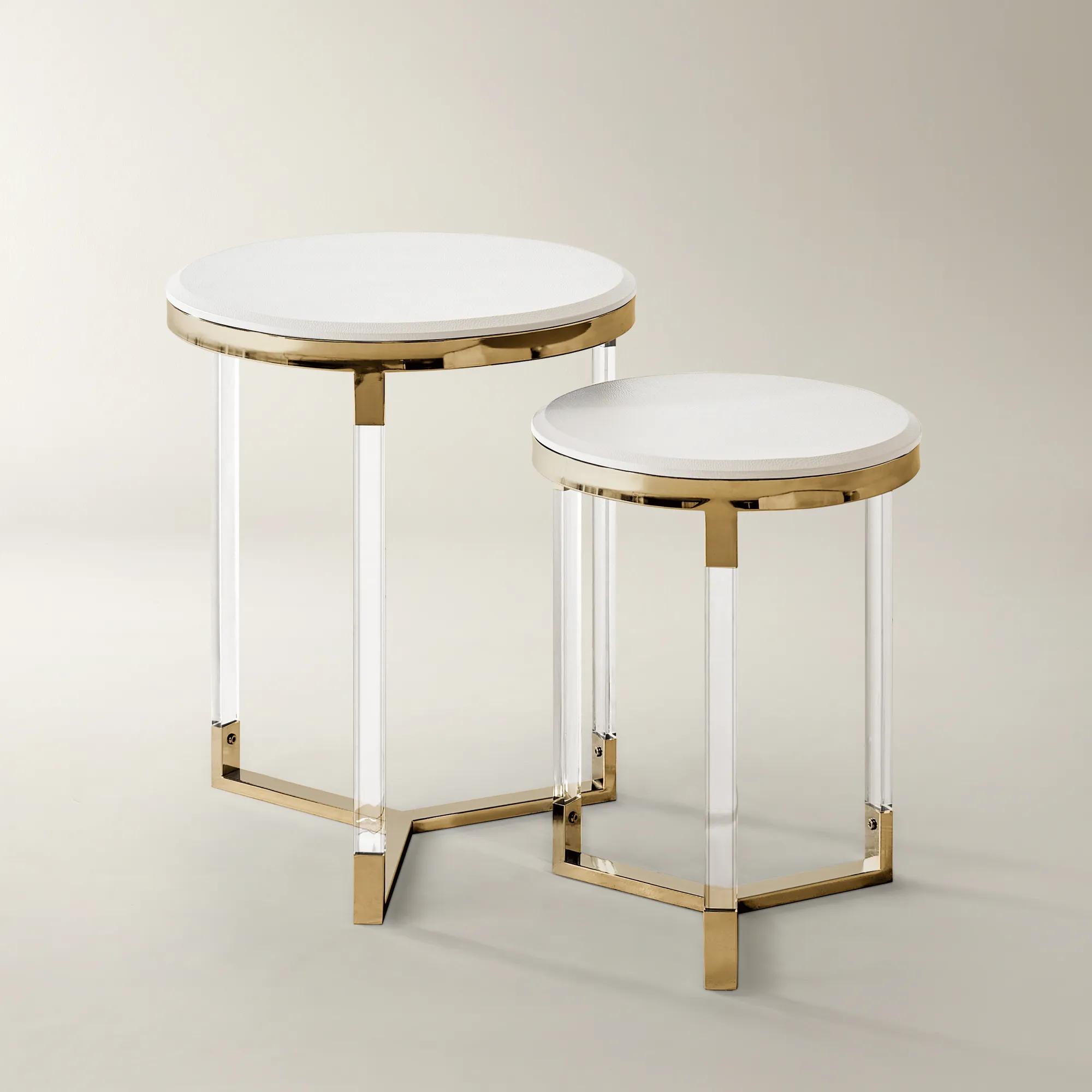
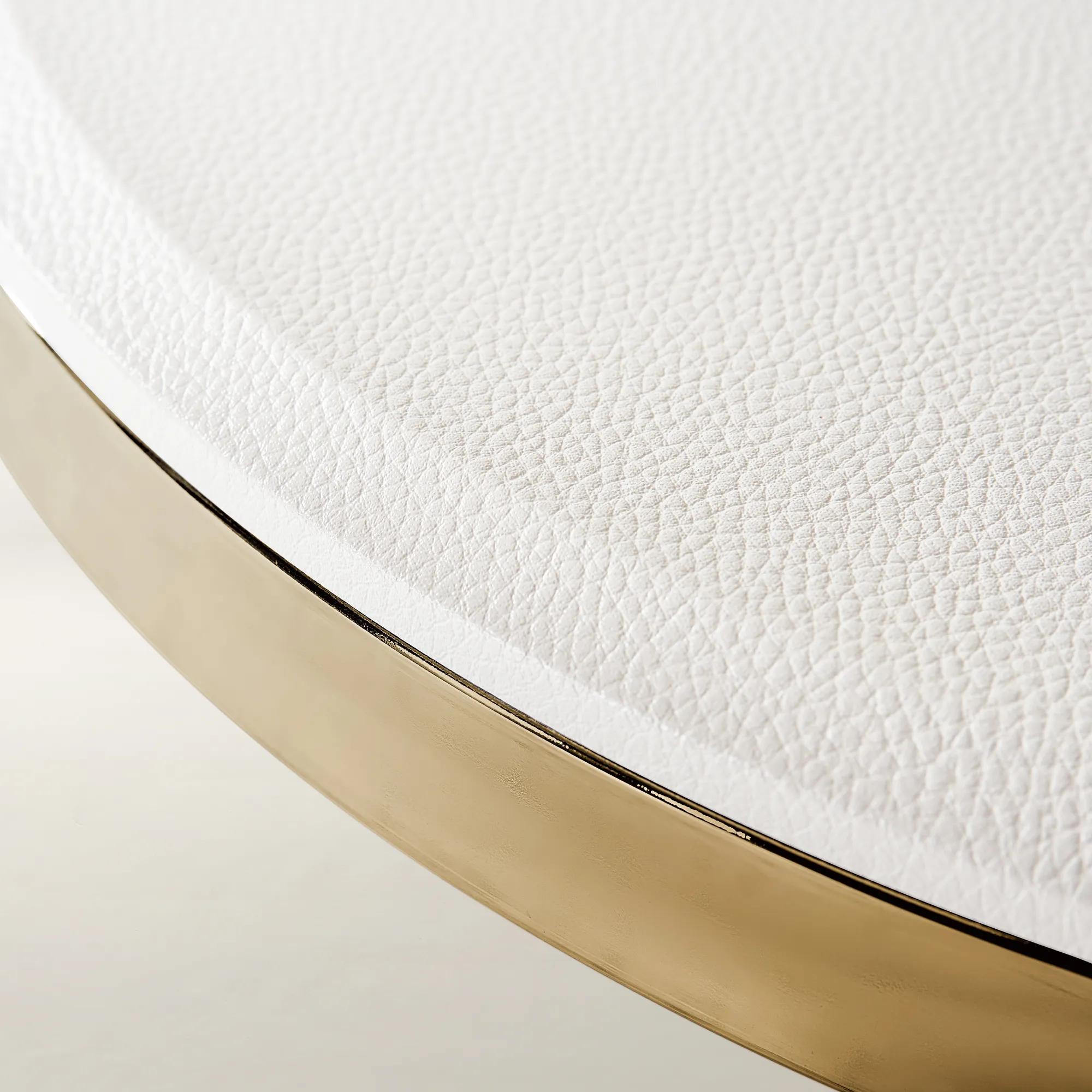 Murano Round White Accent Table With Faux Leather Top Set Of 2 (14.5"-18.5")$399
A set of two accent tables featuring mixed woods, faux leather tops, and acrylic legs with metallic finishes.
Add To Cart -
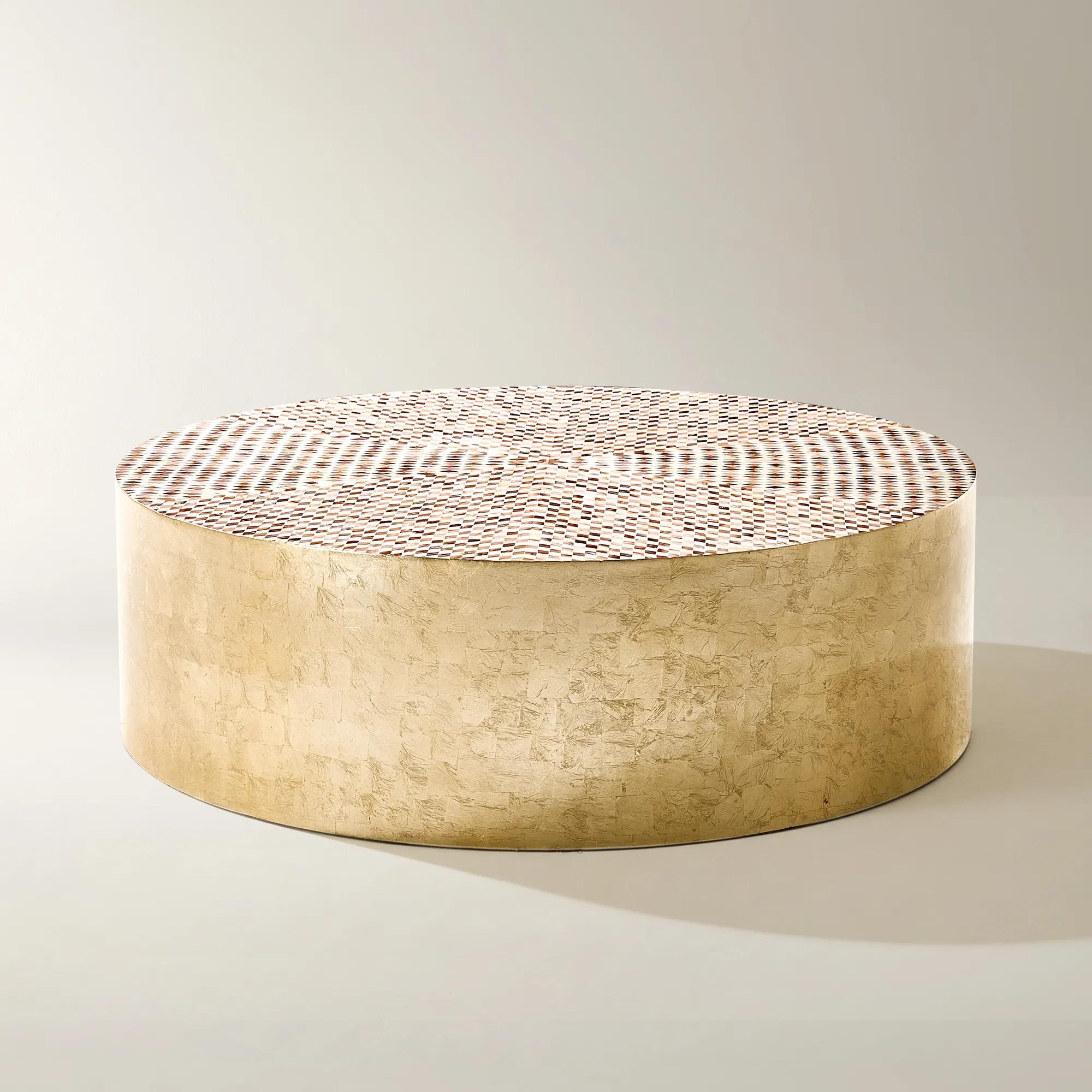
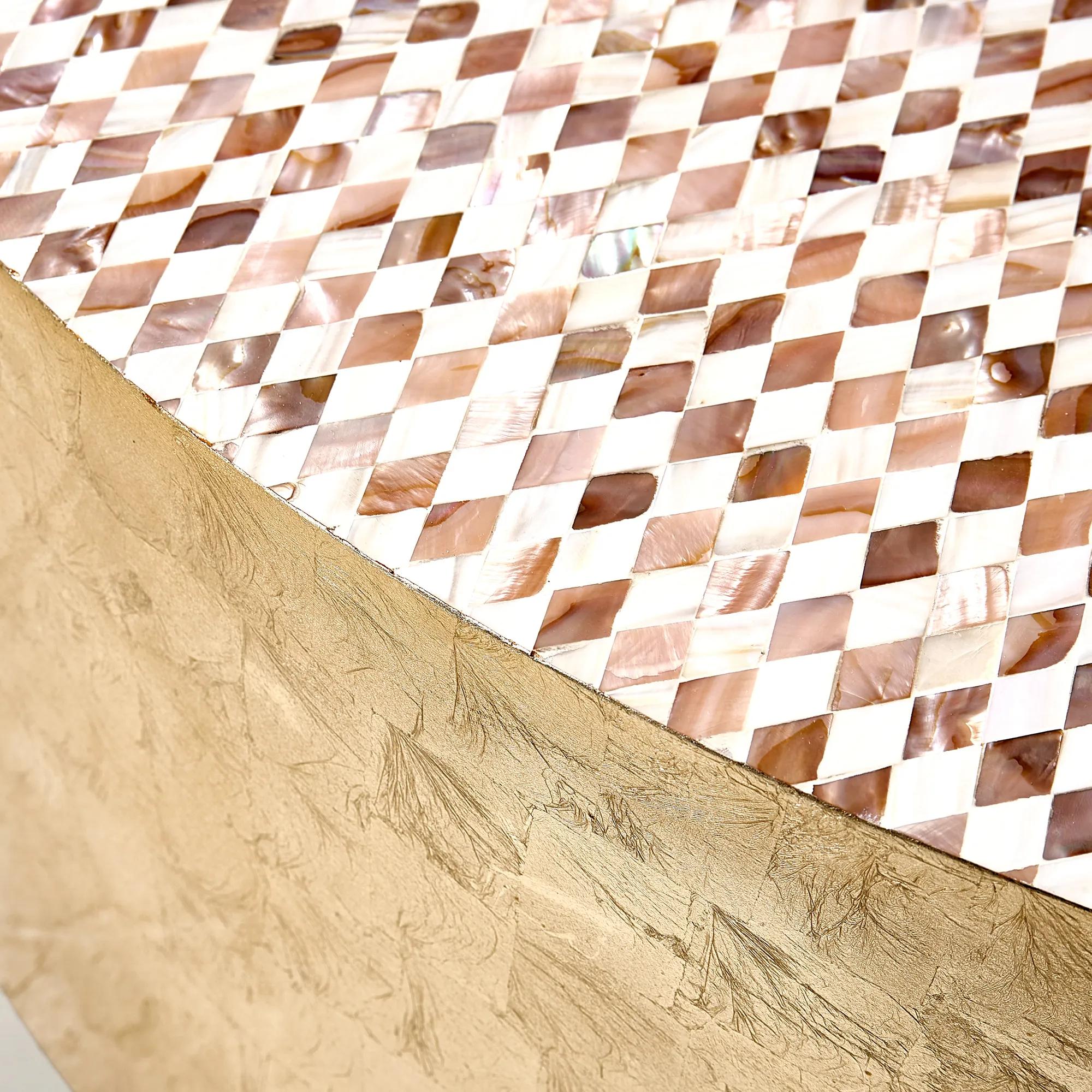 Lucien Round Diamond Coffee Table (47.24")$1299
A sculptural round coffee table featuring a hand-laid mother-of-pearl diamond mosaic and gold leaf sides.
Add To Cart -
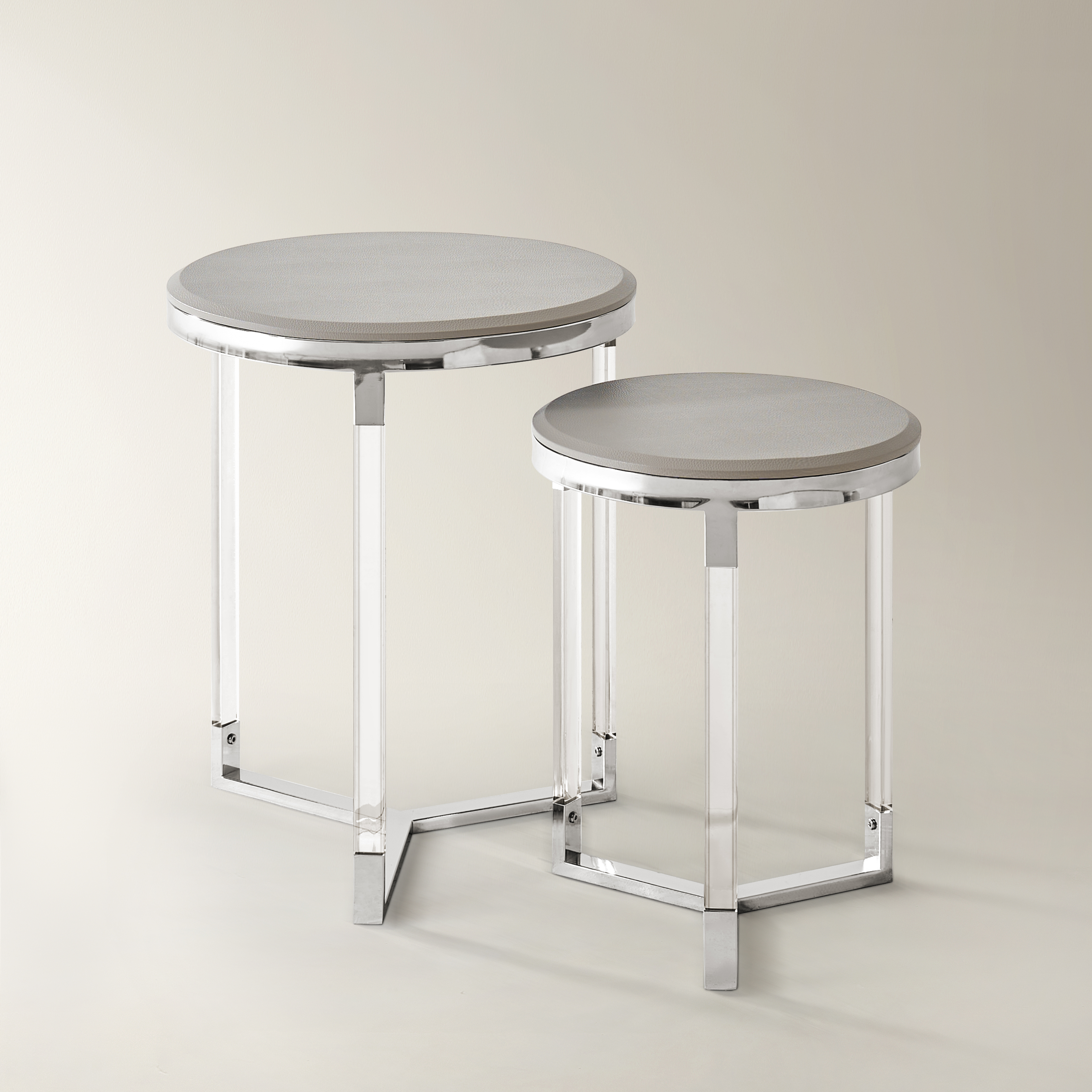
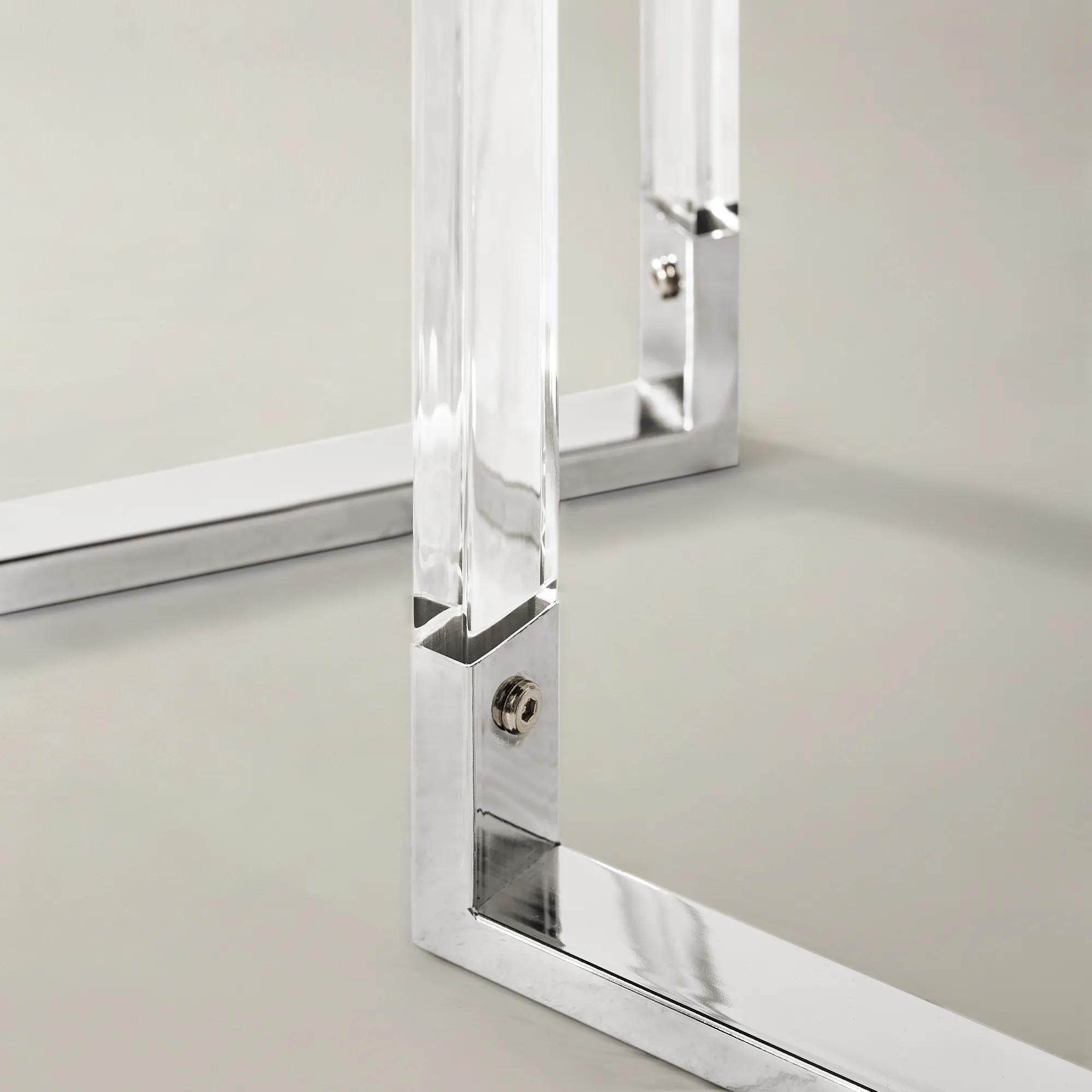 Murano Round Grey Accent Table With Faux Leather Top Set Of 2 (14.5"-18.5")$399
A bold set of two accent tables featuring mixed woods, acrylic legs, and faux leather tops.
Add To Cart -
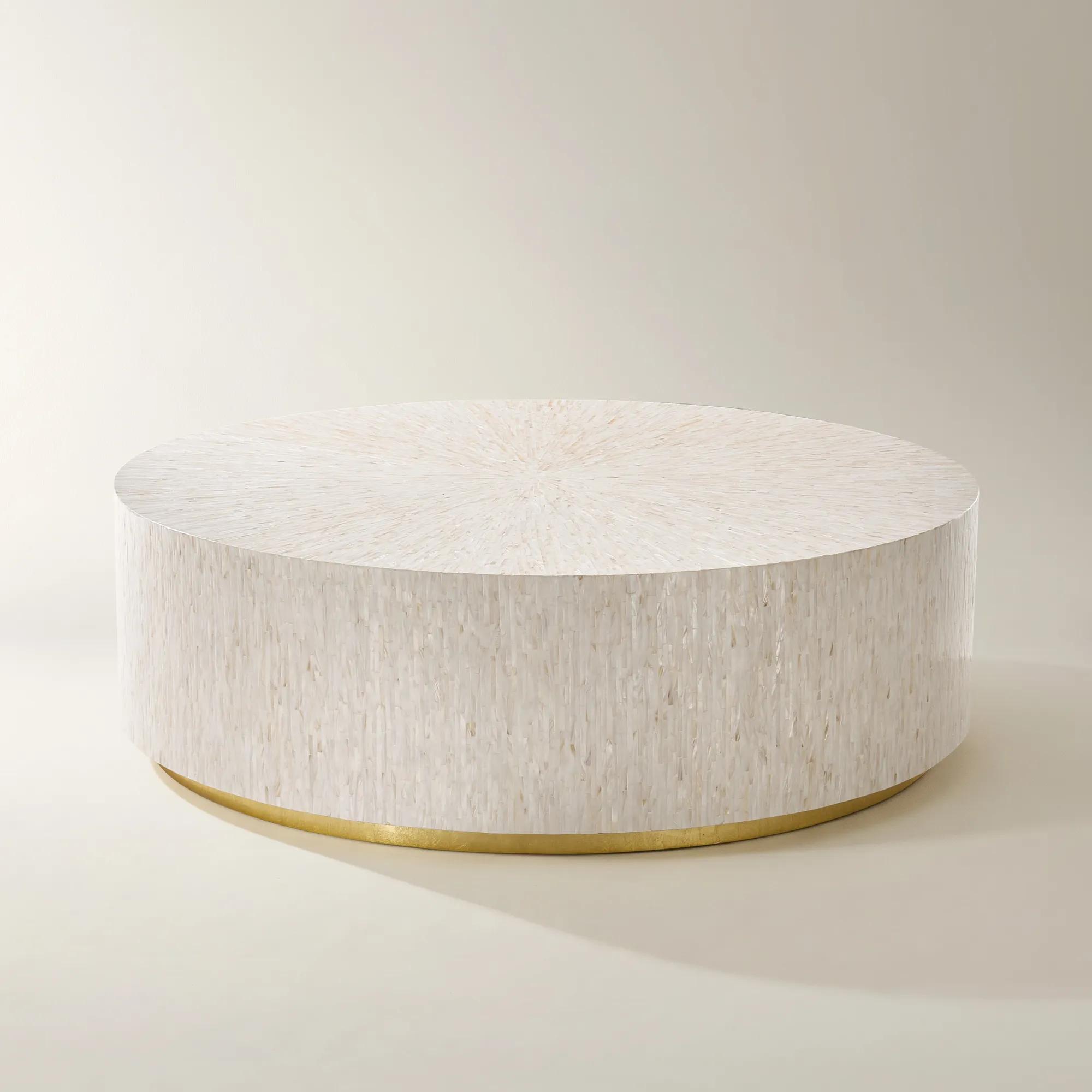 Alexandria Round Mosaic Platinum Coffee Table (52")$1399
A luminous mother-of-pearl mosaic coffee table with a sculptural round form and gold leaf–accented base.
Add To Cart

Unique Round Glass Tables
Unleash a world of artistry and intrigue with unique round glass tables—where sculptural silhouettes meet luminous transparency, transforming every gathering into an occasion. These statement-making pieces captivate the eye from every angle, casting reflections that dance across your space and infusing each moment with a sense of effortless sophistication. Whether anchoring a dramatic living room vignette or adding a whisper of glamour to a cozy nook, unique round glass tables invite you to reimagine your interiors as a canvas for bold self-expression. Elevate your environment with designs that shimmer with possibility and celebrate the extraordinary in every detail.
Unique round glass tables combine circular glass tops with distinctive bases, expressive finishes, or decorative glass treatments, creating functional furniture with the presence of sculpture. Their appeal lies in the relationship between transparency and form: a clear surface reveals an architectural pedestal beneath it, while smoked or frosted glass introduces a more atmospheric layer. The circular silhouette softens a room filled with straight lines, bringing balance to tailored sofas, angular cabinetry, and geometric rugs without surrendering drama. A round glass dining table creates a shared center for conversation, a coffee table gives a seating arrangement a graceful focal point, and an accent table brings a luminous surface beside a favorite chair. Each serves a different purpose, yet all allow the base to become part of the room’s visual composition. Sweeping metal curves, intersecting supports, and sculptural columns feel especially expressive beneath transparent glass, where their construction remains visible from above. Polished stainless steel contributes a crisp, reflective quality; brass-toned metal adds warmth; richly grained wood introduces organic contrast; and stone brings substantial texture and visual weight. These material combinations can distinguish a table more convincingly than ornament alone. The finish matters as much as the silhouette: a mirror-bright base amplifies nearby light, while a brushed or matte surface creates a quieter counterpoint to the gleaming top. Clear glass preserves views of a patterned rug or beautifully detailed chairs, making it particularly compelling in rooms where every layer deserves attention. Tinted glass offers a moodier expression, while frosted treatments soften visibility through the surface. For hosts who enjoy an expressive dining room, design enthusiasts drawn to sculptural furniture, or anyone balancing richly upholstered seating with a lighter-looking centerpiece, the result is both practical and deeply personal. The most memorable round glass tables do more than occupy the center of a room; they establish its rhythm through proportion, reflection, and the interplay of solid and transparent materials.
Scale determines whether that sculptural presence feels beautifully composed or overwhelms the surrounding furniture. A glass top may look airy, but its full diameter still needs comfortable space around it, including room for chair movement, walkways, and nearby doors. In a dining area, about 36 inches between the table edge and a wall or other obstruction is a common starting point, with more room desirable where people need to pass behind occupied chairs. Seating capacity depends on the diameter, chair width, and base configuration rather than the shape alone. A central pedestal can reduce interference from perimeter legs, although a broad pedestal foot may affect where guests place their feet. Open, intersecting bases offer a striking view through the glass, but their supports should also be considered alongside chair placement. For upholstered dining chairs, checking arm height against the tabletop’s underside helps preserve an elegant, comfortable fit. In a living room, a round glass coffee table works especially well where seating wraps around a central point or where an angular sectional benefits from a curved contrast. Approximately 14 to 18 inches between the sofa and table often provides a useful balance of reach and passage, adjusted to suit the room and its occupants. A top near the sofa’s seat height, or slightly lower, generally feels comfortable for setting down a drink. Compact seating groups, reading corners, and narrow spaces beside a chaise may be better served by Small Round Glass Tables, which bring the same interplay of transparency and sculptural form to a more intimate footprint. An accent table should sit within easy reach without crowding an armrest or blocking a natural path through the room. Measuring the base as well as the top is important, particularly when its legs or curved supports extend outward. A paper template laid on the floor can make the intended diameter easier to visualize before arranging the surrounding furniture. This attention to proportion allows a distinctive table to remain a pleasure to use, not simply an object to admire.
Material quality and thoughtful care help preserve the clarity that makes round glass tables so captivating. Glass thickness, edge treatment, support placement, and attachment details all contribute to how a table performs; thickness alone does not establish its strength or suitability. Tempered glass, when specified, is stronger than ordinary annealed glass, but it is not unbreakable or immune to scratches, edge damage, or sudden temperature changes. A polished or beveled edge gives the top a finished appearance, while the table’s construction and stated use should guide expectations for everyday demands. Dining tables need room for place settings and serving pieces; coffee tables accommodate books, drinks, and decorative objects; smaller accent tables suit a lamp or a carefully edited arrangement within their stated weight limits. Coasters, placemats, and heat-resistant trivets help protect the surface from drinkware, abrasive objects, and hot serving dishes. For cleaning, a soft microfiber cloth and a manufacturer-approved, nonabrasive cleaner help maintain transparency without unnecessary wear. Applying cleaner to the cloth rather than spraying joints or the base can also limit residue around connections and decorative finishes. Metal, wood, and stone components may require different care, so a cleaner suitable for glass should not automatically be used across the entire piece. Avoid dragging objects across the top, and follow the manufacturer’s handling instructions when moving the table rather than lifting it by the glass alone. Beyond maintenance, restrained styling lets the design speak with greater authority. A low ceramic bowl, a sculptural vessel, or a few art books can create dimension without concealing an extraordinary base. Beneath the table, a richly textured rug brings depth through the transparent surface; above it, a chandelier introduces another layer of reflection. Paired with velvet seating, dimensional artwork, or a softly luminous lamp, a round glass table becomes the point where utility and artistry meet—a clear surface with a confident presence, ready to support the rituals and visual pleasures of a beautifully considered home.
FAQs
Unique round glass tables are remarkably versatile, seamlessly complementing a range of design aesthetics. Their sculptural transparency enhances contemporary, glam, and modern interiors, while bold bases—whether metallic, stone, or wood—can also anchor eclectic, transitional, or even Art Deco-inspired spaces. The key is to let the table’s artistry shine, using it as a focal point that amplifies your room’s sense of drama and sophistication.
To craft a show-stopping vignette, layer your decorative glass table with objects of varying heights and textures. Consider a statement floral arrangement, a cluster of metallic candleholders, or a stack of art books topped with a gleaming sculpture. The reflective surface of glass magnifies the effect, so opt for pieces that catch the light and play with color or form. Seasonal touches—like winter branches or crystal accents—can refresh the look throughout the year.
Absolutely. The beauty of round glass tables lies in their ability to adapt to their environment. In formal dining rooms, a large round glass table exudes elegance and refinement, especially when paired with plush seating and dramatic lighting. In casual living spaces, a coffee table glass design keeps the mood light and social, perfect for gatherings or everyday lounging. The table’s base and surrounding décor can further tailor the mood to suit your lifestyle.
A cast glass table stands apart for its artistry and tactile appeal. Unlike standard flat glass, cast glass is shaped using molds, resulting in bases or surfaces with organic curves, textured patterns, or sculptural forms. This process infuses each piece with a sense of movement and individuality, making every cast glass table a true work of art that commands attention and transforms its surroundings.
Yes—a round glass table is a striking choice for an entryway or foyer, instantly setting a tone of sophistication and openness. Its transparent top keeps the space feeling airy, while a dramatic base or curated styling adds a layer of intrigue. Place a large floral arrangement, an eye-catching bowl, or a collection of sculptural accents on top to welcome guests with a sense of grandeur and artistic flair.