Small Round Glass Tables
Small Round Glass Tables
-
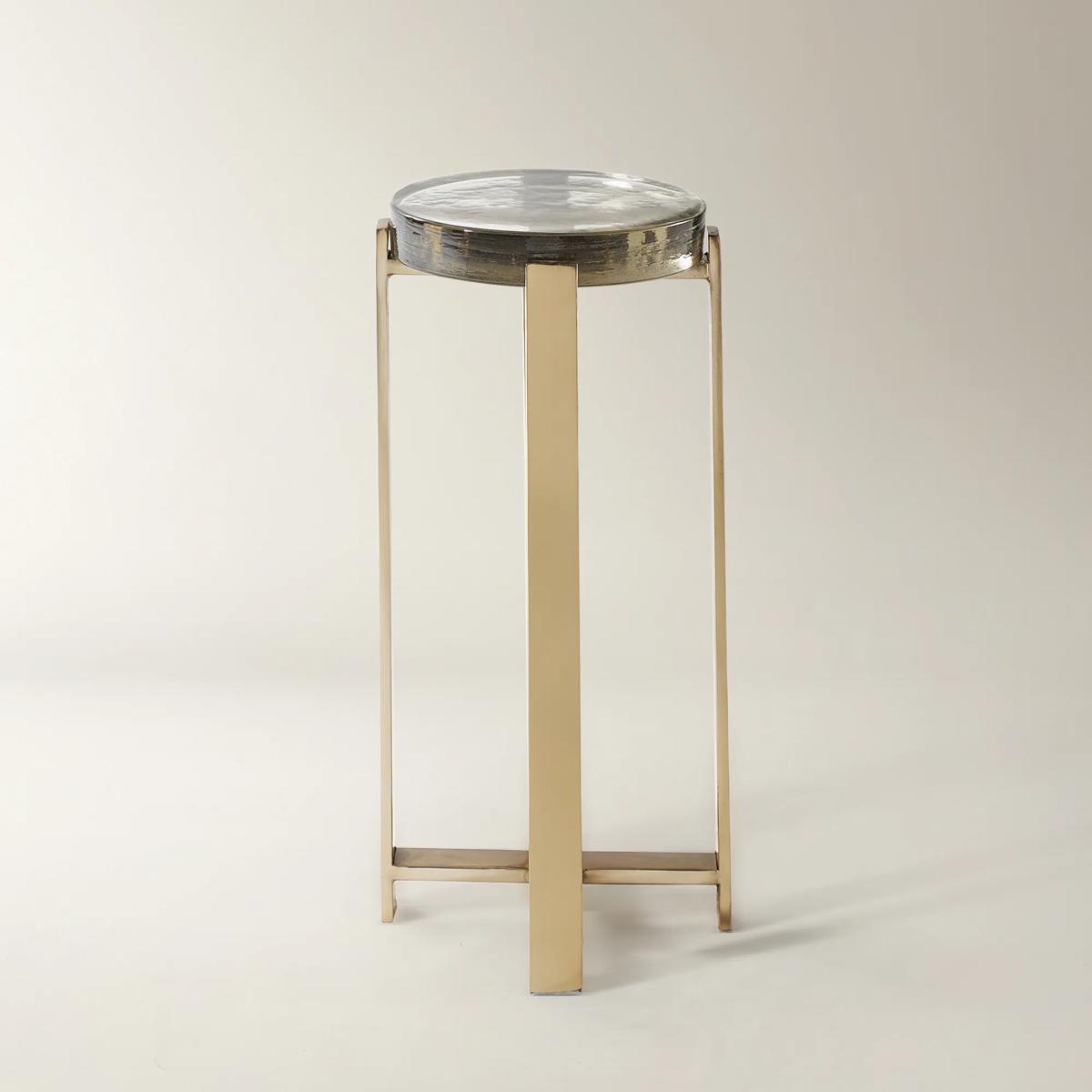
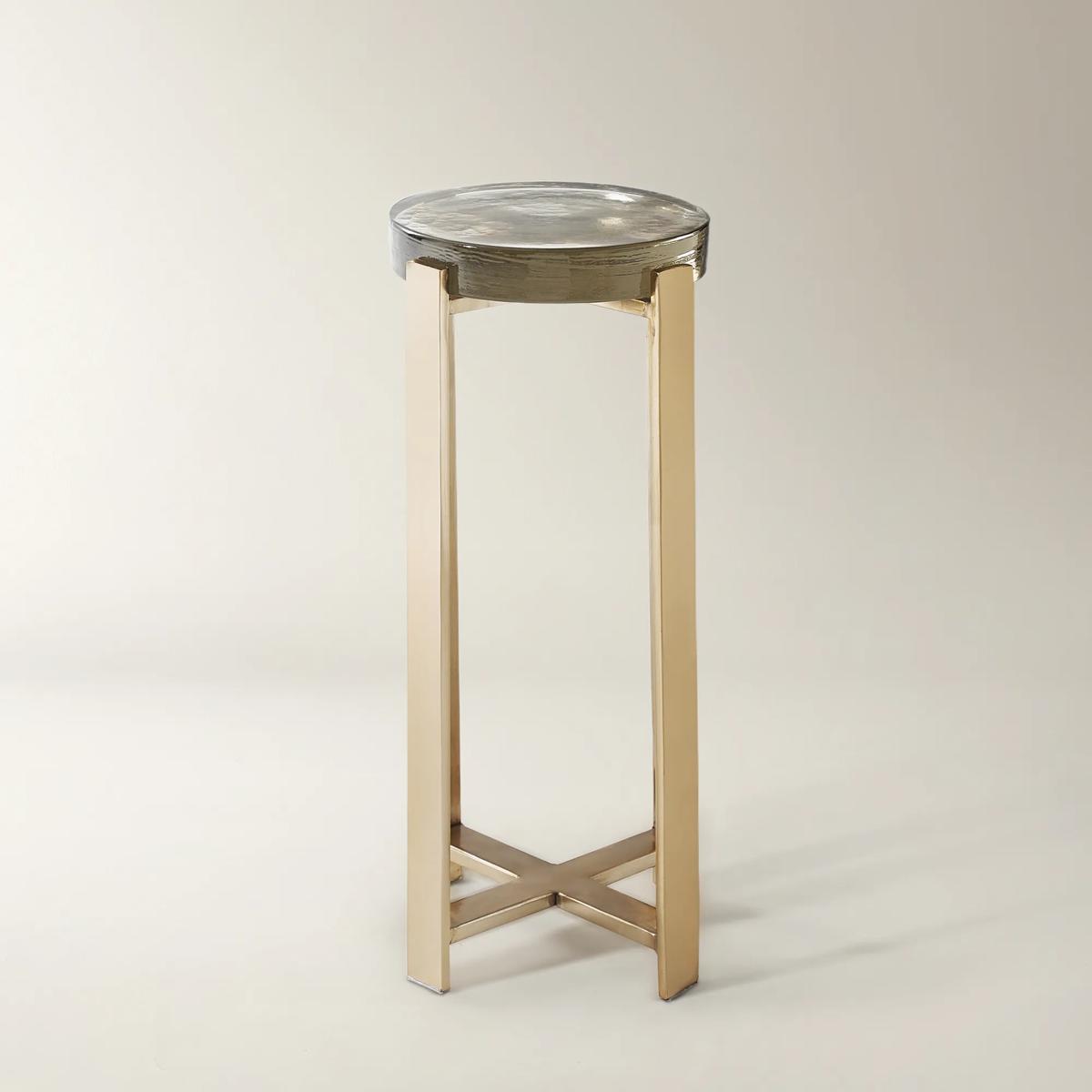 Lyra Round Brass Metal Side Table With Glass Top (10.75")$259
A sculptural side table featuring a thick cast glass top and lustrous brass-finished metal base.
Add To Cart -
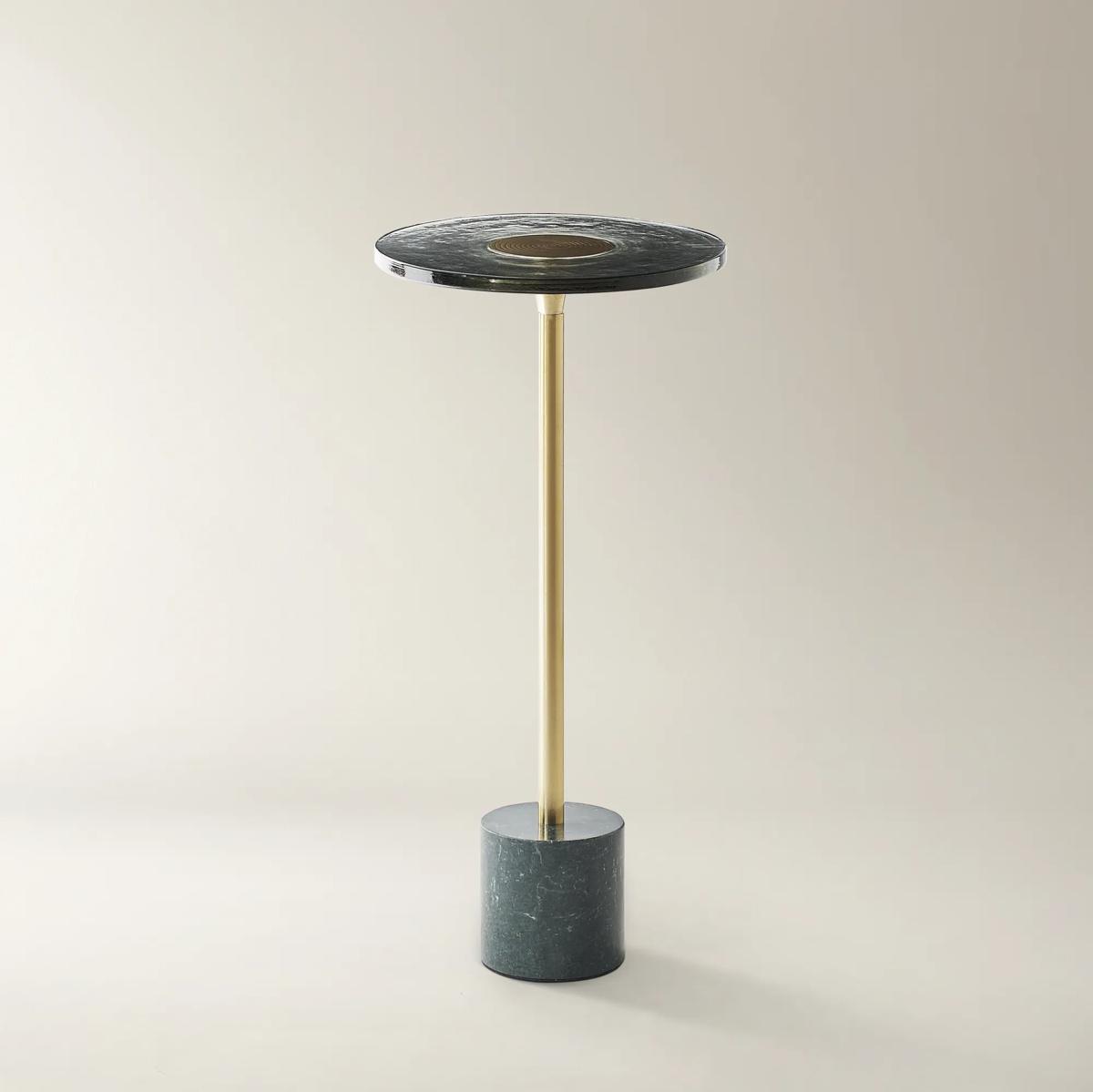
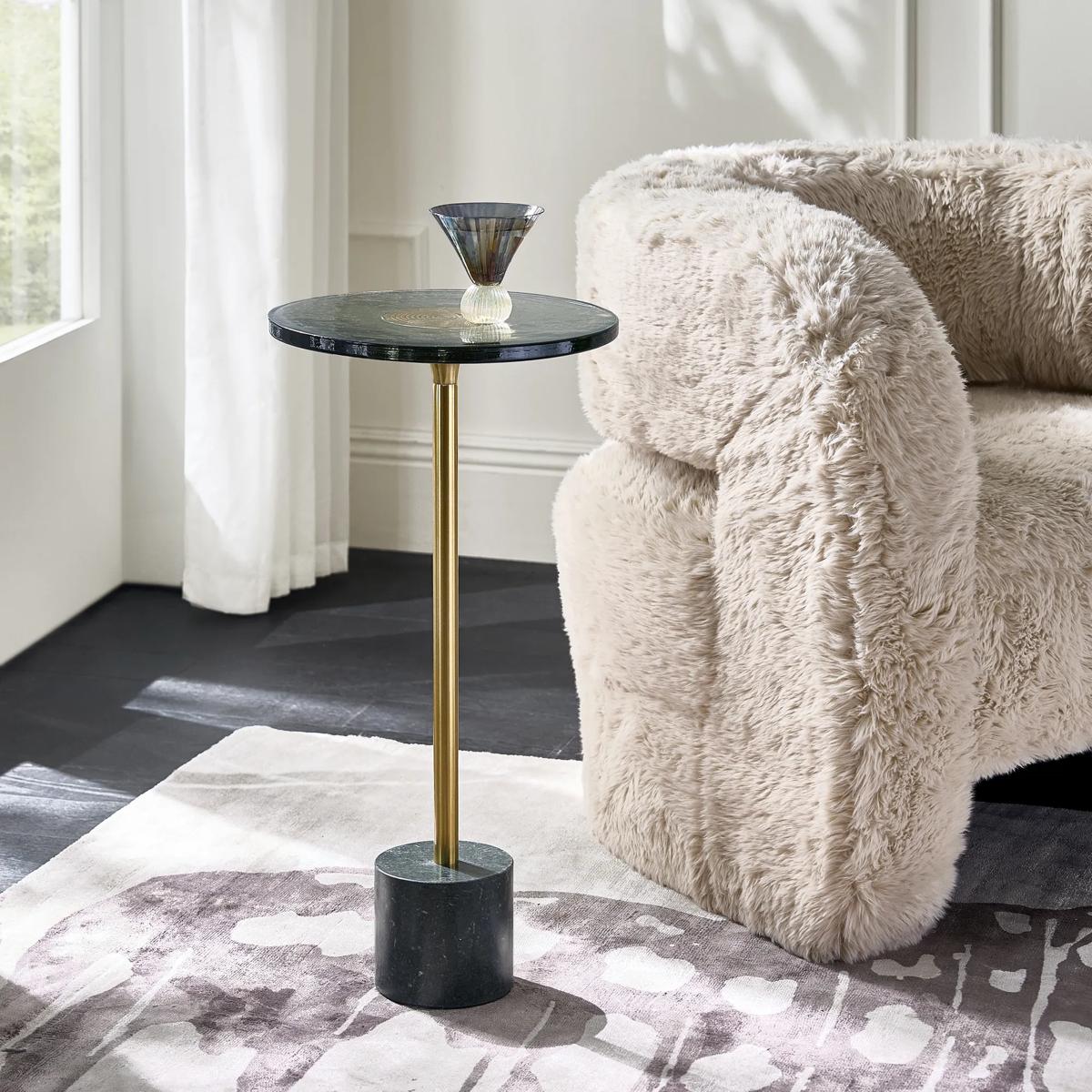 Seraphy Round Green Metal Side Table With Glass Top (13.75")$179
A modern side table featuring a green cast glass top, brass-finished post, and Indian green marble base.
Add To Cart -
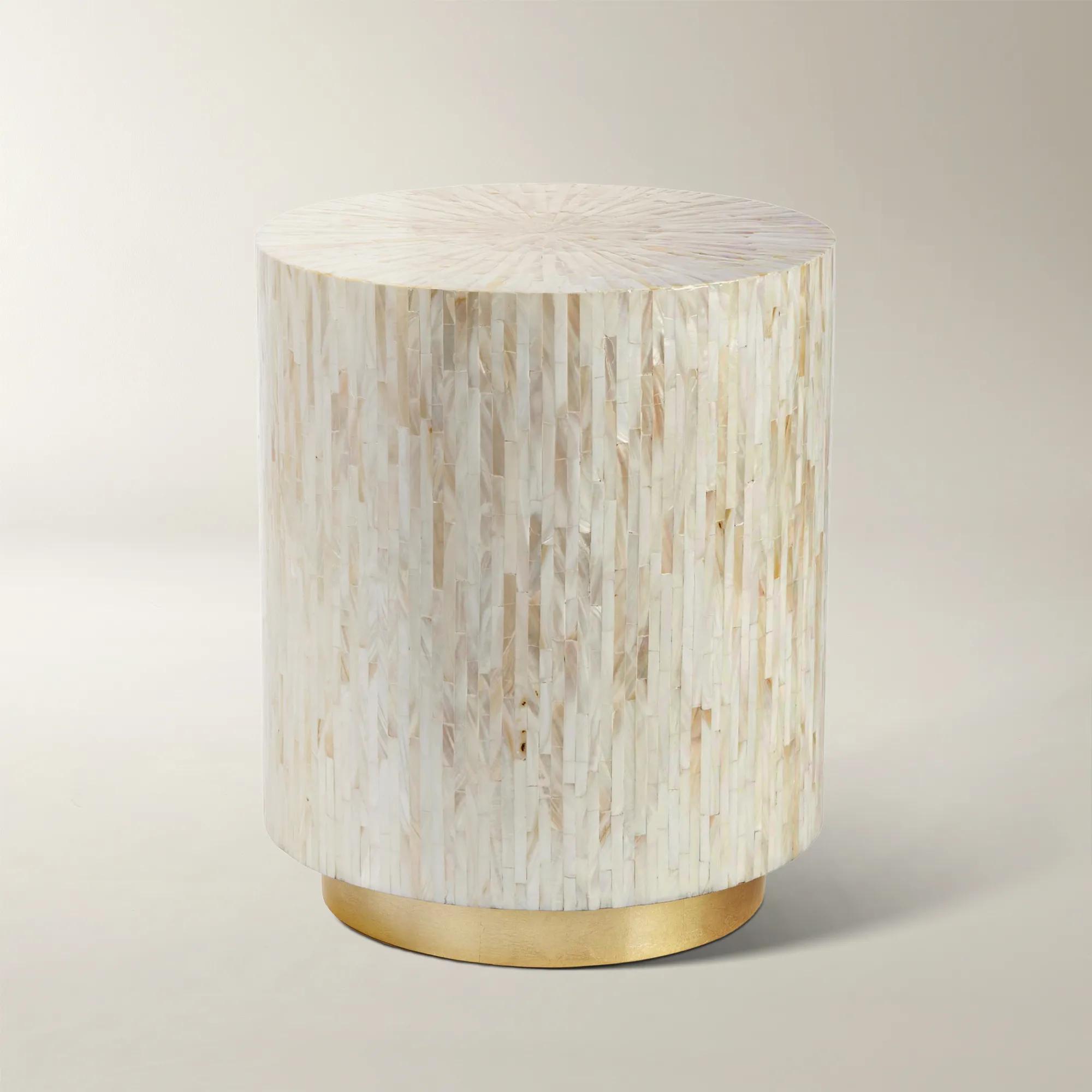 Alexandria Round Mosaic Platinum End Table (13.75")$299
A glamorous accent table featuring hand-applied mother-of-pearl mosaic and a gold leaf-accented base.
Add To Cart -
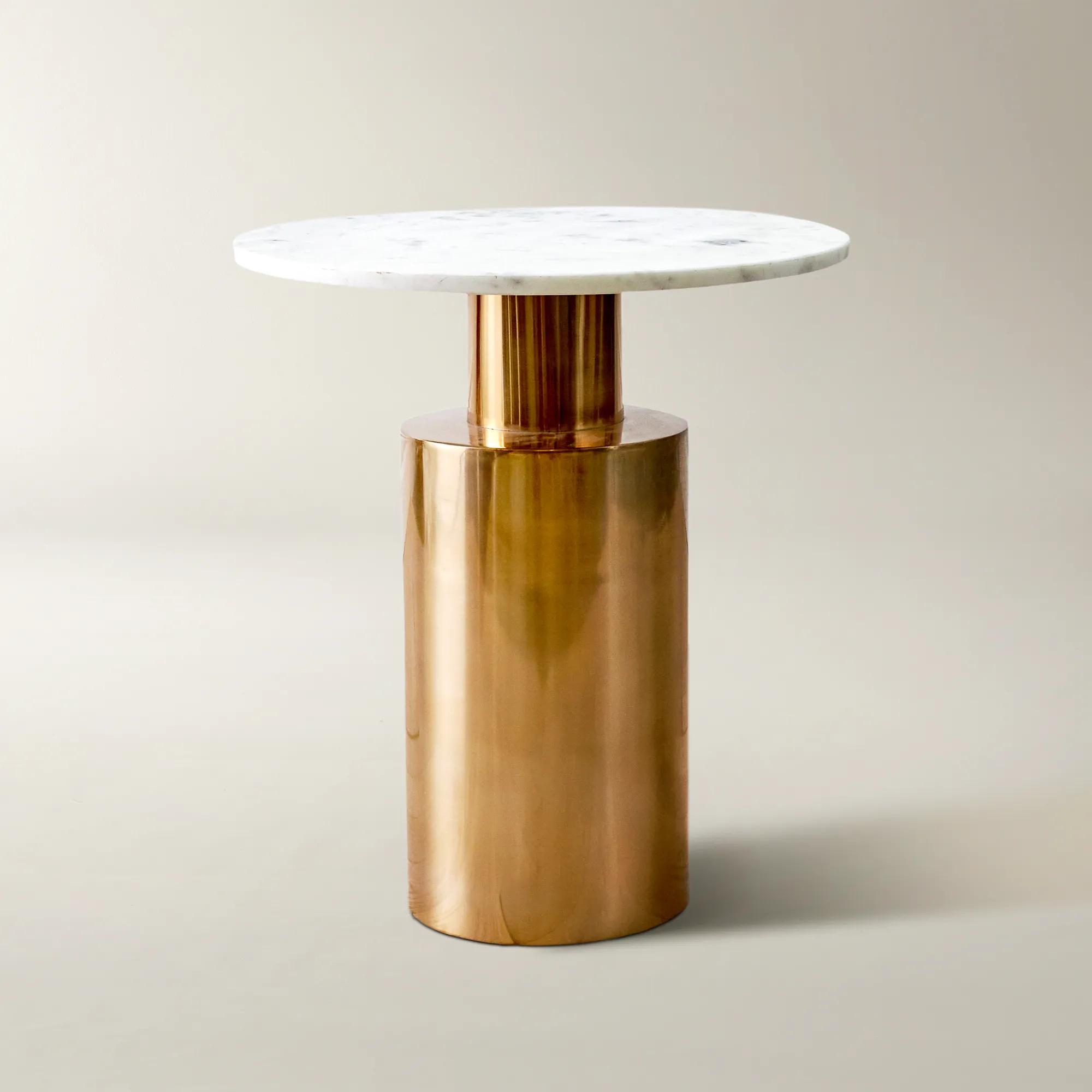 Capri Round White Marble Accent Table (16")$299
A striking accent table featuring a white marble top and gold-finished stainless steel base.
Add To Cart -
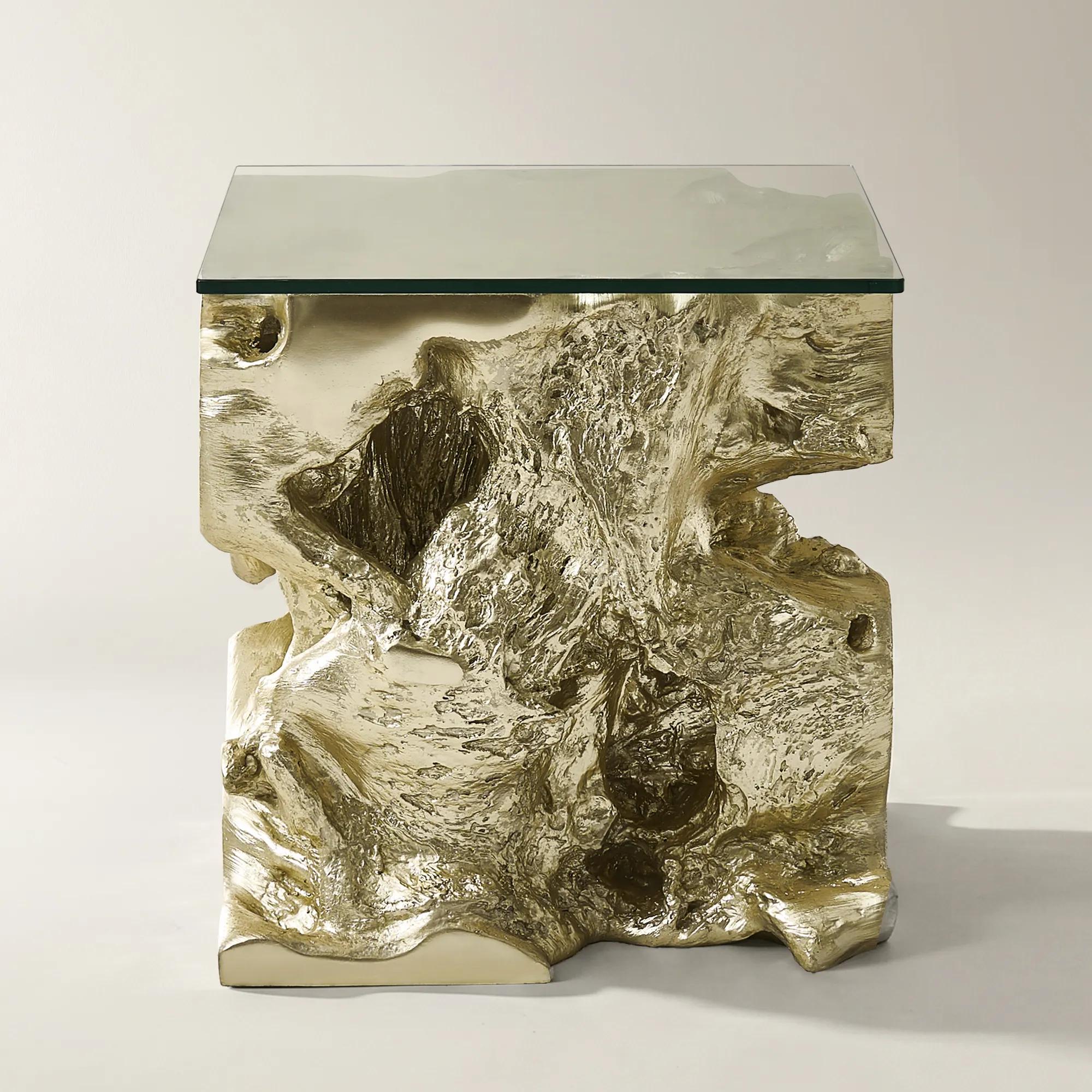 Sequoia Champagne Gold Resin End Table With Glass Top (22")$999
A sculptural resin end table with a champagne gold leaf finish and a clear tempered glass top.
Add To Cart

Small Round Glass Tables
Small round glass tables are the unsung heroes of sophisticated spaces—effortlessly balancing elegance and versatility in a single, luminous silhouette. Each piece invites light to dance across its surface, creating an air of openness while offering a chic stage for your favorite objets d’art or a decadent cocktail hour. Whether poised beside a sumptuous velvet sofa or anchoring a dramatic vignette, these tables transform every corner into a curated moment. Discover how small round glass tables infuse your home with artistry, clarity, and a whisper of modern glamour.
Small round glass tables bring a polished focal point to living rooms, bedrooms, dining nooks, and other spaces where every inch deserves intention. Their circular tops soften the lines of surrounding furniture, while transparent surfaces let the eye travel through to a sculptural base, a richly textured rug, or the beautiful flooring beneath. That visual openness makes glass especially compelling in compact rooms, though the effect is equally striking beside a generous sofa or a dramatic upholstered bed. The category encompasses several distinct uses: petite side tables for a lamp and a drink, low coffee tables that anchor intimate seating arrangements, and compact dining tables that turn an overlooked corner into a place for conversation. Small describes the footprint, not the presence. A gleaming metal pedestal beneath clear glass can introduce a jewelry-like accent; a substantial wood base can give the same rounded silhouette warmth and architectural depth. Clear glass emphasizes openness, while smoked or tinted glass offers a moodier expression and a more defined surface. The right choice depends on what the table needs to hold and how it relates to the room around it. A reading chair may need only enough surface for a book, a cup, and a slender lamp, whereas a table between two lounge chairs benefits from space for both guests to set down a glass comfortably. In an apartment living room, a compact round glass coffee table can preserve sightlines to a statement sofa without competing with its upholstery. Beside a bed, a glass-topped accent table creates a refined alternative to a traditional nightstand when drawer storage is not essential. The rounded outline also offers flexibility in seating arrangements approached from several directions, with no corners projecting into the composition. It still needs thoughtful placement, but its shape brings a graceful rhythm to rooms filled with rectangular cushions, framed artwork, and linear cabinetry. Together, the transparent top and curved profile allow bold surrounding pieces to remain expressive without making the setting feel visually crowded.
Materials and proportions determine whether that elegant first impression translates into everyday comfort. Glass thickness, edge treatment, base construction, and the way the top is secured all deserve attention, particularly for a table that will be used daily. Tempered glass is heat-treated for greater strength than ordinary annealed glass and breaks differently if damaged, but it is not unbreakable or immune to scratches. Product specifications should identify the glass type, weight capacity, and any assembly or attachment requirements rather than leaving those details to appearance alone. A polished edge creates a finished outline, while a metal, wood, or stone base gives the table its structural character. Reflective metal finishes introduce brilliance; darker finishes trace a more graphic silhouette; wood adds grain and a softer contrast against the glass. Stone can lend substantial visual weight, although actual stability depends on the complete construction, not the material name. The appeal of stylish round glass tables lies in this interplay between an airy surface and a base with personality. Scale keeps that balance convincing. Side tables often work best with their tops close to the height of the adjacent chair or sofa arm, making a drink easy to reach without an awkward stretch. A coffee table should sit comfortably within reach of the seating; about 14 to 18 inches between the table edge and the sofa is a useful starting point, adjusted for the room and its users. That gap is different from a main walkway, which generally needs more space. In a dining nook, the diameter alone does not determine seating capacity: chair width, pedestal placement, and room to pull chairs back matter just as much. A central pedestal may offer more freedom for knees than a base with widely placed legs, but its footprint still needs checking. Measuring the intended location, including the surrounding furniture and circulation paths, helps preserve the spacious effect that makes glass so appealing. A paper circle laid on the floor can reveal whether a seemingly petite table feels balanced, undersized, or unexpectedly intrusive before it becomes part of the room.
Daily use gives these tables their real character: a small tray catching the light beside a velvet sofa, a single ceramic vessel above a sculptural base, or two place settings arranged for an intimate meal. A glass surface rewards a considered composition because everything on it—and much of what sits beneath it—remains visible. One substantial accent often looks more assured than several tiny objects, especially on a narrow top where practical surface space is precious. A low arrangement on a coffee table keeps conversation unobstructed, while a bedside lamp needs a stable footprint and a cord route that does not pull against the table. If storage is important, a lower shelf may provide room for a few books, though it also adds another visible layer to the arrangement. Caring for glass is straightforward when the finish details receive equal attention. A soft, lint-free cloth and a cleaner approved for the surface help remove fingerprints without introducing abrasive marks; cleaner should be kept away from bases or fittings that require a different care method. Coasters protect against moisture and residue, and suitable protective mats or trivets help prevent direct contact with hot serving pieces. Sliding rough-bottomed pottery, metal accessories, or gritty objects across the surface can cause scratches, so lifting rather than dragging preserves its clarity. Edges deserve particular care during moving and cleaning, and a glass top should never be used as a seat or step. In homes with young children or energetic pets, a rounded perimeter removes sharp corners but does not replace the need to assess stability, glass specifications, and placement. For a thoughtfully chosen housewarming or wedding gift, a compact accent table can be an expressive addition when the recipient’s space and preferences are known. Whether its role is practical, decorative, or both, the strongest choice gives daily rituals a beautiful setting while leaving enough breathing room for the rest of the interior to shine.
FAQs
Small round glass tables are remarkably versatile, seamlessly blending with a spectrum of interior styles. Their airy, reflective surfaces enhance modern and contemporary spaces, while their elegant profiles complement Hollywood Regency, Art Deco, and even eclectic or transitional rooms. Whether you favor bold, dramatic palettes or serene, monochrome schemes, these tables act as a sophisticated anchor, tying together diverse design elements with effortless grace.
To create a striking vignette, layer textures and heights on your glass table—think a sculptural vase, a stack of glossy art books, or a metallic tray adorned with candles. The transparency of glass allows your chosen objects to shine, so select pieces that reflect your personality and the mood you wish to evoke. For a seasonal touch, a single dramatic bloom or a cluster of crystal accents can transform the table into a luminous focal point.
Absolutely. Placing a small round glass table in an entryway instantly elevates the space, offering a chic landing spot for keys, mail, or a statement floral arrangement. The round shape softens architectural lines and encourages a welcoming flow, while the glass surface ensures the area feels open and uncluttered—ideal for making a memorable first impression.
While primarily designed for indoor use, small round glass tables can be styled on covered patios or sunrooms where they are shielded from direct exposure to the elements. Their reflective surfaces amplify natural light, creating a sense of effortless luxury in transitional spaces. Pair with plush seating and lush greenery for a resort-inspired retreat.
Small round glass tables are endlessly adaptable. Use one as a chic nightstand in the bedroom, a glamorous pedestal for art in a hallway, or as an accent piece in a dressing room to display perfumes and jewelry. Their elegant profiles and light-catching surfaces make them ideal for adding a touch of luxury to any corner that calls for artistry and function.