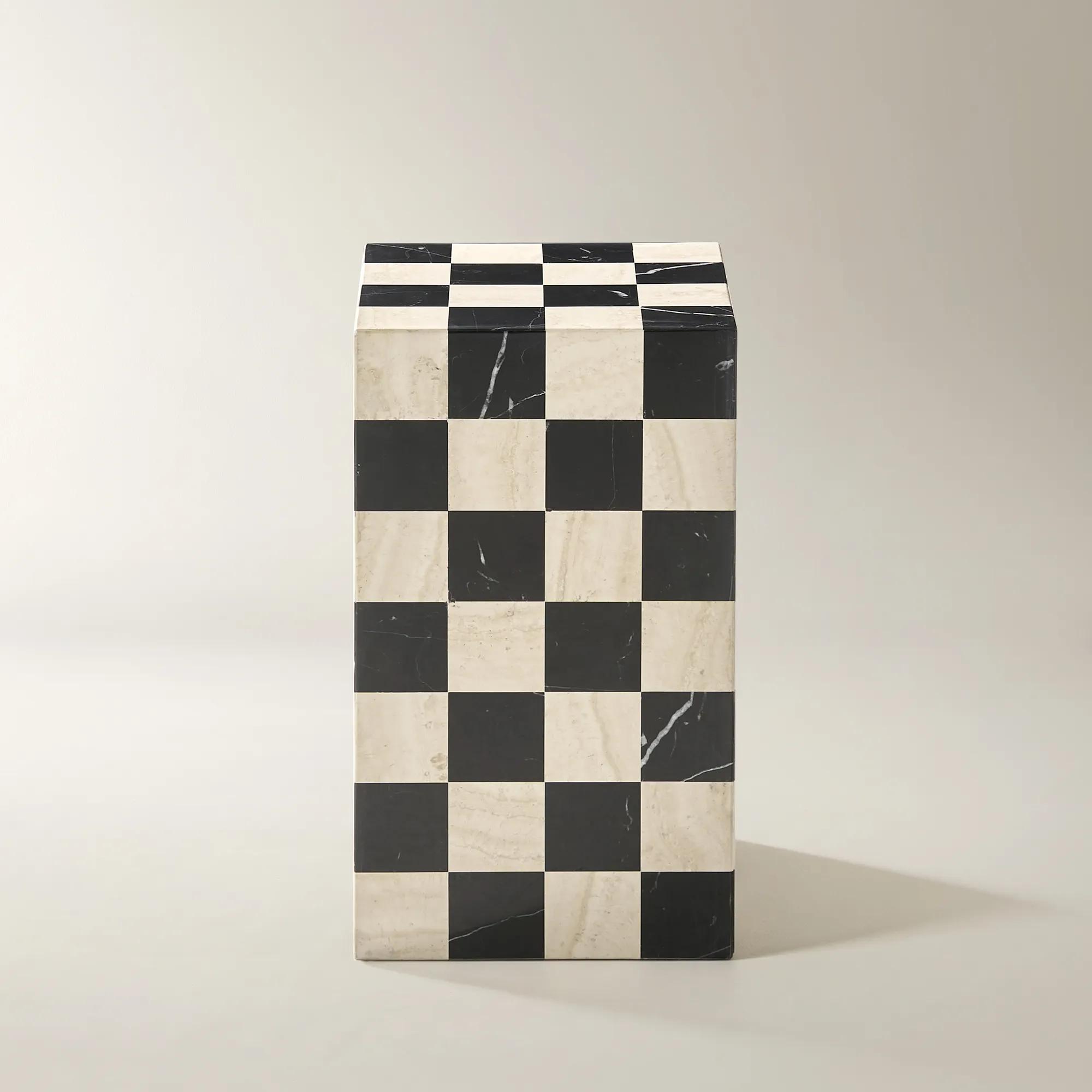
Modern Handmade Side Tables
Modern Handmade Side Tables
-
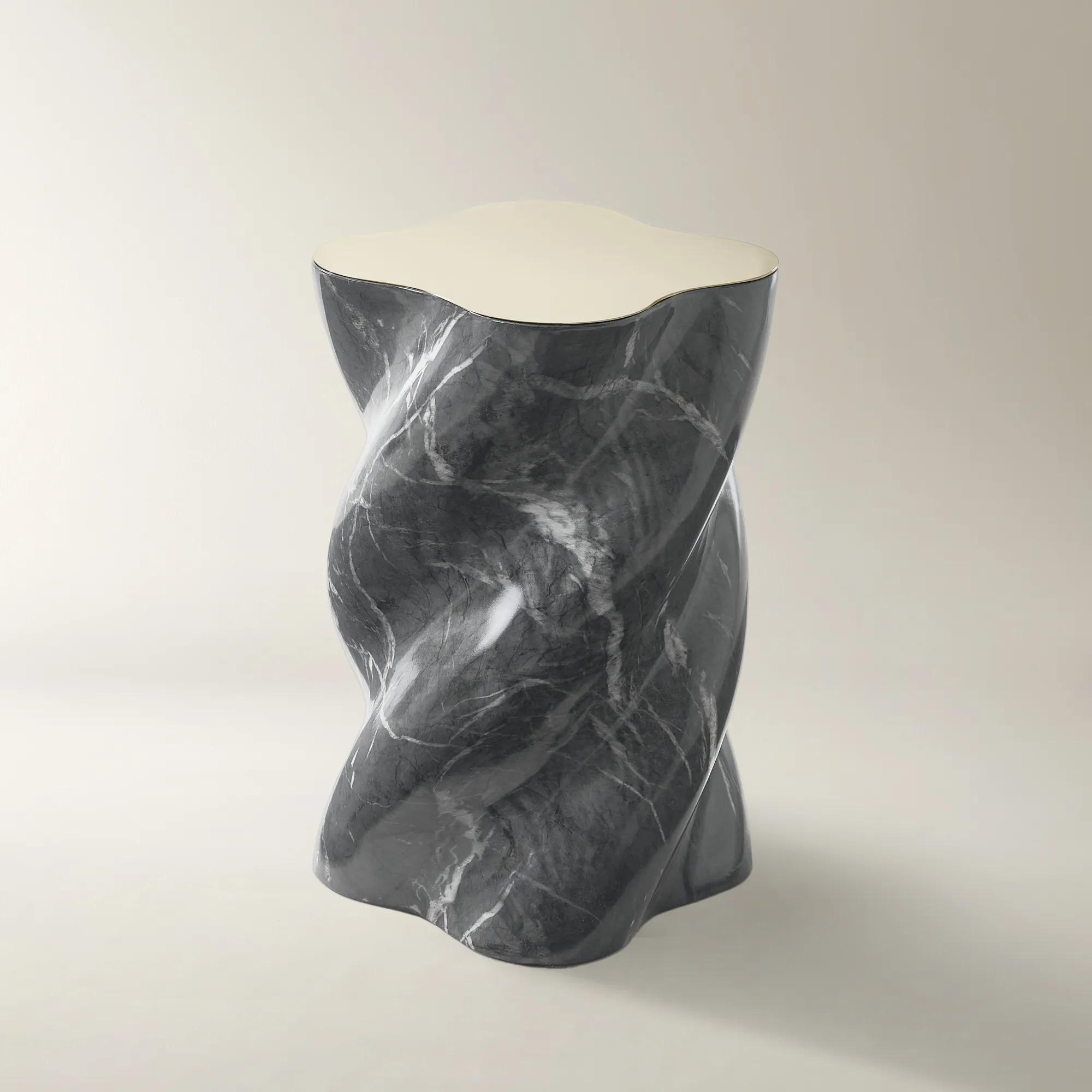 Vega Bvlgary Black Concrete Side Table With Stainless Steel Top (13.8")$459
A sculptural black side table featuring a marble-inspired fiber-concrete base and removable stainless steel top.
Add To Cart -
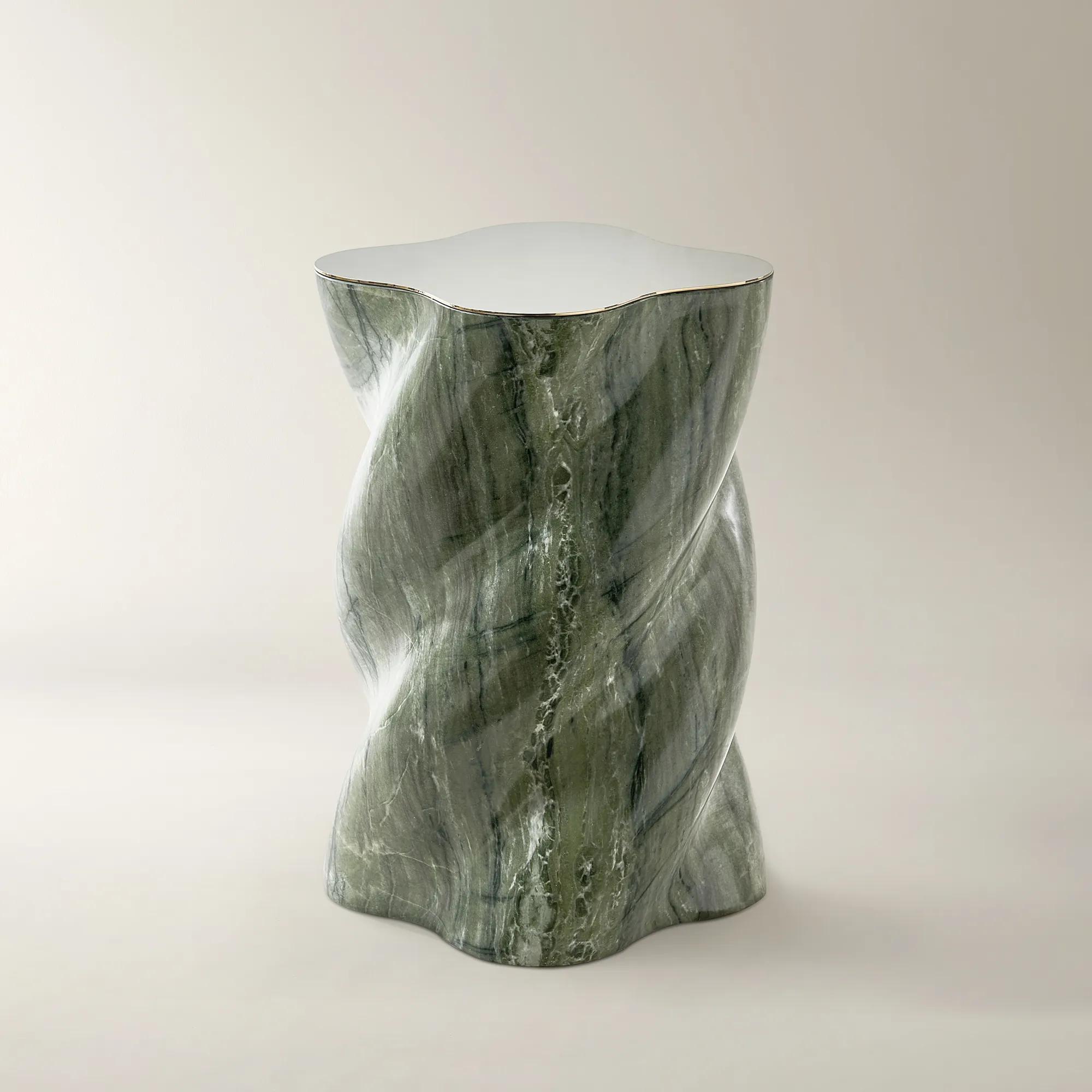 Vega Malachite Green Concrete Side Table With Stainless Steel Top (13.8")$459
A sculptural side table in malachite green with a marble-inspired fiber-concrete base and stainless steel top.
Add To Cart -
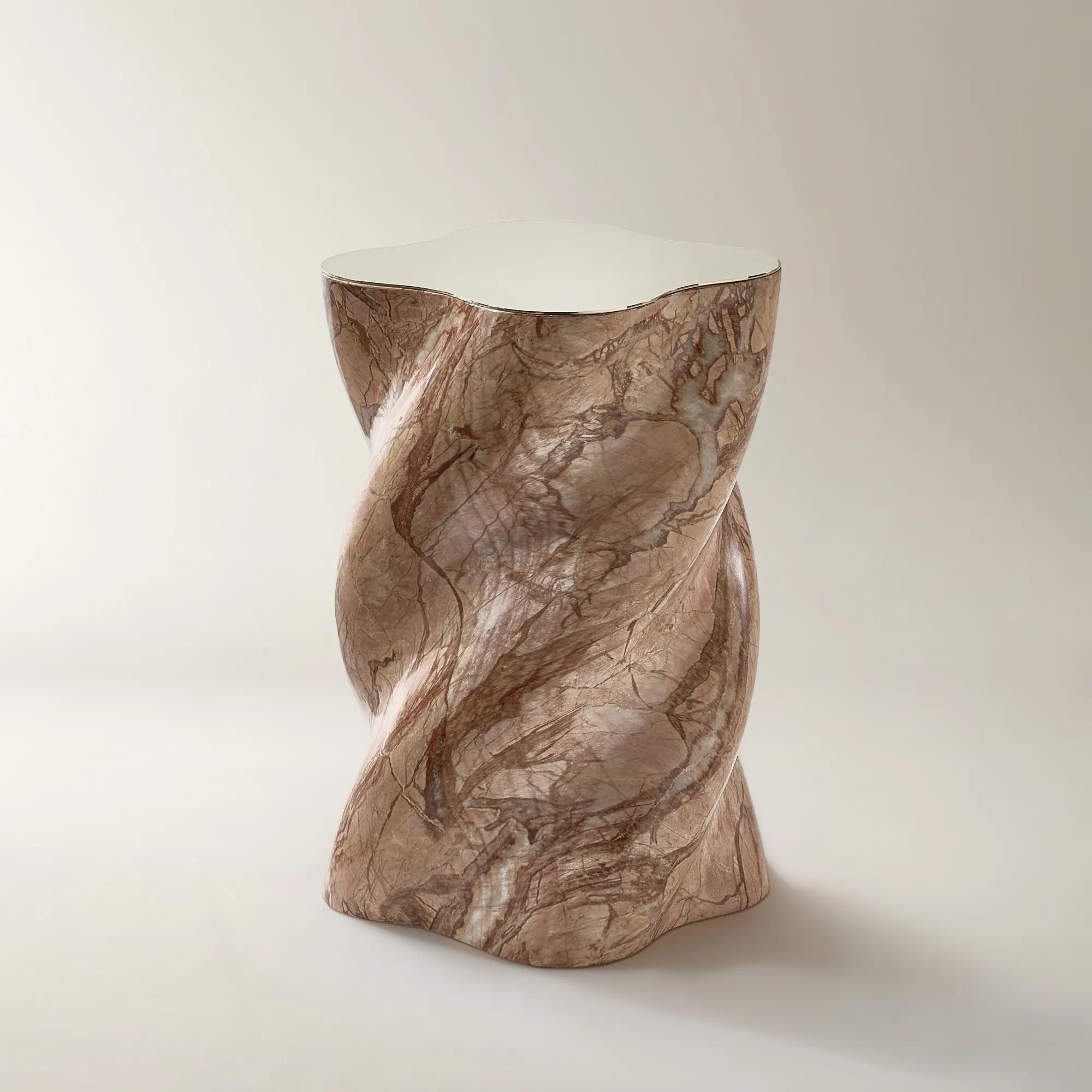
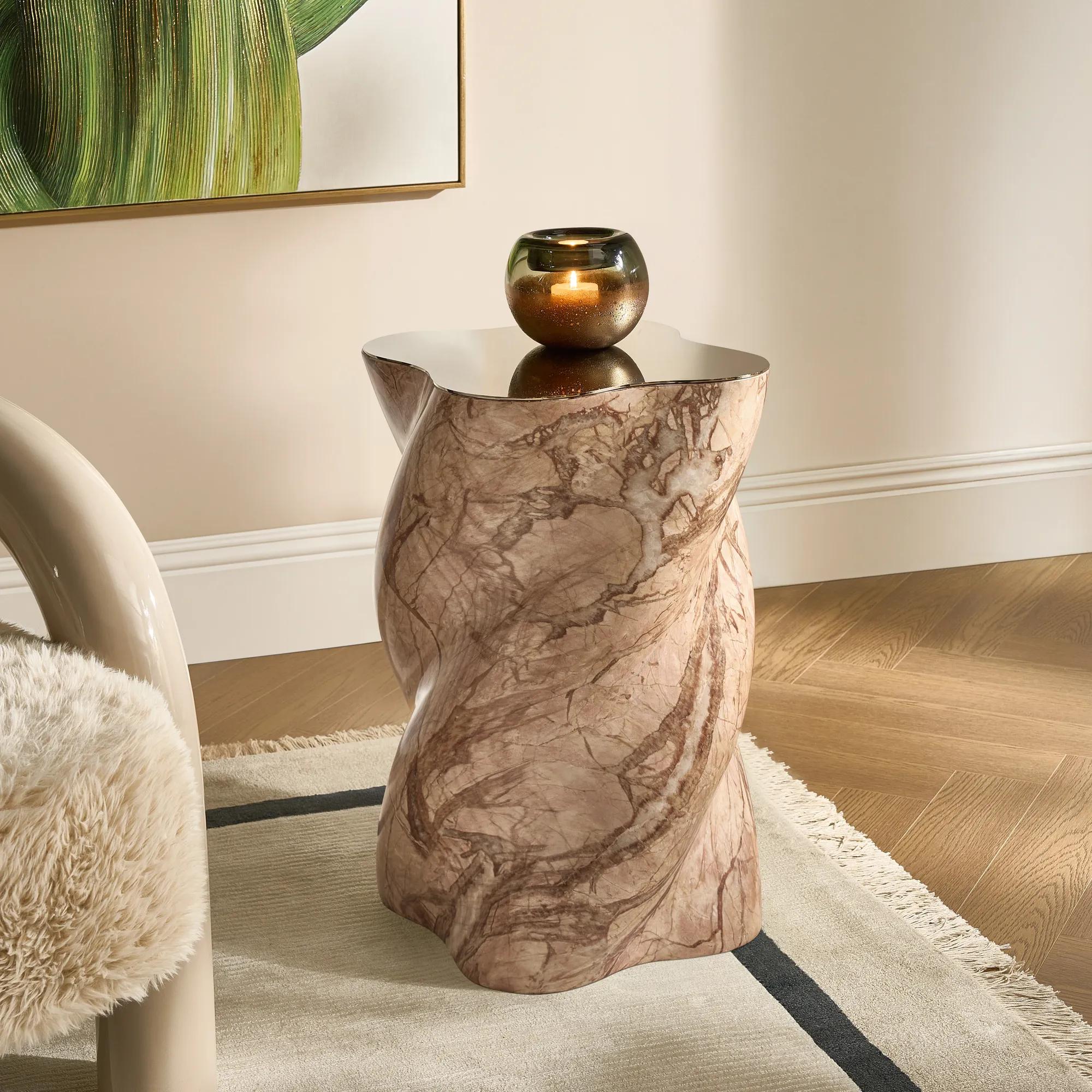 Vega Concrete Side Table With Stainless Steel Top (13.8")$459
A sculptural side table featuring a hand-cast fiber-concrete base and sunset marble-inspired stainless steel top.
Add To Cart -
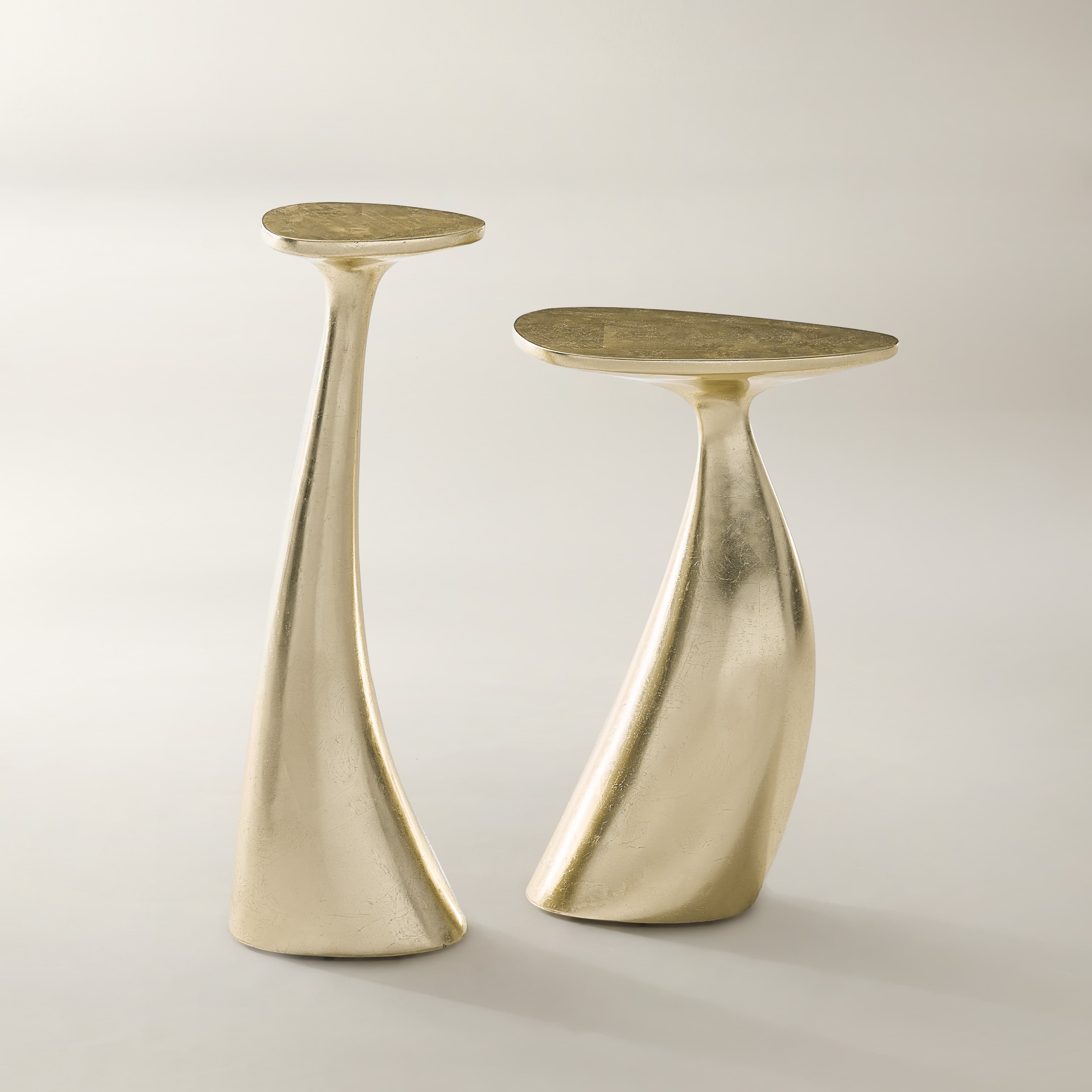 Thalia Soft Gold Side Table Set Of 2 (8"-12.5")$699
A sculptural duo of gold leaf fiberglass tables with fluid lines and a warm, luminous finish.
Add To Cart -
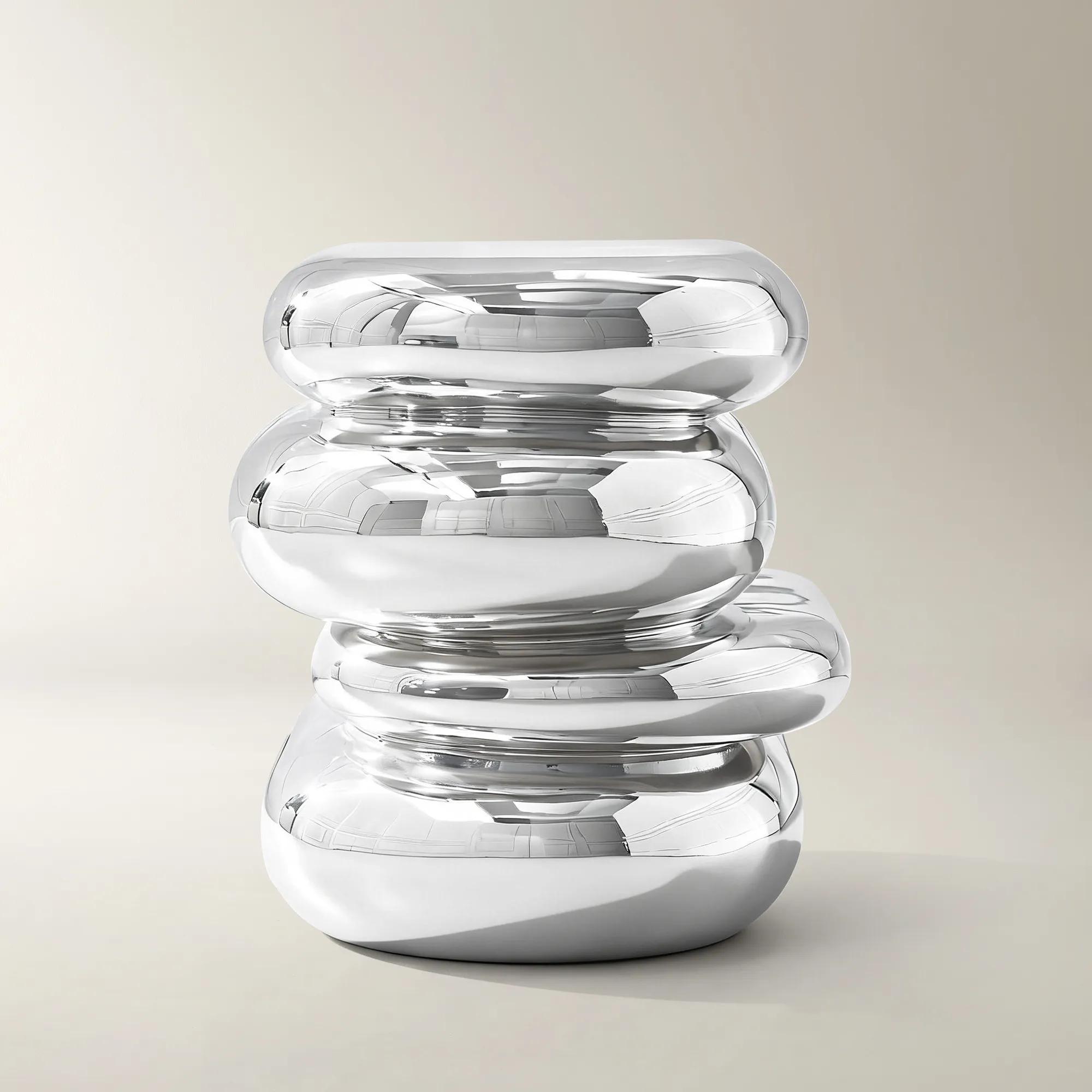 Forma Stacked Chrome Side Table (19.9")$699
A sculptural accent table crafted from seamless fiberglass with a reflective chrome finish and rounded tiers.
Add To Cart -
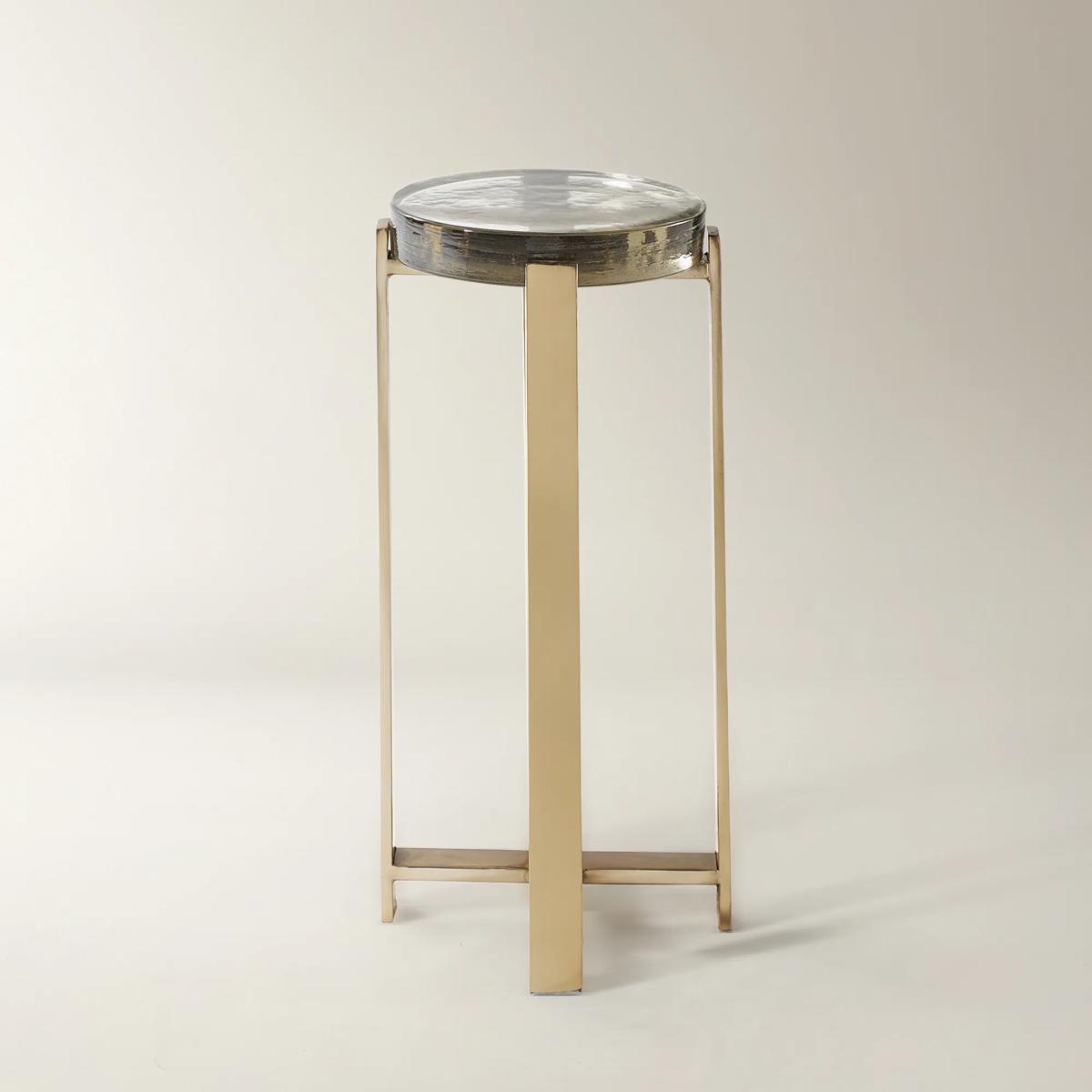
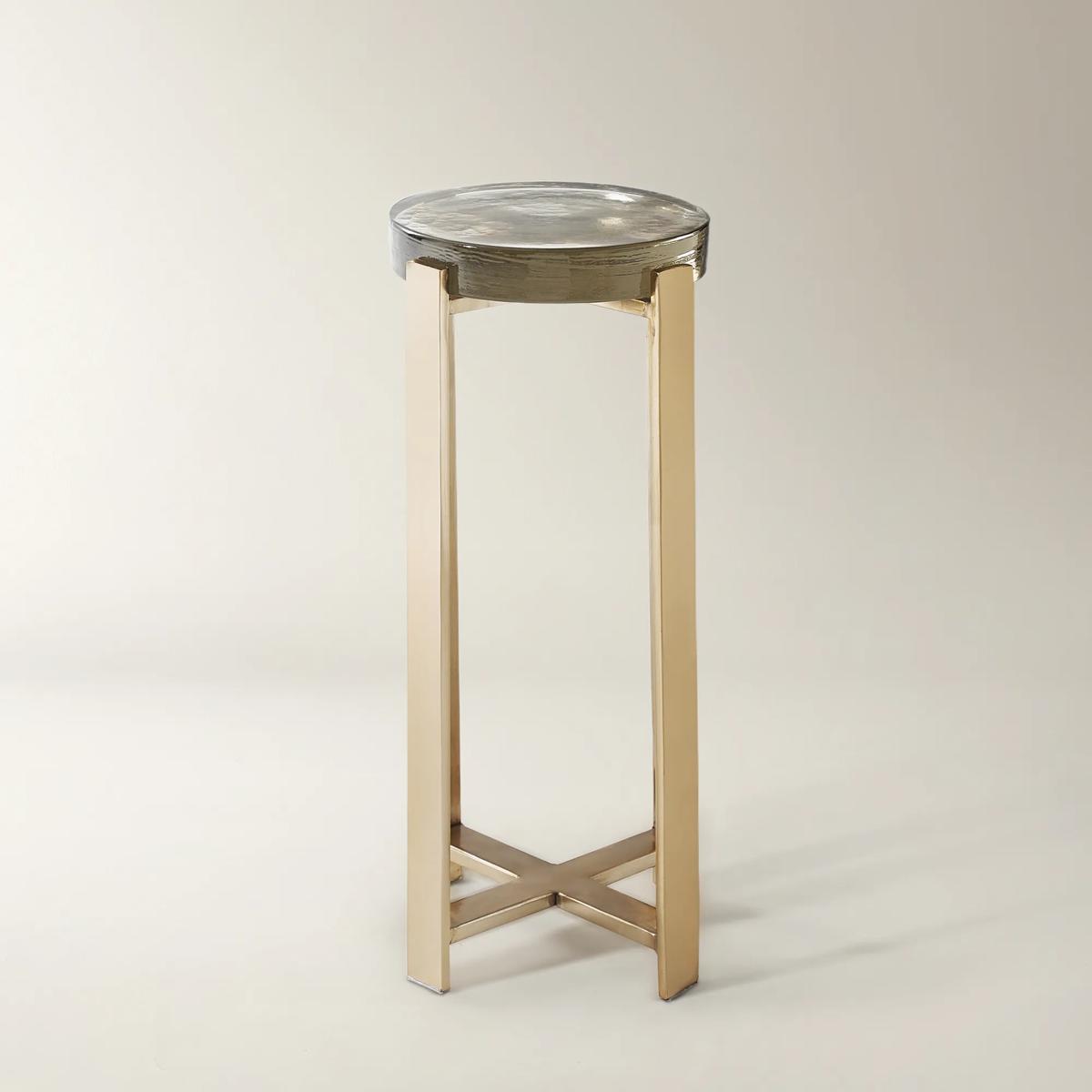 Lyra Round Brass Metal Side Table With Glass Top (10.75")$259
A sculptural side table featuring a thick cast glass top and lustrous brass-finished metal base.
Add To Cart -
 Thalia Glossy Black Side Table Set Of 2 (8"-12.5")$599
A sculptural duo of glossy black fiberglass tables with fluid lines and mirror-like lacquered finish.
Add To Cart -
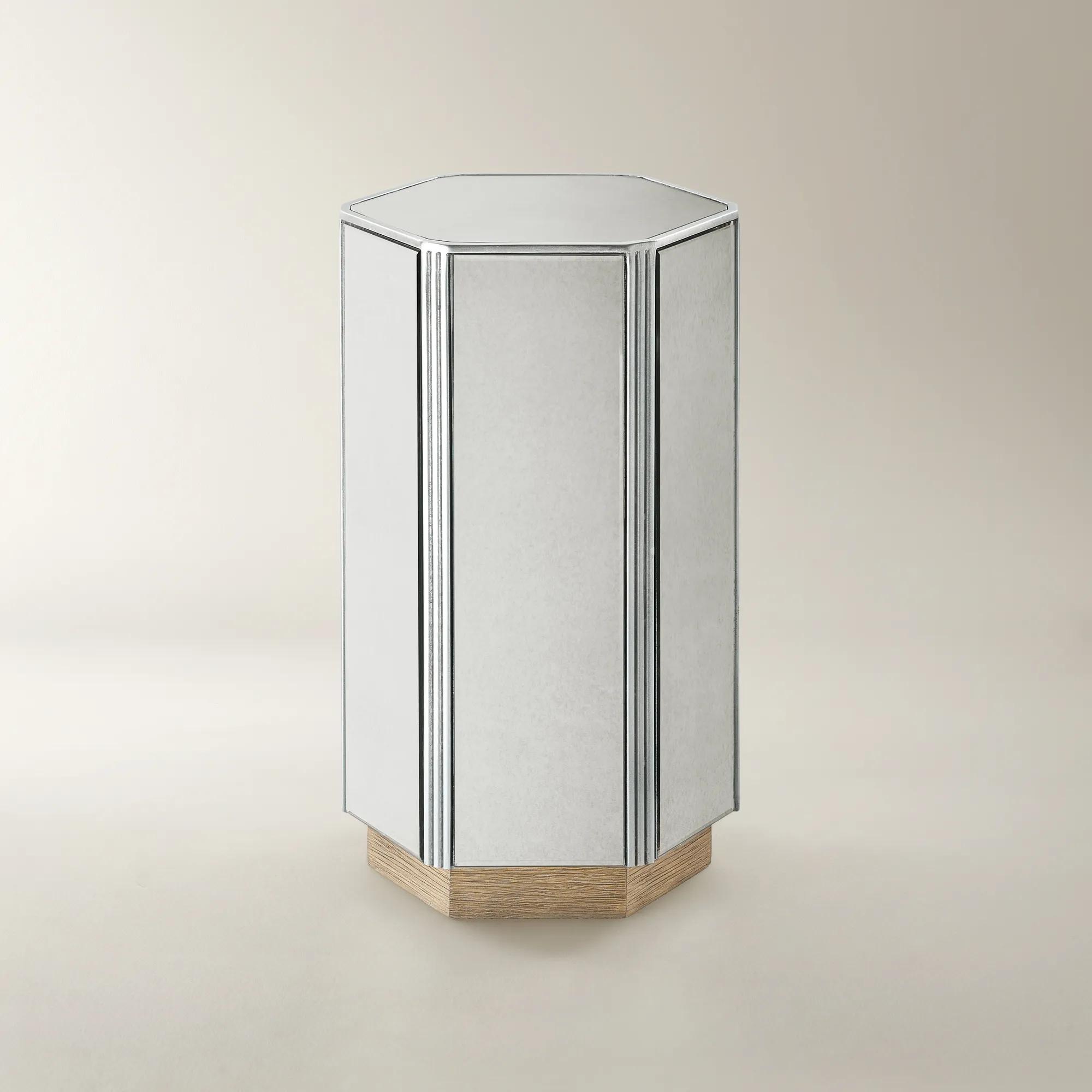 Glimmer Silver Mirrored End Table (12")$399
A chic side table featuring an antique silver mirror top and warm oak veneer base with handcrafted details.
Add To Cart -
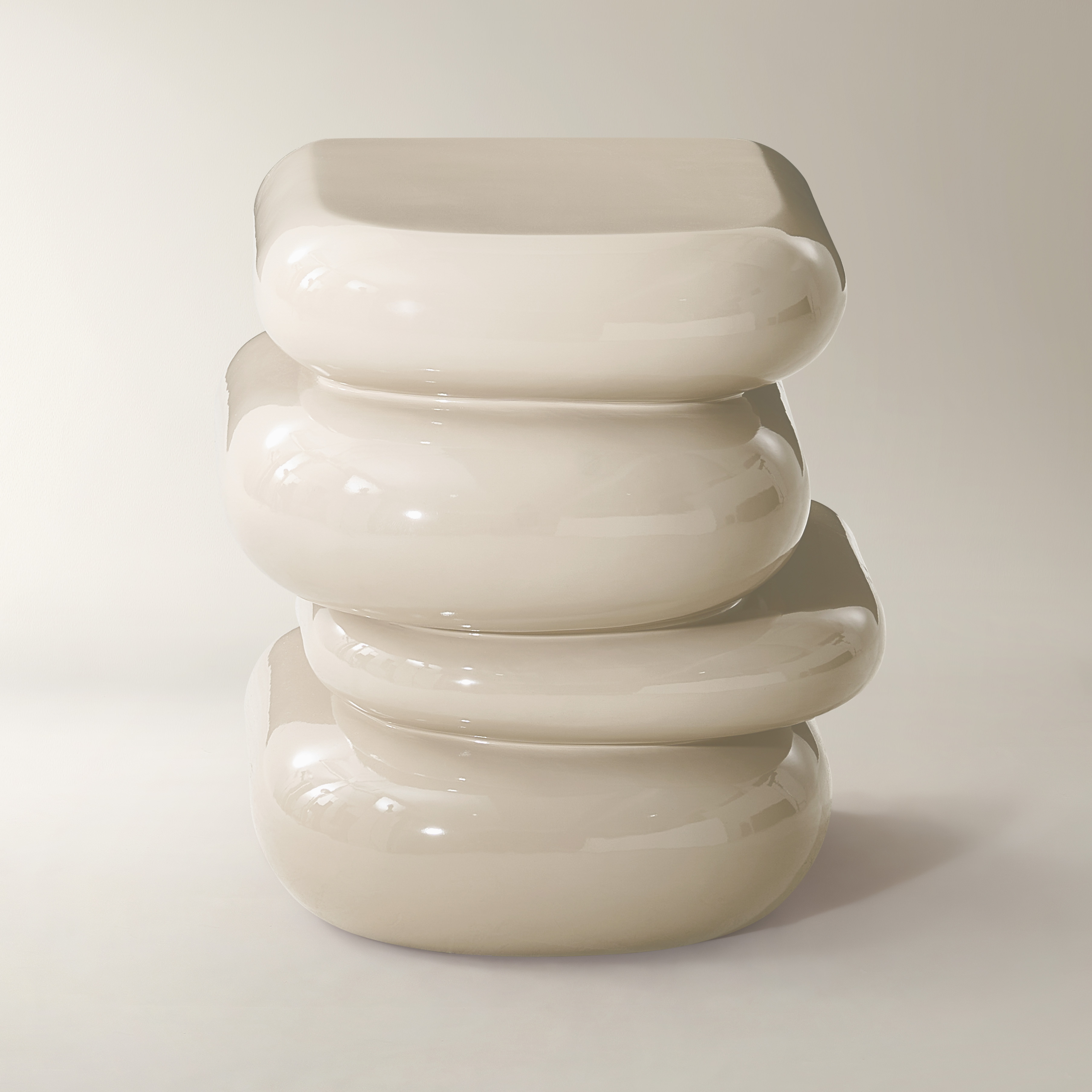
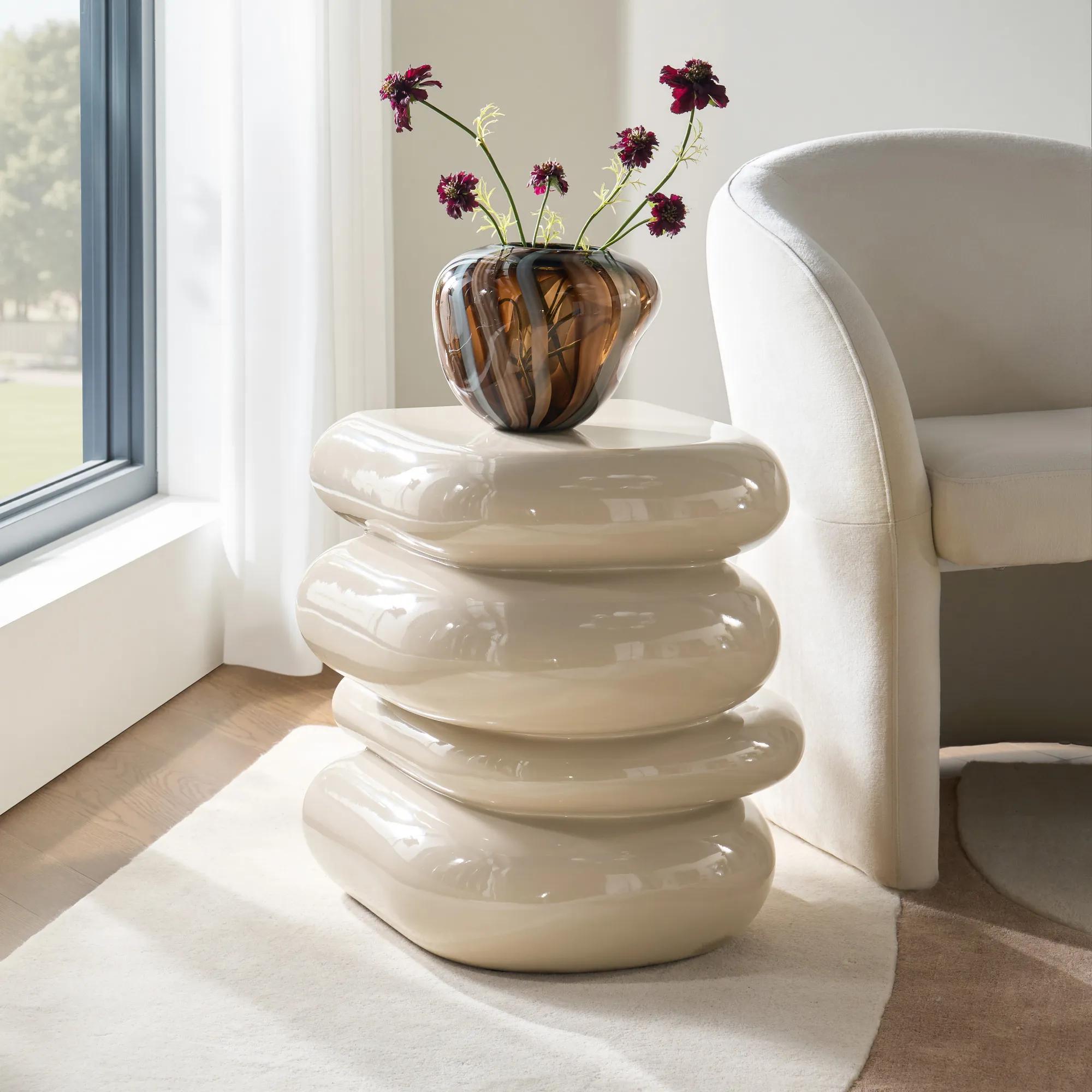 Forma Stacked Turtle Dove Side Table (19.9")$499
A sculptural accent table crafted from high-gloss turtle dove fiberglass with softly stacked, rounded tiers.
Add To Cart -
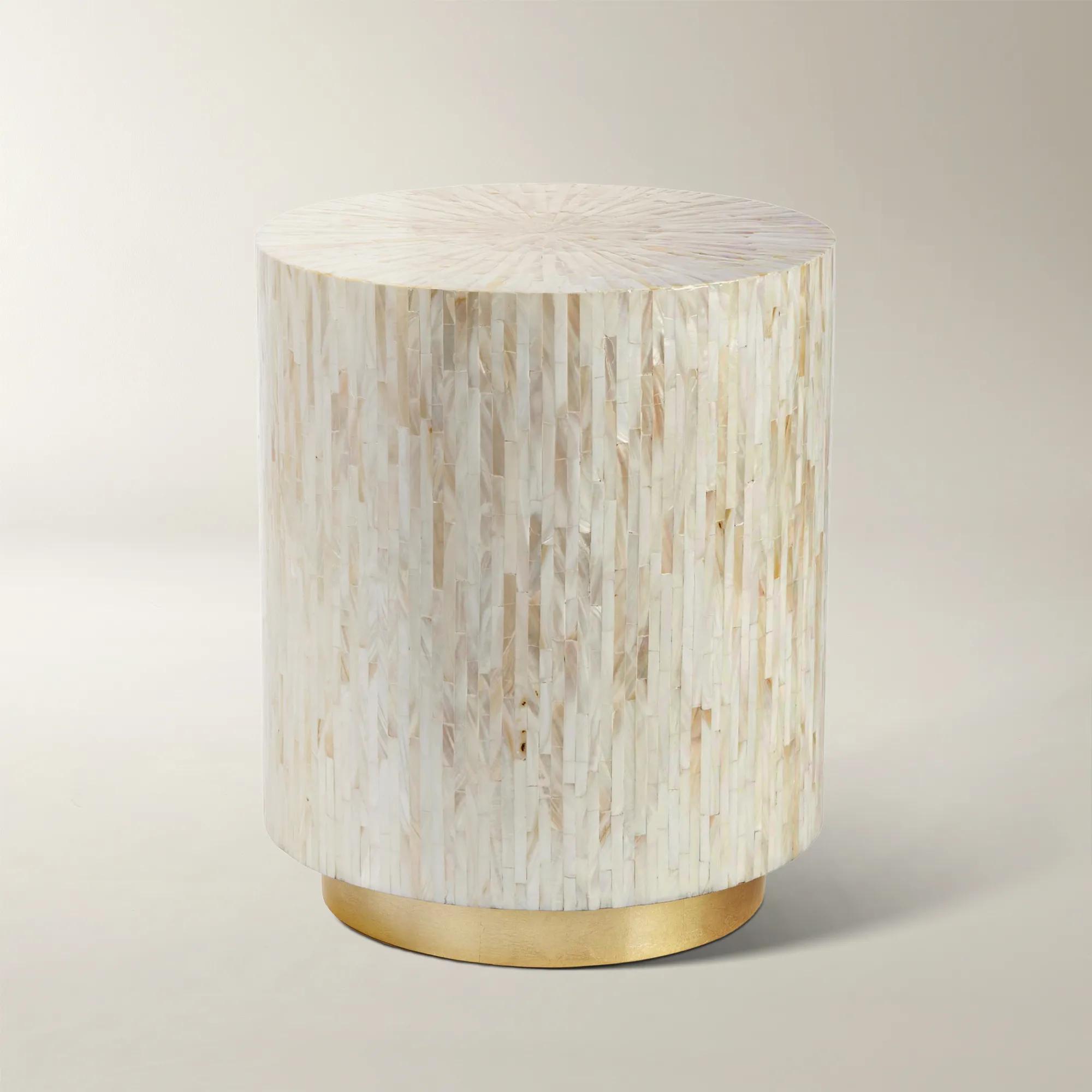 Alexandria Round Mosaic Platinum End Table (13.75")$299
A glamorous accent table featuring hand-applied mother-of-pearl mosaic and a gold leaf-accented base.
Add To Cart -
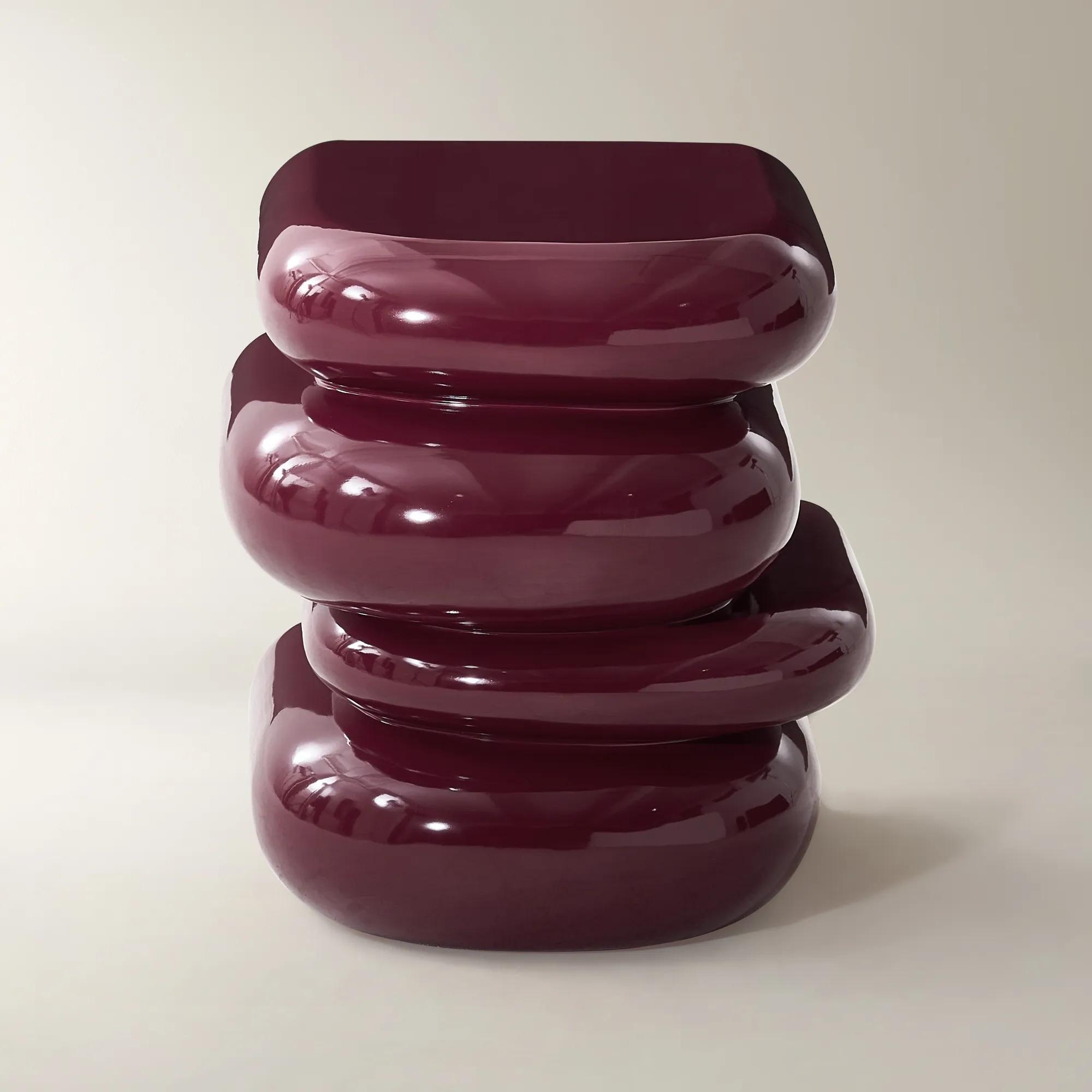 Forma Stacked Ox Blood Side Table (19.9")$499
A sculptural accent table crafted from high-gloss ox blood fiberglass with softly stacked, rounded tiers.
Add To Cart -
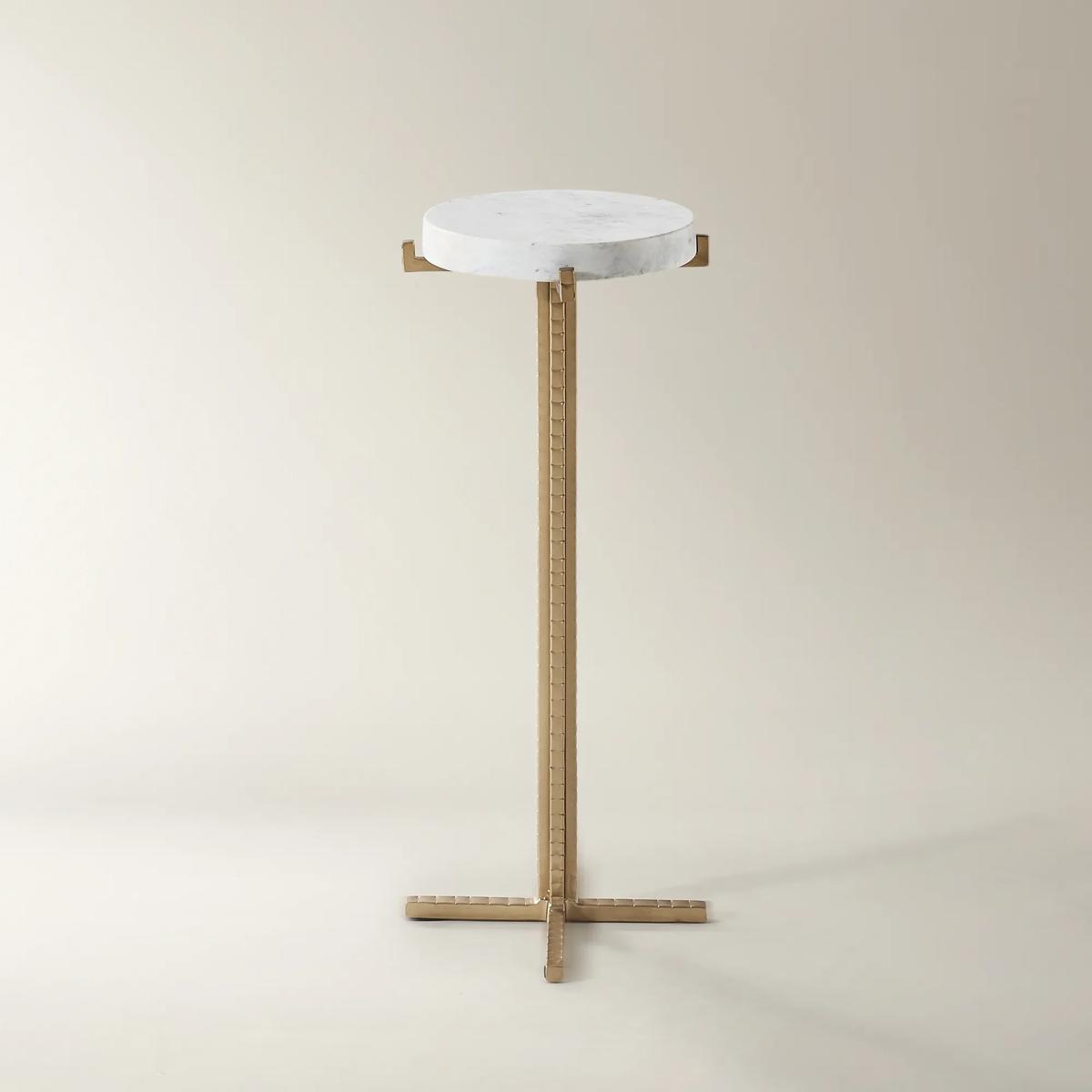 Anya Round White Marble Side Table (10")$199
A sculptural side table featuring a genuine white marble top and gold-finished metal pedestal base.
Add To Cart -
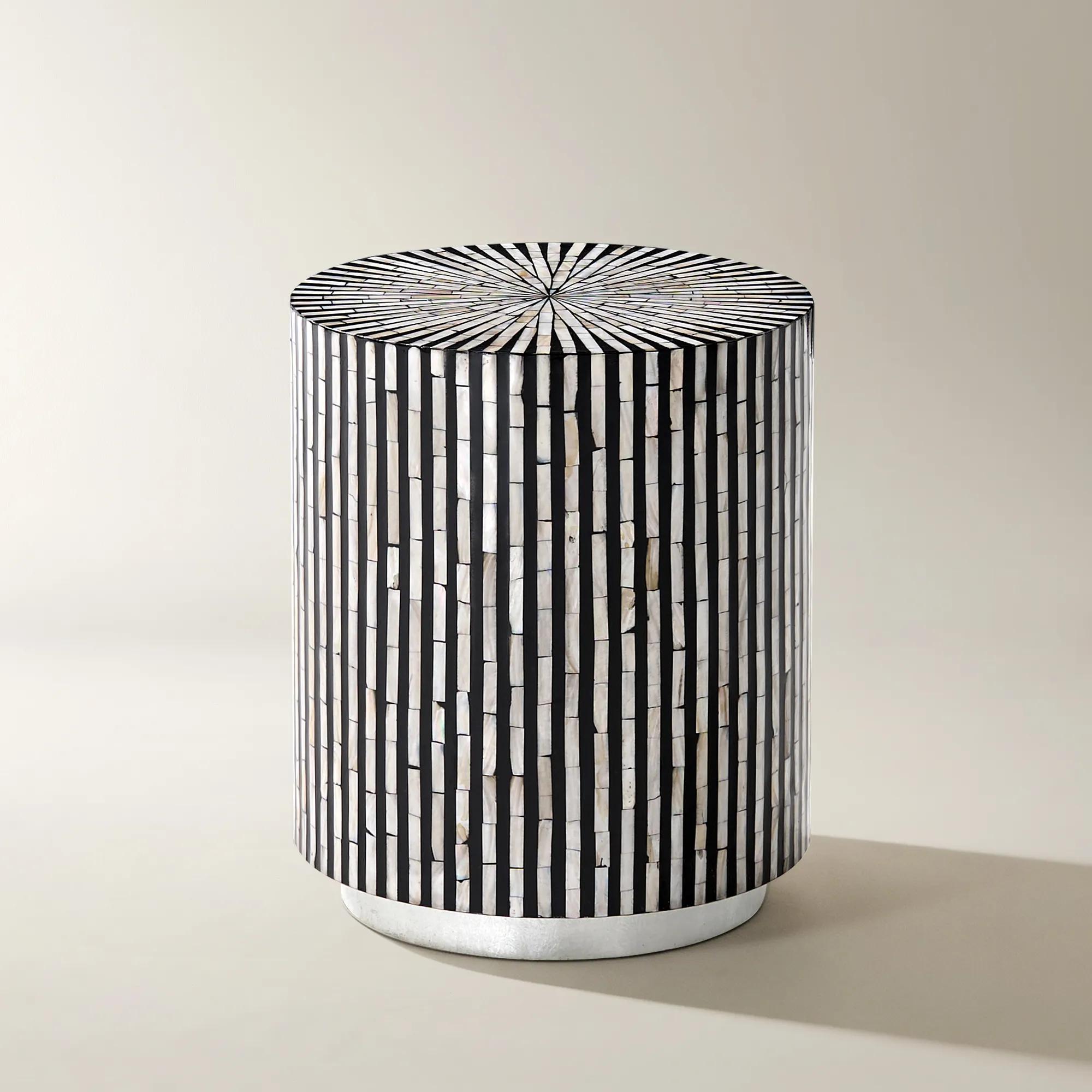
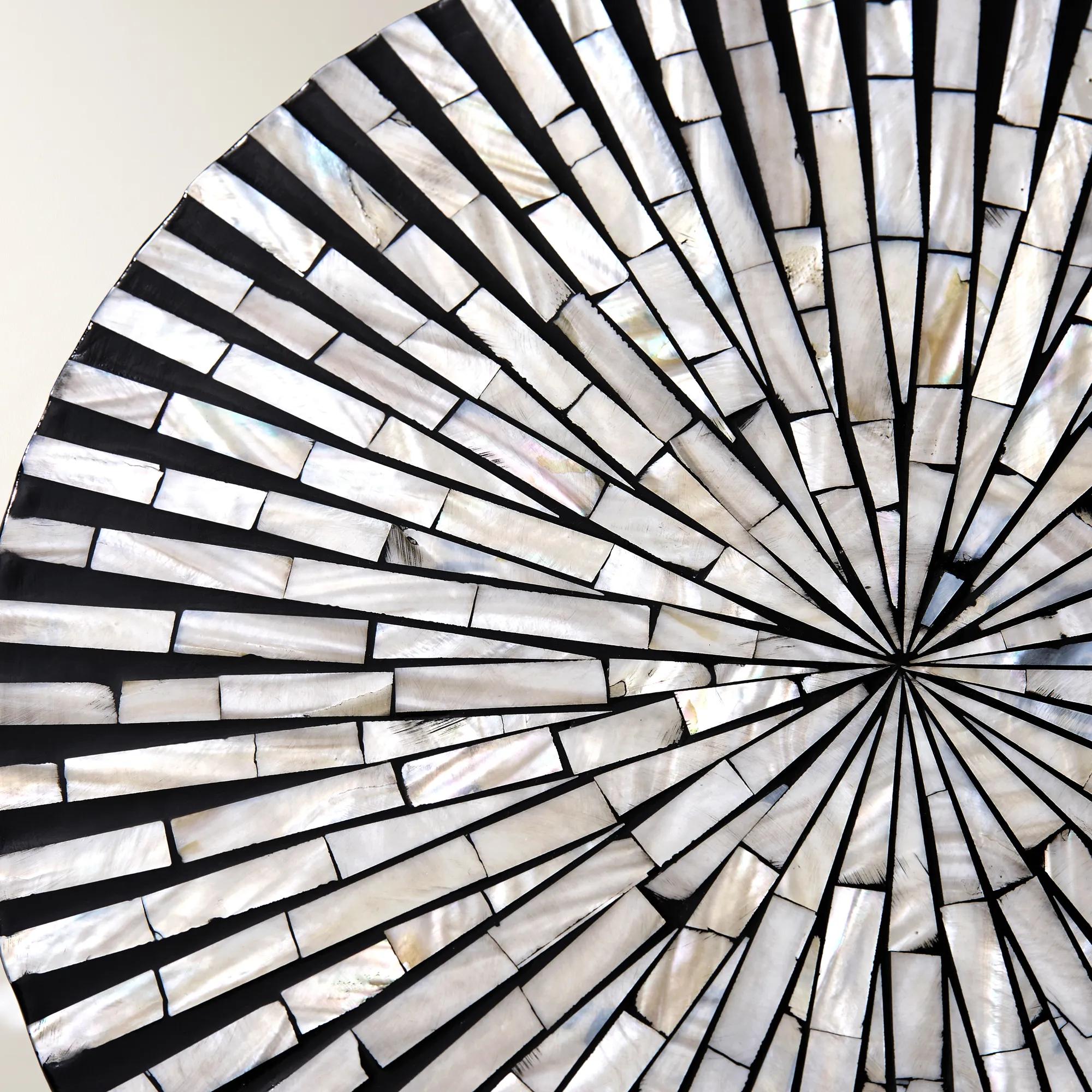 Marina Round Mosaic Black End Table (13.75")$299
A sculptural black end table featuring hand-applied mother-of-pearl mosaic and a silver leaf–accented base.
Add To Cart -
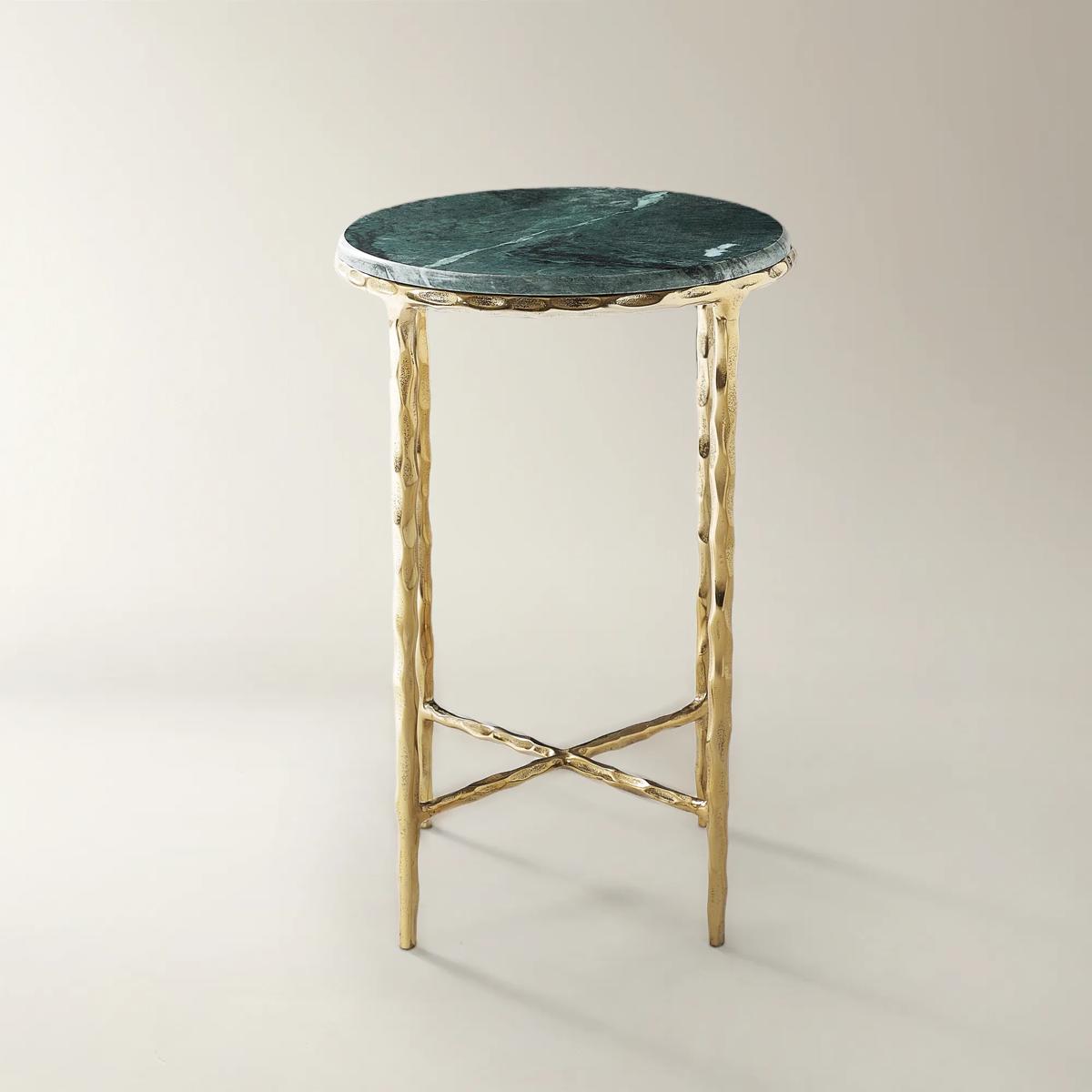
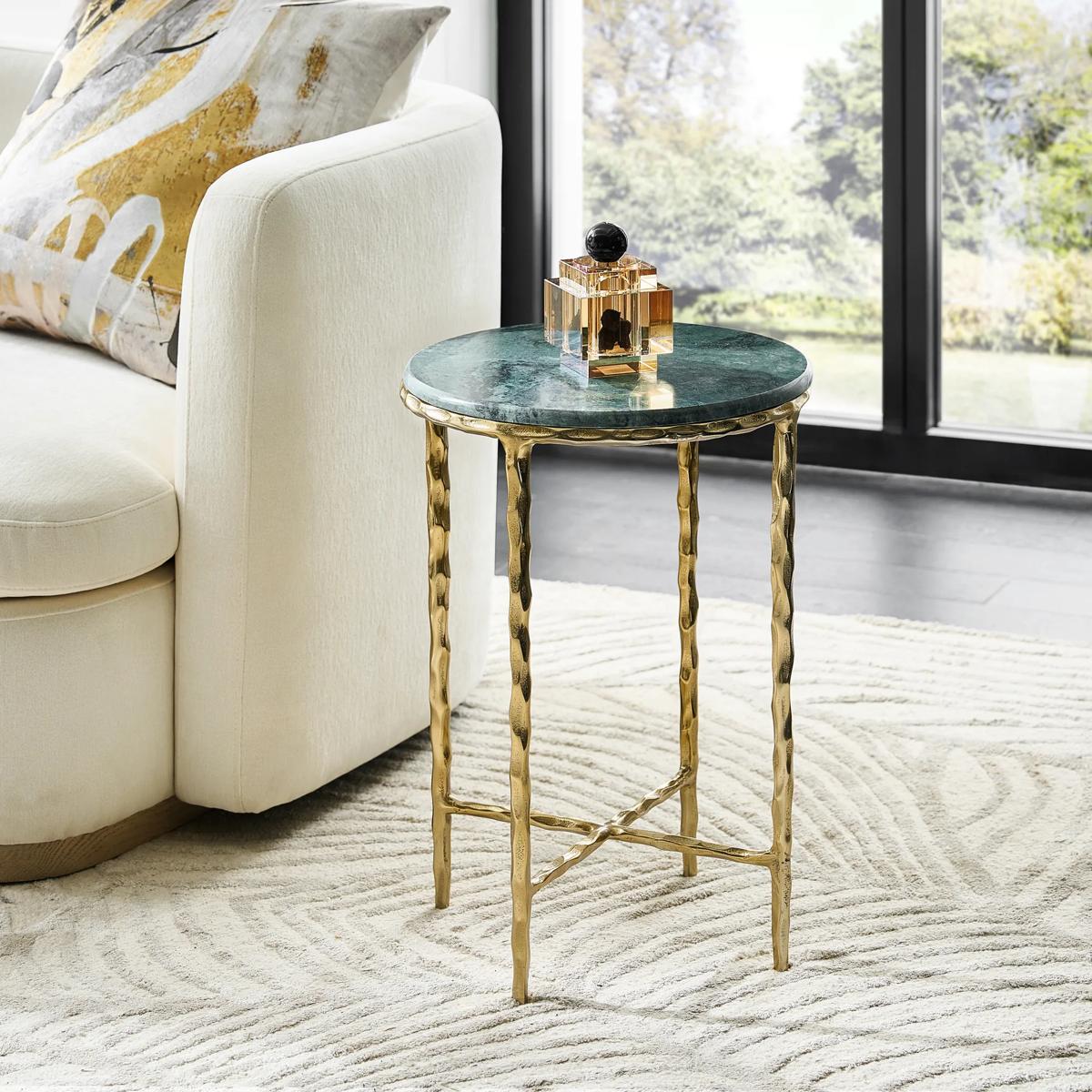 Juliet Round Green Marble Side Table (15")$269
A striking side table featuring a deep green Indian marble top and a hand-hammered metal base.
Add To Cart -
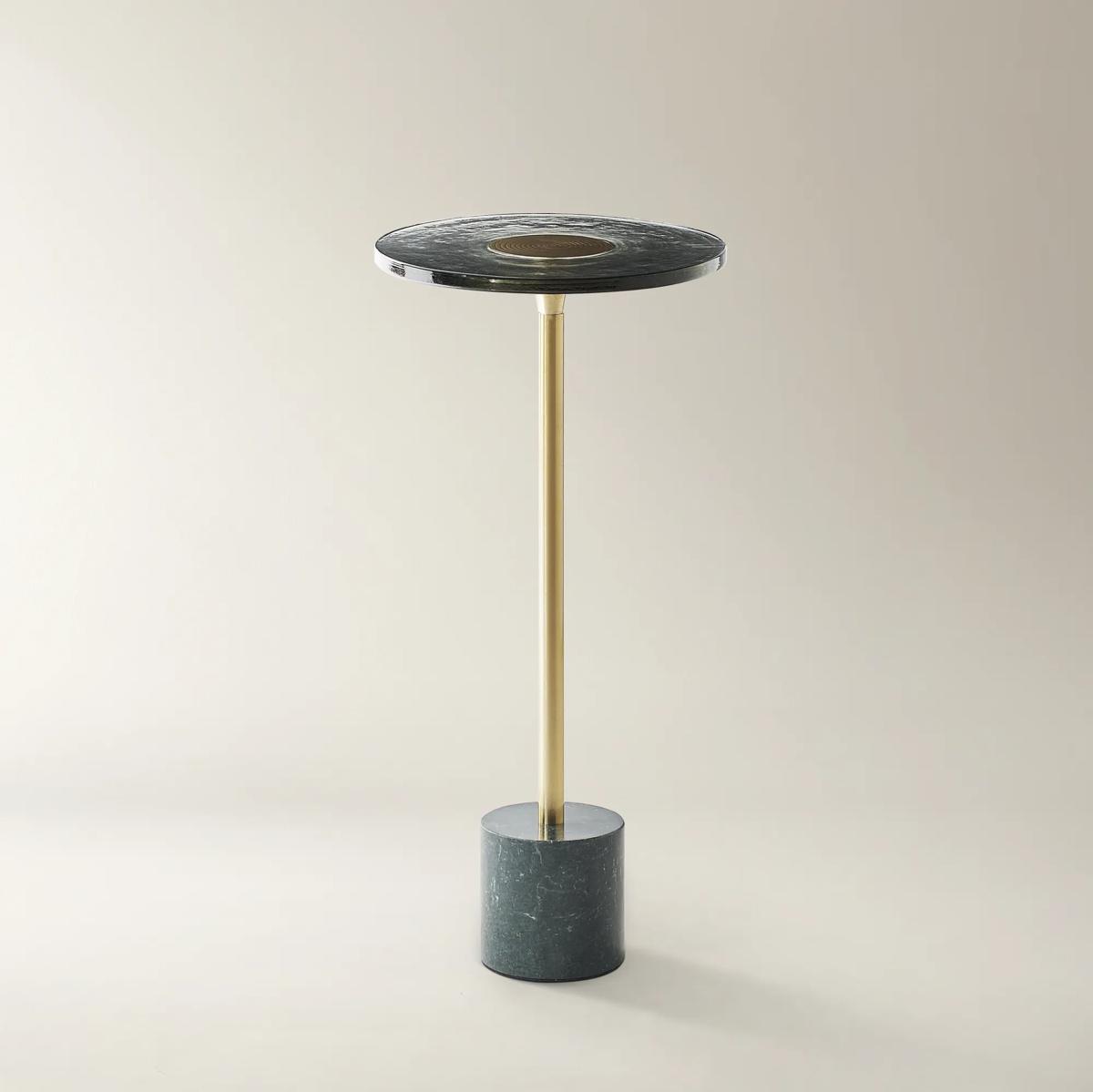
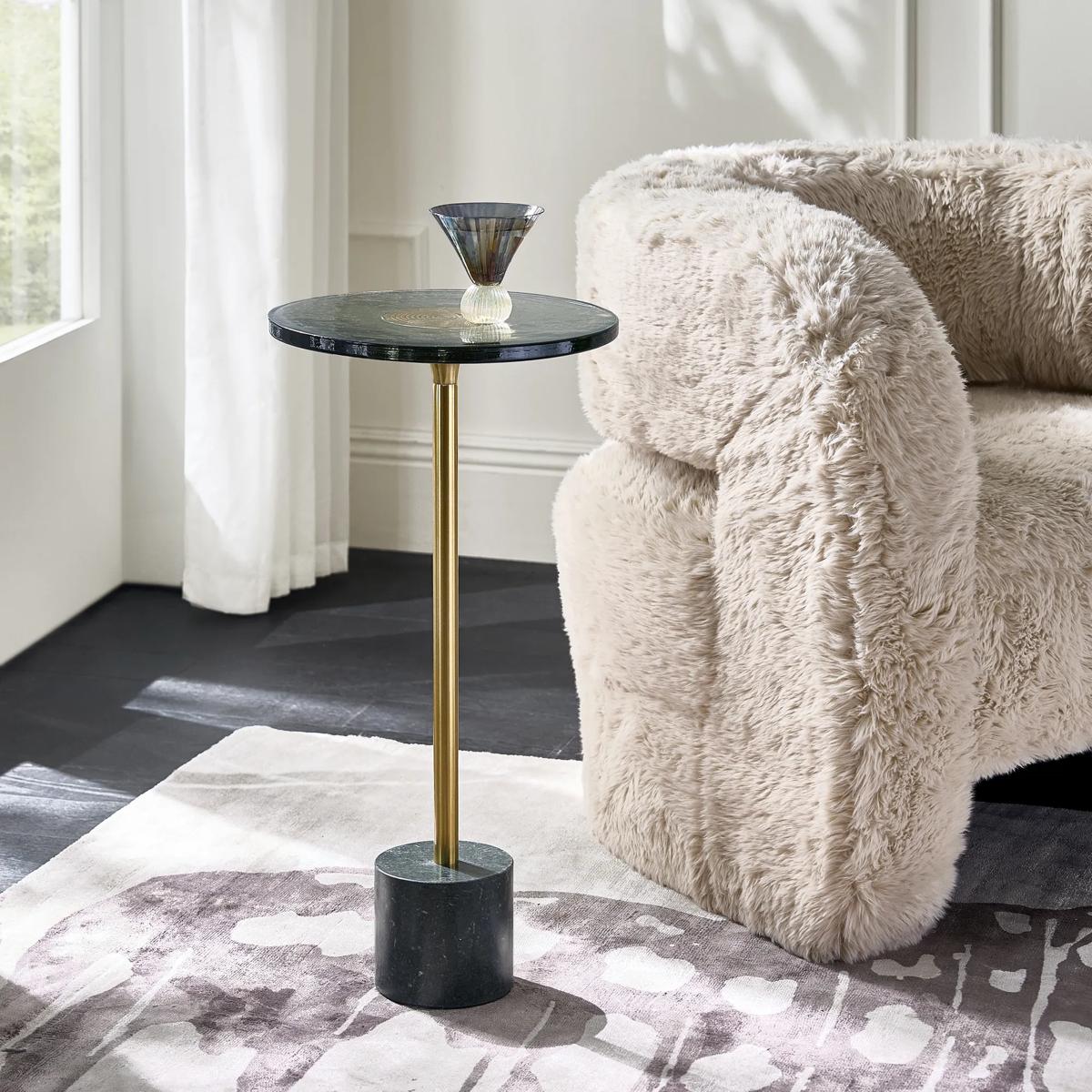 Seraphy Round Green Metal Side Table With Glass Top (13.75")$179
A modern side table featuring a green cast glass top, brass-finished post, and Indian green marble base.
Add To Cart -
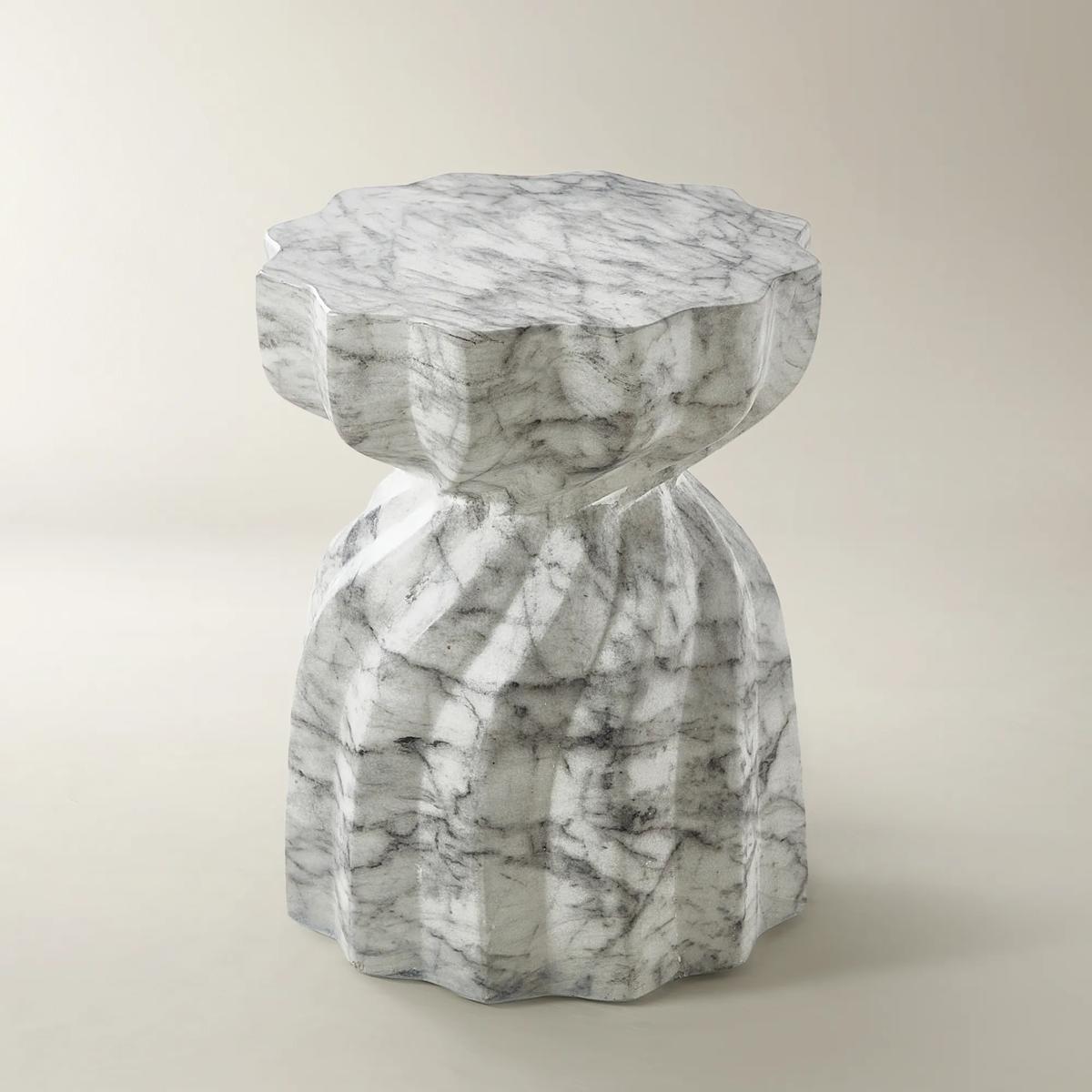
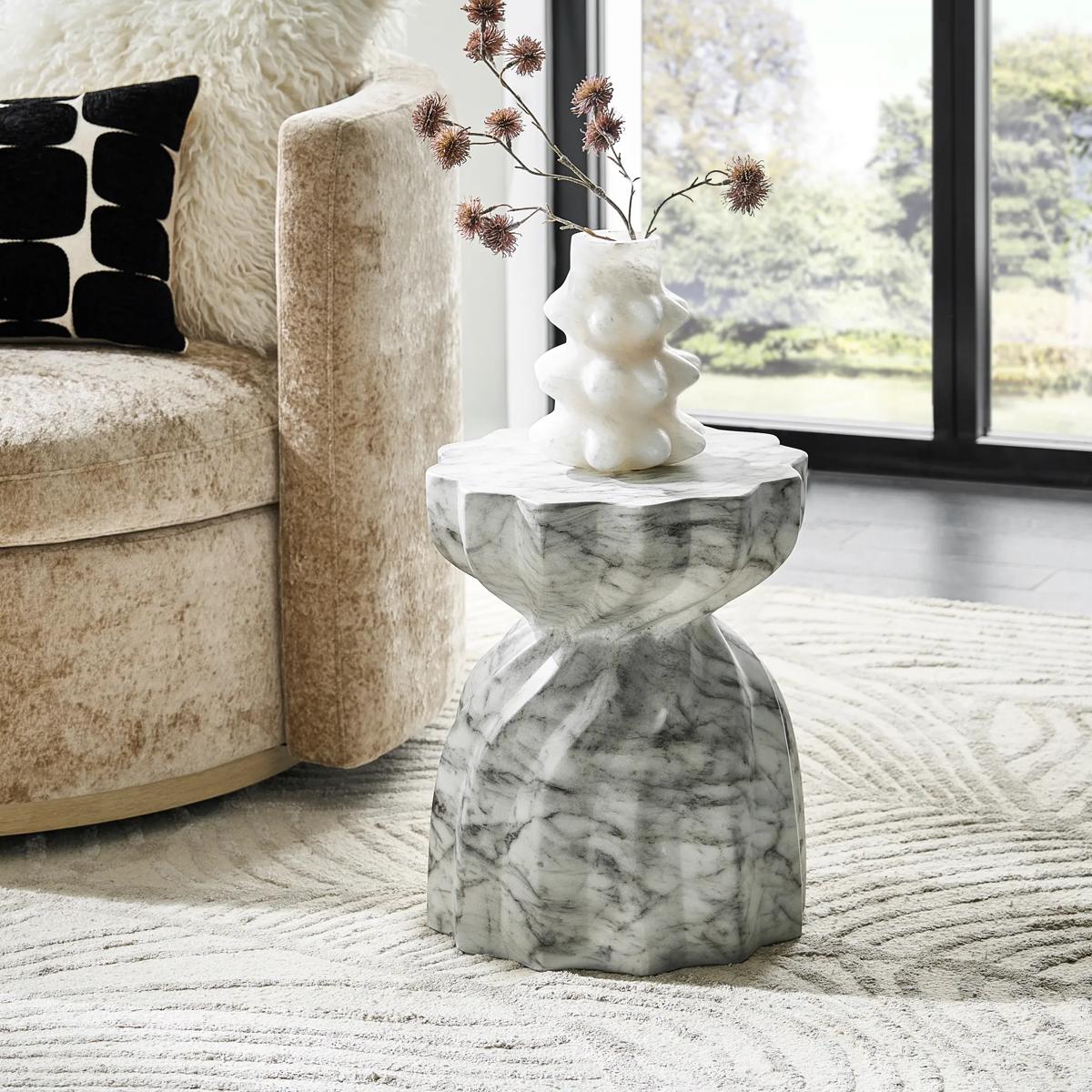 Lithia Scalloped White Concrete Side Table (15")$349
A sculptural white marble-look side table crafted from durable, lightweight fiber concrete for indoor or outdoor use.
Add To Cart -

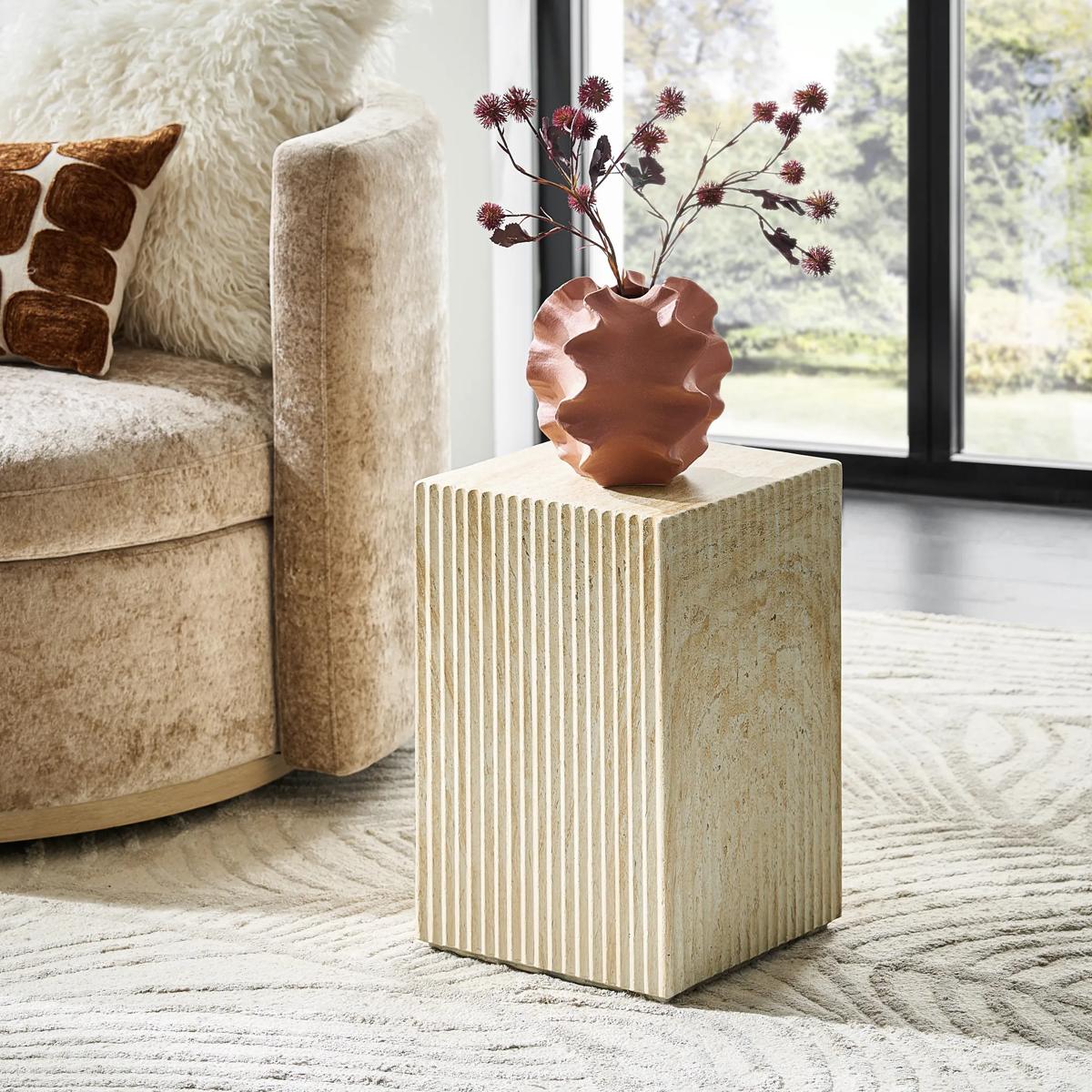 Strata Square Travertine Concrete Side Table (11.8")$299
A travertine-look fiber concrete side table with grooved panels, offering lightweight durability for indoor or outdoor use.
Add To Cart -
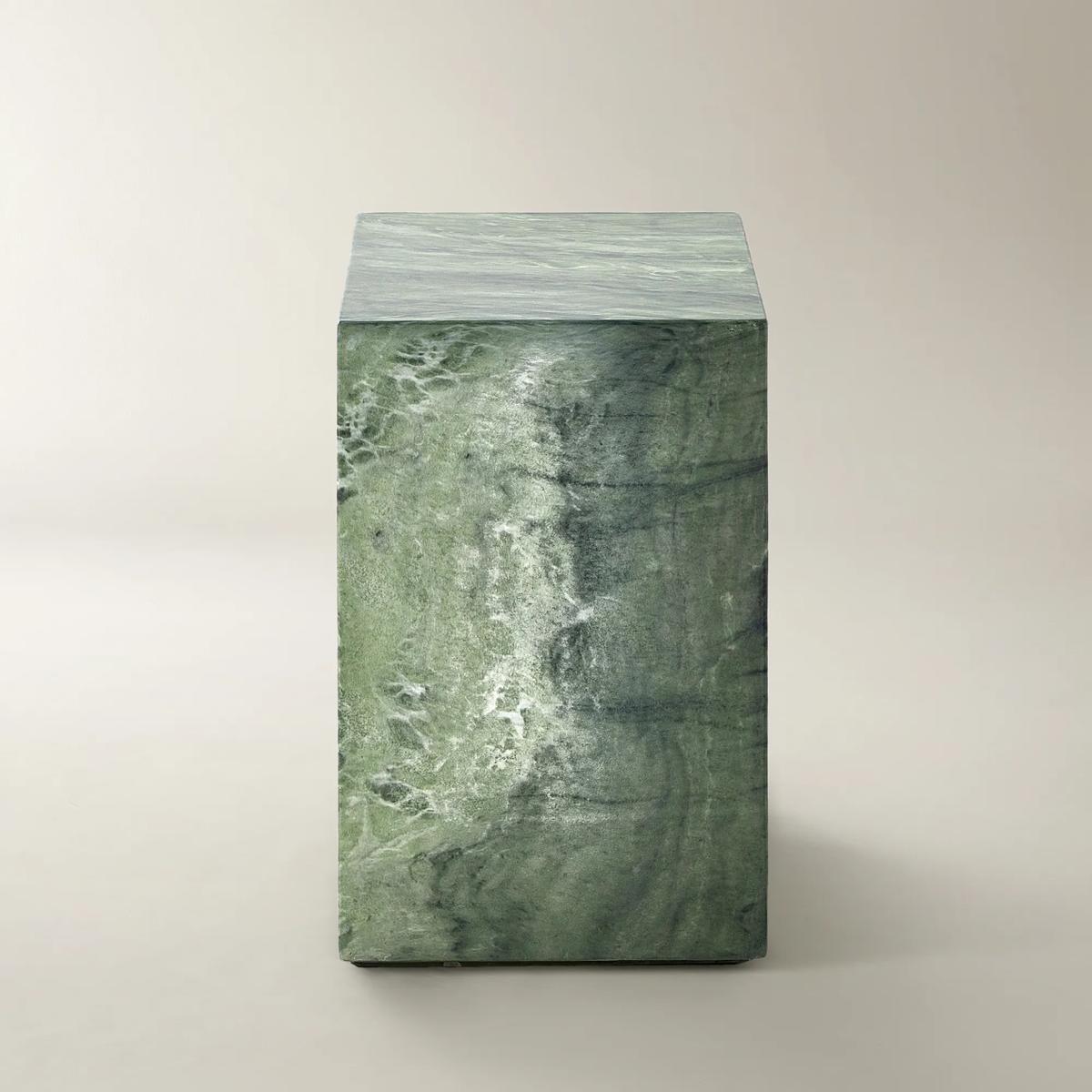
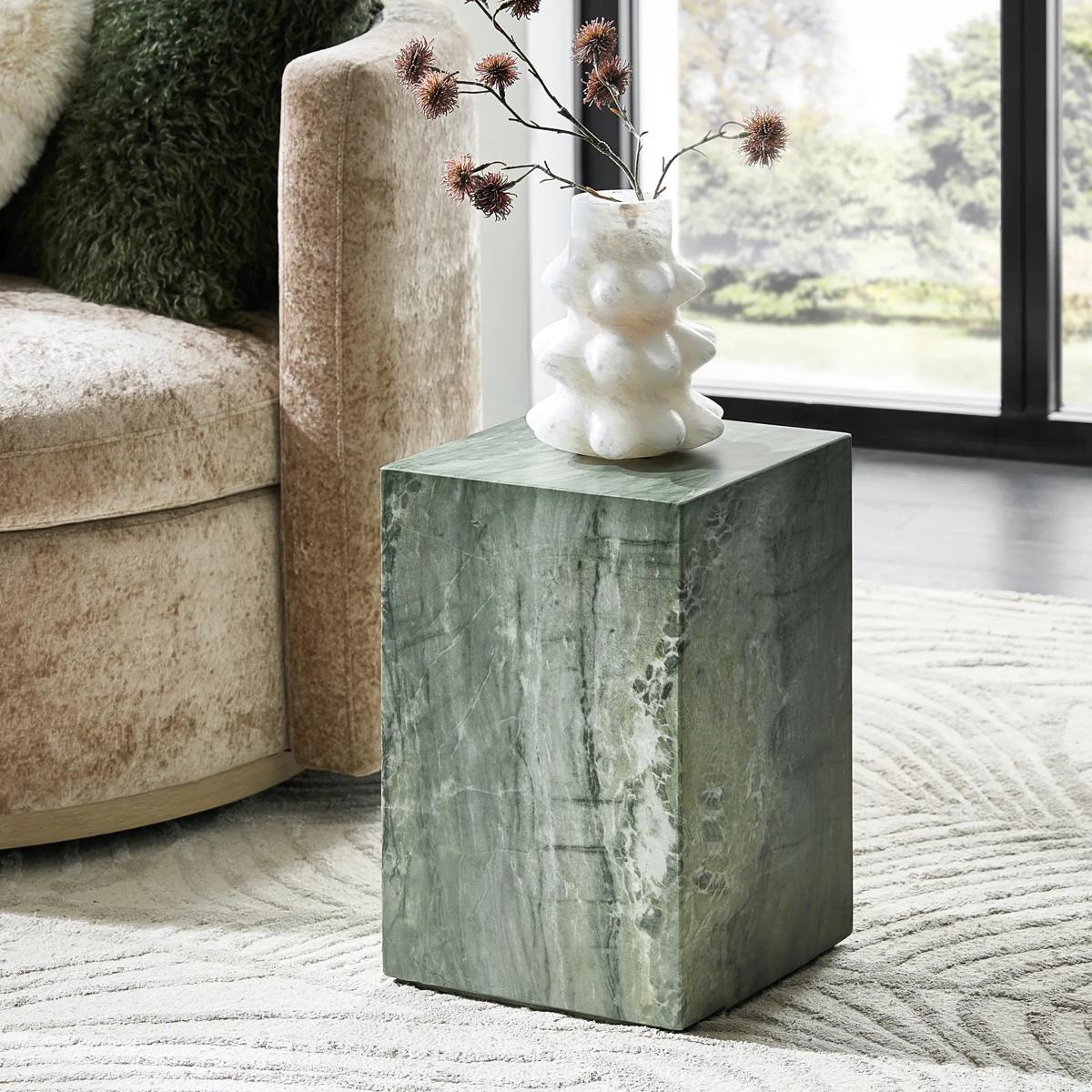 Strata Square Green Concrete Side Table (11.8")$299
A sculptural green marble-look side table crafted from lightweight, durable fiber concrete for indoor or outdoor use.
Add To Cart -
 Strata Round Green Concrete Side Table (15")$349
A sculptural green marble-look side table crafted from lightweight, durable, and weather-resistant fiber concrete.
Add To Cart -
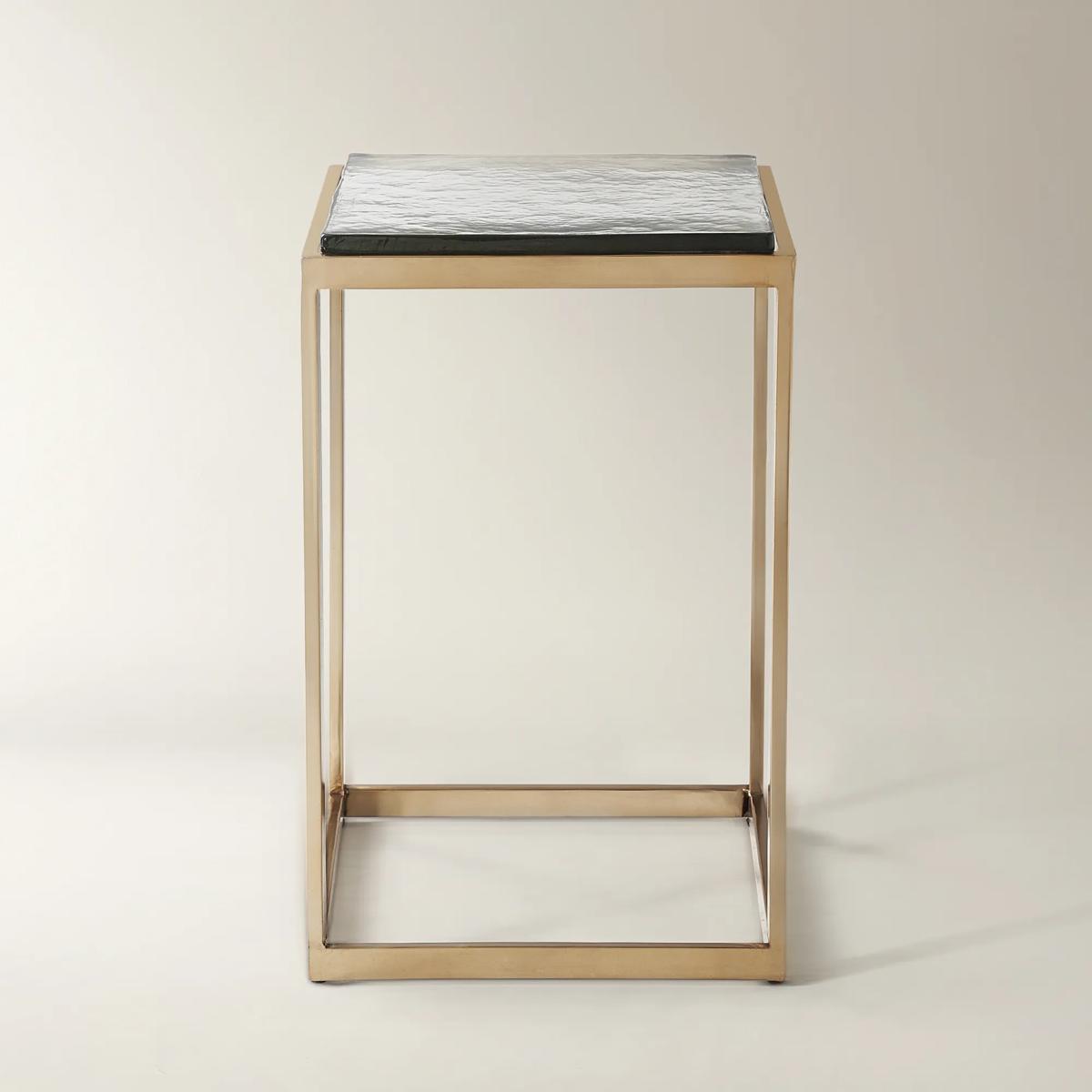
 Lyra Square Brass Metal Side Table With Glass Top (13.8")$239
A sculptural side table featuring a thick cast glass top and a lustrous brass-finished metal base.
Add To Cart -
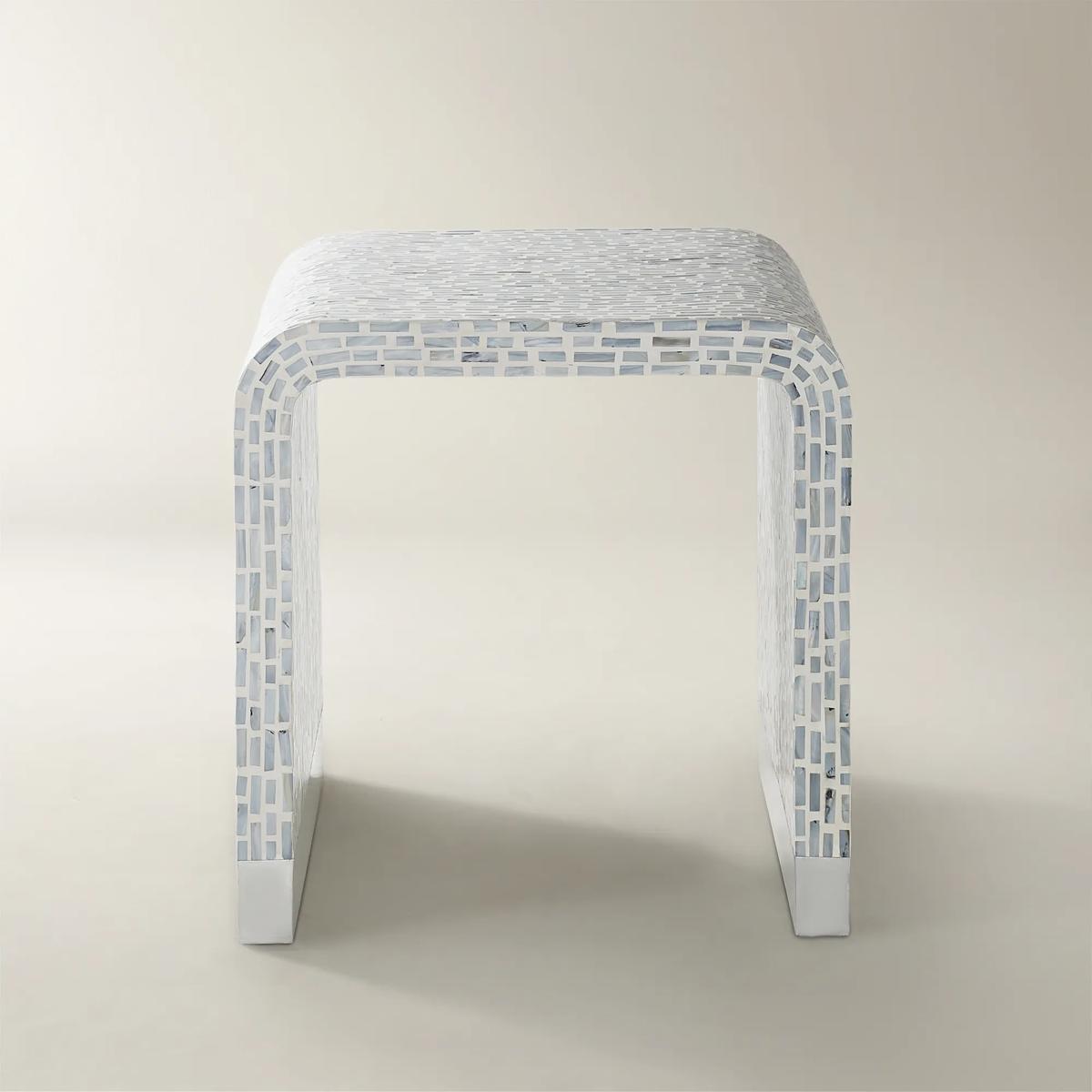
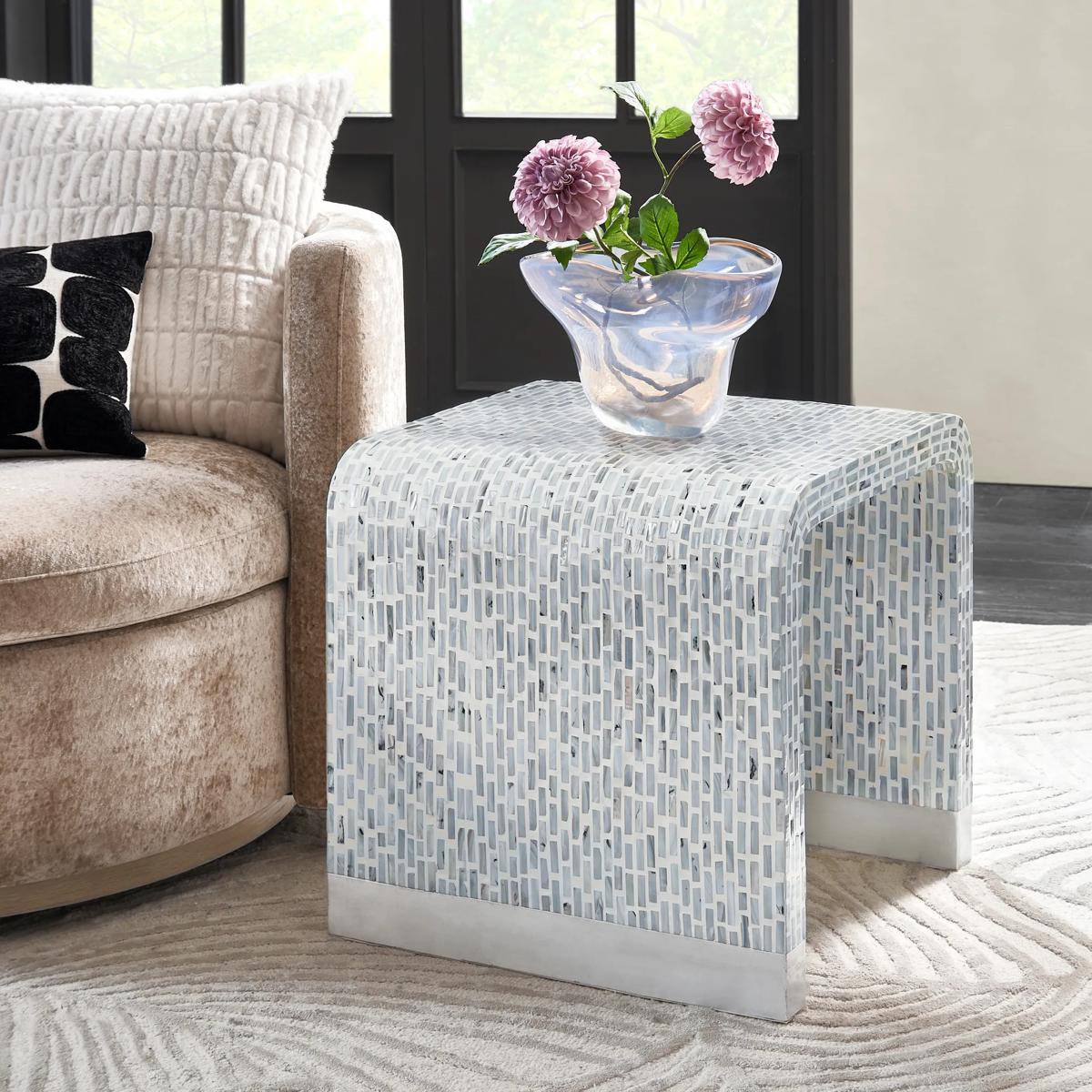 Iridia Blue Side Table (21.6")$399
A handcrafted end table featuring iridescent blue mother-of-pearl inlay and a silver leaf base.
Add To Cart -
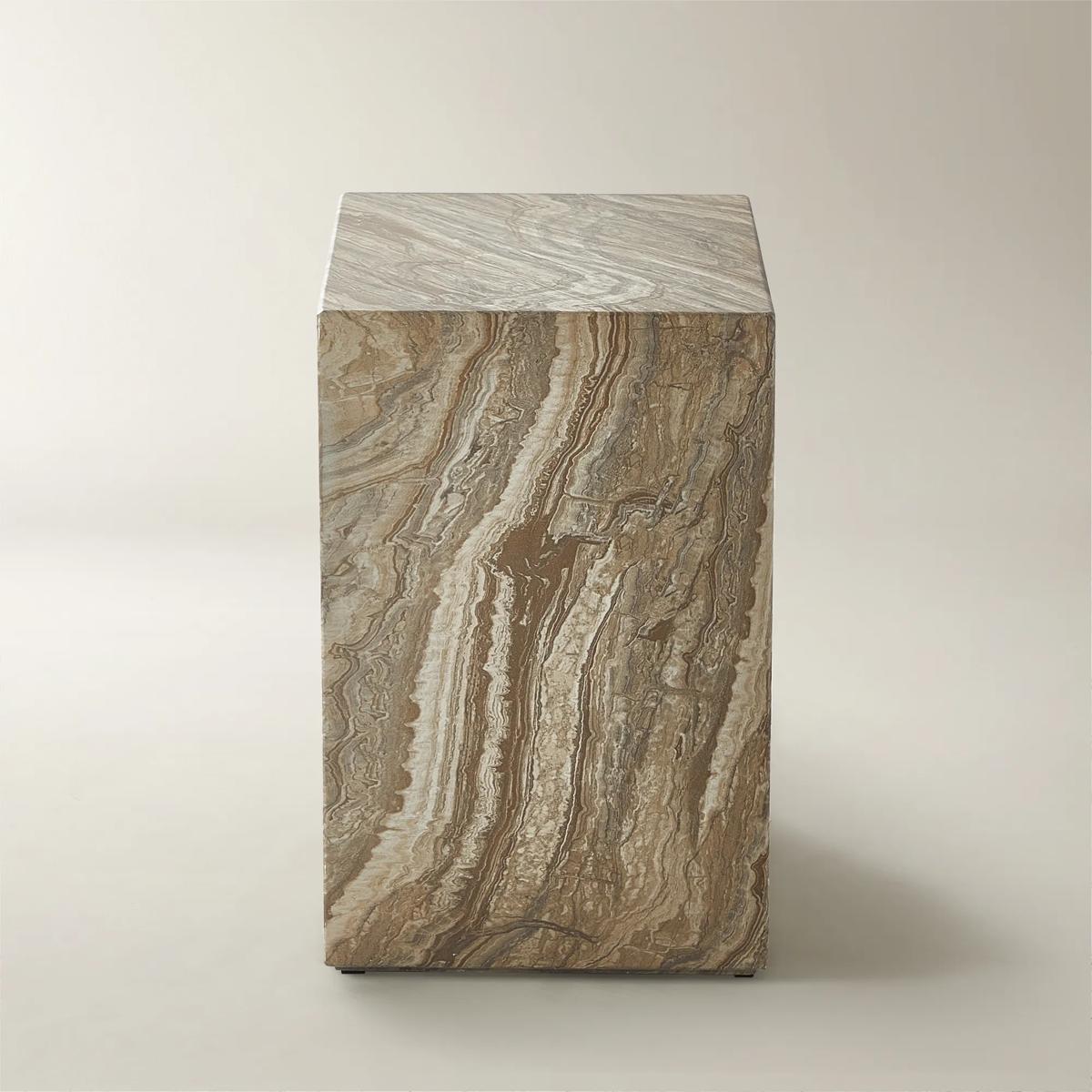
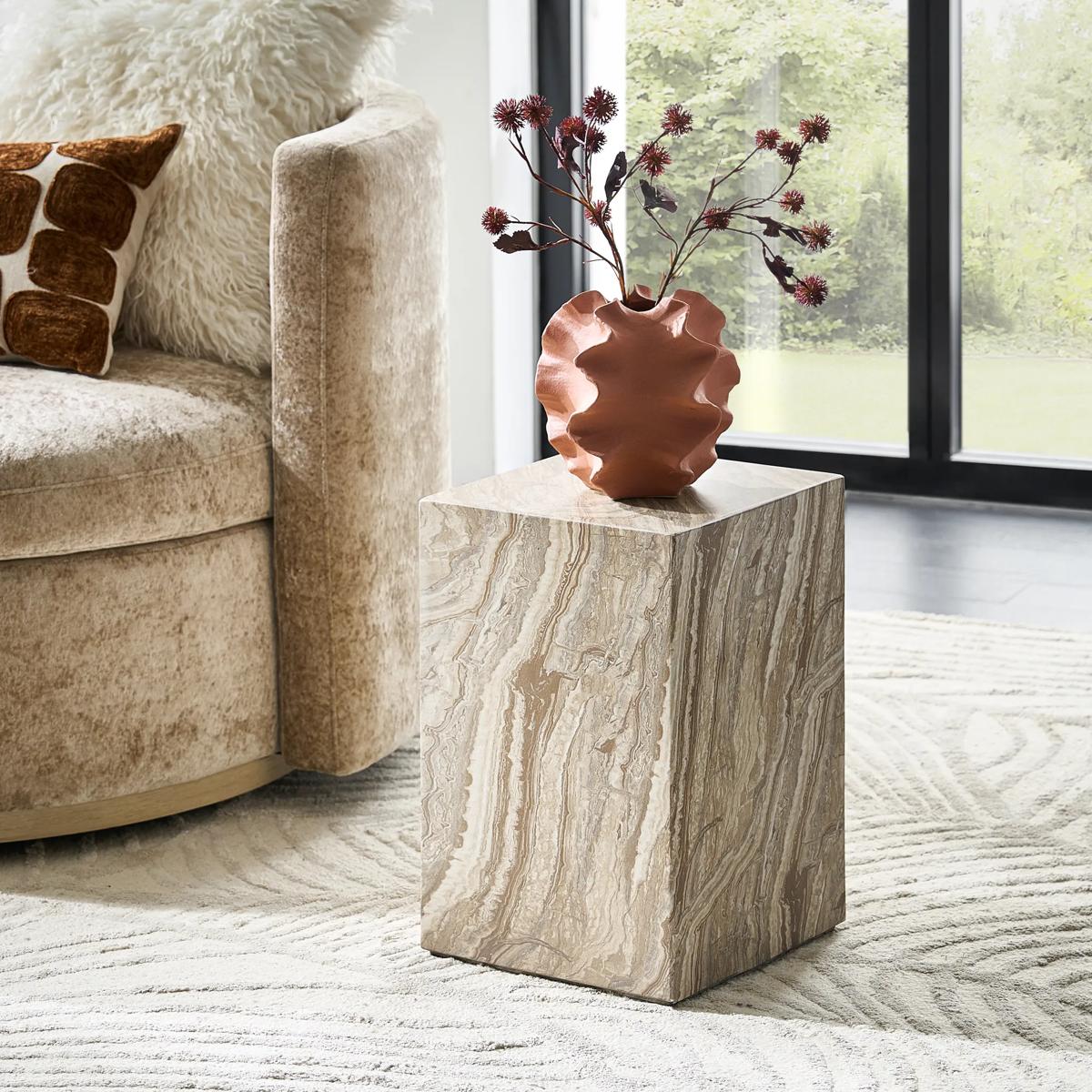 Strata Square Brown Concrete Side Table (11.8")$299
A lightweight fiber concrete side table featuring realistic brown marble veining and sealed for indoor or outdoor use.
Add To Cart -
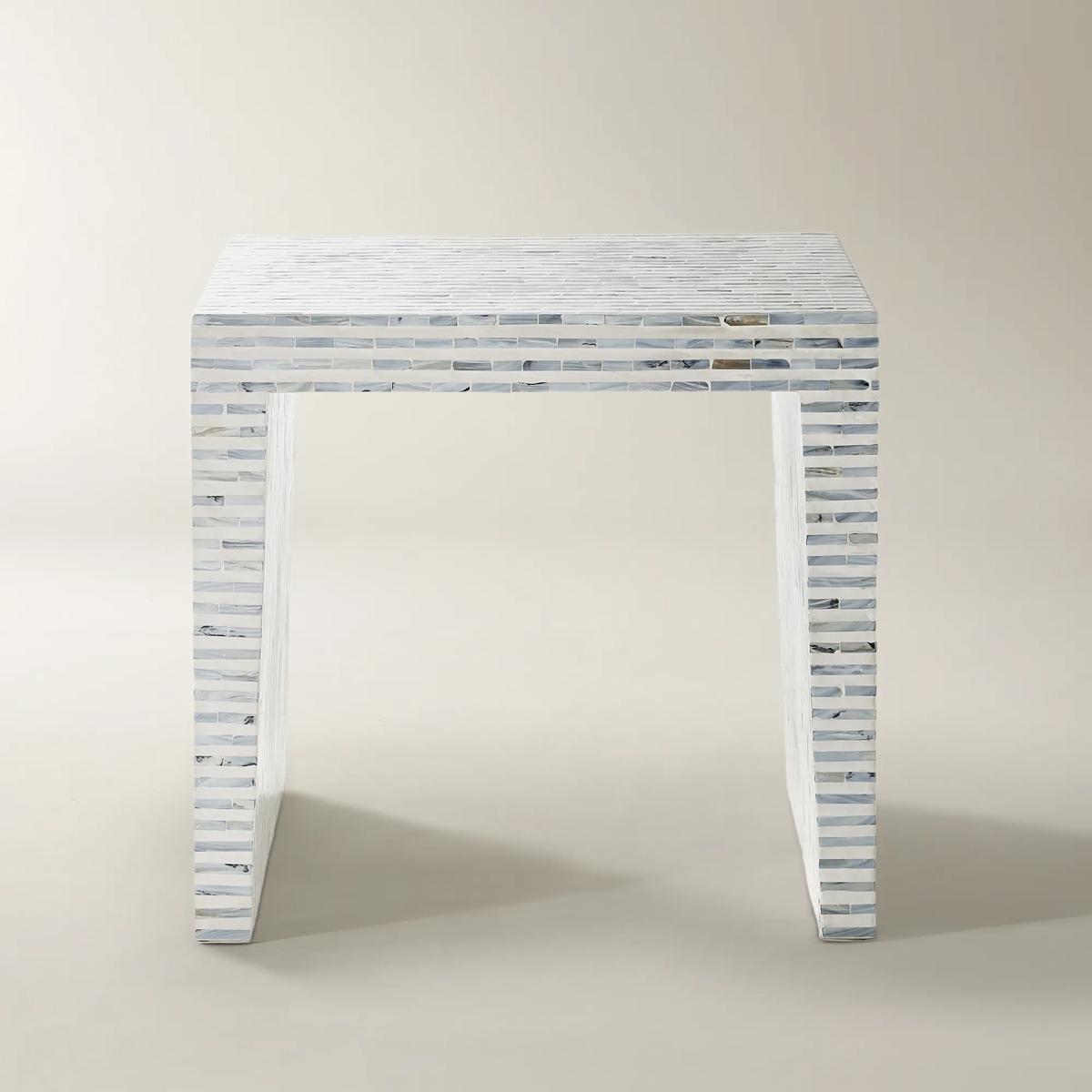
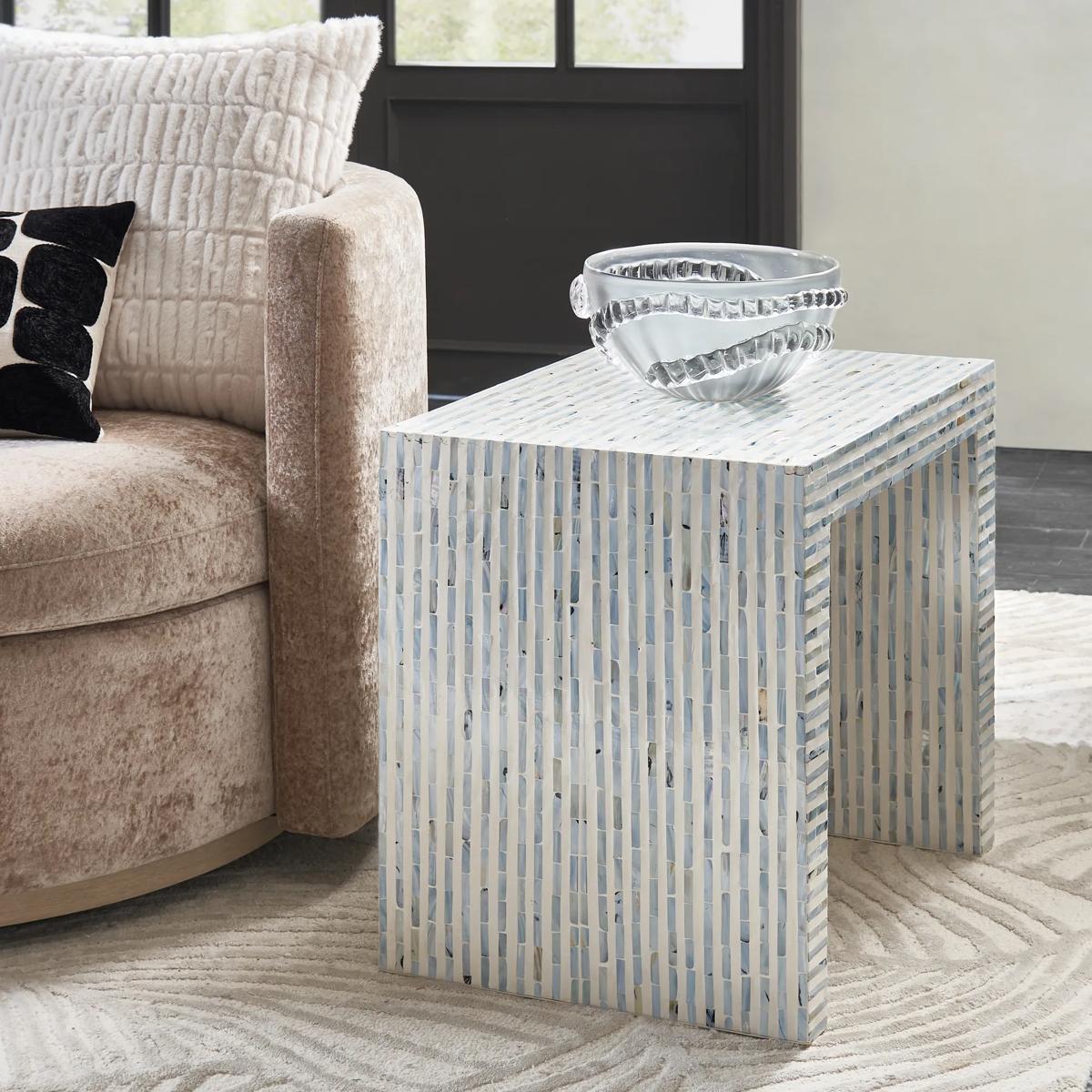 Stella Blue End Table(24")$399
A handcrafted end table featuring genuine blue mother-of-pearl inlay for a unique, iridescent accent.
Add To Cart -
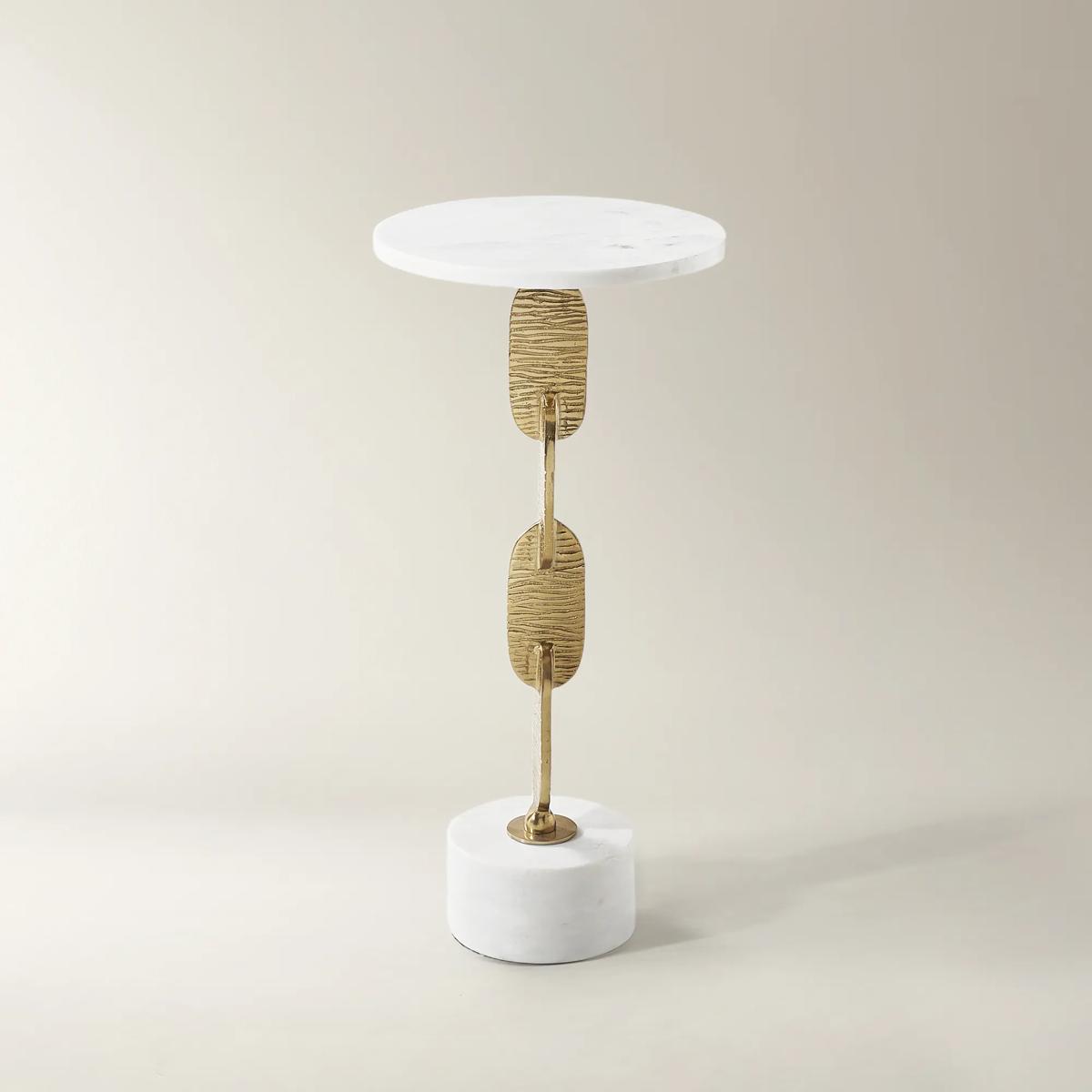
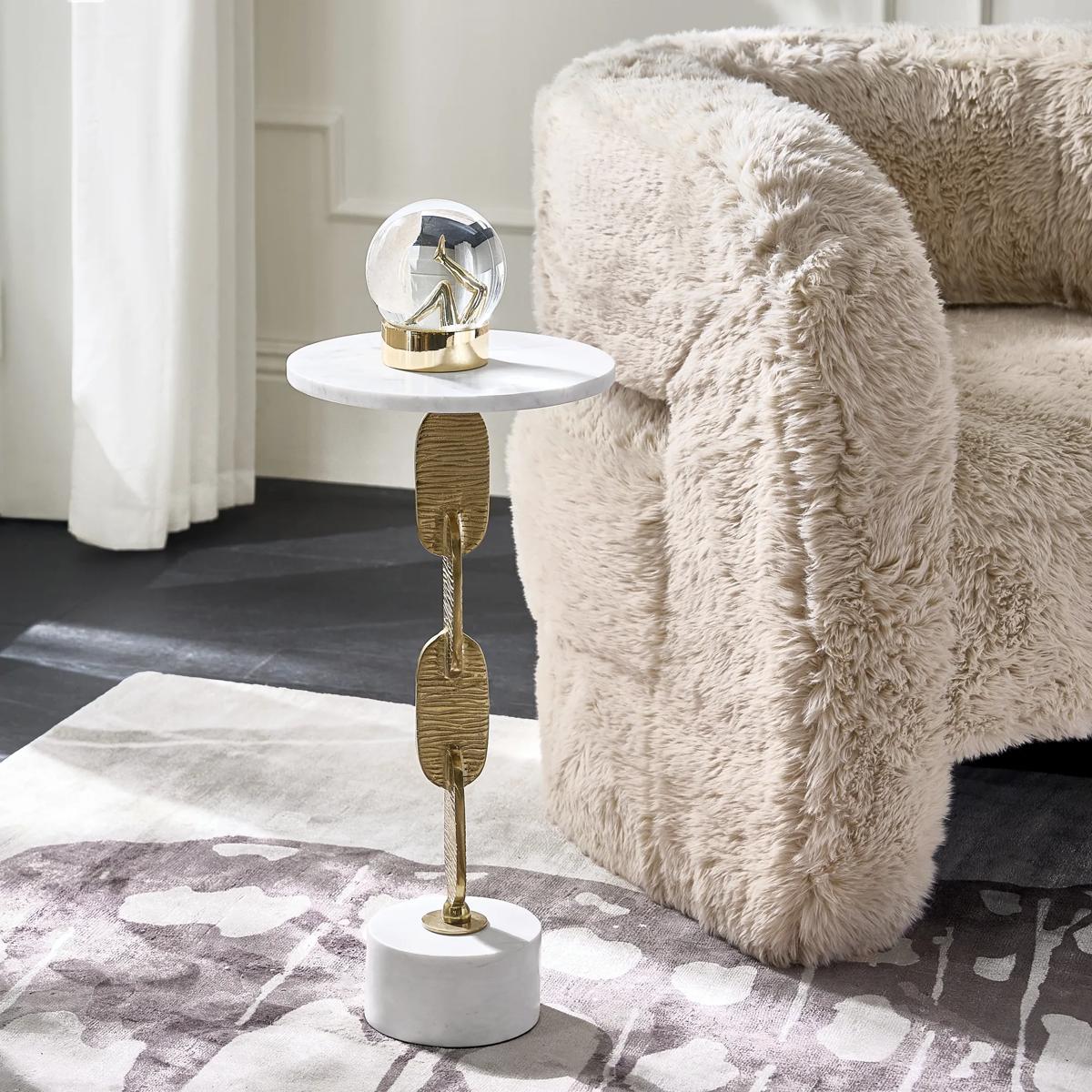 Luna Round White Marble Side Table (11.25")$199
A sculptural side table featuring a genuine white marble top and an open gold-finished metal frame.
Add To Cart

Modern Handmade Side Tables
Modern handmade side tables are the unsung heroes of elevated interiors—artful accents that transform function into a statement of style. Each piece is a testament to craftsmanship and creativity, designed to punctuate your space with sculptural intrigue and bespoke allure. Whether poised beside a velvet sofa or anchoring a dramatic reading nook, these tables invite you to curate moments of everyday luxury. Let your home become a gallery of bold expression, where every modern handmade side table tells a story of artistry and intention.
Modern handmade side tables pair contemporary silhouettes with the character of artisan craftsmanship, creating useful surfaces that feel as considered as the art on the wall. Handmade describes a method of making rather than one particular look: a table may feature hand-shaped wood, individually finished metal, carefully fitted joinery, or a stone surface refined through skilled finishing. The appeal lies in that relationship between expressive material and deliberate form. A rounded pedestal can soften the crisp edge of a tailored sofa, while an angular frame brings definition beside sumptuous upholstery. Solid wood introduces grain, warmth, and natural variation; walnut often offers rich brown tones, while oak can reveal a more pronounced grain pattern. Carving and shaping give these familiar materials unexpected movement, turning a compact table into a sculptural presence. Metal brings a different kind of drama, from dark, architectural lines to luminous surfaces that catch the light. Stone offers veining, depth, and a substantial visual anchor, especially when its pattern remains the focal point of an otherwise restrained design. Mixed-material side tables balance these qualities: a slender metal base can lend visual lightness beneath a substantial top, while wood and stone create a richly textured contrast. Depending on the material and technique, subtle differences in grain, veining, texture, or finish may distinguish one handmade piece from another. Those variations contribute character without replacing the need for sound construction and a well-finished surface. For interiors with bold artwork, richly colored textiles, or gleaming decorative accents, a modern handmade side table offers another opportunity for expression without demanding a large footprint. It can hold its own beside a dramatic chair or introduce a quieter, tactile note within a more elaborate room. The strongest effect comes from proportion and contrast: fluid curves against straight upholstery, a dark finish against pale fabric, or a finely textured surface beside polished glass. Even a small table can give a seating arrangement a clear point of view.
Scale determines how gracefully that statement becomes part of daily life. A living room side table generally feels comfortable when its top sits near the height of the adjacent sofa or chair arm, often within an inch or two, so a glass or book remains easy to reach. Armless seating calls for attention to seated reach rather than an arm-height measurement. Width and depth matter just as much: the tabletop needs enough room for its intended objects without crowding the seat or interrupting movement. A lamp requires space for its base, a discreet route for its cord, and enough remaining surface for everyday essentials. A table intended mainly for a drink and a small decorative object can have a more compact profile. Beside a generous sectional, a substantial drum or pedestal form can balance the upholstery’s volume; alongside a delicate accent chair, an open base may preserve the room’s sense of air and space. Round side tables bring a gentle outline to tight seating arrangements, although their widest point still needs clearance. Square and rectangular tops can align neatly with furniture edges, while a C-shaped profile may extend over a seat when the base fits beneath it and the design is intended for that use. In a reading nook, a handcrafted end table gives a favorite chair a composed companion, with space for a book, reading glasses, and a shaded light. In a bedroom, the same category can offer an expressive alternative to a conventional nightstand when storage needs are modest and the height suits the mattress. Open shelves or an additional tier can separate decorative objects from daily necessities without enlarging the footprint. Stable bases, secure connections, and suitable weight limits are especially important wherever tables support lamps, heavy objects, or frequent use. In homes with children or pets, rounded edges and a balanced stance deserve particular attention. A side table is designed to support objects, not serve as a seat or step.
Material and finish also shape how a handmade table lives over time. Solid wood can offer lasting strength, but its surface benefits from coasters, prompt attention to spills, and protection from prolonged direct sunlight or concentrated heat. Wood naturally responds to changes in indoor humidity, so placement away from heating vents and other sources of extreme dryness helps protect its appearance. Stone requires care suited to its composition: marble and some other natural stones can absorb liquids or develop etching from acidic substances, even when sealed. A tray or coaster creates a useful barrier beneath drinks, while a soft cloth and a stone-safe cleaner help preserve the finish. Metal care varies with the coating; abrasive pads and harsh cleaners may scratch polished surfaces or damage protective finishes. Painted, lacquered, and mixed-material designs likewise benefit from cleaning methods approved for their particular surfaces rather than a single all-purpose treatment. Durability depends on construction, finish, placement, and use—not simply on whether a table is handmade. Smooth edges, secure joints, a stable base, and clear care information are meaningful details for a piece expected to serve every day. Protective pads appropriate to the flooring can help prevent scratches, and lifting rather than dragging protects both the table and the surface beneath it. With those practical details considered, styling can remain expressive: a sculptural vessel, a small stack of art books, and an area of open tabletop allow the craftsmanship to remain visible. Pairing complementary forms rather than exact duplicates can give a room a collected quality; related finishes or shared curves provide cohesion. For a broader arrangement, Handmade Living Room Accent Tables offer another way to consider how artisanal surfaces and distinctive proportions work throughout a seating area. A thoughtfully chosen side table can also make a memorable housewarming or wedding gift when the recipient’s space and taste are known. Its appeal is both intimate and enduring: a functional object with enough presence to become part of the room’s identity.
FAQs
Modern handmade side tables are defined by their unique character, artisan craftsmanship, and attention to detail. Each piece is shaped by skilled hands, resulting in subtle variations in texture, finish, and form that make every table a one-of-a-kind creation. Unlike mass-produced options, these tables often showcase original design elements, bespoke materials, and a sense of artistry that transforms them into functional works of art.
A modern handmade side table serves as both a practical accent and a statement of personal style. Its sculptural presence can anchor a seating arrangement, add a layer of texture or color, and create a focal point that draws the eye. Whether paired with a plush armchair or positioned beside a dramatic sofa, these tables infuse the room with a sense of luxury, warmth, and individuality.
A modern handmade side table makes a thoughtful and memorable gift for design enthusiasts, new homeowners, newlyweds, or anyone who values artistry and originality in their home decor. Its timeless appeal and handcrafted nature ensure it will be cherished for years, making it an ideal choice for milestone celebrations or as a gesture of appreciation.
Artisan-made side tables often feature a blend of luxurious materials such as solid hardwoods, hand-forged metals, glass, and sometimes stone. These materials are selected not only for their durability but also for their ability to showcase the maker’s skill—think hand-carved wood, hammered metal bases, or glass tops with unique edgework. The interplay of these elements creates a table that is both functional and visually striking.
Modern handmade side tables are remarkably versatile and can complement a range of interior aesthetics. For contemporary spaces, opt for tables with clean lines and minimalist finishes. For a touch of glamor, choose pieces with metallic accents or mirrored surfaces. In eclectic or bohemian settings, embrace bold shapes and mixed materials. The key is to let the table’s artistry shine—use it as a statement piece or a harmonious accent that elevates the overall design.