Modern Storage For Small Spaces
Modern Storage For Small Spaces
-
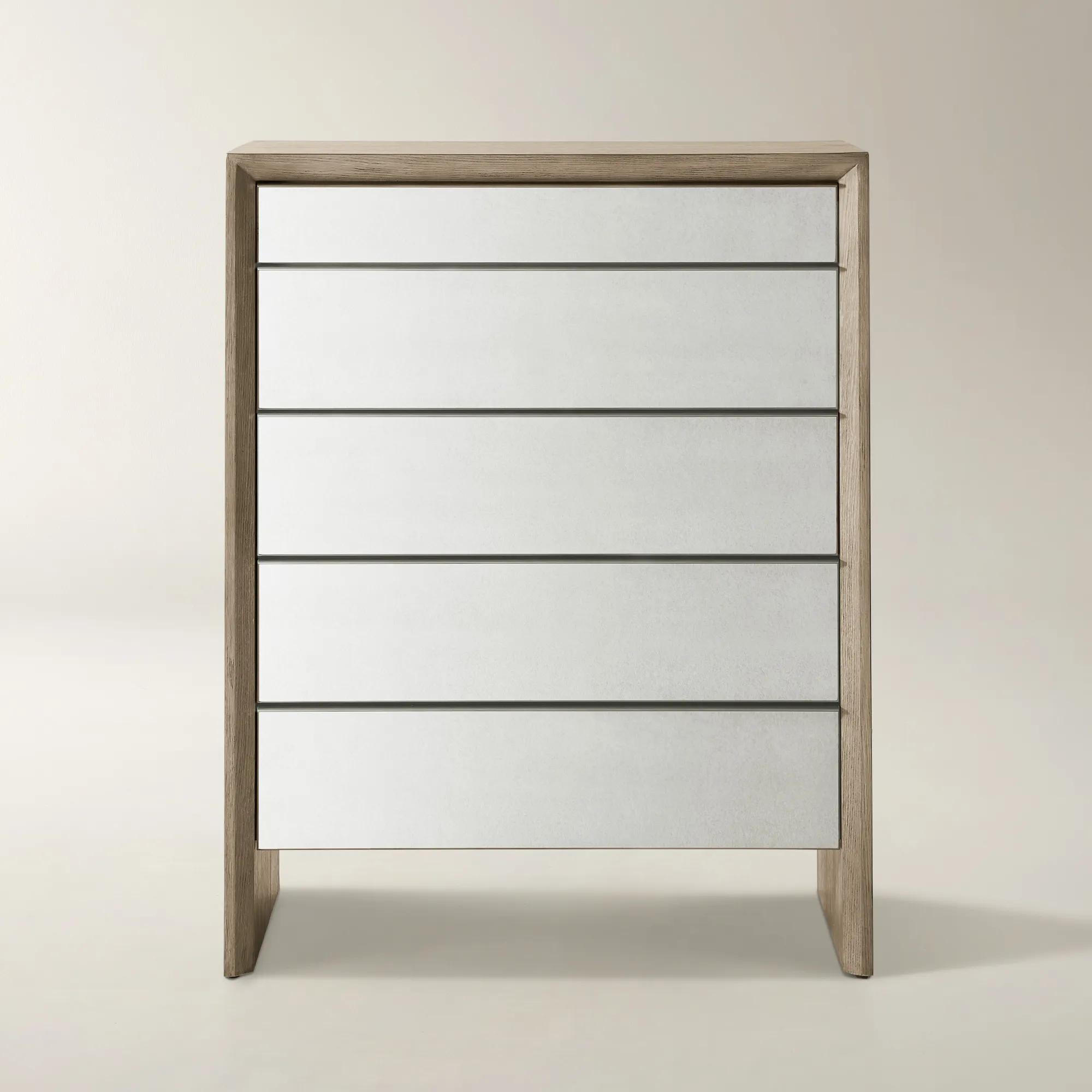
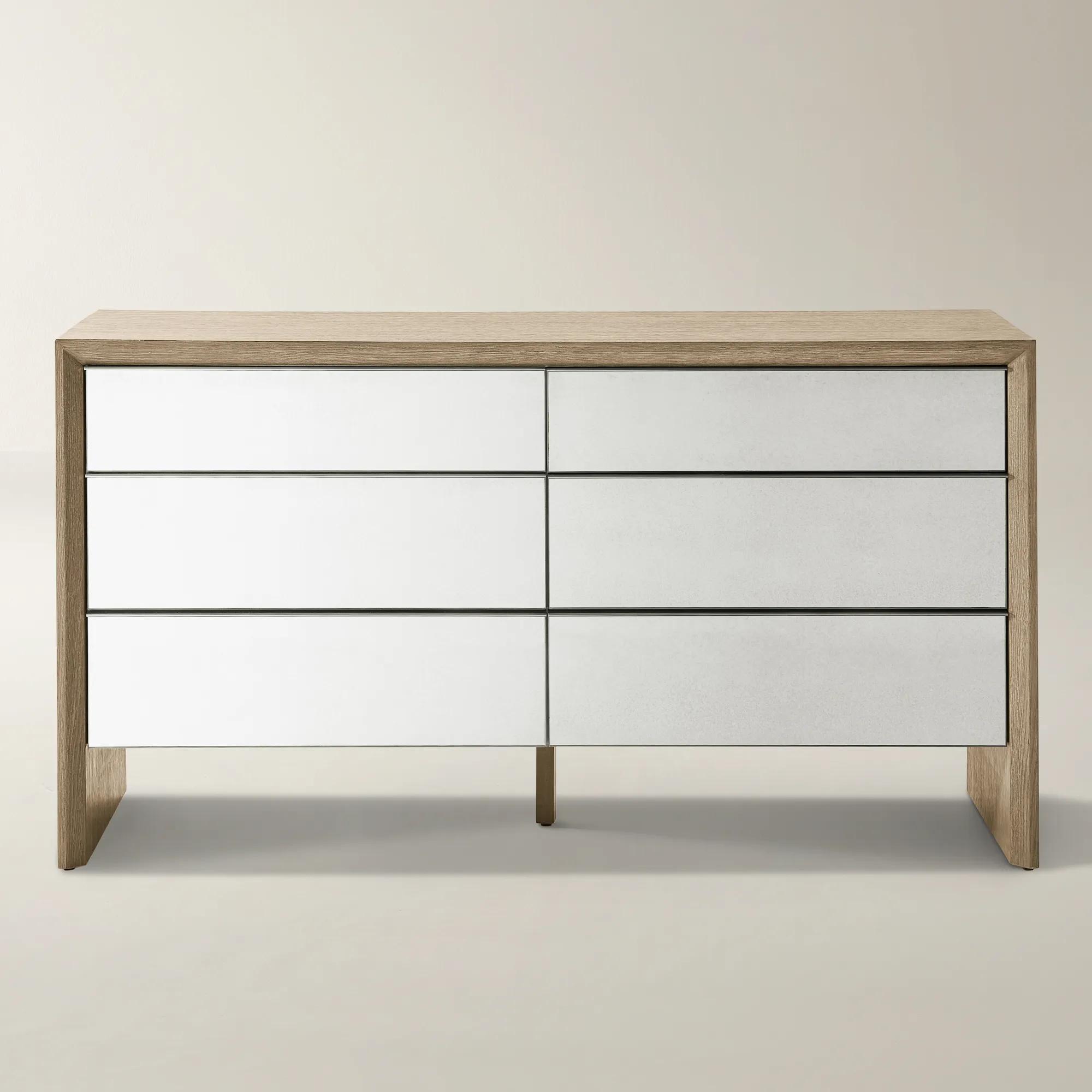
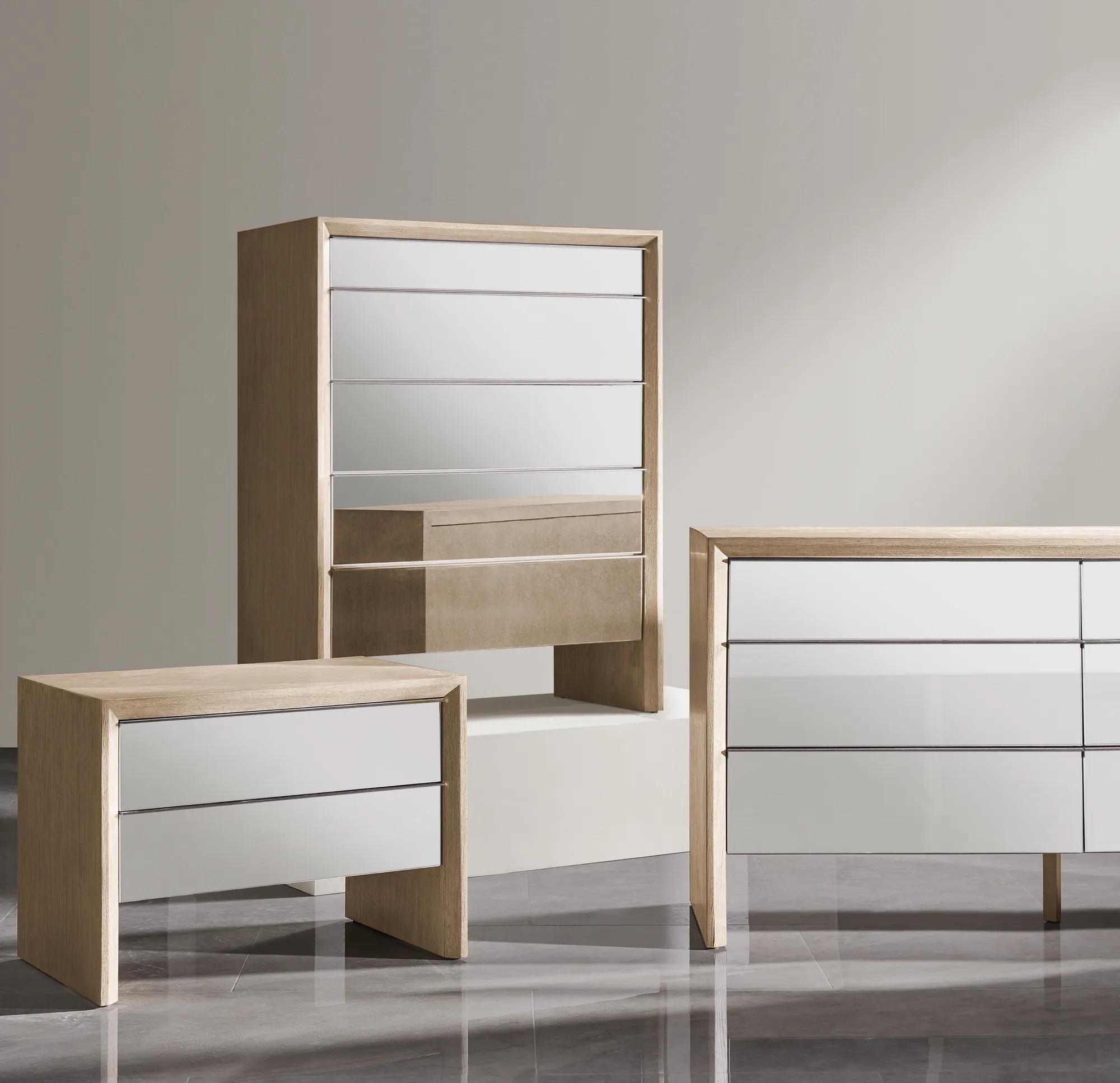 Glimmer Mirrored Seadrift Oak 5-Drawer Tall Dresser (40")$2099
A versatile chest featuring sea drift oak veneer, antique mirrored drawer fronts, and soft-close drawers for elegant storage.
Add To Cart -
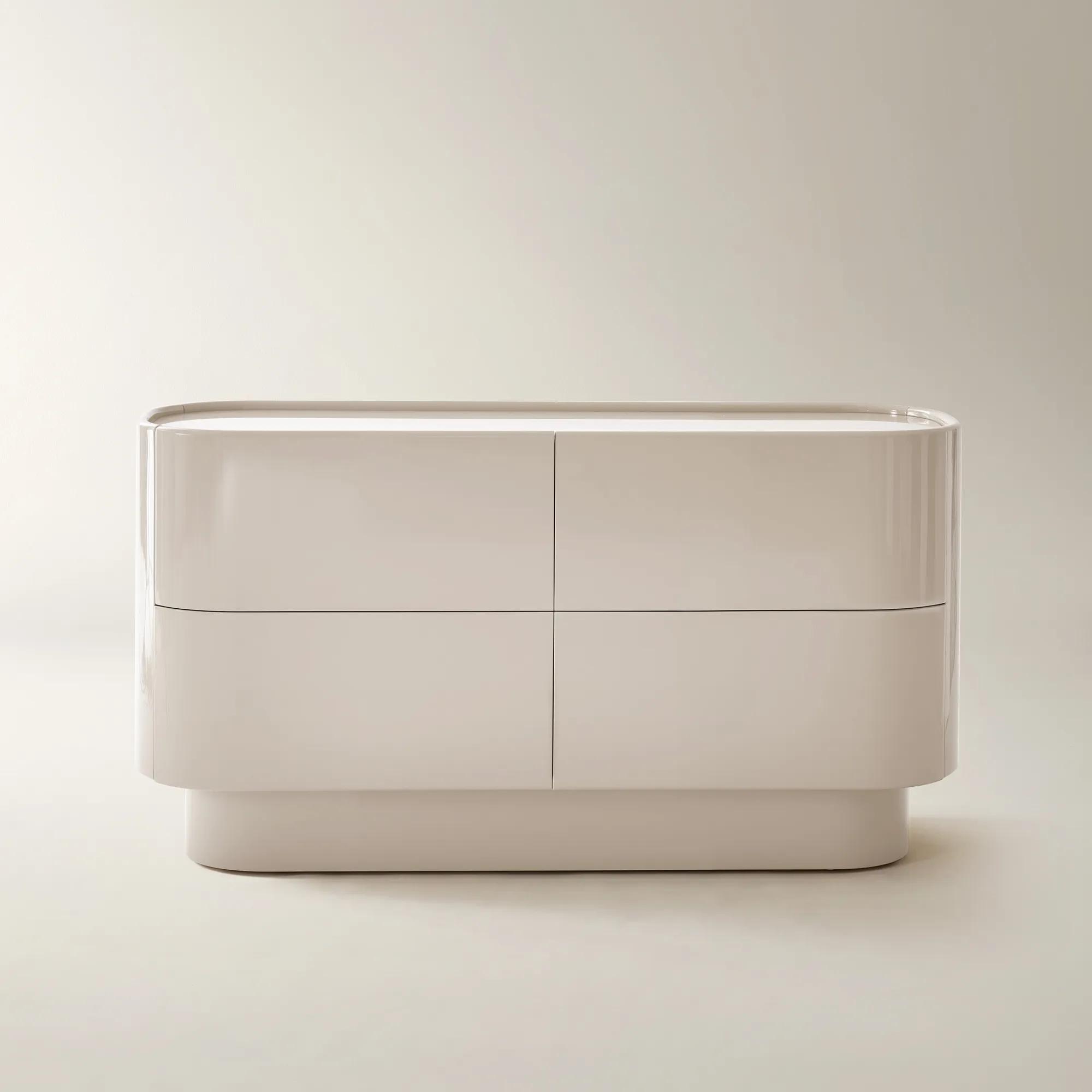
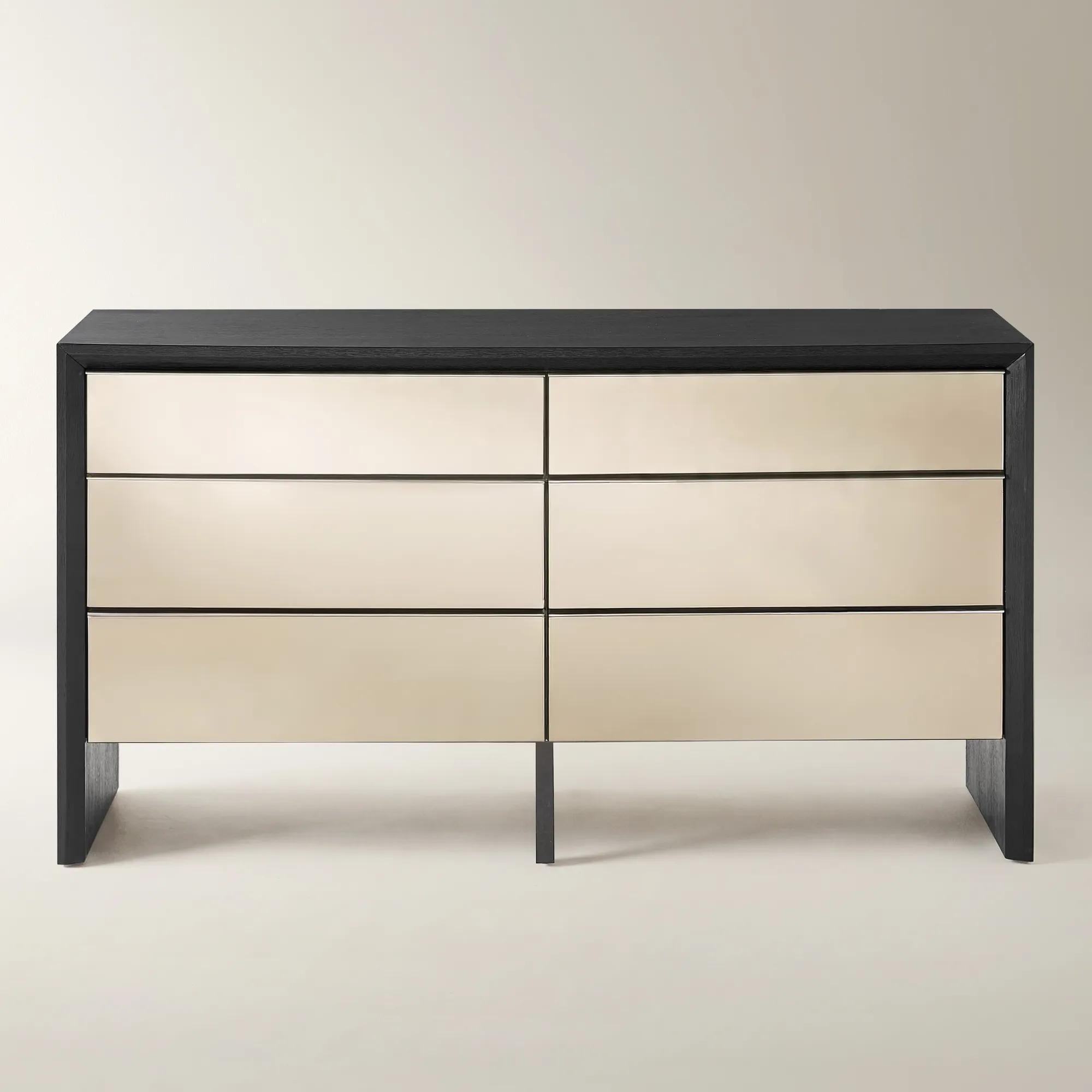
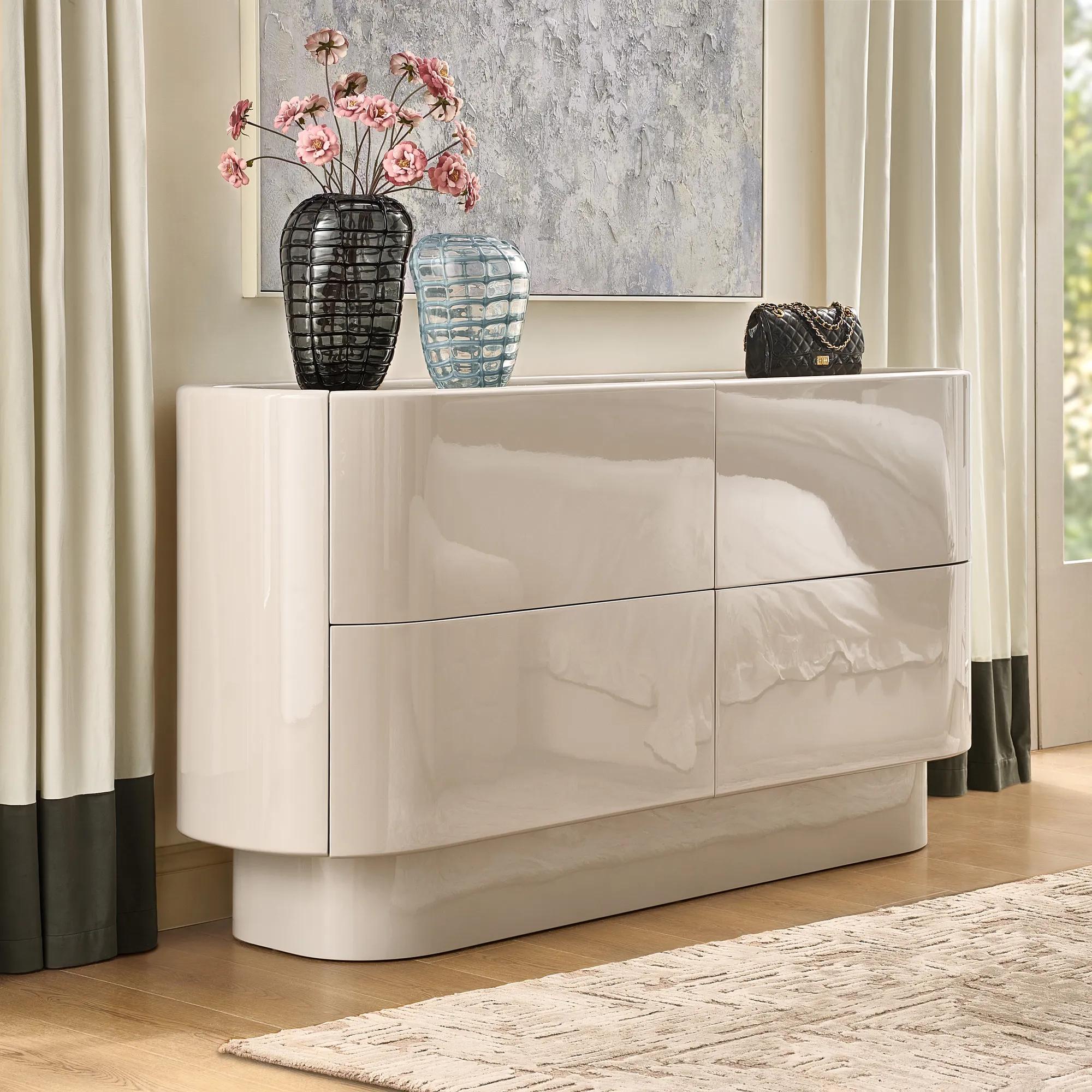 Velar Lacquered Turtle Dove 4-Drawer Dresser With Glass Top (66")$1999
A sculptural dresser in turtle dove lacquer with a back-painted glass top and soft-close velvet-lined drawers.
Add To Cart -
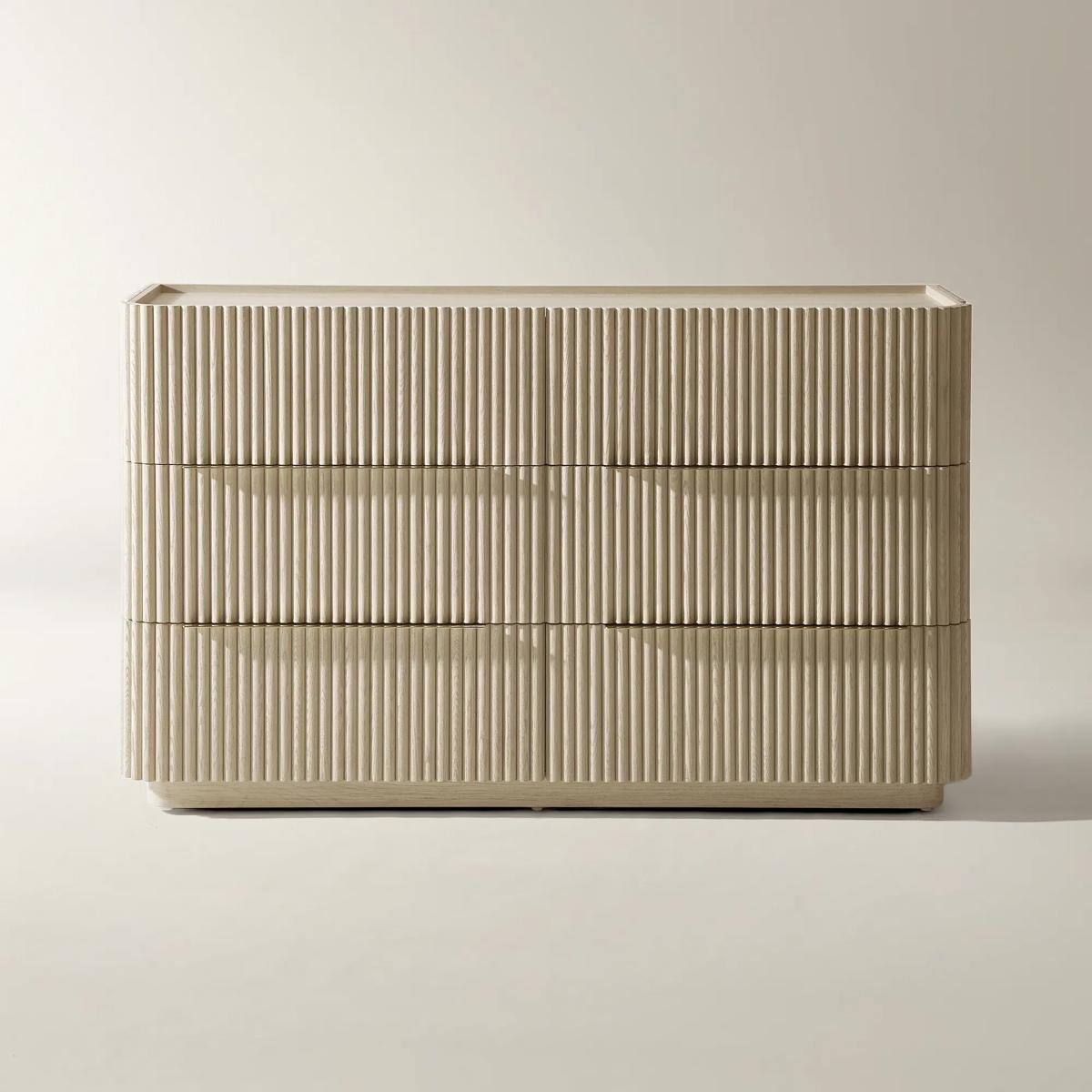
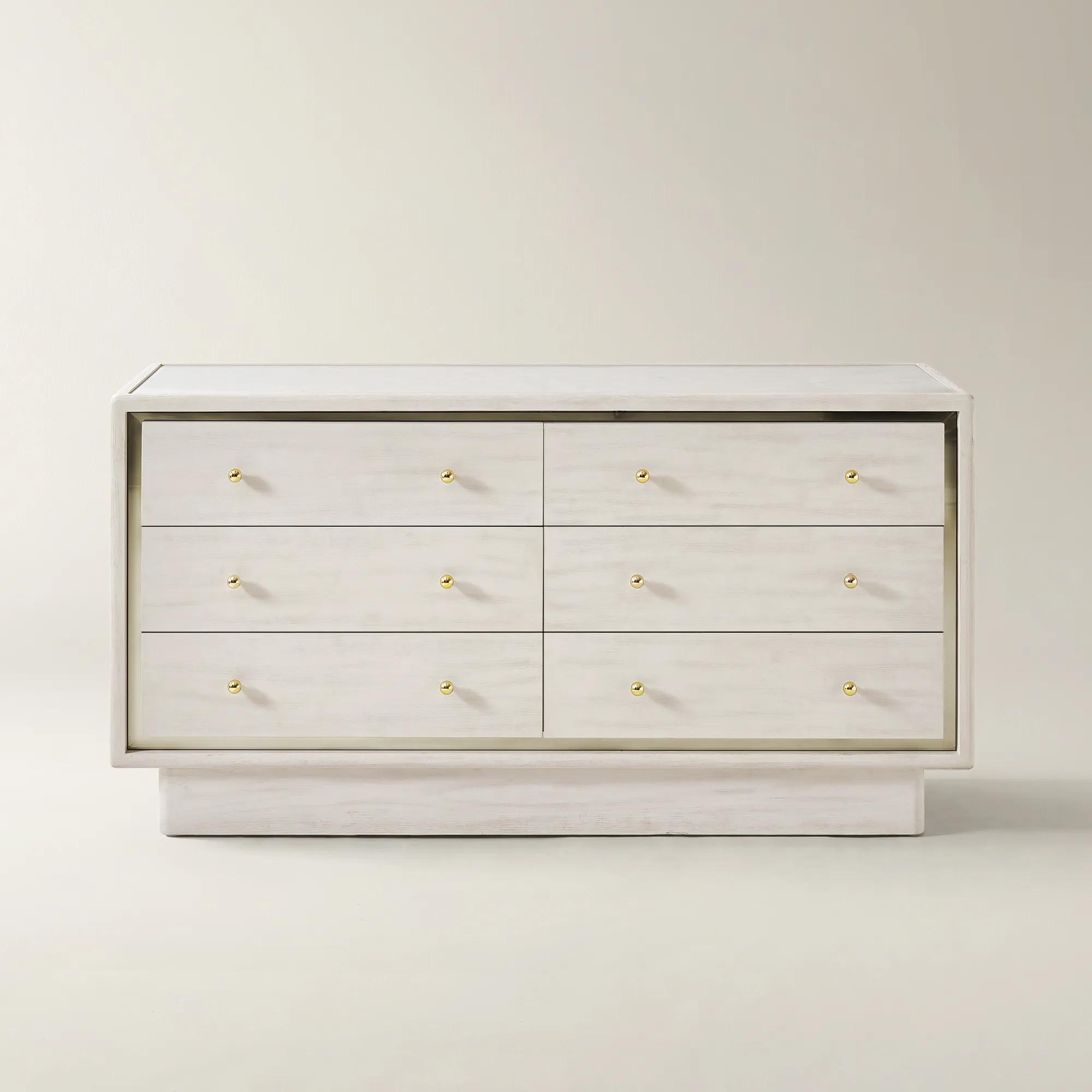
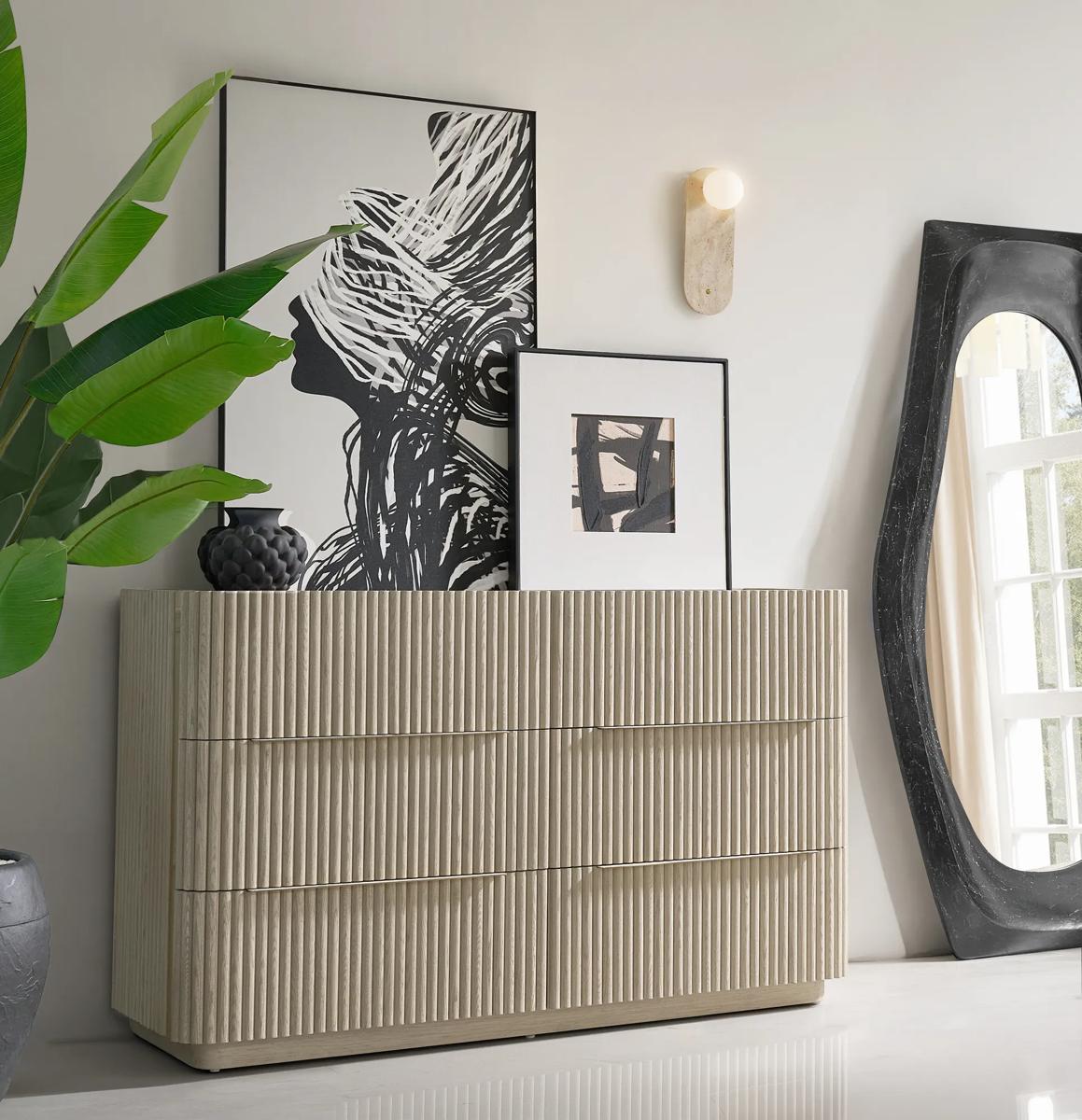 Stria Reeded White Oak 6-Drawer Dresser (64.5")$2599
A sculptural dresser crafted from solid oak with fluted detailing, gold-plated trim, and soft-close drawers.
Add To Cart -
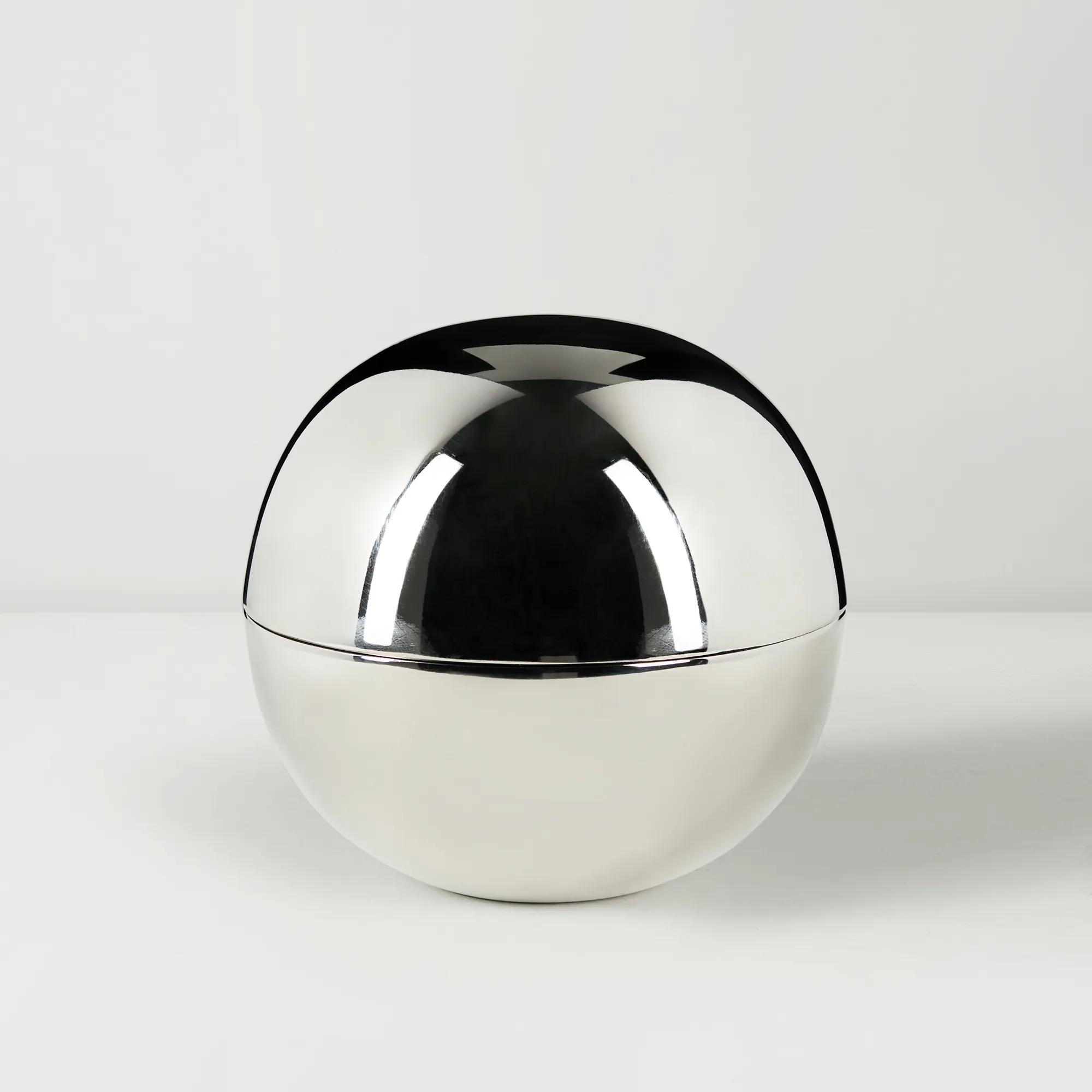
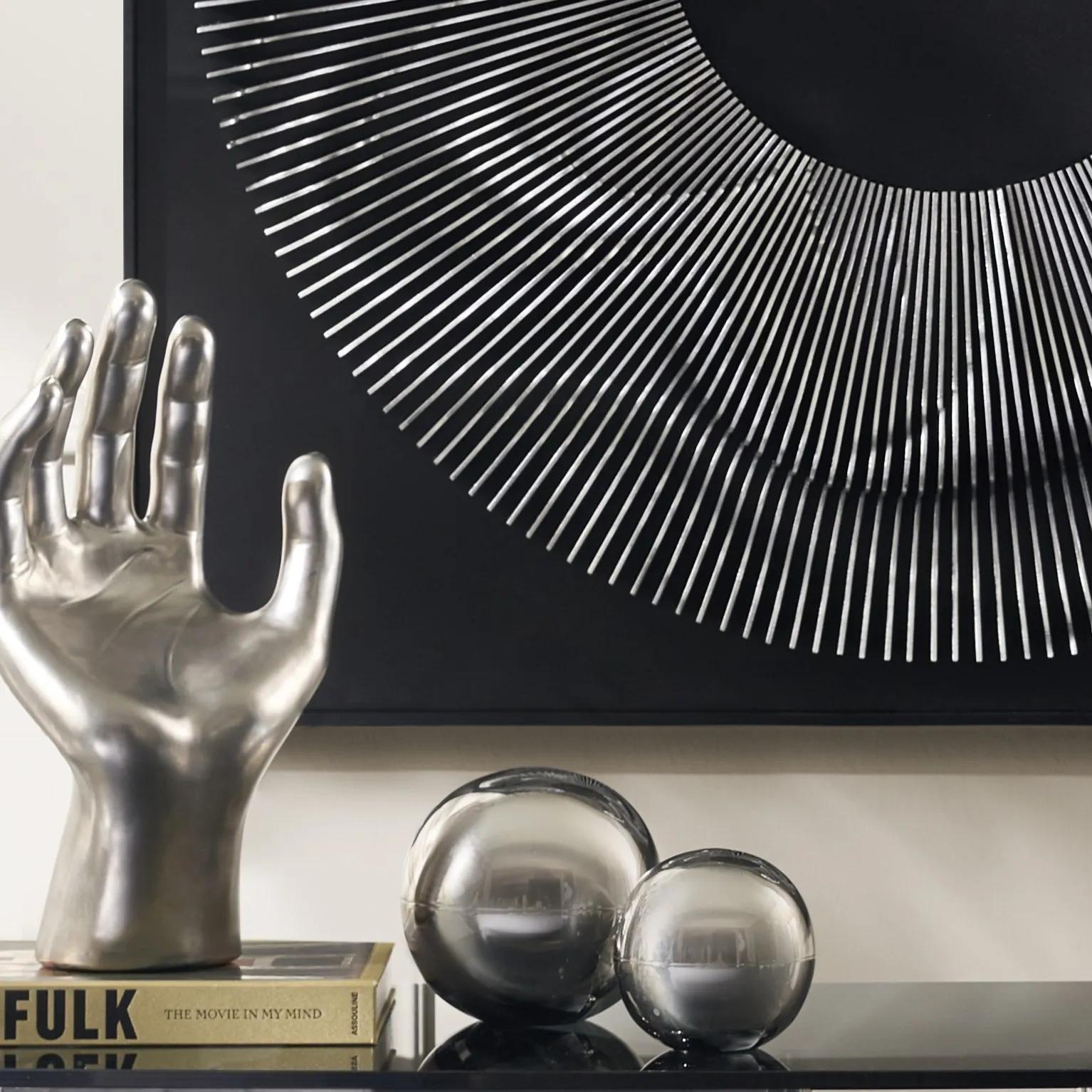 Orion Box$29
A sleek silver aluminum orb box that blends modern style with practical storage.
Add To Cart -
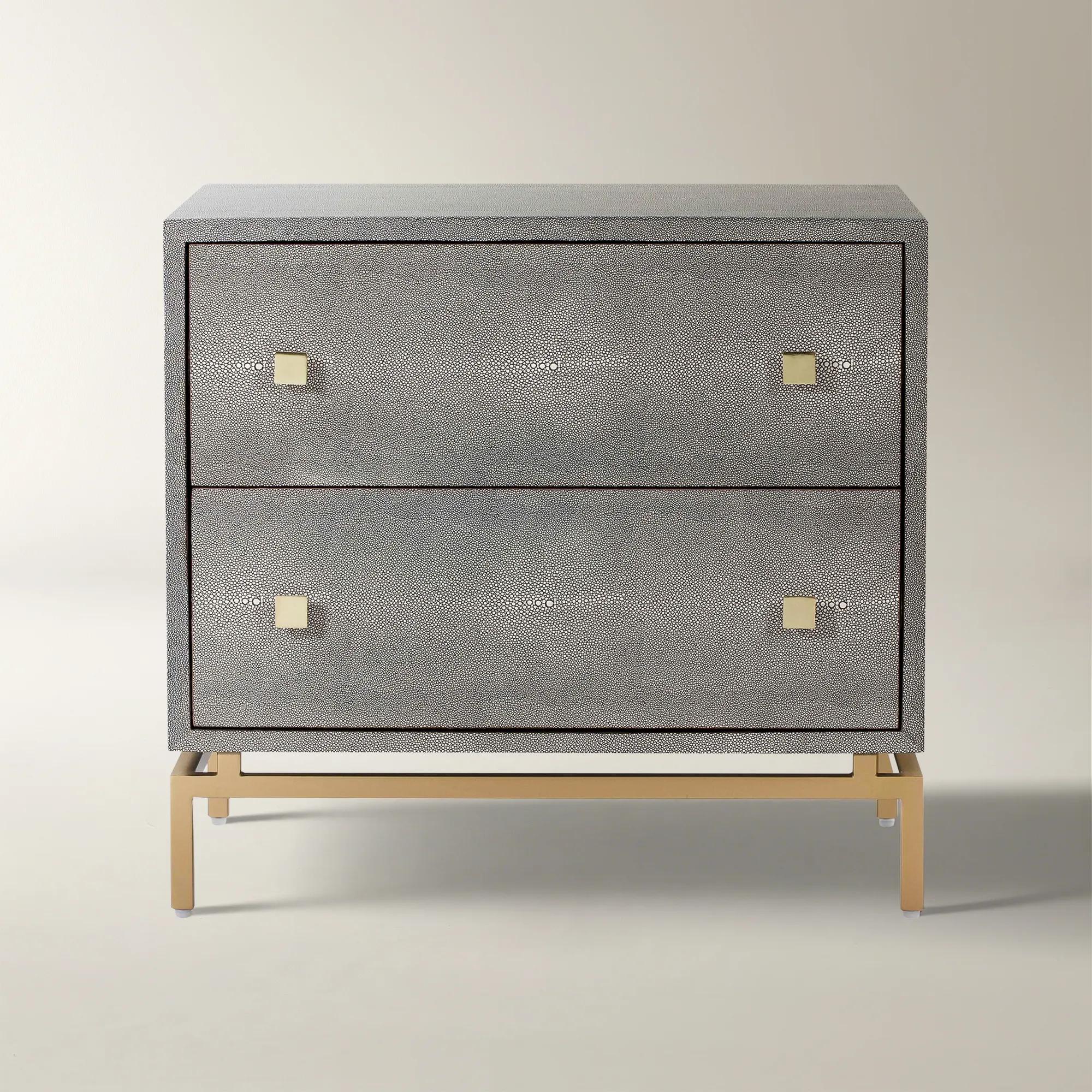
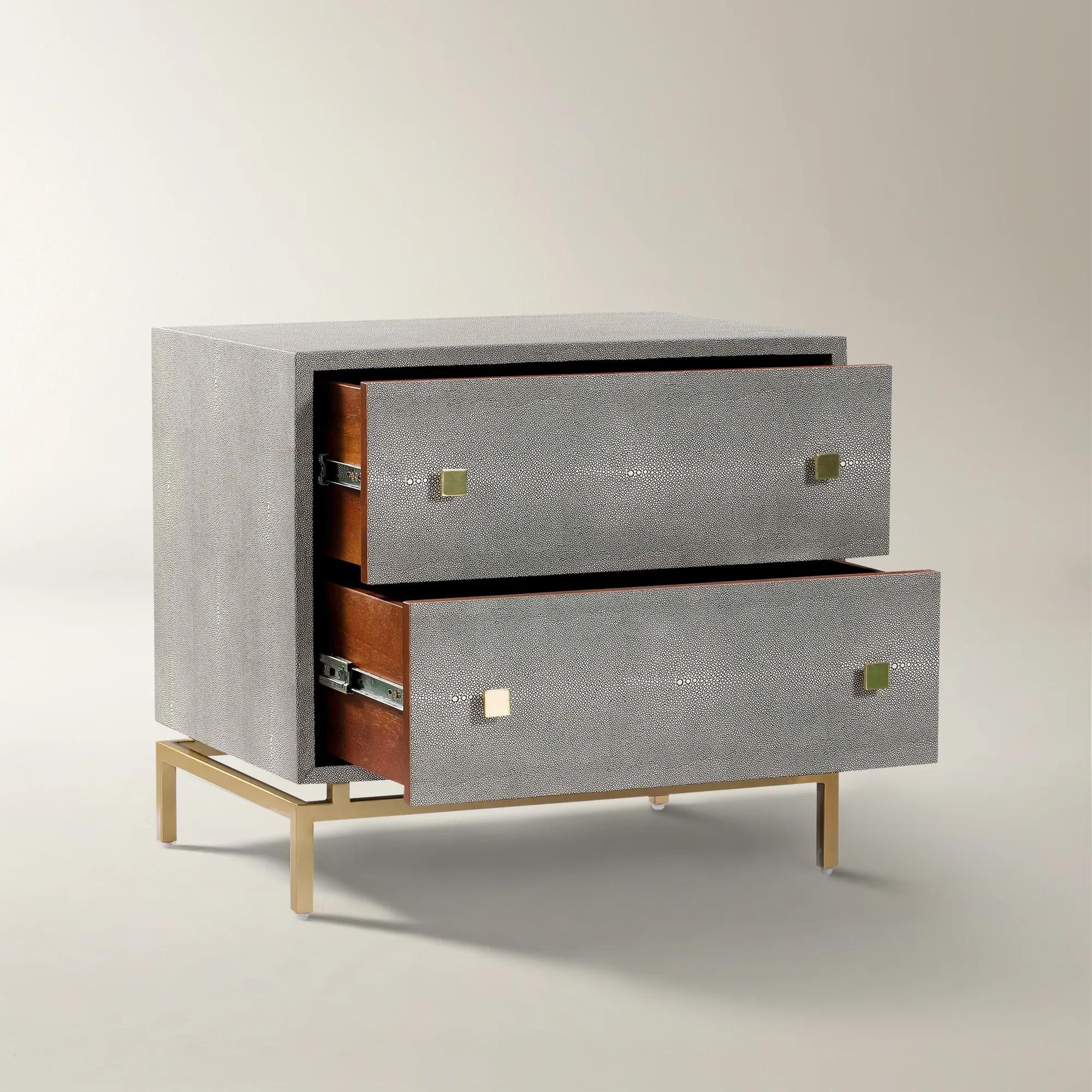 Misha Grey Shagreen 2-Drawer Nightstand (25")$749
A modern nightstand featuring faux shagreen texture, brass-finished base, and two cherry wood-lined drawers.
Add To Cart -
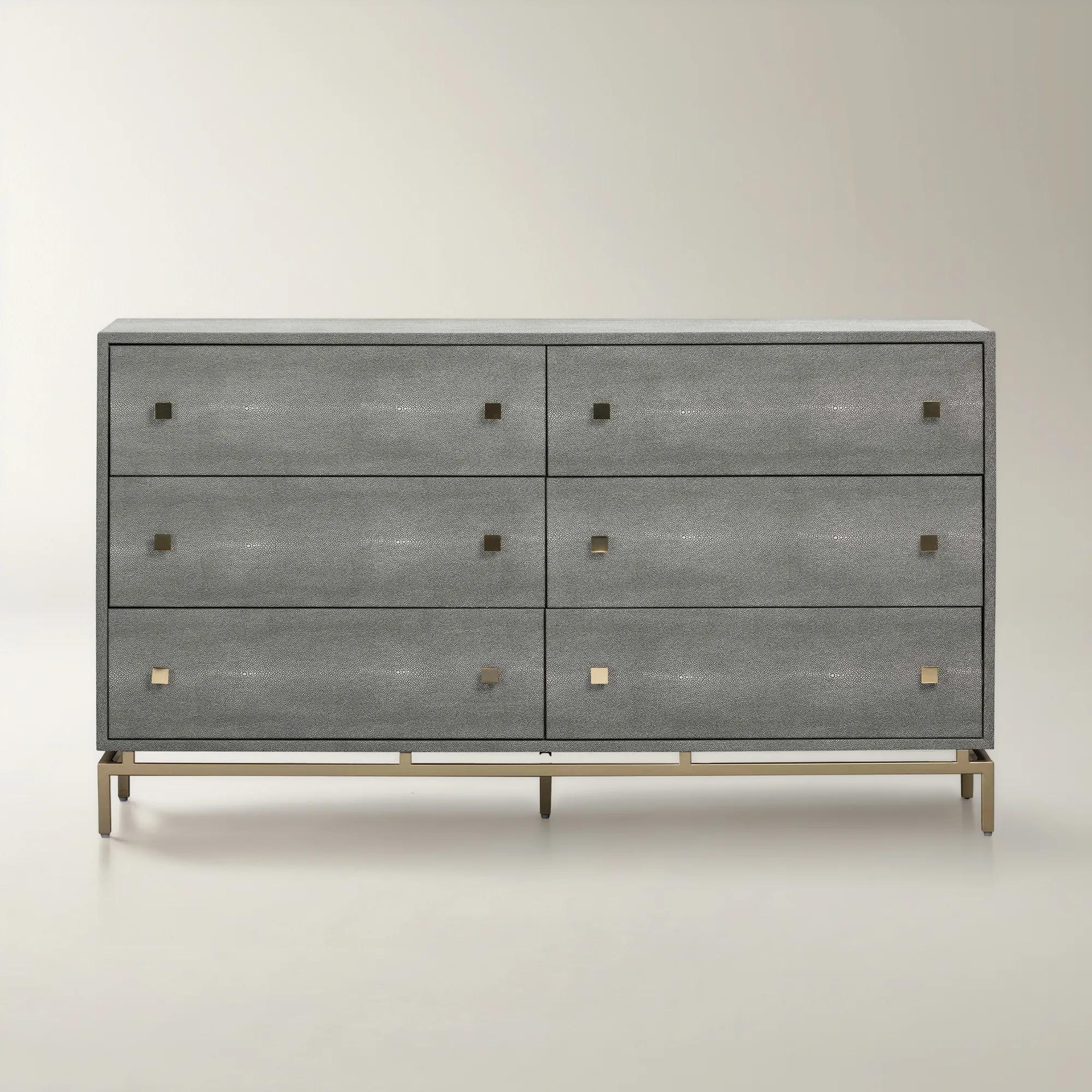
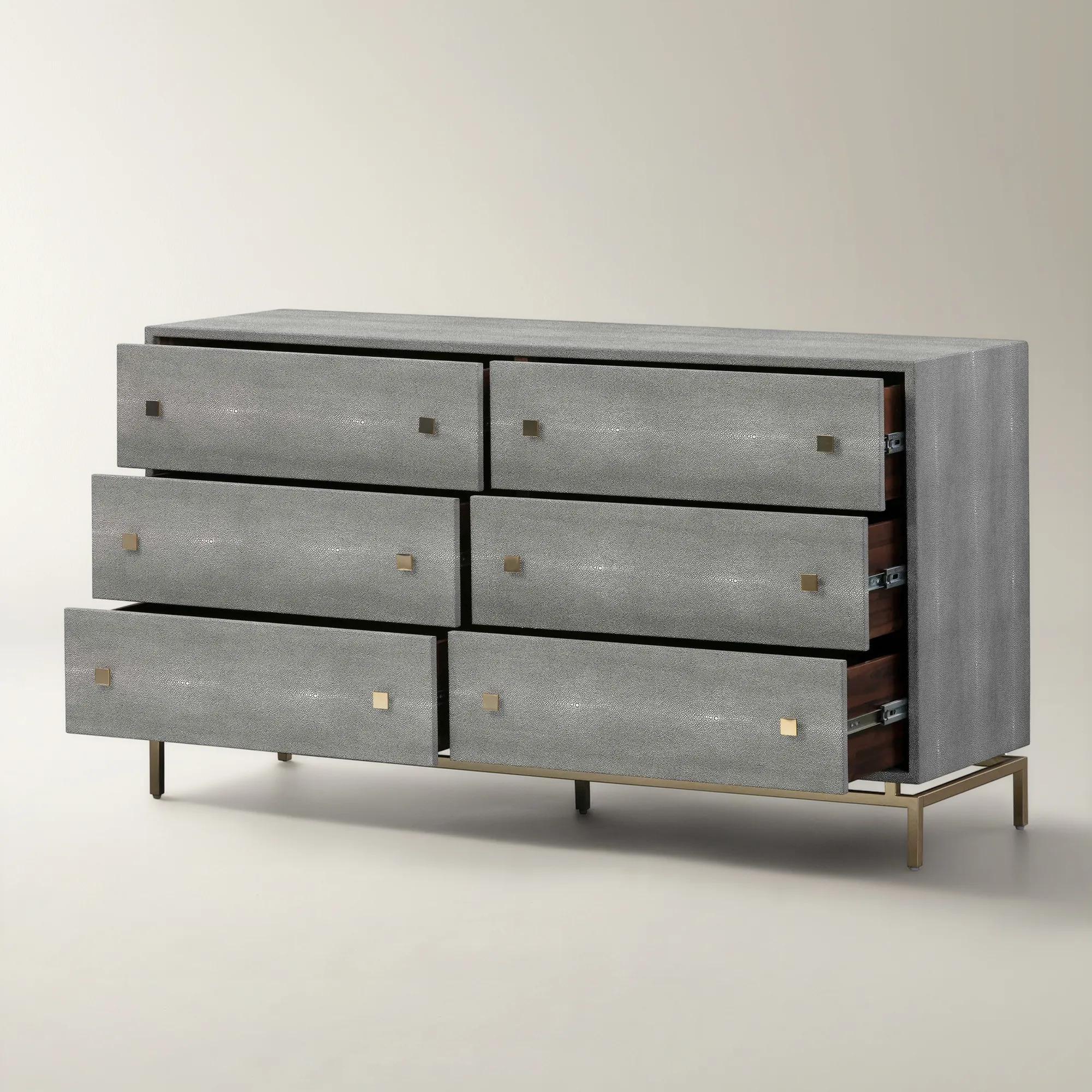 Misha Grey Shagreen 6-Drawer Dresser (57")$2249
A modern dresser featuring faux shagreen texture, brass-finished base, and six drawers with cherry wood interiors.
Add To Cart -
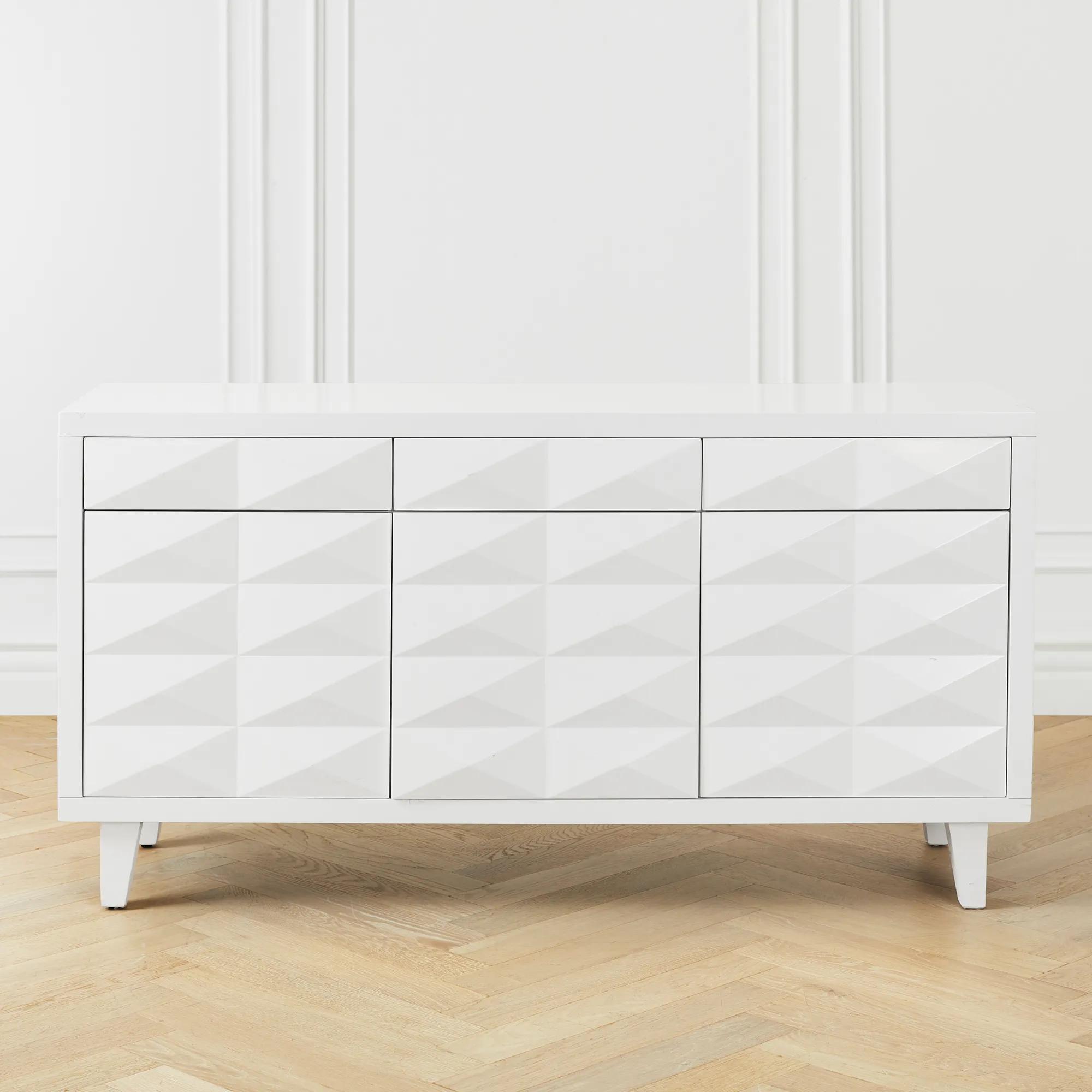 Palmer White Wood Cabinet (66.5")$1649
A sleek white hardwood cabinet with geometric detailing, three drawers, and push-latch doors for modern storage.
Add To Cart -
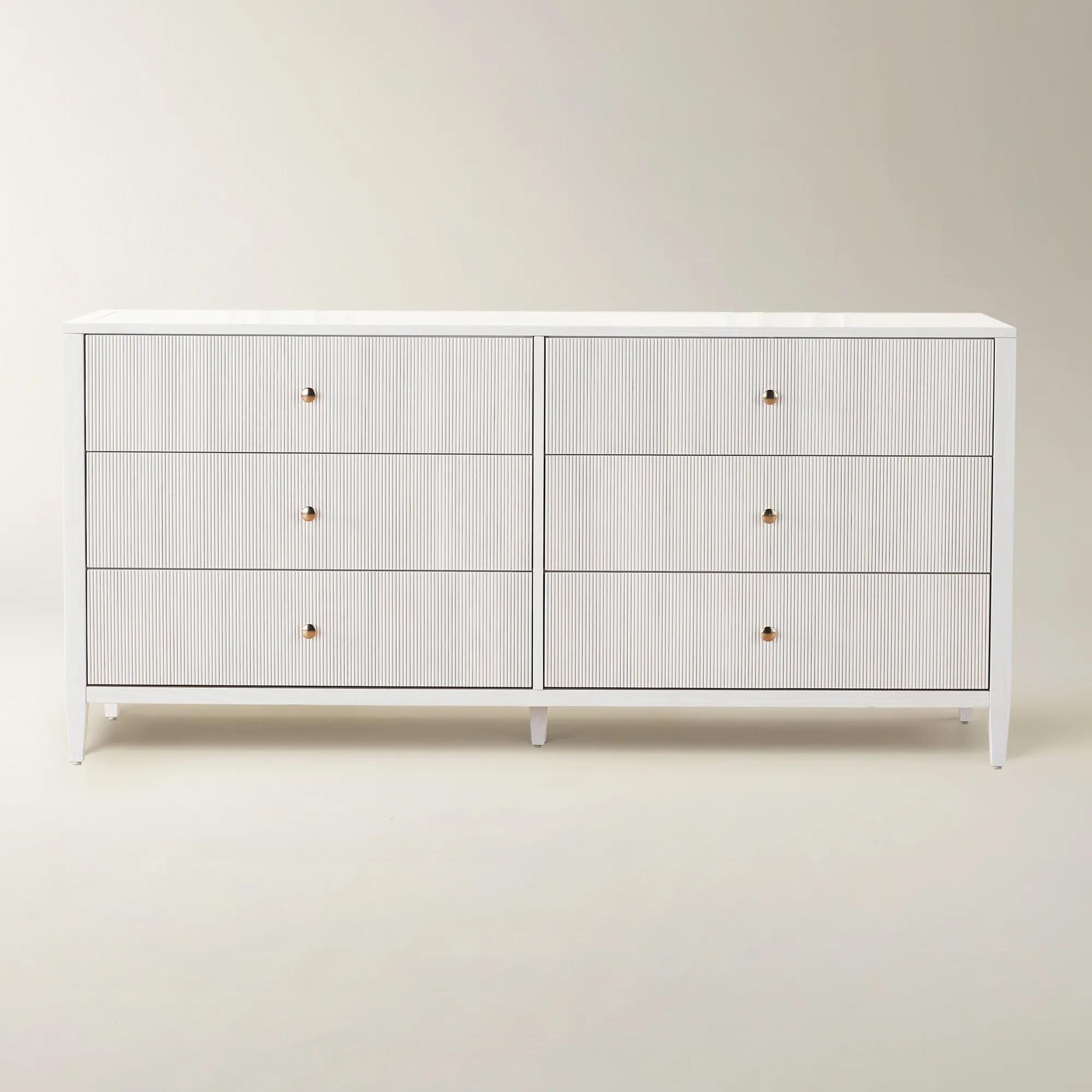
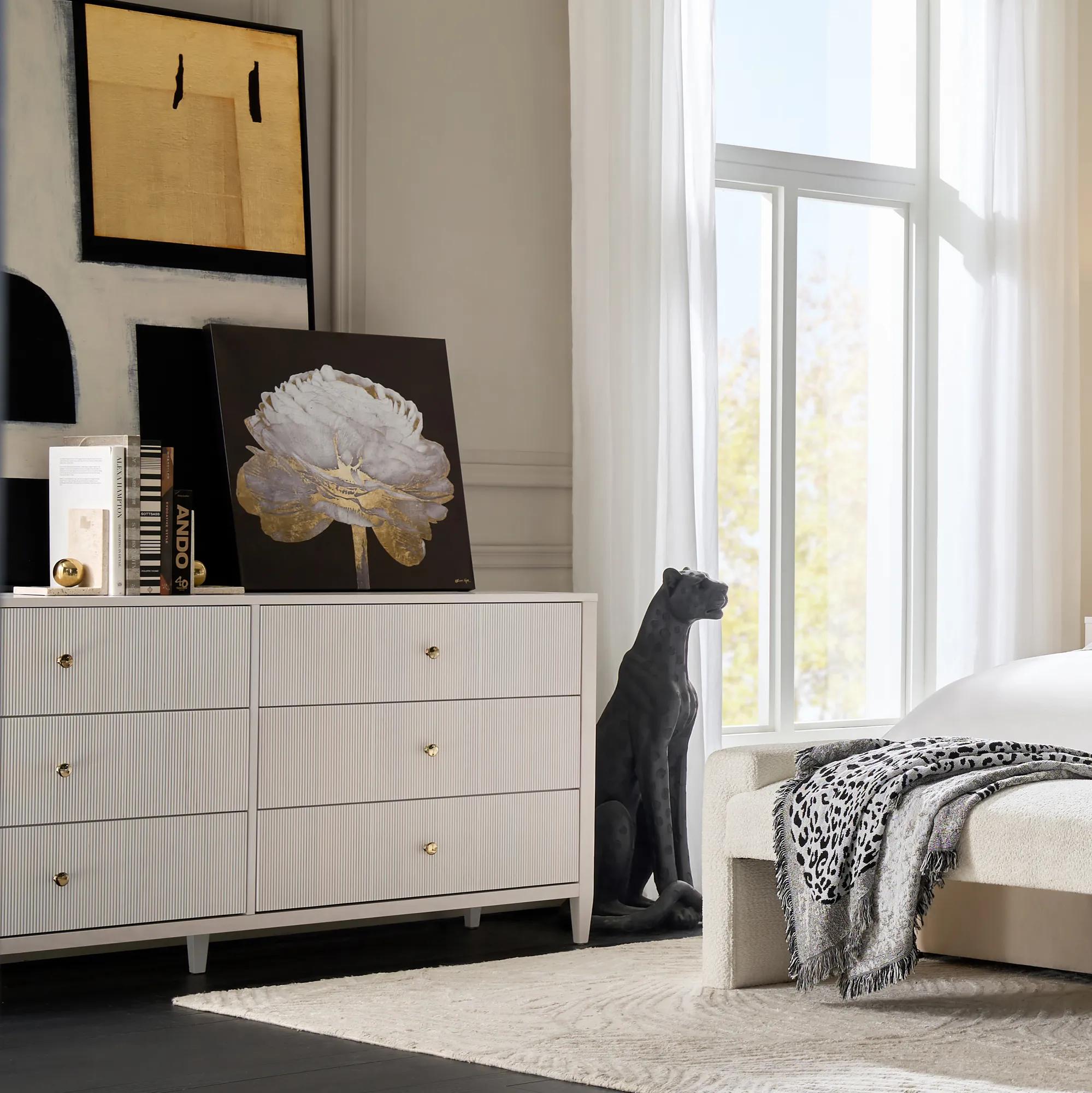 Viola Reeded White Ash Wood 6-Drawer Dresser (70")$1899
A modern dresser in bone white ash wood with reeded fronts and brass hardware for a luxe touch.
Add To Cart -
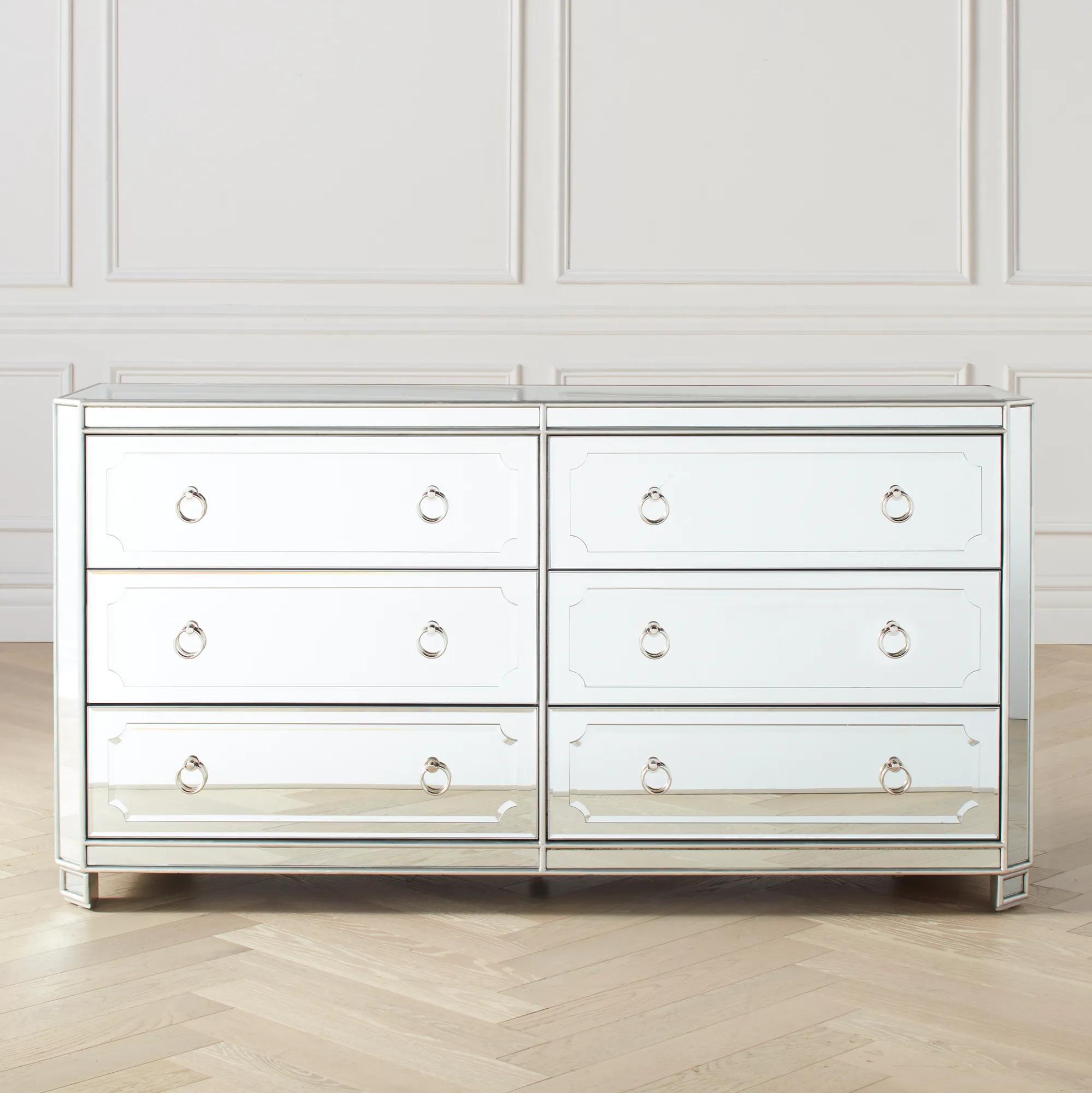
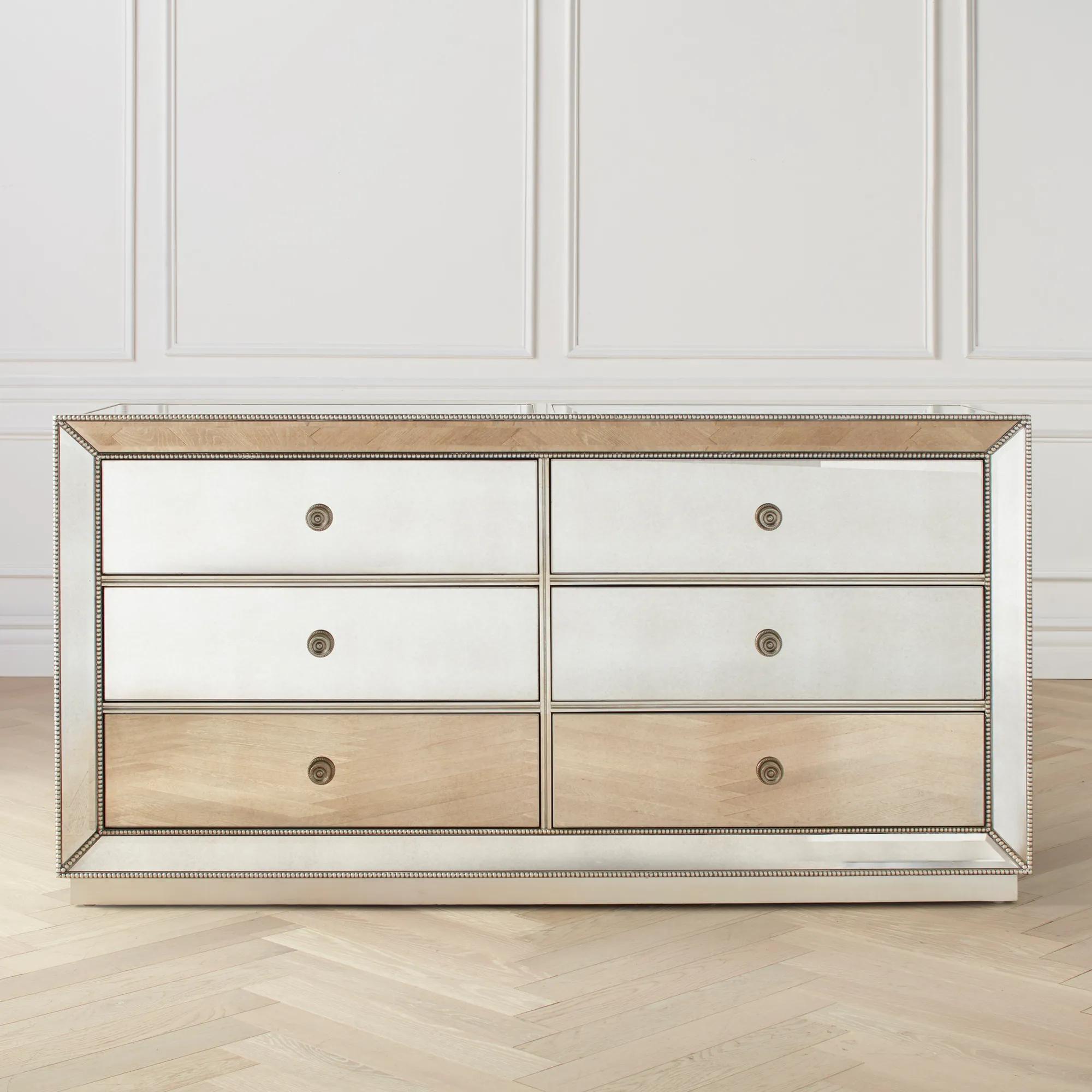
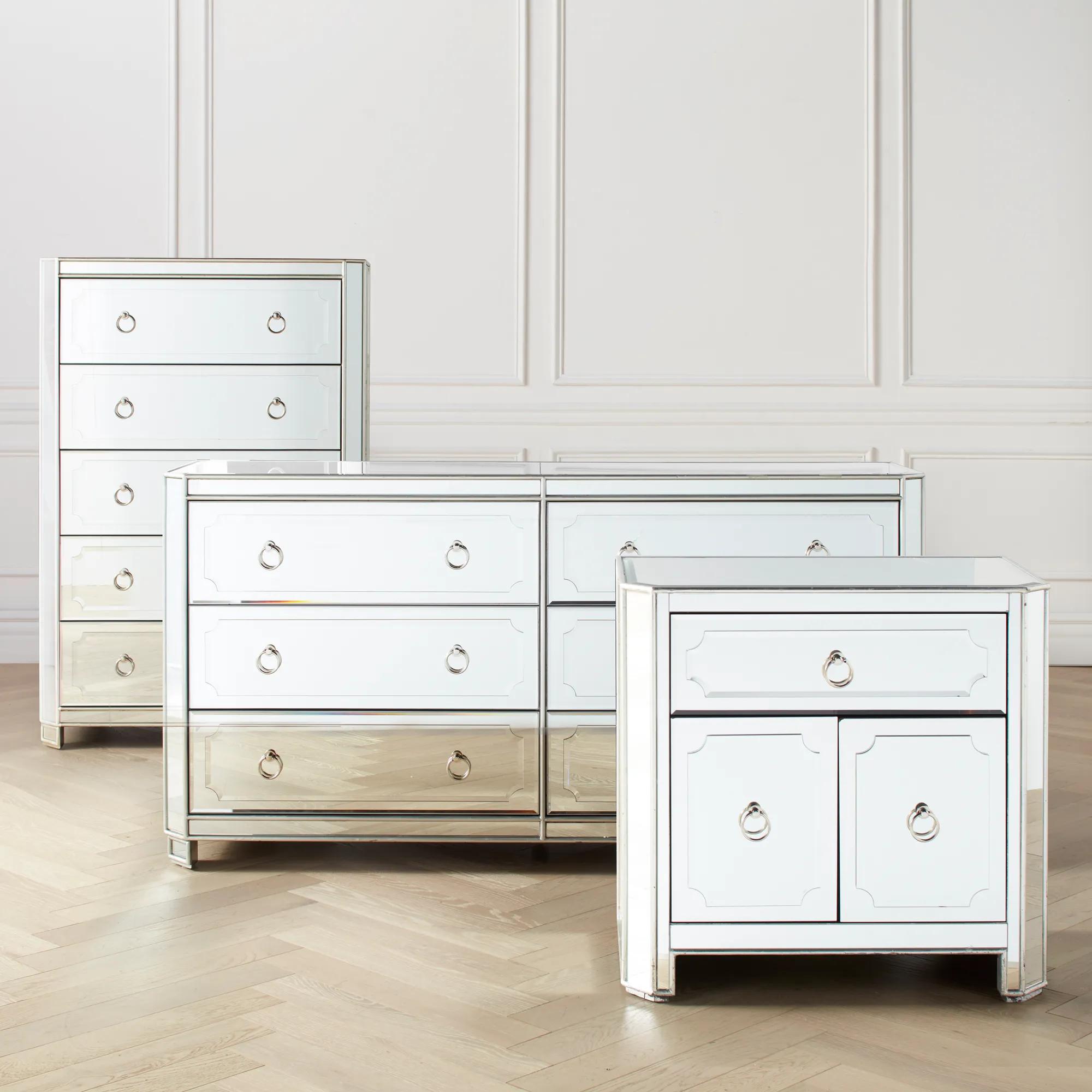 Simplicity Mirrored Silver 6-Drawer Dresser (66")$2299
A glamorous chest featuring beveled mirrored panels, hand-applied silver-leaf trim, and polished nickel hardware.
Add To Cart -
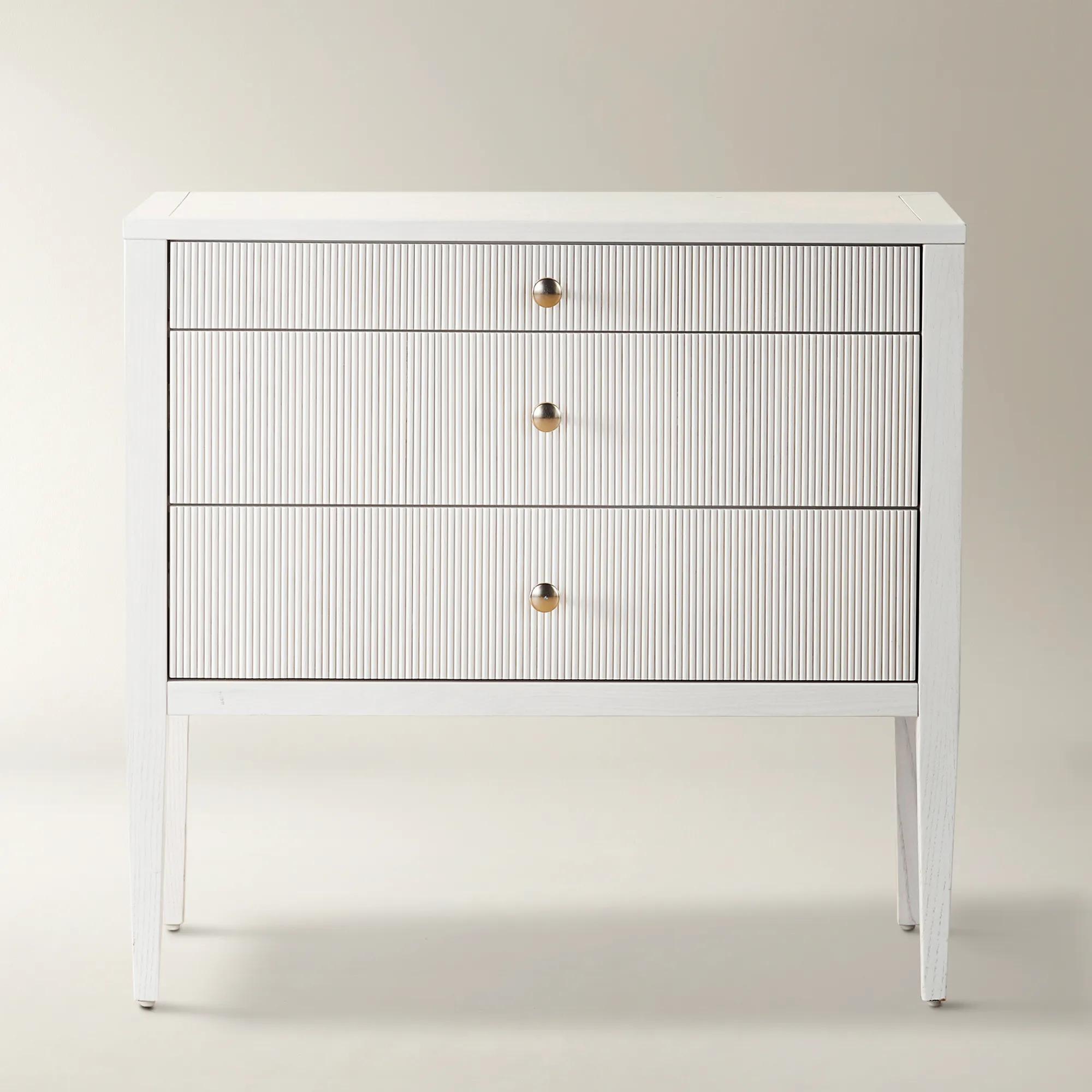 Viola Reeded White Ash Wood 3-Drawer Nightstand (31")$899
A modern nightstand in bone white ash wood with reeded drawers and brass hardware for a luxe touch.
Add To Cart -
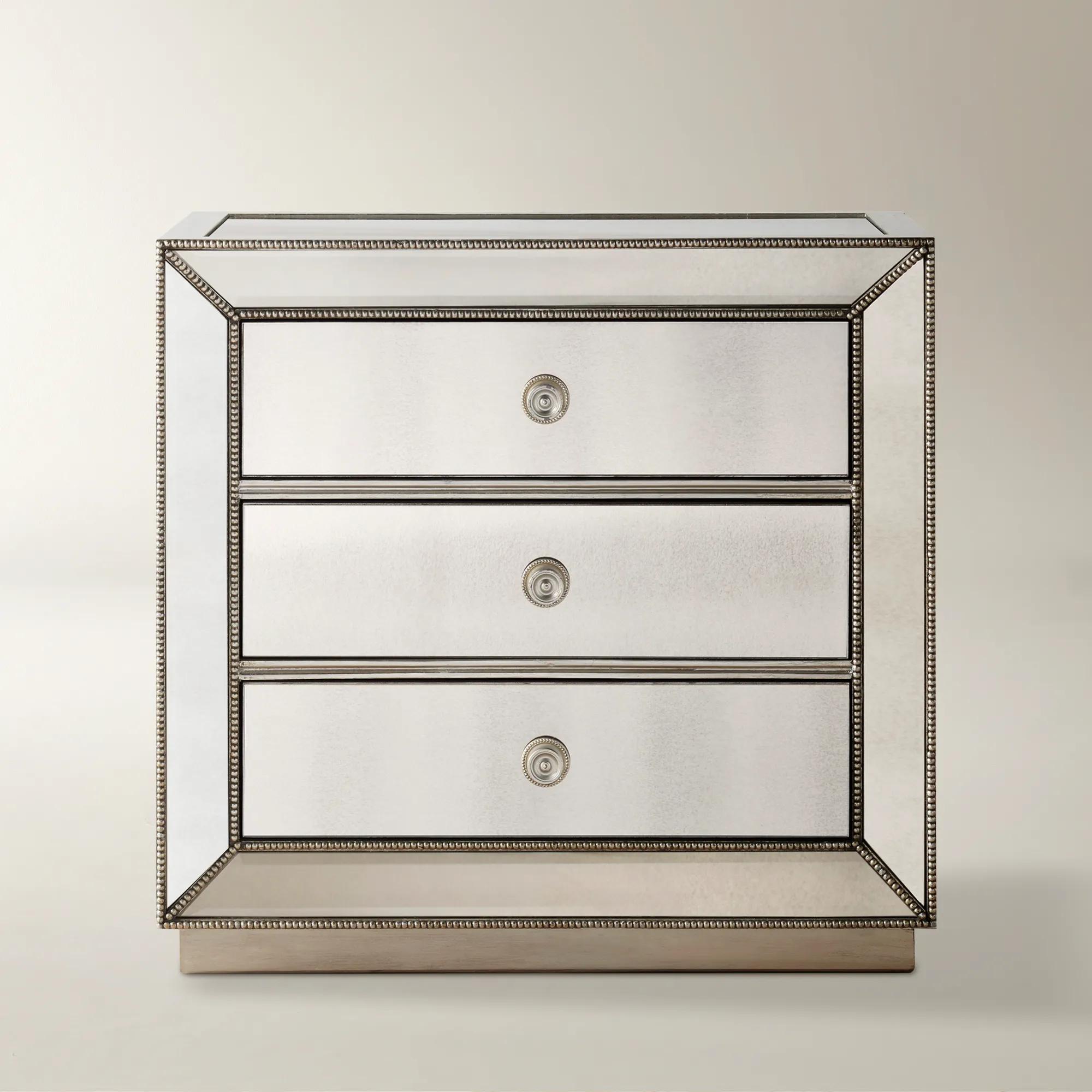
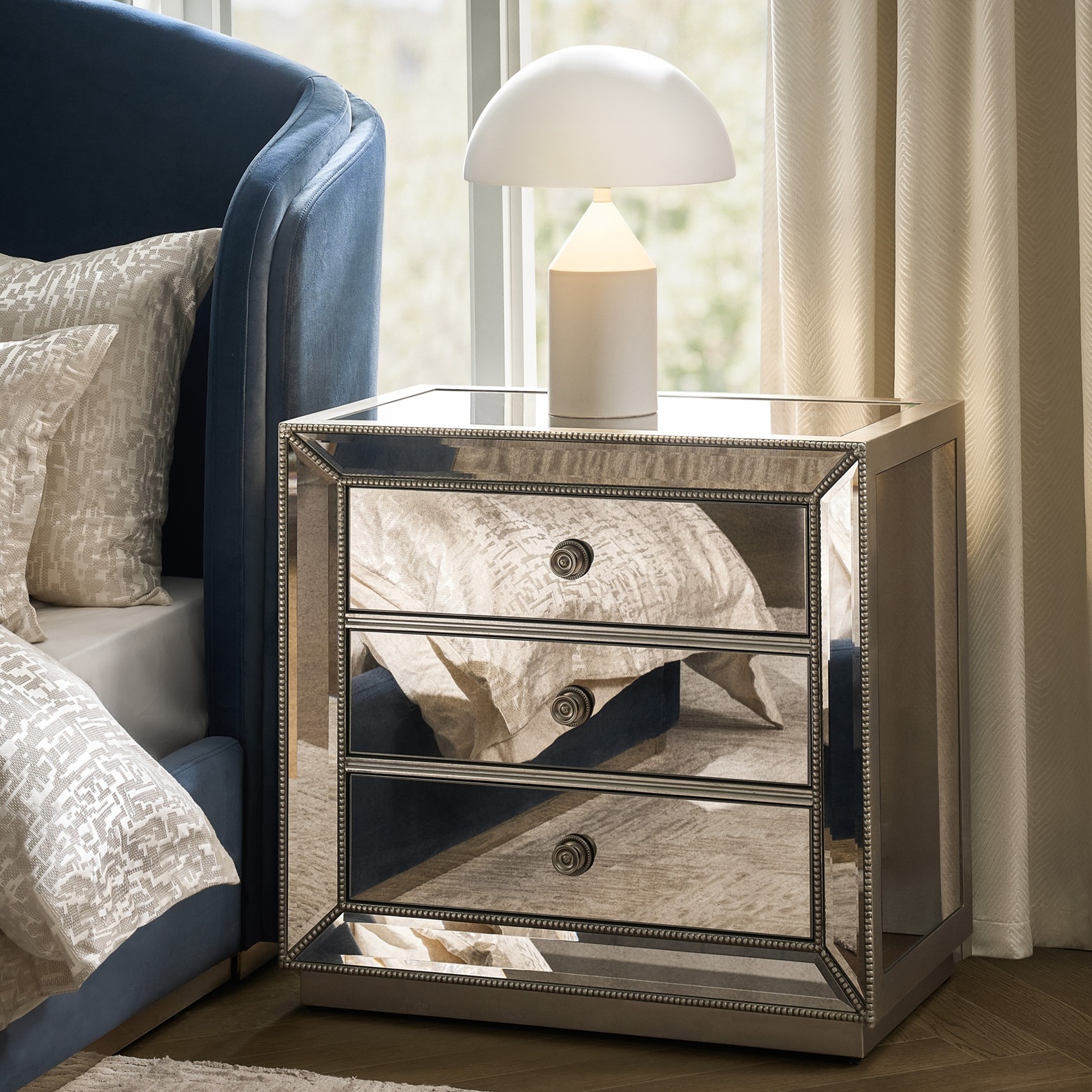 Omni Mirrored Silver 3-Drawer Nightstand (32")$1299
A glamorous chest featuring antiqued mirrored panels, hand-applied silver-leaf finish, and beaded trim.
Add To Cart -
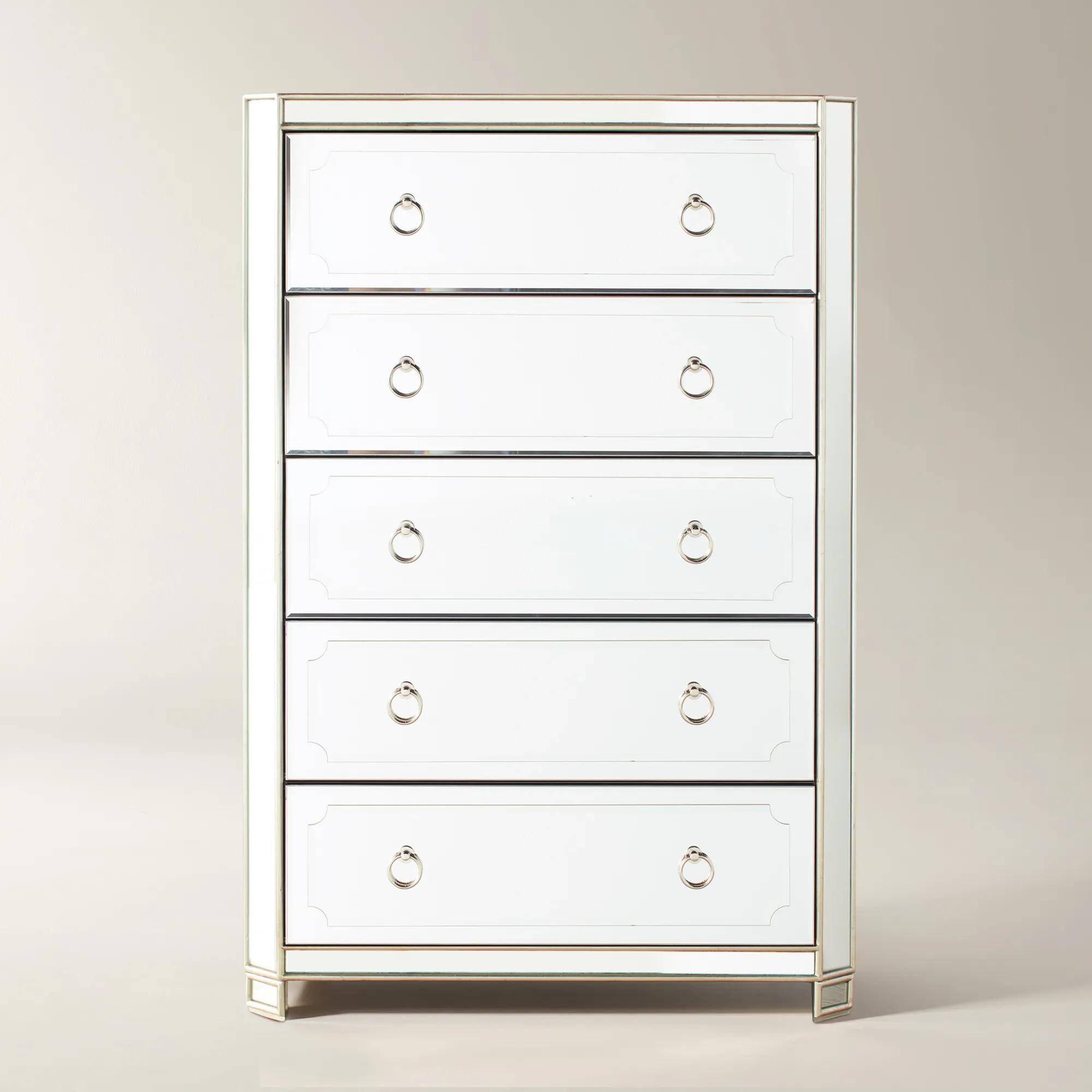 Simplicity Mirrored Silver 5-Drawer Tall Dresser (36")$1999
A glamorous tall chest featuring beveled mirrored panels, hand-applied silver-leaf trim, and polished nickel hardware.
Add To Cart -
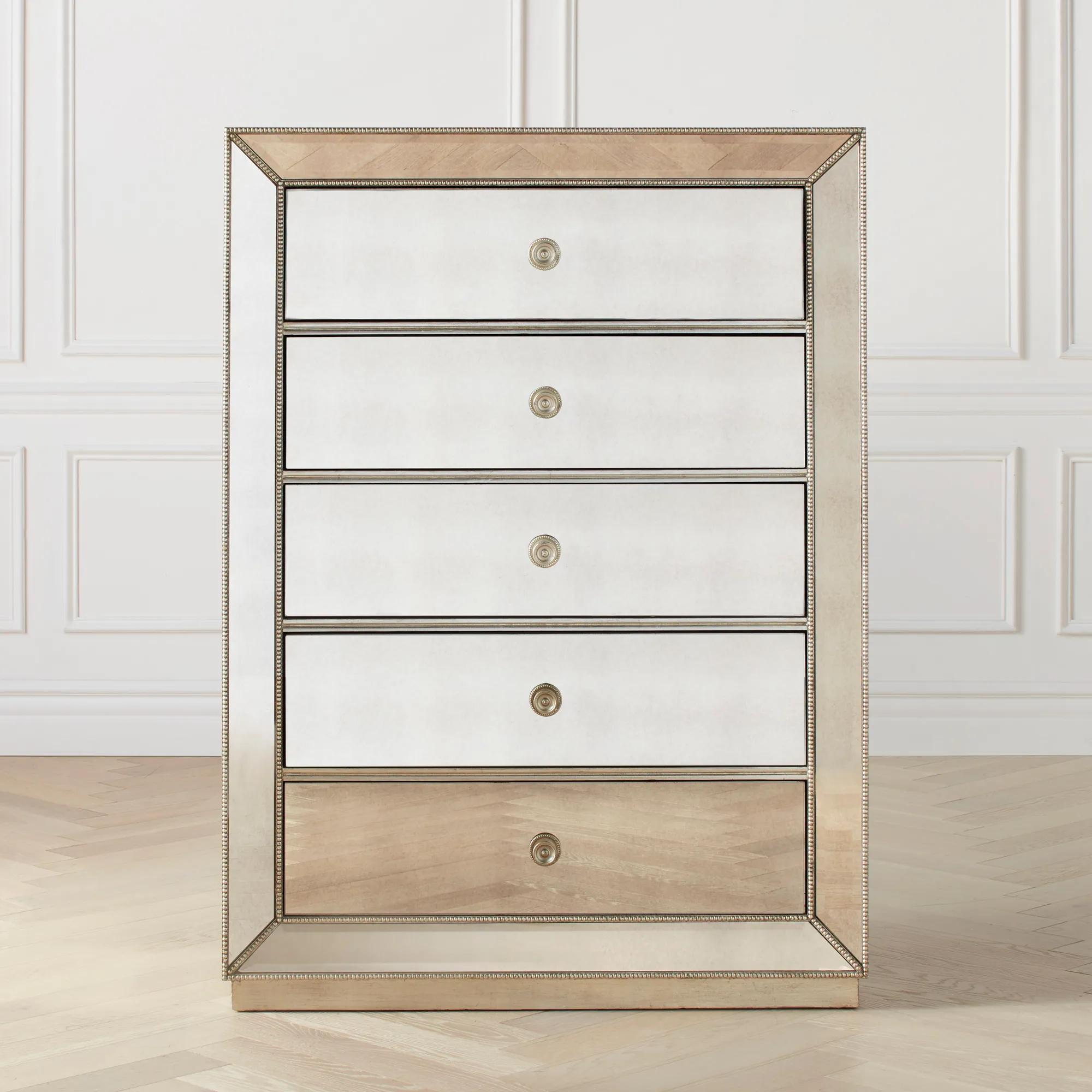
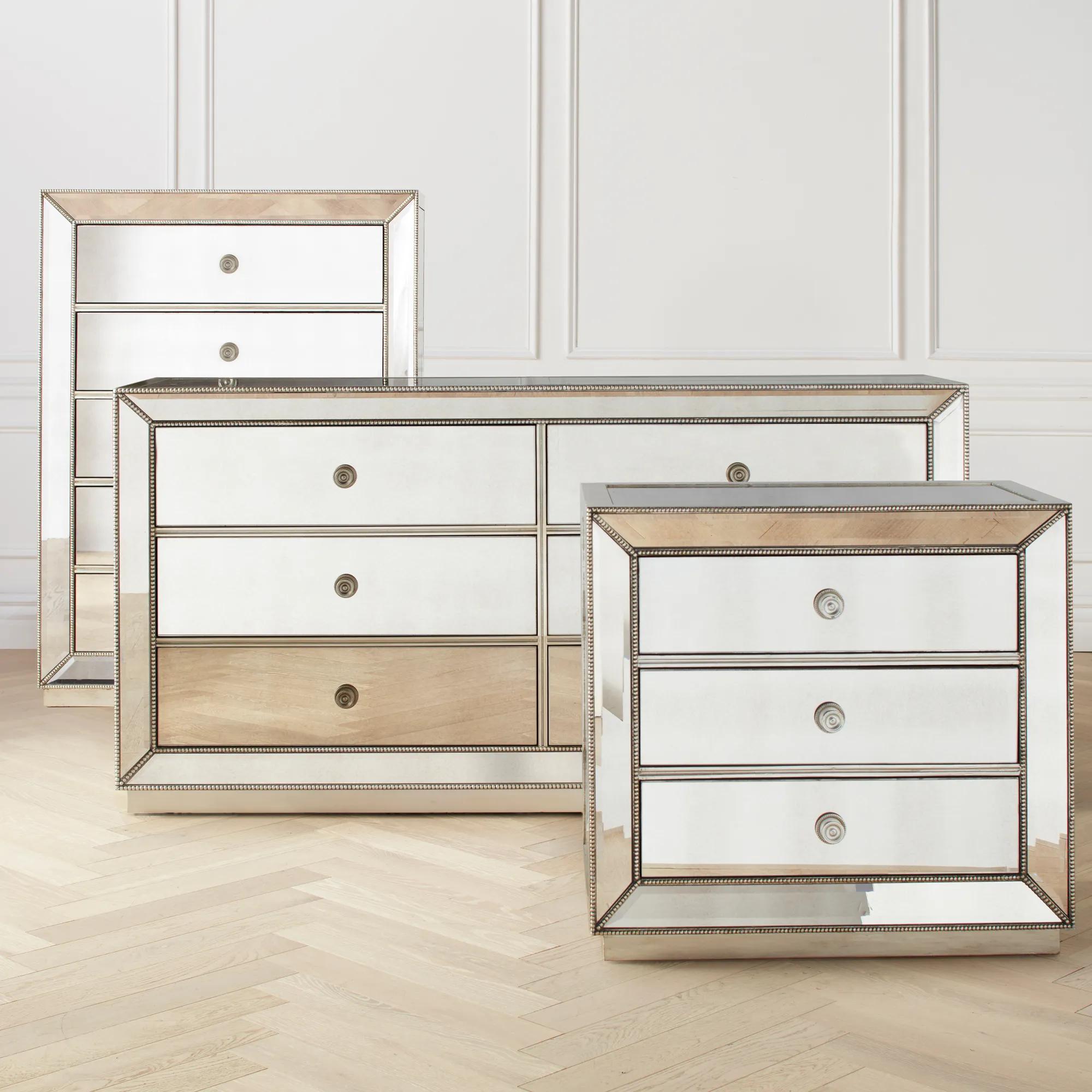 Omni Mirrored Silver 5-Drawer Tall Dresser (40")$2199
A dramatic chest featuring antiqued mirrored panels, hand-applied silver-leaf finish, and kiln-dried hardwood construction.
Add To Cart -
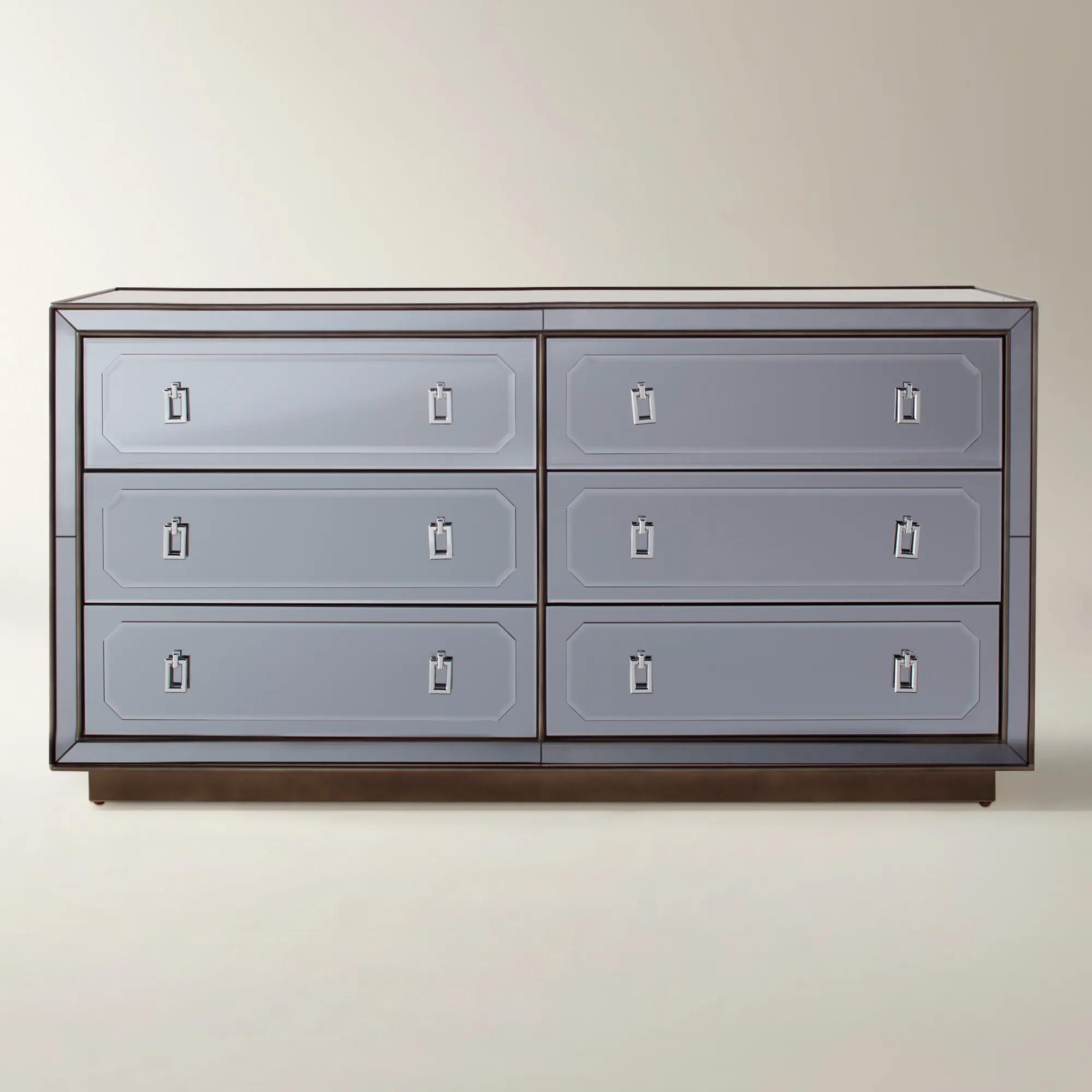 Maddox Mirrored Grey 6-Drawer Dresser (66")$2299
A modern dresser featuring beveled mirror paneling, graphite finish, and polished nickel hardware for sleek sophistication.
Add To Cart -
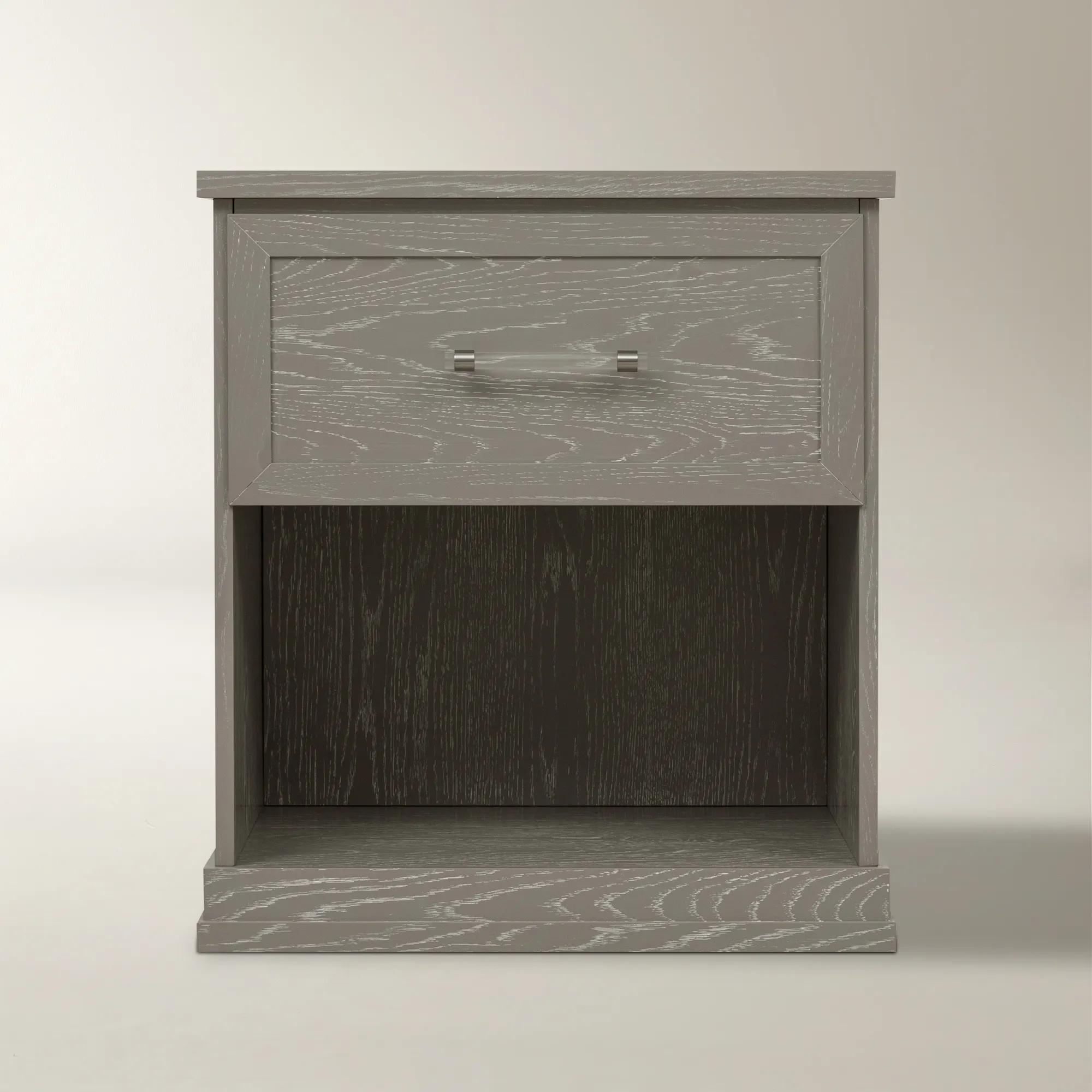
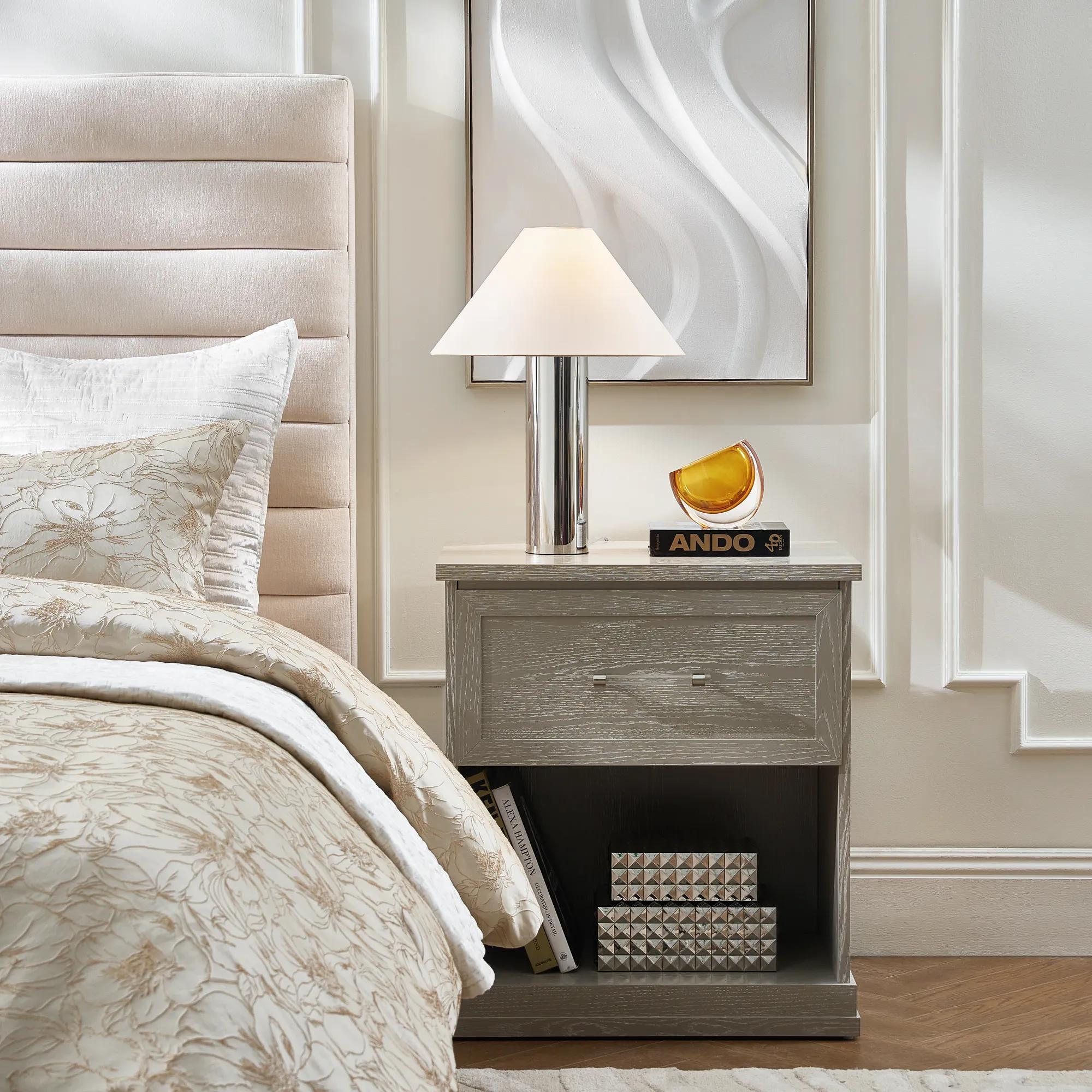 Arwin Grey Oak 1-Drawer Nightstand (26")$699
A contemporary grey hardwood veneer nightstand featuring acrylic and brushed silver handles with soft-closing drawers.
Add To Cart -
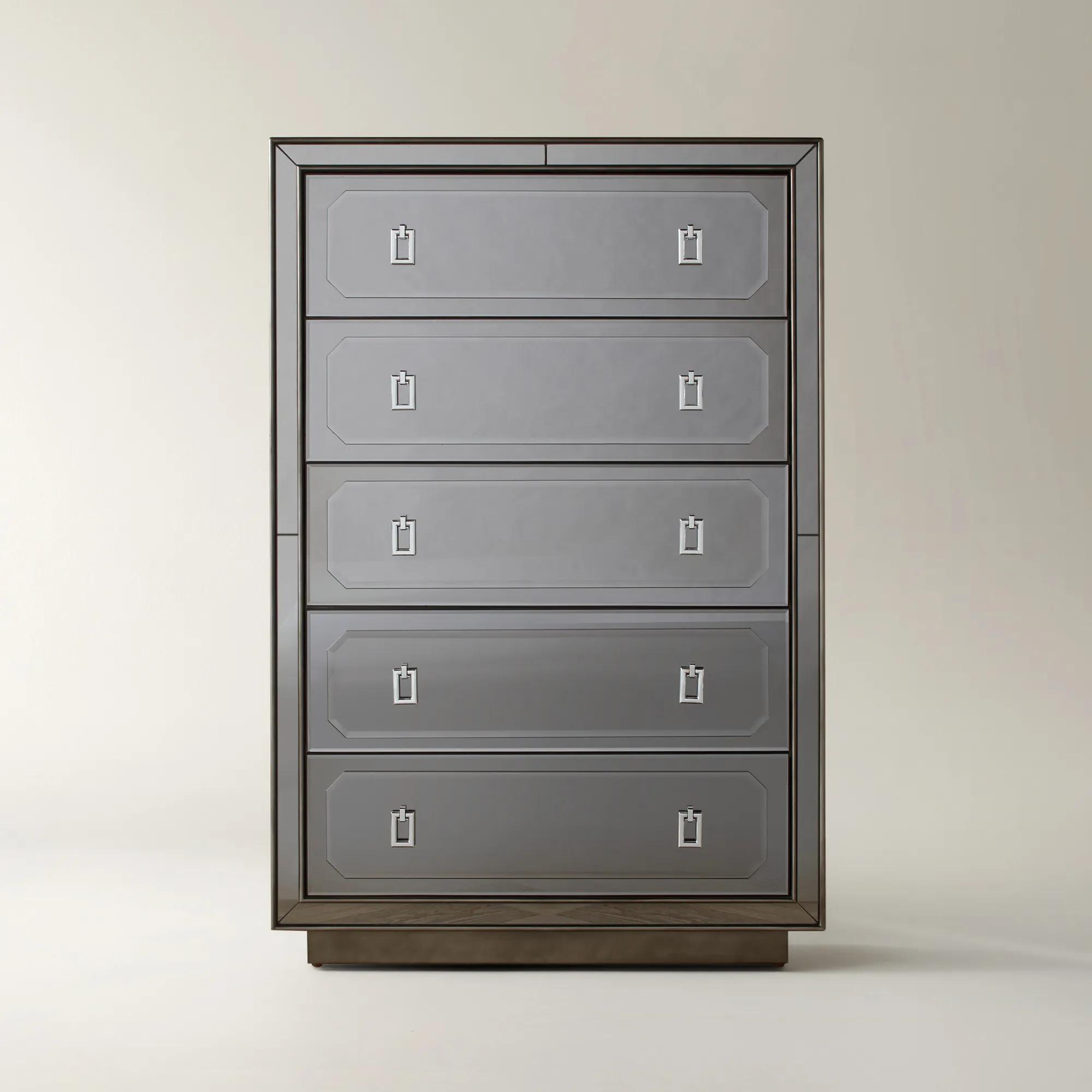 Maddox Mirrored Grey 5-Drawer Tall Dresser (36")$2099
A modern chest featuring beveled mirror panels, graphite finish, and polished nickel hardware for sleek sophistication.
Add To Cart -
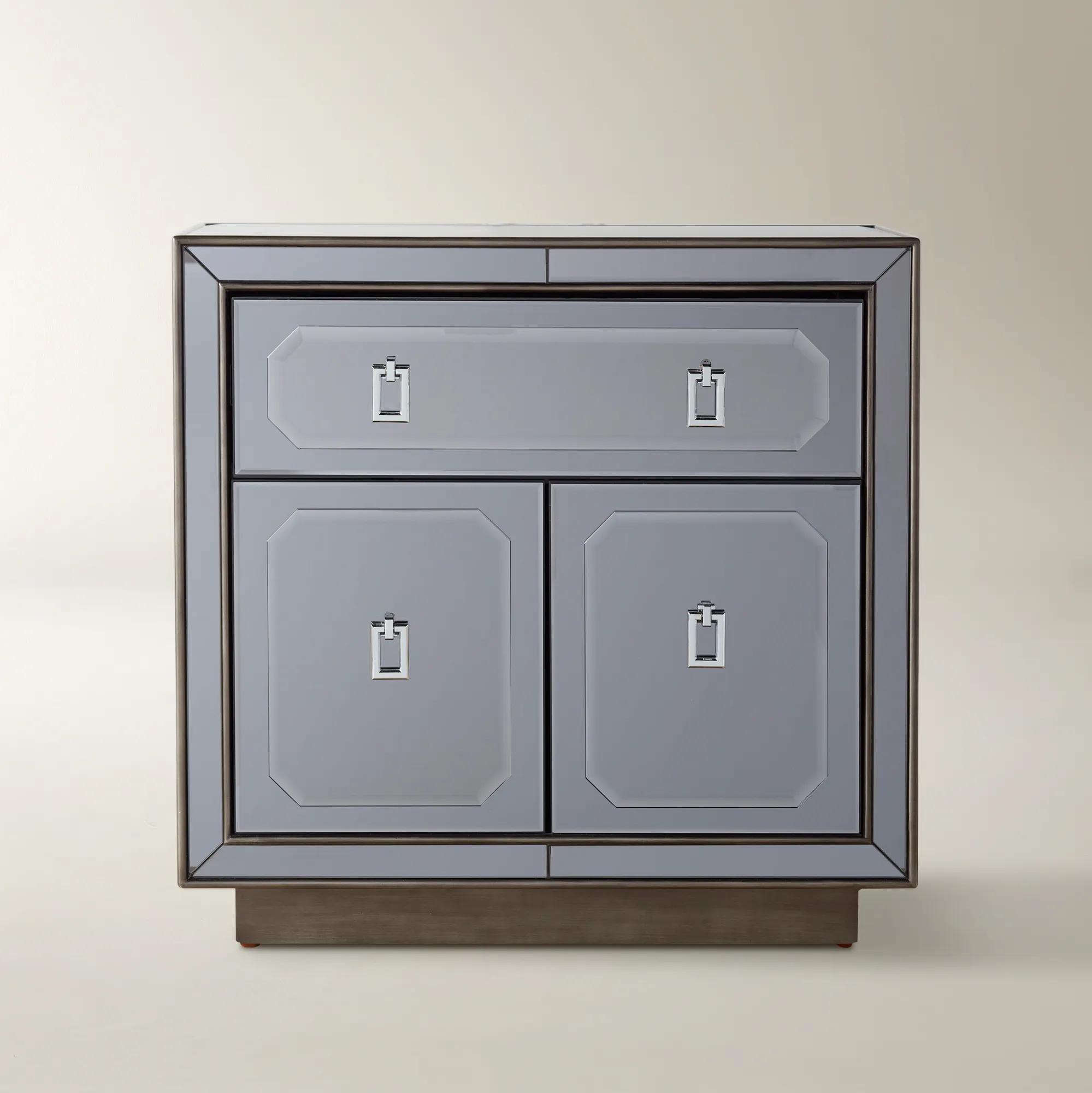
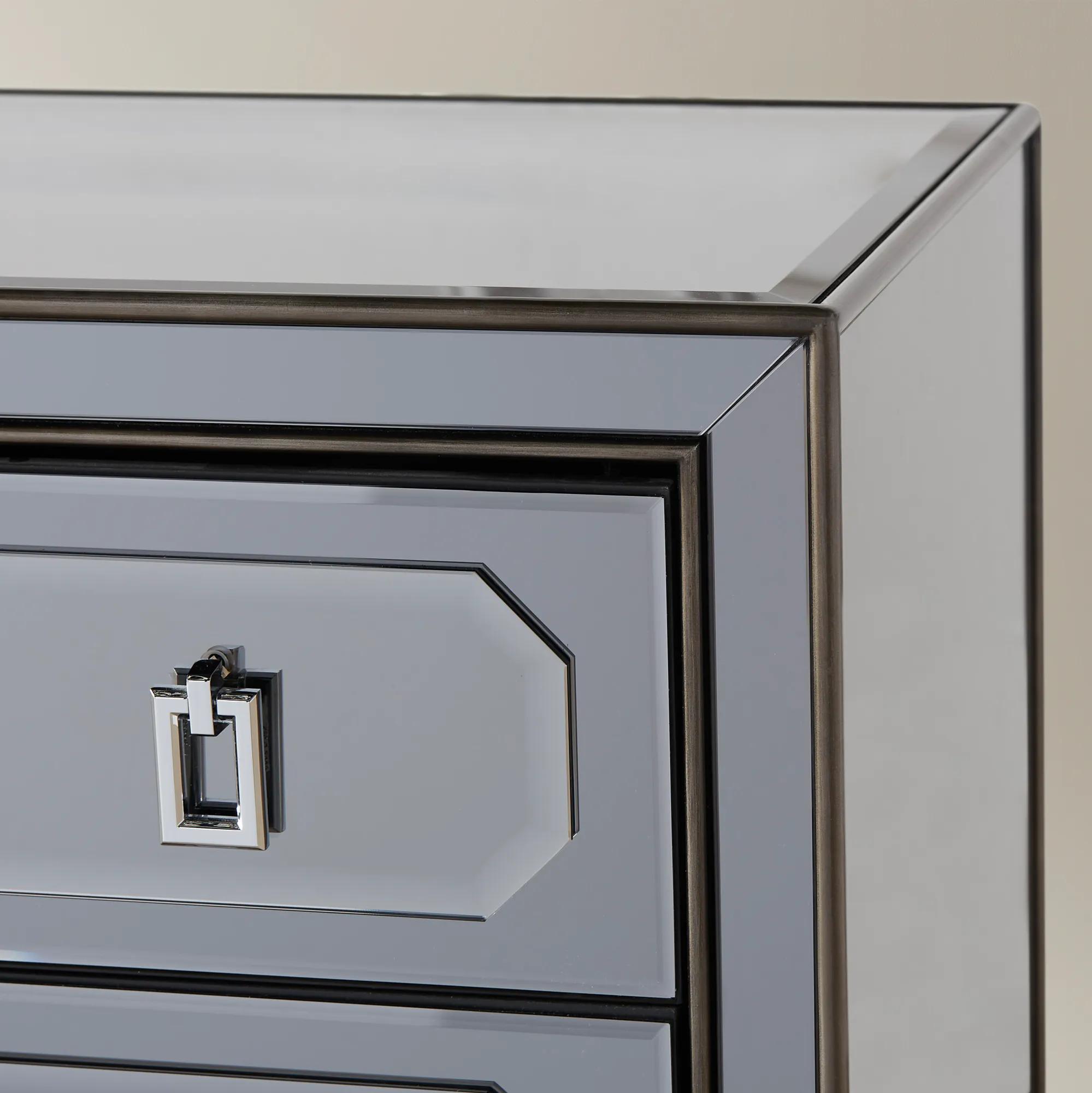 Maddox Mirrored Grey 1-Drawer Nightstand (30")$1099
A modern nightstand featuring beveled mirror paneling, graphite finish, and polished nickel hardware for a luxe touch.
Add To Cart -
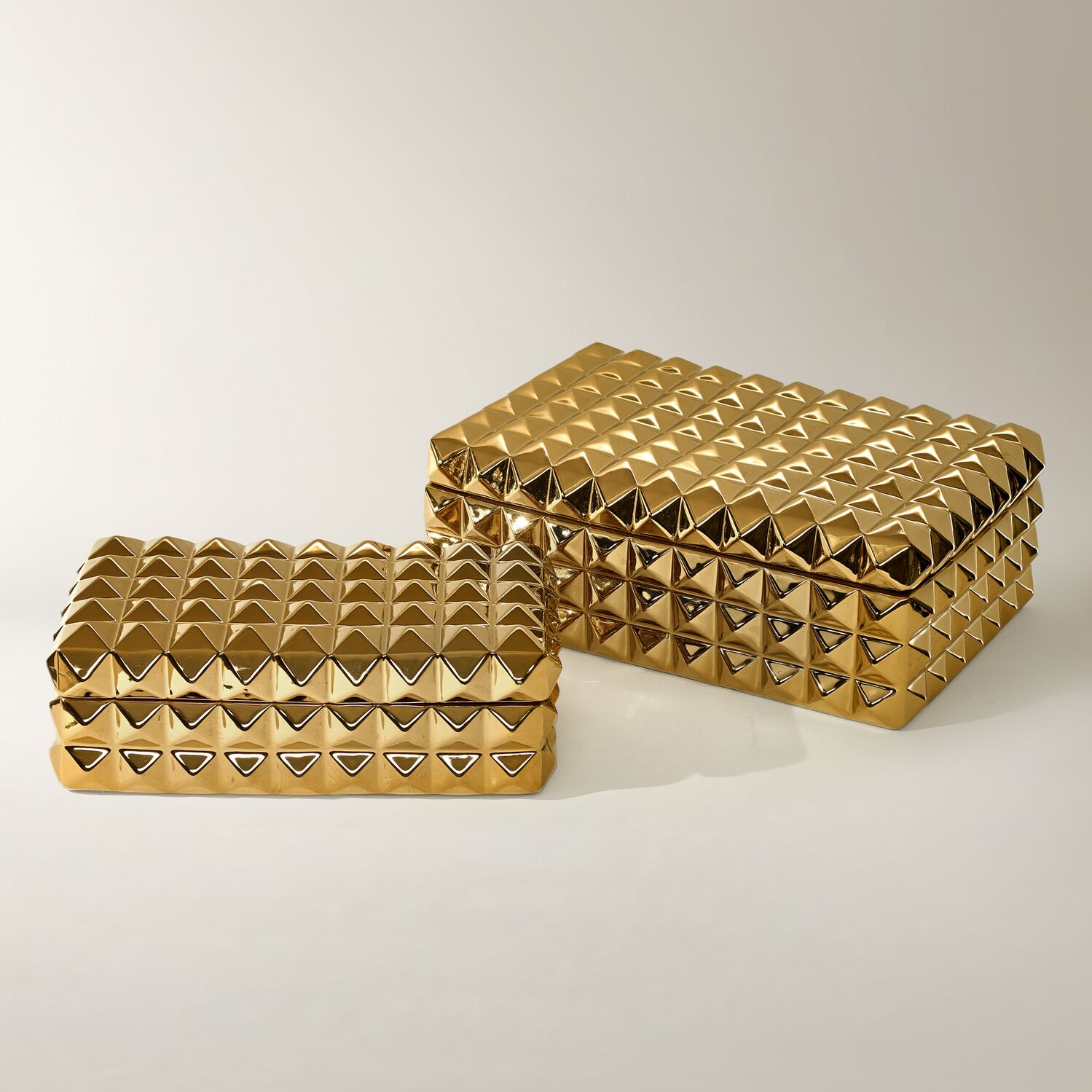 Studded Gold Ceramic Box Large$79
A chic gold-finished box with a studded design, perfect for dressers, vanities, or consoles.
Add To Cart -
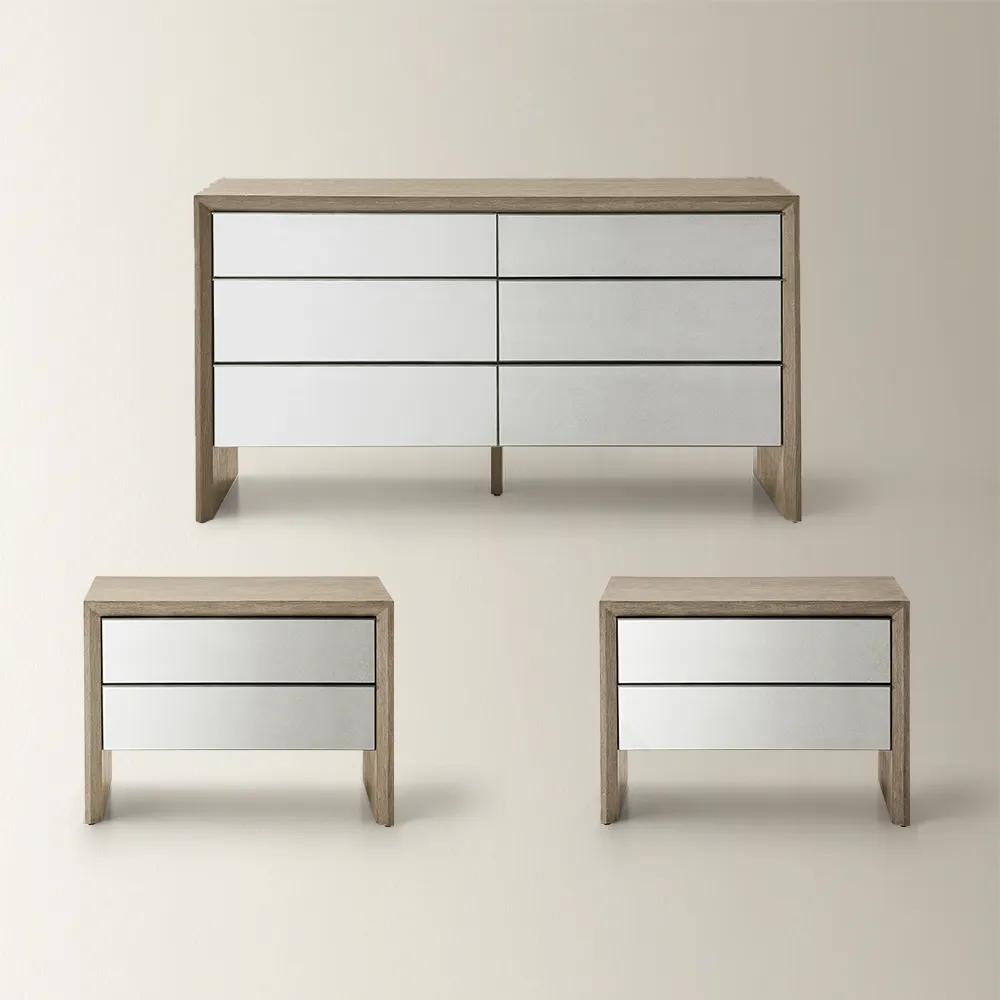 Glimmer Set of 3 Bedroom$3097
A coordinated bedroom furniture set featuring a dresser and two nightstands for cohesive storage.
Add To Cart -
Studded Gold Ceramic Box Small$59
A chic gold-finished box with a studded design, perfect for dressers, vanities, or consoles.
Add To Cart -
 Tuxedo Box$159
A sleek black high-gloss lacquer box with a velvet-lined interior for elegant storage.
Add To Cart -
 Studded Black Ceramic Box Large$79
A black ceramic box with raised studded texture, offering bold, modern style for decorative storage.
Add To Cart -

 Paxton Box Black/Gold$159
A high-gloss black lacquer box with gold dome accents and a soft velvet-lined interior for keepsakes.
Add To Cart -
 Trove Soft Gold Marble Stainless Steel Decorative Box$129
A soft gold stainless steel and MDF box that adds modern glamour and artful storage to any space.
Add To Cart

Modern Storage For Small Spaces
Explore modern storage for small spaces to bring order to compact rooms with a polished, contemporary presence. As you browse, consider what you need to organize, compare dimensions with your available space, and keep pathways clear—so your storage complements the room’s design without overwhelming it.
Modern storage for small spaces combines multifunctional furniture, vertical shelving, and slim-profile cabinets to make limited square footage feel composed rather than crowded. The most successful pieces create a place for everyday belongings while contributing shape, texture, and personality to the room. In an apartment living area, a compact cabinet can conceal charging accessories and paperwork beneath a beautifully arranged surface. A storage ottoman brings a softer silhouette to the same space, offering a place to tuck away throws while serving as an extra seat when its construction supports that use. Narrow bookcases draw attention upward, giving books, ceramics, and collected objects a presence without extending far into the room. This balance of concealed storage and open display is especially valuable in studios, condos, and rooms that serve more than one purpose. Closed doors keep practical necessities out of sight; a few open shelves allow expressive details to remain part of the interior. Rather than filling every available inch, thoughtfully proportioned storage leaves room around furnishings so that distinctive finishes and sculptural lines can register. A mirrored door can introduce reflected light, a rich wood surface can bring depth to pale walls, and a metallic accent can turn a modest corner into a deliberate focal point. Small-space storage furniture also helps define different activities within a shared room. A low cabinet beside a dining area can hold table linens and serving essentials, while a compact drawer unit near a work surface keeps office supplies from taking over the living space. For someone furnishing a first apartment, downsizing into a more intimate home, or bringing order to a guest room, these pieces offer more than organization. They make it possible to live with favorite possessions without allowing those possessions to dominate the setting. The result is an interior with a clear point of view: expressive, welcoming, and generous in feeling, even when the floor plan is compact.
Materials and construction shape both the character and the everyday performance of modern storage furniture. Solid wood brings natural grain variation and a substantial presence, while wood veneer offers the beauty of a real wood surface over a supporting core. Engineered wood can provide a consistent foundation for painted, veneered, or decorative finishes; its durability depends on the quality of the construction, the surface treatment, and how the piece is used. Metal frames introduce crisp definition and can give shelving an open appearance, particularly when paired with glass or slender shelves. Glass and mirrored details add brilliance without the visual density of an entirely opaque cabinet, although transparent surfaces leave contents visible and reflective finishes tend to show fingerprints. Upholstered storage brings another layer of possibility, softening a bedroom or seating area with texture while keeping less decorative essentials concealed. For pieces that receive frequent handling, details such as smoothly operating drawers, securely attached hardware, supported shelves, and well-finished edges deserve close attention. Adjustable shelves accommodate belongings of different heights, while fixed compartments provide a more structured arrangement. Neither is inherently better; the right interior depends on whether the storage will hold folded textiles, tall vessels, books, or small accessories. Care requirements should suit the pace of the household, too. Wood and veneered surfaces generally benefit from gentle dusting, prompt attention to spills, and protection from prolonged moisture, always following the manufacturer’s instructions. Glass, mirror, metal, and upholstery each require care appropriate to their particular finish or fabric rather than a single cleaner used across the entire piece. Protective pads beneath decorative objects can help reduce surface marks, and distributing contents within stated weight limits supports reliable use. In a compact home, where a cabinet may be opened many times a day and an ottoman may serve several roles, thoughtful construction and manageable care help preserve the polished impression that made the piece appealing in the first place.
Fit is as much about movement and access as it is about width, depth, and height. A slender cabinet may suit an entryway beautifully, but its doors still need room to open without interfering with the front door or narrowing a busy passage. Drawers require clearance in front, and lift-top storage needs enough space above for the lid to operate comfortably. Measurements should account for baseboards, nearby outlets, window ledges, and the route the furniture will travel into the room. A shallow profile can be especially useful beside a bed or along a dining wall, where a few inches of depth can affect how easily someone moves through the space. Tall storage takes advantage of vertical space, but stability remains essential: follow the manufacturer’s anchoring instructions, respect shelf capacities, and keep heavier belongings low. In homes with children or pets, secure placement and appropriate hardware are particularly important. The appeal of Furniture for Small Spaces With Storage lies in this relationship between beautiful proportions and genuine daily purpose. A bedside piece with concealed compartments can keep reading glasses, cords, and personal essentials close without crowding the surface. A narrow entry cabinet can establish an elegant arrival, with everyday necessities behind its doors and a single striking object above. In a combined living and dining room, storage with a compatible finish can connect the two areas without requiring every piece to match. Repeating one material or accent color creates continuity; varying heights and silhouettes keeps the arrangement from feeling rigid. Interiors also benefit from distinguishing belongings that deserve display from those that simply need a convenient home. A few generously spaced objects on an open shelf often have more presence than a crowded arrangement, especially against a dramatic wall color or reflective backdrop. Modern storage makes that restraint possible without asking a small home to lose its richness. It gives daily life an orderly foundation while leaving the room free to express something more personal.
FAQs
Modern storage brings organization into the design story through sculptural silhouettes, intentional compartments, and expressive details. Think beyond purely practical furniture: a cabinet, console, or shelving arrangement can anchor a room’s aesthetic while giving everyday belongings a considered place.
Open storage puts your personal collection on display, turning books, decorative objects, and meaningful treasures into a curated composition. Closed storage keeps belongings behind doors or within drawers for a more uninterrupted look. Combining the two creates a compelling balance of display and discretion.
Treat the surface as a vignette rather than a landing place. Pair a sculptural vase with a stack of art books, then introduce artwork for a dramatic backdrop. Leave breathing room between arrangements so each detail feels intentional and the furniture’s silhouette remains part of the composition.
Look for a shared design thread, such as a curved profile, a recurring color, or a distinctive geometric detail. Your storage does not need to match every piece. A deliberate contrast can bring depth to the room while a repeated visual element makes the overall arrangement feel cohesive.
Tonal palettes create an elegant backdrop, while a deep accent color introduces a more dramatic point of view. Consider ivory with charcoal, warm neutrals with rich plum, or a confident black-and-white composition. Echo your chosen hues in artwork and decorative accents to give the room a polished visual rhythm.