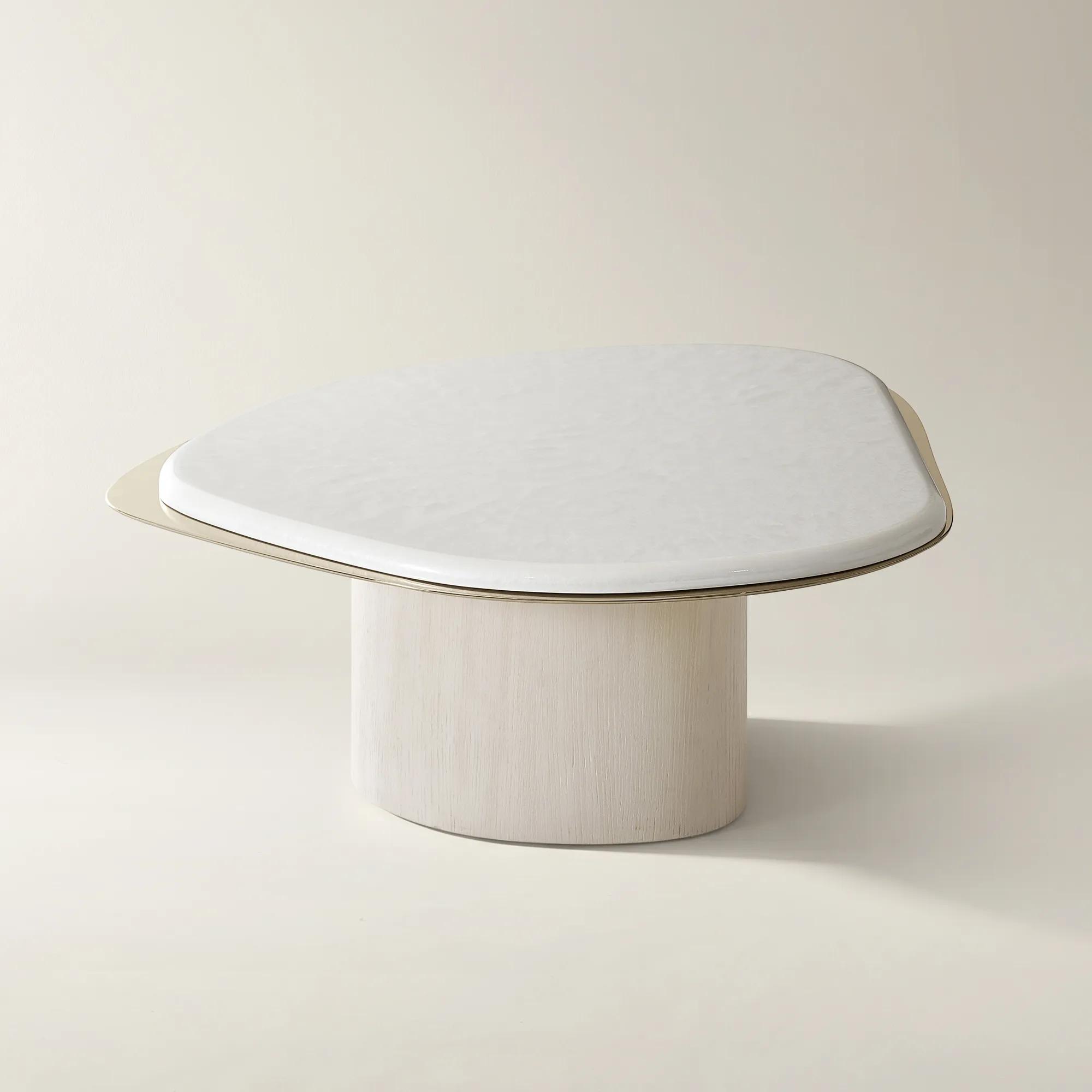
Modern Sculptural Coffee Tables
Modern Sculptural Coffee Tables
-
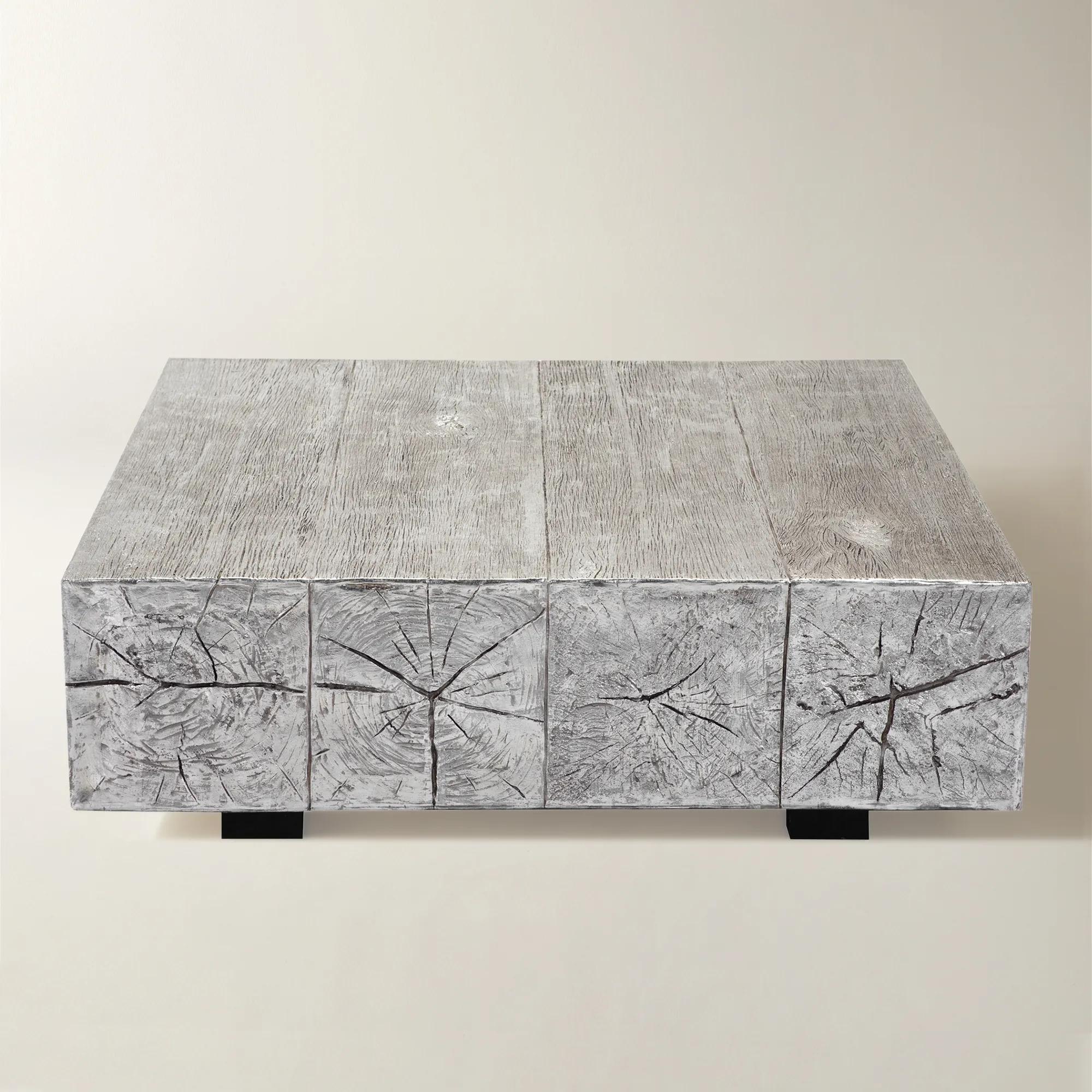
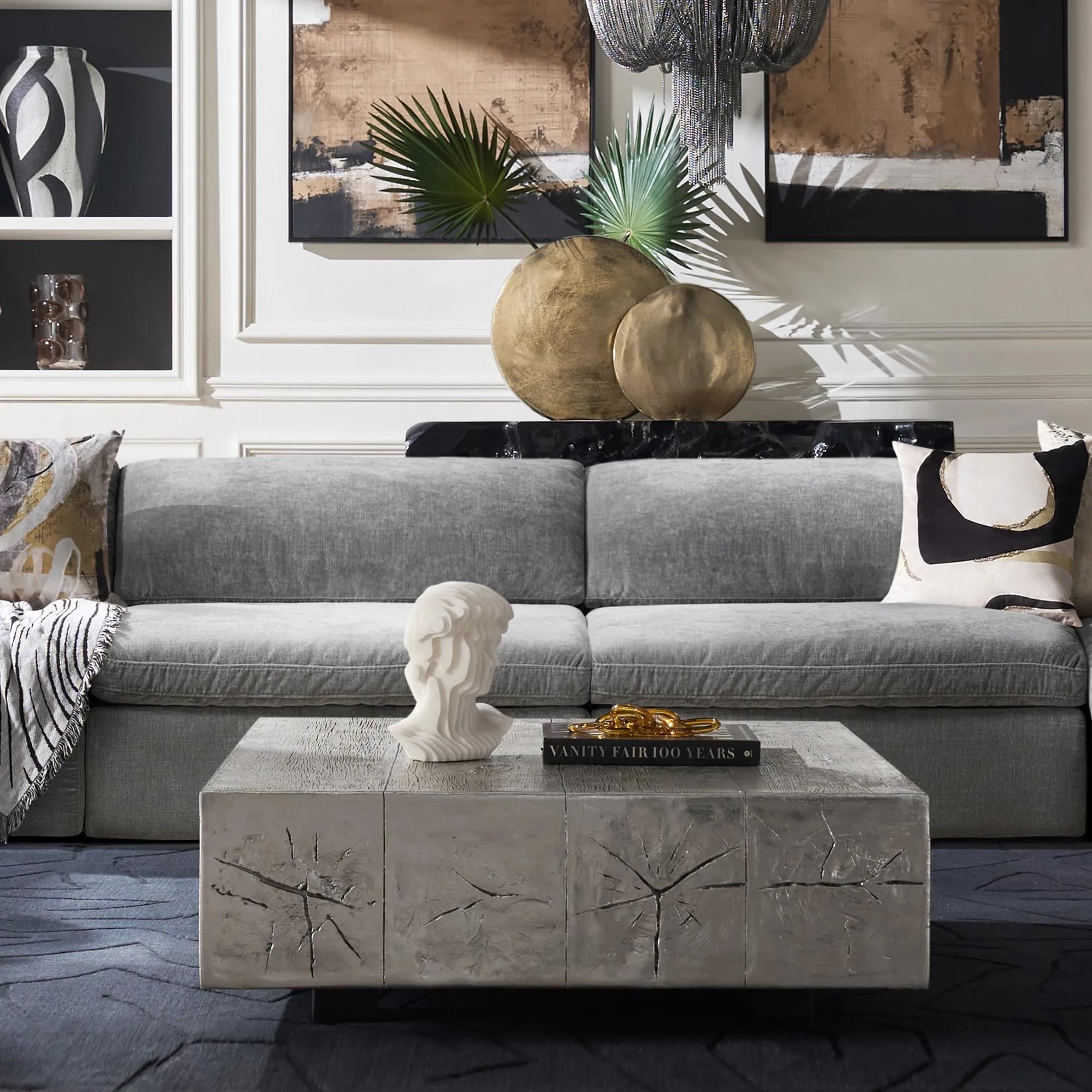 Timber Square Silver Resin Coffee Table (44")$1299
A hand-painted silver resin coffee table featuring authentic silver leaf and an antiqued, hand-rubbed oil finish.
Add To Cart -
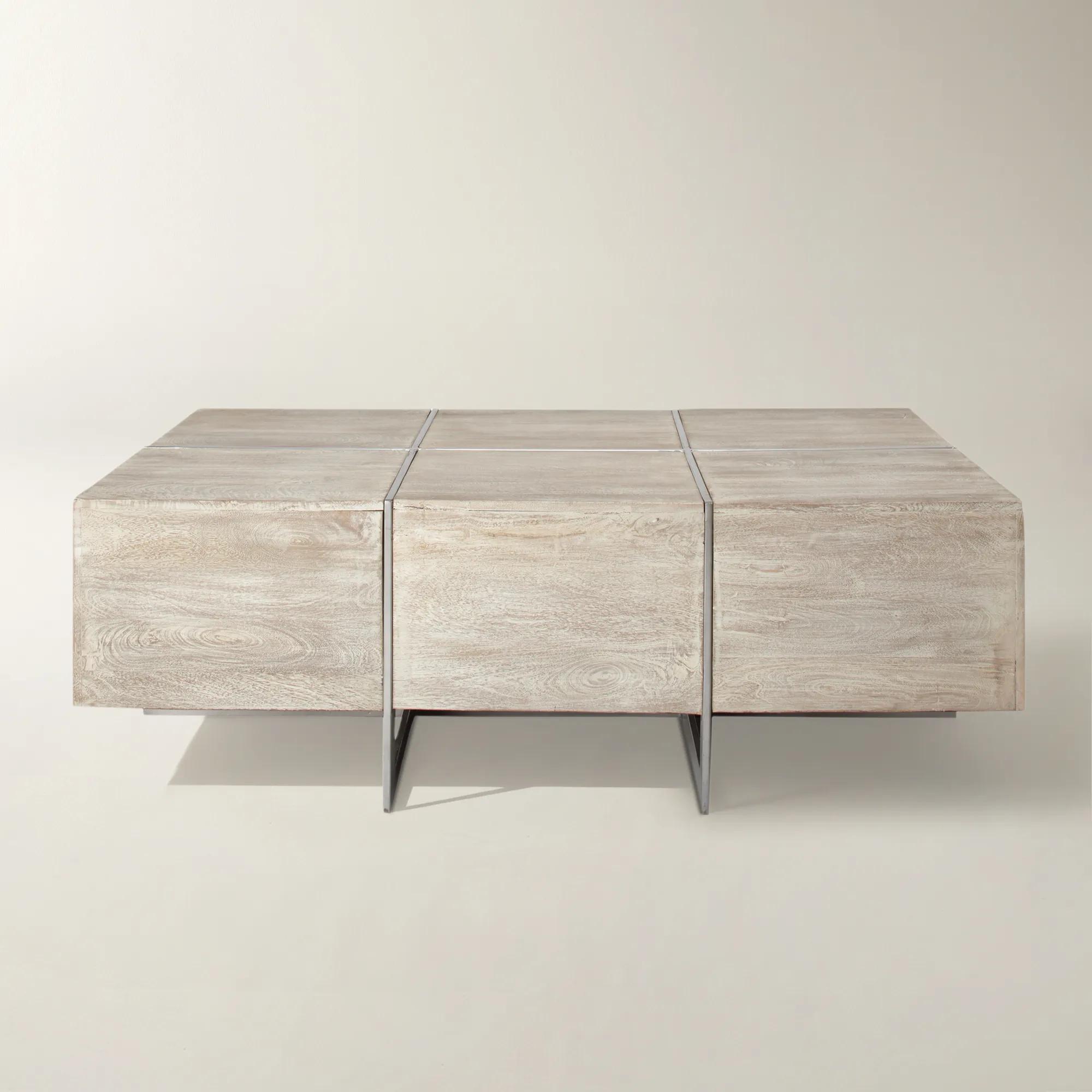
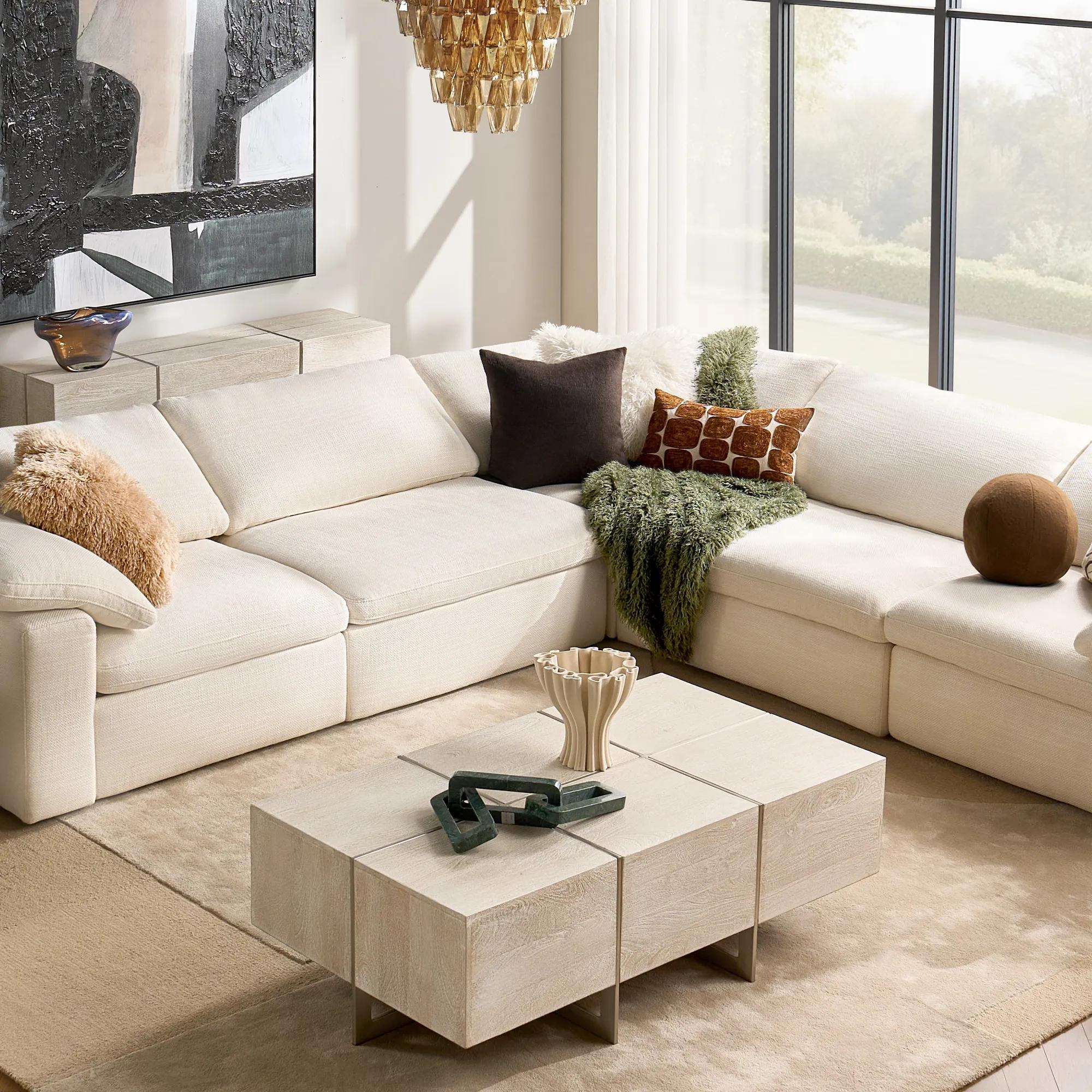 Clifton Rectangular Natural Mango Wood Coffee Table (54")$1299
A handcrafted mango wood table with a whitewashed finish and antiqued silver iron legs for organic appeal.
Add To Cart -
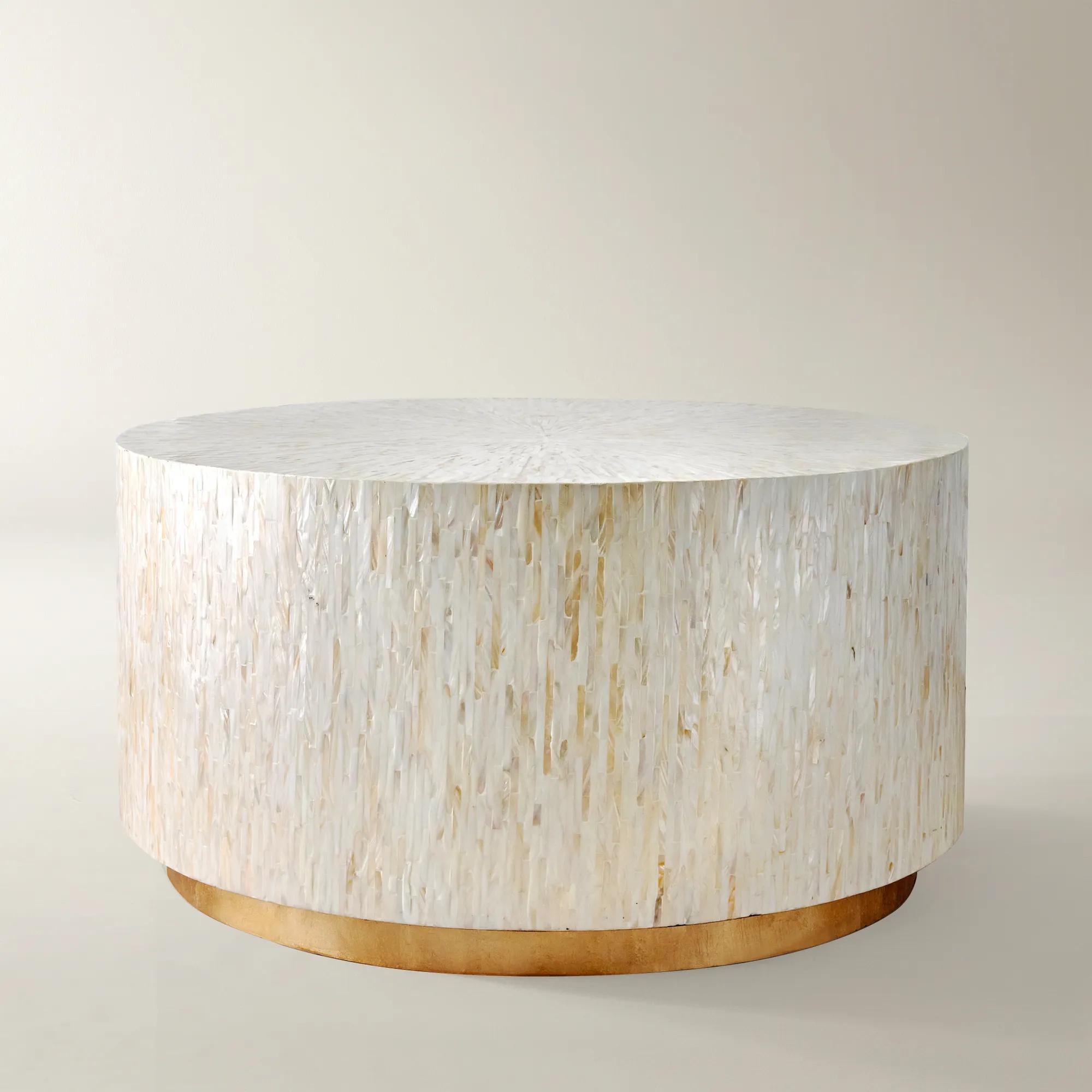
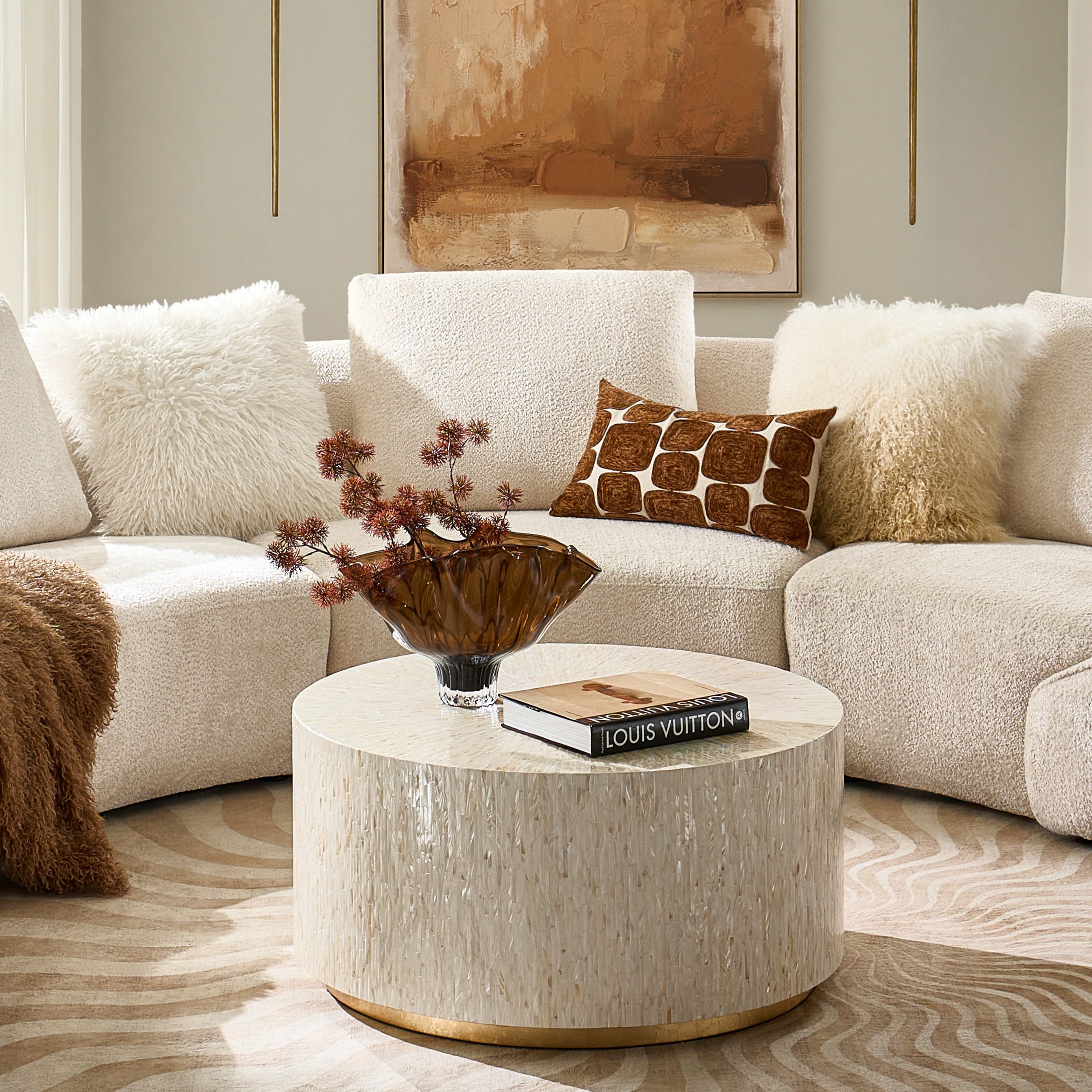 Alexandria Round Mosaic Platinum Coffee Table (36")$799
A luminous ivory coffee table featuring hand-applied mother-of-pearl mosaic and a gold leaf-accented base.
Add To Cart -
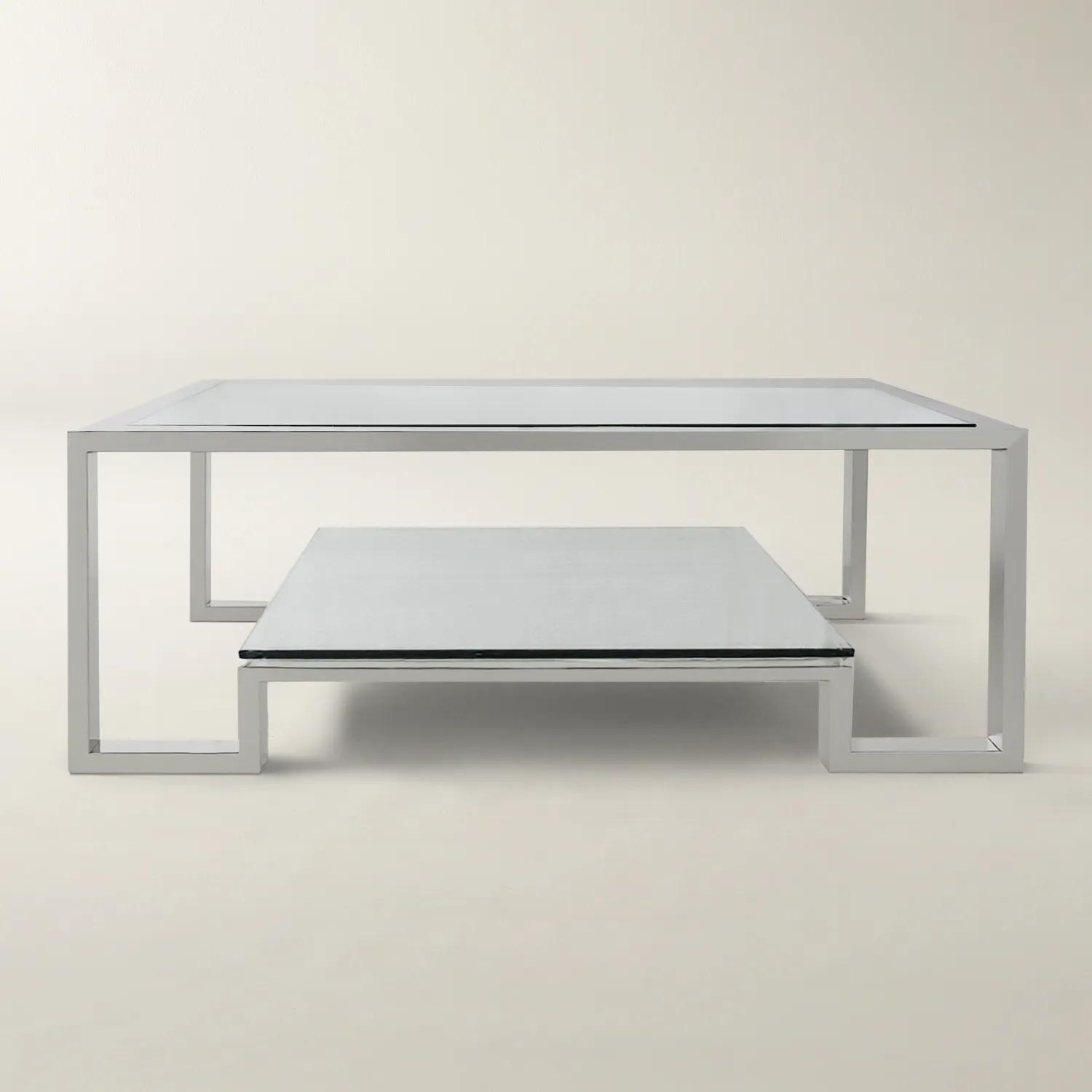
 Duplicity Rectangular Silver Stainless Steel Coffee Table With Glass Top (50")$1399
A modern coffee table featuring a stainless steel frame, tempered glass top, and floating bottom shelf.
Add To Cart -
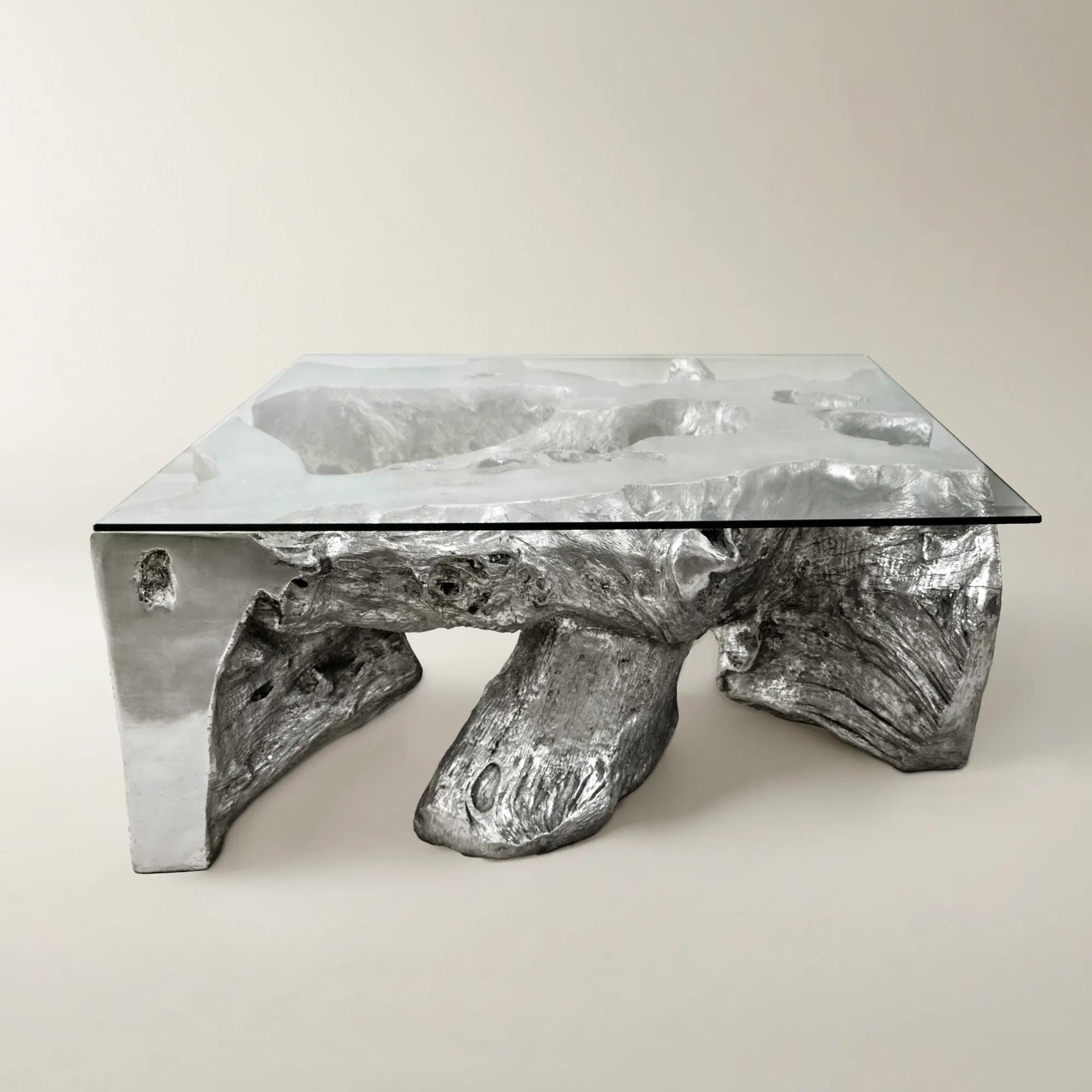 Sequoia Silver Resin Coffee Table With Glass Top (44")$2299
A sculptural coffee table featuring a hand-applied silver leaf resin base and a tempered glass top.
Add To Cart -
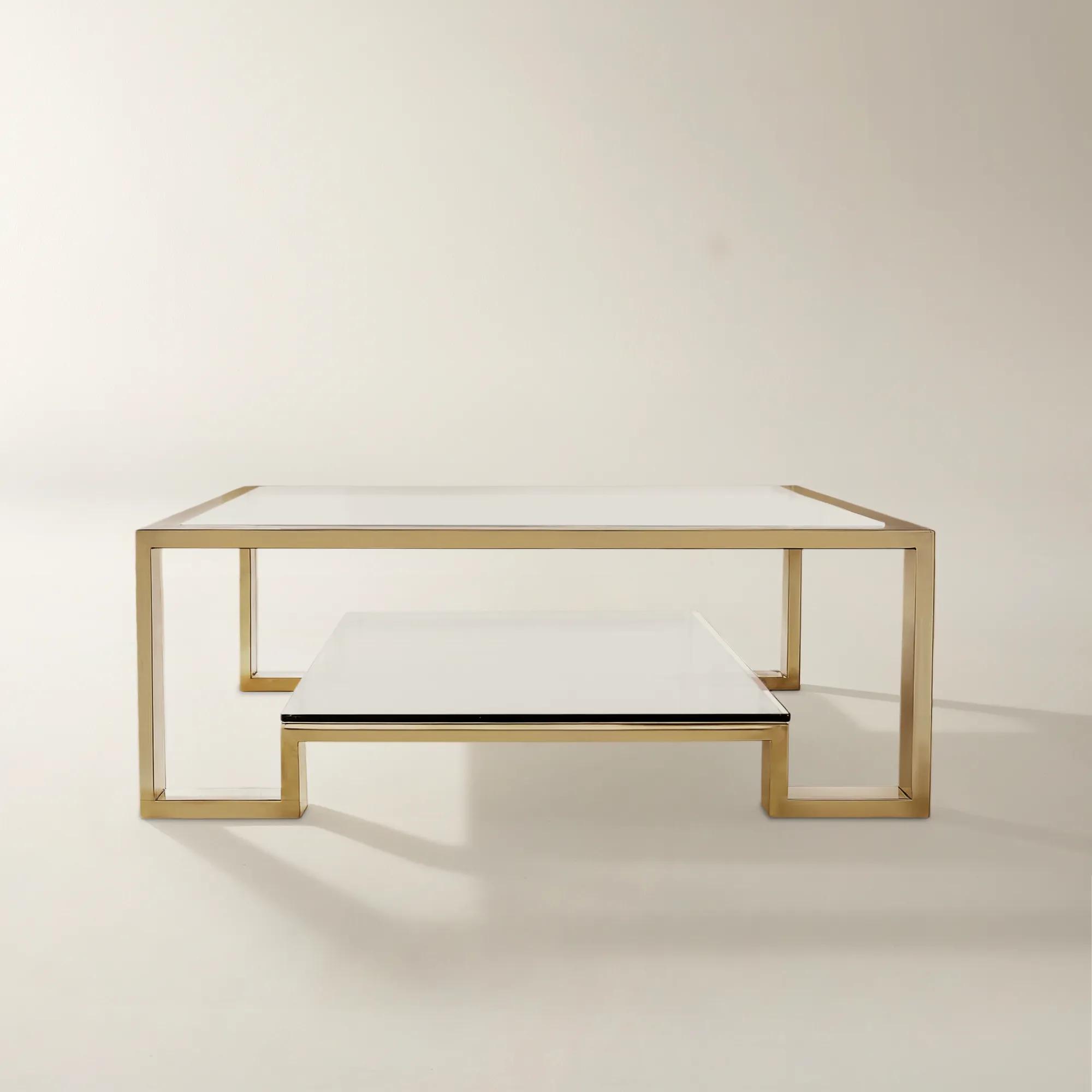 Duplicity Rectangular Gold Stainless Steel Coffee Table With Glass Top (50")$1399
A modern coffee table featuring a stainless steel frame, tempered glass top, and floating storage shelf.
Add To Cart -
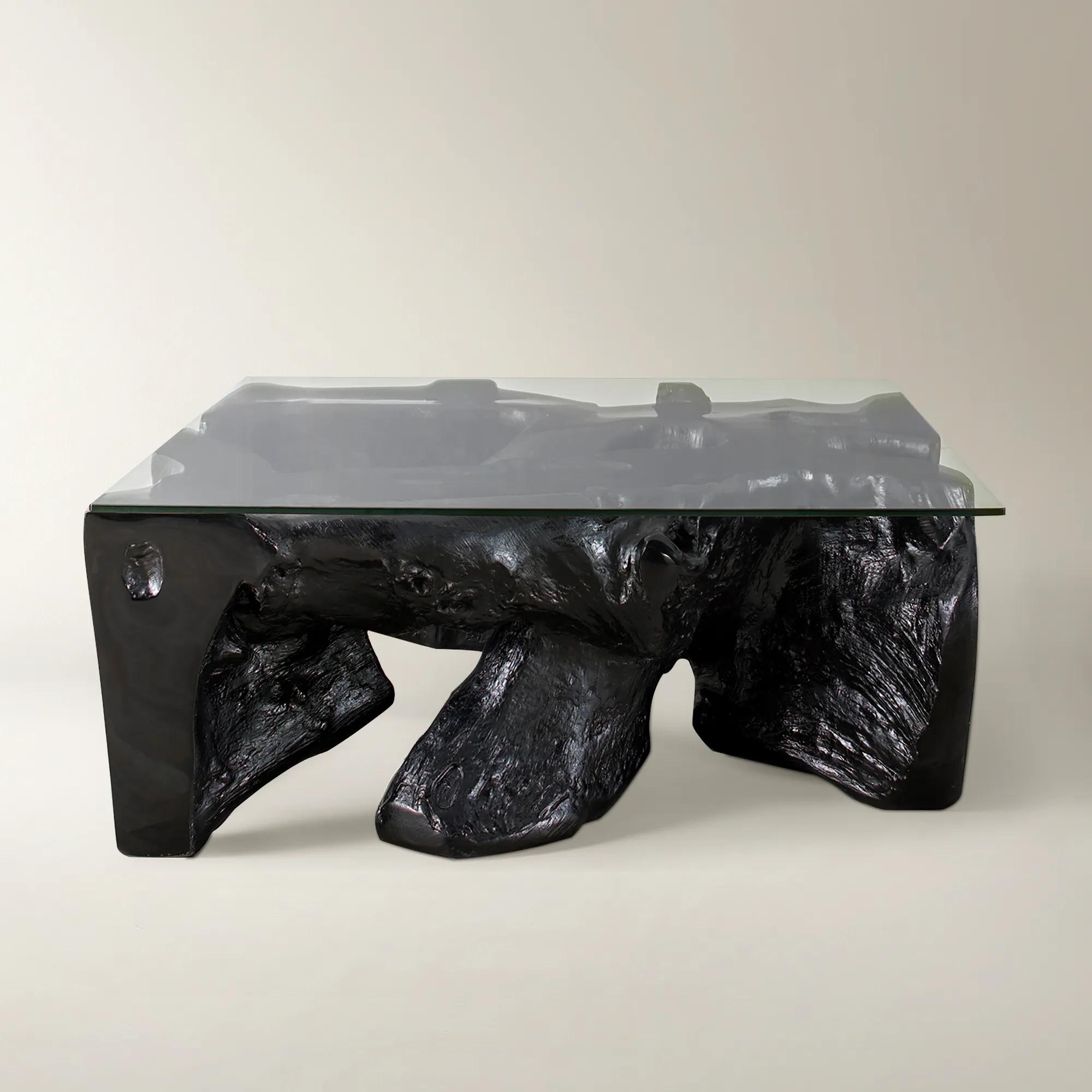
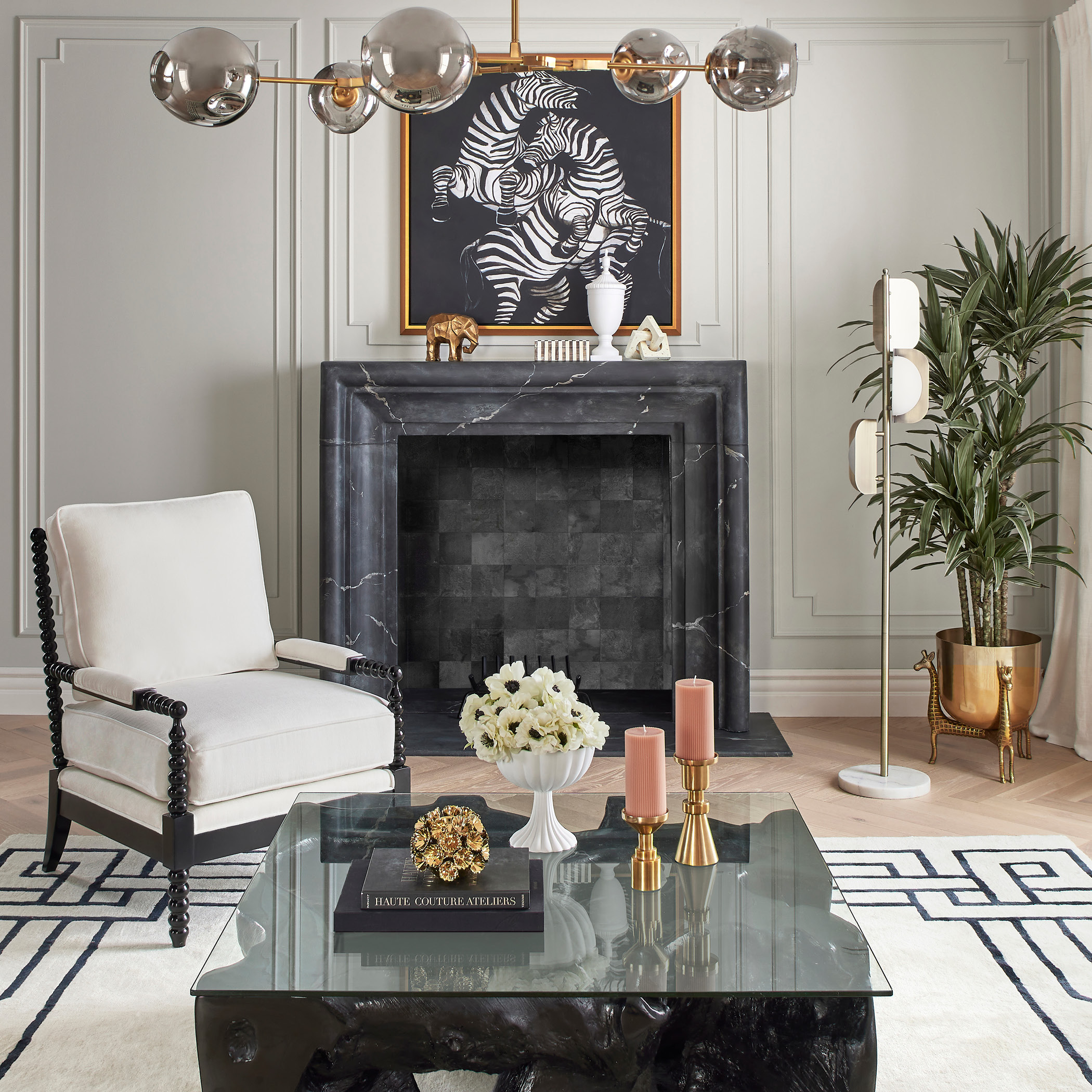 Sequoia Black Resin Coffee Table With Glass Top (44")$2299
A sculptural black coffee table crafted from resin and polished stone fragments for indoor or outdoor use.
Add To Cart -
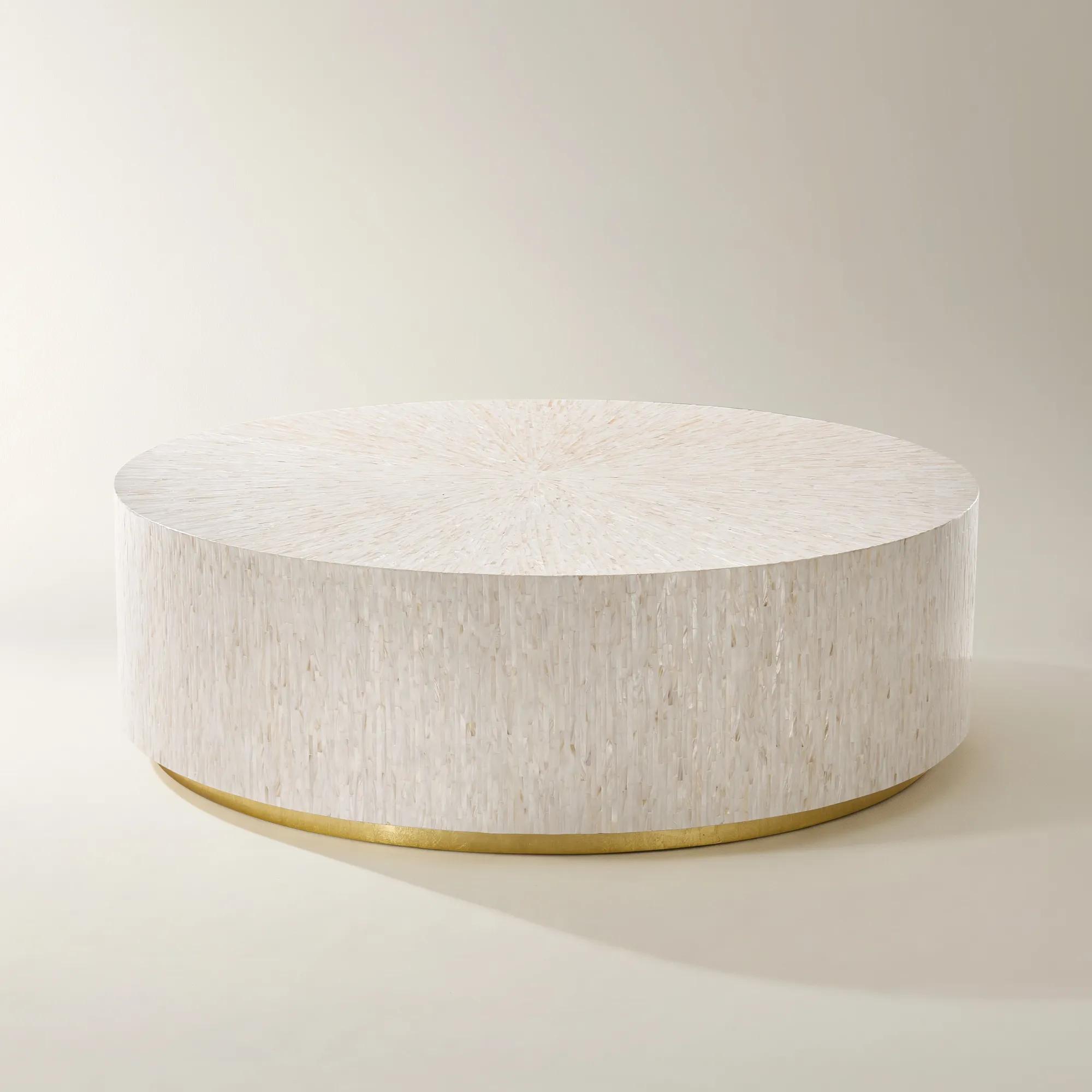 Alexandria Round Mosaic Platinum Coffee Table (52")$1299
A luminous mother-of-pearl mosaic coffee table with a sculptural round form and gold leaf–accented base.
Add To Cart -
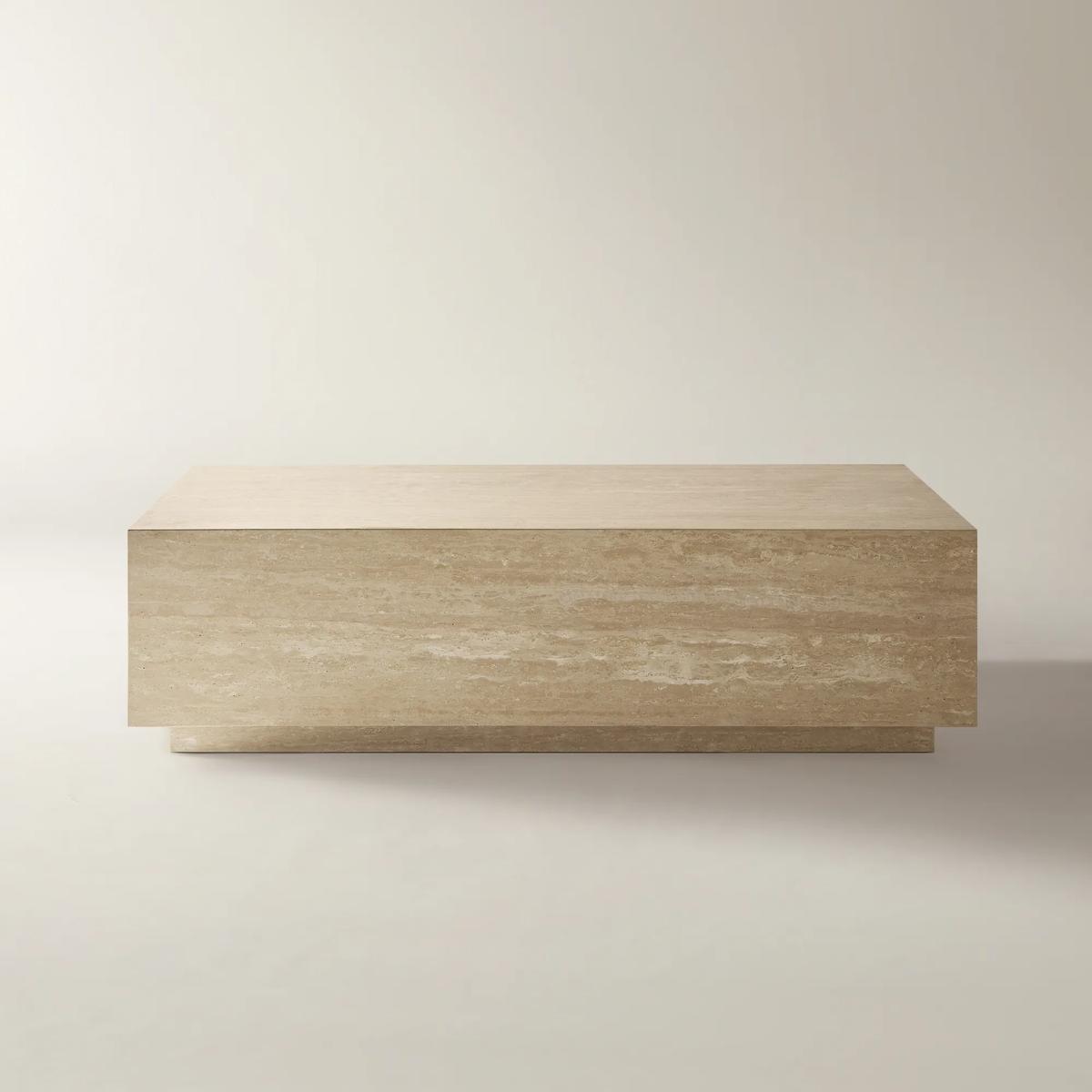
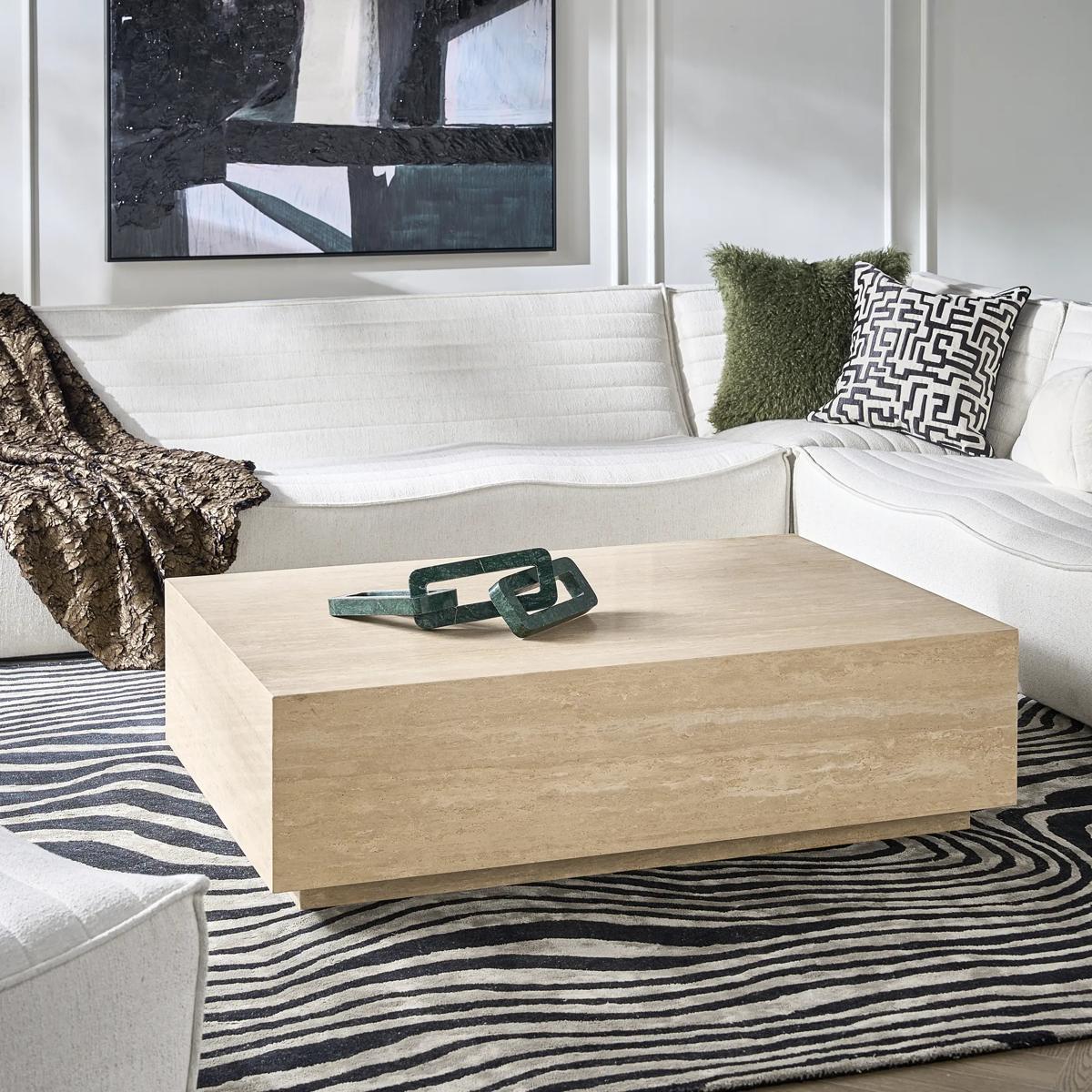 Vanta Rectangular Travertine Coffee Table (54")$2599
A seamless genuine travertine coffee table featuring ivory-gold tones and an ultra-light aluminum honeycomb core.
Add To Cart -
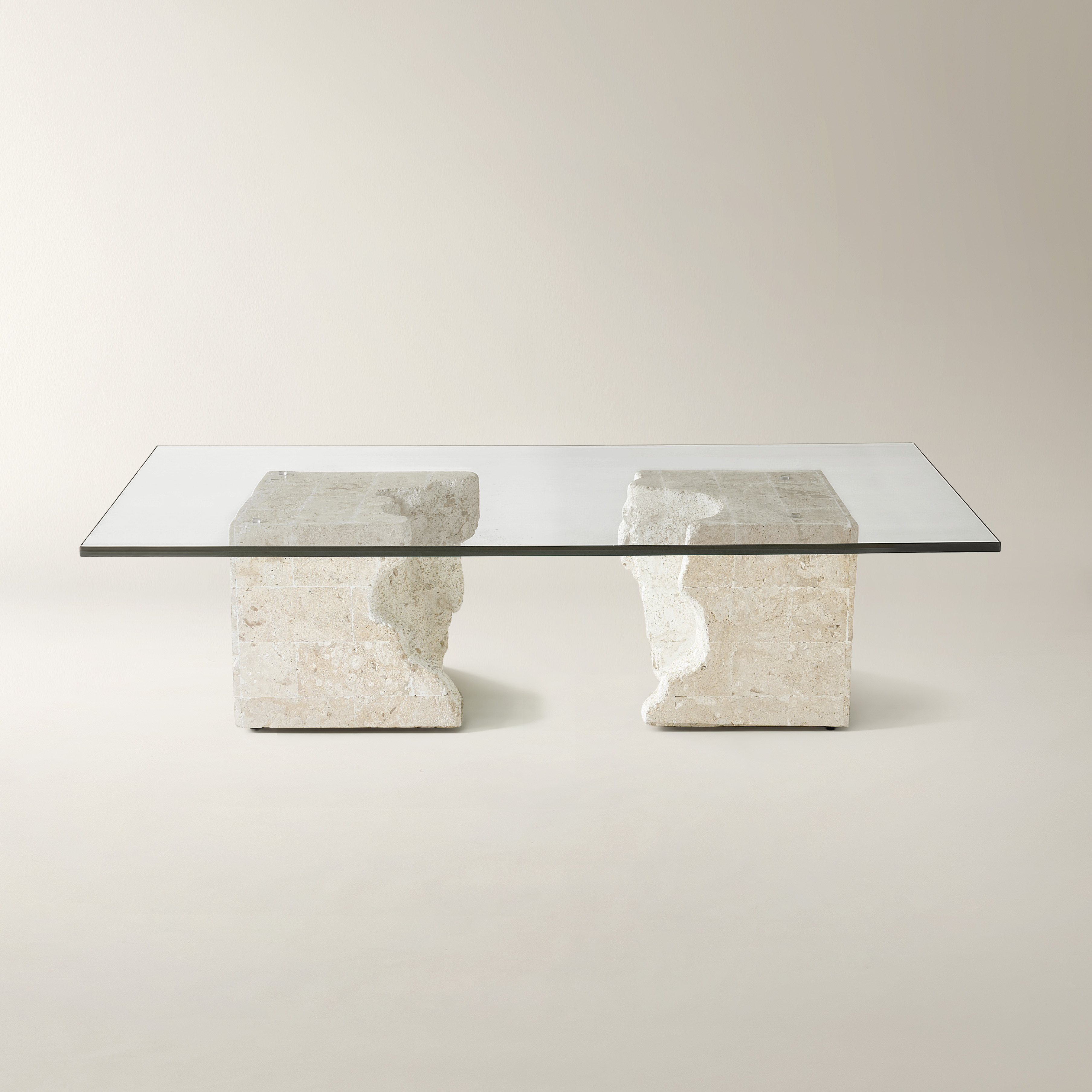 Cairo Rectangular Mactan Stone Coffee Table With Glass Top (63")$1899
A contemporary coffee table featuring a clear tempered glass top floating above hand-carved Mactan stone bases.
Add To Cart -
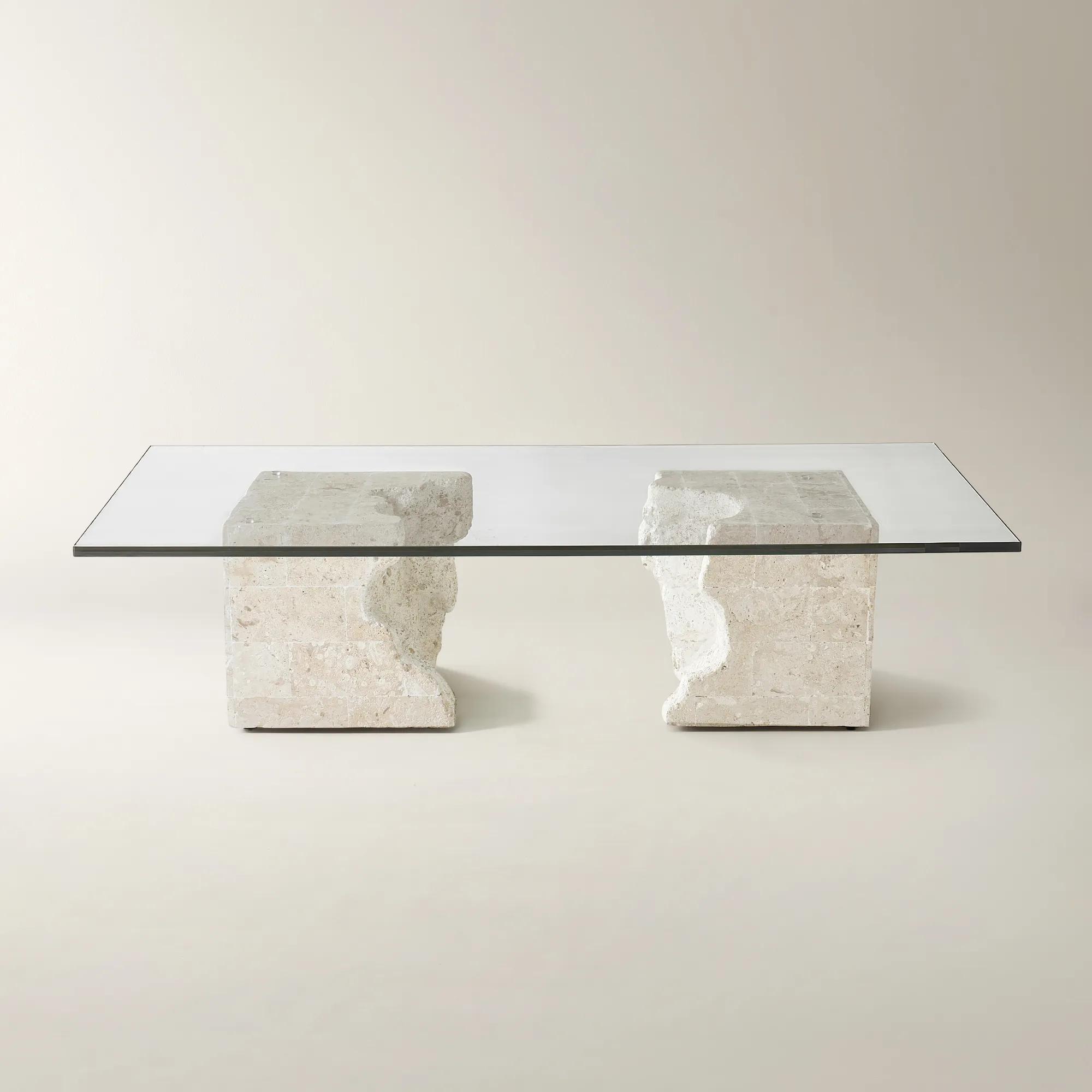 Cairo Rectangular Mactan Stone Coffee Table With Glass Top (70.87")$1999
A contemporary coffee table featuring a clear tempered glass top floating above hand-carved Mactan stone bases.
Add To Cart -
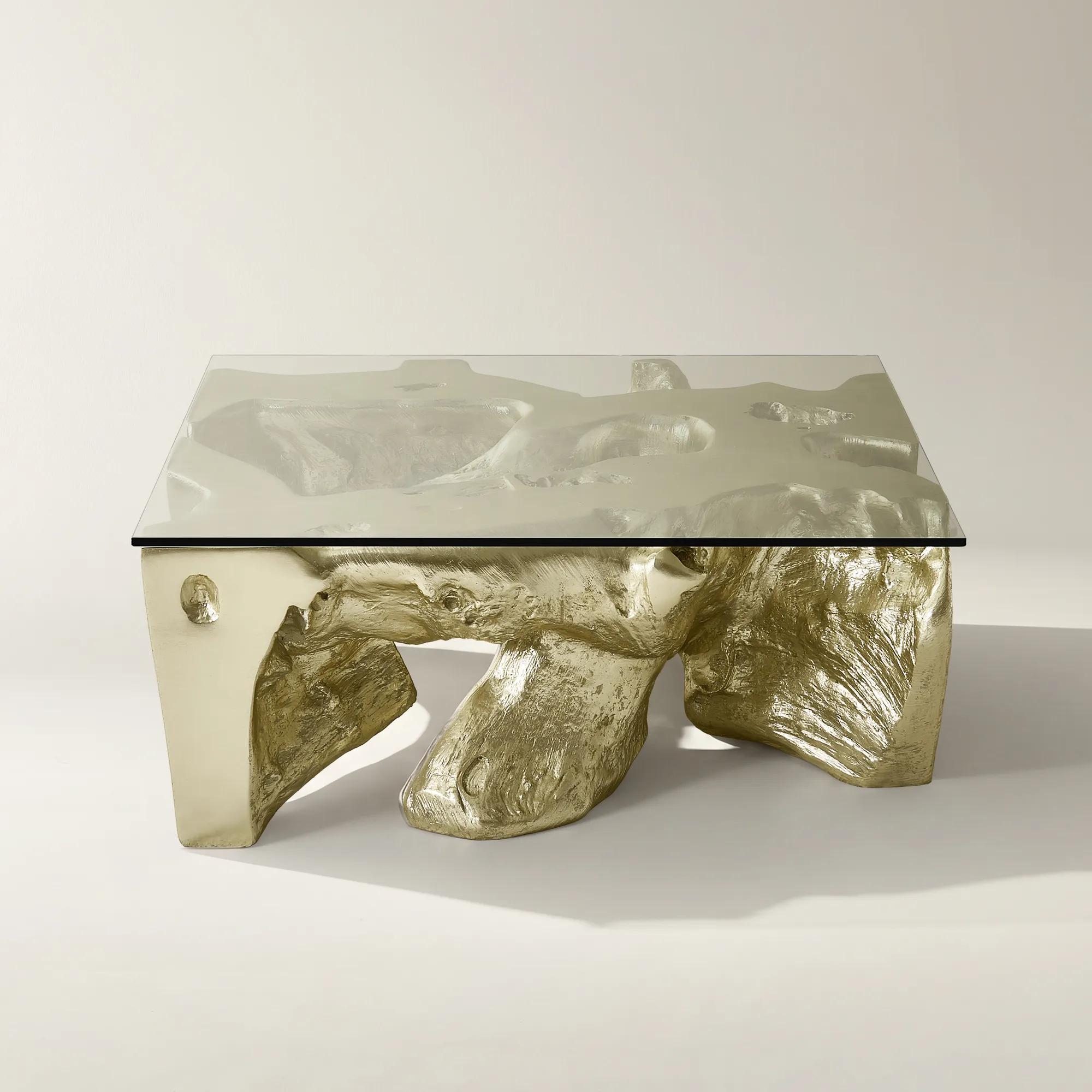 Sequoia Champagne Gold Resin Coffee Table With Glass Top (44")$2299
A sculptural resin coffee table with a champagne gold leaf finish and a clear tempered glass top.
Add To Cart -
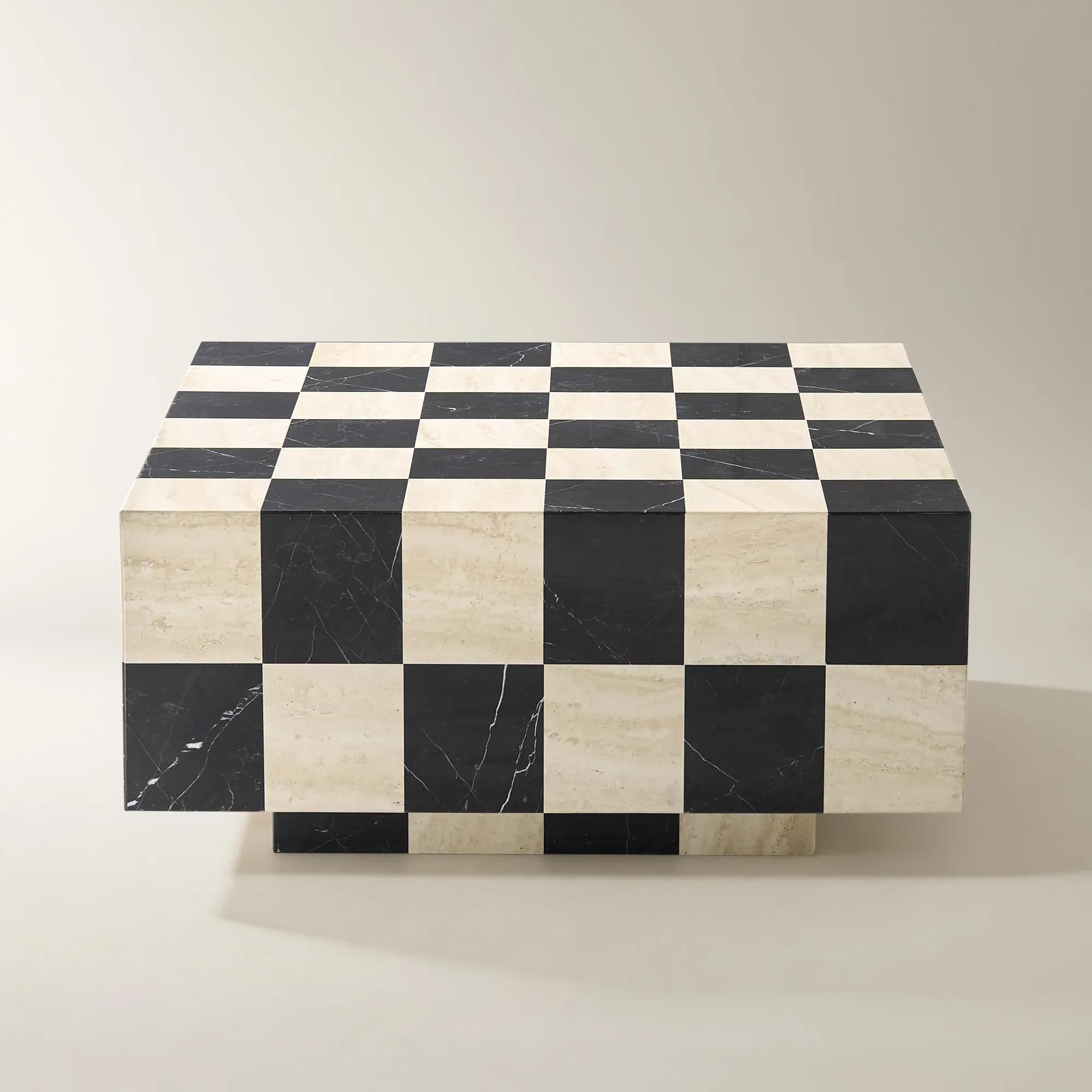
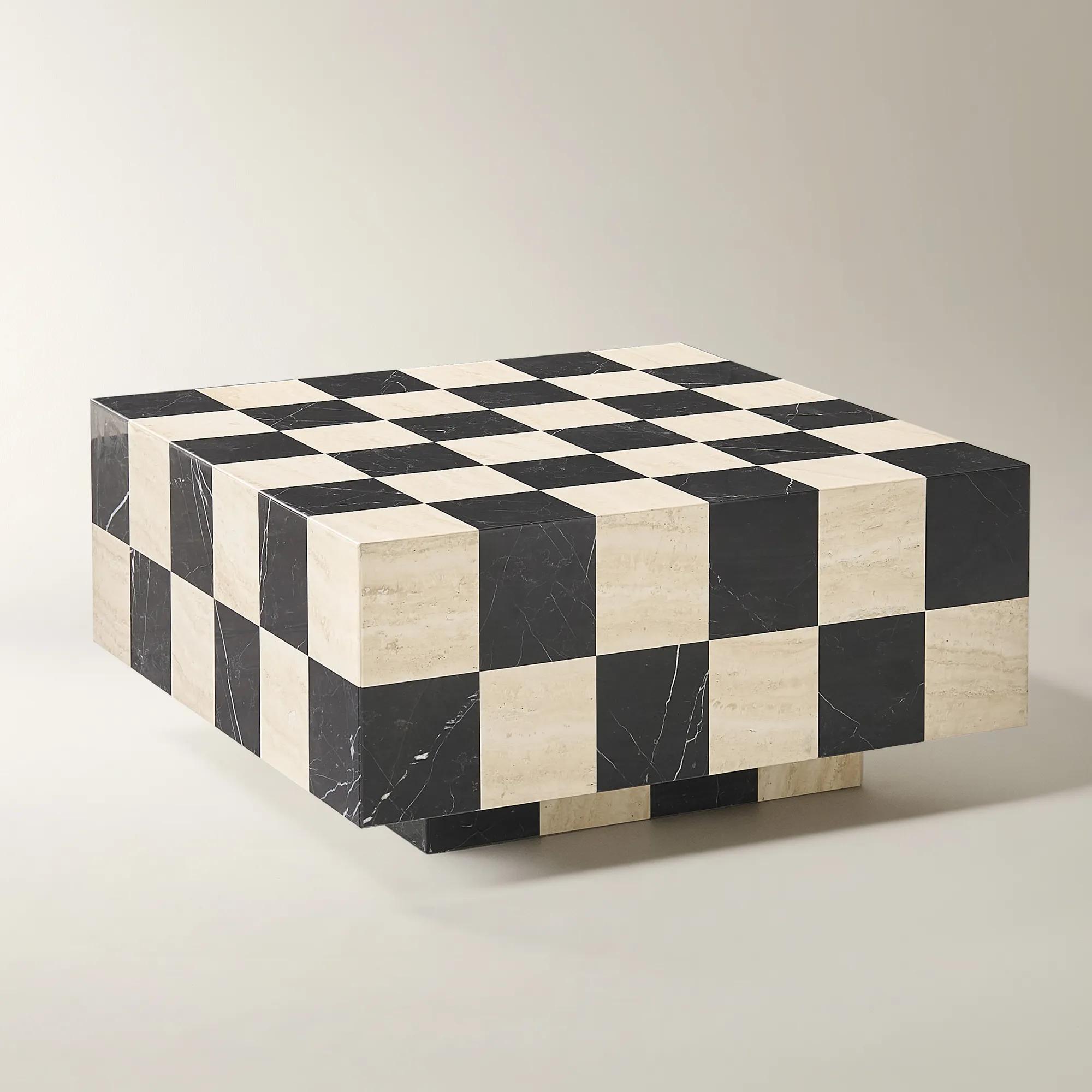 Chessa Square Chequered Marble Coffee Table (31.9")$1599
A striking coffee table featuring a dimensional black marble and travertine checkerboard mosaic with polished finish.
Add To Cart -
.jpg?w=1200&h=1200)
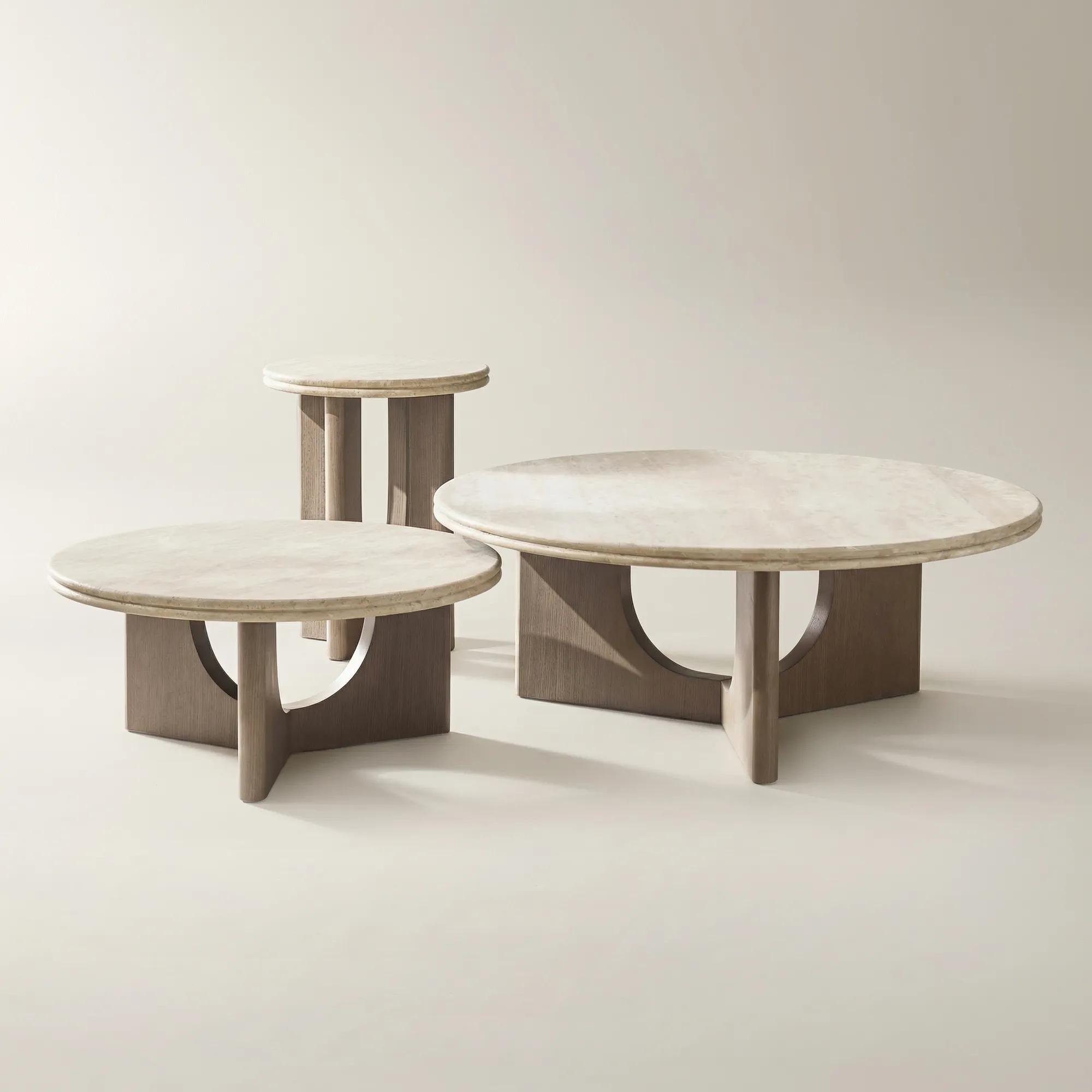
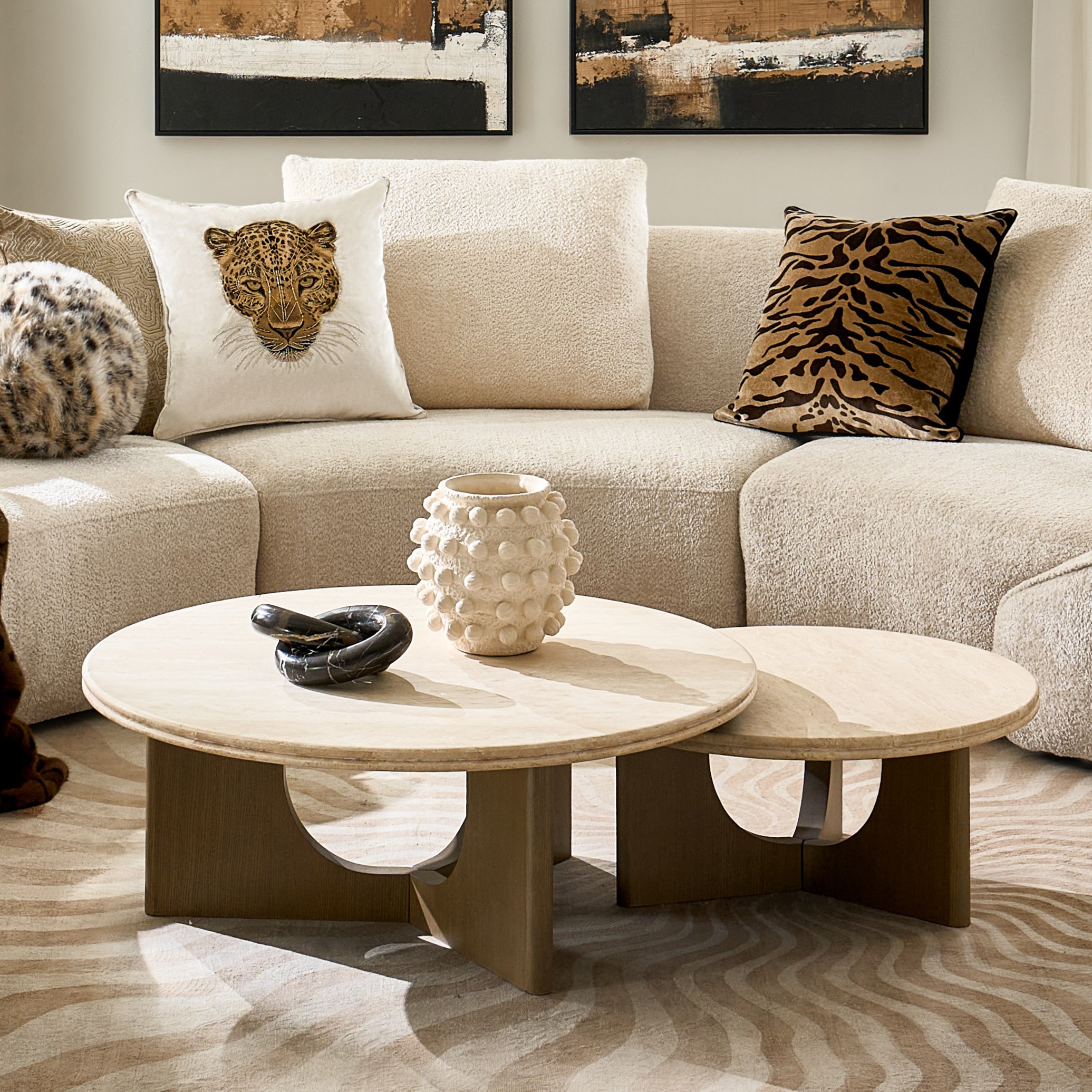 Bond Round Travertine and Wood Coffee Table (29.25")$699
A genuine travertine stone coffee table with warm ivory-gold tones atop a solid natural ash base.
Add To Cart -
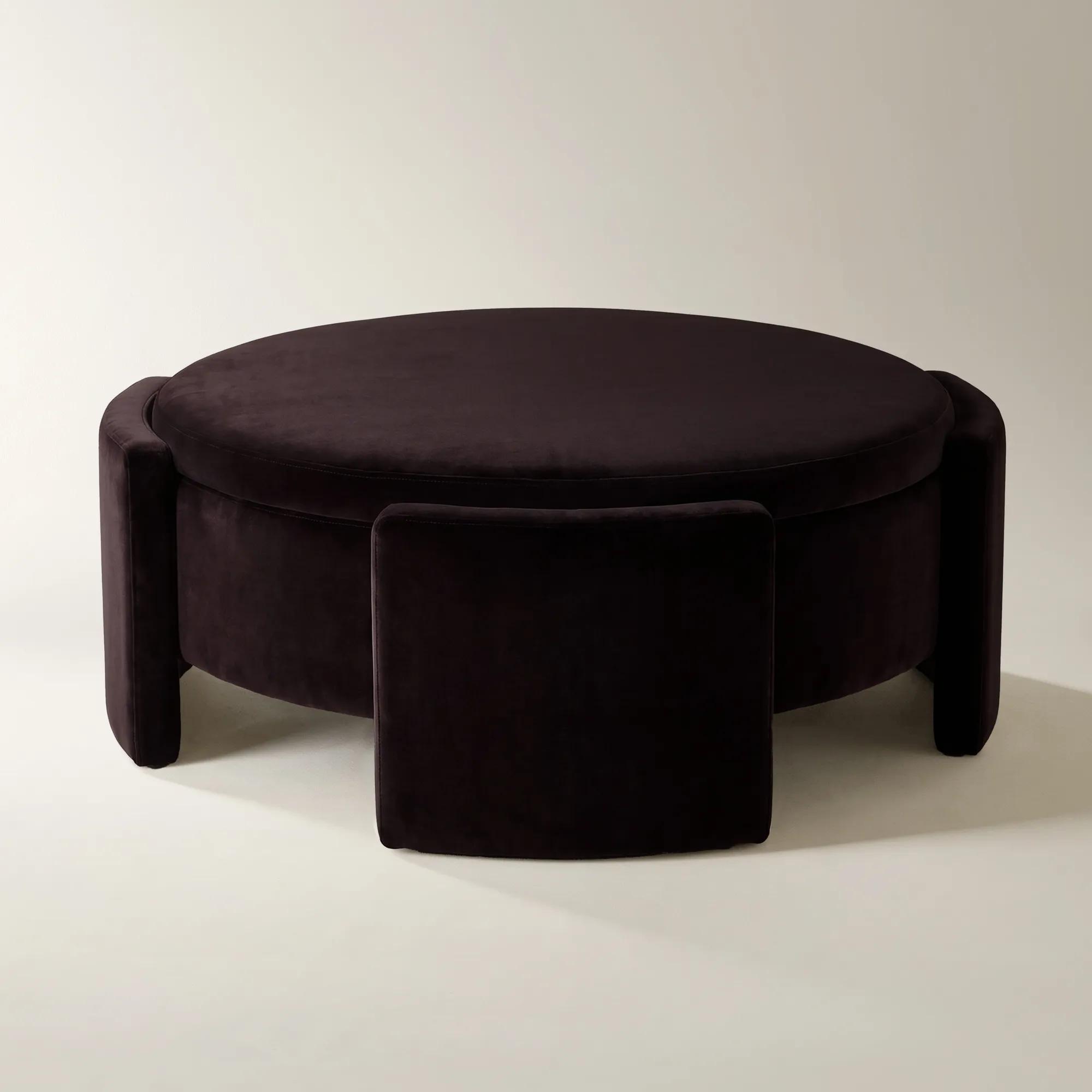
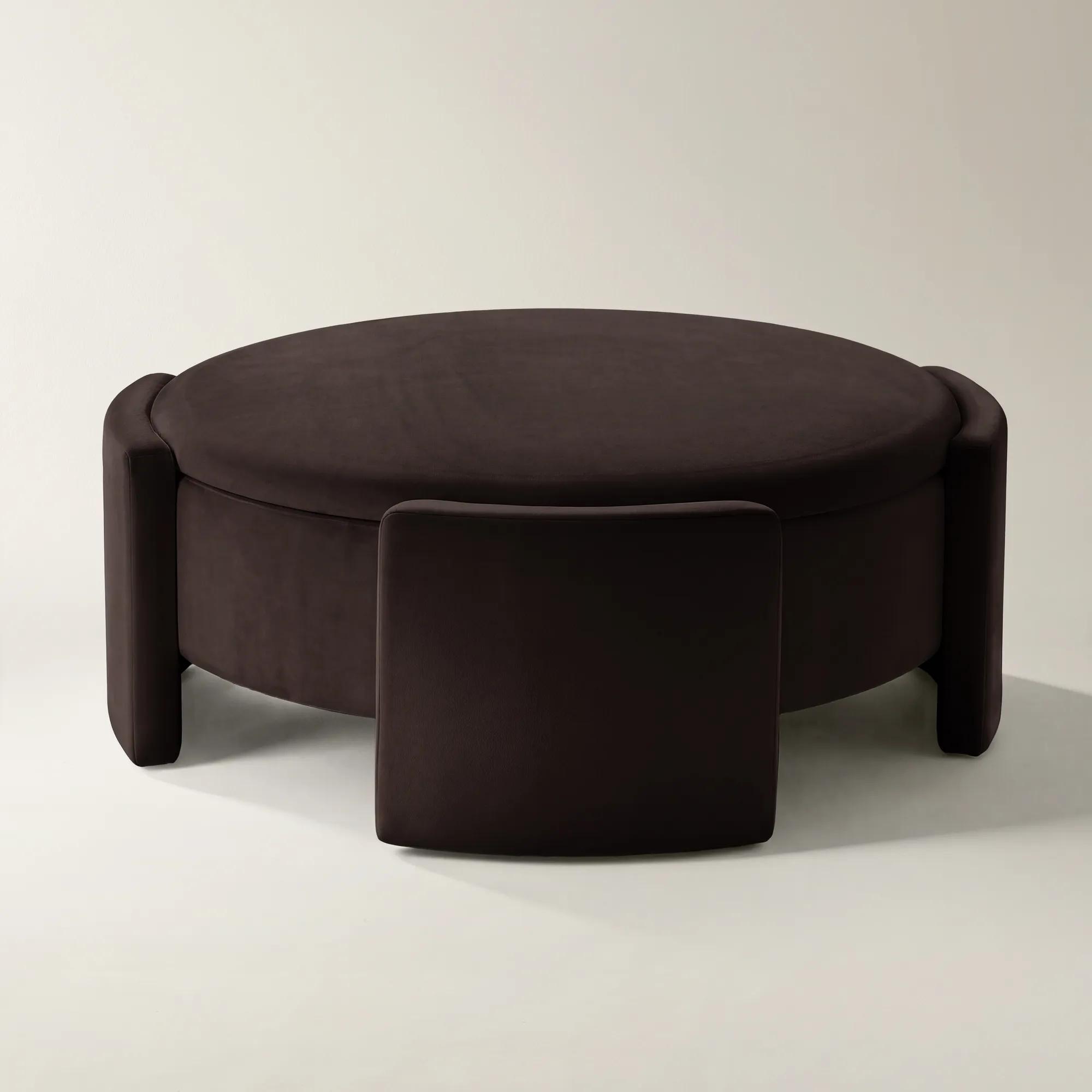
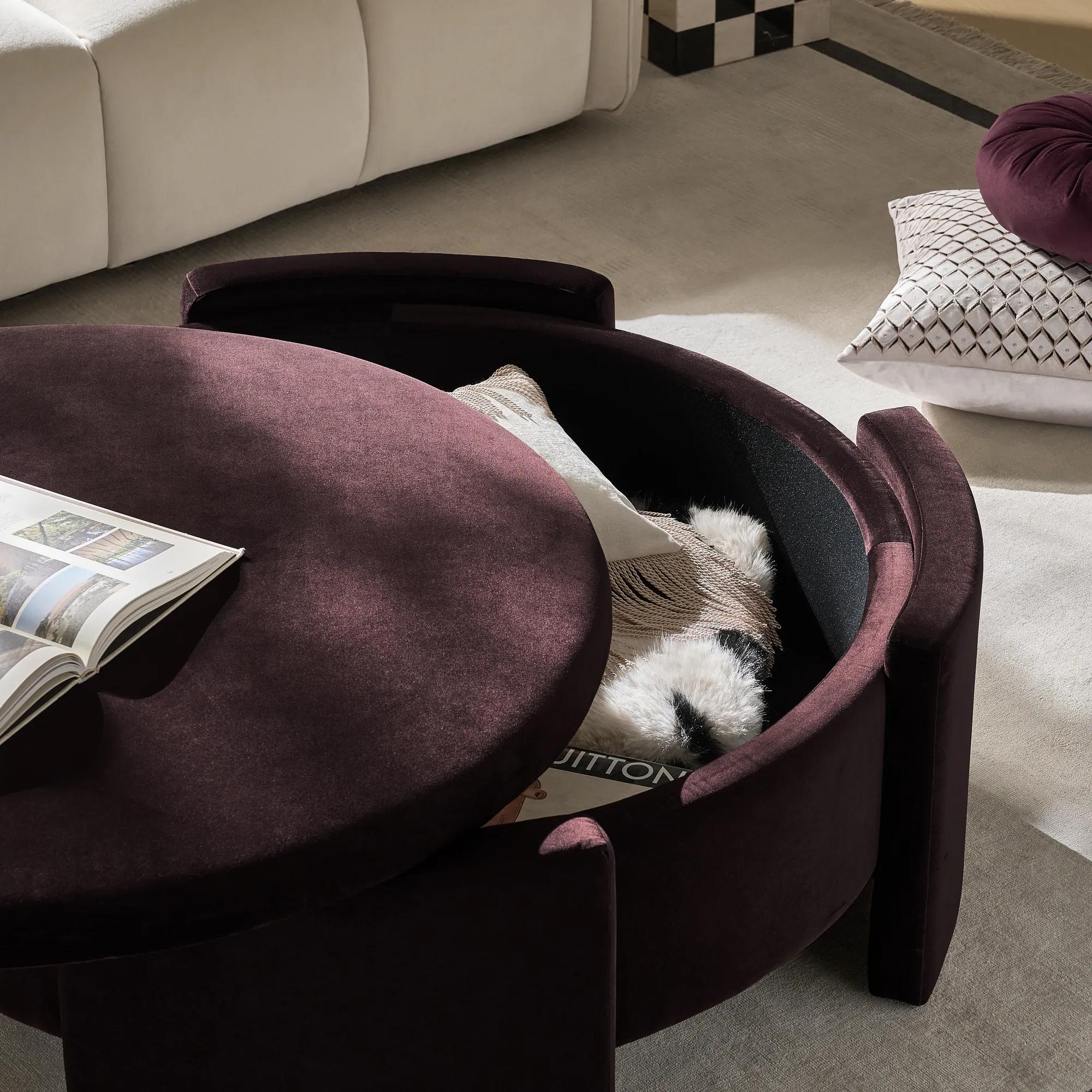 Jora Round Fig Velvet Storage Coffee Table With Reversible Tabletop (47.7")$799
A round fig velvet coffee table featuring a reversible wood tabletop and hidden interior storage.
Add To Cart -
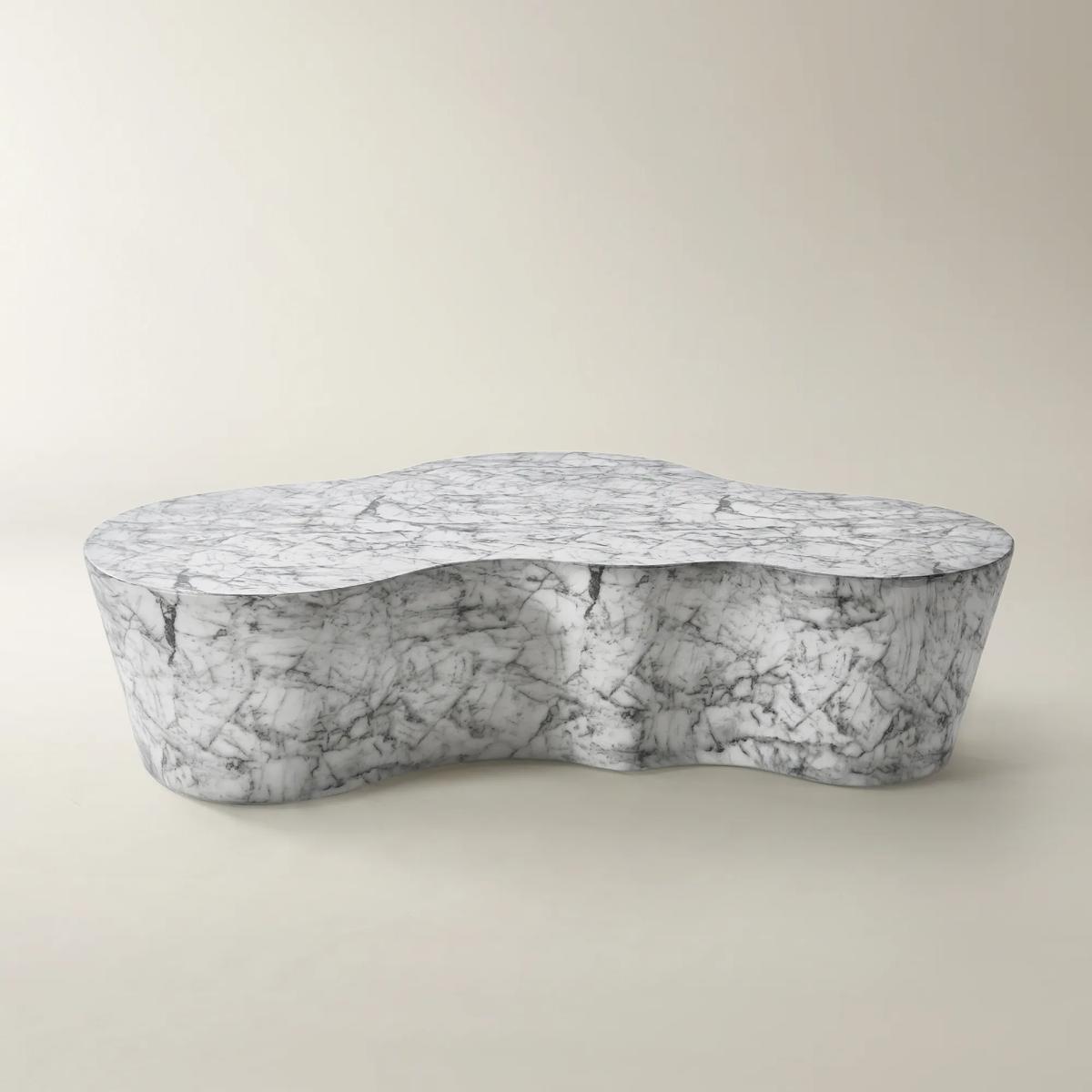
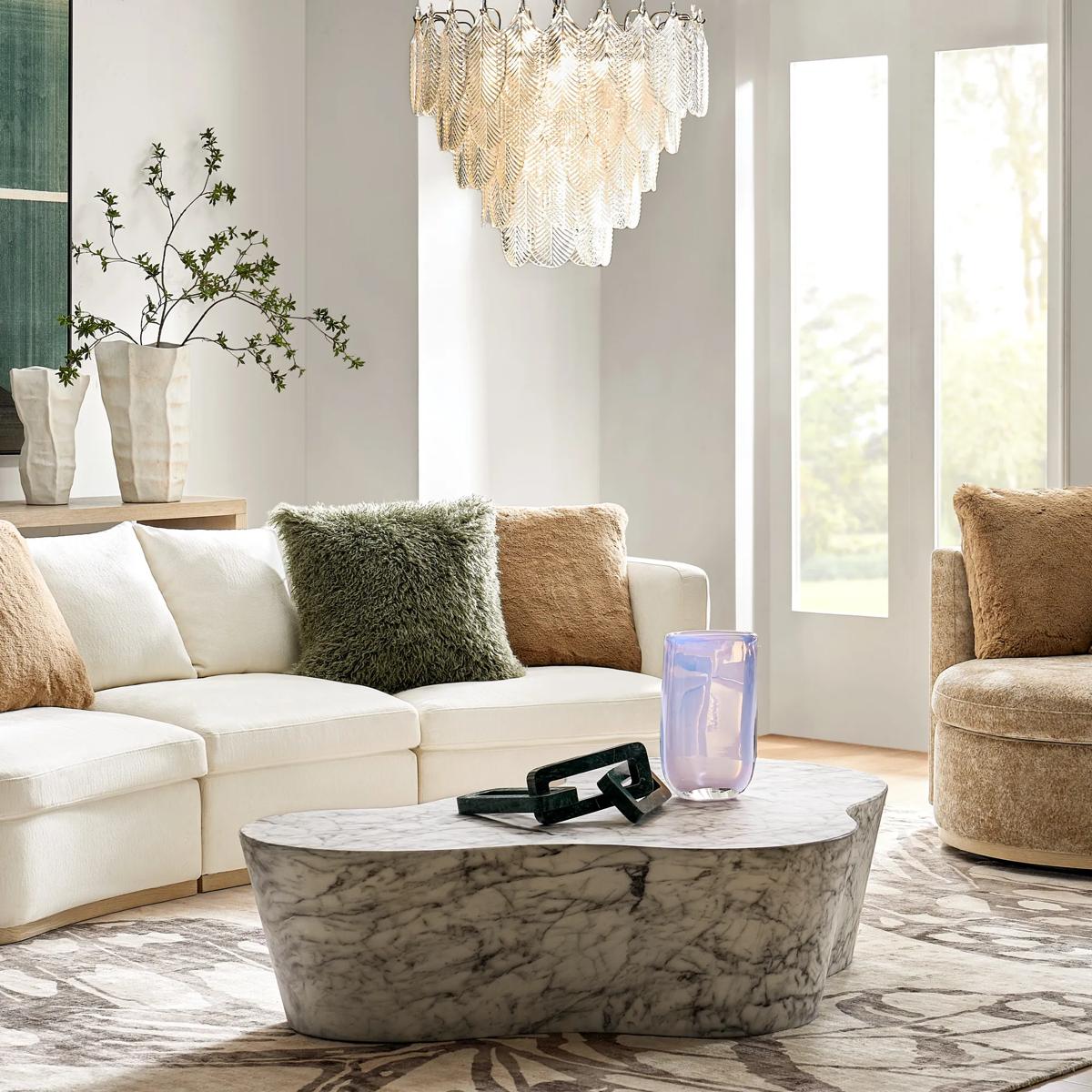 Petra White Concrete Indoor/outdoor Coffee Table (59.4")$1099
A cloud-inspired coffee table in lightweight fiber concrete with a hyper-realistic white marble finish.
Add To Cart -
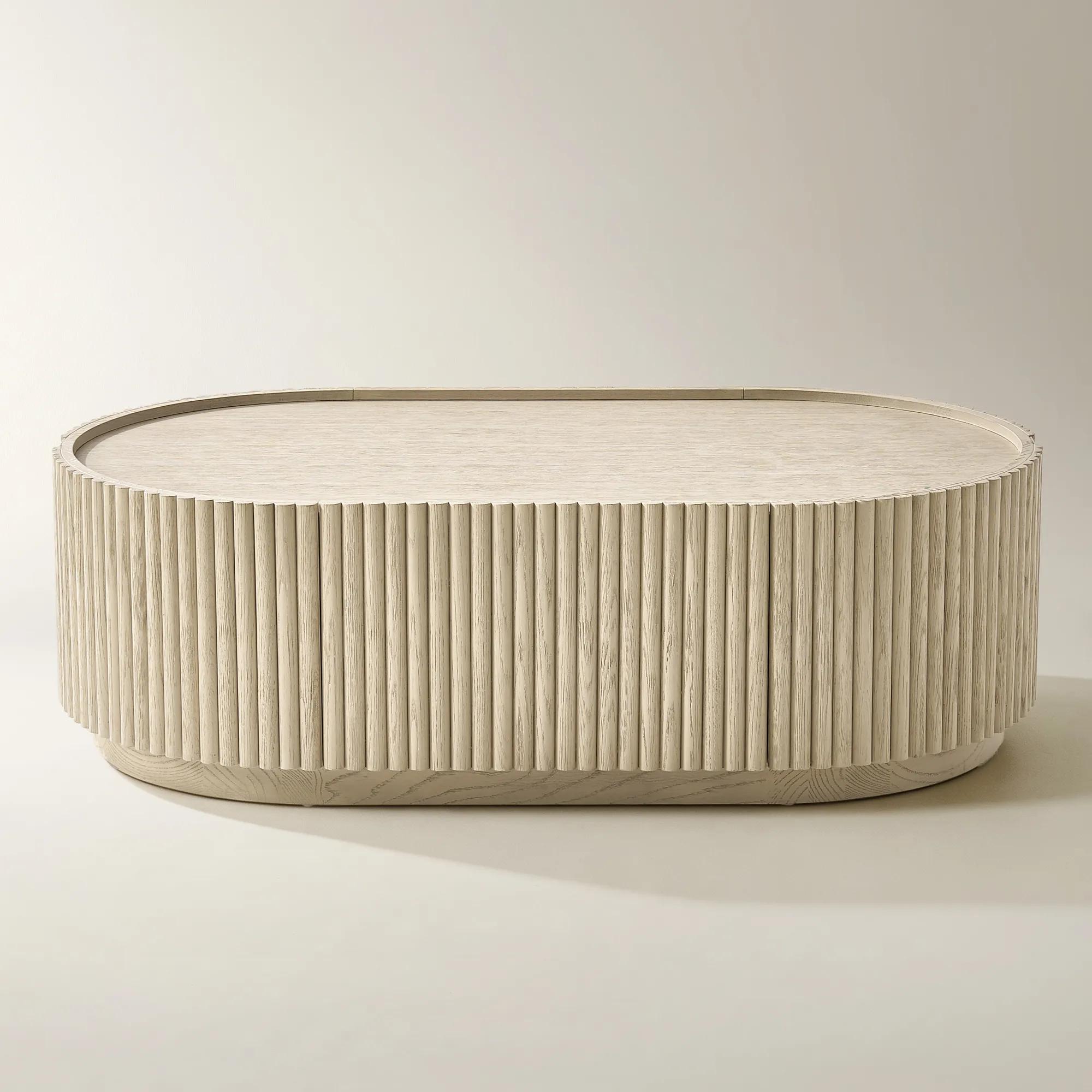
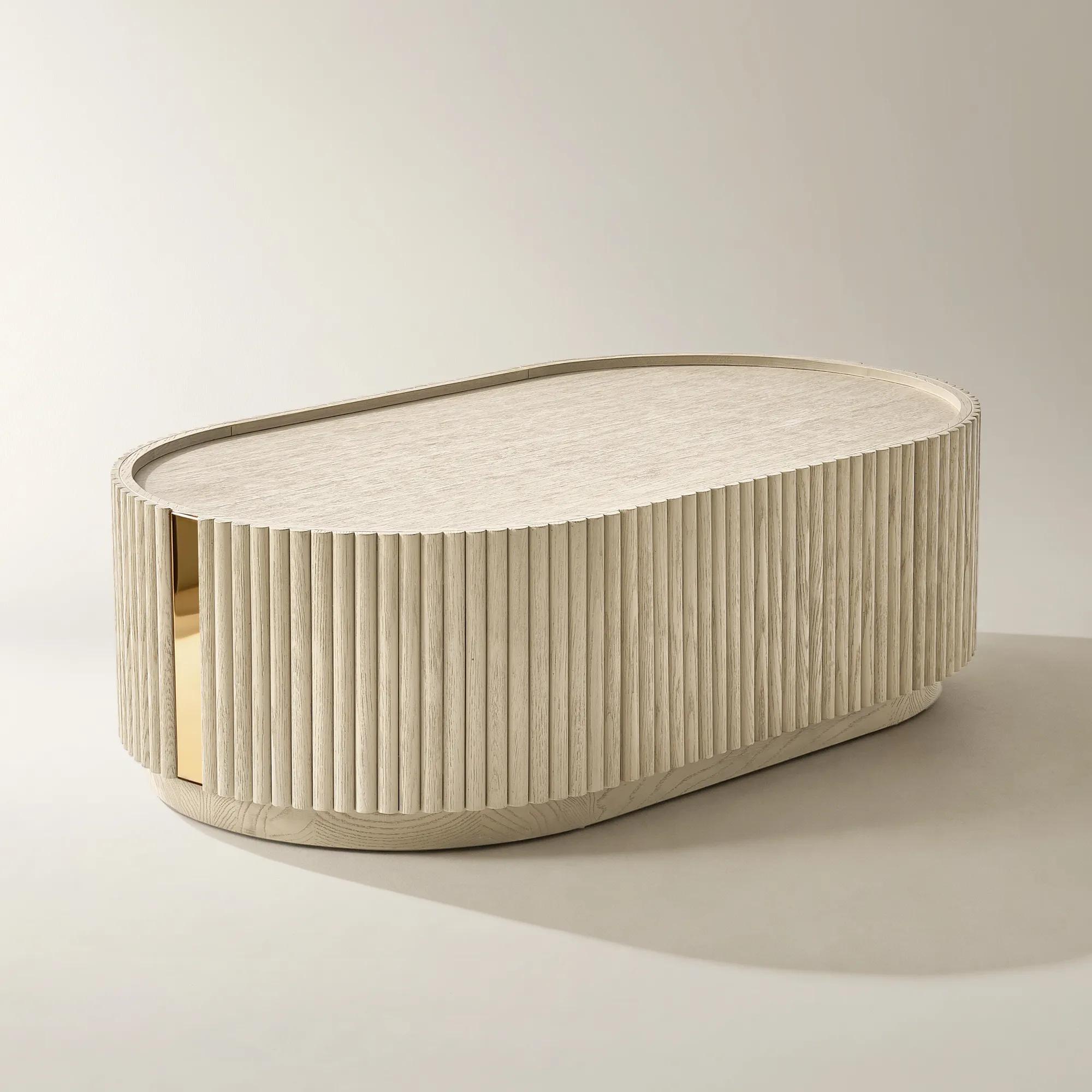 Stria Oval Reeded White Oak Coffee Table with Drawer (52")$1299
A reeded white oak coffee table with soft gold accents, recessed tabletop, and concealed soft-close drawer.
Add To Cart -
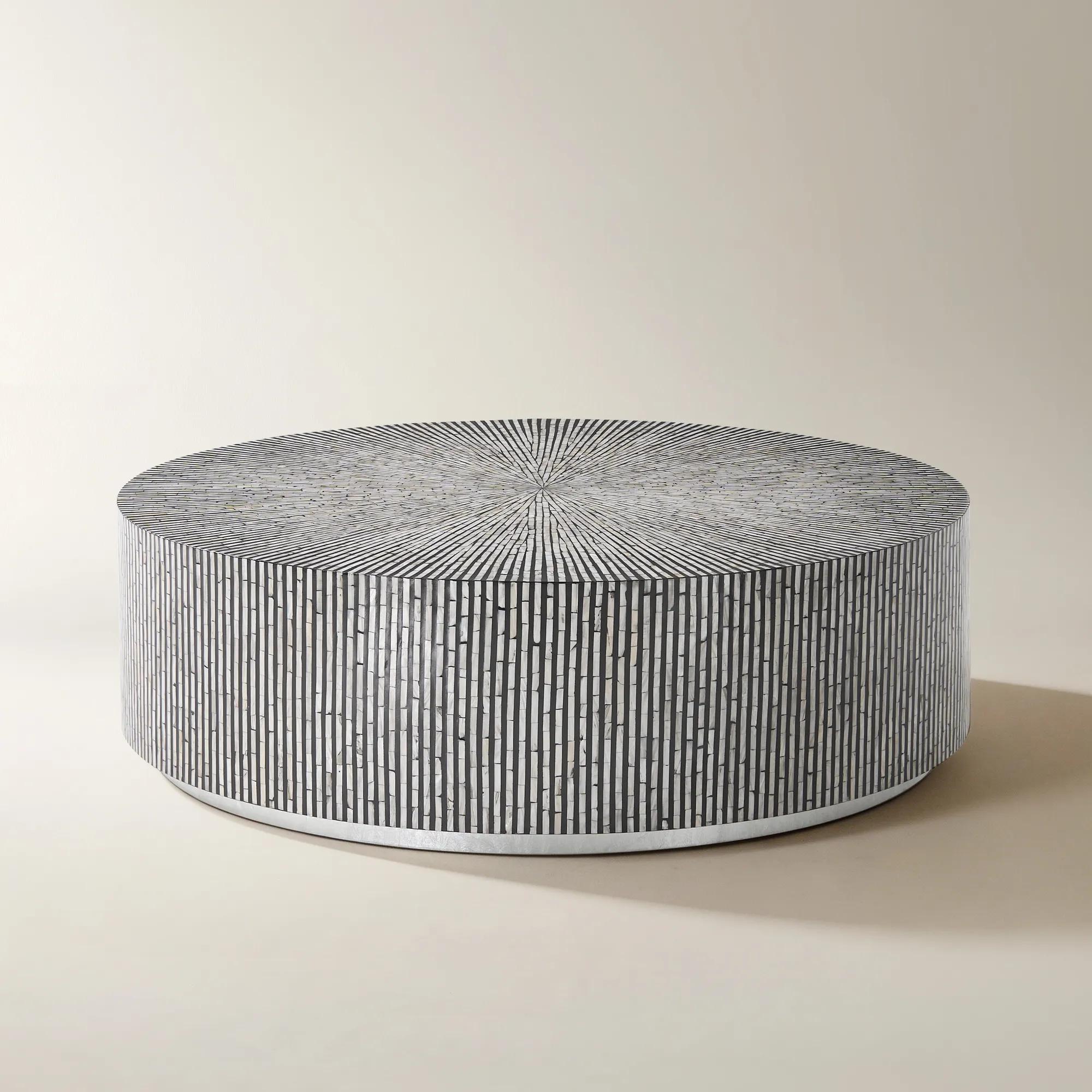
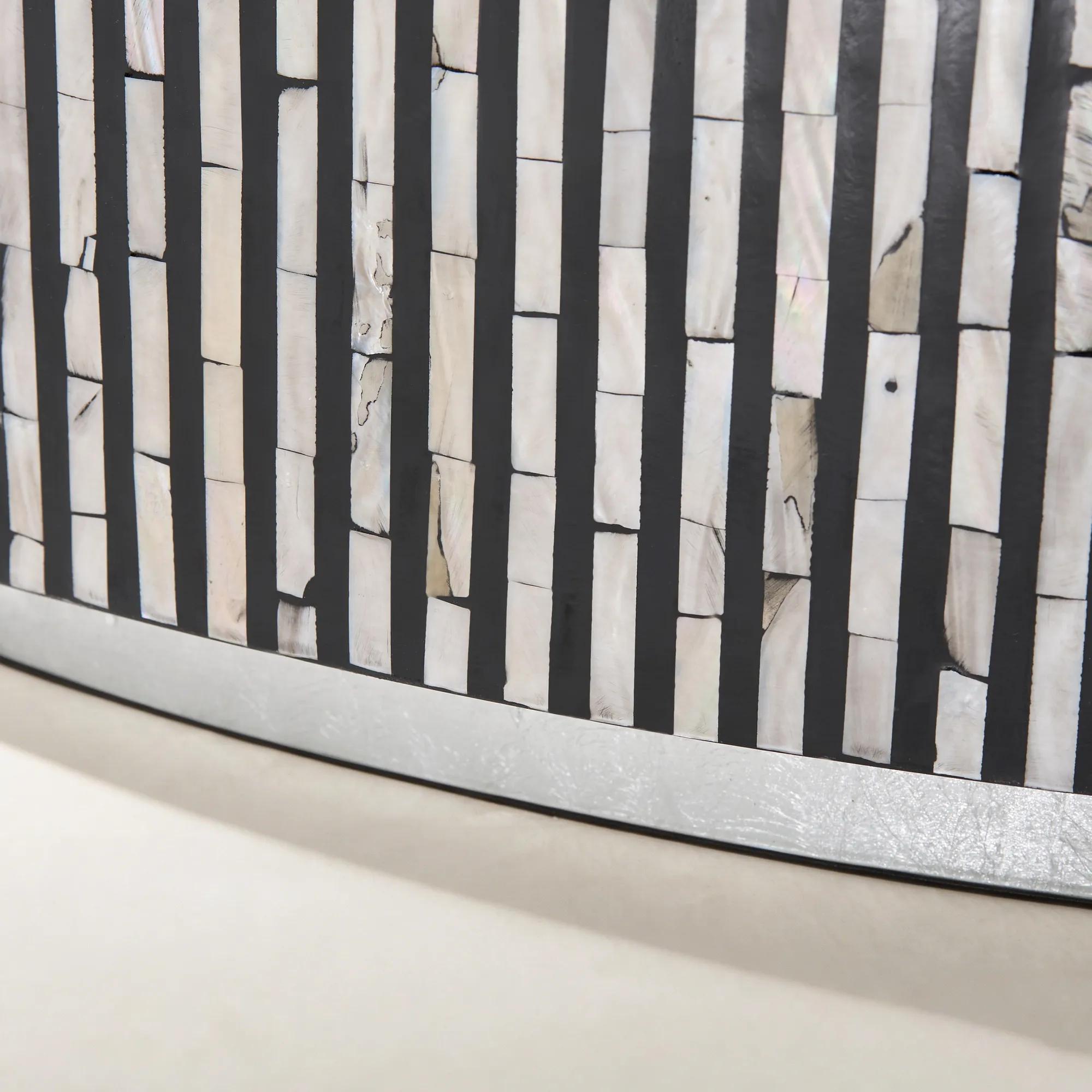 Marina Round Mosaic Black Coffee Table (52")$1299
A sculptural black coffee table featuring hand-applied mother-of-pearl mosaic and a silver leaf base.
Add To Cart -
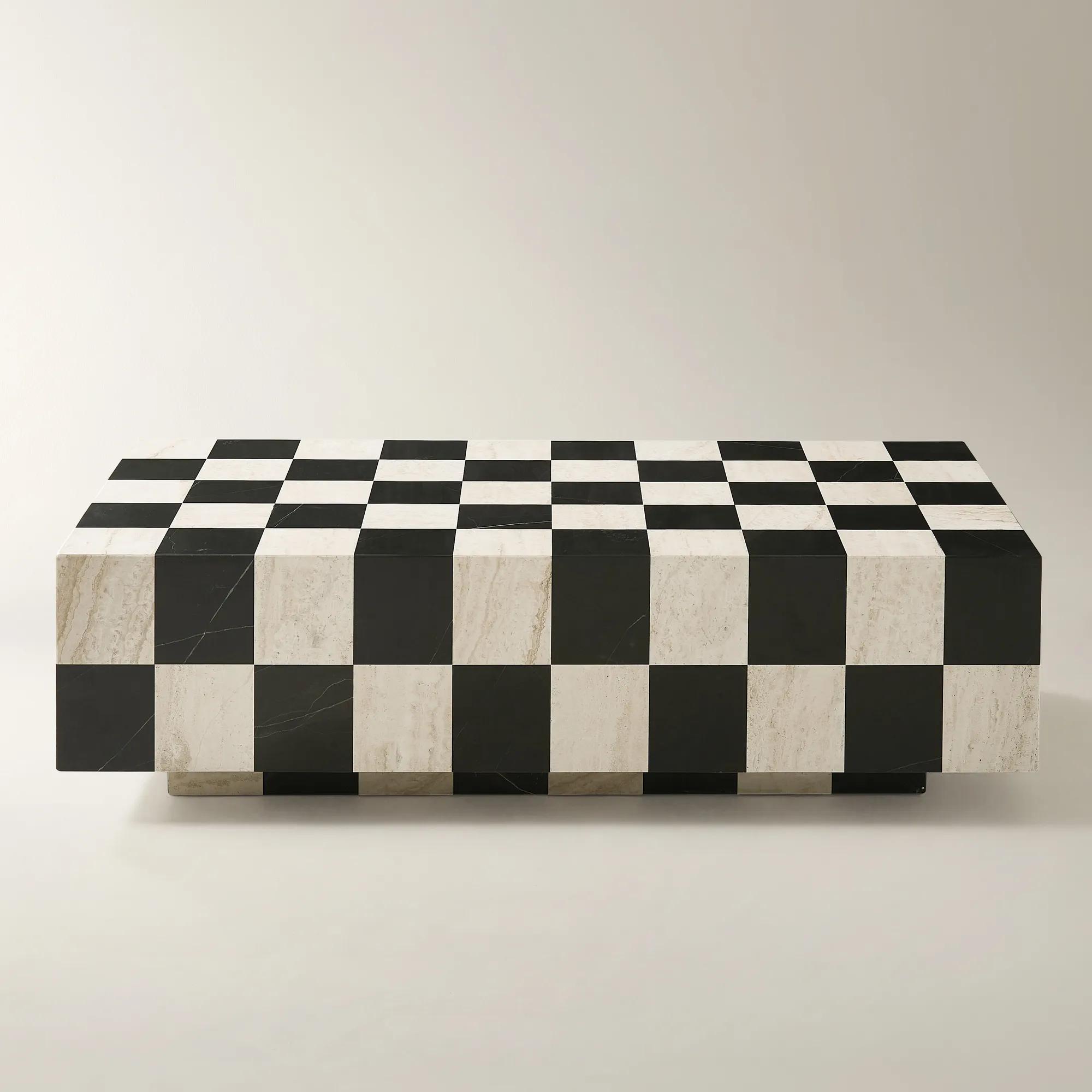 Chessa Rectangular Chequered Marble Coffee Table (53.1")$2399
A striking coffee table featuring a black marble and travertine checkerboard mosaic with sculptural precision.
Add To Cart -
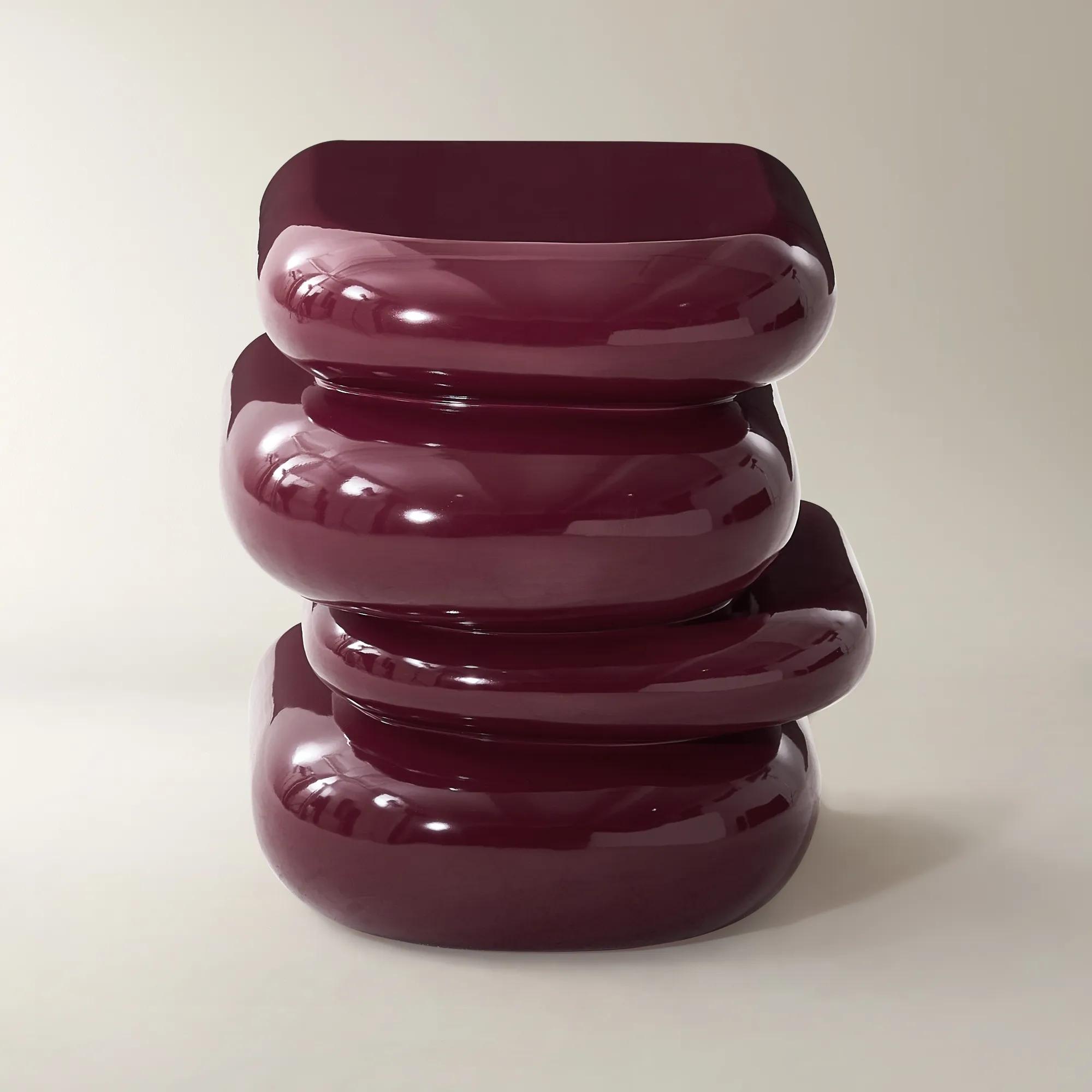 Forma Stacked Ox Blood Side Table (19.9")$459
A sculptural accent table crafted from high-gloss ox blood fiberglass with softly stacked, rounded tiers.
Add To Cart -
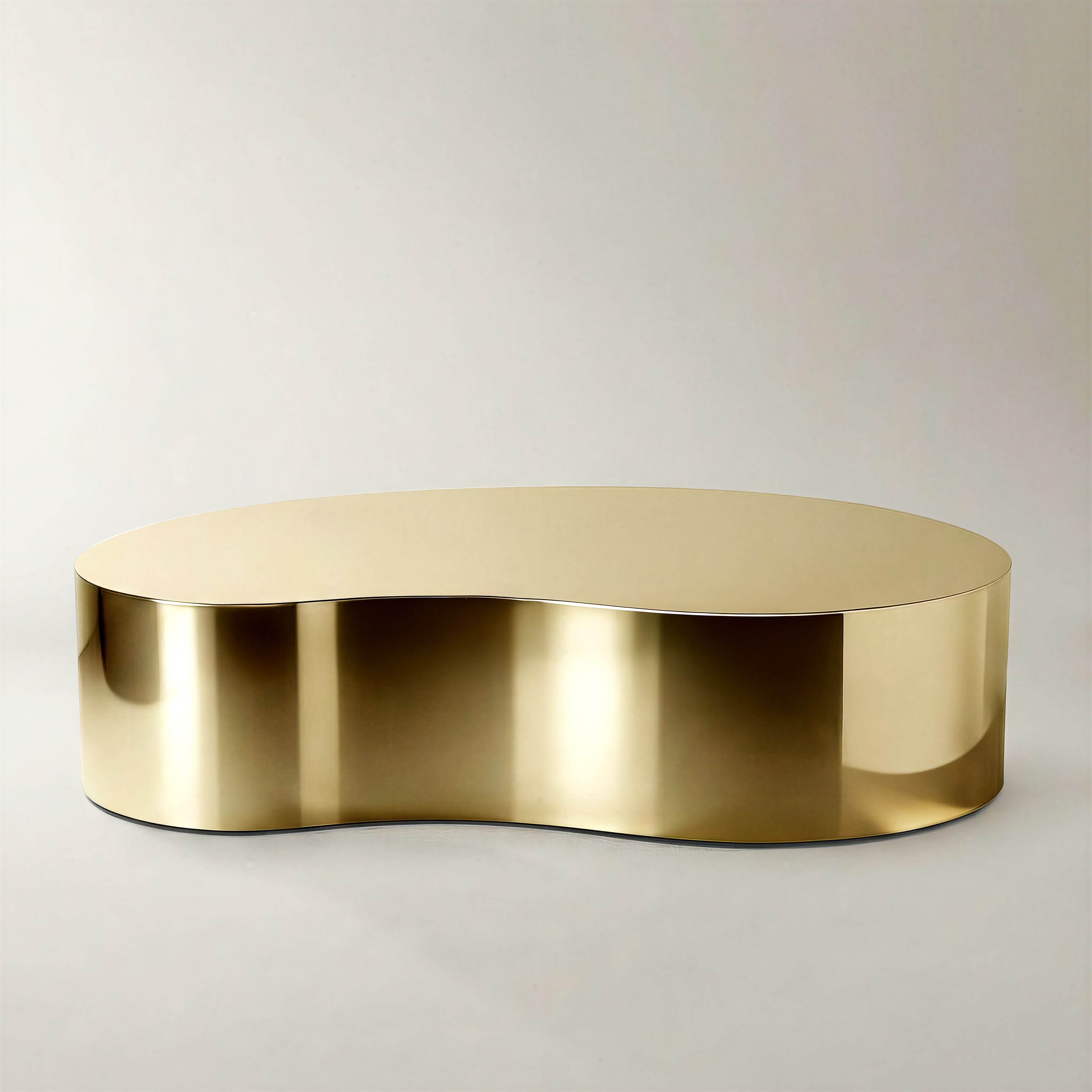
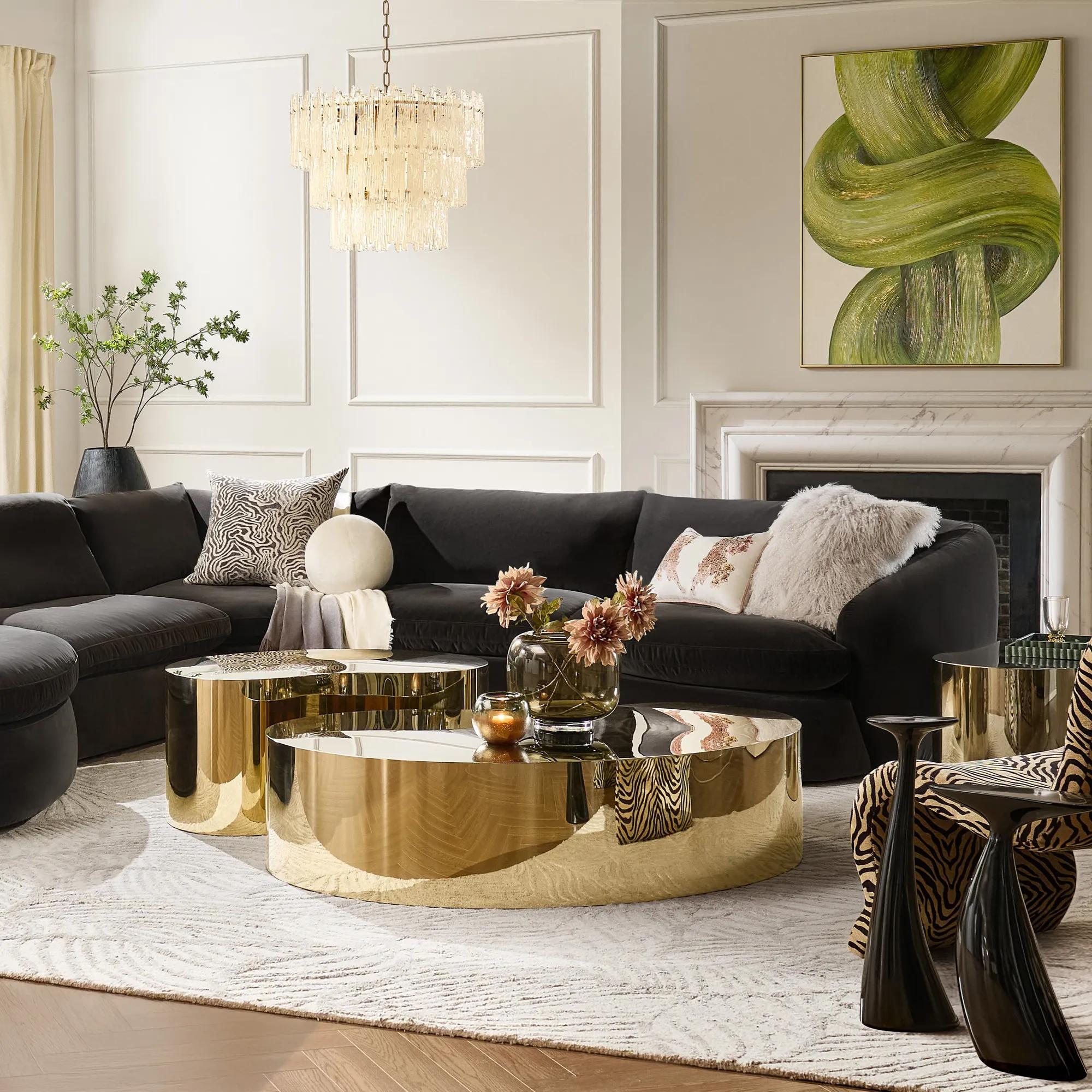 Aurea Soft Gold Coffee Table (57")$1299
A sculptural coffee table crafted from stainless steel with a high-gloss soft gold finish and rounded edges.
Add To Cart -
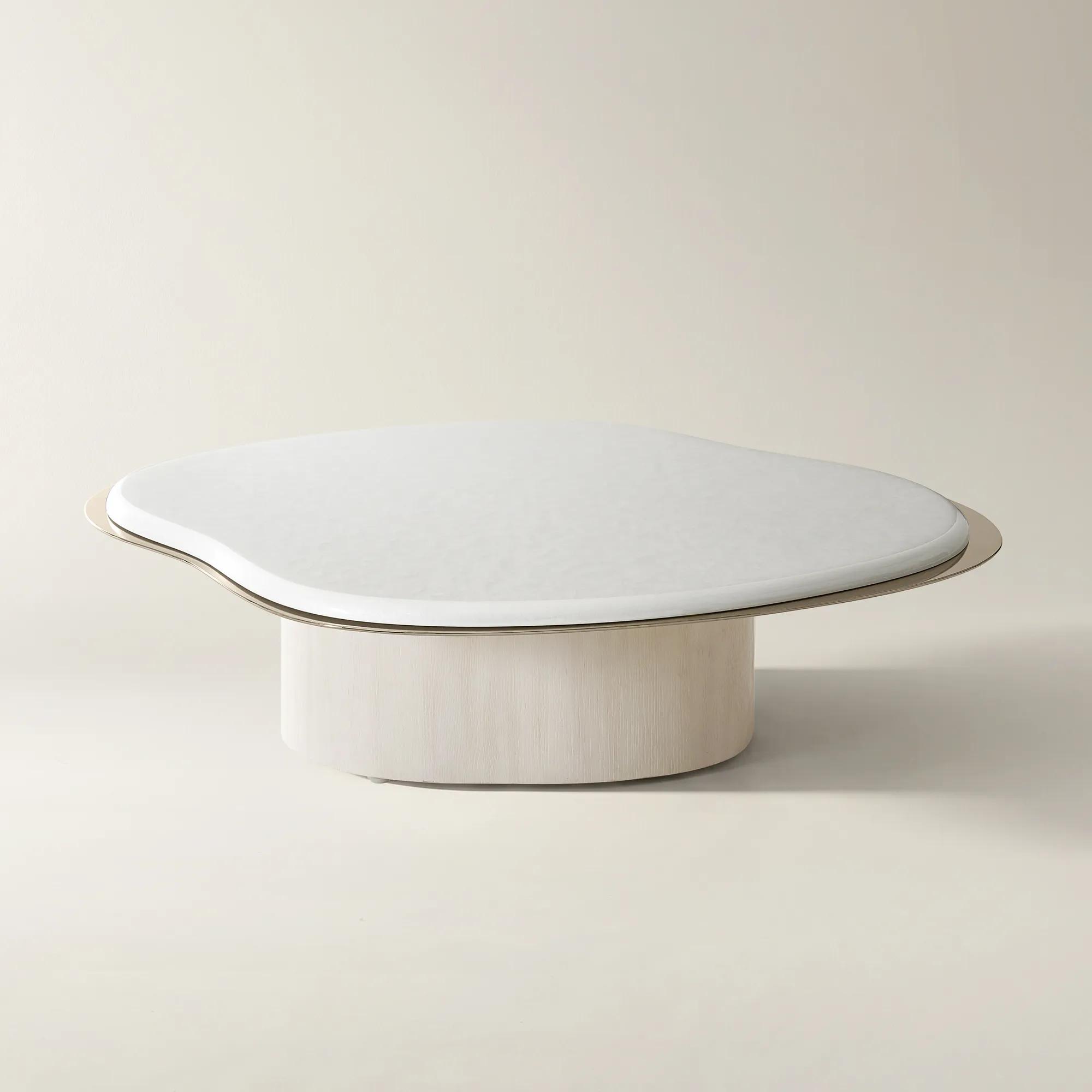
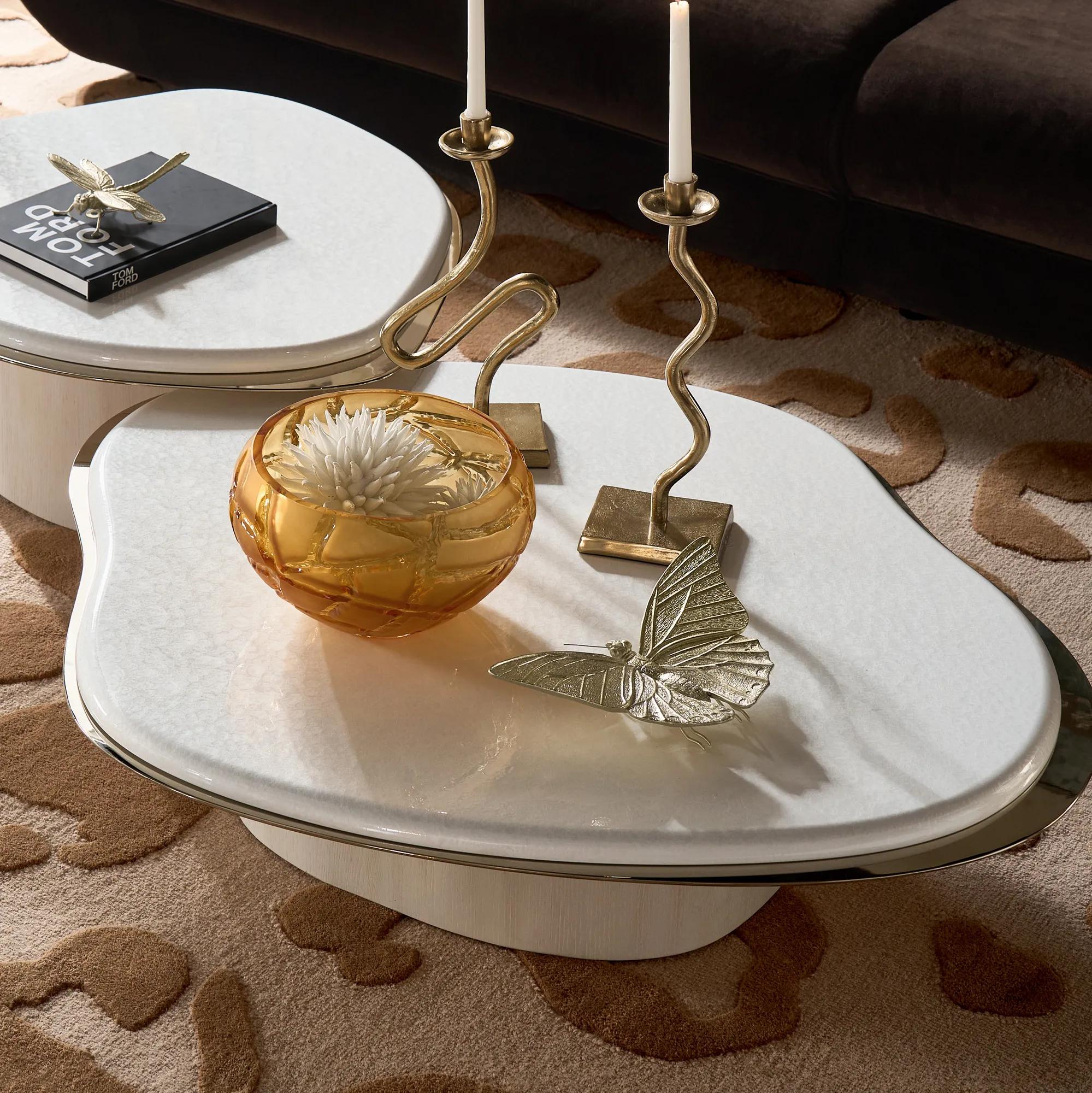 Lumina Bleached Oak Coffee Table With Pearl Lacquered Top (41")$1199
A sculptural coffee table featuring a pearl lacquered top, bleached oak base, and champagne gold trim.
Add To Cart -
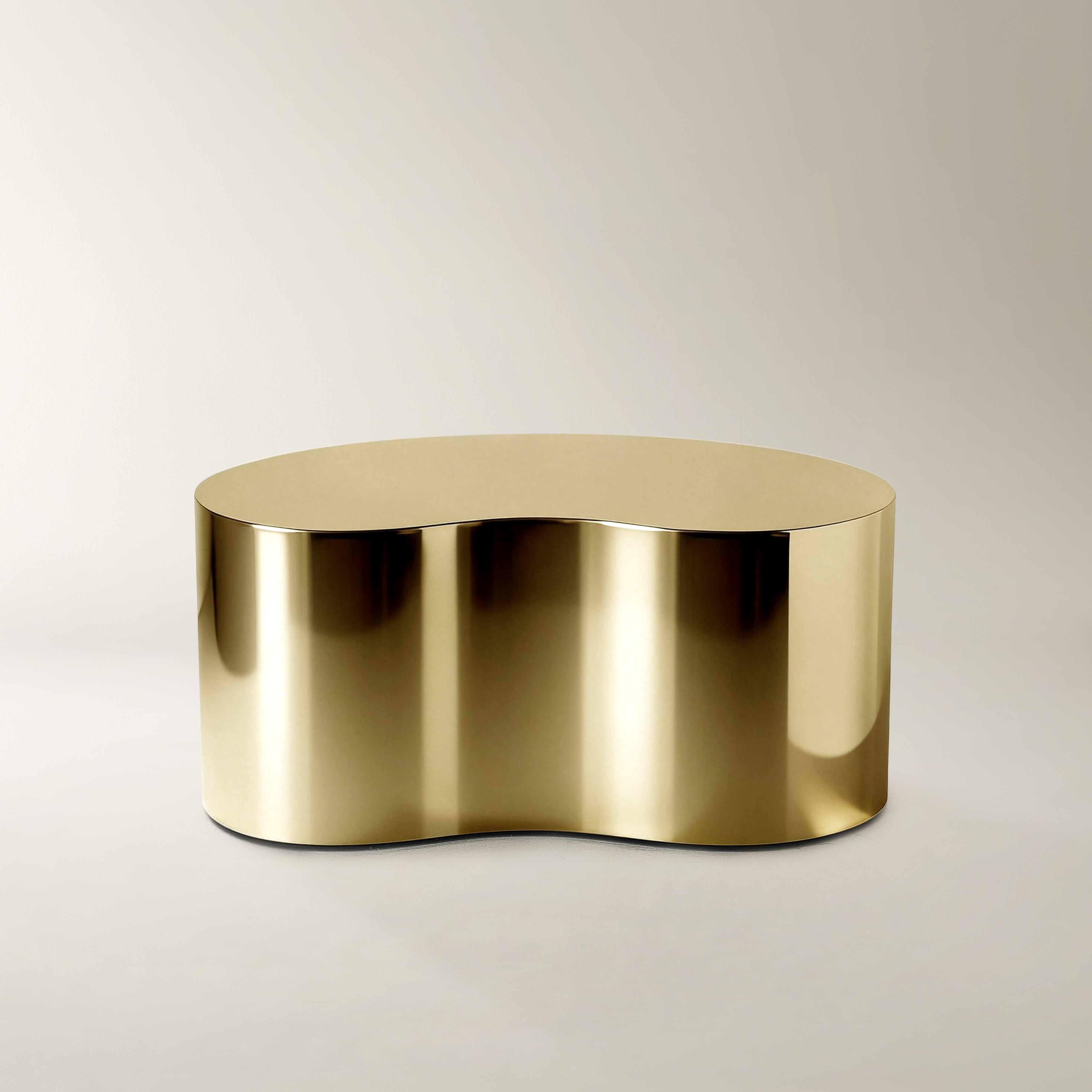 Aurea Soft Gold Coffee Table (37.5")$999
A sculptural coffee table crafted from premium stainless steel with a high-gloss soft gold mirror finish.
Add To Cart -
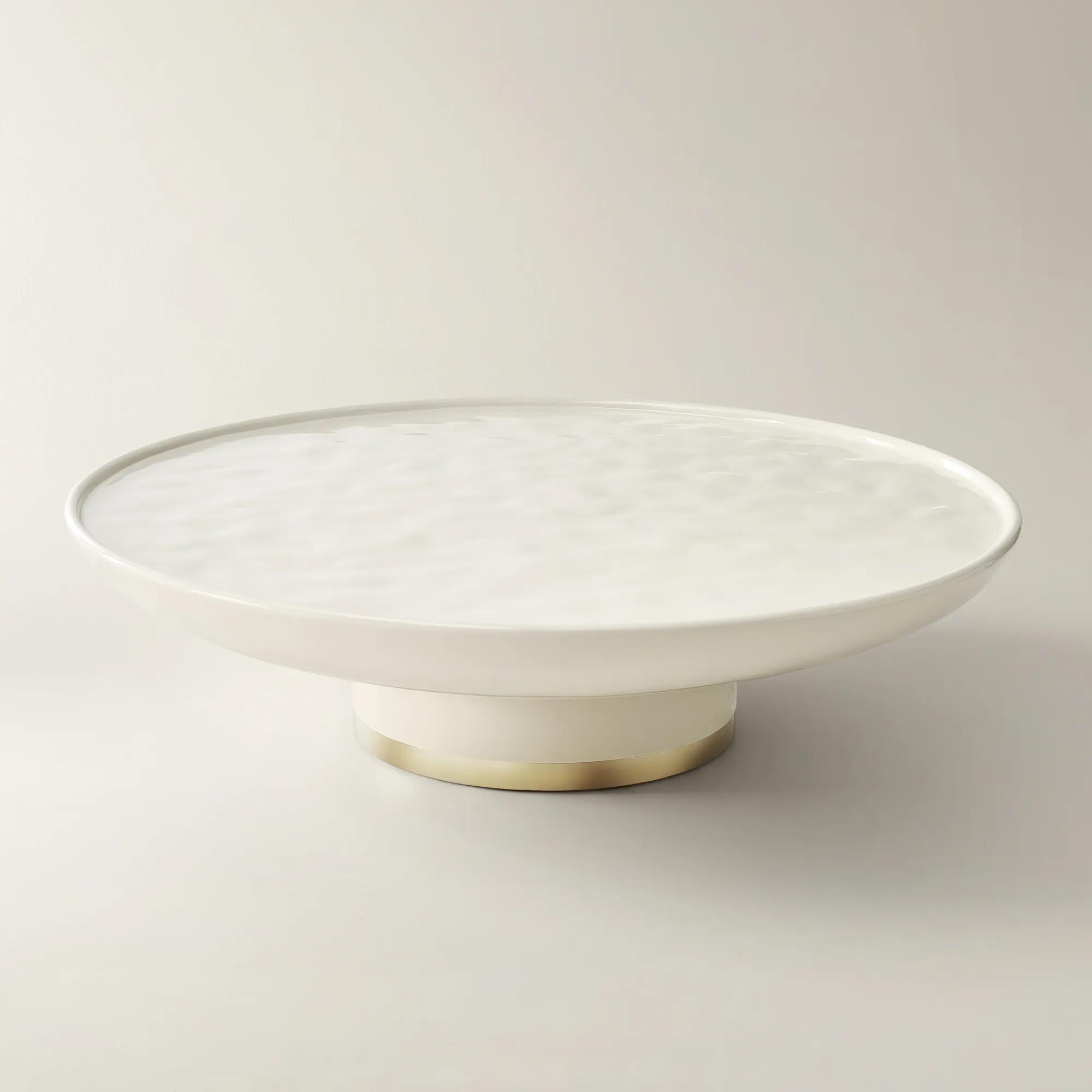
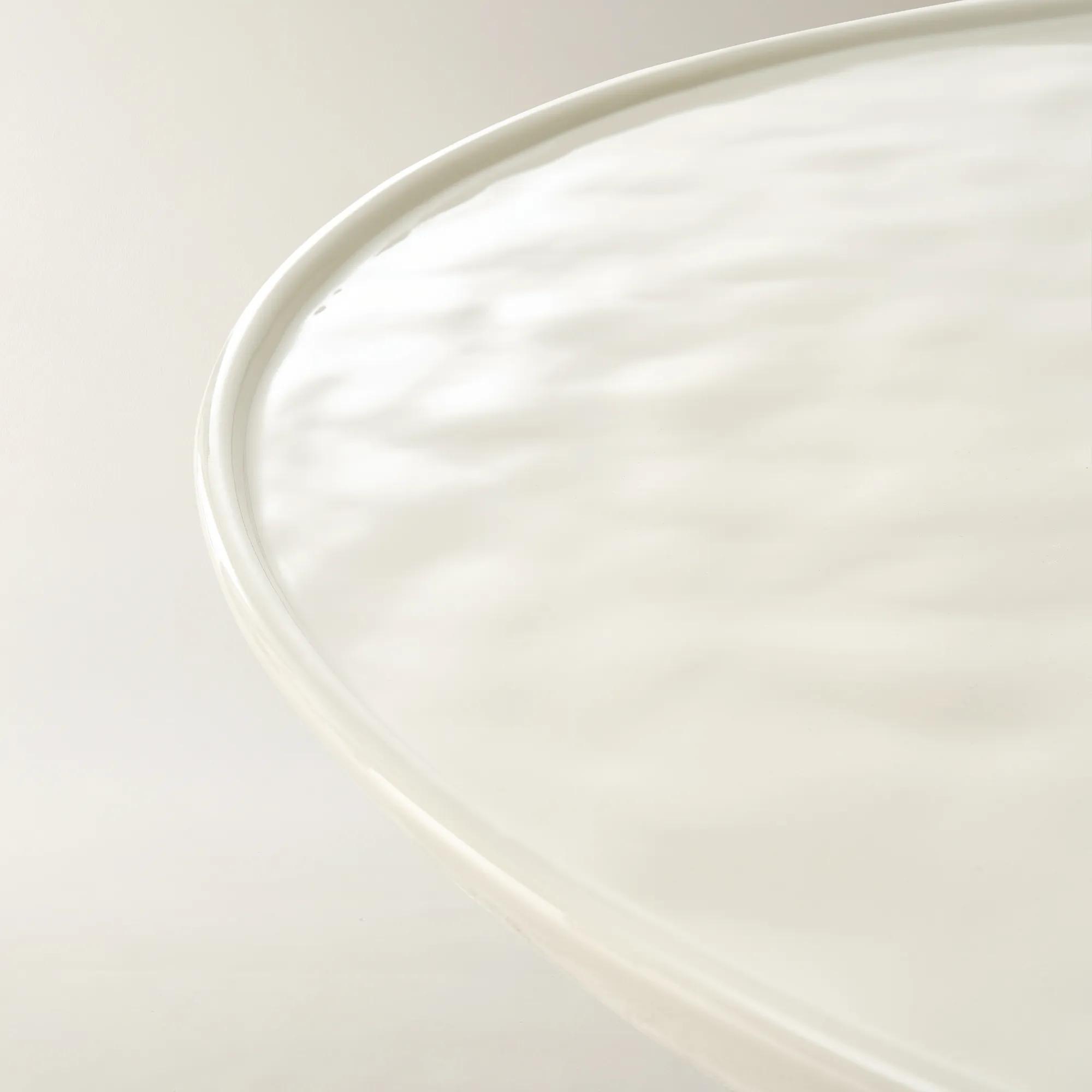 Celia Lacquered Cloud Resin Indoor/Outdoor Coffee Table (54")$1399
A sculptural one-piece resin coffee table with a high-gloss warm finish and gold stainless steel base.
Add To Cart

Modern Sculptural Coffee Tables
Modern sculptural coffee tables are more than just a surface—they are the artistic heart of a living room, where form meets function in a daring display of design. Each piece commands attention, transforming everyday moments into curated experiences with bold silhouettes and unexpected contours. Whether you crave the drama of gleaming metallics or the intrigue of organic shapes, these tables invite you to reimagine your space as a gallery—where every angle delights and every detail inspires. Elevate your décor with modern sculptural coffee tables that turn conversation into an art form and make your home unapologetically unforgettable.
Modern sculptural coffee tables combine a functional tabletop with an expressive, three-dimensional form, bringing the presence of an art object to the center of a living room. Their defining details may be sweeping curves, stacked geometric volumes, an asymmetrical silhouette, or a pedestal base that appears carved from a single mass. Unlike tables whose character comes primarily from surface decoration, sculptural designs make shape itself the focal point. An oval top balanced over rounded supports introduces softness beside a tailored sofa; a substantial rectangular form with recessed legs creates a striking interplay of weight and shadow. Open bases and transparent surfaces allow light and sightlines to travel through the composition, while solid plinths establish a grounded, architectural presence. These distinctions give contemporary coffee tables their range: some feel fluid and almost animated, while others evoke the quiet authority of a gallery pedestal. In a living room with velvet upholstery, a curved table can echo the fabric’s sumptuous character without competing with its texture. Against a crisp sectional and a large abstract canvas, an angular design adds another layer of visual rhythm. The effect depends as much on the space around the table as on the table itself. A distinctive profile deserves enough breathing room for its contours to remain visible from the sofa, the entryway, and an adjoining dining area. For interiors that call for a more pronounced interplay of dramatic form and refined finishes, Sculptural Luxury Coffee Tables offer a closely related expression of the same artistic sensibility. Whether the mood is luminous and polished or richly textured, the appeal is furniture that earns its central position through both beauty and purpose. A generous surface still welcomes a tray of drinks, a favorite photography book, or a low bowl of flowers; the sculptural structure beneath turns those familiar rituals into a more considered setting.
Materials give sculptural coffee tables much of their personality, influencing their visual weight, tactile appeal, durability, and care requirements. Natural stone brings movement through veining, mineral variation, and subtle shifts in tone, so two surfaces of the same stone can have distinctly different markings. Marble often reads as fluid and expressive, while travertine introduces a more porous texture whose appearance depends on whether it is filled, honed, or otherwise finished. Substantial stone forms can create a commanding centerpiece, but their weight makes placement and delivery access especially important. Porous stone may need periodic sealing according to the manufacturer’s instructions, and acidic spills can etch some surfaces even when sealed. Solid wood offers another kind of depth: grain follows the sweep of a rounded edge or emphasizes the planes of a blocklike base. Wood veneers can also bring richly patterned surfaces to carefully shaped forms; construction quality, edge detailing, and finish matter more than any assumption that one material alone guarantees longevity. Wood benefits from stable indoor humidity and protection from standing moisture, excessive heat, and prolonged direct sunlight. Glass-top coffee tables reveal the artistry of a base from above, making intertwined supports or an abstract central column part of the everyday view. Tempered glass is designed for greater strength than ordinary glass, though it is not scratchproof or unbreakable. Polished metal lends crisp reflection, brushed metal produces a softer sheen, and molded resin or composite materials can support fluid shapes that would be difficult to achieve in conventional joinery. Each finish has its own care needs, especially where coatings or decorative surfaces are involved. A soft cloth, prompt attention to spills, and cleaners approved for the particular material help preserve the intended appearance. Coasters and protective pads beneath decorative objects remain worthwhile even on surfaces described as durable. For a frequently used family room, a finish that tolerates daily contact may matter more than a flawless mirrorlike reflection; in a formal sitting room, a highly polished surface can become part of the room’s luminous composition.
Scale determines whether a modern sculptural coffee table feels beautifully integrated or overwhelms the seating arrangement. A useful starting point is a table approximately two-thirds the length of the sofa, with a top close to the seat-cushion height or slightly lower, although deep seating and unconventional layouts may call for different proportions. Leaving about 14 to 18 inches between the table and surrounding seating generally provides room for knees while keeping a drink within reach; main walking routes often need more clearance. The widest point of an irregular tabletop and the full footprint of its base both deserve attention, since an outward curve or projecting support can occupy space that is not obvious in a straight-on photograph. Round and oval coffee tables create softer transitions through compact seating areas and can ease movement around a sectional. Elongated shapes often relate well to long sofas, while a square or generous organic form can bring balance to a broad conversational arrangement. Rounded edges may reduce sharp corners, but they do not replace an assessment of stability, weight, and suitability for homes with young children or active pets. Tables intended for indoor living spaces should also remain within their specified use: a dramatic slab or substantial pedestal is not necessarily designed to function as a seat, footrest, or outdoor surface. For hosts, the most satisfying designs balance expressive outlines with enough usable area for refreshments. For readers and collectors, a broad top becomes a platform for oversized books and one carefully chosen object. Styling is especially effective when it preserves the table’s defining gesture. A low ceramic vessel can emphasize the sweep of an organic top, while a restrained grouping on a tray leaves a striking expanse of stone visible. A sculptural base beneath glass rarely needs a crowded arrangement above it. These tables suit anyone who wants the living room to reflect a confident eye for form without surrendering everyday comfort. Their lasting distinction lies in that balance: a place to gather, a surface to use, and a shape that gives the room its own unmistakable character.
FAQs
A modern sculptural coffee table is distinguished by its artful, expressive design—often featuring bold shapes, unexpected materials, and dramatic silhouettes. These tables are crafted to serve as visual focal points, merging form and function to elevate the ambiance of a living space. Rather than simply providing a surface, they act as statement pieces that reflect a sense of artistry and individuality.
A sculptural coffee table brings a sense of drama and sophistication to your living room, immediately drawing the eye and anchoring the space. Its unique design can complement both minimalist and maximalist interiors, adding texture, contrast, and a touch of the unexpected. By choosing a table that resonates with your personal style, you transform your living area into a curated, gallery-like environment.
Modern sculptural coffee tables are often crafted from luxurious materials such as marble, glass, metal, and richly grained woods. You’ll also find innovative combinations—like mixed metals with mirrored finishes, or hand-carved timber paired with sleek lacquer—to create a sense of depth and intrigue. Each material brings its own mood, from the warmth of wood to the cool elegance of stone.
Absolutely. A sculptural coffee table makes an unforgettable gift for design enthusiasts, newlyweds, or anyone celebrating a milestone. Its artistic presence and timeless appeal ensure it will be treasured for years, serving as both a functional piece and a lasting reminder of a meaningful occasion.
To showcase the artistry of your coffee table, opt for minimal, thoughtfully chosen accents—a stack of art books, a single dramatic vase, or a metallic tray. Allow the table’s form to shine by keeping surfaces uncluttered, and consider lighting that casts intriguing shadows to highlight its sculptural qualities. This approach lets the table anchor the room while still expressing your unique style.