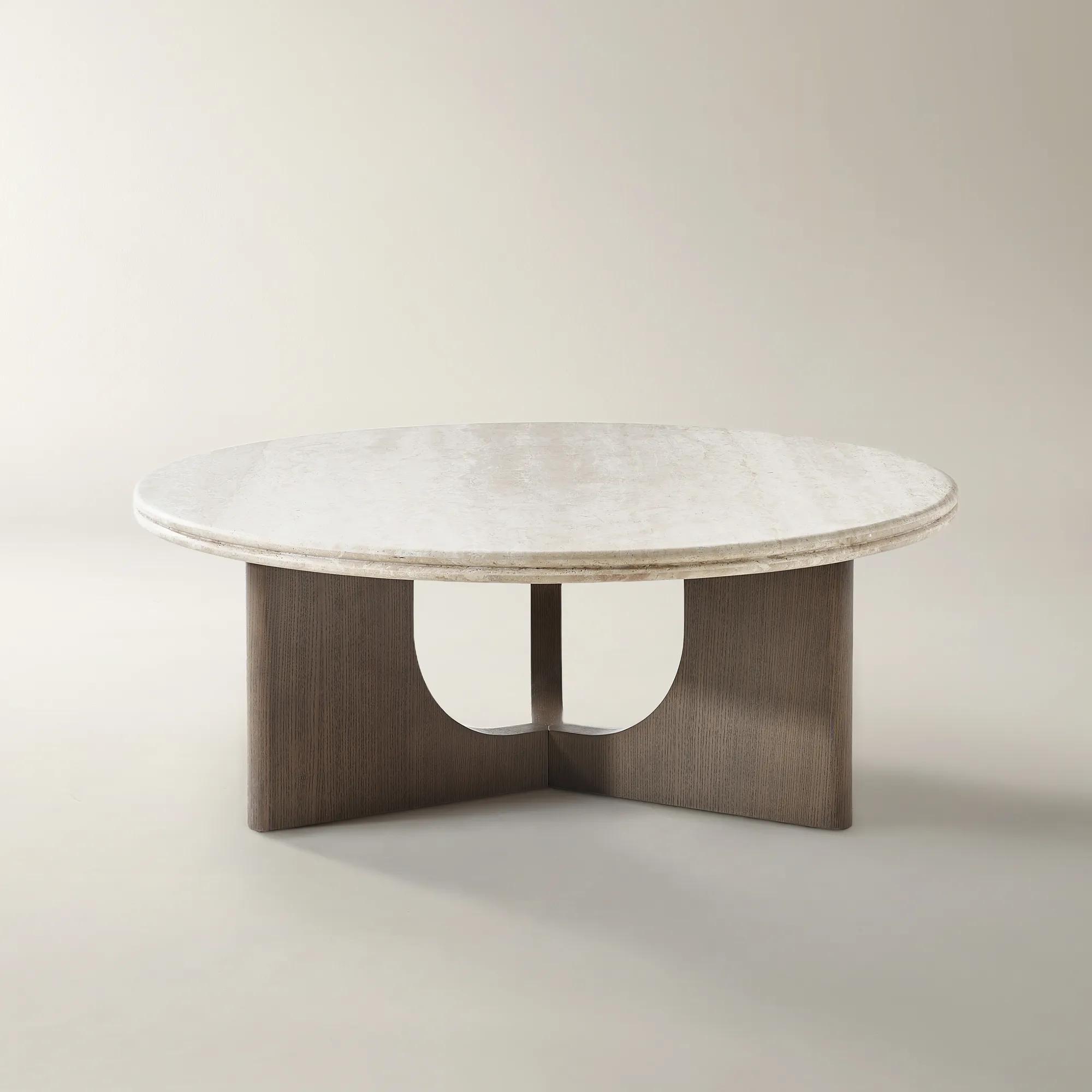
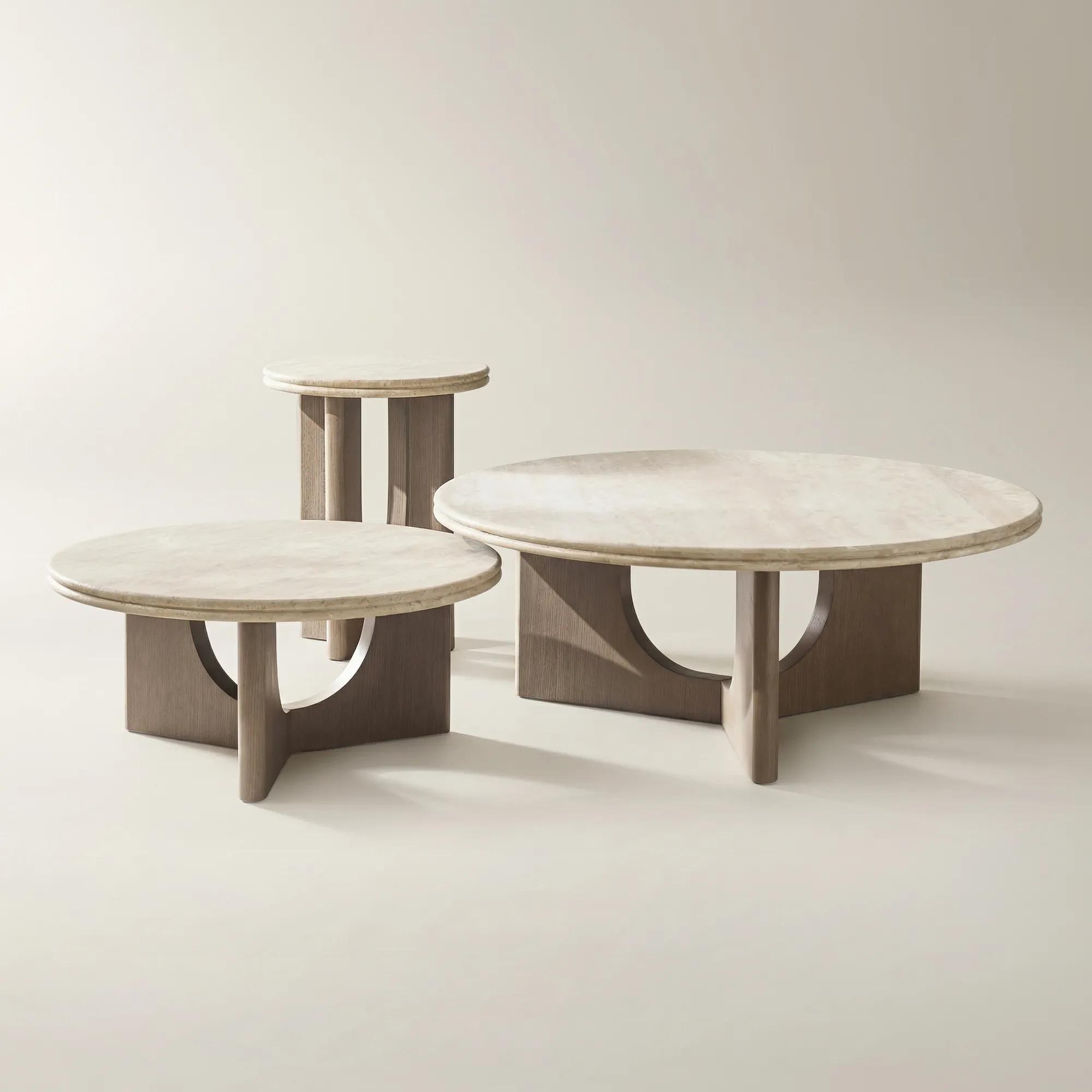
Artistic Coffee Tables
Artistic Coffee Tables
-
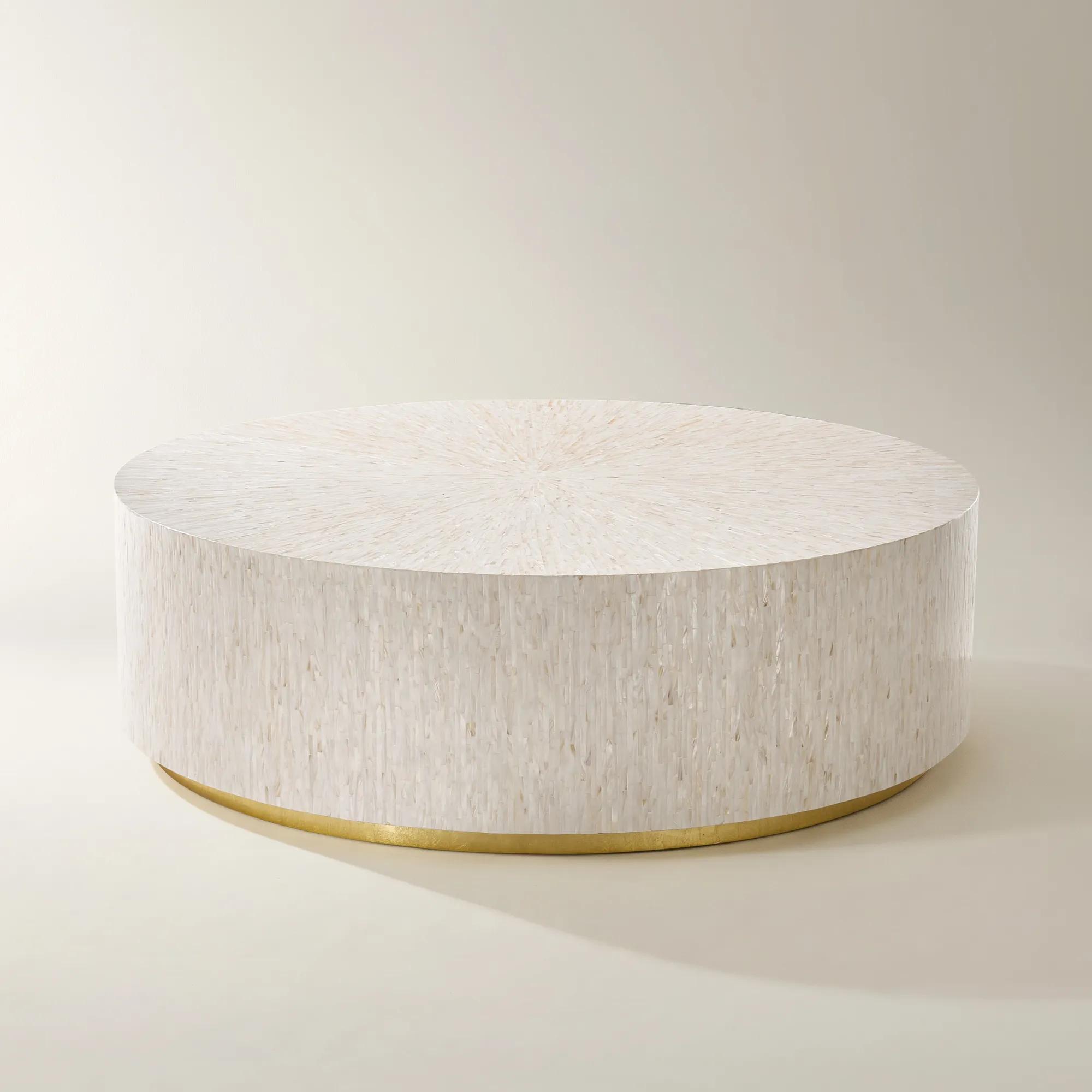 Alexandria Round Mosaic Platinum Coffee Table (52")$1399
A luminous mother-of-pearl mosaic coffee table with a sculptural round form and gold leaf–accented base.
Add To Cart -
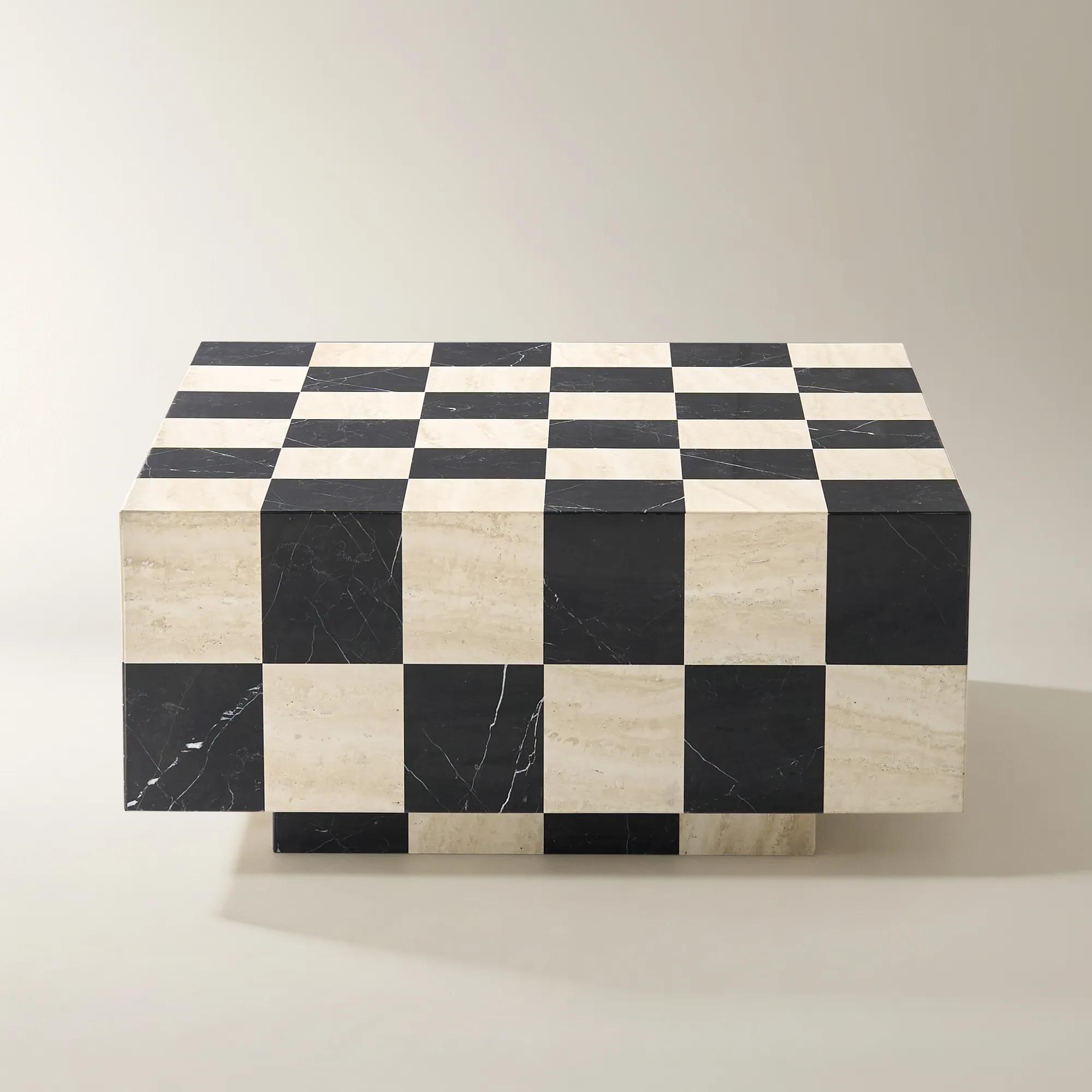
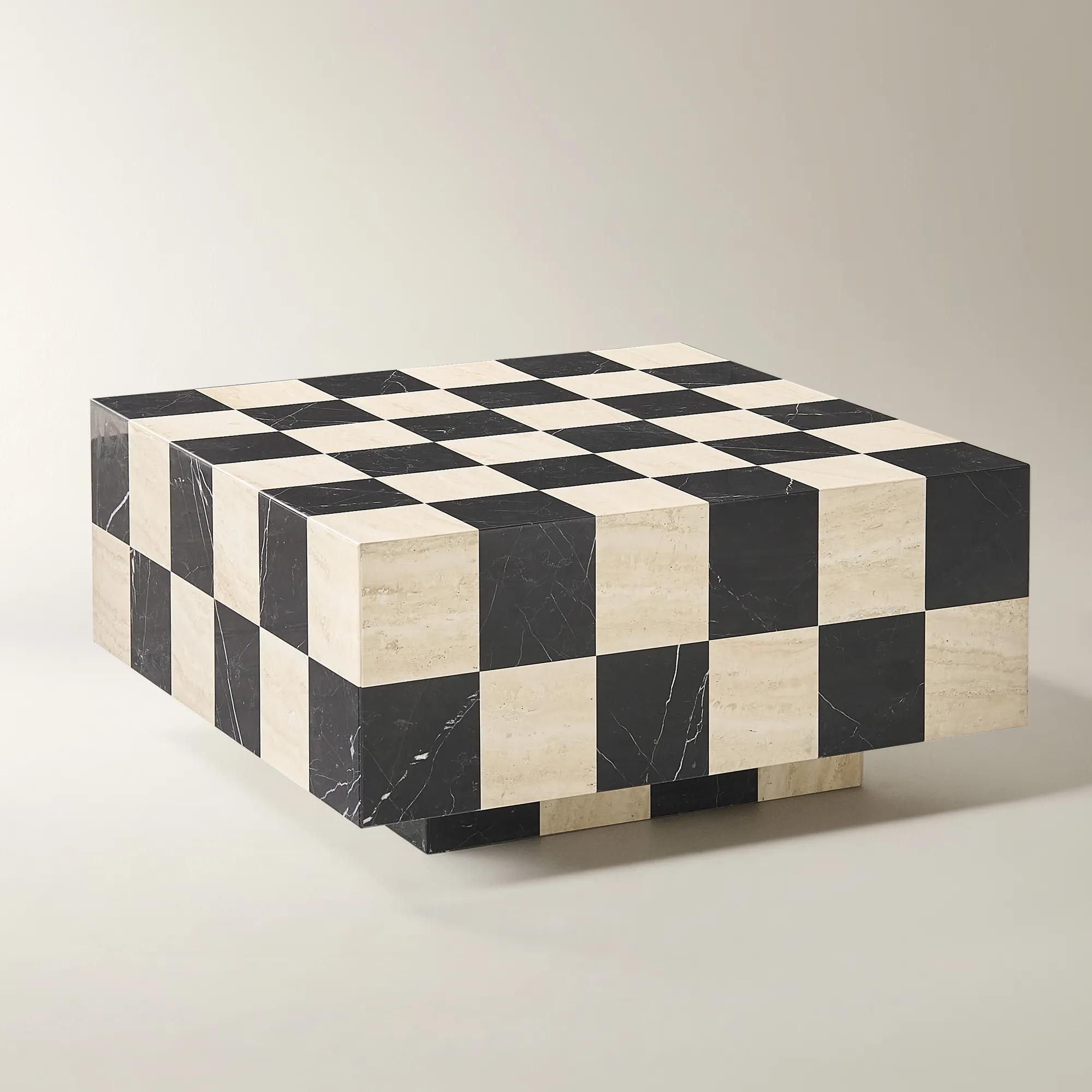 Chessa Square Chequered Marble Coffee Table (31.9")$1699
A striking coffee table featuring a dimensional black marble and travertine checkerboard mosaic with polished finish.
Add To Cart -
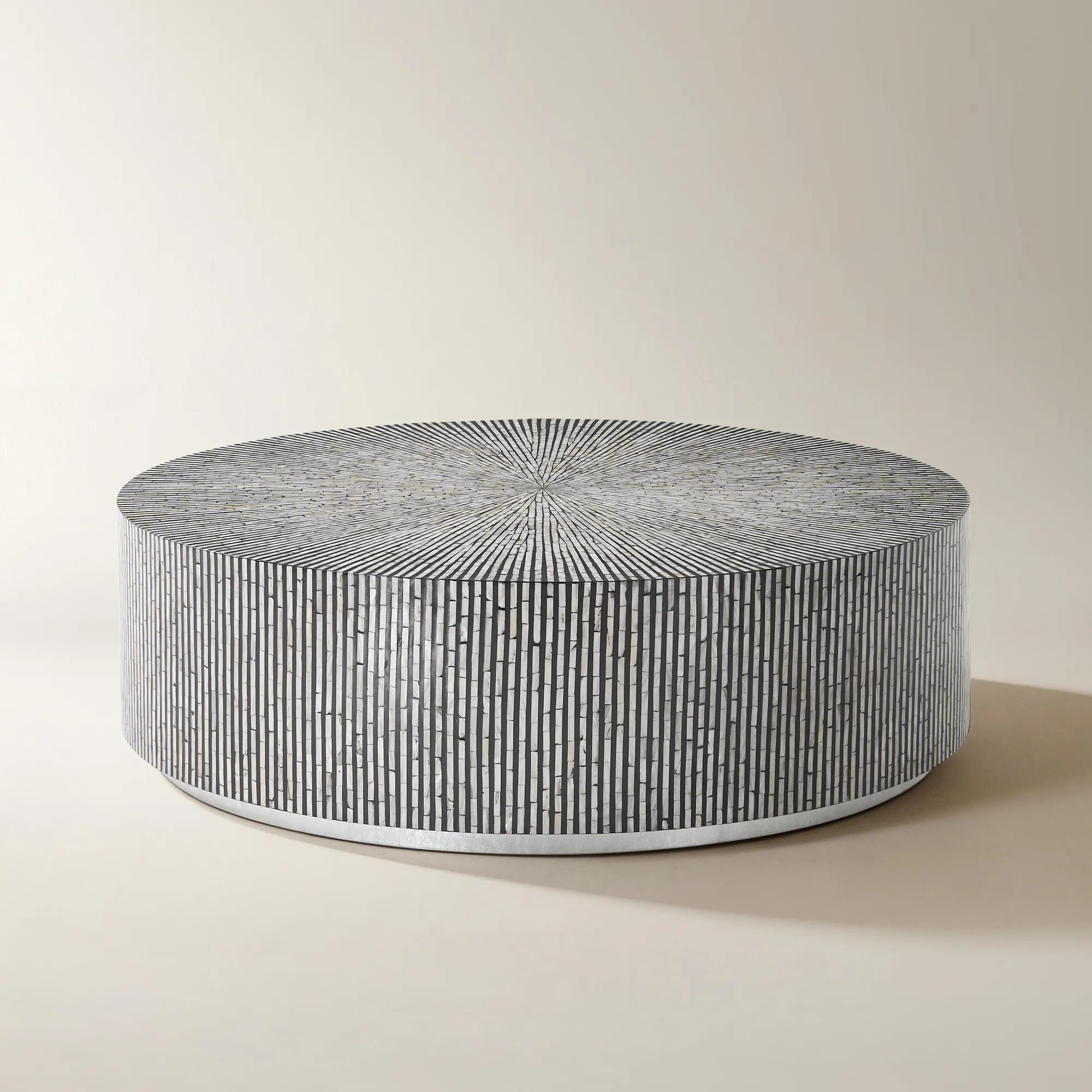
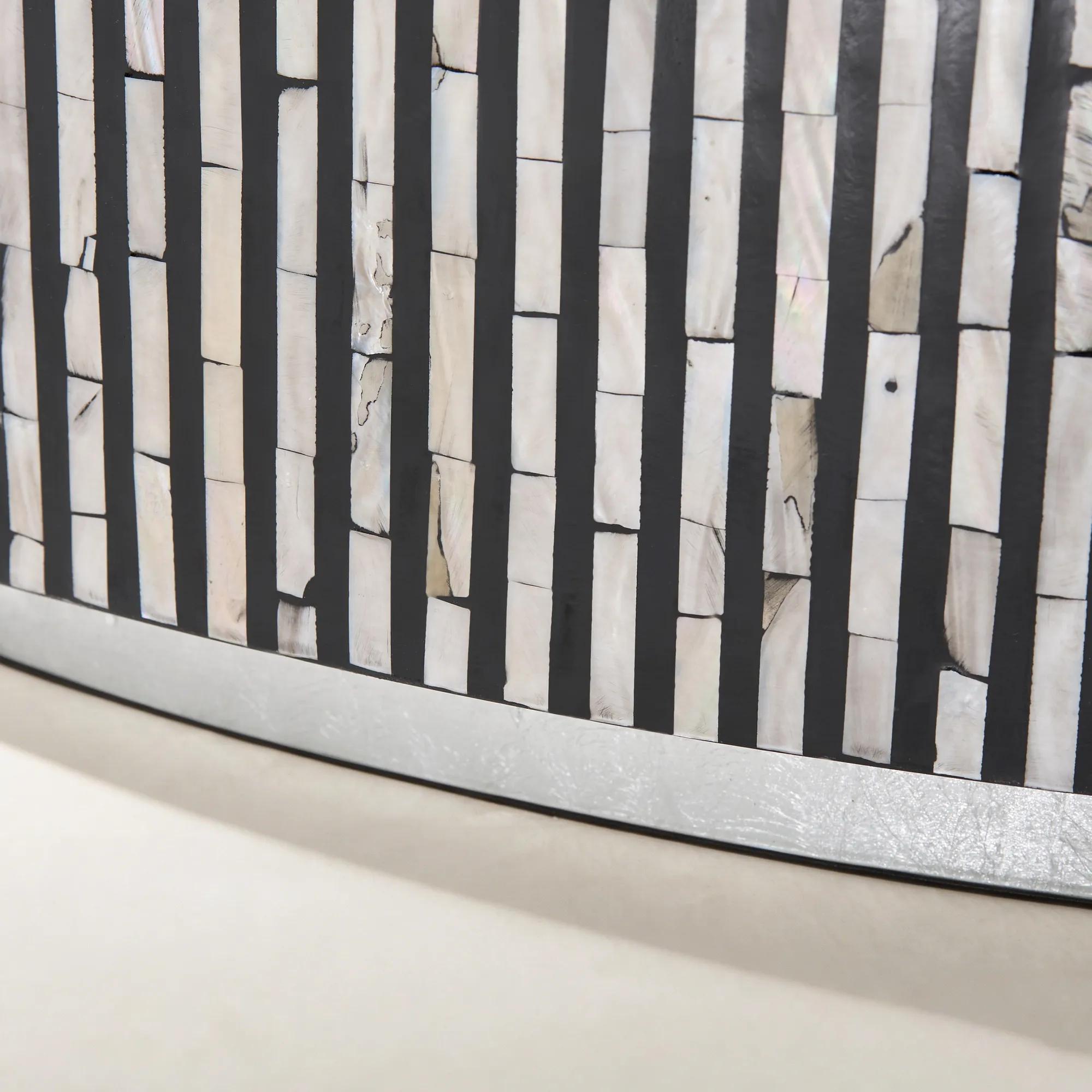 Marina Round Mosaic Black Coffee Table (52")$1399
A sculptural black coffee table featuring hand-applied mother-of-pearl mosaic and a silver leaf base.
Add To Cart -
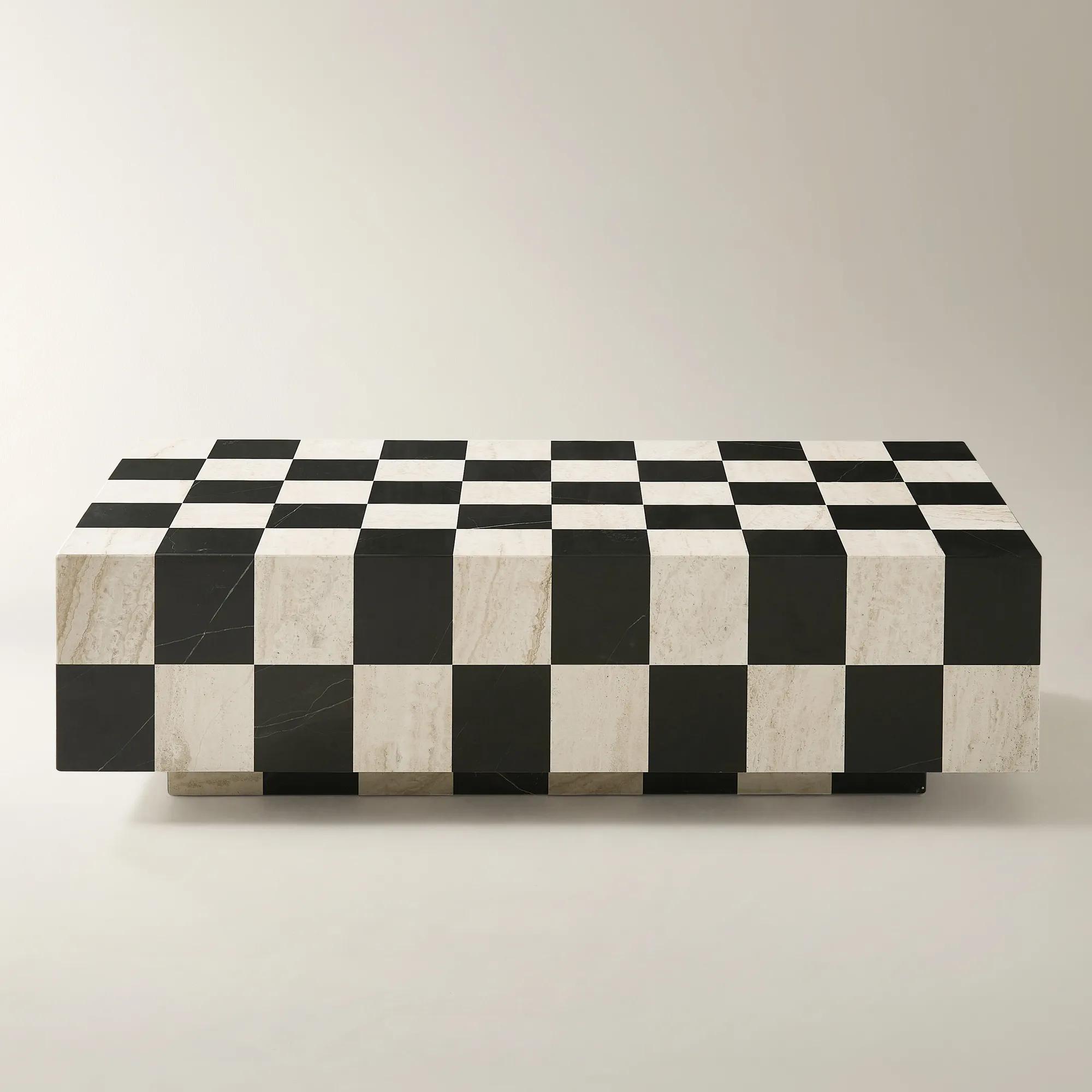 Chessa Rectangular Chequered Marble Coffee Table (53.1")$2399
A sculptural coffee table featuring polished black marble and travertine checkerboard mosaic with a monolithic silhouette.
Add To Cart -
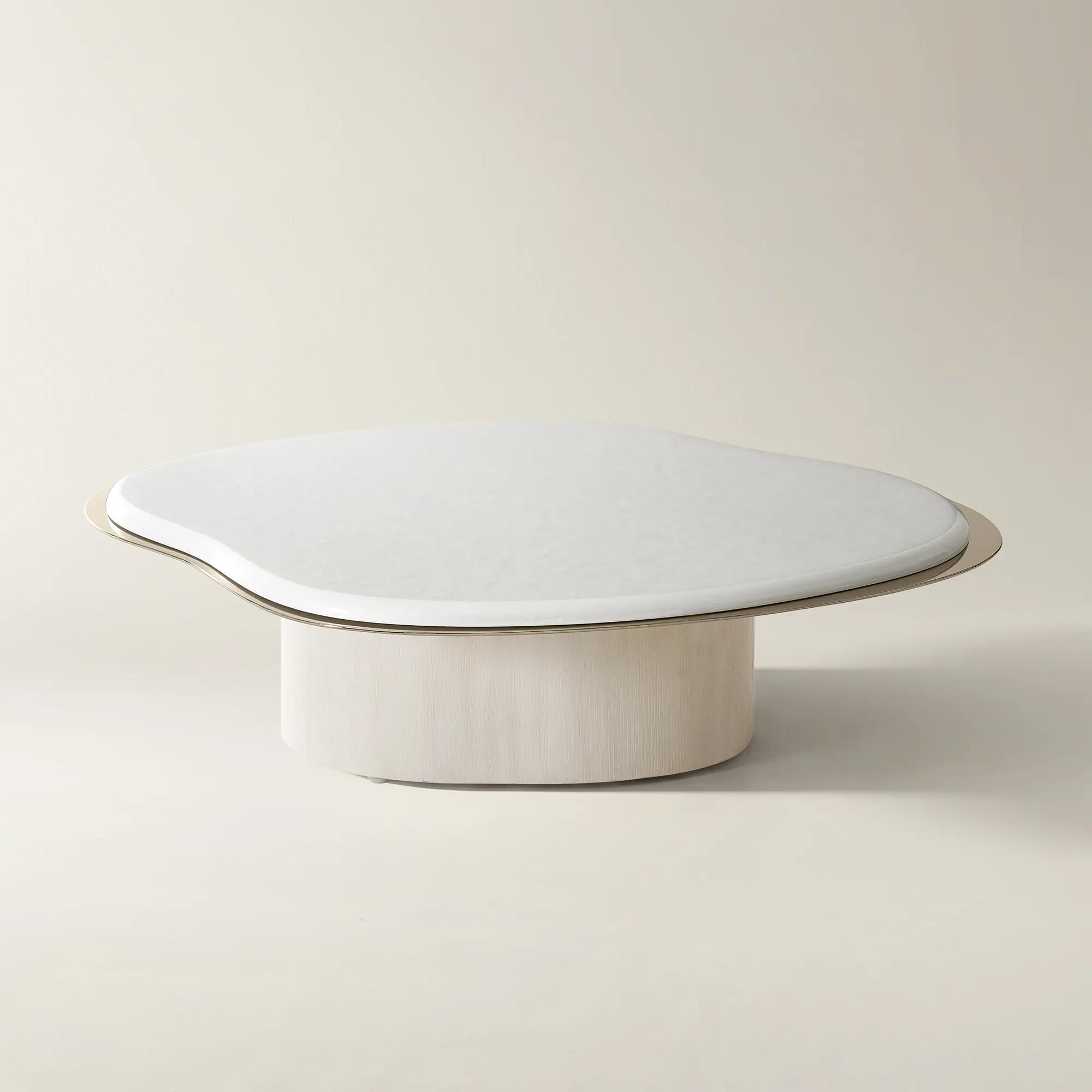
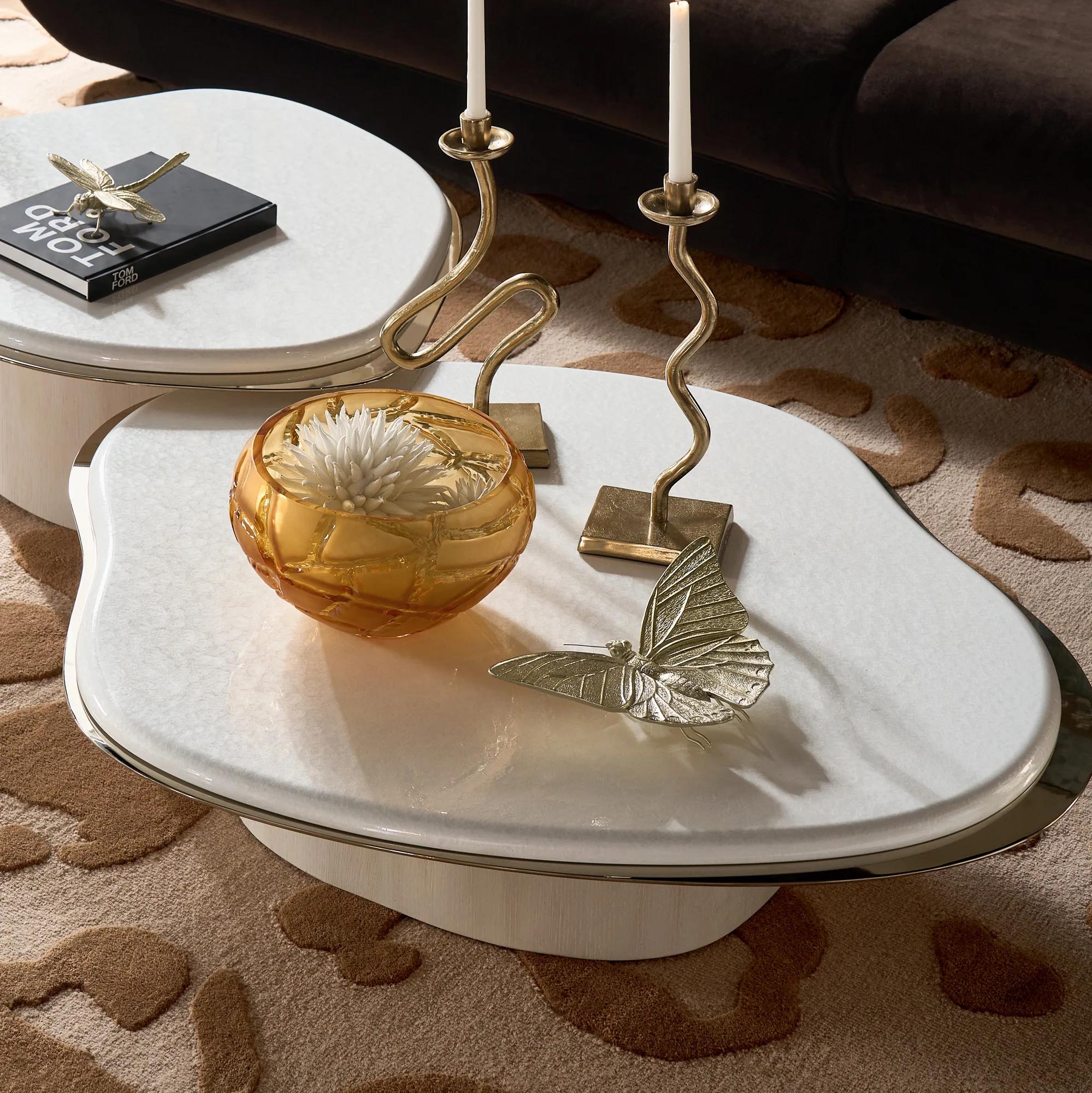 Lumina Bleached Oak Coffee Table With Pearl Lacquered Top (41")$1199
A sculptural coffee table featuring a pearl lacquered top, bleached oak base, and champagne gold trim.
Add To Cart -
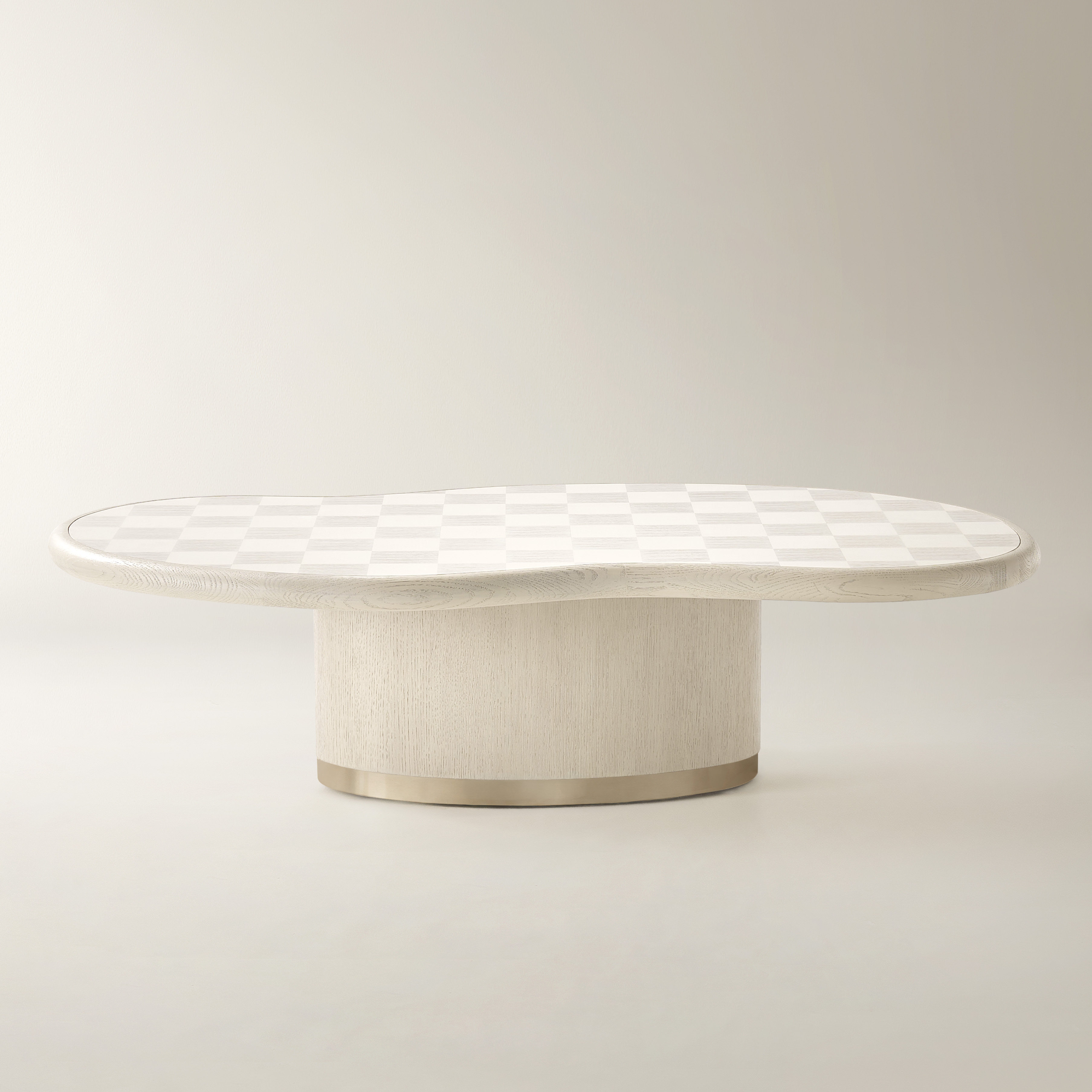 Vetra Checkerboard Oak and Maple Coffee Table (60")$1299
A sculptural coffee table featuring a hand-arranged oak and maple checkerboard top with gold-accented base.
Add To Cart -
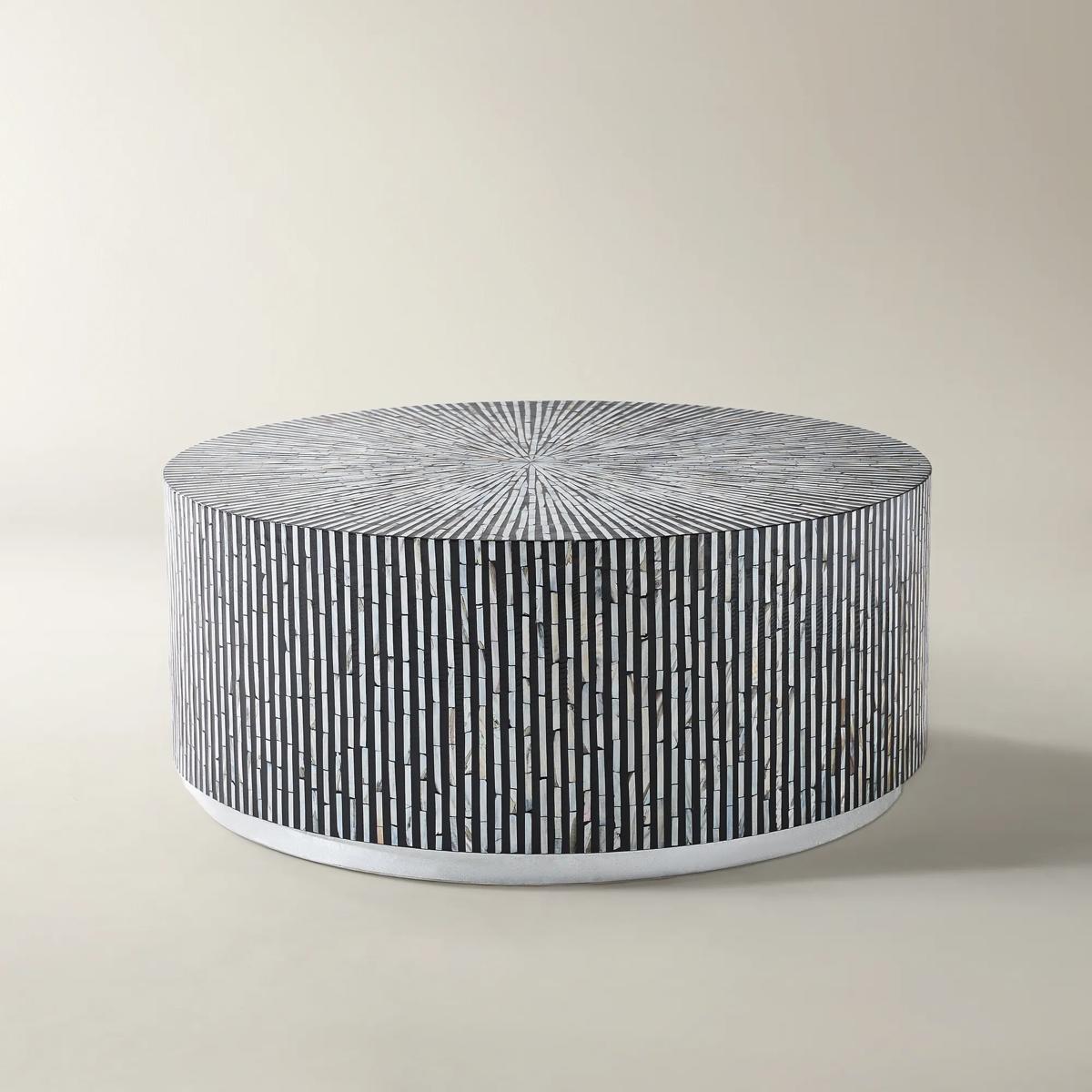
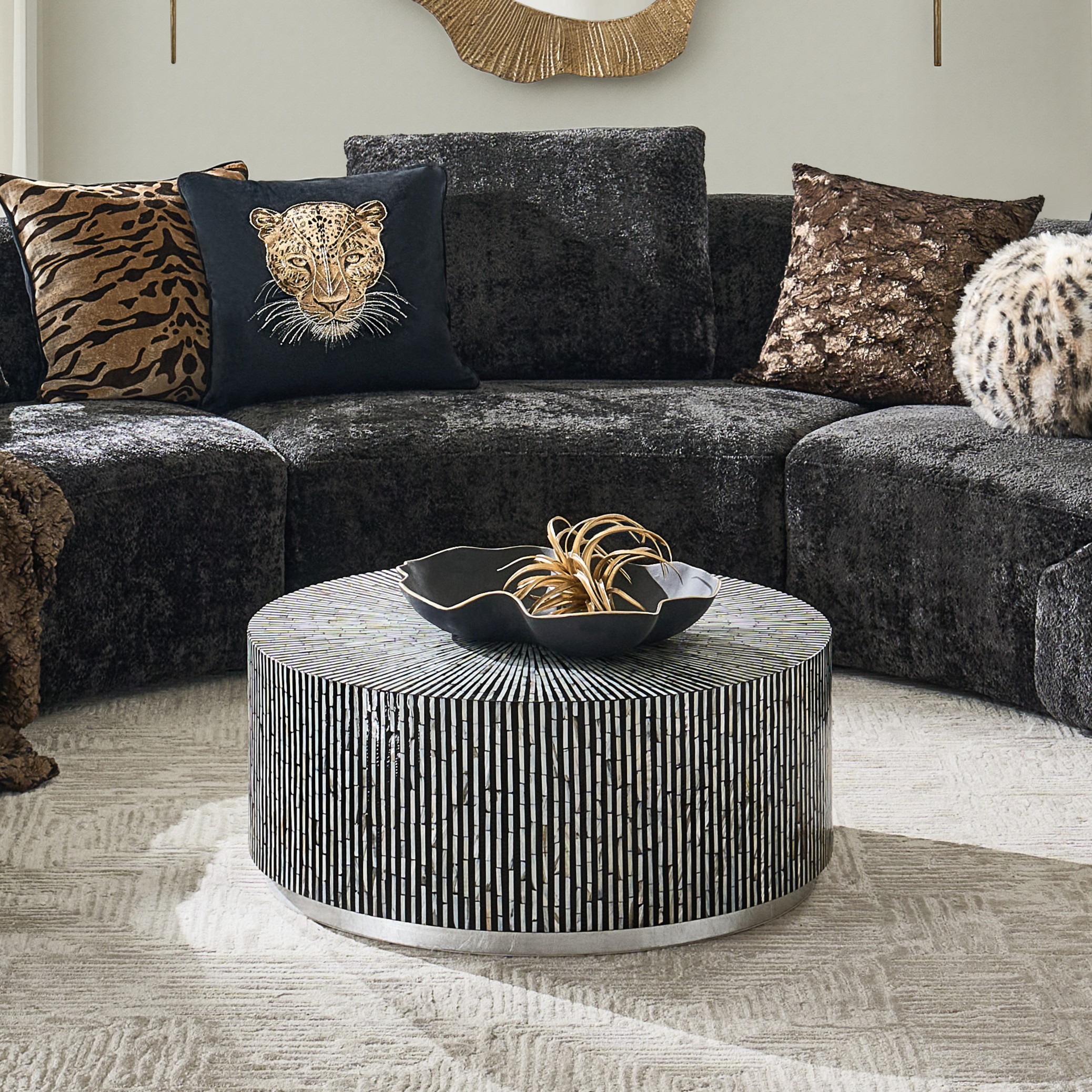 Marina Round Mosaic Black Coffee Table (35.8")$799
A handcrafted round coffee table featuring iridescent mother-of-pearl inlay and a silver leaf base.
Add To Cart -
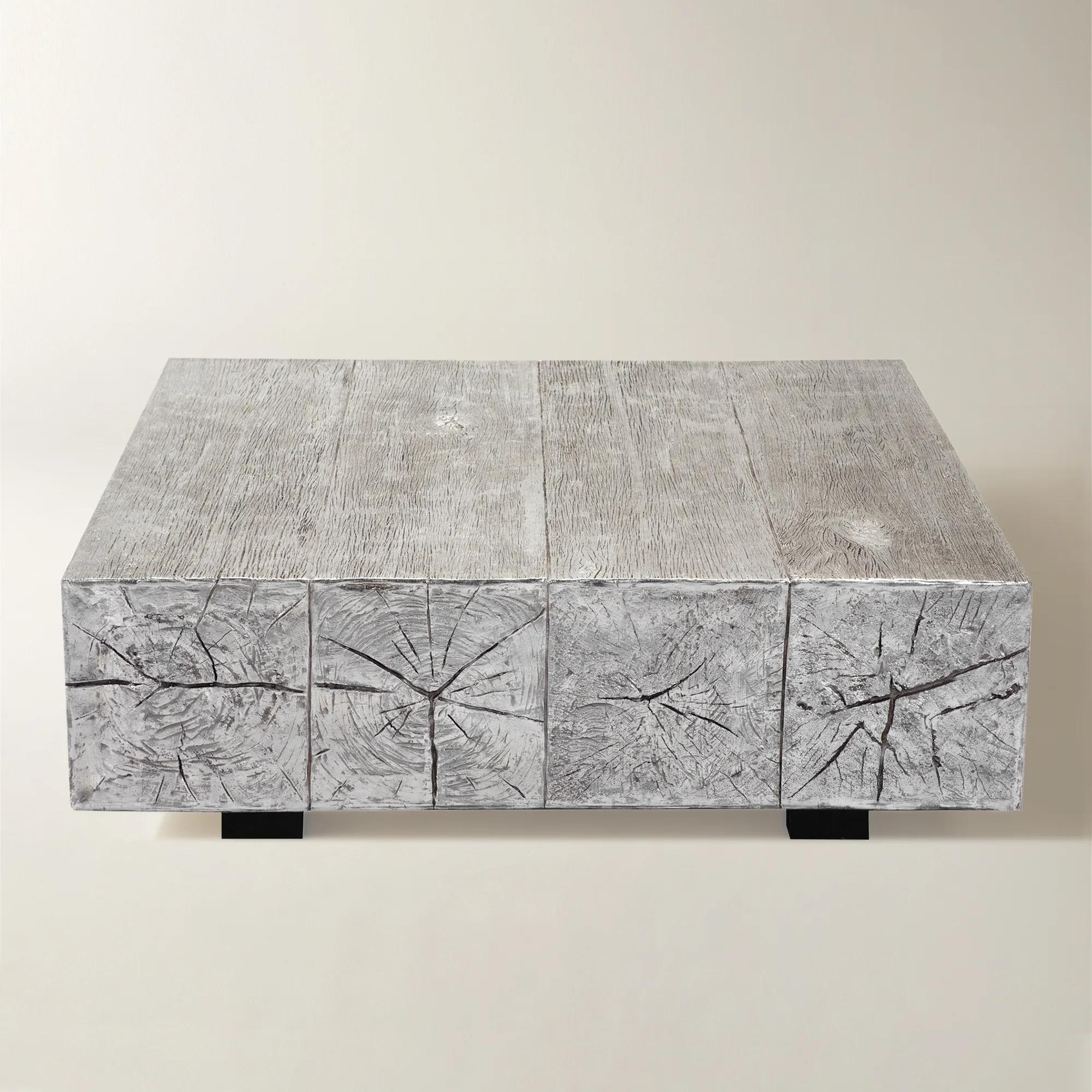
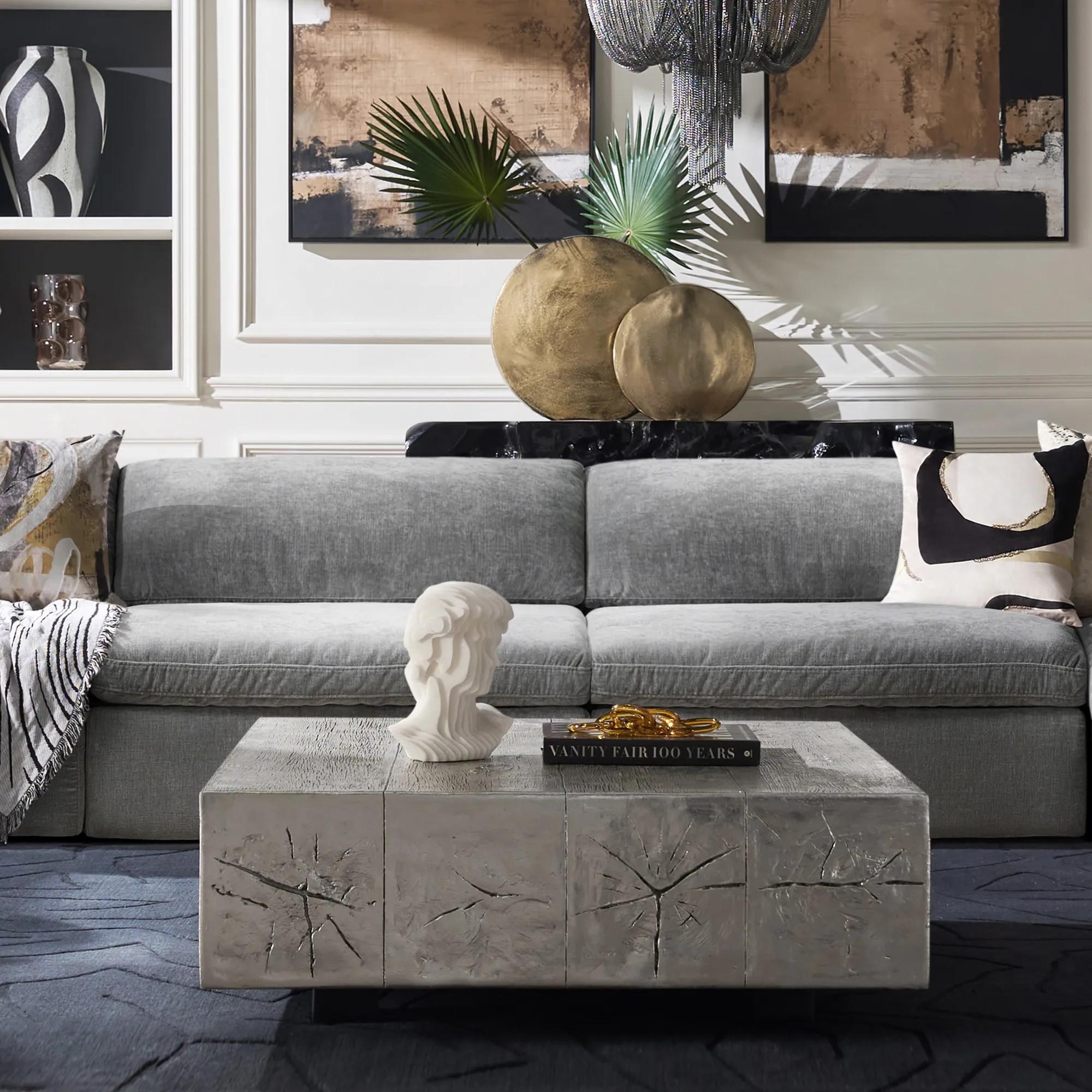 Timber Square Silver Resin Coffee Table (44")$1299
A hand-painted silver resin coffee table featuring authentic silver leaf and an antiqued, hand-rubbed oil finish.
Add To Cart -
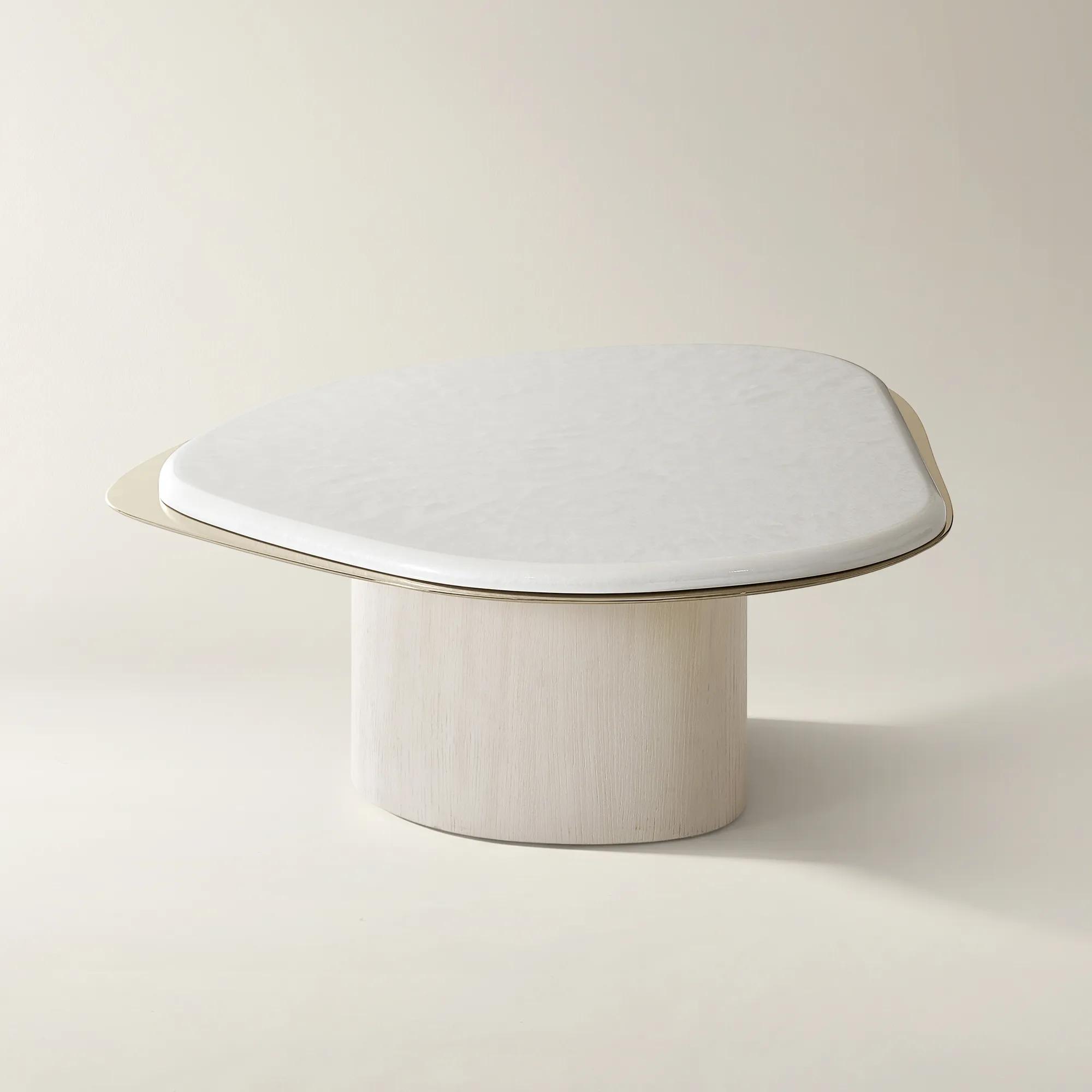
 Lumina Bleached Oak Coffee Table With Pearl Lacquered Top (32")$899
A sculptural coffee table featuring a pearl lacquered top, bleached oak base, and champagne gold trim.
Add To Cart -
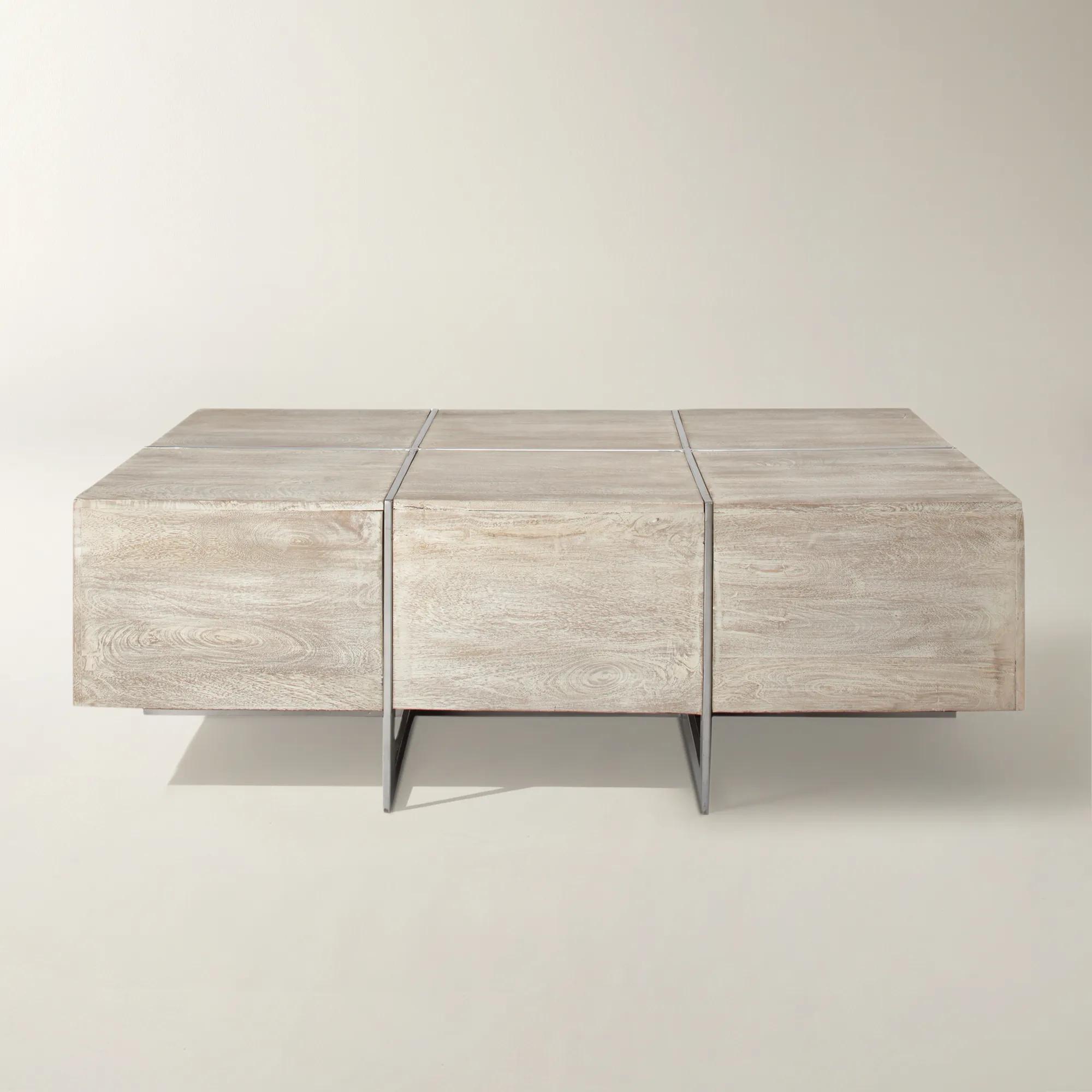
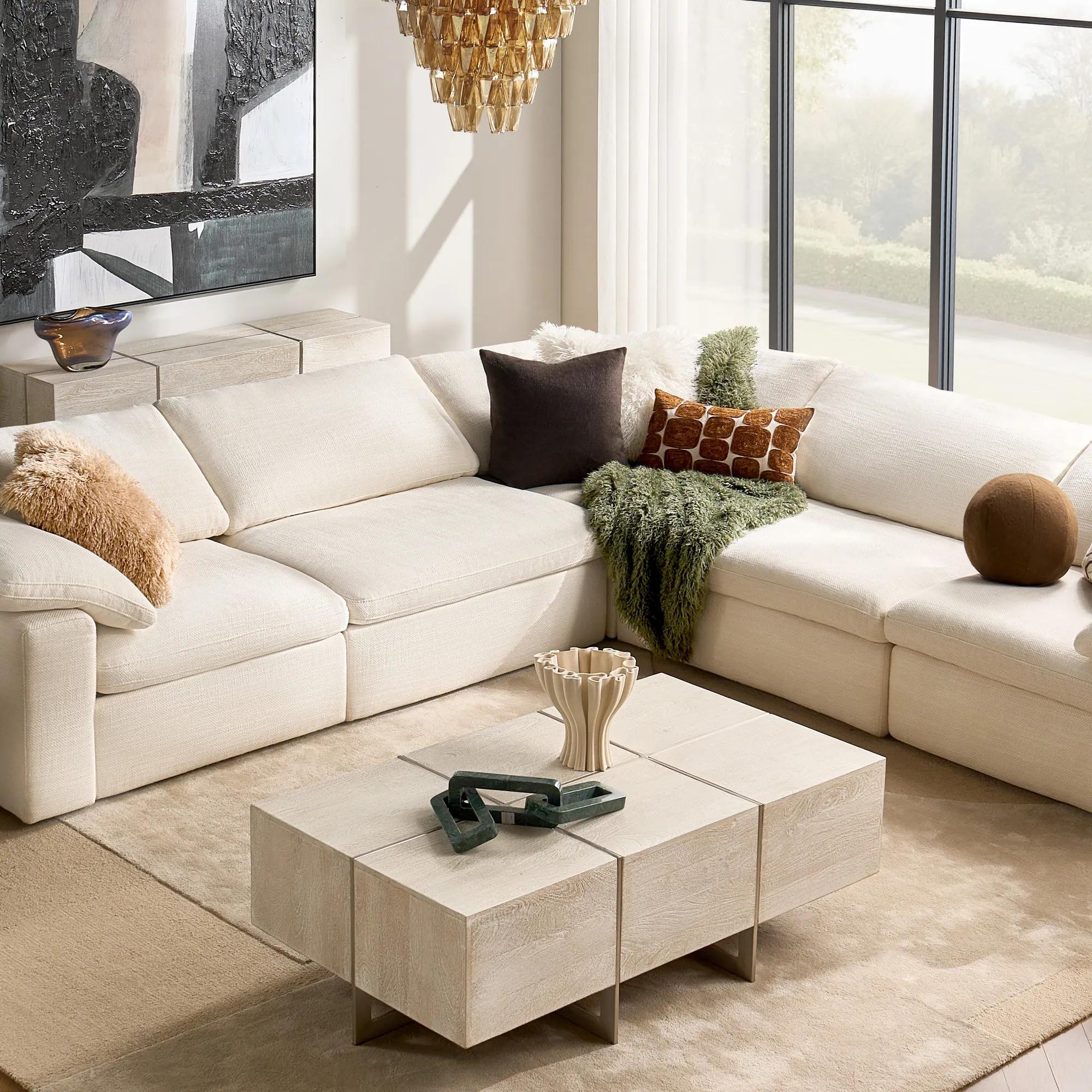 Clifton Rectangular Natural Mango Wood Coffee Table (54")$1299
A handcrafted mango wood table with a whitewashed finish and antiqued silver iron legs for organic appeal.
Add To Cart -
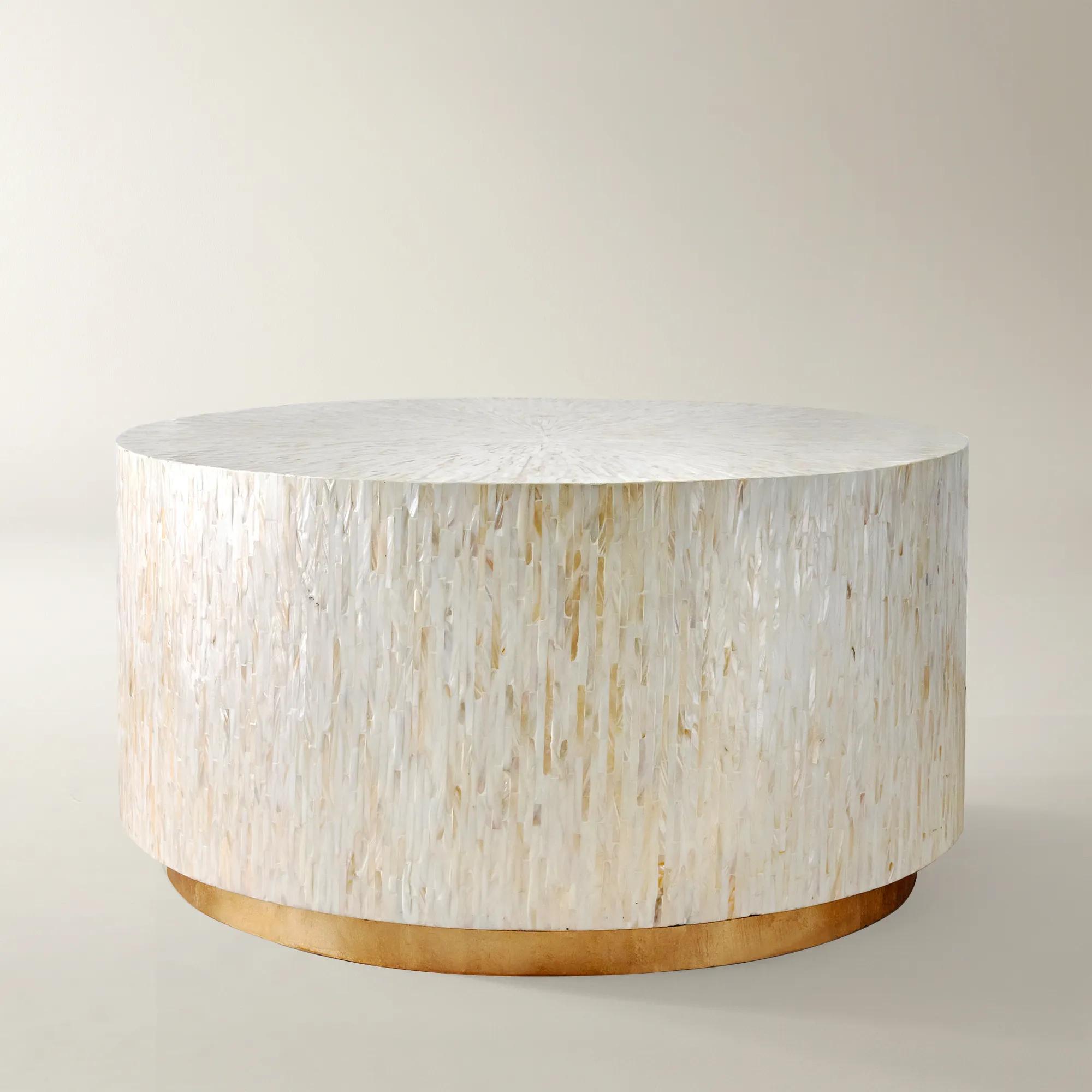
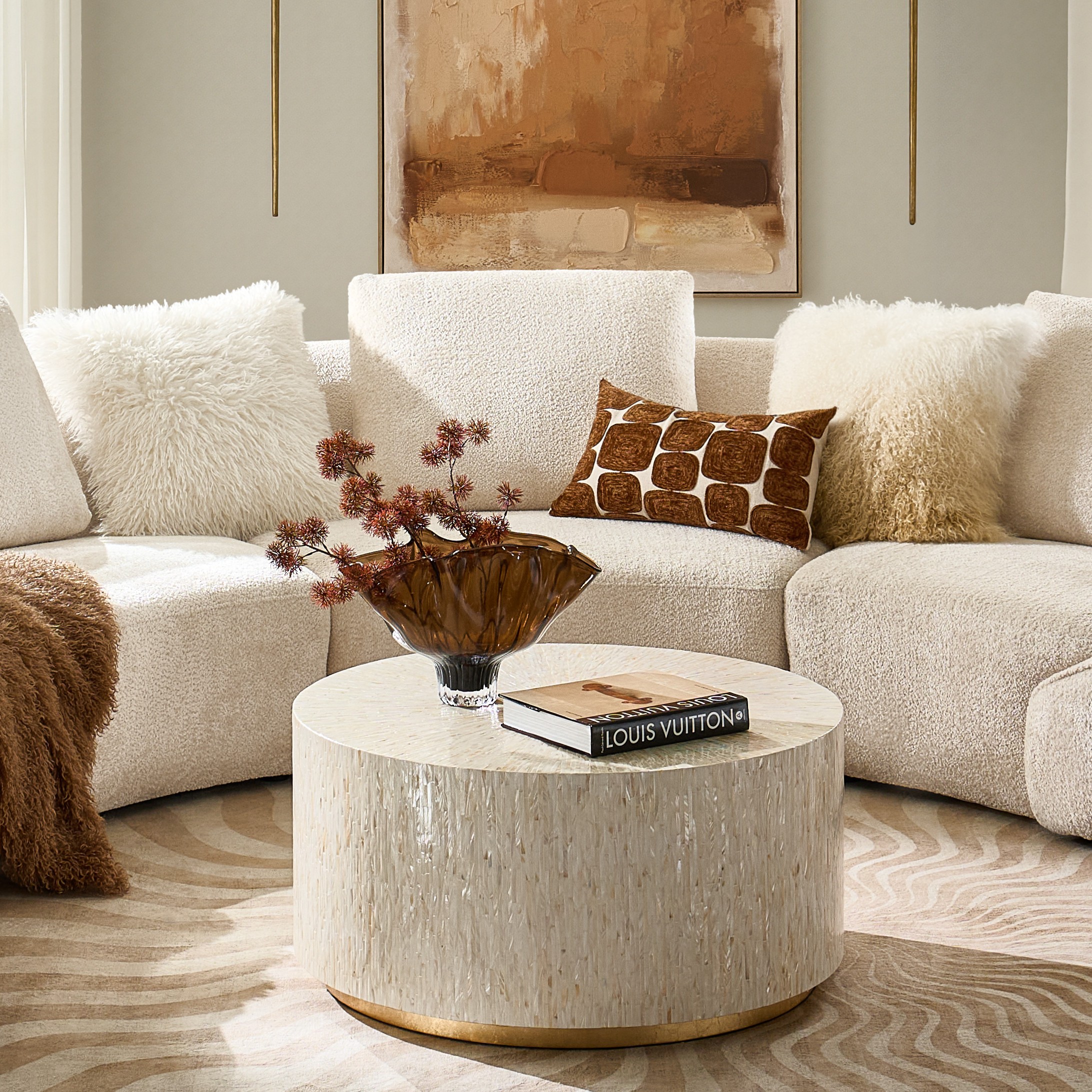 Alexandria Round Mosaic Platinum Coffee Table (36")$799
A luminous ivory coffee table featuring hand-applied mother-of-pearl mosaic and a gold leaf-accented base.
Add To Cart -
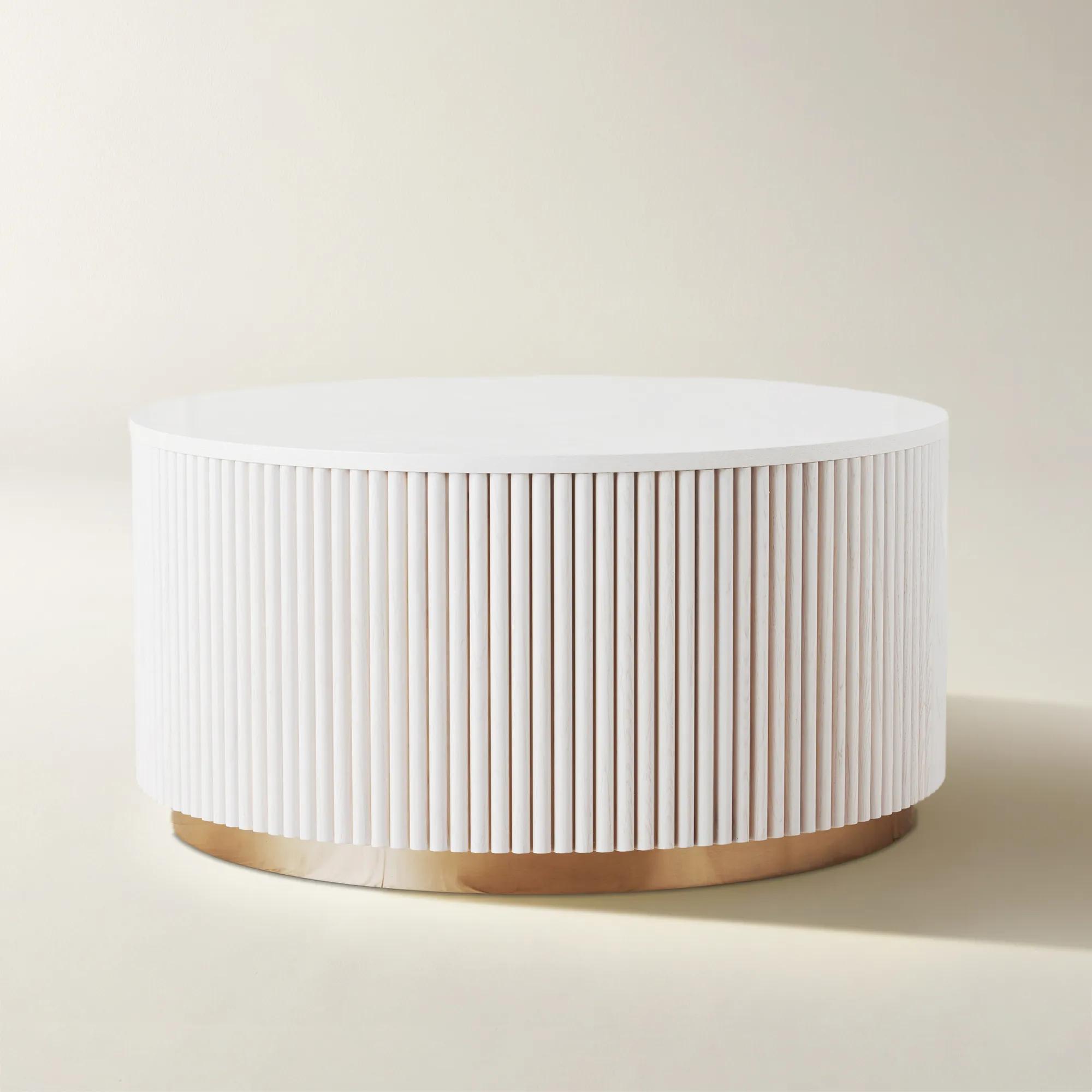
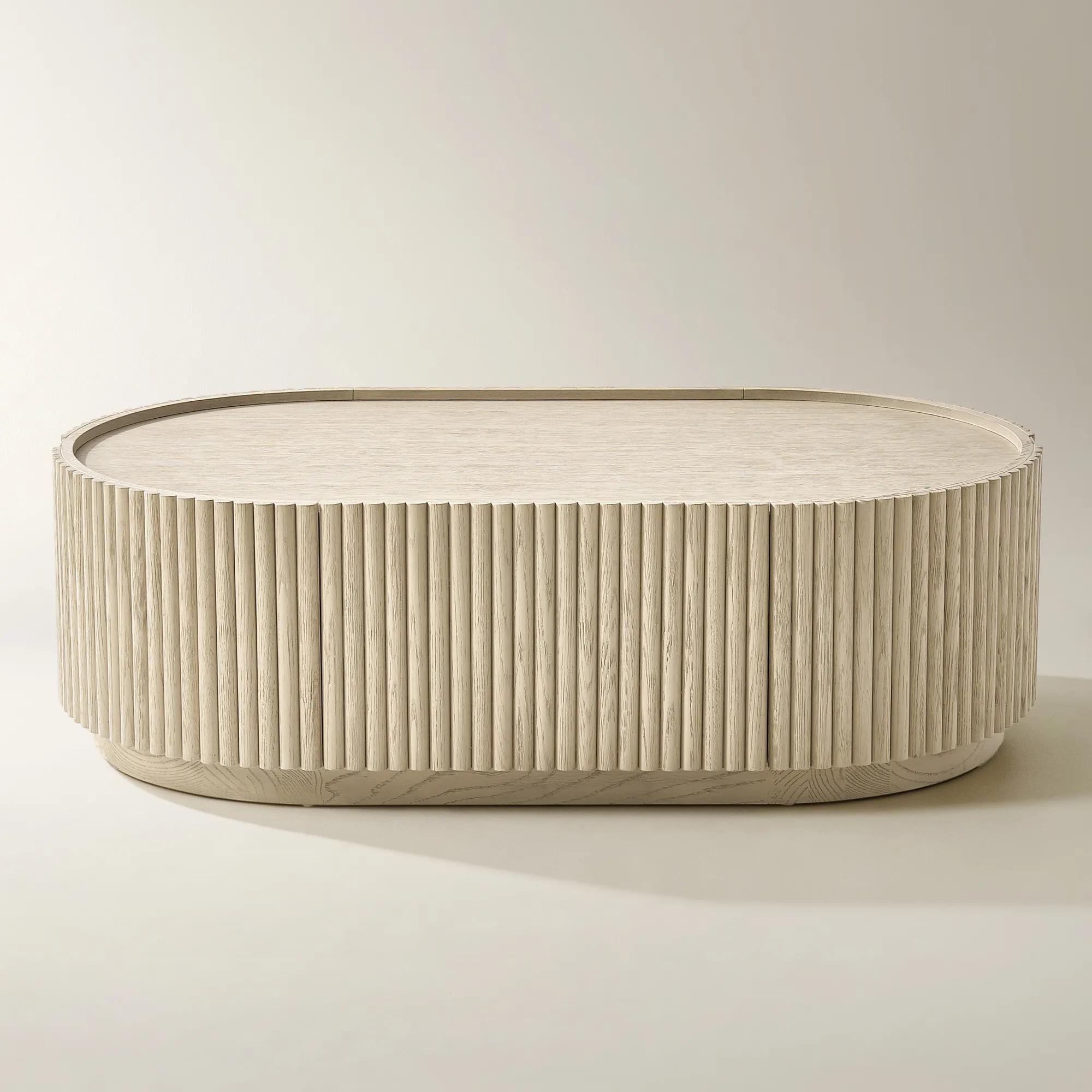
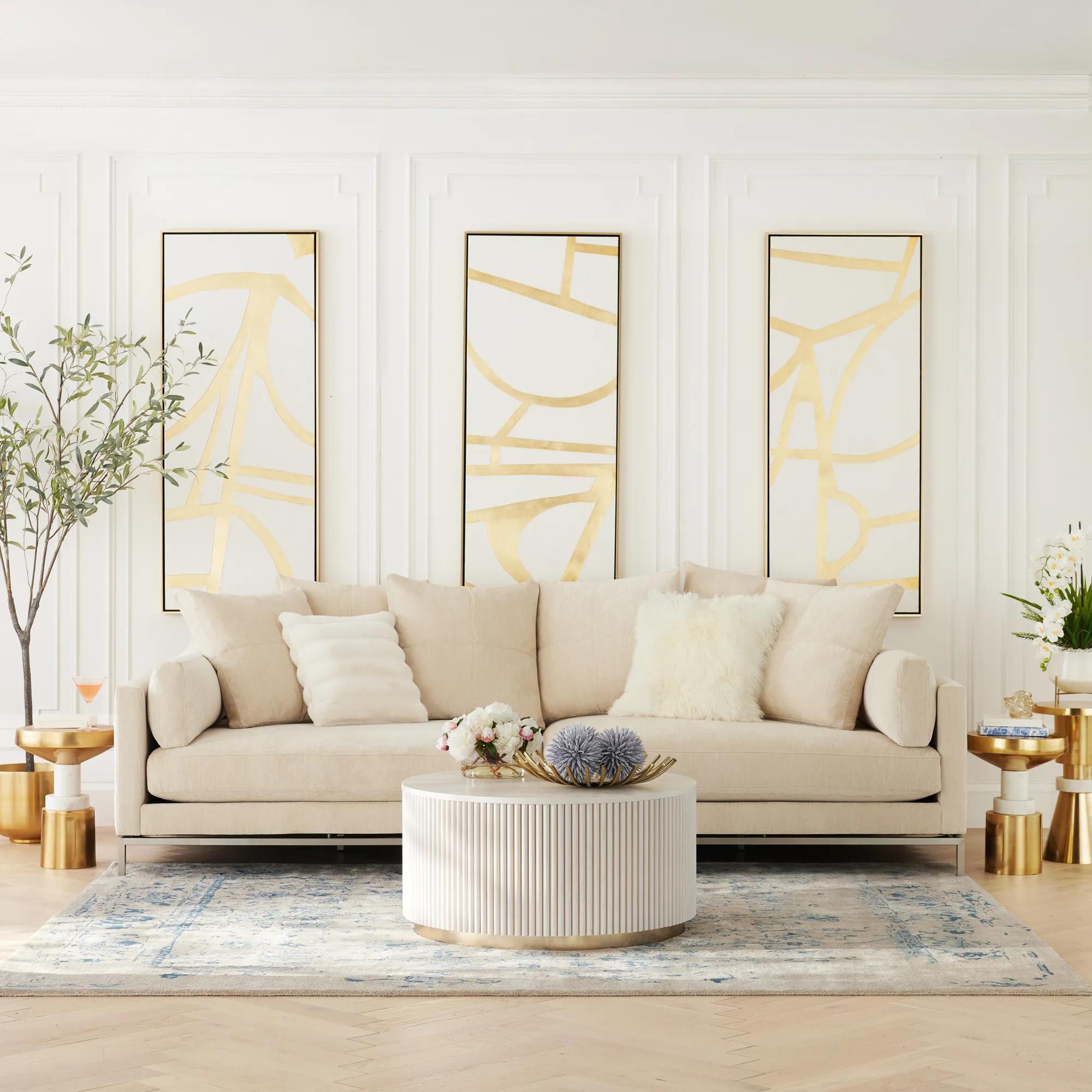 Natalia Round Reeded Whitewashed Ash Wood Coffee Table (36")$1299
A striking coffee table featuring reeded ash wood sides, a smooth top, and a whitewashed finish.
Add To Cart -
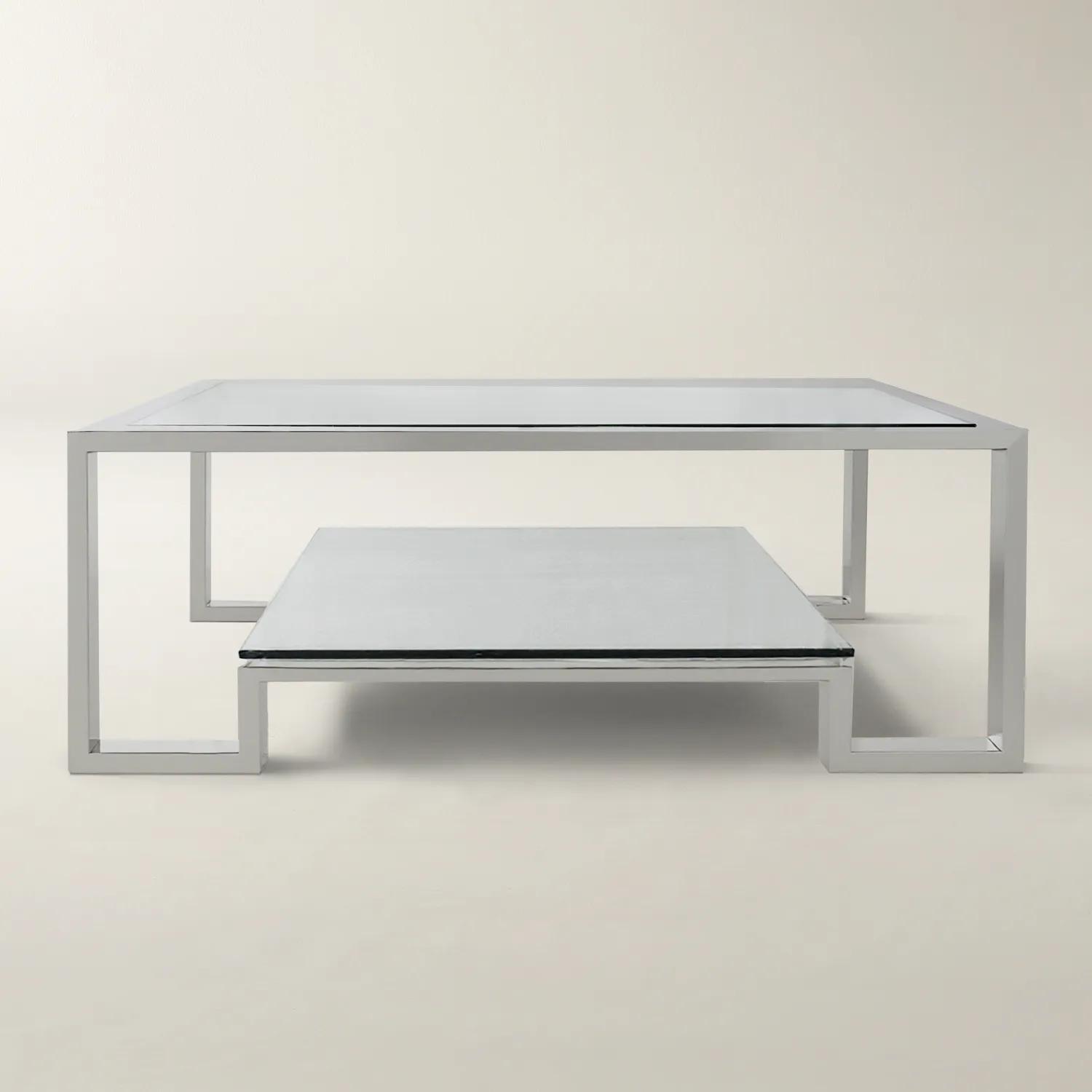
 Duplicity Rectangular Silver Stainless Steel Coffee Table With Glass Top (50")$1399
A modern coffee table featuring a stainless steel frame, tempered glass top, and floating bottom shelf.
Add To Cart -
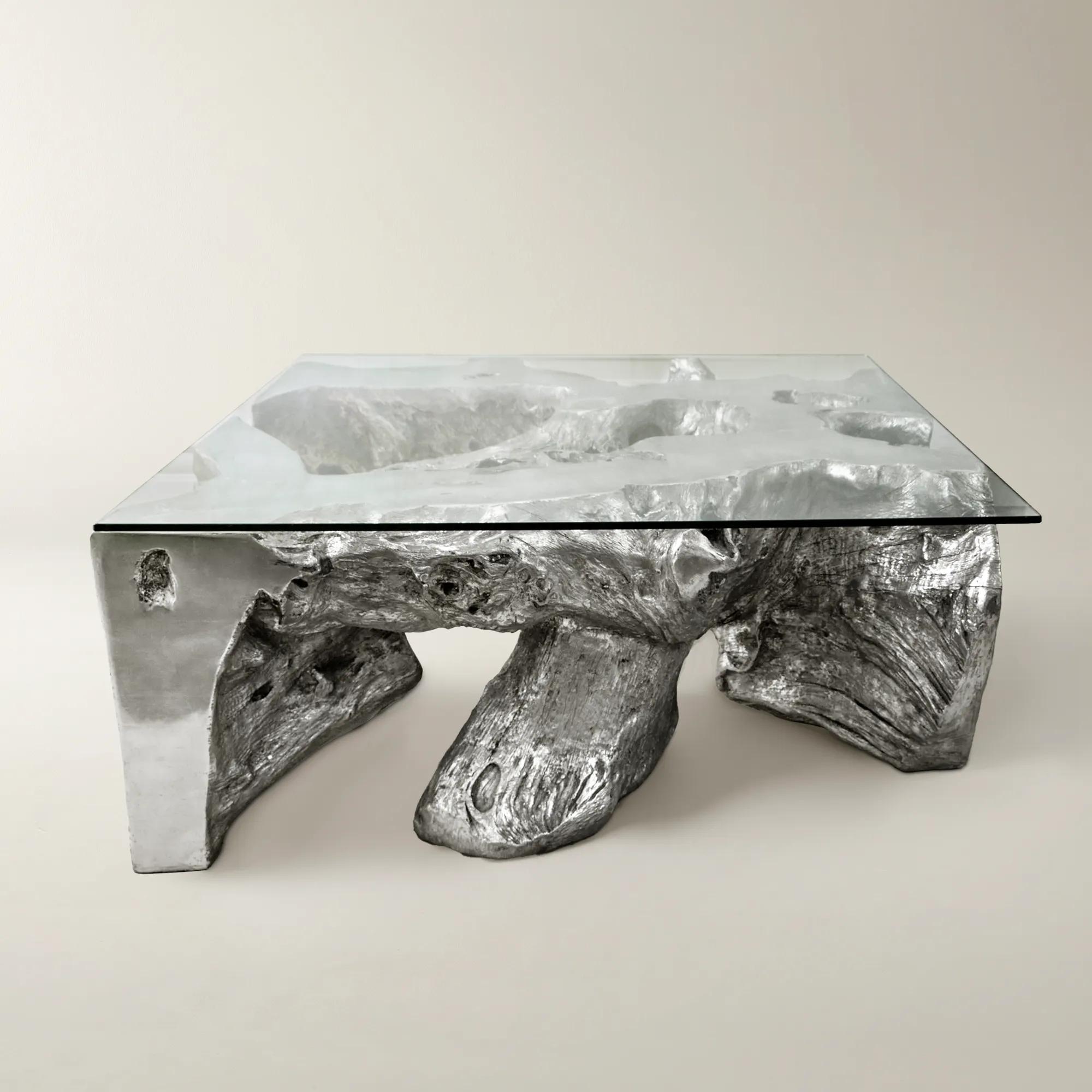 Sequoia Silver Resin Coffee Table With Glass Top (44")$2299
A sculptural coffee table featuring a hand-applied silver leaf resin base and a tempered glass top.
Add To Cart -
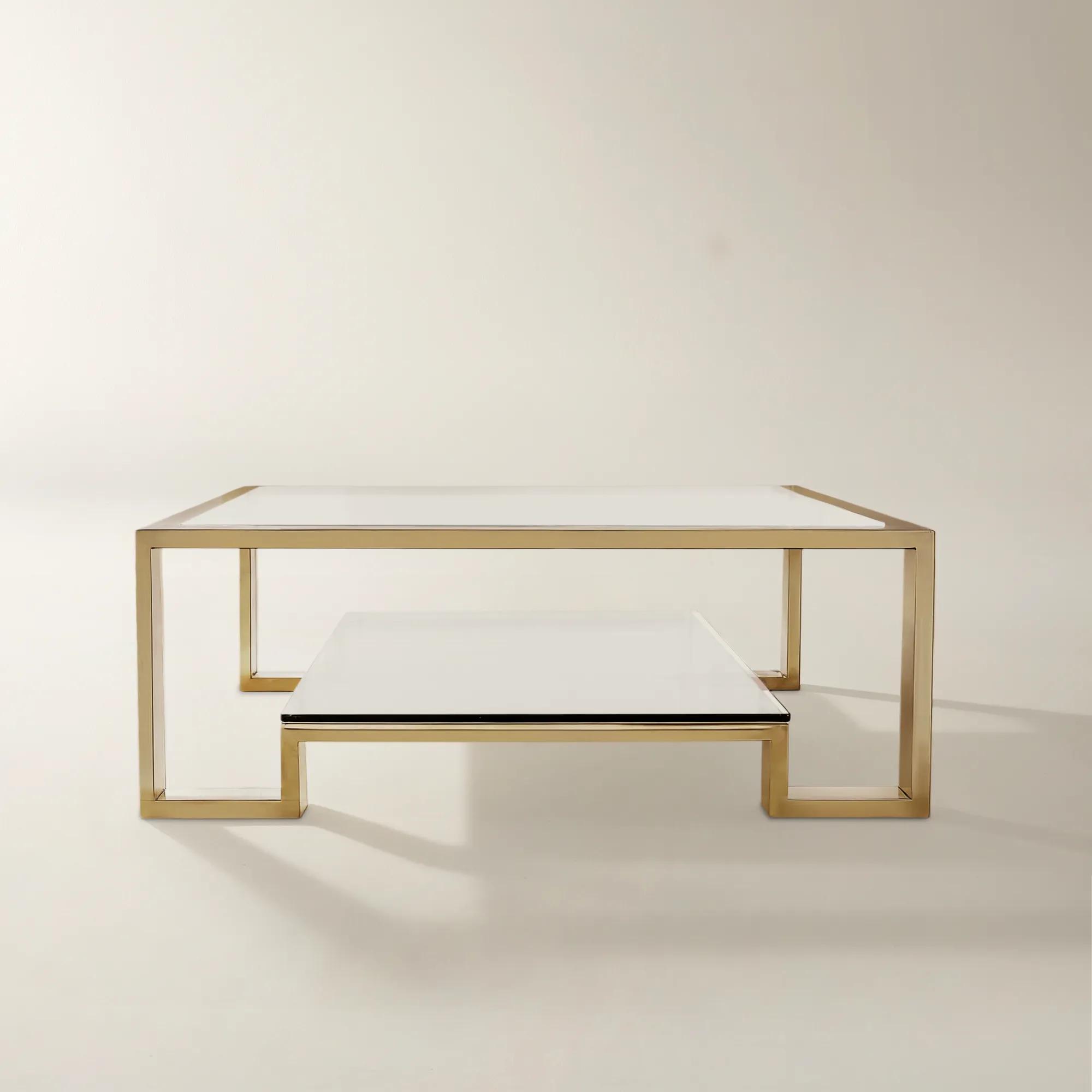 Duplicity Rectangular Gold Stainless Steel Coffee Table With Glass Top (50")$1399
A modern coffee table featuring a stainless steel frame, tempered glass top, and floating storage shelf.
Add To Cart -
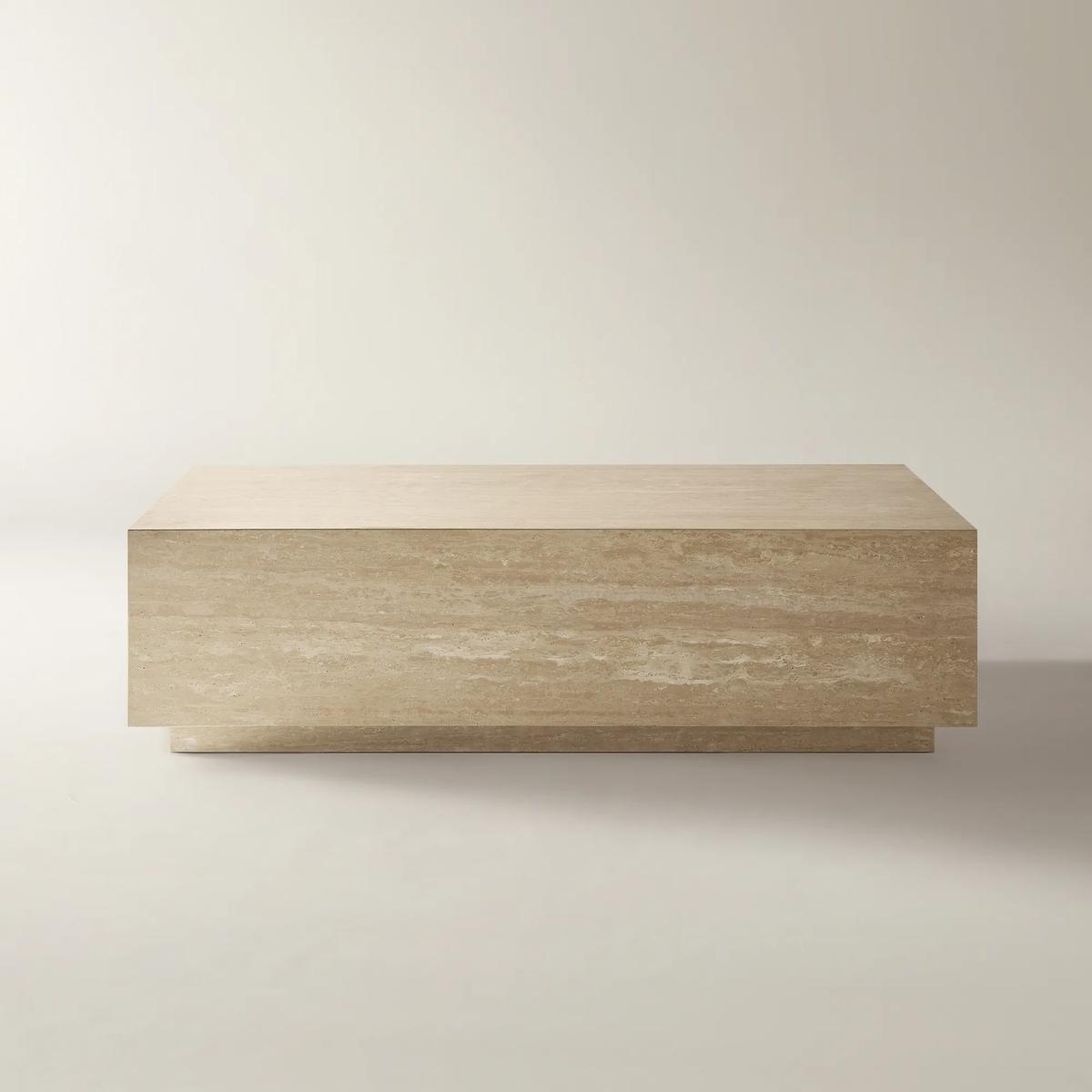
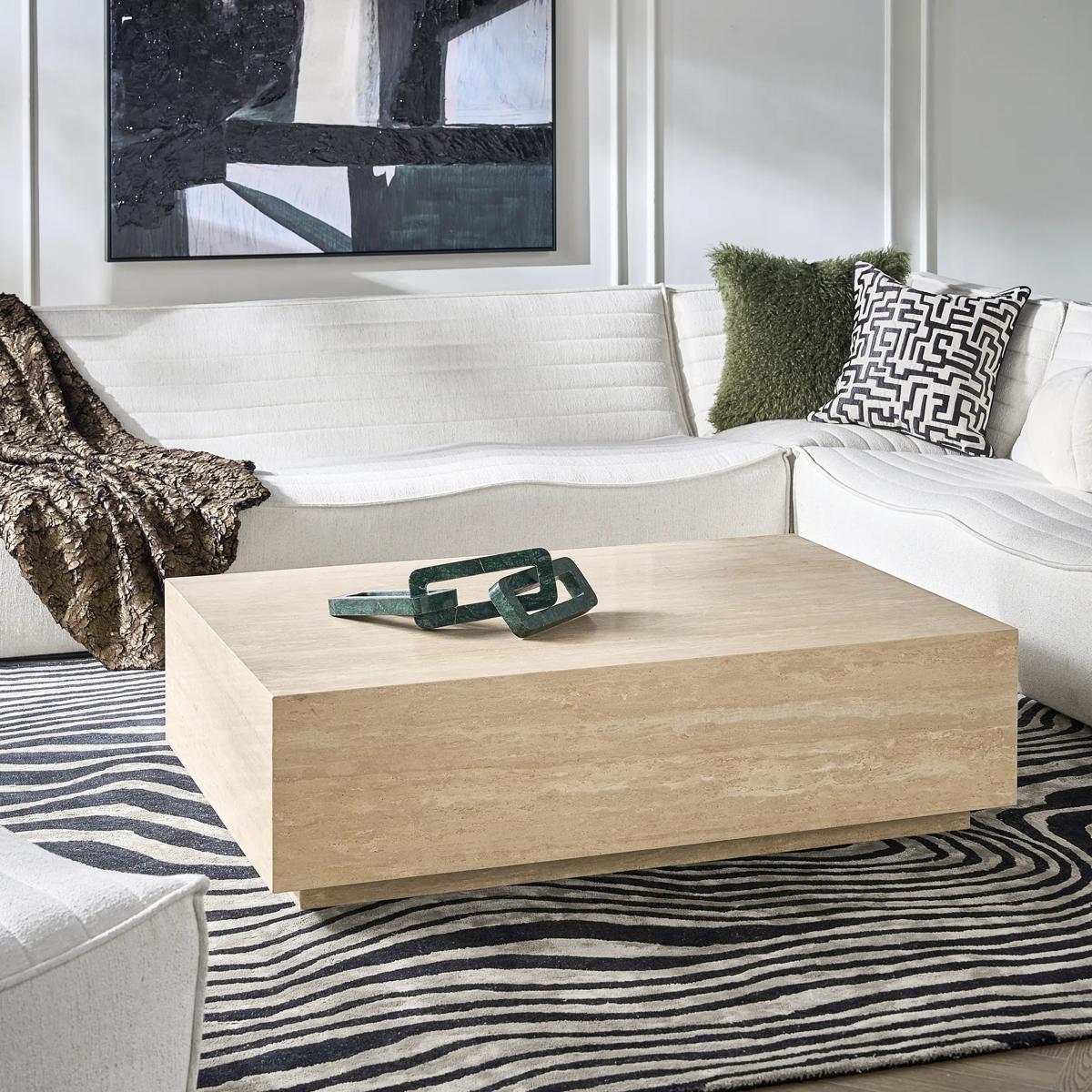 Vanta Rectangular Travertine Coffee Table (54")$2599
A sculptural travertine coffee table with an aluminum honeycomb core and recessed plinth base.
Add To Cart -
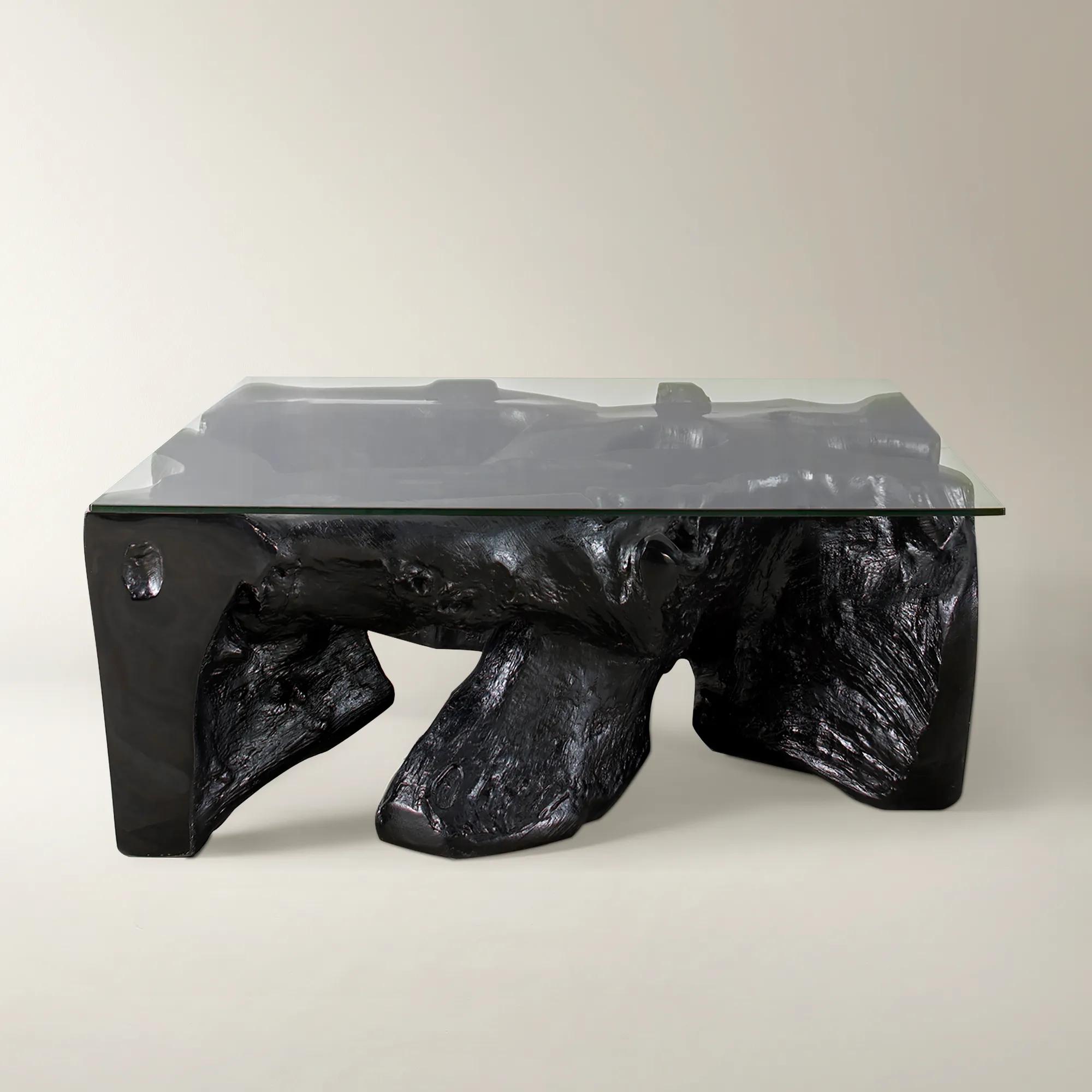
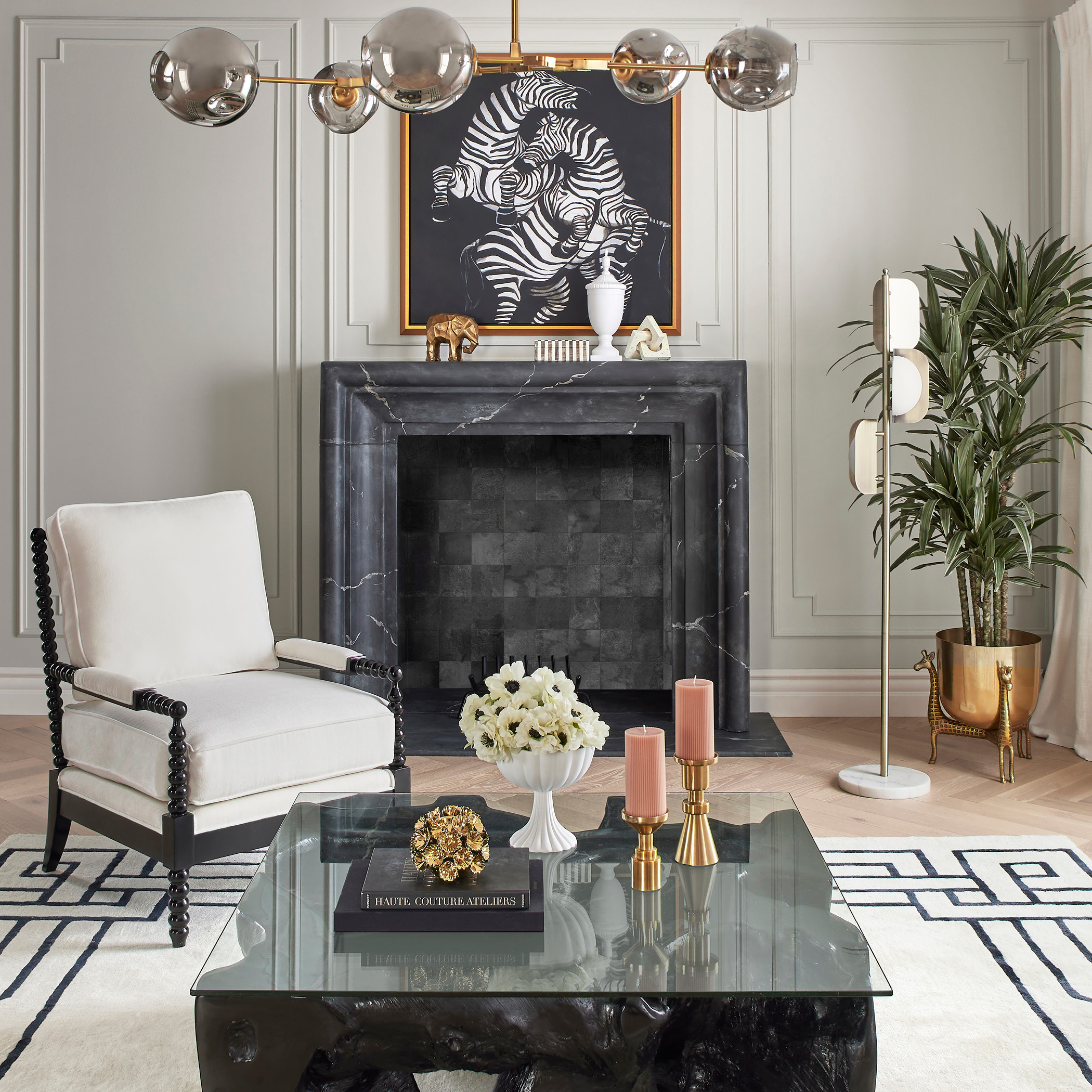 Sequoia Black Resin Coffee Table With Glass Top (44")$2299
A sculptural black coffee table crafted from resin and polished stone fragments for indoor or outdoor use.
Add To Cart -
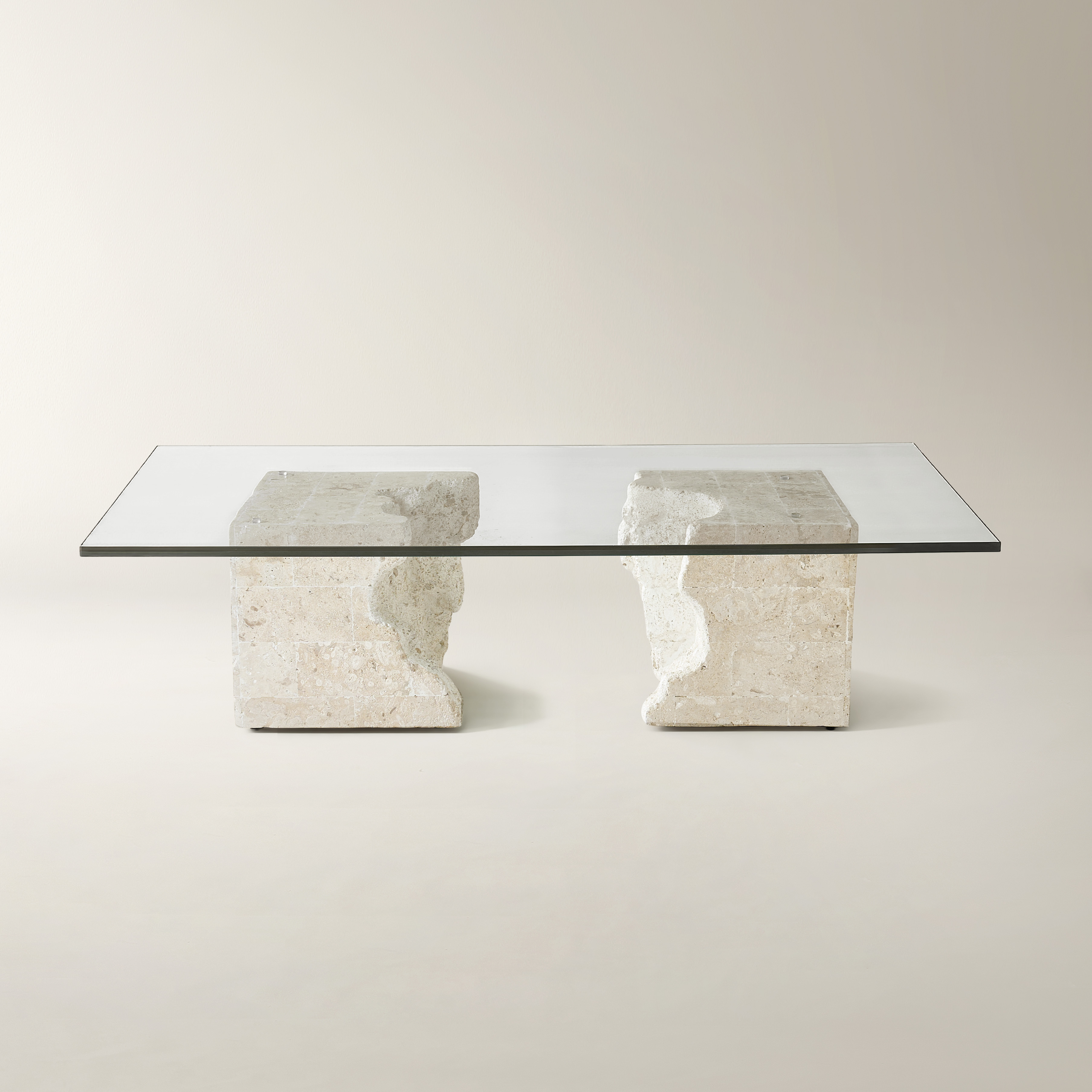 Cairo Rectangular Mactan Stone Coffee Table With Glass Top (63")$1899
A contemporary coffee table featuring a clear tempered glass top floating above hand-carved Mactan stone bases.
Add To Cart -
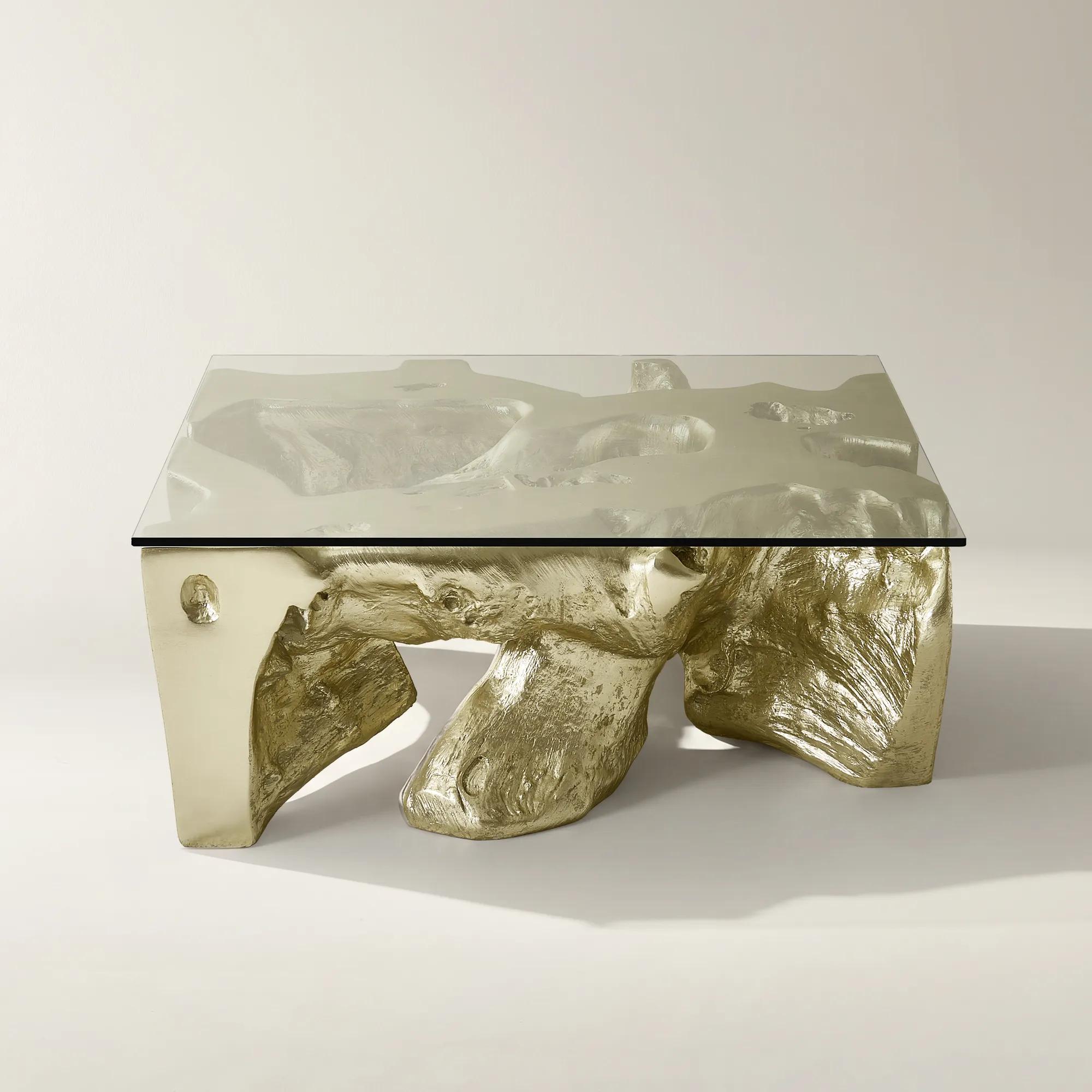 Sequoia Champagne Gold Resin Coffee Table With Glass Top (44")$2299
A sculptural resin coffee table with a champagne gold leaf finish and a clear tempered glass top.
Add To Cart -
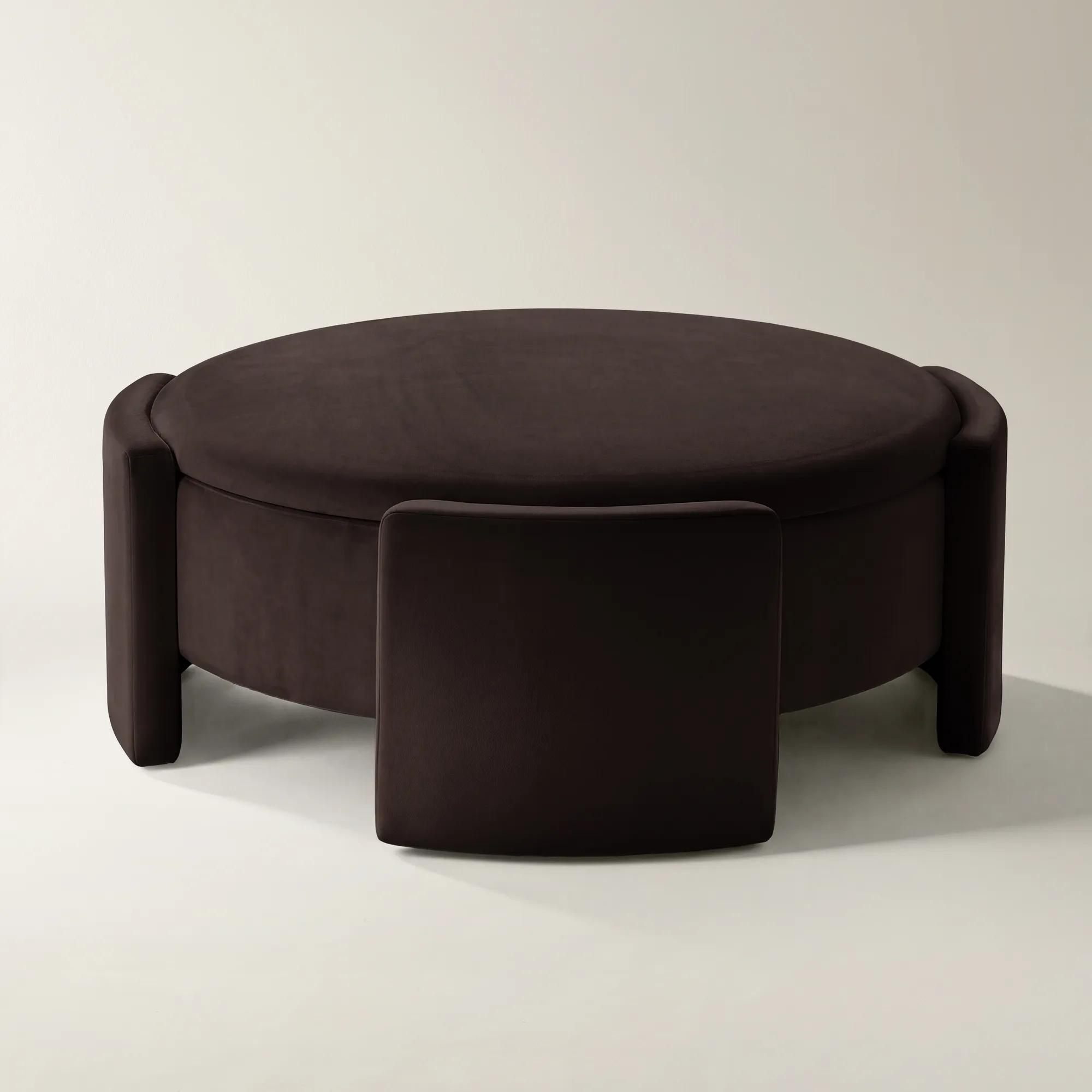
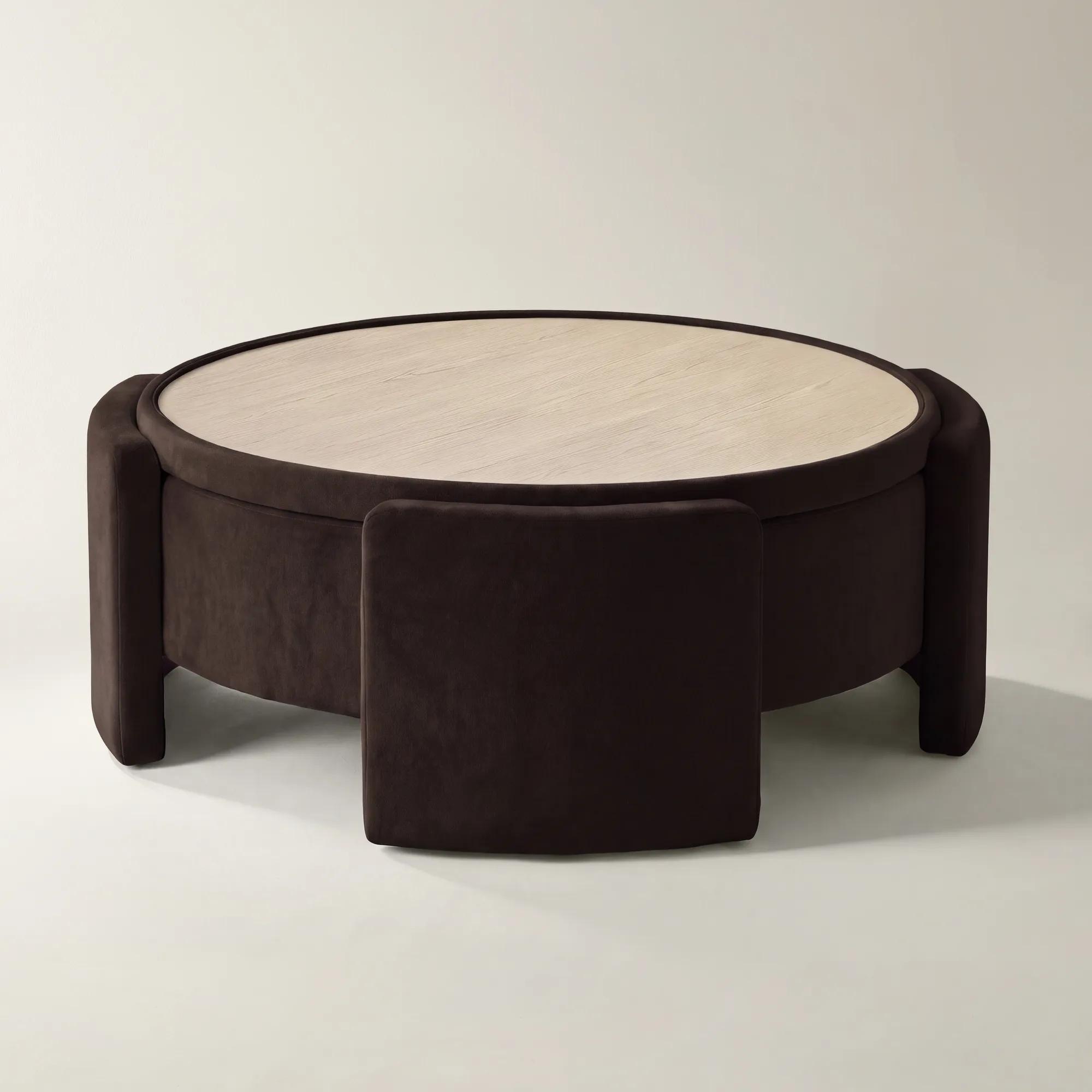 Jora Round Dark Chocolate Velvet Storage Coffee Table With Reversible Tabletop (47.7")$799
A dark chocolate velvet coffee table with hidden storage and a reversible velvet-and-rubberwood tabletop.
Add To Cart -
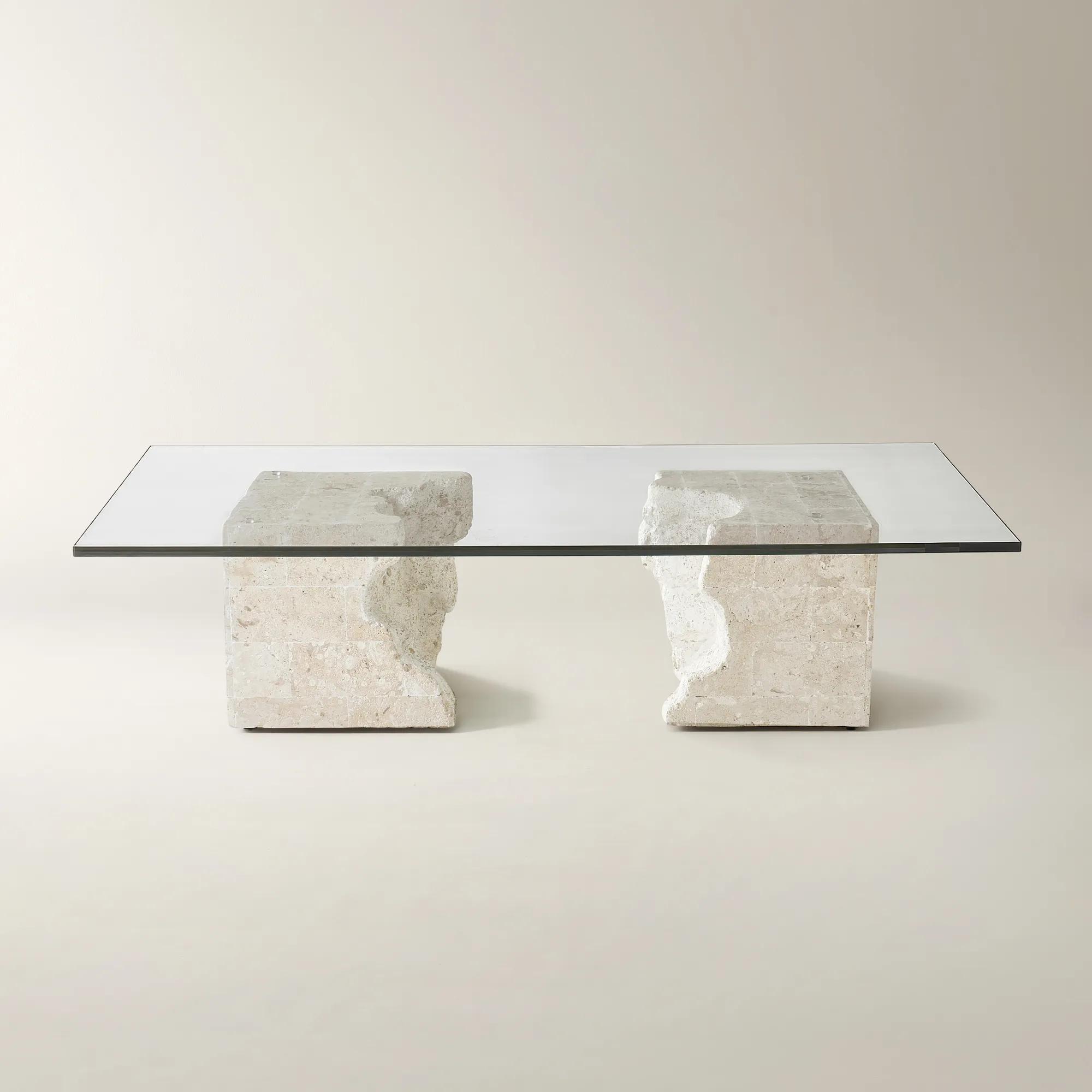 Cairo Rectangular Mactan Stone Coffee Table With Glass Top (70.87")$1999
A contemporary coffee table featuring a clear tempered glass top floating above hand-carved Mactan stone bases.
Add To Cart -

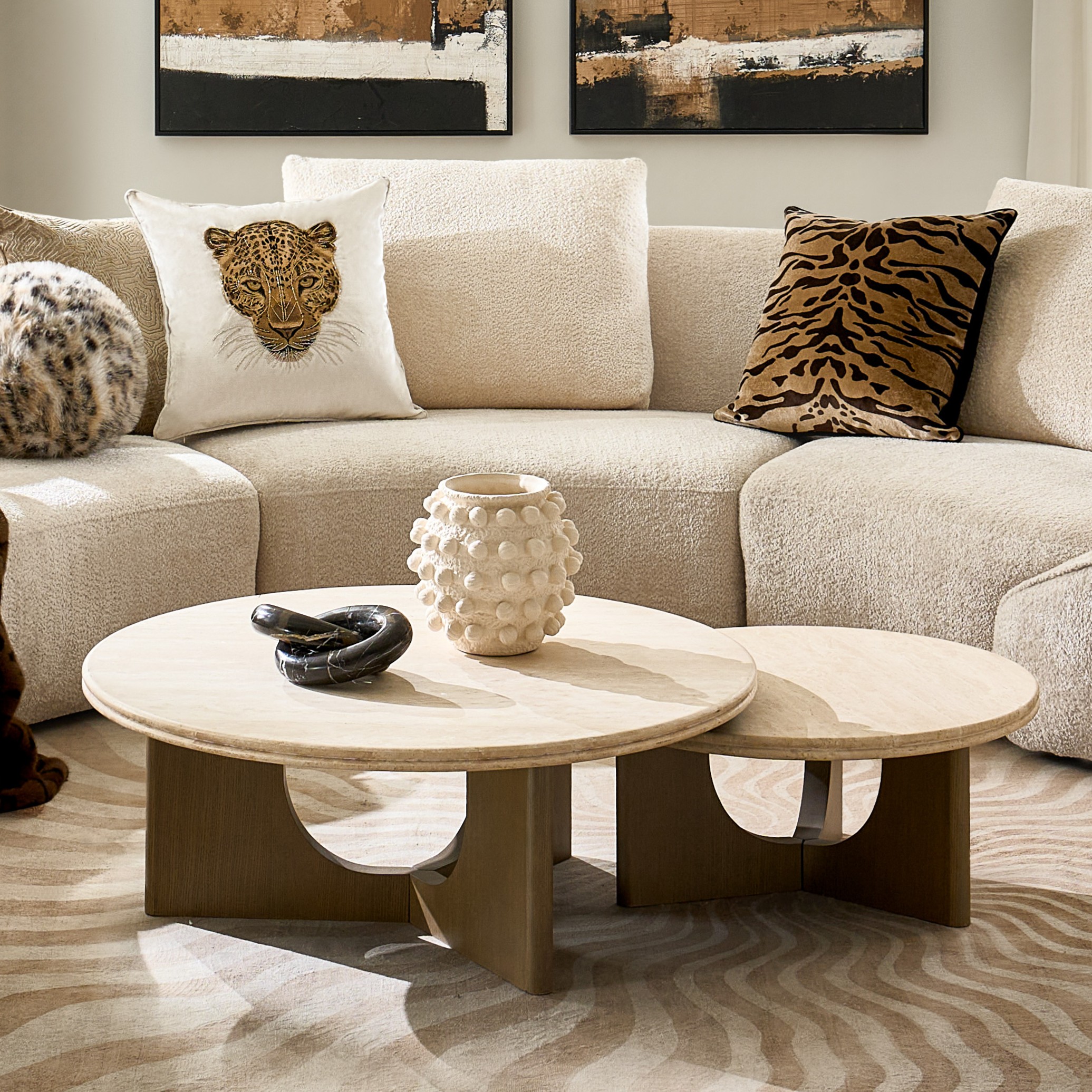 Bond Round Travertine and Wood Coffee Table (29.25")$699
A genuine travertine stone coffee table with warm ivory-gold tones atop a solid natural ash base.
Add To Cart -
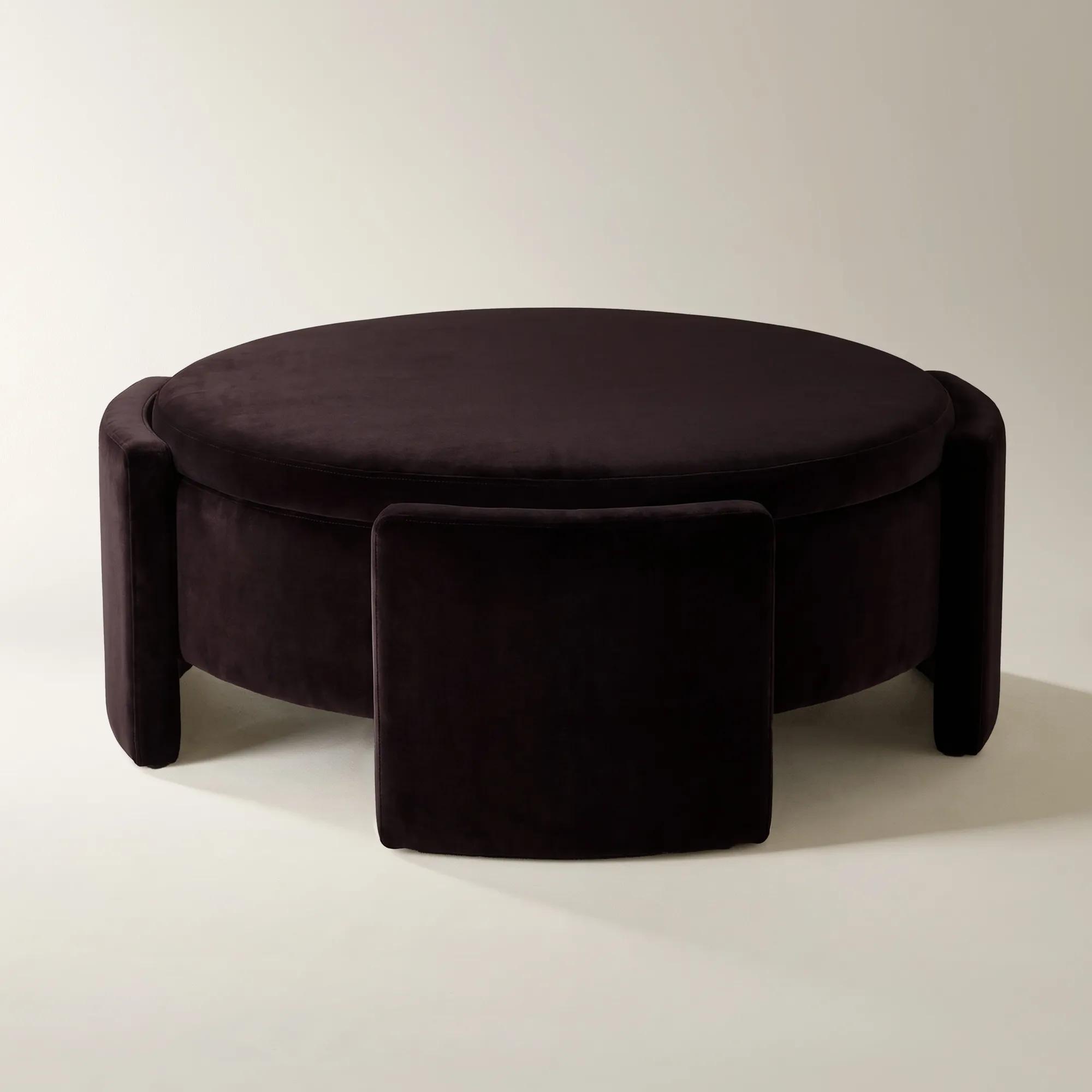
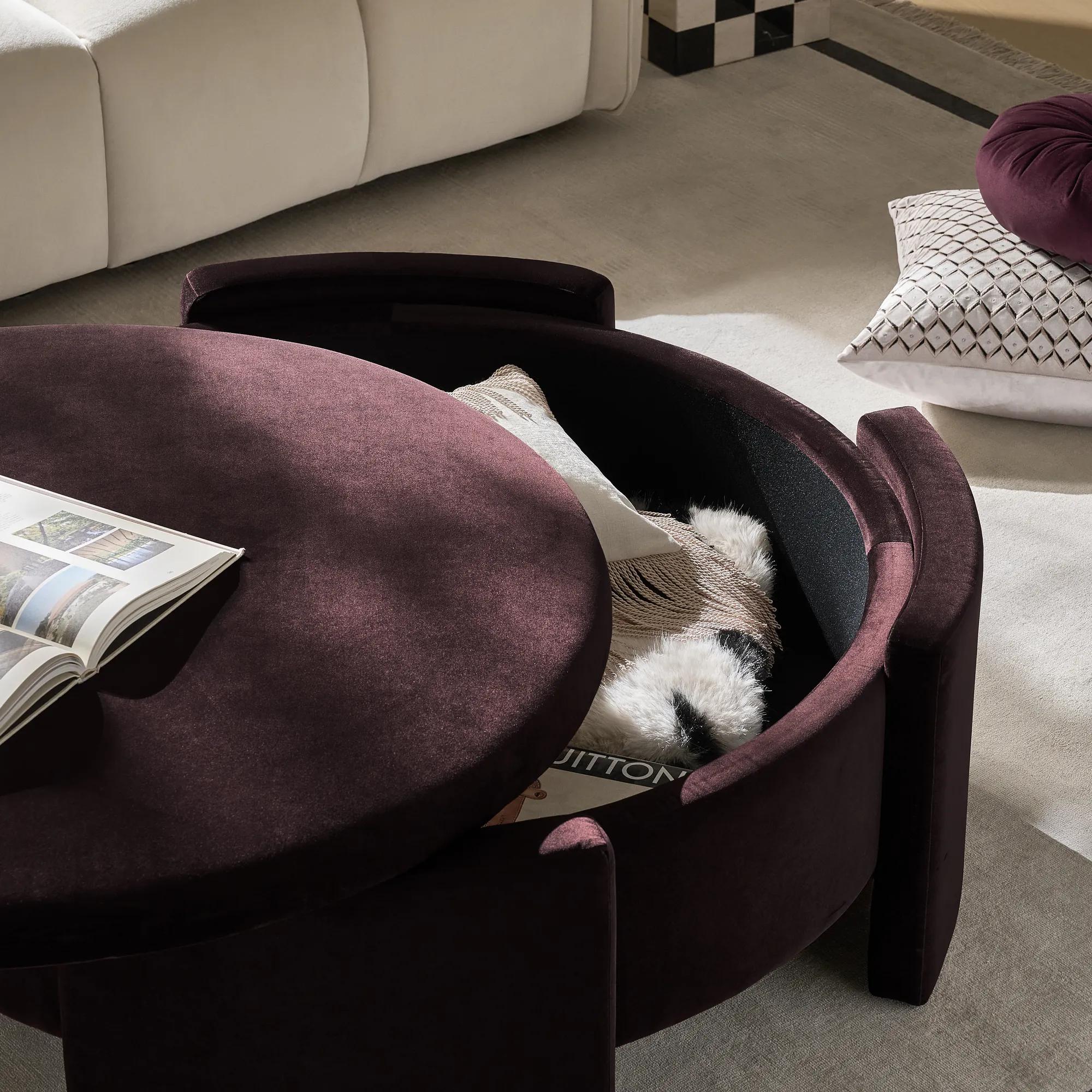 Jora Round Fig Velvet Storage Coffee Table With Reversible Tabletop (47.7")$799
A round fig velvet coffee table featuring a reversible wood tabletop and hidden interior storage.
Add To Cart -
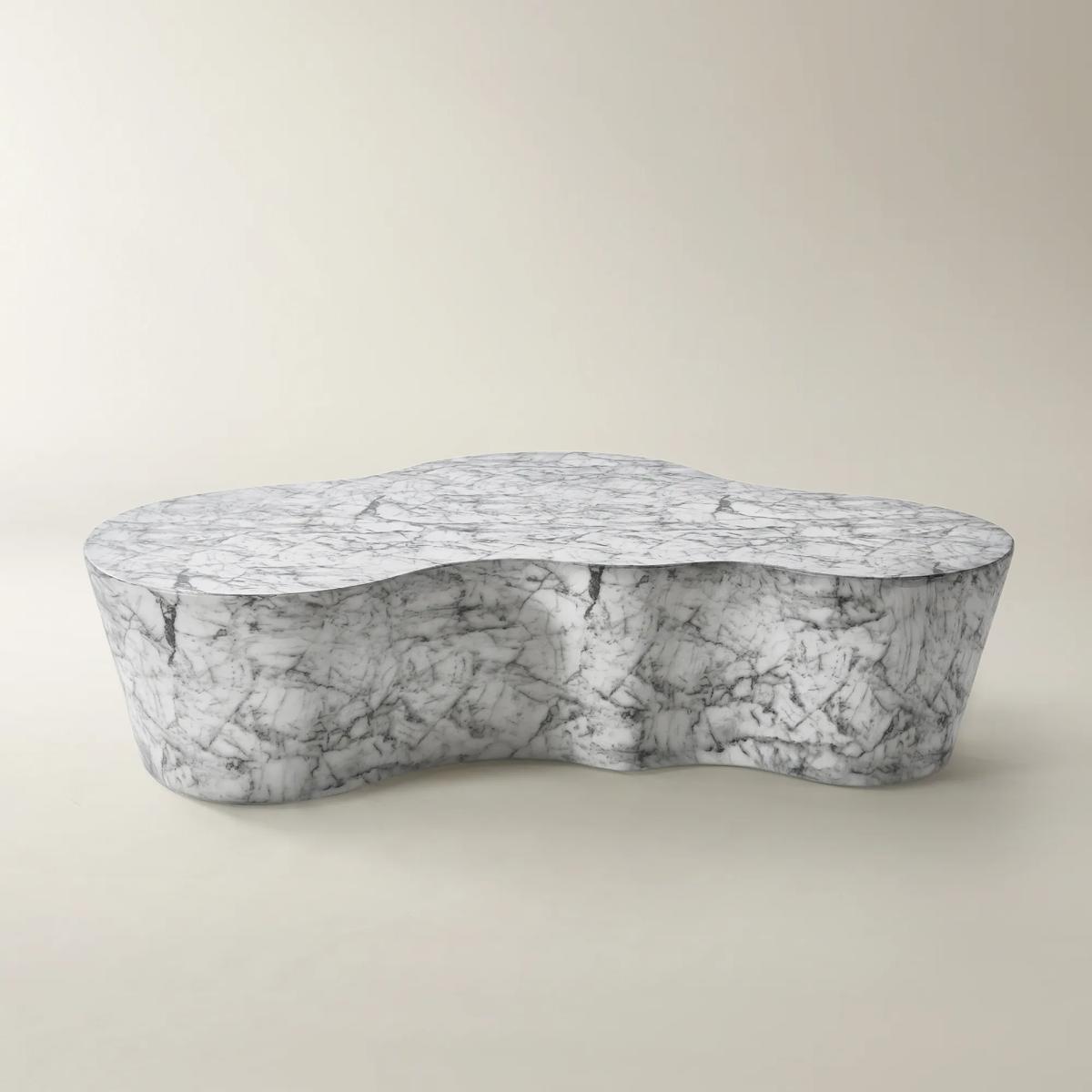
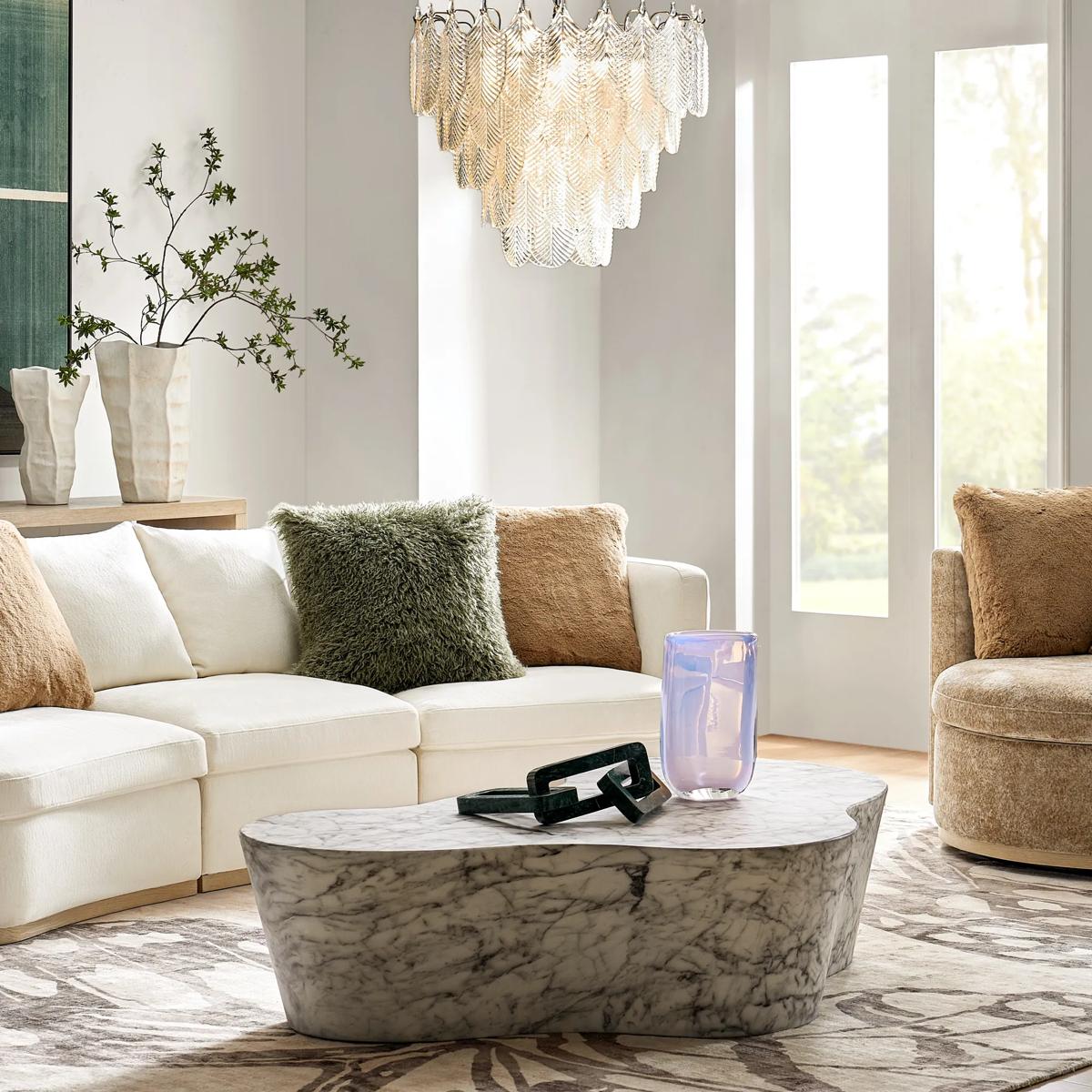 Petra White Concrete Indoor/Outdoor Coffee Table (59.4")$1099
A sculptural white concrete coffee table with cloud-like contours and marble-look veining, suitable indoors or outdoors.
Add To Cart

Artistic Coffee Tables
Explore artistic coffee tables that bring expressive design to the heart of your living room, turning an everyday essential into a striking focal point. As you browse, consider how each table’s silhouette and scale complement your seating, leaving comfortable room to move and enough surface space for daily essentials and a thoughtfully composed display.
Artistic coffee tables combine sculptural design, distinctive materials, and everyday function to create a living room centerpiece with a point of view. Their character comes from more than an unusual silhouette: the curve of a pedestal, the depth of a lacquered finish, the movement of natural stone, or the interplay between a transparent top and an architectural base can turn an essential surface into an expressive focal point. Some designs command attention through bold geometry, while others reveal their artistry in subtle proportions, unexpected textures, or finely articulated edges. A rounded table can soften the strong lines of a tailored sofa; an angular profile can bring definition to a room filled with plush upholstery. Open bases and glass surfaces preserve sightlines, allowing a richly patterned rug to remain part of the composition, while substantial forms give expansive seating arrangements a grounded, gallery-like presence. For a closer emphasis on dimensional silhouettes, Modern Sculptural Coffee Tables explores a related expression of furniture as functional art. Scale gives that artistry room to resonate. A coffee table approximately two-thirds the length of a sofa often creates balanced proportions, although sectional configurations and unconventional shapes may call for a different relationship. A surface near the height of the sofa cushions generally feels comfortable for setting down a glass or reaching for a book. About 14 to 18 inches between the table and seating typically leaves space for legs without putting essentials out of reach; main walking routes need more generous clearance. In a compact sitting area, an oval or softly contoured shape can ease movement around the furniture. In a larger room, a broad tabletop can hold its own against deep seating and oversized artwork. The most compelling arrangement gives the table visual authority without asking anyone to navigate around it awkwardly. Seen from the doorway or from a favorite chair, its proportions should feel intentional, with enough open space for the silhouette to be appreciated.
Materials shape both the atmosphere of an artistic coffee table and the way it lives in a home. Wood introduces warmth and expressive grain, with natural variations that can make a restrained form feel richly detailed. Solid wood can develop character over time, while veneered construction allows distinctive grain patterns to extend across broad surfaces; durability depends on the underlying construction, finish, and everyday treatment rather than appearance alone. Glass offers a different kind of drama, catching reflected light and revealing the structure beneath it. A transparent top can make an intricate base visible from several angles, though fingerprints and smudges tend to show readily. Metal brings crisp definition, whether through a gleaming surface, a brushed texture, or a dark finish that outlines the form. Stone contributes weight, tactile interest, and individual patterning, but its care requirements vary considerably. Marble and other acid-sensitive stones can etch when exposed to citrus, wine, or certain cleaning products, and some stone surfaces require sealing according to the manufacturer’s directions. Stone-look materials may offer a similar visual effect with different maintenance needs, making the stated material especially important. Lacquered and resin surfaces can create saturated color, fluid contours, or remarkable shine, yet their resistance to scratches and heat varies by composition and finish. Coasters, trays, and protective pads beneath decorative objects help preserve surfaces without diminishing the display. For routine care, a soft cloth and a cleaner approved for the particular material are more appropriate than a universal spray; abrasive tools and harsh chemicals can damage delicate finishes. Spills deserve prompt attention, especially around seams and porous surfaces. Construction matters just as much as the finish: a stable base, secure connections, and a tabletop suited to its intended load support lasting use. A coffee table is designed to hold everyday objects, not to serve as extra seating unless explicitly rated for that purpose. Rounded edges may be more forgiving in busy rooms, but stability, breakable materials, and raised decorative details still deserve attention in homes with young children or active pets.
An artistic coffee table earns its place through the small rituals gathered around it: a beautifully bound book opened to a favorite photograph, a drink set down during conversation, a tray carrying refreshments within reach of every guest. For design enthusiasts, it can become the piece that establishes the room’s creative direction. For people furnishing a first apartment or reshaping a familiar living room, it offers a concentrated expression of personal taste without requiring every surrounding piece to compete. A sculptural table against a quiet sofa creates contrast; a richly textured surface beside velvet upholstery deepens the room’s tactile appeal. Metallic details can echo a nearby lamp or picture frame without matching every finish, and a stone top can draw out a color already present in a rug. These connections give a dramatic piece a sense of belonging. Styling works best when it acknowledges the table’s own design. A highly articulated base may need little more than a low bowl above it, while a broad, simple surface can accommodate a stack of art books and a single expressive object. Leaving part of the tabletop clear preserves its practical purpose and allows distinctive grain, veining, or contours to remain visible. A tray can gather remotes and smaller necessities into one composed area, especially where the living room also hosts casual meals or relaxed evenings with friends. Tables with lower shelves or concealed compartments can accommodate everyday clutter, though open storage becomes part of the visible arrangement and benefits from a deliberate edit. Nesting forms offer flexibility where entertaining and daily routines require different amounts of surface space, provided their dimensions work comfortably with the seating. Whether the surrounding interior is richly layered or selectively furnished, the table should support the way the room is actually used. Its artistry is most convincing when beauty and utility remain inseparable: a compelling form that invites a closer look, a considered surface ready for daily life, and a presence that makes the entire seating arrangement feel more expressive.
FAQs
An artistic coffee table brings a distinct creative point of view to the living room through sculptural lines, expressive shapes, or intriguing surface details. Rather than simply supporting a seating arrangement, it becomes part of the room’s visual story—a functional centerpiece with the presence of art.
Artistic coffee tables can enrich modern, contemporary, glam, and eclectic interiors. A fluid silhouette introduces movement to a tailored room, while a geometric design adds definition among softer furnishings. Choose a table that echoes your room’s mood or creates a deliberate, dramatic contrast.
Let the table’s design lead the composition. Arrange a considered edit of art books, a decorative vessel, or a sculptural object, leaving portions of the surface visible. Repeat a color or shape from the table in your accessories to create an intentional vignette without competing with its artistry.
Consider the atmosphere you want to create. A reflective finish can introduce a luminous accent, while a matte finish emphasizes silhouette and form. Connect the finish to an existing detail, such as lighting or decorative accents, or use contrast to give the coffee table a more commanding presence.
Let the rug and coffee table share a visual thread without mirroring every detail. A tonal rug allows an expressive table to take center stage, while an abstract pattern can extend its artistic energy. Repeating a color or curved line creates cohesion; contrasting textures adds another layer of richness.