
Modern Home Office Furniture Ideas
Modern Home Office Furniture Ideas
-

 Stria Reeded White Oak Open Bookcase (80")$2699
A modern open bookcase featuring vertical reeded white oak, soft gold metal trim, and five spacious shelves.
Add To Cart -
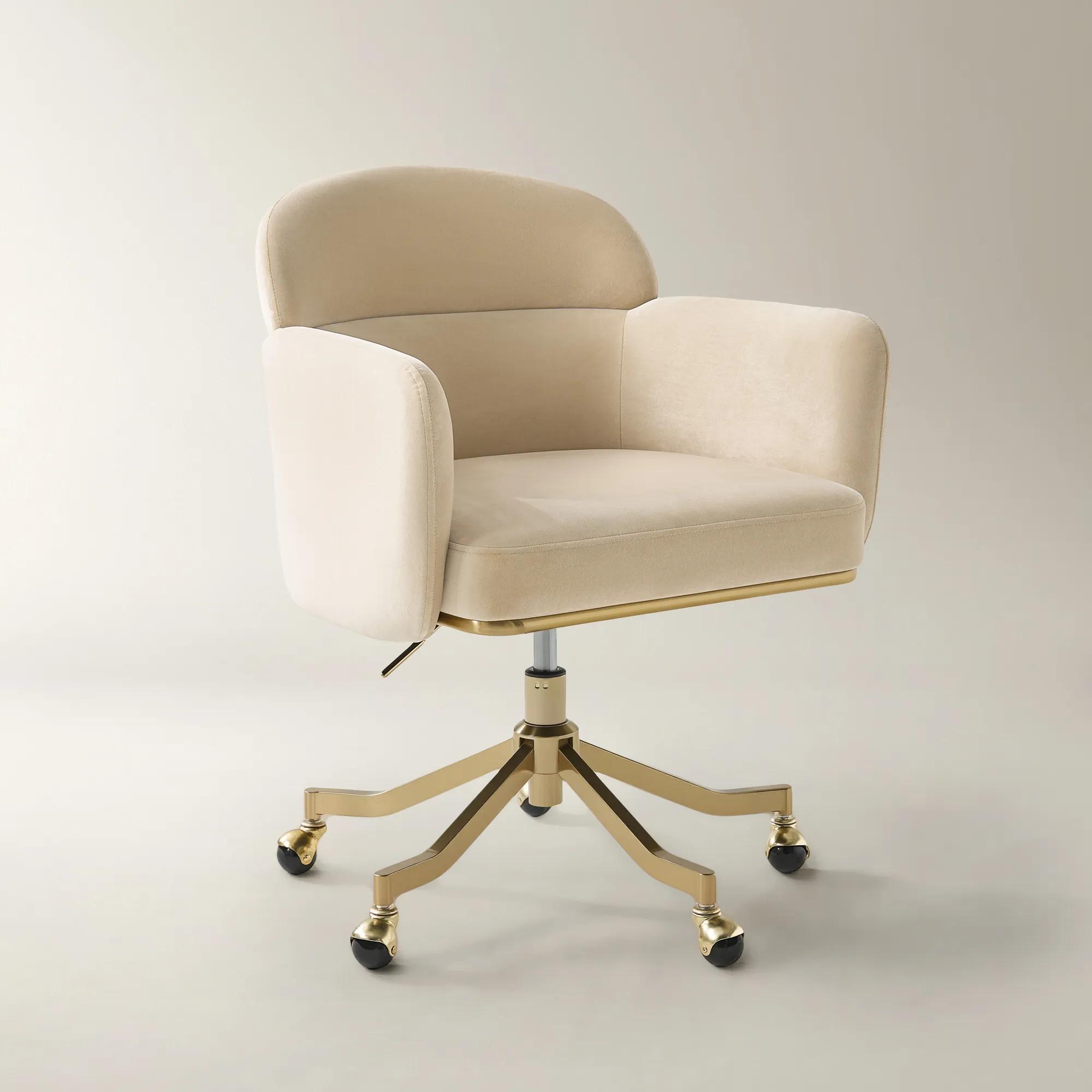 Paige Oatmeal Velvet Swivel Desk Chair$399
An oatmeal velvet swivel chair with adjustable height, ergonomic design, and a polished metal base with casters.
Add To Cart -
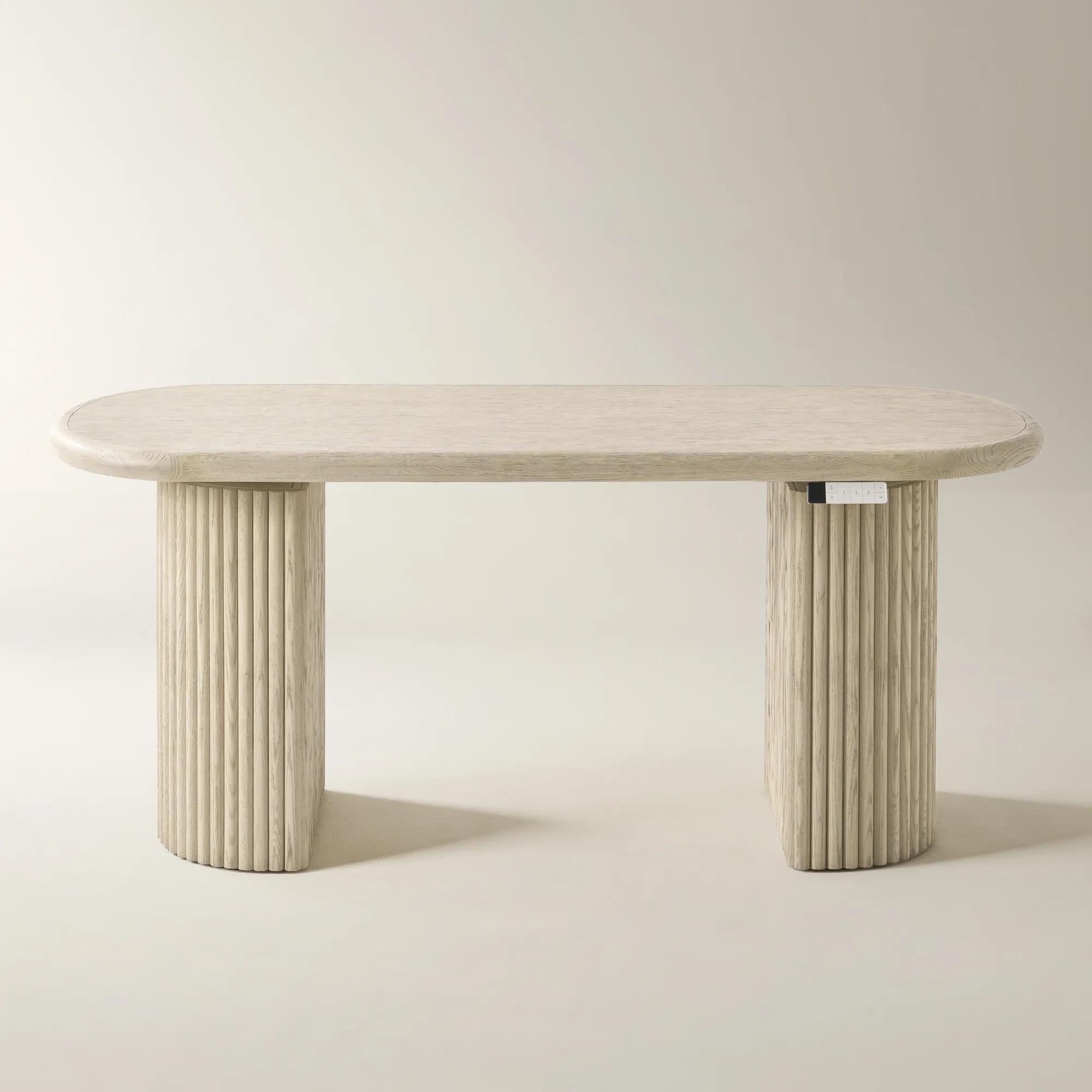 Stria Oval Reeded White Oak Electric Lift Desk (68")$2199
A white oak desk with vertical reeded texture, soft gold accents, and dual-motor electric lift functionality.
Add To Cart -
 Vetra Checkerboard Oak and Maple Desk with Drawer (71")$2399
A modern desk featuring a hand-arranged oak and maple checkerboard veneer, gold accents, and a concealed drawer.
Add To Cart -
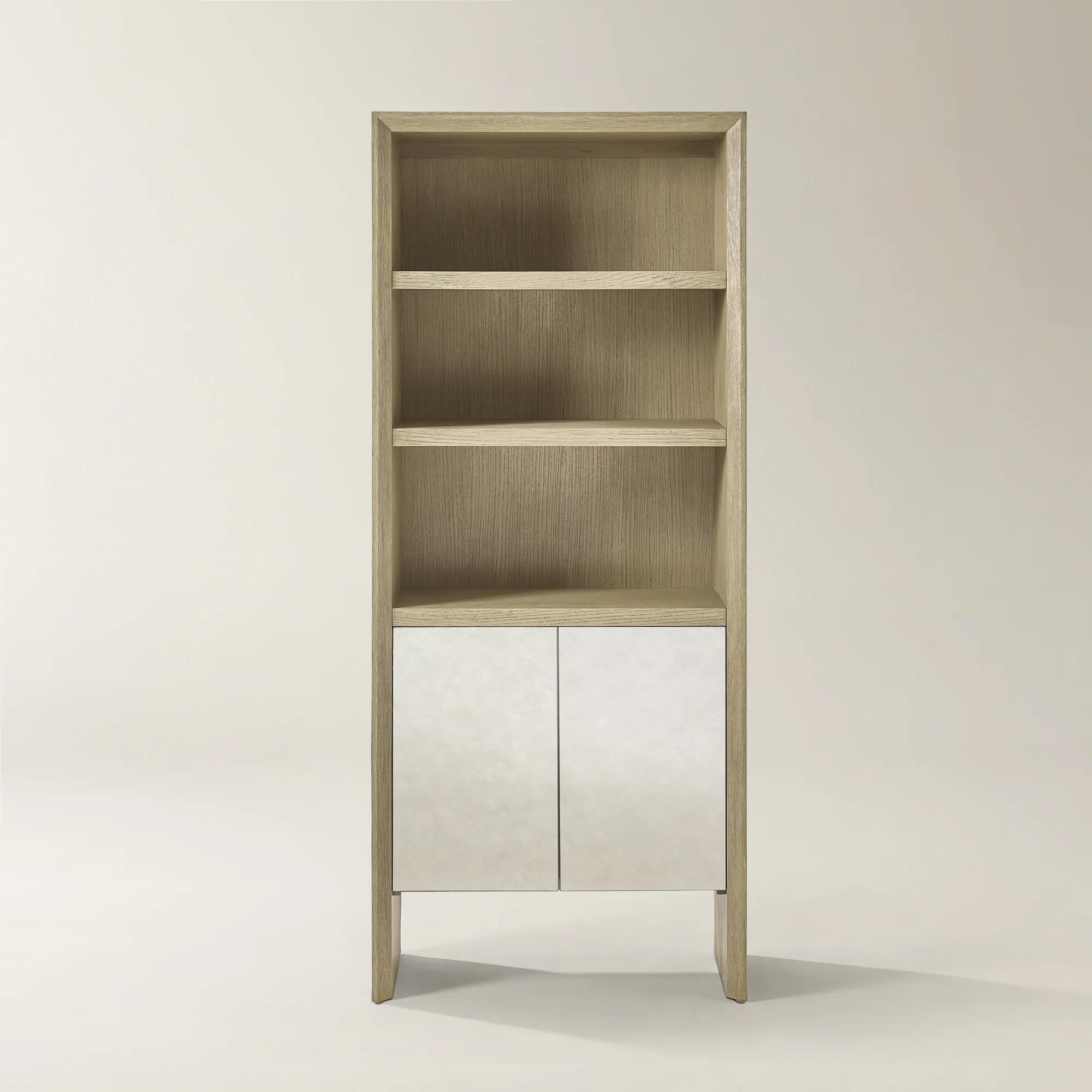
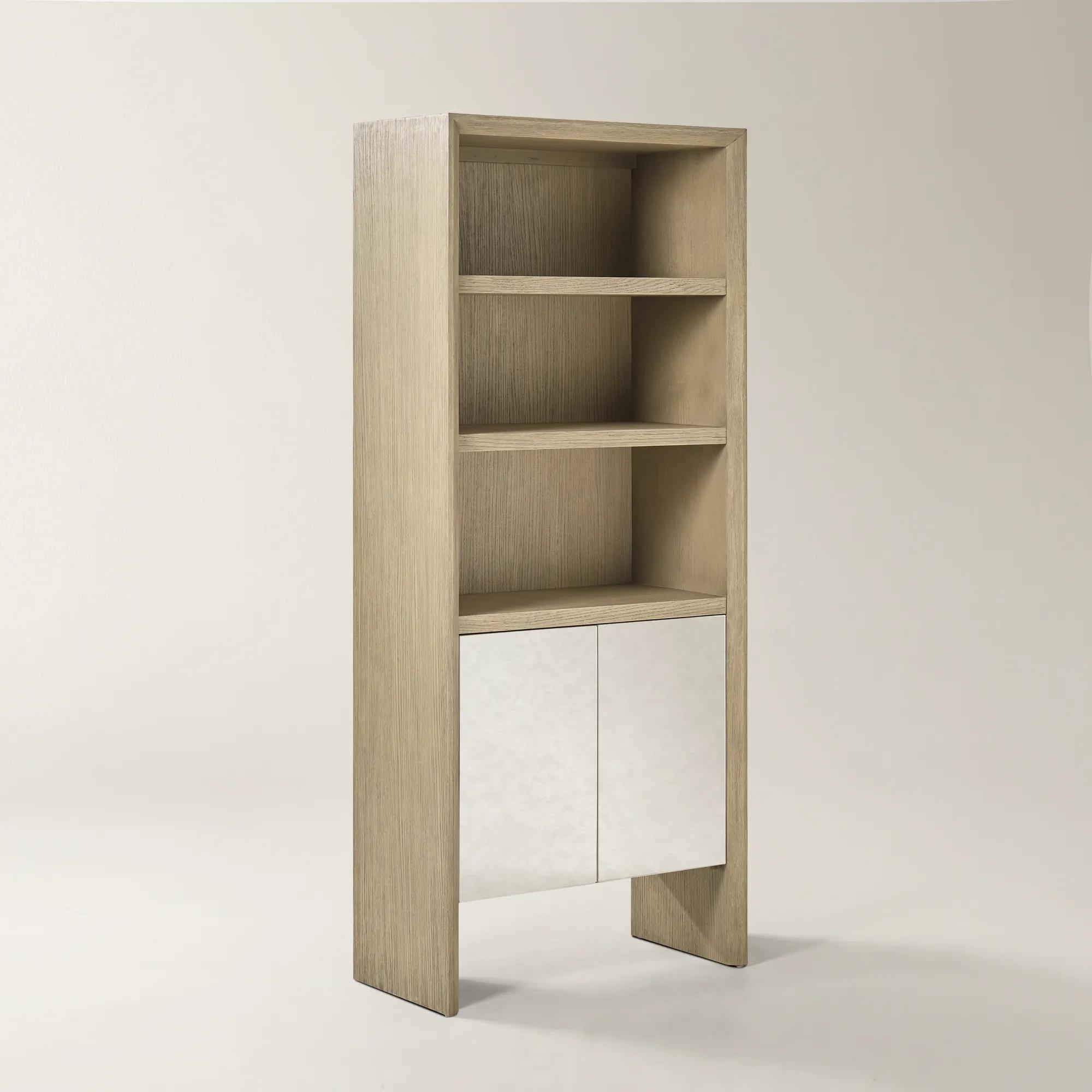 Glimmer Mirrored Sea Drift Oak Bookcase (80")$2599
A two-tone oak bookcase featuring antique mirrored doors, open shelving, and soft-close concealed storage.
Add To Cart -

 Nia Lacquered Turtle Dove Wood Desk (62")$1099
A modern desk featuring a soft turtle dove lacquer finish, cylindrical legs, and engineered wood construction.
Add To Cart -

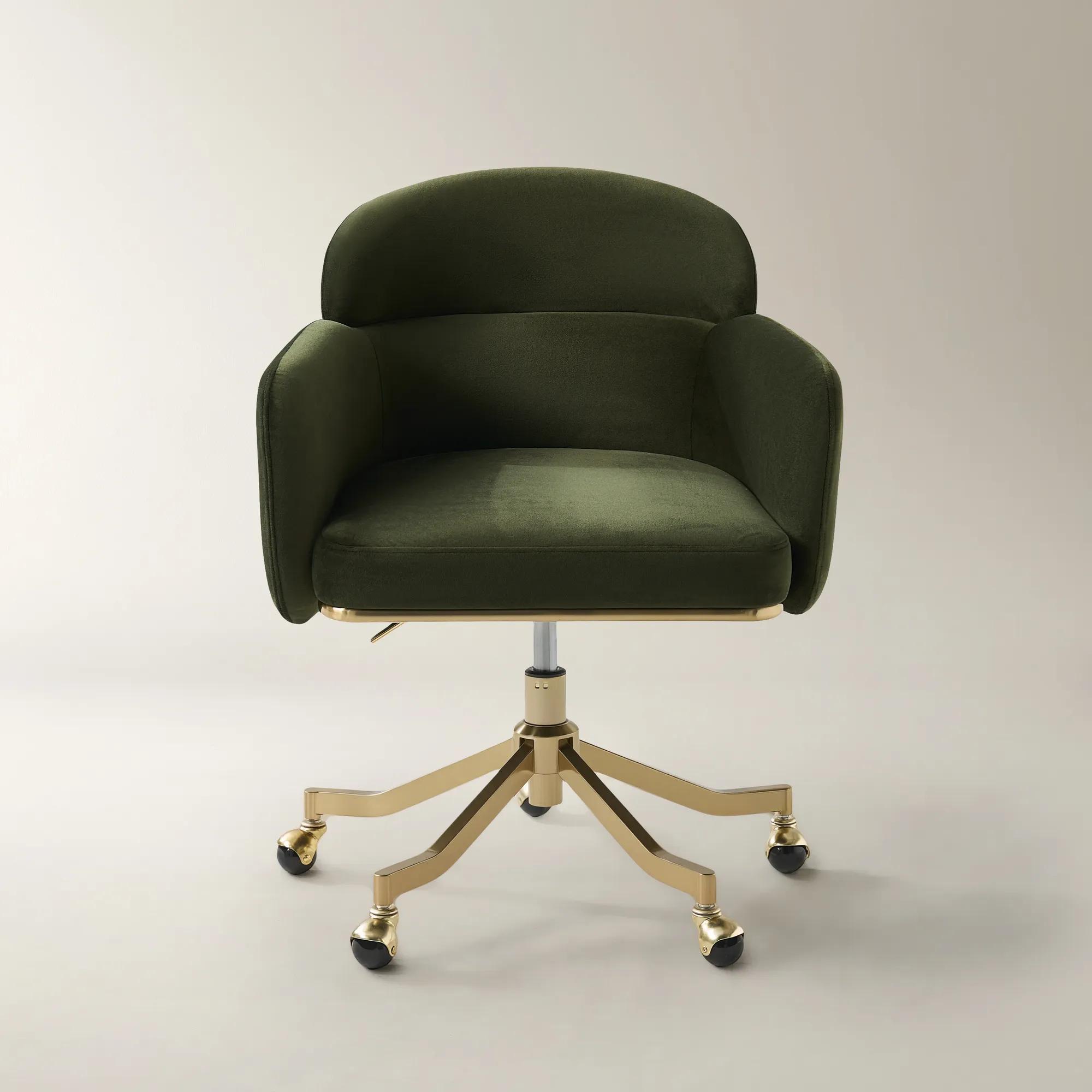 Paige Jade Green Velvet Swivel Desk Chair$399
A jade green velvet swivel chair featuring ergonomic design, adjustable height, and a glossy metal base with casters.
Add To Cart -
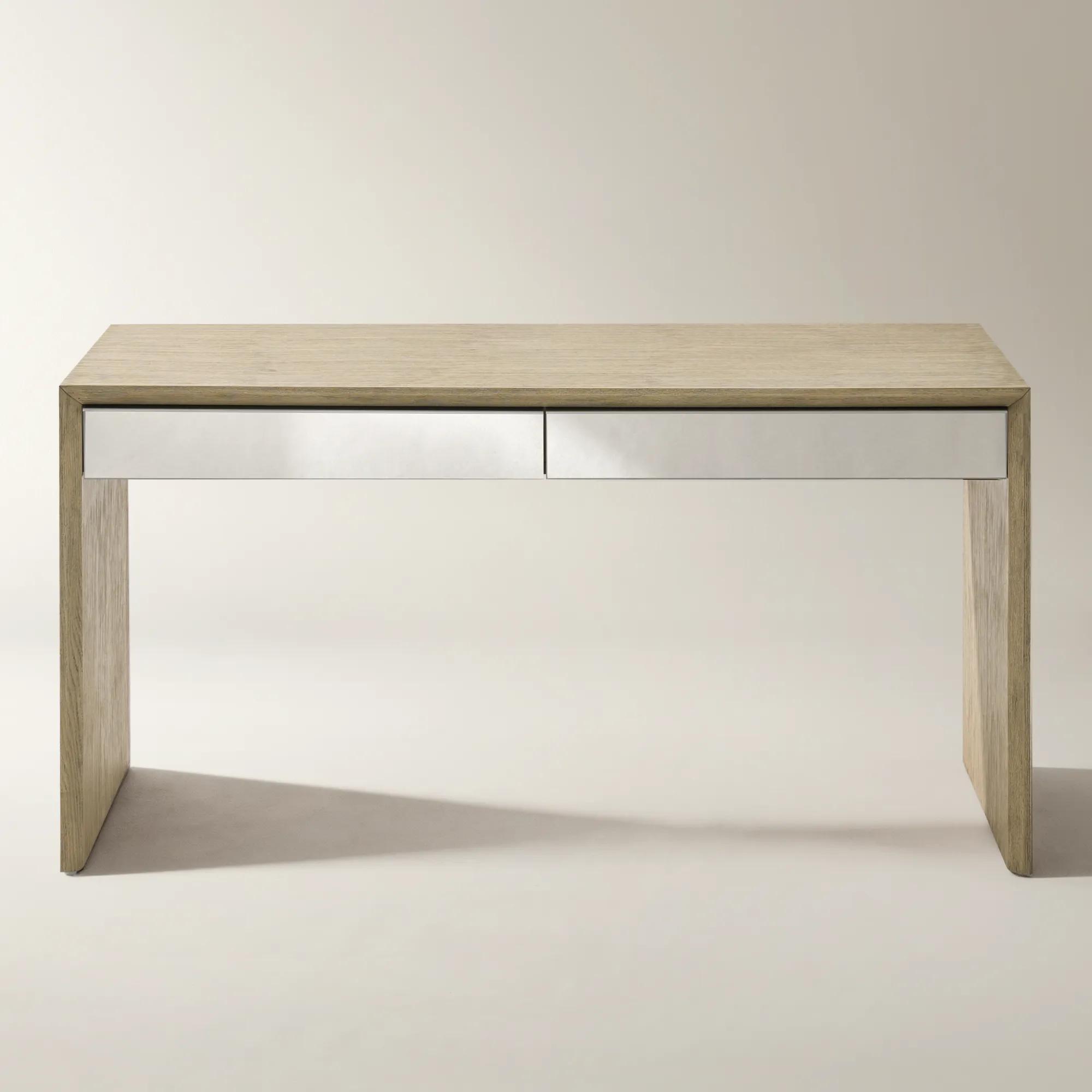 Glimmer Mirrored 2-Drawer Sea Drift Oak Desk (62")$1499
A two-tone oak veneer desk featuring antique mirrored soft-close drawers with velvet-lined interiors for refined style.
Add To Cart -
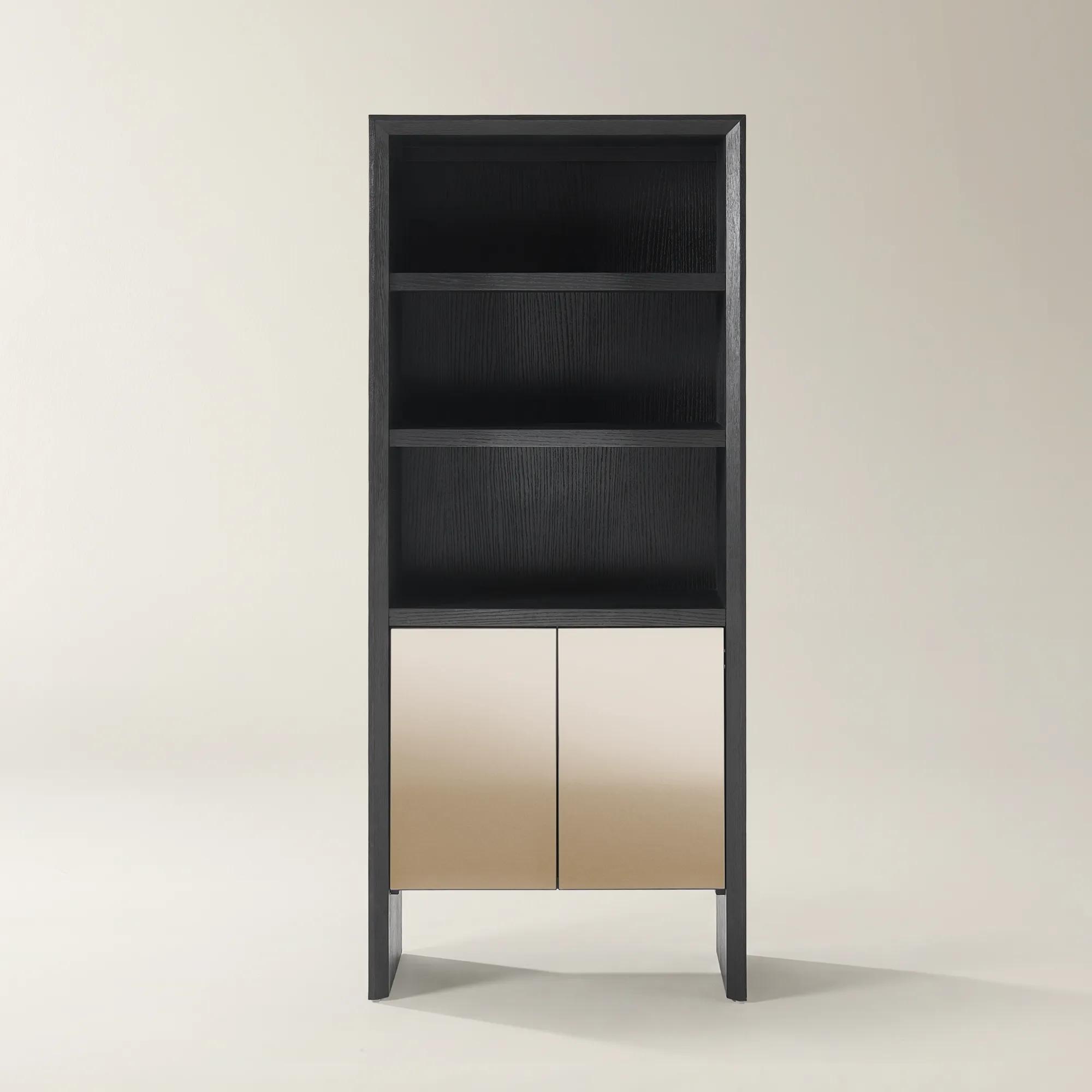
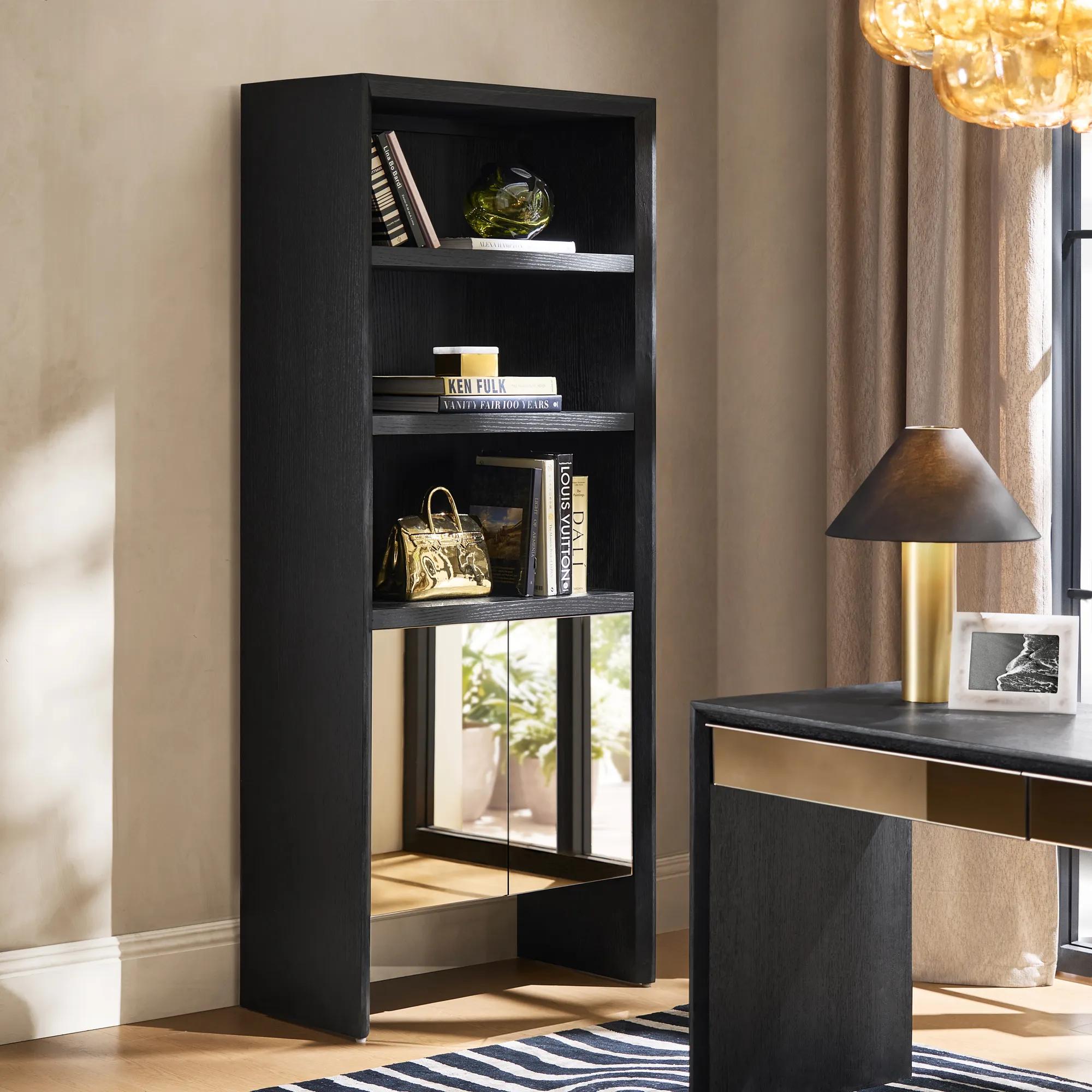 Glimmer Mirrored Black Oak Bookcase (80")$2599
A modern black oak bookcase featuring bronze mirrored doors, open shelving, and soft-close concealed storage.
Add To Cart -
 Glimmer Mirrored 2-Drawer Black Oak Desk (62")$1499
A modern black oak veneer desk featuring bronze mirrored soft-close drawers with velvet-lined interiors for elegant storage.
Add To Cart -
 Lucia Ivory Performance Chenille Swivel Desk Chair$499
A beige texture weave desk chair featuring a brass-plated metal base and adjustable gas lift for comfort.
Add To Cart -
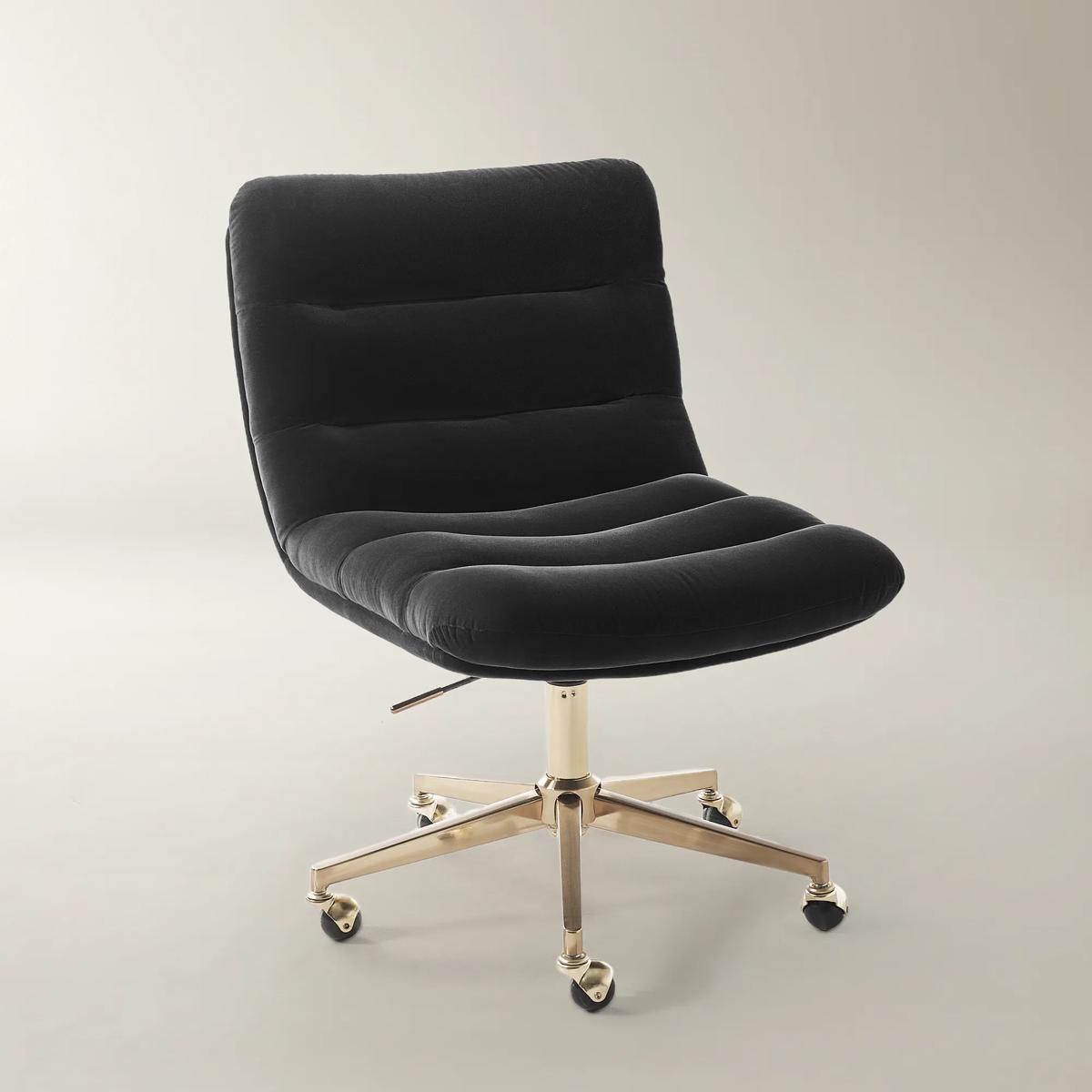 Serena Charcoal Velvet Swivel Desk Chair$399
A charcoal velvet office chair with plush foam cushioning, brass-plated metal base, and adjustable swivel design.
Add To Cart -

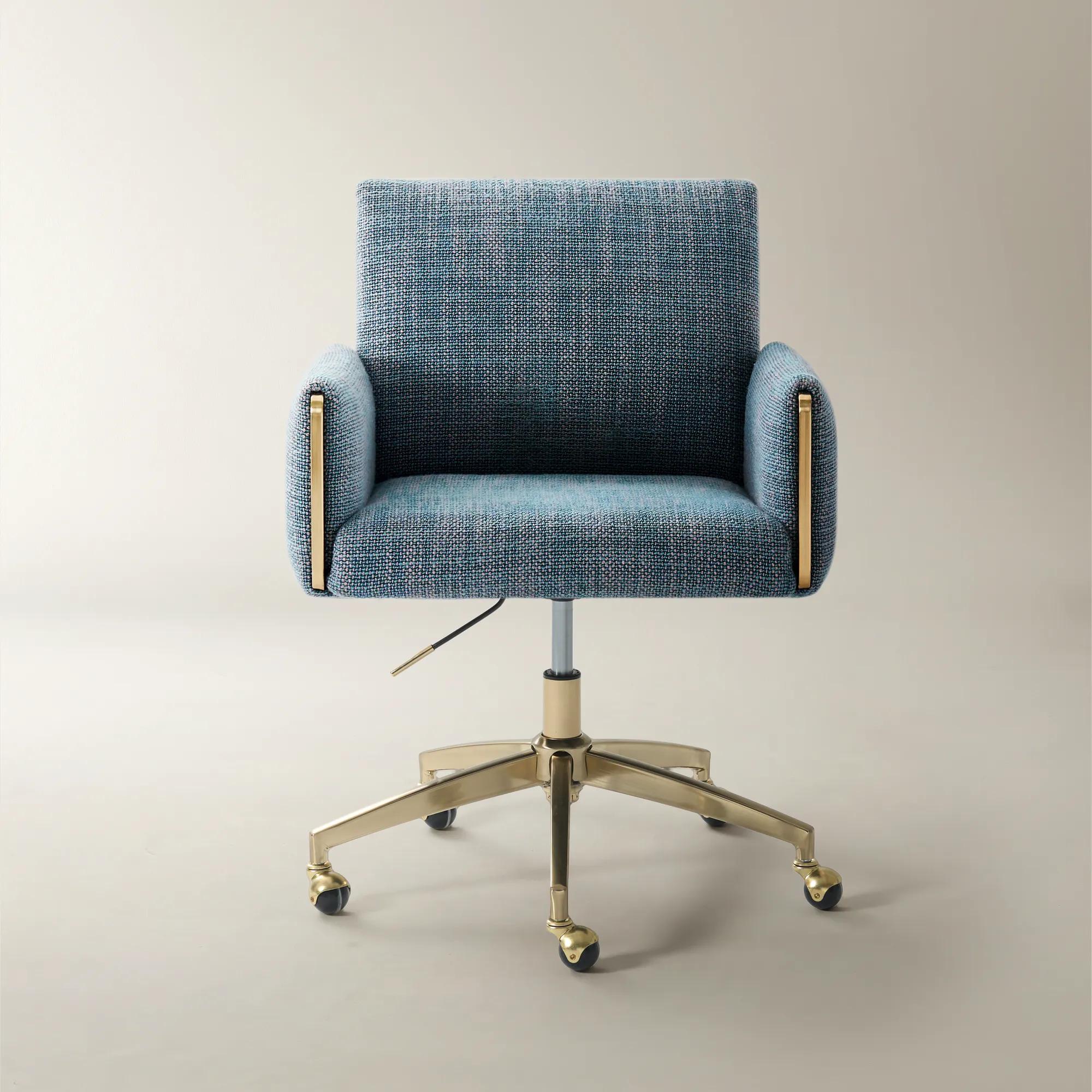 Lucia Peacock Performance Chenille Swivel Desk Chair$499
A peacock blue desk chair featuring textured polyester upholstery, brass-plated metal base, and adjustable comfort.
Add To Cart -
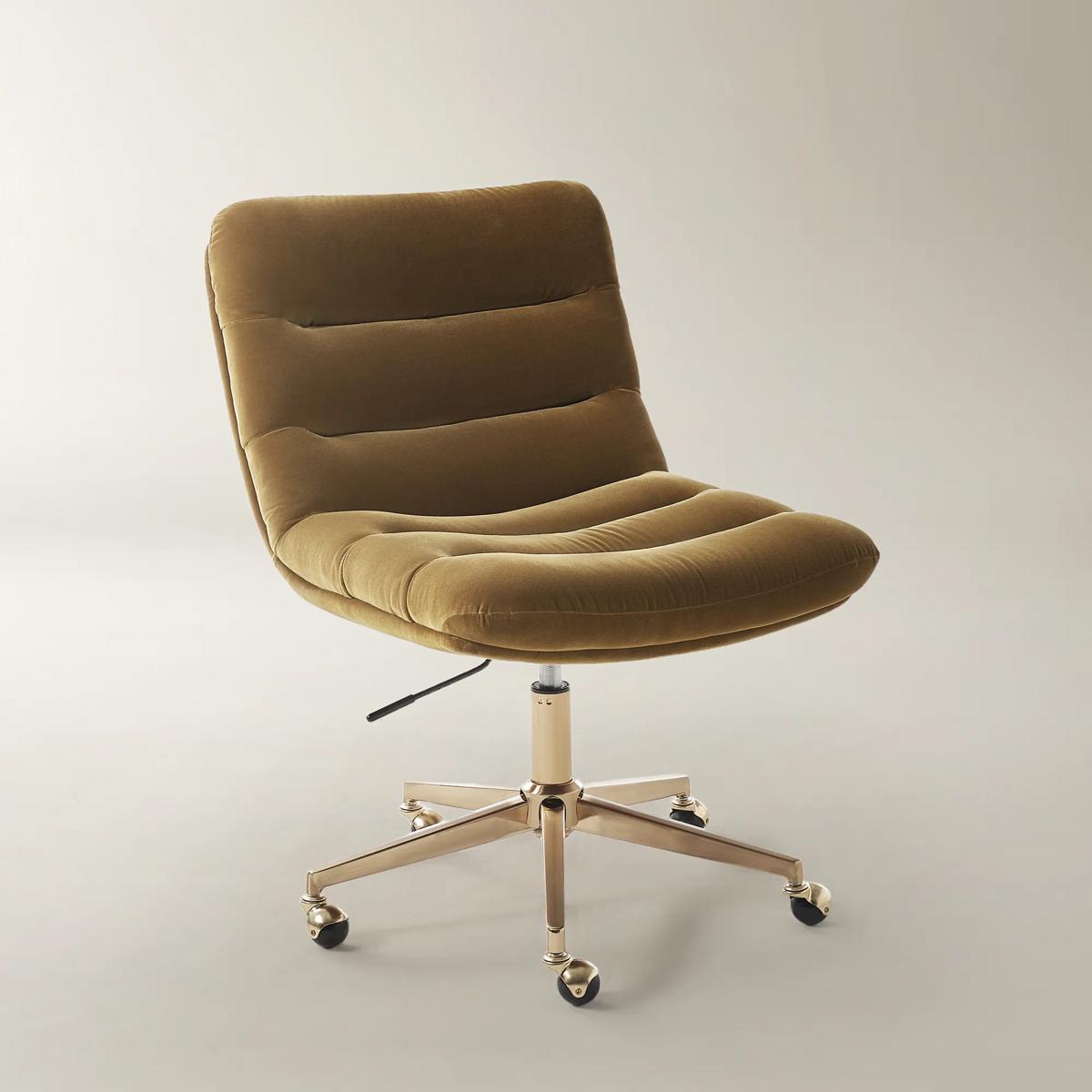
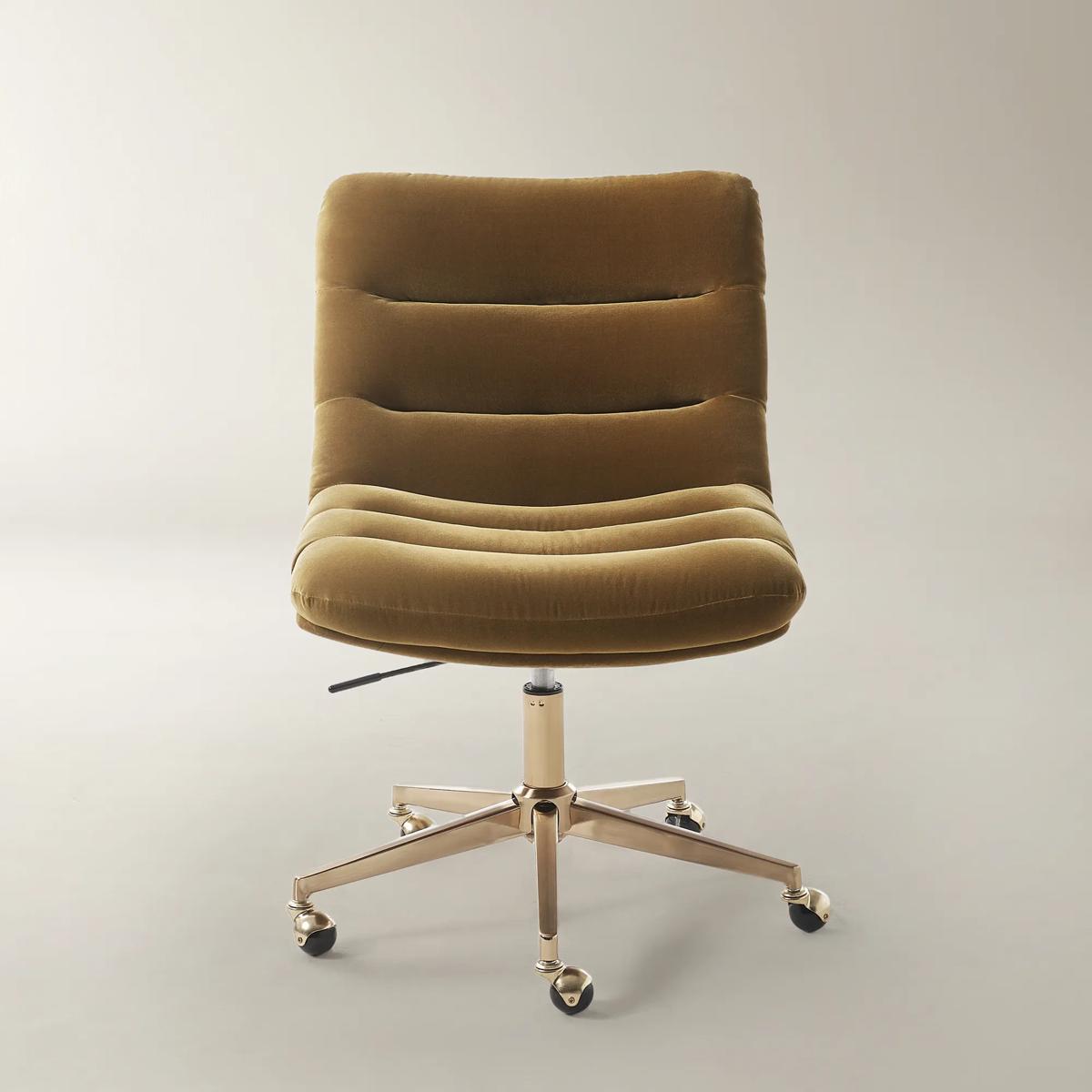 Serena Roasted Pecan Velvet Swivel Desk Chair$399
A brown velvet desk chair featuring adjustable tilt, brass-plated base, and smooth swivel wheels for comfort.
Add To Cart -
 Stria Reeded White Oak Bookcase (80")$2999
A modern bookcase featuring vertical reeded white oak, soft gold metal accents, and both open and concealed storage.
Add To Cart -
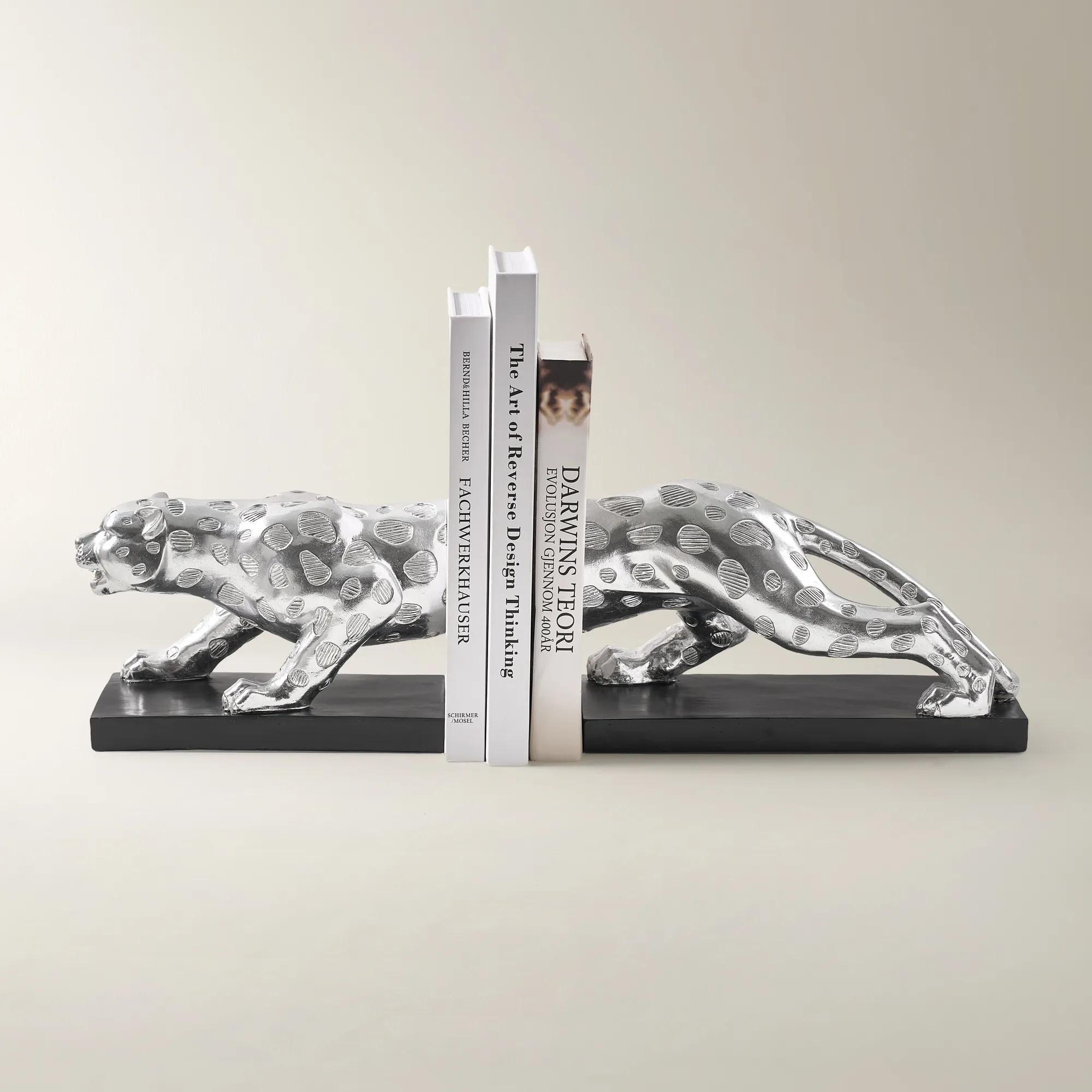 Pose Silver Resin Leopard Bookends$89
A sculptural pair of silver and black polyresin bookends inspired by Leopardo, adding modern glamour.
Add To Cart

Modern Home Office Furniture Ideas
Explore modern home office furniture ideas for a workspace with purpose and presence. Compare furniture by scale, silhouette, and function to find pieces that suit your daily routine and complement your home’s style, whether you’re furnishing a dedicated office or defining a work area within a shared room.
Modern home office furniture combines clean-lined desks, supportive seating, and purposeful storage to create a workspace that feels composed, comfortable, and distinctly personal. The strongest modern home office furniture ideas balance everyday function with expressive design: a generous work surface framed in gleaming metal, a sculptural chair that softens an angular desk, or closed cabinetry that gives paperwork a discreet home. These furnishings serve remote professionals, entrepreneurs, students, and anyone who needs a dedicated place for focused work without surrendering the character of the surrounding room. In a separate office, a substantial desk can anchor the space with the presence of a statement dining table, leaving room for a monitor, keyboard, reference materials, and an open notebook. In a living room or bedroom, a narrower writing desk can establish an elegant work zone without overwhelming the existing furniture. Scale matters as much as silhouette. A desk needs enough depth for its intended equipment, comfortable clearance beneath the surface, and space behind the chair for sitting down and moving away easily. Drawer pulls, cabinet doors, nearby walkways, and the footprint of a fully extended chair all influence how naturally the arrangement functions. A floating desk position can create a confident focal point, while a wall-facing arrangement preserves open floor space and keeps work neatly defined. For shared rooms, a finished desk back offers greater placement flexibility, and concealed cable management helps the workspace remain visually composed from different angles. Those who move between handwritten notes, digital meetings, and creative projects may benefit from a wider surface or a secondary storage piece that keeps frequently used materials close. The result is not simply a place to set a laptop, but a considered furniture arrangement that supports concentration and gives professional routines a more polished setting. A restrained palette can still carry considerable drama when the proportions are generous, the finishes are deliberate, and each piece has enough breathing room to reveal its shape.
Materials establish both the atmosphere and the practical character of modern office furniture. Wood brings warmth and visible grain, creating a rich counterpoint to polished metal, glass, and tailored upholstery. Wood veneers can offer beautifully consistent surfaces, while solid wood components contribute natural variation; construction details, finish quality, and appropriate use remain important with either material. Glass desktops introduce visual lightness, particularly in compact rooms, although fingerprints and the equipment beneath the surface become more noticeable. Lacquered finishes deliver a sleek, reflective presence, and metal frames can lend definition without the visual weight of a fully enclosed desk base. Durability depends on more than the surface material alone. Stable joints, secure hardware, smoothly operating drawers, and weight capacities suited to the intended equipment all contribute to dependable daily use. A desktop supporting multiple screens has different demands from one used for occasional correspondence, just as a chair occupied throughout the workday needs more careful attention to support than occasional seating. Upholstered office chairs bring softness and a tailored finish to the room, but their appeal should extend beyond appearance. Seat height, back support, seat depth, and arm placement influence comfort, and adjustable features can help accommodate different users and working positions. Ideally, feet rest comfortably on the floor or a footrest, shoulders remain relaxed, and the keyboard sits within easy reach. A chair should also fit beneath the desk without its arms striking the underside or its base crowding nearby furniture. Swivel seating can ease movement between a desk and adjacent storage, while casters need to suit the flooring beneath them. In spaces used for extended video calls, a supportive chair and an orderly furniture backdrop work together, creating an environment that feels assured on screen and comfortable beyond it. Plush texture and ergonomic consideration need not compete; the most successful arrangement allows comfort to support the room’s visual confidence rather than interrupt it.
Storage gives a modern home office its sense of order, allowing expressive finishes and sculptural forms to remain visible instead of disappearing beneath daily clutter. Closed cabinets and drawers suit paperwork, charging accessories, and supplies that would otherwise scatter across the desk. Open shelving offers a different rhythm, balancing reference books with carefully spaced decorative objects so the office feels connected to the rest of the home. For households sharing a workspace, separate drawers or clearly defined storage areas can make transitions between users more seamless. Filing needs deserve particular attention: document dimensions, drawer interiors, and the amount of material retained should inform the size and configuration of the furniture. A low cabinet can provide an additional surface for equipment, while a taller bookcase makes use of vertical space where floor area is limited. Furniture establishes the room’s structure, while Contemporary Home Office Decor adds atmosphere through art, lighting, and considered accents. A luminous lamp, a richly textured rug, or a large-scale artwork can give a work zone the same decorative conviction as a living space, provided essential surfaces and pathways remain clear. Care preserves that effect over time. Manufacturer instructions should guide cleaning, since wood, lacquer, glass, metal, and upholstery require different treatment. A soft cloth and prompt attention to spills help protect many furniture surfaces, while coasters and desk pads can reduce direct contact with moisture, heat, and abrasive objects. Glass generally benefits from a suitable cleaner applied without overspray onto surrounding materials; upholstery may require vacuuming and cleaning methods matched to its care code. Regular checks of chair hardware and drawer fittings can also help maintain smooth operation. Direct sunlight may alter some finishes and fabrics, making placement worth considering alongside appearance. Together, thoughtful dimensions, resilient construction, comfortable seating, and well-chosen storage create a home office with lasting presence: a room that accommodates demanding days while remaining an expressive part of the home.
FAQs
Build your modern home office around a statement desk, then introduce sculptural silhouettes and luminous accents. A restrained color palette lets expressive details take the spotlight: think dramatic artwork, contrasting finishes, and a chair with a distinctive profile. The result should feel like a personal design studio, not an extension of the corporate office.
Look for desks with architectural bases, fluid curves, or crisp geometric lines. A streamlined desktop paired with an expressive silhouette brings artistry to the room without overwhelming the composition. Choose a style that establishes your design direction, whether that means polished glamour, graphic contrast, or a softer, tonal aesthetic.
Create a dialogue between shapes rather than matching every detail. A sharply angular desk pairs beautifully with a curved chair, while a sculptural desk can take center stage beside a more understated seat. Repeat one color or finish across both pieces to make the pairing feel intentional.
Treat storage as part of the room’s visual composition. Cabinets with dimensional fronts can introduce depth, while open shelving offers a backdrop for books, art, and collected objects. Combine concealed storage with selectively styled displays for a home office that feels composed yet distinctly personal.
Give your office an editorial finish with expressive artwork, sculptural lighting, and a few striking desktop accessories. A rug can anchor the furniture arrangement, while decorative objects introduce rhythm and personality. Carry an accent color through the room, leaving deliberate pauses so each detail has its own moment.


