Designer Home Office Desks
Designer Home Office Desks
-
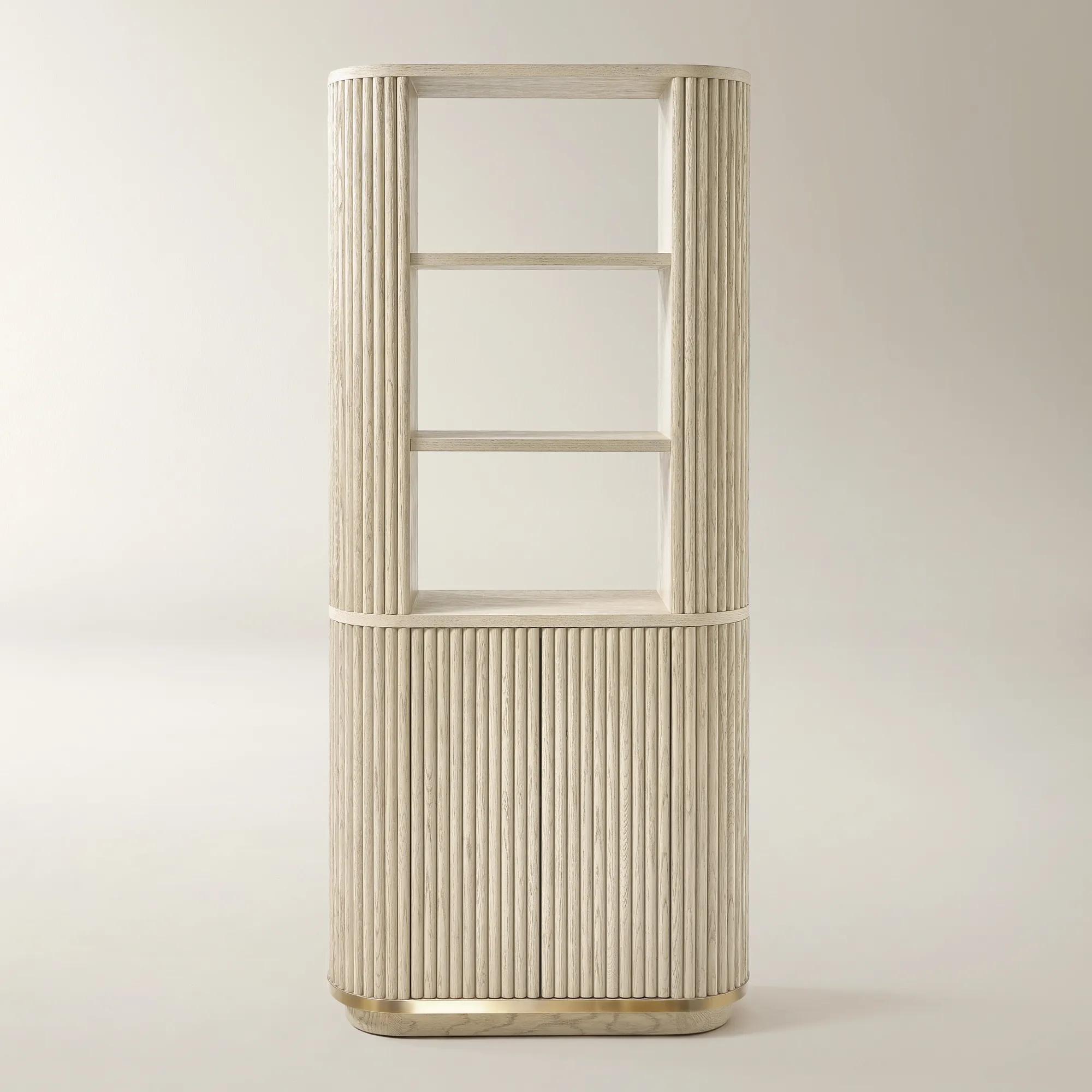
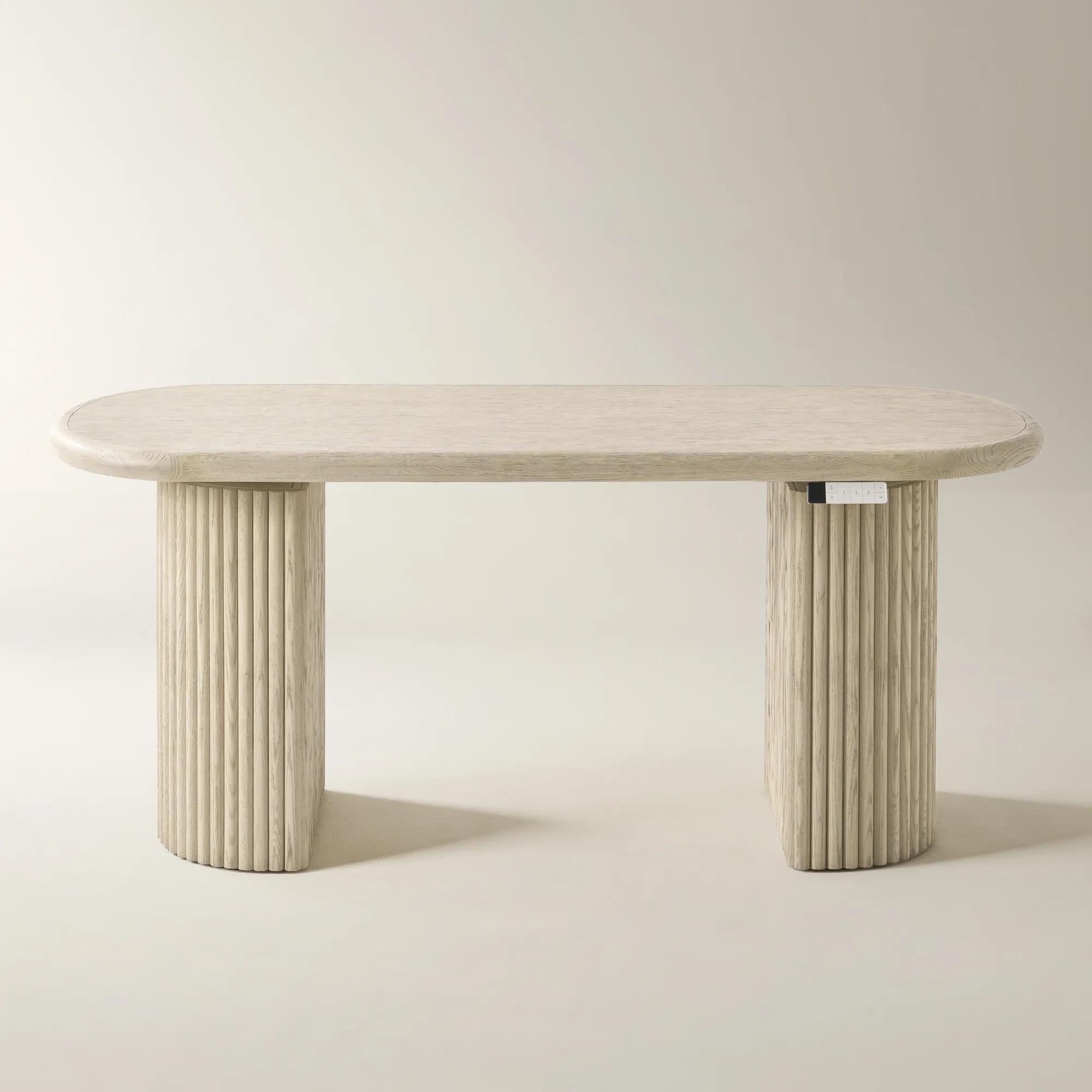 Stria Oval Reeded White Oak Electric Lift Desk (68")$2199
A white oak desk with vertical reeded texture, soft gold accents, and dual-motor electric lift functionality.
Add To Cart -
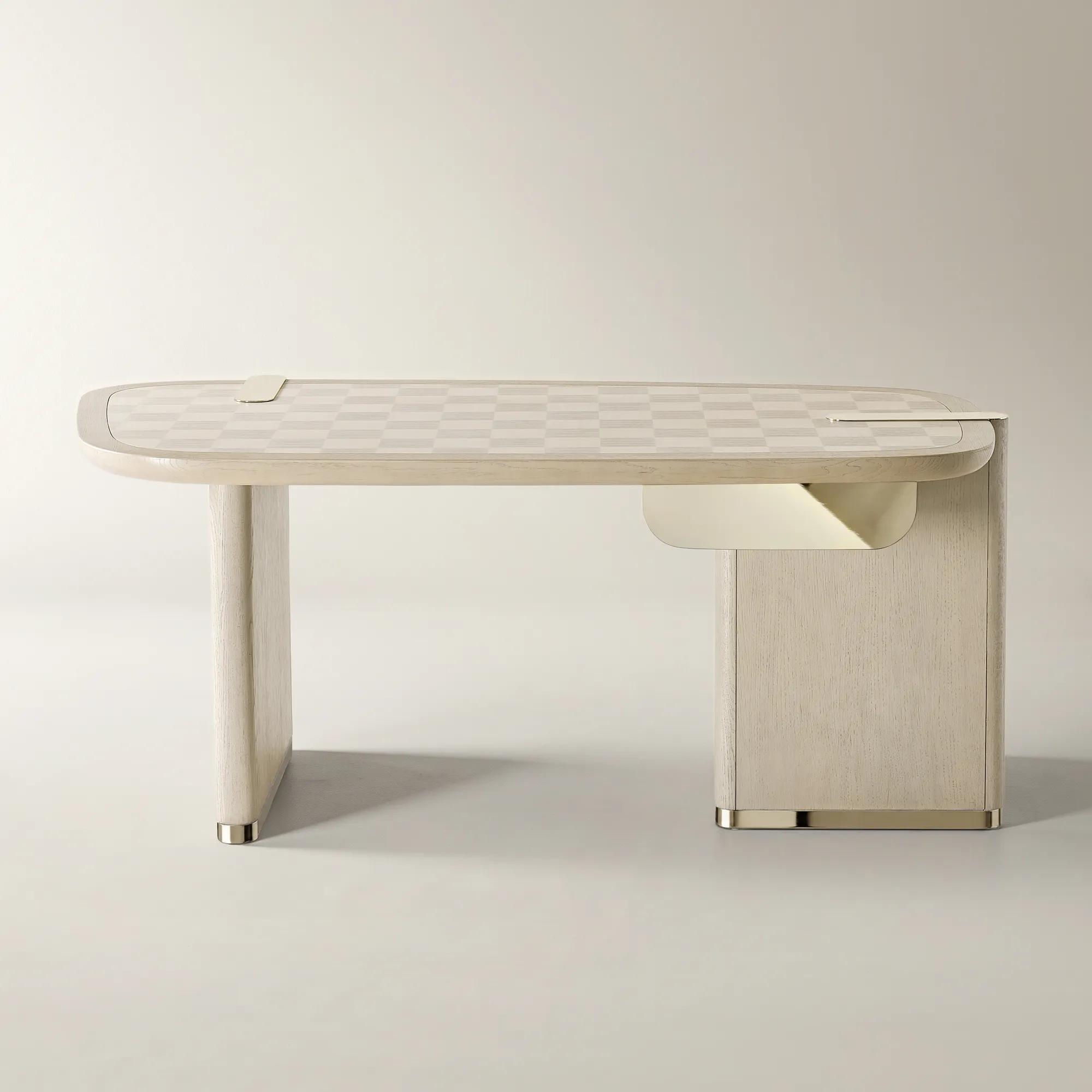
 Vetra Checkerboard Oak and Maple Desk with Drawer (71")$2399
A modern desk featuring a hand-arranged oak and maple checkerboard veneer, gold accents, and a concealed drawer.
Add To Cart -

 Nia Lacquered Turtle Dove Wood Desk (62")$1099
A modern desk featuring a soft turtle dove lacquer finish, cylindrical legs, and engineered wood construction.
Add To Cart -
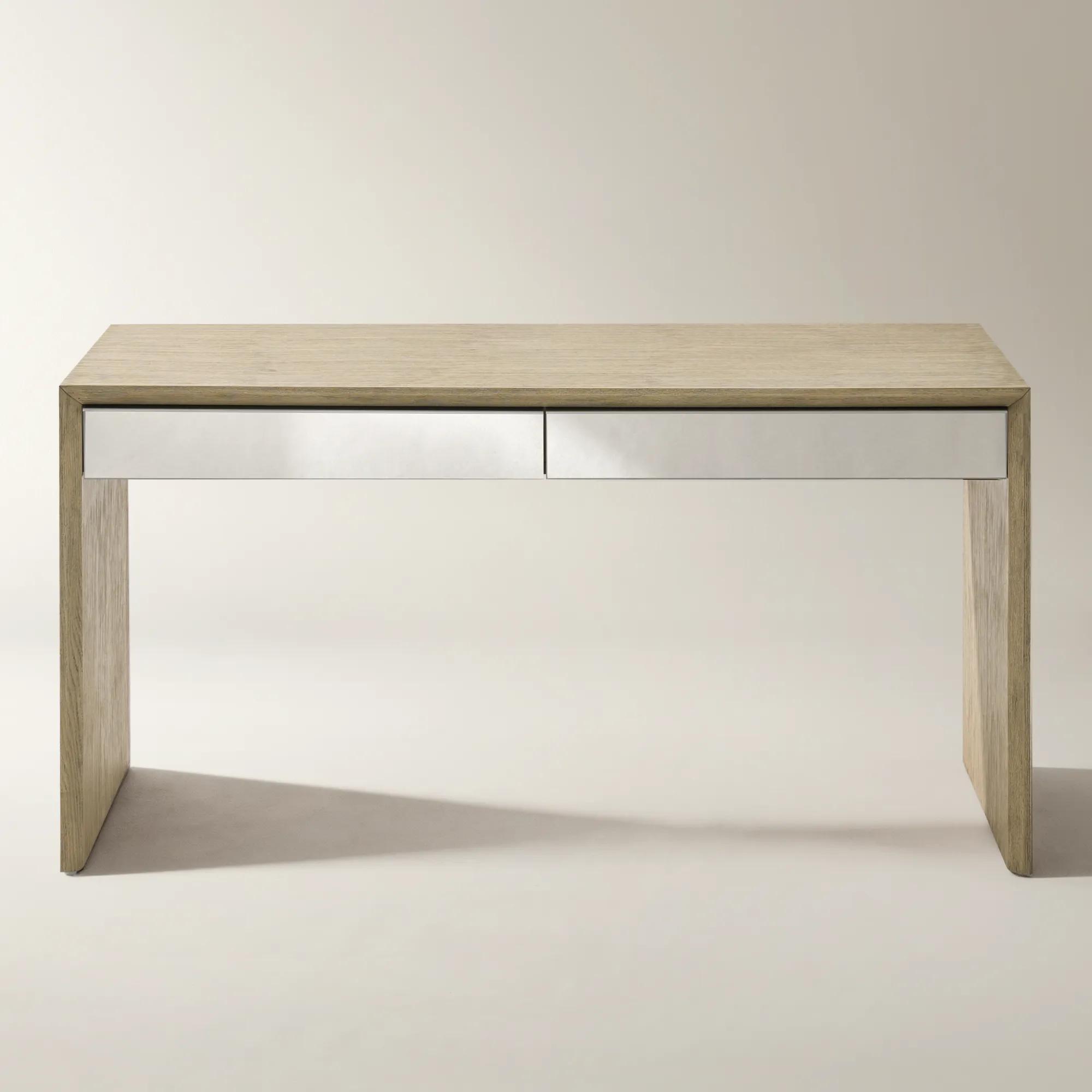 Glimmer Mirrored 2-Drawer Sea Drift Oak Desk (62")$1499
A two-tone oak veneer desk featuring antique mirrored soft-close drawers with velvet-lined interiors for refined style.
Add To Cart -
 Glimmer Mirrored 2-Drawer Black Oak Desk (62")$1499
A modern black oak veneer desk featuring bronze mirrored soft-close drawers with velvet-lined interiors for elegant storage.
Add To Cart

Designer Home Office Desks
Explore designer home office desks that give your workspace a distinct point of view. Discover modern desk designs with an eye toward proportion and presence, and choose a silhouette that complements your room while allowing space for your daily essentials. Consider your layout and work habits to find a desk that balances an expressive interior with a focused place to work.
Designer home office desks give daily work a setting with presence: a beautifully composed surface, a distinctive silhouette, and enough room for ideas to take shape. More than a place to open a laptop, a desk establishes the character of a home office, whether that space occupies a dedicated room or a carefully arranged corner of a living area. Sculptural bases bring an architectural quality to the room, while slender legs and open frames allow a workspace to feel visually lighter. A substantial rectangular desk creates a confident focal point; a streamlined writing desk offers a more discreet profile for correspondence, occasional remote work, or creative projects. Materials make an equally expressive statement. Wood introduces depth through grain and tone, from pale finishes that complement luminous interiors to darker hues that lend a room richness. Veneered surfaces can showcase beautifully patterned wood over a supporting core, while solid wood components reveal natural variations that contribute to their character. Glass offers transparency and a polished, airy effect, particularly where a desk shares space with other furnishings. Metal frames and accents add definition, with gleaming finishes lending jewelry-like detail and softer brushed surfaces bringing a quieter sheen. Lacquered finishes emphasize clean lines and a smooth, reflective appearance. Each material changes how the desk relates to its surroundings: a dark wood surface against pale walls feels grounded and dramatic, while glass beside textured upholstery introduces contrast without adding visual weight. For professionals who spend hours at a workstation, the desk becomes the center of a focused daily routine. For writers, designers, and anyone balancing household planning with personal projects, it provides a place to gather references, spread out notes, and return to unfinished ideas. In a multipurpose room, a thoughtfully proportioned desk can echo the sophistication of nearby furniture rather than looking like an office fixture brought into the home. The result is a workspace that feels intentional, expressive, and connected to the way the rest of the room is lived in.
The most compelling desk balances its visual impact with the realities of the work it supports. A laptop and a journal require a different surface area than a large monitor, separate keyboard, drawing tablet, and stacks of reference material. Width determines how comfortably those elements sit together, while depth affects the distance between the user and the screen and leaves room for hands, forearms, and a clear writing area. Overall dimensions matter beyond the desktop itself. A chair needs space to pull back, drawers need clearance to open, and nearby doors and walkways should remain unobstructed. In a smaller office, an open base can preserve sight lines, although its proportions still need to accommodate comfortable legroom. A desk with a central drawer or a thicker apron may offer useful storage while reducing clearance beneath the surface, making the relationship between desk height, chair height, and seated posture especially important. Armrests should fit beneath the desk when the chair is tucked away, and the working position should allow relaxed shoulders and supported feet. Storage brings another layer of consideration. Shallow drawers suit pens, charging accessories, and frequently used supplies; deeper compartments may accommodate bulkier materials, depending on their interior measurements. Drawers intended for files should match the document format they will hold. Concealed storage helps maintain an elegant surface, while a desk without drawers may suit someone who prefers separate cabinetry or needs unrestricted knee space. Cable openings and integrated routing, where included, can keep cords from crossing a carefully arranged desktop. Placement also influences everyday comfort: a desk facing a window can offer an appealing outlook, but screen reflections and glare may call for a different angle or adjustable window coverings. A desk lamp adds focused illumination without requiring the entire room to be brightly lit. For a workspace visible from a doorway or positioned away from the wall, the back of the desk deserves attention too. A finished rear surface and considered cable placement help the piece look composed from every approach, not only from the seated position.
Durability is shaped by construction, surface finish, and the demands placed on a desk over time. A stable base, secure connections, and drawers that operate smoothly are meaningful details in a piece used every day. Materials have different strengths and care requirements, so the finish and manufacturer’s care instructions should guide cleaning rather than appearance alone. A soft cloth is generally useful for routine dusting, while abrasive pads and harsh cleaners can damage delicate surfaces. Wood and veneer benefit from protection against standing moisture, and spills should be addressed promptly using an appropriate method for the finish. Coasters beneath drinks and protective pads beneath decorative objects help preserve the desktop without concealing its beauty. A writing pad can also protect against pen pressure and provide a comfortable surface for handwritten notes. Glass requires a cleaner suitable for the specific surface and surrounding finishes; spraying directly near joints, metalwork, or wood components can expose those areas to unwanted residue. Lacquer and polished metal may show fingerprints more readily, making gentle, regular attention part of maintaining their luminous appearance. Screens, monitor arms, and other equipment deserve consideration as well: clamped accessories should be compatible with the desktop’s material, thickness, and stated load limits. Styling then becomes an extension of function. A sculptural lamp, a restrained arrangement of books, and a distinctive tray can give everyday essentials a deliberate place, leaving the central work area open. Artwork behind the desk supplies personality, while a rug can define the office within a larger room, provided its pile allows the chair to move comfortably. For a coordinated setting, designer benches for home offices can introduce an upholstered accent along a wall or offer occasional seating for a visitor without replacing the primary work chair. The desk remains the room’s anchor, surrounded by texture, light, and details that make concentration feel inviting. Whether furnishing a first dedicated office or refining an established workspace, a well-considered designer desk brings practical purpose into harmony with personal expression.
FAQs
A designer home office desk brings an expressive point of view to a familiar form. Distinctive silhouettes, considered detailing, and artful finishes give this everyday furnishing a commanding presence. Look for a design that reflects your personal aesthetic and establishes the mood of your workspace, from quietly refined to unapologetically glamorous.
Take inspiration from the shapes, tones, and textures already woven through your home. A desk with crisp lines can echo an architectural interior, while a curvaceous silhouette introduces a sculptural counterpoint. Repeat a finish or color elsewhere in the room to make the desk feel connected without making every element match.
Compose your desktop with a few expressive accents: a sculptural lamp, an elegant tray, and a decorative object with an intriguing form. Contrast gleaming details with softer textures, and leave open space around each piece so its character can shine. Artwork behind the desk adds another layer of personality, turning the work area into a distinctly personal composition.
Choose a chair that creates a deliberate dialogue with the desk. A tailored upholstered silhouette can soften angular lines, while a chair with architectural detailing can bring definition to a fluid desk design. A shared color or finish creates continuity; contrasting textures give the pairing depth and individuality.
Yes. Treat the desk as part of the room’s decorative composition rather than as a separate office element. Echo the surrounding palette, pair it with a chair that complements nearby furnishings, and curate accessories with the same care as a console display. The result is a workspace that contributes to the room’s character while retaining its own expressive presence.