Black Rugs For Modern Dining Rooms
Black Rugs For Modern Dining Rooms
-
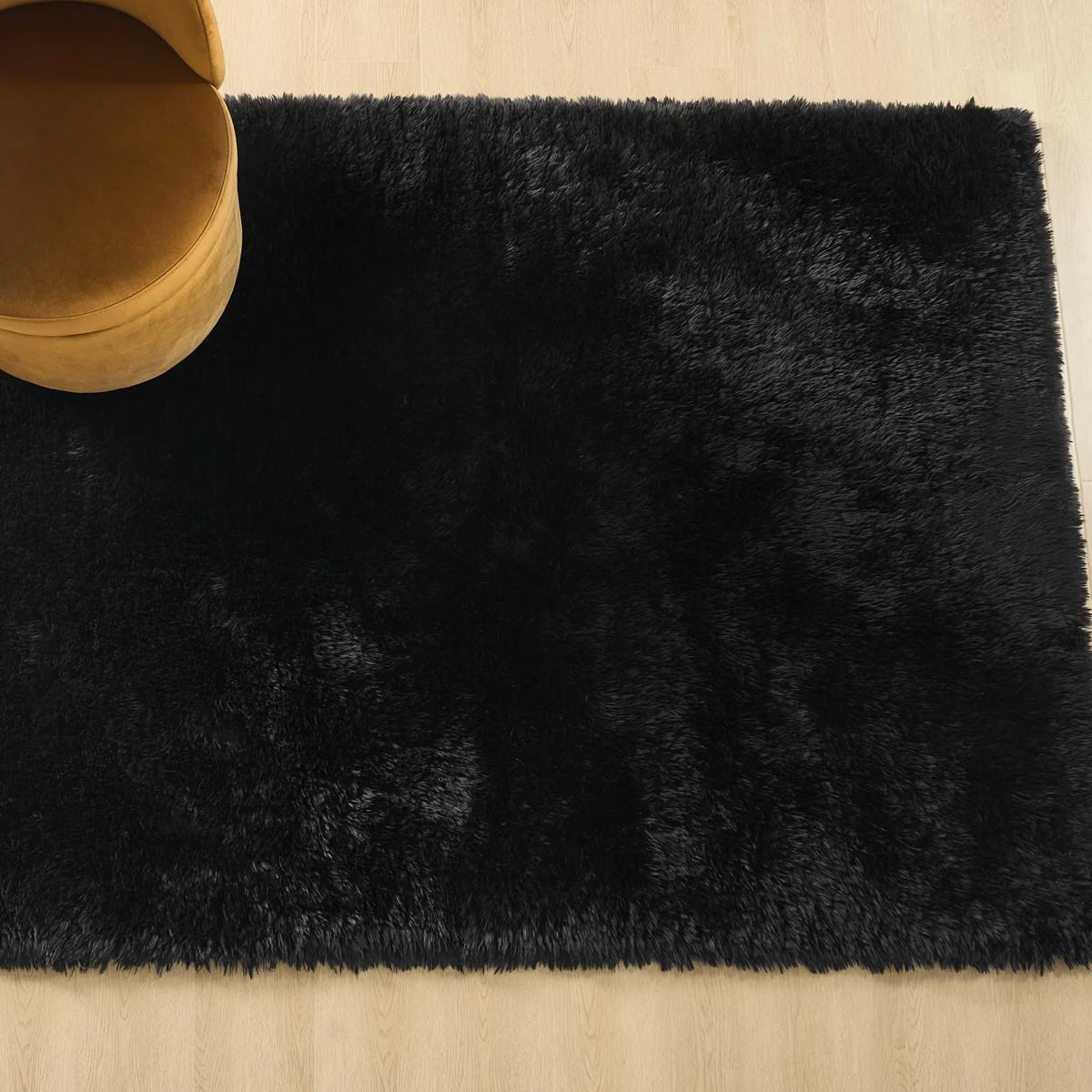
 Lustre Shag Rug - Black$299
A plush, ultra-soft high-pile rug in deep black polyester with a non-slip backing for modern elegance.
Add To Cart -
 Juni Hand Woven Heathered Black Rug$799
A handwoven round wool rug in heathered black, offering durable texture and moody, contemporary style.
Add To Cart -
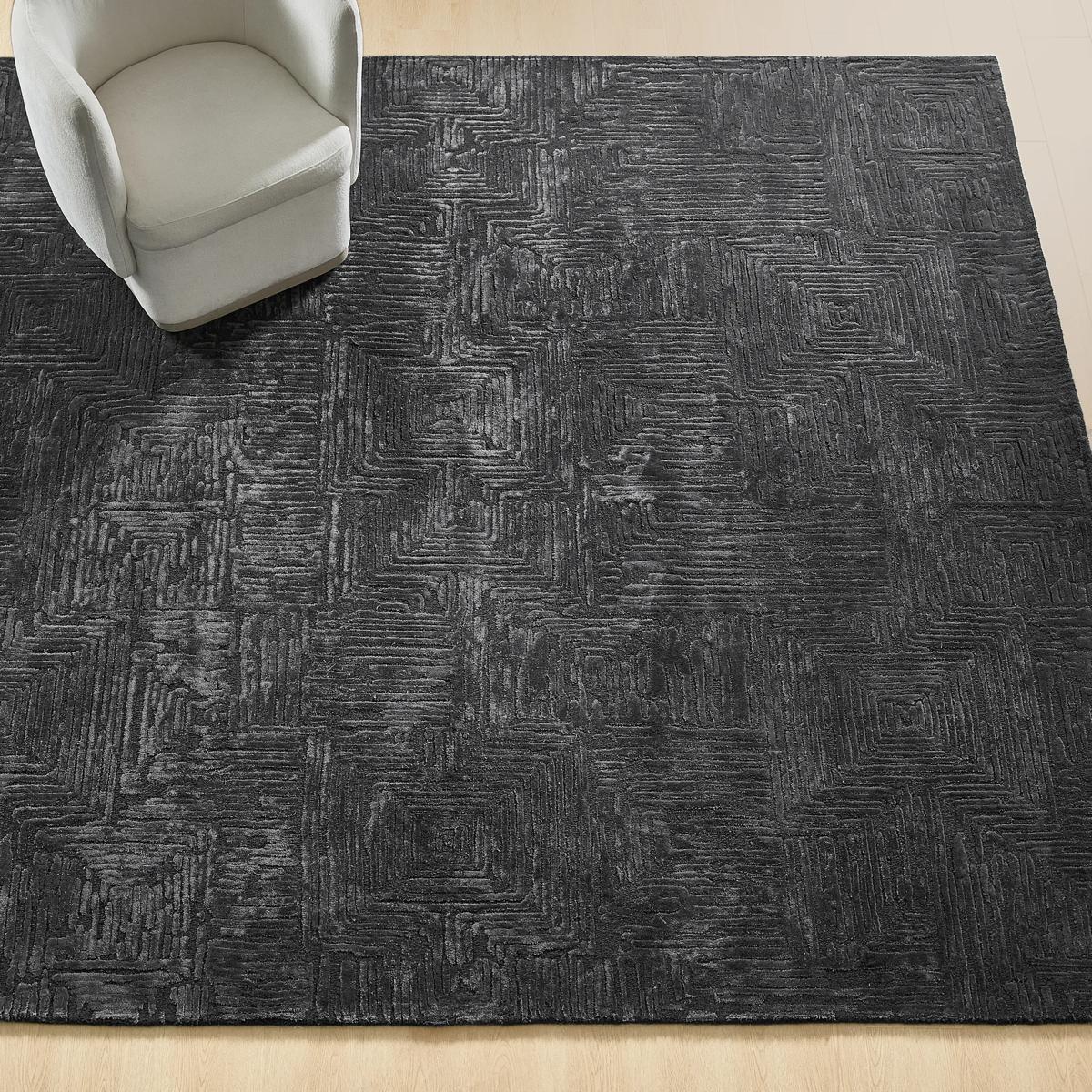
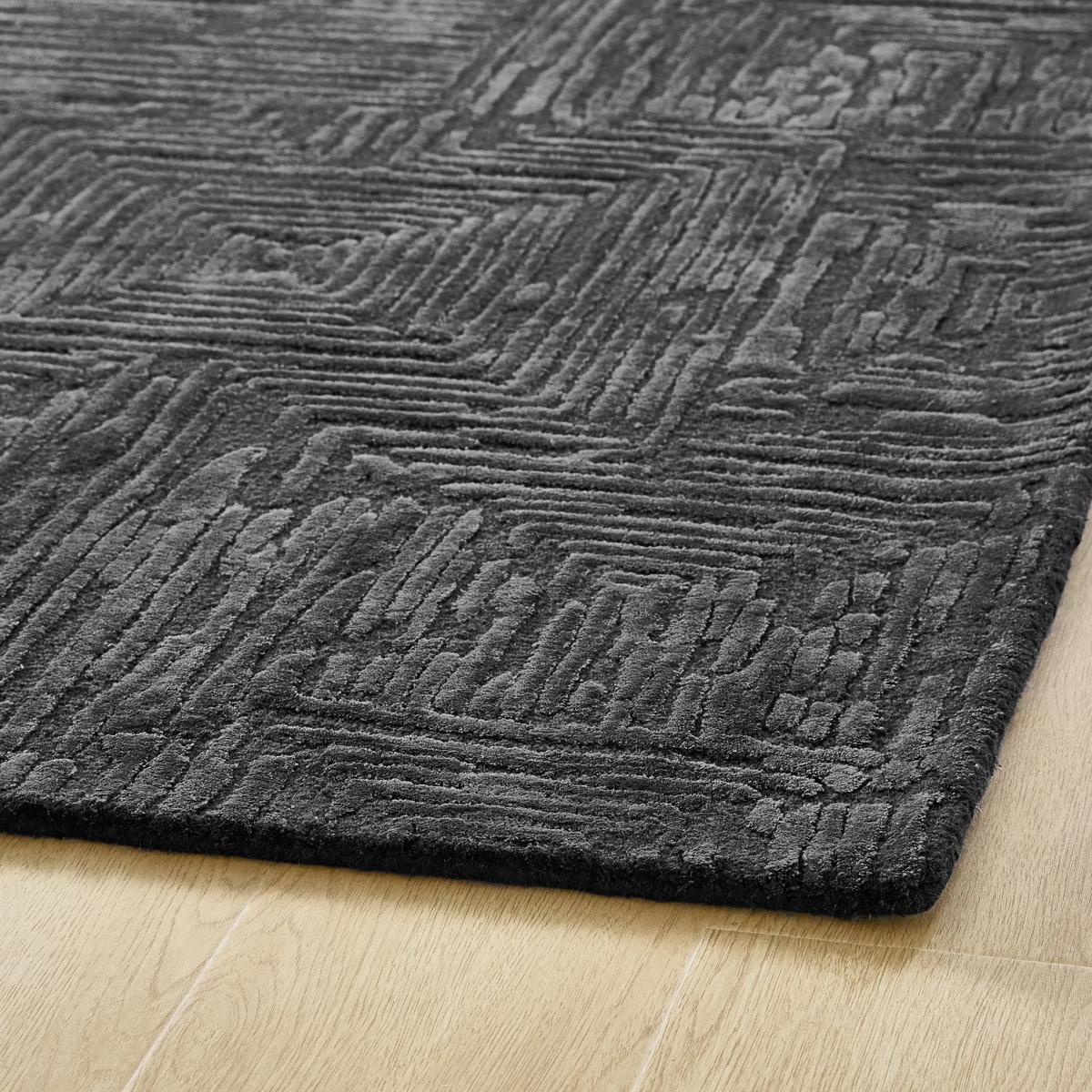 Andra Charcoal Hand-Tufted Wool Blend Dimensional Rug$499
A hand-tufted viscose-wool rug in rich charcoal, featuring a sculptural, dimensional pattern for modern spaces.
Add To Cart -
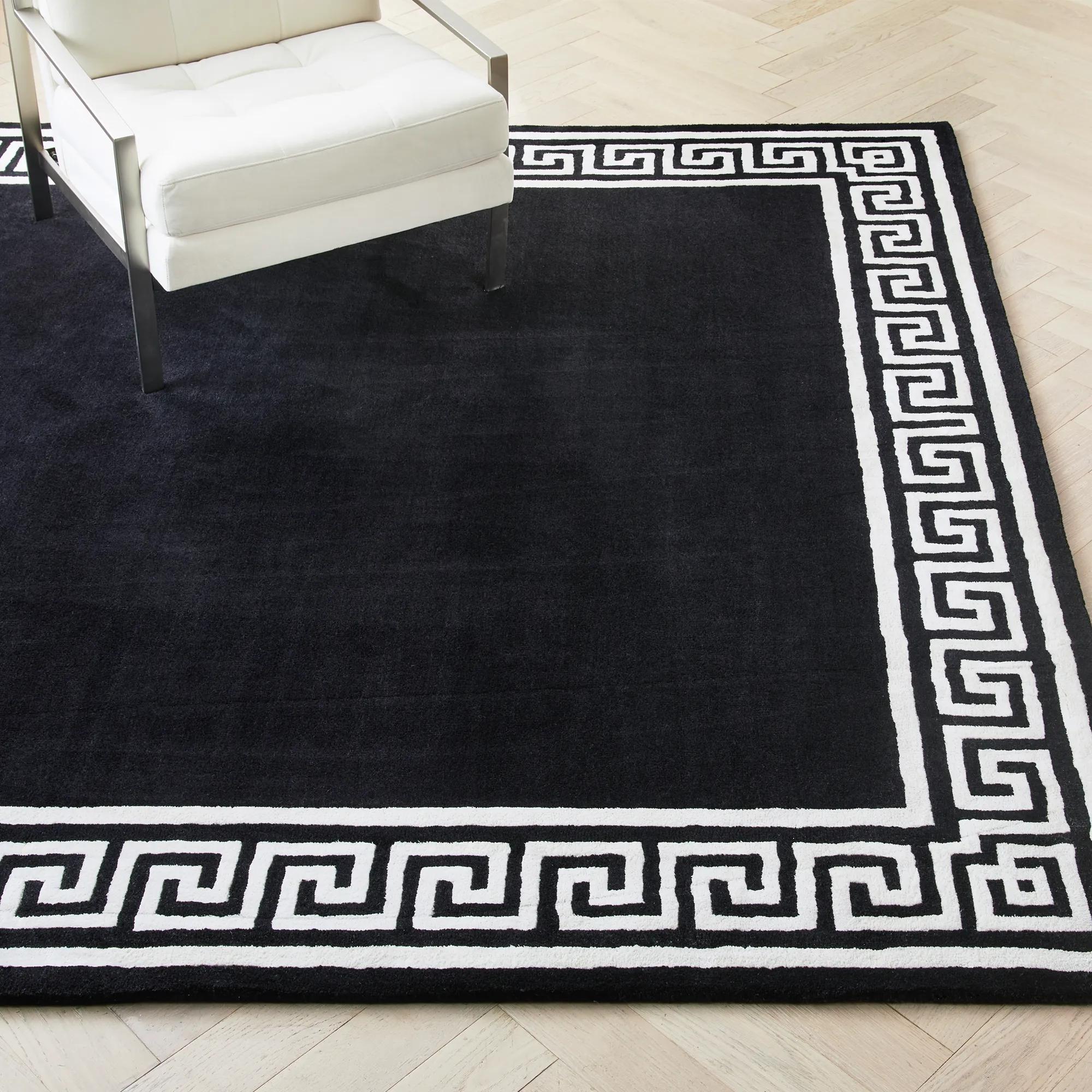
 Greek Key Rug - Black/Ivory$1799
A hand-tufted black and ivory rug featuring a classic Greek key pattern in wool and viscose.
Add To Cart -
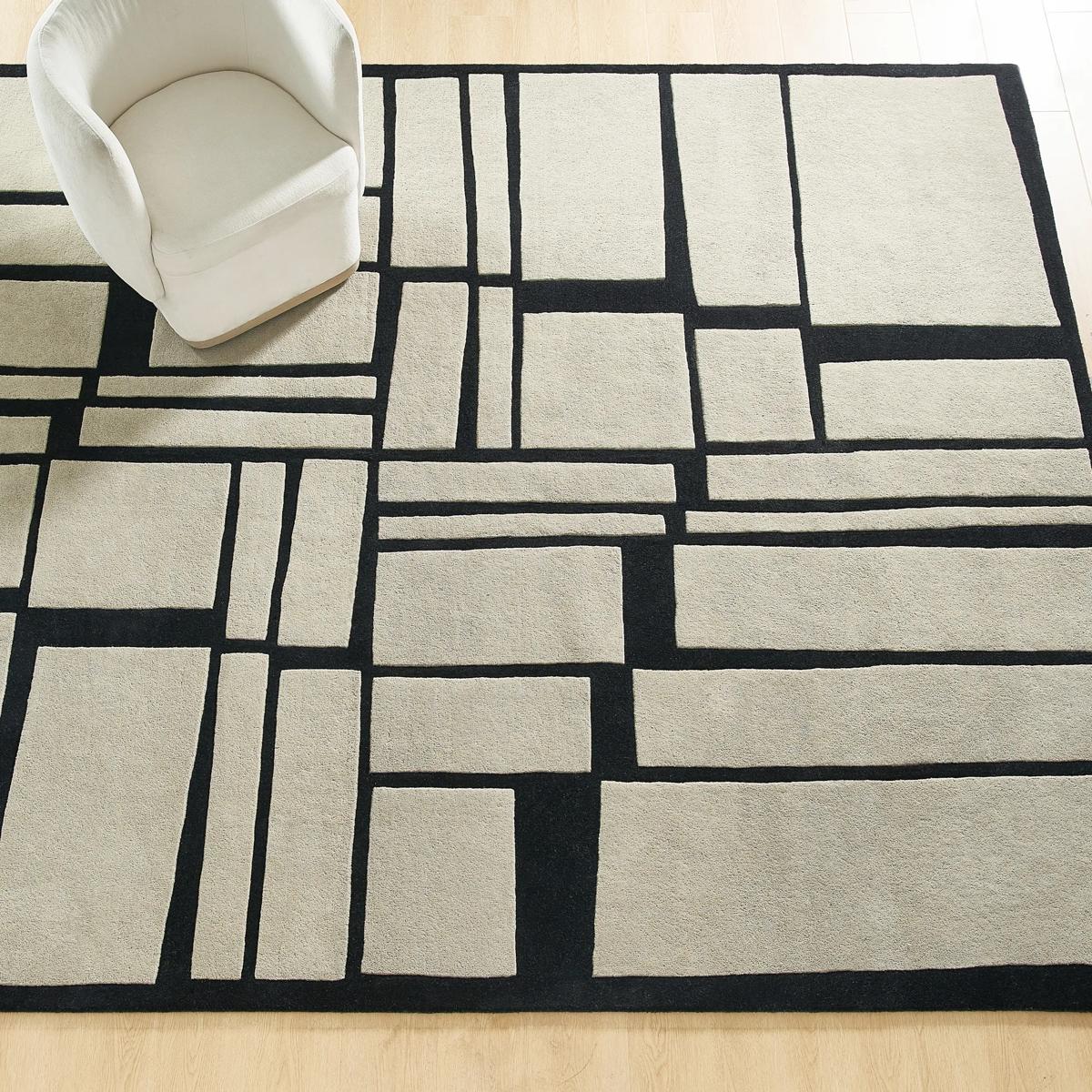 Novak Hand-Tufted Natural/Black Wool Rug$449
A hand-tufted wool rug featuring a bold black and natural grid design for modern visual impact.
Add To Cart -
 Carved Maze Rug$699
A hand-loomed black rug crafted from wool and viscose, featuring a carved maze design for added texture.
Add To Cart -

 Palm Rug - Charcoal$1499
A charcoal rug featuring a dynamic palm-leaf design with a textured high-low viscose and wool pile.
Add To Cart -
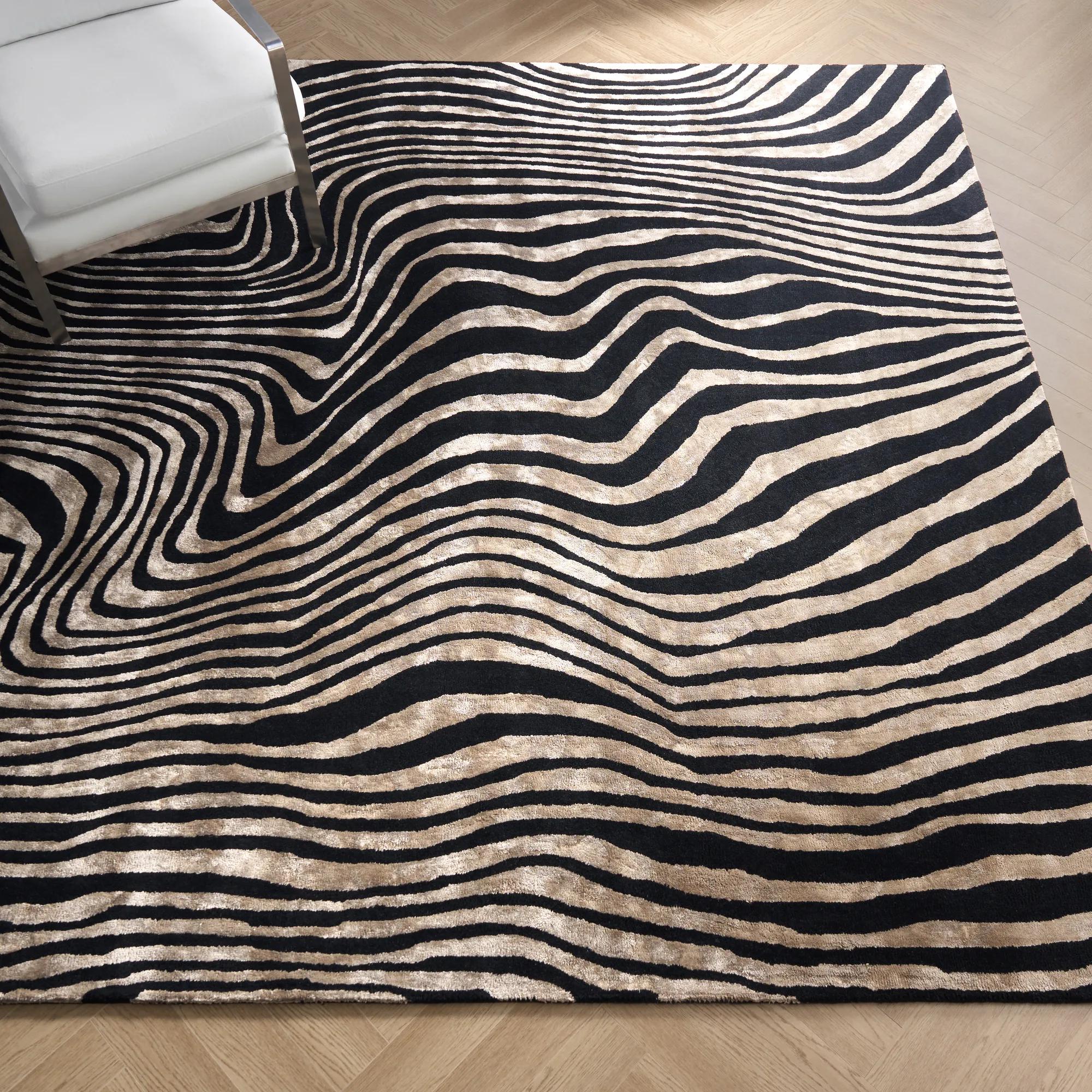
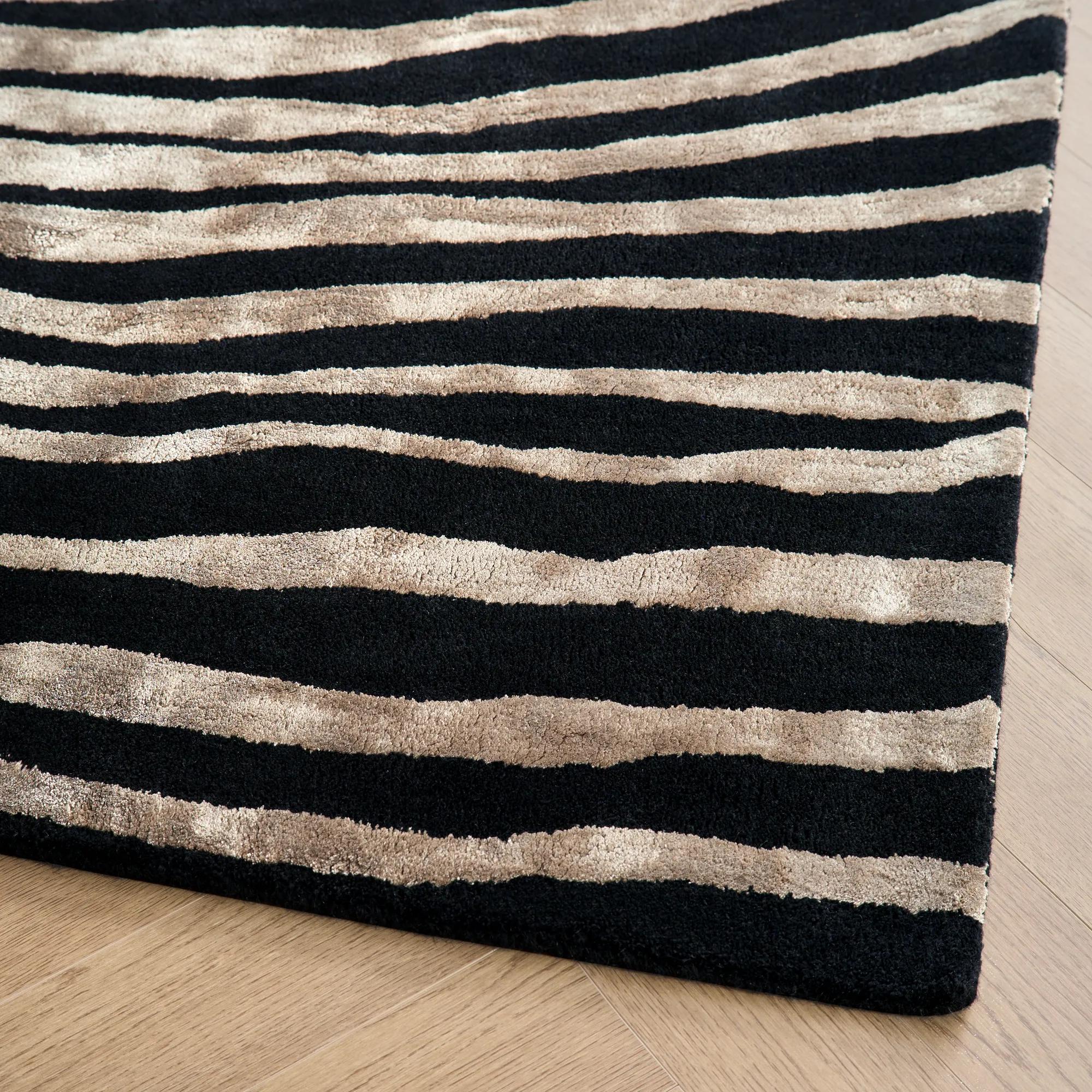 Abstract Zebra Hand-Tufted Black/Taupe Wool Blend Rug$1099
An artisan hand-tufted rug in black and taupe wool-viscose, featuring a striking abstract zebra pattern.
Add To Cart -
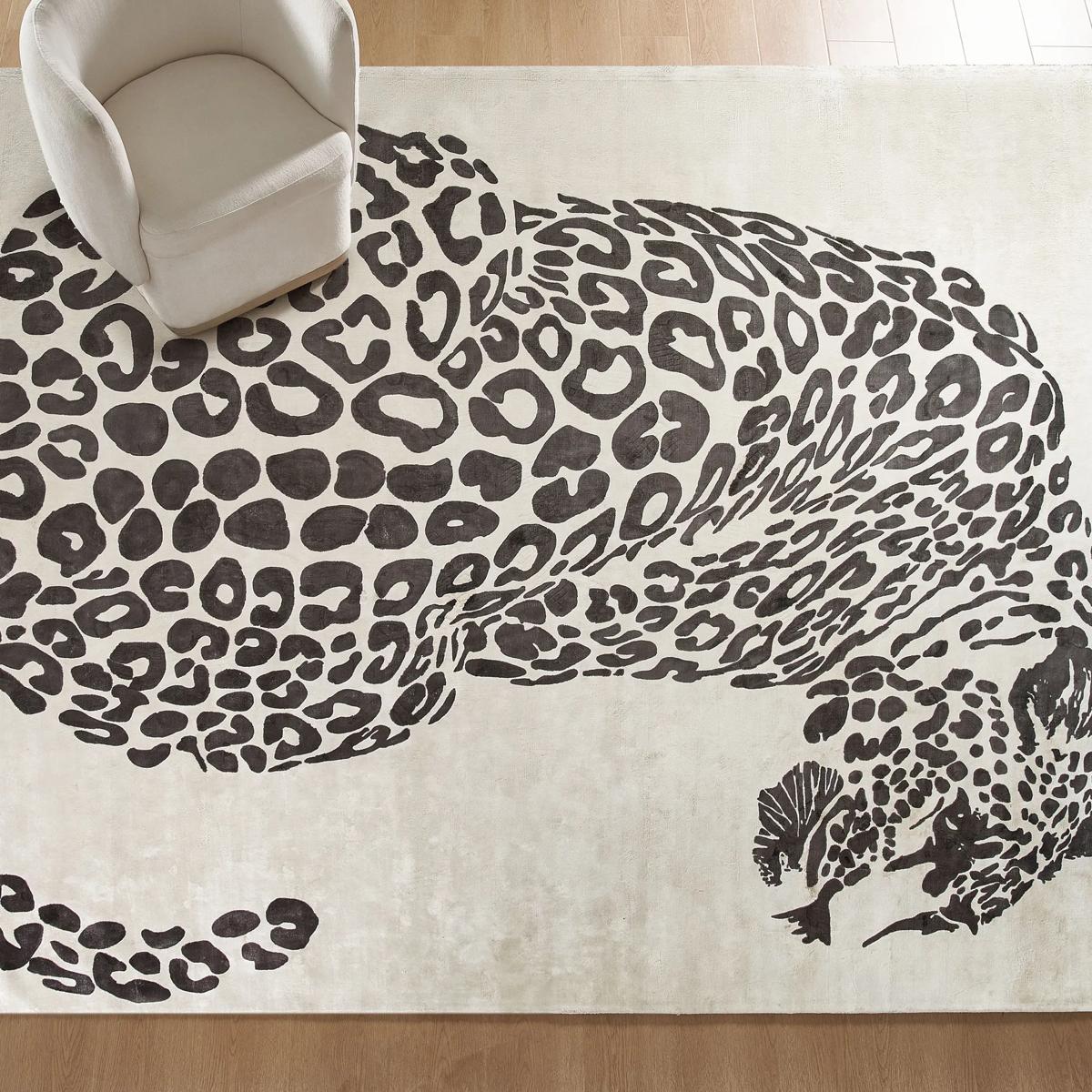 Pardus Leopard Hand-Loomed Ivory/Black Rug$499
An artful ivory and black viscose rug featuring a bold leopard motif and a smooth, silky texture.
Add To Cart -
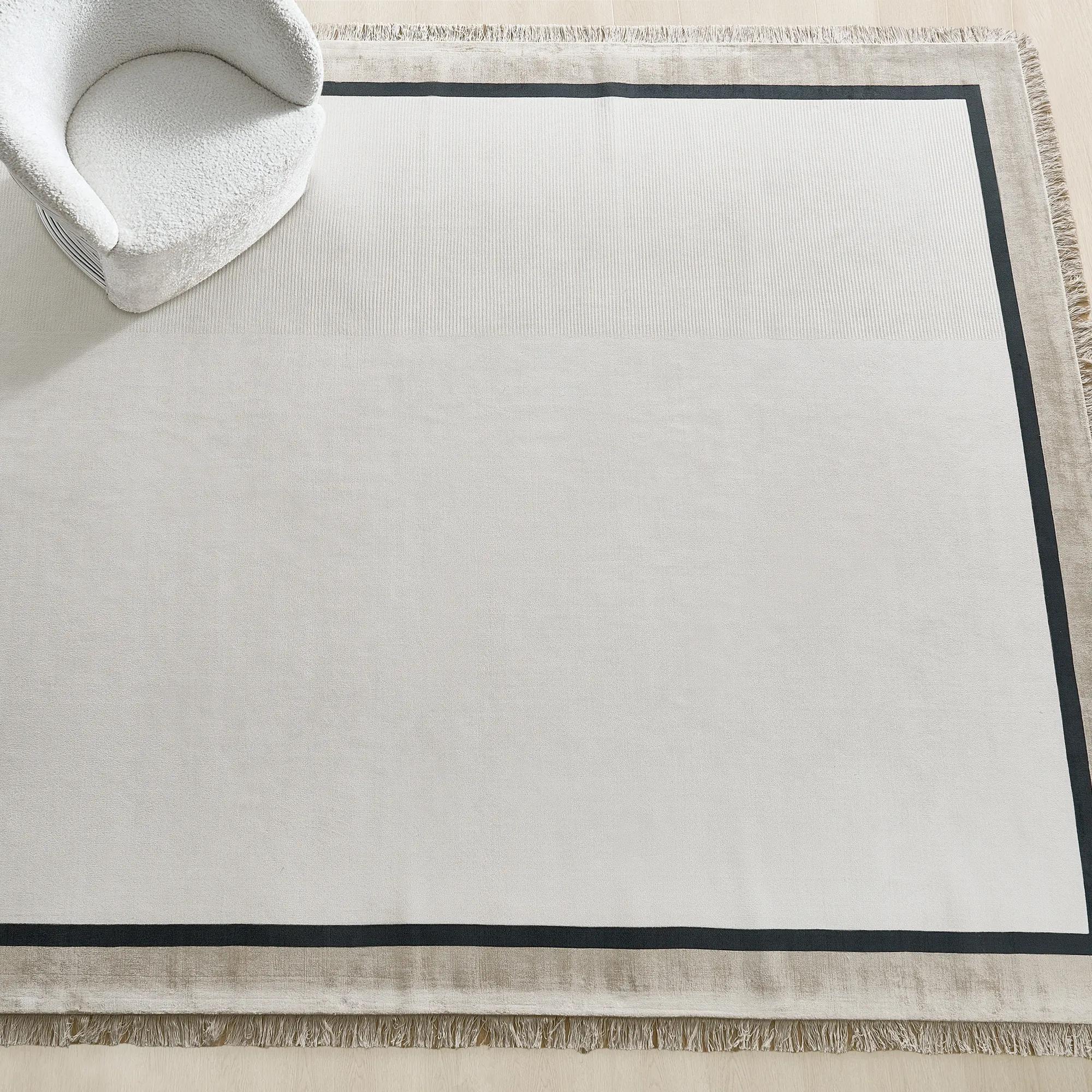 Fiona Hand-Tufted Ivory/Beige/Black Border Fringe Rug$1599
A hand-tufted ivory, beige, and black rug featuring a distinctive border and fringe detailing.
Add To Cart

Black Rugs For Modern Dining Rooms
Black rugs for modern dining rooms are the ultimate foundation for spaces that dare to make a statement. Unapologetically bold, these rugs anchor your dining experience in drama and sophistication, setting the stage for unforgettable gatherings and everyday opulence alike. Whether your aesthetic leans toward sleek minimalism or maximalist glamour, a black rug infuses your dining room with depth, intrigue, and an air of curated artistry. Let each meal unfold atop a canvas of rich contrast—where every detail is elevated, and every moment feels worthy of celebration.
Black rugs for modern dining rooms anchor the dining table, define the eating area, and introduce graphic contrast that gives the entire space a more deliberate composition. Beneath a sculptural table or a row of upholstered chairs, a dark rug creates a visual foundation without competing with the silhouettes above it. The effect can be striking against pale oak floors, ivory upholstery, or a white stone tabletop, where black draws a crisp outline around the dining arrangement. In a room with walnut furniture and deeper finishes, it creates a layered, enveloping mood, especially when the surface has subtle variations in texture or tone. Solid black feels architectural; black and ivory patterns bring movement; charcoal-inflected designs soften the contrast while preserving depth. A geometric motif can echo the lines of a contemporary table, while an abstract pattern introduces a painterly element beneath otherwise restrained furnishings. The most convincing combinations give each finish a distinct role: a matte rug can temper a gleaming metal base, while a gently textured weave adds dimension beside smooth glass. In an open-plan home, that dark foundation also establishes a dining zone without adding a physical divider, helping a table feel intentionally placed rather than suspended between the kitchen and living area. Black does not have to make the room feel heavy. Balanced with luminous walls, reflective accents, and enough visible flooring around the perimeter, it can give the furnishings definition while allowing the space to feel open. For households that use the dining table for everything from weekday breakfasts to extended dinner parties, this combination of visual clarity and expressive character has lasting appeal. The rug becomes part of the room’s architecture, connecting chairs, table, and lighting into a single composition. Its impact comes as much from proportion and texture as from color, making the difference between a dining area that simply contains furniture and one that feels fully considered.
Fit matters as much as appearance because a dining room rug must accommodate chairs in motion, not just furniture at rest. A useful starting point is a rug that extends at least 24 inches beyond every edge of the tabletop, with closer to 30 inches offering additional room for larger chairs or generous seating arrangements. The deciding measurement is where the chair legs land when someone pulls back to sit down or stand up; all legs should remain supported rather than catching along the rug’s edge. For perspective, a rectangular table measuring 40 by 72 inches often works with an 8-by-10-foot rug, although chair depth, table extensions, and the room’s layout can change the ideal fit. A table used with an extension leaf deserves particular attention, since a rug proportioned only for its smallest configuration may feel cramped when guests arrive. Rectangular rugs usually complement rectangular tables, while round rugs can reinforce the graceful symmetry of round dining tables, provided the diameter leaves sufficient room for seating. Material and construction influence the experience just as strongly. Low-pile and flatwoven rugs generally allow dining chairs to move more easily than deep, plush constructions, and their surfaces can be simpler to vacuum beneath a table. Wool offers natural resilience and a richly textured appearance, although some wool rugs shed, especially early in use, and still require prompt attention to spills. Synthetic fibers such as polypropylene and polyester can offer practical stain resistance and straightforward maintenance, depending on the construction and care instructions. Viscose and other lustrous fibers create a more light-responsive surface but often require gentler treatment, making them less forgiving where drinks spill frequently. Households with children, pets, or daily dining routines may prefer a tightly constructed surface with a subtle pattern, while a dining room reserved for occasional entertaining may accommodate a more delicate weave. In either setting, construction should support the way the room is actually lived in.
The beauty of a black dining room rug depends on realistic care expectations as well as its initial impression. Dark color can disguise certain marks, but it does not make a rug stainproof, and pale crumbs, lint, and pet hair may be more visible against a solid black background. Tonal patterning or a lightly varied weave can help soften the appearance of everyday debris without sacrificing the depth that makes black so compelling. Regular vacuuming, using settings appropriate for the fiber and construction, keeps loose particles from settling into the surface; fringe and delicate weaves may need additional care. Spills deserve immediate blotting with a clean, absorbent cloth rather than vigorous rubbing, followed by treatment consistent with the manufacturer’s instructions. Testing any approved cleaner in an inconspicuous area helps reduce the risk of discoloration, and professional cleaning may be appropriate for delicate fibers or persistent stains. A properly sized rug pad can add stability and cushioning, but its material should be compatible with the flooring and finish beneath it. Door clearance, nearby floor vents, and the route between the table and kitchen also deserve consideration, particularly in compact rooms where furniture moves frequently. These practical details preserve the room’s ease, allowing its more expressive elements to take focus. A black rug beneath cream dining chairs creates a tailored contrast; paired with cognac upholstery, it brings warmth and depth; surrounded by metallic accents, it gives reflected light a dramatic counterpoint. For a gentler transition between pale flooring and darker furniture, Grey Rugs For Dining Rooms provides a related color direction to consider. Black remains especially compelling when the goal is a defined, confident foundation rather than a quiet blend. Chosen with attention to scale, surface, and everyday use, it brings substance to the dining setting while leaving room for personal expression through art, upholstery, tableware, and light.
FAQs
A black dining room rug is remarkably versatile, enhancing a spectrum of design styles. It serves as a striking foundation for modern, contemporary, and glam interiors, but also brings a sophisticated edge to eclectic or transitional spaces. Pair with metallic accents, sculptural lighting, and bold art for a curated, gallery-inspired look, or layer with plush textiles and warm woods for a cozy, dramatic effect.
During the winter season, a black rug for dining room spaces creates an intimate, cocooning atmosphere. Its deep hue absorbs and softens light, making gatherings feel warm and inviting. The contrast of a black rug against candlelight or shimmering dinnerware adds a touch of opulence, turning every meal into a special occasion.
Black rugs are an excellent choice for homes with pets or children, as their dark tones help conceal minor spills, crumbs, and everyday messes. Opt for durable, easy-to-clean materials and low-pile constructions to ensure the rug maintains its beauty while standing up to active lifestyles.
Patterns and textures can elevate a black dining table rug from simple to spectacular. Consider tone-on-tone geometric motifs for subtle dimension, bold abstract designs for artistic flair, or plush high-pile textures for added luxury. The key is to choose a pattern or texture that complements your dining room’s overall aesthetic and enhances the visual interest of the space.
A black dining rug makes a thoughtful and timeless gift for housewarmings or weddings. Its classic color and versatile style suit a variety of tastes and interiors, offering the recipients a sophisticated foundation for their dining space. It’s a gift that combines artistry and practicality—one that will be appreciated for years to come.