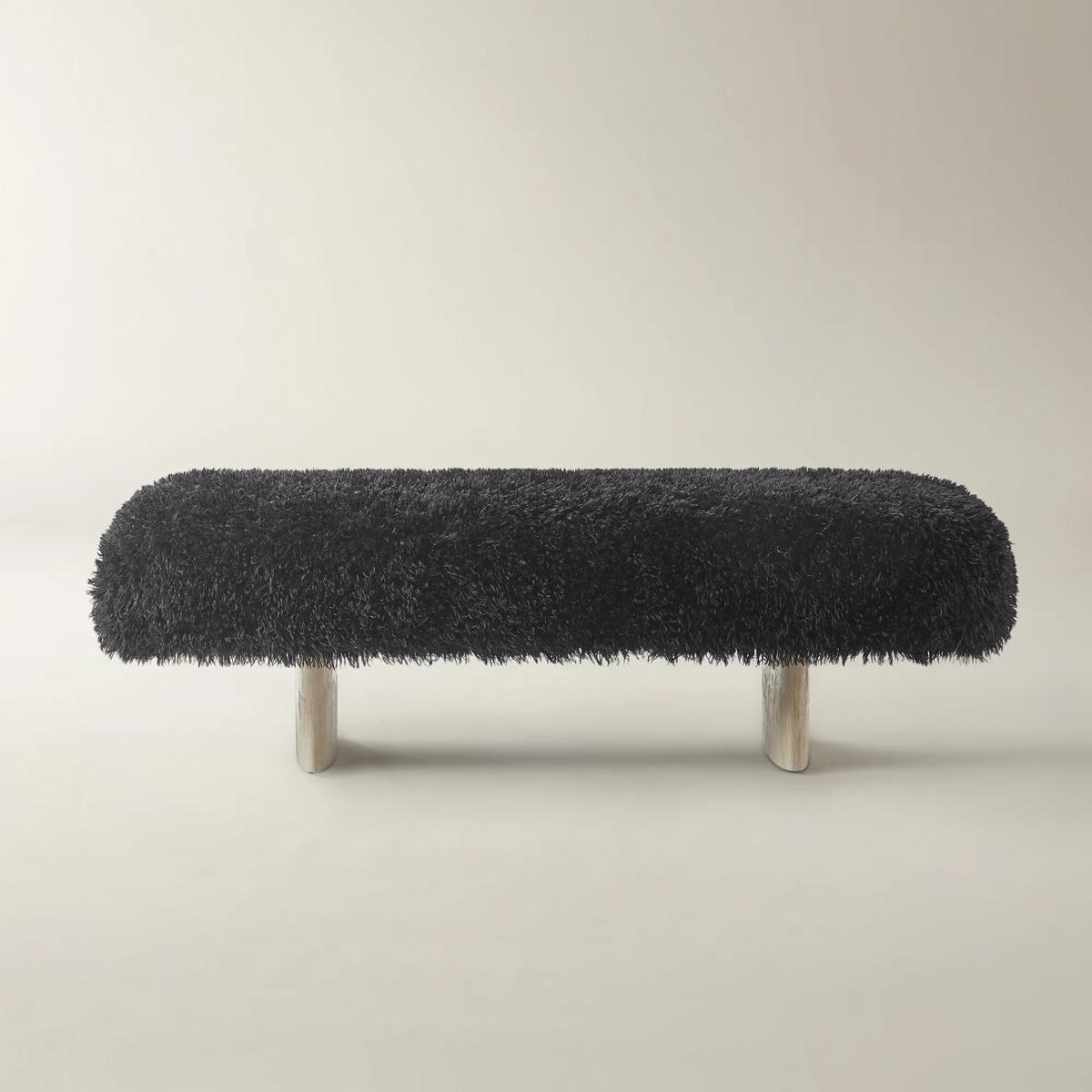
Upholstered Benches For Open Floor Plans
Upholstered Benches For Open Floor Plans
-
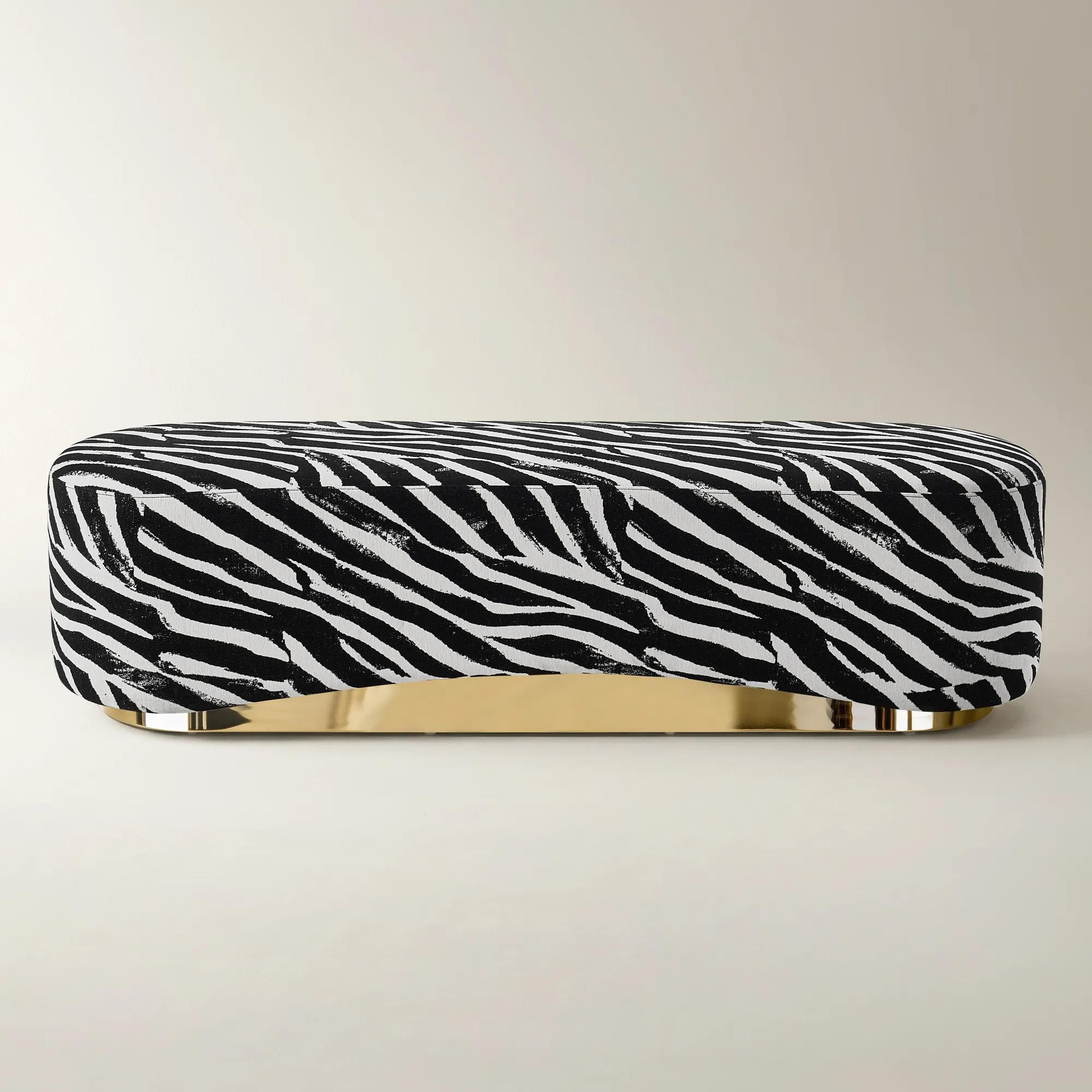
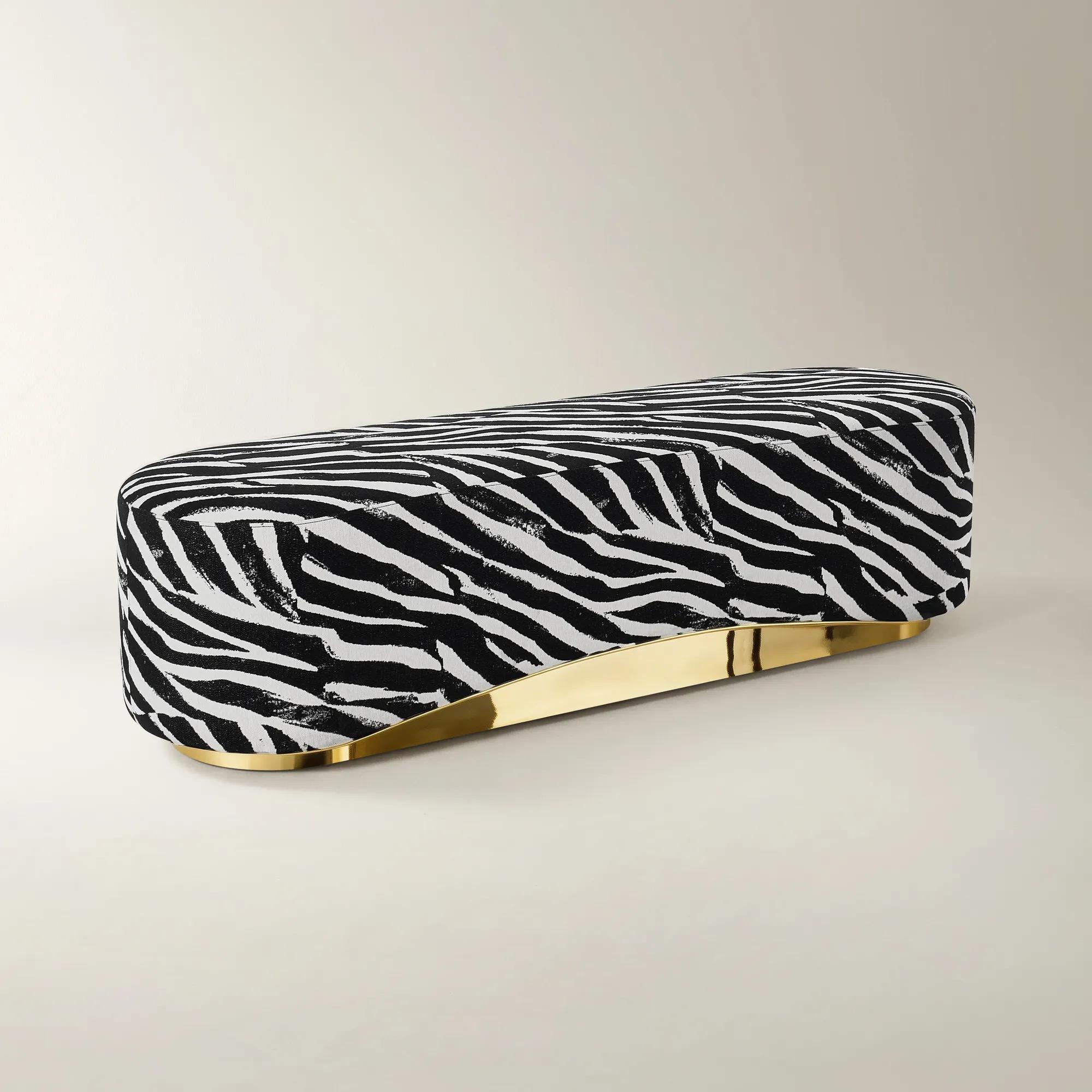 Kendra White/Black Performance Chenille Bench (70.47")$799
An elongated oval bench upholstered in white and black performance chenille with a polished gold stainless steel base.
Add To Cart -
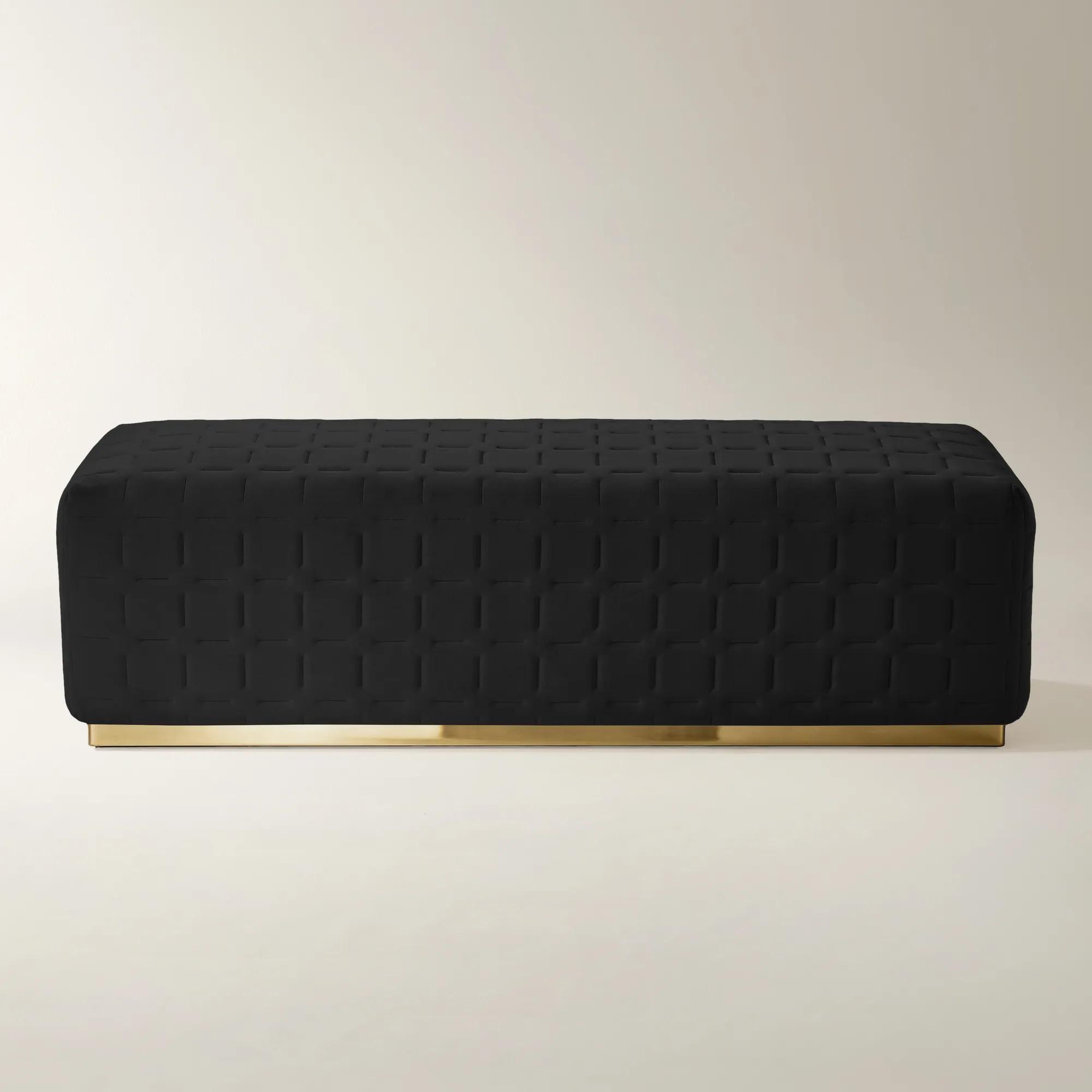 Vanta Quilted Charcoal Velvet Bench (64.6")$899
A charcoal velvet bench featuring checker quilted tufting and a gold stainless steel base for modern elegance.
Add To Cart -
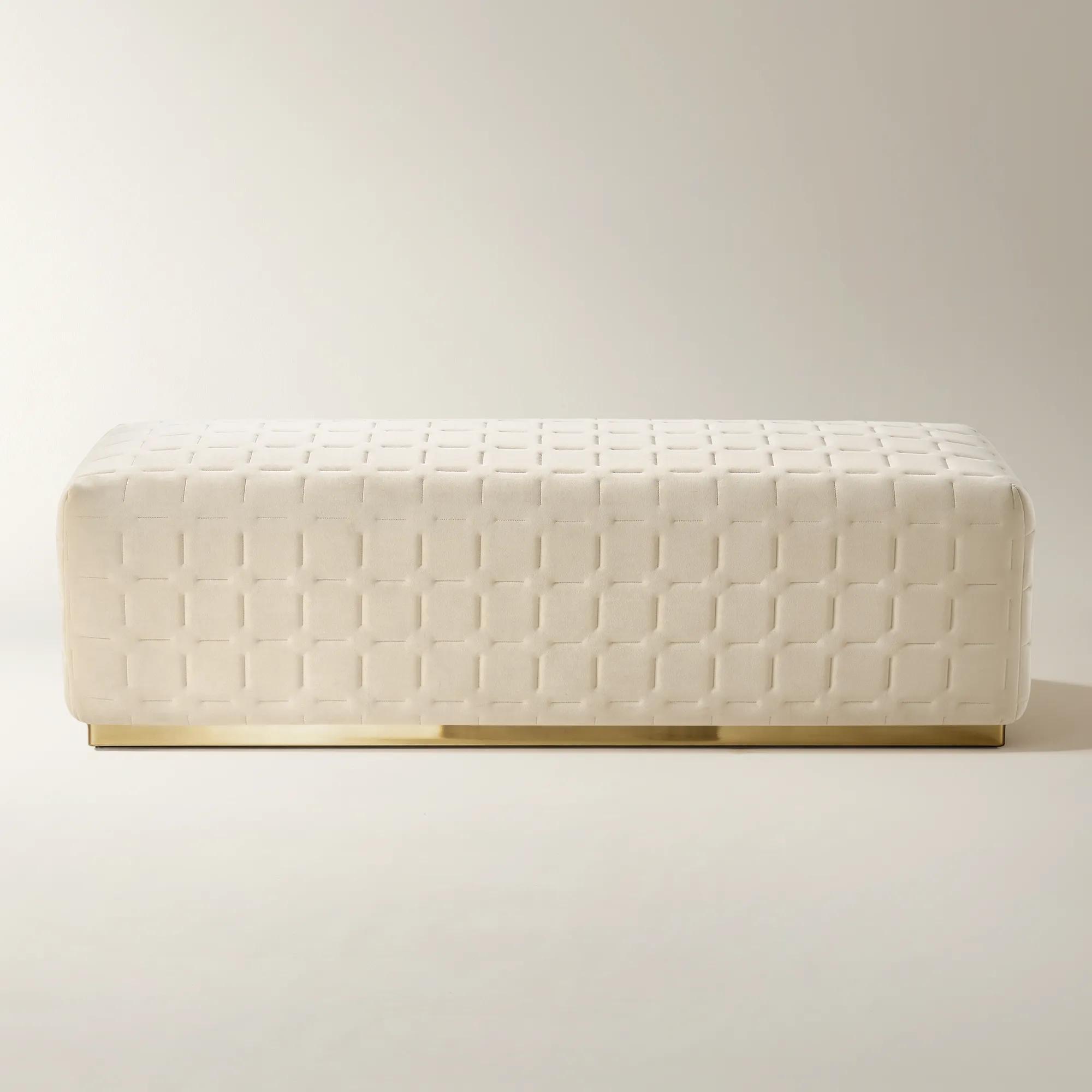
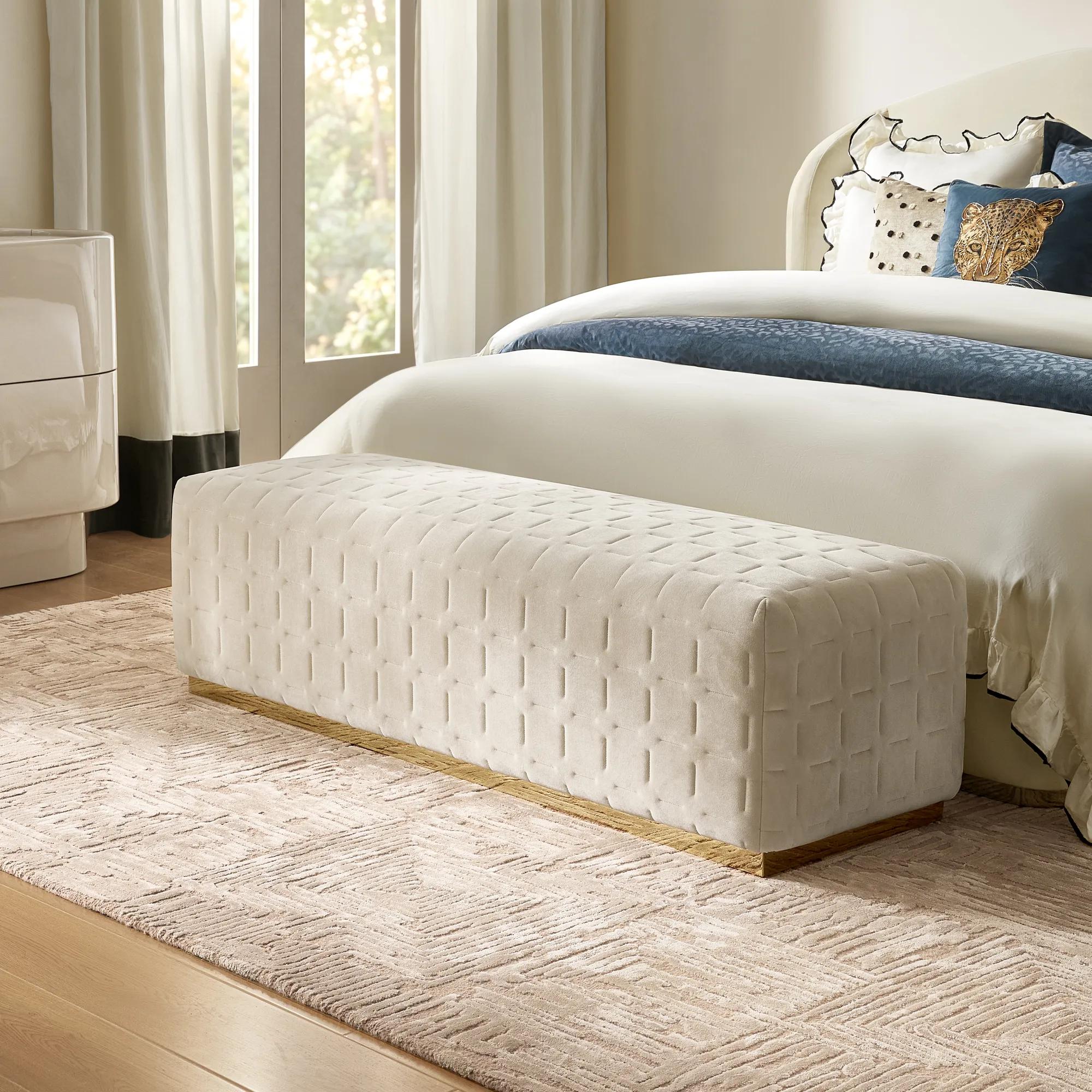 Vanta Quilted Oatmeal Velvet Bench (64.6")$899
A plush oatmeal velvet bench featuring checker quilted tufting and a sleek gold stainless steel base.
Add To Cart -
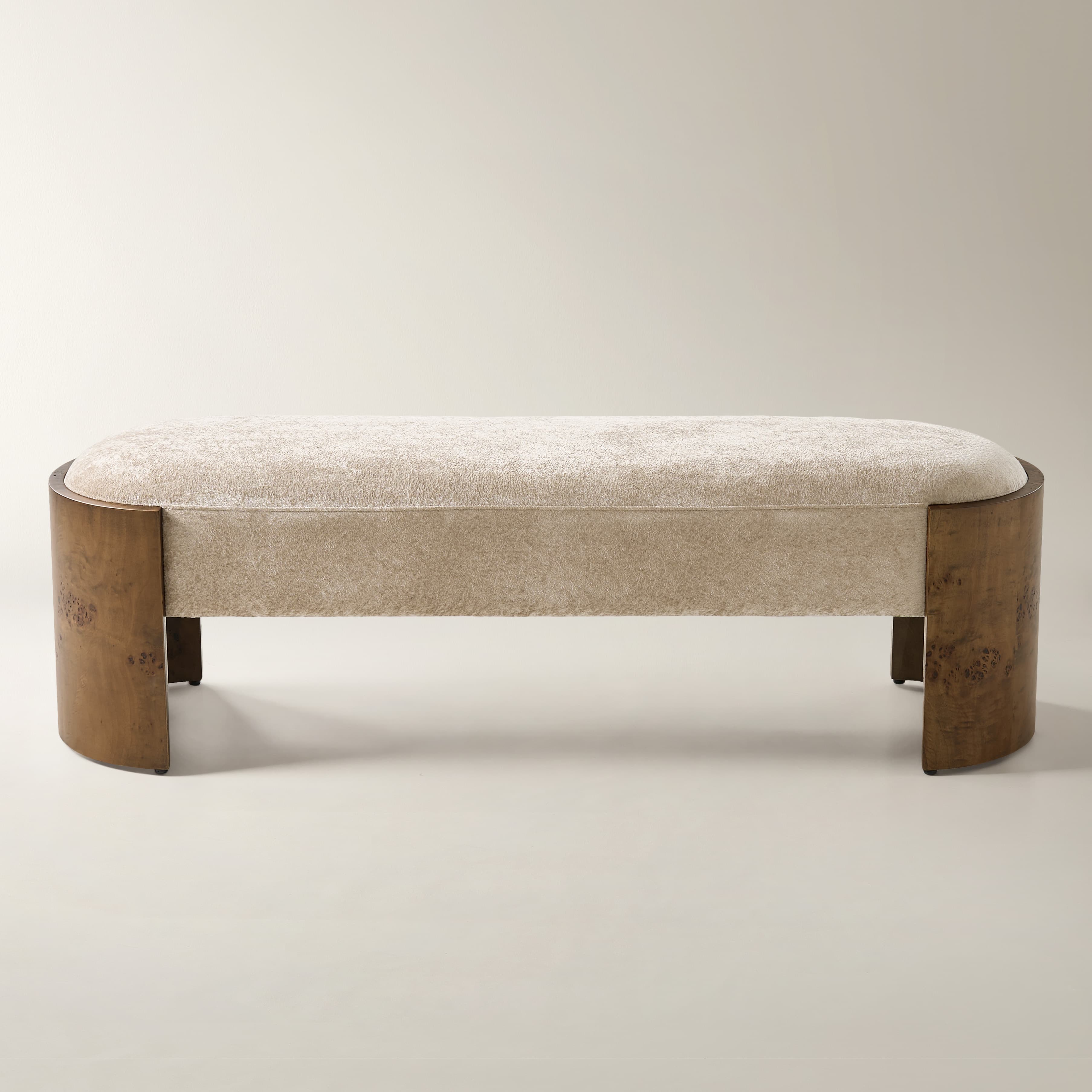 Cora Light Brown Chenille With Ash Wood Bench (60.6")$999
A light brown chenille bench with curved ash burl veneer panels, blending plush comfort and organic artistry.
Add To Cart -
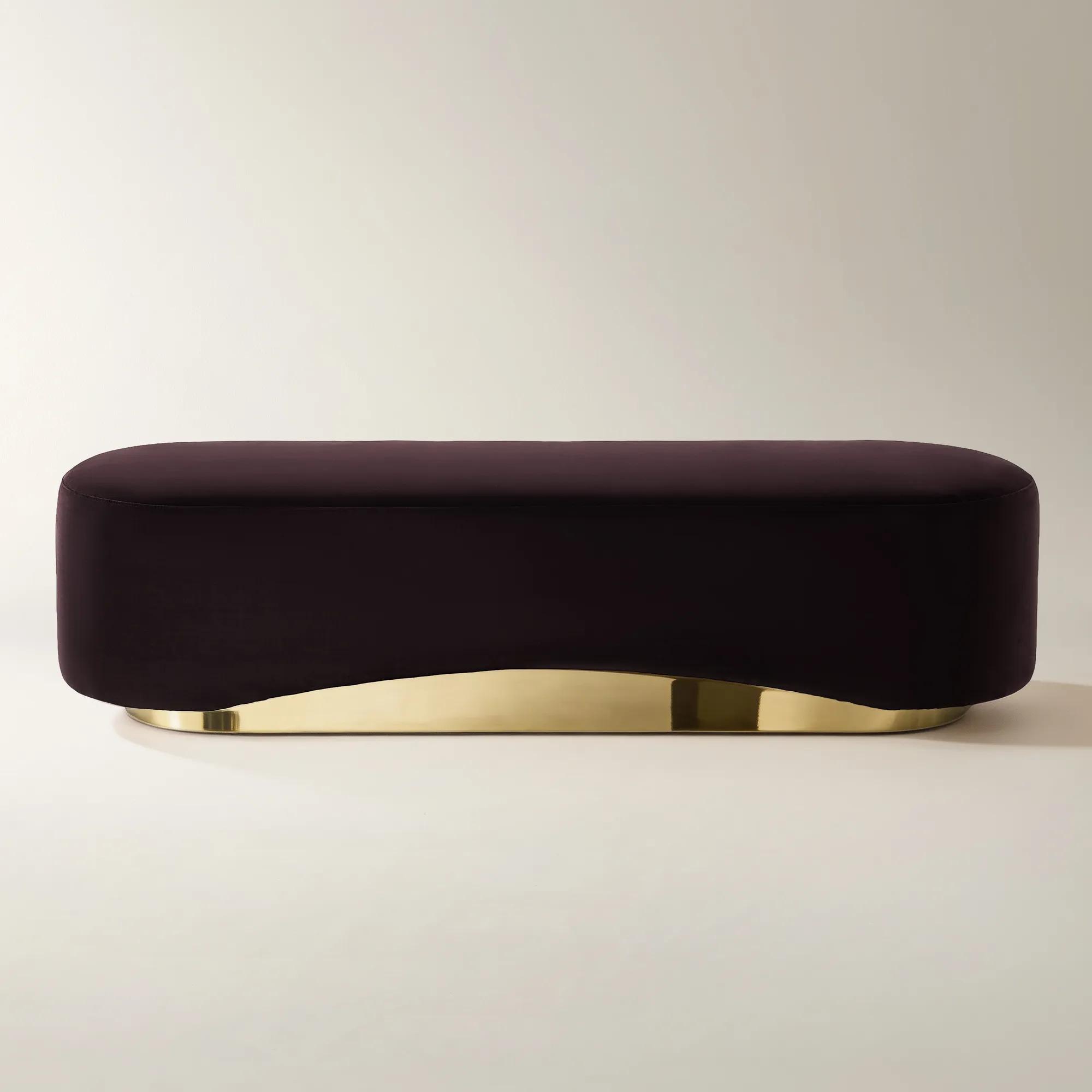 Kendra Fig Velvet Bench (70.47")$799
A plush fig velvet bench with an elongated oval silhouette and a polished gold stainless steel base.
Add To Cart -
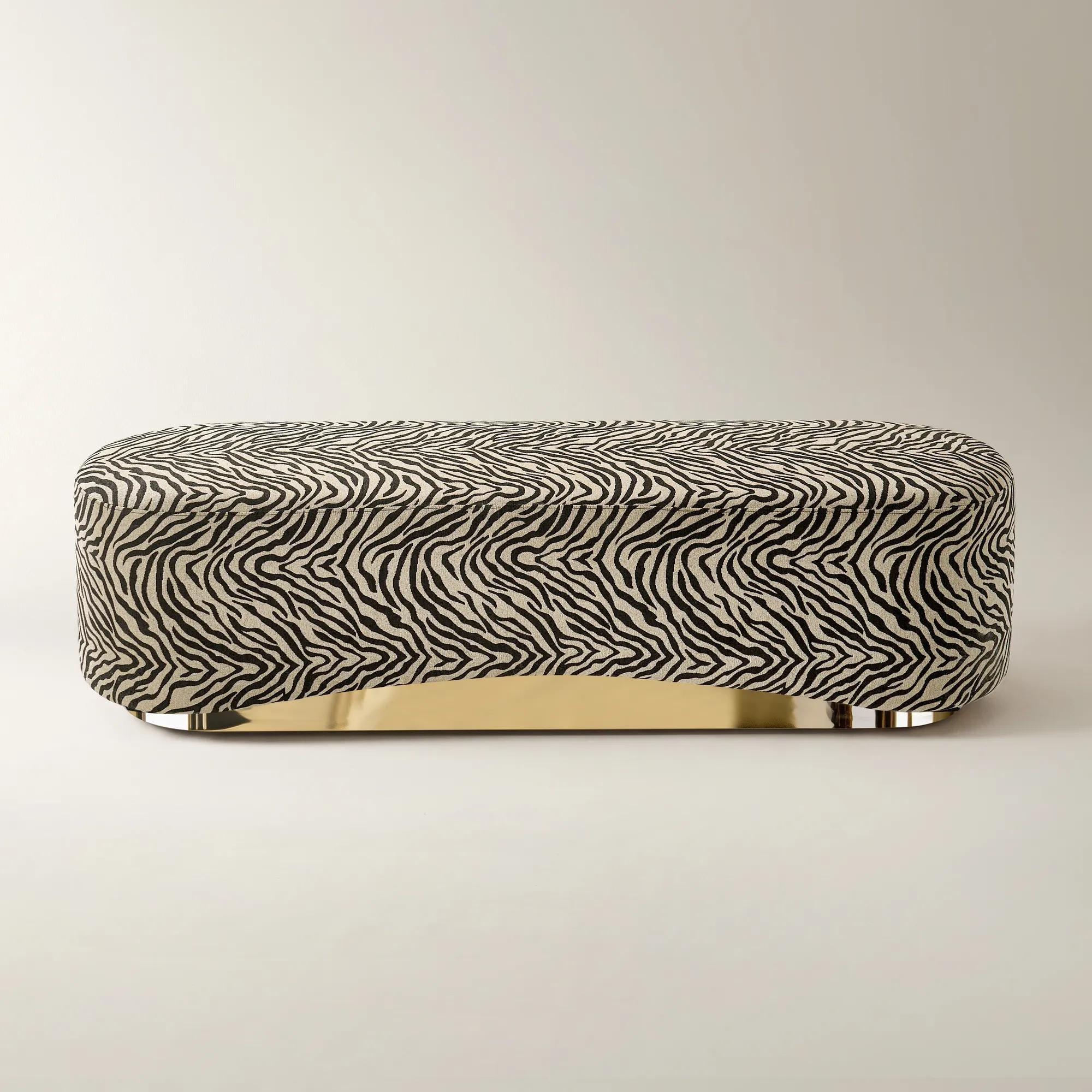
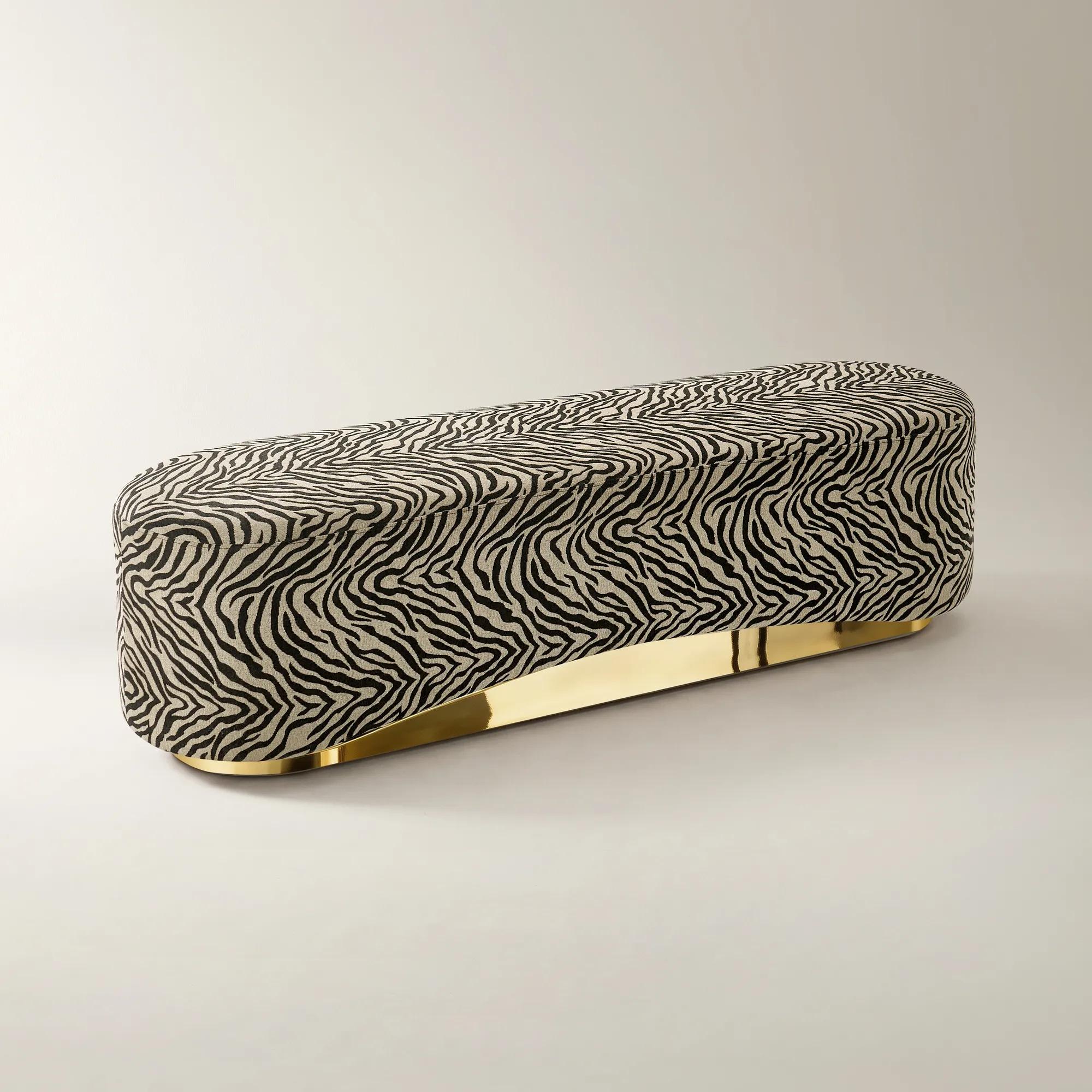 Kendra Zebra Performance Chenille Bench (70.47")$799
An elongated oval bench upholstered in textured zebra-pattern chenille with a polished gold stainless steel base.
Add To Cart -
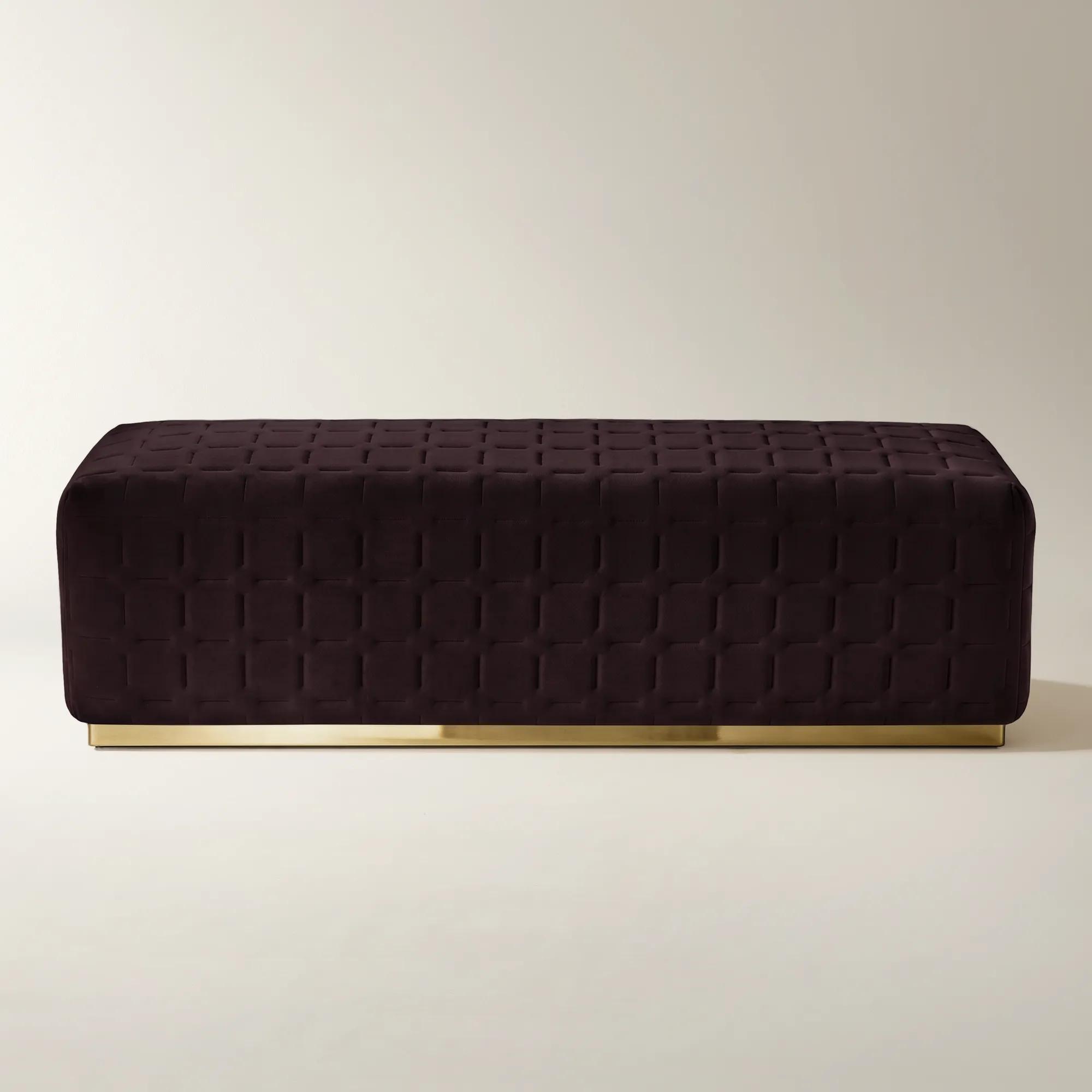
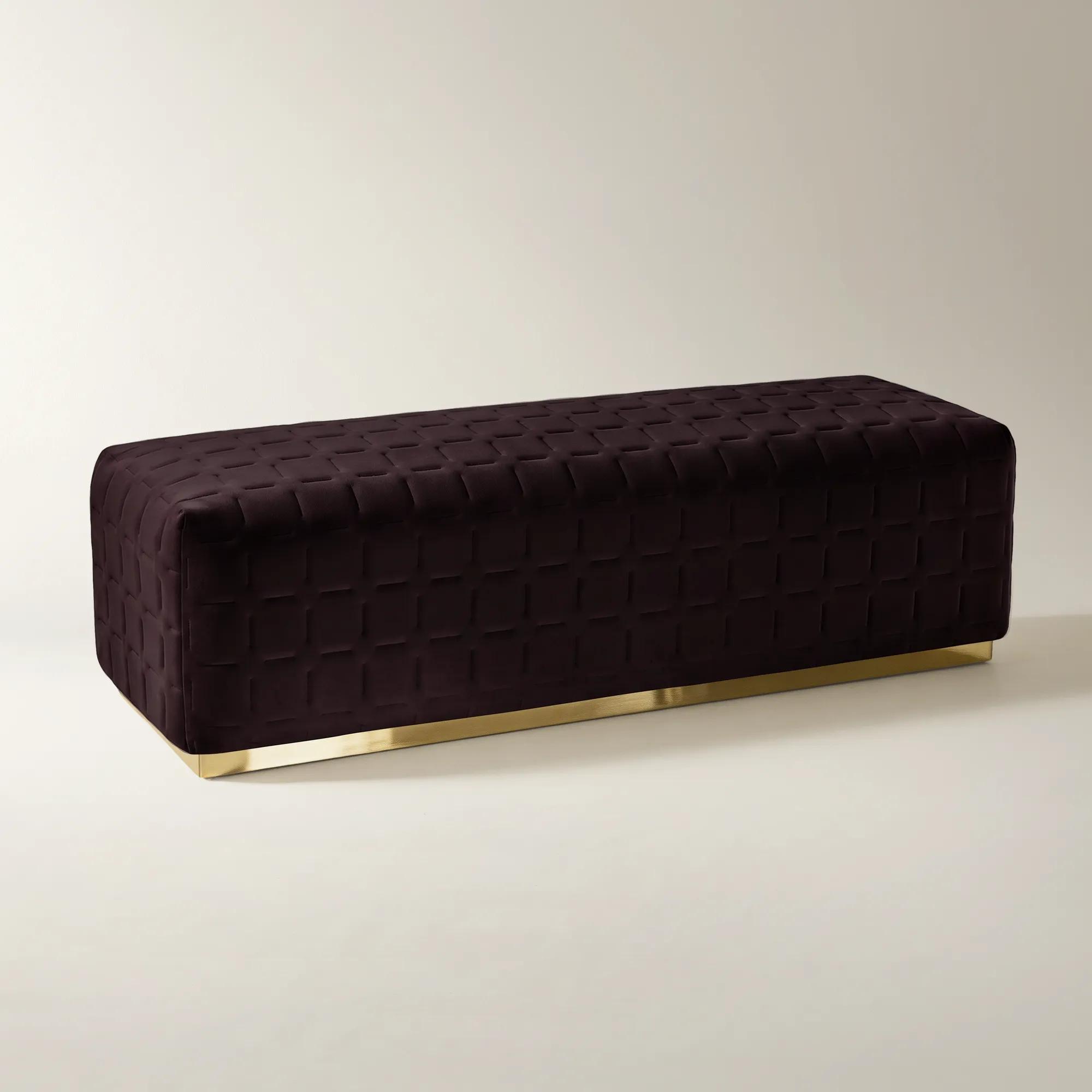 Vanta Quilted Fig Velvet Bench (64.6")$899
A plush fig velvet bench featuring checker quilted tufting and a sleek gold stainless steel base.
Add To Cart -
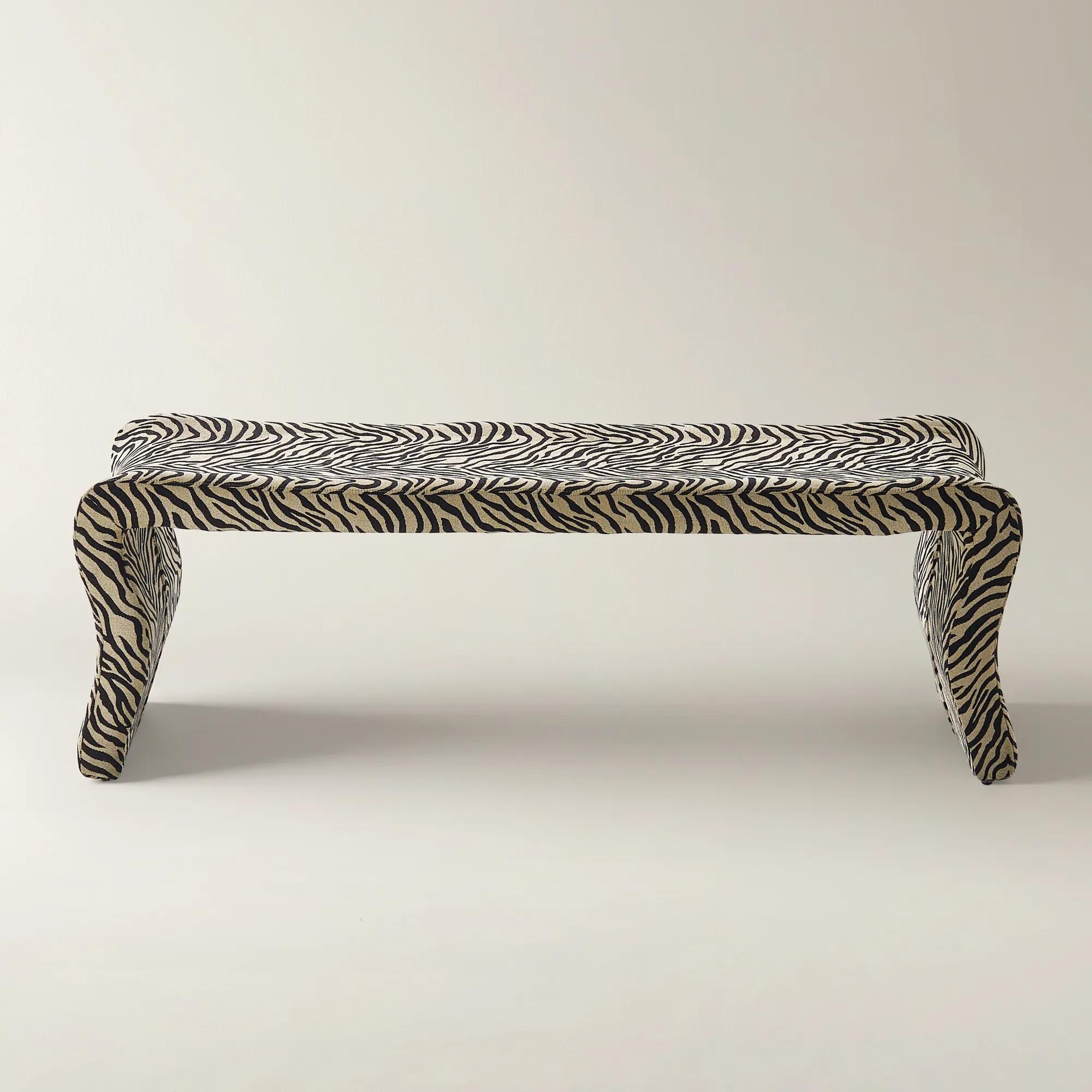 Romy Zebra Performance Chenille Bench (61.5")$899
A sculptural bench wrapped in zebra-patterned performance chenille with a wave-like silhouette and full foam construction.
Add To Cart -
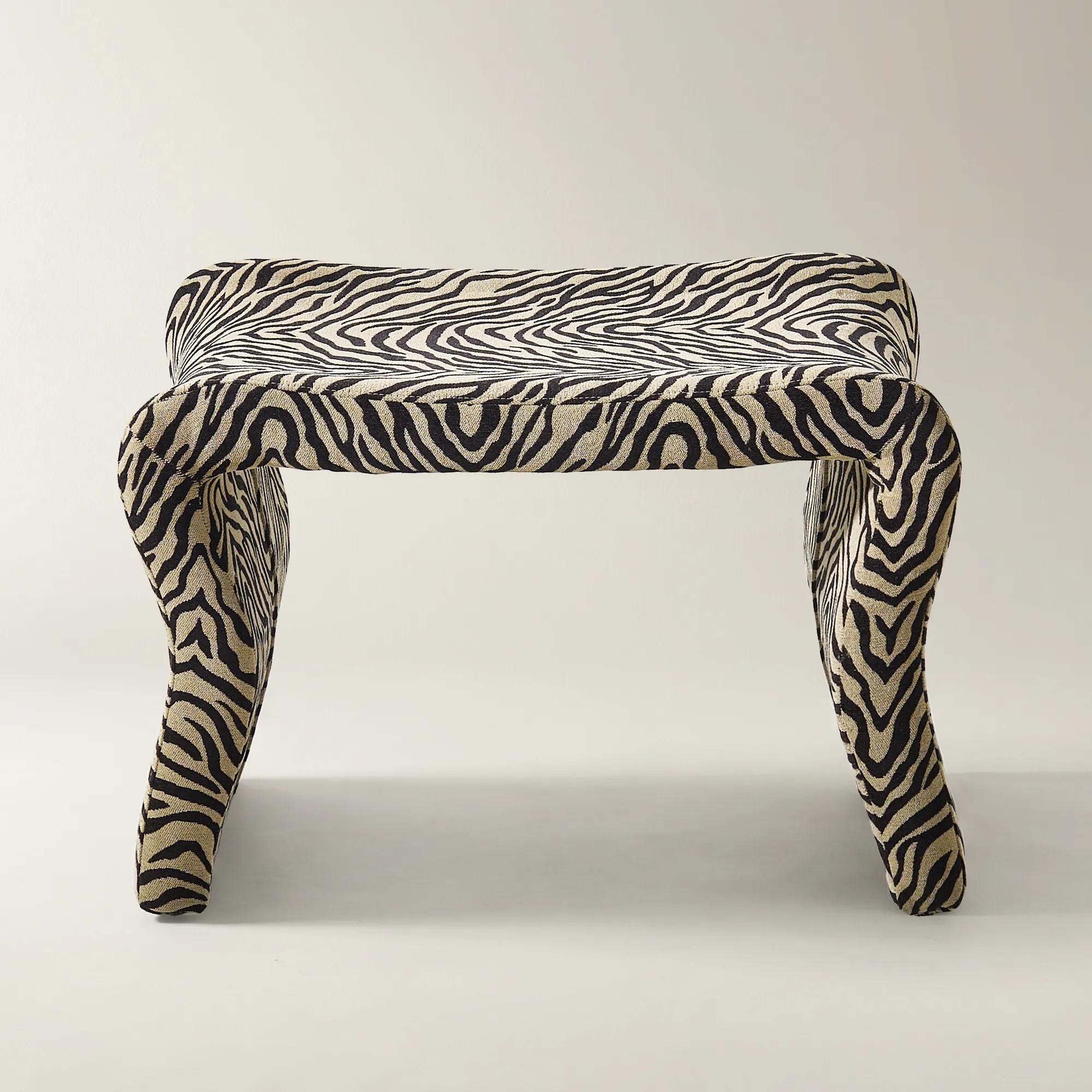
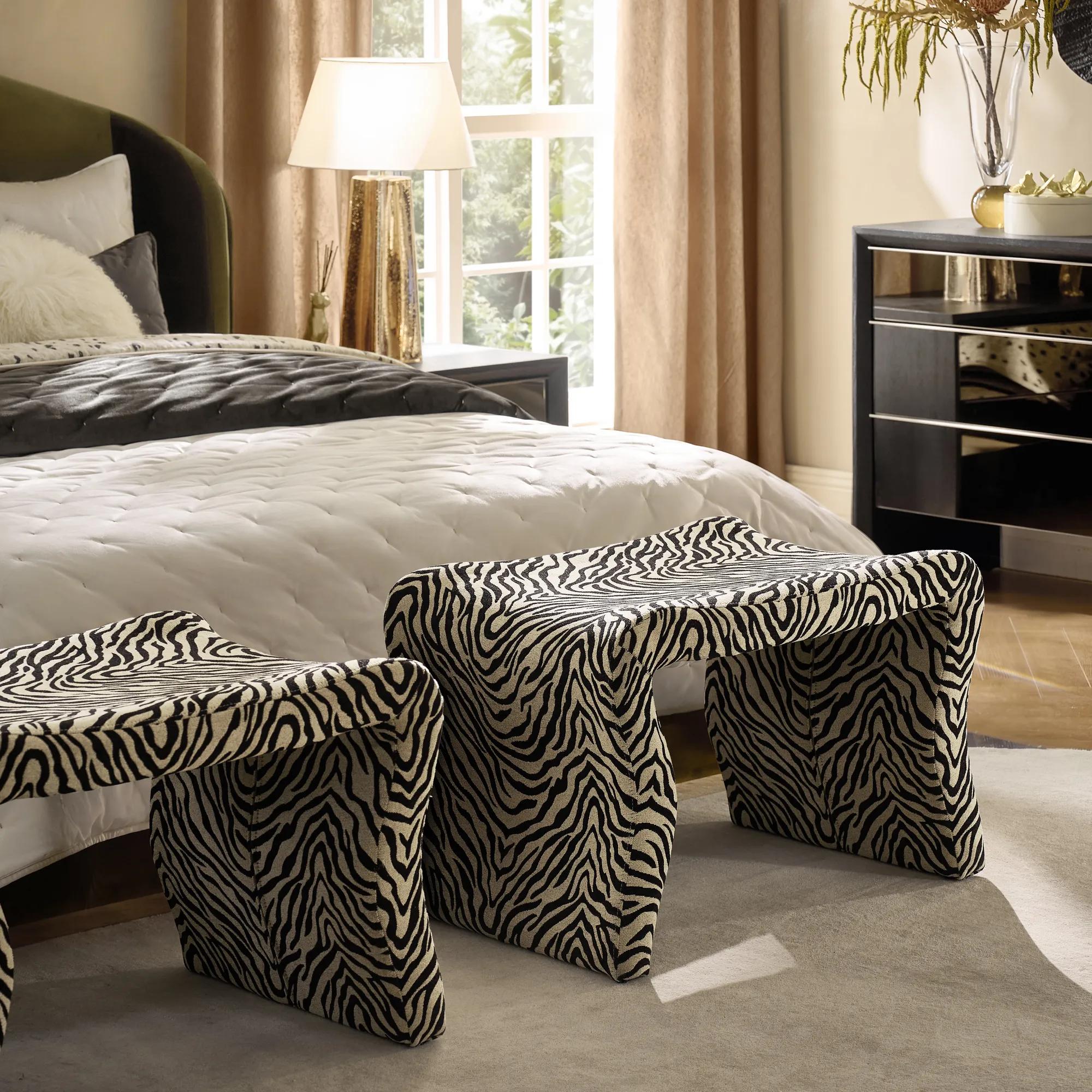 Romy Zebra Performance Chenille Bench (30.75")$499
A sculptural bench wrapped in zebra-patterned performance chenille with a wave-like silhouette and full foam construction.
Add To Cart -
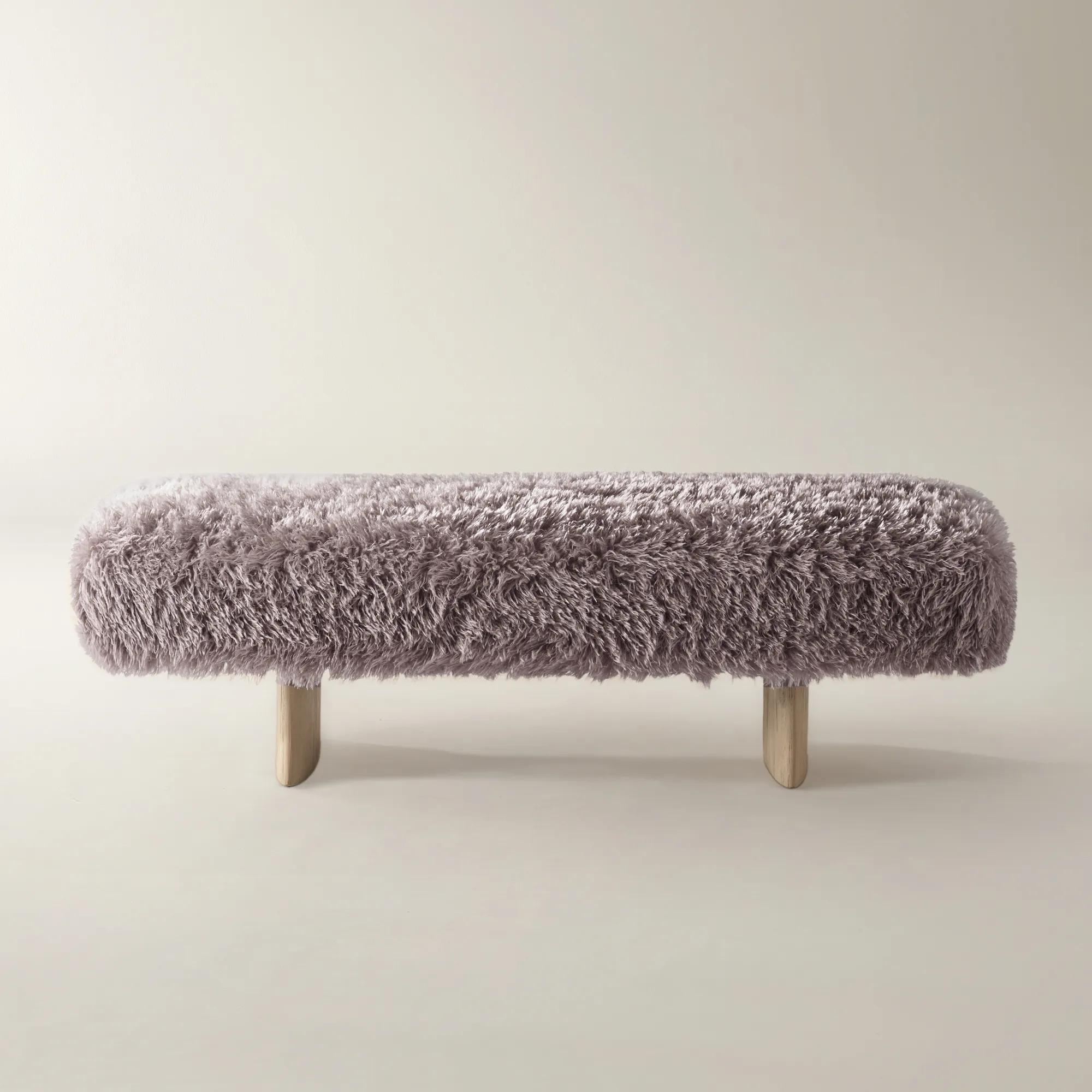
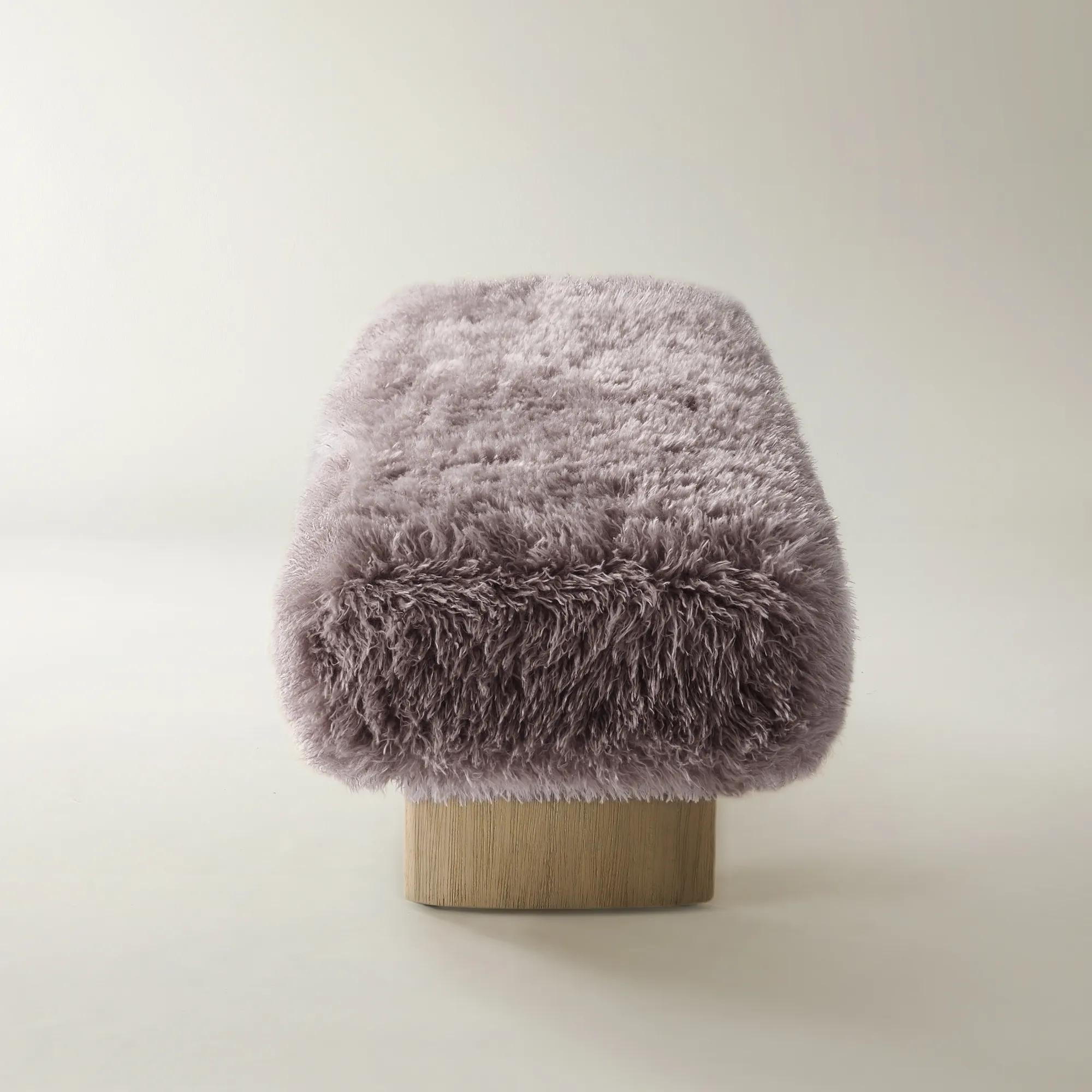 Micah Plum Truffle Mongolian Faux Fur Bench With Rubberwood Legs(62.6")$699
A sculptural bench featuring smoked plum Mongolian faux fur upholstery and warm solid rubberwood legs.
Add To Cart -
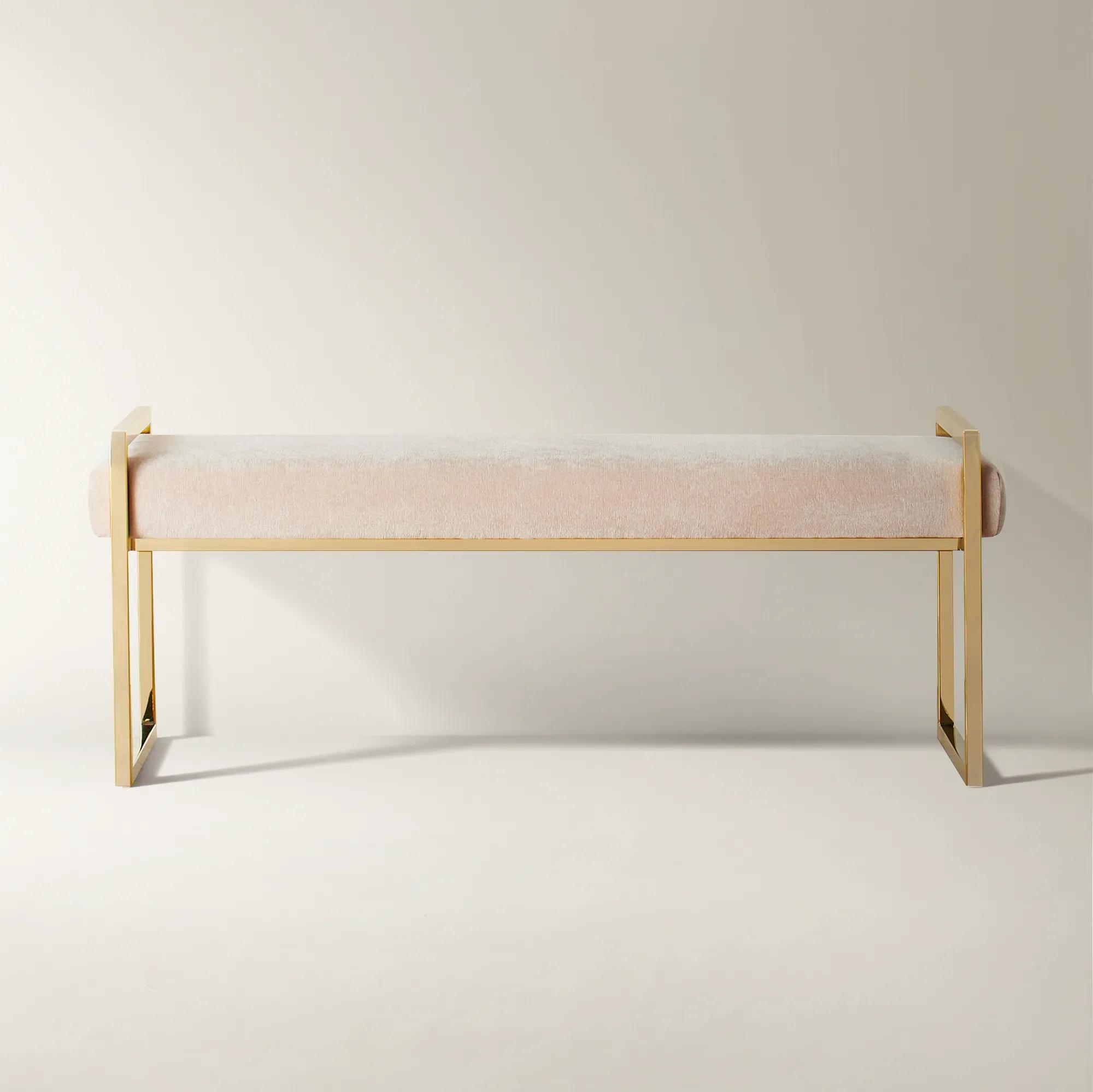 Clara Bench$799
A plush upholstered bench with a high-density foam seat and polished gold metal legs for modern elegance.
Add To Cart -
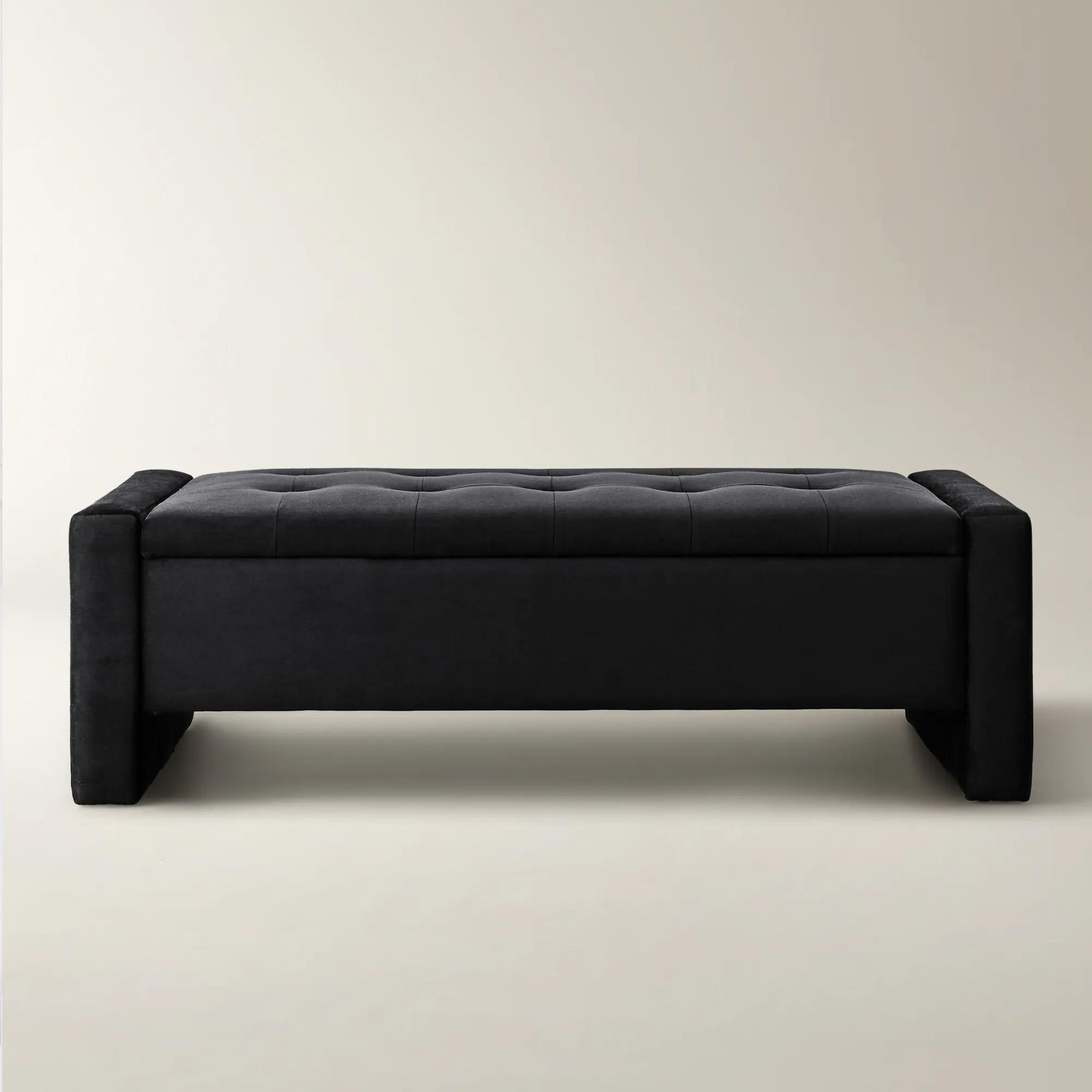
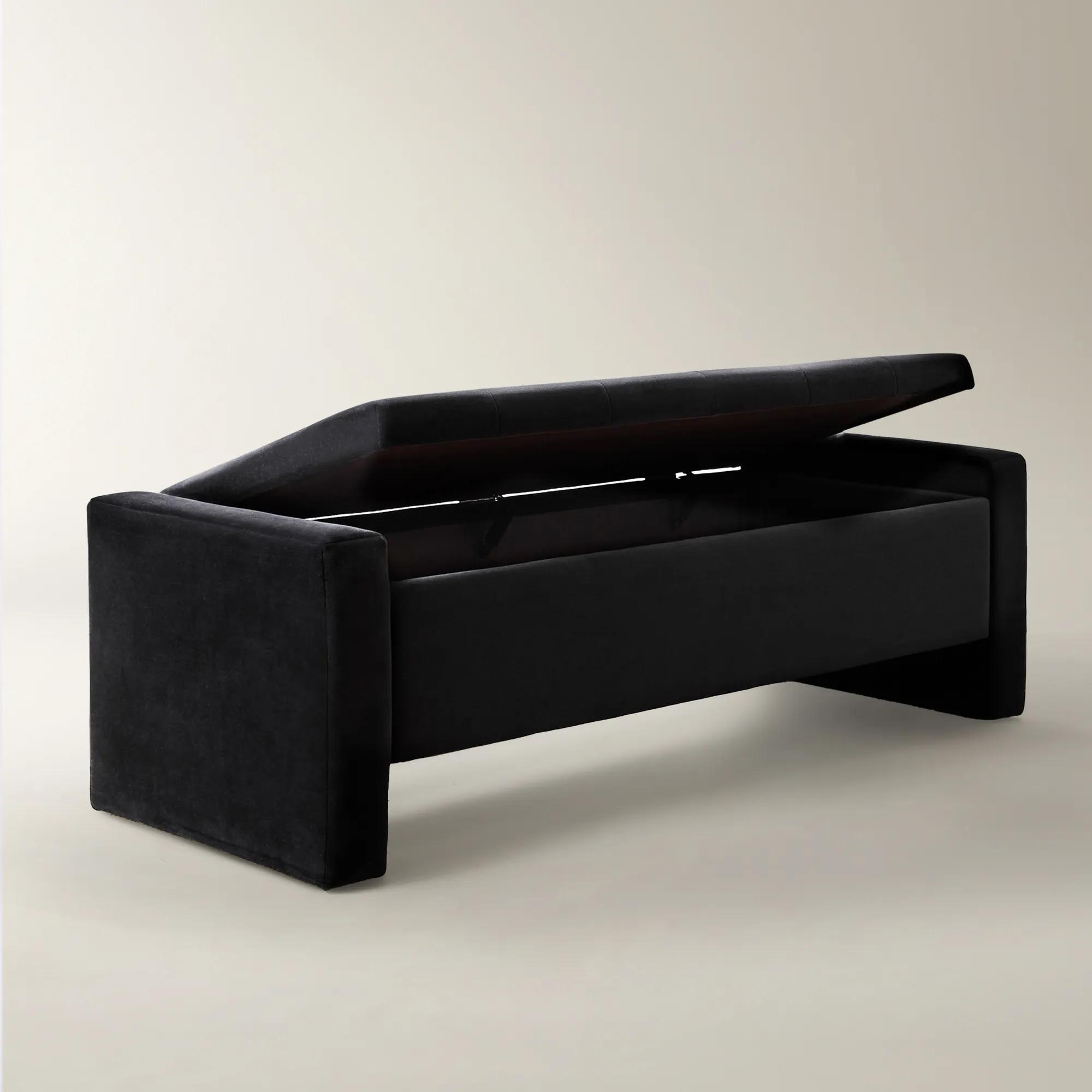 Maeve Storage Bench$899
A modern velvet-upholstered bench with hidden storage, kiln-dried hardwood frame, and soft-closing glides.
Add To Cart -
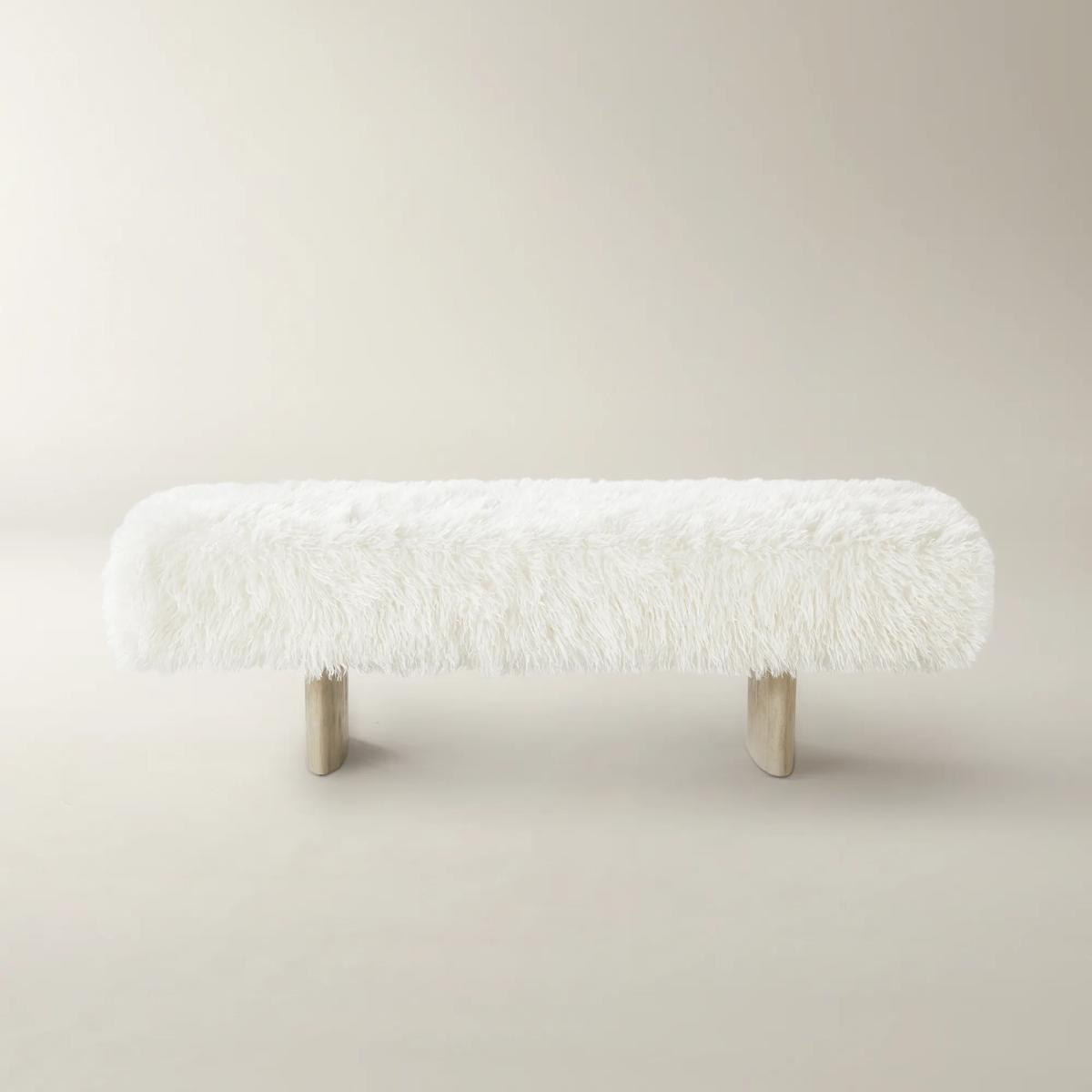 Micah Ivory Mongolian Faux Fur Bench With Rubberwood Legs (62.6")$699
An ivory faux Mongolian fur bench with high-density foam and sculptural solid rubberwood base for modern coziness.
Add To Cart -
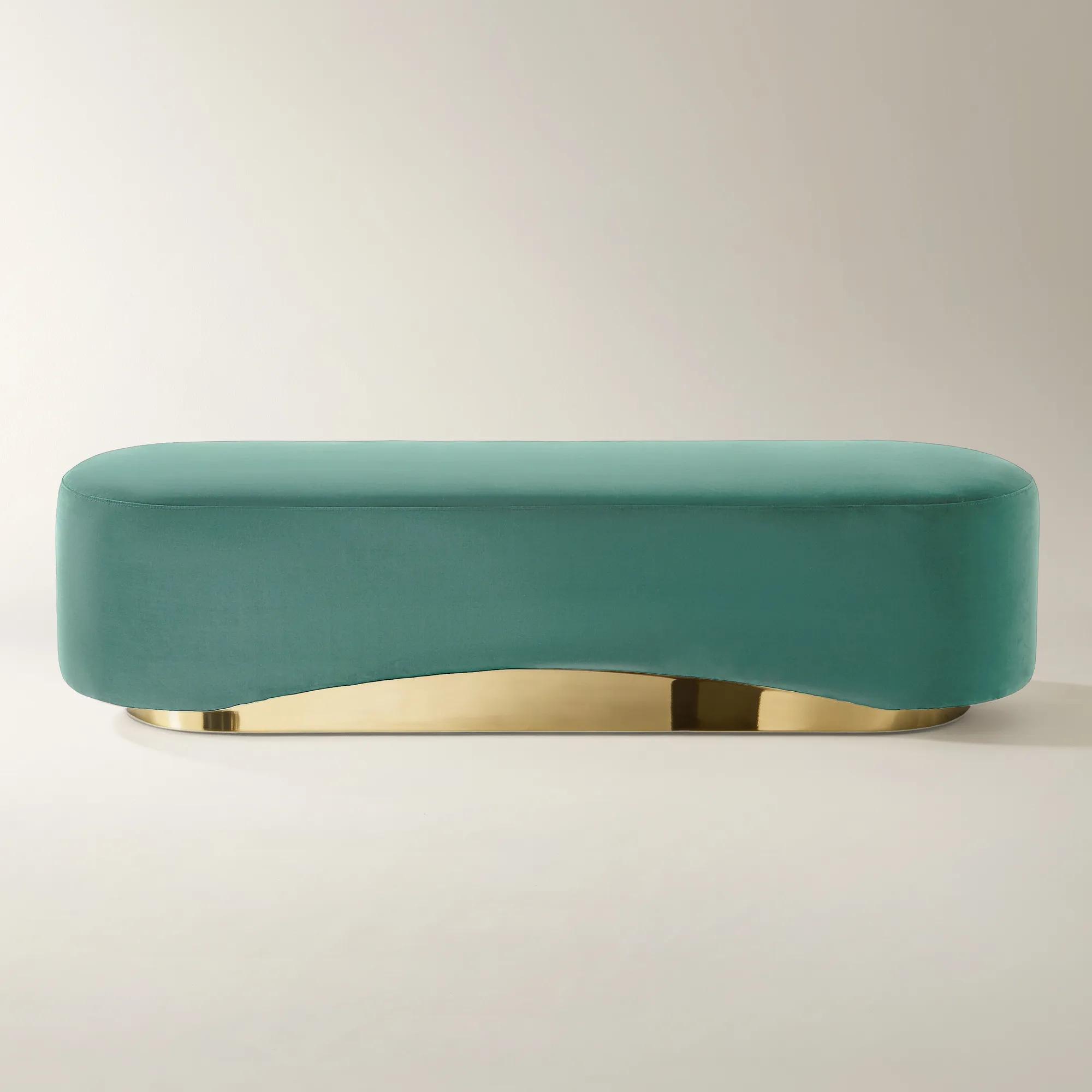 Kendra Ocean Teal Velvet Bench (70.47")$799
An elongated oval bench in ocean teal velvet with a plush seat and polished gold stainless steel base.
Add To Cart -
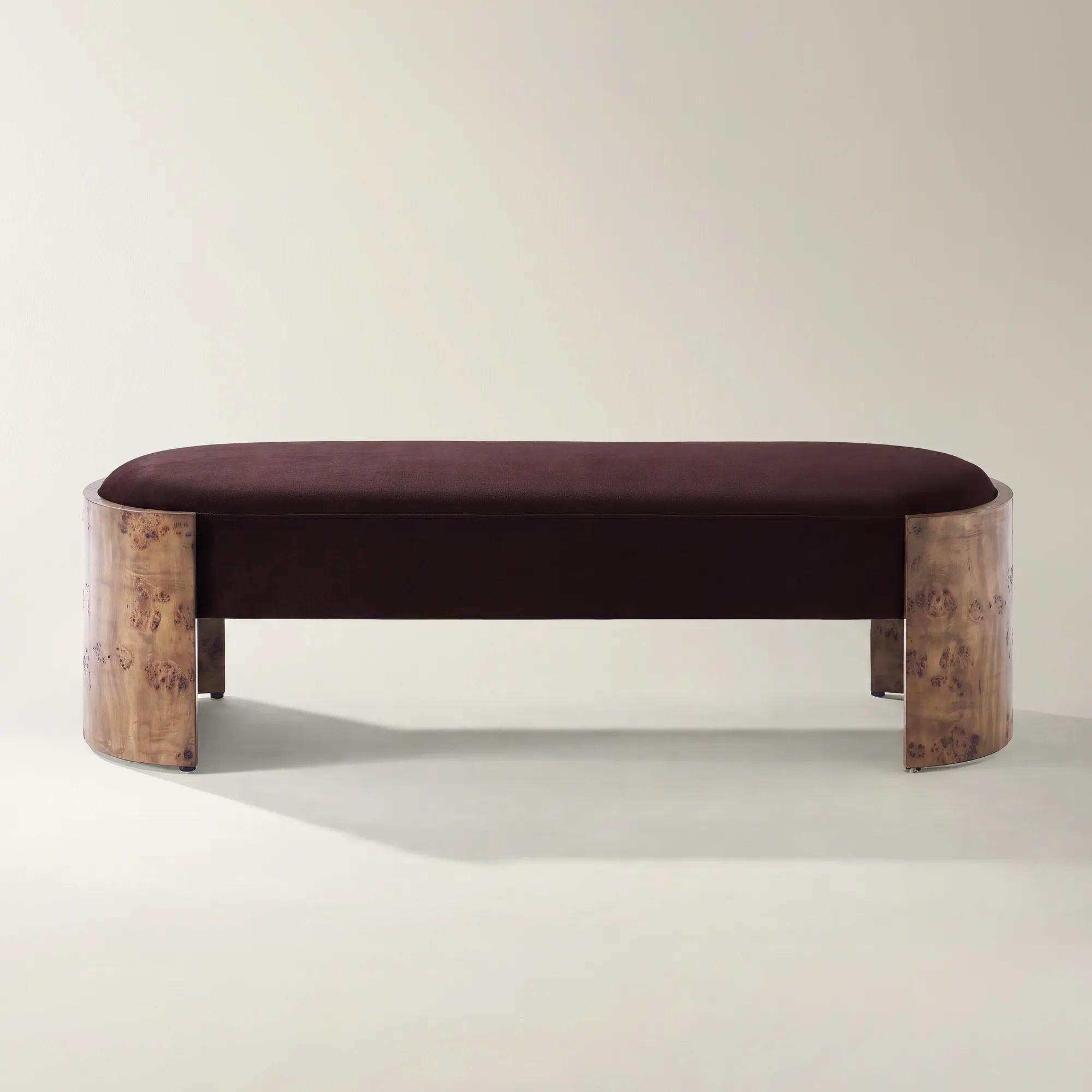
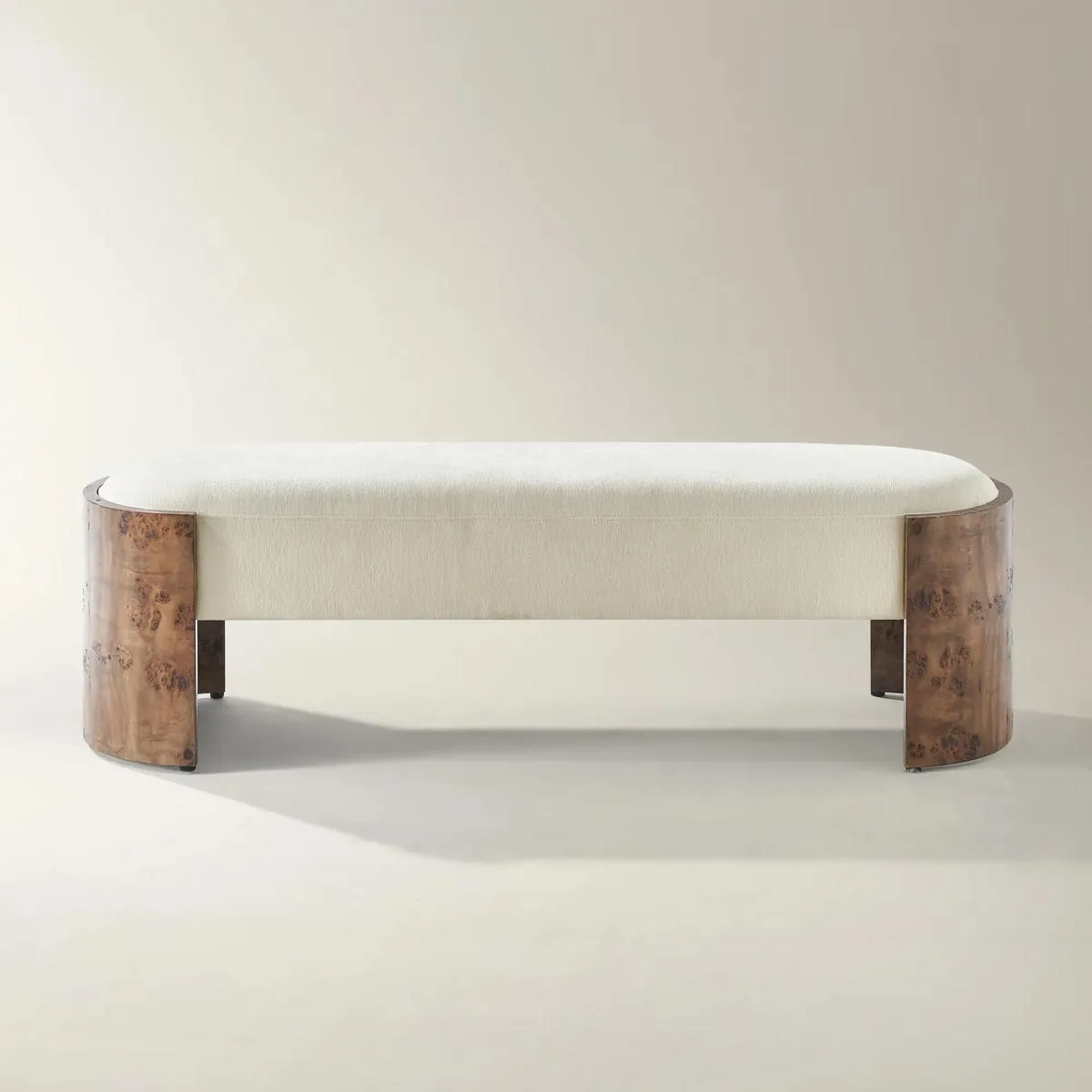 Cora Fig Velvet With Ash Wood Bench (60.6")$899
A sculptural bench with fig velvet upholstery, bookmatched ash burl panels, and supportive high-resiliency foam cushioning.
Add To Cart -
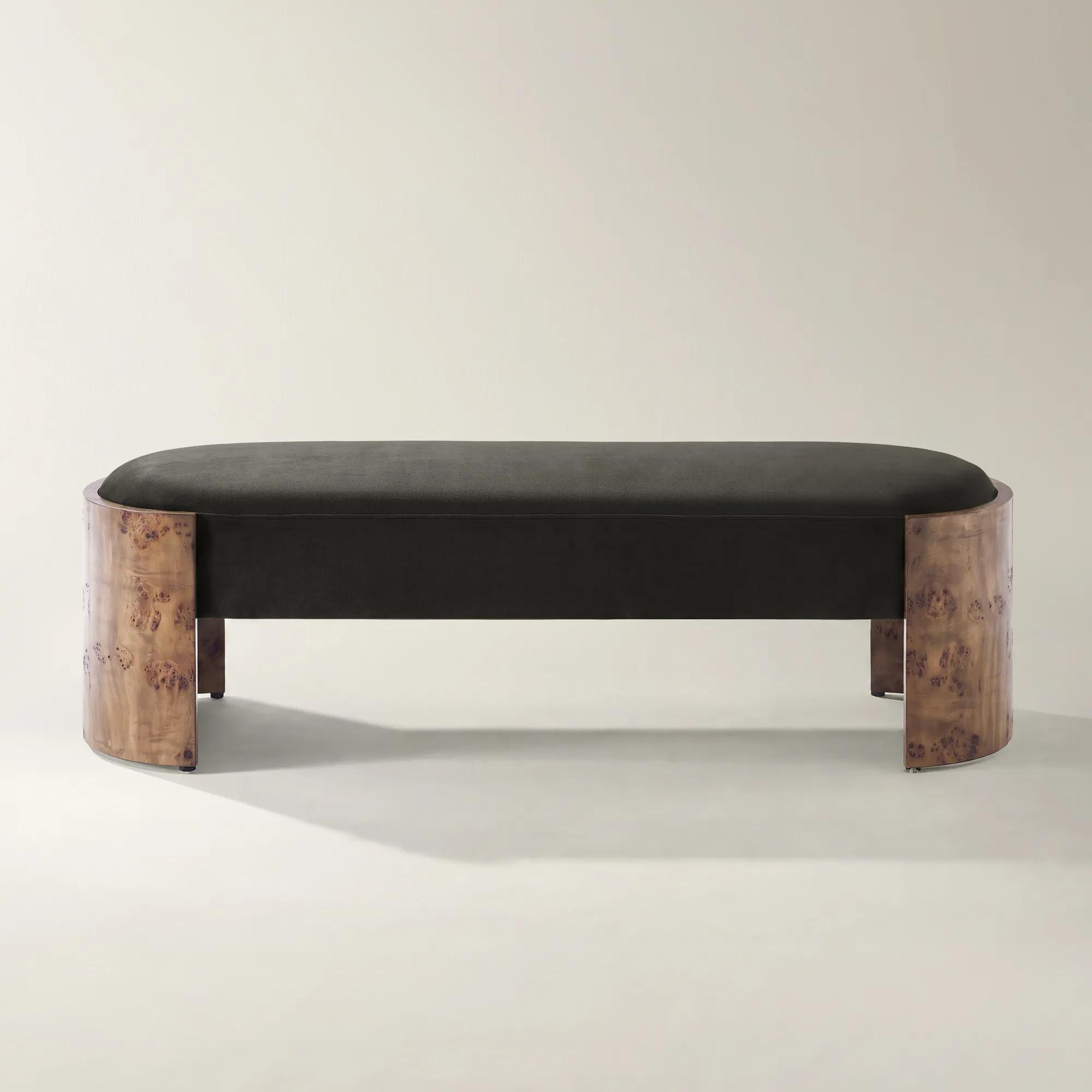 Cora Charcoal Velvet With Ash Wood Bench (60.6")$899
A sculpted charcoal velvet bench with curved bookmatched ash burl panels and supportive foam cushioning.
Add To Cart -
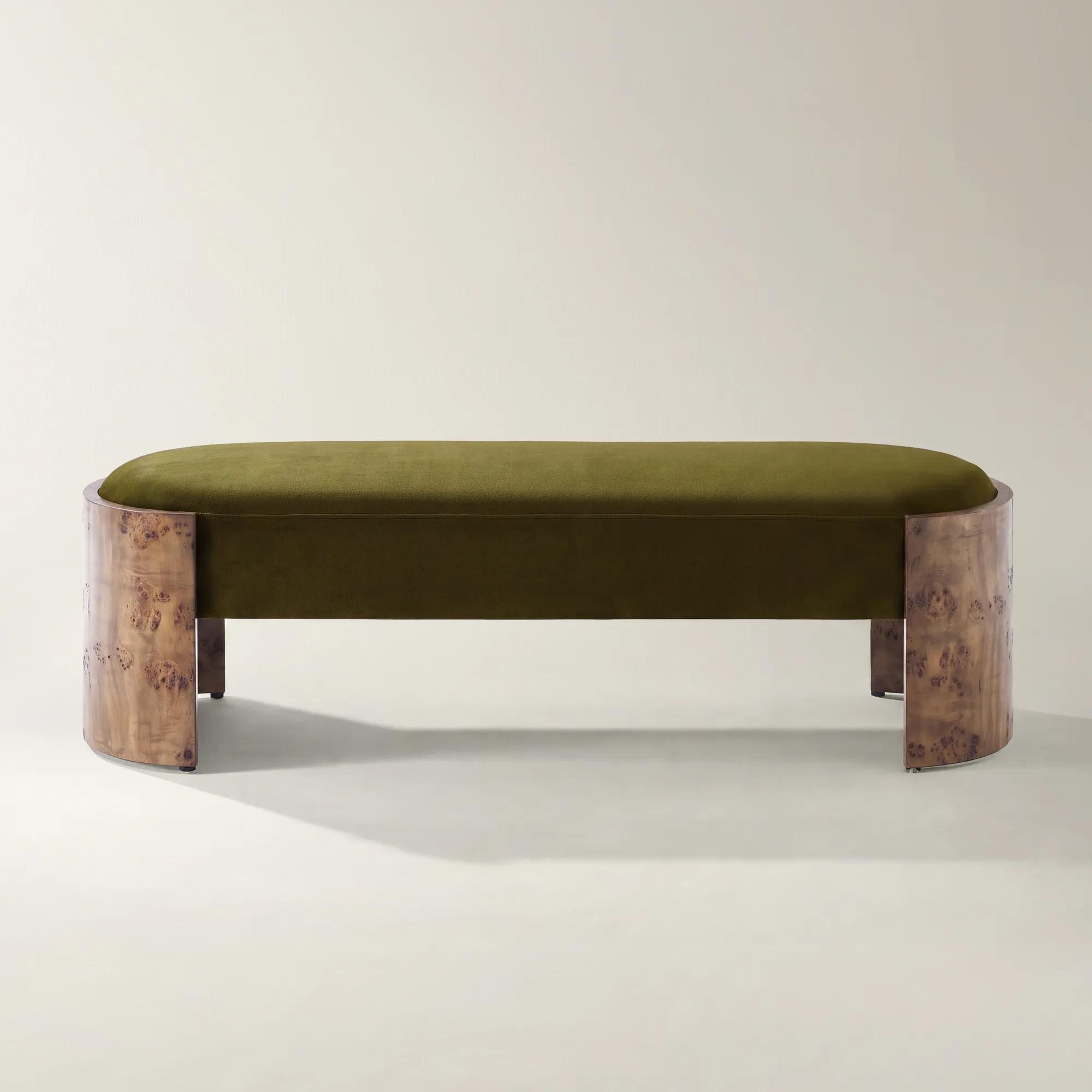 Cora Deep Olive Velvet With Ash Wood Bench (60.6")$899
A sculpted deep olive velvet bench featuring curved ash burl end panels and supportive foam cushioning.
Add To Cart -
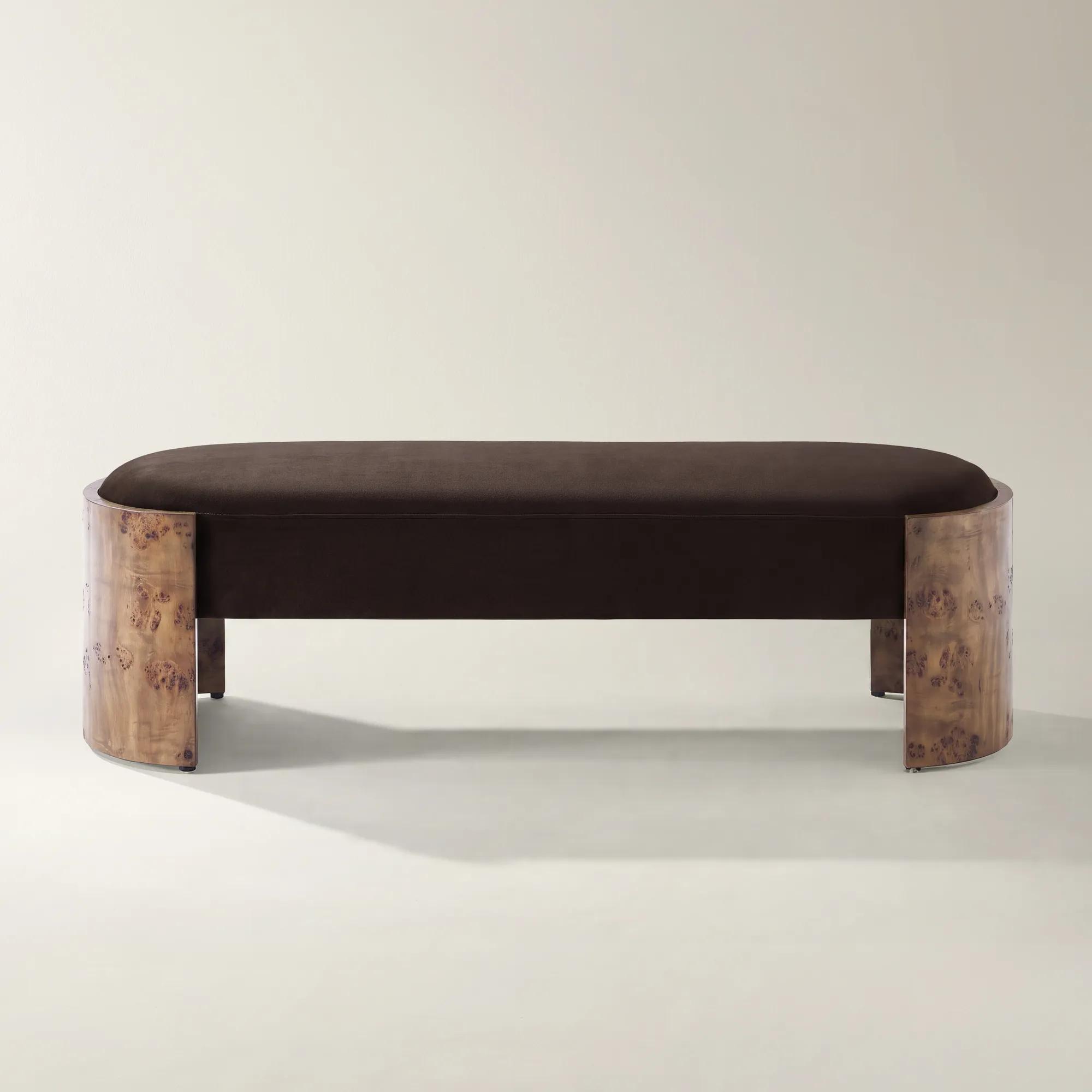 Cora Dark Chocolate Velvet With Ash Wood Bench (60.6")$899
A dark chocolate velvet bench with sculpted bookmatched ash burl end panels and high-resiliency foam cushioning.
Add To Cart -
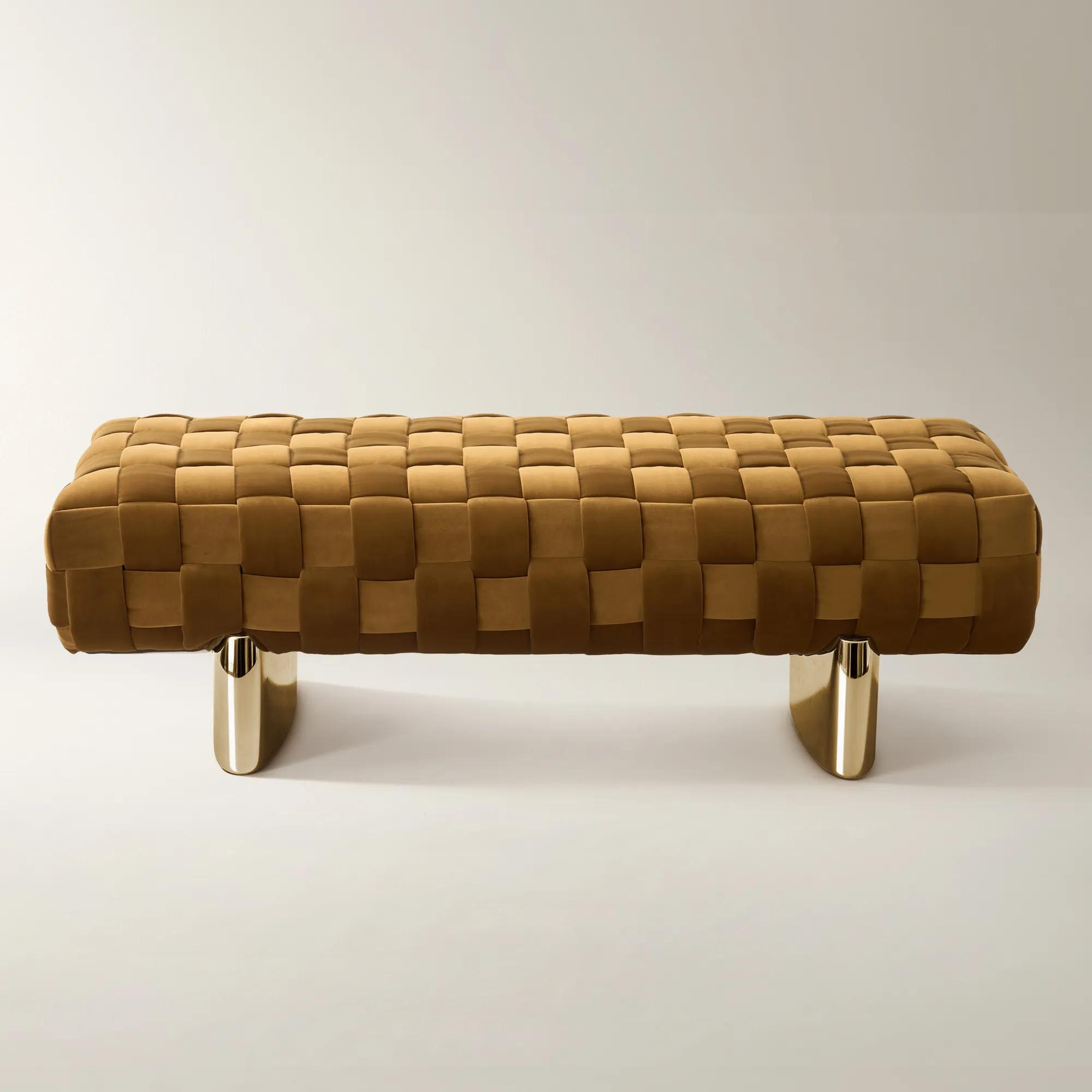
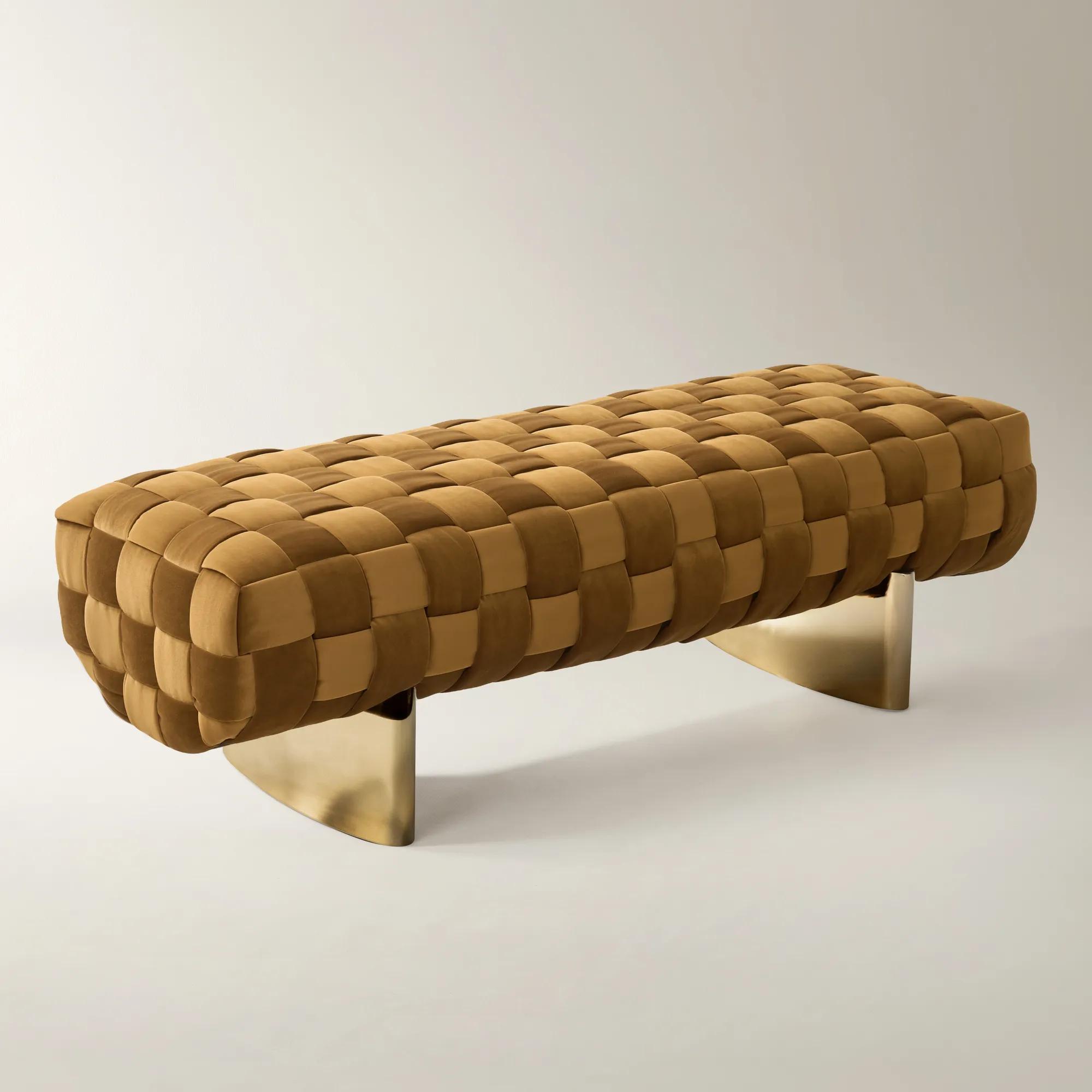 Dexter Woven Roasted Pecan Velvet Bench (64.2")$999
A woven roasted pecan velvet bench featuring plush upholstery and polished gold stainless steel legs for modern elegance.
Add To Cart -
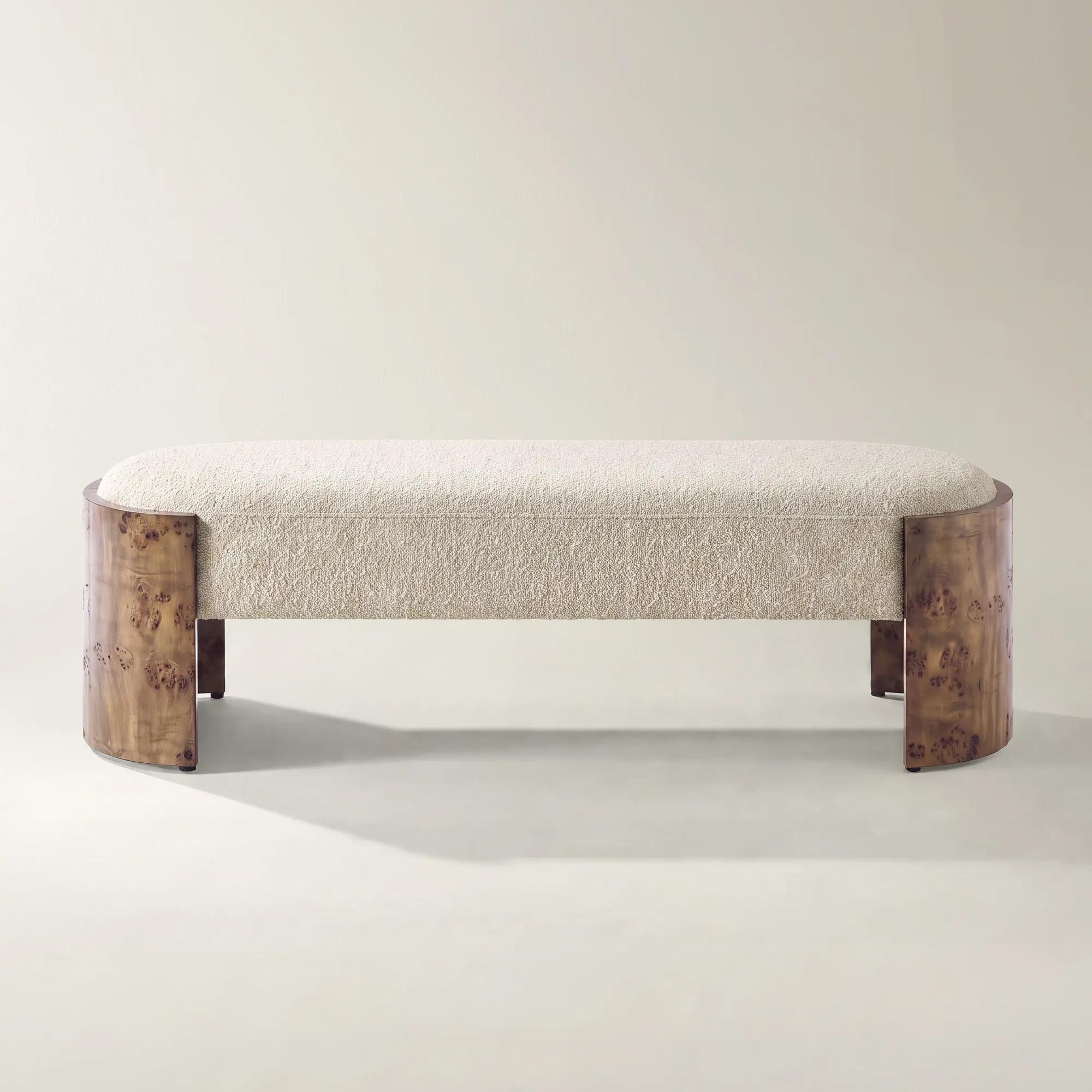 Cora Ivory Performance Boucle With Ash Wood Bench (60.6")$899
An ivory performance boucle bench with curved bookmatched ash burl panels and supportive foam cushioning.
Add To Cart -
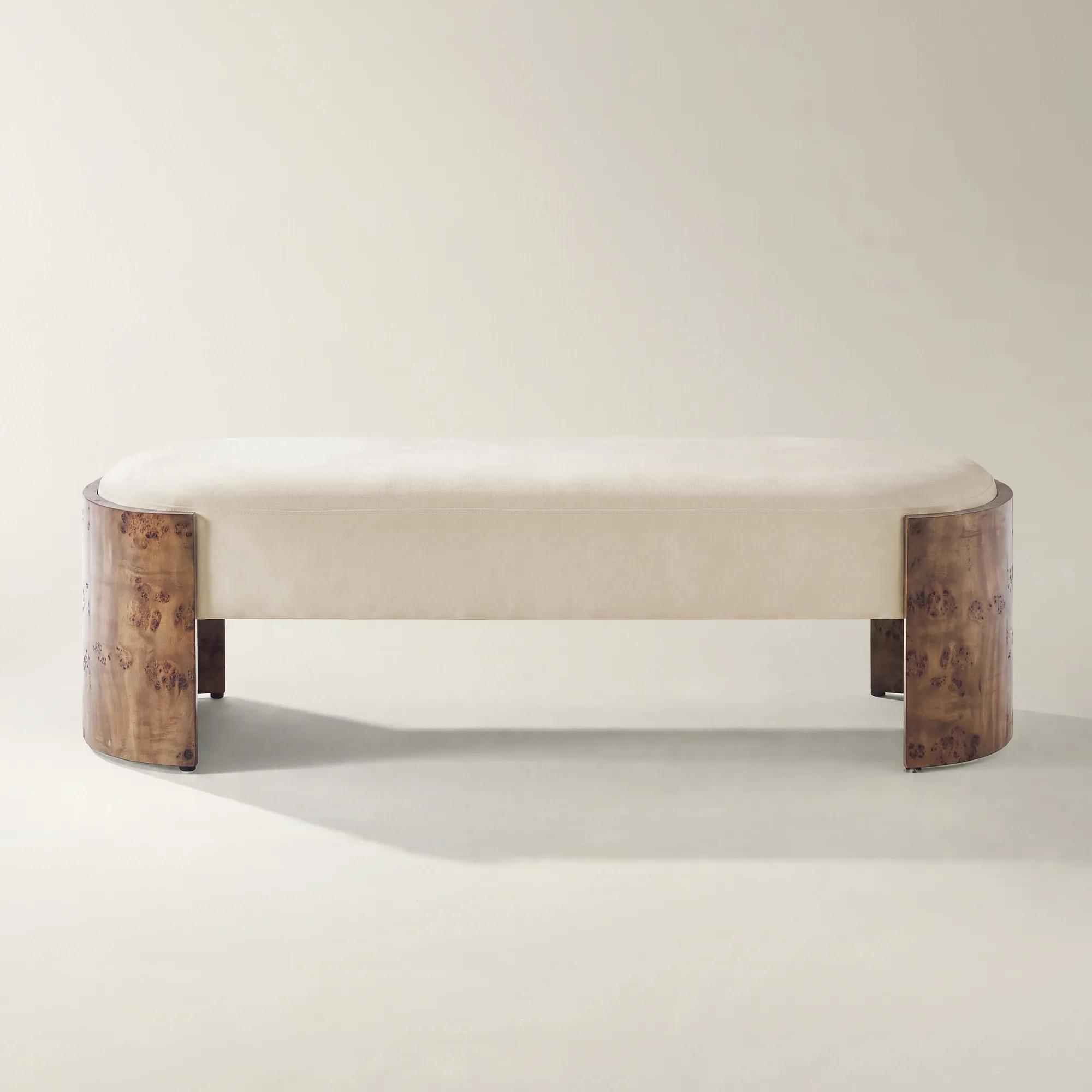 Cora Oatmeal Velvet With Ash Wood Bench (60.6")$899
A sculptural oatmeal velvet bench with curved ash burl wood panels and supportive foam cushioning.
Add To Cart -
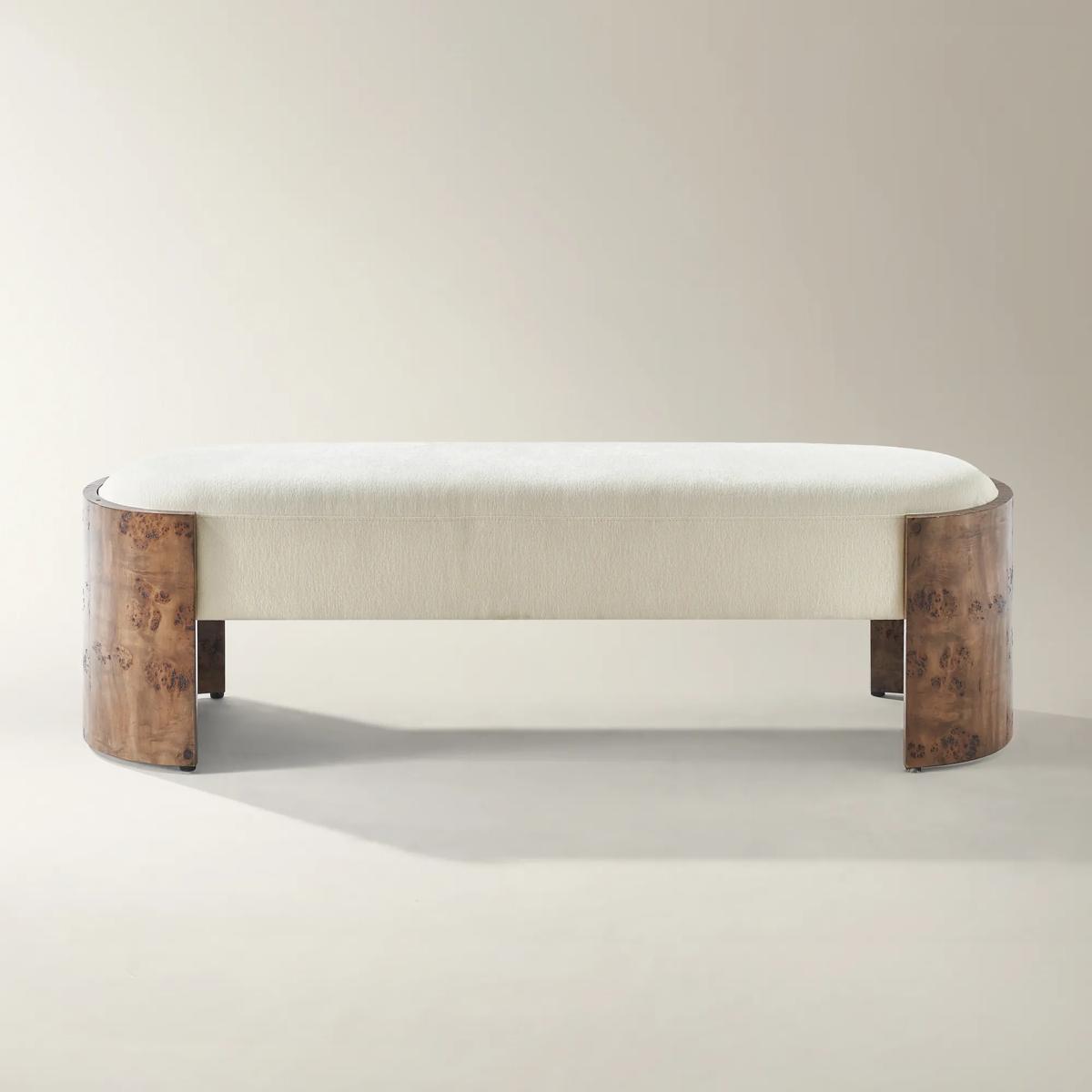 Cora Ivory Chenille With Ash Wood Bench (60.6")$999
An ivory chenille bench with curved ash burl veneer panels, blending plush comfort with striking wood artistry.
Add To Cart -
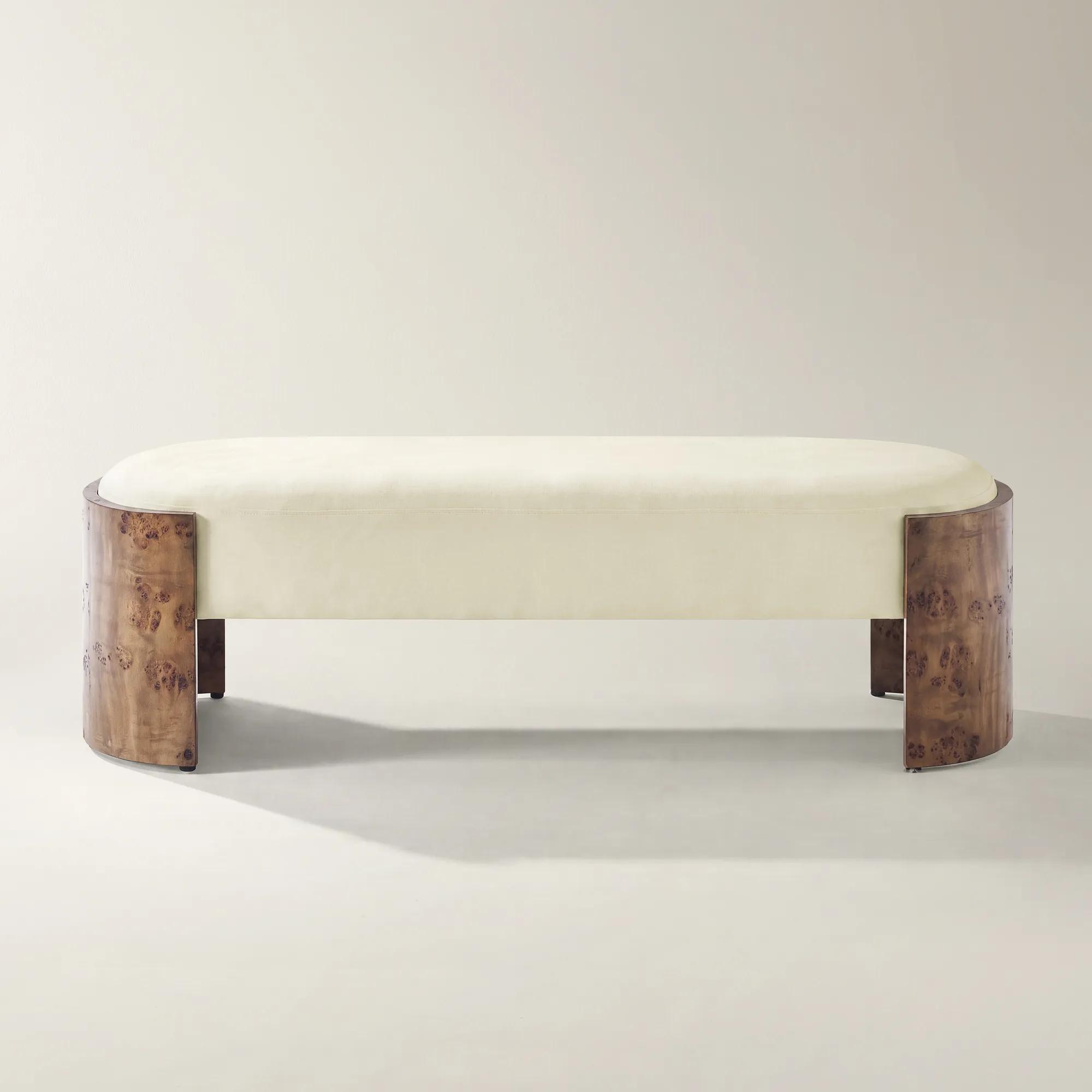 Cora Cloud Velvet With Ash Wood Bench (60.6")$899
A cloud velvet bench with bookmatched ash burl panels and supportive foam cushioning.
Add To Cart -
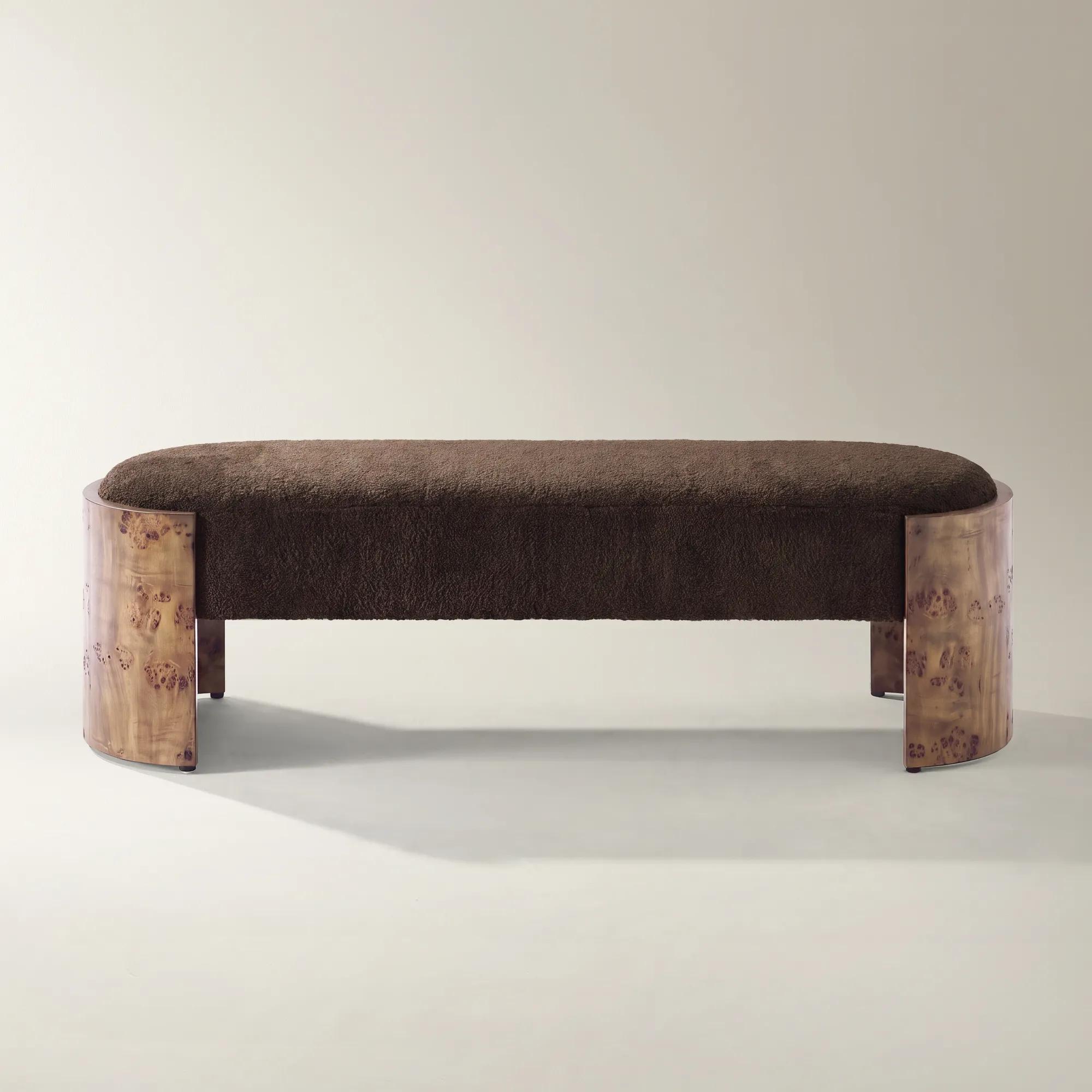 Cora Dark Chocolate Chenille With Ash Wood Bench (60.6")$899
A sculpted dark chocolate chenille bench with curved ash burl end panels and supportive foam cushioning.
Add To Cart

Upholstered Benches For Open Floor Plans
Upholstered benches for open floor plans invite artistry and allure into every corner of your home, seamlessly bridging spaces with undeniable style. These versatile pieces become the connective thread that elevates transitions—transforming entryways into grand arrivals, living rooms into luxurious lounges, and dining areas into curated showcases. With sumptuous fabrics and sculptural silhouettes, each bench is a bold stroke on your canvas, infusing your open concept with drama, comfort, and a sense of effortless sophistication. Discover how upholstered benches can redefine boundaries and create moments of beauty in the heart of your home.
Upholstered benches for open floor plans add flexible seating and soft texture while helping define distinct areas without closing them off. Backless and low-profile designs are especially suited to connected living, dining, and entry spaces because they preserve sightlines and allow furniture arrangements to feel intentional rather than divided. Set behind a floating sofa, an upholstered bench can give the living area a finished edge while offering a place for guests to gather before dinner. Positioned along the perimeter of a conversation area, it introduces another seat without the visual height of an armchair. The effect is quietly architectural: a long, tailored silhouette draws a boundary, while fabric brings warmth to the surrounding expanse of wood, stone, or tile. In a loft, a sculptural bench can soften the transition between exposed structural details and a richly layered seating arrangement. In a connected family room, a generously proportioned seat creates a place to pause, talk, or join the conversation without rearranging the entire room. Scale determines how naturally that flexibility works. A bench should relate to the sofa, rug, or table beside it rather than appear stranded in an oversized space. Its full width and depth matter, but so do the paths around it, particularly between a kitchen island and dining table or along a frequently used route to the entry. Seating placed near a walkway needs enough surrounding room for someone to sit comfortably while others pass. A bench intended for dining also needs a seat height that works with the tabletop, enough legroom beneath the apron, and a width compatible with the table legs. These relationships give an open layout its ease. The right proportions make additional seating feel like part of the architecture, not an obstacle, while upholstery adds an inviting contrast to the room’s harder surfaces.
Texture gives an upholstered bench much of its expressive power, especially in an interior where several furniture groupings share the same view. Velvet lends a luminous depth, with a nap that changes character as light moves across the seat. A textured woven fabric creates a more subdued surface, bringing dimension to a tonal arrangement without competing with artwork or a dramatic chandelier. Bouclé offers a sculptural, tactile effect, although its looped construction deserves consideration in homes where claws or sharp accessories could catch the fibers. Smooth leather presents a different mood: tailored, substantial, and capable of developing character with use, depending on its finish. Each material interacts differently with nearby furnishings. A plush upholstered seat against a glass dining table creates a striking balance of softness and transparency; beside a substantial wood console, it introduces a gentler counterpoint to the grain. Color can connect these moments across an open room. An ivory bench may echo the pale veining of a nearby stone surface, while charcoal can repeat a dark window frame or ground a composition of metallic accents. A saturated jewel tone brings a deliberate focal point to an otherwise restrained palette. The base contributes just as much to the silhouette. Slender metal legs leave more floor visible, substantial wood supports add visual weight, and a fully upholstered form reads as a continuous volume. Because a bench may be visible from the kitchen, dining area, and living room at once, the appearance of its sides and back matters as much as its front. Tailored seams, considered proportions, and a finish that relates to surrounding furniture help it belong from every angle. For a more individual composition, explore Customizable Benches For Open Floor Plans with the room’s palette, architectural details, and existing seating in mind. A coordinated interior need not be perfectly matched; a repeated tone or material can create continuity while leaving room for contrast.
Daily use brings another dimension to the selection: an upholstered bench should feel as considered in practice as it looks across the room. Firm, supportive cushioning may suit dining or brief conversations, while a more yielding seat can feel inviting beside a living room seating group. Backless seating offers access from either side, but it does not provide the support of a chair with a back, an important distinction for anyone who prefers that support during longer gatherings. A bench used for meals should be designed for dining, just as an entry bench should provide a stable, appropriately sized place to sit while putting on shoes. Construction, cushioning, and the manufacturer’s stated weight capacity all deserve attention, particularly when more than one person may share the seat. Upholstery durability also depends on the fabric, its construction, and the demands placed on it. Performance treatments can offer useful resistance to certain spills or stains, but they do not make every fabric waterproof or eliminate the need for prompt care. In a household with children, pets, or frequent entertaining, the ability to maintain the upholstery may matter as much as its color. The care label should determine whether a material accepts water-based cleaning, requires solvent-based treatment, or needs professional attention. Regular vacuuming with an appropriate upholstery attachment helps remove dust and grit from seams and textured surfaces; spills are generally best blotted promptly rather than rubbed, with further treatment guided by the fabric’s instructions. Strong direct sunlight can affect some upholstery colors, and exposed wood or metal bases may require separate care suited to their finish. These practical details protect the visual impact that makes the bench compelling in the first place. Whether serving a household that entertains often or furnishing a first expansive living space, a well-chosen upholstered bench brings a distinctive combination of presence and openness: seating that enriches the room without interrupting the view.
FAQs
Upholstered benches serve as both functional seating and artistic dividers within open floor plans, guiding the eye and subtly defining zones without interrupting the sense of spaciousness. Their plush textures and sculptural silhouettes create inviting vignettes that encourage conversation and relaxation, while seamlessly linking living, dining, and entry spaces.
A cushioned bench can be styled as a statement piece in an entryway, layered with bold throw pillows or a faux fur throw for added drama. In a living area, position it behind a sofa for extra seating or as a perch for art books and trays. For a dining nook, pair a corner upholstered bench with a round table to create an intimate spot for meals or morning coffee.
Upholstered benches make memorable gifts for new homeowners, design enthusiasts, or anyone who loves to entertain. They are especially cherished by those who value both comfort and artistry, offering a versatile piece that elevates daily living and celebrates personal style.
Materials and fabrics set the tone for an upholstered bench: velvet exudes opulence and warmth, linen brings an airy elegance, while leather channels modern sophistication. Metallic or acrylic legs add a hint of glamour, while rich jewel tones or bold patterns transform the bench into a captivating focal point.
A corner upholstered bench maximizes underutilized space and creates cozy, intimate nooks within expansive rooms. Its tailored shape encourages gathering and conversation, making it a smart choice for dining areas, reading corners, or entryways where both comfort and style are paramount.