Round Living Room Wall Mirrors
Round Living Room Wall Mirrors
-
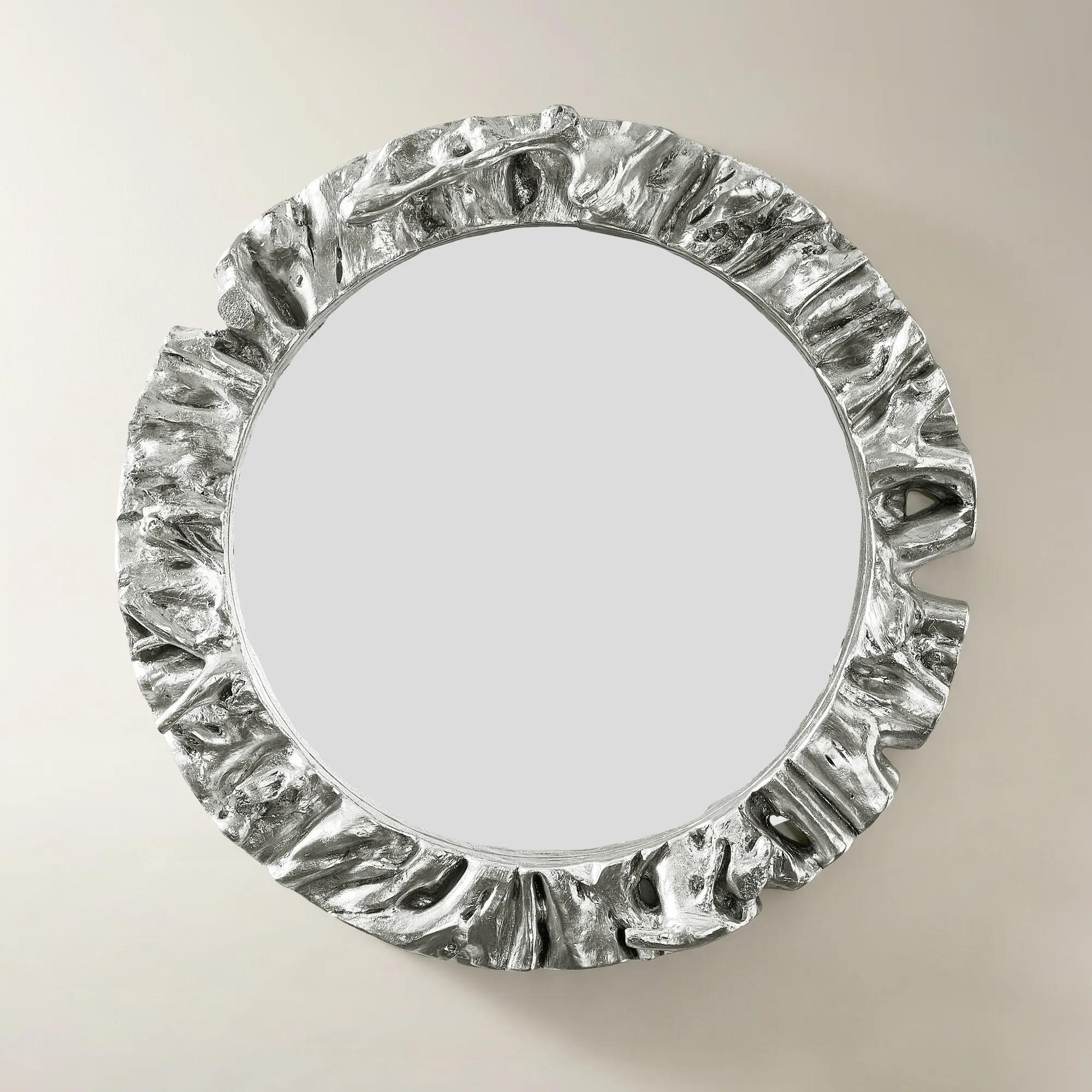
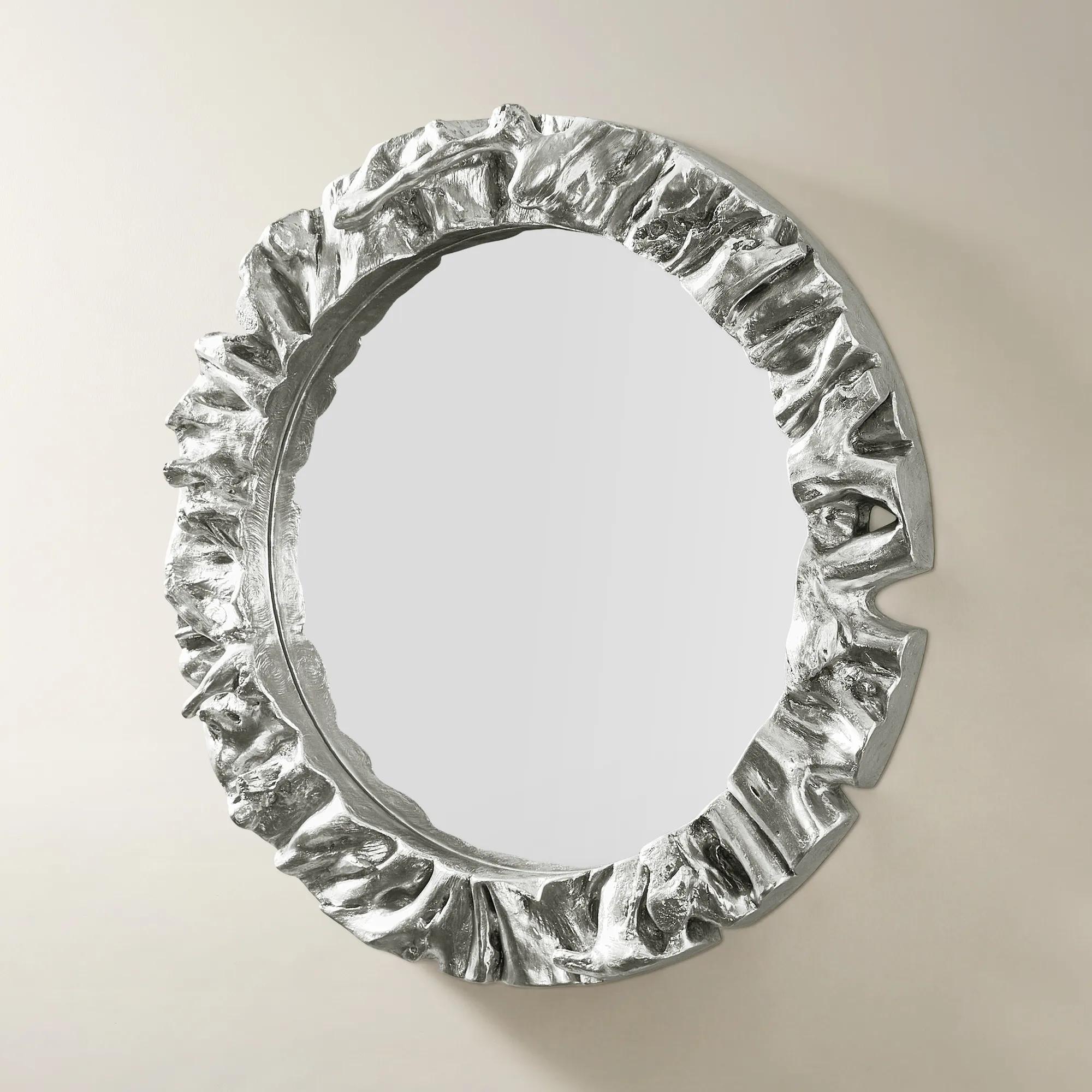 Sequoia Silver Resin Round Wall Mirror 48.25"$1199
A sculptural silver fiberglass resin frame mirror that adds modern polish and reflective brightness to any room.
Add To Cart -
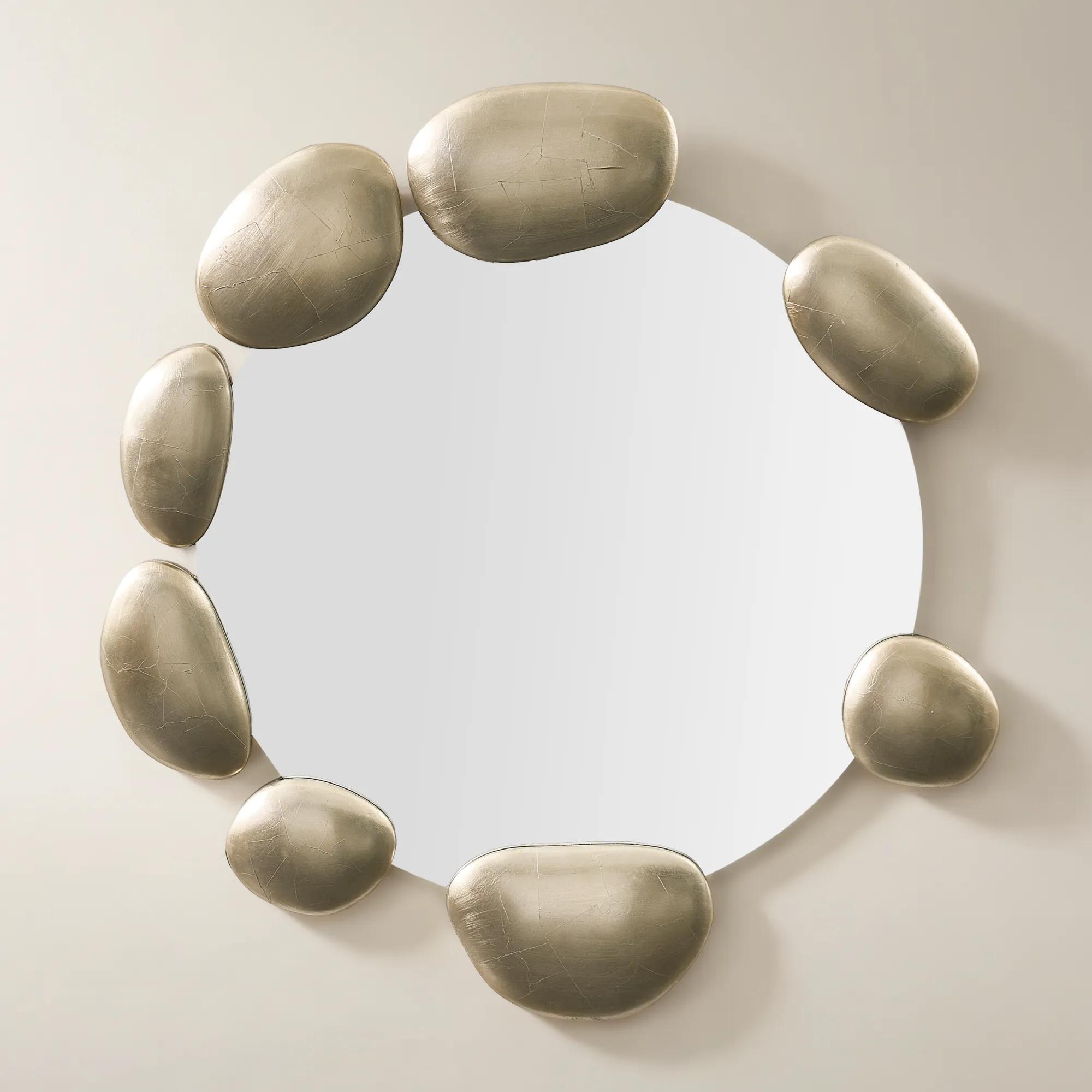 Pebbled Champagne Leaf Resin Round Wall Mirror 40"$599
A round wall mirror featuring a sculptural resin frame with champagne leafing and playful pebbled accents.
Add To Cart -
 Oceano White Resin Round Wall Mirror 42.7" x 40.2"$699
A white wall mirror featuring an organic shape and sandy texture for a serene, coastal-inspired accent.
Add To Cart -
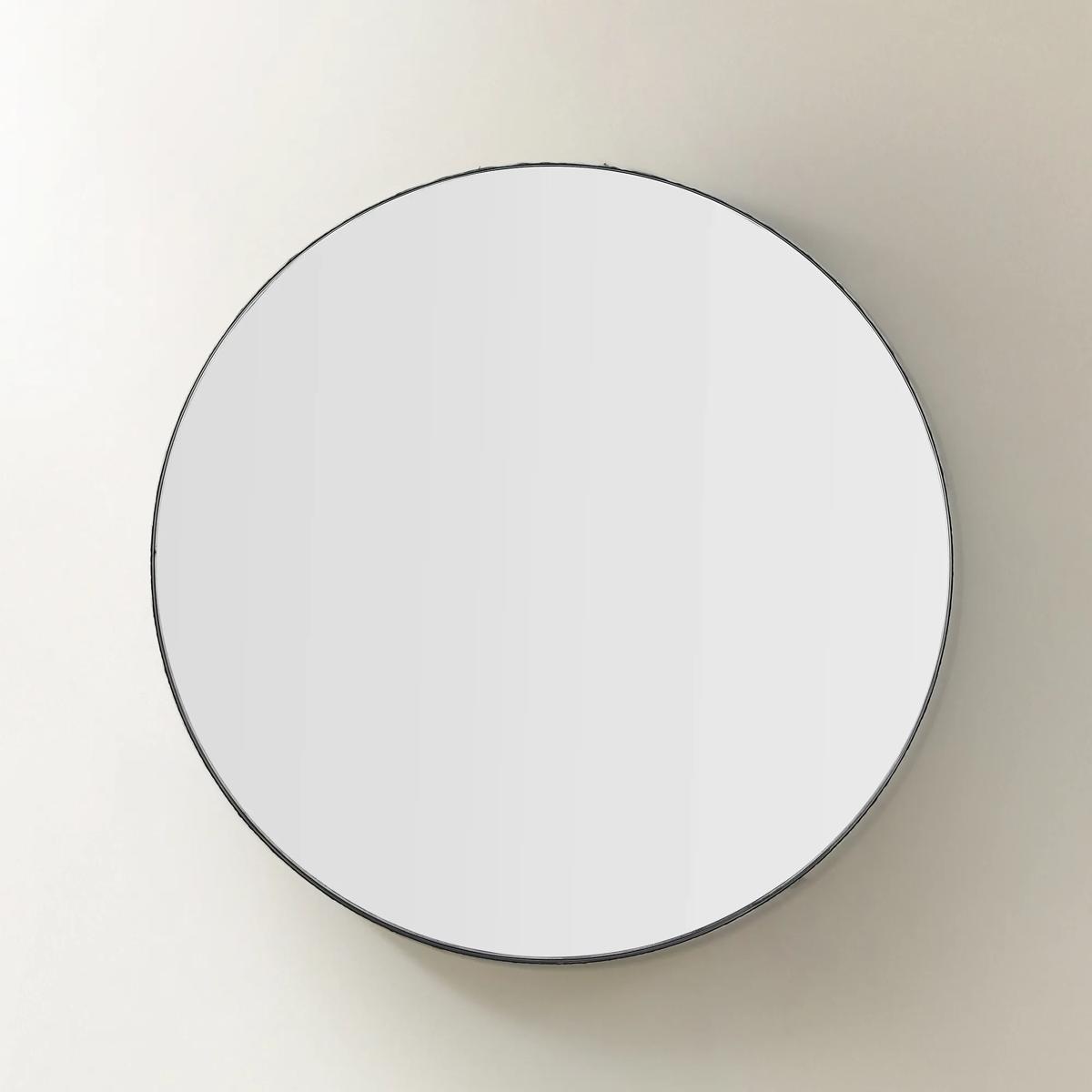
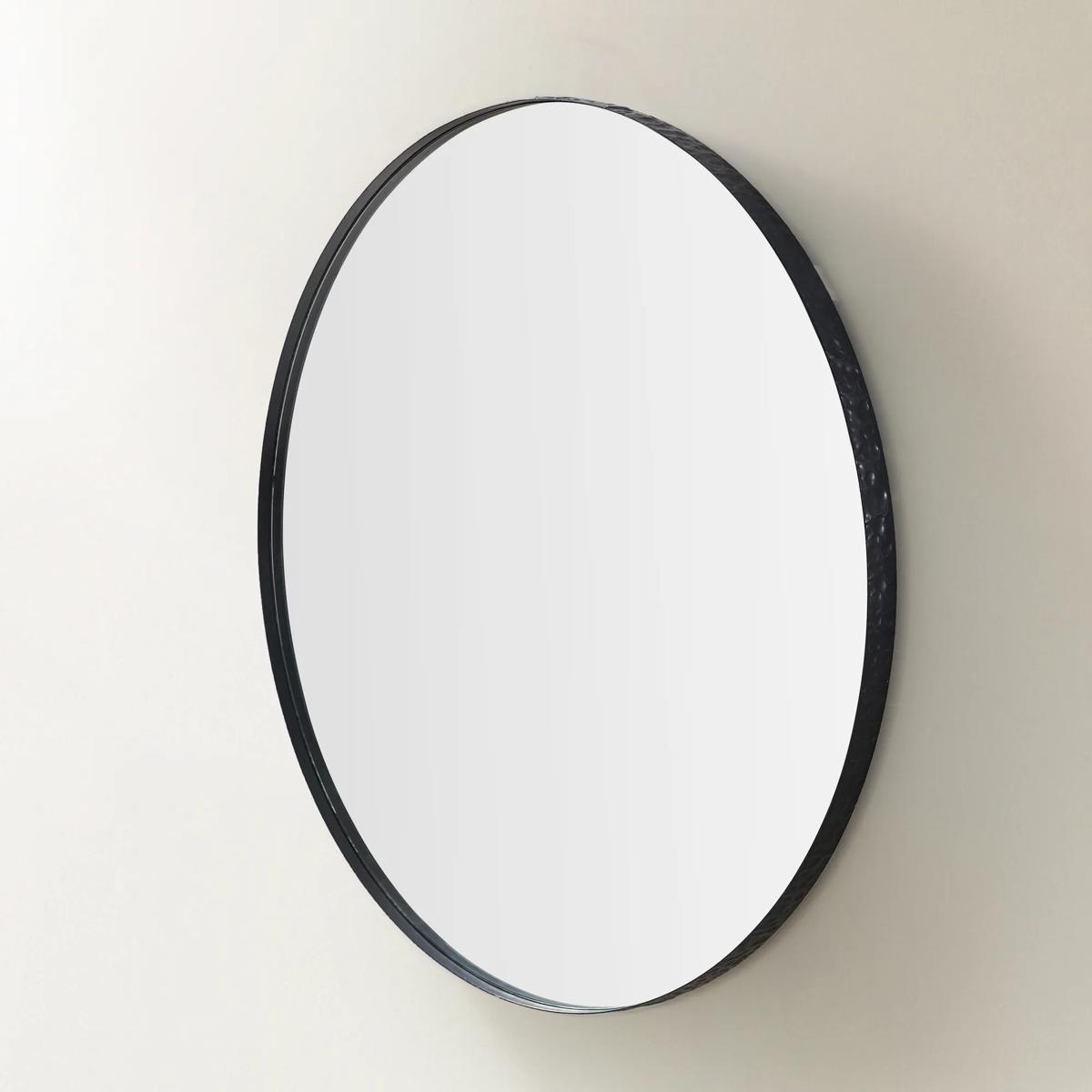 Cade Wall Mirror - Black$699
A round wall mirror featuring a hand-hammered black iron frame for a sleek, modern accent.
Add To Cart -
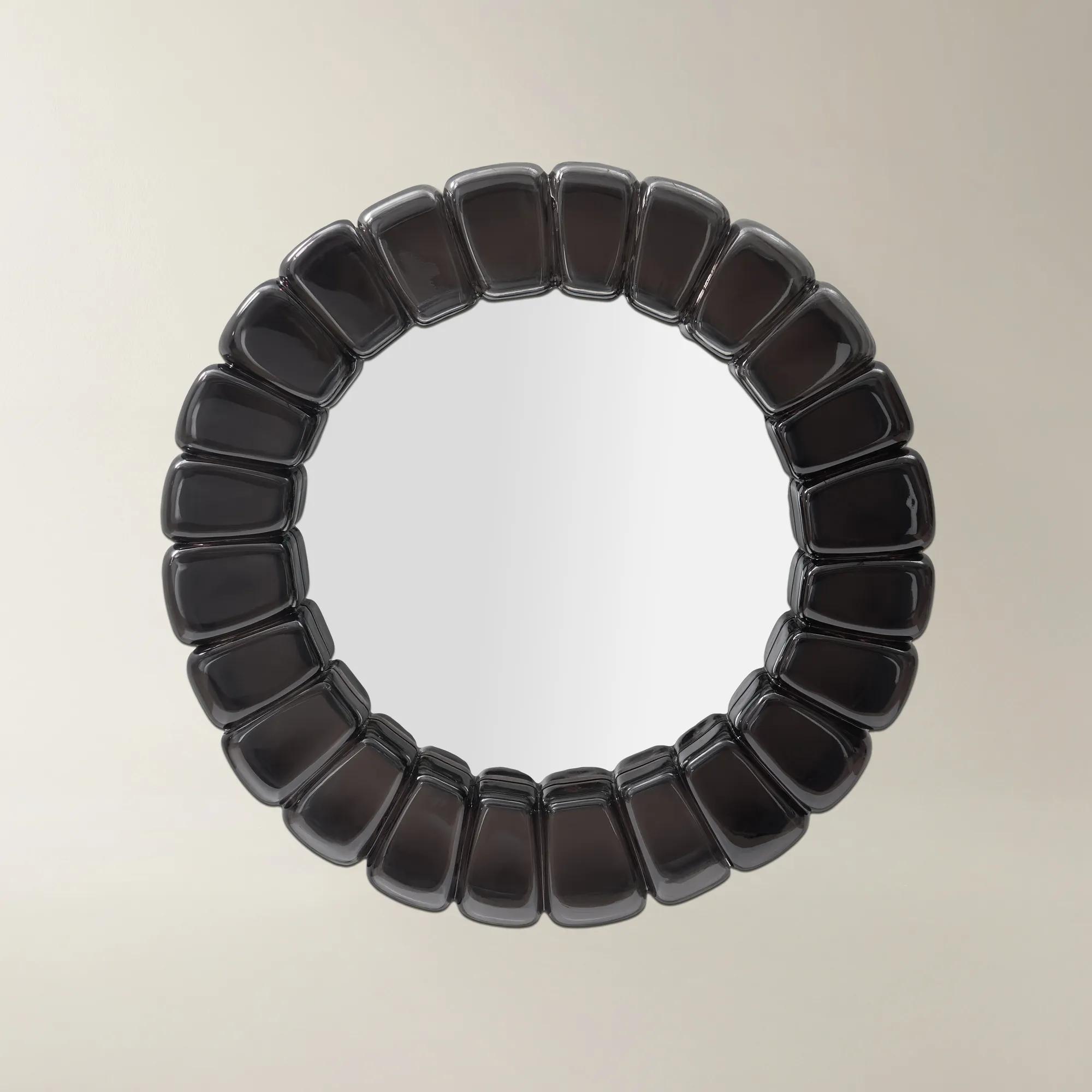
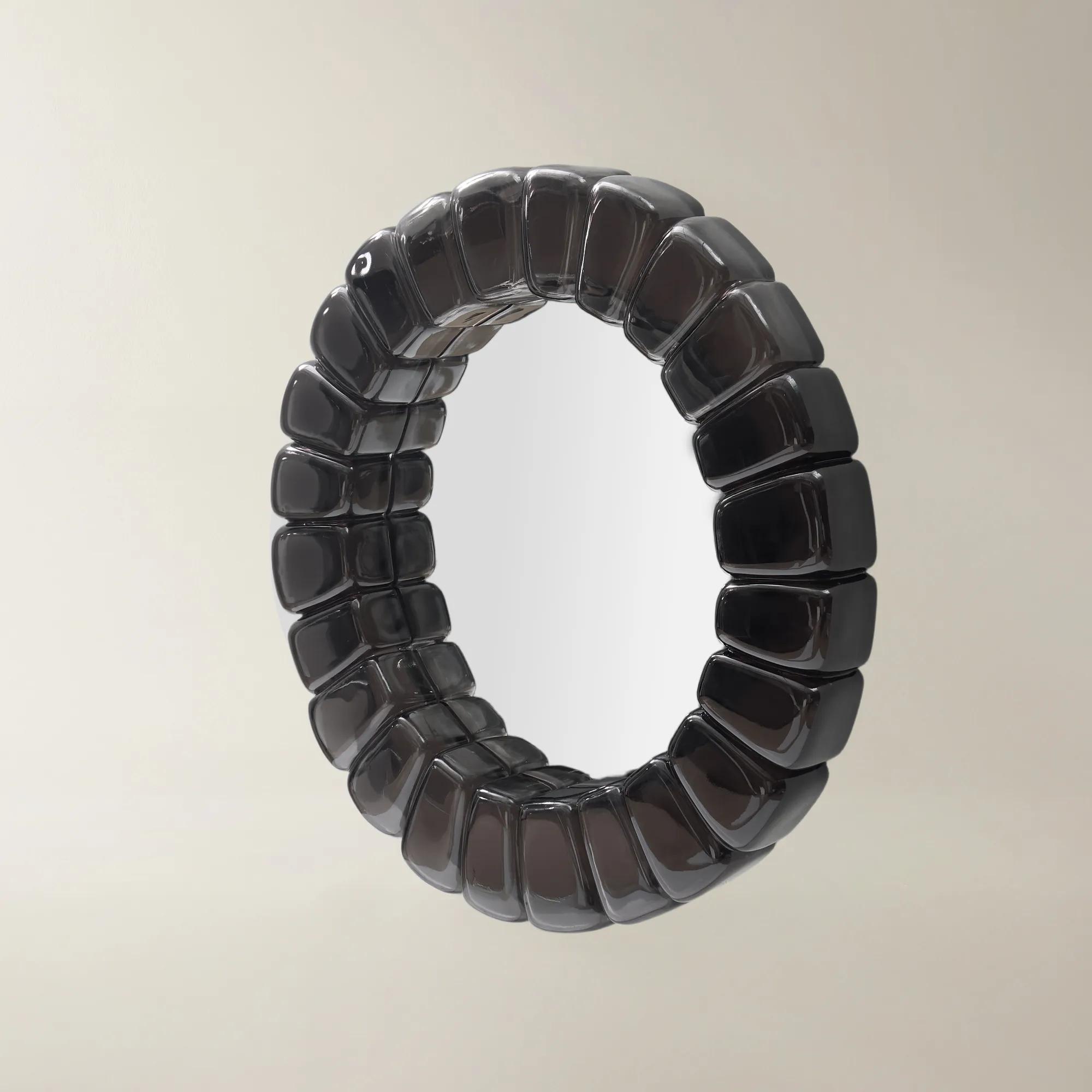 Lumino Graphite Resin Round Wall Mirror 38.5"$899
A round wall mirror with a sculptural translucent charcoal resin frame, graphite finish, and vertical display.
Add To Cart -
 Ever Translucent Amber Resin Round Wall Mirror 40"$699
A sculptural amber resin mirror with gold accents and playful bauble-inspired forms for modern glamour.
Add To Cart -
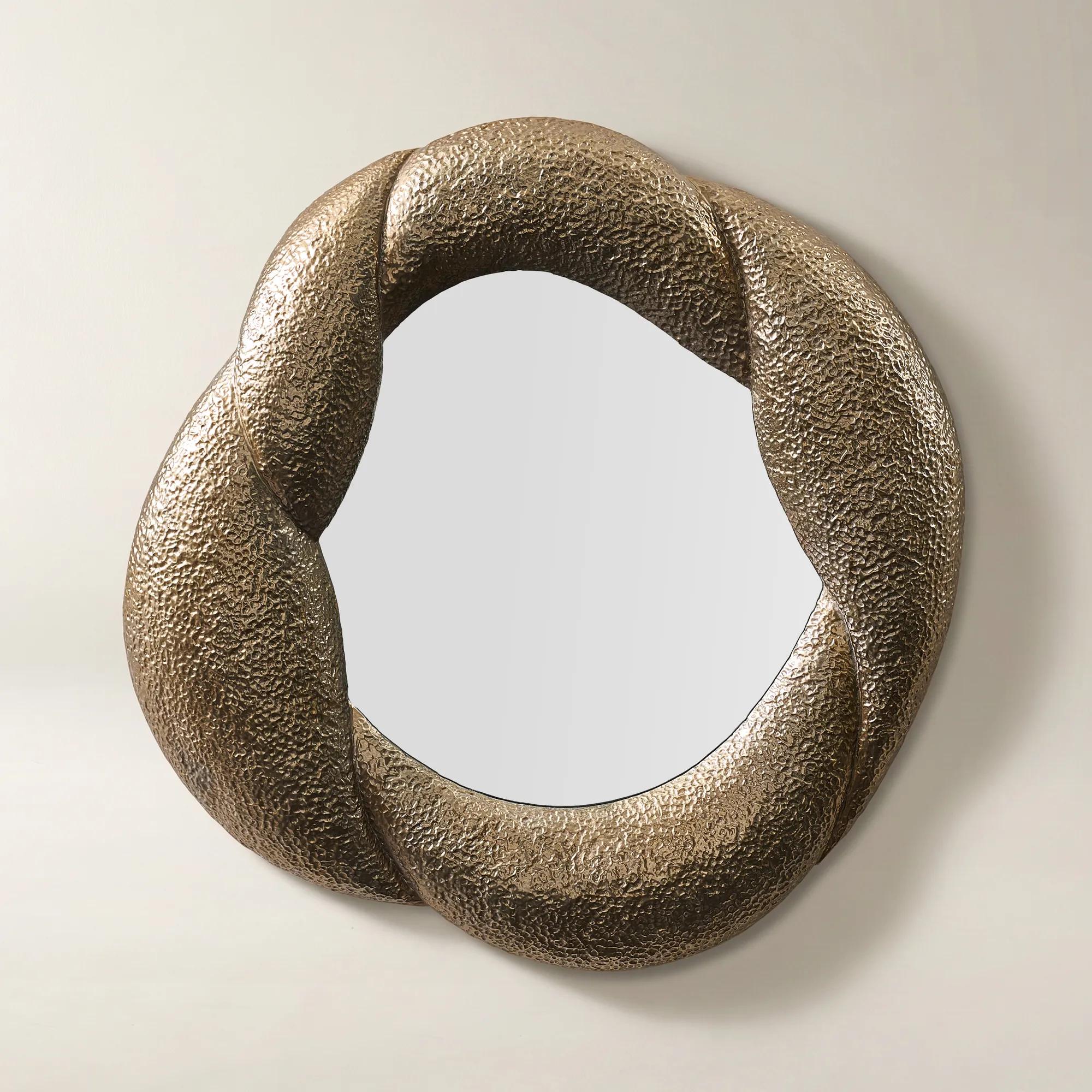 Bronze Age Hammered Texture Resin Organic Round Wall Mirror 34"$599
A round wall mirror featuring a chunky resin frame with hammered bronze texture for sculptural, modern appeal.
Add To Cart -
 Celine White And Gold Resin Round Wall Mirror 46.5" x 38.5"$699
A curvaceous wall mirror featuring a white and gold frame for a touch of modern glamour.
Add To Cart -
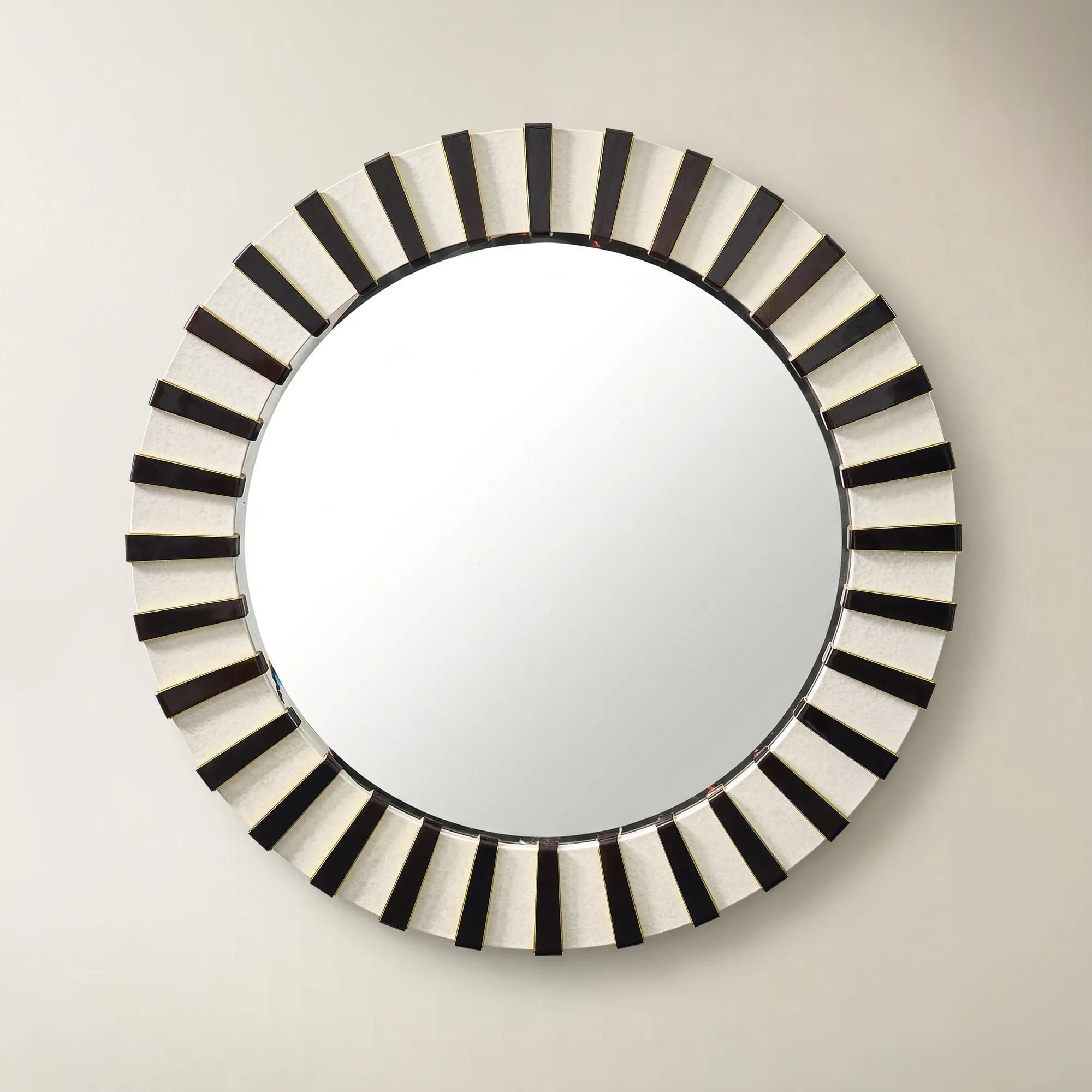 Regatta Opaline Pearl Black Gold Dimensional Round Wall Mirror 45"$849
A luminous wall mirror featuring an opaline pearl lacquered wood frame with black, gold, and raised resin accents.
Add To Cart -

 Cade Gold Hand-Hammered Iron Round Wall Mirror 46.25"$699
A round wall mirror featuring a hand-hammered iron frame with a warm gold finish for elegant appeal.
Add To Cart -
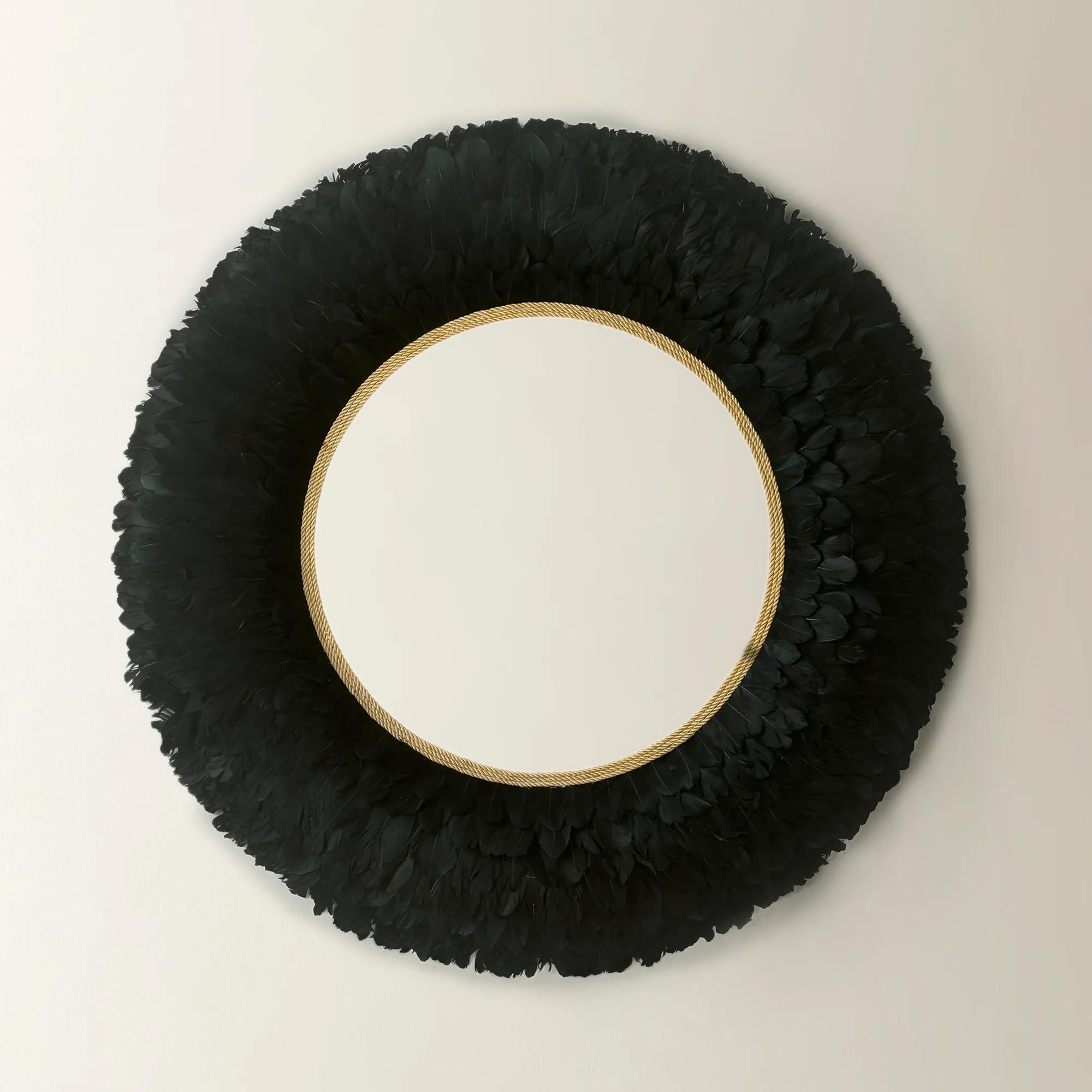
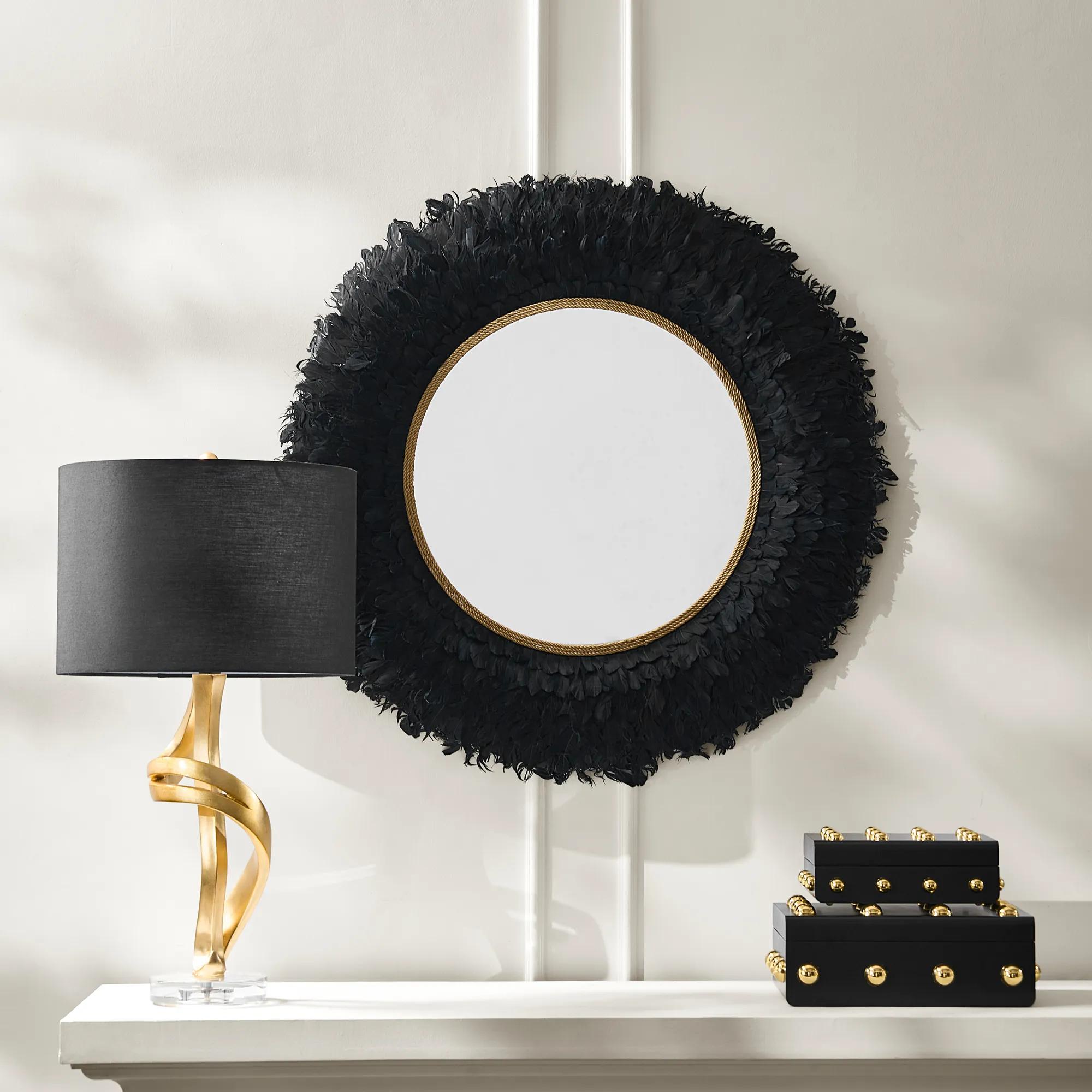 Nikki Chu Midnight Black Feather Round Wall Mirror 35.5"$499
A dramatic black feather-framed mirror accented with a gleaming gold inner border for striking wall texture.
Add To Cart

Round Living Room Wall Mirrors
Explore round living room wall mirrors for a sculptural focal point above a sofa, console, or mantel. Circular silhouettes soften the lines of angular furniture, while reflective surfaces bring light and dimension to the room. Consider the mirror’s proportions alongside nearby furnishings, and choose a placement that reflects a view or a thoughtfully styled corner.
Round living room wall mirrors create a focal point, soften angular architecture, and reflect light to give a room a greater sense of depth. Their circular shape offers a graceful counterpoint to rectangular sofas, straight-lined shelving, and the sharp edges of a coffee table, bringing movement to an interior without adding visual clutter. Above a console, a round mirror can anchor a vignette of sculptural vessels and a shaded lamp; over a fireplace, it can draw attention to the architecture while keeping the composition open and luminous. The effect depends as much on the frame as on the reflective surface. A slender metal border traces the circle with precision, allowing an expressive wall color or richly textured wallpaper to remain prominent. A wider frame introduces more visual weight, giving an otherwise quiet wall the presence of an art installation. Gold-toned finishes lend warmth beside ivory upholstery and dark wood, while silver-toned finishes echo glass, polished accents, and cool neutral fabrics. Black frames establish a crisp outline, especially against pale walls, and wood surrounds add grain and organic variation to a polished setting. For interiors that celebrate detail, decorative round wall mirrors bring another layer of expression through dimensional borders, faceted elements, or radiating silhouettes. A beveled edge creates a subtle transition around the glass, catching light without requiring an elaborate frame. Each treatment changes the mood: restrained and architectural, richly ornamental, or deliberately theatrical. The circular form also works across different decorating styles, from tailored contemporary rooms to collected interiors where antique-inspired accents sit beside modern seating. Rather than matching every finish exactly, a round mirror can repeat one considered detail, such as the warm metallic tone of a lamp base or the dark outline of a side table. That connection makes the room feel composed while leaving space for individual character.
Scale determines whether a round wall mirror reads as a delicate accent or a commanding centerpiece. A large circle above a sofa can establish a generous focal point, while a smaller mirror may feel more intentional over a narrow cabinet or within a carefully balanced wall arrangement. The outer frame dimensions matter as much as the diameter of the glass: a broad, sculptural surround can occupy substantial wall space while providing a more modest reflective area. Above furniture, a mirror generally feels balanced when it is narrower than the piece beneath it; around two-thirds of the furniture’s width is a useful starting point rather than a fixed rule. Ceiling height, nearby sconces, molding, and the frame’s visual weight all influence the final proportion. Leaving visible wall space around the circle allows its silhouette to stand apart instead of competing with adjacent elements. Placement also shapes what the mirror contributes throughout the day. Positioned to reflect a window from an angle, it can carry natural light farther into the seating area, although it does not create additional light or physically enlarge the room. Opposite a favorite painting, an elegant bookcase, or a chandelier, the reflection becomes another part of the decor. Opposite an exposed hallway or a busy television screen, it may repeat movement and distractions instead. In a compact apartment, a well-placed round mirror can introduce perceived depth without claiming floor space, preserving room for seating and conversation. In an expansive living room, an oversized silhouette can give a tall wall a stronger connection to the furniture below. Hanging height should respond to that setting rather than an automatic eye-level measurement, particularly above a mantel or high-backed sofa. A paper template makes the footprint easier to judge before installation, including the clearance needed above decorative objects. The most compelling arrangement gives equal attention to the mirror itself and the scene held within its reflection, creating a composition that remains appealing from the room’s principal seating positions.
Materials and construction influence both the appearance and the long-term performance of round living room mirrors. Metal frames can provide a clean, defined profile, while wood frames introduce natural texture and may show intentional variations in grain and tone. Mirrored or glass-accented borders create a more luminous effect, but their additional edges and joins benefit from careful handling. A decorative antiqued surface offers a different experience from clear mirror glass: mottling and softened reflections contribute atmosphere, while a clear surface is better suited to a crisp view of the room. For a mirror intended to serve as both wall decor and a place for a quick appearance check before entertaining, reflection quality deserves particular attention. Visible waviness or distortion can be distracting when a large surface reflects straight architectural lines. Secure backing, sound frame joints, and mounting hardware appropriate to the mirror’s weight are equally important. Wall construction determines the necessary fasteners; drywall, masonry, and stud-mounted installations have different requirements, and heavier mirrors may call for professional installation. A wall mirror should hang from its designated mounting points rather than rest unsecured on a mantel or console, especially in a household with children or pets. Once installed, thoughtful care helps preserve the clarity and finish. A soft, lint-free cloth removes everyday dust, while a cleaner approved for the mirror can address fingerprints when applied to the cloth rather than sprayed directly onto the glass. Keeping excess moisture away from edges and backing helps protect the reflective coating. Abrasive pads and harsh chemicals can damage delicate finishes, so frame care should follow the material-specific instructions. These practical details support the pleasure of living with a beautifully chosen mirror: the glint of a metallic rim beside velvet upholstery, the repeated shape of a rounded chair, the unexpected glimpse of art across the room. Whether completing a first apartment or refining a long-established interior, a round mirror offers a distinctive balance of utility, light, and sculptural presence.
FAQs
Round living room wall mirrors bring a sculptural note to modern, glamorous, and transitional interiors. Pair their curved silhouette with tailored upholstery for a polished composition, or introduce expressive artwork and sumptuous textiles for a room with a more theatrical point of view.
Let your room’s decorative accents guide the finish. A metallic frame can echo gleaming lighting and accessories, while a dark finish creates a graphic outline against the wall. For a layered look, mix finishes intentionally and repeat each one elsewhere in the room.
Compose an artful vignette beneath the mirror with a sculptural vase, a stack of design books, and a distinctive decorative object. Arrange accents asymmetrically and leave portions of the console surface clear, allowing the mirror’s circular outline to remain a defining element.
Yes. A round mirror introduces a curved counterpoint to rectangular artwork, giving a gallery wall a more expressive rhythm. Connect the arrangement through a shared finish, color story, or artistic mood, and leave deliberate space between pieces so each retains its own presence.
For crisp sophistication, pair a round mirror with black, ivory, and restrained metallic accents. Jewel tones create a more sumptuous setting, while warm neutrals invite tonal layering. Let the mirror’s frame finish inform the palette, then build depth through upholstery, artwork, and decorative details.