Modern Living Room Lighting Fixtures
Modern Living Room Lighting Fixtures
-
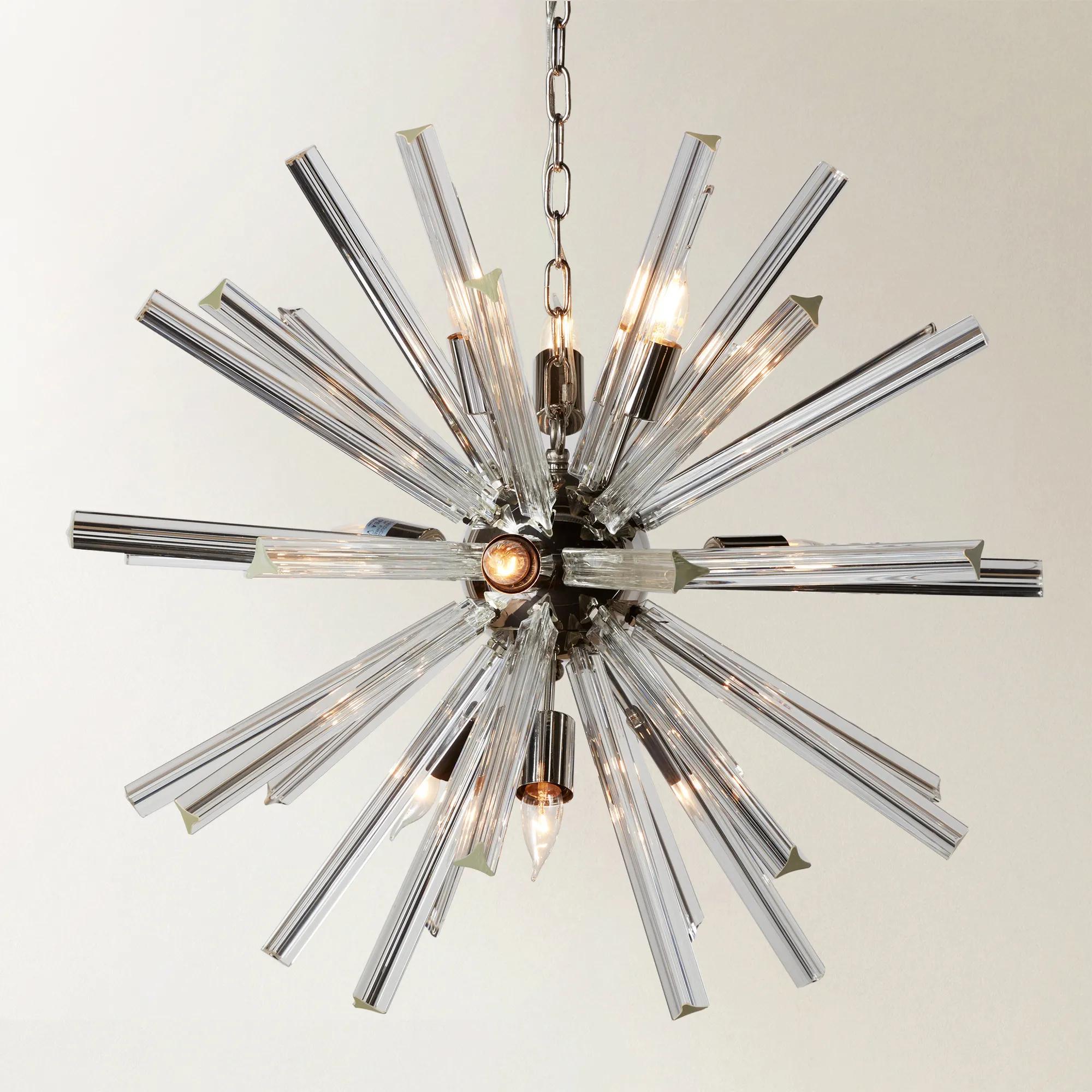
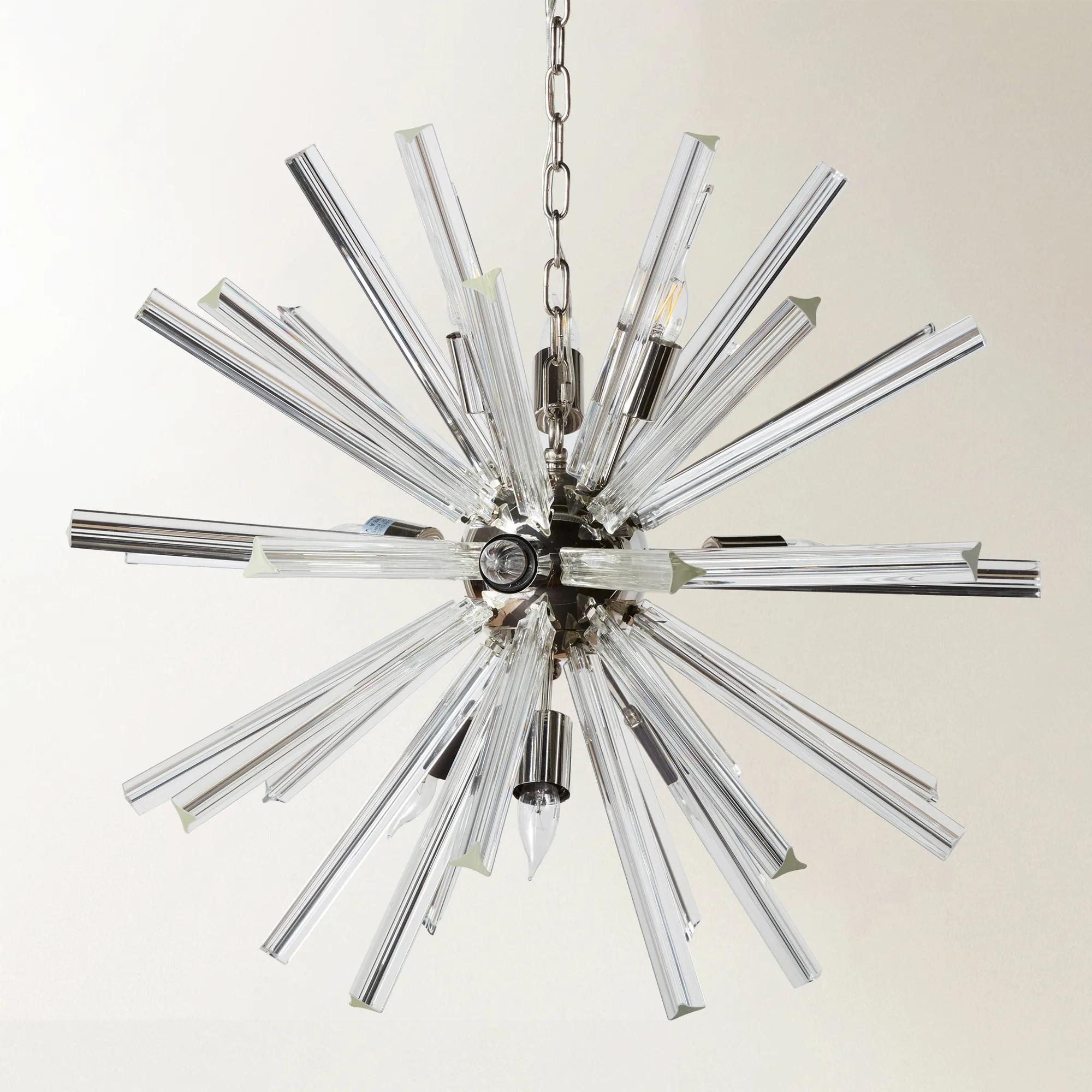 Axis Sputnik Clear Faceted Glass Chandelier 29.5"D$599
A clear glass and iron Sputnik chandelier featuring nine lights and faceted triangular rods.
Add To Cart -
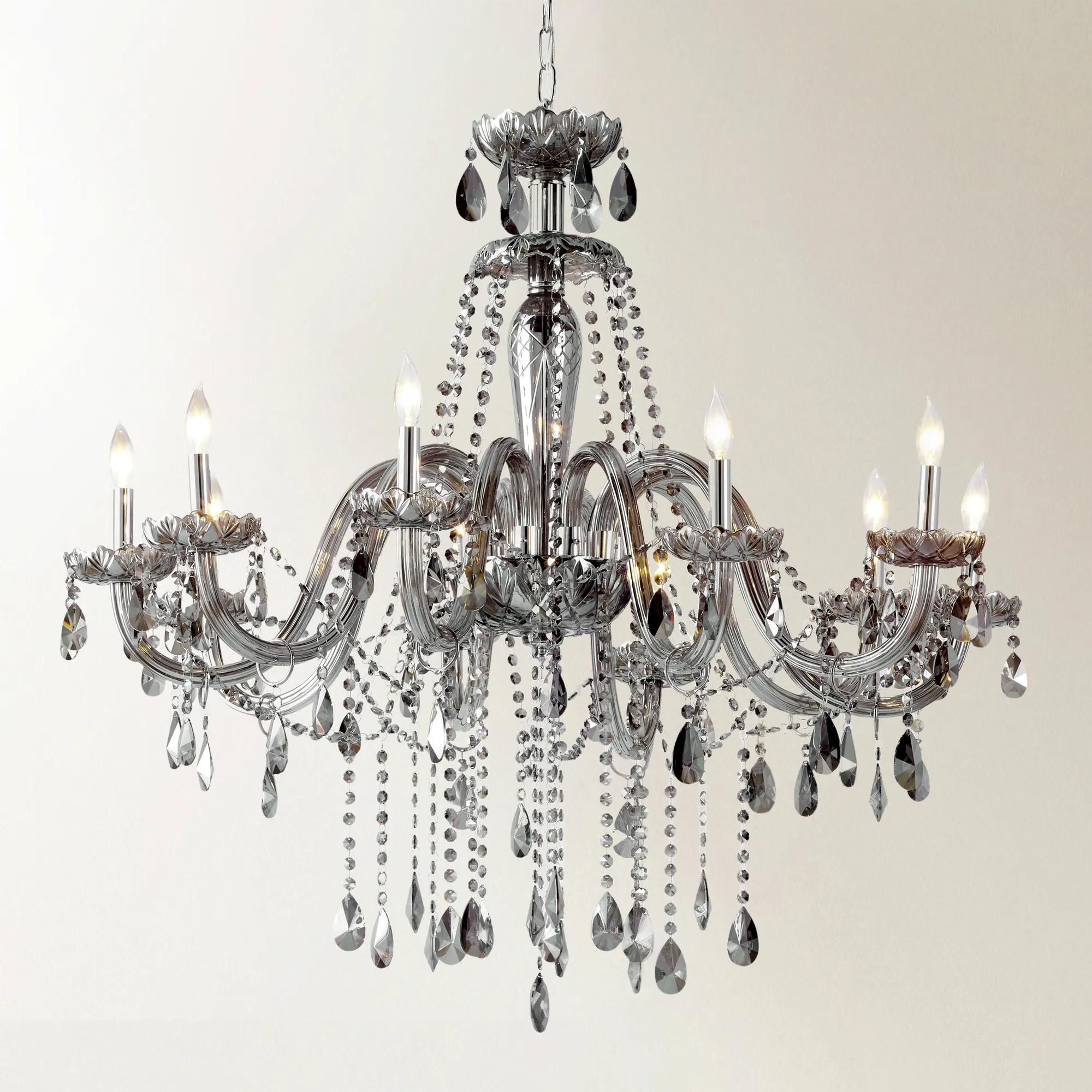
 Omni Chandelier 38.5" - Graphite$999
A dazzling chandelier featuring graphite faceted crystals and ten fluted glass arms with nickel hardware.
Add To Cart -
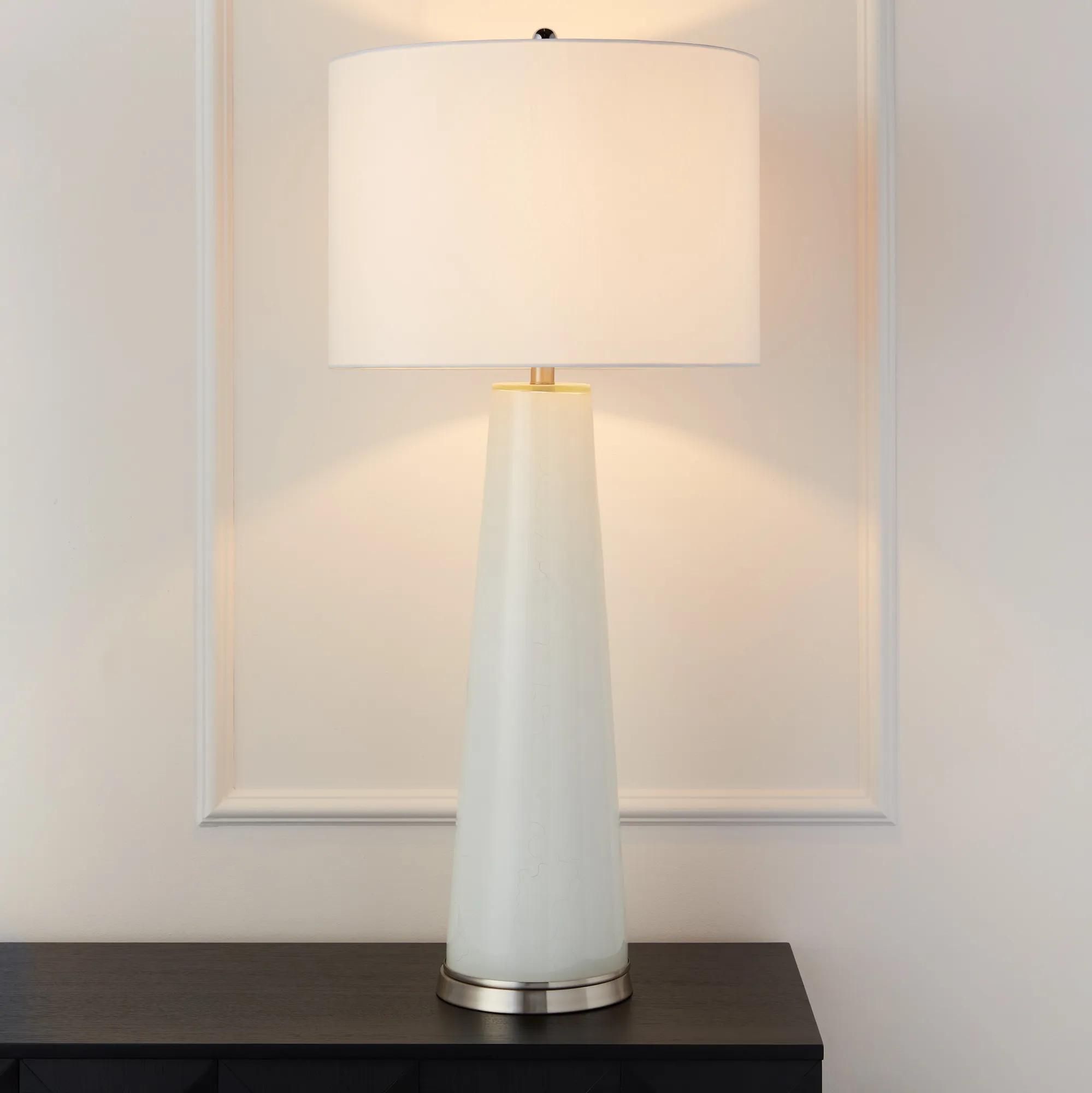 Century White Glass High Gloss Table Lamp 40"$299
A modern glass lamp with a high-gloss white interior and a crisp white drum shade.
Add To Cart -
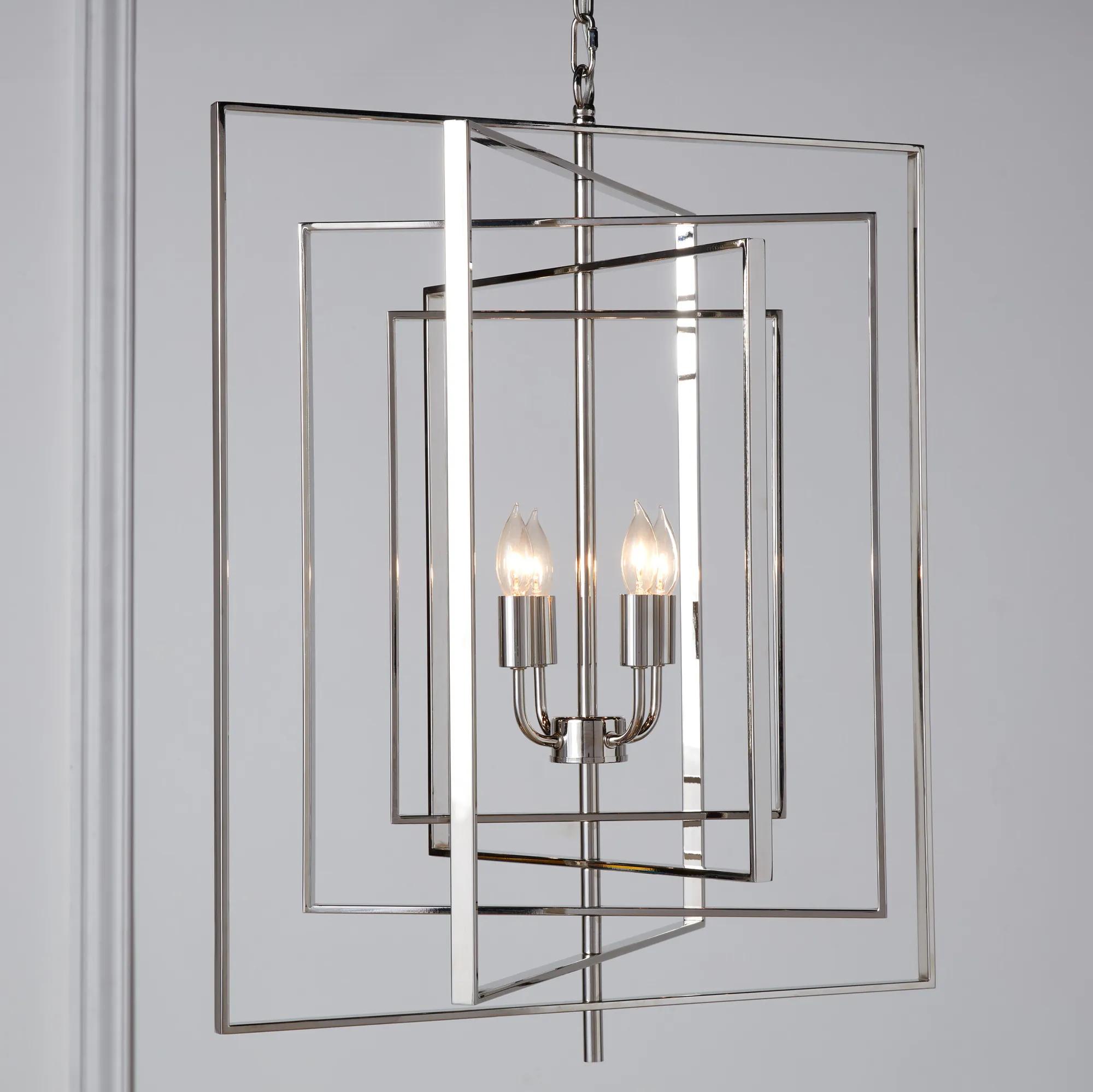
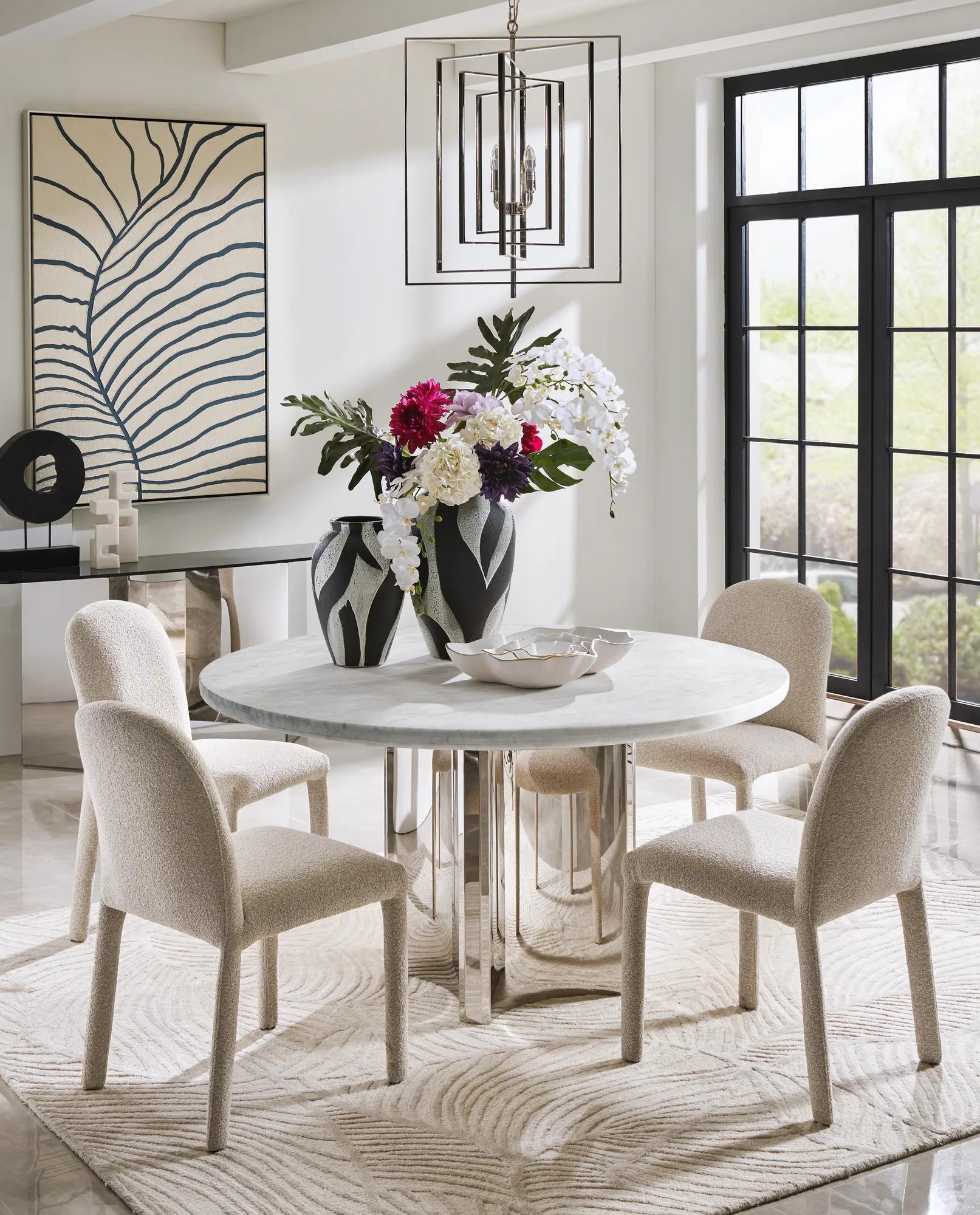 Hollis Chandelier$499
A polished nickel geometric chandelier with four lights, perfect for modern and minimal interiors.
Add To Cart -
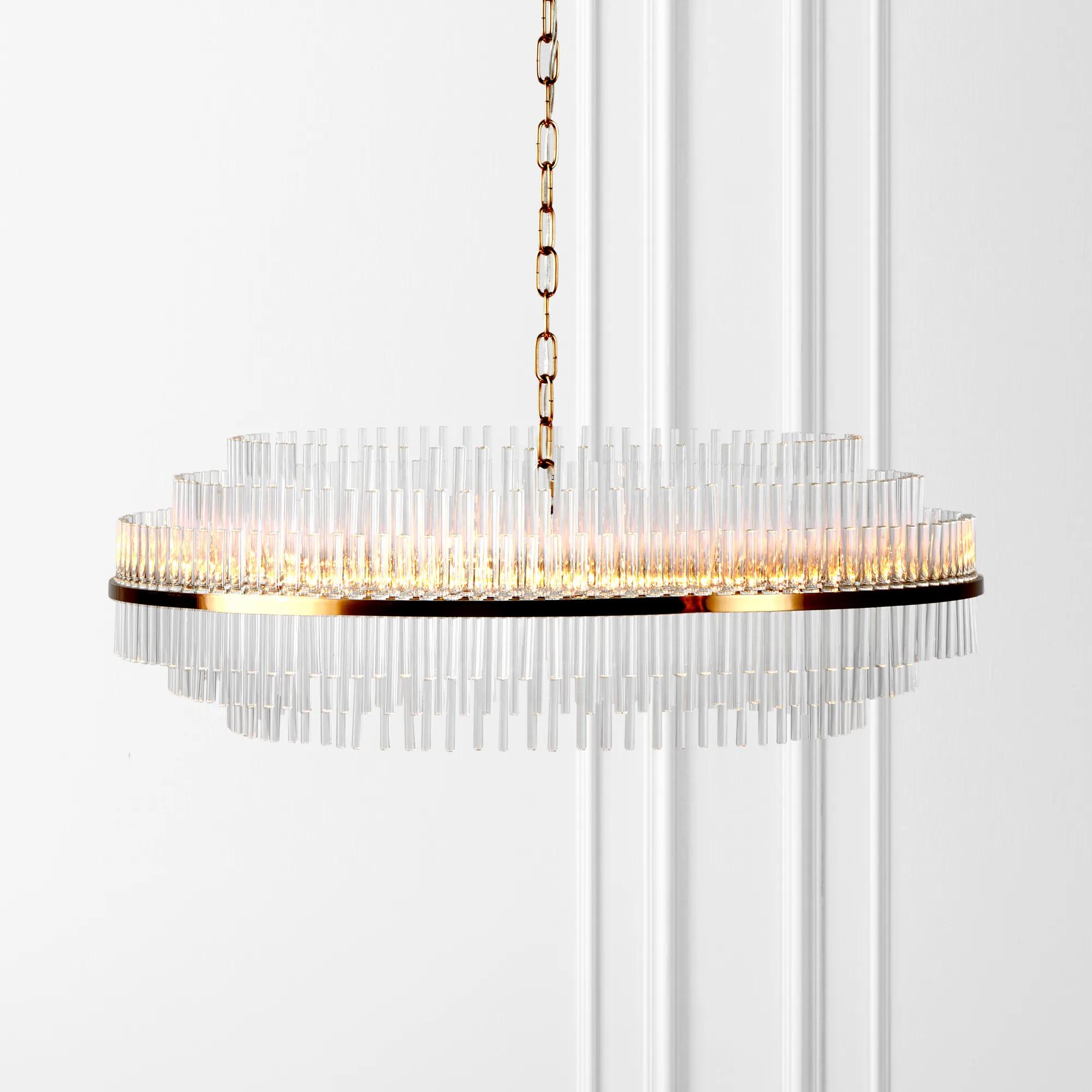
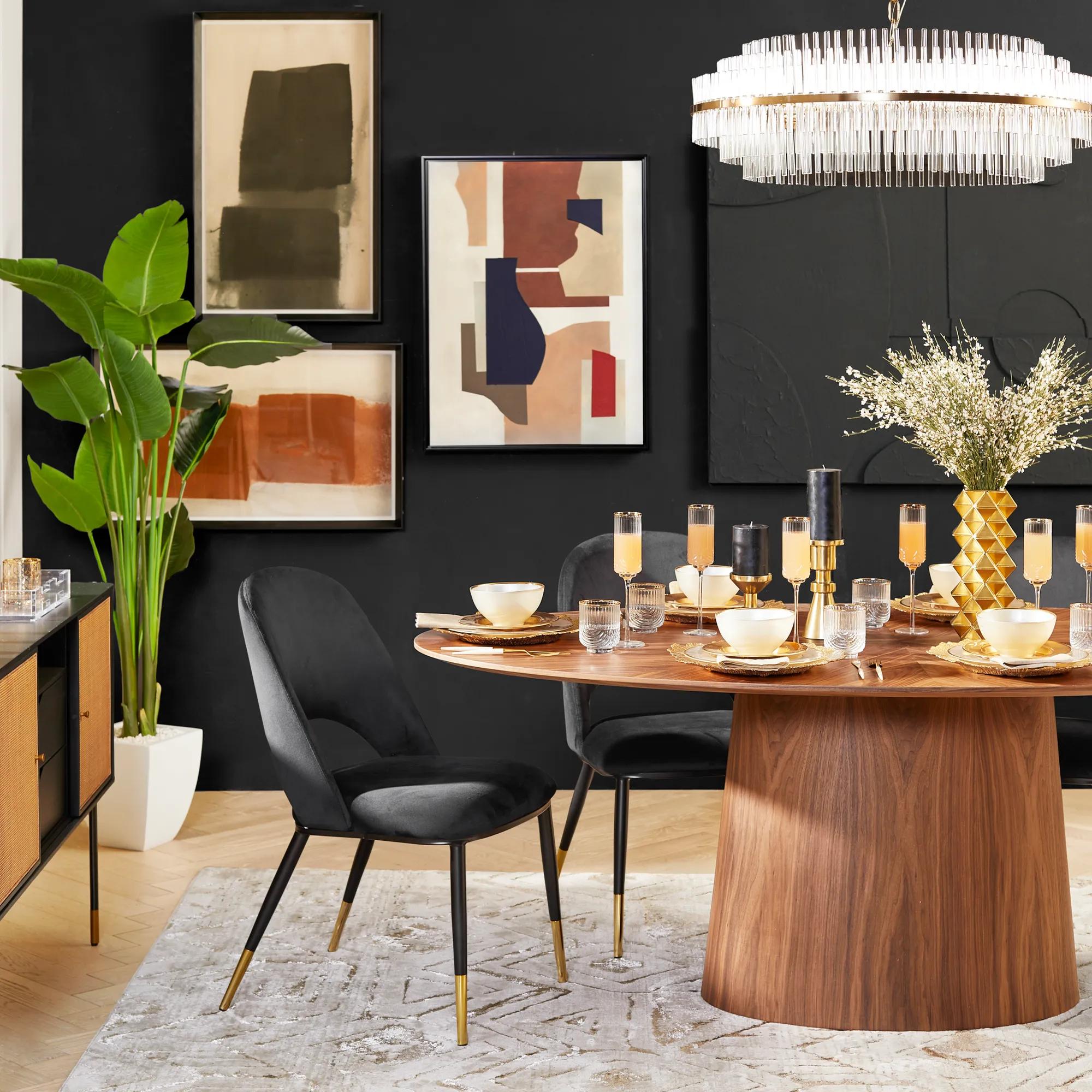 Renata Clear Glass Rod Chandelier 31"W x 10"H$799
A low-profile glass-rod chandelier with a brushed brass iron frame and eight dimmable candelabra lights.
Add To Cart -
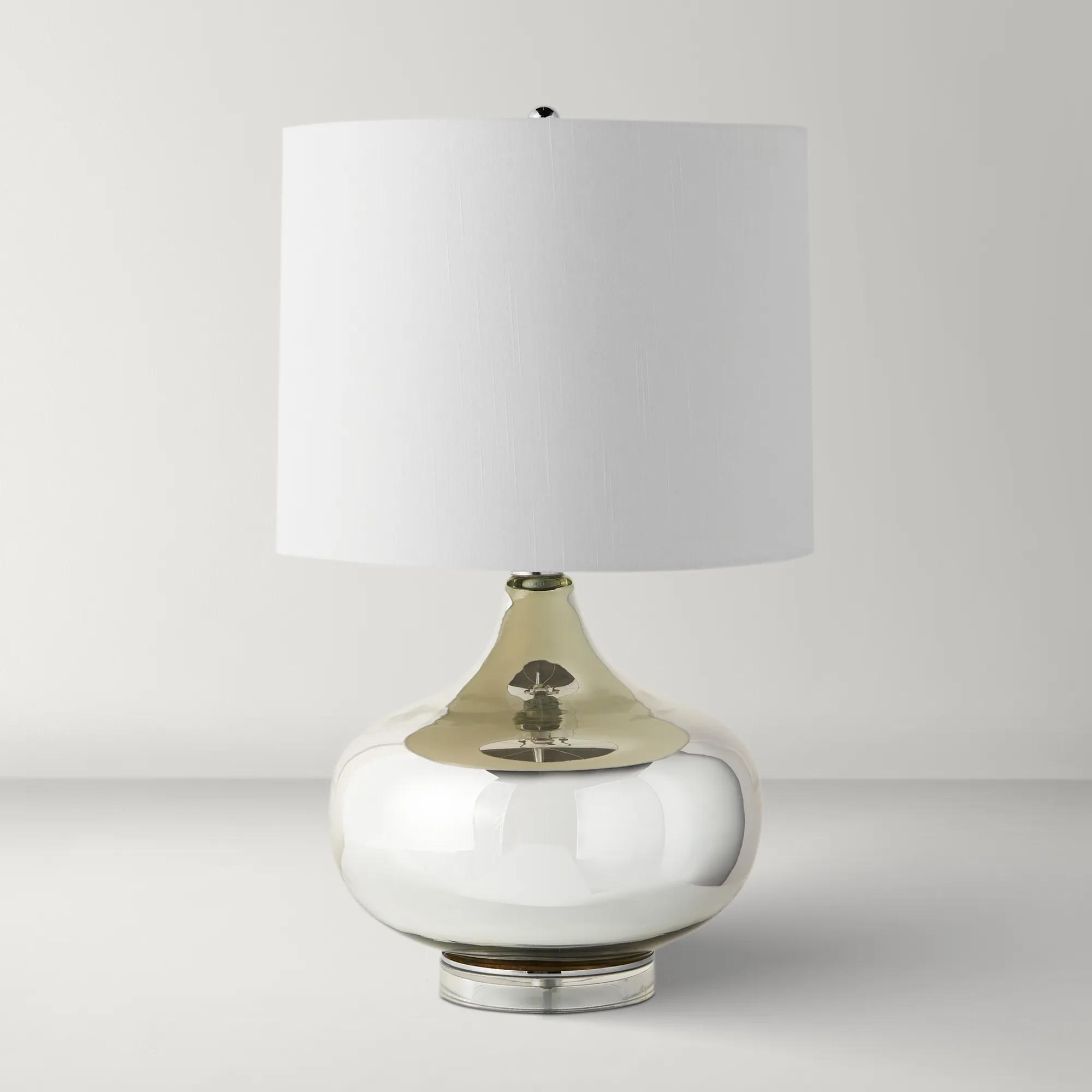 Sabrina Mirrored Silver Glass Table Lamp 27.5"$199
A contemporary lamp featuring a silver mirrored glass base, clear acrylic accents, and a white fabric shade.
Add To Cart -
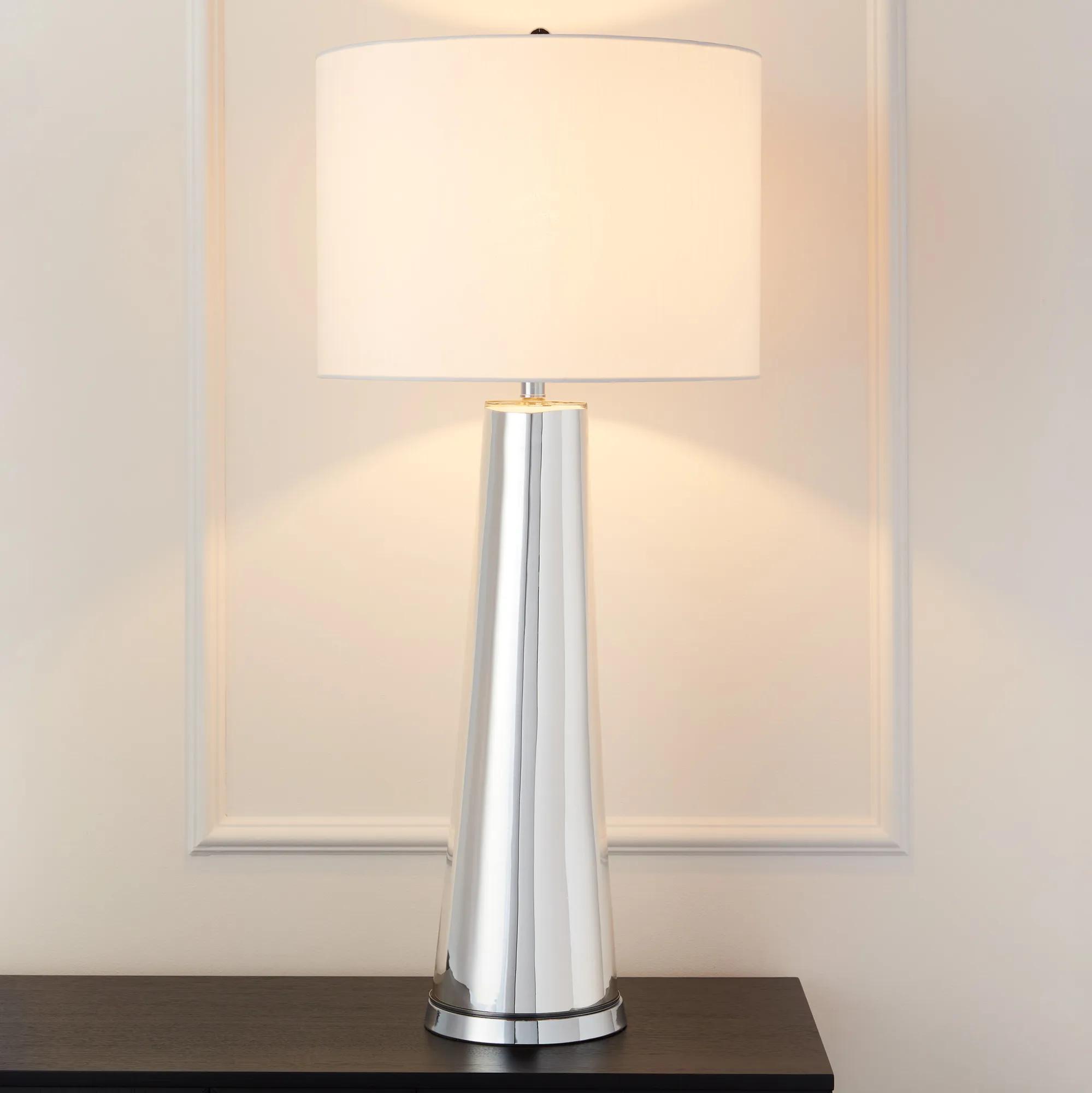 Century Silver Mirrored Glass Table Lamp 40"$299
A modern table lamp featuring a mirrored glass base and white drum shade with brushed chrome accents.
Add To Cart -
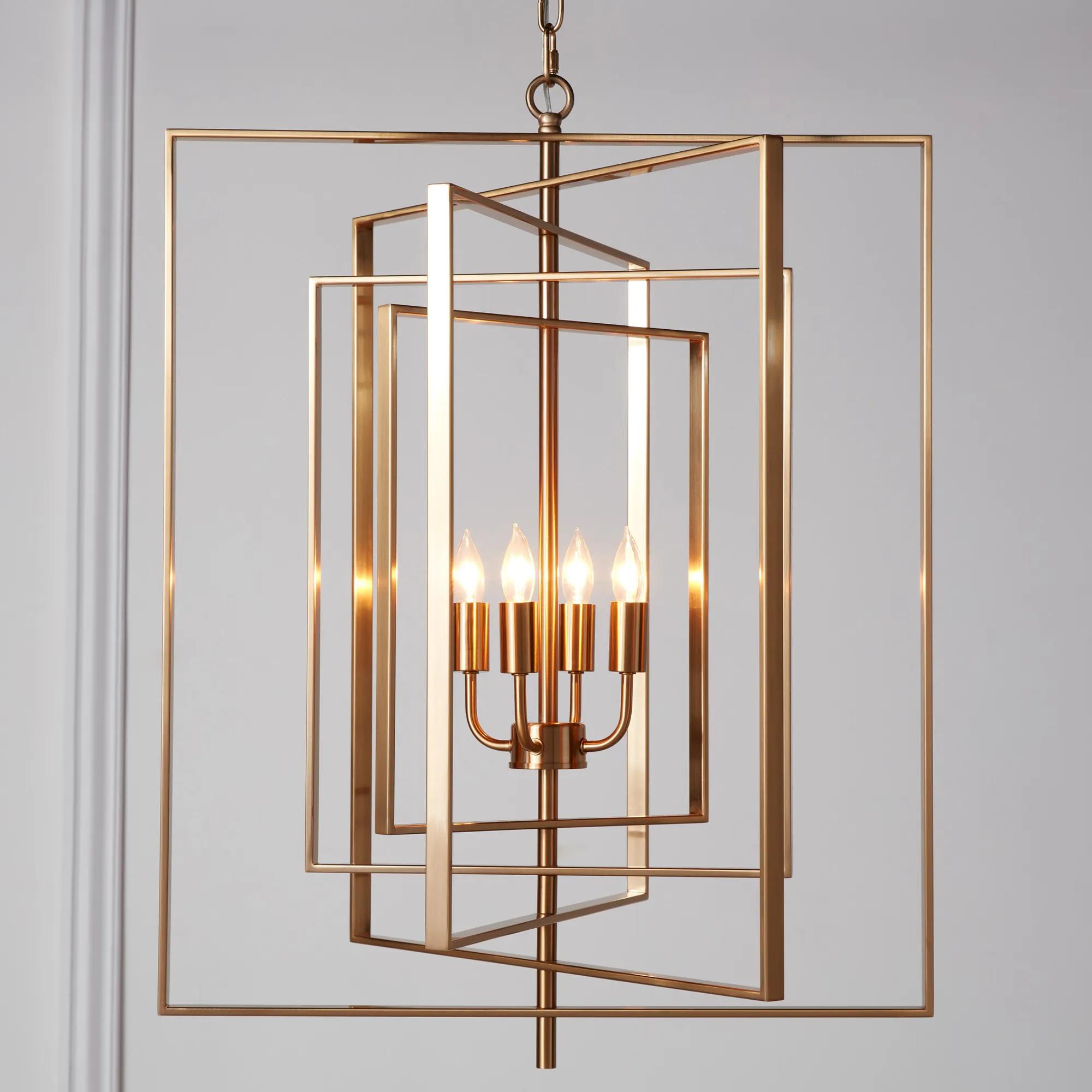 Hollis Chandelier$499
A geometric brass-finished iron chandelier with four lights, perfect for modern and minimal interiors.
Add To Cart -
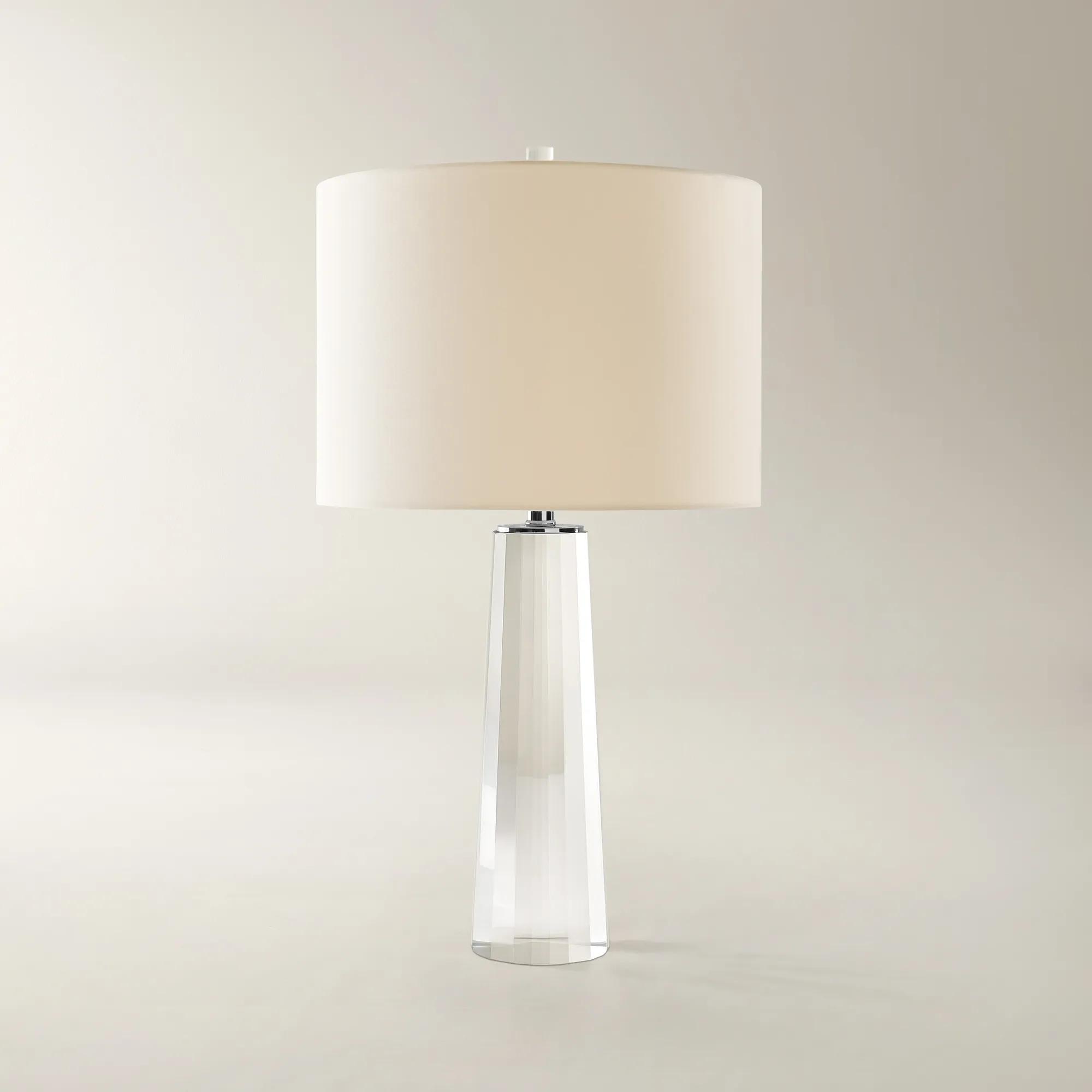
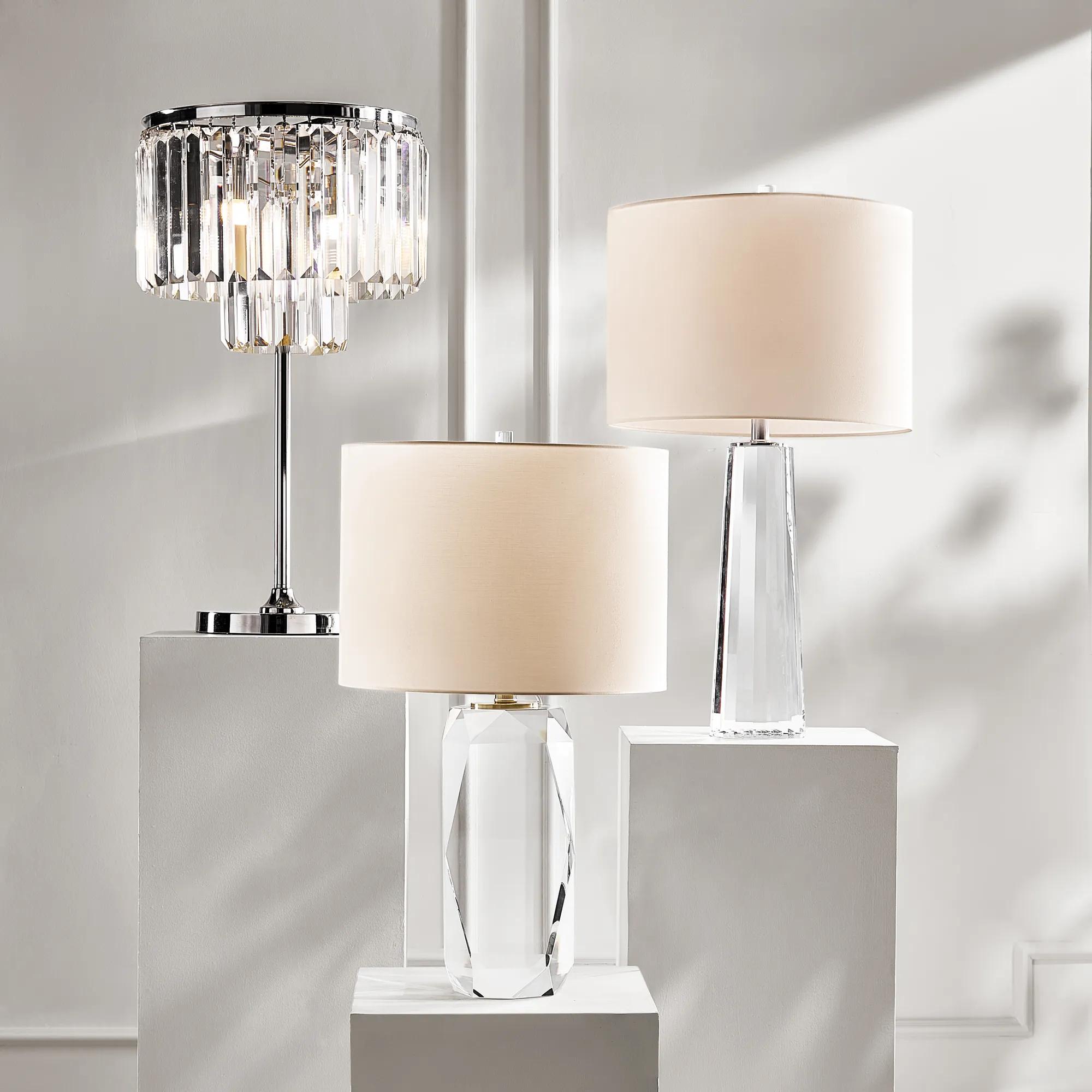 Sasha Faceted Clear K9 Crystal Table Lamp 28"$499
A refined table lamp featuring a clear crystal base, white drum shade, and polished nickel accents.
Add To Cart -
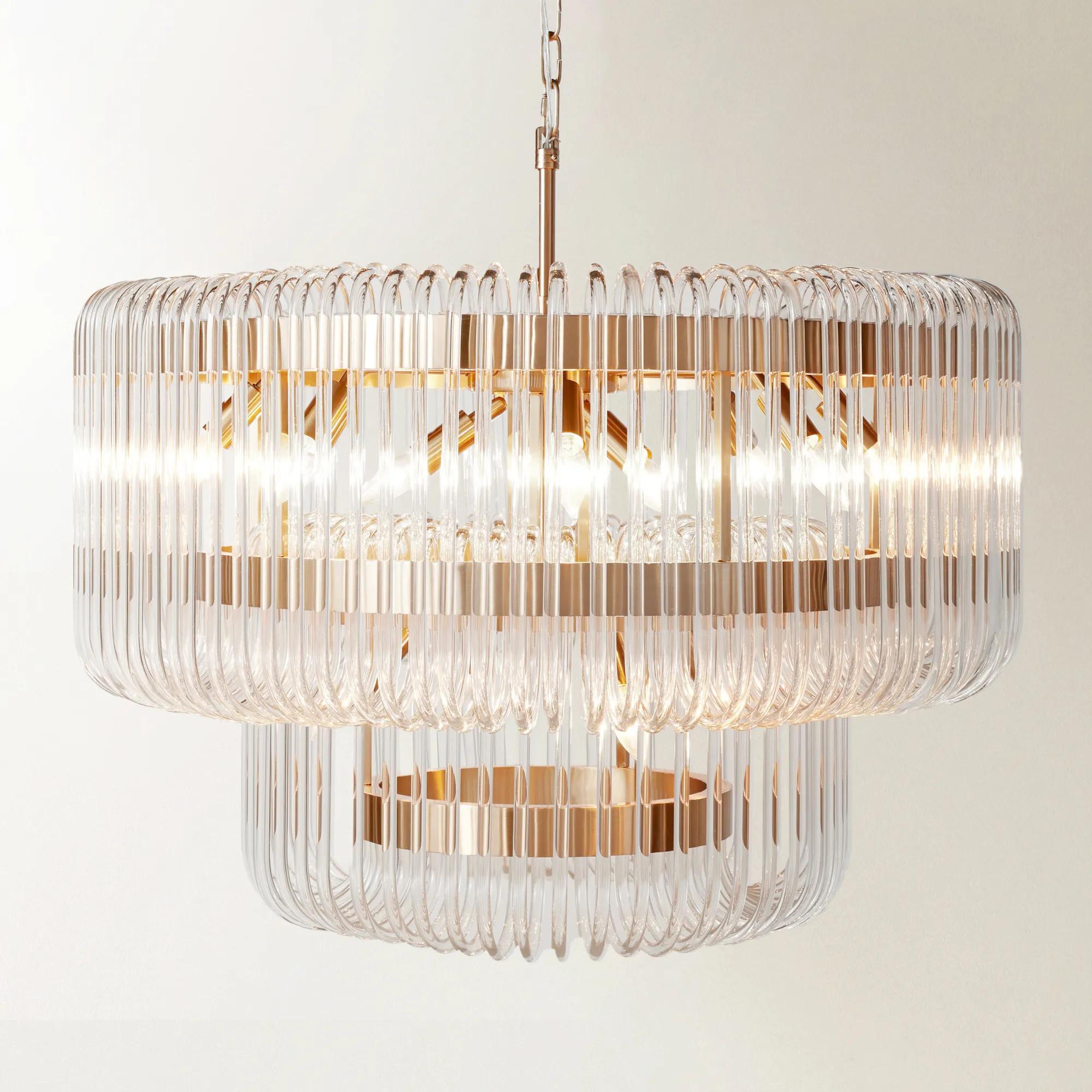 Allure Clear Curved Glass Chandelier 31.5"D x 27.75"H$1499
A chandelier featuring clear curved blown-glass rods, a brushed brass iron frame, and fifteen-light illumination.
Add To Cart -
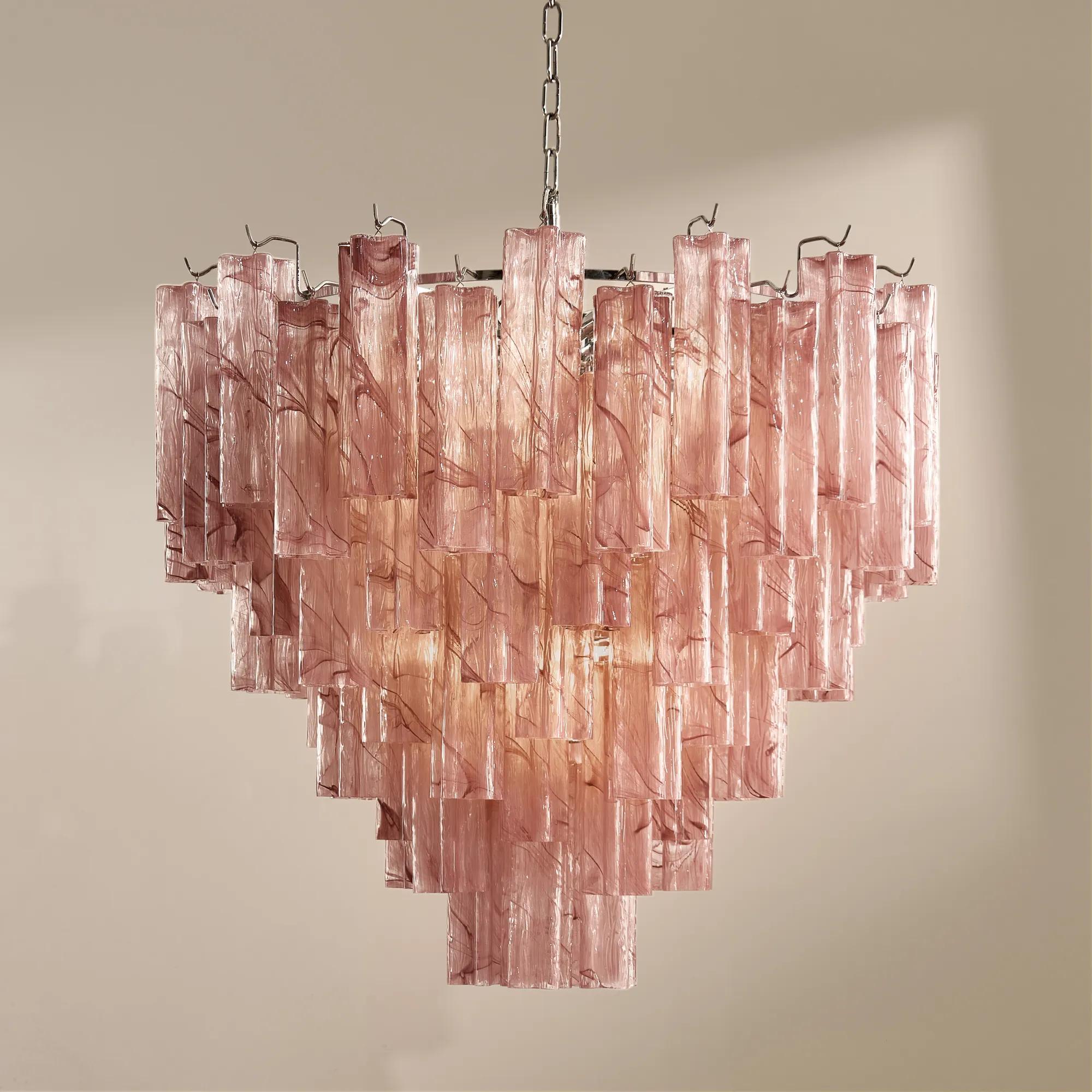 Elodie Rose Glass Chandelier 31.5"$1299
A handcrafted rose glass chandelier with swirled glass, polished chrome framing, and 21 dimmable candelabra lights.
Add To Cart -
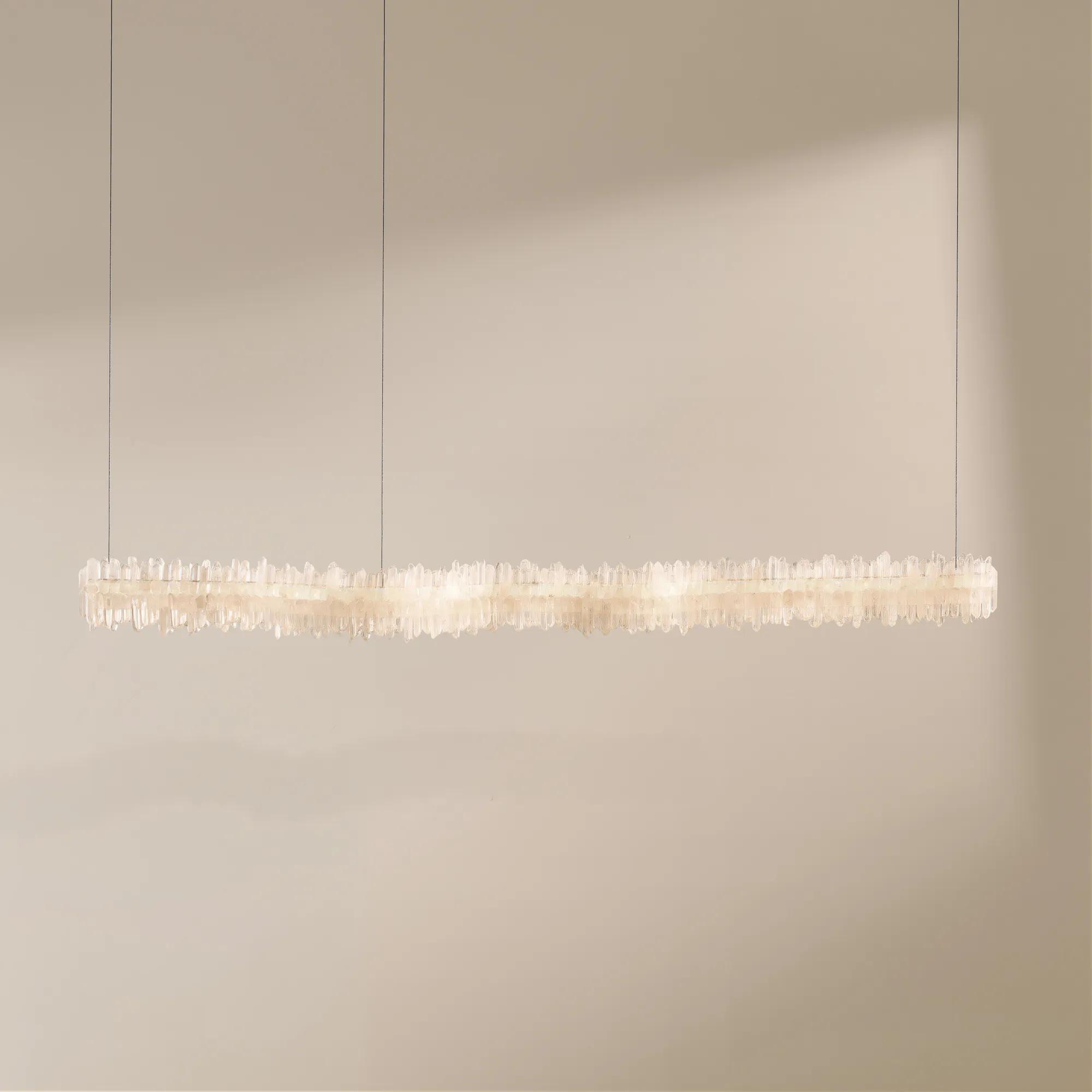 Stella Quartz Crystal LED Chandelier 47.25"$1899
A linear LED chandelier featuring natural raw quartz crystals and a polished rose gold metal frame.
Add To Cart -
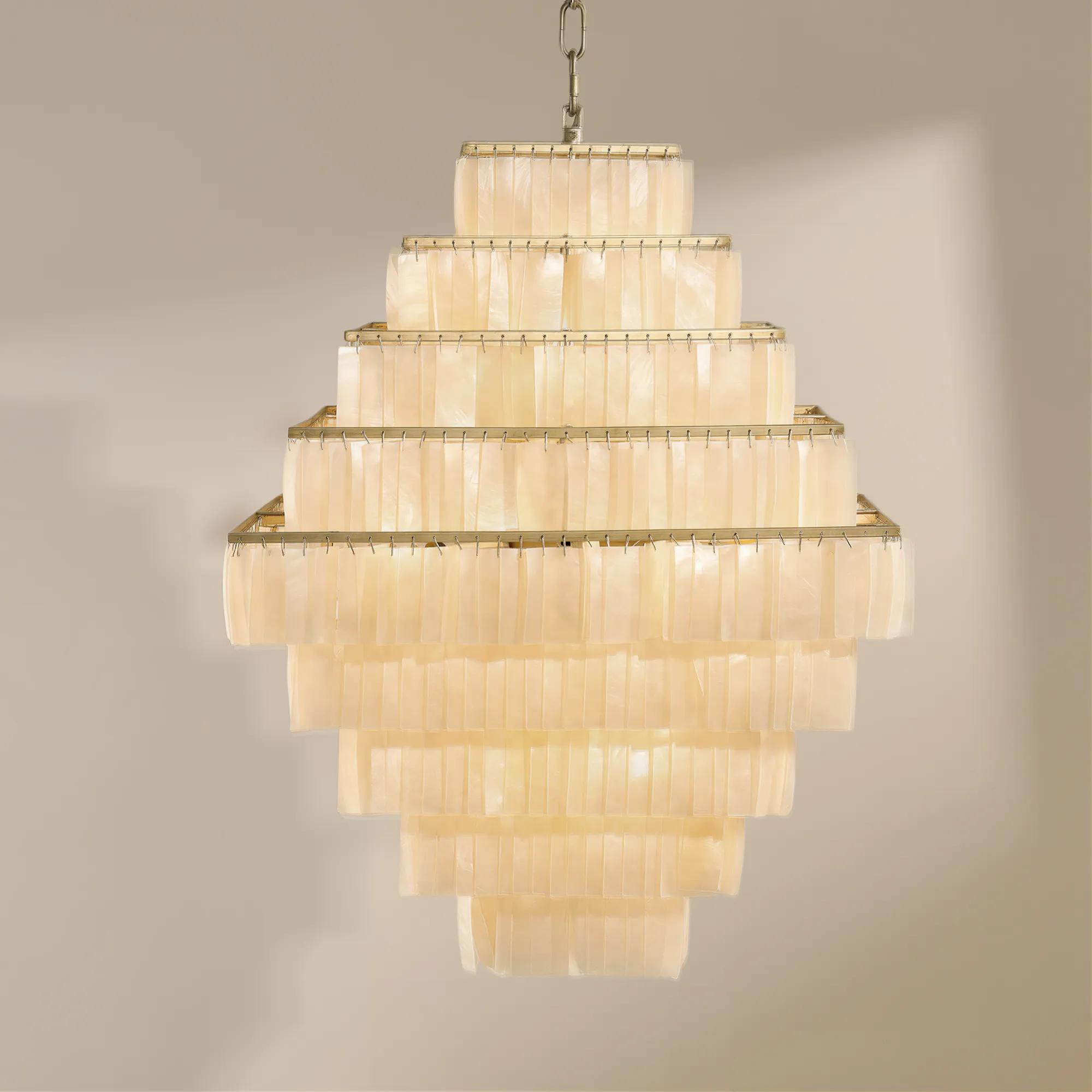 Soleil Capiz Shell Chandelier 25"$999
A modern capiz shell chandelier with 700 pearlescent shells, champagne-finished iron, and dimmable ambient lighting.
Add To Cart -

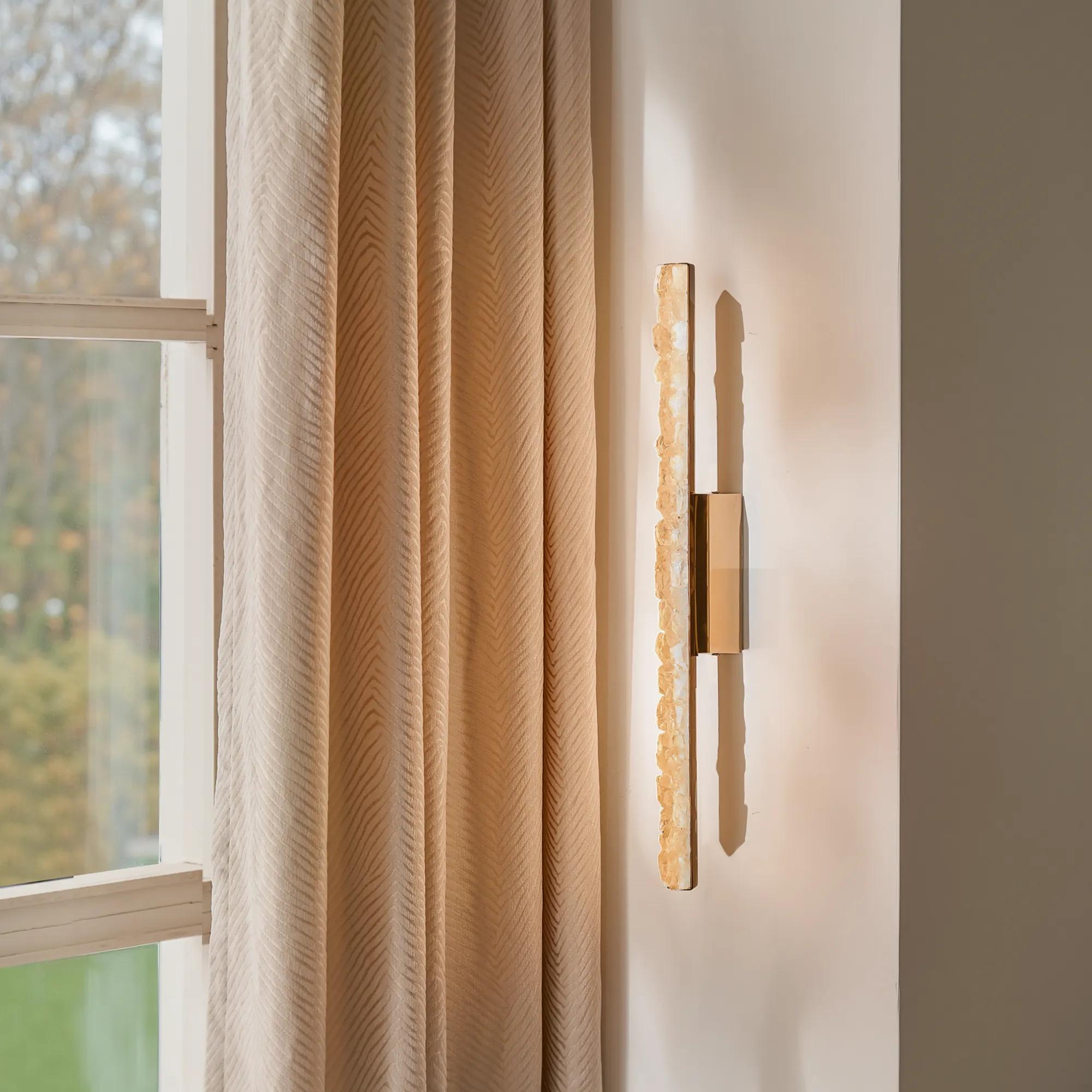 Demi LED Natural Quartz Crystal Wall Sconce 19.75"$229
An LED wall sconce featuring natural quartz crystals for an elegant, softly illuminated modern accent.
Add To Cart -
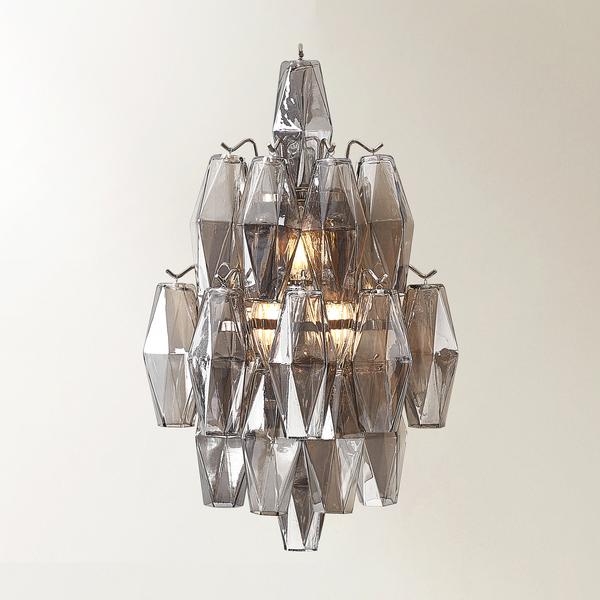
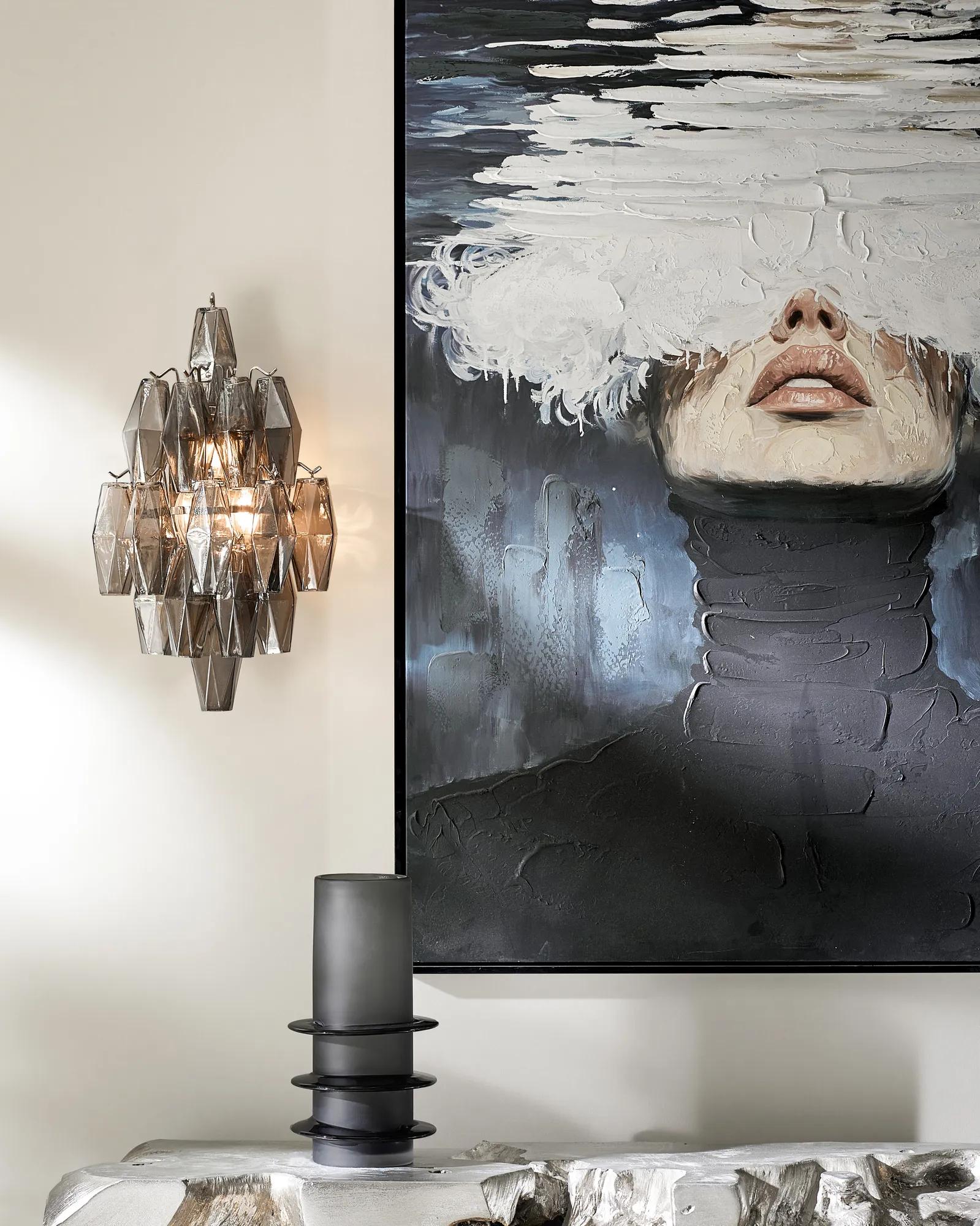 Cosima Glass Sconce 19.75" - Smoke$299
A sculptural sconce featuring hand-blown smoked gray glass and a polished nickel backplate for moody elegance.
Add To Cart -
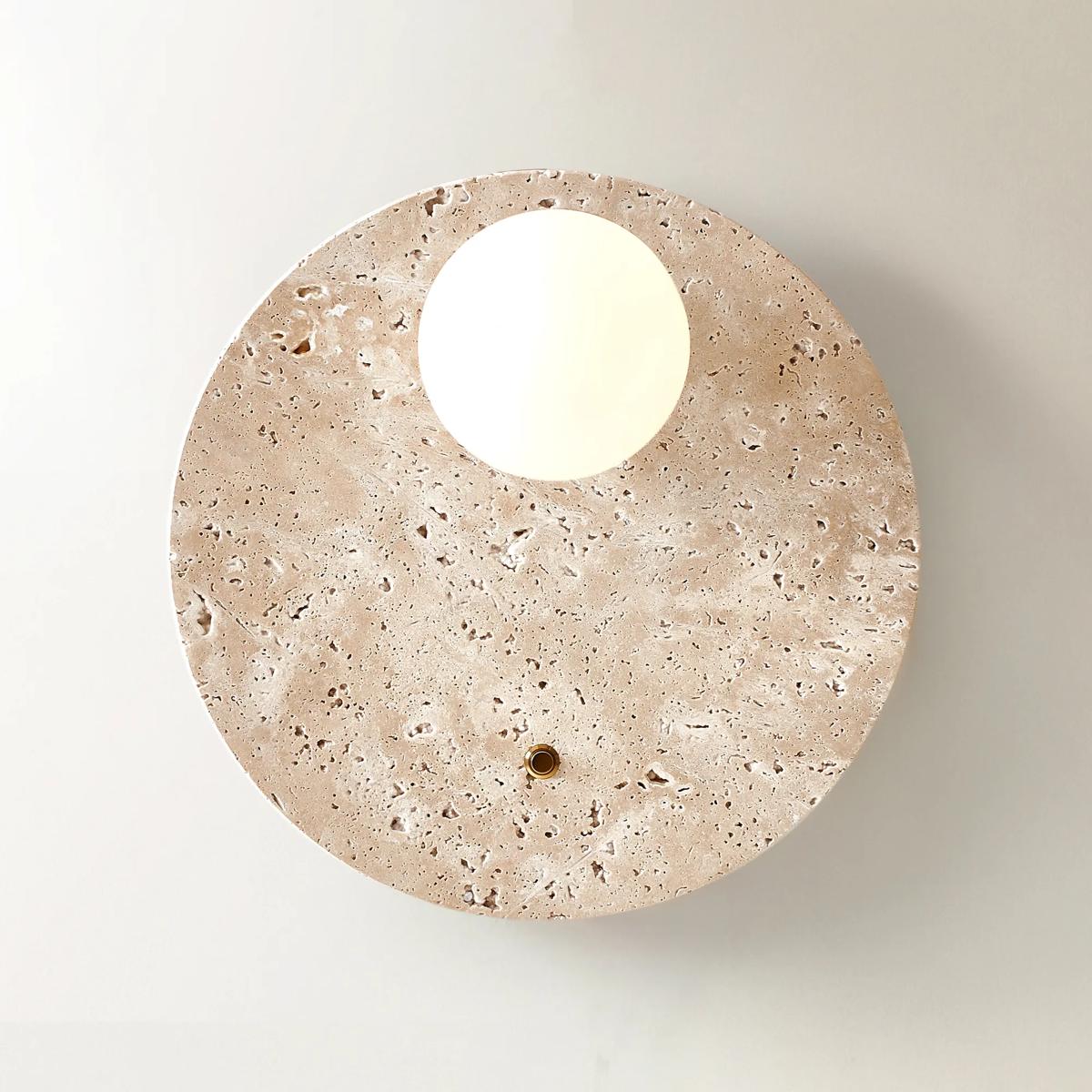
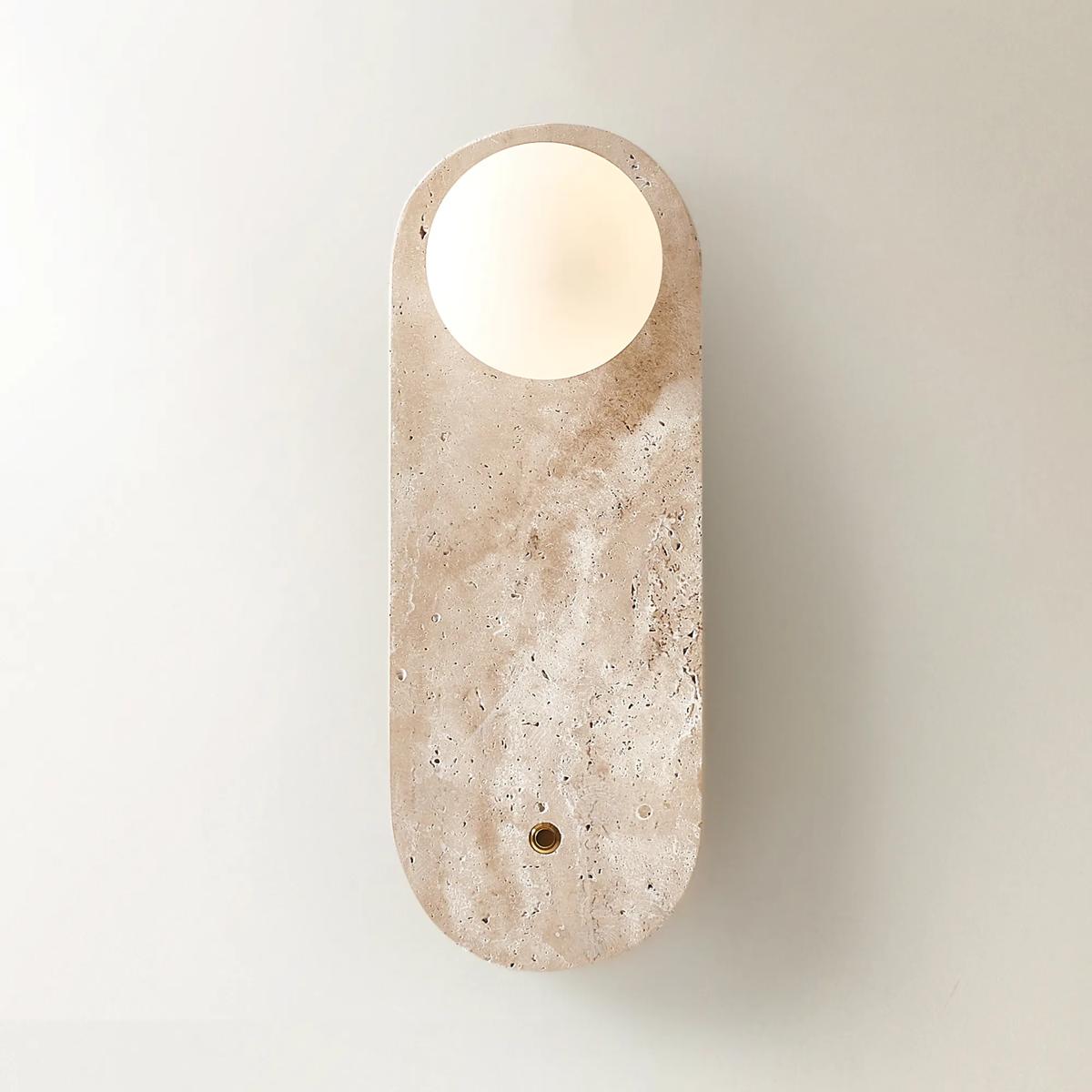
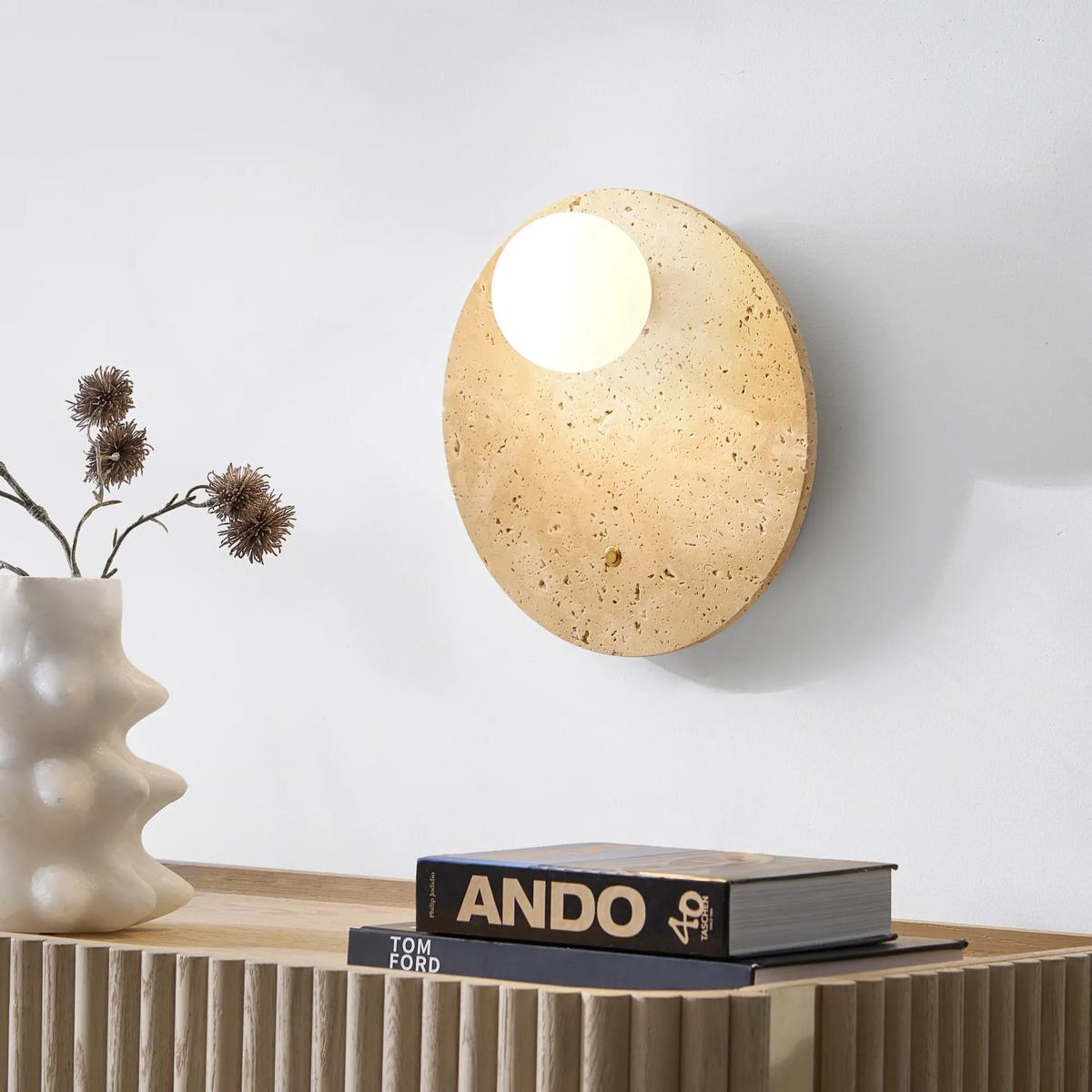 Eden Travertine Sconce 11.75"$149
A sculptural wall sconce crafted from genuine travertine and frosted glass for a softly diffused glow.
Add To Cart -

 Radiante LED Globe Chandelier 36" - Polished Gold$899
A polished gold LED globe chandelier bringing sculptural illumination and modern glamour to contemporary interiors.
Add To Cart -
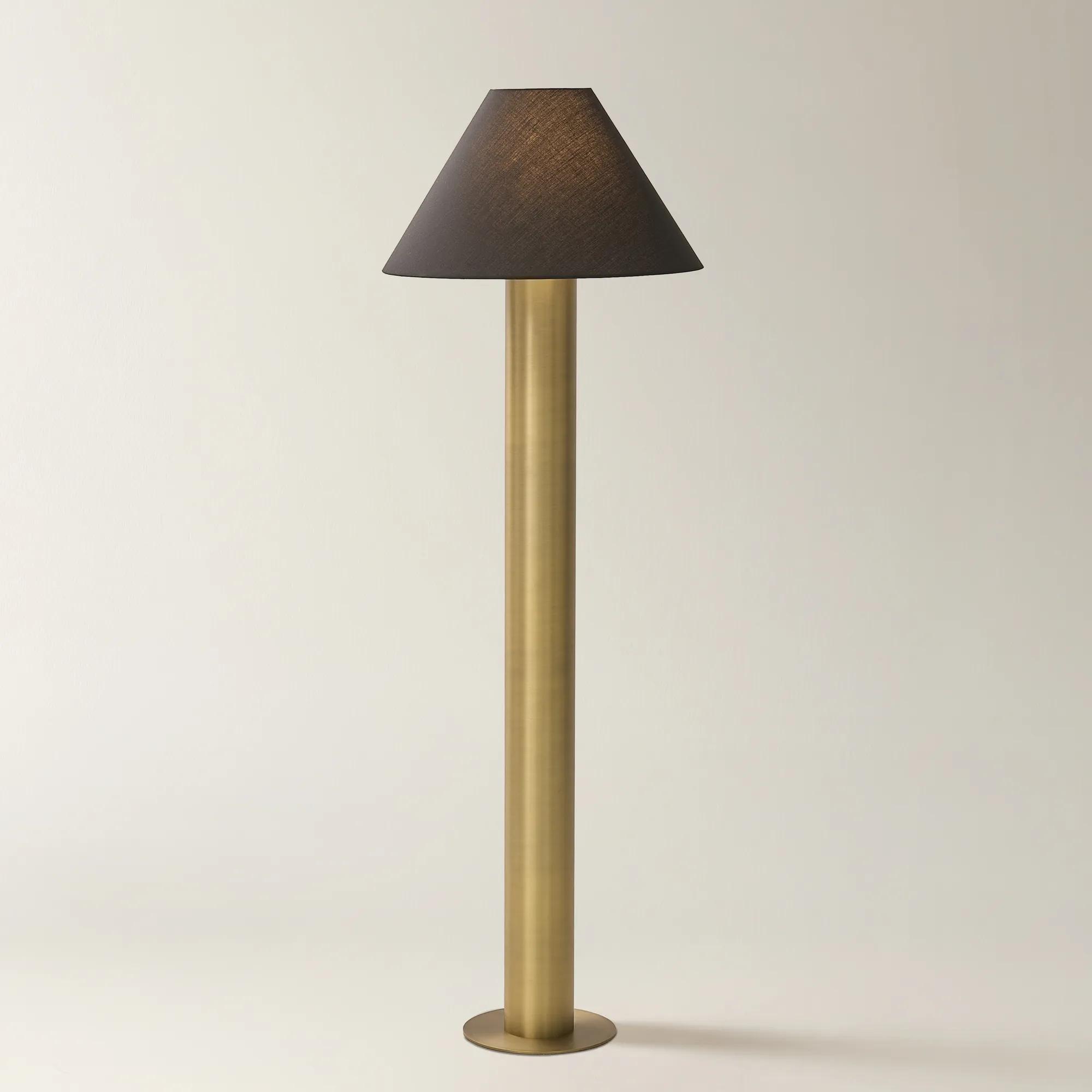
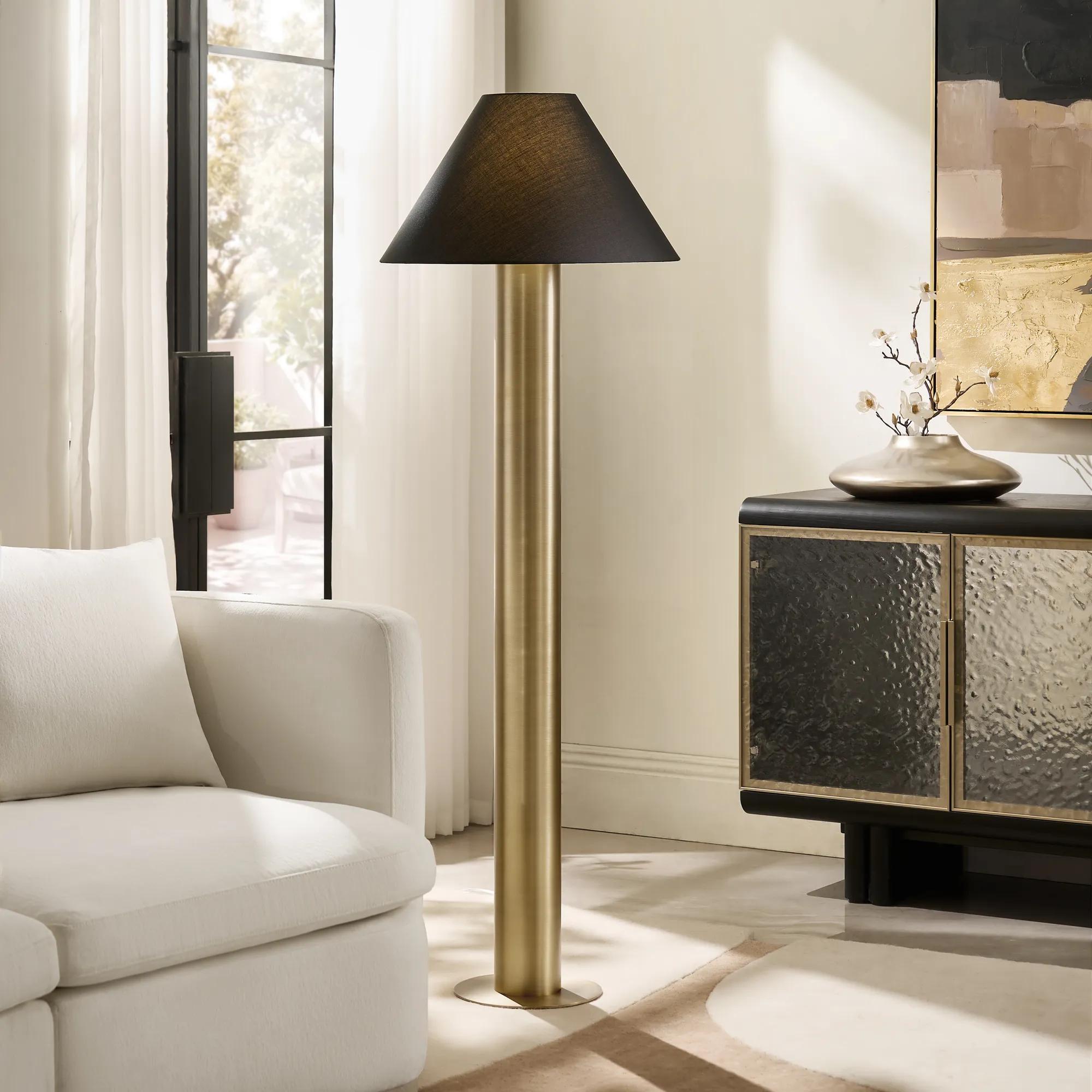 Tova Brushed Brass/Black Floor Lamp 60"$599
A sculptural brushed brass iron frame pairs with a tailored black cotton shade for modern, moody ambiance.
Add To Cart -
 Bolla LED Hand-Blown Glass Bubble Chandelier 60.25"$499
A hand-blown glass chandelier with clear bubbles, matte gold steel framing, and integrated warm LED illumination.
Add To Cart -
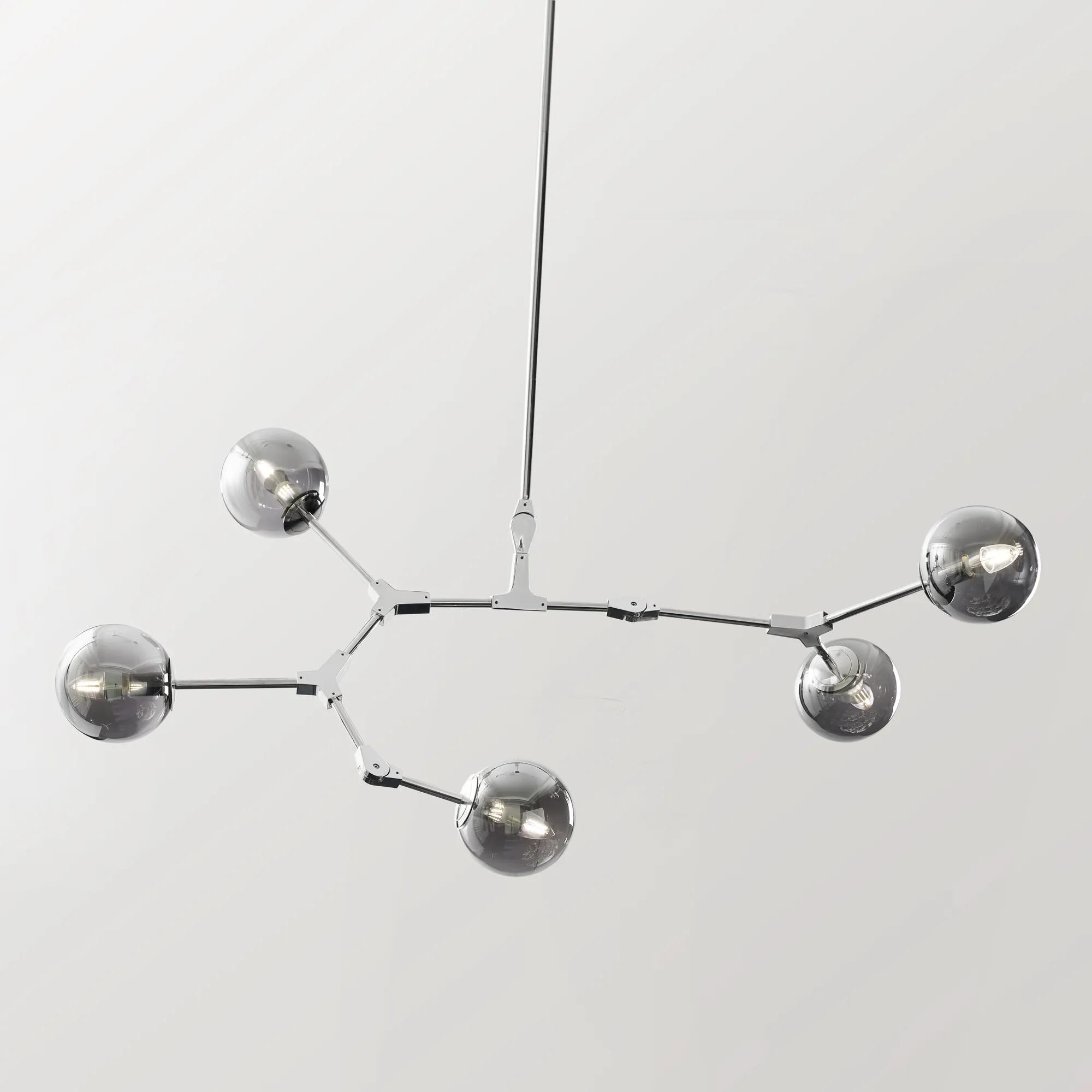
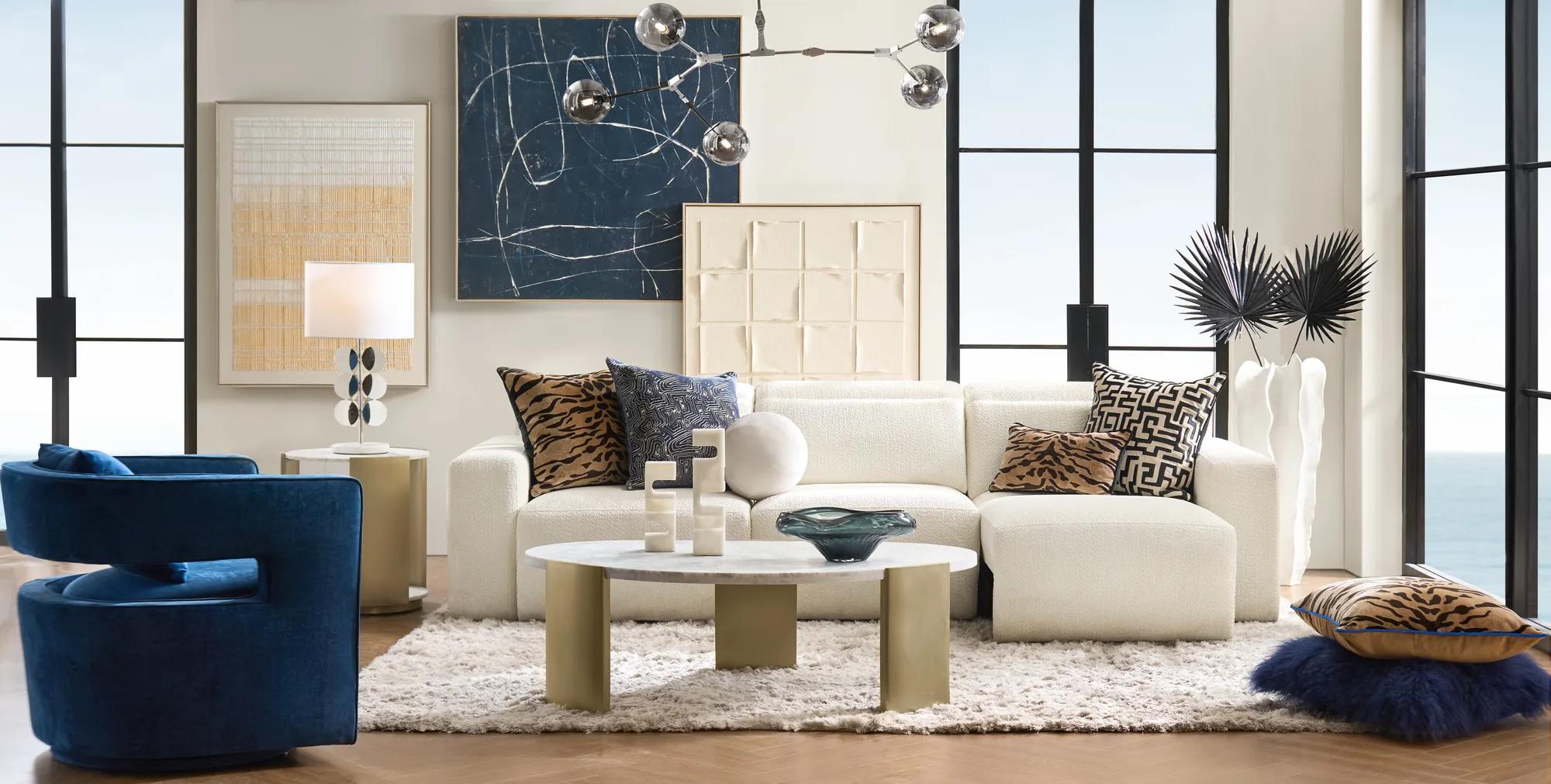 Axel Chandelier$499
A modern chandelier featuring polished nickel arms and smoked glass bulbs for striking, contemporary illumination.
Add To Cart -

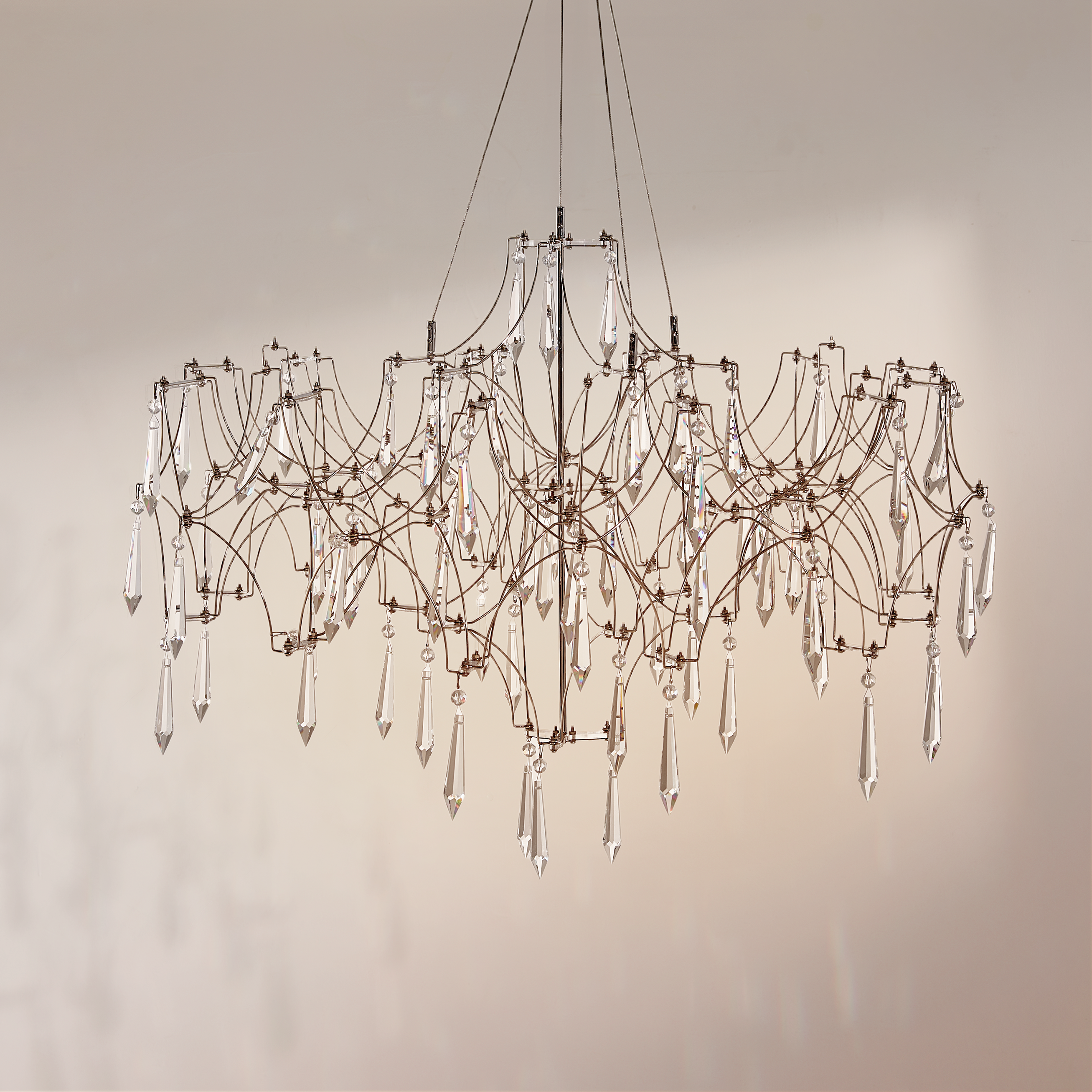 Moderne LED Clear Crystal Chandelier 24.5"W x 19.75"H$899
A clear crystal chandelier with faceted construction, polished nickel framing, and integrated warm LED illumination.
Add To Cart -

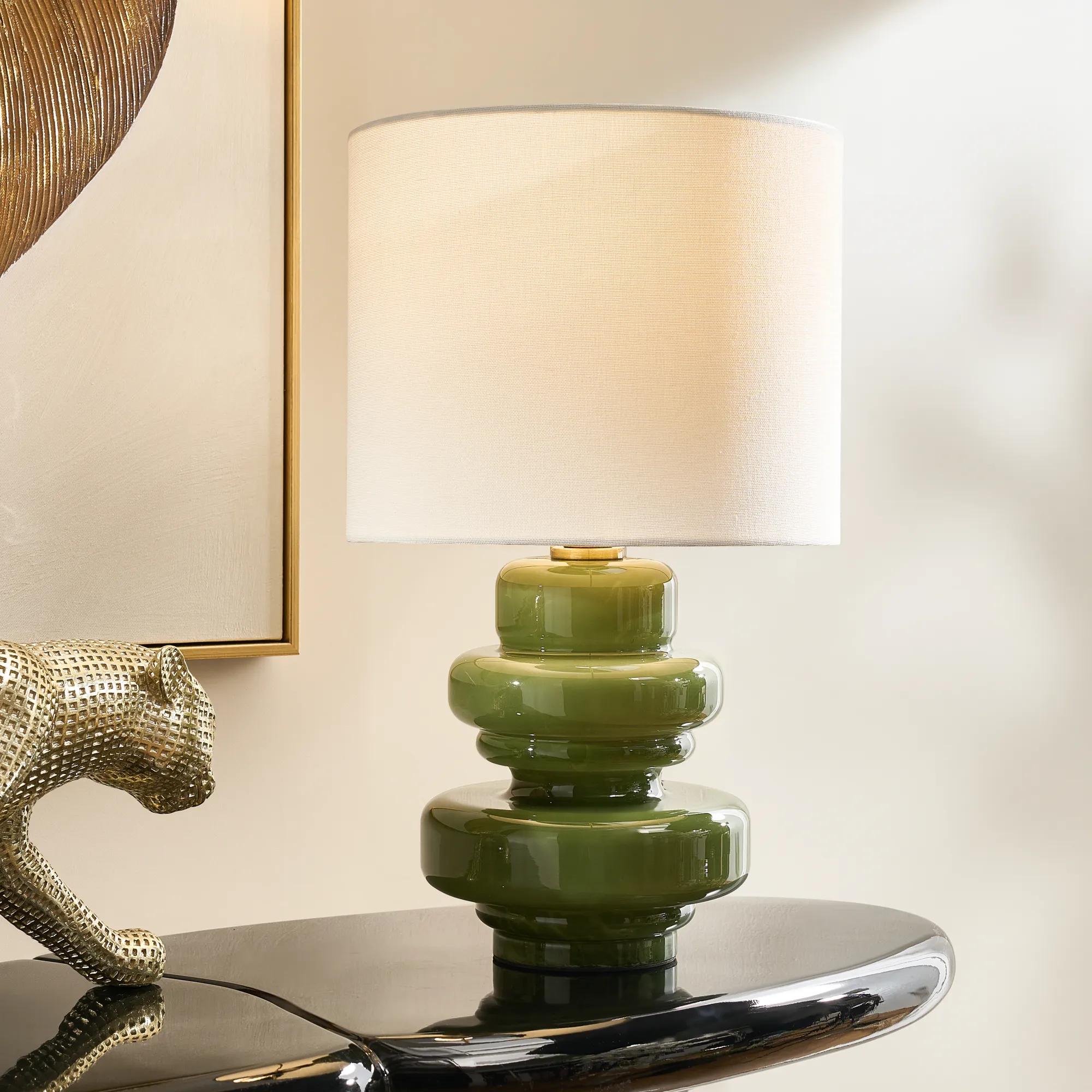 Edin Mouth Blown Pistachio Green Glass Table Lamp 17.5"$99
A sculptural table lamp featuring mouth-blown pistachio green glass and brushed nickel accents with an ivory linen shade.
Add To Cart -

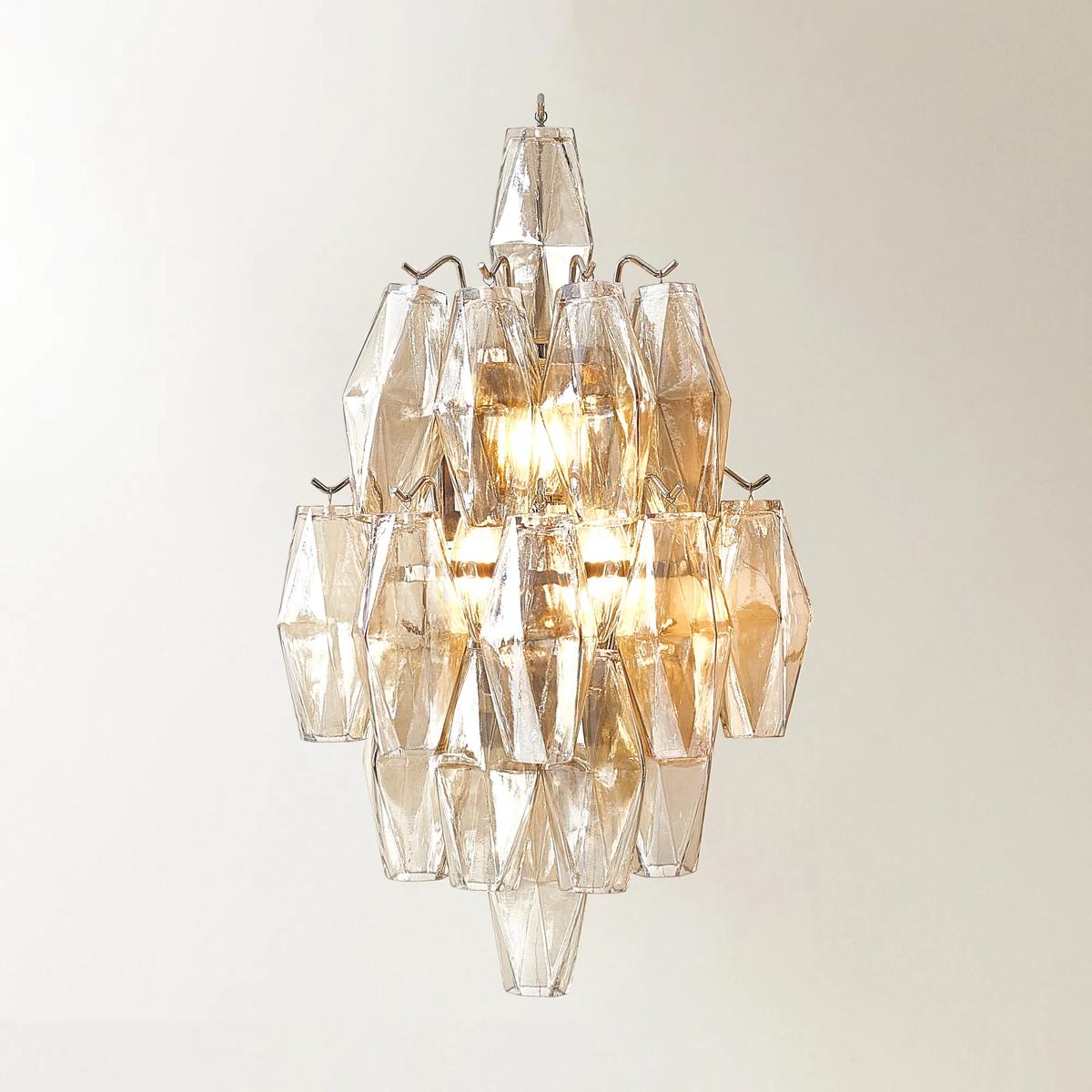
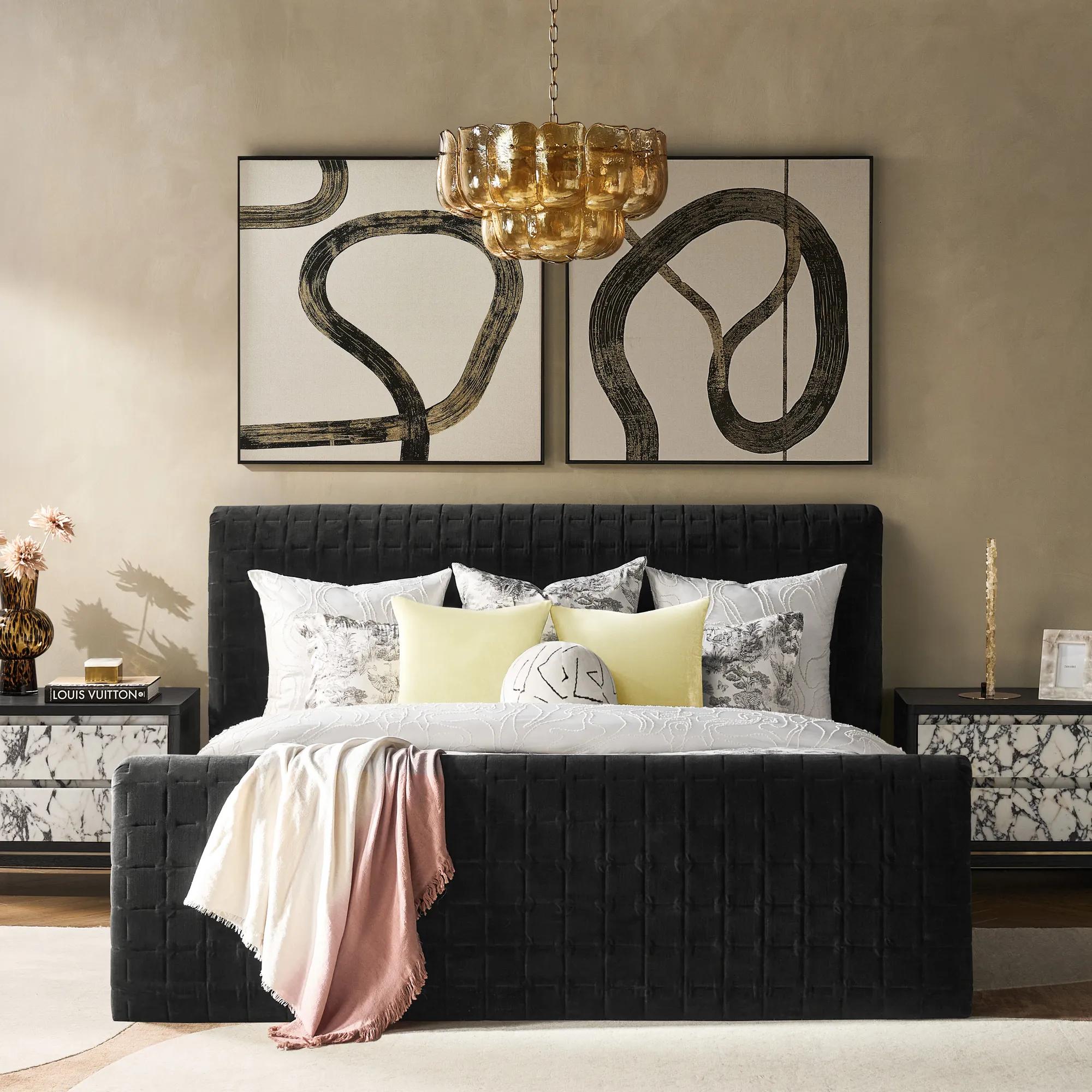 Ember Glow Amber Textured Glass Chandelier 24"$799
A chandelier with textured amber glass petals, brushed brass iron frame, and nine-light ambient illumination.
Add To Cart -

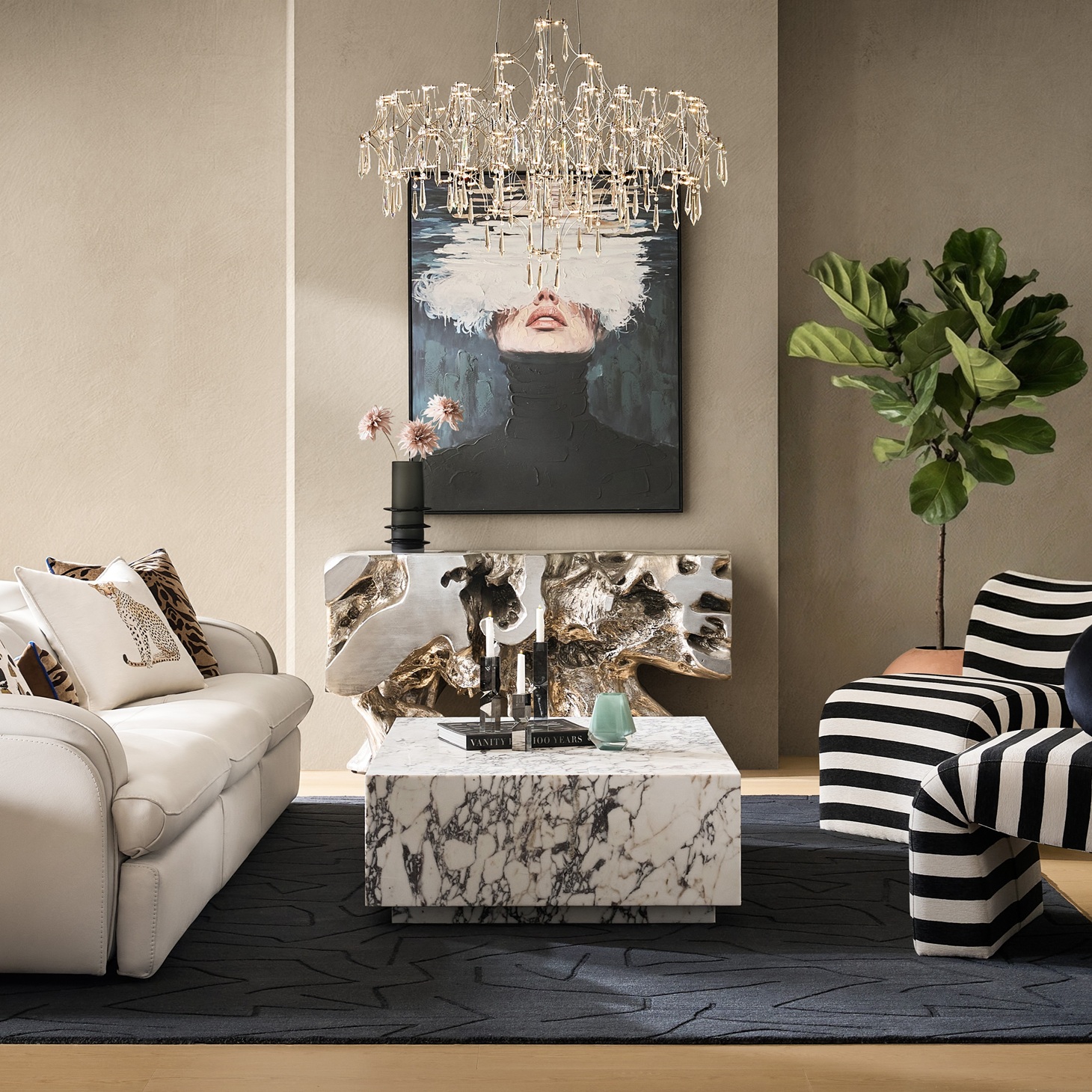 Moderne Grande LED Crystal Chandelier 35.75"W x 28.5"H$1899
A faceted crystal chandelier with polished nickel framing and integrated LED illumination for a modern glow.
Add To Cart

Modern Living Room Lighting Fixtures
Explore modern living room lighting fixtures that pair purposeful illumination with expressive silhouettes. Whether you’re creating an inviting ambient glow or seeking focused light for reading, consider how each fixture’s scale, shape, and placement will complement your furniture layout and bring depth and drama to the room.
Modern living room lighting fixtures give a space its visual rhythm: a luminous focal point above the seating area, a sculptural silhouette beside the sofa, a pool of light that makes a favorite chair feel like a private retreat. Their presence is architectural as well as atmospheric. A chandelier can draw attention to generous ceiling height, while a pendant with a clean, expressive profile can bring definition to an open living area without adding visual weight at floor level. Table lamps introduce intimacy and repetition, particularly when their proportions echo the furniture beneath them. A floor lamp can create a striking vertical line beside a low sofa or give an overlooked corner a more deliberate role in the room. Together, these forms make lighting feel like part of the composition rather than an accessory added after the furniture arrives. A layered approach to modern living room lighting allows the same setting to support conversation, reading, entertaining, and quiet evenings without asking a single fixture to do everything. Overhead illumination establishes the room’s overall brightness; lamps and sconces bring light closer to the people and objects that deserve attention. The effect is especially compelling in living rooms with art, textured upholstery, or distinctive architectural details, where carefully directed light reveals depth that a uniformly bright ceiling fixture can flatten. For a room centered on conversation, softer light around the seating arrangement creates an inviting sense of enclosure. Where reading is part of the daily ritual, a shaded lamp positioned beside the chair offers a more focused glow. In an open-plan home, lighting can also distinguish the living area from nearby dining or kitchen spaces while maintaining a shared design language. The result feels expressive but considered: a room with presence, dimension, and enough flexibility to move gracefully between everyday comfort and a more dressed-up gathering.
Material and finish determine how a fixture contributes to that atmosphere even before it is illuminated. Clear glass brings transparency and sparkle, allowing a substantial shape to feel visually lighter, while frosted or opal glass softens the appearance of the light source. Cut or faceted crystal introduces a more jewel-like character, catching daylight and adding flashes of brilliance after dark. Metal gives modern lighting its structure, whether through a slender stem, a sweeping arm, or a dramatic arrangement of intersecting lines. Polished finishes can echo mirrored furniture and glossy decorative accents; brushed surfaces offer a quieter sheen that sits beautifully alongside richly textured fabrics. Warm metallic tones lend depth to a neutral room, while blackened or dark finishes create a graphic outline against pale walls. Ceramic and stone bases bring another kind of presence, with surface variation and substantial forms that can balance the delicacy of a fabric shade. These contrasts are particularly effective in living rooms where velvet, glass, wood, and metal already share the space. Rather than matching every finish exactly, a repeated undertone or shape can give the arrangement coherence. A curved lamp base might complement rounded seating, while an angular fixture can sharpen the outline of a room filled with soft upholstery. Scale matters just as much as finish. A broad sectional and expansive coffee table can support a fixture with a more generous silhouette; a compact sitting room may benefit from an open framework or a slender profile that preserves sightlines. Shade dimensions also affect the balance of a table lamp with its supporting surface, especially on narrow end tables where space for a book or drink still matters. Sculptural lighting feels most assured when it has room to be seen, without crowding neighboring artwork or competing with every decorative object. It becomes a focal point with purpose, adding artistry while remaining connected to the way the room is furnished and used.
Beautiful lighting also depends on details that become apparent through daily use. The height of a shade, the direction of an opening, and the visibility of a bulb all influence comfort from a seated position. A fixture that looks magnificent from the doorway should remain pleasing from the sofa, without exposing an intense light source at eye level. Television screens, glass tabletops, and mirrors can reflect bright bulbs, so placement deserves as much attention as the fixture’s appearance. Fabric shades and diffusers can temper brightness, while adjustable designs can direct illumination toward a page or away from a screen. Bulb compatibility, maximum wattage, and socket requirements belong alongside dimensions when considering a fixture; integrated LED designs have their own specifications for light output, color temperature, and serviceability. Warm-white light often complements a relaxed living space, and consistent color temperatures across nearby fixtures help the room feel composed rather than visually disjointed. Dimming offers further flexibility where the fixture, light source, and control are compatible. Practical fit includes the footprint of a floor lamp, the reach of an arched arm, the location of an outlet, and adequate clearance around a suspended fixture. Wall-mounted and hardwired lighting also call for appropriate electrical connections and installation by a qualified professional. For households with children or pets, a stable base and thoughtful cord placement are particularly valuable, especially beside busy walkways. Durable construction, secure components, and finishes suited to regular care help preserve the fixture’s appearance over time. Maintenance should follow the manufacturer’s instructions, with power switched off and bulbs allowed to cool before cleaning. Gentle dusting with a soft cloth is often preferable to abrasive cleaners, which may damage plated metal, delicate coatings, or decorative surfaces. Glass, crystal, stone, and fabric can require different care, making material-specific directions essential. With these details considered, a lighting fixture offers more than visual impact: it brings lasting comfort, useful illumination, and a distinctive artistic presence to the room where so much of home life unfolds.
FAQs
Modern living room lighting fixtures pair sculptural forms with expressive details. Look for geometric silhouettes, fluid curves, or artful arrangements that feel as considered as the furniture around them. Whether sleek or richly embellished, the defining quality is a confident design that makes lighting part of the room’s visual story.
Let the silhouette guide your choice. A chandelier can introduce an intricate composition through branching arms or cascading elements, while a pendant often makes its statement through one distinctive form. Either can feel thoroughly modern when its shape echoes—or deliberately contrasts with—the room’s furnishings.
Mixed finishes can create a richly composed interior. Establish one dominant finish, then introduce a contrasting accent with intention. Warm metallic tones offer an opulent counterpoint to dark finishes, while polished and matte surfaces create textural tension. Repeat a finish in decorative accessories to give the combination a cohesive rhythm.
Treat table lamps and floor lamps as sculptural pieces within your living room composition. Pair an expressive lamp base with restrained accessories, or place a graceful floor lamp beside a boldly upholstered chair. Shared curves, colors, or finishes can connect the arrangement without making every detail match.
Choose a visual relationship rather than an exact match. Curved lighting silhouettes can echo a rounded sofa, while angular fixtures create a striking contrast with sumptuous upholstery. If furniture carries a dramatic pattern, consider lighting with a more defined, uninterrupted form so each element retains its own presence.