Modern Transitional Chandeliers
Modern Transitional Chandeliers
-
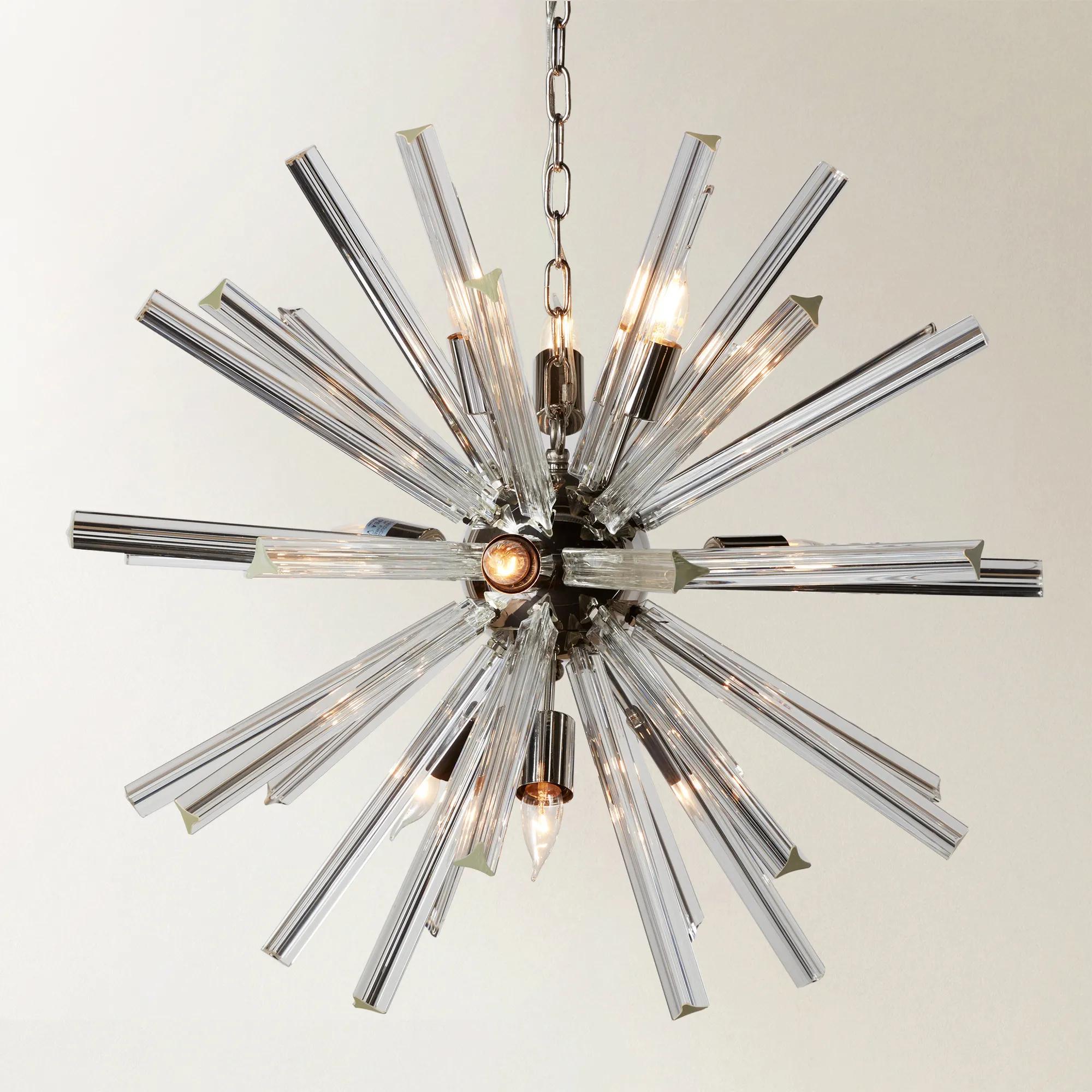
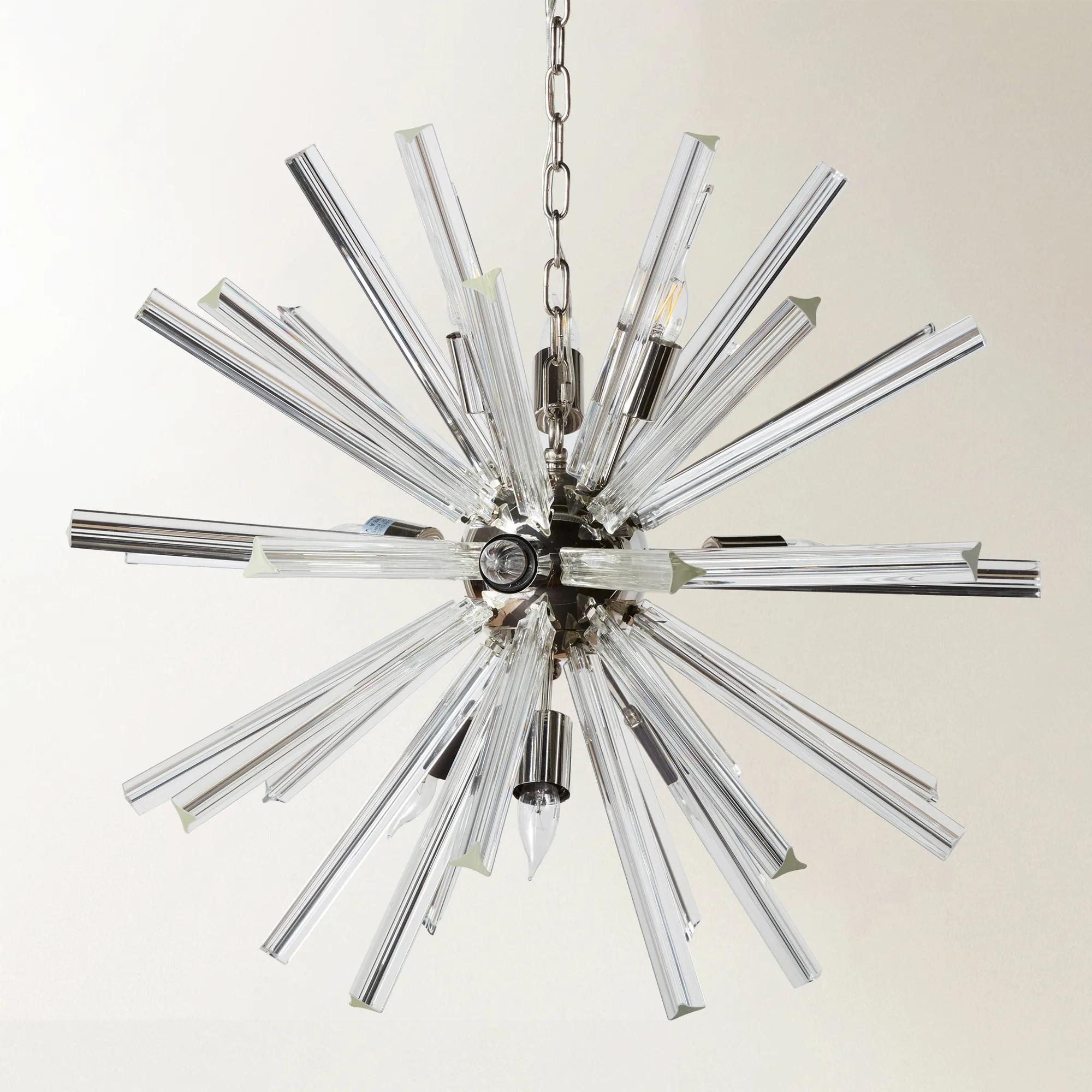 Axis Sputnik Clear Faceted Glass Chandelier 29.5"D$599
A clear glass and iron Sputnik chandelier featuring nine lights and faceted triangular rods.
Add To Cart -
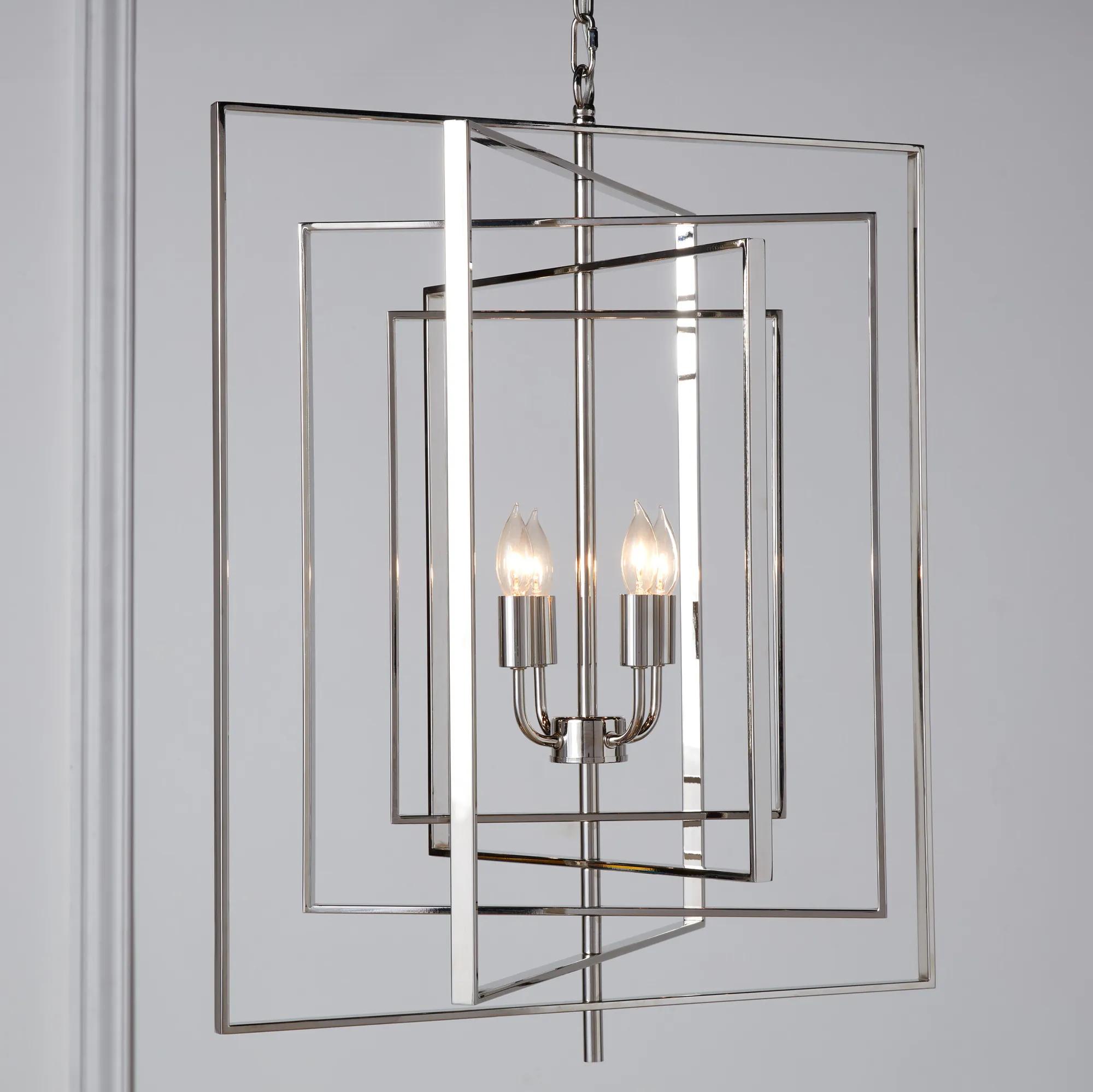
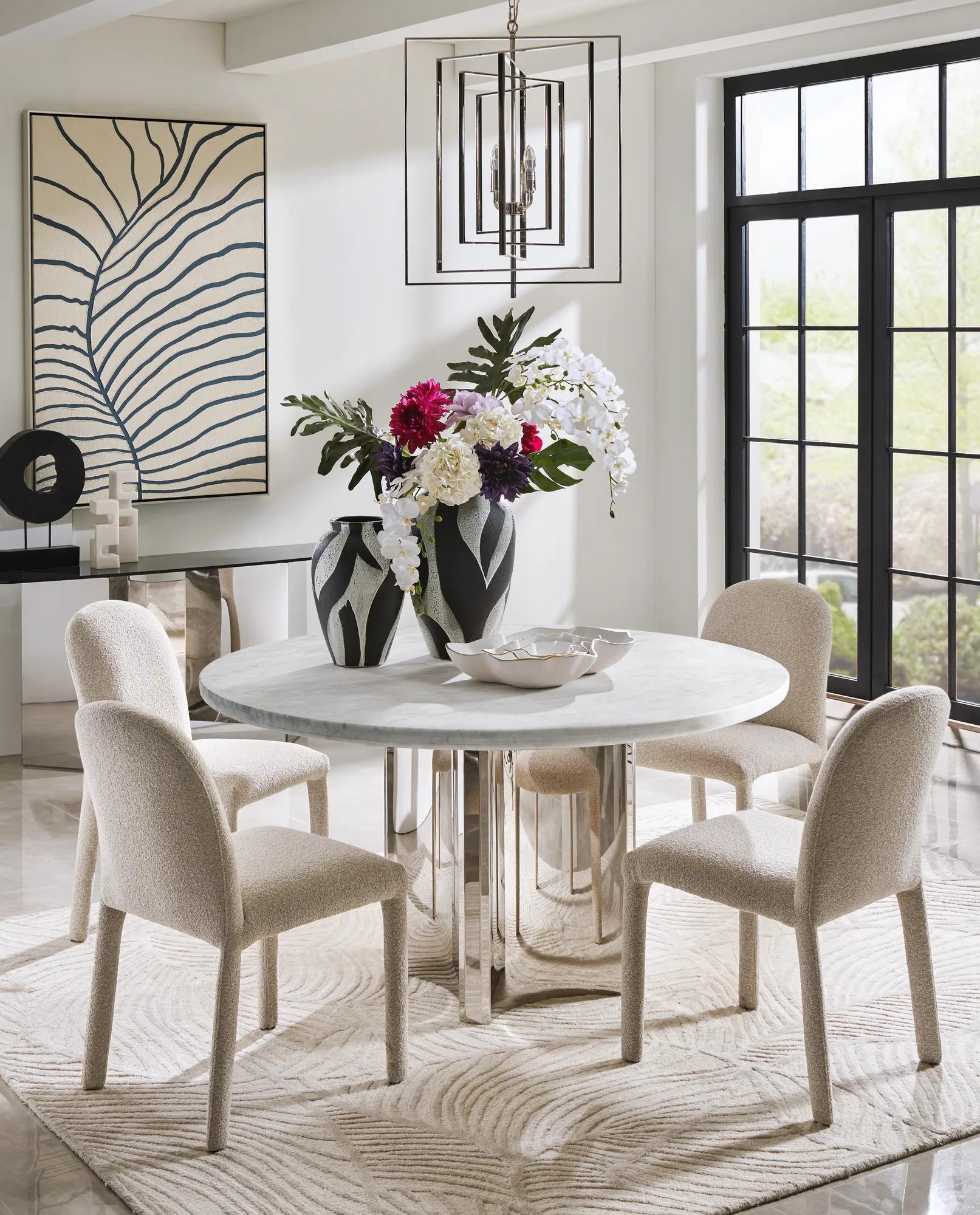 Hollis Chandelier$499
A polished nickel geometric chandelier with four lights, perfect for modern and minimal interiors.
Add To Cart -
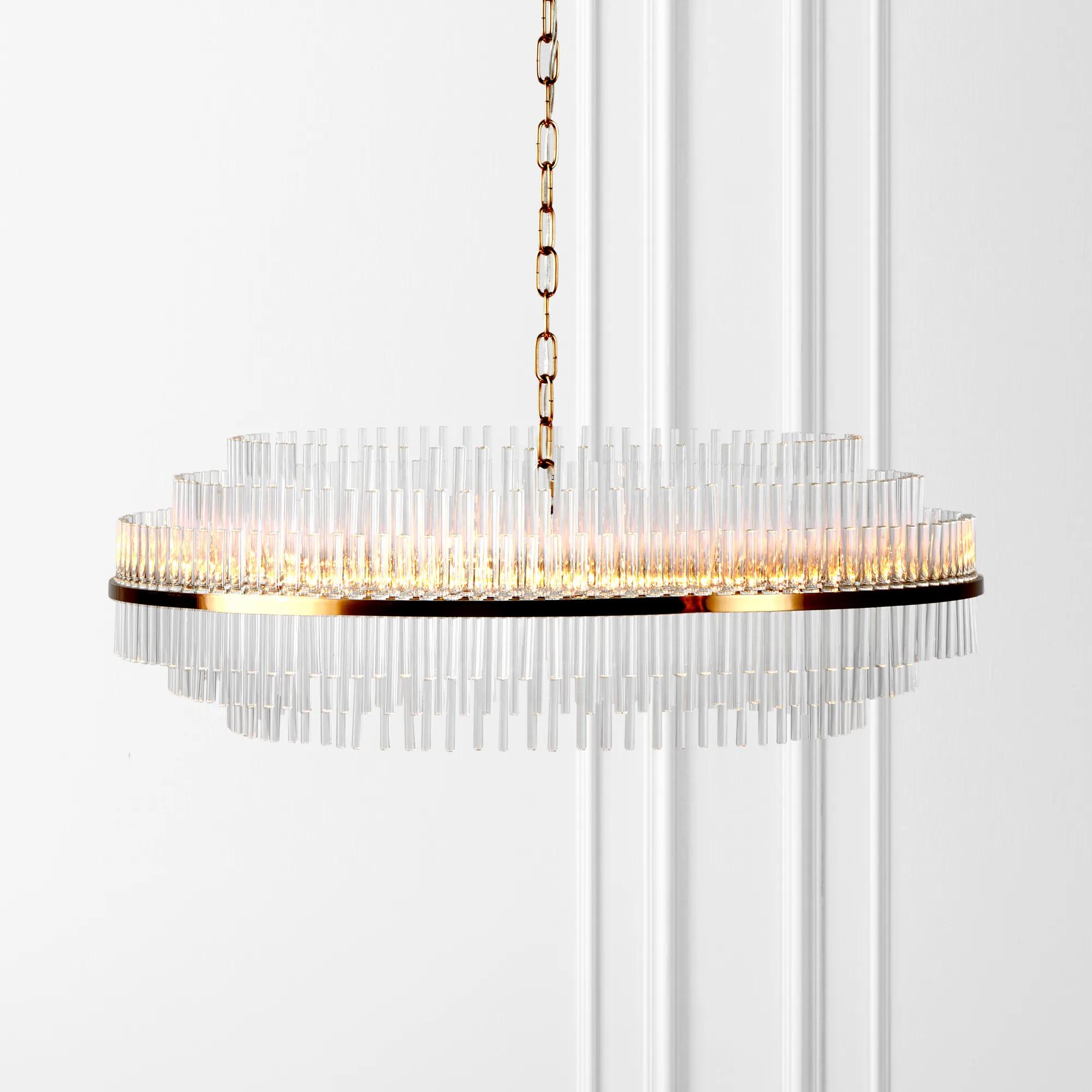
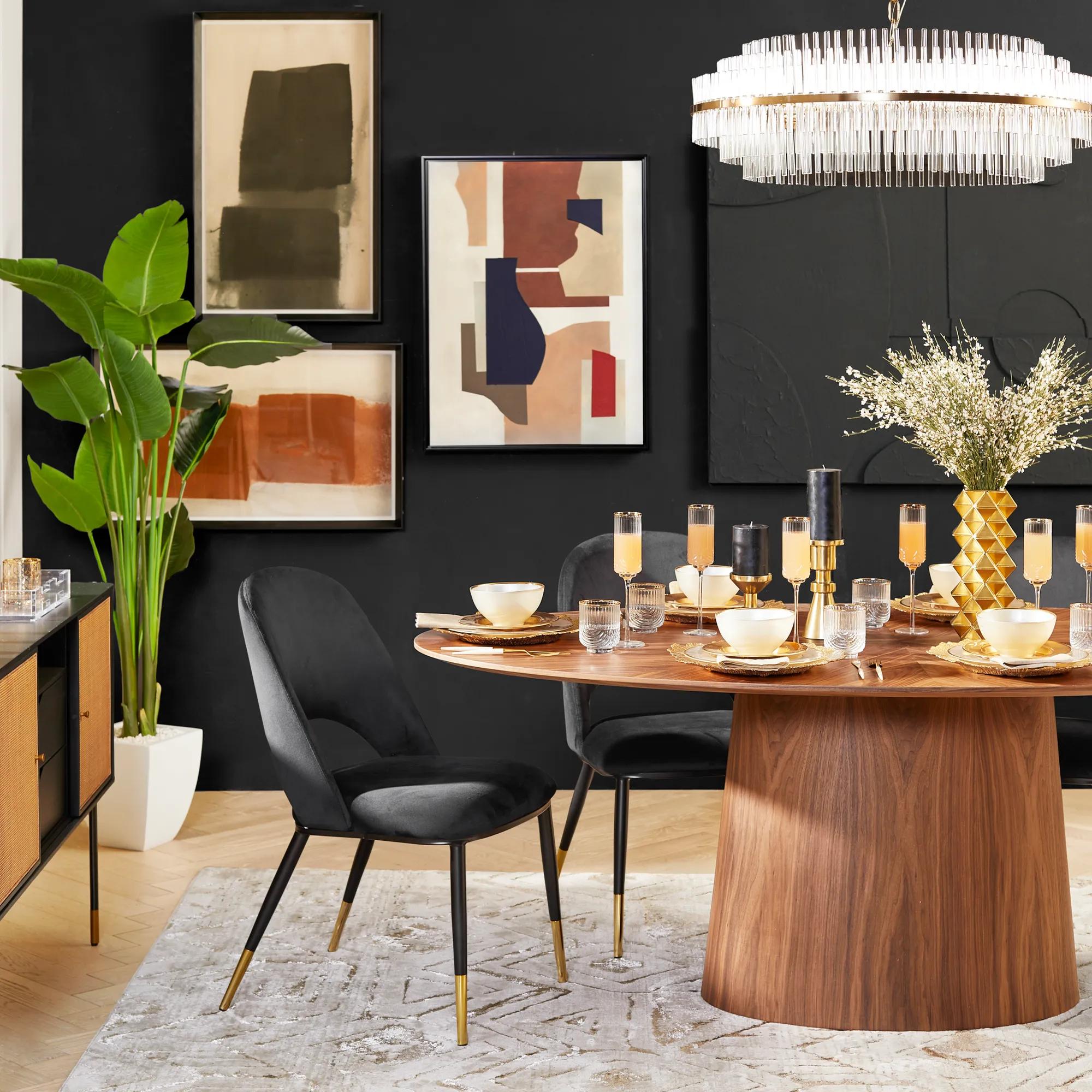 Renata Clear Glass Rod Chandelier 31"W x 10"H$799
A low-profile glass-rod chandelier with a brushed brass iron frame and eight dimmable candelabra lights.
Add To Cart -
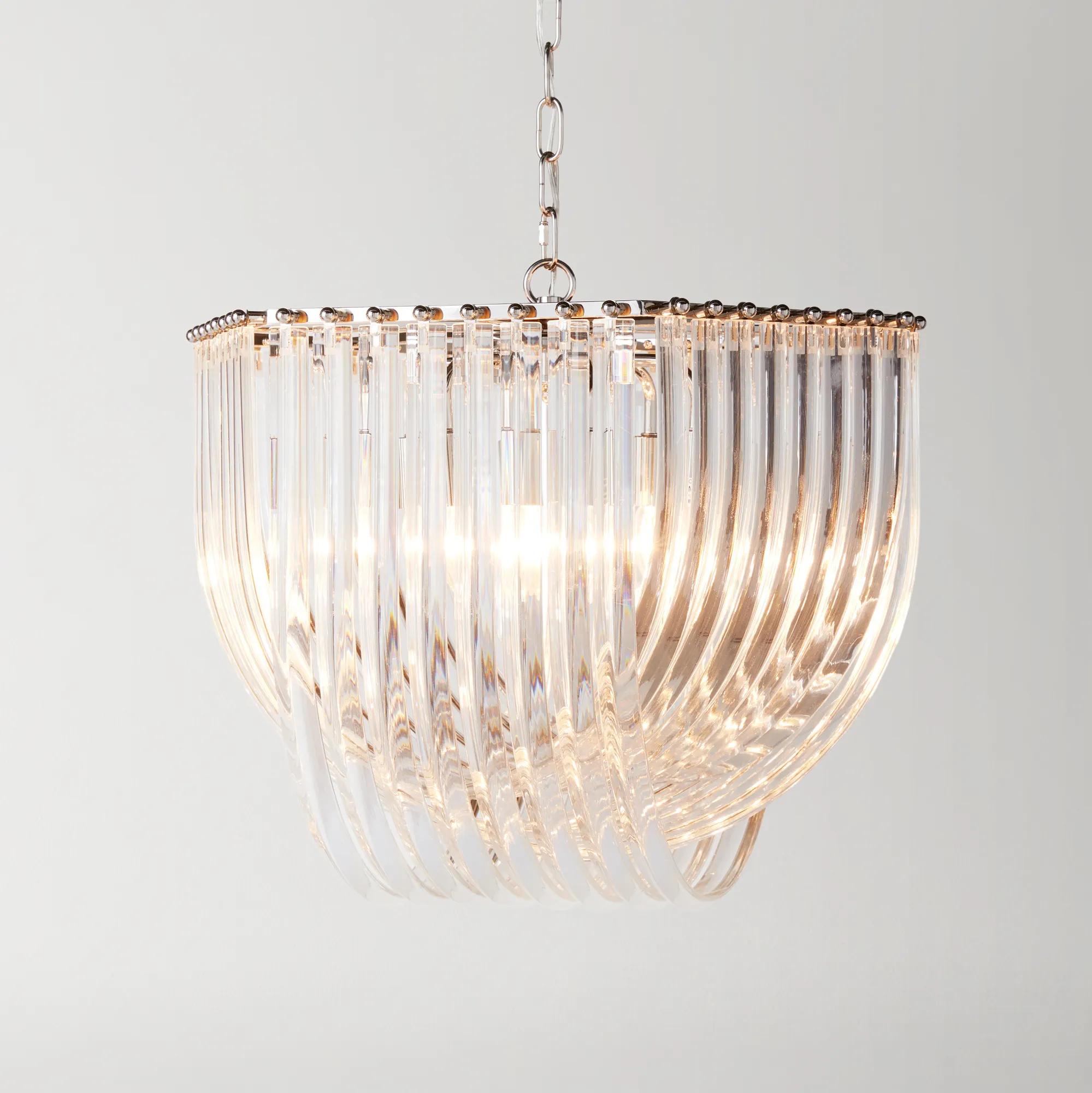 Laval Clear Curved Glass Chandelier 21"D x 18"H$799
A six-light chandelier with layered clear curved glass and a polished nickel frame.
Add To Cart -
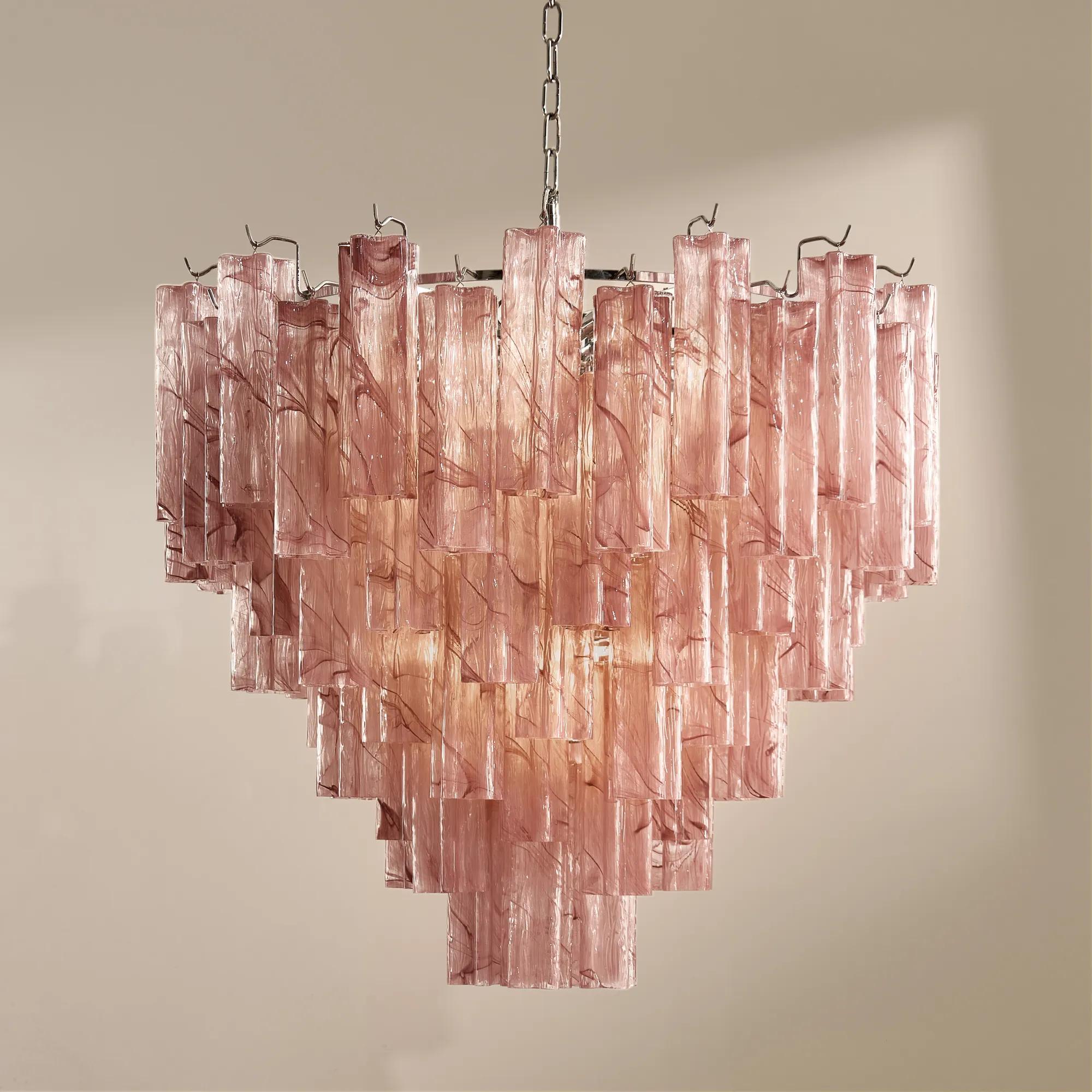 Elodie Rose Glass Chandelier 31.5"$1299
A handcrafted rose glass chandelier with swirled glass, polished chrome framing, and 21 dimmable candelabra lights.
Add To Cart -
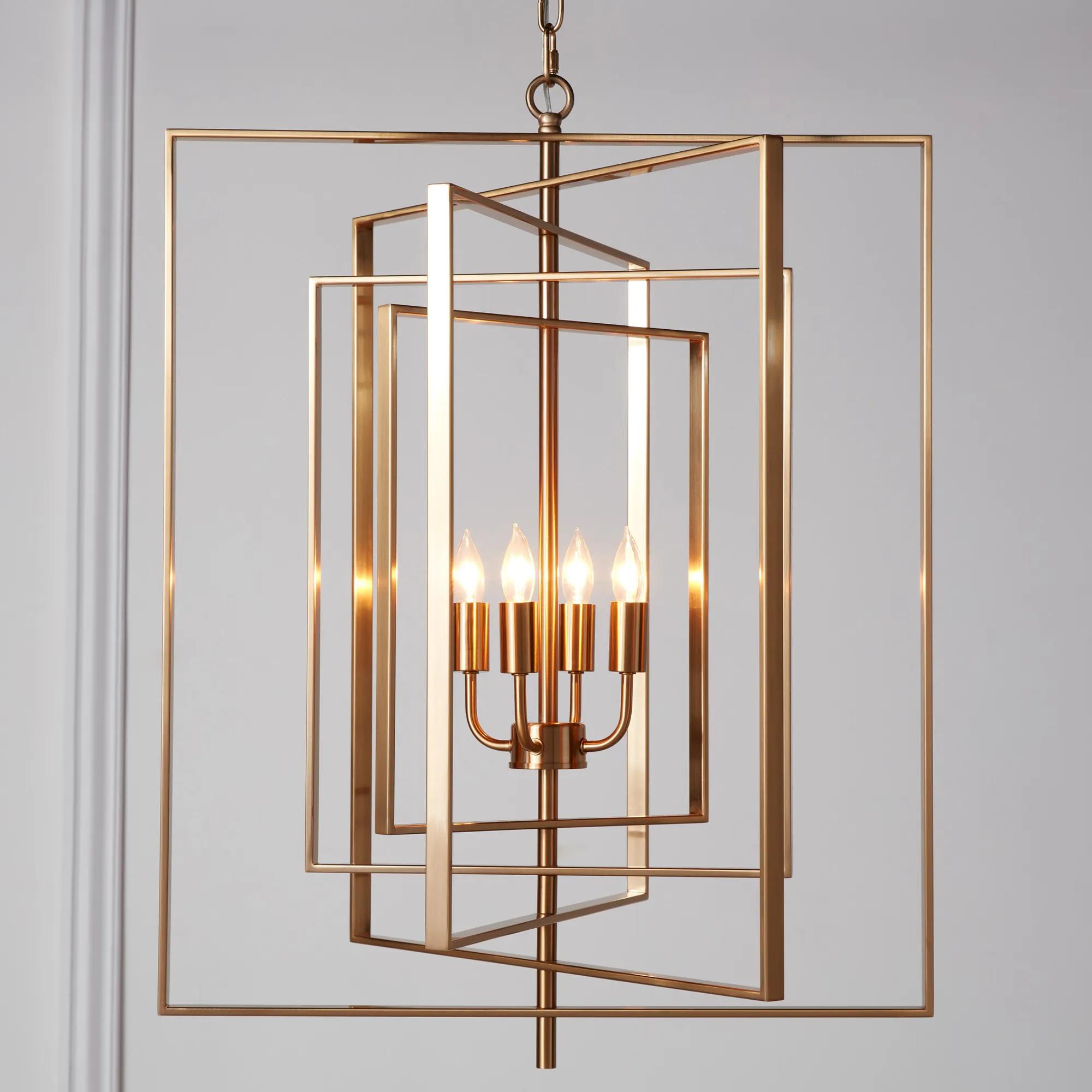 Hollis Chandelier$499
A geometric brass-finished iron chandelier with four lights, perfect for modern and minimal interiors.
Add To Cart -
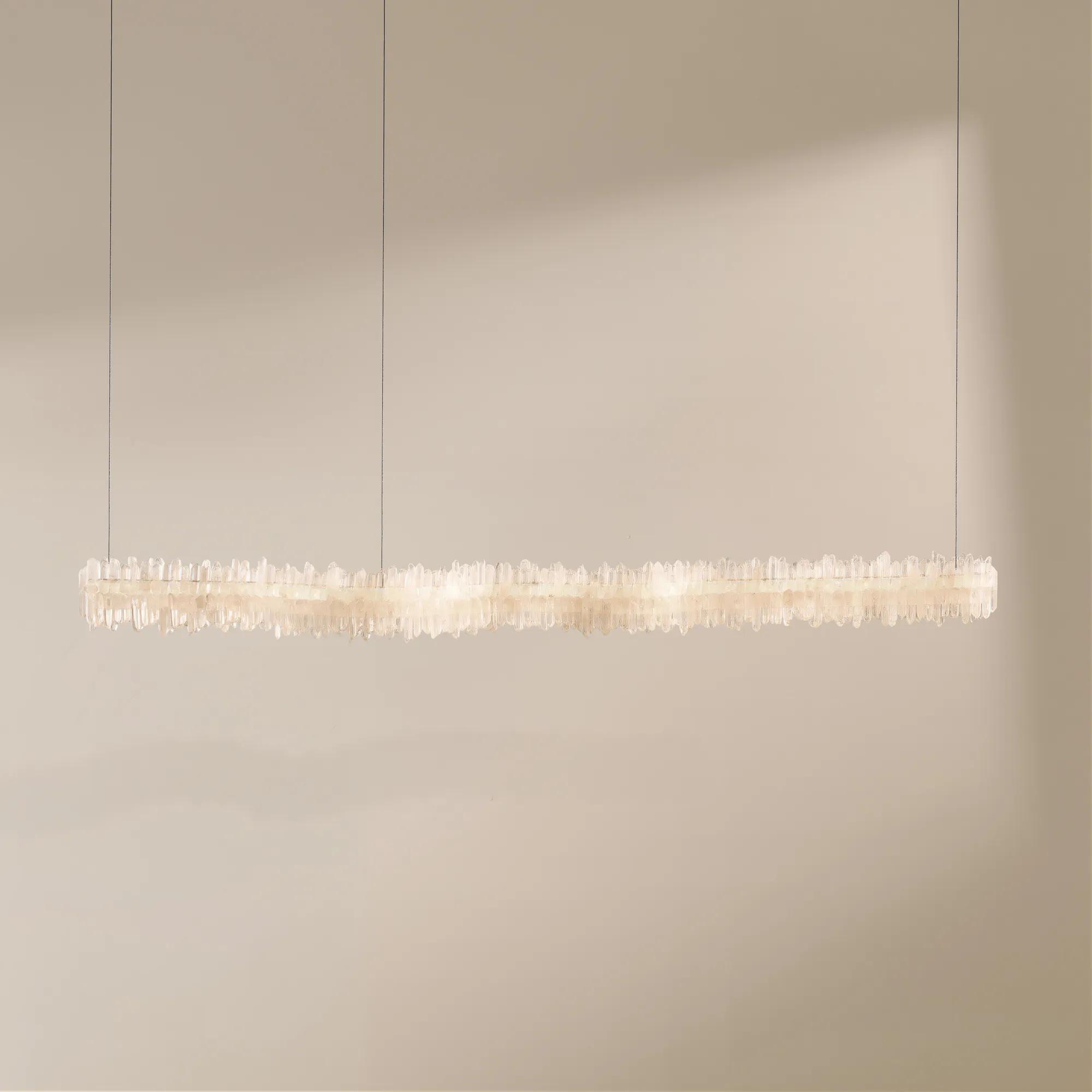 Stella Quartz Crystal LED Chandelier 47.25"$1899
A linear LED chandelier featuring natural raw quartz crystals and a polished rose gold metal frame.
Add To Cart -
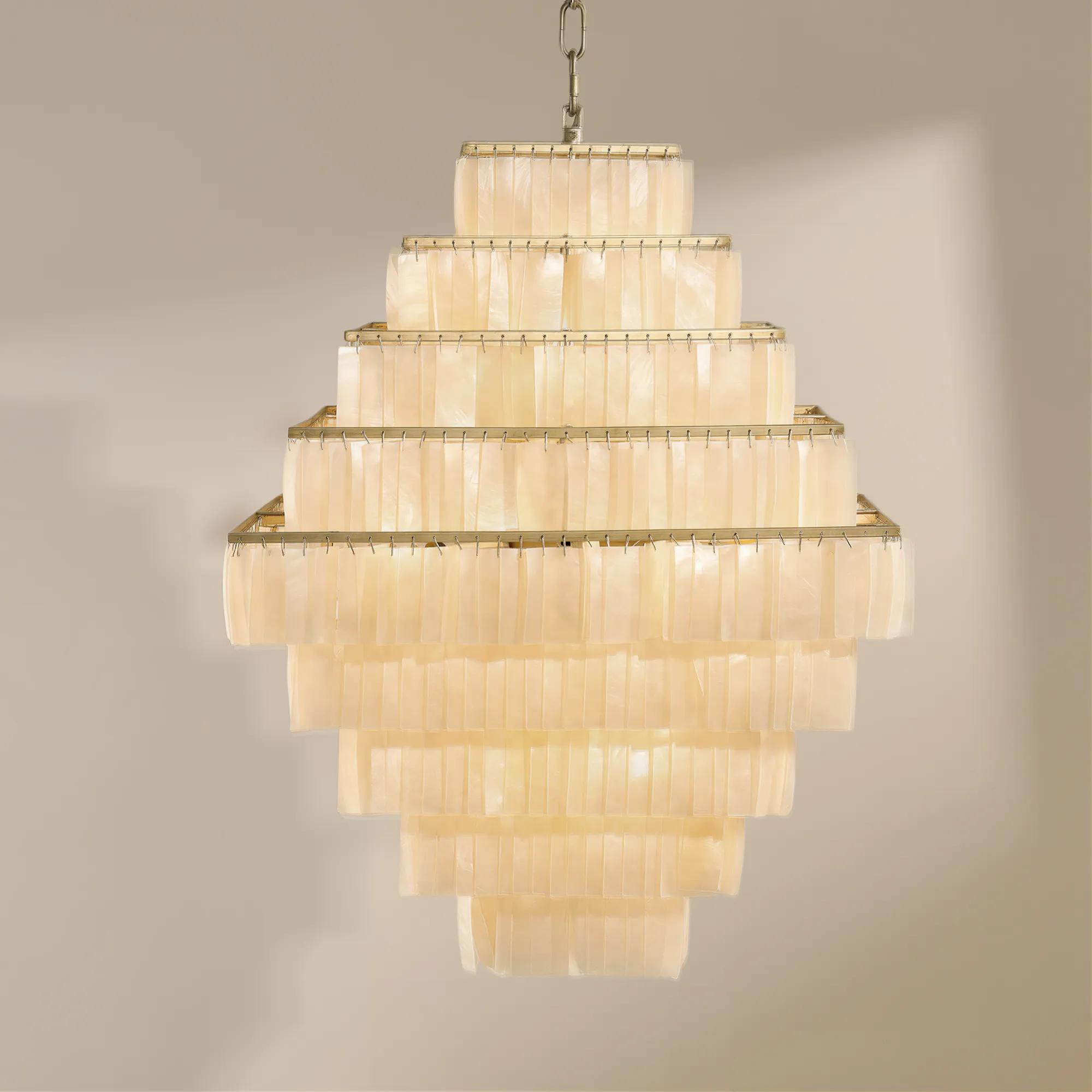 Soleil Capiz Shell Chandelier 25"$999
A modern capiz shell chandelier with 700 pearlescent shells, champagne-finished iron, and dimmable ambient lighting.
Add To Cart -

 Radiante LED Globe Chandelier 36" - Polished Gold$899
A polished gold LED globe chandelier bringing sculptural illumination and modern glamour to contemporary interiors.
Add To Cart -
 Bolla LED Hand-Blown Glass Bubble Chandelier 60.25"$499
A hand-blown glass chandelier with clear bubbles, matte gold steel framing, and integrated warm LED illumination.
Add To Cart -
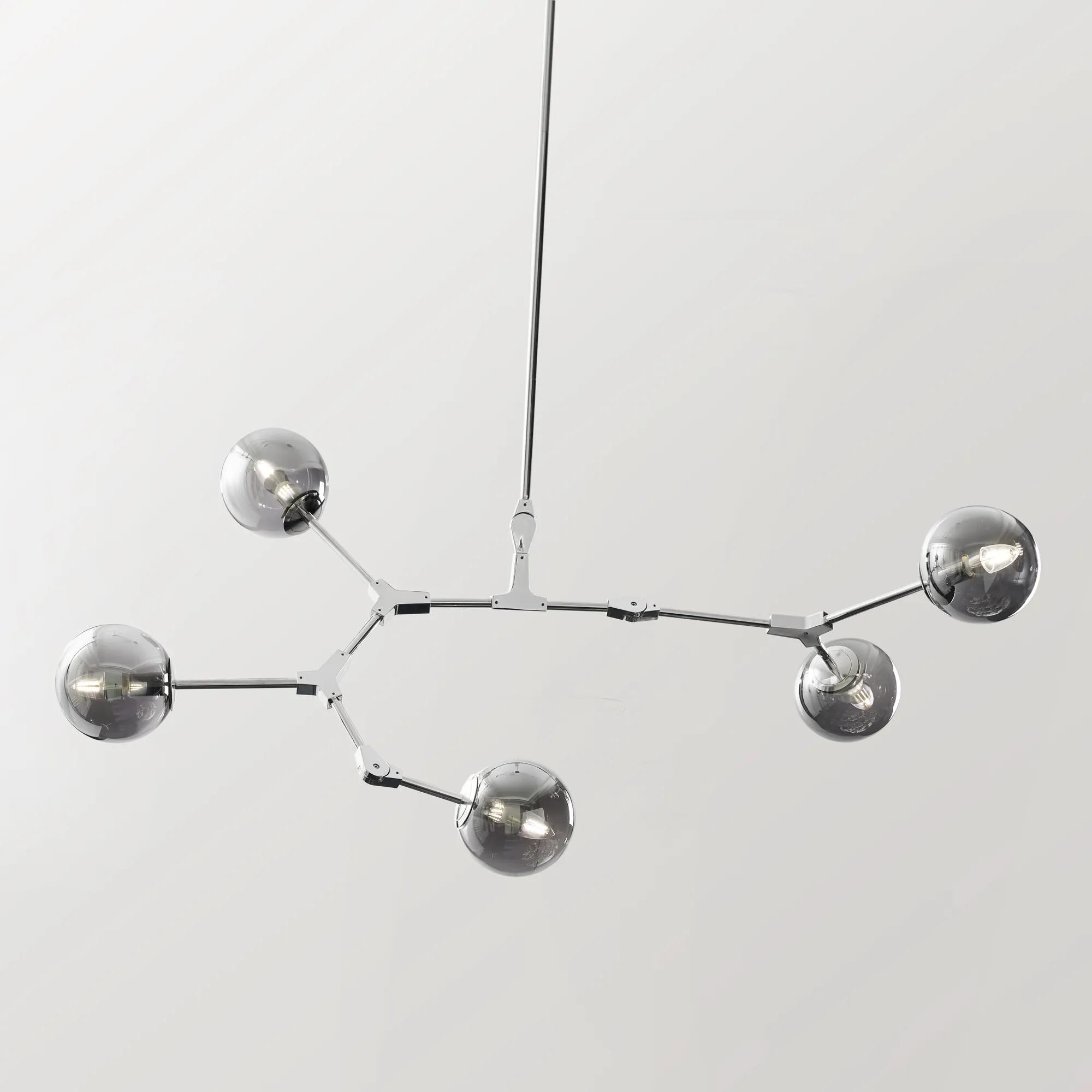
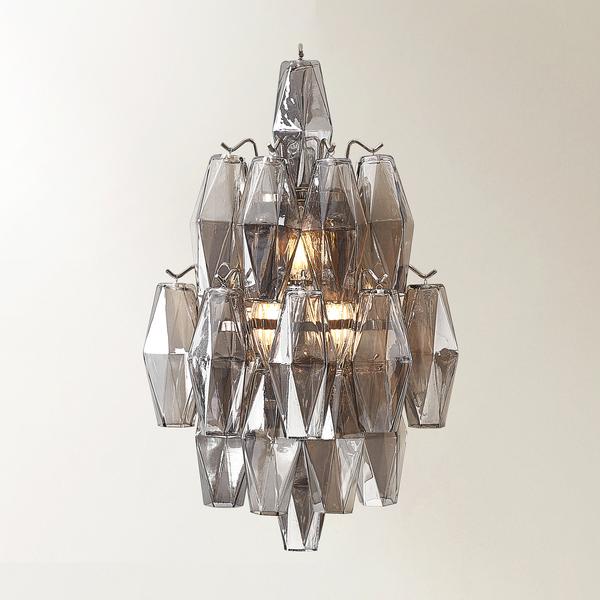
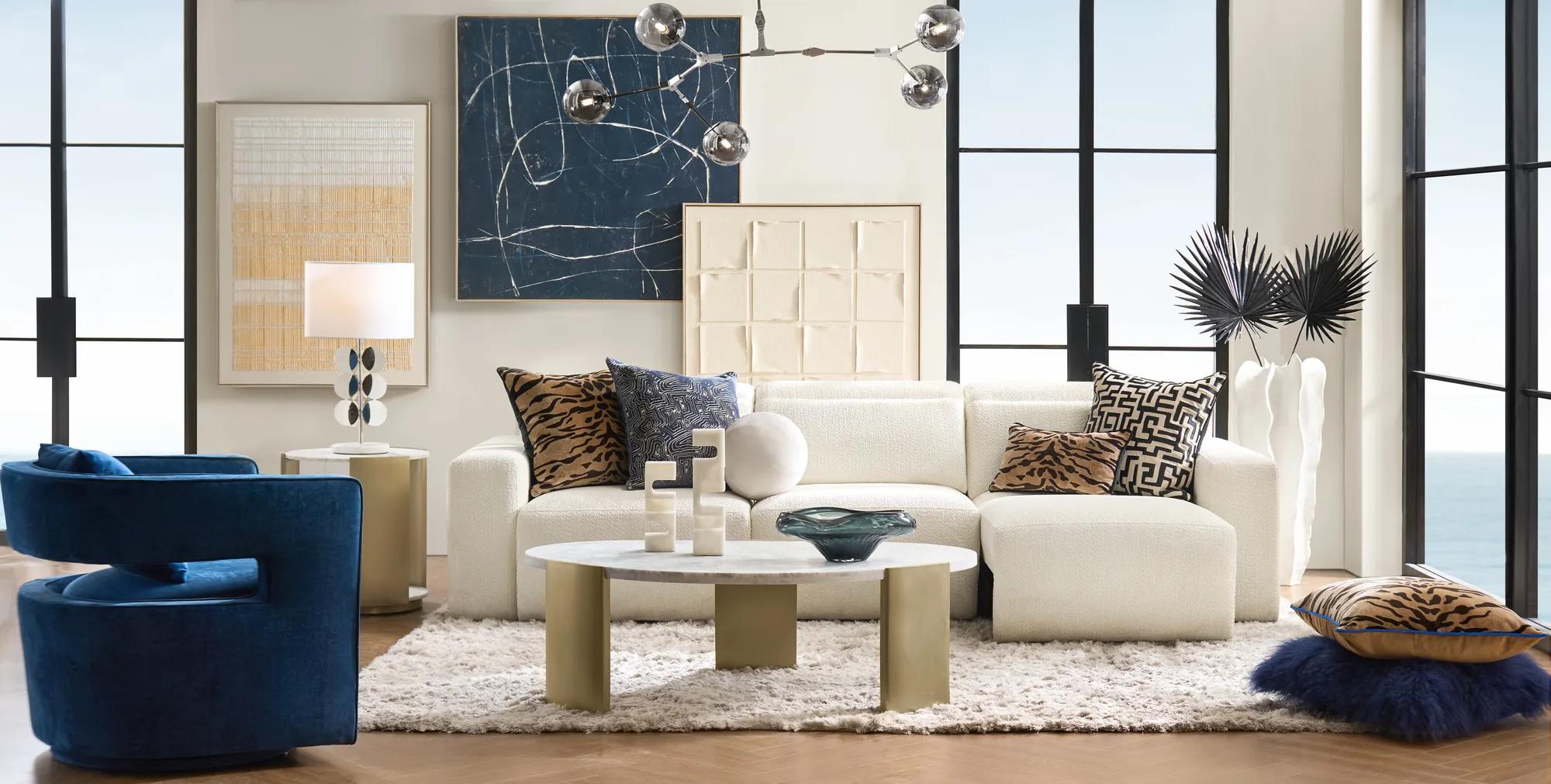 Axel Chandelier$499
A modern chandelier featuring polished nickel arms and smoked glass bulbs for striking, contemporary illumination.
Add To Cart -

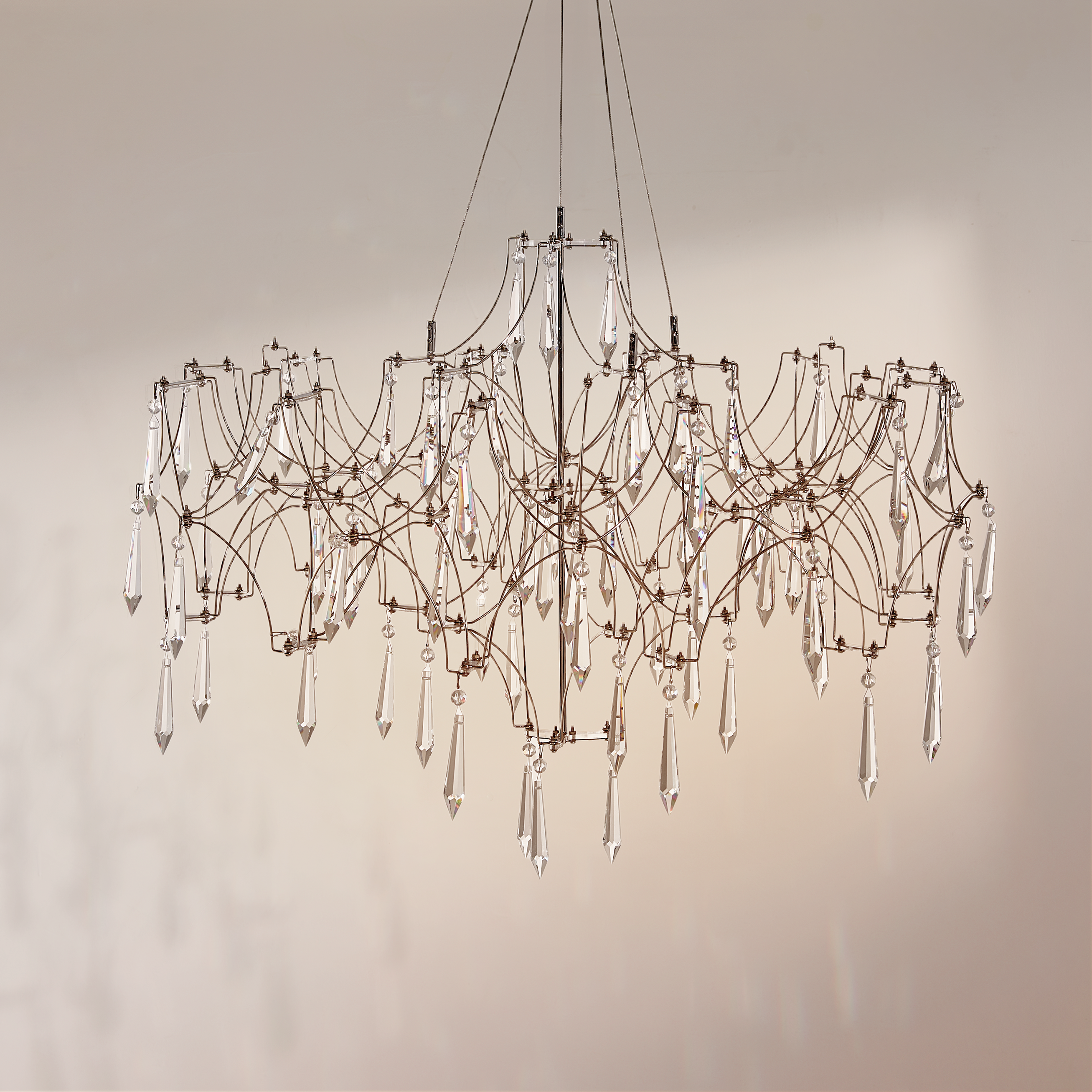 Moderne LED Clear Crystal Chandelier 24.5"W x 19.75"H$899
A clear crystal chandelier with faceted construction, polished nickel framing, and integrated warm LED illumination.
Add To Cart -

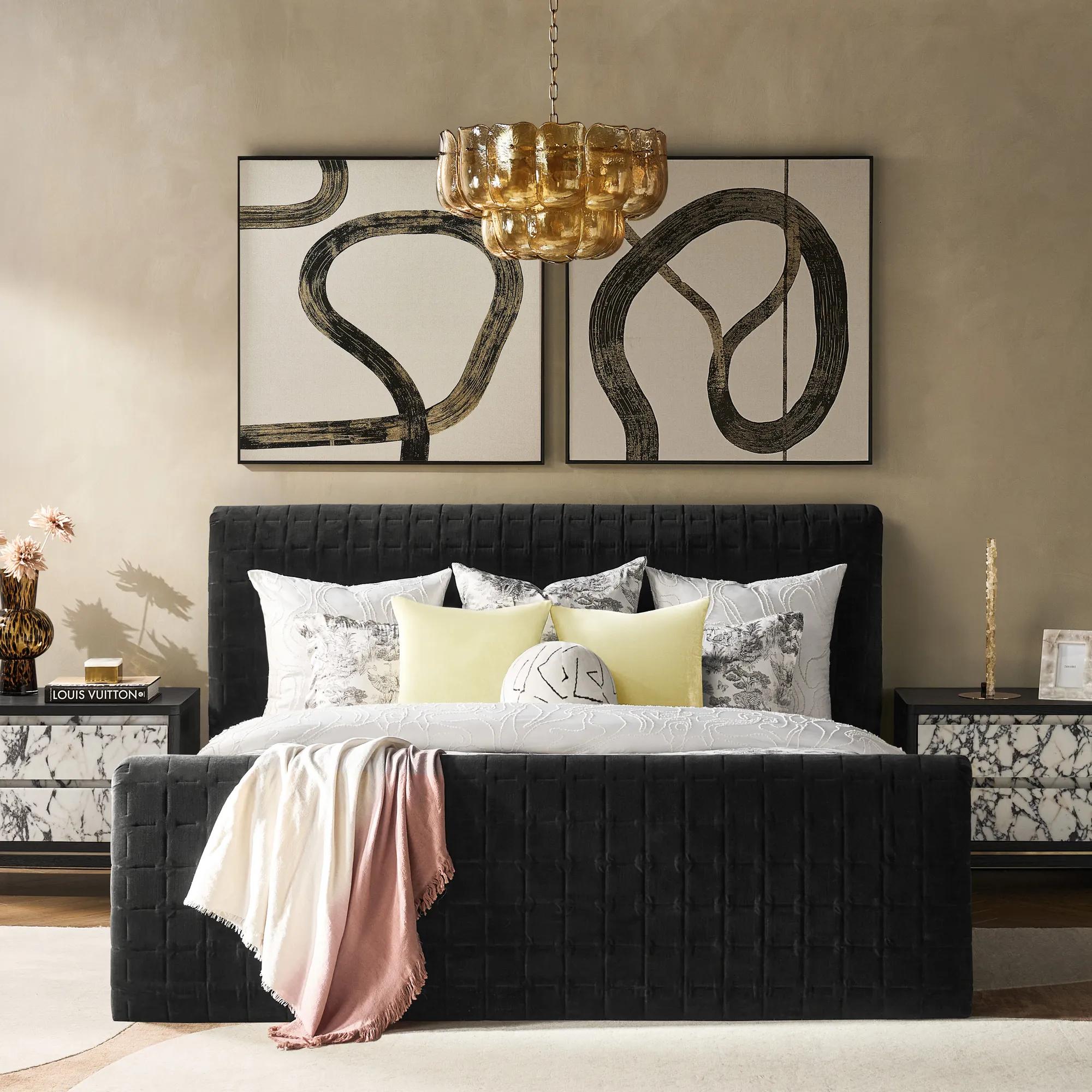 Ember Glow Amber Textured Glass Chandelier 24"$799
A chandelier with textured amber glass petals, brushed brass iron frame, and nine-light ambient illumination.
Add To Cart -

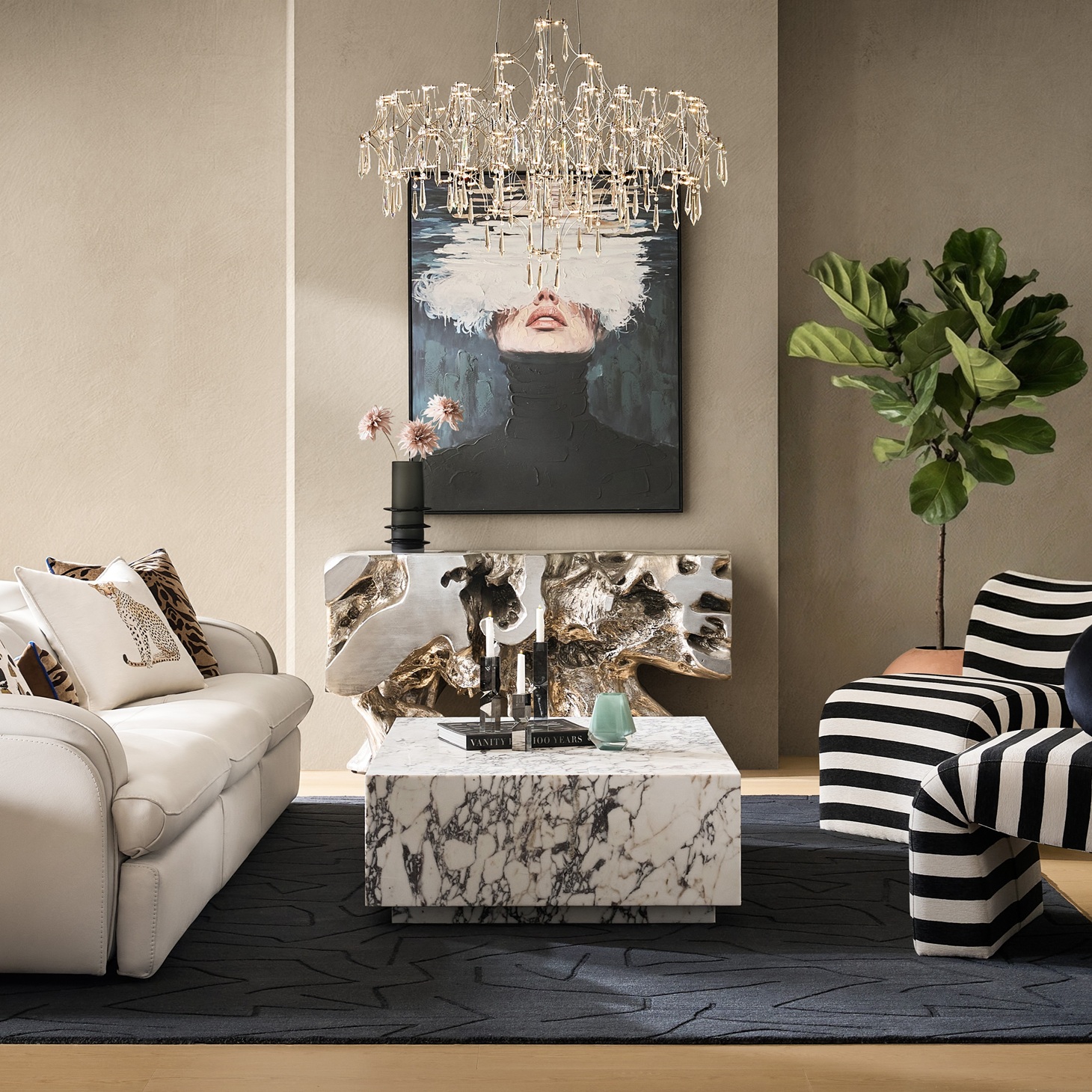 Moderne Grande LED Crystal Chandelier 35.75"W x 28.5"H$1899
A faceted crystal chandelier with polished nickel framing and integrated LED illumination for a modern glow.
Add To Cart -
 Glacier Clear and Frosted Glass Chandelier 24"$899
A glass chandelier with icicle-inspired clear and frosted panels, brushed brass frame, and twelve-light illumination.
Add To Cart -
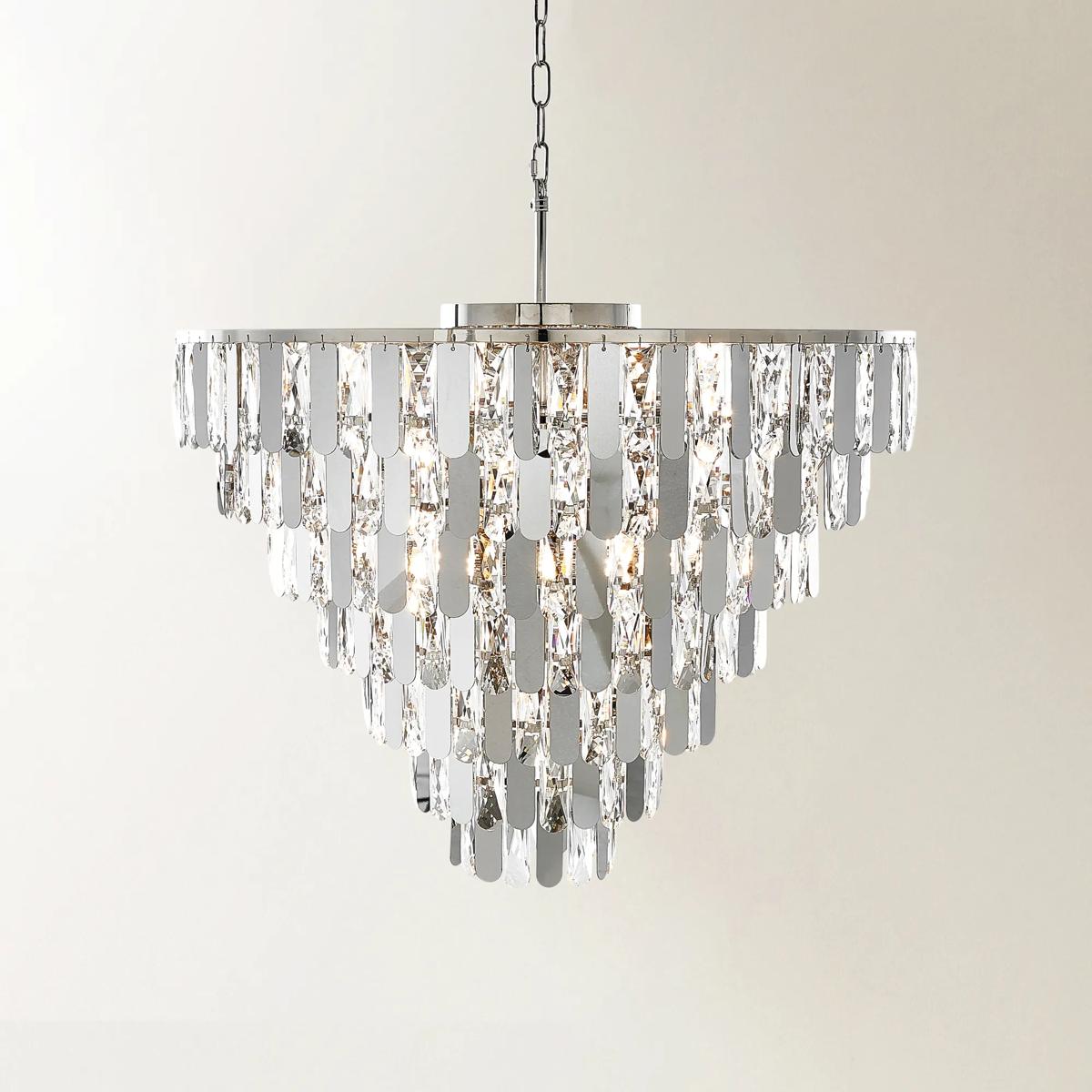
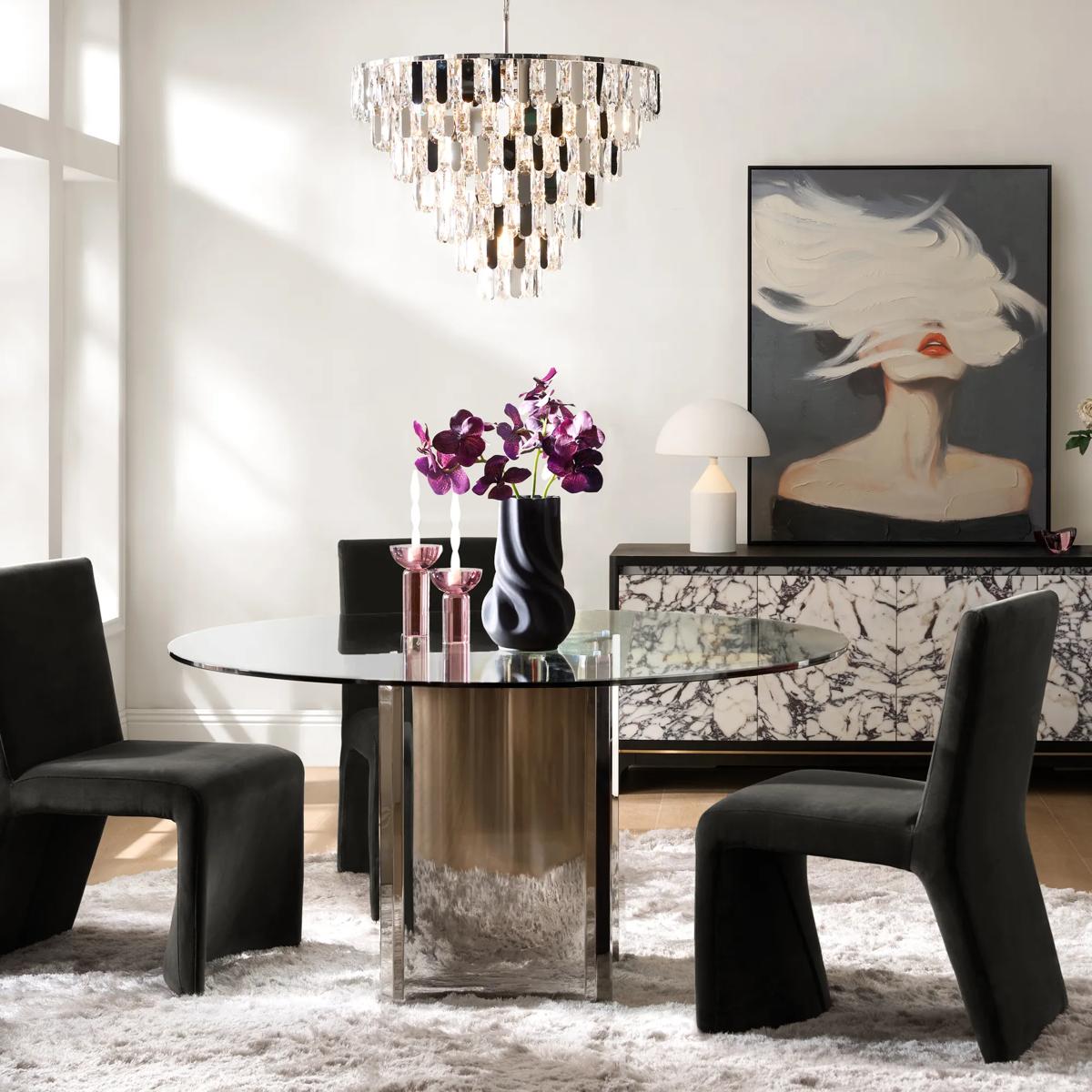 Avenue Crystal Chandelier 28.5"$999
A tiered chandelier crafted from eco-friendly K9 crystal and polished nickel for radiant, modern elegance.
Add To Cart -
 Sawin Chandelier$699
A sculptural brass-plated steel chandelier with frosted acrylic diffusers for a soft, ambient glow.
Add To Cart -

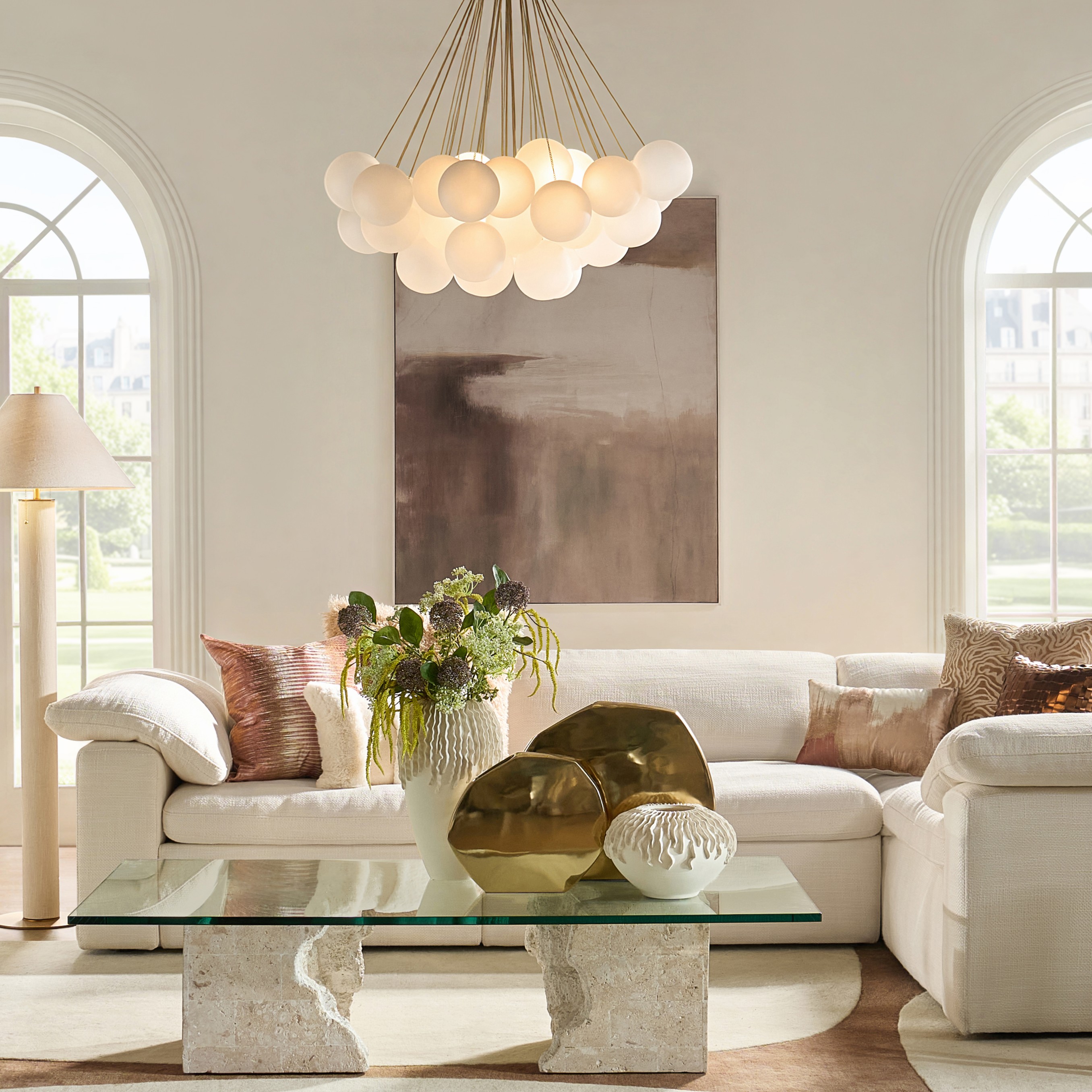 Sanela Frosted Glass Globe Chandelier 39.5"$899
A chandelier with frosted glass globes, an antique brass iron frame, dimmer compatibility, and slope-ceiling adaptability.
Add To Cart -
 Joliet LED Linear Hand Painted Swirl Glass Chandelier 47"$499
A linear chandelier featuring hand-painted swirl glass, champagne-finish canopy, and integrated warm LED illumination.
Add To Cart -
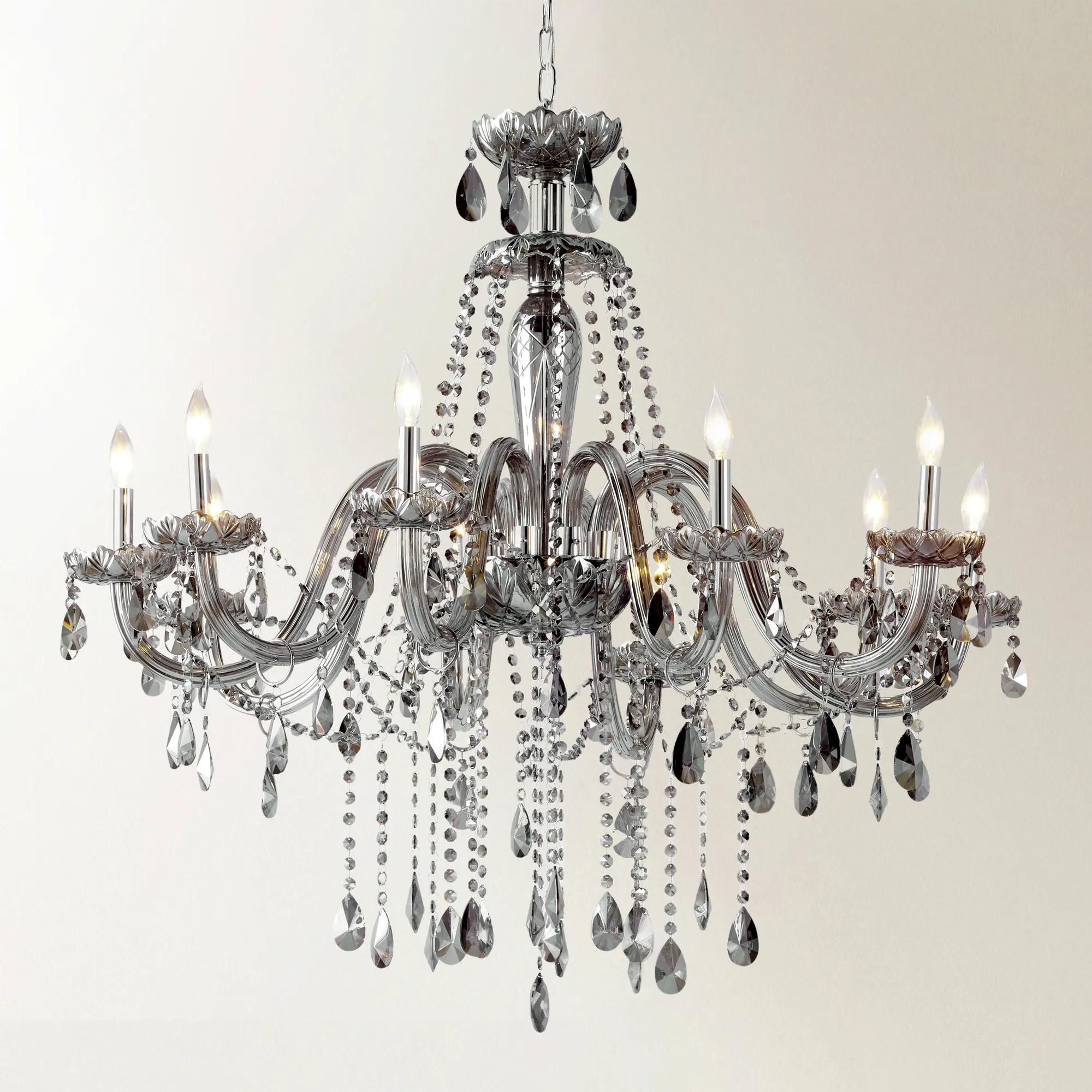
 Omni Chandelier 38.5" - Graphite$999
A dazzling chandelier featuring graphite faceted crystals and ten fluted glass arms with nickel hardware.
Add To Cart -
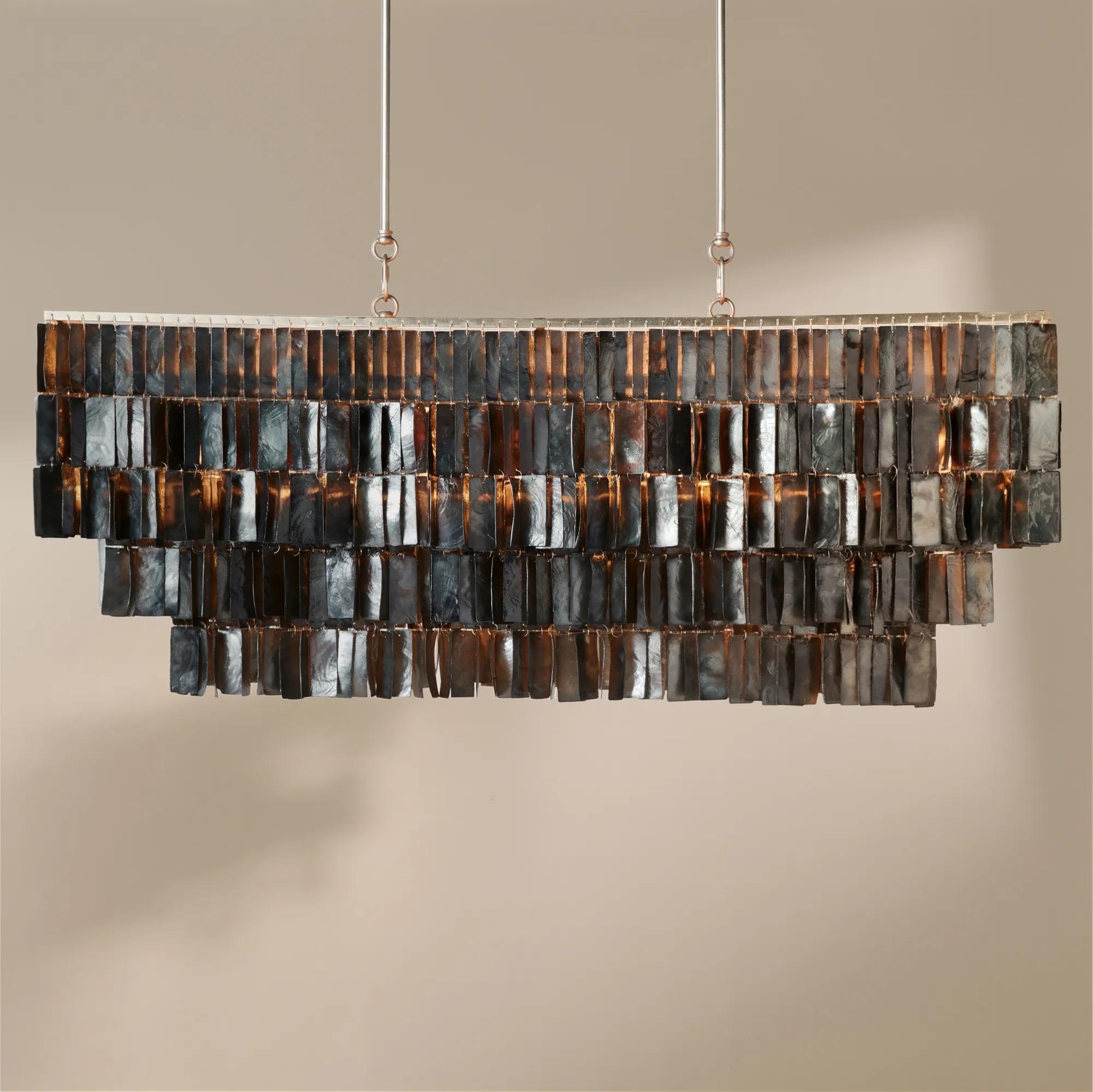
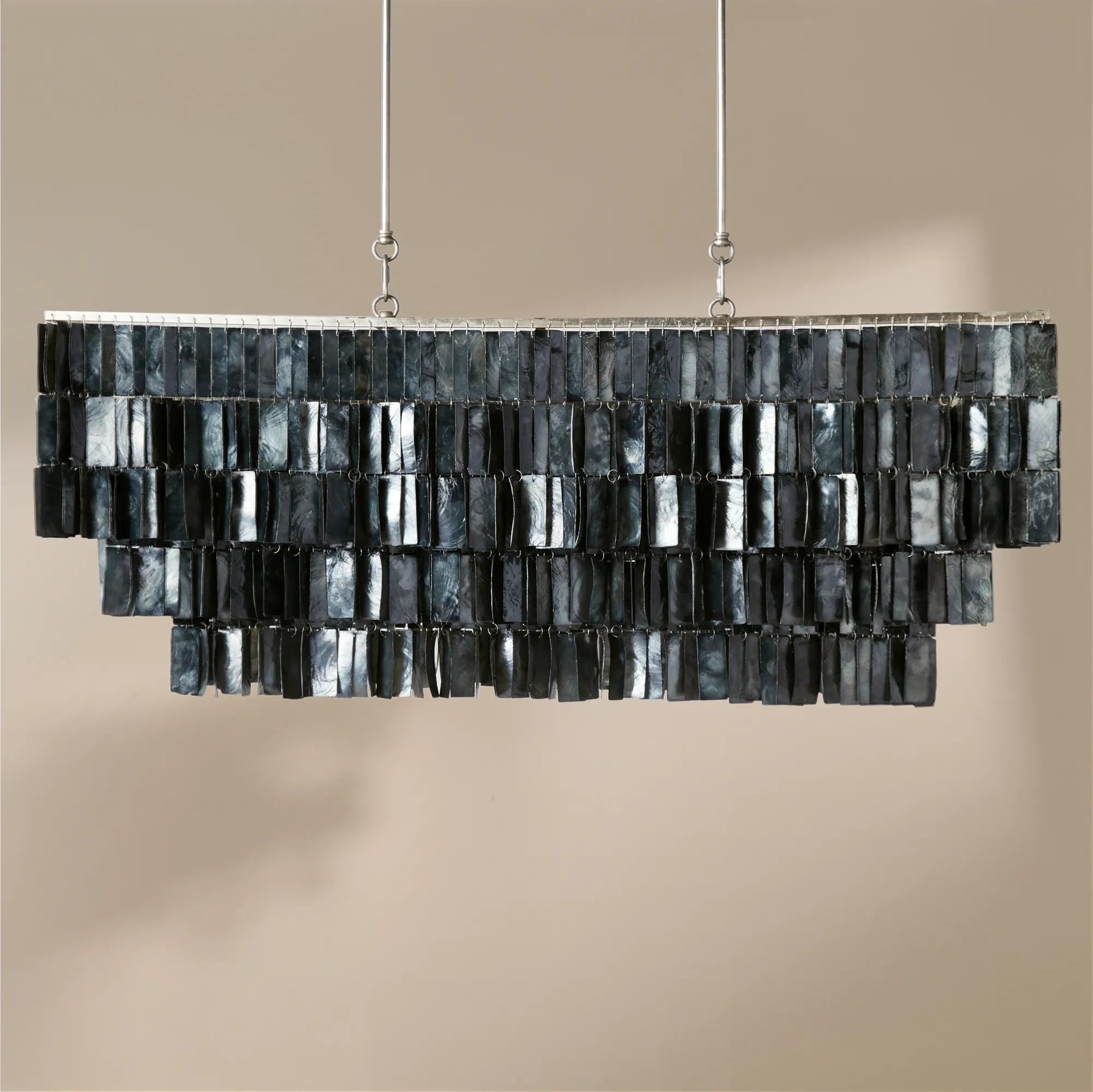 Capiz Shell Graphite Chandelier 39"$849
A chandelier with charcoal capiz shells, a champagne-finished iron frame, and seven dimmable candelabra sockets.
Add To Cart -
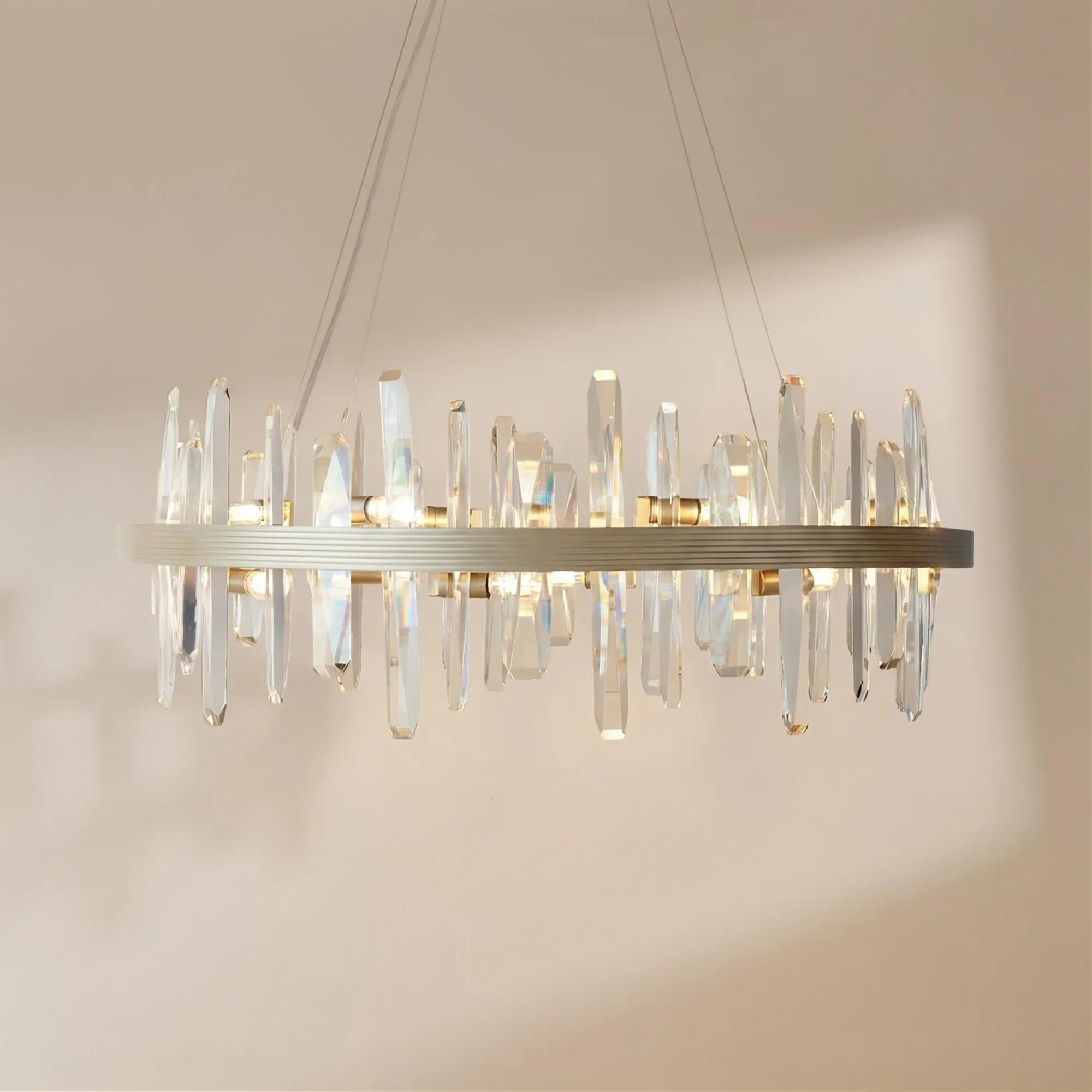
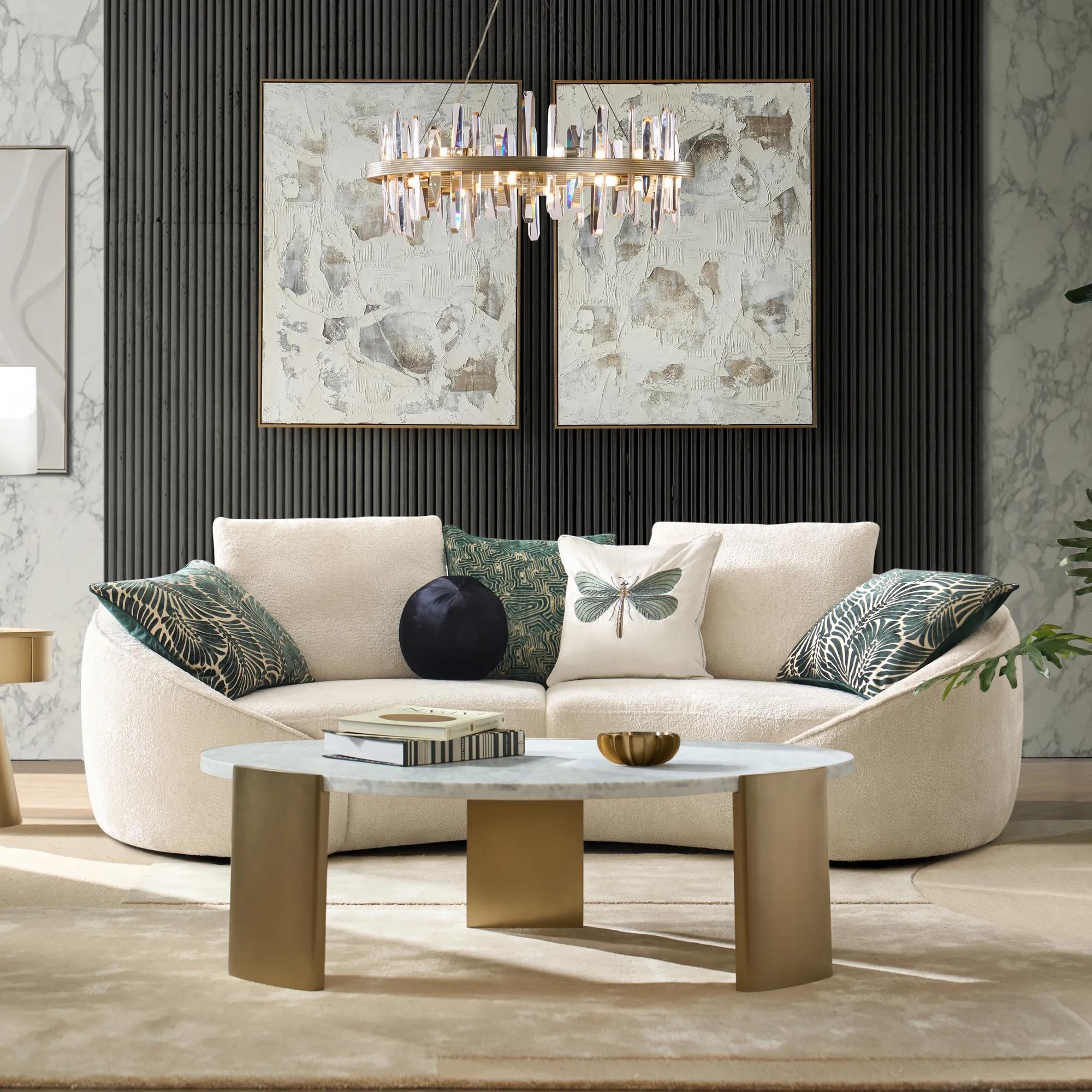 Lumi Clear Beveled Glass Chandelier 31.5"W$929
A chandelier with clear beveled glass, a champagne-finished iron frame, sixteen lights, and dimmable illumination.
Add To Cart -
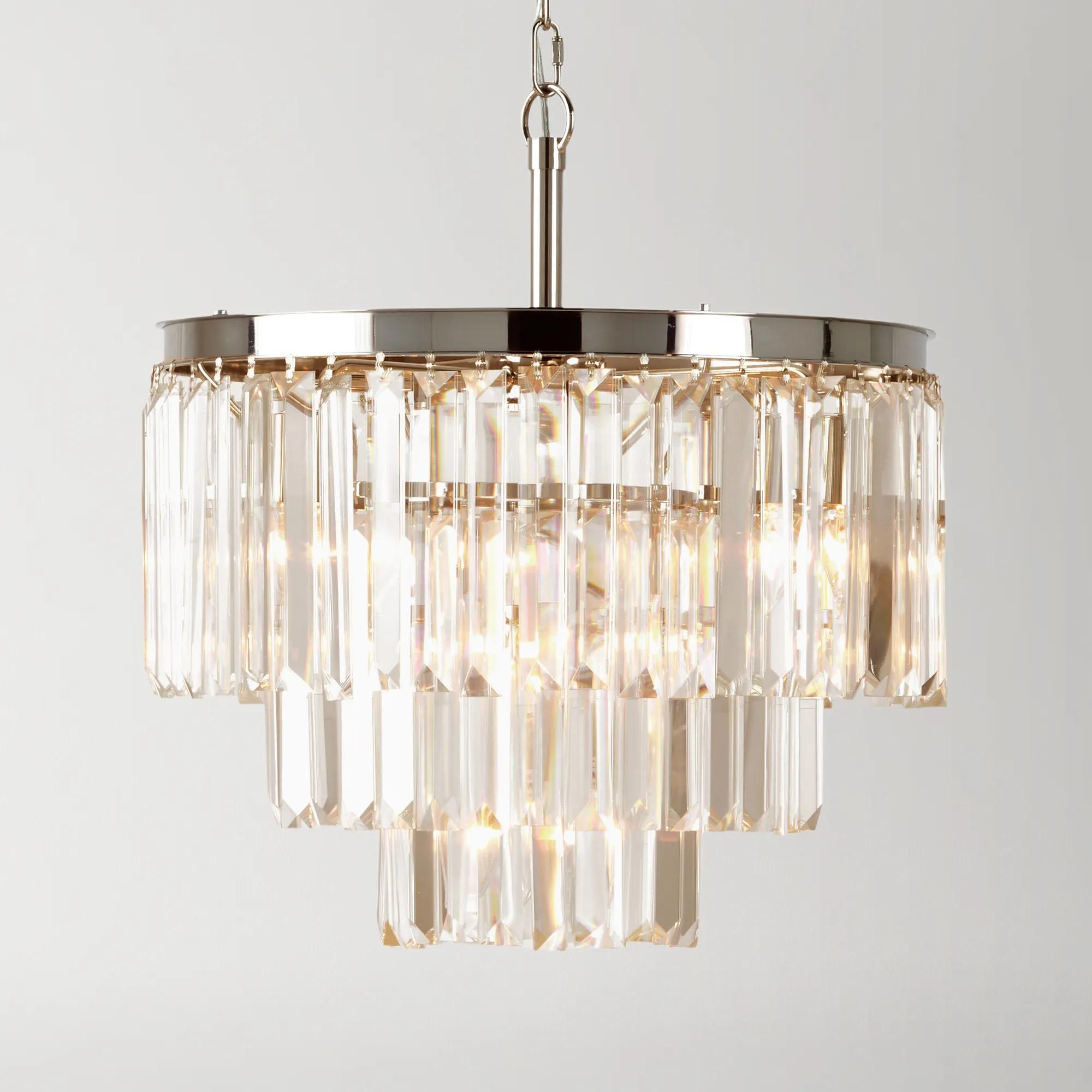
 Luxe Chandelier$799
A glamorous chandelier featuring a nickel-plated iron frame and three tiers of faceted crystal accents.
Add To Cart -
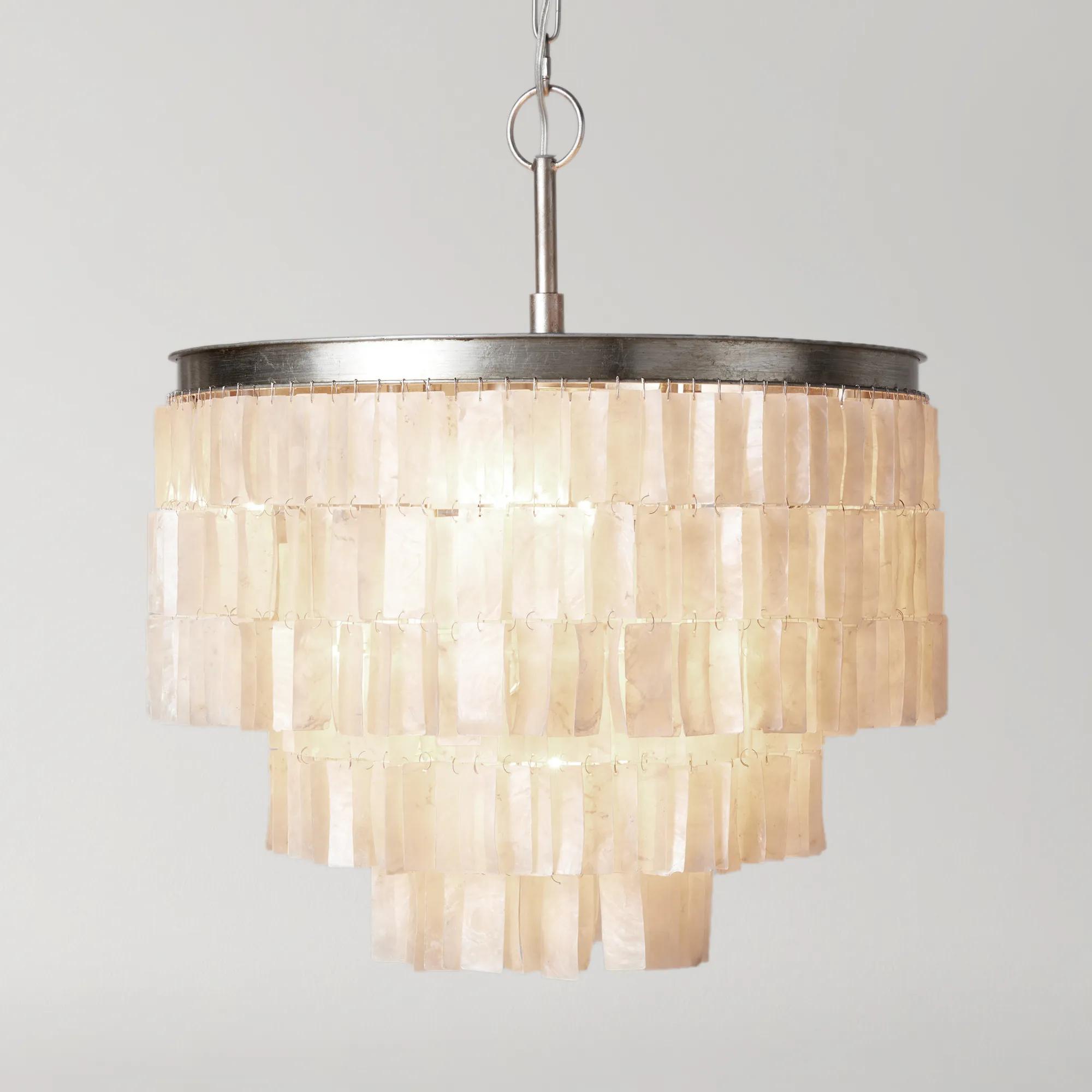 Capiz Chandelier$699
A cascading chandelier featuring over six hundred natural Capiz shells on a nickel-plated iron frame.
Add To Cart

Modern Transitional Chandeliers
Explore modern transitional chandeliers that pair clean-lined design with classic elegance for a refined, expressive focal point. This lighting style bridges contemporary and traditional decor, bringing cohesion to dining rooms, entryways, and living spaces. When choosing a chandelier, consider its scale and silhouette in relation to your ceiling height, room size, and surrounding furniture.
Modern transitional chandeliers blend the familiar proportions and decorative warmth of traditional lighting with the streamlined shapes of contemporary design. The result is a ceiling fixture with presence rather than excess: curved arms become more sculptural, candle-style lights take on cleaner profiles, and crystal accents bring brilliance without overwhelming the silhouette. This balance makes transitional lighting particularly compelling in rooms that mix eras, textures, and personal treasures. Above a dining table, an open metal frame can echo the architecture of an upholstered chair while giving a richly veined stone surface room to command attention. In a living room, a chandelier with softly rounded glass can temper the sharp geometry of a tailored sofa or lacquered console. These fixtures suit interiors that feel collected rather than rigidly matched, allowing an antique chest, an abstract painting, and contemporary seating to share the same visual conversation. Materials shape that conversation as much as form. Metal provides structure and definition; clear glass keeps the composition airy; frosted glass softens the appearance of the light source; and faceted crystal scatters highlights across nearby surfaces. Brass-toned finishes introduce a golden richness, polished nickel offers a cooler gleam, and dark metal creates a decisive outline against pale walls. A brushed surface feels quieter than a mirror-polished one, while a combination of finishes can connect existing hardware without repeating it exactly. Glass shades and decorative crystal also contribute differently to visual weight: transparent elements can feel delicate even in a generous silhouette, while opaque shades make a more grounded statement. For homeowners refreshing a single room or furnishing an entire residence, modern transitional chandeliers offer a versatile foundation for expressive design. Their appeal lies in that tension between restraint and ornament, with enough detail to feel dressed and enough clarity to let the rest of the room speak.
Scale gives a chandelier its authority, and the most successful proportions reflect both the room and the furnishings beneath it. A broad, open fixture can look beautifully expansive over a substantial dining table without appearing as dense as a smaller design with closely clustered shades. Conversely, a compact chandelier with layered glass or crystal may have considerable visual impact in an intimate dining area. Diameter, overall height, canopy dimensions, and adjustable hanging length all matter, particularly where ceiling height or an existing electrical connection limits placement. Over a rectangular table, an elongated composition can carry the eye along the seating arrangement, while a round chandelier establishes a centered focal point above a circular table. The fixture generally looks most balanced when it remains narrower than the tabletop, leaving the edges visually open rather than crowded. In dining rooms with standard-height ceilings, a hanging position roughly 30 to 36 inches above the tabletop is a common starting point, with the final placement shaped by the fixture’s height, sightlines, and ceiling conditions. The aim is an illuminated gathering space where conversation moves easily across the table and the chandelier feels connected to the setting below. In an entryway or living area where people walk beneath the fixture, headroom takes priority; at least seven feet of clearance is a common residential planning baseline, though the architecture and applicable requirements may call for more. A tall foyer can accommodate a more vertical silhouette, while a lower ceiling often benefits from a shallower profile that preserves the sense of space. Sloped ceilings may require compatible mounting hardware, and heavier chandeliers need an appropriately rated electrical box and support. Professional installation brings these structural and electrical details together, allowing the finished piece to read as a deliberate part of the architecture rather than an ornament suspended without context.
The character of the light deserves the same attention as the shape of the fixture. Exposed bulbs create a different atmosphere from shaded lamps: clear glass and visible filaments can produce lively sparkle, while frosted bulbs or diffusing shades generally soften the appearance of the source. Warm-white light, often in the 2700K to 3000K range, complements wood, velvet, and warm metallic finishes without requiring a heavily amber effect. Light output, measured in lumens, matters more than wattage alone when considering brightness, especially with LED bulbs. A chandelier above a dining table may serve as the room’s visual centerpiece while wall sconces or recessed lighting provide additional illumination around its perimeter. In a living room, table and floor lamps can add lower pools of light, giving the chandelier room to be dramatic without carrying every lighting task. Designs that accept LED bulbs create a natural connection to Modern LED Compatible Chandeliers, pairing an expressive silhouette with an efficient light source. Bulb base, dimensions, maximum permitted wattage, and dimming requirements still need to match the fixture’s specifications; dimmable performance also depends on a compatible bulb and dimmer. Replaceable bulbs and integrated LED components have different maintenance considerations, making the manufacturer’s information important to long-term use. Thoughtful care helps preserve the finish and clarity that give these chandeliers their distinction. With power switched off and components cool, routine dusting with a soft, dry cloth can keep metalwork and accessible decorative elements looking crisp. Glass and crystal should be cleaned according to the manufacturer’s directions, with liquid kept away from sockets and electrical parts. Abrasive pads, harsh chemicals, and unapproved metal polishes can damage protective coatings or alter the intended finish. Some unlacquered metals develop a patina, while plated or lacquered surfaces are intended to retain a more consistent appearance with suitable care. Quality construction, secure connections, appropriate placement, and gentle maintenance all contribute to lasting performance. Given that attention, a modern transitional chandelier remains more than an overhead light: it lends structure to the room, reveals the richness of surrounding materials, and gives everyday gatherings a distinctly composed setting.
FAQs
A modern transitional chandelier brings traditional elegance into a more streamlined design language. Classic proportions meet restrained ornamentation and expressive silhouettes, creating an overhead focal point that feels polished without being formal. The appeal is in the balance: familiar grace with a fresh, artistic perspective.
Modern transitional chandeliers retain a connection to classic design, while contemporary chandeliers often lean toward more experimental forms or sharply edited details. Transitional styling bridges eras, making it a compelling choice for interiors that combine heirloom character with modern sophistication.
Modern transitional chandeliers complement interiors built on thoughtful contrasts. Pair one with tailored seating, a sculptural table, or furniture with gently curved profiles. A shared line or repeated design detail gives the room cohesion while leaving space for individual pieces to express their character.
Let the chandelier establish the room’s visual rhythm, then echo its curves or angular lines through dining chairs, artwork, and tabletop accents. Keep surrounding details deliberate rather than uniformly matched. A richly textured centerpiece or expressive work of art adds another layer to the composition.
Coordination creates a more layered look than exact matching. Connect your chandelier with nearby sconces or lamps through a similar finish tone, recurring shape, or level of ornamentation. That common thread allows each fixture its own presence while keeping the interior visually composed.