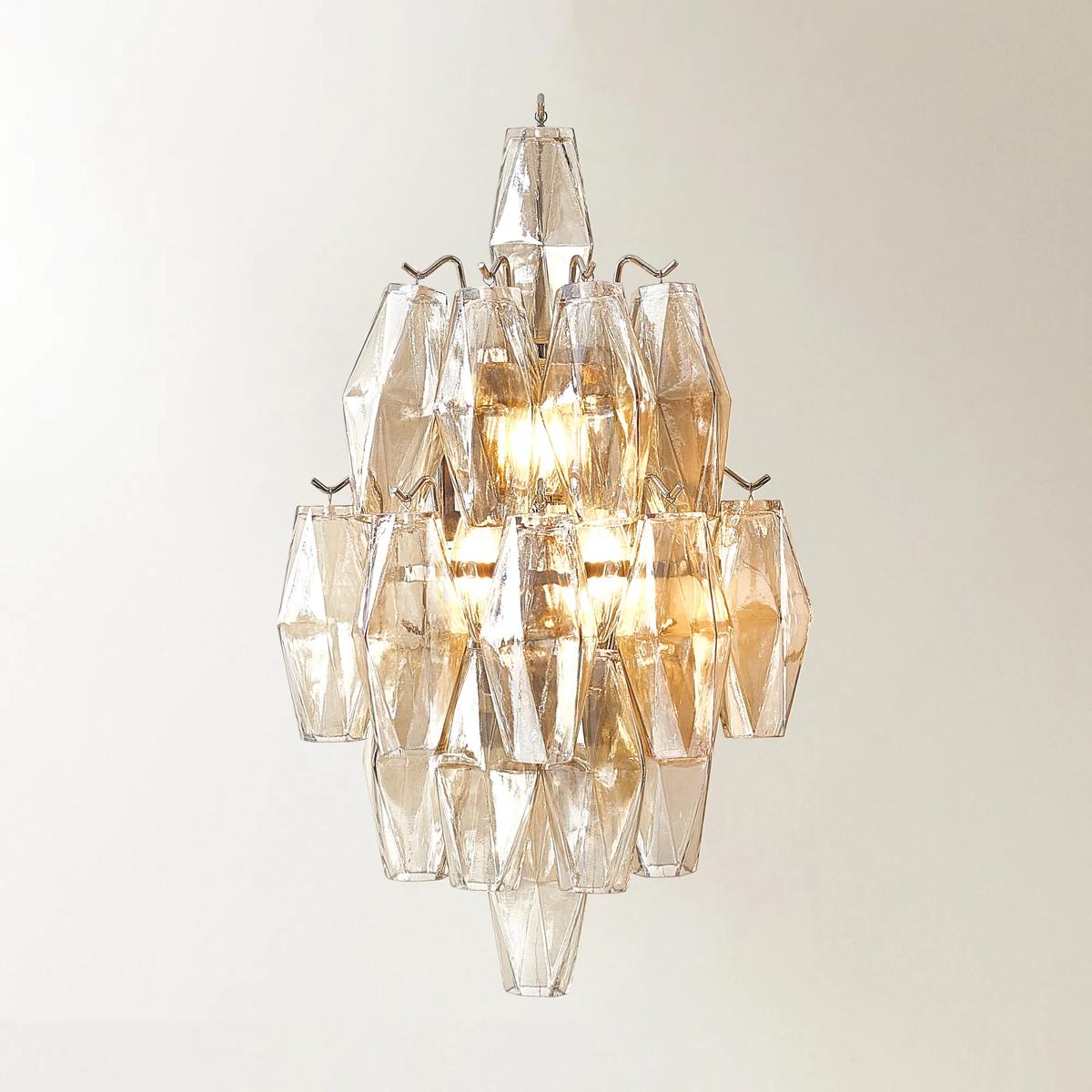
Modern Minimalist Chandeliers
Modern Minimalist Chandeliers
-
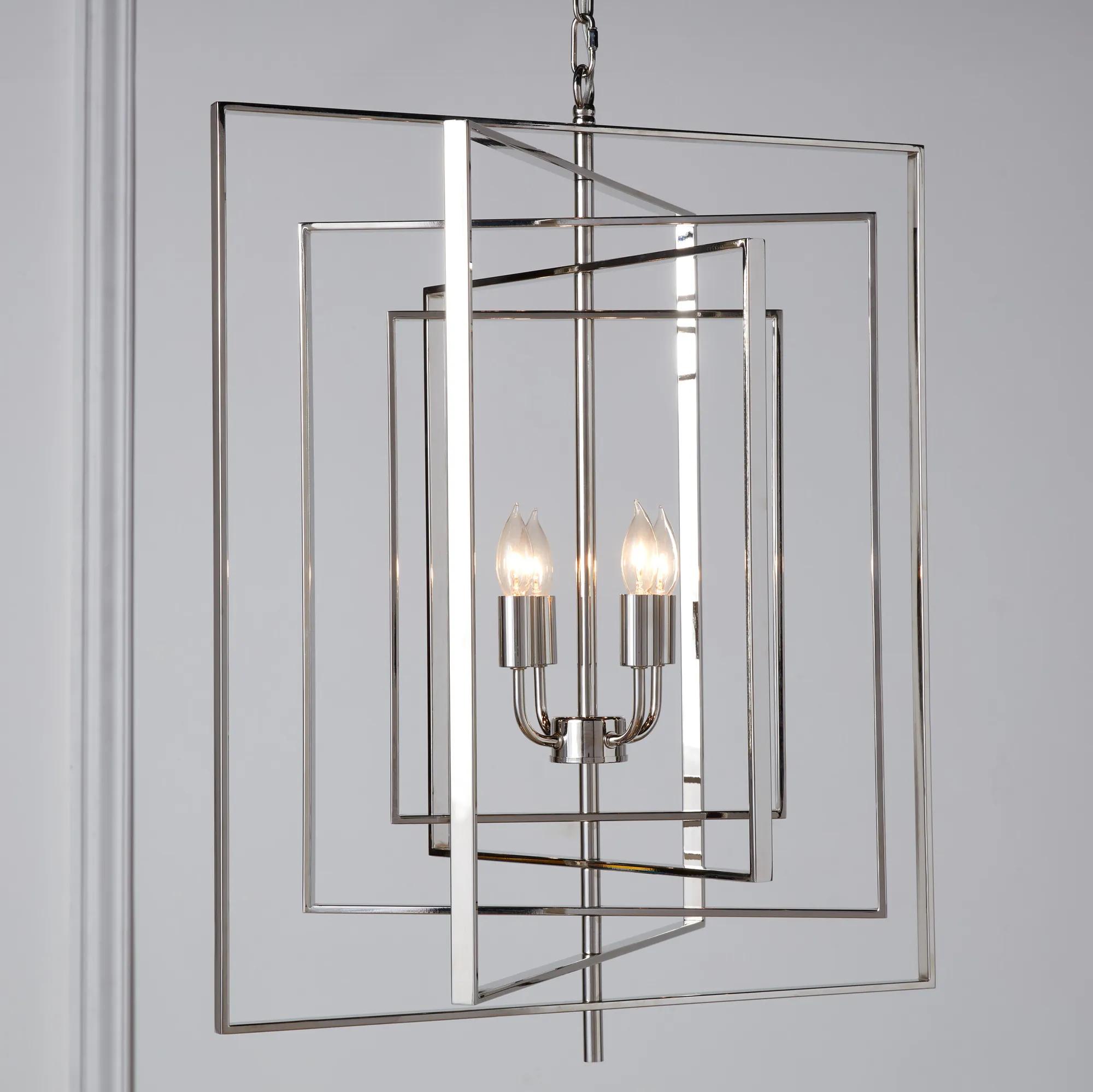
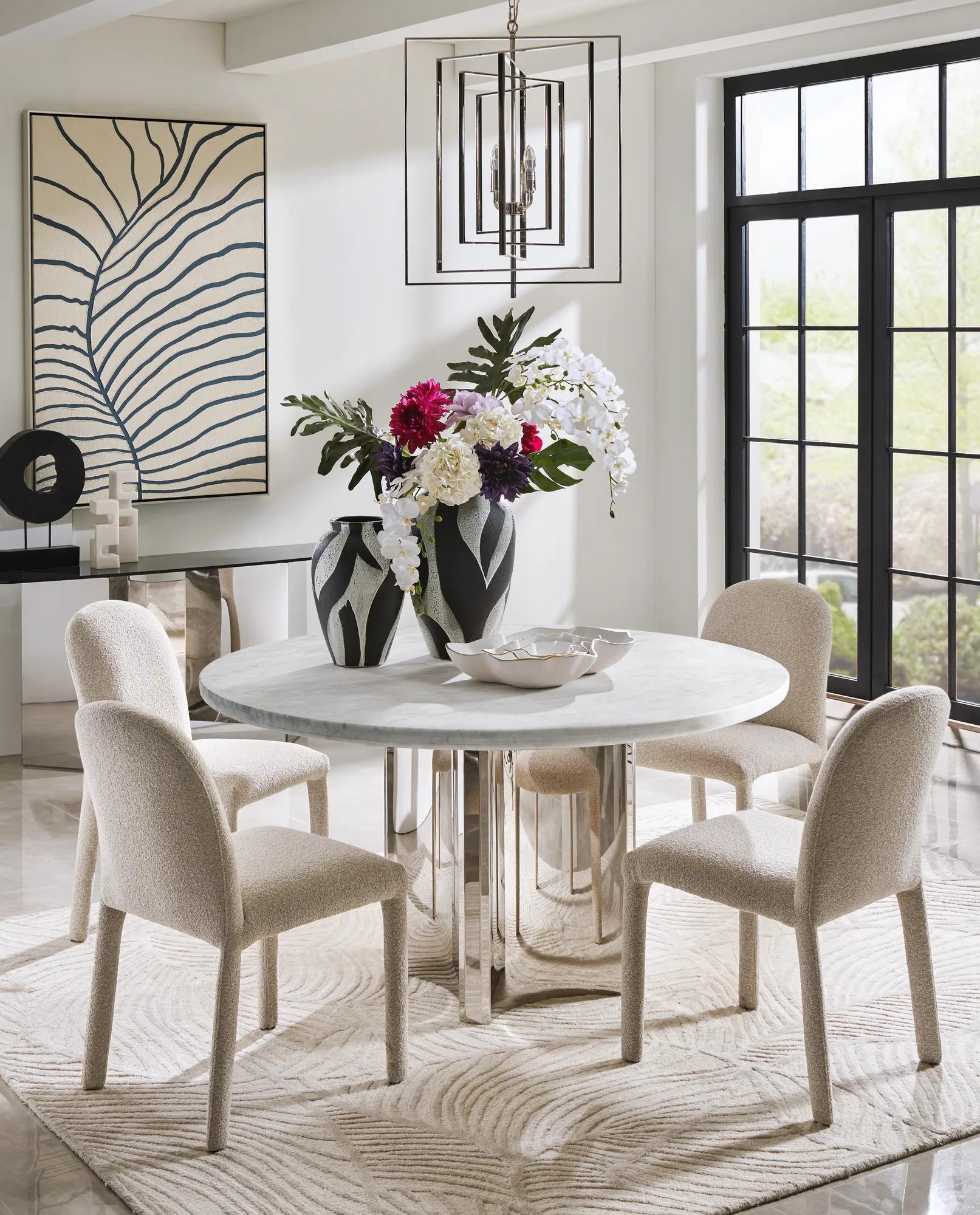 Hollis Chandelier$499
A polished nickel geometric chandelier with four lights, perfect for modern and minimal interiors.
Add To Cart -
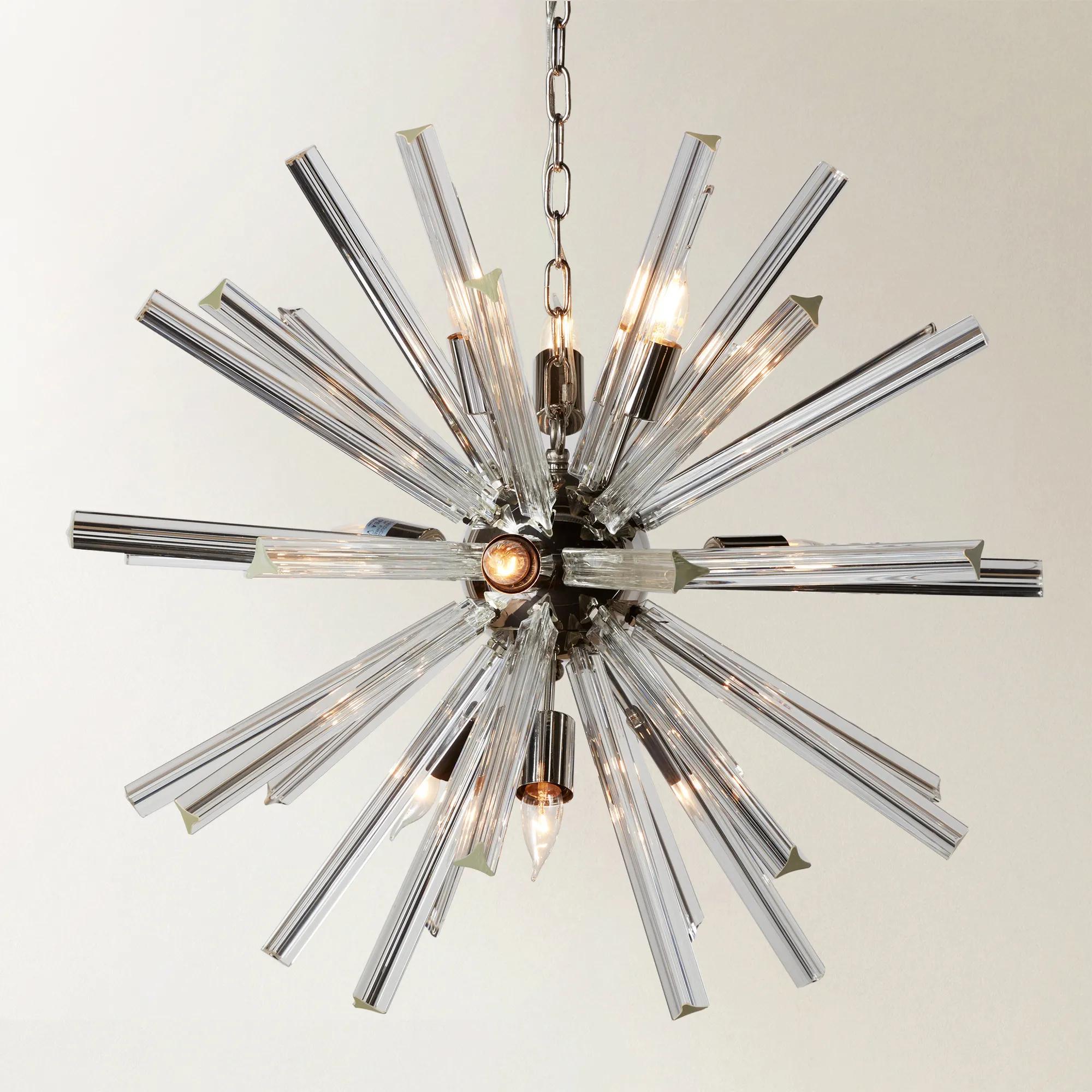
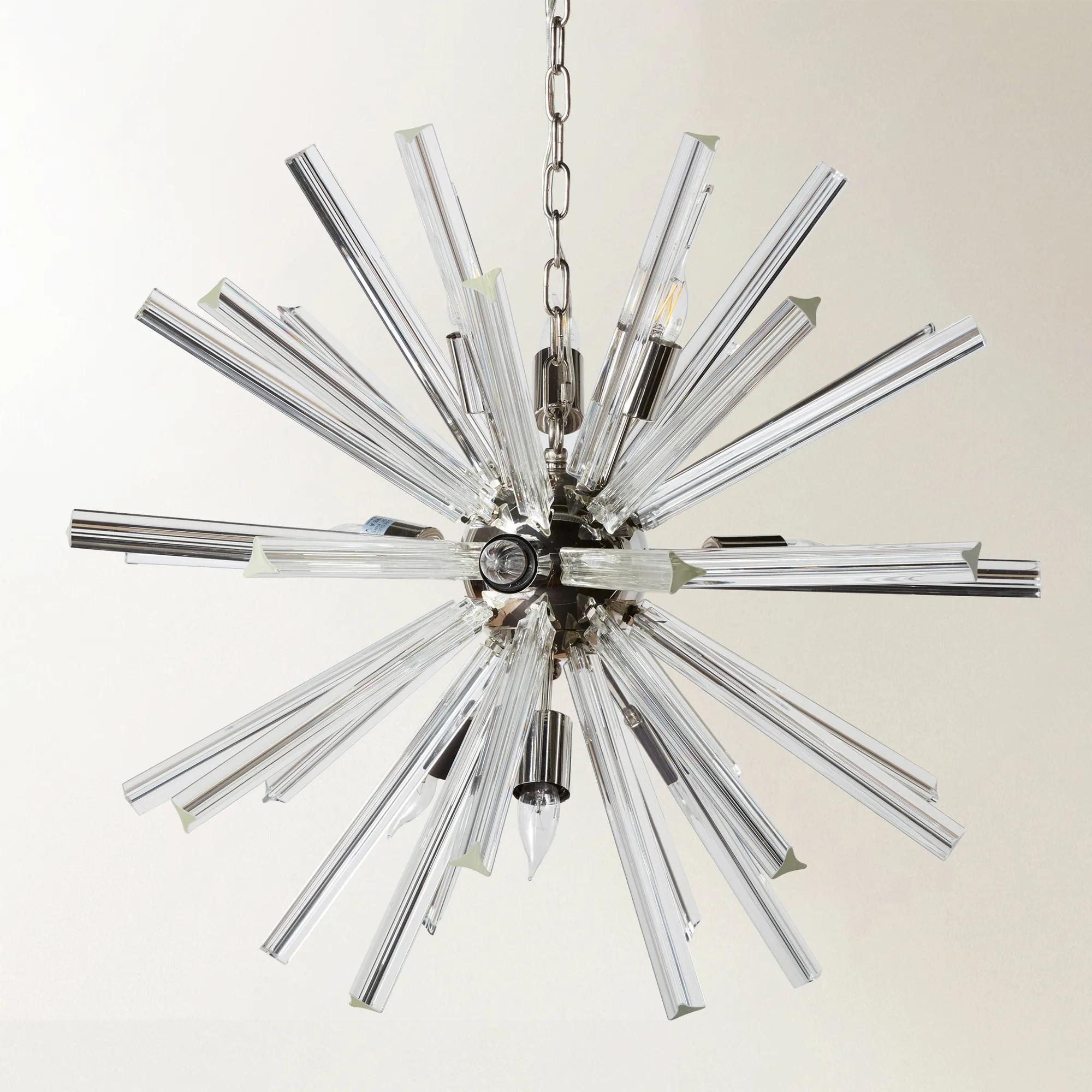 Axis Sputnik Clear Faceted Glass Chandelier 29.5"D$599
A clear glass and iron Sputnik chandelier featuring nine lights and faceted triangular rods.
Add To Cart -
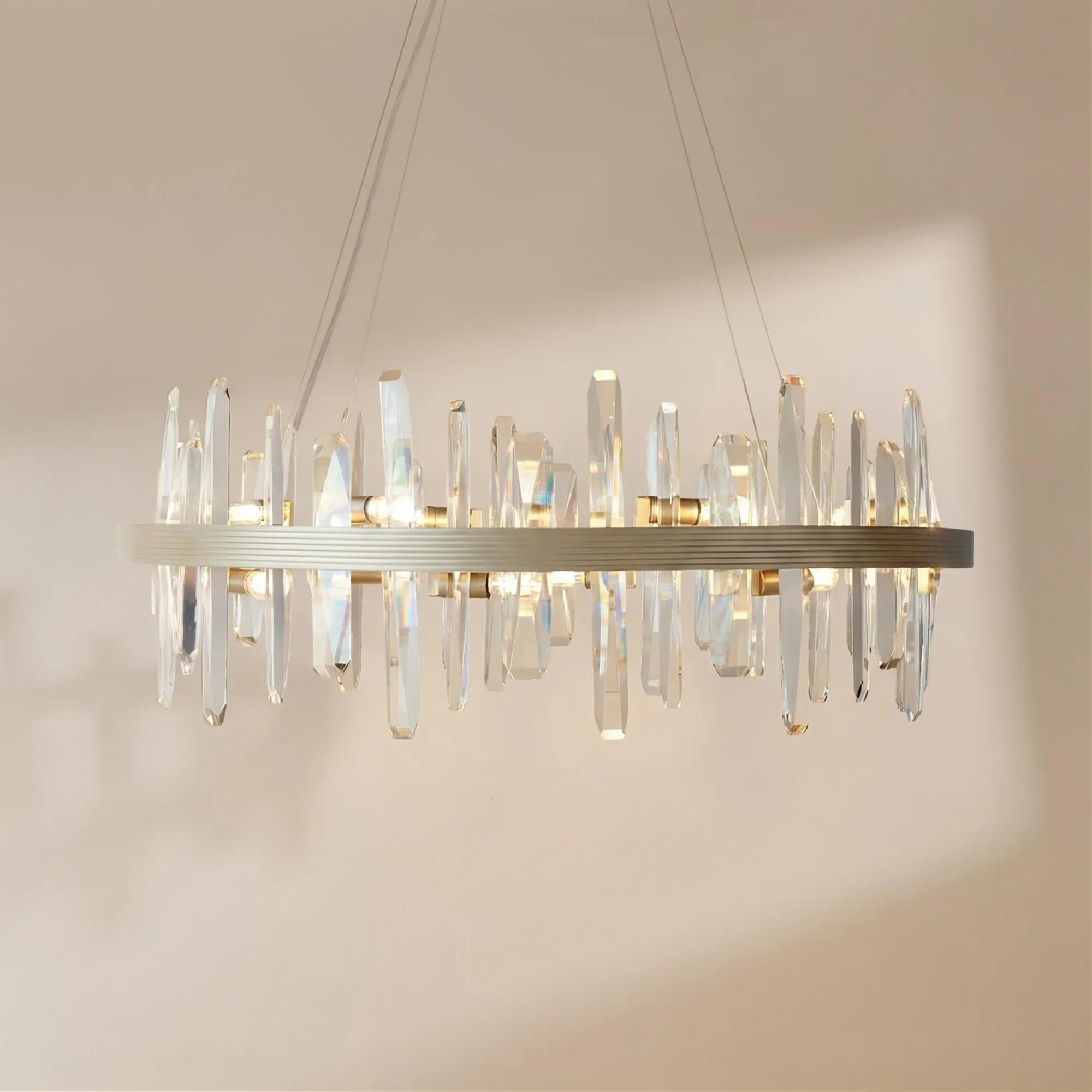
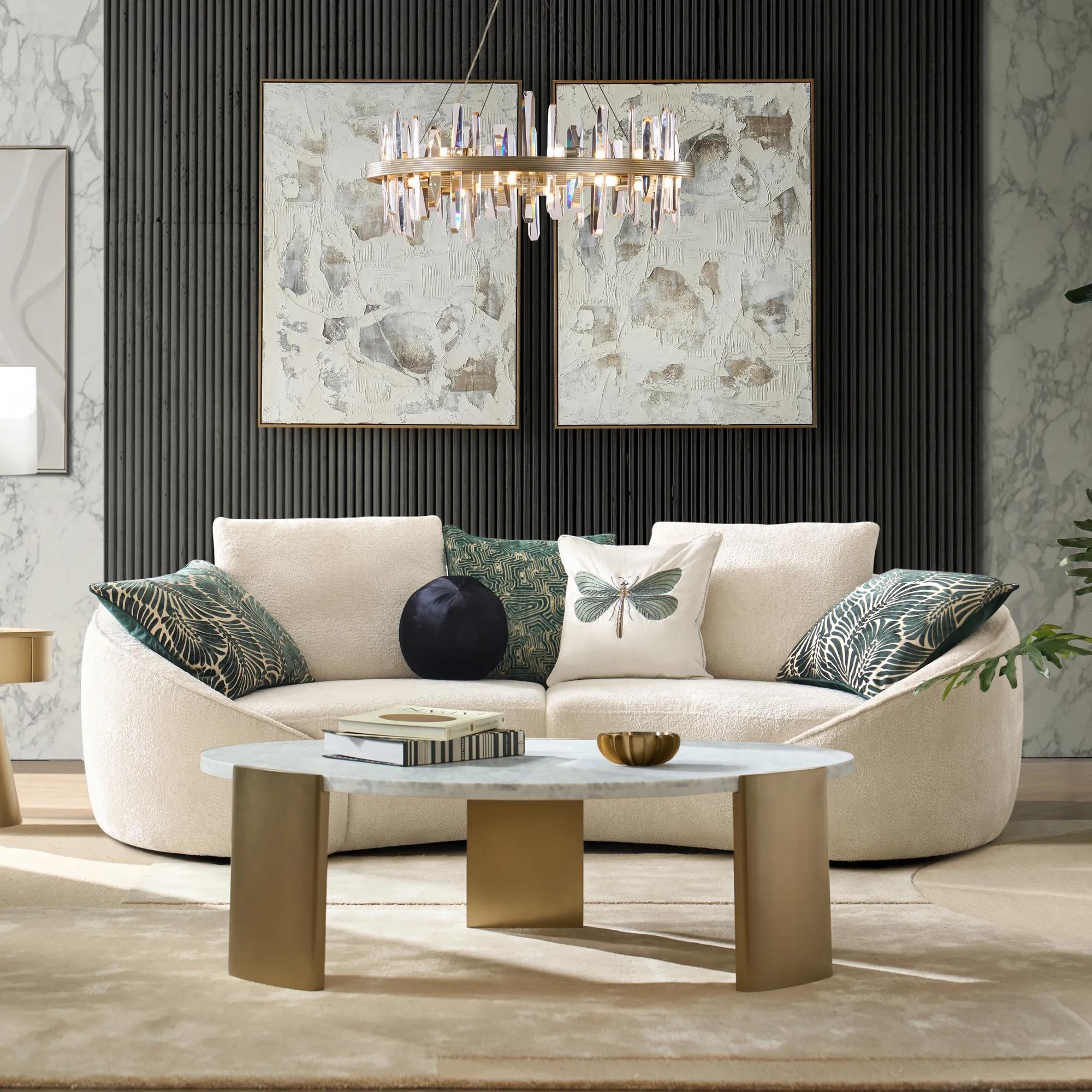 Lumi Clear Beveled Glass Chandelier 31.5"W$929
A chandelier with clear beveled glass, a champagne-finished iron frame, sixteen lights, and dimmable illumination.
Add To Cart -
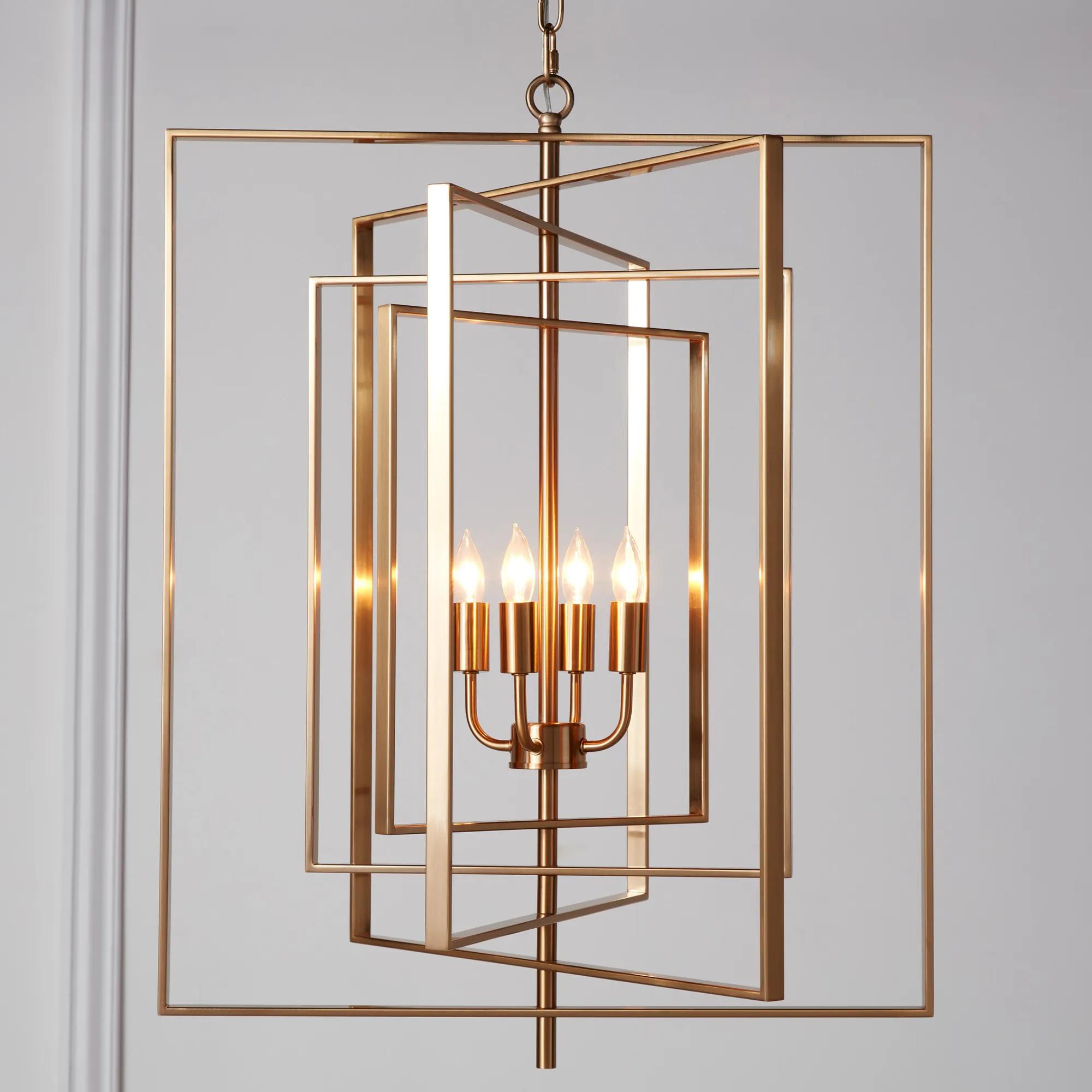 Hollis Chandelier$499
A geometric brass-finished iron chandelier with four lights, perfect for modern and minimal interiors.
Add To Cart -
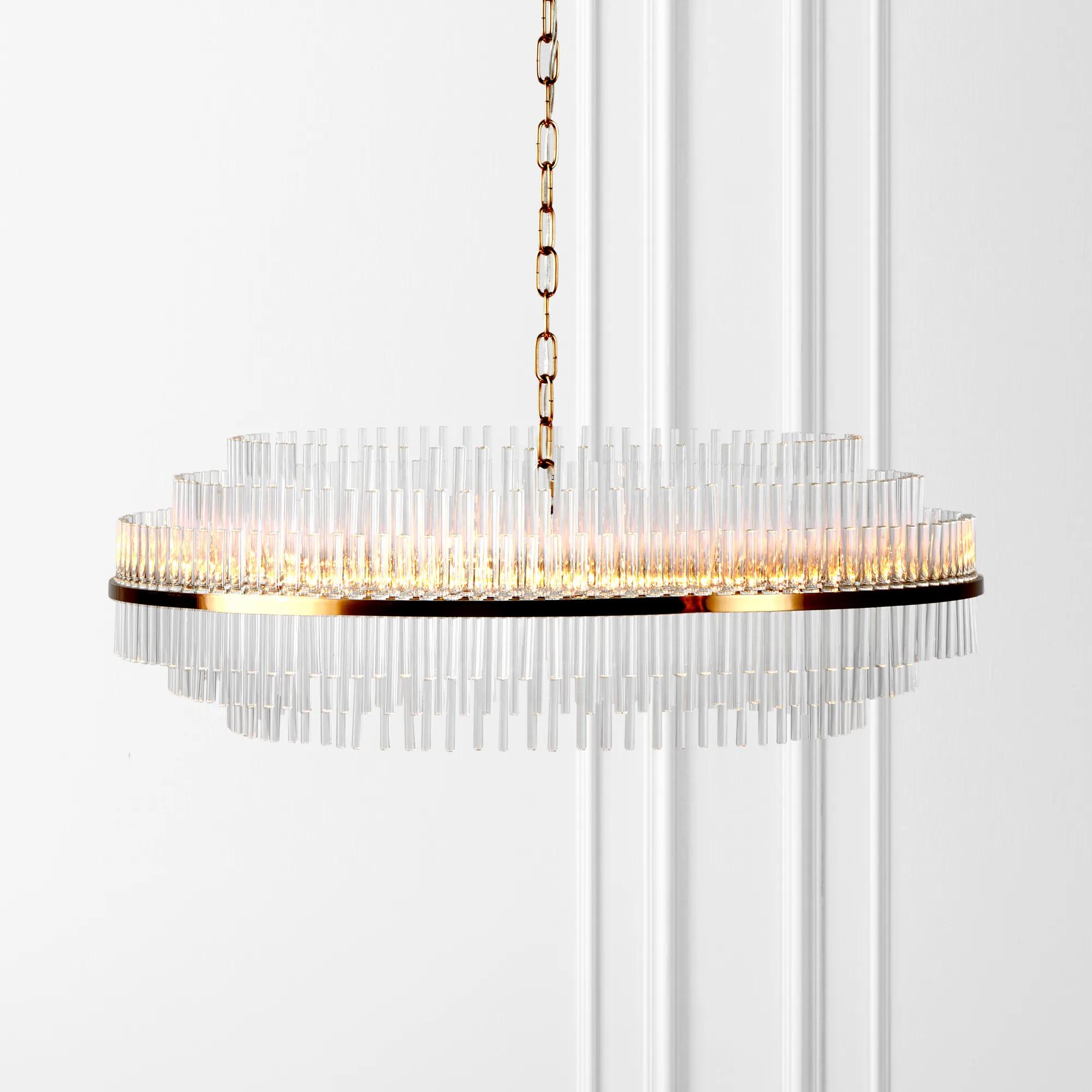
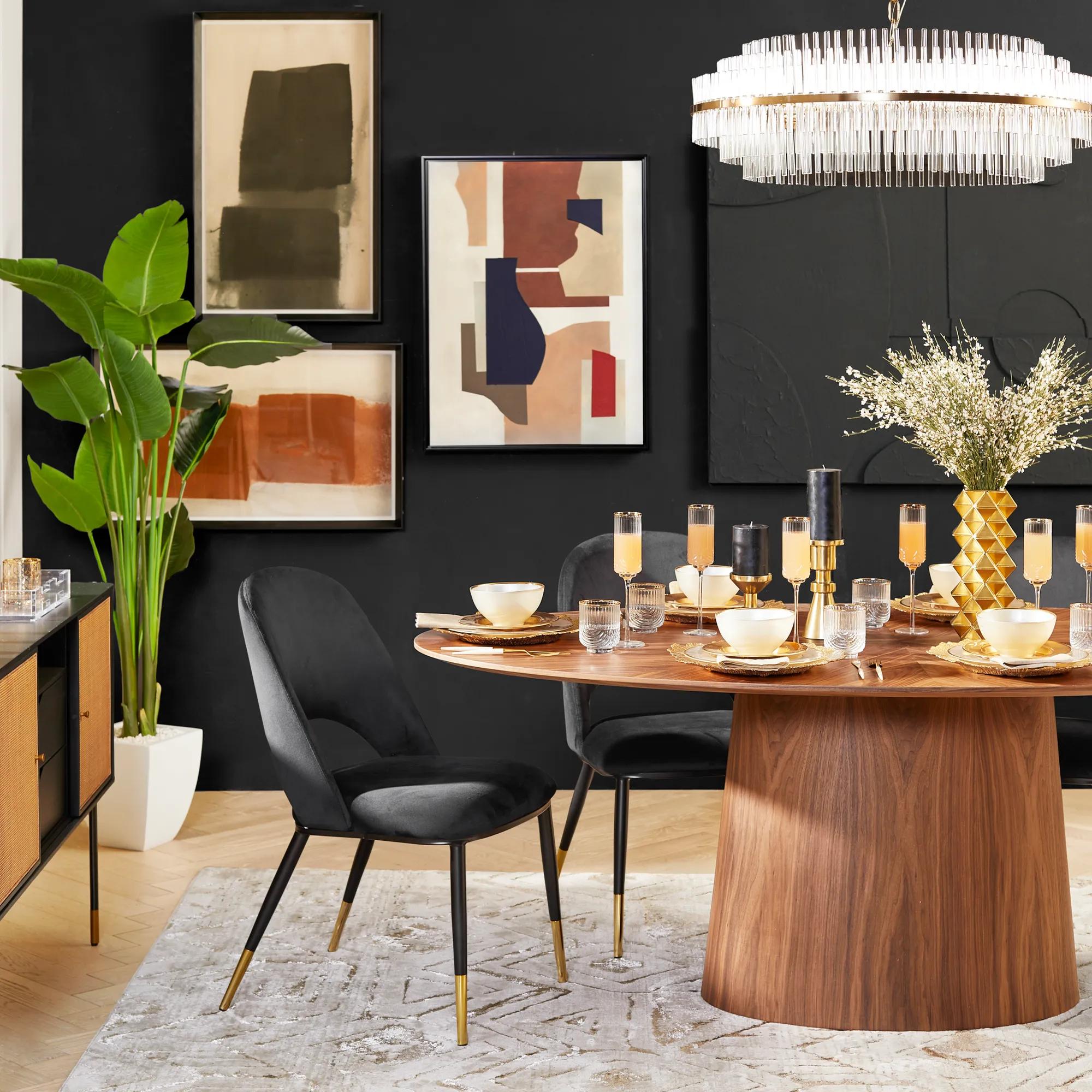 Renata Clear Glass Rod Chandelier 31"W x 10"H$799
A low-profile glass-rod chandelier with a brushed brass iron frame and eight dimmable candelabra lights.
Add To Cart -
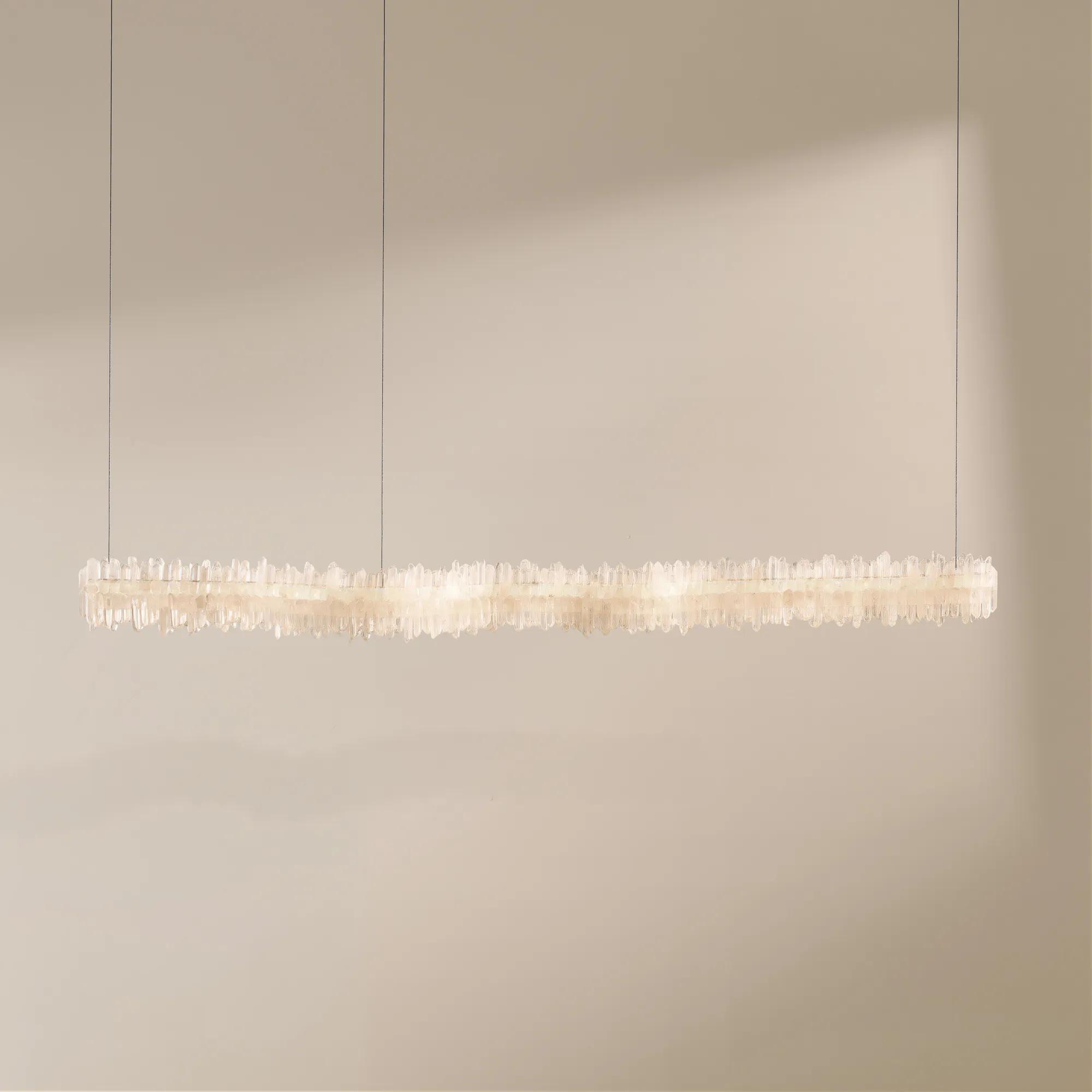 Stella Quartz Crystal LED Chandelier 47.25"$1899
A linear LED chandelier featuring natural raw quartz crystals and a polished rose gold metal frame.
Add To Cart -
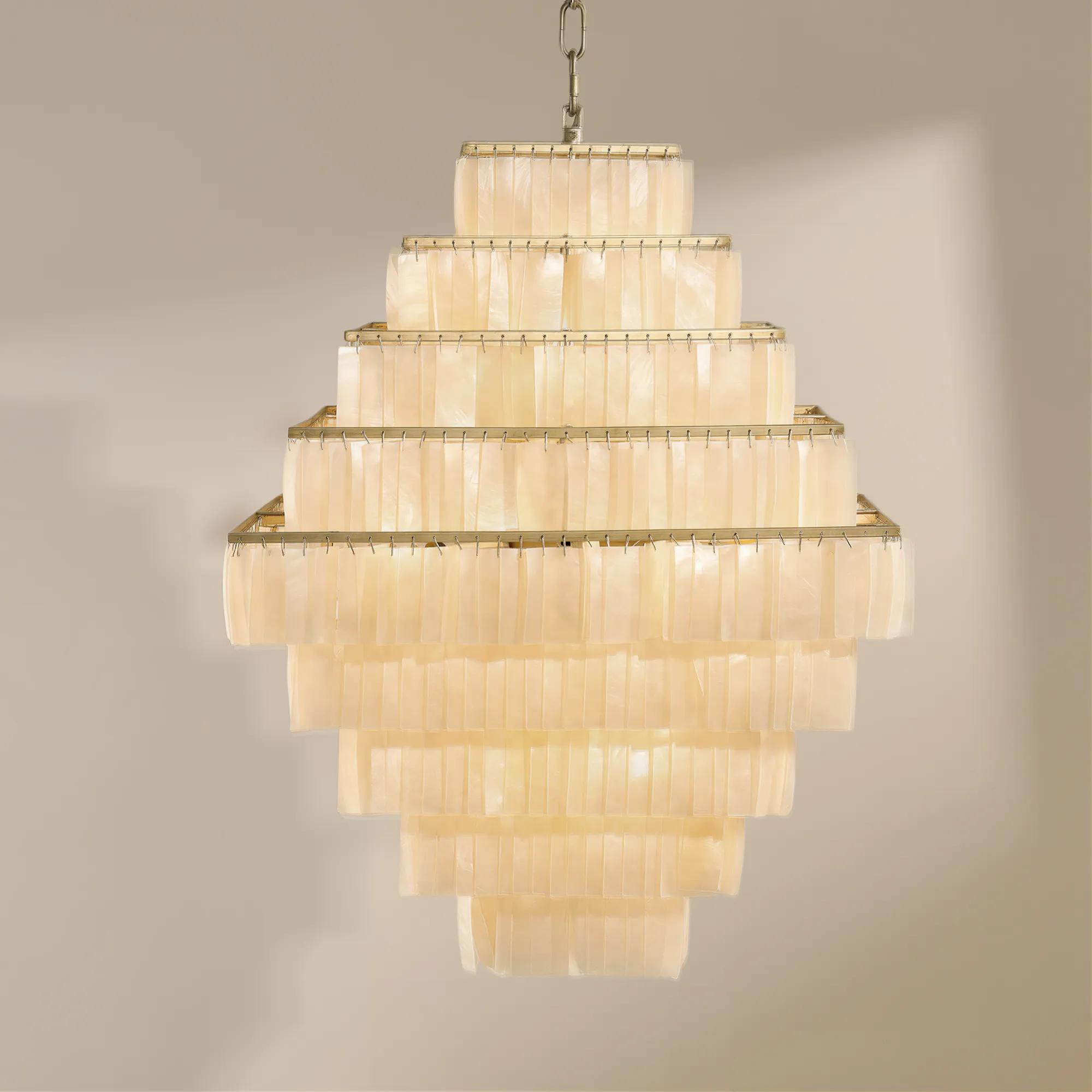 Soleil Capiz Shell Chandelier 25"$999
A modern capiz shell chandelier with 700 pearlescent shells, champagne-finished iron, and dimmable ambient lighting.
Add To Cart -
 Bolla LED Hand-Blown Glass Bubble Chandelier 60.25"$499
A hand-blown glass chandelier with clear bubbles, matte gold steel framing, and integrated warm LED illumination.
Add To Cart -
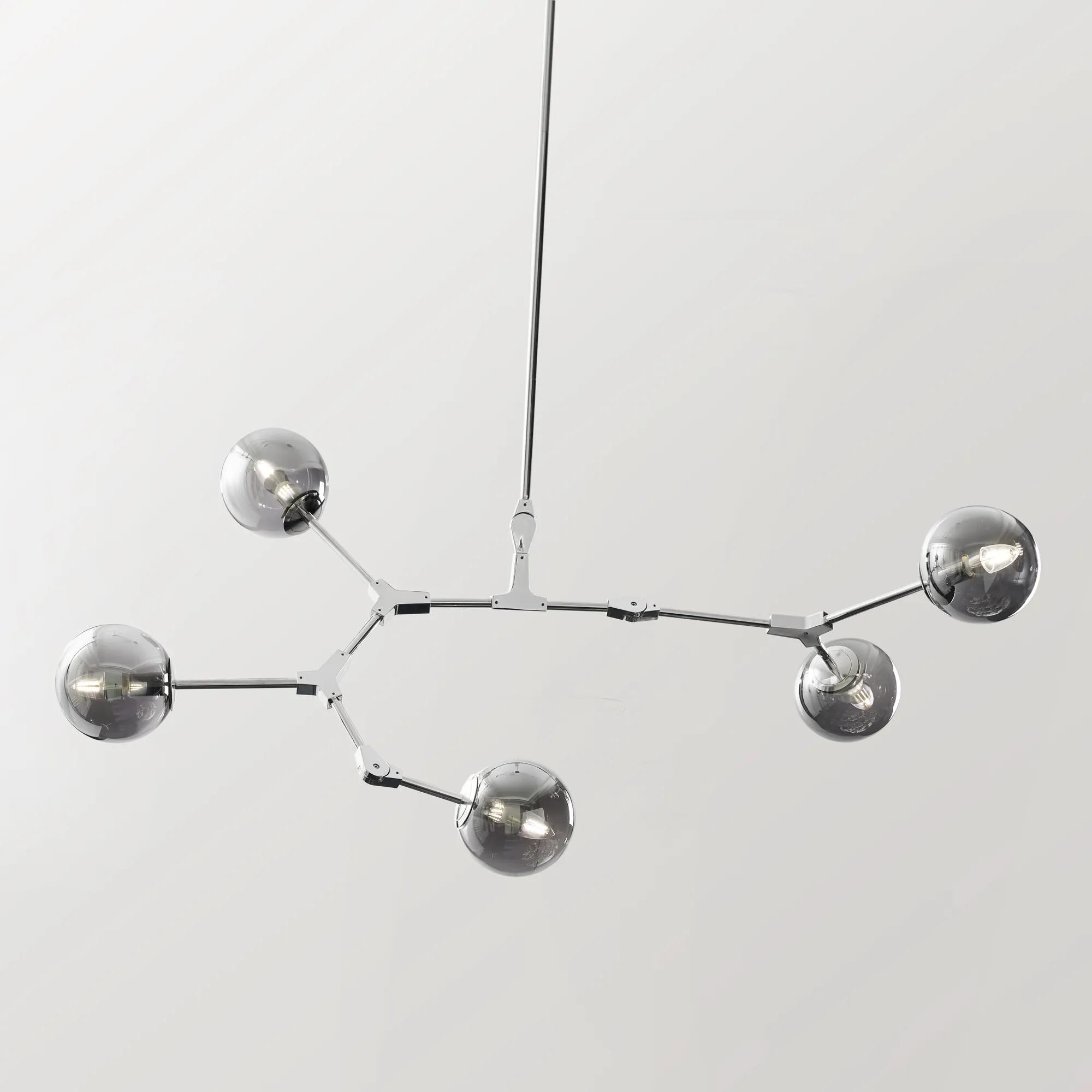
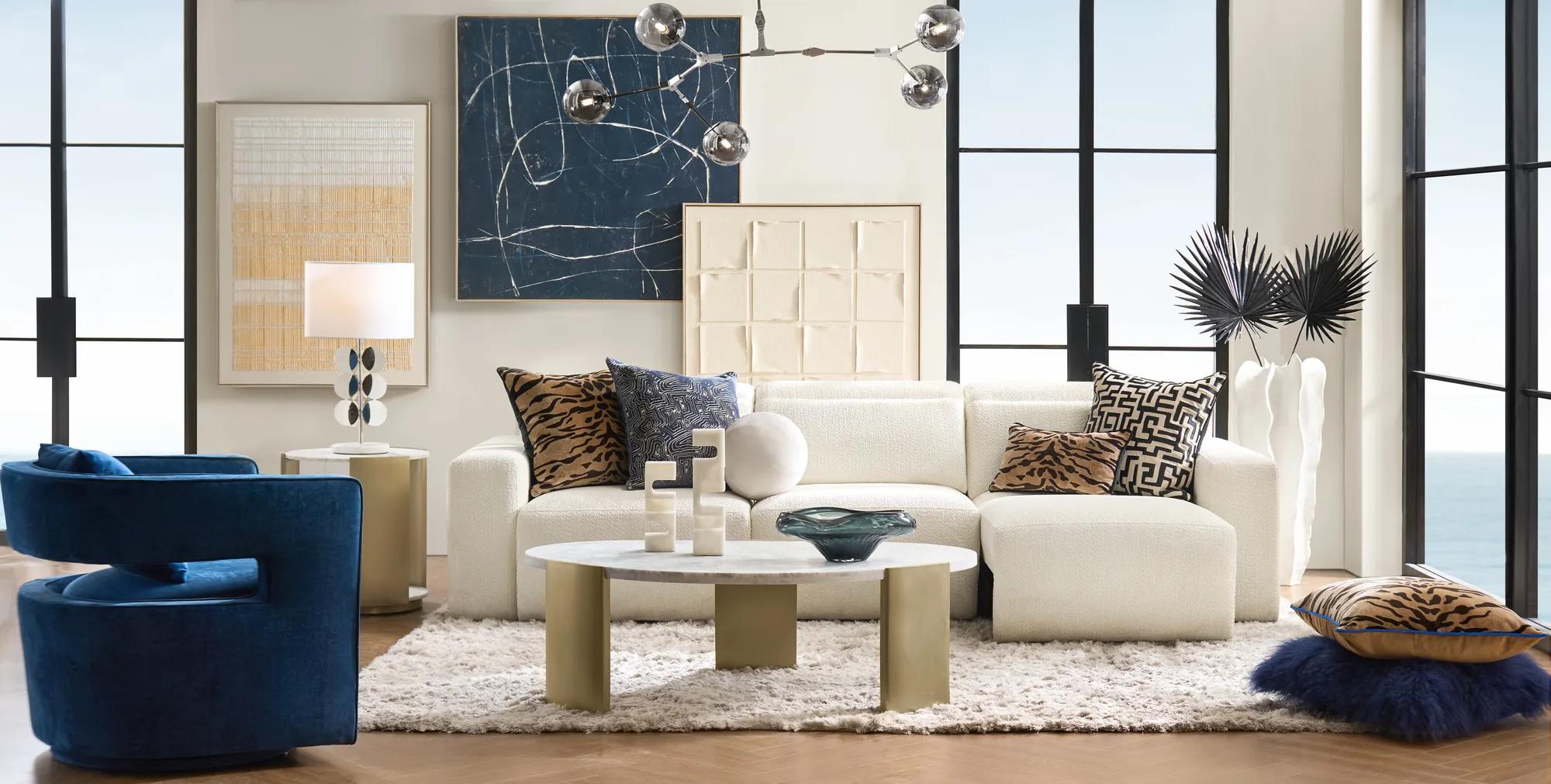 Axel Chandelier$499
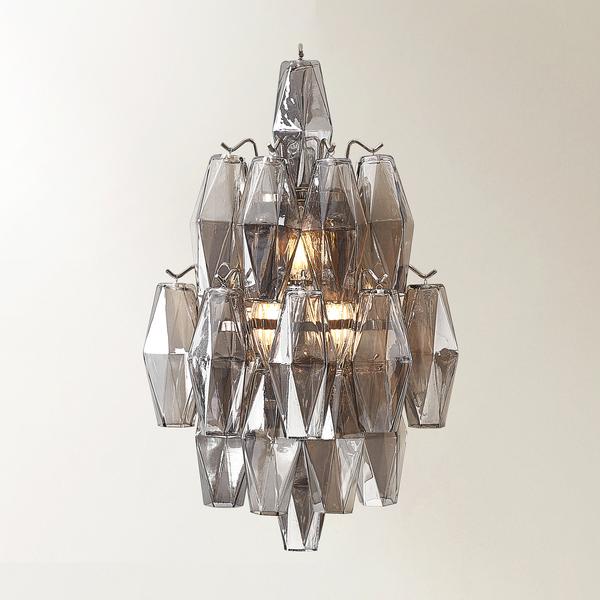
A modern chandelier featuring polished nickel arms and smoked glass bulbs for striking, contemporary illumination.
Add To Cart -

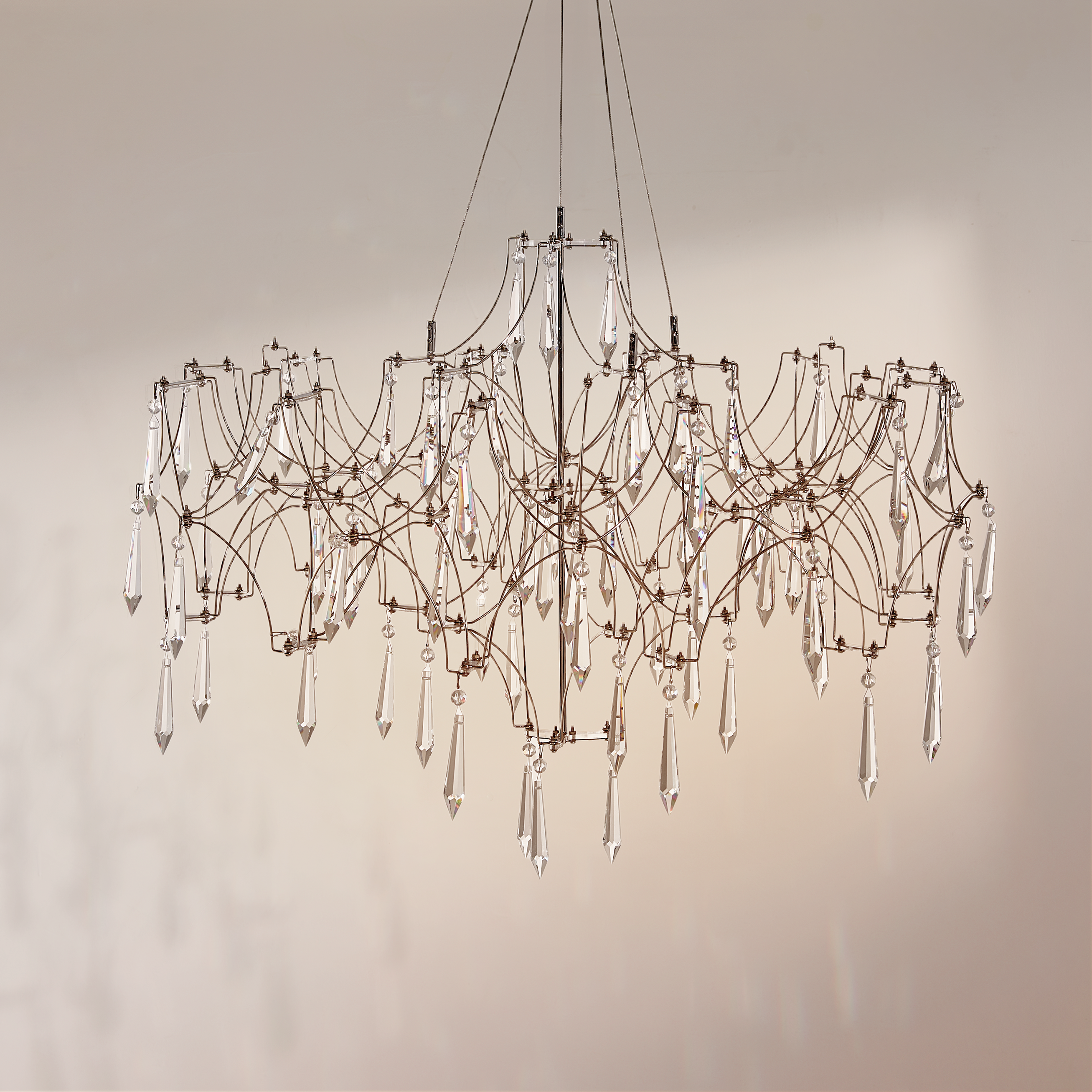 Moderne LED Clear Crystal Chandelier 24.5"W x 19.75"H$899
A clear crystal chandelier with faceted construction, polished nickel framing, and integrated warm LED illumination.
Add To Cart -

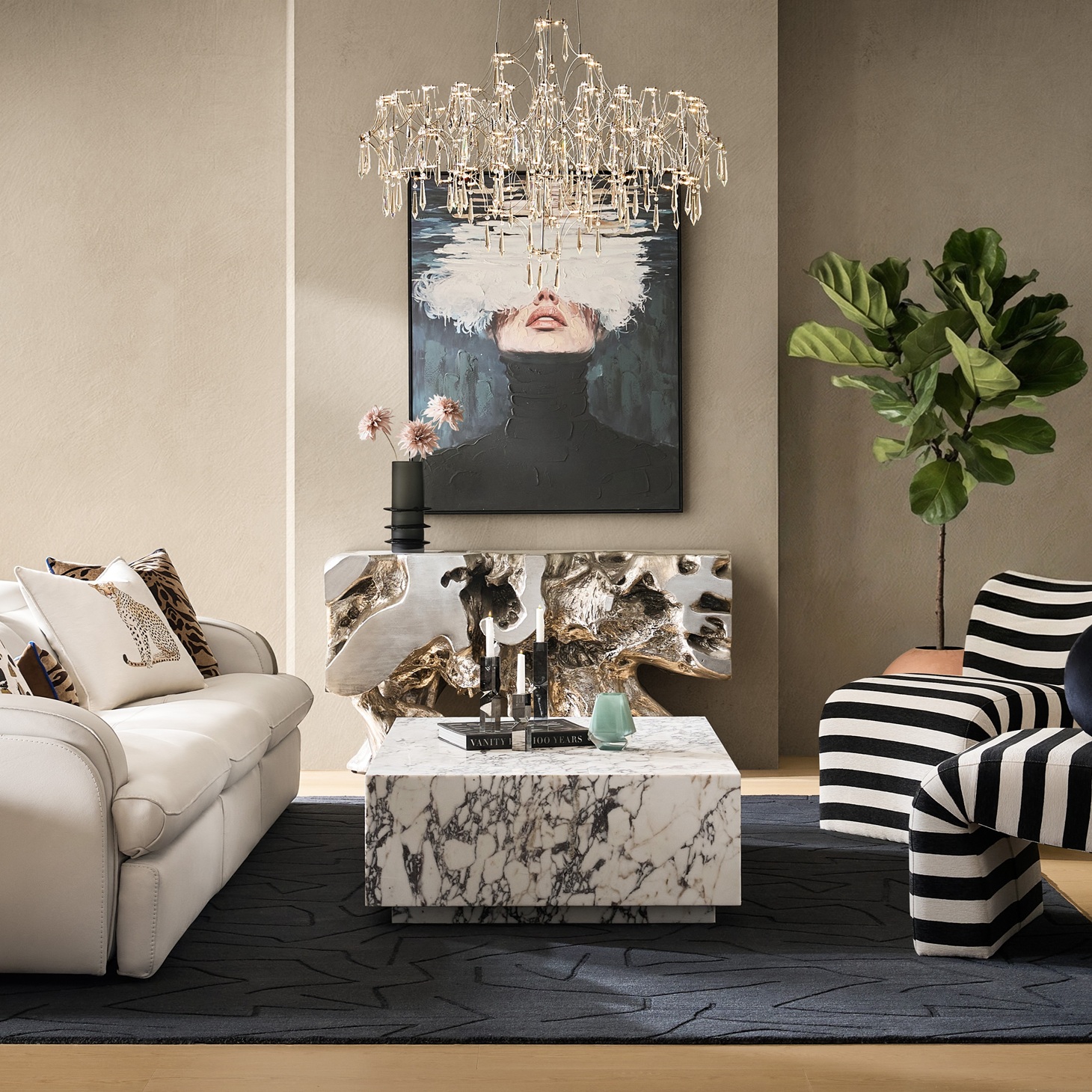 Moderne Grande LED Crystal Chandelier 35.75"W x 28.5"H$1899
A faceted crystal chandelier with polished nickel framing and integrated LED illumination for a modern glow.
Add To Cart -
 Glacier Clear and Frosted Glass Chandelier 24"$899
A glass chandelier with icicle-inspired clear and frosted panels, brushed brass frame, and twelve-light illumination.
Add To Cart -
 Sawin Chandelier$699
A sculptural brass-plated steel chandelier with frosted acrylic diffusers for a soft, ambient glow.
Add To Cart -
 Joliet LED Linear Hand Painted Swirl Glass Chandelier 47"$499
A linear chandelier featuring hand-painted swirl glass, champagne-finish canopy, and integrated warm LED illumination.
Add To Cart -
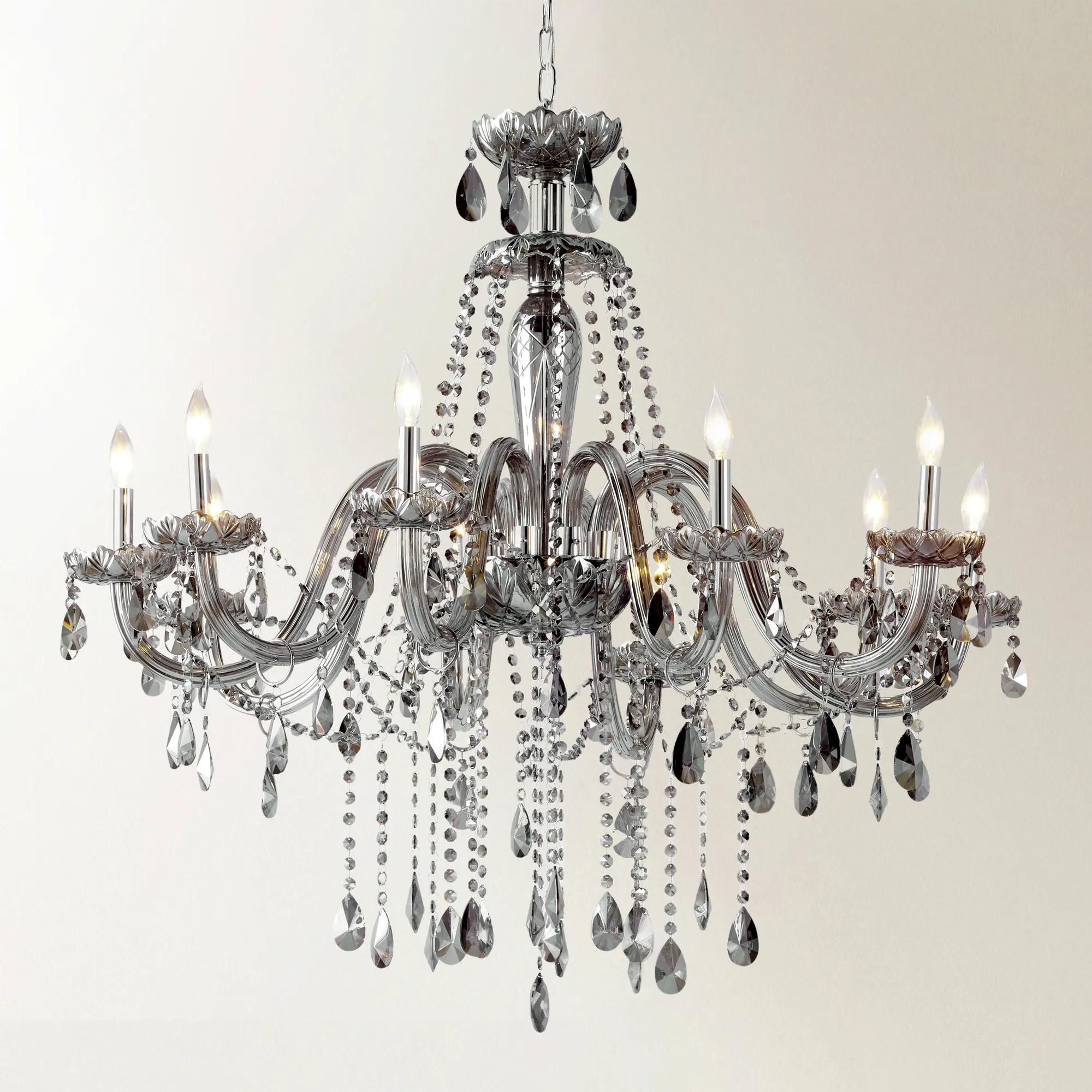
 Omni Chandelier 38.5" - Graphite$999
A dazzling chandelier featuring graphite faceted crystals and ten fluted glass arms with nickel hardware.
Add To Cart -
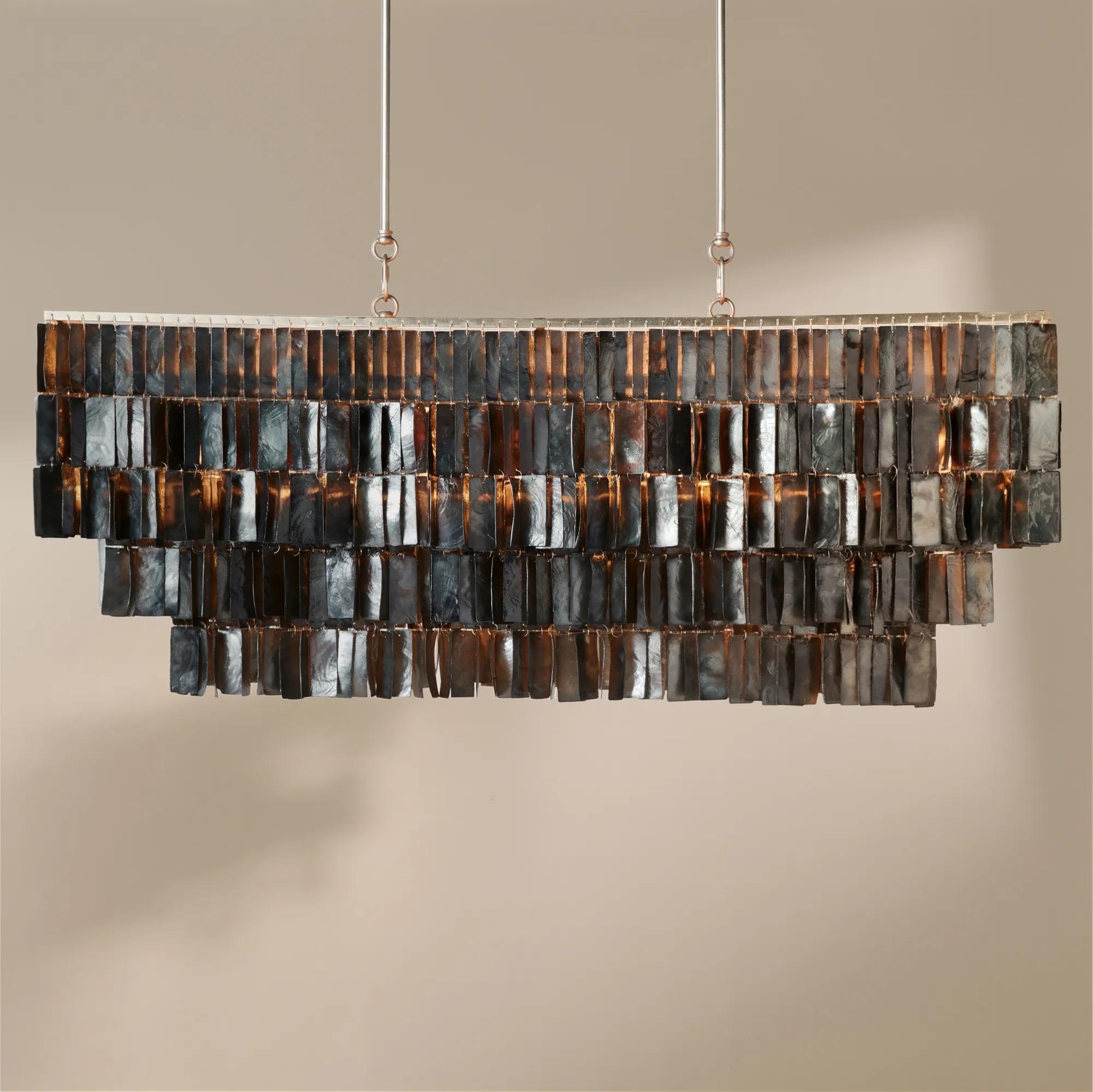
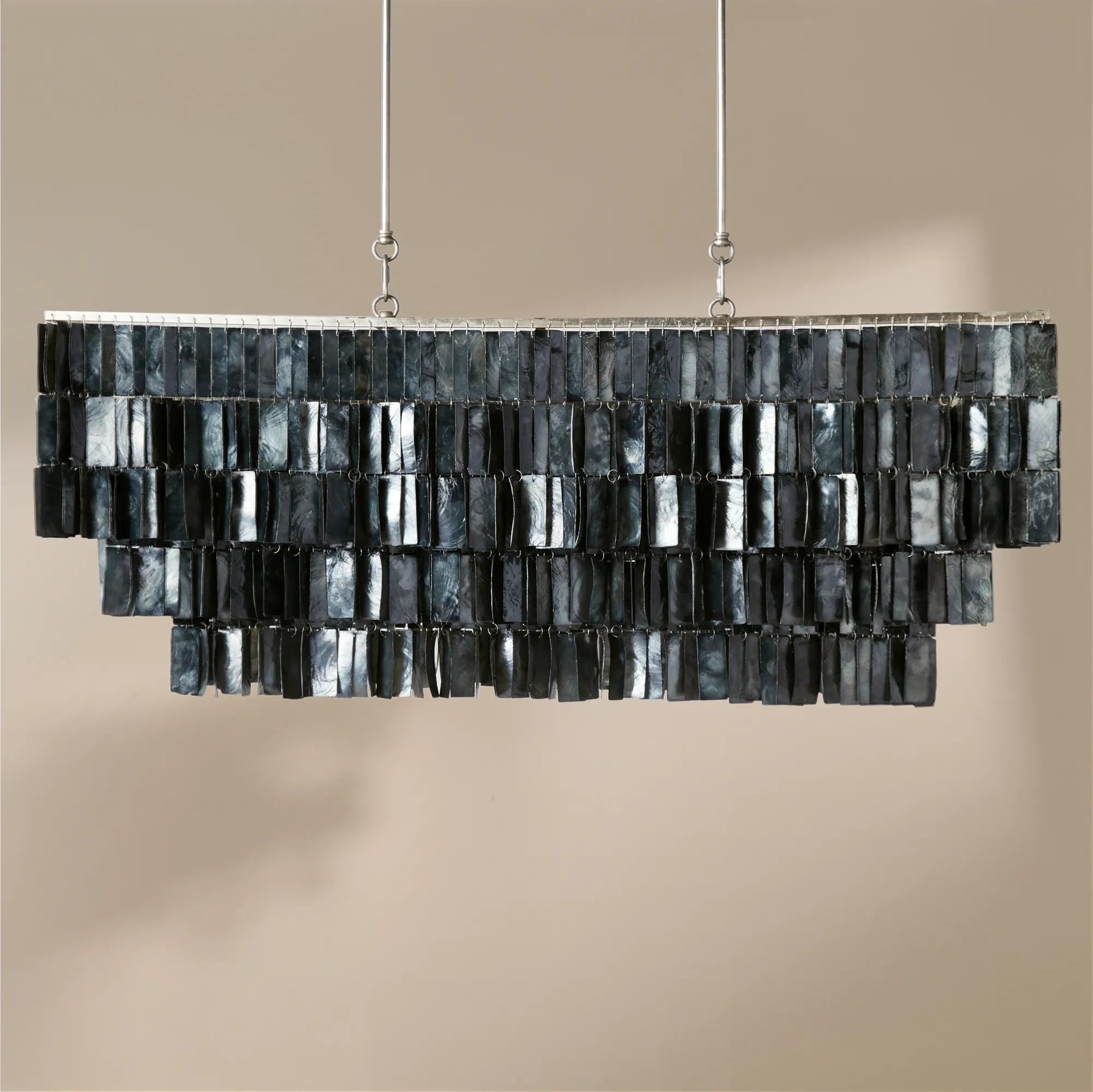 Capiz Shell Graphite Chandelier 39"$849
A chandelier with charcoal capiz shells, a champagne-finished iron frame, and seven dimmable candelabra sockets.
Add To Cart -
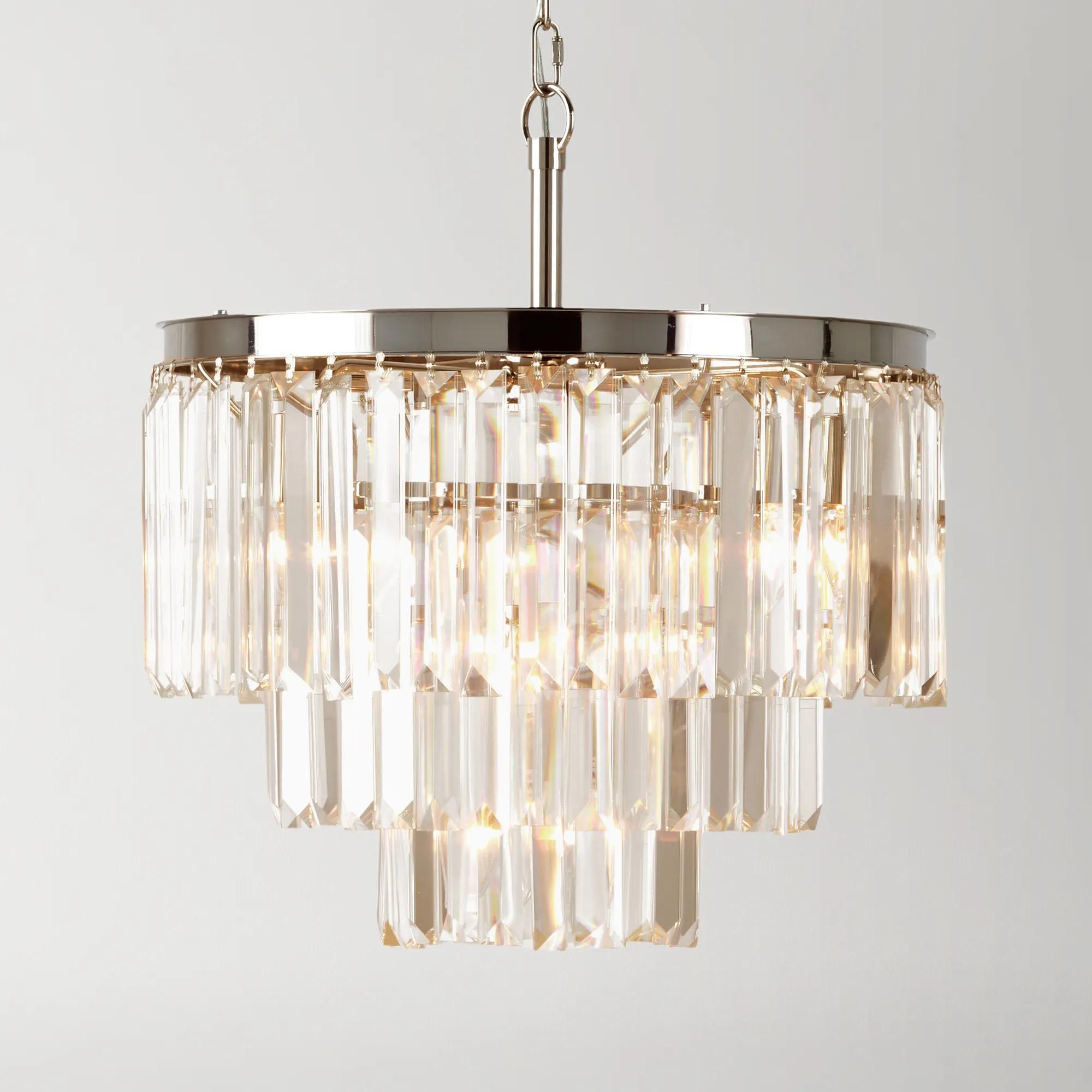
 Luxe Chandelier$799
A glamorous chandelier featuring a nickel-plated iron frame and three tiers of faceted crystal accents.
Add To Cart -
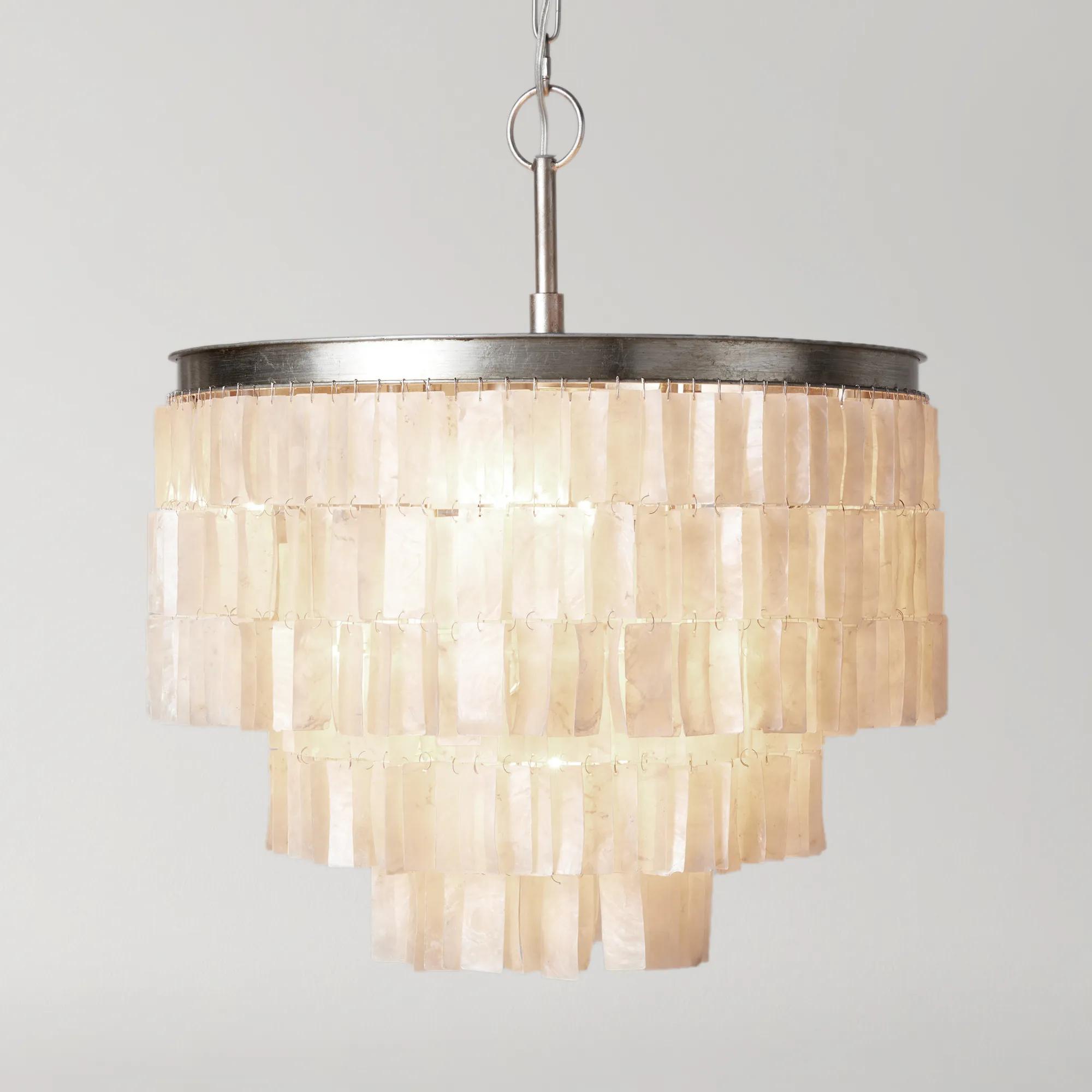 Capiz Chandelier$699
A cascading chandelier featuring over six hundred natural Capiz shells on a nickel-plated iron frame.
Add To Cart -
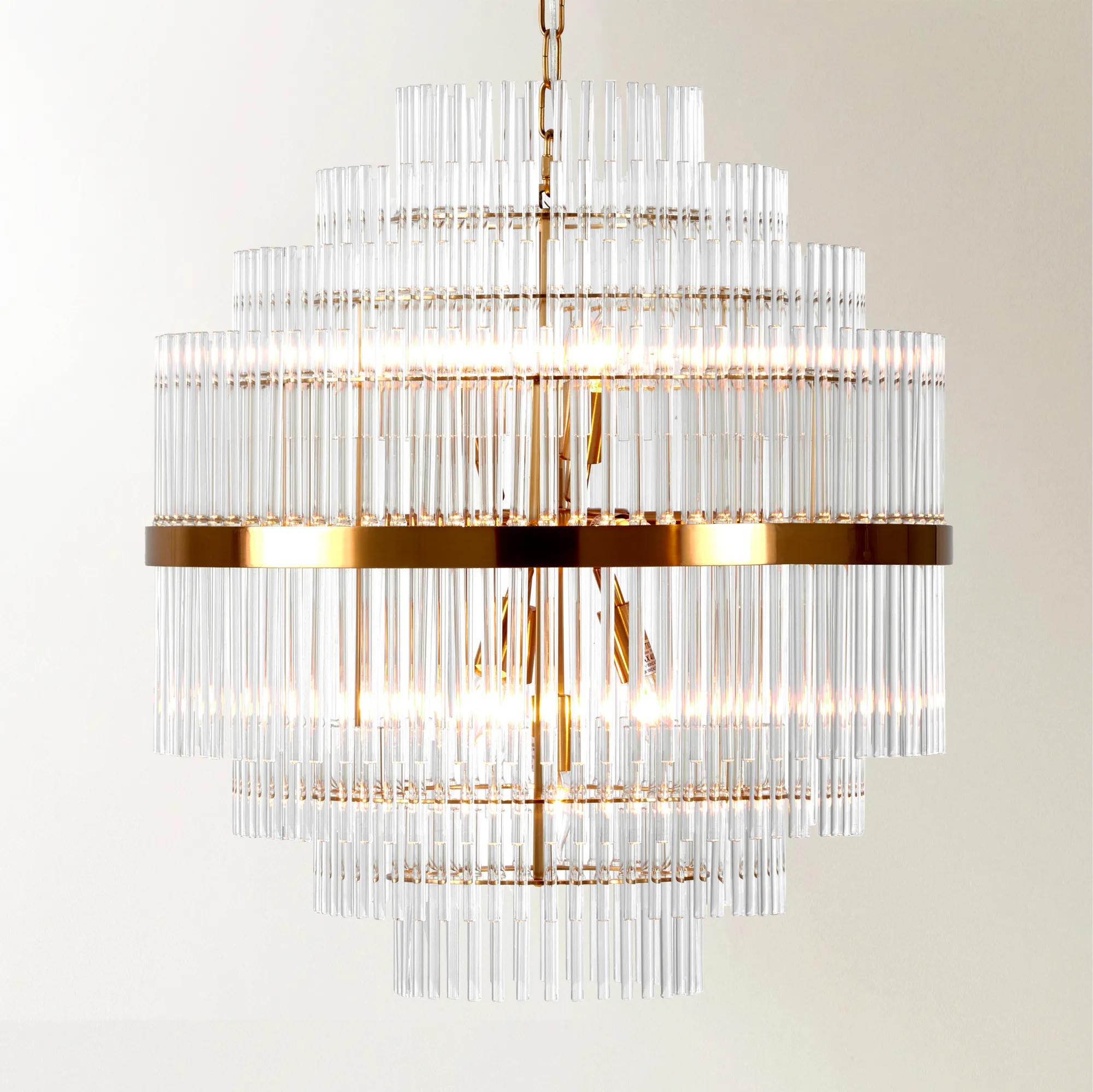
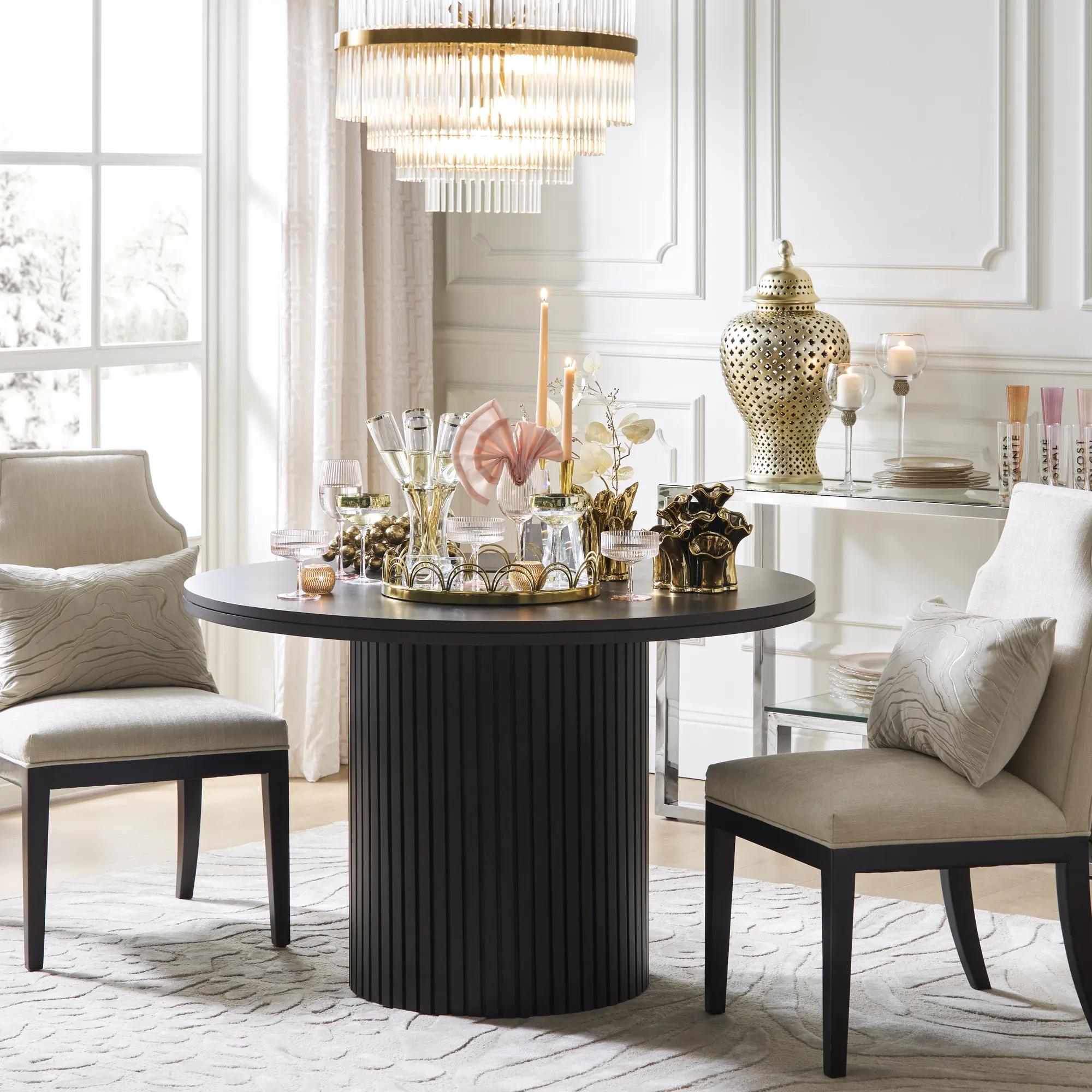 Renata Clear Glass Rod Grand Chandelier 23.6"D x 26.3"H$999
A clear glass rod chandelier with a polished gold iron frame and thirteen-light, dimmable illumination.
Add To Cart -
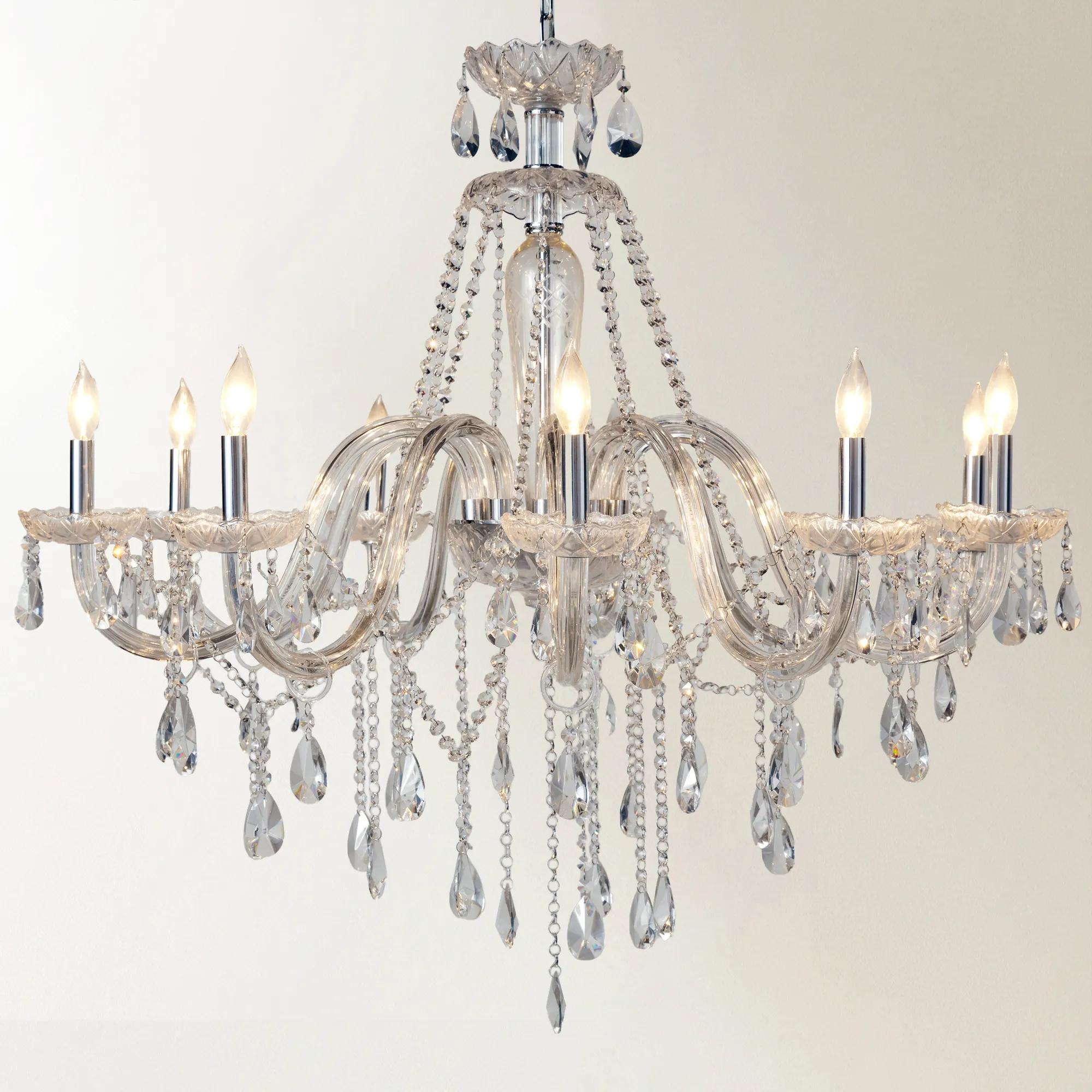
 Omni Chandelier 38.5" - Clear$999
A dazzling chandelier featuring hundreds of clear faceted crystals and ten fluted glass arms with nickel hardware.
Add To Cart -
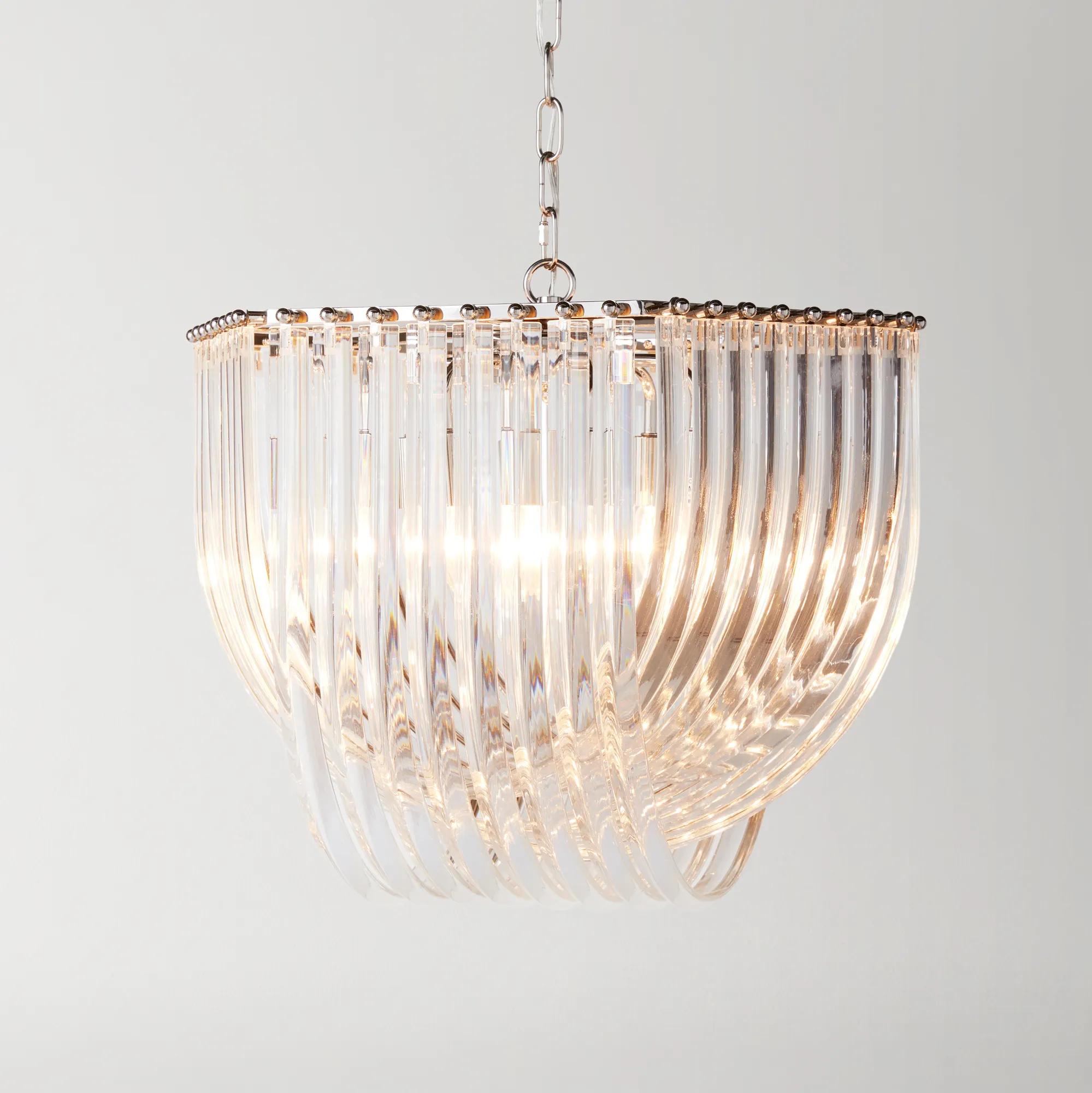 Laval Clear Curved Glass Chandelier 21"D x 18"H$799
A six-light chandelier with layered clear curved glass and a polished nickel frame.
Add To Cart -
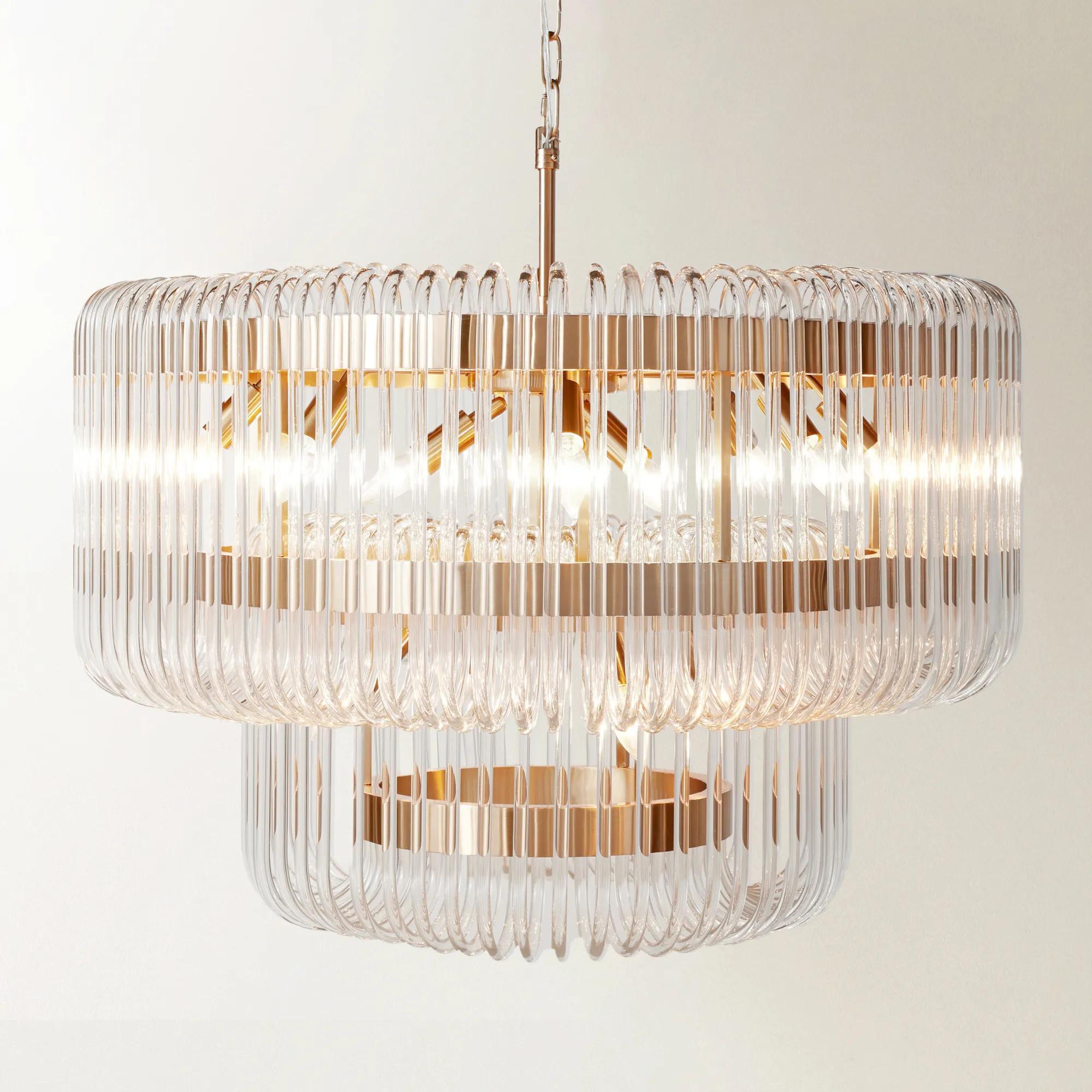 Allure Clear Curved Glass Chandelier 31.5"D x 27.75"H$1499
A chandelier featuring clear curved blown-glass rods, a brushed brass iron frame, and fifteen-light illumination.
Add To Cart -
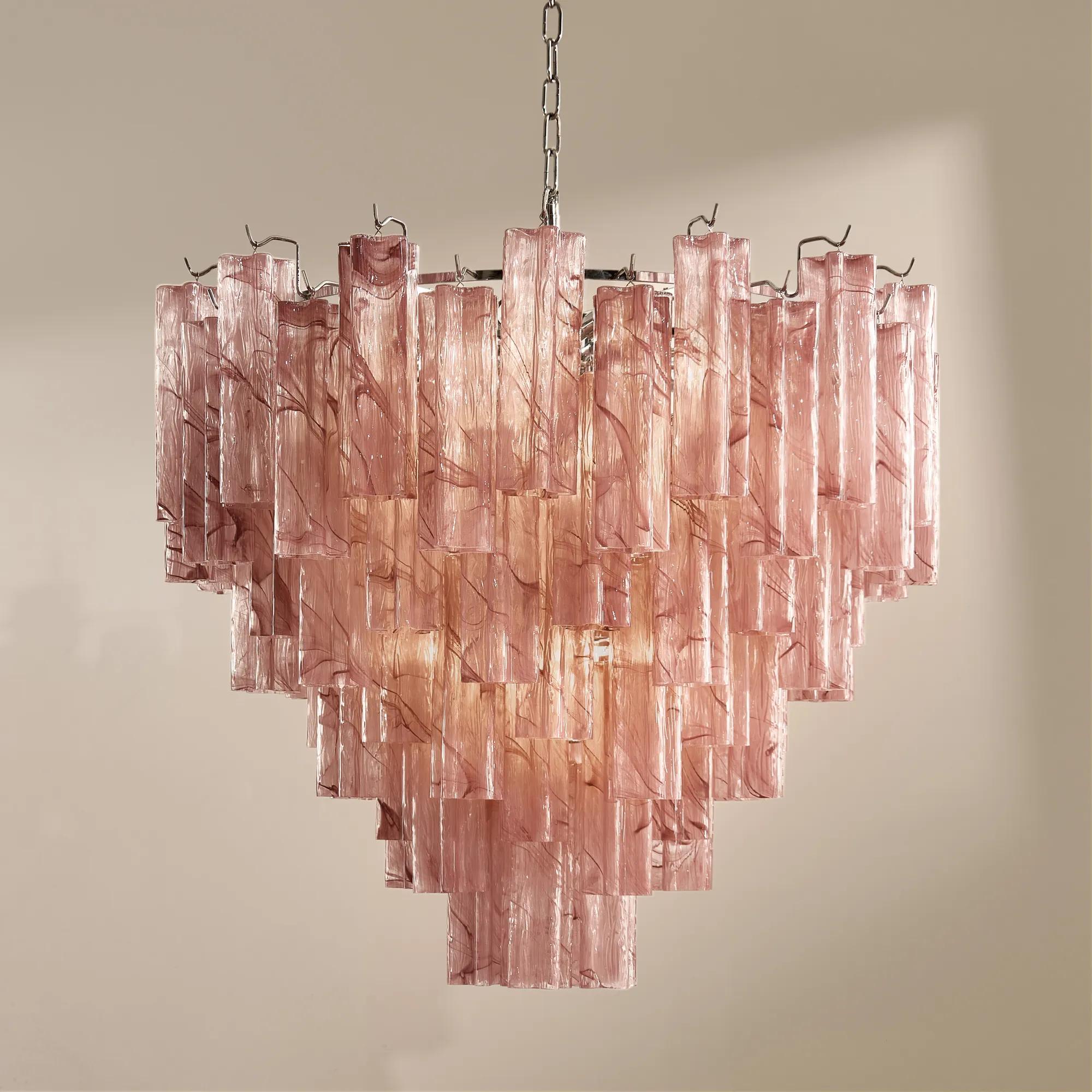 Elodie Rose Glass Chandelier 31.5"$1299
A handcrafted rose glass chandelier with swirled glass, polished chrome framing, and 21 dimmable candelabra lights.
Add To Cart -
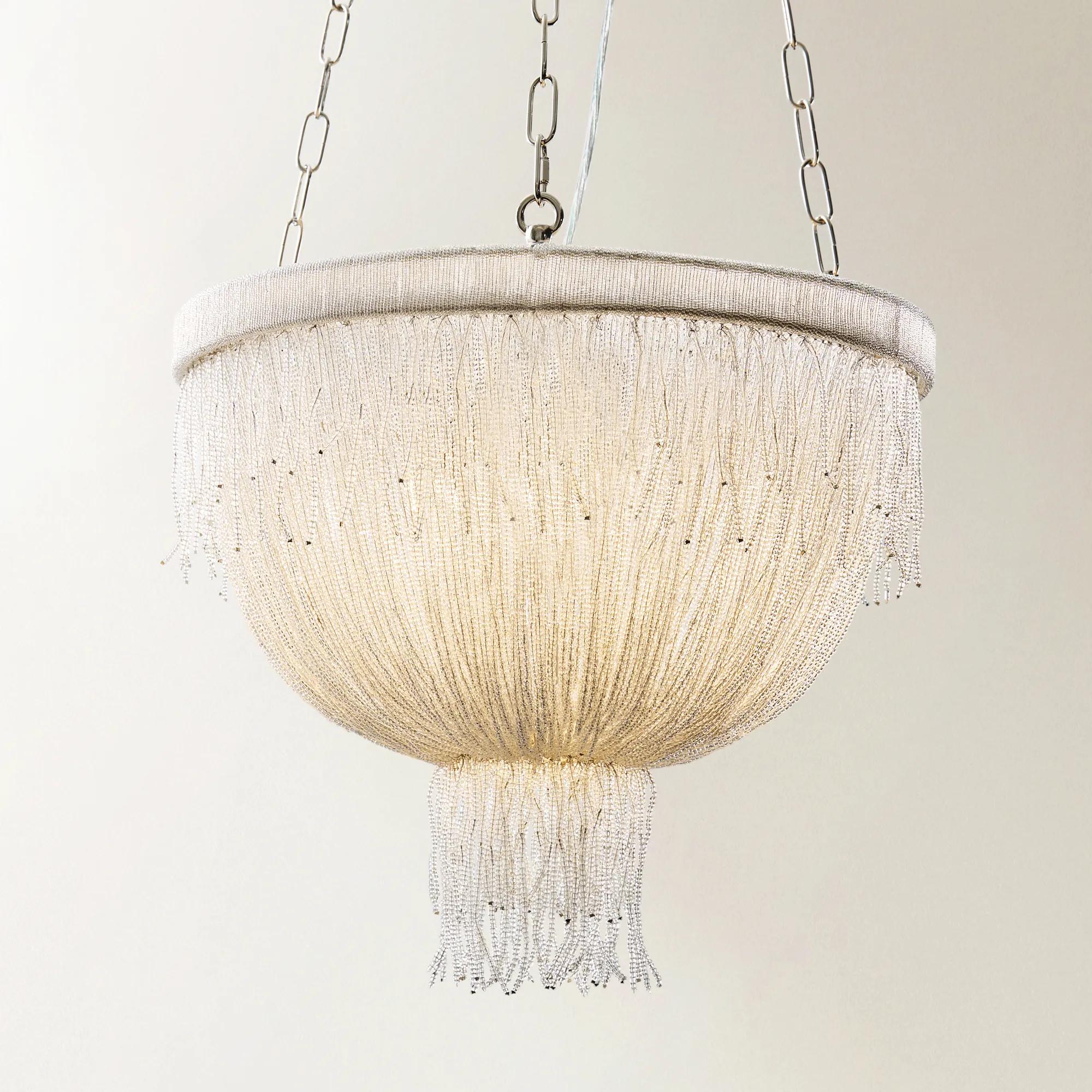 Selene Chandelier$899
A dazzling chandelier featuring cascading clear glass beads and a sleek nickel-finished iron frame.
Add To Cart

Modern Minimalist Chandeliers
Explore modern minimalist chandeliers that balance clean lines with sculptural presence. Pared-back silhouettes offer a refined approach to statement lighting, creating a focal point without overwhelming a dining room, living space, or entryway. Consider fixture dimensions, ceiling height, and the furniture below to choose a chandelier that feels beautifully proportioned to your room.
Modern minimalist chandeliers combine clean geometric lines, restrained ornamentation, and sculptural forms to create a striking focal point without overwhelming a room. Their presence comes from proportion, finish, and the arrangement of light rather than layers of decoration. A slender linear silhouette can draw the eye across a dining table, while an open circle or a constellation of slim arms gives a living room an architectural flourish. Minimalism in lighting does not have to mean anonymity: a beautifully balanced chandelier can command attention with a single sweeping curve or the contrast between luminous glass and dark metal. These designs suit interiors where every element has room to express itself, from a tailored dining space with upholstered chairs to a dramatic entry framed by oversized artwork. Metal brings definition to the composition, with matte black offering a crisp outline, polished chrome reflecting surrounding colors, and brass-toned finishes introducing a warmer gleam. Clear glass preserves an airy appearance, while frosted or opal glass softens the view of the light source and creates a more diffused effect. Acrylic components may offer a lighter-weight alternative to glass, though their cleaning requirements and resistance to scratching differ. Each material changes not only the fixture’s appearance but also its relationship to the room: transparent elements reveal the architecture behind them, while opaque shades and substantial metalwork give the silhouette greater visual weight. Modern minimalist lighting works especially well alongside richly textured furnishings because its precise lines provide contrast without competing for attention. Above a marble dining table, a spare metal framework allows the stone’s movement to remain visible; against velvet seating, a luminous ring adds a sleek counterpoint to the fabric’s depth. The result can feel composed and expressive at once, appealing to anyone who wants statement lighting with a disciplined silhouette and enough character to anchor the space.
Scale gives a minimalist chandelier its authority. A fixture that looks delicate in an expansive room can become the defining feature of an intimate dining area, so width, height, and the openness of the design deserve equal consideration. For dining rooms, the chandelier’s shape often feels most harmonious when it responds to the furniture below: elongated forms echo rectangular tables, while circular arrangements complement round tables and encourage a centered composition. Leaving approximately 6 inches or more between the fixture’s outer edge and each side of the tabletop is a common starting point, adjusted for the design, room, and seating arrangement. Over a dining table, the bottom of a chandelier often hangs about 30 to 36 inches above the tabletop in a room with a standard-height ceiling; taller ceilings, fixture proportions, sightlines, and manufacturer instructions can call for a different placement. The goal is an illuminated gathering space where guests can see one another comfortably and the chandelier feels connected to the table rather than suspended beyond it. In living rooms and entryways, clearance beneath the fixture becomes more important because people walk directly below it. Doors, stair landings, nearby cabinetry, and views between adjoining rooms also influence placement. An open-frame chandelier can preserve a view toward artwork or windows, while a broader silhouette may give a double-height entry the presence it needs. Adjustable suspension can help accommodate different ceiling heights, but the available adjustment range, compatibility with sloped ceilings, and canopy dimensions vary by fixture. The existing electrical box must also be suitable for the fixture’s weight and installation requirements; a qualified electrician can confirm support and make the necessary connections. These practical details protect the visual intention. When the proportions are right, a chandelier does more than occupy the ceiling: it establishes a relationship between architecture, furniture, and the people gathering beneath it, whether the setting is a dining room made for conversation or a living room arranged around art and entertaining.
The quality of the light is as influential as the silhouette. Exposed bulbs can contribute a jewel-like rhythm to a chandelier, but their brightness and appearance should suit the room and the angle from which they are seen. Diffusers and frosted shades can soften direct glare, while clear glass allows more of the bulb’s character to become part of the design. Warm-white light, often around 2700K to 3000K, can flatter wood, upholstery, and metallic finishes, creating an inviting atmosphere for dining and conversation. Brightness should reflect the room’s needs rather than bulb wattage alone; lumen output provides a more useful measure of light, particularly when comparing LED options. A chandelier can supply a luminous centerpiece, with table lamps, sconces, or recessed lighting adding illumination where the room needs it. Dimming offers another layer of control when the fixture, bulbs or LED driver, and dimmer are compatible. Replaceable-bulb designs and integrated LED chandeliers have different maintenance considerations, so bulb specifications, component serviceability, and manufacturer guidance matter alongside appearance. Lasting beauty also depends on thoughtful care. Dust can soften the crisp outline of a frame and cloud translucent surfaces, making regular, gentle cleaning worthwhile. Turn the fixture off, allow it to cool, and follow its care instructions; a soft, dry microfiber cloth is appropriate for many surfaces, while abrasive cleaners and harsh chemicals can damage finishes or scratch delicate components. Avoid spraying cleaner directly onto electrical parts, and leave difficult-to-reach fixtures to a qualified professional. Finish durability varies with the coating and environment, and a chandelier intended for a dry interior should not be assumed suitable for a bathroom, covered patio, or other moisture-prone setting. For a more faceted interpretation of contemporary lighting, explore Modern Prismatic Crystal Chandeliers, where angular sparkle brings another dimension to geometric form. Whether the desired effect is a slender line of illumination above a dining table or a sweeping sculptural gesture in an entry, minimalist chandeliers give light a deliberate shape—and give the room a signature worth looking up to see.
FAQs
A modern minimalist chandelier creates visual drama through clean lines, sculptural form, and thoughtfully edited details. Rather than relying on elaborate ornament, it lets shape and negative space command attention. The result is an expressive focal point that brings an architectural edge to a room.
Absolutely. A streamlined chandelier offers a striking counterpoint to sumptuous upholstery, mirrored accents, and richly layered textiles. Look for an expressive silhouette or a gleaming finish to carry the glamour, then let the restrained detailing bring balance to the room’s more opulent elements.
Treat the chandelier as the room’s sculptural centerpiece. Echo its lines through dining chair silhouettes or artwork, then introduce contrast with textured upholstery and artful table settings. A carefully composed tablescape allows the chandelier and the dining scene below to each have their moment.
Consider the mood you want to create. Warm metallic tones suggest richness, cooler tones lend a crisp edge, and dark finishes create graphic contrast. Reference an existing detail, such as furniture hardware or a mirror frame, for a deliberate connection without making every finish identical.
Coordinate rather than duplicate. A modern minimalist chandelier can share a finish, geometric motif, or design sensibility with nearby sconces and lamps while retaining its own distinct silhouette. That common thread creates cohesion, while variation gives the interior a more collected, expressive character.