Contemporary Glass Chandeliers
Contemporary Glass Chandeliers
-
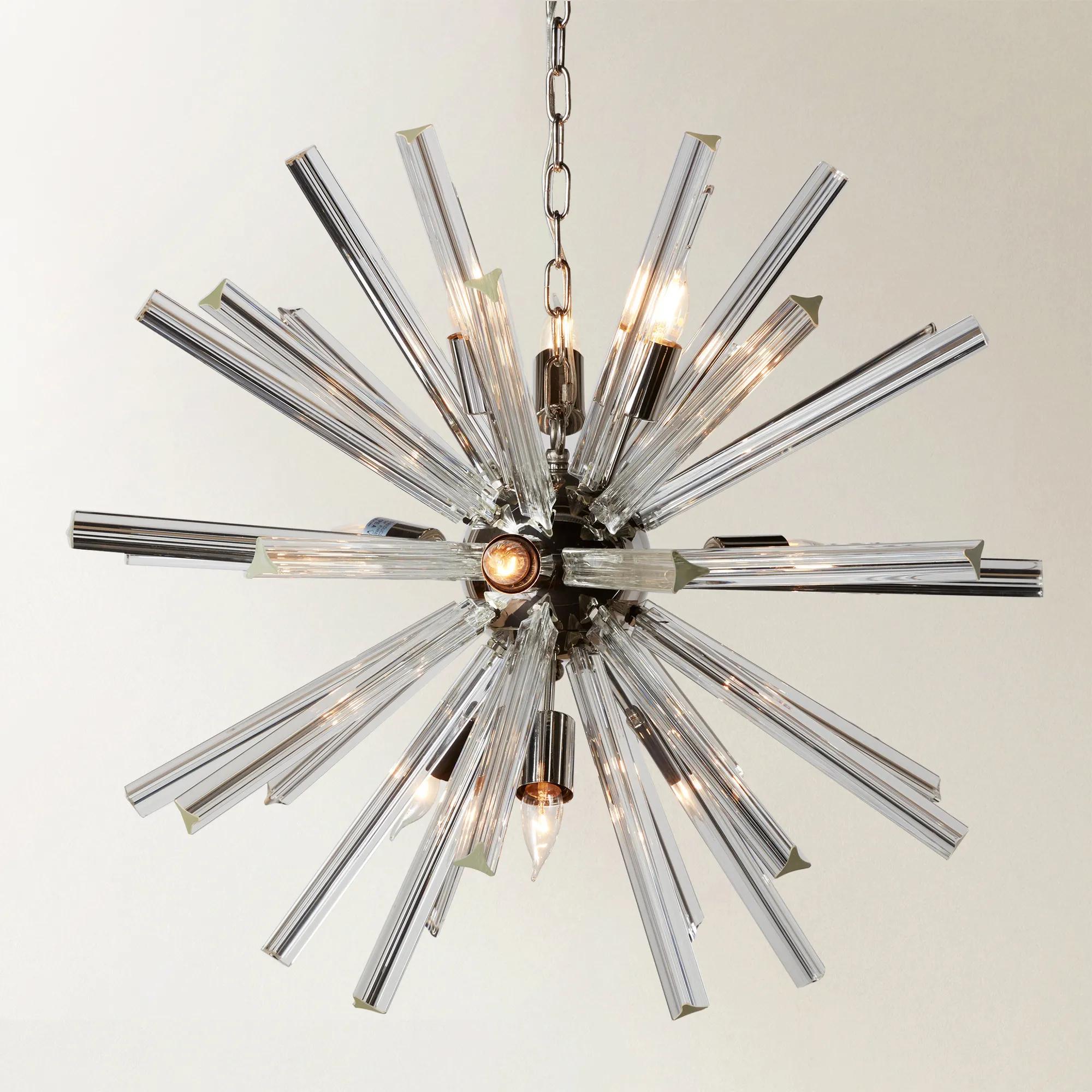
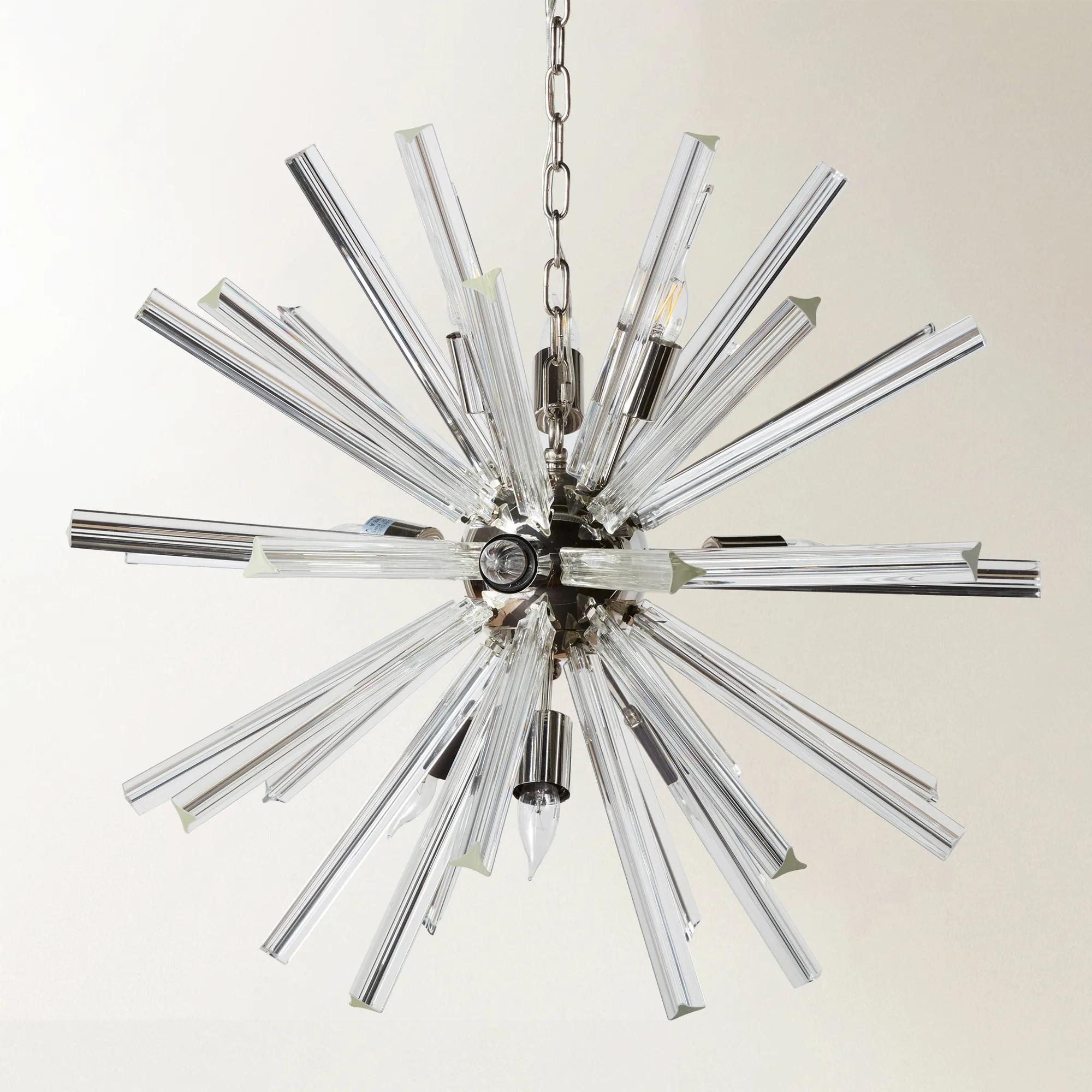 Axis Sputnik Clear Faceted Glass Chandelier 29.5"D$599
A clear glass and iron Sputnik chandelier featuring nine lights and faceted triangular rods.
Add To Cart -
 Bolla LED Hand-Blown Glass Bubble Chandelier 60.25"$499
A hand-blown glass chandelier with clear bubbles, matte gold steel framing, and integrated warm LED illumination.
Add To Cart -
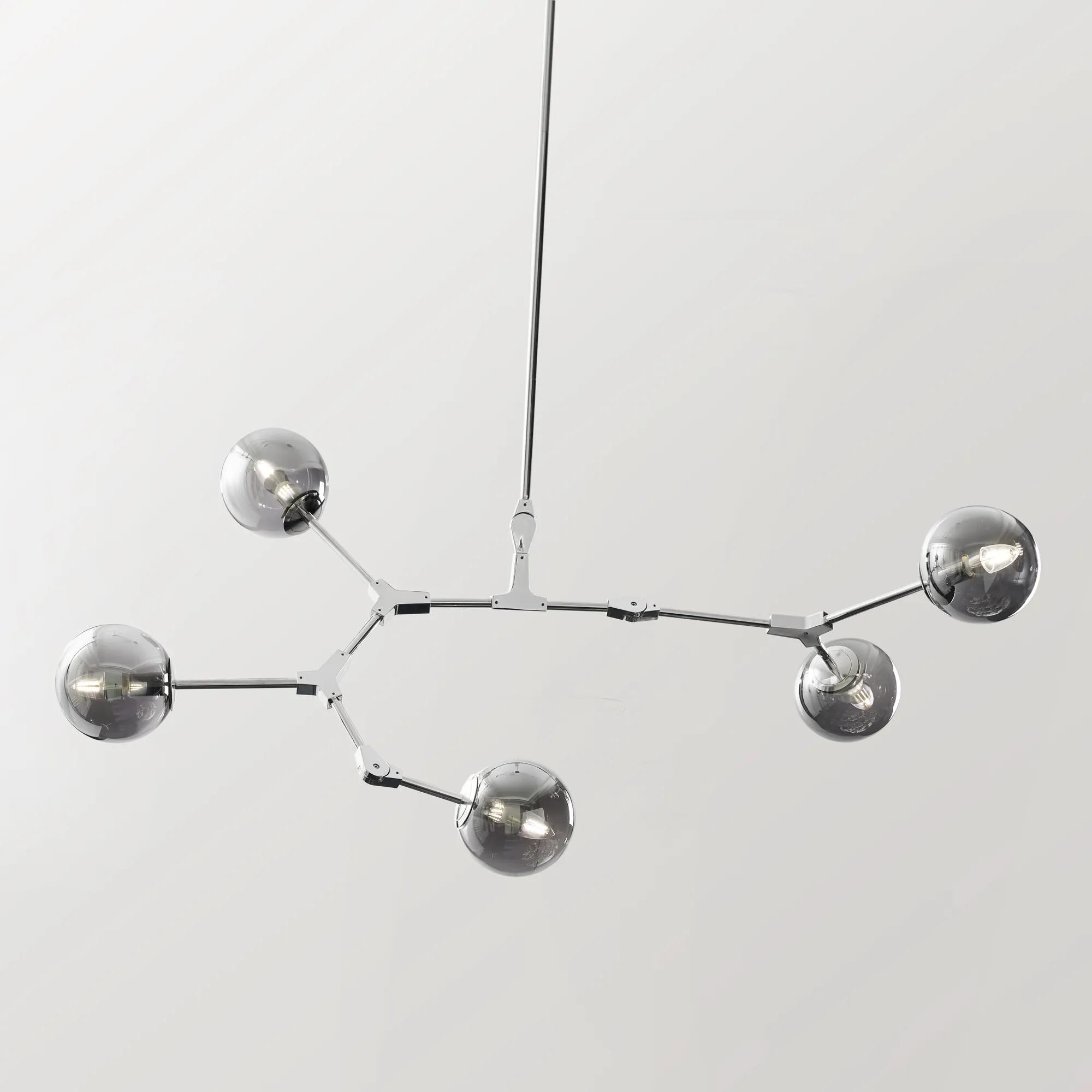
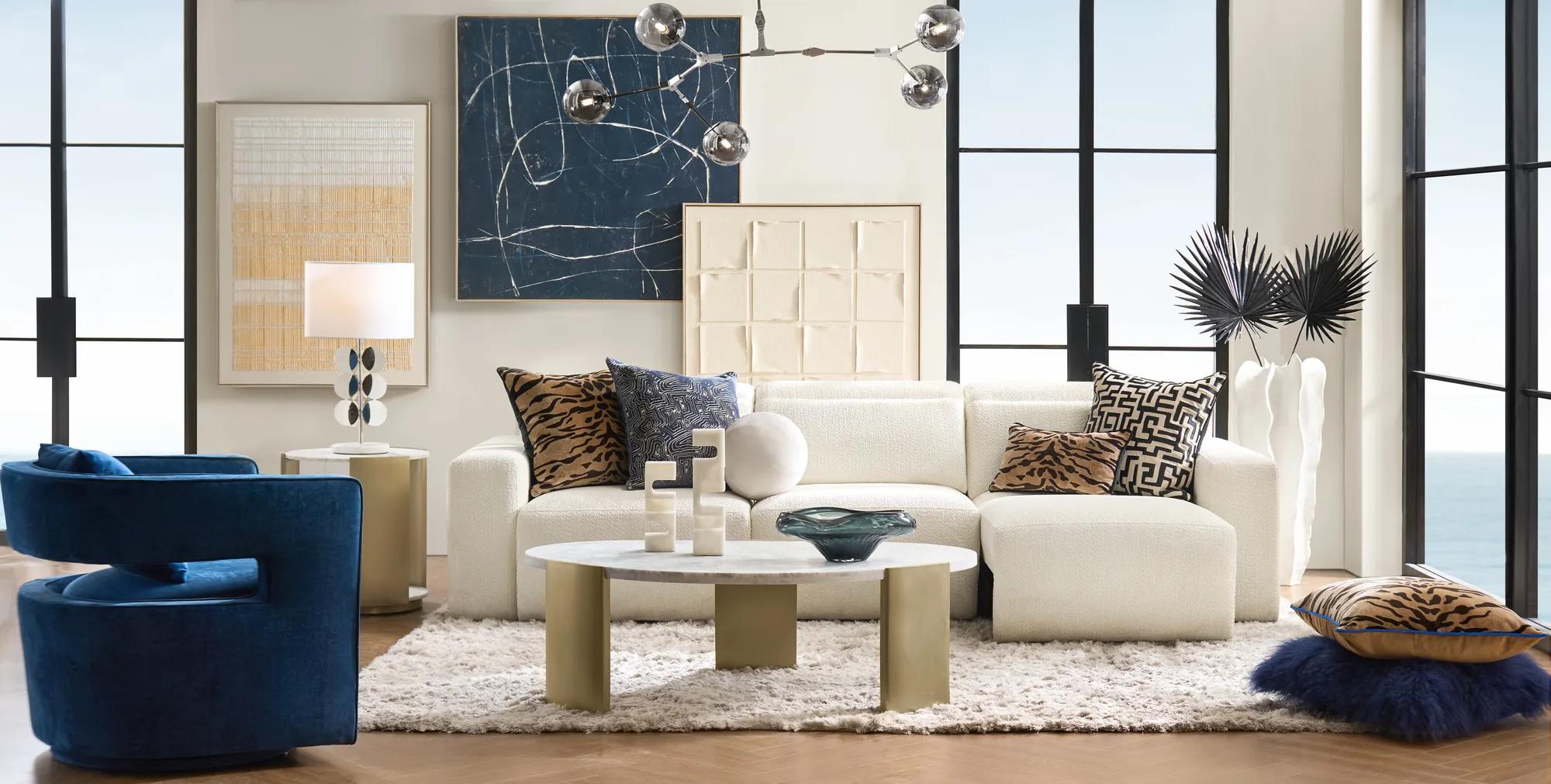 Axel Chandelier$499
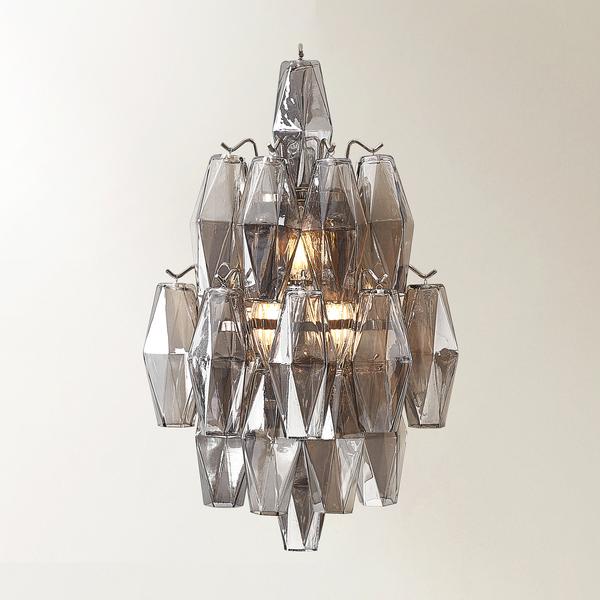
A modern chandelier featuring polished nickel arms and smoked glass bulbs for striking, contemporary illumination.
Add To Cart -
 Glacier Clear and Frosted Glass Chandelier 24"$899
A glass chandelier with icicle-inspired clear and frosted panels, brushed brass frame, and twelve-light illumination.
Add To Cart -
 Joliet LED Linear Hand Painted Swirl Glass Chandelier 47"$499
A linear chandelier featuring hand-painted swirl glass, champagne-finish canopy, and integrated warm LED illumination.
Add To Cart -
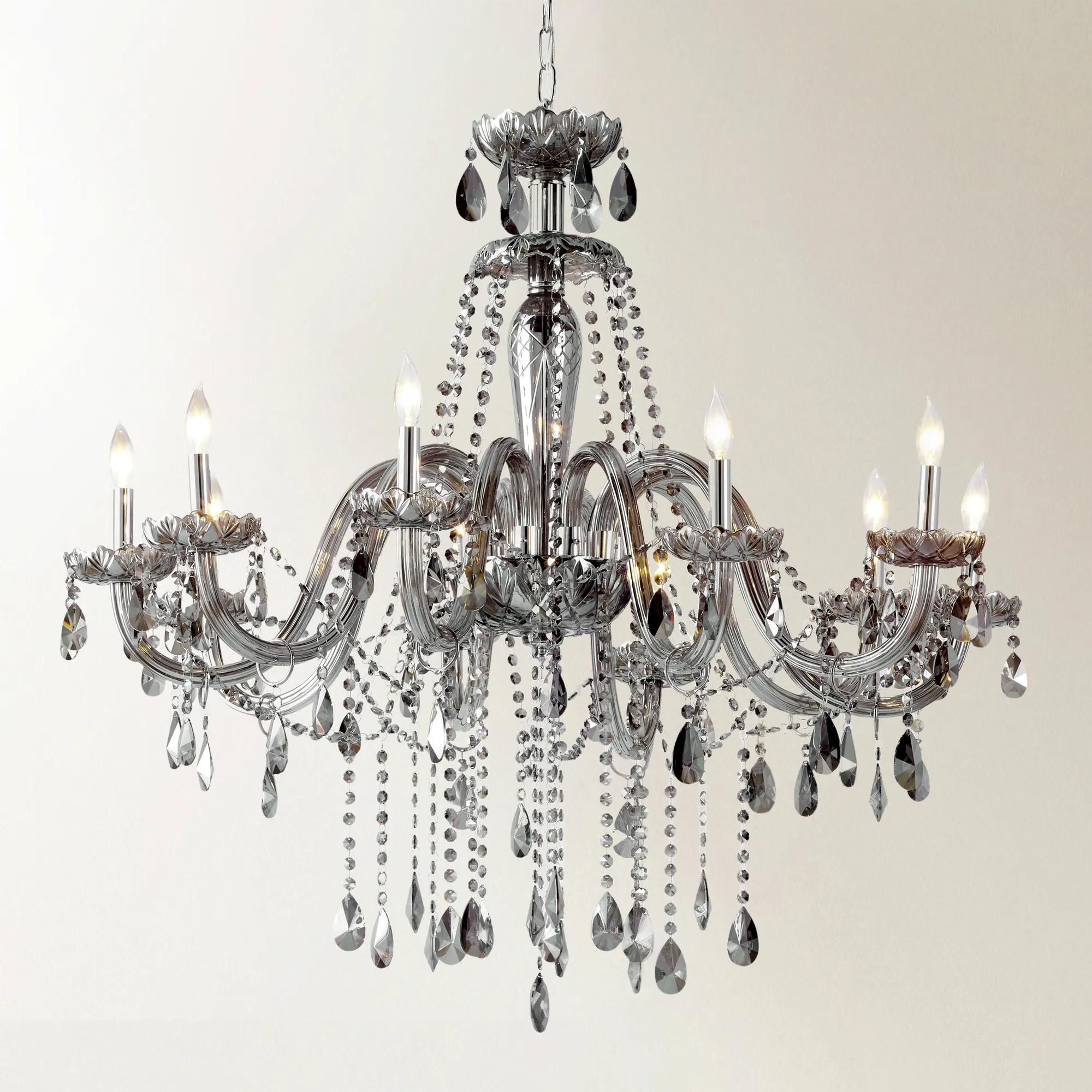
 Omni Chandelier 38.5" - Graphite$999
A dazzling chandelier featuring graphite faceted crystals and ten fluted glass arms with nickel hardware.
Add To Cart -
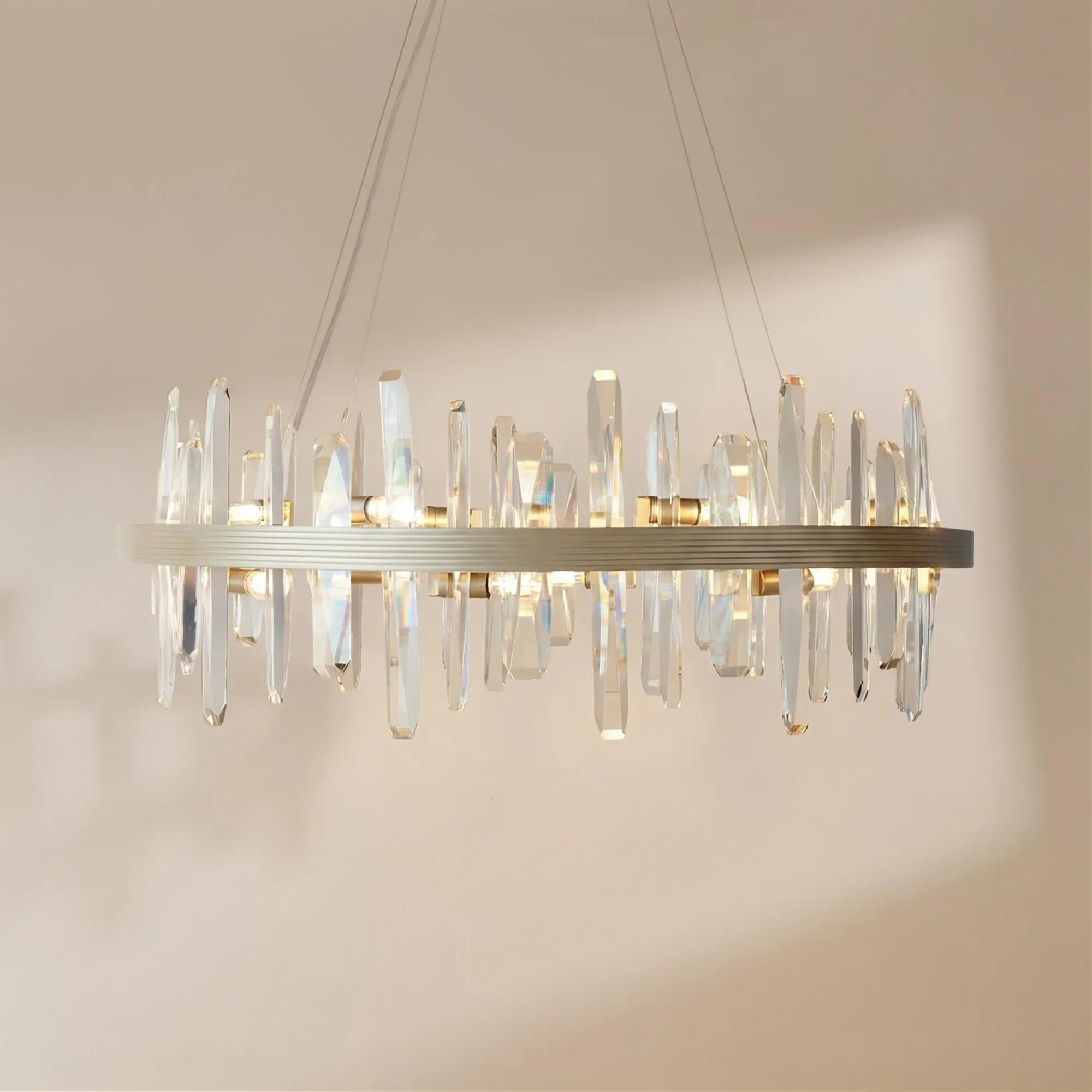
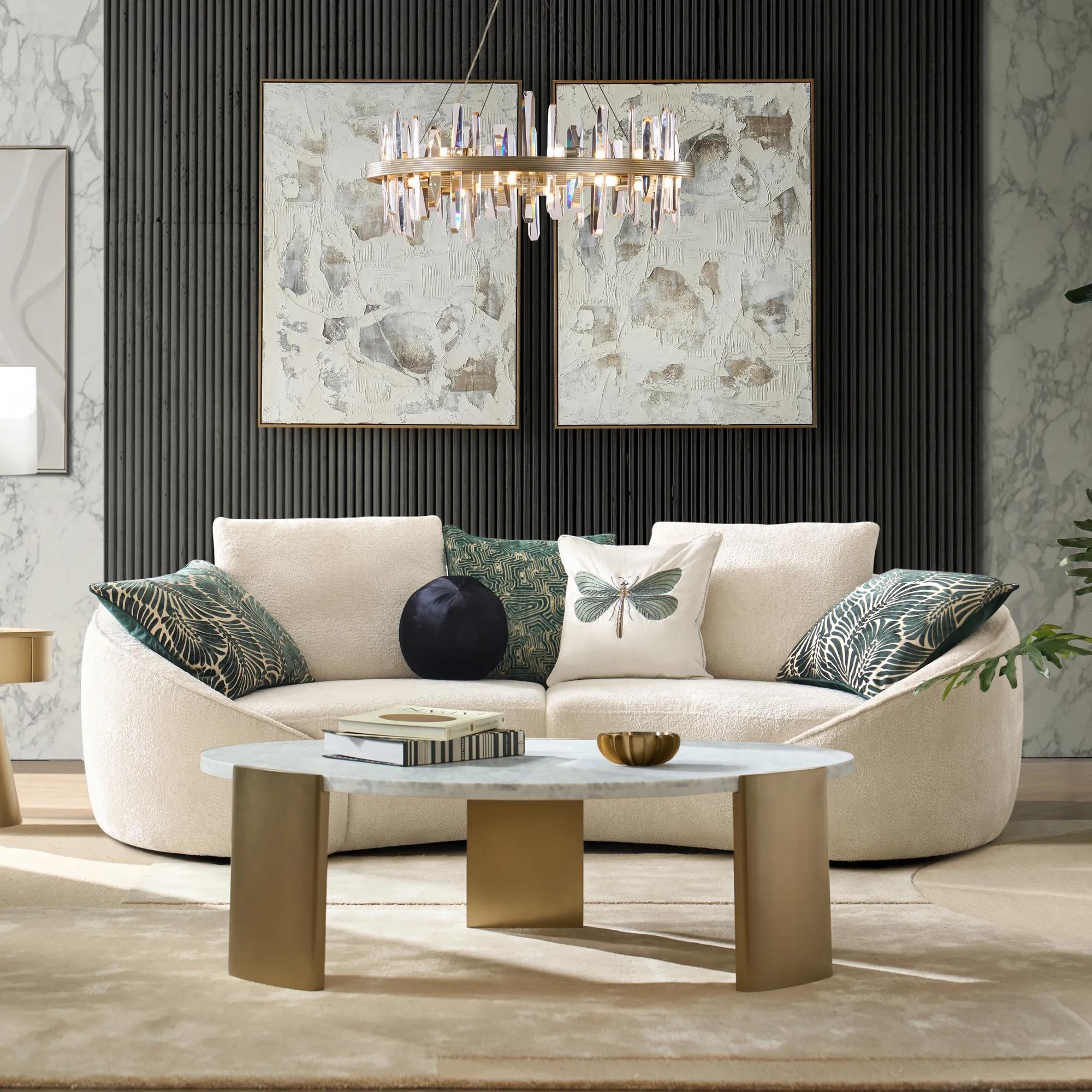 Lumi Clear Beveled Glass Chandelier 31.5"W$929
A chandelier with clear beveled glass, a champagne-finished iron frame, sixteen lights, and dimmable illumination.
Add To Cart -
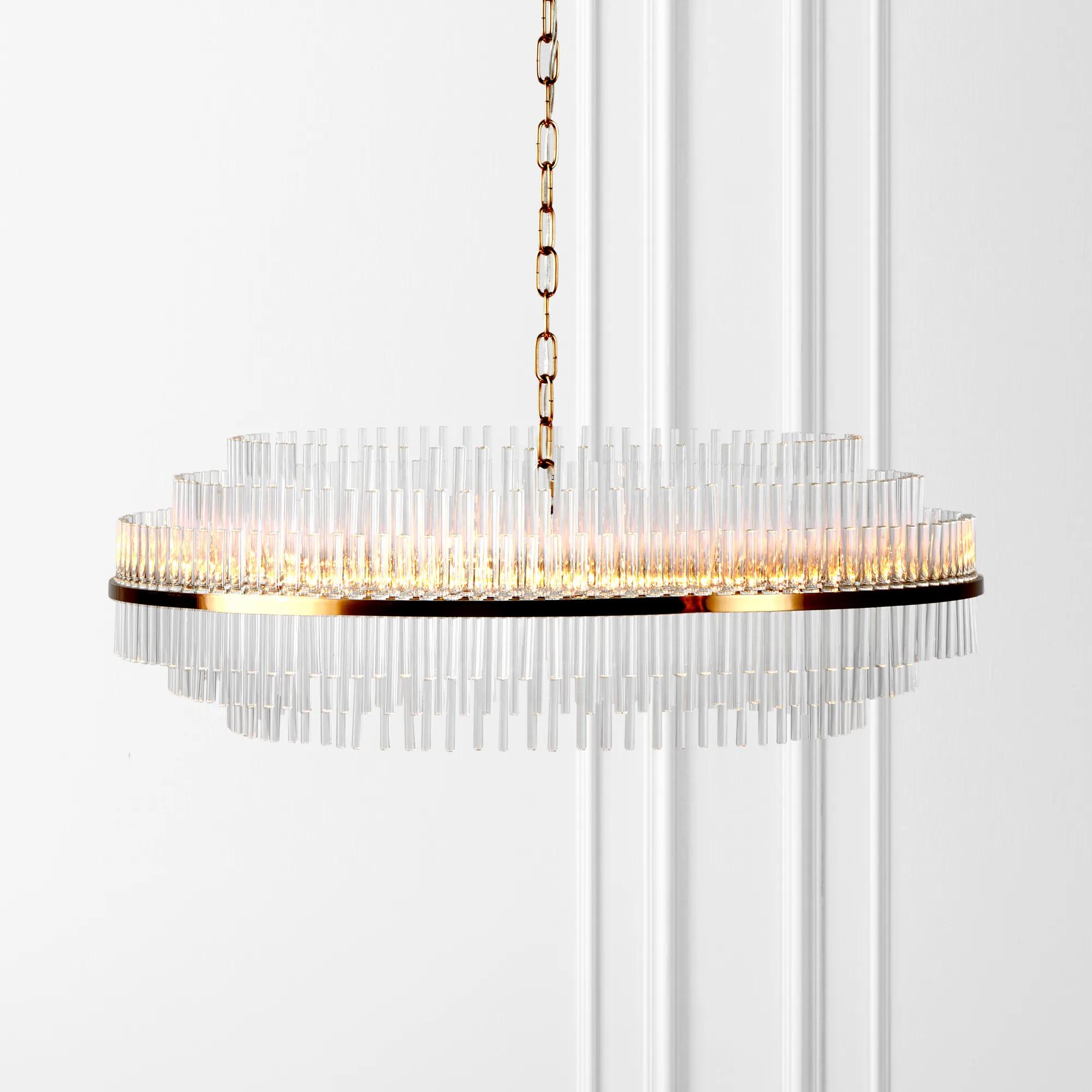
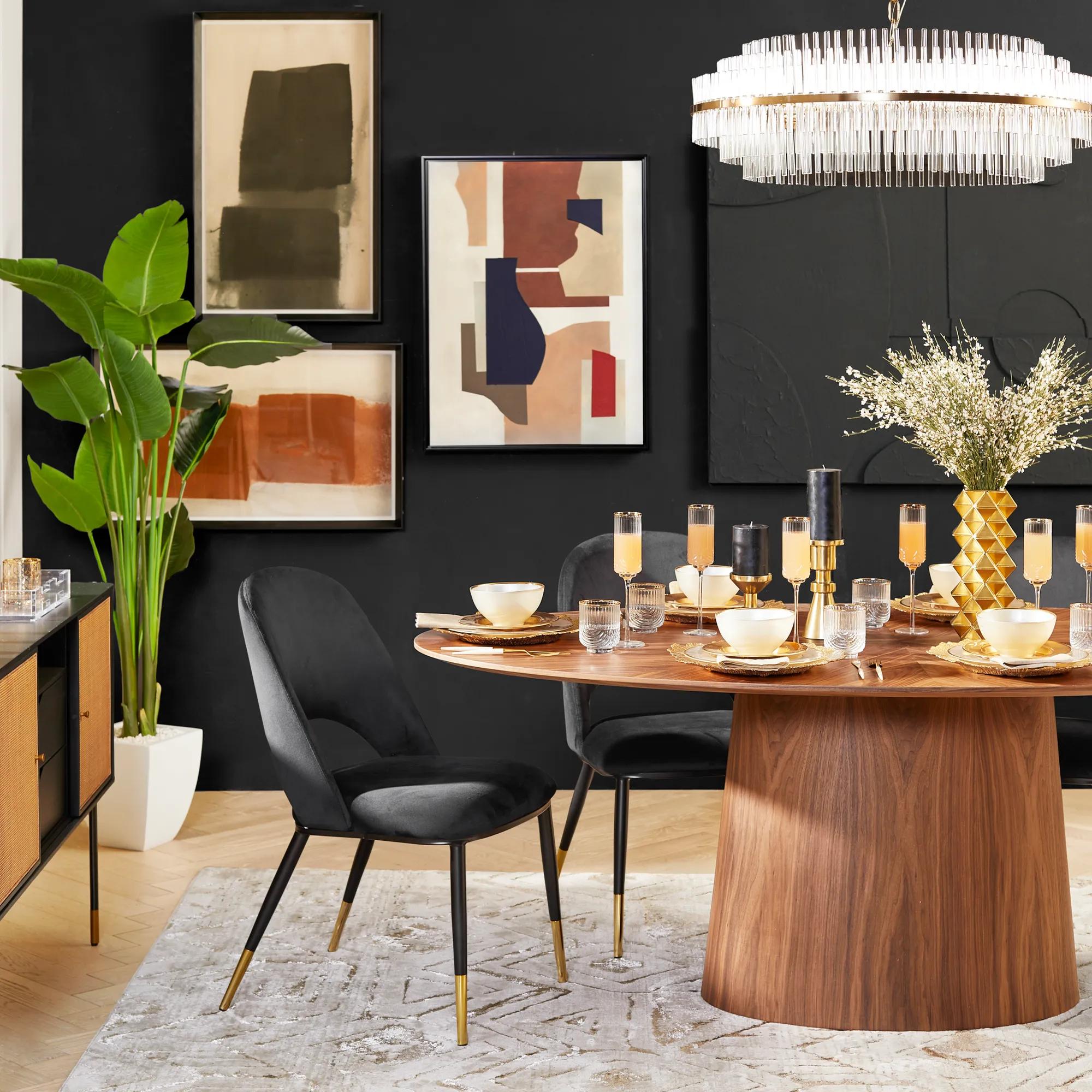 Renata Clear Glass Rod Chandelier 31"W x 10"H$799
A low-profile glass-rod chandelier with a brushed brass iron frame and eight dimmable candelabra lights.
Add To Cart -
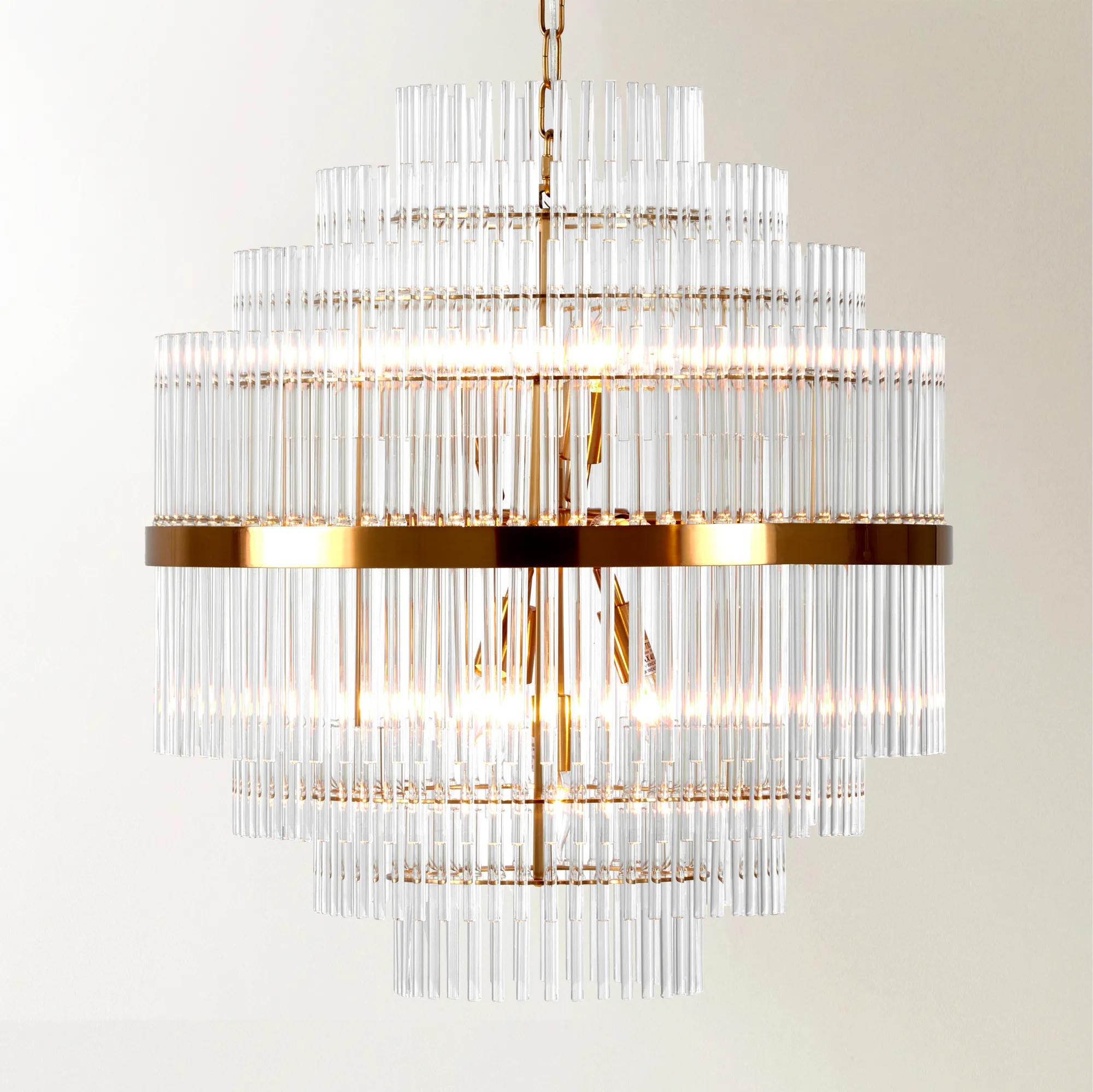
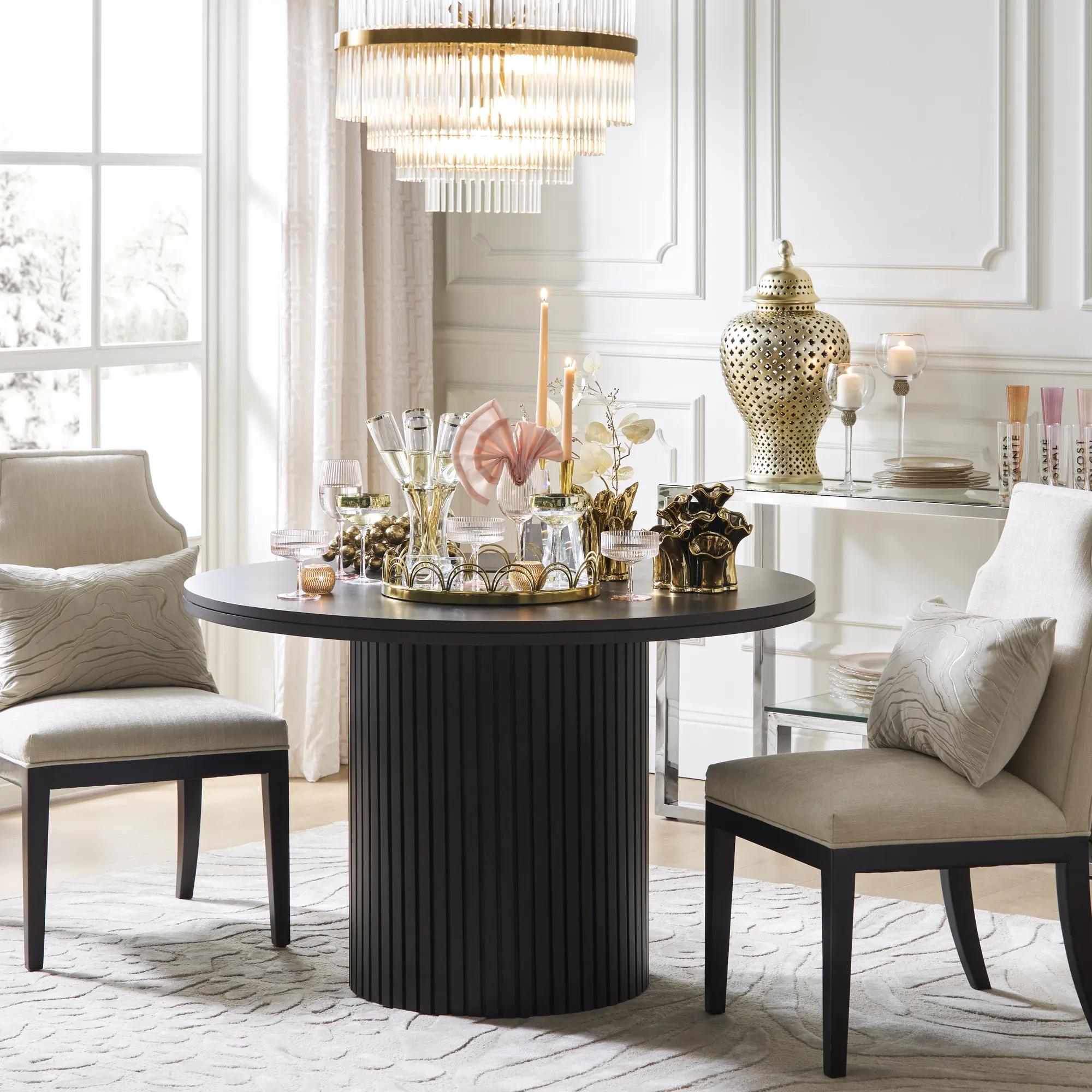 Renata Clear Glass Rod Grand Chandelier 23.6"D x 26.3"H$999
A clear glass rod chandelier with a polished gold iron frame and thirteen-light, dimmable illumination.
Add To Cart -
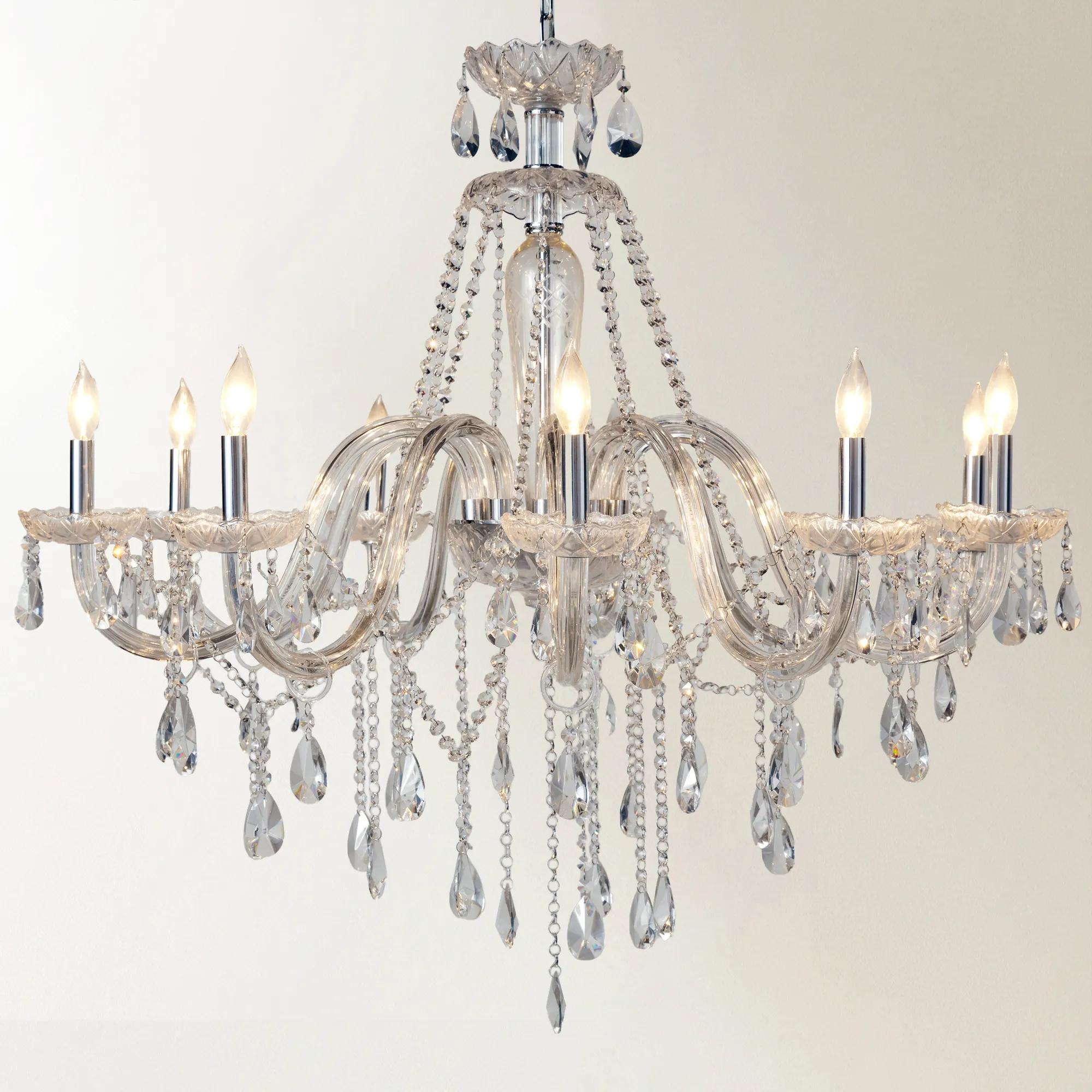
 Omni Chandelier 38.5" - Clear$999
A dazzling chandelier featuring hundreds of clear faceted crystals and ten fluted glass arms with nickel hardware.
Add To Cart -
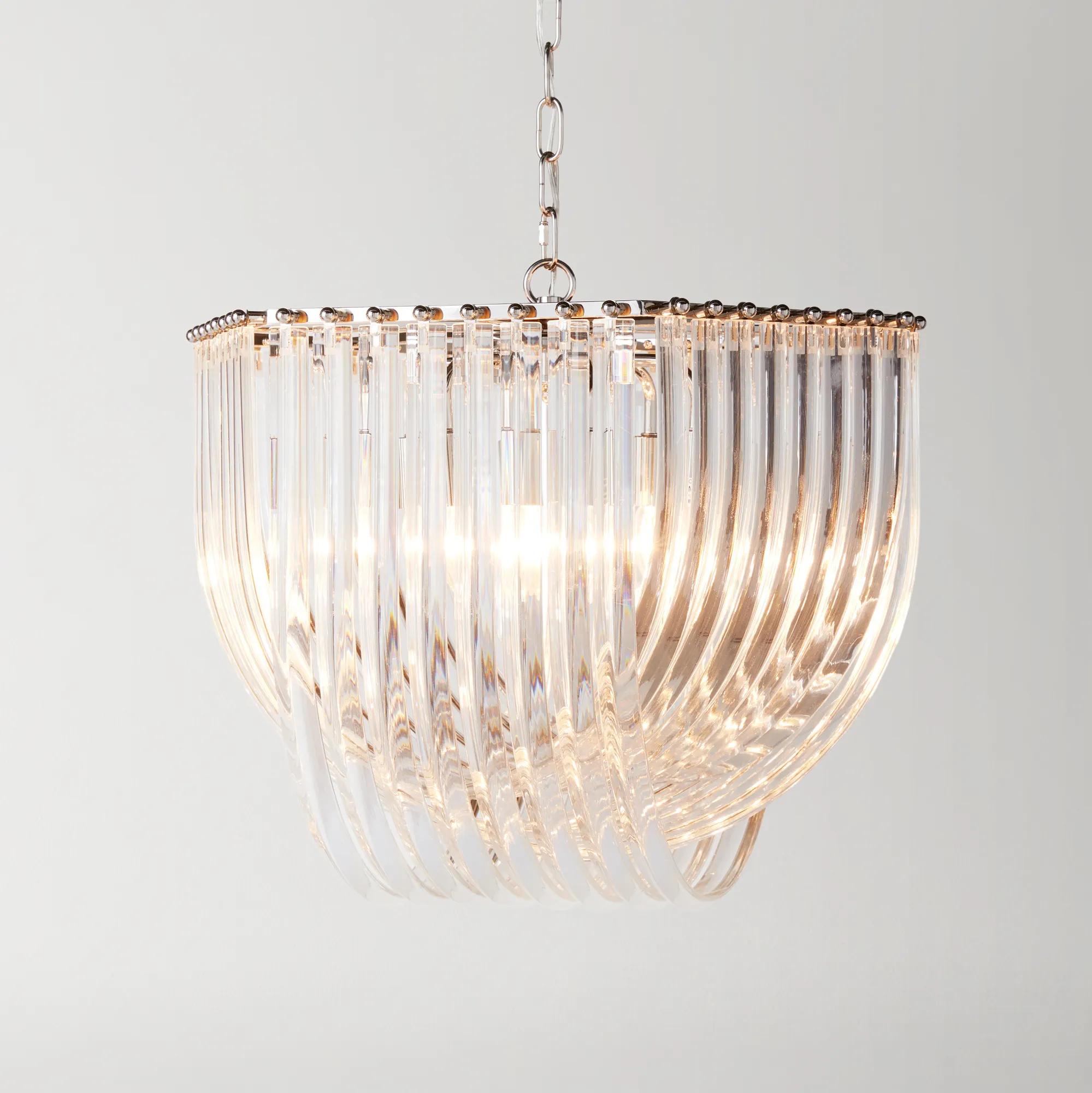 Laval Clear Curved Glass Chandelier 21"D x 18"H$799
A six-light chandelier with layered clear curved glass and a polished nickel frame.
Add To Cart -
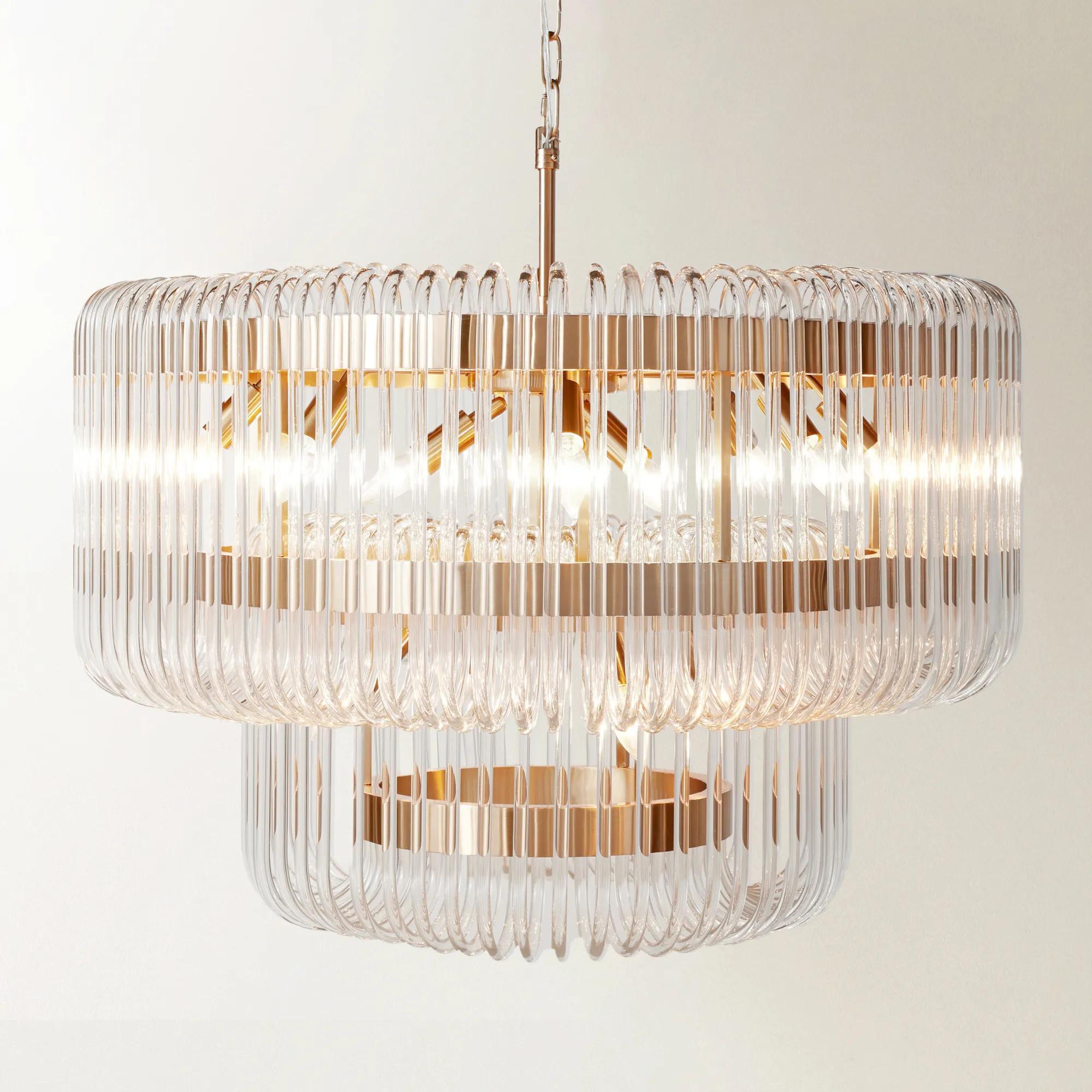 Allure Clear Curved Glass Chandelier 31.5"D x 27.75"H$1499
A chandelier featuring clear curved blown-glass rods, a brushed brass iron frame, and fifteen-light illumination.
Add To Cart -
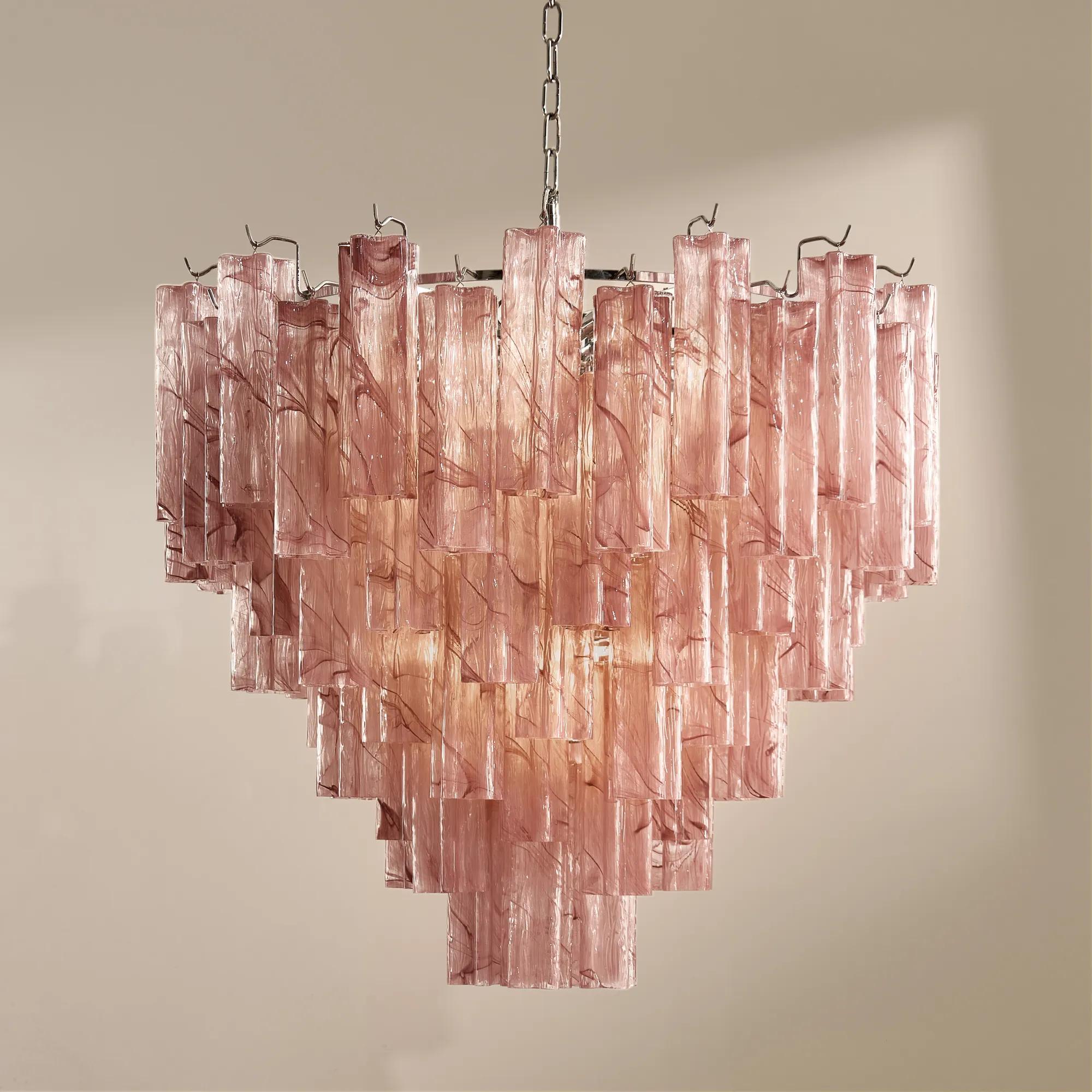 Elodie Rose Glass Chandelier 31.5"$1299
A handcrafted rose glass chandelier with swirled glass, polished chrome framing, and 21 dimmable candelabra lights.
Add To Cart -
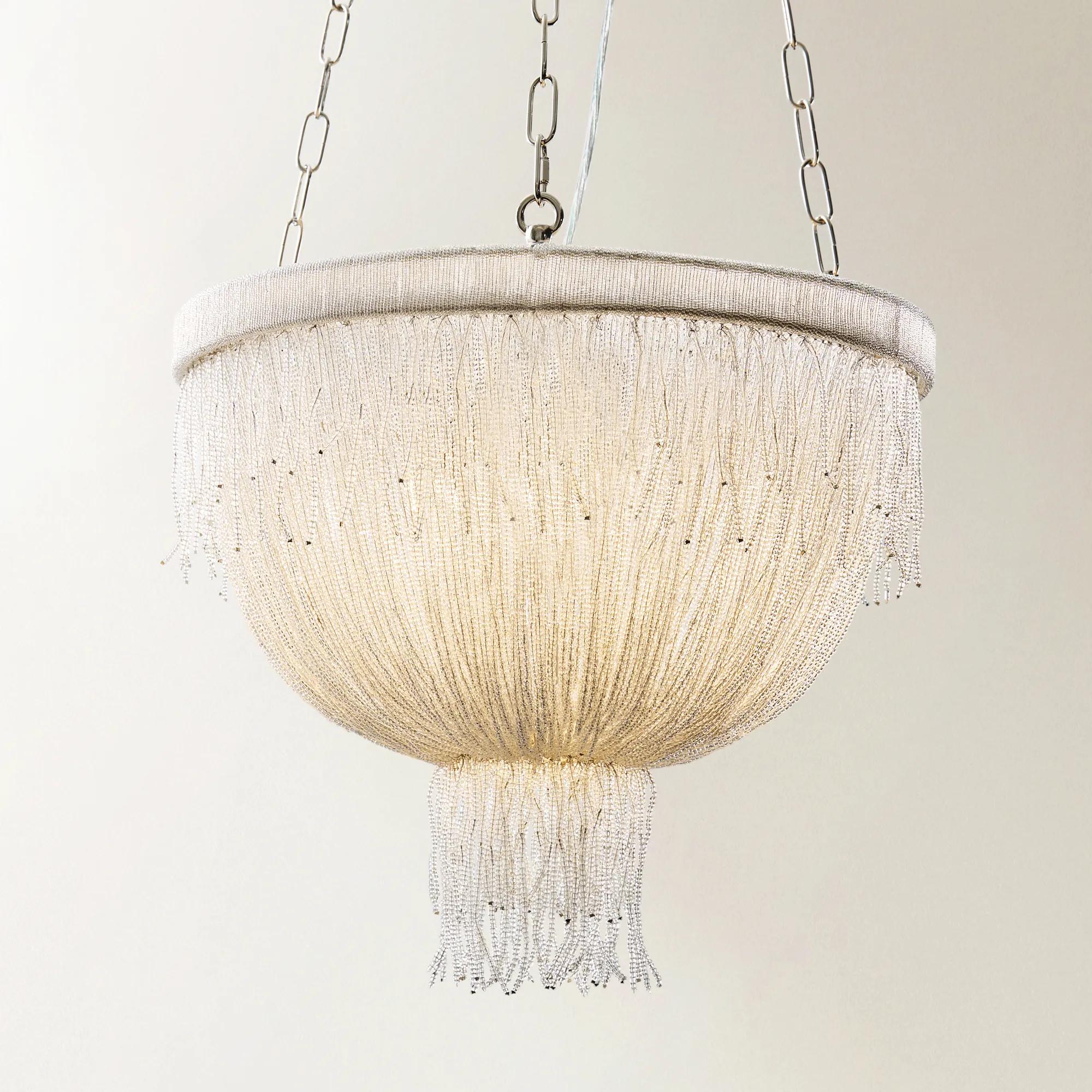 Selene Chandelier$899
A dazzling chandelier featuring cascading clear glass beads and a sleek nickel-finished iron frame.
Add To Cart -

 Radiante LED Globe Chandelier 36" - Polished Gold$899
A polished gold LED globe chandelier bringing sculptural illumination and modern glamour to contemporary interiors.
Add To Cart -

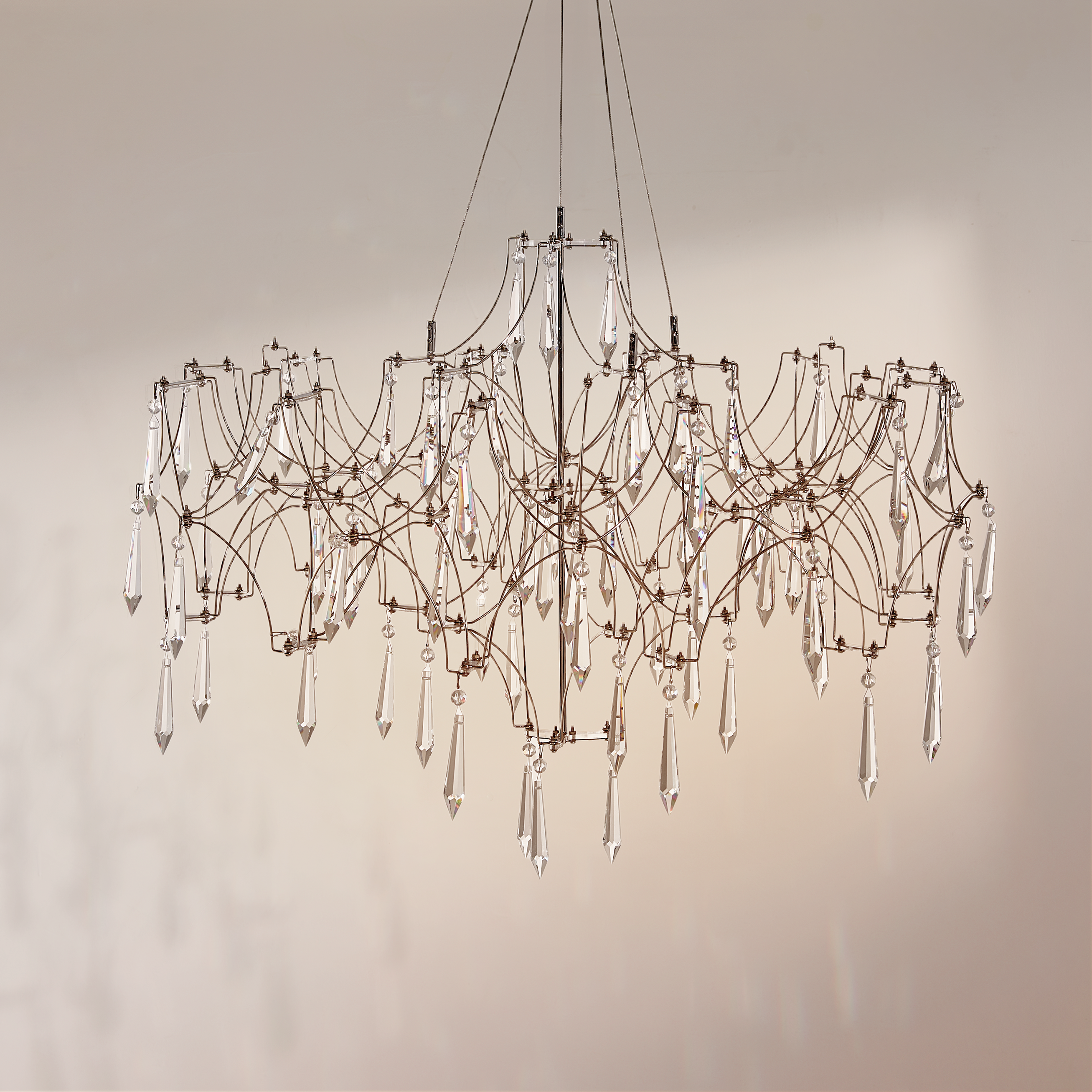 Moderne LED Clear Crystal Chandelier 24.5"W x 19.75"H$899
A clear crystal chandelier with faceted construction, polished nickel framing, and integrated warm LED illumination.
Add To Cart -

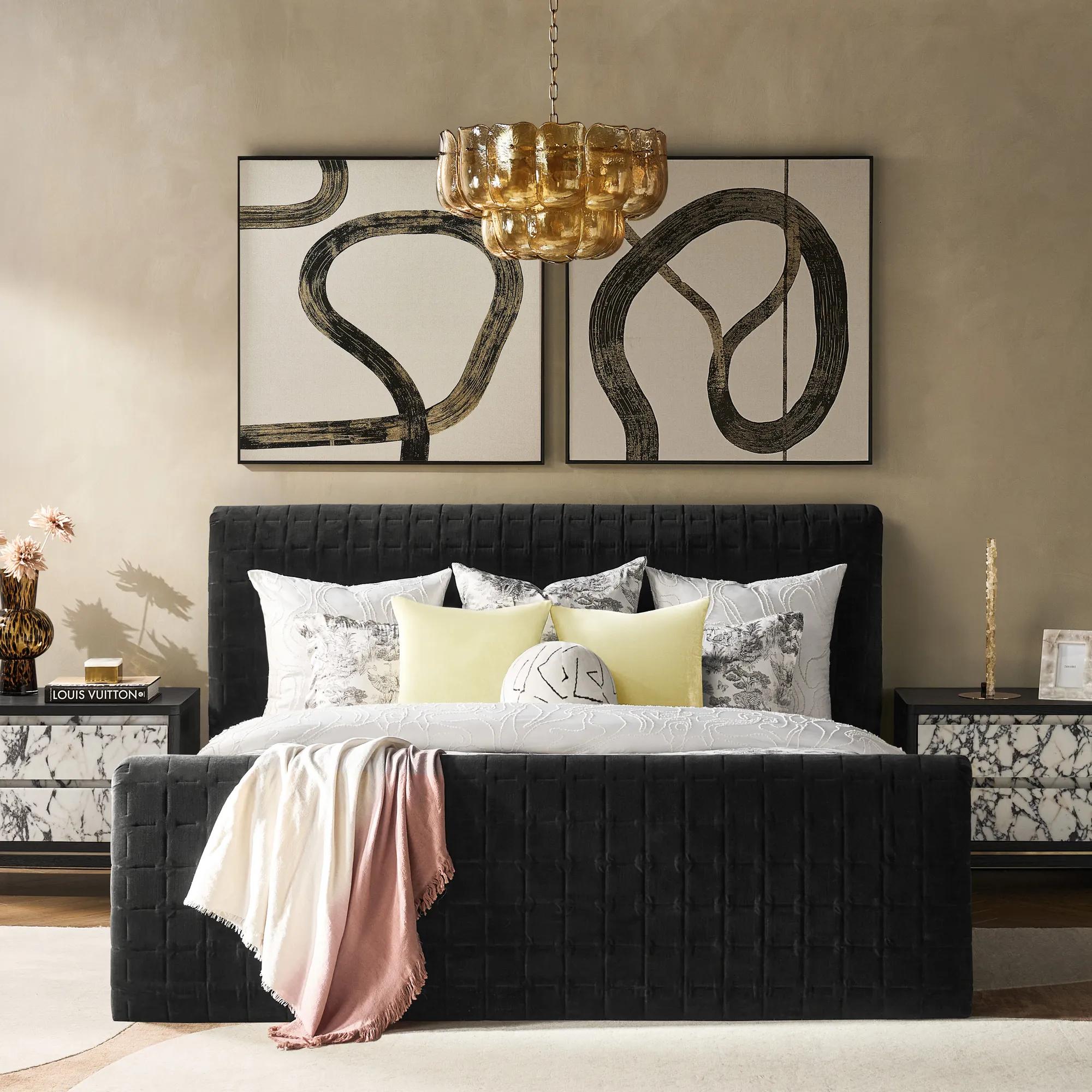 Ember Glow Amber Textured Glass Chandelier 24"$799
A chandelier with textured amber glass petals, brushed brass iron frame, and nine-light ambient illumination.
Add To Cart -

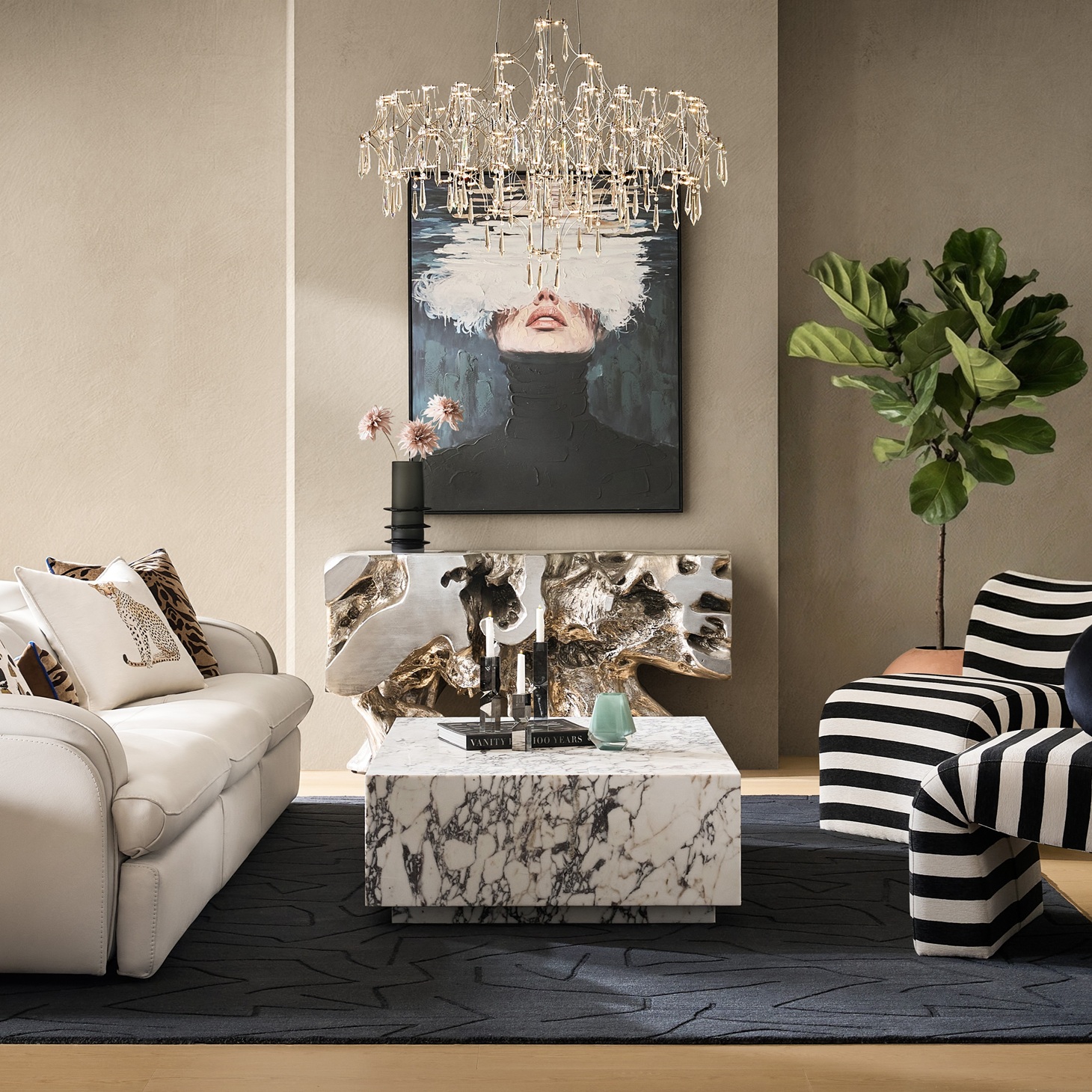 Moderne Grande LED Crystal Chandelier 35.75"W x 28.5"H$1899
A faceted crystal chandelier with polished nickel framing and integrated LED illumination for a modern glow.
Add To Cart -
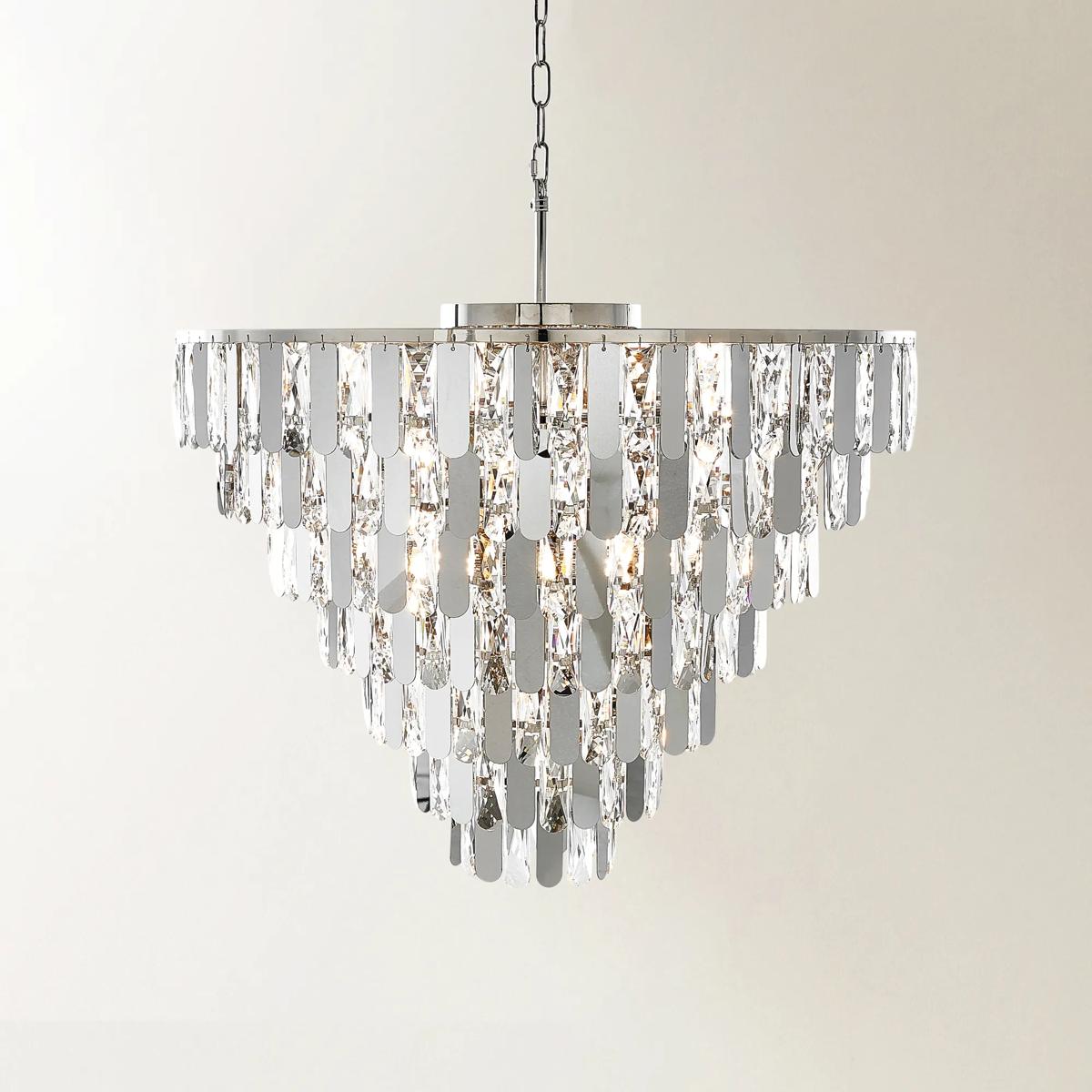
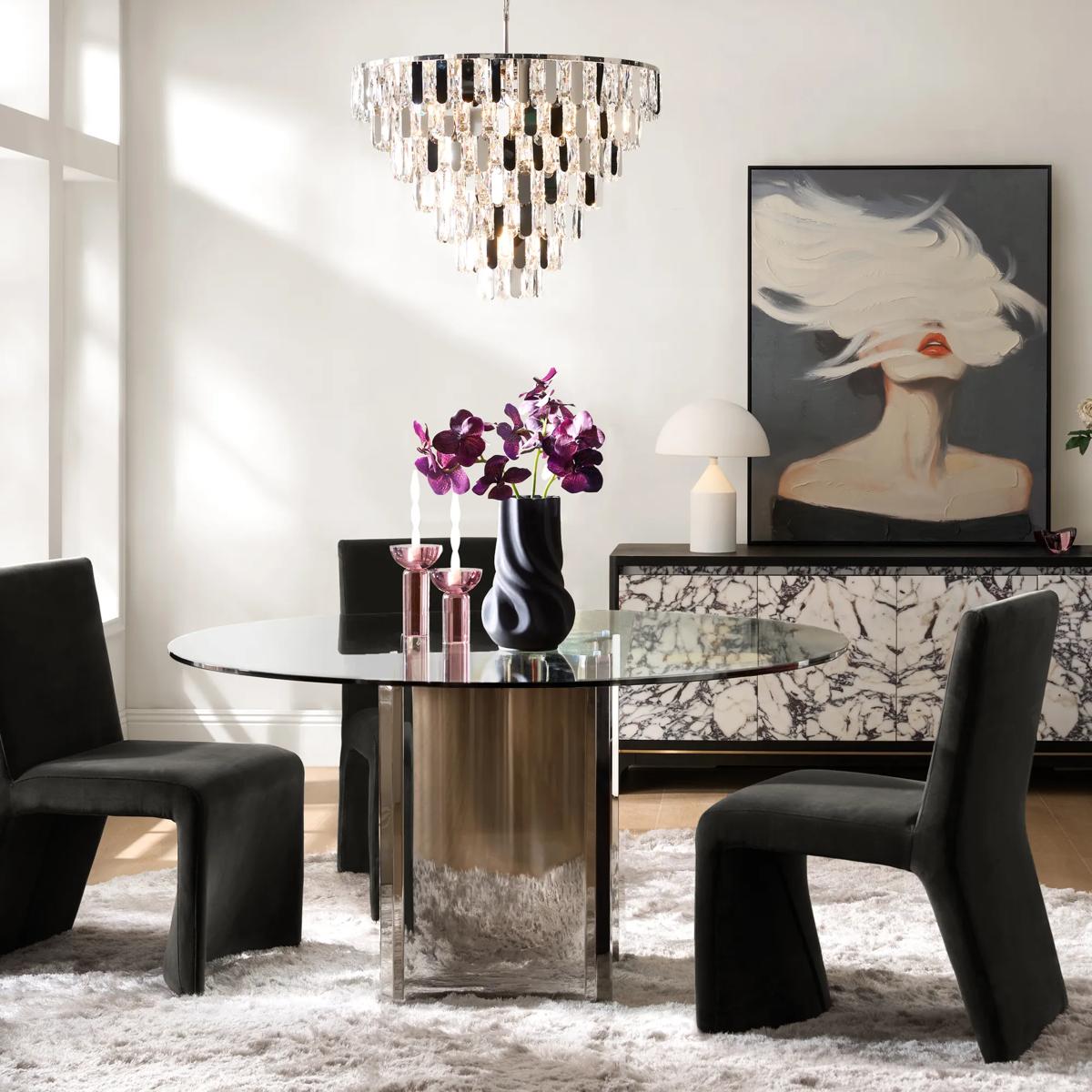 Avenue Crystal Chandelier 28.5"$999
A tiered chandelier crafted from eco-friendly K9 crystal and polished nickel for radiant, modern elegance.
Add To Cart -

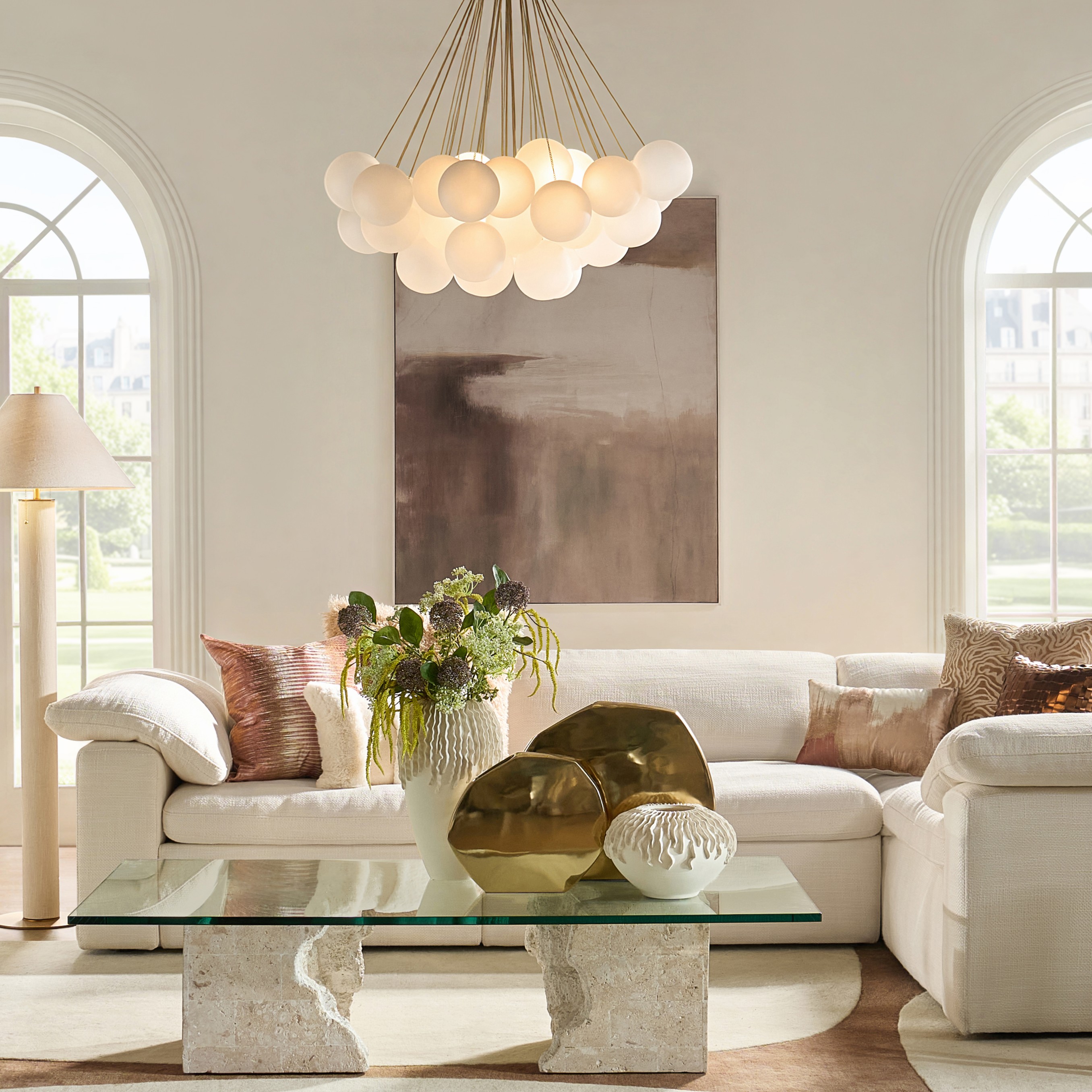 Sanela Frosted Glass Globe Chandelier 39.5"$899
A chandelier with frosted glass globes, an antique brass iron frame, dimmer compatibility, and slope-ceiling adaptability.
Add To Cart -

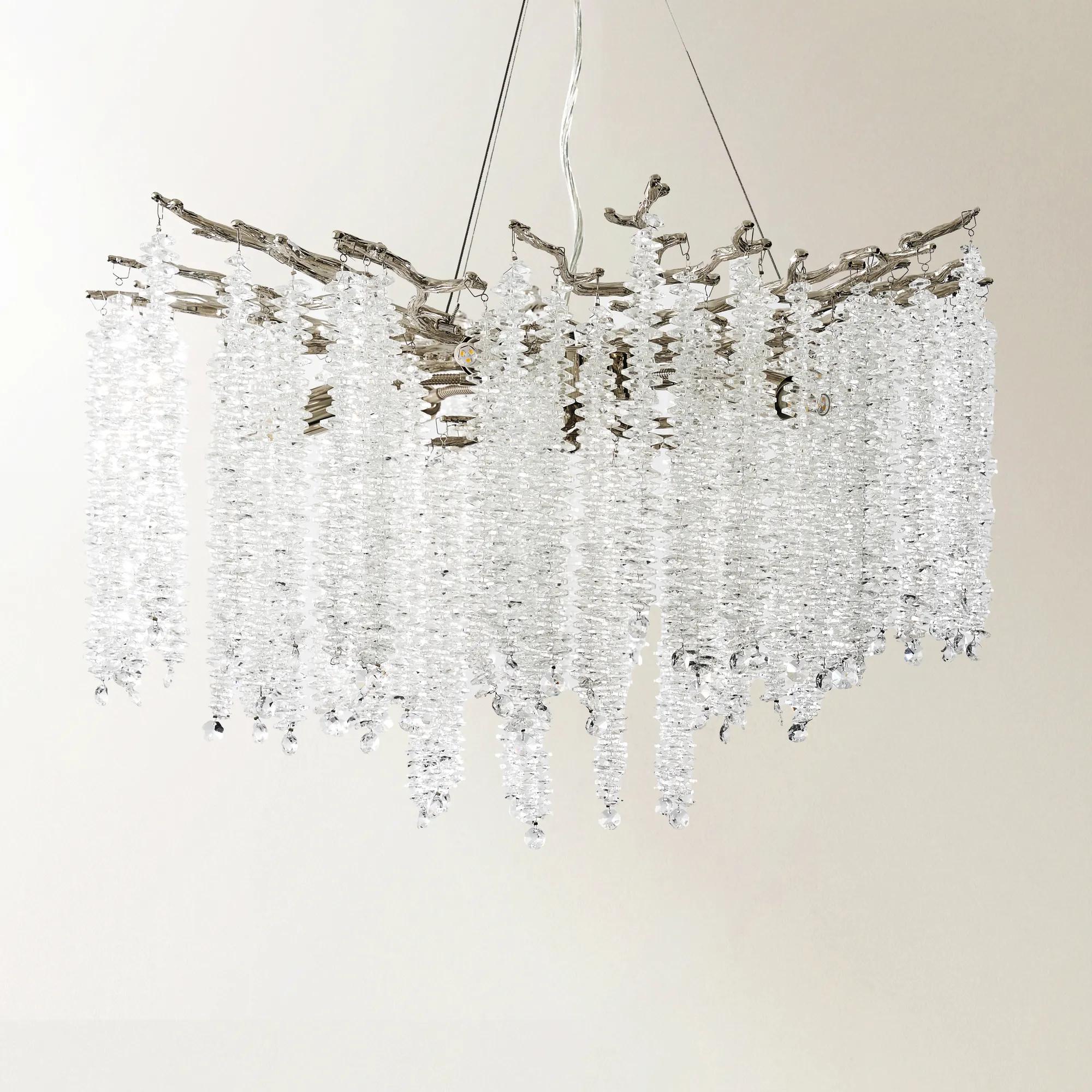 Cassia Clear Cut Crystal Chandelier 23.75"W x 13.75"H$599
A chandelier with cascading clear crystal beads, a nickel branch frame, six lights, and dimmable illumination.
Add To Cart -
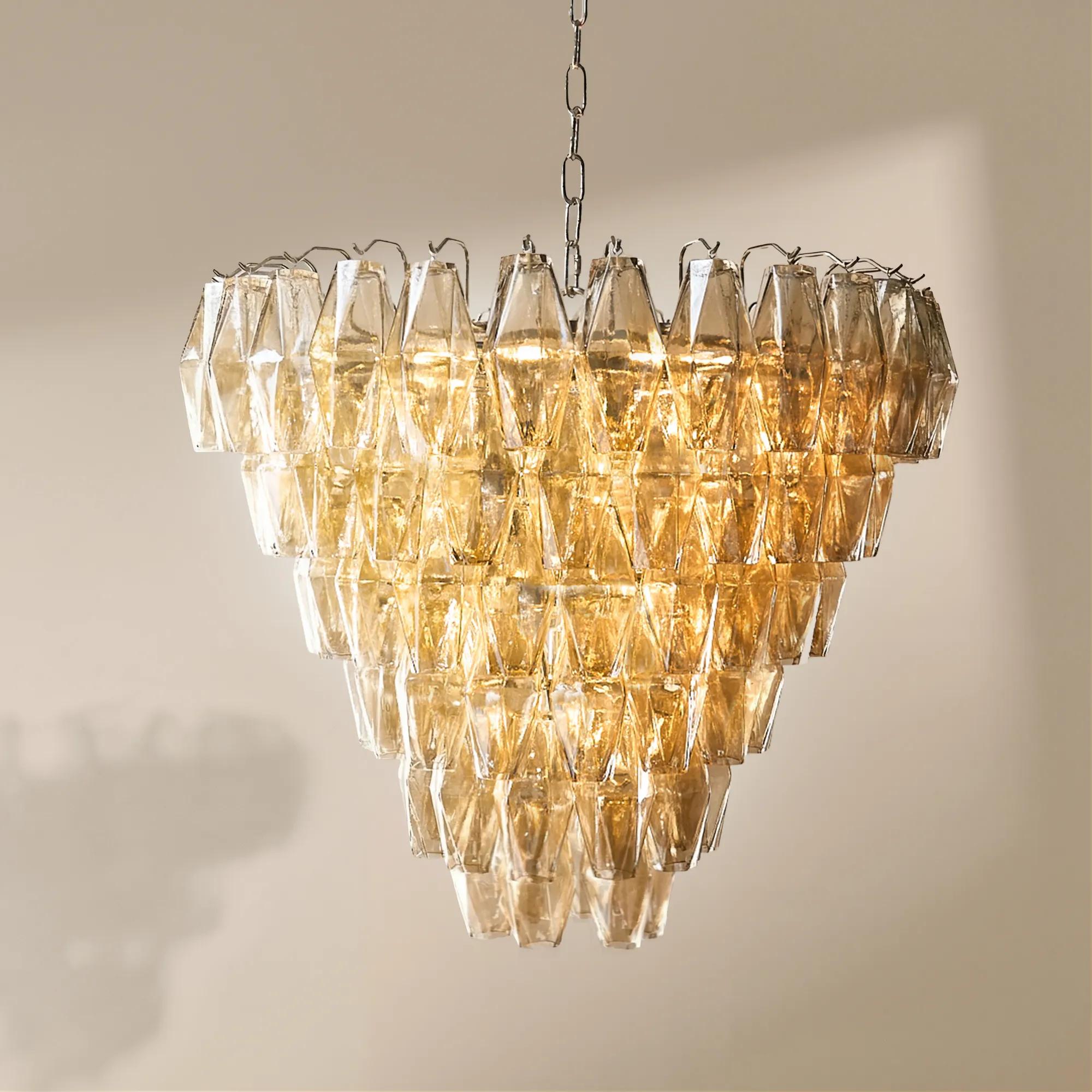
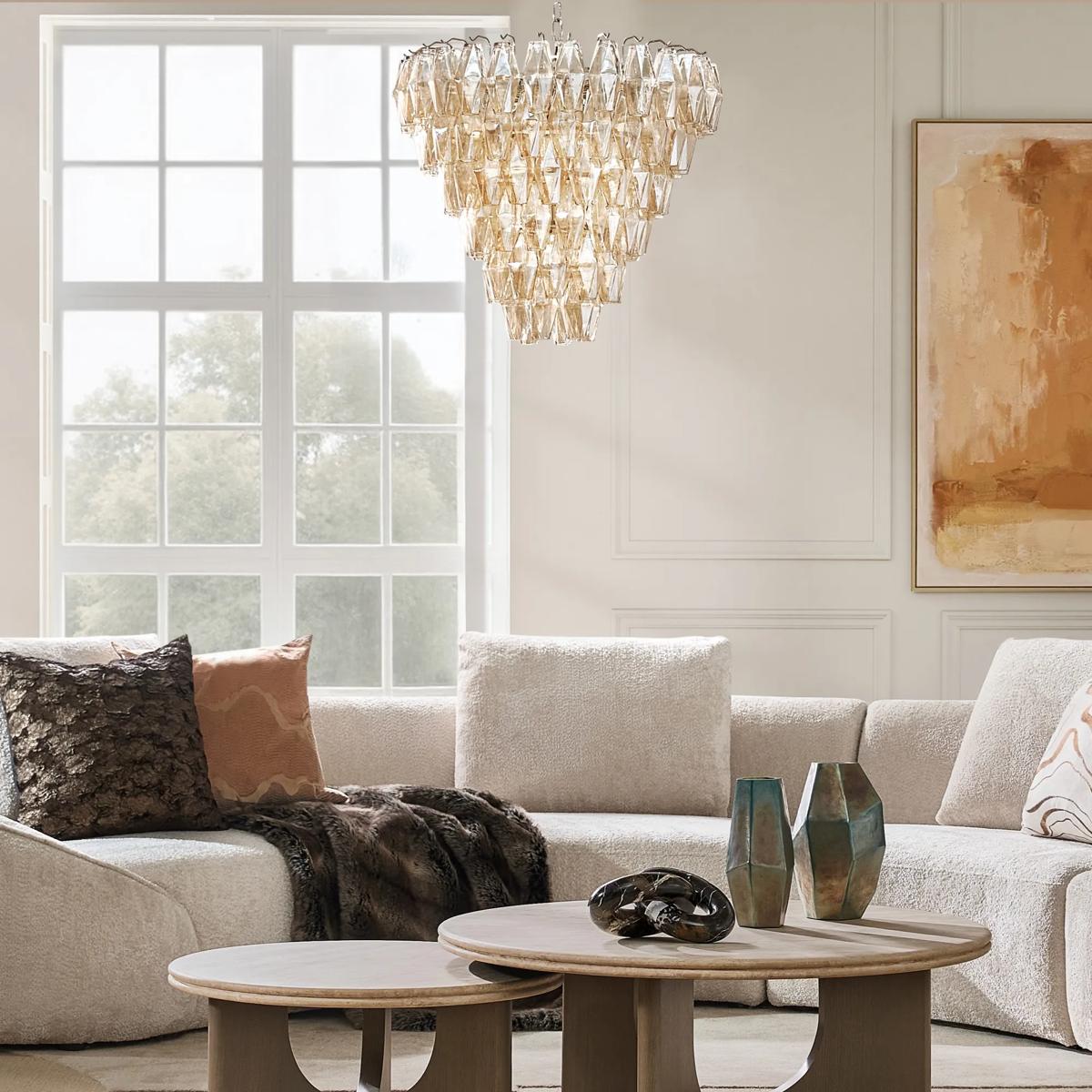 Cosima Champagne Blown Glass Chandelier 25.5"D x 23"H$1299
A chandelier featuring cascading champagne blown glass, a polished nickel frame, and seventeen dimmable lights.
Add To Cart -
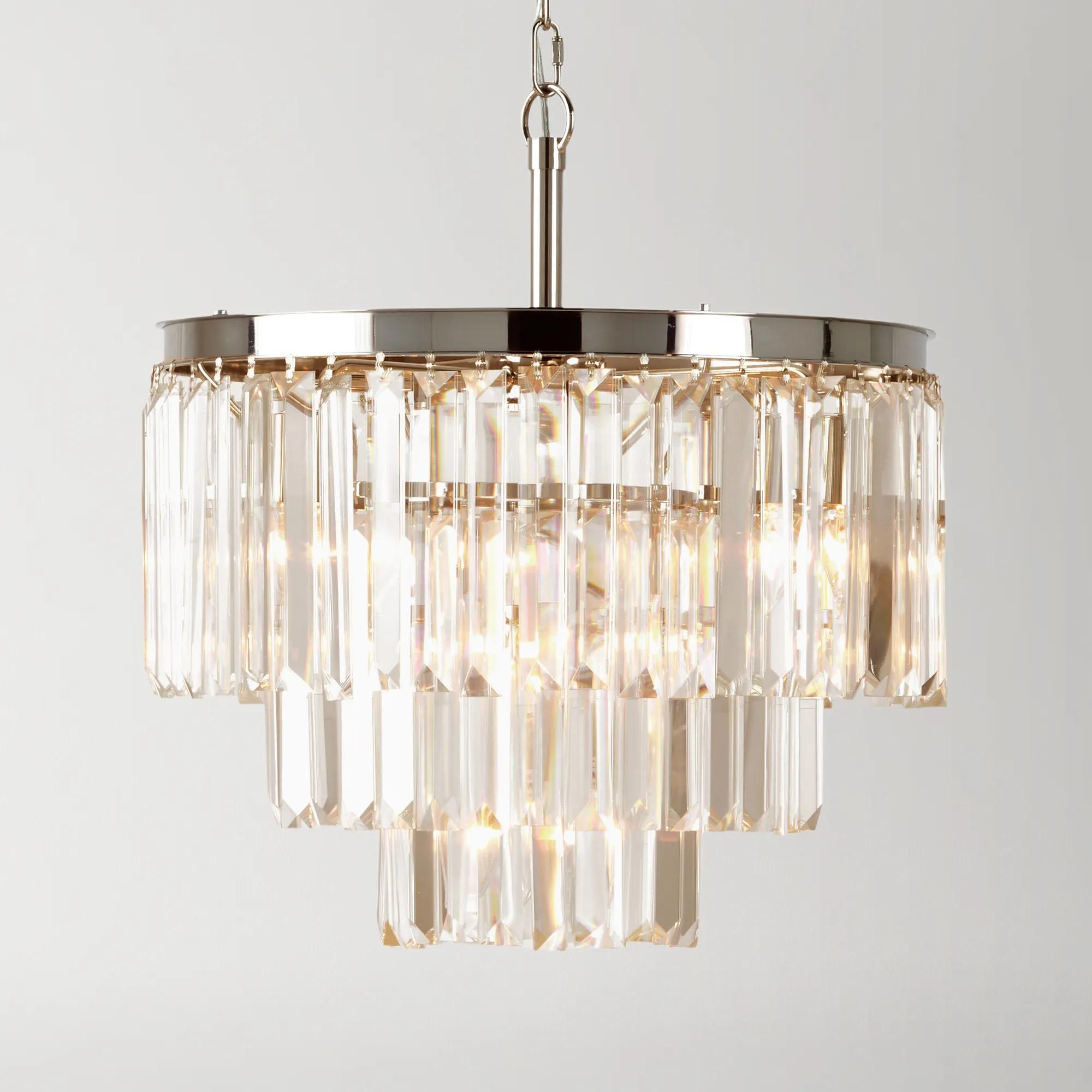
 Luxe Chandelier$799
A glamorous chandelier featuring a nickel-plated iron frame and three tiers of faceted crystal accents.
Add To Cart -
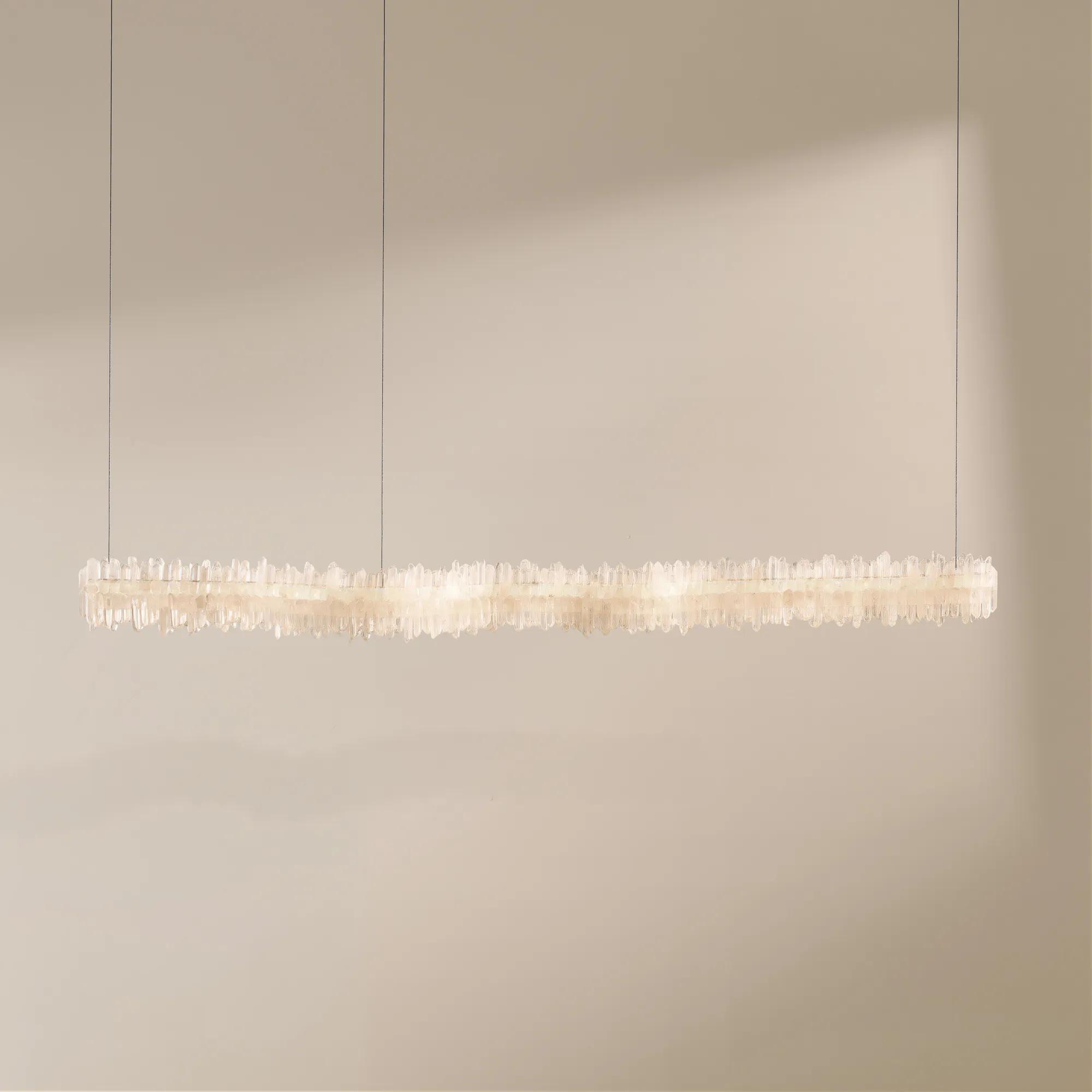 Stella Quartz Crystal LED Chandelier 47.25"$1899
A linear LED chandelier featuring natural raw quartz crystals and a polished rose gold metal frame.
Add To Cart

Contemporary Glass Chandeliers
Explore contemporary glass chandeliers that bring modern design and luminous drama to dining rooms, entryways, and living spaces. Glass takes center stage in this statement lighting selection, creating a focal point that feels expressive rather than purely functional. Compare fixture dimensions and hanging requirements with your ceiling height and room proportions to find the right scale for your space.
Contemporary glass chandeliers pair sculptural glass elements with streamlined metal frames, bringing decorative presence and practical illumination to dining rooms, living spaces, entryways, and bedrooms. Their character comes from the relationship between light and form: a cluster of clear globes can appear almost weightless, while overlapping glass panels create a more architectural silhouette. Unlike traditional chandeliers defined by ornate arms and cascading ornament, contemporary designs often favor balanced geometry, asymmetry, or fluid arrangements that let the glass become the focal point. Clear glass reveals the light source and produces crisp reflections; frosted or opal glass softens the view of the bulb and distributes a gentler glow. Ribbed, fluted, and textured surfaces add another layer of dimension, catching light along their contours even when the fixture is switched off. Smoked or tinted glass introduces depth and can temper brightness, although the final effect depends on the bulb, glass thickness, and fixture construction. Metal components provide both structure and contrast. A dark frame draws a graphic outline around luminous glass, polished metal echoes its reflective qualities, and a warm brass-tone finish gives the composition a richer cast. These combinations make contemporary glass chandeliers especially expressive above a dining table, where their suspended forms establish an intimate setting without enclosing the room. They can also bring definition to an open living area, connecting furniture below with the architecture overhead. For a bolder interpretation, modern statement glass chandeliers emphasize the decorative impact of scale, shape, and layered light. The most compelling choice is not necessarily the most elaborate. A restrained arrangement of generous glass shades can feel just as dramatic as a dense composition of smaller elements, particularly when its proportions give each curve and reflection room to register. Glass also allows a substantial fixture to retain visual openness, making it a distinctive option for interiors that call for presence without an entirely solid silhouette.
Scale determines whether that presence feels poised or overpowering. Above a dining table, the chandelier should relate to the tabletop rather than simply fill the ceiling area. A fixture roughly one-half to two-thirds the table’s width is a useful starting point, with its overall shape carrying equal importance: an elongated arrangement follows the lines of a rectangular table, while a round or clustered form often feels balanced above a circular one. For a typical eight-foot ceiling, a chandelier’s lowest point is commonly positioned about 30 to 36 inches above the tabletop, subject to the fixture manufacturer’s guidance and the needs of the room. That distance helps preserve conversation across the table while keeping the lighting connected to the setting below. Taller ceilings, unusually deep fixtures, and prominent glass drops may call for a different arrangement. In an entryway or living room, comfortable walking clearance matters more than the relationship to a tabletop, and doors, stair landings, and nearby furniture should remain unobstructed. Adjustable suspension can help accommodate different ceiling heights, but its stated range, canopy dimensions, and suitability for sloped ceilings deserve attention before installation. The glass itself influences perceived scale: closely spaced frosted shades can read as a substantial luminous volume, while widely spaced clear globes may occupy the same dimensions with a lighter visual effect. Consider the view from adjoining spaces as well. A chandelier seen through a doorway can frame a dining room like an artwork, while one suspended near a large mirror becomes part of a more layered composition. In a bedroom, a glass chandelier can lend a dressing area or seating corner a sense of occasion; in a living room, it can draw together the curves of an accent chair, a sculptural table, and reflective accessories. For people furnishing an open-plan home, it offers a way to distinguish one gathering area without introducing a wall. Coordinating its finish with a few nearby details creates continuity, but repeating every metal tone exactly is not essential. A deliberate contrast can make the glass feel more expressive.
The quality of illumination is as important as the silhouette. Contemporary glass chandeliers can contribute ambient light, but the amount and distribution vary with the number of light sources, their output, the direction of the shades, and the transparency of the glass. A clear shade does not conceal a bulb, so the bulb’s shape and brightness become visible parts of the design. Frosted glass can make the source less apparent, though it does not automatically eliminate glare or provide enough light for every activity. Warm-white light, often around 2700K to 3000K, can give dining and lounge settings an inviting cast, while a compatible dimming system allows the atmosphere to move from lively entertaining to a quieter evening setting. Dimming capability depends on the fixture, bulbs or integrated LED components, and wall control working together; it should never be assumed from appearance alone. Layering a chandelier with sconces, table lamps, or task lighting adds flexibility and prevents one overhead source from carrying the entire room. Lasting beauty also depends on construction, installation, and care. Glass resists some forms of everyday surface wear, but it remains vulnerable to impact, and decorative elements should be handled individually according to the manufacturer’s instructions. Heavier fixtures require properly rated ceiling support, and professional installation helps address mounting, electrical connections, and secure assembly. Before cleaning, switch off the power and allow all components to cool. A soft microfiber cloth generally suits routine dust removal; any cleaner should be approved for the particular glass and metal finishes, applied to the cloth rather than sprayed into sockets or electrical components. Abrasive materials can scratch glass or damage protective finishes. Easy access to shades and light sources is worth considering, especially above a broad table or beneath a high ceiling. With thoughtful proportions and appropriate care, a contemporary glass chandelier becomes an enduring part of the interior’s character: luminous above a shared meal, sculptural against a quiet ceiling, and expressive even before the lights come on.
FAQs
Contemporary glass chandeliers pair expressive glass elements with a modern design sensibility. Geometric arrangements, sculptural silhouettes, and artful repetition give this lighting style its distinctive character. Whether restrained or richly layered, the composition brings an artistic focal point to the room.
Clear glass creates a crisp, jewel-like impression, while frosted glass introduces a softer visual note. Textured glass adds depth and intricate detail, and tinted glass brings another layer of color to the composition. Let the finish echo the mood you want to create, from polished glamour to atmospheric elegance.
Yes. A contemporary glass chandelier can create a compelling contrast with traditional furnishings. Its sculptural lines offer a fresh counterpoint to ornate mirrors, tailored upholstery, and richly detailed casegoods. Repeat a finish or shape elsewhere in the room to make the contrast feel deliberate and beautifully composed.
Choose a dominant metallic finish to establish a visual thread between your chandelier and surrounding decor. Warm gold tones create an opulent mood, while silver tones lend a cool, polished character. For a layered composition, introduce a contrasting metal through smaller accents such as candleholders or decorative objects.
An entryway, living room, or bedroom can become a dramatic setting for a contemporary glass chandelier. In an entryway, it introduces the home’s design personality; above a living room vignette, it adds sculptural presence. In a bedroom, glass offers a glamorous counterpoint to sumptuous textiles and upholstered furnishings.