Contemporary Chandeliers For Bedrooms
Contemporary Chandeliers For Bedrooms
-
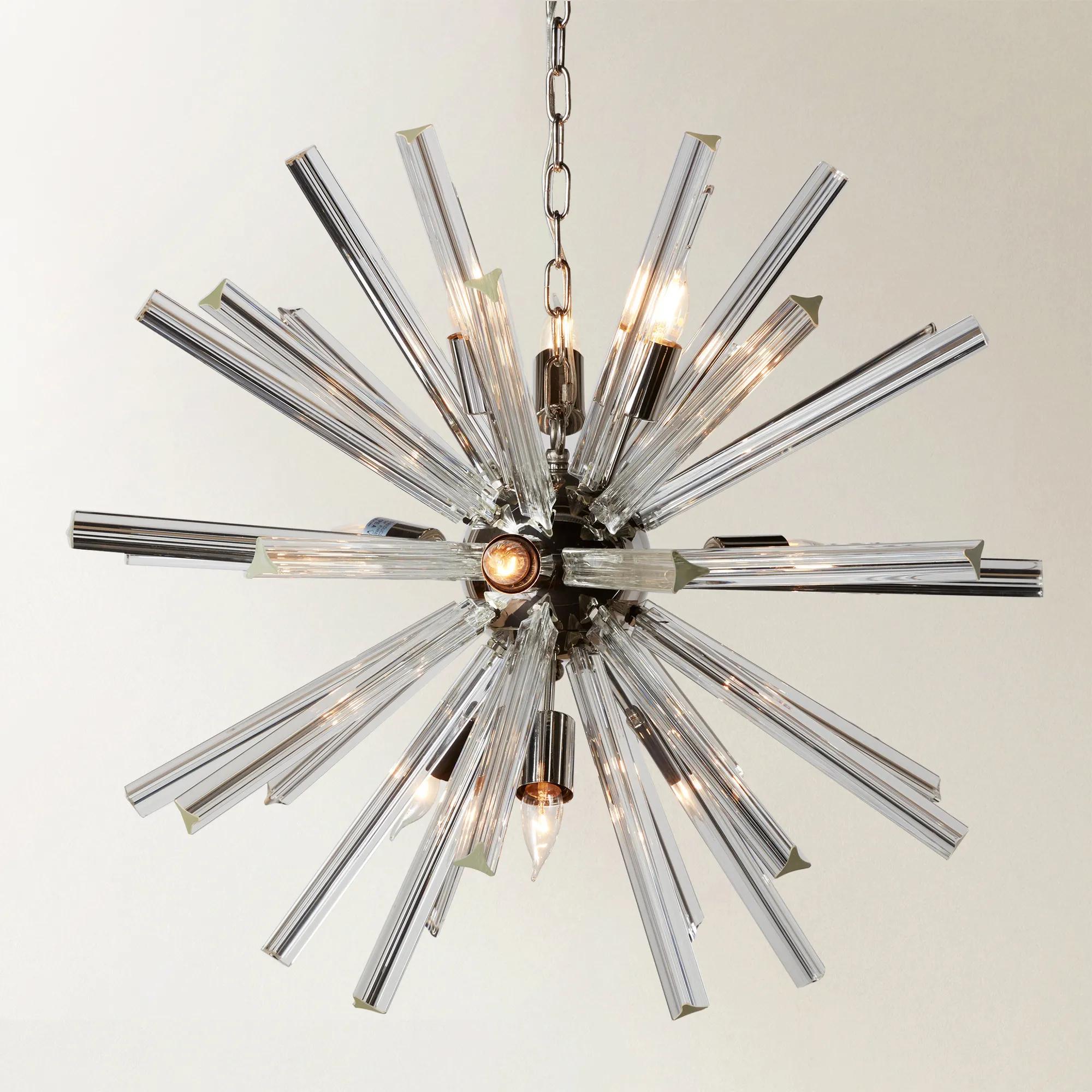
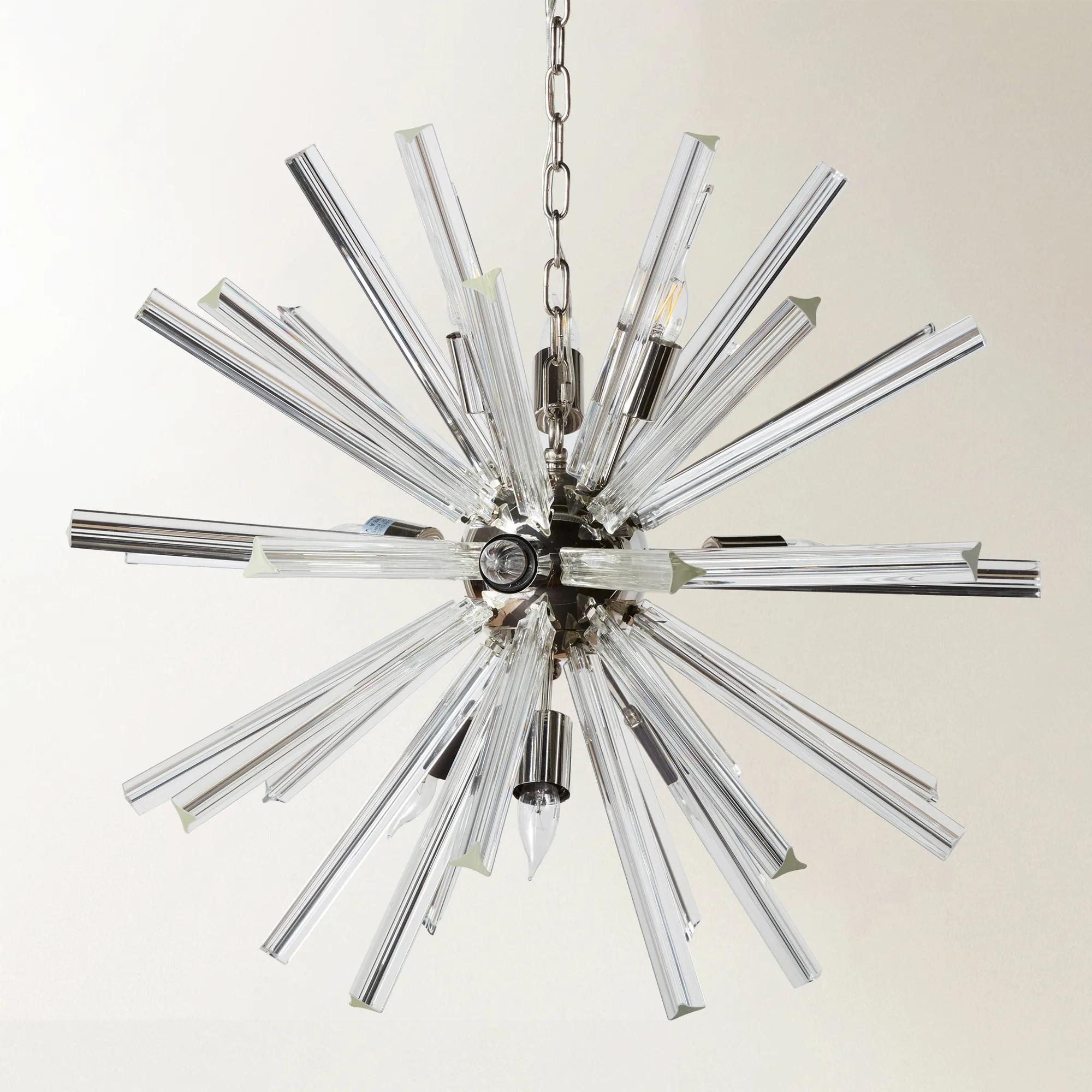 Axis Sputnik Clear Faceted Glass Chandelier 29.5"D$599
A clear glass and iron Sputnik chandelier featuring nine lights and faceted triangular rods.
Add To Cart -
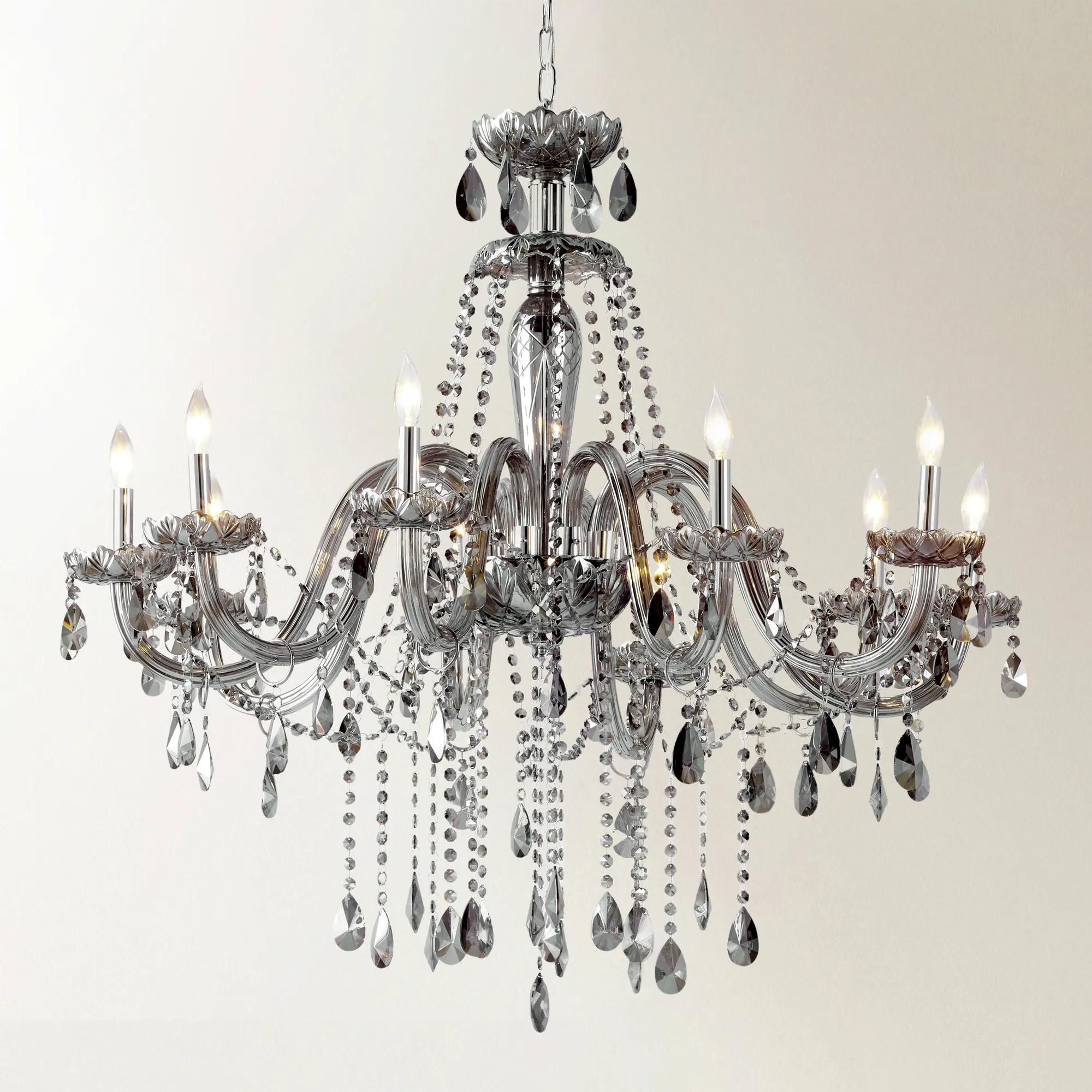
 Omni Chandelier 38.5" - Graphite$999
A dazzling chandelier featuring graphite faceted crystals and ten fluted glass arms with nickel hardware.
Add To Cart -
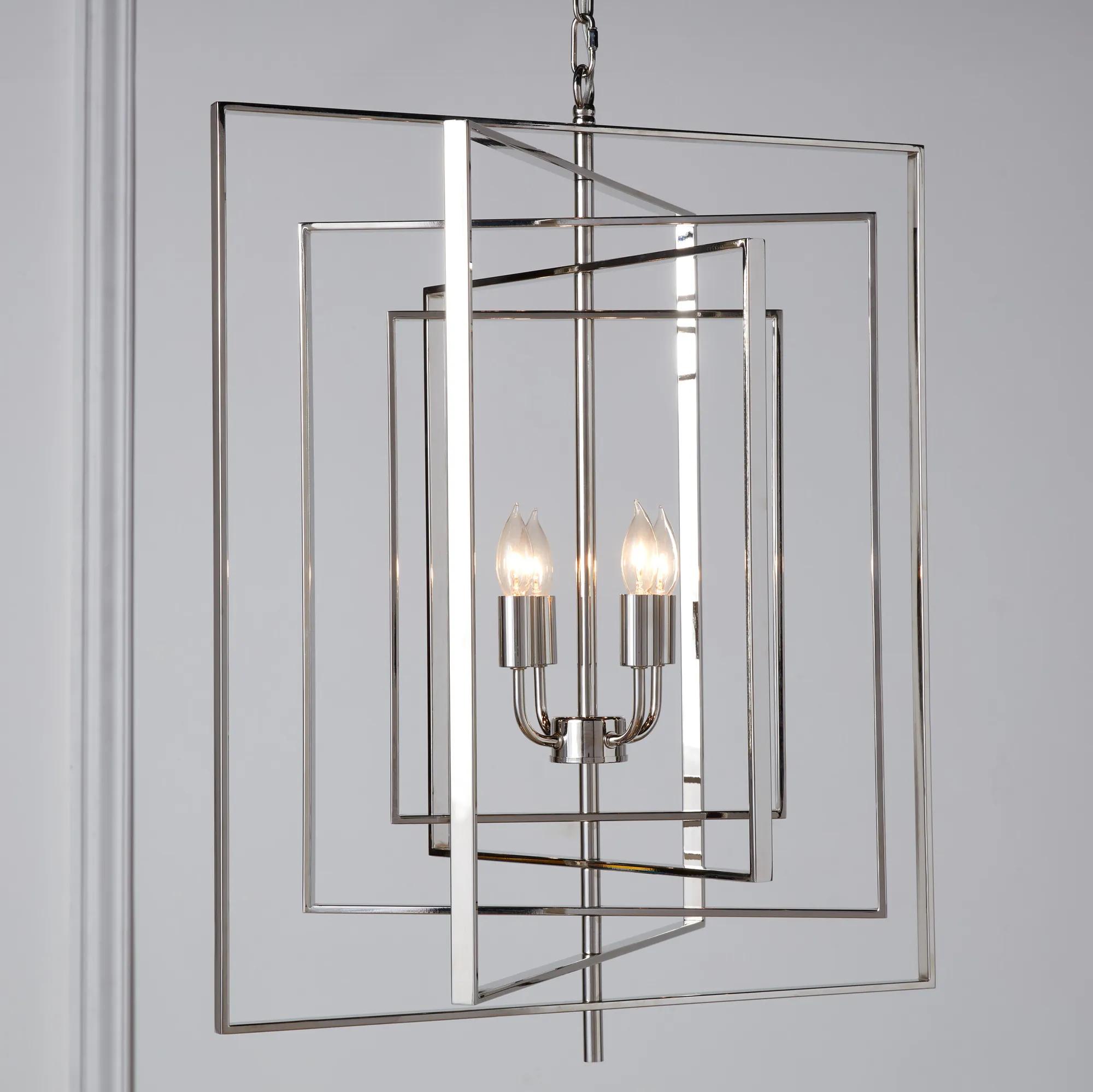
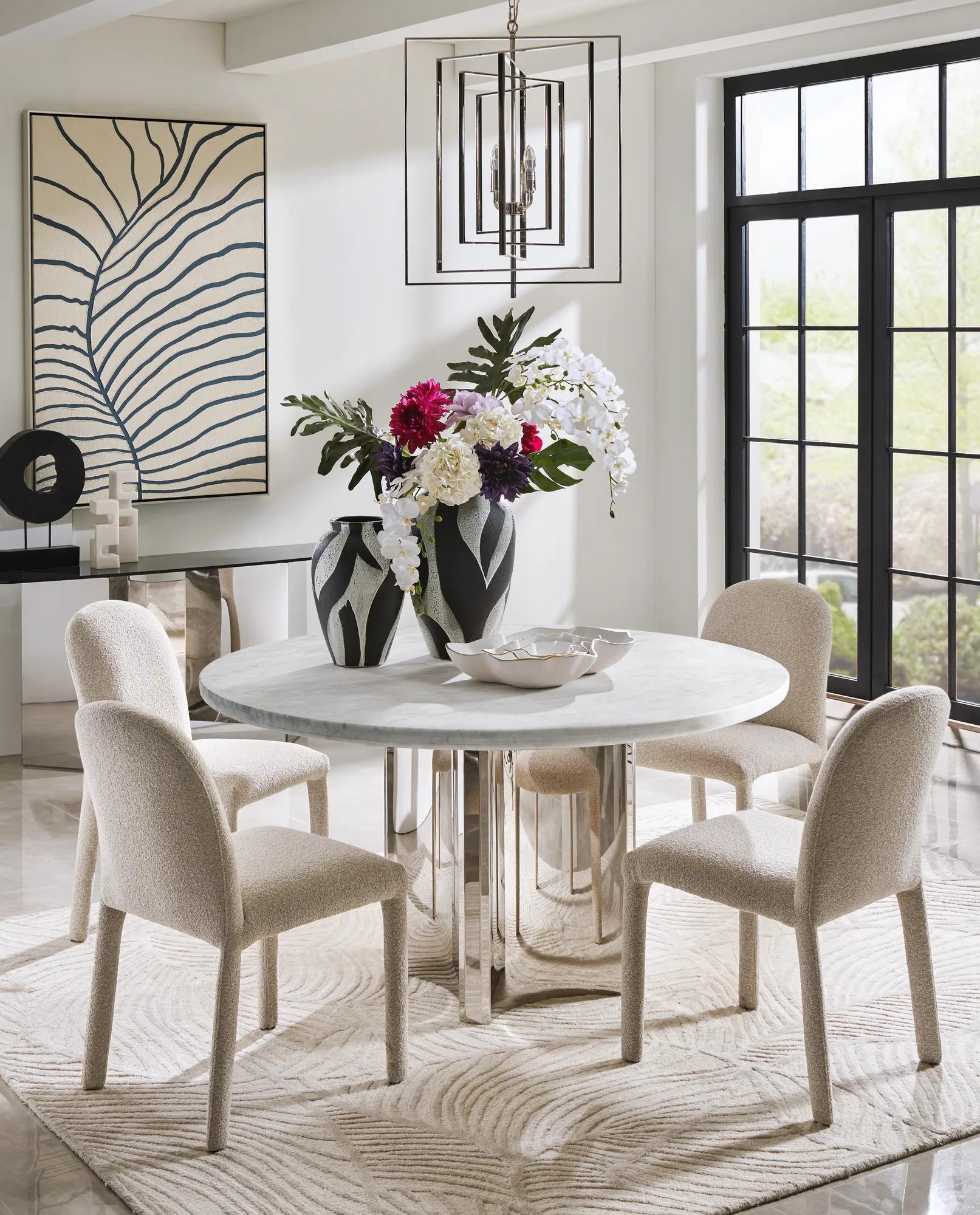 Hollis Chandelier$499
A polished nickel geometric chandelier with four lights, perfect for modern and minimal interiors.
Add To Cart -
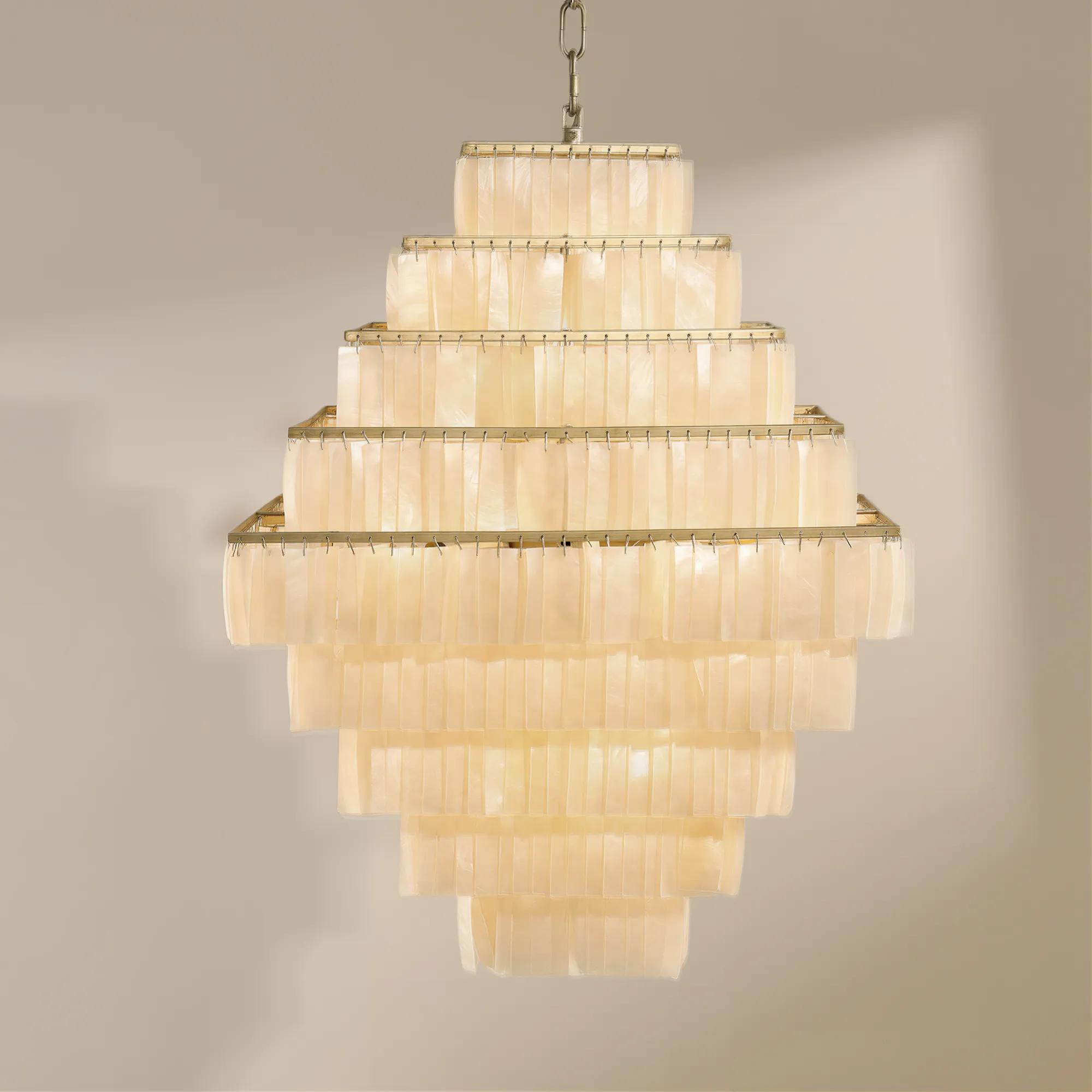 Soleil Capiz Shell Chandelier 25"$999
A modern capiz shell chandelier with 700 pearlescent shells, champagne-finished iron, and dimmable ambient lighting.
Add To Cart -

 Radiante LED Globe Chandelier 36" - Polished Gold$899
A polished gold LED globe chandelier bringing sculptural illumination and modern glamour to contemporary interiors.
Add To Cart -
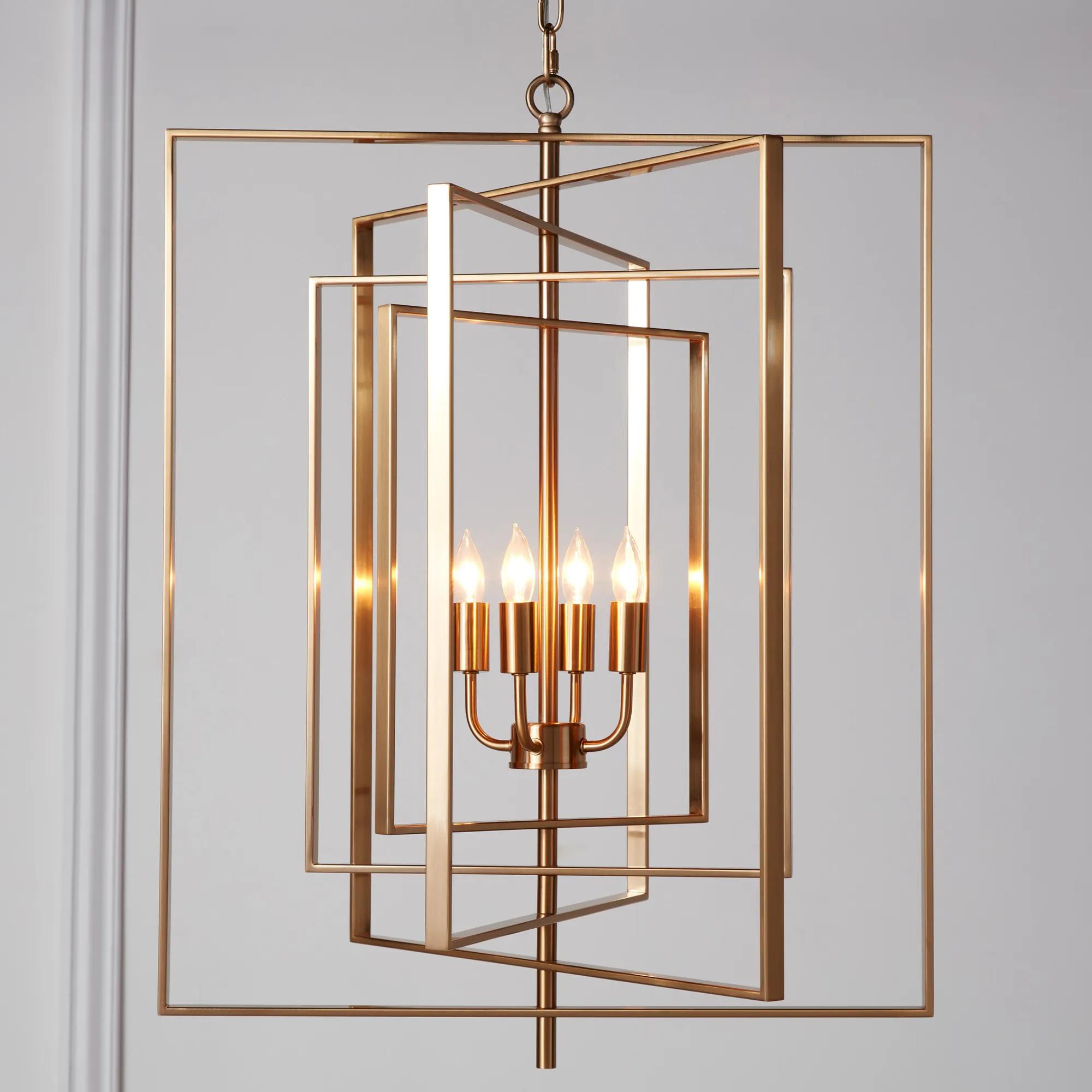 Hollis Chandelier$499
A geometric brass-finished iron chandelier with four lights, perfect for modern and minimal interiors.
Add To Cart -
 Bolla LED Hand-Blown Glass Bubble Chandelier 60.25"$499
A hand-blown glass chandelier with clear bubbles, matte gold steel framing, and integrated warm LED illumination.
Add To Cart -
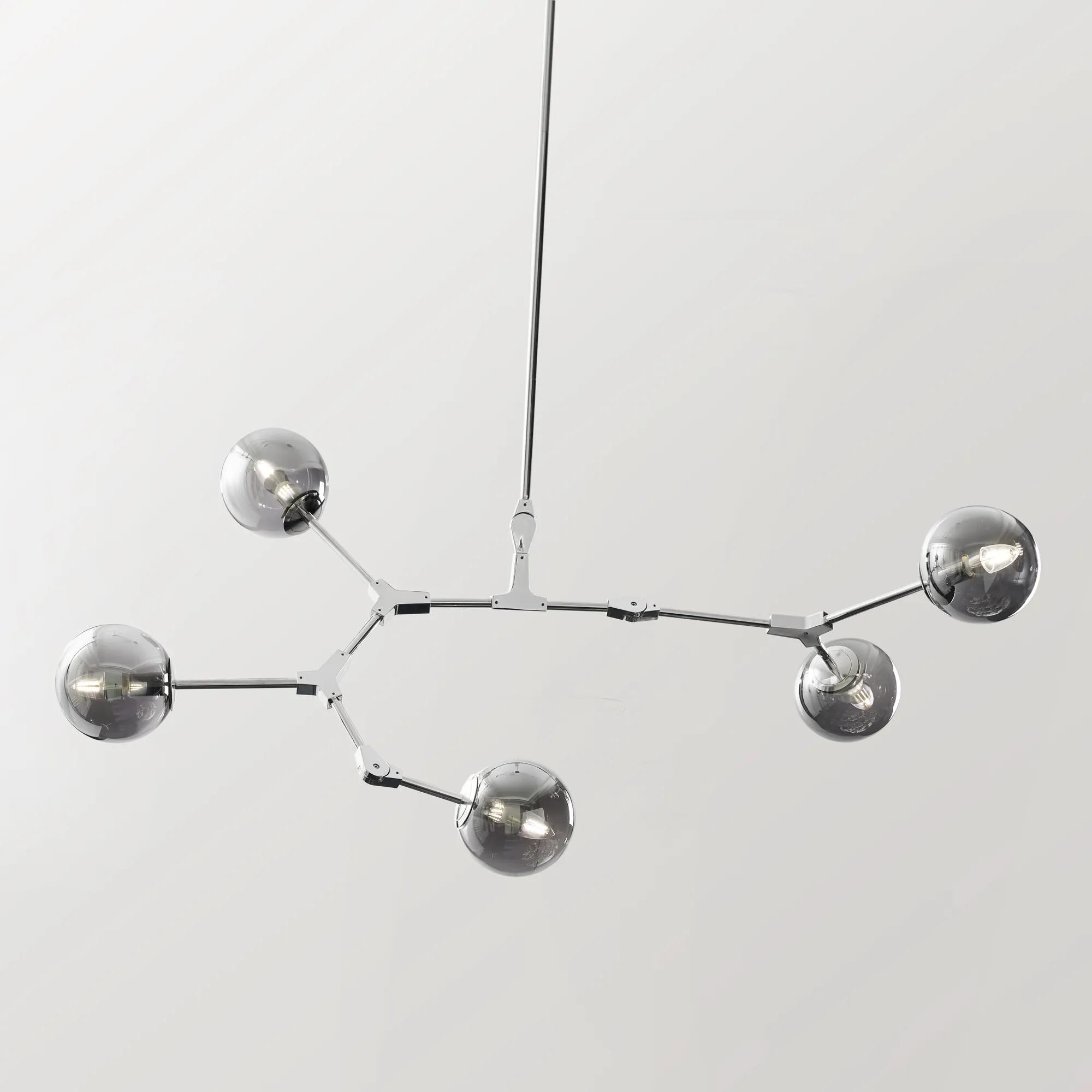
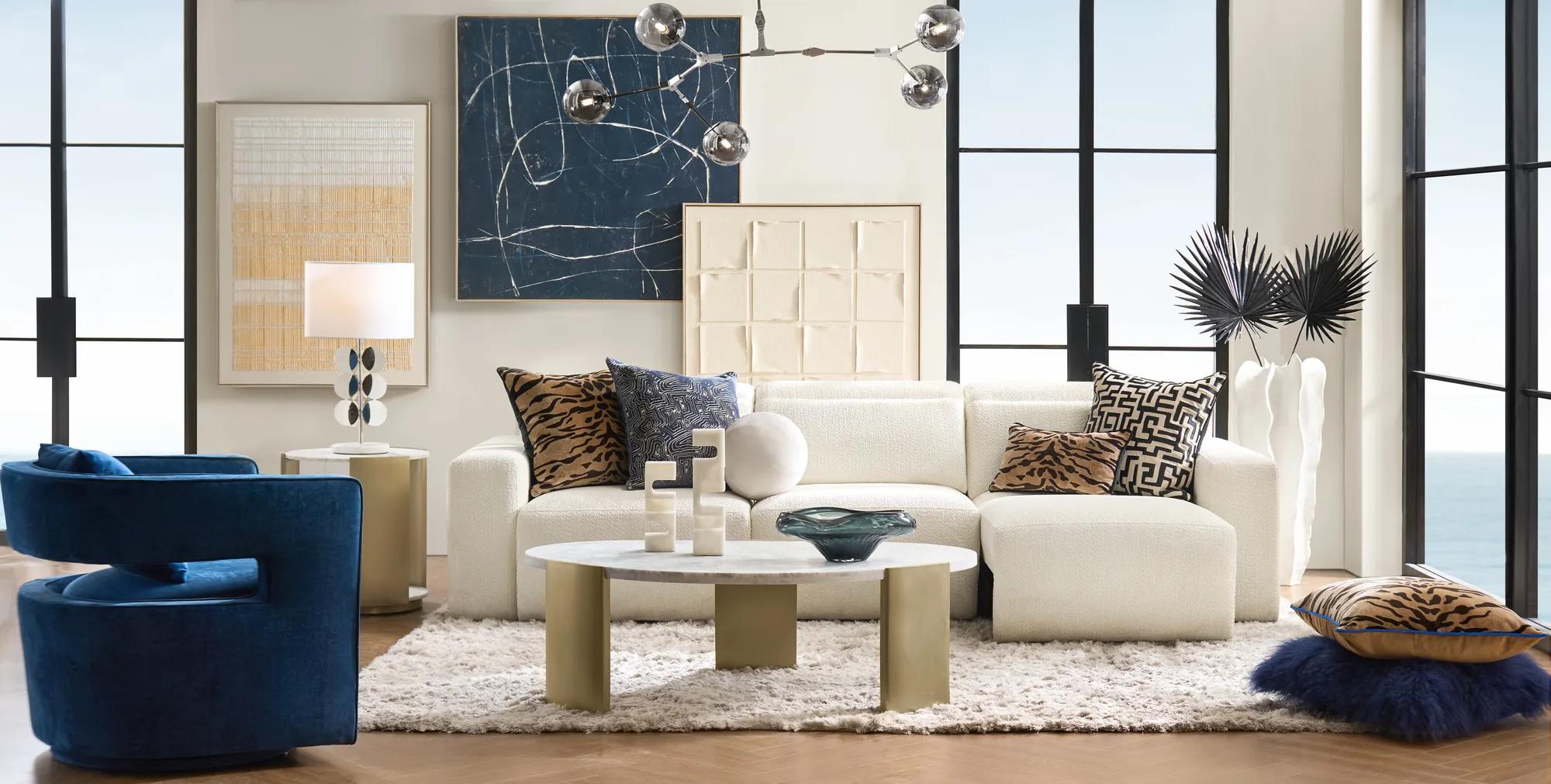 Axel Chandelier$499
A modern chandelier featuring polished nickel arms and smoked glass bulbs for striking, contemporary illumination.
Add To Cart -

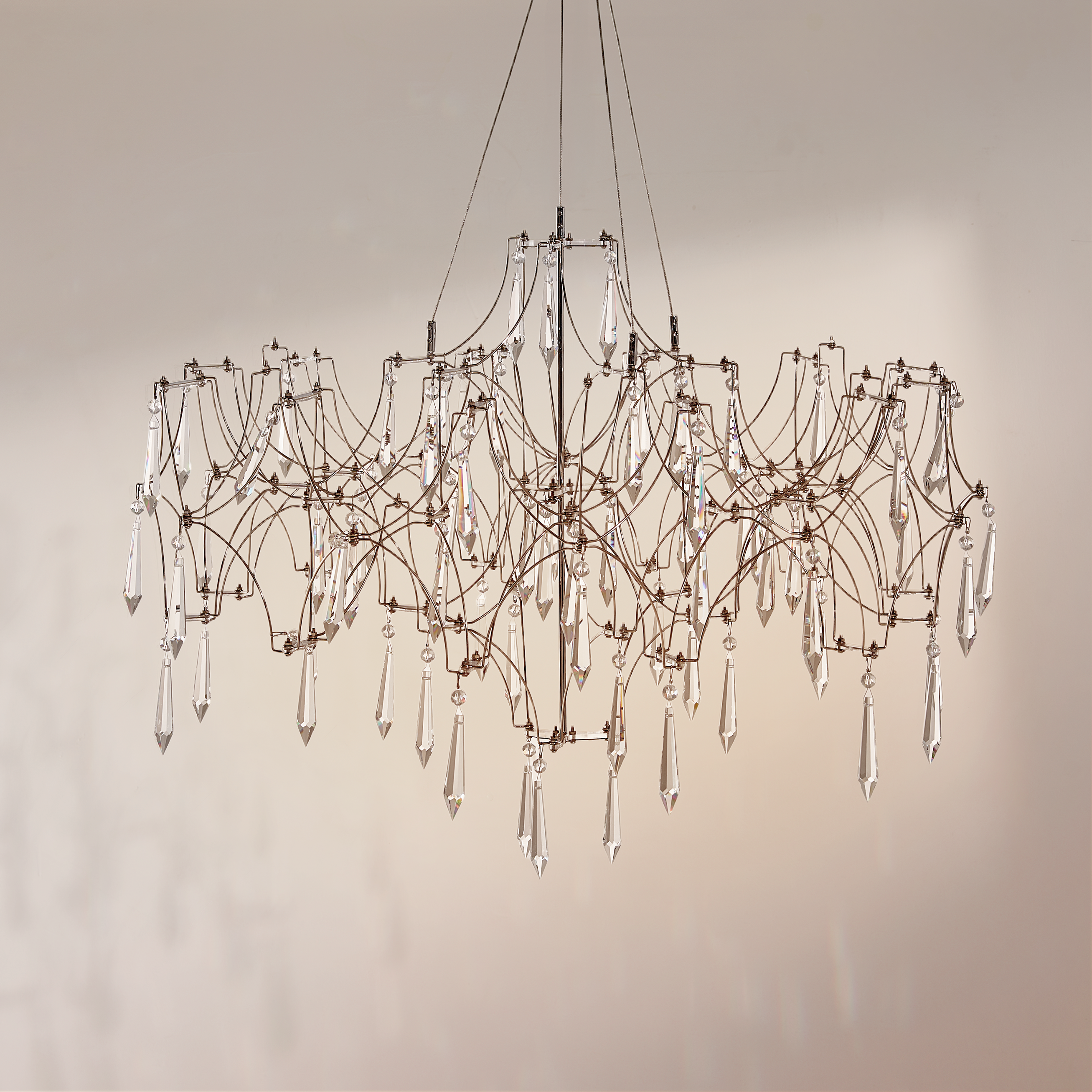 Moderne LED Clear Crystal Chandelier 24.5"W x 19.75"H$899
A clear crystal chandelier with faceted construction, polished nickel framing, and integrated warm LED illumination.
Add To Cart -

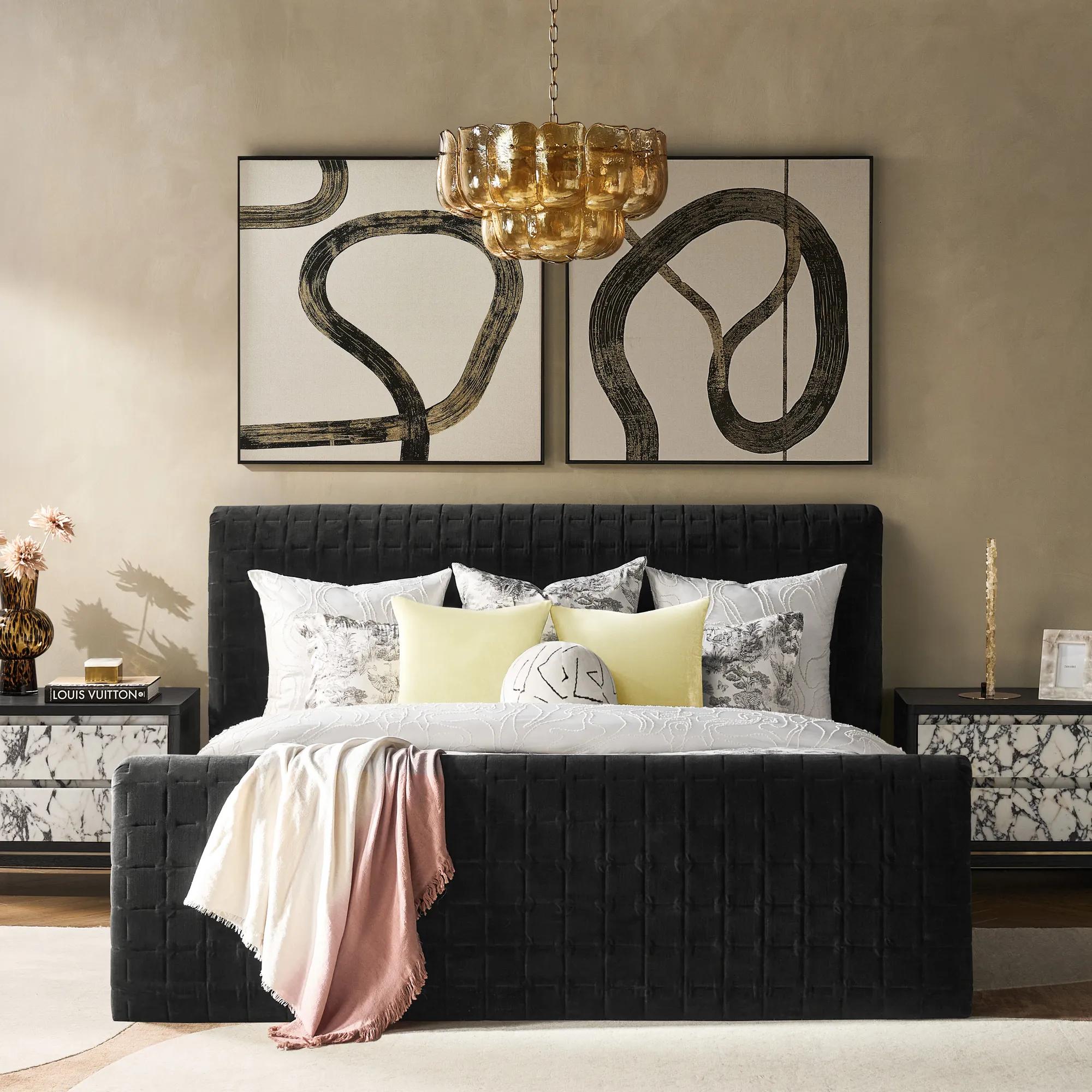 Ember Glow Amber Textured Glass Chandelier 24"$799
A chandelier with textured amber glass petals, brushed brass iron frame, and nine-light ambient illumination.
Add To Cart -

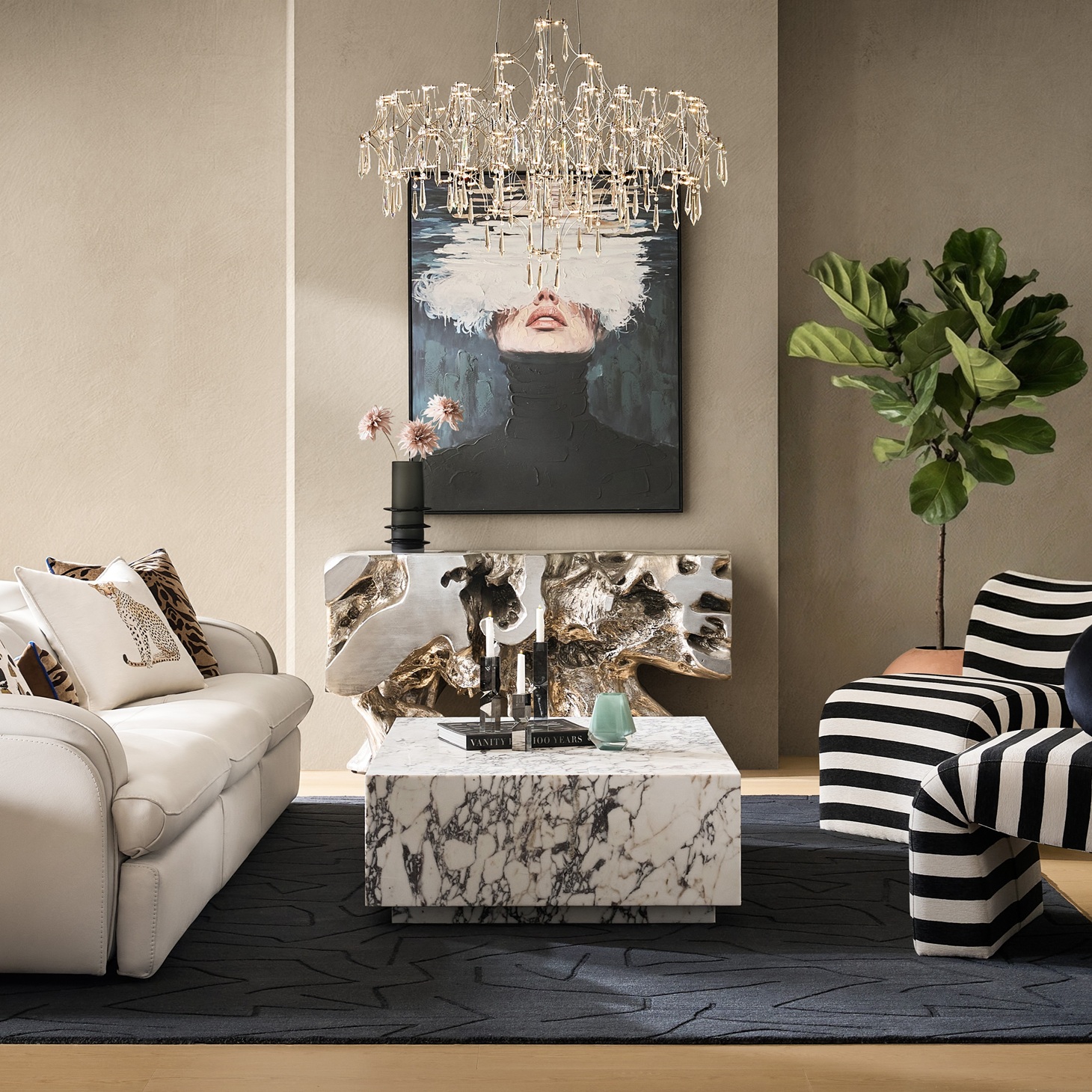 Moderne Grande LED Crystal Chandelier 35.75"W x 28.5"H$1899
A faceted crystal chandelier with polished nickel framing and integrated LED illumination for a modern glow.
Add To Cart -
 Glacier Clear and Frosted Glass Chandelier 24"$899
A glass chandelier with icicle-inspired clear and frosted panels, brushed brass frame, and twelve-light illumination.
Add To Cart -
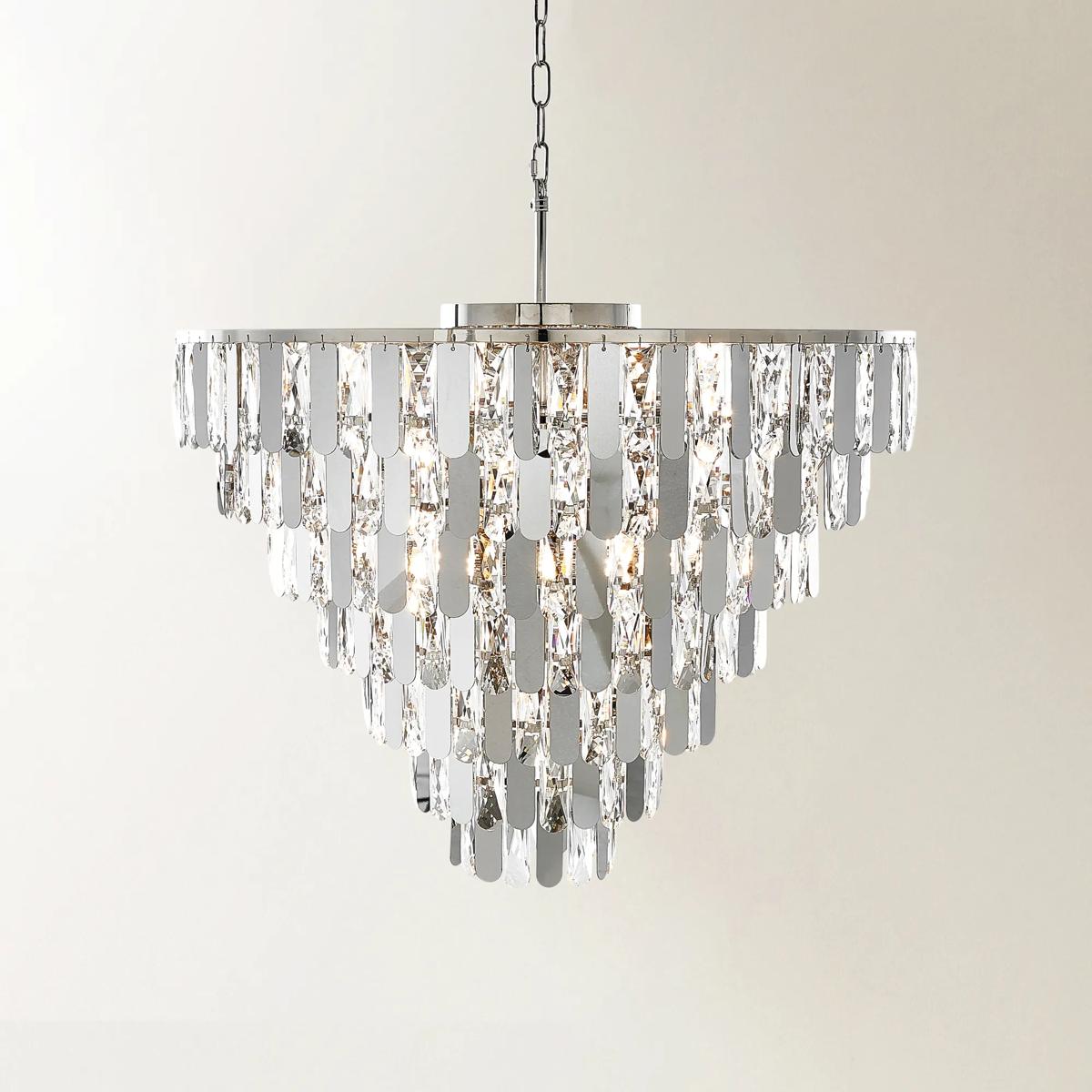
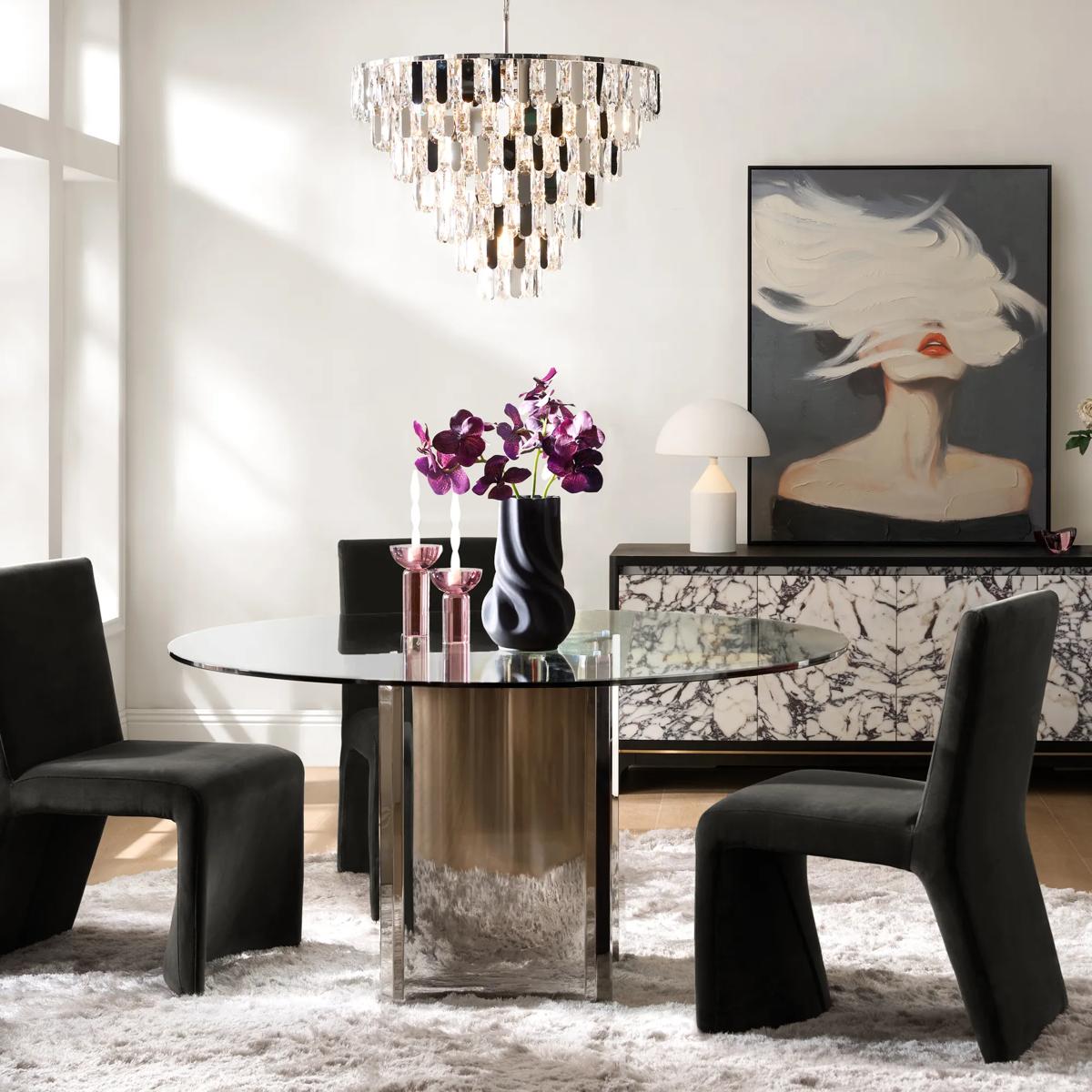 Avenue Crystal Chandelier 28.5"$999
A tiered chandelier crafted from eco-friendly K9 crystal and polished nickel for radiant, modern elegance.
Add To Cart -
 Sawin Chandelier$699
A sculptural brass-plated steel chandelier with frosted acrylic diffusers for a soft, ambient glow.
Add To Cart -

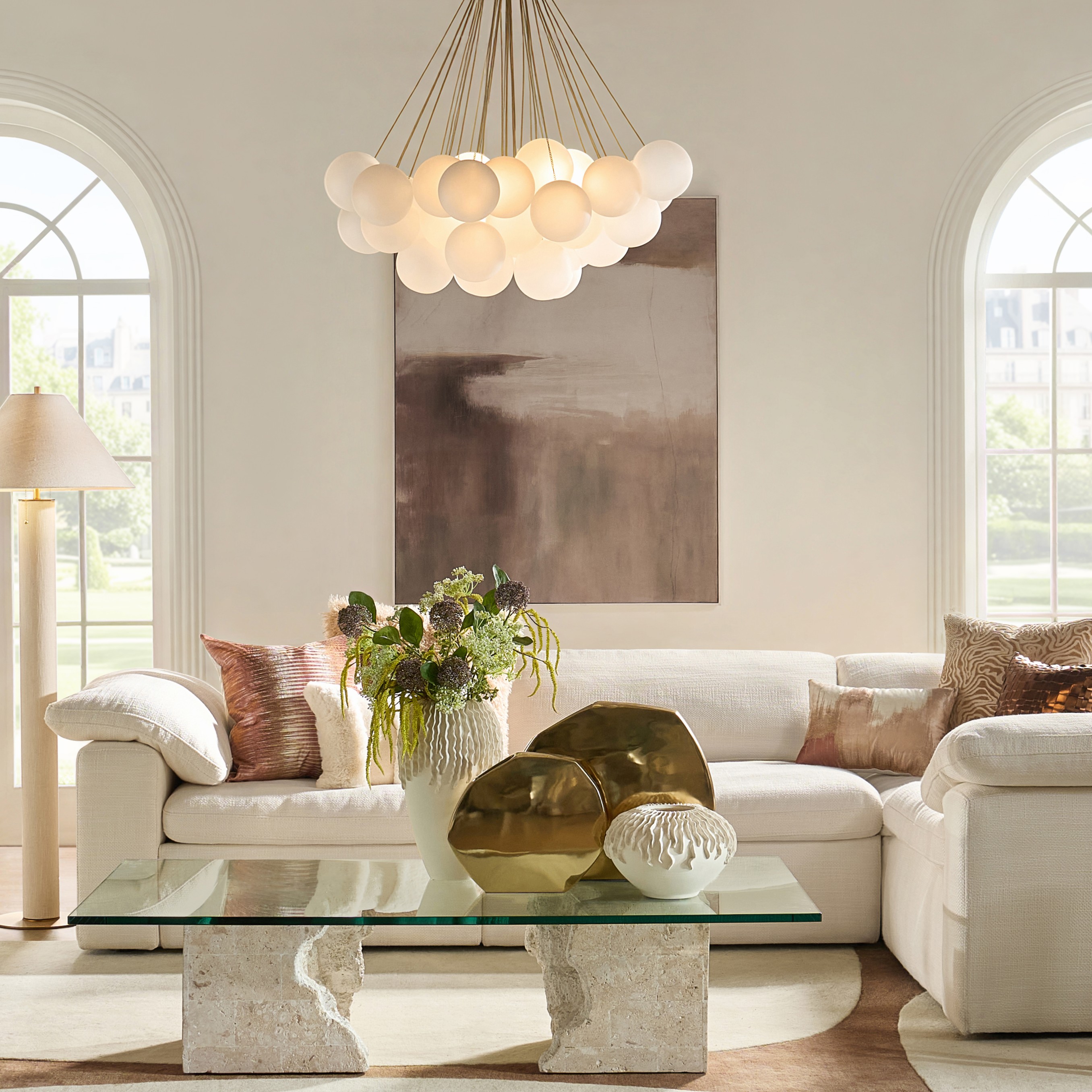 Sanela Frosted Glass Globe Chandelier 39.5"$899
A chandelier with frosted glass globes, an antique brass iron frame, dimmer compatibility, and slope-ceiling adaptability.
Add To Cart -
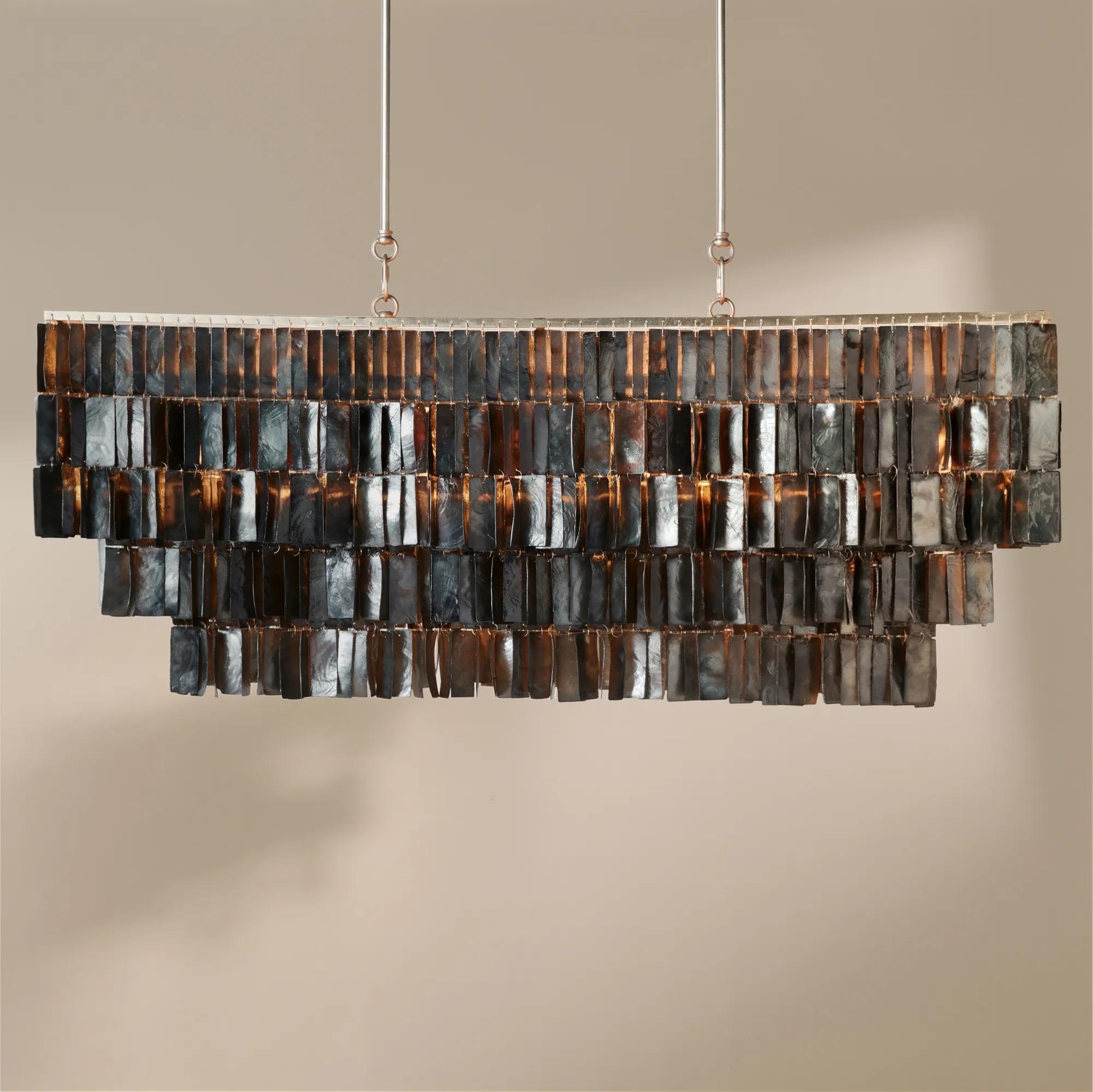
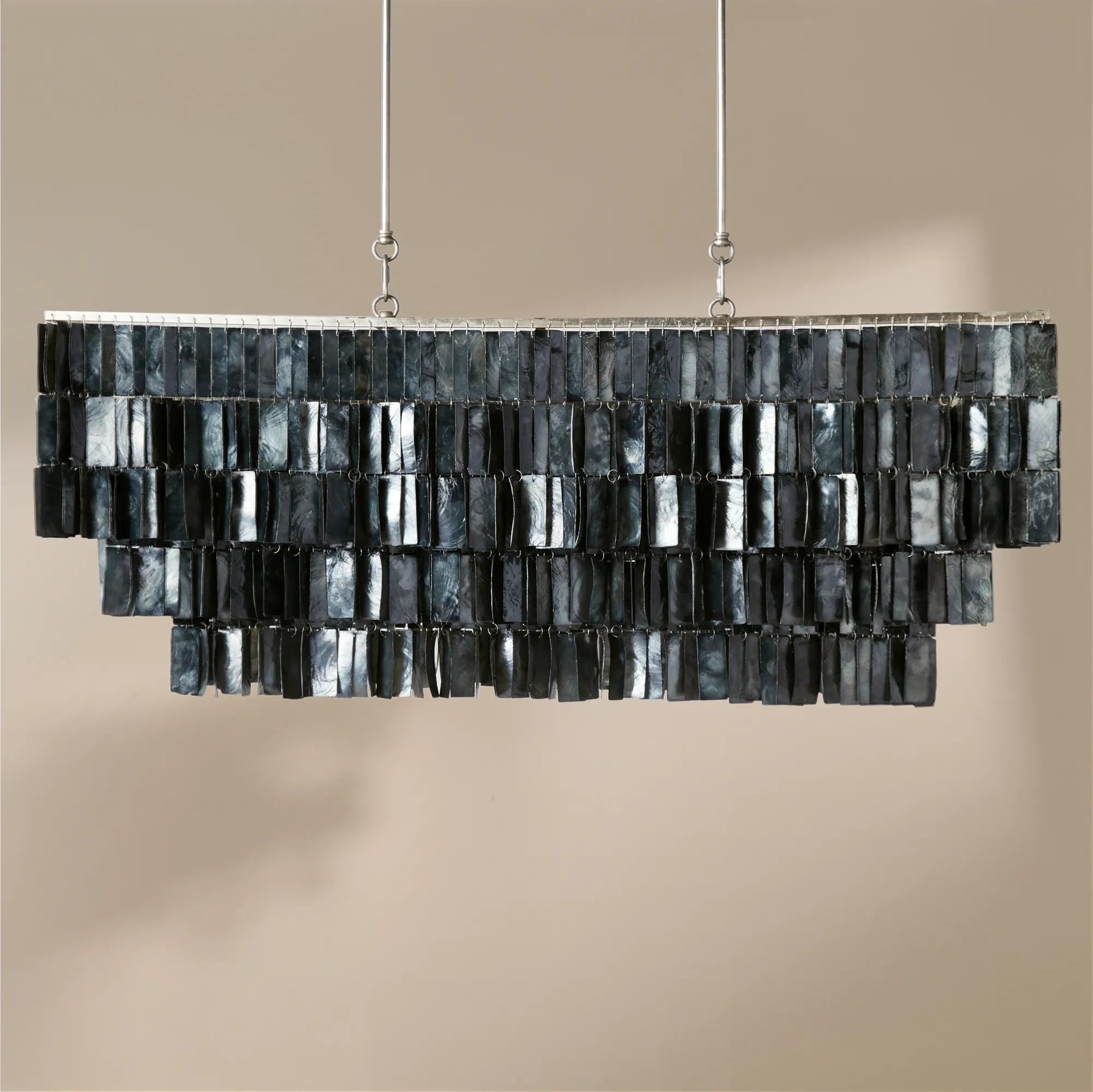 Capiz Shell Graphite Chandelier 39"$849
A chandelier with charcoal capiz shells, a champagne-finished iron frame, and seven dimmable candelabra sockets.
Add To Cart -
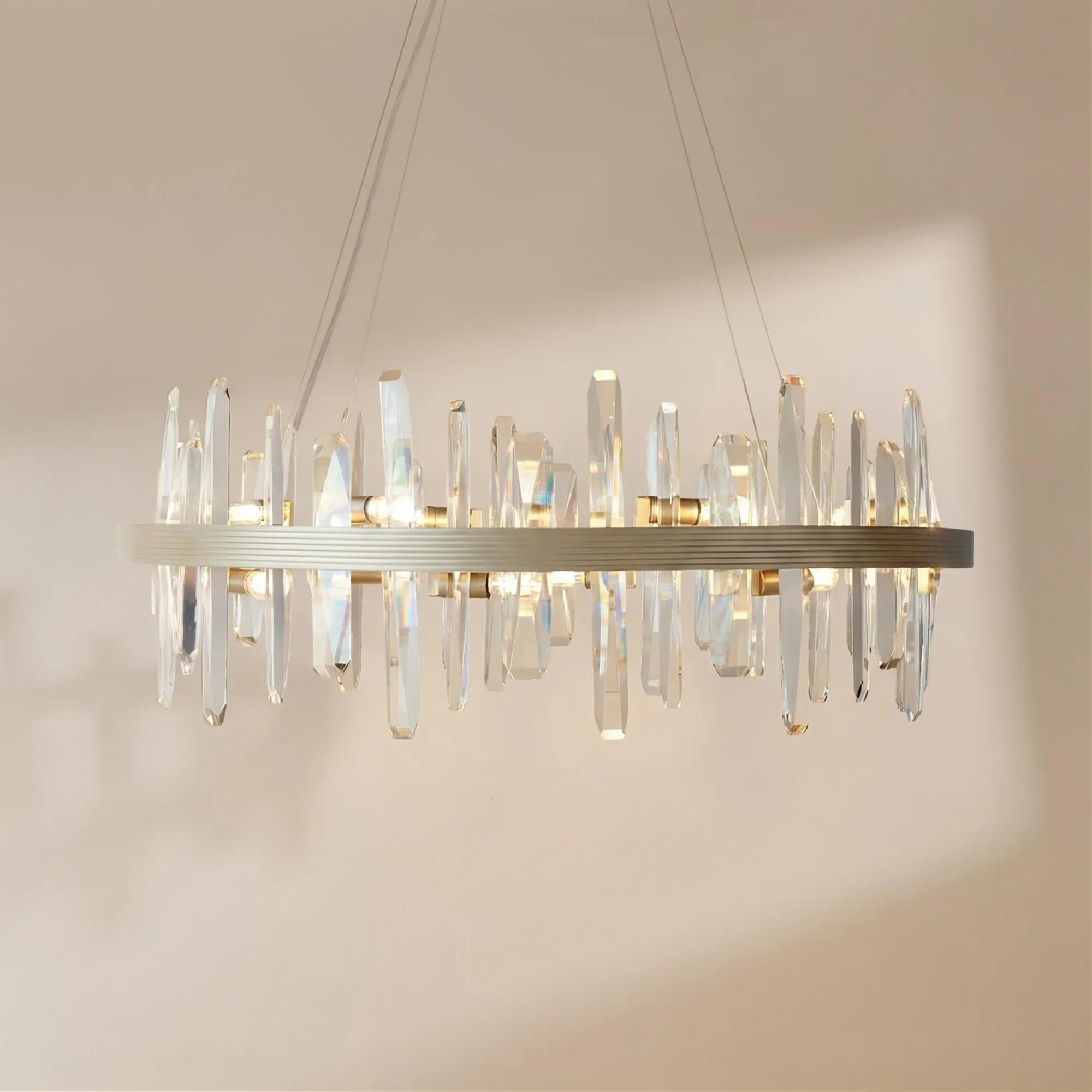
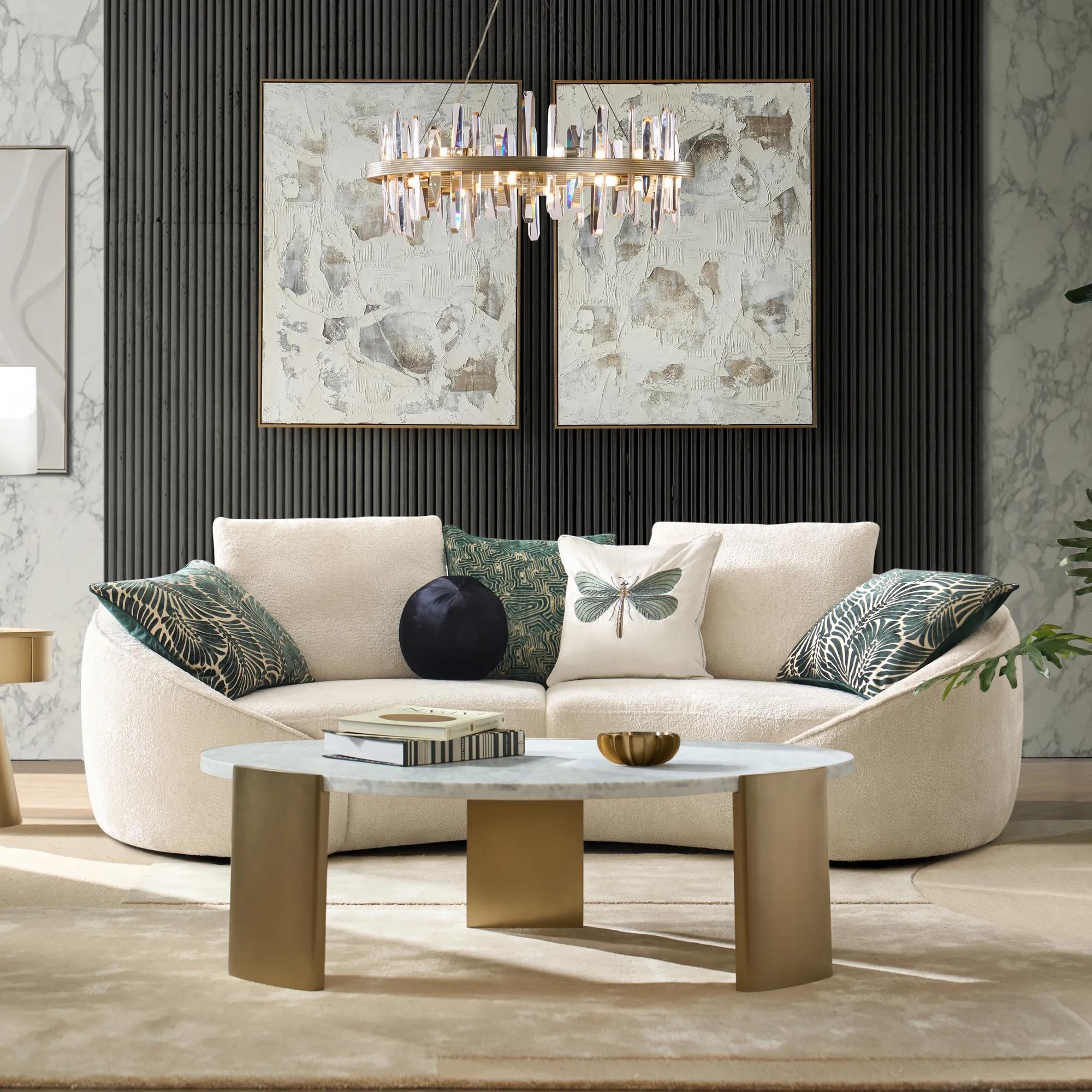 Lumi Clear Beveled Glass Chandelier 31.5"W$929
A chandelier with clear beveled glass, a champagne-finished iron frame, sixteen lights, and dimmable illumination.
Add To Cart -
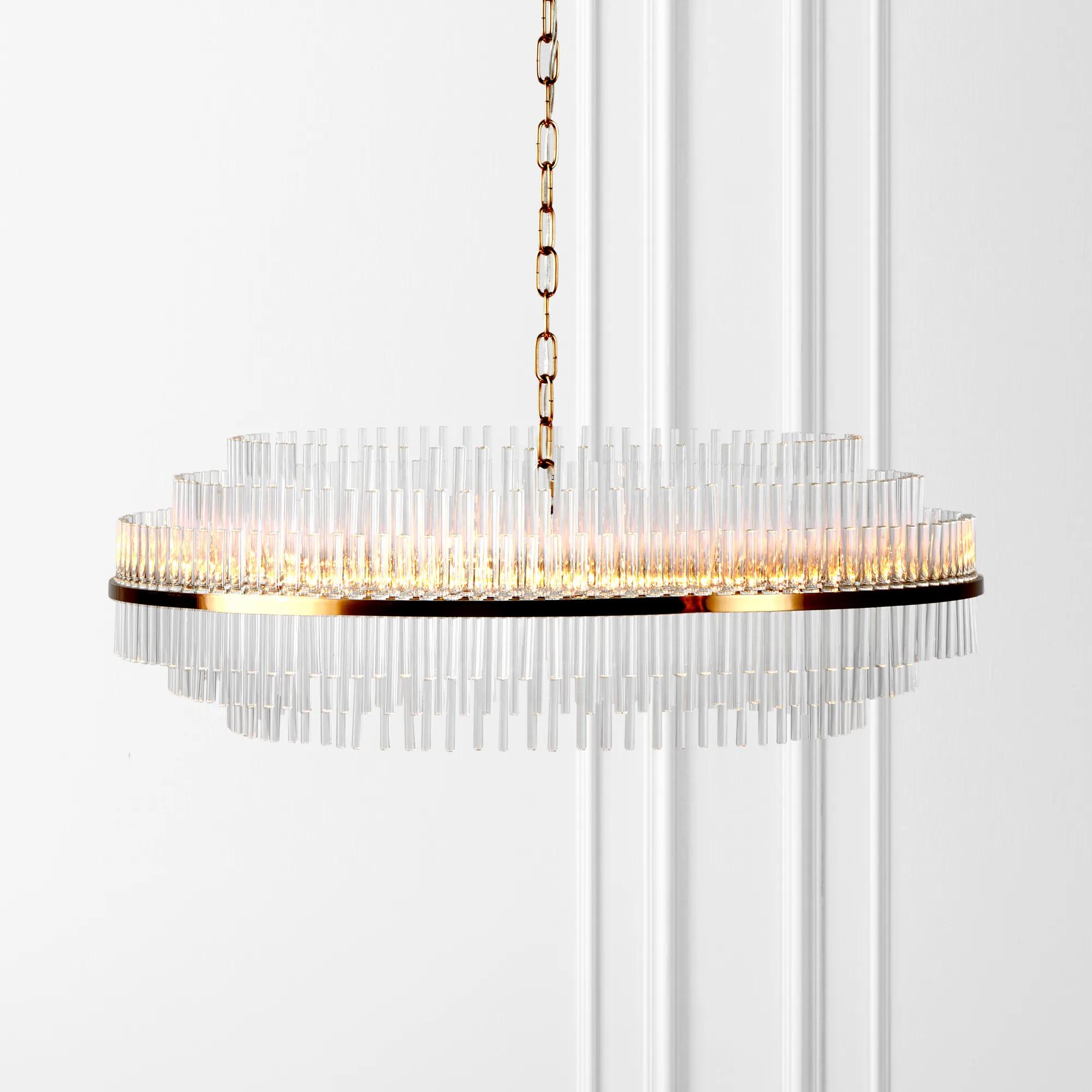
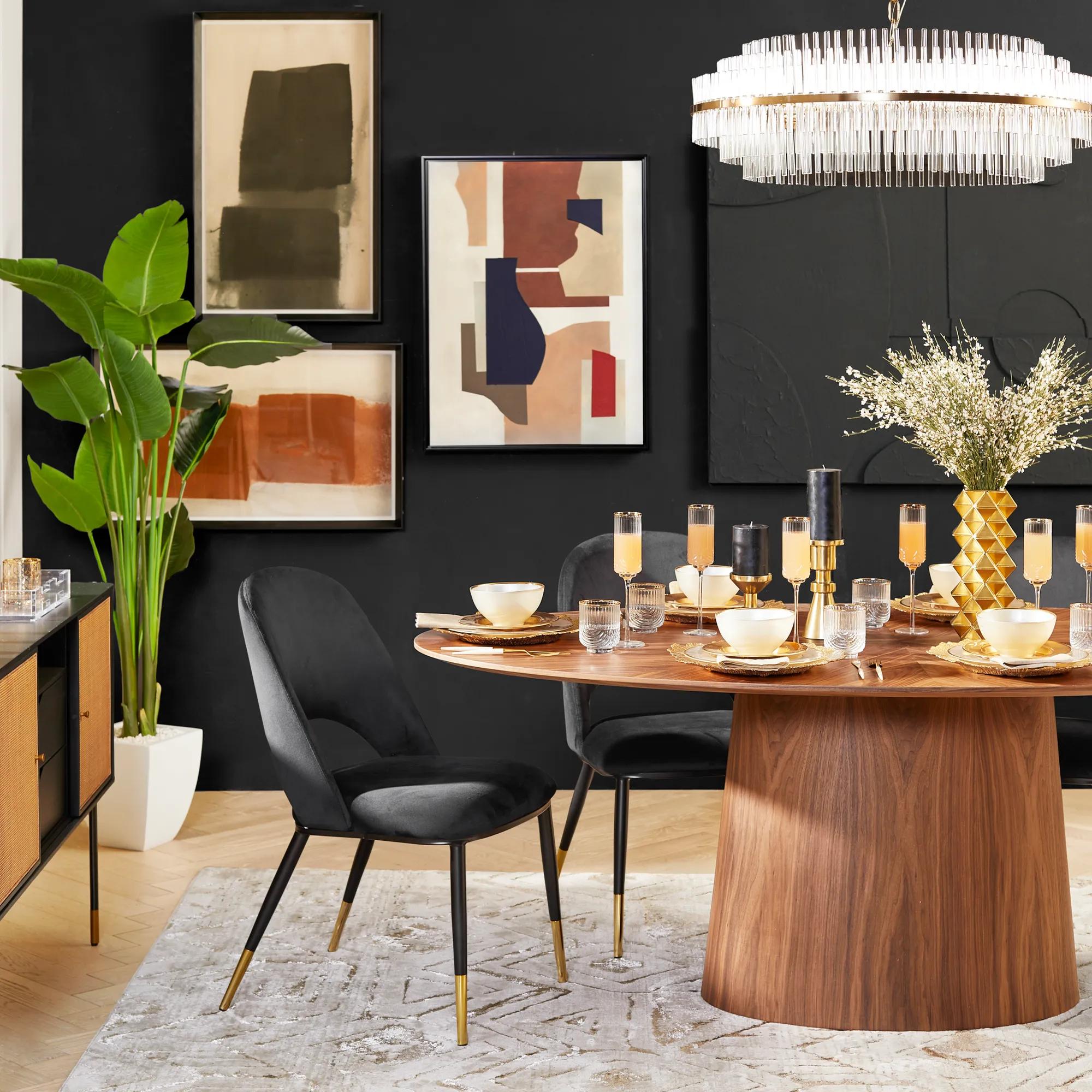 Renata Clear Glass Rod Chandelier 31"W x 10"H$799
A low-profile glass-rod chandelier with a brushed brass iron frame and eight dimmable candelabra lights.
Add To Cart -
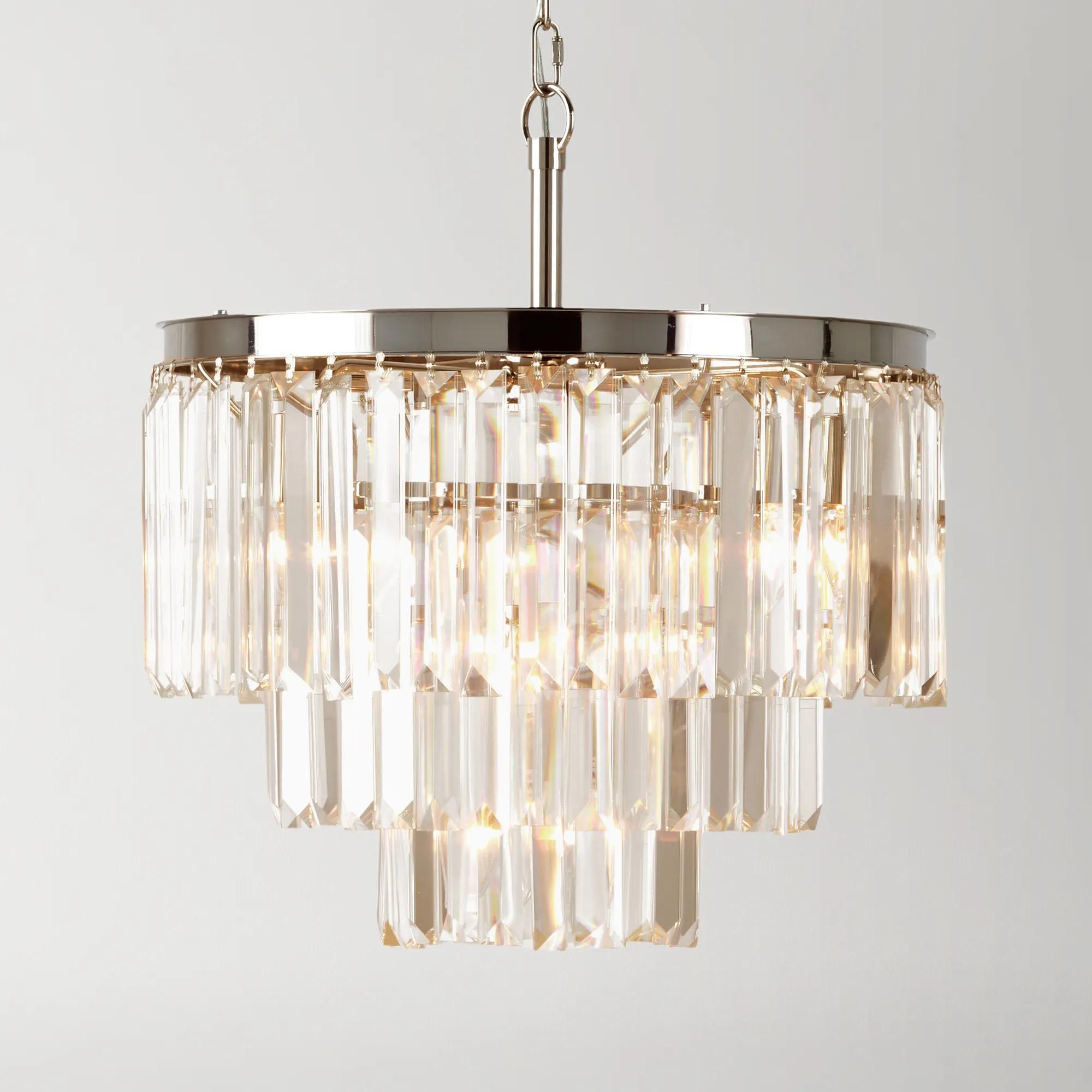
 Luxe Chandelier$799
A glamorous chandelier featuring a nickel-plated iron frame and three tiers of faceted crystal accents.
Add To Cart -
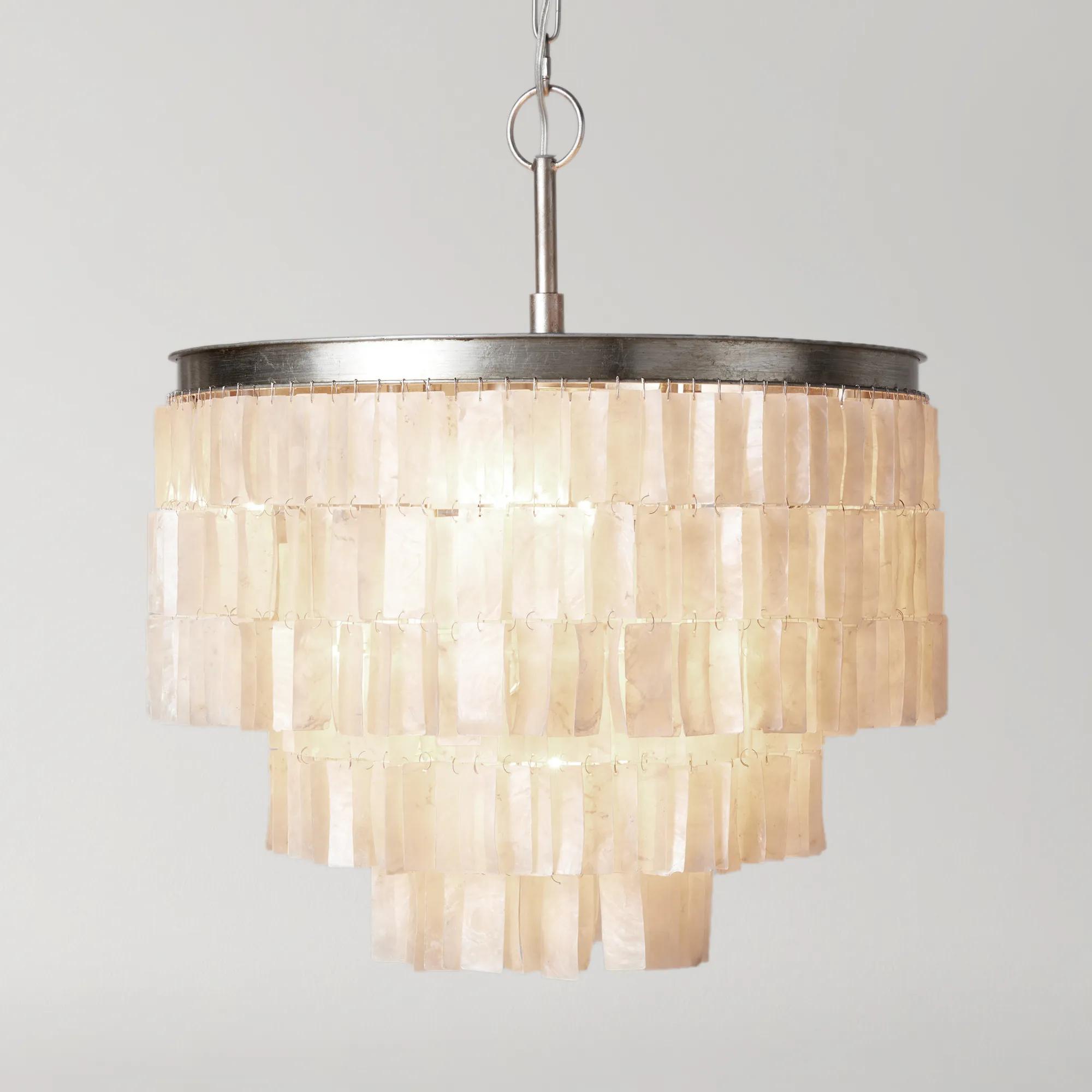 Capiz Chandelier$699
A cascading chandelier featuring over six hundred natural Capiz shells on a nickel-plated iron frame.
Add To Cart -
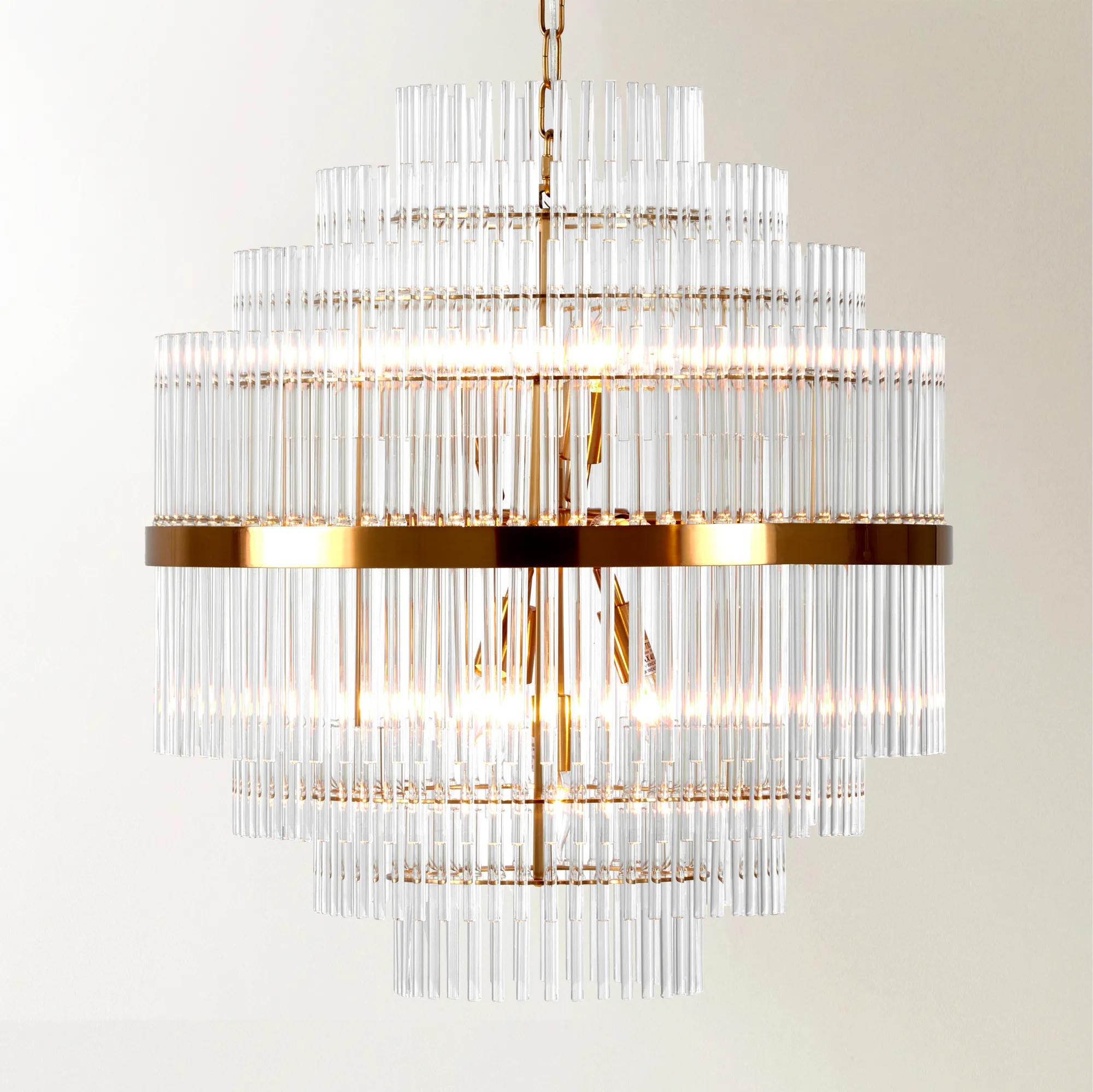
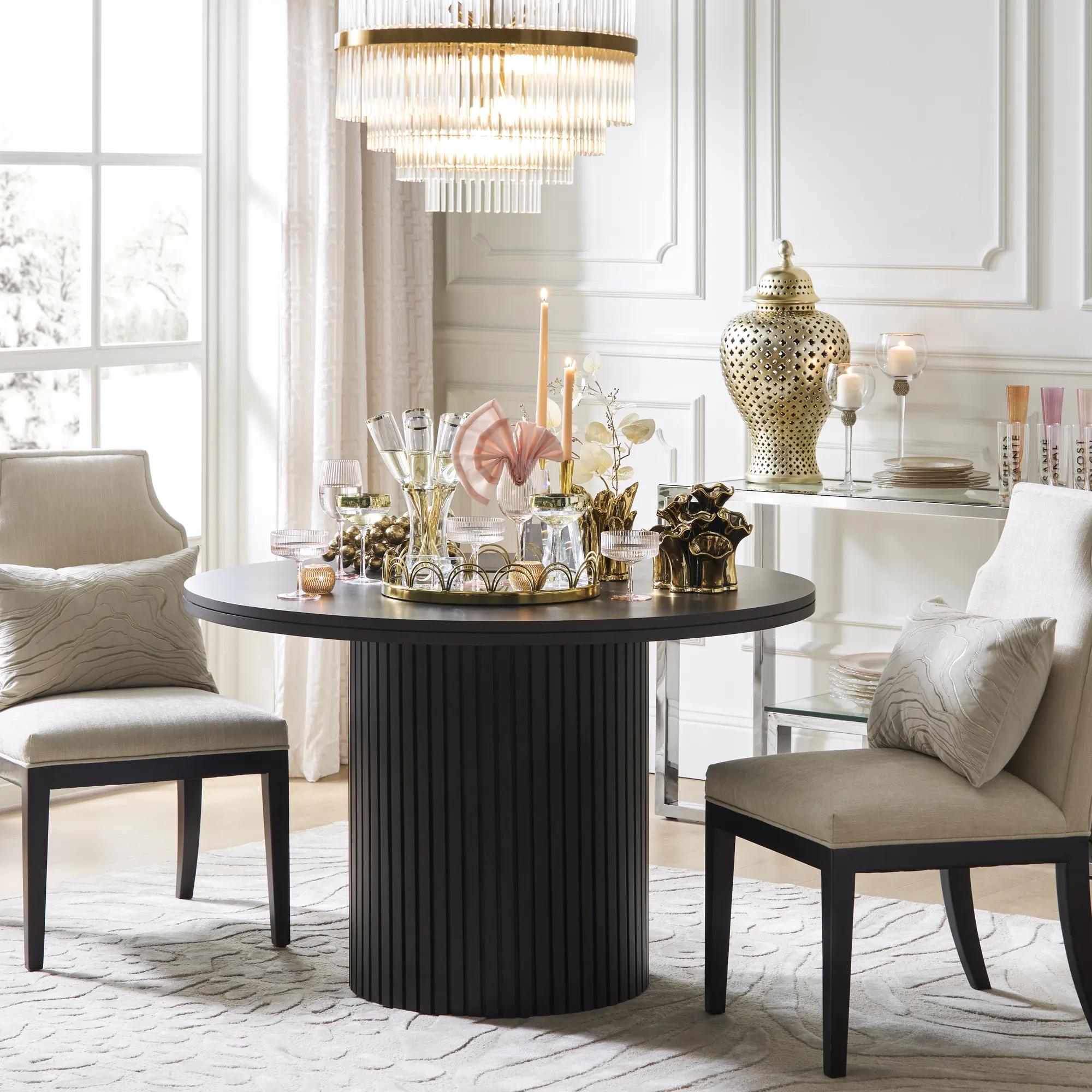 Renata Clear Glass Rod Grand Chandelier 23.6"D x 26.3"H$999
A clear glass rod chandelier with a polished gold iron frame and thirteen-light, dimmable illumination.
Add To Cart -
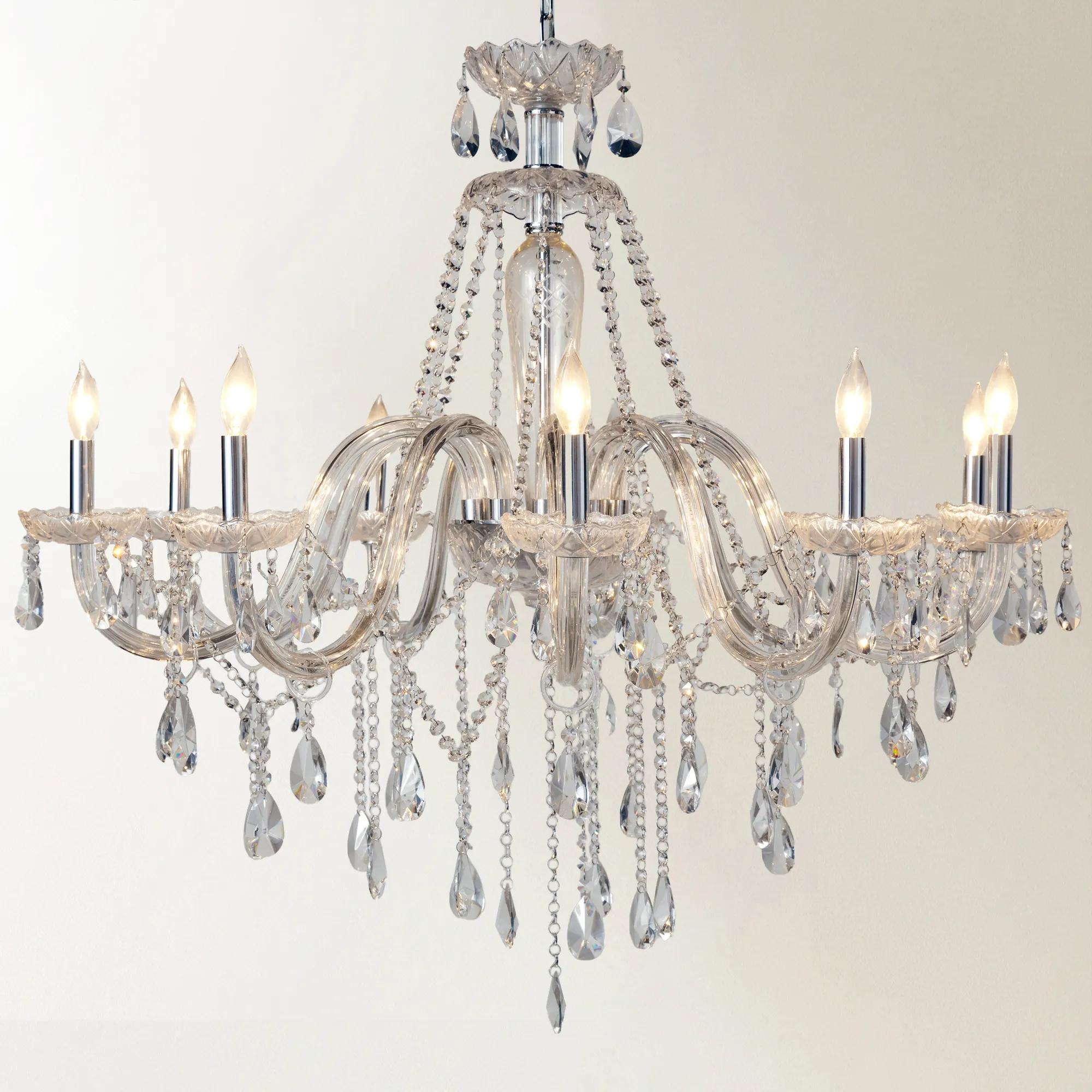
 Omni Chandelier 38.5" - Clear$999
A dazzling chandelier featuring hundreds of clear faceted crystals and ten fluted glass arms with nickel hardware.
Add To Cart -
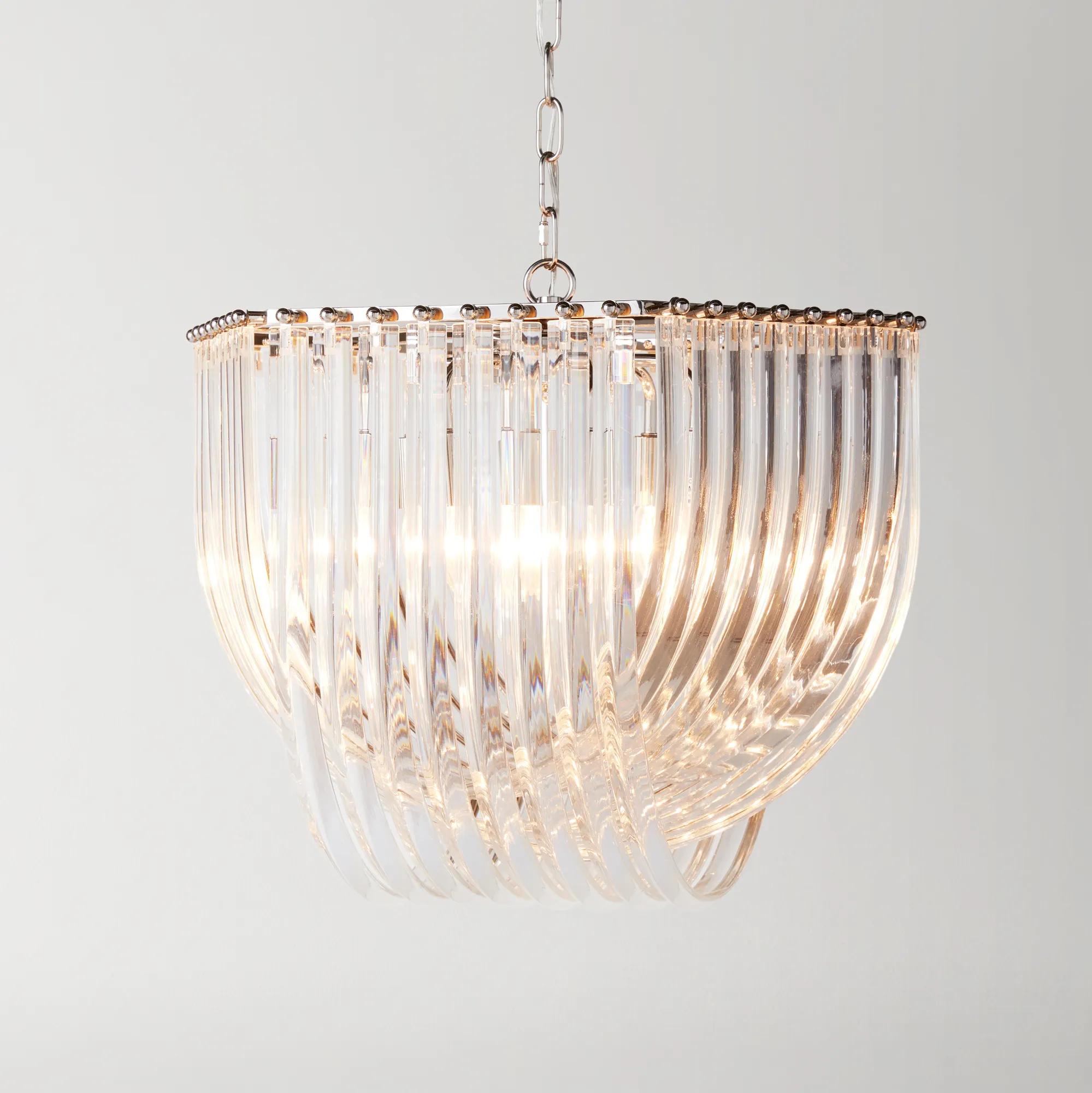 Laval Clear Curved Glass Chandelier 21"D x 18"H$799
A six-light chandelier with layered clear curved glass and a polished nickel frame.
Add To Cart -
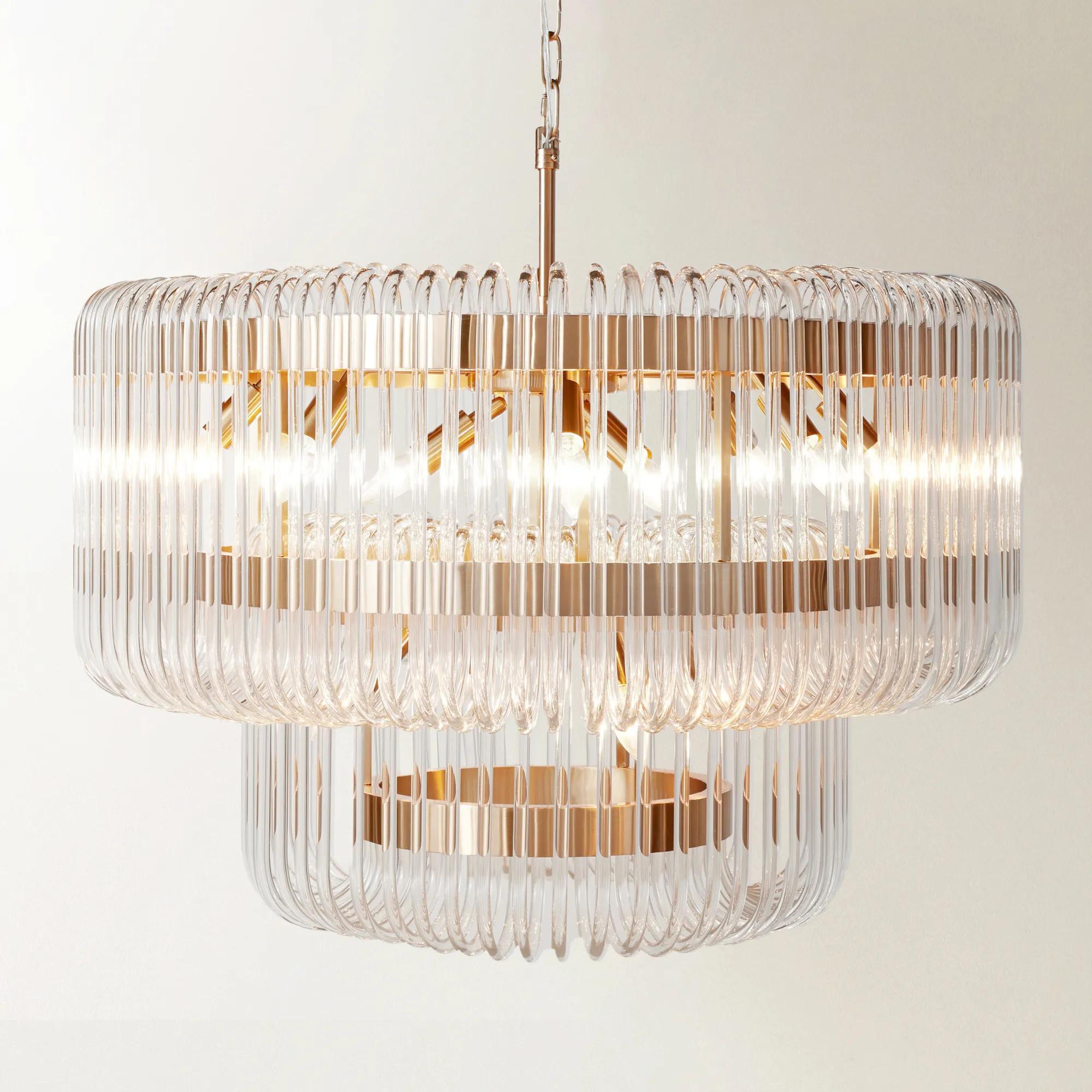 Allure Clear Curved Glass Chandelier 31.5"D x 27.75"H$1499
A chandelier featuring clear curved blown-glass rods, a brushed brass iron frame, and fifteen-light illumination.
Add To Cart

Contemporary Chandeliers For Bedrooms
Explore contemporary chandeliers for bedrooms to give your retreat a dramatic overhead focal point. Look for modern lighting that complements your décor or creates an artful contrast, and compare fixture dimensions with your room size, ceiling height, and hanging clearance. The right scale makes a statement while keeping the space beautifully balanced.
Contemporary chandeliers for bedrooms are decorative ceiling fixtures that combine clean geometry, sculptural forms, and ambient illumination to create a striking focal point above a restful retreat. Their appeal lies in that balance: enough presence to define the room, with light that feels inviting rather than insistent. Open metal frameworks, luminous glass globes, crystal accents, and slender LED silhouettes offer different expressions of modern luxury, from an airy composition above an upholstered bed to a dramatic arrangement that draws the eye toward a soaring ceiling. Materials shape the experience as much as silhouette. Polished metal introduces crisp reflections, while brushed finishes lend a softer sheen that feels especially rich alongside velvet, linen, or textured wallcoverings. Clear glass keeps a fixture visually open and reveals the beauty of the bulbs within; frosted or opal glass softens their appearance and can help temper direct glare. Crystal brings another dimension, catching available light and scattering delicate highlights across nearby surfaces. The effect can be restrained and architectural or lavishly layered, depending on the size, cut, and arrangement of the elements. Contemporary design does not require a room stripped of ornament. A branching chandelier can echo the movement in an abstract painting, while a ring-shaped fixture can provide a graceful counterpoint to a tall, rectangular headboard. In a bedroom with deeply toned walls, gleaming finishes create a vivid contrast; against pale walls, the same fixture may read as a floating sculpture. The strongest compositions give the chandelier room to express its character without competing with every surrounding detail. A richly tufted bed might pair beautifully with a simpler light, while tailored bedding and quiet cabinetry can support a more elaborate ceiling statement. Even when unlit, a thoughtfully chosen bedroom chandelier contributes shape, texture, and a sense of intention, giving the room a distinctive identity from the doorway.
Scale and placement determine whether that statement feels composed or overwhelming. A chandelier’s diameter, height, and overall visual density all matter, as does the space occupied by the bed, bedside furniture, and any seating area. A broad, open framework may feel lighter than a smaller fixture with tightly packed tiers, so measurements alone do not tell the whole story. In a bedroom with a standard-height ceiling, a shallow silhouette can deliver drama without an excessive drop; taller rooms can often accommodate a longer suspension or a more vertical composition. The fixture’s full installed height includes its canopy, chain, cable, or downrod, not simply the decorative body. Adequate clearance remains essential wherever people walk, dress, or move around the bed, and placement should account for tall bed frames, canopy rails, closet doors, and nearby furnishings. Centering a chandelier over the bed can establish a strong relationship between the room’s largest pieces, while centering it within the room may better suit a layout with several distinct zones. Either approach benefits from considering the view from the entrance and the experience of reclining beneath the light. Exposed bulbs that look dazzling from across the room can feel uncomfortable directly overhead, making shielding, diffusion, and bulb selection particularly important in a sleeping space. Warm-white light, commonly around 2700K to 3000K, generally supports a softer atmosphere than cooler color temperatures. A compatible dimmer allows the chandelier to shift from generous illumination while dressing to a gentler glow before sleep. For fixtures with integrated LEDs, dimming performance depends on the specified driver and control compatibility; fixtures with replaceable bulbs also require the correct bulb type and wattage. Bedside lamps or wall sconces can provide focused reading light while the chandelier supplies the room’s broader glow. This layered approach preserves the beauty of the centerpiece without asking a single overhead fixture to handle every activity, from finding a favorite accessory to settling into a book.
Lasting beauty depends on construction, finish, and the care a fixture receives over time. Metal frames provide structure, but their protective finishes still deserve gentle treatment; abrasive cleaners and rough cloths can dull polished surfaces or damage decorative coatings. Glass and crystal reward regular attention because dust can soften their clarity and diminish reflected light. With the power switched off and bulbs fully cooled, accessible surfaces can often be dusted with a soft, dry microfiber cloth, following the fixture’s care instructions. Cleaning solutions should never be sprayed into sockets, wiring, or integrated lighting components, and delicate drops or suspended elements should be handled only as directed. High ceilings, substantial fixture weight, and intricate assemblies may make professional cleaning or servicing the more practical choice. Installation deserves the same consideration: a qualified electrician can assess the ceiling box, structural support, wiring, and controls required for a safe, secure fit. For integrated LED designs, information about serviceable components and driver replacement can help clarify long-term maintenance; for bulb-based chandeliers, accessible sockets can make routine replacement less disruptive. Beyond these practical details, a bedroom chandelier should feel connected to the room’s personal character. A brushed metallic finish can pick up the warmth of drawer pulls without matching every piece of hardware, and a sculptural glass composition can bring lightness to dark wood furniture. For bedrooms that call for greater brilliance, Contemporary Crystal Chandeliers offer a related expression of luminous detail, pairing modern forms with the depth and sparkle of crystal. The distinction is less about decorating to a formula than choosing the atmosphere that belongs in the space: serene with a trace of shimmer, richly theatrical, or crisp and gallery-like. Whether illuminating a primary suite or giving a guest bedroom an unforgettable focal point, a contemporary chandelier brings the ceiling into the composition and makes light an expressive part of the room.
FAQs
Contemporary bedroom chandeliers favor expressive silhouettes, sculptural forms, and thoughtfully edited details. Rather than relying on ornate decoration, they create visual drama through shape, repetition, and finish. The result is a distinctive ceiling accent that gives a bedroom an artful point of view.
A contemporary chandelier can give a bedroom an atmosphere of intimate luxury or bold, gallery-inspired glamour. Flowing forms suggest softness and romance, while angular compositions introduce a more architectural presence. Choose a design that reflects the feeling you want your private retreat to express.
Take inspiration from the accents already shaping your bedroom, such as drawer hardware, mirror frames, and decorative objects. Warm metallic tones lend richness, while cool, reflective finishes create a crisp, polished impression. A contrasting finish can also feel intentional when echoed in a few carefully chosen details.
Yes. A sculptural contemporary chandelier can create a striking counterpoint to traditional bedroom furniture. Look for a shared visual thread, such as curved lines or a related finish, to connect the two styles. That interplay between classic detailing and modern expression gives the room a collected, personal character.
Let the chandelier introduce a visual motif, then interpret it elsewhere rather than matching every detail. Curved forms can resonate with fluid artwork, while geometric lines pair beautifully with tailored bedding. Sumptuous textures and a deliberate color palette give the composition depth without competing for attention.