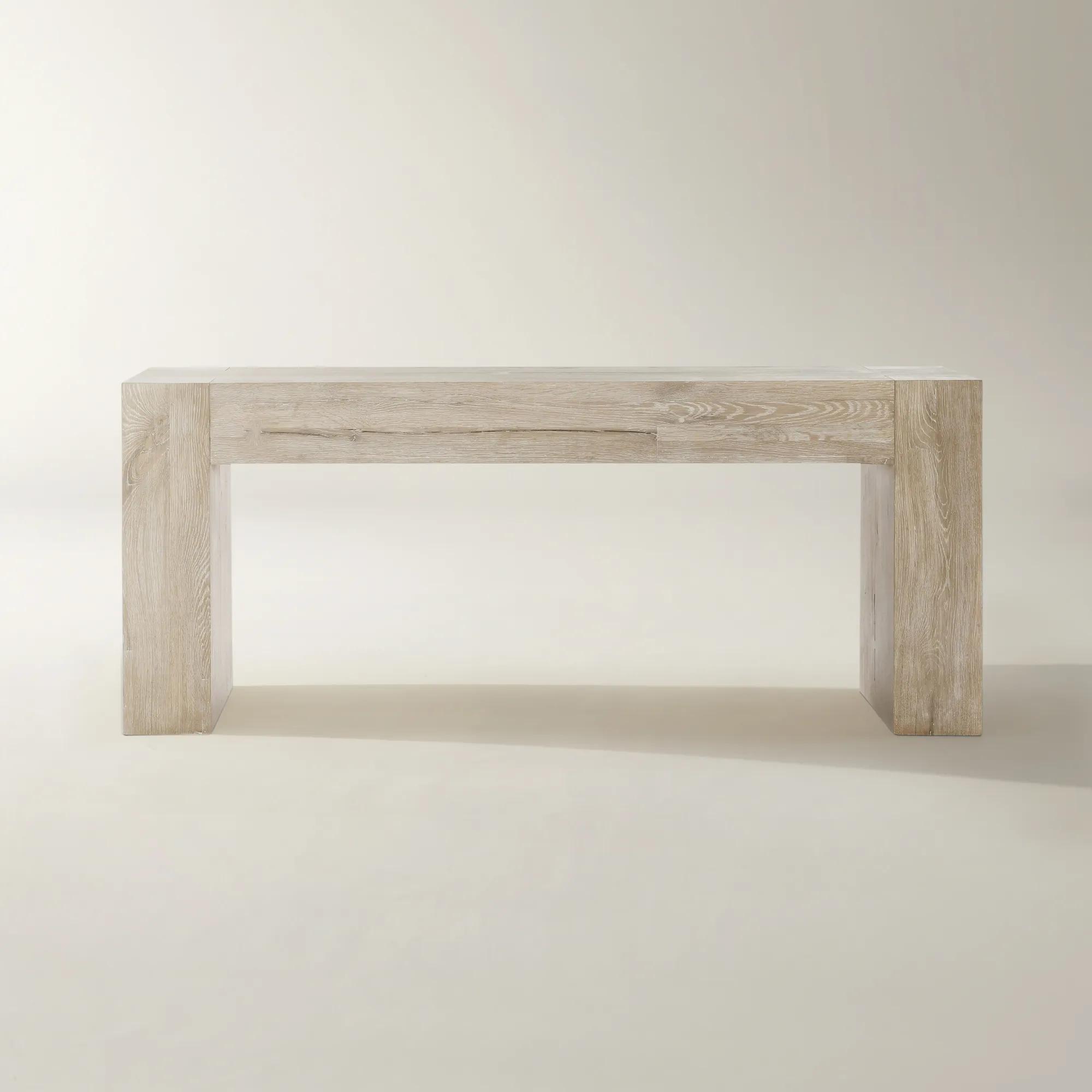
Drink Tables With Sculptural Presence
Drink Tables With Sculptural Presence
-
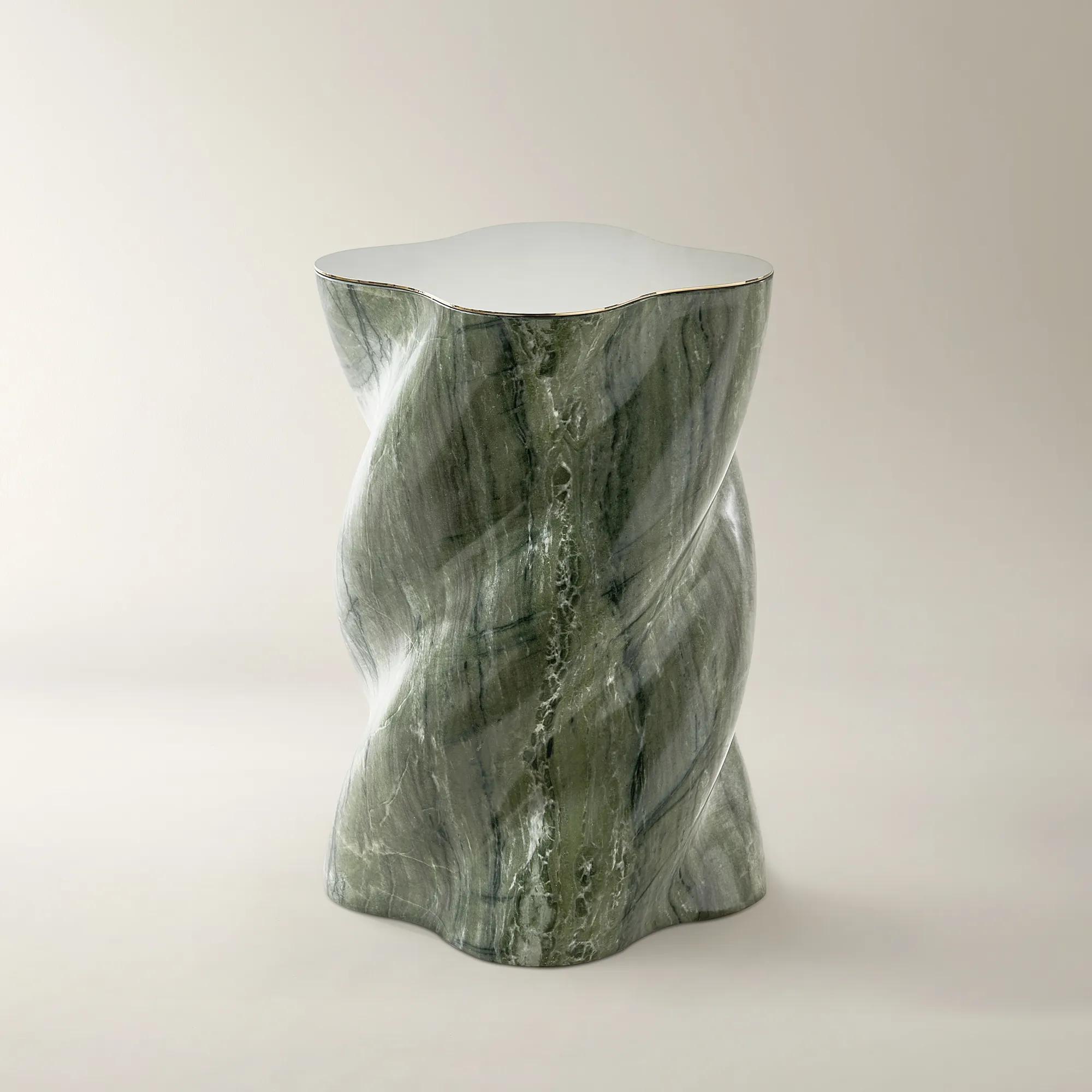 Vega Malachite Green Concrete Side Table With Stainless Steel Top (13.8")$459
A sculptural side table in malachite green with a marble-inspired fiber-concrete base and stainless steel top.
Add To Cart -
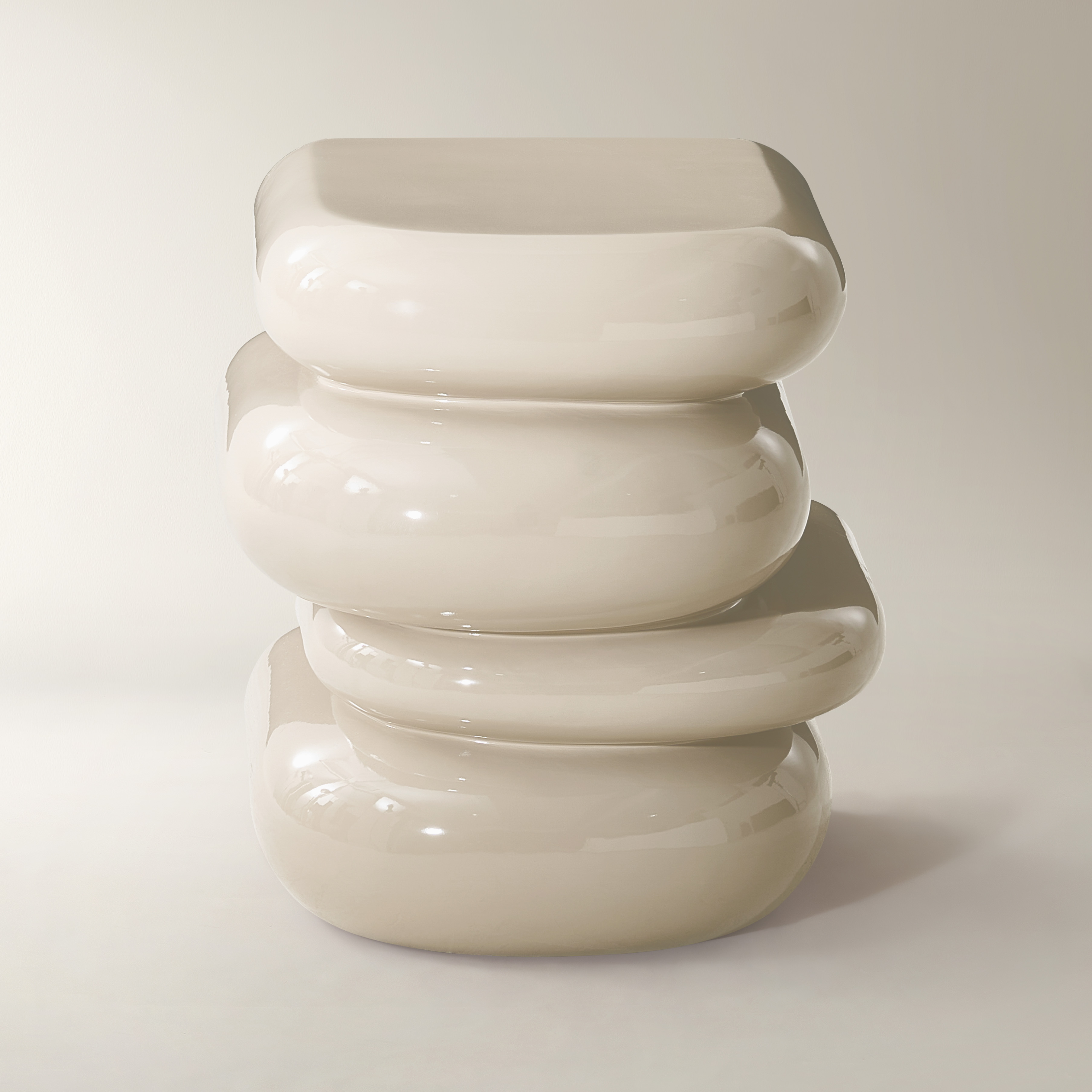
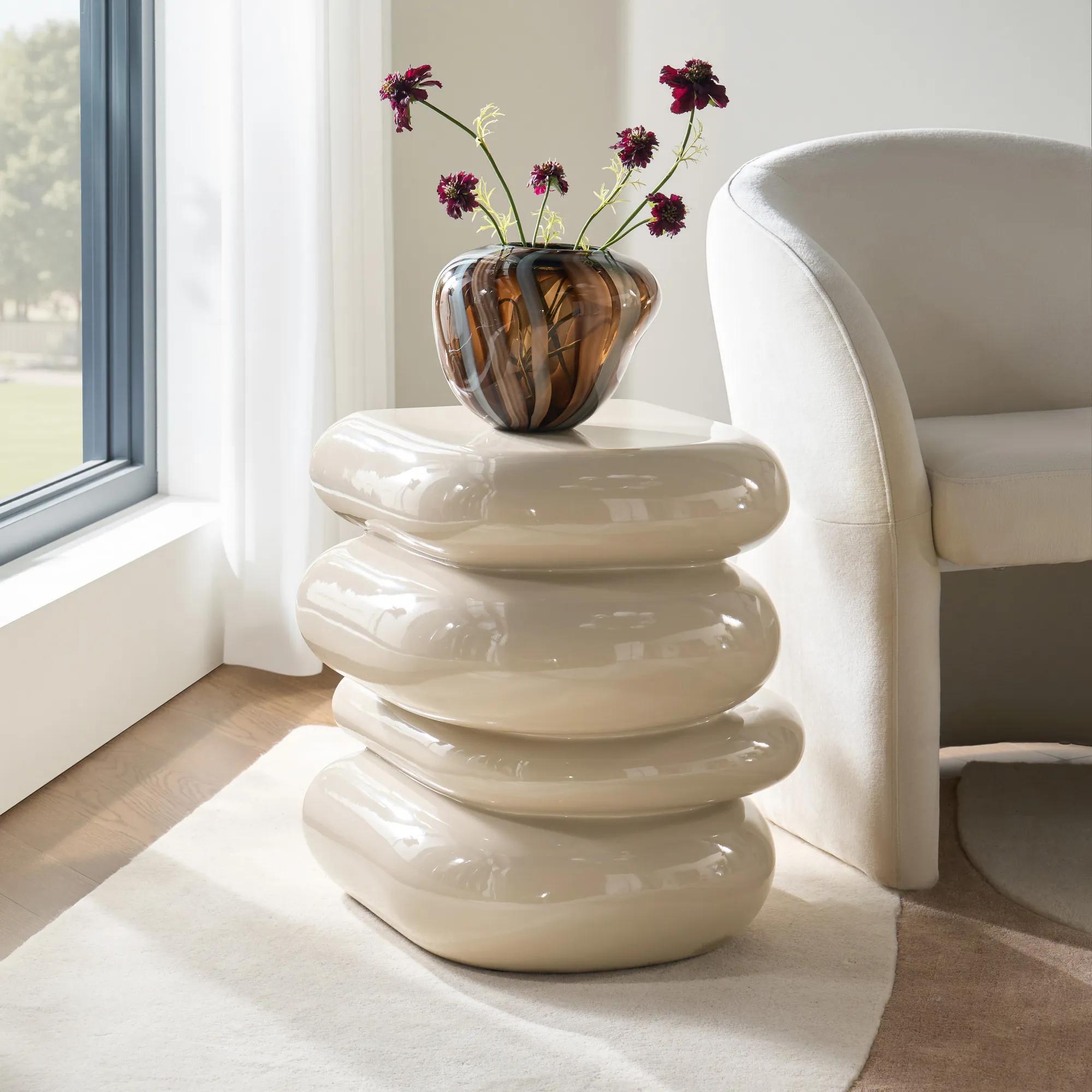 Forma Stacked Turtle Dove Side Table (19.9")$459
A sculptural accent table crafted from high-gloss turtle dove fiberglass with softly stacked, rounded tiers.
Add To Cart -
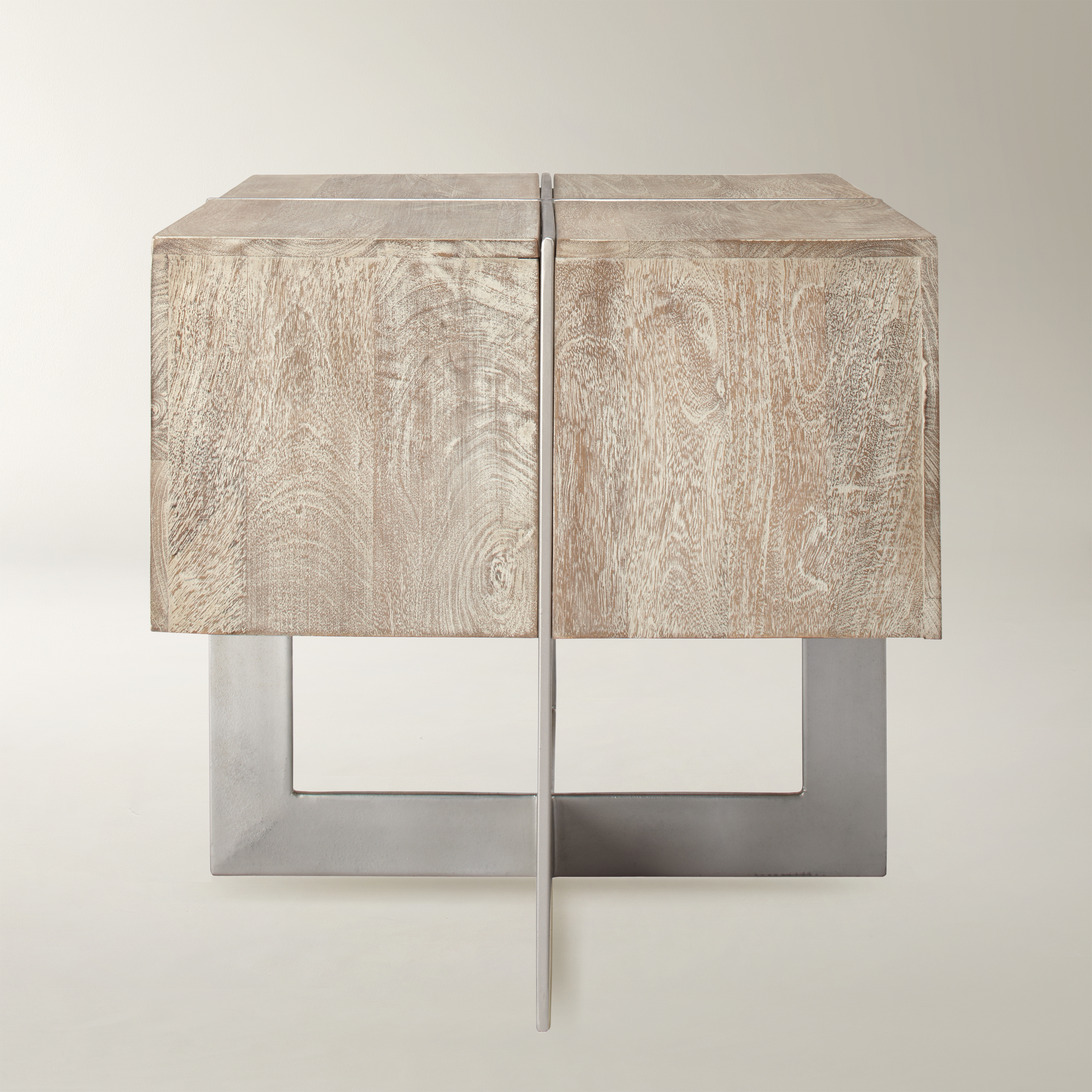
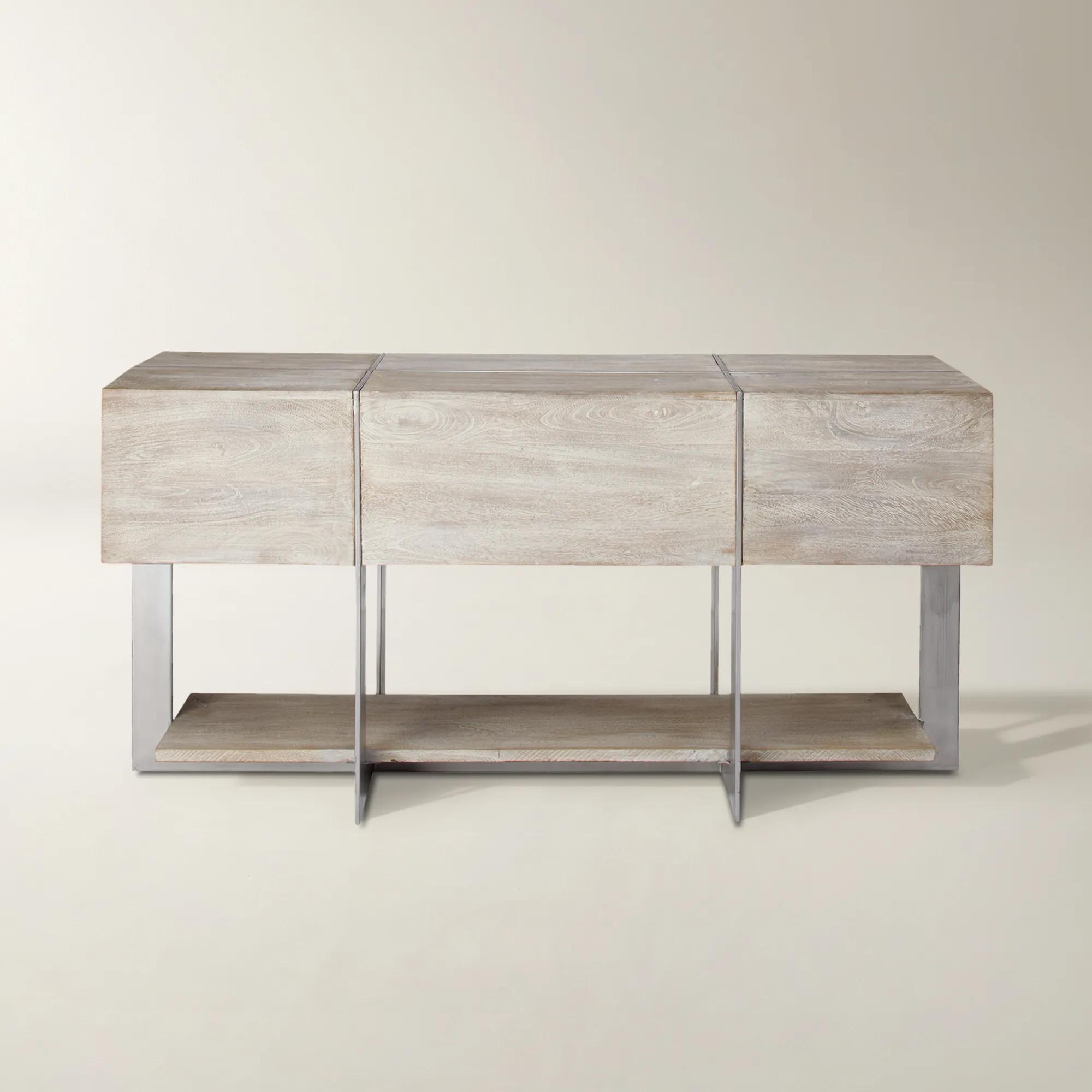
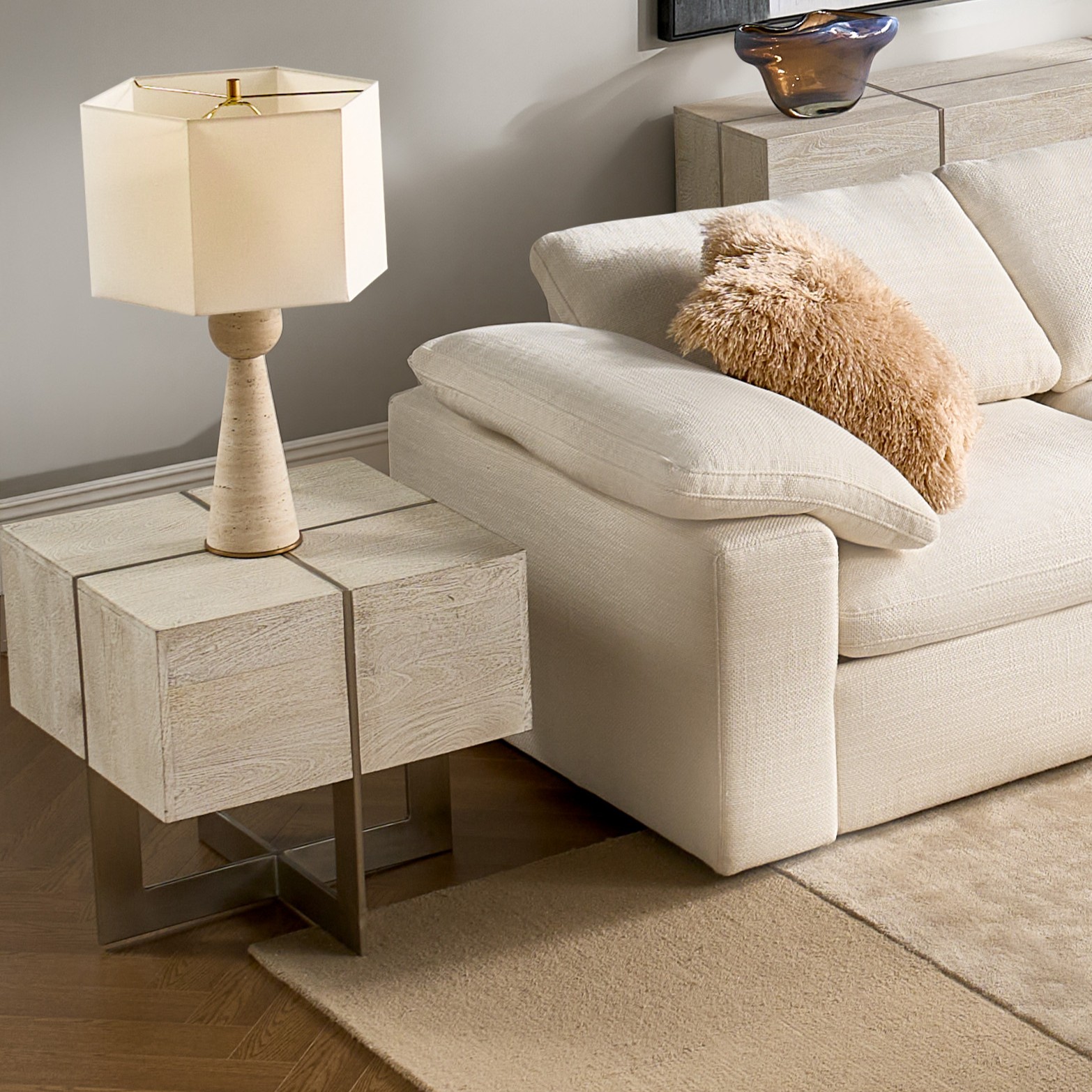 Clifton Square Natural Mango Wood End Table (24")$599
A handcrafted mango wood end table with a whitewashed finish and antiqued silver iron legs.
Add To Cart -
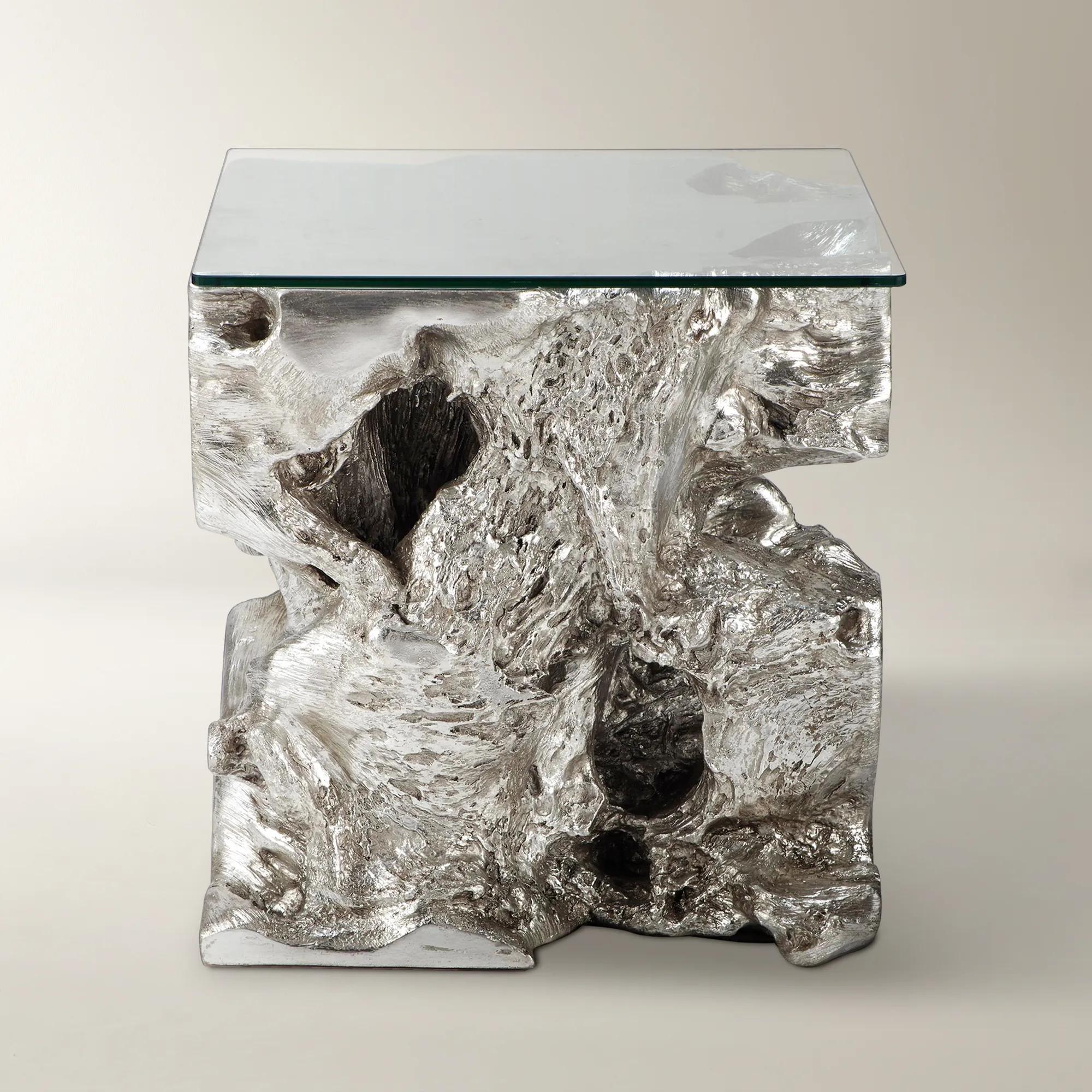 Sequoia Silver Resin End Table With Glass Top (22")$999
A sculptural end table featuring a silver leaf resin base and tempered glass top for modern elegance.
Add To Cart -
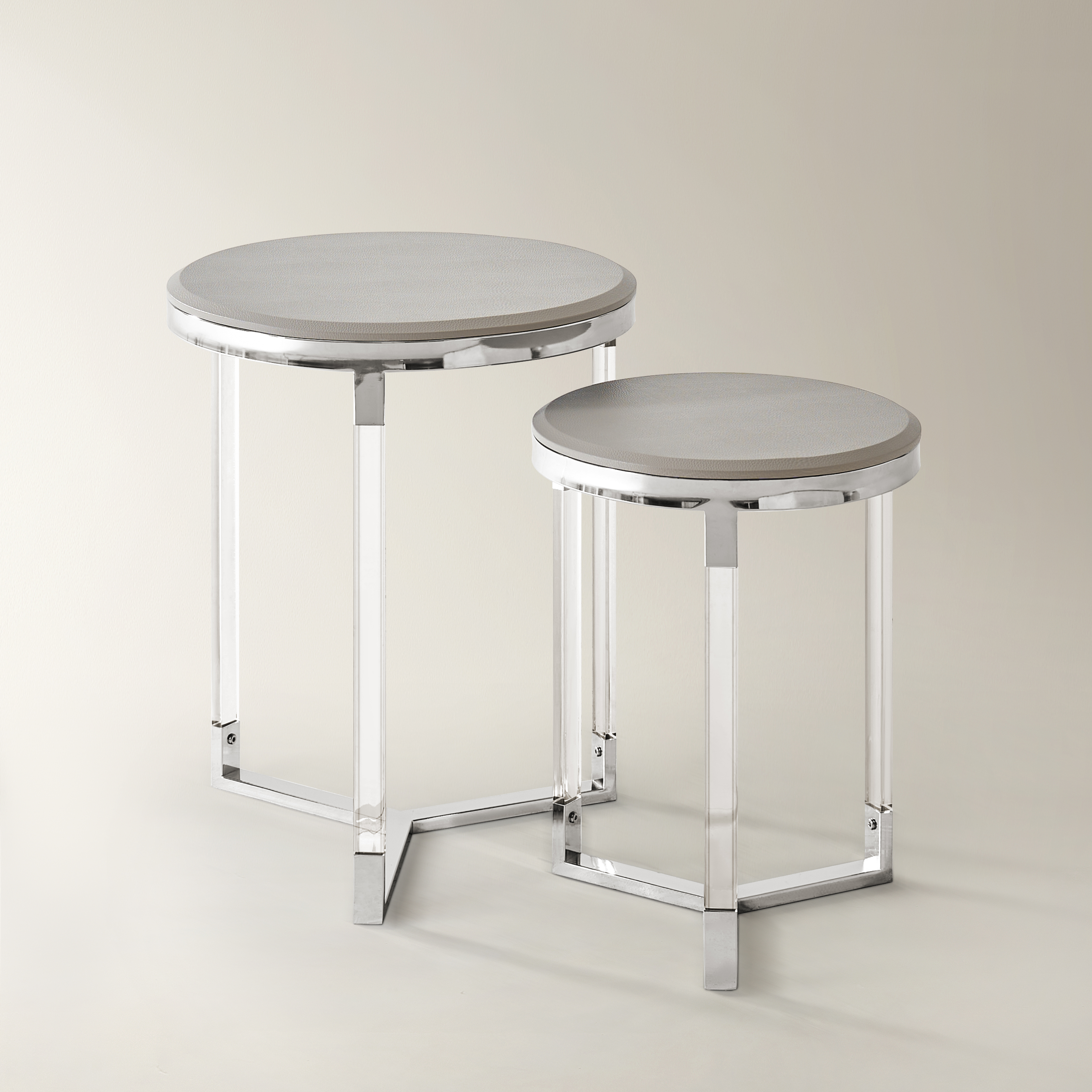
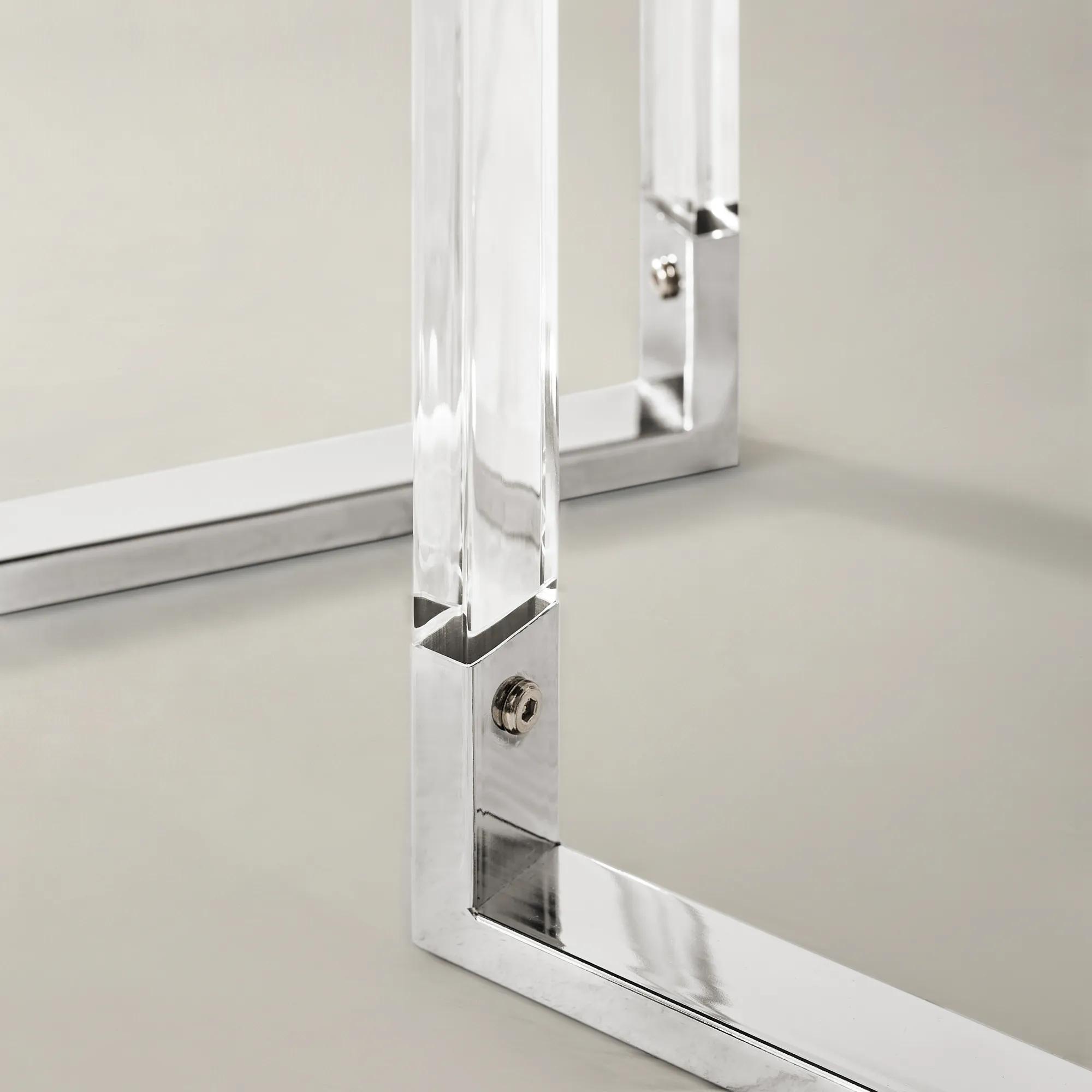 Murano Round Grey Accent Table With Faux Leather Top Set Of 2 (14.5"-18.5")$399
A bold set of two accent tables featuring mixed woods, acrylic legs, and faux leather tops.
Add To Cart -
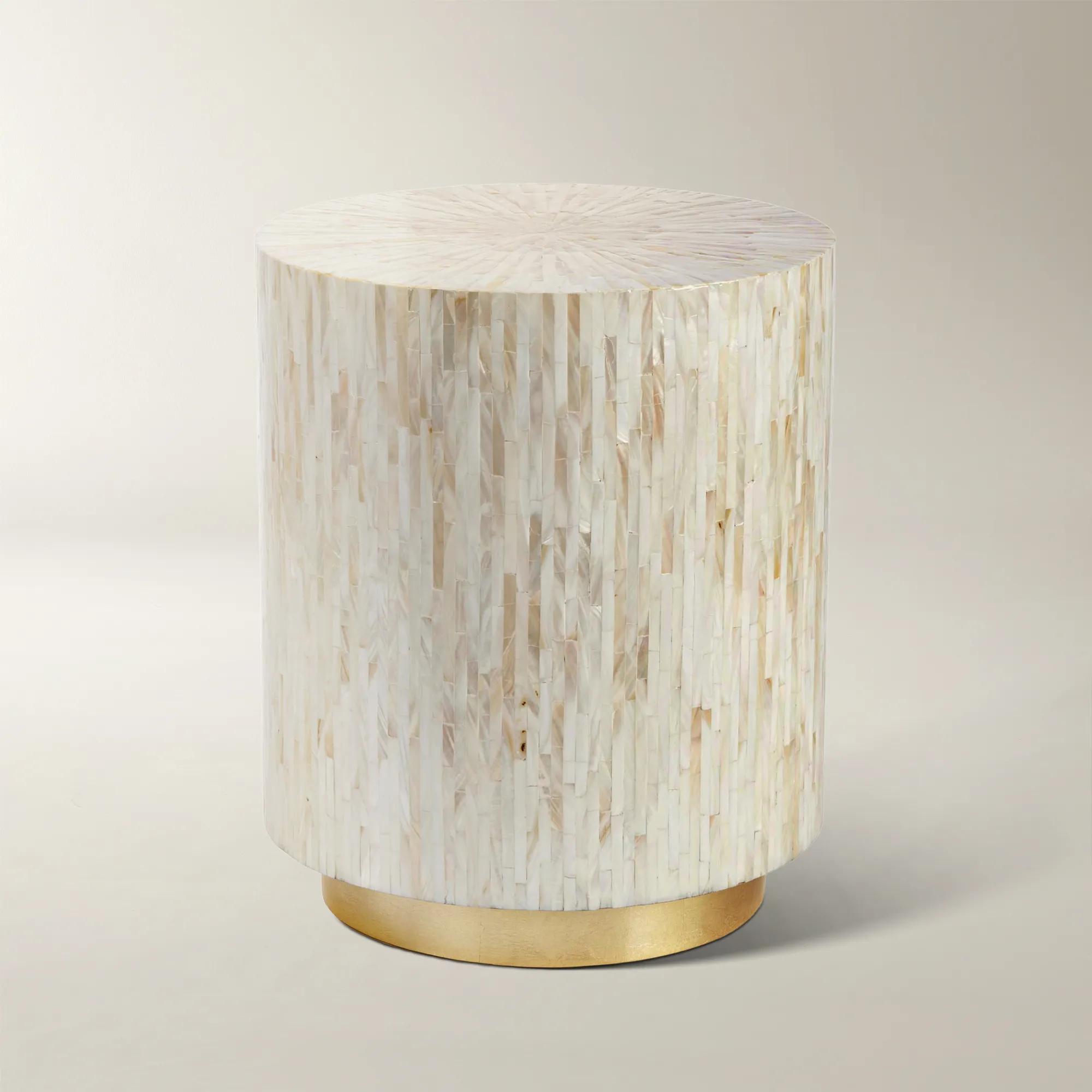 Alexandria Round Mosaic Platinum End Table (13.75")$299
A glamorous accent table featuring hand-applied mother-of-pearl mosaic and a gold leaf-accented base.
Add To Cart -
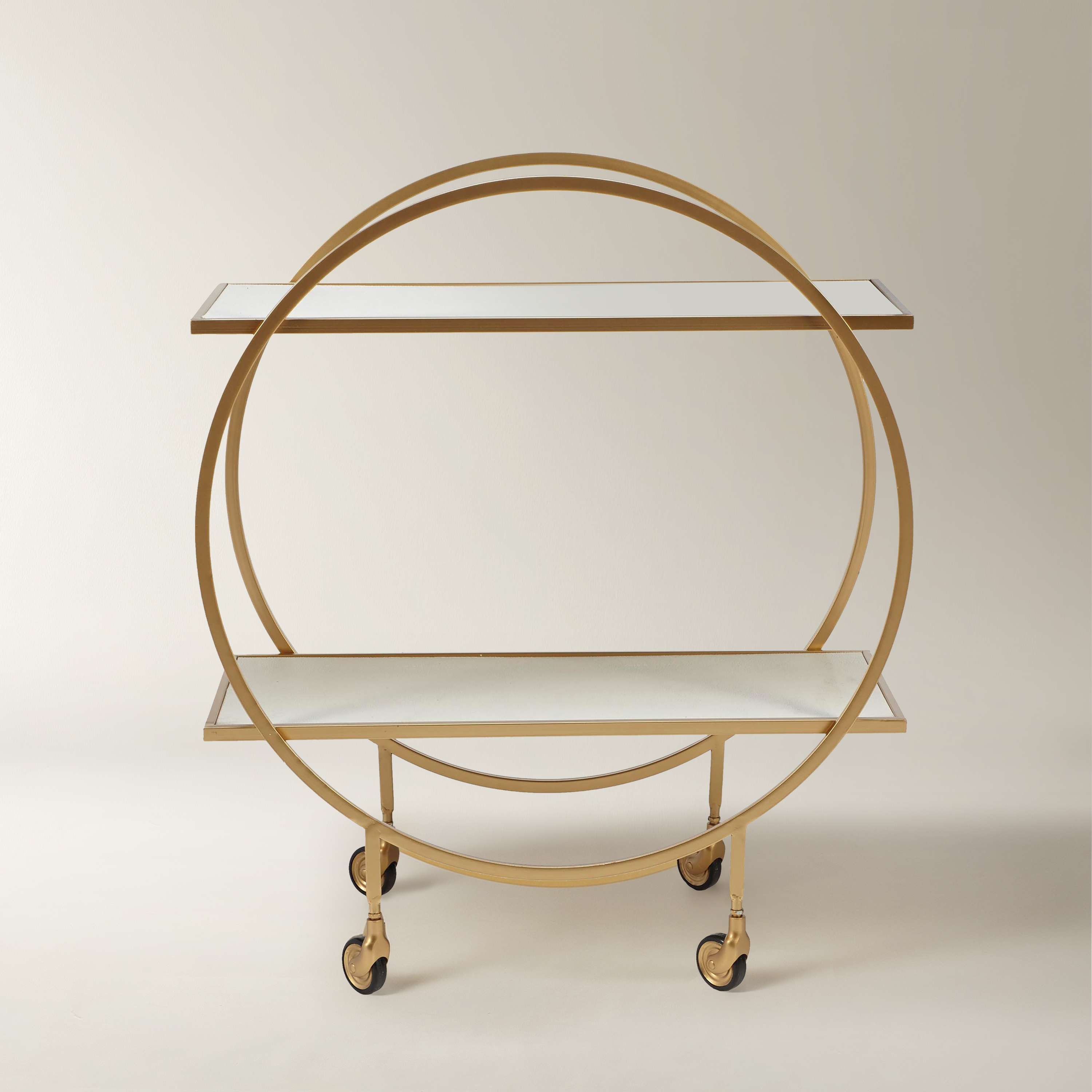
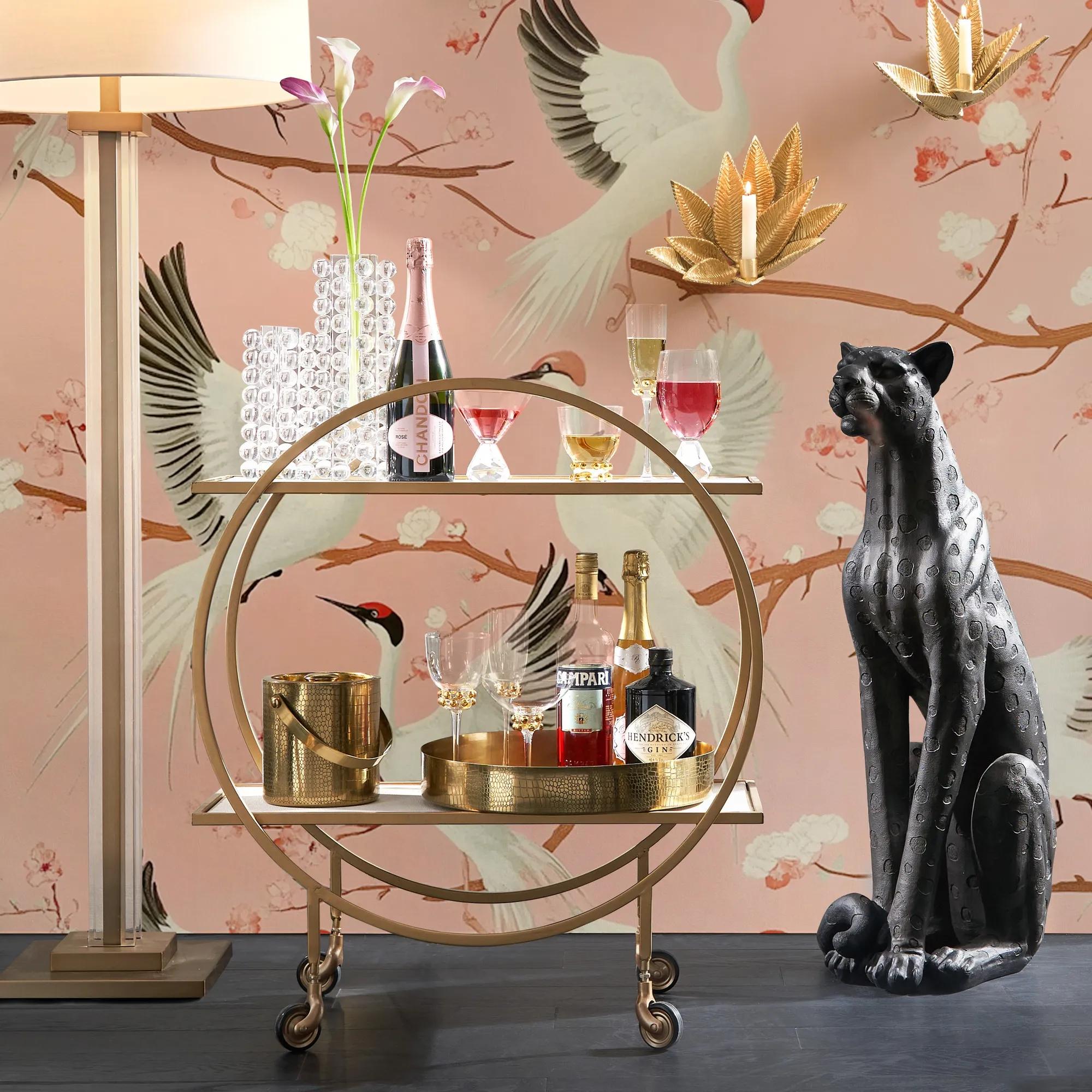 Russo Gold Metal 2-Tier Bar Carts (28")$349
A Deco-inspired bar cart featuring a metallic gold metal frame and white faux leather trays on casters.
Add To Cart -
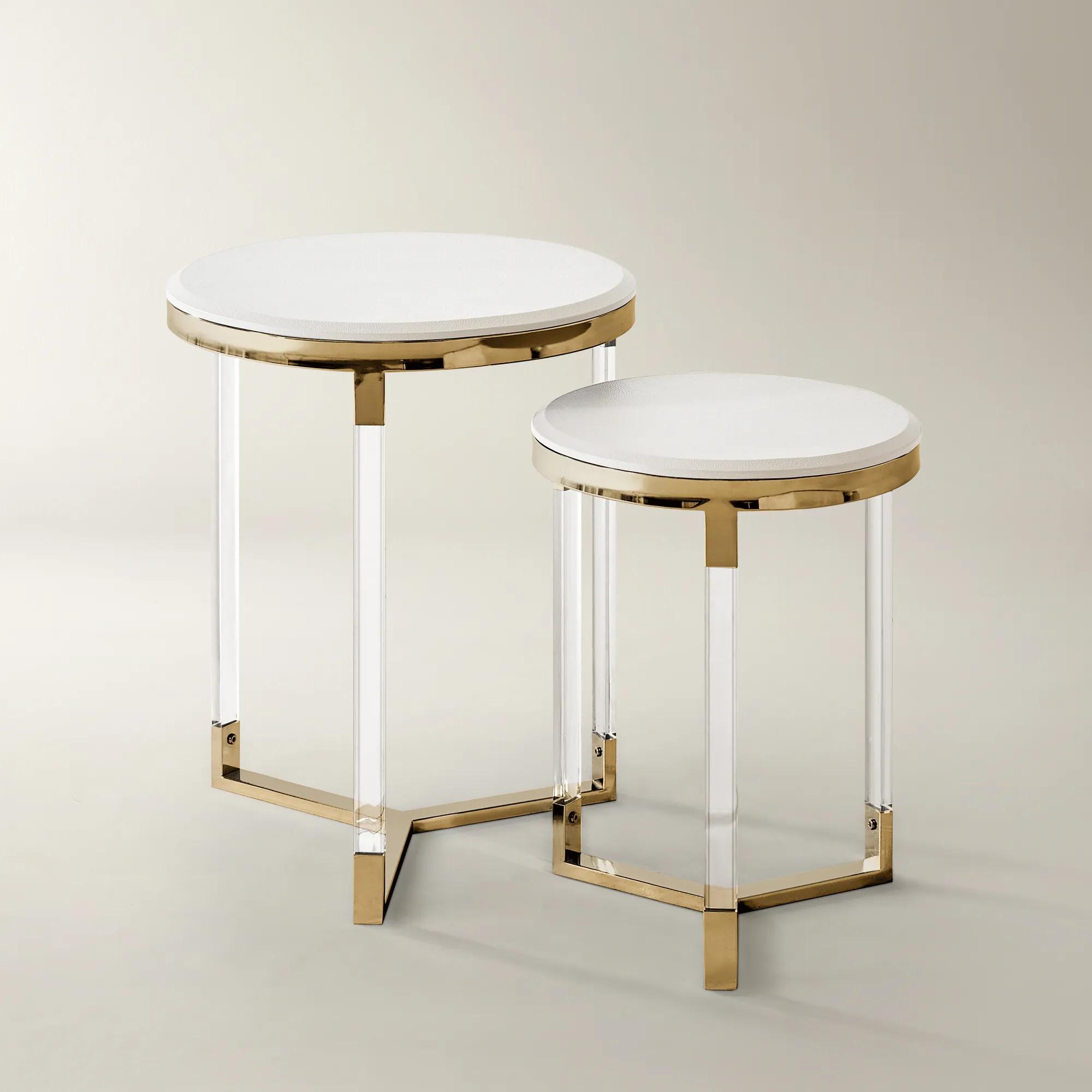
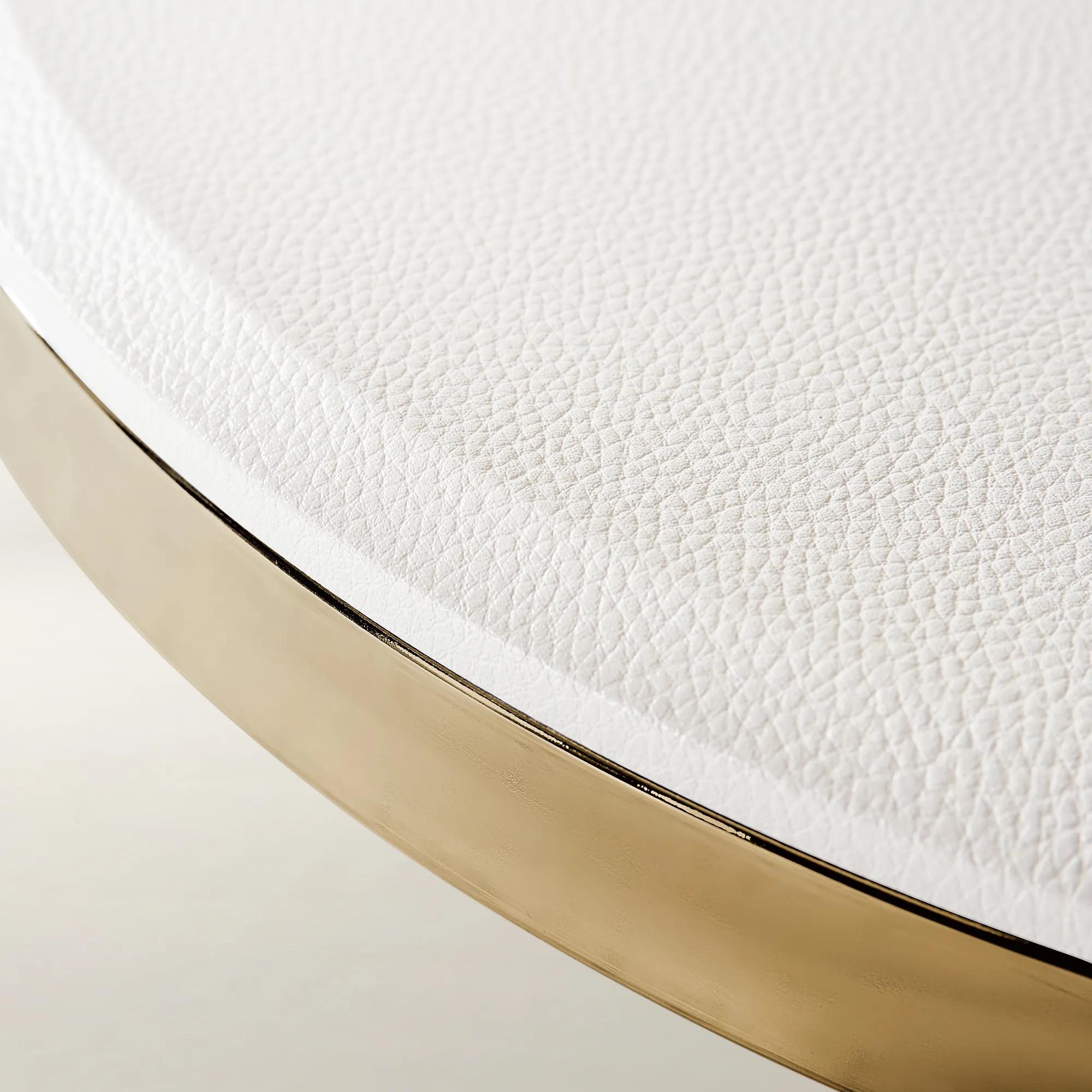 Murano Round White Accent Table With Faux Leather Top Set Of 2 (14.5"-18.5")$399
A set of two accent tables featuring mixed woods, faux leather tops, and acrylic legs with metallic finishes.
Add To Cart -
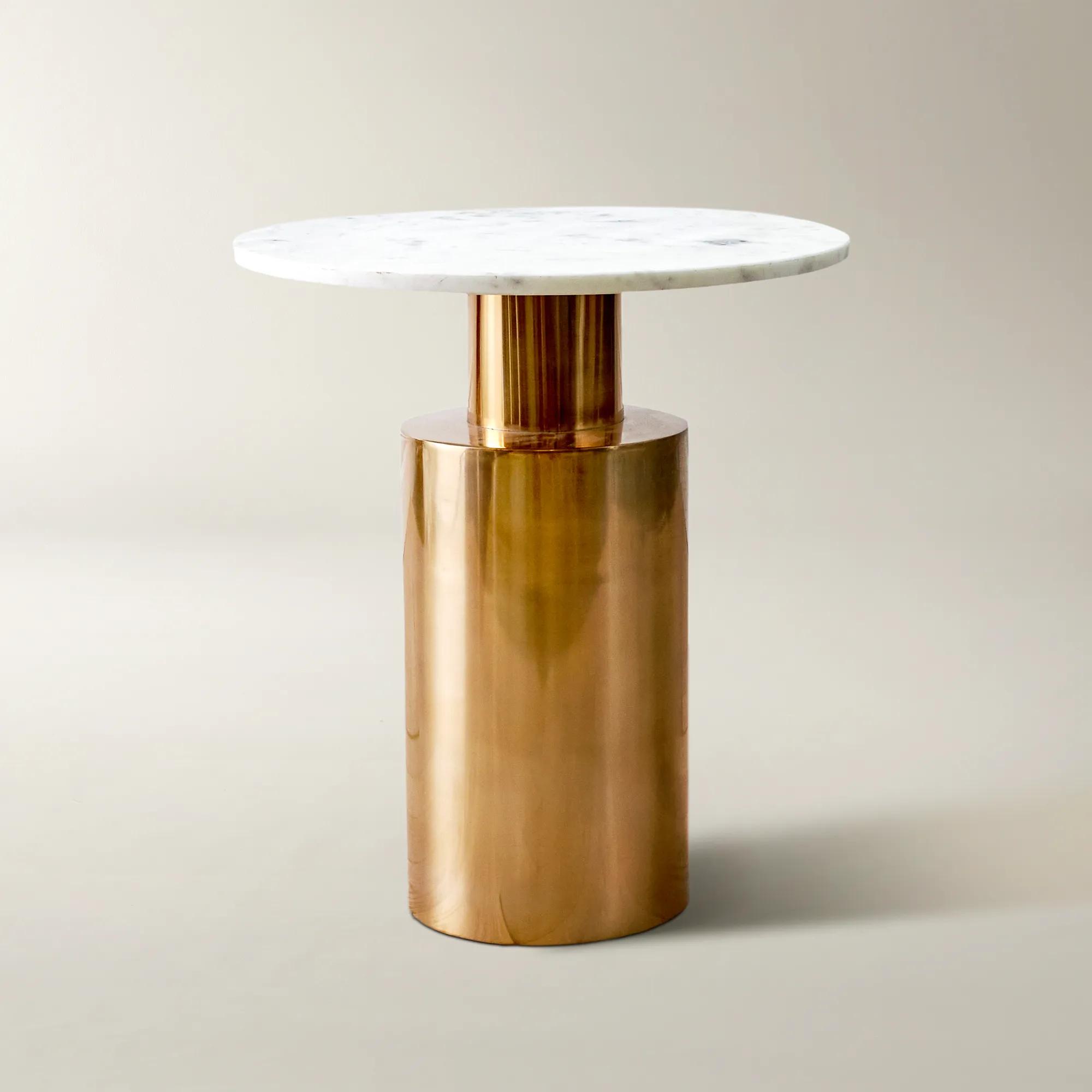 Capri Round White Marble Accent Table (16")$299
A striking accent table featuring a white marble top and gold-finished stainless steel base.
Add To Cart -
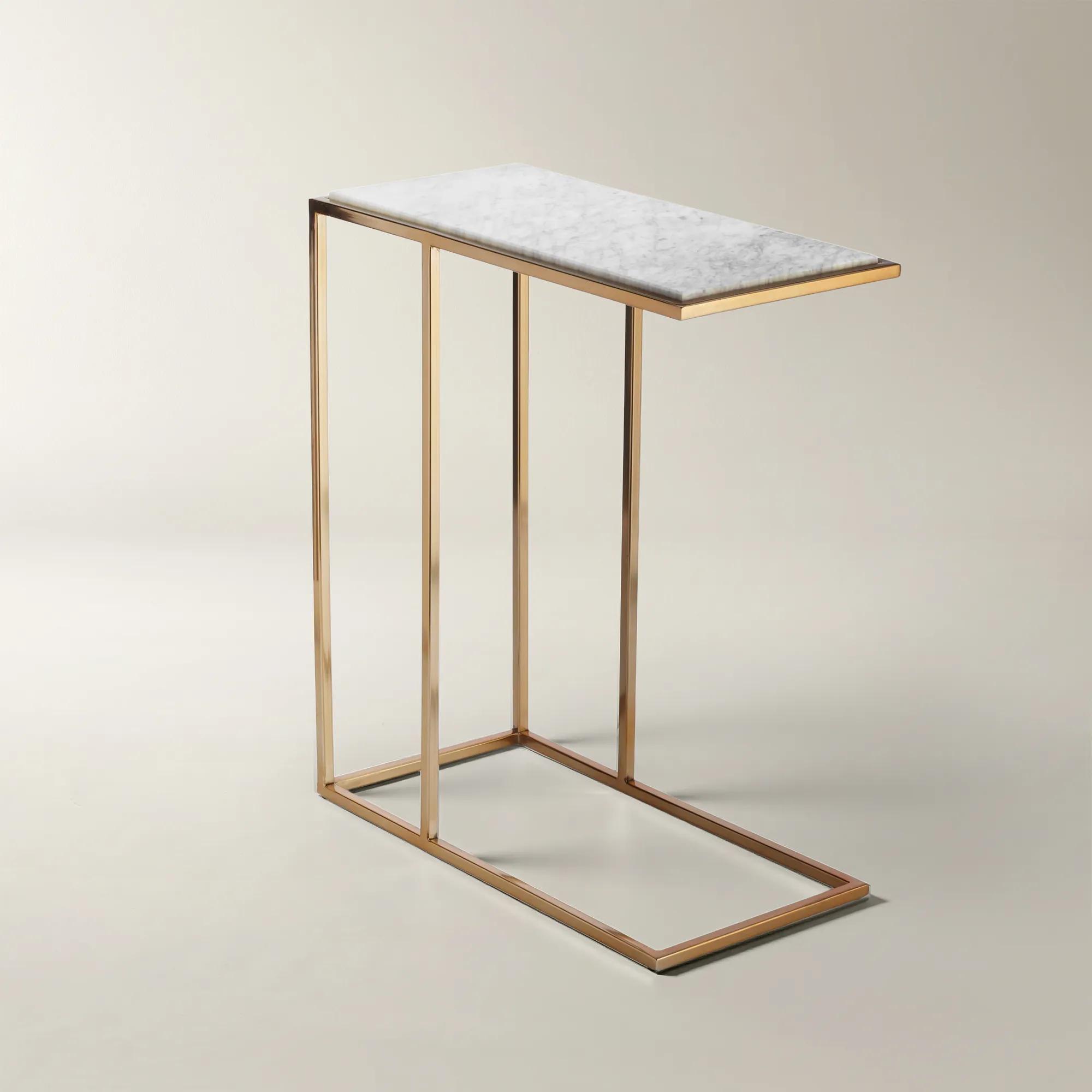
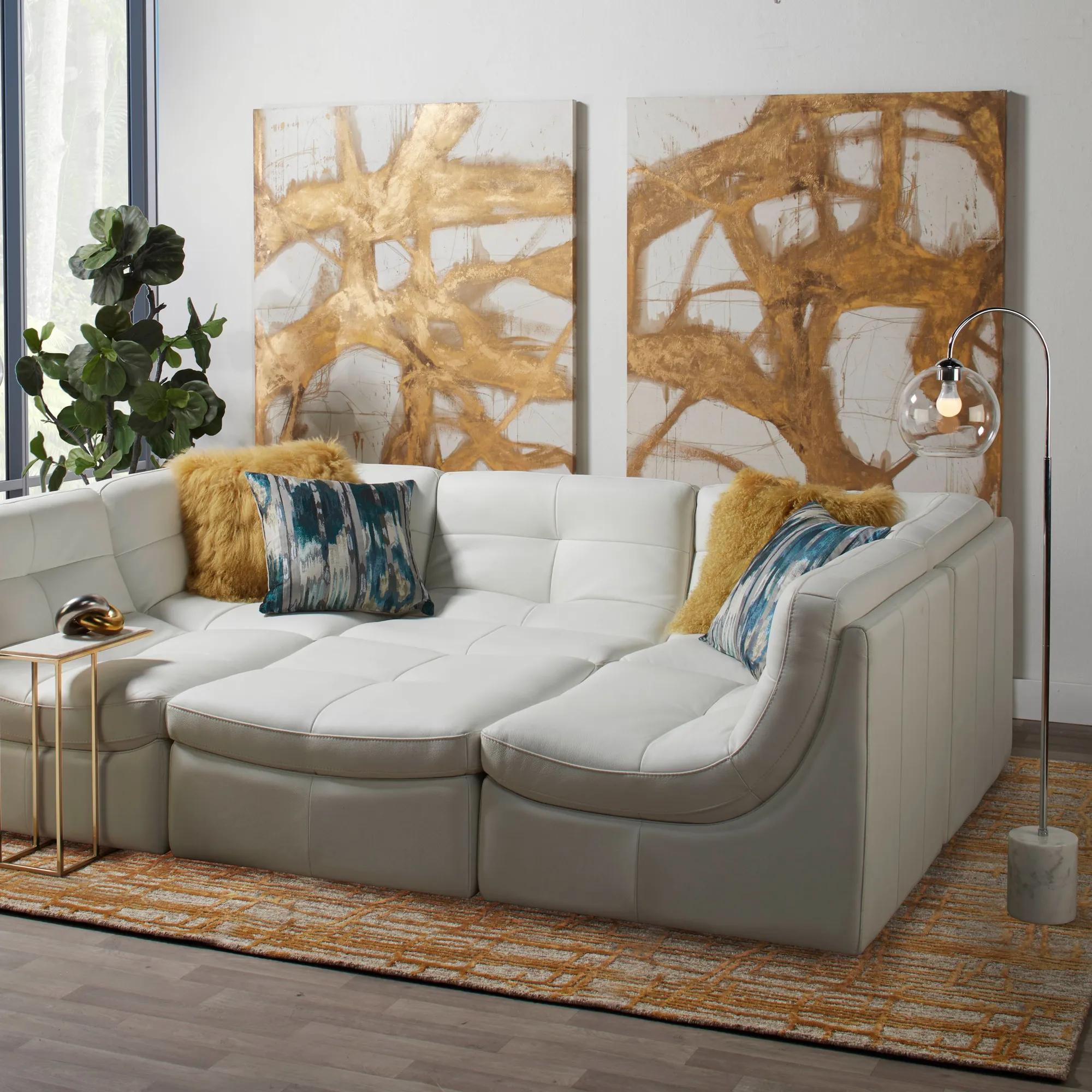 Lawton Rectangular Gold Stainless steel Accent Table With Marble Top (19.75")$259
A space-saving table featuring a white marble top and gold-finished stainless steel base.
Add To Cart -
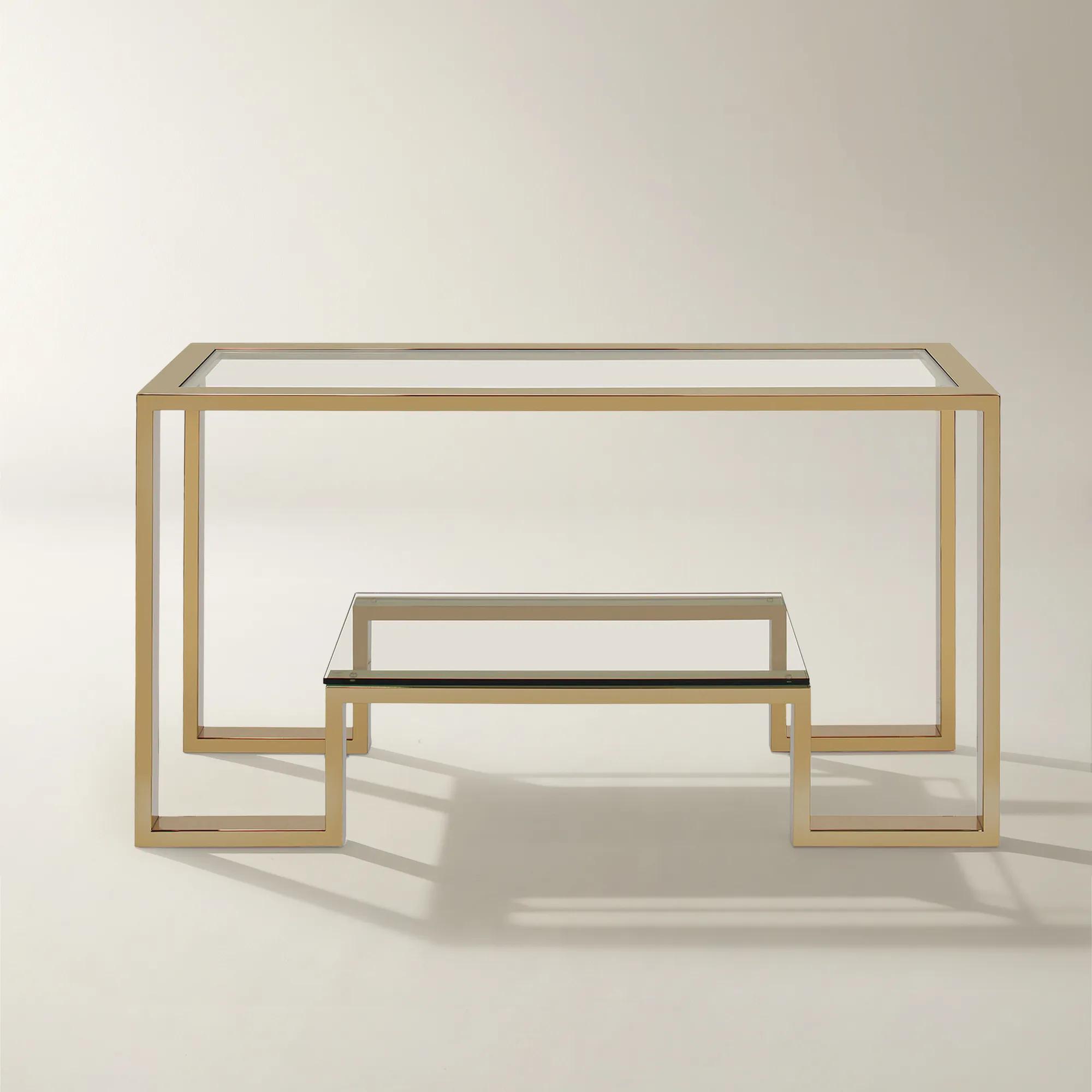
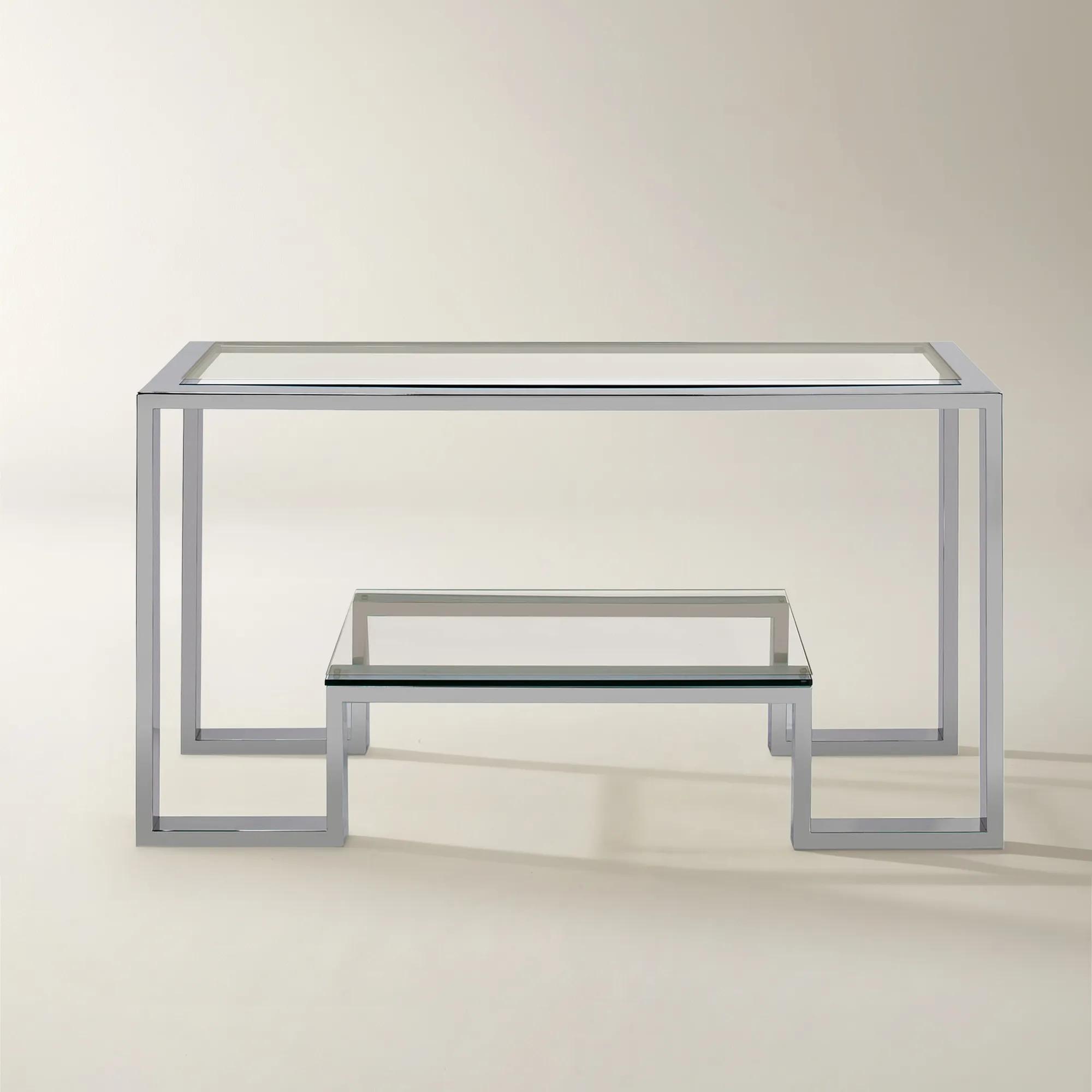
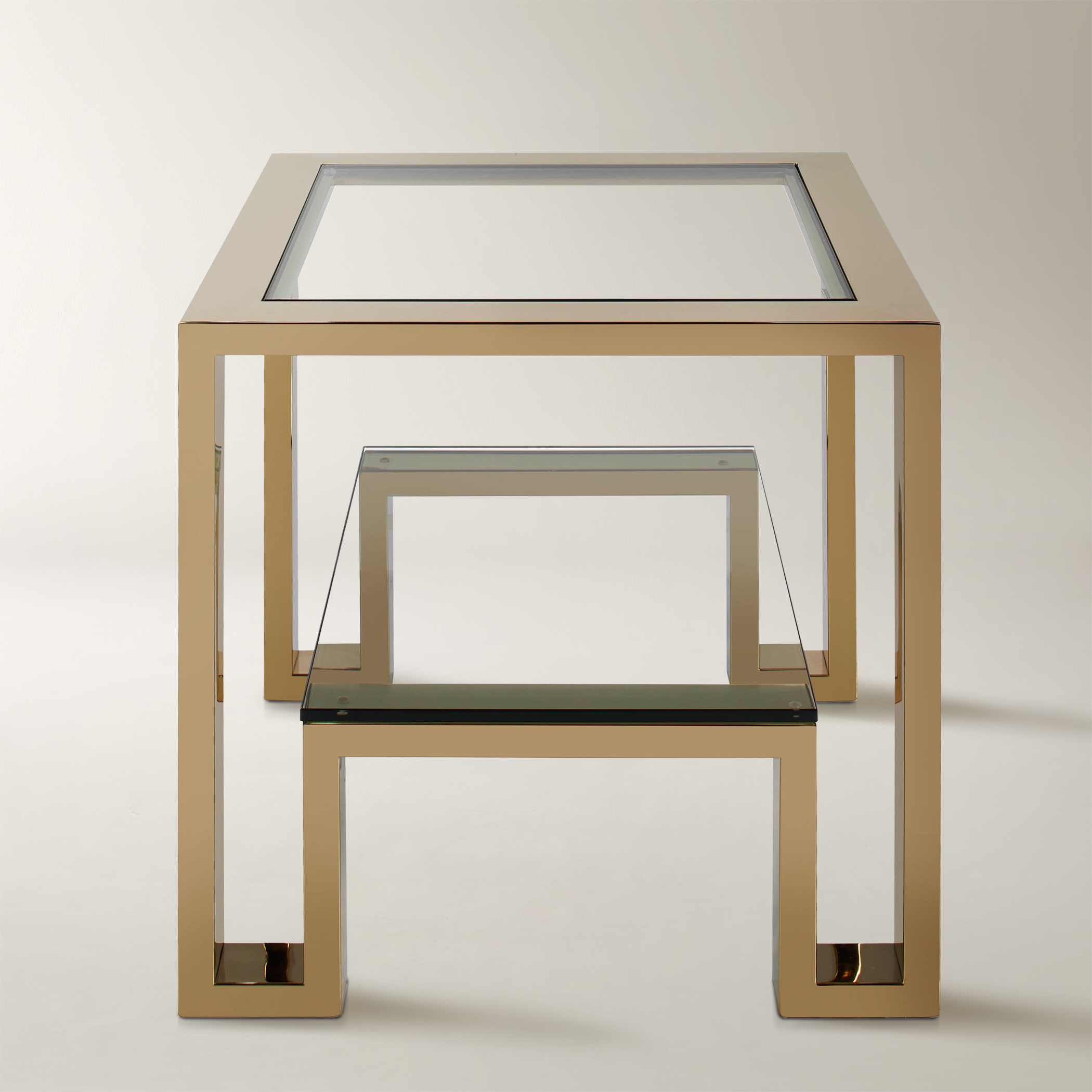 Duplicity Square Gold Stainless Steel End Table With Glass Top (24")$749
A modern end table crafted from stainless steel and tempered glass with a floating bottom shelf.
Add To Cart -
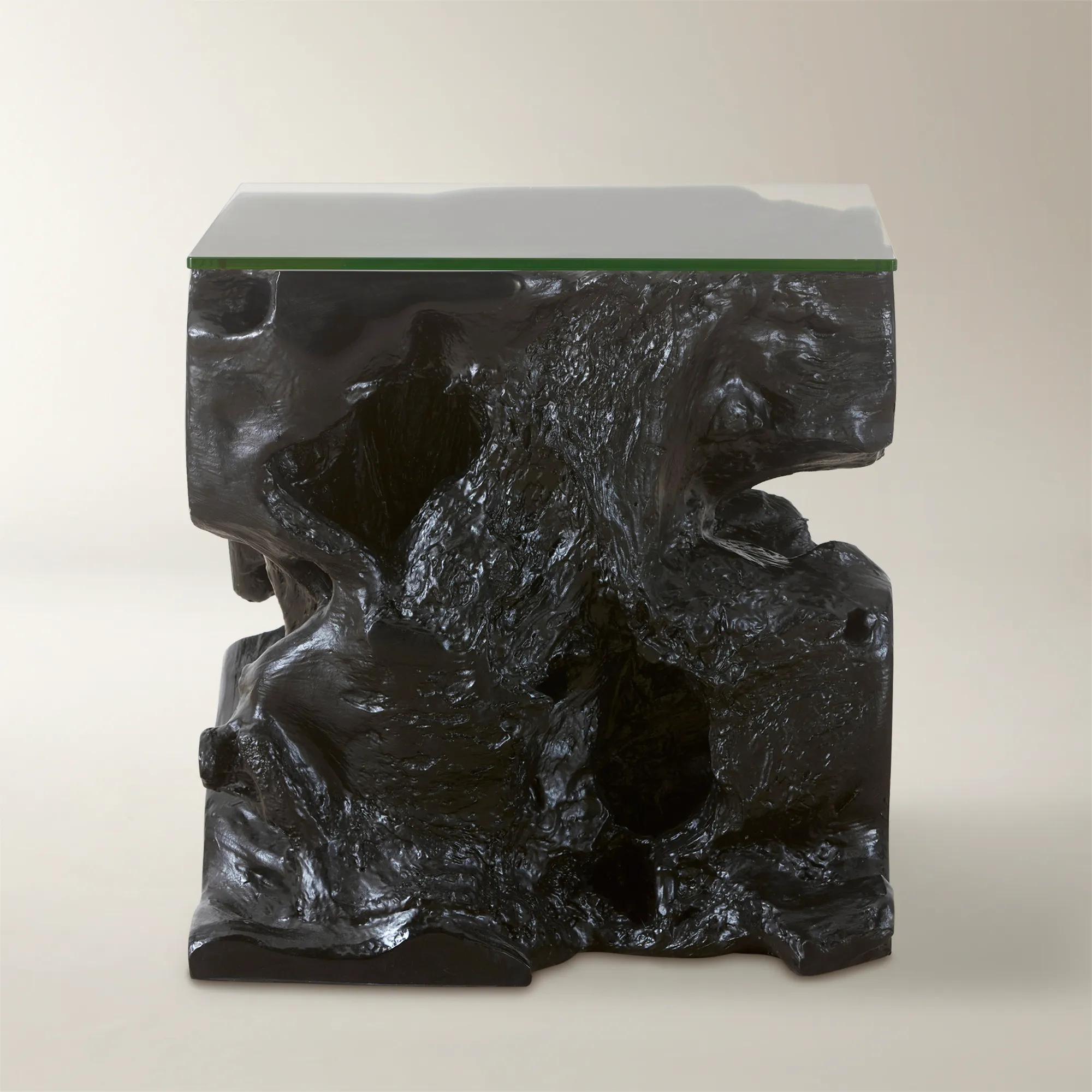 Sequoia Black Resin End Table With Glass Top (22")$999
A sculptural black resin and stone end table inspired by Acacia roots, suitable for indoor or outdoor use.
Add To Cart -
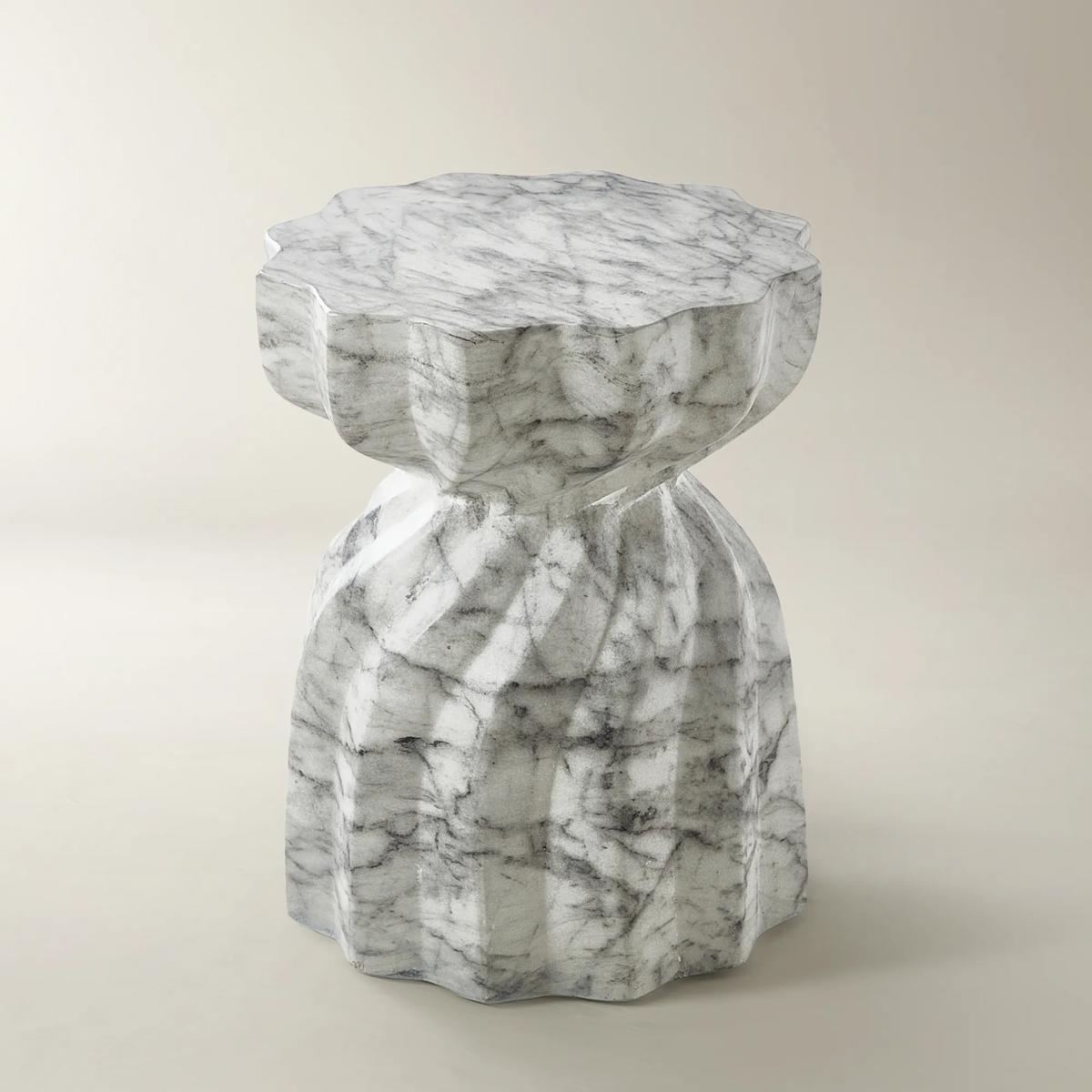
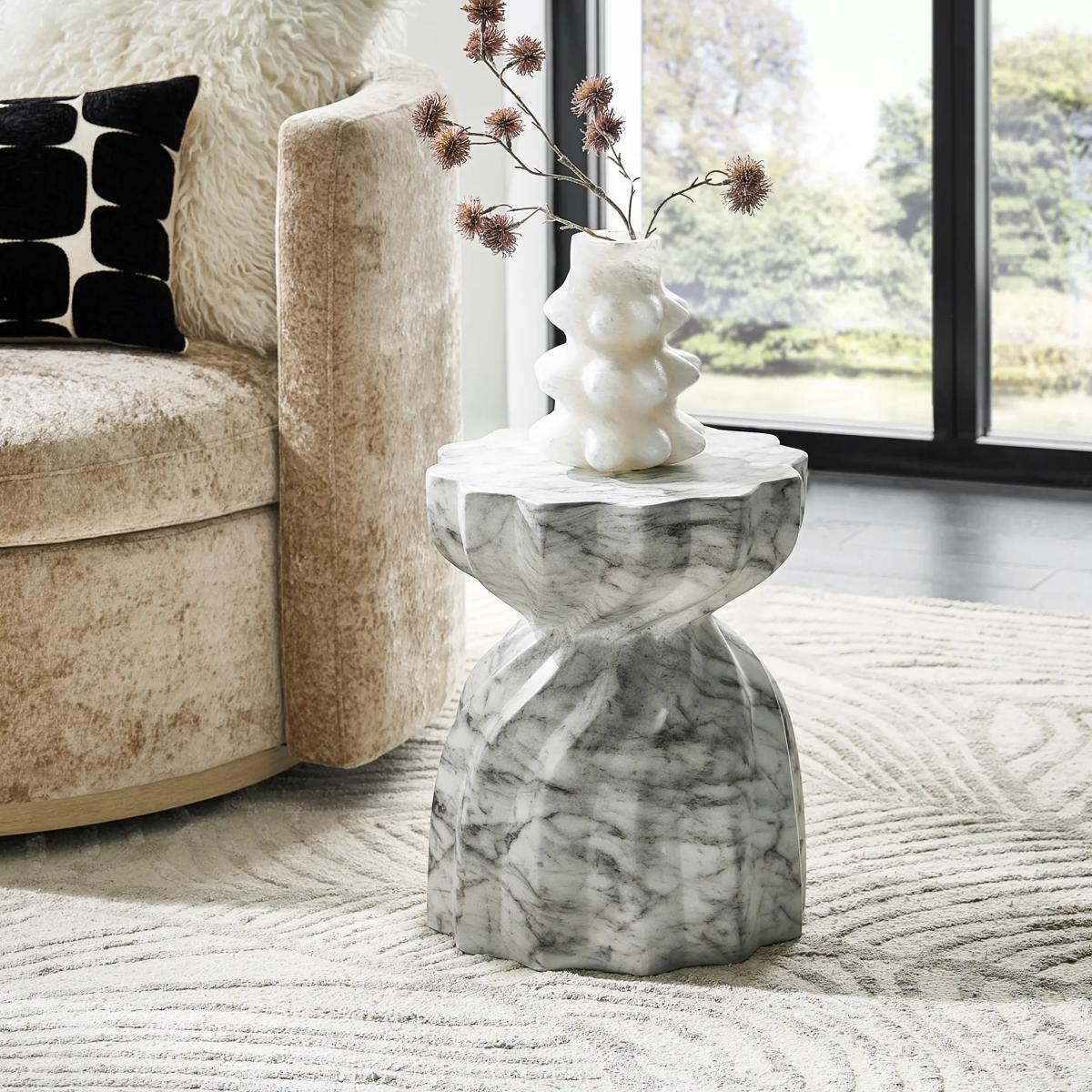 Lithia Scalloped White Concrete Side Table (15")$299
A sculptural white marble-look side table crafted from durable, lightweight fiber concrete for indoor or outdoor use.
Add To Cart -
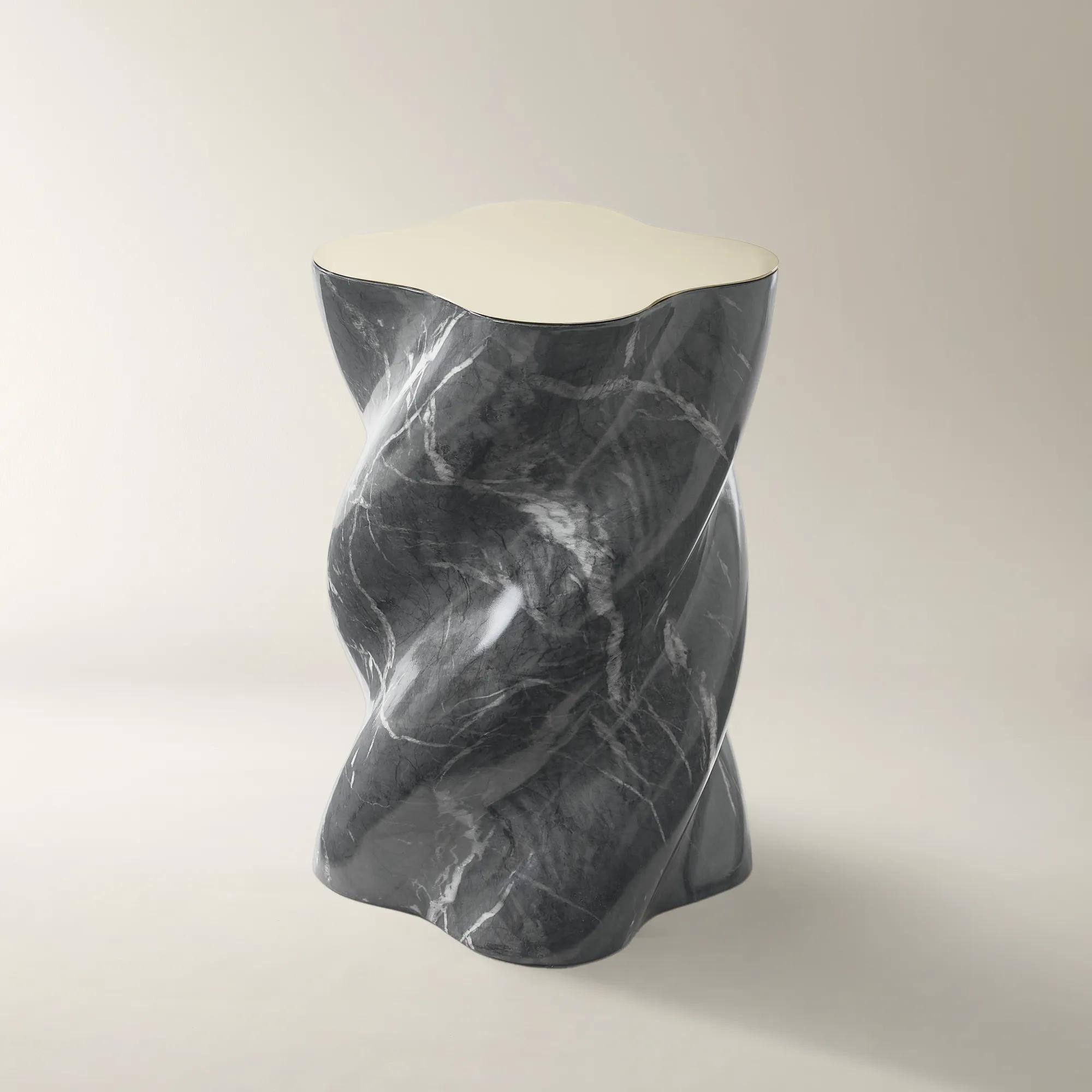 Vega Bvlgary Black Concrete Side Table With Stainless Steel Top (13.8")$459
A sculptural black side table featuring a marble-inspired fiber-concrete base and removable stainless steel top.
Add To Cart -
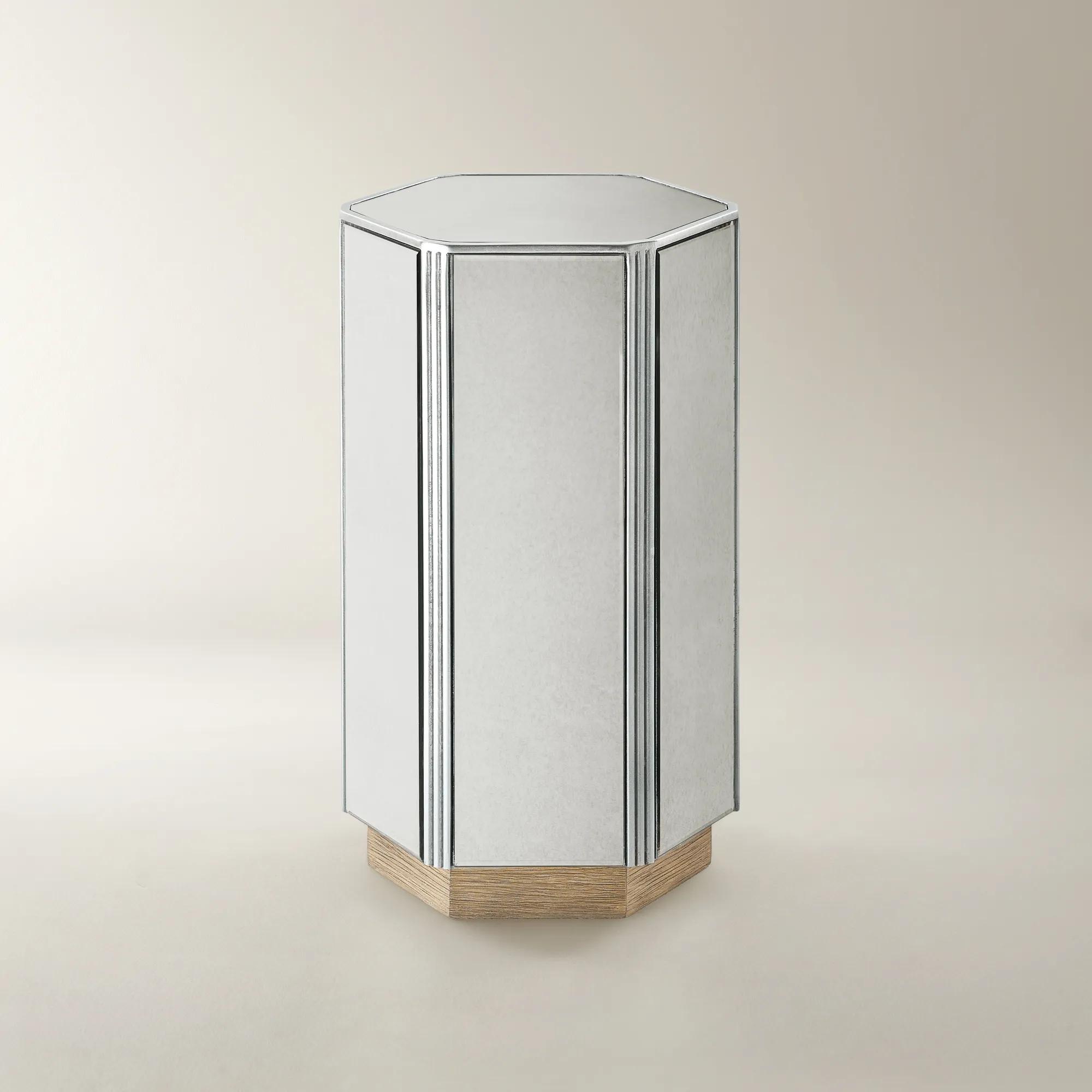 Glimmer Silver Mirrored End Table (12")$399
A chic side table featuring an antique silver mirror top and warm oak veneer base with handcrafted details.
Add To Cart -
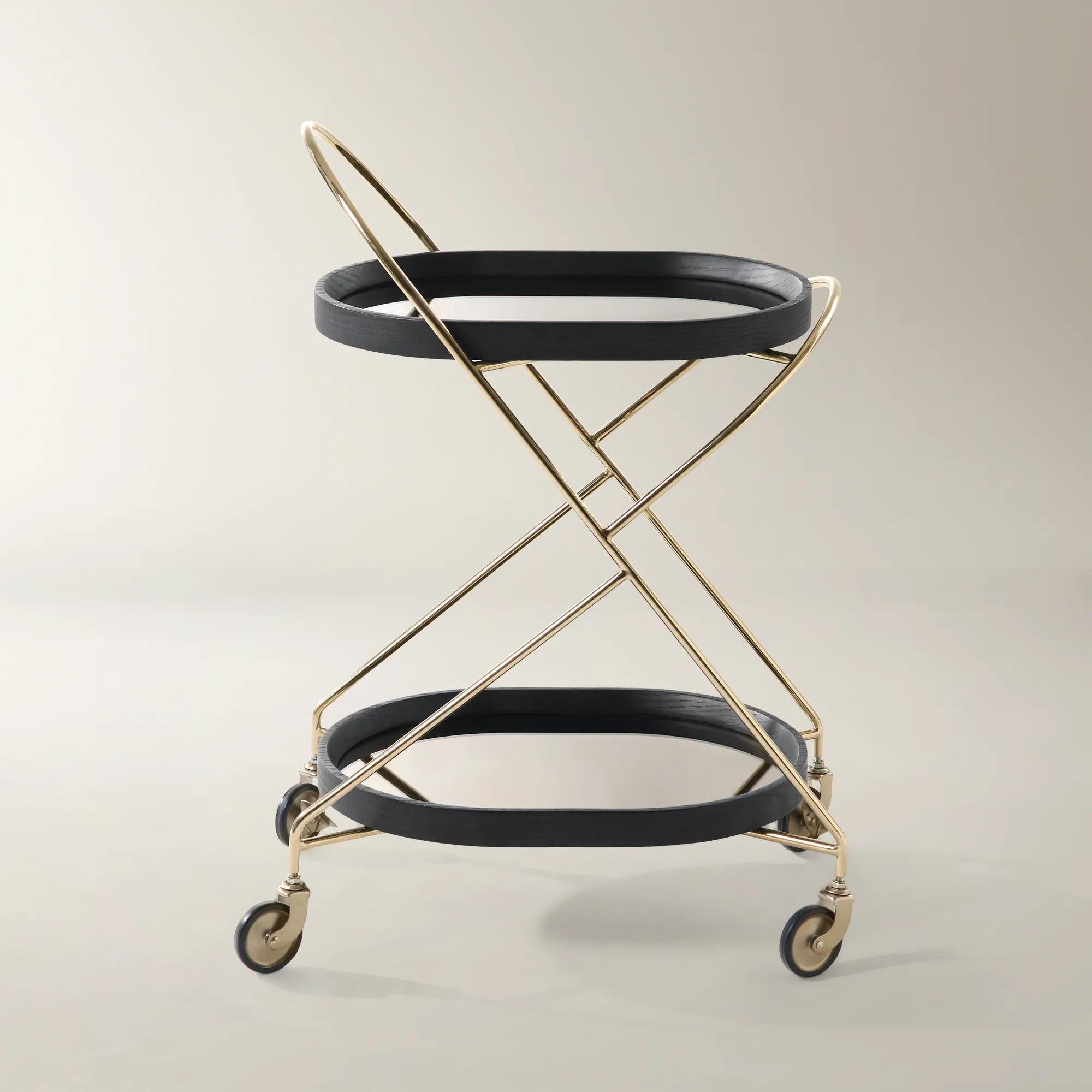 Cleo Black Oak 2-Tier Bar Cart (22.5")$599
A sculptural bar cart featuring matte black oak, bronze mirrored shelves, and a gold-plated stainless steel frame.
Add To Cart -
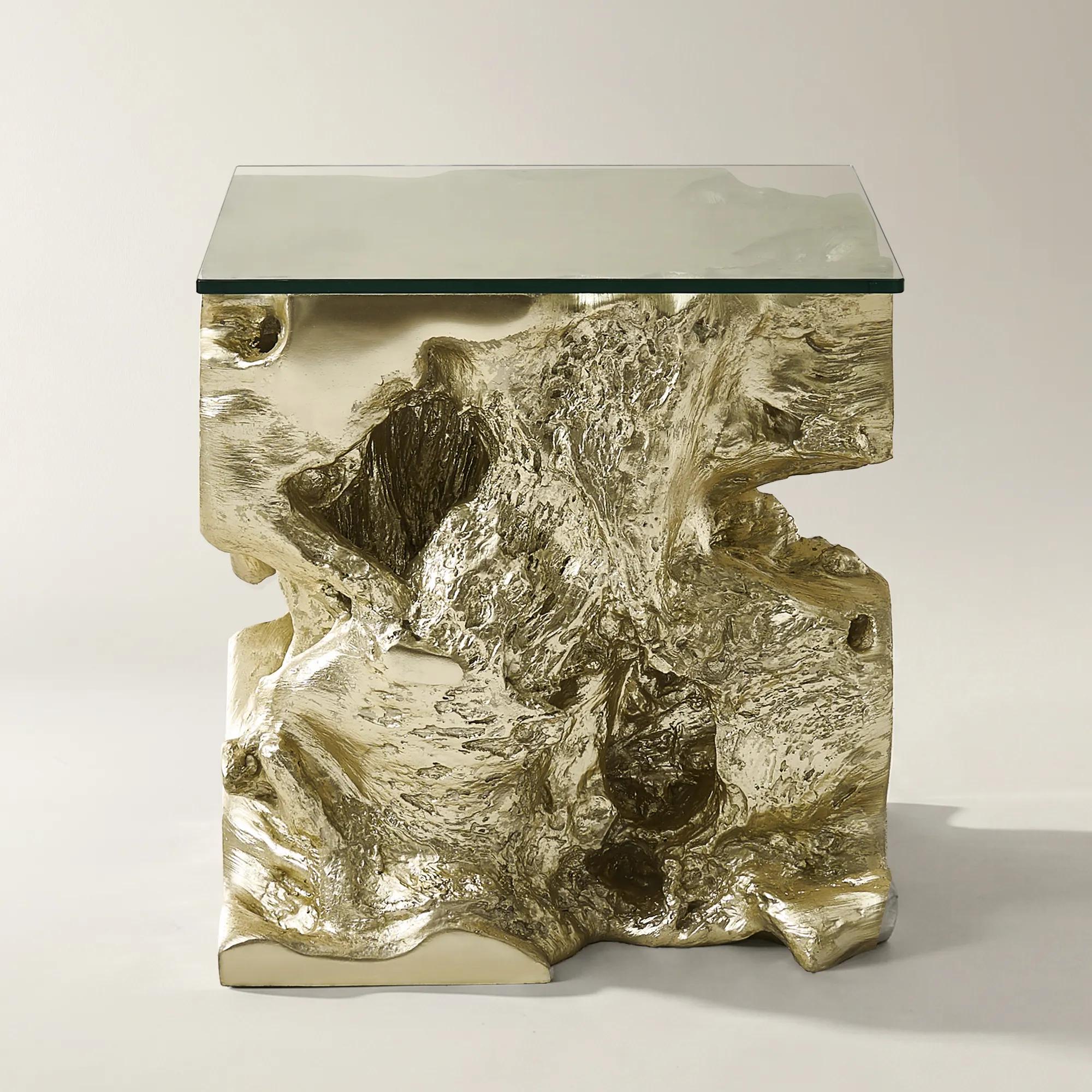 Sequoia Champagne Gold Resin End Table With Glass Top (22")$999
A sculptural resin end table with a champagne gold leaf finish and a clear tempered glass top.
Add To Cart -
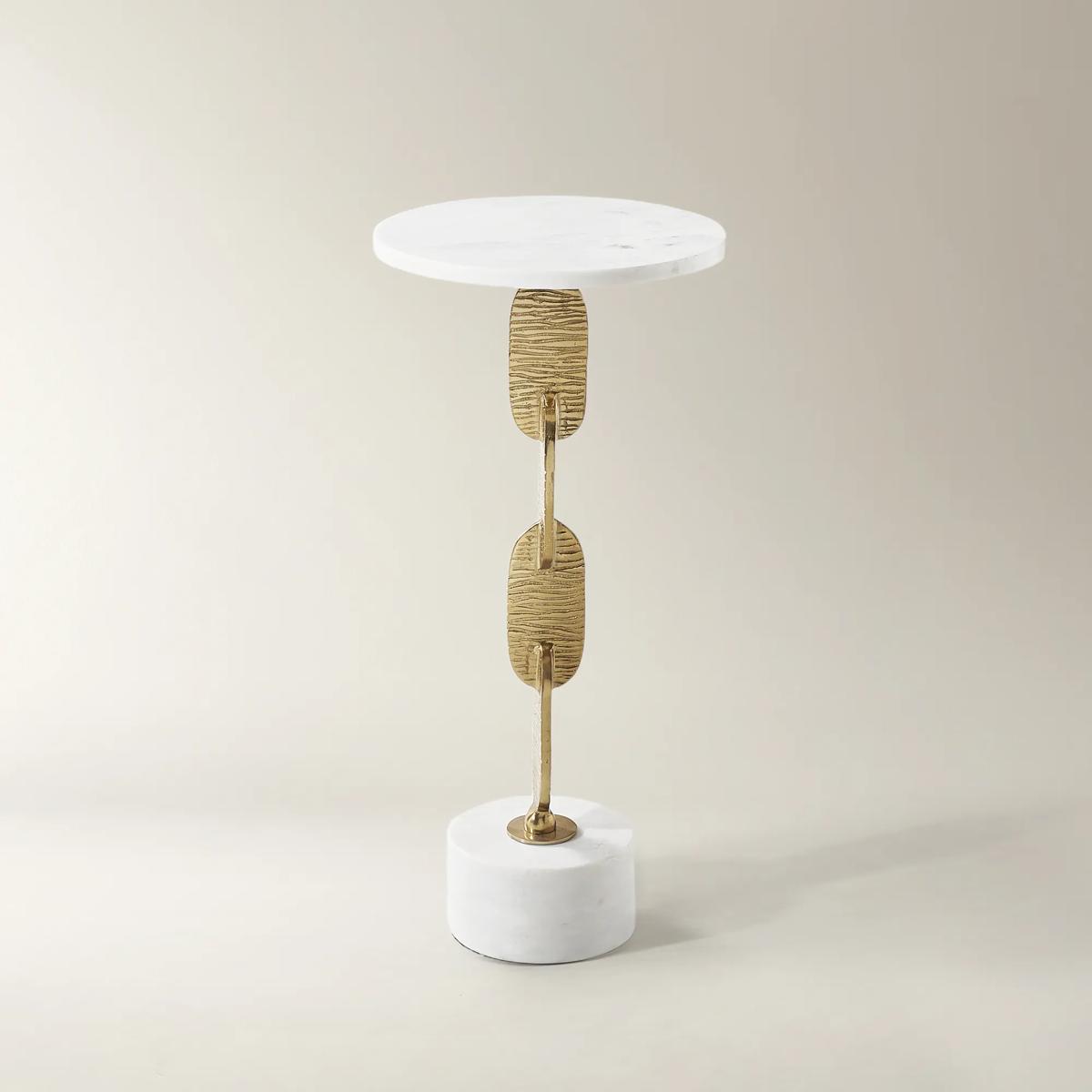
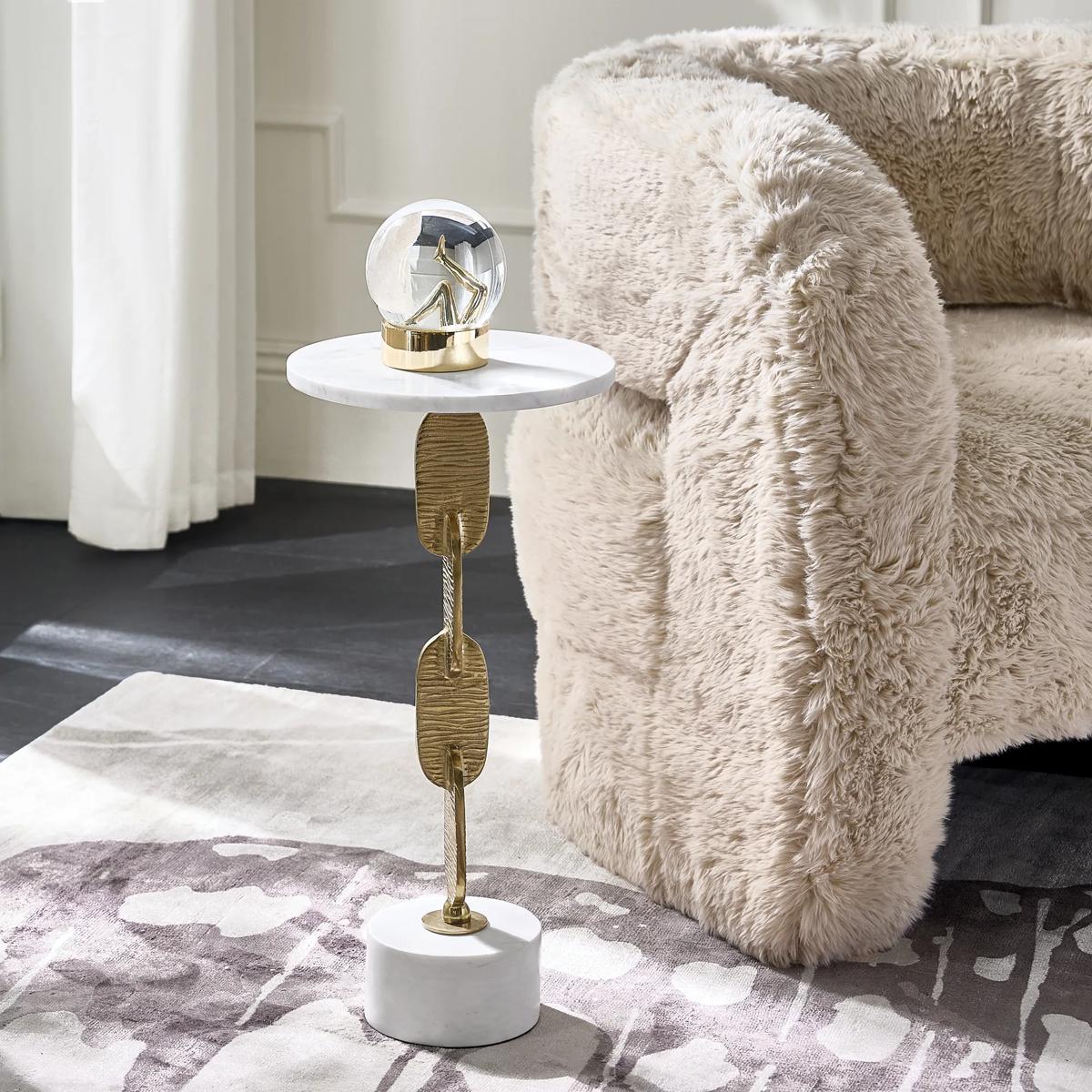 Luna Round White Marble Side Table (11.25")$199
A sculptural side table featuring a genuine white marble top and an open gold-finished metal frame.
Add To Cart -
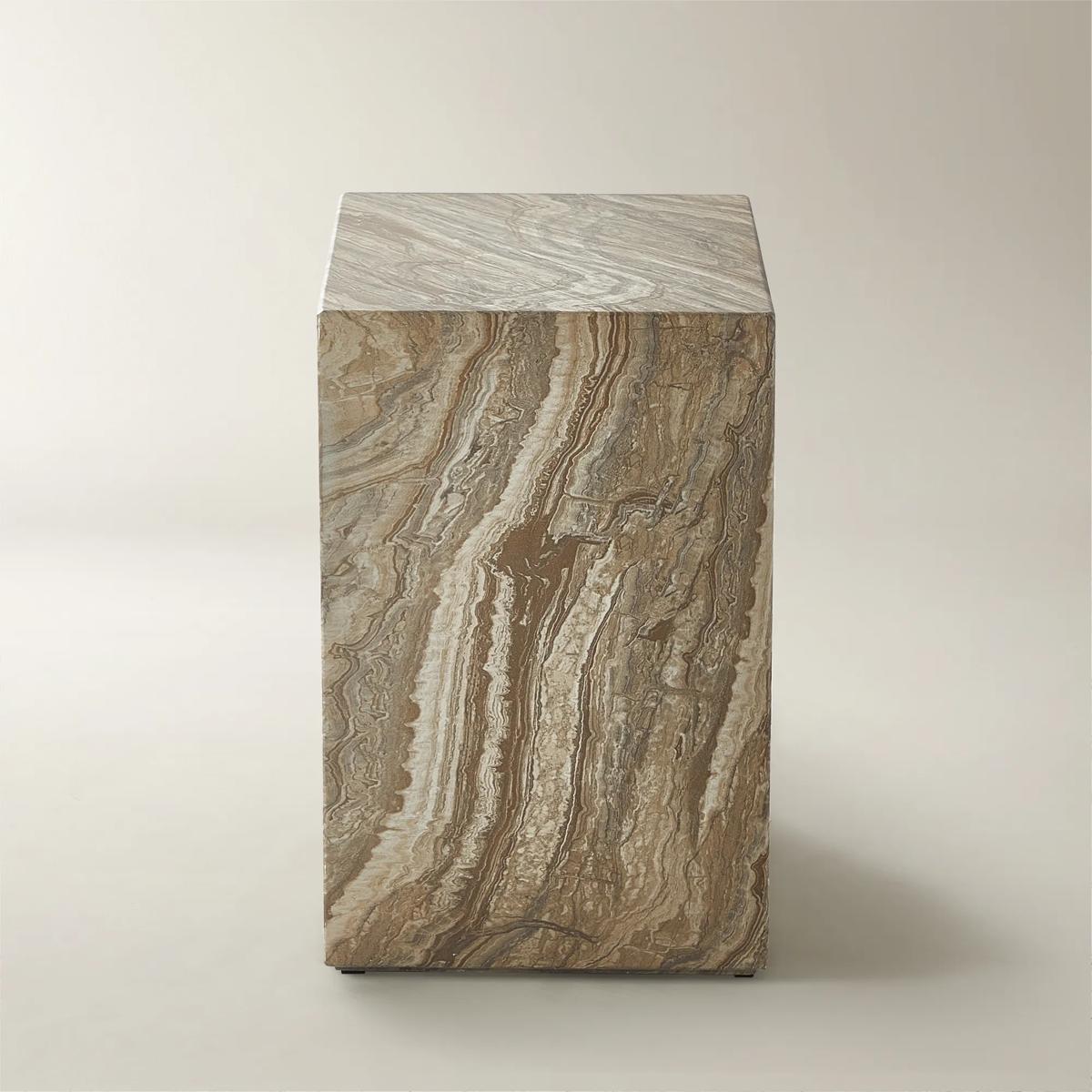
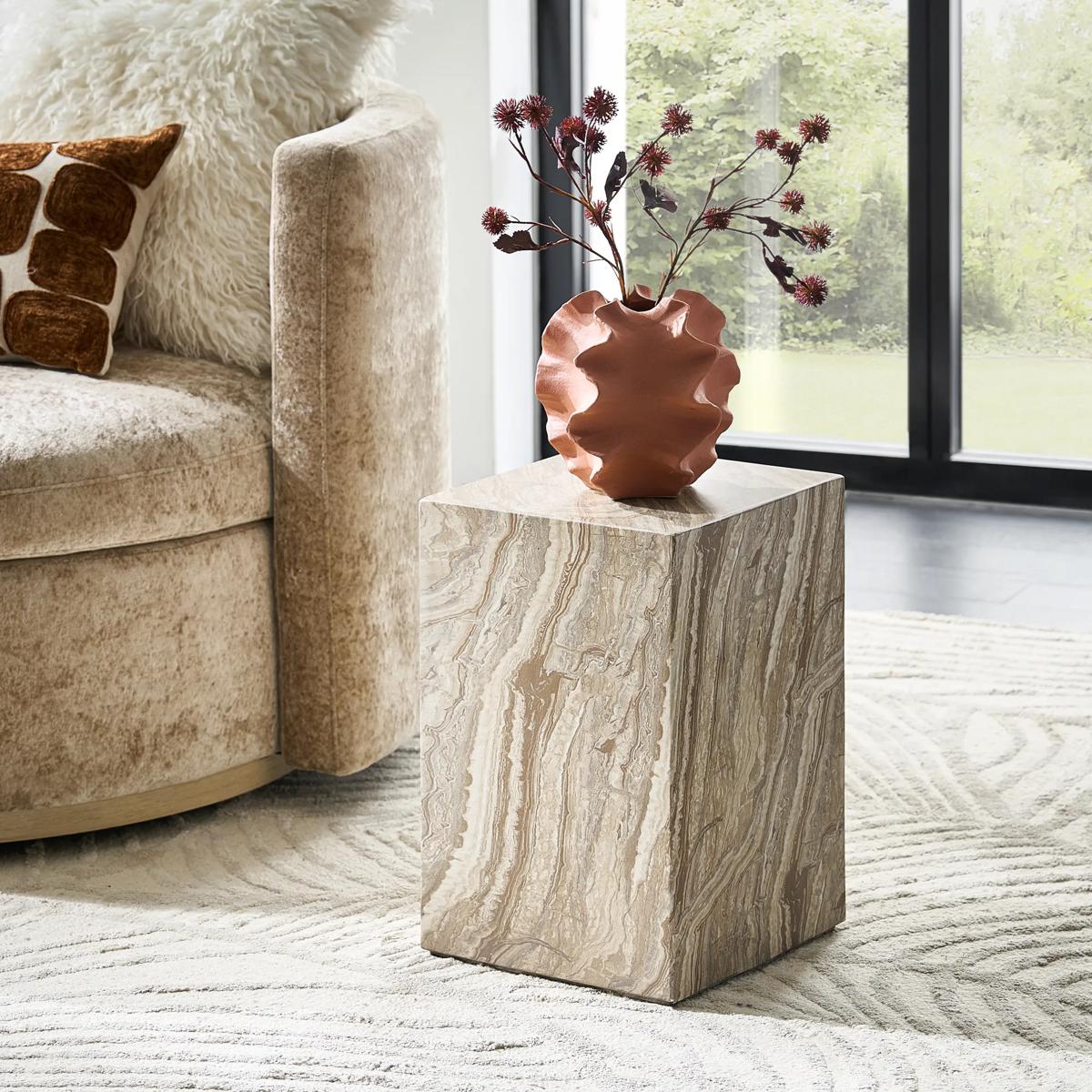 Strata Square Brown Concrete Side Table (11.8")$259
A lightweight fiber concrete side table featuring realistic brown marble veining and sealed for indoor or outdoor use.
Add To Cart -
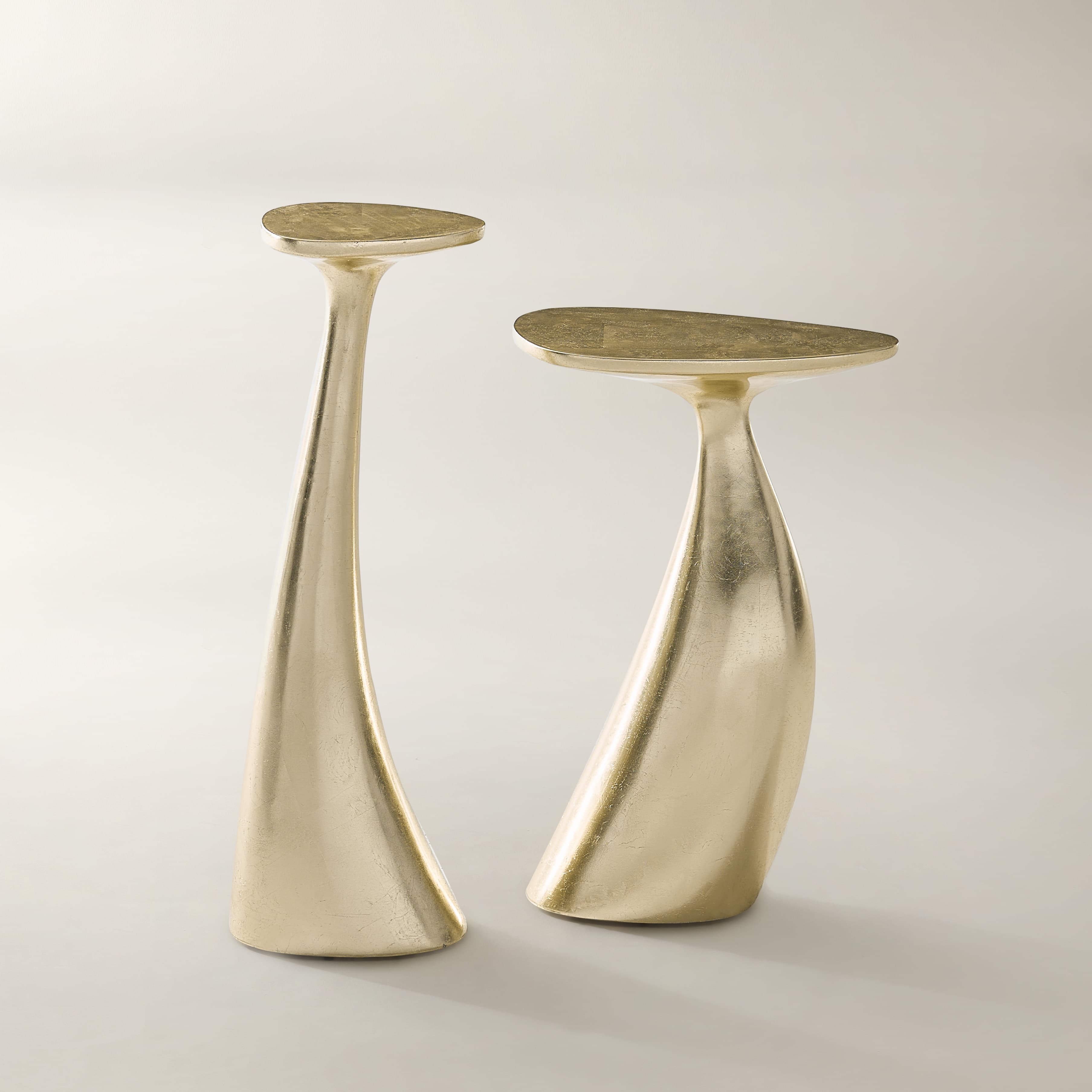 Thalia Soft Gold Side Table Set Of 2 (8"-12.5")$659
A sculptural duo of gold leaf fiberglass tables with fluid lines and a warm, luminous finish.
Add To Cart -
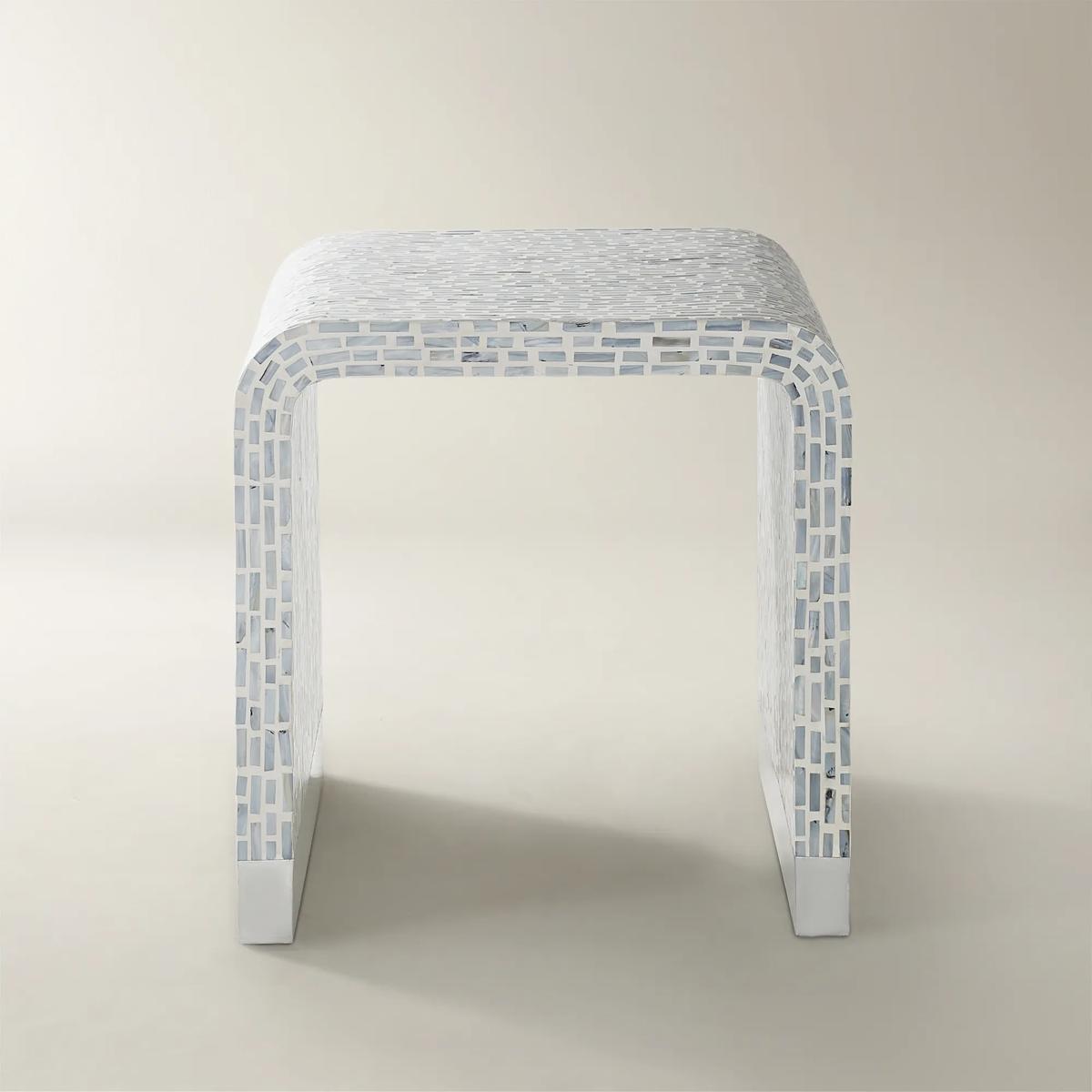
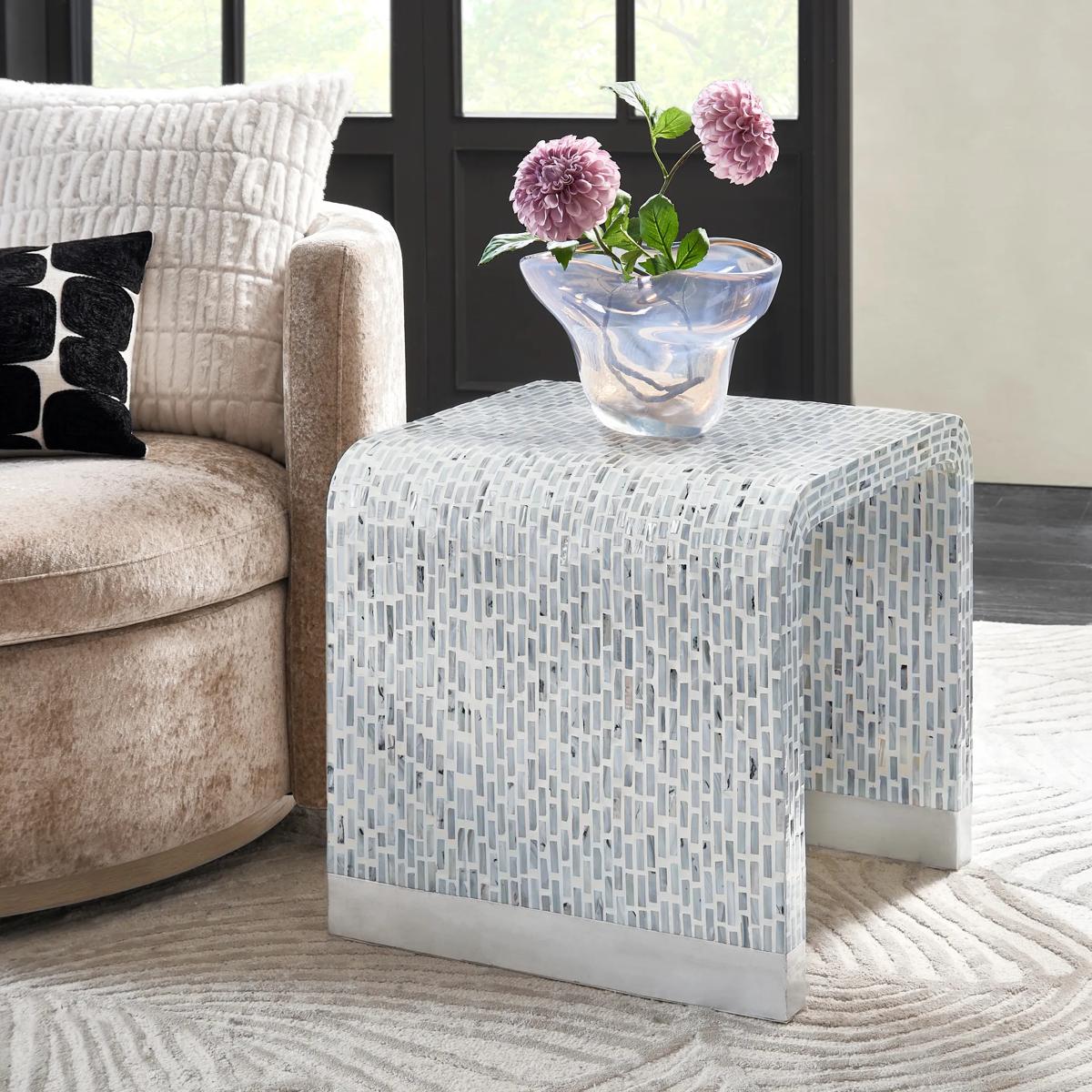 Iridia Blue Side Table (21.6")$399
A handcrafted end table featuring iridescent blue mother-of-pearl inlay and a silver leaf base.
Add To Cart -
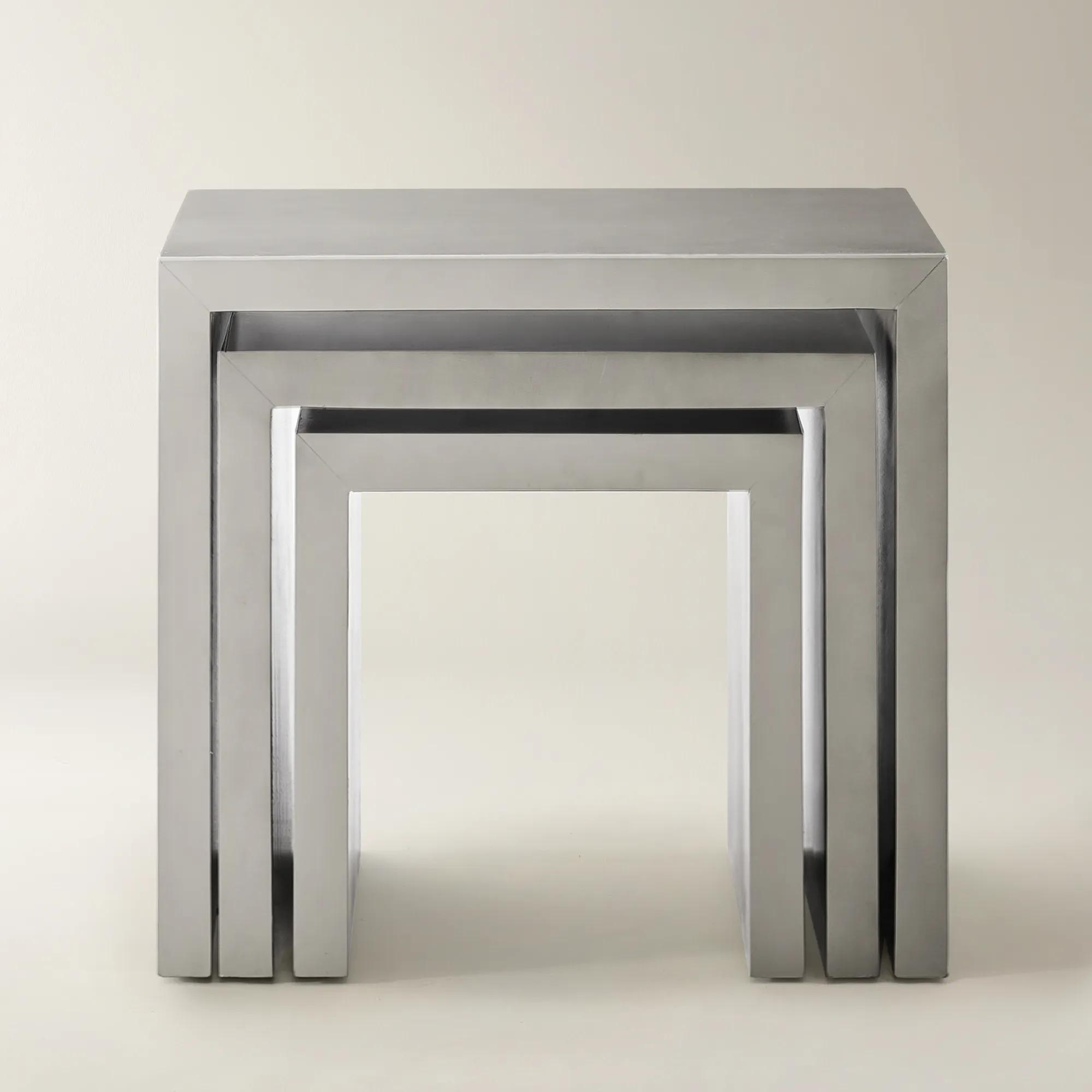
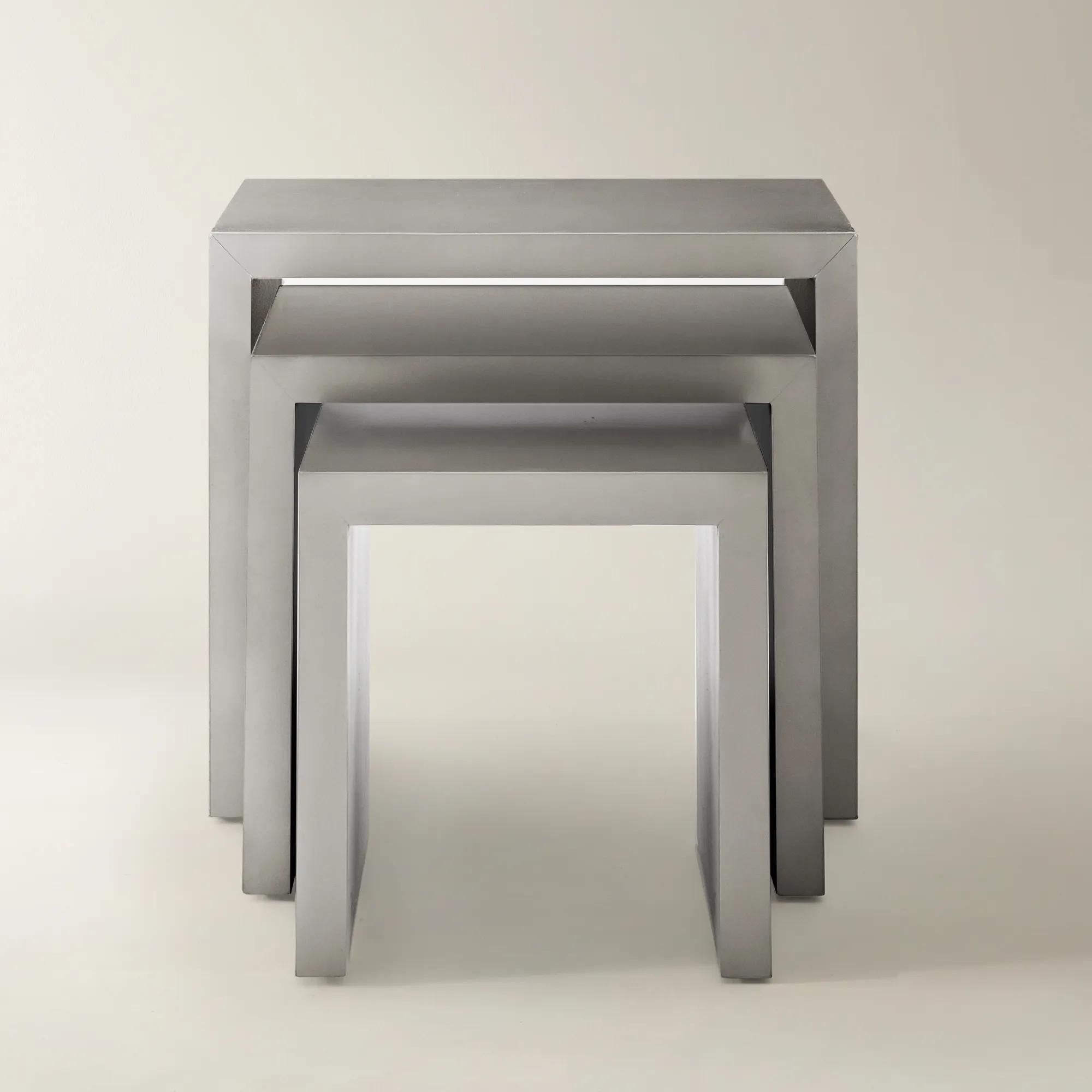 Astair Silver Nesting Accent Table Set Of 3 (16.25"-25.5")$299
A trio of engineered wood nesting tables with a sleek silver metallic finish and minimalist block silhouette.
Add To Cart -
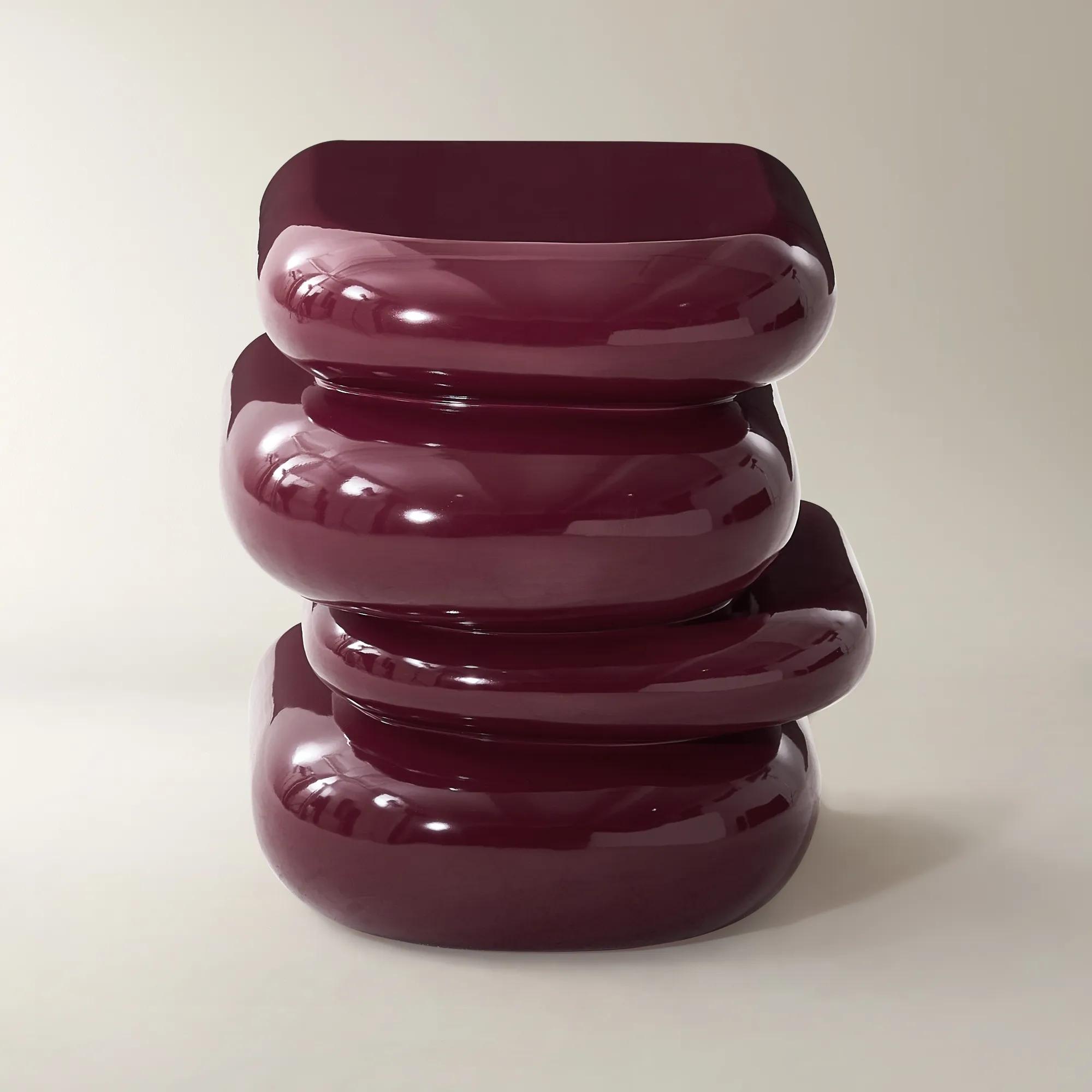 Forma Stacked Ox Blood Side Table (19.9")$459
A sculptural accent table crafted from high-gloss ox blood fiberglass with softly stacked, rounded tiers.
Add To Cart -
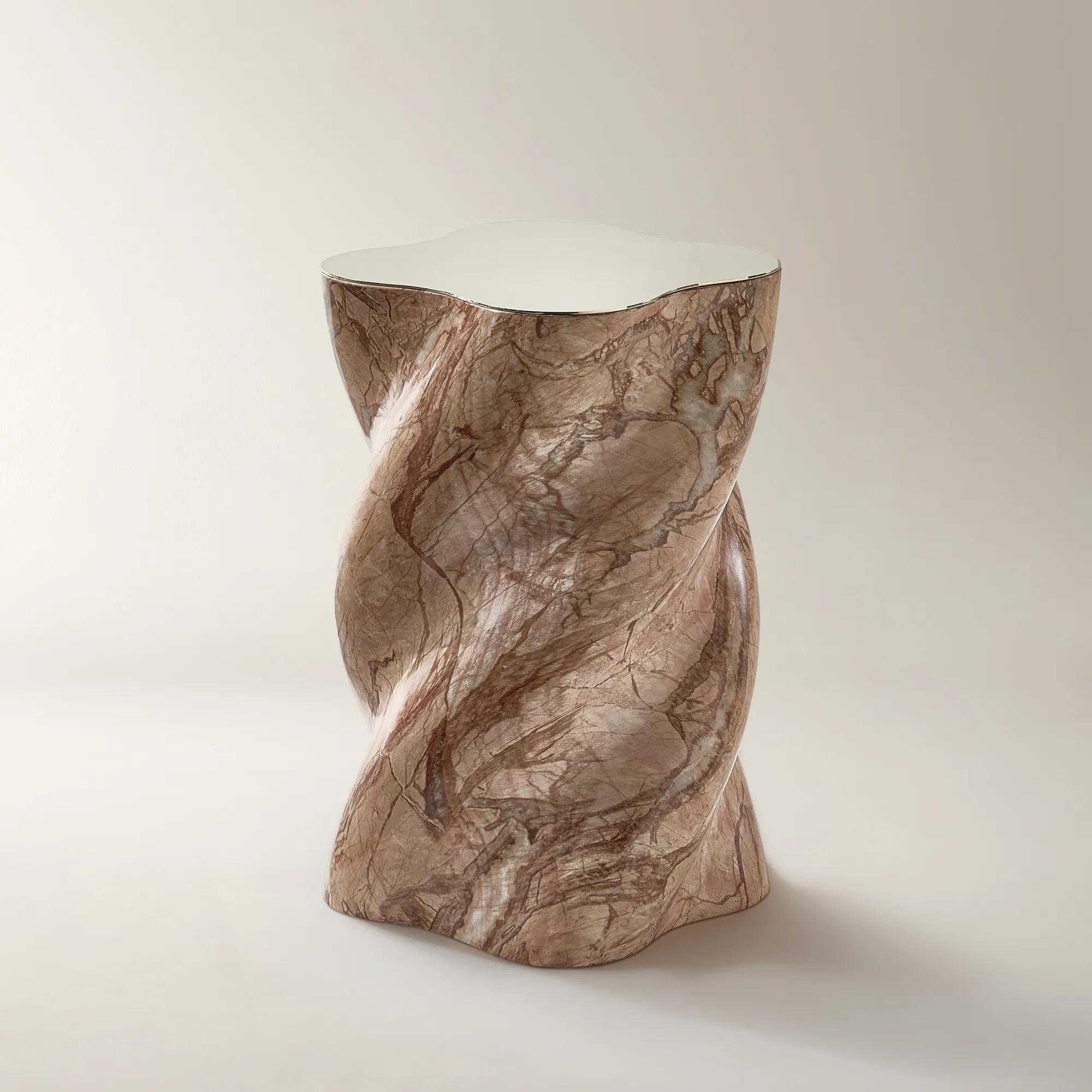
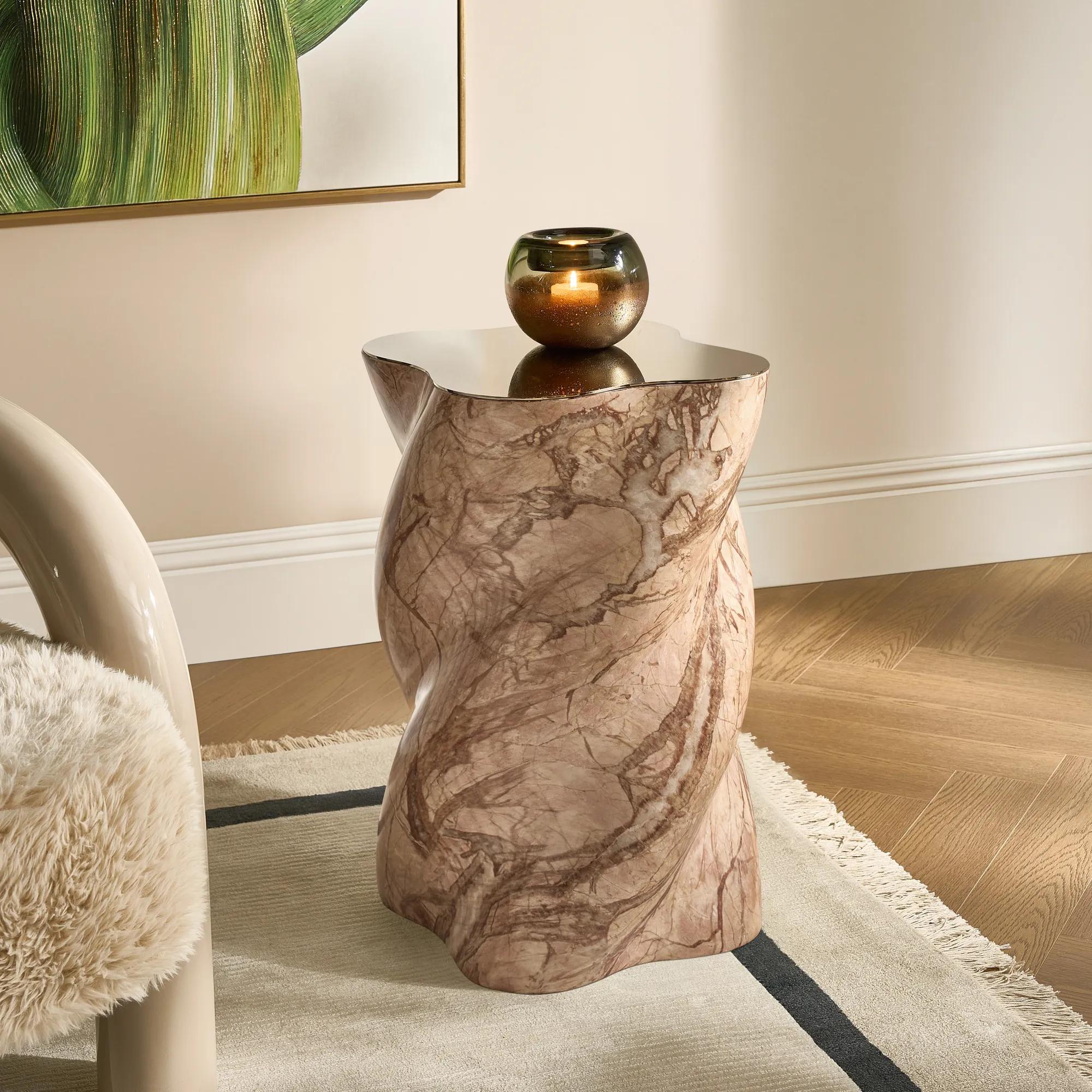 Vega Concrete Side Table With Stainless Steel Top (13.8")$459
A sculptural side table featuring a hand-cast fiber-concrete base and sunset marble-inspired stainless steel top.
Add To Cart

Drink Tables With Sculptural Presence
Explore drink tables with sculptural presence that pair an artful silhouette with a place to set your glass. These small accent tables bring expressive form to a seating area without the footprint of a larger side table. Consider height and tabletop size in relation to your sofa or chair to keep a drink within reach while giving the room a distinctive finishing touch.
A sculptural drink table brings a distinctly artistic note to the space beside a sofa or chair, turning a small surface into a striking part of the room’s composition. Its appeal lies in the relationship between silhouette and purpose: a curved pedestal, an architectural column, or a boldly proportioned base can hold the eye while keeping a cocktail, coffee cup, or sparkling water within easy reach. Unlike a larger side table, a drink table typically makes its statement through a concentrated footprint, offering a place to set a glass without requiring room for a lamp, stacks of books, and an elaborate arrangement. That restraint in scale leaves room for expressive design. A gleaming finish can catch the light beside sumptuous upholstery, while a richly textured surface introduces depth against a smooth wall or tailored sofa. Drink tables with sculptural presence feel especially compelling in seating areas where every angle matters, including open living rooms and intimate conversation corners. Placed beside a lounge chair, one creates a polished destination for an evening aperitif; nestled between two accent chairs, it gives a shared seating arrangement a graceful center of attention. The right fit depends as much on how the room is used as on the table’s visual impact. A tabletop near the height of a chair’s arm generally makes setting down a glass more comfortable, though the ideal relationship varies with the seating. With an armless chair or a low sofa, consider the height of the seat and the distance a seated person would need to reach. Leave enough clearance to move around the table without brushing against its base, and look beyond the tabletop diameter when assessing its footprint. A flared, angular, or asymmetrical base may occupy more floor space than its upper surface suggests. These proportions allow the table to feel intentional rather than squeezed into a gap, preserving both its sculptural outline and the ease of the seating arrangement.
Materials give sculptural drink tables much of their character, shaping everything from the way a surface reflects light to how it responds to everyday use. Metal can read as sleek and architectural or richly decorative, depending on its finish and texture. Polished surfaces introduce a luminous accent, while brushed or hammered treatments create a more nuanced play of highlights. Natural stone offers a different kind of drama, with veining and tonal variation that lend depth to even a simple shape. Wood brings warmth through grain, particularly when a carved or rounded profile makes the material itself part of the design. Glass can create an airy counterpoint to a substantial base, allowing its geometry to remain visible from above. Each material also comes with practical considerations, especially for a surface intended to hold beverages. Marble and other acid-sensitive stones can etch when exposed to citrus juice or wine, and some porous surfaces are vulnerable to staining; a coaster and prompt attention to spills help protect their appearance. Sealing, when recommended for the material, does not make stone impervious to damage. Finished wood benefits from protection against moisture rings and hot cups, while decorative metal finishes may be affected by abrasive cleaners or prolonged contact with liquids. Glass deserves regular cleaning with products appropriate to its surface, along with care around edges and corners. Follow the maker’s care instructions rather than treating every glossy or stone-look finish alike. For daily use, durability is also a matter of construction and balance, not simply material weight. A substantial table can still be vulnerable to tipping if its proportions are top-heavy, while a lighter design may feel secure with a well-considered base. The tabletop should comfortably accommodate the intended glass or cup, with enough space that it does not sit precariously at the edge. On a rug, check that the base rests evenly rather than rocking across a raised pattern or thick pile. Felt or other suitable floor protection can help prevent scratches, provided it does not compromise stability.
The most compelling placement lets a sculptural drink table converse with the room without competing with every surrounding piece. Beside a deeply upholstered chair, a crisp geometric form creates contrast; near a sofa with clean lines, a rounded or irregular silhouette can soften the arrangement. Repeating one element, such as a metallic tone or a curve, gives the space continuity without requiring every table to match. Two different drink tables can work beautifully within the same seating area when their heights, finishes, or visual weight share a considered relationship. This approach is particularly useful in a living room where one chair needs a slender companion and another can accommodate a more substantial accent. Keep the tabletop relatively open so its purpose remains clear and its outline stays visible. A single beautiful coaster may be all the styling it needs, especially when the base already has a strong artistic identity. Nearby, Sculptures for Coffee Tables can extend that expressive sensibility across the seating arrangement, creating a dialogue between functional forms and purely decorative objects. Varying their scale and leaving open space between accents helps each shape register. Beyond the main living area, a compact drink table can accompany a reading chair in a bedroom, complete a dressing-room seating nook, or provide a discreet surface beside a chaise. In smaller homes, its focused function makes it possible to introduce a dramatic accent without the breadth of a conventional end table. For frequent hosts, a thoughtfully placed surface means guests can settle into conversation without balancing glasses on their knees or reaching across the room. For someone who values expressive interiors, a sculptural drink table can also make a distinctive housewarming or wedding gift, particularly when the recipient’s preferred finishes and available space are known. Whether chosen for entertaining or quieter daily rituals, its lasting appeal comes from the union of beauty and usefulness: an artful silhouette that earns its place beside a favorite seat.
FAQs
A sculptural drink table draws the eye through expressive form: sweeping curves, artful asymmetry, or a boldly composed base. More than a place to set a glass, it brings the visual intrigue of sculpture to a seating arrangement, turning a functional accent into a moment of artistry.
Sculptural drink tables introduce movement and drama alongside the clean lines of modern furniture. A curving silhouette can soften an angular seating arrangement, while a geometric form creates a striking counterpoint to plush upholstery. Look for a shape that adds contrast while echoing a line or motif elsewhere in the room.
Let the silhouette lead. A beautiful glass or a single decorative object can create a considered composition without competing with the table’s form. Leave the most expressive details visible, allowing curves, contours, and negative space to become part of the room’s visual story.
Sculptural drink tables bring a deliberate focal point to richly layered interiors. Pair a distinctive silhouette with patterned upholstery, expressive artwork, and sumptuous textiles, then repeat a color or shape to give the composition a sense of rhythm. The result feels richly imagined rather than visually competing.
A sculptural drink table does not need to match other accent tables to feel intentional. Coordinate through a shared color, a similar finish effect, or a recurring curve, then let the forms differ. That interplay gives a room a collected, expressive character while allowing each piece its own moment.