
Dining Tables For Work-and-Meal Spaces
Dining Tables For Work-and-Meal Spaces
-
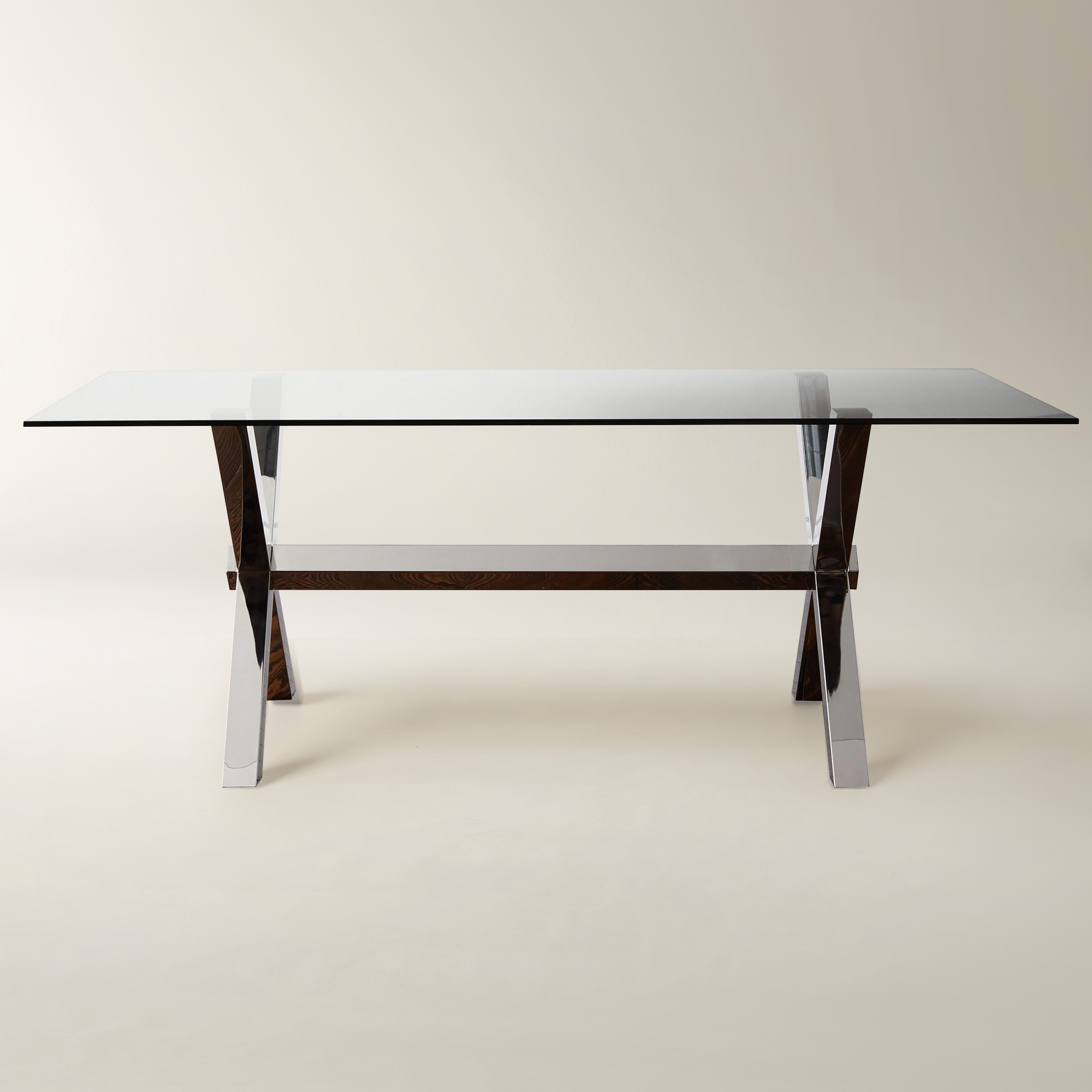
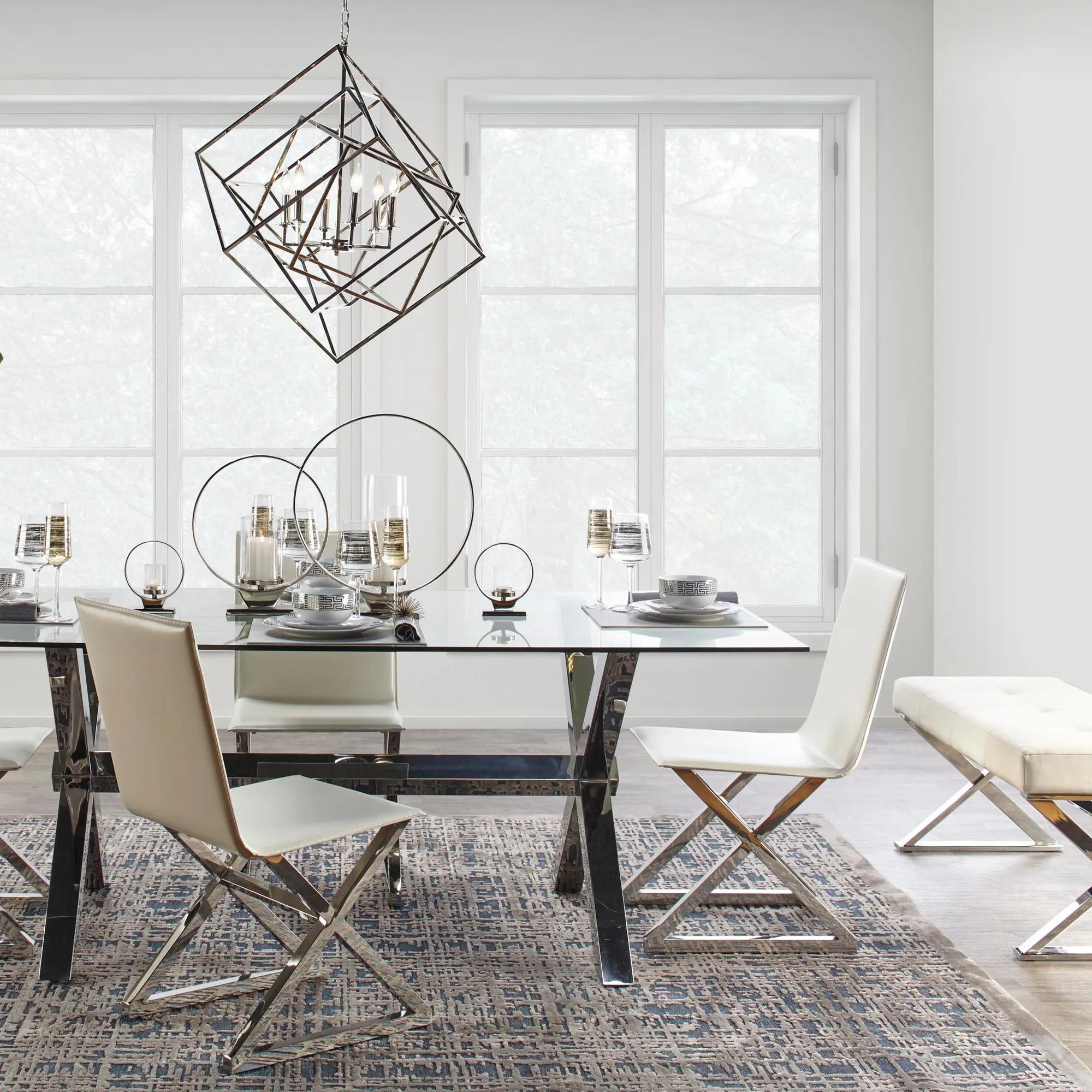 Axis Rectangular Silver Dining Table With Glass Top (78")$1199
A contemporary dining table featuring a polished stainless steel base and durable tempered glass top.
Add To Cart -
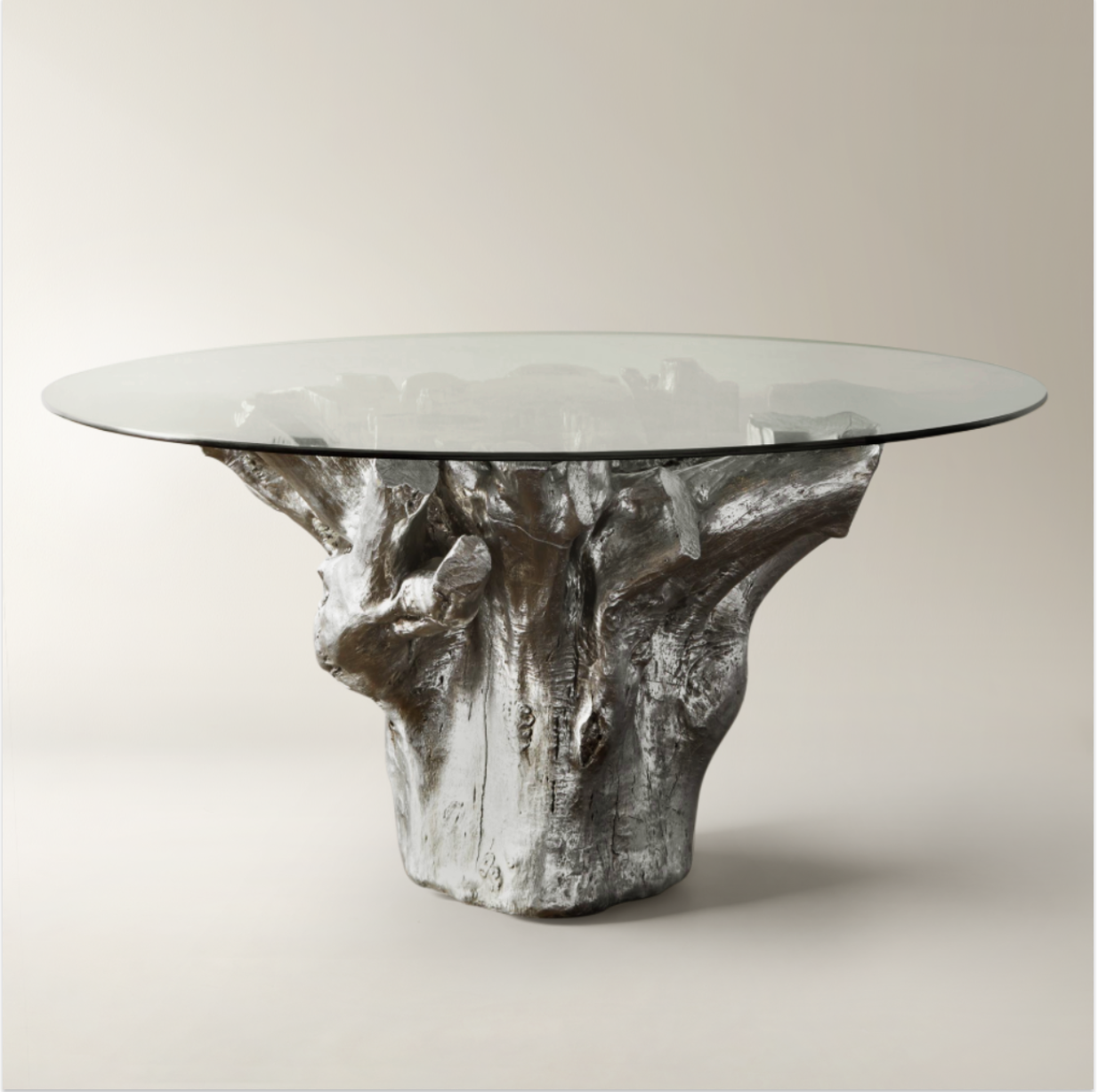 Sequoia Silver Resin Dining Table With Glass Top (60")$2199
A sculptural resin base with hand-applied silver leaf supports a round tempered glass top for modern elegance.
Add To Cart -
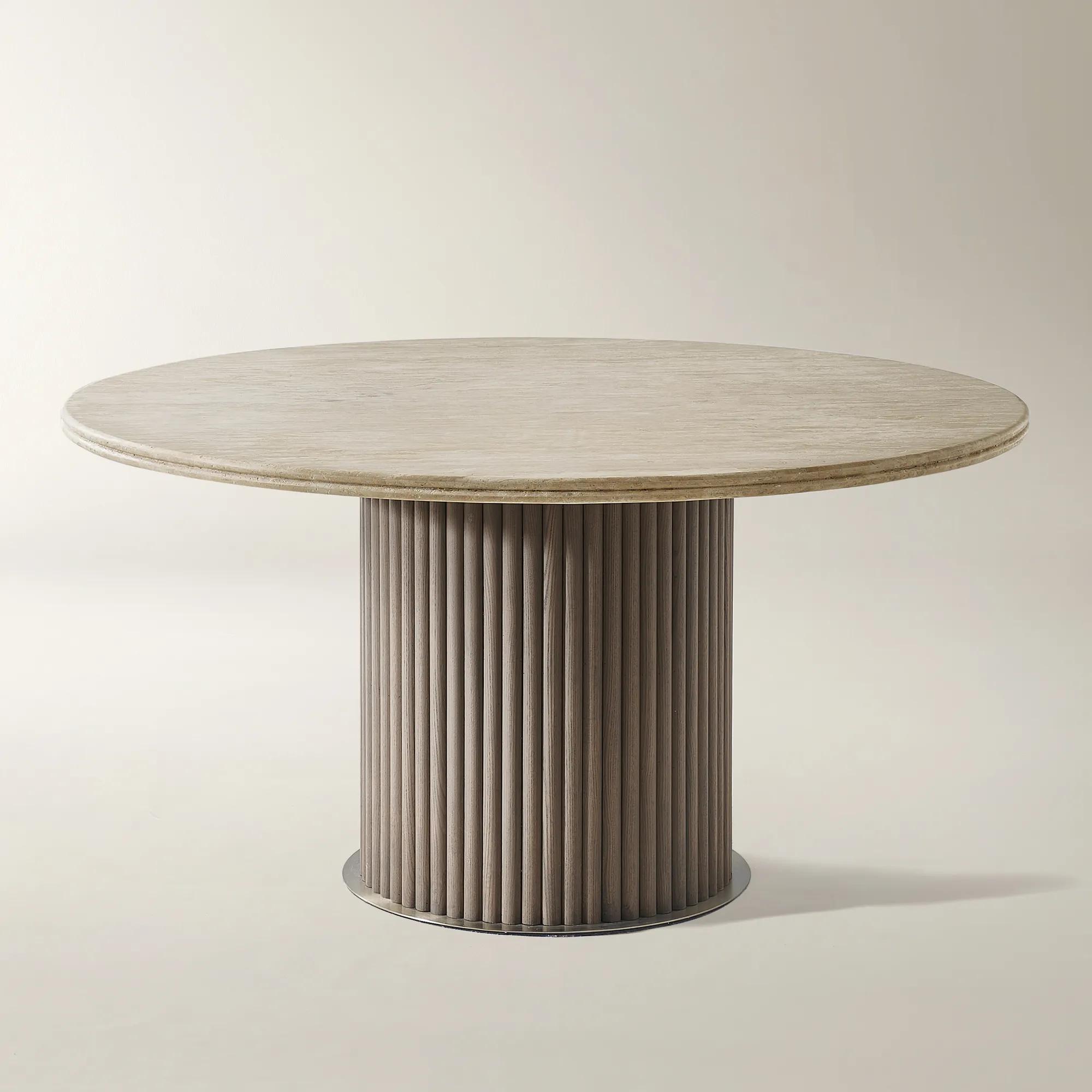 Bond Round Reeded Travertine and Wood Dining Table (59")$3499
A round dining table featuring a genuine natural travertine stone top and a fluted solid ash base.
Add To Cart -
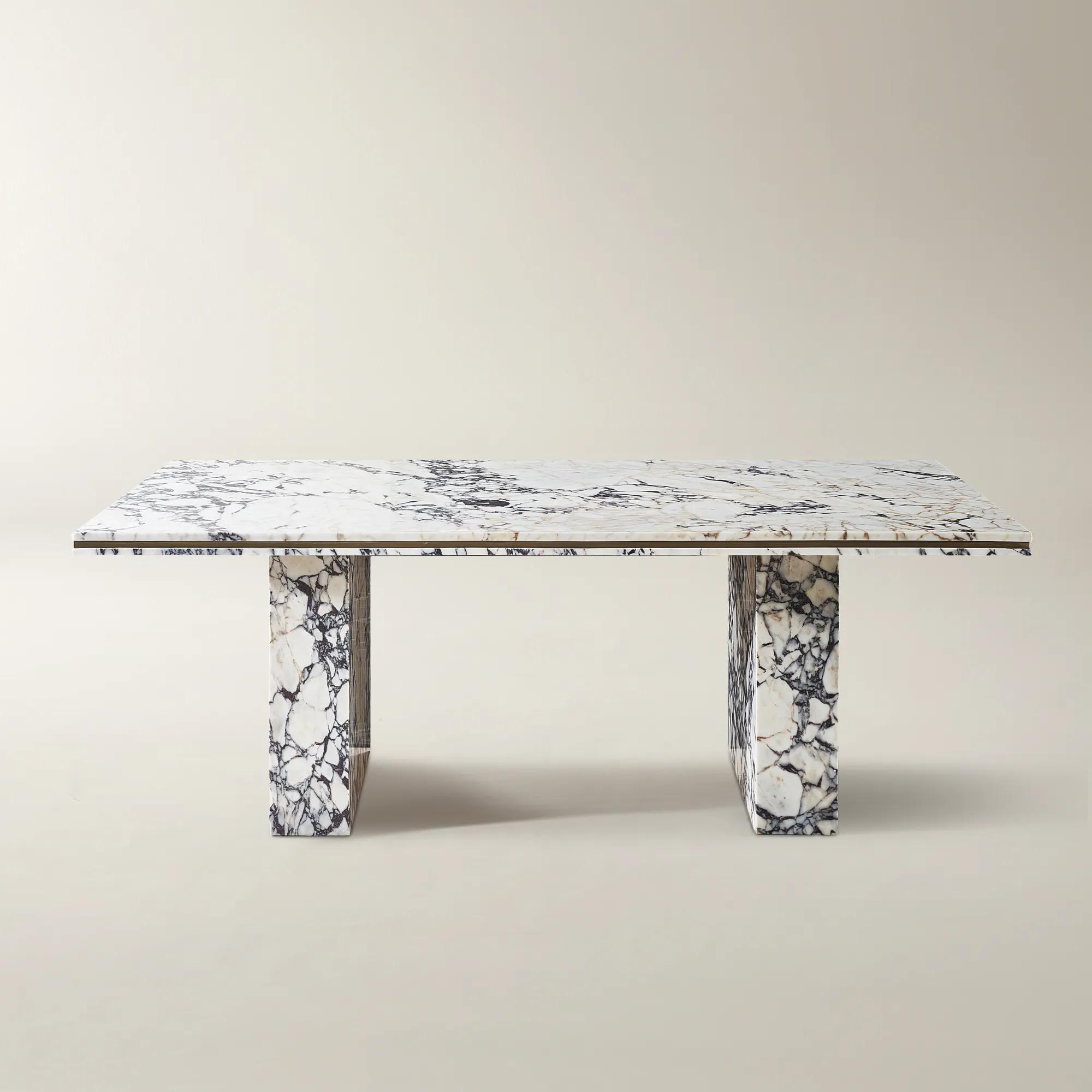
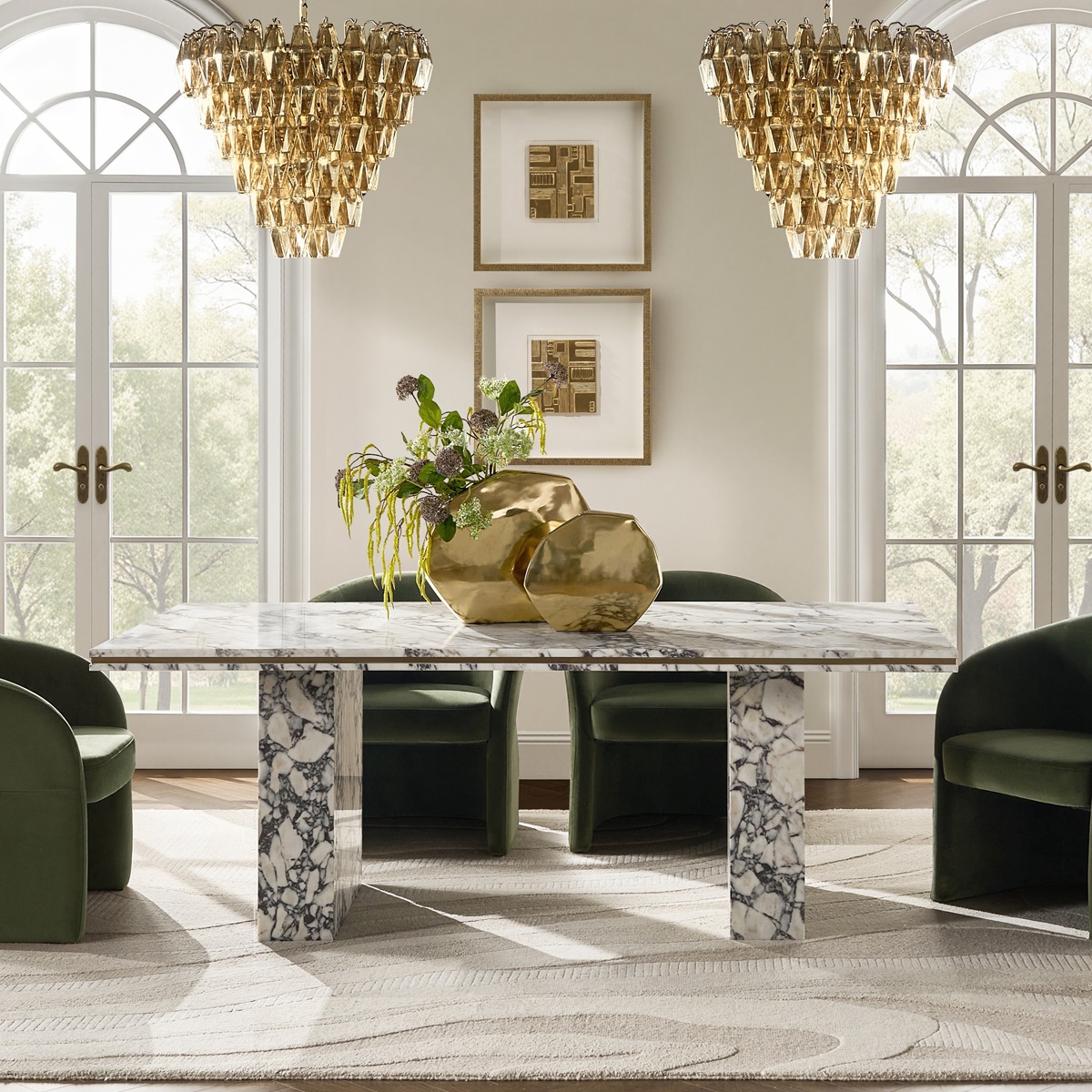 Vanta Rectangular Viola Calacatta Marble Dining Table (84")$6599
A marble dining table with dramatic violet veining, soft-gold inlay, and a sculptural twin-panel base.
Add To Cart -
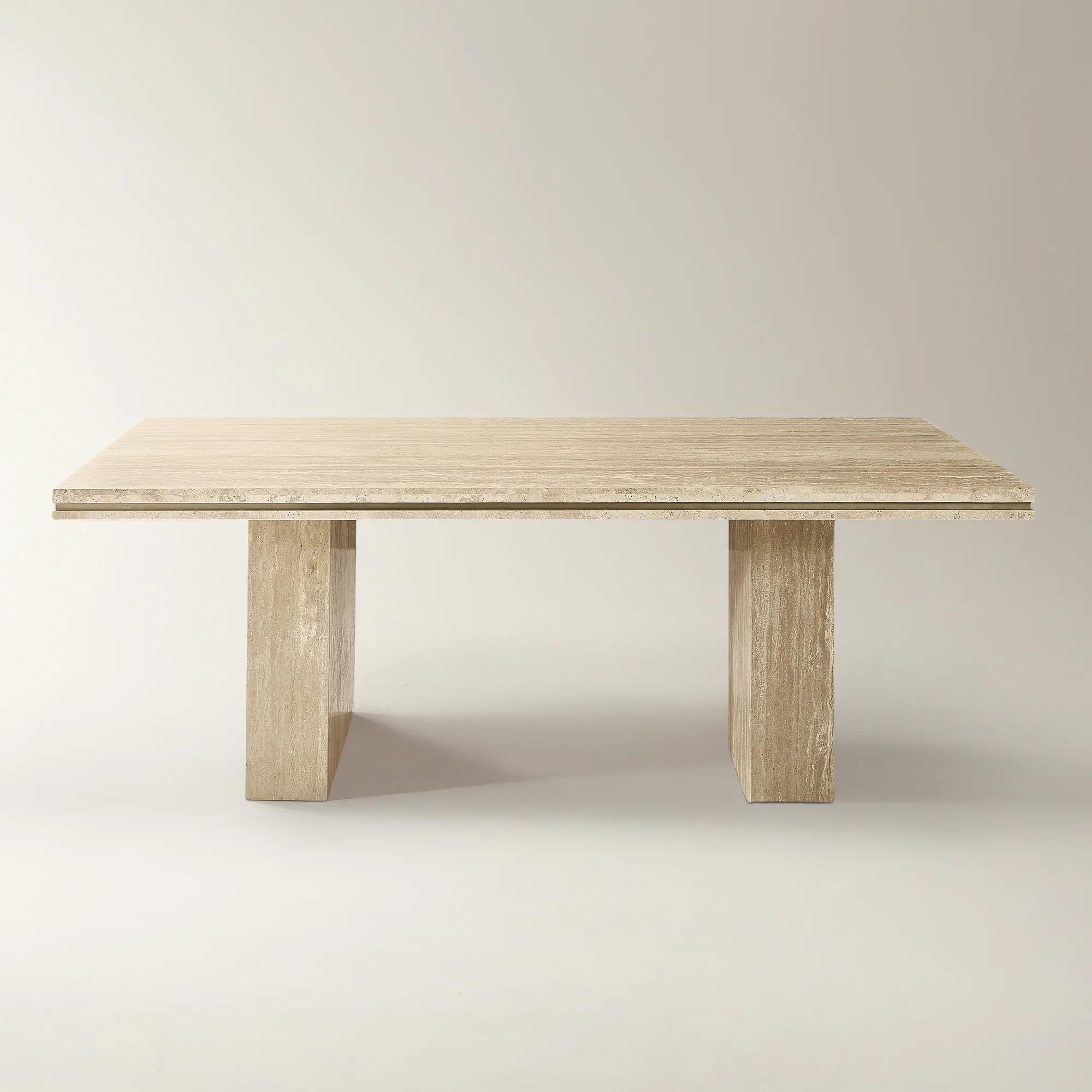 Vanta Rectangular Travertine Dining Table (84")$4199
A natural travertine dining table featuring a soft gold stainless-steel inlay and sculptural twin-panel base.
Add To Cart -
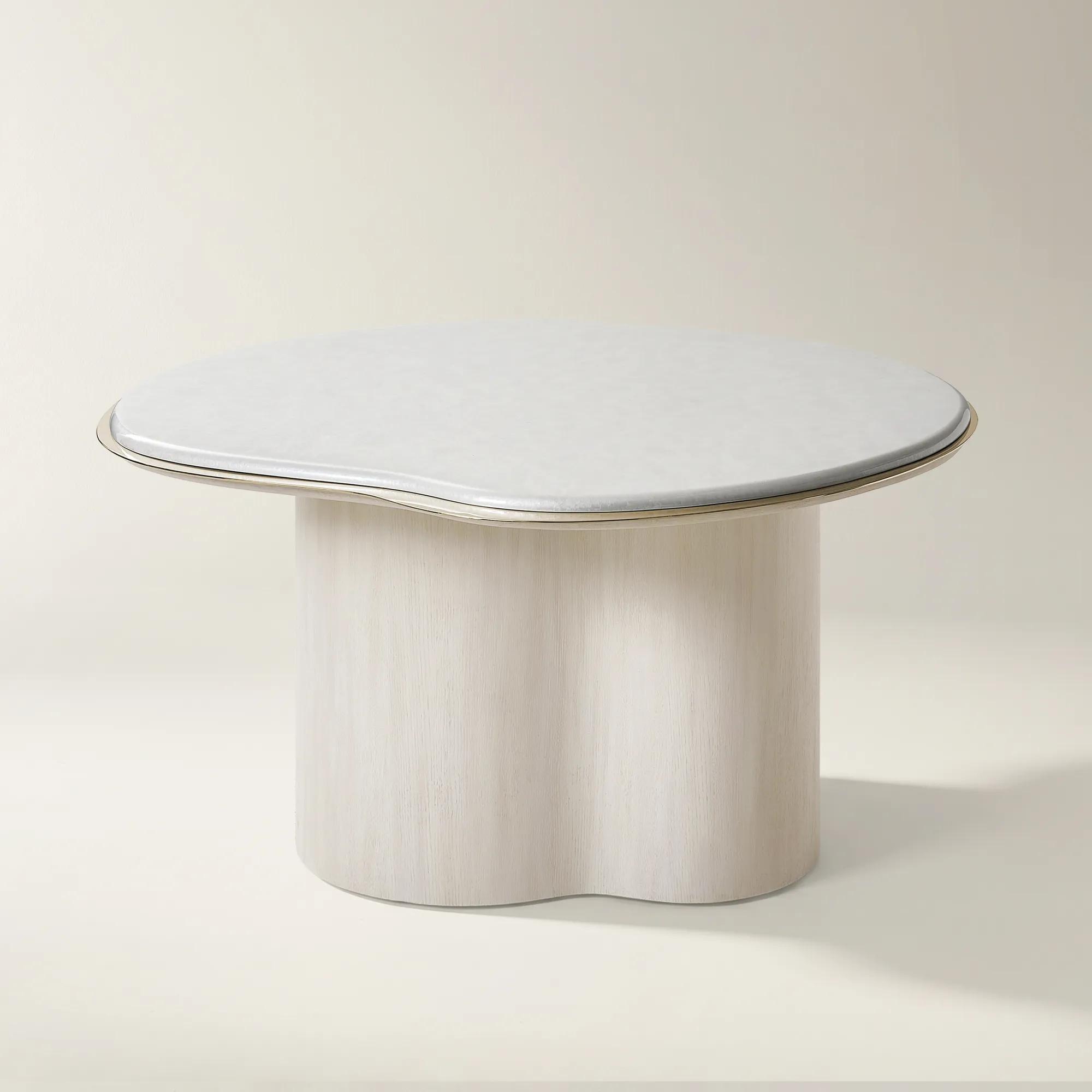 Lumina Bleached Oak Dining Table With Pearl Lacquered Top (58")$2699
A sculptural dining table featuring a pearl lacquered top, bleached oak base, and champagne gold trim.
Add To Cart -

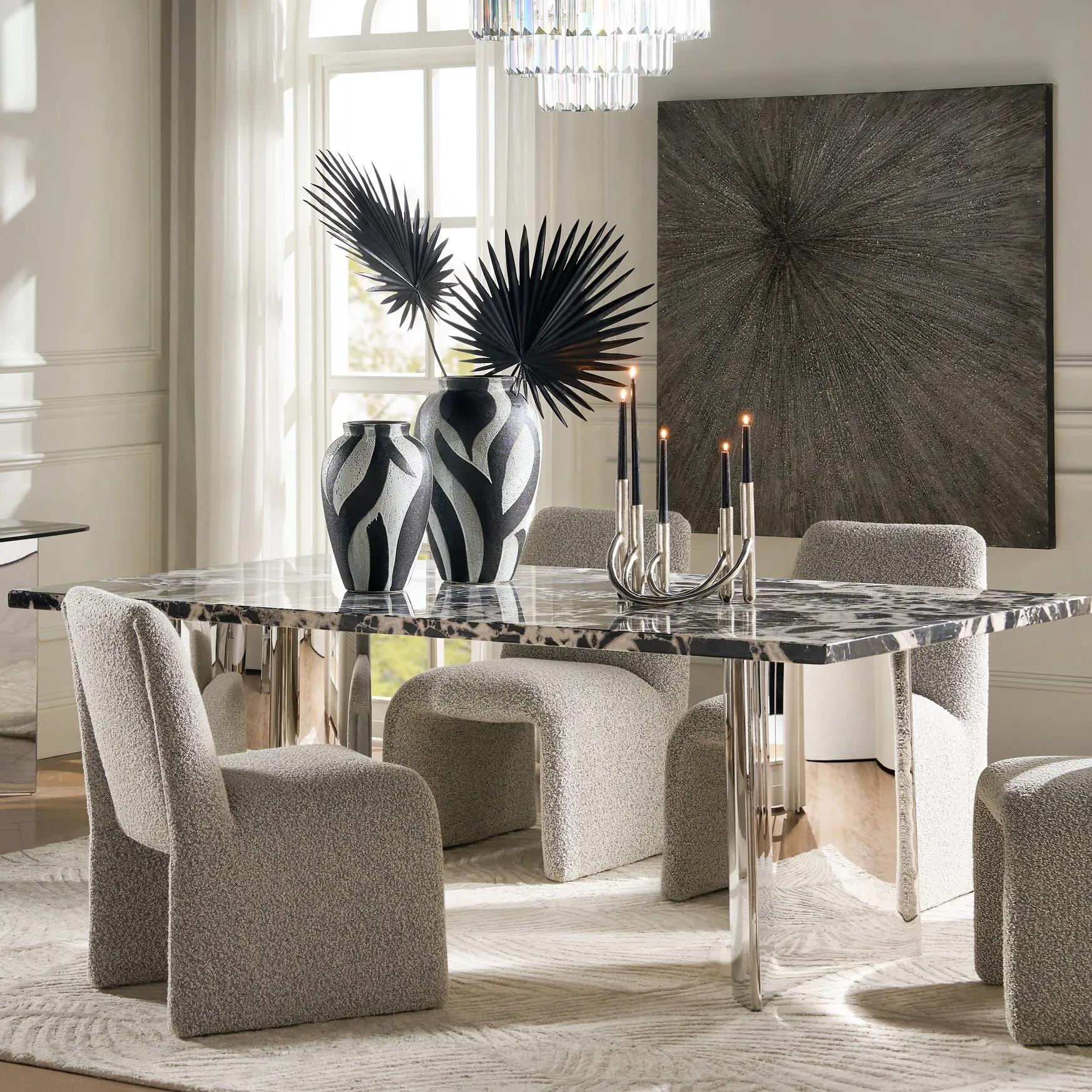 Muscat Rectangular Black Marble Dining Table With Stainless Steel Base (84")$3099
A dramatic black marble dining table with unique veining and a polished stainless steel base.
Add To Cart -

 Matera Rectangular White Marble Dining Table With Stainless Steel Base (86.61")$2499
A modern dining table featuring a white marble top and polished stainless steel base for timeless elegance.
Add To Cart -
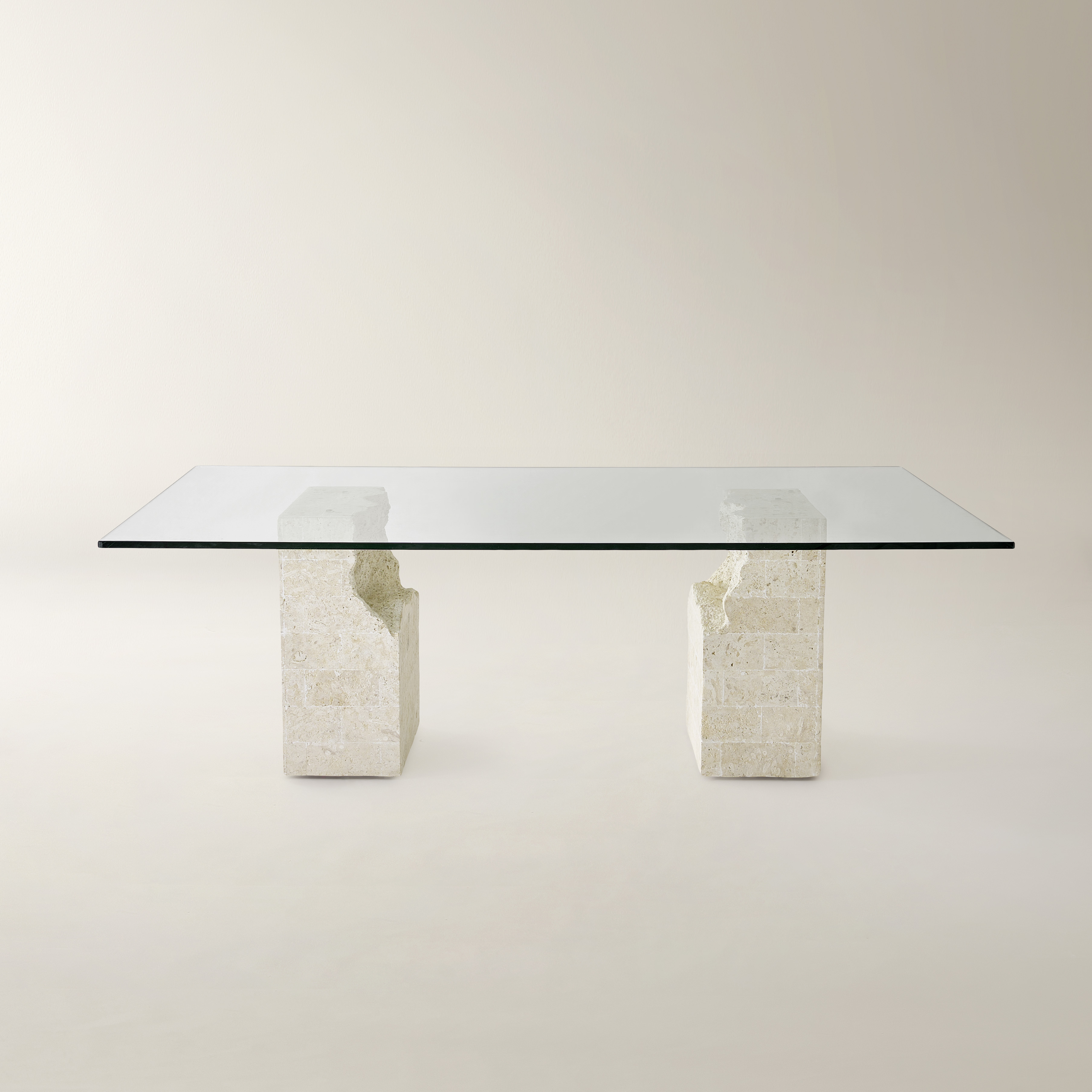 Cairo Rectangular Mactan Stone Dining Table With Glass Top (86.6")$2399
A contemporary dining table featuring a clear tempered glass top over hand-carved Mactan stone bases.
Add To Cart -

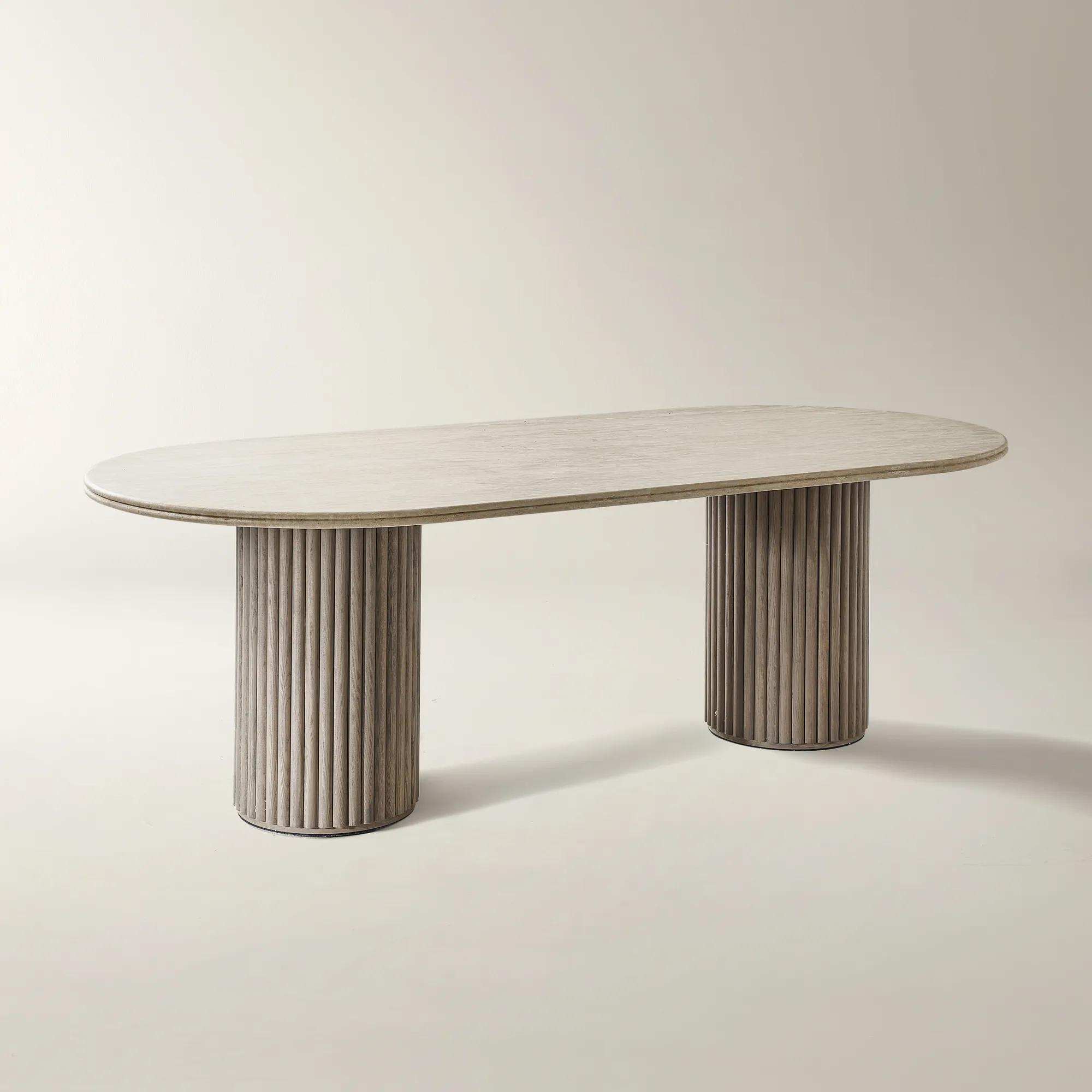 Bond Oval Reeded Travertine and Wood Dining Table (94.25")$4599
A natural travertine stone top pairs with a fluted solid ash base for refined, organic elegance.
Add To Cart -
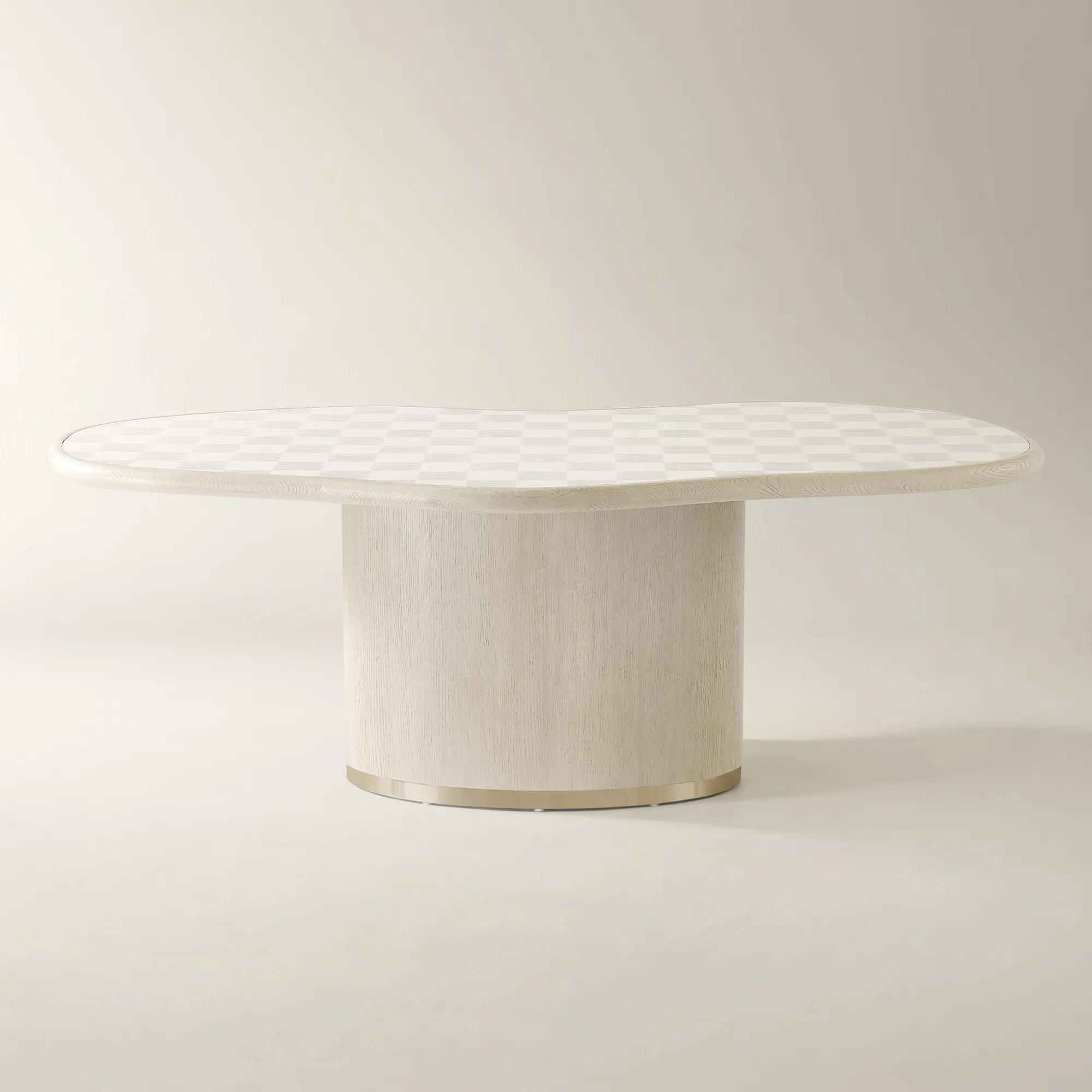 Vetra Checkerboard Oak and Maple Dining Table (84")$2399
A striking dining table featuring a hand-arranged oak and maple checkerboard veneer with soft gold accents.
Add To Cart -
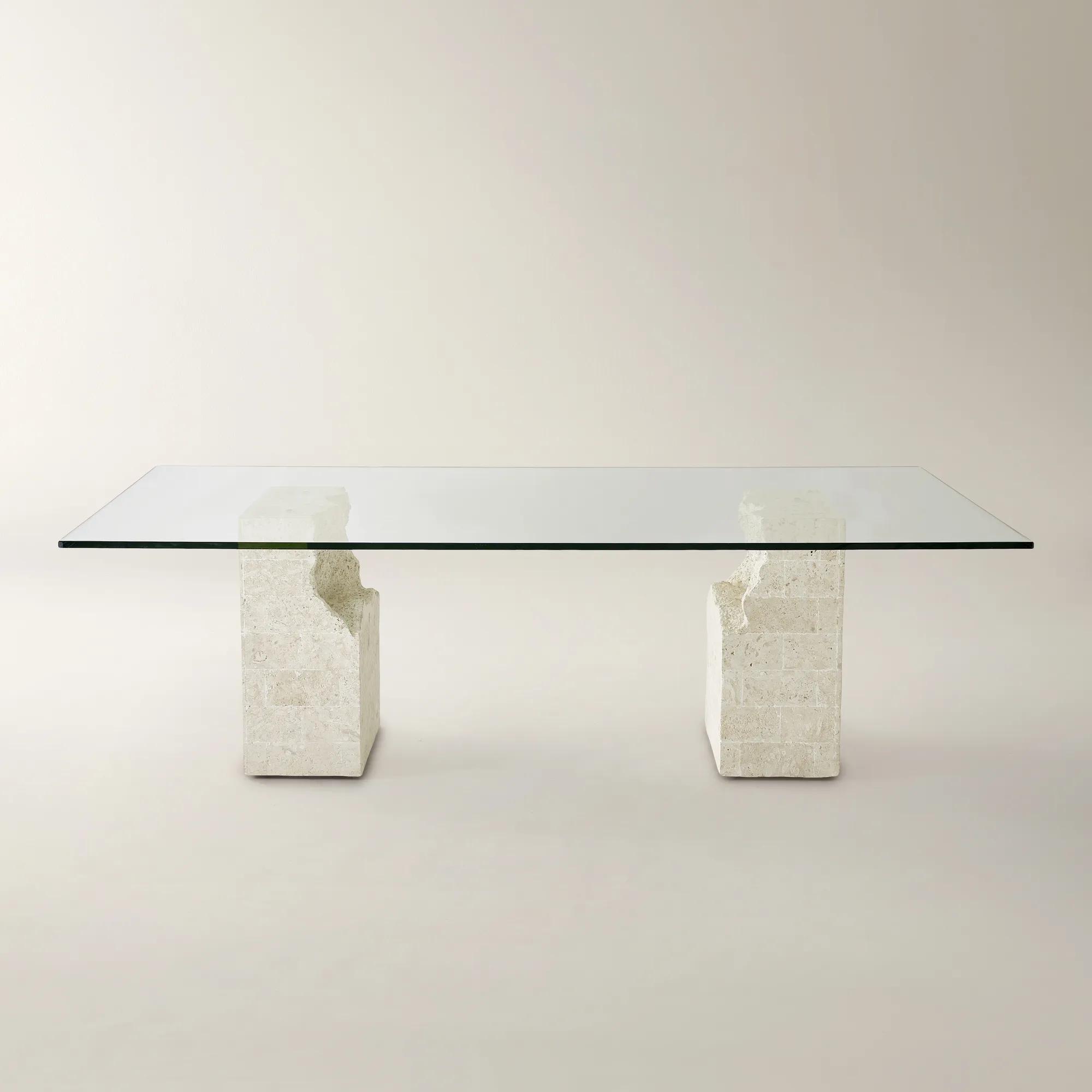 Cairo Rectangular Mactan Stone Dining Table With Glass Top (96")$2599
A contemporary dining table featuring a clear tempered glass top over hand-carved Mactan stone bases.
Add To Cart -
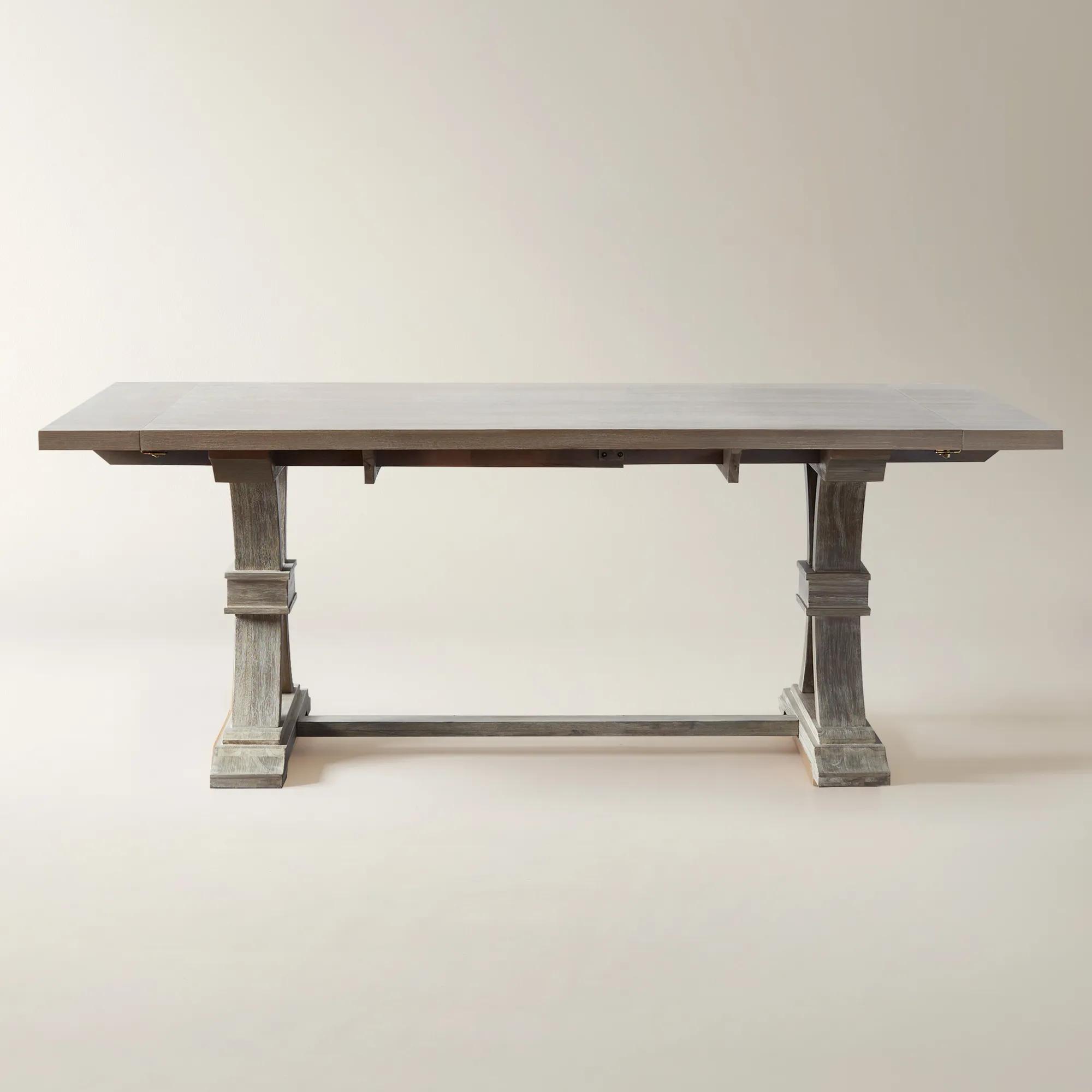 Archer Rectangular Grey Acacia Wood Extending Dining Table (78" - 110")$2499
A weathered grey acacia wood dining table with removable leaves and a kiln-dried hardwood frame.
Add To Cart -
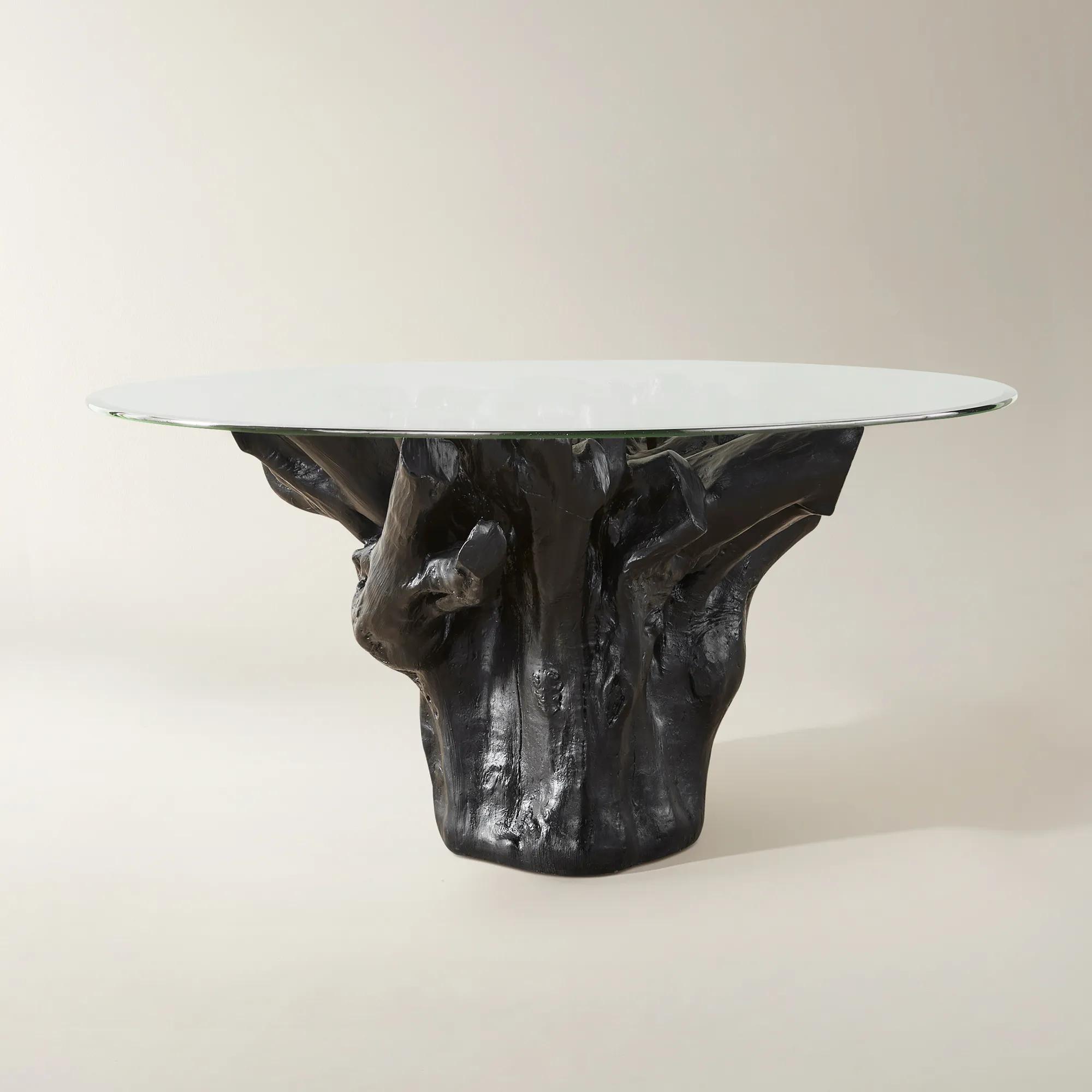 Sequoia Black Resin Dining Table With Glass Top (60")$2299
A sculptural black resin base with real stone fragments supports a round tempered glass top for organic elegance.
Add To Cart -
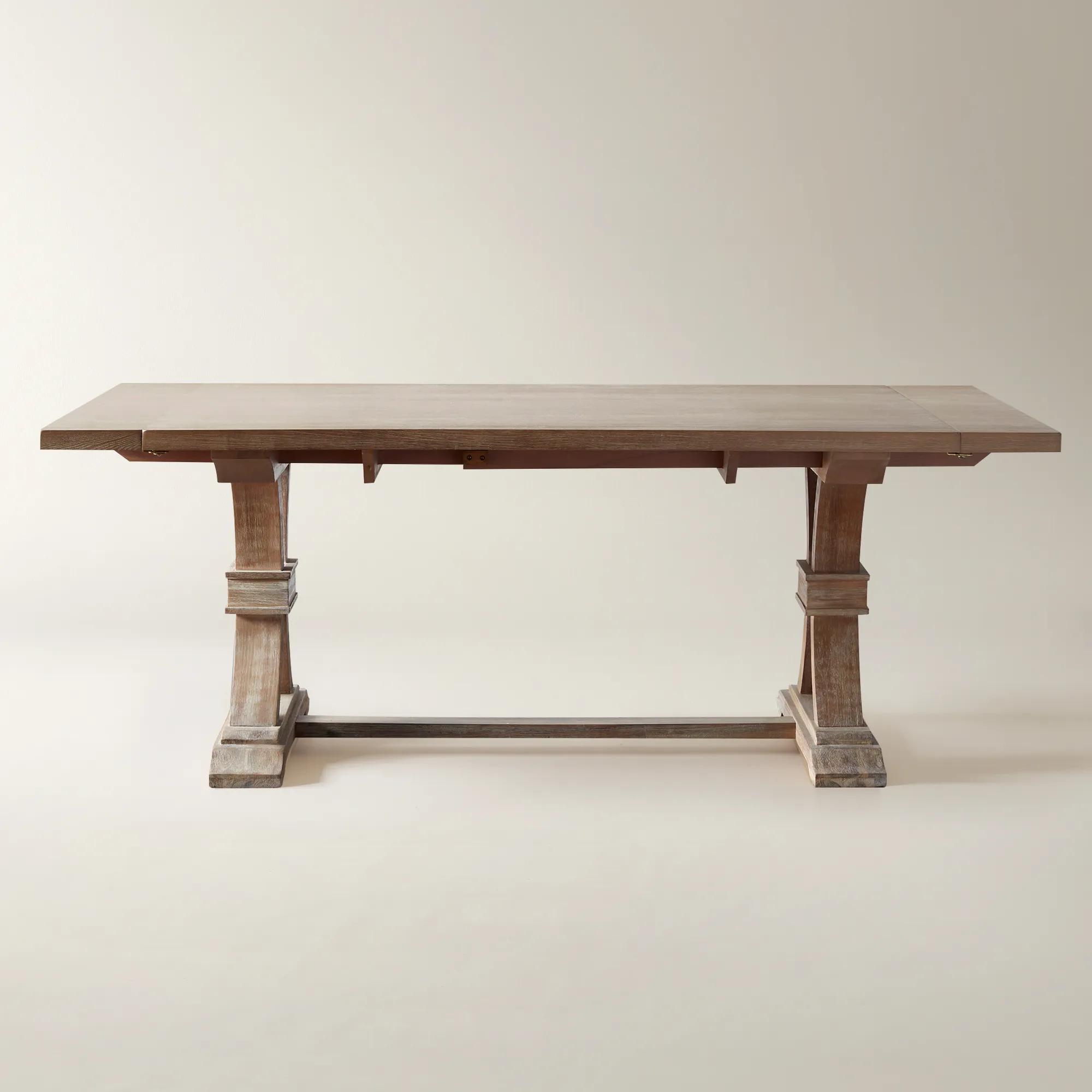 Archer Rectangular Whitewashed Acacia Wood Extending Dining Table (78" - 110")$2499
An extending dining table crafted from kiln-dried hardwood with a whitewashed oak finish and acacia veneer.
Add To Cart -
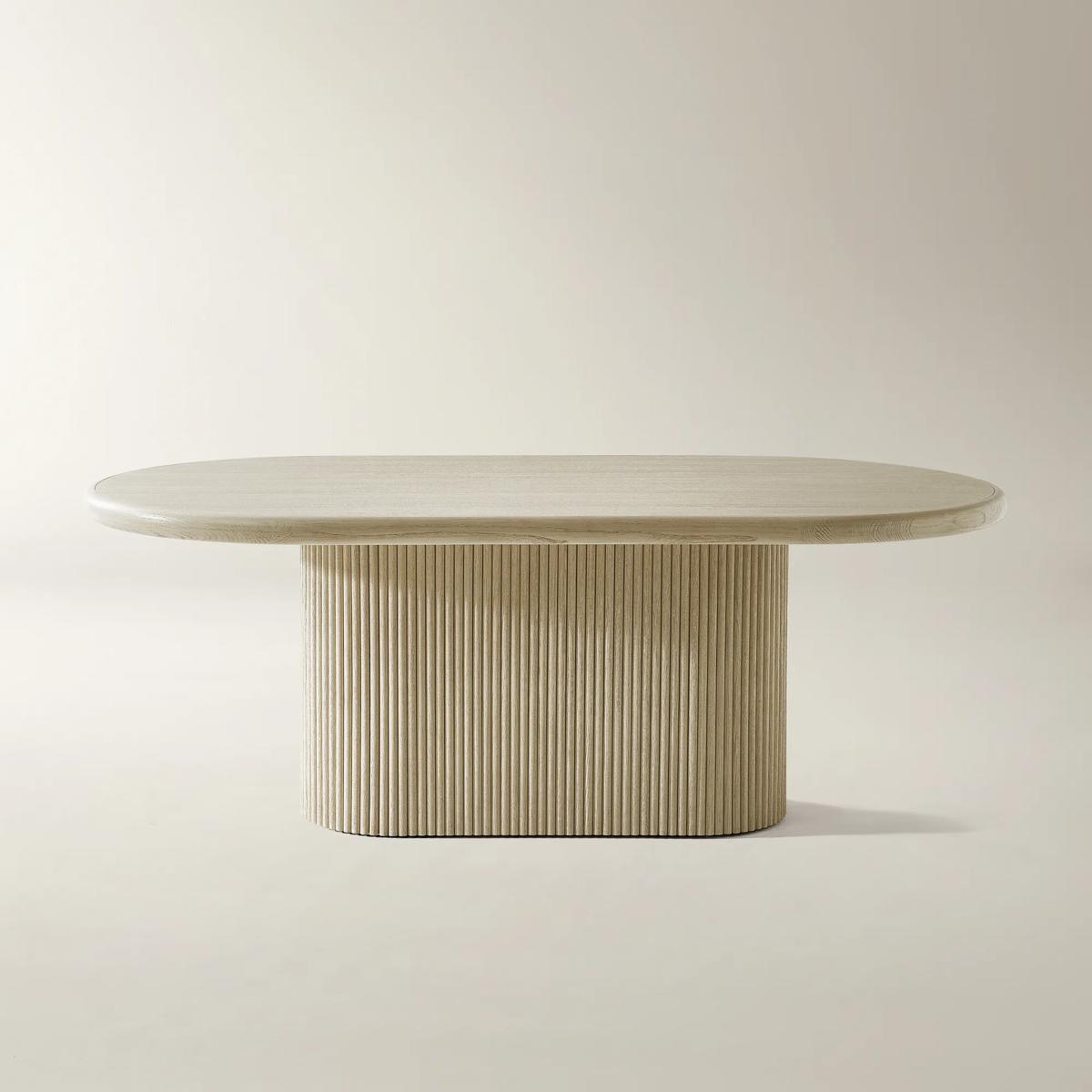
 Stria Oval Reeded White Oak Dining Table (82")$2199
A sculptural oval dining table featuring reeded oak, a single pedestal base, and gold-plated steel trim.
Add To Cart -
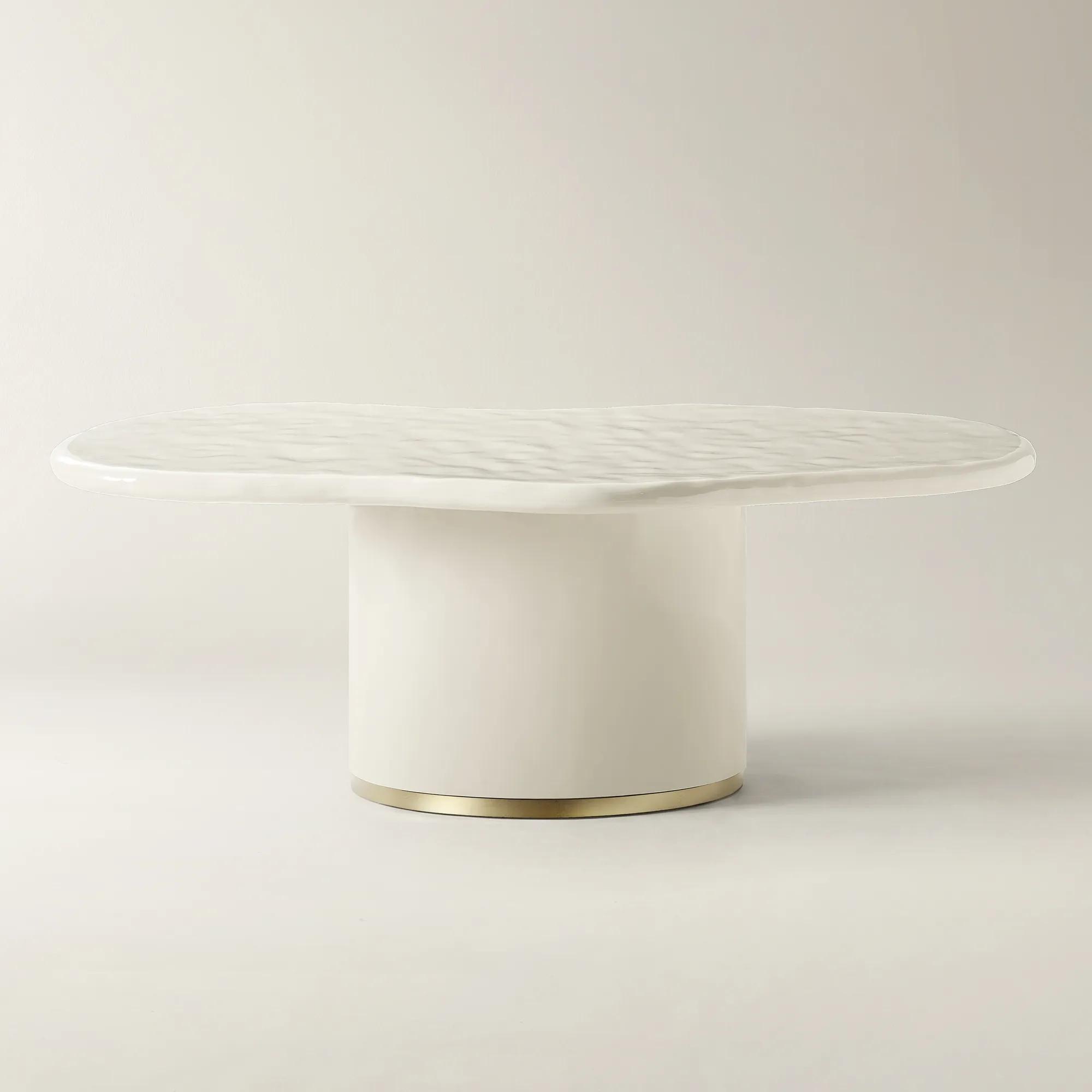 Celia Lacquered Cloud Resin Indoor/Outdoor Dining Table (84")$1999
A sculptural, high-gloss resin dining table with gold stainless steel accents for indoor or covered outdoor use.
Add To Cart -
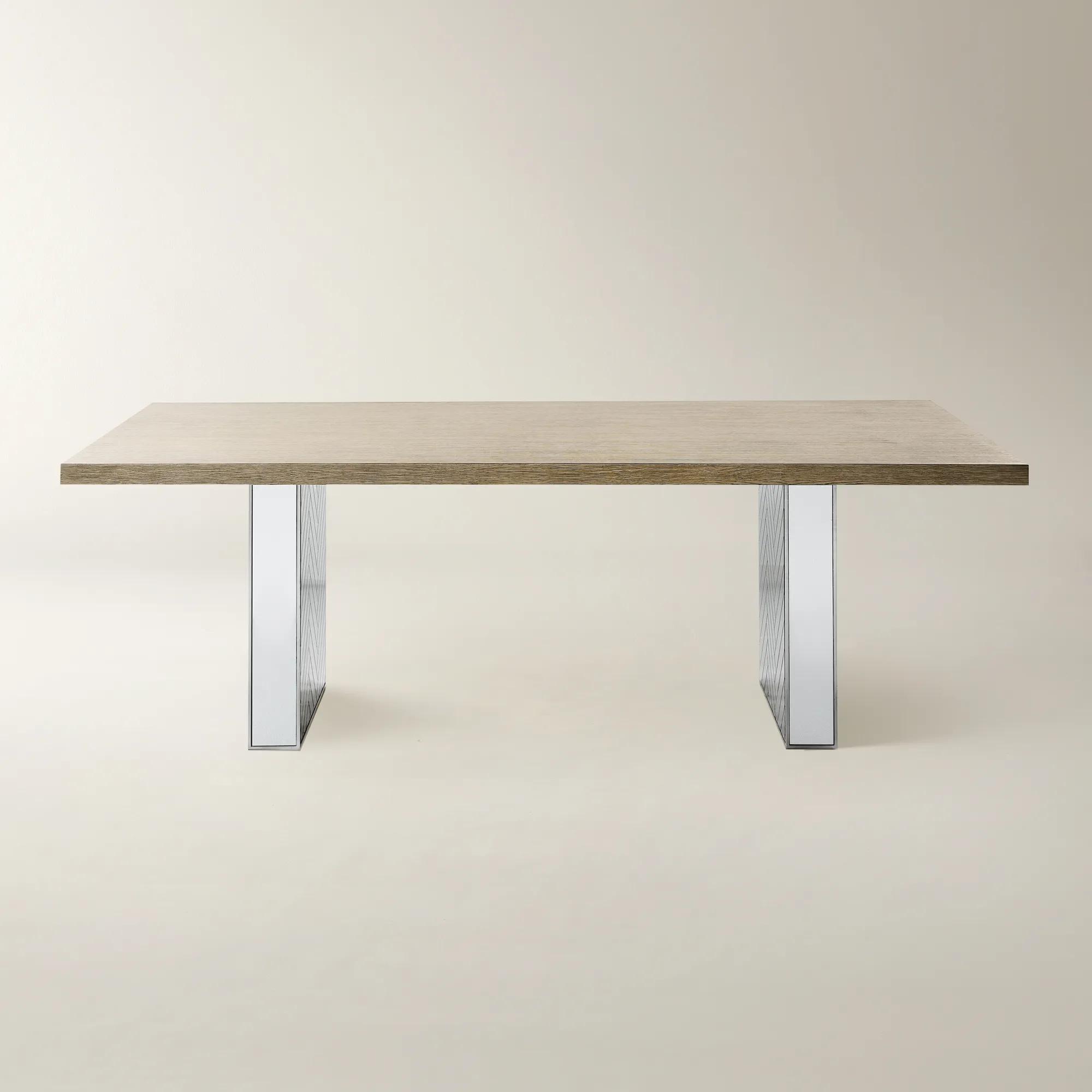
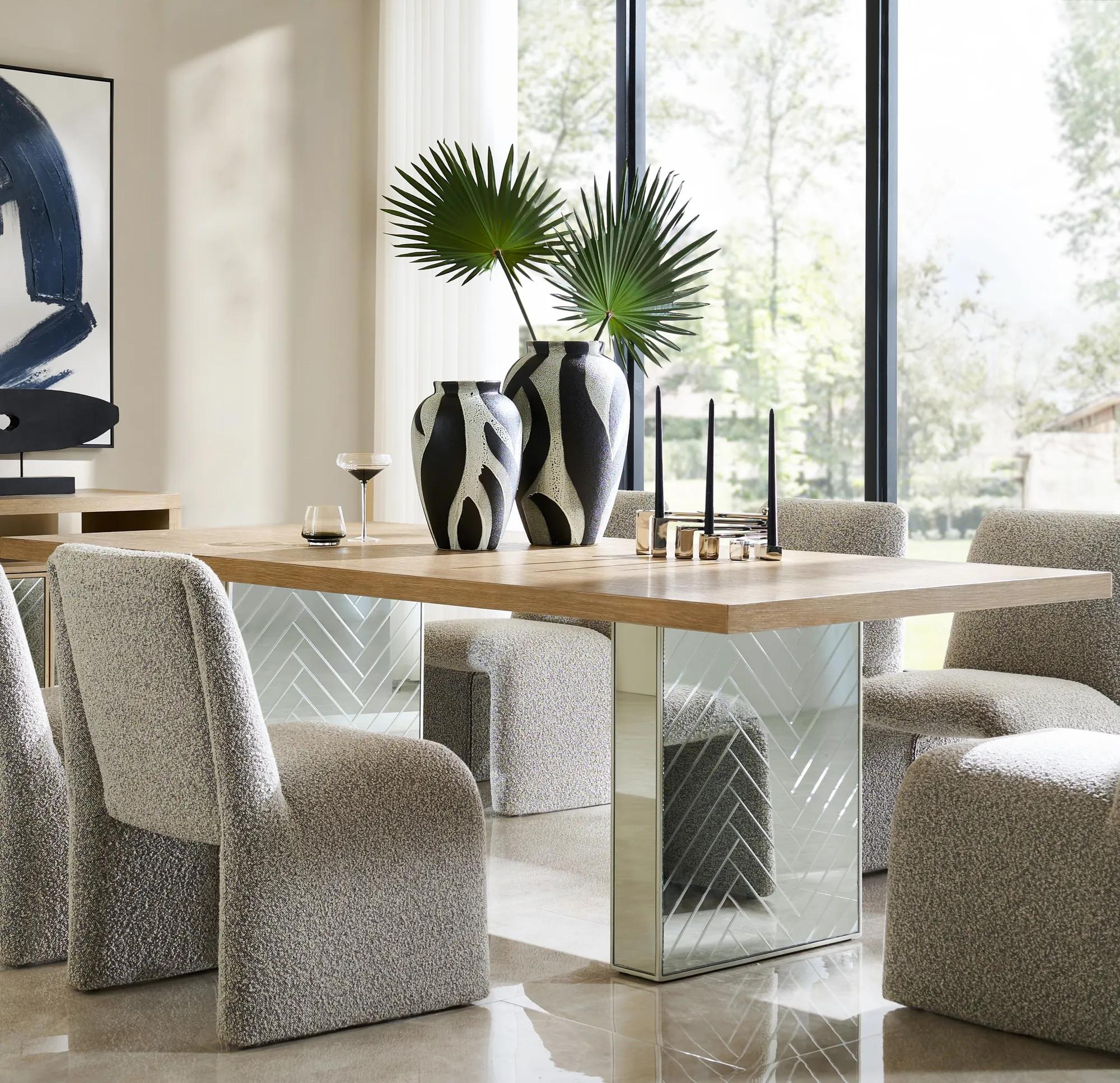 Glimmer Rectangular Seadrift Oak Dining Table With Mirrored Base (90.5")$1799
A modern dining table featuring a warm oak veneer top and a silver mirror-faced parquet base.
Add To Cart -
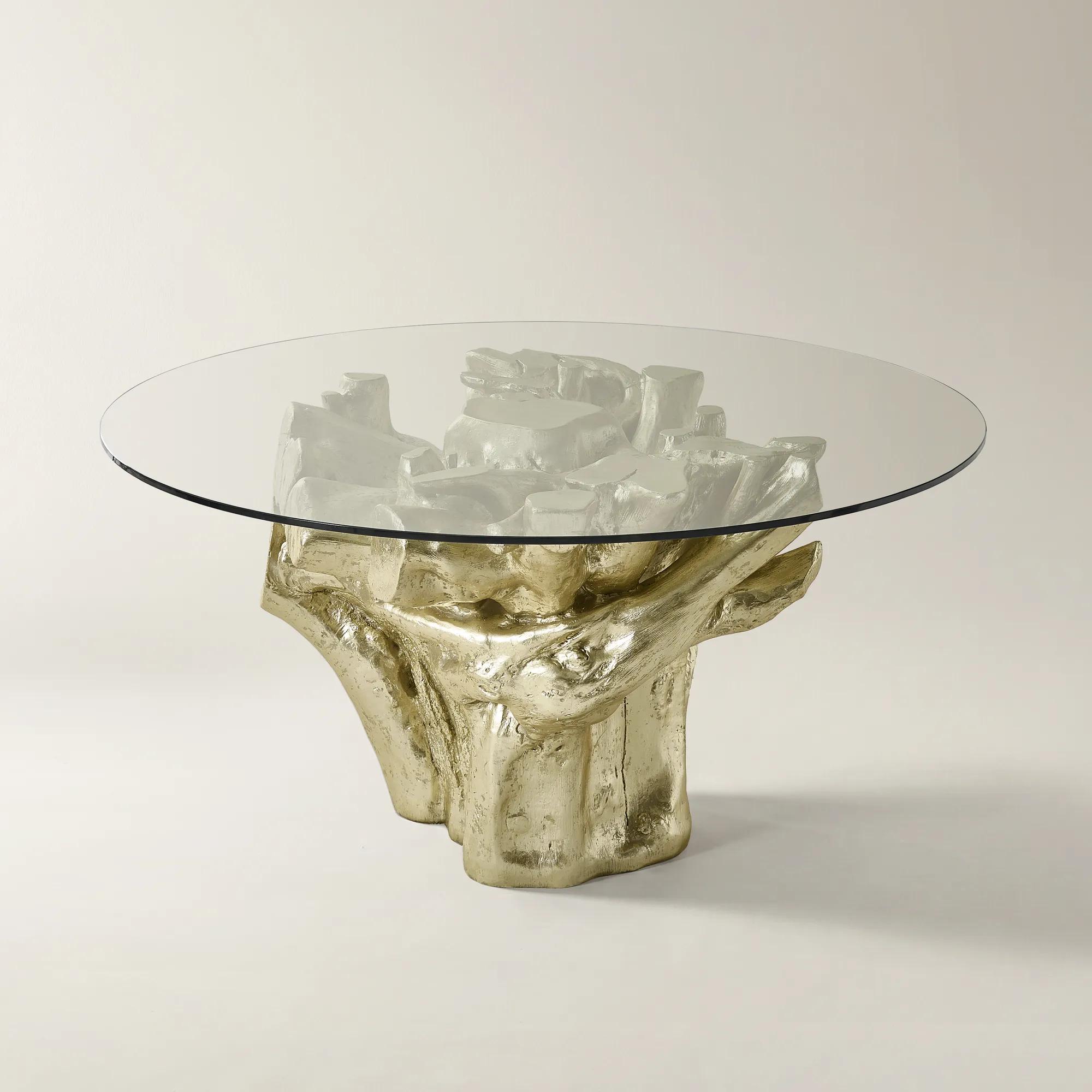 Sequoia Champagne Gold Resin Dining Table With Glass Top (60")$2199
A sculptural resin dining table with a champagne gold leaf base and a clear tempered glass top.
Add To Cart -
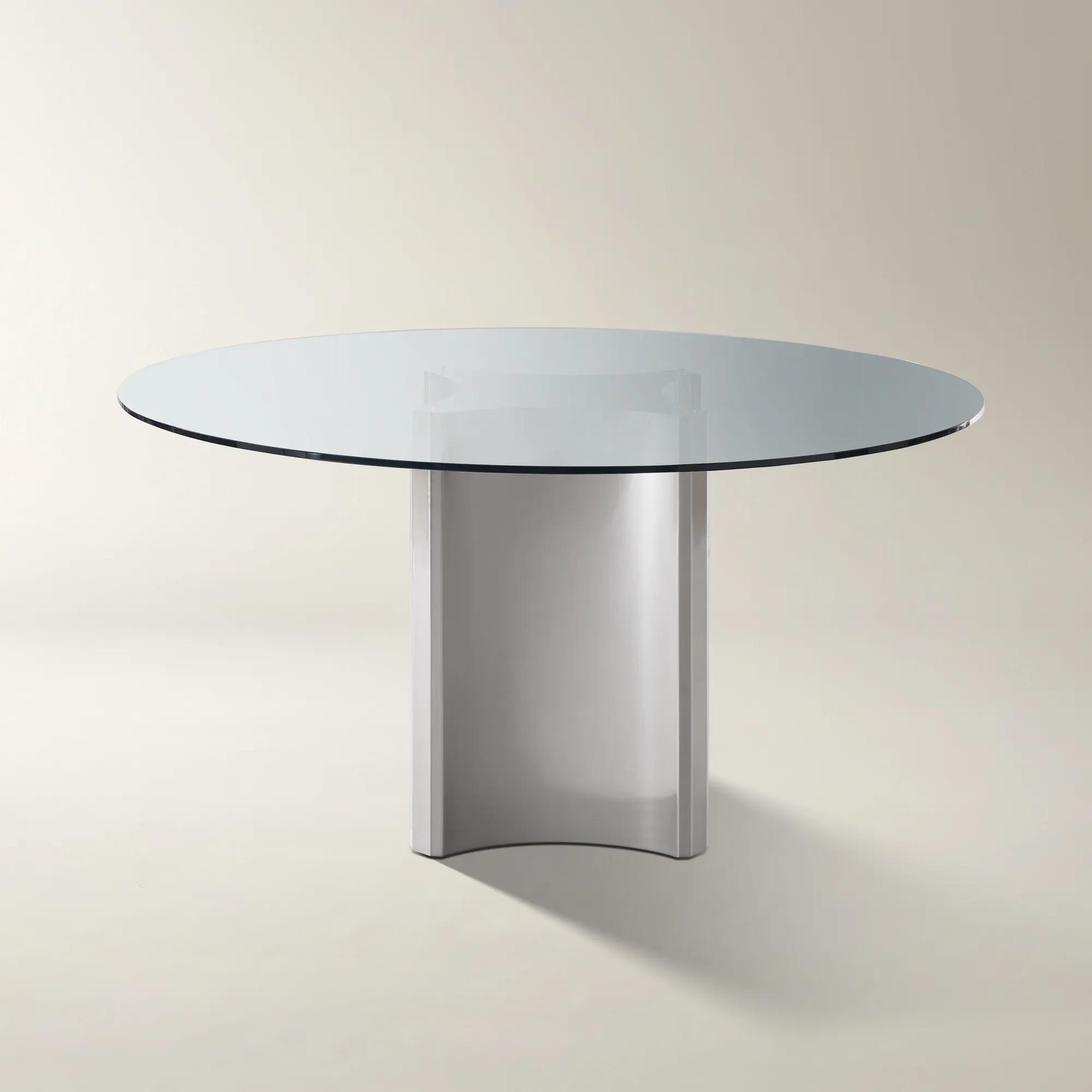 Ventane Round Clear Glass and Stainless steel Dining Table (58")$1499
A modern dining table featuring a clear tempered glass top and polished stainless steel base with anti-fingerprint finish.
Add To Cart -

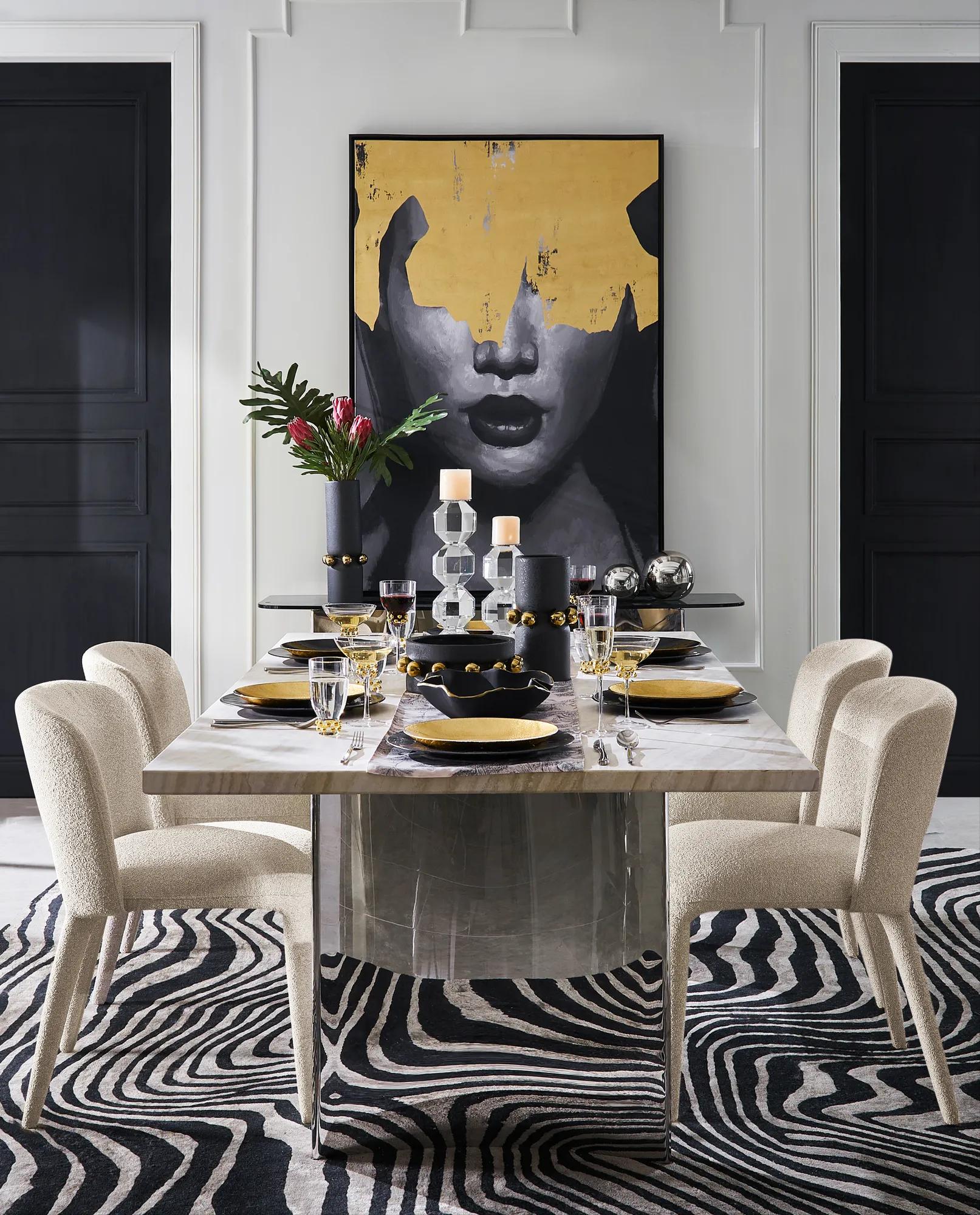 Muscat Rectangular Tan Marble Dining Table With Stainless Steel Base (84")$3099
A sophisticated dining table featuring a tan travertine marble top and polished stainless steel base.
Add To Cart -
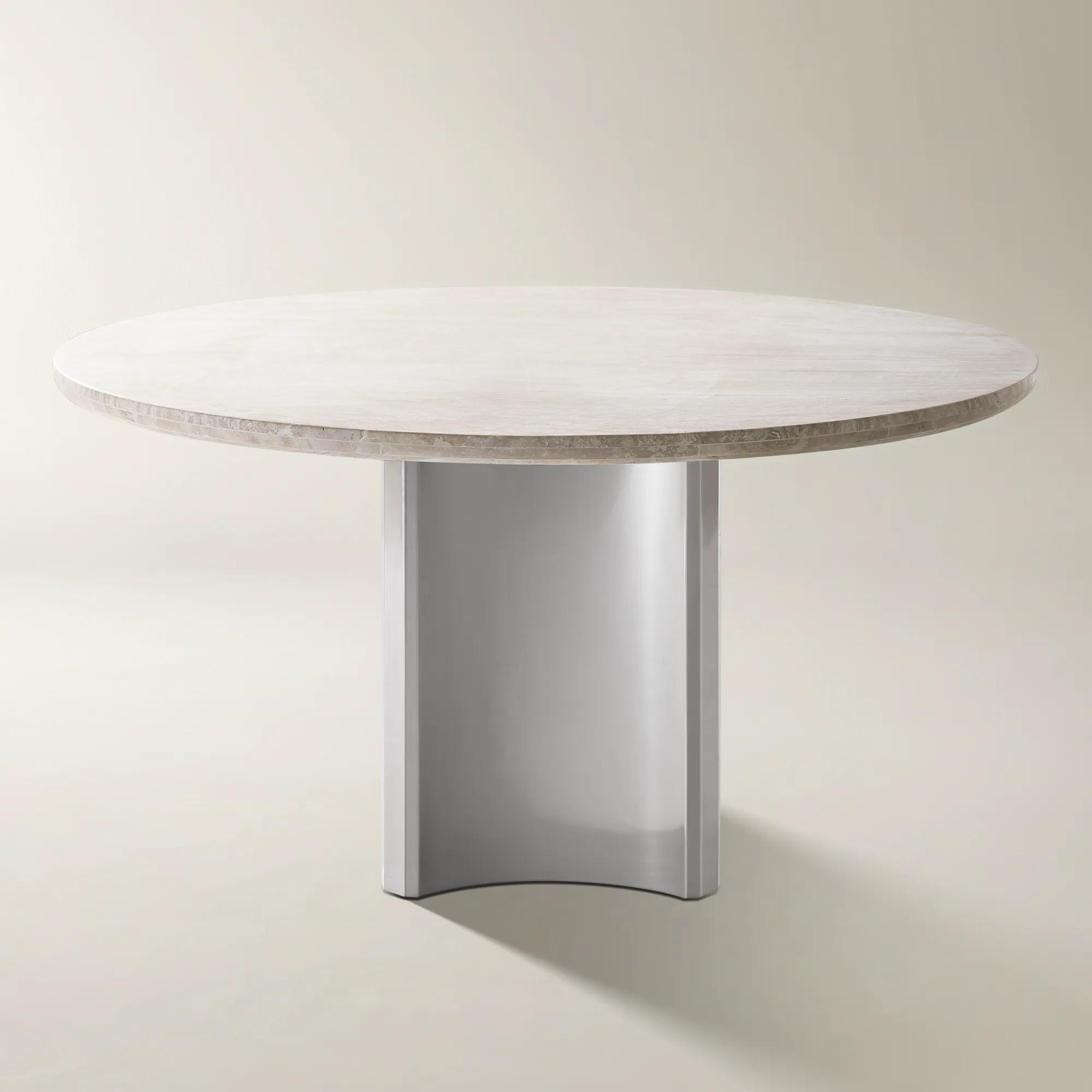 Ventane Round Tan Marble and Stainless steel Dining Table (58")$2999
A round tan travertine marble table with a polished stainless steel base for modern, elegant dining spaces.
Add To Cart -
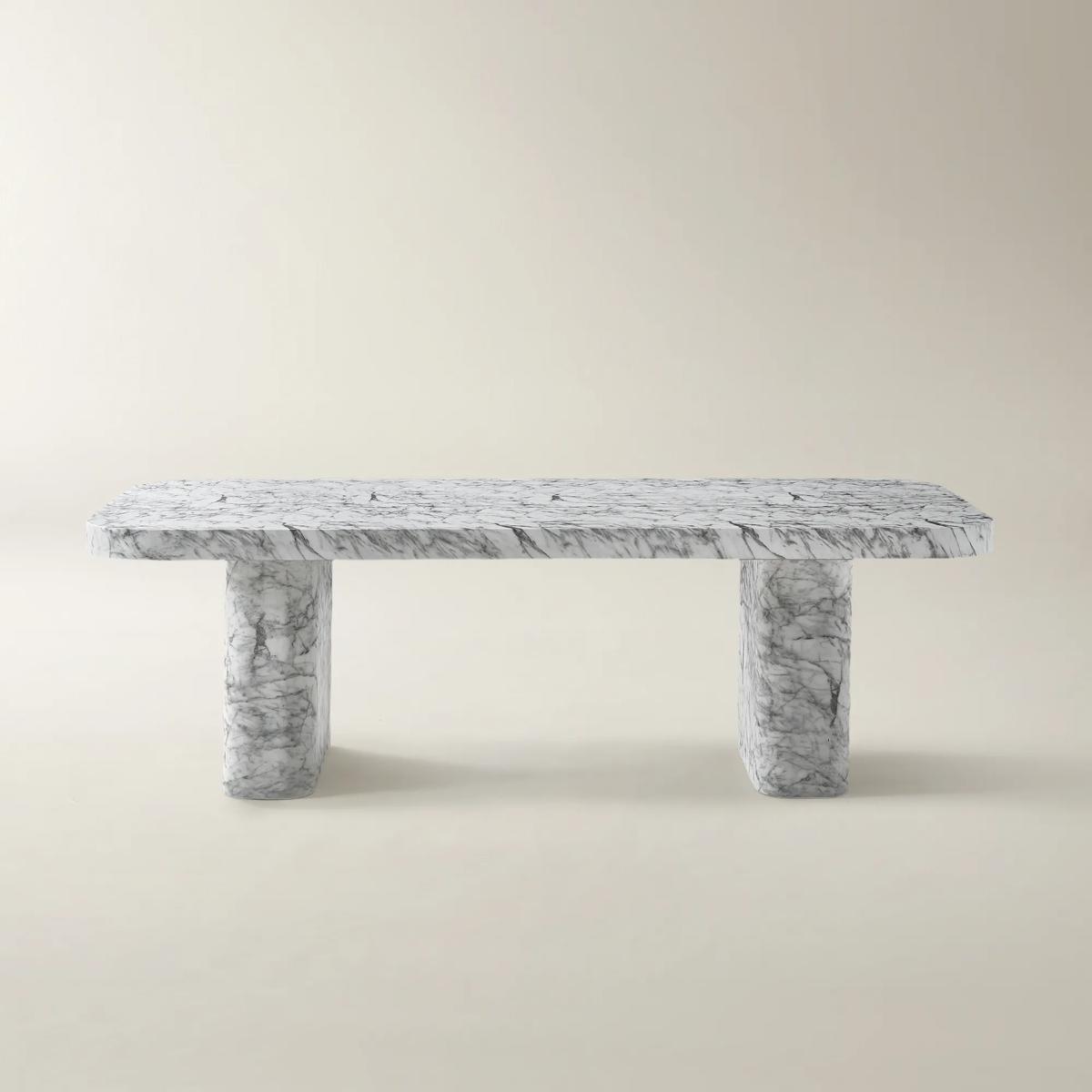
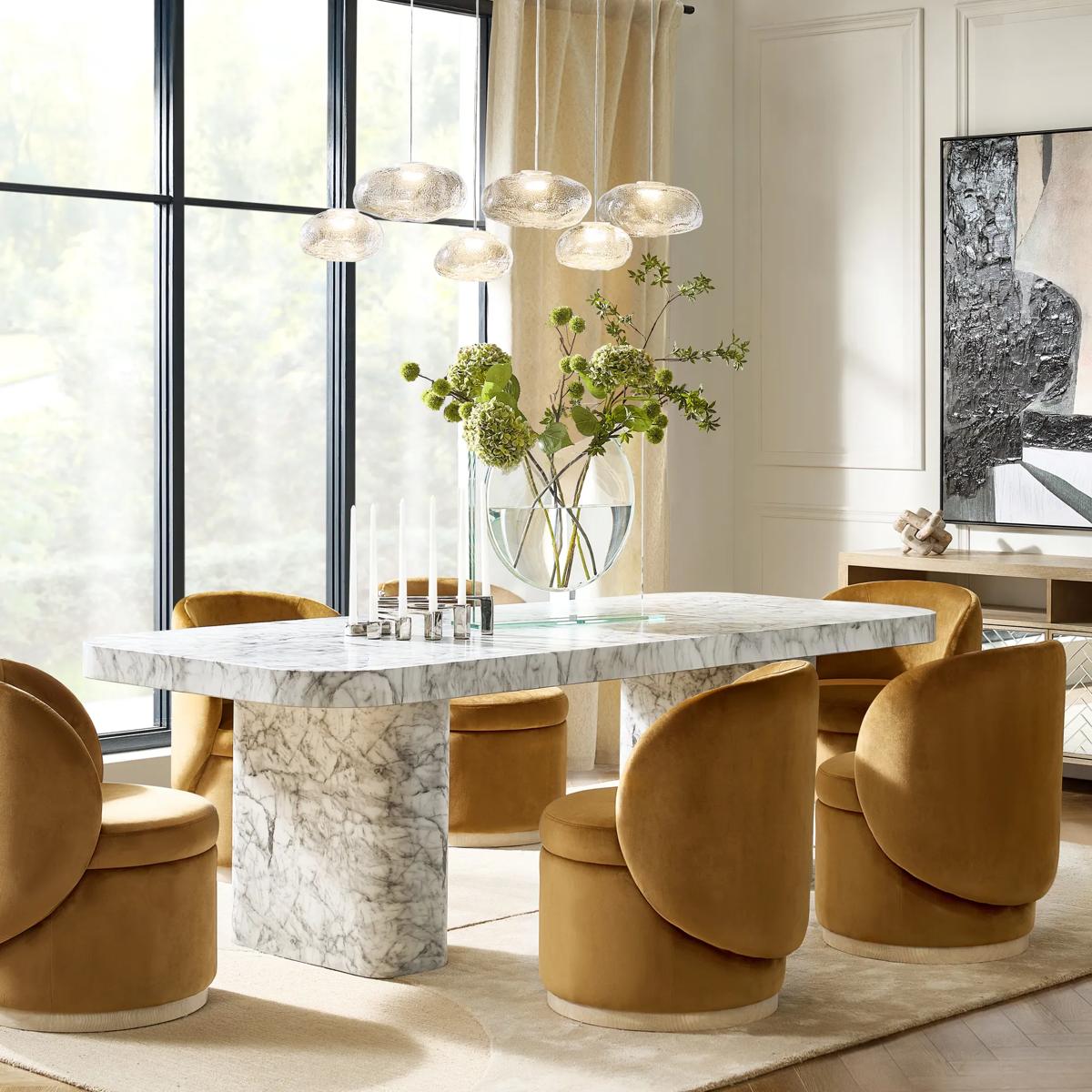 Silex Rectangular White Concrete Indoor/Outdoor Dining Table (94.5")$1999
A white concrete dining table with a sculptural pedestal base, marble-inspired veining, and indoor-outdoor versatility.
Add To Cart -
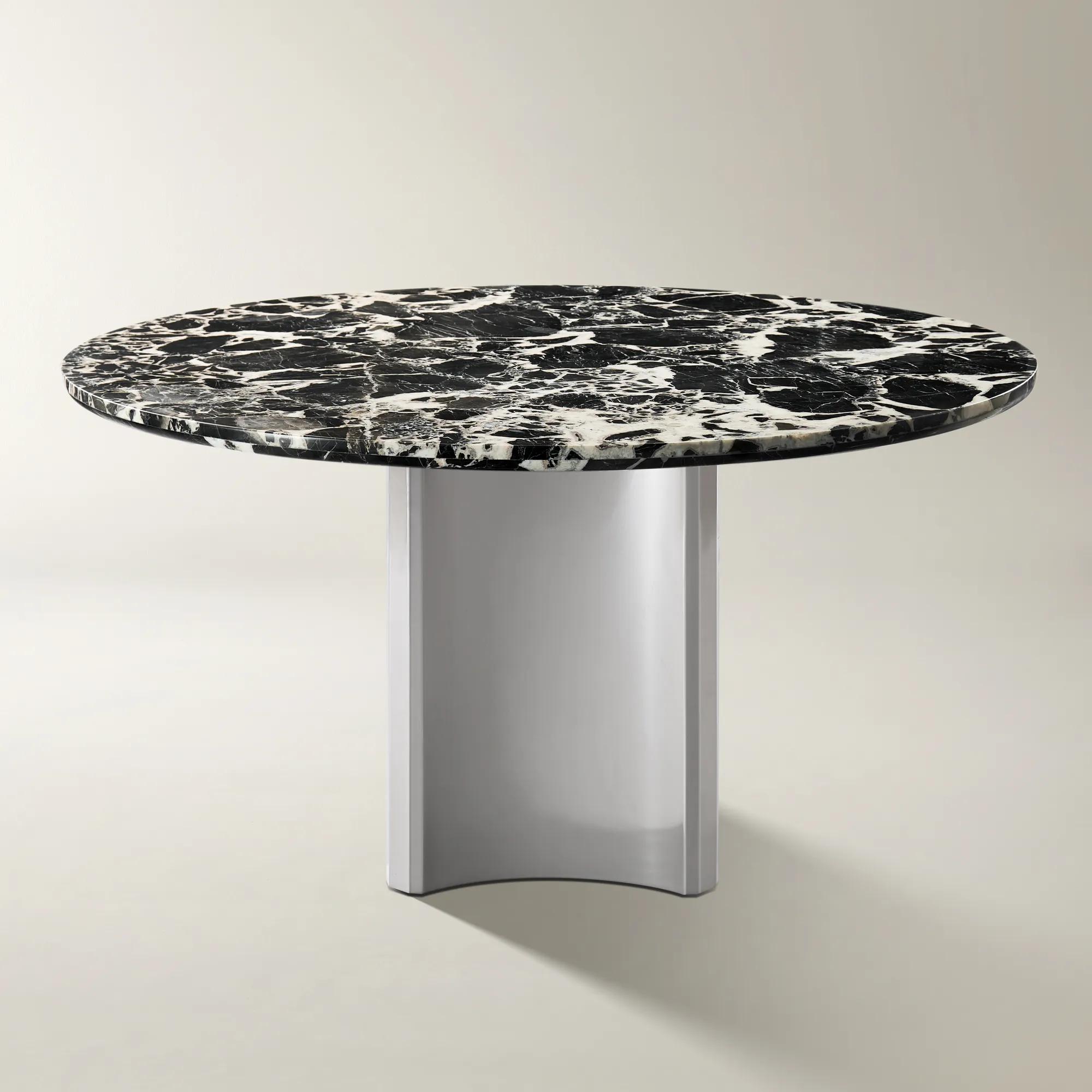
 Ventane Round Black Marble and Stainless steel Dining Table (58")$2999
A dramatic round dining table featuring a natural black marble top and polished stainless steel base.
Add To Cart

Dining Tables For Work-and-Meal Spaces
Choosing a dining table for office tasks and everyday meals begins with a balance of expressive design and thoughtful room fit. Consider luminous glass, lustrous lacquer, richly grained wood, or natural stone to anchor a space that welcomes both lunch and occasional laptop work. Compare overall dimensions, base placement, and care instructions to find a statement surface that suits your routine.
A dining table can give a flexible home workspace a striking focal point without letting office furniture define the room. Begin with the table’s full footprint: compare its listed width, depth or diameter, and height with the space you intend to use. Account for chairs pulled away from the table and the paths connecting nearby rooms, rather than measuring the tabletop alone. Rectangular forms introduce a strong architectural line, while round, oval, and freeform silhouettes create a softer composition. Beneath the surface, examine pedestal placement, legs, and any apron in relation to your chair and knees. Check chair-arm clearance as well as seat height; overall table dimensions alone do not establish a comfortable work setup. Plan around occasional laptop sessions or paperwork, rather than assuming a dining table offers the adjustments of a dedicated workstation. Let material establish the mood, then let its care requirements guide your daily rituals. Clear glass gives a sculptural base room to command attention; lacquer adds luminous depth; wood grain lends warmth; and natural stone introduces distinctive mineral movement. Compare the documented finish and cleaning instructions rather than treating every surface within a material family alike. Some natural stone is porous and needs prompt attention to spills, while wood veneers and lacquered finishes may require protection from moisture, heat, or direct sunlight. Use a protective writing pad where the table’s care guidance recommends one, and follow its instructions for coasters and surface protection. Keep work essentials easy to remove so the tabletop’s artistry returns to view at mealtime. For a coordinated place to put them away, explore ideas for concealed home office storage.
FAQs
A dining table is designed around meals and gathering, with occasional work arranged on its surface. A dedicated desk may include work-specific features such as drawers or cord management. Review each design’s details rather than expecting a dining table to include office features or a desk-conversion mechanism.
Choose one visual thread—warm wood tones, reflective metal, or sculptural curves—and repeat it selectively in surrounding pieces. Let the table remain the focal point rather than matching every finish. Explore <a href="https://zgallerie.com/o/modern-home-office-furniture-ideas">modern home office furniture ideas</a> for a cohesive approach to rooms with more than one purpose.
Natural wood grain and stone veining bring individual character to a room, so tone and pattern can vary between pieces. Veneers, coatings, and other finish treatments also influence a table’s appearance and care. Read the material description closely to understand the composition behind the look.
Give decorative objects a deliberate place away from your working area, and keep papers and accessories together for an easy transition. After work, remove devices and cords before arranging place settings. A restrained tabletop composition allows a dramatic base or richly patterned surface to remain the room’s signature.
Follow the table’s specific care instructions for its top, base, and finish. Use a protective pad beneath pen-and-paper work where recommended, and follow guidance for cleaning spills and protecting against heat or moisture. Do not assume a cleaner intended for one material is appropriate for the entire table.


