Dining Tables For Family Gatherings
Dining Tables For Family Gatherings
-
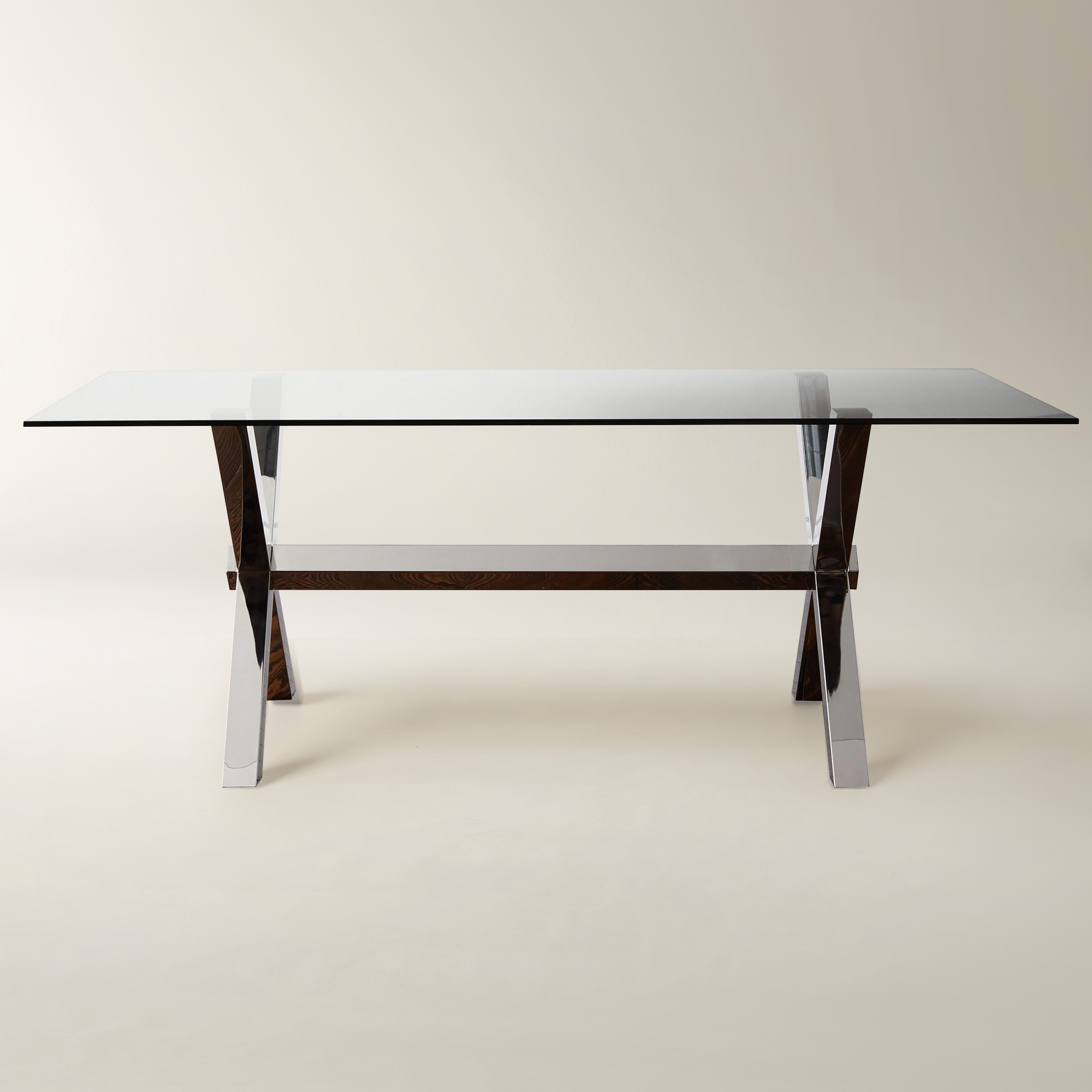
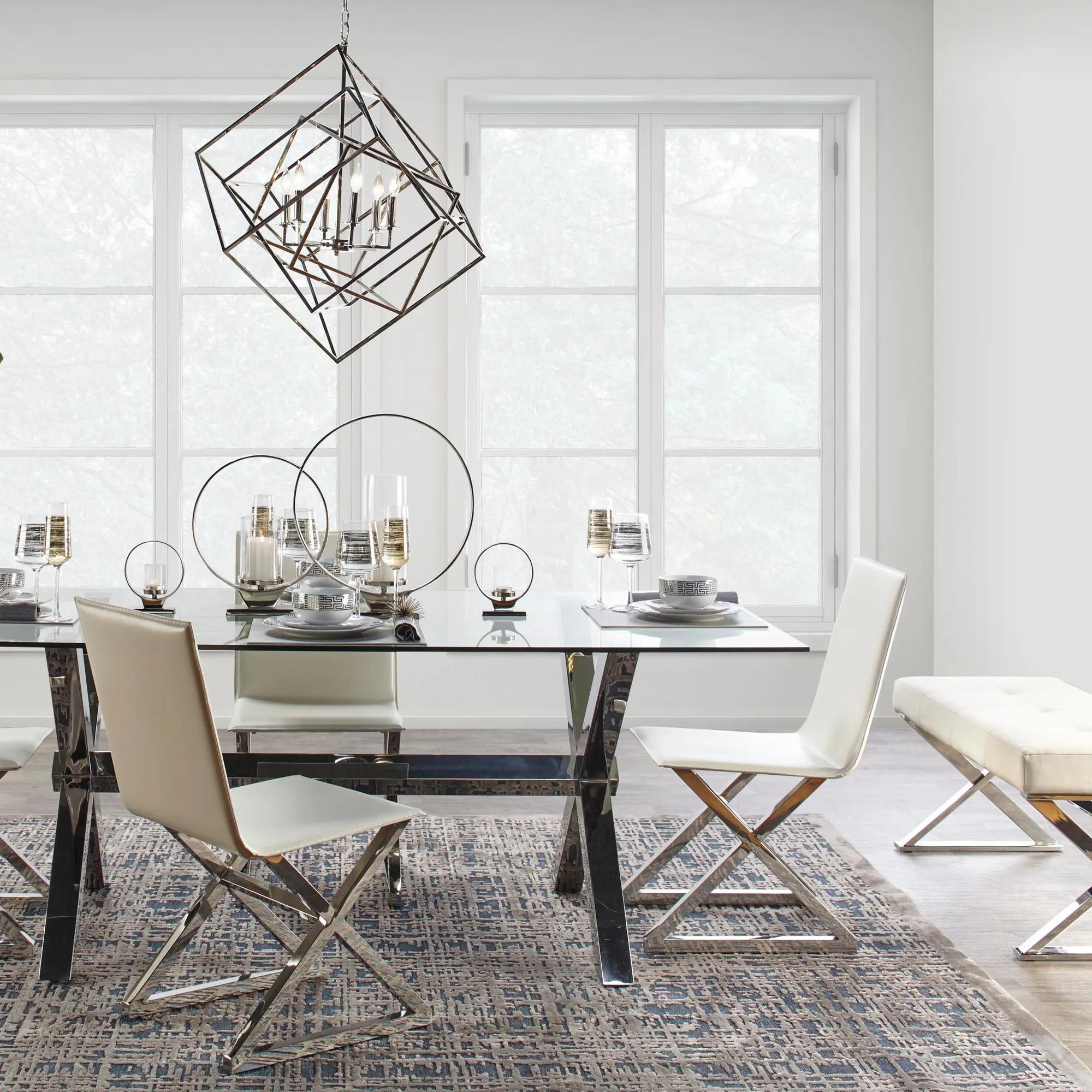 Axis Rectangular Silver Dining Table With Glass Top (78")$1199
A contemporary dining table featuring a polished stainless steel base and durable tempered glass top.
Add To Cart -
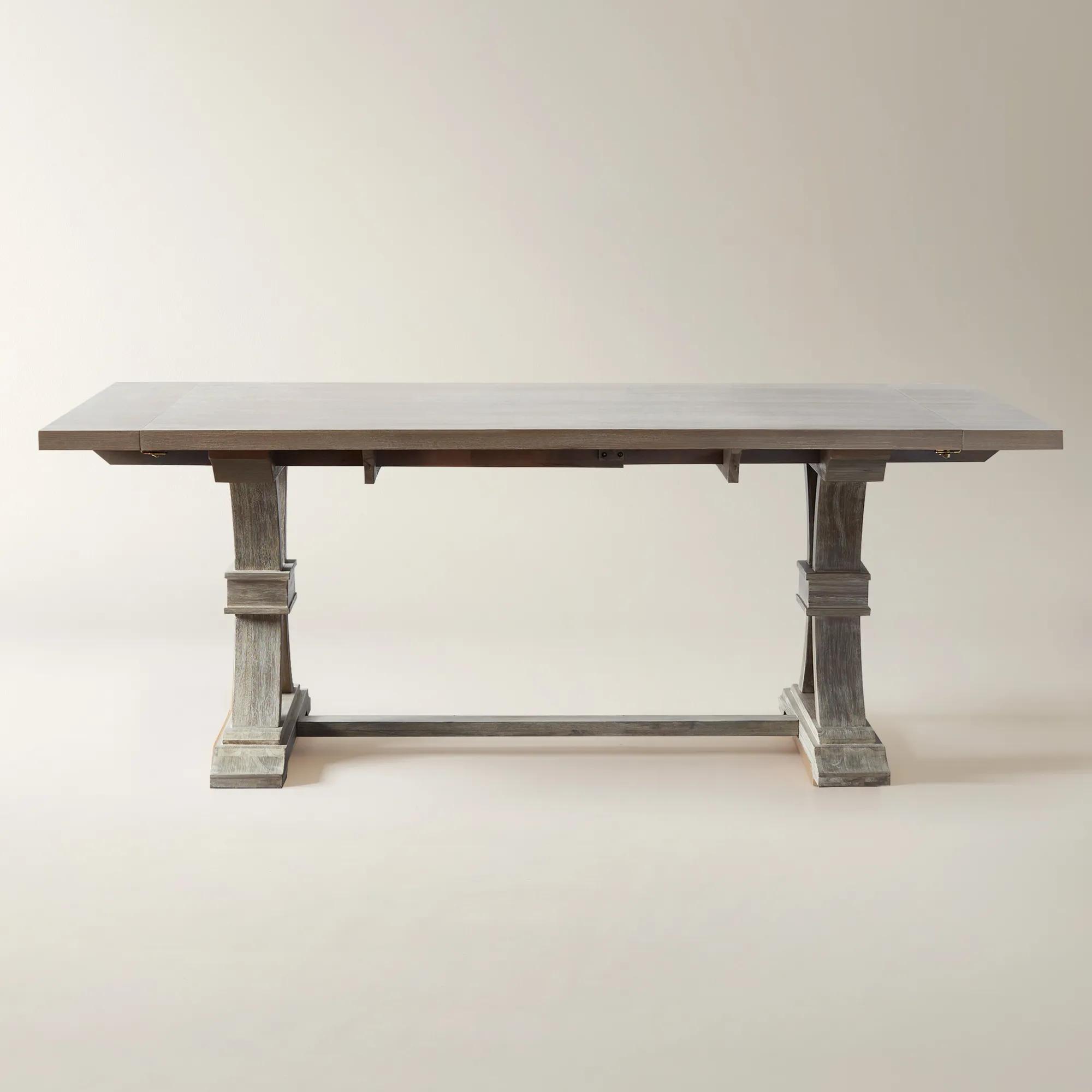 Archer Rectangular Grey Acacia Wood Extending Dining Table (78" - 110")$2499
A weathered grey acacia wood dining table with removable leaves and a kiln-dried hardwood frame.
Add To Cart -
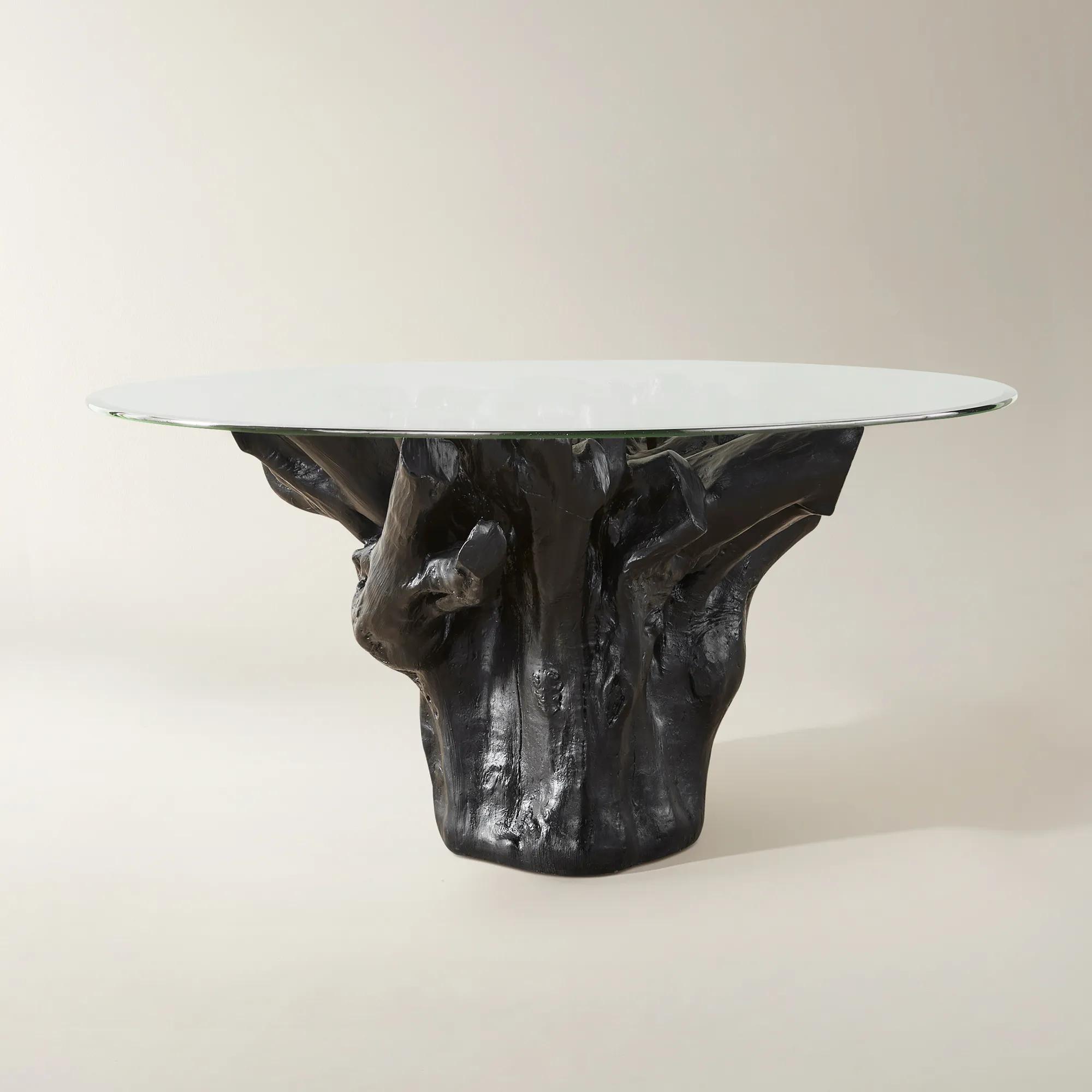 Sequoia Black Resin Dining Table With Glass Top (60")$2299
A sculptural black resin base with real stone fragments supports a round tempered glass top for organic elegance.
Add To Cart -
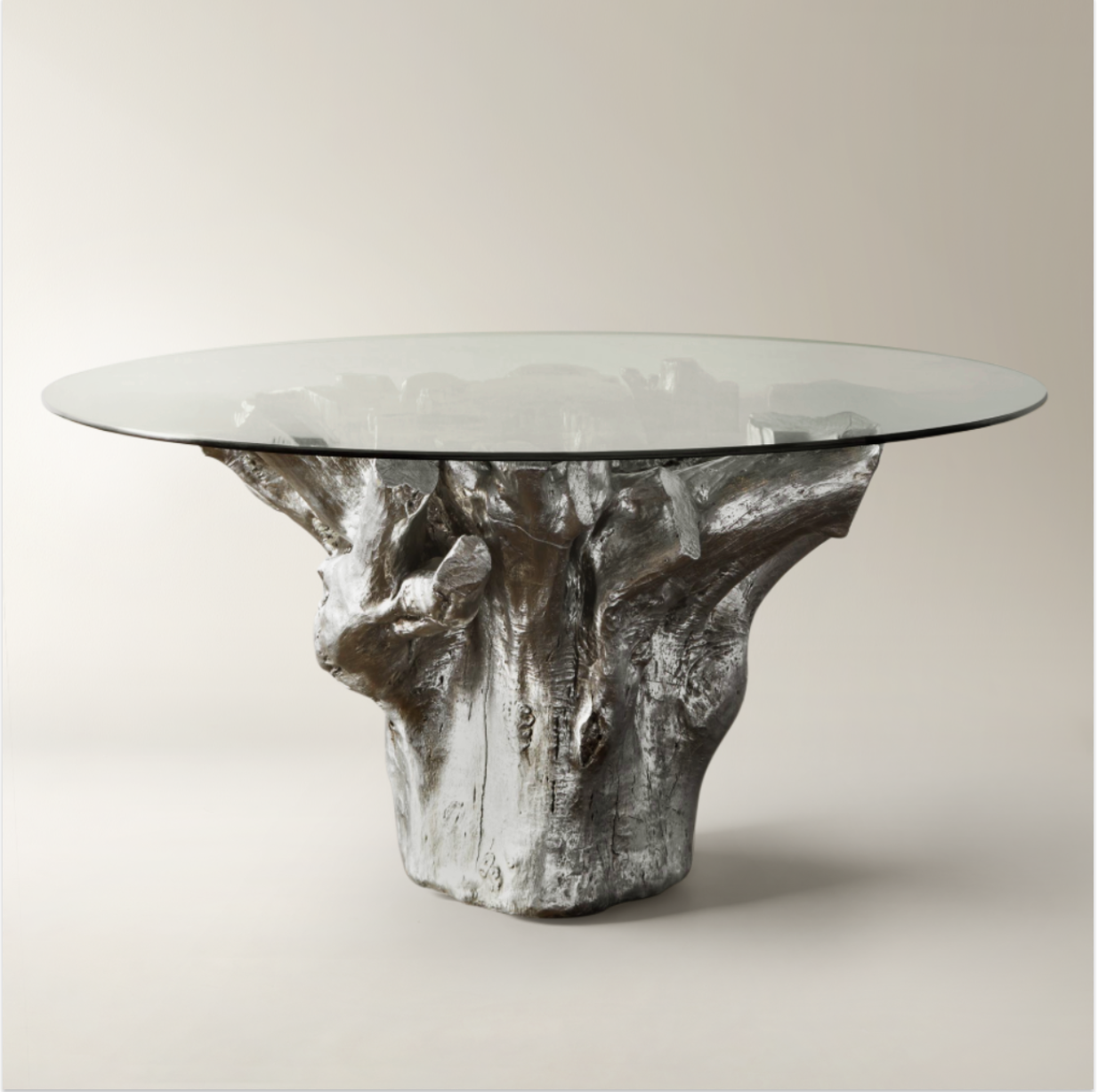 Sequoia Silver Resin Dining Table With Glass Top (60")$2199
A sculptural resin base with hand-applied silver leaf supports a round tempered glass top for modern elegance.
Add To Cart -
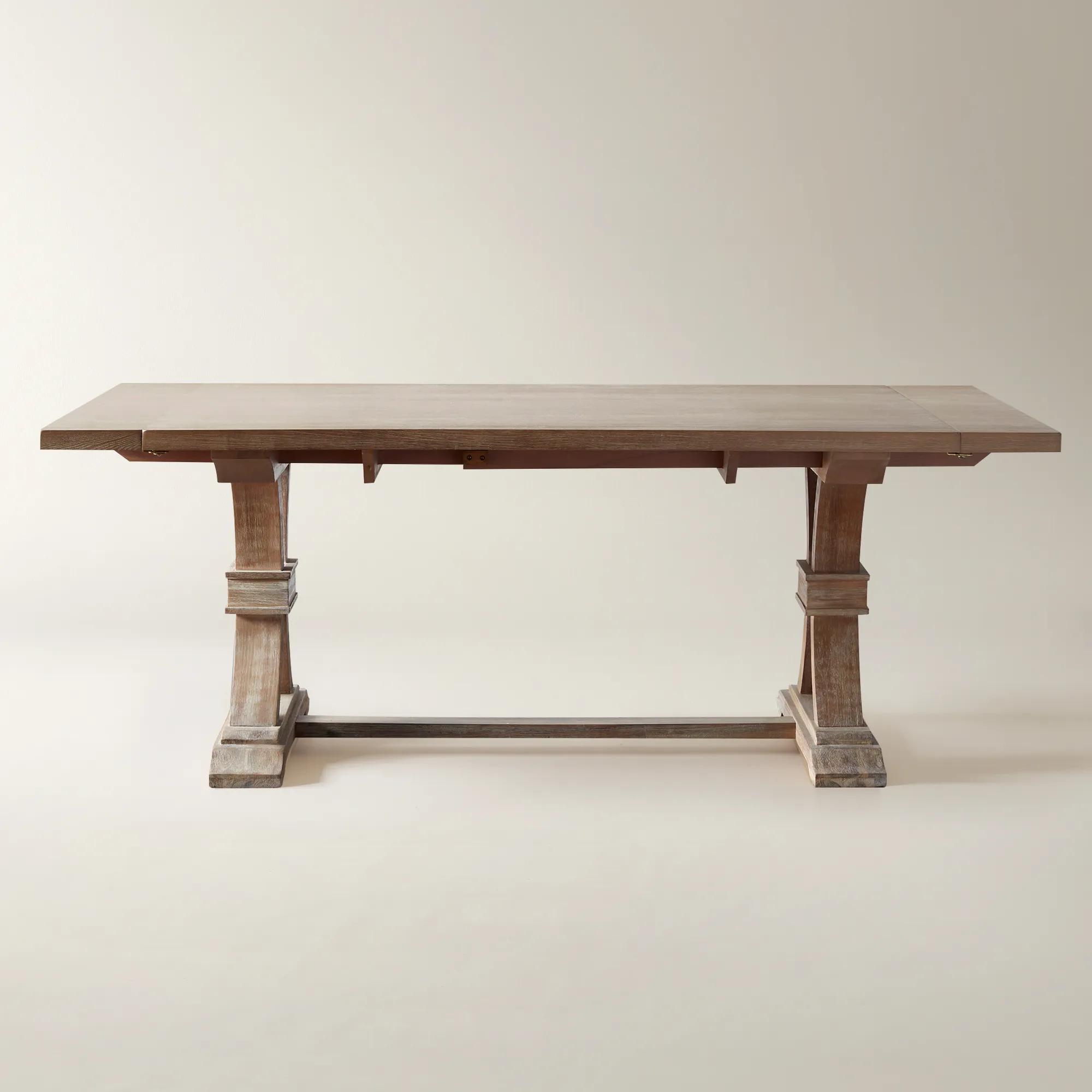 Archer Rectangular Whitewashed Acacia Wood Extending Dining Table (78" - 110")$2499
An extending dining table crafted from kiln-dried hardwood with a whitewashed oak finish and acacia veneer.
Add To Cart -
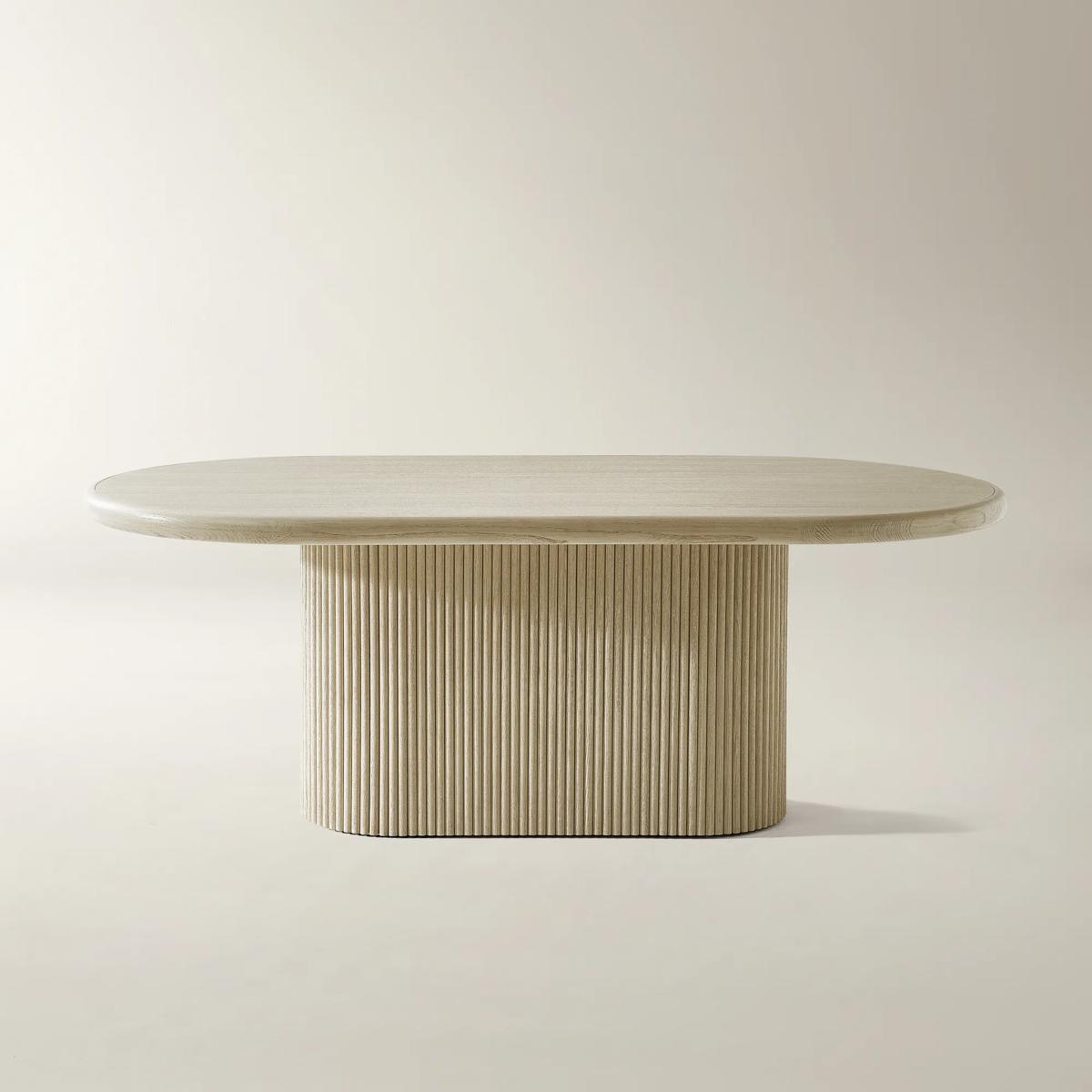
 Stria Oval Reeded White Oak Dining Table (82")$2199
A sculptural oval dining table featuring reeded oak, a single pedestal base, and gold-plated steel trim.
Add To Cart -
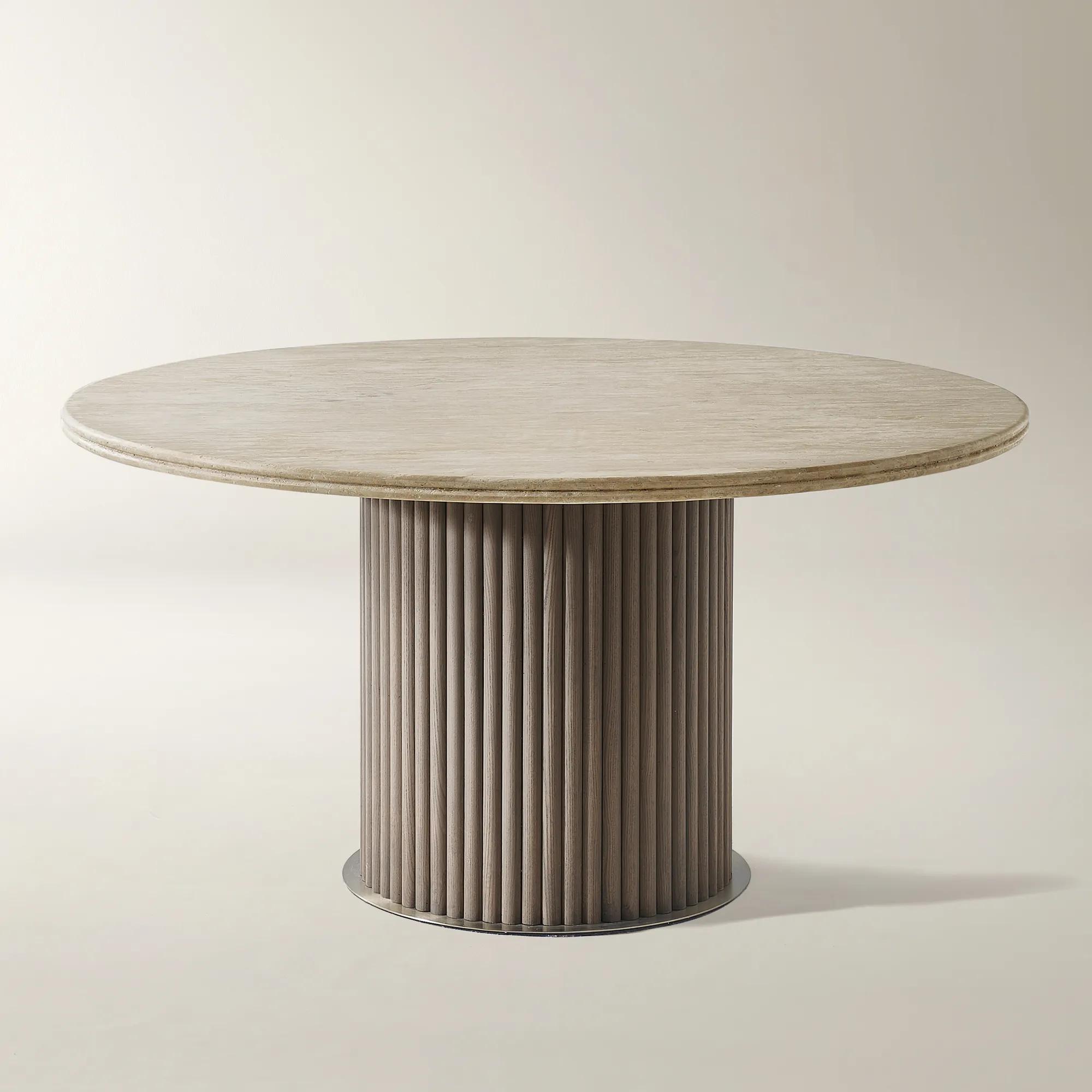 Bond Round Reeded Travertine and Wood Dining Table (59")$3499
A round dining table featuring a genuine natural travertine stone top and a fluted solid ash base.
Add To Cart -
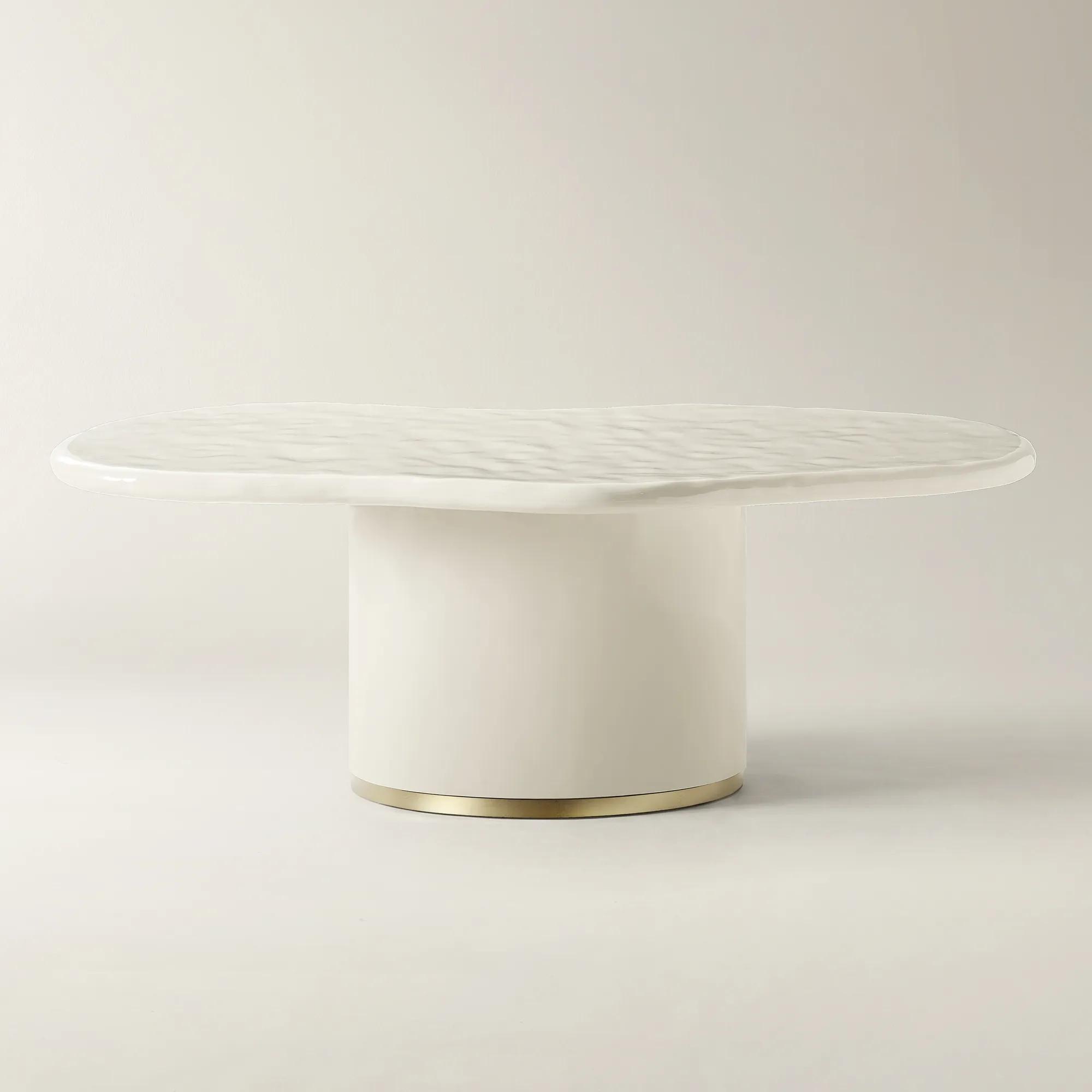 Celia Lacquered Cloud Resin Indoor/Outdoor Dining Table (84")$1999
A sculptural, high-gloss resin dining table with gold stainless steel accents for indoor or covered outdoor use.
Add To Cart -
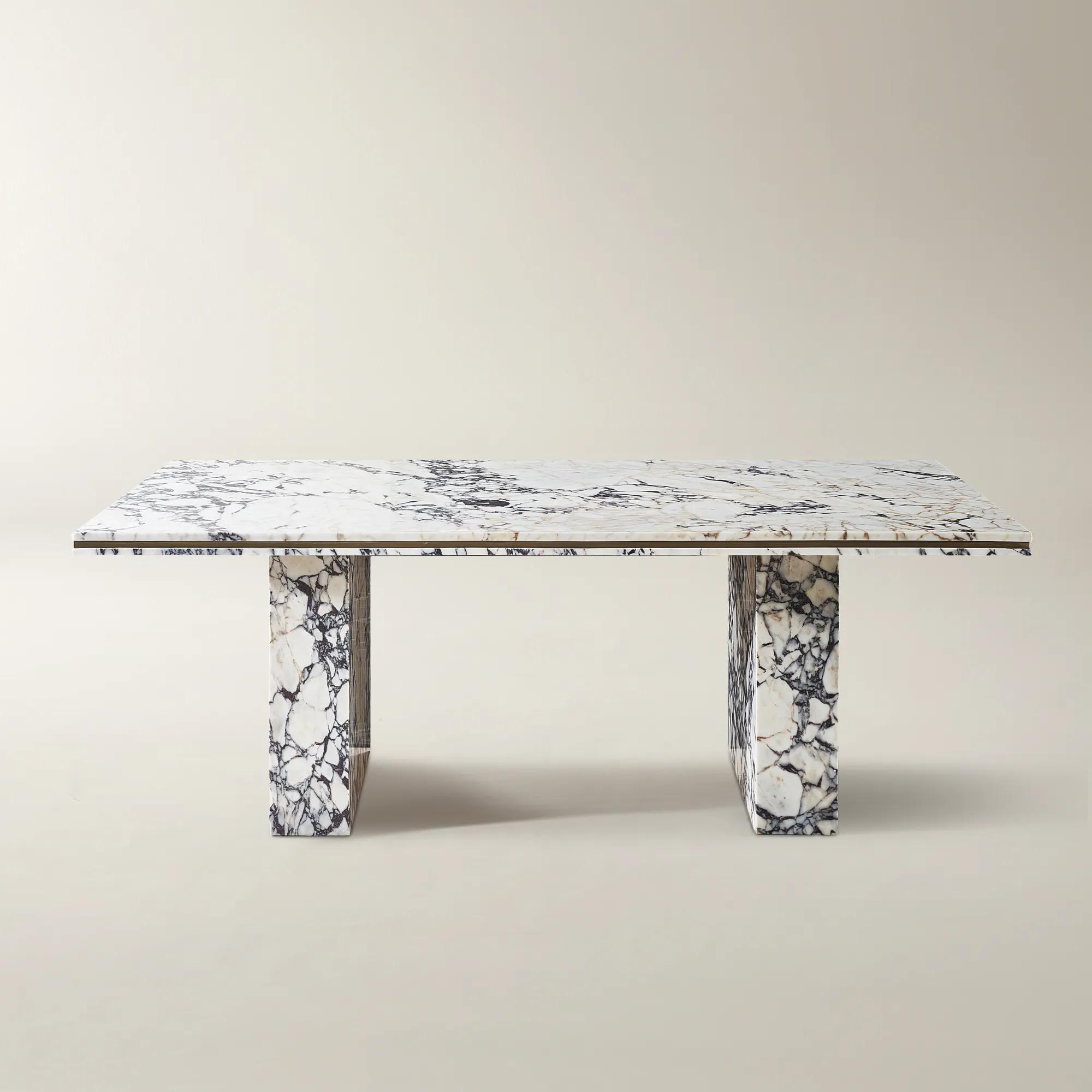
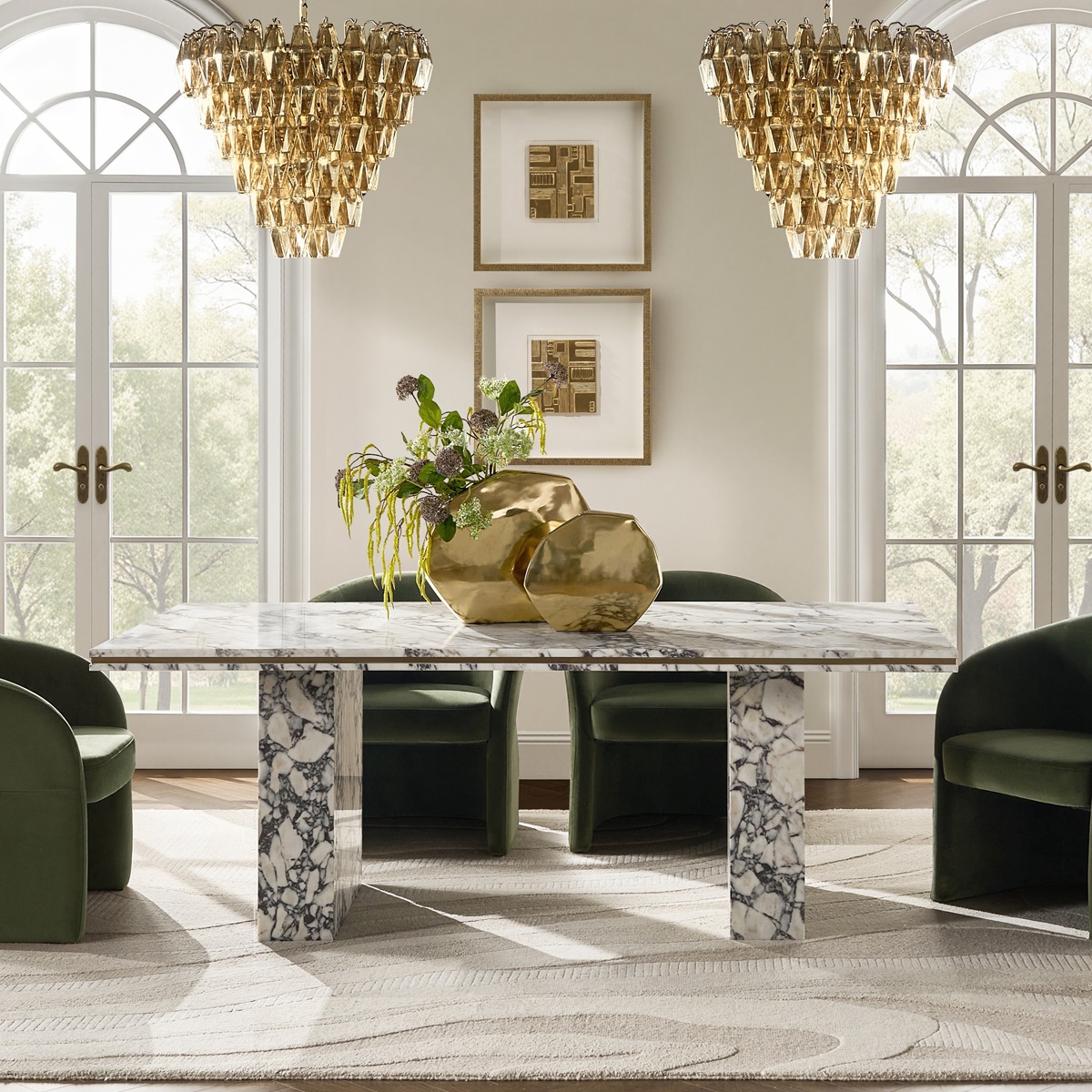 Vanta Rectangular Viola Calacatta Marble Dining Table (84")$6599
A marble dining table with dramatic violet veining, soft-gold inlay, and a sculptural twin-panel base.
Add To Cart -
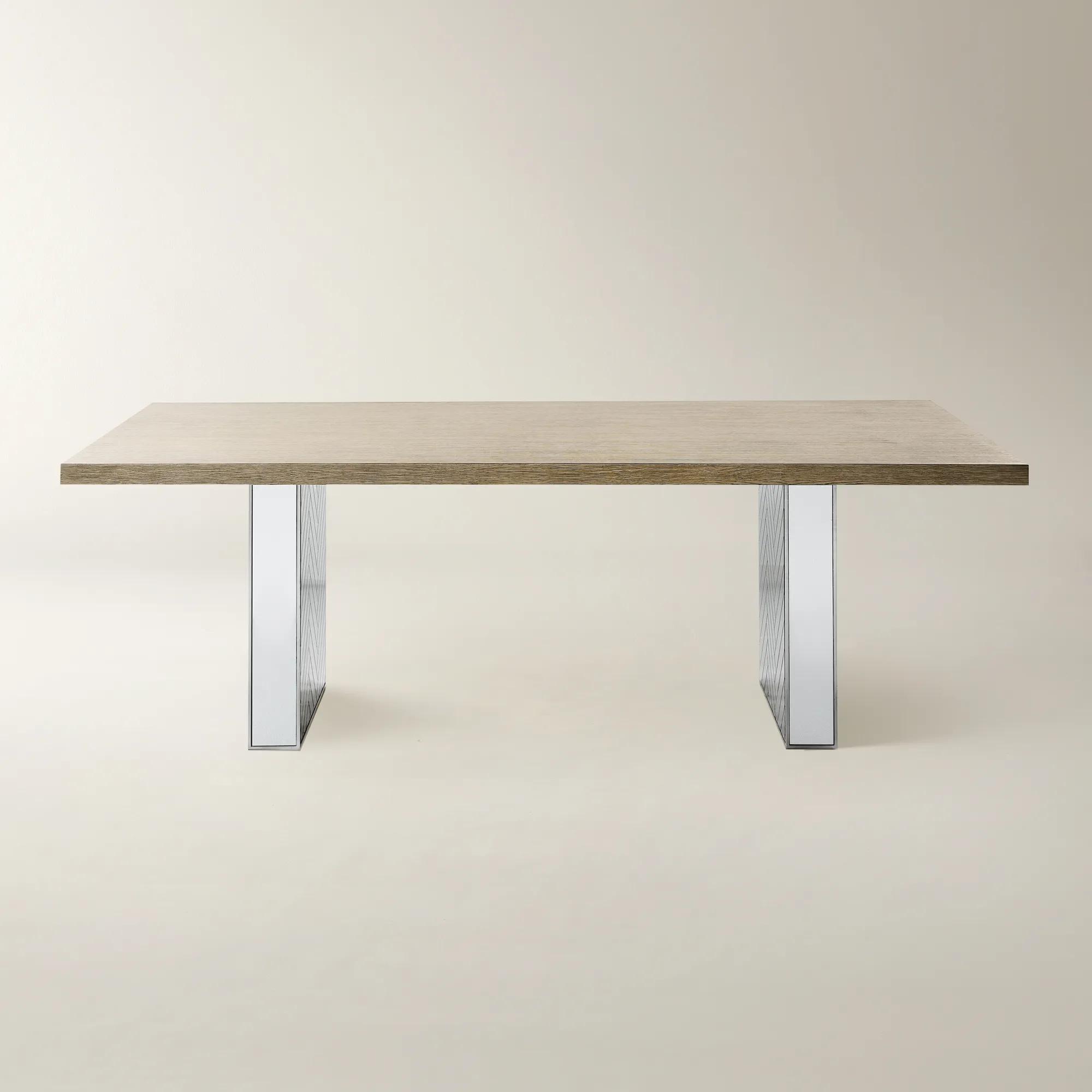
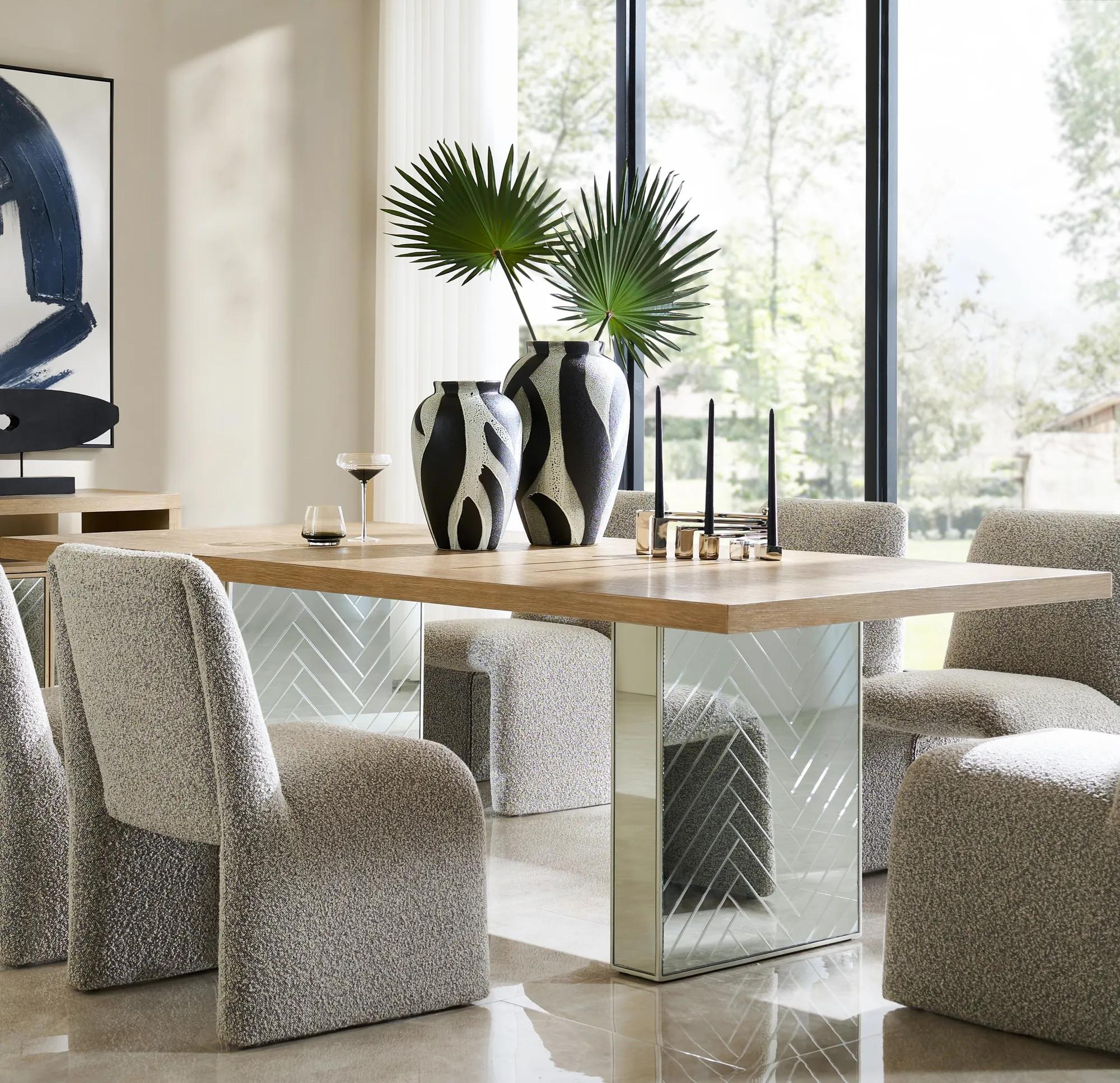 Glimmer Rectangular Seadrift Oak Dining Table With Mirrored Base (90.5")$1799
A modern dining table featuring a warm oak veneer top and a silver mirror-faced parquet base.
Add To Cart -
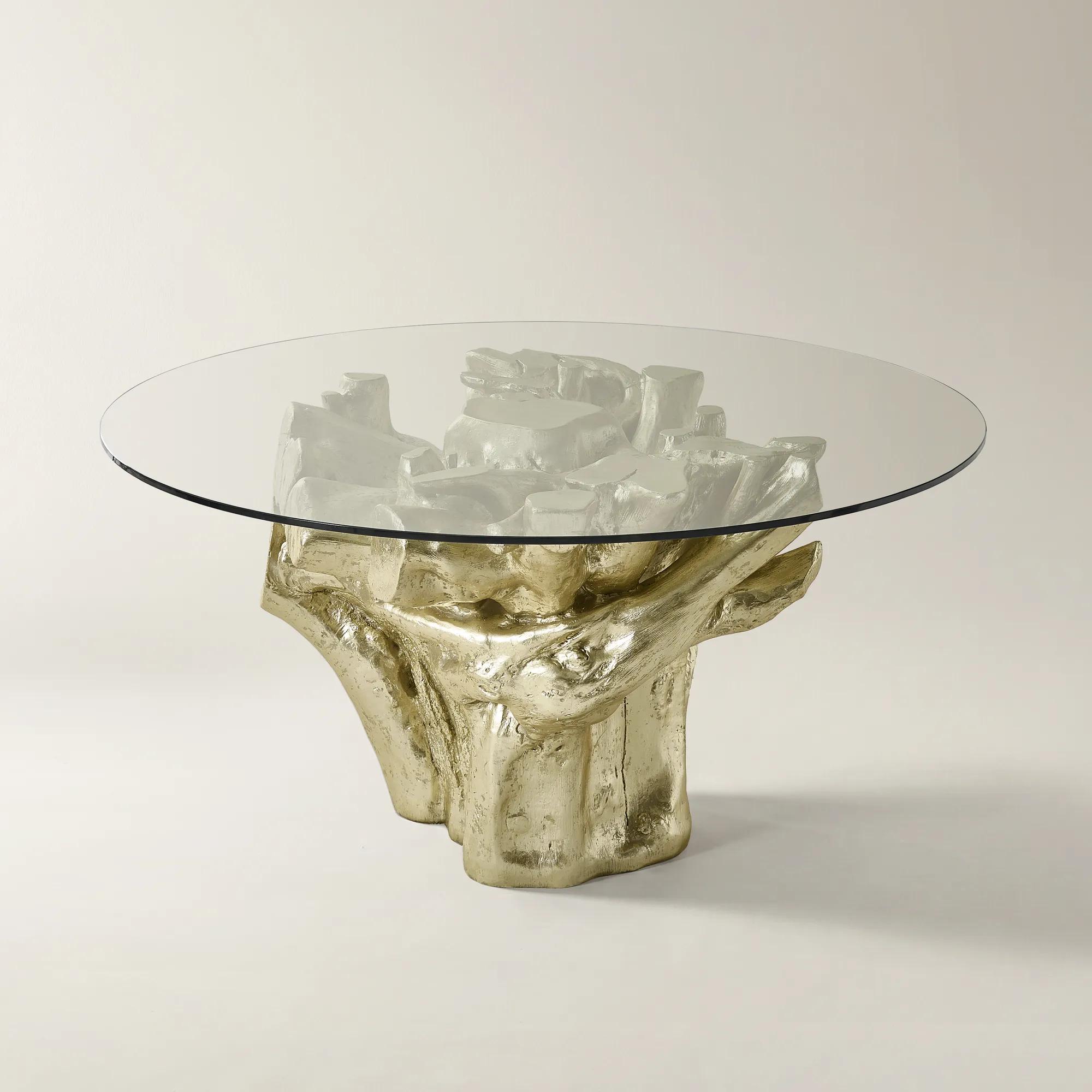 Sequoia Champagne Gold Resin Dining Table With Glass Top (60")$2199
A sculptural resin dining table with a champagne gold leaf base and a clear tempered glass top.
Add To Cart -
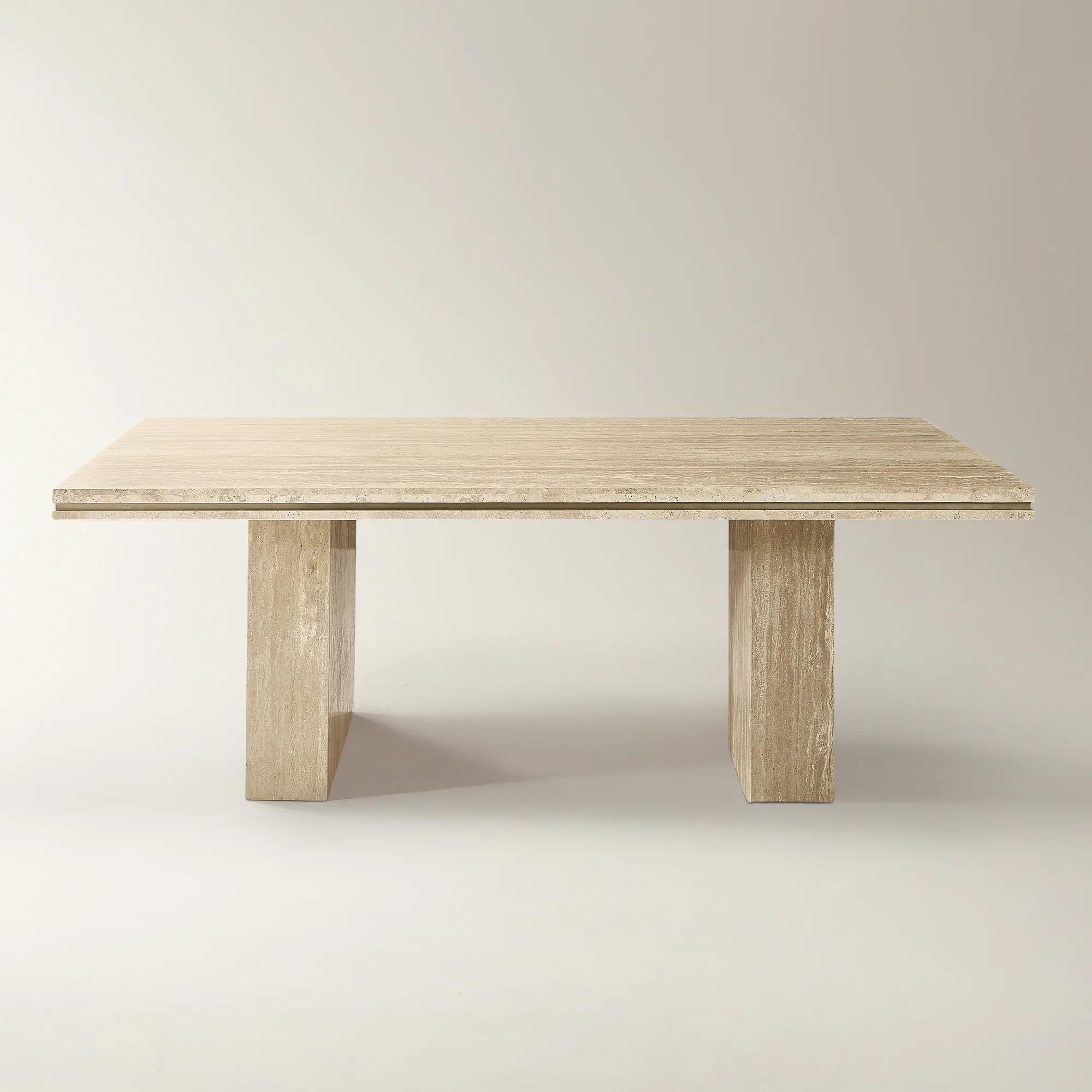 Vanta Rectangular Travertine Dining Table (84")$4199
A natural travertine dining table featuring a soft gold stainless-steel inlay and sculptural twin-panel base.
Add To Cart -
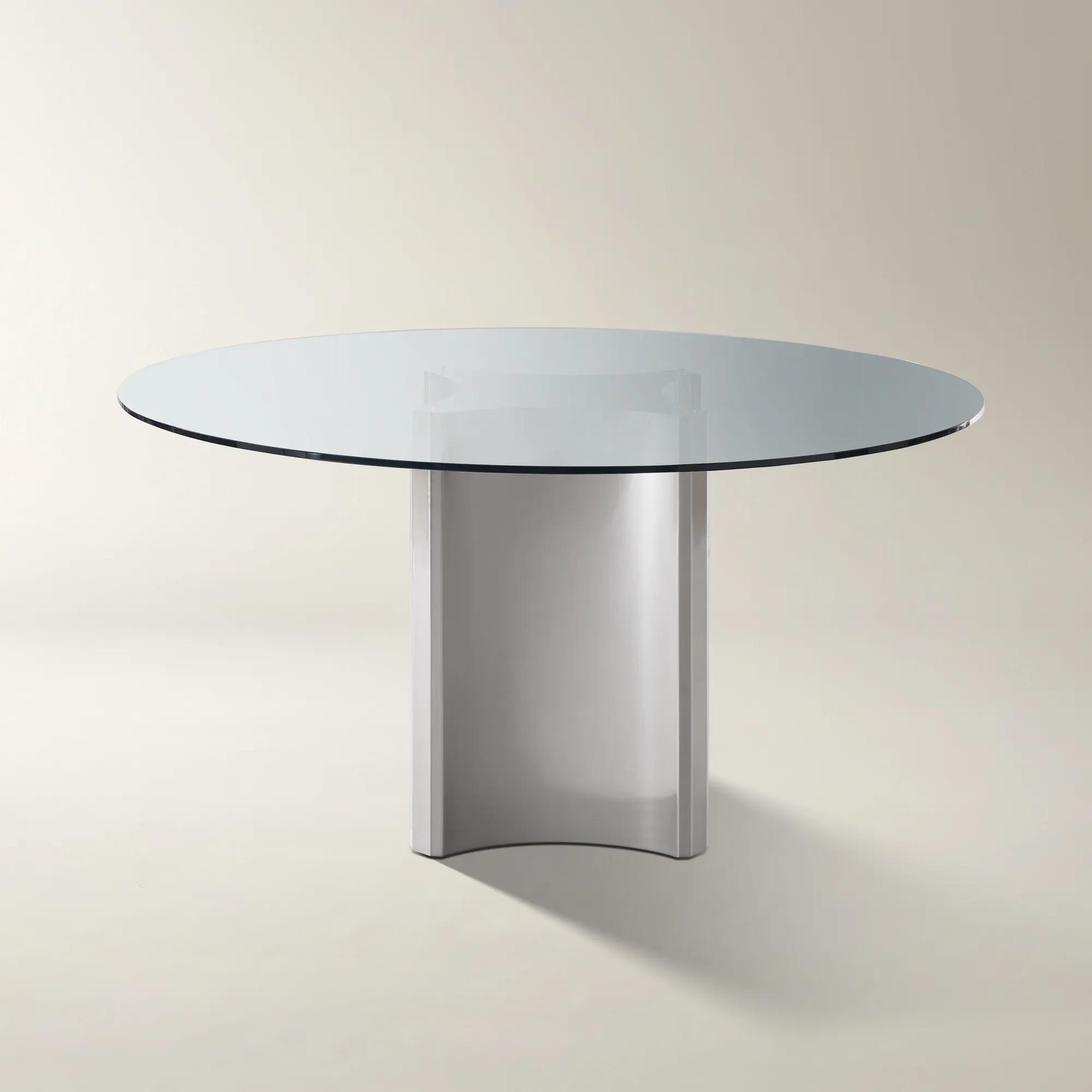 Ventane Round Clear Glass and Stainless steel Dining Table (58")$1499
A modern dining table featuring a clear tempered glass top and polished stainless steel base with anti-fingerprint finish.
Add To Cart -
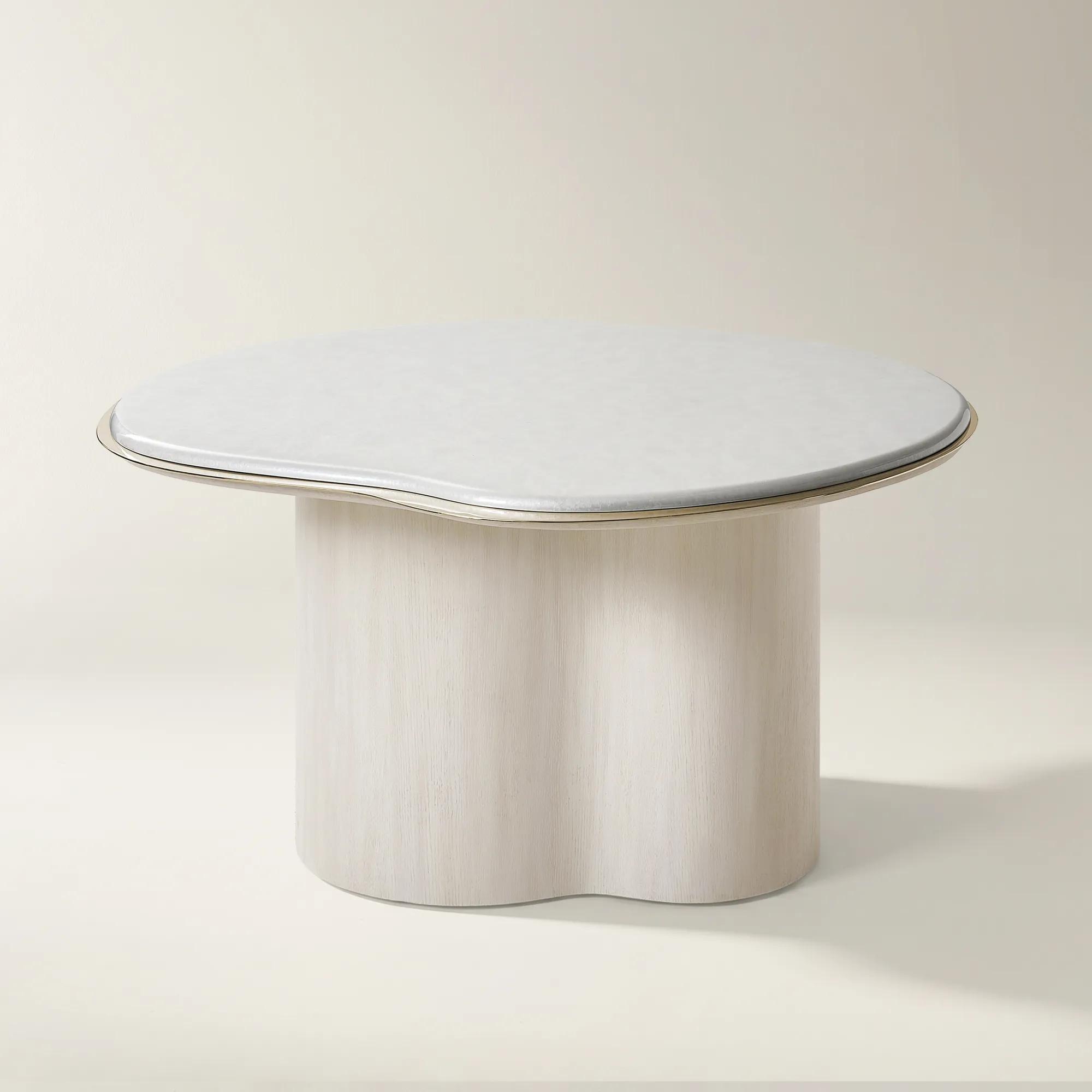 Lumina Bleached Oak Dining Table With Pearl Lacquered Top (58")$2699
A sculptural dining table featuring a pearl lacquered top, bleached oak base, and champagne gold trim.
Add To Cart -
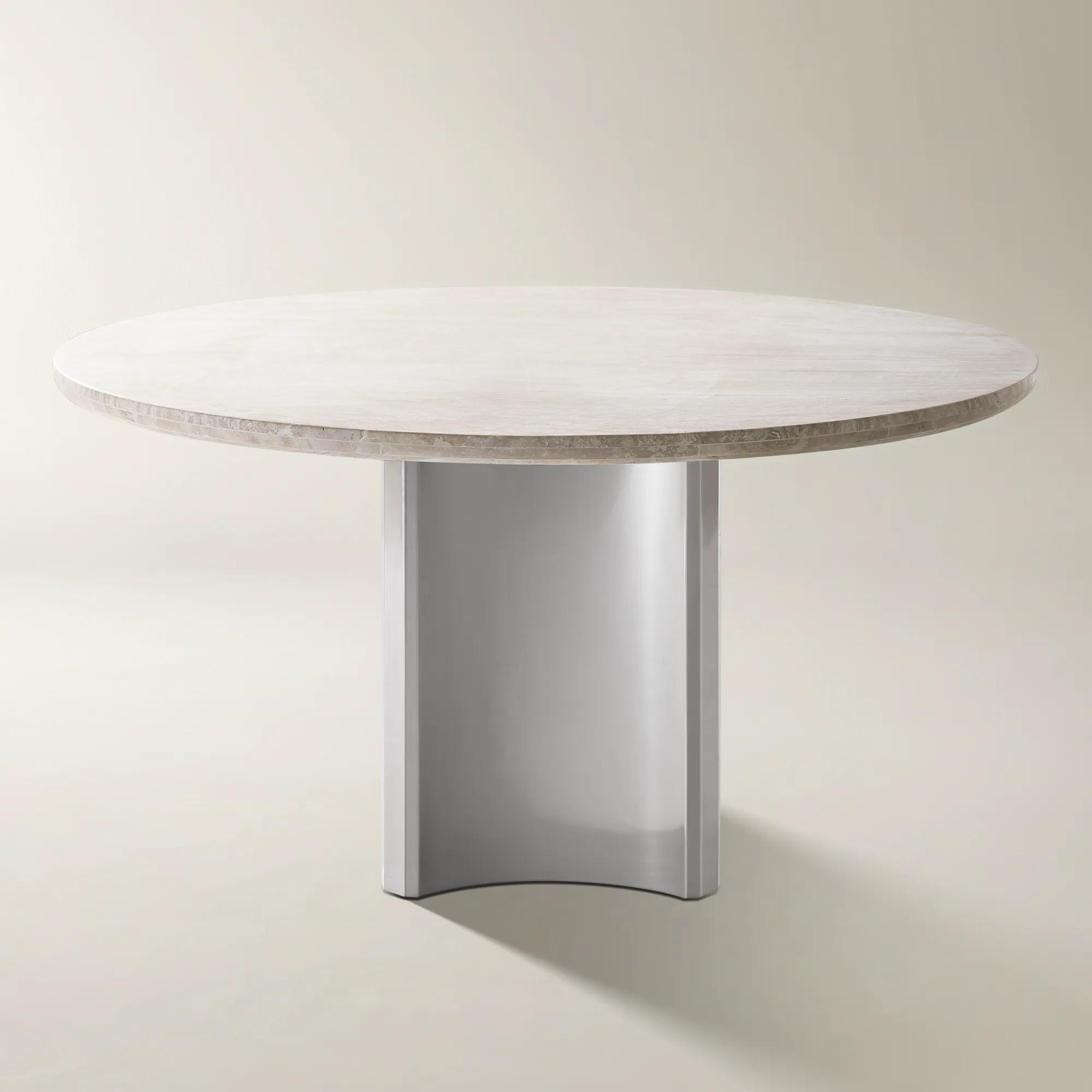 Ventane Round Tan Marble and Stainless steel Dining Table (58")$2999
A round tan travertine marble table with a polished stainless steel base for modern, elegant dining spaces.
Add To Cart -

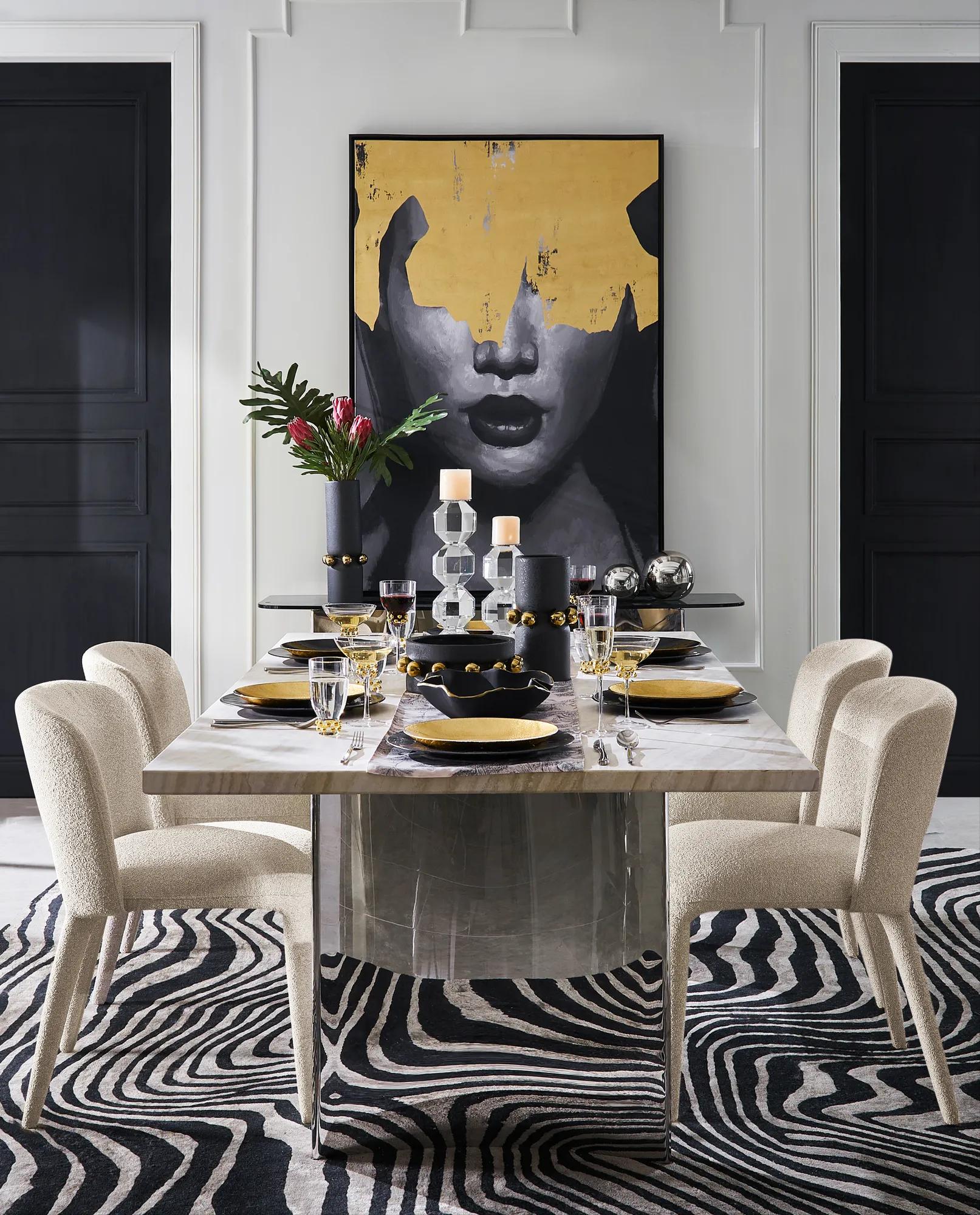 Muscat Rectangular Tan Marble Dining Table With Stainless Steel Base (84")$3099
A sophisticated dining table featuring a tan travertine marble top and polished stainless steel base.
Add To Cart -

 Matera Rectangular White Marble Dining Table With Stainless Steel Base (86.61")$2499
A modern dining table featuring a white marble top and polished stainless steel base for timeless elegance.
Add To Cart -

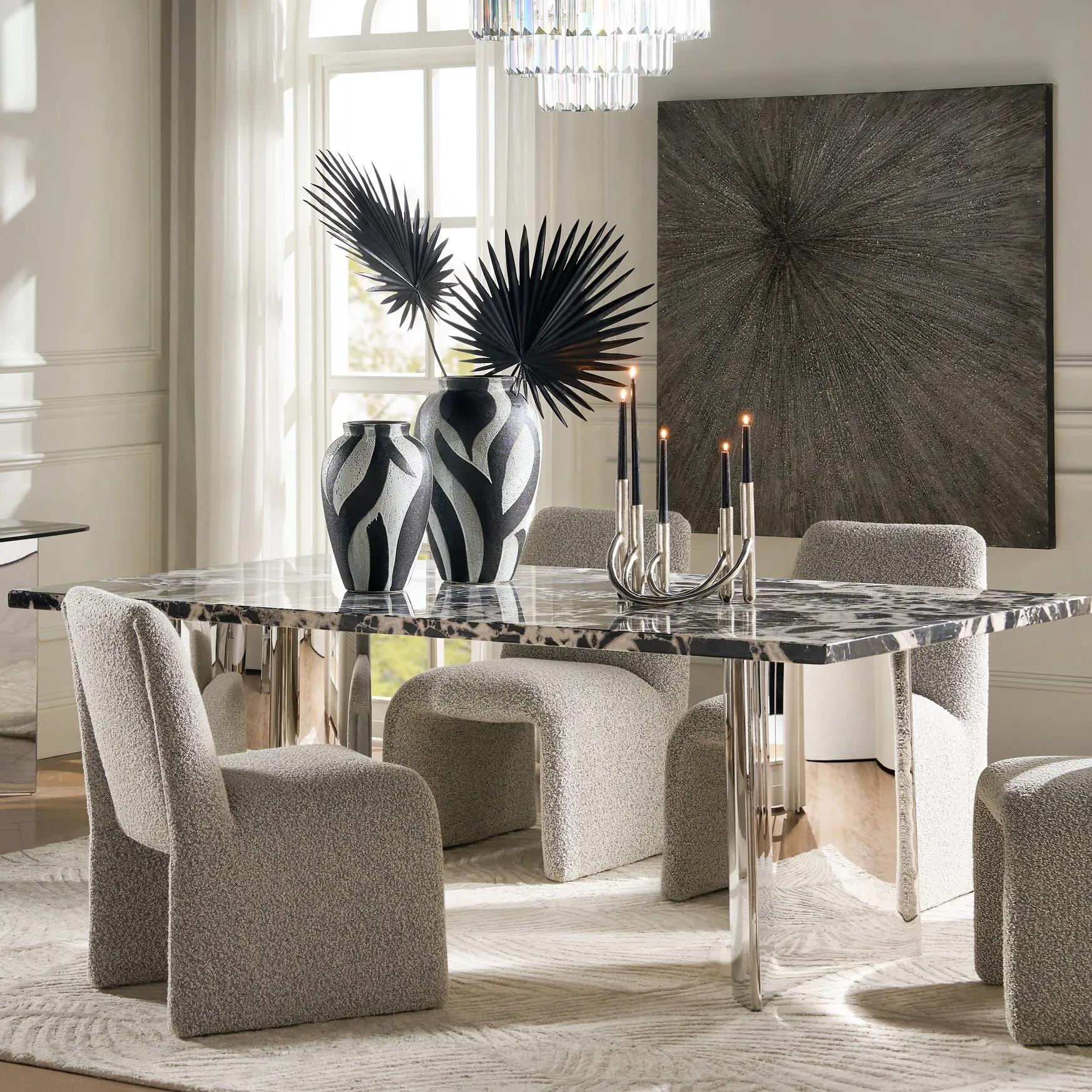 Muscat Rectangular Black Marble Dining Table With Stainless Steel Base (84")$3099
A dramatic black marble dining table with unique veining and a polished stainless steel base.
Add To Cart -
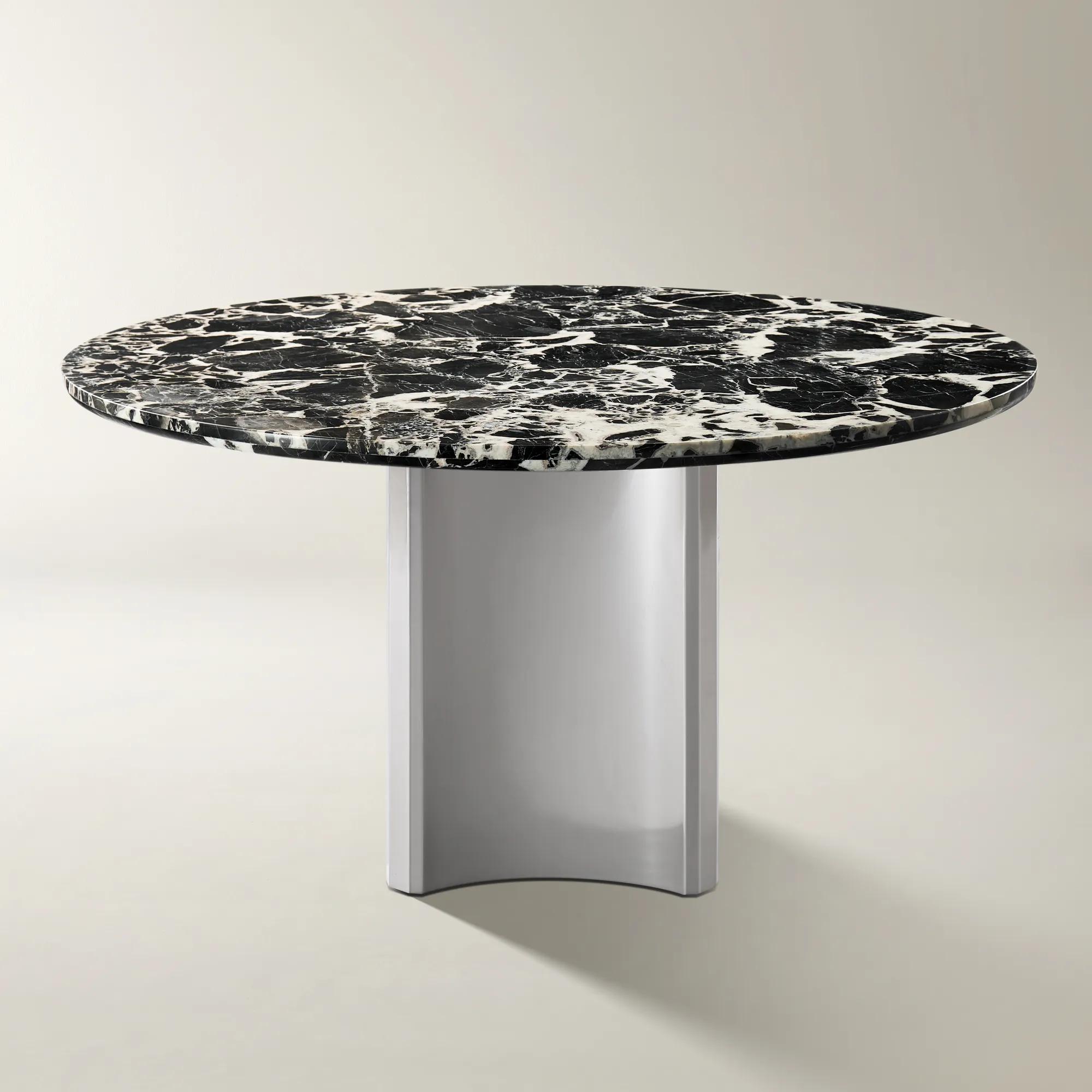
 Ventane Round Black Marble and Stainless steel Dining Table (58")$2999
A dramatic round dining table featuring a natural black marble top and polished stainless steel base.
Add To Cart -
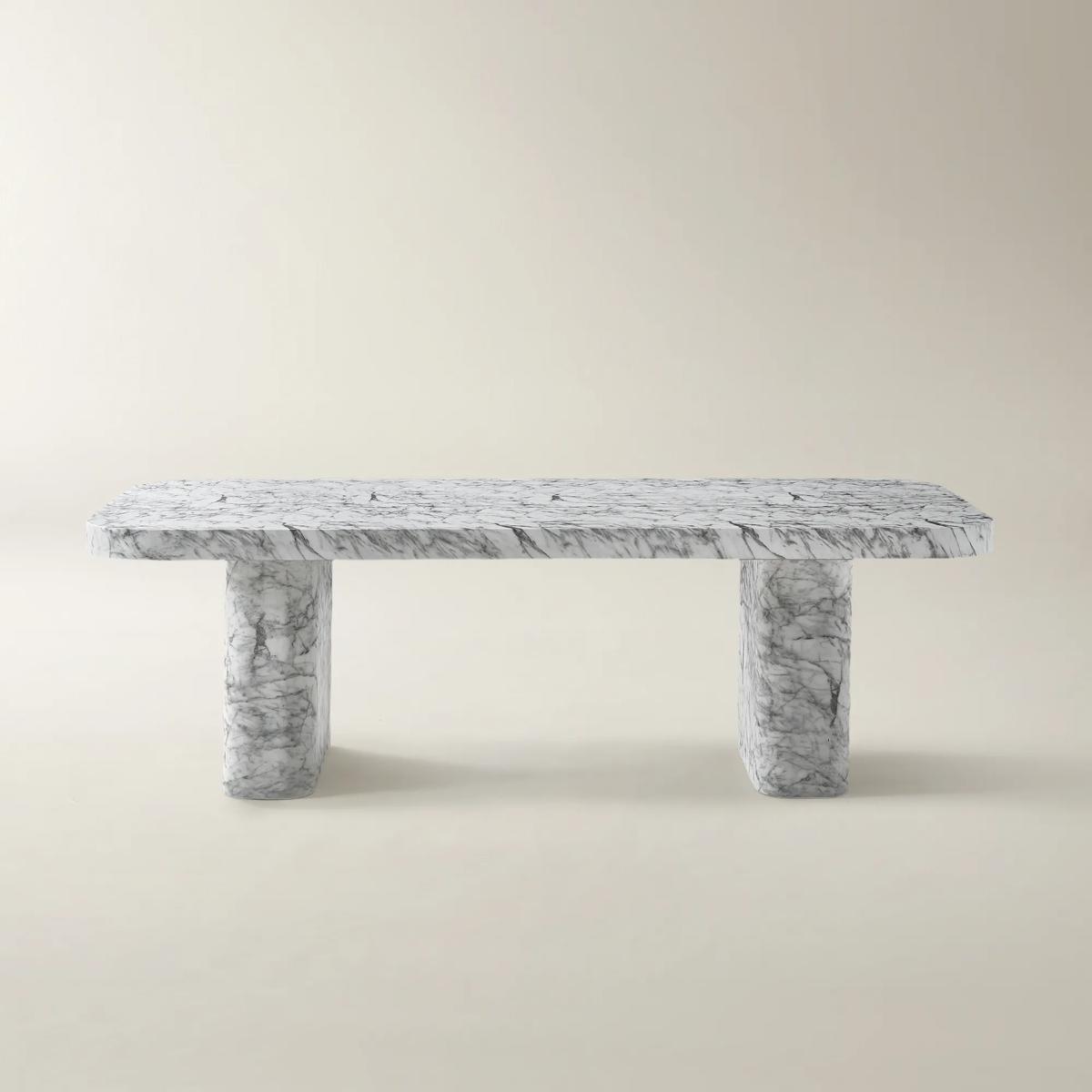
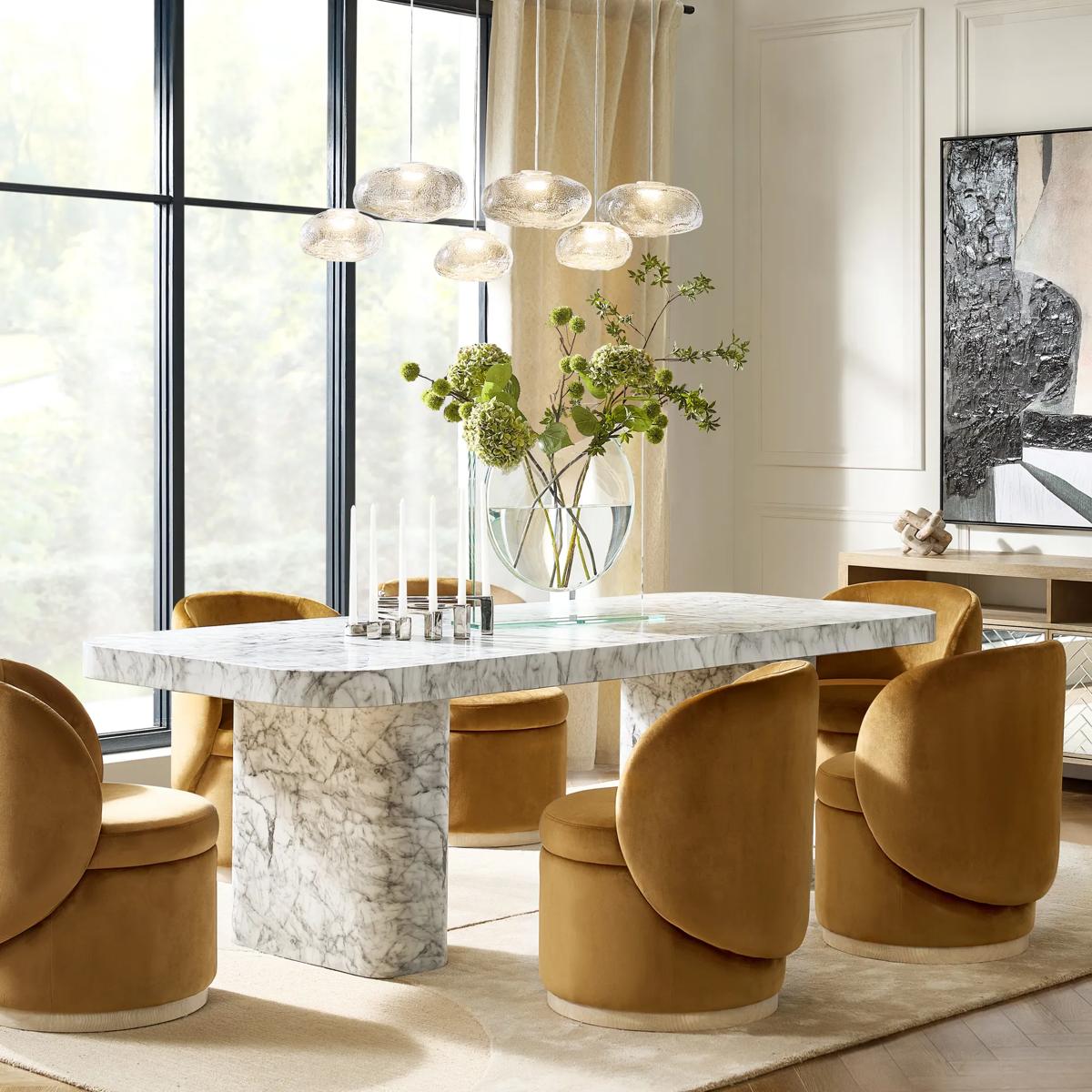 Silex Rectangular White Concrete Indoor/Outdoor Dining Table (94.5")$1999
A white concrete dining table with a sculptural pedestal base, marble-inspired veining, and indoor-outdoor versatility.
Add To Cart -
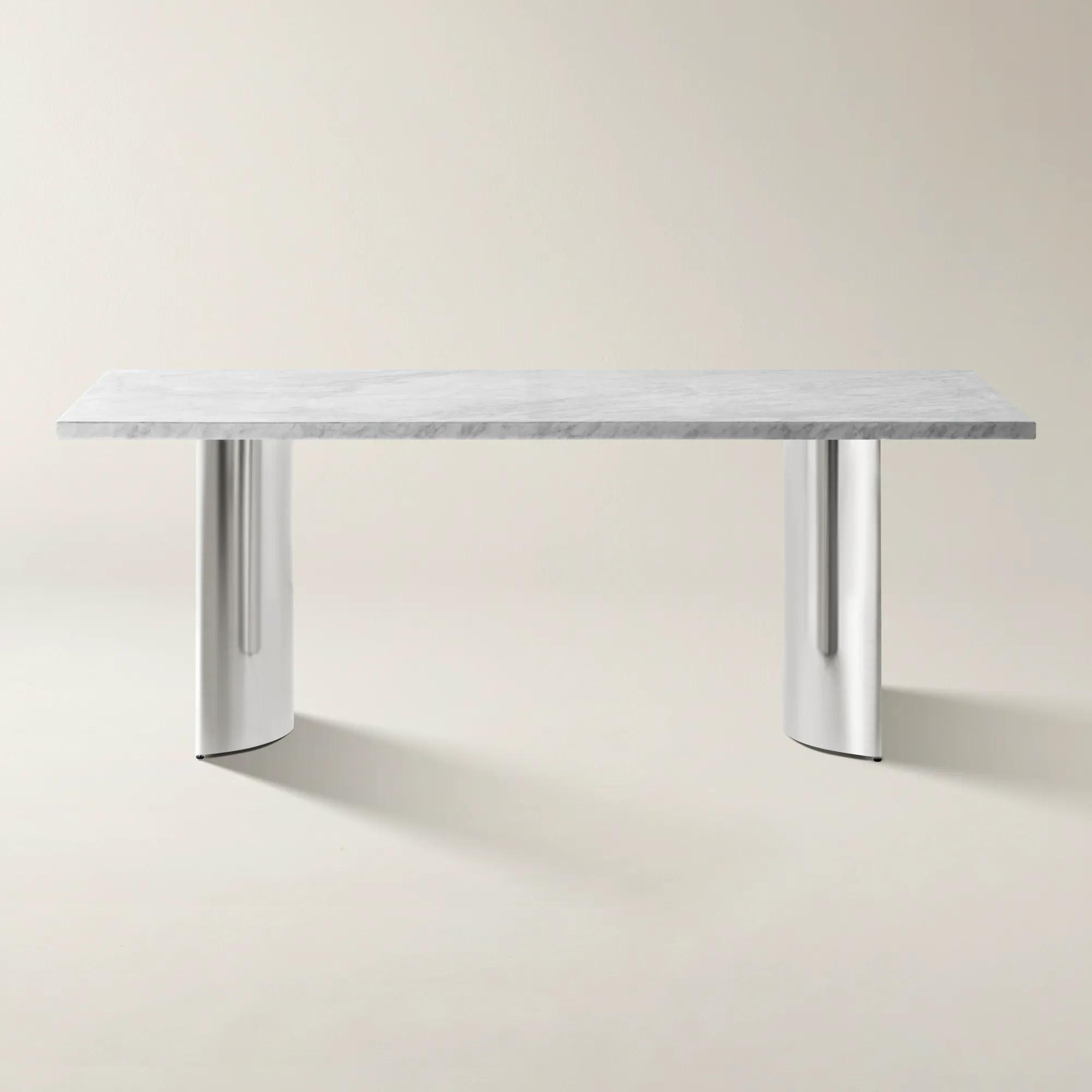 Muscat Rectangular White Marble Dining Table With Stainless Steel Base (84")$3099
A striking dining table featuring a natural white marble top with unique veining and a polished stainless steel base.
Add To Cart -
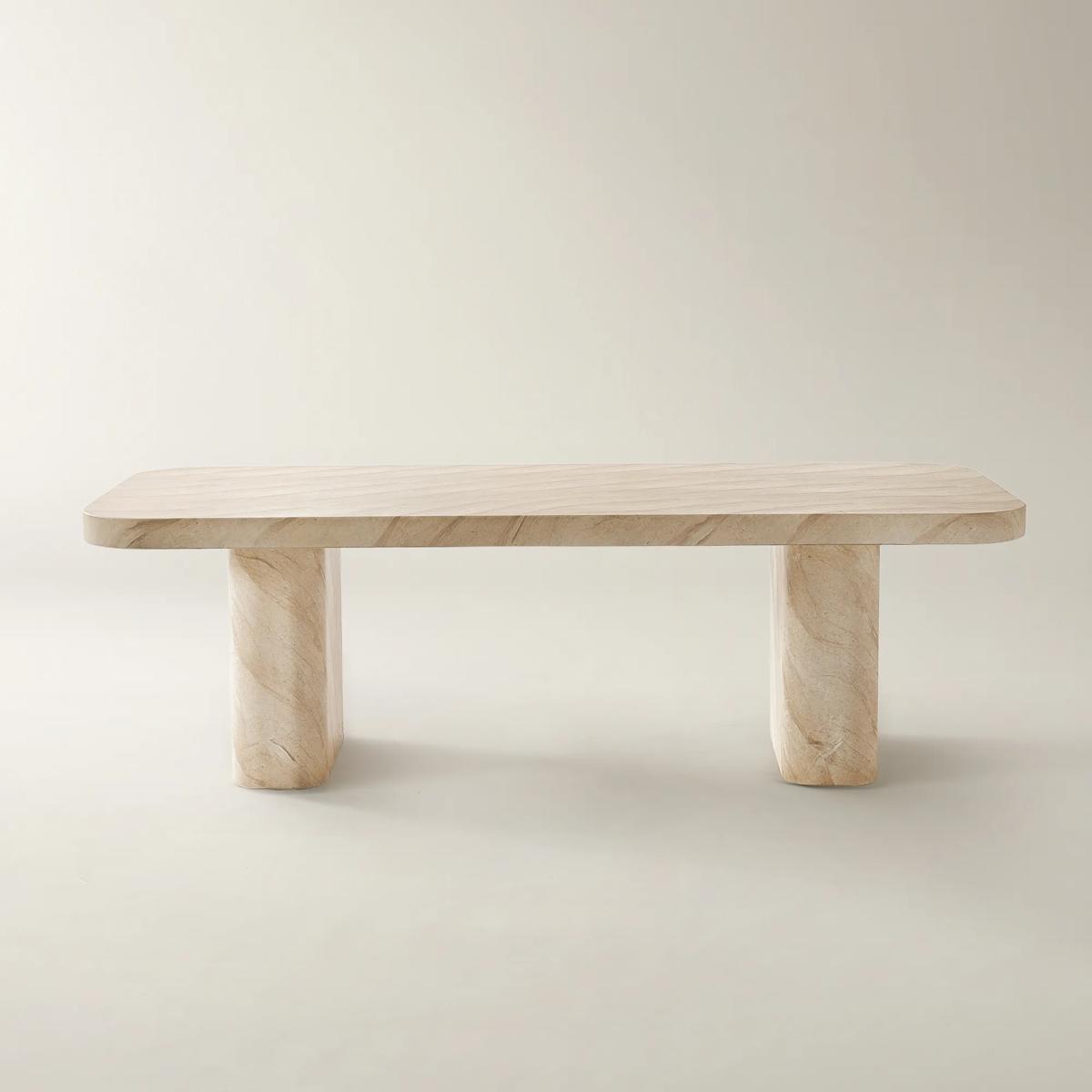 Silex Rectangular Travertine Concrete Indoor/Outdoor Dining Table (94.5")$1999
A rectangular dining table with pedestal legs, travertine-inspired veining, and resilient fiber concrete for indoor-outdoor use.
Add To Cart -
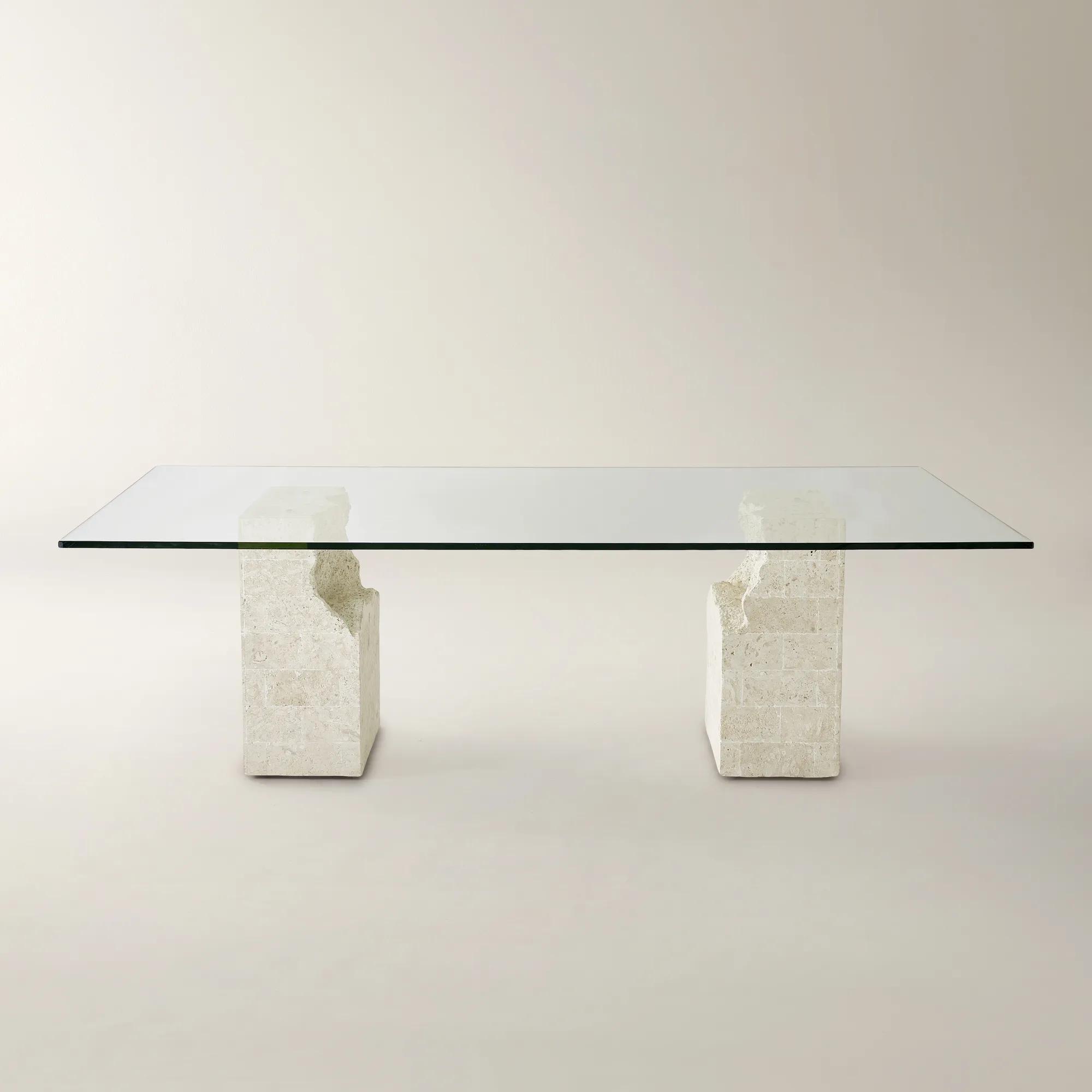
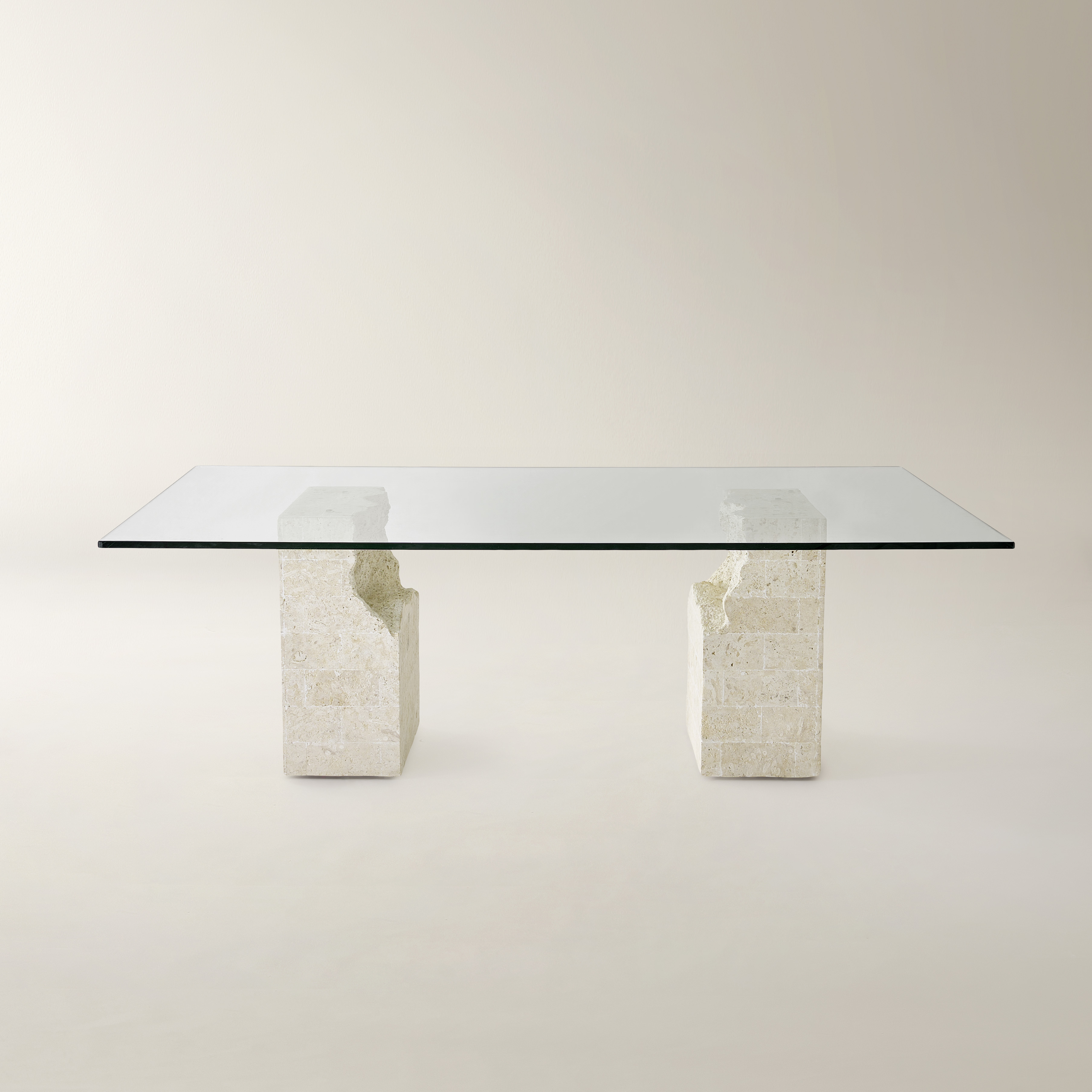 Cairo Rectangular Mactan Stone Dining Table With Glass Top (86.6")$2399
A contemporary dining table featuring a clear tempered glass top over hand-carved Mactan stone bases.
Add To Cart -

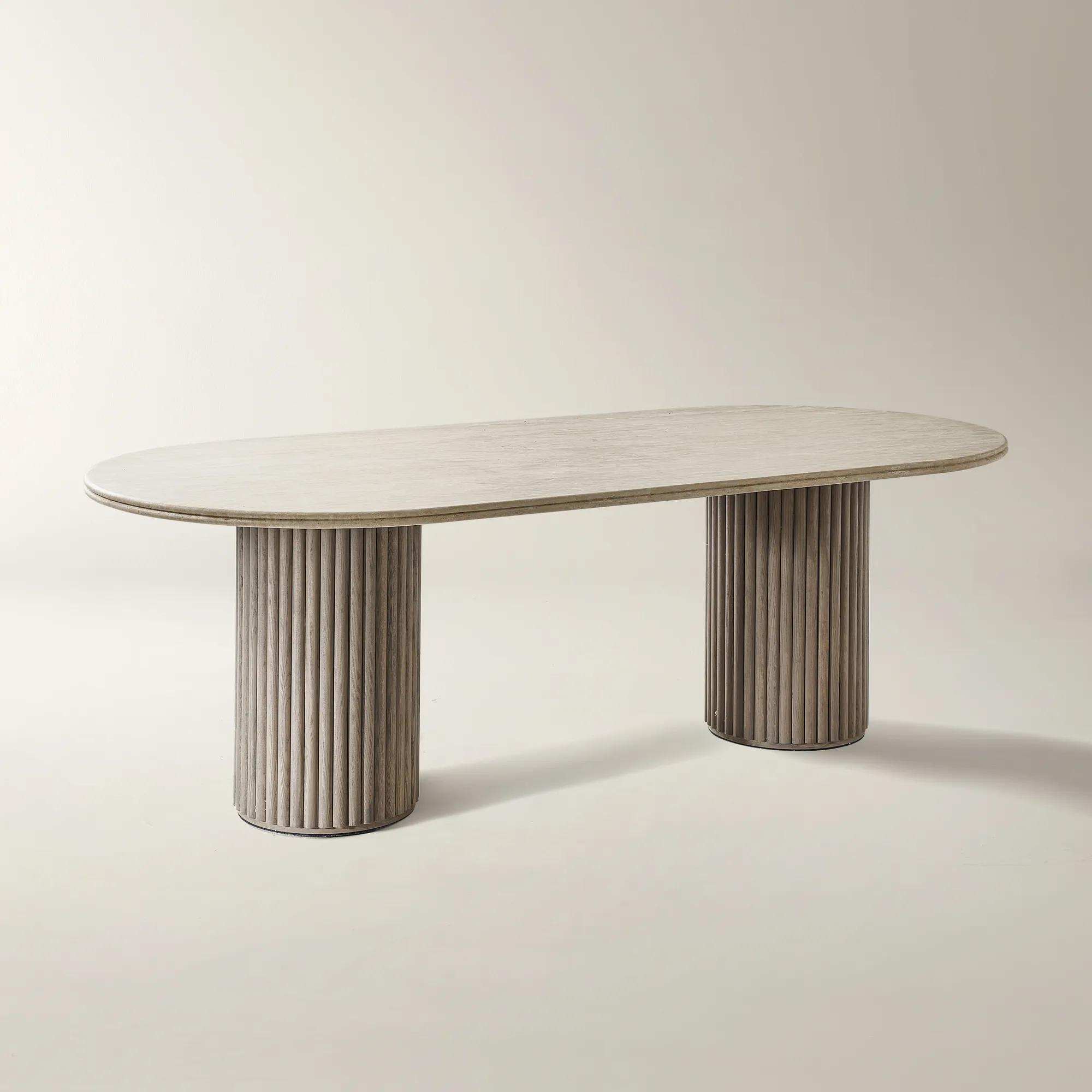 Bond Oval Reeded Travertine and Wood Dining Table (94.25")$4599
A natural travertine stone top pairs with a fluted solid ash base for refined, organic elegance.
Add To Cart

Dining Tables For Family Gatherings
Explore dining tables for family gatherings that turn shared meals into a memorable occasion, from weeknight dinners to holiday celebrations. Find a striking centerpiece for your dining room, considering table size, shape, and seating needs alongside your personal style. Allow room for chairs to pull out comfortably, creating a setting that invites everyone to linger.
Dining tables for family gatherings give shared meals a setting as memorable as the company. A generous tabletop invites serving platters, layered place settings, and conversations that linger long after dessert, while a distinctive base brings sculptural presence to the room even between occasions. These are furnishings with two lives: a polished focal point when the room is quiet and a welcoming place for birthday dinners, visiting relatives, and an ordinary evening made more meaningful by sitting down together. Rich wood tones lend depth to upholstered seating and gleaming accents; glass introduces transparency that allows a dramatic rug or architectural base to remain visible; stone creates a substantial centerpiece with natural variation and expressive movement. The strongest dining spaces balance that visual character with the way a household actually gathers. A family that serves meals in generous bowls needs usable space at the center, while hosts who favor individual place settings may appreciate a longer surface with room for glassware and decorative accents. Rectangular dining tables create a strong visual line and suit many elongated rooms, offering a sense of ceremony without reserving the space for formal occasions. Round tables draw everyone toward a shared center, making conversation feel connected and keeping faces within easy view. Oval silhouettes offer a sweeping profile with curved ends that soften the surrounding arrangement, while square tables can give a more intimate dining area a confident, balanced composition. Each shape changes not only the look of the room but also the rhythm of gathering around it. A bold pedestal, a finely proportioned trestle, or a clean-lined leg design can establish the mood before a single plate is set. Paired with sumptuous upholstery, textured linens, or luminous glassware, the table becomes an expression of the household’s style rather than simply a surface for serving dinner. Its beauty should feel equally convincing beneath an elaborate centerpiece and beside a casually placed bowl of fruit.
Scale gives that beauty room to work. A dining table feels welcoming when chairs pull back comfortably, guests can move behind occupied seats, and serving pieces travel easily from the kitchen to the table. Around 36 inches between the table edge and a wall or nearby furnishing is a useful starting point, with additional clearance desirable along busy walkways or behind chairs that remain occupied during a meal. Approximately 24 inches of table edge per diner offers a general planning reference, although broad chairs, substantial place settings, and armrests can call for more space. The table’s width matters just as much as its length: a narrower top can create an intimate arrangement, while a broader surface leaves more room for shared dishes without crowding the plates. In rooms that accommodate both everyday meals and larger celebrations, extension dining tables bring flexibility without requiring a permanently oversized footprint. Leaf mechanisms, the weight of removable sections, and a practical place to store them all influence how comfortably that flexibility fits into family life. The base deserves equal attention. A central pedestal may free the perimeter from corner legs, but its footprint can still affect where feet rest; trestles and stretchers can create striking architectural lines while influencing legroom. Dining chairs should relate to the table in both proportion and character, with seat height, arm height, and the depth of the apron considered together. Roughly 10 to 12 inches between the seat and tabletop is a common starting point, but the space beneath the apron also needs to accommodate seated guests comfortably. For connected eating areas, complementary kitchen seating for family gatherings can carry a shared palette or silhouette from the breakfast nook into the dining room without making every furnishing identical. A repeated wood tone, curved back, or metallic accent can create continuity while allowing the main dining table to retain its own commanding presence.
Materials and finishes shape how a dining table looks, feels, and lives with the people around it. Solid wood brings grain, warmth, and individual variation, though it can respond to changes in indoor humidity and benefits from protection against moisture and direct heat. Wood veneer over an engineered core offers another way to showcase expressive grain; its longevity depends on construction, finish quality, and thoughtful handling rather than appearance alone. Glass keeps an arrangement visually open and highlights the artistry of the supporting base, but fingerprints and smudges may be more noticeable, especially in a busy household. Where tempered glass is specified, it offers different breakage characteristics from standard glass, though edges still require care and protection from impact. Natural stone delivers distinctive veining and a weighty presence, with characteristics that vary by material: marble, for example, can develop etching from acidic spills, and some stone surfaces require periodic sealing according to their care instructions. Stone-look and other manufactured surfaces have their own maintenance requirements, so material-specific guidance matters more than a finish’s visual resemblance to another. For families whose table also hosts homework, art projects, or board games, protective mats can help preserve the surface without diminishing its everyday usefulness. Coasters, trivets, and felt-backed decorative pieces protect against familiar sources of damage, while prompt spill cleanup helps prevent moisture from lingering along seams or edges. Gentle cleaning with products approved for the particular surface is preferable to abrasive pads or harsh formulas; a gleaming finish does not necessarily tolerate the same treatment as a matte one. Daily care should support the pleasure of using the table, not make it feel untouchable. A low floral arrangement leaves sightlines open, a runner adds texture without concealing the entire top, and a sideboard can hold extra serving pieces when the meal grows expansive. With considered proportions, suitable materials, and a silhouette that expresses the room’s personality, a family dining table can bring enduring distinction to both generous celebrations and familiar daily rituals.
FAQs
Modern dining tables with sculptural bases bring an artistic focal point to family gatherings, while richly grained wood designs create a warm, inviting atmosphere. For a more glamorous setting, explore polished finishes and metallic accents. Choose a style that expresses your home’s personality and makes every gathering feel like an occasion.
Marble lends dining tables expressive veining and a sense of grandeur, while glass reveals the artistry of a distinctive base. Wood introduces natural texture and depth, especially in rich finishes. Metal details add a gleaming contrast, creating a layered look that feels equally compelling during intimate family meals and festive celebrations.
Begin with a table runner or distinctive placemats, then layer dinnerware, cloth napkins, and luminous glassware. A sculptural bowl or floral arrangement creates a focal point without making every place setting compete for attention. Repeat a color or finish throughout the tablescape to give your family celebration a polished, expressive mood.
Mixing dining chair styles creates a collected, expressive setting. Pair upholstered chairs with a sculptural dining table, or contrast richly finished wood with sleek metal frames. Establish a shared detail—such as fabric color, finish, or silhouette—to unite the arrangement while allowing each chair style its own distinctive presence.
Treat your dining table as the room’s central design statement. Echo its finish in a sideboard or mirror frame, or introduce contrast through textured upholstery and expressive artwork. A chandelier can reinforce the table’s sculptural character, while a coordinated palette connects the surrounding pieces without making the room feel overly matched.