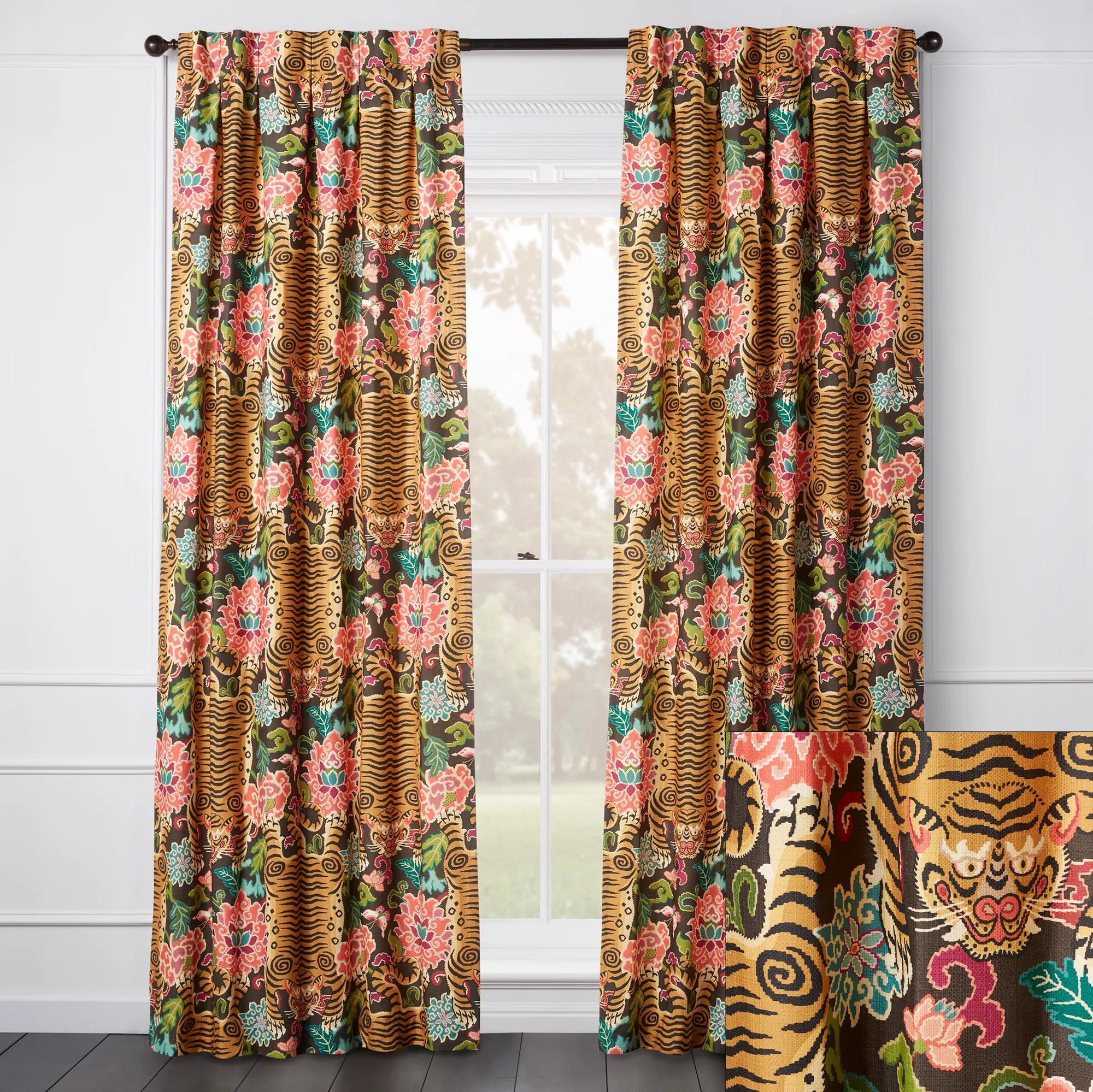
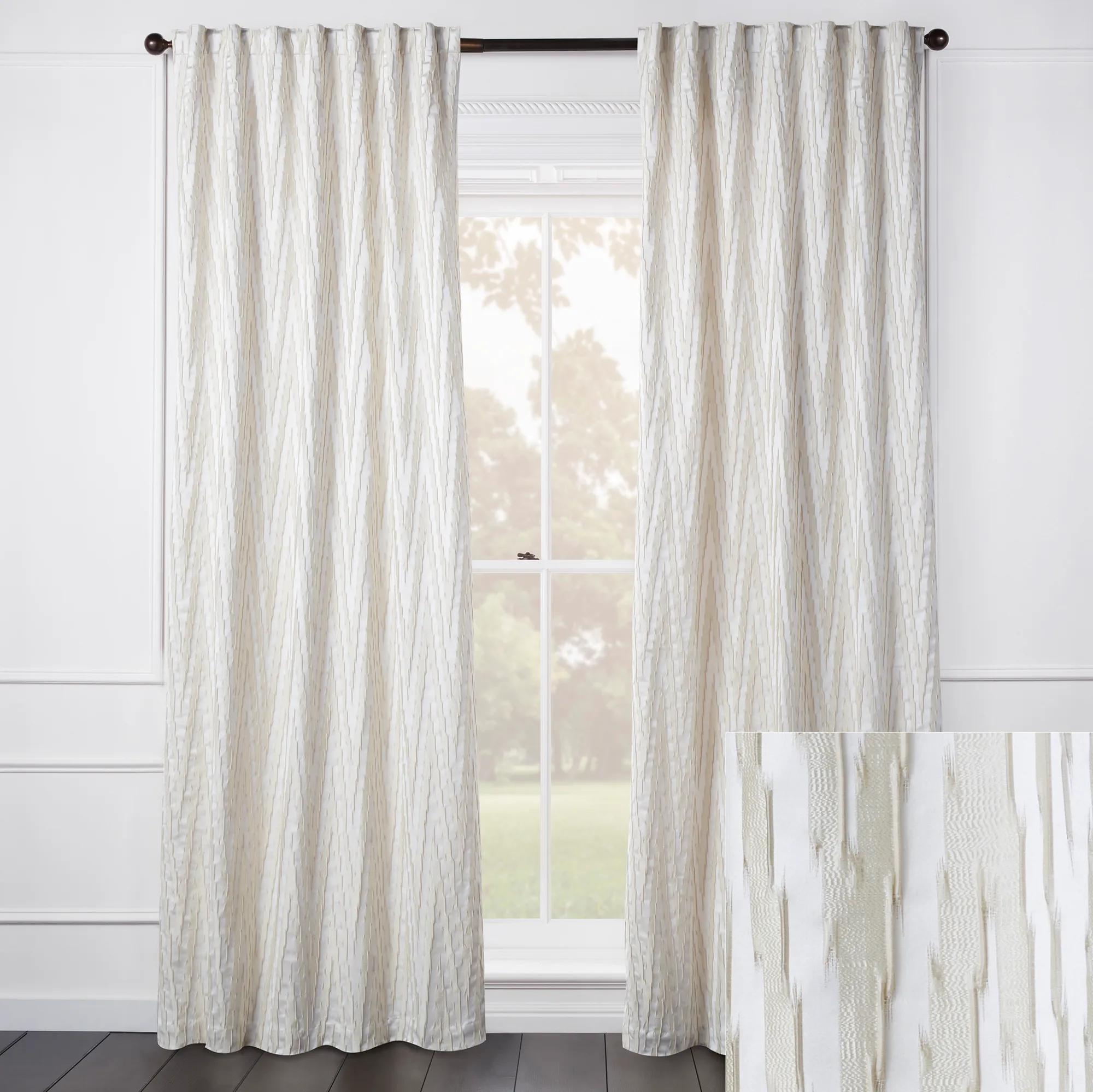
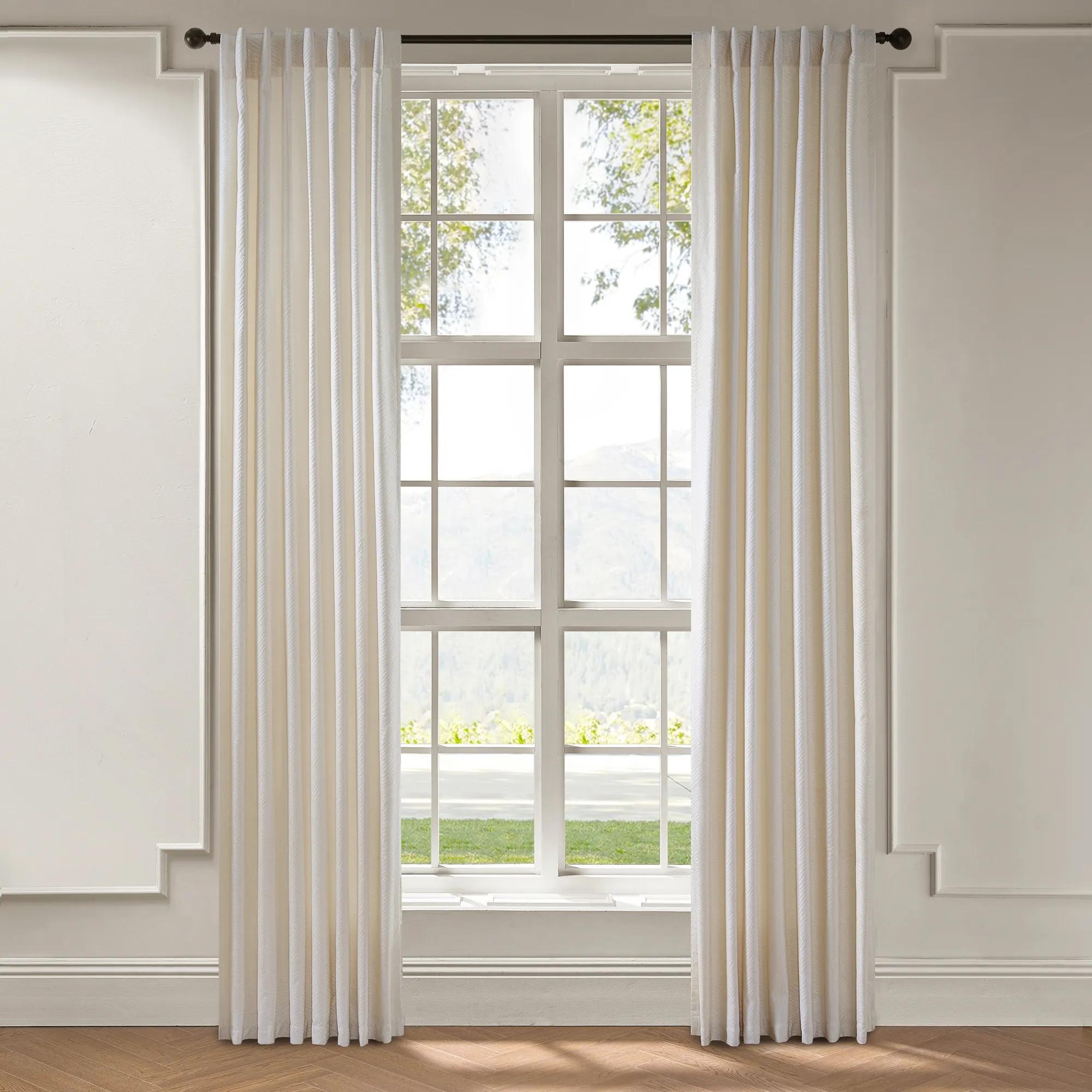
Decorative Silk Curtain Panels
Decorative Silk Curtain Panels
-
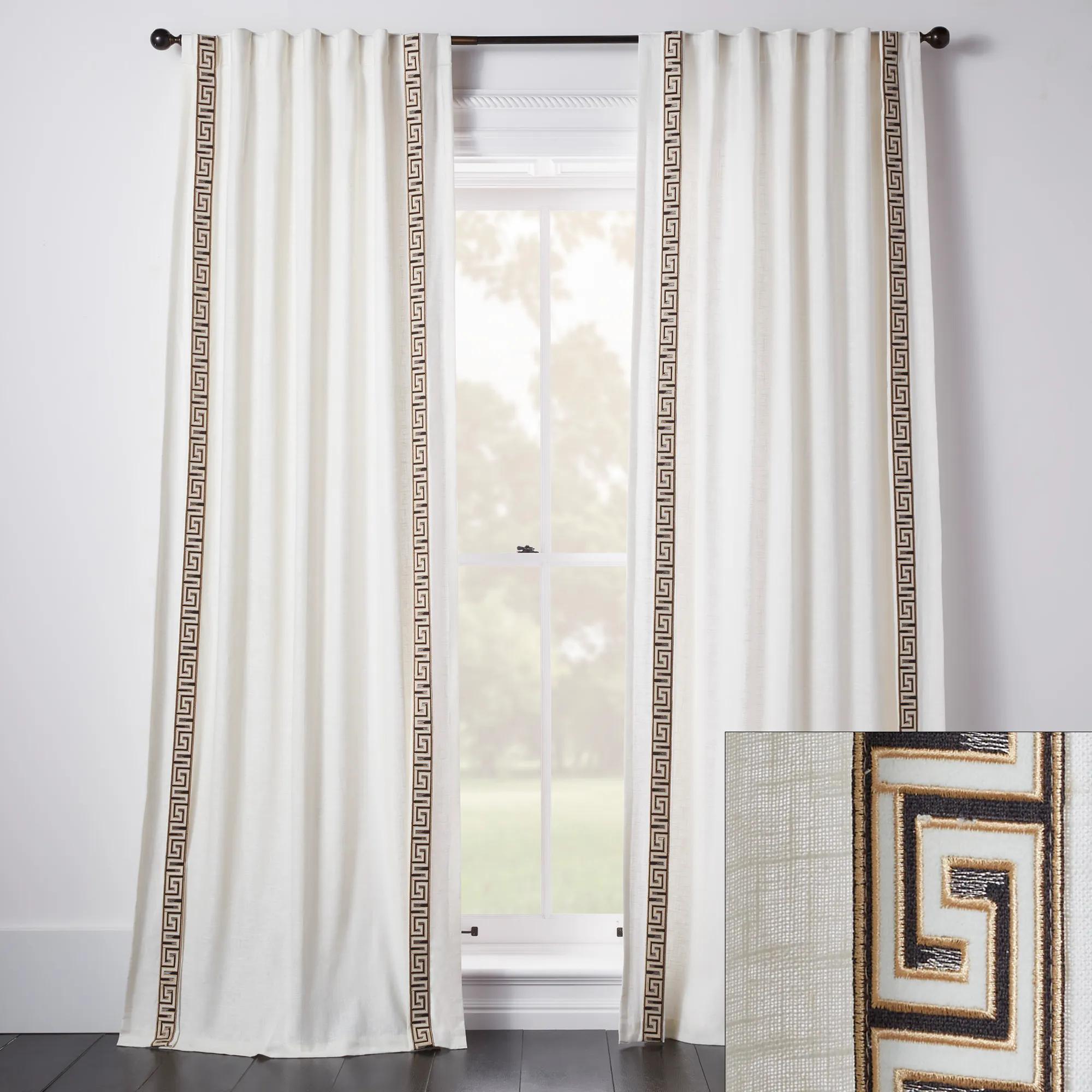 Chole Greek Key Border Velvet Widow Curtain Panels Custom$349
A white linen-blend curtain with black and gold velvet Greek key border and customizable hanging options.
Add To Cart -
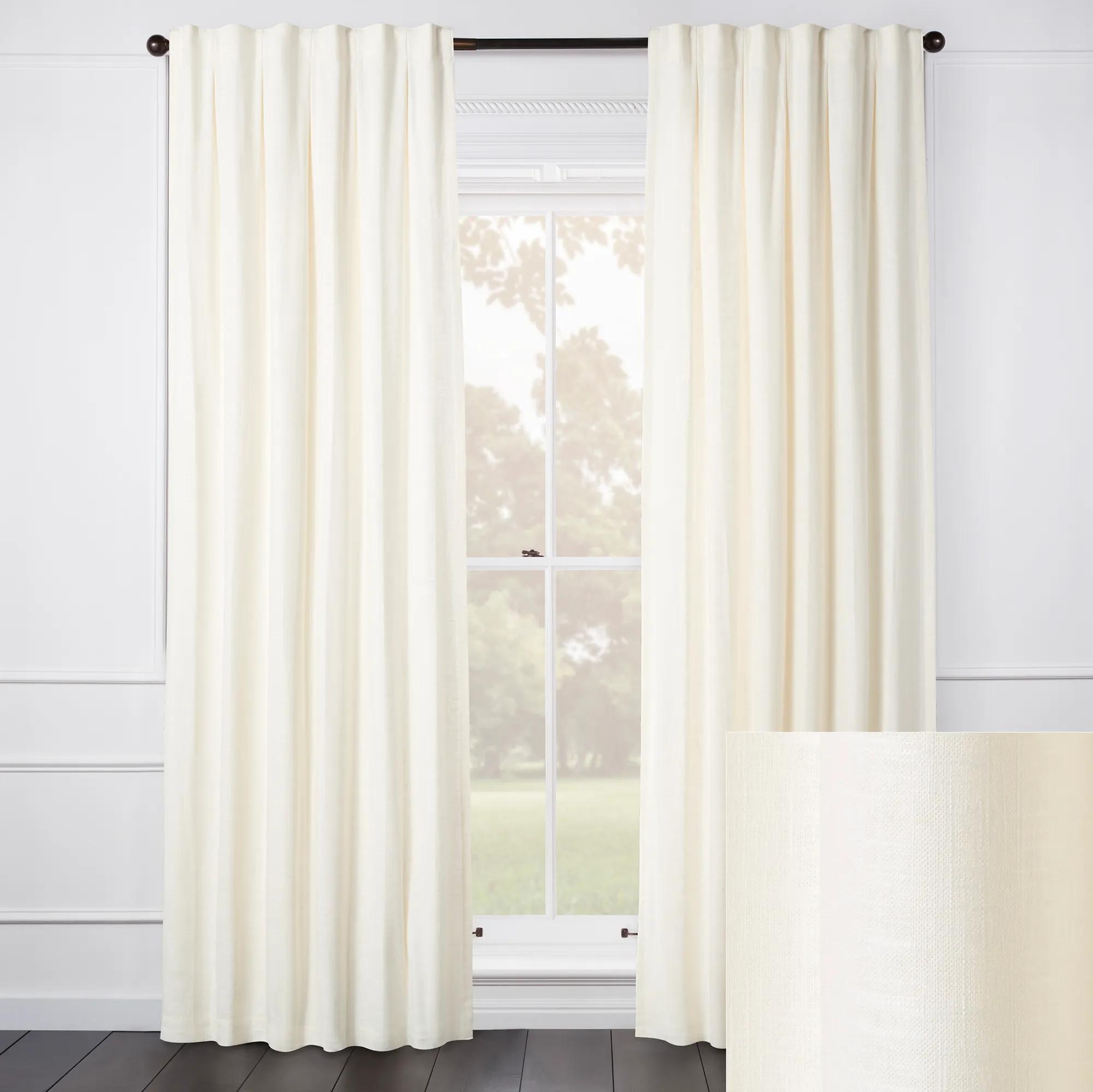
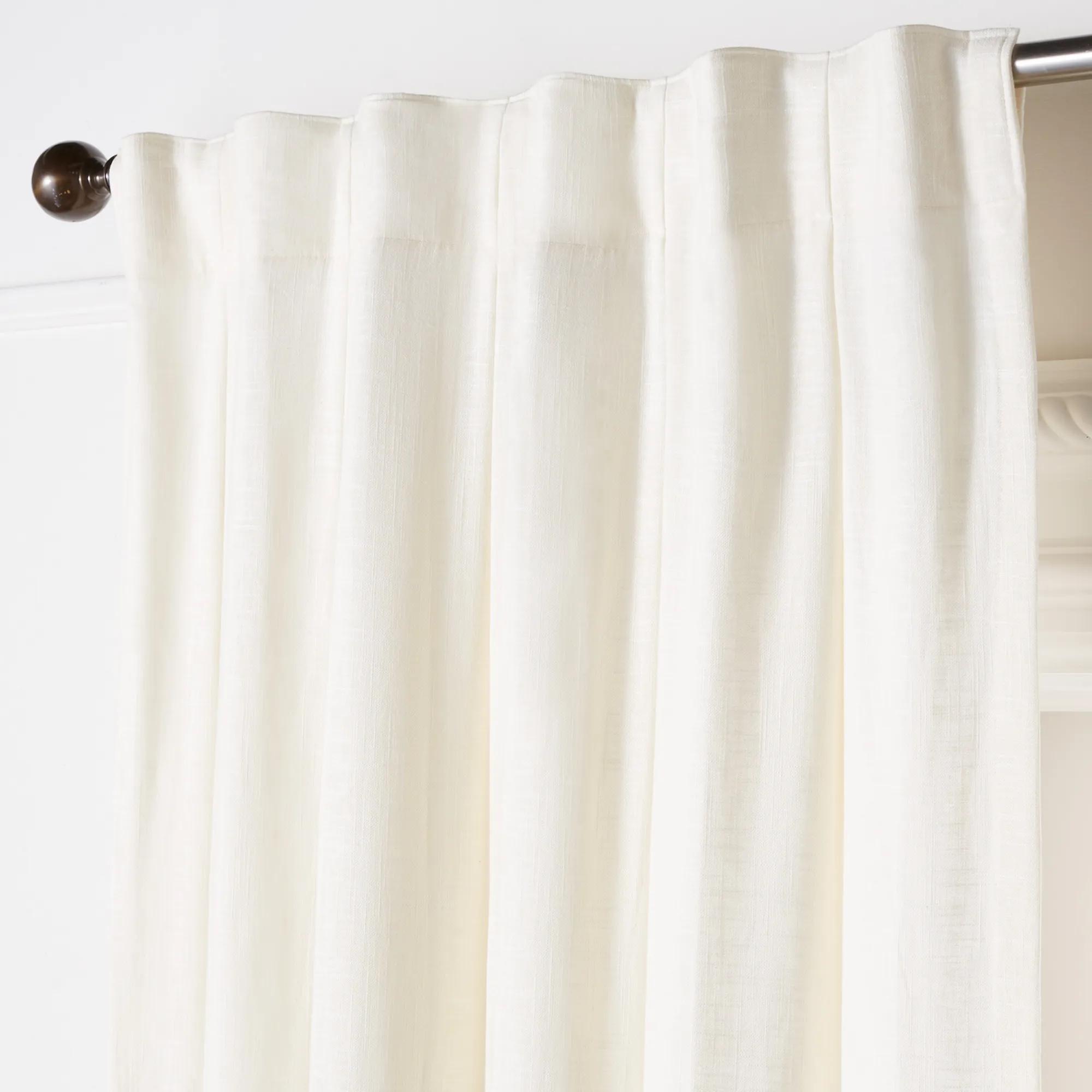 Audrey Linen Ivory Curtain - Custom$269
An ivory linen-blend curtain panel with lining, offering customizable lengths and two elegant header styles.
Add To Cart -
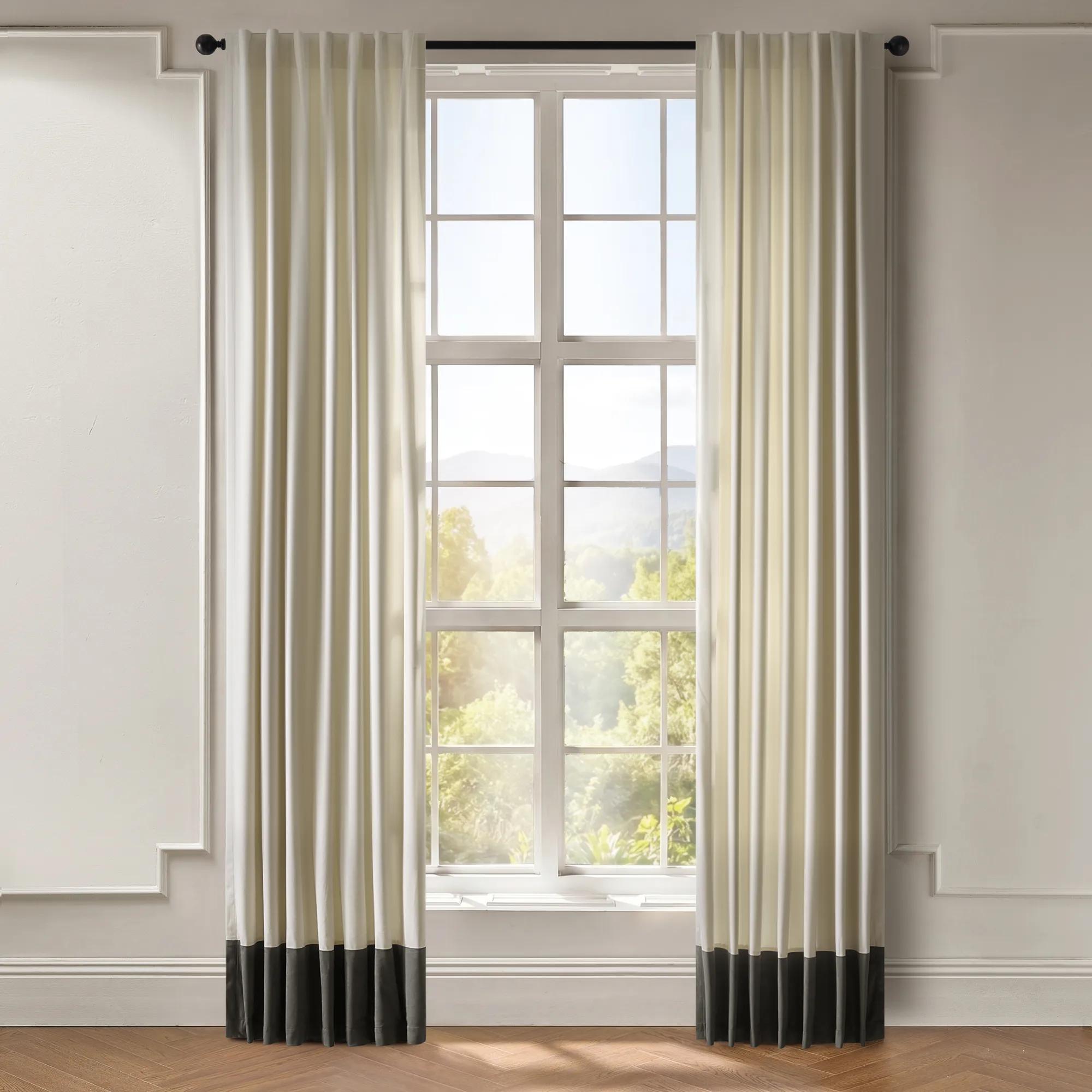
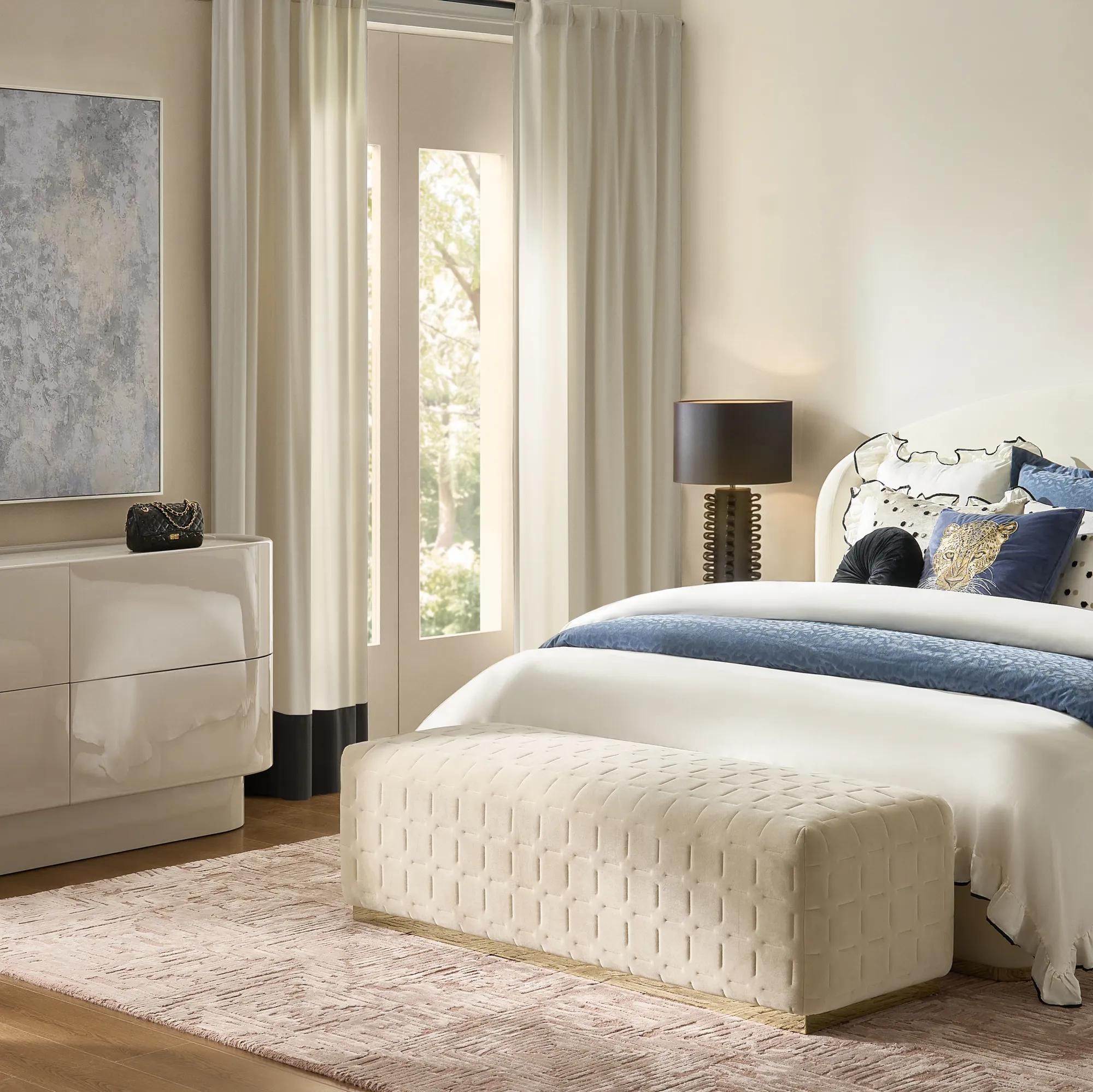 Bastien Ivory/Graphite Velvet Border Window Curtain Panel$109
A two-tone ivory and graphite velvet curtain panel with a Deco-inspired border and room-darkening design.
Add To Cart -
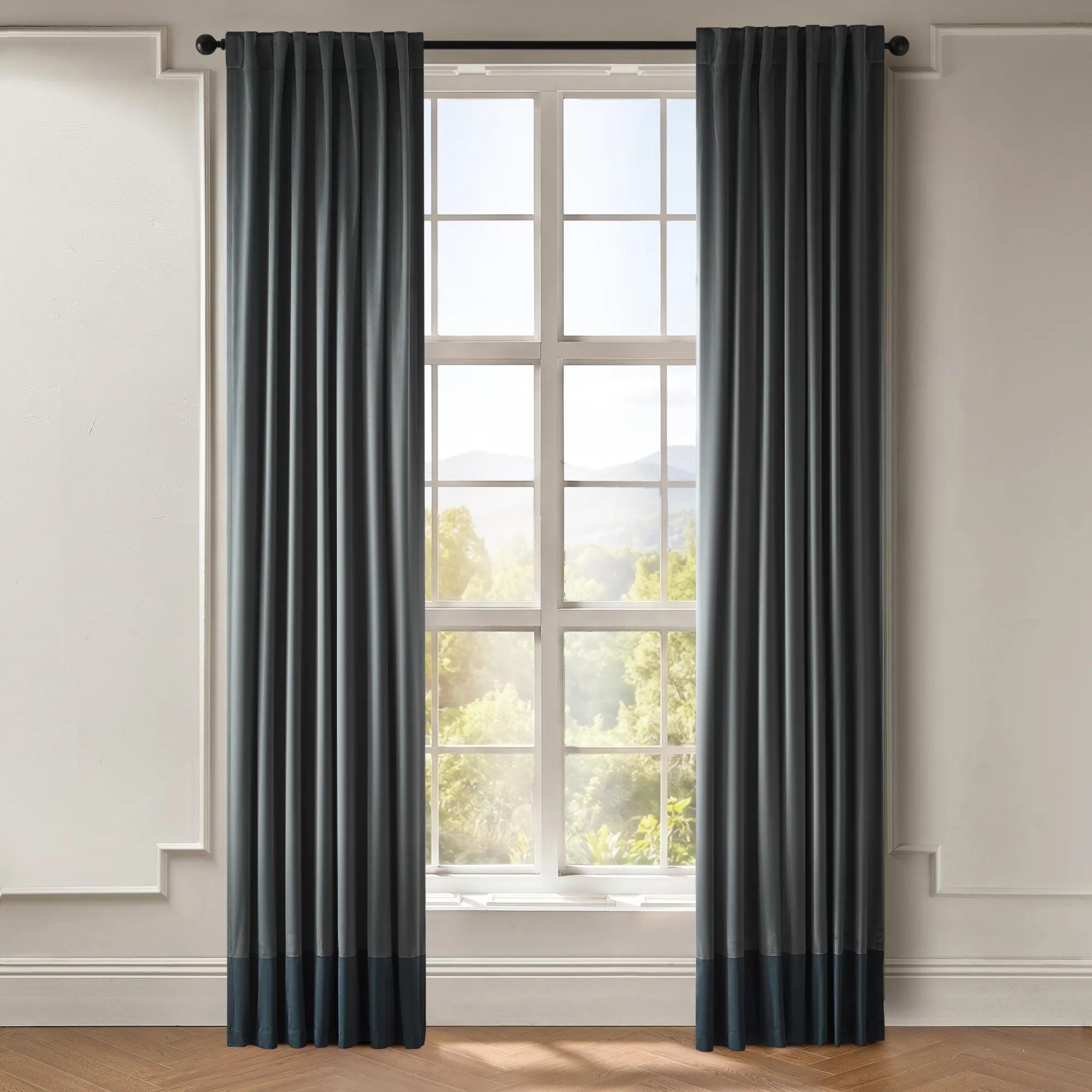
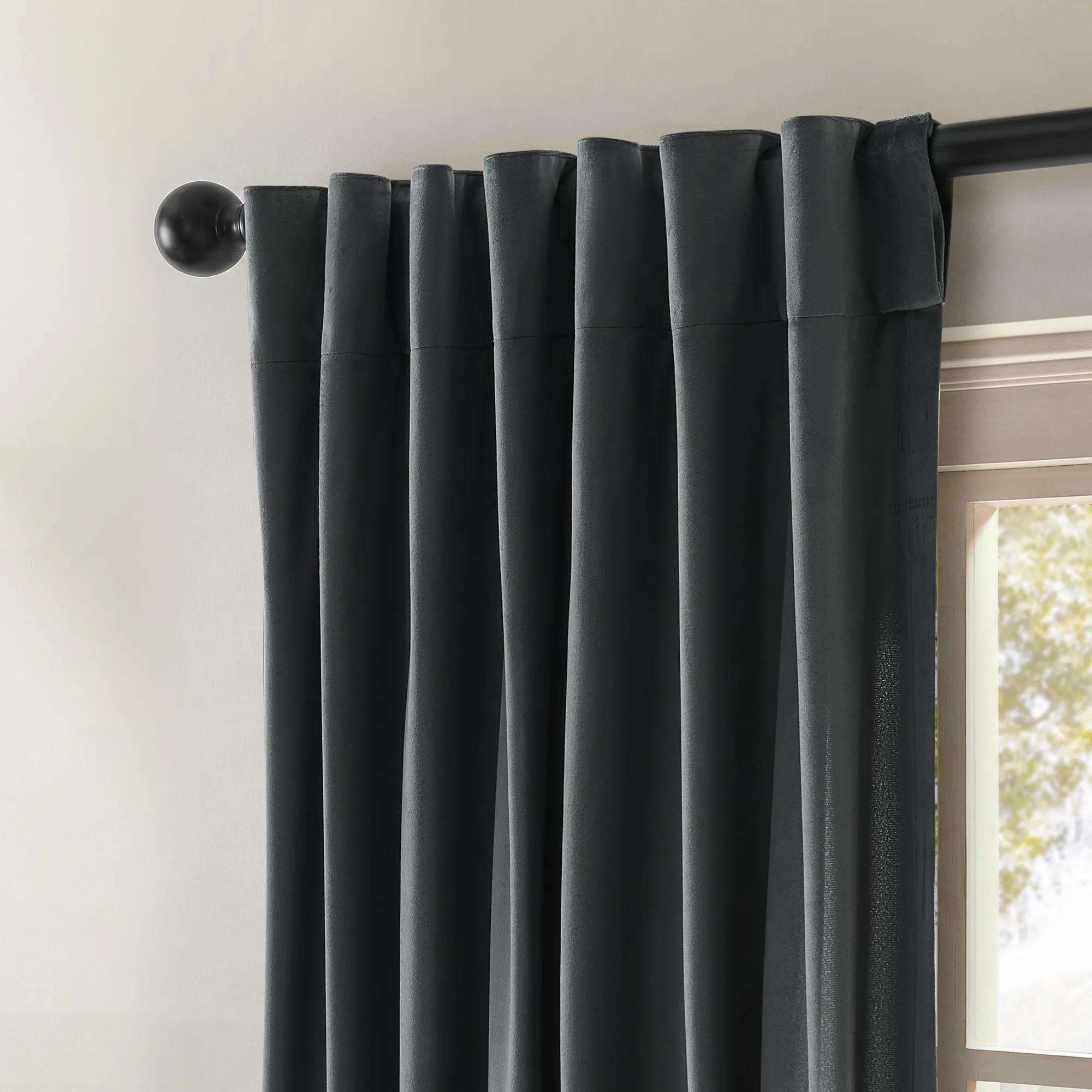 Bastien Blue/Midnight Velvet Border Window Curtain Panel$89
A two-tone dusty and midnight blue velvet curtain panel with a Deco-inspired border and room-darkening design.
Add To Cart -

 Adair Sand Solid Velvet Window Curtain Panel$89
A sand-colored velvet curtain offering room-darkening privacy and versatile hanging options for refined interiors.
Add To Cart -
 Anson Mocha Rose Textured Window Curtain Panel$89
A light mocha rose curtain panel with crushed sheen texture and room-darkening, dual hanging design.
Add To Cart -

 Adair Midnight Blue Solid Velvet Window Curtain Panel$79
A sumptuous midnight blue velvet curtain that adds rich dimension and room-darkening elegance to any space.
Add To Cart -
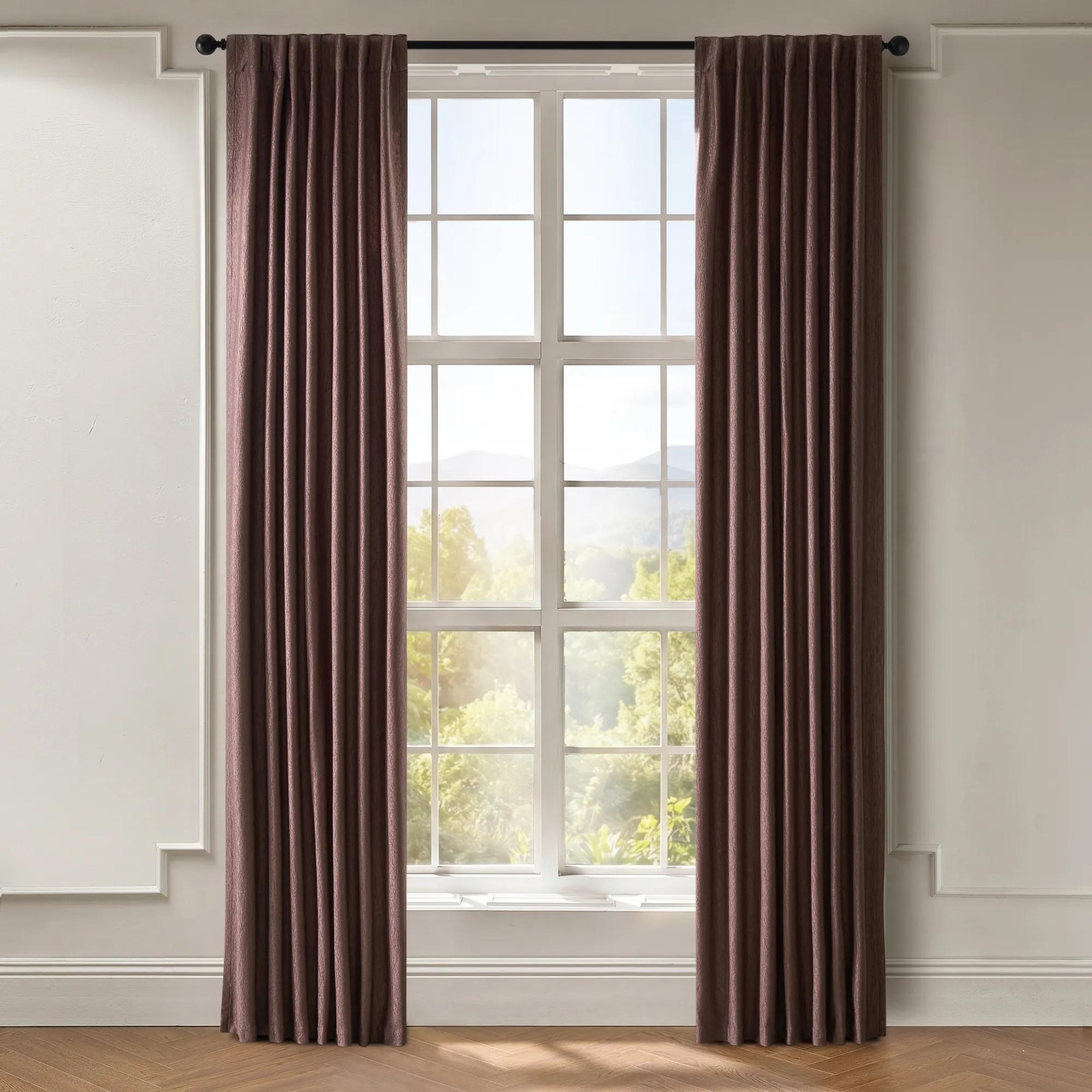
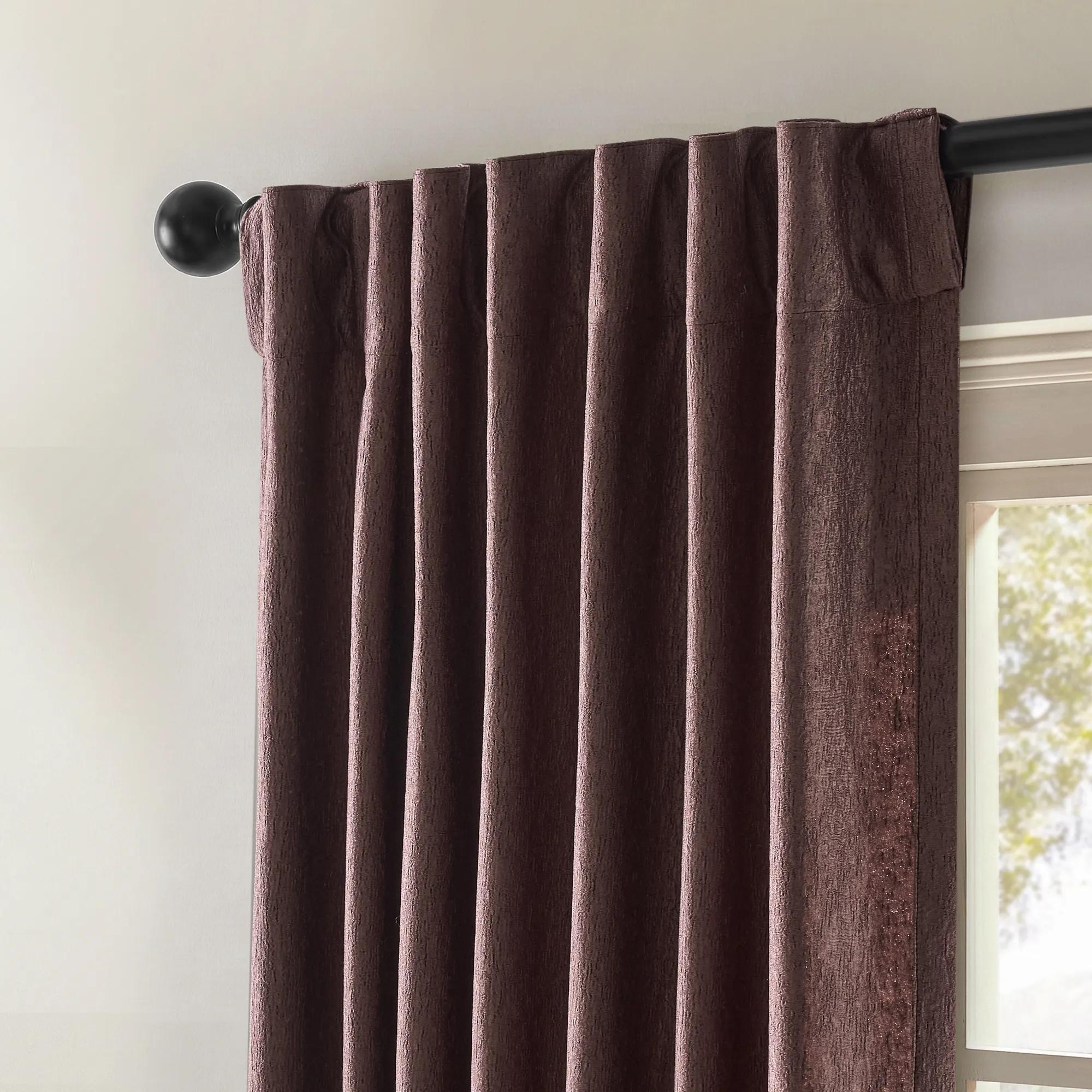 Anson Fig Textured Window Curtain Panel$99
A deep fig curtain panel in crushed, subtly sheened polyester with room-darkening and dual hanging options.
Add To Cart -
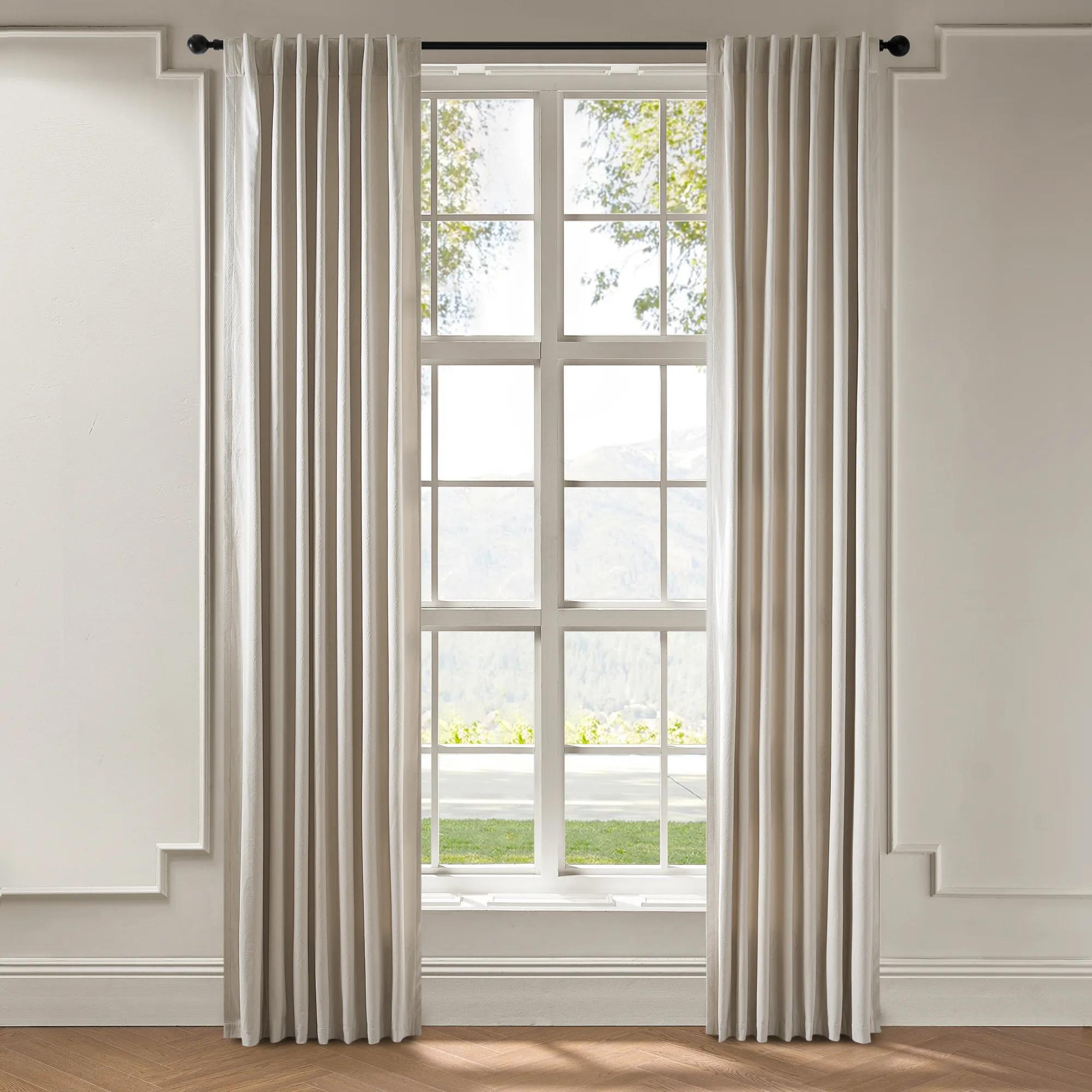
 Mabel White Velvet Swirl Window Curtain Panel$109
A crisp white velvet curtain featuring a tonal swirl texture and versatile dual hanging options.
Add To Cart -
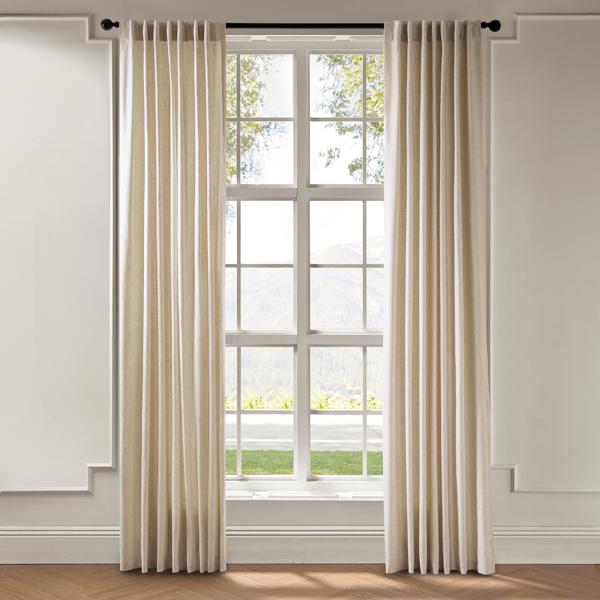
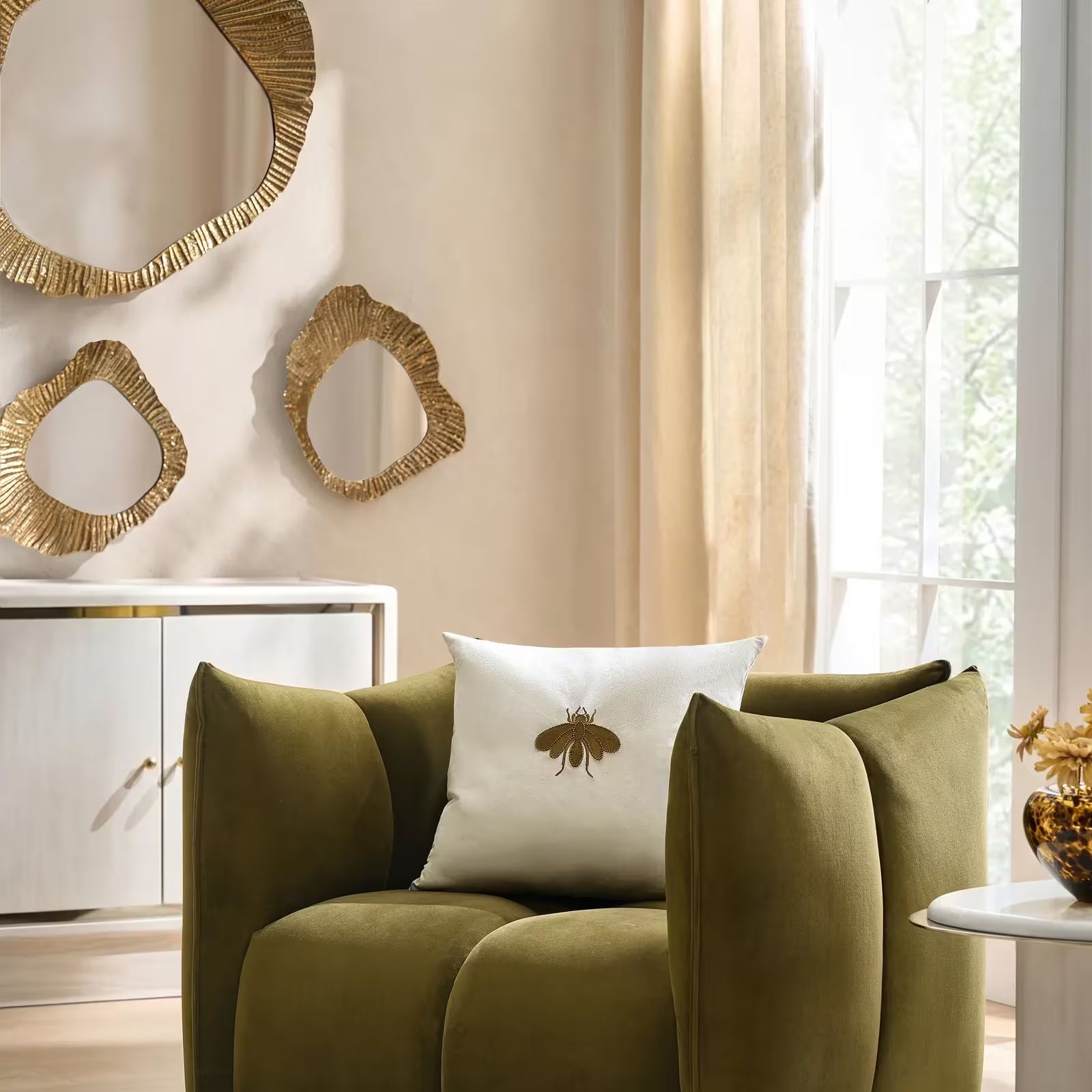 Anson Ivory Textured Window Curtain Panel$109
An elegant ivory curtain with a crushed, light-reflective texture and versatile dual hanging options.
Add To Cart -

 Mabel Natural Velvet Swirl Window Curtain Panel$109
A warm neutral velvet curtain with a tonal swirl pattern and room-darkening, dual hanging options.
Add To Cart -
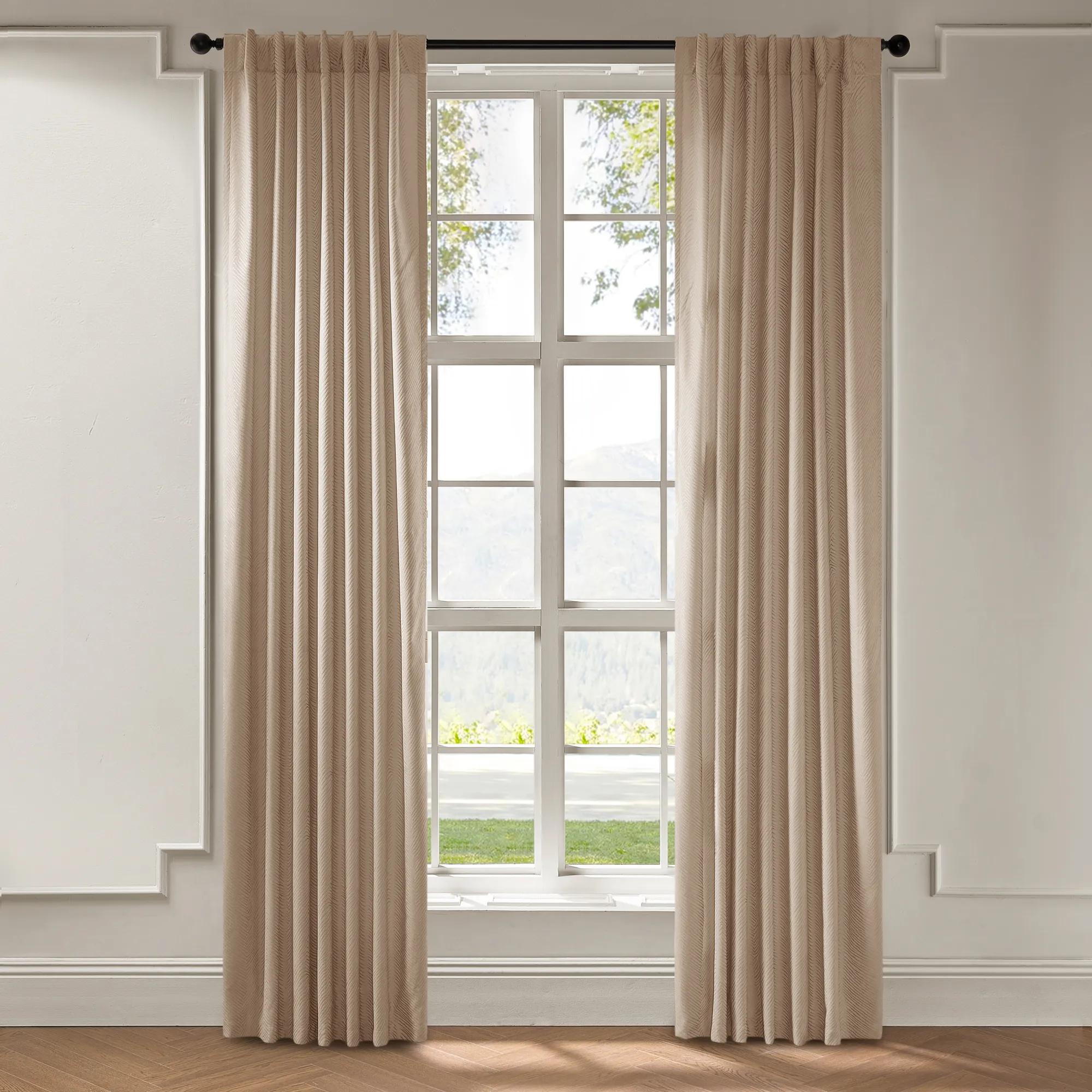 Kenzo Jacquard Beige Chenille Window Curtain Panel$119
A warm beige chenille jacquard curtain with a subtle sheen and versatile rod pocket or back tab hanging.
Add To Cart

Decorative Silk Curtain Panels
Transform your windows into works of art with decorative silk curtain panels—where fluid elegance meets unapologetic drama. These luxurious drapes don’t simply frame a view; they orchestrate an atmosphere, catching the light and casting a luminous sheen that sets the stage for every room. Whether cascading in soft folds or standing as bold, sculptural statements, decorative silk curtain panels infuse your space with a sense of grandeur and expressive flair. Let each panel become a brushstroke in your home’s masterpiece, enveloping your interiors in texture, movement, and undeniable allure.
Decorative silk curtain panels are window treatments prized for their natural luster, expressive texture, and elegant drape. More than a frame for the view, they introduce a layer of artistry that changes how a room receives light and how its furnishings relate to one another. In a living room, luminous panels can soften the geometry of a tailored sofa and draw attention to tall windows; in a bedroom, they create a composed backdrop for an upholstered headboard and layered bedding. A dining room takes on a more intimate character when silk catches the glow of a chandelier, revealing subtle variations across the folds. The fabric’s personality depends on both its fiber content and its weave. Silk dupioni is recognized for its characteristic slubs, the small irregularities that give the surface dimension, along with a relatively crisp body that supports sculptural folds. Silk taffeta has a smoother, more structured appearance, while silk charmeuse offers a fluid drape and a lustrous face. These distinctions matter because a curtain’s texture remains visible even when its color is understated. Ivory silk can look richly dimensional against matte walls, while charcoal or deep blue creates a more dramatic architectural frame. A restrained palette lets the weave become the focal point; stronger color turns the entire window into a statement. Pure silk, silk blends, and silk-look fabrics should not be treated as interchangeable. A blend’s feel and care requirements depend on its fiber composition, and polyester silk-look fabric may offer sheen without containing natural silk. Fiber labels provide the clearest distinction. For interiors that balance gleaming metal, glass, and plush upholstery, silk brings a different expression of luxury: light moves across the surface rather than reflecting uniformly, giving the room depth without requiring another pattern. That quiet variation is especially compelling in monochromatic spaces, where texture carries much of the design. Even a simple arrangement of solid panels can feel richly considered when its finish, proportions, and surrounding materials work together.
The visual impact of silk curtain panels depends as much on proportion and construction as on color. A panel is one individual curtain, not necessarily a complete pair, so panel count and finished width are important details when planning a balanced window treatment. For many gathered styles, a combined fabric width around twice the rod width produces generous fullness, although the right amount varies with the heading, fabric weight, and whether the curtains are decorative or intended to close. Fixed pleated headings have their own finished-width requirements and should be assessed differently from flat panels. Narrow side panels can define a window beautifully when another treatment handles privacy; functional curtains need enough coverage to meet comfortably without looking stretched. Length creates an equally distinct mood. Panels that just meet the floor have a tailored presence, while a slight break introduces a softer, more theatrical finish. Excess fabric pooling on the floor makes a stronger decorative statement but also collects dust and can interfere with daily movement. In a room with pets, a frequently used patio door, or an active seating area, a clean floor-length finish is often more practical. Measurements should follow the actual hanging point, accounting for rings, hooks, or tabs rather than relying on window height alone. Hardware also shapes the finished silhouette: rings emphasize an elegant vertical fall, back tabs create broad folds, and pleated headings establish a more formal rhythm. A substantial rod and securely mounted brackets help support lined fabric without sagging. Lining deserves equal attention. It can lend silk more body, improve coverage, and help shield the face fabric from direct sunlight, but ordinary lining does not automatically provide blackout performance. Where darkness is important, such as a bedroom or media room, a specified blackout lining or a separate light-blocking treatment is the more reliable choice. Interlining can add volume and a softer, fuller profile, though its added weight should be considered alongside the hardware. These construction details determine whether the finished panels read as airy and fluid or deeply folded and architectural.
Silk rewards thoughtful placement and attentive care, making it especially well suited to rooms where its surface can be appreciated without constant handling. A formal sitting room, a serene primary bedroom, or a dining space centered on art and conversation gives the fabric room to make an impression. Natural silk can fade and weaken with prolonged exposure to direct sunlight, so lining and a separate shade can help reduce exposure; neither should be assumed to eliminate it entirely. Windows near splashing water, cooking residue, or persistent moisture generally call for a more forgiving material. Durability also depends on the weave, fabric weight, construction, and frequency of use, rather than fiber content alone. In a household where curtains are opened and closed daily, smoothly operating rings or a suitable traverse system can reduce the need to pull directly on the fabric. Silk should be handled according to its care label, with professional cleaning used when specified. Washing, spot treatments, or steaming should not be assumed safe: water can leave marks, finishes may react unpredictably, and excessive heat can damage the fibers. Gentle dust removal, when permitted by the manufacturer, helps preserve the surface between cleanings; a clean, soft brush attachment on low suction may be appropriate for some constructions, but delicate fabrics and trims need particular caution. The same attention to detail applies to styling. A polished rod can sharpen silk’s luminous character, while a subdued metal finish allows its texture to lead. Pairing silk with a textured rug or matte upholstery keeps the room dimensional rather than uniformly glossy. For a wider view of silhouettes, fabrics, and finishing details, Decorative Window Curtain Panels offers a related perspective on framing a room. The most compelling silk window treatments feel connected to the architecture and the way the space is lived in: generous enough to create drama, carefully proportioned enough to remain graceful, and distinctive enough to make the entire room feel intentional.
FAQs
Silk curtain panels are celebrated for their natural sheen, sumptuous texture, and elegant drape, which instantly elevate any room. The reflective quality of silk captures and diffuses light beautifully, creating a soft, inviting ambiance. Whether you choose real or faux silk, these panels add a layer of sophistication and artistry, making your windows a true focal point.
To create a dramatic statement, opt for floor-length silk panels that puddle gracefully, or layer them with sheers and velvet for depth and texture. Bold color choices such as deep jewel tones or a striking black silk curtain can anchor your decor and provide a stunning contrast against lighter walls and furnishings. Consider hanging styles like pinch pleats or grommets to further enhance the visual impact.
Silk curtain panels are versatile and can be used in various spaces—from formal living rooms and elegant dining areas to serene bedrooms. Their light-filtering properties make them ideal for rooms where you wish to create a cozy, intimate atmosphere. Faux silk options are particularly well-suited for high-traffic areas or homes with children and pets, offering durability without sacrificing style.
To preserve the luxurious look of silk curtain panels, gently vacuum them with a soft brush attachment and use a handheld steamer to remove wrinkles. Protect them from prolonged direct sunlight with liners to prevent fading. For real silk, professional cleaning is recommended, while many faux silk options can be machine washed on a delicate cycle for easy care.
Silk curtain panels make a memorable and meaningful gift for weddings, housewarmings, or milestone celebrations. Their timeless elegance and transformative power allow recipients to personalize their living spaces with a touch of luxury. Gifting silk curtains is a way to share both beauty and comfort, making every day feel like a special occasion.