Decorative Plates For Modern Interiors
Decorative Plates For Modern Interiors
-
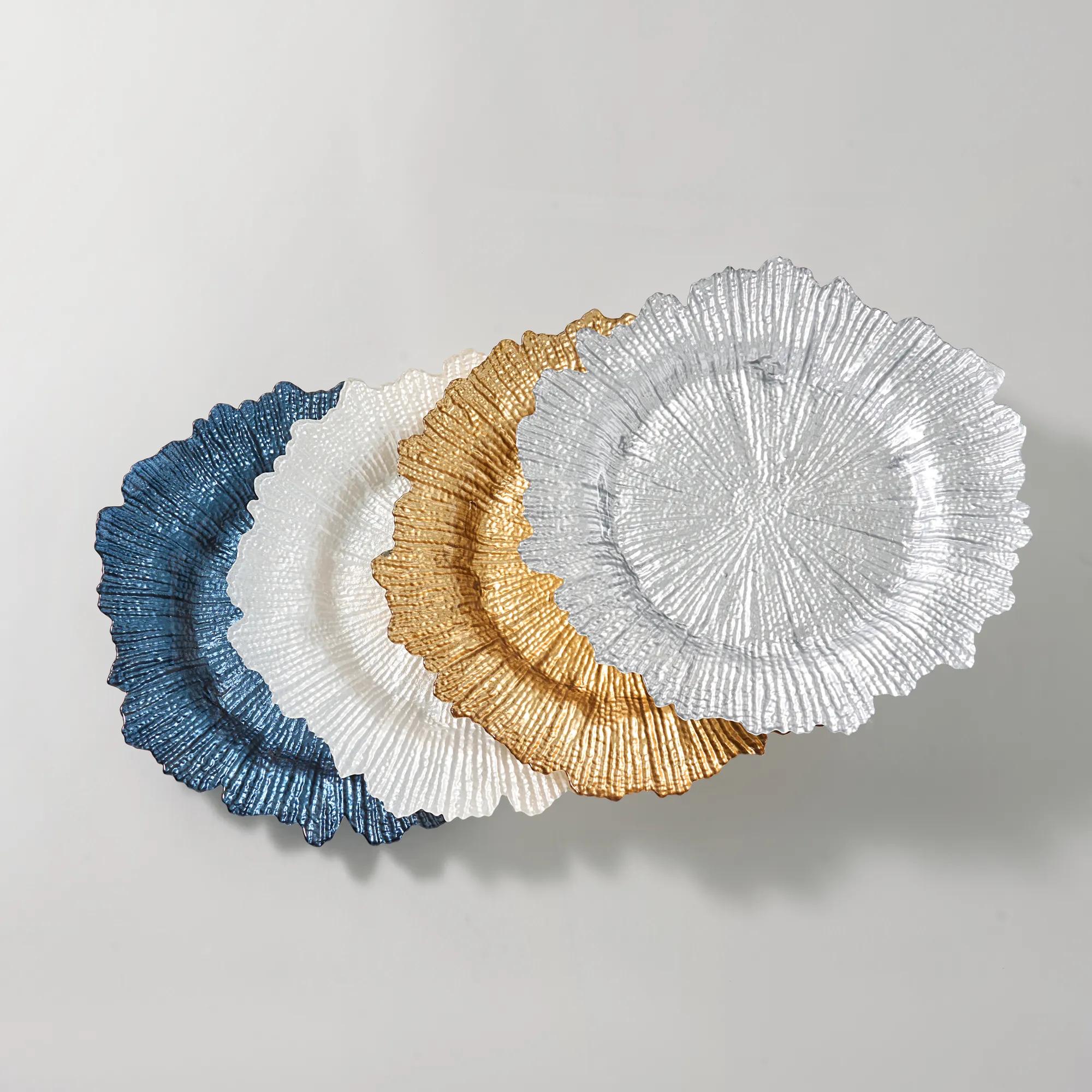
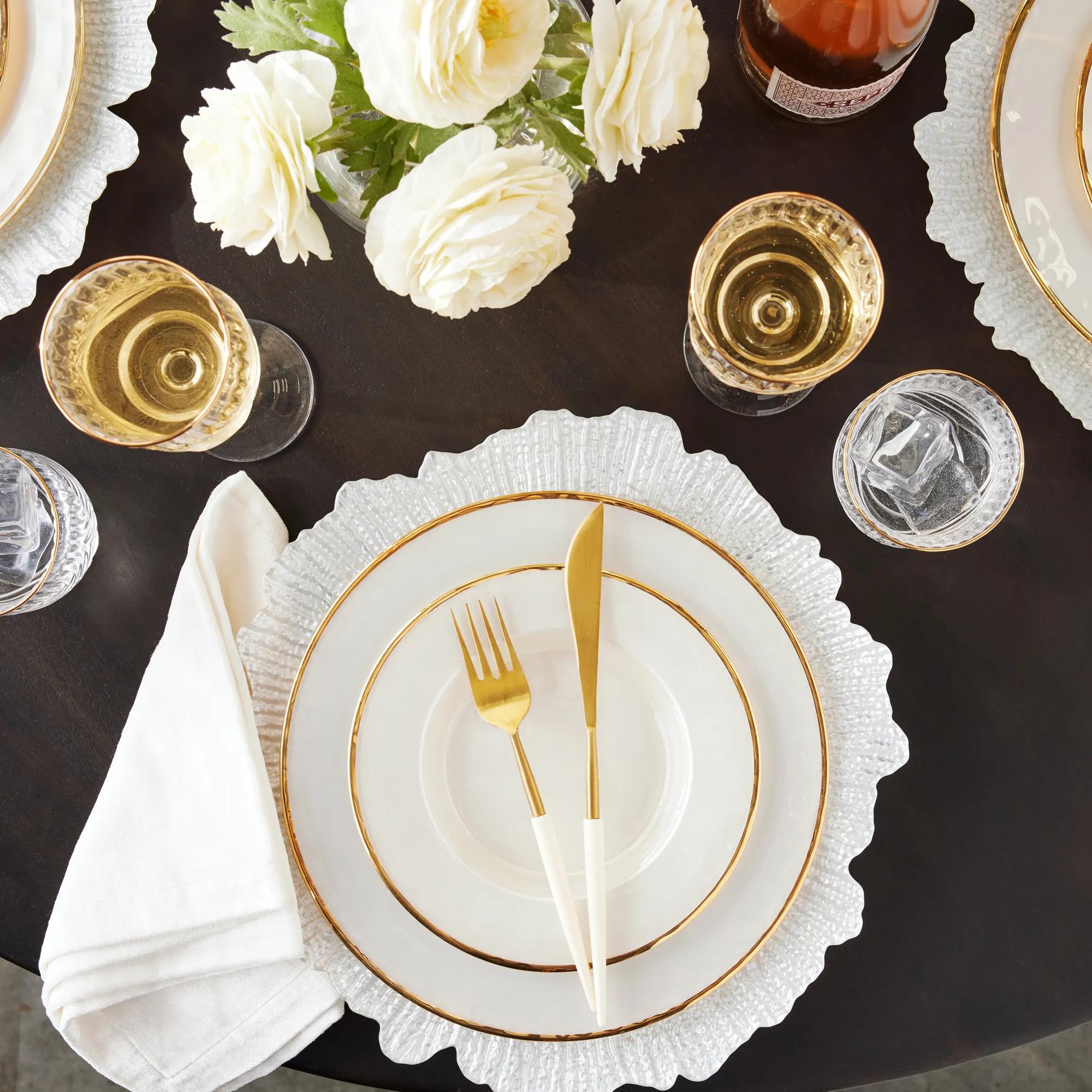 Spruzzo Glass Charger Sets 13"$109
A set of four glass chargers featuring a metallic-backed leaf pattern in gold, silver, white, or sapphire.
Add To Cart -
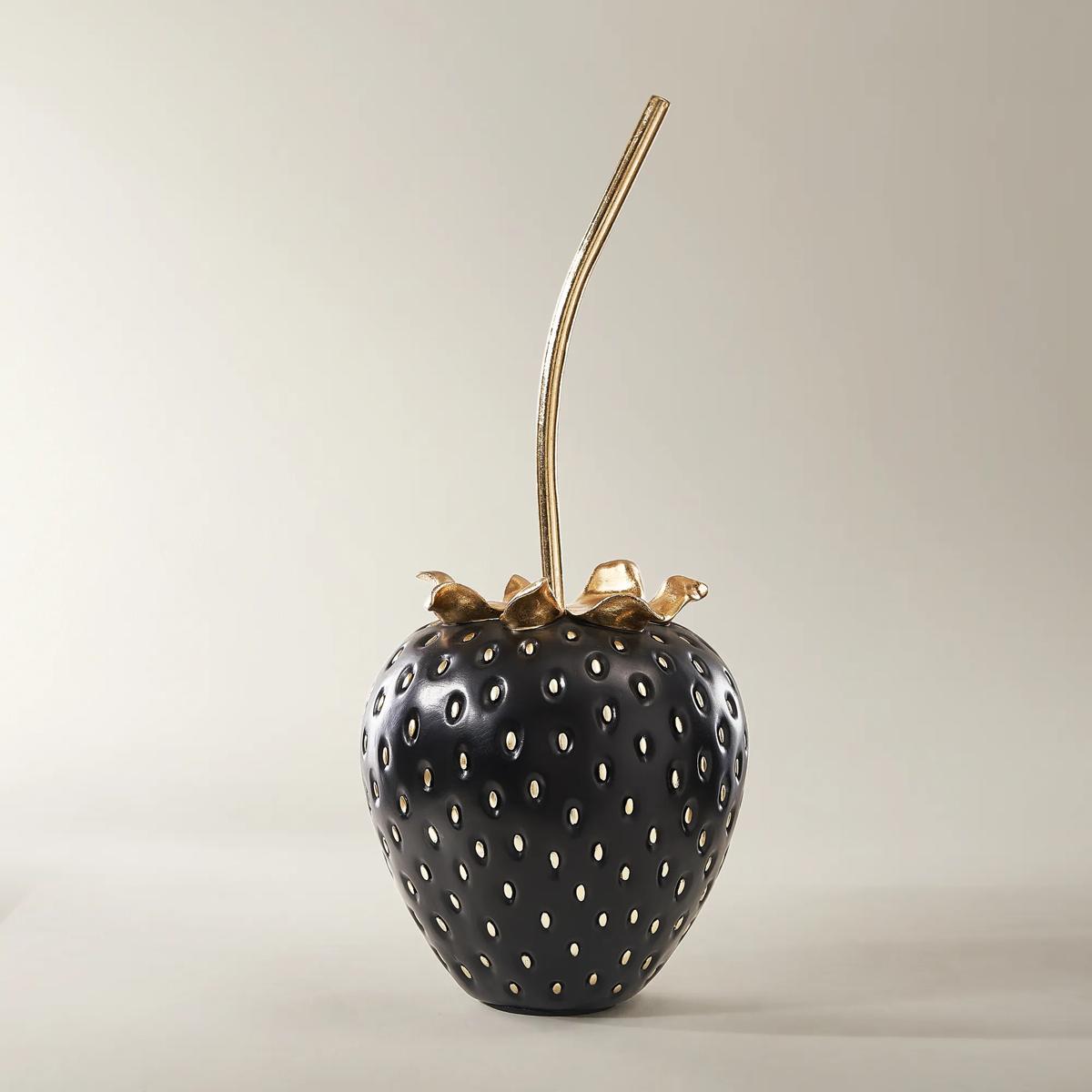 Grand Strawberry Gold And Black Resin Decorative Object 20.25"$129
A bold resin decorative accent in black and gold, adding whimsical elegance to any modern space.
Add To Cart -
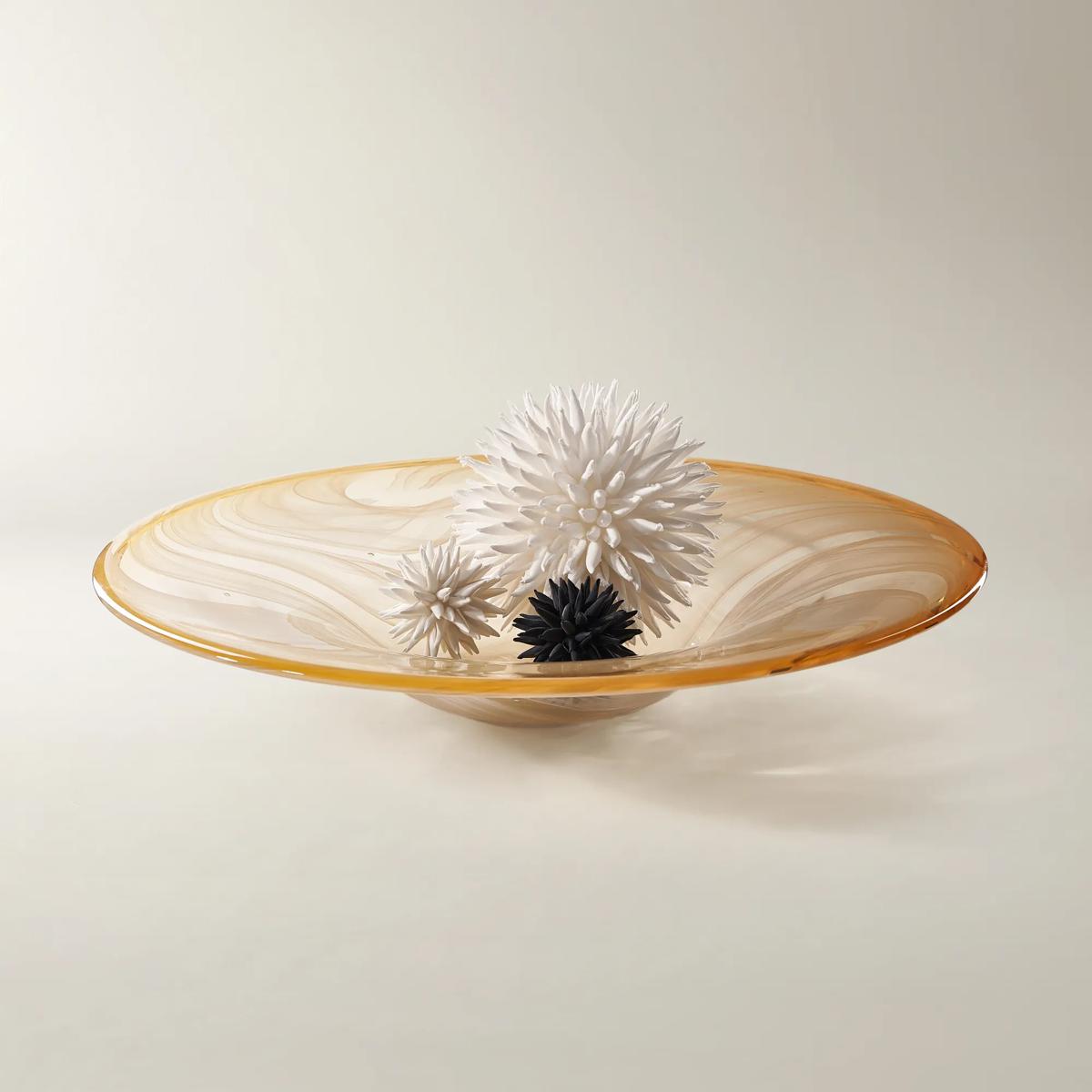
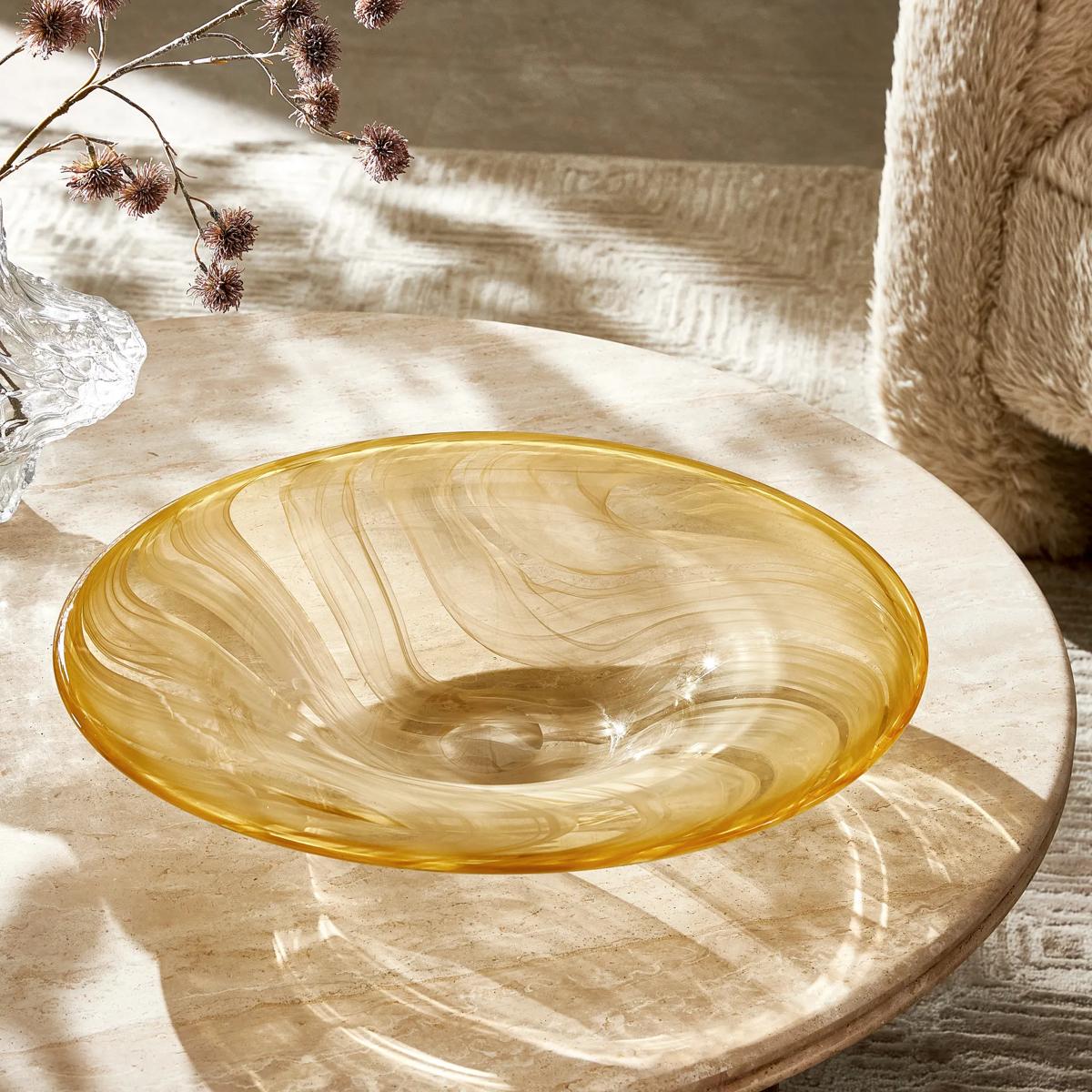 Paradis Glass Plate$239
A hand-blown amber glass plate featuring a swirling, organic design for a radiant decorative accent.
Add To Cart -
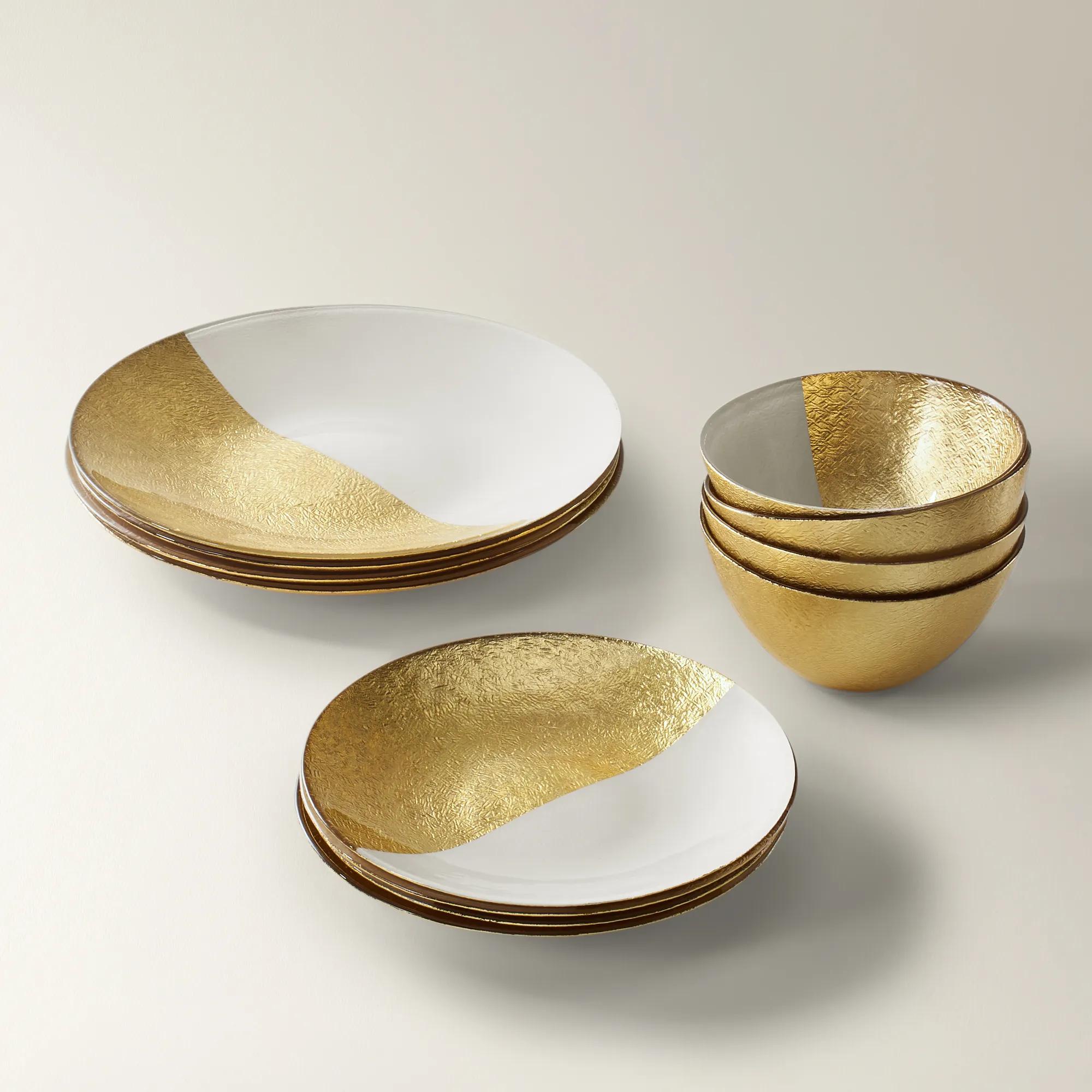
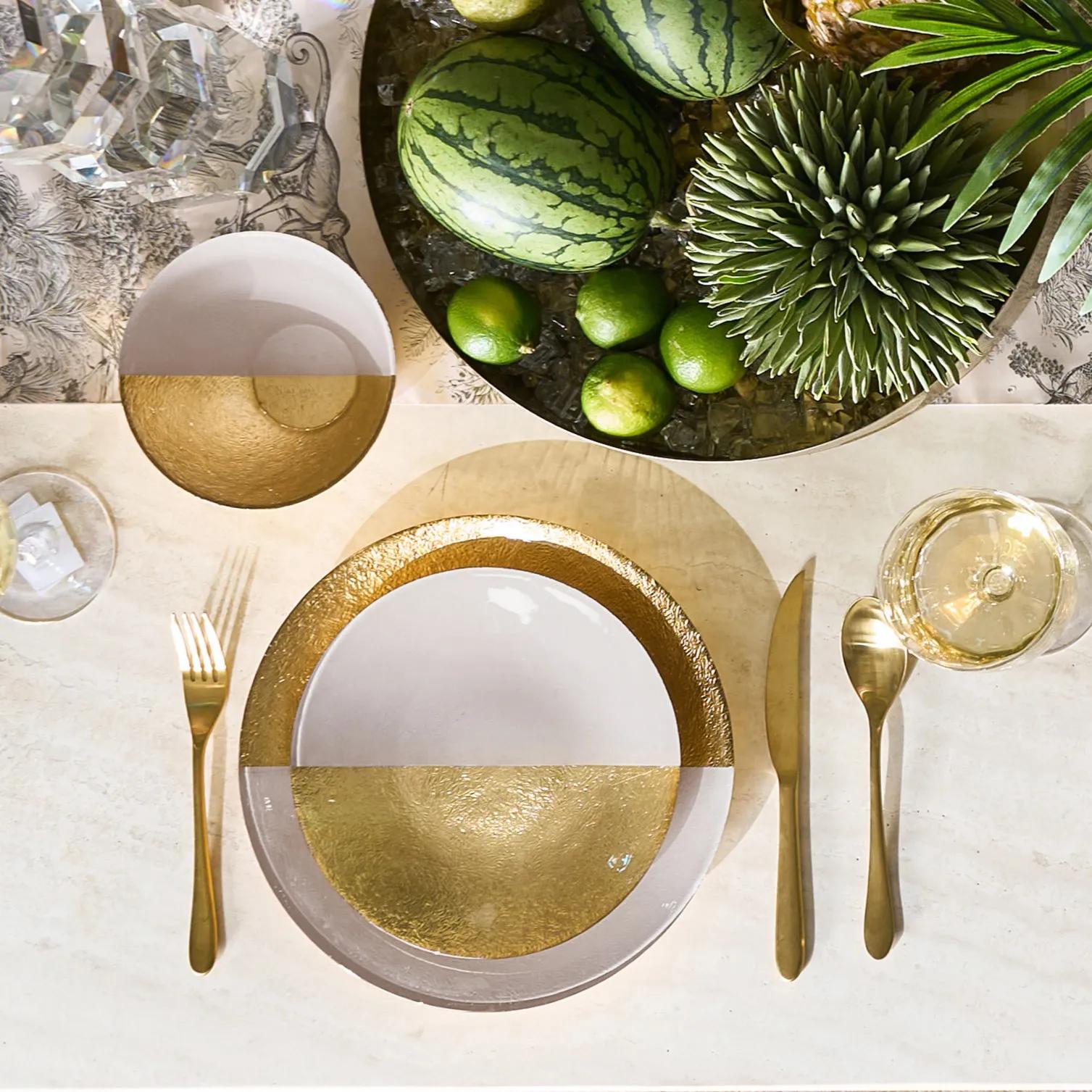 Gemini White and Gold Leaf Dinnerware Sets$59
A sophisticated glass dinnerware set featuring a sleek two-toned white and gold design.
Add To Cart -
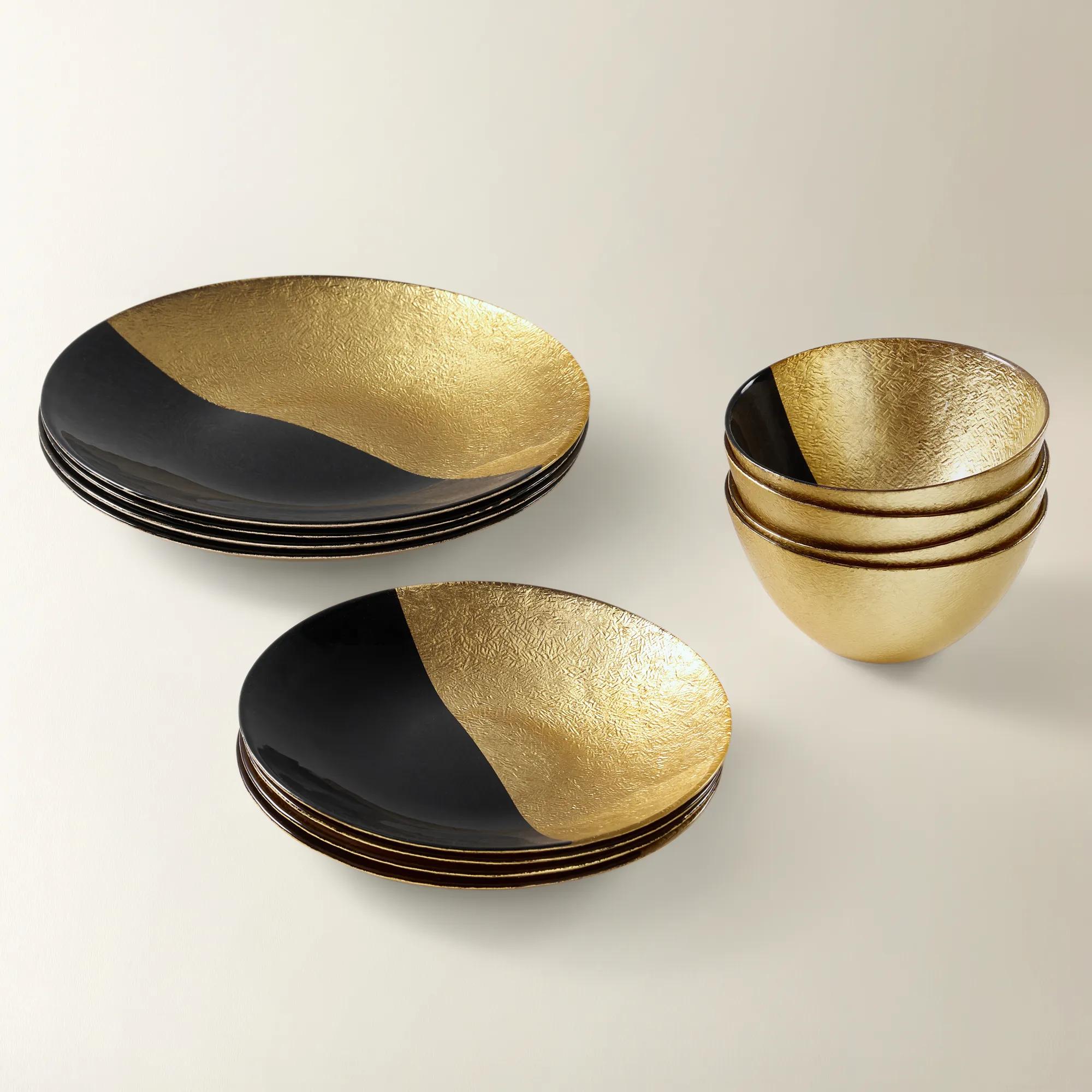 Gemini Black and Gold Leaf Dinnerware Sets$79
A striking set of black and gold glass dinnerware featuring modern two-toned elegance for any table.
Add To Cart -
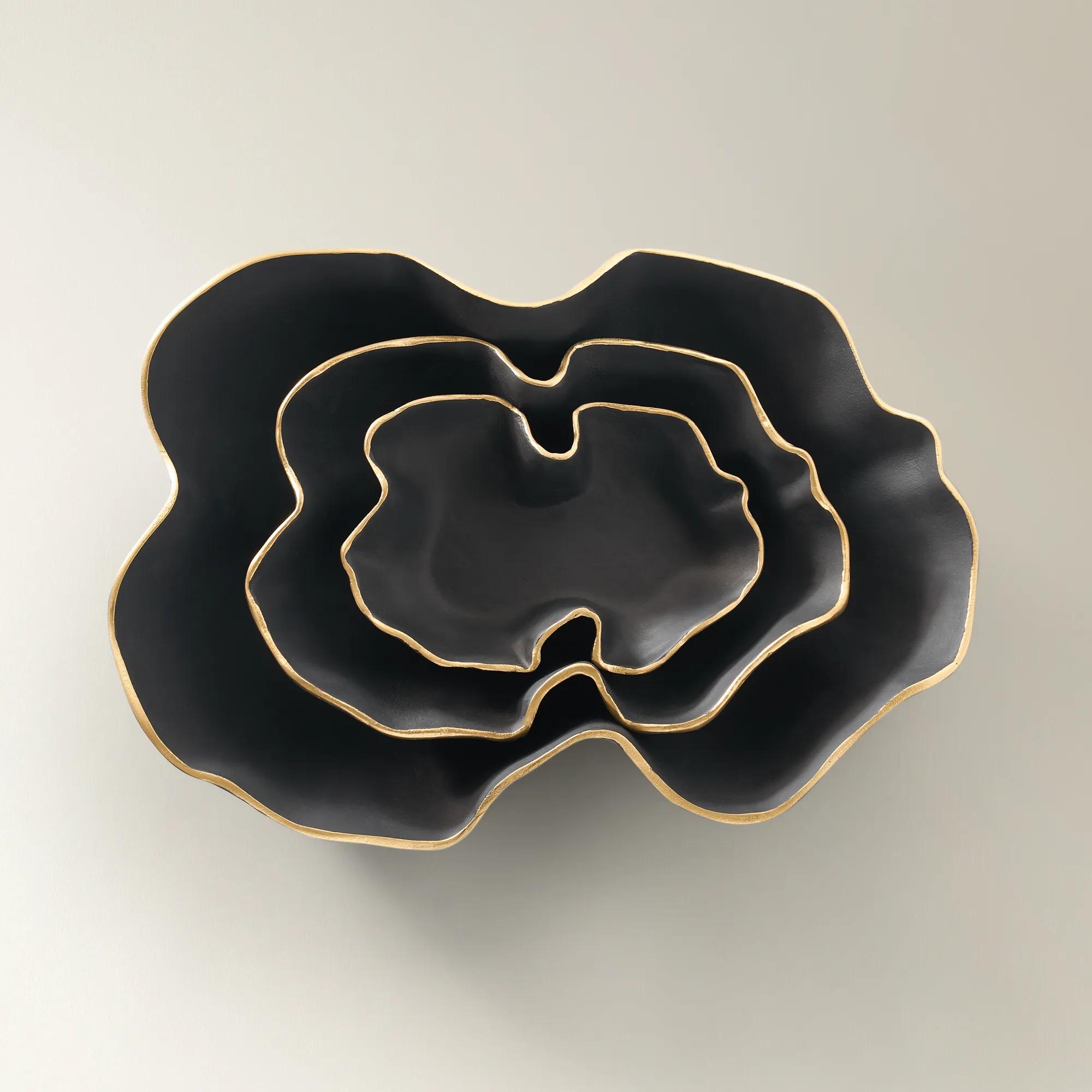 Lava Black Gold Aluminum Decorative Nesting Bowls$39
A deep black aluminum bowl with golden edges, featuring an organic, volcanic-inspired design for decorative display.
Add To Cart -
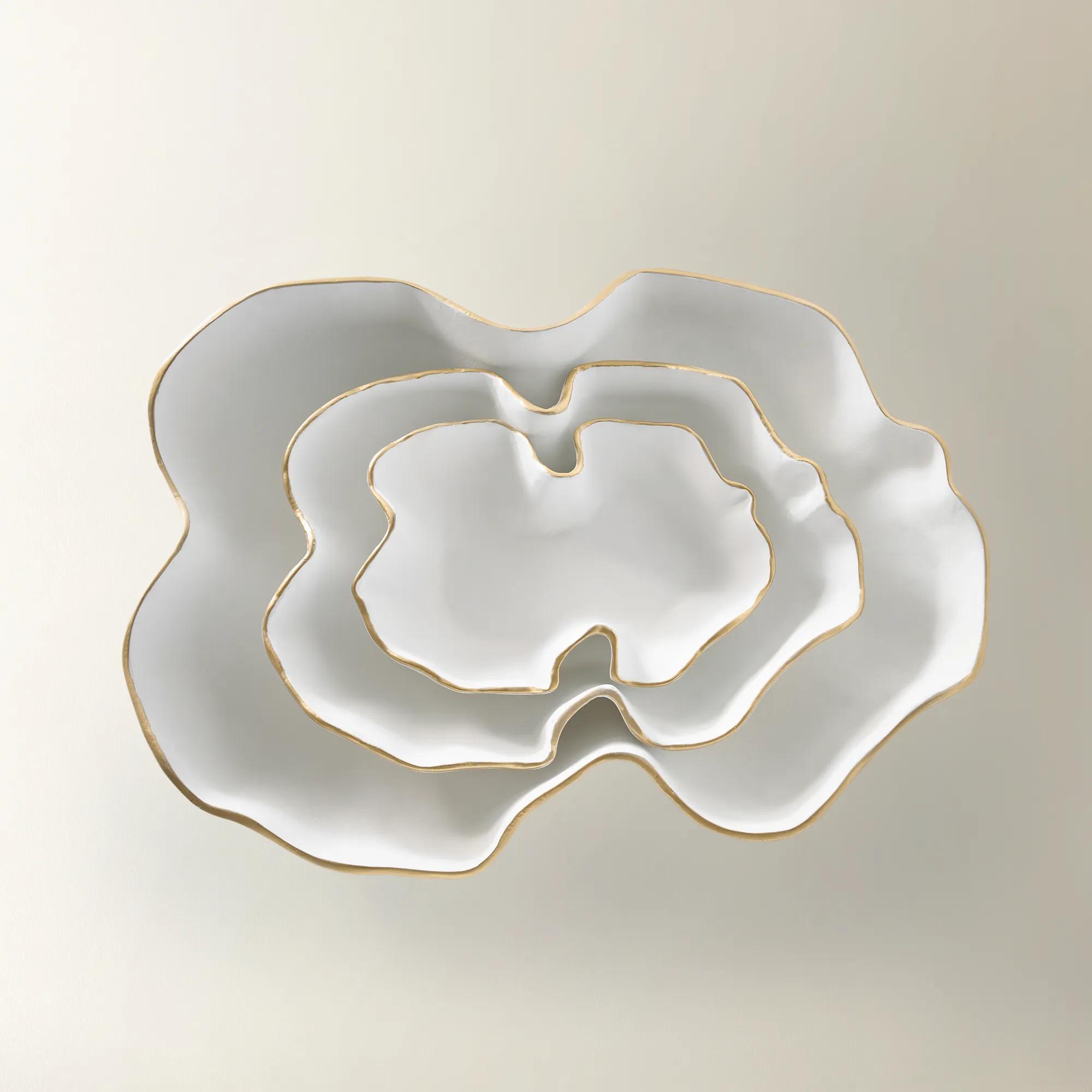 Lava White Gold Aluminum Decorative Nesting Bowls$49
A glossy white aluminum bowl with a golden rim, offering modern elegance for decorative display.
Add To Cart -
 Parfum Bottle Gold Ceramic High Gloss Coin Bank$39
A chic ceramic coin bank in a metallic gold finish, styled like an elegant perfume bottle.
Add To Cart -
.jpeg?w=1200&h=1200)
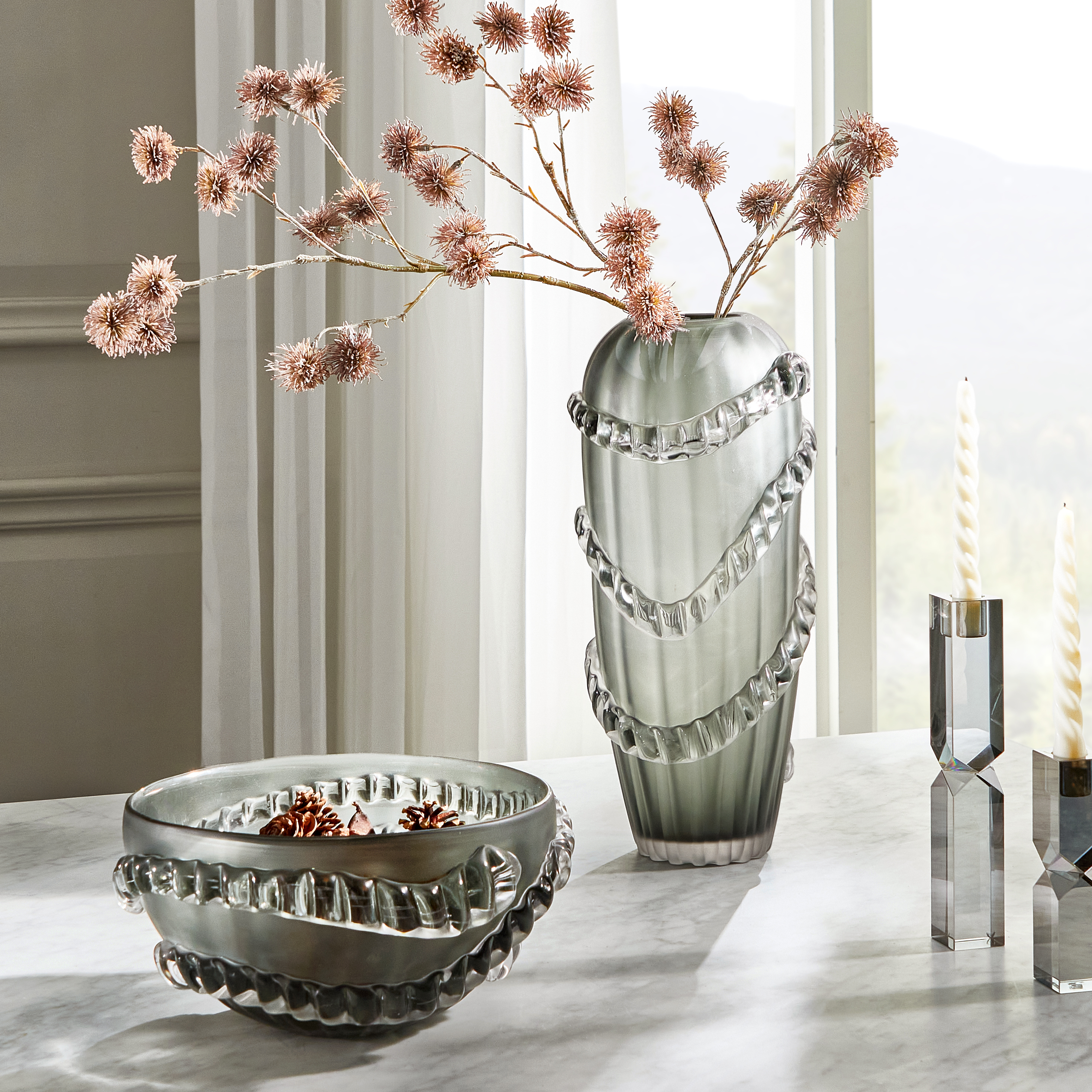 Helix Glass Collection$129
A hand-blown dark gray glass piece featuring fluted bodies and rippling sculptural ribbons for modern elegance.
Add To Cart -
.jpeg?w=1200&h=1200)
 Odessey Collection$99
Odessey Collection$99A shiny silver porcelain accent piece perfect for adding modern elegance to any decorative display.
Add To Cart -
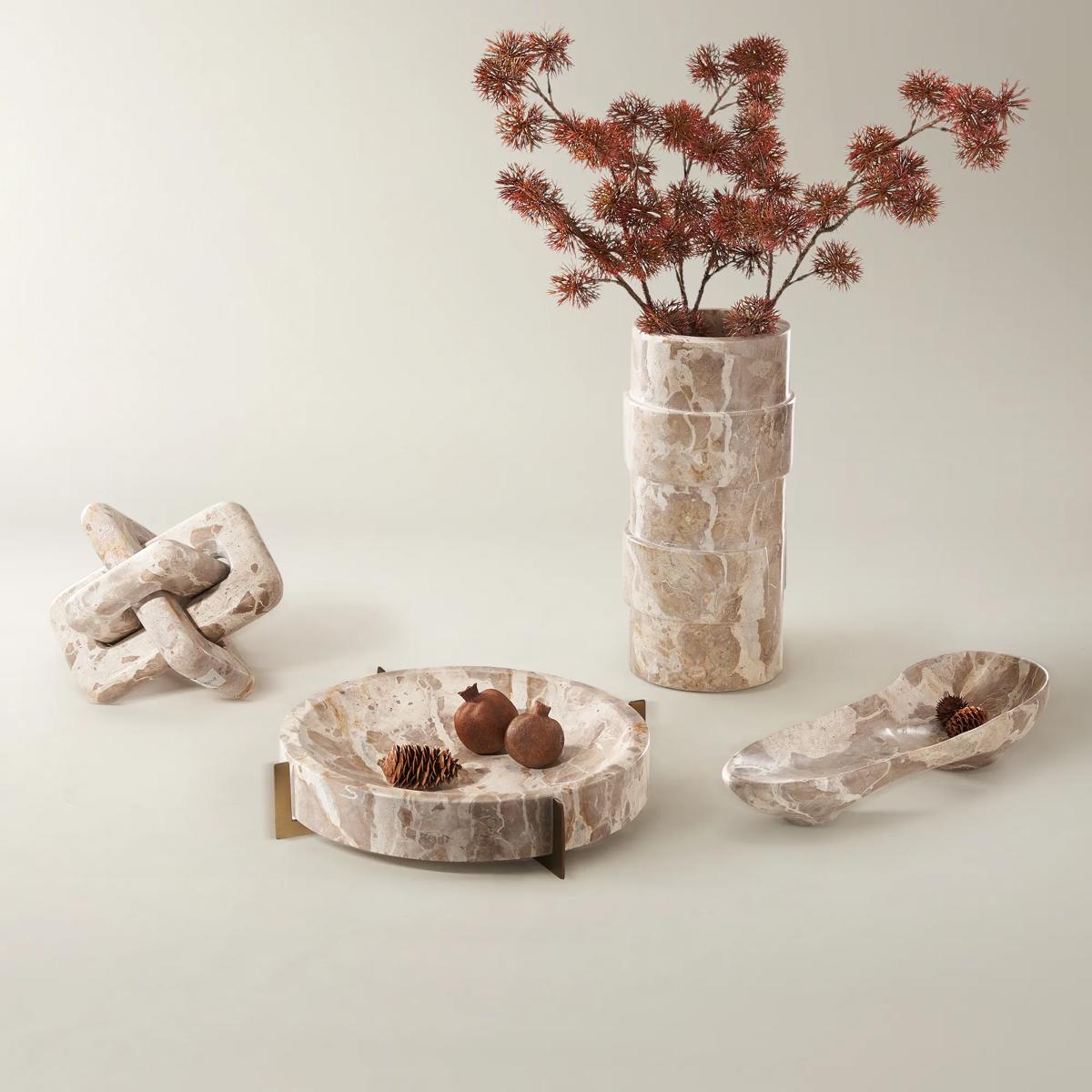
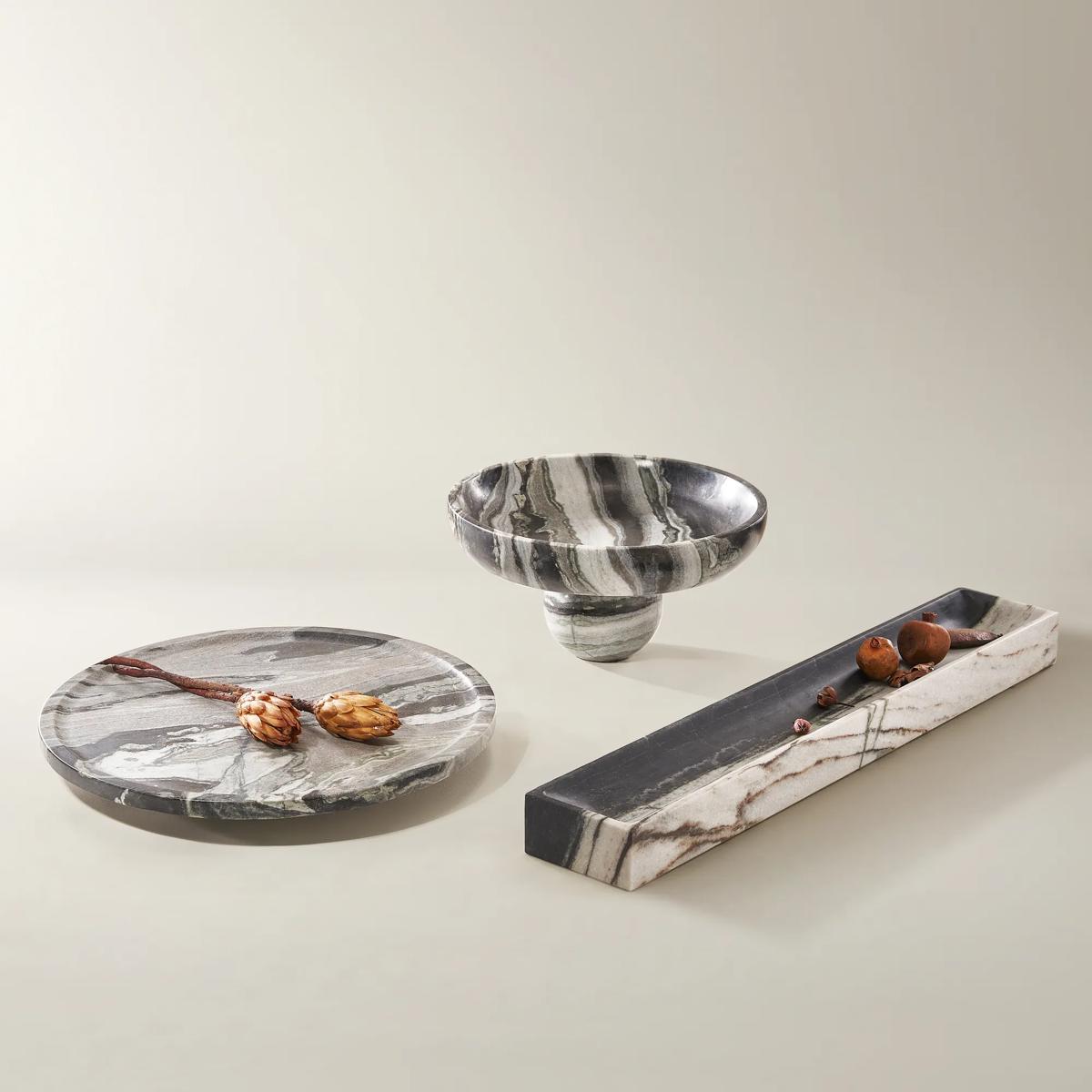
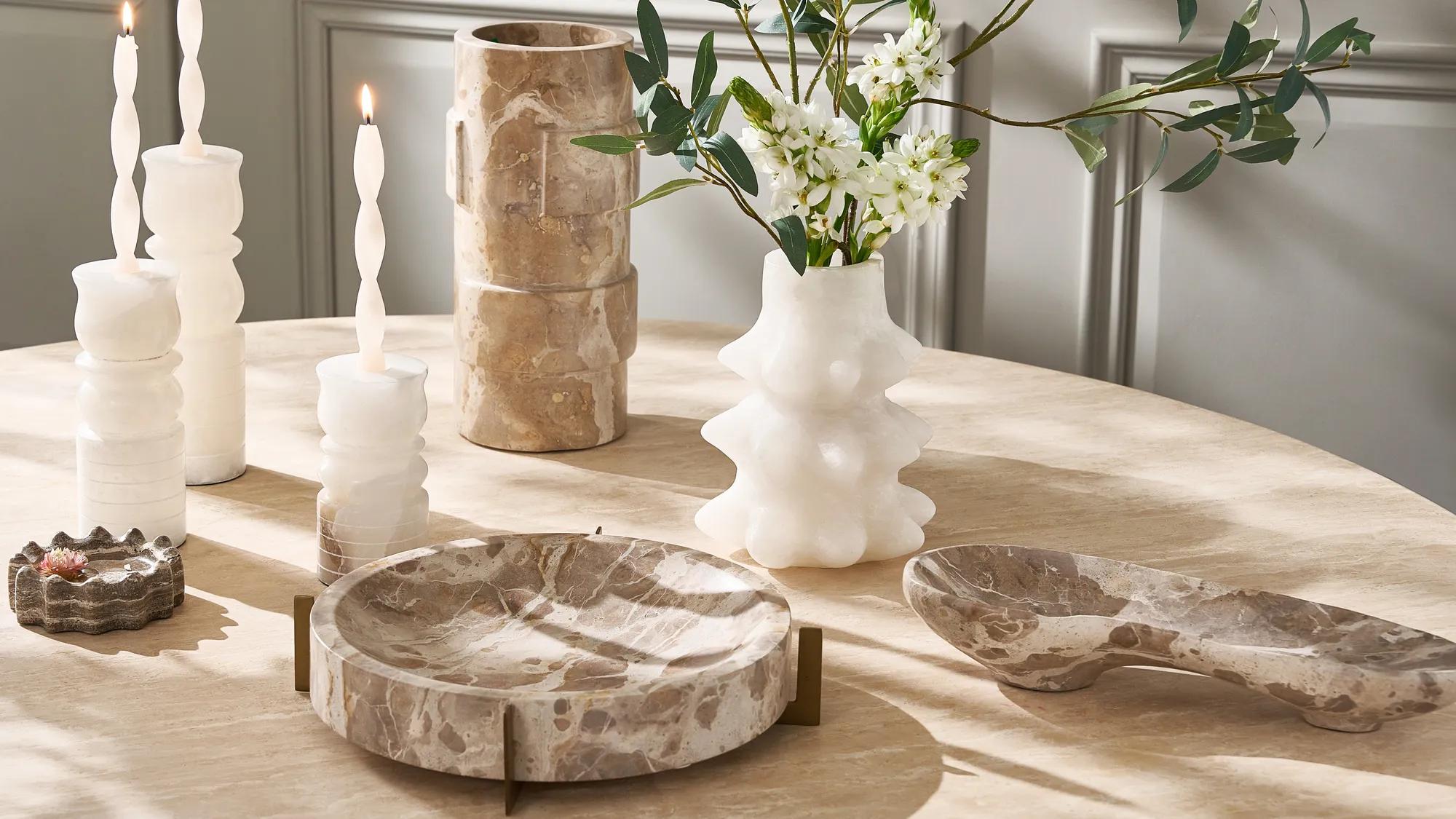 Neutral Marble Collection$129
A handcrafted marble decor collection featuring unique veining, natural neutral tones, and elegant metal accents.
Add To Cart -
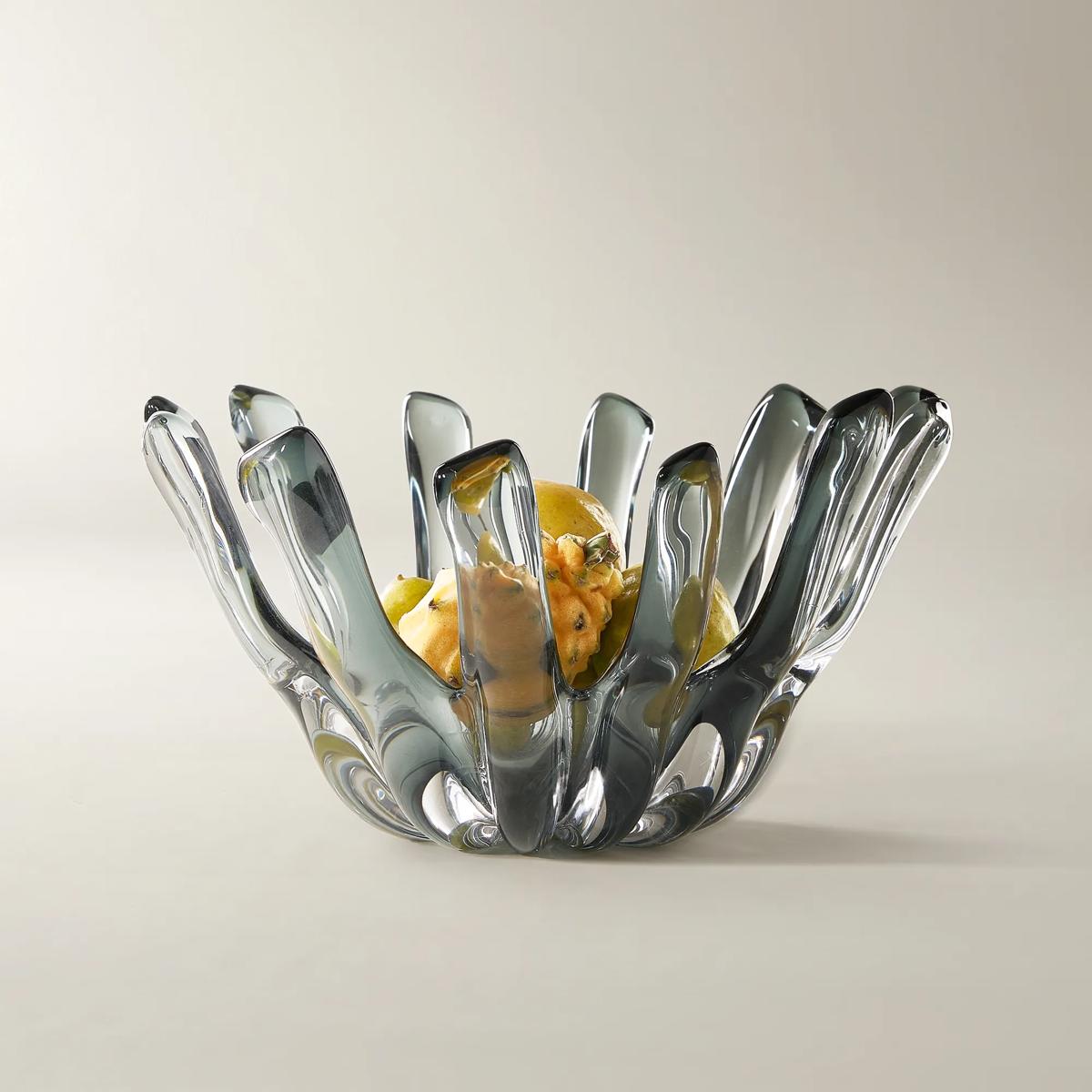
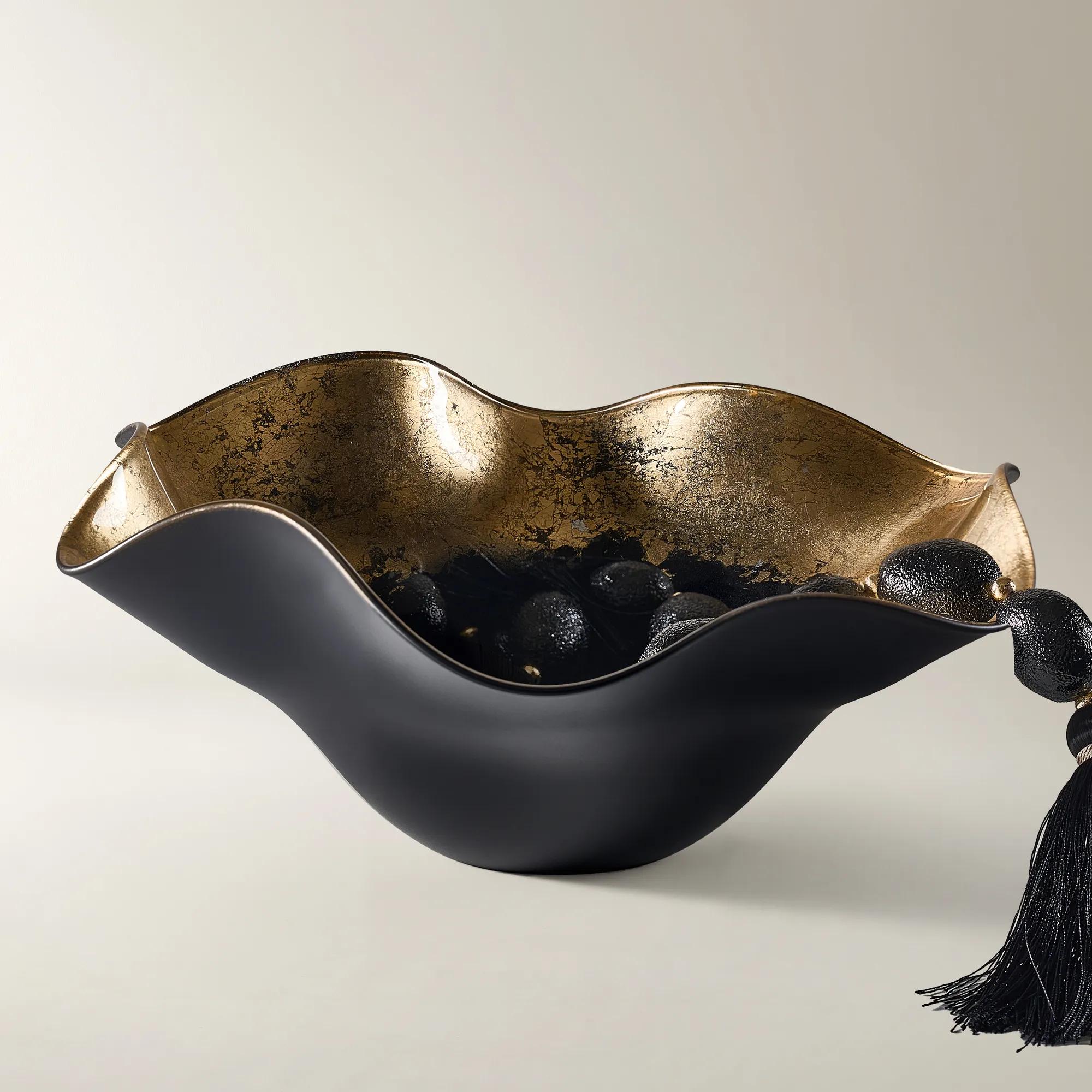
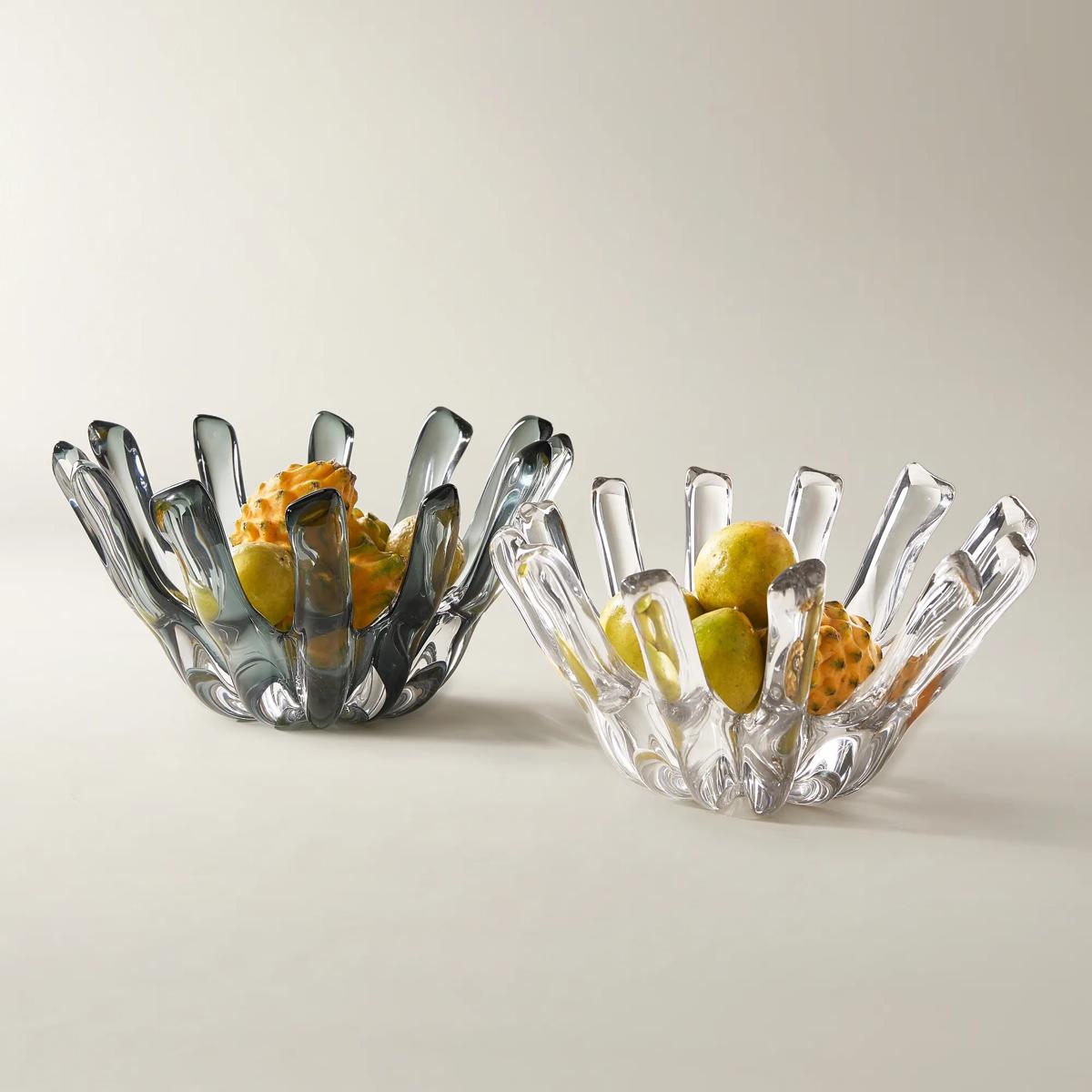 Bossa Smoke Handblown Glass Decorative Bowl 13" x 7"$129
A hand-blown smoky grey glass bowl featuring an expressive, sculptural design for modern decorative displays.
Add To Cart -
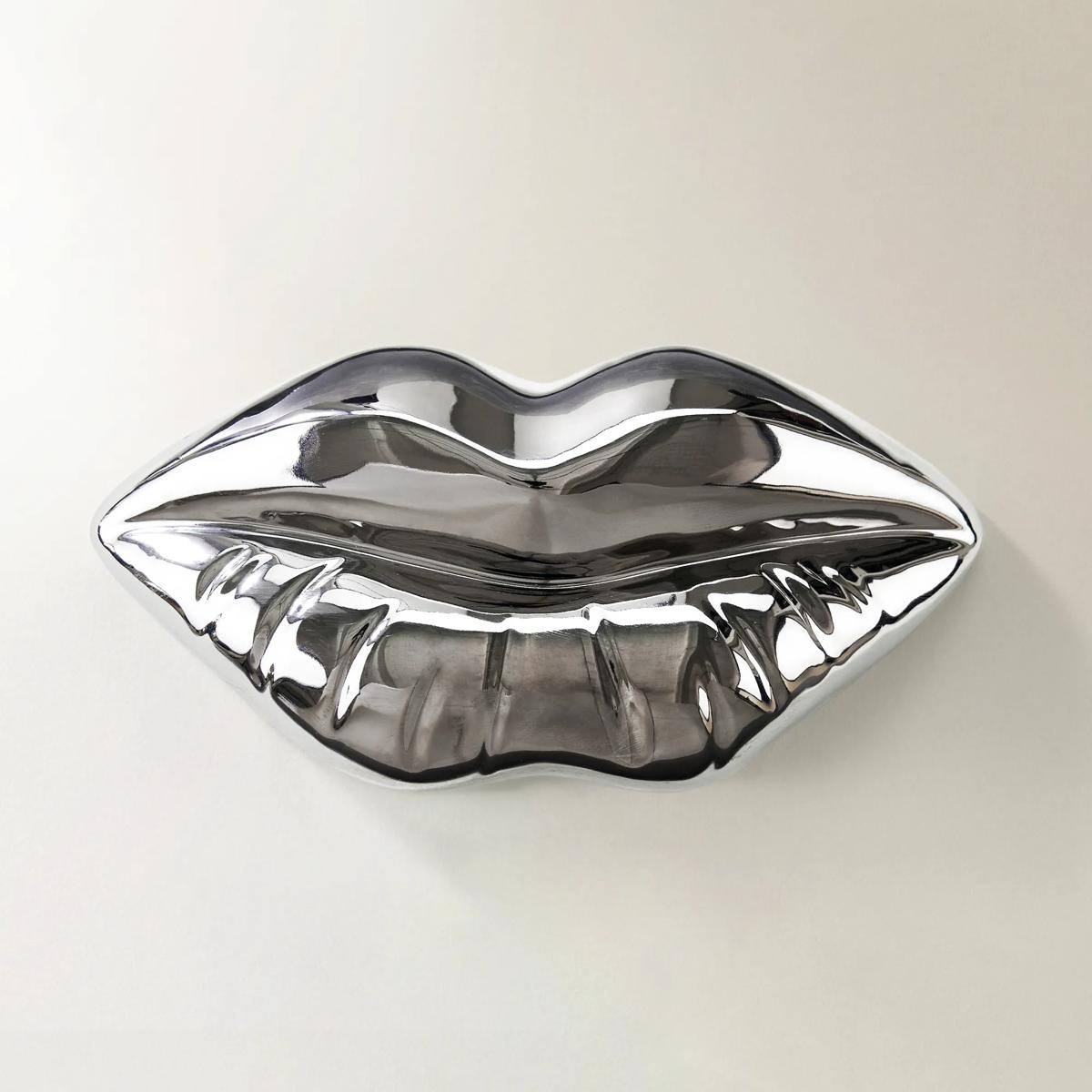 Chrome Lips Ceramic Decorative Object 5.25"$29
A high-shine silver ceramic sculpture that adds modern pop art flair and playful sophistication to any space.
Add To Cart -
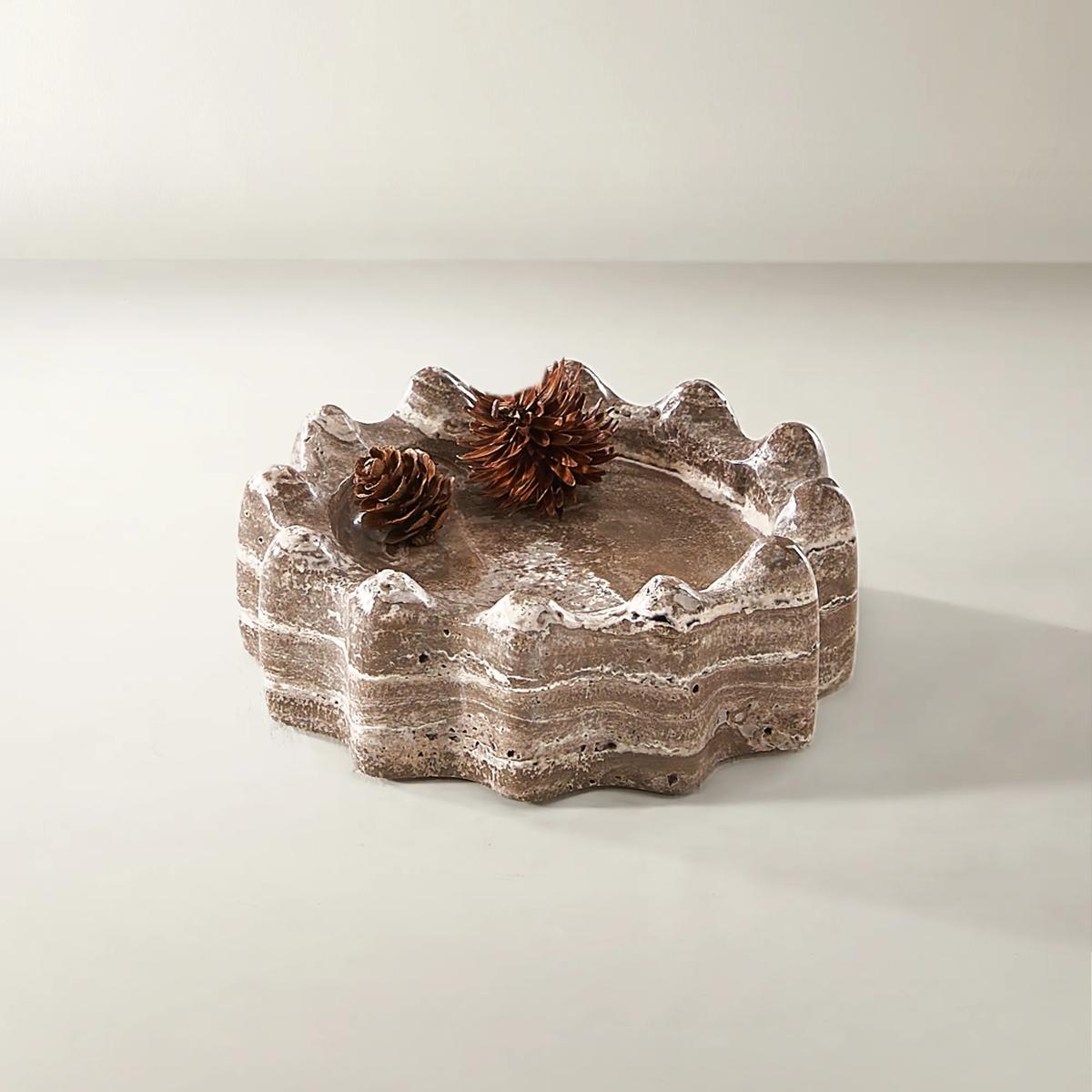 Flora Marble Catchall - Small$89
A hand-carved sand travertine catchall featuring unique veining and undulating, flower-inspired edges.
Add To Cart -
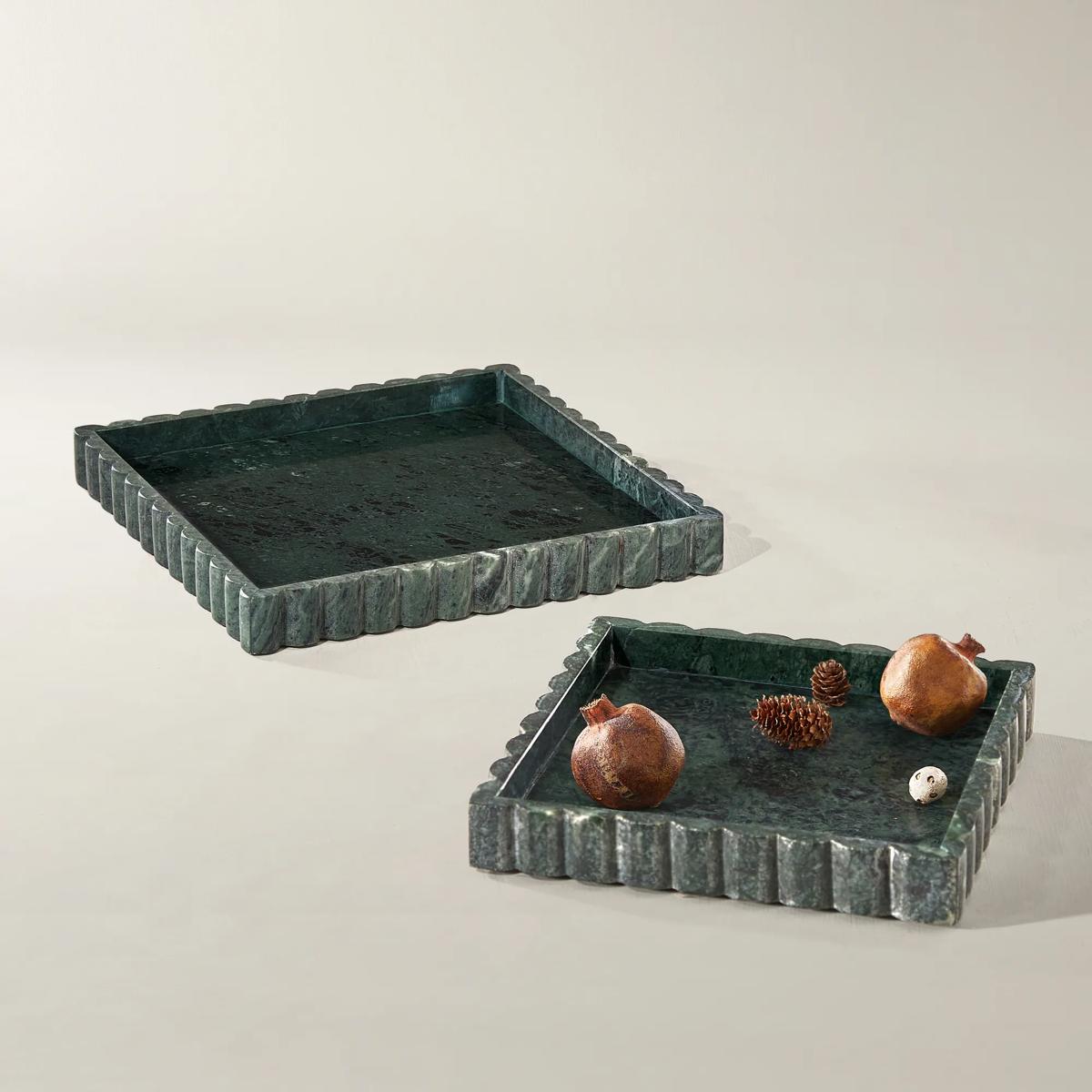
 Scallop Tray - Emerald Marble$59
A handcrafted emerald green marble tray featuring unique veining for elegant decorative display.
Add To Cart -
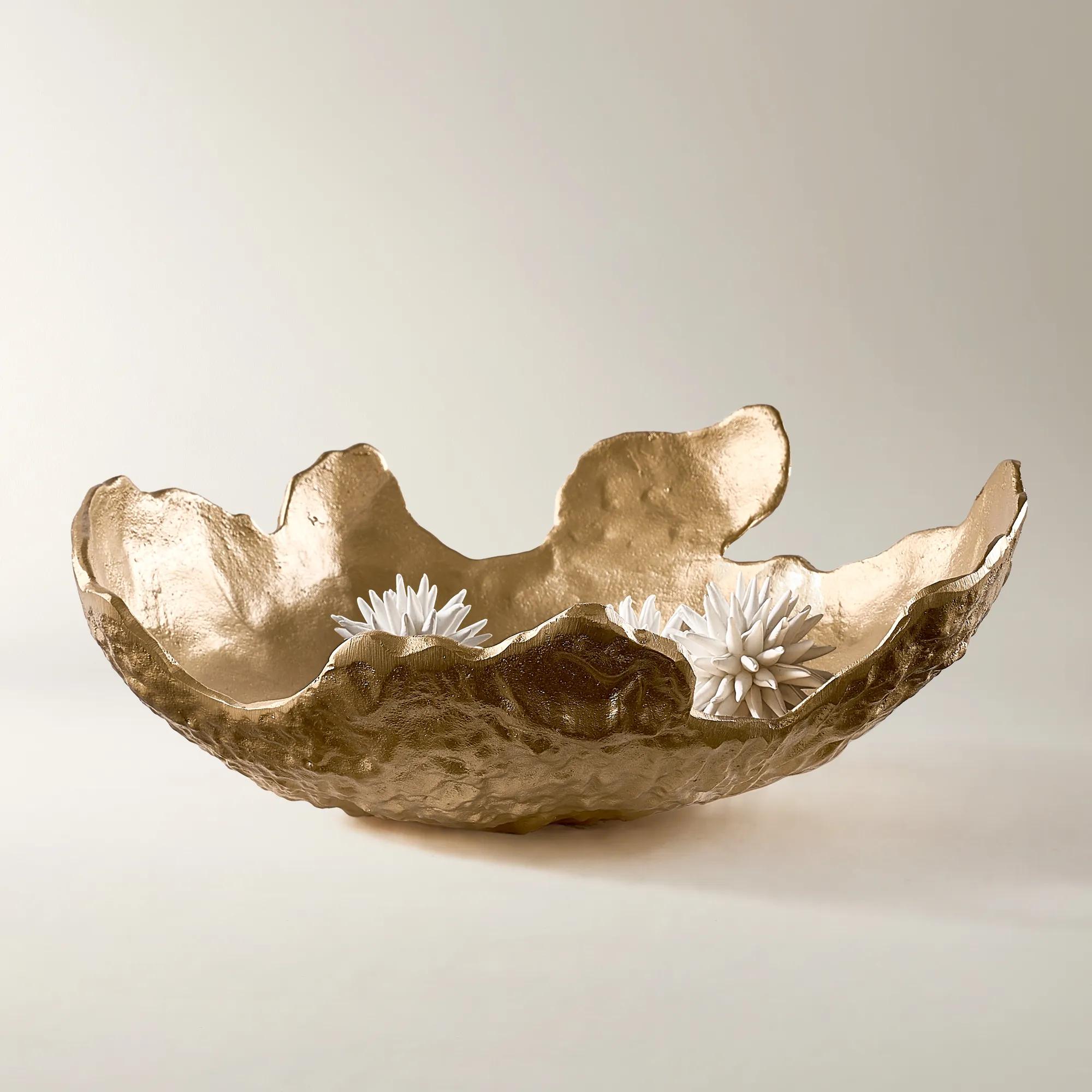 Crush Gold Aluminum Decorative Bowl 16" x 5.75"$169
A sculptural aluminum bowl with a soft gold finish and organic, crushed silhouette for modern decor.
Add To Cart -
.jpeg?w=1200&h=1200) Odessey Collection$99
Odessey Collection$99A decorative porcelain accent finished in shiny gold, perfect for adding modern elegance to any space.
Add To Cart -
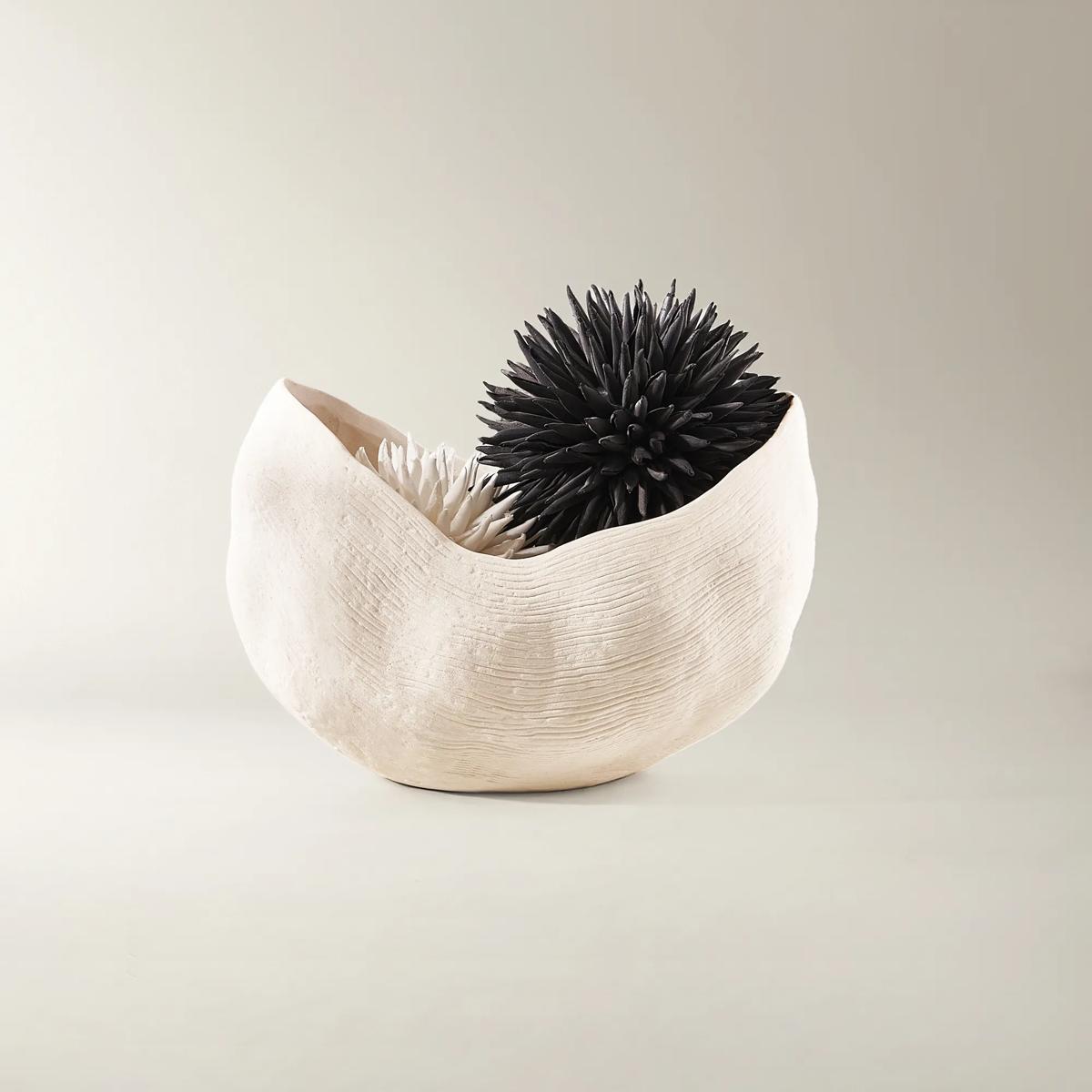 Baz Ivory Porcelain Bowl$119
A sculptural ivory porcelain bowl with a matte, textured finish and organic, free-flowing silhouette.
Add To Cart -
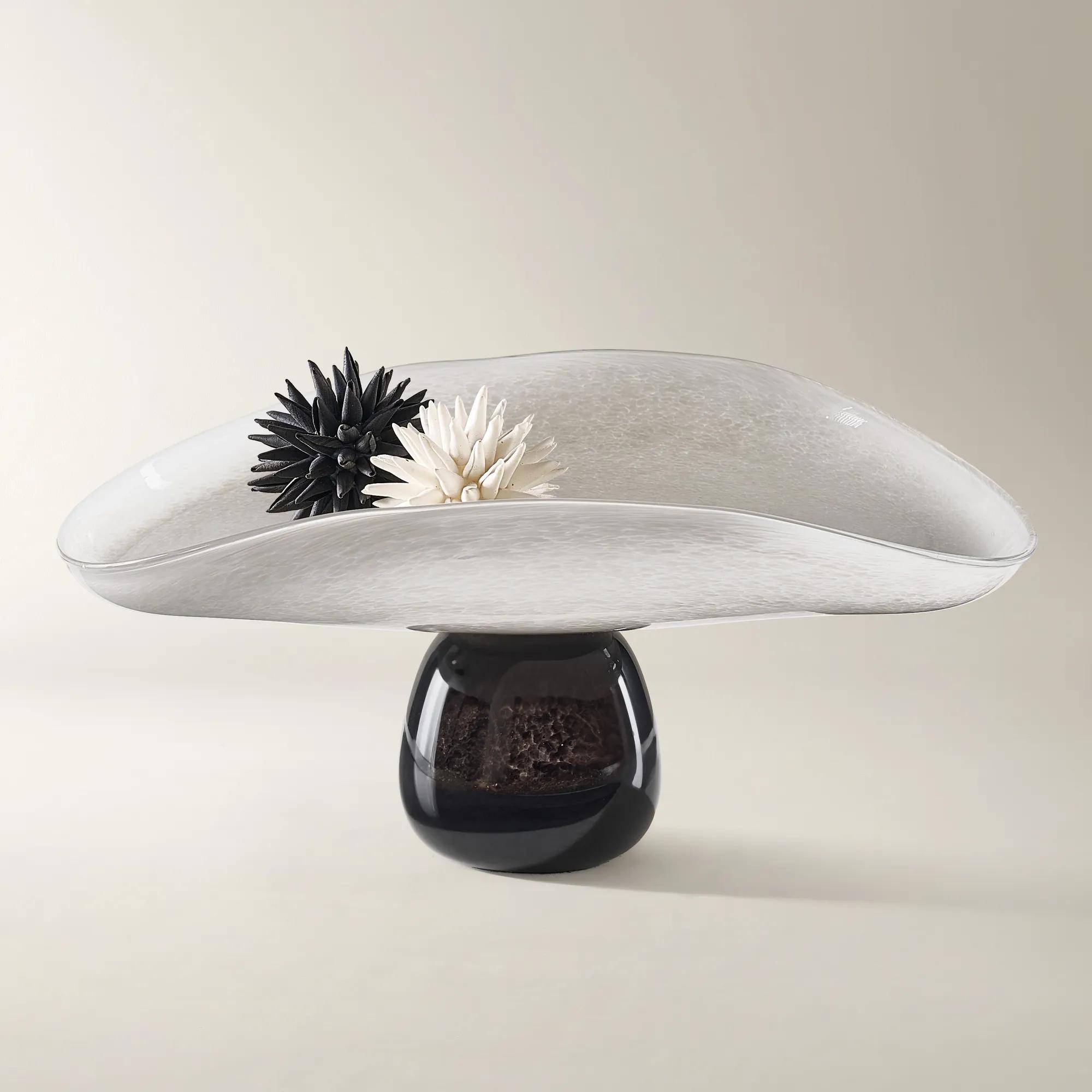 Elois Mouth Blown White Black Pedestal Bowl 14.5" x 7"$149
A handblown glass pedestal bowl featuring striking black and white contrast for a sculptural, modern accent.
Add To Cart -
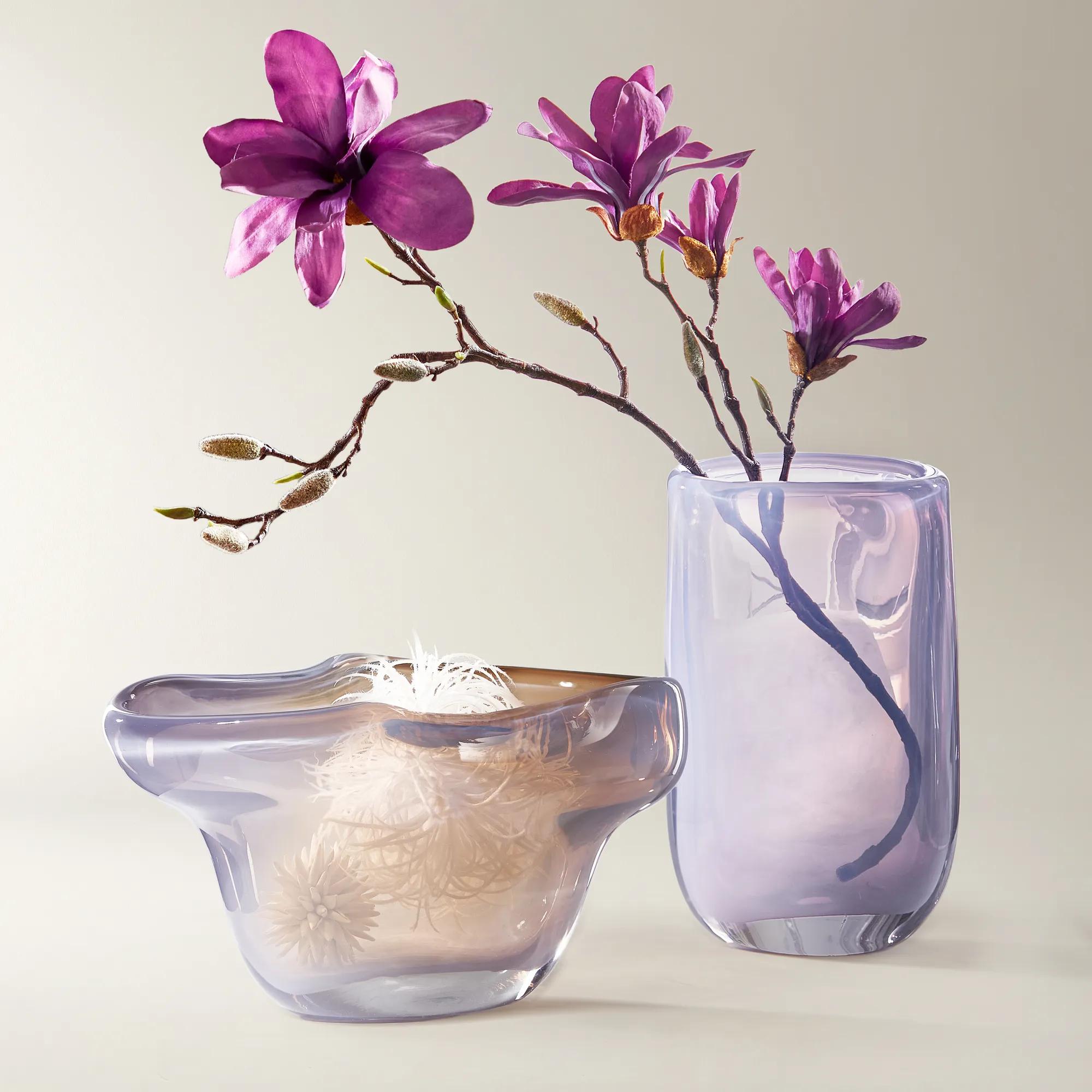
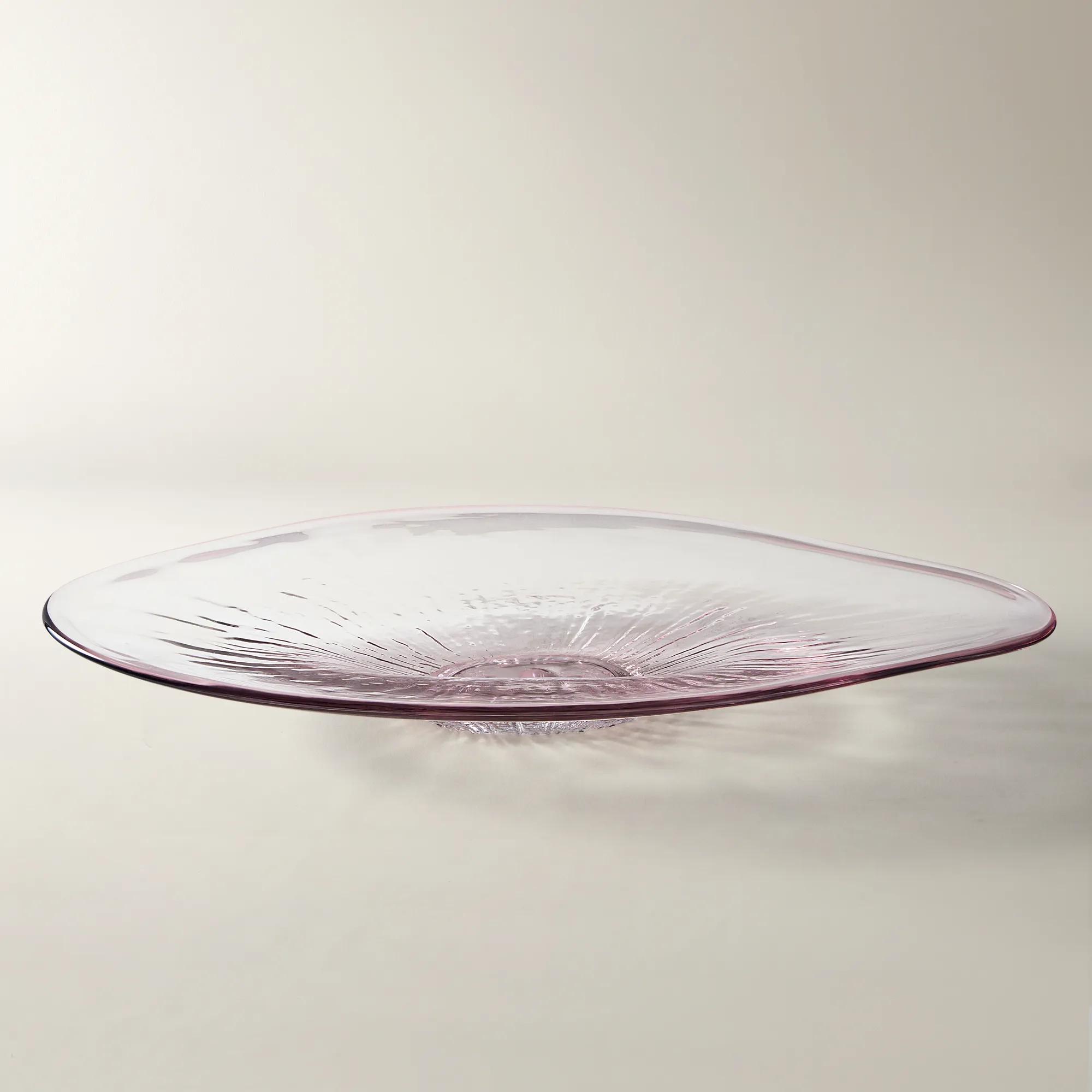 Cortina Decorative Bowl$129
A handblown glass bowl in an ethereal pink hue that brings artistic flair to modern interiors.
Add To Cart -
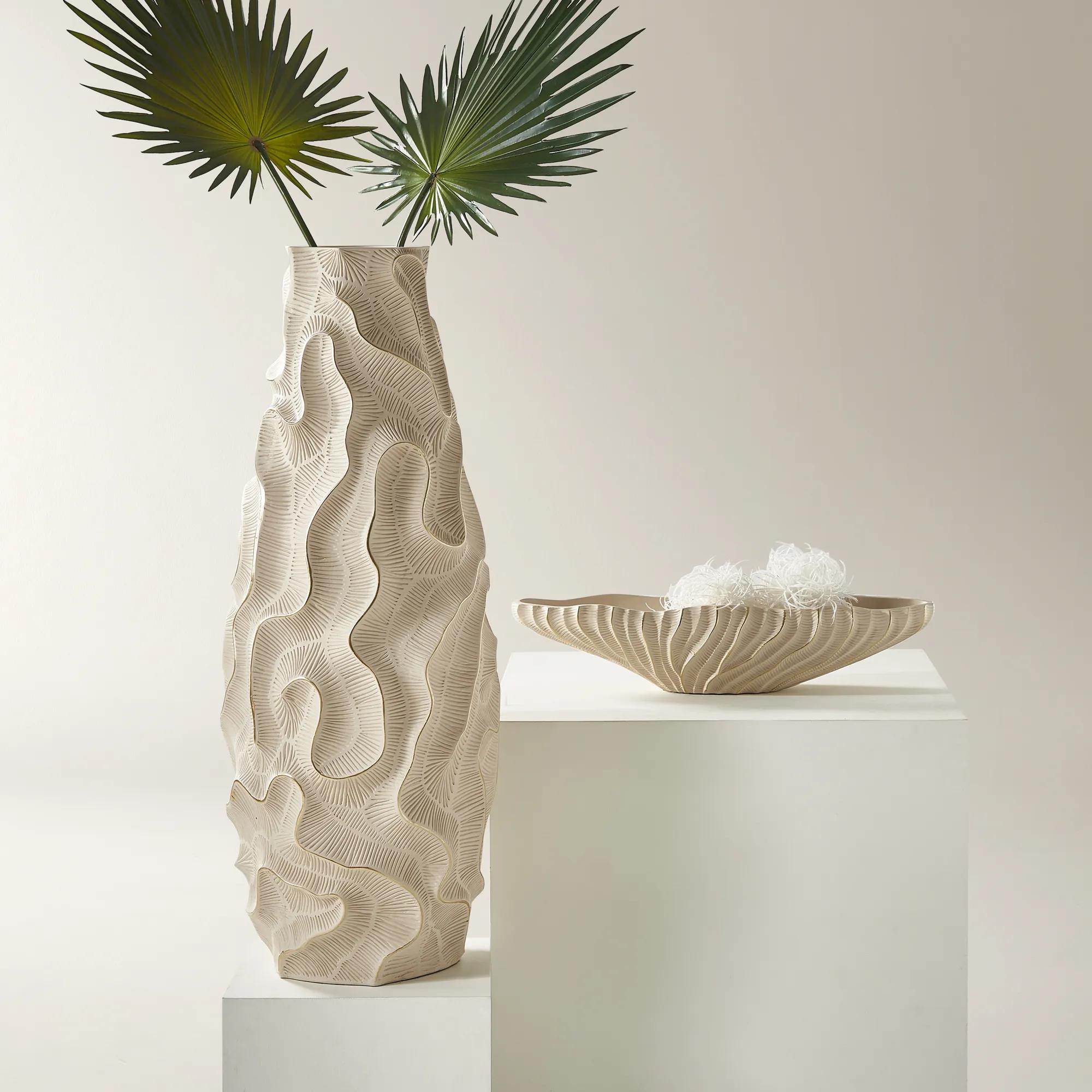
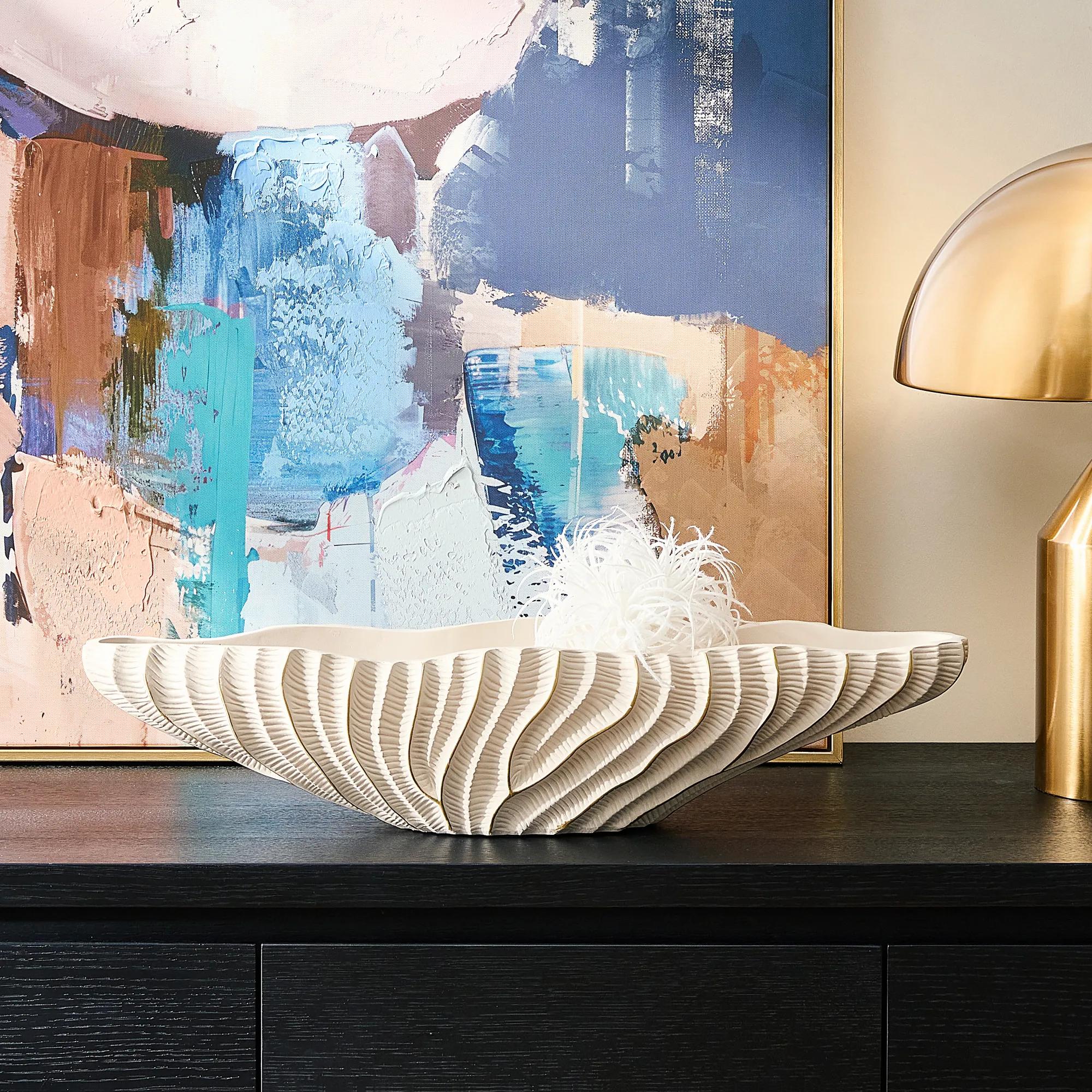 Rouche Ivory And Gold Etched Resin Floor Vase & Bowl$79
An ivory resin collection featuring sculptural, hand-etched textures and undulating organic contours.
Add To Cart -
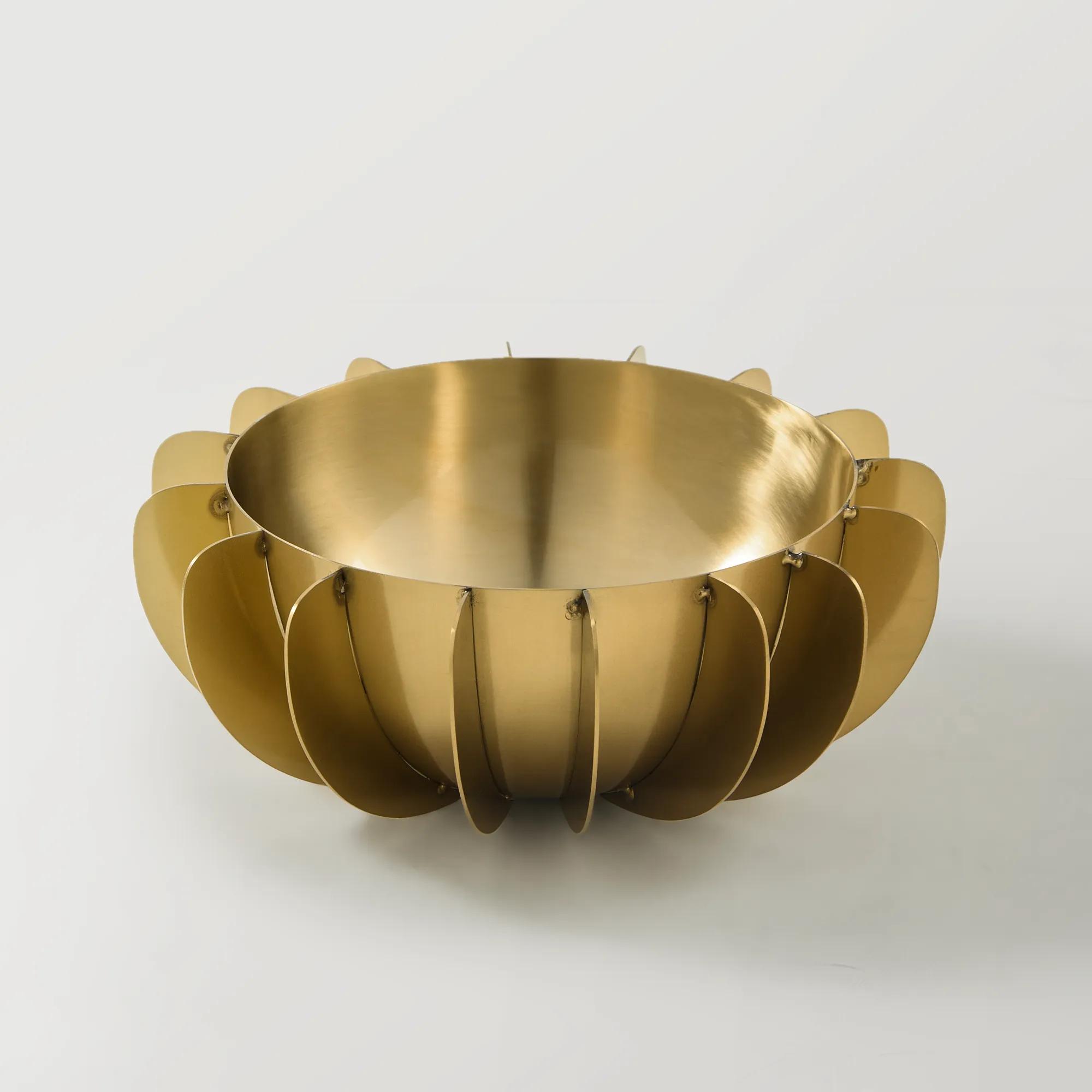
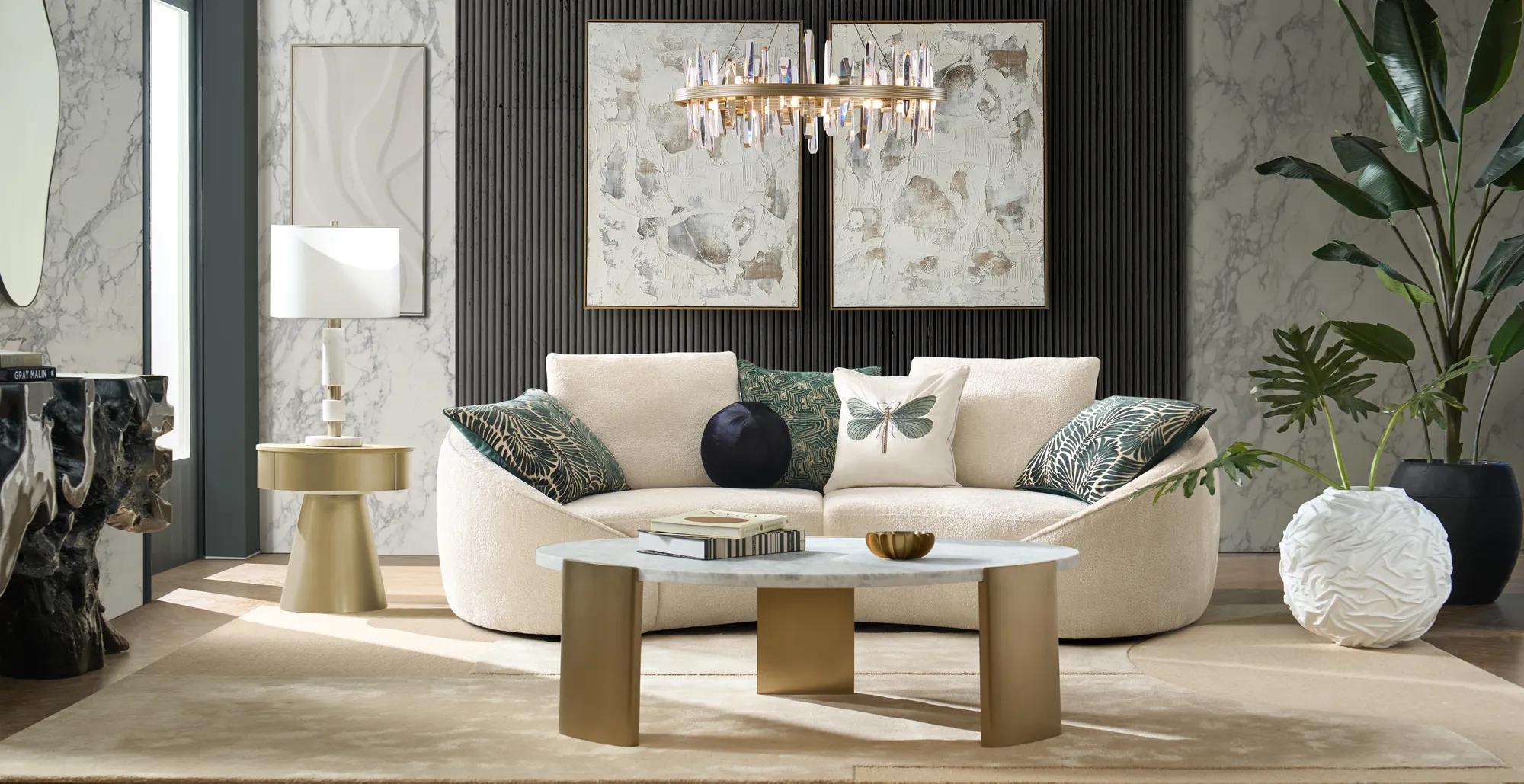 Mezza Collection$59
A gold-plated stainless steel decorative piece that brings timeless glamour and shine to your decor.
Add To Cart -
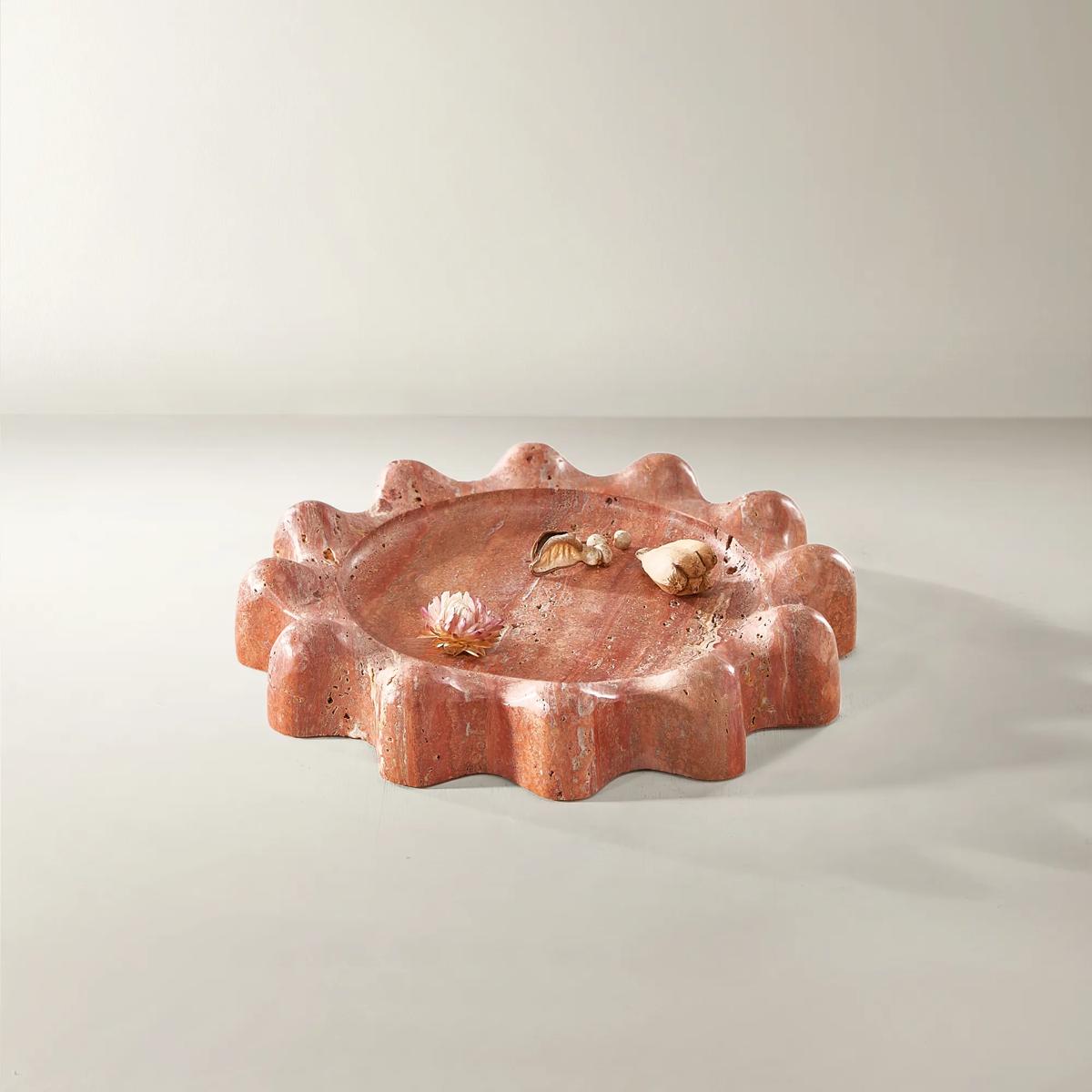 Flora Marble Catchall - Large$159
A hand-carved red travertine catchall with unique veining and undulating, flower-inspired edges.
Add To Cart -
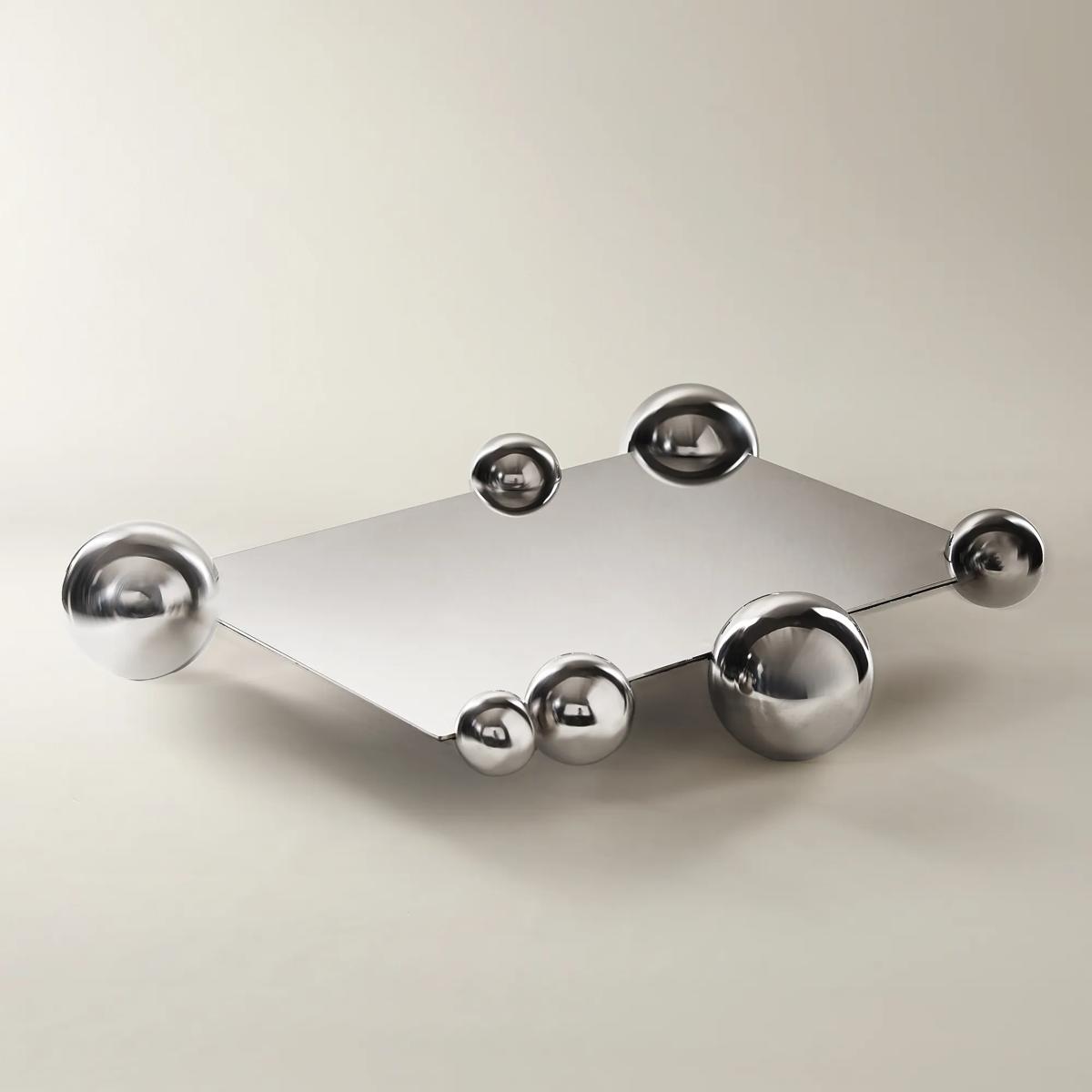 Chrome Bubble Silver Stainless Steel Serving Tray 13.25" x 3.25"$139
A polished stainless steel tray with sculptural bubble accents for a playful, modern entertaining statement.
Add To Cart

Decorative Plates For Modern Interiors
Elevate your space into a gallery of self-expression with decorative plates for modern interiors—where artistry and innovation meet on every surface. These striking pieces transcend tradition, transforming walls, consoles, and tablescapes into curated moments of drama and delight. Whether you crave sculptural silhouettes or luminous finishes, each plate becomes a bold brushstroke in the grand composition of your home. Unleash your inner curator and let decorative plates for modern interiors set the stage for conversation, intrigue, and unapologetic glamour.
Decorative plates for modern interiors bring sculptural shape, expressive color, and artful texture to consoles, coffee tables, shelves, and walls. Unlike everyday dinnerware, these accents are chosen primarily for their visual presence: the sweep of a raised rim, the depth of a translucent surface, or the tension between a precise silhouette and an irregular finish. A broad, shallow plate can give a spacious tabletop a compelling center of gravity, while a smaller design displayed upright introduces an artistic focal point within a bookcase. Their appeal lies in that versatility. They offer the impact of a sculptural object with a profile that can remain low and unobtrusive, making them especially effective where a tall arrangement would interrupt conversation or obscure artwork. In a modern living room, a dark plate against pale upholstery creates crisp definition; on a lacquered console, a textured surface breaks up the surrounding sheen. Rounded forms soften the angular lines of contemporary furniture, while square and rectangular shapes reinforce an architectural setting. Asymmetrical edges and abstract patterns introduce a more expressive note without requiring a room full of ornament. Color can connect the composition, echoing a painting, a rug, or a single richly upholstered chair. Black and white brings graphic clarity, jewel tones add saturated depth, and metallic details lend a gleaming accent when balanced with quieter finishes. The strongest choice does not need to match every object nearby. A deliberate contrast often feels more collected and personal than a perfectly coordinated arrangement. For those who favor restrained furnishings but still want a room with presence, a decorative plate provides a concentrated gesture of drama. For more layered interiors, it becomes another plane of color and texture, enriching the composition without adding significant height. Whether displayed alone or alongside books and sculptural accessories, the plate should have enough surrounding space for its outline and surface to remain visible. That breathing room allows even an intricately detailed design to feel intentional rather than crowded.
Material determines much of a decorative plate’s character, from the way it catches light to the care it requires. Glass offers transparency, reflective depth, and a luminous quality that shifts with its surroundings. Clear or tinted glass can keep a substantial form from feeling visually heavy, while textured glass scatters reflections across ridges, ripples, or dimensional patterns. For rooms that benefit from this interplay of light and surface, Decorative Glass Plates offer a distinctive direction, particularly against opaque stone, wood, or upholstered furnishings. Ceramic and stoneware bring a different kind of richness, with surfaces that may range from softly matte to deeply glazed. Their visual weight can ground a sleek console or add tactile contrast to polished metal shelving. Porcelain can support refined profiles and finely rendered decoration, though delicate edges still require careful handling. Marble and other natural stone introduce veining and tonal variation, giving each piece a pattern that may differ from photographs or neighboring accents. Their substantial weight makes stable placement especially important, and porous stone may be vulnerable to staining or acidic cleaners. Metal plates can contribute a brilliant polished finish, a muted patina, or a hammered texture that feels almost sculptural. Protective coatings, painted details, and applied metallic decoration all influence how a surface should be cleaned, so material alone does not tell the full care story. Durability also depends on thickness, construction, finish, and placement. A substantial ceramic plate may feel sturdy yet still chip at the rim; glass can scratch or break if knocked against a hard object. In a frequently used family room, a secure location away from table edges matters as much as the material itself. On a display shelf, the underside deserves attention too: an unfinished foot or rough base can mark a delicate furniture finish. Manufacturer-approved protective pads may help where appropriate, provided they do not compromise stability. Choosing with these details in mind preserves both the beauty of the accent and the surface beneath it.
Scale and intended use turn an attractive decorative plate into a considered part of the room. Check the full diameter or width, depth, and height, including any pedestal or raised edge, rather than judging size from a photograph alone. On a narrow entry console, a plate should sit fully supported without projecting into a walkway. On a coffee table, a low design can anchor an arrangement while leaving room for drinks and everyday movement. A plate intended to hold small objects needs a usable center and a sufficiently stable base; a strongly curved or heavily textured design may be better appreciated as a display piece. For upright presentation, choose a stand rated for the plate’s dimensions and weight, with supports that cradle it securely without masking important details. Wall display requires equal care: use a plate suitable for mounting and hardware compatible with its weight, material, and the wall surface. Do not assume that every decorative plate can be hung or that a general-purpose adhesive will hold a heavy ceramic or stone design. A single large plate can read like a medallion above a console, while a small grouping gains coherence from a shared color, finish, or shape. Keep the most intricate surface unobstructed so its artistry remains the focus. Decorative use also differs from food service. Only use a plate for serving when it is explicitly identified as food-safe, and follow separate instructions for dishwasher or microwave use. Likewise, a decorative plate is not automatically a heat-resistant candle tray; use candles only with suitable holders and manufacturer-approved surfaces. For routine care, follow the supplied directions, favor gentle dusting when appropriate, and avoid abrasive tools that could dull a glaze or scratch a polished finish. These accents also make thoughtful housewarming or wedding gifts for design enthusiasts, particularly when selected to complement a recipient’s furnishings and preferred palette. With its balance of artistry and manageable scale, a decorative plate offers a personal expression of taste: a luminous detail on a shelf, a bold curve on a table, or a richly textured focal point that gives the room its signature.
FAQs
Decorative plates introduce a layer of artistry and sophistication to modern interiors, serving as both functional tableware and expressive design elements. Their unique finishes, bold patterns, and sculptural forms can transform a dining table or display area into a curated vignette, elevating the overall ambiance and reflecting your personal style.
Absolutely. Decorative plates make exceptional gifts for occasions such as weddings, housewarmings, anniversaries, or holidays. Their blend of beauty and utility offers a thoughtful gesture that recipients can enjoy daily or showcase during special gatherings, making them memorable tokens of appreciation.
Decorative plates can be showcased as wall art, arranged on shelves or within glass-front cabinets, or styled atop coffee tables and consoles. Layering plates of different textures and sizes creates visual interest, while strategic placement can highlight architectural features or anchor a room’s color palette.
Consider the mood and color scheme of your space, as well as the materials and finishes already present. For a cohesive look, select plates that echo your room’s palette or introduce an accent hue. Mixing metallics, glass, or artisanal glazes can add depth, while bold patterns or geometric designs make a striking statement in minimalist or contemporary settings.
Yes, decorative plates are versatile enough to transition seamlessly between formal dinners and casual gatherings. Layer them with luxury glass tableware for an opulent tablescape, or use them as accent pieces during brunches or cocktail hours. Their adaptability ensures that every occasion feels thoughtfully designed and visually captivating.

.jpeg?w=3739&h=3739)