
Decorative Gift Trays
Decorative Gift Trays
-
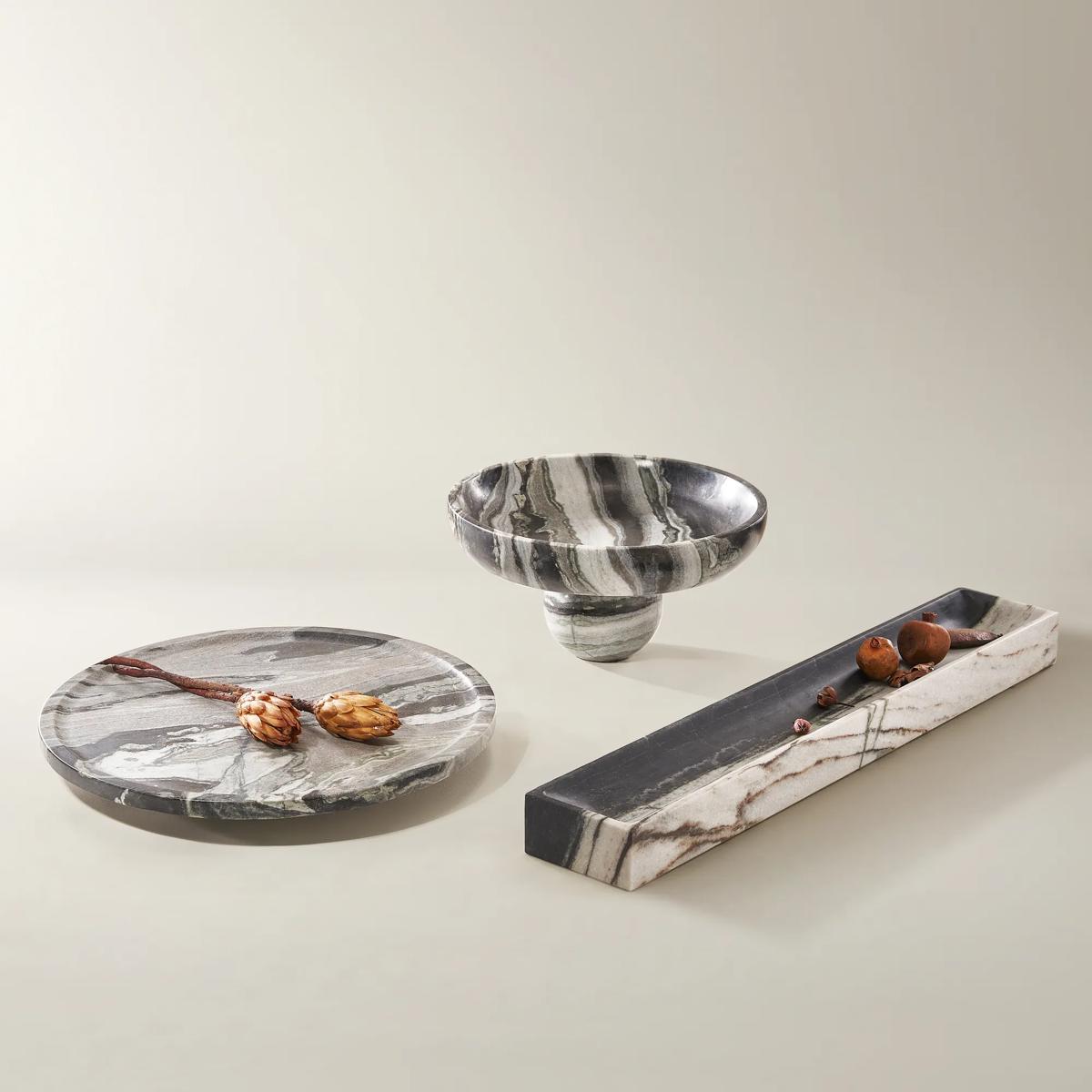
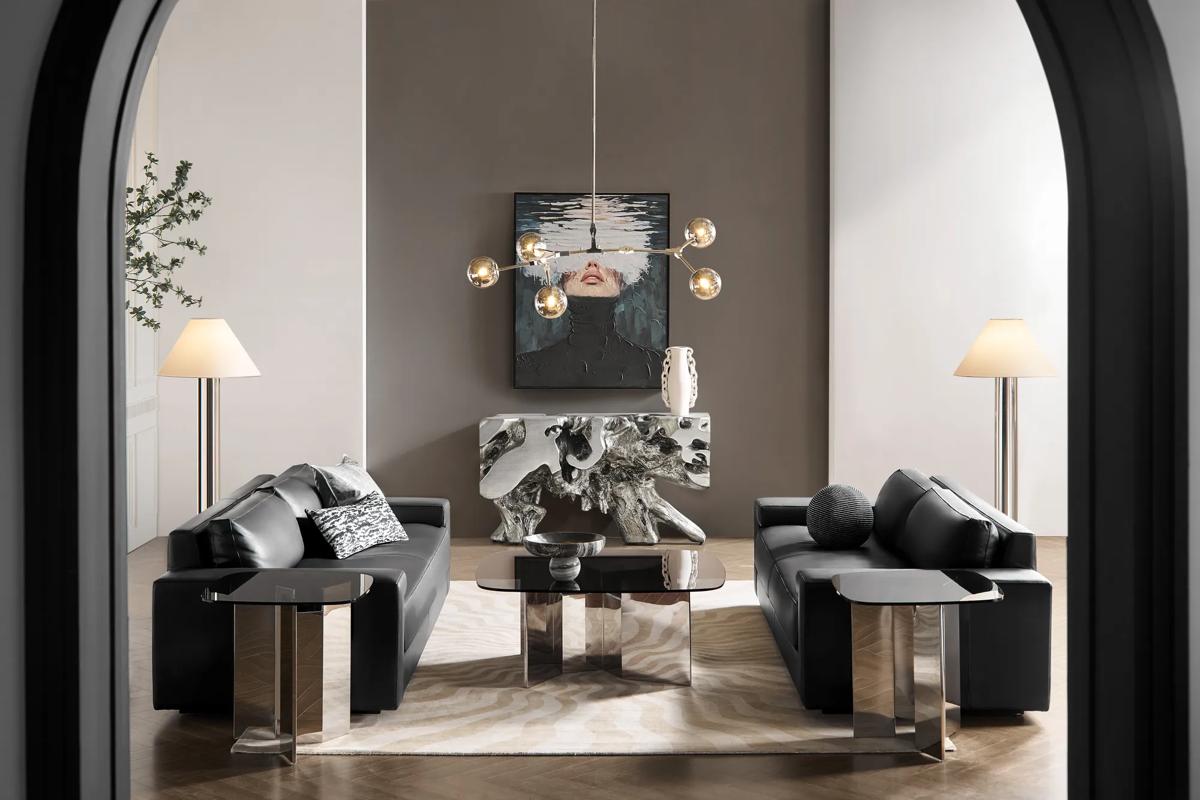 Luxe Marble Collection$119
A striking black marble decor collection featuring unique veining and elegant footed bowl, tray, and riser.
Add To Cart -
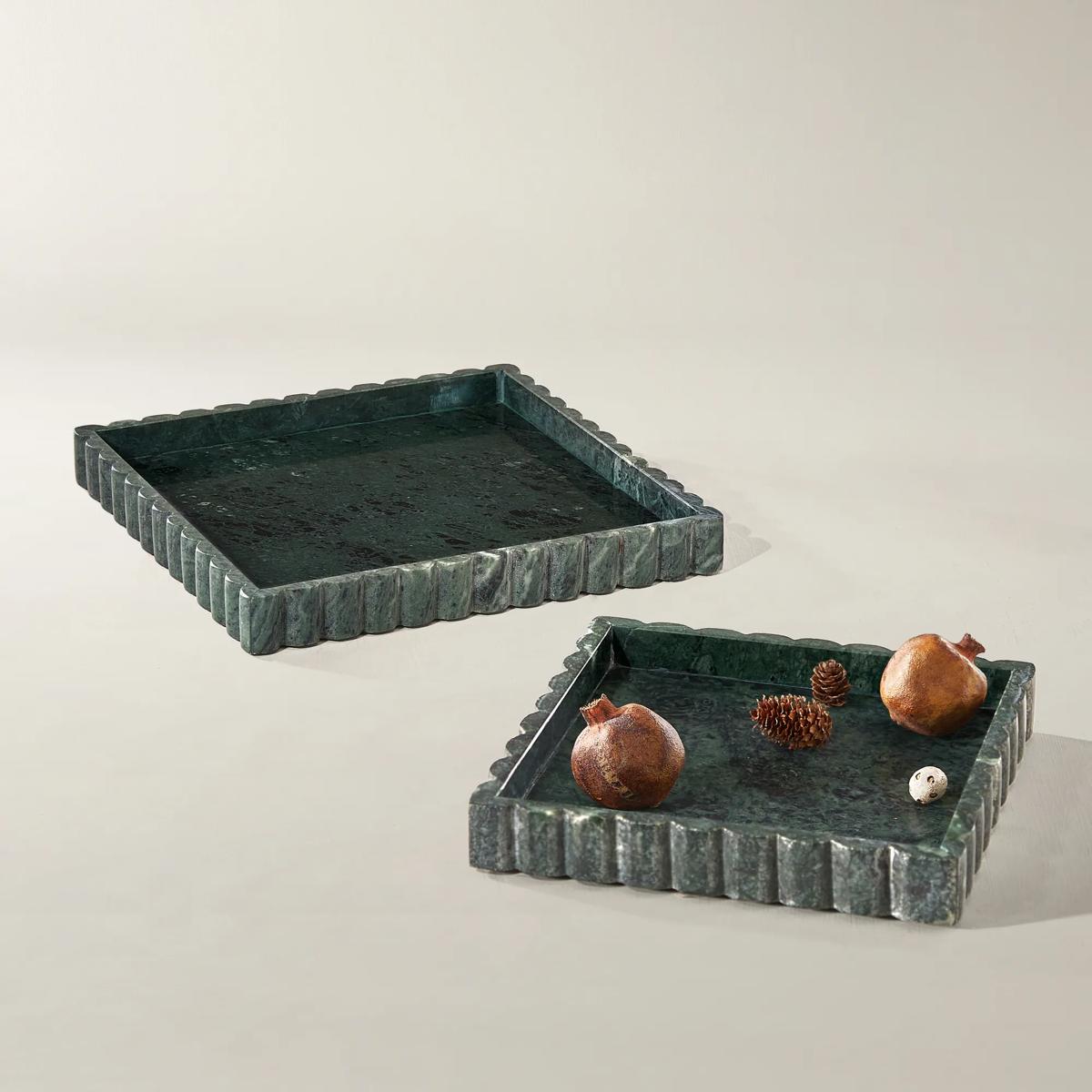
 Scallop Tray - Emerald Marble$59
A handcrafted emerald green marble tray featuring unique veining for elegant decorative display.
Add To Cart -
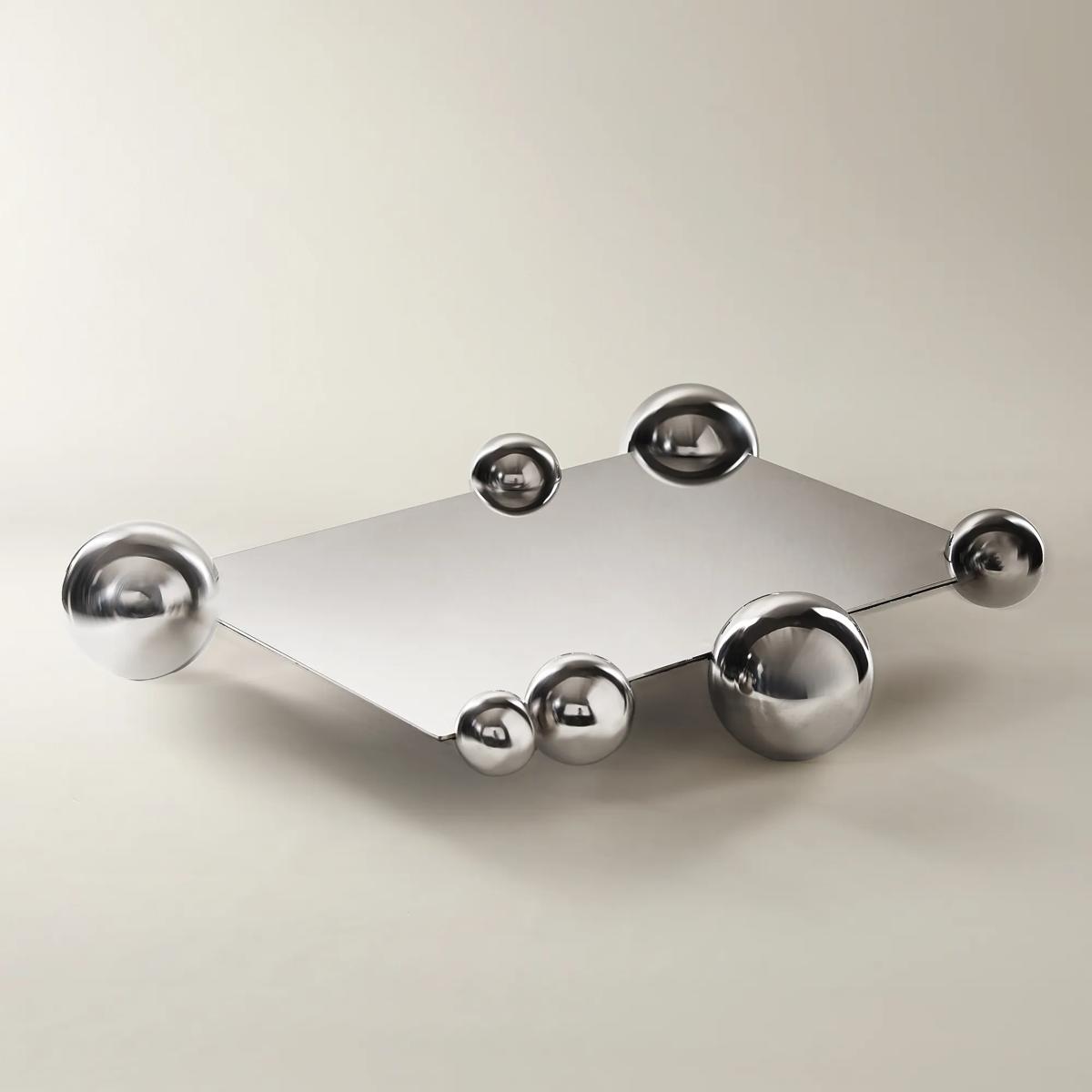 Chrome Bubble Silver Stainless Steel Serving Tray 13.25" x 3.25"$139
A polished stainless steel tray with sculptural bubble accents for a playful, modern entertaining statement.
Add To Cart -
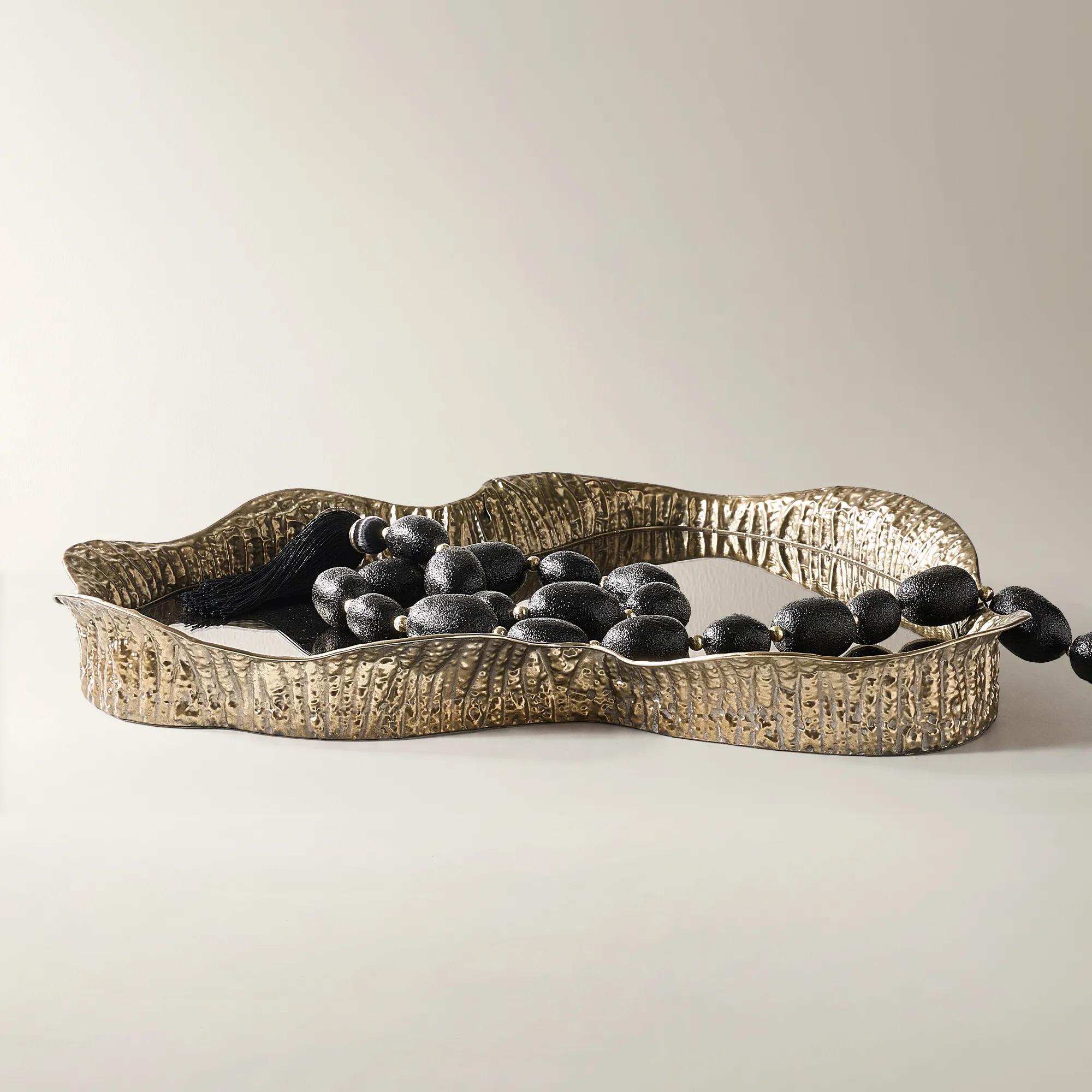 Cara Antique Gold Hand-Forged Iron Organic Shaped Amber Mirror Decorative Tray 21" x 23.5"$319
An antiqued gold iron tray with a bronze-tinted mirror surface for elegant, decorative display.
Add To Cart -
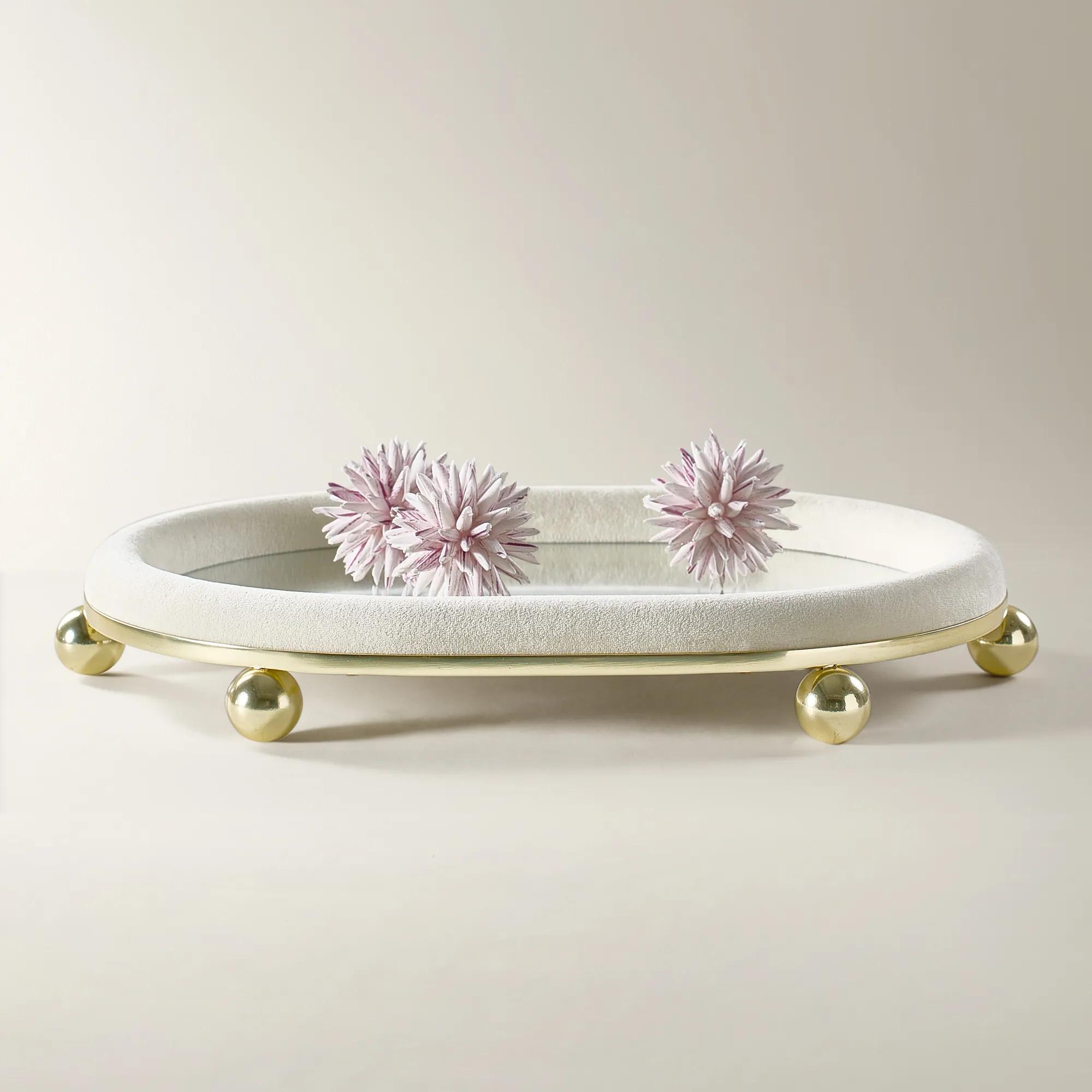
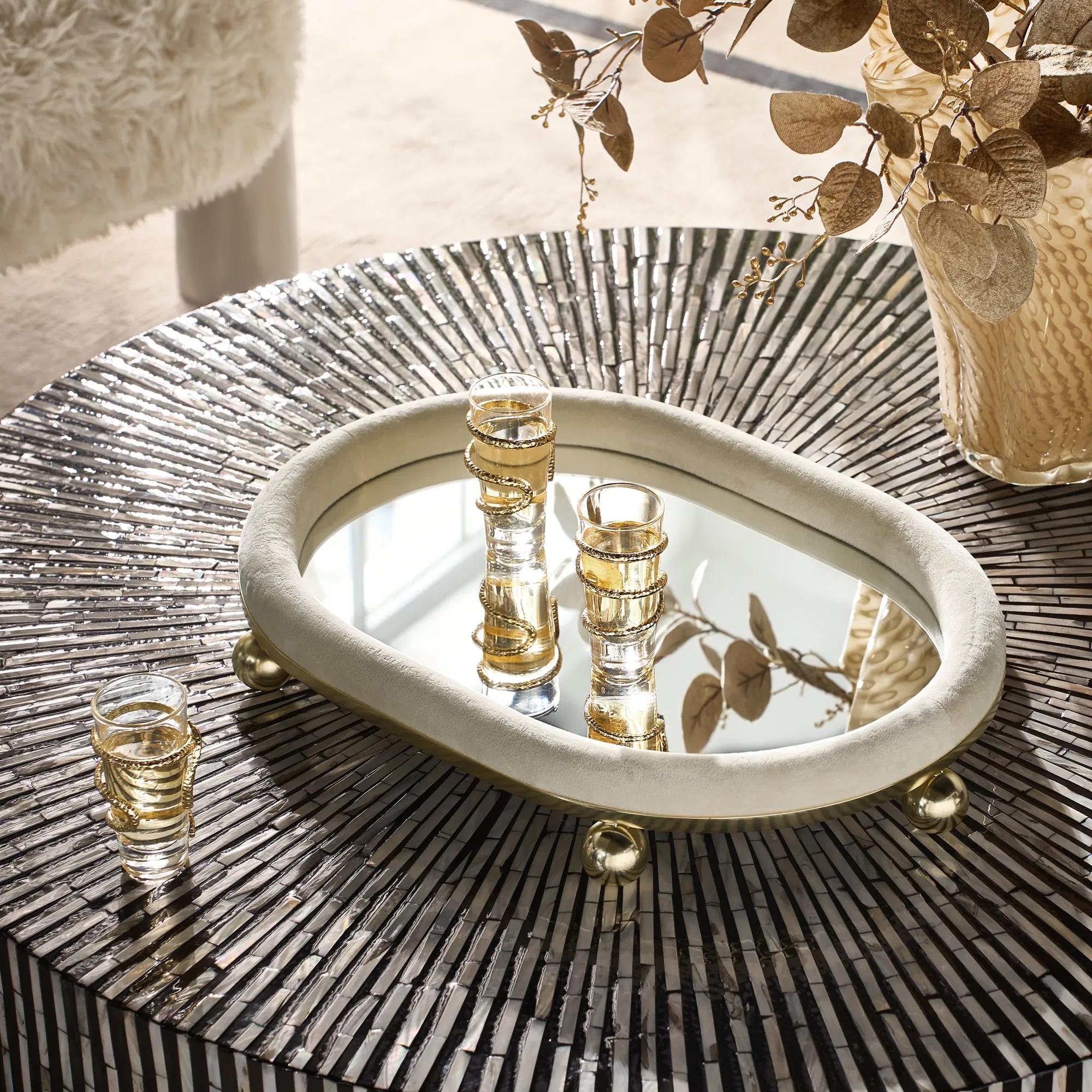 Capri Vanity Ivory Soft Gold Velvet Mirror Tray 17.75" x 2.25"$99
A soft gold iron tray with a mirrored base, velvet accents, and playful bauble details for chic display.
Add To Cart -
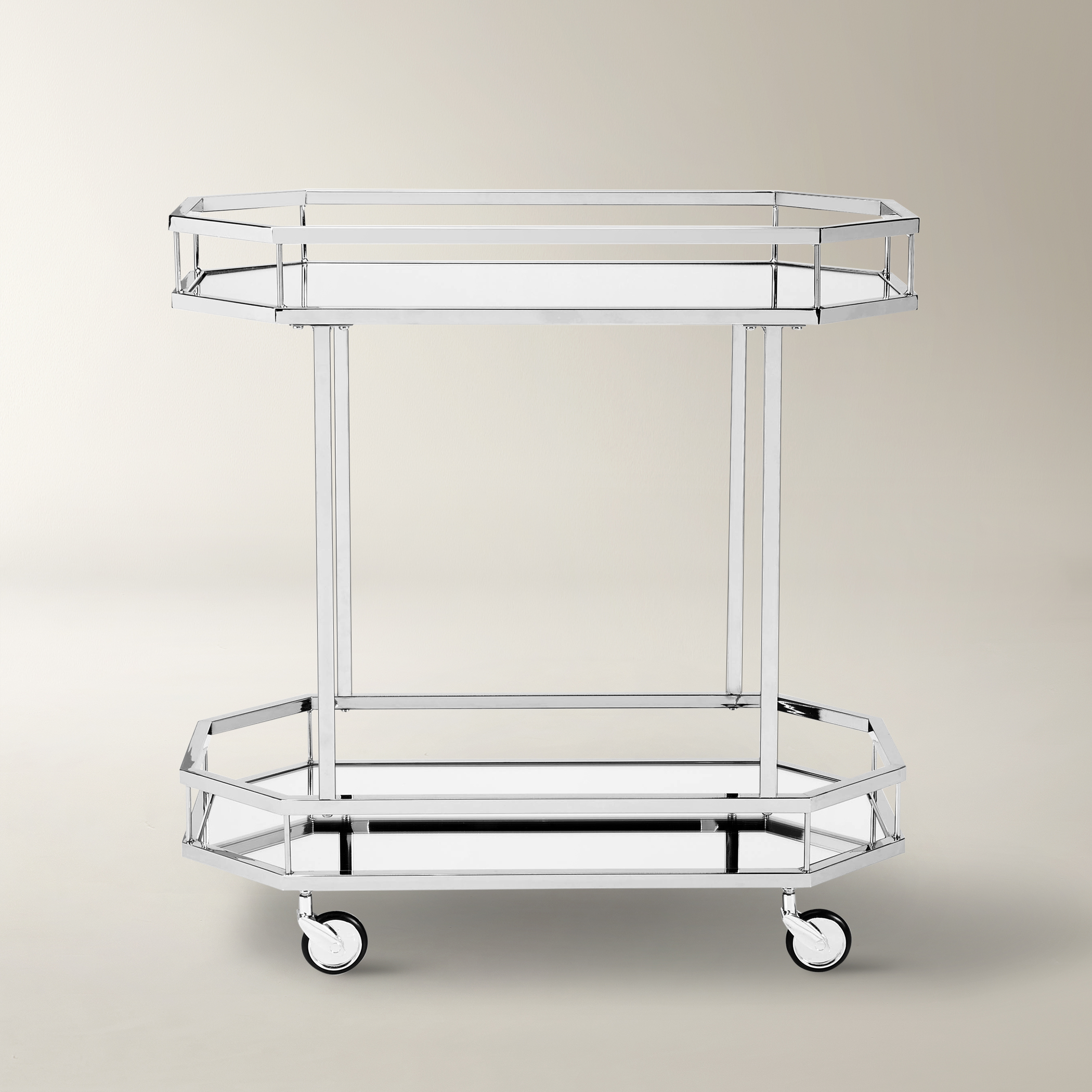
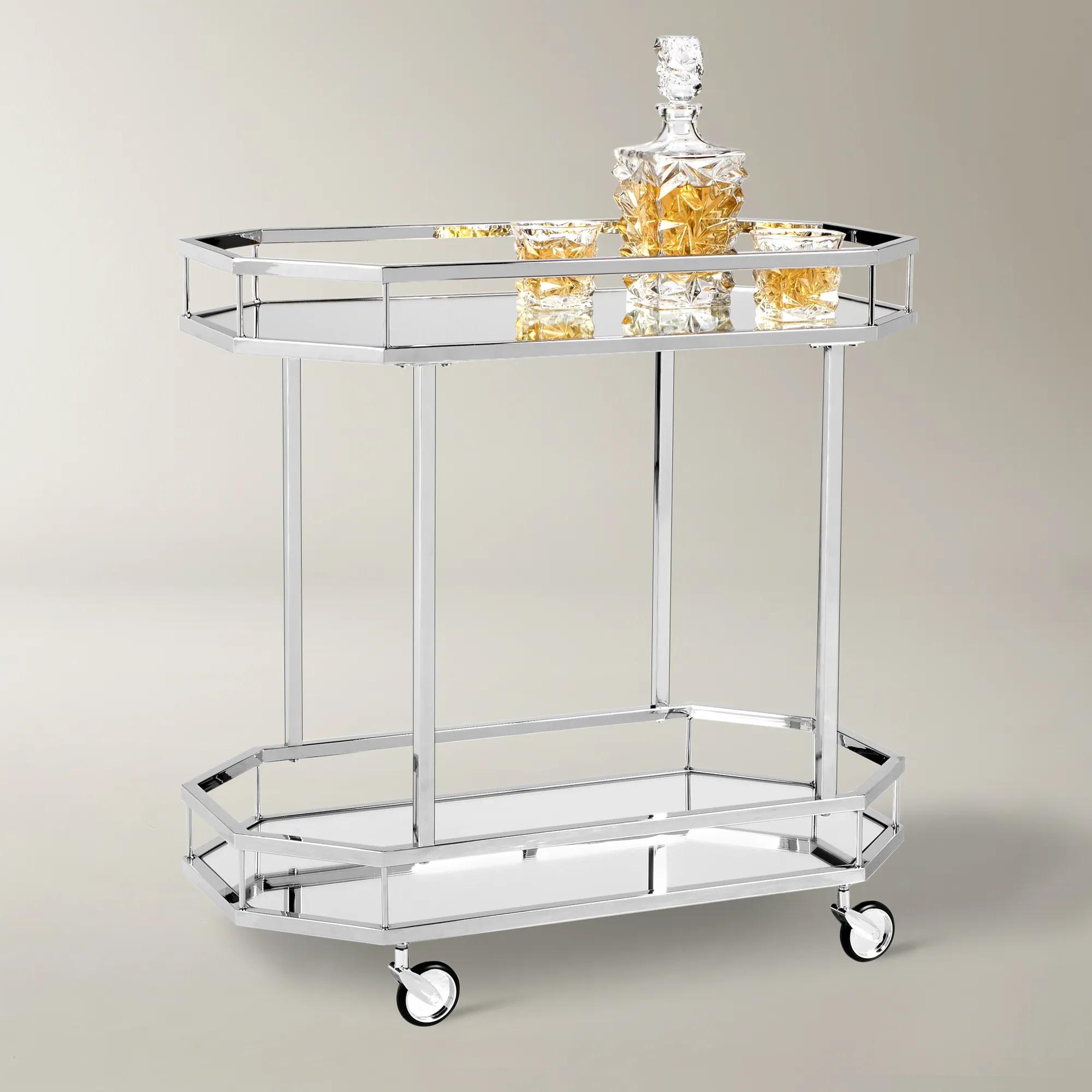 Metropolitan Silver Chrome Plated Steel 2-Tier Bar Carts With Mirror Tray (29.5")$449
A sleek chrome-plated bar cart with mirrored trays and casters for stylish, mobile entertaining.
Add To Cart -
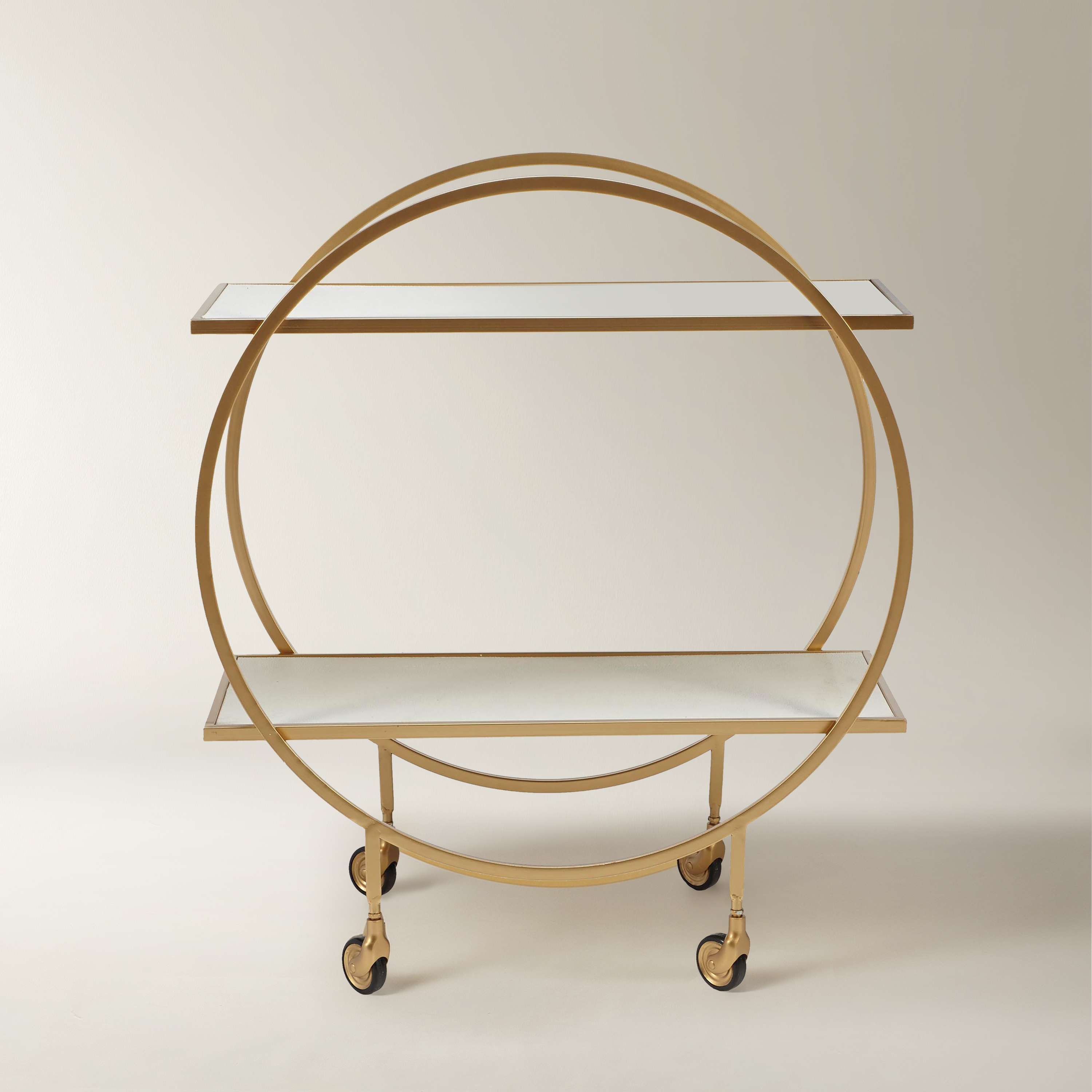
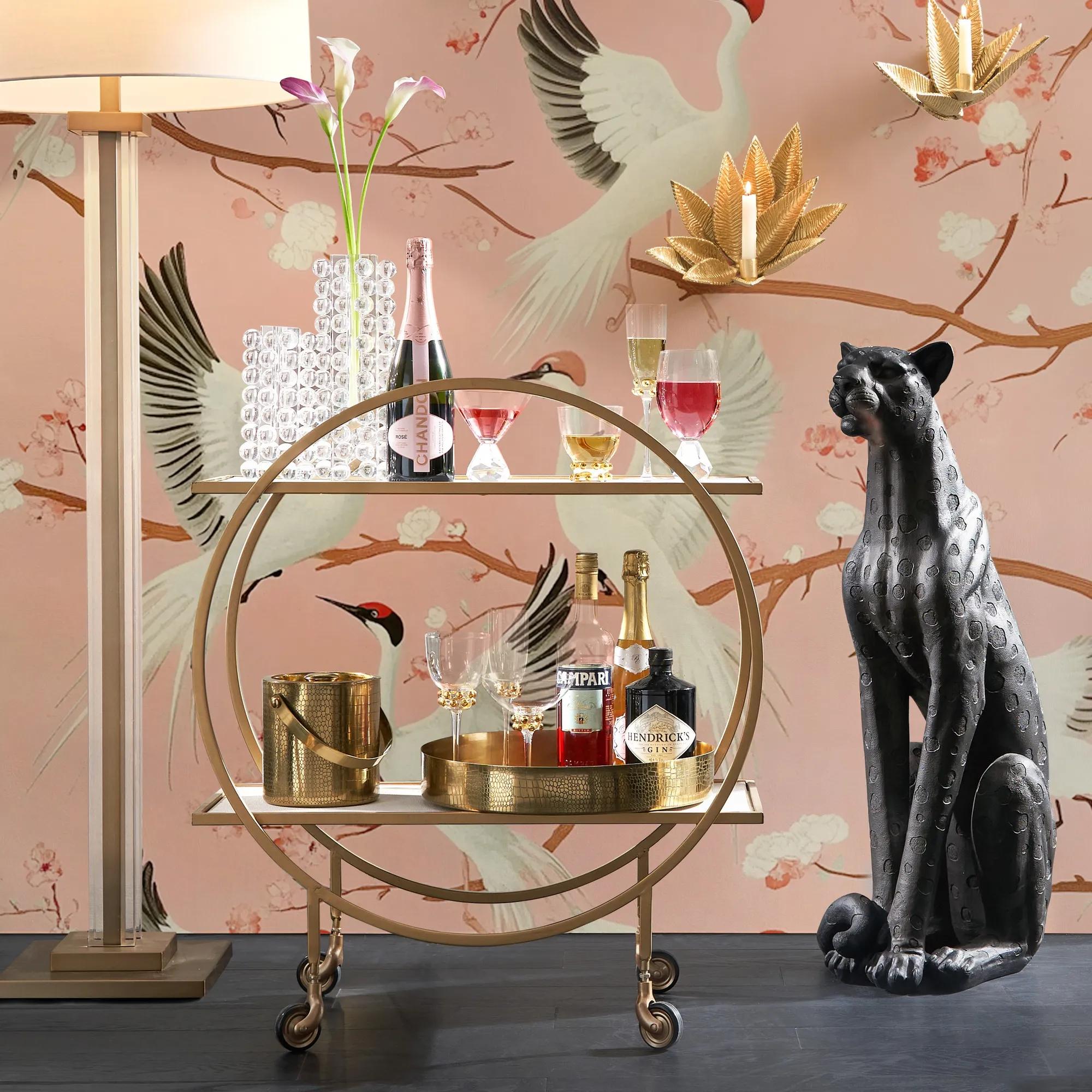 Russo Gold Metal 2-Tier Bar Carts (28")$349
A Deco-inspired bar cart featuring a metallic gold metal frame and white faux leather trays on casters.
Add To Cart -
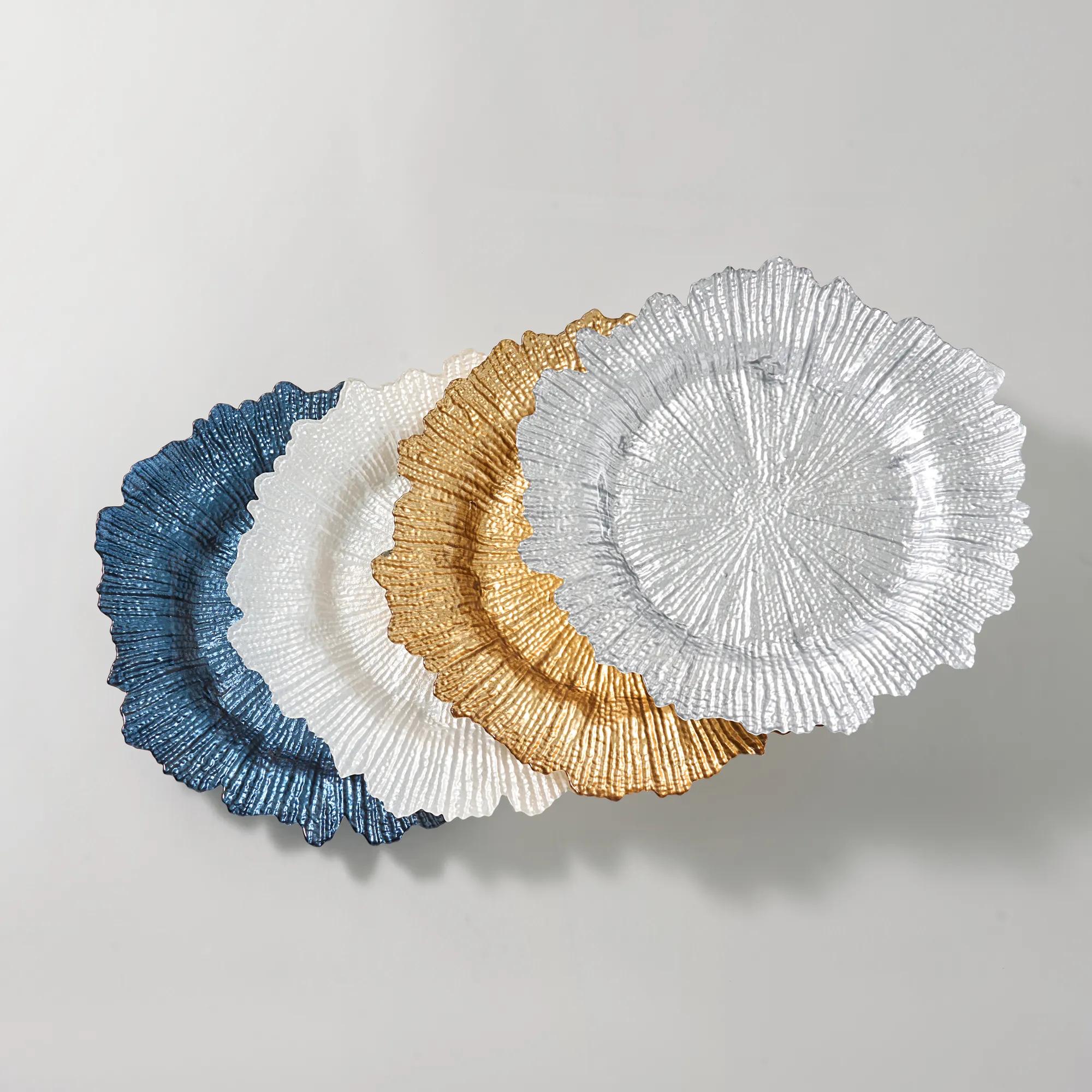
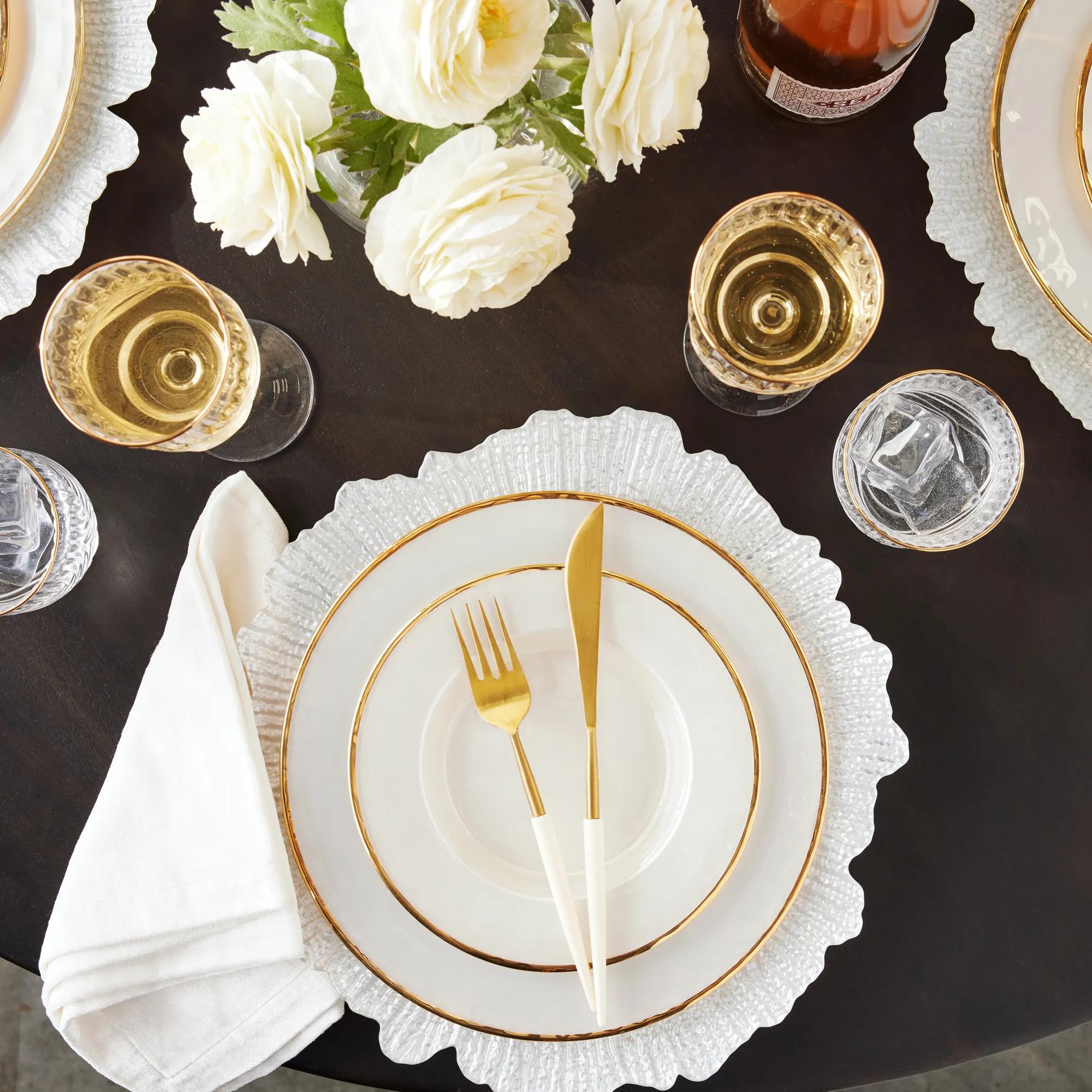 Spruzzo Glass Charger Sets 13"$109
A clear glass charger with an irregular leaf edge and metallic backing for a sparkling table accent.
Add To Cart -
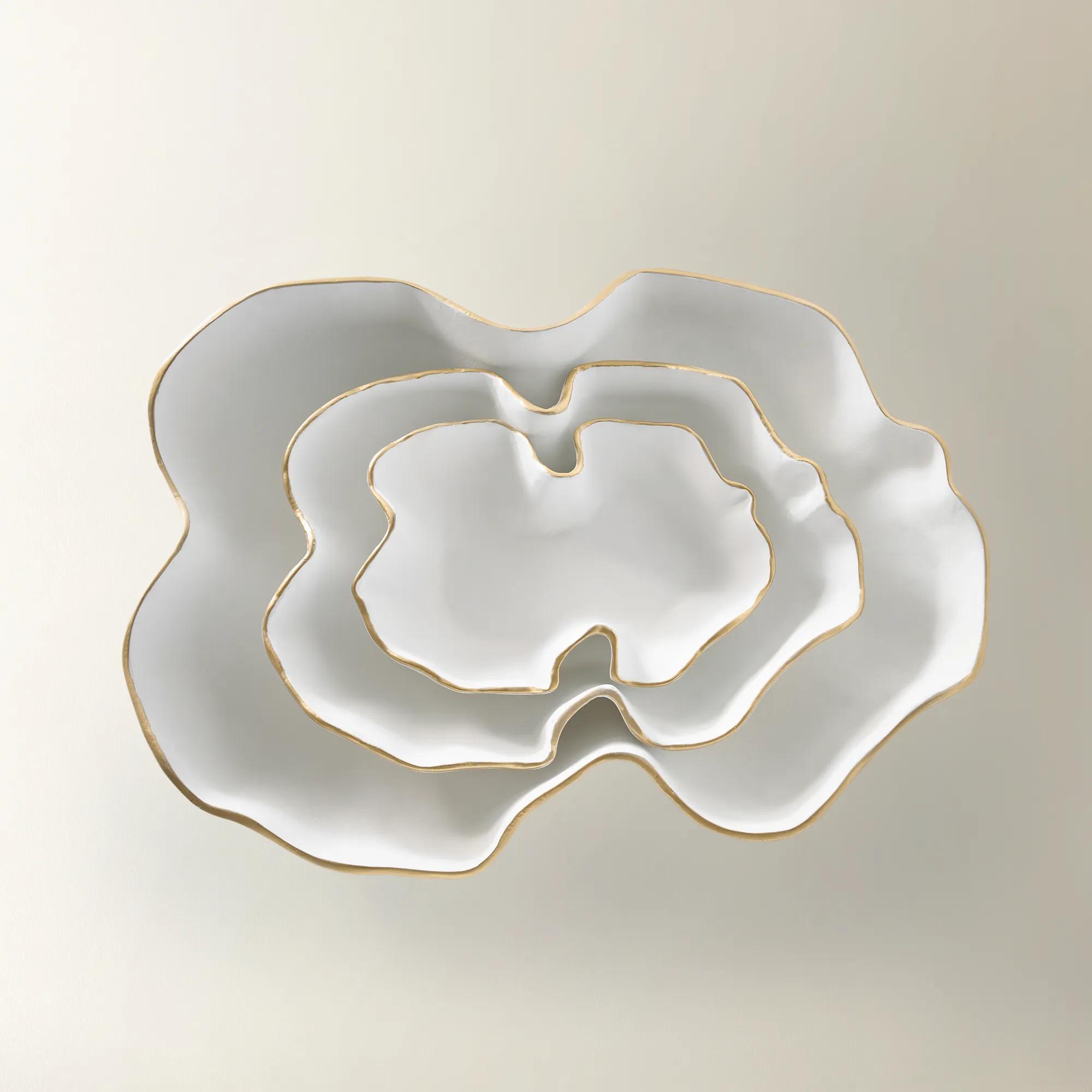 Lava White Gold Aluminum Decorative Nesting Bowls$99
A glossy white aluminum bowl with a golden rim, offering modern elegance for decorative display.
Add To Cart -
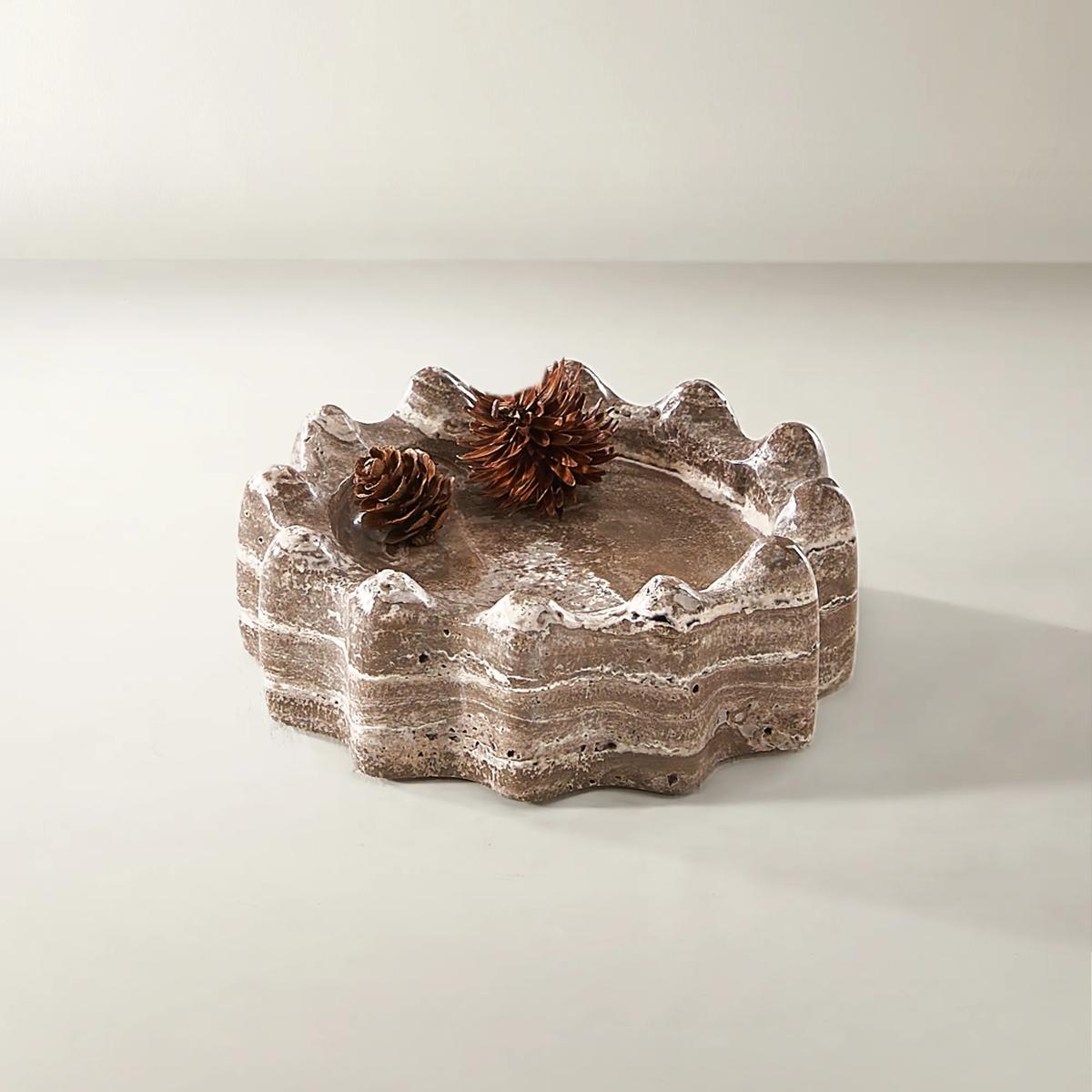 Flora Marble Catchall - Small$89
A hand-carved sand travertine catchall featuring unique veining and undulating, flower-inspired edges.
Add To Cart -
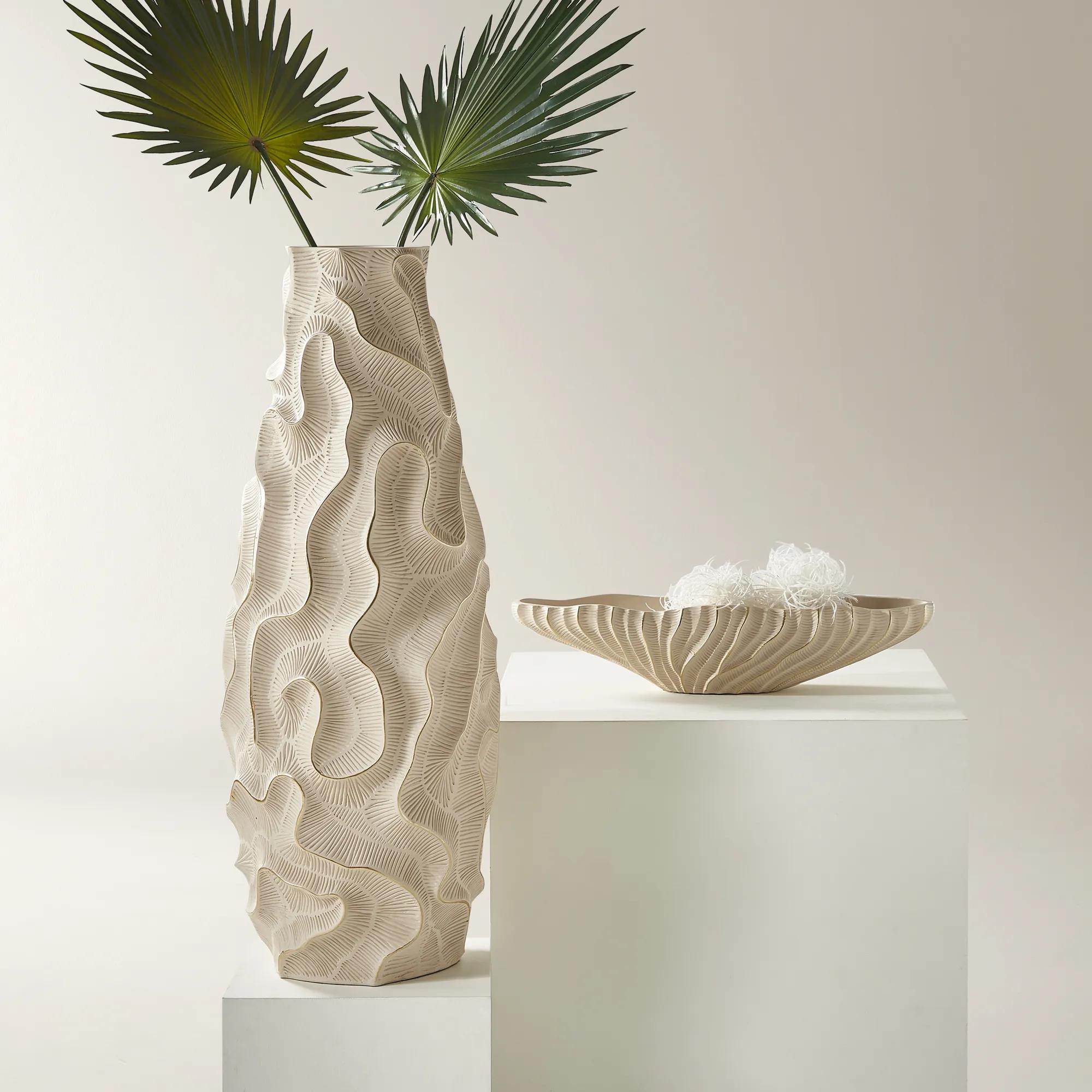
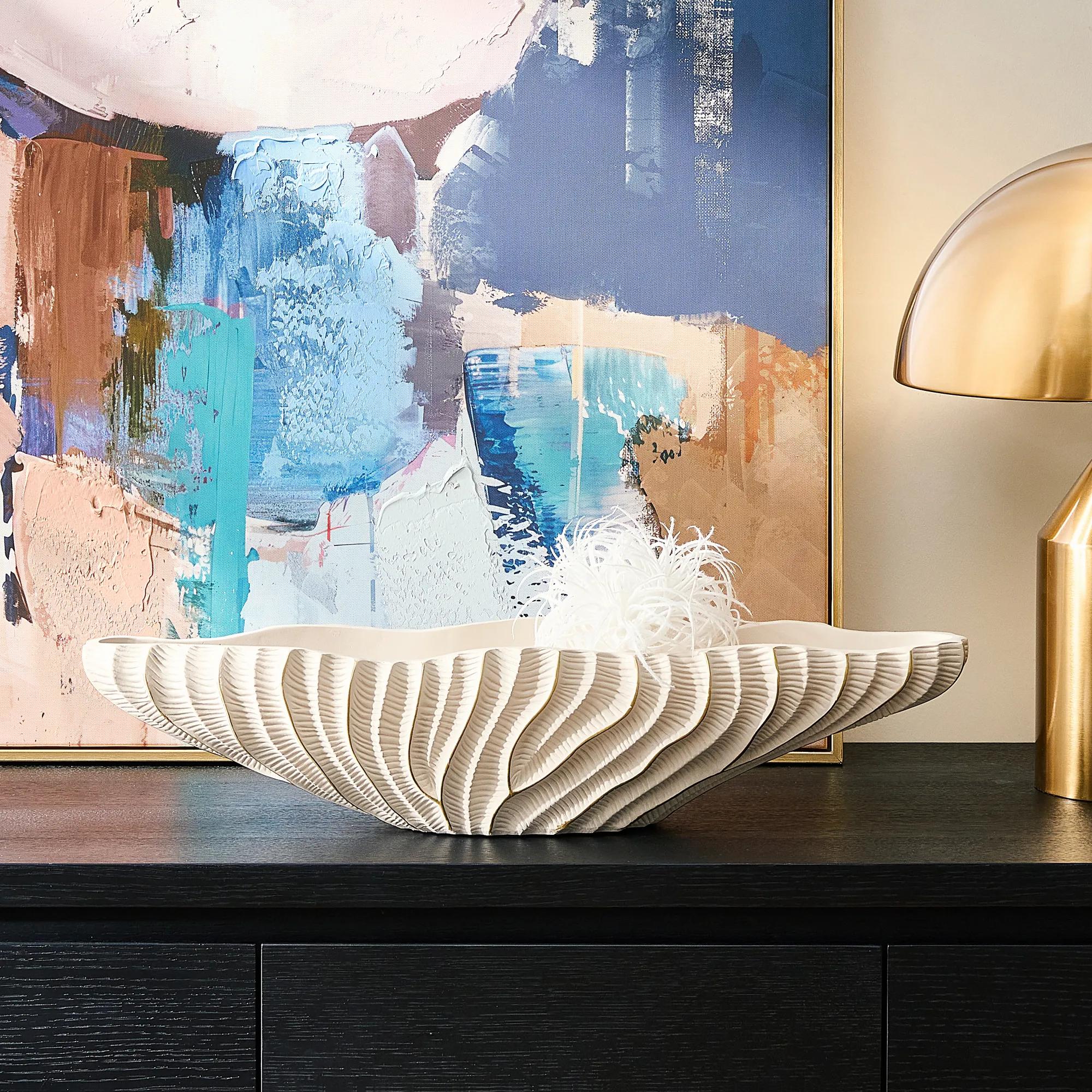 Rouche Ivory And Gold Etched Resin Floor Vase & Bowl$79
An ivory resin collection featuring sculptural, hand-etched textures and undulating organic contours.
Add To Cart -
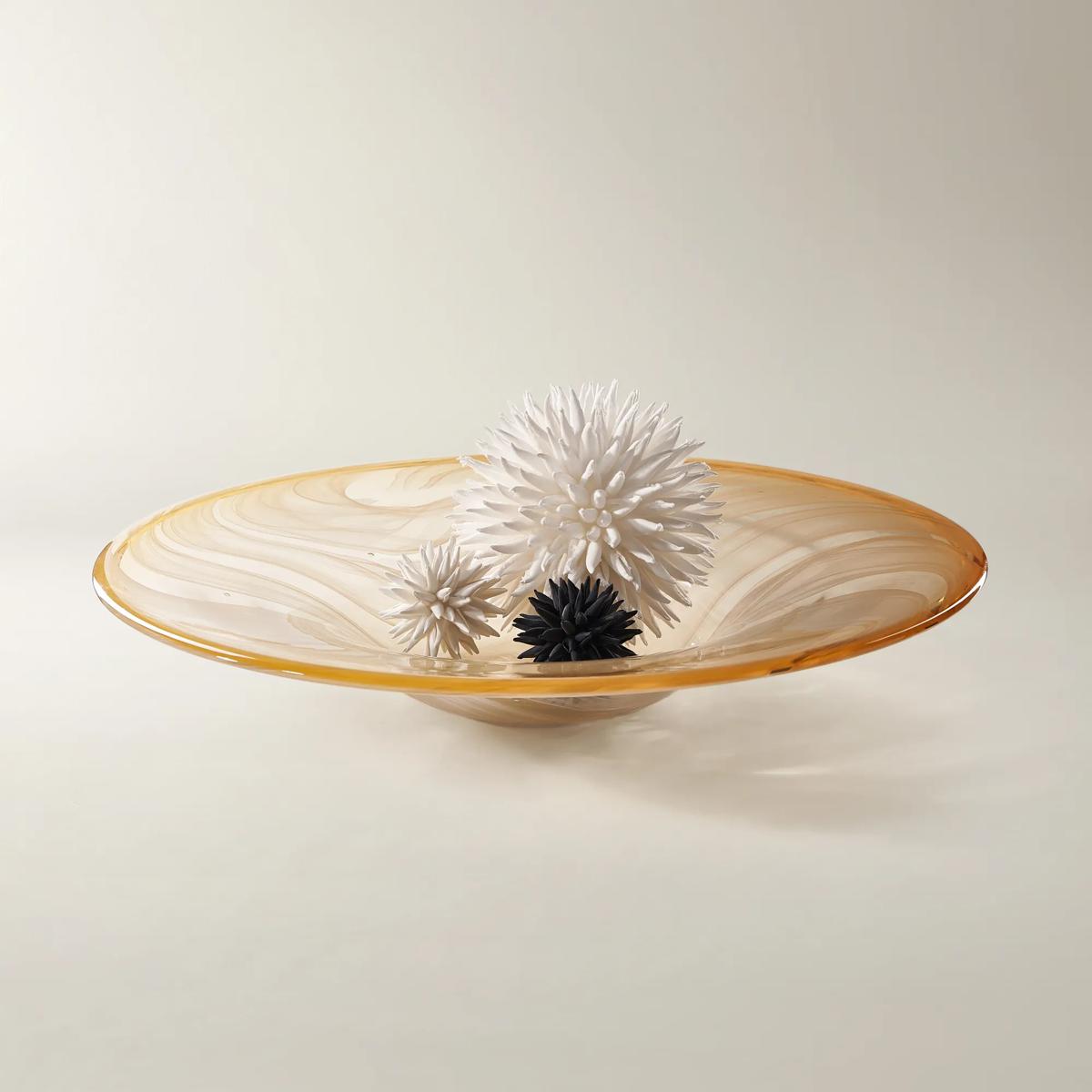
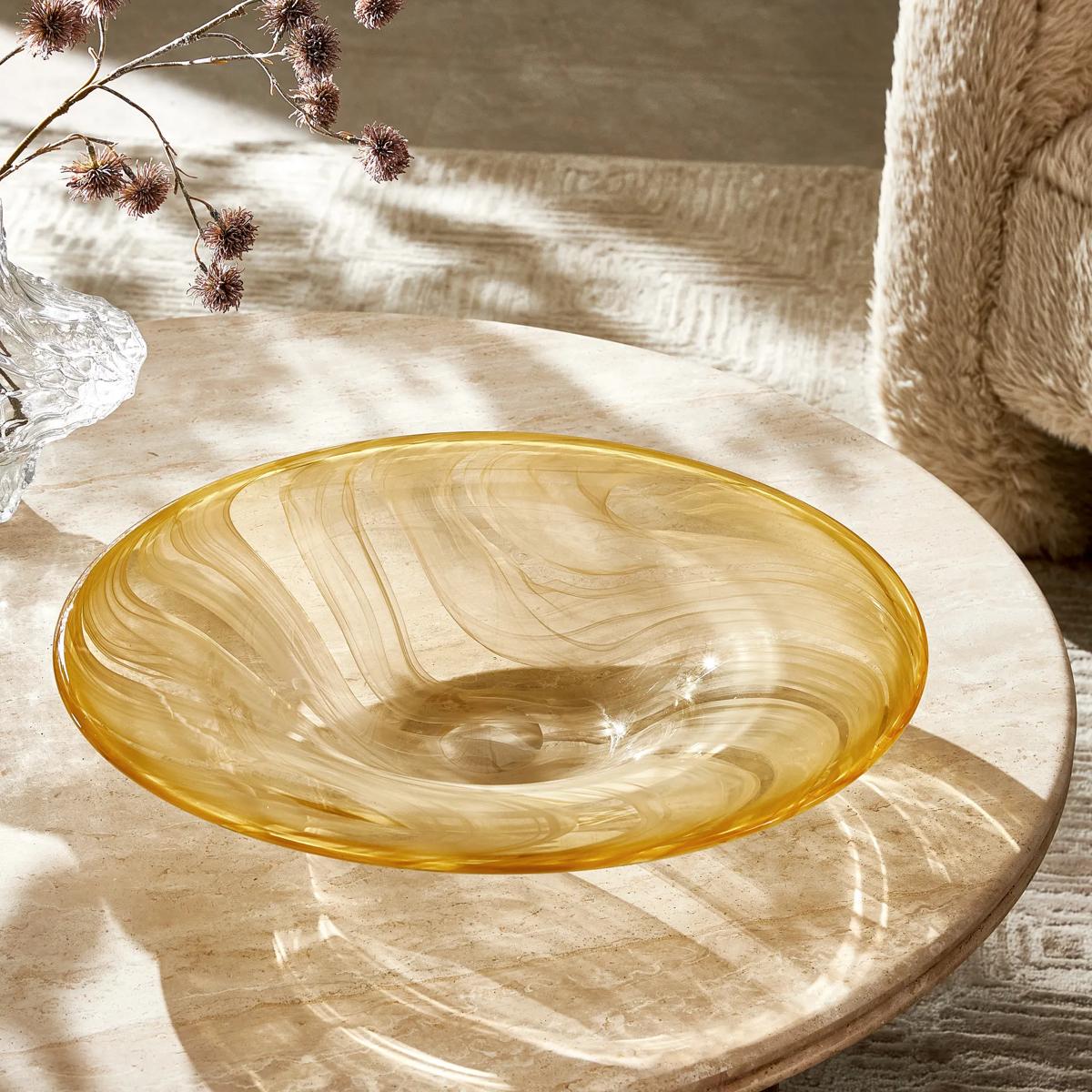 Paradis Glass Plate$239
A hand-blown amber glass plate featuring a swirling, organic design for a radiant decorative accent.
Add To Cart -
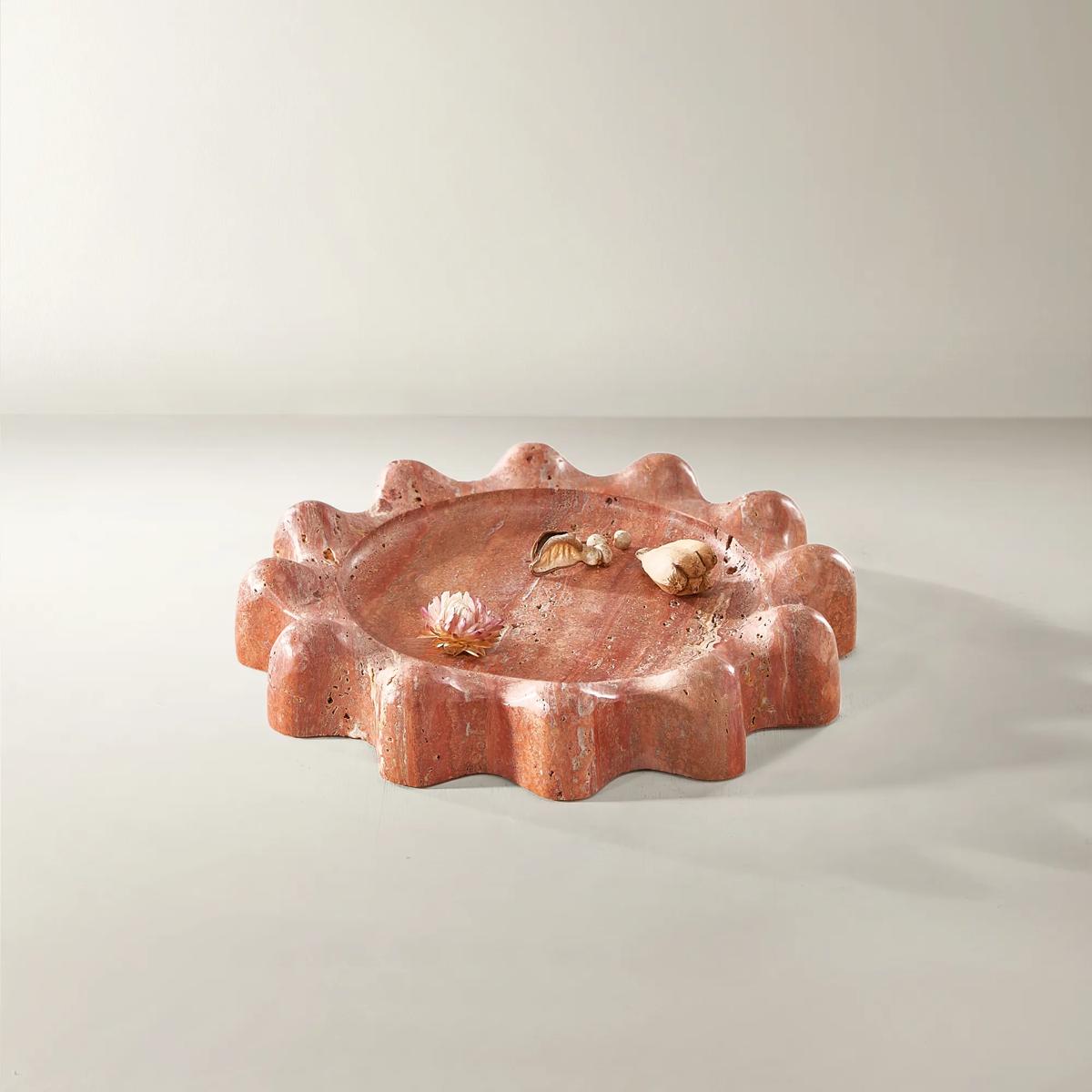 Flora Marble Catchall - Large$159
A hand-carved red travertine catchall with unique veining and undulating, flower-inspired edges.
Add To Cart

Decorative Gift Trays
Decorative Gift Trays are more than mere vessels—they are invitations to indulge, to gather, and to delight in the art of presentation. Each tray transforms the ordinary into the extraordinary, layering your space with a sense of curated luxury and creative flair. Whether set atop a gleaming bar cart or styled as a centerpiece on your dining table, these trays offer endless possibilities for self-expression. Elevate every gesture, from serving cocktails to displaying cherished objets d’art; with Decorative Gift Trays, every moment becomes an occasion worth celebrating.
Decorative gift trays are home accents that combine an artful display surface with a place to gather jewelry, keys, fragrance bottles, and other everyday essentials. Their appeal lies in that balance: a tray can bring order to a console while introducing a flash of polished metal, the depth of lacquer, or the luminous surface of glazed porcelain. Given as a gift, it offers something personal without requiring an intimate knowledge of someone’s home. A petite catchall can become part of a morning ritual, holding a watch and rings beside a bed; a generous coffee table tray can frame a favorite vase and a stack of art books. Both create a deliberate composition where there might otherwise be scattered objects. Decorative trays also have a long-standing connection to hospitality and presentation, bringing the gesture of arranging things beautifully into daily life. Shape and finish establish the mood. A rectangular silhouette lends architectural definition to a broad tabletop, while an oval or round tray softens an arrangement of angular furniture. Scalloped edges, sculptural handles, and patterned surfaces introduce a more expressive note, allowing even a small accent to command attention. For someone drawn to glamorous interiors, mirrored surfaces and metallic borders can echo the shimmer of lighting or the hardware on a cabinet. For a recipient whose rooms favor layered textures, wood or woven fibers offer depth alongside glass, upholstery, and polished stone. The strongest choice often reflects an existing detail rather than matching an entire room: the warm metal of a lamp, a recurring geometric motif, or the rich color of a cherished artwork. That makes decorative gift trays especially thoughtful for housewarmings, weddings, anniversaries, and host gifts. They suit collectors, enthusiastic entertainers, jewelry lovers, and anyone who appreciates an intentional place for the things they reach for each day. Even in a compact apartment, a beautifully proportioned tray can establish a distinct vignette without demanding another piece of furniture.
Materials influence not only a decorative tray’s appearance but also its weight, durability, and best use. Porcelain and ceramic trays bring crisp detail and a smooth, often glazed surface to dressers and bedside tables; their substantial feel is appealing, though edges can chip if knocked against harder objects. Metallic decoration may require gentler care than an undecorated glaze, so cleaning instructions matter. Wood introduces visible grain and natural variation, giving a polished arrangement a sense of warmth and depth. Its performance depends on the species, construction, and protective finish, and prolonged moisture can leave marks or cause movement. Woven rattan and wicker add intricate texture with relatively little weight, making them attractive for decorative groupings, although an uneven weave may not provide a steady base for narrow bottles or stemware. Metal trays range from sleek and reflective to richly textured. Depending on the underlying metal and finish, they may scratch, tarnish, or react to moisture; a gleaming gold-tone surface should not be assumed to be solid brass. Mirrored glass magnifies the presence of objects placed above it, catching the outline of a perfume bottle or the color of a small floral arrangement, but it also reveals fingerprints and needs protection from impact. Marble and other stone trays offer distinctive veining and a substantial presence, though their weight deserves consideration when lifting them or placing them on delicate furniture. Some stone is porous and vulnerable to staining or acidic spills. Lacquered and resin designs can deliver saturated color and sculptural form, with resistance to heat, moisture, and abrasion varying by construction. For most decorative trays, gentle dusting and prompt attention to spills help preserve the finish, but the manufacturer’s care directions should determine whether a damp cloth, mild cleanser, or specialized treatment is appropriate. Avoid assuming that a tray is dishwasher-safe, suitable for soaking, or tolerant of abrasive cleaners. Protective pads beneath the base can help safeguard furniture, provided they are compatible with both surfaces. For a frequently used entryway catchall, an easy-care interior and a sturdy rim may matter more than elaborate detailing; for a dresser display, a delicate finish can take a more prominent role.
Proportion is what allows a decorative gift tray to feel at home rather than merely placed on a surface. Consider the usable interior dimensions as well as the overall footprint, since broad rims, curved sides, and handles can reduce the space available for objects. On a narrow entry console, a shallow tray leaves room for a lamp while keeping keys contained. Beside a bed, enough space for glasses and a watch may be all that is needed, with a low rim that makes those essentials easy to reach. A vanity tray should accommodate the bases of fragrance bottles without crowding them together, and a smooth, clean interior helps protect delicate accessories from snagging. On a coffee table, leave exposed tabletop around the tray so the arrangement has breathing room and there is still a convenient place to set a drink. A broad, rigid tray can provide a firmer surface on an upholstered ottoman, but stability depends on the upholstery underneath; a soft or deeply tufted cushion is not a dependable foundation for filled glasses. Raised edges help contain small objects, while comfortable, securely attached handles are important when a tray is intended to be carried. Decorative use and food service are not interchangeable. Anyone choosing a gift for entertaining can explore decorative serving trays, while checking individual care information, load limitations, and whether the surface is approved for direct food contact. A decorative finish alone does not establish food safety or heat resistance. For a display-focused gift, the recipient’s routines offer useful direction: a compact valet tray for someone who removes jewelry at the door, a reflective vanity accent for a fragrance enthusiast, or a larger composition for someone who loves rearranging a living room. A personal note explaining that connection gives the gift meaning without prescribing exactly how it should be used. The lasting pleasure of a decorative tray is its flexibility. It can move from dresser to console, gather a new collection, or frame a single sculptural object, bringing the same sense of considered detail to each setting.
FAQs
Decorative gift trays are celebrated for their variety of luxurious materials, each lending its own character to a space. Mirrored glass trays add a luminous, glamorous touch, while metallic finishes like gold, silver, or brass evoke timeless elegance. Lacquered wood offers a bold, modern statement, and marble or stone trays bring organic sophistication. For those who crave texture, velvet-lined or inlaid trays create tactile intrigue and visual depth, making them ideal for both display and serving.
A decorative tray acts as a stage for curated vignettes, bringing structure and artistry to any surface. Placed on a coffee table, it gathers books, candles, and objets d’art into a cohesive arrangement. On a vanity, it transforms daily routines into rituals of luxury. The reflective surfaces of mirrored or metallic trays amplify light, while bold patterns and rich textures introduce drama and dimension, instantly elevating the mood of your home.
Absolutely—decorative trays are a sophisticated choice for a range of occasions, from housewarmings and weddings to holidays and milestone celebrations. Their versatility and timeless appeal ensure they resonate with recipients of all tastes. A thoughtfully selected tray can be personalized by pairing it with cherished keepsakes, gourmet treats, or even handwritten notes, making the gift both practical and deeply meaningful.
Decorative trays transcend their traditional role by organizing and showcasing treasures throughout the home. Use a tray to corral perfume bottles on a dresser, create a striking centerpiece with seasonal florals and candles, or establish a chic coffee station in the kitchen. In the entryway, a tray can elegantly collect keys and mail, while in the bathroom, it brings order and beauty to personal care essentials.
When selecting a decorative tray, consider the dominant colors, materials, and design motifs in your space. Opt for a tray that echoes these elements for a harmonious look, or choose a bold contrast to create a focal point. For modern interiors, sleek metallics or high-gloss finishes offer contemporary flair, while ornate details or textured surfaces suit more eclectic or traditional settings. Ultimately, let your personal style and the mood you wish to evoke guide your choice.


