Architectural Faux Marble Tables
Architectural Faux Marble Tables
-
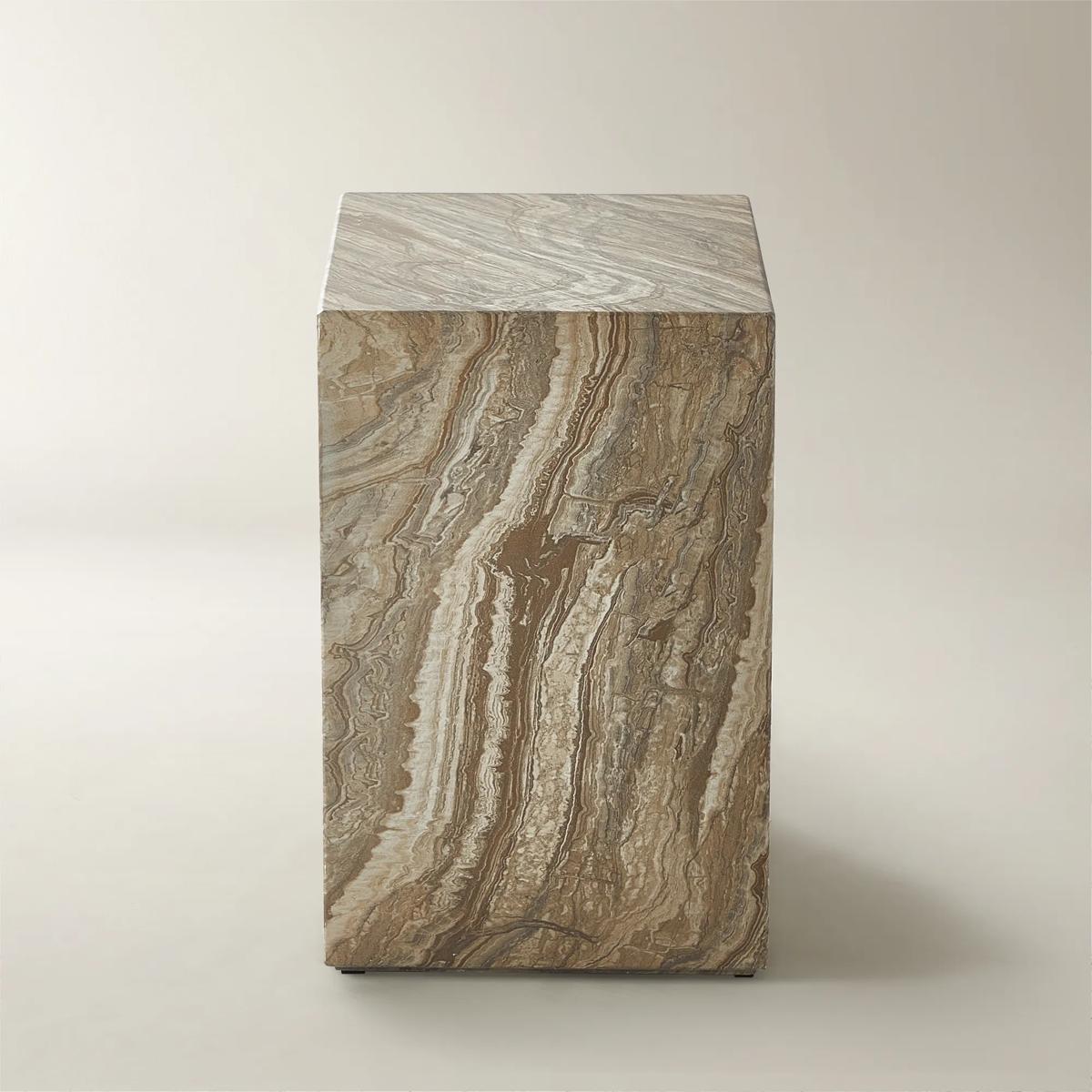
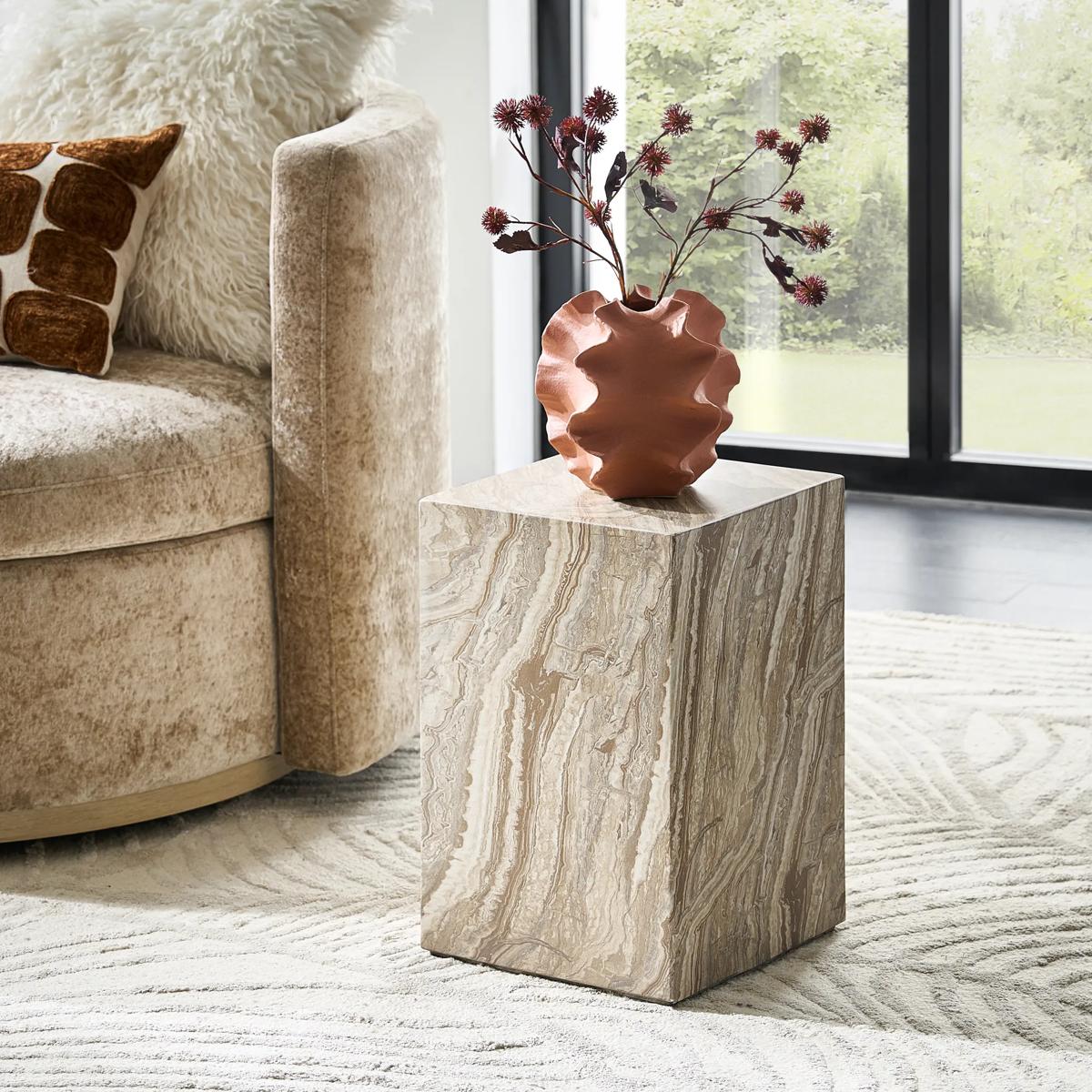 Strata Square Brown Concrete Indoor/Outdoor Side Table (11.8")$299
A brown concrete side table with a sculptural cuboid profile and marble-look finish, indoors or outdoors.
Add To Cart -
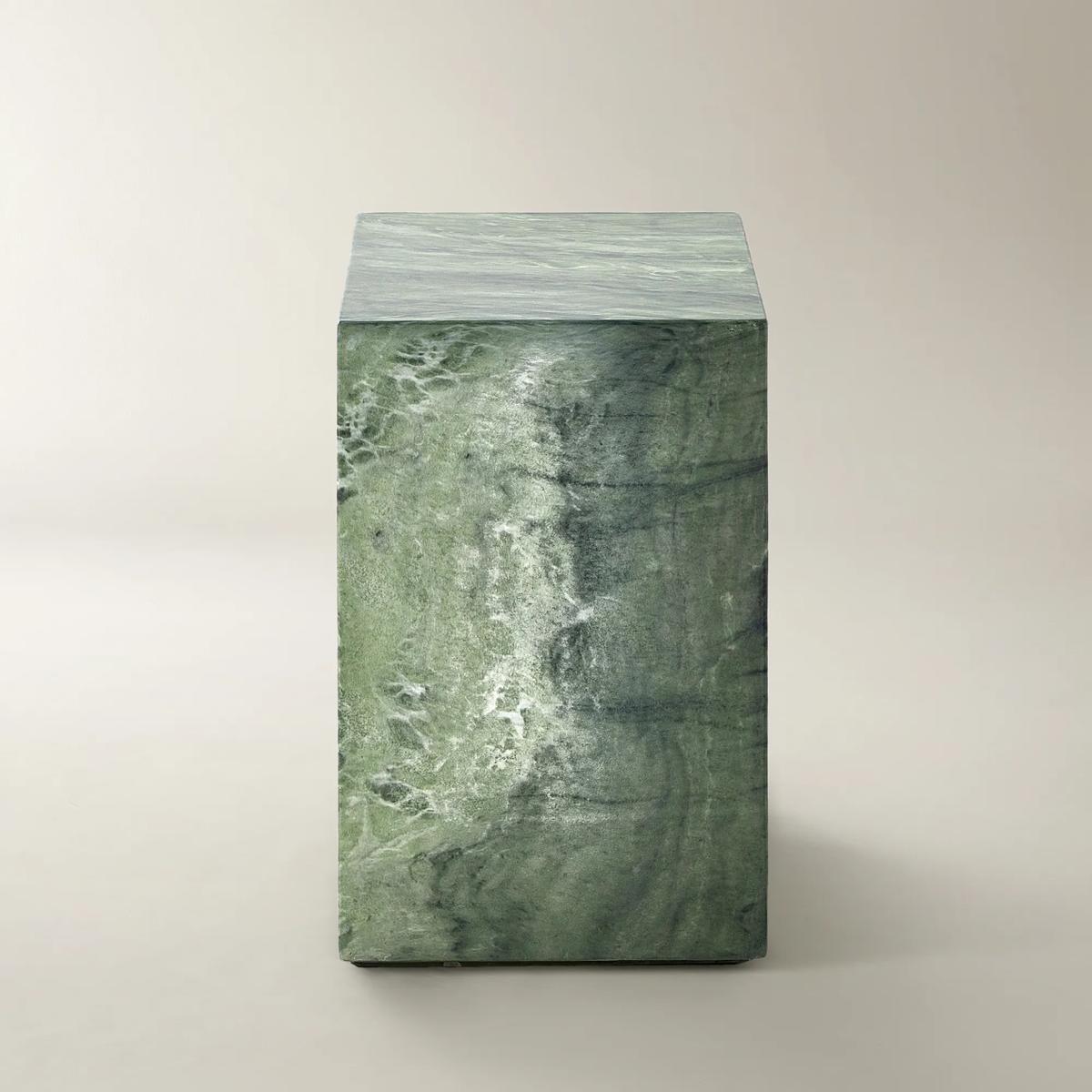
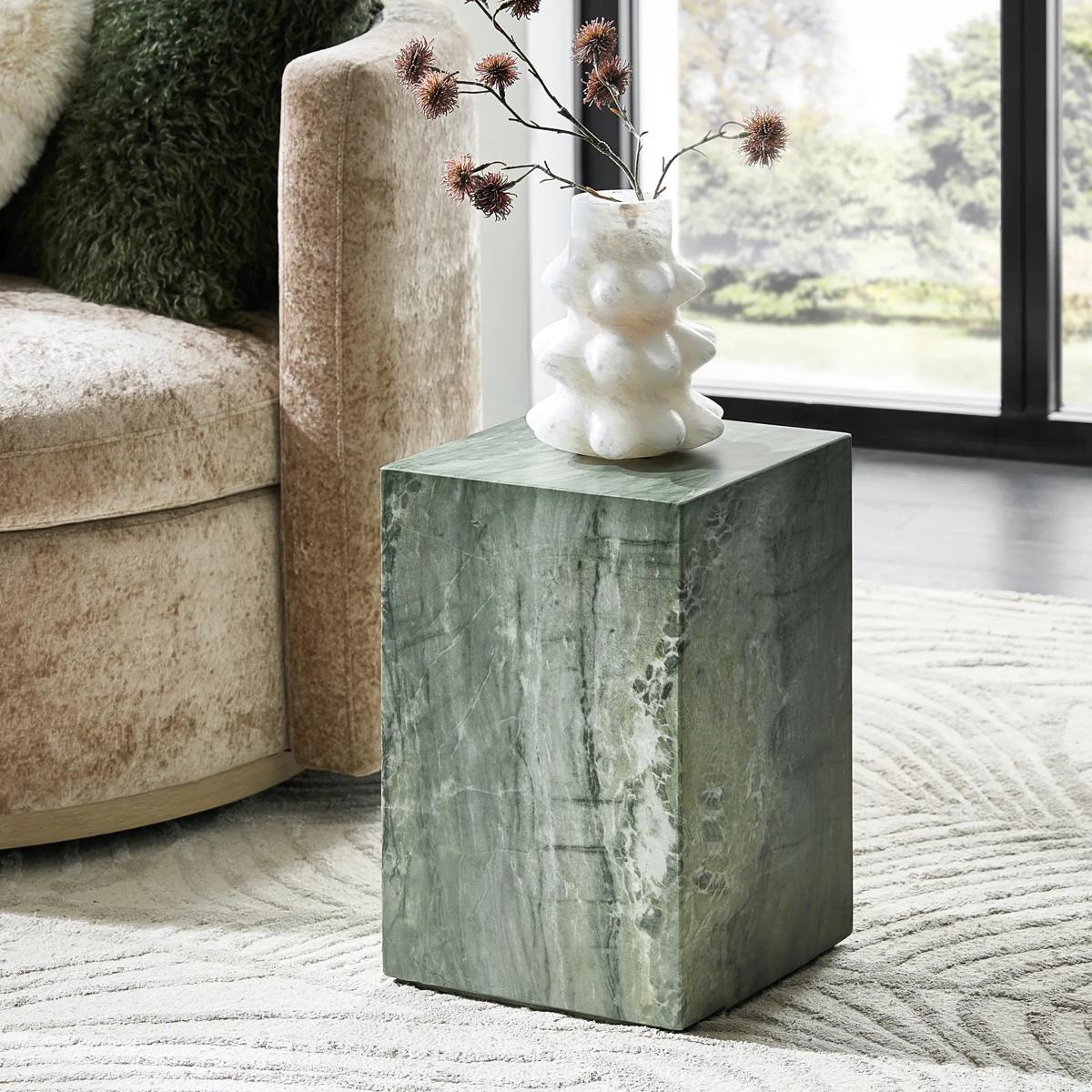 Strata Square Green Concrete Indoor/Outdoor Side Table (11.8")$299
A green concrete side table with marble-look veining and a sculptural cuboid form for indoor use.
Add To Cart -
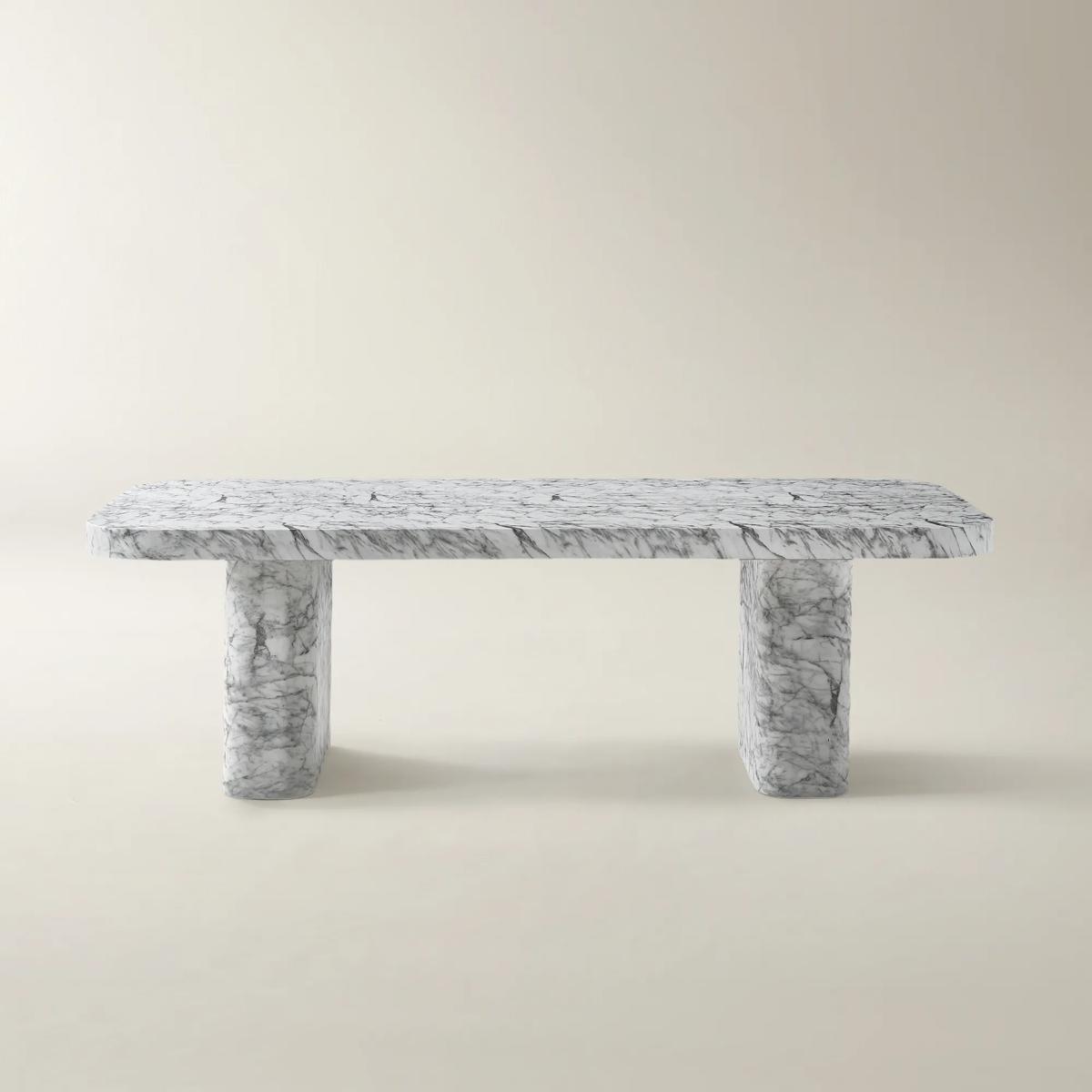
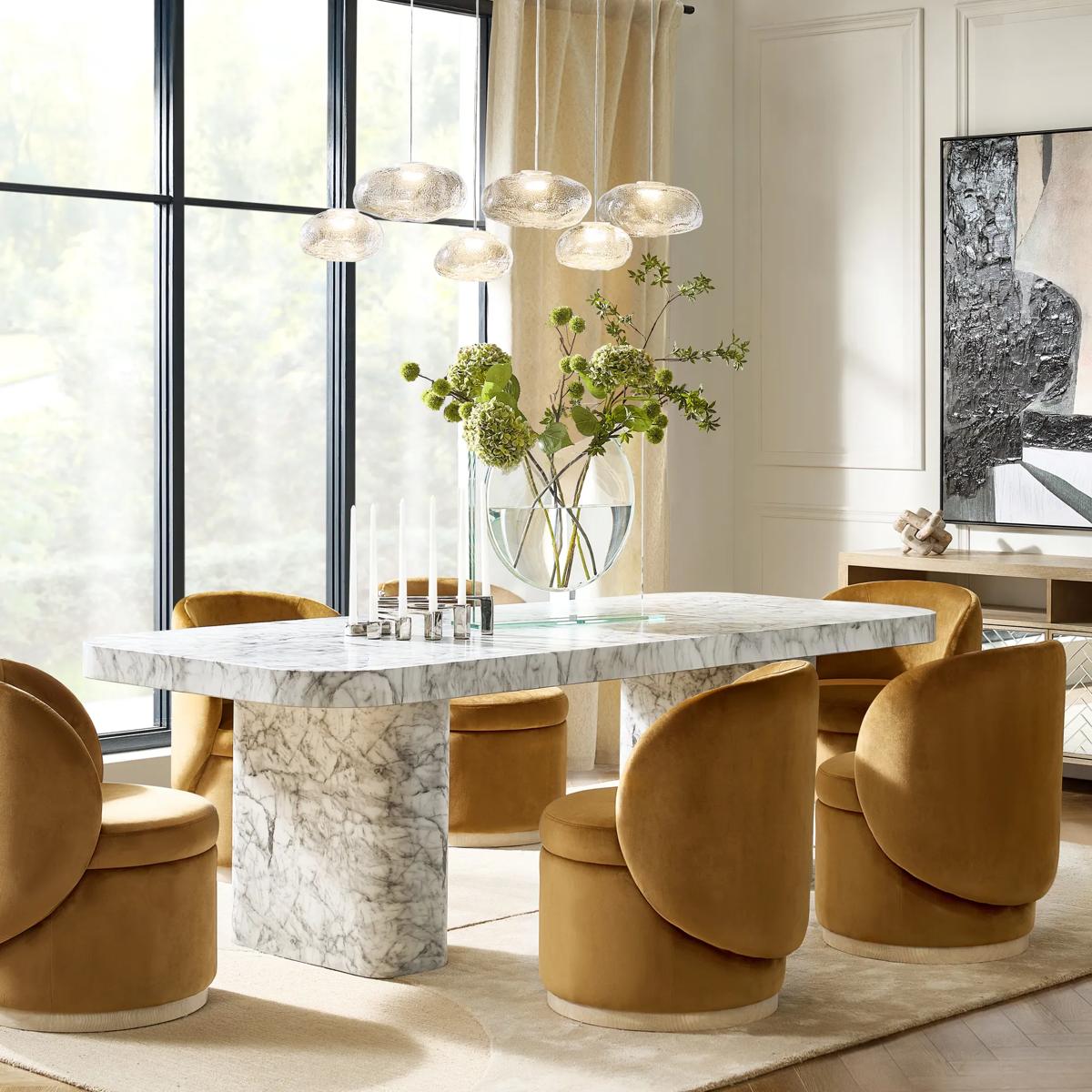 Silex Rectangular White Concrete Indoor/Outdoor Dining Table (94.5")$1999
A white concrete dining table with a sculptural pedestal base, marble-inspired veining, and indoor-outdoor versatility.
Add To Cart -
 Strata Round Green Concrete Indoor/Outdoor Side Table (15")$349
A green concrete side table with rounded geometry and a marble-look finish for indoor-outdoor use.
Add To Cart -
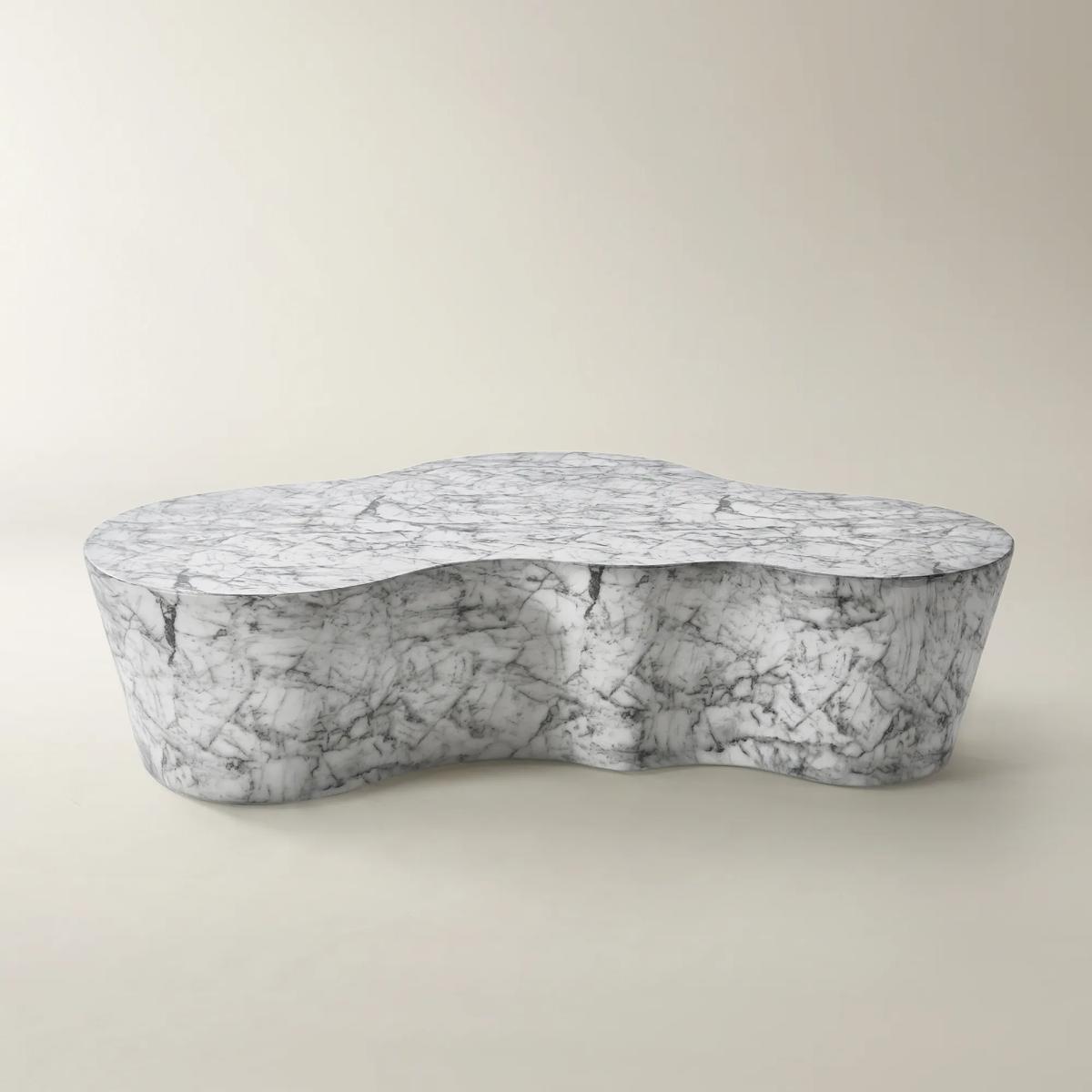
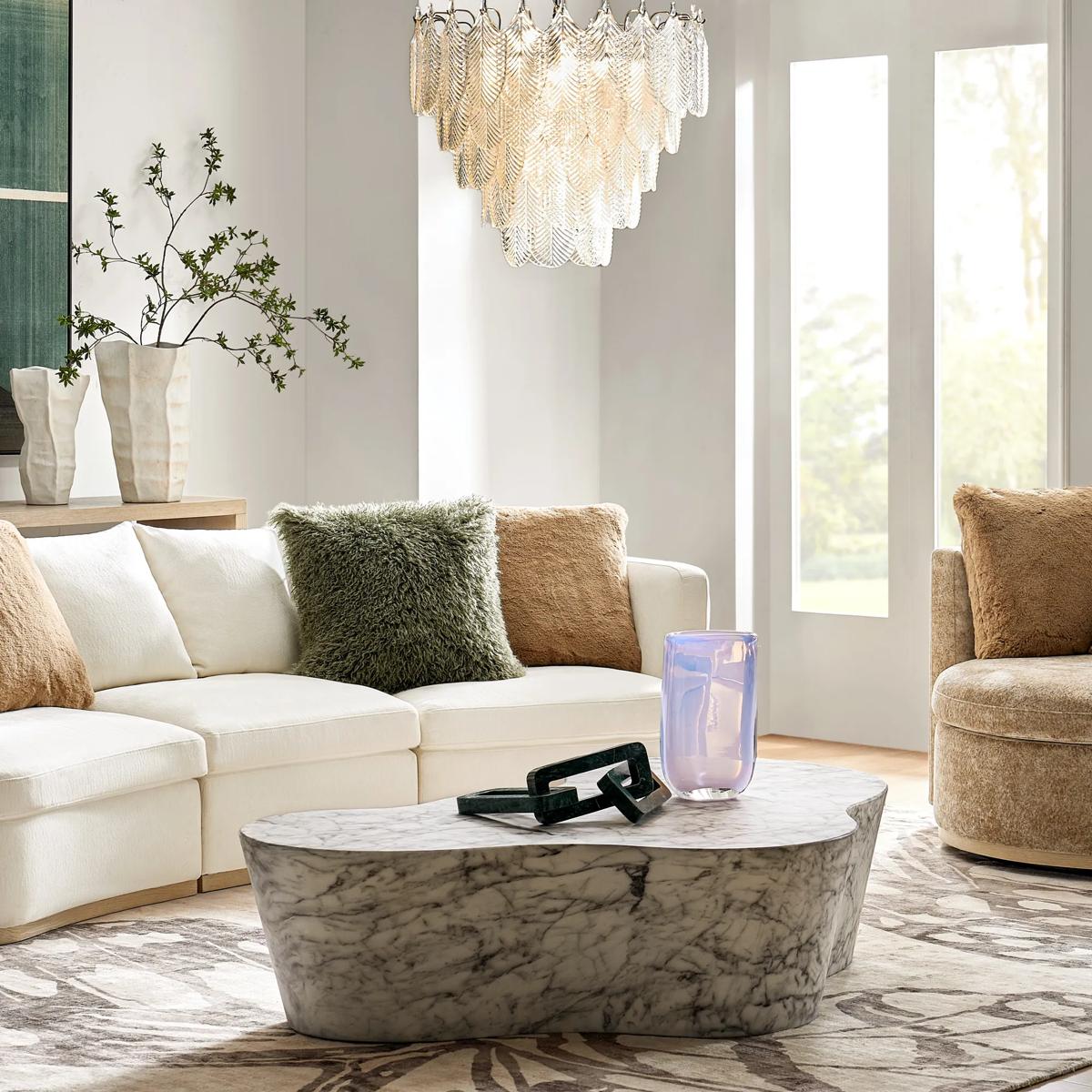 Petra White Concrete Indoor/Outdoor Coffee Table (59.4")$1099
A sculptural white concrete coffee table with cloud-like contours and marble-look veining, suitable indoors or outdoors.
Add To Cart -
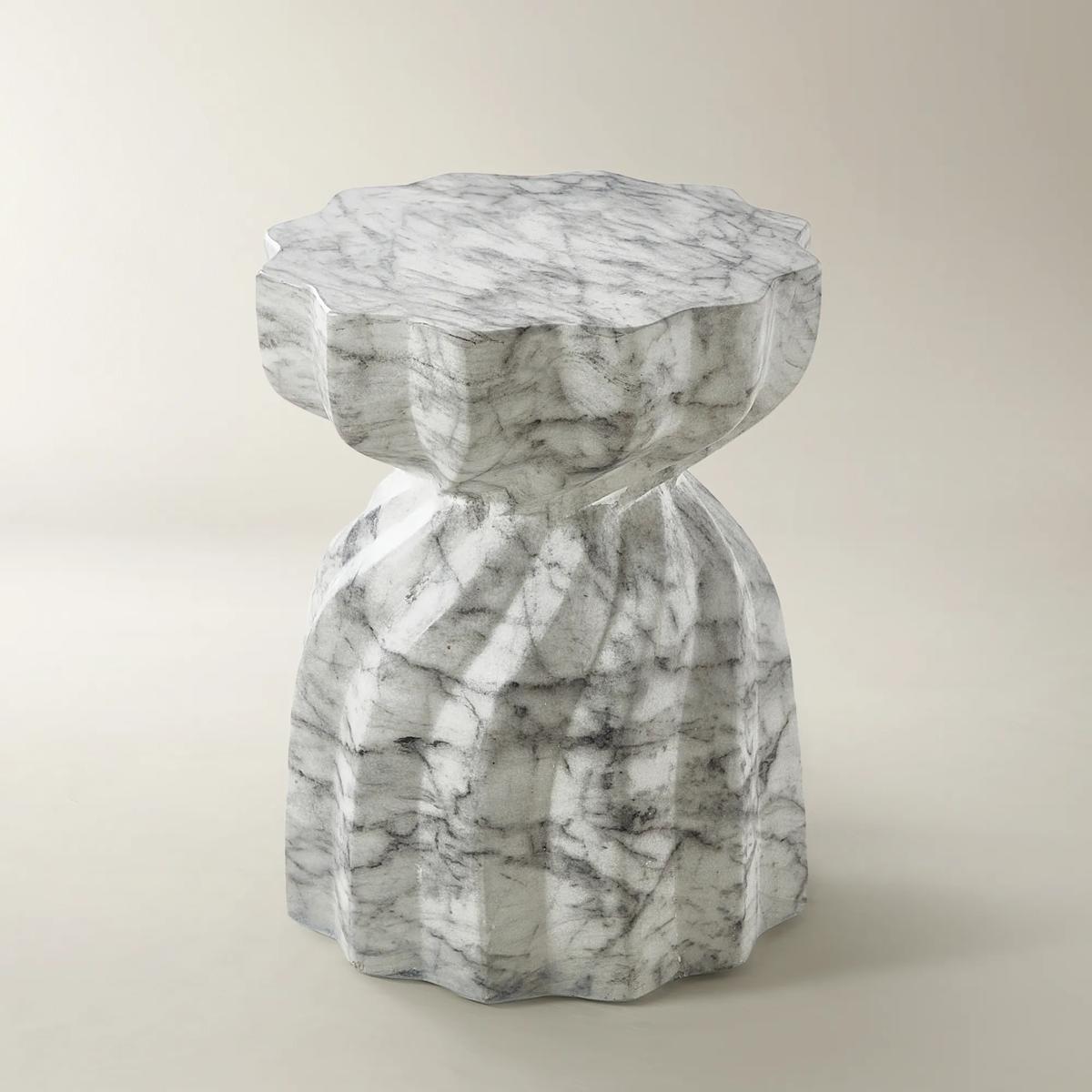
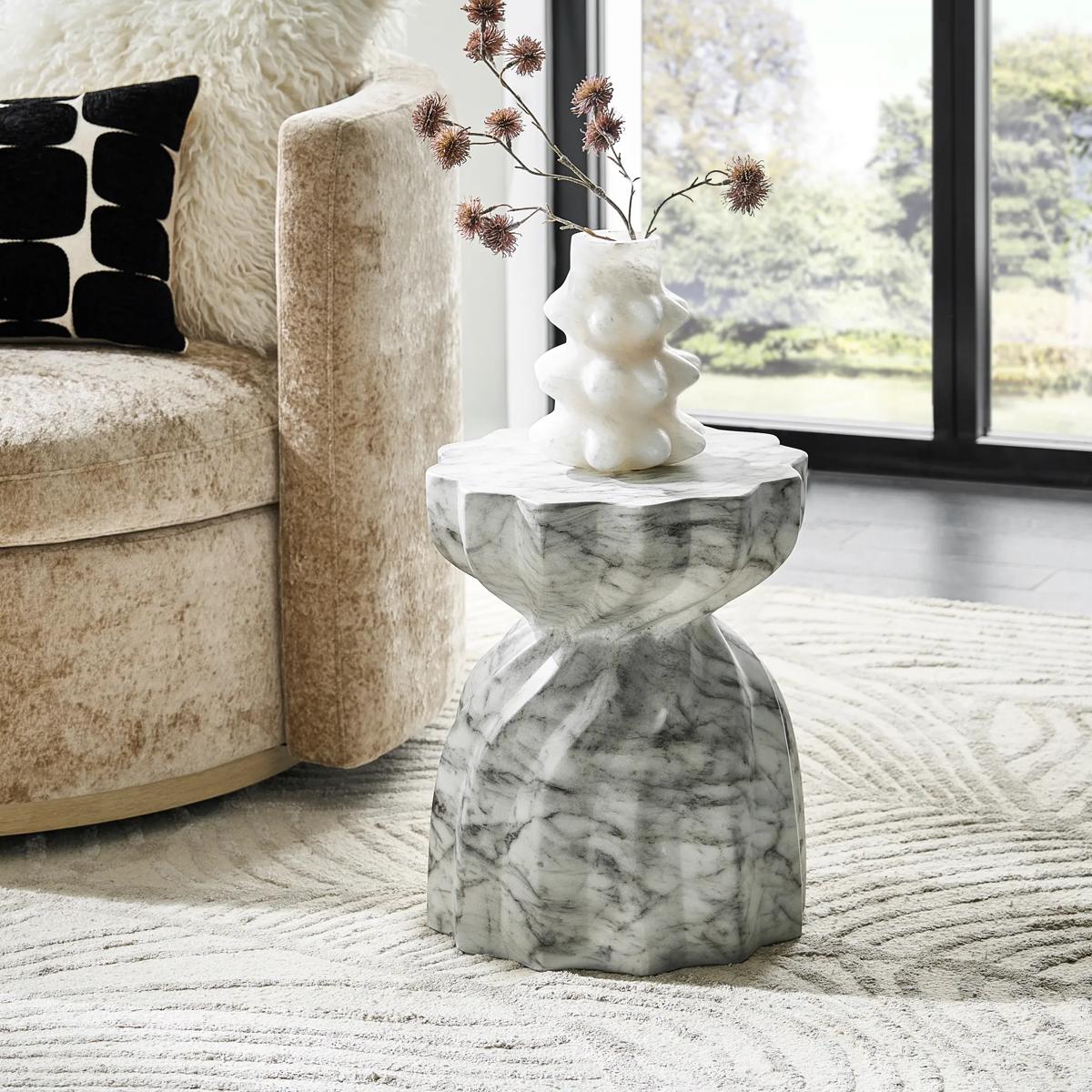 Lithia Scalloped White Concrete Indoor/Outdoor Side Table (15")$349
A white concrete side table with a scalloped silhouette and marble-look finish for indoor-outdoor living.
Add To Cart -

 Matera Rectangular White Marble Dining Table With Stainless Steel Base (86.61")$2499
A modern dining table featuring a white marble top and polished stainless steel base for timeless elegance.
Add To Cart -
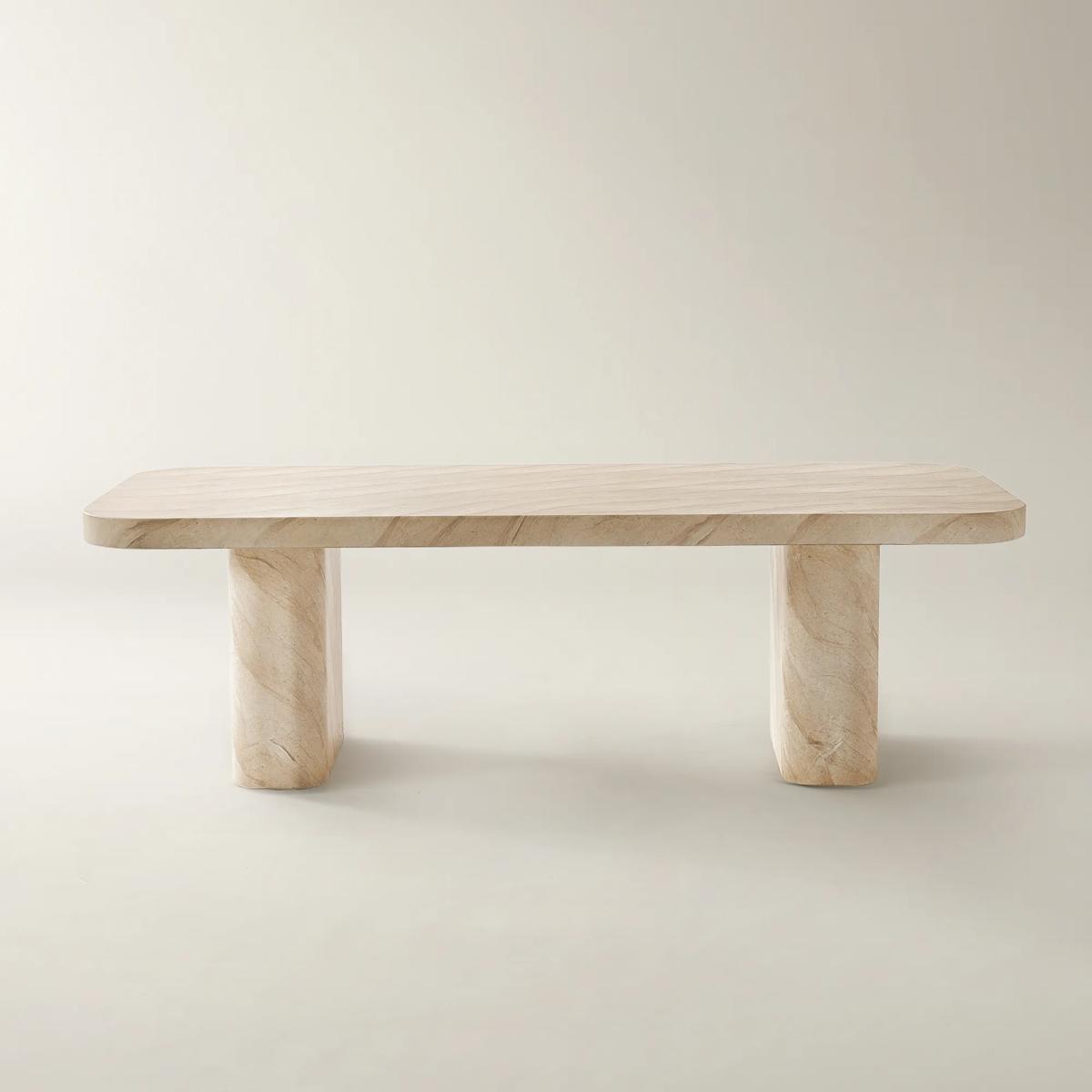 Silex Rectangular Travertine Concrete Indoor/Outdoor Dining Table (94.5")$1999
A rectangular dining table with pedestal legs, travertine-inspired veining, and resilient fiber concrete for indoor-outdoor use.
Add To Cart -
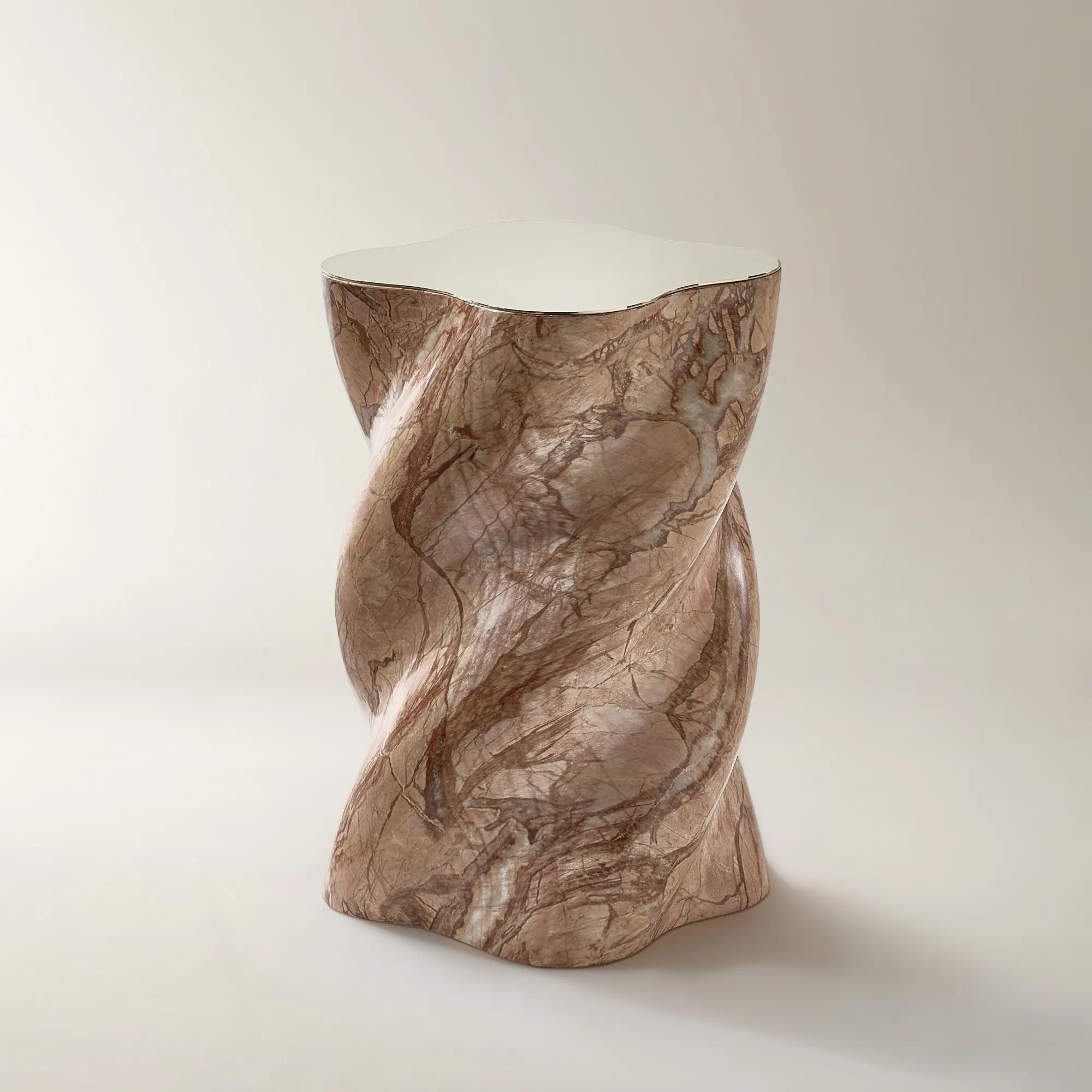
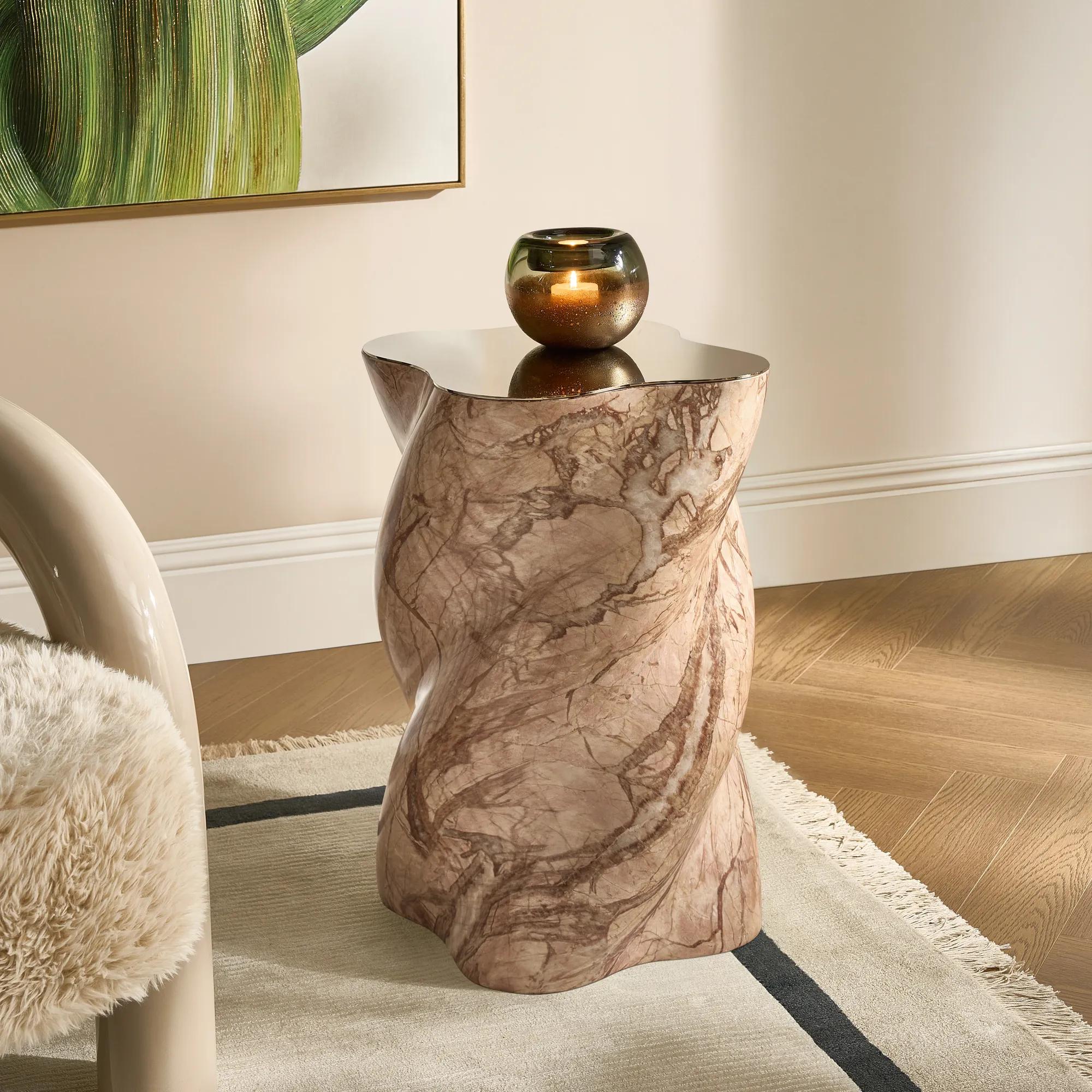 Vega Concrete Indoor/Outdoor Side Table With Stainless Steel Top (13.8")$459
A black, orange, or green concrete side table with removable stainless-steel top and marble-inspired veining.
Add To Cart -
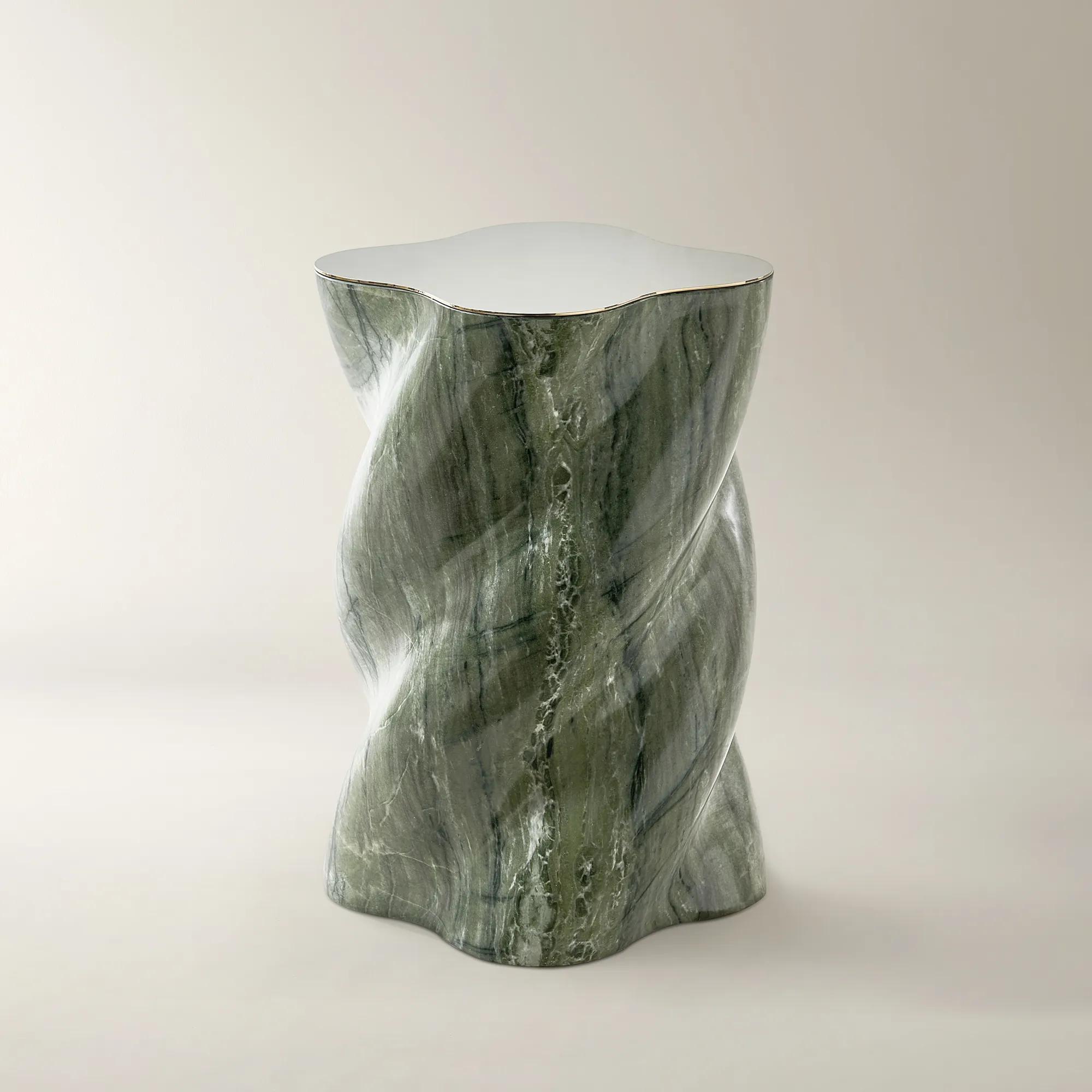 Vega Malachite Green Concrete Indoor/Outdoor Side Table With Stainless Steel Top (13.8")$459
A green concrete side table with a sculptural pedestal, marble-inspired finish, and removable stainless-steel top.
Add To Cart -
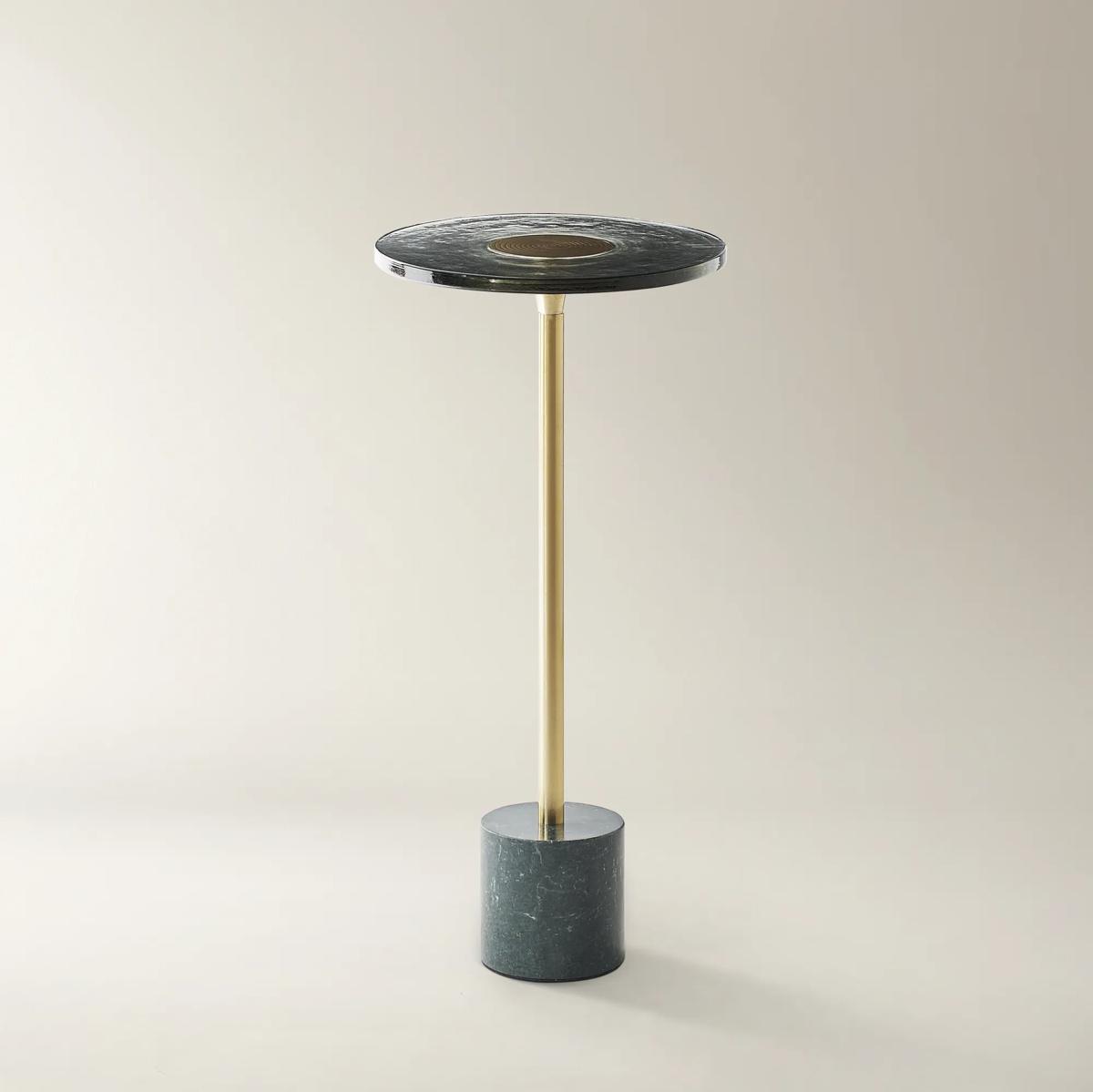
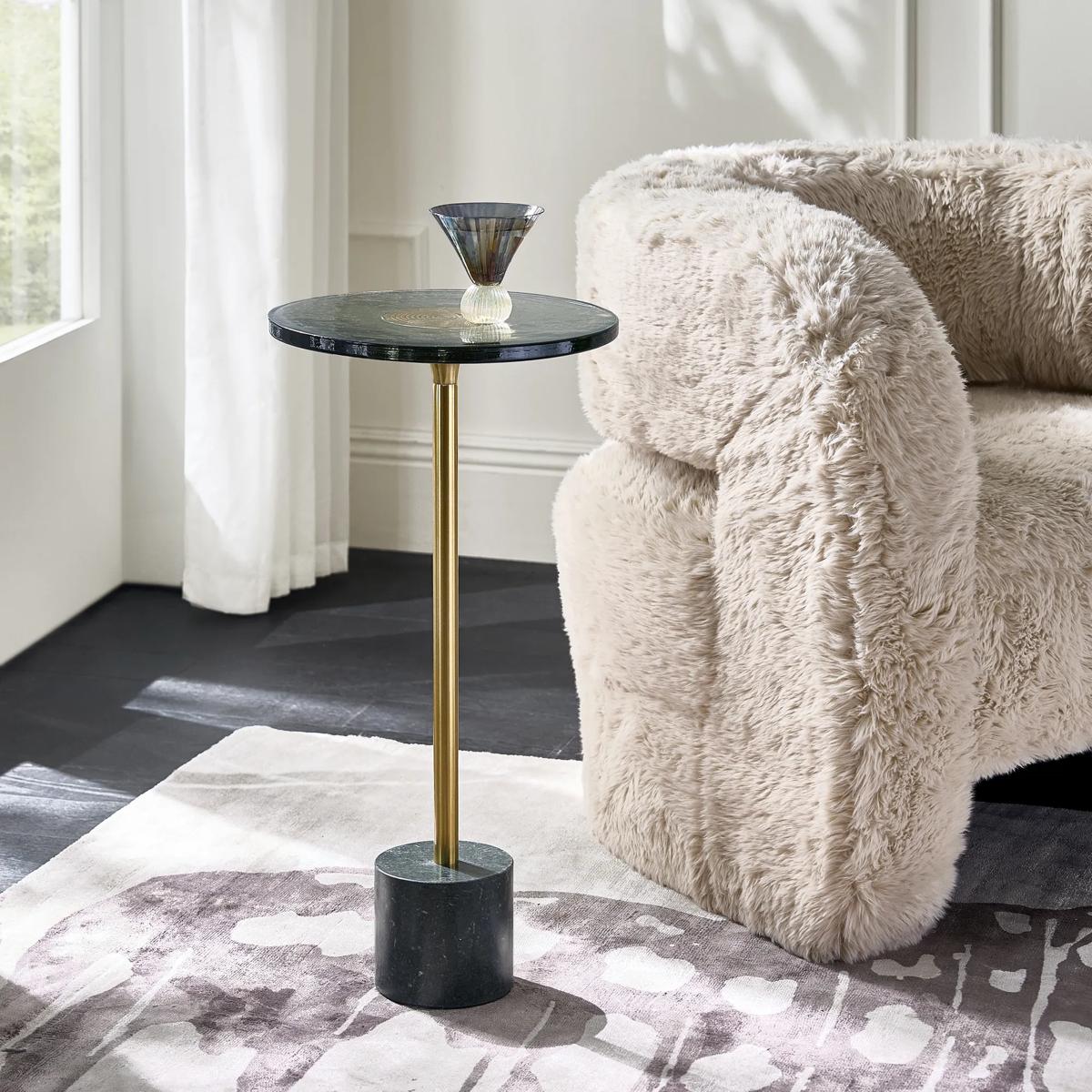 Seraphy Round Green Metal Side Table With Glass Top (13.75")$179
A modern side table featuring a green cast glass top, brass-finished post, and Indian green marble base.
Add To Cart -
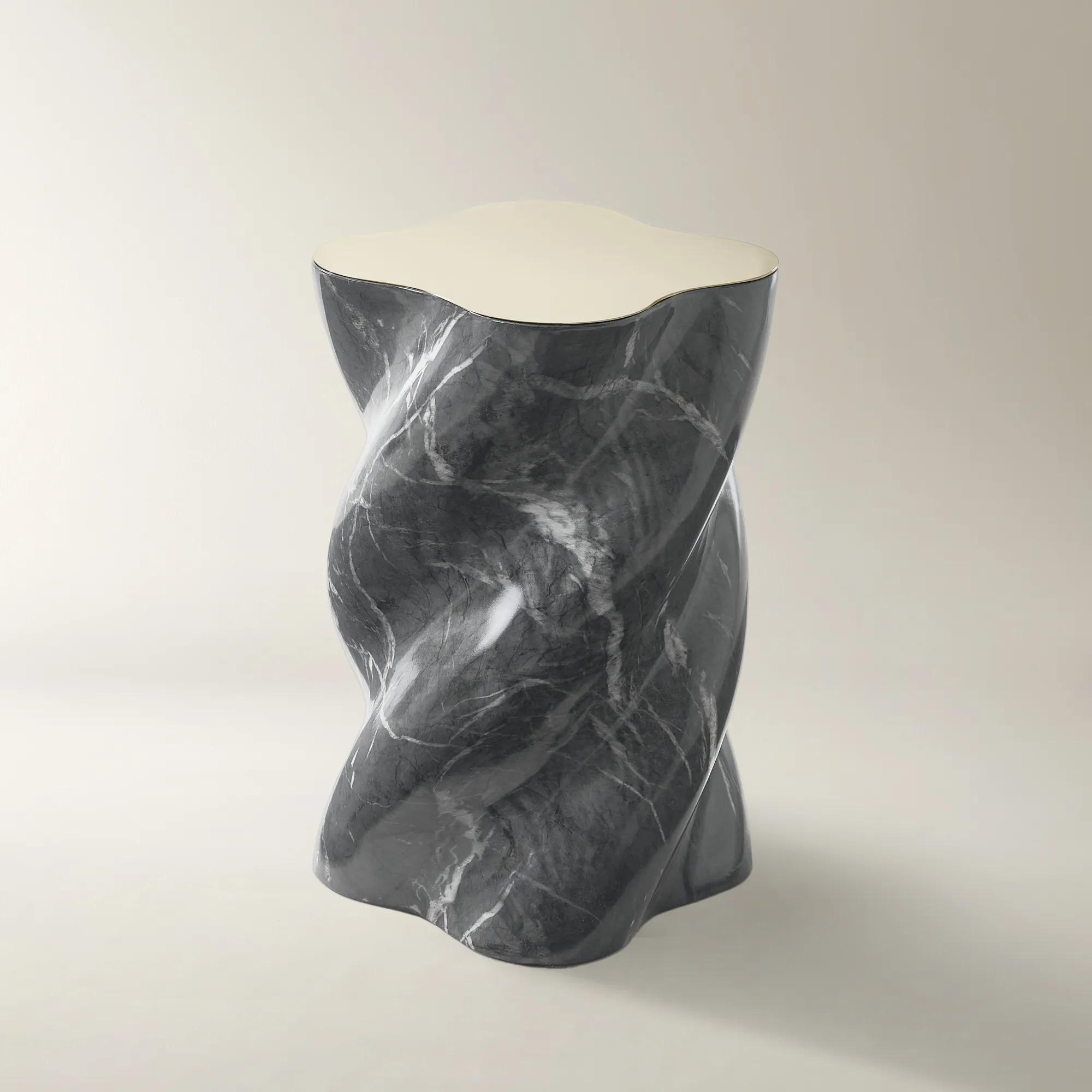 Vega Bvlgary Black Concrete Indoor/Outdoor Side Table With Stainless Steel Top (13.8")$459
A black concrete side table with a sculptural pedestal, removable stainless-steel top, and marble-inspired finish.
Add To Cart -
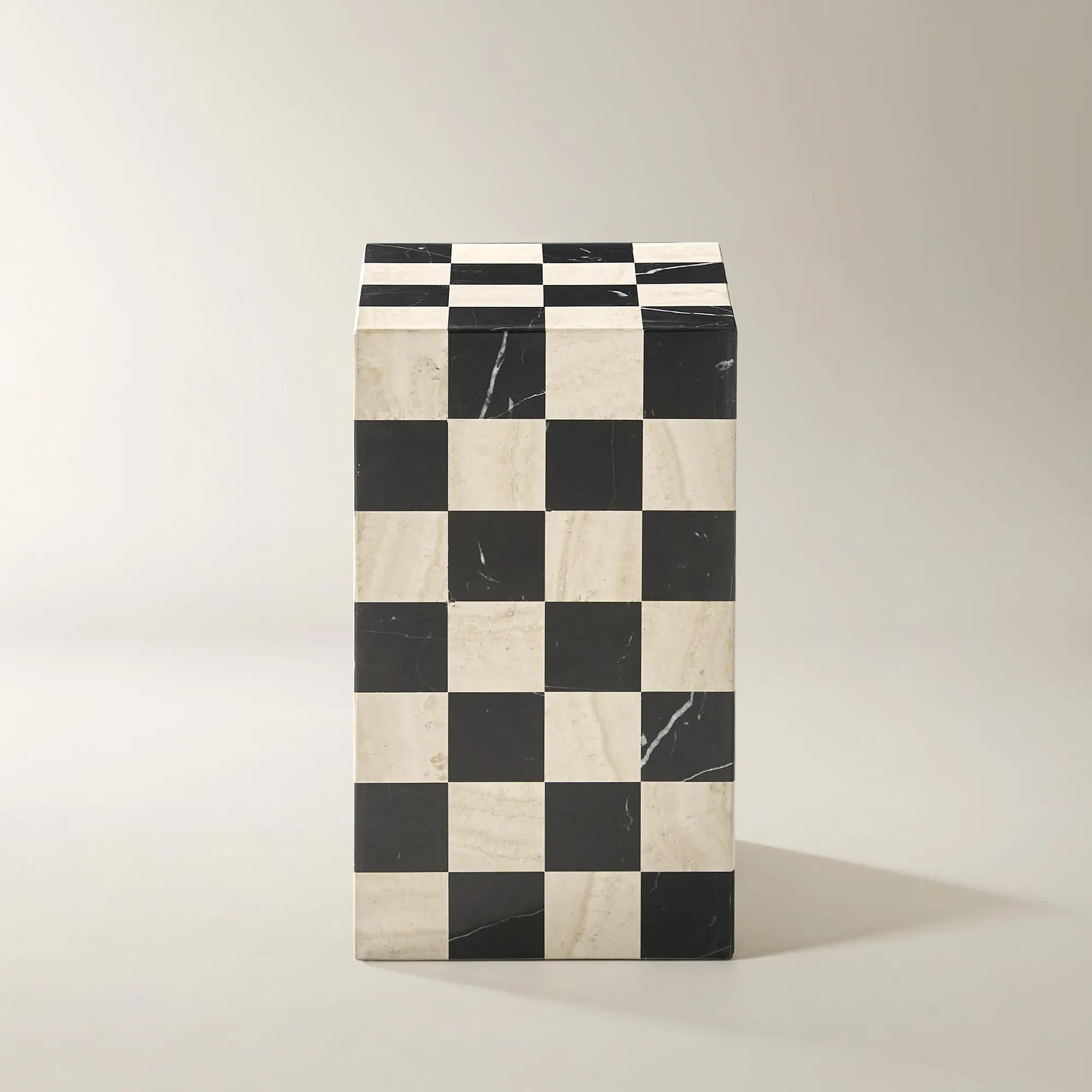 Chessa Square Chequered Marble End Table (12")$999
A sculptural end table featuring a bold black marble and travertine checkerboard mosaic design.
Add To Cart -
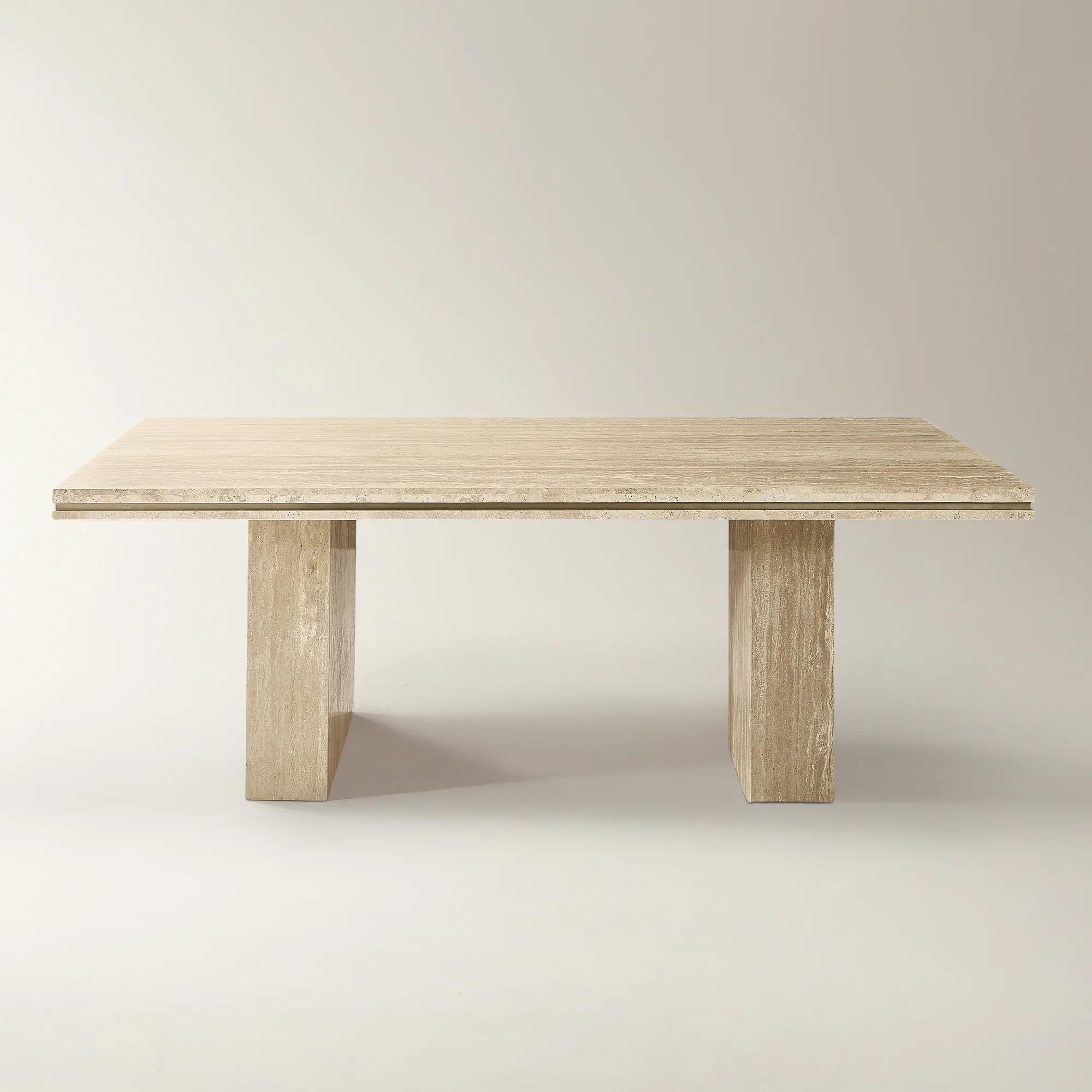 Vanta Rectangular Travertine Dining Table (84")$4199
A natural travertine dining table featuring a soft gold stainless-steel inlay and sculptural twin-panel base.
Add To Cart -
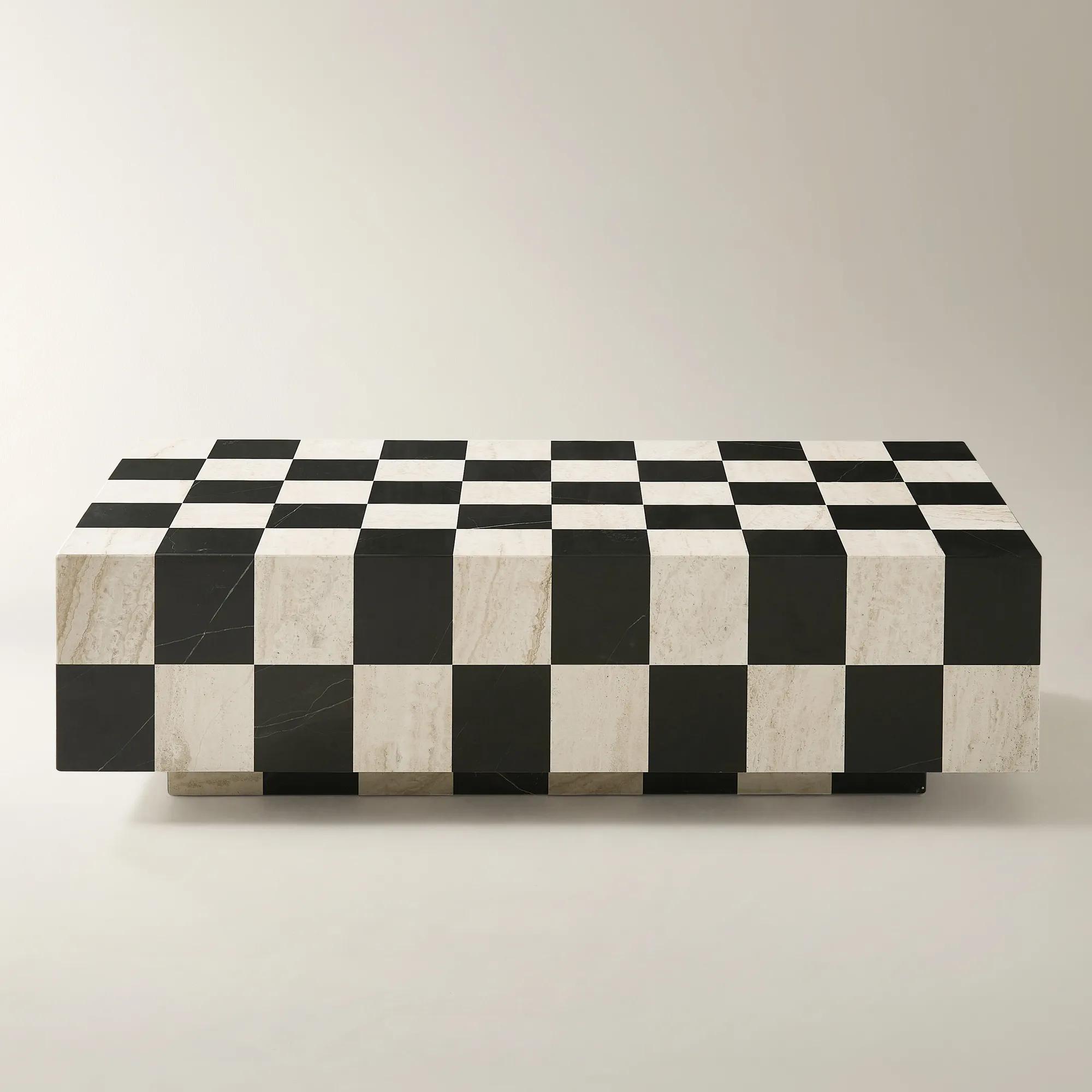 Chessa Rectangular Chequered Marble Coffee Table (53.1")$2399
A sculptural coffee table featuring polished black marble and travertine checkerboard mosaic with a monolithic silhouette.
Add To Cart -
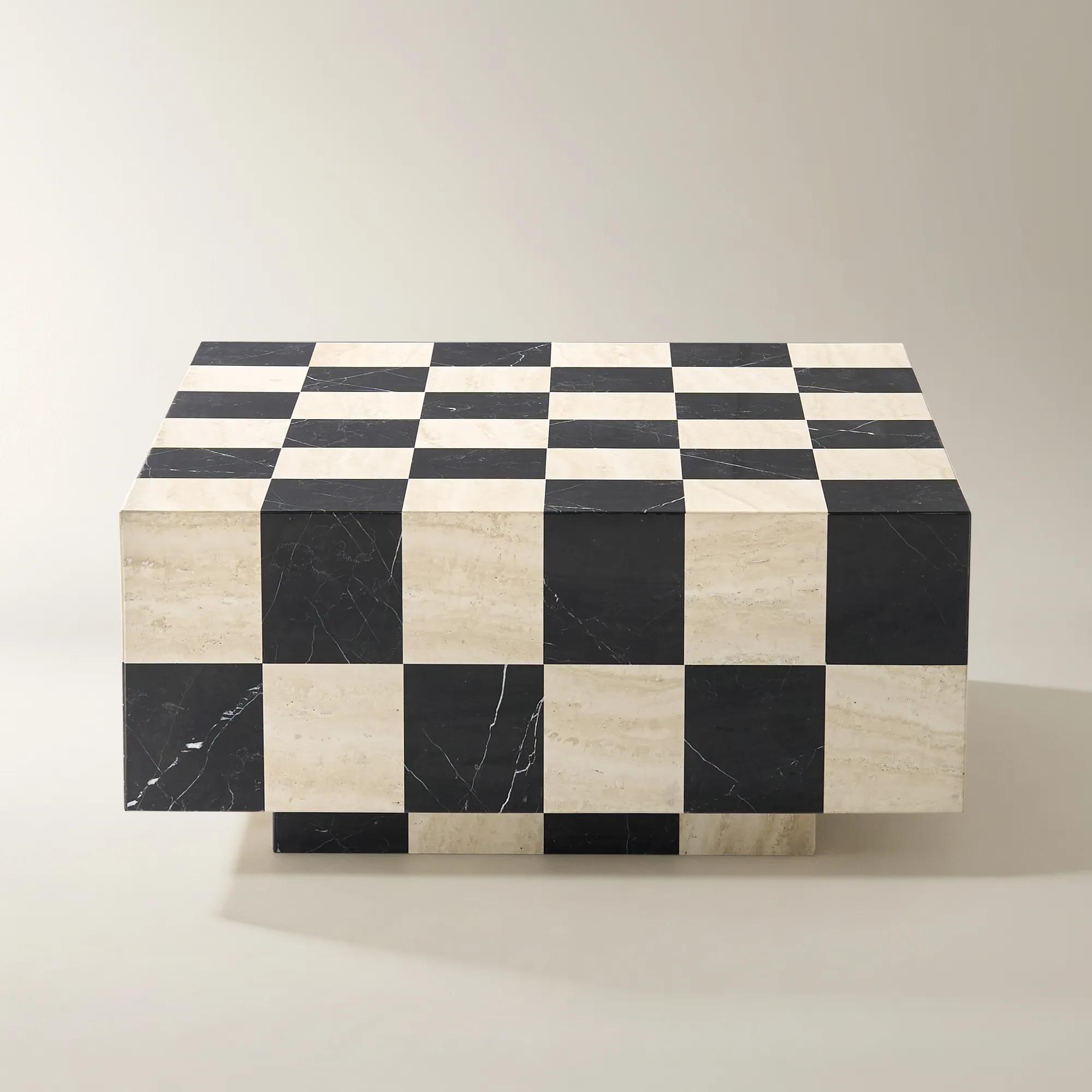
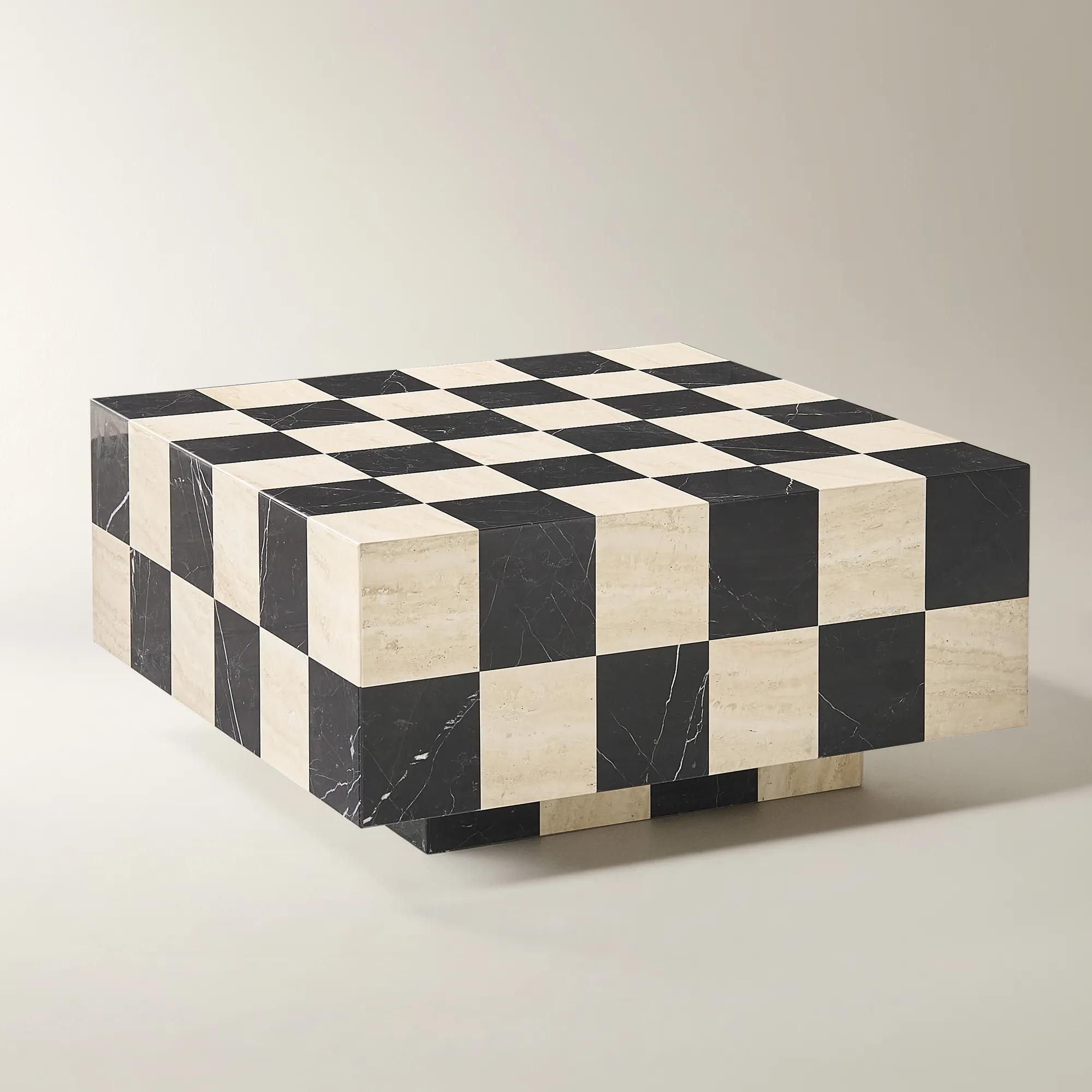 Chessa Square Chequered Marble Coffee Table (31.9")$1699
A striking coffee table featuring a dimensional black marble and travertine checkerboard mosaic with polished finish.
Add To Cart -
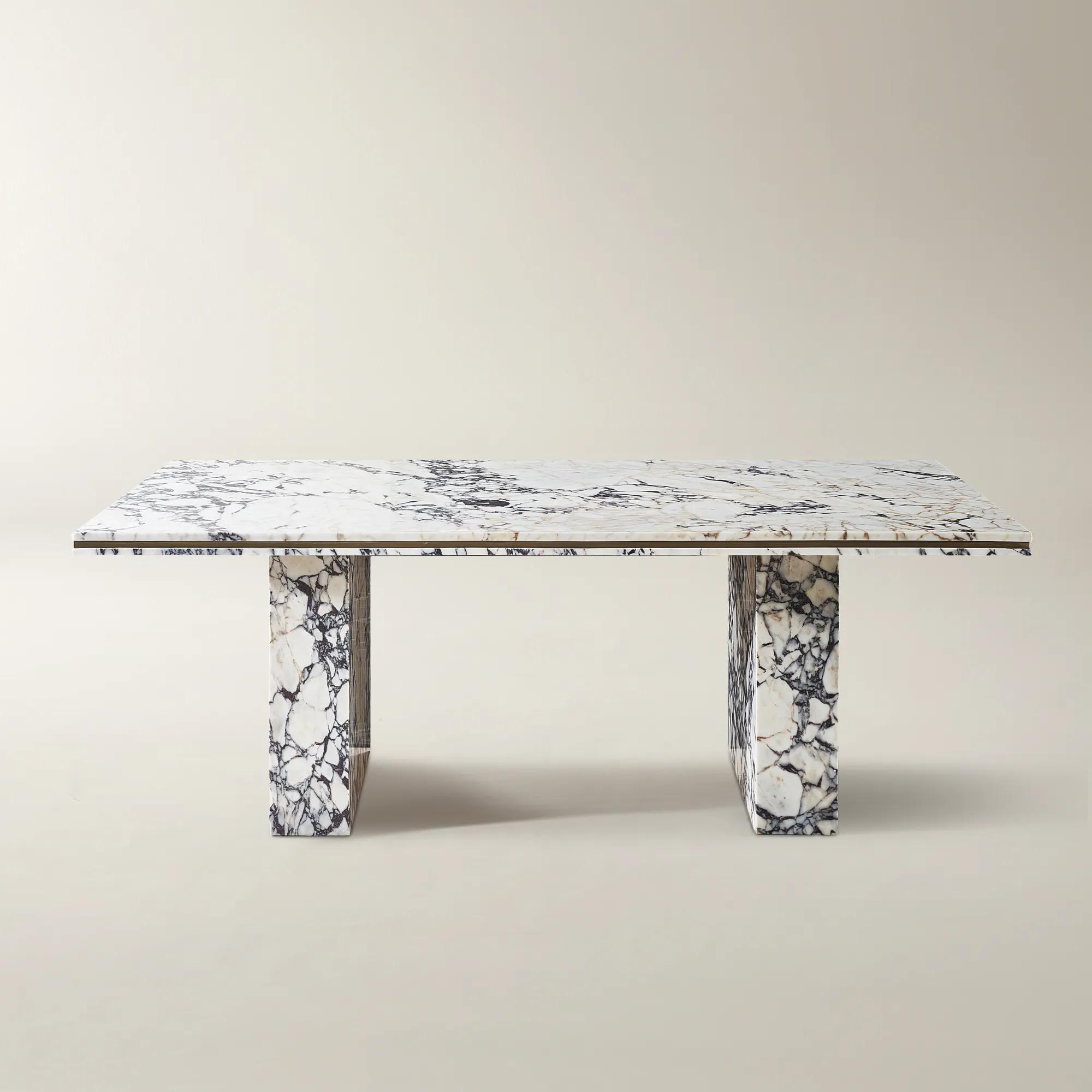
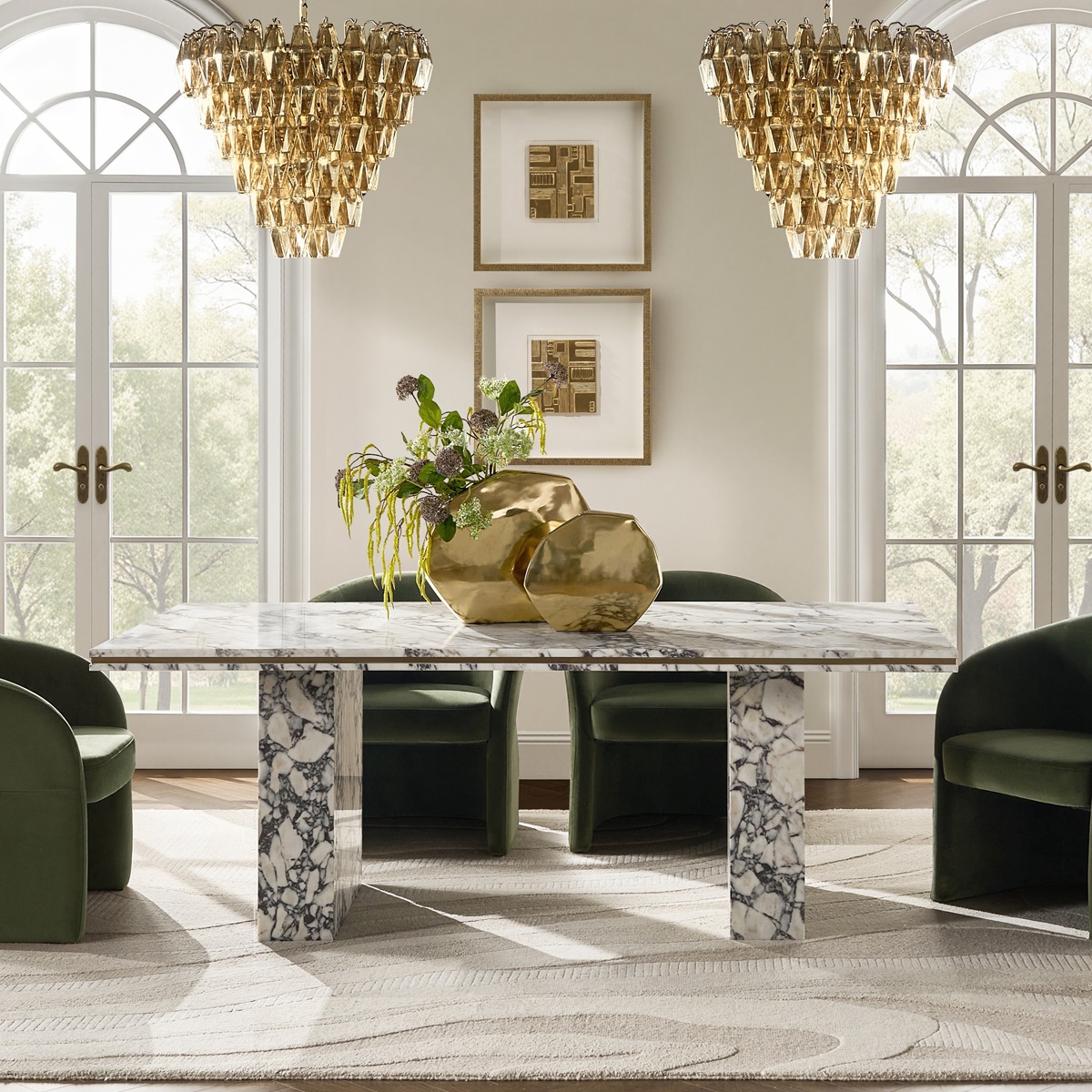 Vanta Rectangular Viola Calacatta Marble Dining Table (84")$6599
A marble dining table with dramatic violet veining, soft-gold inlay, and a sculptural twin-panel base.
Add To Cart -
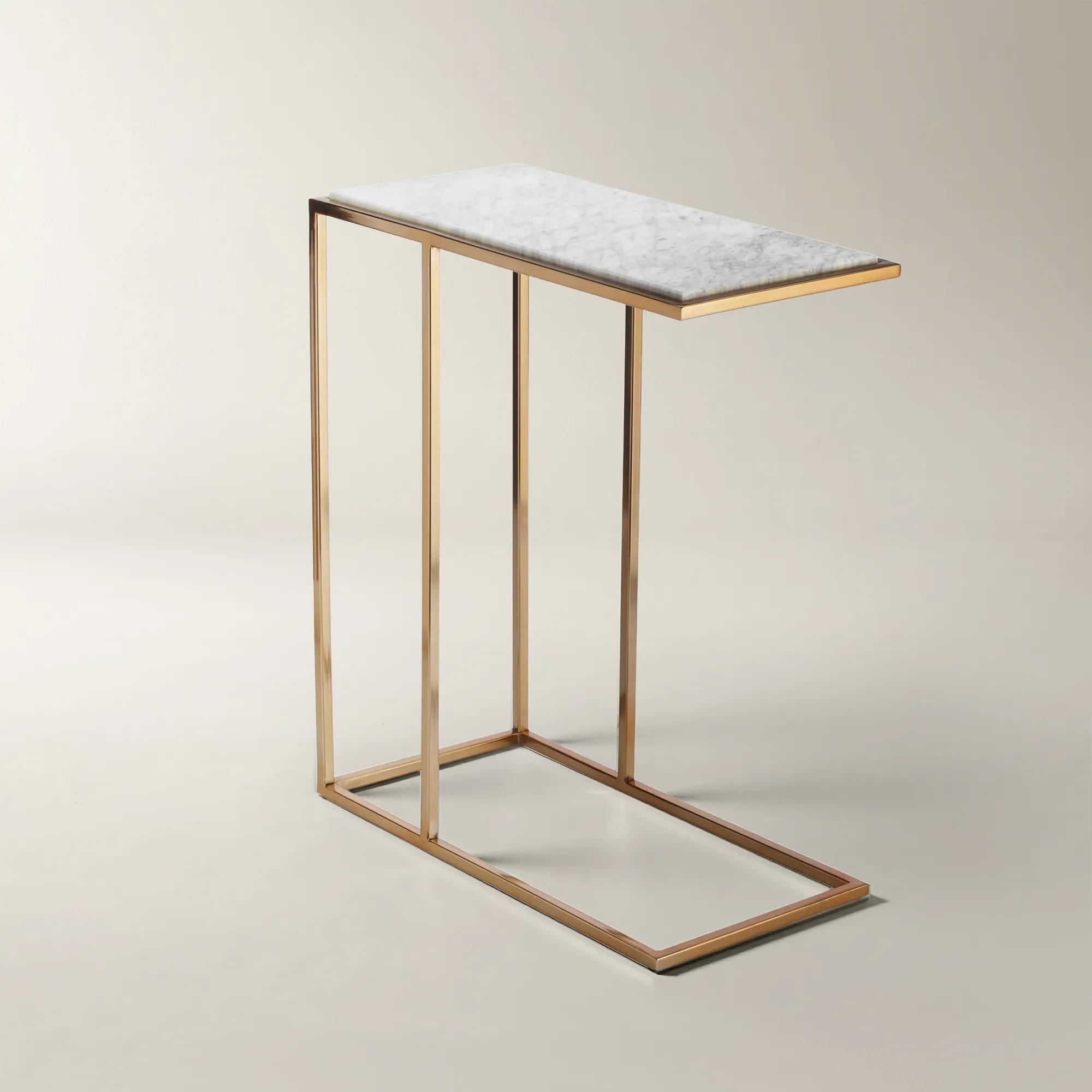
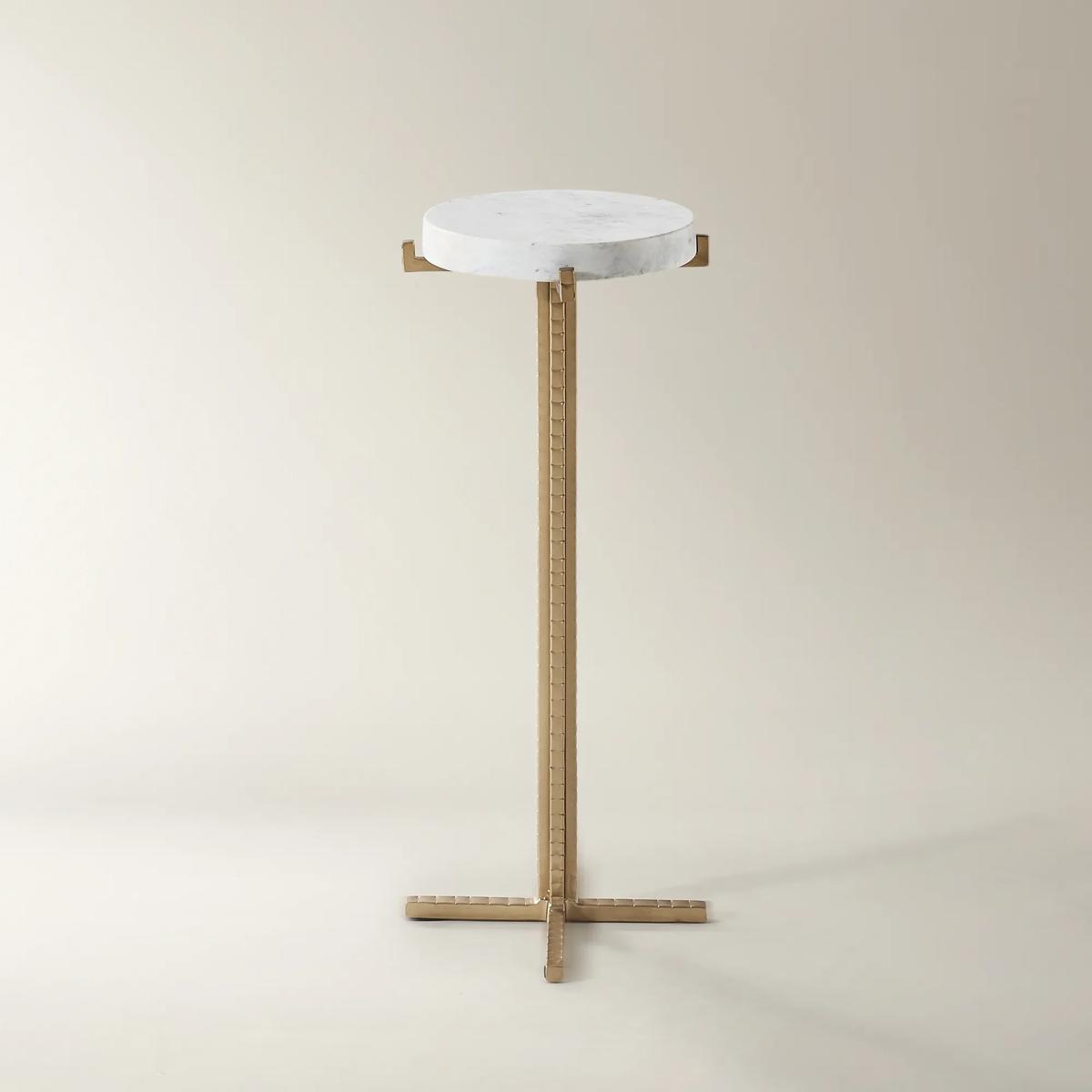
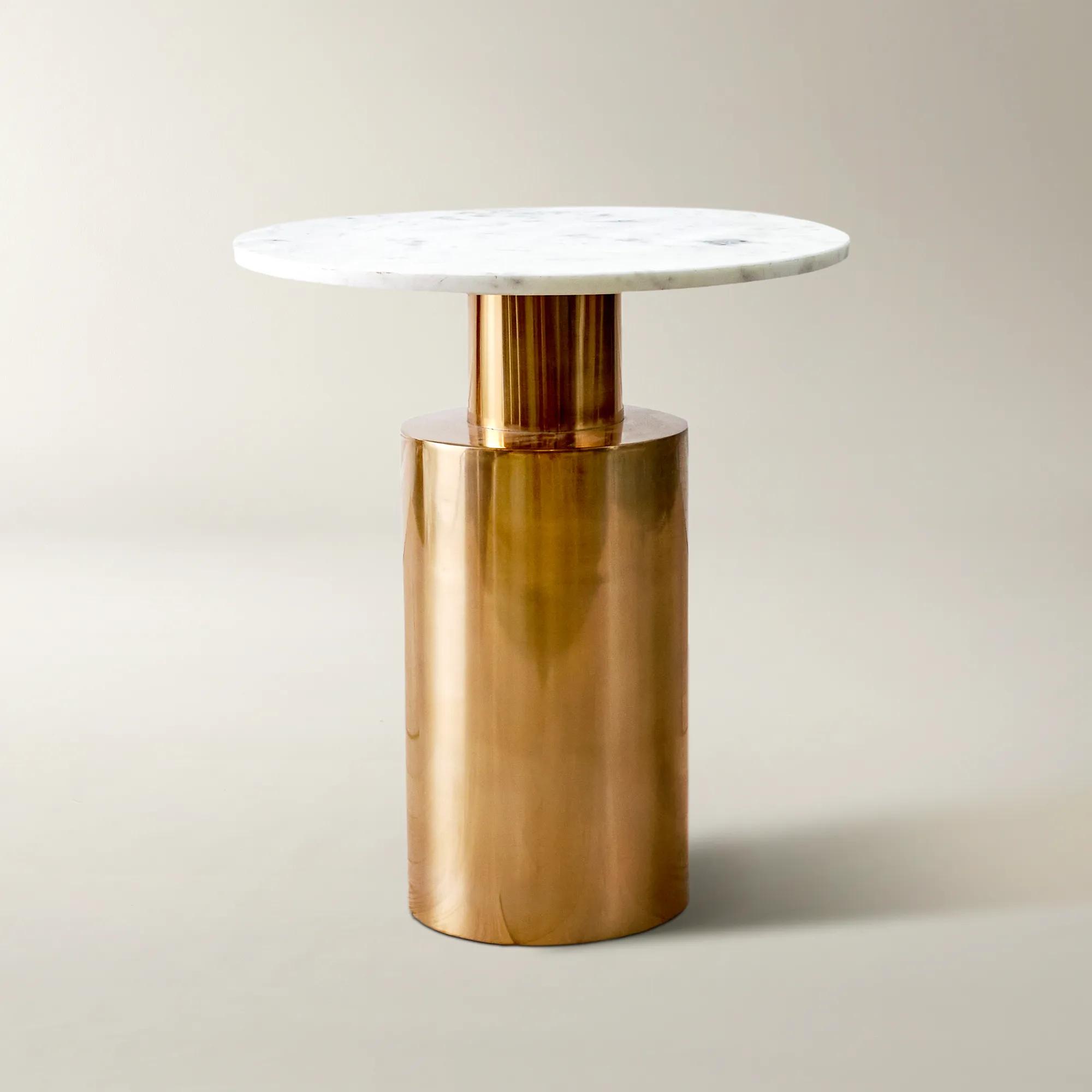
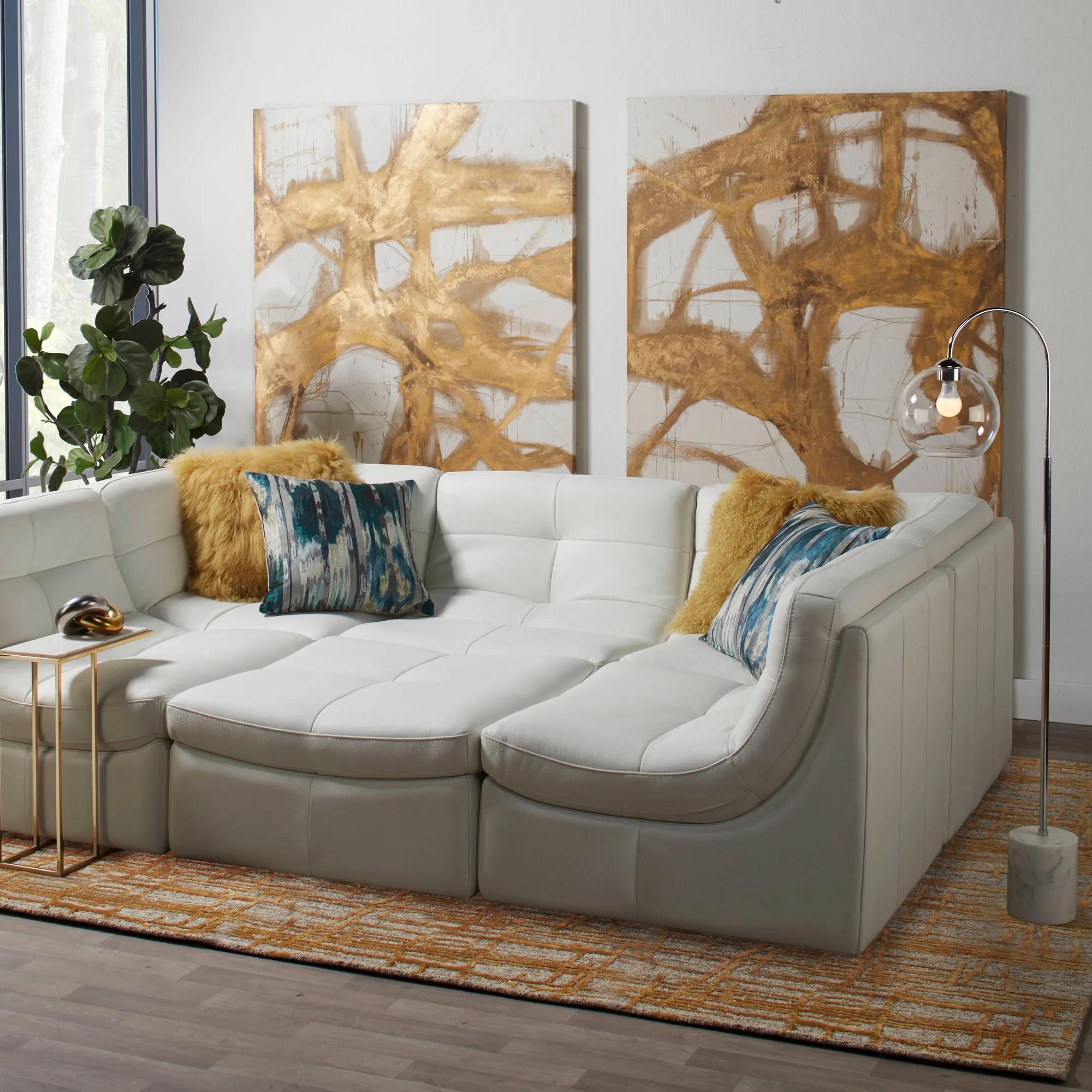 Lawton Rectangular Gold Stainless steel Accent Table With Marble Top (19.75")$259
A space-saving table featuring a white marble top and gold-finished stainless steel base.
Add To Cart -
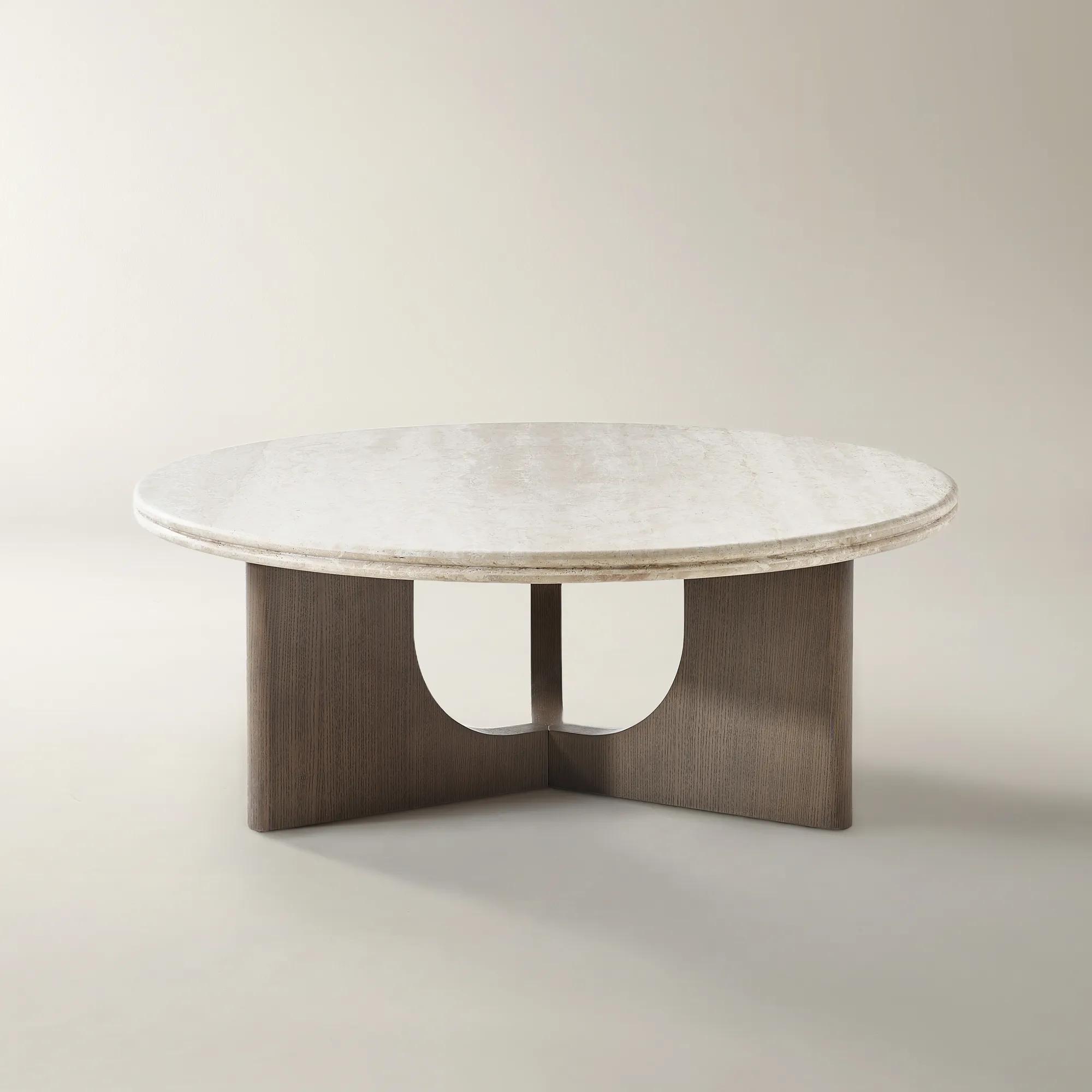
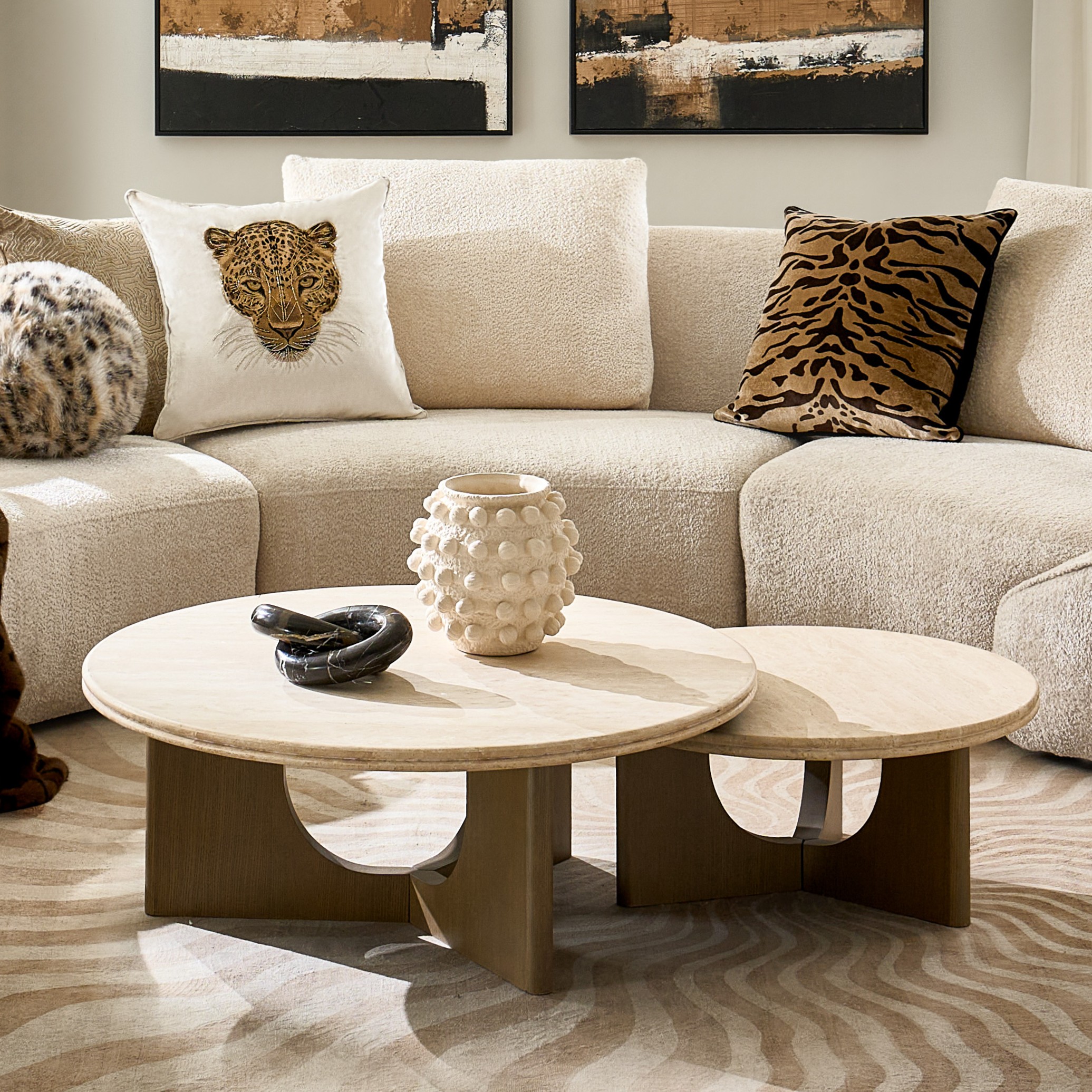 Bond Round Travertine and Wood Coffee Table (41")$1399
A round coffee table featuring a genuine travertine stone top and natural ash wood panel base with arches.
Add To Cart -

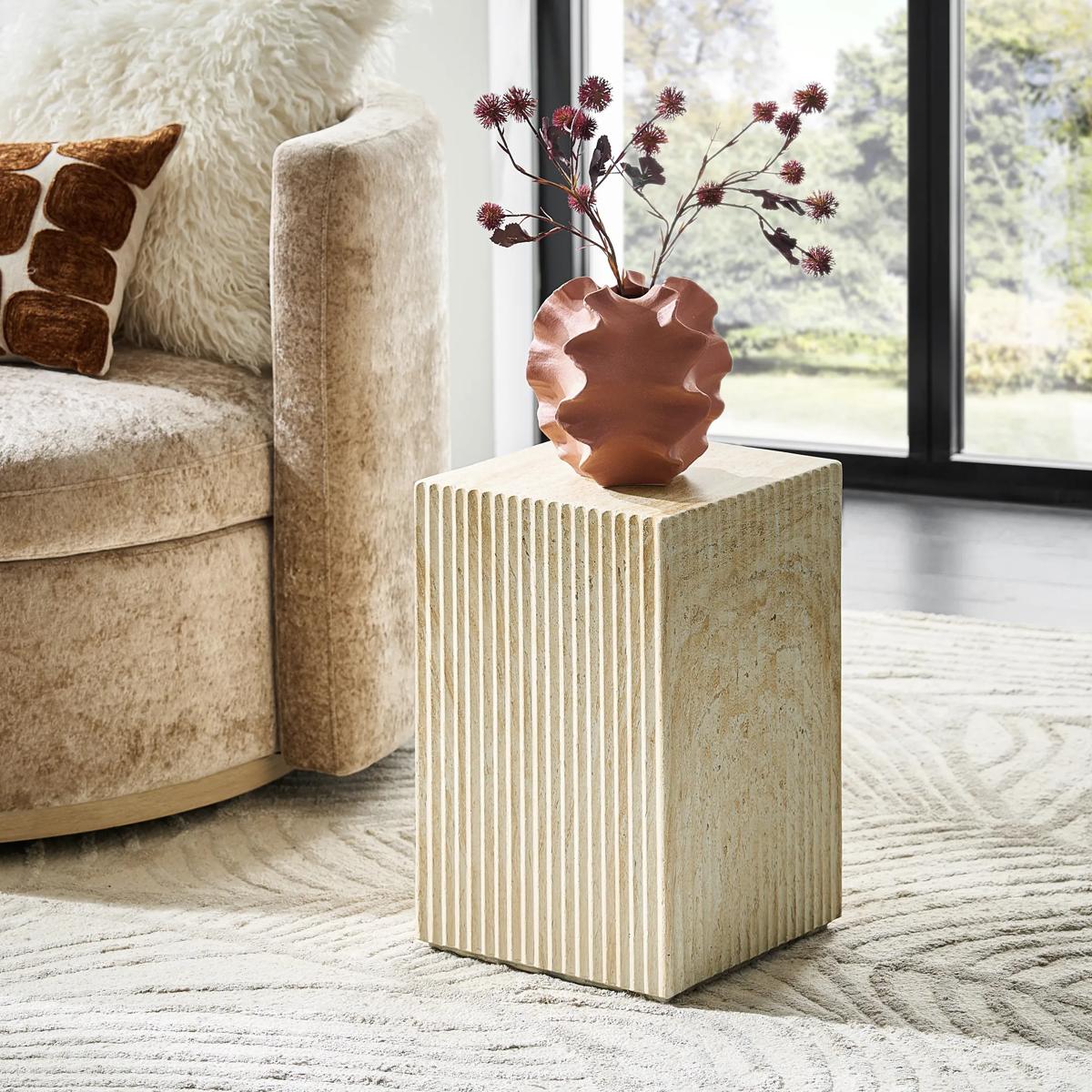 Strata Square Travertine Concrete Indoor/Outdoor Side Table (11.8")$299
A natural travertine-look concrete side table with sculptural cuboid geometry for indoor or covered outdoor spaces.
Add To Cart

Architectural Faux Marble Tables
Architectural faux marble tables transform every room into a gallery of modern artistry, where sculptural silhouettes and lavish finishes command attention. These pieces are more than mere surfaces—they’re bold statements in form and function, channeling the grandeur of classical stonework with an imaginative twist. From dramatic pedestals to sleek, geometric lines, architectural faux marble tables invite you to embrace opulence and elevate your space with unapologetic flair. Each table is a masterpiece in its own right, inviting conversation and admiration while setting the stage for unforgettable moments.
Architectural faux marble tables bring the veining of marble to forms with a presence all their own: broad pedestals, stepped plinths, and trestles that recall the rhythm of a colonnade. The silhouette matters as much as the pattern. A thick rectangular top on a recessed base reads as a single sculptural mass from across the room, while a round top on a slender pedestal lets the surrounding chairs remain part of the composition. Veining can underscore those proportions or work against them in an interesting way. A long gray vein draws the eye along an expansive dining top; a more intricate web of charcoal and ivory brings depth to a small surface that’s usually seen up close. A gloss finish catches the reflection of a chandelier or a pair of lamps, while a low-sheen finish keeps the outline and coloring in focus. Faux marble describes the look rather than a single material. Depending on the construction, the marble effect may come from a printed laminate, a transferred pattern, or a decorative resin finish, with engineered wood or fiber-reinforced concrete beneath it. Wood and metal bases bring a different visual weight to the same stone-like top: warm wood tempers the formality of crisp white veining, and dark metal sets off a pale surface with a clean, graphic edge. An engineered-wood design can be easier to move than a comparable natural stone table, but faux marble is not inherently lightweight. A dense core, a broad plinth, or a substantial metal frame can still give the piece considerable heft. The edge is worth a close look, too. In an open room where the table is visible from several sides, veining that carries over the edge can give a deep profile the convincing appearance of a cut slab. A contrasting edge, by comparison, makes the top read as a distinct plane above the base.
The right proportions depend on what happens around the table as much as what sits on it. In a dining room, a generous rectangular surface can hold serving platters down the middle without crowding individual place settings. A round pedestal table gives a smaller seating group a shared center and removes corner legs, though a wide pedestal can still take up space where diners’ feet would otherwise rest. On trestle designs, the placement of the supports matters when a chair is pulled up to the end or a bench slides under the top. Allowing about 36 inches from the table edge to a wall or sideboard gives diners room to pull out their chairs, with more clearance useful where people regularly walk behind them. In a living room, roughly 14 to 18 inches between the sofa and coffee table keeps a drink within reach while leaving room to pass. A low, broad table sits comfortably in front of a deep sectional and gives books or a large ceramic bowl room to breathe. Rounded corners can make a noticeable difference where the route from the sofa to the dining room runs past the table. At the edge of a seating arrangement, an accent table has a more intimate role. A top near the height of the chair arm puts a reading lamp or a glass within easy reach without breaking the line of the upholstery. The smaller silhouettes among Luxury Faux Marble Accent Tables can carry striking veining into a room without competing with an already expressive rug or sofa. For an entry or a narrow passage, a shallow console gives a mirror and a catchall a place to land without pushing too far into the walkway. In each setting, the footprint of the base deserves as much attention as the width of the top, particularly where feet, chair legs, or a door need to clear it.
Durability comes down to the surface finish, the construction beneath it, and the way the table is used. A dining table that doubles as a work surface will see more sliding objects and repeated wiping than a console that holds a lamp and a fixed arrangement. A sealed faux marble finish can be straightforward to maintain, but it is not automatically stainproof, scratchproof, or heatproof. Coasters catch condensation, felt pads under ceramics help prevent scuffs, and trivets protect the finish when a hot serving dish comes to the table. A soft cloth is usually enough for dust; for spills, blot promptly, then clean and dry the surface according to the care instructions. Abrasive pads and harsh cleaners can dull a gloss finish, and water left along a seam or edge can be a concern on some engineered-wood designs. Even a moisture-resistant surface should be used outdoors only if the entire table is rated for that setting, since the base and hardware may have different tolerances than the top. For households that entertain often, an easy-to-wipe finish and a base that leaves guests room to settle in can matter as much as the drama of the veining. In a room that already has richly patterned upholstery or artwork, quieter veining can give the eye a place to rest. Where the setting is more restrained, a sweeping band of ink-dark color across a pale top can become the room’s defining gesture. Leaving part of that surface bare lets the pattern do its work: a single bowl can draw attention to the outline of a coffee table, while low glassware lets the veining remain visible between place settings. The table can be the most sculptural piece in the room and still be the one that sees the most everyday use.
FAQs
Faux marble tables are crafted using advanced techniques that replicate the intricate veining, depth, and luster of genuine marble. High-quality materials such as engineered stone, resin, or composite blends are used, with artisans applying finishes that mimic the natural patterns and color variations found in authentic marble slabs. The result is a surface that captures the drama and elegance of marble while offering enhanced resilience and versatility.
Architectural faux marble tables are remarkably versatile and complement a range of interior styles, from modern glam and art deco to transitional and contemporary. Their sculptural forms and striking finishes work beautifully alongside metallic accents, plush textiles, and bold color palettes. Whether anchoring a minimalist space with a statement piece or enhancing a maximalist room with layered textures, these tables add a touch of timeless sophistication.
Absolutely. Faux marble tables are designed for real life—crafted from durable materials that resist stains, scratches, and everyday wear. This makes them a practical choice for busy households, allowing you to enjoy the look of luxury marble without the worry. Maintenance is simple, so you can confidently entertain, play, and live boldly around these stunning surfaces.
While faux marble tables are primarily intended for indoor use, they can be a striking addition to enclosed sunrooms or covered patios where exposure to the elements is limited. Their finishes are not typically designed to withstand direct sunlight, rain, or fluctuating outdoor temperatures, so for longevity and beauty, it’s best to keep them in climate-controlled settings.
To create a dramatic focal point, pair your faux marble table with bold accessories—think sculptural vases, gilded trays, or a cascade of fresh florals for added opulence. Layer plush textiles such as velvet runners or metallic placemats, and accent with statement lighting overhead. The interplay of textures and finishes will highlight the table’s artistry, transforming any room into a gallery-worthy space.