
Architectural Dining Tables
Architectural Dining Tables
-
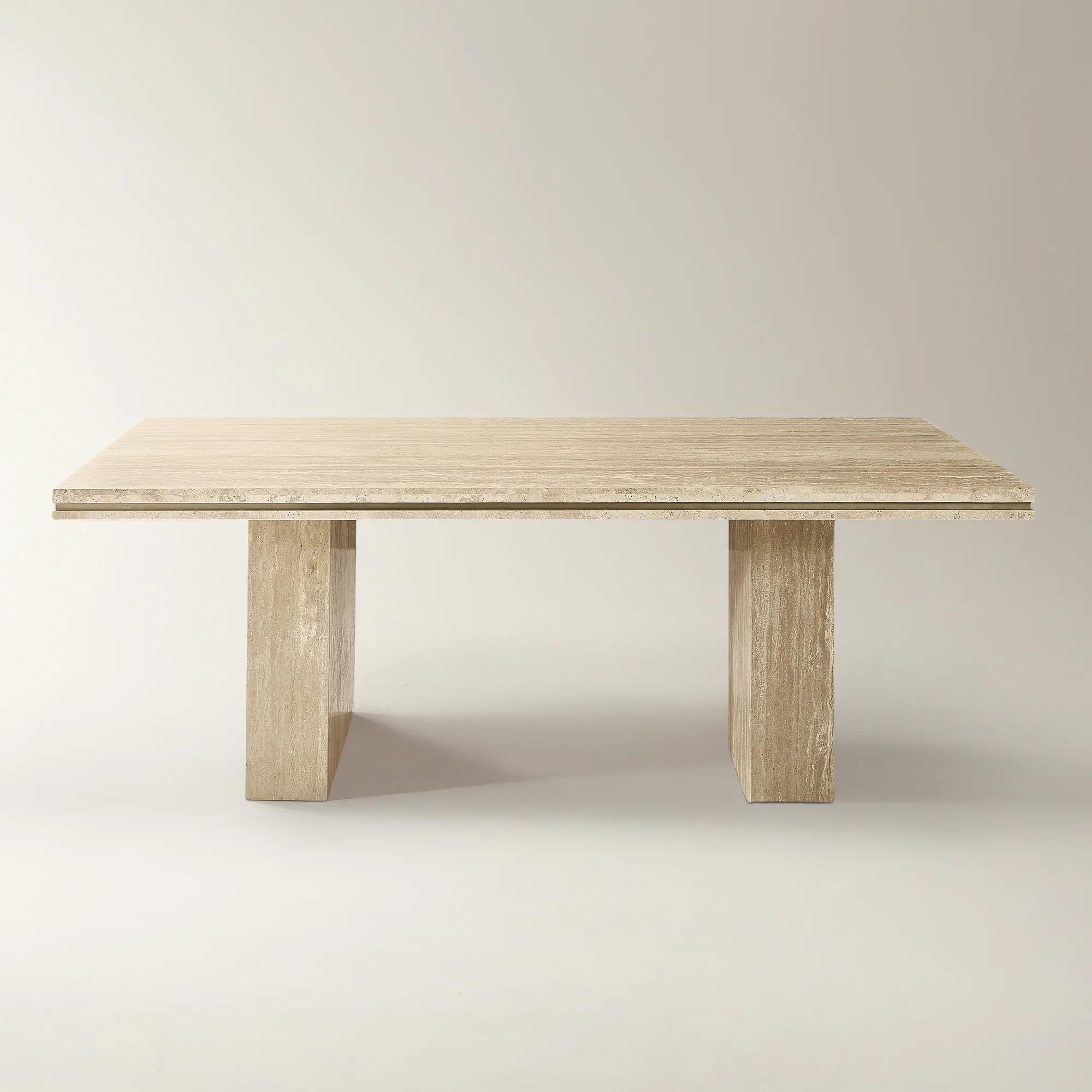 Vanta Rectangular Travertine Dining Table (84")$4199
A natural travertine dining table featuring a soft gold stainless-steel inlay and sculptural twin-panel base.
Add To Cart -
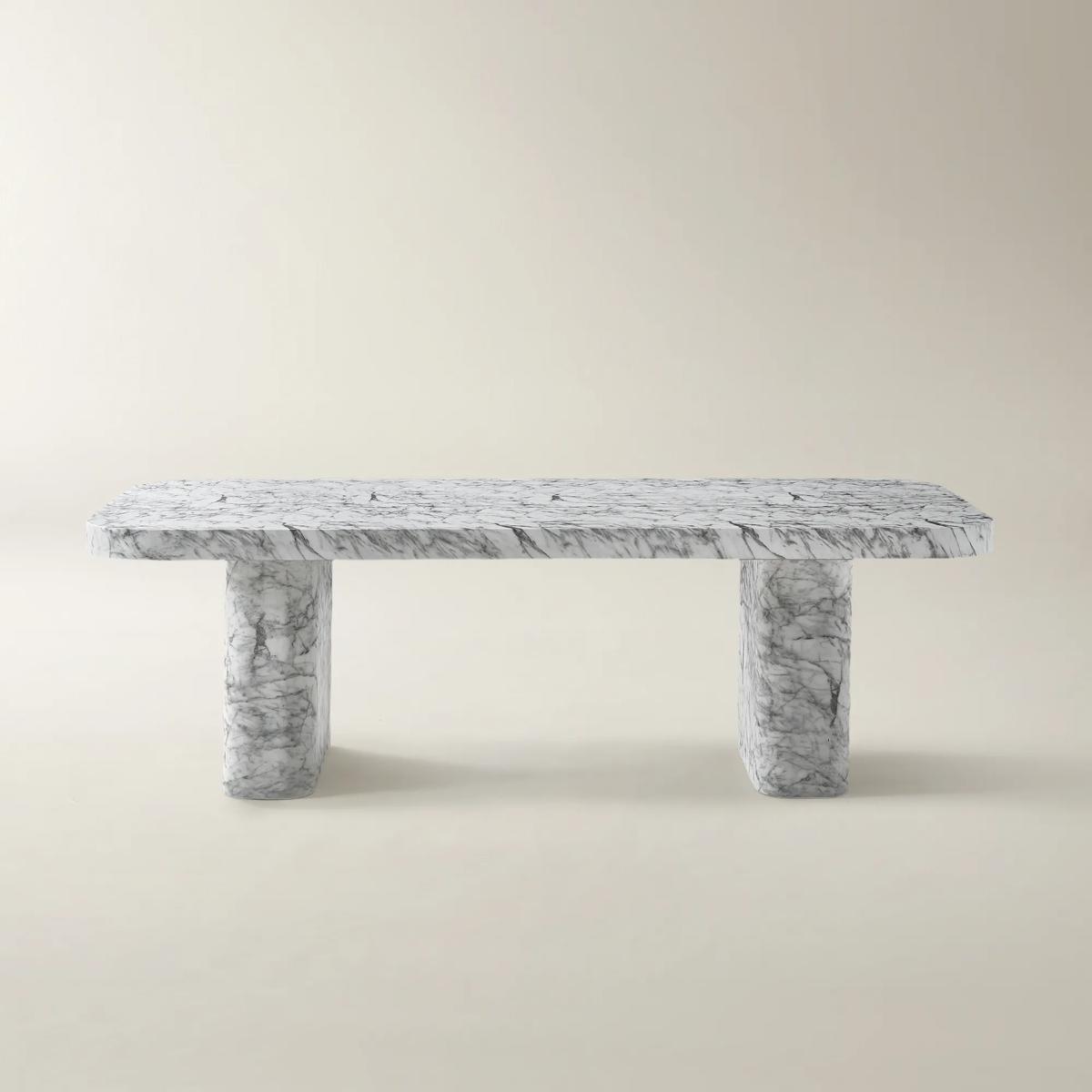
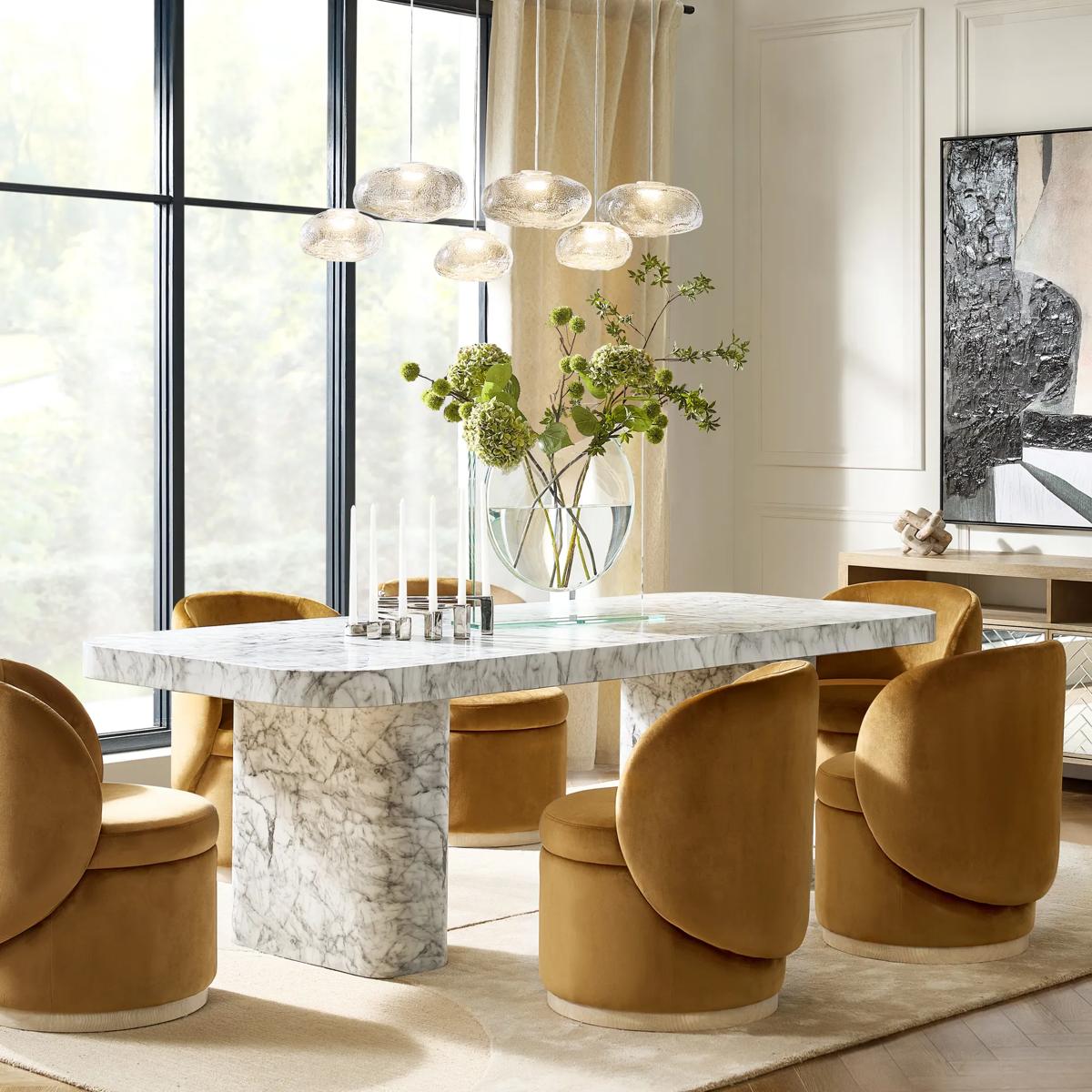 Silex Rectangular White Concrete Indoor/Outdoor Dining Table (94.5")$1999
A white concrete dining table with a sculptural pedestal base, marble-inspired veining, and indoor-outdoor versatility.
Add To Cart -
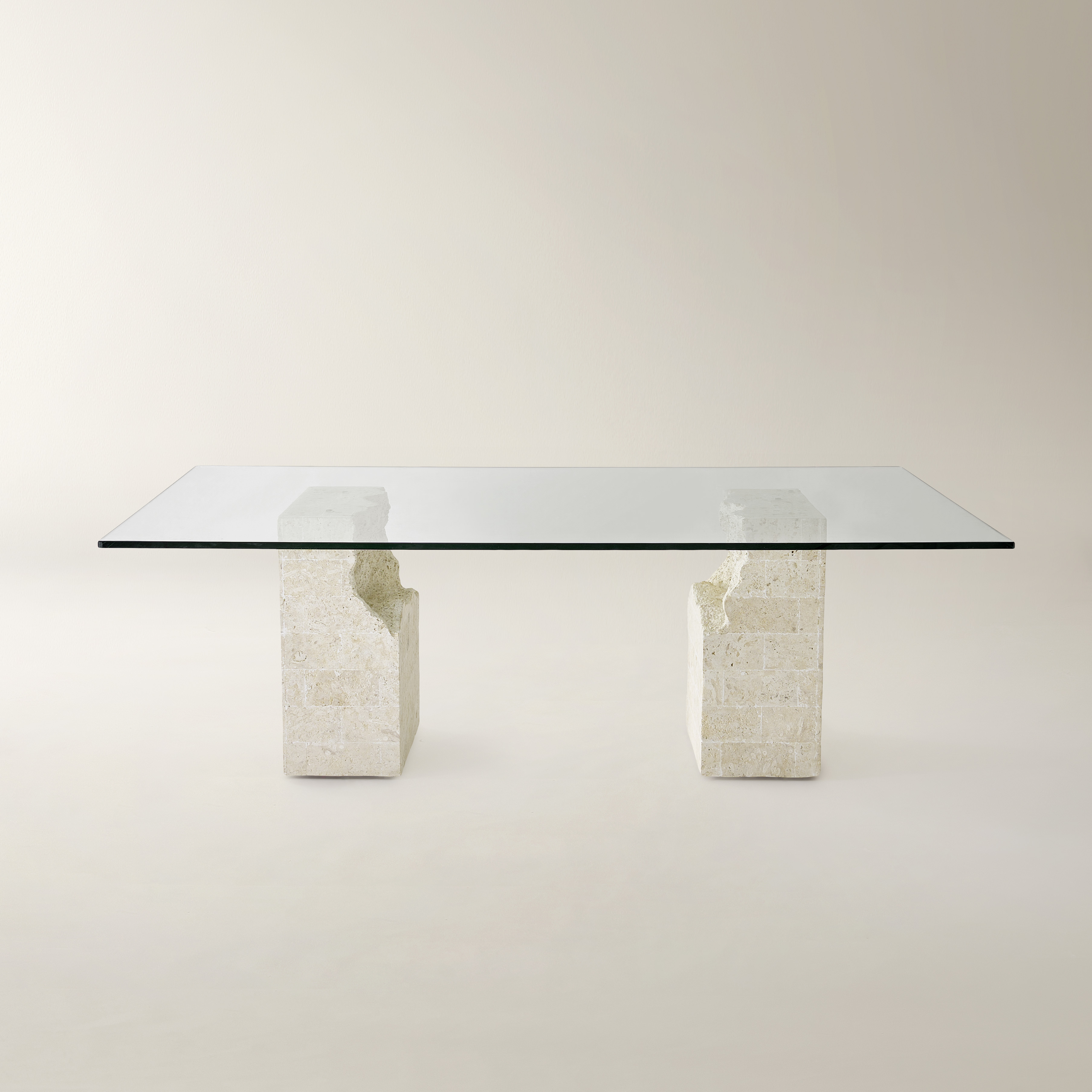 Cairo Rectangular Mactan Stone Dining Table With Glass Top (86.6")$2399
A contemporary dining table featuring a clear tempered glass top over hand-carved Mactan stone bases.
Add To Cart -
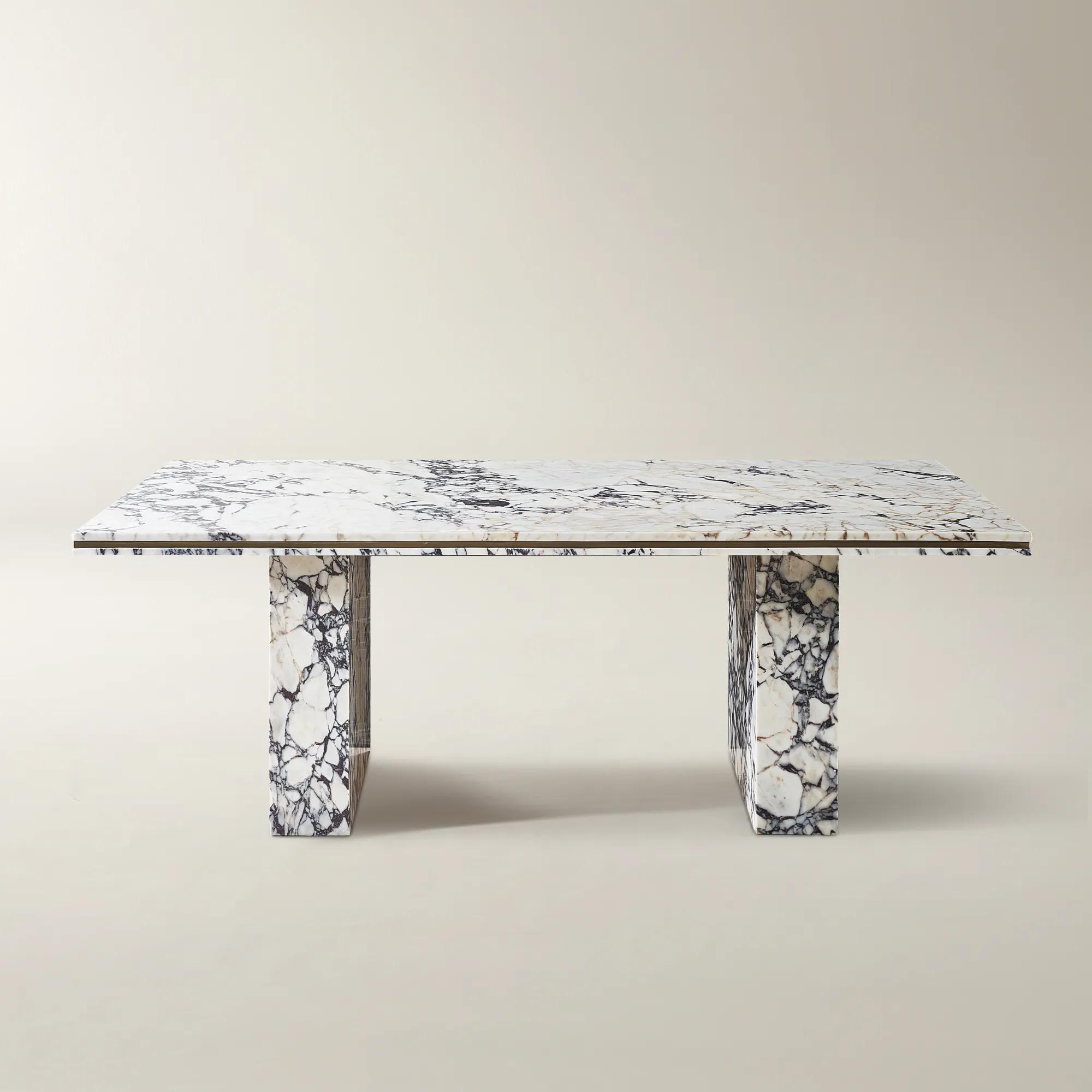
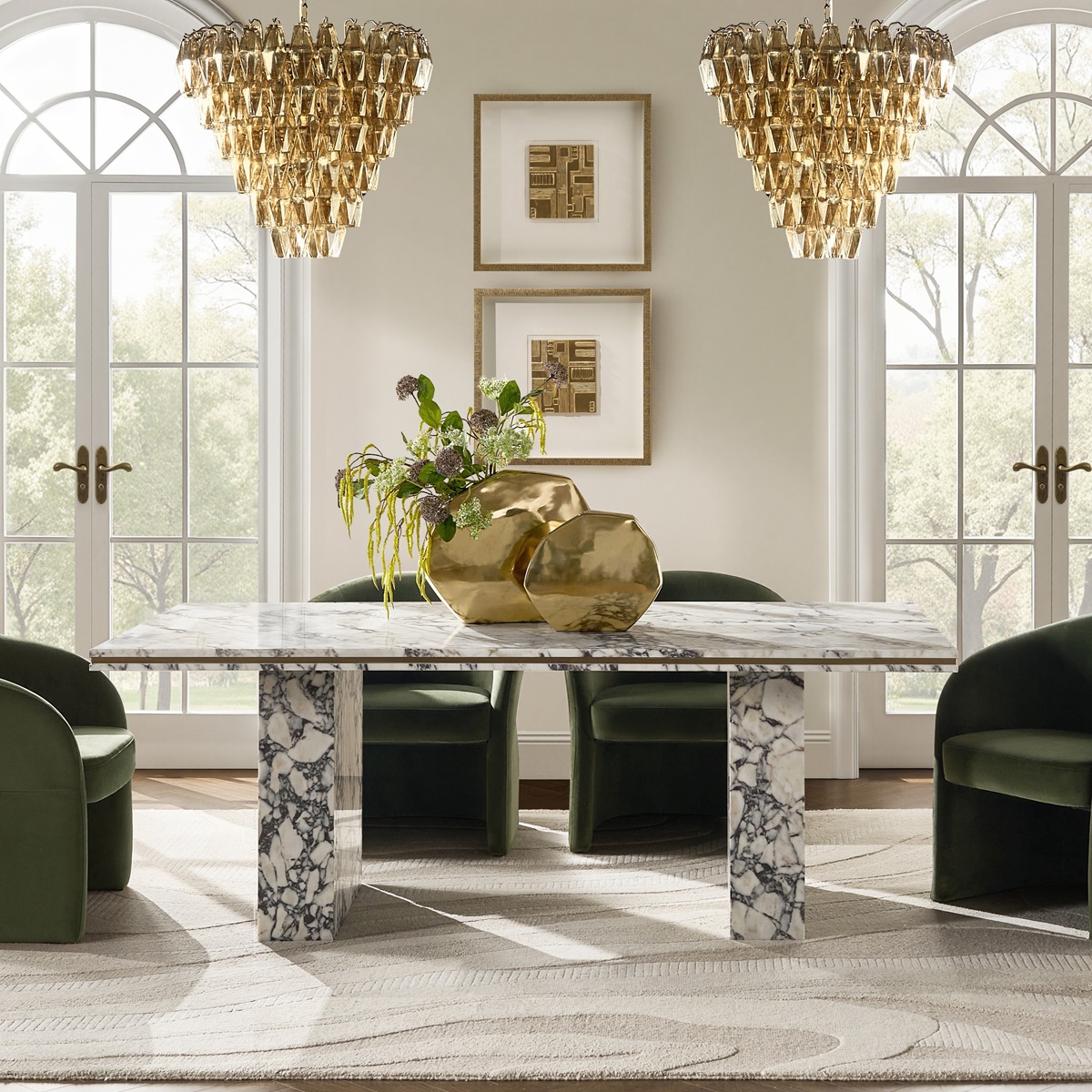 Vanta Rectangular Viola Calacatta Marble Dining Table (84")$6599
A marble dining table with dramatic violet veining, soft-gold inlay, and a sculptural twin-panel base.
Add To Cart -
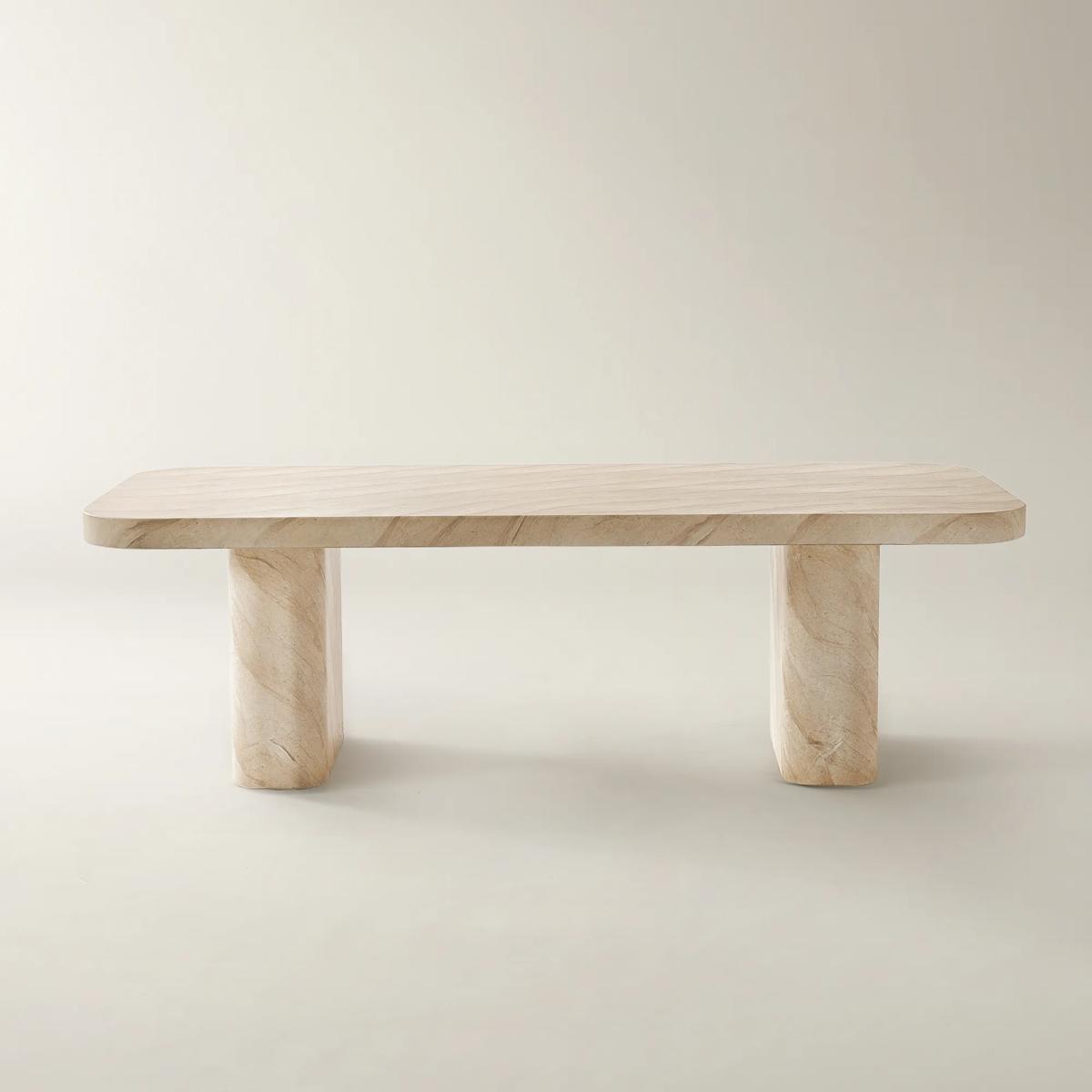 Silex Rectangular Travertine Concrete Indoor/Outdoor Dining Table (94.5")$1999
A rectangular dining table with pedestal legs, travertine-inspired veining, and resilient fiber concrete for indoor-outdoor use.
Add To Cart -
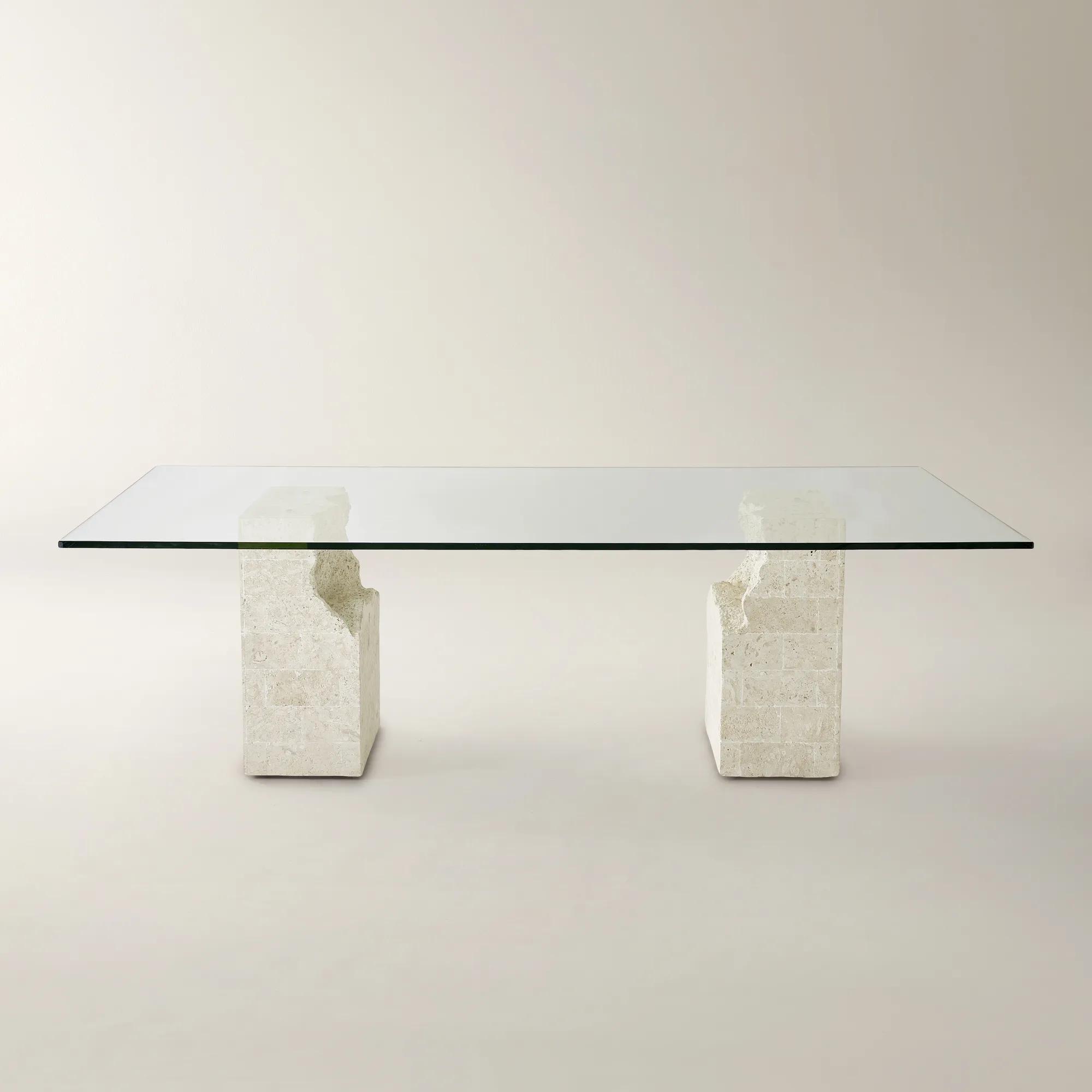 Cairo Rectangular Mactan Stone Dining Table With Glass Top (96")$2599
A contemporary dining table featuring a clear tempered glass top over hand-carved Mactan stone bases.
Add To Cart -
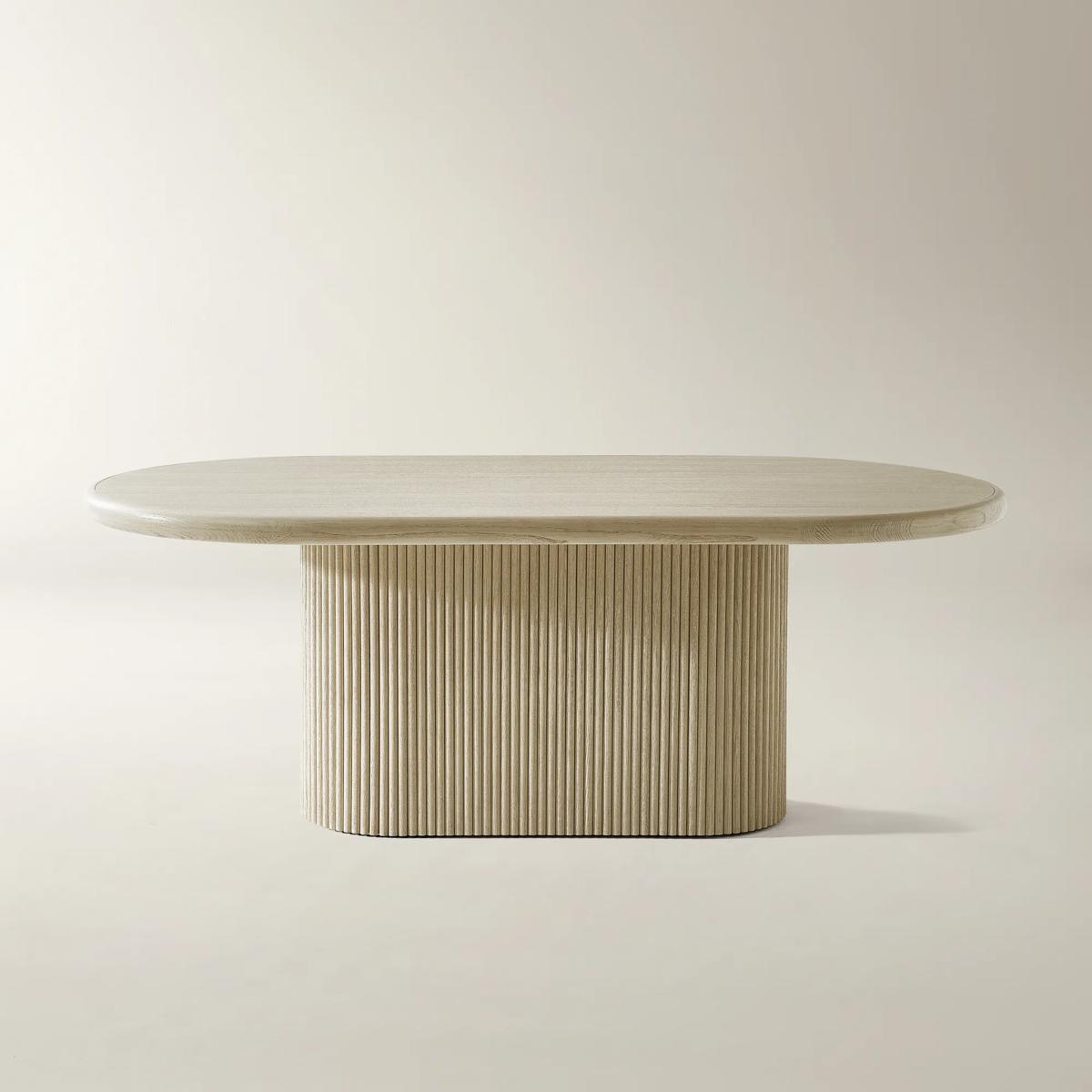
 Stria Oval Reeded White Oak Dining Table (82")$2199
A sculptural oval dining table featuring reeded oak, a single pedestal base, and gold-plated steel trim.
Add To Cart -

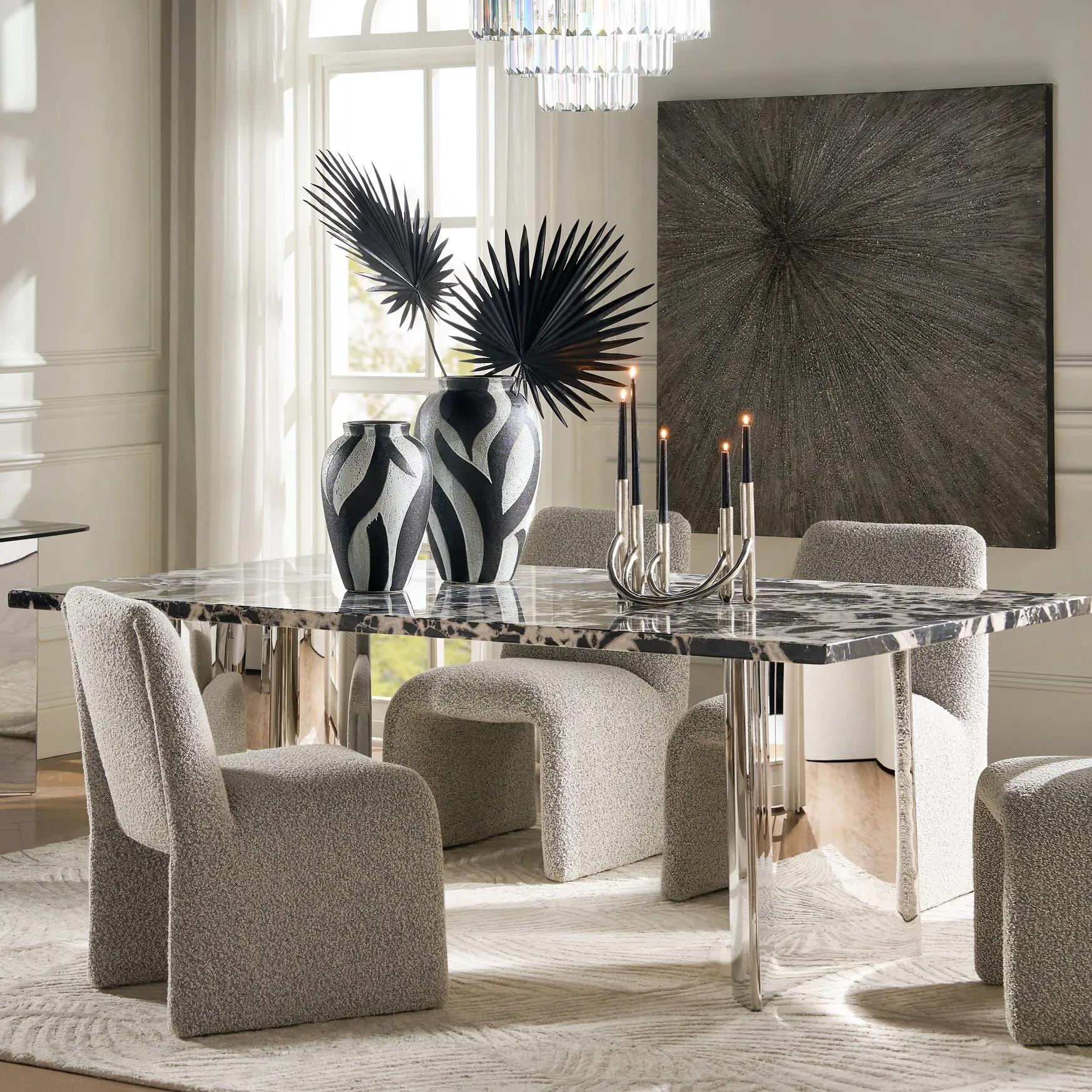 Muscat Rectangular Black Marble Dining Table With Stainless Steel Base (84")$3099
A dramatic black marble dining table with unique veining and a polished stainless steel base.
Add To Cart -

 Matera Rectangular White Marble Dining Table With Stainless Steel Base (86.61")$2499
A modern dining table featuring a white marble top and polished stainless steel base for timeless elegance.
Add To Cart -
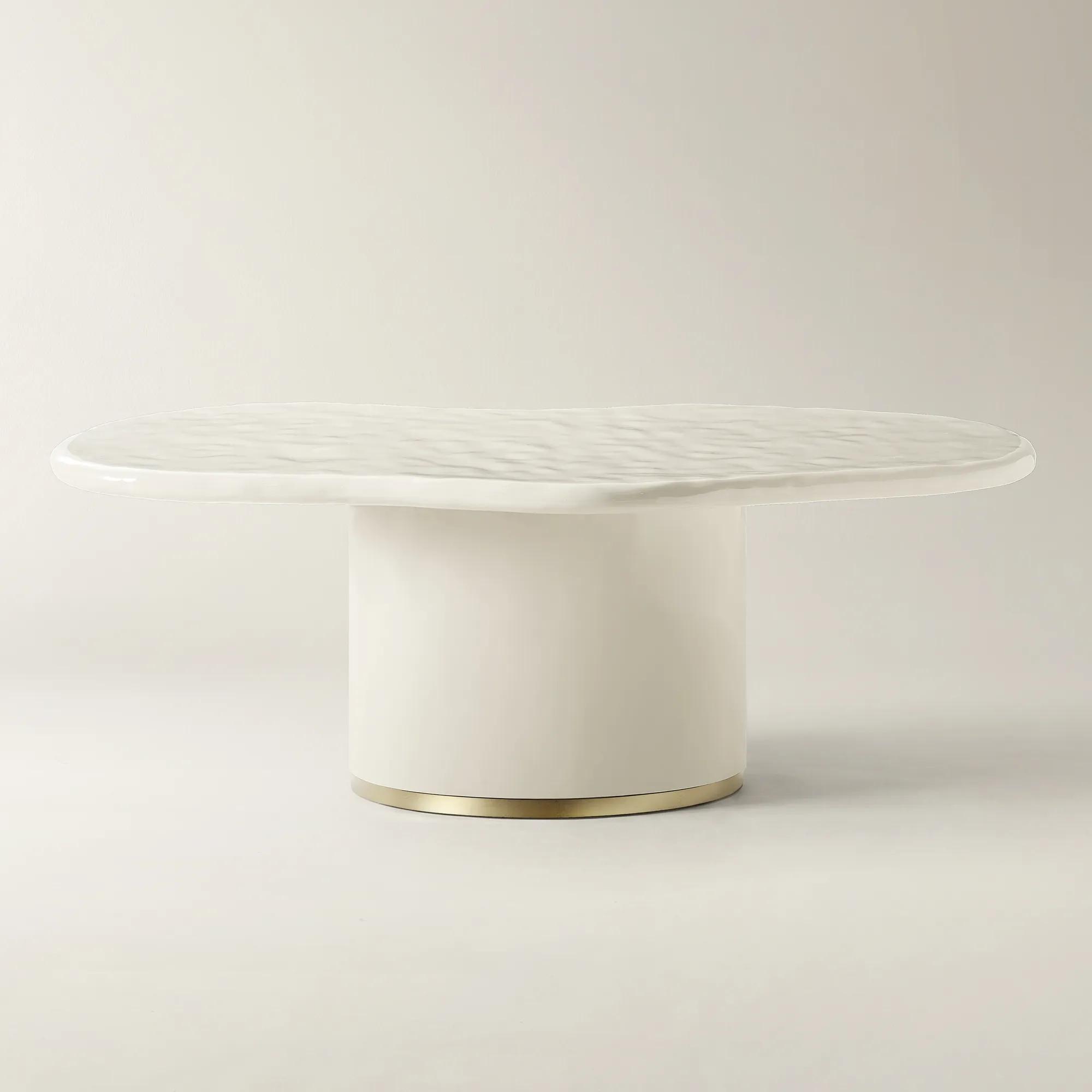 Celia Lacquered Cloud Resin Indoor/Outdoor Dining Table (84")$1999
A sculptural, high-gloss resin dining table with gold stainless steel accents for indoor or covered outdoor use.
Add To Cart -
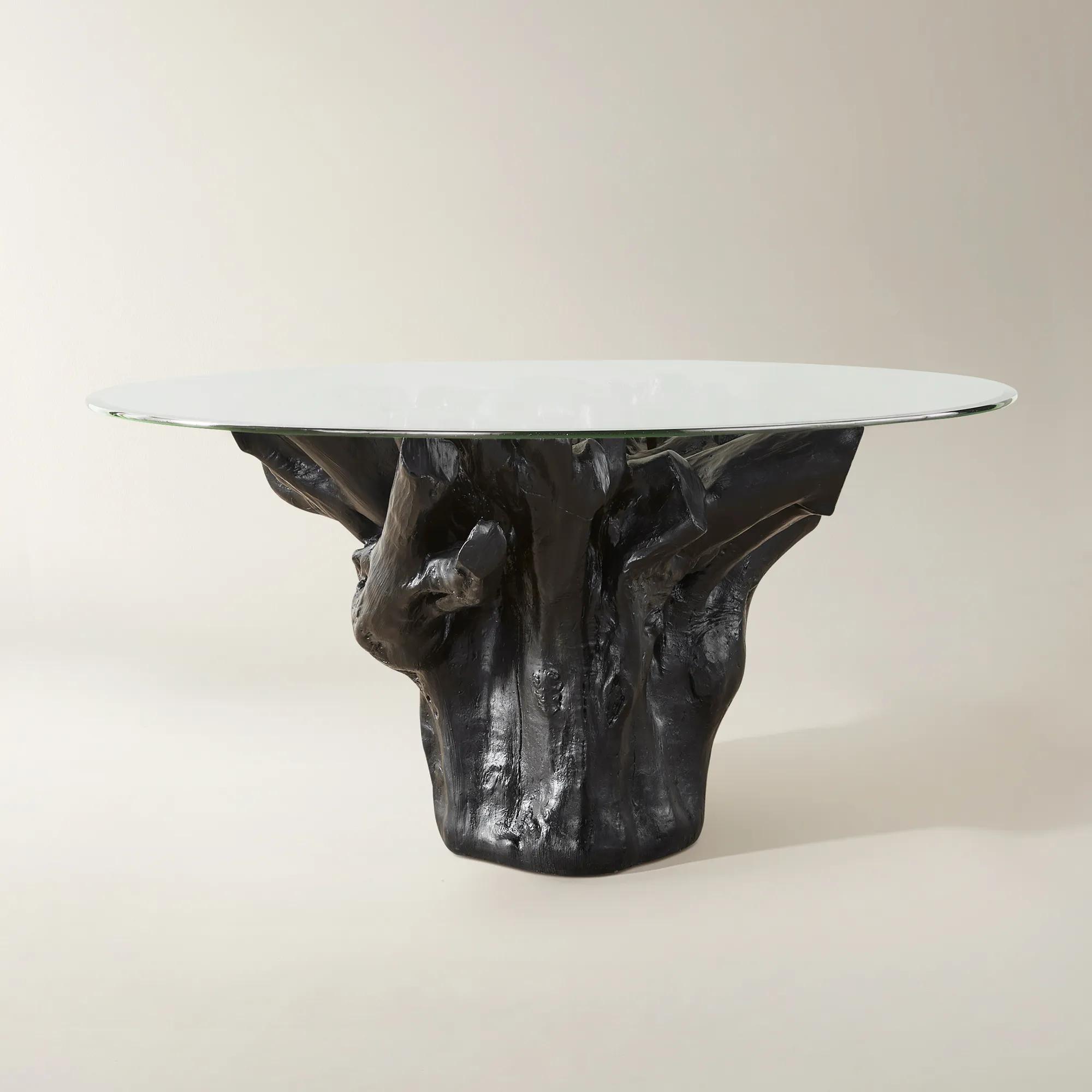 Sequoia Black Resin Dining Table With Glass Top (60")$2299
A sculptural black resin base with real stone fragments supports a round tempered glass top for organic elegance.
Add To Cart -
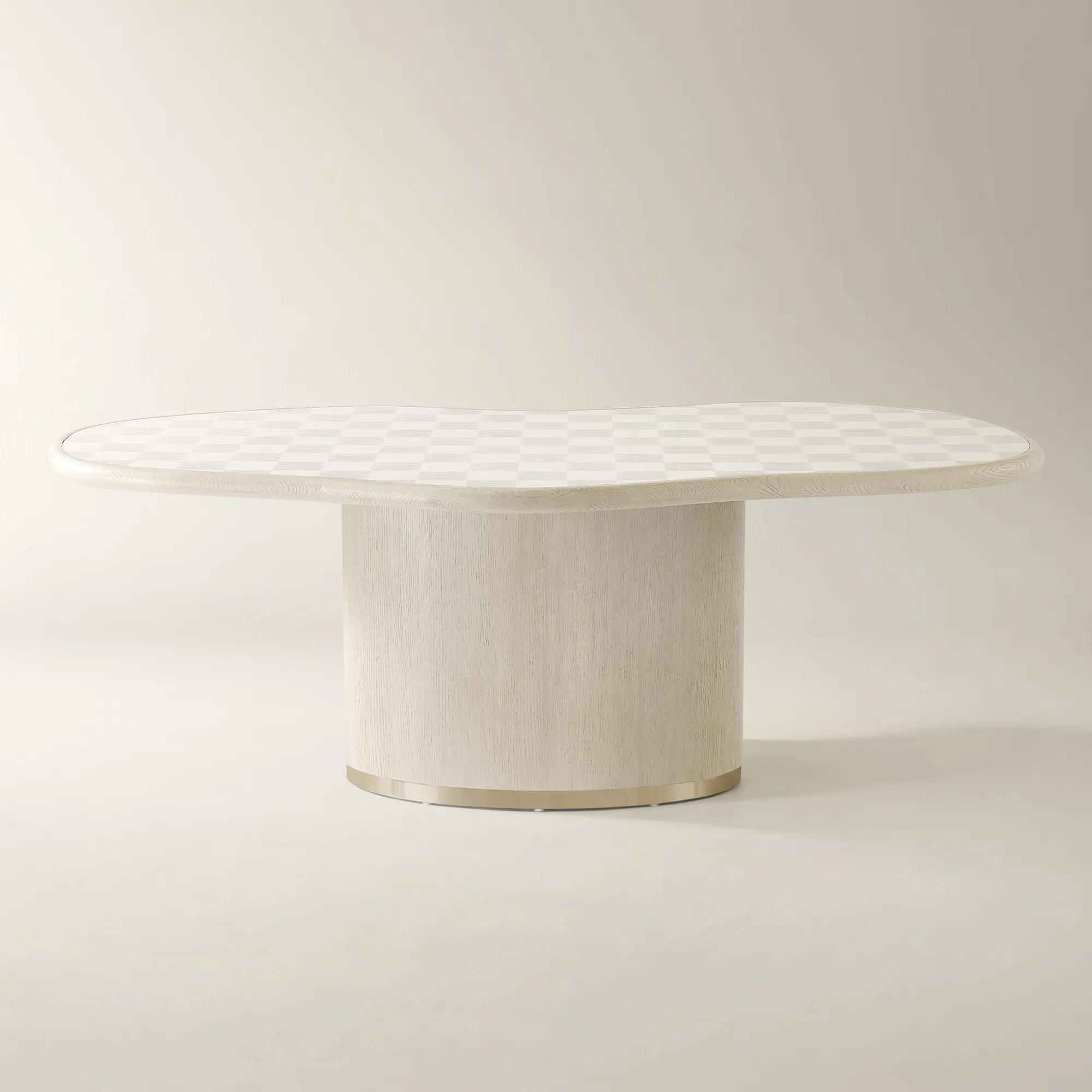 Vetra Checkerboard Oak and Maple Dining Table (84")$2399
A striking dining table featuring a hand-arranged oak and maple checkerboard veneer with soft gold accents.
Add To Cart -
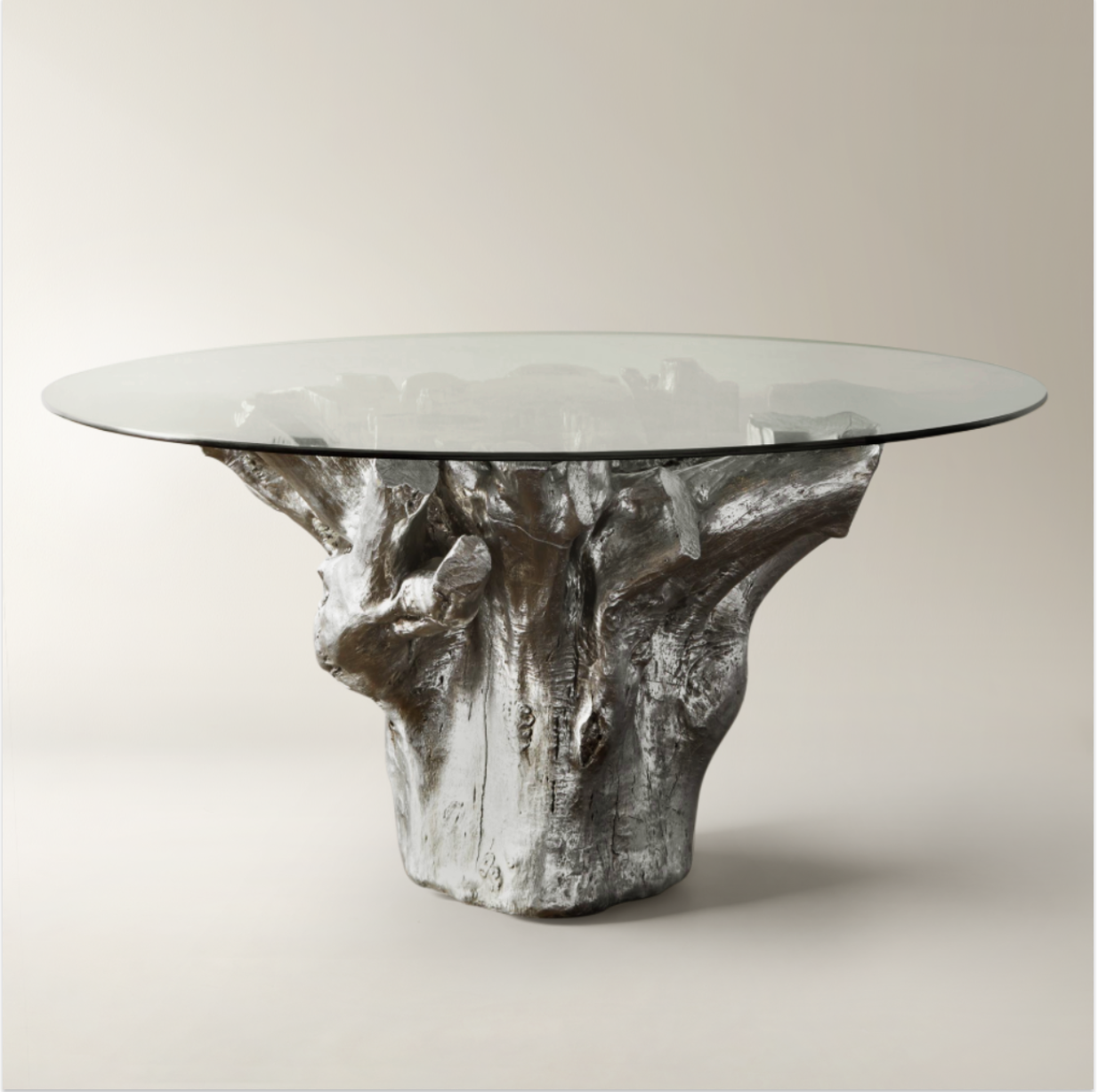 Sequoia Silver Resin Dining Table With Glass Top (60")$2199
A sculptural resin base with hand-applied silver leaf supports a round tempered glass top for modern elegance.
Add To Cart -
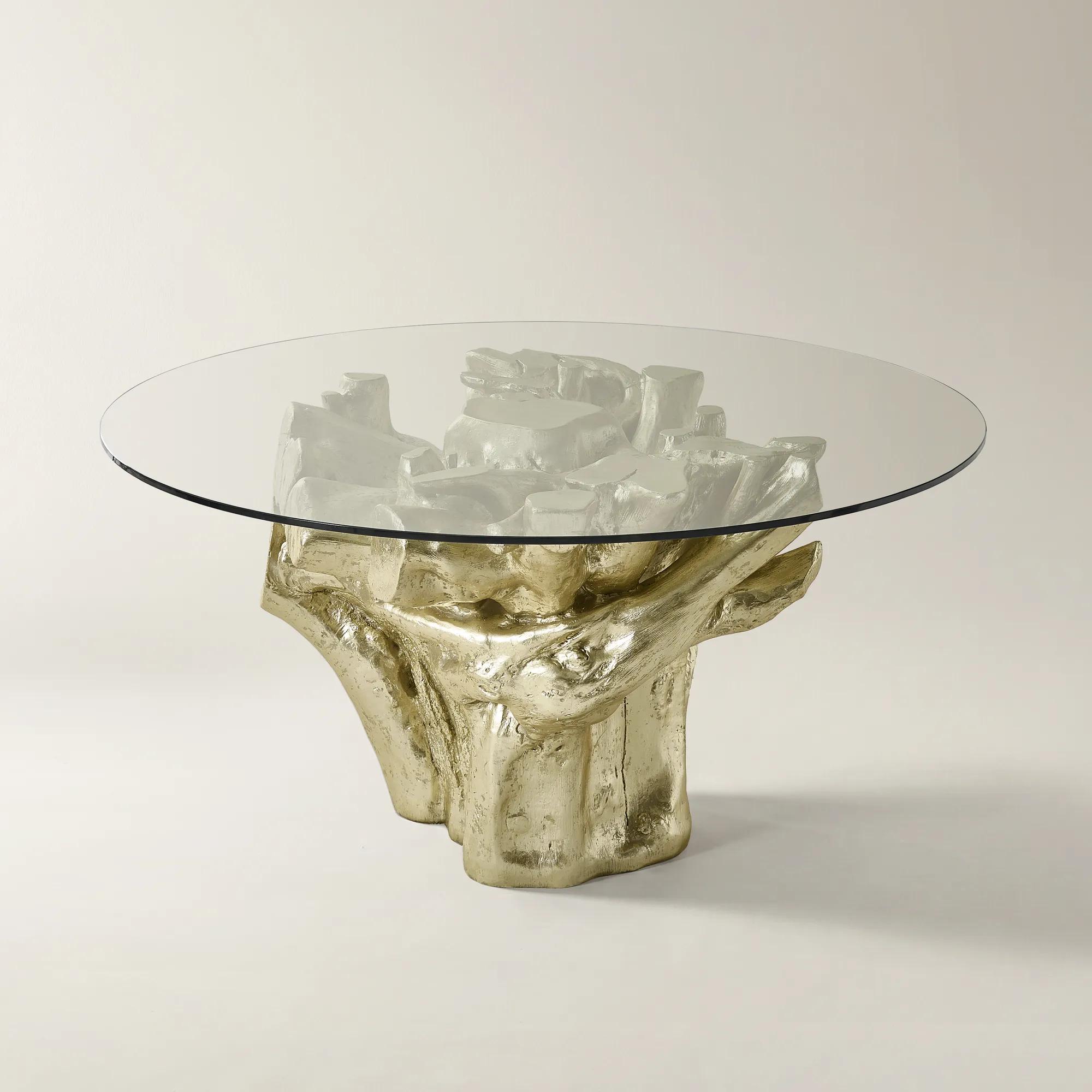 Sequoia Champagne Gold Resin Dining Table With Glass Top (60")$2199
A sculptural resin dining table with a champagne gold leaf base and a clear tempered glass top.
Add To Cart -
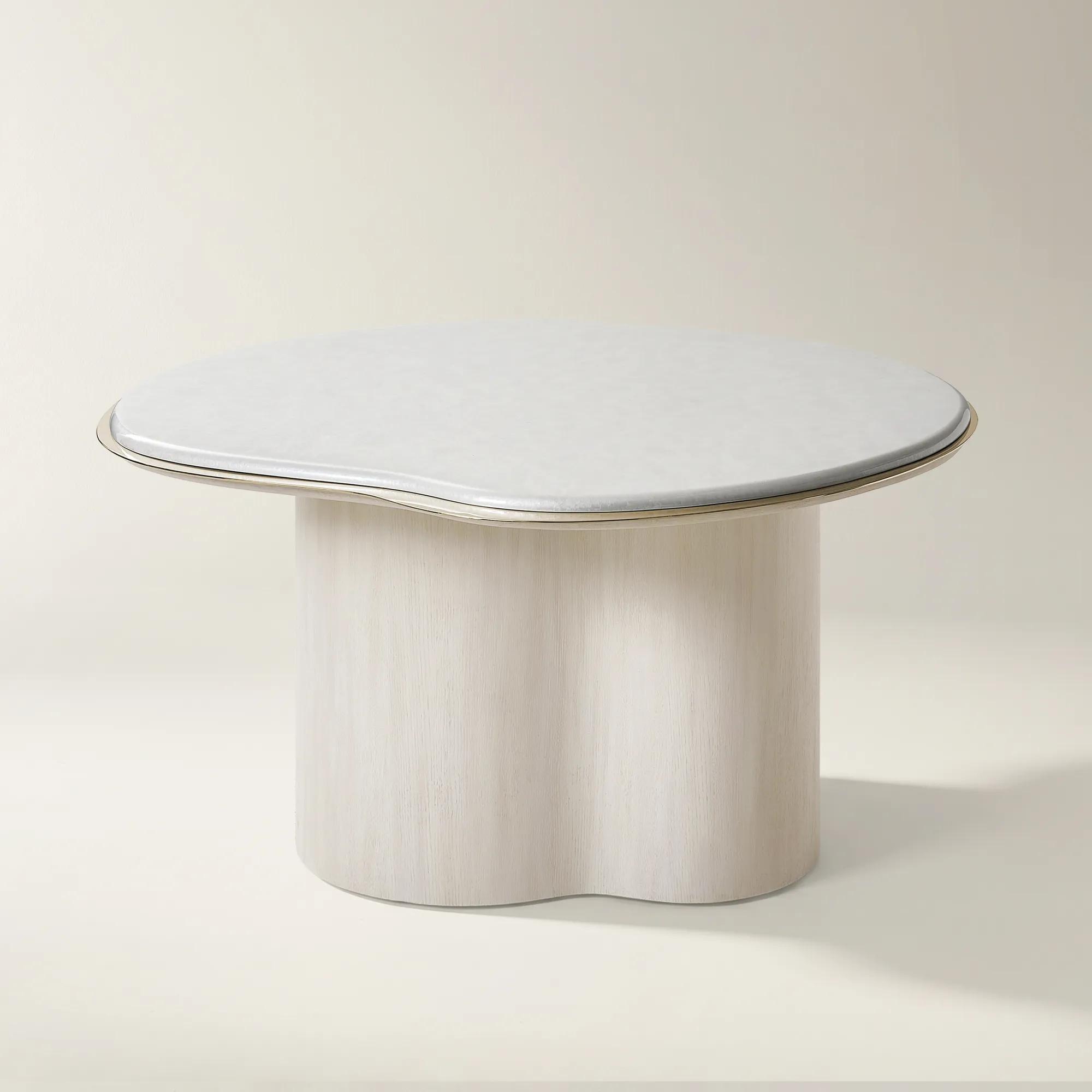 Lumina Bleached Oak Dining Table With Pearl Lacquered Top (58")$2699
A sculptural dining table featuring a pearl lacquered top, bleached oak base, and champagne gold trim.
Add To Cart -
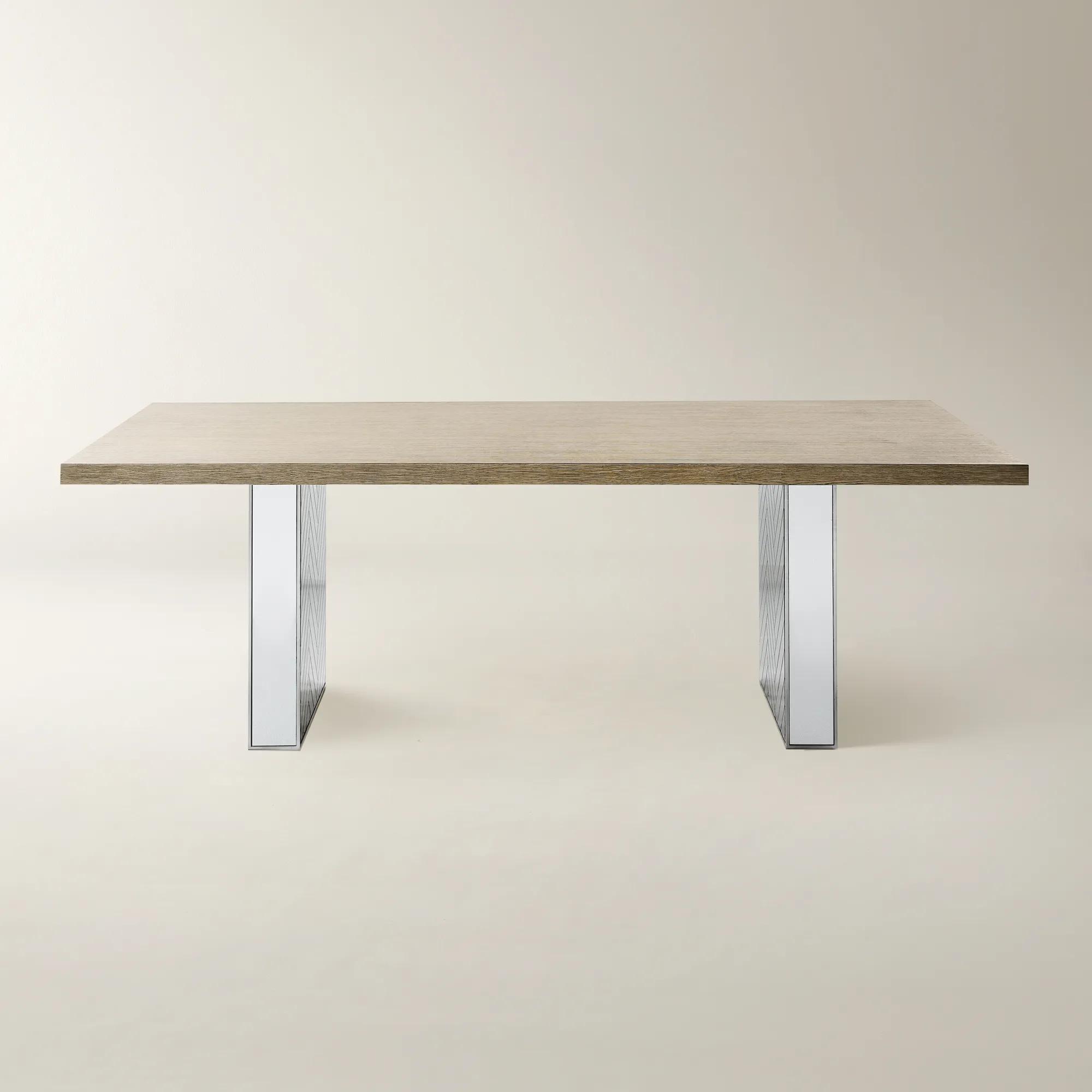
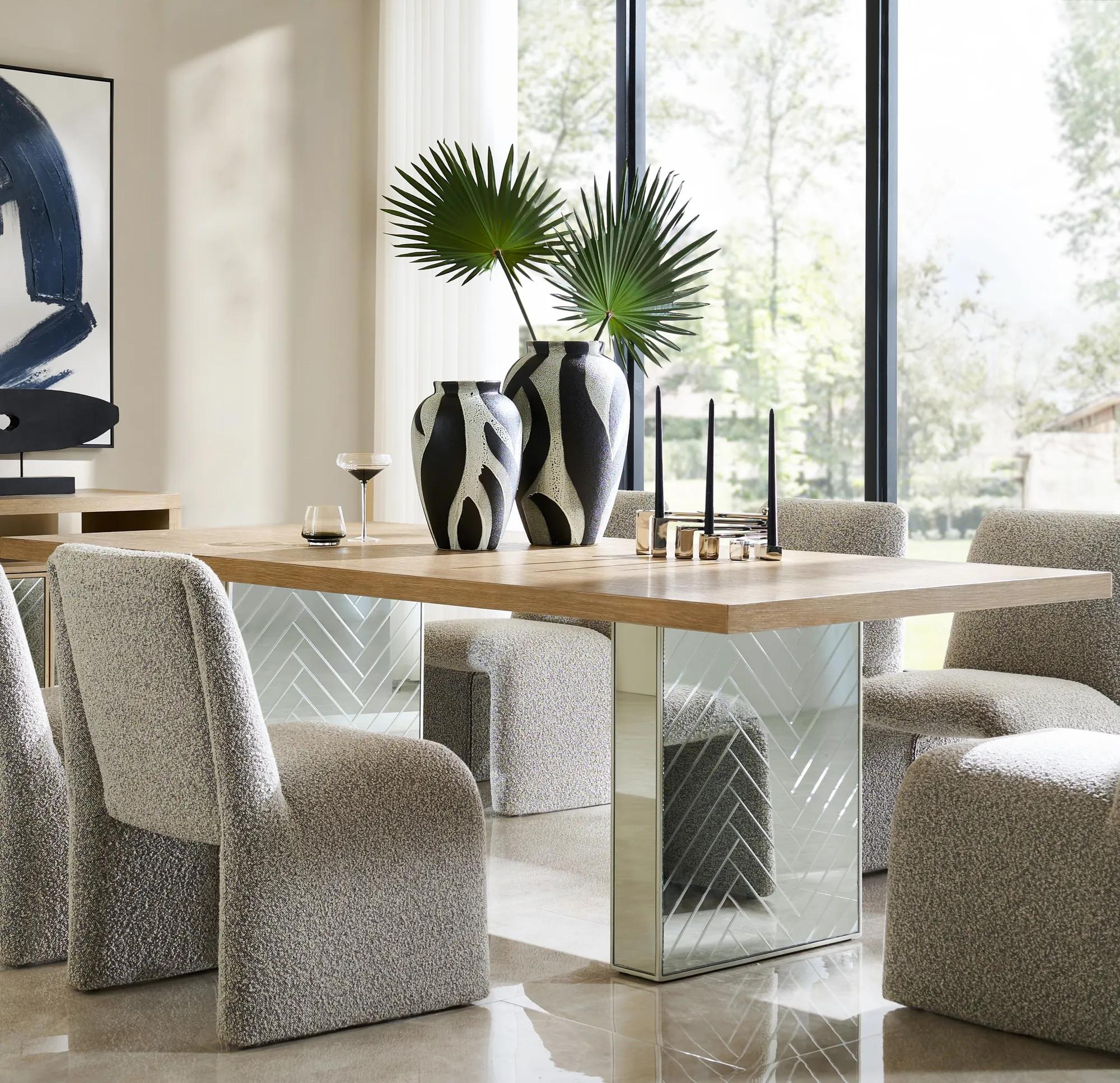 Glimmer Rectangular Seadrift Oak Dining Table With Mirrored Base (90.5")$1799
A modern dining table featuring a warm oak veneer top and a silver mirror-faced parquet base.
Add To Cart -

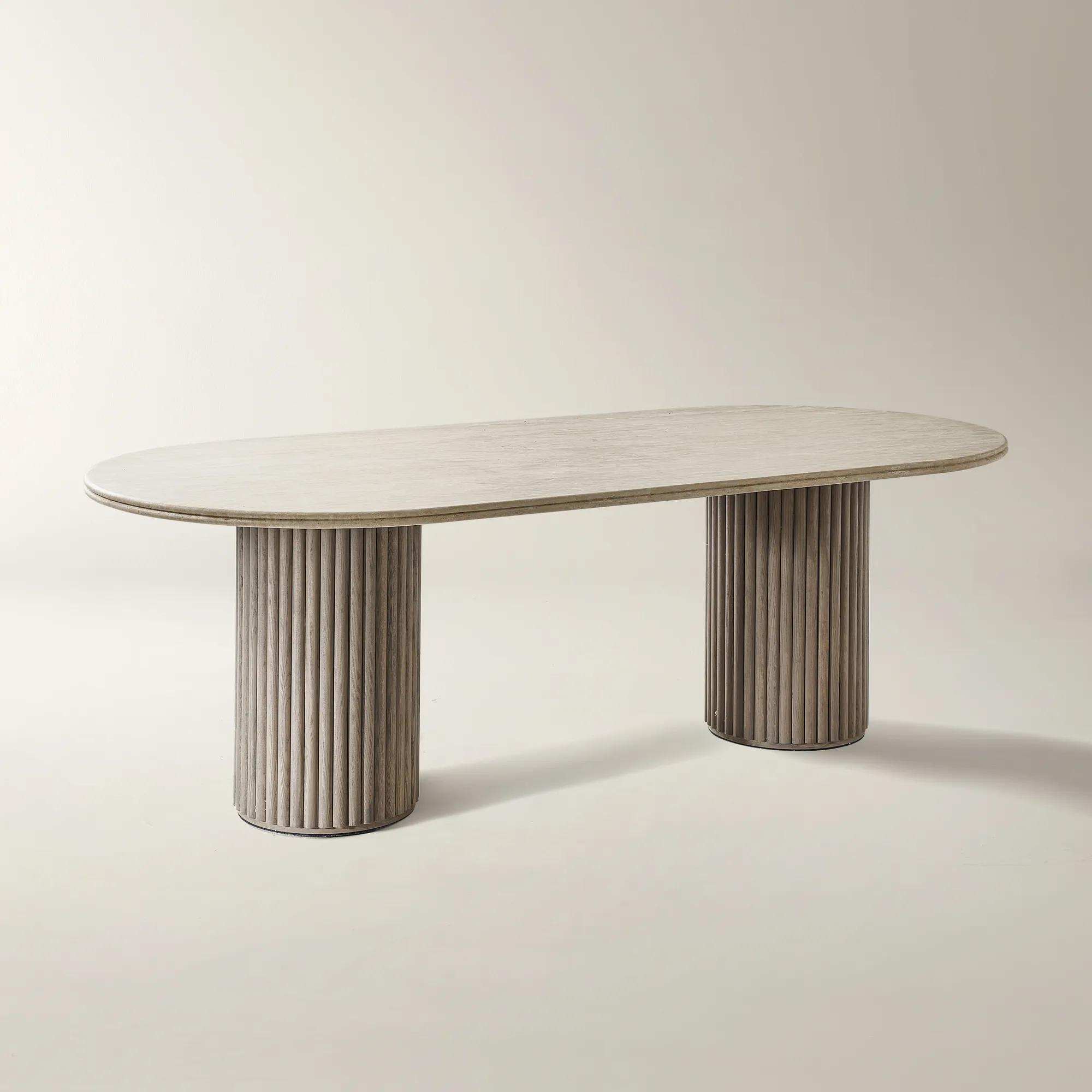 Bond Oval Reeded Travertine and Wood Dining Table (94.25")$4599
A natural travertine stone top pairs with a fluted solid ash base for refined, organic elegance.
Add To Cart -
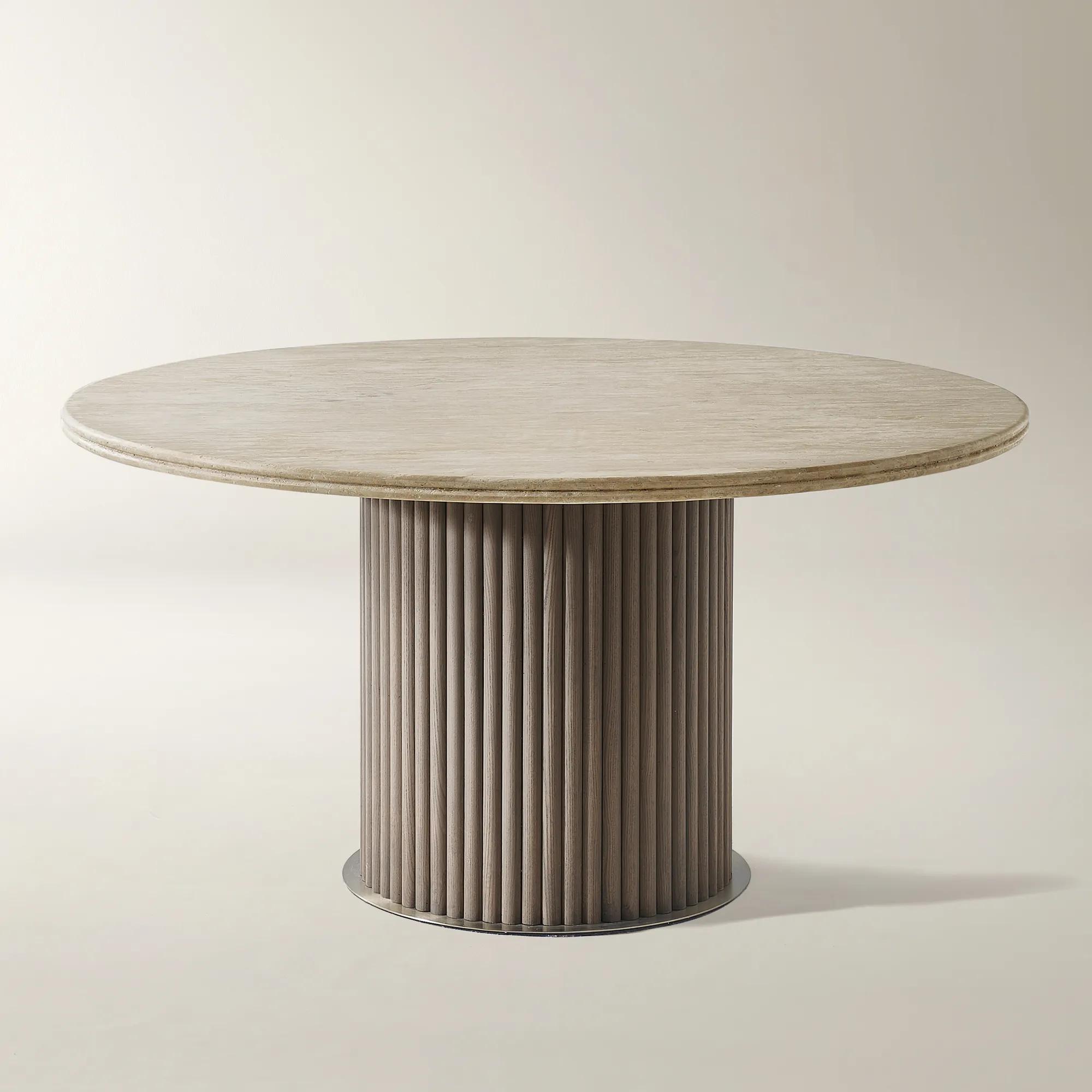 Bond Round Reeded Travertine and Wood Dining Table (59")$3499
A round dining table featuring a genuine natural travertine stone top and a fluted solid ash base.
Add To Cart -
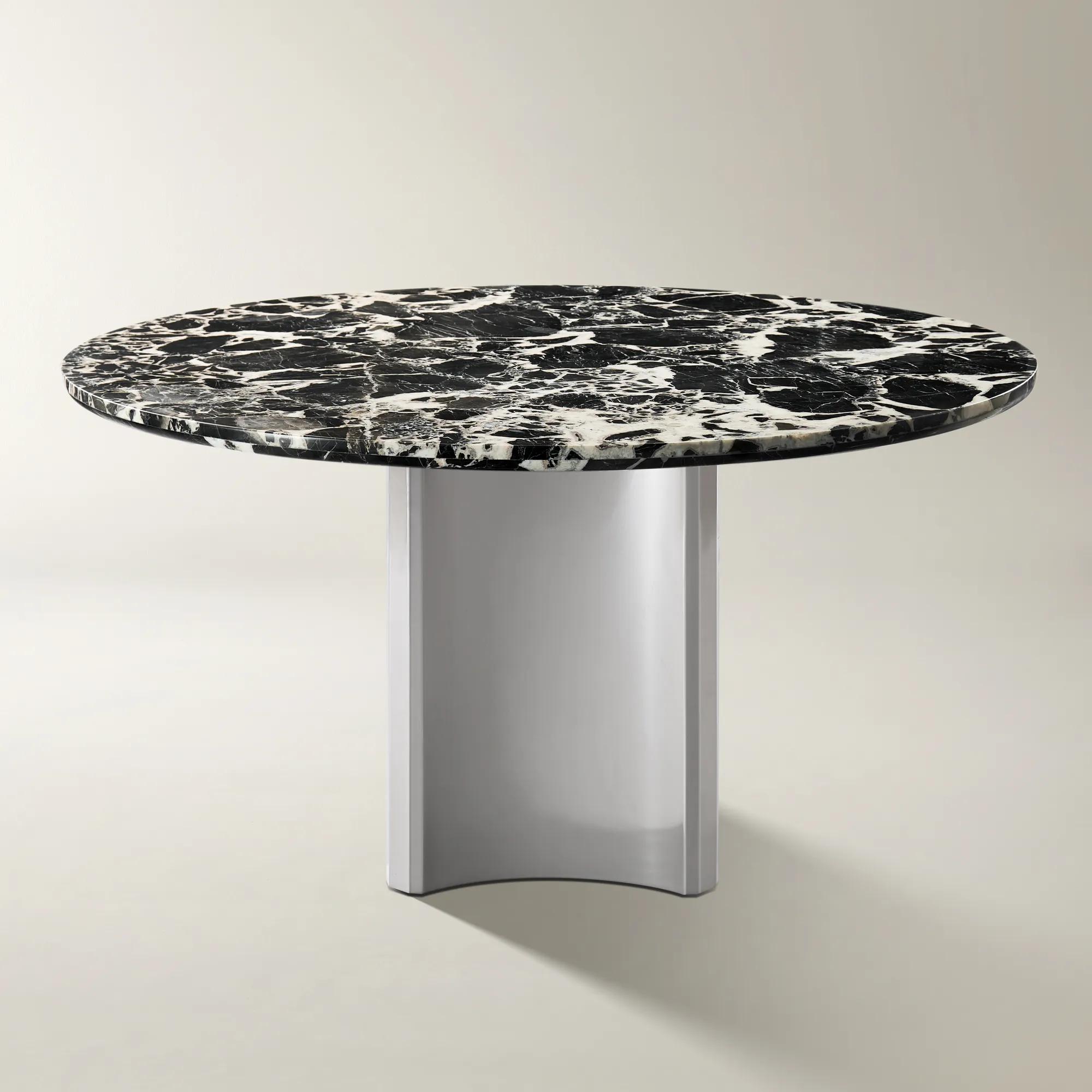
 Ventane Round Black Marble and Stainless steel Dining Table (58")$2999
A dramatic round dining table featuring a natural black marble top and polished stainless steel base.
Add To Cart -
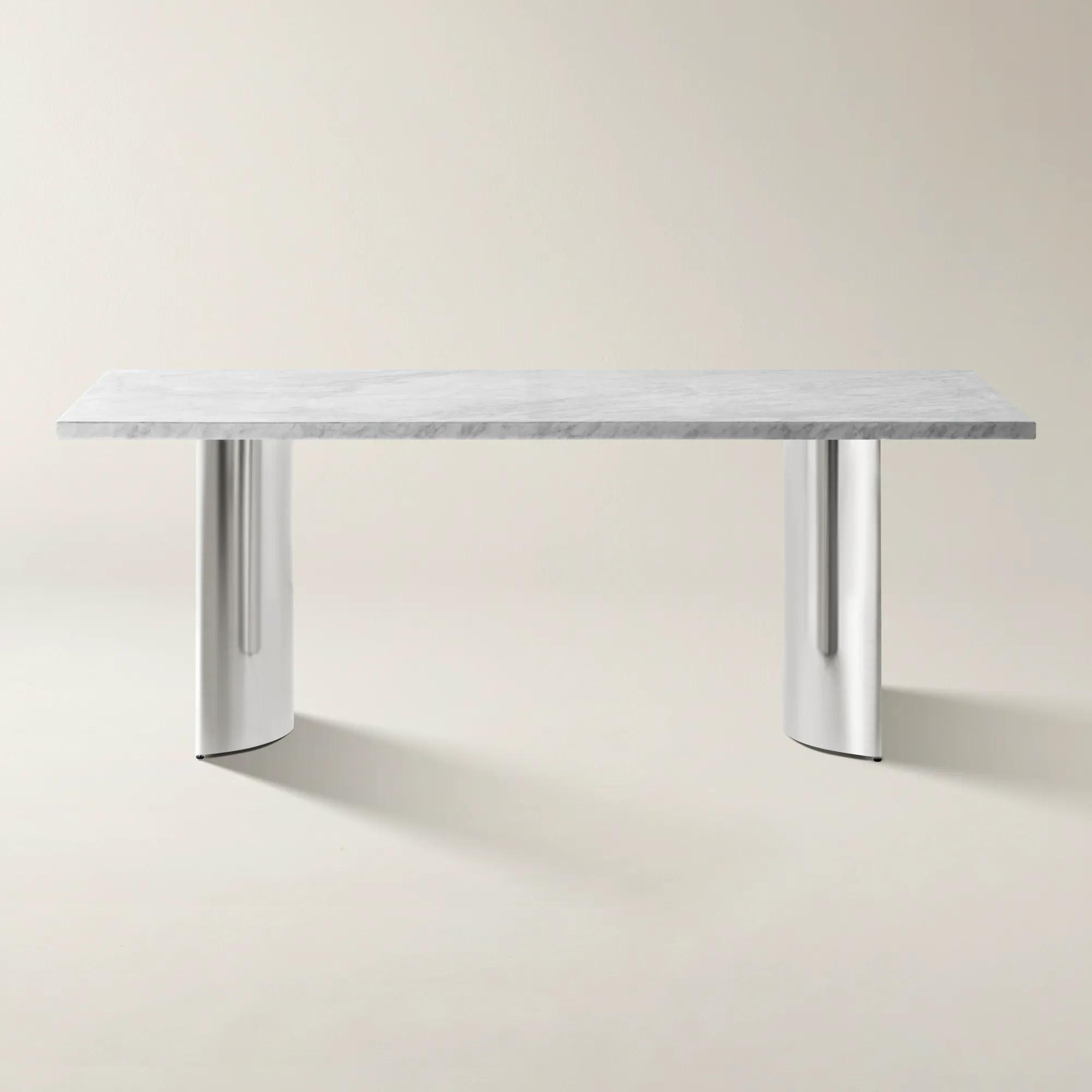 Muscat Rectangular White Marble Dining Table With Stainless Steel Base (84")$3099
A striking dining table featuring a natural white marble top with unique veining and a polished stainless steel base.
Add To Cart -
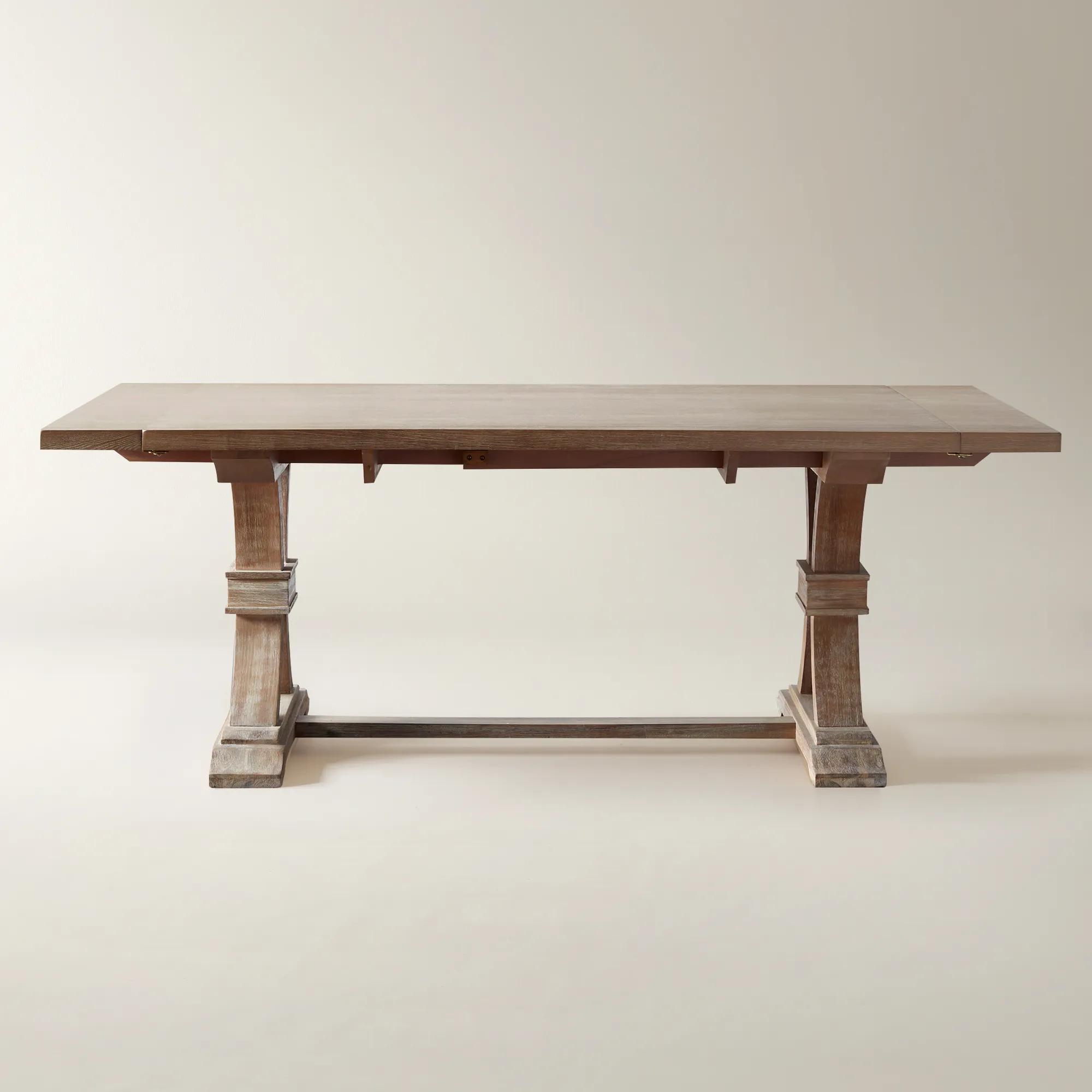 Archer Rectangular Whitewashed Acacia Wood Extending Dining Table (78" - 110")$2499
An extending dining table crafted from kiln-dried hardwood with a whitewashed oak finish and acacia veneer.
Add To Cart -
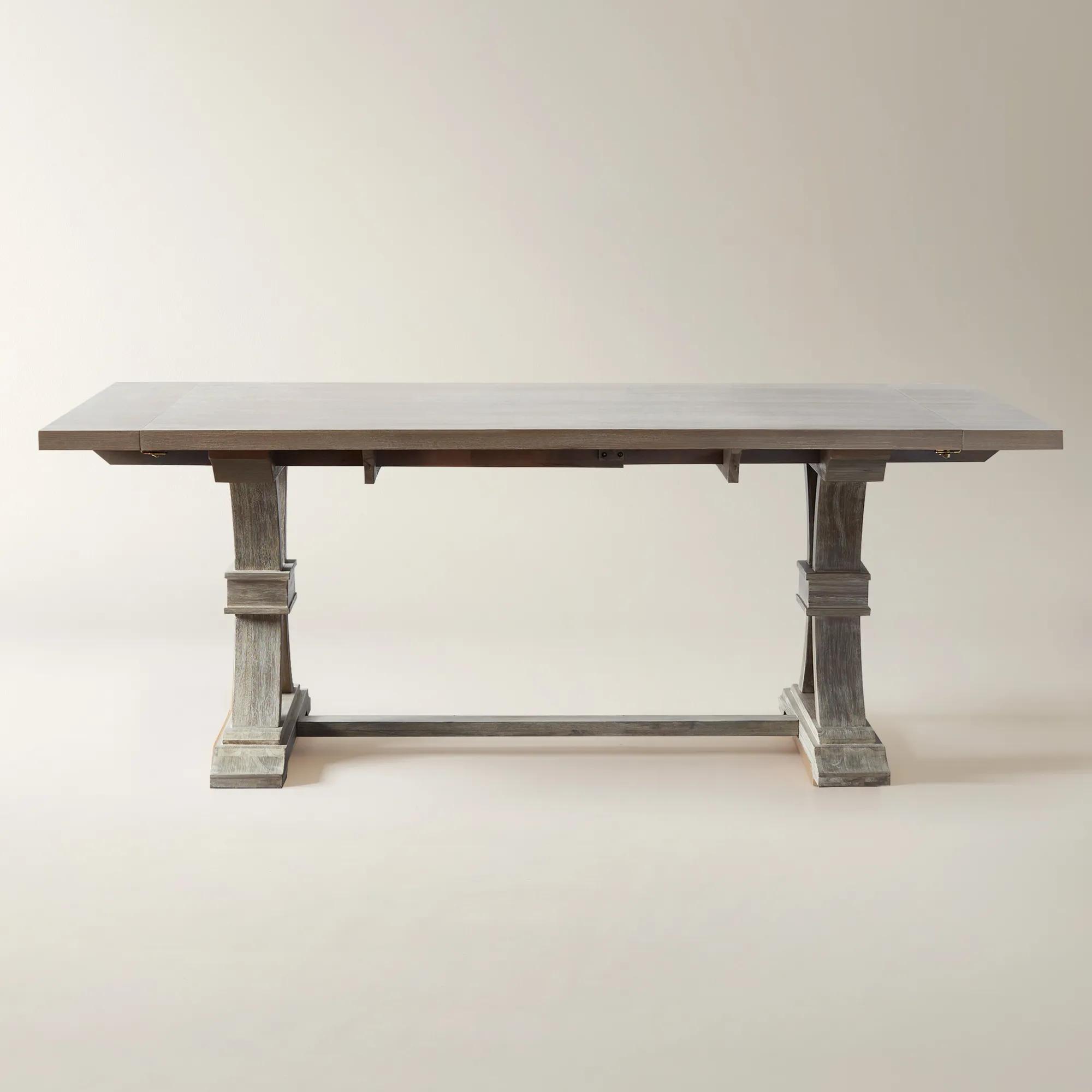 Archer Rectangular Grey Acacia Wood Extending Dining Table (78" - 110")$2499
A weathered grey acacia wood dining table with removable leaves and a kiln-dried hardwood frame.
Add To Cart -
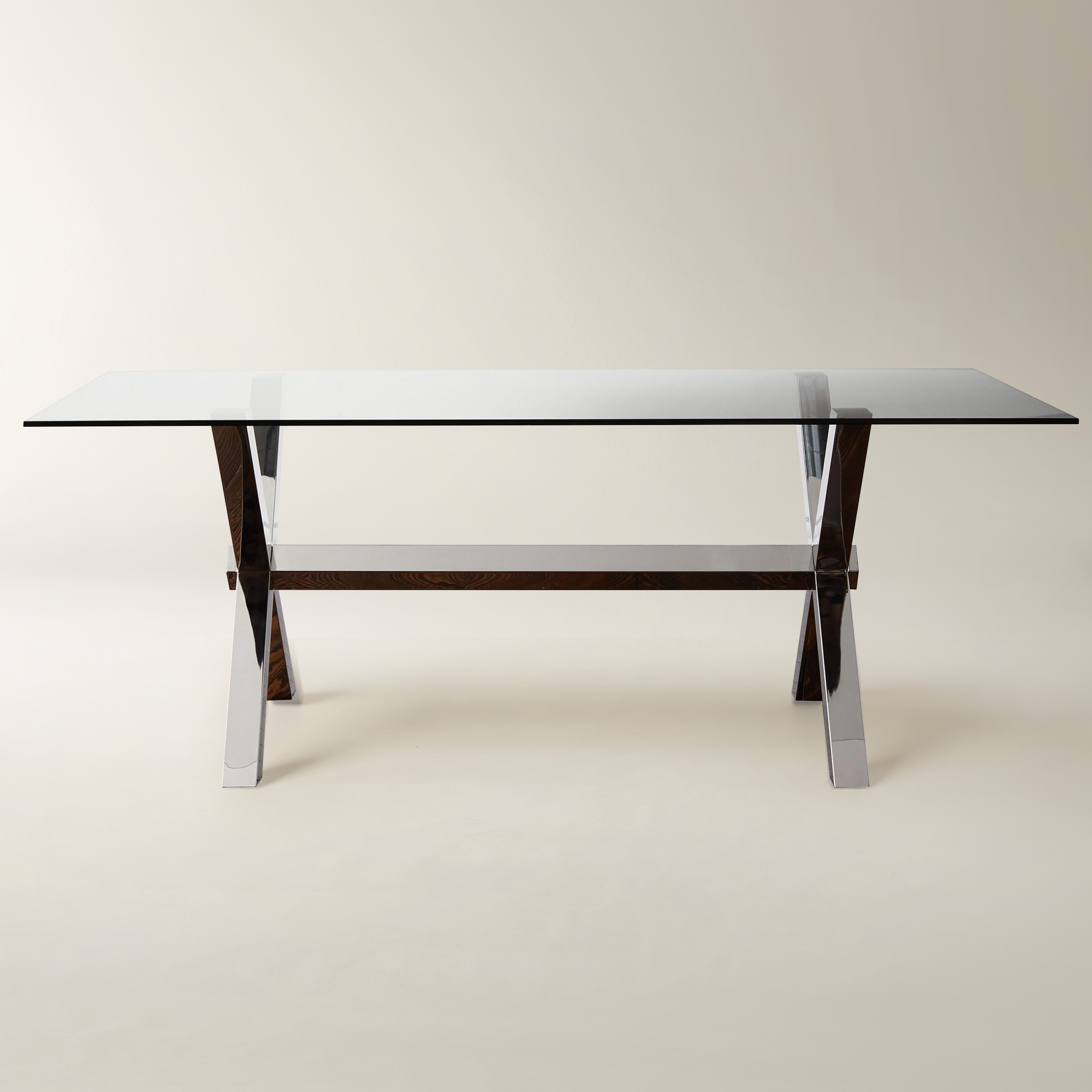
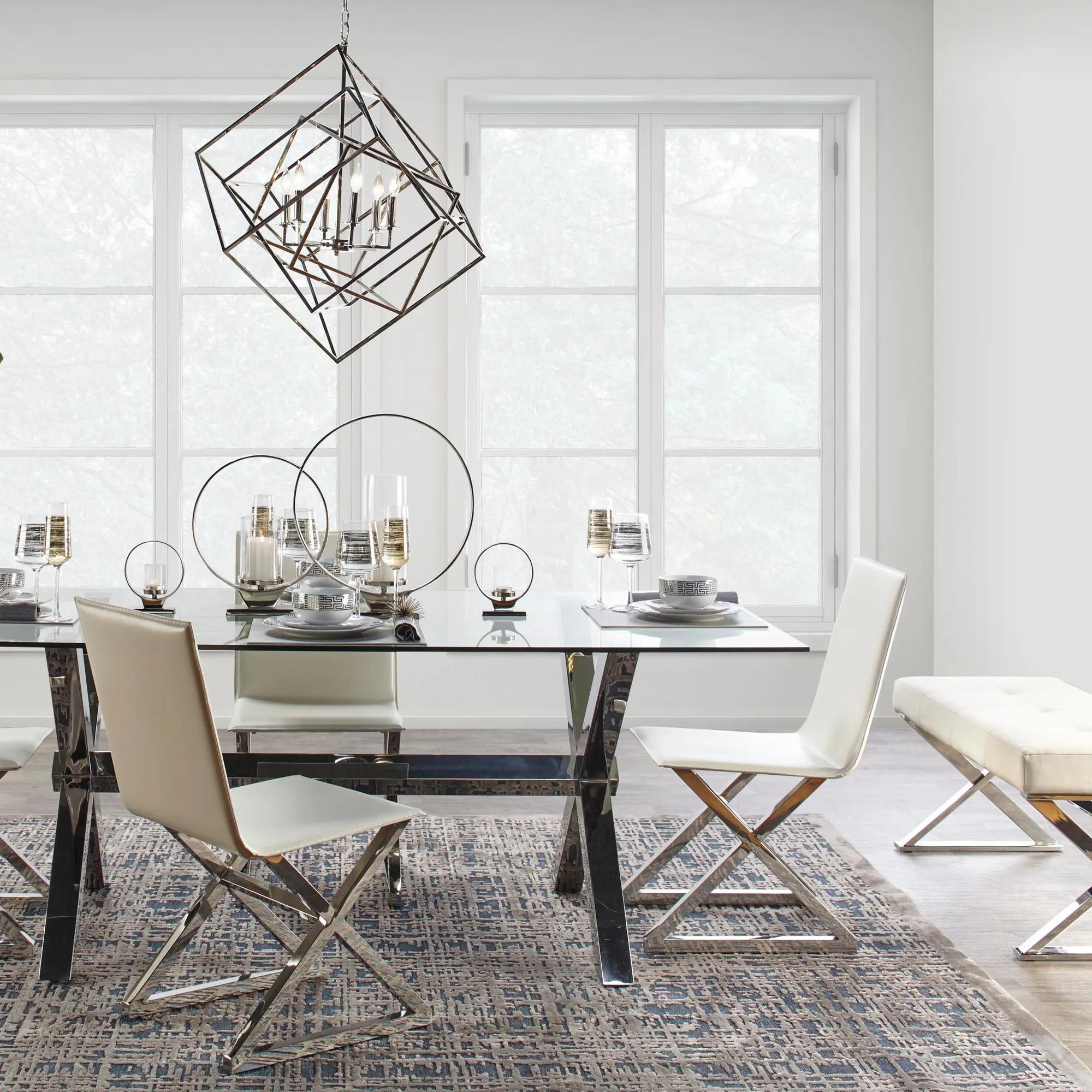 Axis Rectangular Silver Dining Table With Glass Top (78")$1199
A contemporary dining table featuring a polished stainless steel base and durable tempered glass top.
Add To Cart -
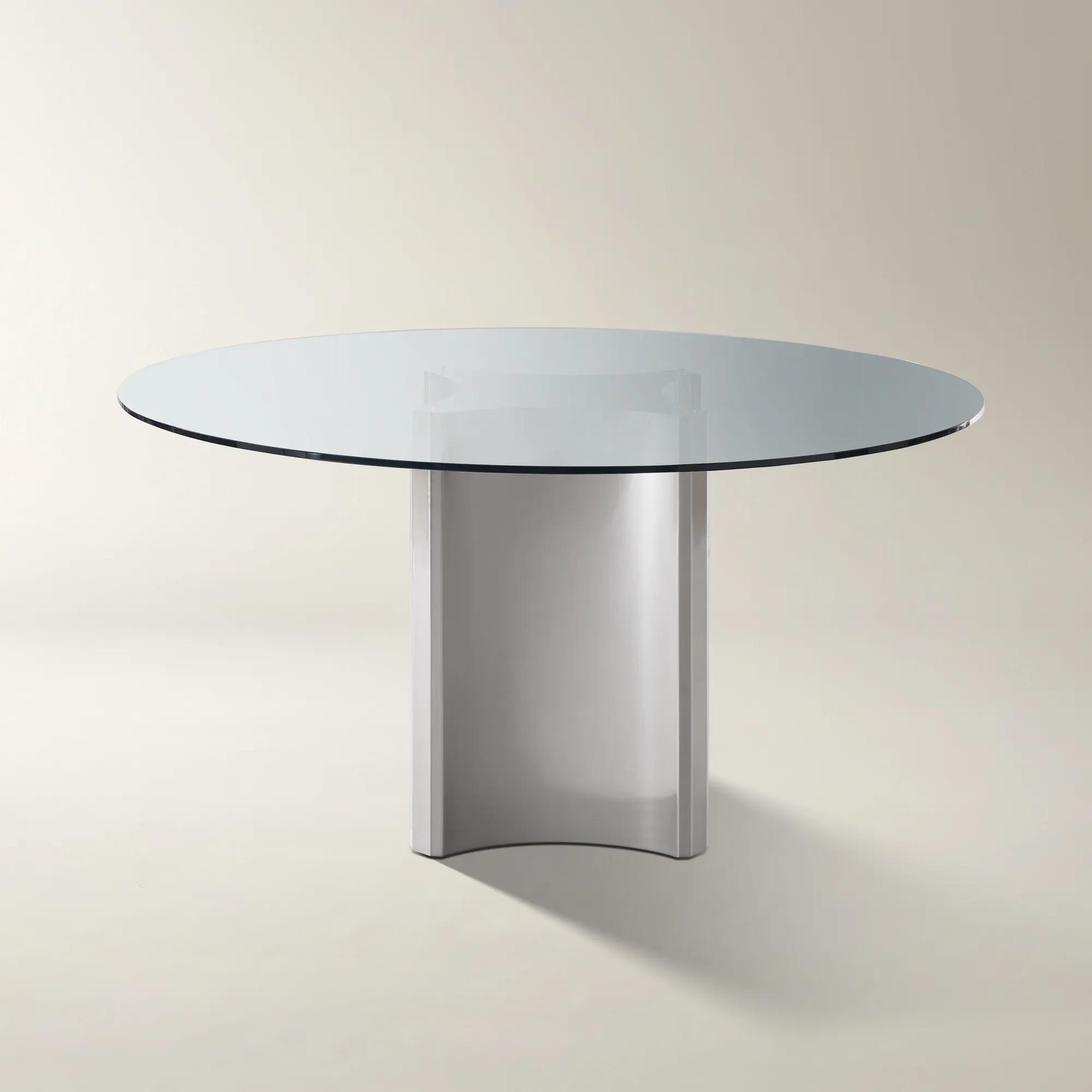 Ventane Round Clear Glass and Stainless steel Dining Table (58")$1499
A modern dining table featuring a clear tempered glass top and polished stainless steel base with anti-fingerprint finish.
Add To Cart

Architectural Dining Tables
Architectural Dining Tables transform every meal into a visual masterpiece, inviting you to dine amidst artistry and innovation. Sculptural silhouettes and bold geometry converge to create tables that command attention, each piece a statement in form and function. With their striking presence, Architectural Dining Tables become the heart of the room, inspiring conversation and elevating the everyday into the extraordinary. Indulge in a dining experience where structure meets sophistication, and your space becomes an ode to daring design.
Architectural dining tables are defined by expressive structural forms: sculptural pedestals, substantial panel legs, arched supports, and tabletops that seem to float above their bases. Rather than relying on ornament alone, these tables make proportion, balance, and the relationship between solid form and open space the centerpiece of the room. A broad oval resting on two curved supports has a different presence from a rectangular top spanning sharply angled legs, yet both turn the dining area into a composition worth lingering over. The effect can be dramatic without feeling imposing. Rounded edges introduce softness, open bases reveal glimpses of the floor, and richly grained wood brings warmth to a bold silhouette. These qualities give architectural dining room tables their versatility, making them equally compelling in a dedicated dining room, an open-plan entertaining space, or a breakfast area with a strong design identity. Shape influences that experience as much as material. Round dining tables encourage conversation across the entire surface, while oval dining tables offer an elongated footprint with gentler ends. Rectangular tables establish a clear axis in a long room, creating a confident focal point beneath a chandelier or alongside large-scale artwork. Square forms can feel especially balanced in rooms with similar proportions, provided there is comfortable space around every side. Central pedestals may reduce interference from corner legs, although the width and position of the base still determine usable foot space. Double pedestals and trestle-inspired supports create a more grounded composition, particularly beneath longer tops. For households that move from everyday meals to elaborate dinner parties, the appeal is both visual and personal: a table with architectural character gives a simple place setting presence and a fully dressed gathering an unforgettable foundation. Its sculptural quality remains visible between occasions, when a single ceramic vessel or low arrangement allows the structure itself to hold attention.
Material gives that structure its texture, depth, and daily character. Wood architectural dining tables reveal the movement of grain across expansive surfaces, with oak often offering a pronounced pattern and walnut lending a deeper, more enveloping tone. Solid wood can develop character over time and responds to changes in indoor humidity; wood veneer can showcase carefully arranged grain over a supporting core. Neither construction alone determines quality or longevity, which also depend on joinery, substrate, finish, and use. Marble and travertine introduce another kind of artistry, with natural veining, tonal variation, and mineral markings that make each slab visually distinct. Marble can feel polished and luminous, while travertine often brings a more porous, textured appearance, depending on its finish and whether its openings are filled. Natural stone is substantial, but it is not impervious: acidic foods and drinks can etch many stone surfaces, and spills may stain if left unattended. Sealers, when recommended for the particular stone, help reduce absorption rather than eliminate the need for care. Metal bases contribute crisp lines or fluid curves, with brushed finishes diffusing light and polished surfaces creating sharper reflections. Glass tops can expose the full geometry of an expressive base and preserve visual openness, though fingerprints and objects beneath the surface remain noticeable. Mixed-material dining tables draw strength from contrast, placing pale stone above dark wood or pairing a transparent top with gleaming metal. For daily dining, durability means matching the surface to the household’s habits rather than assuming the heaviest material requires the least attention. Coasters, placemats, prompt spill removal, and protective pads beneath serving pieces help preserve a refined finish. Hot cookware belongs on an appropriate trivet, not directly on the tabletop. A soft cloth and manufacturer-approved cleaning methods are preferable to abrasive products, while stone, wood, glass, and metal each call for care suited to their particular finish.
Scale is where a sculptural dining table becomes a pleasure to live with. Its visual weight should suit the room, but comfortable seating depends on usable dimensions rather than appearance alone. Allowing approximately 24 inches of tabletop width per person is a useful starting point, with additional room creating a more generous setting for wide chairs, layered place settings, or extended meals. Around the table, roughly 36 inches between the edge and surrounding walls or furniture supports chair movement in many layouts; busy passageways often benefit from 42 to 48 inches or more. Those measurements remain starting points, since chair depth, nearby doors, and the way people circulate all affect the fit. A generous tabletop can still feel restrictive if an apron sits too low for an armchair or a pedestal occupies the space where feet naturally rest. The relationship between seat height, underside clearance, and base placement deserves as much attention as the overall length. In a dining area shared with the kitchen or living room, an oval profile can soften circulation around the ends, while a rectangular form can establish a distinct gathering zone. An extendable design, where offered, brings flexibility for larger gatherings, though its fully extended dimensions and support arrangement remain important. Dining chairs create another opportunity for expression: upholstered silhouettes temper a strong stone or metal presence, while slender frames leave an intricate base more visible. A rug can frame the composition when it extends far enough to accommodate chairs pulled back from the table. In connected interiors, a considered pairing with Architectural Style Living Room Tables carries sculptural lines into the adjoining space without requiring every finish to match. The resulting room feels composed rather than uniform. Whether the table hosts family dinners, celebratory gatherings, or an occasional afternoon of working from home with surface protection in place, its success lies in that balance: expressive enough to command attention, thoughtfully proportioned enough to become part of everyday life.
FAQs
An architectural dining table is characterized by its sculptural form, bold lines, and distinctive design details inspired by the world of architecture. These tables often feature unique bases, dramatic silhouettes, and a focus on craftsmanship and materiality, transforming the dining area into an expressive, gallery-like space.
Styling an architectural dining table is an opportunity to play with contrast and creativity. For formal gatherings, pair with statement chairs and gleaming metallic accents. For everyday elegance, layer with textured linens, sculptural centerpieces, and softly glowing candles. The table’s striking design serves as the foundation, allowing you to effortlessly switch between opulent and understated looks.
An architectural dining table makes a memorable gift for design enthusiasts, newlyweds, or anyone embarking on a new home journey. It’s a thoughtful gesture for those who value artistry, craftsmanship, and the transformative power of statement furniture in their living spaces.
Architectural dining tables often showcase luxurious materials such as marble, polished metals, solid wood, and high-gloss finishes. These materials are chosen for their visual impact, durability, and ability to enhance the sculptural qualities of each design.
To create a harmonious look, echo the table’s design elements throughout your space. Pair with complementary architectural-style living room tables, bold lighting fixtures, and artful accessories. This cohesive approach ensures your home feels curated, dramatic, and uniquely personal.


