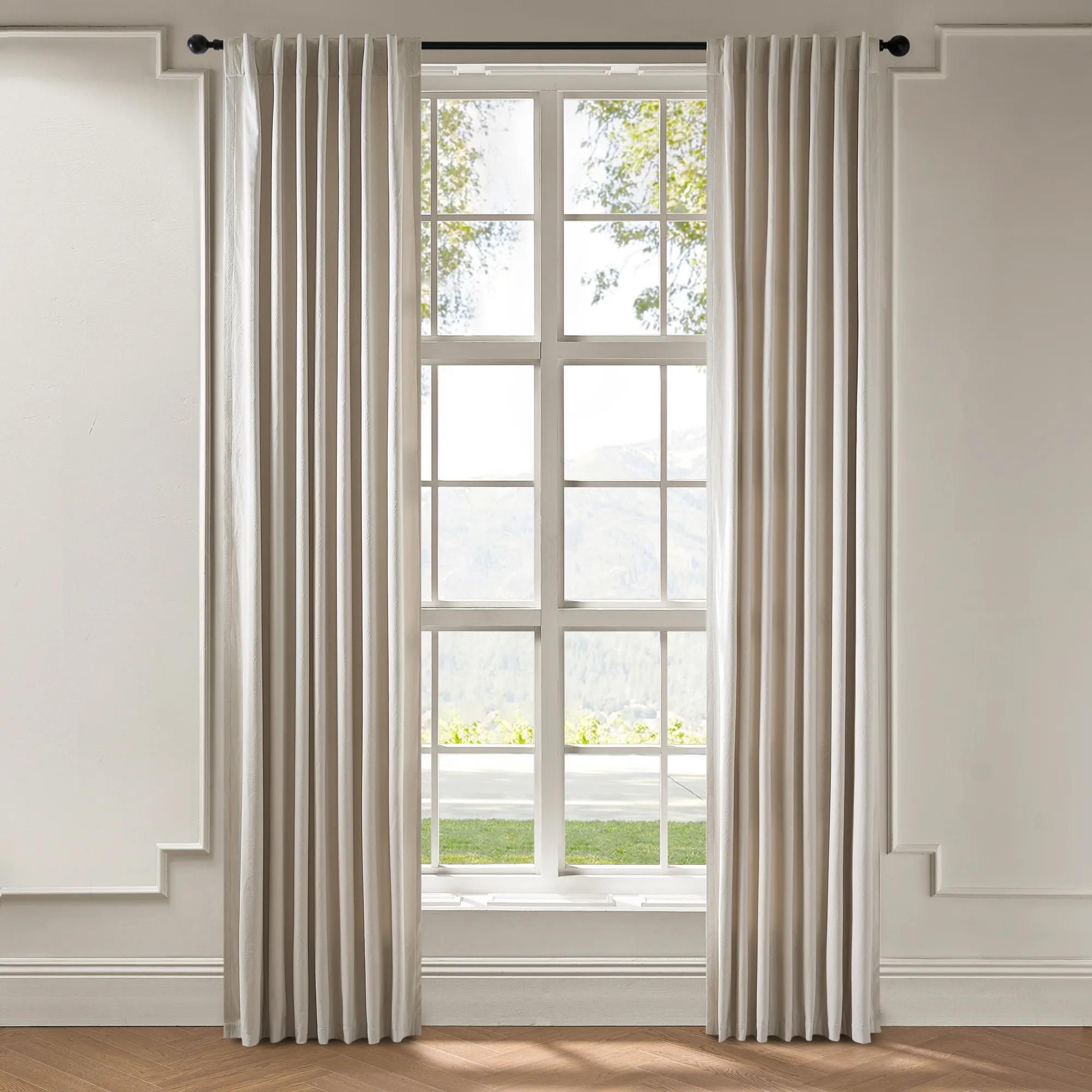
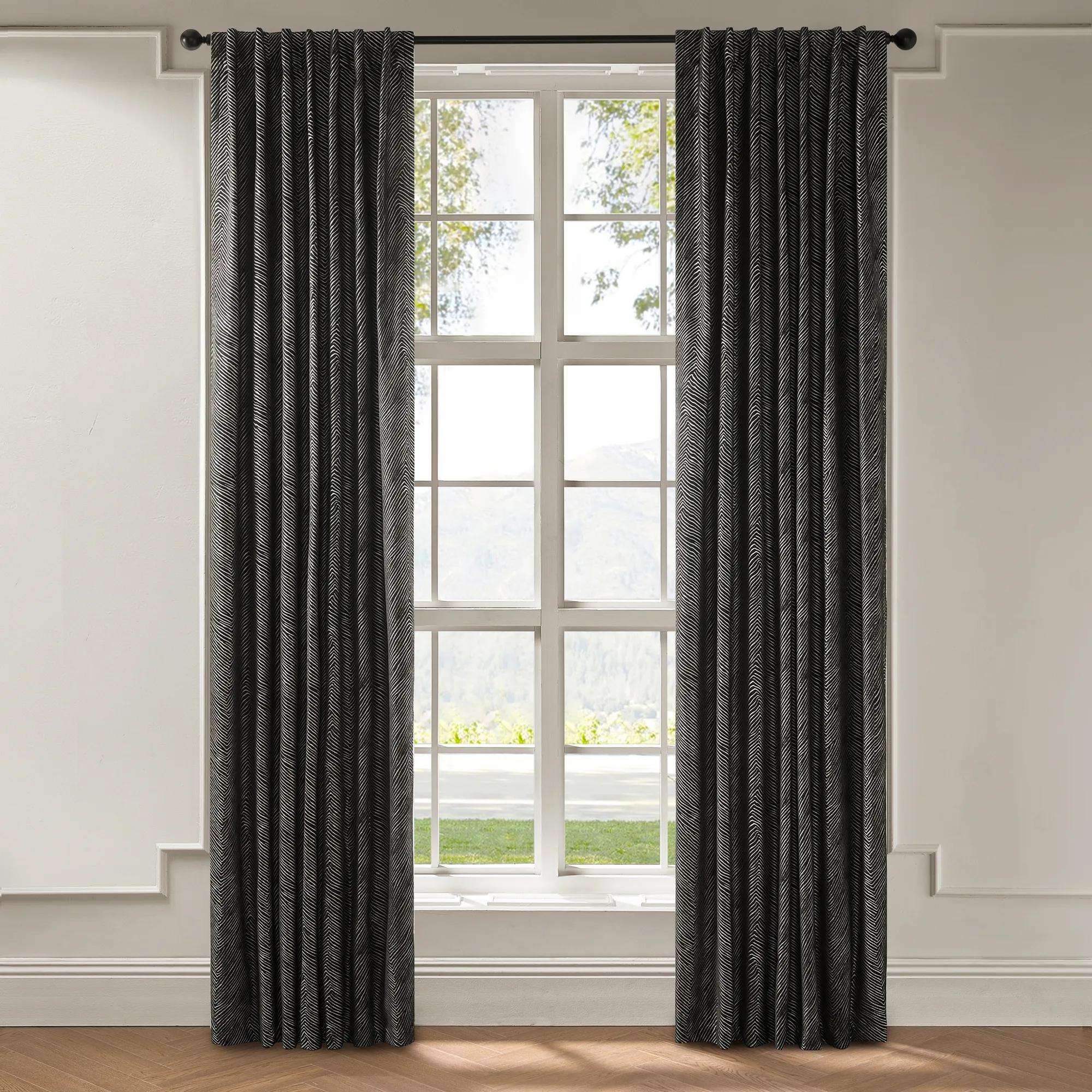
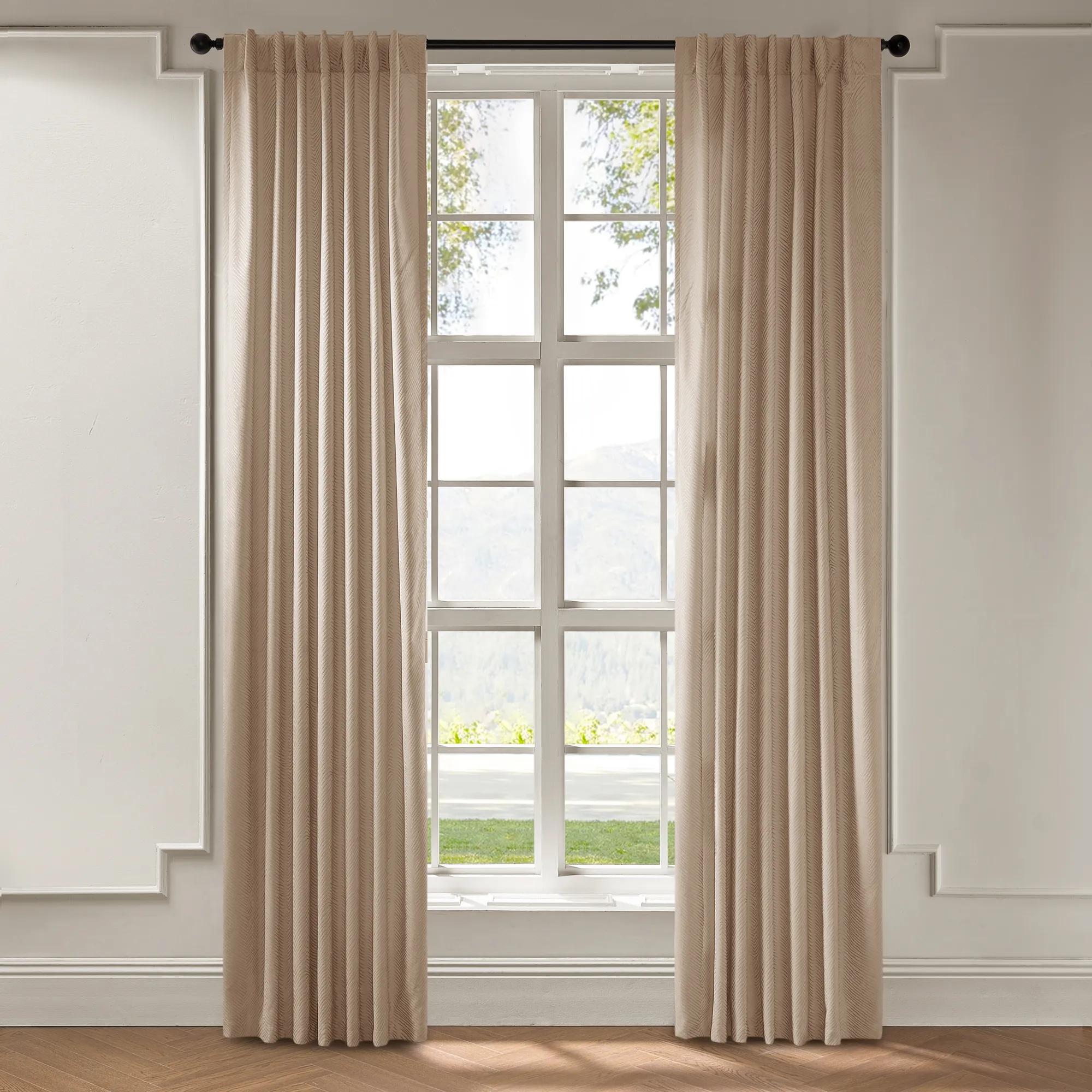
120 Inch Window Panels
120 Inch Window Panels
-
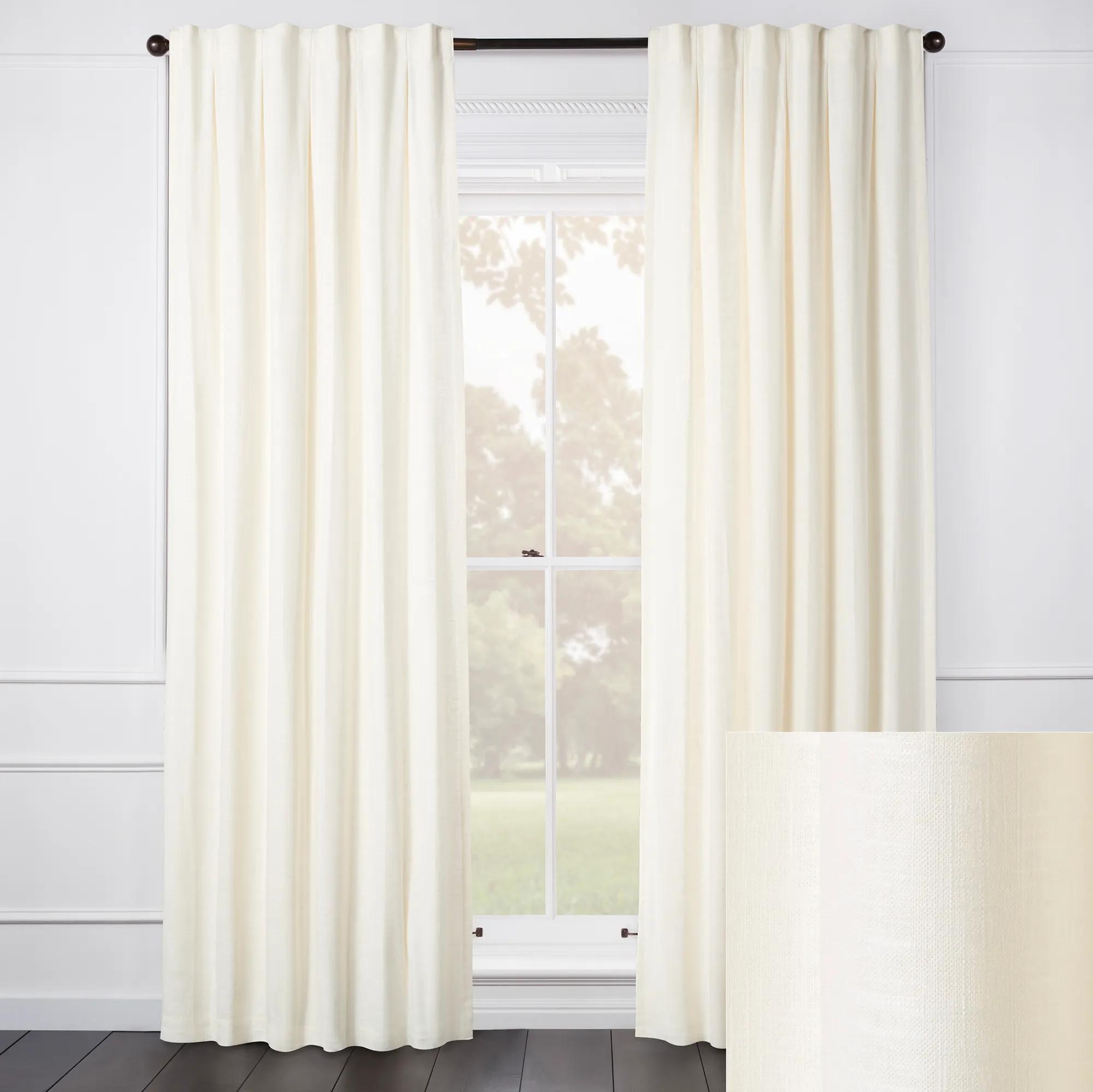
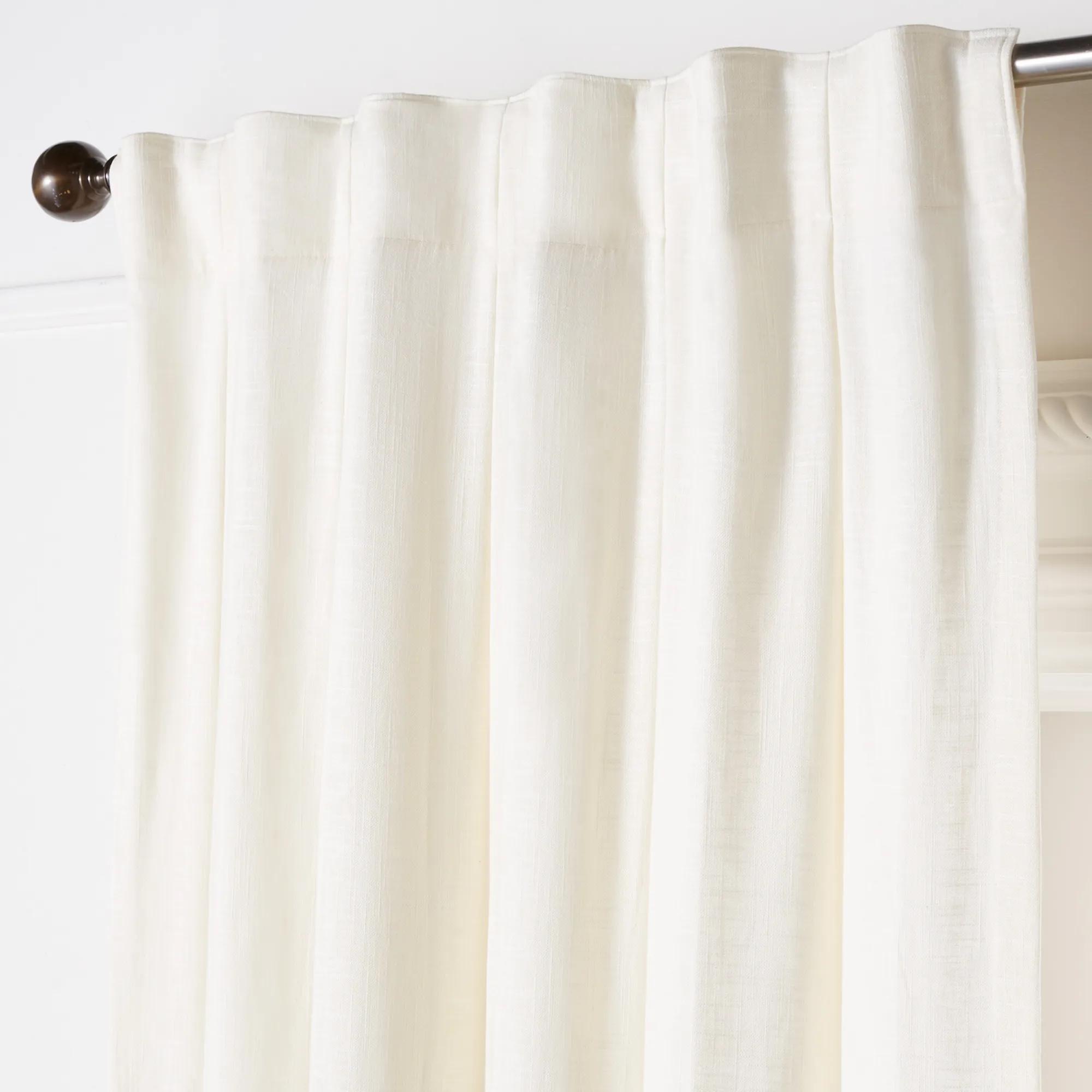 Audrey Linen Ivory Curtain - Custom$269
An ivory linen-blend curtain panel with lining, offering customizable lengths and two elegant header styles.
Add To Cart -
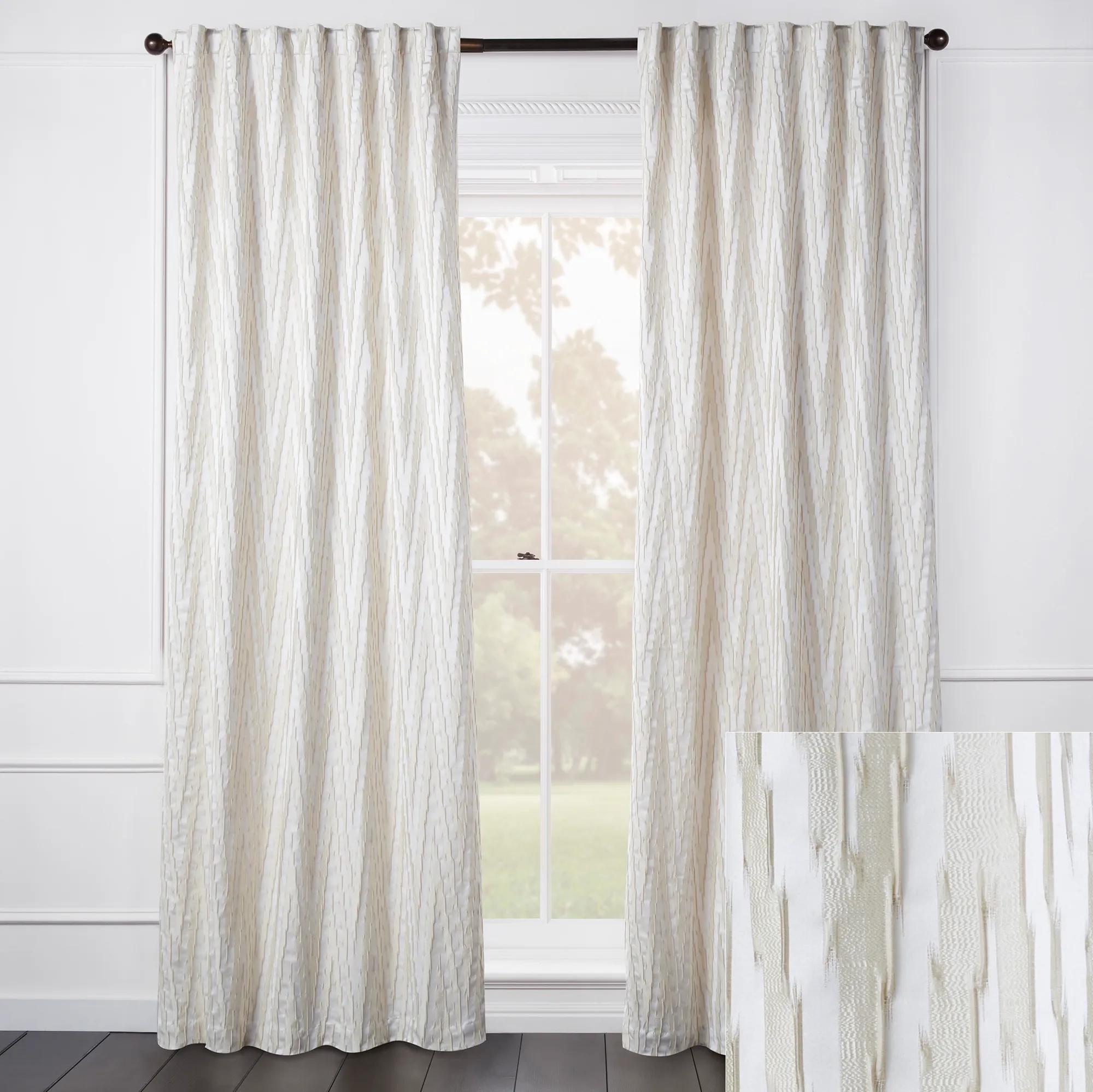
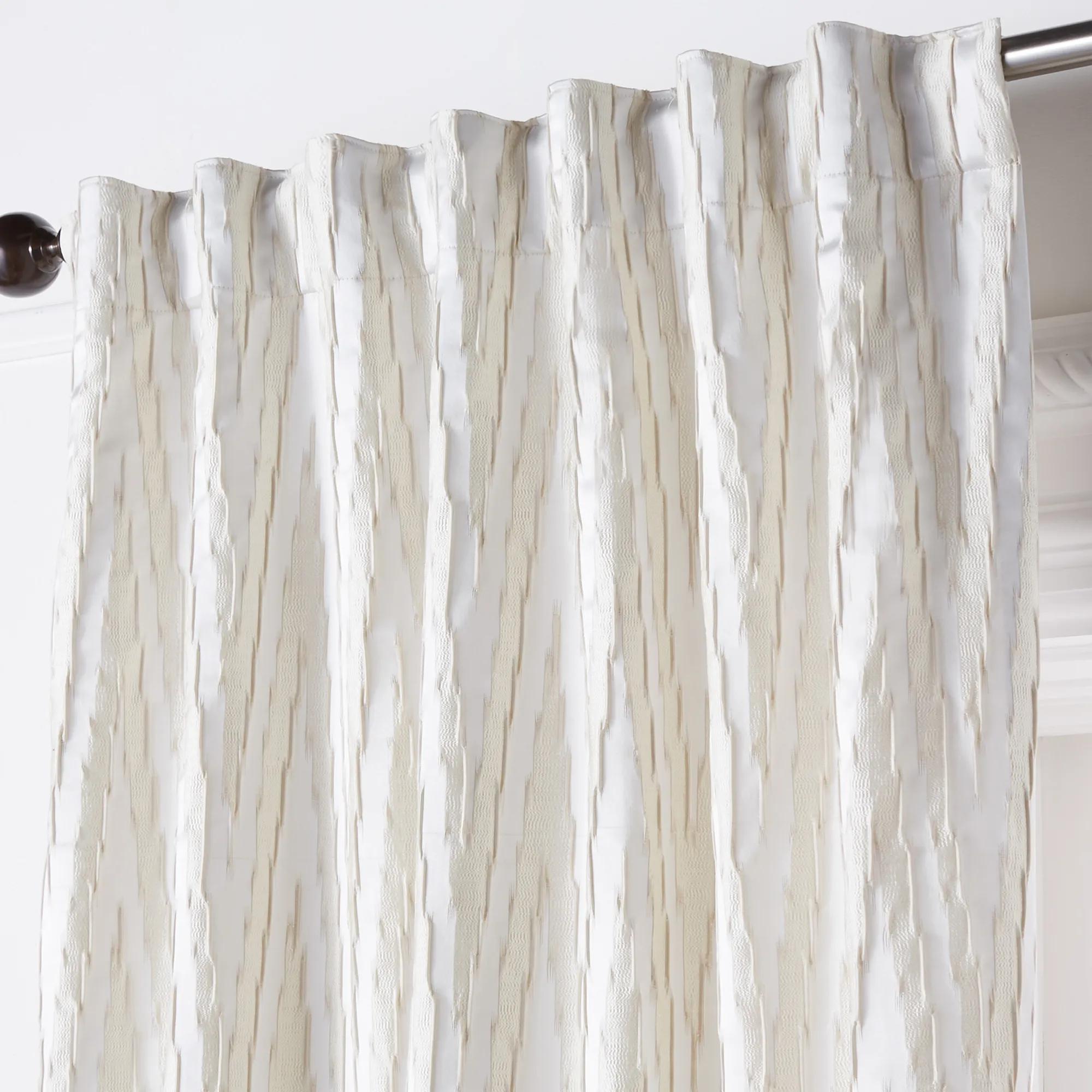 Minka Jacquard Pearl Window Curtain Panel Custom$329
A highly textured chevron curtain panel in pearl, grey, or natural polyester with customizable hanging options.
Add To Cart -
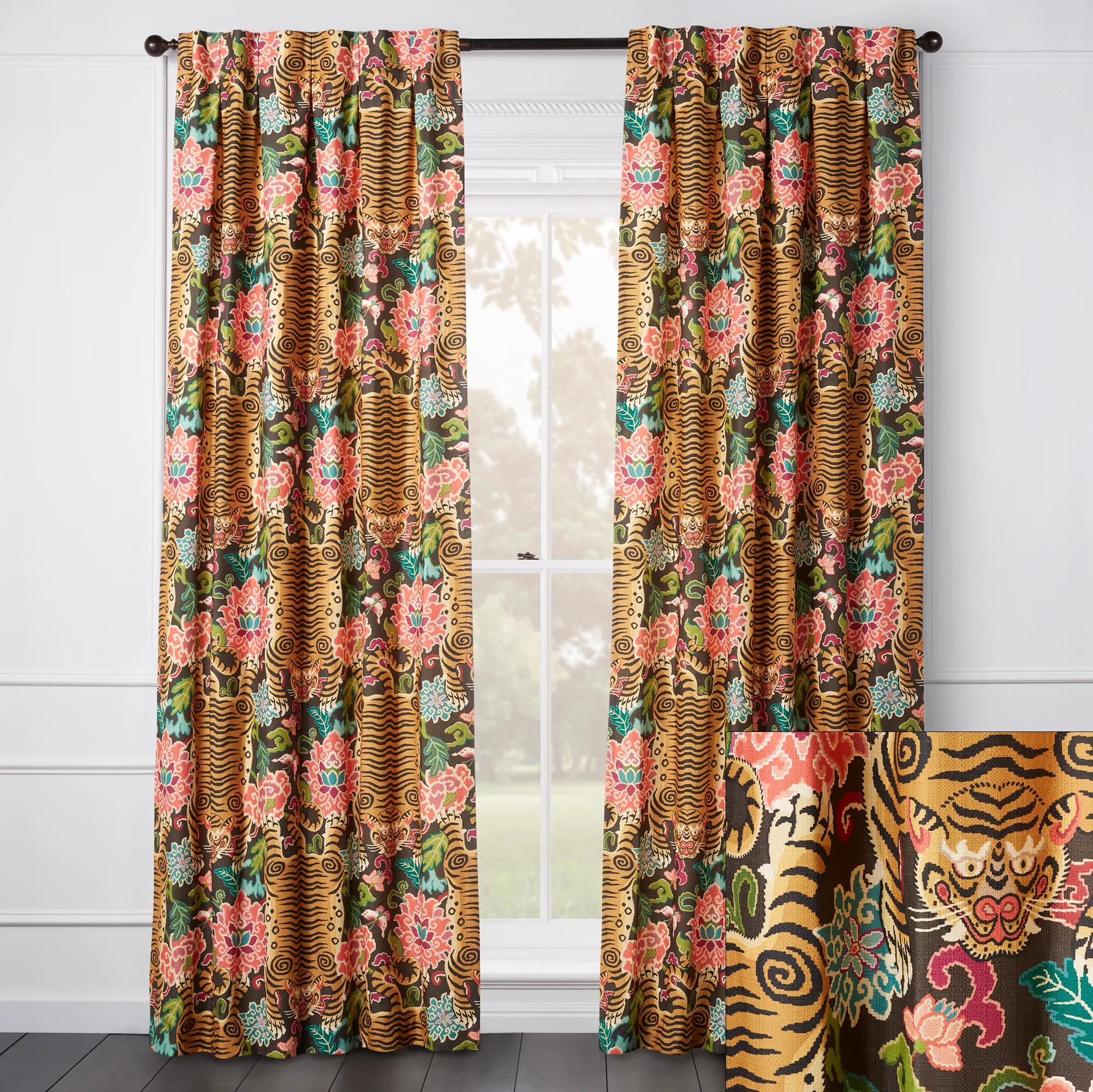
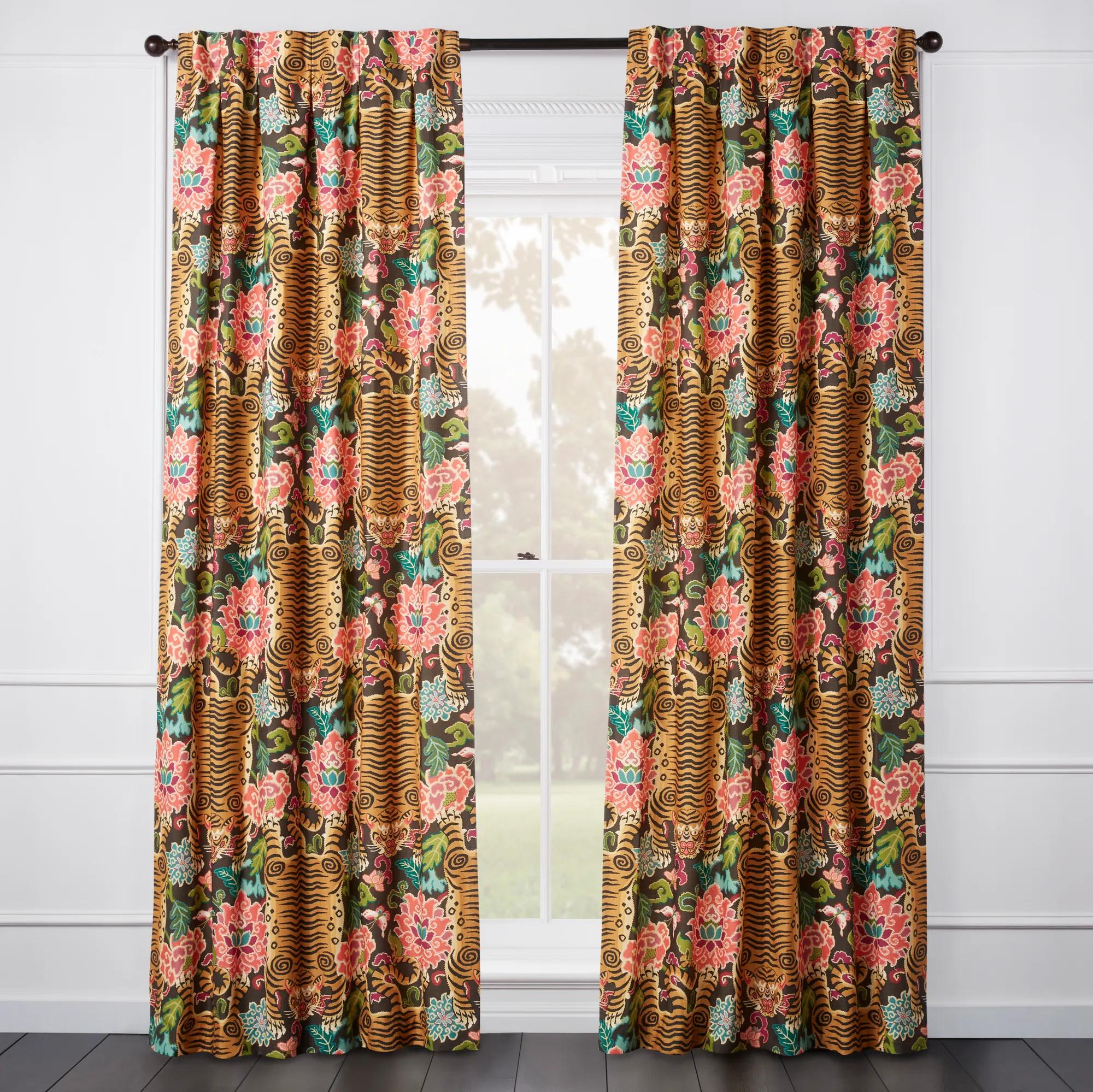 Nimer Gold/Multi Printed Slubbed Cotton Window Curtain Panel$369
A bold gold and multi-colored cotton curtain panel featuring a lively tiger print and customizable options.
Add To Cart -
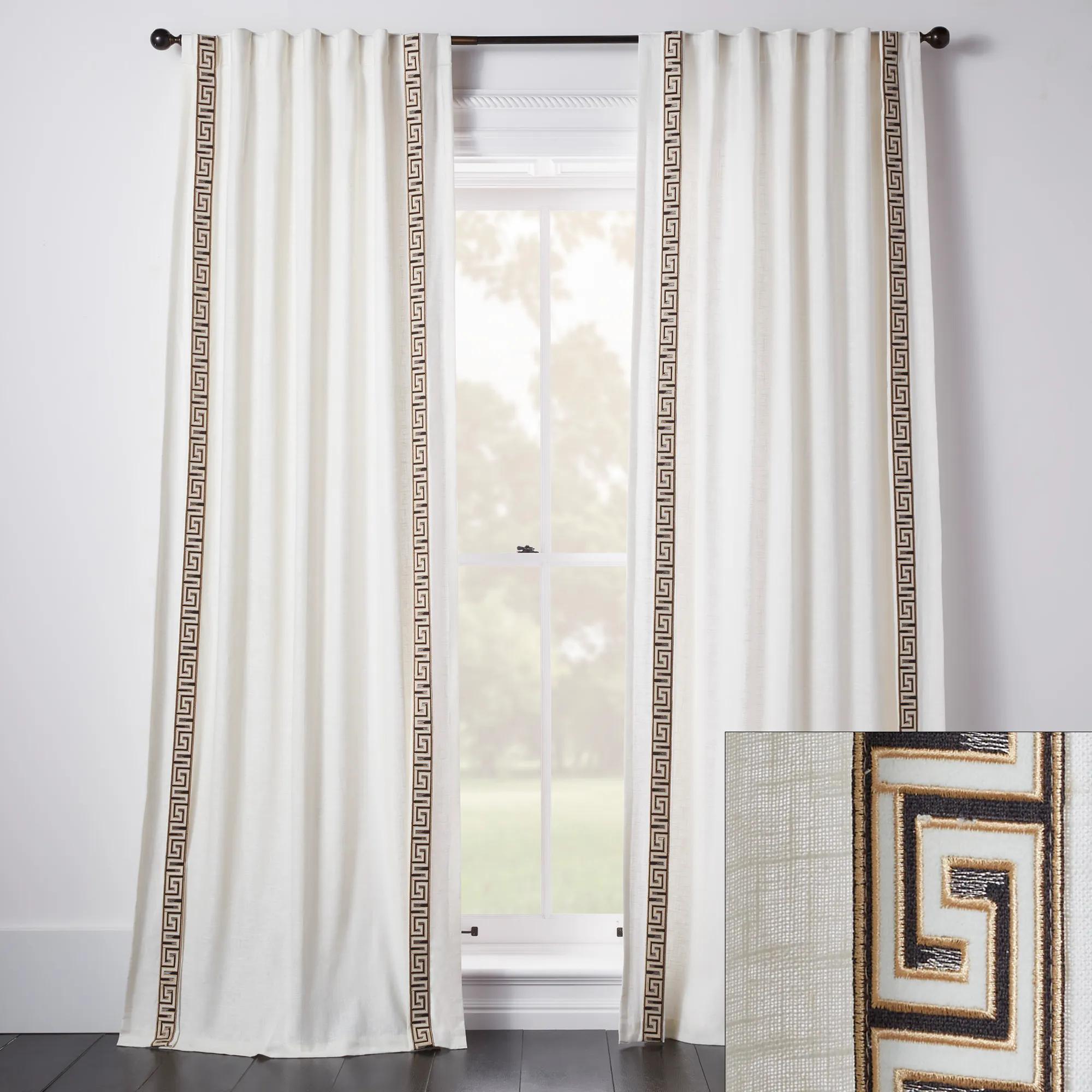 Chole Greek Key Border Velvet Widow Curtain Panels Custom$319
A linen-blend curtain panel with black and gold velvet Greek key border and customizable hanging options.
Add To Cart

120 Inch Window Panels
Transform your space into a grand stage of light and shadow with 120 inch window panels that command attention and invite admiration. These sweeping drapes redefine the art of window dressing, cascading from ceiling to floor in a celebration of scale and sophistication. Whether framing sun-drenched views or creating an intimate cocoon of luxury, 120 inch window panels set the scene for rooms that dare to dream bigger—elevating every glance, every gathering, and every moment spent within your curated sanctuary.
120-inch window panels are extra-long curtain panels measuring 120 inches, or 10 feet, in length. Their generous drop makes them especially suited to tall windows, high ceilings, and some sliding glass doors, provided the mounting height and floor clearance suit that length. Beyond their practical role, these panels introduce a striking vertical element: fabric draws the eye upward, softens expansive walls, and gives architectural features a more deliberate frame. In a living room with lofty ceilings, long drapery can bring intimacy to a space that might otherwise feel imposing. In a bedroom, it creates an enveloping backdrop for an upholstered headboard, layered bedding, or a sculptural bedside lamp. The effect depends as much on the fabric as the length. Velvet brings depth and a luminous surface that changes with the direction of its pile, while linen and linen-blend fabrics offer visible texture and a more relaxed fall. Polyester and blended constructions can offer shape retention and easier maintenance, though performance depends on the weave, finish, and care instructions. Sheer fabrics diffuse daylight into a soft wash, leaving the architecture visible beneath their folds; denser textiles create a more substantial visual boundary. Color adds another dimension. Ivory and pale neutrals can extend the quiet elegance of tonal walls, while charcoal, jewel tones, and other saturated shades give a window the presence of a dramatic focal point. A subtle sheen catches light differently from a matte weave, and an understated pattern becomes more pronounced across such a long expanse of fabric. For anyone furnishing a grand room, refreshing a tall-windowed apartment, or giving an ordinary wall greater stature, extra-long panels offer an expressive balance of softness, scale, and architectural polish. Their appeal lies not simply in covering glass, but in giving the entire room a stronger sense of proportion.
A beautiful fit begins with the relationship between the curtain hardware, the window, and the floor—not the window height alone. For 120-inch curtain panels, the relevant measurement is the distance from the point where the fabric will hang to the intended hem position. Rings, grommets, rod pockets, and back tabs suspend fabric differently, so the header construction influences the finished drop. A rod positioned near the ceiling may emphasize height, but it still needs to place the hem where the room requires it. Panels that just meet the floor create a tailored line; a slight break introduces softness; a deliberate puddle creates a more theatrical finish suited to spaces where the fabric will remain relatively undisturbed. Along frequently used sliding doors or busy circulation routes, clearance matters more than a sweeping pool of fabric. Width deserves equal attention because length alone does not create luxurious fullness. As a general starting point, combined panel widths totaling about one and a half to two times the rod width create gentle to fuller folds, with the ideal amount varying by fabric weight, header style, and whether the panels must close completely. For example, an 80-inch rod span would require approximately 160 inches of combined flat fabric width for two-times fullness. Listed dimensions should be checked carefully, since width may refer to an individual panel rather than a pair, and pleated styles may be measured differently. Hardware also needs to suit the fabric’s weight and the mounting surface, particularly when long, lined panels place greater demands on brackets and anchors. Allowing space beside the window for open panels helps preserve the view and keeps the fabric from crowding the glass. In a room with several windows, consistent mounting heights and hem placement can make separate openings feel like one composed architectural arrangement. These details distinguish drapery that merely reaches the floor from drapery that feels integrated with the room, with folds that settle gracefully rather than appearing stretched, sparse, or awkwardly compressed.
The way a room is used should shape the choice of opacity, lining, and finish. A sheer panel can lend a dining room an ethereal glow, but it generally provides limited privacy, especially when interior lights are on after dark. Light-filtering fabrics soften brightness without necessarily darkening the space, while room-darkening and blackout constructions are intended for greater light control. Those descriptions are not interchangeable, and even blackout fabric can allow light around the edges if the installation leaves gaps. In a bedroom, pairing a decorative outer layer with a separate shade can balance a richly textured appearance with more precise privacy and light management. For a coordinated approach to adjoining spaces, 120-inch window curtains can carry generous vertical proportions from a formal living area into a quieter sitting room, without requiring identical colors or fabrics throughout. Long-term beauty also depends on care that respects the textile. Some polyester panels and washable blends permit gentle laundering, while velvet, delicate weaves, structured headers, or certain linings may require professional cleaning; the sewn-in care label should determine the method. Extra length makes shrinkage particularly noticeable when hems have been fitted closely to the floor, so drying instructions deserve careful attention. Gentle vacuuming with an appropriate upholstery attachment can help remove settled dust when the fabric permits it, while pressing or steaming should follow the manufacturer’s guidance to avoid flattening pile or damaging finishes. In households with pets or young children, hems that clear the floor slightly are less likely to collect debris or be stepped on than pooled fabric. Frequent opening and closing also favors a header and rod combination that moves smoothly without repeated pulling on the textile. With thoughtful proportions and appropriate care, these expansive panels become an enduring part of the room’s design: a soft architectural layer that frames the view, enriches the palette, and gives beautiful furnishings an equally compelling backdrop.
FAQs
120 inch window panels are often crafted from luxurious materials such as velvet, silk, linen, and textured jacquard. Velvet panels bring a sense of drama and plushness, perfect for creating a cozy, opulent atmosphere. Silk panels offer a luminous sheen and fluid drape, elevating any room with their subtle sophistication. Linen and jacquard fabrics introduce a relaxed yet refined texture, ideal for layering and adding depth to your window treatments.
These extra-long panels create a striking vertical line that draws the eye upward, making ceilings appear higher and spaces feel grander. Their generous length allows for elegant pooling or a crisp, tailored finish, depending on your style. By choosing rich textures or bold patterns, you can infuse a room with personality, warmth, and a sense of curated luxury that transforms everyday living into a work of art.
Absolutely. Layering 120 inch window panels with sheers, blinds, or shades allows for greater control over light and privacy while adding visual interest. Sheer panels soften the look and filter sunlight, while heavier drapes provide insulation and drama. Combining different textures and tones can create a designer-inspired, multidimensional effect that feels both intentional and inviting.
These panels make a thoughtful and memorable gift for new homeowners, newlyweds, or anyone embarking on a design refresh. Their scale and elegance signal a sense of occasion, making them a perfect choice for someone who loves to entertain, decorate, or simply enjoy the comforts of a beautifully dressed home.
Switching out window panels with the seasons is a creative way to refresh your interiors. In winter, choose rich, insulating fabrics like velvet to create a cozy retreat. As spring and summer arrive, opt for lighter, breezier materials such as linen or silk to let in more natural light and evoke an airy, open feel. The versatility of 120 inch panels lets you effortlessly transform your space to match the mood and energy of each season.