Two Piece Abstract Wall Art
Two Piece Abstract Wall Art
-
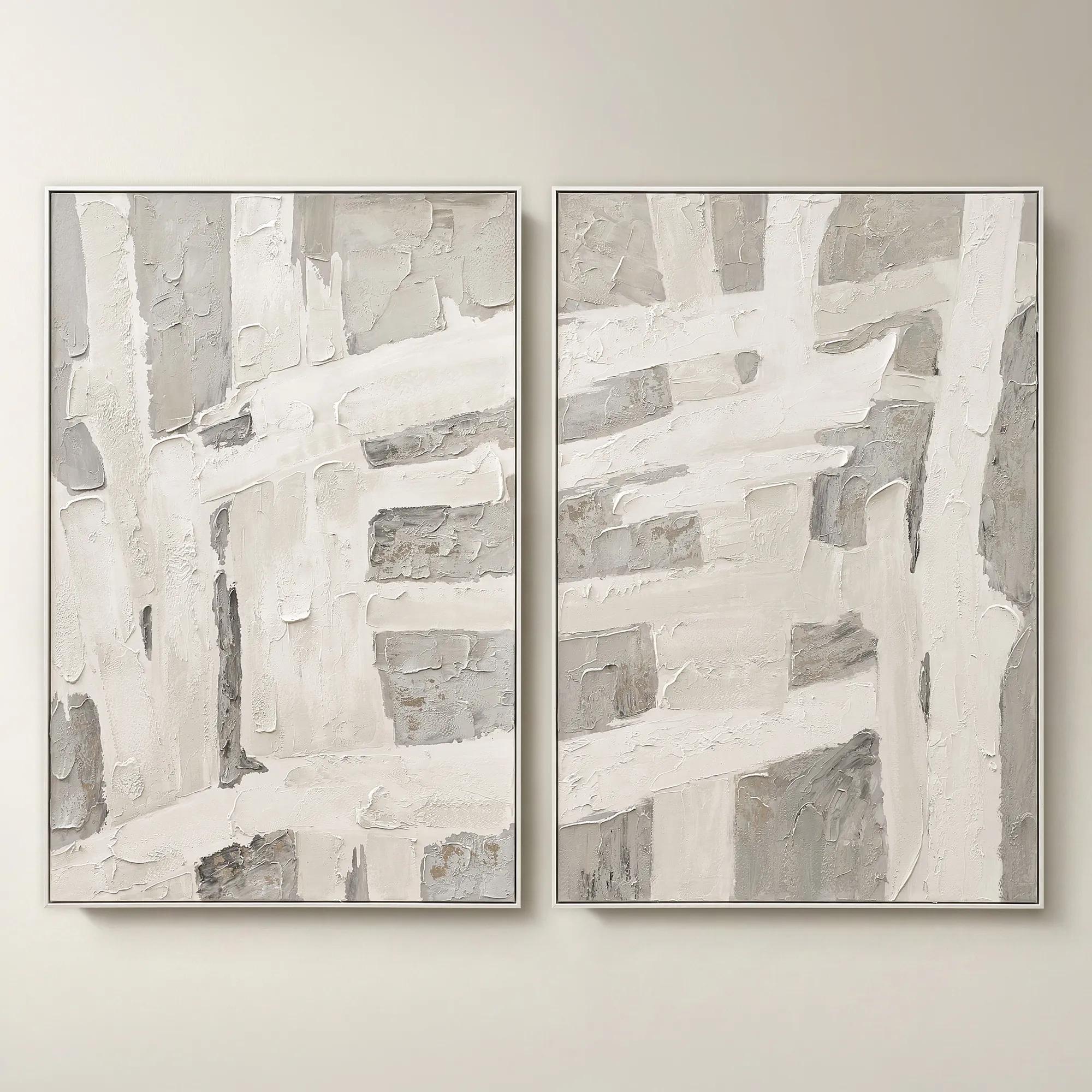 Traverse Framed Painted Wall Art 40" x 60" Set of 2$799
A hand-painted abstract diptych features champagne accents and soft grey, pearl, and alabaster tones in white frames.
Add To Cart -
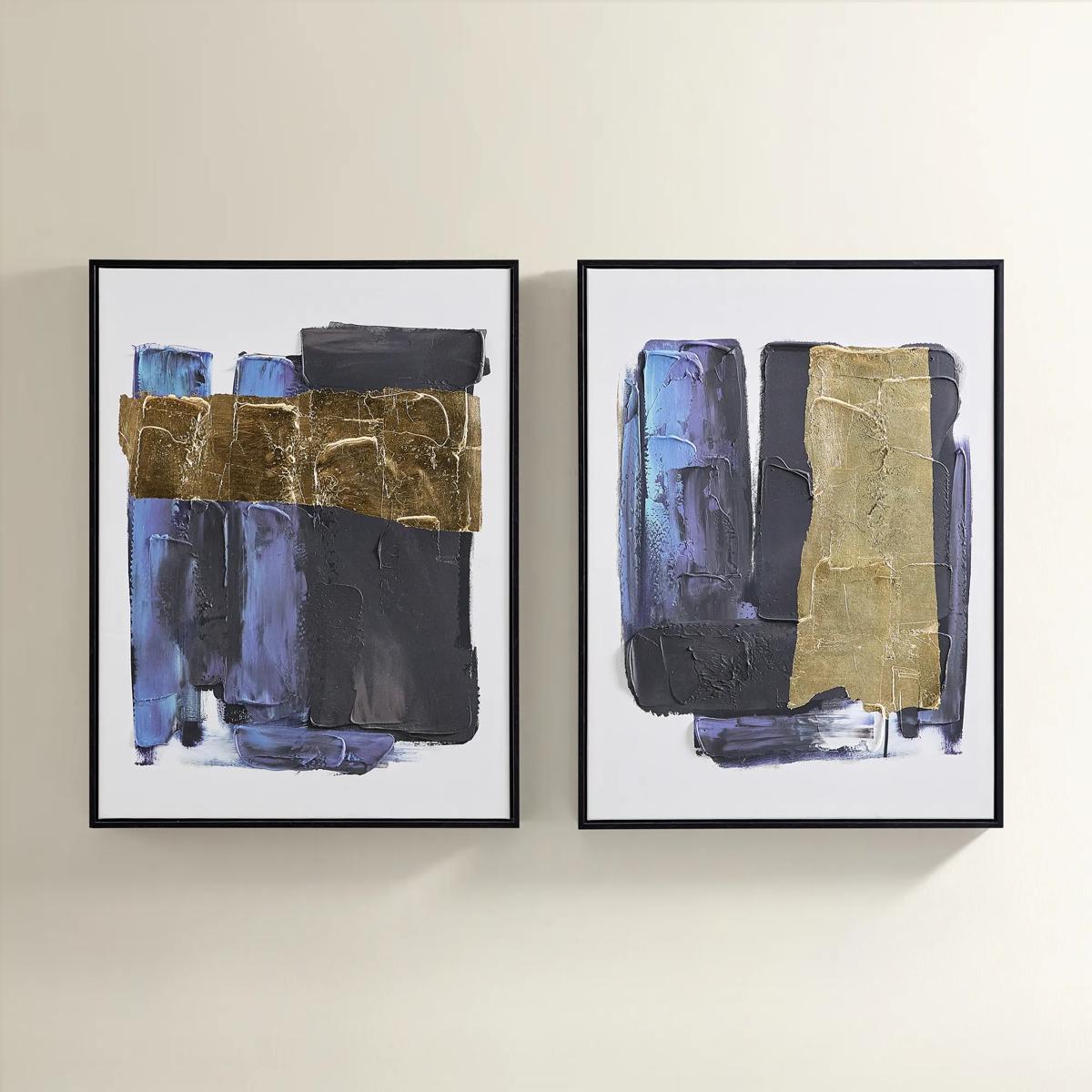
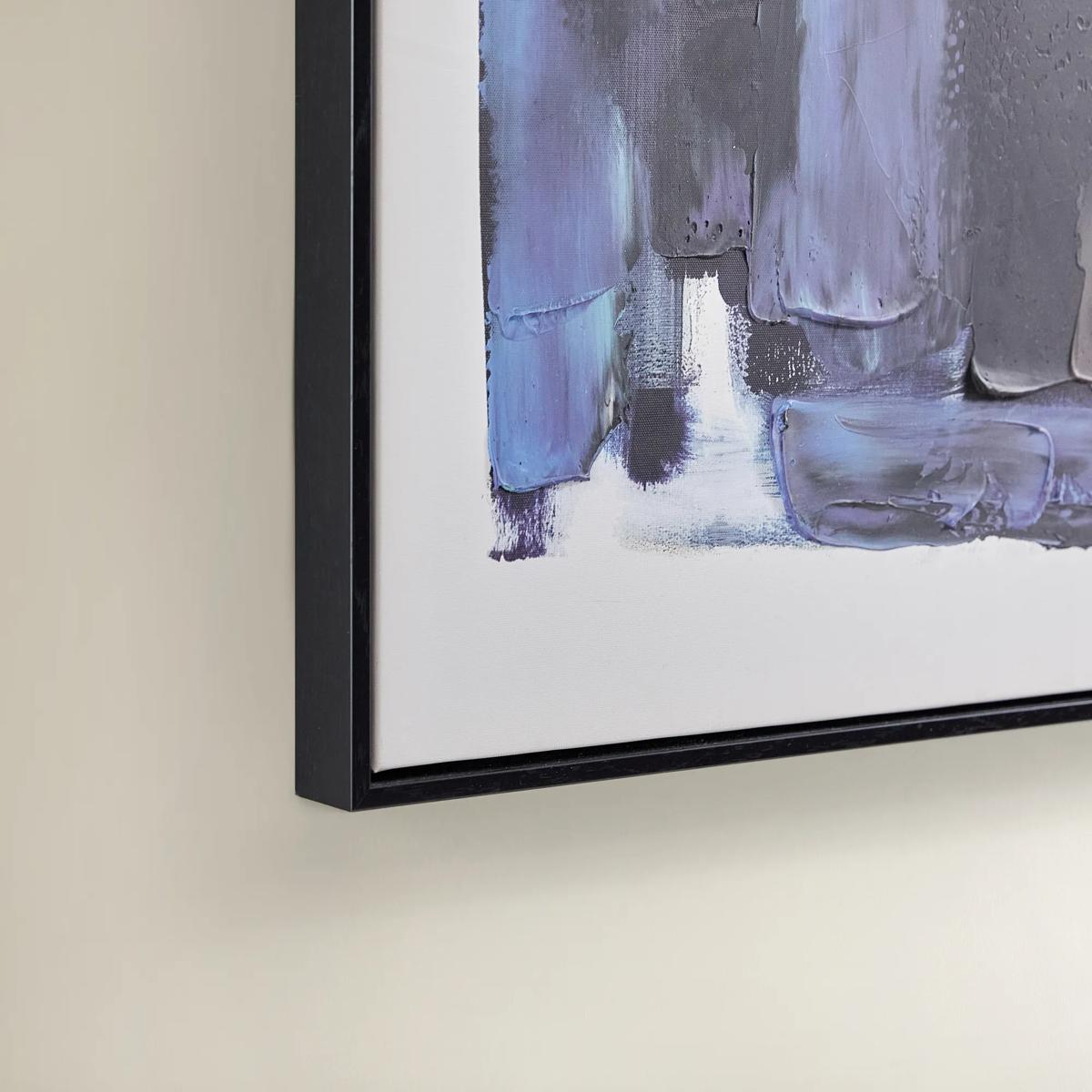 Deep Thoughts Gold Leaf Painted Wall Art Set of 2$199
A set of two hand-painted abstract canvases in blue and gold leaf, framed in sleek black.
Add To Cart -
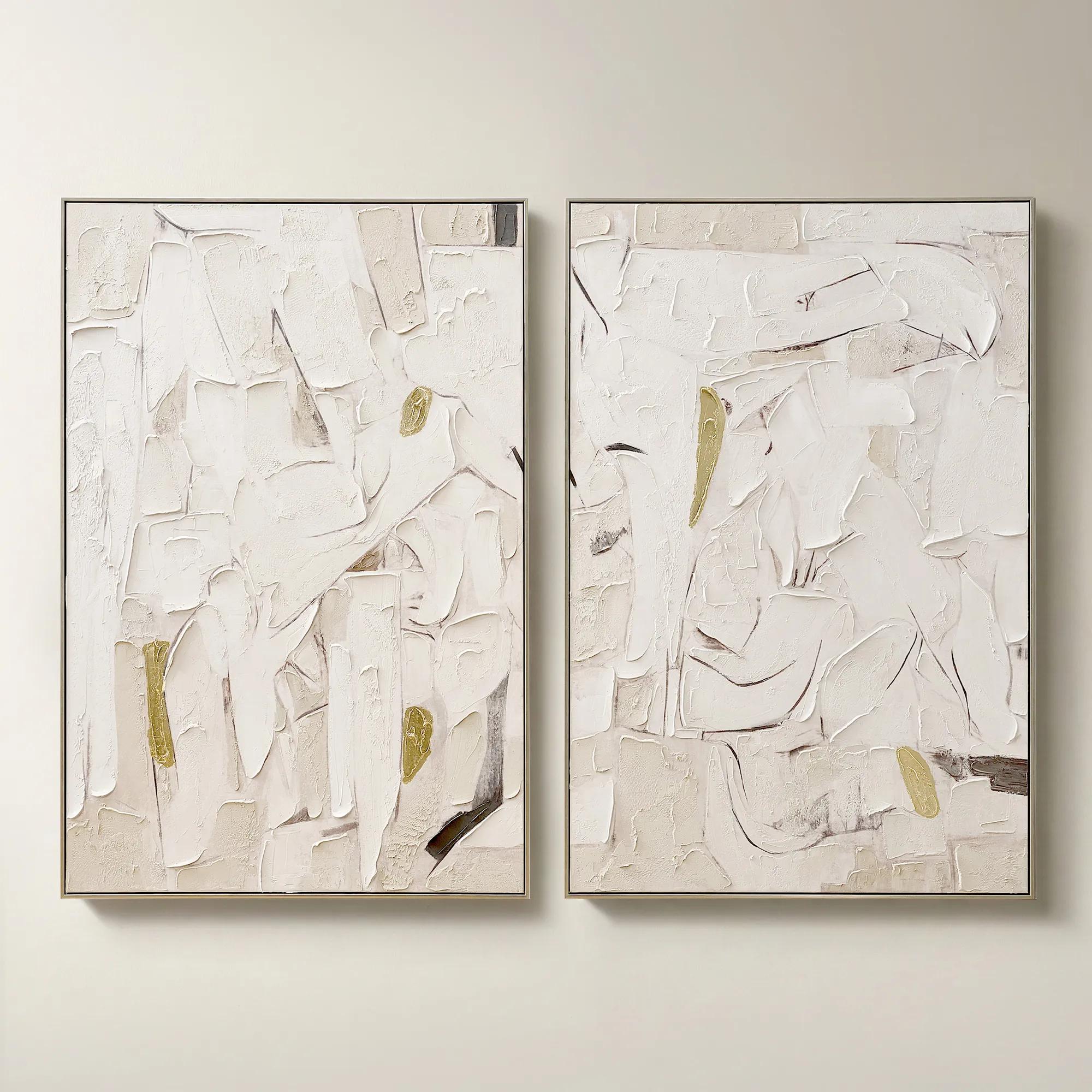 Beneath the Surface Framed Gold Leaf Painted Wall Art 40" x 60" Set of 2$799
A hand-painted abstract diptych featuring gold detailing and layered texture in alabaster and tawny hues.
Add To Cart -
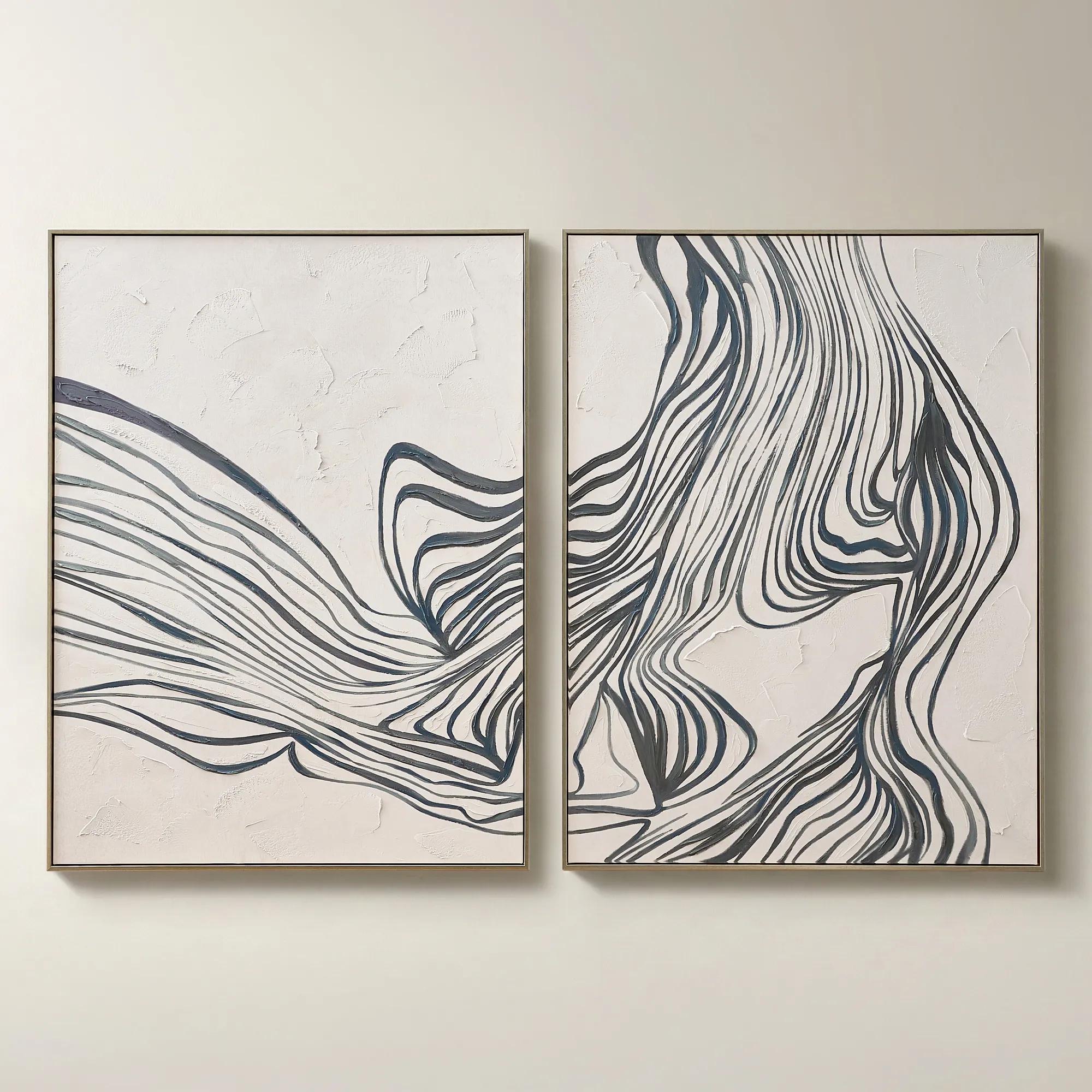
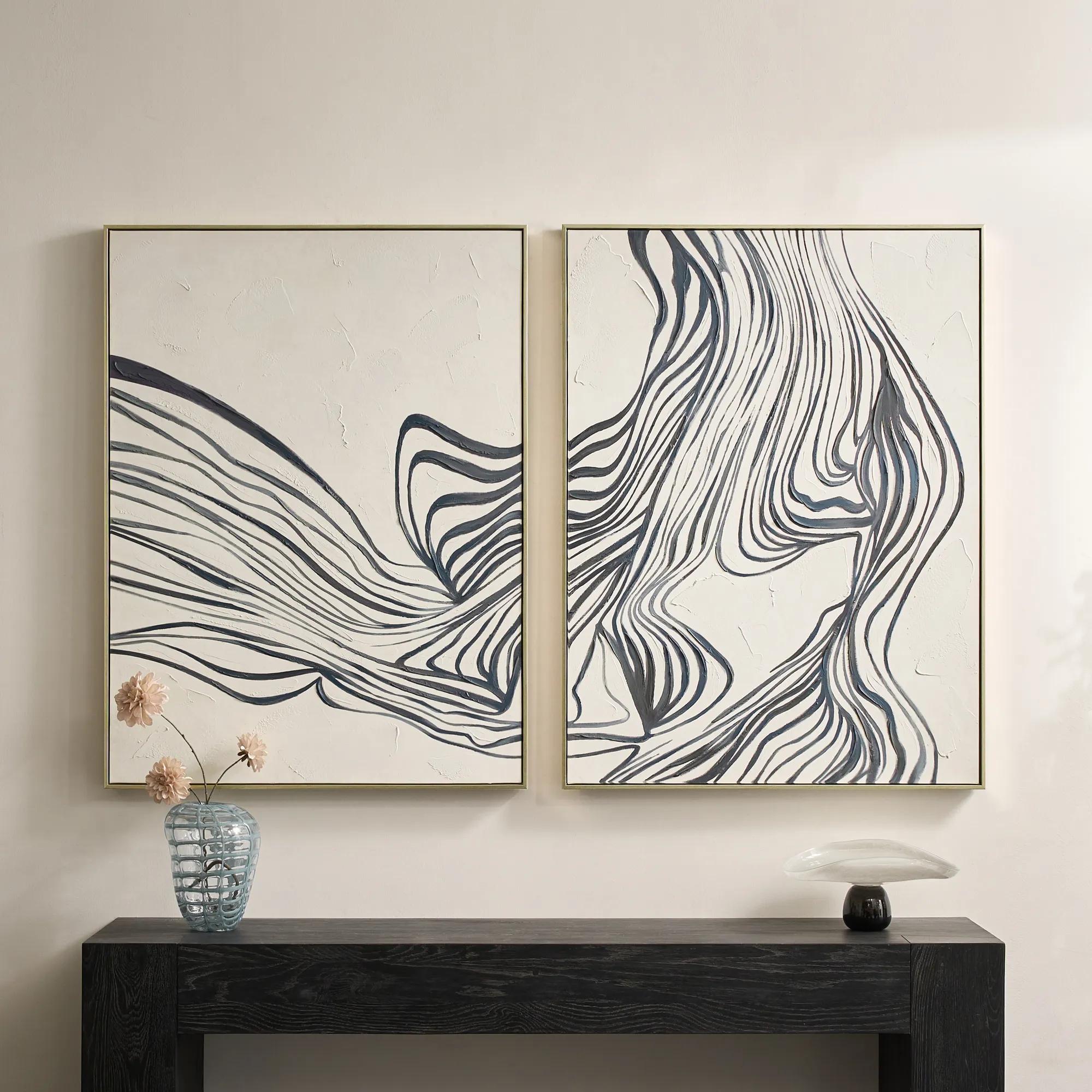 Rhythmic Framed Painted Wall Art 36" x 48" Set of 2$599
A hand-painted diptych featuring bold abstract stripes in dark slate and dusty blue with champagne frames.
Add To Cart -
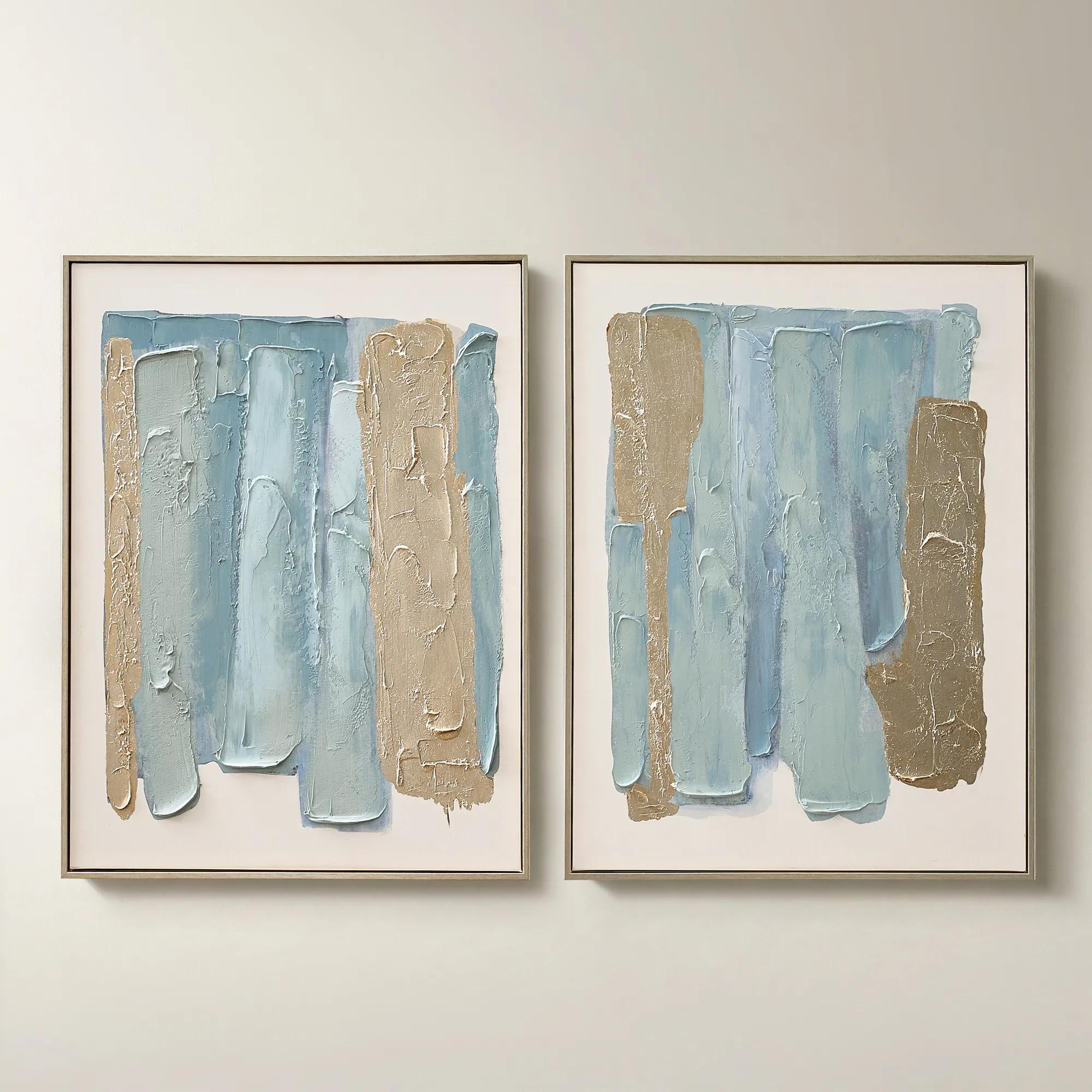
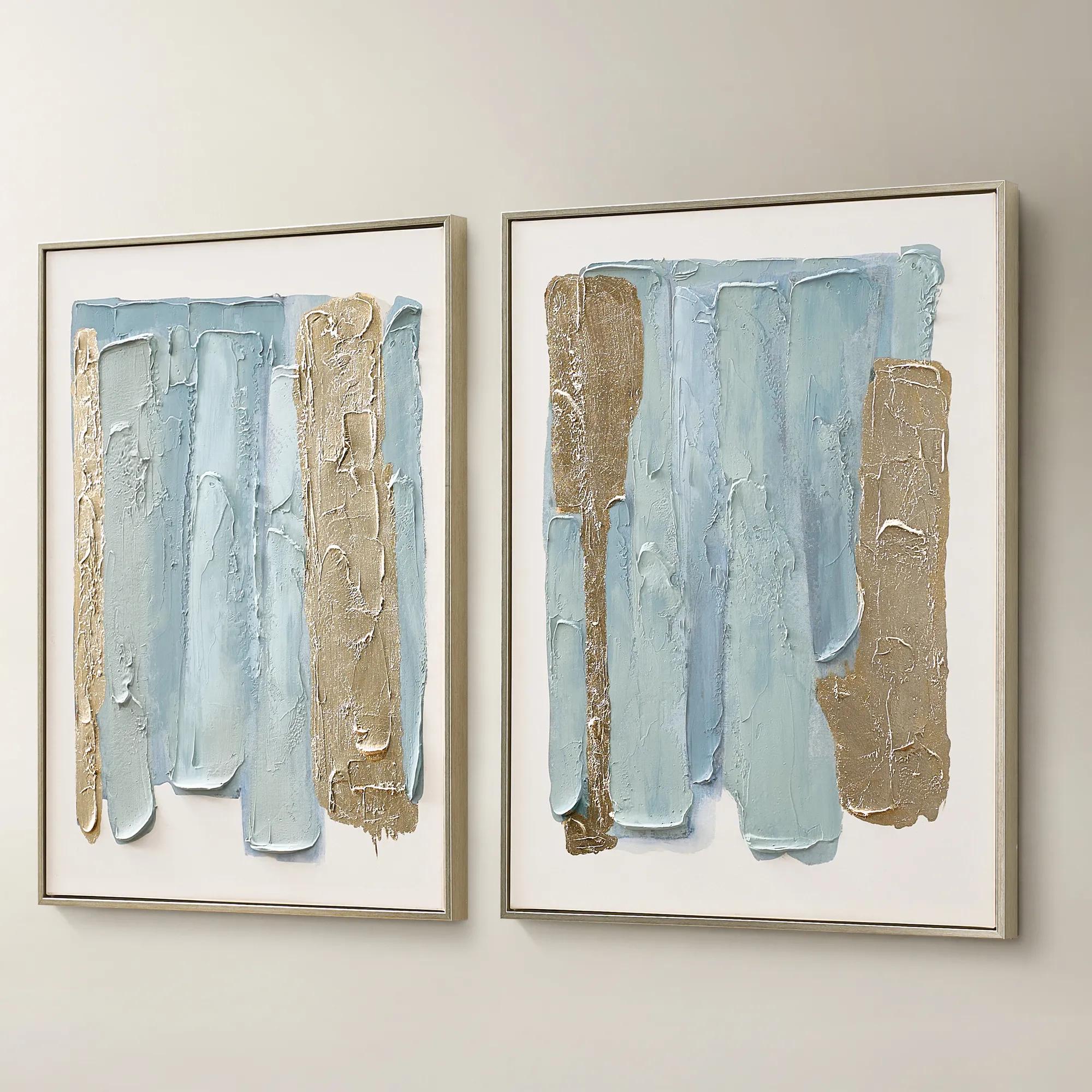 Blue Drift Framed Champagne Painted Wall Art 24" x 32" Set of 2$199
A set of two hand-painted canvases in dusty blue with champagne leafing and modern abstract movement.
Add To Cart -
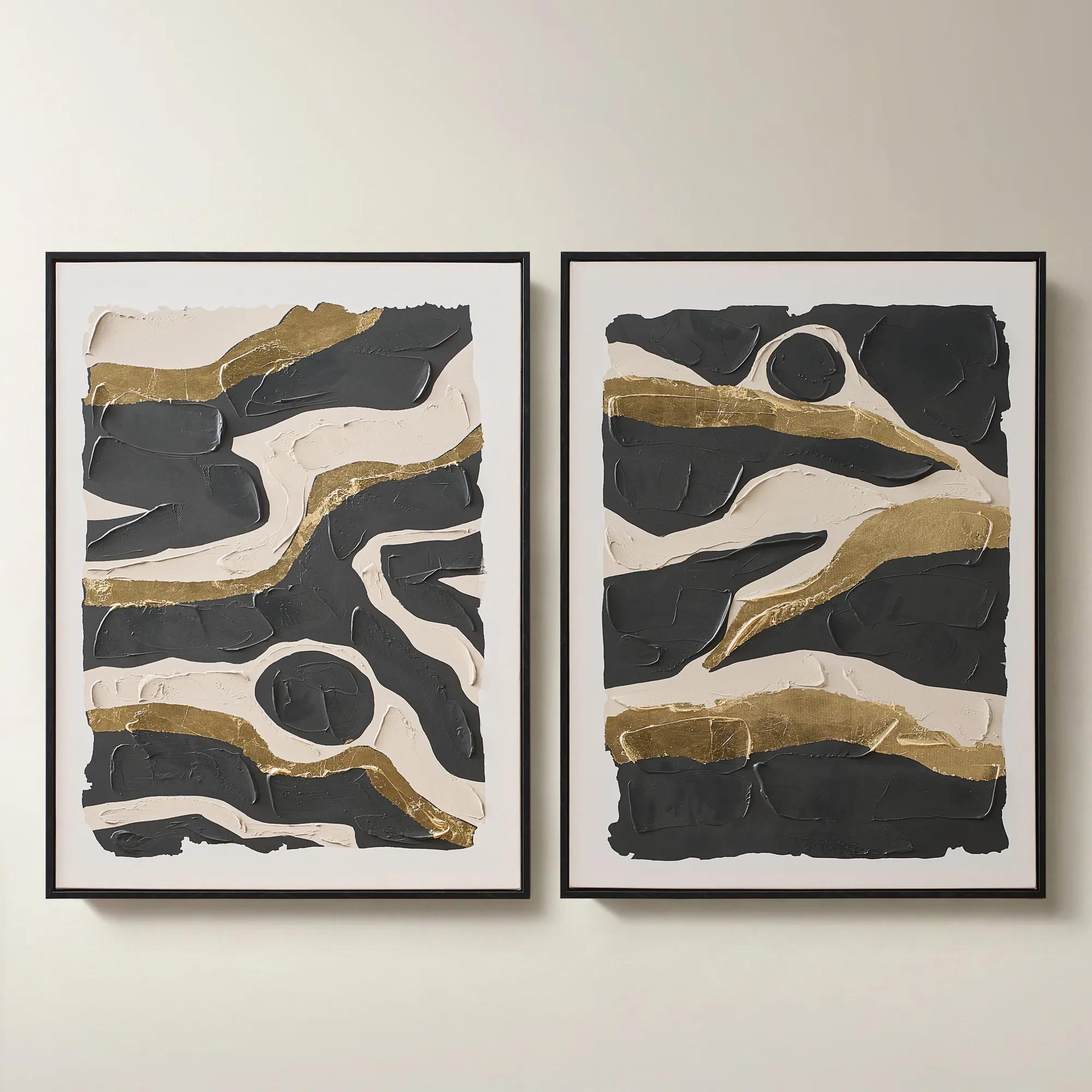
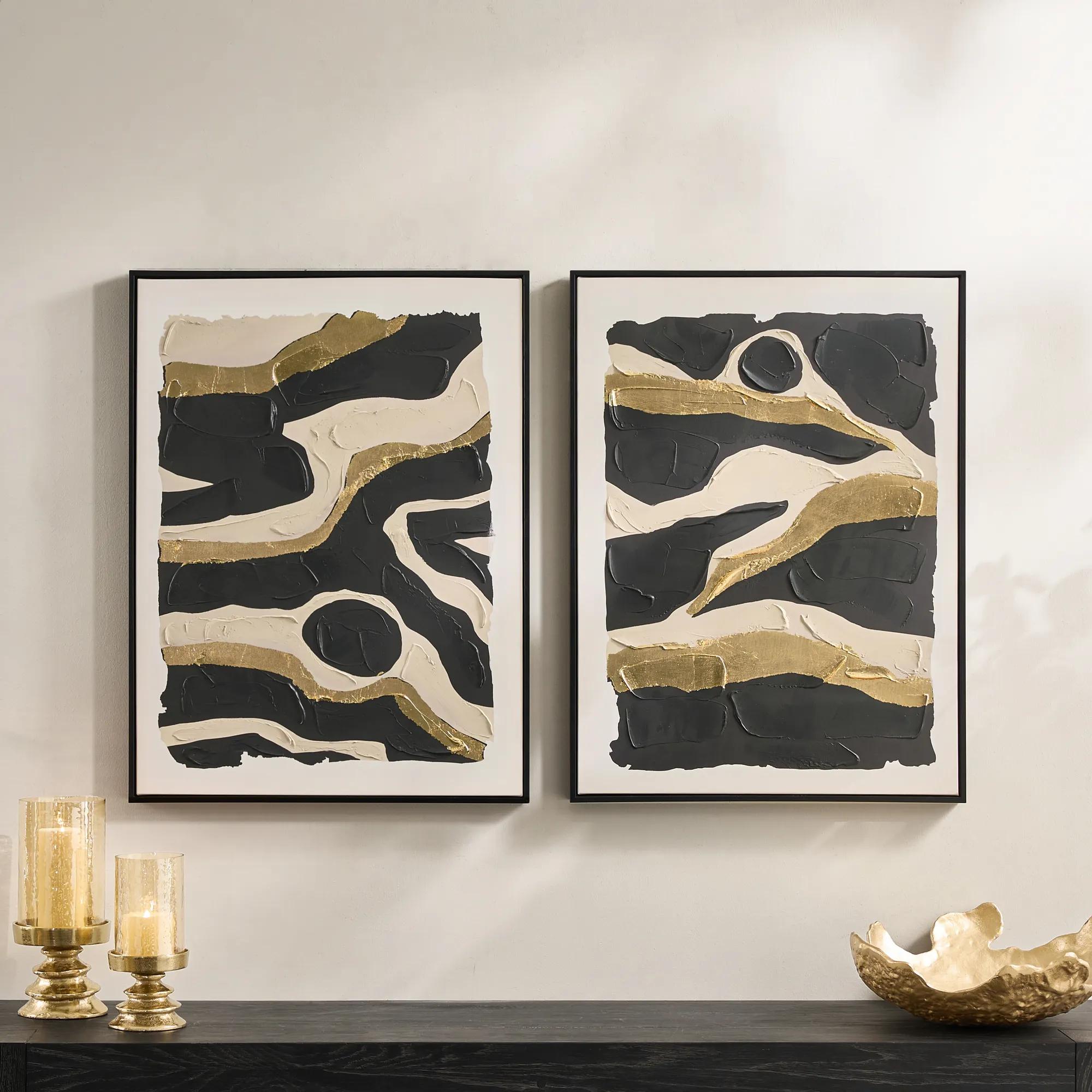 Untamed Framed Gold Leaf Painted Wall Art 24" x 32" Set of 2$199
A hand-painted diptych featuring abstract black and gold canvas art with expressive, gallery-inspired energy.
Add To Cart -
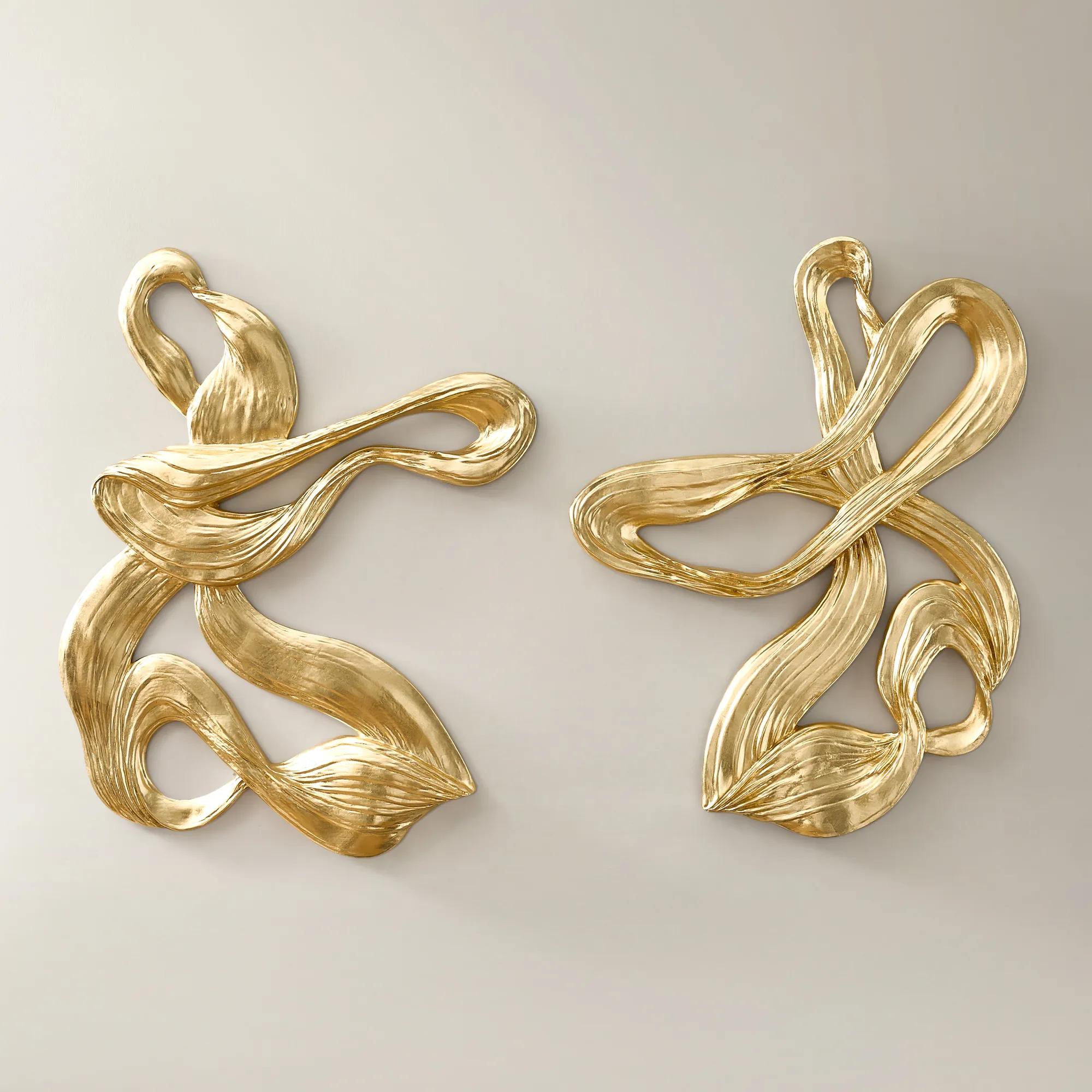
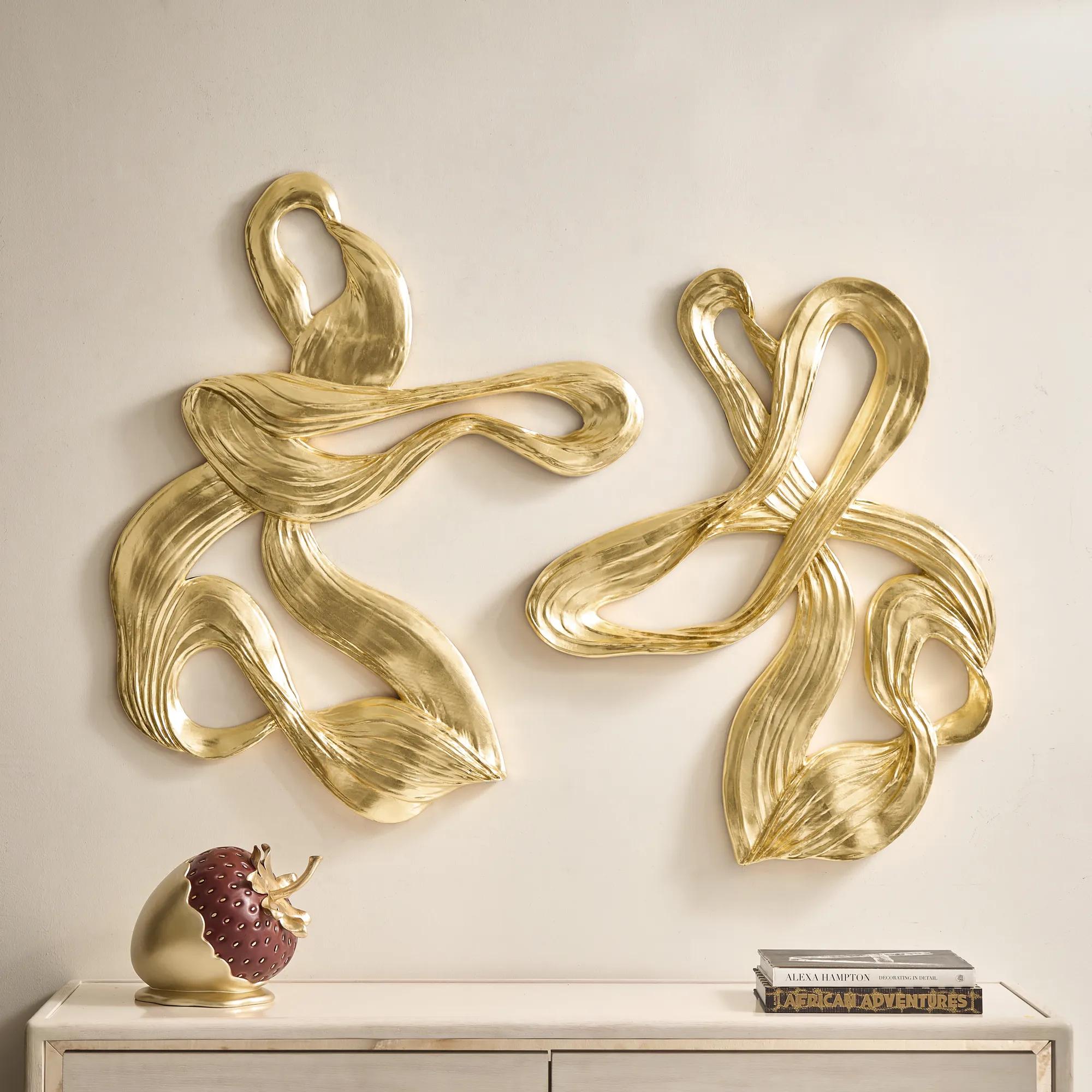 Vela Gold Leaf Sculpted Resin Wall Decor 30.5" x 39.25" Set of 2$699
A set of two resin wall sculptures featuring abstract loop designs and soft gold leafing for modern elegance.
Add To Cart -
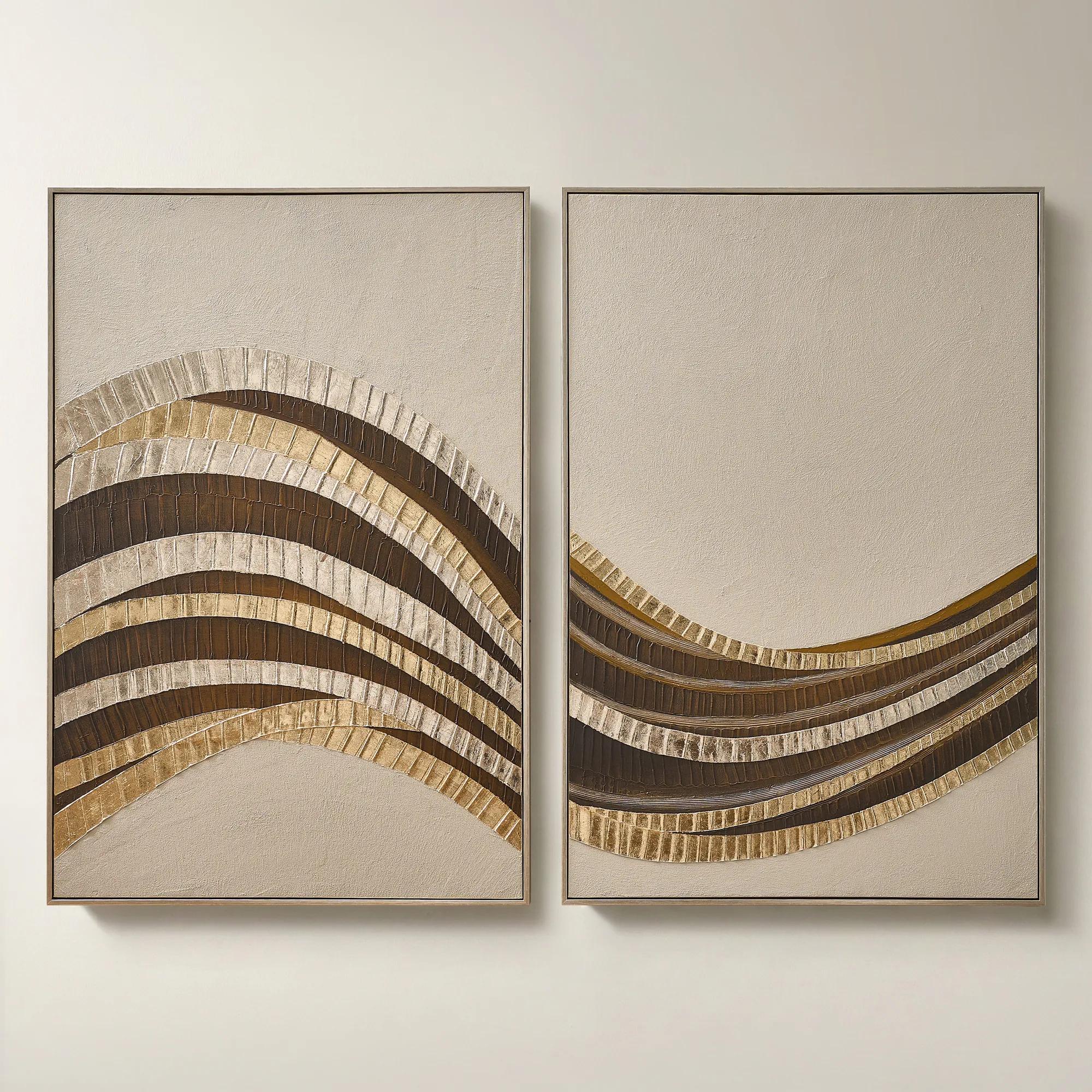 Stillness in Motion Framed Gold Leaf Painted Wall Art 40" x 60" Set of 2$899
A hand-painted abstract diptych with gold leaf accents, textured surface, and brushed champagne frames.
Add To Cart -
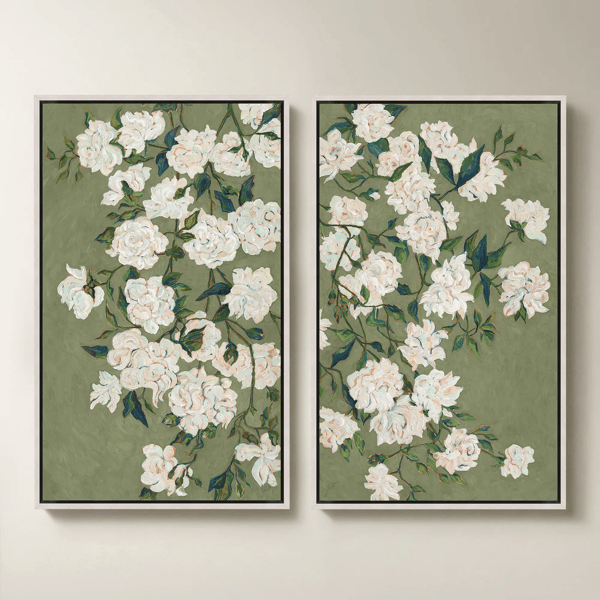
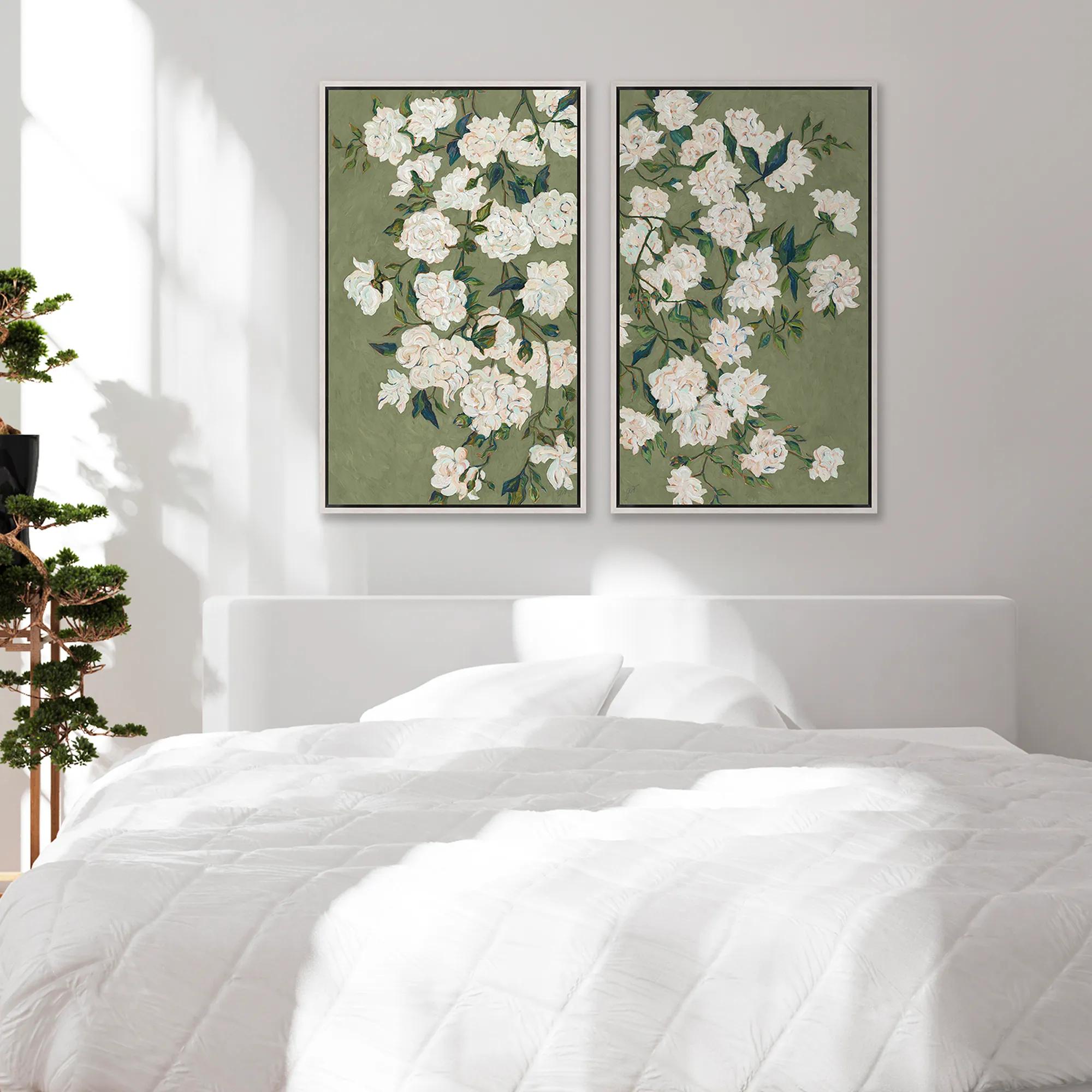 Verdi Vincent Framed Wall Art 21.5" x 41.5" Set of 2$949
A set of two gallery-wrapped fiber texture canvases in white floater frames for modern wall decor.
Add To Cart -
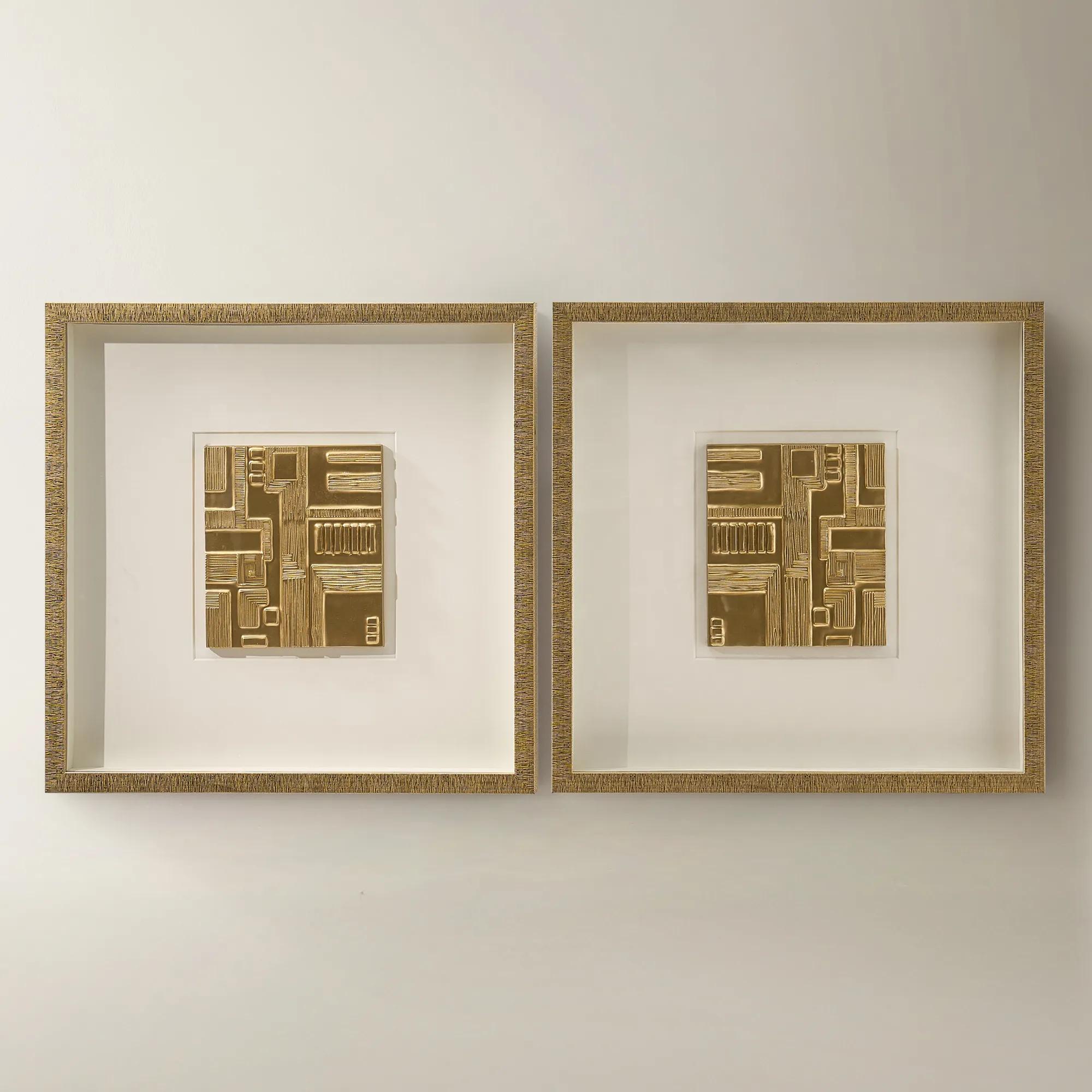
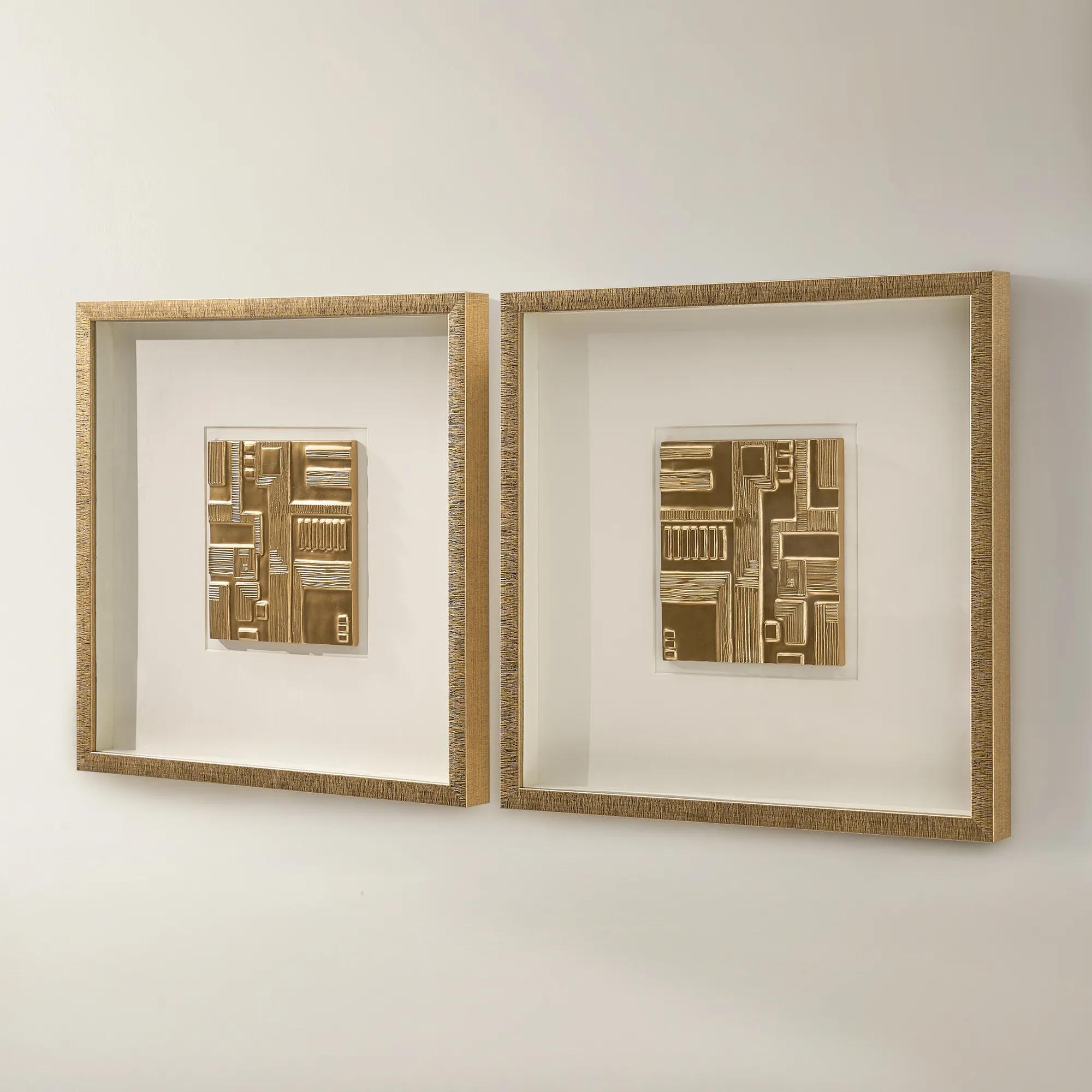 Ritual Framed Woodcarving Wall Decor Set of 2$329
A set of two gold-framed woodcarvings with ivory mats and dimensional relief for gallery-style wall decor.
Add To Cart -
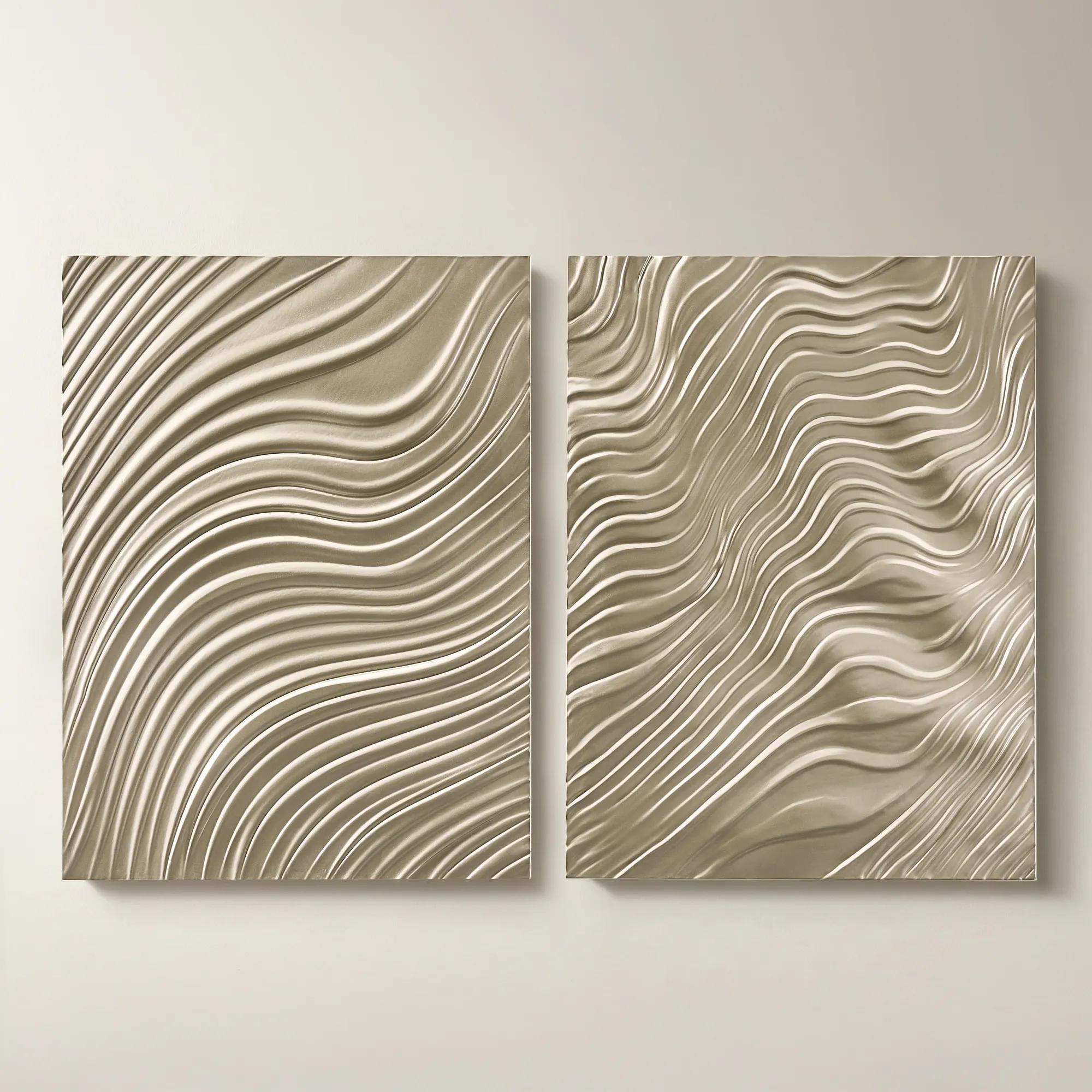
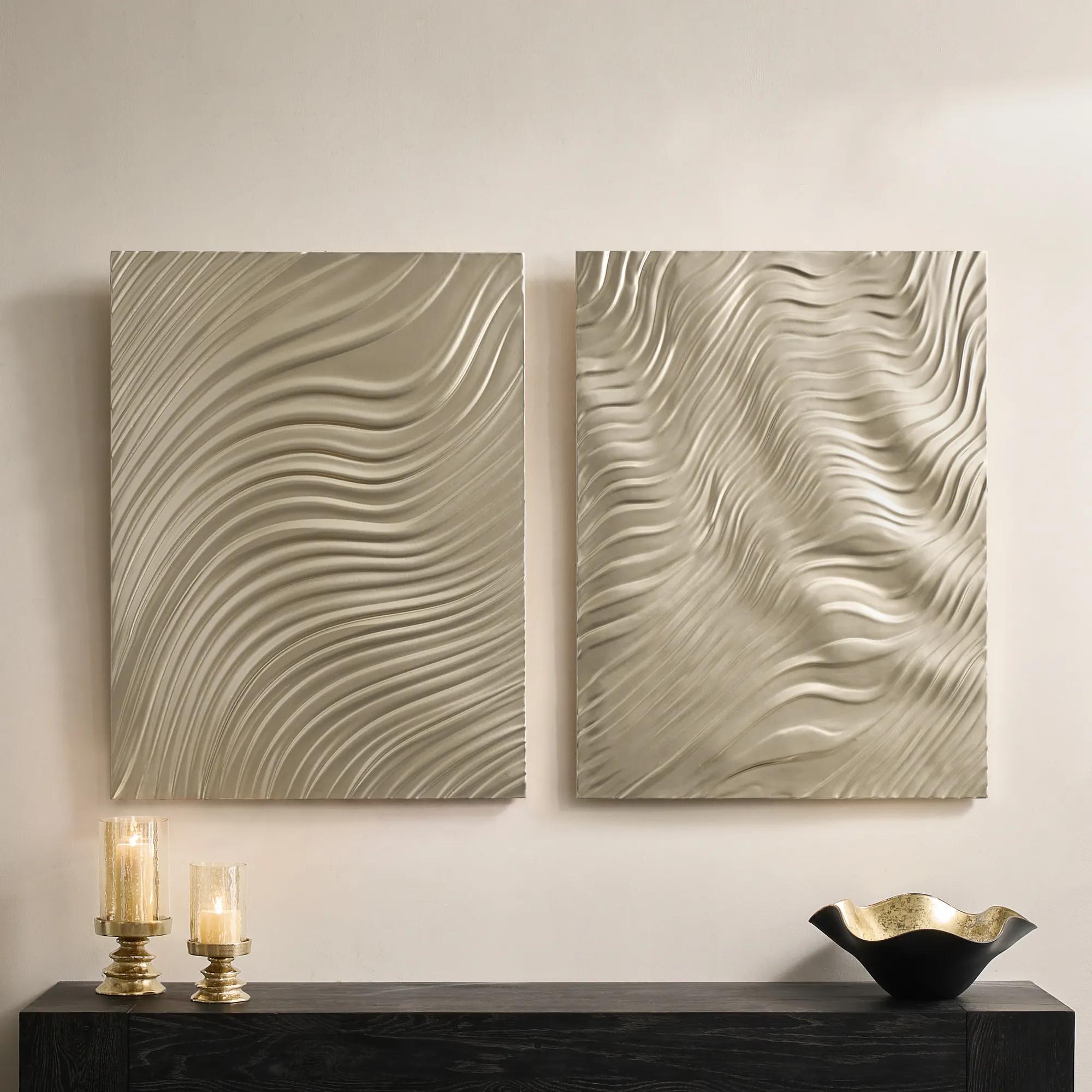 Mirage Champagne Carved Wood Wall Panels 30" x 40" Set of 2$799
A set of two intricately carved wood composite panels in a champagne finish with flowing 3D patterns.
Add To Cart -
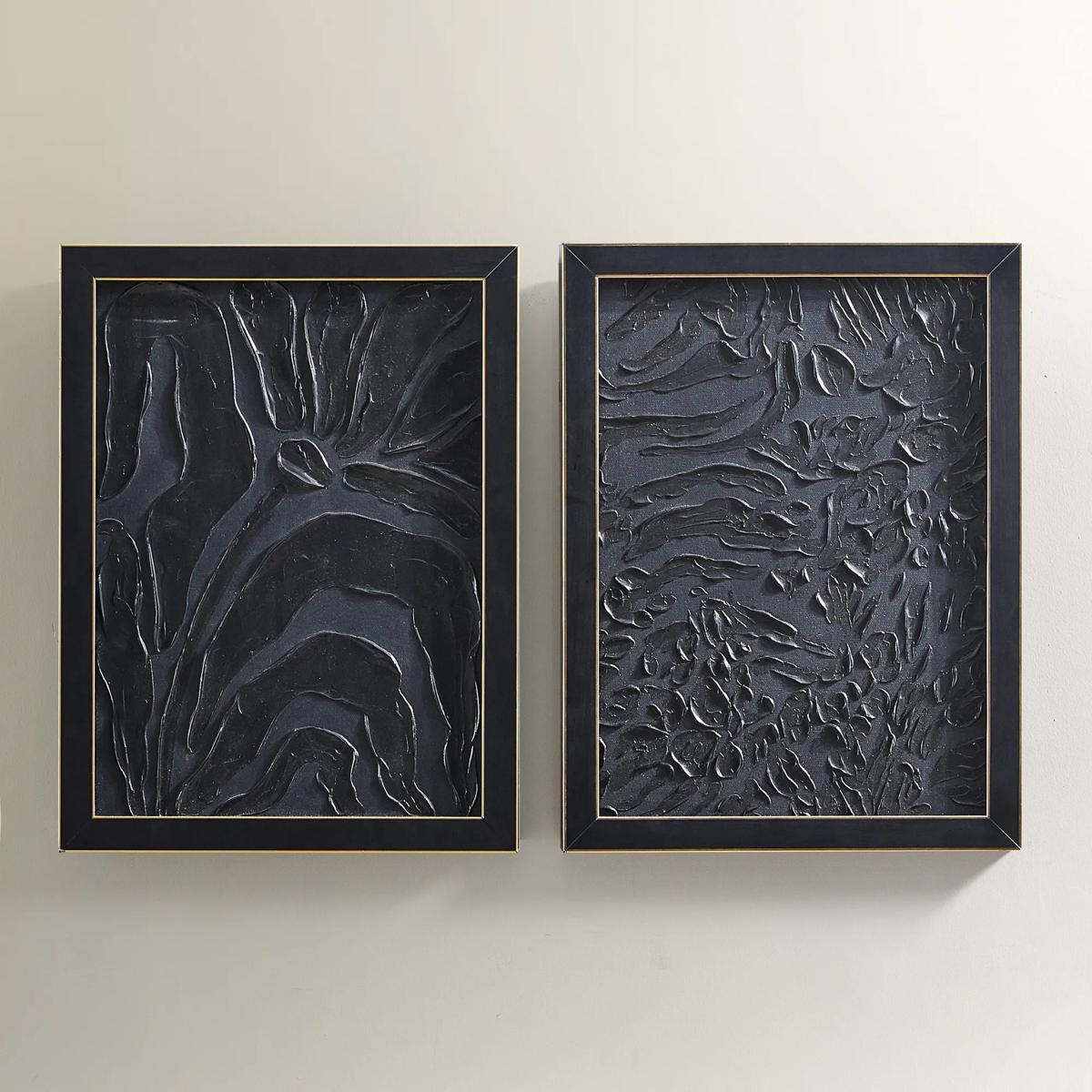
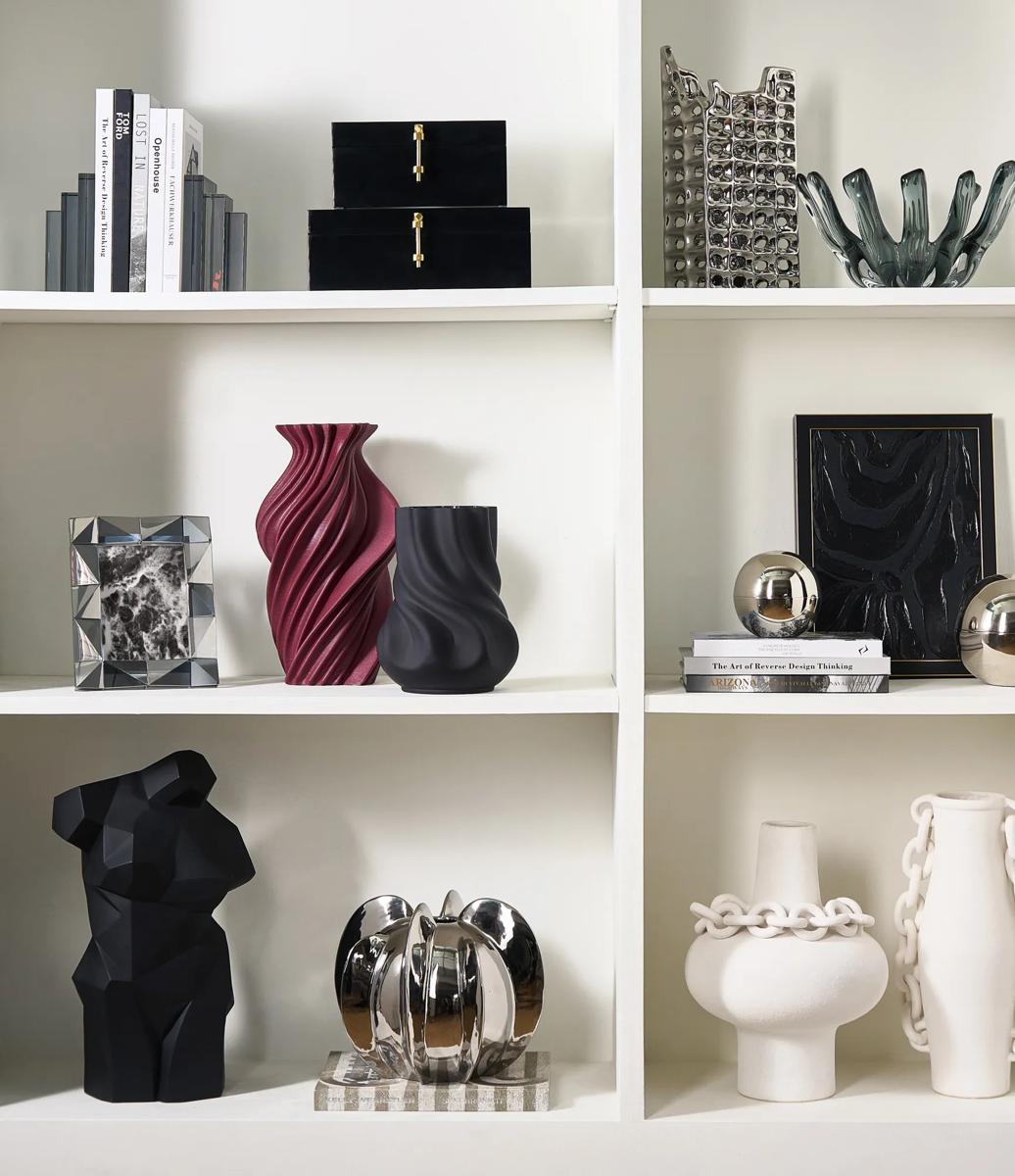 Midnight Animal Painting - Set of 2$119
A set of hand-embellished canvas artworks in black and gold frames, adding depth and warmth to interiors.
Add To Cart

Two Piece Abstract Wall Art
Explore two-piece abstract wall art for a coordinated statement that brings expressive energy to your space. These paired compositions, often called diptychs, create a unified focal point while giving each piece room to stand out. When choosing a set for above a sofa, bed, or console, consider the combined width and spacing between panels for a balanced, gallery-inspired arrangement.
Two piece abstract wall art brings two coordinated artworks into a single visual composition, creating a statement with more movement and flexibility than a solitary canvas. Often called a diptych when conceived as one work across two panels, this format can feature a continuous image, complementary gestures, or separate compositions connected by color, texture, and rhythm. The relationship between the pieces is what gives the arrangement its presence: a sweeping charcoal line may travel across the gap, a wash of ivory may soften both surfaces, or a metallic accent may appear in different places to draw the eye from one panel to the next. Unlike representational artwork, abstraction does not depend on a recognizable subject. Its appeal comes from the feeling it creates, whether that is the composure of broad tonal fields or the energy of layered brushwork. In a living room, a generously scaled pair can give a sofa the architectural backdrop it deserves. Above a dining room sideboard, two coordinated works establish a focal point without turning the entire wall into a gallery arrangement. In a bedroom, diffused forms and restrained contrast can introduce visual depth while preserving a restful atmosphere. Color offers an intuitive way to connect the artwork with the room, but an exact match is rarely necessary. A trace of aubergine can echo a velvet chair, while smoky gray can converse with polished stone or dark upholstery. For a more expressive interior, a vivid pair can introduce an entirely new accent, giving otherwise neutral furnishings a deliberate point of contrast. Black-and-white compositions offer a different kind of drama, emphasizing shape, negative space, and gesture rather than a broad palette. The most compelling pairing feels connected without becoming repetitive, allowing each piece to hold its own while giving the room a stronger overall composition. This balance makes two-panel abstract art especially appealing to anyone who wants a bold focal point with a sense of order.
Scale and spacing determine whether a two-piece arrangement feels commanding, intimate, or disconnected from its surroundings. Before selecting a size, measure the complete area the pair will occupy, including both frames and the space between them. When two pieces hang side by side above furniture, their combined width matters more than the dimensions of either piece alone. An arrangement that occupies roughly two-thirds to three-quarters of the furniture’s width can be a useful starting point, adjusted for ceiling height, nearby lighting, and the visual weight of the art. A pair of densely layered, high-contrast works may feel more substantial than equally sized pieces with pale backgrounds and generous open space. Two vertical panels placed horizontally can lend height to a broad wall, while a stacked arrangement can suit a narrow wall beside a reading chair or console. Keep the gap intentional; a few inches often creates a clear relationship, though the image, frame width, and available wall space should guide the final placement. For artwork designed to continue across both panels, aligning the image is essential to preserving its flow. Painter’s tape or paper templates can help test the arrangement before any hardware goes into the wall. Frame choice adds another layer of expression. A slender dark frame gives fluid marks a crisp boundary, while a metallic finish can pick up the gleam of a nearby lamp or sculptural accessory. Wood introduces grain and tonal variation, offering a tactile counterpoint to smooth upholstery, glass, and lacquered surfaces. For an interior built around organic texture, abstract wooden wall art pieces offer another way to explore expressive form through natural material. Within a two-piece composition, coordinated framing helps maintain continuity, particularly when the images differ. Give the pair enough breathing room to be read together, and consider sightlines from the doorway as well as from the main seating area. A successful placement rewards both the first glance and the closer look.
Materials and construction influence not only the appearance of two piece abstract wall art, but also how it should be displayed and cared for over time. Canvas has a woven surface that can lend softness and dimension to printed imagery or painted compositions. A gallery-wrapped canvas carries the image or finished edge around the stretcher, while a floating frame introduces a narrow reveal that emphasizes the artwork’s depth. Works on paper can bring fine detail and subtle tonal variation into focus, with mats and glazing contributing to the finished presentation. Hand-applied paint and textured embellishments may create raised passages that catch light differently throughout the day; a printed surface offers another visual effect and should be evaluated for image clarity and color fidelity. Neither format alone determines quality, so review the stated medium, frame construction, dimensions, and hanging requirements rather than relying on appearance alone. In bright rooms, placement deserves particular attention because prolonged direct sunlight can alter pigments, paper, and other materials. Protective glazing may reduce some exposure, but it does not make artwork immune to fading. Avoid locations where steam, splashes, or persistent humidity could affect the surface or backing unless the work is specifically described as suitable for those conditions. For routine care, follow the maker’s instructions and use a gentle approach: dust frames with a soft, dry cloth, avoid spraying cleaners directly onto artwork, and leave delicate painted or textured surfaces undisturbed. Use mounting hardware appropriate for the artwork’s weight and the wall’s construction, securing each panel separately. For a housewarming or wedding gift, a coordinated pair can feel especially thoughtful when its palette reflects the recipient’s furnishings and its dimensions suit a known space. Art is personal, so familiar preferences are a stronger guide than an assumed trend. Whether chosen for a first apartment, an established living room, or a home office, a two-piece composition offers a distinctive balance: the presence of a substantial artwork, the rhythm of a pairing, and room for individual expression.
FAQs
Two piece abstract wall art pairs two panels in a coordinated composition, often called a diptych. The artwork may continue across both panels or connect through shared colors, shapes, and gestures, creating a layered visual story with a distinctive sense of rhythm.
Let the composition lead. Follow sweeping lines, recurring shapes, or shifts in color to understand how the panels relate, and honor the artwork’s intended orientation. Consistent alignment helps the pair read as a deliberate artistic statement rather than two unrelated accents.
Decide whether you want harmony or contrast. Echo tones from upholstery, rugs, or decorative accents for a richly connected room, or introduce an unexpected hue to give the artwork a commanding presence. Repeating one art-inspired accent color elsewhere can bring the entire setting into focus.
Two piece abstract wall art brings expressive energy to contemporary, glamorous, and transitional interiors. Fluid compositions can soften structured furnishings, while bold geometry adds definition to layered spaces. Choose an artistic mood that complements your room’s character without making every detail match.
Give the artwork a starring role, then build a supporting cast of sculptural objects, distinctive lighting, and tactile accents. Echo a curve, color, or geometric motif from the panels rather than repeating every element. This creates a collected, expressive setting where the art remains the focal point.