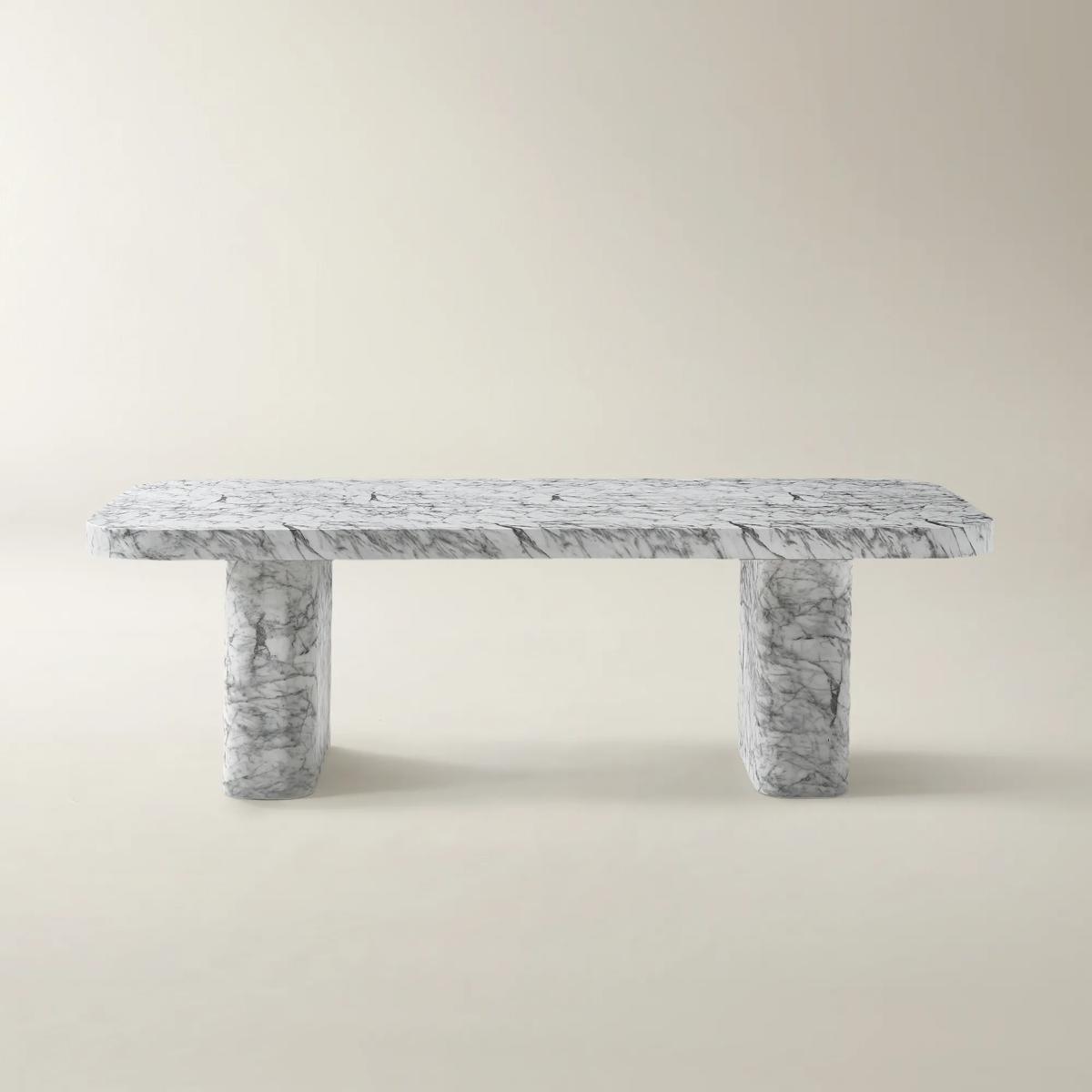
Round Tables For Modern Decor
Round Tables For Modern Decor
-
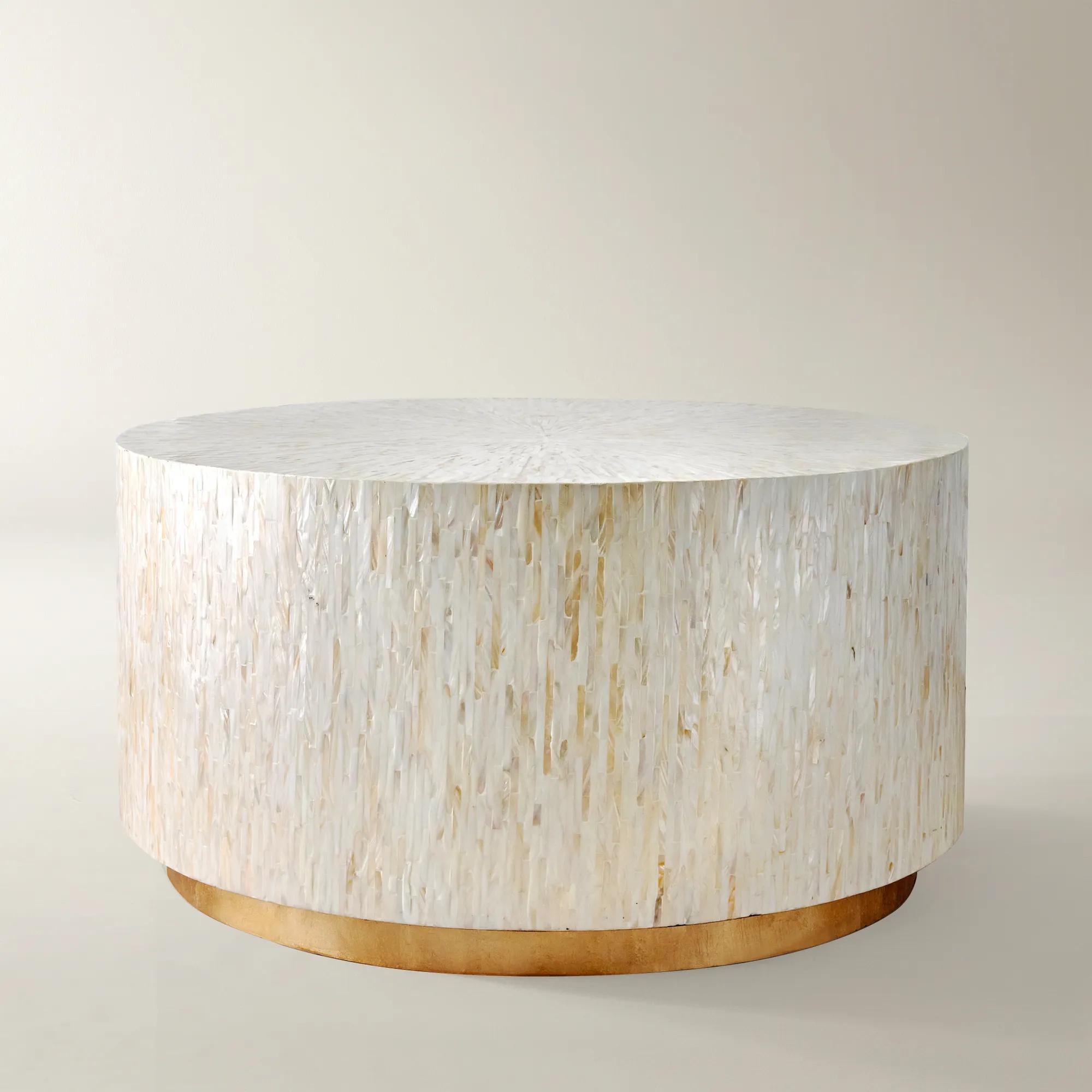
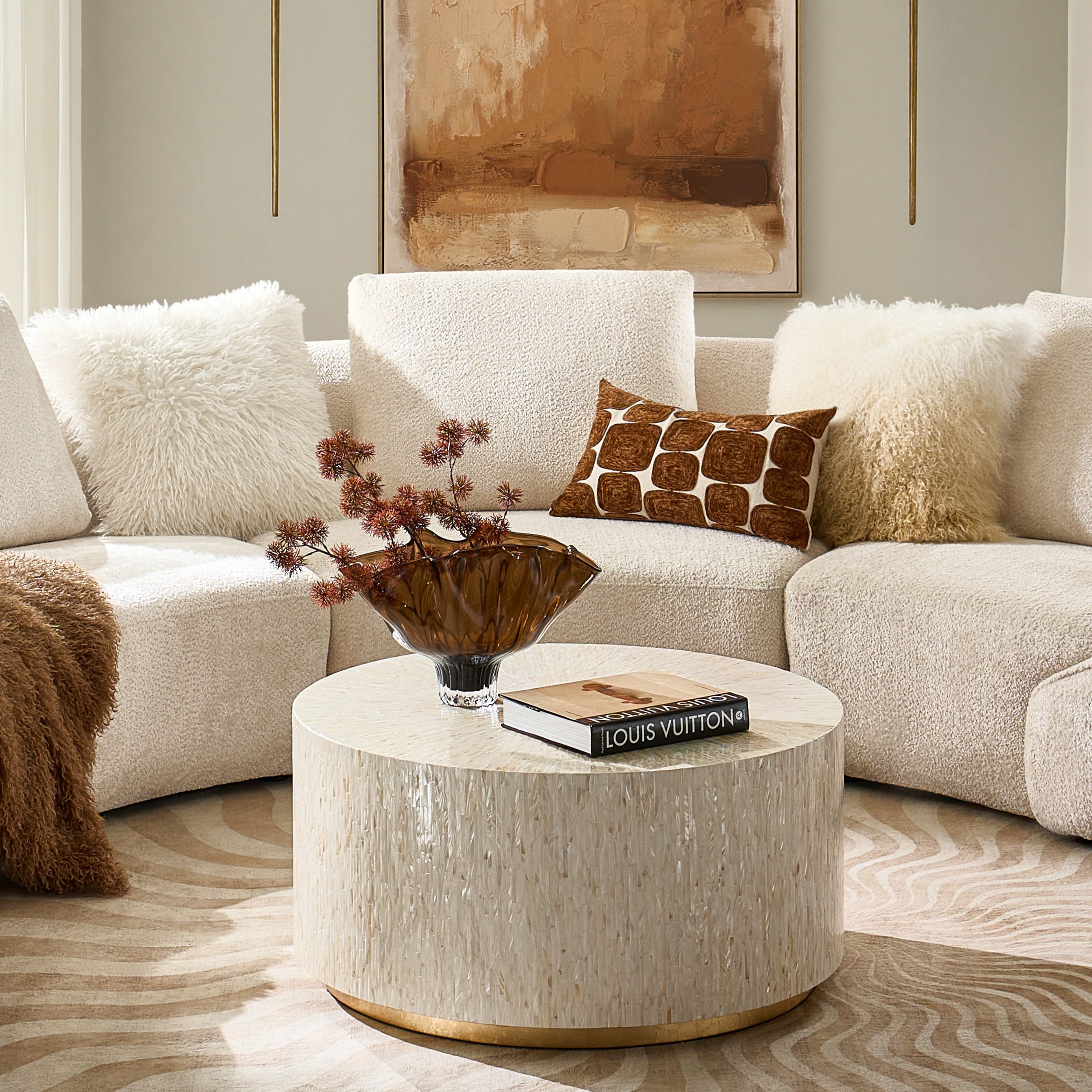 Alexandria Round Mosaic Platinum Coffee Table (36")$799
A luminous ivory coffee table featuring hand-applied mother-of-pearl mosaic and a gold leaf-accented base.
Add To Cart -
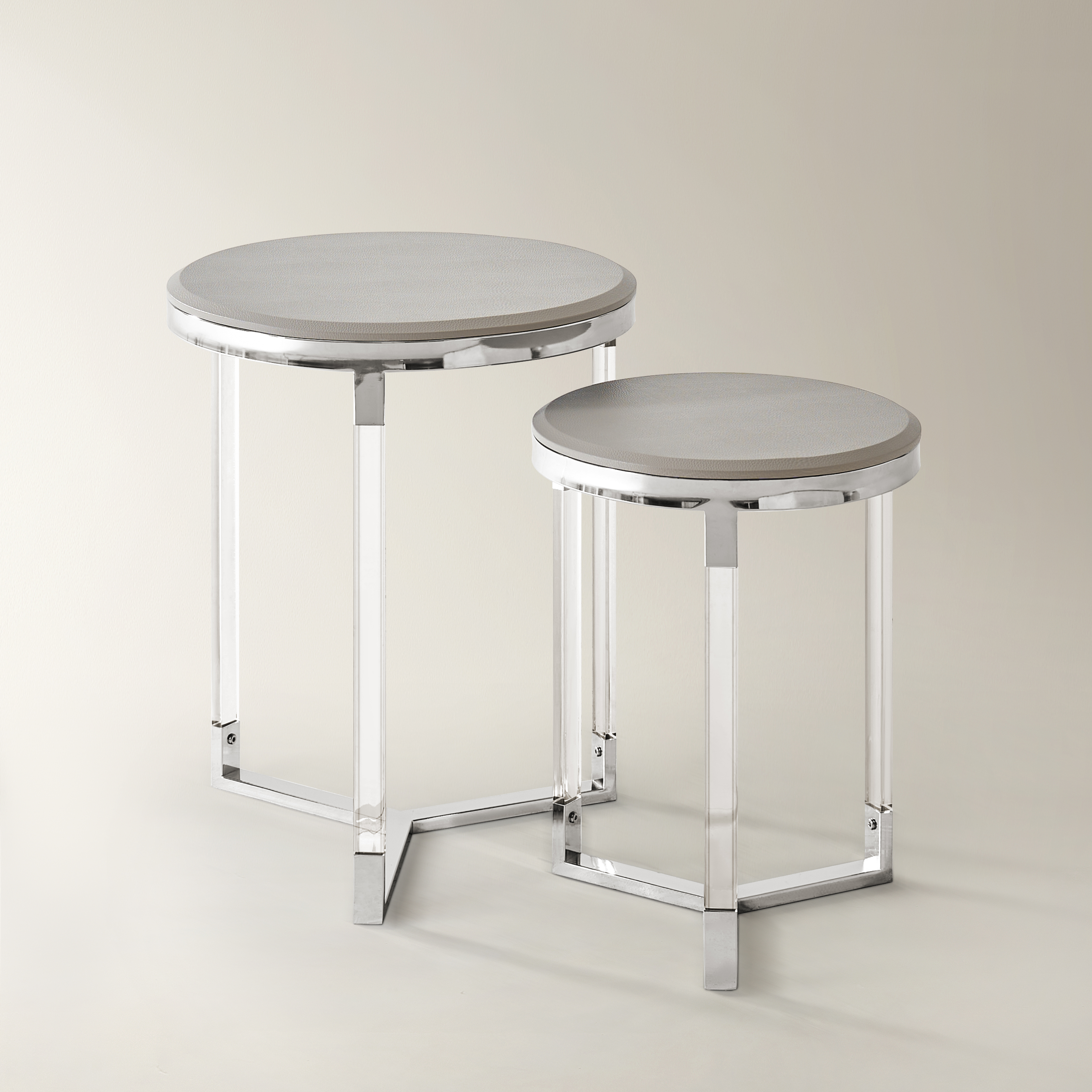
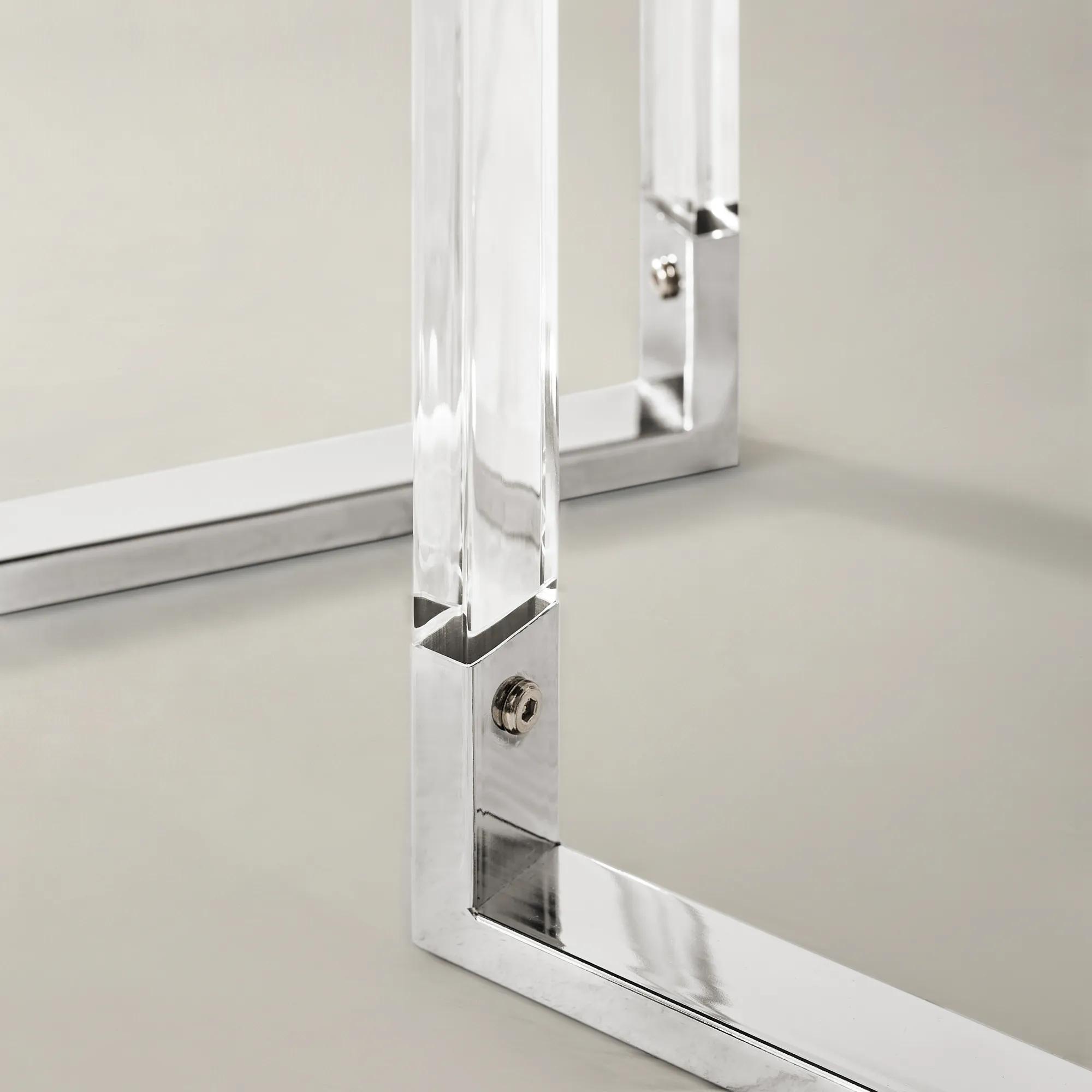 Murano Round Grey Accent Table With Faux Leather Top Set Of 2 (14.5"-18.5")$399
A bold set of two accent tables featuring mixed woods, acrylic legs, and faux leather tops.
Add To Cart -
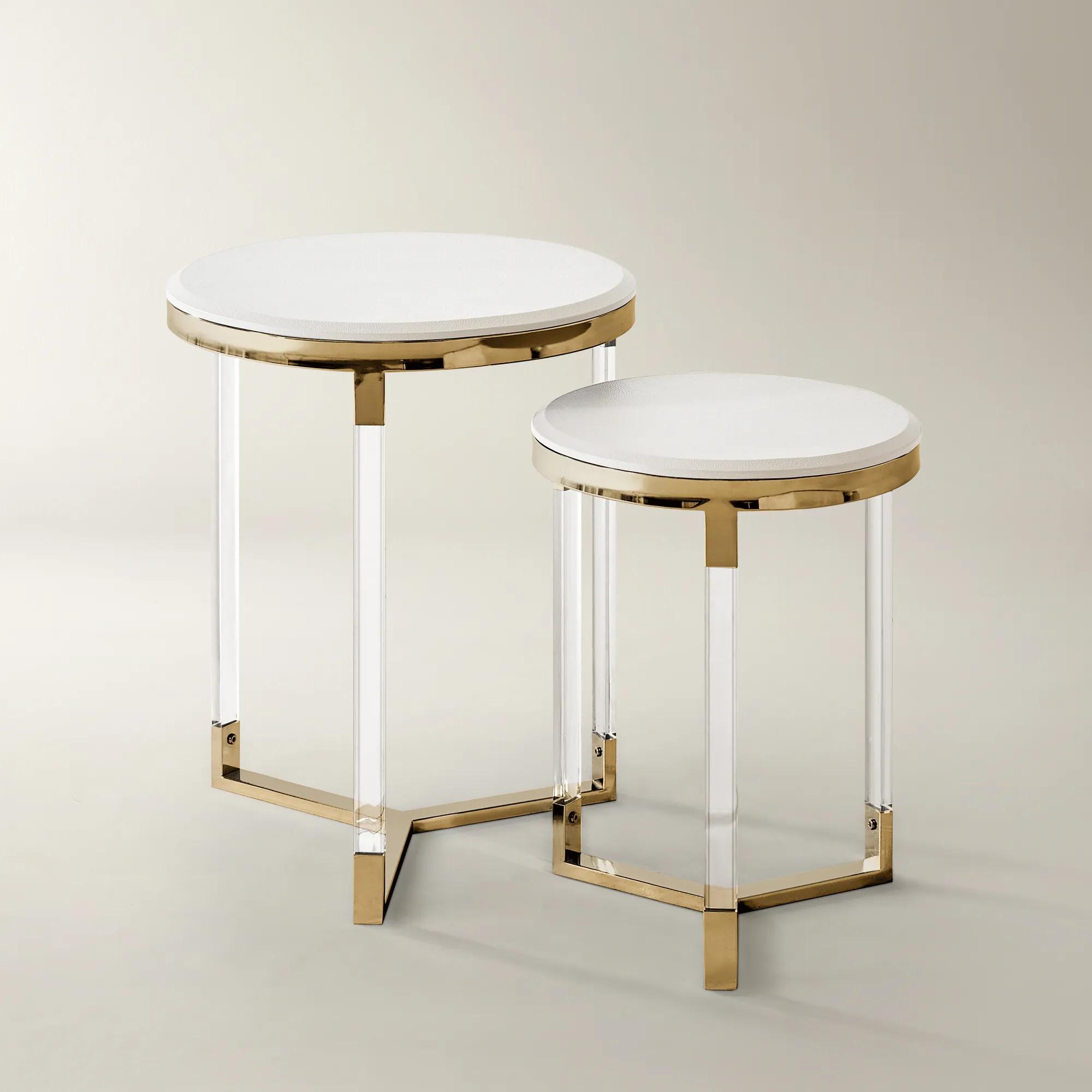
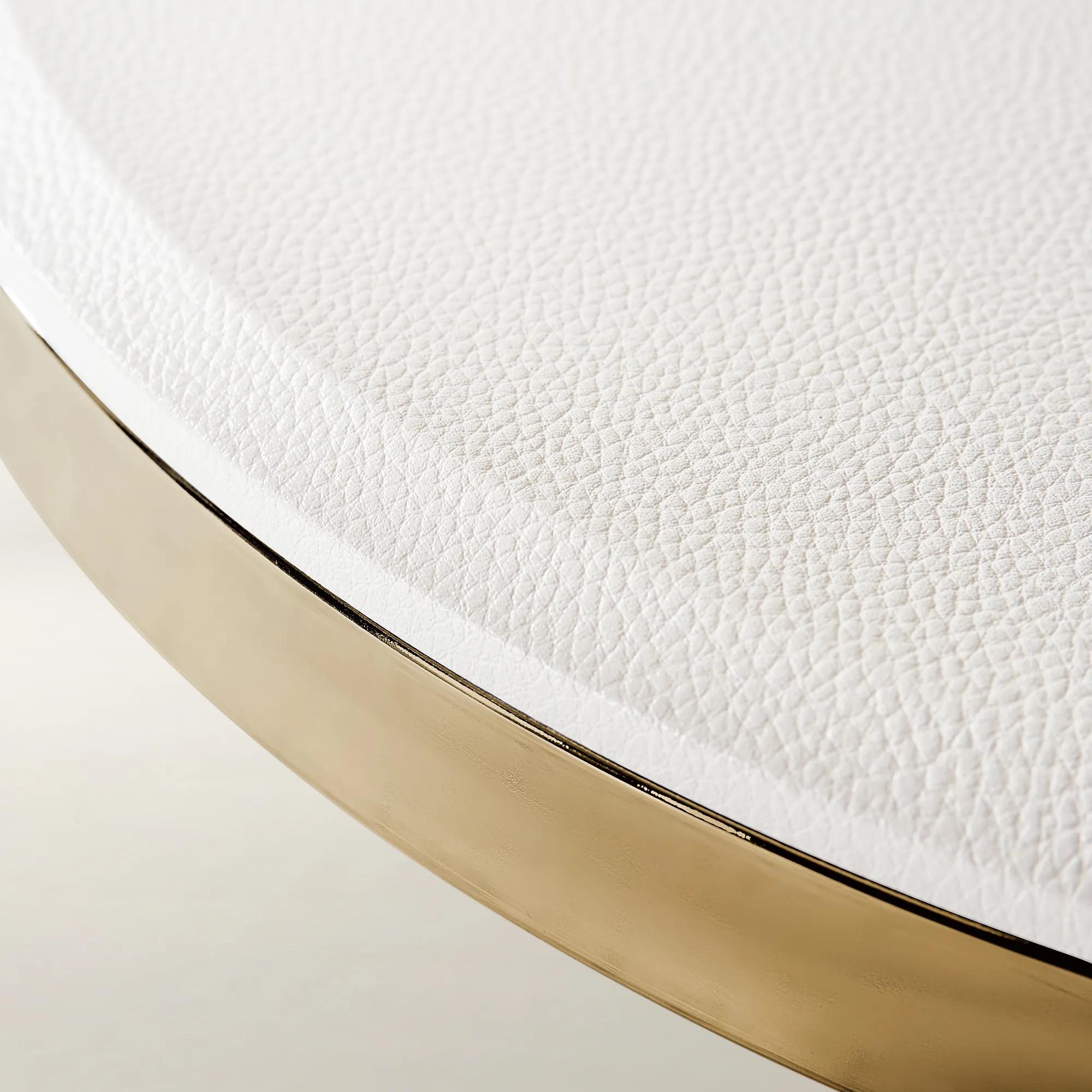 Murano Round White Accent Table With Faux Leather Top Set Of 2 (14.5"-18.5")$399
A set of two accent tables featuring mixed woods, faux leather tops, and acrylic legs with metallic finishes.
Add To Cart -
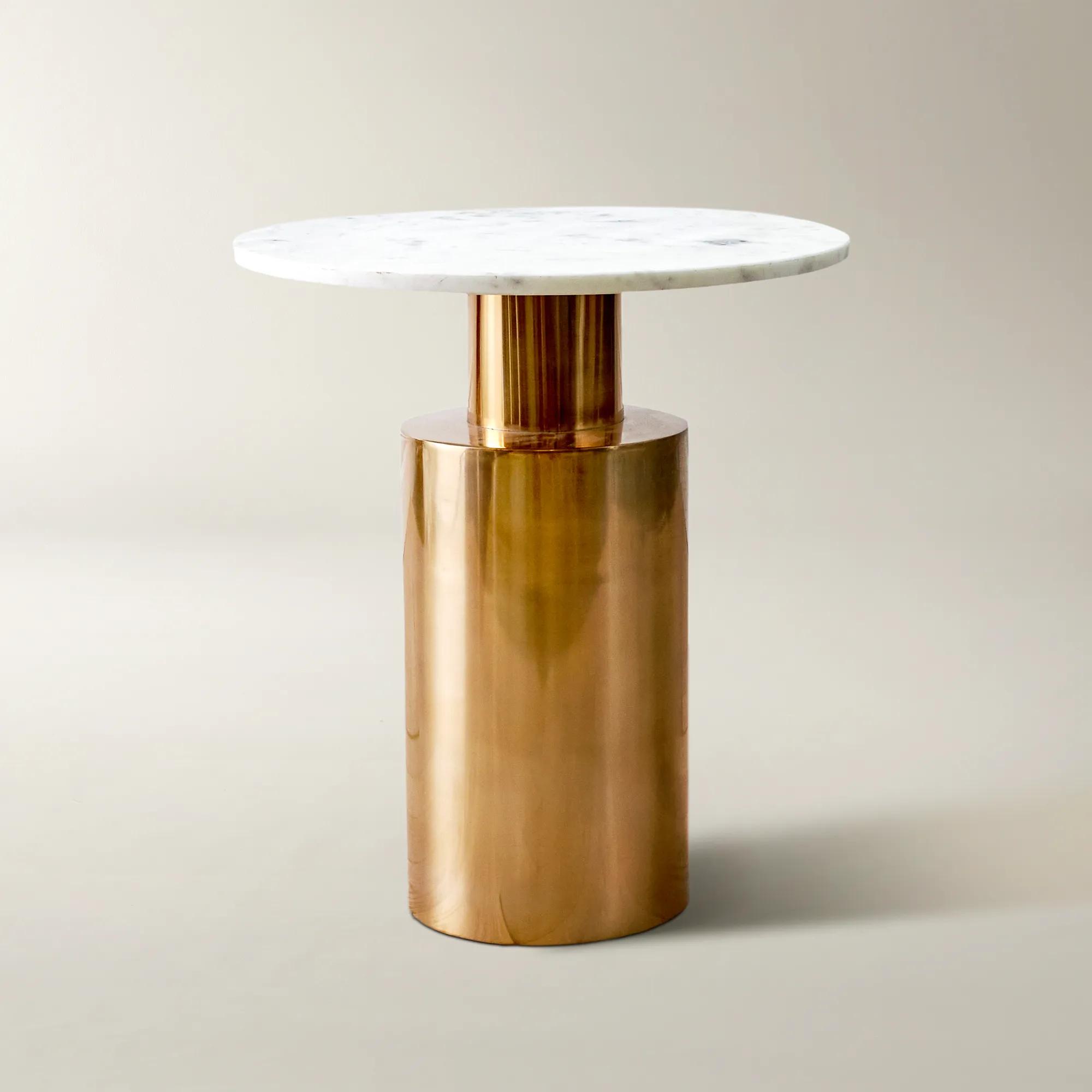 Capri Round White Marble Accent Table (16")$299
A striking accent table featuring a white marble top and gold-finished stainless steel base.
Add To Cart -
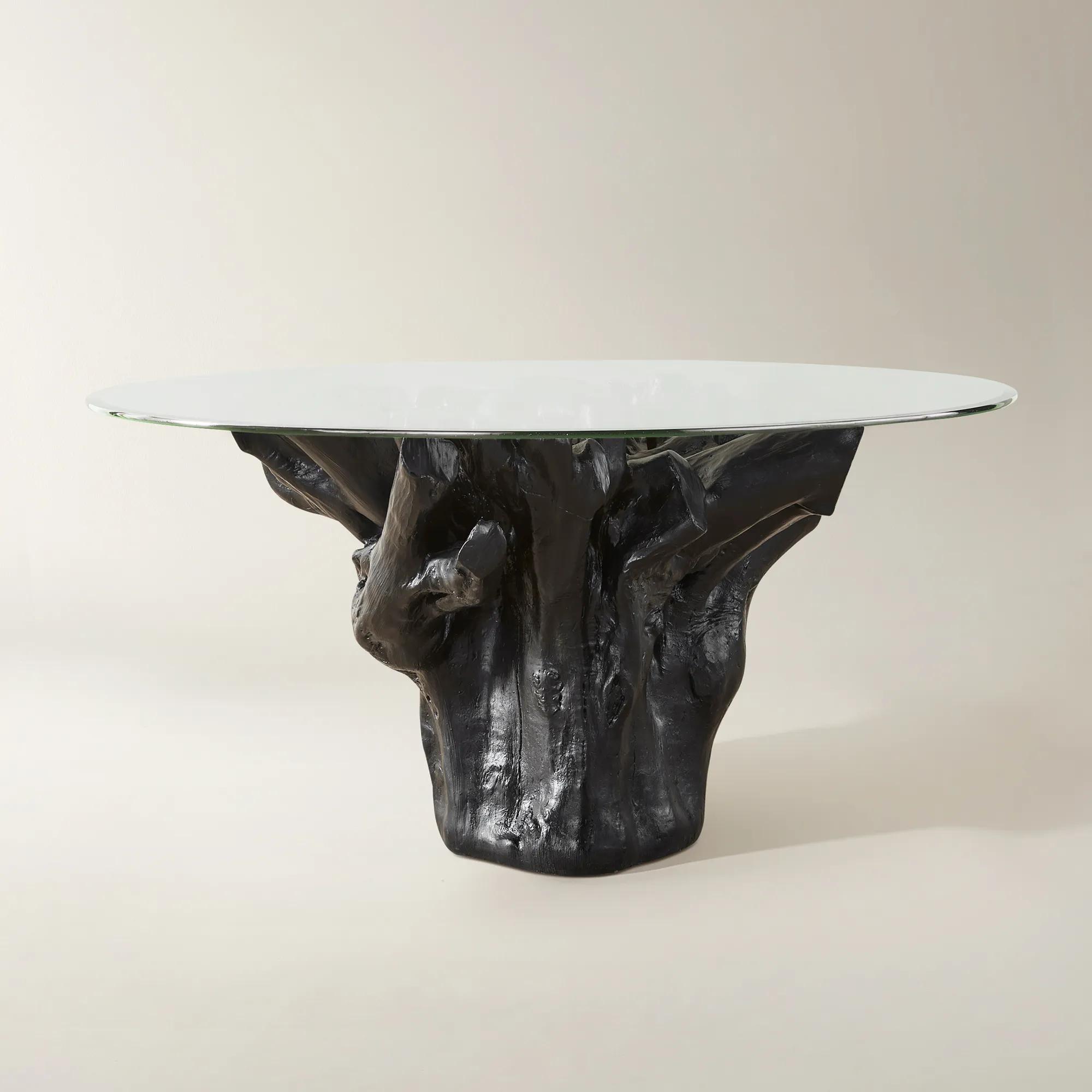 Sequoia Black Resin Dining Table With Glass Top (60")$2299
A sculptural black resin base with real stone fragments supports a round tempered glass top for organic elegance.
Add To Cart -
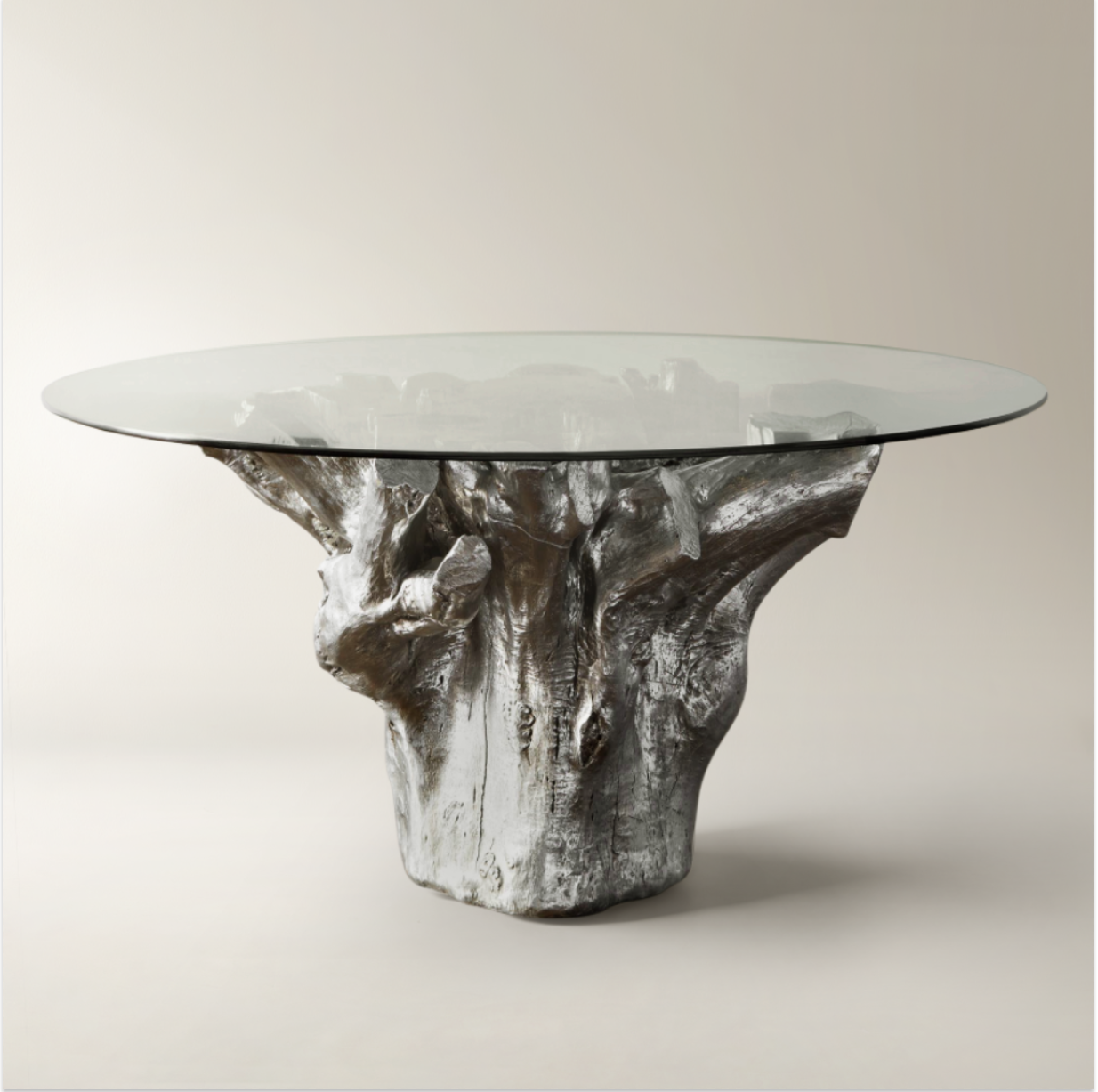 Sequoia Silver Resin Dining Table With Glass Top (60")$2199
A sculptural resin base with hand-applied silver leaf supports a round tempered glass top for modern elegance.
Add To Cart -
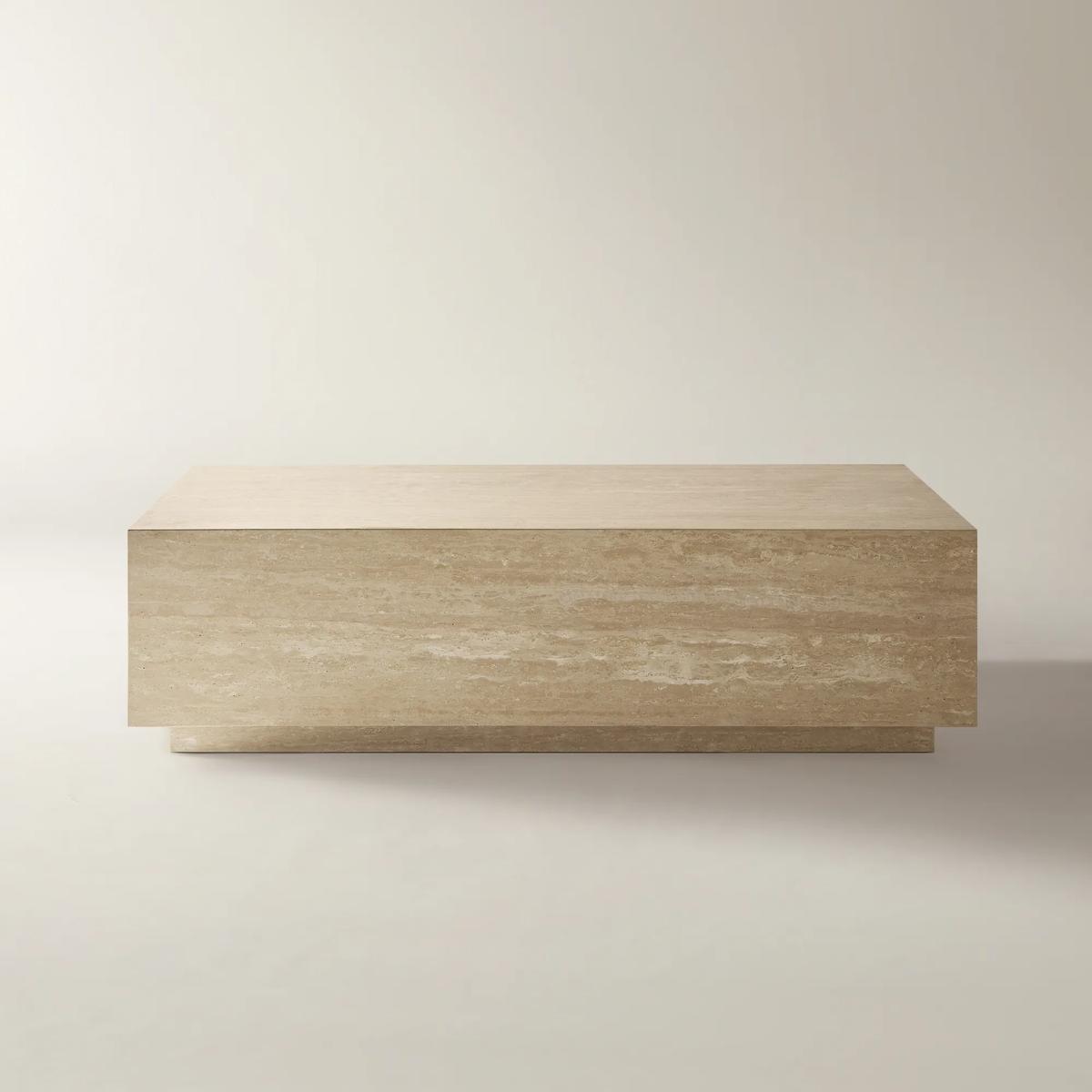
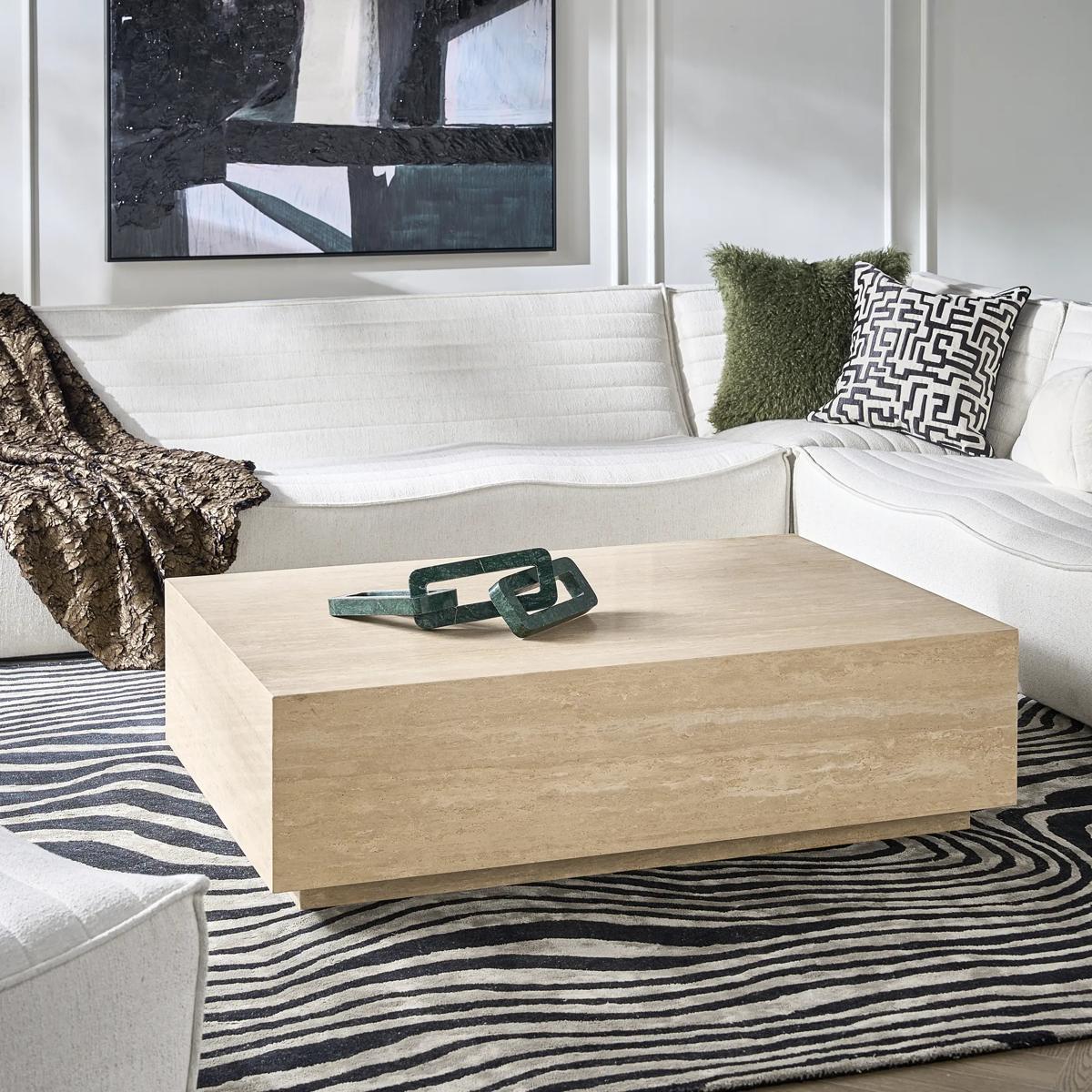 Vanta Rectangular Travertine Coffee Table (54")$2599
A seamless genuine travertine coffee table featuring ivory-gold tones and an ultra-light aluminum honeycomb core.
Add To Cart -
.jpg?w=1200&h=1200)
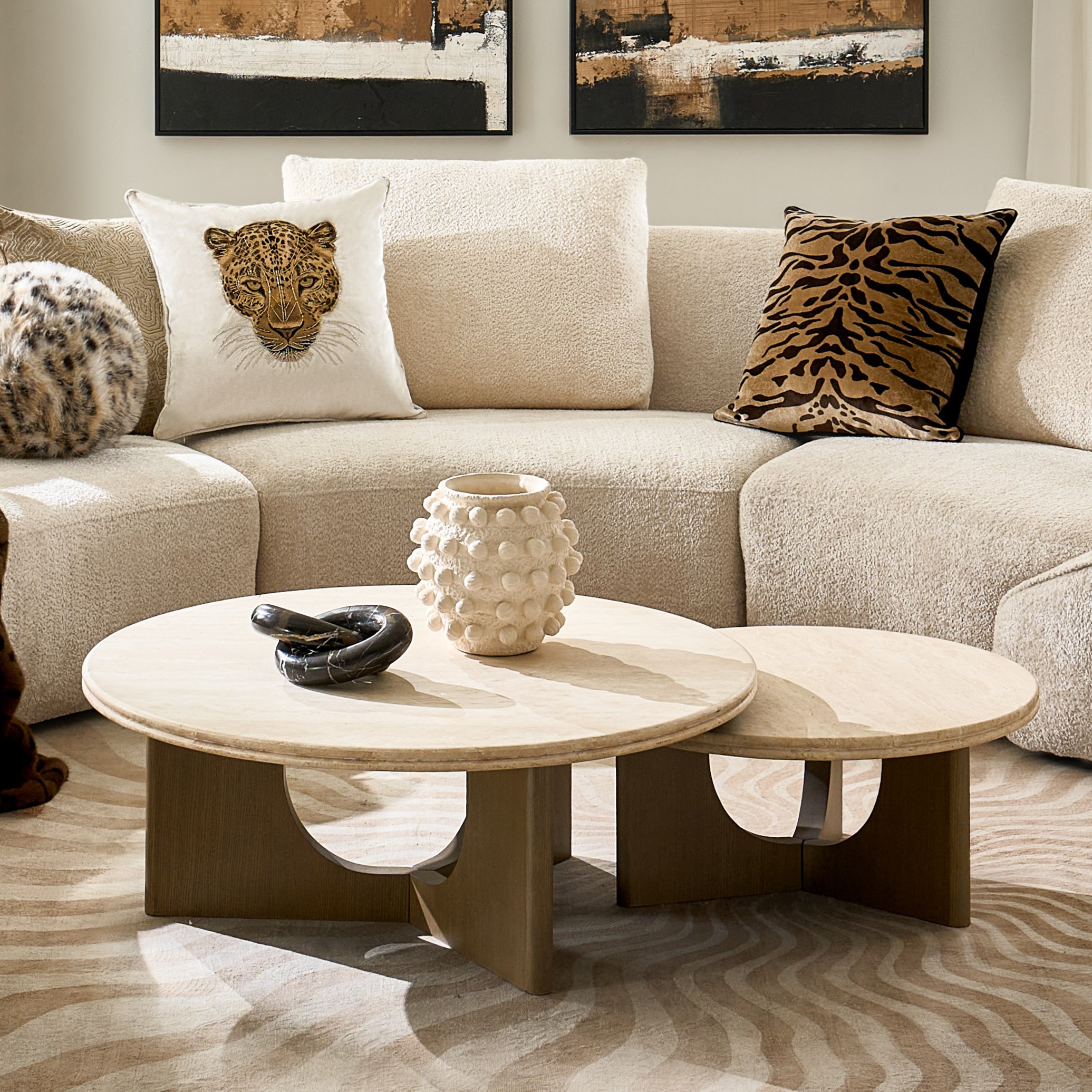 Bond Round Travertine and Wood Coffee Table (29.25")$699
A genuine travertine stone coffee table with warm ivory-gold tones atop a solid natural ash base.
Add To Cart -
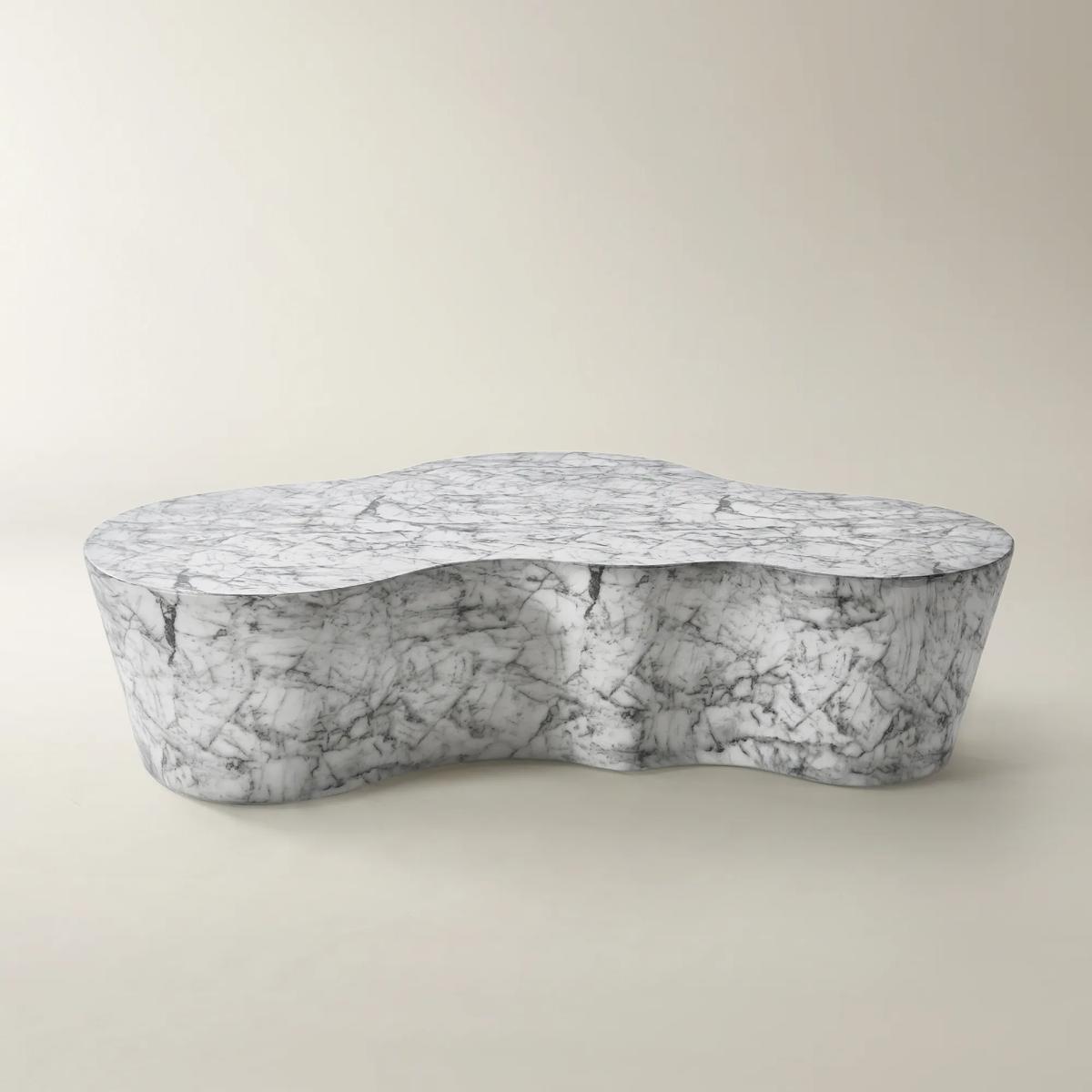
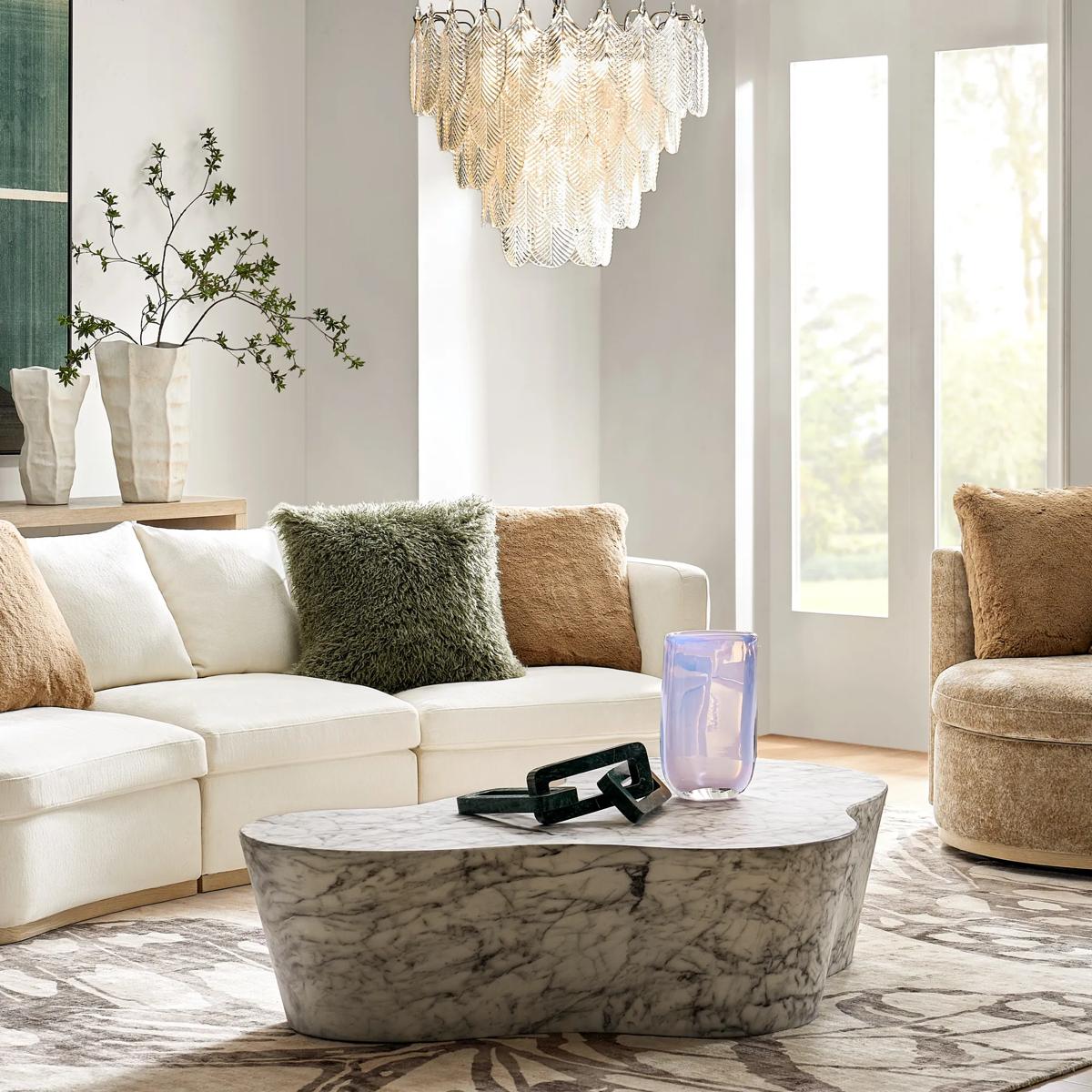 Petra White Concrete Indoor/outdoor Coffee Table (59.4")$1099
A cloud-inspired coffee table in lightweight fiber concrete with a hyper-realistic white marble finish.
Add To Cart -
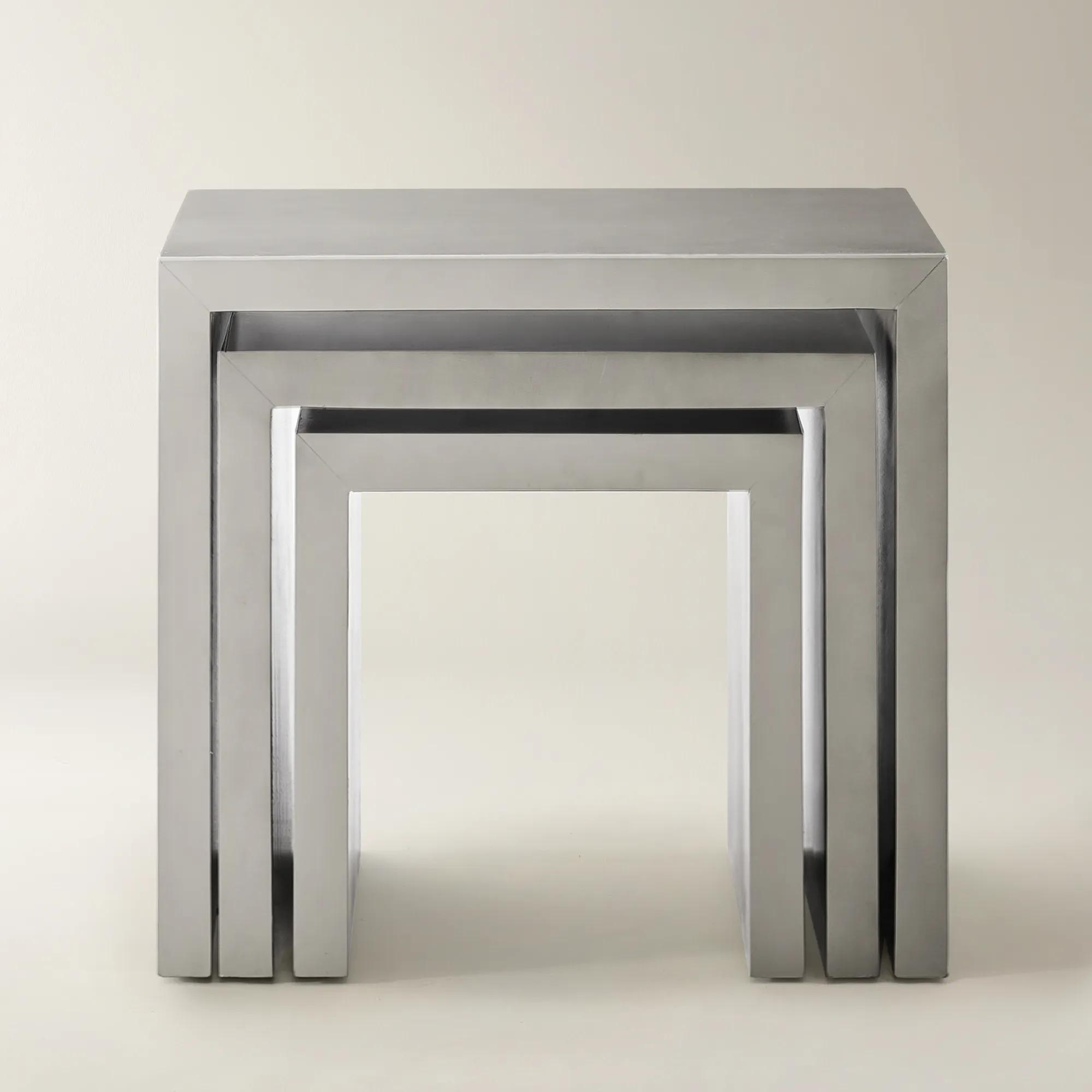
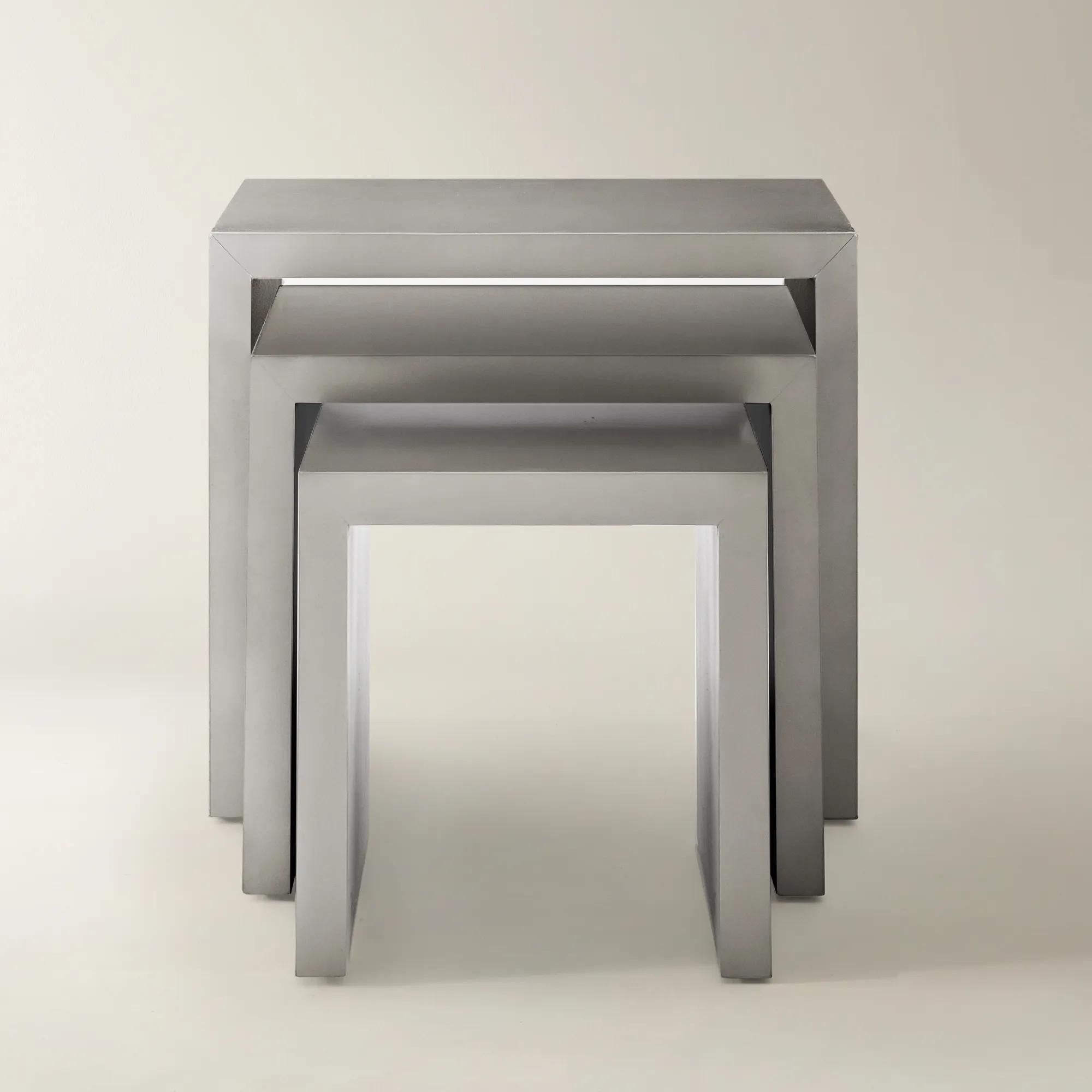 Astair Silver Nesting Accent Table Set Of 3 (16.25"-25.5")$299
A trio of engineered wood nesting tables with a sleek silver metallic finish and minimalist block silhouette.
Add To Cart -
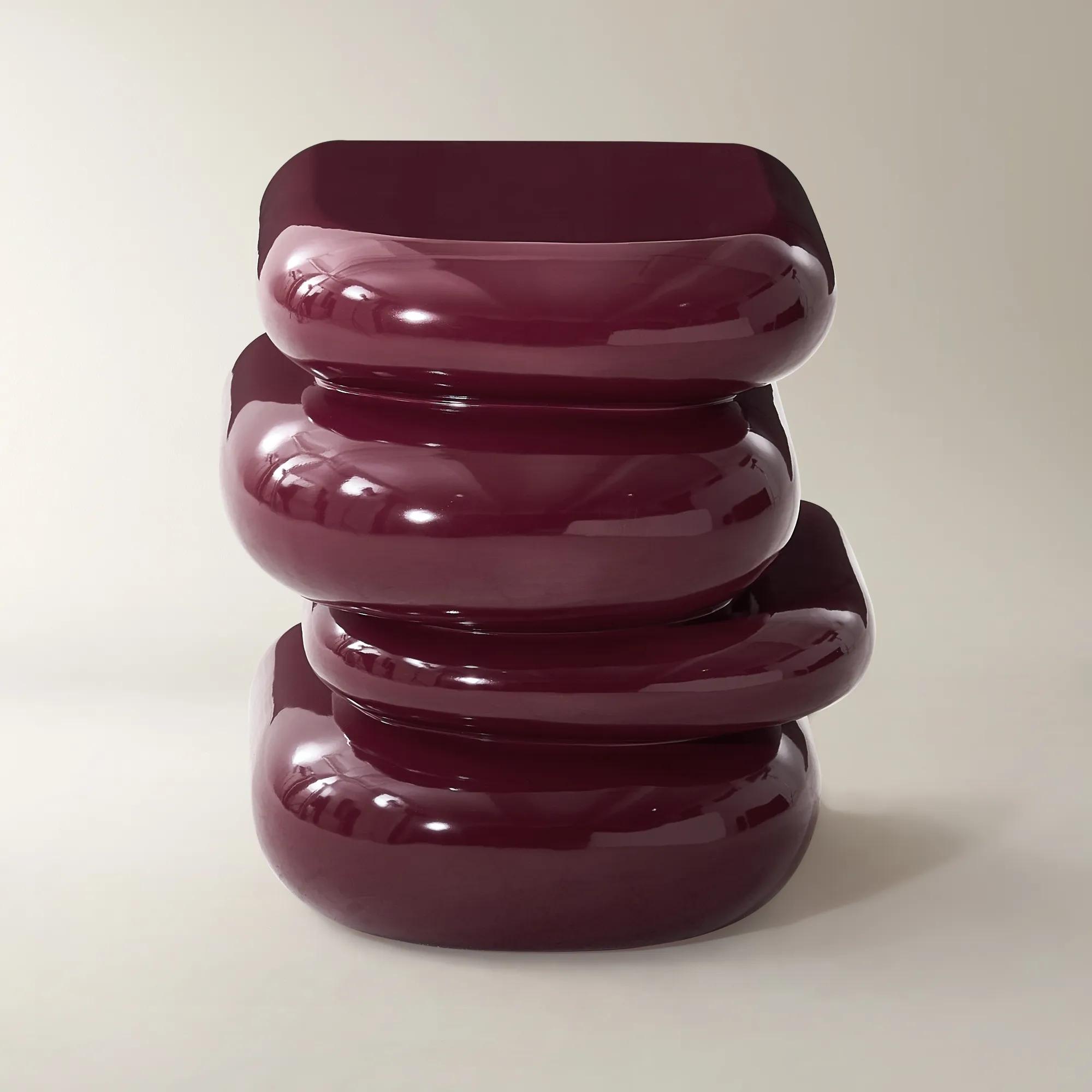 Forma Stacked Ox Blood Side Table (19.9")$459
A sculptural accent table crafted from high-gloss ox blood fiberglass with softly stacked, rounded tiers.
Add To Cart -
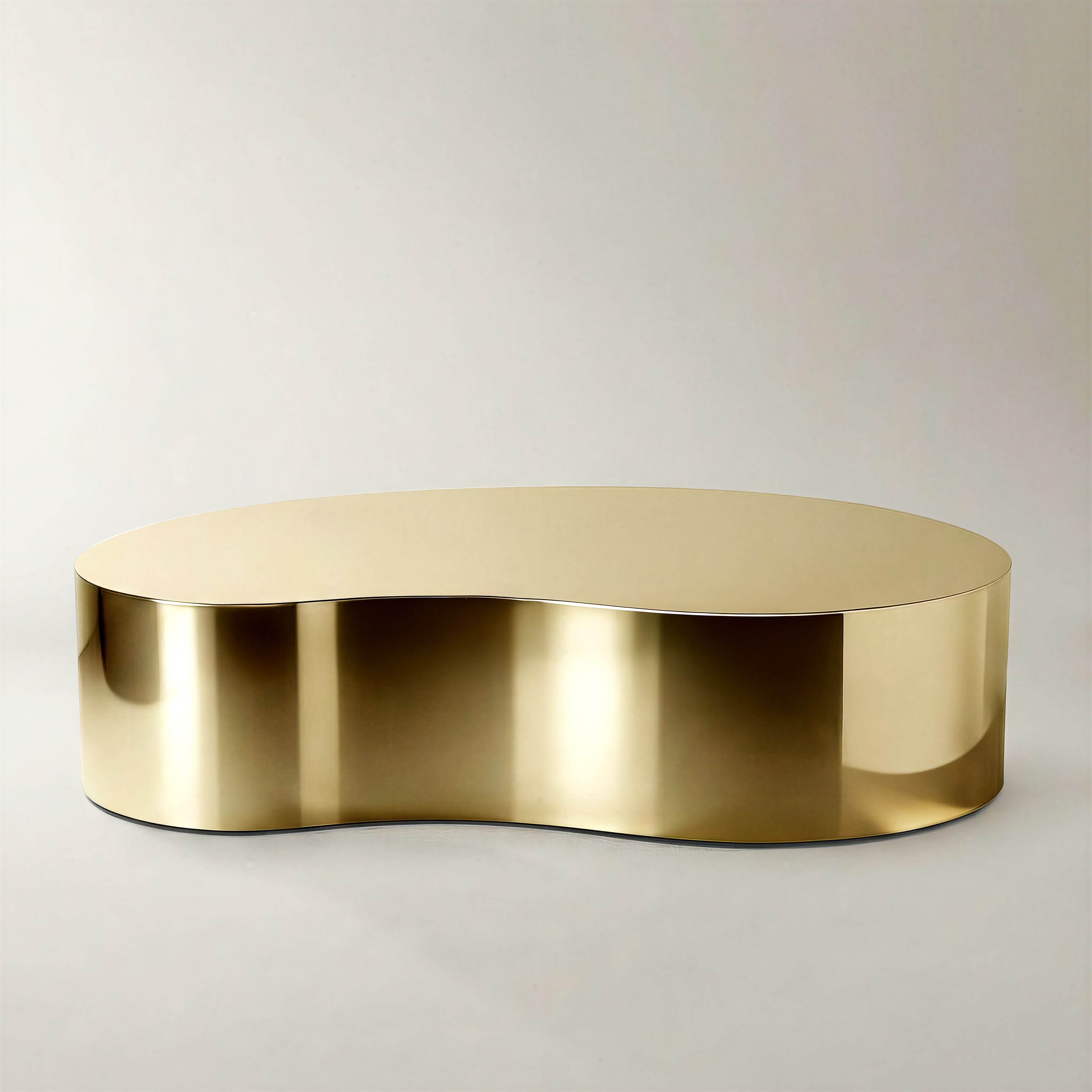
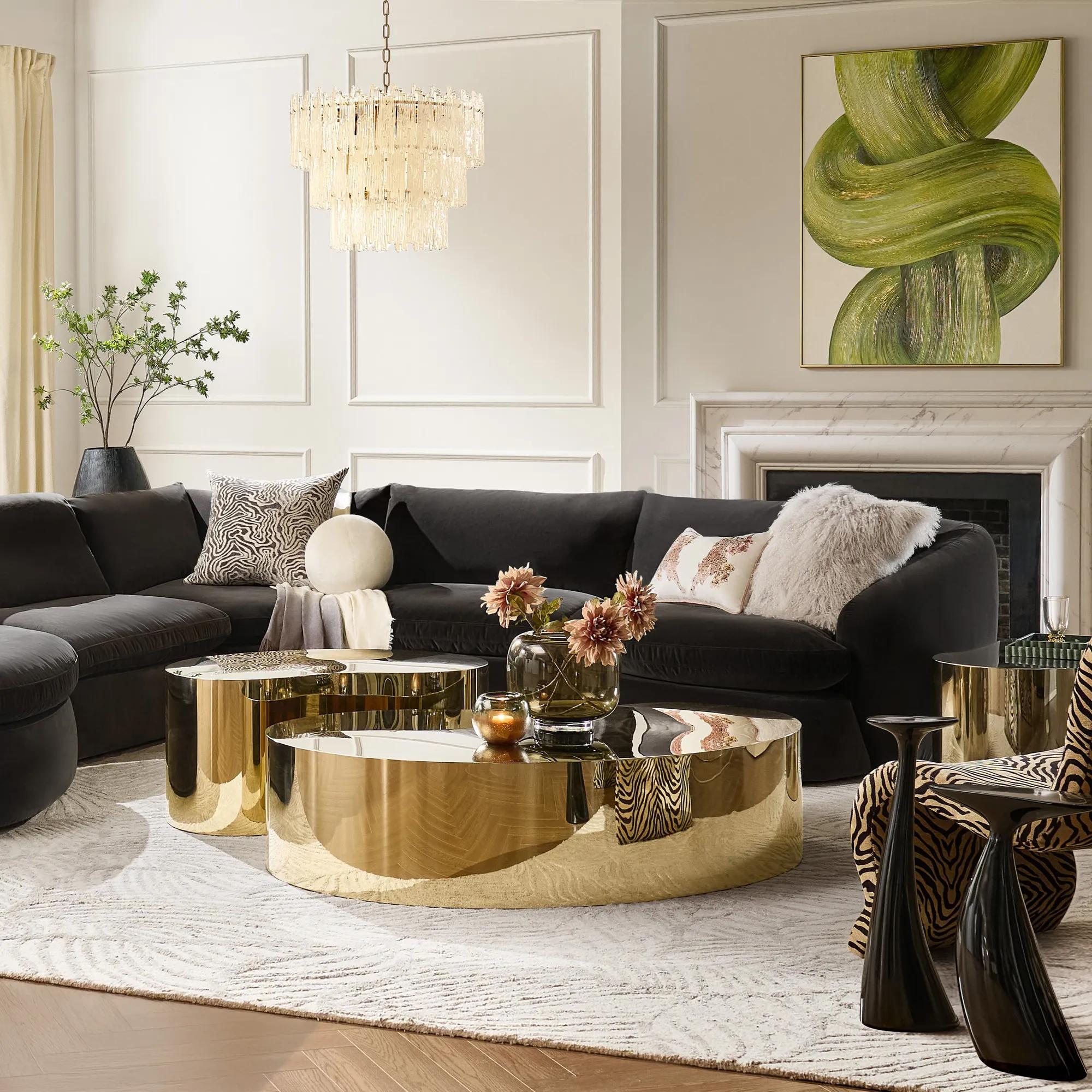 Aurea Soft Gold Coffee Table (57")$1299
A sculptural coffee table crafted from stainless steel with a high-gloss soft gold finish and rounded edges.
Add To Cart -
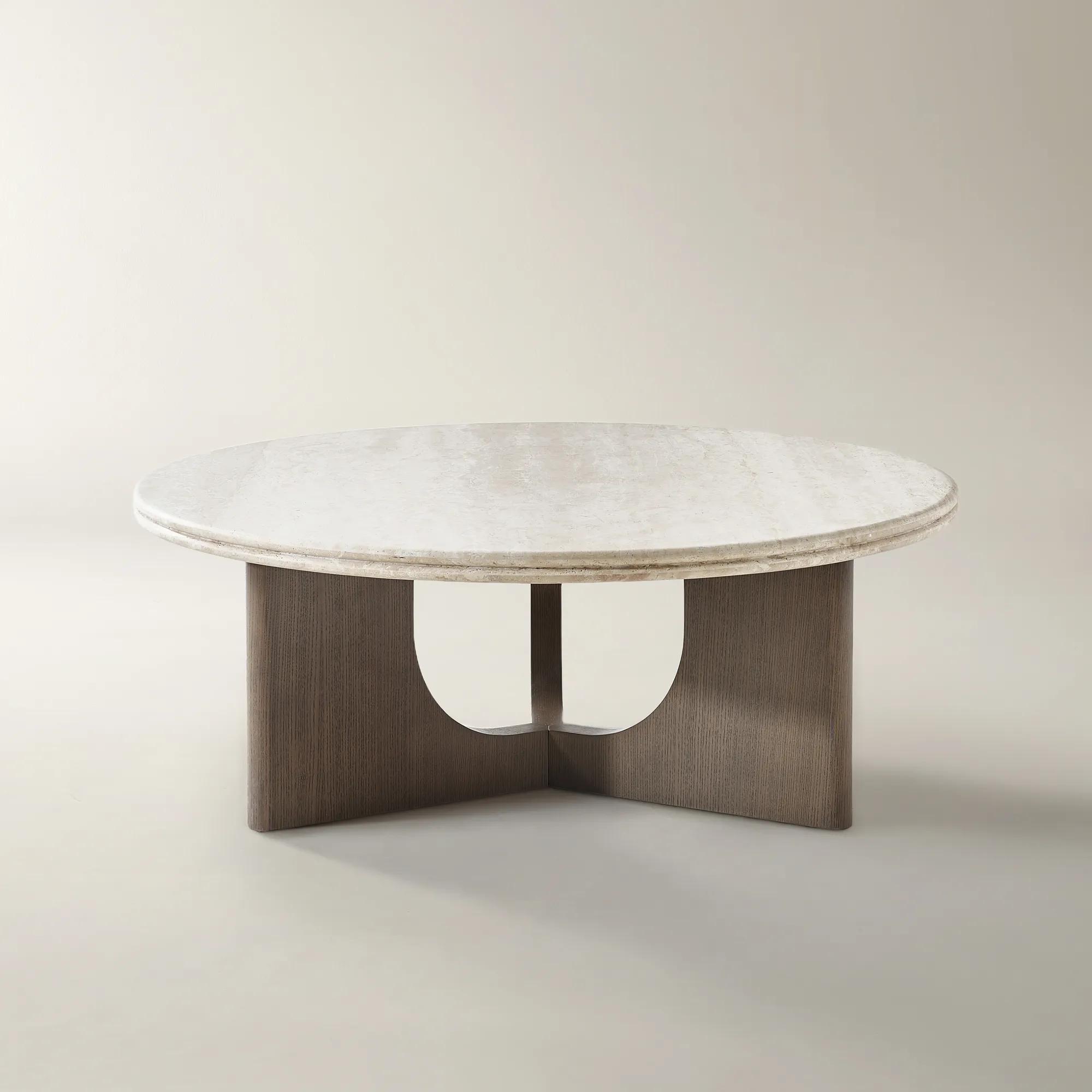 Bond Round Travertine and Wood Coffee Table (41")$1399
A round coffee table featuring a genuine travertine stone top and natural ash wood panel base with arches.
Add To Cart -
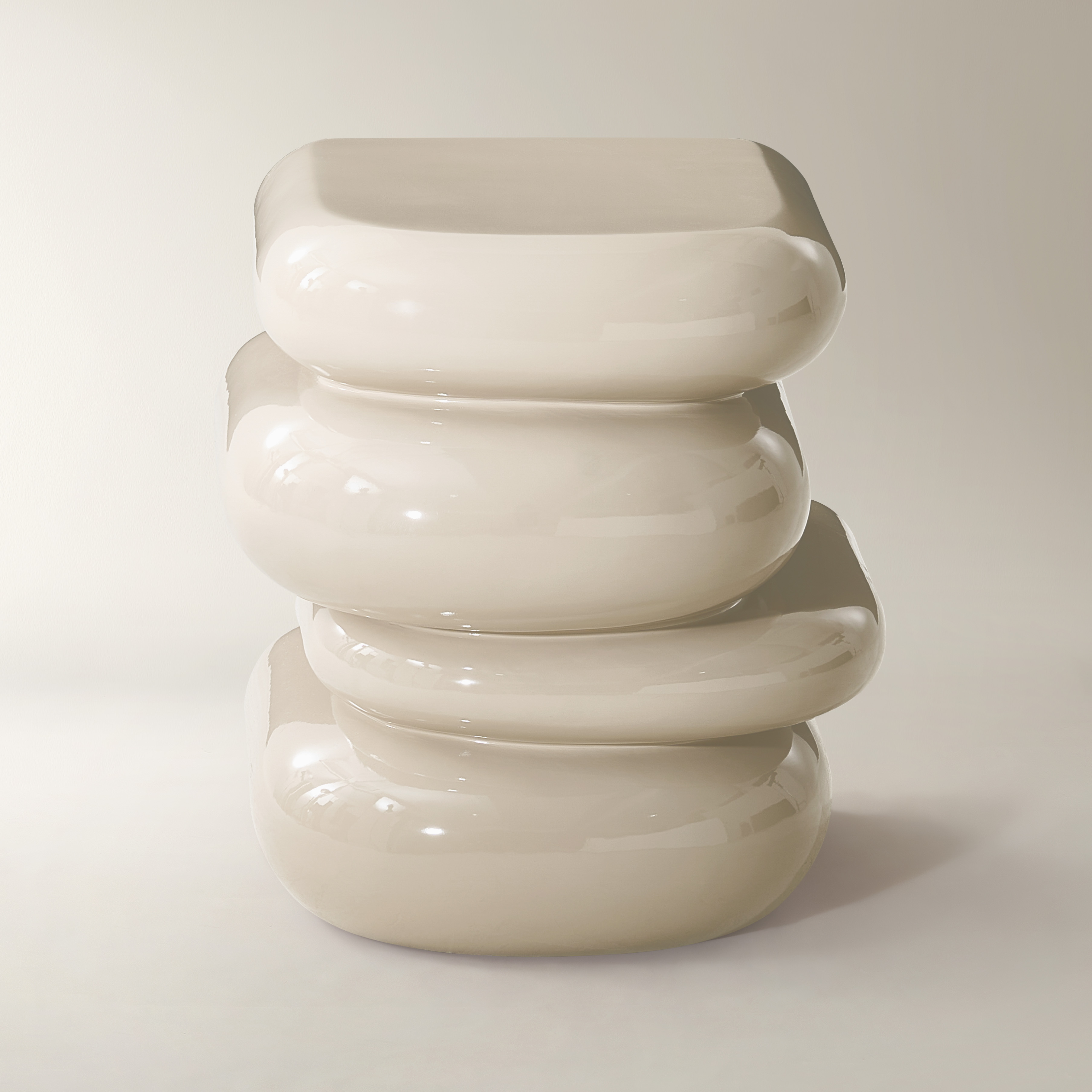
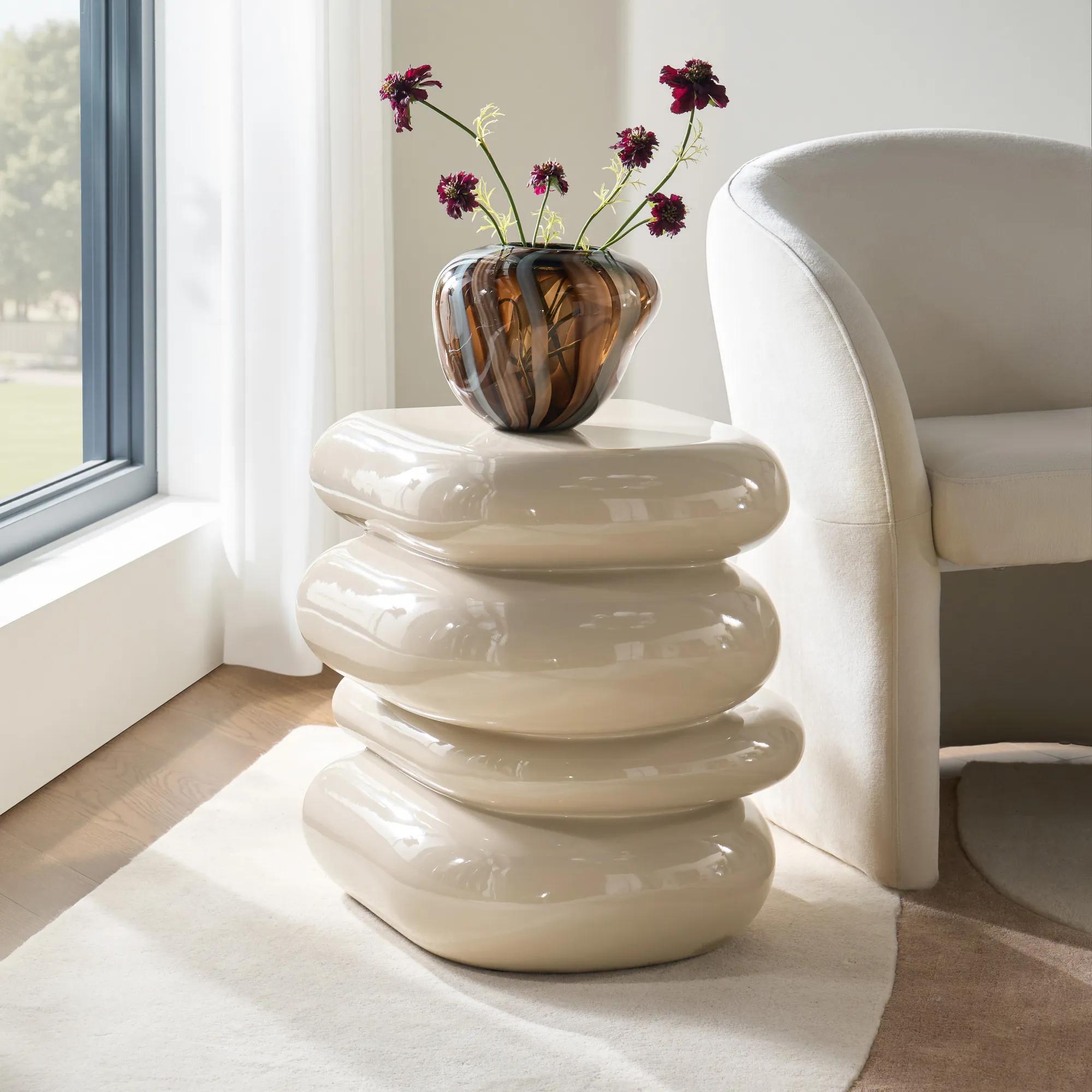 Forma Stacked Turtle Dove Side Table (19.9")$459
A sculptural accent table crafted from high-gloss turtle dove fiberglass with softly stacked, rounded tiers.
Add To Cart -
-0.jpeg?w=1200&h=1200) Strata Round Green Concrete Side Table (15")$299
Strata Round Green Concrete Side Table (15")$299A sculptural green marble-look side table crafted from lightweight, durable, and weather-resistant fiber concrete.
Add To Cart -
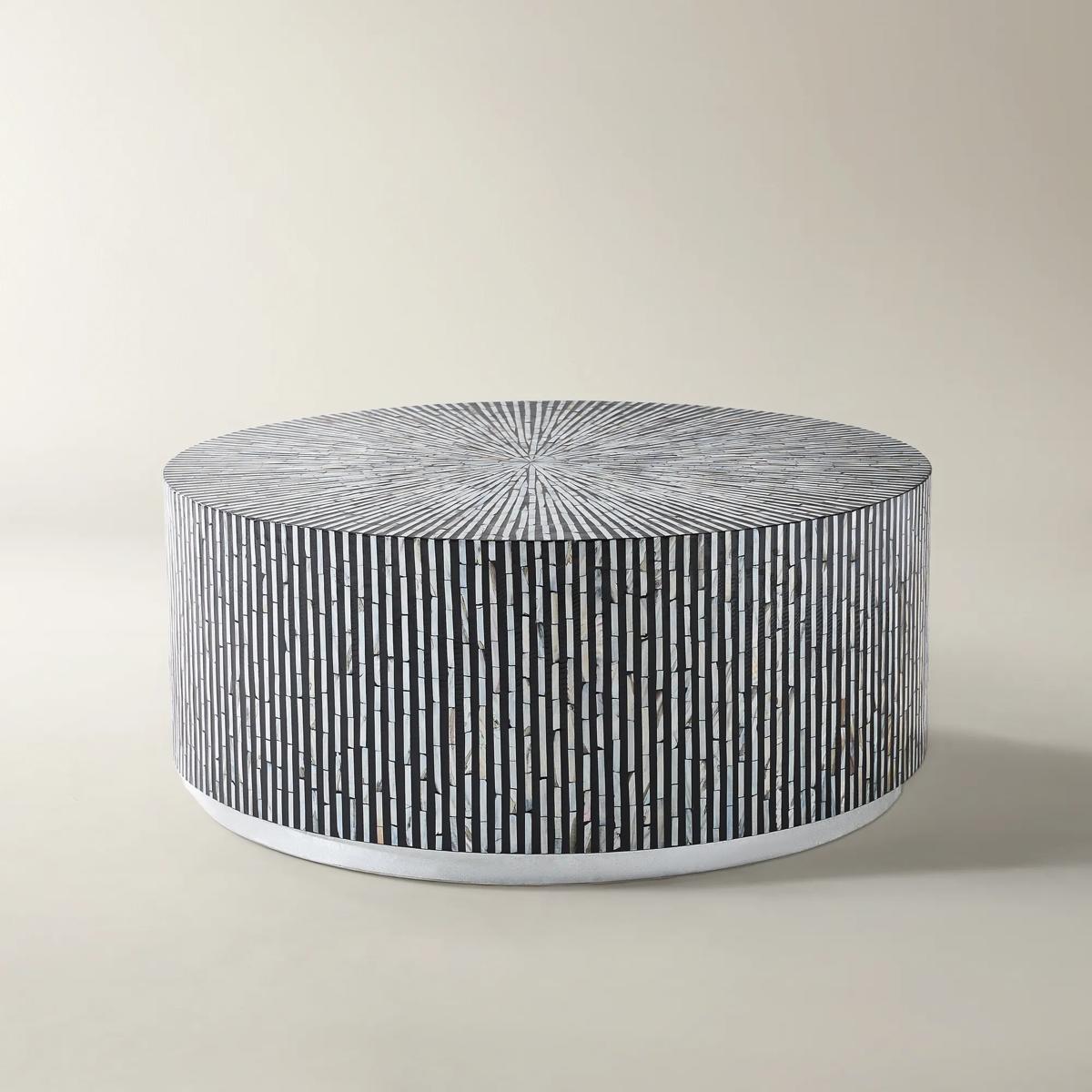
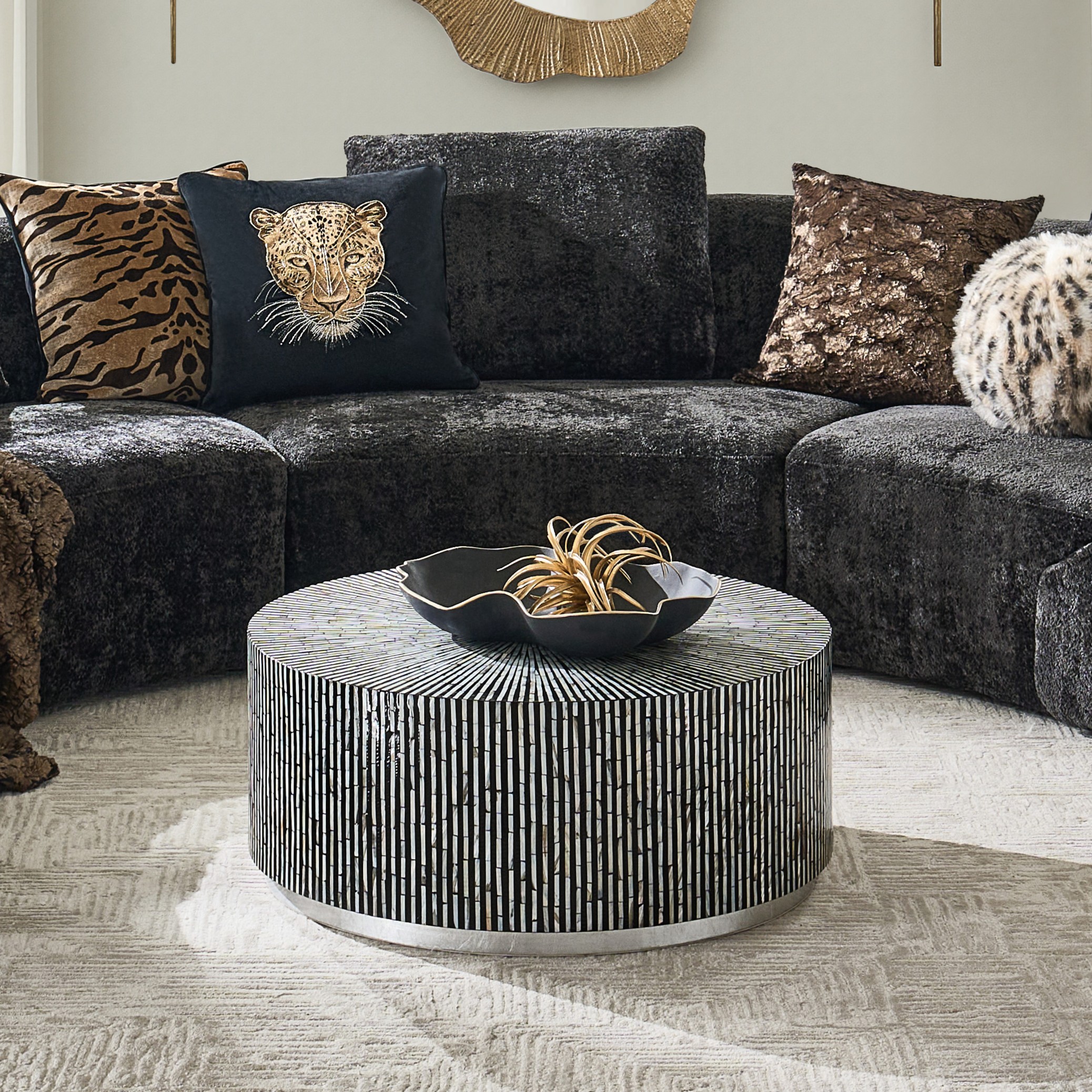 Marina Round Mosaic Black Coffee Table (35.8")$799
A handcrafted round coffee table featuring iridescent mother-of-pearl inlay and a silver leaf base.
Add To Cart -
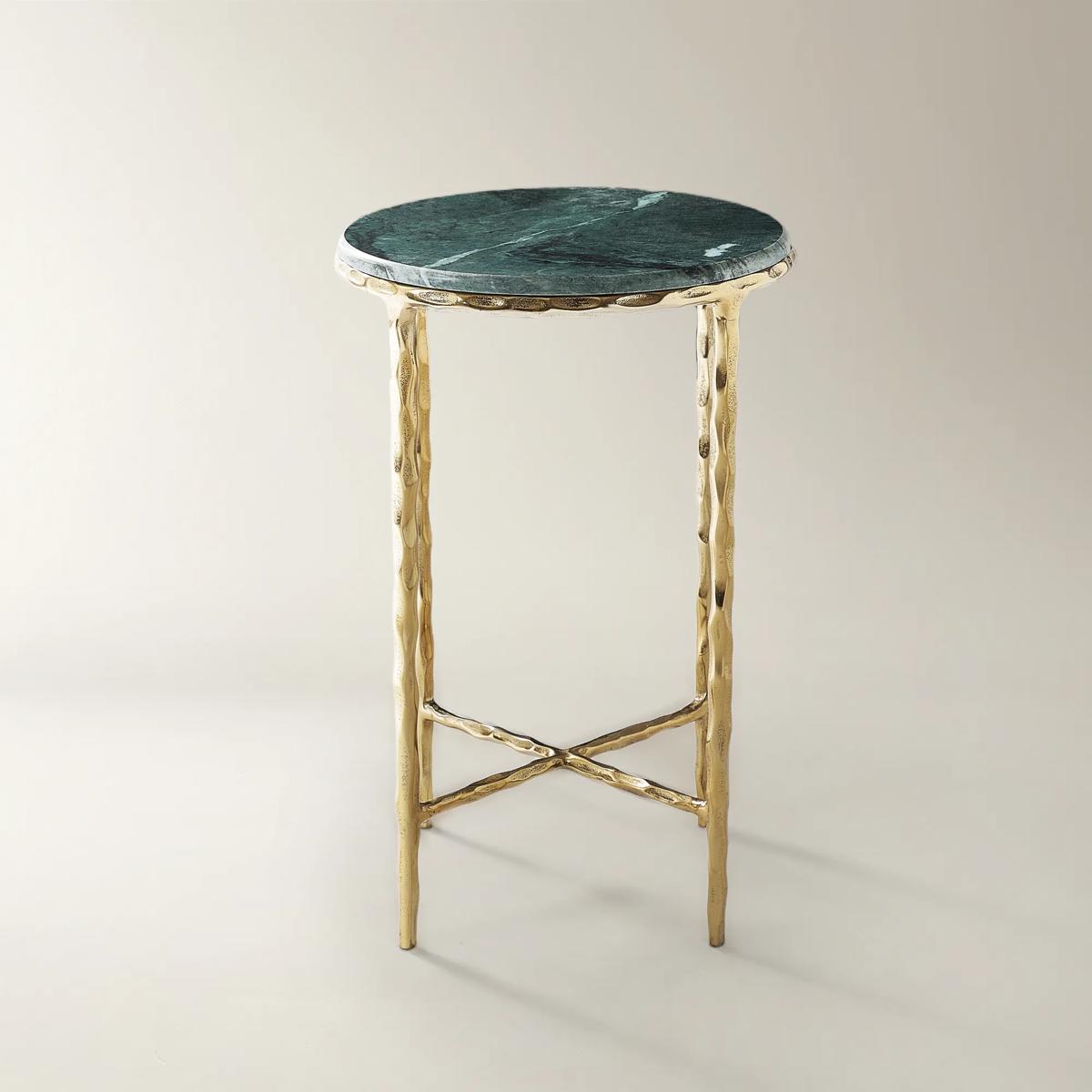
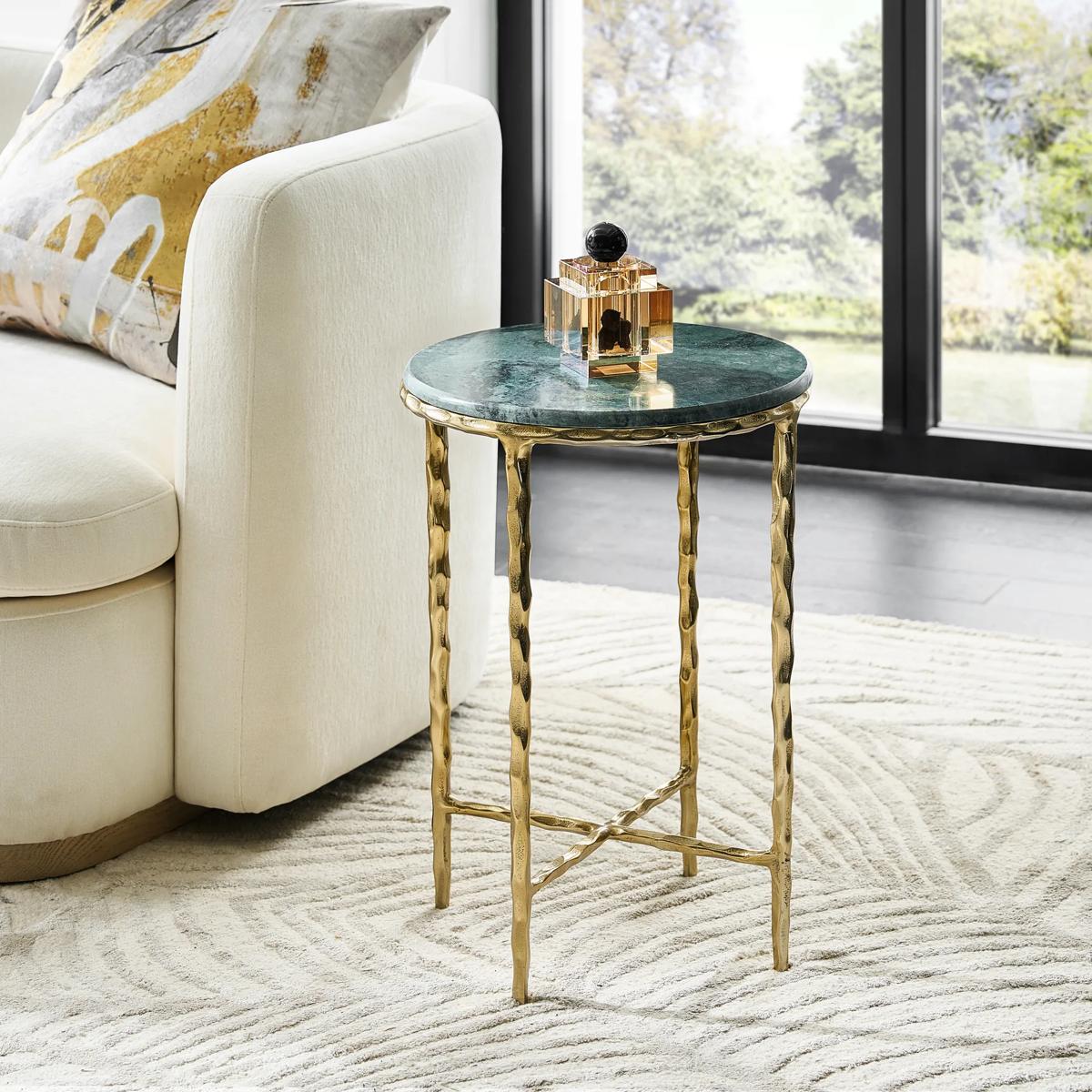 Juliet Round Green Marble Side Table (15")$269
A striking side table featuring a deep green Indian marble top and a hand-hammered metal base.
Add To Cart -
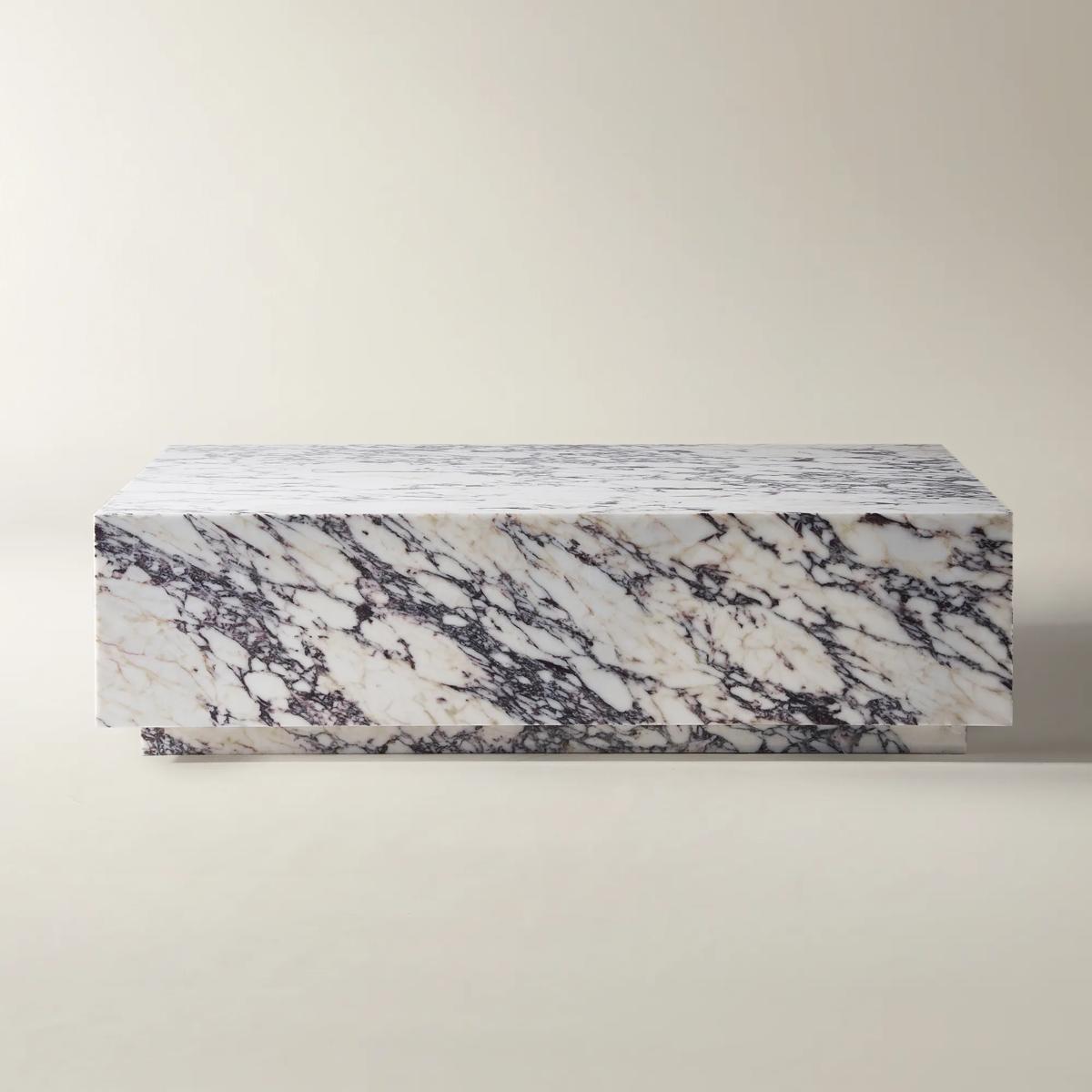
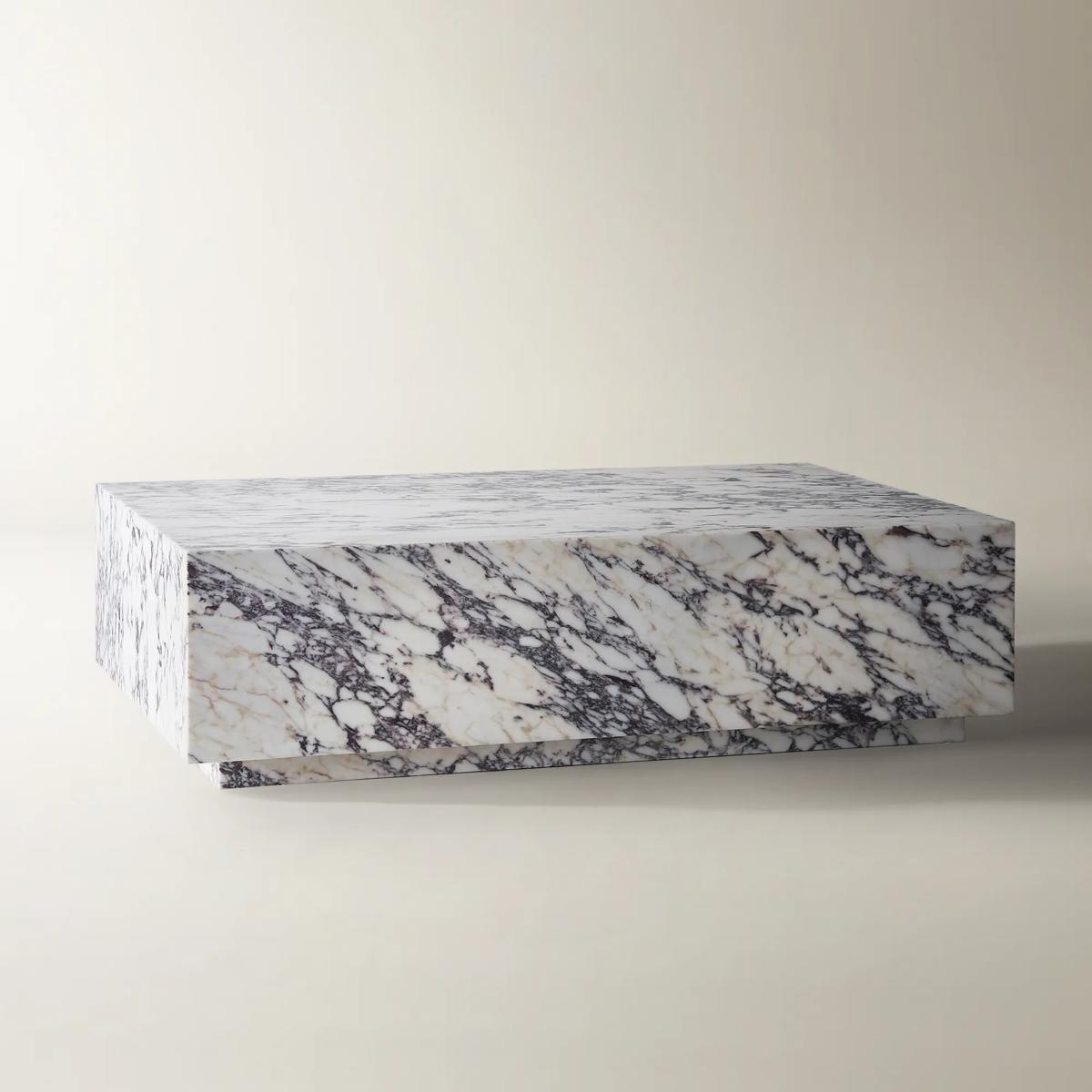 Vanta Rectangular Viola Calacatta Marble Coffee Table (54")$3699
A striking coffee table featuring genuine Calacatta Viola marble with bold violet veining and an aluminum core.
Add To Cart -
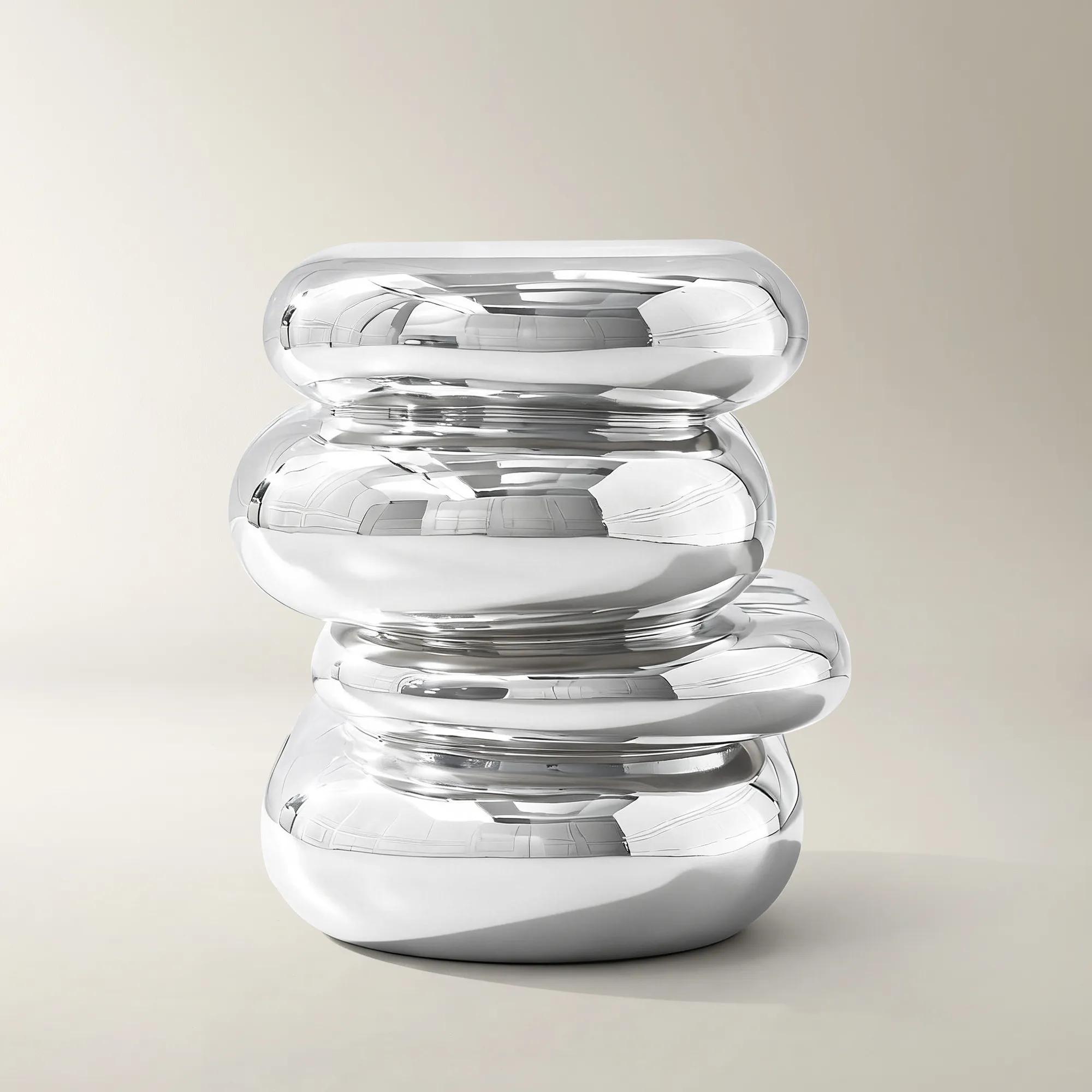 Forma Stacked Chrome Side Table (19.9")$599
A sculptural accent table crafted from seamless fiberglass with a reflective chrome finish and rounded tiers.
Add To Cart -
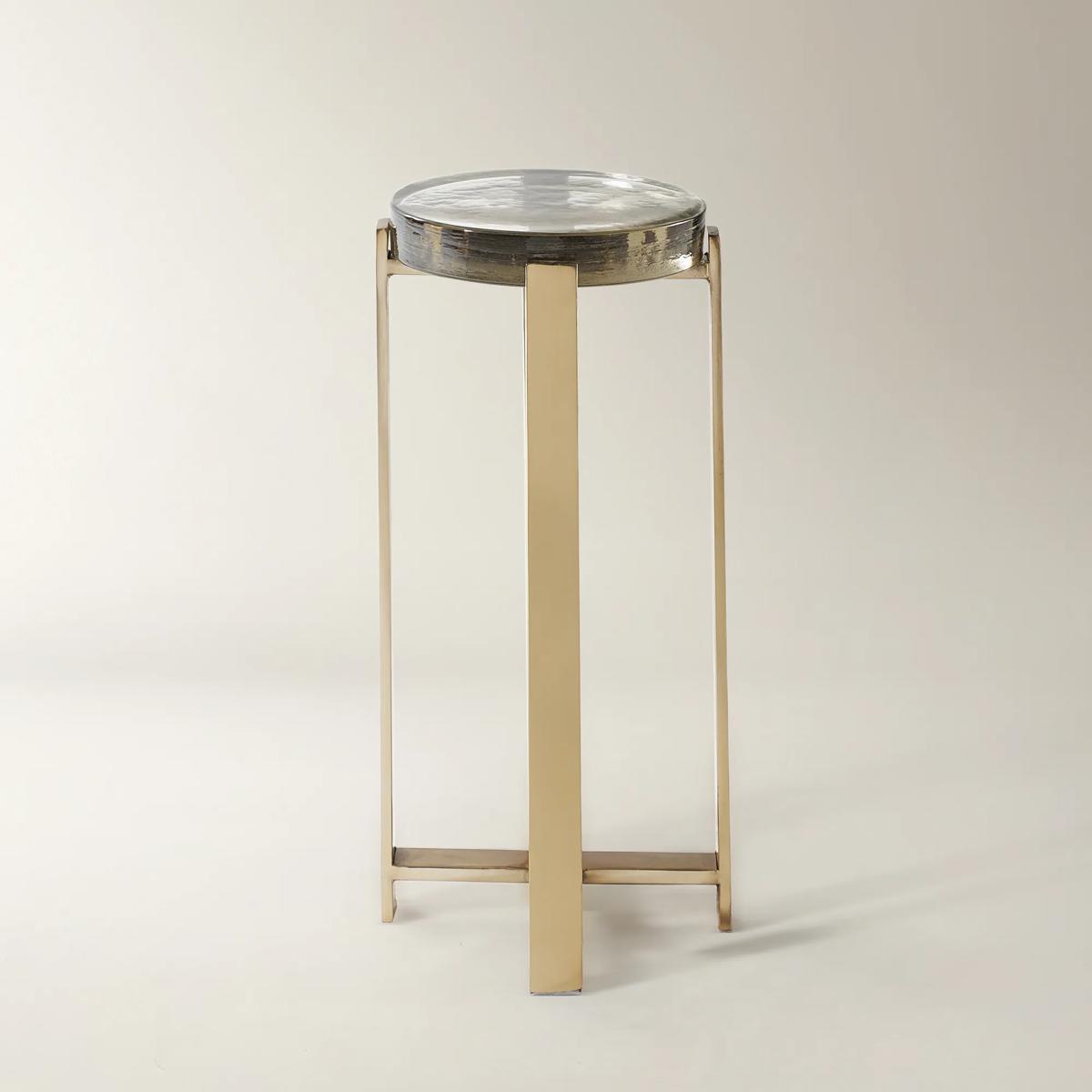
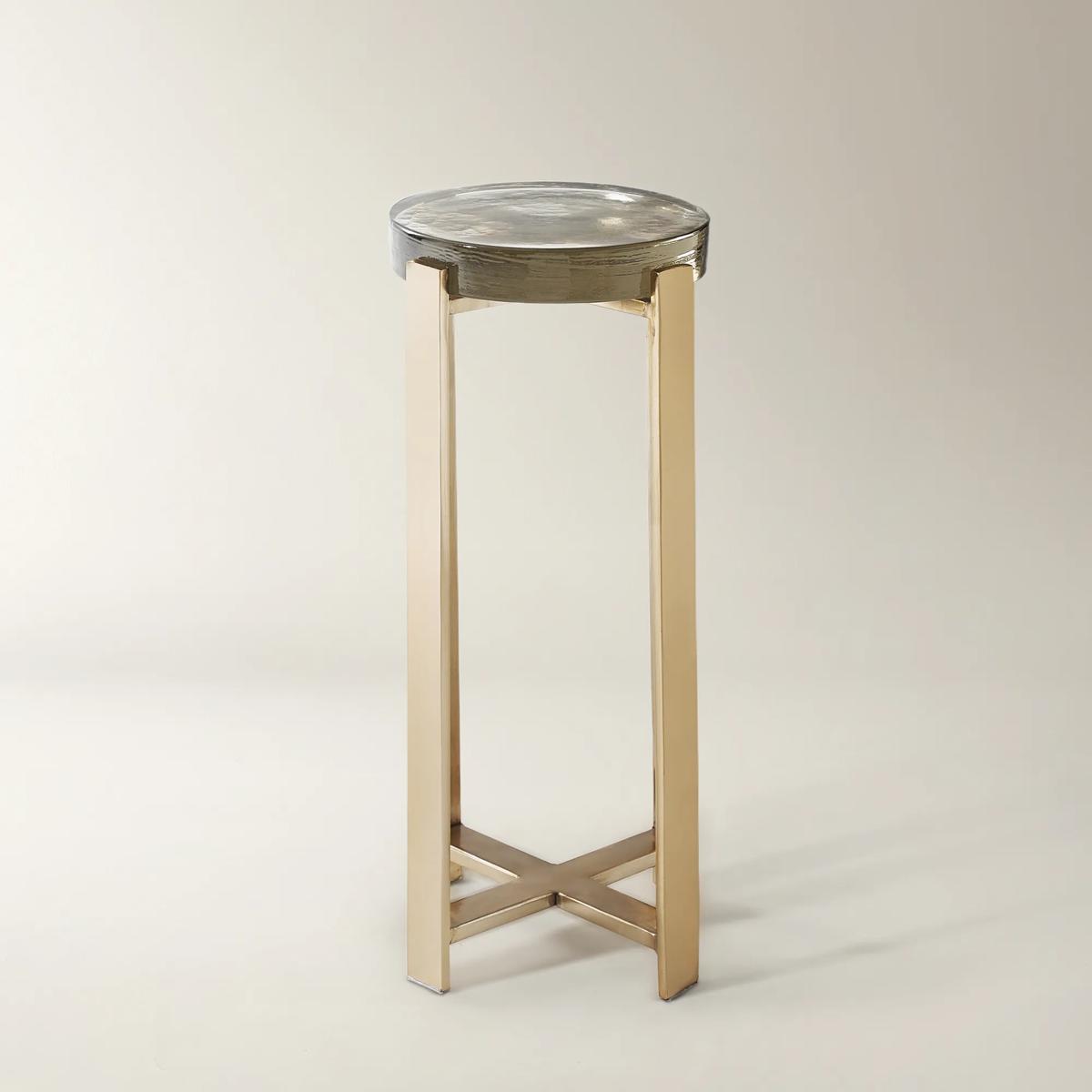 Lyra Round Brass Metal Side Table With Glass Top (10.75")$259
A sculptural side table featuring a thick cast glass top and lustrous brass-finished metal base.
Add To Cart -
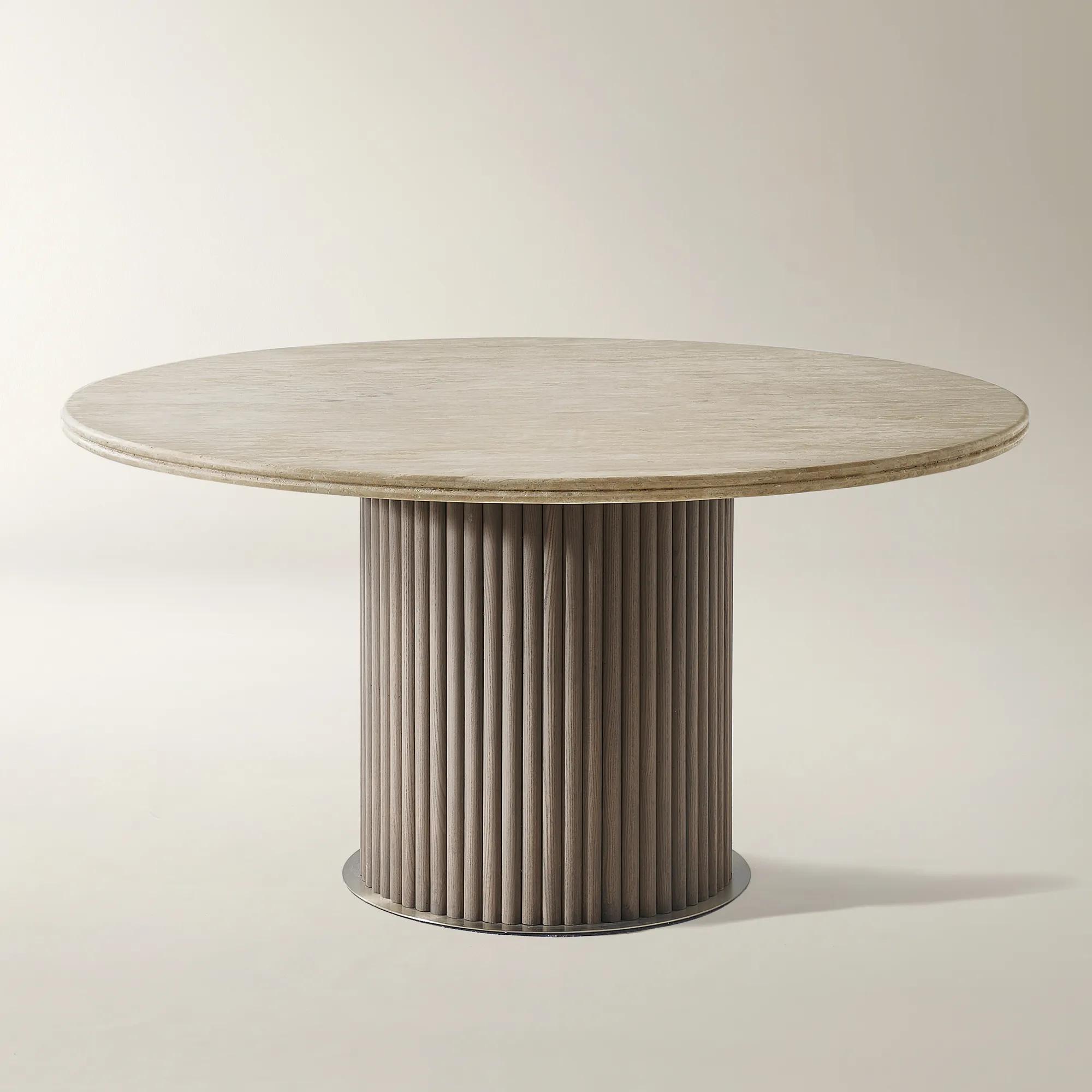 Bond Round Reeded Travertine and Wood Dining Table (59")$3499
A round dining table featuring a genuine natural travertine stone top and a fluted solid ash base.
Add To Cart -
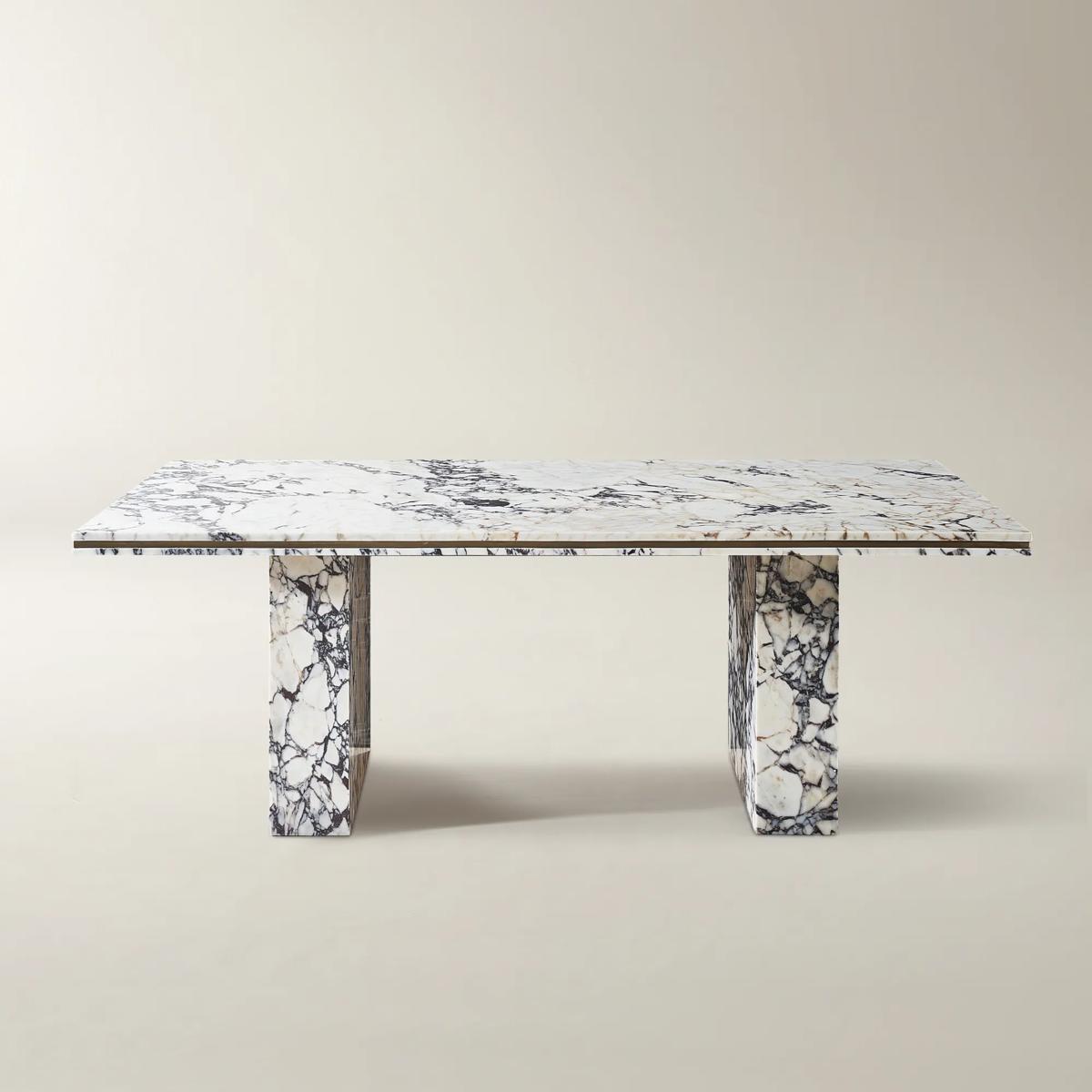
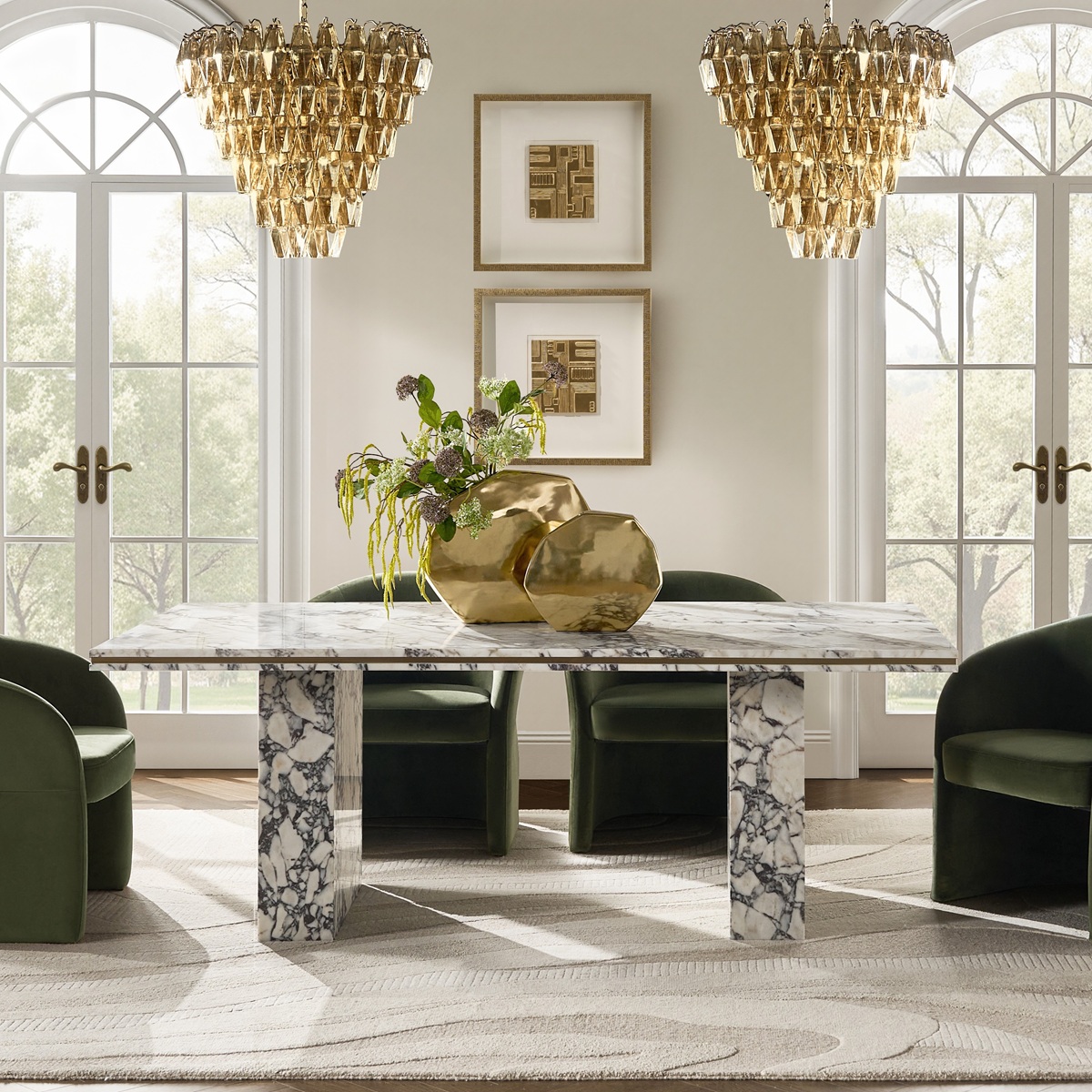 Vanta Rectangular Viola Calacatta Marble Dining Table (84")$6599
A striking Calacatta Viola marble table with vivid violet veining, gold stainless steel inlay, and aluminum core.
Add To Cart -
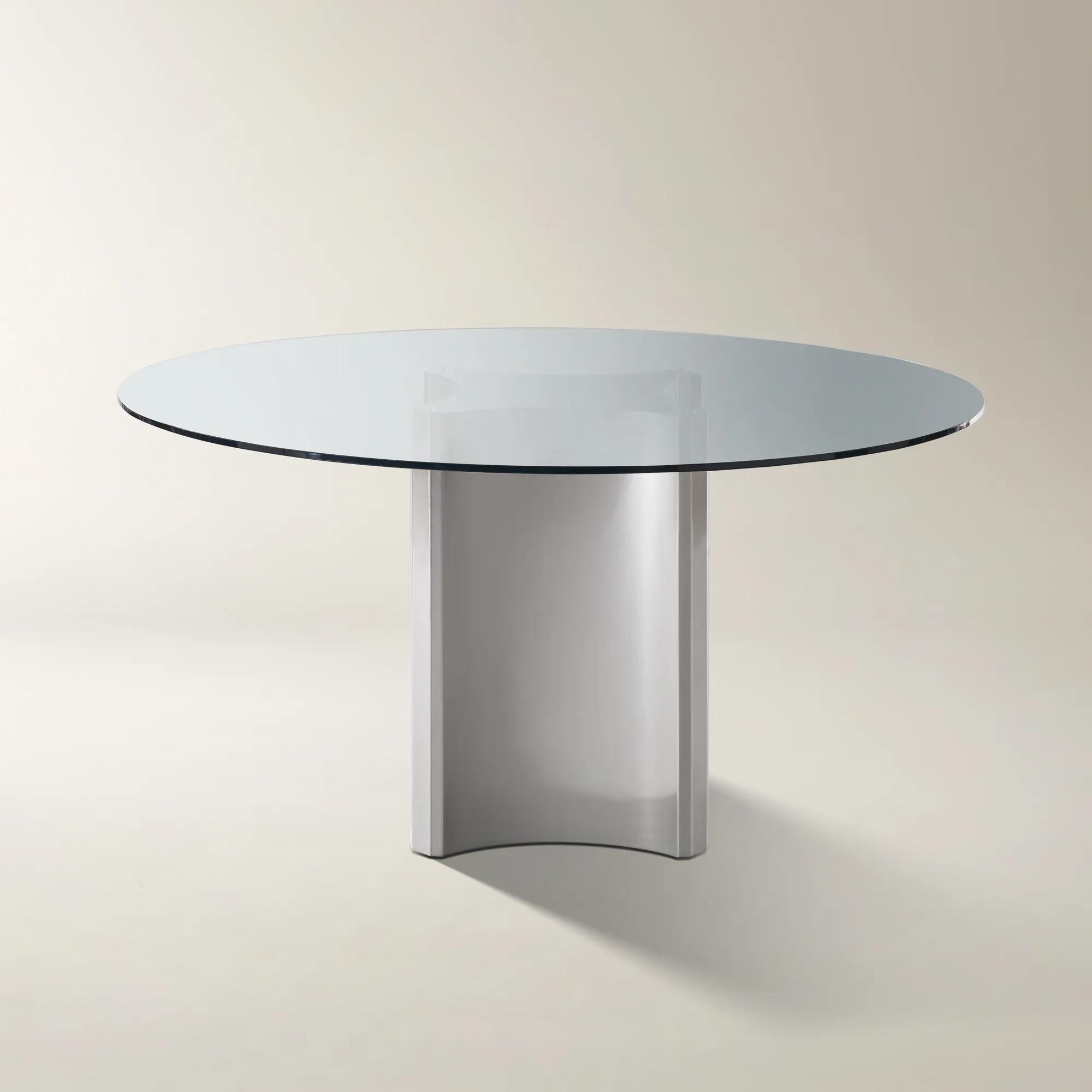 Ventane Round Clear Glass and Stainless steel Dining Table (58")$1499
A modern dining table featuring a clear tempered glass top and polished stainless steel base with anti-fingerprint finish.
Add To Cart -
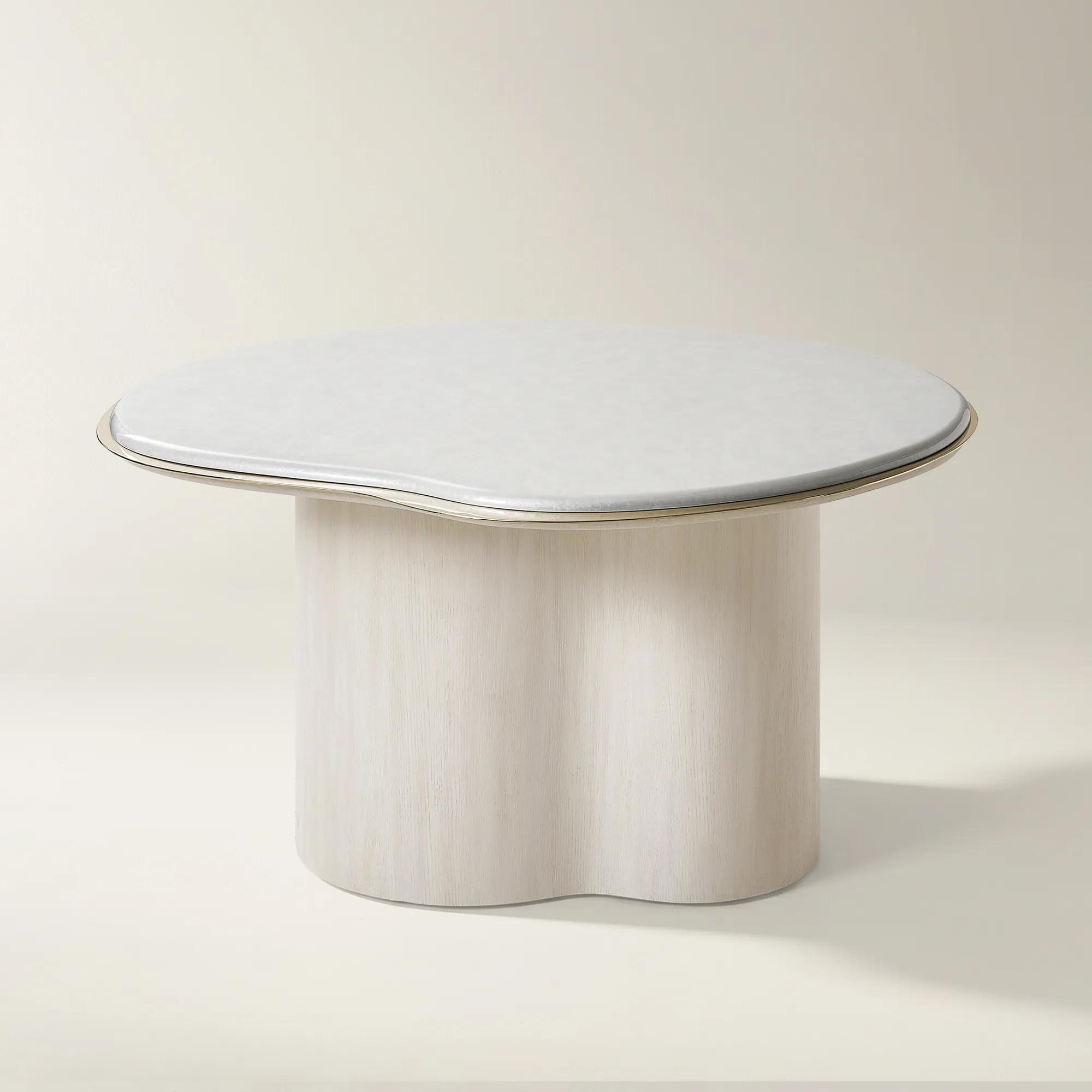 Lumina Bleached Oak Dining Table With Pearl Lacquered Top (58")$2599
A sculptural dining table featuring a pearl lacquered top, bleached oak base, and champagne gold trim.
Add To Cart

Round Tables For Modern Decor
Round Tables for Modern Decor invite you to reimagine your space as a gallery of form and function—where every curve is a statement, and every gathering is elevated by design. The sculptural silhouette of a round table transforms the ordinary into the extraordinary, encouraging conversation and connection beneath an aura of effortless sophistication. Whether anchoring a dramatic dining room or adding intrigue to a contemporary living area, these tables are more than furniture—they are the heart of rooms that dare to be different. Embrace the artistry of modern living with pieces that capture light, invite interaction, and set the stage for memorable moments.
Round tables for modern decor bring sculptural presence to a room while making everyday gatherings feel more connected. Their circular shape encourages conversation, gives each seat a shared focal point, and softens the straight lines of cabinetry, sofas, and architectural details. In a dining room, a round table can anchor an expressive arrangement of upholstered chairs beneath a dramatic chandelier; in a breakfast nook, the same silhouette creates an intimate setting for coffee, quiet mornings, and dinners that linger. Modern round dining tables are especially compelling in square rooms and open living areas, where their curves can help define a gathering place without introducing another hard angle. A circular footprint can also ease movement in a compact space, although the tabletop diameter, base design, and surrounding furniture determine how comfortably it fits. Pedestal tables create a particularly striking profile, with a central support that may allow more flexible chair placement than perimeter legs. A broad cone, fluted column, or rounded drum base brings its own architectural character, making the table feel intentional even when its surface is bare. Legged designs offer a different rhythm, from slender metal supports that keep the composition visually light to substantial wood forms with a more grounded presence. Beyond dining, round coffee tables soften seating arrangements, while circular accent tables place a drink, a reading lamp, or a treasured object within reach. Their appeal extends from a first apartment with carefully chosen statement furniture to a generous home designed around entertaining. For households with children, the absence of projecting corners may be welcome, though stable construction and appropriate edge treatments still matter. The strongest choices balance that expressive silhouette with the realities of daily life: chairs that tuck in gracefully, ample room for place settings, and a finish that suits everything from a solitary breakfast to a lively evening with guests. The result is furniture with both visual confidence and a clear purpose, bringing a sense of occasion to familiar routines.
Material and finish give a round table its particular mood, changing how it catches the light and relates to the textures around it. Wood introduces warmth through visible grain, with pale tones lending an airy quality and deeper finishes creating a rich contrast against light upholstery. Solid wood and wood veneer each have distinct construction characteristics; a veneer surface over a well-made, stable core can offer beautiful grain, while solid wood naturally responds to changes in temperature and humidity. Neither material should be judged by appearance alone, since joinery, support, finish quality, and appropriate care all contribute to durability. Glass tabletops allow a sculptural base to remain visible and can make an arrangement feel less visually dense, an appealing effect beside sumptuous seating or a richly patterned rug. Fingerprints and smudges may be more noticeable on glass, so its luminous character comes with a need for regular attention. Marble and other natural stones introduce veining that gives each surface an individual composition, from delicate movement to sweeping, dramatic markings. Natural marble is porous and vulnerable to acidic spills, making prompt cleanup, coasters, and manufacturer-recommended sealing important considerations. Engineered stone, ceramic, and stone-look surfaces have different performance requirements, so similar appearances do not necessarily mean similar resistance to heat, stains, or scratches. Metal bases can add a gleaming accent or a dark, graphic outline; their care depends on the specific coating or finish. For a table used throughout the day, a forgiving surface and accessible base can matter as much as the initial impression. Placemats, felt-backed accessories, and trivets help protect finishes without obscuring their beauty, while a soft cloth and an approved cleaner support routine care. Abrasive pads and harsh cleaning products can damage delicate coatings, and even a durable tabletop benefits from spills being addressed promptly. Heavy stone or glass also calls for thoughtful placement and careful handling when moving furniture. These practical details preserve the artistry of the piece, allowing a polished surface, tactile grain, or sculptural support to remain part of the room’s appeal through repeated use.
Scale completes the composition, ensuring that a round table feels generous rather than crowded or adrift. For dining, a diameter of approximately 42 to 48 inches often accommodates four people, while approximately 54 to 60 inches can work for six, depending on chair width, base clearance, and the space needed for serving pieces. These are starting points rather than guaranteed seating capacities: broad upholstered chairs and substantial place settings require more room than slender seating and a simple breakfast arrangement. Around 36 inches between the table edge and a wall or nearby furniture is a common clearance target, with 42 to 48 inches preferable where people need to pass behind occupied chairs. Arm height, seat height, and the underside of the tabletop deserve equal attention, particularly when an apron or wide pedestal could limit how far chairs slide inward. In a living room, a round coffee table generally works best within easy reach of the seating, with roughly 14 to 18 inches between the tabletop edge and the sofa as a useful starting point. An accent table feels most comfortable when its surface sits close to the height of the adjacent chair or sofa arm. Once the proportions are right, styling can emphasize the circle rather than compete with it. A low ceramic bowl or compact floral arrangement preserves sightlines across a dining table, while a shallow tray gives smaller objects a deliberate home on a coffee table. A rug should extend far enough beyond a dining surface to support chairs when pulled out, and an overhead fixture can echo the table’s curves or introduce a bold angular contrast. During the cooler months, textured linens and softly glowing light lend warmth without concealing the surface beneath excessive layers. For spaces that connect interior seating with a covered terrace or garden setting, Modern Indoor Outdoor Tables offer a related direction; any table placed outside should be explicitly rated for that environment. Across these settings, a considered balance of proportion, material, and silhouette gives round tables their lasting presence: expressive enough to command attention, comfortable enough to become the center of everyday life.
FAQs
Round tables are celebrated for their sculptural presence and ability to foster connection. Their curved silhouettes soften the lines of a room, creating a sense of flow and harmony that feels both contemporary and timeless. In modern decor, a round table becomes a centerpiece—inviting conversation, encouraging inclusivity, and adding an artful touch to any setting.
Styling a round table is a creative opportunity to express the mood of each season. In autumn, drape it with a velvet runner and clusters of jewel-toned blooms or set dramatic candle arrangements for warmth. As the seasons shift, swap in bold ceramics, metallic accents, or organic greenery to keep your tablescape feeling fresh and inspired.
A round table is a meaningful gift for anyone embarking on a new chapter—newlyweds, first-time homeowners, or those celebrating a milestone. Its versatile design and enduring appeal make it a cherished addition to any home, setting the stage for years of gatherings, celebrations, and everyday moments.
Modern round tables often feature luxe materials such as polished marble, high-gloss lacquer, gleaming metals, or richly grained woods. These finishes not only enhance the table’s visual impact but also contribute to its durability and tactile allure, making each piece a true work of art.
A round table transforms the atmosphere by encouraging a sense of togetherness and openness. Its shape eliminates harsh corners, making the flow of movement more graceful and the ambiance more inviting. Whether used for dining, conversation, or display, a round table brings a touch of elegance and artistry to any room.
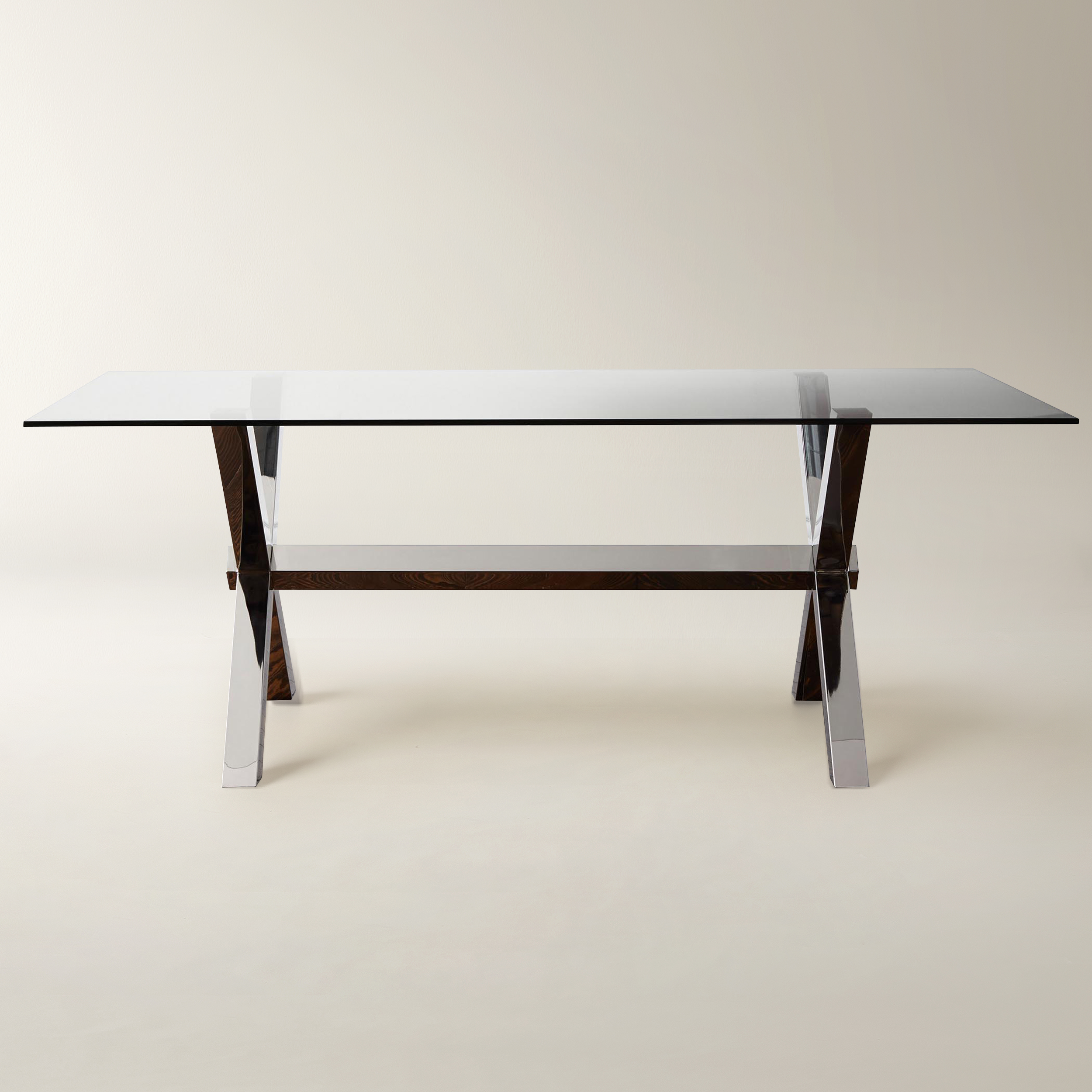
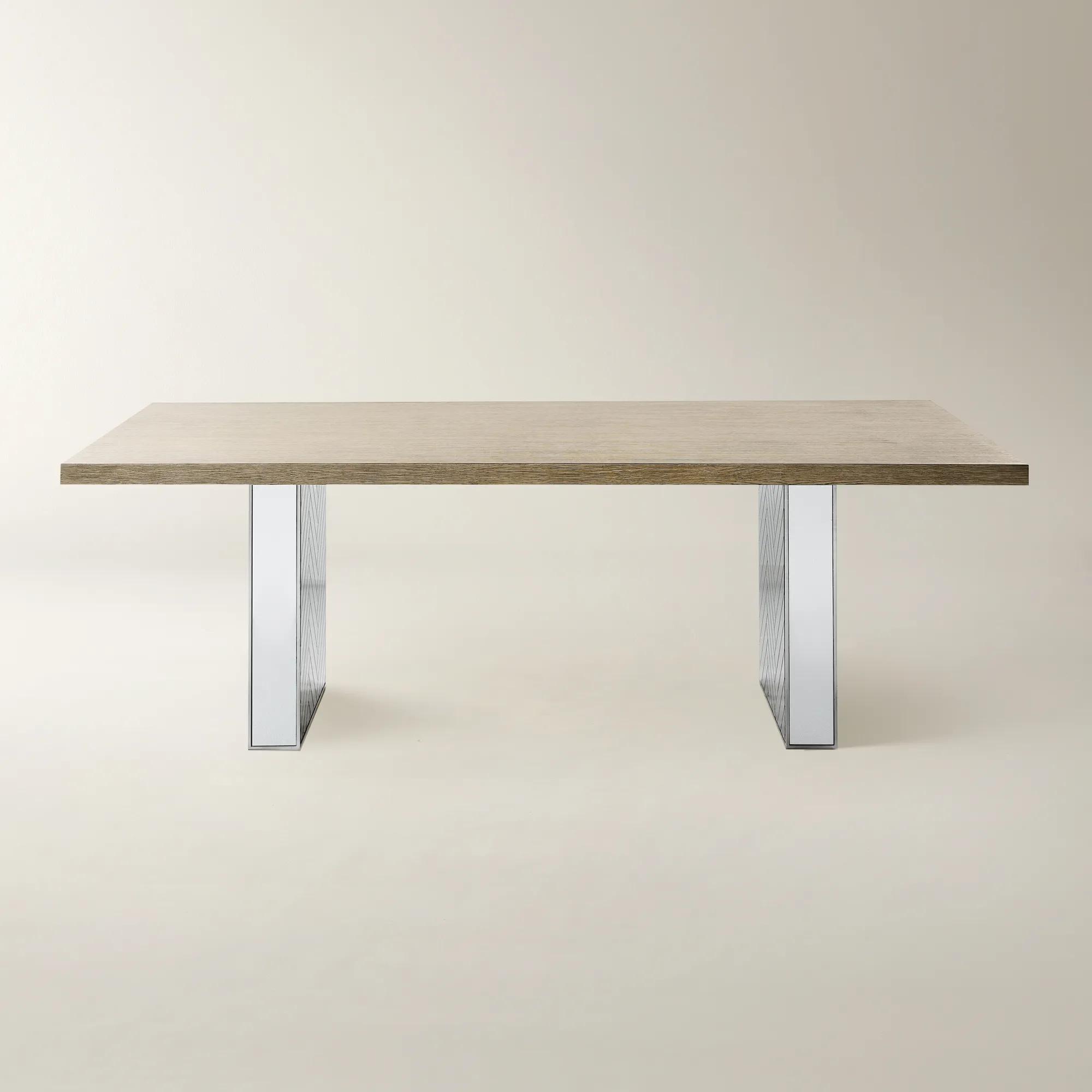
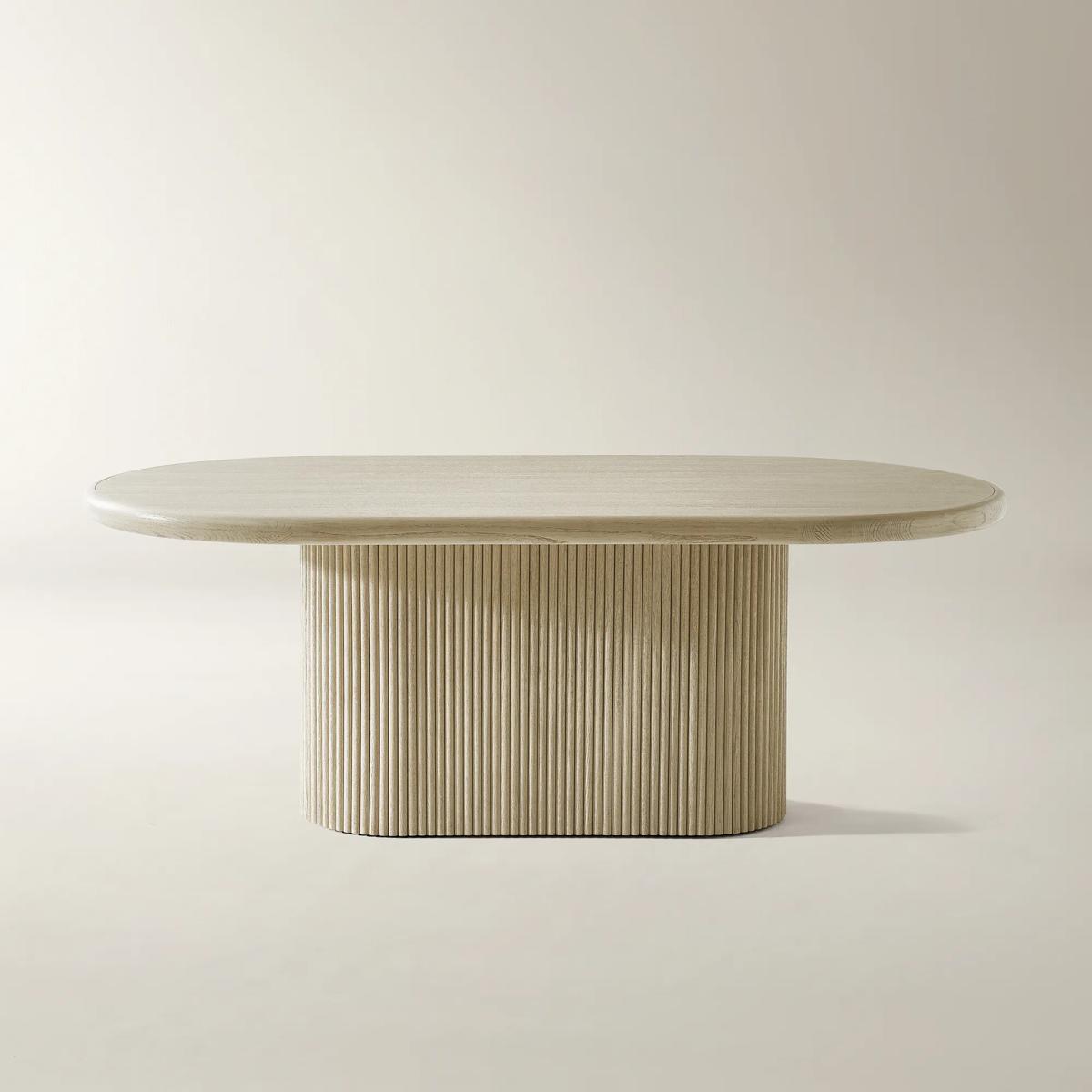
.jpeg?w=3614&h=3614)
.jpeg?w=3009&h=3009)