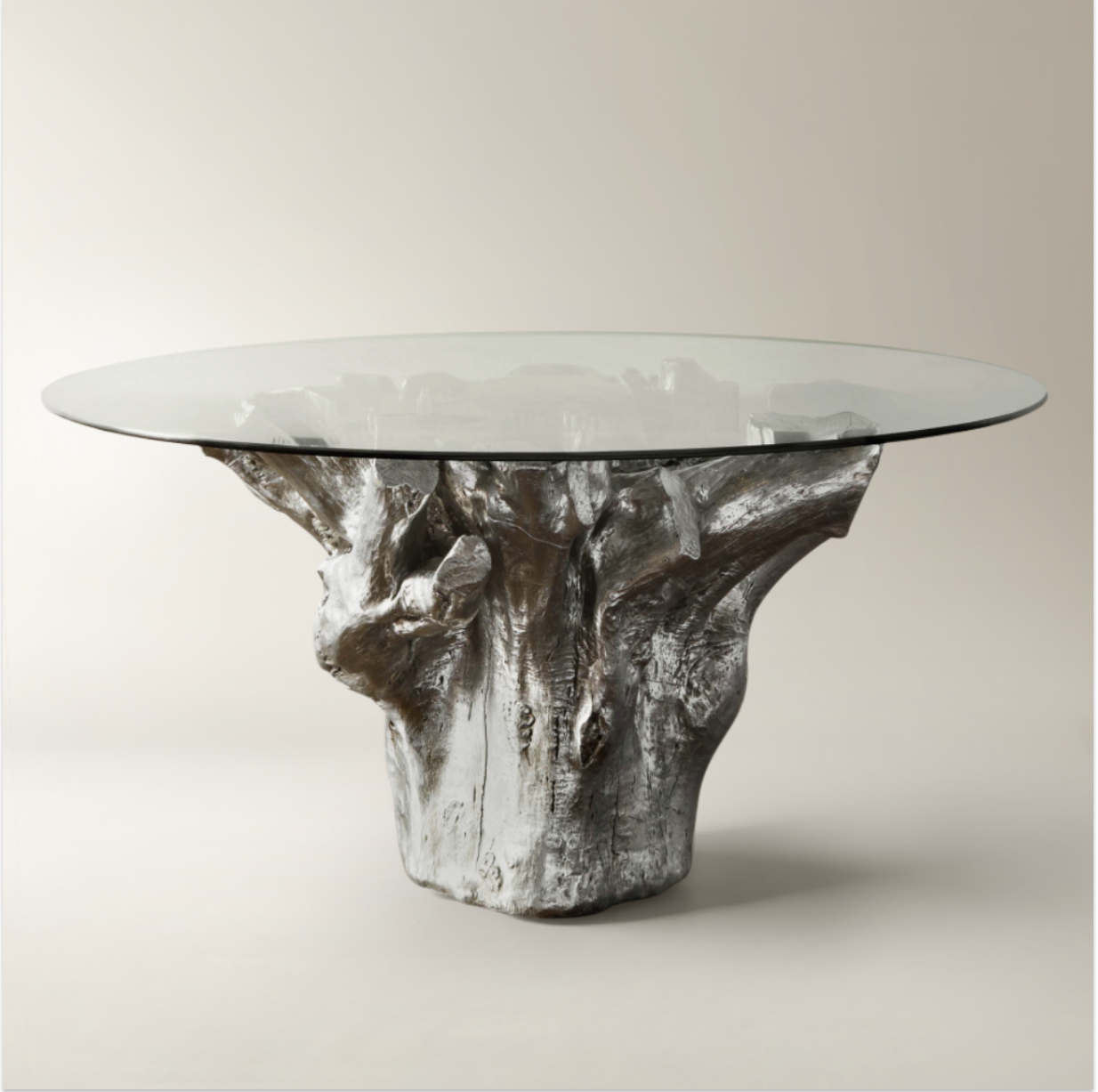
Natural Stone Dining Tables
Natural Stone Dining Tables
-
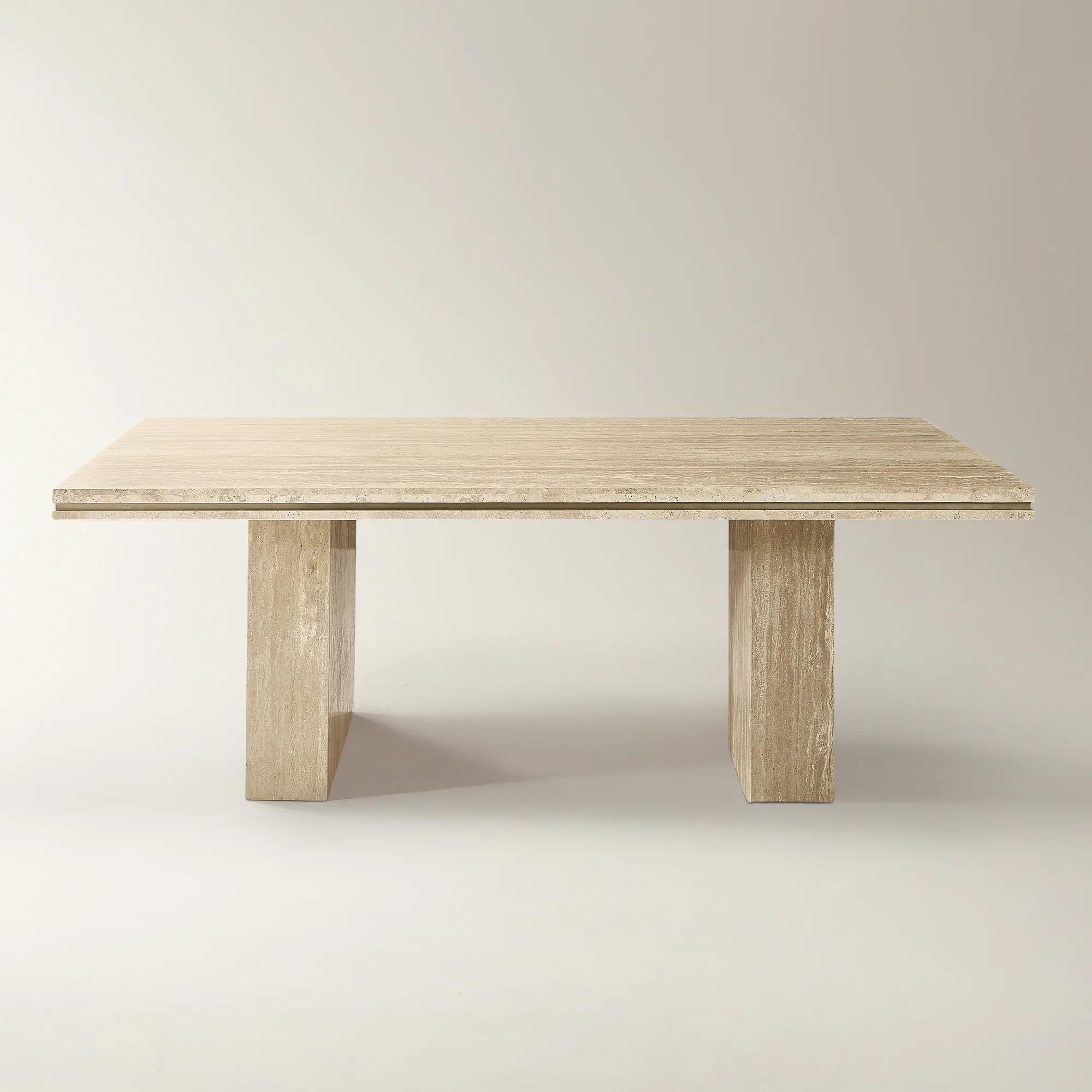 Vanta Rectangular Travertine Dining Table (84")$4199
A natural travertine dining table featuring a soft gold stainless-steel inlay and sculptural twin-panel base.
Add To Cart -
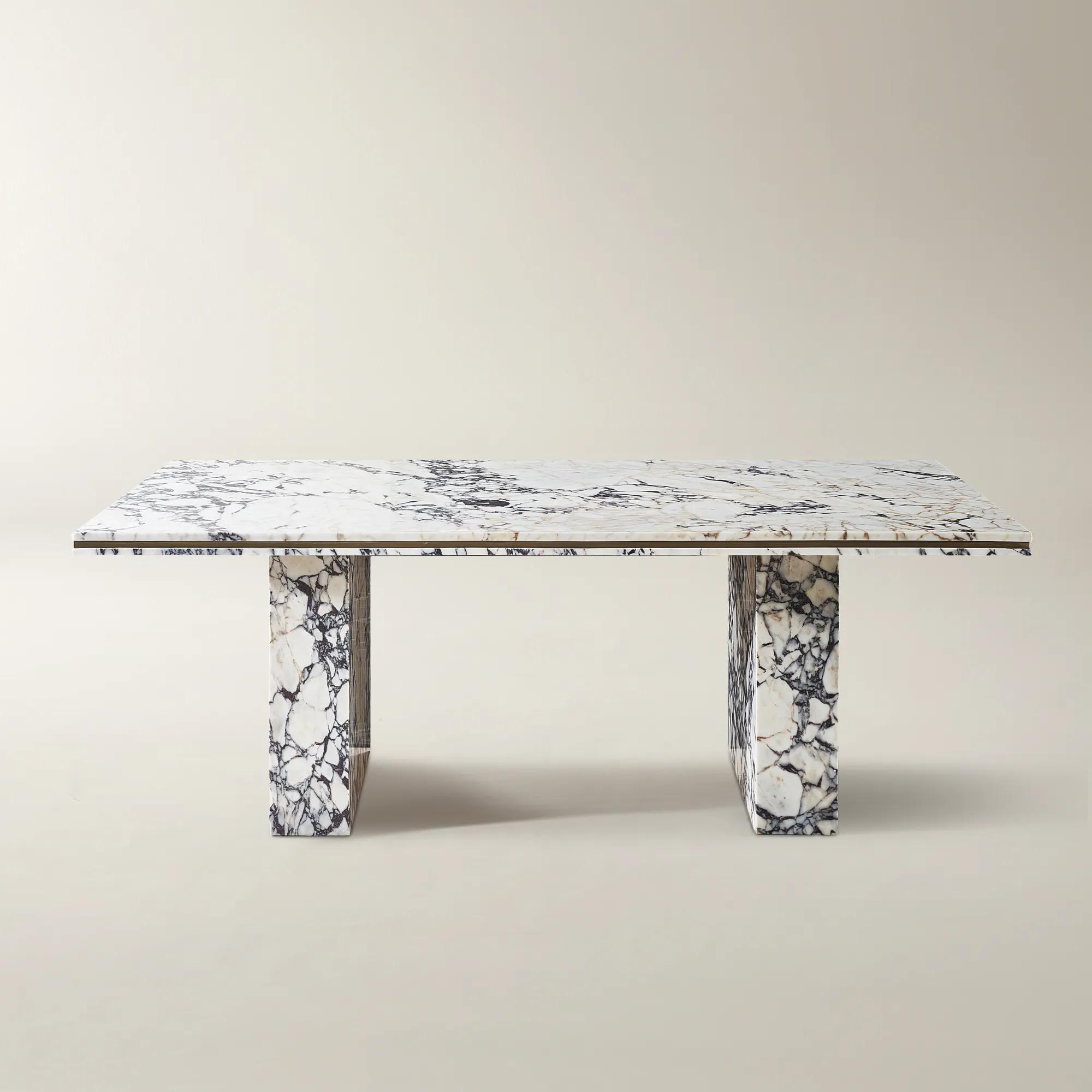
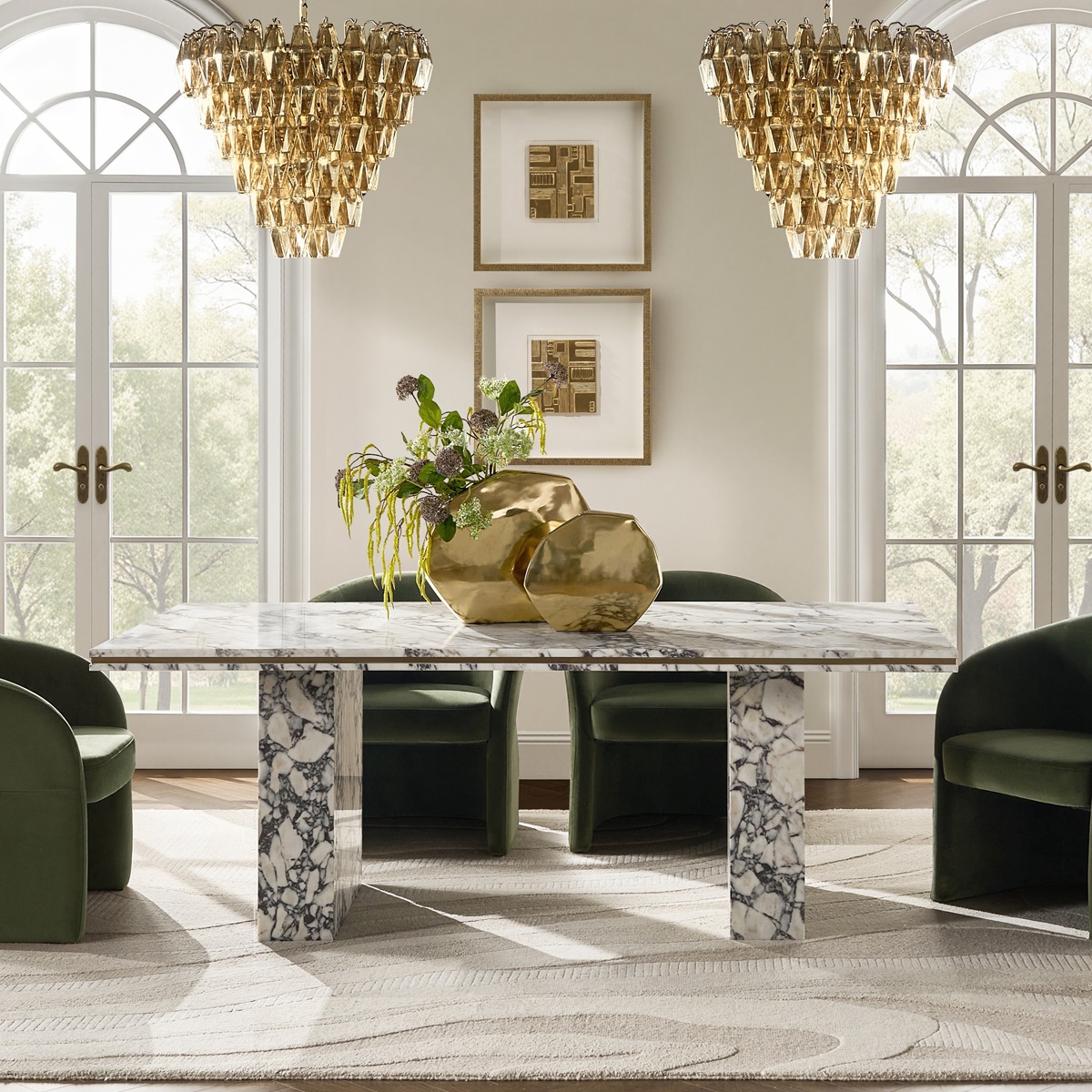 Vanta Rectangular Viola Calacatta Marble Dining Table (84")$6599
A marble dining table with dramatic violet veining, soft-gold inlay, and a sculptural twin-panel base.
Add To Cart -
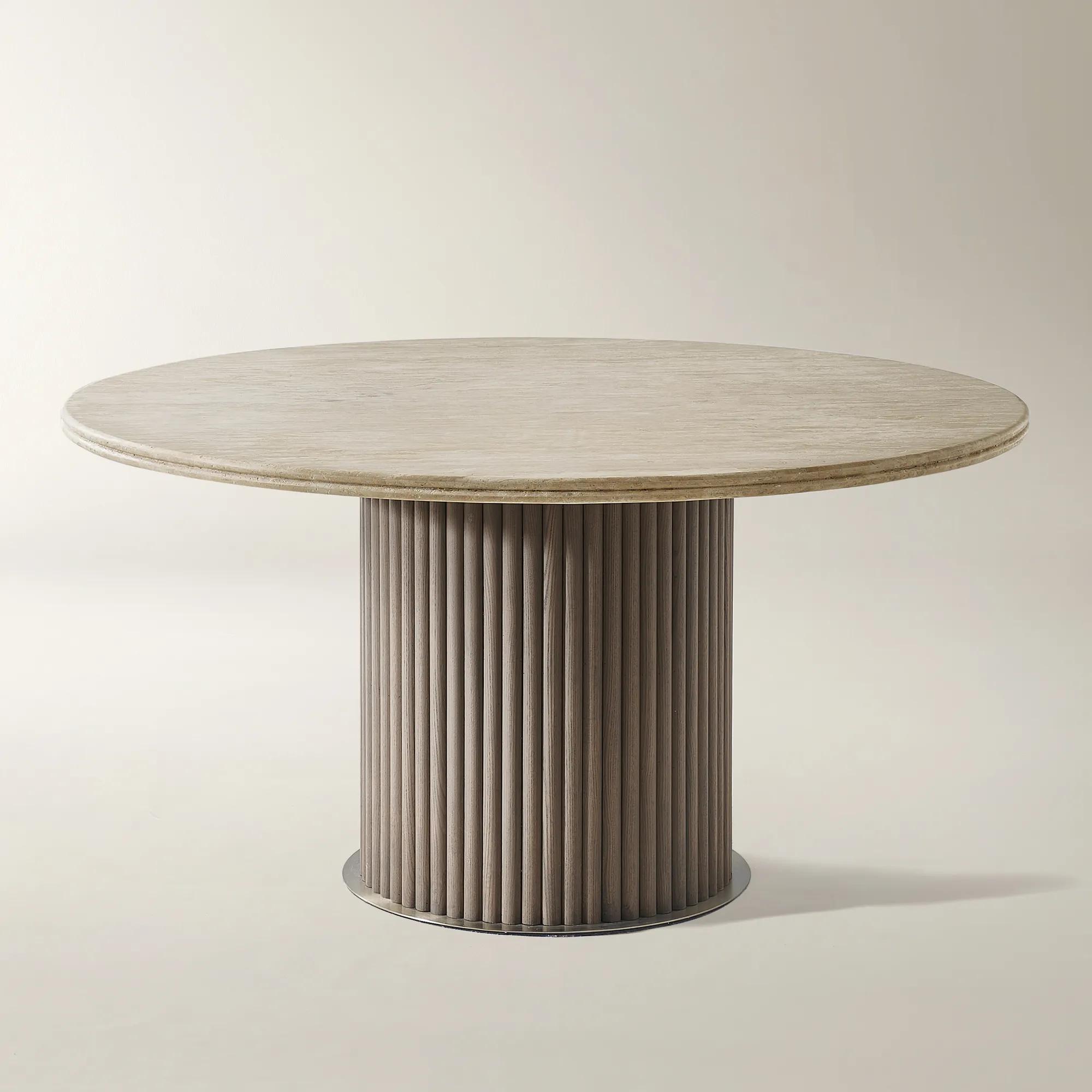 Bond Round Reeded Travertine and Wood Dining Table (59")$3499
A round dining table featuring a genuine natural travertine stone top and a fluted solid ash base.
Add To Cart -

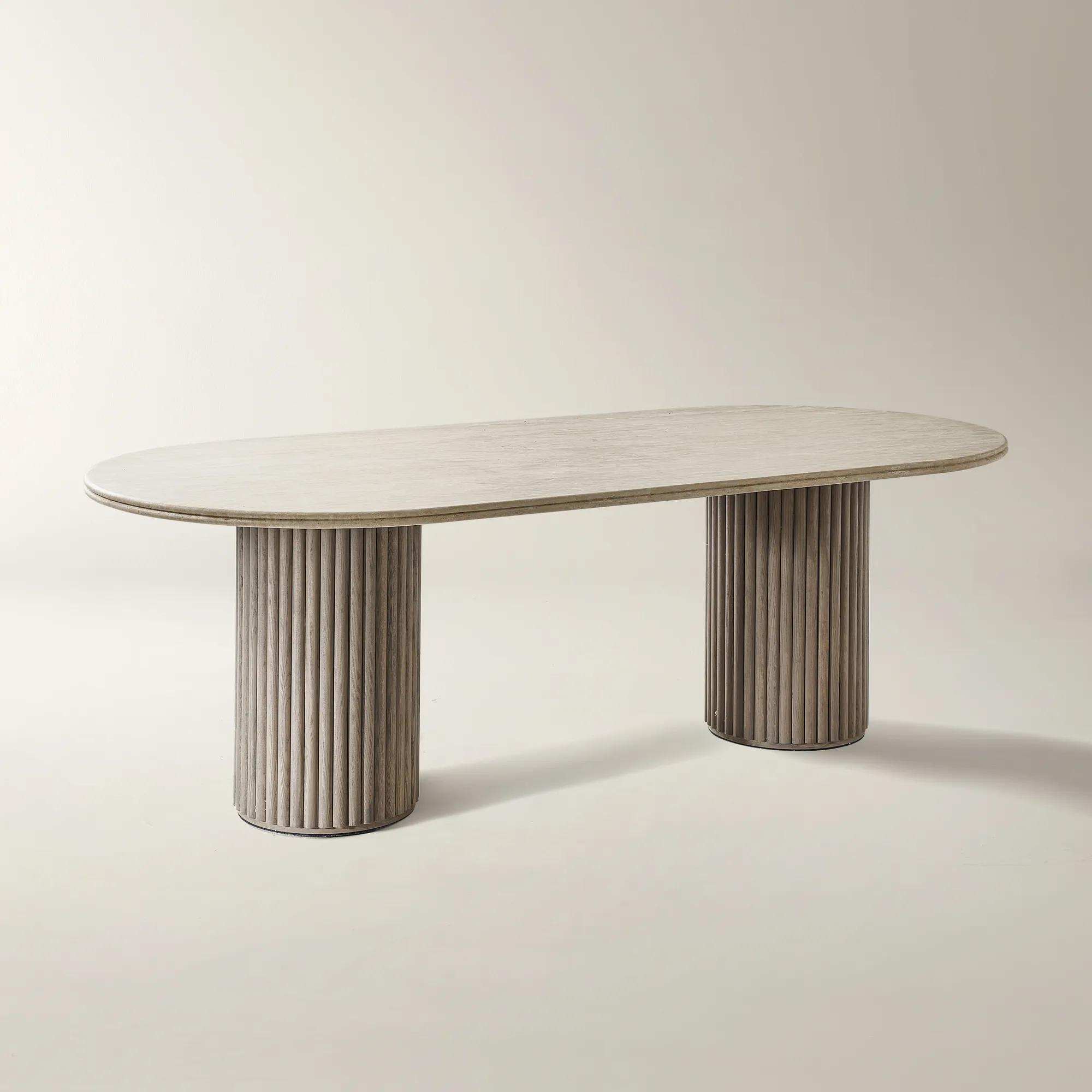 Bond Oval Reeded Travertine and Wood Dining Table (94.25")$4599
A natural travertine stone top pairs with a fluted solid ash base for refined, organic elegance.
Add To Cart -
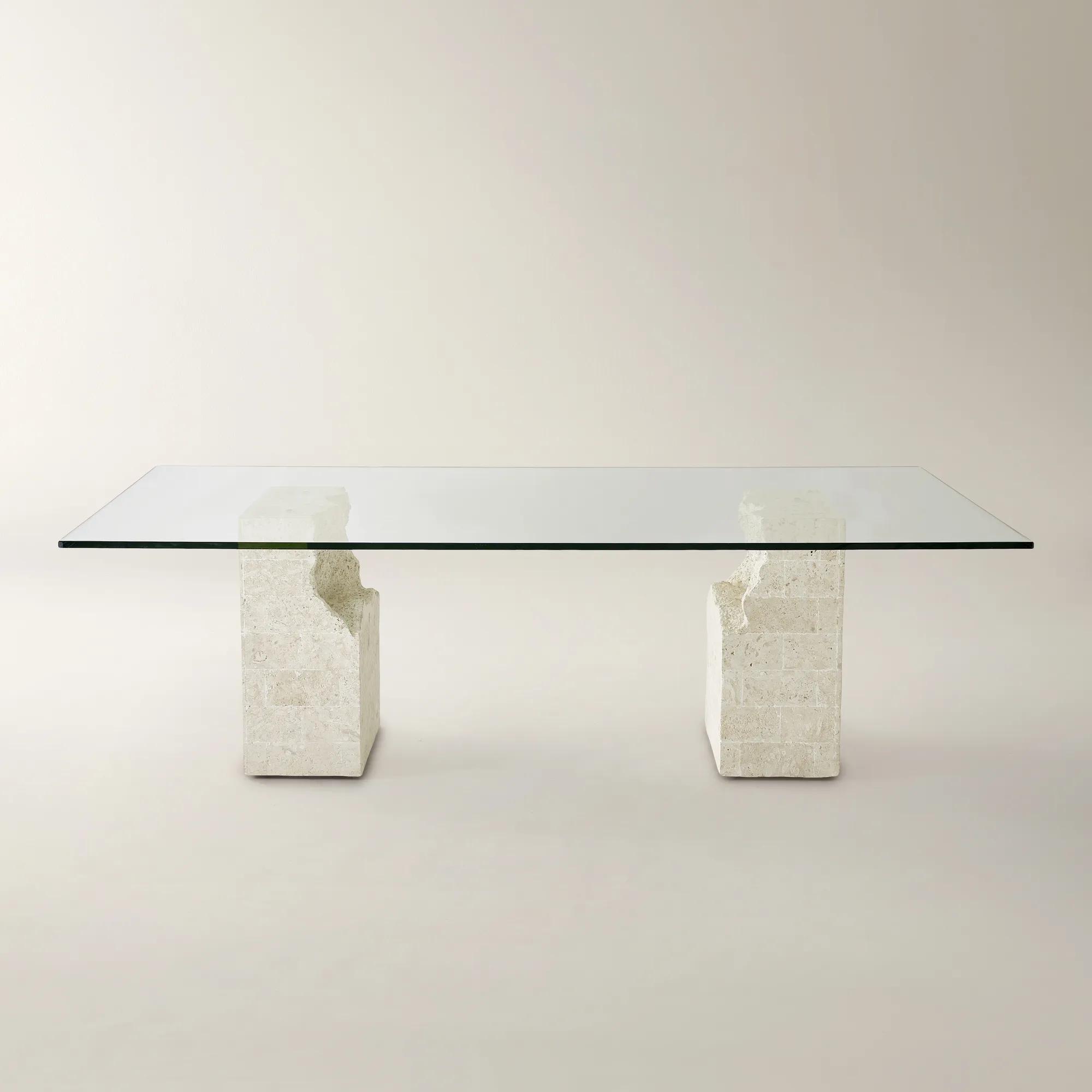 Cairo Rectangular Mactan Stone Dining Table With Glass Top (96")$2599
A contemporary dining table featuring a clear tempered glass top over hand-carved Mactan stone bases.
Add To Cart -
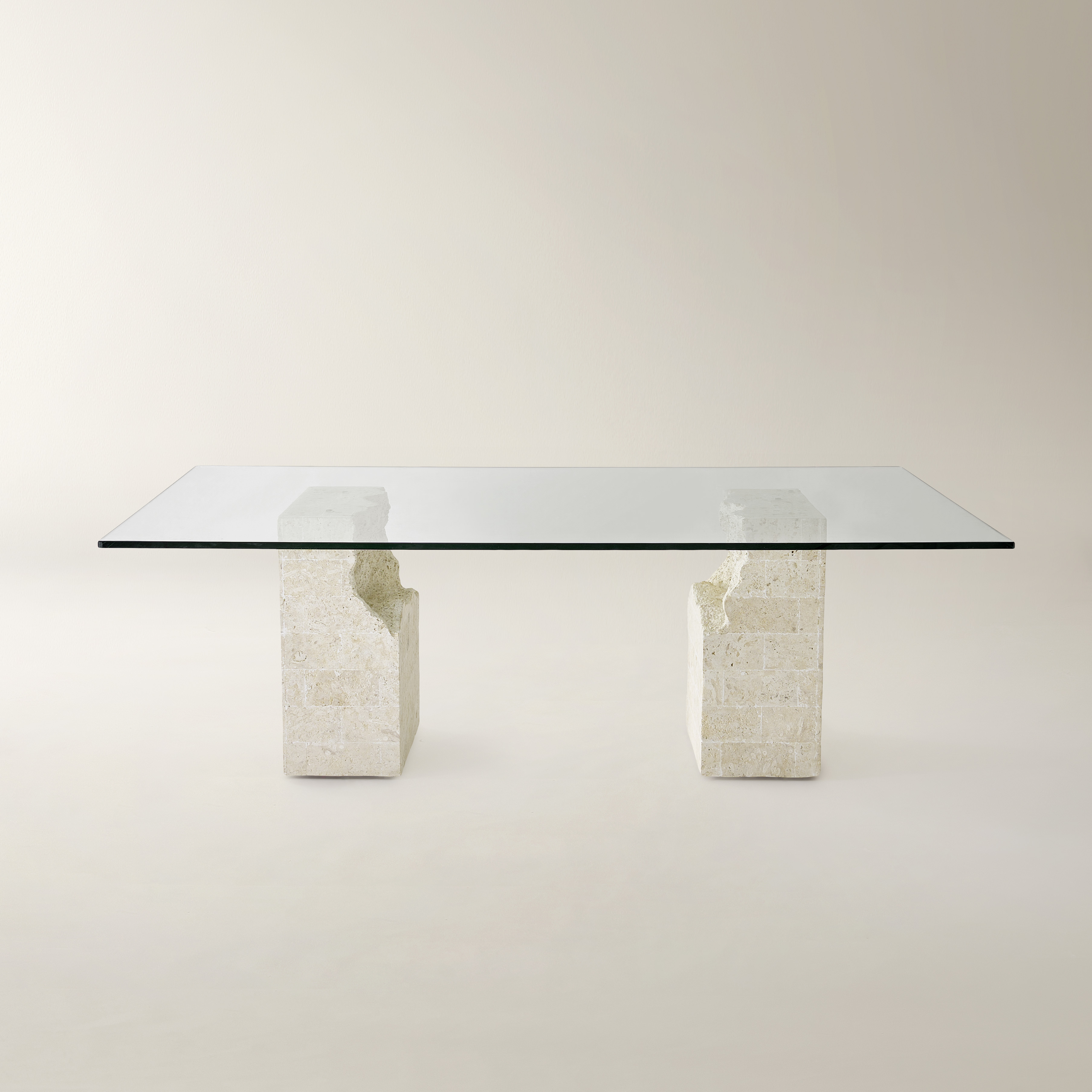 Cairo Rectangular Mactan Stone Dining Table With Glass Top (86.6")$2399
A contemporary dining table featuring a clear tempered glass top over hand-carved Mactan stone bases.
Add To Cart -

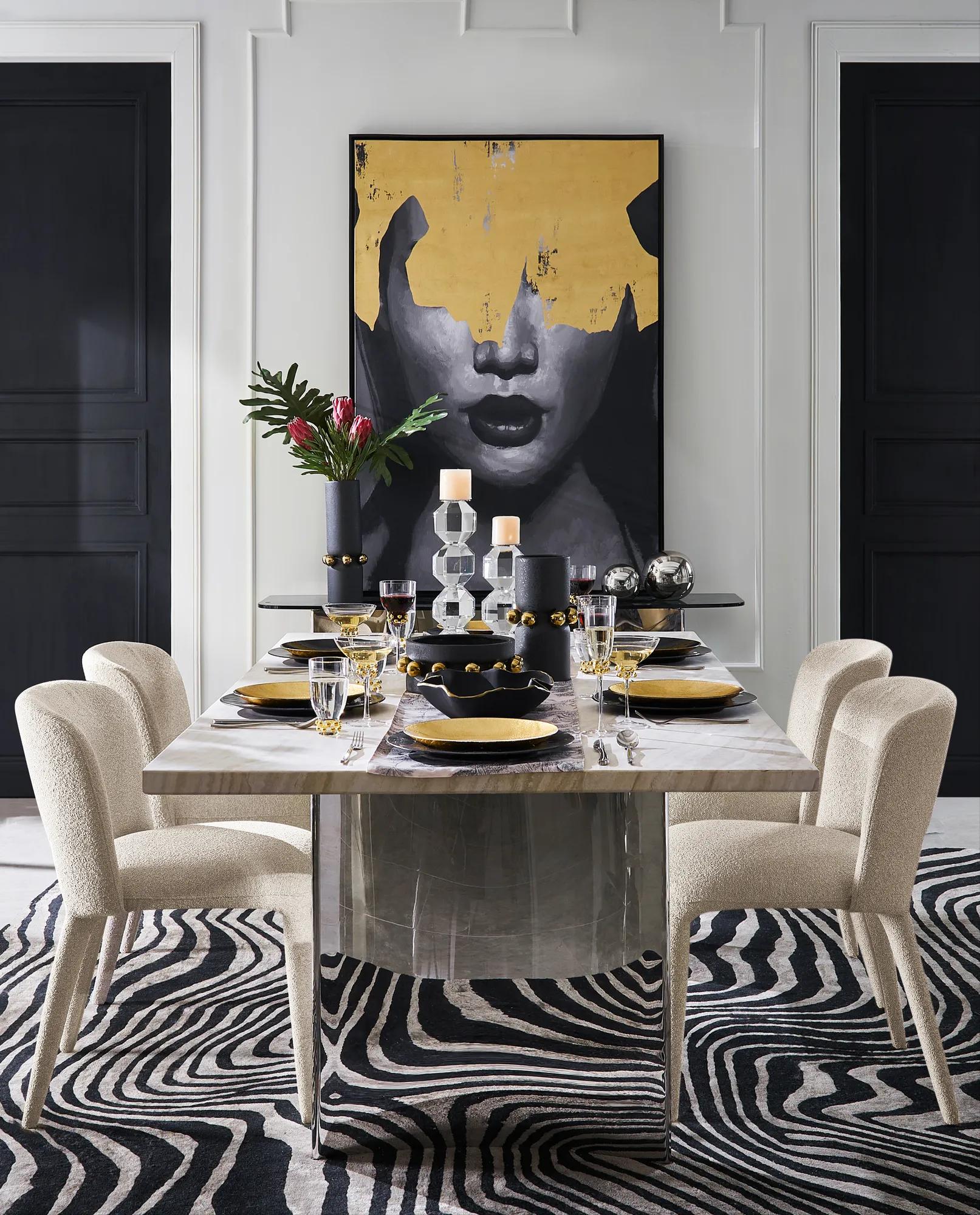 Muscat Rectangular Tan Marble Dining Table With Stainless Steel Base (84")$3099
A sophisticated dining table featuring a tan travertine marble top and polished stainless steel base.
Add To Cart -
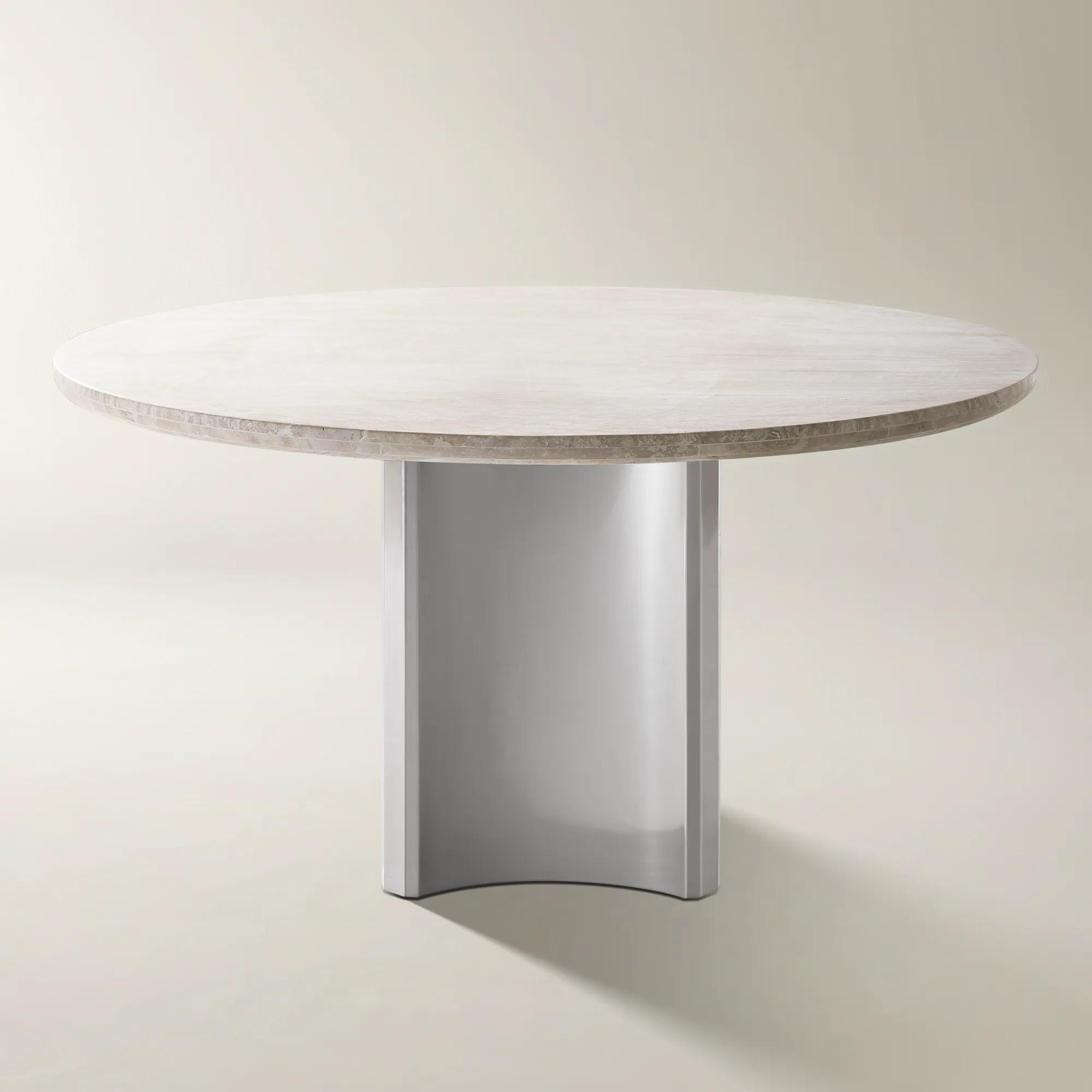 Ventane Round Tan Marble and Stainless steel Dining Table (58")$2999
A round tan travertine marble table with a polished stainless steel base for modern, elegant dining spaces.
Add To Cart -
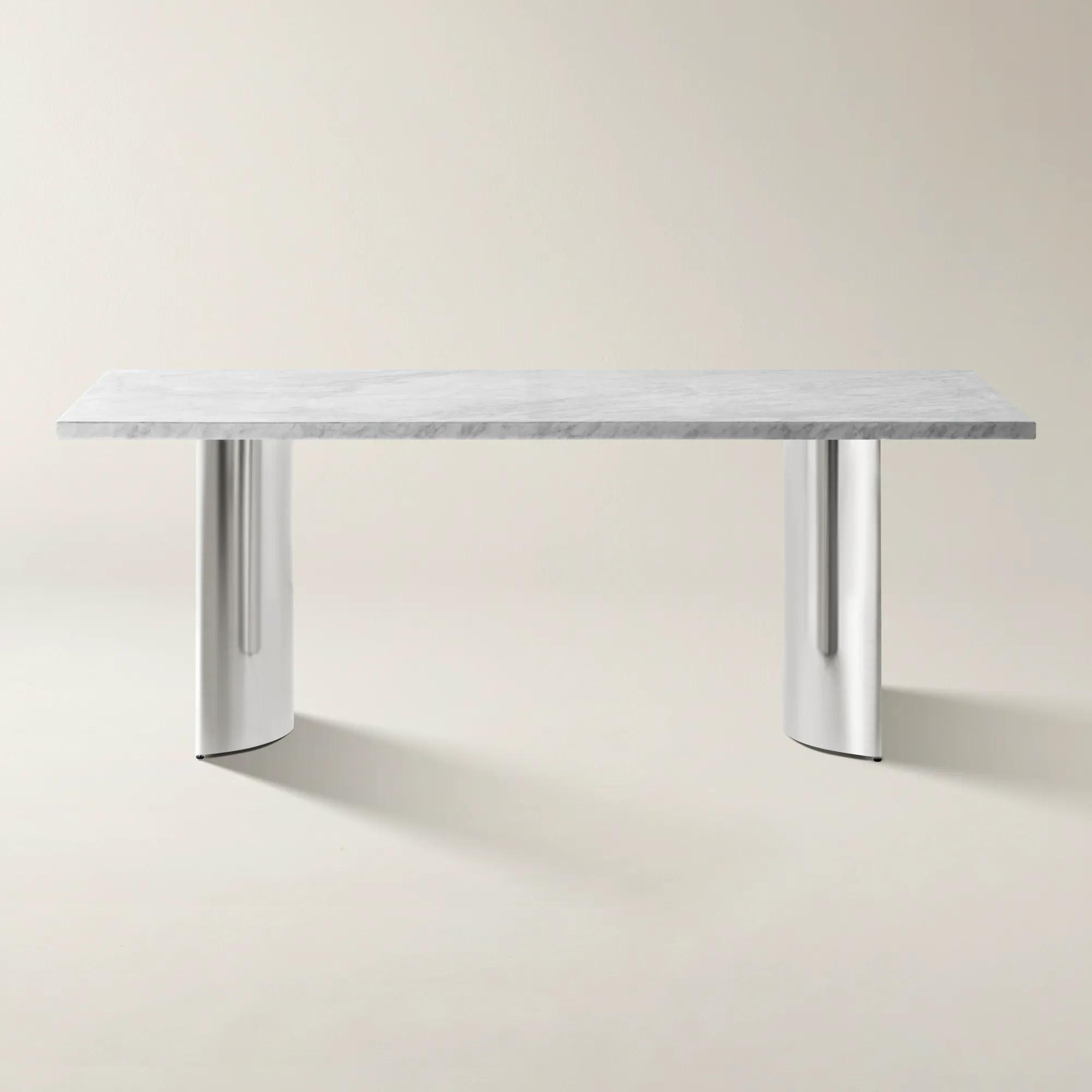 Muscat Rectangular White Marble Dining Table With Stainless Steel Base (84")$3099
A striking dining table featuring a natural white marble top with unique veining and a polished stainless steel base.
Add To Cart -
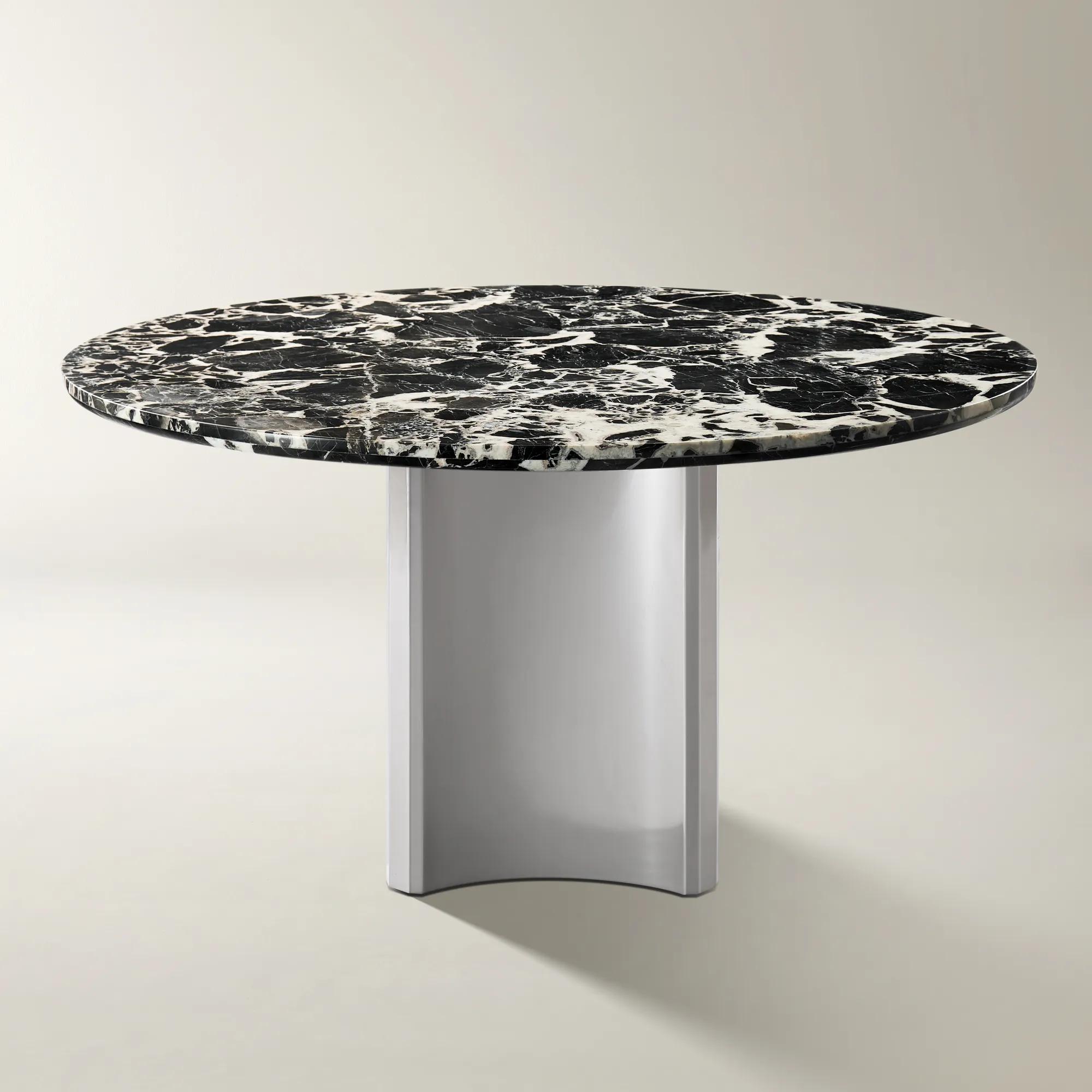
 Ventane Round Black Marble and Stainless steel Dining Table (58")$2999
A dramatic round dining table featuring a natural black marble top and polished stainless steel base.
Add To Cart -

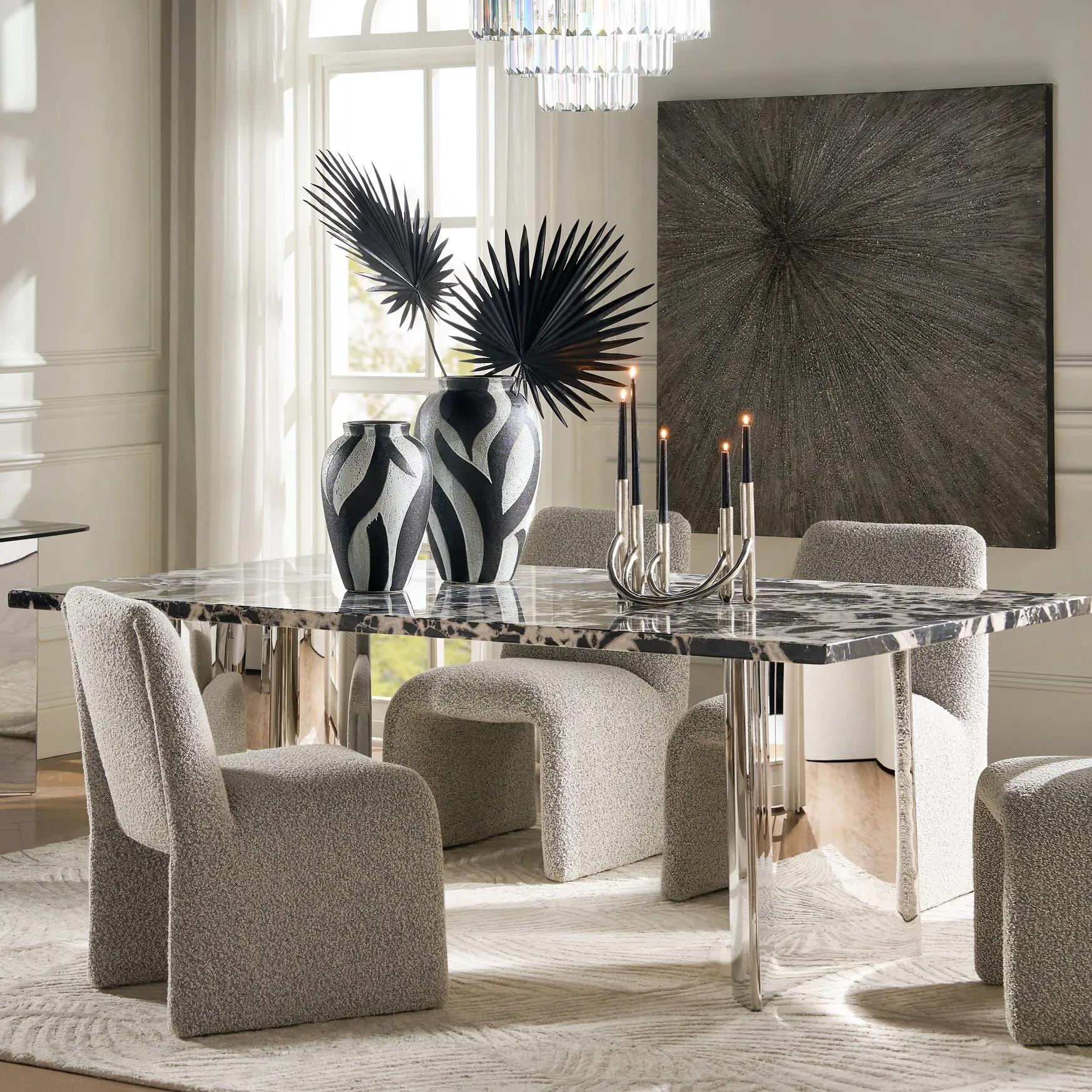 Muscat Rectangular Black Marble Dining Table With Stainless Steel Base (84")$3099
A dramatic black marble dining table with unique veining and a polished stainless steel base.
Add To Cart -
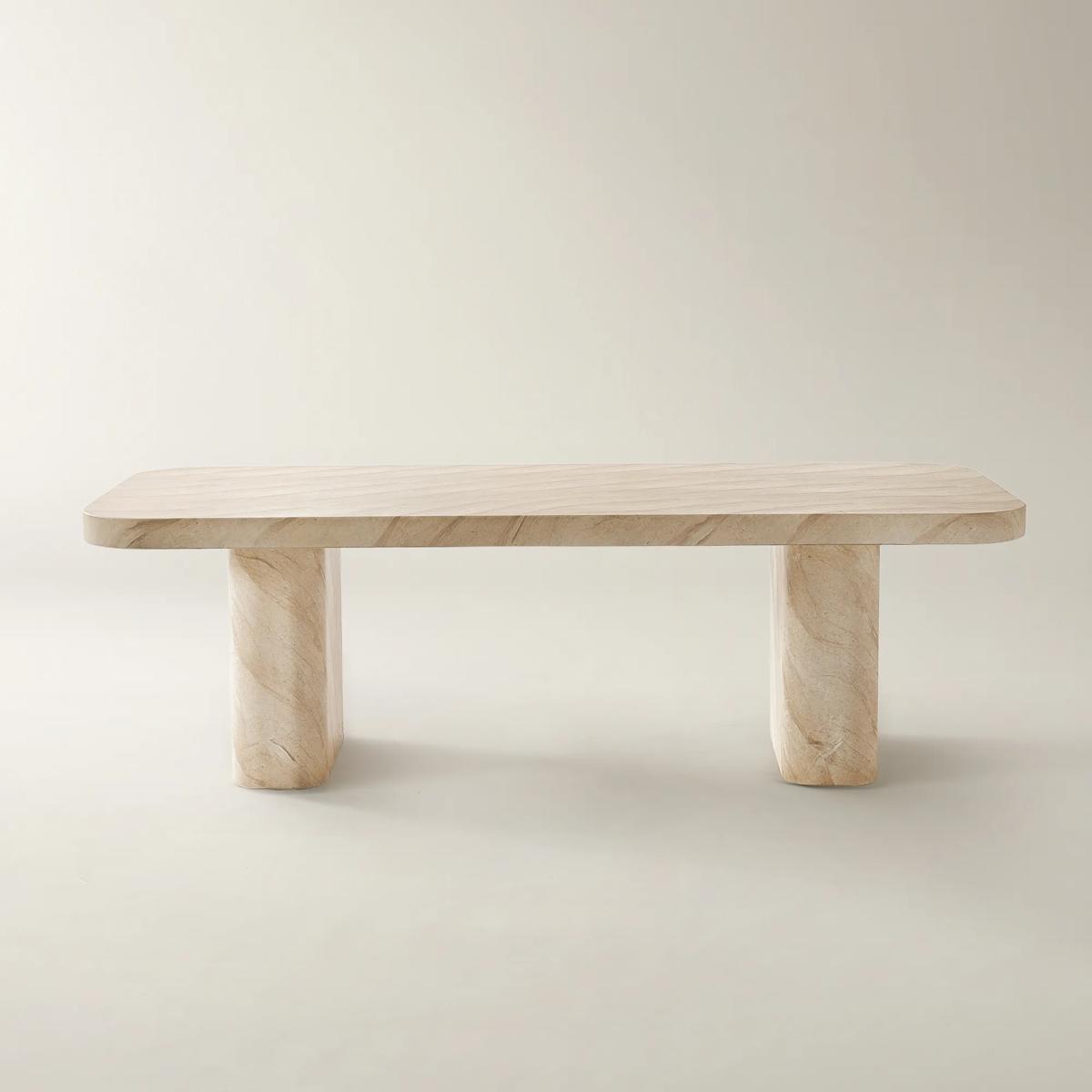 Silex Rectangular Travertine Concrete Indoor/Outdoor Dining Table (94.5")$1999
A rectangular dining table with pedestal legs, travertine-inspired veining, and resilient fiber concrete for indoor-outdoor use.
Add To Cart -

 Matera Rectangular White Marble Dining Table With Stainless Steel Base (86.61")$2499
A modern dining table featuring a white marble top and polished stainless steel base for timeless elegance.
Add To Cart -
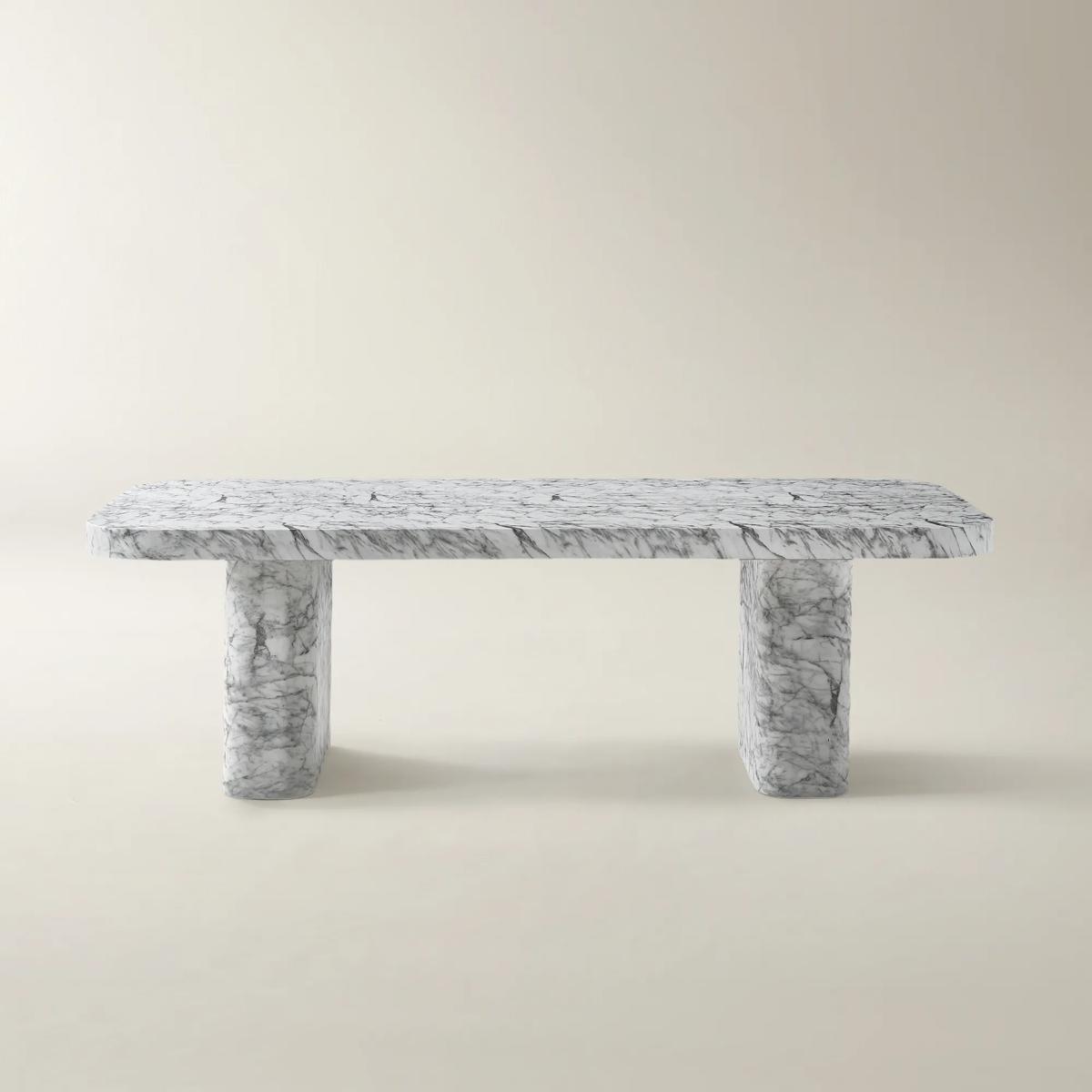
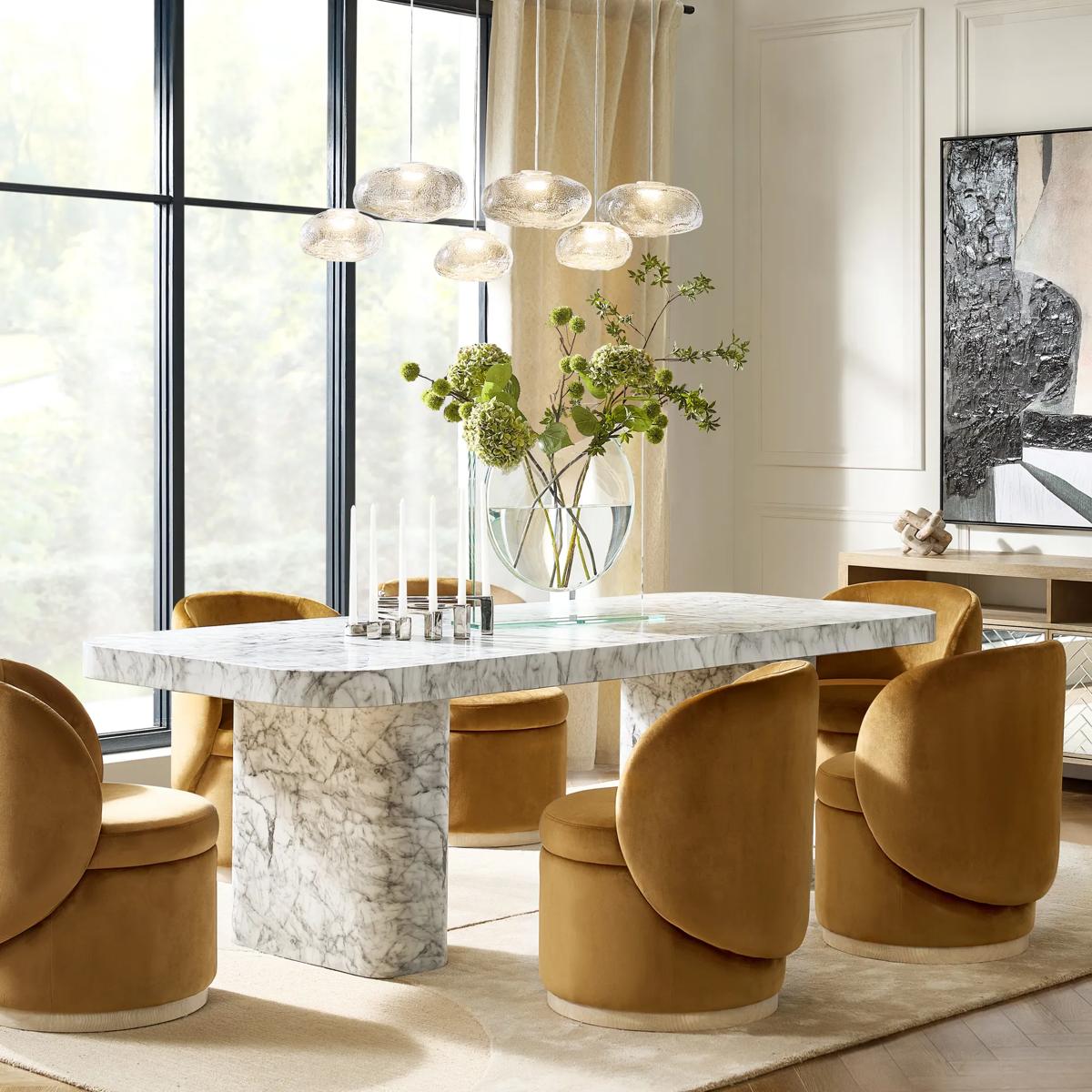 Silex Rectangular White Concrete Indoor/Outdoor Dining Table (94.5")$1999
A white concrete dining table with a sculptural pedestal base, marble-inspired veining, and indoor-outdoor versatility.
Add To Cart

Natural Stone Dining Tables
Natural stone dining tables command attention with their striking presence and undeniable artistry. Each piece is a celebration of nature’s raw elegance, transforming the dining room into a gallery of sculptural beauty. With surfaces that shimmer, veined and unique as works of art, natural stone dining tables invite conversation and admiration in equal measure. Their enduring allure elevates every gathering, creating an atmosphere where everyday meals become lavish affairs and every detail sings with sophistication. For those who crave drama and distinction at the heart of their home, these tables are more than furniture—they are the foundation for unforgettable moments.
Natural stone dining tables feature genuine stone surfaces, commonly marble, travertine, granite, or quartzite, with distinctive colors, mineral patterns, and textures formed in nature. Those variations give a dining room something a repeated print cannot: a surface with its own visual rhythm, from a fine gray vein crossing creamy marble to the cloudlike movement of richly layered quartzite. A dramatic slab can become the room’s central artwork, while a quieter stone creates a luminous foundation for expressive chairs, sculptural lighting, and beautifully arranged place settings. Marble is prized for its veining and depth; travertine brings earthy tones and characteristic pores that may be filled or left visible, depending on the finish. Granite often displays a granular pattern, while quartzite can offer sweeping movement alongside substantial hardness. These materials differ in their resistance to scratching, staining, and acidic spills, so their beauty should be considered alongside the demands of daily dining. Natural quartzite is also distinct from engineered quartz, which combines mineral particles with binders rather than using a quarried slab. Construction matters as much as the stone name: a tabletop may be solid stone, a thinner stone layer bonded to a substrate, or stone veneer over a supporting core. Each approach affects weight, edge construction, and handling, without making the visible surface any less expressive. Finish adds another dimension. The gleaming surface of polished stone dining tables reflects surrounding light and accentuates mineral detail, lending even a restrained dining room a distinctly glamorous presence. Honed stone offers a softer sheen, with a velvety appearance that allows shape and color to command attention. Neither finish eliminates a stone’s care requirements. Set against tailored upholstery, brushed metal, or richly grained wood, natural stone introduces an interplay of organic variation and deliberate design. It suits the host who loves a dramatic dinner setting as readily as the household seeking a lasting visual anchor for shared meals. Because stone varies naturally, differences in tone, markings, and pattern are part of the material’s character, not evidence that every surface will resemble a single photograph.
The most compelling stone dining table feels generous in the room without overwhelming the people gathered around it. Shape establishes that balance. A round tabletop encourages conversation across the entire setting and softens a room dominated by straight architectural lines, while an oval offers an elongated silhouette with curved ends. Rectangular designs create a strong axis in a dedicated dining room and can echo the lines of a chandelier or an expansive rug. Square tables offer an intimate arrangement when their proportions suit the space. Beyond the tabletop outline, the base determines how comfortably diners can settle in. A central pedestal may free the perimeter from corner legs, but a broad pedestal footprint can still affect foot room; sculptural supports and trestles likewise need to be considered alongside chair placement. As a general planning allowance, approximately 24 inches of table edge per diner accommodates many everyday settings, while wider chairs and elaborate place settings call for more breathing room. About 36 inches between the table edge and a wall or other furniture is a useful starting point for pulling out chairs, with additional clearance desirable along frequently traveled paths. These dimensions become especially important when a dining area shares space with a living room or kitchen. Chair arms should clear the underside of the top or apron, and seat height should allow comfortable legroom rather than merely looking proportional in a photograph. A stone table’s substantial presence also benefits from visual contrast: sumptuous upholstered chairs can temper a crisp slab edge, while open-backed seating allows a striking pedestal to remain visible. Rounded corners may ease movement through tighter layouts, although edge shape does not replace thoughtful placement. For households that move between intimate meals, homework, and entertaining, the right proportions support those overlapping uses without sacrificing elegance. A low centerpiece keeps the stone’s movement visible and preserves conversation across the table; a chandelier above adds height and theater without crowding the surface. Stone carries considerable visual weight, so repeating one of its quieter tones elsewhere can give an expressive room a composed foundation.
Durability is one of natural stone’s attractions, but a stone dining table is not an indestructible surface. Hardness, porosity, finish, fabrication, and maintenance all influence how it performs over time. Granite and quartzite are generally more resistant to scratching than marble or travertine, while individual stones and surface treatments can behave differently. Marble and travertine contain minerals that react with acids, so lemon juice, wine, vinegar, and some cleaning products can leave etched, dull marks even when the surface has been sealed. Etching is different from staining: it changes the surface itself rather than simply depositing color. A sealer may help reduce absorption and staining on appropriate stones, but it does not make them acidproof, scratchproof, or maintenance-free. Follow the table manufacturer’s recommendations for cleaning and sealing rather than applying a universal schedule. For everyday meals, placemats and coasters provide a discreet layer of protection, while trivets help shield the surface from hot serving dishes. A protective pad beneath a substantial centerpiece can prevent an unnoticed rough base from scratching the finish. Spills are best blotted promptly, and routine cleaning generally calls for a soft cloth and a product approved for the particular stone; abrasive tools and acidic cleaners can damage vulnerable surfaces. These habits are especially valuable when the table doubles as a workspace, where mugs, pens, craft supplies, and frequently moved objects introduce different risks from dinnerware. The weight of stone also deserves consideration before delivery: access routes, stairs, assembly requirements, and the suitability of the supporting base all matter. Moving the table should follow its handling instructions rather than relying on the tabletop as a lifting point, and sitting or standing on an edge can place unsafe stress on the construction. With appropriate care, natural stone offers an enduring setting for everything from a quiet breakfast to a beautifully orchestrated celebration. Fine changes in appearance may become part of its lived-in character, especially with more sensitive materials. Choosing a stone whose maintenance needs suit the household allows its artistry to remain the focus: mineral movement beneath candlelight, sculptural proportions, and a gathering place with unmistakable presence.
FAQs
Natural stone dining tables are celebrated for their one-of-a-kind beauty and artistry. Each piece of stone is formed over millennia, resulting in distinctive veining, color variations, and textures that cannot be replicated. This means every table is truly unique, offering a sense of luxury and individuality that elevates any dining space.
To create a dramatic and sophisticated dining atmosphere, pair your stone dining table with plush, upholstered chairs, metallic accents, and bold lighting such as a sculptural chandelier. Layer the tabletop with statement serveware, fresh florals, and textured linens. The natural elegance of the stone serves as a stunning backdrop for any tablescape, from minimalist chic to over-the-top glamour.
Absolutely. Natural stone dining tables are remarkably versatile, seamlessly transitioning from formal dinner parties to casual family breakfasts. Their timeless appeal and robust construction make them ideal for everyday use, while their elegant presence ensures they shine during special occasions.
Dining tables are often crafted from luxurious stones such as marble, travertine, granite, and quartzite. Each type offers its own unique look and feel—marble is prized for its classic veining, travertine for its earthy warmth, granite for its durability, and quartzite for its striking patterns and resilience.
To create a cohesive and artful interior, consider echoing the tones or textures of your stone dining table in other furnishings and decor. Pair with complementary accent pieces like velvet chairs, metallic lighting, or glass accessories. For a harmonious look across open-plan spaces, explore matching elements such as <a href="https://zgallerie.com/o/natural-stone-coffee-tables">Natural Stone Coffee Tables</a> to extend the luxurious, gallery-inspired aesthetic throughout your home.