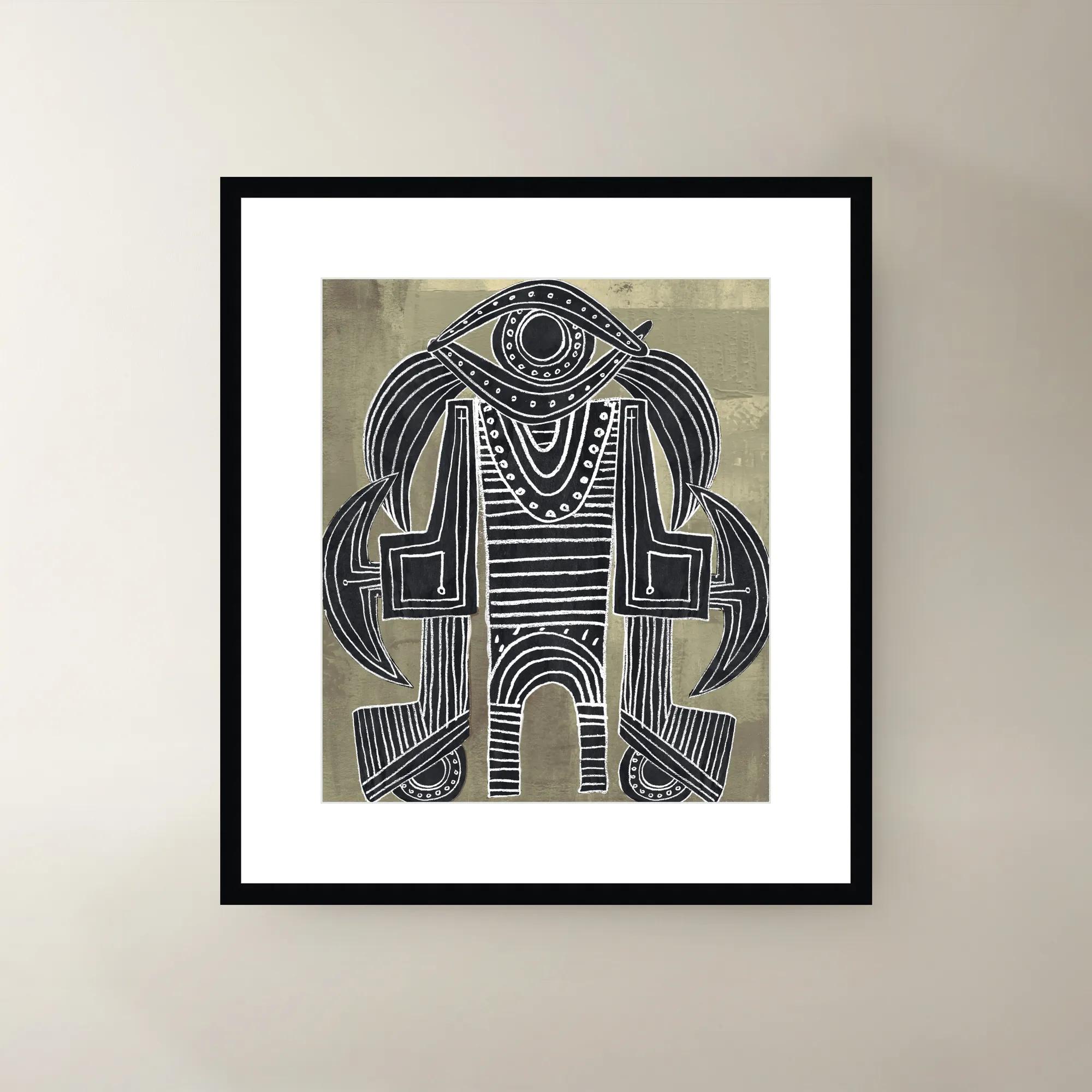
Modern Art For Living Room Walls
Modern Art For Living Room Walls
-
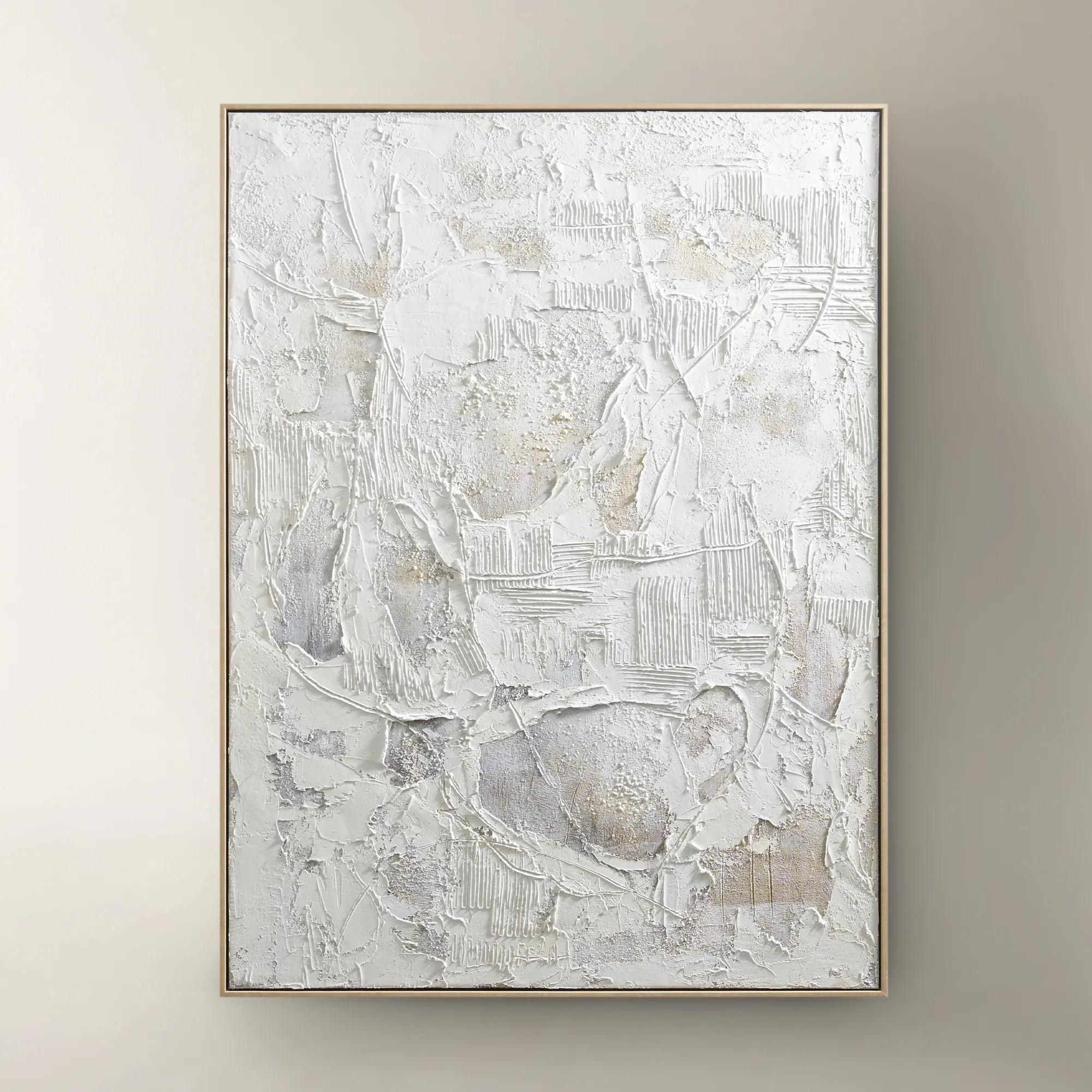
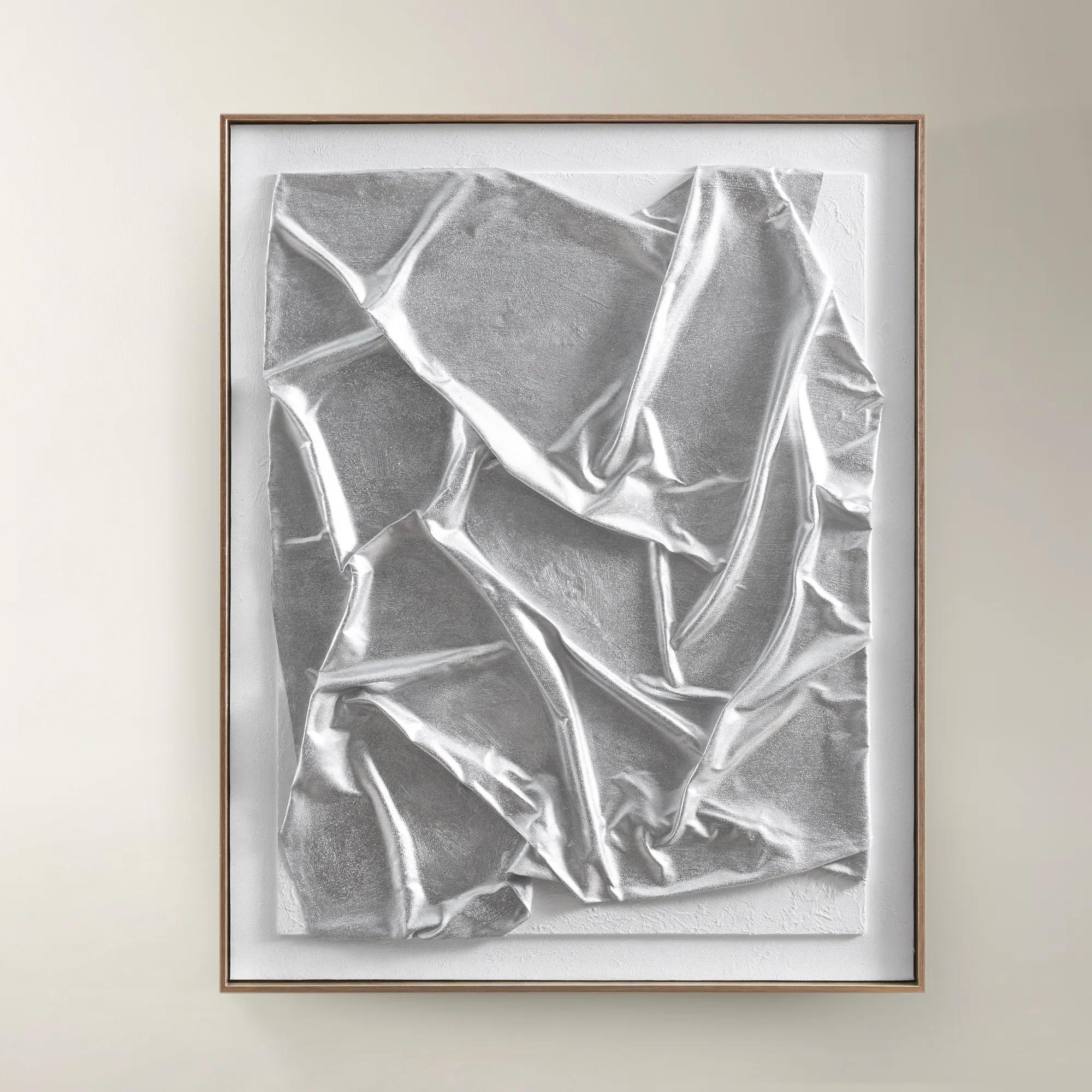 In the Mood Framed Painted Wall Art 31.5" x 39.5"$199
A hand-painted abstract canvas in shimmering silver tones, set in a warm champagne floater frame.
Add To Cart -
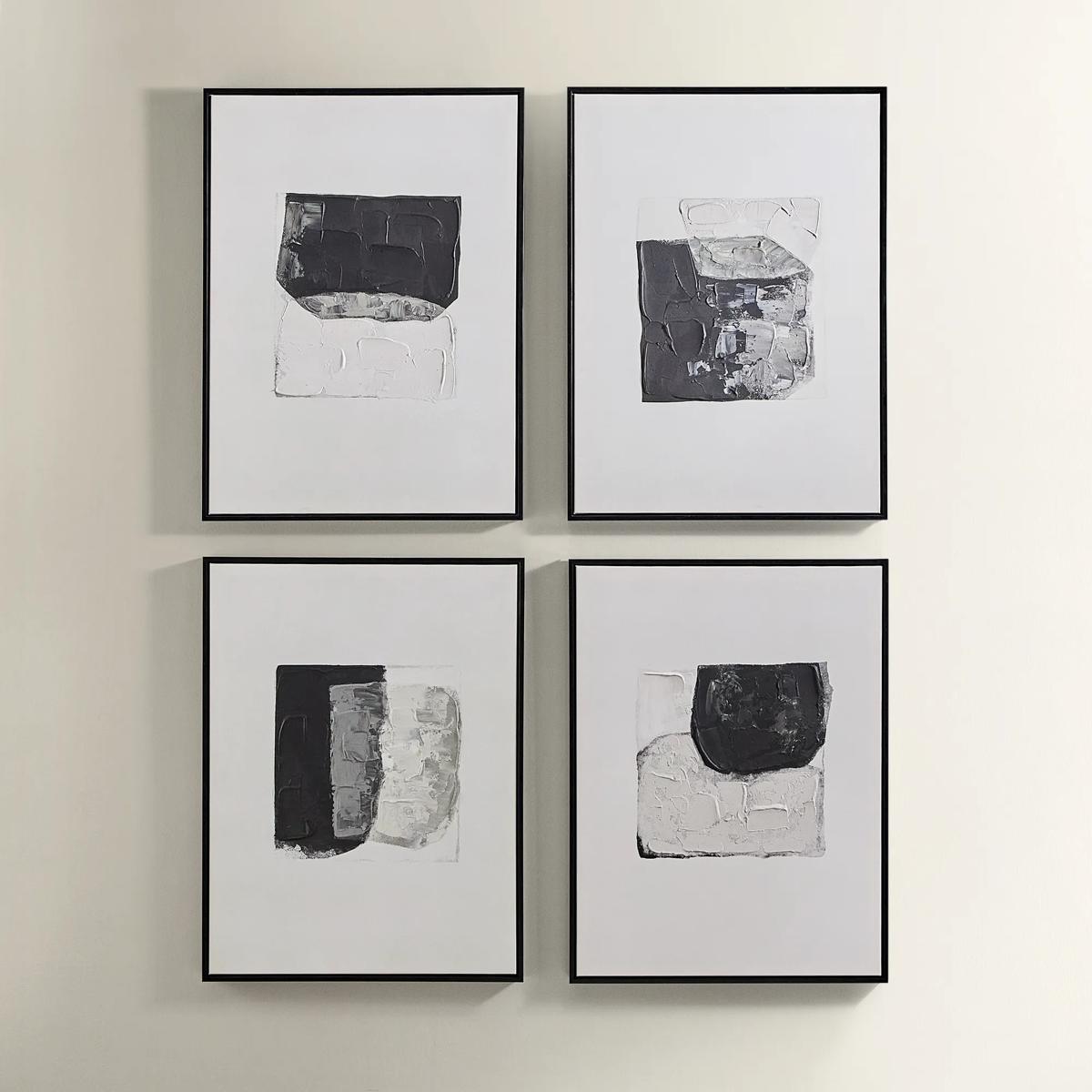
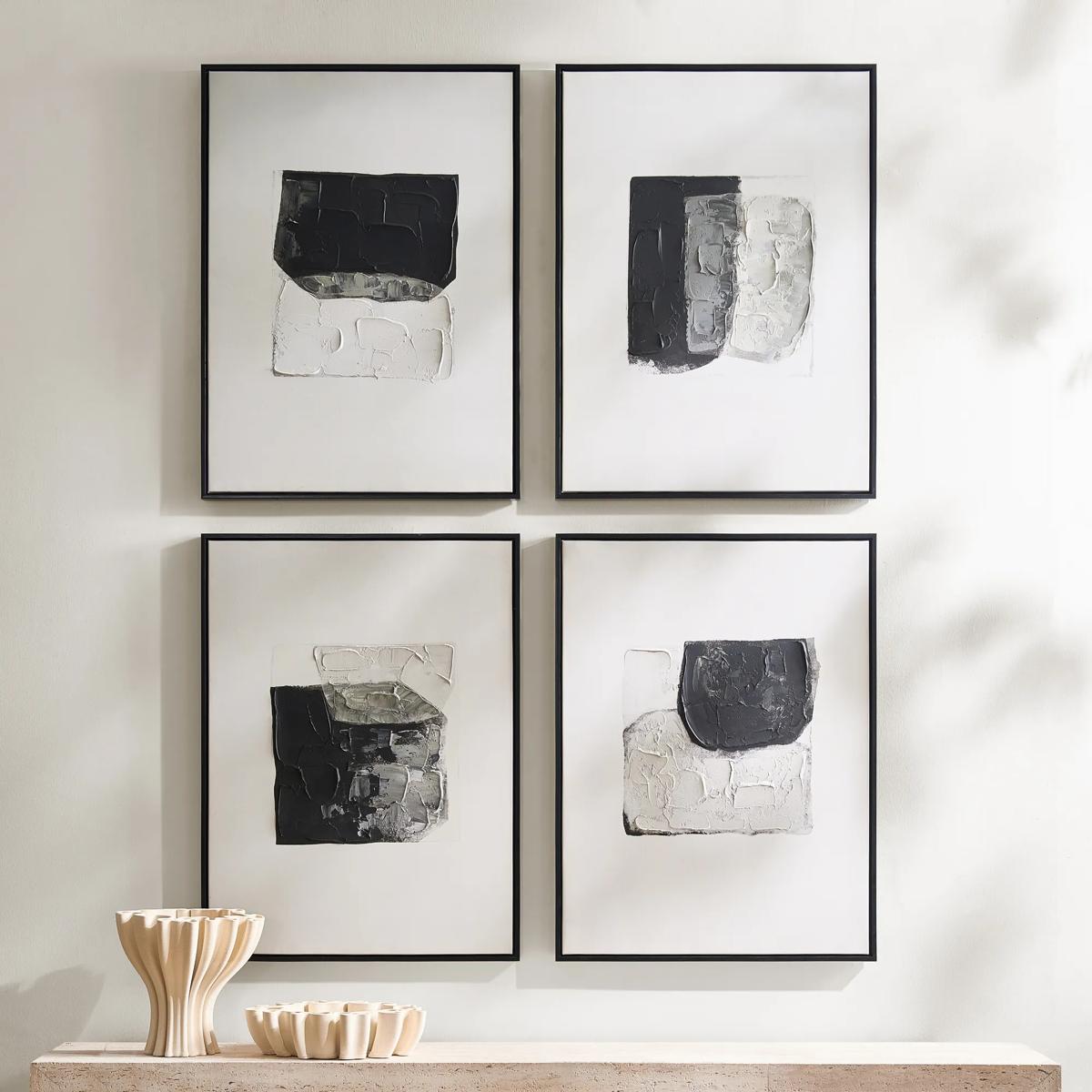 Shadows Framed Painted Wall Art Set of 4$299
A set of four hand-painted abstract canvases featuring black, white, and gold accents in black frames.
Add To Cart -
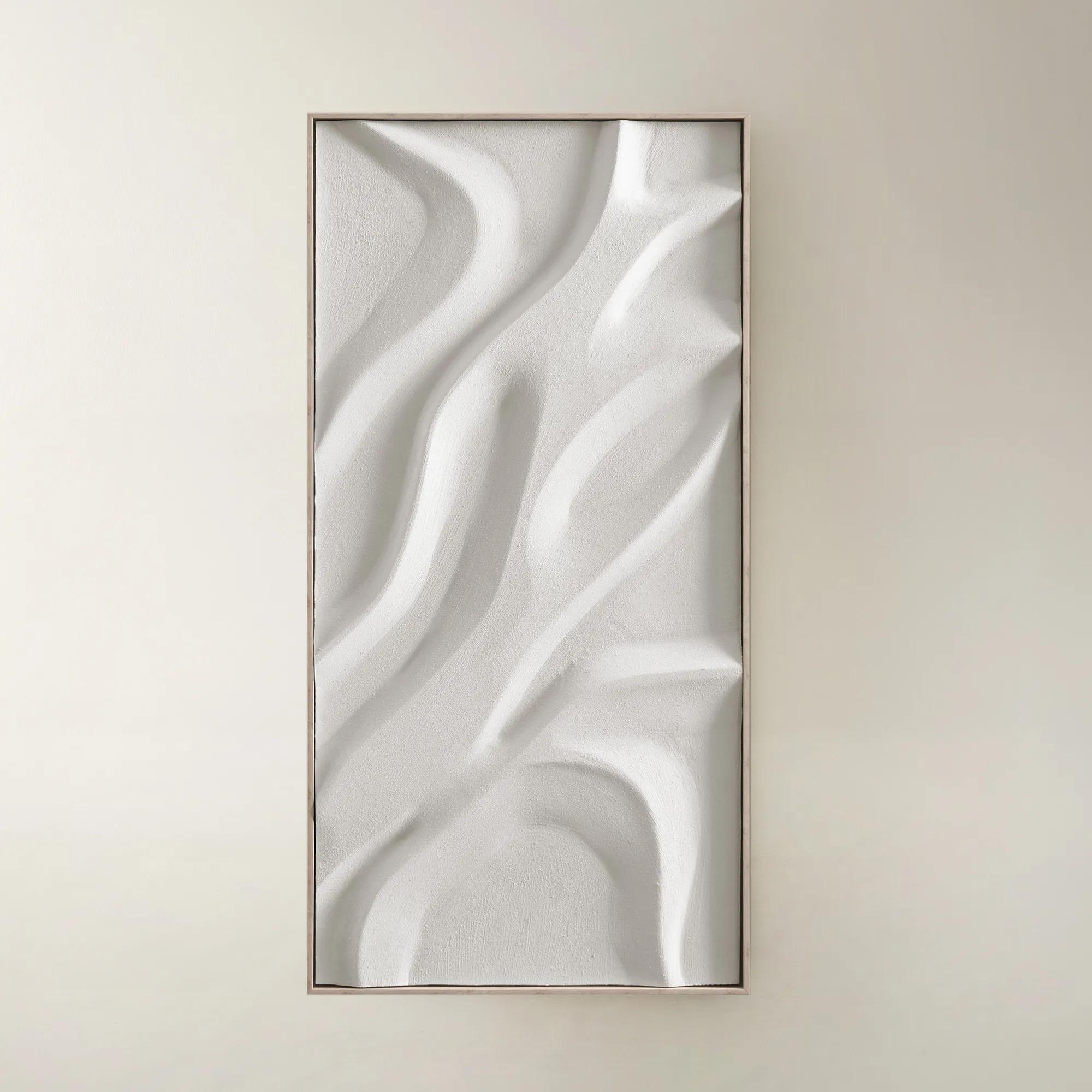
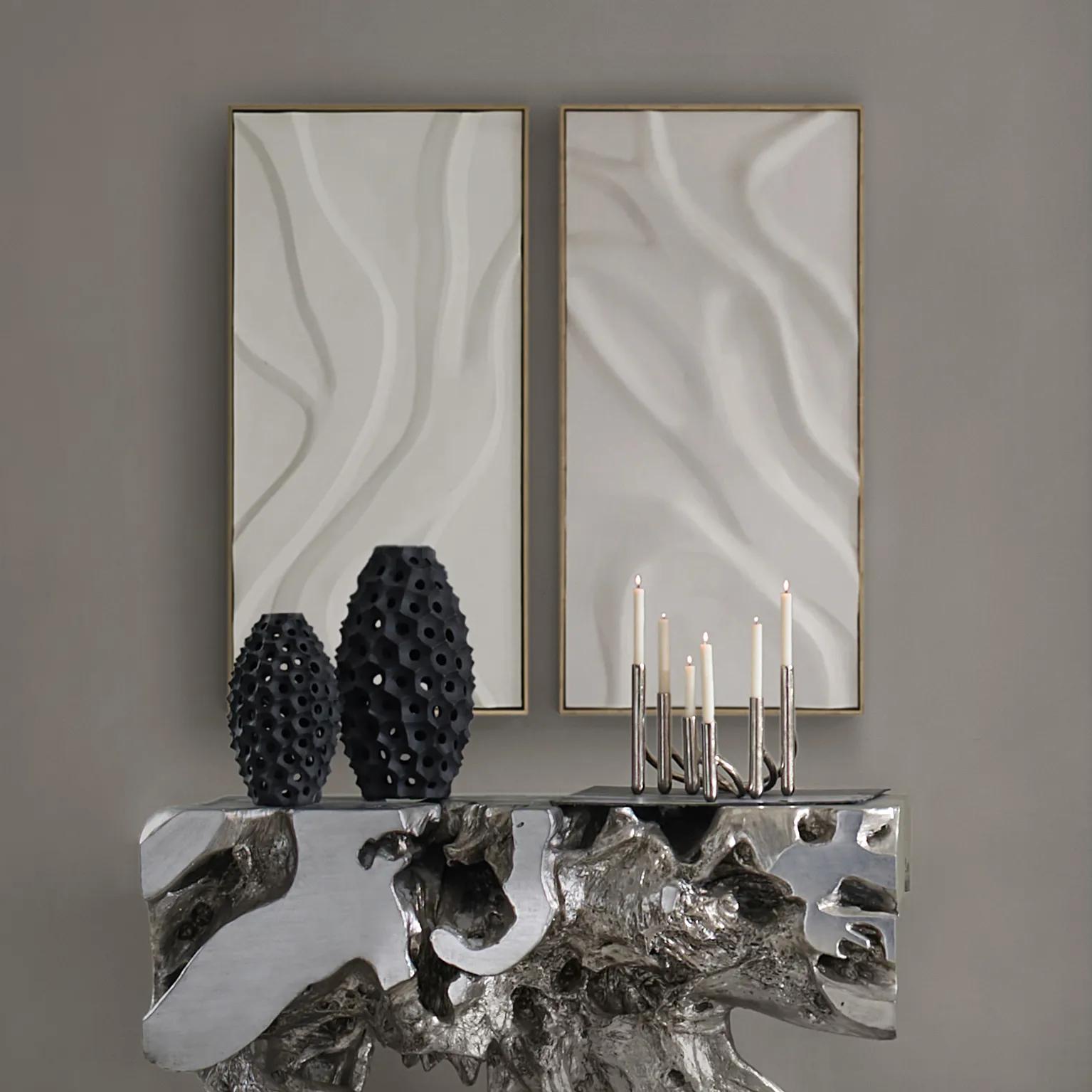 Au Lait Framed Painted Wall Art II 47.2" x 23.6"$199
A serene hand-painted canvas in beige, set in a warm whitewash floater frame for modern interiors.
Add To Cart -
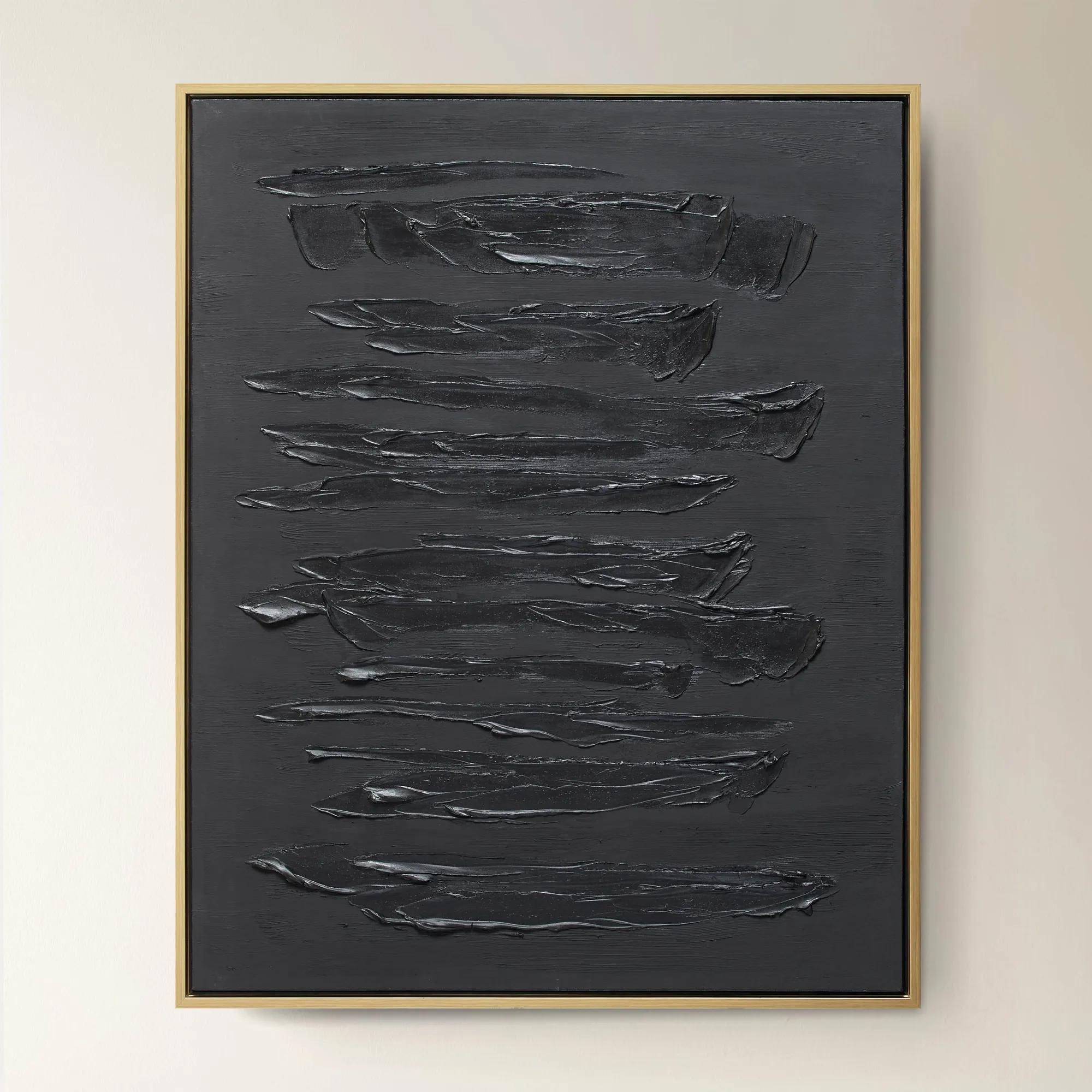
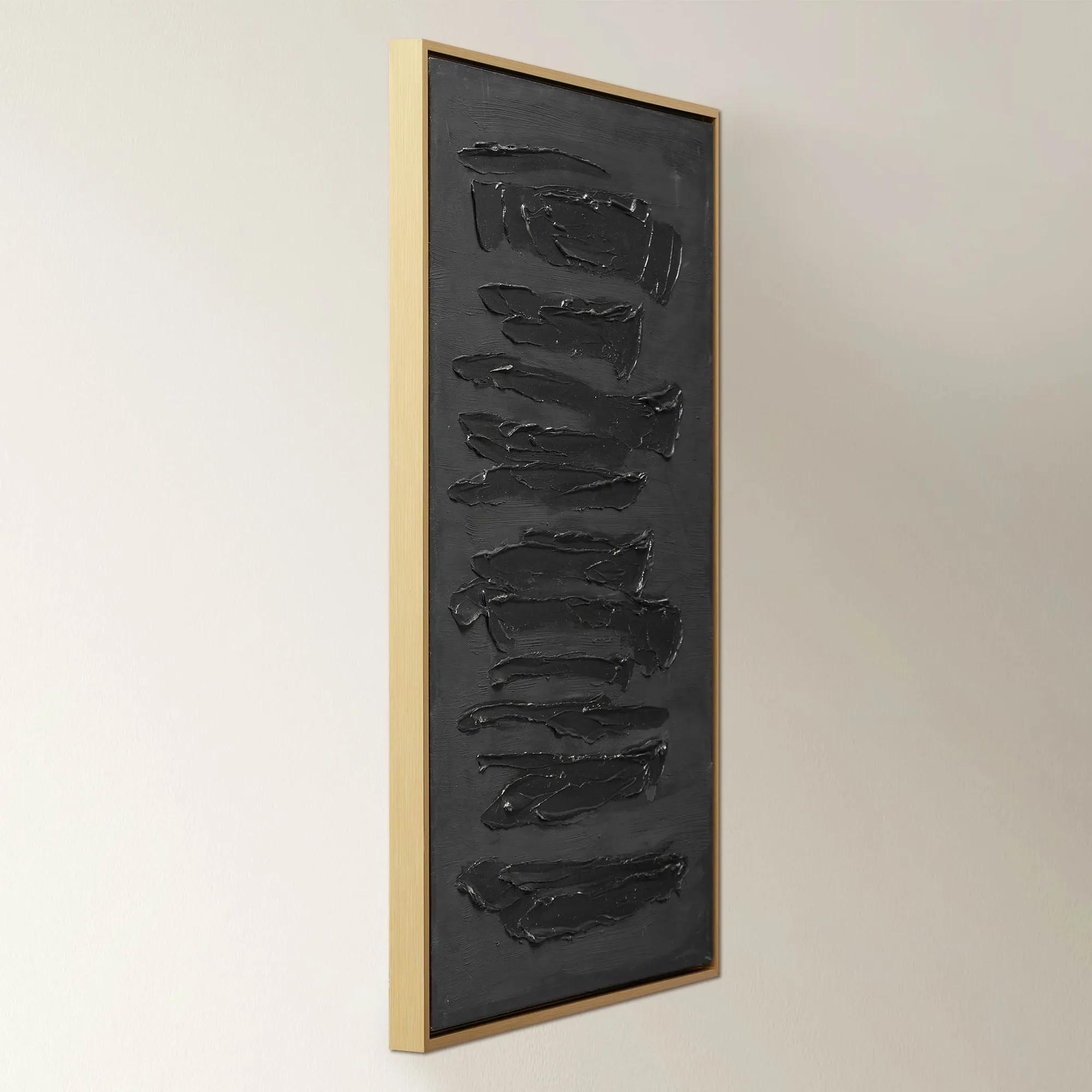 Nocturne$599.95
A dramatic abstract artwork featuring bold, dark brushstrokes on hand-painted canvas in a gold floater frame.
Add To Cart -
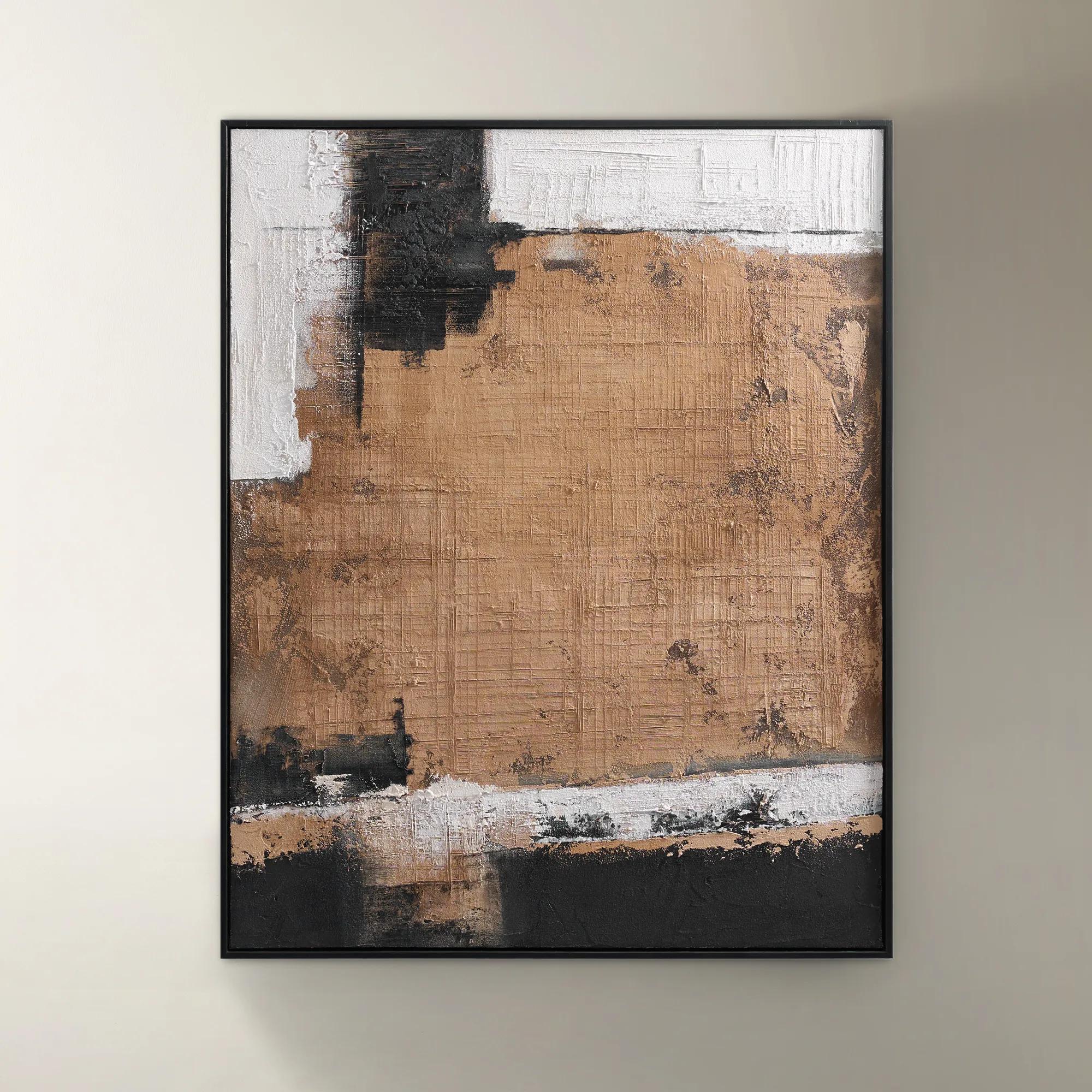
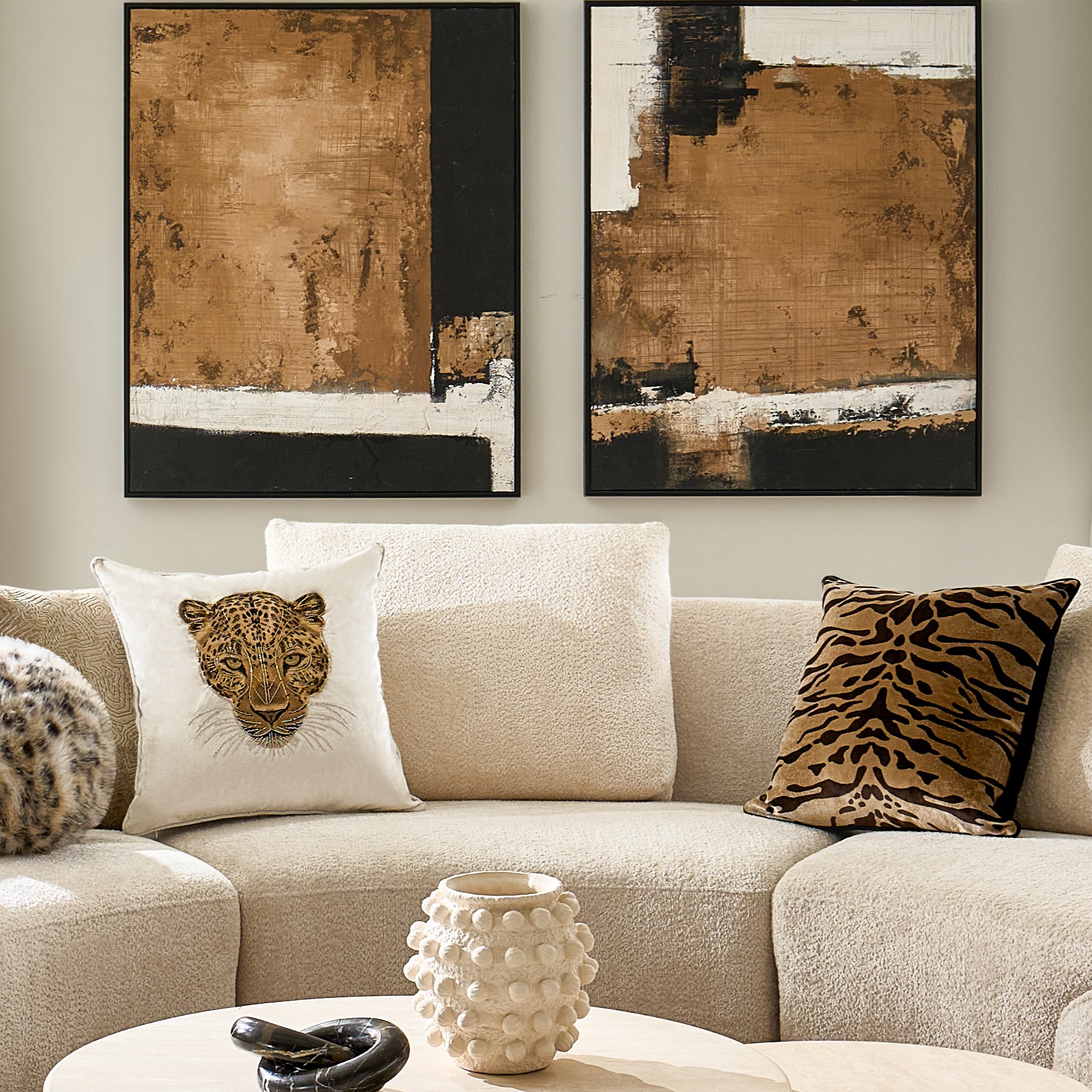 Drift Framed Painted Wall Art II 39.4" x 31.5"$299
A hand-painted canvas in brown, featuring bold texture and color interplay within a sleek black floater frame.
Add To Cart -
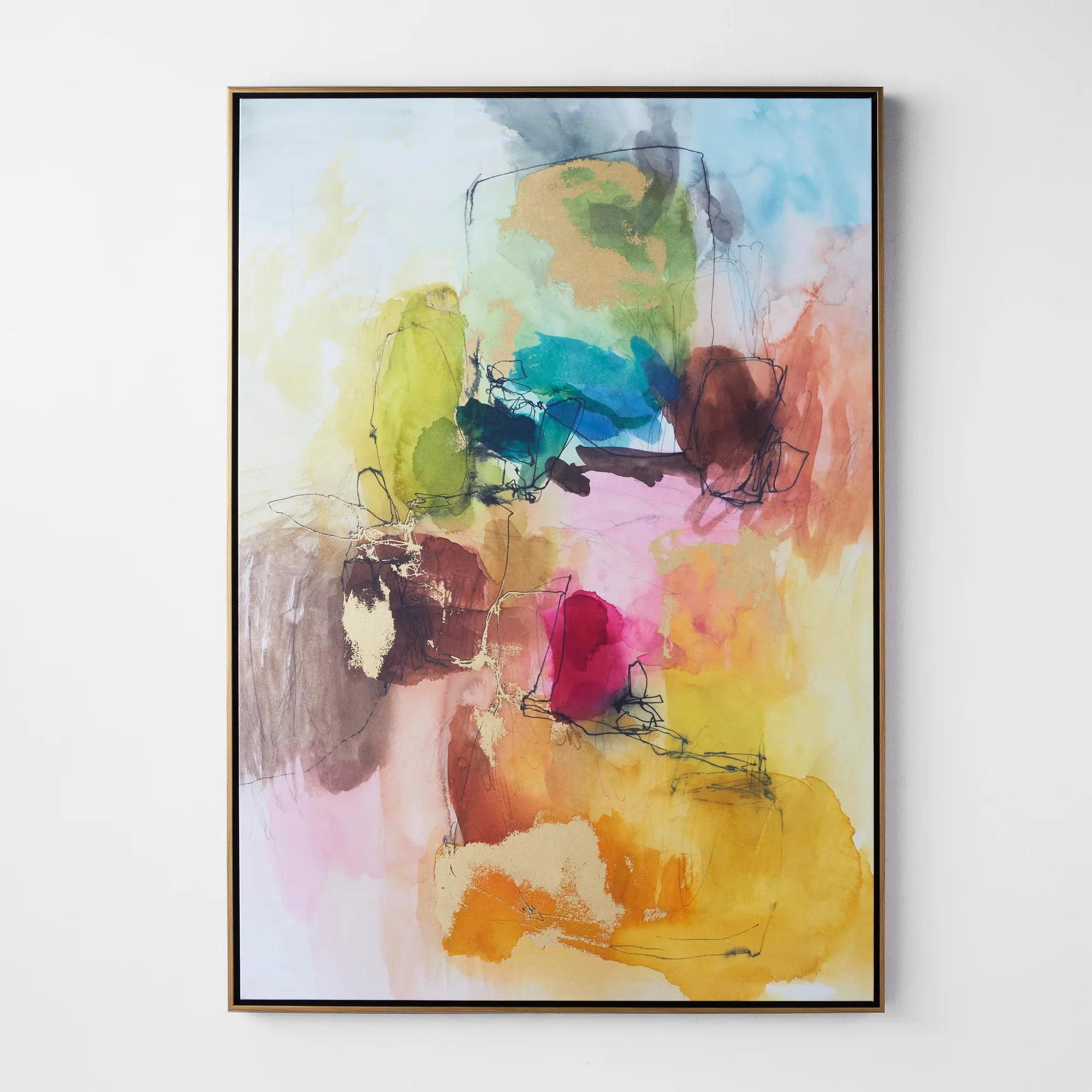
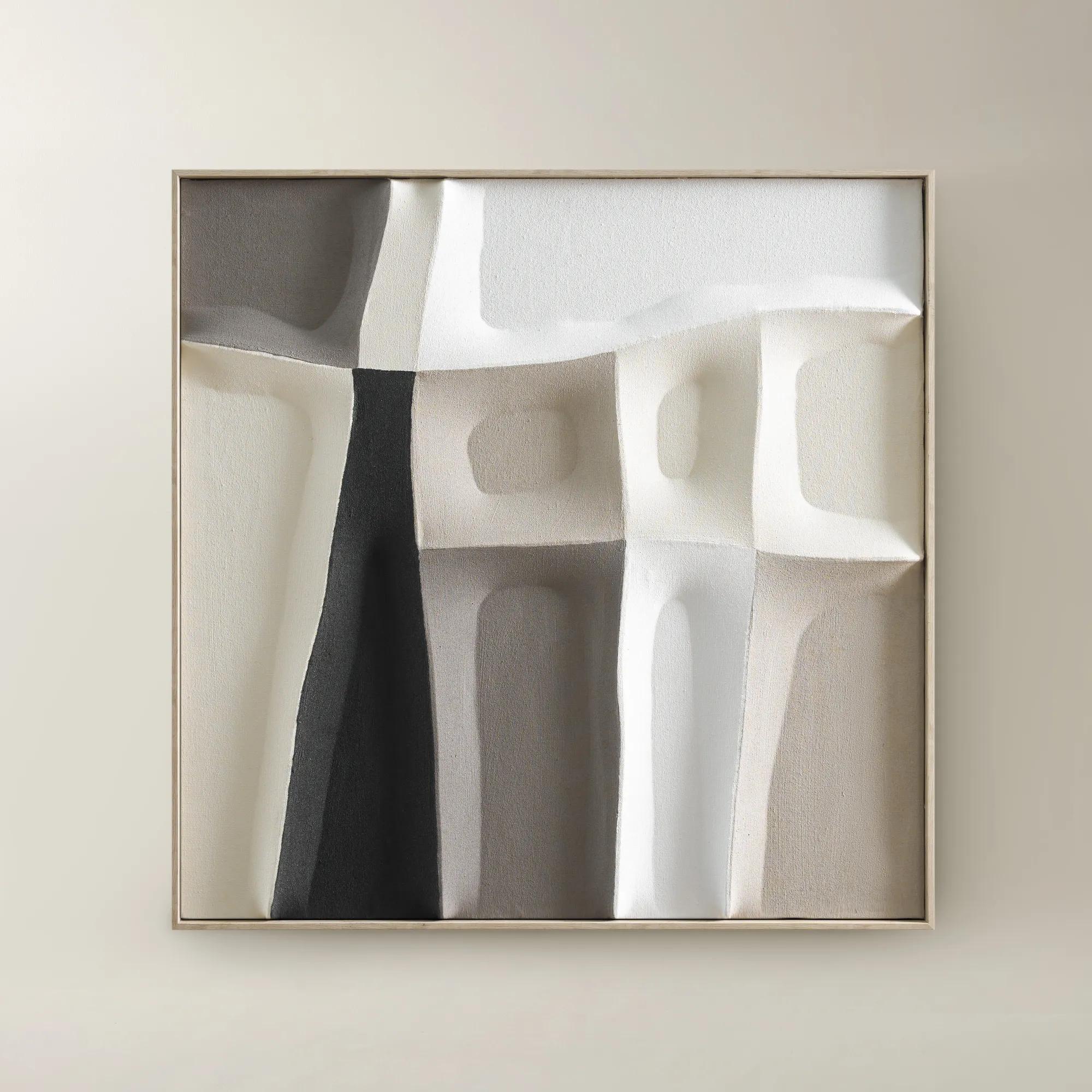 Shadow Painting 1$179
A hand-painted canvas featuring bold colors and sculptural textures in a warm whitewash floater frame.
Add To Cart -
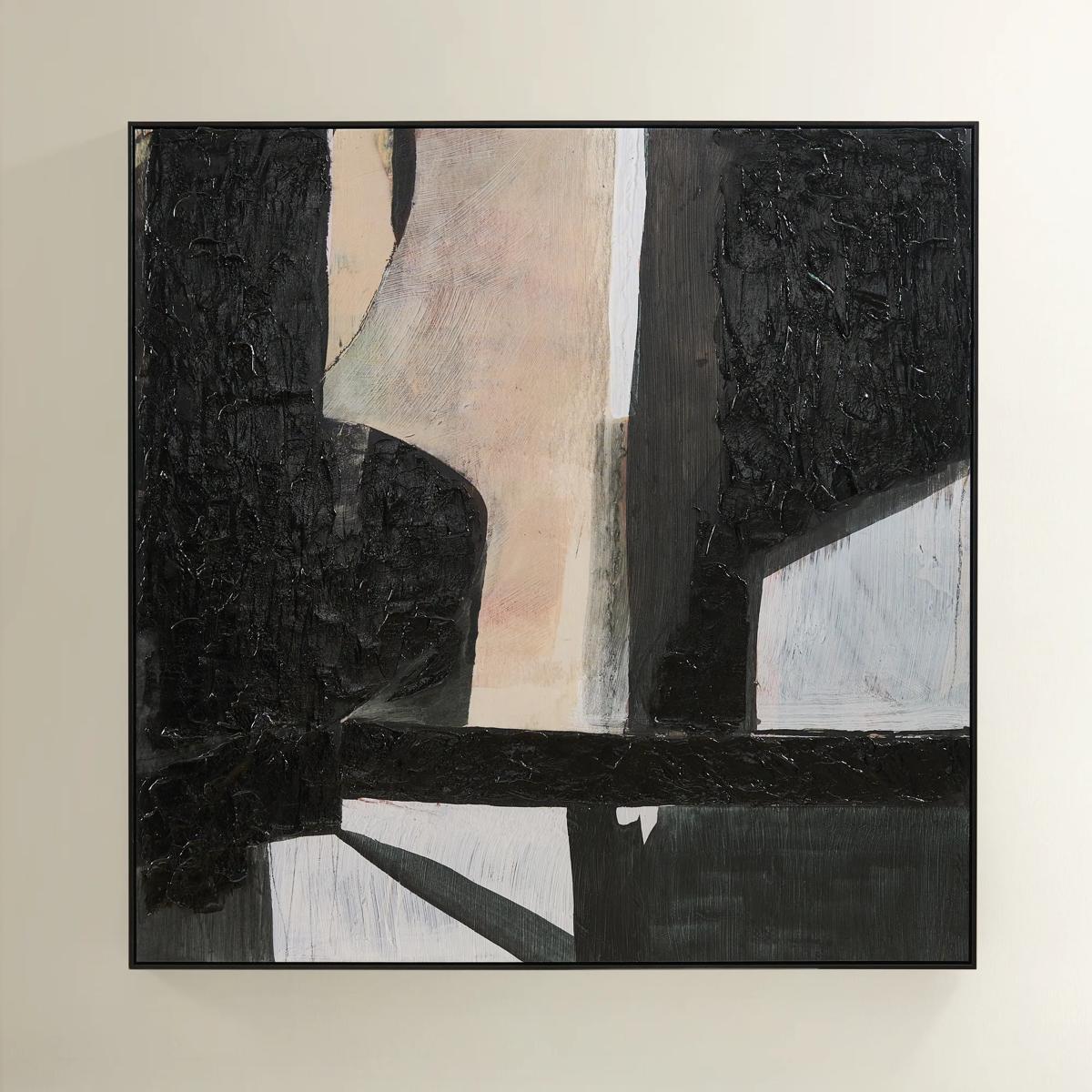 Grounded Painting$699
A hand-painted abstract canvas featuring black, cream, and earth tones in a sleek black floater frame.
Add To Cart -
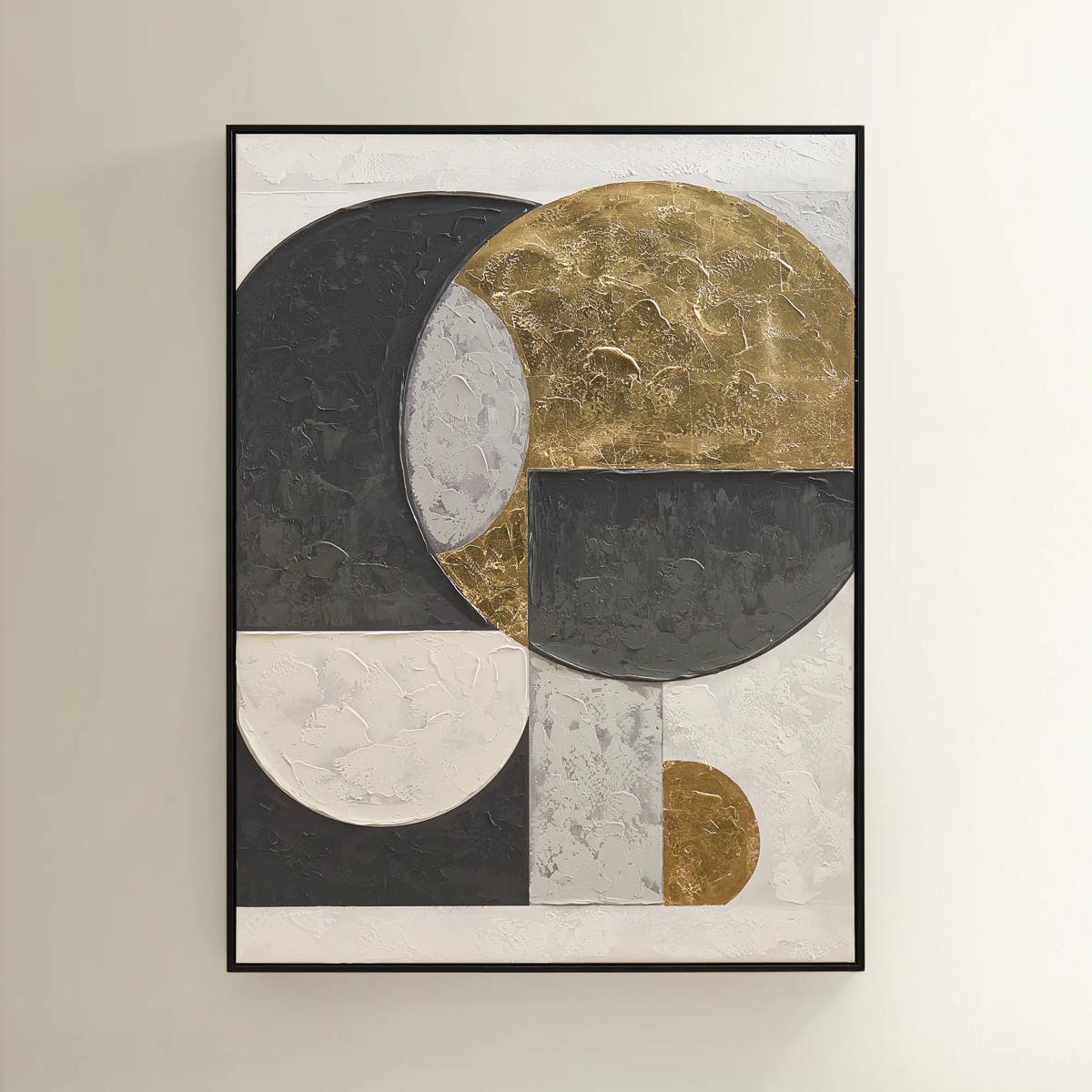
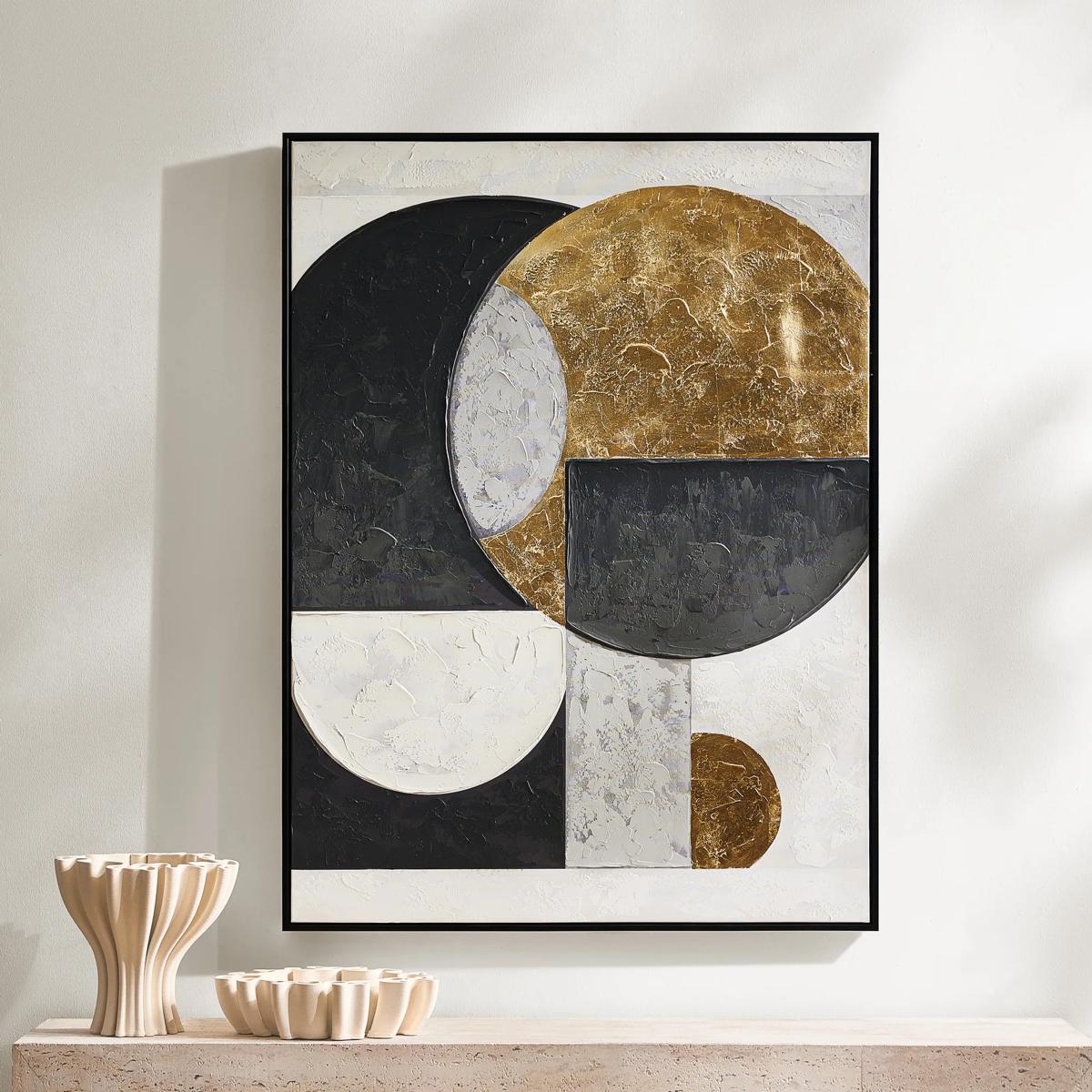 Eclipse Framed Gold Leaf Painted Wall Art 35.25" x 47.25"$449
A hand-painted canvas featuring bold black, grey, and gold geometric shapes with shimmering gold leaf accents.
Add To Cart -
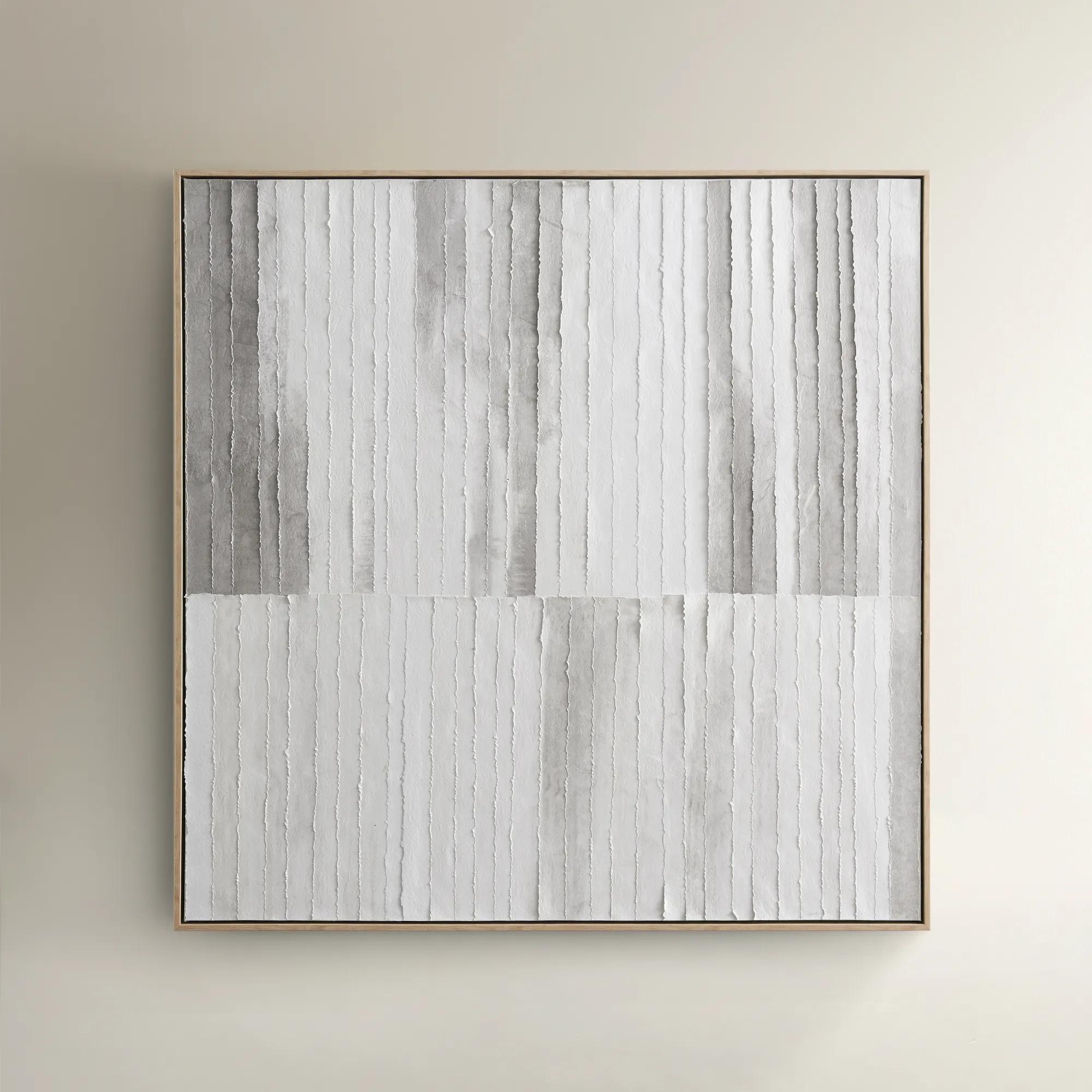
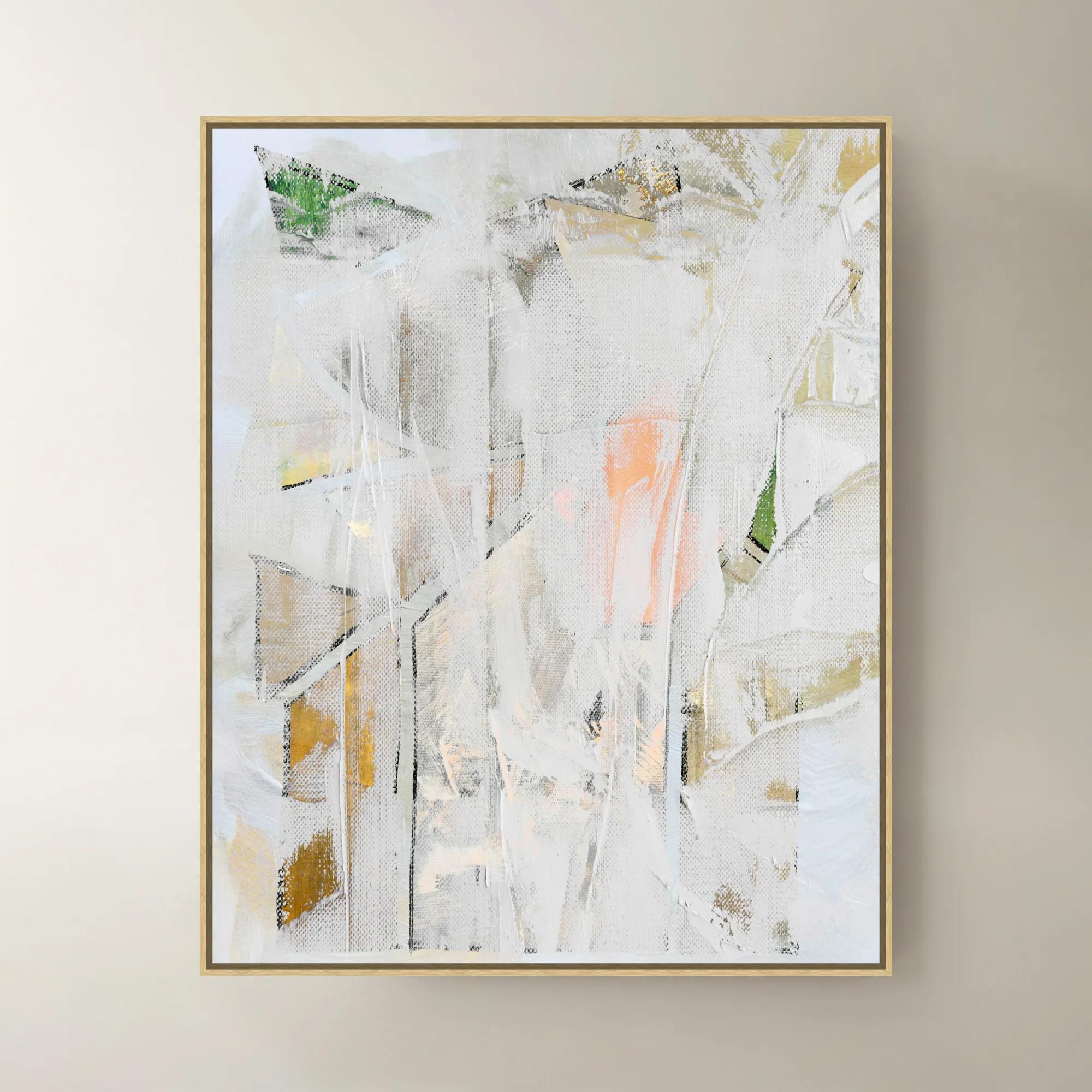
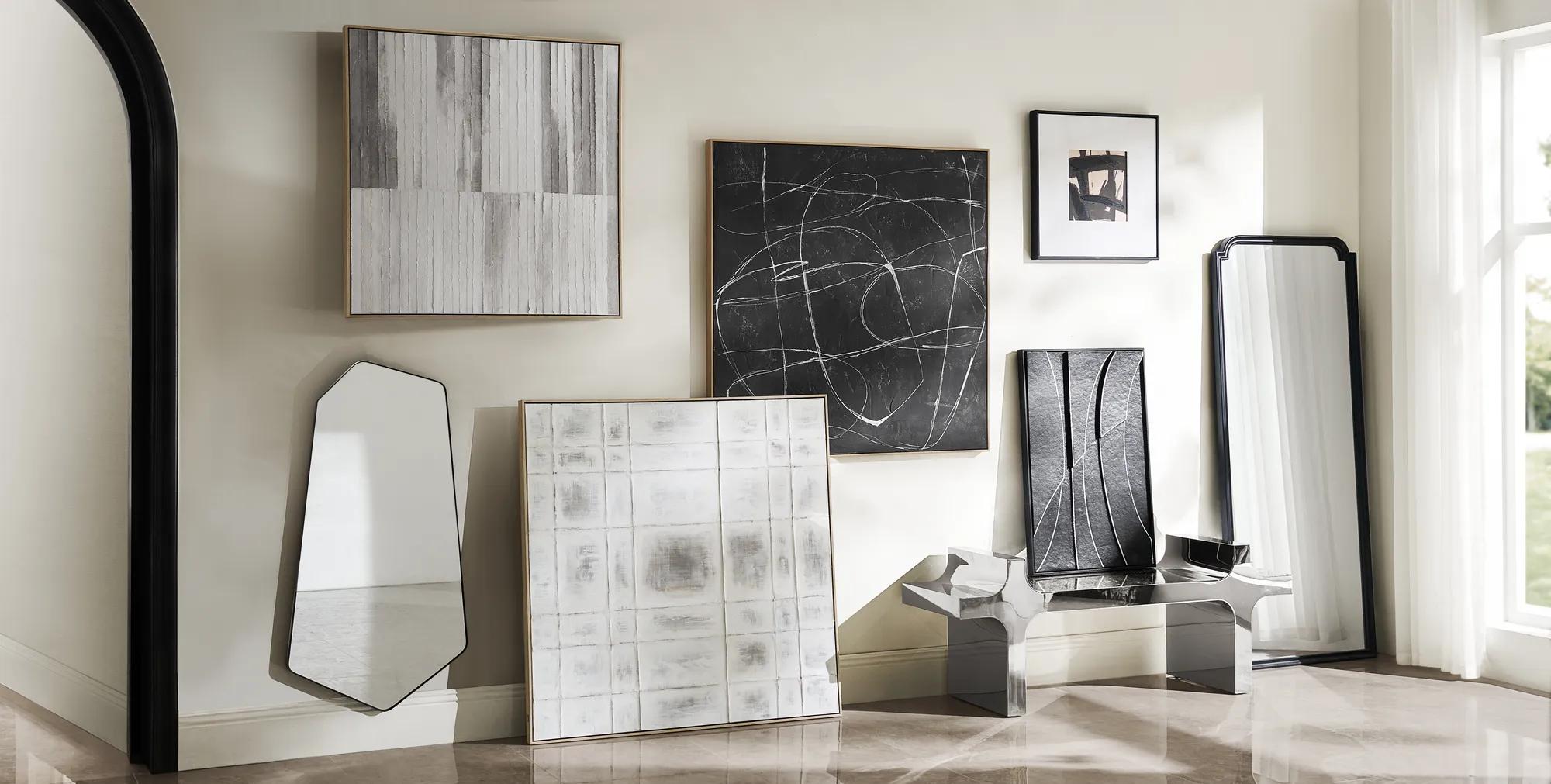 Morning Mist Paper Art$329
A hand-painted canvas featuring rhythmic grey lines in a textured, whitewashed floater frame for serene style.
Add To Cart -
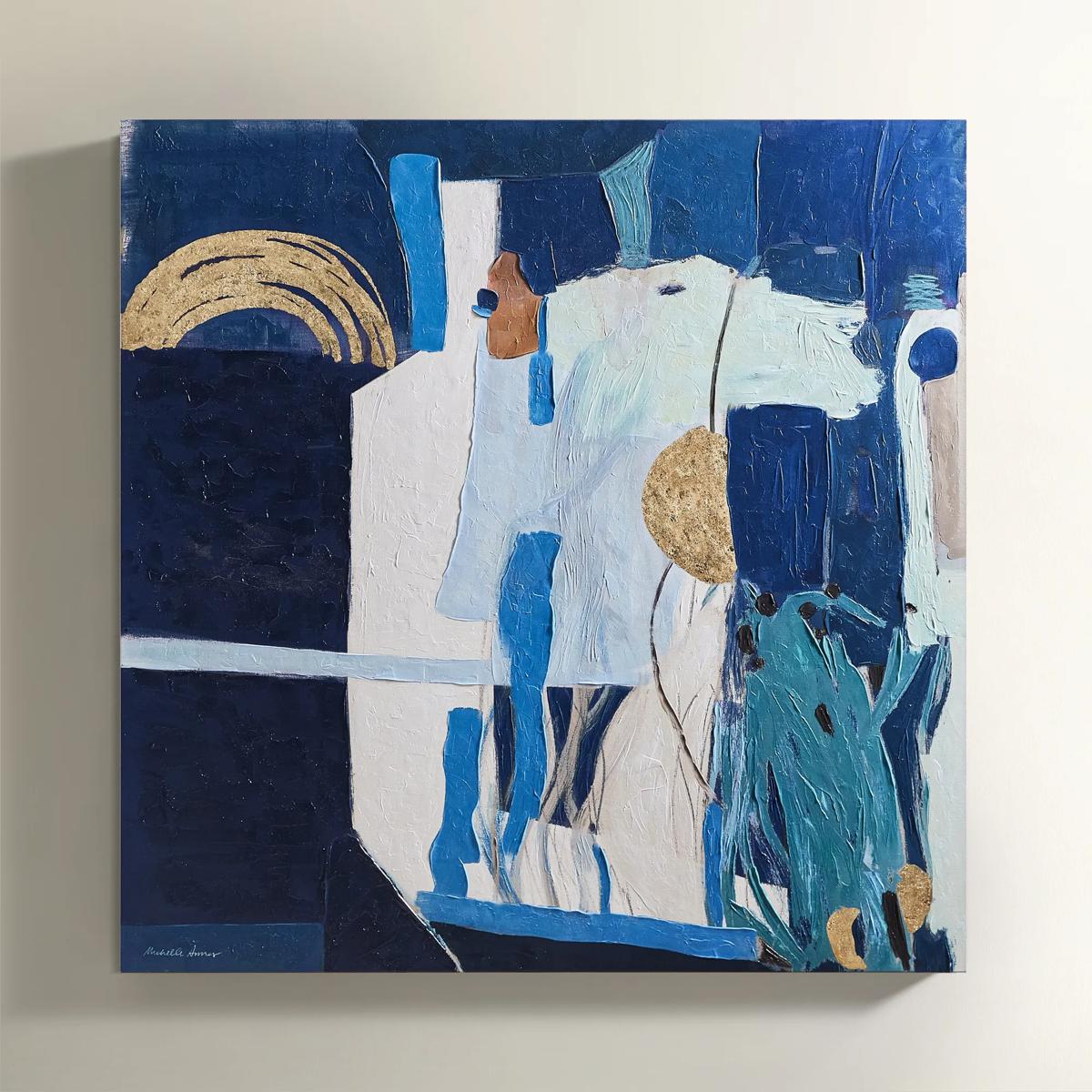
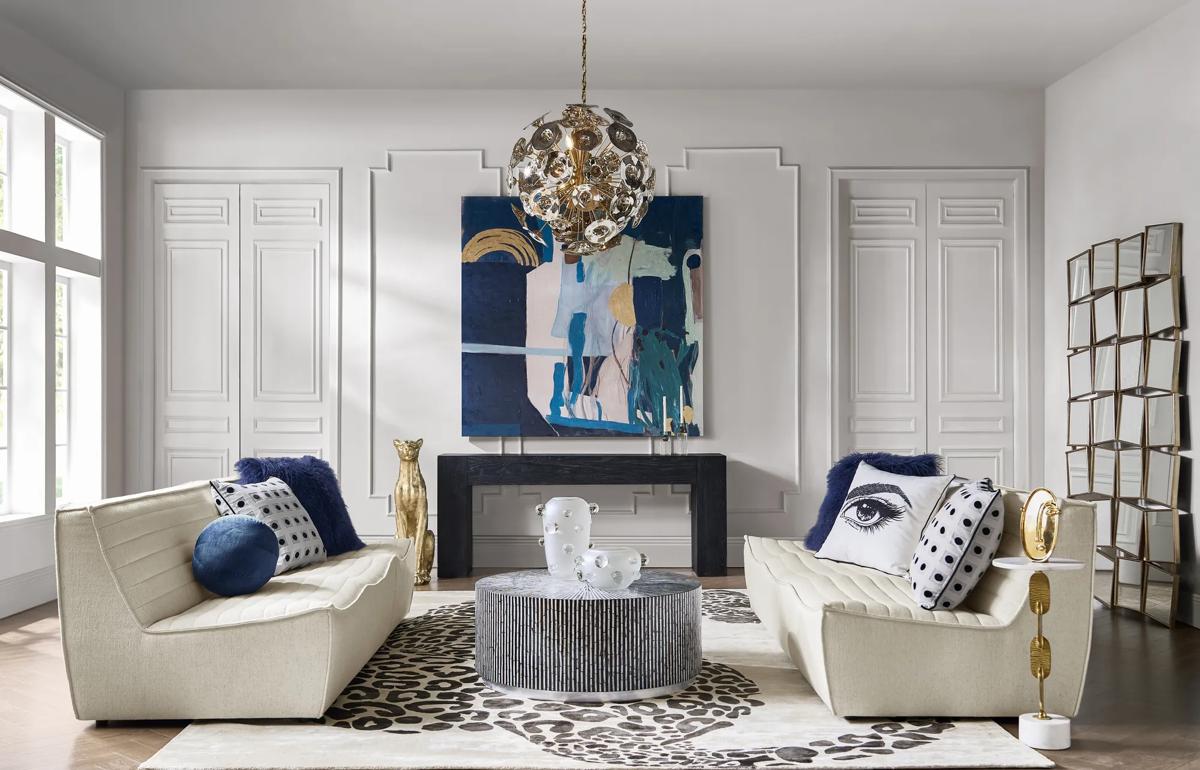 In Flux Painting$699
A hand-embellished canvas artwork featuring deep teal, green, ivory, and gold in a black Art Deco frame.
Add To Cart -
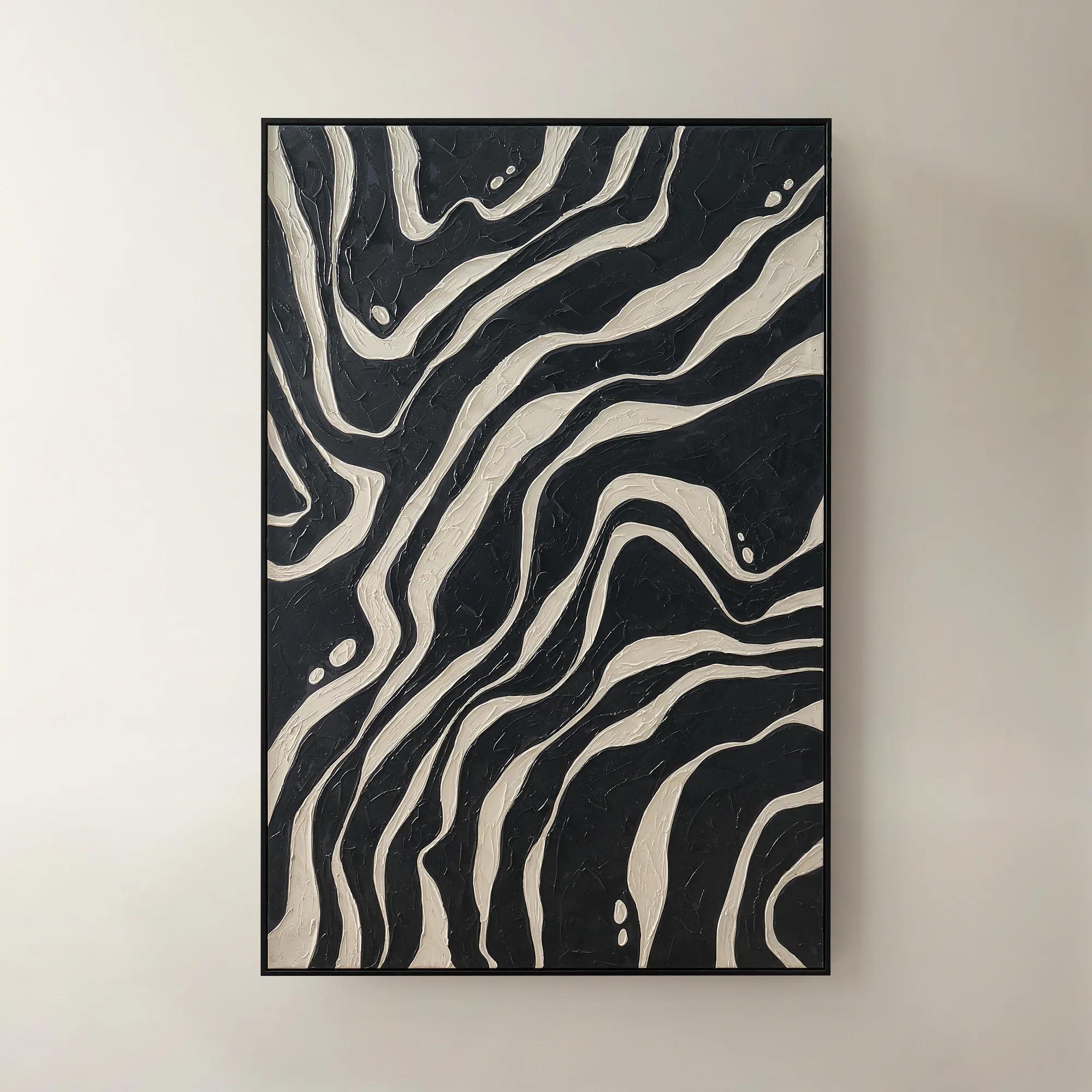
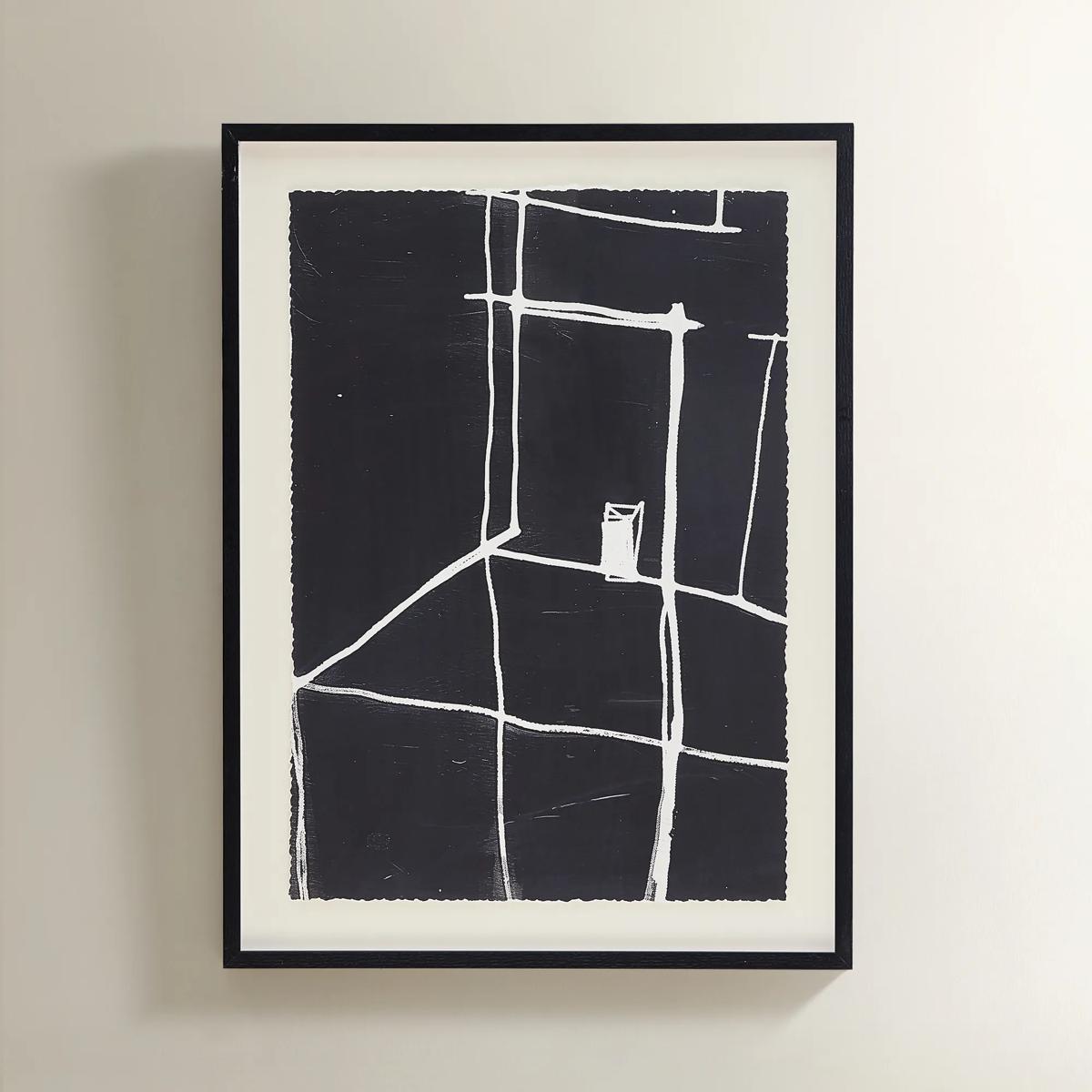 Solitude Art$269
A minimalist black-and-white abstract print featuring bold white lines in a sleek black polyresin frame.
Add To Cart -
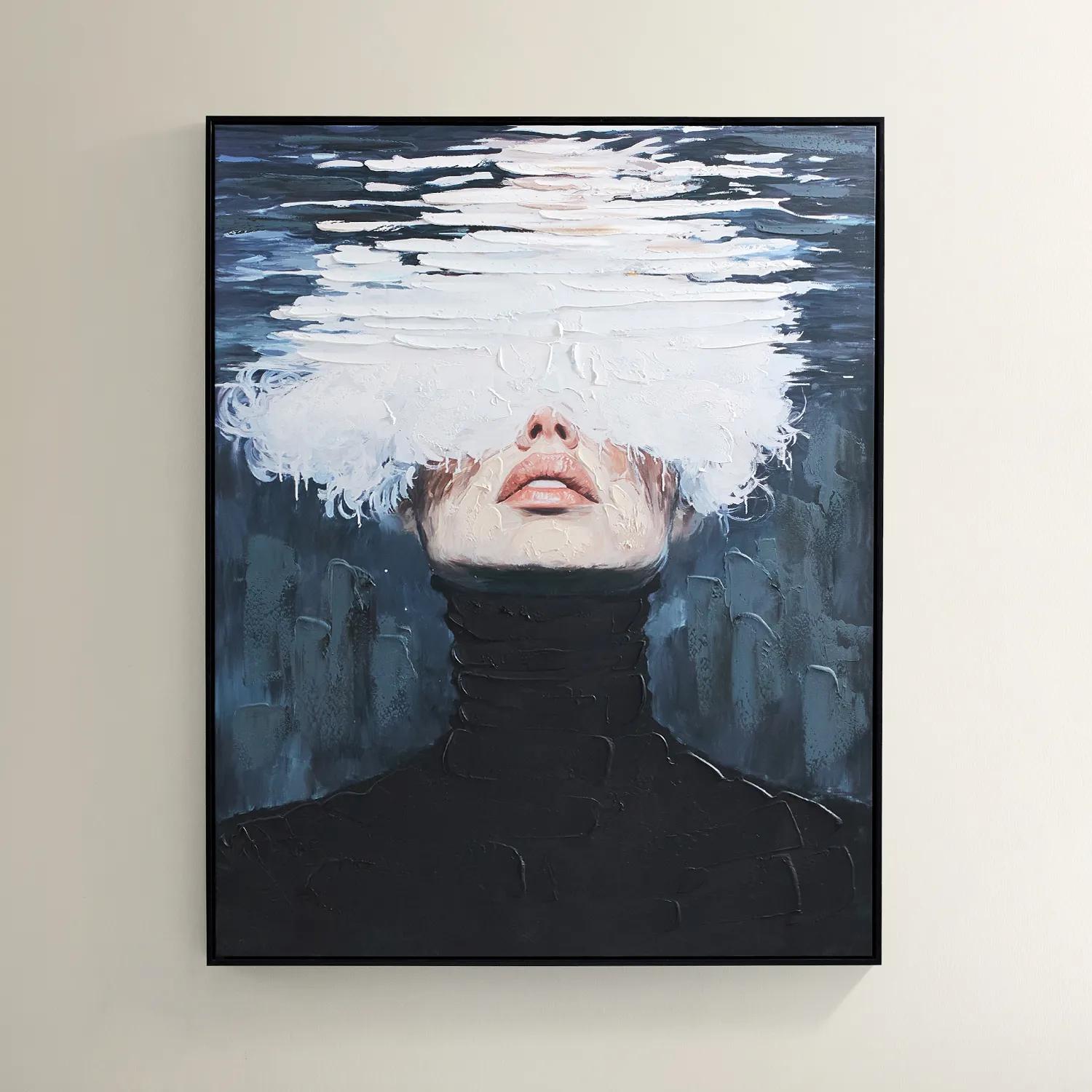
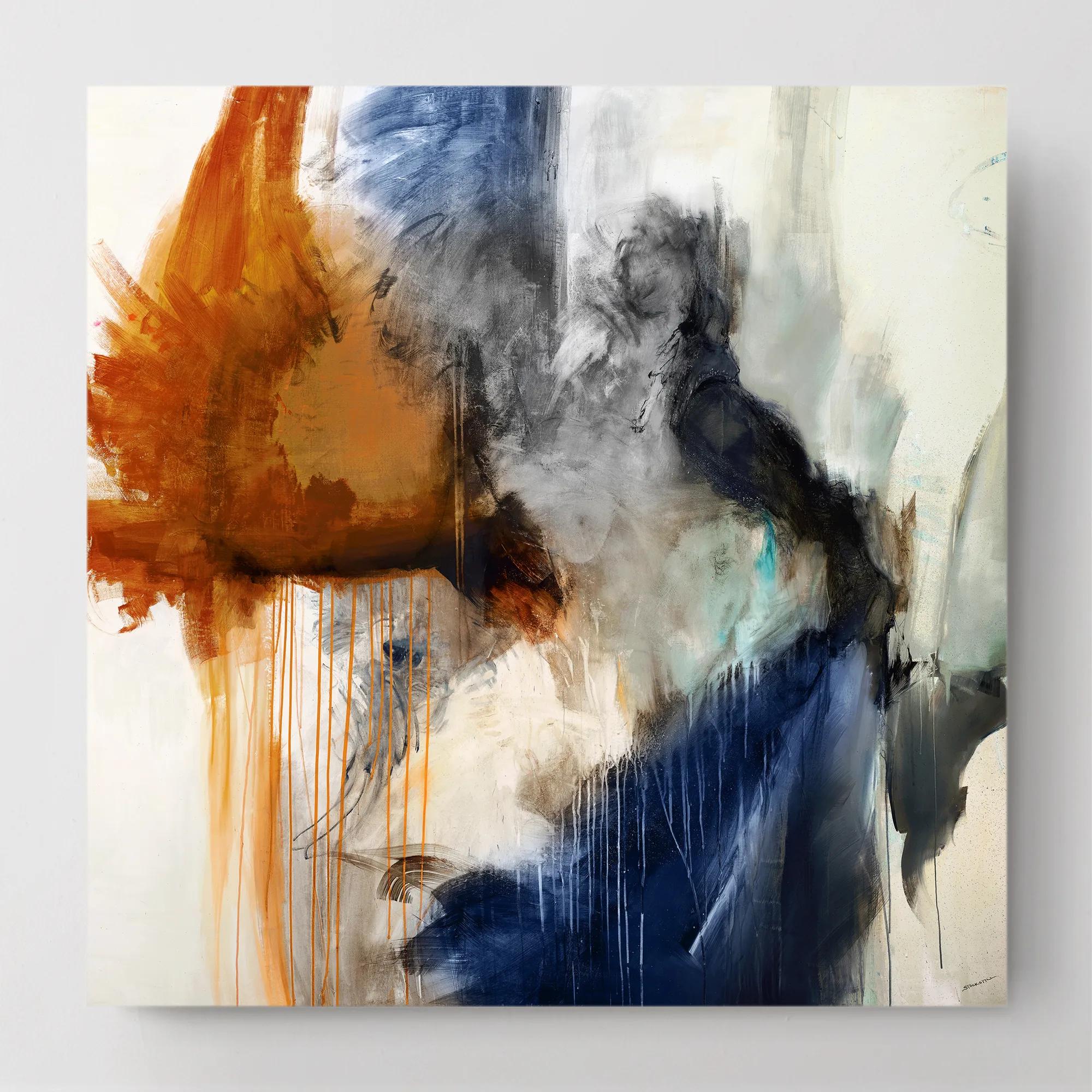
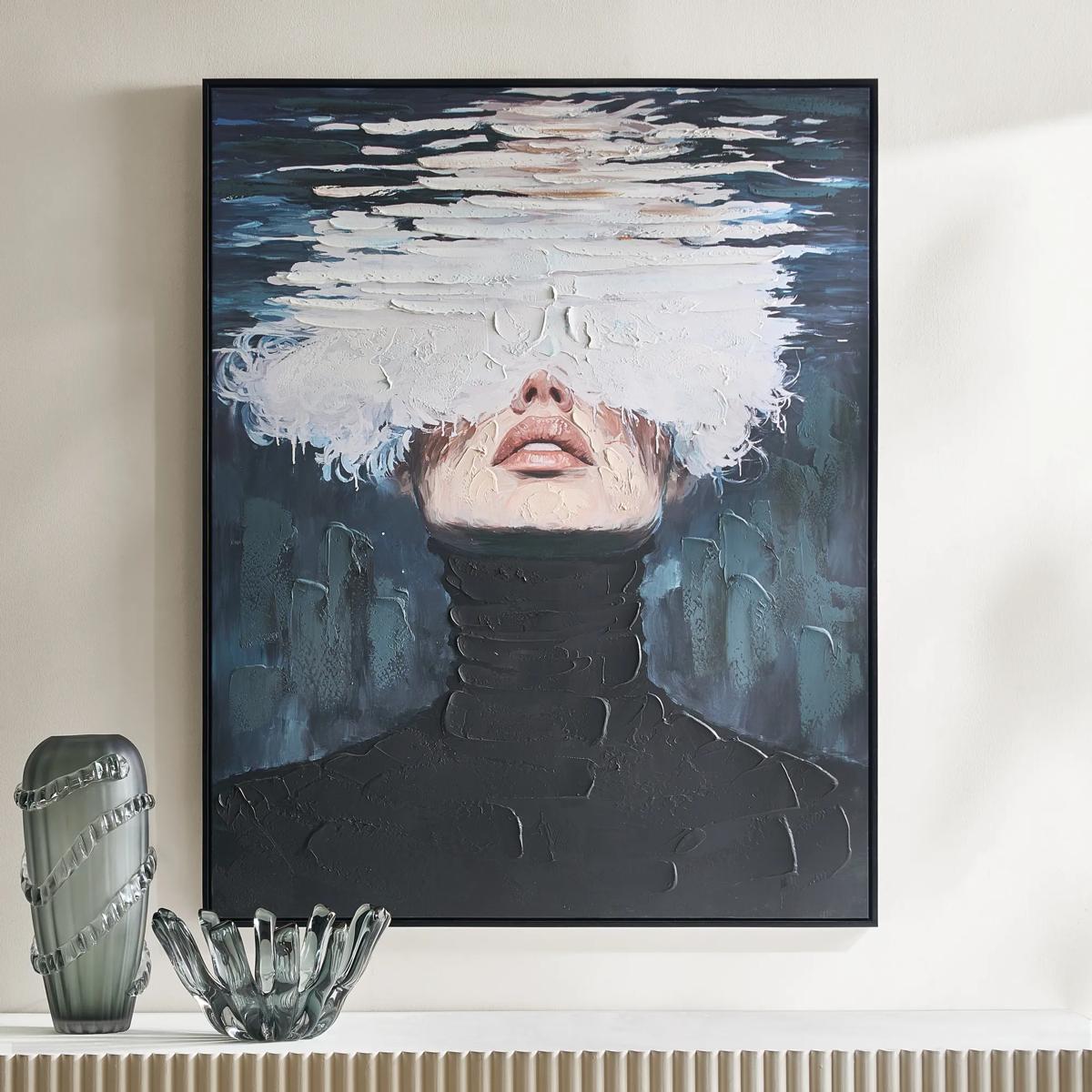 Submerged Framed Painted Wall Art 40" x 50"$599
A hand-painted canvas featuring a surreal portrait in black, blue, and white with a black floater frame.
Add To Cart -
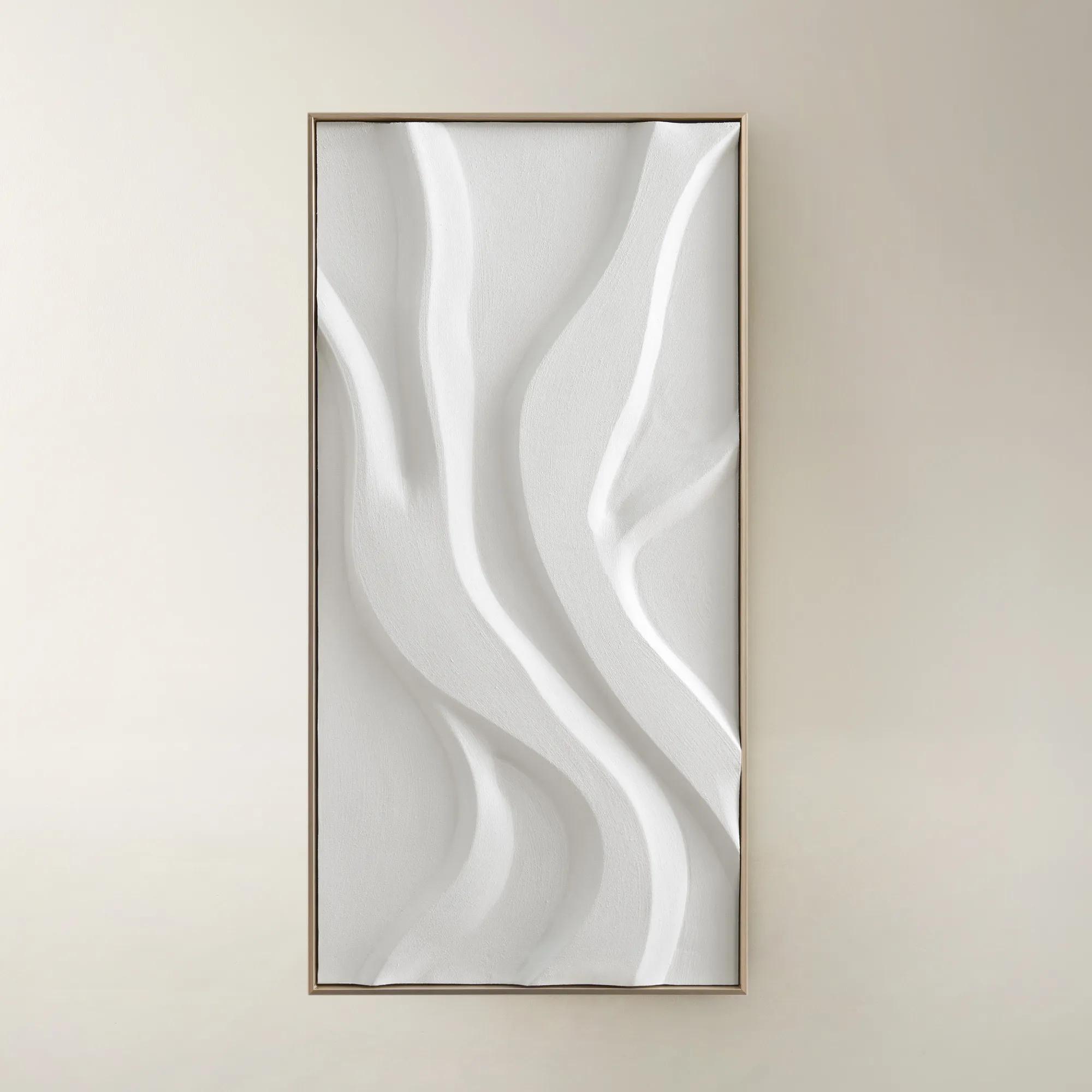
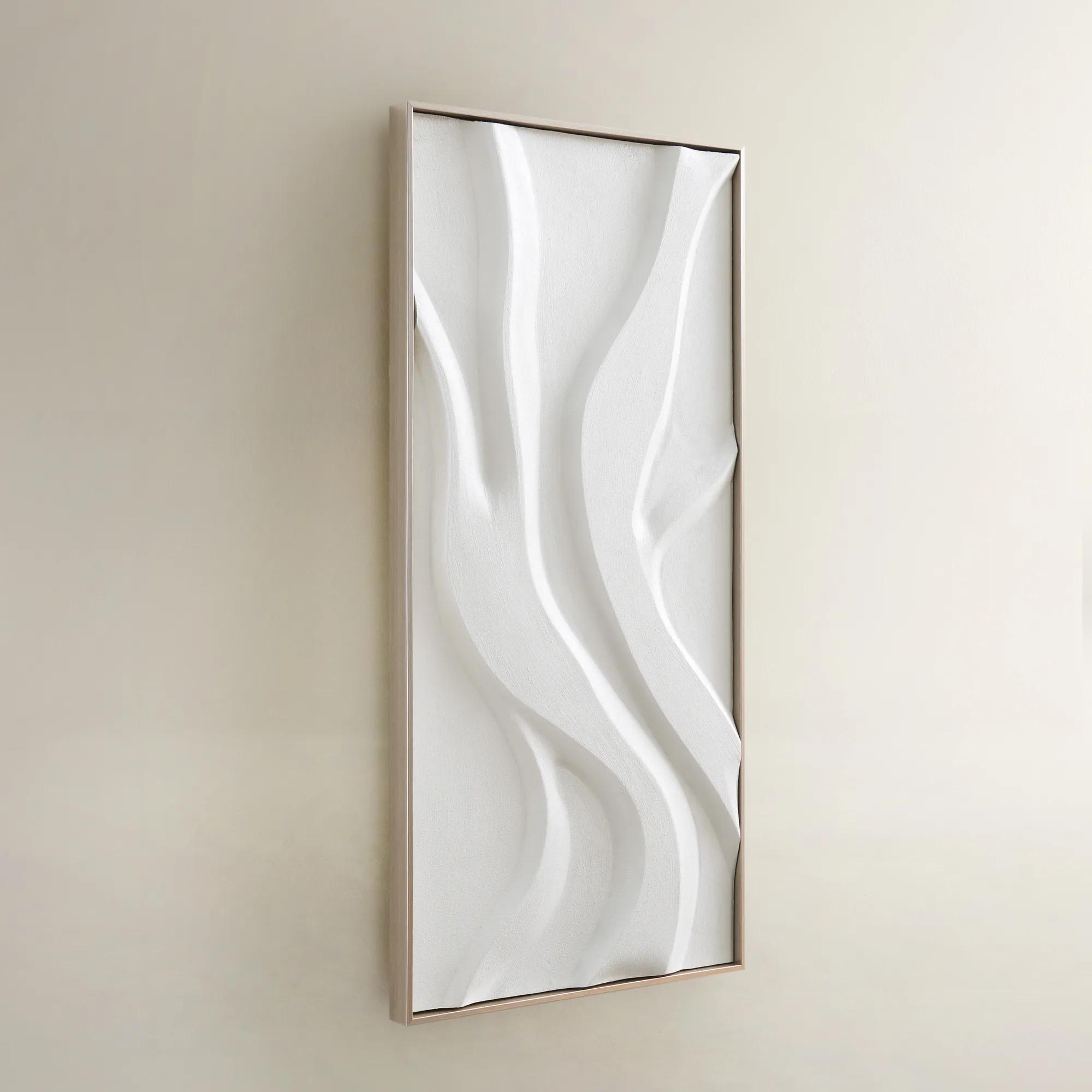 Au Lait Framed Painted Wall Art I 47.2" x 23.6"$199
An organic hand-painted canvas featuring flowing white forms in a warm champagne finish floater frame.
Add To Cart -
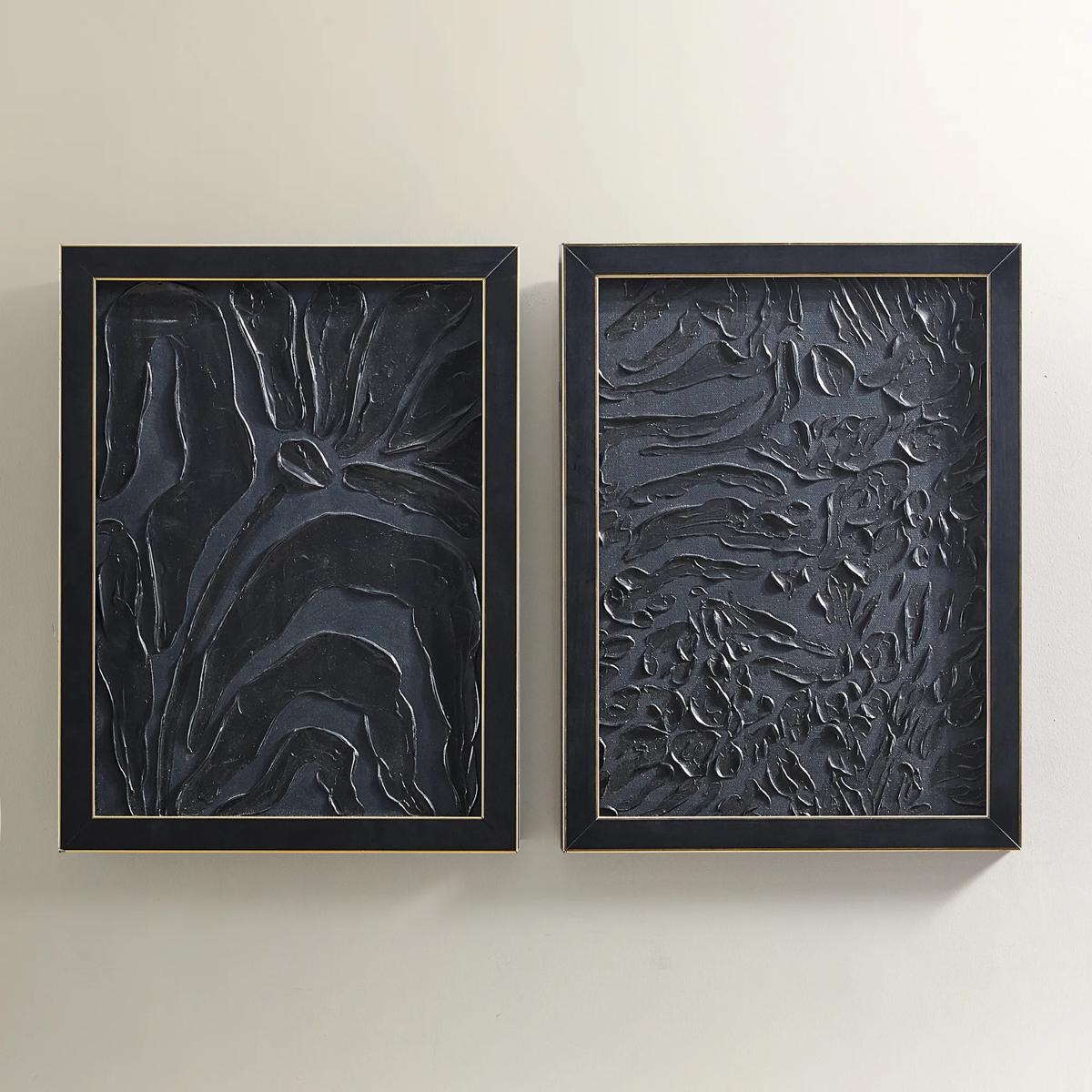
 Midnight Animal Painting - Set of 2$119
A set of hand-embellished canvas artworks in black and gold frames, adding depth and warmth to interiors.
Add To Cart -
-0.jpeg?w=1200&h=1200)
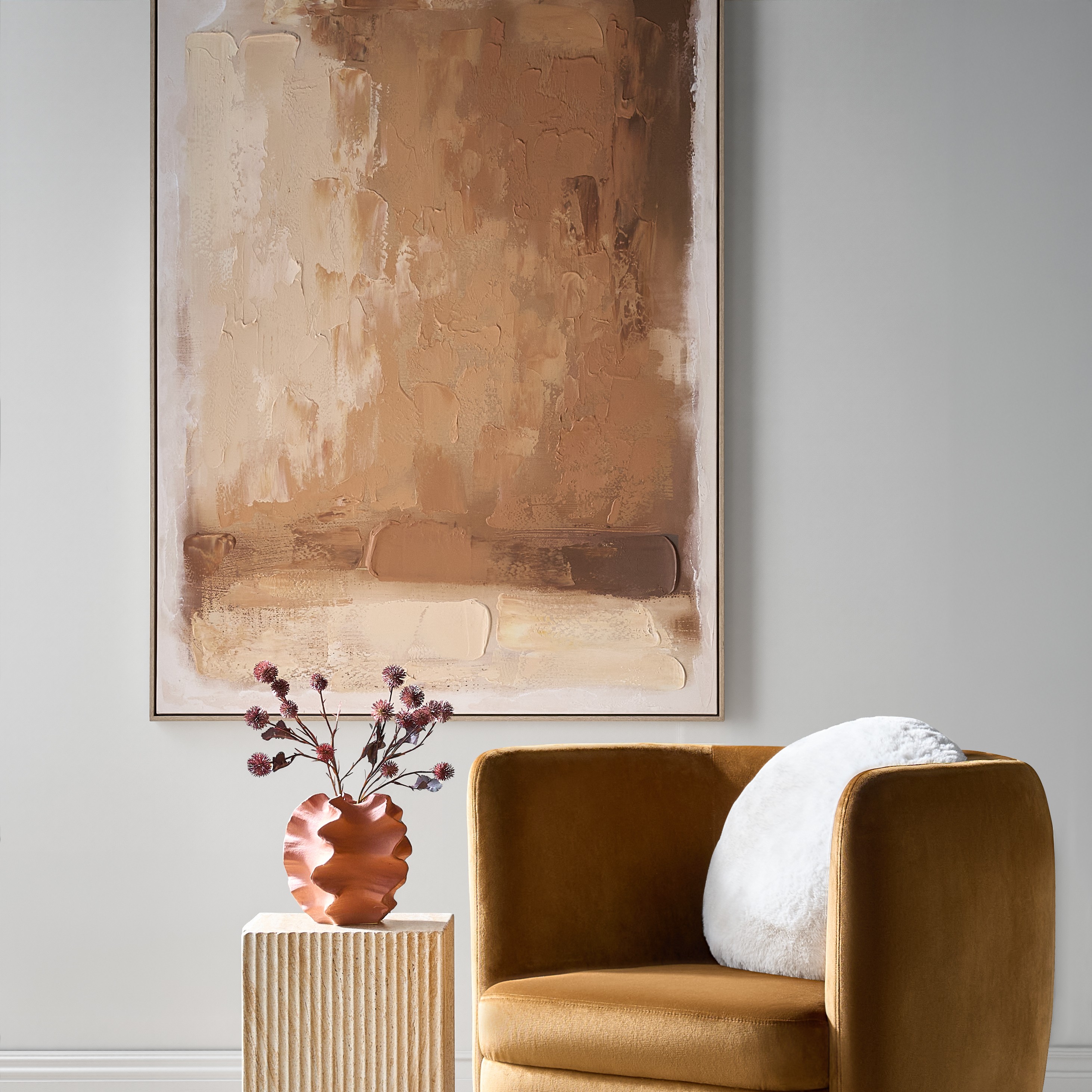 Ember Glow Framed Painted Wall Art 39.25" x 55"$499
A hand-painted abstract canvas blending ochre, terracotta, and golden clay hues in a light natural frame.
Add To Cart -
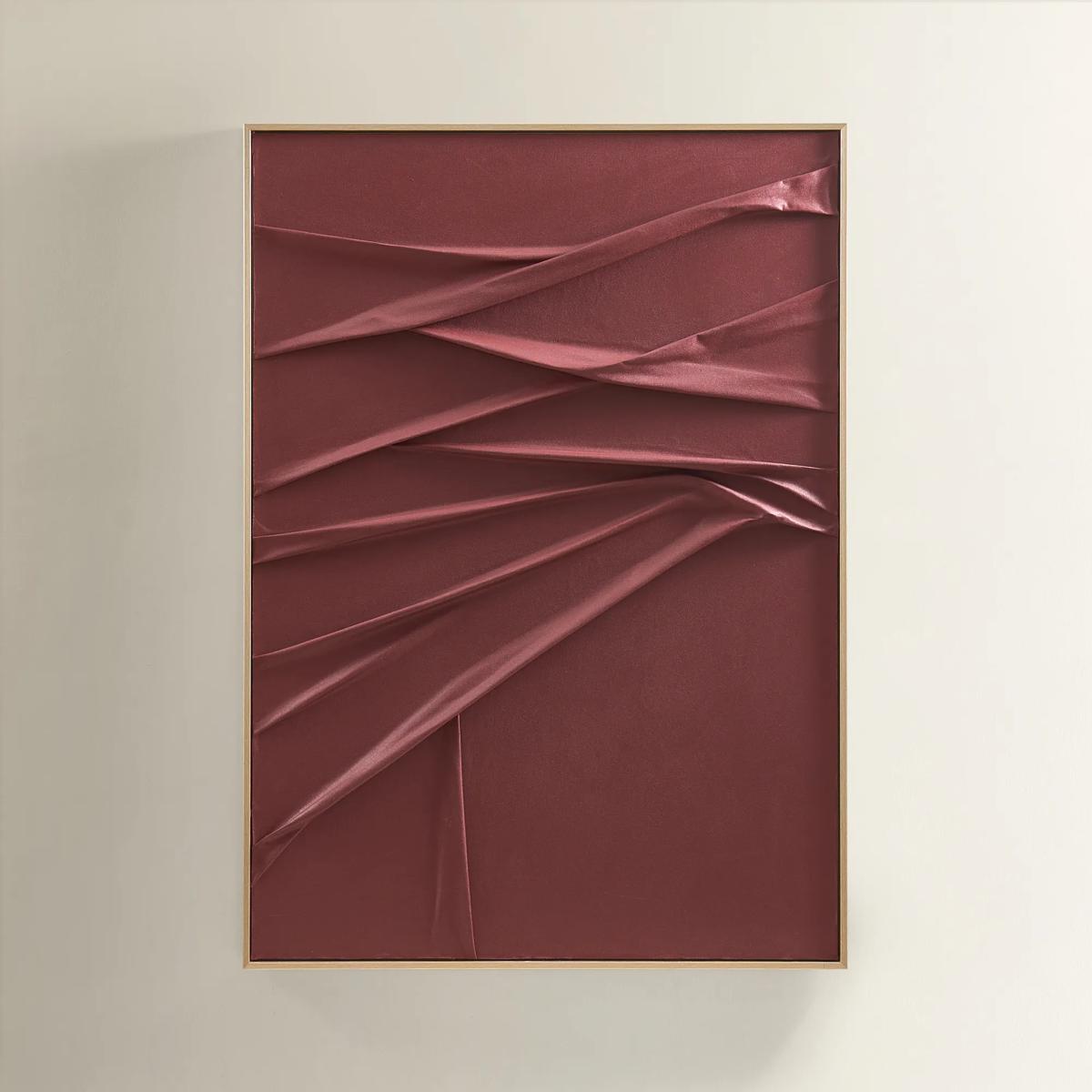
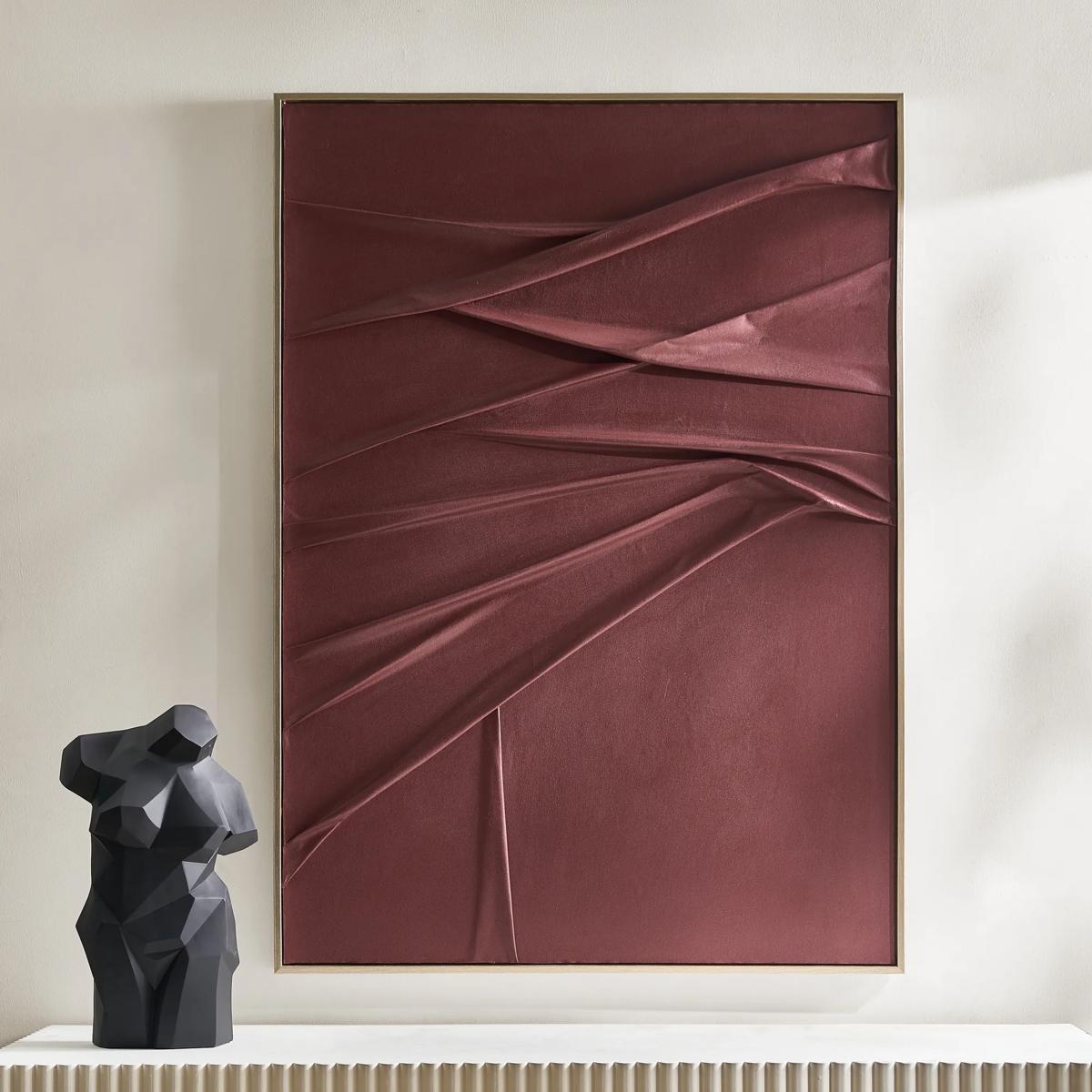 Crimson Painting$599
A handcrafted burgundy canvas artwork with sculptural folds, framed in champagne for a dramatic, textured effect.
Add To Cart -
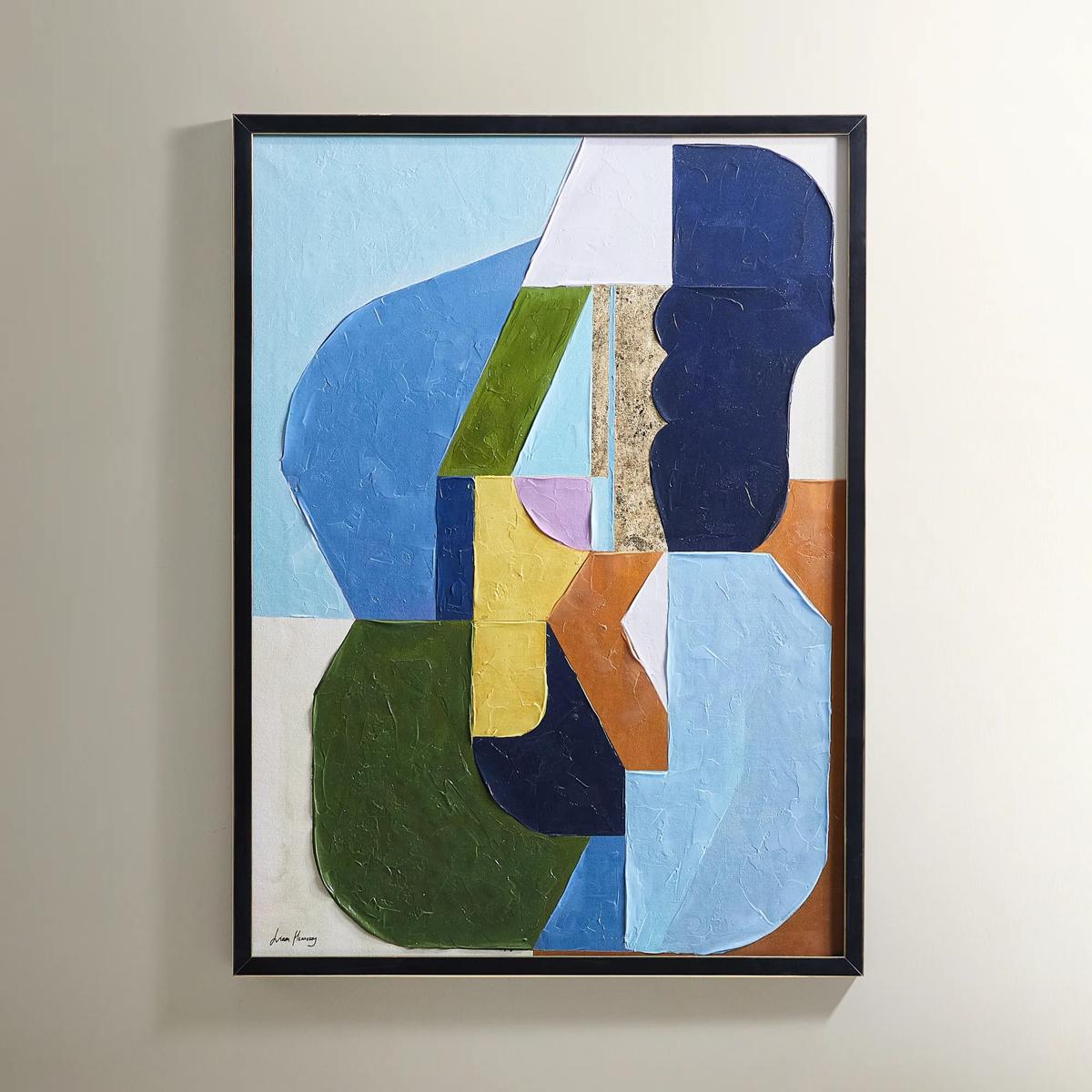
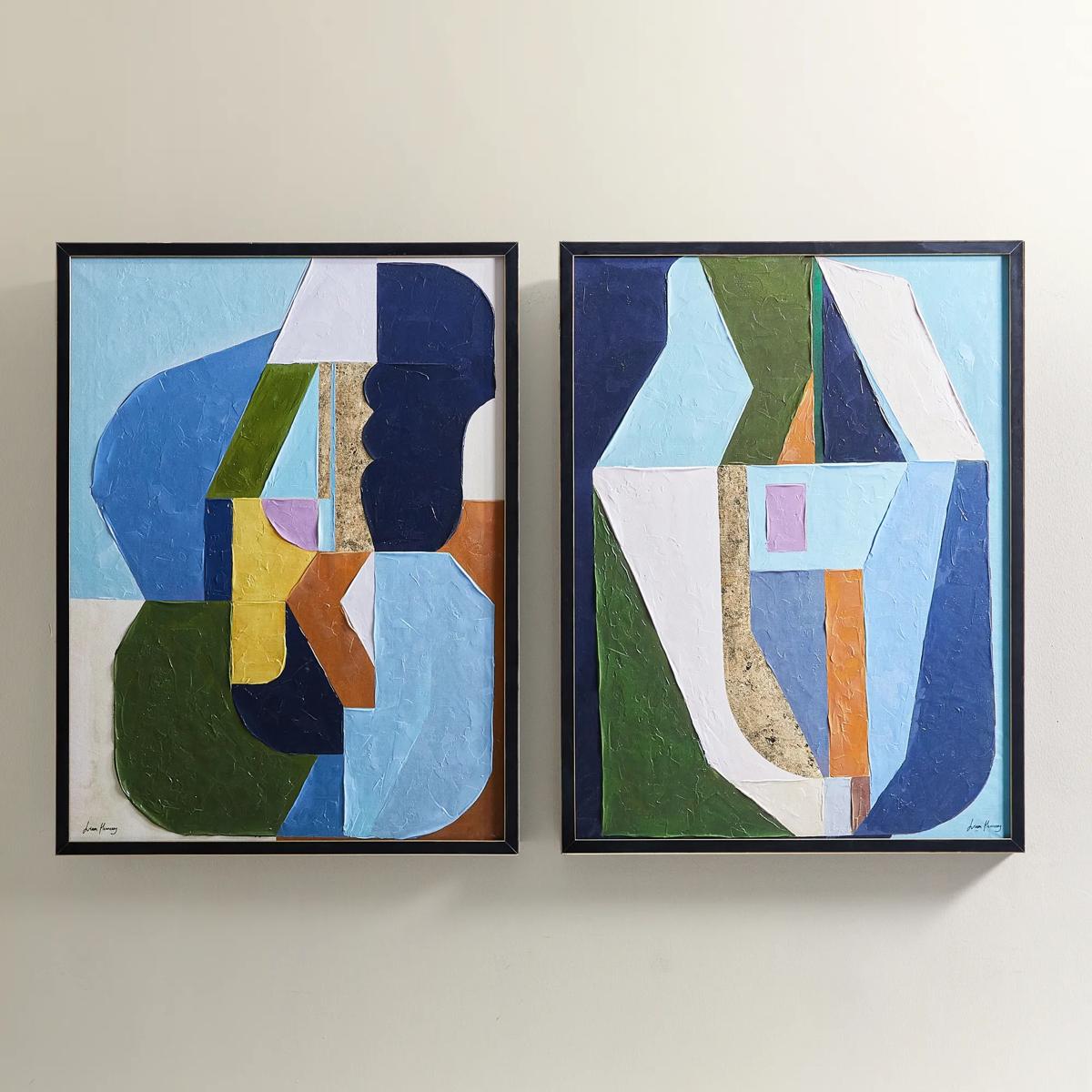 Thought Provoking Painting 1$249
A hand-embellished canvas artwork featuring textured strokes in deep blue, olive green, and gold accents.
Add To Cart -
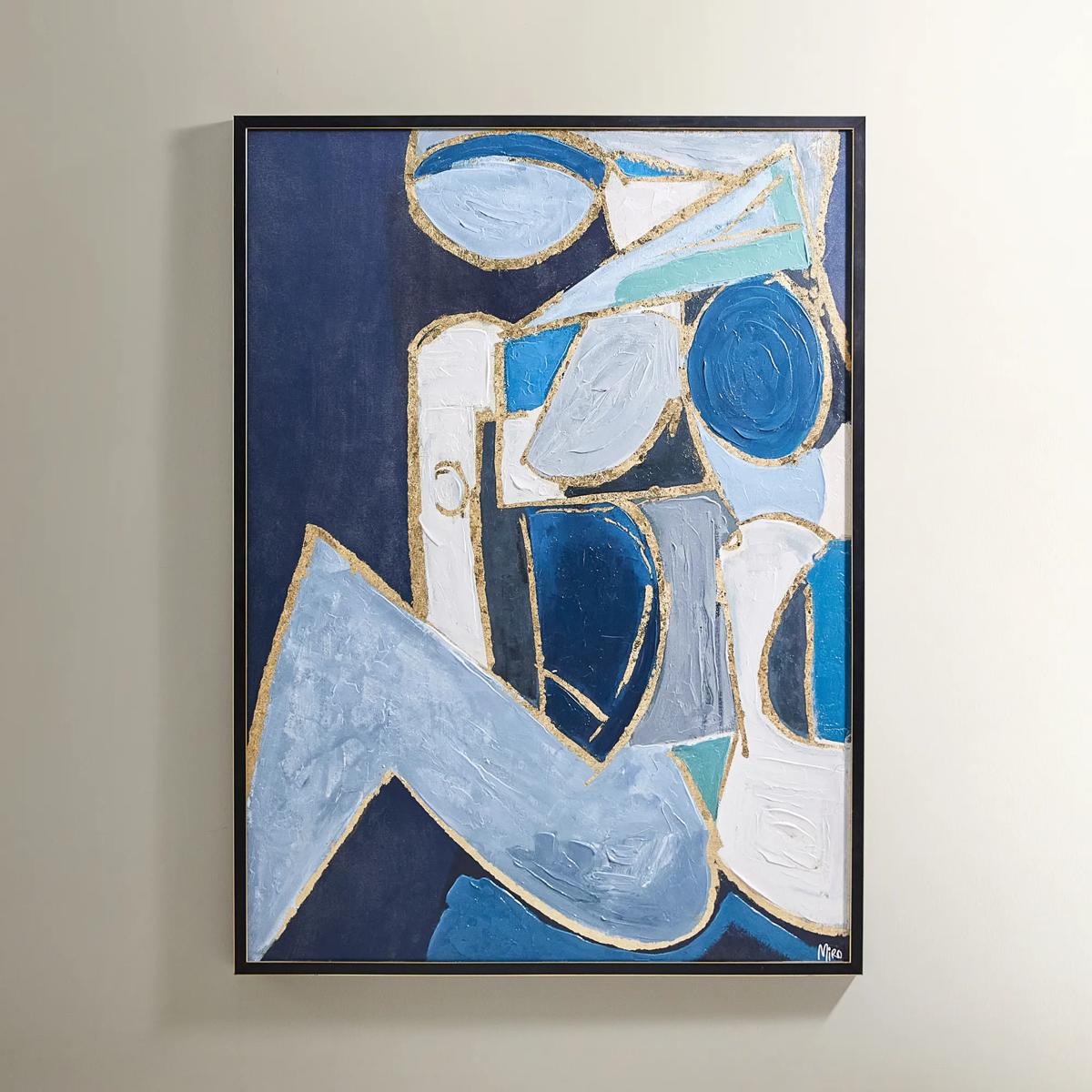
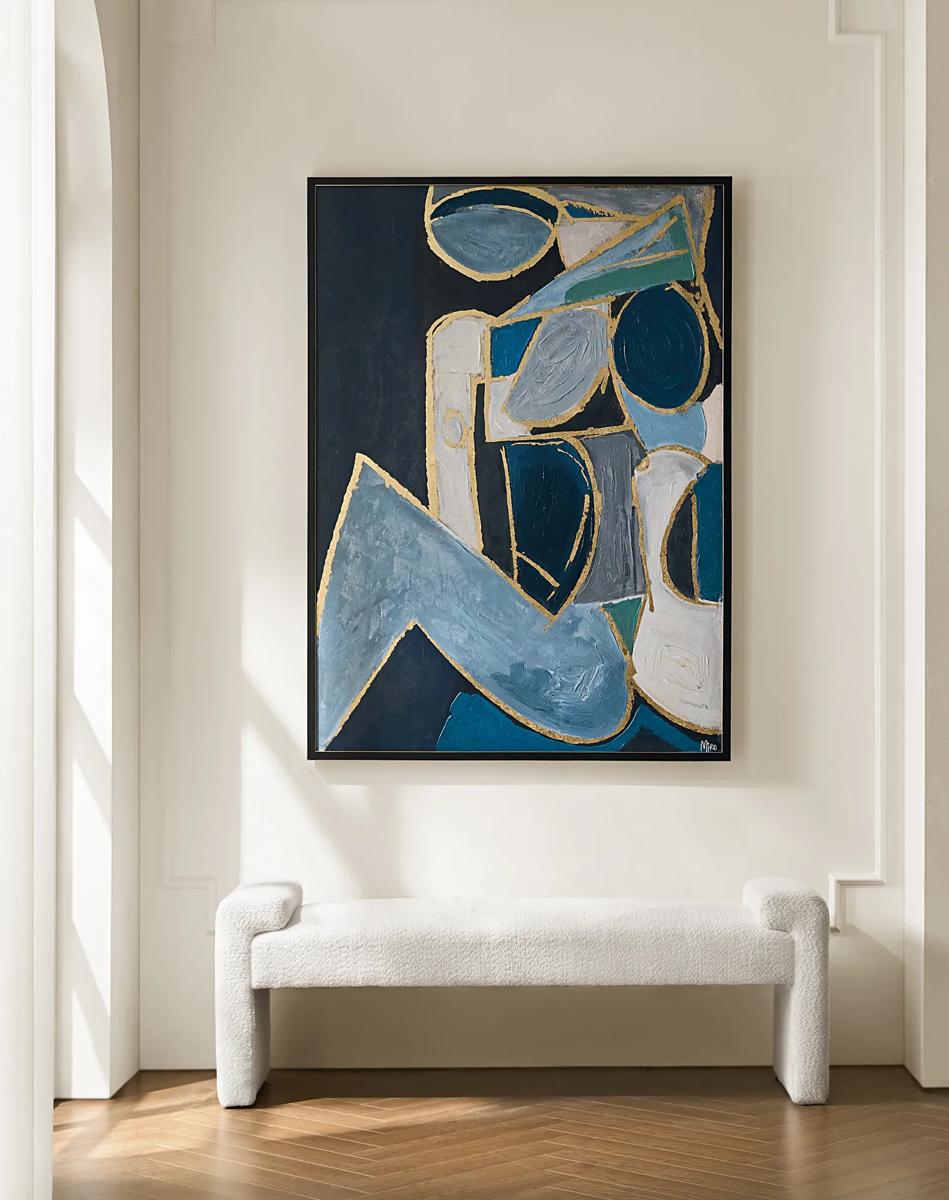 Figure in Cubism Painting$599
A hand-embellished canvas artwork featuring blue, gold, and white hues with elegant silver foil accents.
Add To Cart -
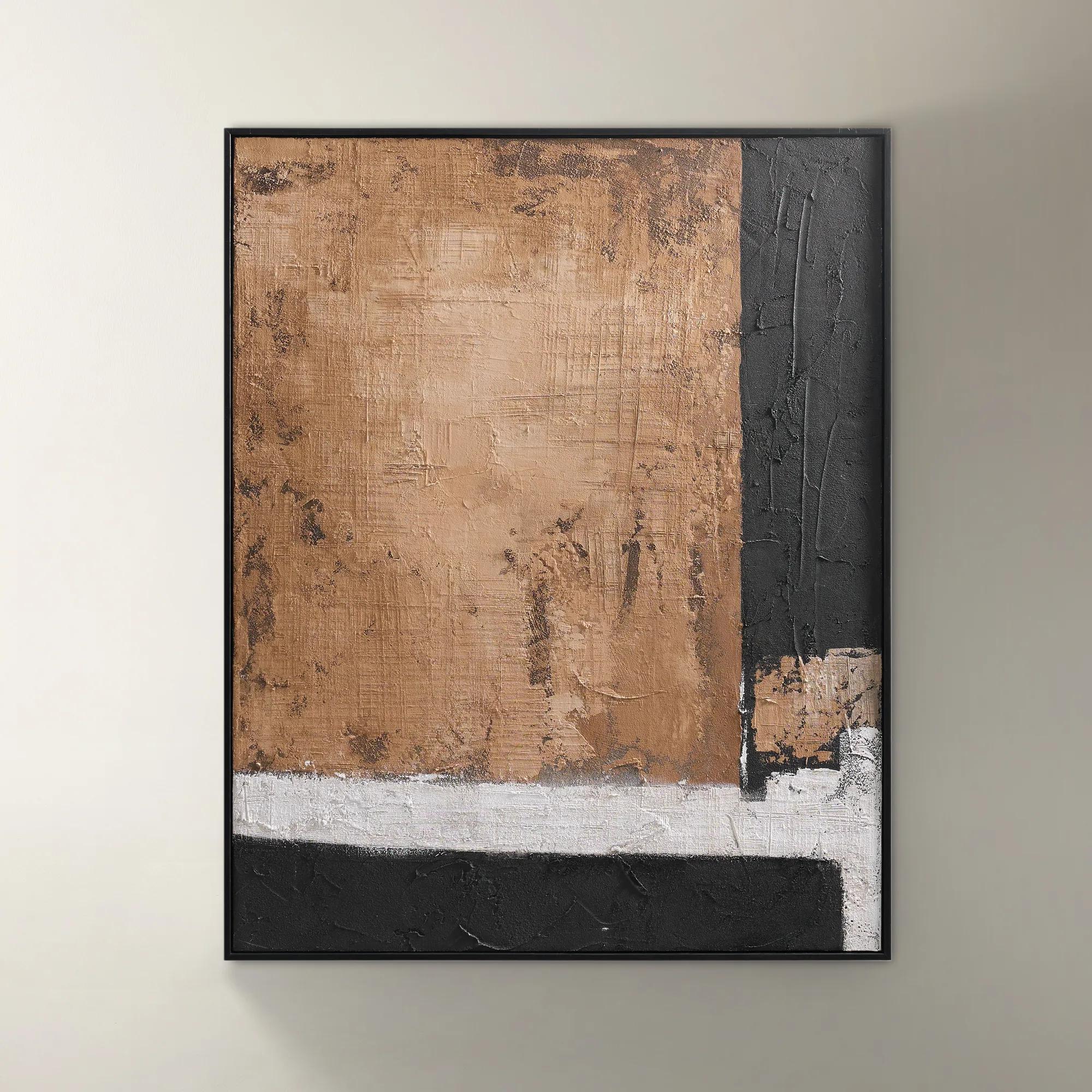 Drift Framed Painted Wall Art I 39.4" x 31.5"$299
A bold hand-painted abstract artwork featuring layered brown tones in a sleek black floater frame.
Add To Cart -
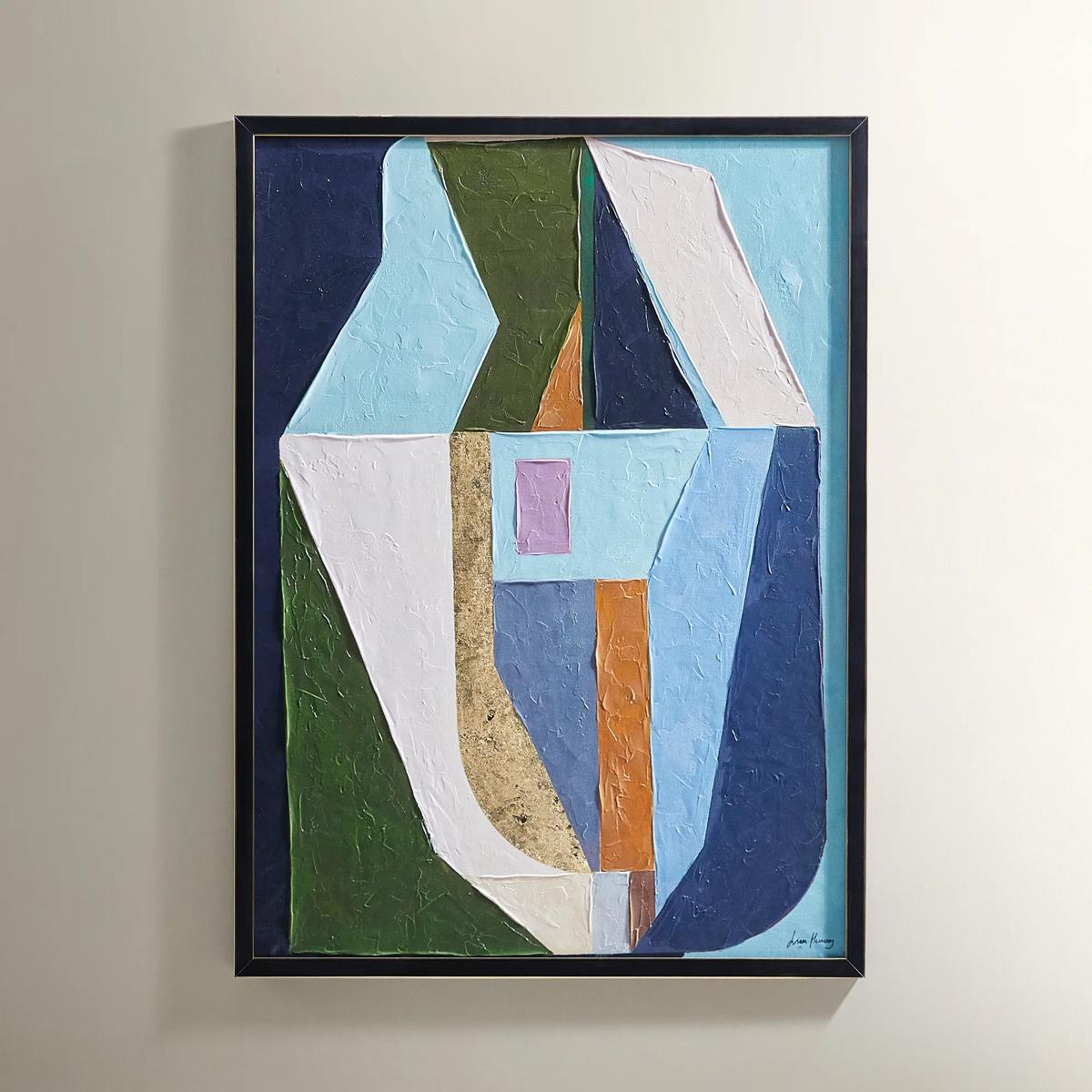 Thought Provoking Painting 2$249
A hand-embellished canvas artwork featuring textured strokes in deep blue, olive green, and gold accents.
Add To Cart -
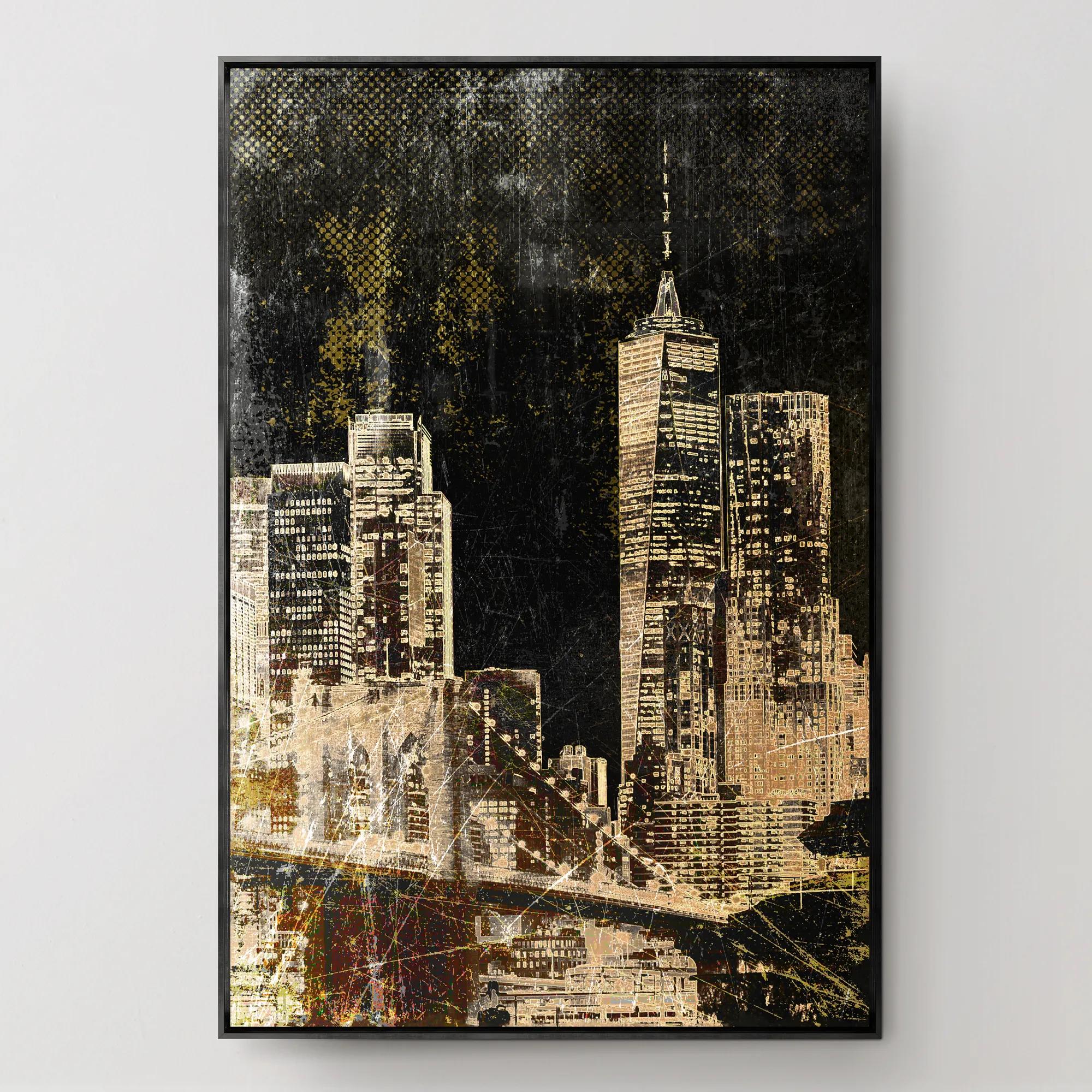
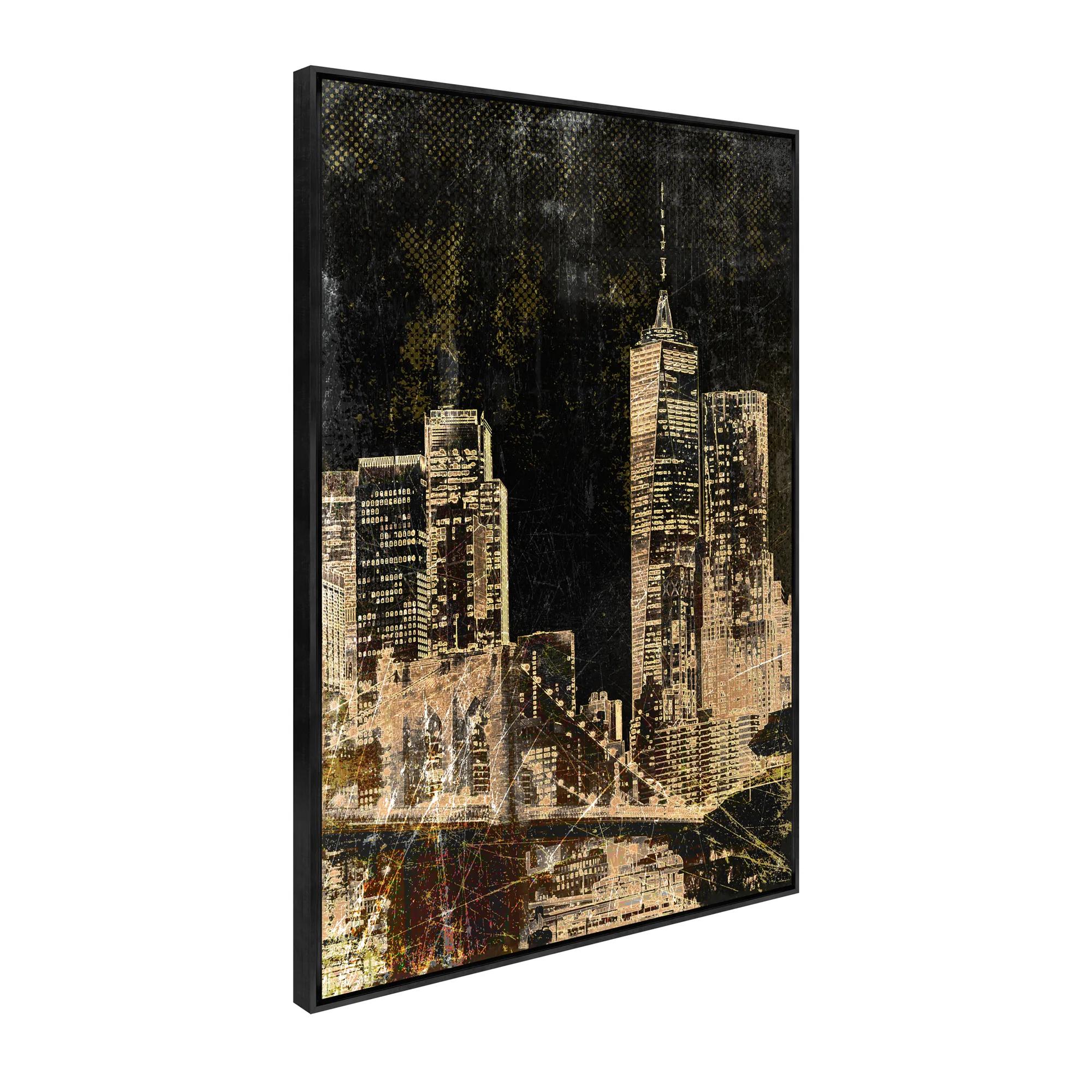 New York Lights Framed Wall Art 30" x 45"$649
A gallery-wrapped canvas artwork featuring a hand-applied gel finish and sleek black floater frame.
Add To Cart -
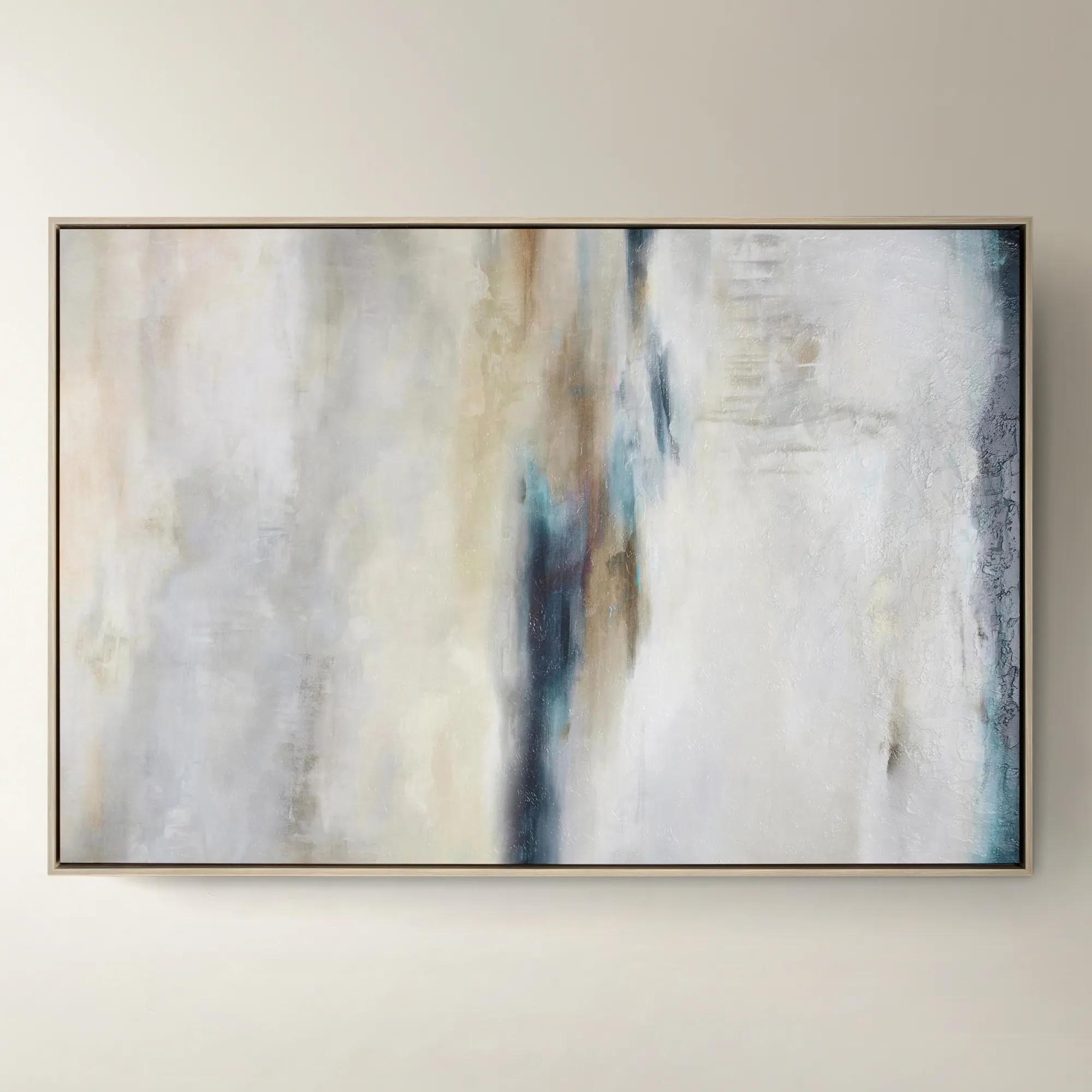
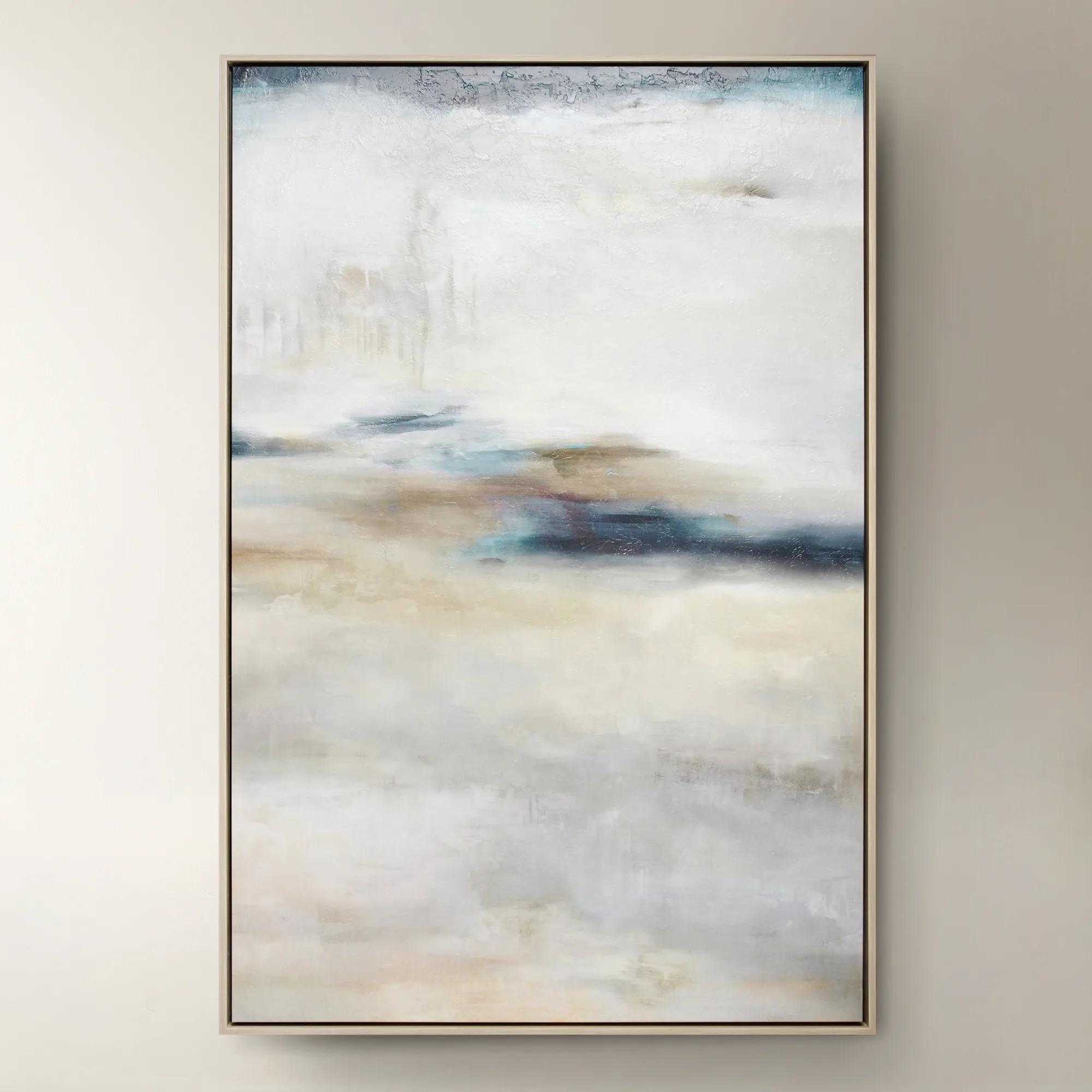 Forward Looking$1299
A softly layered abstract canvas print with a gel finish, set in a natural-hued floater frame.
Add To Cart -
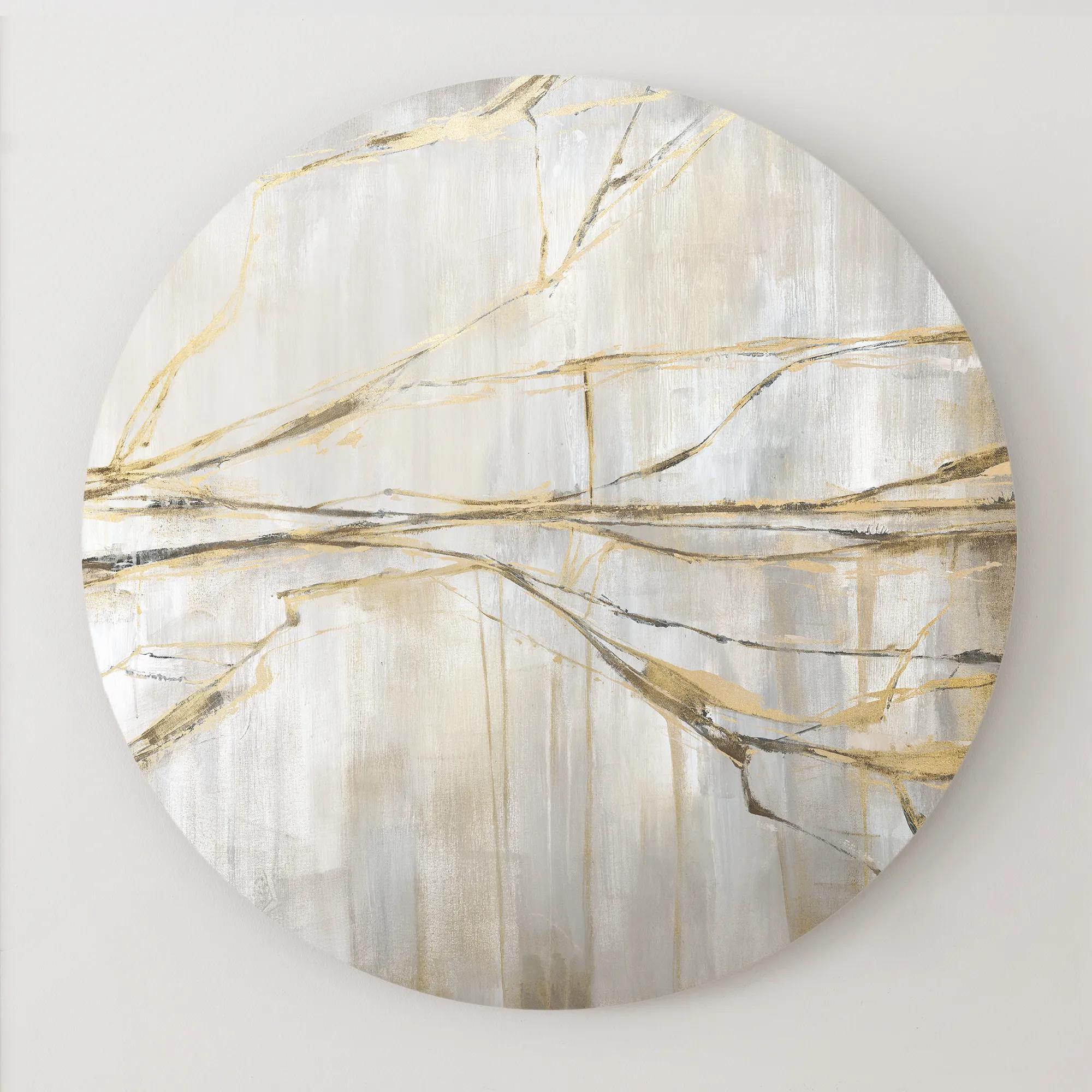
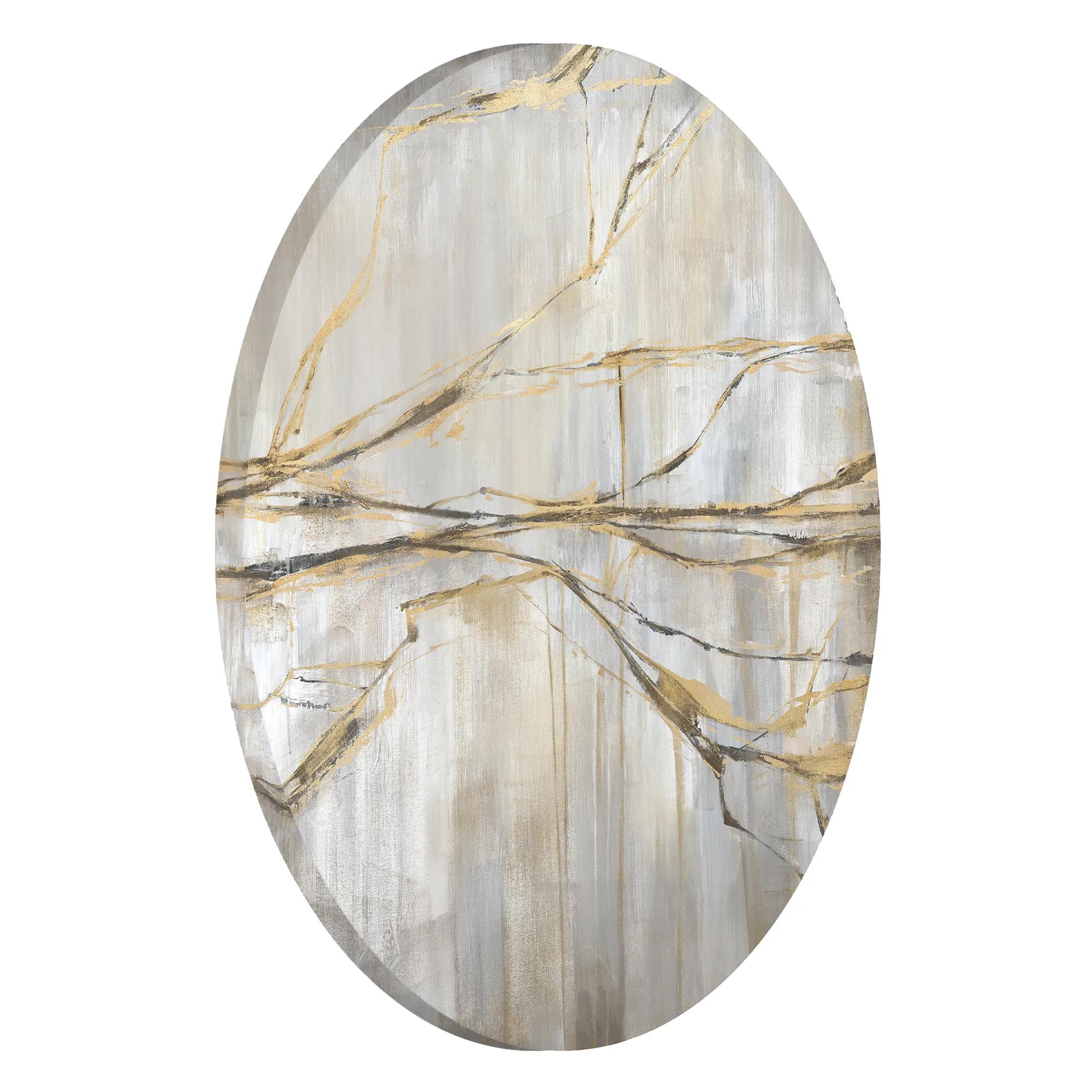 Lightening Crashes Round Wall Art 30"$899
A hand-textured circular linen canvas featuring a gallery-wrapped design for versatile wall display.
Add To Cart -
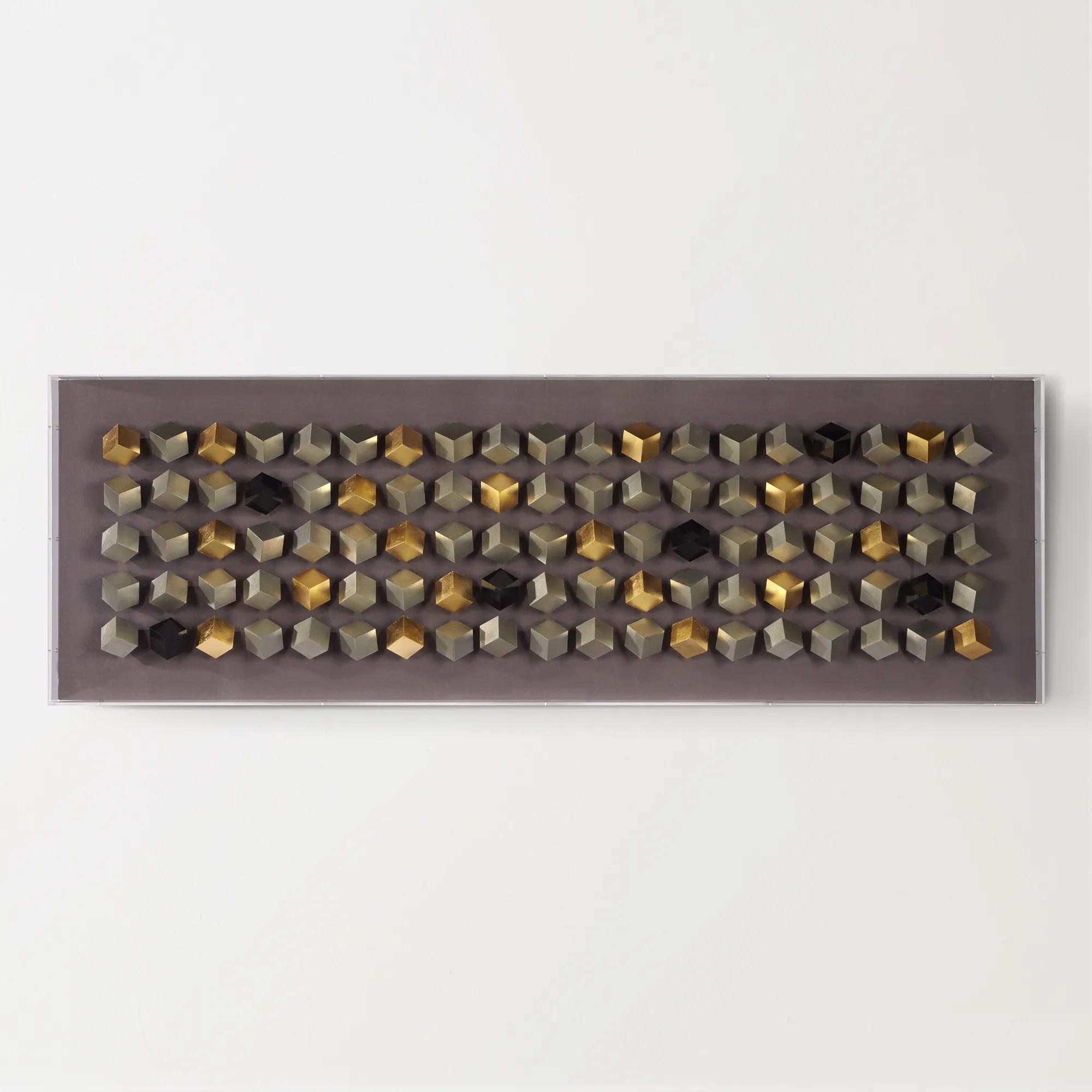
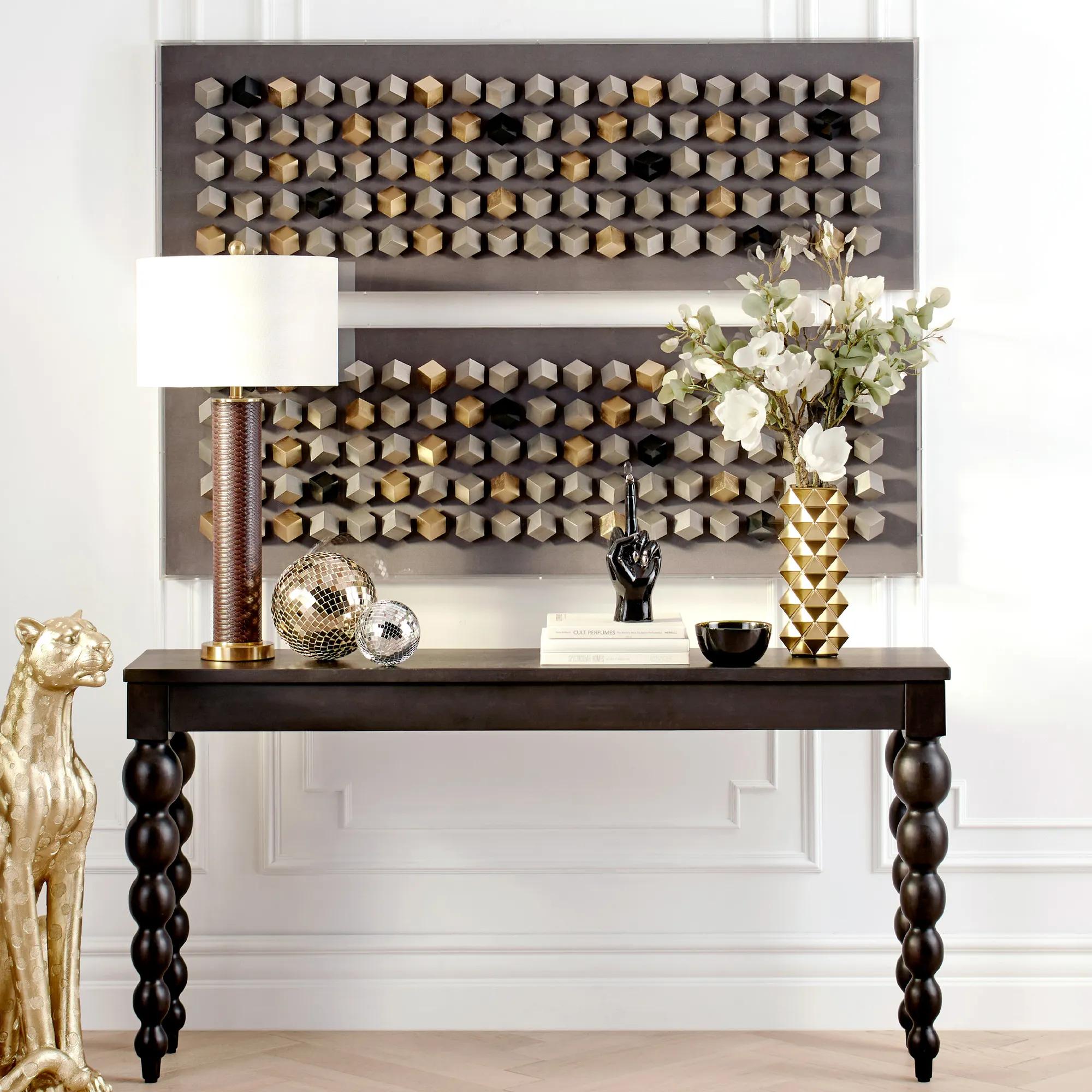 Cubic Array Dimensional Wall Decor in Acrylic 59" x 19.75"$599
A striking shadowbox wall art featuring a cubic, dimensional design with a tri-tone metallic finish.
Add To Cart

Modern Art For Living Room Walls
Explore modern art for living room walls to create a striking focal point or bring cohesion to your space. Discover wall art that adds visual depth and expressive detail, with your room’s palette, furniture proportions, and mood guiding the selection. Consider scale and placement to find a piece that commands attention above a sofa or completes a carefully composed gallery wall.
Modern art for living room walls brings together abstract canvas art, framed prints, geometric compositions, and sculptural wall decor to create a focal point with color, movement, and depth. Its appeal lies in the way a composition changes the atmosphere around it: a sweeping brushstroke gives tailored furniture a sense of freedom, a crisp arrangement of shapes sharpens a softly layered room, and dimensional metalwork casts shadows that become part of the design. Large-scale abstract wall art has particular presence above a sofa, where it can establish the room’s palette without requiring every accent to match. A trace of cobalt might find an echo in a velvet pillow, while warm ivory and charcoal connect naturally with upholstery, stone, and dark wood. Gold or silver accents can introduce luminosity, especially when their finish relates to nearby lighting or decorative objects rather than competing with them. For rooms shaped by expressive color and fluid forms, contemporary abstract art for living rooms offers a compelling connection between statement-making walls and richly textured furnishings. The range of visual moods is broad: atmospheric washes feel expansive, energetic marks introduce tension and movement, and black-and-white compositions create drama through contrast alone. Geometric wall art brings another kind of expression, using repetition, angles, and proportion to lend structure to a space. Sculptural wall decor adds physical dimension, giving an otherwise flat surface a play of raised edges, negative space, and reflected light. These approaches suit both polished entertaining spaces and living rooms used for everyday conversation, reading, and gathering. Personal taste matters more than strict coordination; artwork can carry a favorite hue, evoke a landscape without depicting it literally, or introduce an unexpected shape that makes familiar furniture feel newly considered. Against a pale wall, a saturated composition reads with particular intensity. Against deeper paint, light passages and metallic details gain a luminous quality, allowing the wall itself to participate in the composition.
Scale gives modern living room wall art its architectural presence. Above a sofa or credenza, an artwork or grouped arrangement spanning approximately two-thirds to three-quarters of the furniture’s width often feels balanced. For an 84-inch sofa, that translates to roughly 56 to 63 inches of total artwork width, including the spaces between pieces in a grouping. This proportion is a starting point rather than a rigid requirement; ceiling height, nearby windows, furniture placement, and the openness of the composition all affect how substantial the artwork appears. A single oversized canvas creates an uninterrupted gesture, while a diptych or triptych introduces rhythm through its divisions. A framed grouping can feel equally commanding when its outer edges form a coherent shape and the spacing remains consistent. Gaps of about 2 to 4 inches often keep related works visually connected, although larger frames or especially expansive walls may call for different spacing. Above furniture, the bottom edge commonly sits about 6 to 10 inches above the surface or sofa back, keeping the art connected to the vignette rather than floating toward the ceiling. On an open wall, a center point around 57 to 60 inches from the floor is a familiar reference, with adjustments for sightlines and the room’s proportions. In a living room, the view from a favorite chair deserves as much attention as the view from the doorway. Generous surrounding space allows a dramatic composition to hold its own; nearby shelves, sconces, and decorative accents need not compete for the same visual territory. A compact room can support substantial art when the dimensions suit the wall, and one confident composition may feel more composed than several small, disconnected accents. Frame depth and sculptural projection also influence fit. Beside a walkway or above frequently used seating, shallow profiles preserve comfortable clearance, while deeper dimensional work has room to reveal its contours on a less constrained wall. Lighting completes the relationship: soft, angled illumination can reveal texture, while reflections on glazed artwork may obscure details from certain seats.
Materials and finishing details shape both the character and longevity of decorative wall art. Canvas typically offers a textile surface that softens reflected light and gives printed or painted imagery a tactile foundation. Depending on its construction, a stretched canvas may have finished edges for an unframed presentation, while a surrounding frame can lend additional definition. Paper-based prints often benefit from protective glazing and suitable backing; acid-free materials can help reduce deterioration over time. Glass offers a clear, substantial presentation, while acrylic glazing is generally lighter and less prone to shattering, though its surface can scratch more easily. Metal wall decor introduces a different quality, from gleaming highlights to brushed surfaces that reveal subtle shifts in light. Wood frames contribute warmth and a distinct outline, with slim profiles emphasizing the image and broader profiles adding visual weight. Actual construction, finish, and care requirements vary, making the stated dimensions, weight, glazing, and hanging specifications important considerations. Secure mounting depends on both the artwork and the wall: hardware should be rated for the load and appropriate for drywall, masonry, or other surfaces, with heavier works sometimes requiring attachment to studs or professional installation. Long-term placement also matters. Direct sunlight can fade pigments and affect some finishes, while excess moisture and heat can compromise paper, canvas, adhesives, or framing components. Routine care is usually gentle: a soft, dry cloth or suitable duster removes surface dust, and cleaning methods should follow the material-specific instructions. Liquids sprayed directly onto artwork or frames can seep into edges, and abrasive cleaners may damage glazing or decorative finishes. With thoughtful placement and care, modern wall art can remain an expressive part of a room through changes in furniture and accessories. It also makes a meaningful housewarming, wedding, or anniversary gift when the recipient’s taste and wall dimensions are known. For someone establishing a first home or refining a long-loved living room, an artful composition offers something deeply personal: a daily encounter with color, form, and imagination.
FAQs
Abstract paintings, geometric compositions, expressive photography, and sculptural wall art bring distinct personalities to a modern living room. Fluid brushwork introduces movement, while crisp geometry creates a more architectural mood. For a glamorous focal point, explore artwork with metallic accents, rich color contrasts, or dimensional textures that invite a closer look.
Let your living room’s palette inspire the artwork without dictating every hue. Echo an accent from velvet upholstery or a patterned rug for a composed look, or introduce a contrasting jewel tone to give neutral interiors a daring focal point. Black-and-white modern art offers graphic drama, especially alongside gleaming finishes and sumptuous fabrics.
Create a visual conversation through a shared color, recurring shape, or complementary framing. An expressive abstract can sit beautifully beside architectural photography when both feature inky blacks or warm ivory tones. Vary the artistic mediums while preserving a common thread, allowing each piece to contribute its own character to a richly layered arrangement.
Choose frames that draw out the artwork’s character and complement the room’s finishes. Slender black frames emphasize graphic lines, metallic frames introduce luminous detail, and wood frames lend warmth to softer compositions. A float frame gives canvas art a refined, gallery-inspired presentation, while an unframed canvas lets color and brushwork take the spotlight.
Treat modern wall art as the creative starting point for your living room. Carry a color from the composition into decorative pillows, echo its curves with a sculptural vase, or pair bold linework with an angular accent table. Give expressive artwork a quieter backdrop, then layer in tactile fabrics and reflective accents for a room that feels personal and artfully composed.