Marble And Travertine Checkerboard Tables
Marble And Travertine Checkerboard Tables
-
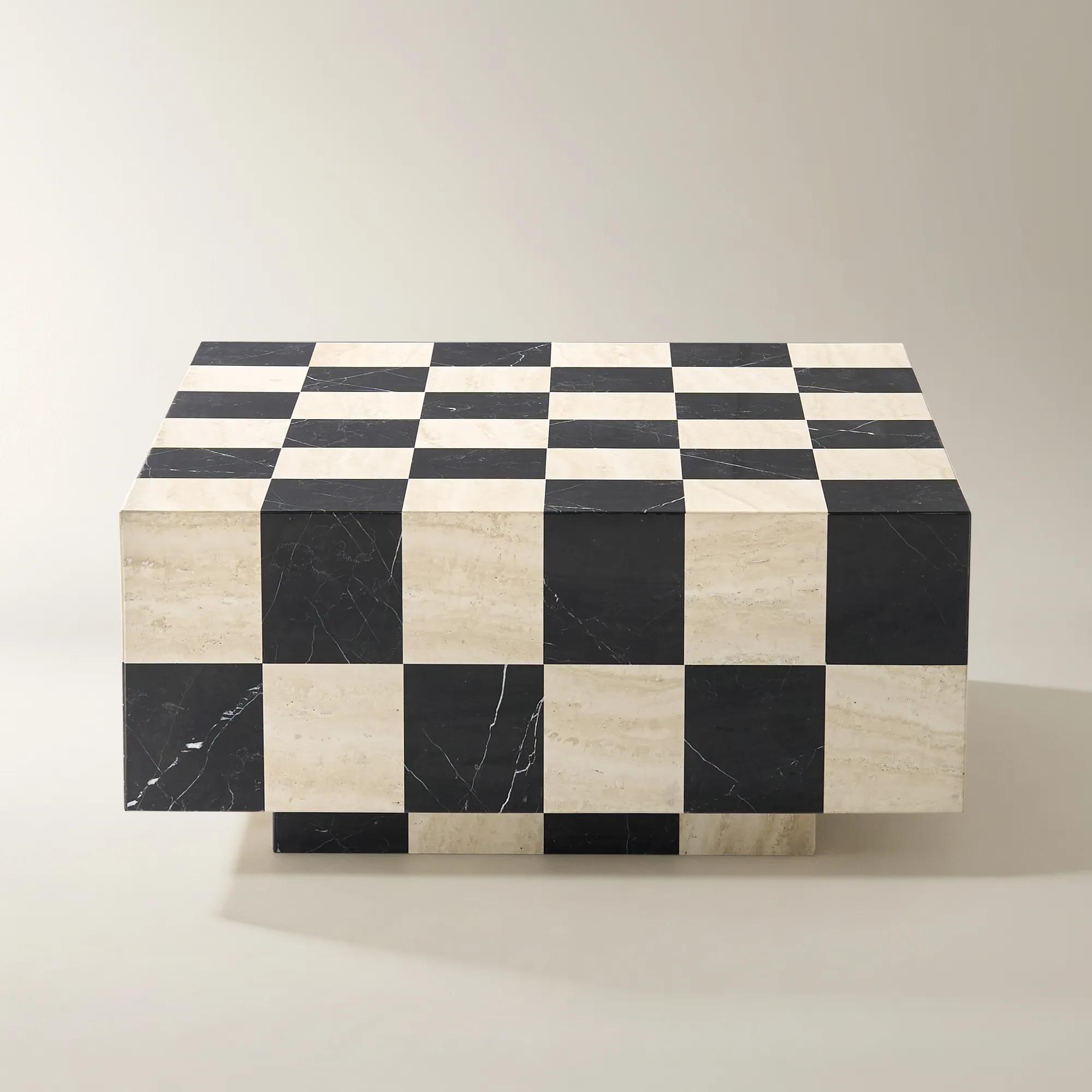
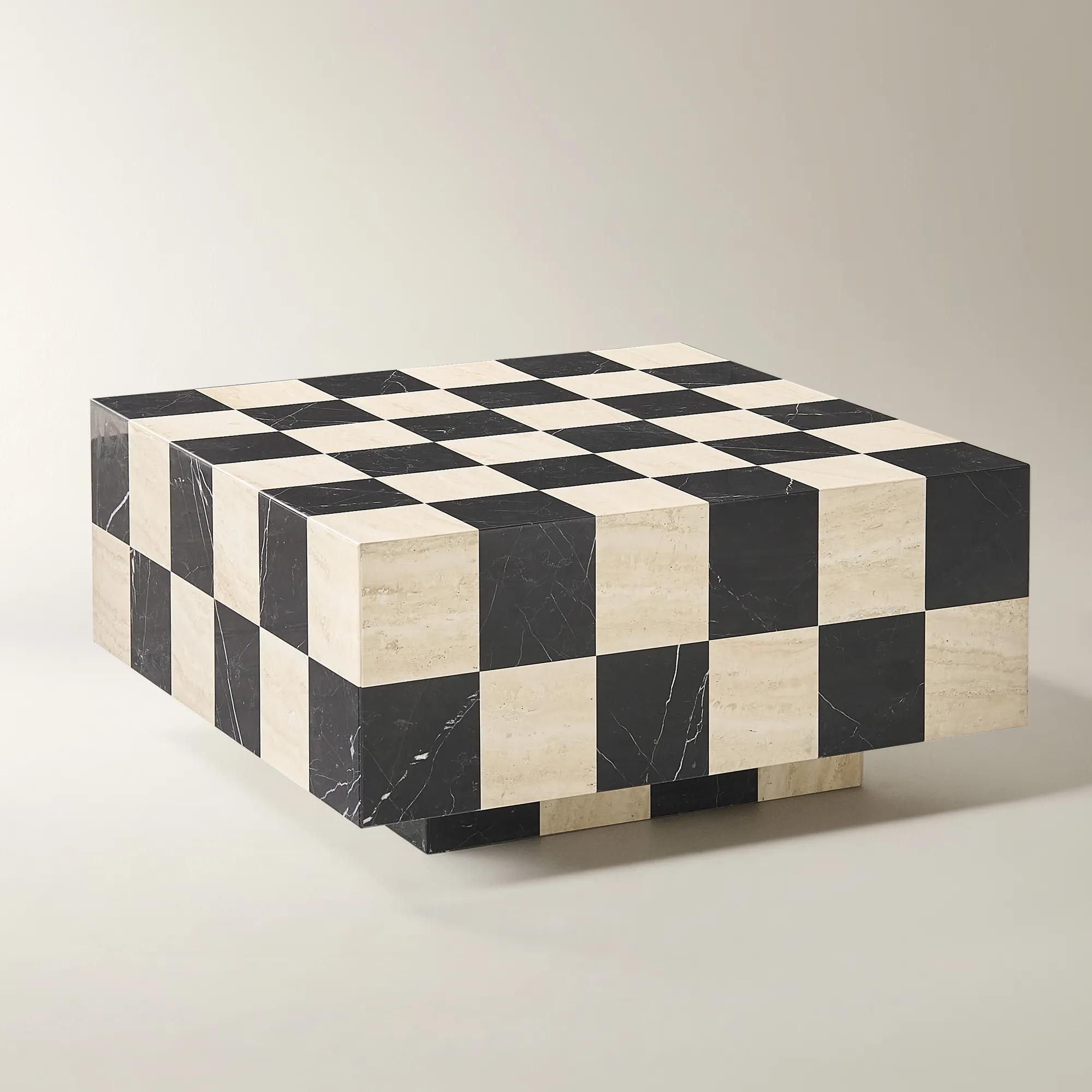 Chessa Square Chequered Marble Coffee Table (31.9")$1699
A striking coffee table featuring a dimensional black marble and travertine checkerboard mosaic with polished finish.
Add To Cart -
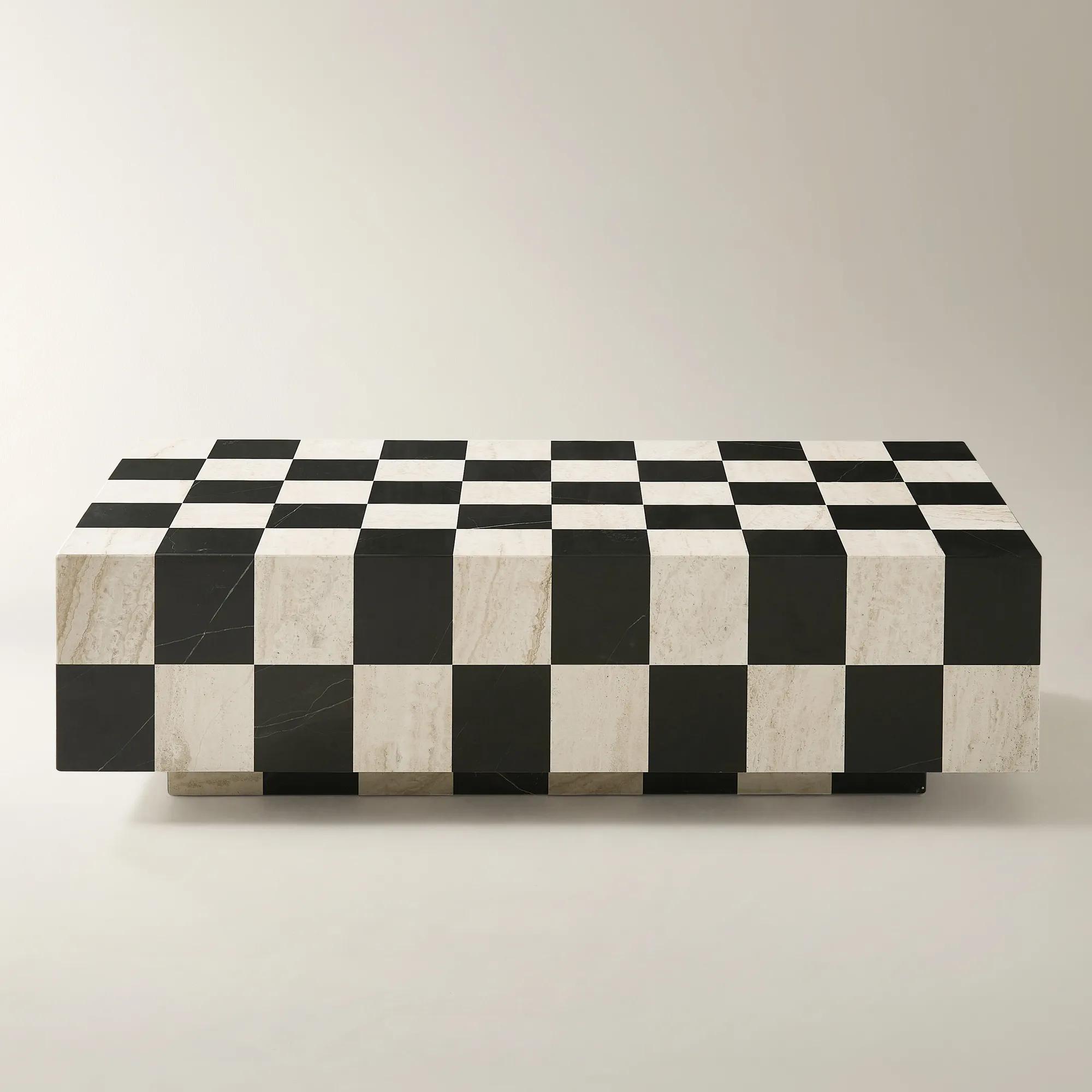 Chessa Rectangular Chequered Marble Coffee Table (53.1")$2399
A sculptural coffee table featuring polished black marble and travertine checkerboard mosaic with a monolithic silhouette.
Add To Cart -
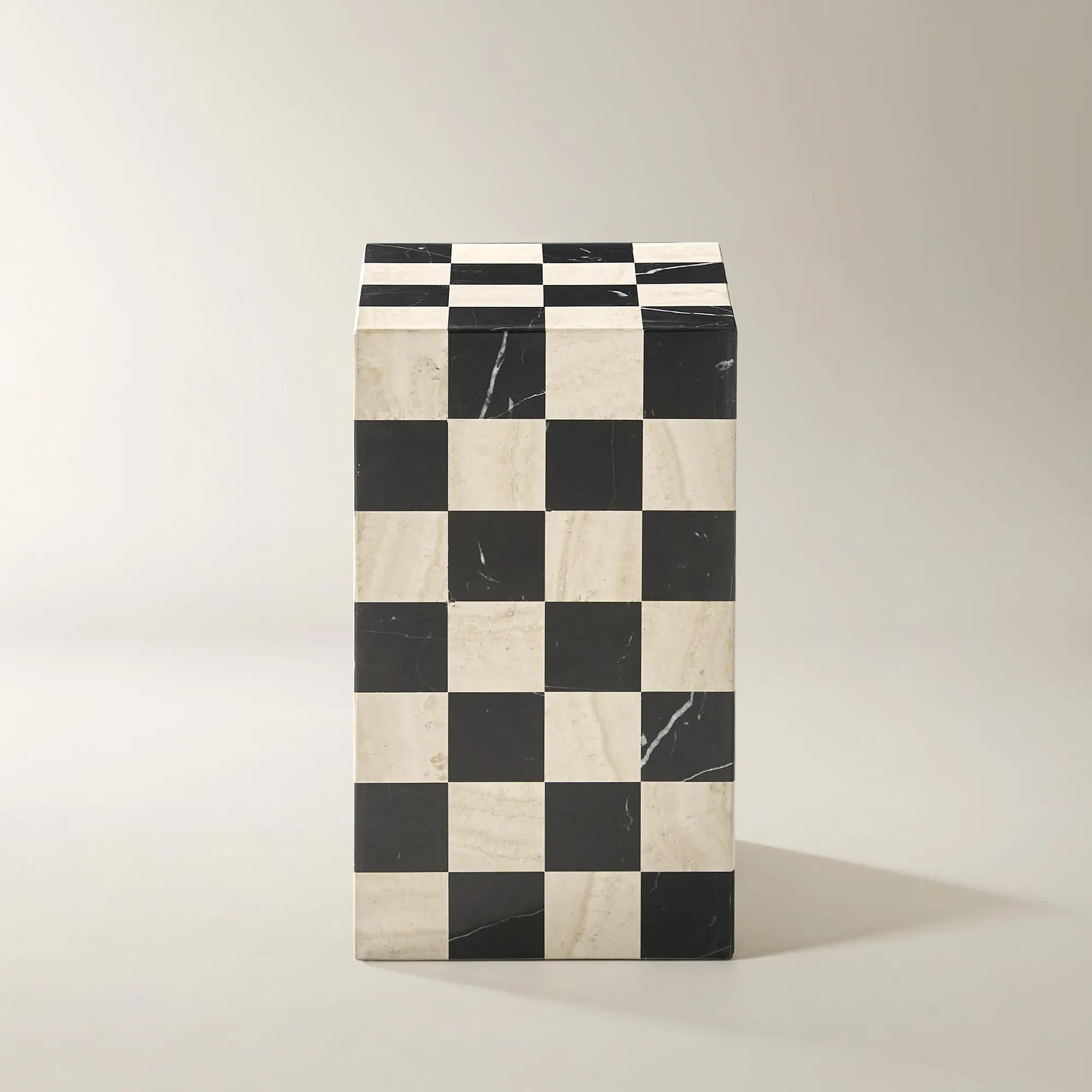 Chessa Square Chequered Marble End Table (12")$999
A sculptural end table featuring a bold black marble and travertine checkerboard mosaic design.
Add To Cart

Marble And Travertine Checkerboard Tables
A marble and travertine checkerboard table brings graphic precision and natural character into the same composition. Explore coffee and end tables that pair black marble with travertine, turning an everyday surface into an expressive focal point. Choose a central statement for your seating arrangement or a sculptural accent beside a favorite chair.
Choose your table by the role it will play in the room, then consider how its silhouette carries the checkerboard pattern. A coffee table places the stone composition at the center of a conversation area, while an end table introduces a concentrated architectural accent beside seating. Rectangular shapes can echo the lines of a sofa; square forms create a more symmetrical arrangement. Compare the listed height and footprint with your seating, leaving comfortable space to move around the table. Look beyond the surface, too: review the stone composition, underlying construction, and finish to understand how each design brings its sculptural presence to life. Let the contrasting stone establish the room’s visual rhythm without making every surrounding element compete. Warm wood introduces an organic counterpoint, sumptuous upholstery softens the geometry, and a restrained metallic accent adds a gleaming highlight. For a layered approach, pair the crisp checkerboard with soft geometric living room rugs, choosing a quieter contrast or a different pattern scale. Keep tabletop styling selective so the stone remains visible: a sculptural vessel or a considered stack of books can complete the composition. Echo one of the stone tones elsewhere in the room to connect the table to the larger palette.
FAQs
Marble veining and travertine texture introduce organic detail within the checkerboard’s precise geometry. Pairing black marble with lighter travertine creates bold tonal contrast, giving the table both a graphic presence and the nuanced character of natural stone.
Natural marble veining and travertine texture vary, so the markings within individual checks can differ from piece to piece. That variation is part of the material’s character: the repeating pattern provides visual order while the stone introduces individuality.
Matching tables create a deliberate, unified statement, but a coordinated room does not require an identical set. Pair a checkerboard table with a quieter companion that echoes one stone tone, or use a contrasting material to let the patterned piece command attention.
Give the patterns different roles. Let the stone table supply crisp geometry, then introduce softer lines or tonal motifs through textiles. A shared color helps connect the layers; <a href="https://zgallerie.com/o/checkerboard-decorative-pillows">checkerboard decorative pillows</a> can also echo the motif without repeating the stone’s texture.
Follow the care instructions for the specific table and finish. Use a soft, dry cloth for routine cleaning, address spills promptly, and avoid acidic cleaners, abrasives, and excessive moisture that may dull or damage the stone surface.