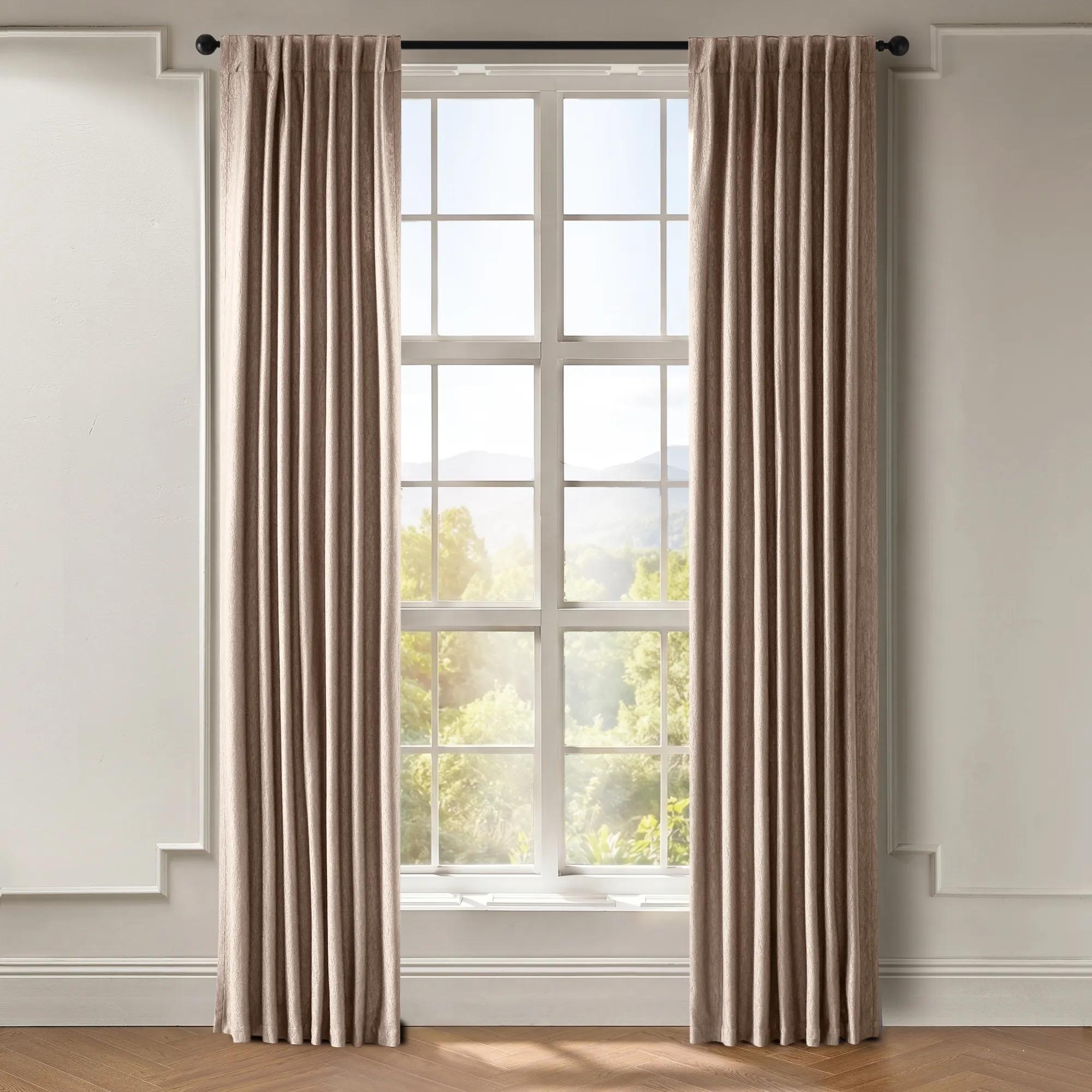
Living Room Textured Curtains
Living Room Textured Curtains
-
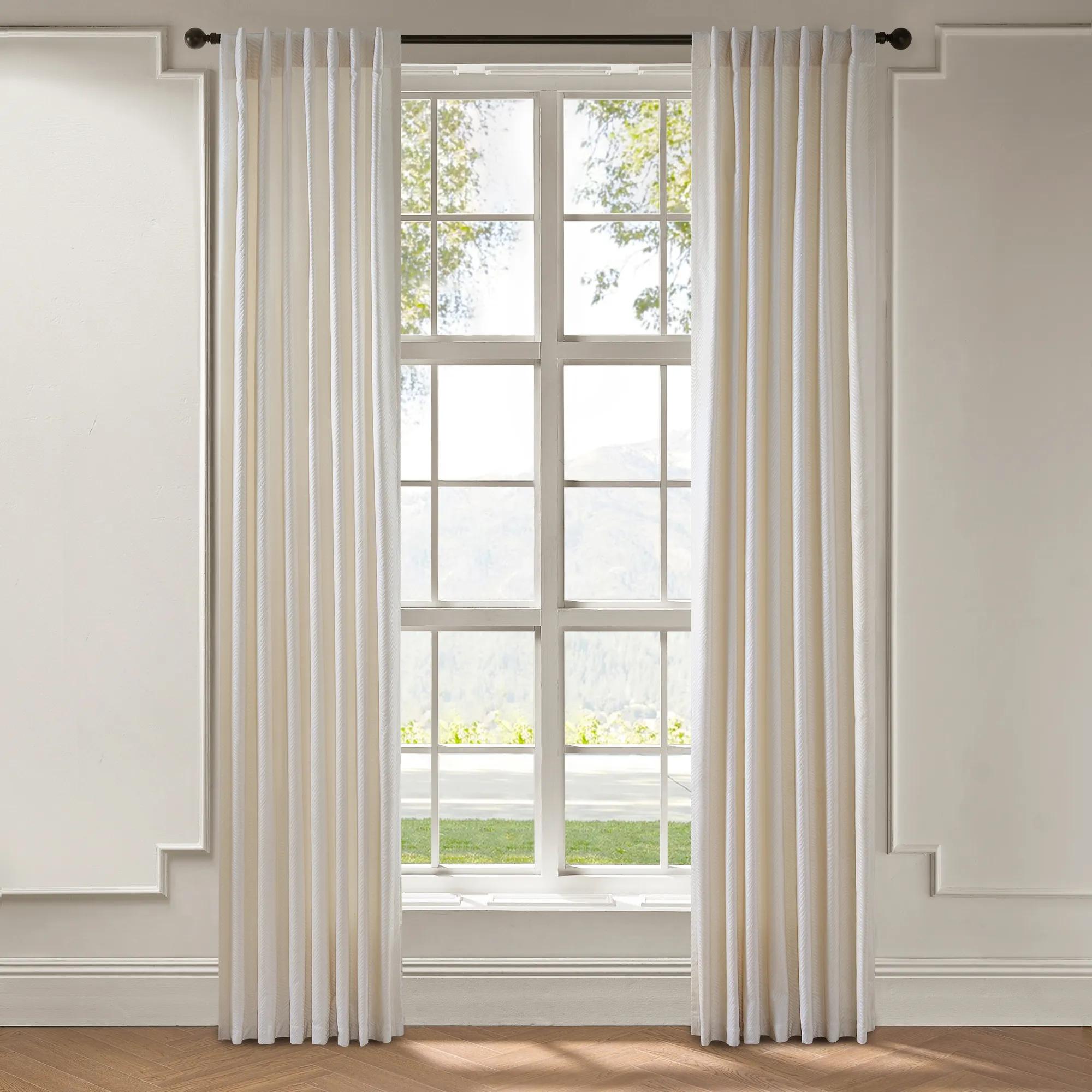
 Kenzo Chenille Curtain - White$119
A white chenille jacquard curtain featuring a subtle high-contrast pattern and soft, room-darkening texture.
Add To Cart -

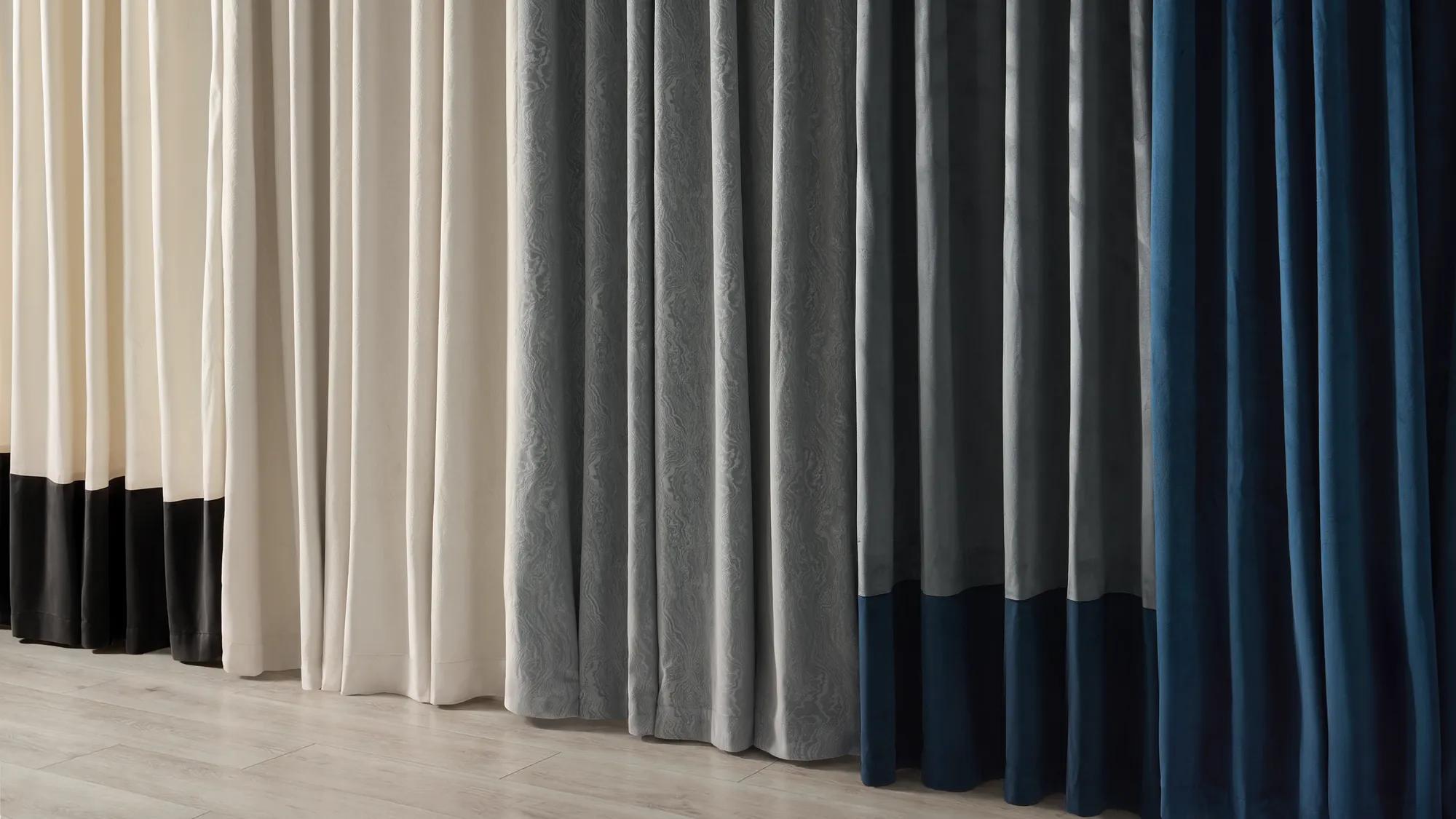 Mabel Velvet Swirl Curtain - Grey Blue$89
A grey blue velvet curtain featuring a tonal swirl pattern and versatile dual hanging options.
Add To Cart -
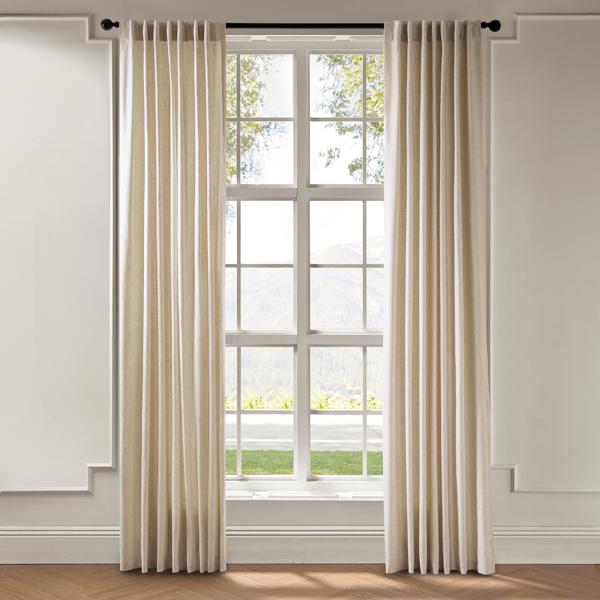
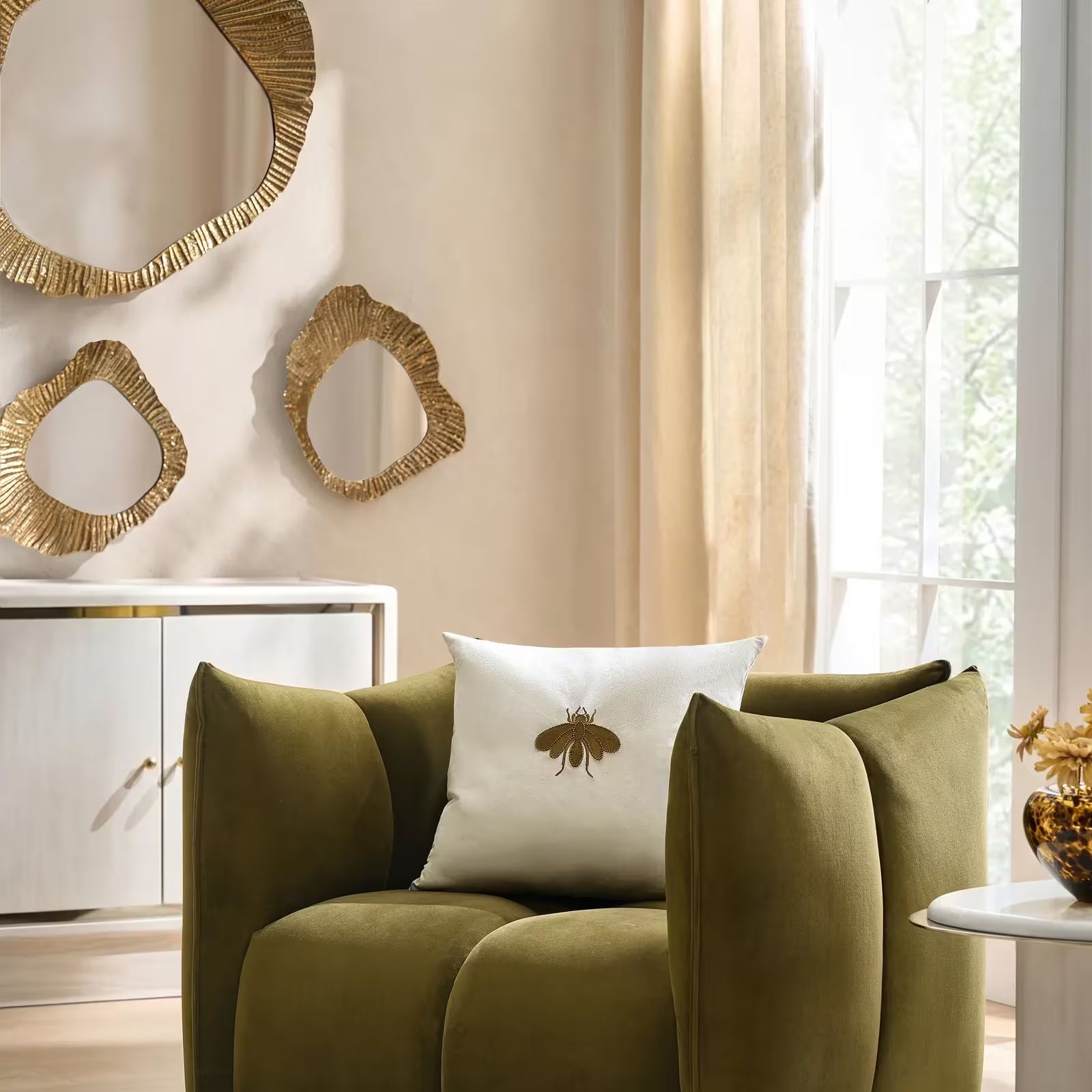 Anson Ivory Textured Window Curtain Panel$99
An elegant ivory curtain panel with a crushed, light-reflective texture for subtle shine and room darkening.
Add To Cart -
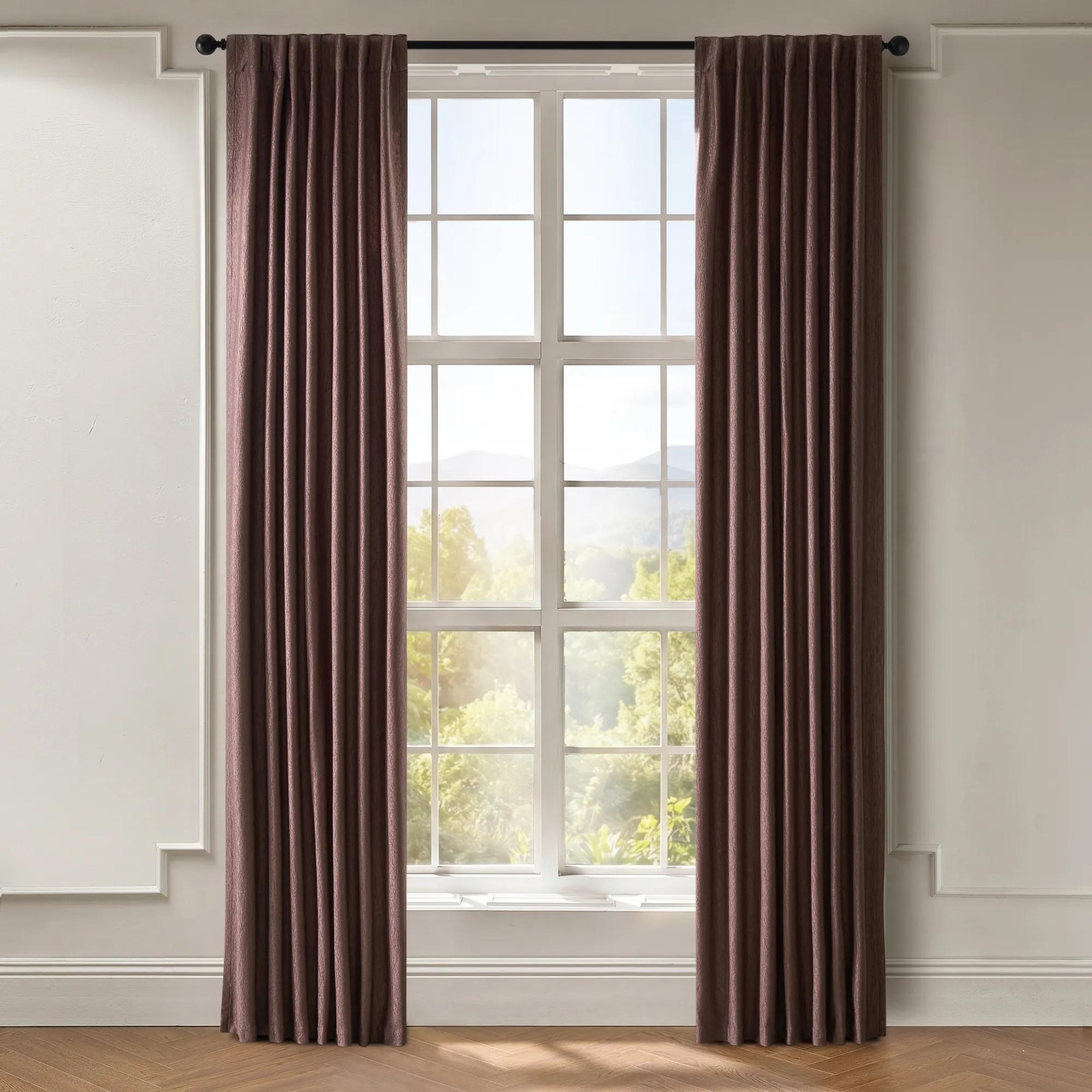
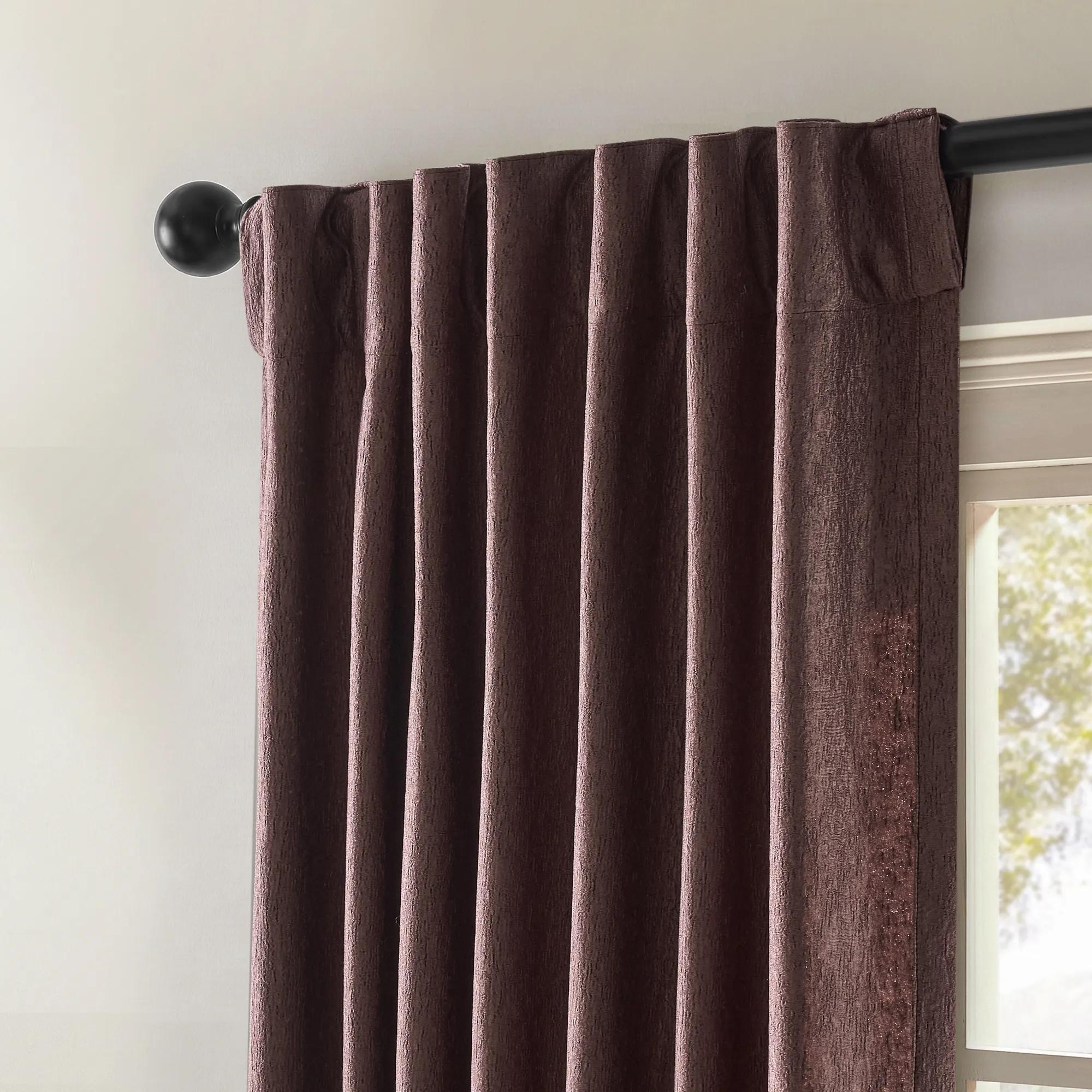 Anson Fig Textured Window Curtain Panel$89
A deep fig curtain panel with crushed sheen texture and room-darkening, dual hanging design in polyester.
Add To Cart -
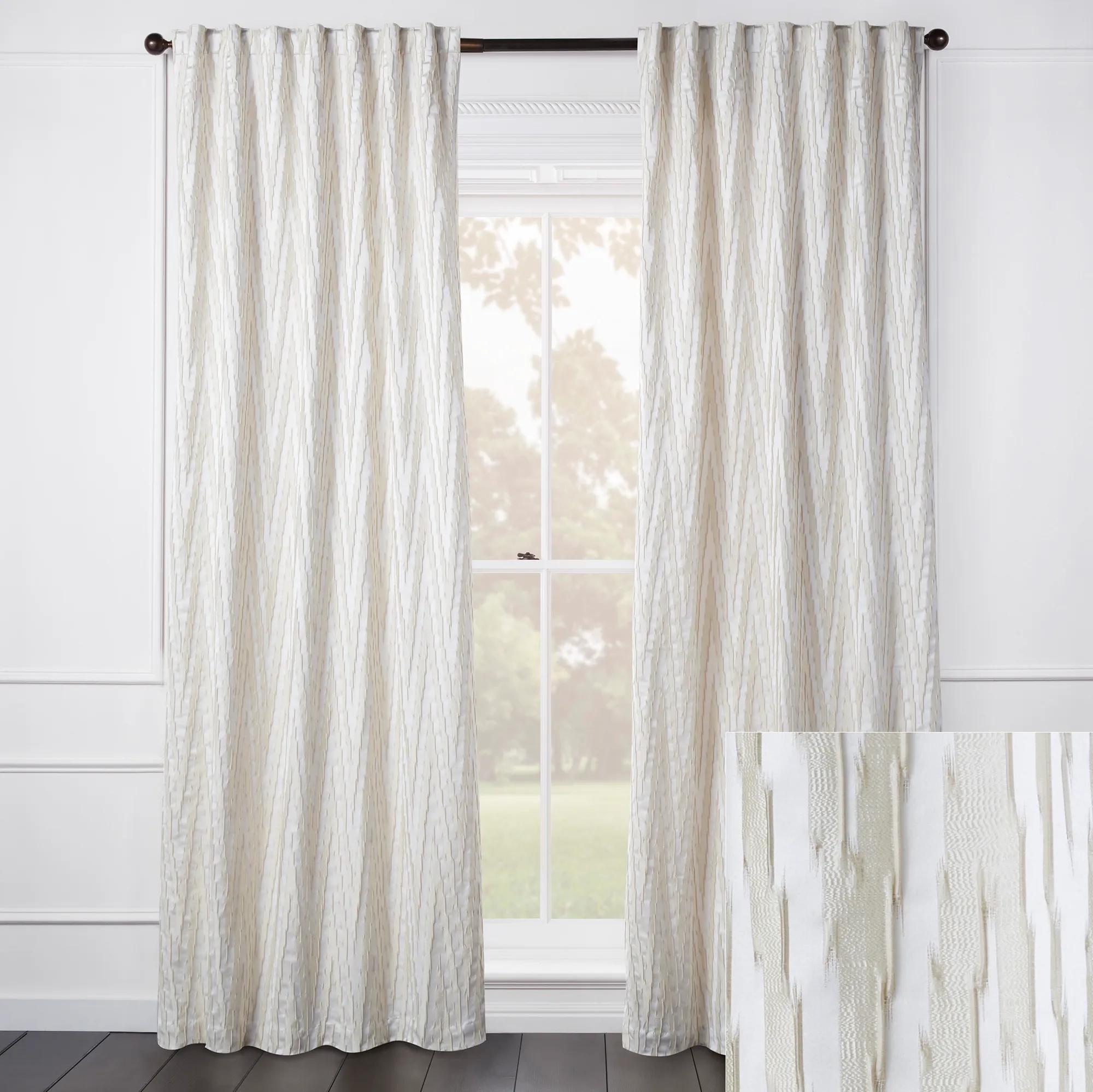
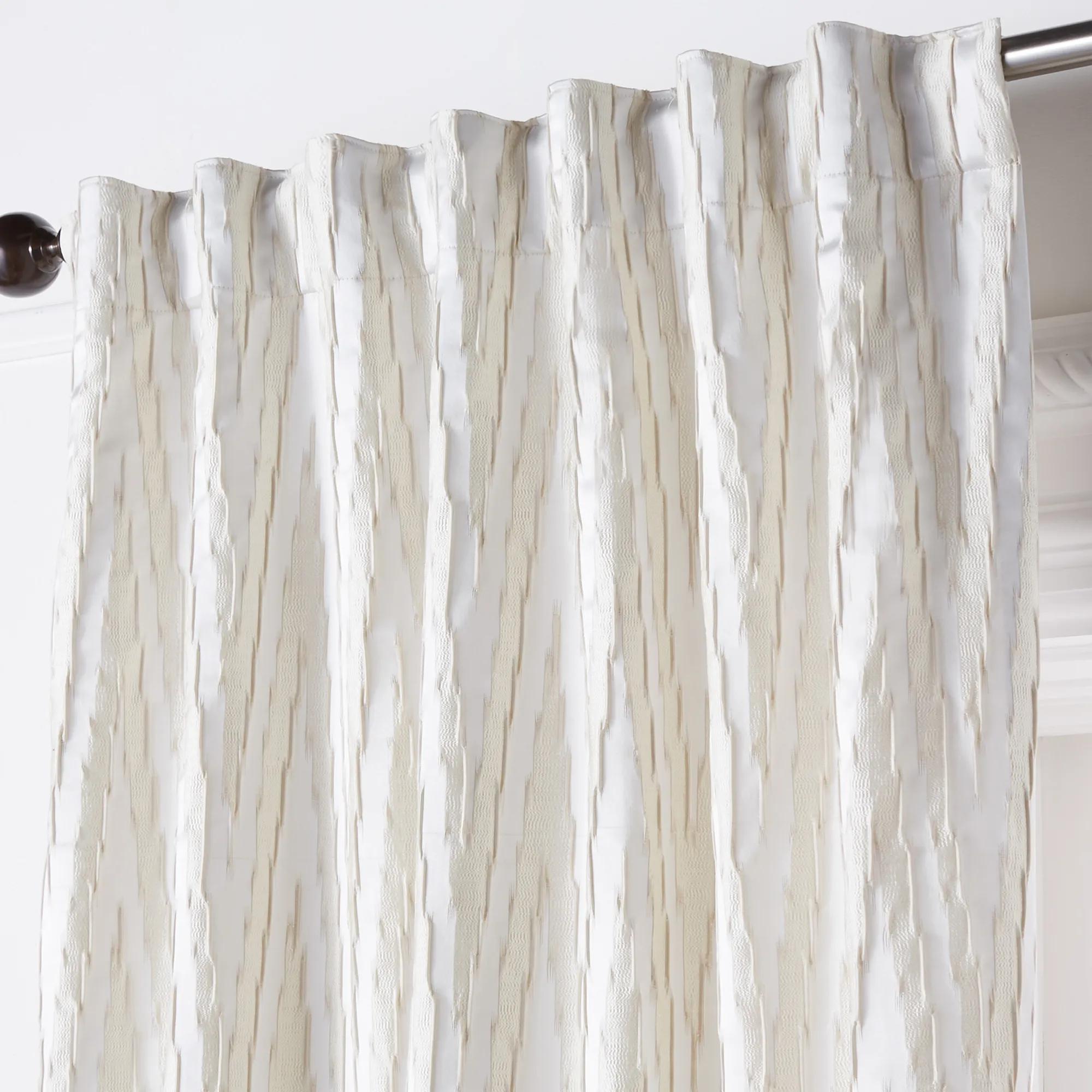 Minka Jacquard Pearl Window Curtain Panel Custom$239
A highly textured chevron curtain panel in pearl, grey, or natural, crafted from soft polyester blend.
Add To Cart -

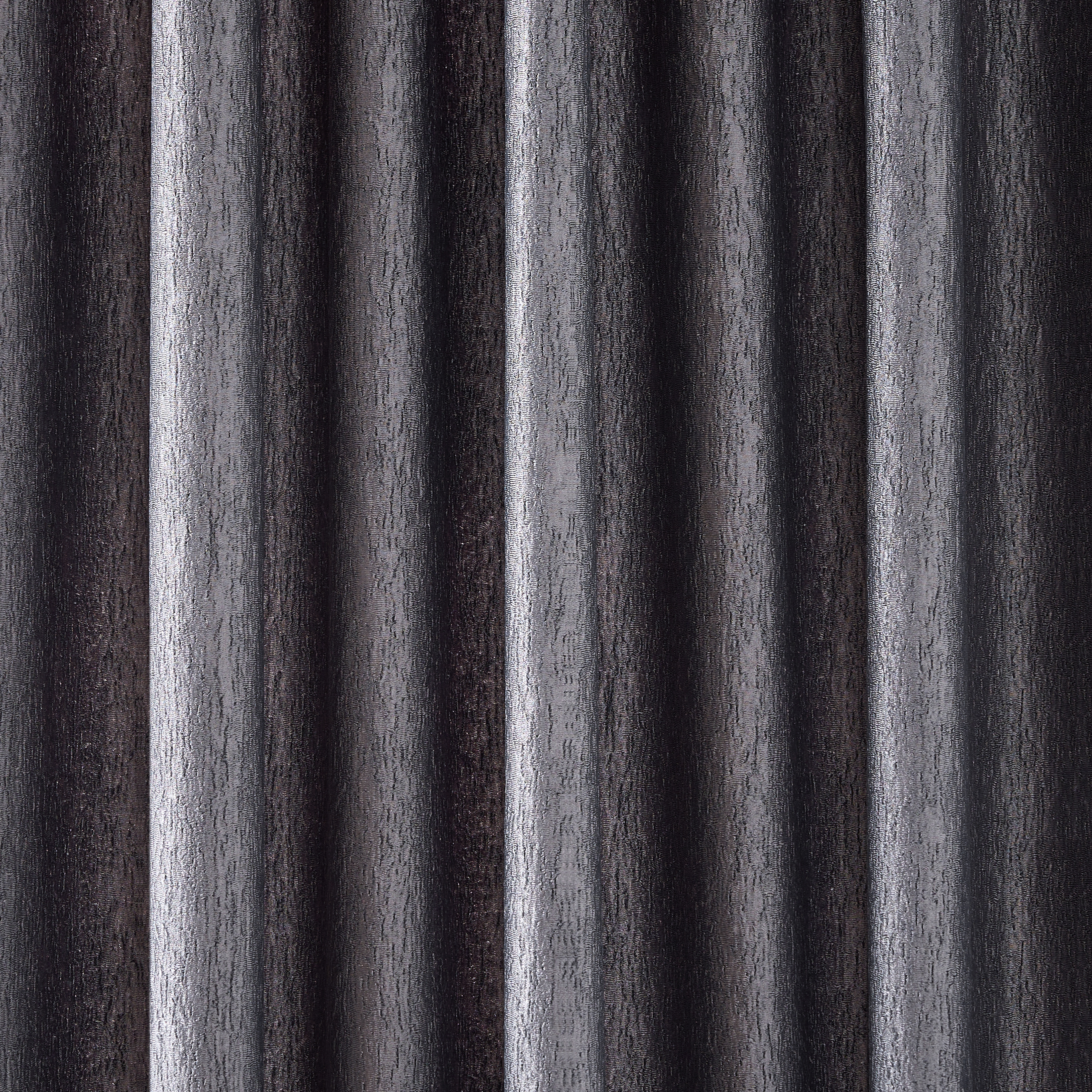 Anson Charcoal Textured Window Curtain Panel$89
A moody charcoal curtain with crushed polyester texture and subtle sheen for stylish, room-darkening appeal.
Add To Cart -
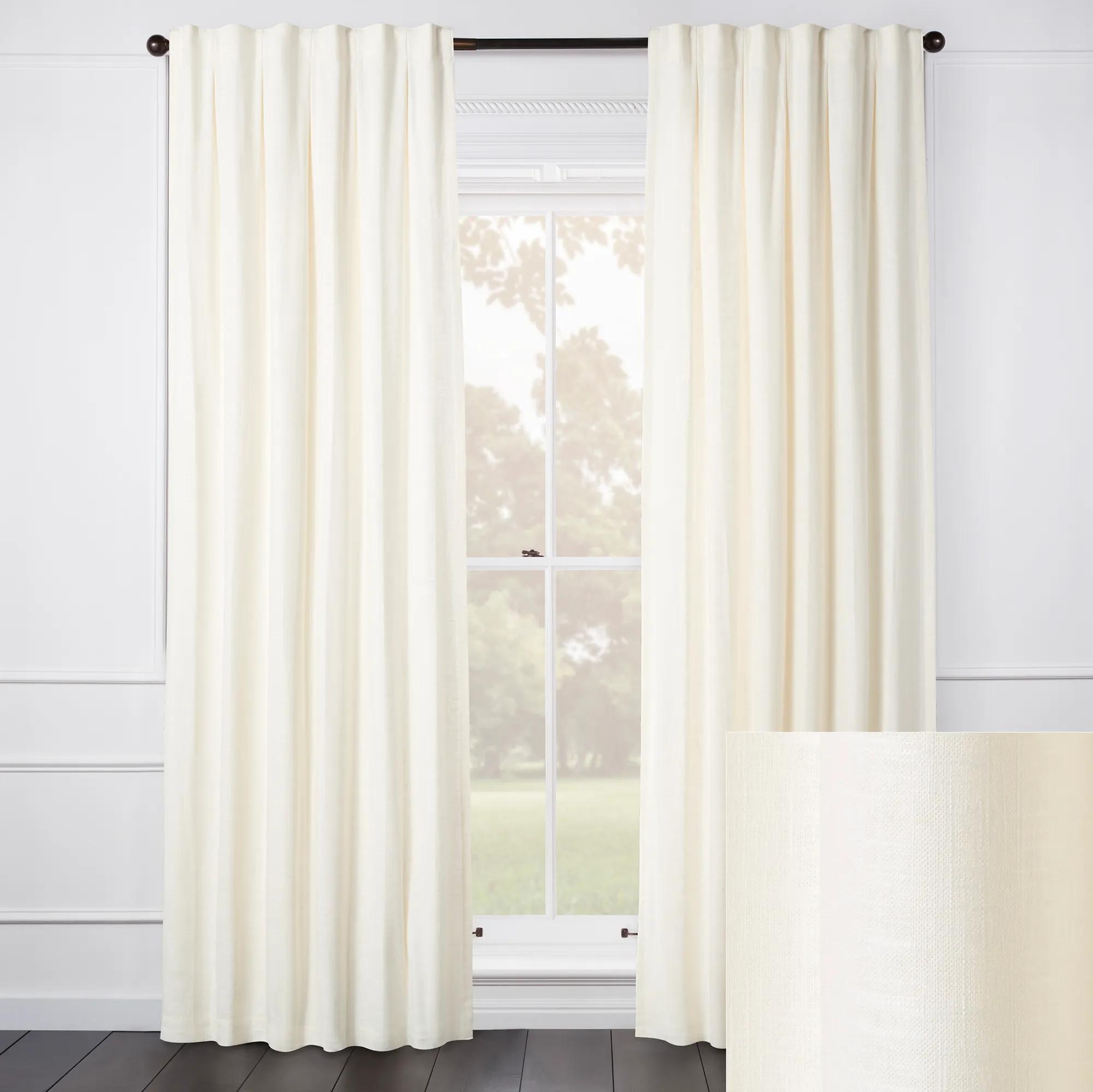
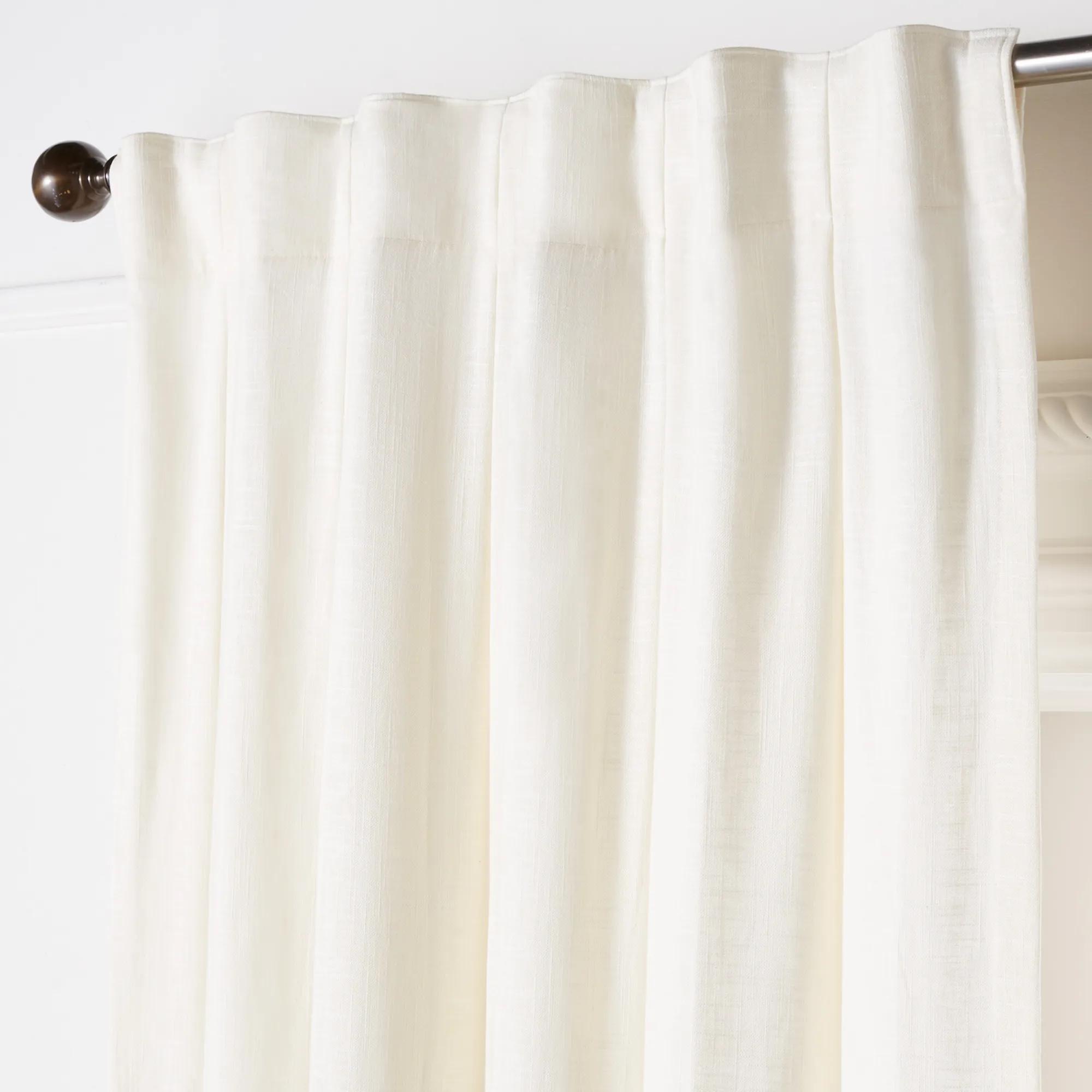 Audrey Linen Ivory Curtain - Custom$269
An ivory linen-blend curtain panel with lining, offering customizable lengths and two elegant header styles.
Add To Cart -
 Anson Mocha Rose Textured Window Curtain Panel$109
A light mocha rose curtain panel with crushed sheen texture and room-darkening, dual hanging design.
Add To Cart -
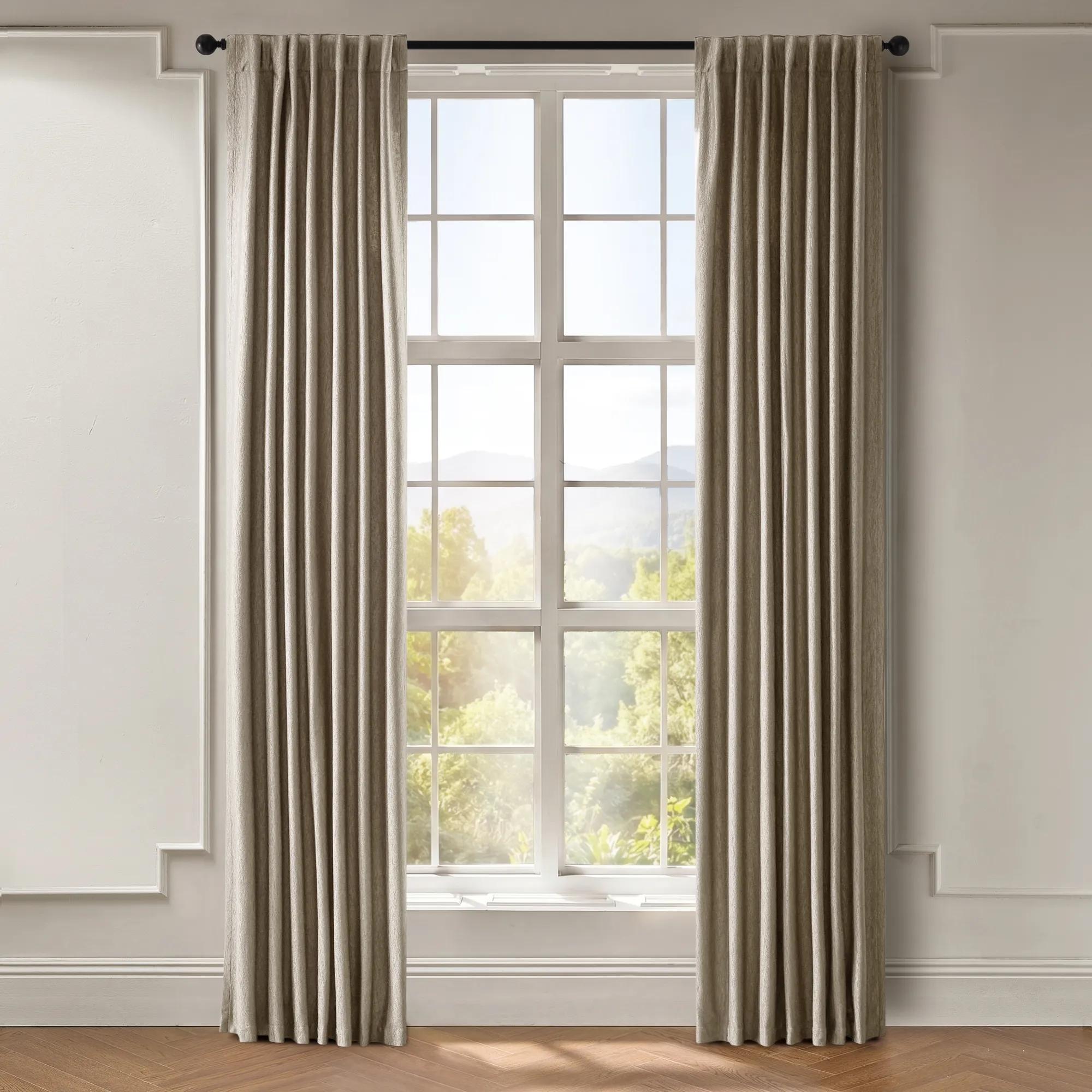
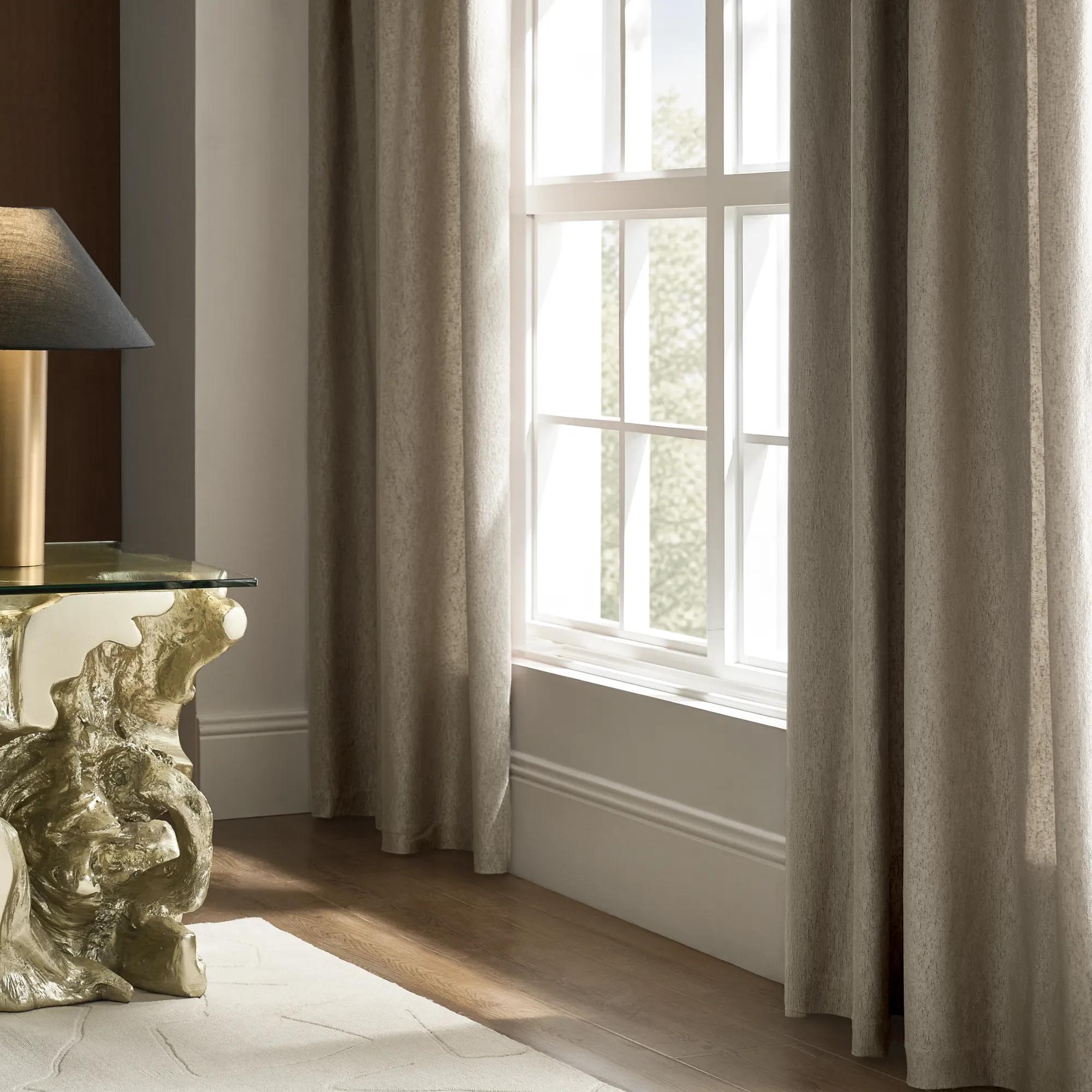 Anson Taupe Textured Window Curtain Panel$89
A taupe polyester curtain panel featuring a crushed sheen texture and room-darkening, dual hanging design.
Add To Cart -
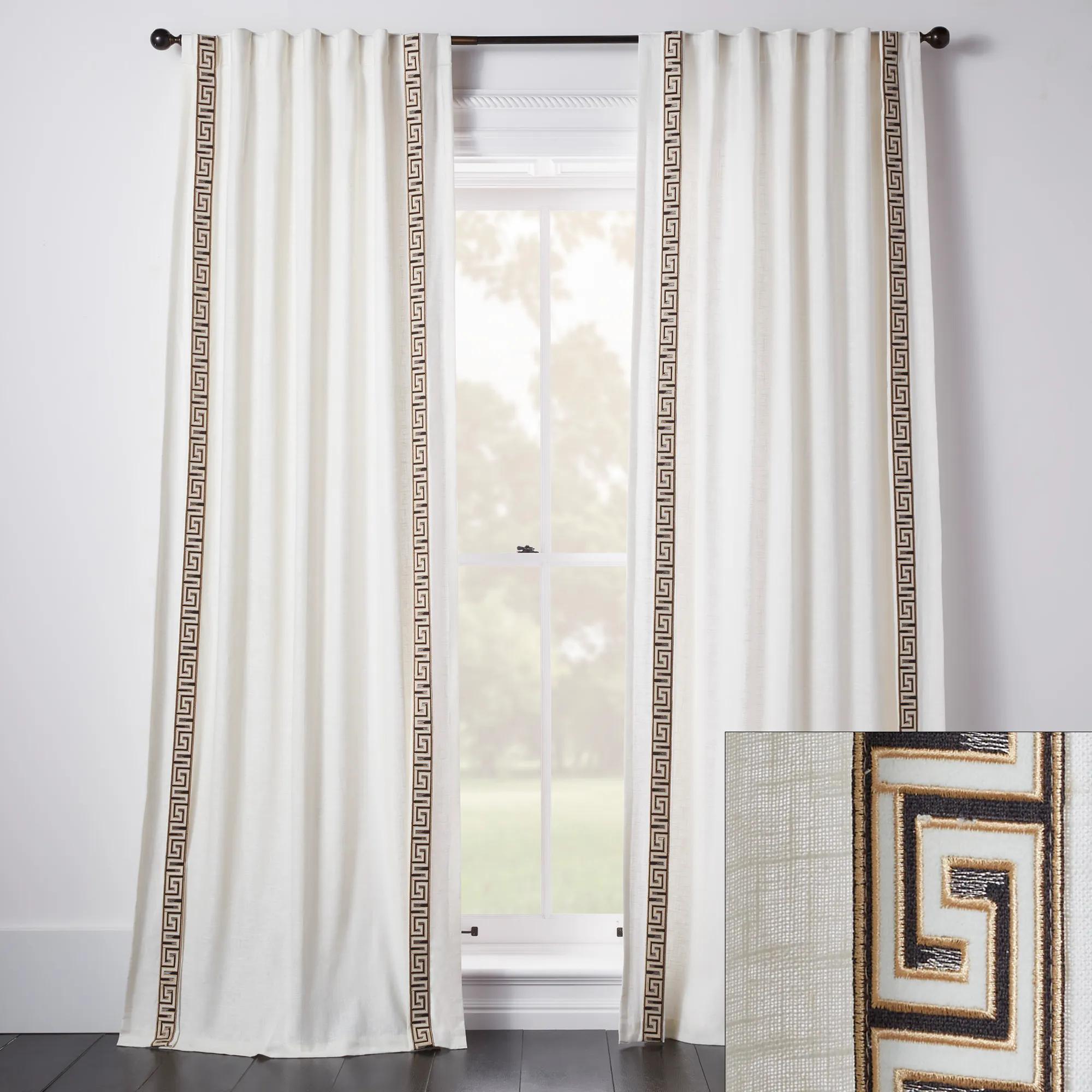 Chole Greek Key Border Velvet Widow Curtain Panels Custom$369
A white linen-blend curtain featuring a black and gold embroidered velvet Greek key border for modern elegance.
Add To Cart -
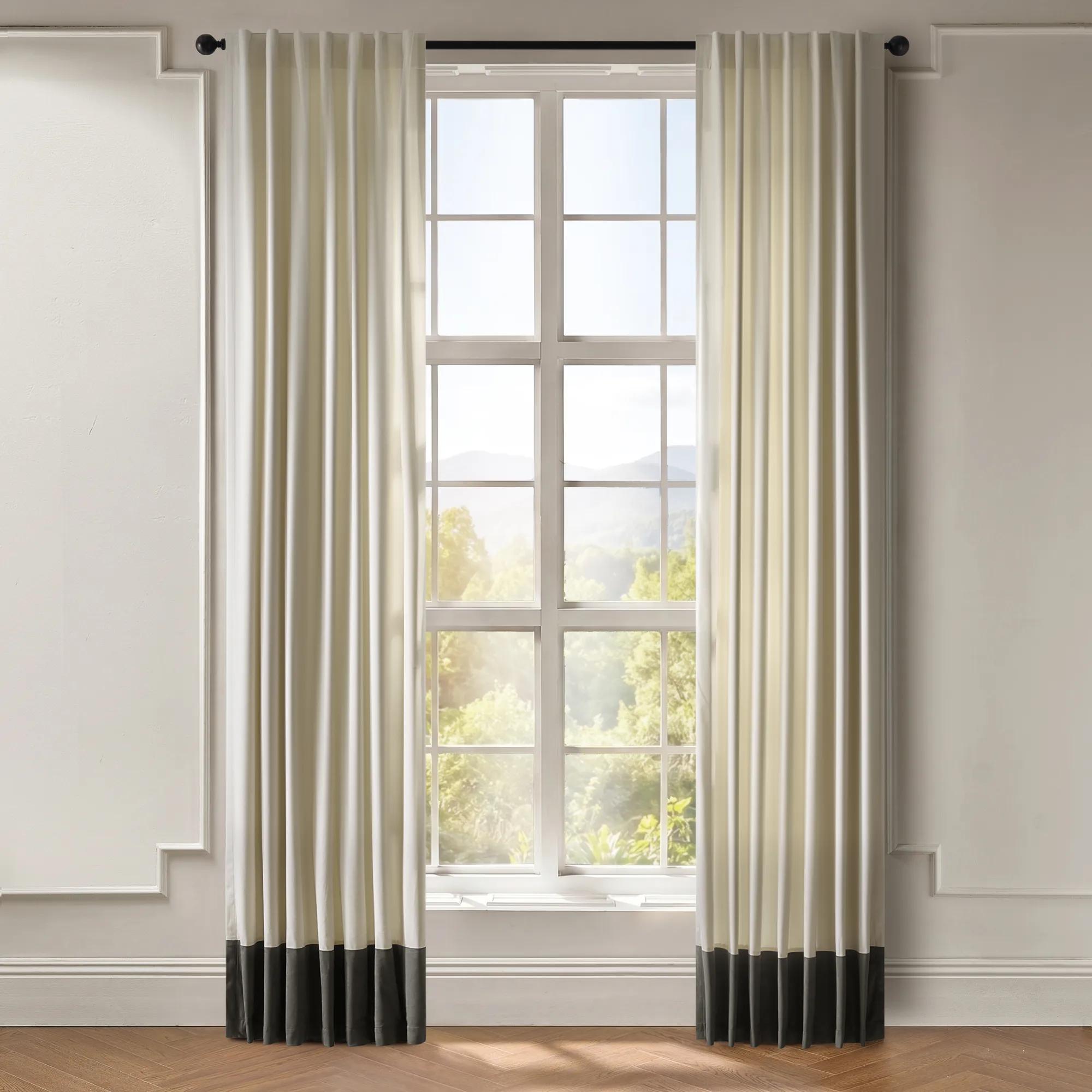
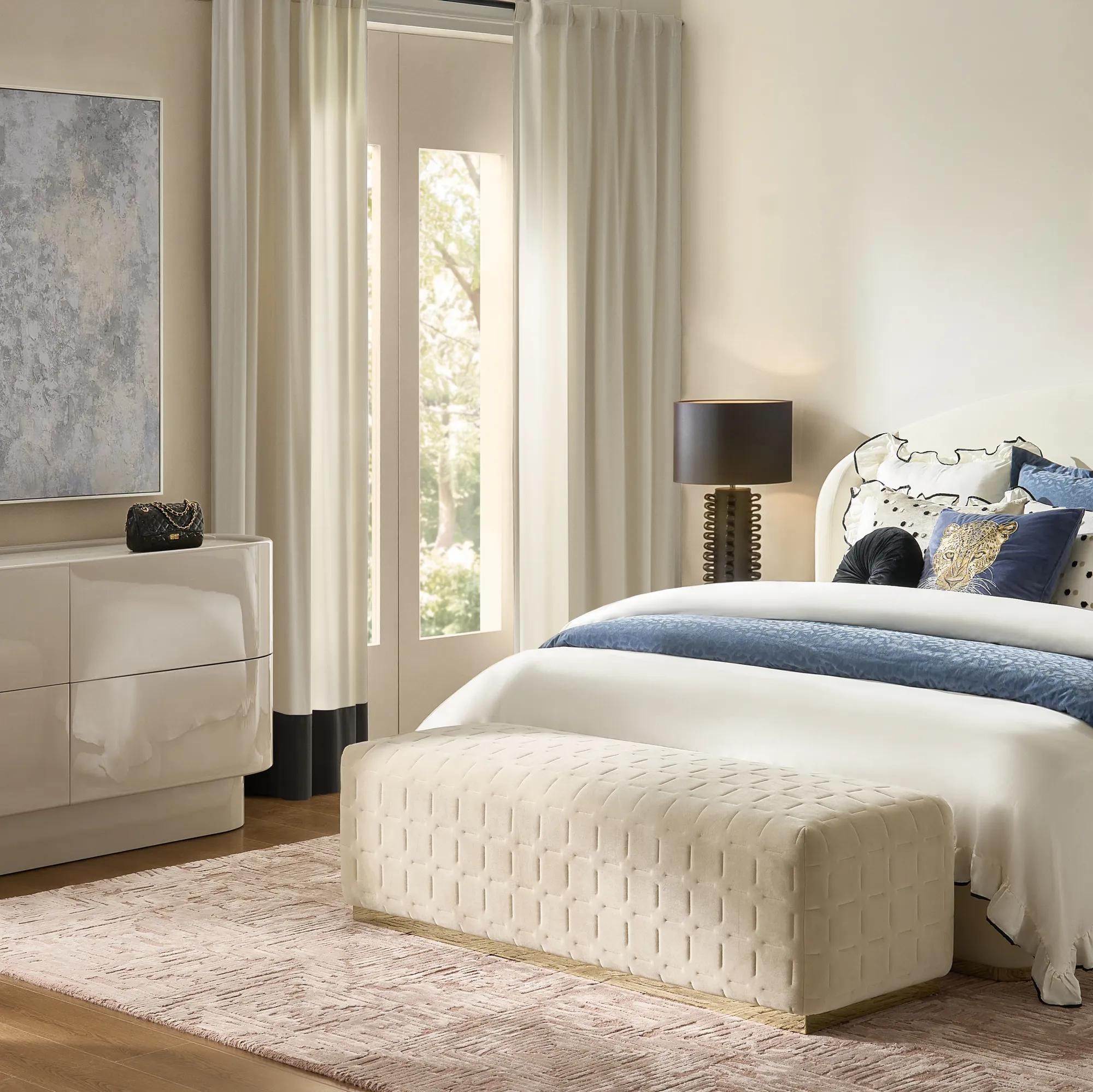 Bastien Ivory/Graphite Velvet Border Window Curtain Panel$89
A two-tone ivory and graphite velvet curtain panel with room-darkening design and versatile hanging options.
Add To Cart -
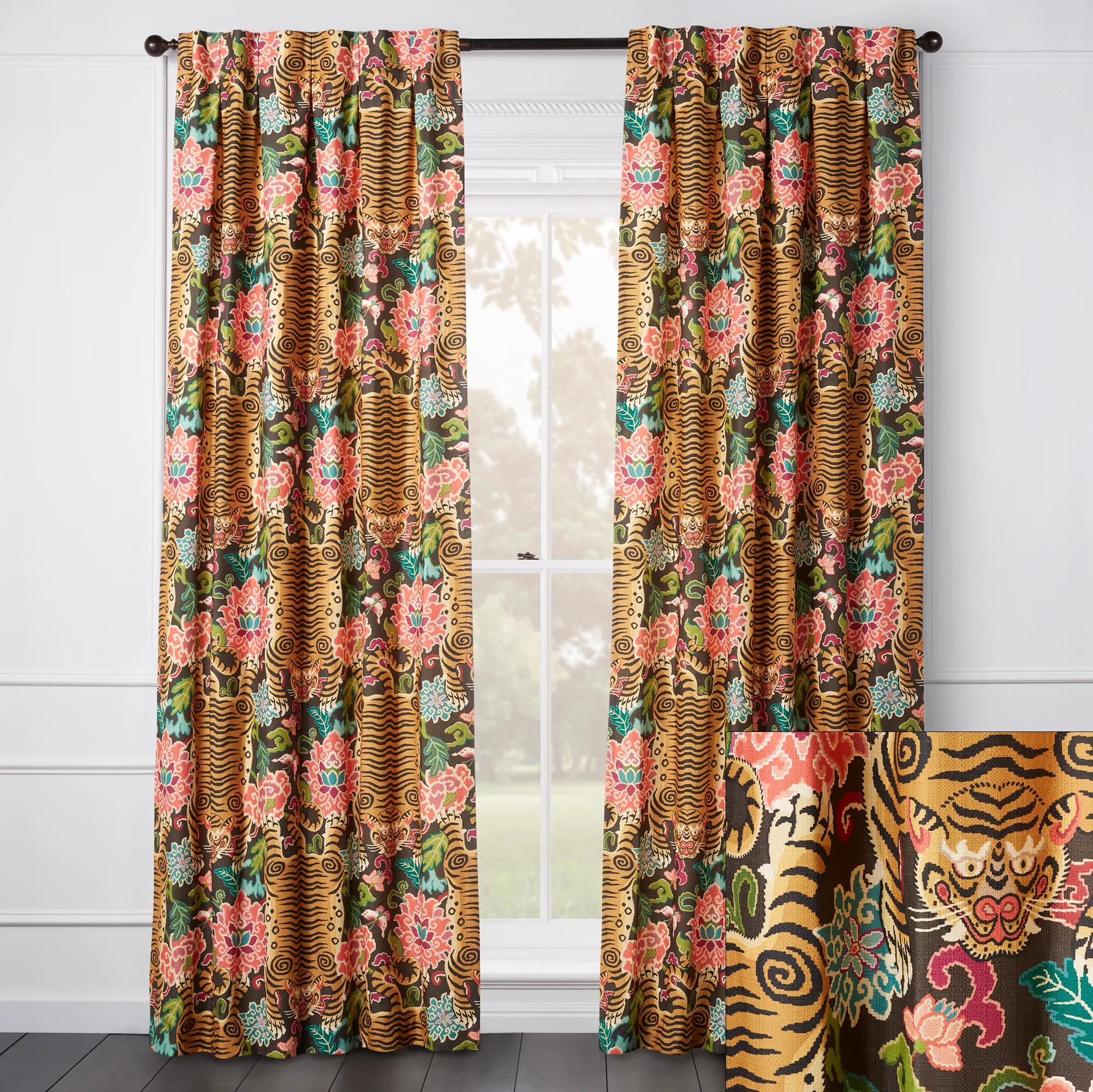
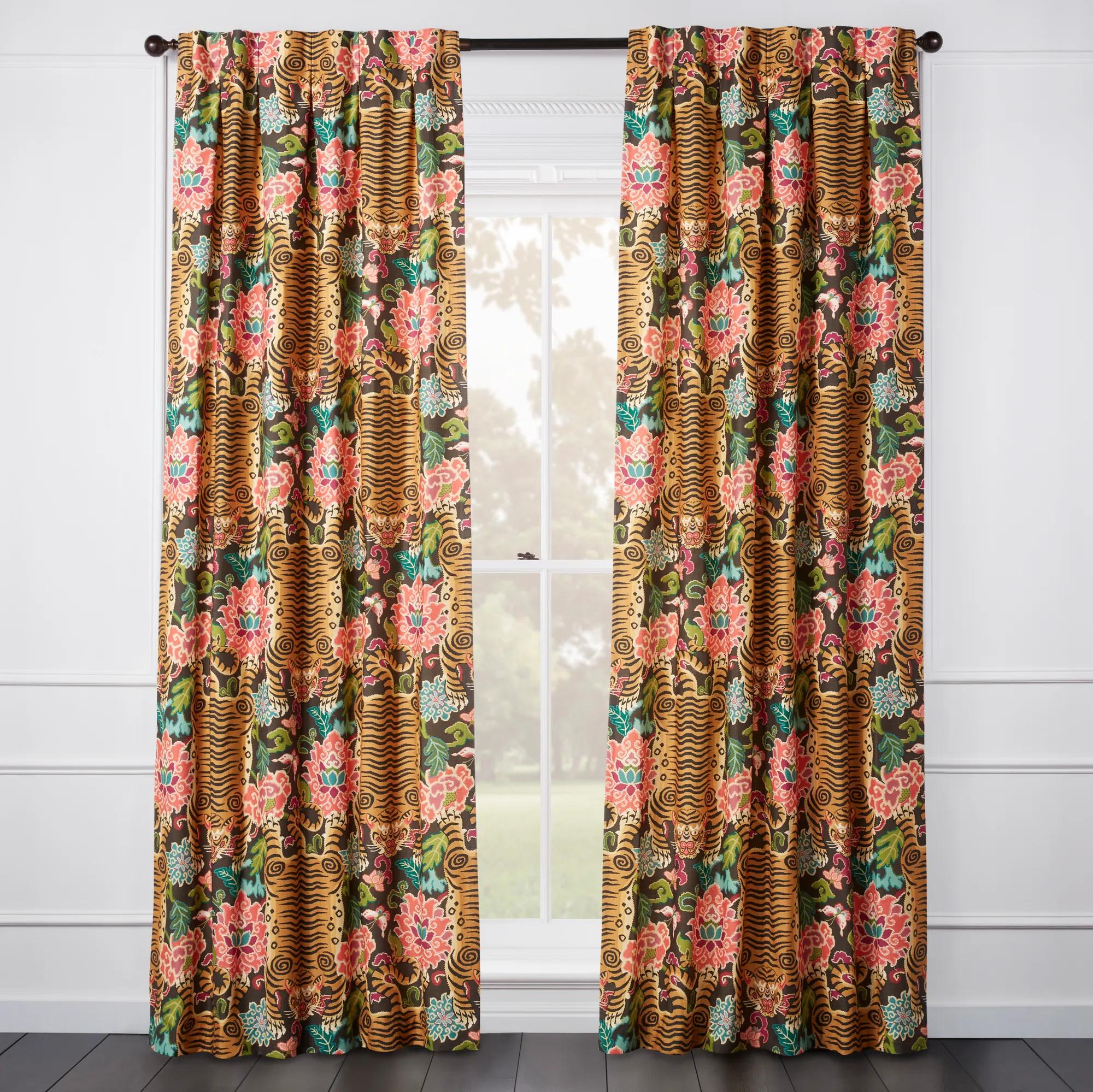 Nimer Gold/Multi Printed Slubbed Cotton Window Curtain Panel$289
A lively gold and multi-colored cotton curtain panel featuring a bold tiger print and customizable options.
Add To Cart -
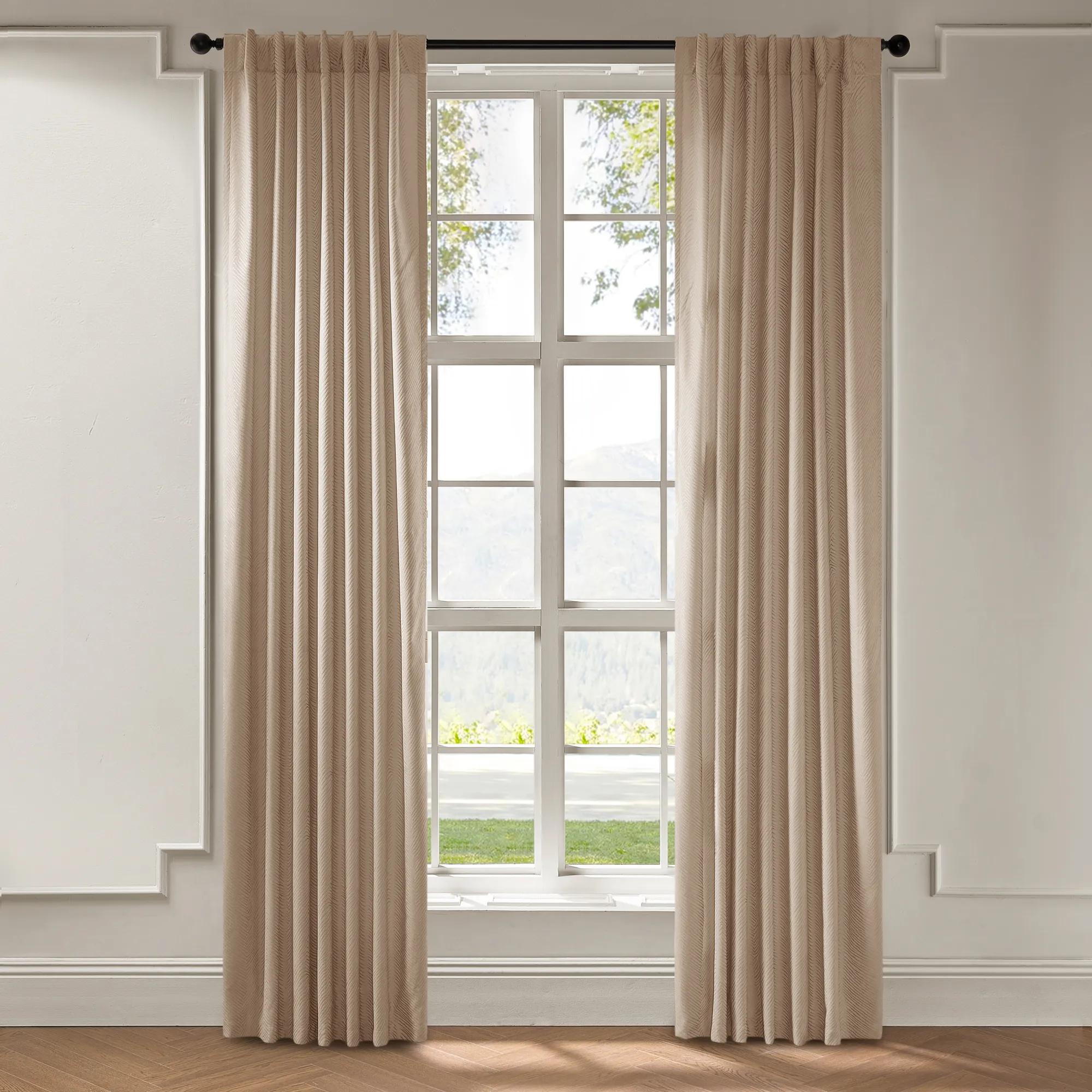 Kenzo Jacquard Beige Chenille Window Curtain Panel$119
A warm beige chenille jacquard curtain with a subtle sheen and versatile rod pocket or back tab hanging.
Add To Cart -
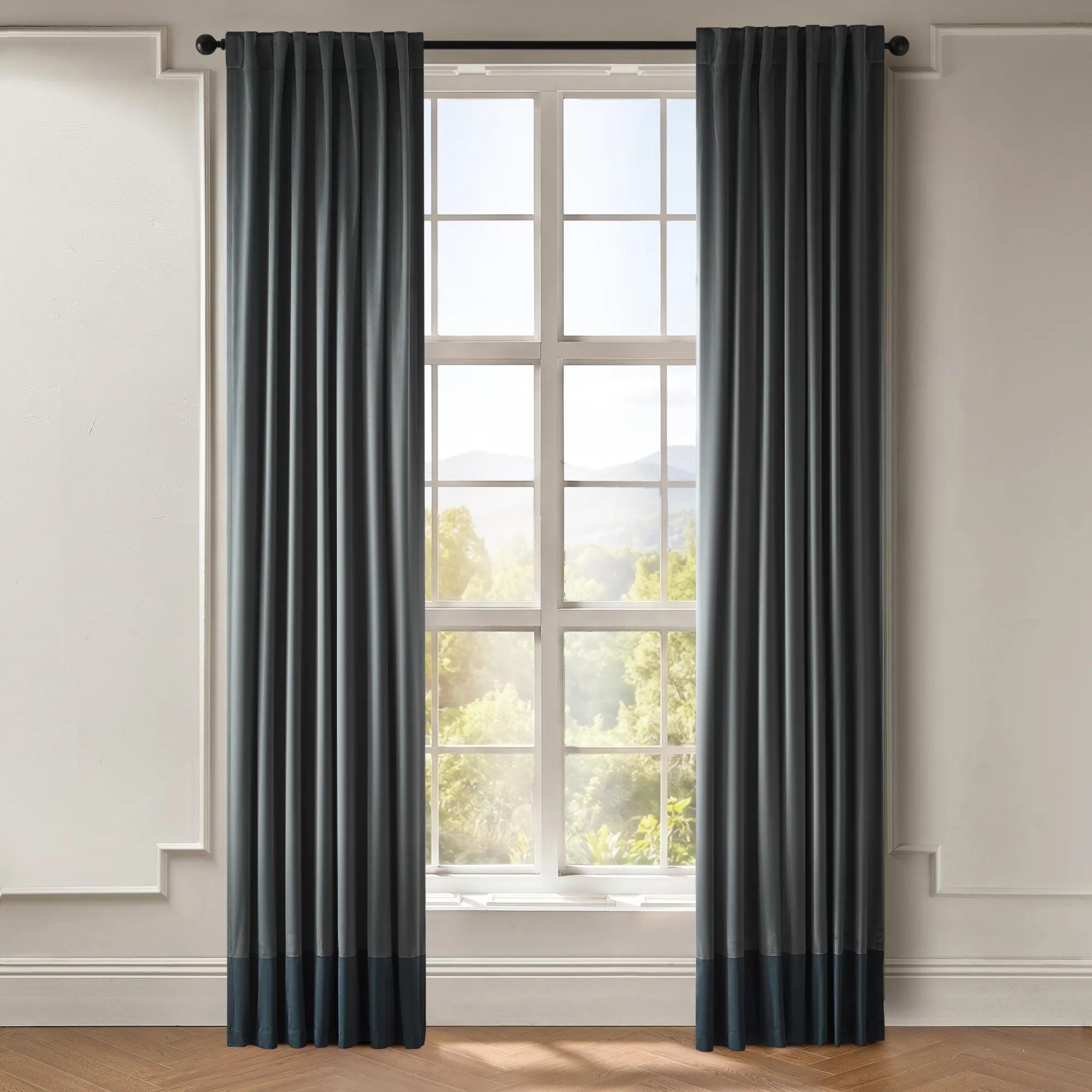
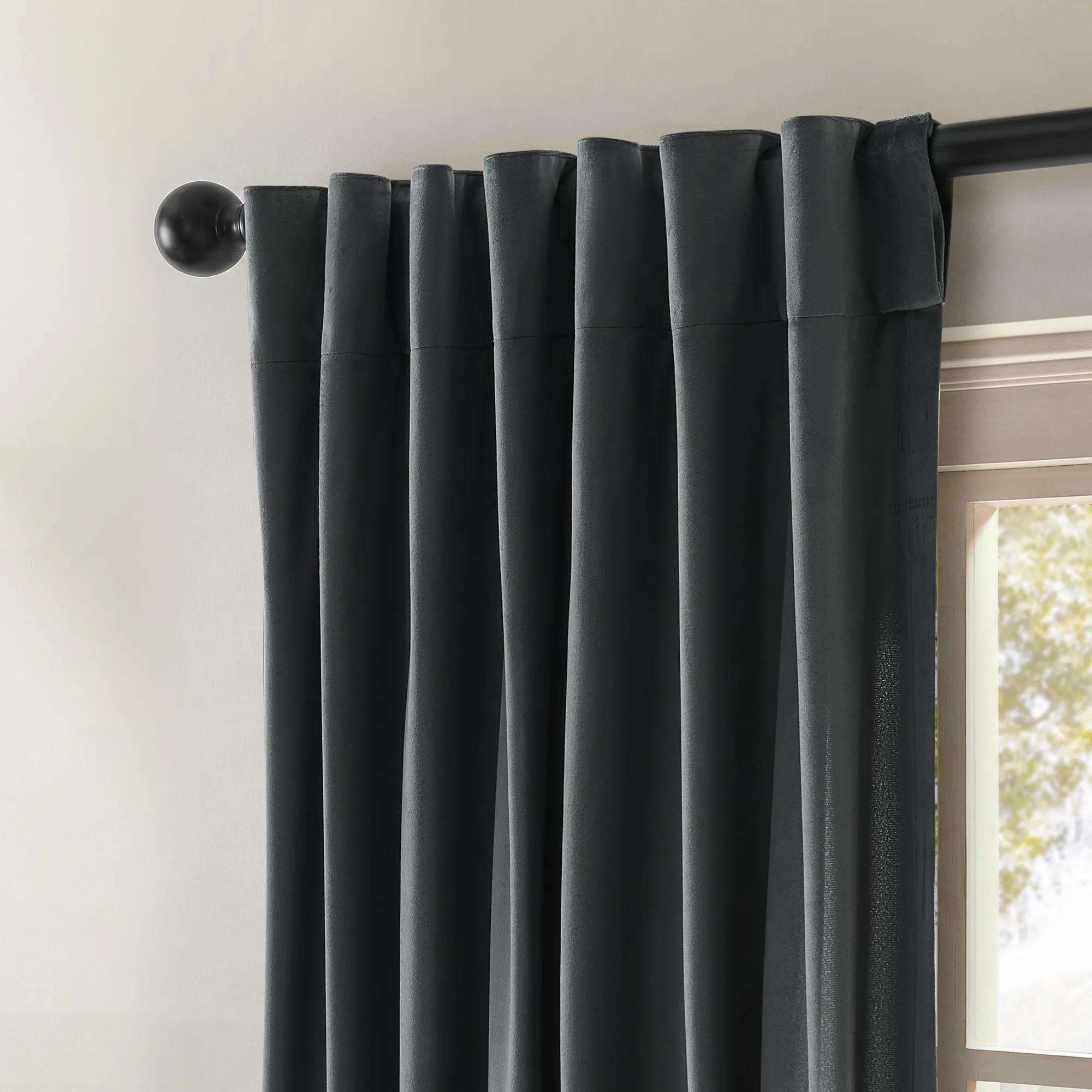 Bastien Blue/Midnight Velvet Border Window Curtain Panel$99
A two-tone dusty and midnight blue velvet curtain panel with a Deco-inspired border and room-darkening design.
Add To Cart -
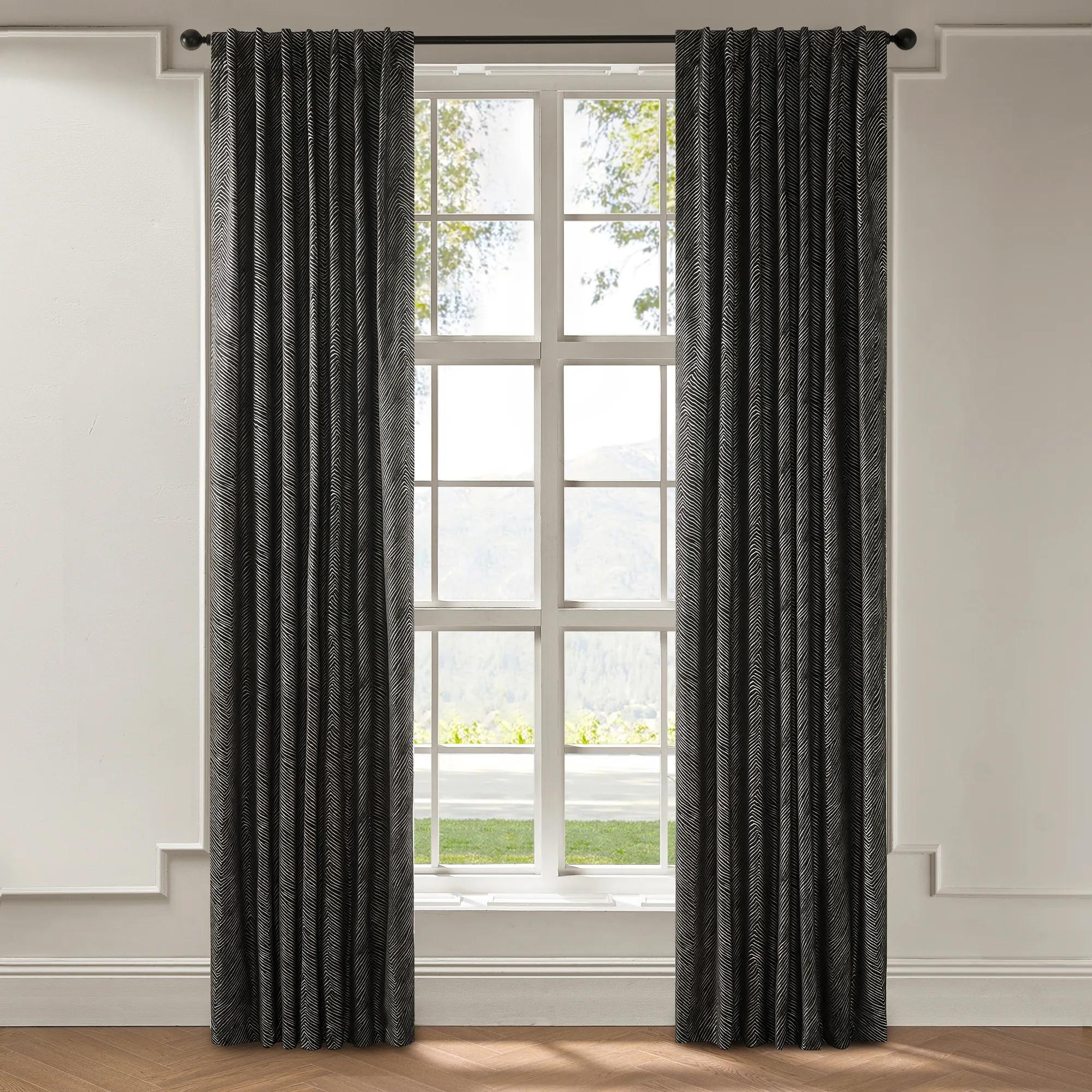
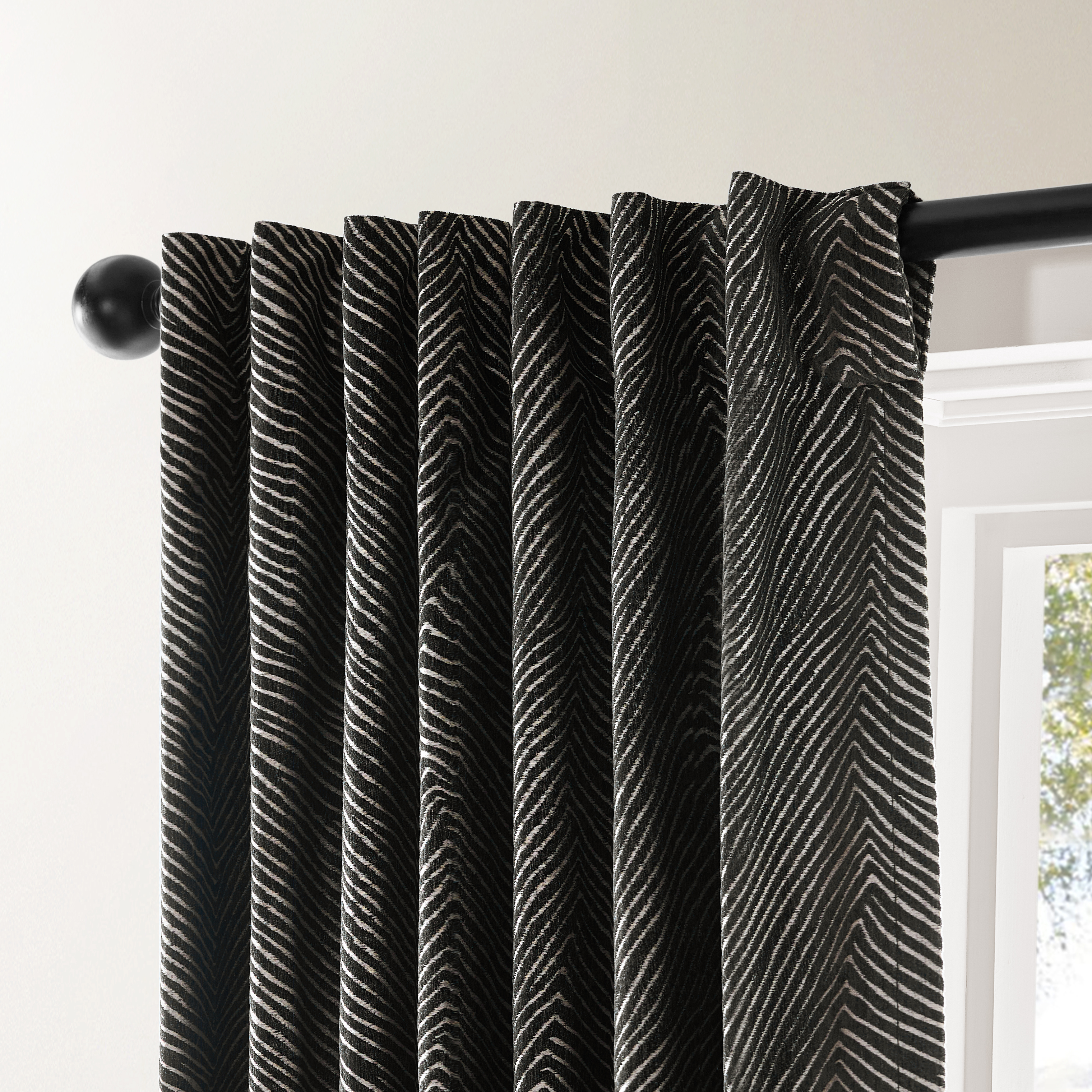 Kenzo Black Chenille Window Curtain Panel$129
A black chenille jacquard curtain with a luxe sheen and versatile dual hanging options.
Add To Cart -

 Adair Sand Solid Velvet Window Curtain Panel$79
A room-darkening sand velvet curtain with dual hanging options for a soft, tailored finish.
Add To Cart -

 Adair Midnight Blue Solid Velvet Window Curtain Panel$89
A sumptuous midnight blue velvet curtain that adds elegance, depth, and room-darkening style to any space.
Add To Cart -

 Mabel Natural Velvet Swirl Window Curtain Panel$89
A warm neutral velvet curtain with a tonal swirl pattern, offering room-darkening privacy and versatile hanging options.
Add To Cart -
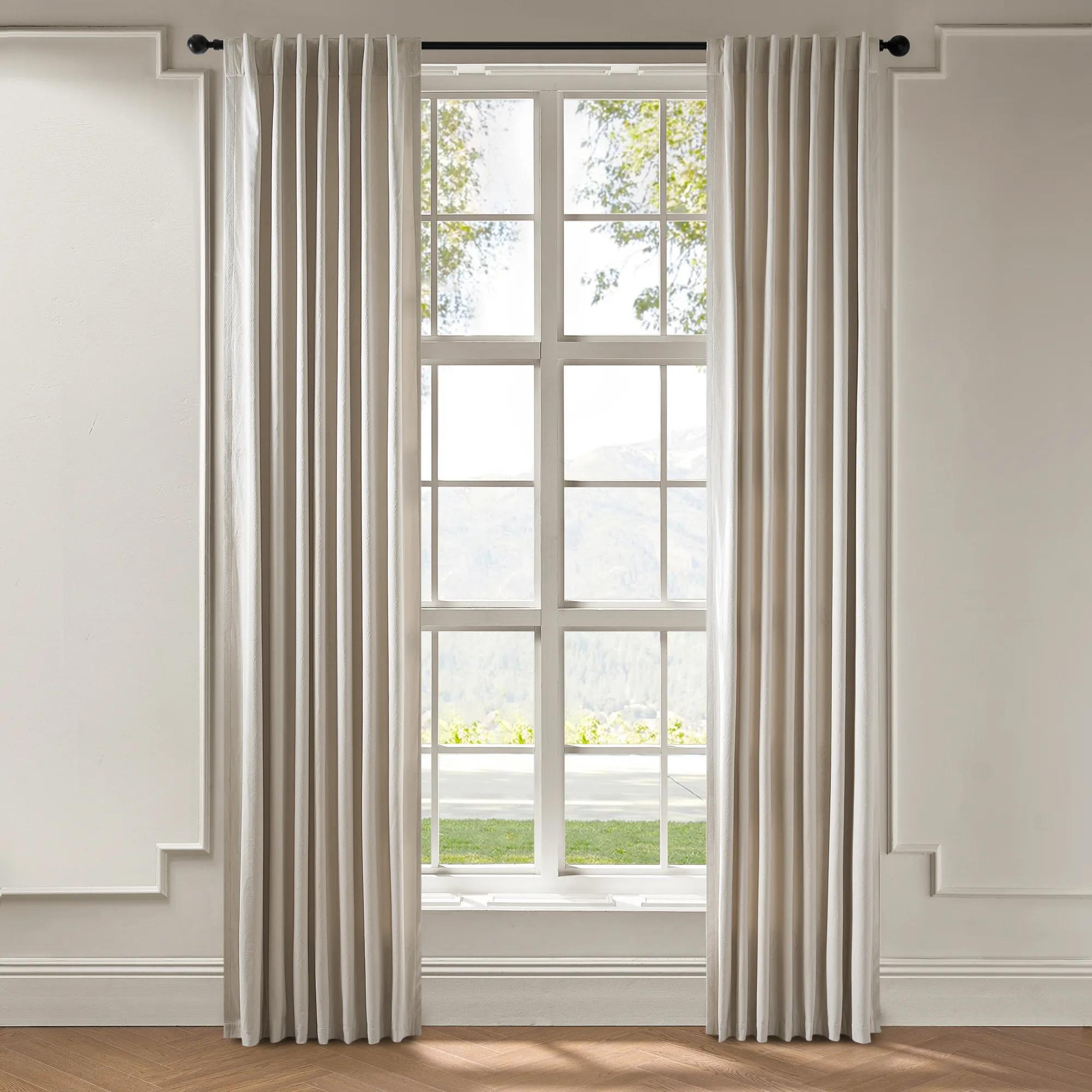
 Mabel White Velvet Swirl Window Curtain Panel$99
A crisp white velvet curtain featuring a tonal swirl texture and versatile dual hanging options.
Add To Cart

Living Room Textured Curtains
Living room textured curtains are the transformative touch that elevates any space from ordinary to extraordinary. With every ripple and fold, they invite intrigue—casting layers of shadow and light that dance across your walls, creating a mood that is both sumptuous and artfully composed. These draperies do more than frame your windows; they become the backdrop to your most memorable moments, infusing your living room with tactile richness and visual depth. Indulge in a world where texture reigns supreme, and let your windows wear their own statement of style.
Living room textured curtains bring dimension to windows through visible weaves, raised patterns, soft pile, or subtle variations in the yarn. Unlike a smooth, flat panel, textured fabric catches light across its surface, giving the room depth even when the color is quiet. An ivory basketweave can lend architectural definition to a pale wall; a sumptuous velvet can frame the same window with a richer, more theatrical presence. The effect is especially compelling beside sleek furniture, polished metal, and glass, where a tactile textile introduces contrast without requiring another bold print. Material and construction shape that impression. Linen and linen-blend curtains often have an irregular, slubbed surface that feels relaxed yet refined, while cotton weaves can offer a more defined texture and softly structured drape. Polyester and blended fabrics may provide greater resistance to creasing, depending on their construction and finish. Jacquard designs weave pattern directly into the fabric, creating dimension that can appear restrained from across the room and intricate at close range. Velvet brings a distinctive pile whose color shifts with the direction of the fibers and the angle of the light. These differences make textured curtain panels expressive enough to serve as a focal point, yet versatile enough to support statement artwork or a sculptural sofa. Texture alone, however, does not determine privacy or light control. An open weave may soften incoming light while allowing silhouettes to remain visible, particularly when the room is illuminated after dark. Denser fabrics and lined panels generally offer more coverage, while blackout performance depends on the curtain’s specified construction and how completely it covers the window. For a living room used for reading, conversation, and television, the right balance allows the fabric to enrich the setting while addressing the way the space is actually lived in. A pronounced weave can remain visually quiet in a tonal palette, offering detail without the repetition or stronger contrast of a printed motif.
Scale gives textured curtains their presence. Panels that are too narrow can flatten an otherwise beautiful weave, while generous fabric allows folds to reveal alternating bands of light and shadow. A combined panel width around one and a half to two times the width being covered is a common starting point for softly gathered fullness, although heavier fabrics, heading styles, and the desired silhouette can call for a different proportion. Measurements are most useful when they account for the rod or track, the space beside the window, and the finished hanging length rather than the glass alone. For an elevated, tailored result, panels can skim the floor; a slight break introduces a softer line, while a deliberate puddle creates drama but requires more attention around pets, children, and frequently traveled paths. Hardware placement also changes the composition. A rod extending beyond the window gives open panels somewhere to rest without covering as much glass, provided there is sufficient wall space. Pleated headings create controlled, architectural folds, while rod pockets offer a more gathered appearance and grommets establish a regular rhythm across the top. The heading must suit the hardware as well as the room’s character. Color then connects that silhouette to the larger interior. Cream, sand, and soft gray reveal surface detail with restraint; charcoal, deep blue, or other saturated tones give a broad window a commanding frame. In a room with a patterned sofa or large-scale art, tonal curtains can create a considered pause. In a quieter setting, a raised geometric weave can supply the detail that makes the composition feel complete. Pairing window treatments with selections from Living Room Textured Rugs carries that dimensional quality across the room without requiring an exact match. A finer curtain weave beside a more sculptural rug keeps the layers distinct, while a shared undertone draws them together. Repeating every texture can feel rigid; varying the scale gives each surface space to be appreciated.
Everyday use matters as much as the first impression. In an entertaining space, substantial textured panels can create a beautifully finished backdrop for conversation, balancing the crisp edges of a console or the gleam of decorative lighting. In a shared family living room, practical details such as an easy-moving heading, a manageable hem length, and clearly stated care requirements become equally important. For windows behind a sofa or beside a balcony door, enough clearance helps fabric fall freely rather than bunch against upholstery or drag through a passage. Layering textured curtains over sheers or an appropriate shade can offer more flexibility between an open daytime arrangement and greater privacy after dark, without asking one fabric to perform every task. Durability depends on more than fiber content: the tightness of the weave, quality of the seams, lining, exposure to direct sunlight, and frequency of handling all influence how panels wear. Looser weaves and raised yarns may be more vulnerable to snagging, so homes with curious pets may benefit from smoother, more tightly woven textures and hems kept clear of playful paws. Care should always follow the sewn-in label. Some fabrics tolerate machine washing, while others require professional cleaning to protect their finish, lining, or shape. Gentle vacuuming with a suitable upholstery attachment can help remove settled dust when the care instructions permit it; vigorous brushing may disturb delicate fibers or velvet pile. Stains are best addressed promptly using the recommended method rather than an untested cleaner, and steaming should be reserved for fabrics that allow it. Panels also need enough room to hang without persistent compression, which can obscure the texture that makes them distinctive. Thoughtfully chosen living room textured curtains deliver more than a dressed window: they establish proportion, soften the transition between architecture and furnishings, and give light another surface to animate. Whether framing a formal seating arrangement or bringing depth to a favorite reading corner, their beauty lies in the interplay of fabric, movement, and carefully judged detail.
FAQs
For a living room that exudes drama and sophistication, consider textured curtains in rich fabrics such as velvet, jacquard, or faux silk. These materials add depth and opulence, especially when paired with bold colors or metallic accents. Patterns like geometric embossing or sculptural pleats can further amplify the visual impact, making your windows a true focal point in the space.
Textured curtains introduce tactile intrigue and visual interest, setting the tone for your living room. Whether you choose a soft linen for a breezy, relaxed vibe or a luxe velvet for a sense of grandeur, the interplay of texture and light transforms the ambiance. The right curtains can evoke coziness, sophistication, or artistic flair, ensuring your living room feels both inviting and expressive.
Textured curtains make a thoughtful and stylish gift for anyone who values interior design and self-expression. They are especially well-suited for new homeowners, newlyweds, or friends embarking on a décor refresh. The luxurious feel and transformative power of curtains textures offer a personal touch that elevates any living space.
To create a harmonious look, consider the existing palette and textures in your living room. Pairing textured curtains with complementary rugs, throw pillows, and accent pieces can create a cohesive and layered effect. For added dimension, mix materials—such as pairing a blue curtains texture with metallic or glass accessories—to achieve a curated, designer-inspired atmosphere.
In cooler months, opt for heavier textures like velvet or chenille to add warmth and richness. As spring approaches, lighter weaves such as linen or cotton slub bring an airy freshness to the room. Rotating your curtains textures with the seasons allows you to refresh your living room’s ambiance and keep the space feeling vibrant year-round.