Lighting Solutions For High Ceilings
Lighting Solutions For High Ceilings
-

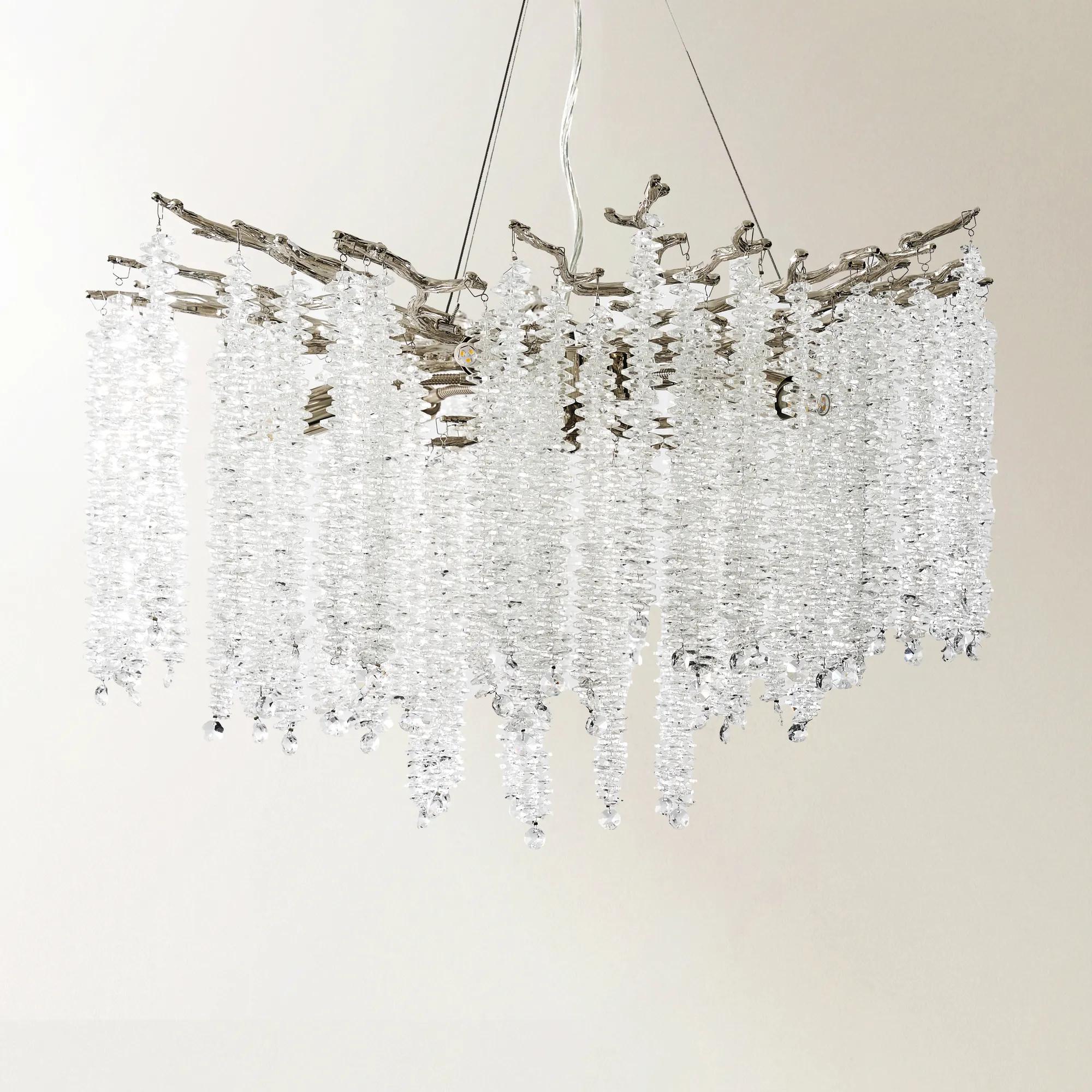 Cassia Clear Cut Crystal Chandelier 23.75"W x 13.75"H$599
A cascading waterfall of clear crystal beads and a nickel frame create a dazzling, contemporary lighting statement.
Add To Cart -
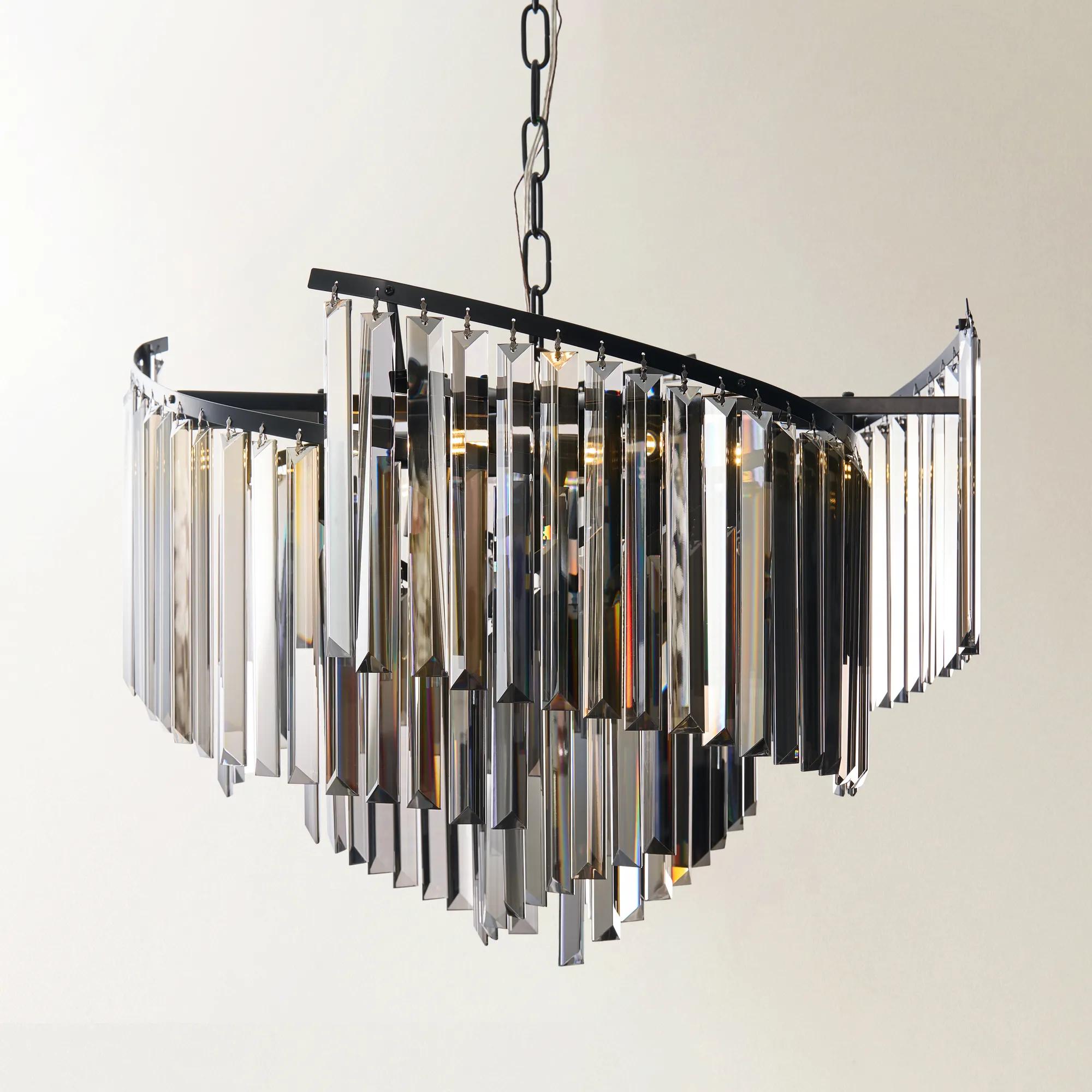 Luxe Spiral Chandelier - Graphite$999
A dramatic chandelier featuring graphite K9 crystals and a matte black iron frame for striking illumination.
Add To Cart -
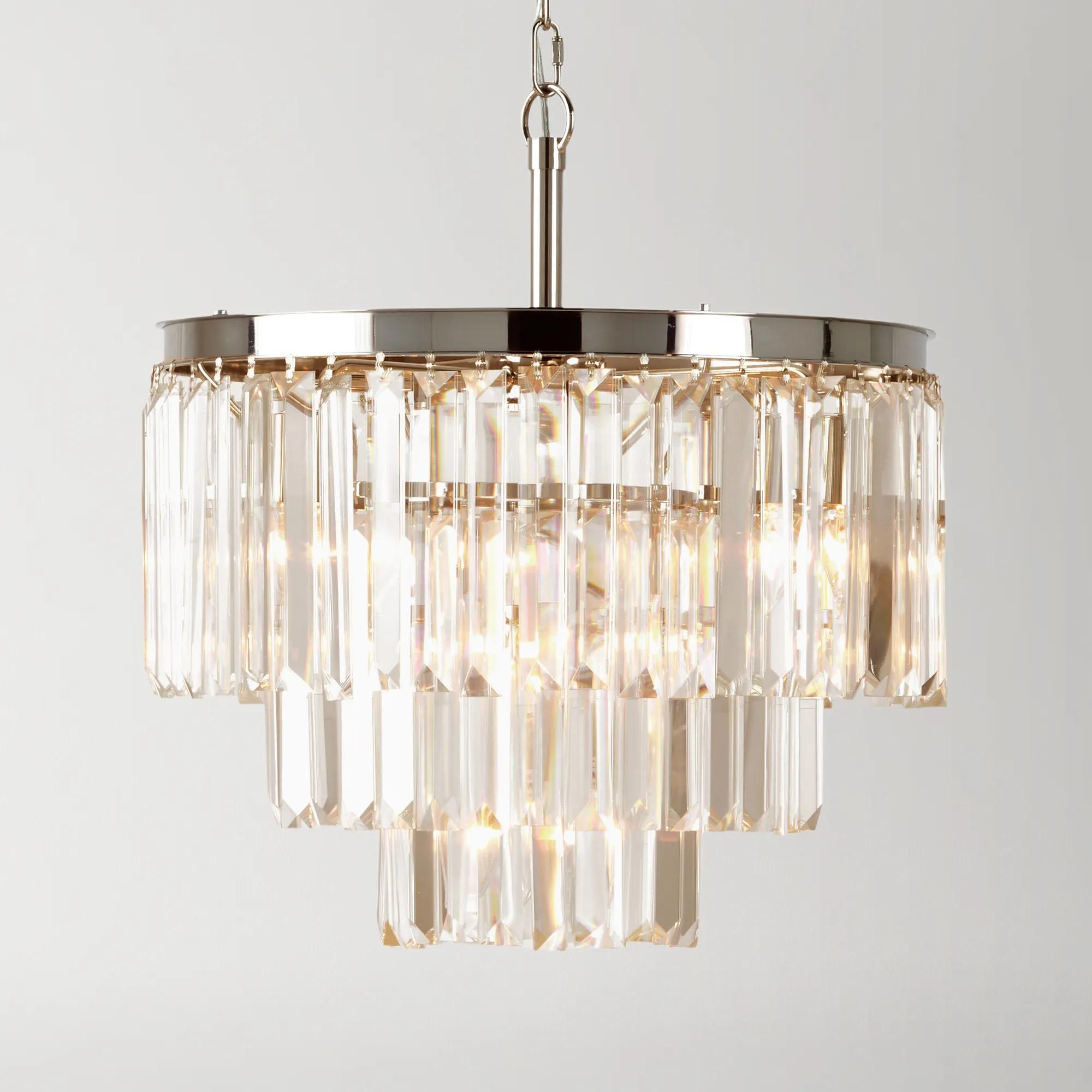 Luxe Chandelier$799
A glamorous chandelier featuring a nickel-plated iron frame and three tiers of faceted crystal accents.
Add To Cart -
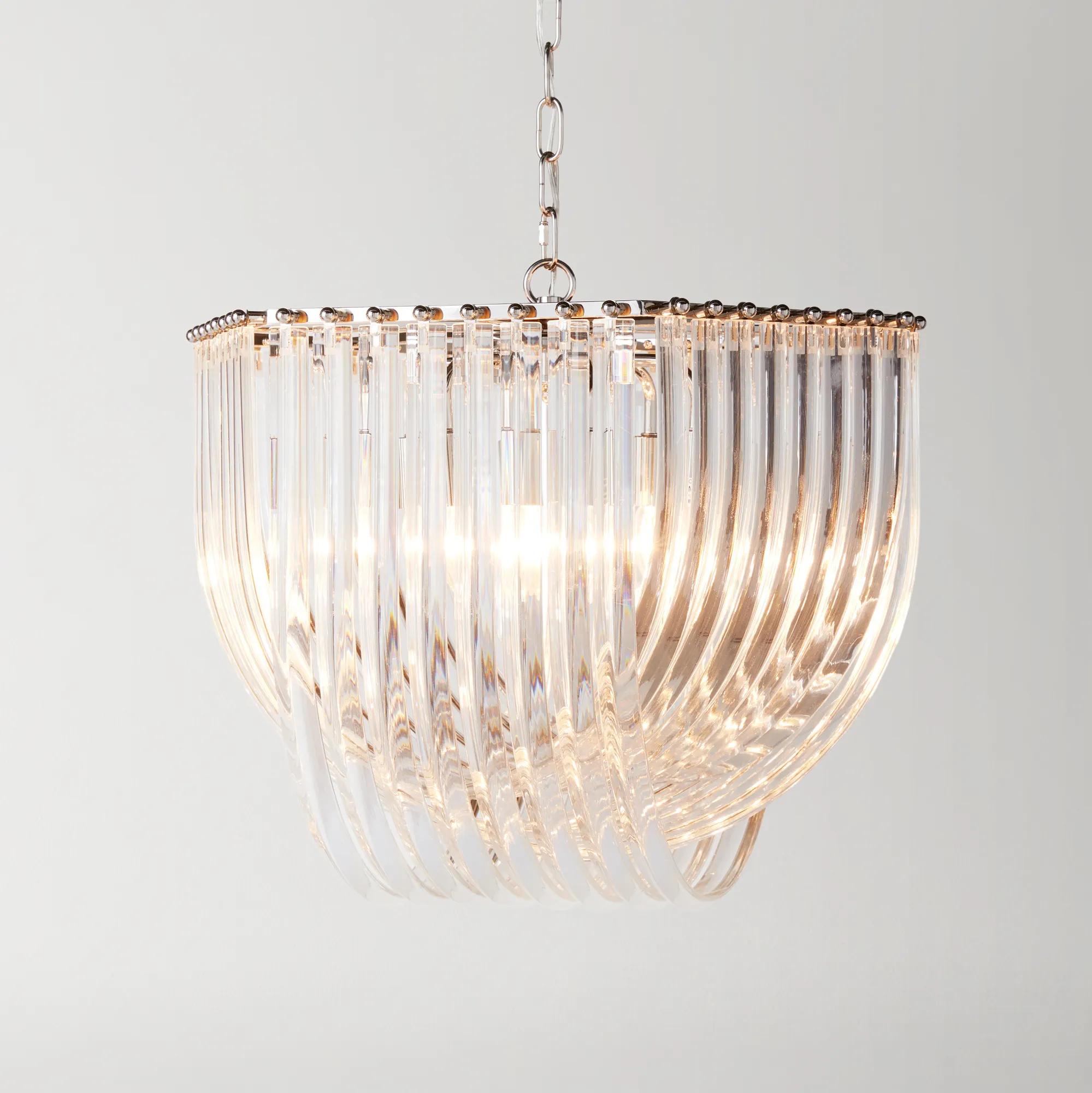 Laval Clear Curved Glass Chandelier 21"D x 18"H$799
A deco-inspired chandelier with crystal-clear curved glass and a polished nickel frame for ambient lighting.
Add To Cart -
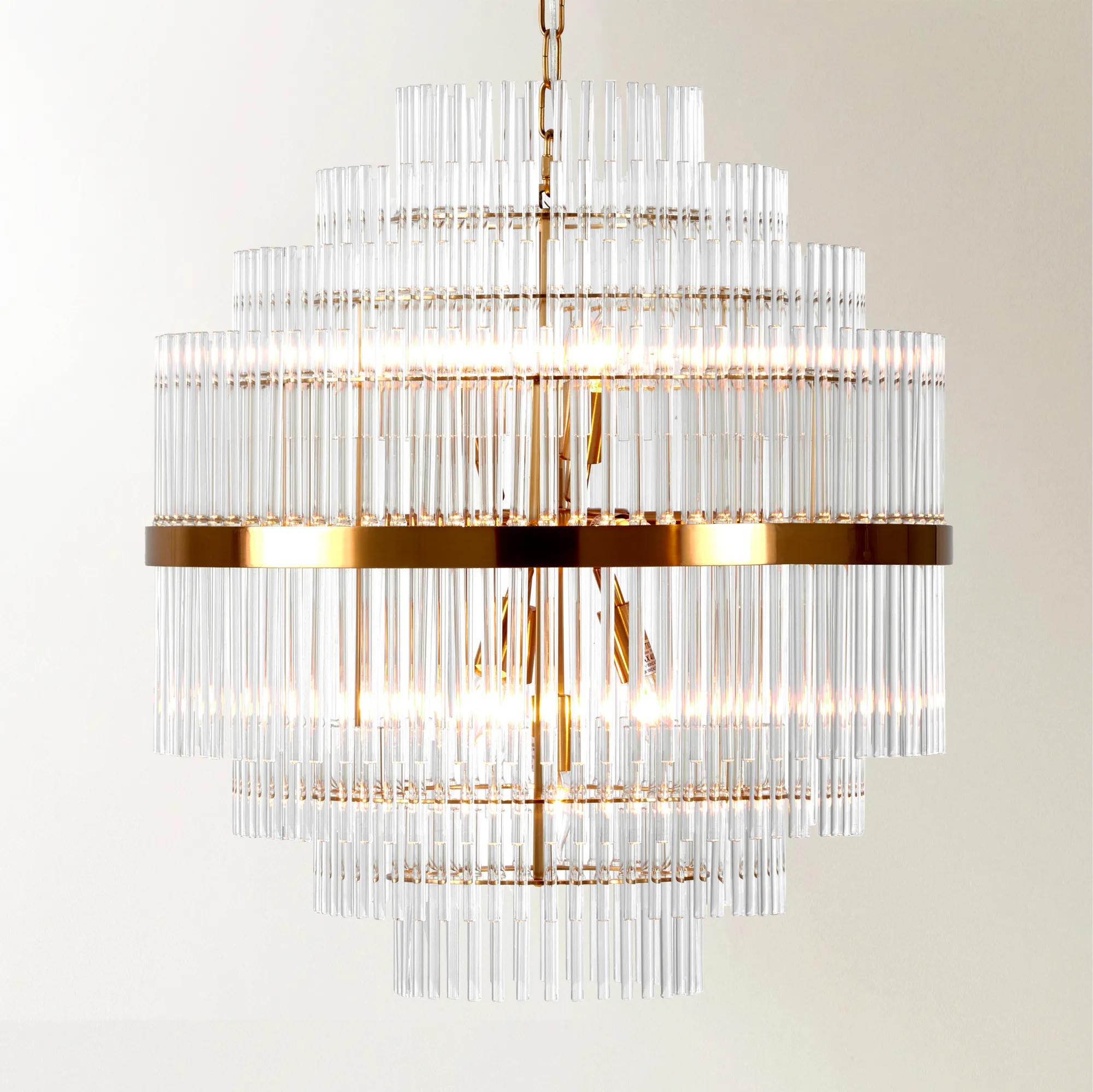
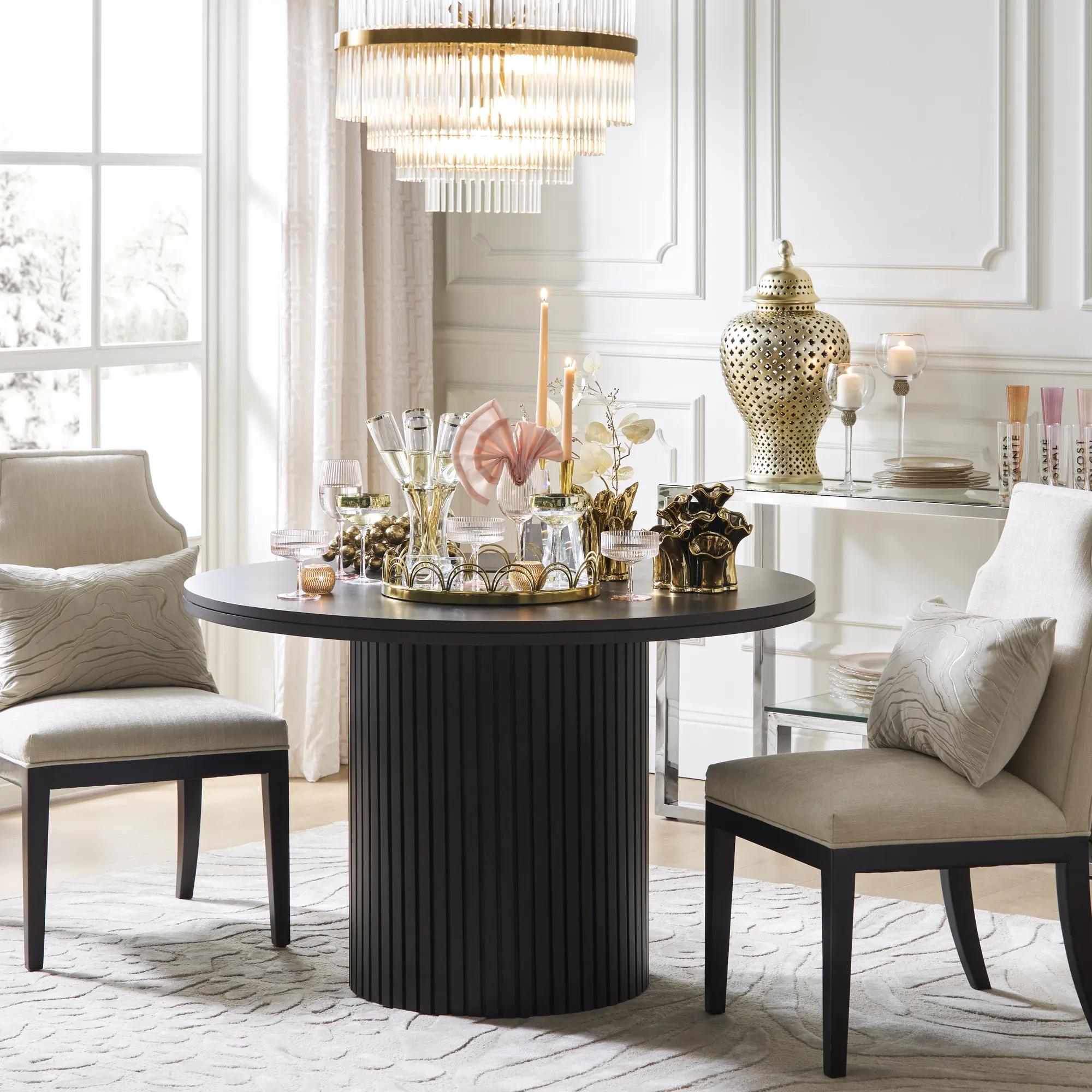 Renata Clear Glass Rod Grand Chandelier 23.6"D x 26.3"H$999
A dramatic chandelier featuring dozens of glass rods and a polished gold iron frame for sophisticated elegance.
Add To Cart -
 Sawin Chandelier$699
A sculptural brass-plated steel chandelier with frosted acrylic diffusers for a soft, ambient glow.
Add To Cart -

 Luxe Spiral Chandelier - Nickel/Clear$999
A dazzling spiral chandelier featuring clear K9 crystal and a polished nickel frame for timeless glamour.
Add To Cart -
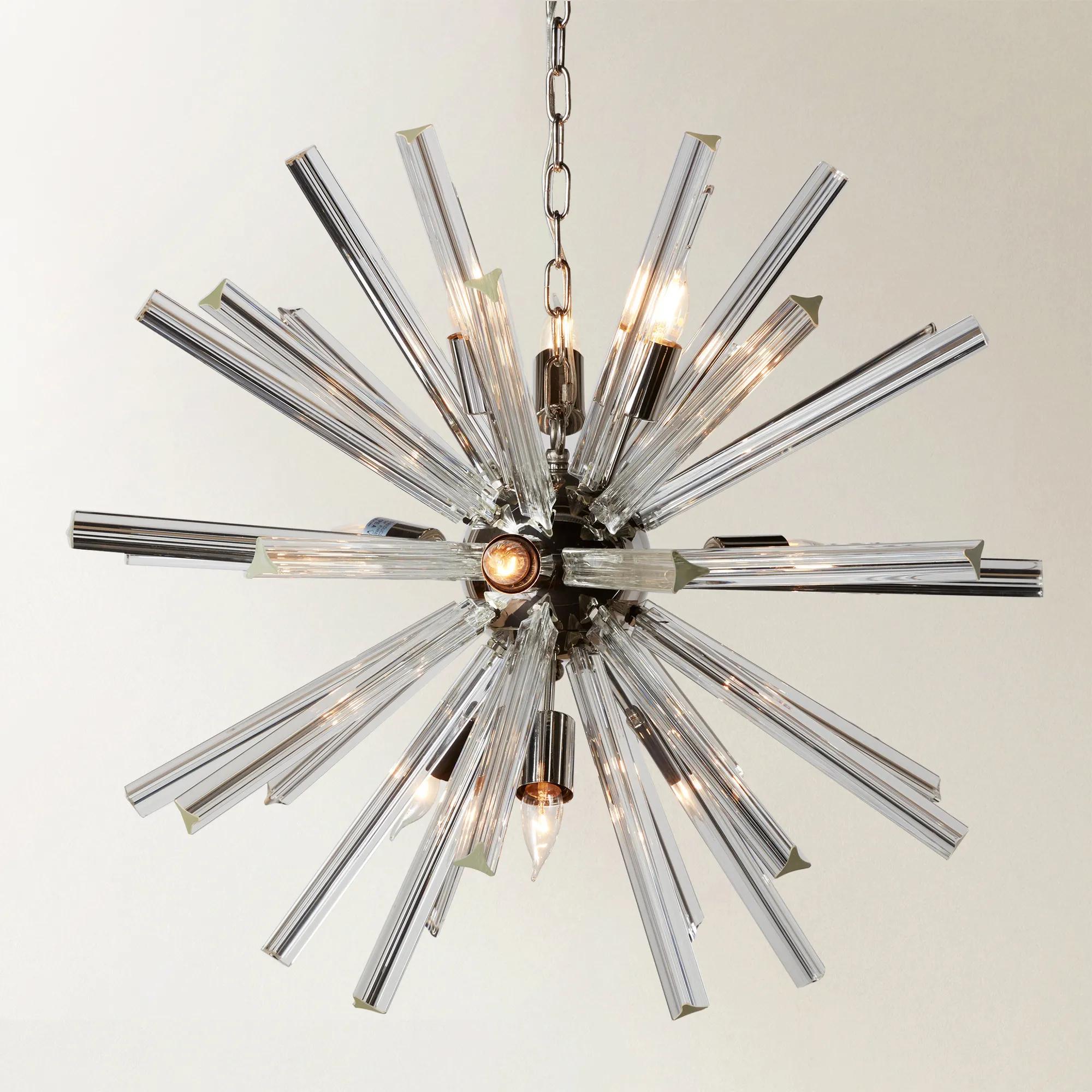
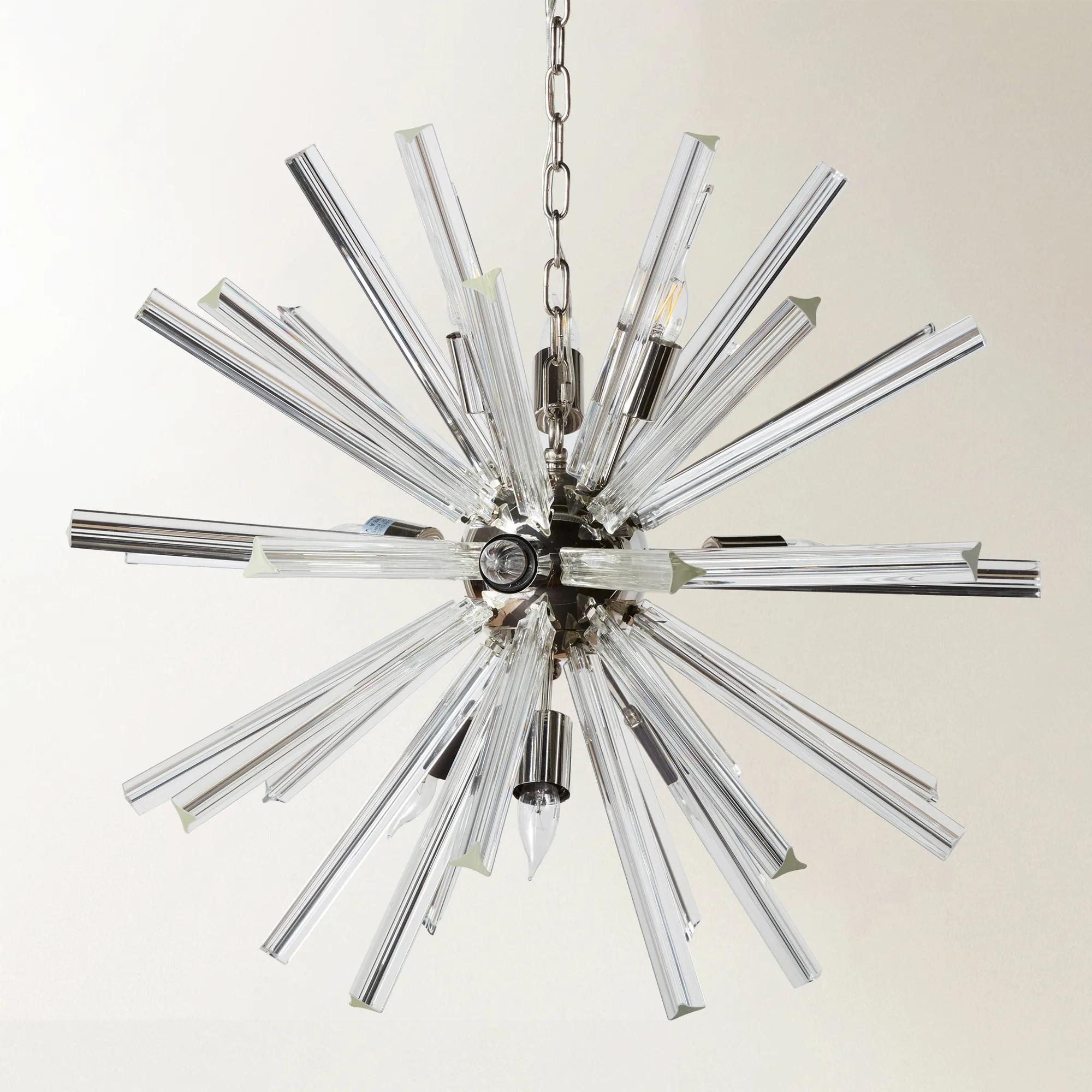 Axis Sputnik Clear Faceted Glass Chandelier 29.5"D$599
A modern chandelier featuring solid triangular glass spokes and iron accents for striking light reflection.
Add To Cart -
 Bolla LED Hand-Blown Glass Bubble Chandelier 60.25"$499
A linear chandelier featuring clear sculptural glass orbs and a matte gold steel frame for modern elegance.
Add To Cart -
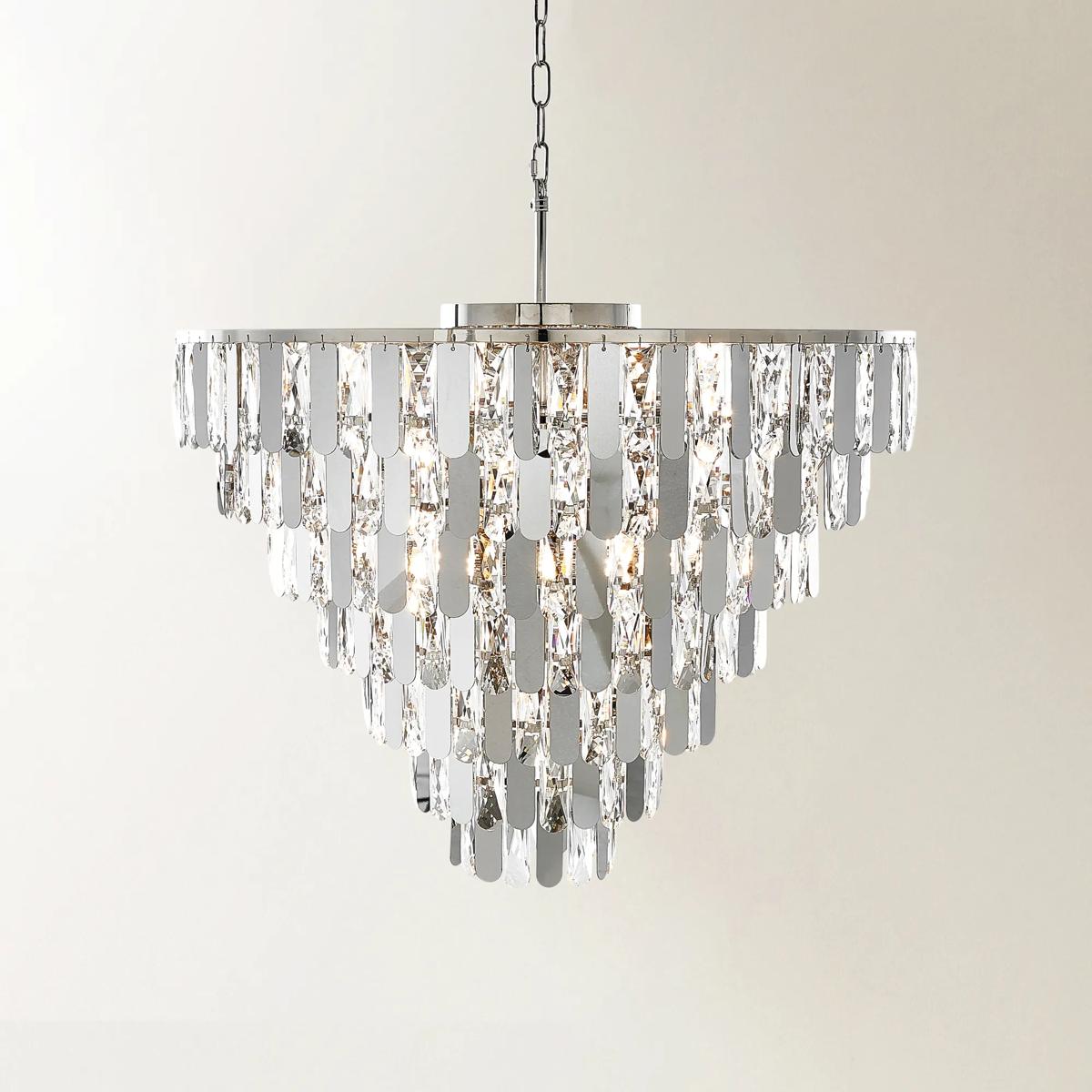
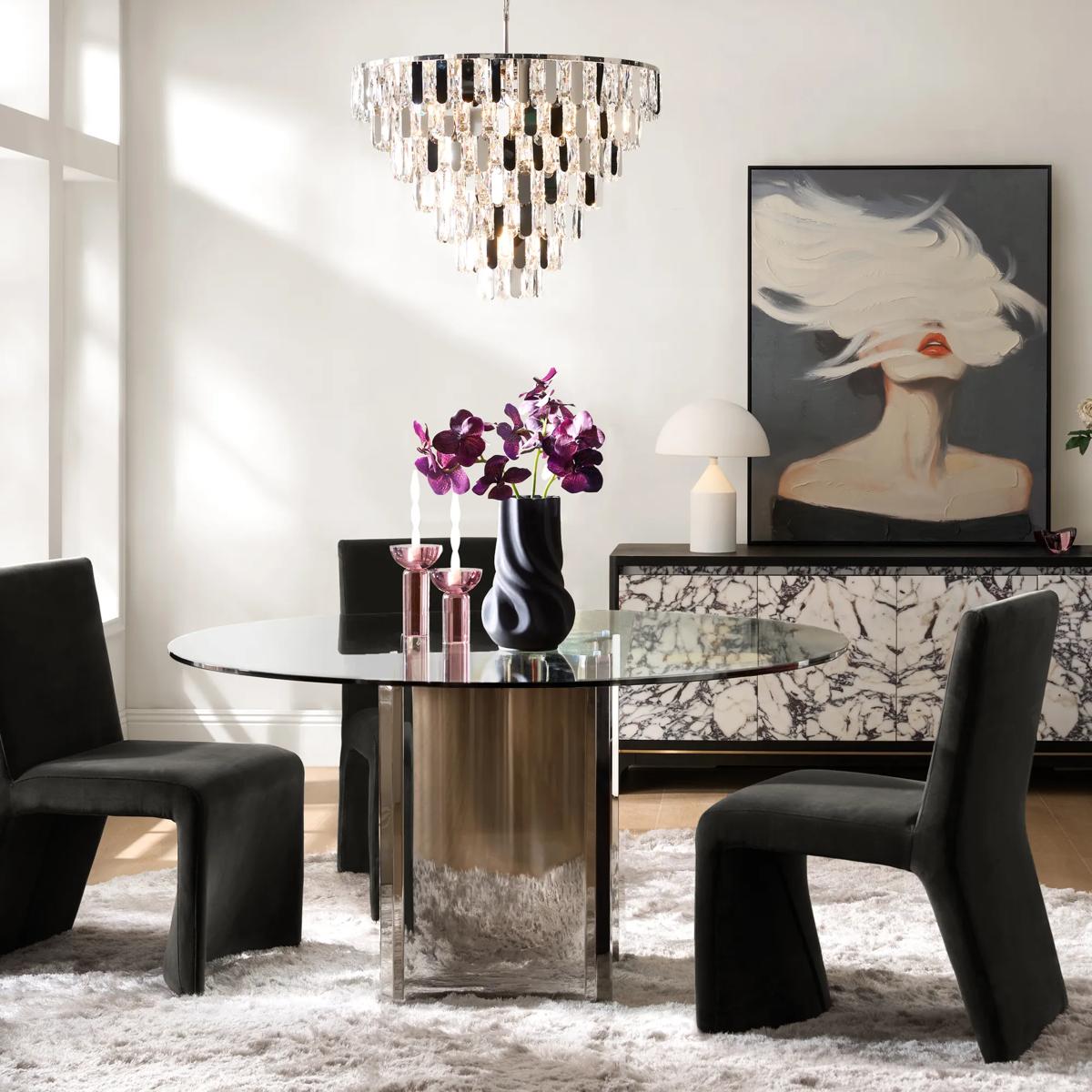 Avenue Crystal Chandelier 28.5"$999
A tiered chandelier crafted from eco-friendly K9 crystal and polished nickel for radiant, modern elegance.
Add To Cart -
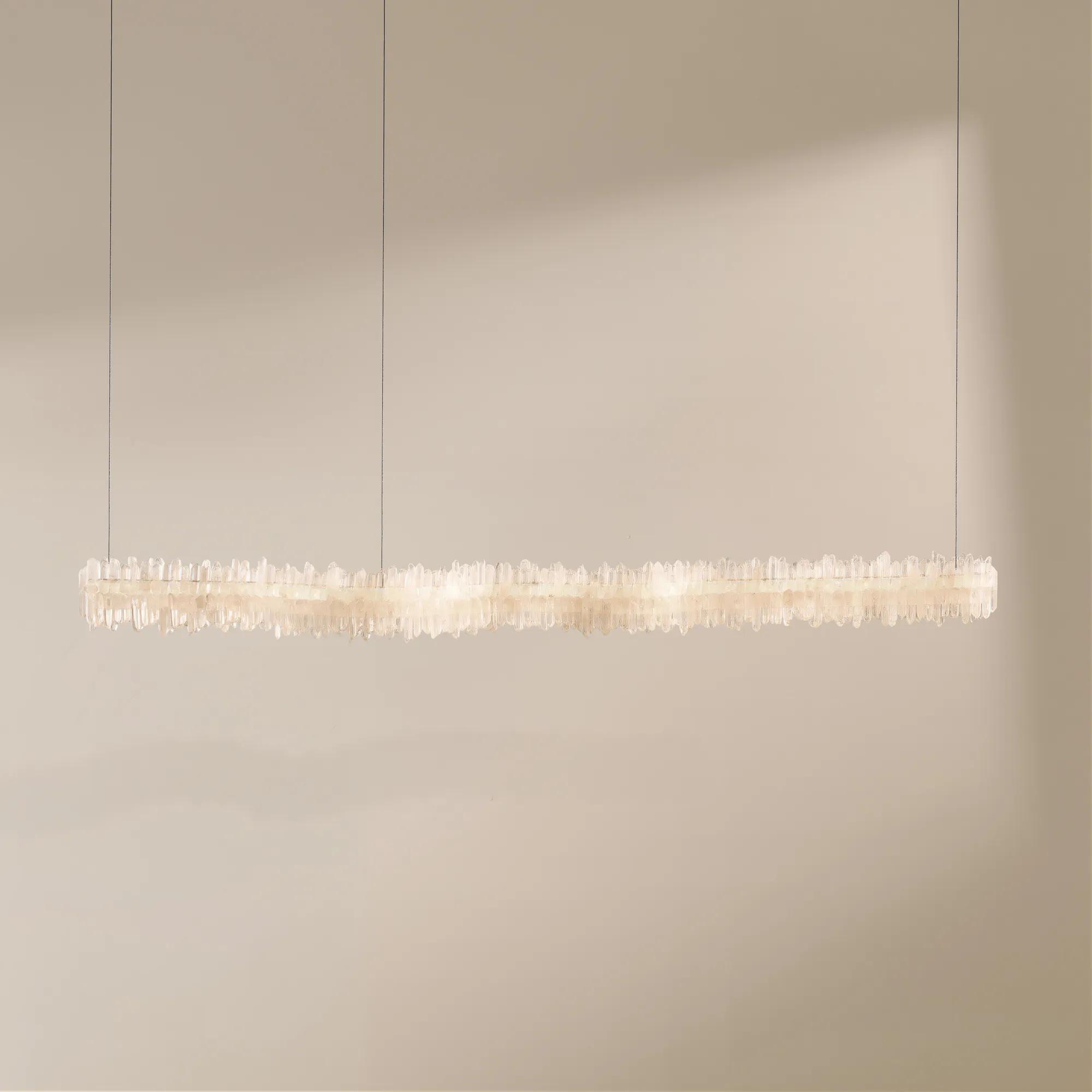 Stella Quartz Crystal LED Chandelier 47.25"$1899
A linear chandelier featuring raw quartz crystals and a rose gold frame with integrated warm LED lighting.
Add To Cart -
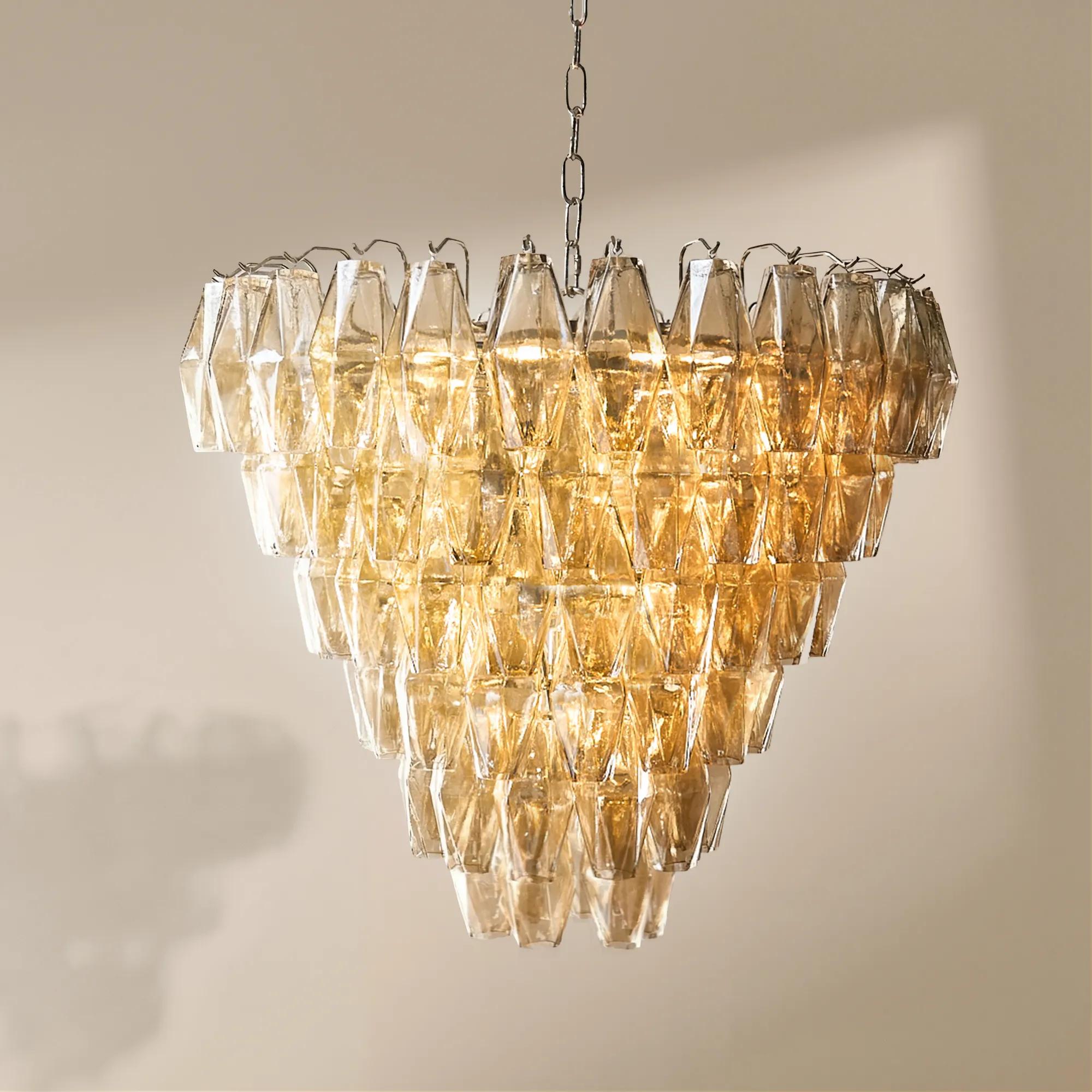
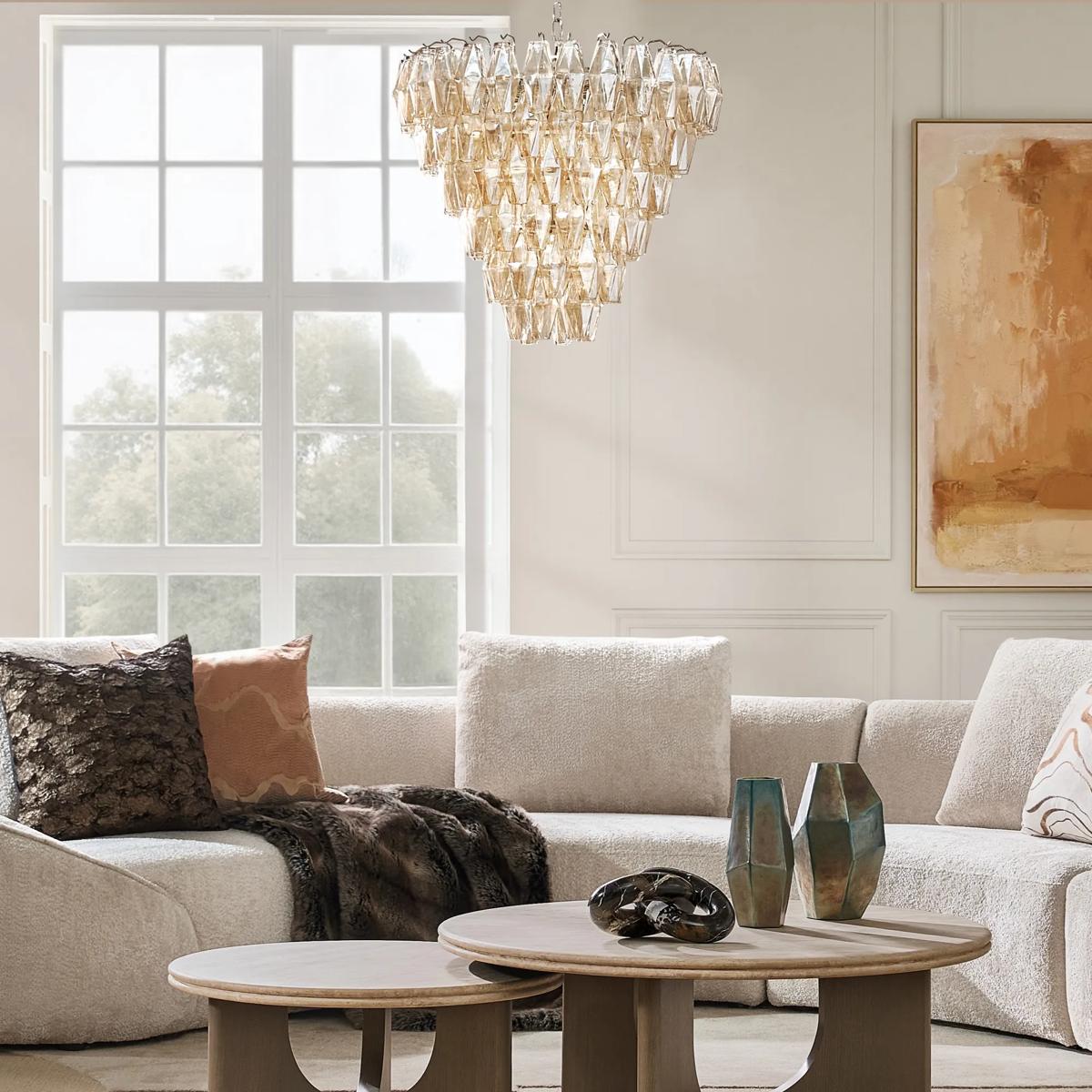 Cosima Champagne Blown Glass Chandelier 25.5"D x 23"H$1299
A sculptural chandelier featuring hand-blown champagne glass and a polished nickel frame for radiant, modern elegance.
Add To Cart -
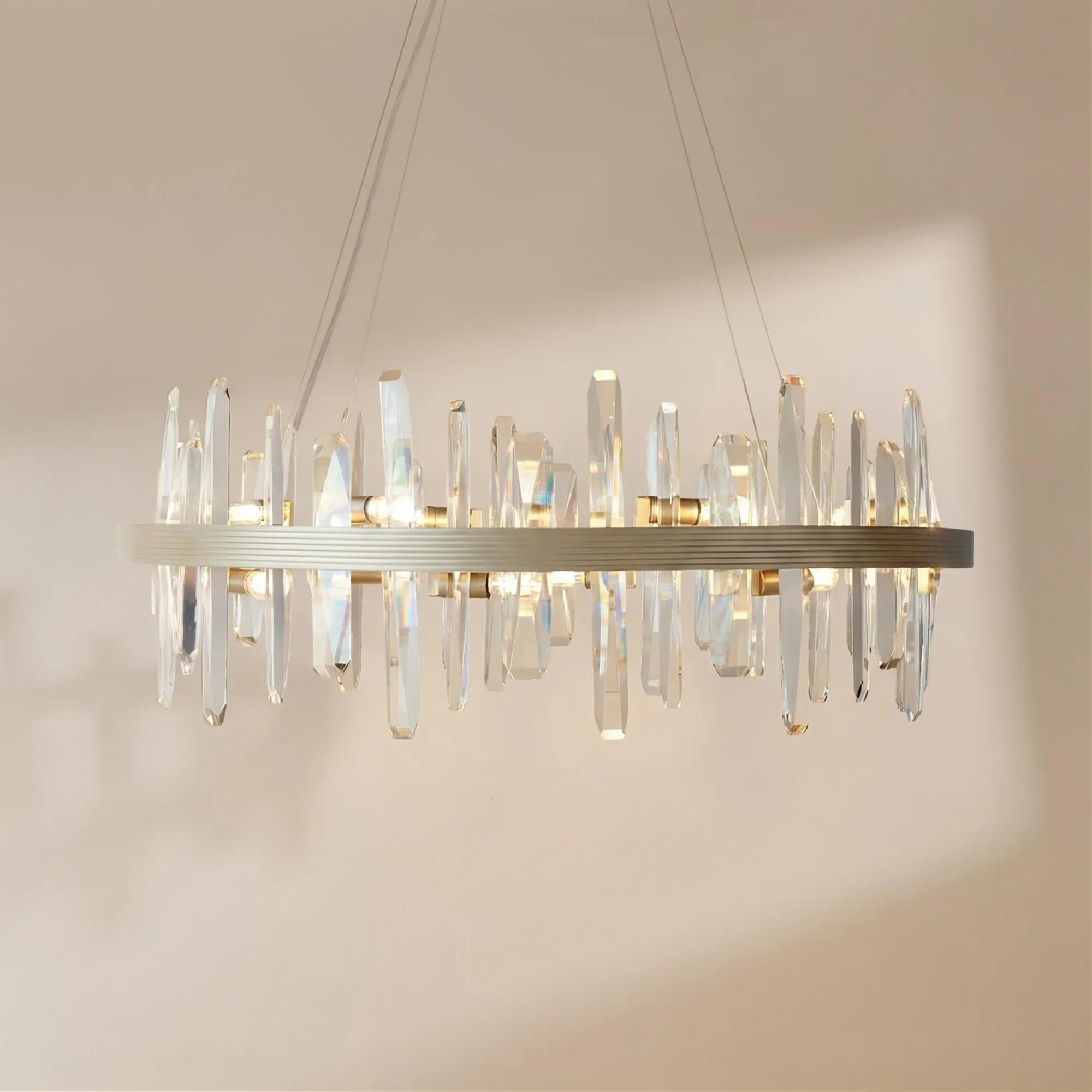
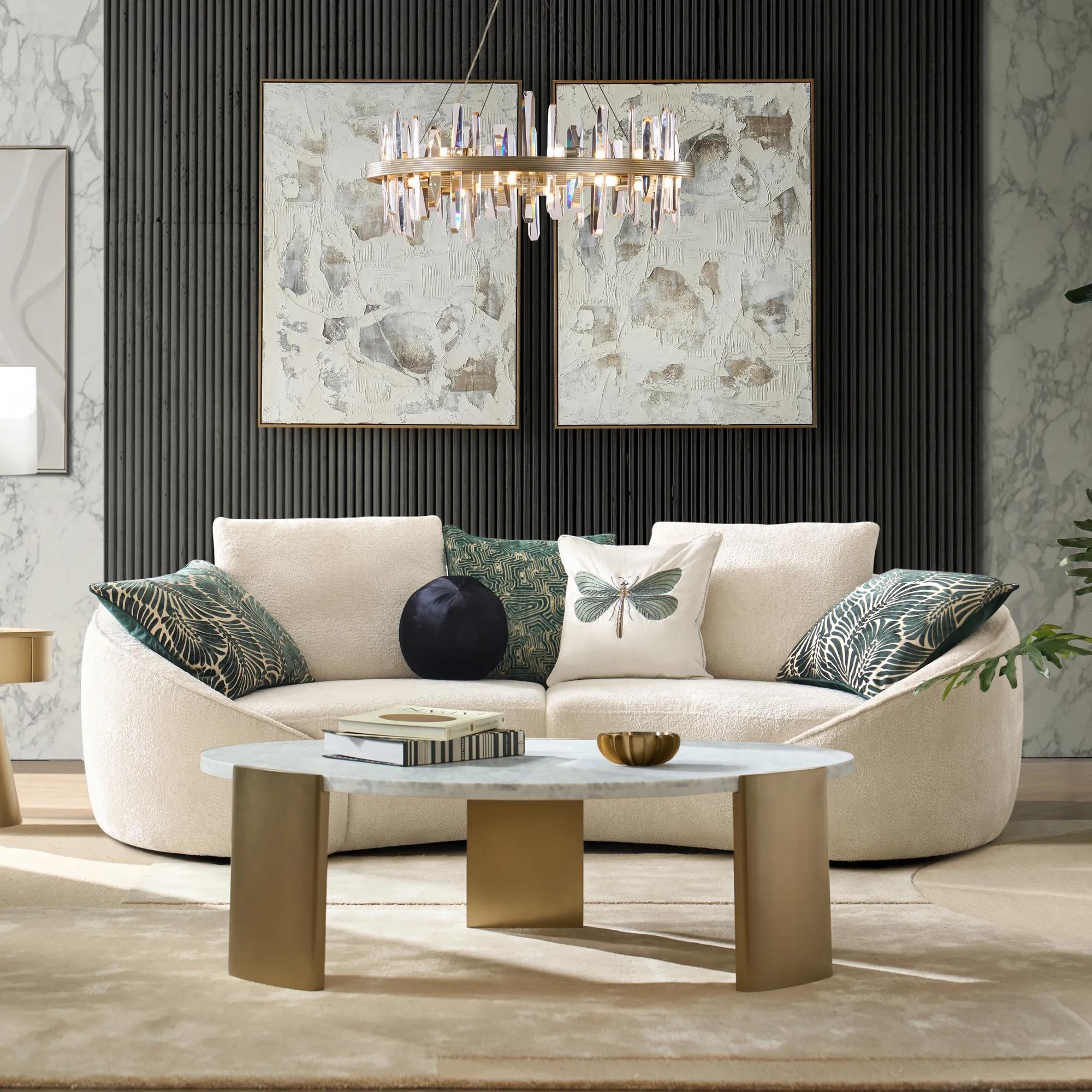 Lumi Clear Beveled Glass Chandelier 31.5"W$929
A deco-inspired chandelier with beveled glass daggers and a champagne-finished iron frame for radiant illumination.
Add To Cart -
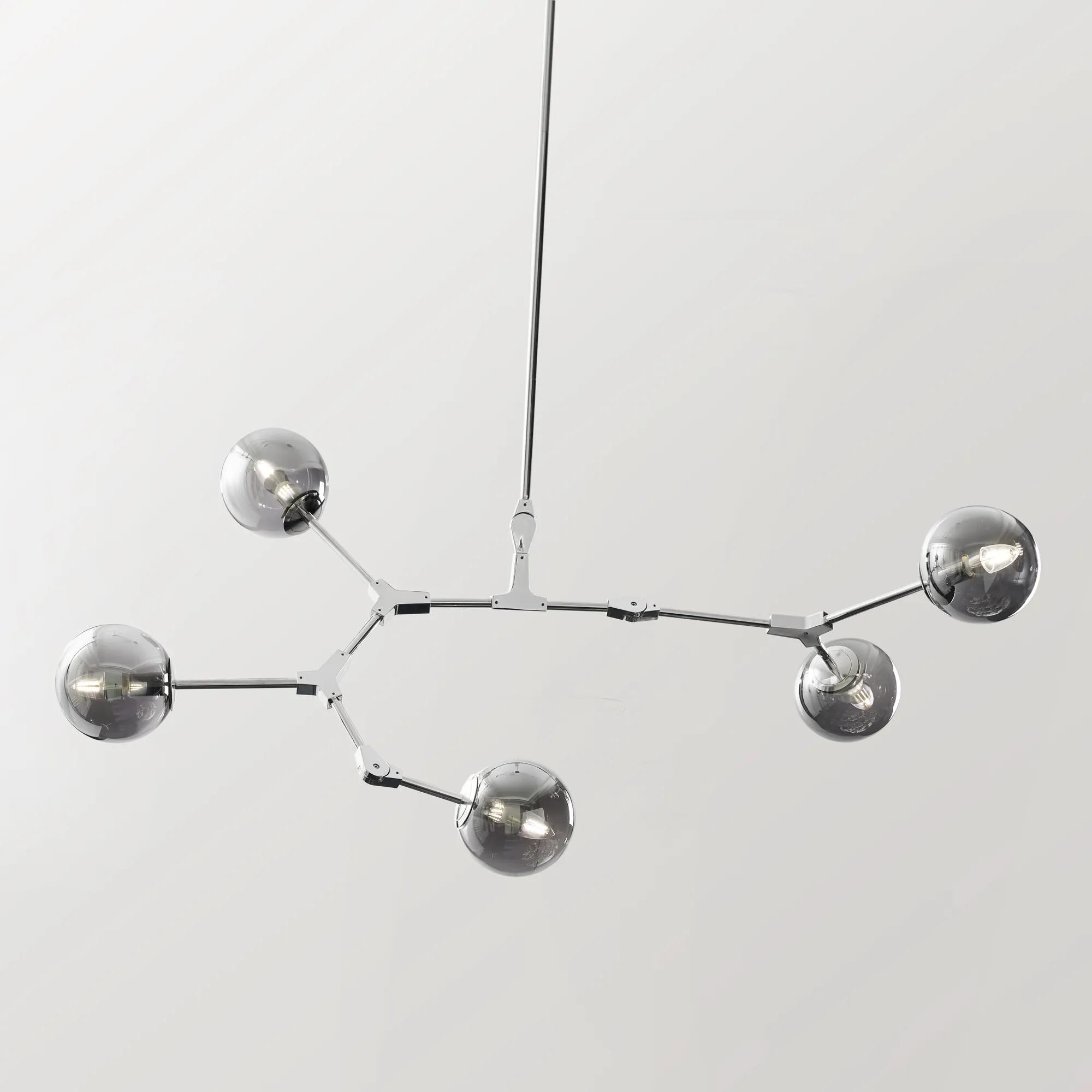
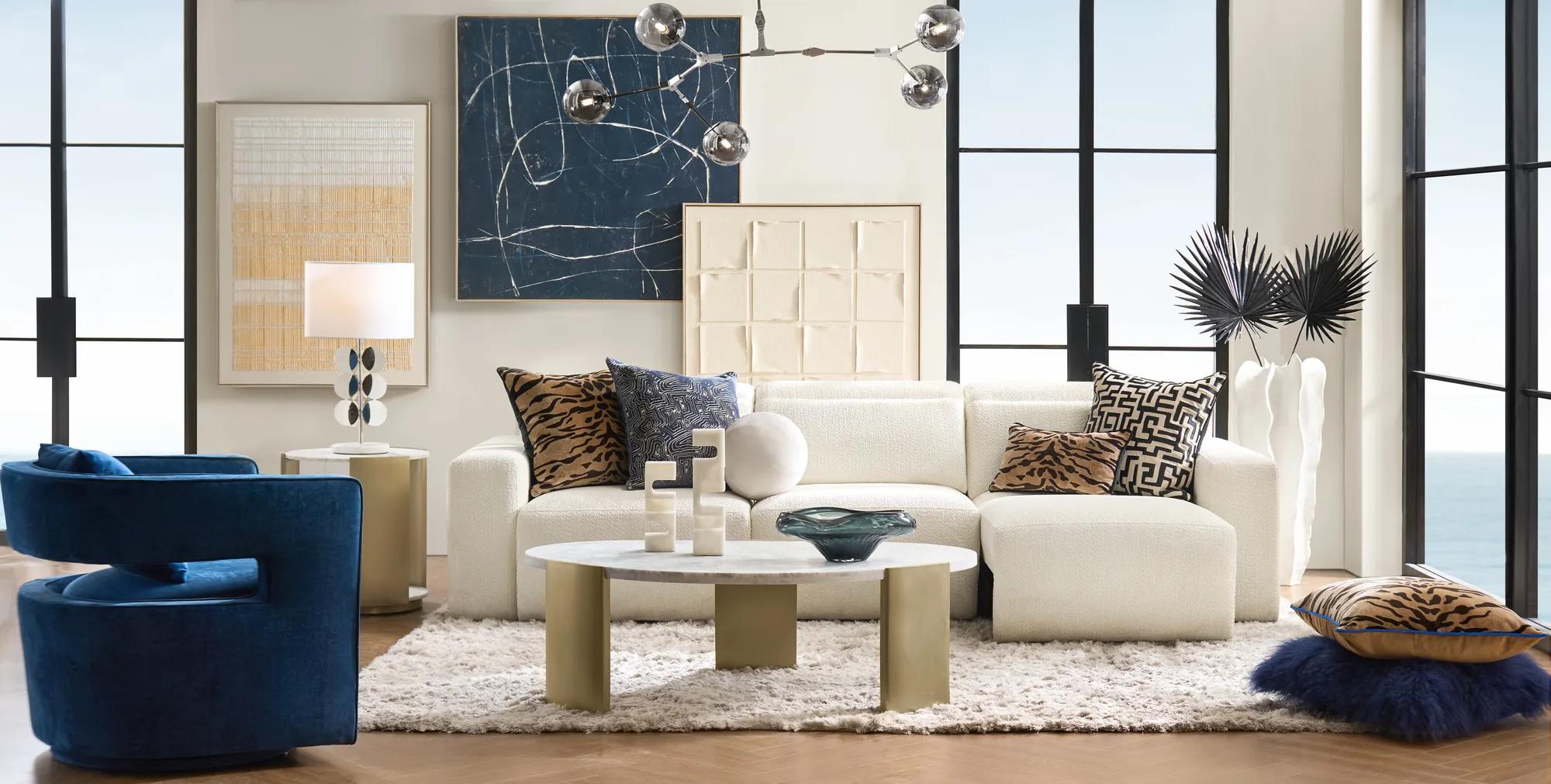 Axel Chandelier$499
A modern chandelier featuring polished nickel arms and smoked glass bulbs for striking, contemporary illumination.
Add To Cart -
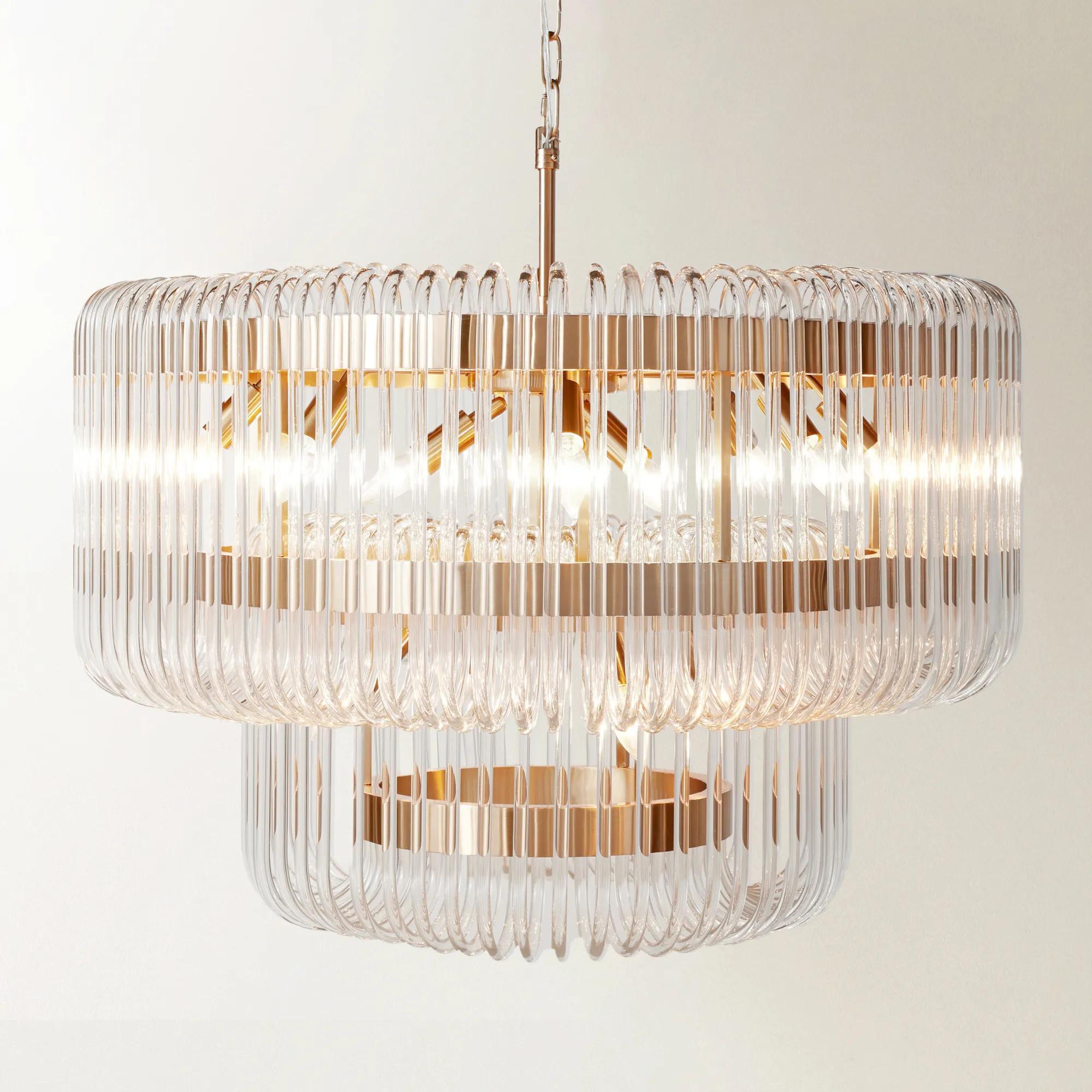 Allure Clear Curved Glass Chandelier 31.5"D x 27.75"H$1499
A dramatic chandelier featuring over 150 clear blown glass rods and brushed brass-finished iron rings.
Add To Cart -

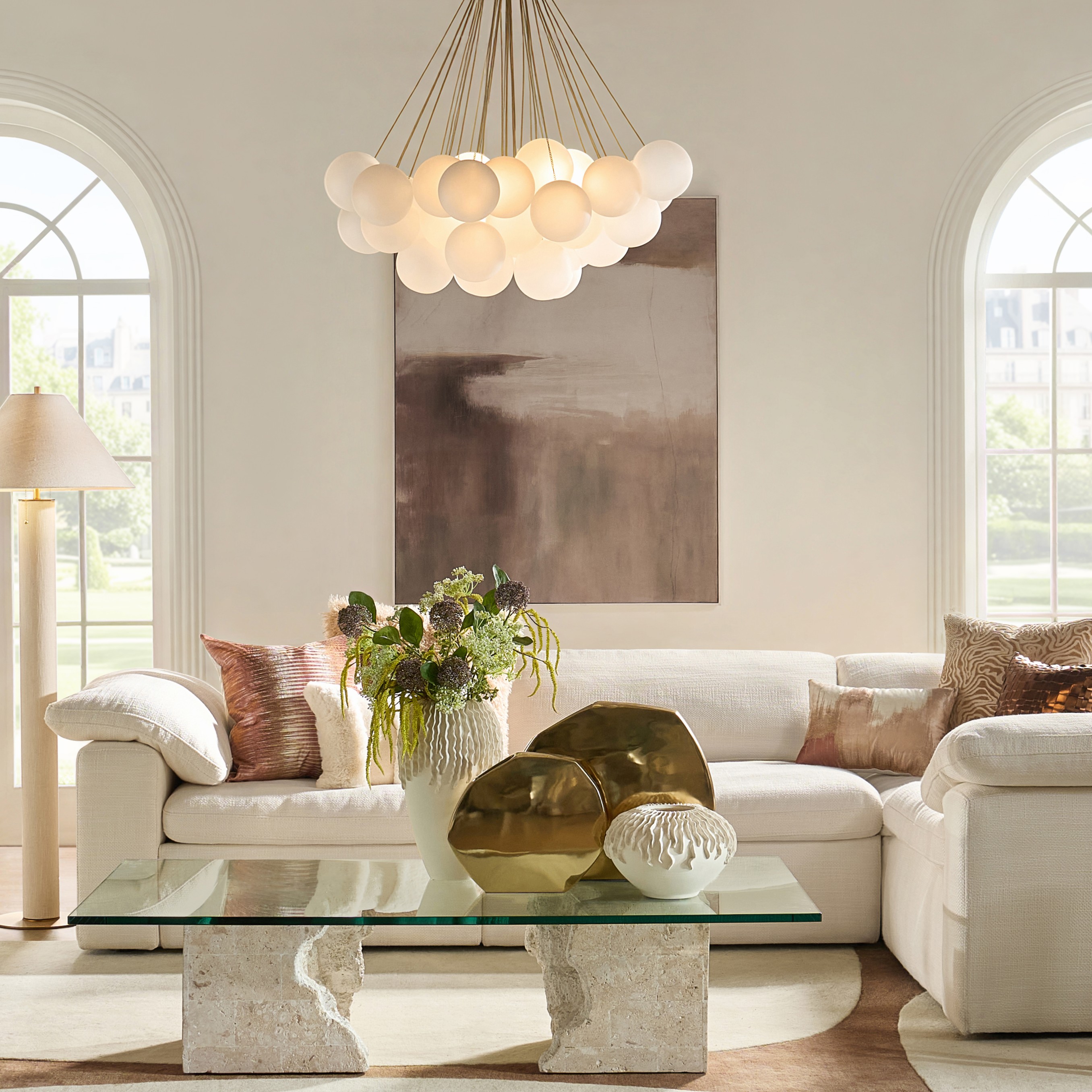 Sanela Frosted Glass Globe Chandelier 39.5"$899
A sculptural chandelier featuring frosted glass globes and an antique brass iron frame for diffused illumination.
Add To Cart -
 Willa Natural Alabaster Chandelier 13"D x 17"H$599
An artful chandelier featuring hand-cut alabaster panels and a brushed brass frame for a diffused, elegant glow.
Add To Cart -
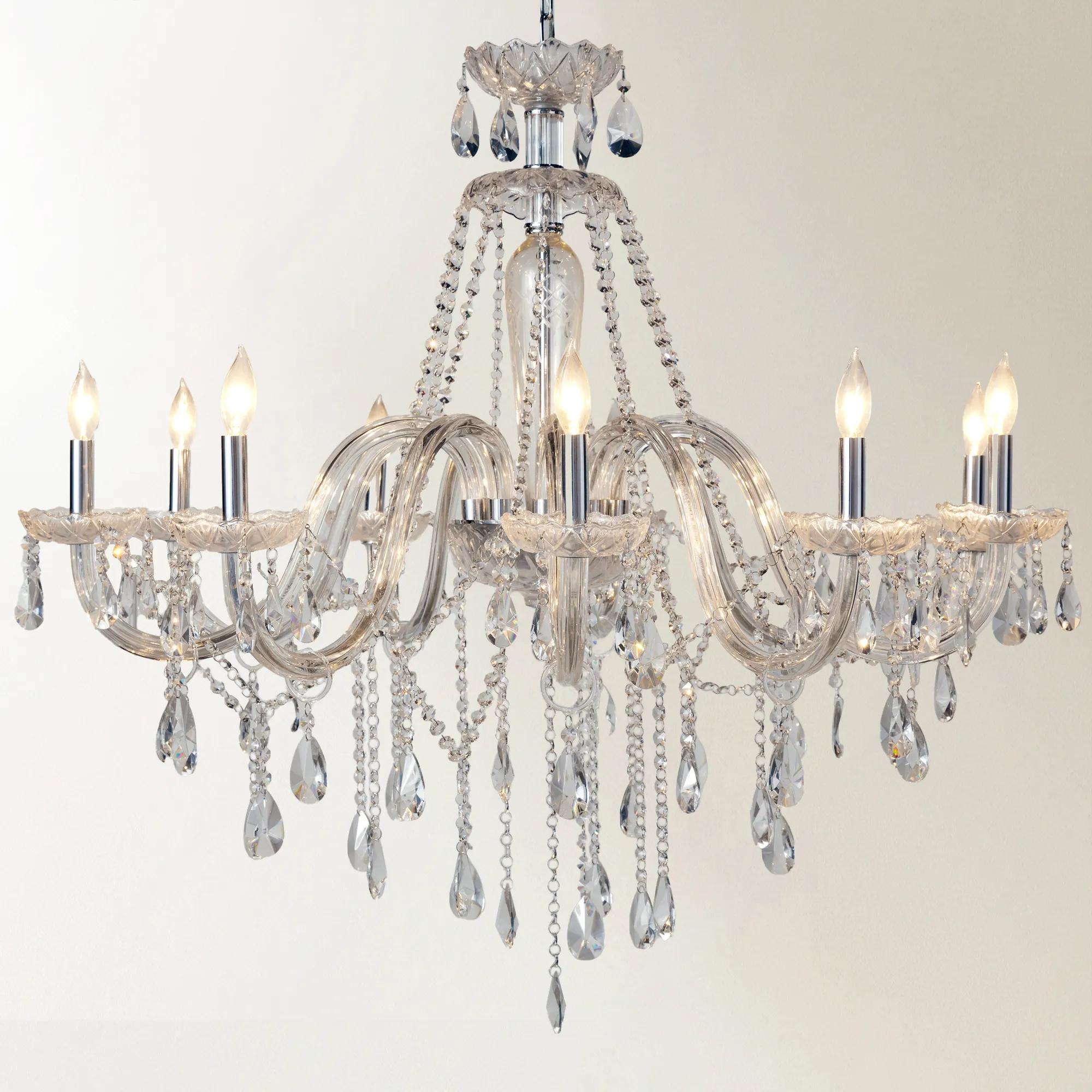
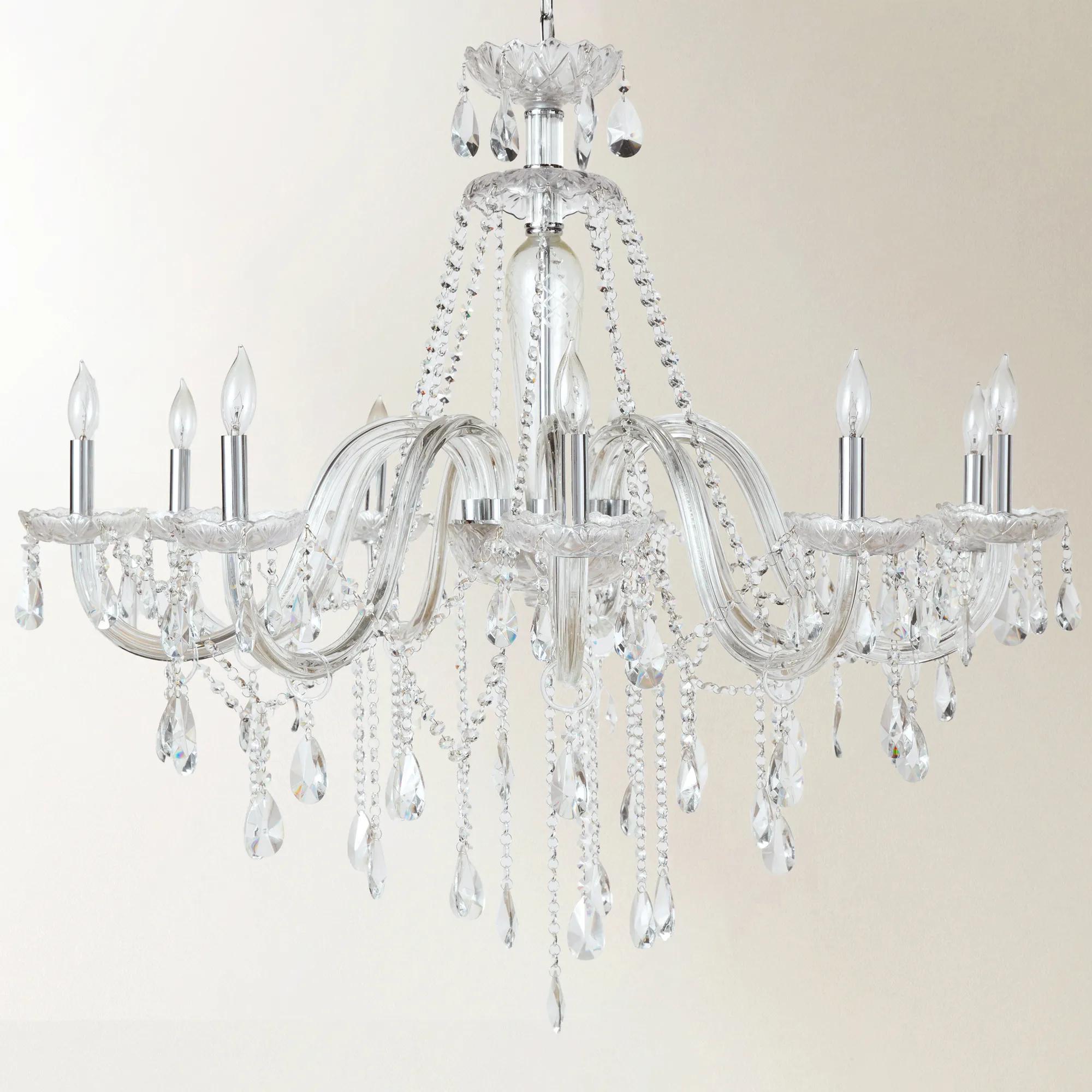 Omni Chandelier 38.5" - Clear$999
A dazzling chandelier featuring hundreds of clear faceted crystals and ten fluted glass arms with nickel hardware.
Add To Cart -
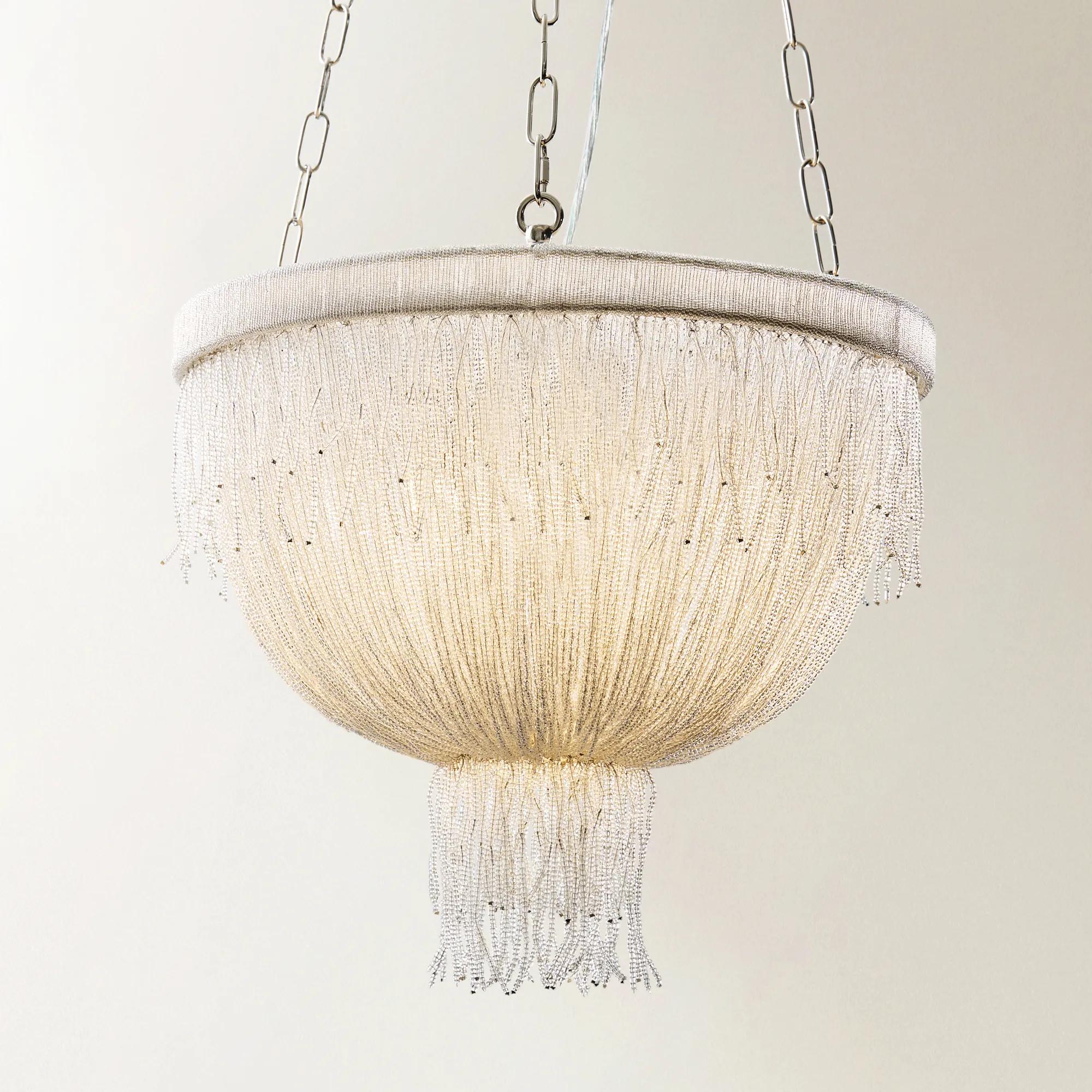 Selene Chandelier$899
A dazzling chandelier featuring cascading clear glass beads and a sleek nickel-finished iron frame.
Add To Cart -
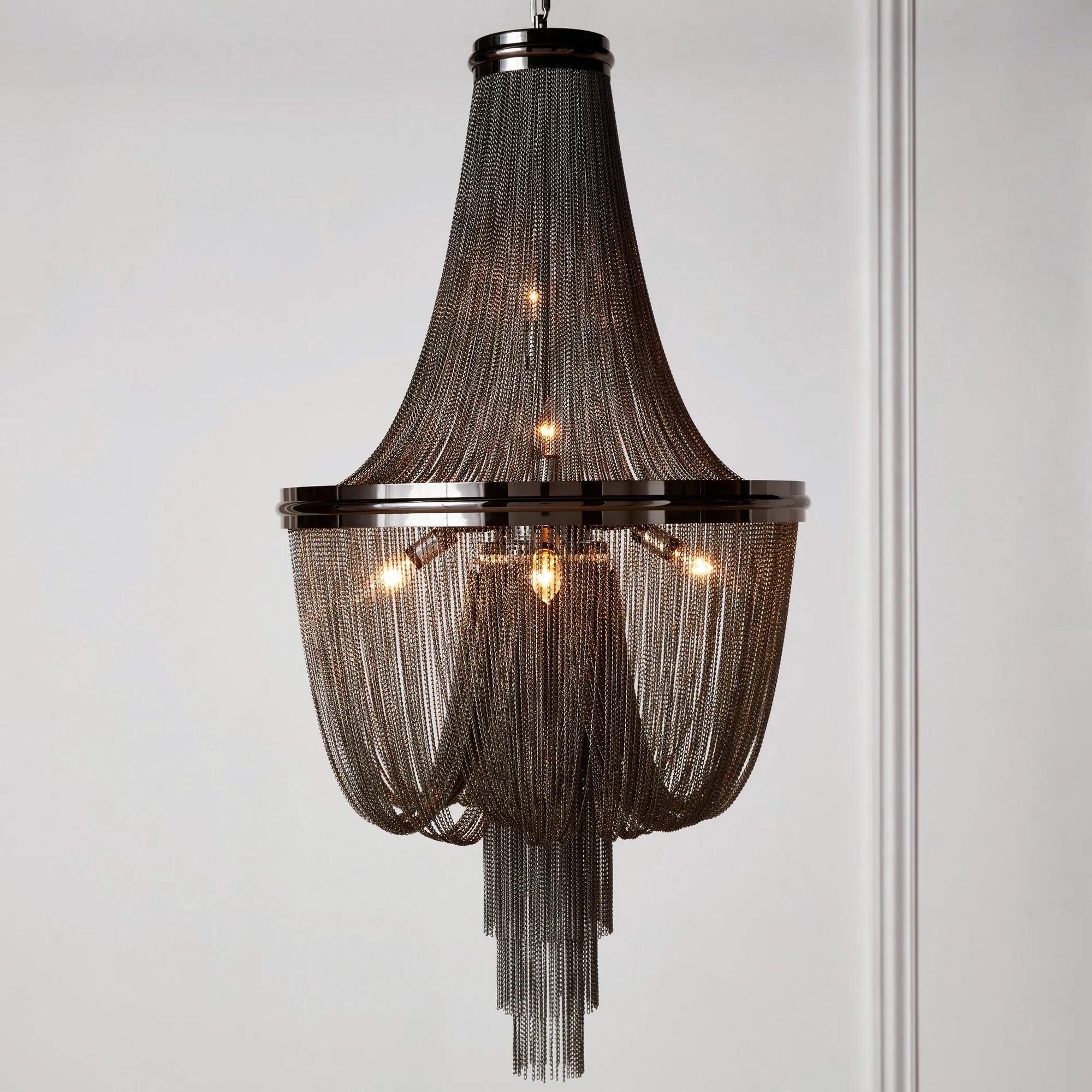 Rue Graphite Metal Tassel Chain Chandelier 41"$799
A striking chandelier featuring draped metal microchains and a polished graphite iron frame for modern elegance.
Add To Cart -
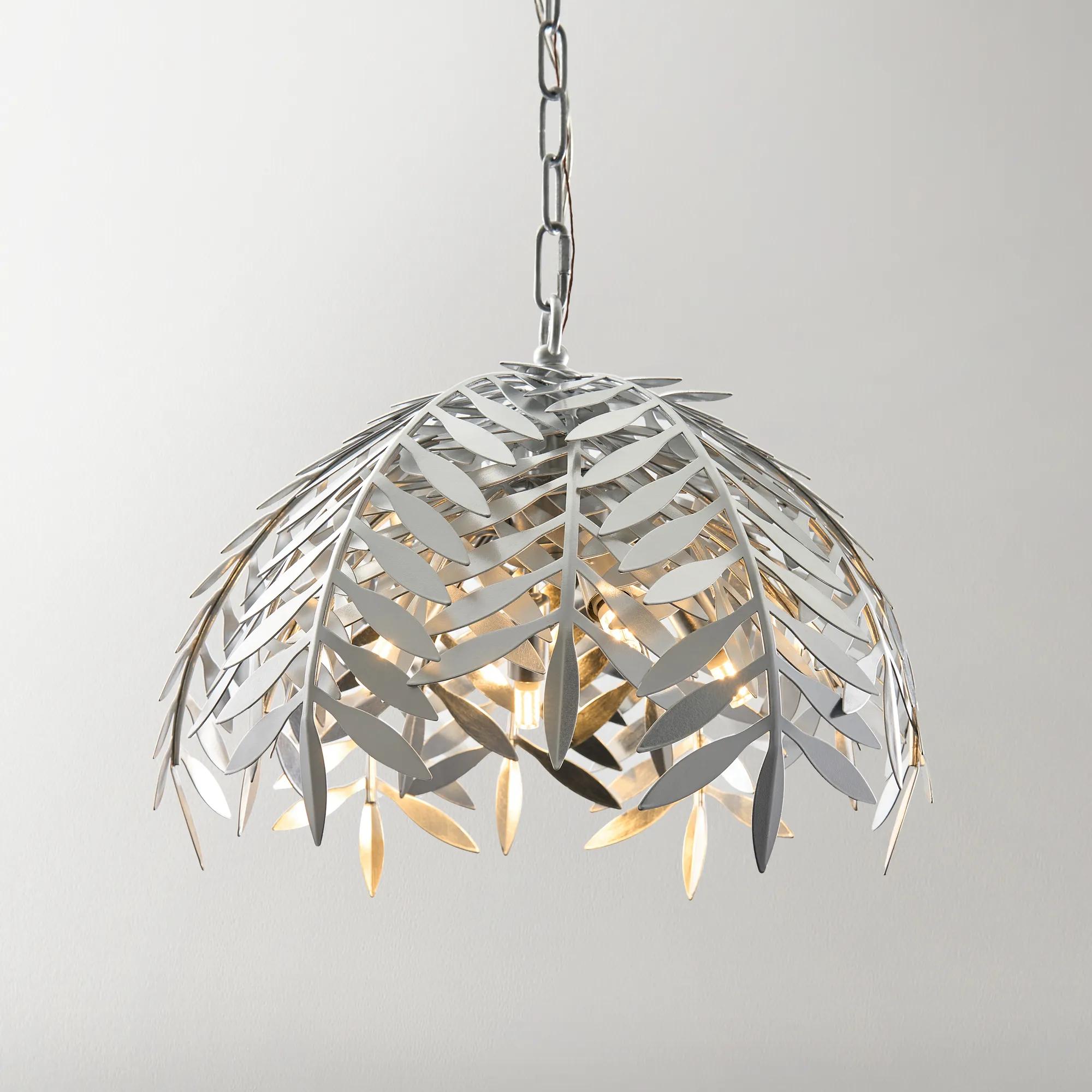
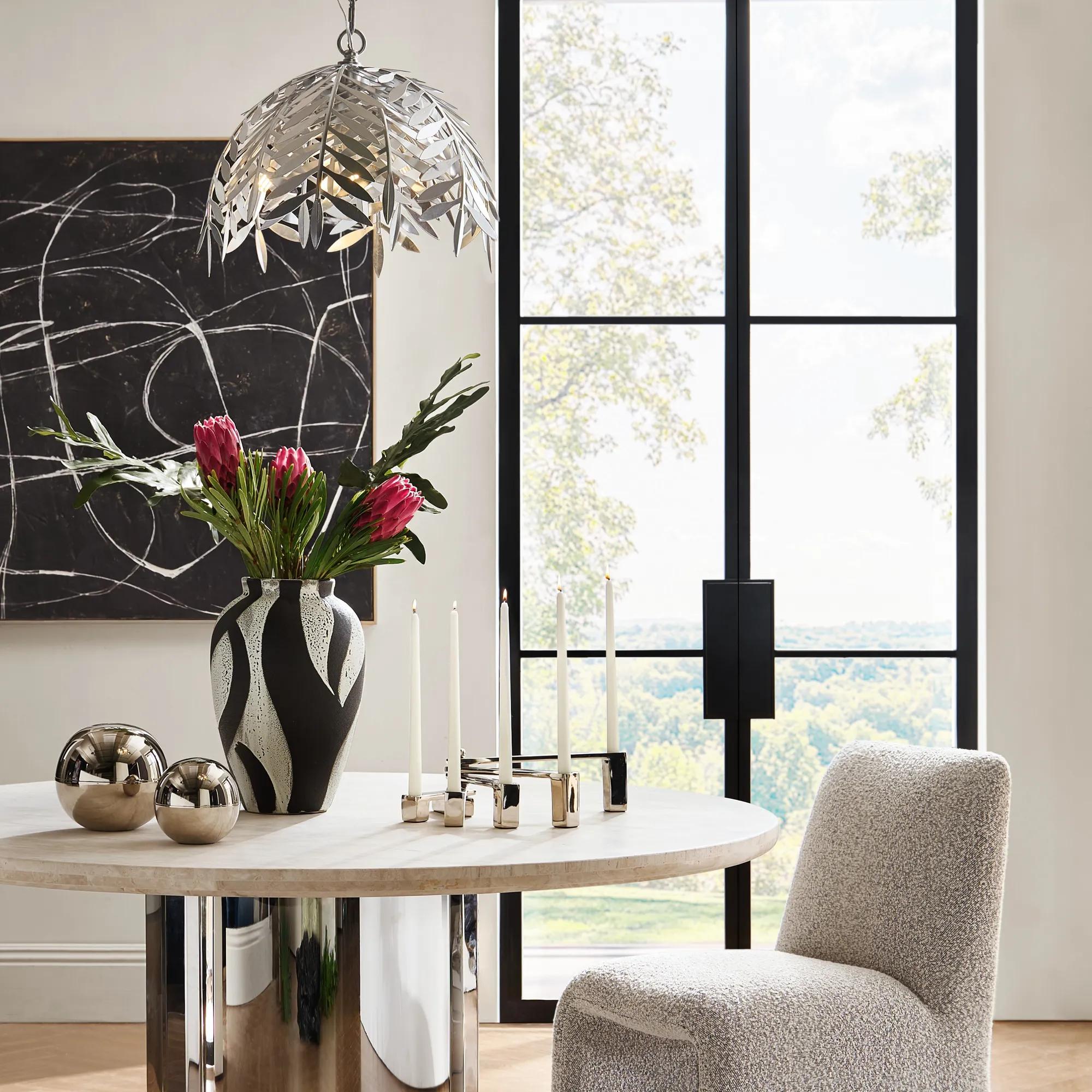 Palm Pendant - Silver$429
A sculpted iron pendant in a lustrous silver finish, casting dramatic shadows with elegant illumination.
Add To Cart -
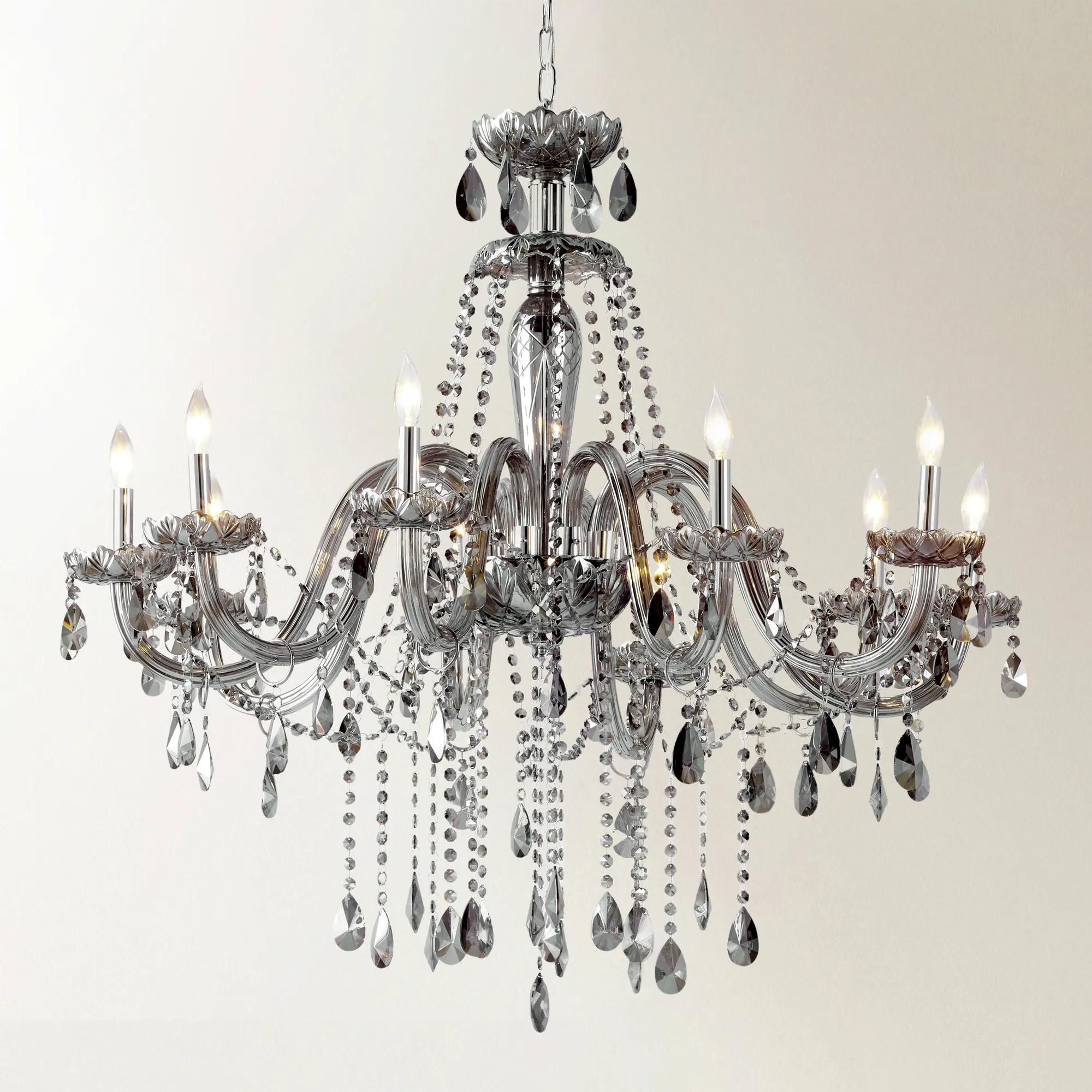
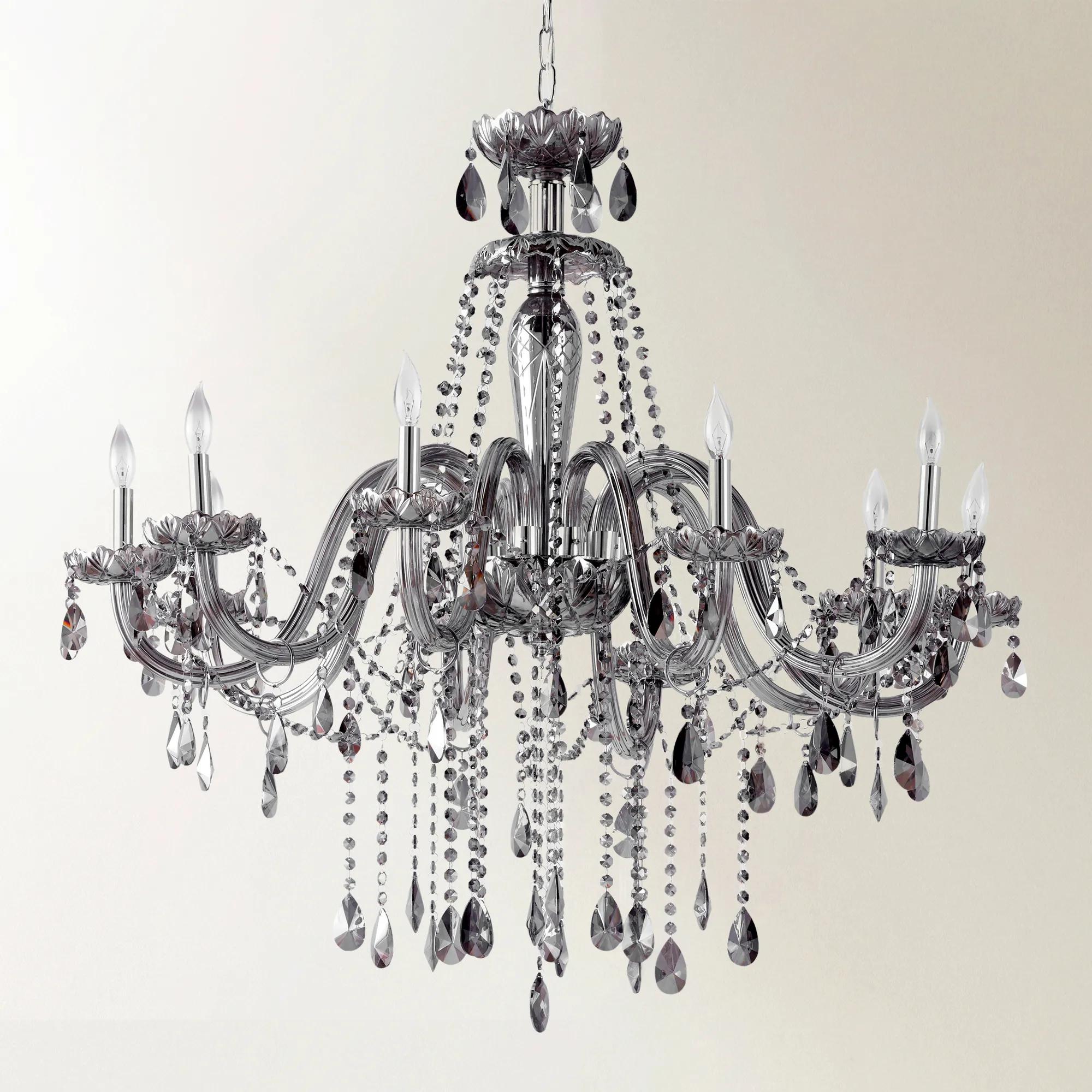 Omni Chandelier 38.5" - Graphite$999
A dazzling chandelier featuring graphite faceted crystals and ten fluted glass arms with nickel hardware.
Add To Cart -
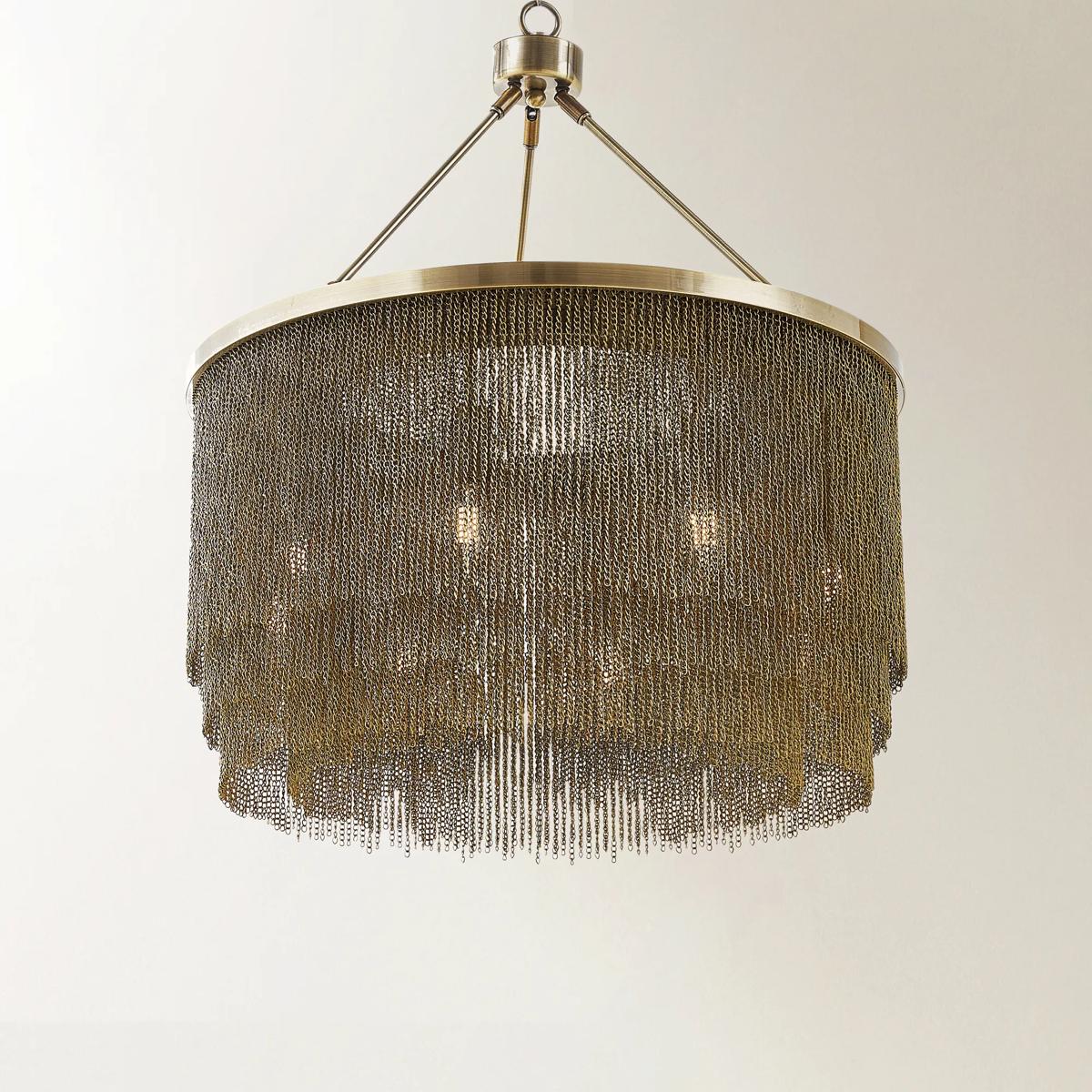
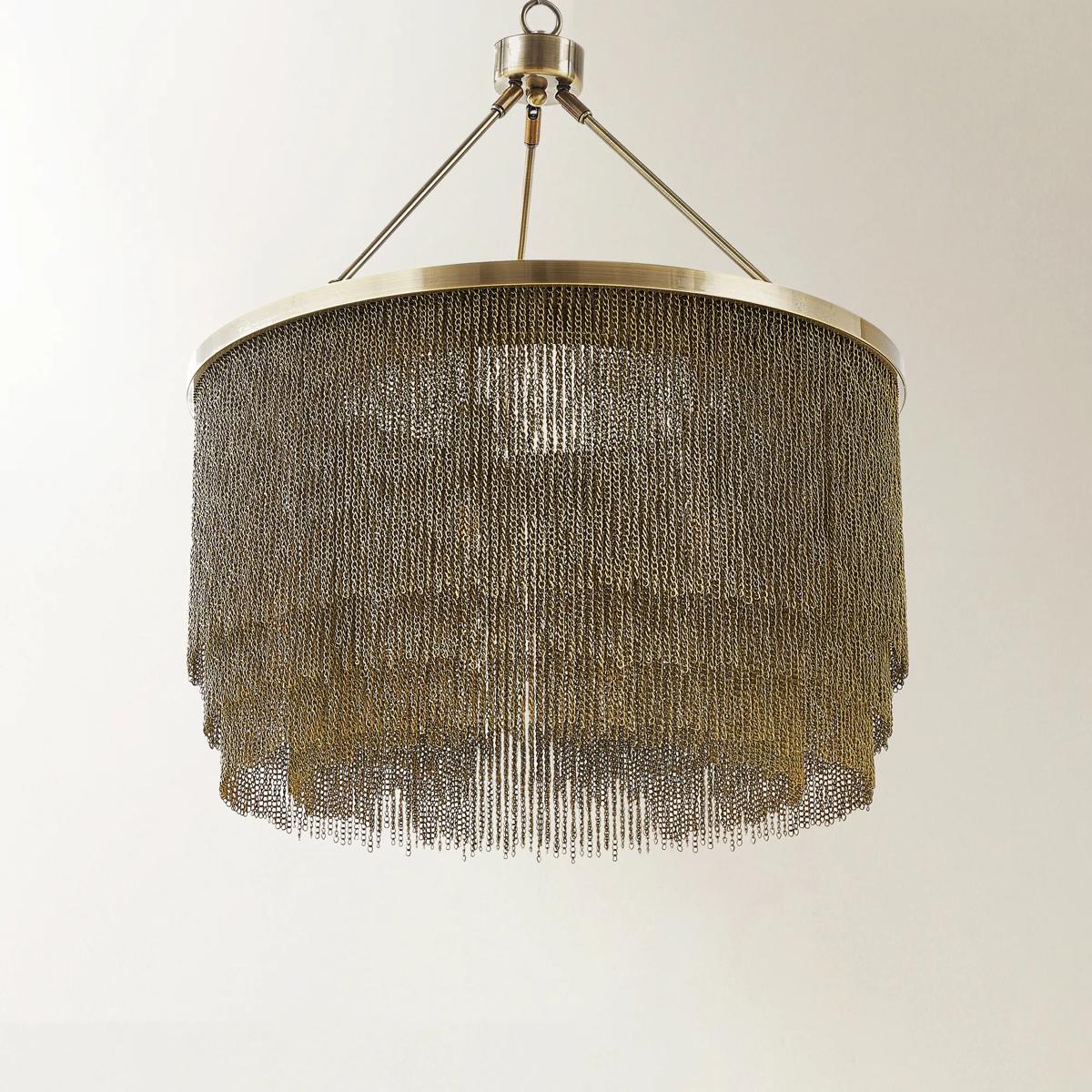 Dagny Brass Link Chain Chandelier 23.5"D x 27.5"H$999
A dramatic chandelier featuring cascading antique brass chains and a polished iron frame with a warm golden finish.
Add To Cart -
 Glacier Clear and Frosted Glass Chandelier 24"$899
A modern chandelier crafted from clear and frosted glass creates an elegant, luminous centerpiece.
Add To Cart

Lighting Solutions For High Ceilings
Lighting Solutions for High Ceilings invites you to reimagine your space as a gallery of light and shadow, where every fixture becomes a statement and every room glows with intention. Here, soaring ceilings are not a challenge but an opportunity for grandeur—a blank canvas awaiting sculptural silhouettes, cascading brilliance, and bold illumination. Whether you seek to create an atmosphere of dramatic allure or refined elegance, discover lighting that elevates your interiors to breathtaking heights and transforms the ordinary into the extraordinary.
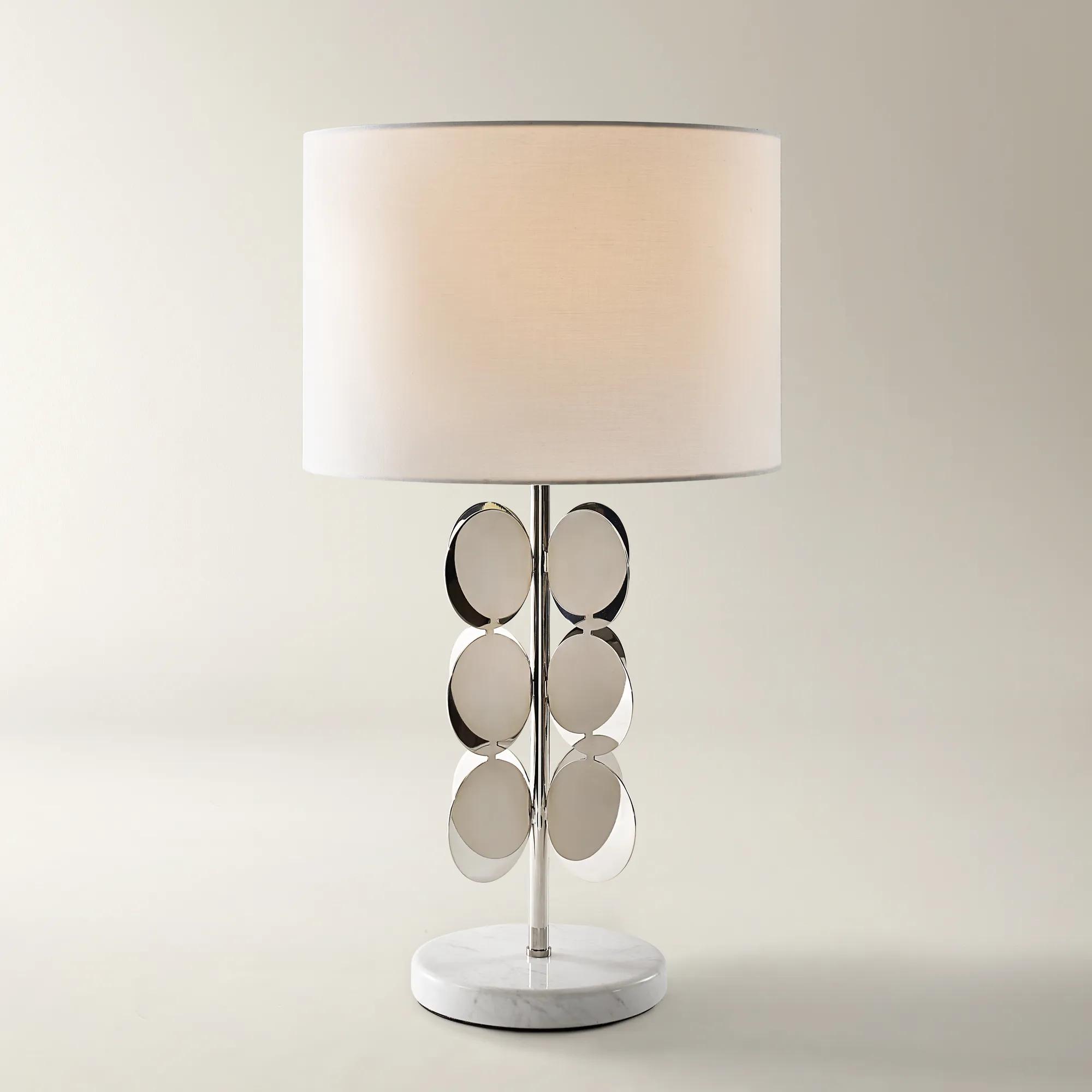
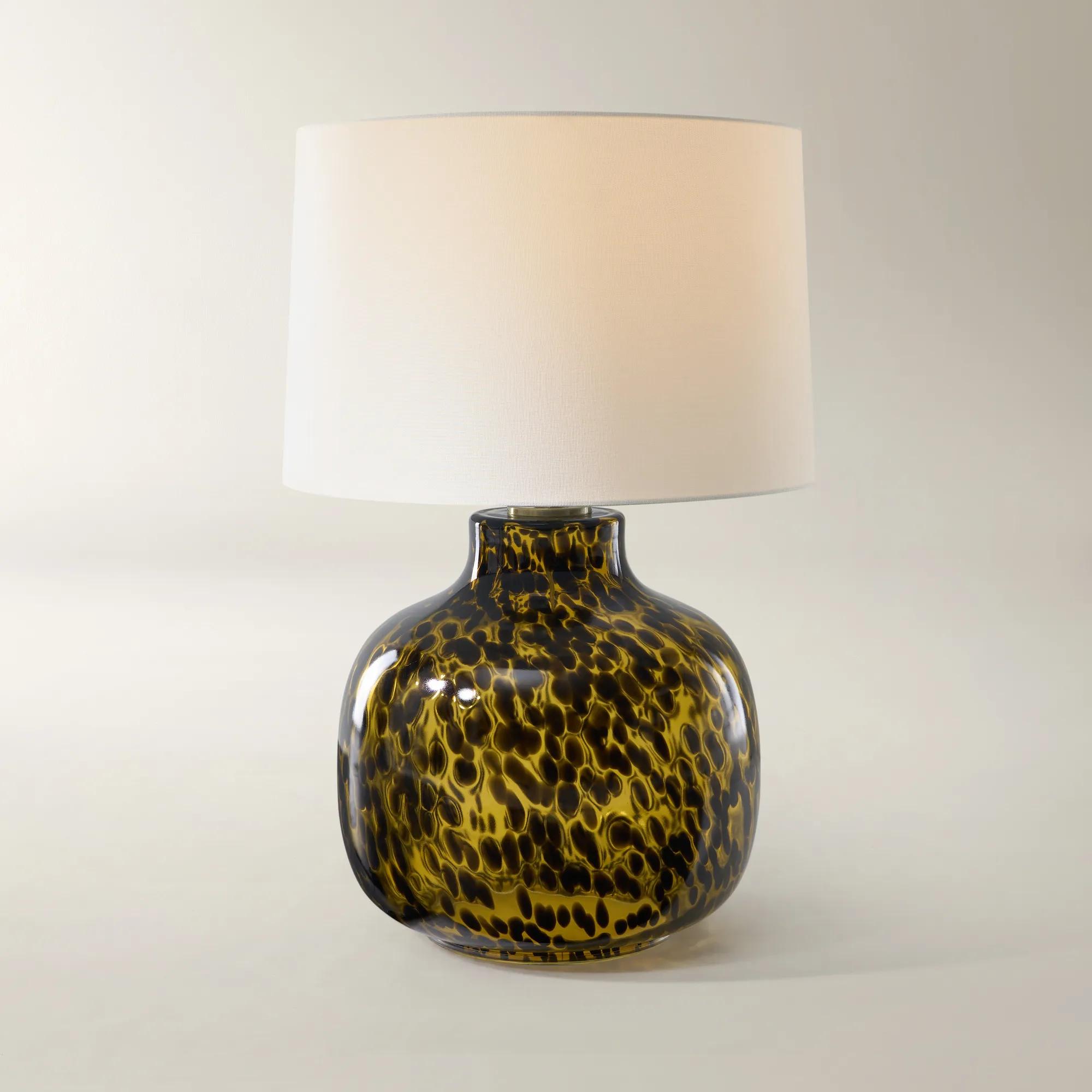
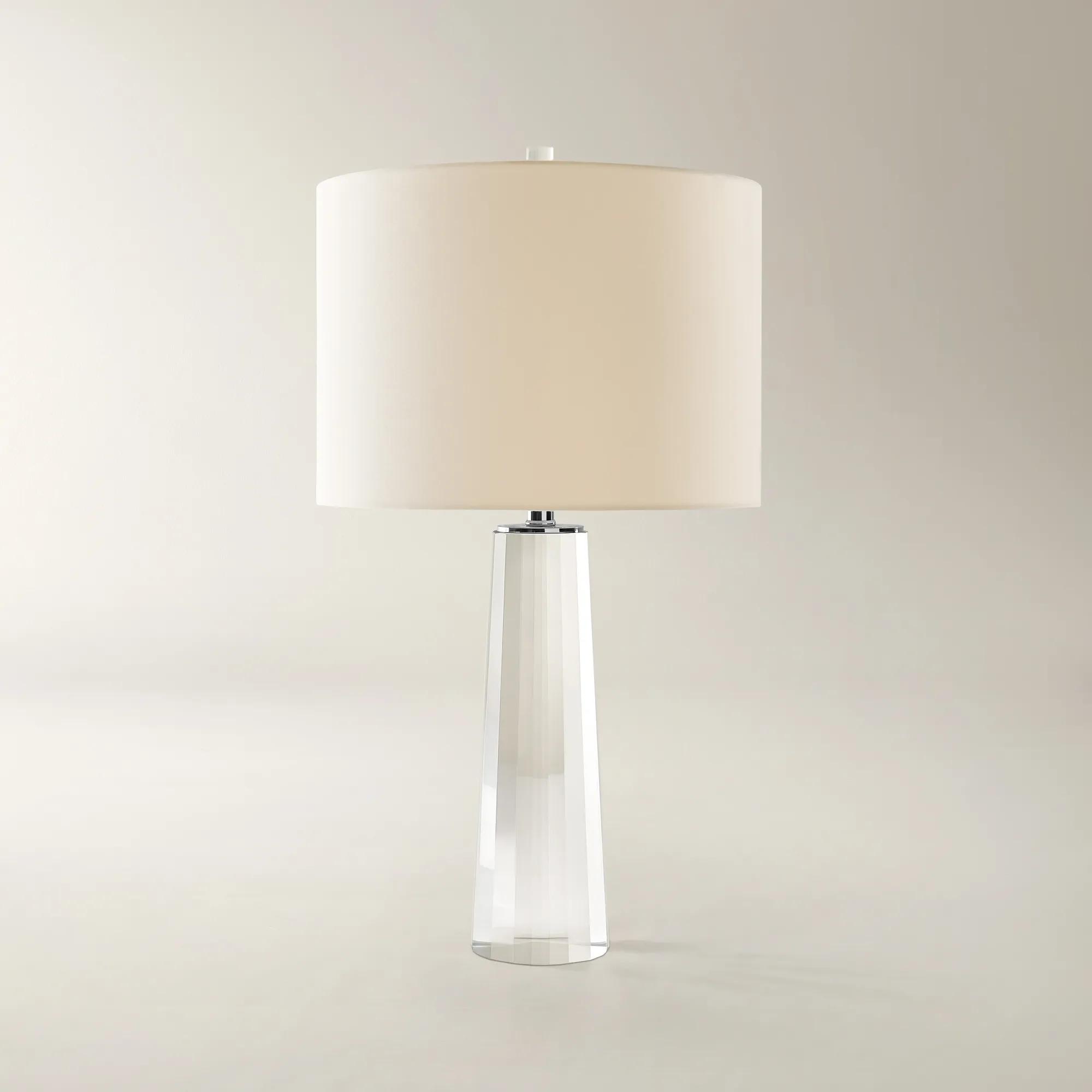
Lighting solutions for high ceilings bring generous architectural volume into balance, pairing a statement hanging fixture with light at the wall, seating, and tabletop levels. A chandelier or pendant establishes the room’s visual center, while sconces, floor lamps, and table lamps make the space feel inviting where daily life happens. This layered approach gives a soaring living room, vaulted dining room, or double-height entry both drama and definition, rather than leaving a bright ceiling suspended above a dim interior. Oversized chandeliers have the presence to hold their own against tall walls, with broad silhouettes, branching arms, or tiered forms that draw the eye into the room. Cascading pendants introduce a different rhythm: staggered drops follow the vertical sweep of a staircase or create a luminous composition within an open foyer. Multi-globe arrangements bring sculptural volume, while linear suspension lights echo the length of a dining table or kitchen island and concentrate illumination over the surface below. The character of that light depends as much on materials as on shape. Clear glass and faceted crystal catch highlights and lend a jewel-like brilliance; frosted or opal glass diffuses the source for a softer glow. Fabric shades create an intimate pool of light, particularly around seating, while exposed bulbs deliver a more direct effect that deserves careful consideration from every viewing angle. Polished metal reflects surrounding colors and light, brushed finishes introduce a quieter gleam, and dark metal frames give airy compositions a crisp architectural outline. Repeating a finish already present in cabinet hardware, furniture, or decorative accents can tie a large fixture to the rest of the interior without making every detail identical. In a room with substantial windows or a dramatic fireplace, lighting can complement those features through proportion and placement rather than competing with them. The result is an interior that feels composed from floor to ceiling, with enough visual richness to reward a second look.
Scale and suspension length are essential considerations for lighting in rooms with high ceilings. Fixture diameter, overall height, and the available chain, cord, or downrod length determine whether a chandelier feels connected to the furnishings or disappears into the space above them. Room height alone does not establish the right size: a narrow, tall entry calls for a different silhouette than a broad great room with the same ceiling elevation. A dining fixture relates closely to the table beneath it, while an entry chandelier must preserve comfortable clearance along walking routes and remain visually balanced from nearby rooms. In an open-plan interior, a long suspension over an island can define the kitchen without interrupting sightlines across the living area. Adjustable hanging lengths offer flexibility, but the fixture’s specified range matters, as does whether additional downrods or chain are supported by its design. Sloped and vaulted ceilings also require compatible mounting hardware; a canopy designed only for a flat ceiling is not automatically suitable for an angled surface. Weight, electrical-box support, and safe access for installation deserve particular attention with substantial metal or glass fixtures, making professional installation especially valuable in tall spaces. Beyond fit, light output determines how successfully the room functions. Lumens describe brightness, while watts describe energy use, so wattage alone is not a reliable basis for comparing illumination. Shade opacity, bulb direction, and the distance between the fixture and the surface all affect the light that reaches a dining table, sofa, or countertop. Recessed lights can supply general illumination or wash tall walls, while sconces bring light closer to eye level and help define the room’s perimeter. Warm-white light, often in the 2700K to 3000K range, creates an inviting atmosphere; a color rendering index of 90 or higher can help artwork, upholstery, and finishes appear more faithful to their intended colors. Dimmable fixtures allow that layered illumination to move from lively entertaining to a softer evening setting, provided the bulbs, fixture, and dimmer are compatible. Separate controls for overhead, wall, and accent lighting make those changes more nuanced.
High-ceiling lighting is most satisfying when its sculptural appeal is matched by thoughtful everyday use. For households that gather in a spacious living room, a chandelier supplies the overarching statement, but a shaded floor lamp beside a reading chair provides focused light without requiring the entire room to remain brightly lit. In a dining space, a suspended fixture can frame the table as a destination, with nearby sconces lending depth to the walls and softening the contrast beyond the place settings. A tall foyer benefits from a hanging composition that makes an impression on arrival while supporting illumination keeps adjoining passages welcoming. These combinations suit homeowners furnishing a new space, hosts who want flexible ambiance, and design enthusiasts drawn to interiors with expressive architectural scale. Pairing lighting with Home Decor for High Ceilings extends that sense of proportion through the room, allowing artwork, mirrors, and decorative accents to relate to the fixture rather than sit beneath it as disconnected details. Long-term enjoyment also depends on maintenance. Open frames, elaborate crystal arrangements, and fabric shades have different cleaning needs, and fixtures suspended well above reach require a practical plan for safe access. Metal and glass are commonly maintained with gentle dusting and material-appropriate cleaning, following the manufacturer’s instructions; abrasive cleaners can damage decorative finishes, and moisture should stay away from electrical components. Fabric shades generally benefit from careful dust removal rather than wet cleaning unless their care directions specify otherwise. Replaceable-bulb fixtures offer straightforward lamp changes when safely accessible, while integrated LED designs warrant attention to rated life, warranty terms, and serviceability. Secure construction and an appropriate location help preserve both appearance and performance; fixtures near splashes or humidity need the correct suitability rating. With these details considered, lighting becomes more than an ornament suspended overhead. It gives expansive rooms a graceful structure, brings color and texture into focus, and makes their height feel intentional rather than distant.
FAQs
To achieve a layered lighting effect in rooms with high ceilings, combine different types of fixtures such as grand chandeliers, pendant clusters, recessed lights, wall sconces, and floor lamps. This approach balances ambient, accent, and task lighting, allowing you to highlight architectural features, create intimate zones, and fill the vertical space with visual interest and warmth.
High ceiling lighting solutions are remarkably versatile and can be tailored to a variety of design styles. Contemporary interiors benefit from sculptural pendants and sleek metallic finishes, while traditional spaces may be enhanced by classic crystal chandeliers or ornate lanterns. Eclectic rooms can mix bold statement pieces with layered accent lighting for an artistic, curated look.
Absolutely. During winter and festive seasons, dramatic lighting solutions such as multi-tiered chandeliers or pendant clusters can create a welcoming and luxurious atmosphere. Dimmable fixtures allow you to adjust the mood, making gatherings feel intimate and memorable, while accent lighting can spotlight seasonal décor or artwork.
Accent lighting in tall spaces can be used to highlight architectural beams, showcase art collections, or create dramatic uplighting along walls. LED strips can be subtly placed to wash surfaces with color, while strategically positioned sconces can draw the eye upward and add decorative flair.
A statement lighting fixture makes a thoughtful and transformative gift for design enthusiasts, new homeowners, or anyone who enjoys entertaining in style. It’s especially meaningful for those who see their home as a canvas for self-expression, as a beautiful fixture can become the centerpiece of a cherished living space.