
Furniture For Tiny Homes
Furniture For Tiny Homes
-
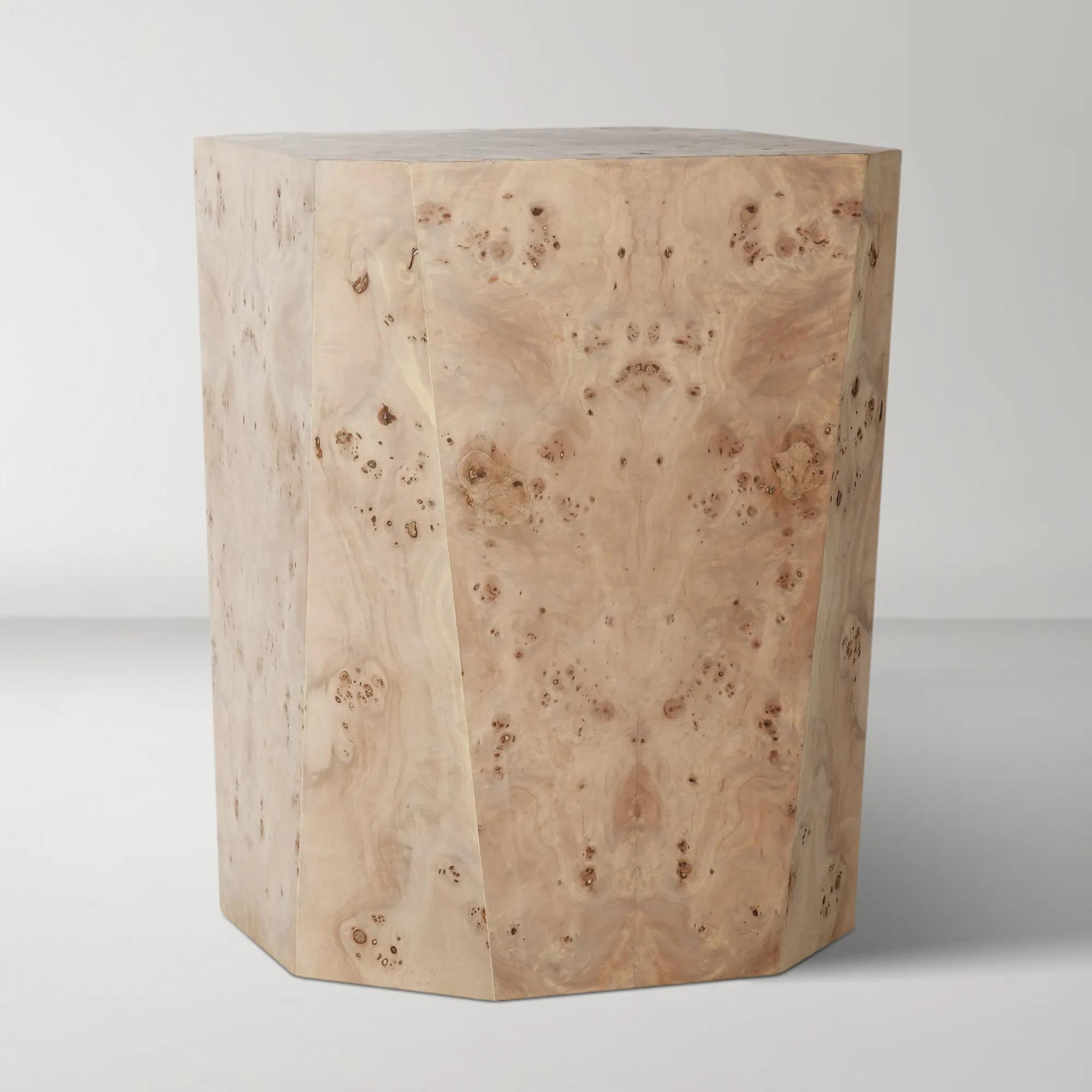
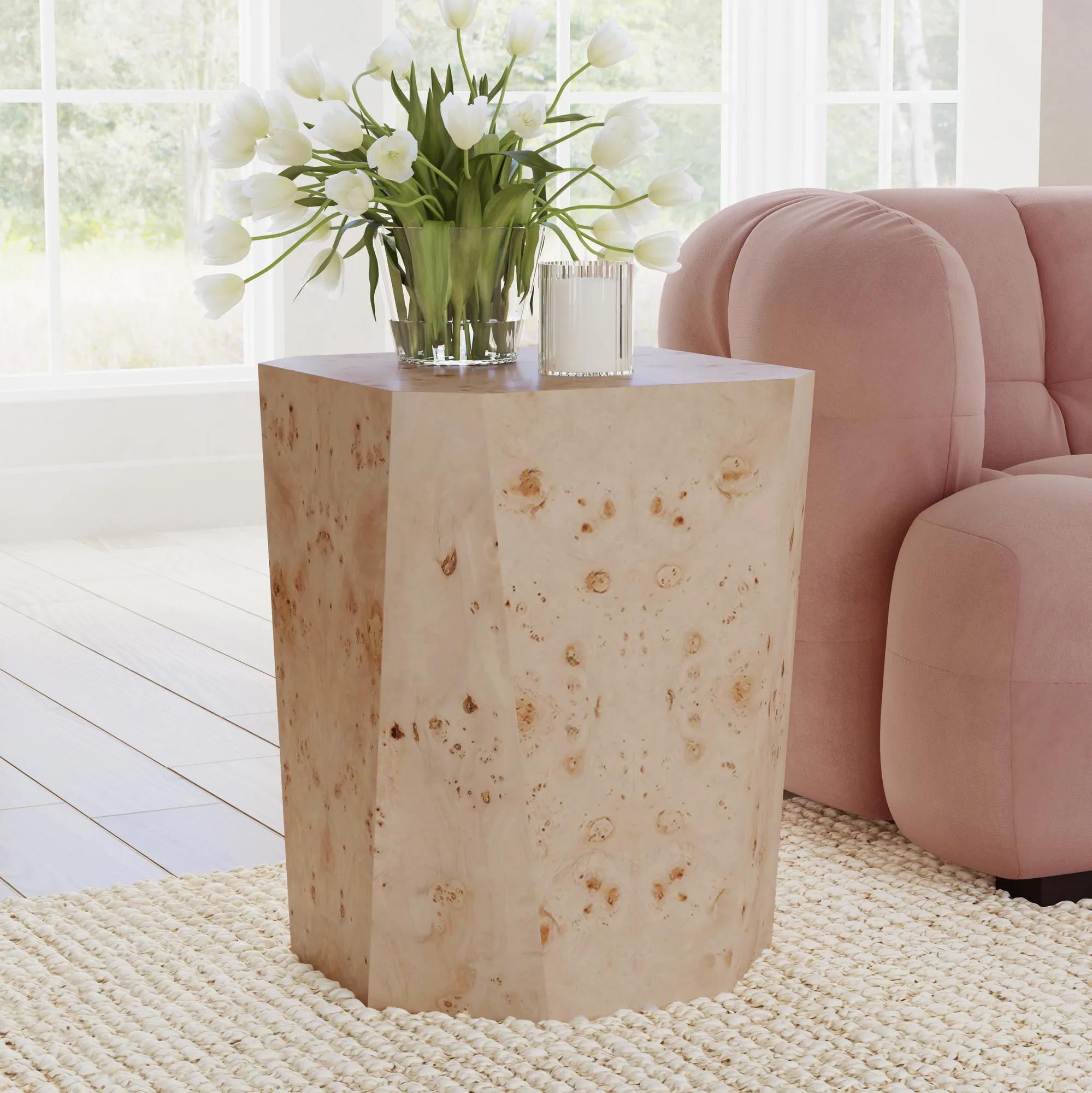 Avena Square Natural Burl Wood End Table (17.75")$699
A striking end table featuring natural burl wood veneer with unique swirling grain and warm, organic tones.
Add To Cart -
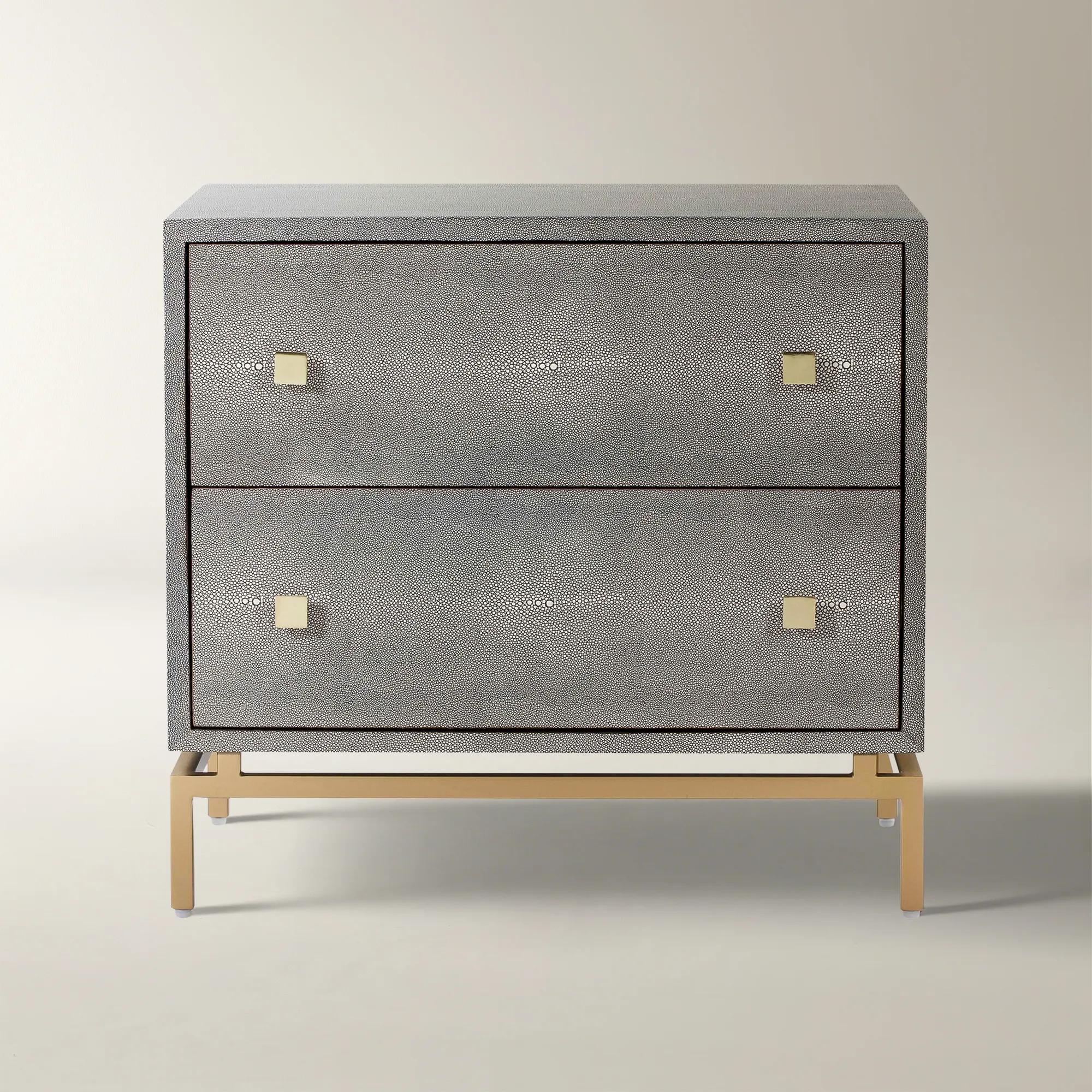
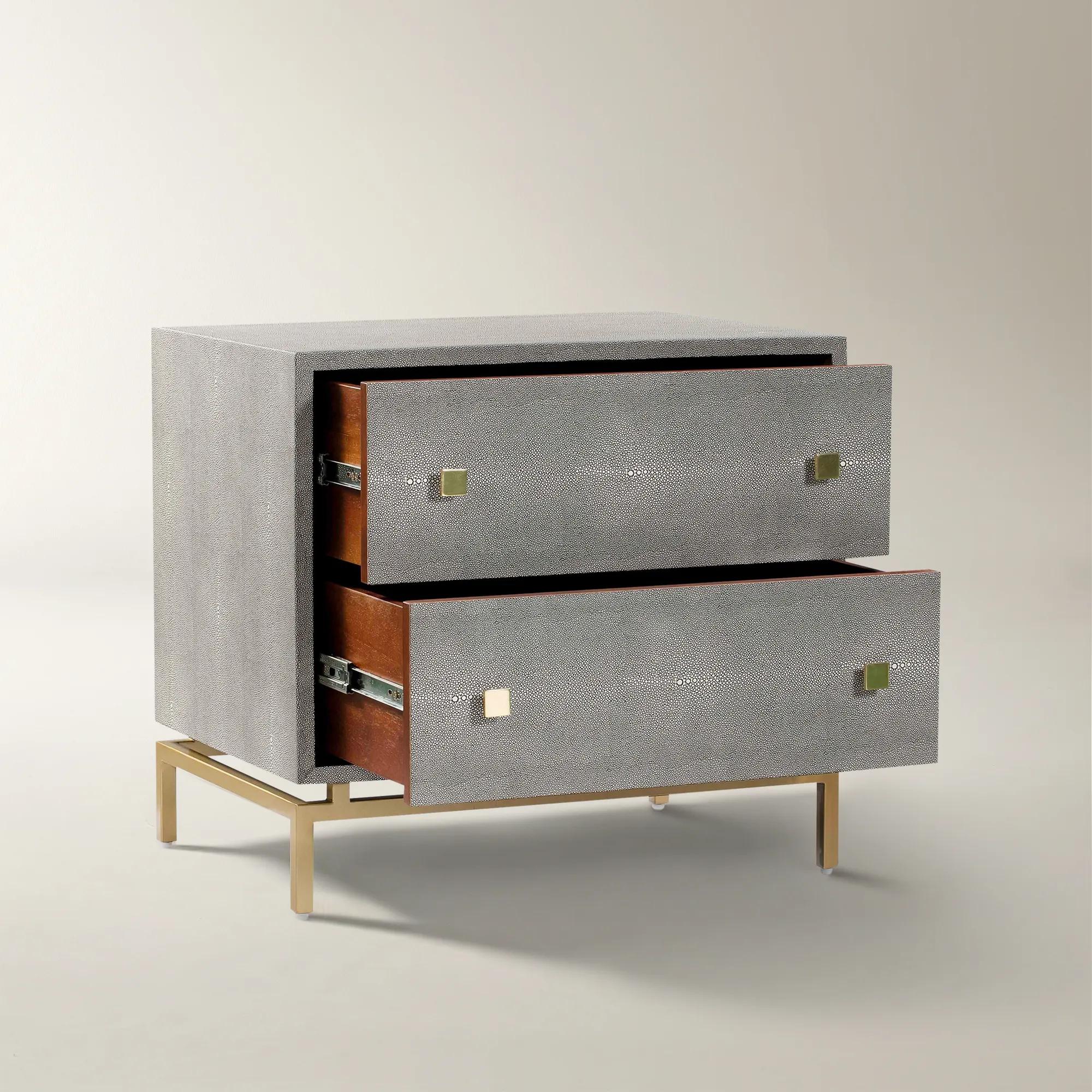 Misha Grey Shagreen 2-Drawer Nightstand (25")$749
A modern nightstand featuring faux shagreen texture, brass-finished base, and two cherry wood-lined drawers.
Add To Cart -
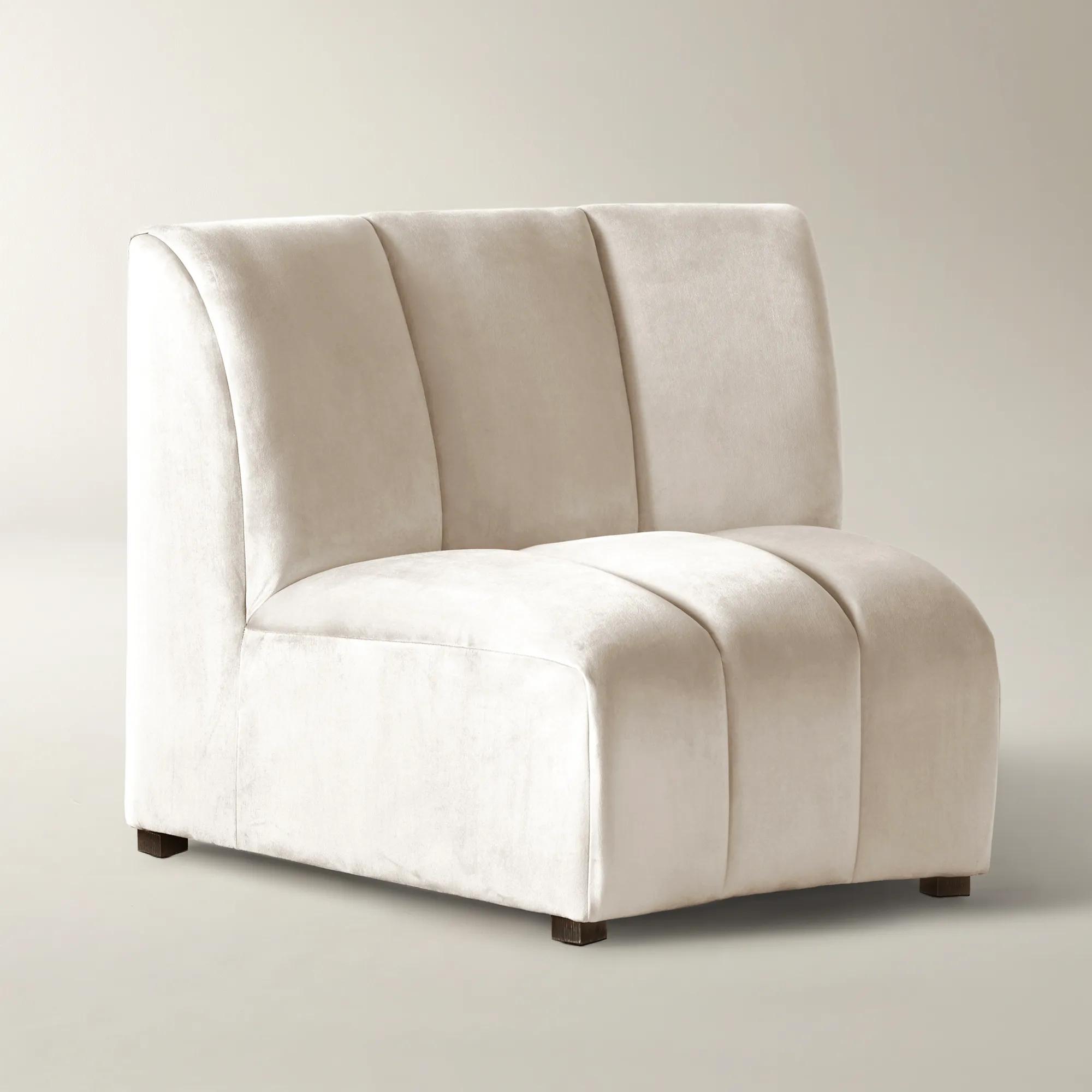 Jayce Channel-Tufted Ivory Velvet Armless Chair$949
A modern armless chair in water-repellent, stain-resistant Velvet Ivory with deep channel tufting and plush padding.
Add To Cart -
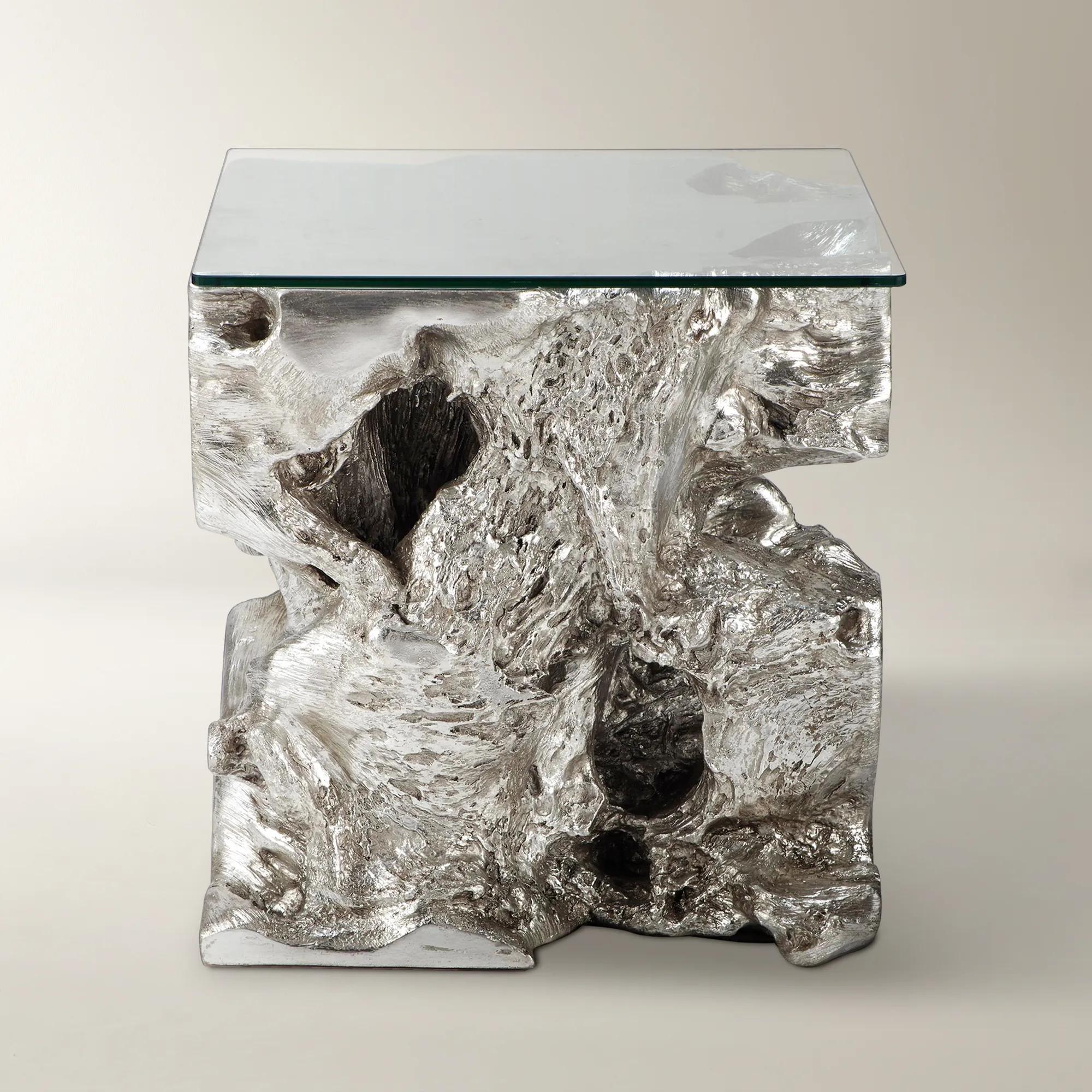 Sequoia Silver Resin End Table With Glass Top (22")$999
A sculptural end table featuring a silver leaf resin base and tempered glass top for modern elegance.
Add To Cart -
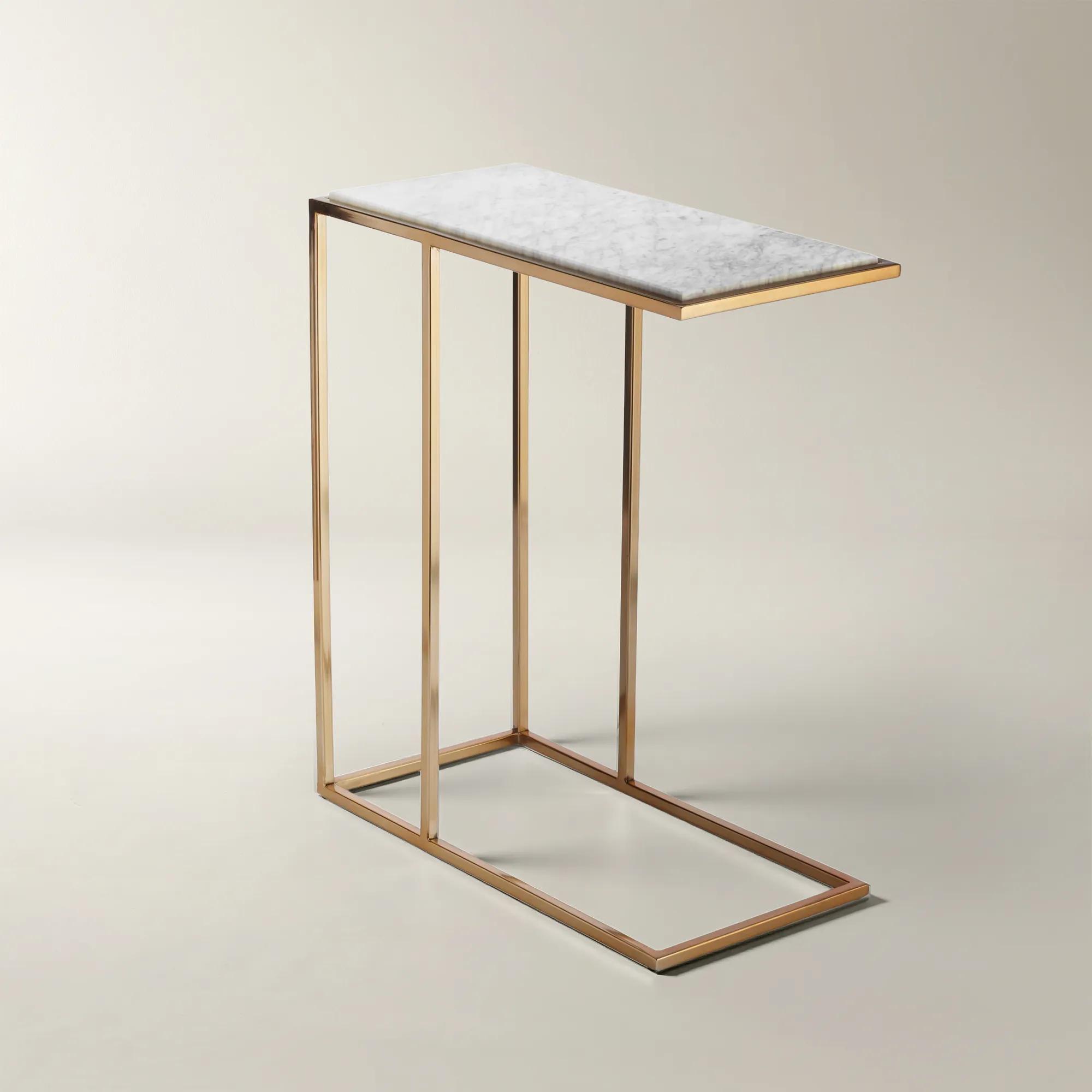
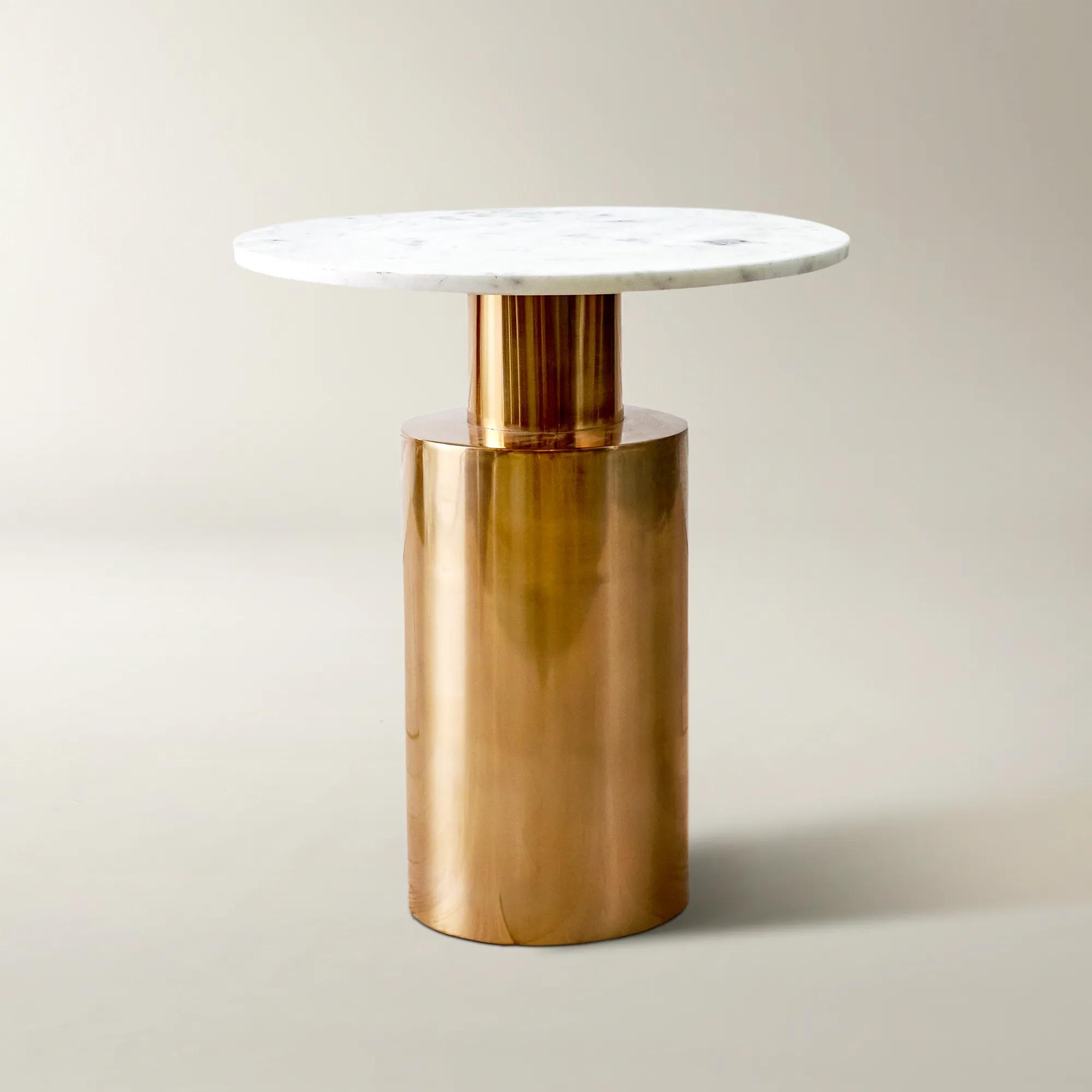
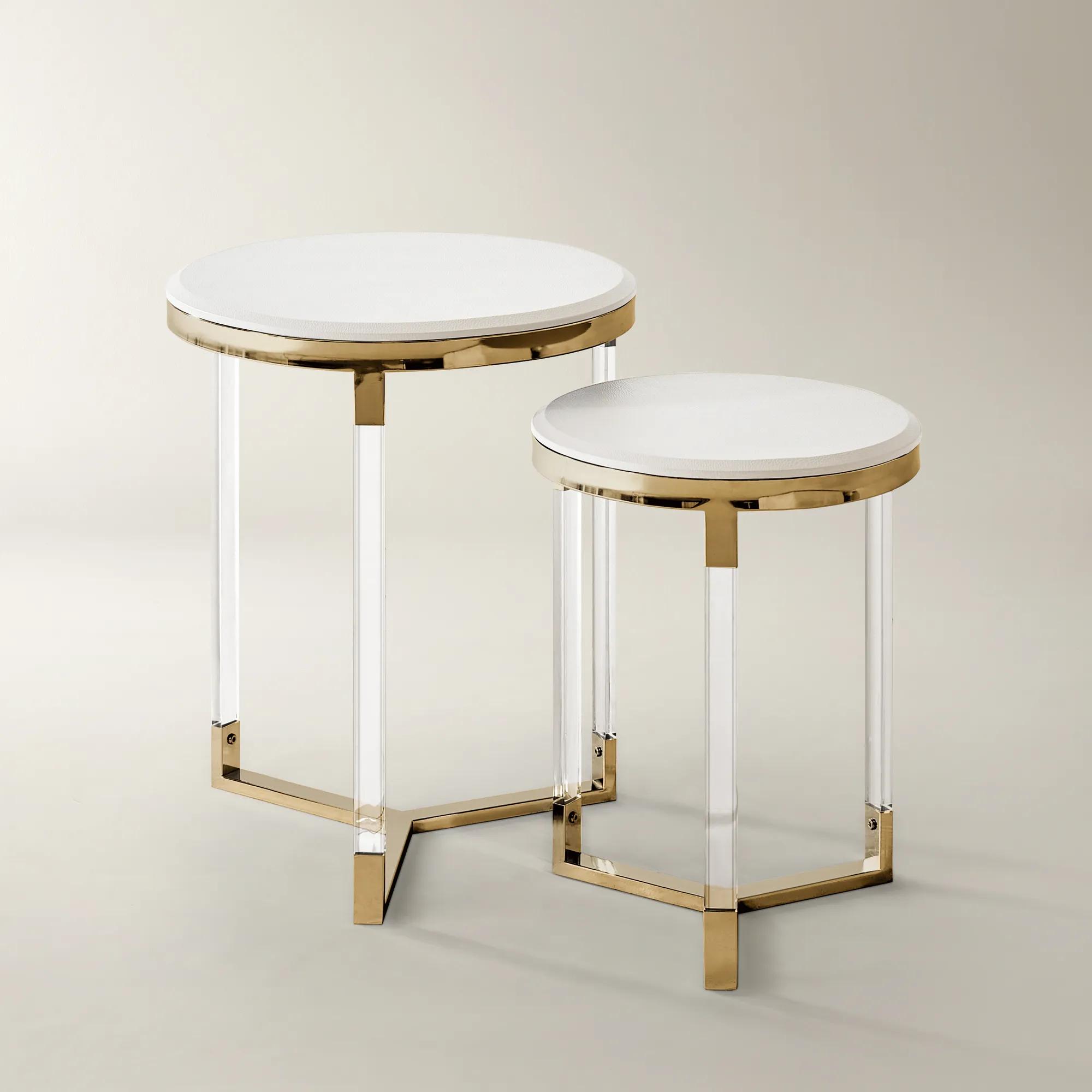
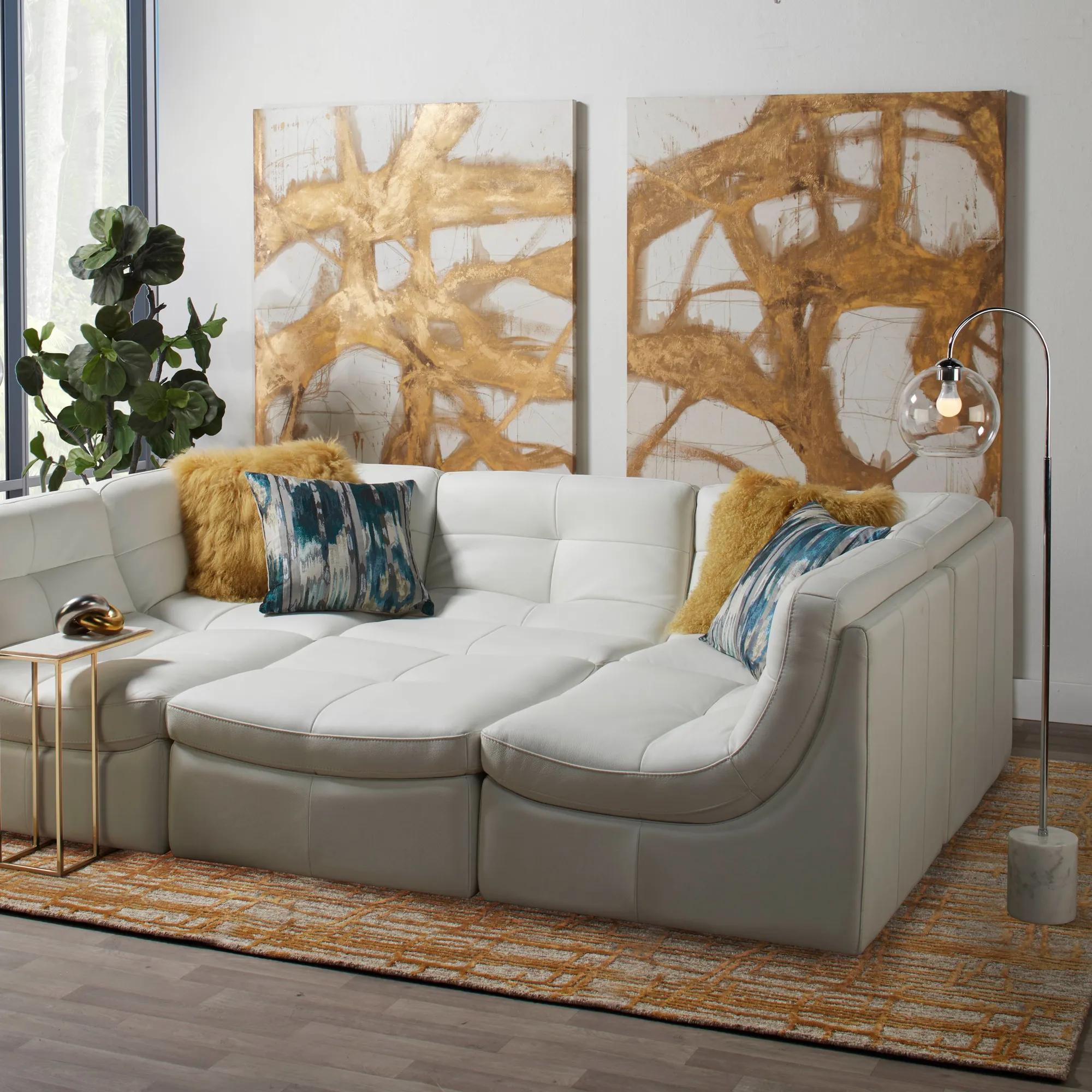 Lawton Rectangular Gold Stainless steel Accent Table With Marble Top (19.75")$259
A space-saving table featuring a white marble top and gold-finished stainless steel base.
Add To Cart -
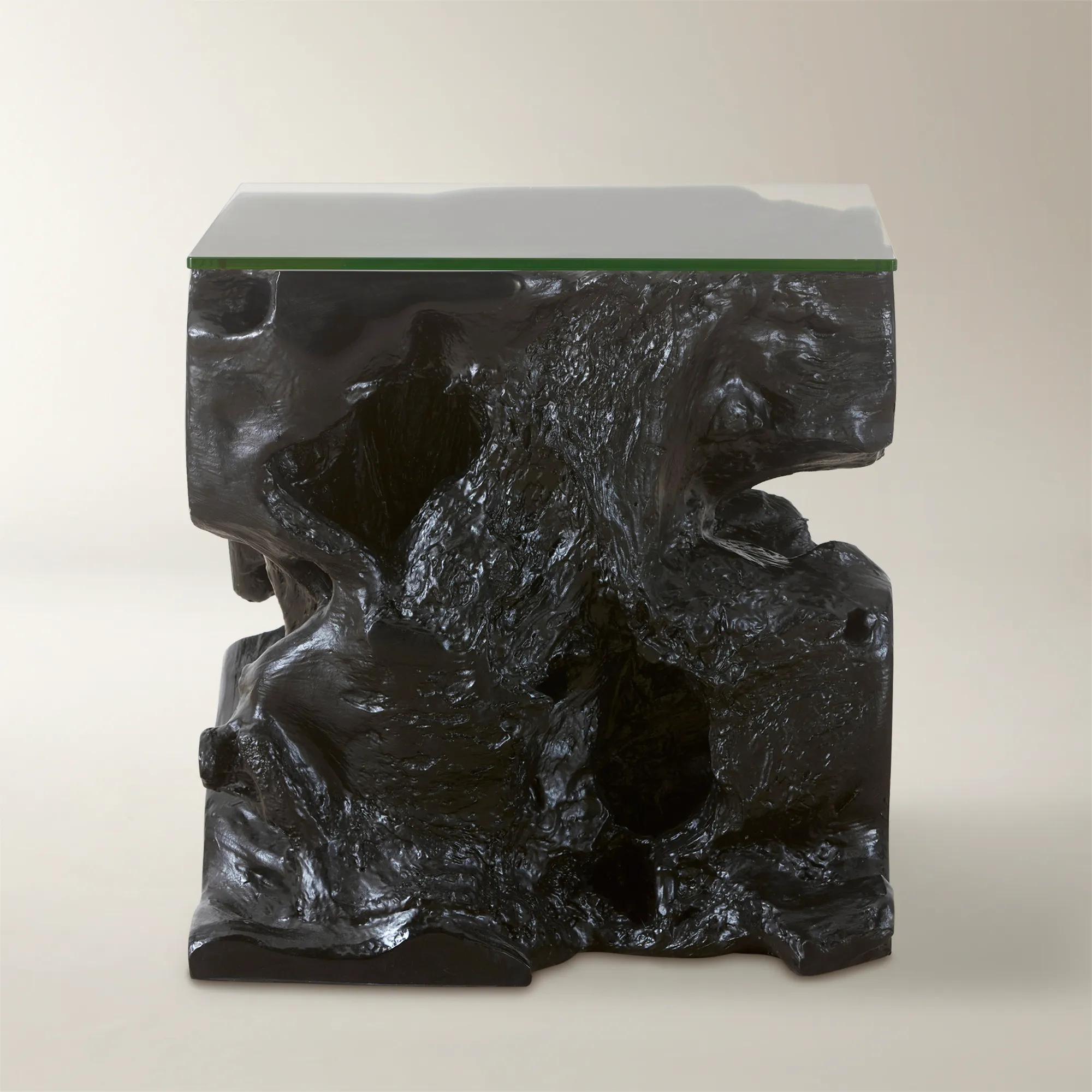 Sequoia Black Resin End Table With Glass Top (22")$999
A sculptural black resin and stone end table inspired by Acacia roots, suitable for indoor or outdoor use.
Add To Cart -
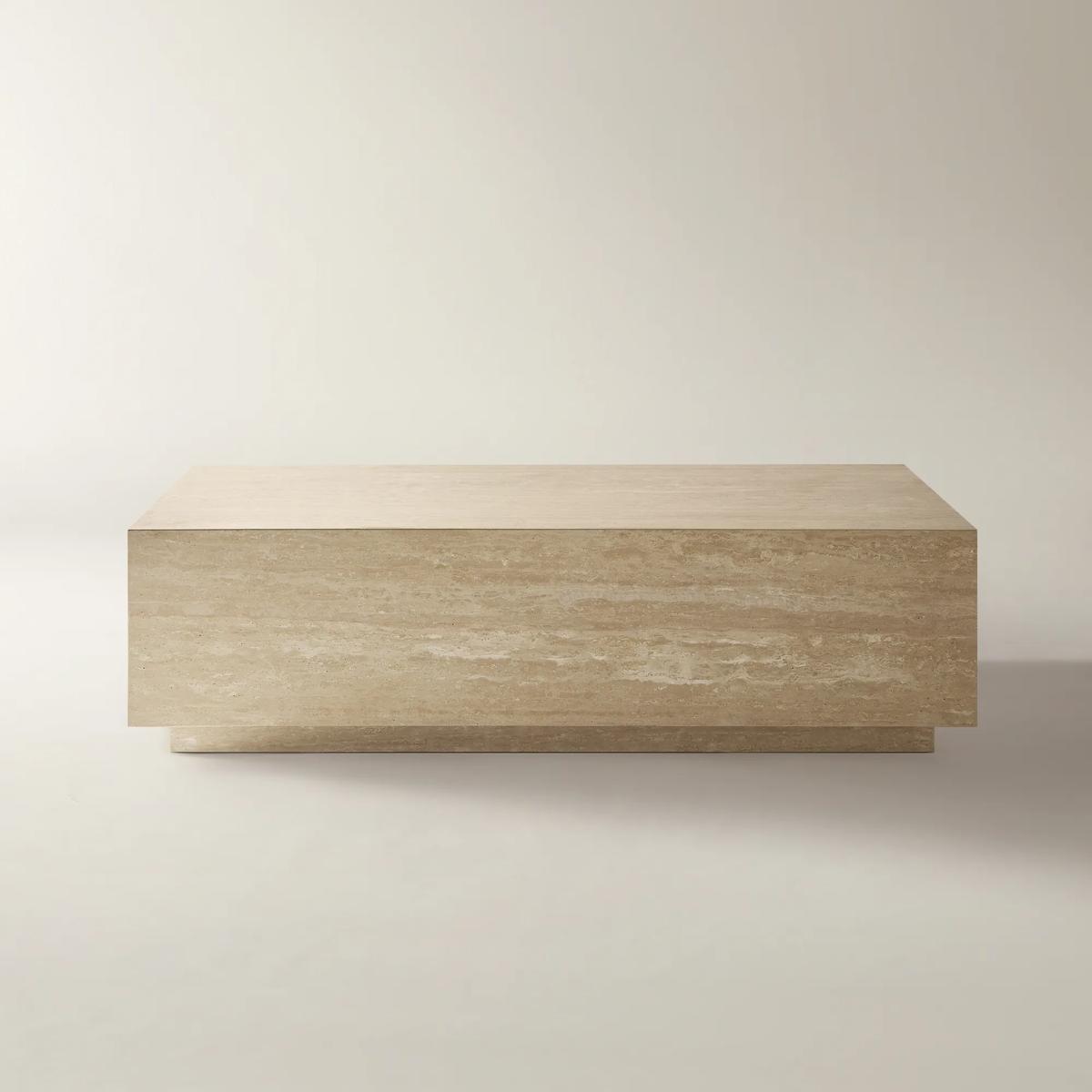
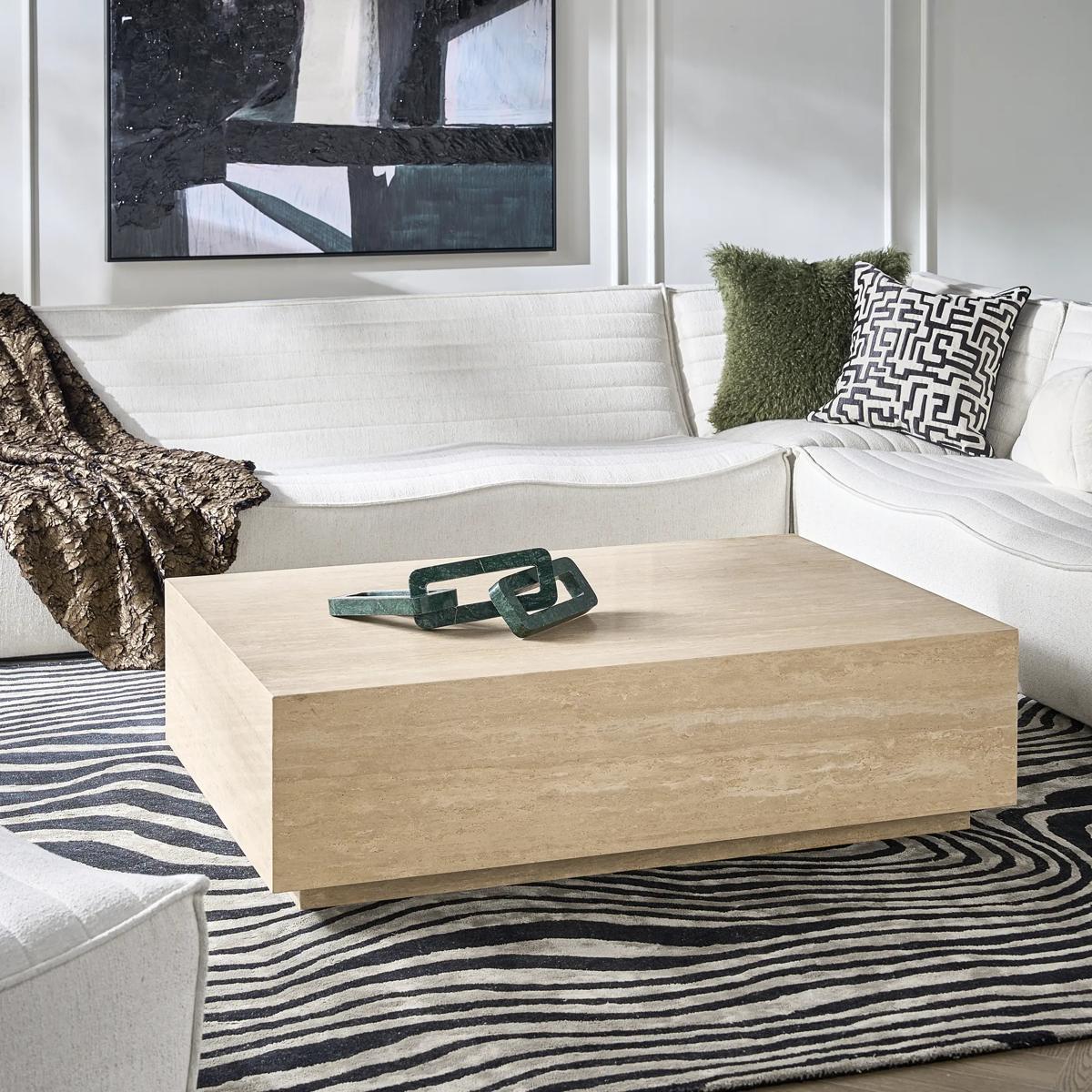 Vanta Rectangular Travertine Coffee Table (54")$2599
A seamless genuine travertine coffee table featuring ivory-gold tones and an ultra-light aluminum honeycomb core.
Add To Cart -
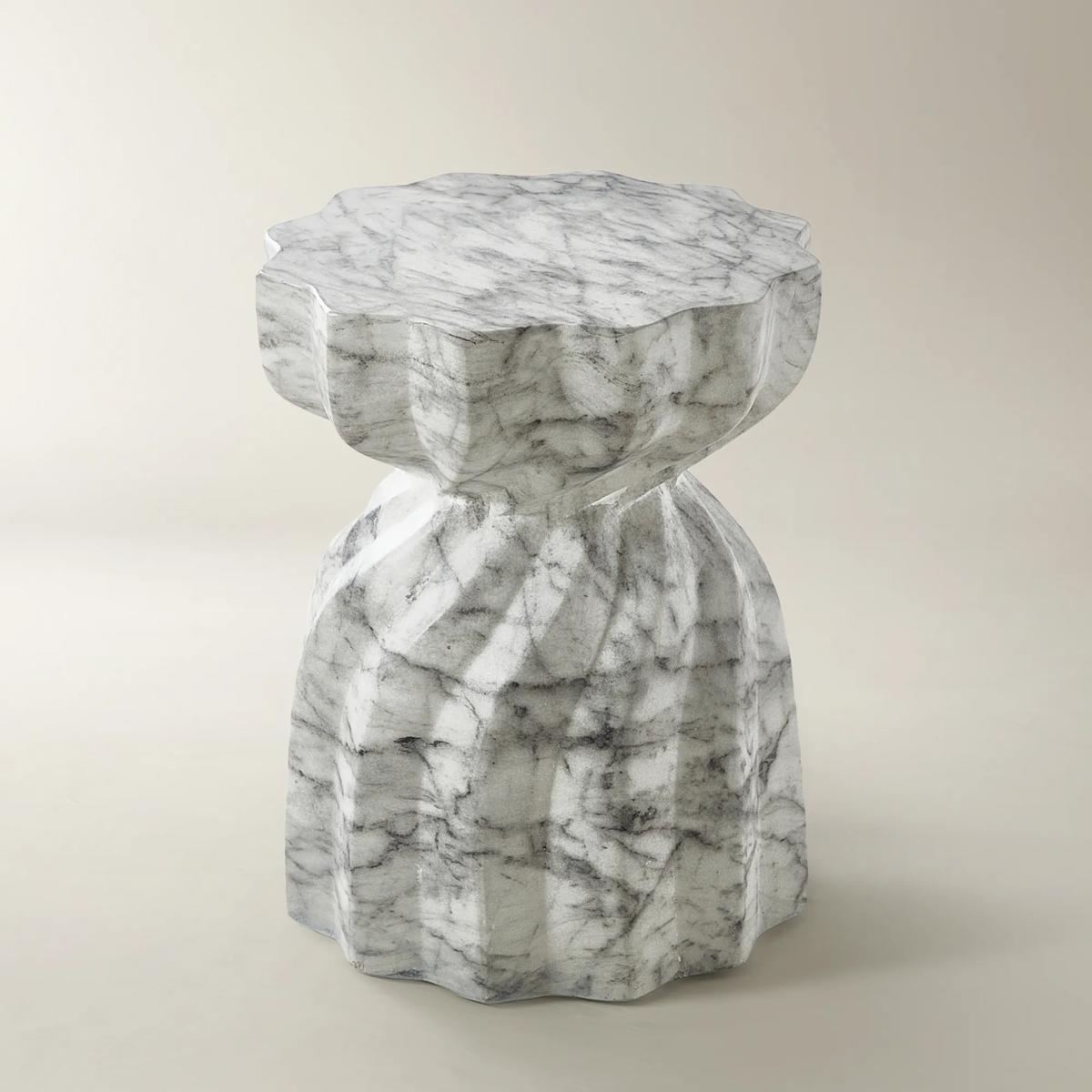
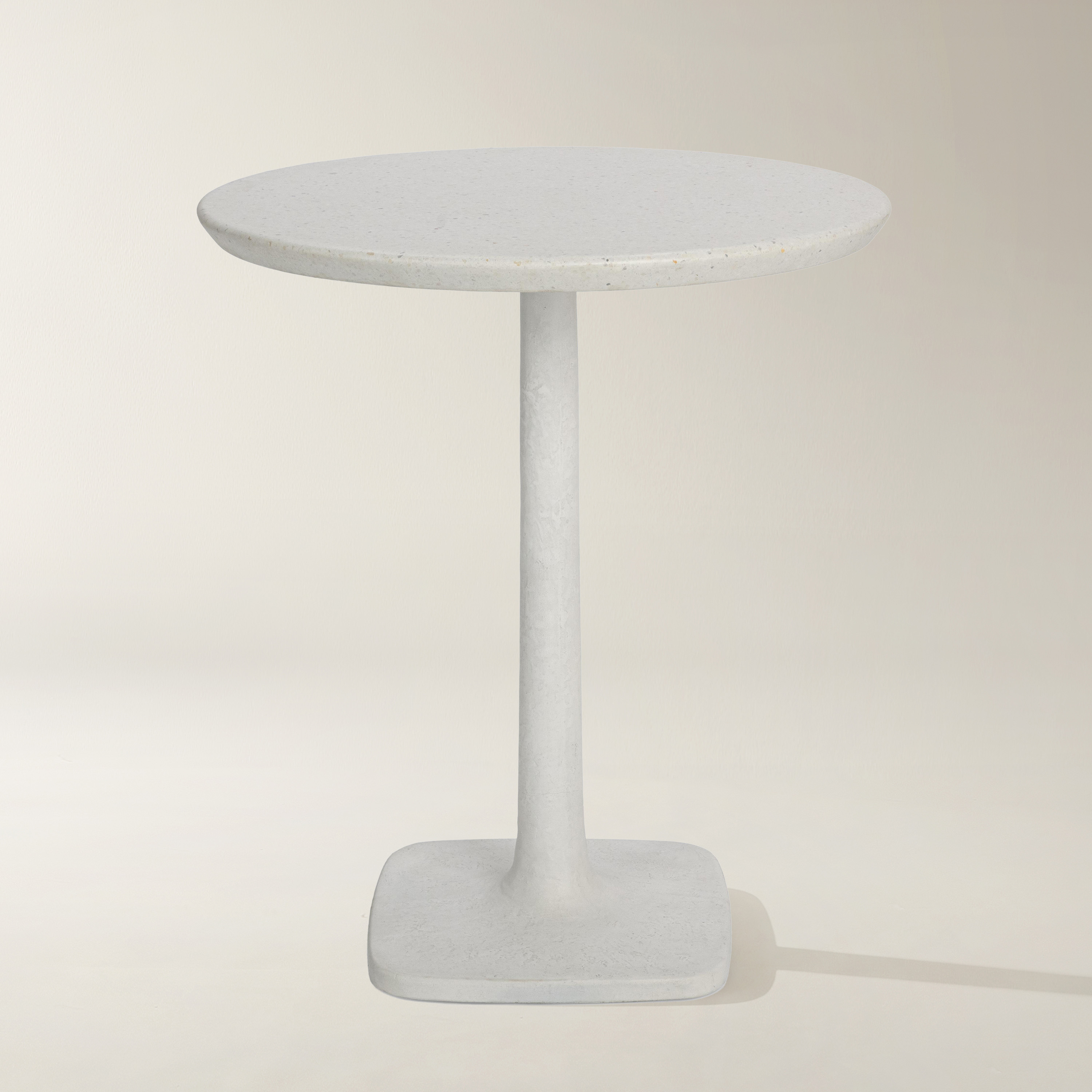
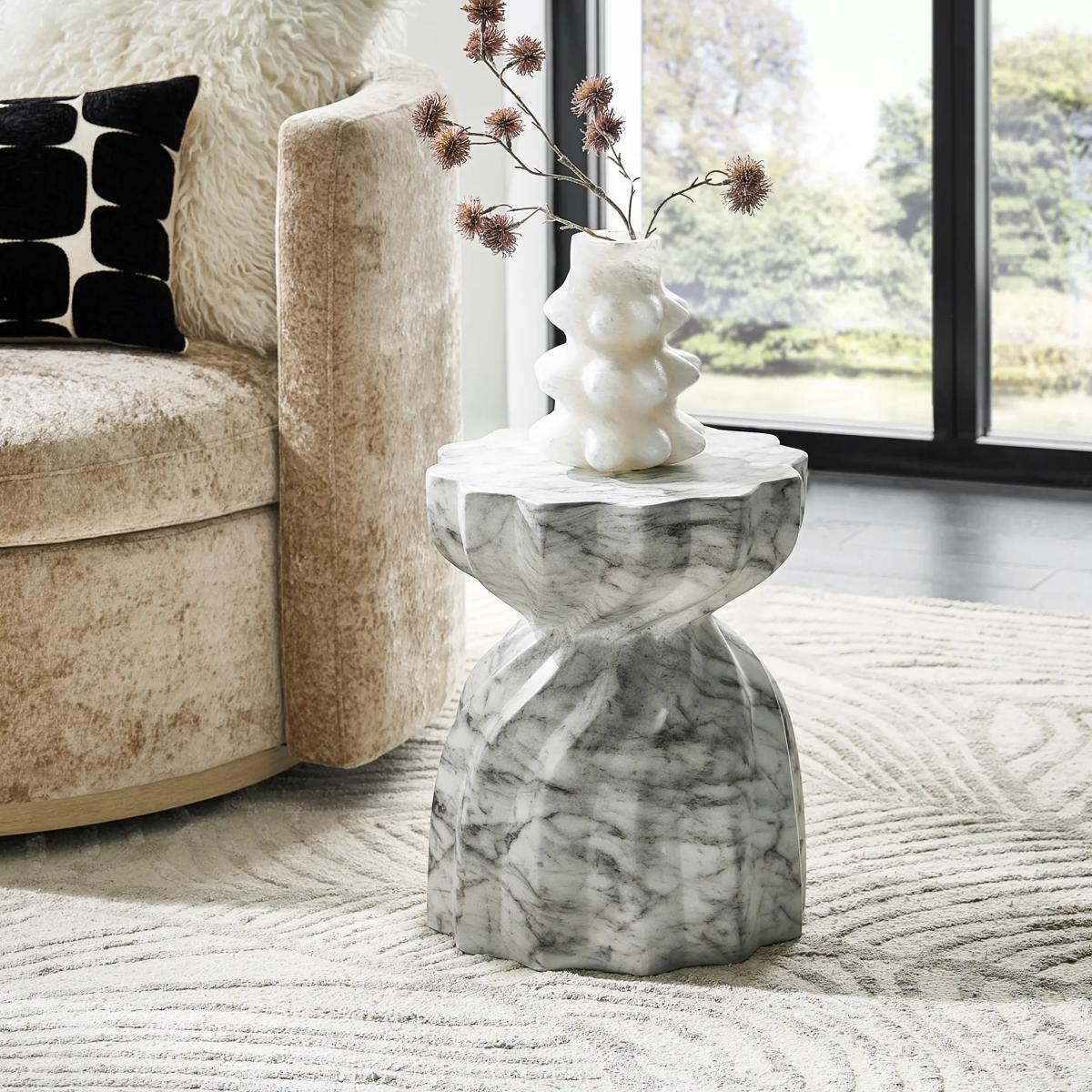 Lithia Scalloped White Concrete Side Table (15")$299
A sculptural white marble-look side table crafted from durable, lightweight fiber concrete for indoor or outdoor use.
Add To Cart -
.jpg?w=1200&h=1200)
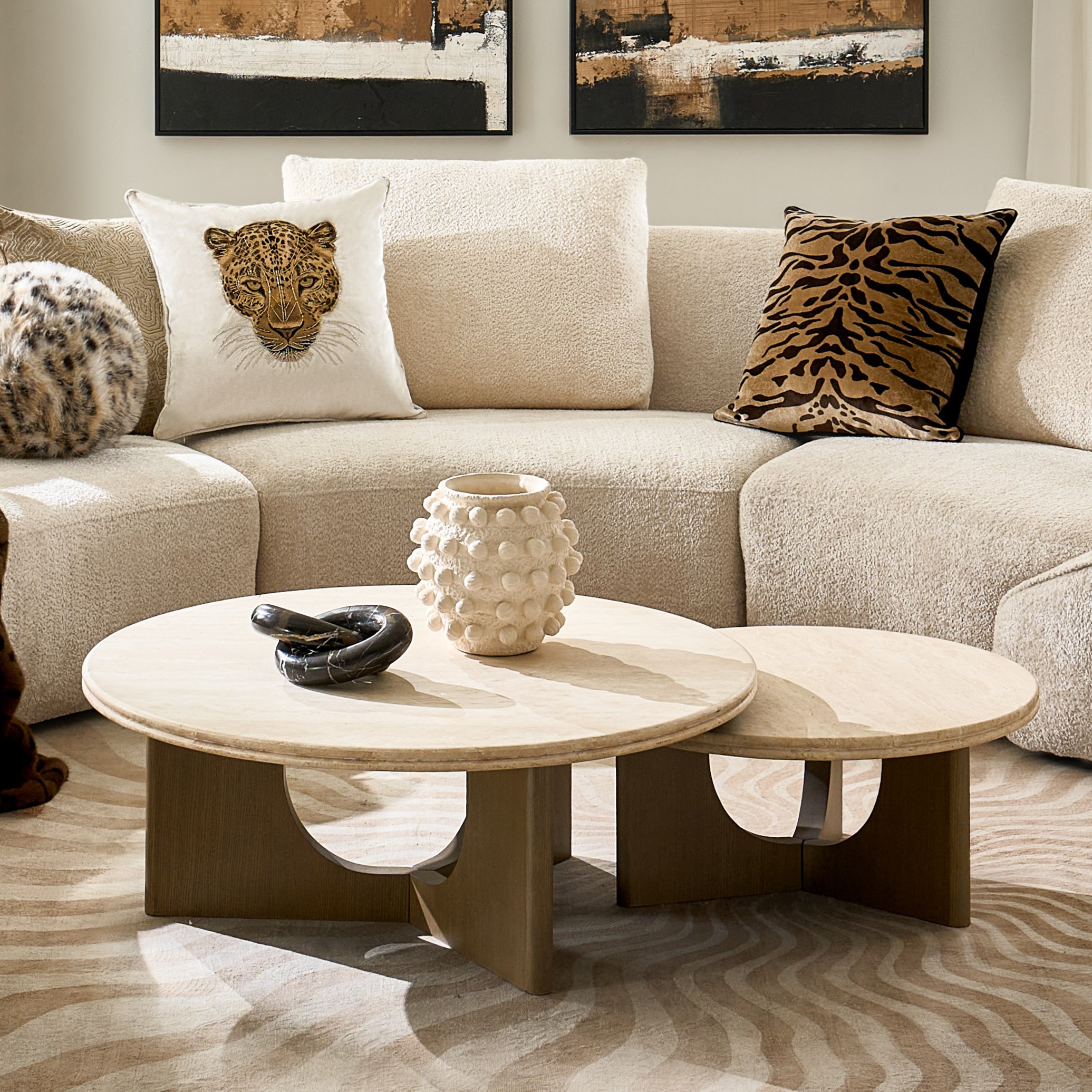 Bond Round Travertine and Wood Coffee Table (29.25")$699
A genuine travertine stone coffee table with warm ivory-gold tones atop a solid natural ash base.
Add To Cart -
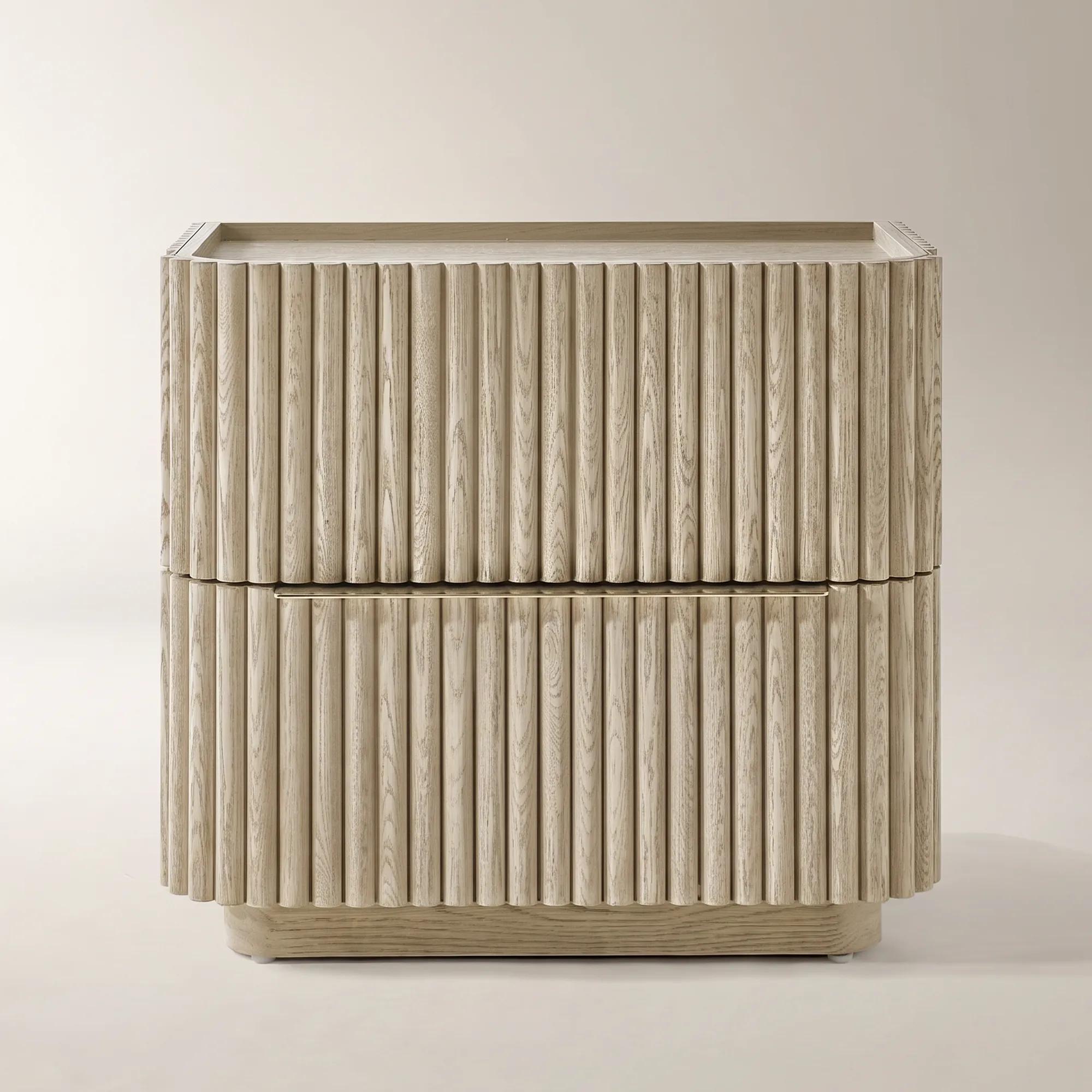
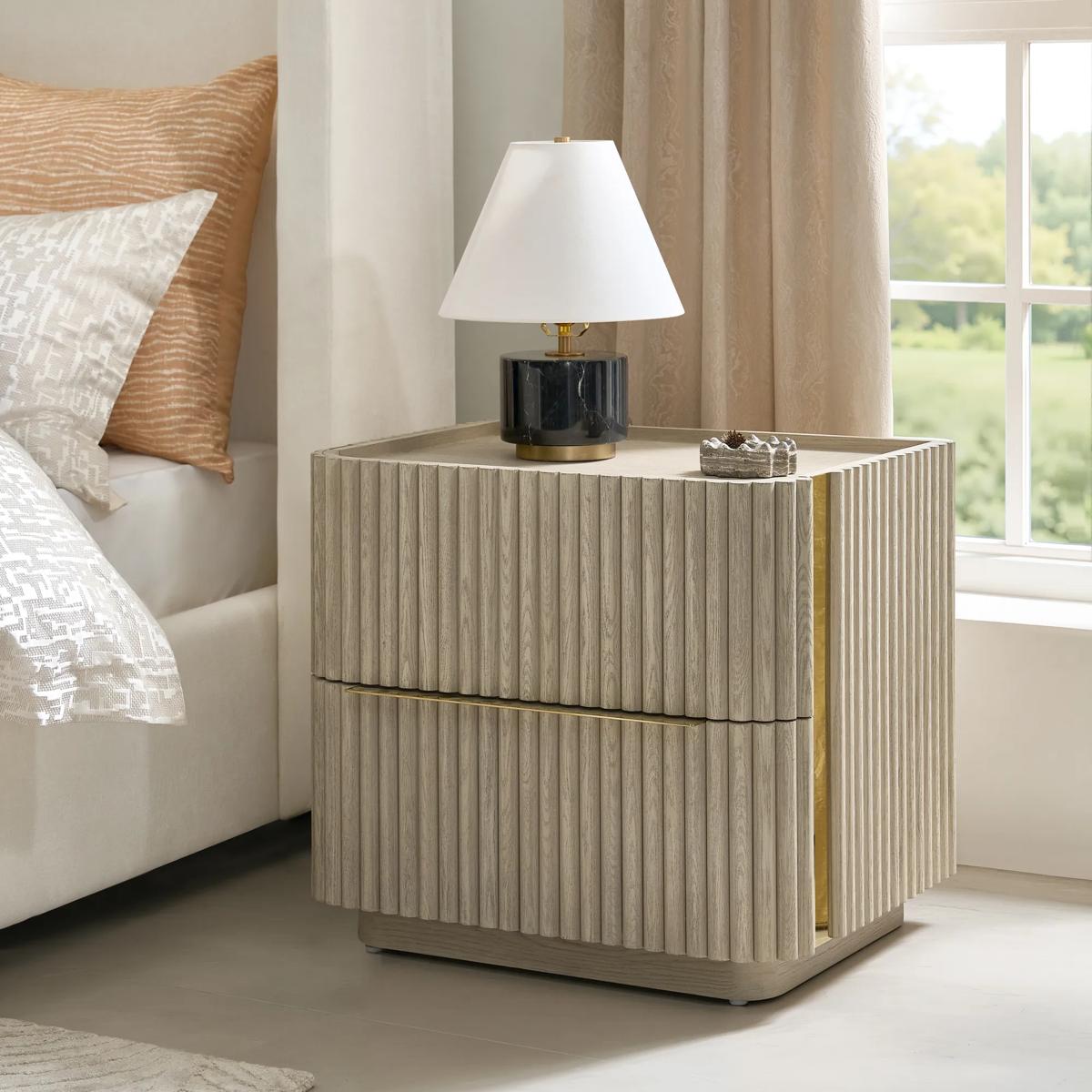 Stria Reeded White Oak 2-Drawer Nightstand (26")$899
A sculptural oak nightstand with reeded wood details, gold-plated trim, and soft-close felt-lined drawers.
Add To Cart -
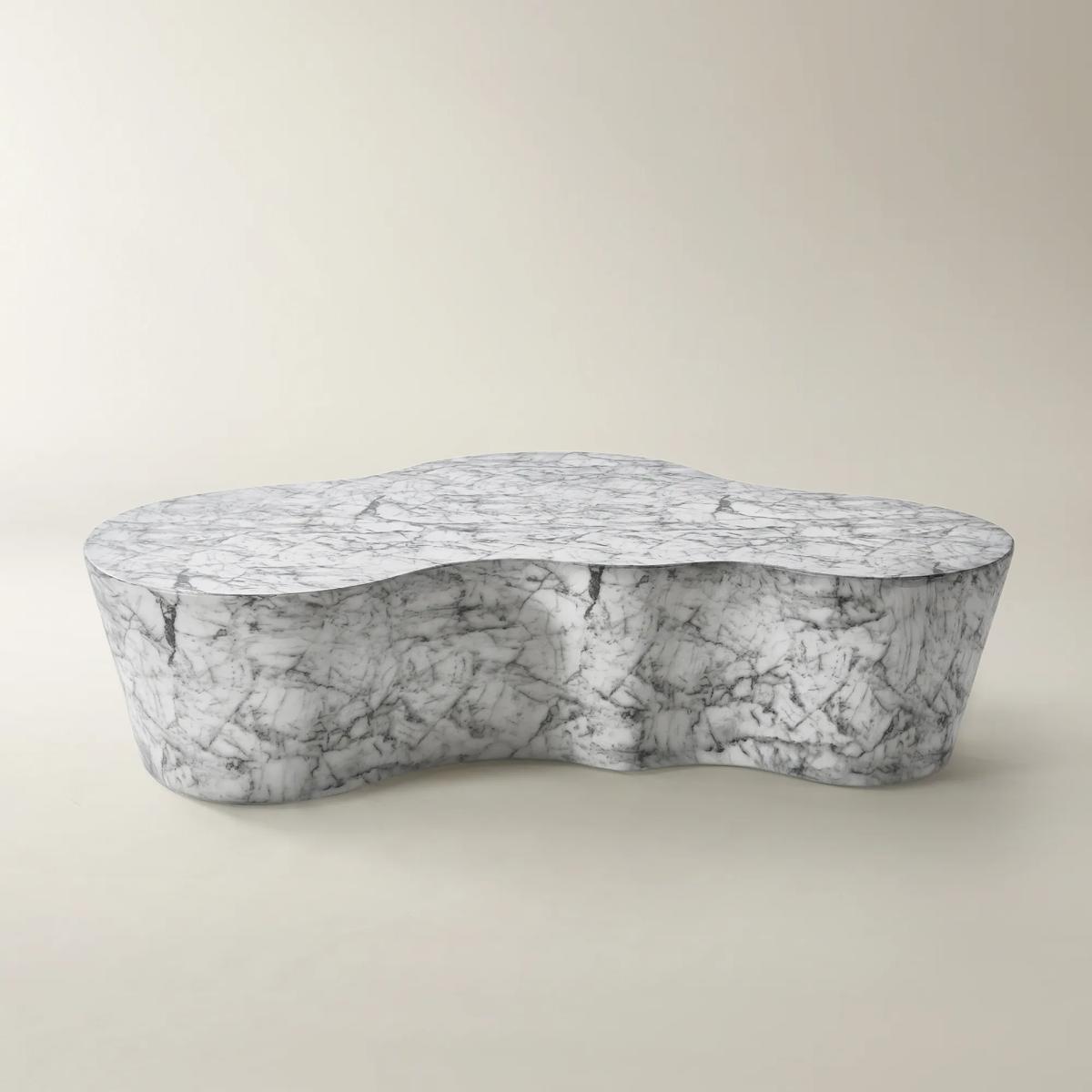
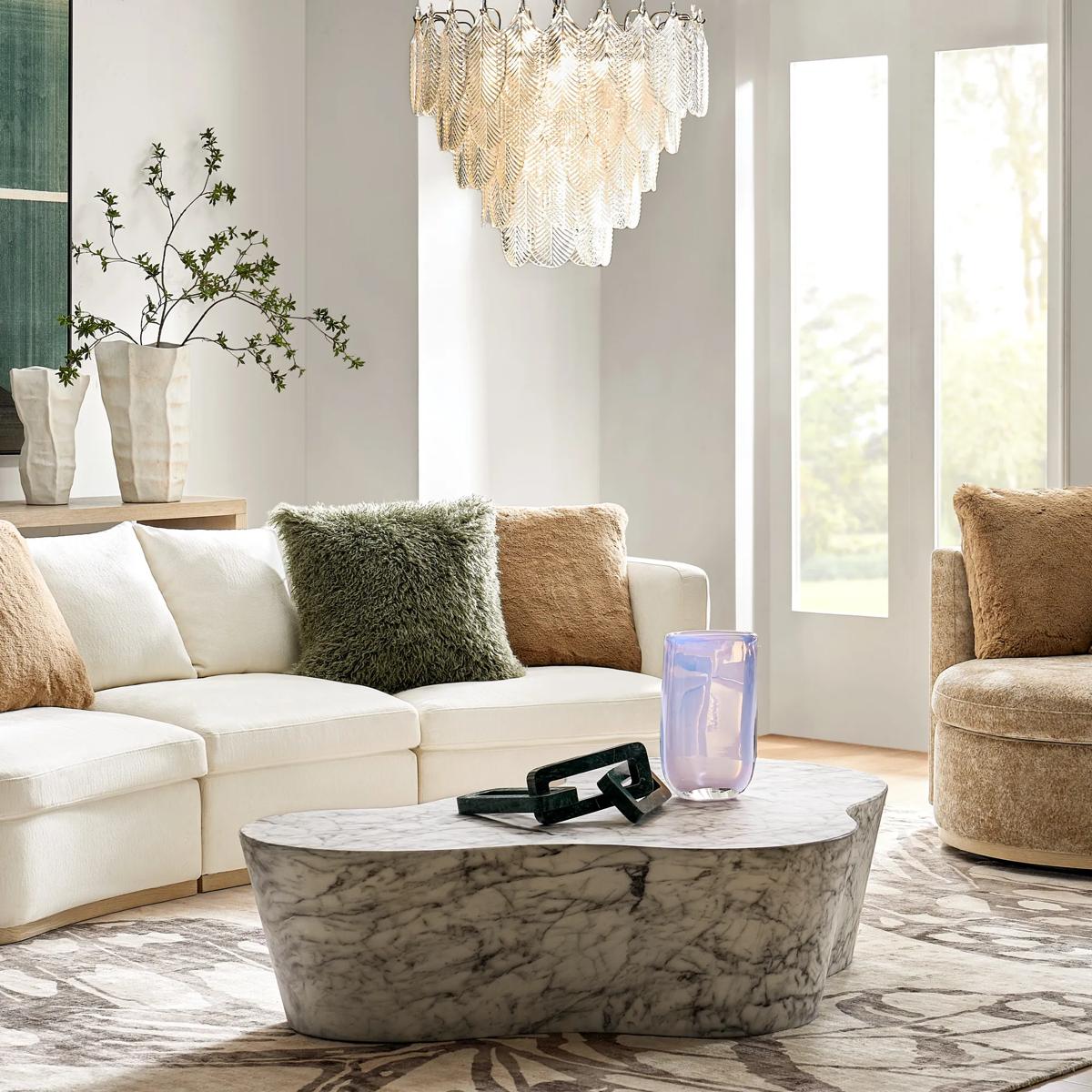 Petra White Concrete Indoor/outdoor Coffee Table (59.4")$1099
A cloud-inspired coffee table in lightweight fiber concrete with a hyper-realistic white marble finish.
Add To Cart -
.jpg?w=1200&h=1200)
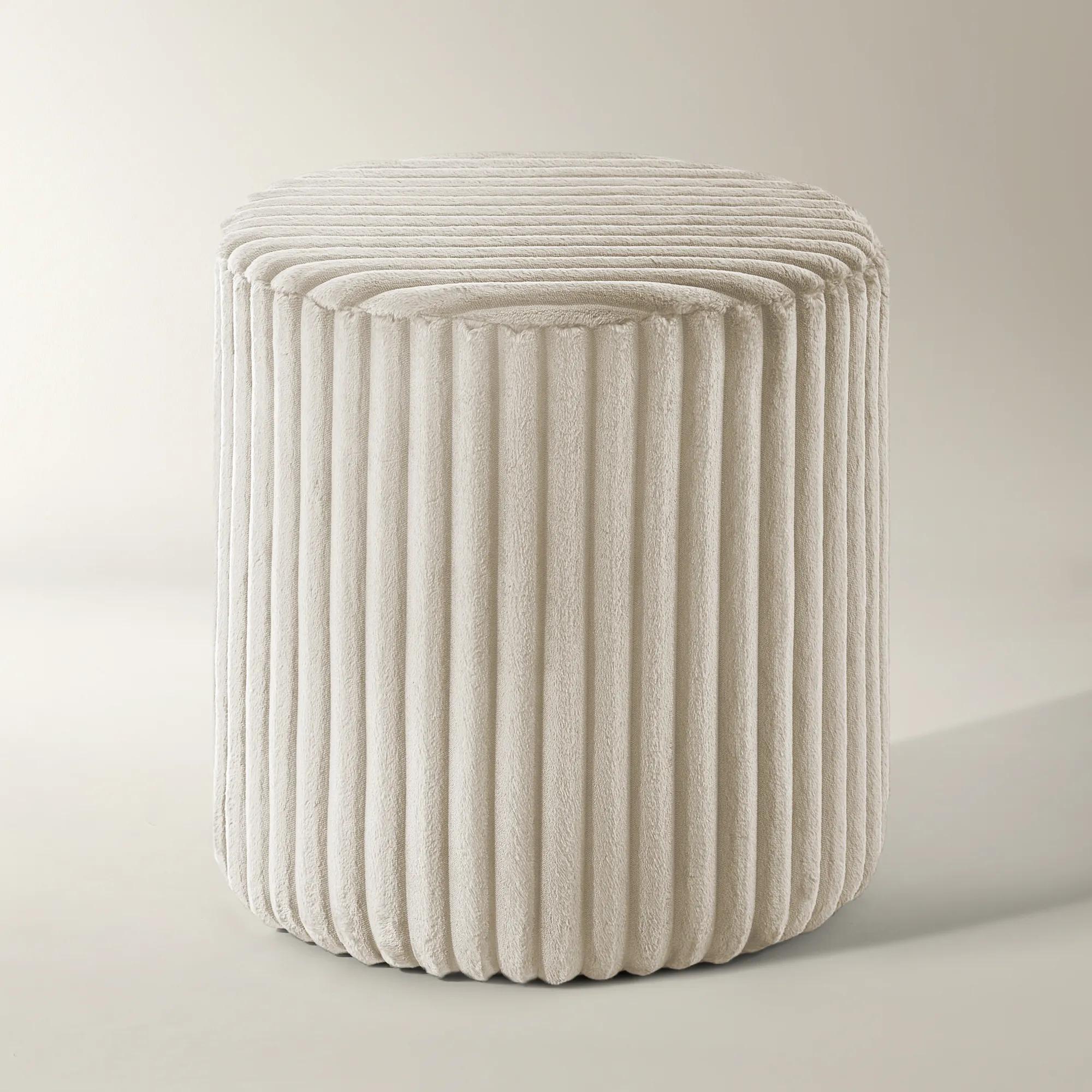 Fleece Fluted Ivory Velvet Stool (15.55'')$229
An ivory ribbed velvet stool offering cozy softness and versatile use as seating, footrest, or accent table.
Add To Cart -
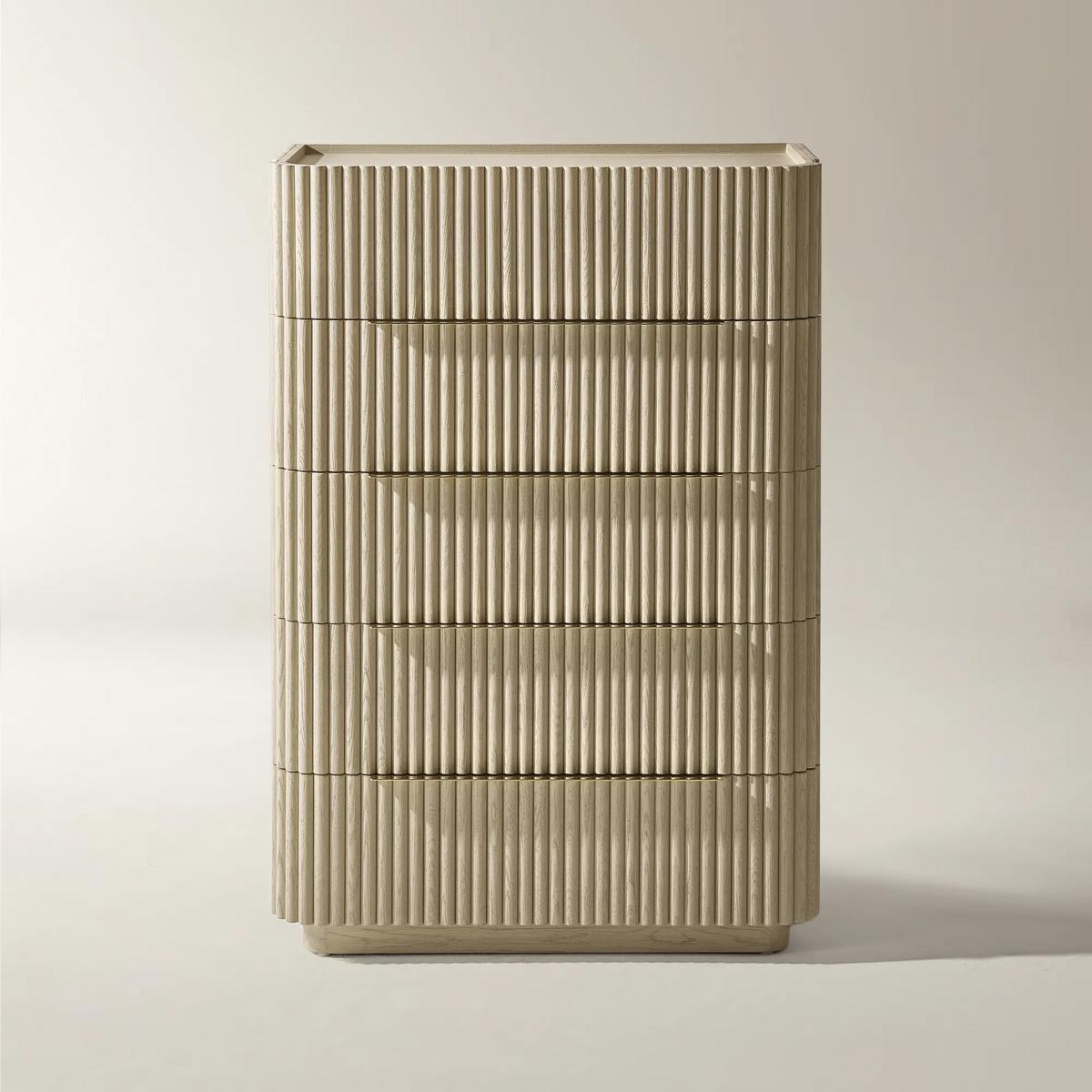 Stria Reeded White Oak 5-Drawer Tall Dresser (36.1")$1799
A sculptural oak chest with reeded detailing, gold-plated trim, and five soft-close, felt-lined drawers.
Add To Cart -
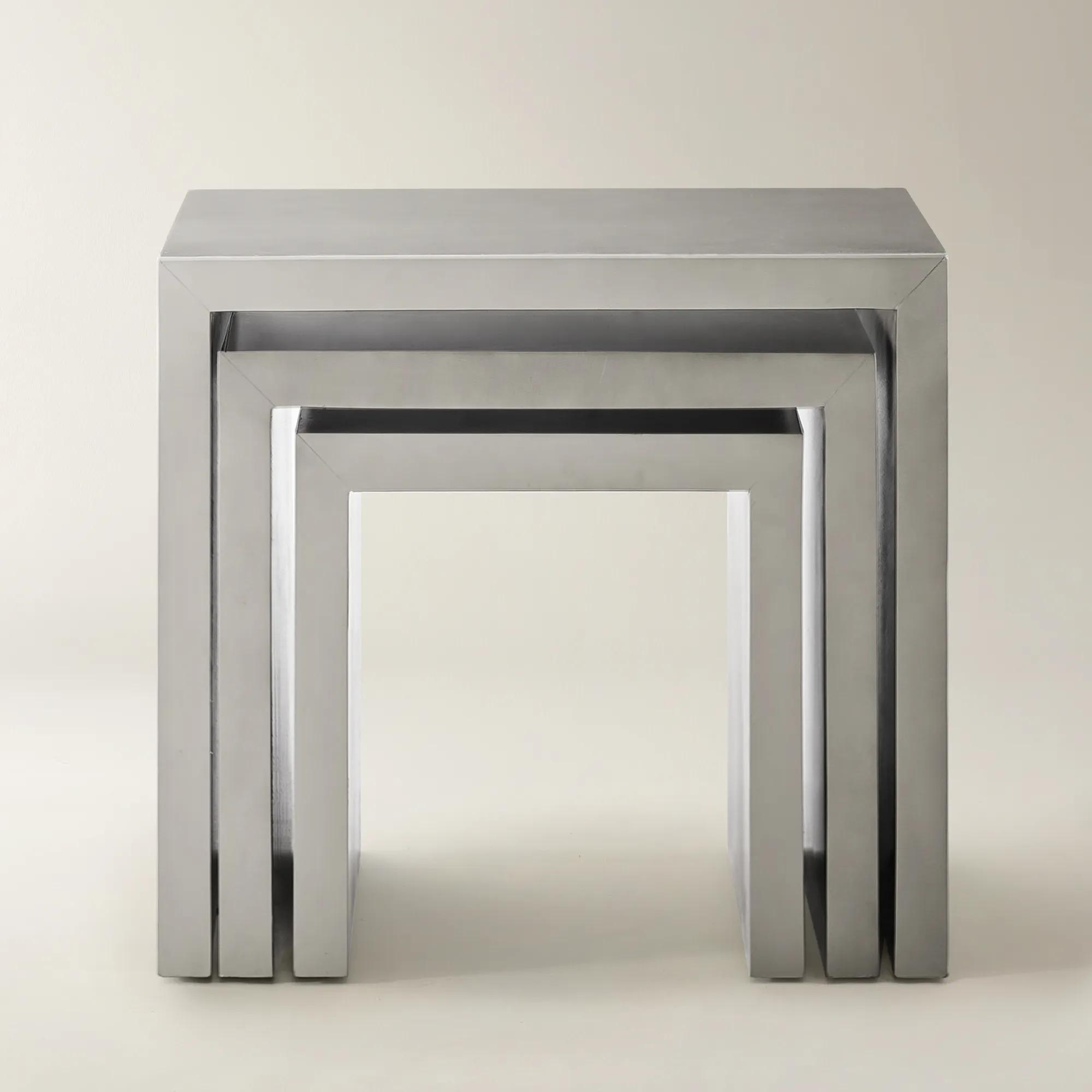
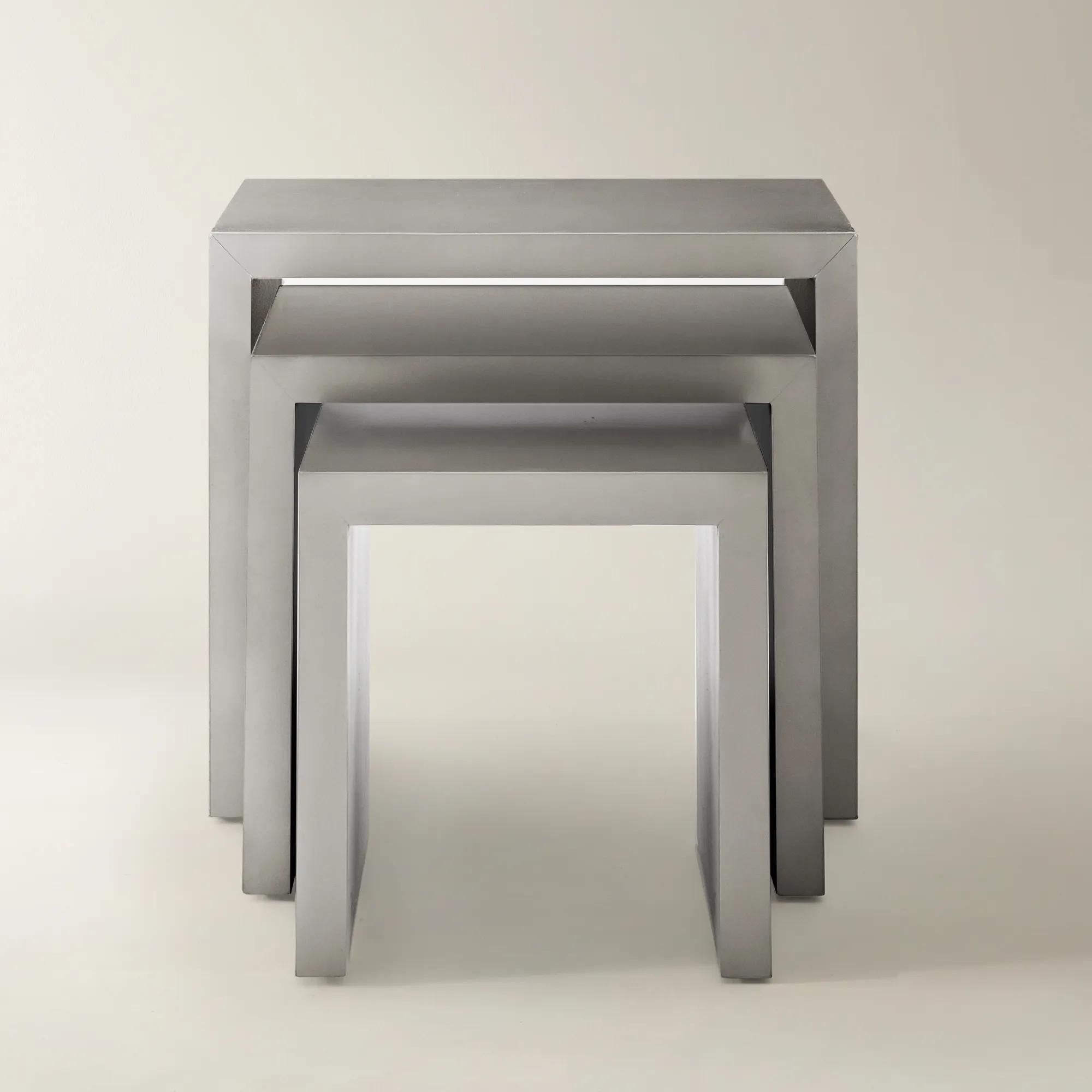 Astair Silver Nesting Accent Table Set Of 3 (16.25"-25.5")$299
A trio of engineered wood nesting tables with a sleek silver metallic finish and minimalist block silhouette.
Add To Cart -
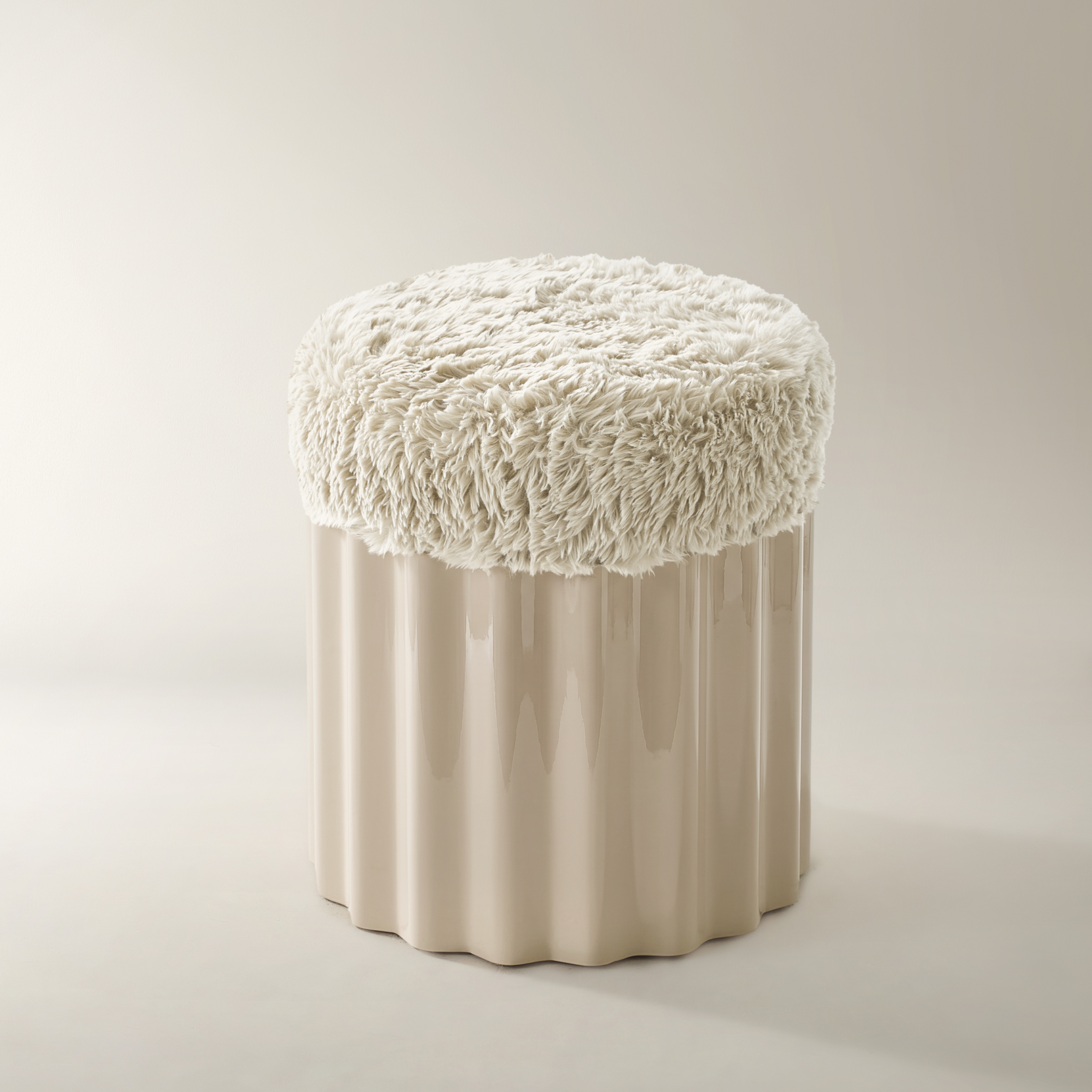
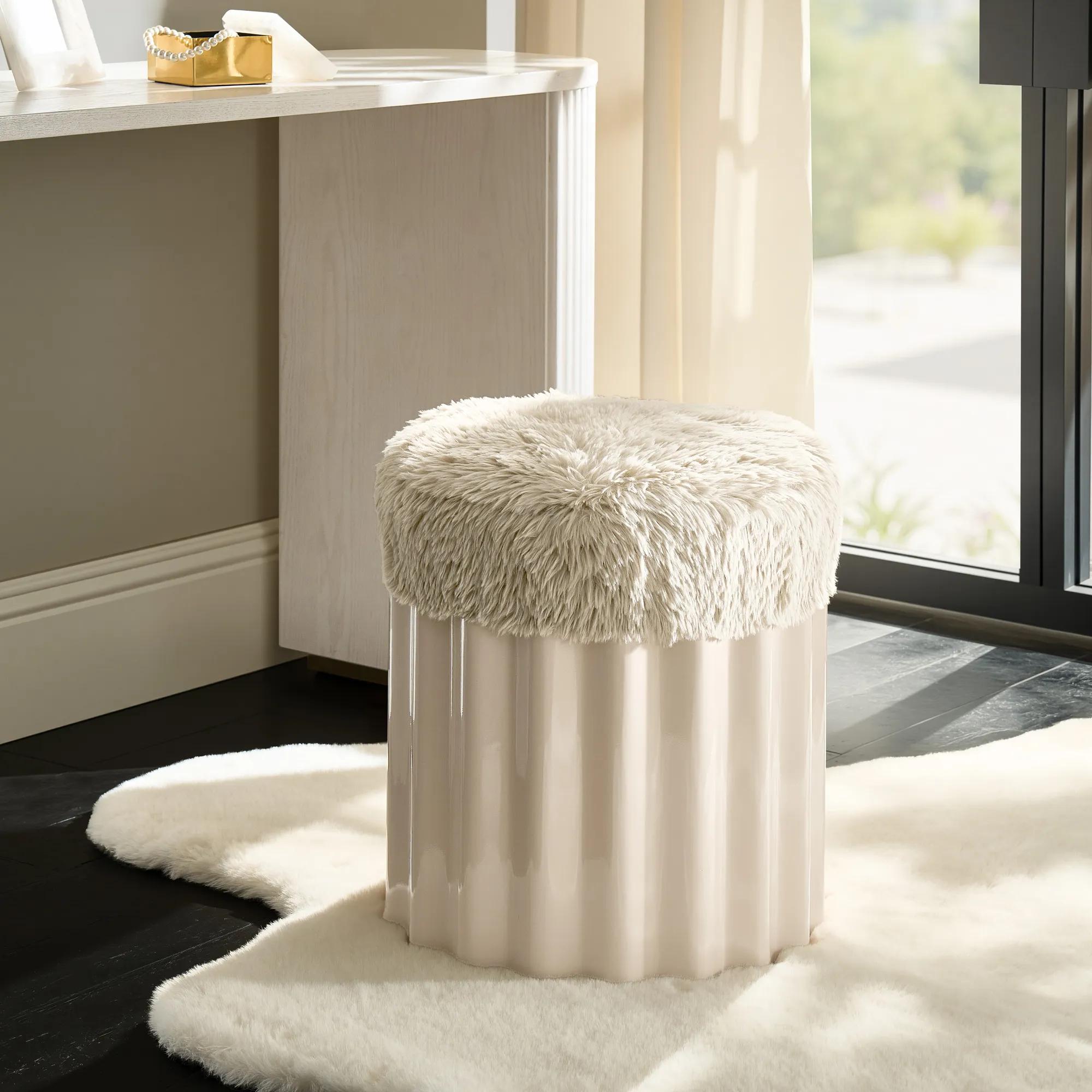 Nia Lacquered Turtle Dove Faux Fur Storage Stool$399
A sculptural fluted stool in warm turtle dove with plush faux fur seat and hidden storage compartment.
Add To Cart -
.jpg?w=1200&h=1200) Micah Tan Mongolian Faux Fur Bench With Rubberwood Legs (62.6")$699
Micah Tan Mongolian Faux Fur Bench With Rubberwood Legs (62.6")$699A light brown faux fur bench with a curved rubberwood base and plush high-density foam cushion.
Add To Cart -
.jpg?w=1200&h=1200)
 Stria Green Chenille Swivel Dining Chair With Oak Base$599
Stria Green Chenille Swivel Dining Chair With Oak Base$599A green chenille arm chair with a solid oak swivel base, offering cozy comfort and modern versatility.
Add To Cart -
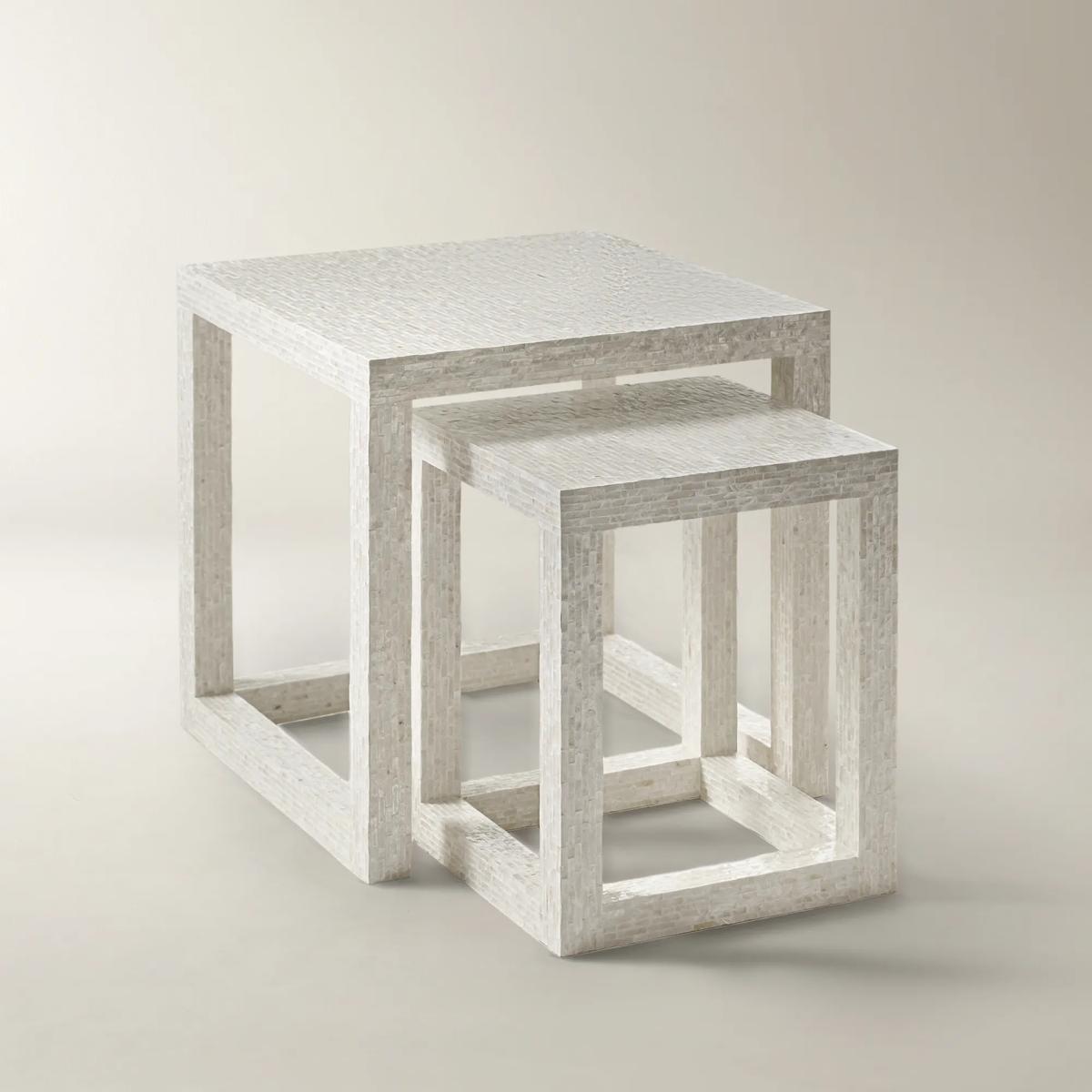 Ivori Square White Nesting Accent Table Set Of 2 (16.5"-23.75")$599
A handcrafted white nesting table featuring radiant mother-of-pearl inlay for a unique, iridescent accent.
Add To Cart -
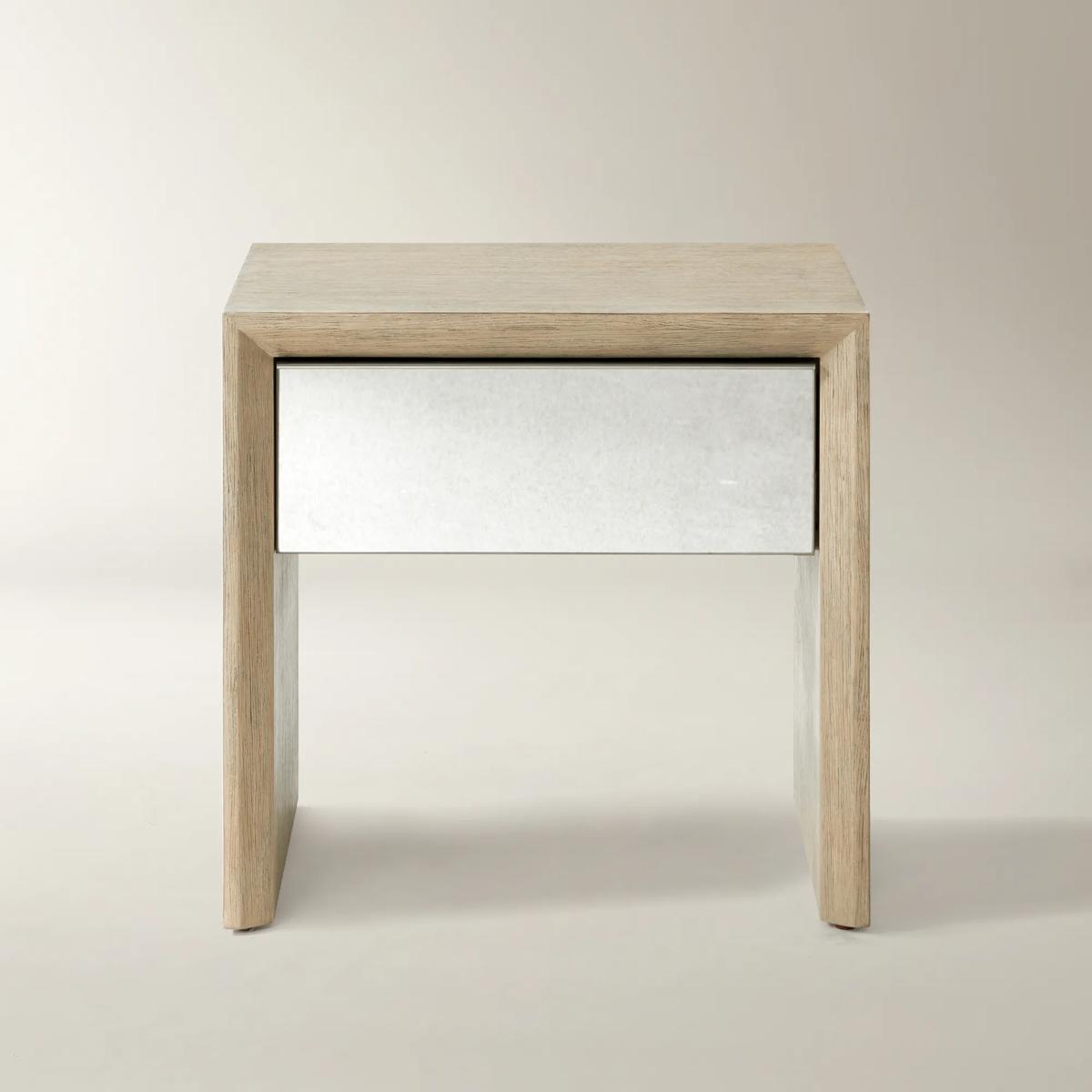 Glimmer Mirrored Seadrift Oak 1-Drawer Nightstand (23")$499
A sophisticated nightstand featuring a sea drift oak veneer frame and antique mirror-faced soft-close drawers.
Add To Cart -
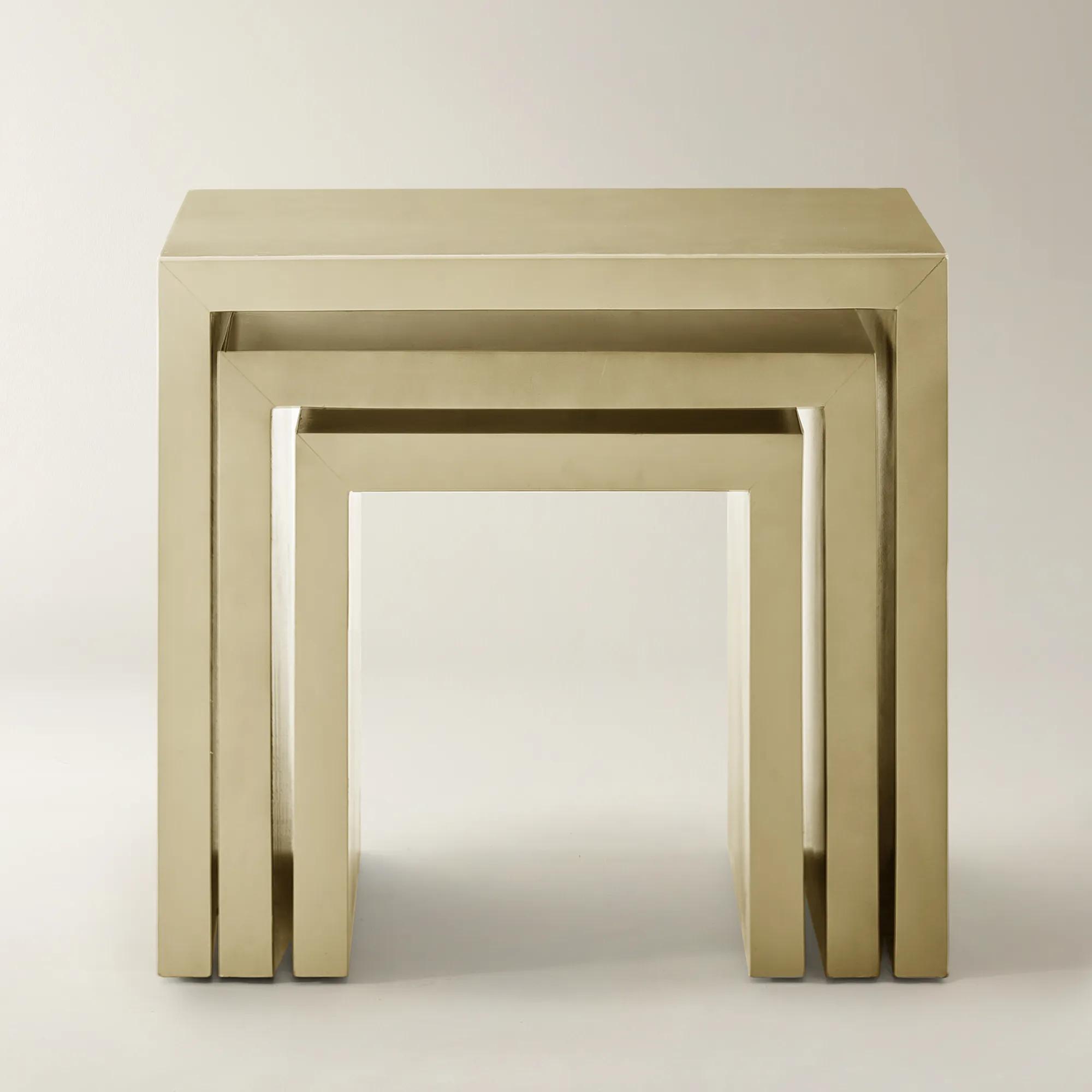
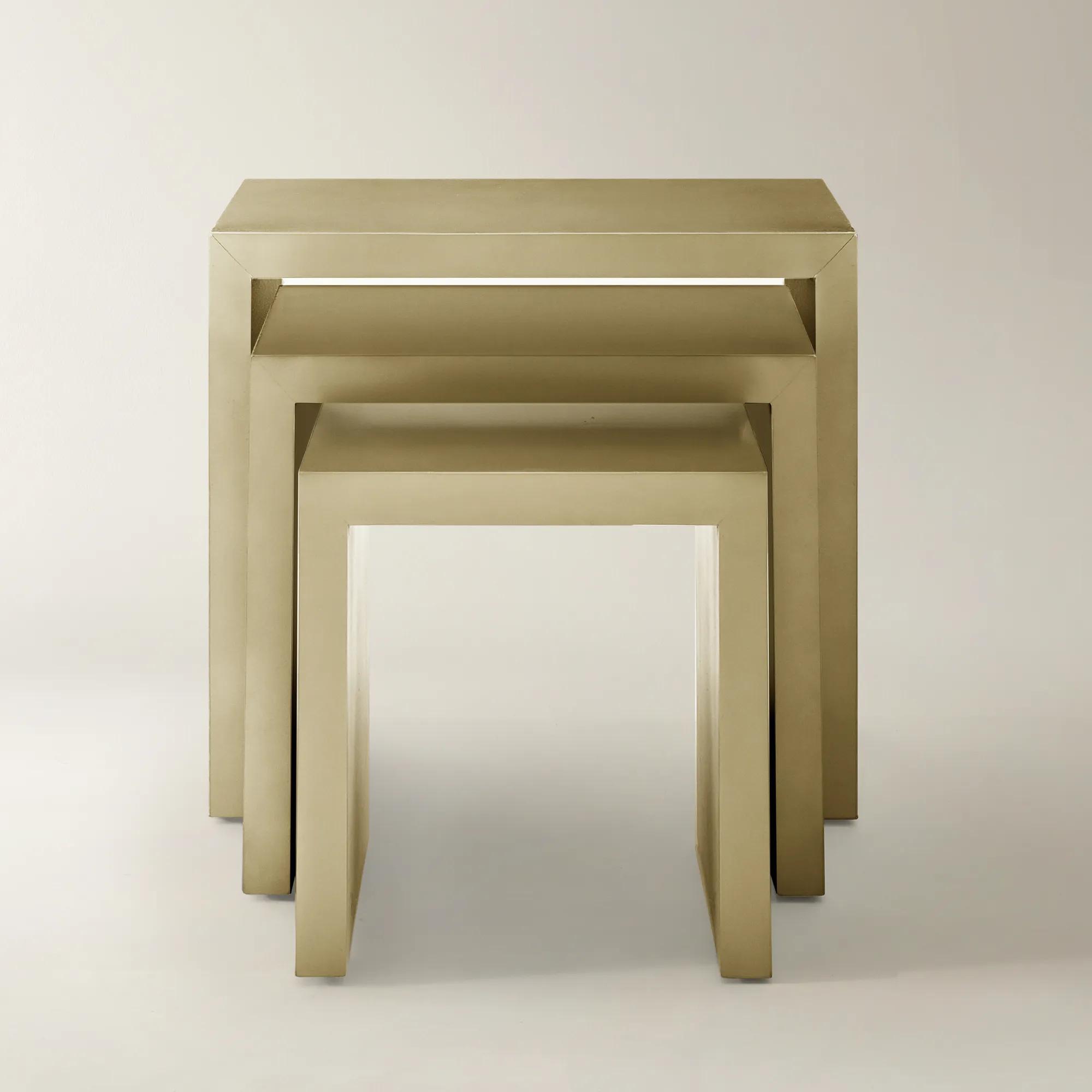 Astair Gold Nesting Accent Table Set Of 3 (16.25"-25.5")$299
A trio of gold-painted engineered wood tables with minimalist block silhouettes and versatile nesting design.
Add To Cart -
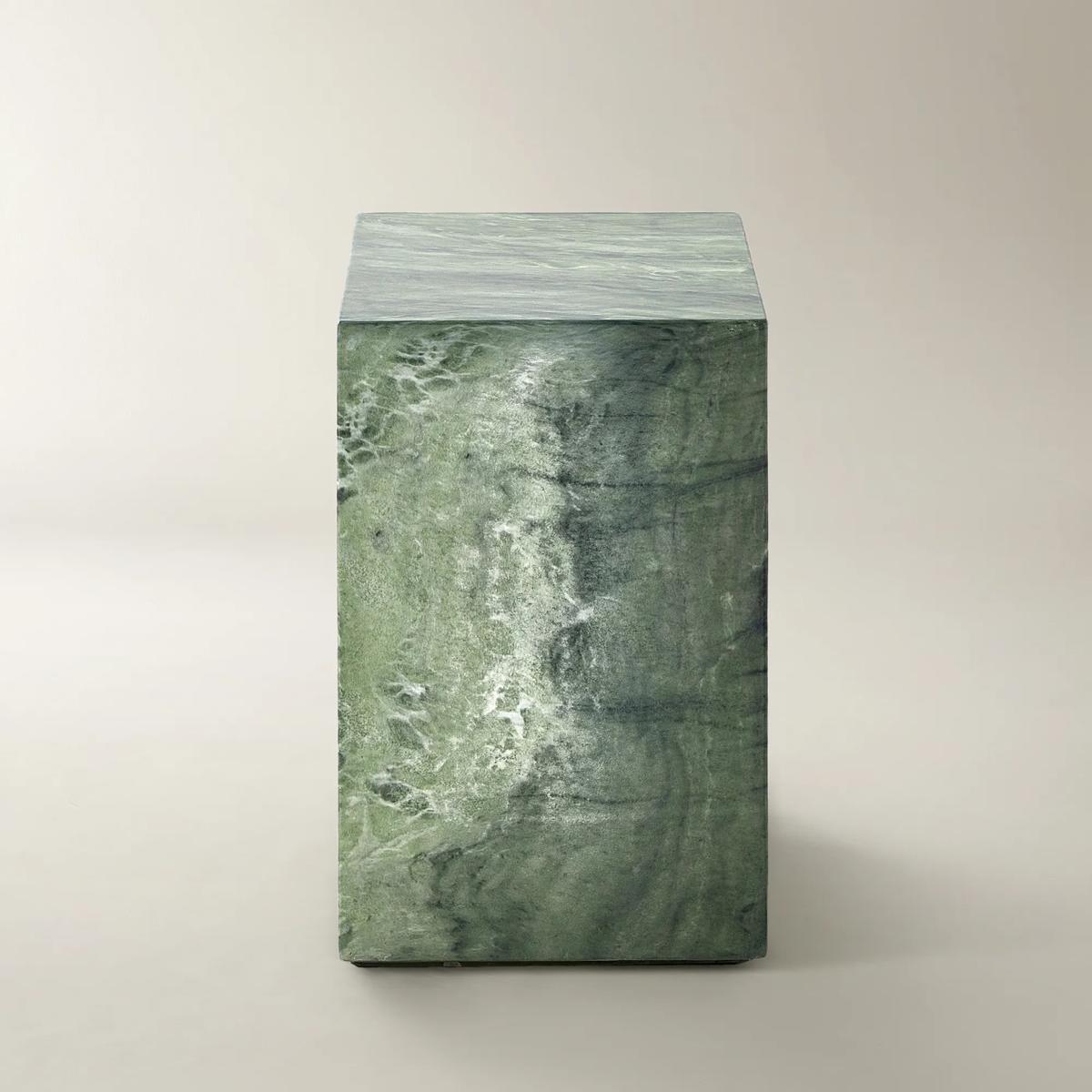
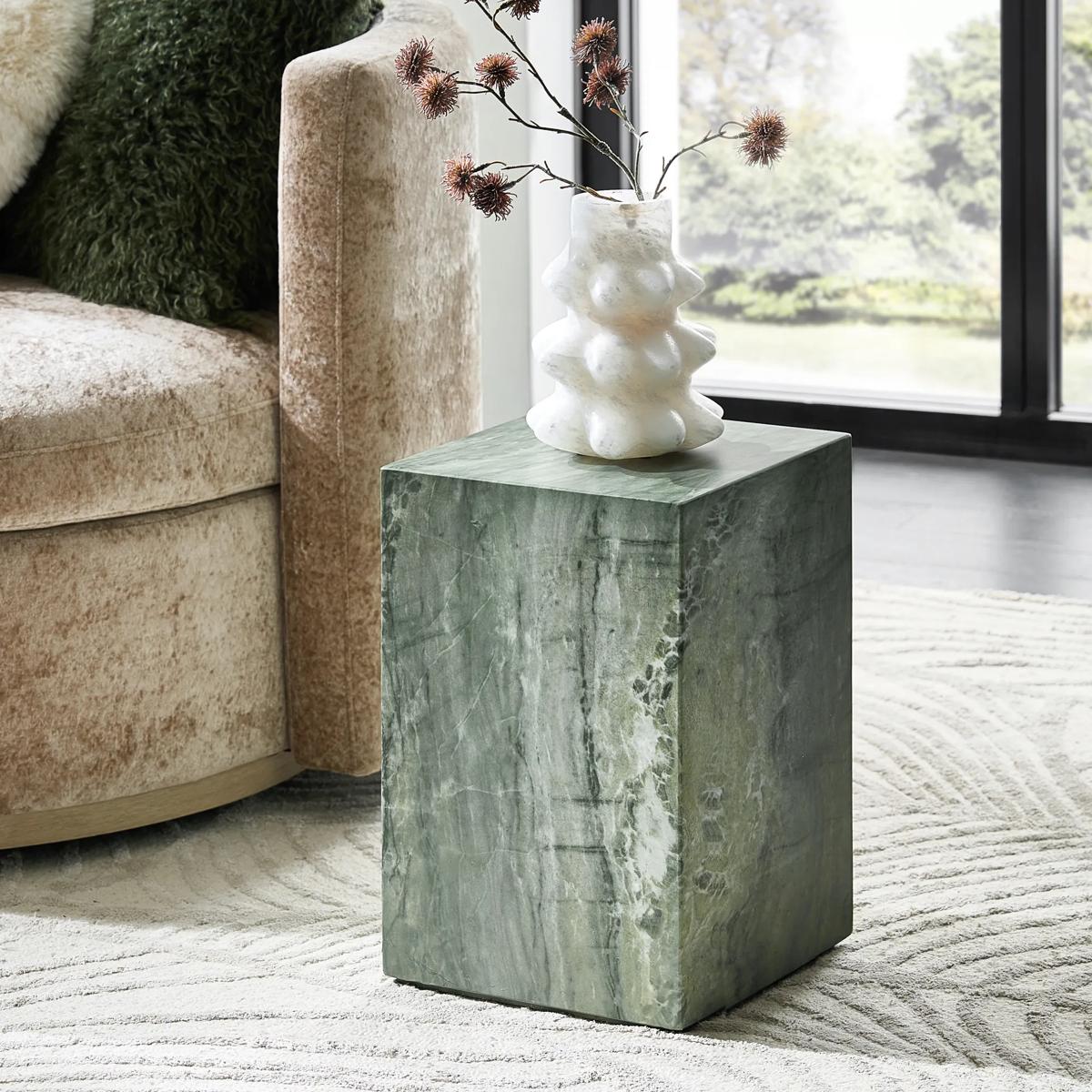 Strata Square Green Concrete Side Table (11.8")$259
A sculptural green marble-look side table crafted from lightweight, durable fiber concrete for indoor or outdoor use.
Add To Cart -
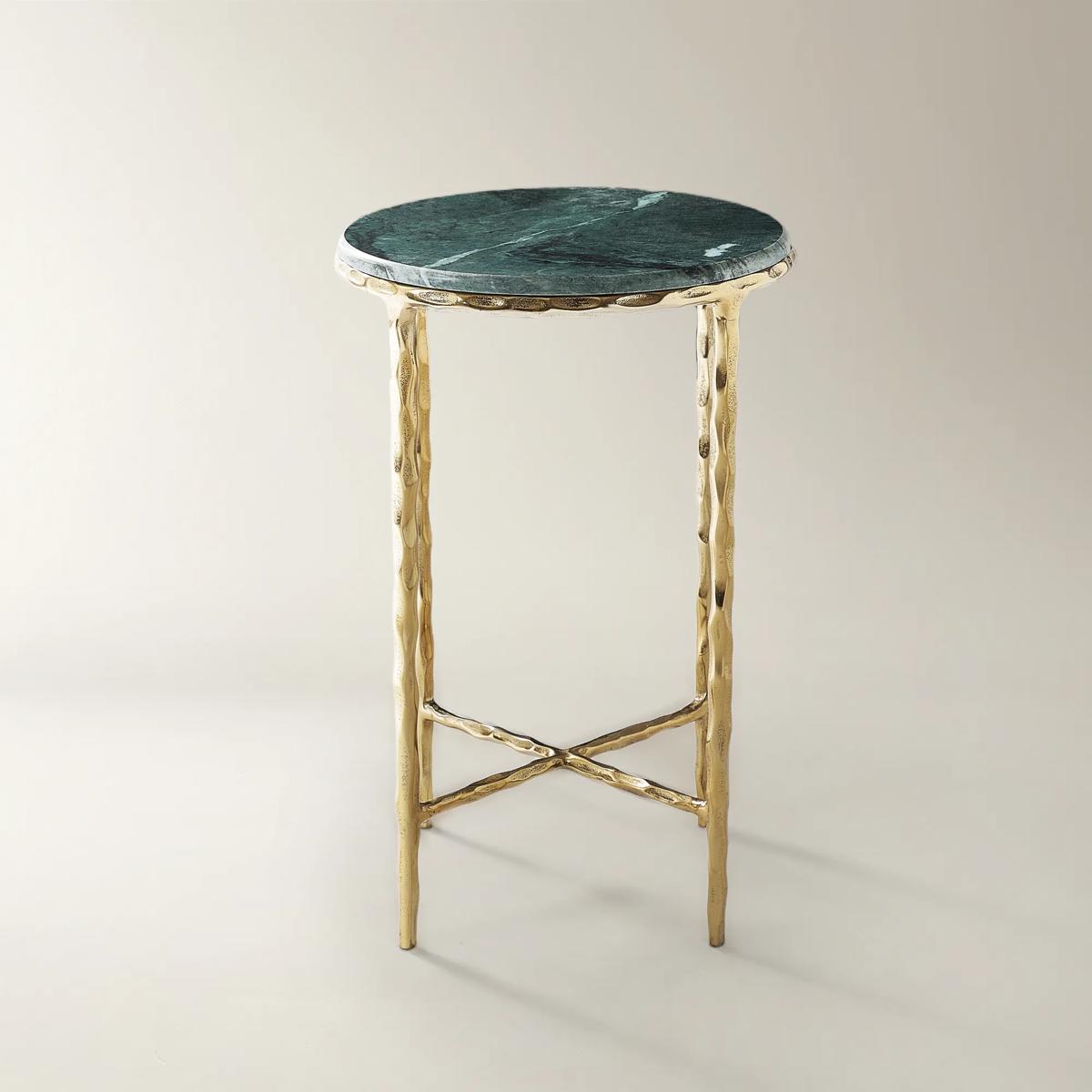
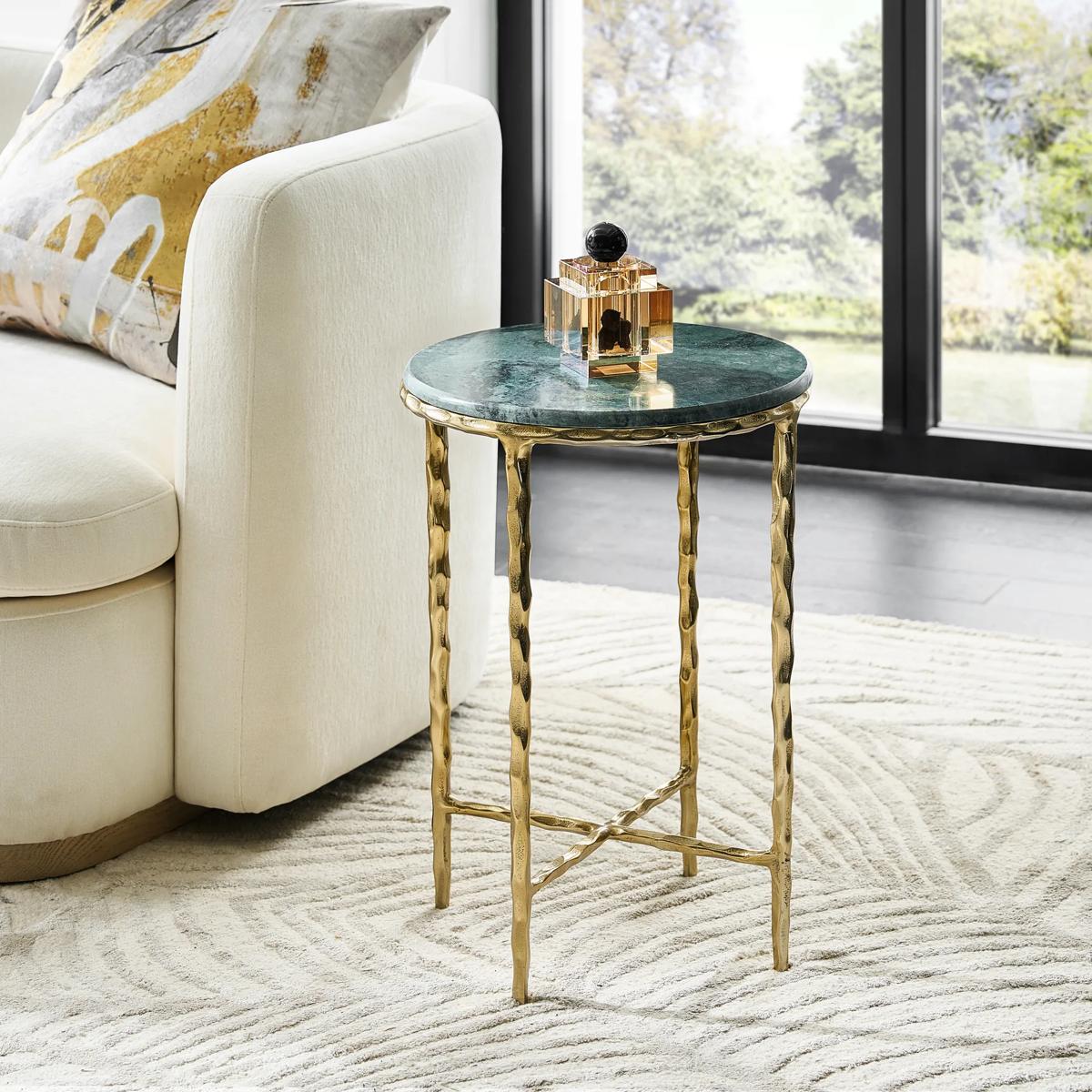 Juliet Round Green Marble Side Table (15")$269
A striking side table featuring a deep green Indian marble top and a hand-hammered metal base.
Add To Cart -
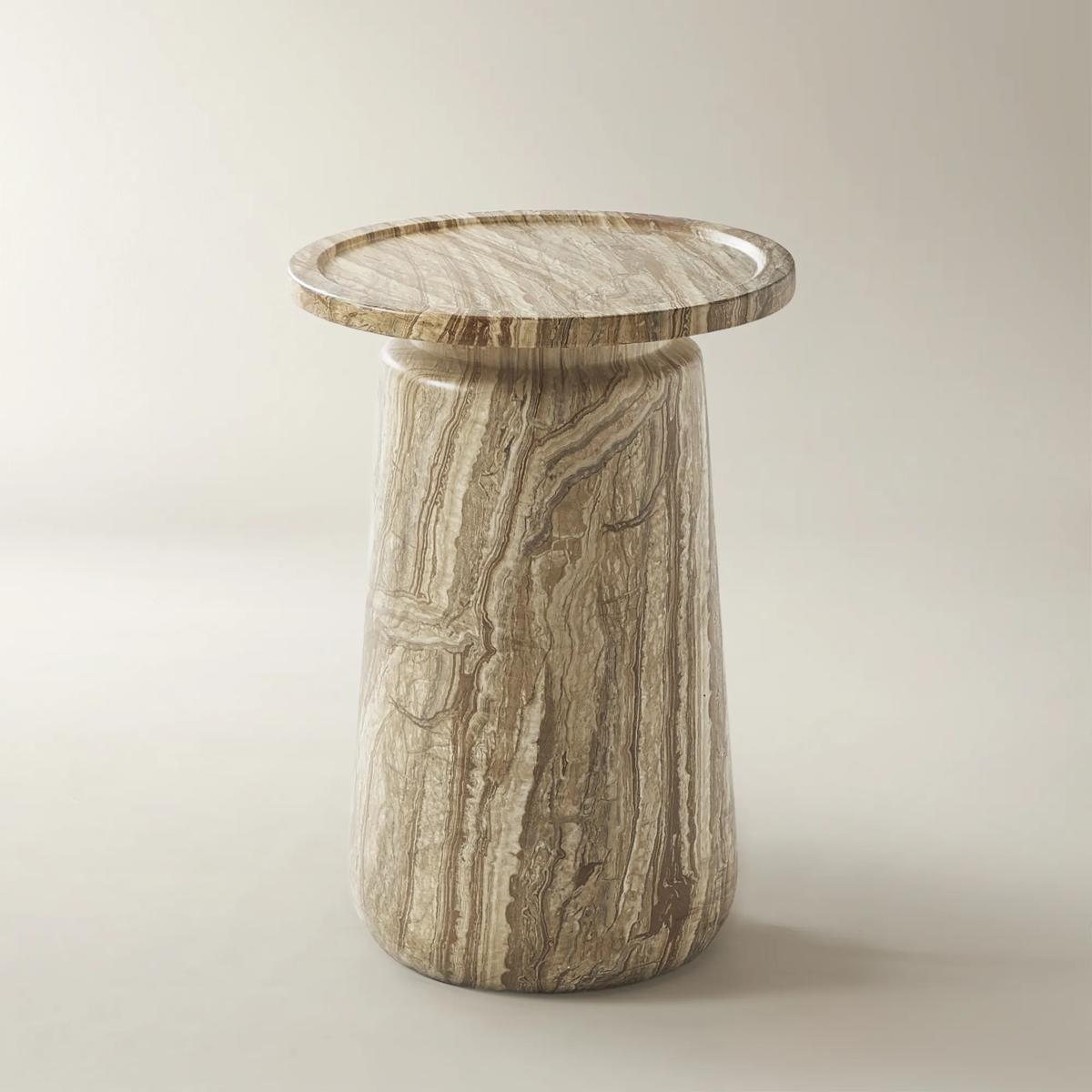 Strata Round Brown Concrete Side Table (15")$299
A sculptural side table featuring a brown marble finish and durable, weather-resistant fiber concrete construction.
Add To Cart -
.jpg?w=1200&h=1200)
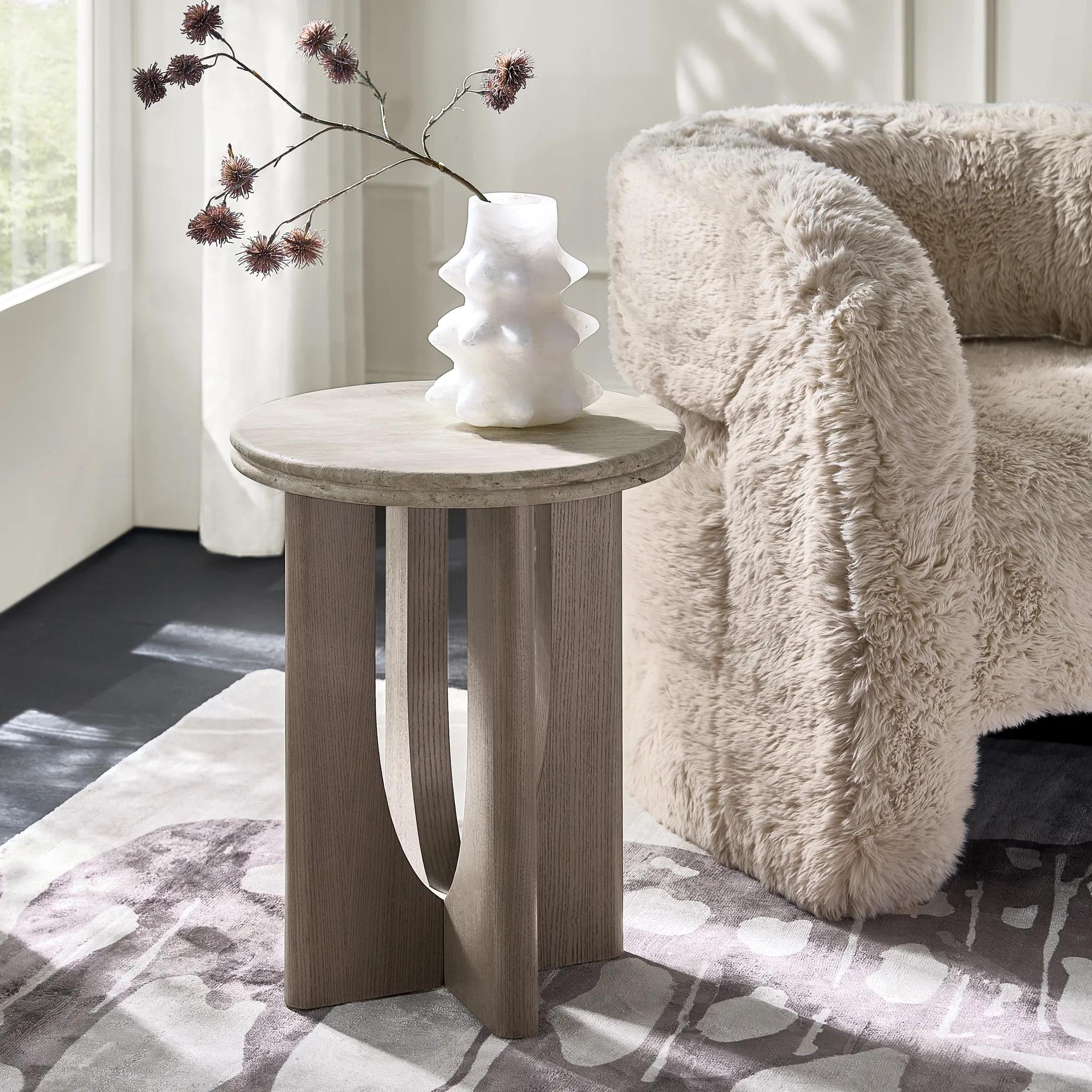 Bond Round Travertine and Wood End Table (17.25")$459
A sculptural end table featuring a genuine ivory travertine top and a solid ash wood base.
Add To Cart

Furniture For Tiny Homes
In the world of tiny homes, every inch is an opportunity for artistry, ingenuity, and bold self-expression. Furniture for tiny homes transforms compact spaces into captivating sanctuaries—where glamour meets function and style knows no bounds. Discover pieces that invite drama without overwhelming, and sculptural silhouettes that command attention while embracing intimacy. With furniture for tiny homes, even the smallest footprint becomes a stage for opulence, inviting you to curate a story of luxury on your own scale.
Furniture for tiny homes brings expressive design into intimate proportions, pairing space-saving silhouettes with the comfort and presence that make a room feel complete. The most effective pieces are multifunctional, appropriately scaled, and suited to the way a compact home changes throughout the day. A living area may become a workspace before dinner and a guest bedroom afterward; furniture that supports those transitions allows a small footprint to feel remarkably generous. Convertible sofas combine daytime seating with occasional sleeping space, storage ottomans conceal everyday essentials beneath an upholstered surface, and expandable dining tables accommodate company without occupying their full footprint between gatherings. Each function matters, but so does the atmosphere. Sumptuous upholstery, a sculptural table base, or a gleaming metal accent can give a tiny interior a distinctive point of view without crowding it. Narrow arms and elevated legs often help seating feel less visually dense, while a restrained mix of substantial pieces can create a more composed setting than a collection of miniature furnishings. Scale is about relationships: the sofa beside the window, the table within reach of a favorite seat, and the clear passage between the entry and kitchen. A compact sofa still needs enough seat depth for its intended user, and a dining chair should offer comfortable support rather than simply disappear beneath a tabletop. For full-time tiny-home residents, studio dwellers, and those furnishing a compact guesthouse, this balance makes everyday routines feel considered rather than compressed. Furnishings with distinctive texture or finish can establish separate zones in an open room, giving a dining corner its own character while allowing it to belong to the larger composition. Related silhouettes in Modern Furniture For Small Spaces extend that same conversation between proportion and personality. The result is not an interior that apologizes for its size, but one in which every curve, surface, and seat earns its place.
Multifunctional furniture for tiny homes works best when its secondary purpose is as convincing as its first. A storage ottoman can serve as a footrest and a discreet home for throws, while designs rated for seating can also welcome an additional guest. A lift-top coffee table may bring a surface closer for light tasks and keep remotes or reading materials out of sight, provided its raised height and stability suit the activity. C-shaped side tables can tuck around a sofa or bed, offering a convenient spot for a cup or notebook; the base must fit beneath the furniture, and the top needs to clear the cushion or mattress. Drop-leaf and extension tables create flexible dining areas, with chairs or stools that tuck beneath them when their dimensions allow. In sleeping spaces, platform beds with drawers turn the footprint beneath the mattress into useful storage, although those drawers need enough room to open fully. Lift-up storage beds offer another configuration, with clearance above the mattress and accessible lifting mechanisms becoming important considerations. Wall beds can release floor space during the day, but their suitability depends on the wall structure, required anchoring, installation instructions, and the open bed’s dimensions. Tall bookcases and wall-mounted shelving draw storage upward, leaving more of the floor available for movement; secure installation is essential, especially around children or pets. These details distinguish furniture that merely fits from furniture that lives beautifully. Overall measurements should account for baseboards, window trim, sloped ceilings, and door swings, as well as the route through entryways and around interior corners. Convertible seating needs space in its sleeping position, not just its closed form. A table that expands elegantly still needs room for occupied chairs and a comfortable passage behind them. In a home on wheels, furniture weight, distribution, and securement also require attention to the structure’s specifications and professional guidance where appropriate. Thoughtful fit protects the ease of the room, allowing a polished arrangement to remain comfortable through meals, quiet evenings, and overnight visits.
Materials bring depth to compact interiors, where every finish is seen at close range and frequently used surfaces carry much of daily life. Wood introduces warmth and expressive grain, while wood veneer can deliver a richly patterned surface over an engineered substrate; construction quality, edge finishing, and the suitability of the underlying material matter alongside appearance. Metal frames can lend crisp definition to slender profiles, and glass or acrylic surfaces may preserve sightlines without making a room feel visually crowded. Those lighter-looking materials still have distinct care needs: glass shows fingerprints, acrylic can scratch, and both benefit from cleaning methods recommended for the specific finish. Velvet gives compact seating a sumptuous presence, with changing light revealing its pile, while textured woven upholstery adds dimension through a quieter interplay of threads. Fabric choice should reflect actual use, including pets, frequent meals near seating, or a sofa that serves as the primary place to relax every evening. Durability depends on more than a fabric’s appearance; frame construction, supportive cushions, secure joints, hardware, and stated weight capacities all contribute to lasting comfort. Furniture with moving parts benefits from smooth, accessible mechanisms and the maintenance specified by its manufacturer. Regular vacuuming with an appropriate upholstery attachment, prompt attention to spills, and protection from prolonged direct sunlight help preserve finishes and fabrics, though cleaning codes and product care instructions should always govern treatment. Coasters and protective pads are especially valuable when a single table alternates between dining, work, and display. During the cooler months, concealed storage keeps extra blankets close without obscuring the lines of the room, and a comfortable accent seat beside a window can establish a retreat within an otherwise hardworking space. For couples sharing a tiny home, remote workers balancing professional and personal space, or hosts furnishing a private guest retreat, the strongest choices support familiar rituals while expressing individual taste. Furniture for compact living can be practical in its proportions and extravagant in its effect: a rich fabric, an artful profile, and a beautifully finished surface offer all the drama a small room needs.
FAQs
To cultivate a sense of luxury in a tiny home, seek out pieces with rich textures, sculptural lines, and thoughtful details. Opt for materials like velvet, gleaming metals, and high-gloss finishes that reflect light and add depth. Multi-functional designs—such as ottomans with hidden storage or nesting tables—bring both elegance and versatility, ensuring that even the most compact space feels curated and opulent.
Choose furniture that visually expands the room, such as mirrored surfaces, glass accents, and open-frame designs that allow light to flow freely. Select pieces with slender profiles and raised legs to create a sense of airiness. Arranging furniture to define distinct zones—like a cozy reading corner or an intimate dining nook—adds structure and makes the home feel both spacious and welcoming.
Absolutely. Contemporary and modern styles often shine in tiny homes, thanks to their clean lines and adaptable forms. Look for pieces that balance drama with restraint—think bold statement chairs, modular sectionals, or artful accent tables. Incorporating metallic finishes, glass, and plush fabrics can further enhance the sense of sophistication without overwhelming the space.
Maximize every inch by selecting furniture that conceals storage in style. Ottomans, benches, and beds with hidden compartments keep essentials out of sight but within easy reach. Wall-mounted shelves and floating consoles add vertical interest while freeing up floor space. Even coffee tables and side tables can double as storage, offering a seamless blend of practicality and panache.
Furniture designed for tiny homes makes a thoughtful and memorable gift, especially for those embarking on new chapters—like moving into a city loft, downsizing, or embracing minimalist living. These pieces offer the recipient both beauty and function, transforming everyday routines into moments of luxury. Gifting a chic accent chair or a versatile storage piece is a meaningful way to celebrate personal style and the art of living well in any space.
-0.jpeg?w=3936&h=3936)
.jpeg?w=4043&h=4043)


