
Furniture For Empty Nesters Redecorating
Furniture For Empty Nesters Redecorating
-
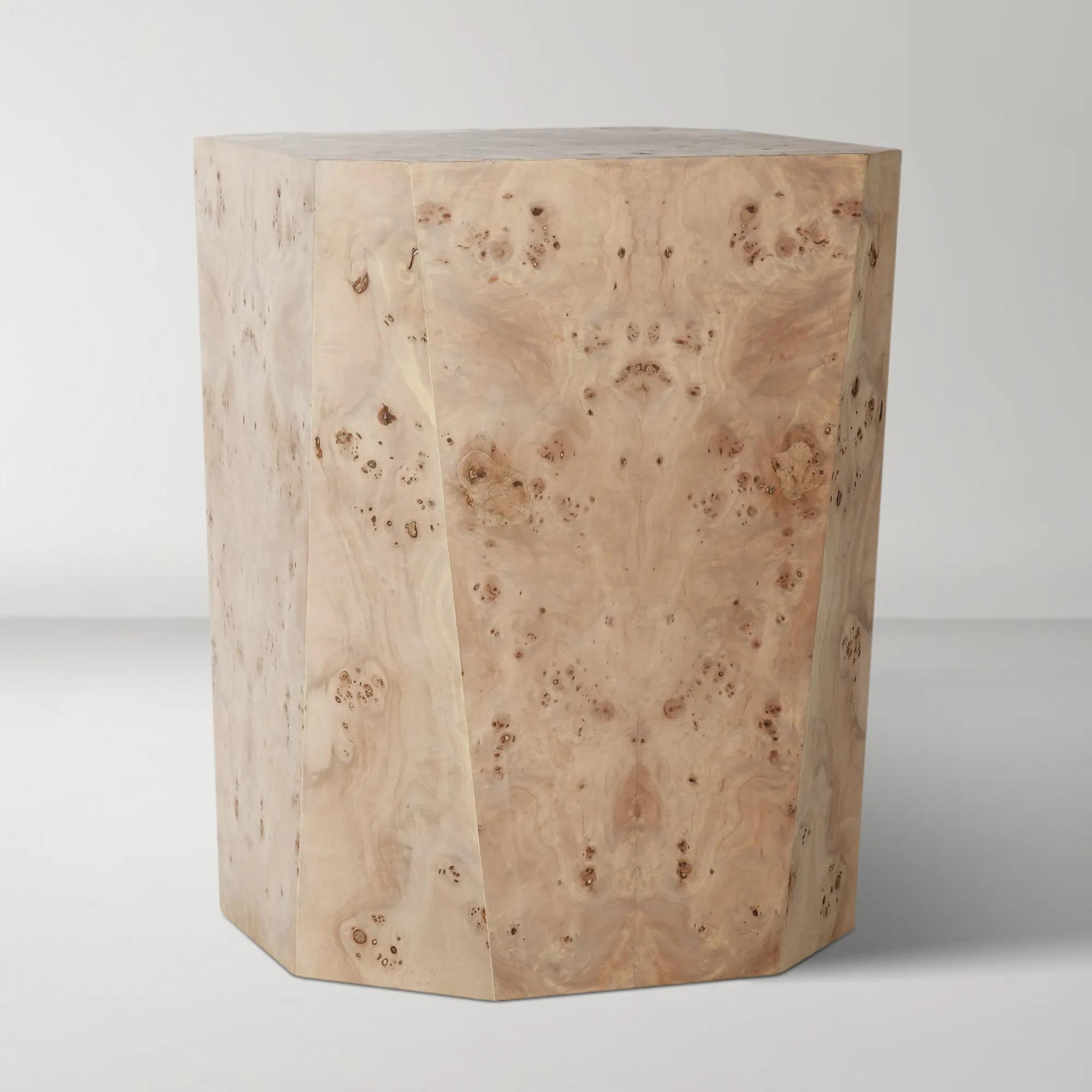
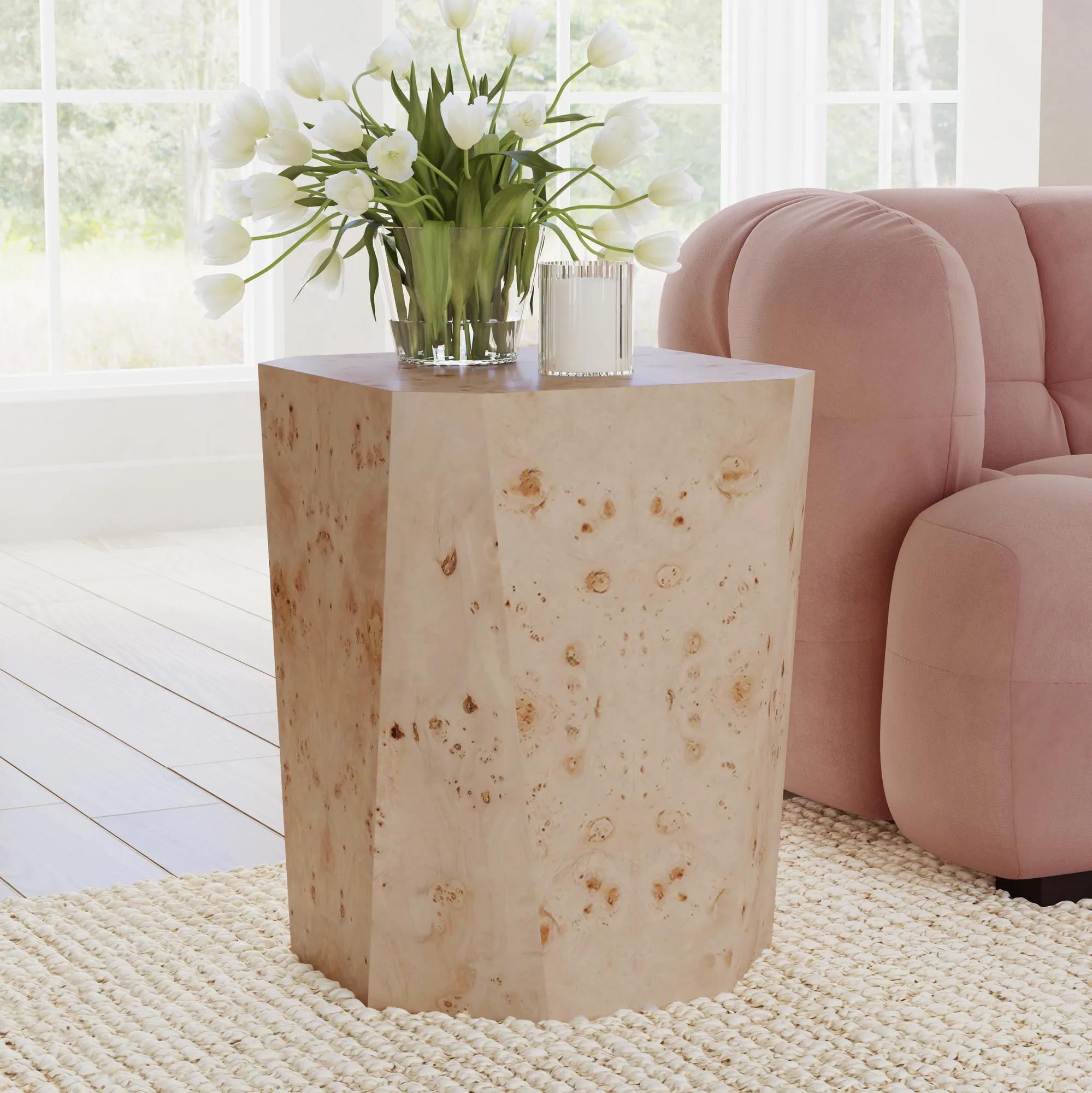 Avena Square Natural Burl Wood End Table (17.75")$699
A striking end table featuring natural burl wood veneer with unique swirling grain and warm, organic tones.
Add To Cart -
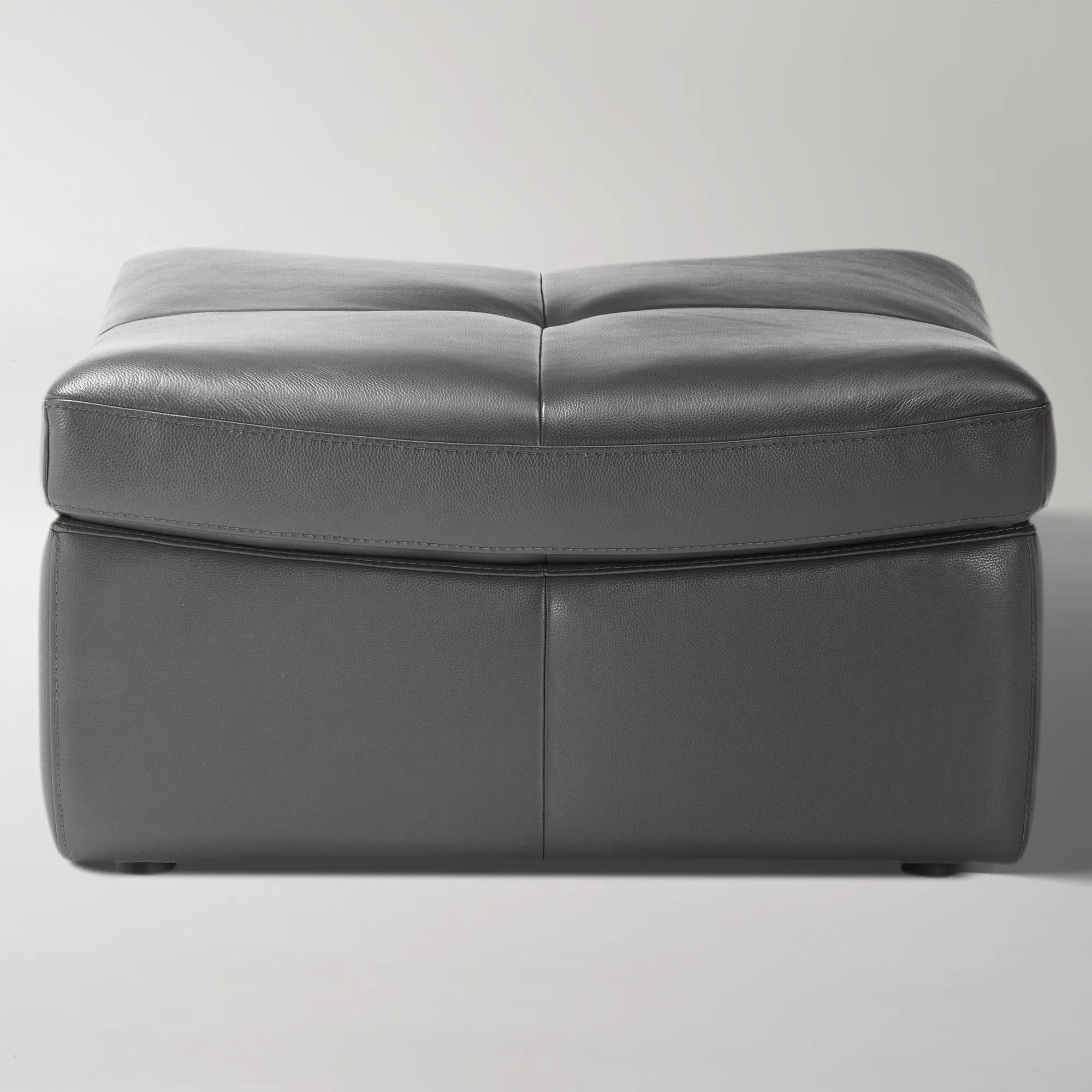 Convo Charcoal Leather Ottoman$849
A modular sectional in charcoal semi-aniline leather with kiln-dried hardwood frames and gently curved seats.
Add To Cart -
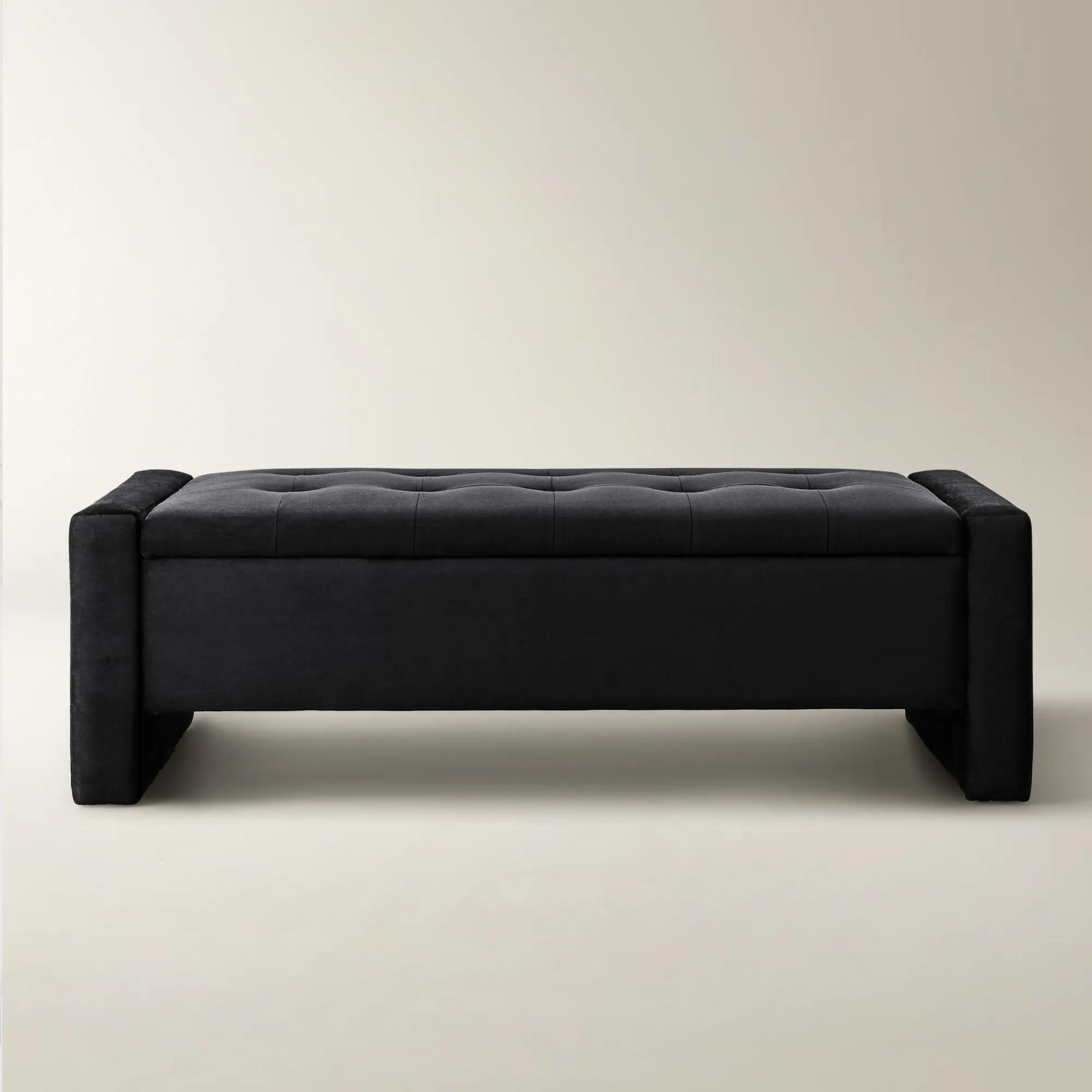
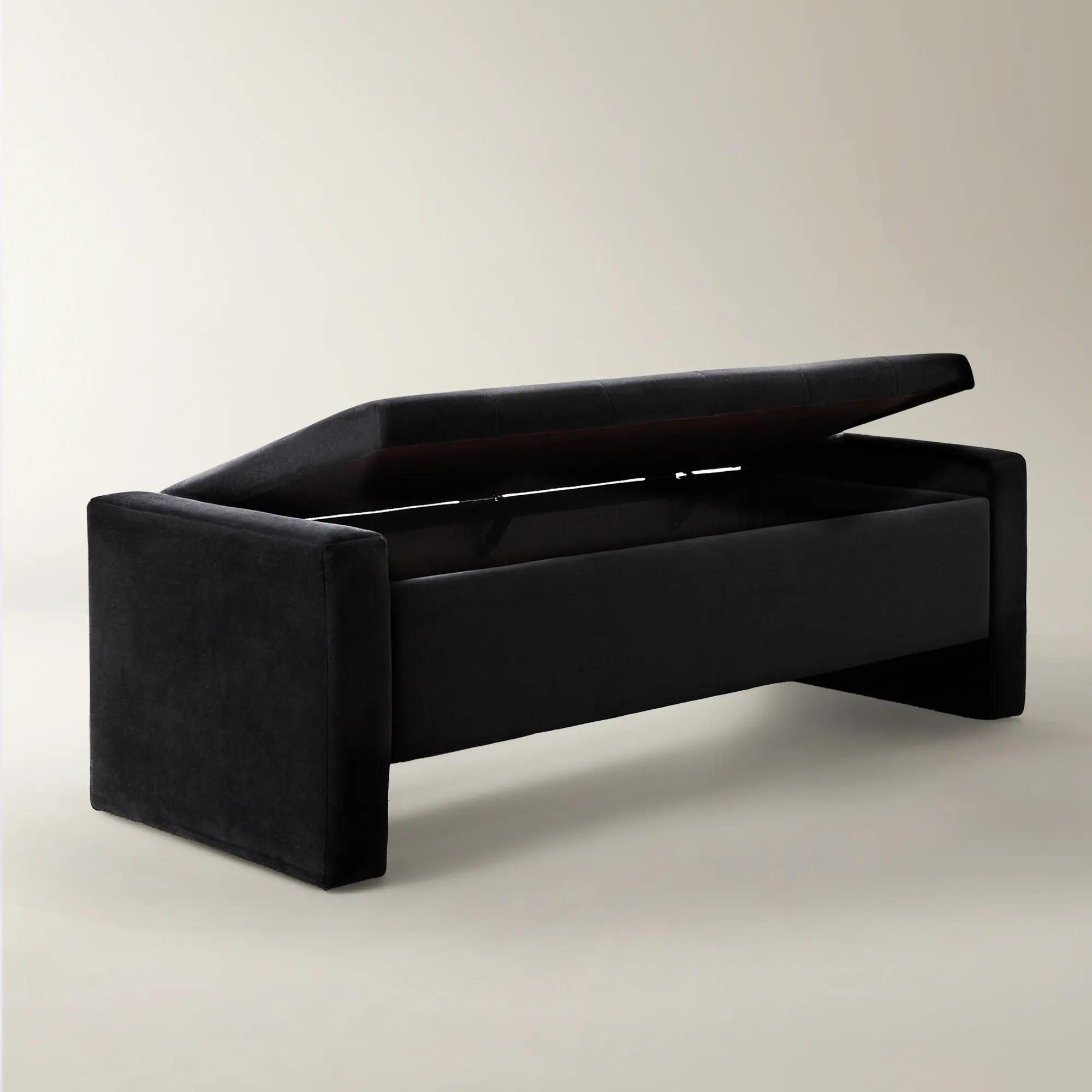 Maeve Storage Bench$899
A modern velvet-upholstered bench with hidden storage, kiln-dried hardwood frame, and soft-closing glides.
Add To Cart -

 Aria Pleated Swivel Chair$1349
A barrel-style swivel chair in kiln-dried hardwood, shown in Bella Velvet Pearl with pleated tailoring.
Add To Cart -
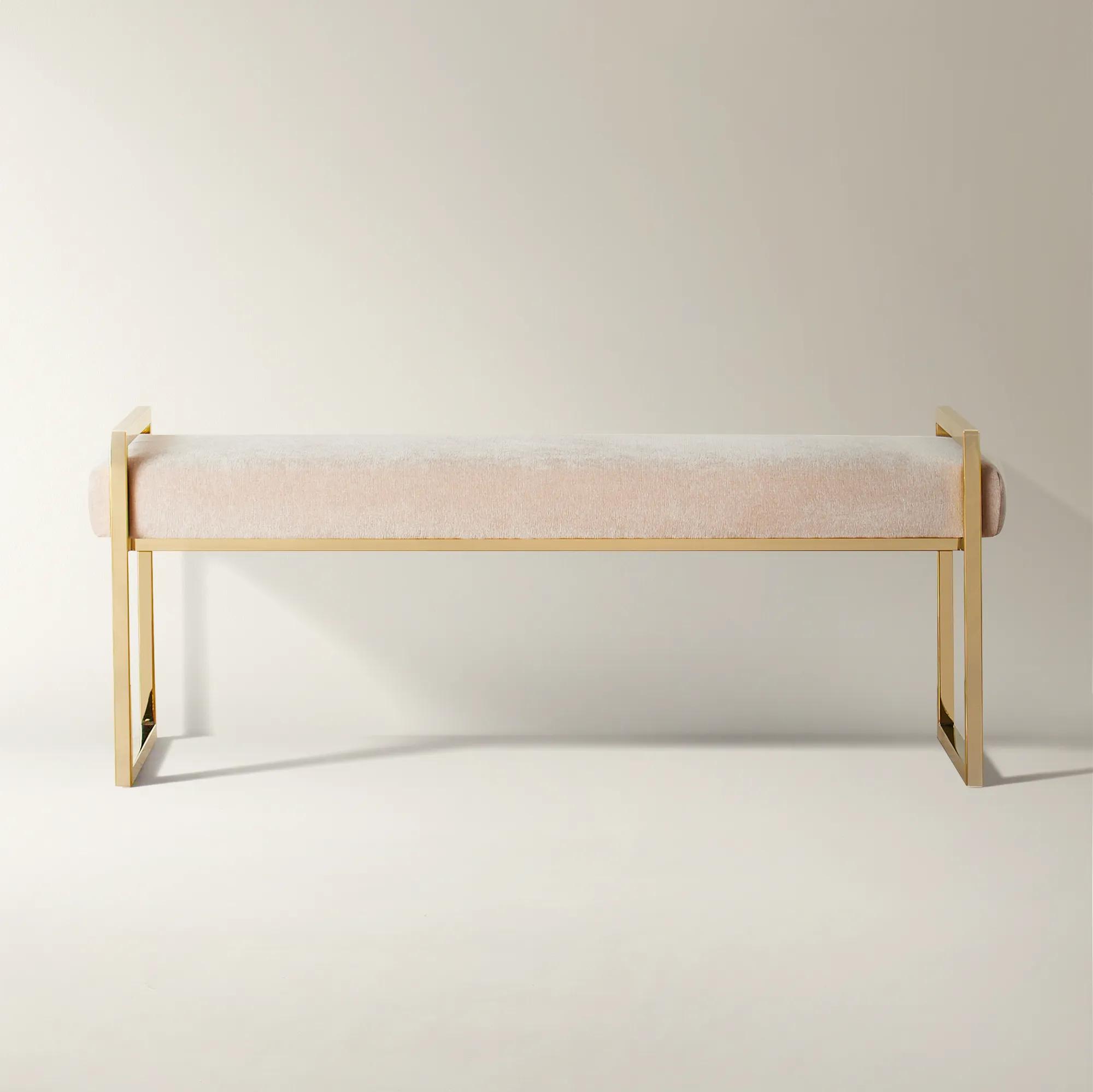 Clara Bench$699
A plush upholstered bench with a high-density foam seat and polished gold metal legs for modern elegance.
Add To Cart -
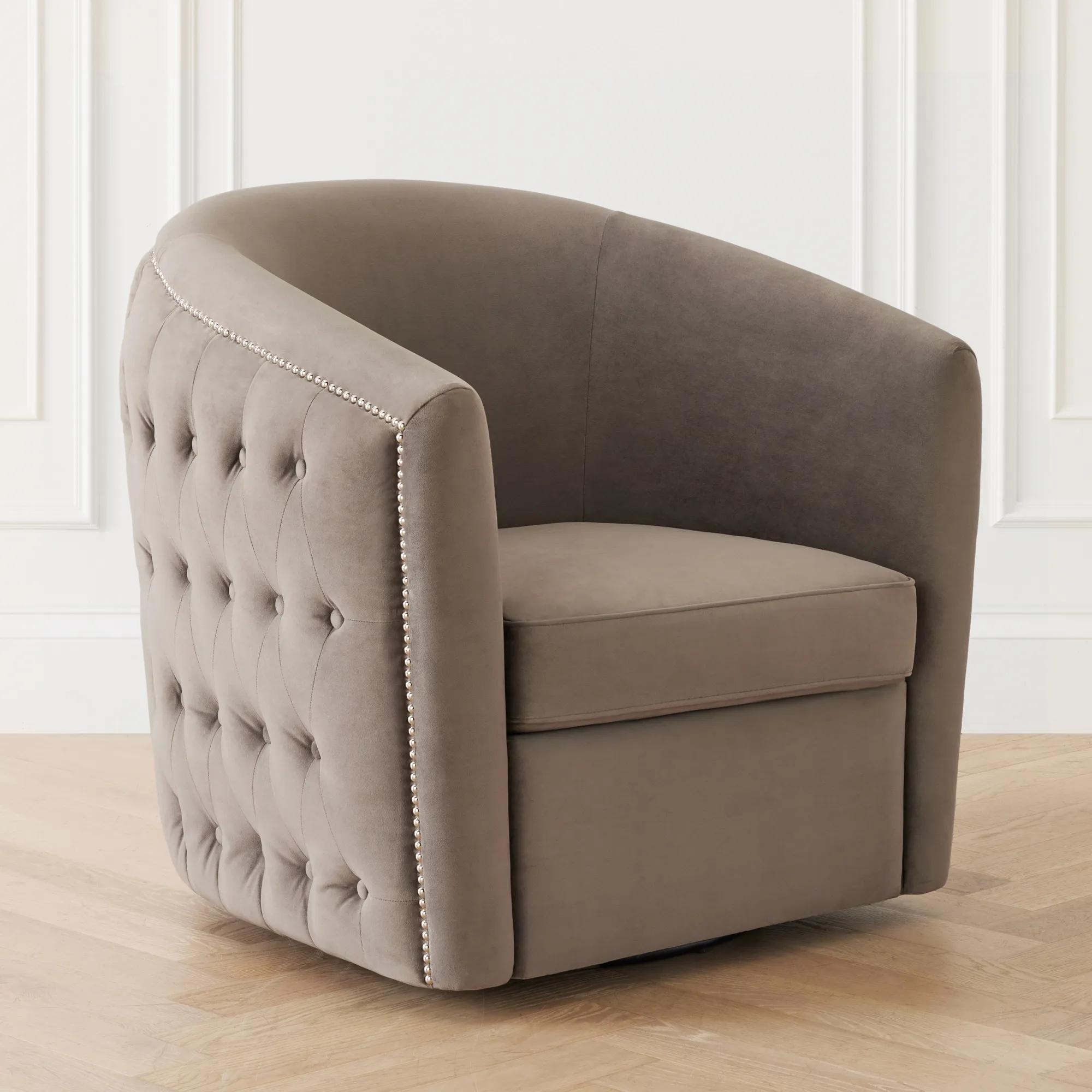
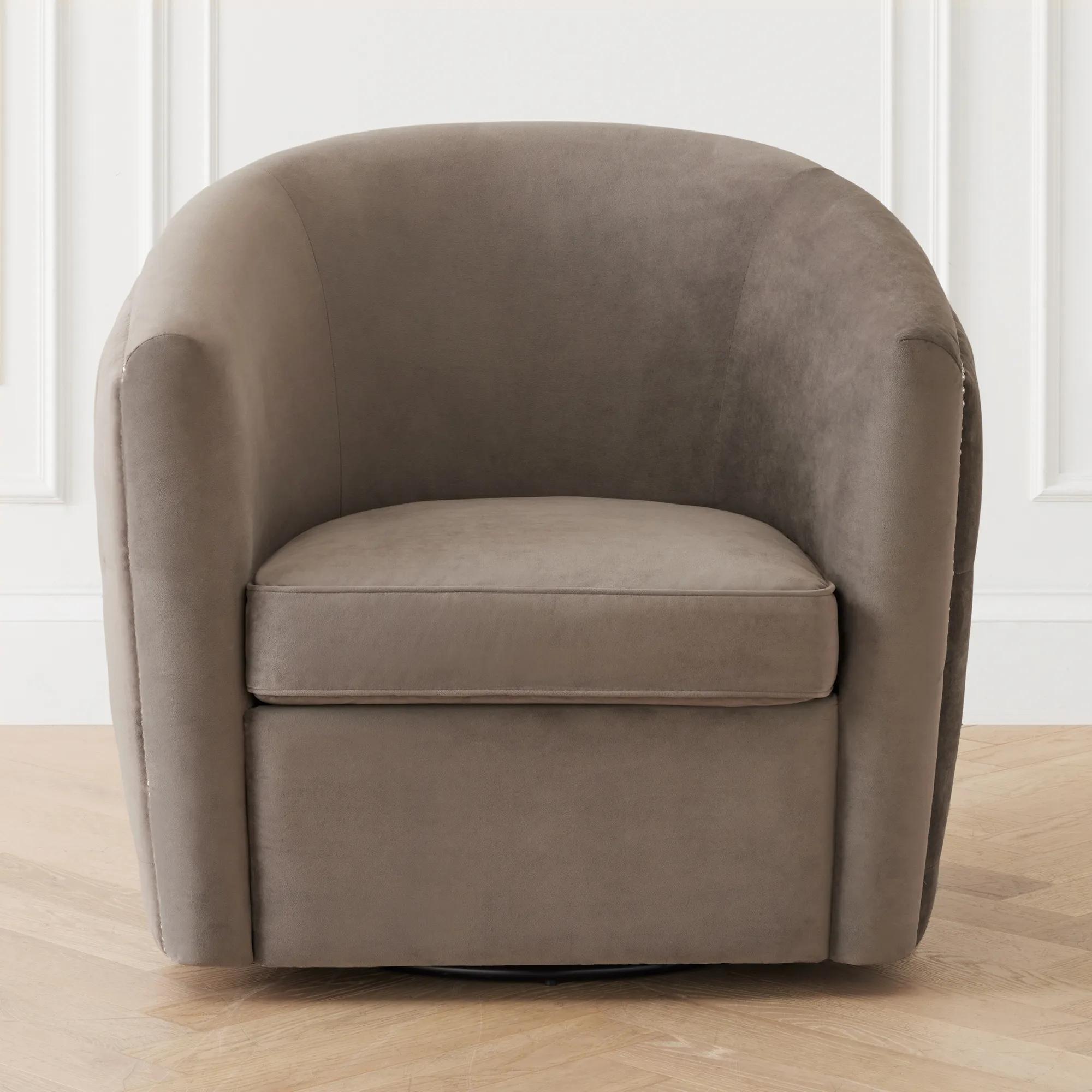 Aria Tufted Swivel Chair$1299
A modern barrel chair in Bella Velvet Otter with tufted detailing, kiln-dried hardwood frame, and swivel base.
Add To Cart -
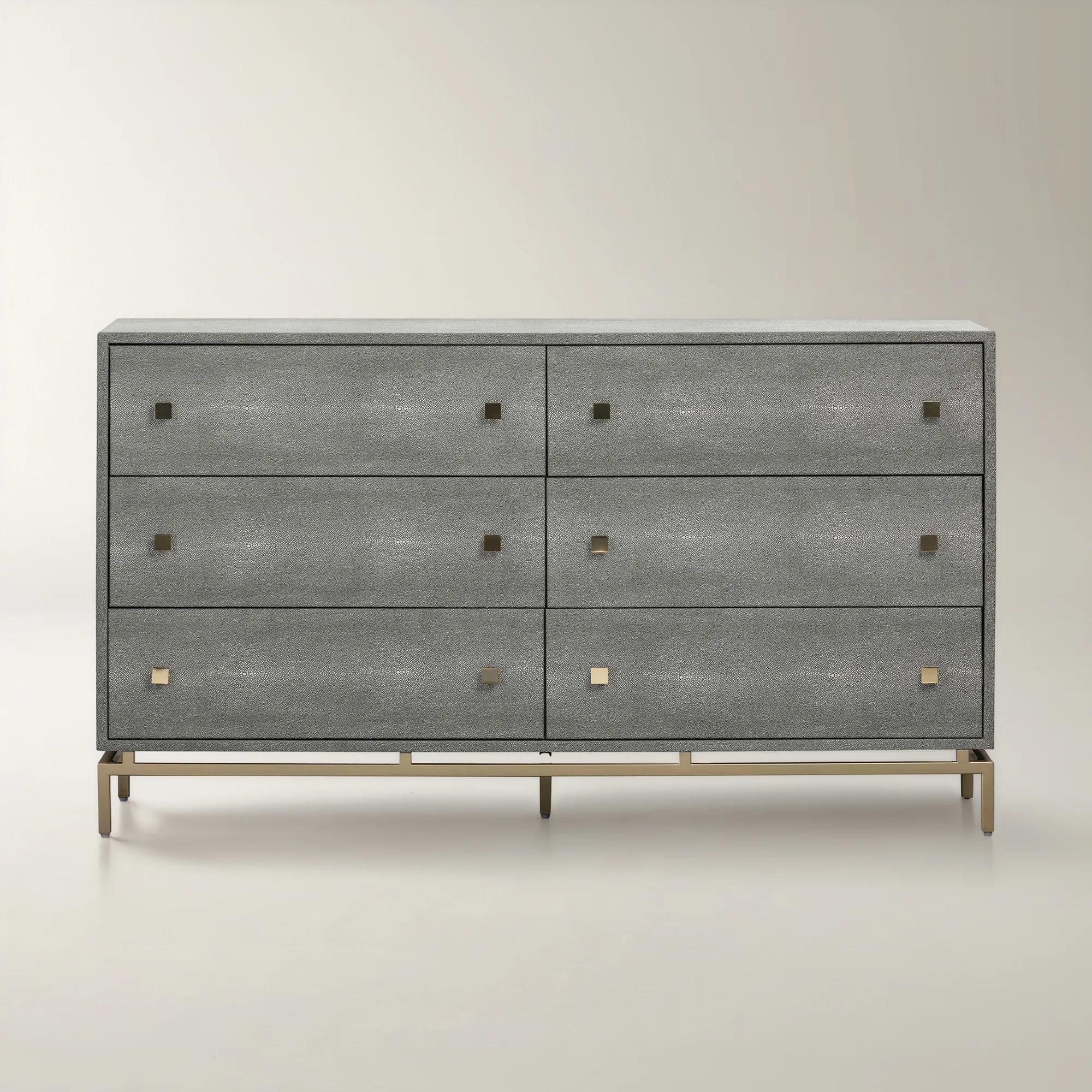
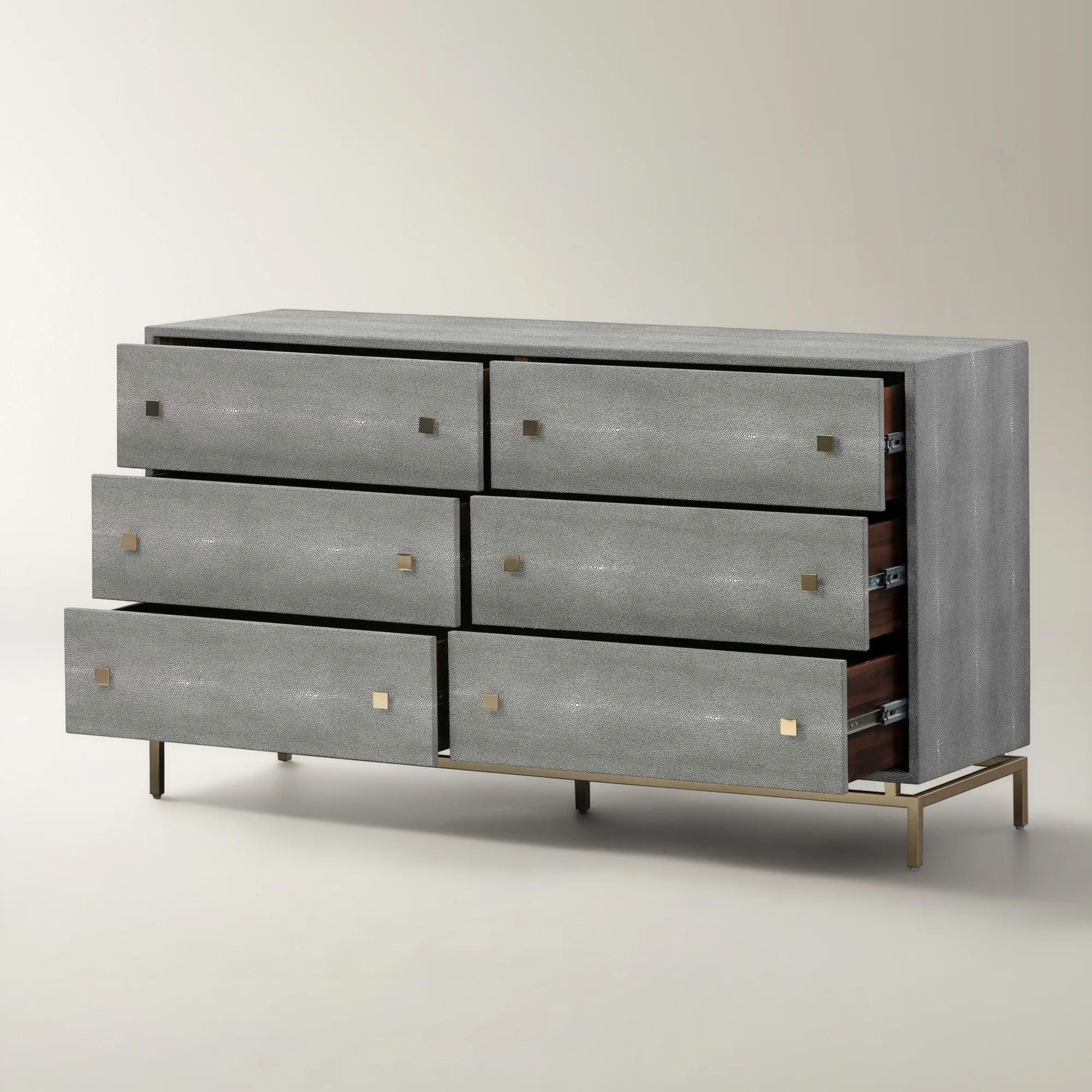 Misha Grey Shagreen 6-Drawer Dresser (57")$2249
A modern dresser featuring faux shagreen texture, brass-finished base, and six drawers with cherry wood interiors.
Add To Cart -
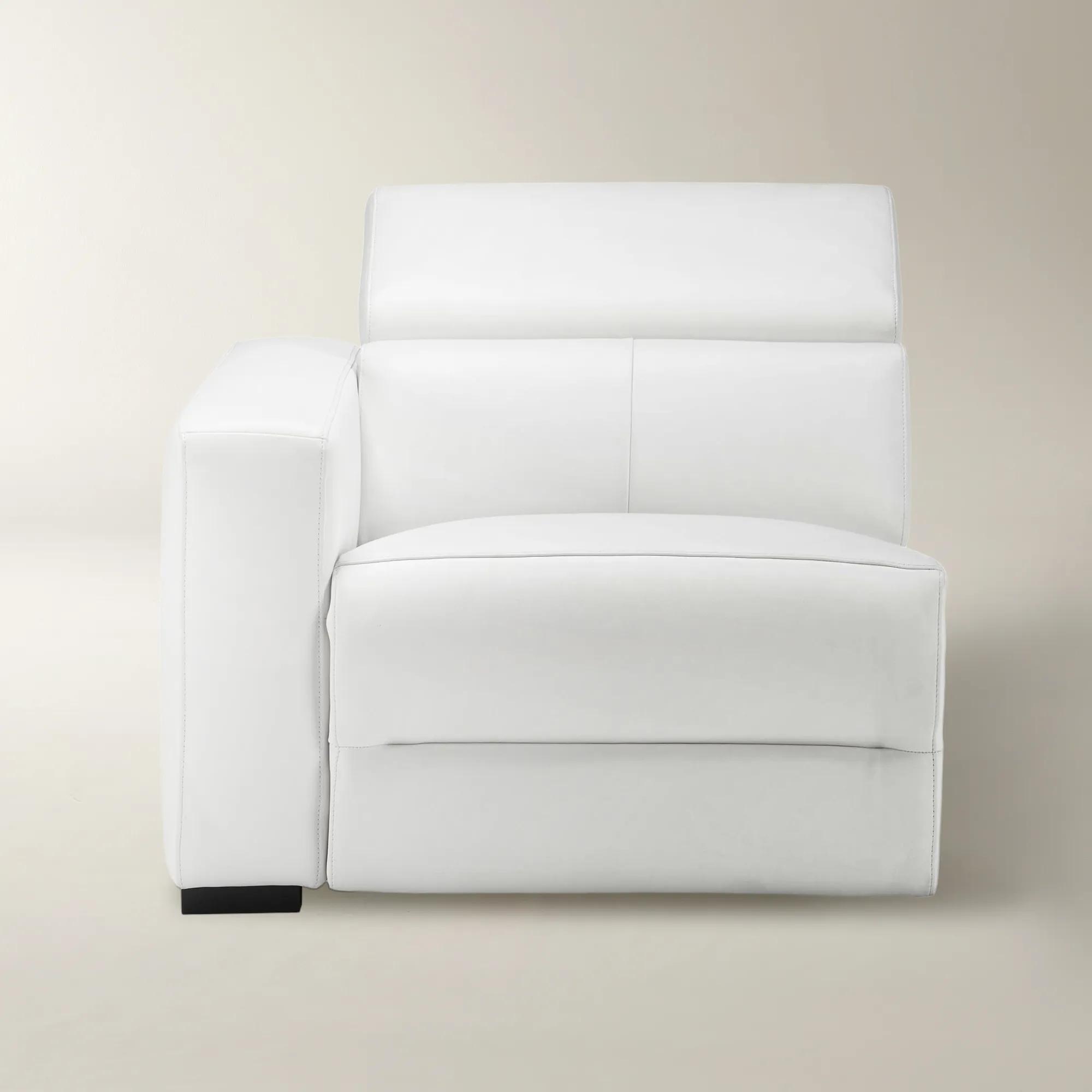
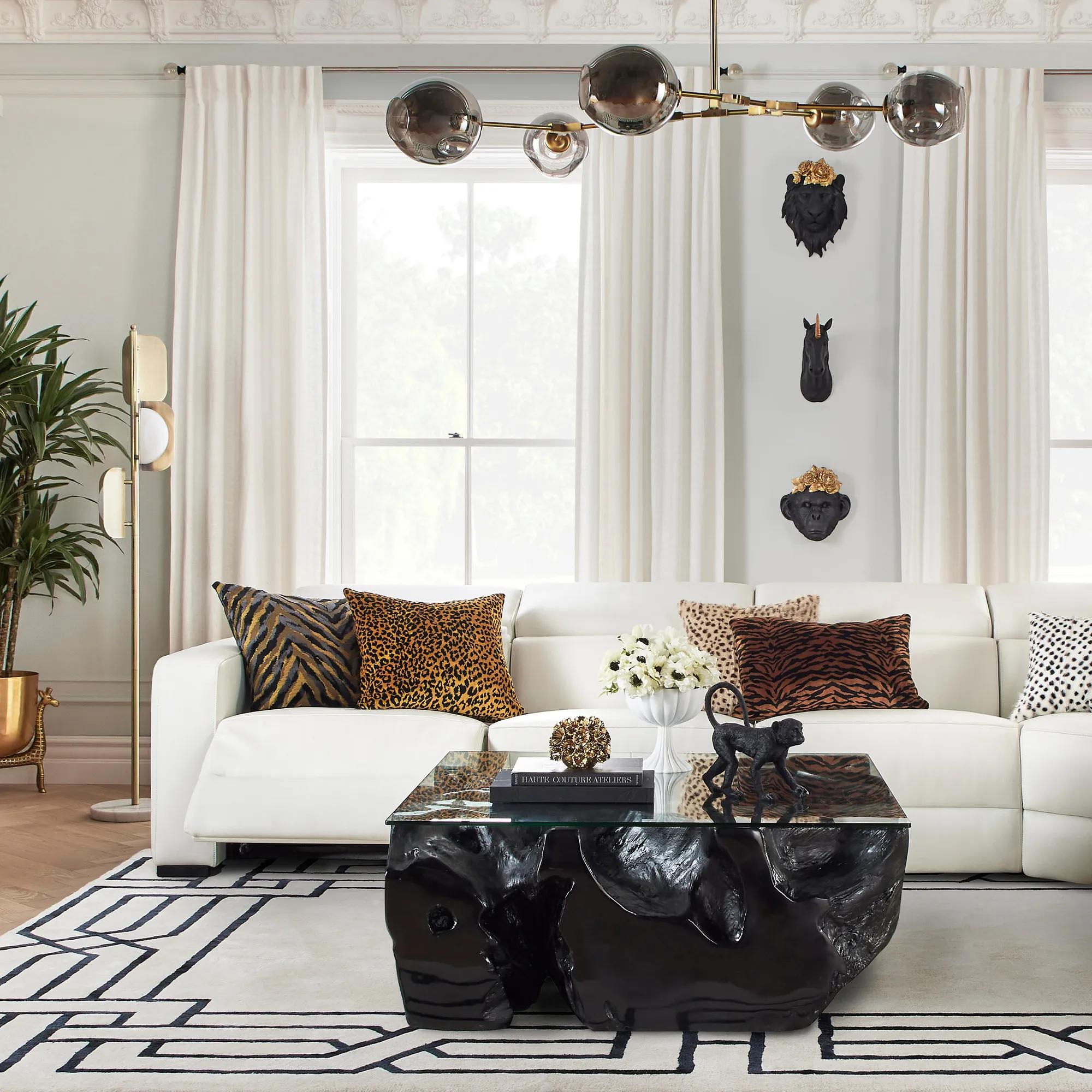 Verona White Leather Left Arm Chair$1299
A modern white sectional upholstered in supple semi-aniline leather with adjustable headrests and power-reclining seats.
Add To Cart -
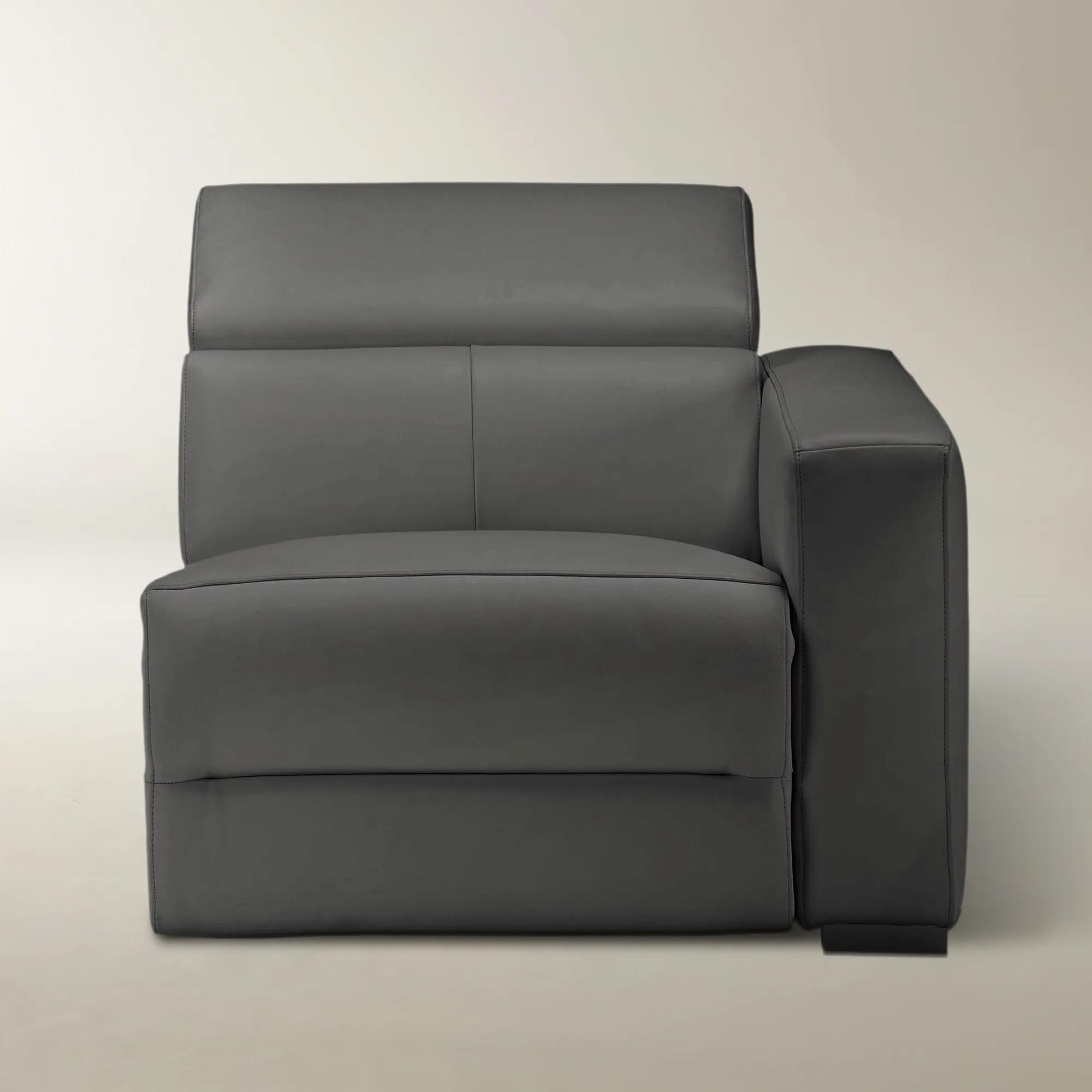
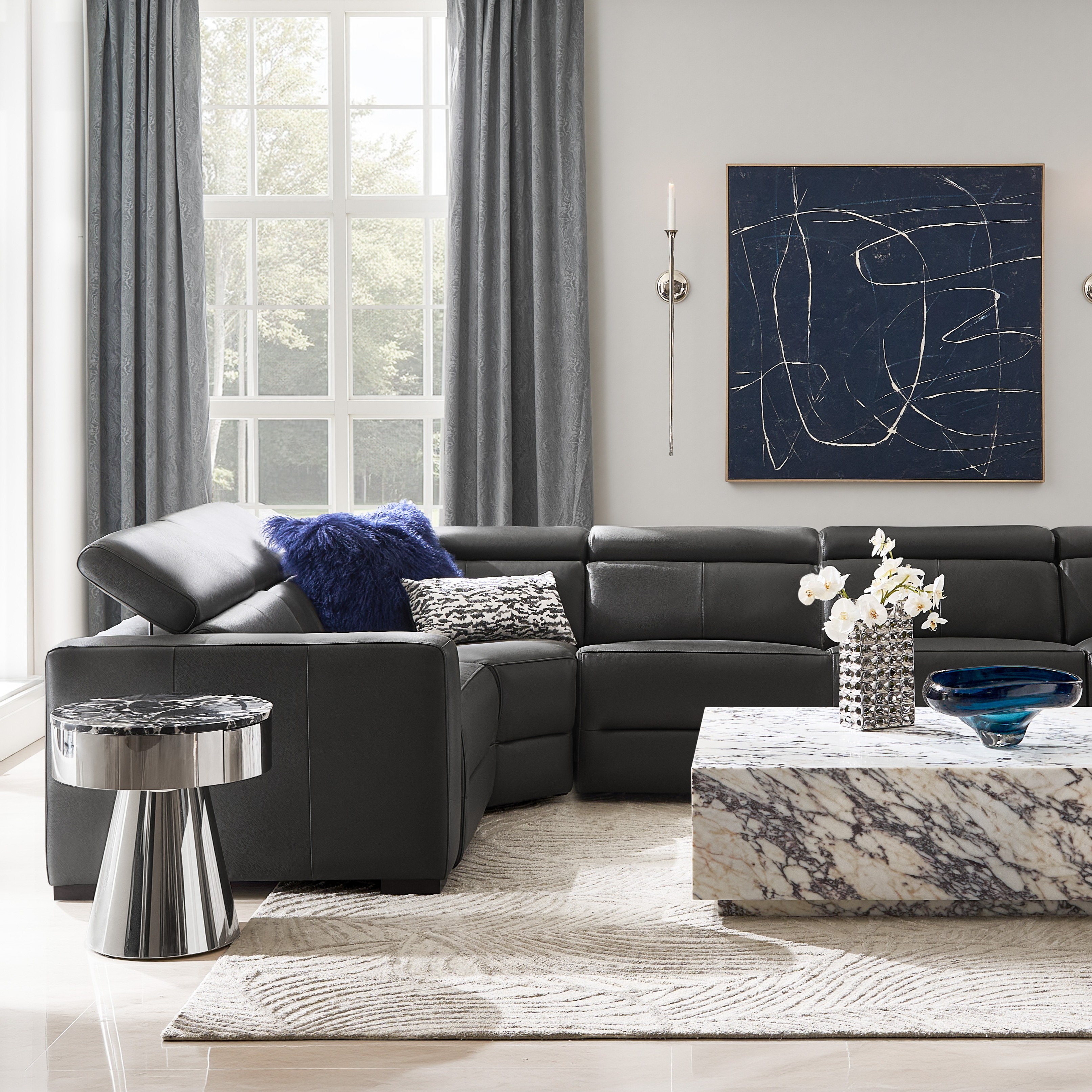 Verona Charcoal Leather Right Arm Chair$1299
A modern charcoal sectional upholstered in supple semi-aniline leather with adjustable headrests and optional power recline.
Add To Cart -
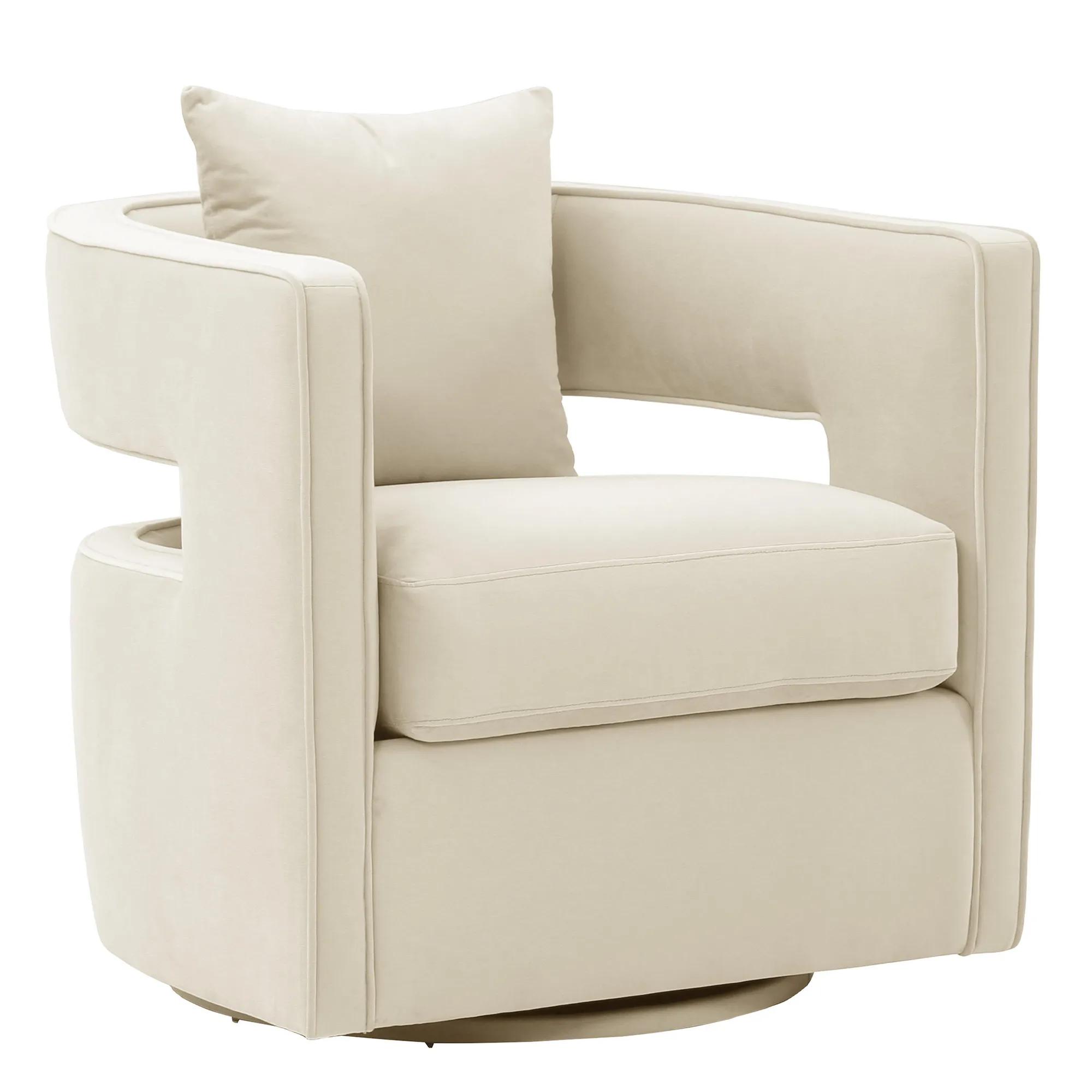
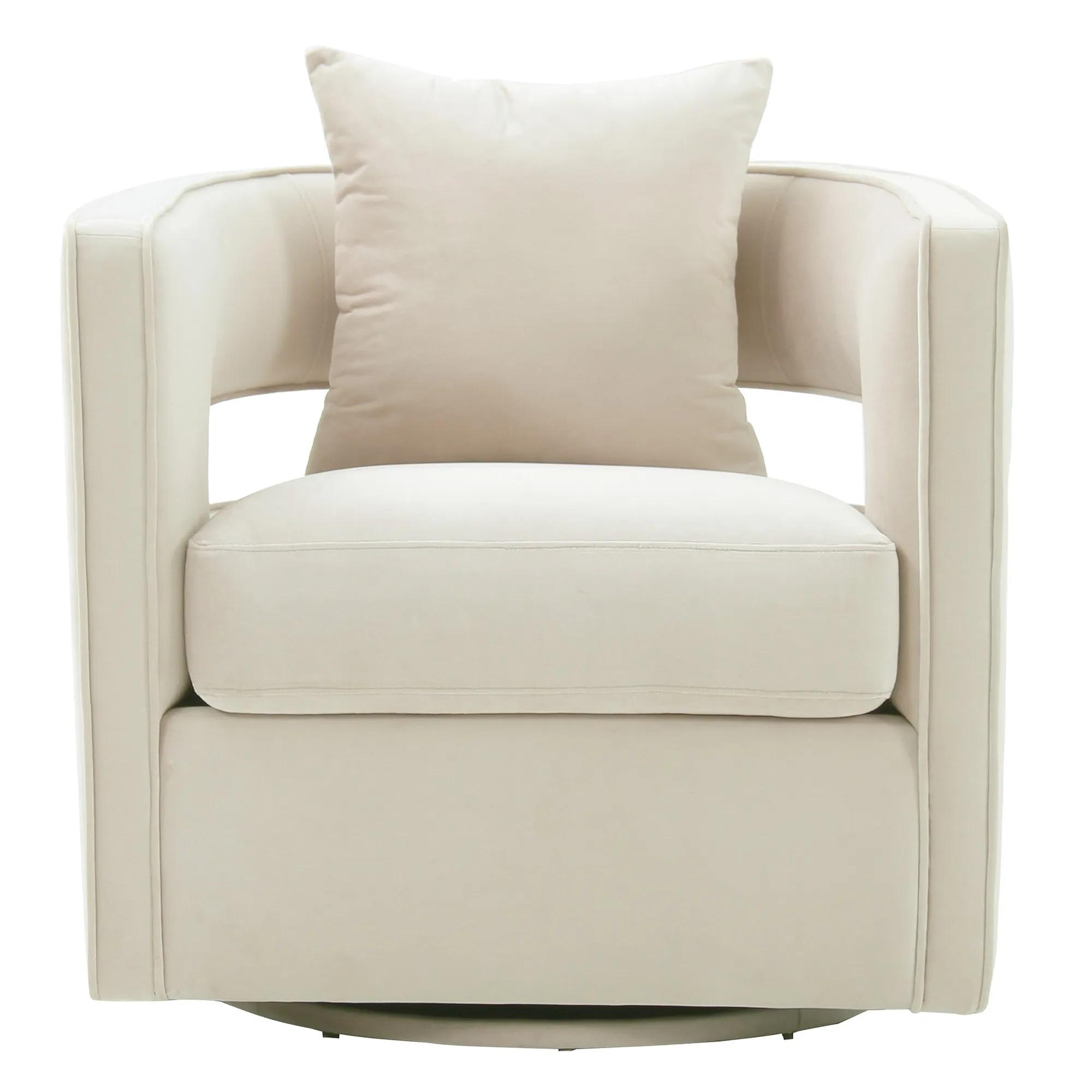 Lottie Cream Velvet Swivel Accent Chair$999
A glamorous cream velvet swivel chair featuring a barrel back, cutout arms, and plush foam cushioning.
Add To Cart -
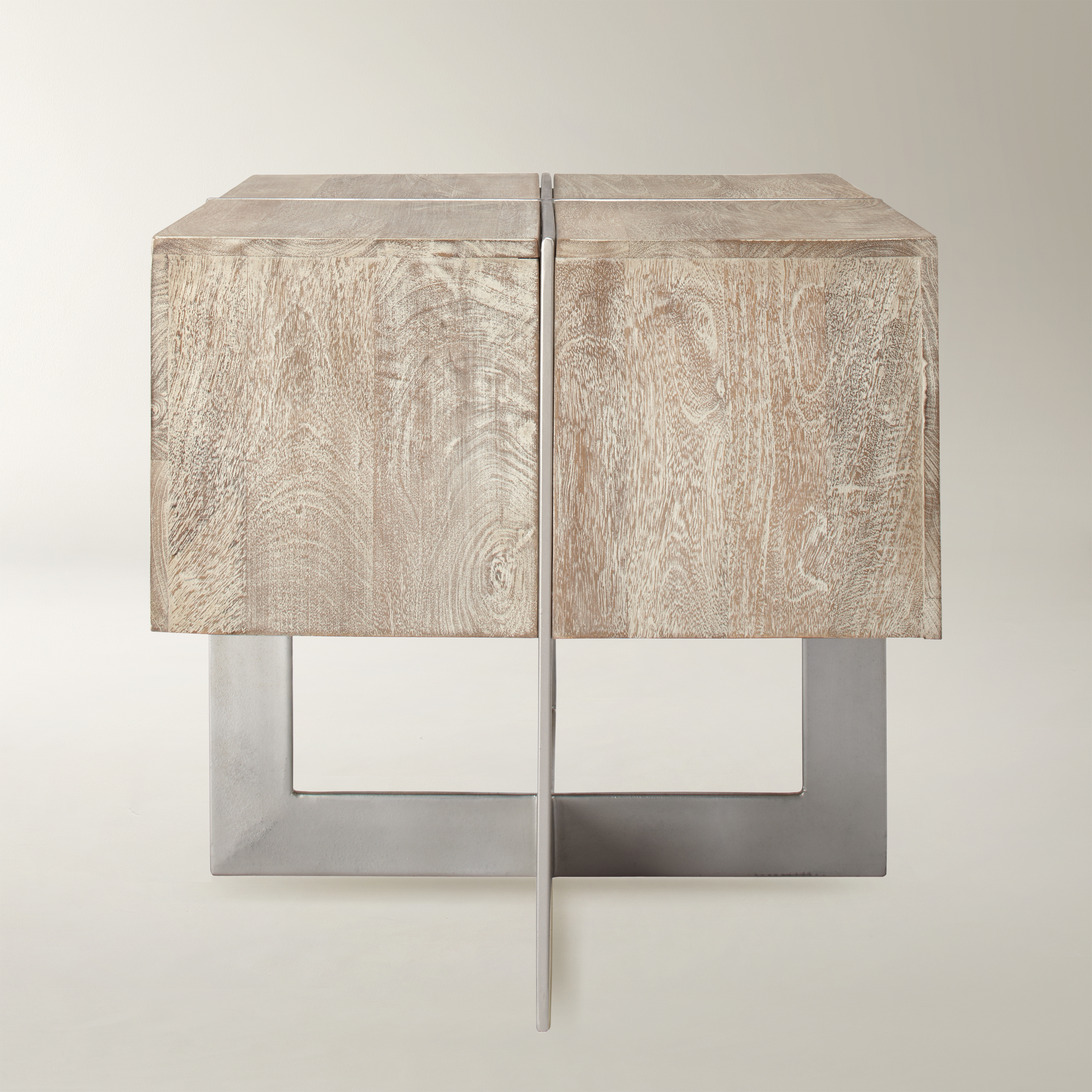
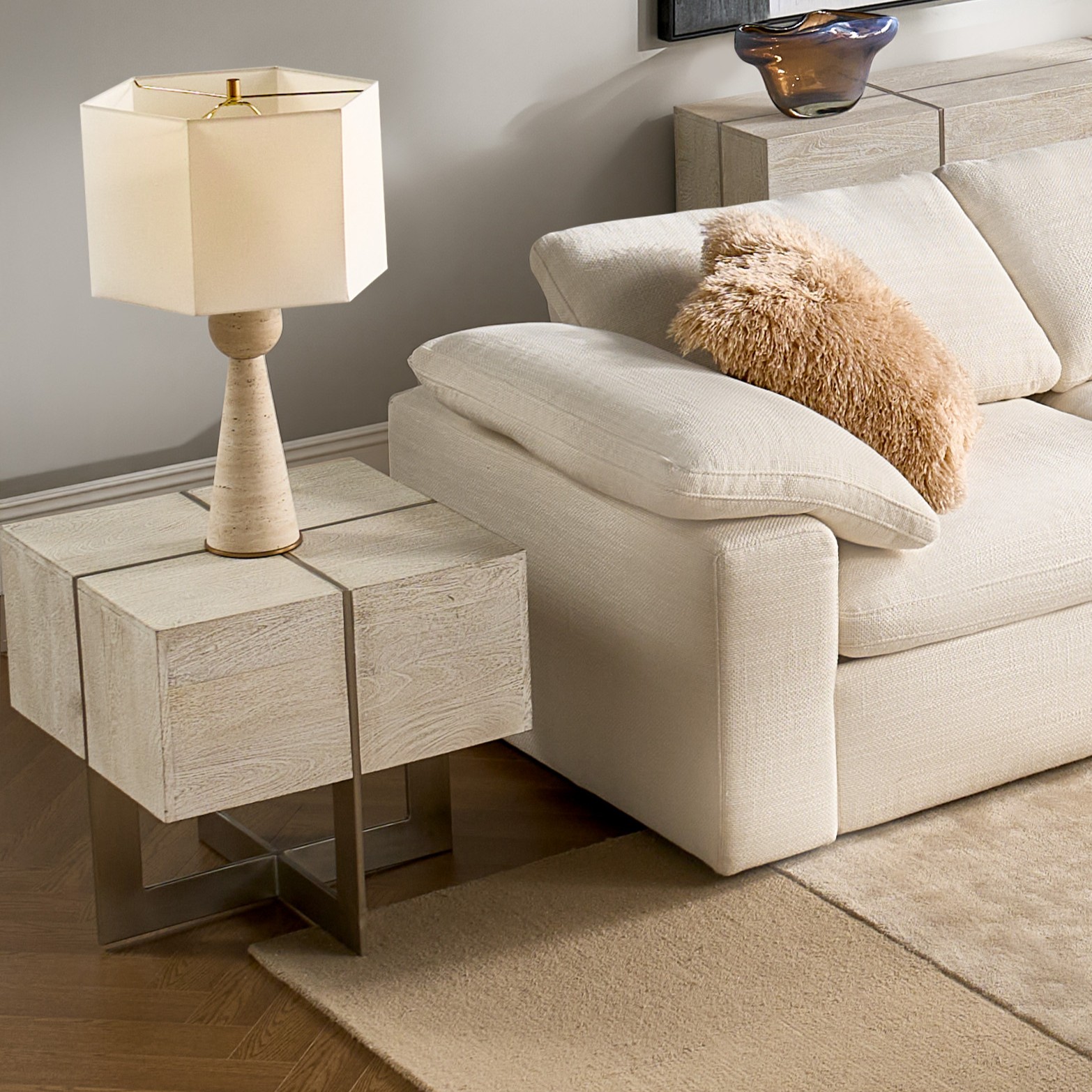 Clifton Square Natural Mango Wood End Table (24")$599
A handcrafted mango wood end table with a whitewashed finish and antiqued silver iron legs.
Add To Cart -
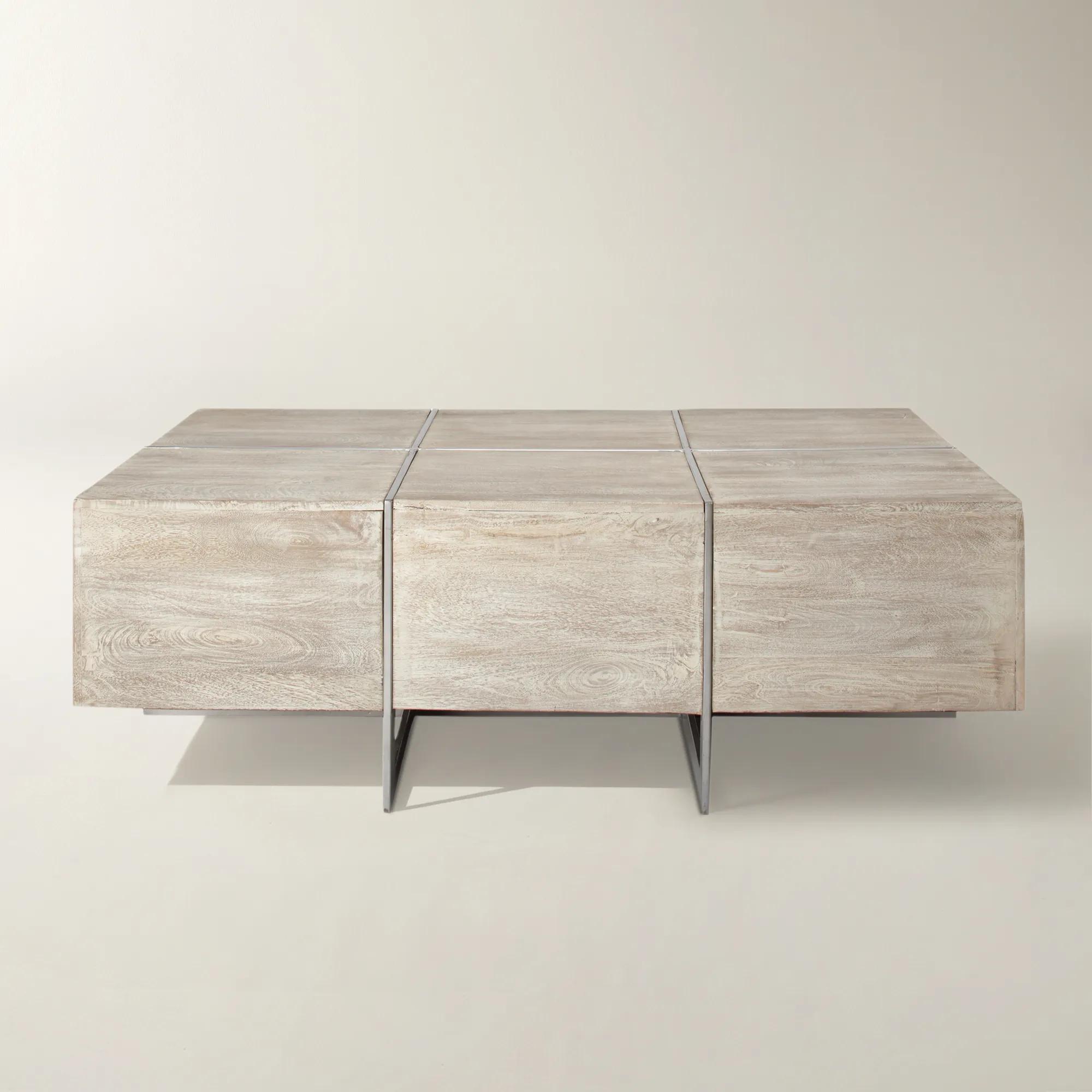
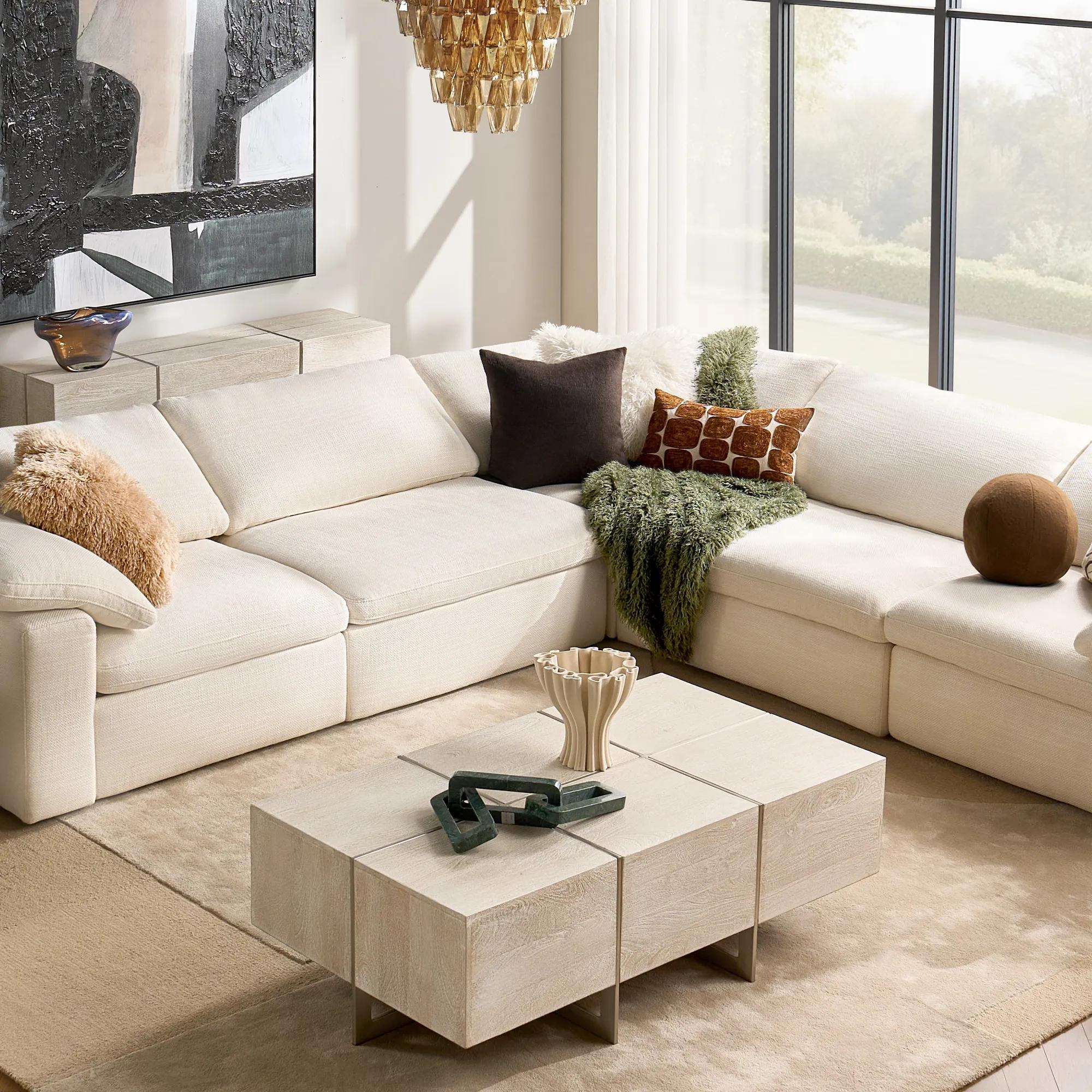 Clifton Rectangular Natural Mango Wood Coffee Table (54")$1299
A handcrafted mango wood table with a whitewashed finish and antiqued silver iron legs for organic appeal.
Add To Cart -
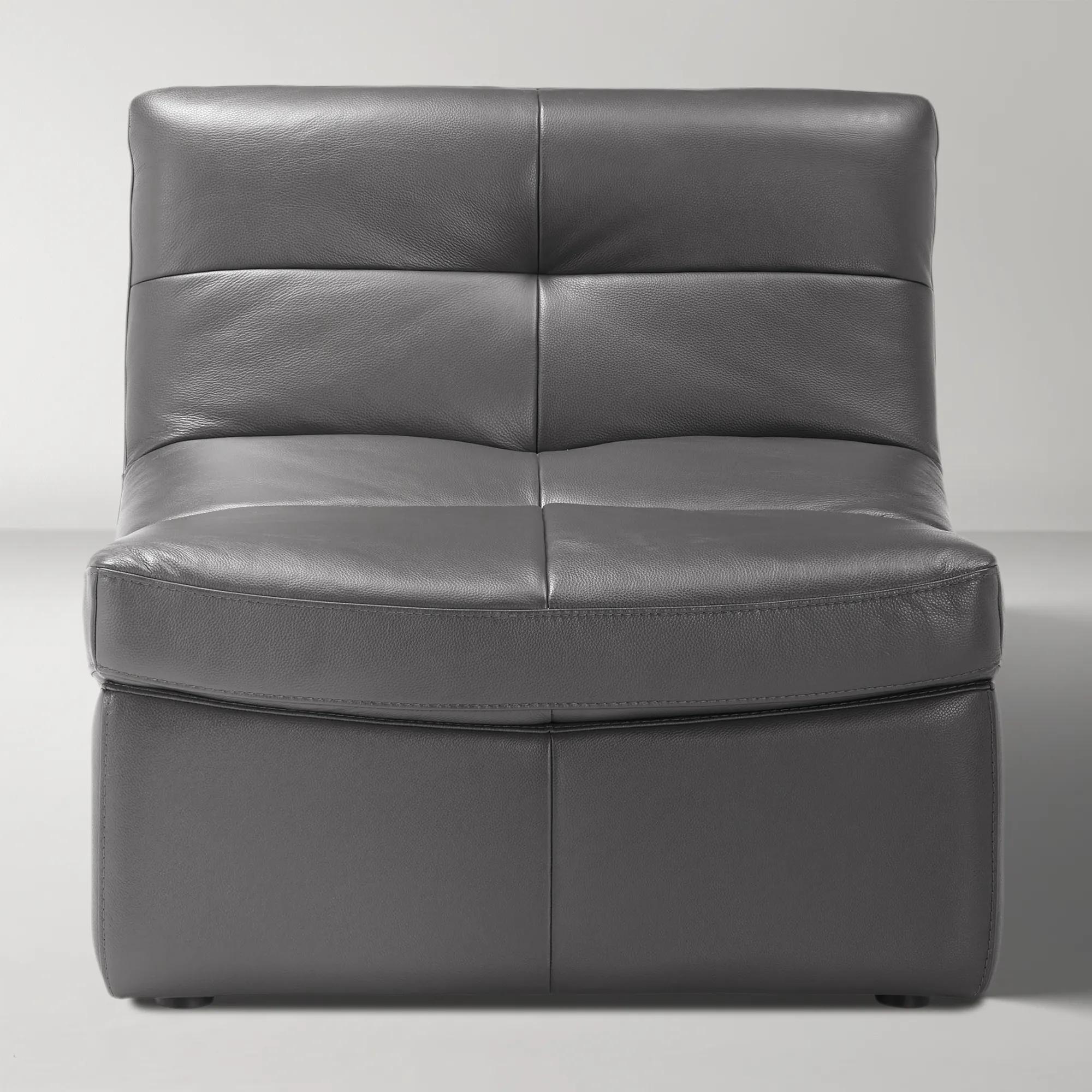
.jpg?w=1200&h=1200) Convo Charcoal Leather Armless Chair$1199
Convo Charcoal Leather Armless Chair$1199A modular sectional with kiln-dried hardwood frame and charcoal semi-aniline leather upholstery for modern versatility.
Add To Cart -
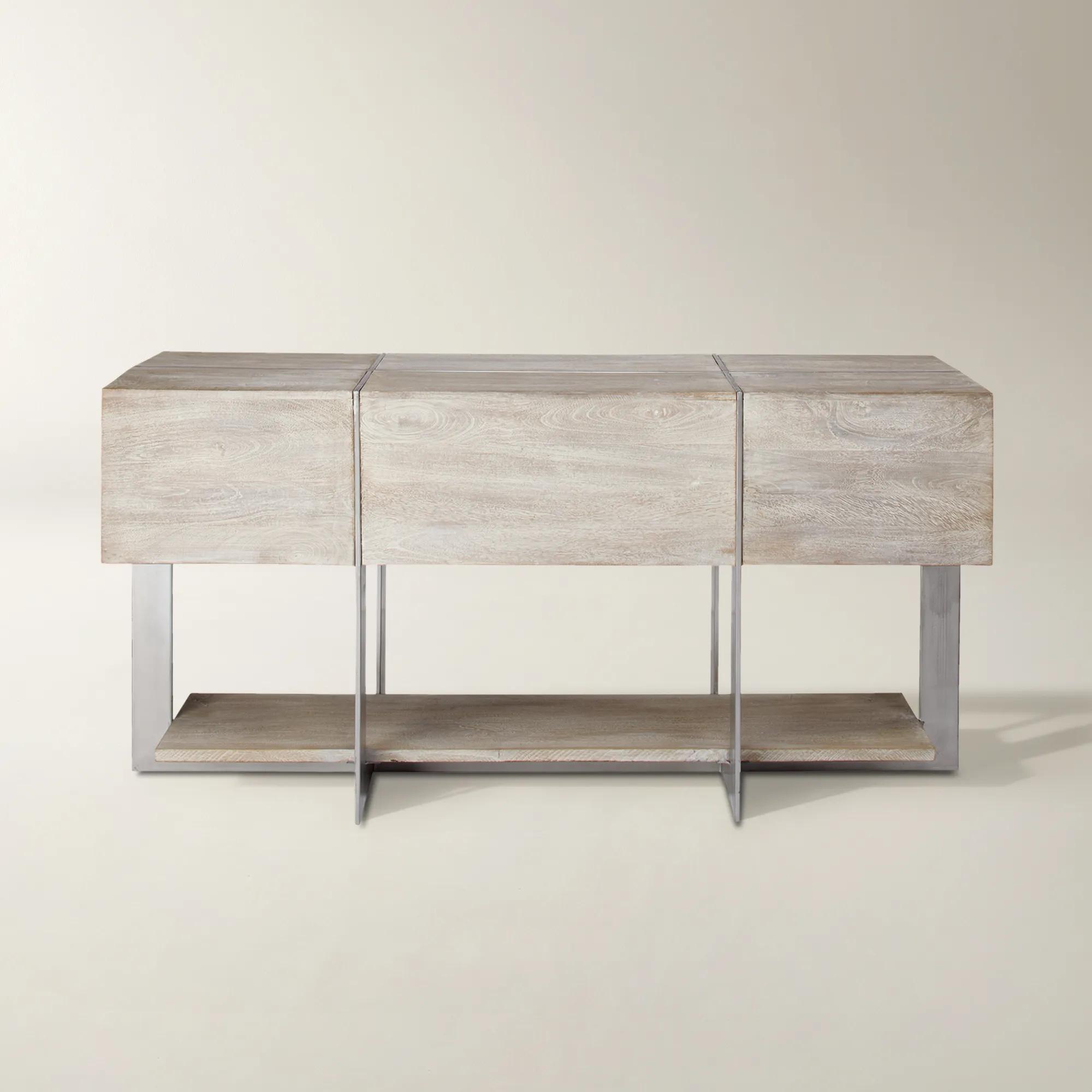
.jpg?w=1200&h=1200) Clifton Rectangular Natural Mango Wood Console Table (60")$1399
Clifton Rectangular Natural Mango Wood Console Table (60")$1399A handcrafted mango wood console table with a whitewashed finish and antiqued silver iron legs.
Add To Cart -
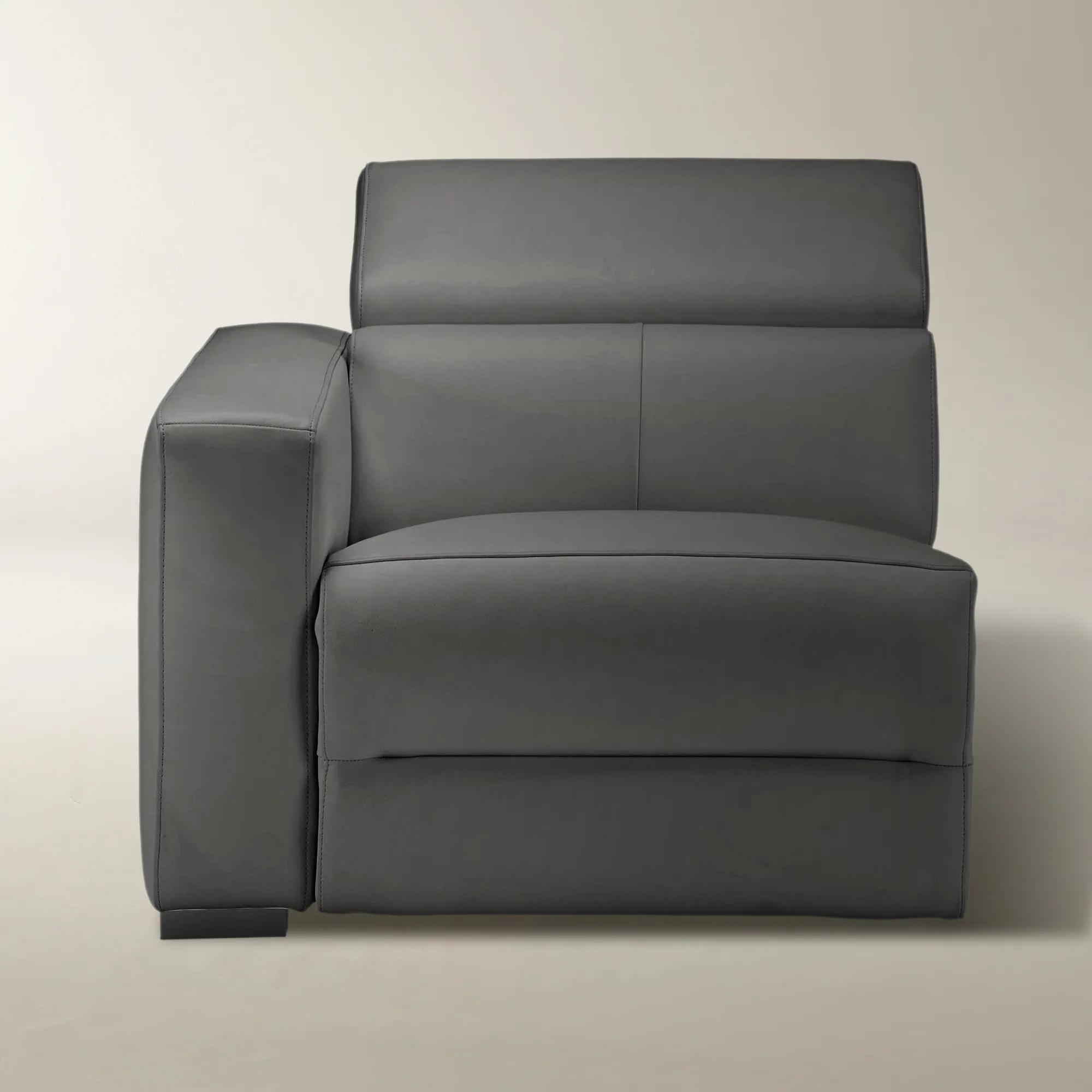 Verona Charcoal Leather Left Arm Chair$1299
A charcoal semi-aniline leather sectional with adjustable headrests, power-reclining seats, and kiln-dried hardwood frame.
Add To Cart -
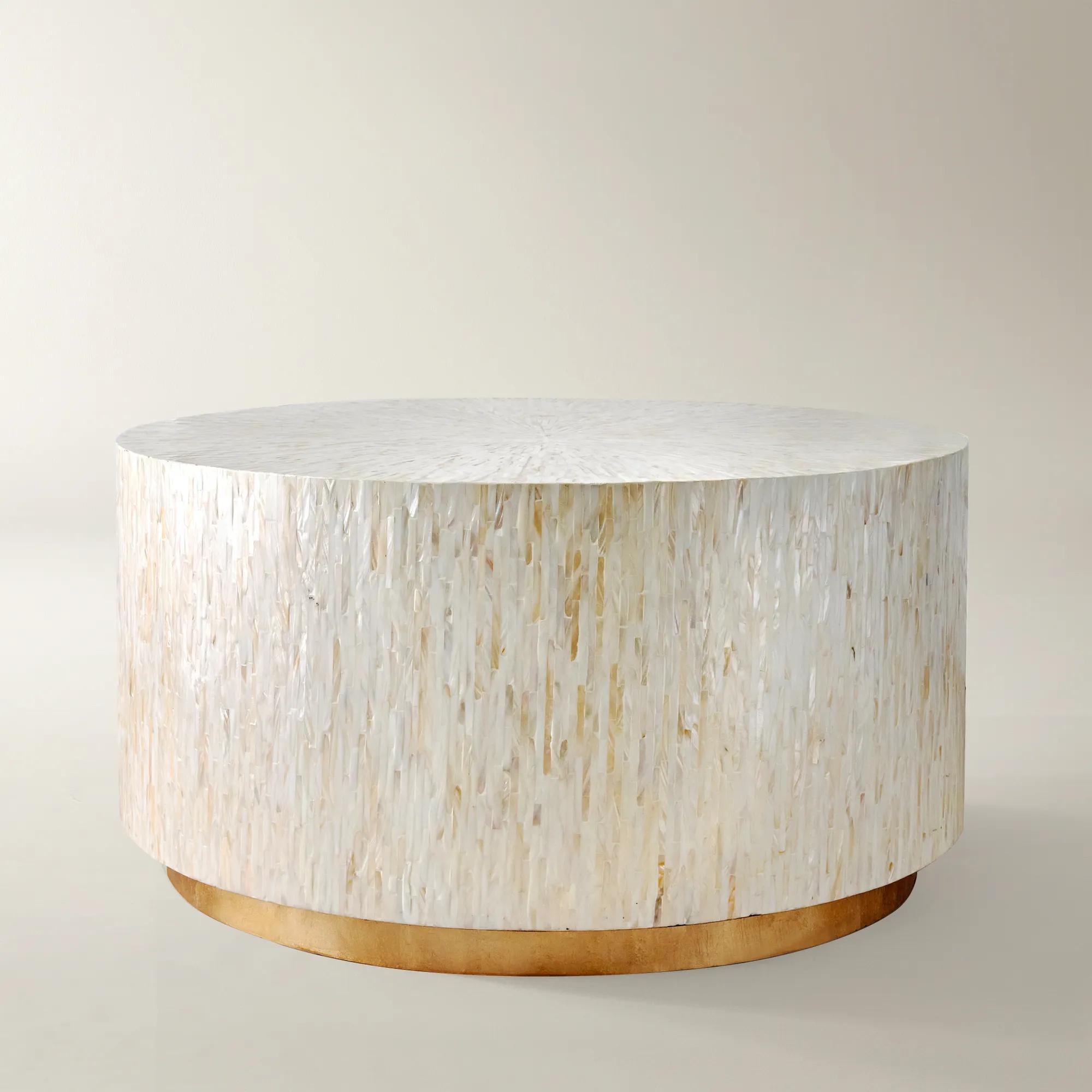
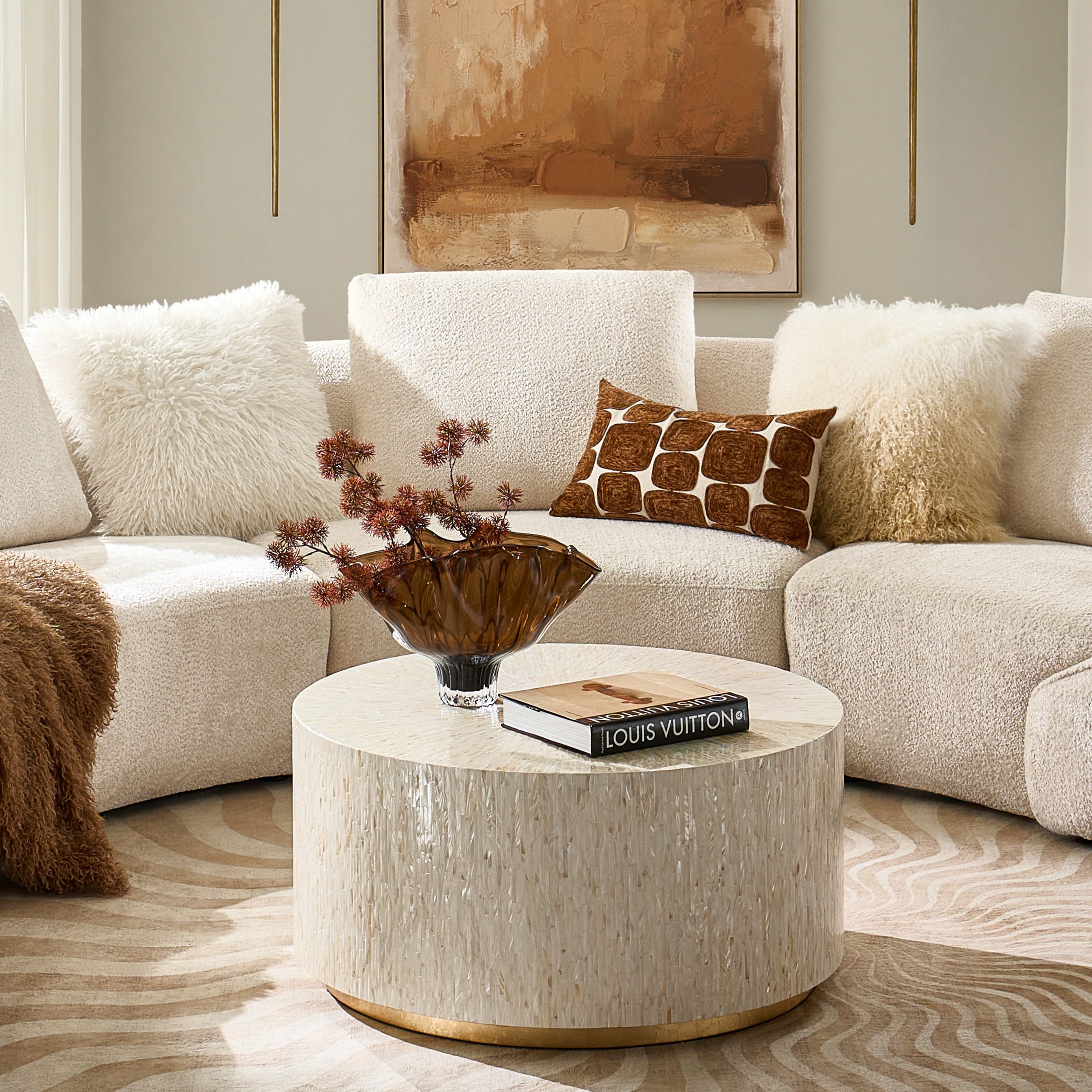 Alexandria Round Mosaic Platinum Coffee Table (36")$799
A luminous ivory coffee table featuring hand-applied mother-of-pearl mosaic and a gold leaf-accented base.
Add To Cart -
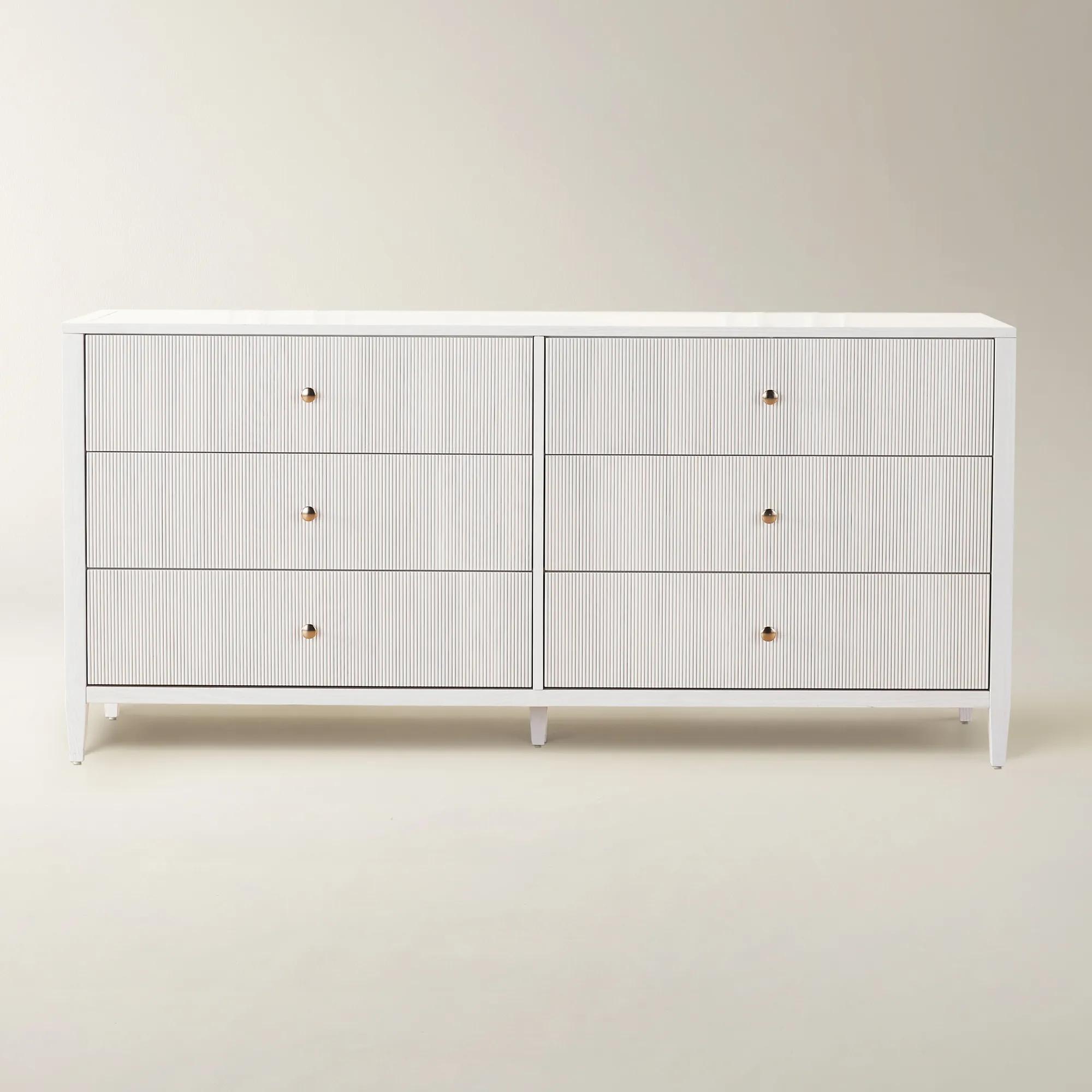
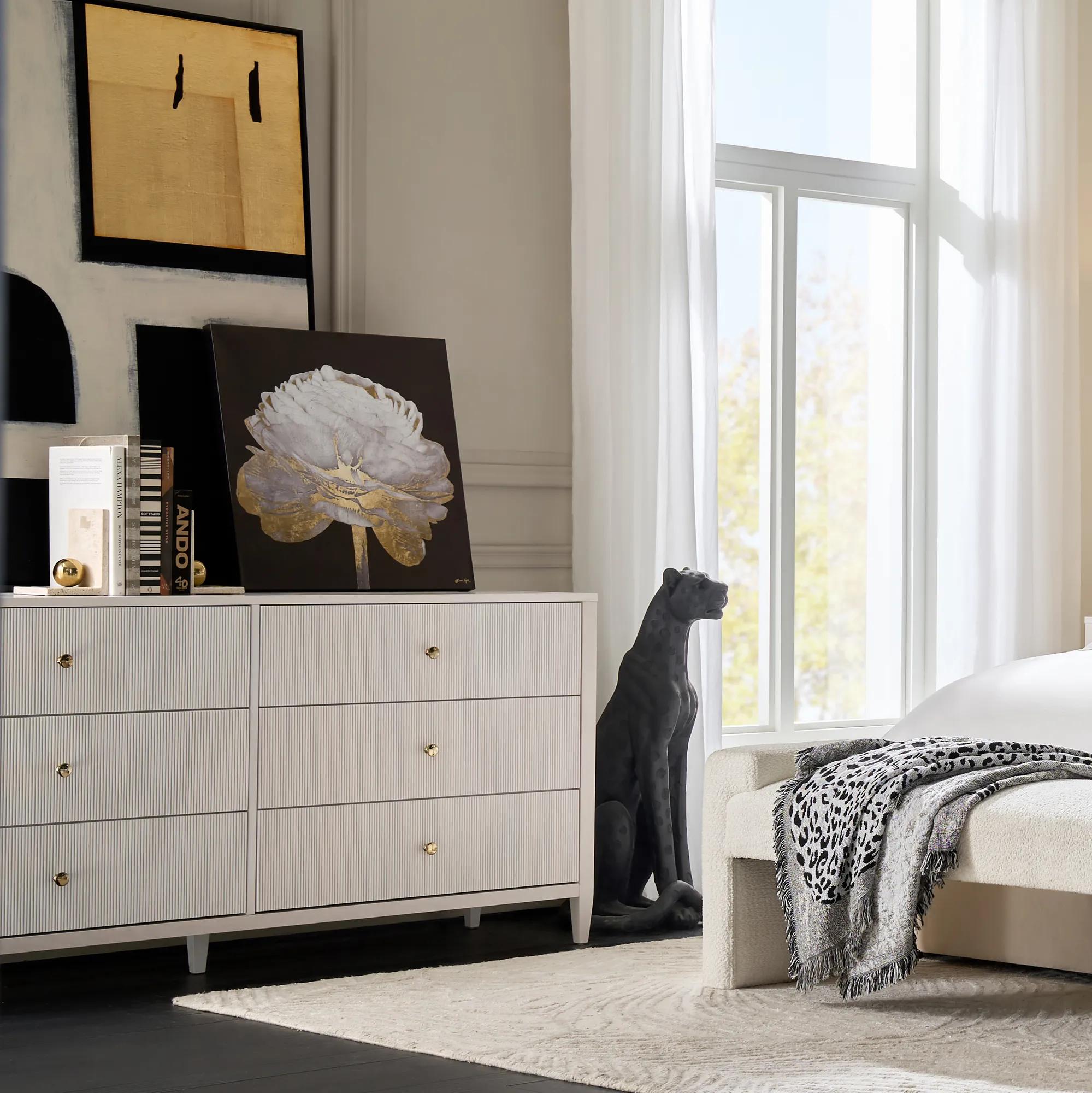 Viola Reeded White Ash Wood 6-Drawer Dresser (70")$1899
A modern dresser in bone white ash wood with reeded fronts and brass hardware for a luxe touch.
Add To Cart -
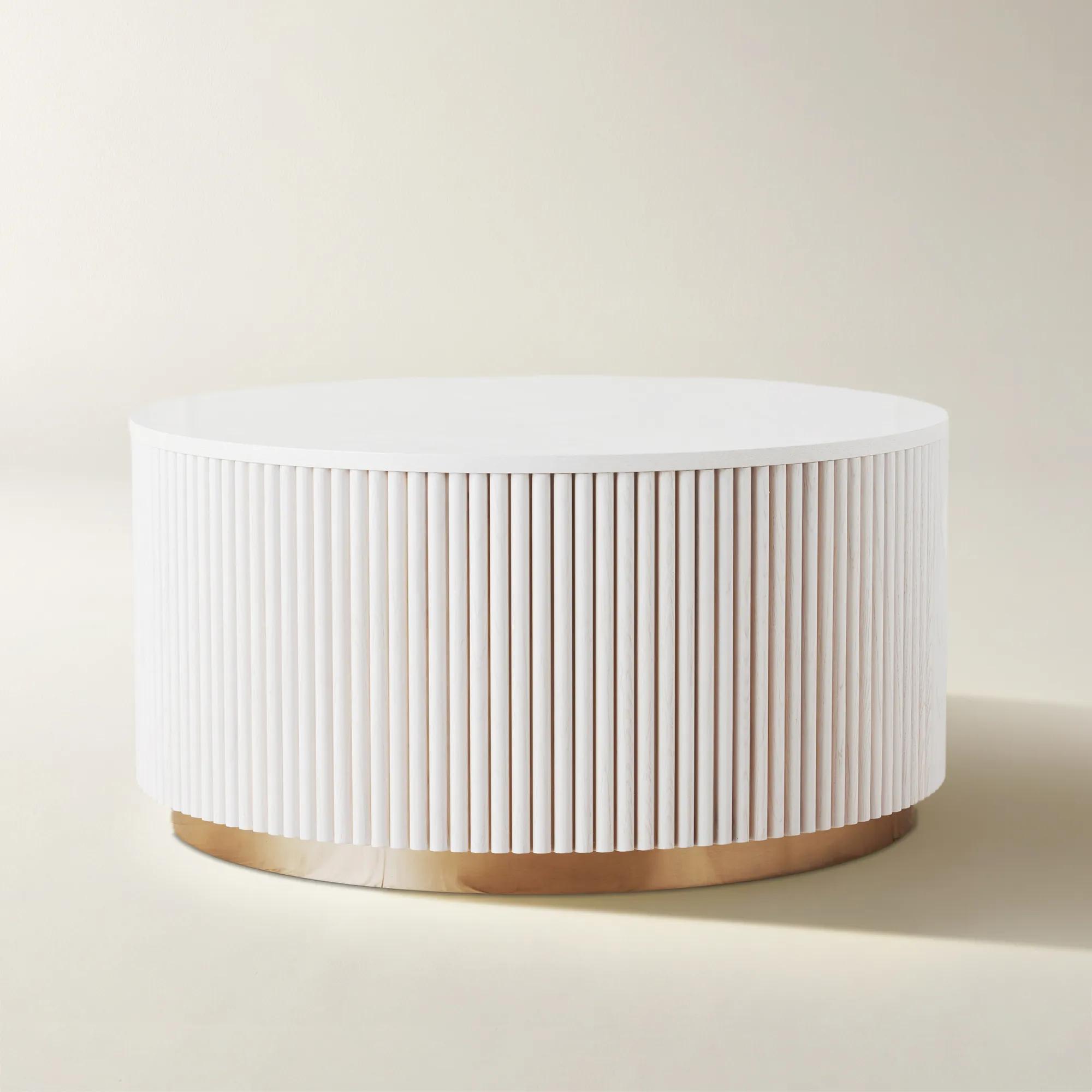
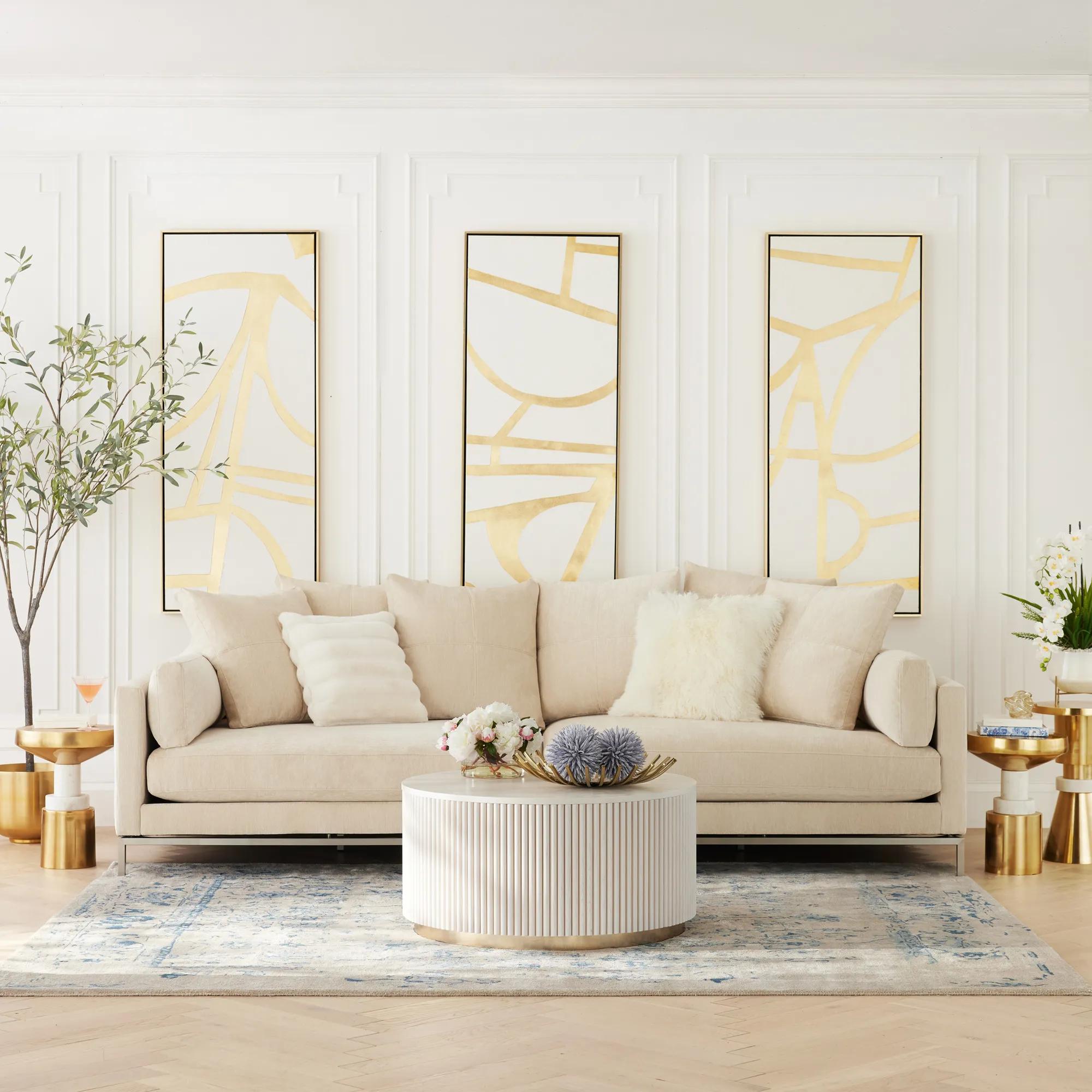 Natalia Round Reeded Whitewashed Ash Wood Coffee Table (36")$1299
A striking coffee table featuring reeded ash wood sides, a smooth top, and a whitewashed finish.
Add To Cart -
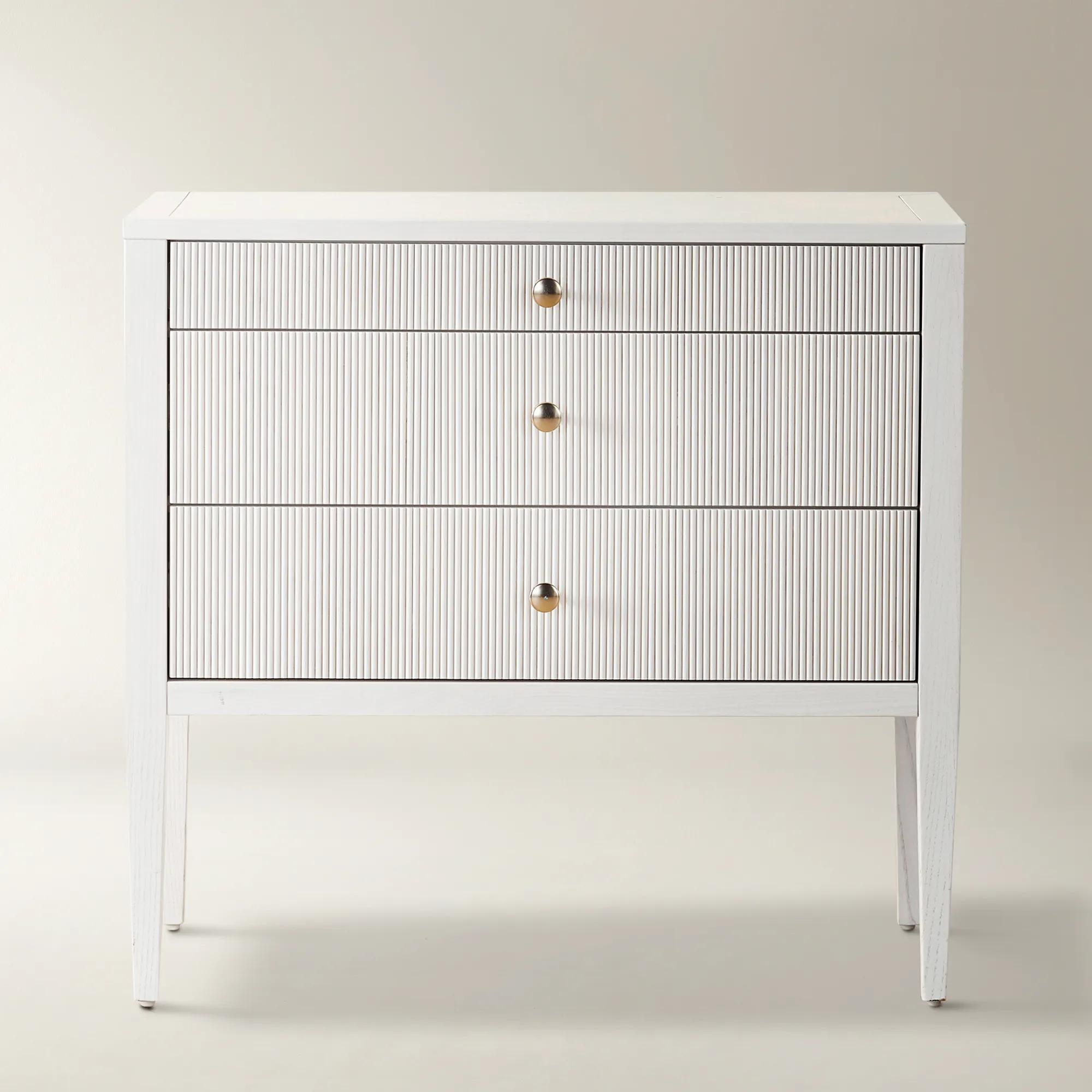 Viola Reeded White Ash Wood 3-Drawer Nightstand (31")$899
A modern nightstand in bone white ash wood with reeded drawers and brass hardware for a luxe touch.
Add To Cart -
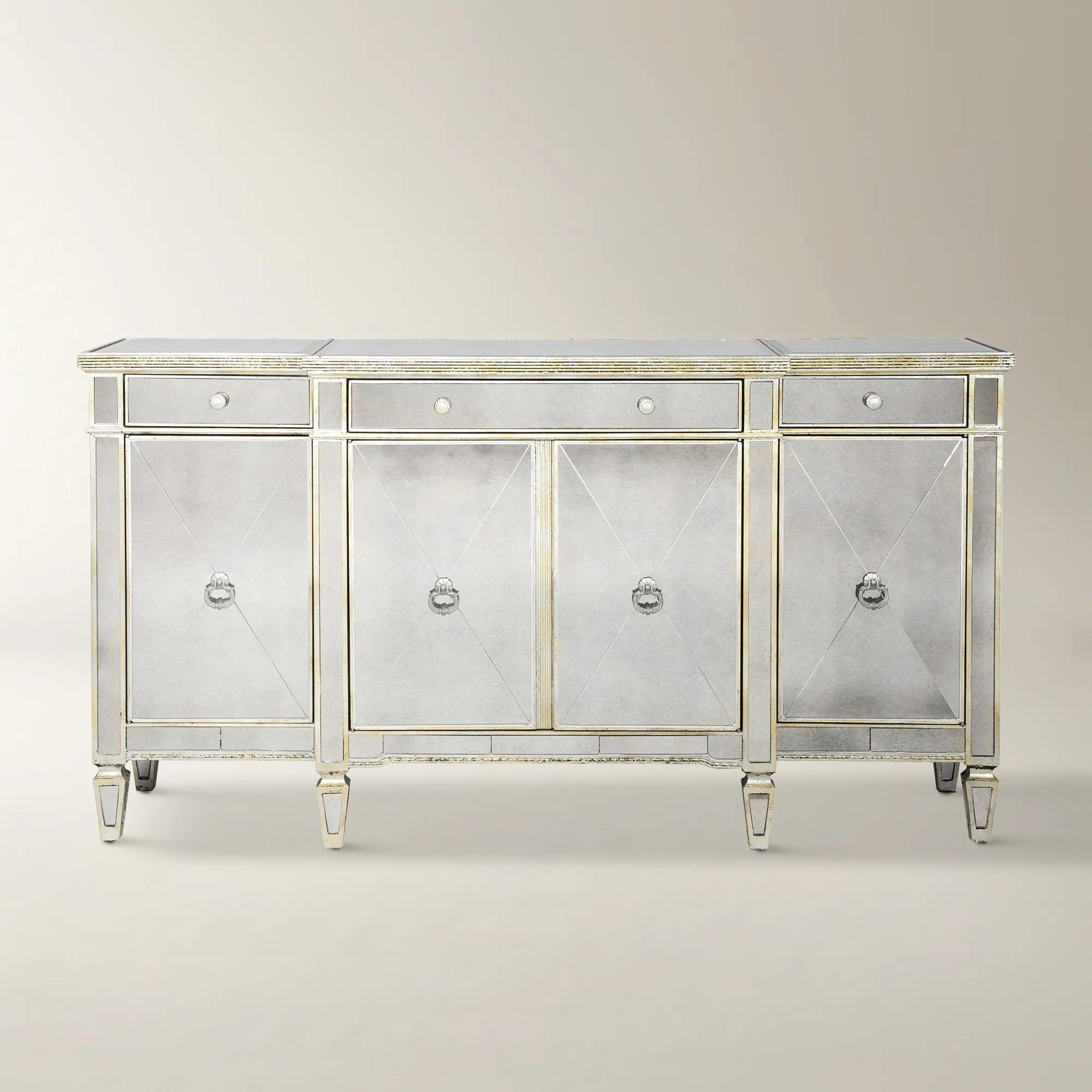
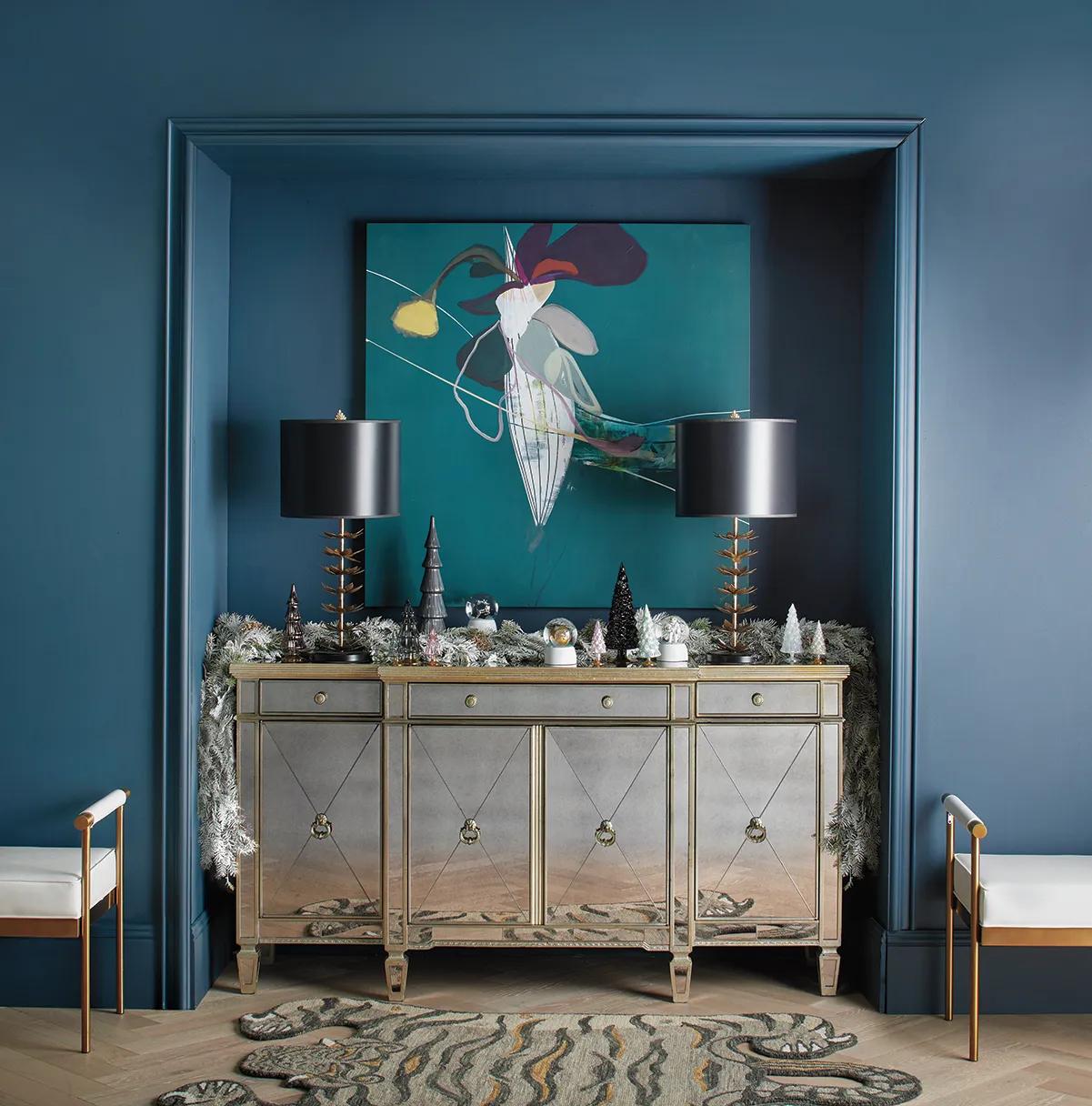 Borghese Mirrored Silver 3-Drawer Buffet (70")$2199
A sophisticated mirrored buffet featuring antique beveled glass, champagne gilt wood trim, and hand-applied silver leaf.
Add To Cart -
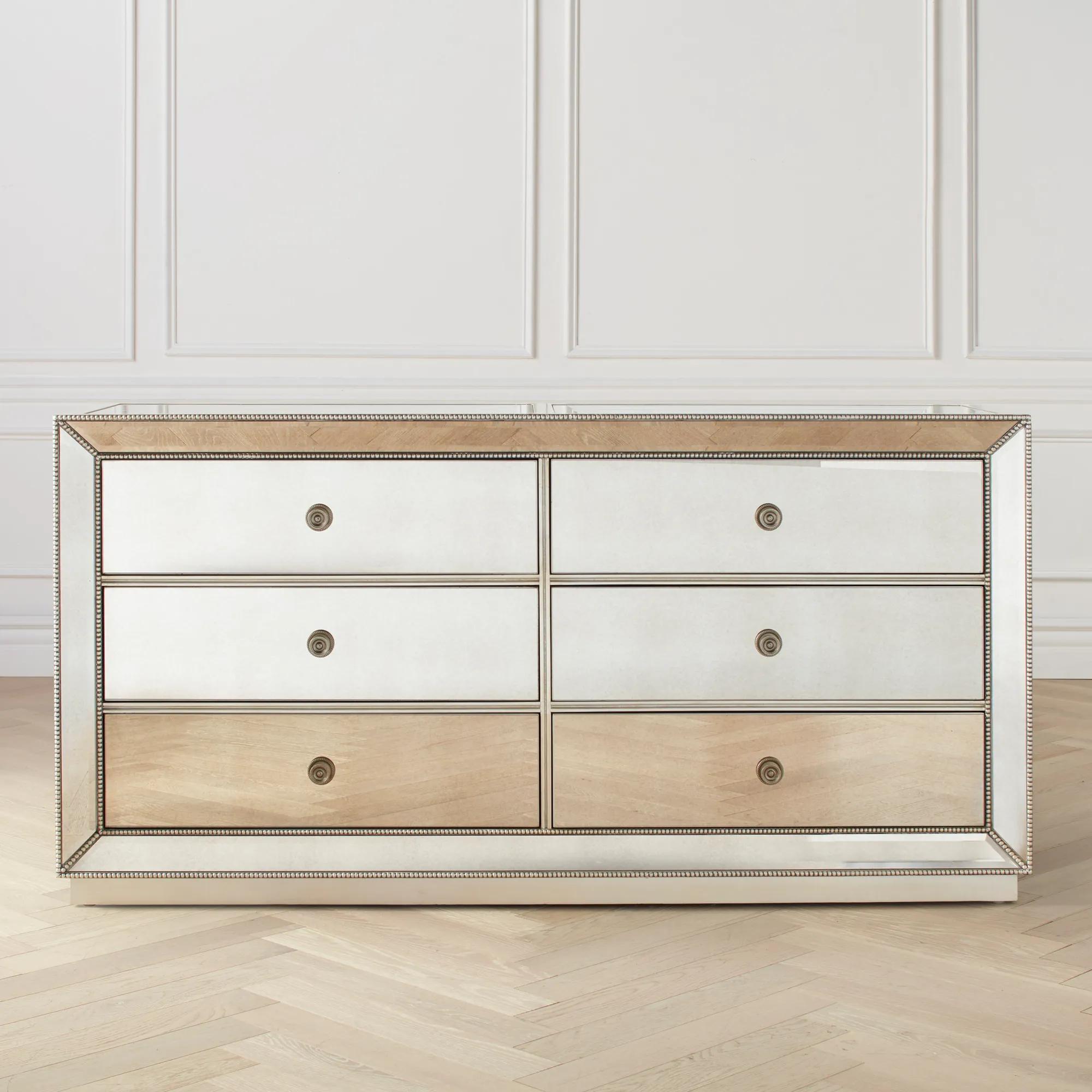 Omni Mirrored Silver 6-Drawer Dresser (72")$2599
A hand-applied silver-leaf chest with antiqued mirrored panels and beaded trim for dramatic bedroom shine.
Add To Cart -
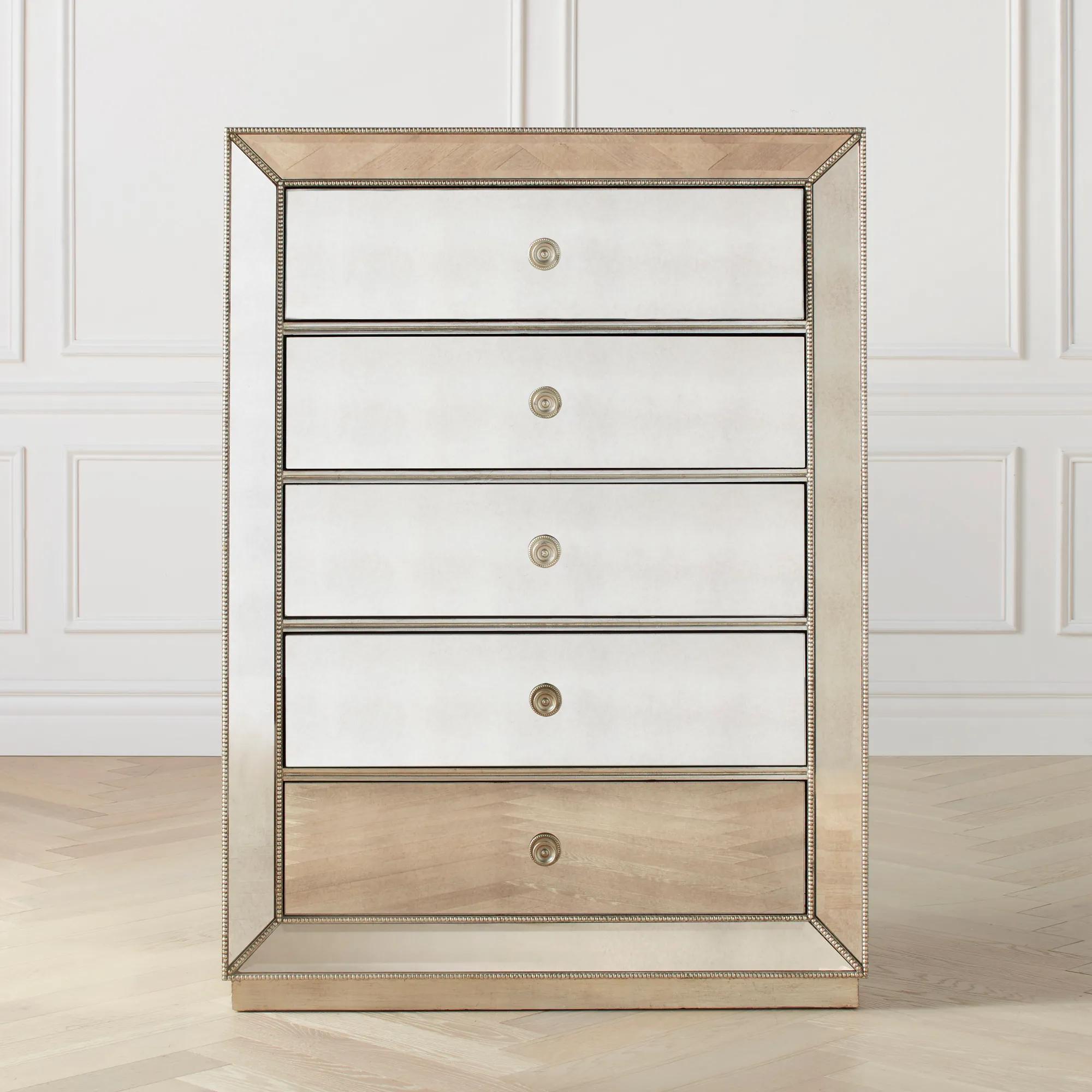
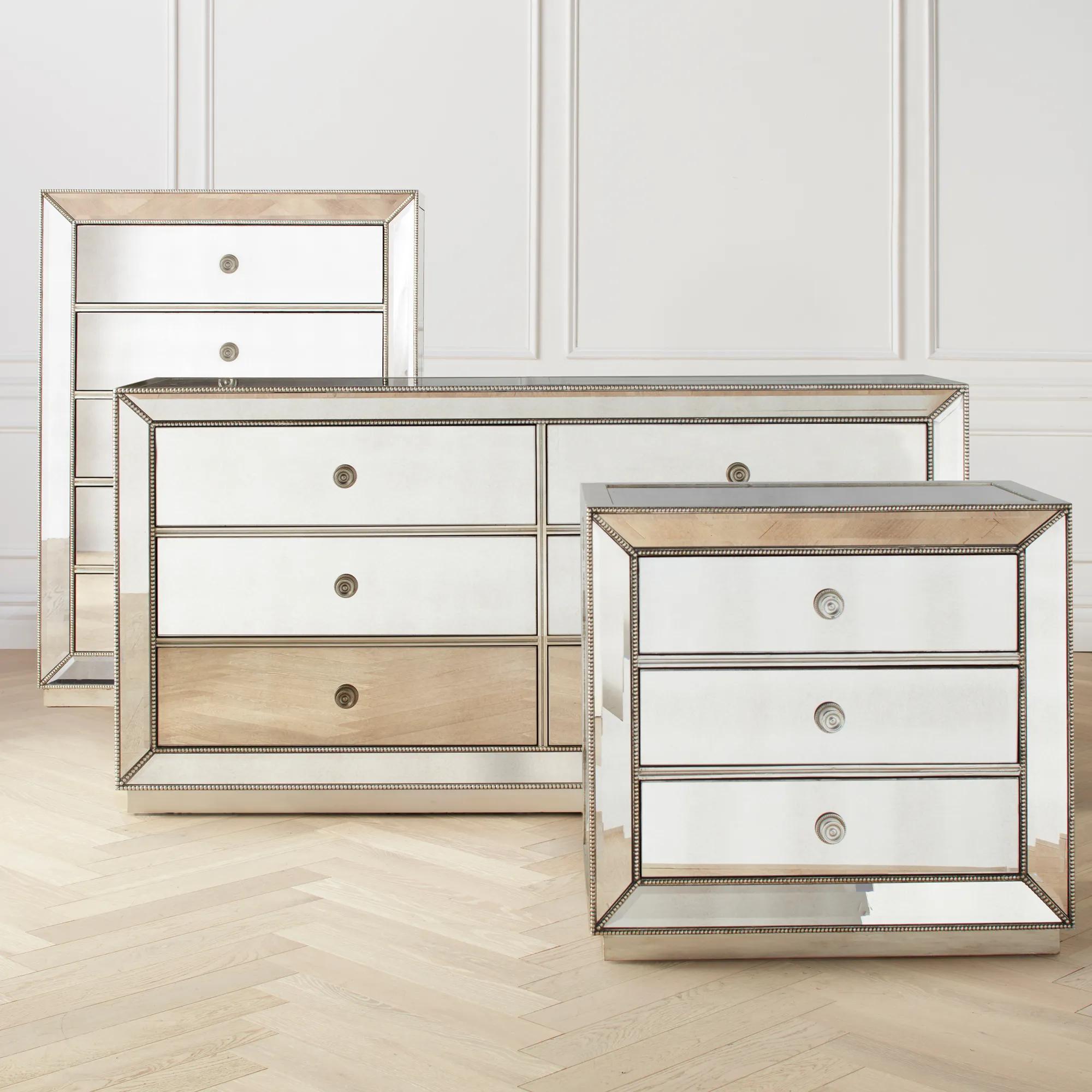 Omni Mirrored Silver 5-Drawer Tall Dresser (40")$2199
A dramatic chest featuring antiqued mirrored panels, hand-applied silver-leaf finish, and kiln-dried hardwood construction.
Add To Cart -
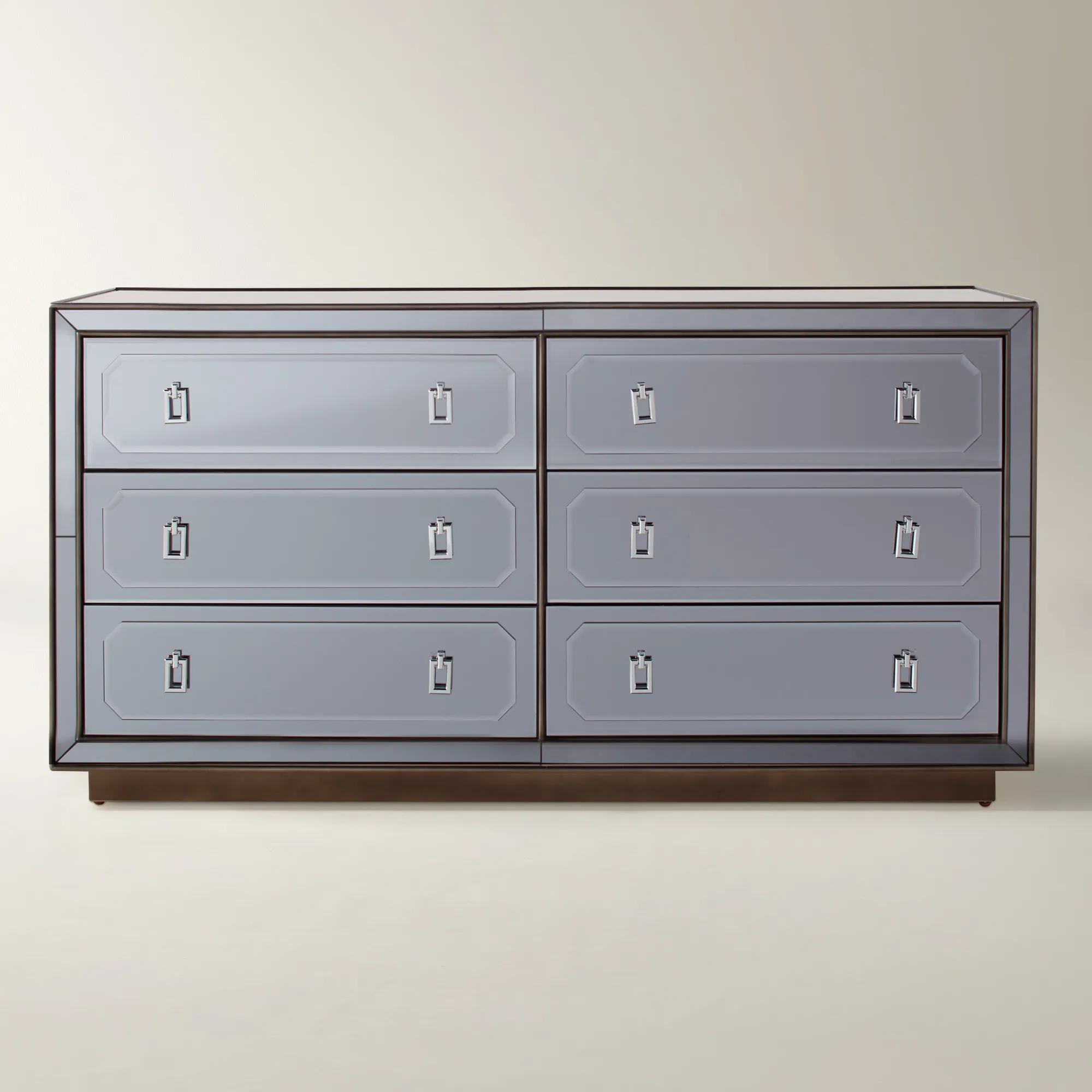 Maddox Mirrored Grey 6-Drawer Dresser (66")$2299
A modern dresser featuring beveled mirror paneling, graphite finish, and polished nickel hardware for sleek sophistication.
Add To Cart -
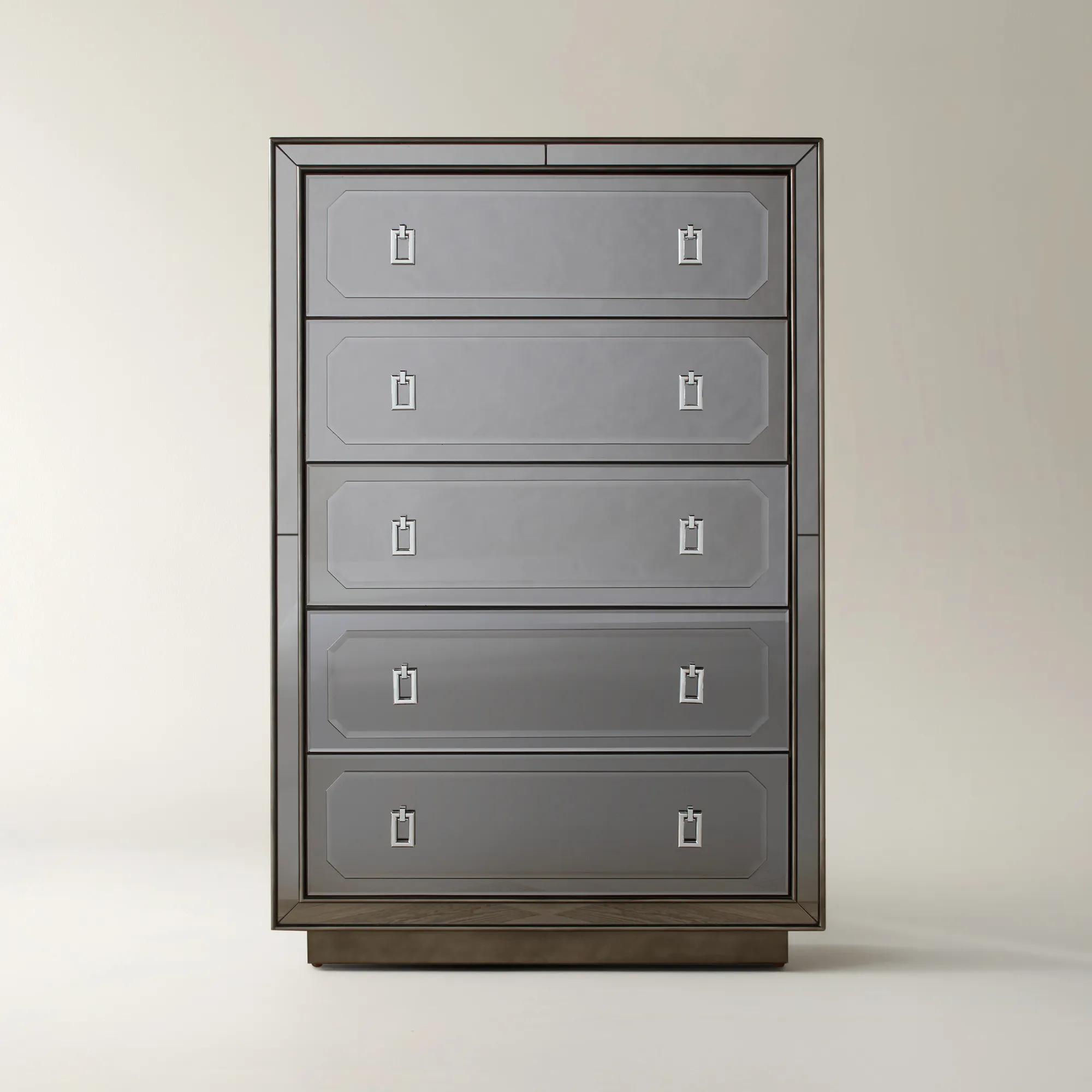 Maddox Mirrored Grey 5-Drawer Tall Dresser (36")$2099
A modern chest featuring beveled mirror panels, graphite finish, and polished nickel hardware for sleek sophistication.
Add To Cart

Furniture For Empty Nesters Redecorating
Furniture for Empty Nesters Redecorating is an invitation to rediscover your home as a sanctuary of style, sophistication, and newfound freedom. With rooms ready to be reimagined, every piece becomes a brushstroke in the next chapter of your story—bold silhouettes, sumptuous textures, and artful finishes transform once-busy spaces into curated retreats. Indulge in expressive design that celebrates your journey and sets the stage for elegant entertaining, quiet mornings, or whatever inspires you next. Now is the moment to paint your world with daring detail and unapologetic glamour—because your home deserves nothing less than extraordinary.
Furniture for empty nesters redecorating brings a new sense of intention to familiar rooms: seating shaped around conversation, storage that gives treasured objects a considered setting, and versatile furnishings that make space for long-deferred interests. The emphasis is not simply on having less furniture. It is on choosing proportions, textures, and functions that reflect how the home is used after children move out, whether that means intimate dinners, unhurried reading, creative pursuits, or frequent visits from family. A living room once arranged around a sprawling sectional can take on a more expressive character with a tailored sofa and a pair of sculptural armchairs. Swivel seating allows an easy turn between conversation and a favorite view, while an upholstered ottoman offers a place to stretch out without the visual weight of another large seat. Sumptuous fabric, a curved silhouette, or a gleaming metal base can bring drama to the composition without sacrificing everyday comfort. Seat depth and height deserve as much attention as appearance: a deep lounge seat suits reclining, while a shallower seat with a supportive back and substantial arms may feel more comfortable for upright reading and getting up. The most successful arrangement keeps side tables within comfortable reach and leaves clear paths between doorways, seating, and adjacent rooms. Smaller furniture is not automatically the better choice; a generous room can still welcome a substantial sofa, balanced by chairs that make the seating group feel connected rather than scattered. In a more compact home, exposed legs and open bases can soften the visual weight of a piece, provided the surrounding layout remains easy to navigate. Collections of Luxury Furniture for Empty Nesters offer a framework for this more personal approach, where beautiful materials and purposeful silhouettes support daily rituals rather than a room reserved for company.
Former bedrooms and underused family spaces offer room for a different kind of luxury: a home that accommodates interests without surrendering its hospitality. Multipurpose furniture makes that balance possible. A sleeper sofa or daybed can anchor a reading room while preserving a comfortable place for overnight guests; its suitability depends on both the seating experience and the sleeping surface, as well as the floor space required when fully opened. A wall bed can serve a similar purpose where appropriate installation and wall construction allow, leaving more usable space for a studio or office between visits. These rooms feel more resolved when their everyday function has a clear identity. A desk with a generous work surface, a supportive chair, and concealed storage can give writing, correspondence, or a creative practice a proper home, rather than the feeling of a temporary arrangement beside a guest bed. Closed cabinets accommodate supplies and spare linens, while open shelves provide a measured display of books, ceramics, and objects collected over time. Statement storage is equally useful beyond the spare room. A beautifully proportioned credenza can hold table linens and serving pieces in the dining room or keep games and media accessories discreetly organized in a living area. Interior shelf spacing, drawer depth, hardware, and door clearance determine how gracefully that storage works in practice. Tall cabinets and armoires create a strong architectural presence, with anchoring requirements that should always follow the manufacturer’s instructions. Dining furniture can also reflect a more flexible rhythm. A round table creates an intimate setting for everyday meals or an evening of cards, while an extension table accommodates larger gatherings without occupying its full footprint every day. Chairs need sufficient room to pull out comfortably, including when a table is extended. Within a larger room, a small pedestal table and upholstered chairs can establish a distinct corner for puzzles or conversation. Such arrangements allow several activities to coexist while keeping the room visually composed, with each area connected through complementary finishes, shapes, or upholstery tones.
Materials give these furnishings their atmosphere, but their appeal is most enduring when texture and finish suit the way each room is lived in. Velvet brings depth and a shifting play of light to upholstered seating; its pile can show impressions or changes in direction that are part of its visual character. Tightly woven upholstery offers a different tactile expression, and fabrics described as performance materials should be evaluated by their stated cleaning instructions and resistance features rather than assumed to be impervious to spills. Leather can lend richness and develop character with use, although different finishes vary in their sensitivity to scratches, staining, and light exposure. Solid wood and wood veneer both bring natural pattern to tables and case goods; construction quality, stable joints, well-fitted drawers, and properly finished surfaces matter more than broad material labels alone. Stone, glass, and polished metal introduce luminous contrast, with distinct care considerations. Some stone surfaces are vulnerable to acidic spills, glass reveals fingerprints, and reflective finishes can scratch when cleaned with abrasive products. Coasters, protective pads, prompt attention to spills, and manufacturer-approved cleaning methods help preserve the intended finish. Durability remains relevant in an empty nest, especially in homes shared with pets or regularly visited by grandchildren, but it need not dictate a purely practical aesthetic. A richly upholstered chair can sit beside an heirloom table, and a sleek cabinet can frame inherited porcelain without making the room feel like a display untouched by daily life. Existing furniture often gives new purchases their strongest context: an antique rocker moved into a reading corner or a familiar console placed behind a sofa can become newly expressive. Lighting completes the setting, pairing ambient illumination with focused light beside seating or work surfaces; dimming can adjust the mood, but task lighting still needs to suit the activity. For those celebrating a move or this new chapter with a furniture gift, an accent piece chosen with the recipient’s dimensions and preferences in mind is more meaningful than a grand gesture that does not fit. The result is a home with room for memory, pleasure, and unmistakably personal style.
FAQs
Empty nesters often seek to create spaces that reflect their personal style and evolving lifestyle. Focus on comfort, quality, and expressive design—think plush seating, layered textures, and statement lighting. Curate rooms that feel intentional and inviting, using multifunctional pieces for flexibility and incorporating art or bold accents to celebrate your individuality.
Elevate your interiors by choosing sumptuous materials like velvet, leather, or polished metals, and layering them with tactile textiles such as throws or area rugs. Add drama with sculptural decor, oversized art, or gleaming mirrors to reflect light. Thoughtful lighting—like chandeliers or elegant table lamps—creates warmth and ambiance, making every space feel like a retreat.
Opt for versatile pieces such as a stylish sofa bed, an elegant storage ottoman, or a sleek desk that can double as a vanity or craft table. These furnishings allow you to seamlessly transition the room between hosting guests and enjoying your own hobbies, ensuring both comfort and sophistication.
Let your passions guide your decor choices—display treasured books on dramatic bookshelves, showcase travel finds or heirloom pieces in glass-front cabinets, and create dedicated nooks for reading, art, or music. Personal touches like custom pillows or curated gallery walls ensure your home tells your unique story.
Embrace the current season by introducing cozy throws, textured rugs, and metallic accents that catch winter’s light. Incorporate natural elements such as sculptural branches, greenery, or floral arrangements for a fresh touch. Rotating accent pillows or art pieces can also infuse your space with timely color and mood, keeping your home vibrant year-round.
-0.jpeg?w=3936&h=3936)
.jpeg?w=4043&h=4043)


