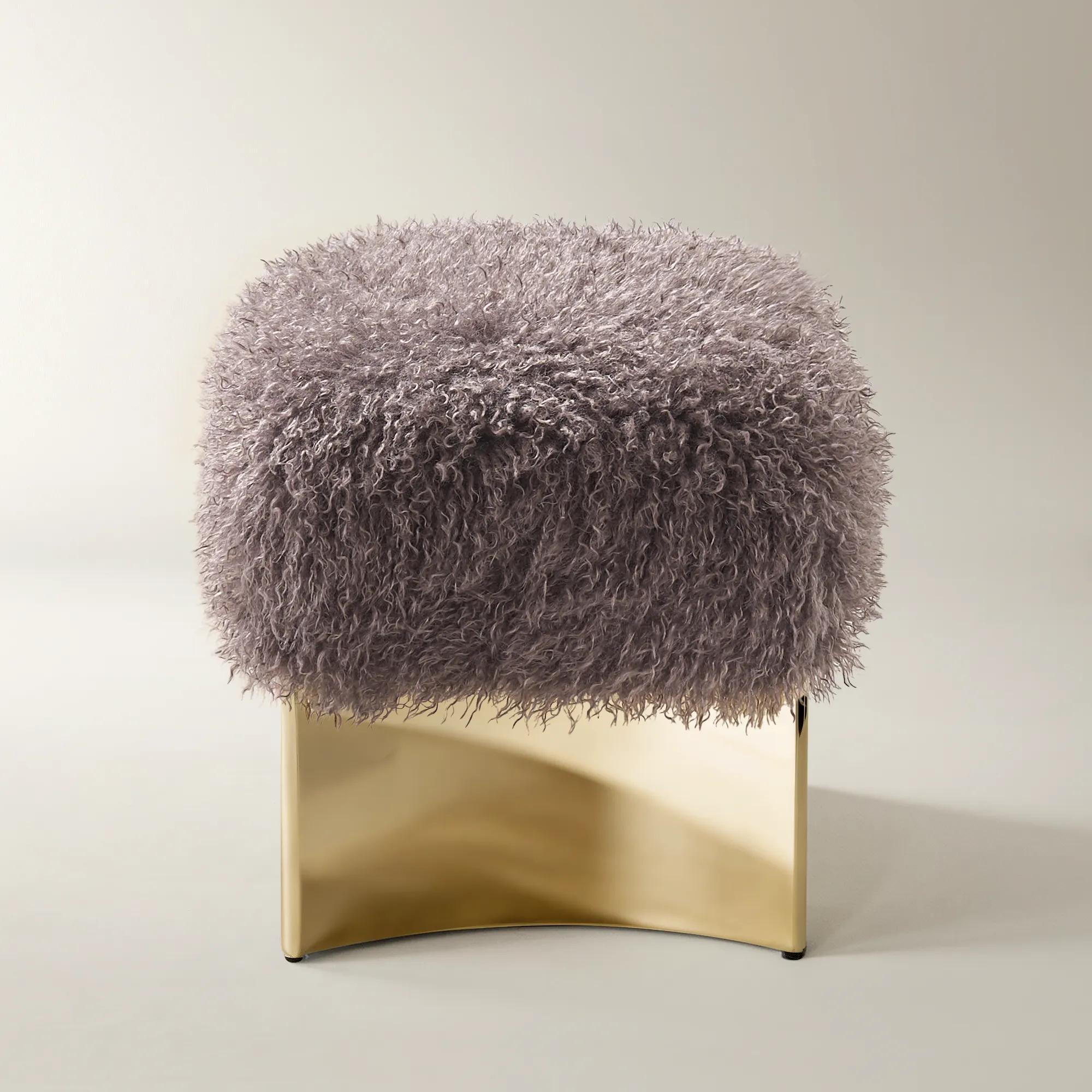
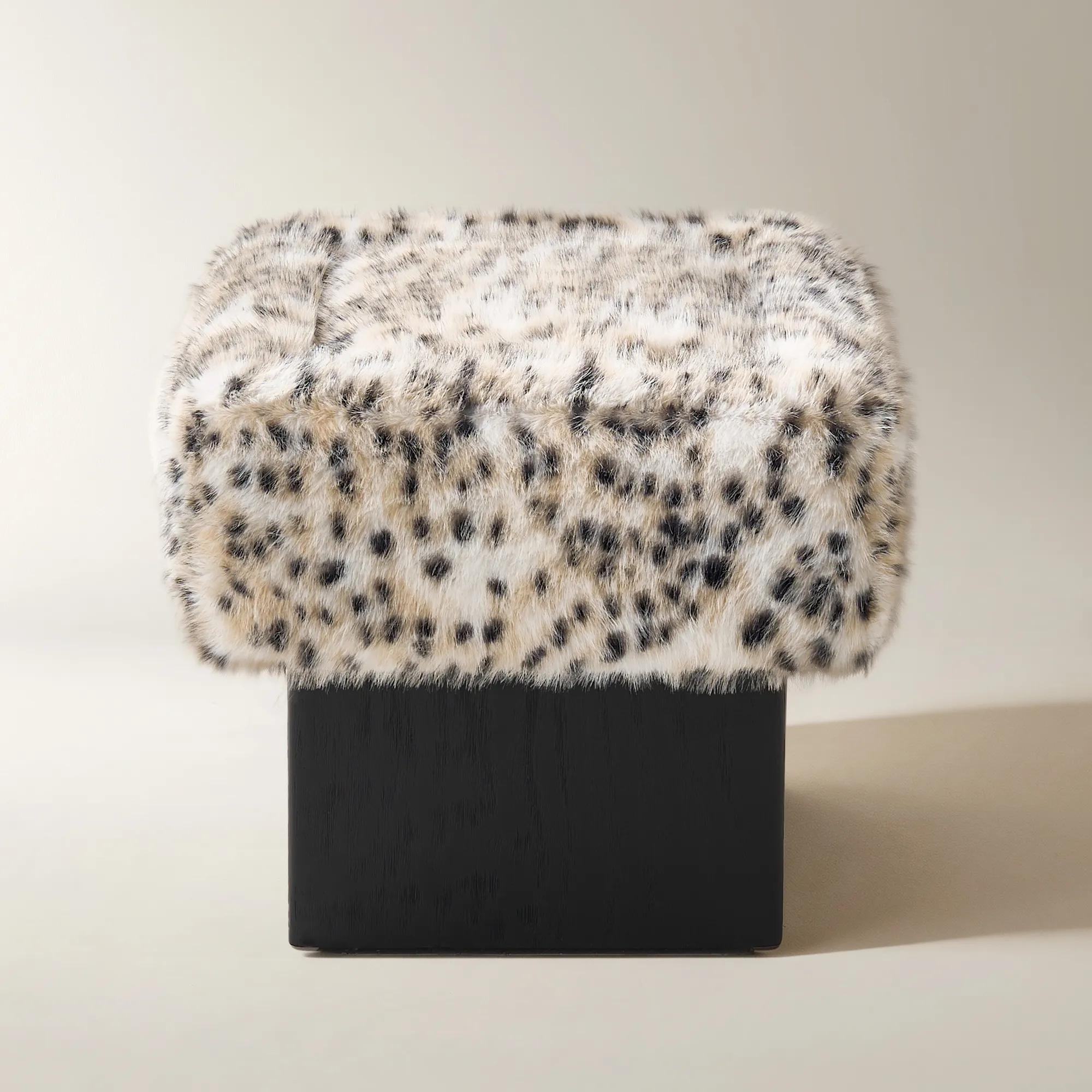
Custom Fabric Benches
Custom Fabric Benches
-
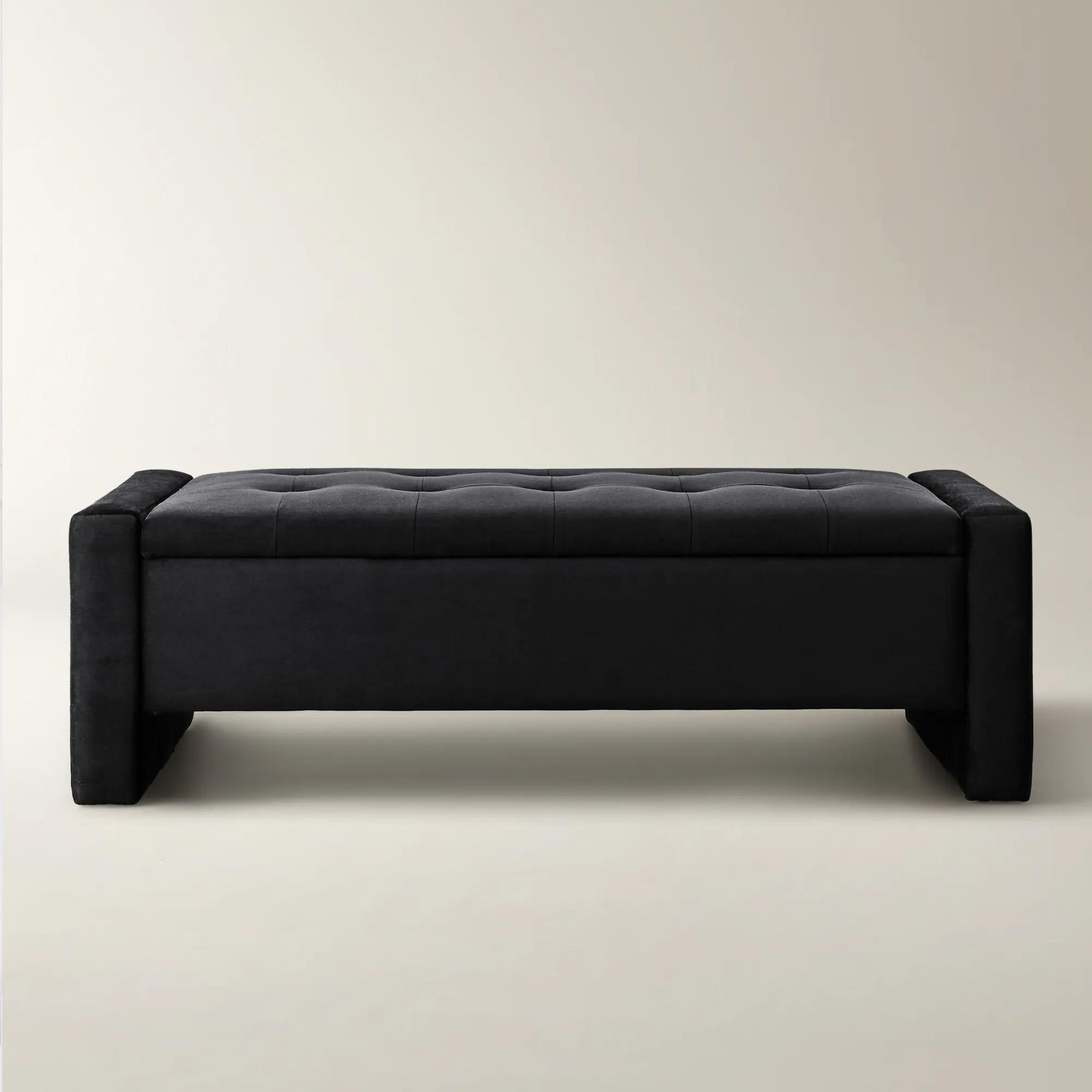
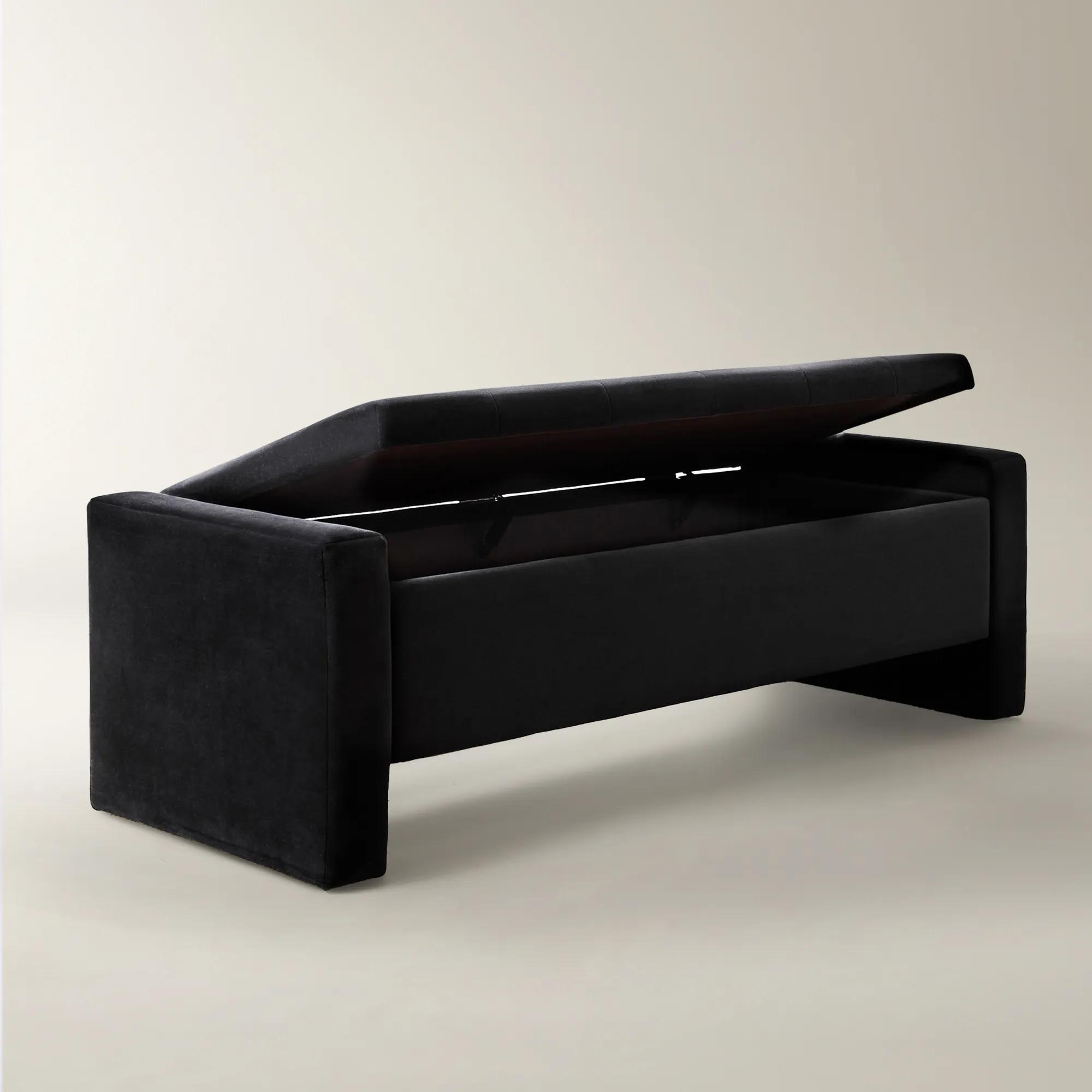 Maeve Storage Bench$849
A modern velvet-upholstered bench with hidden storage, sturdy kiln-dried hardwood frame, and plush cushioning.
Add To Cart -
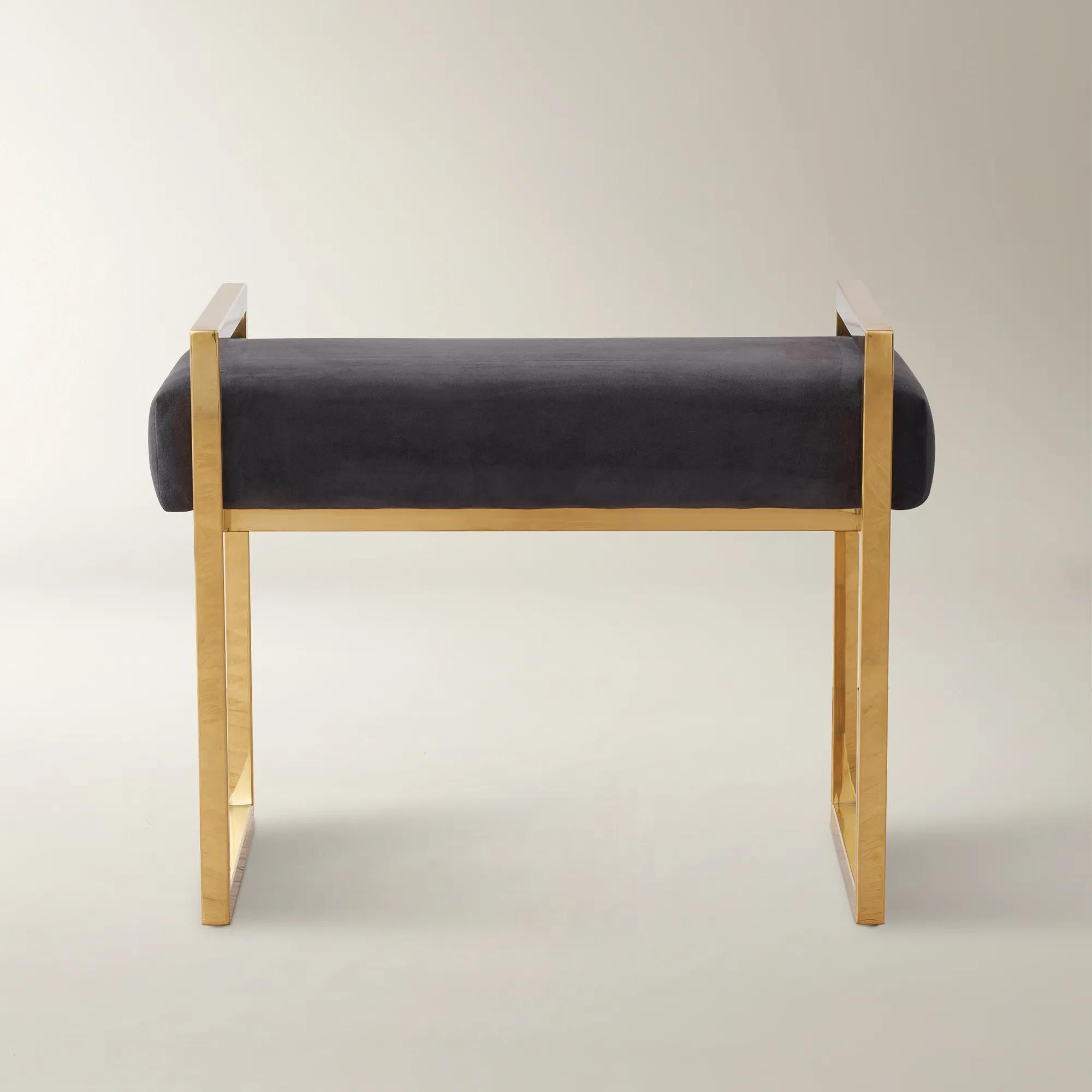
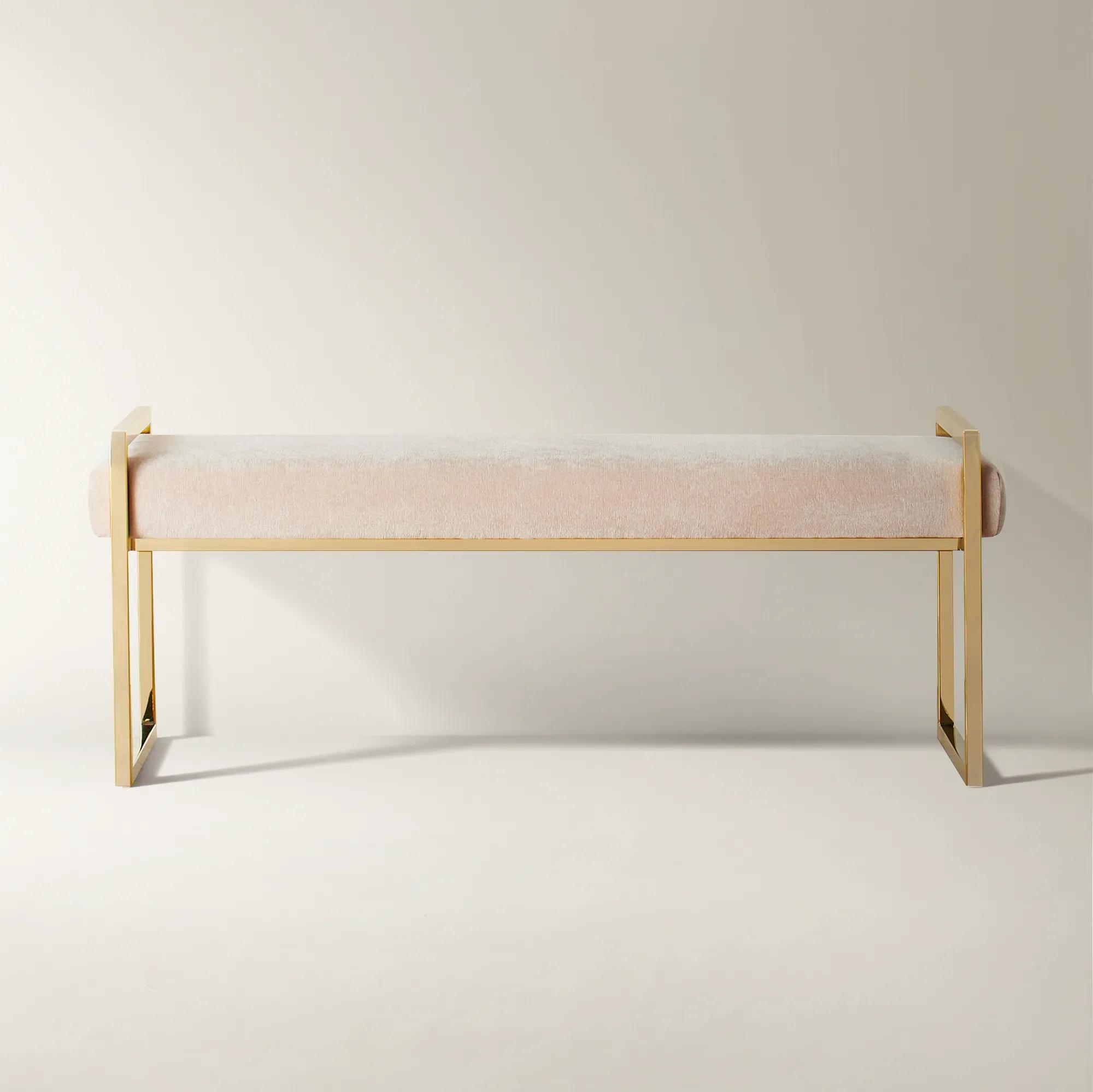 Clara Bench$799
A plush upholstered bench with a high-density foam seat and polished gold metal legs for modern elegance.
Add To Cart -
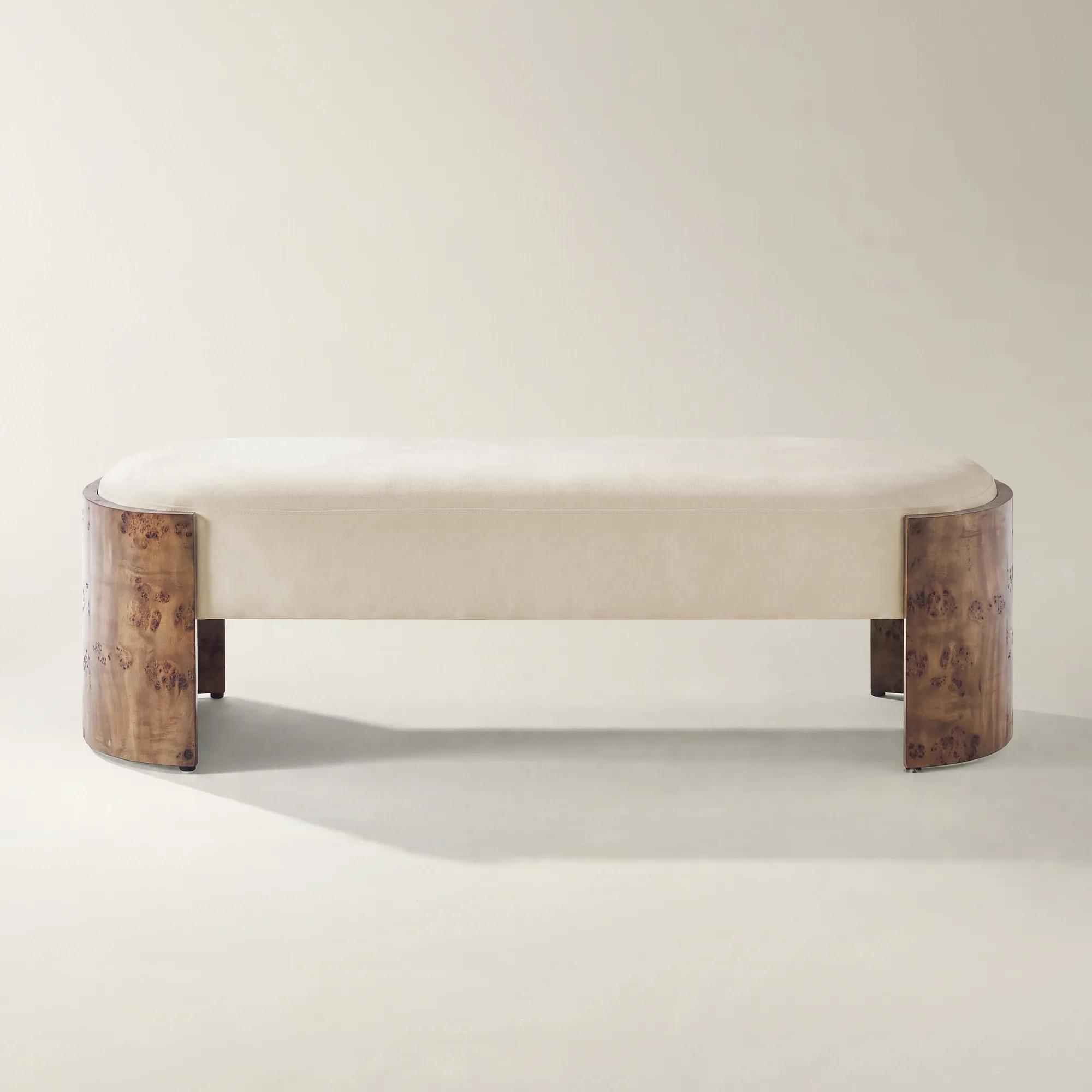
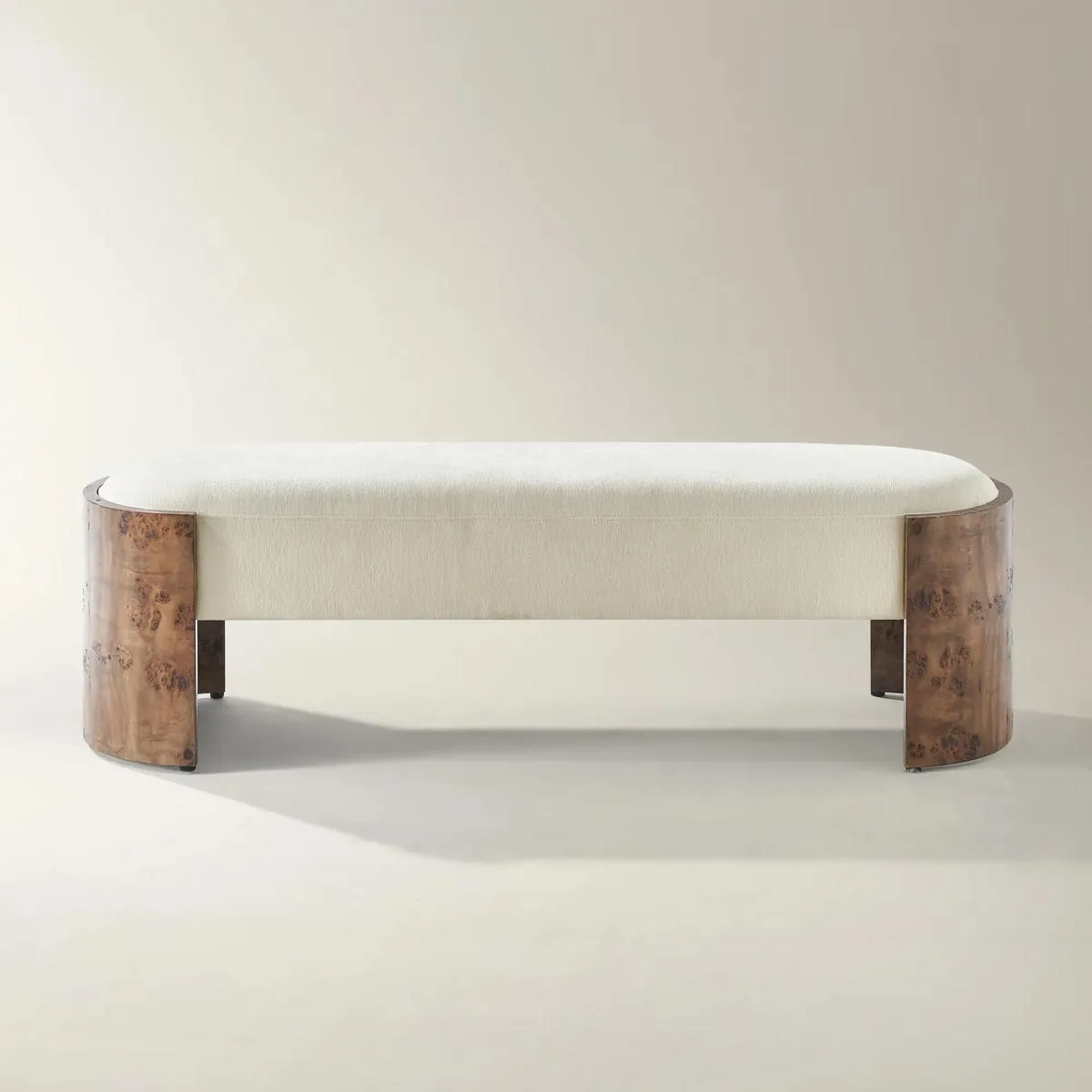 Cora Oatmeal Velvet With Ash Wood Bench (60.6")$999
A sculptural oatmeal velvet bench with curved ash burl wood panels and supportive foam cushioning.
Add To Cart -
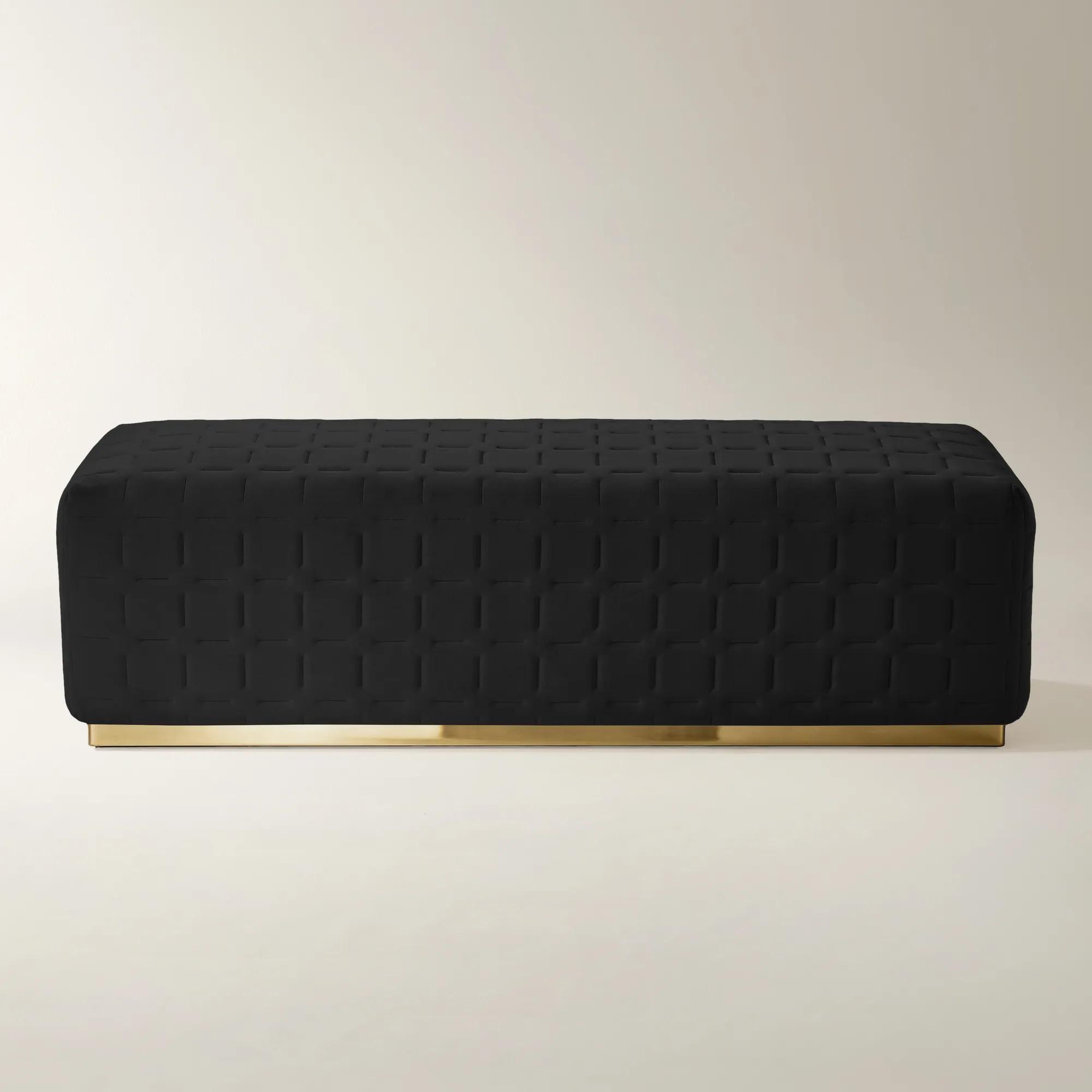 Vanta Quilted Charcoal Velvet Bench (64.6")$899
A charcoal velvet bench featuring checker quilted tufting and a gold stainless steel base for modern elegance.
Add To Cart -
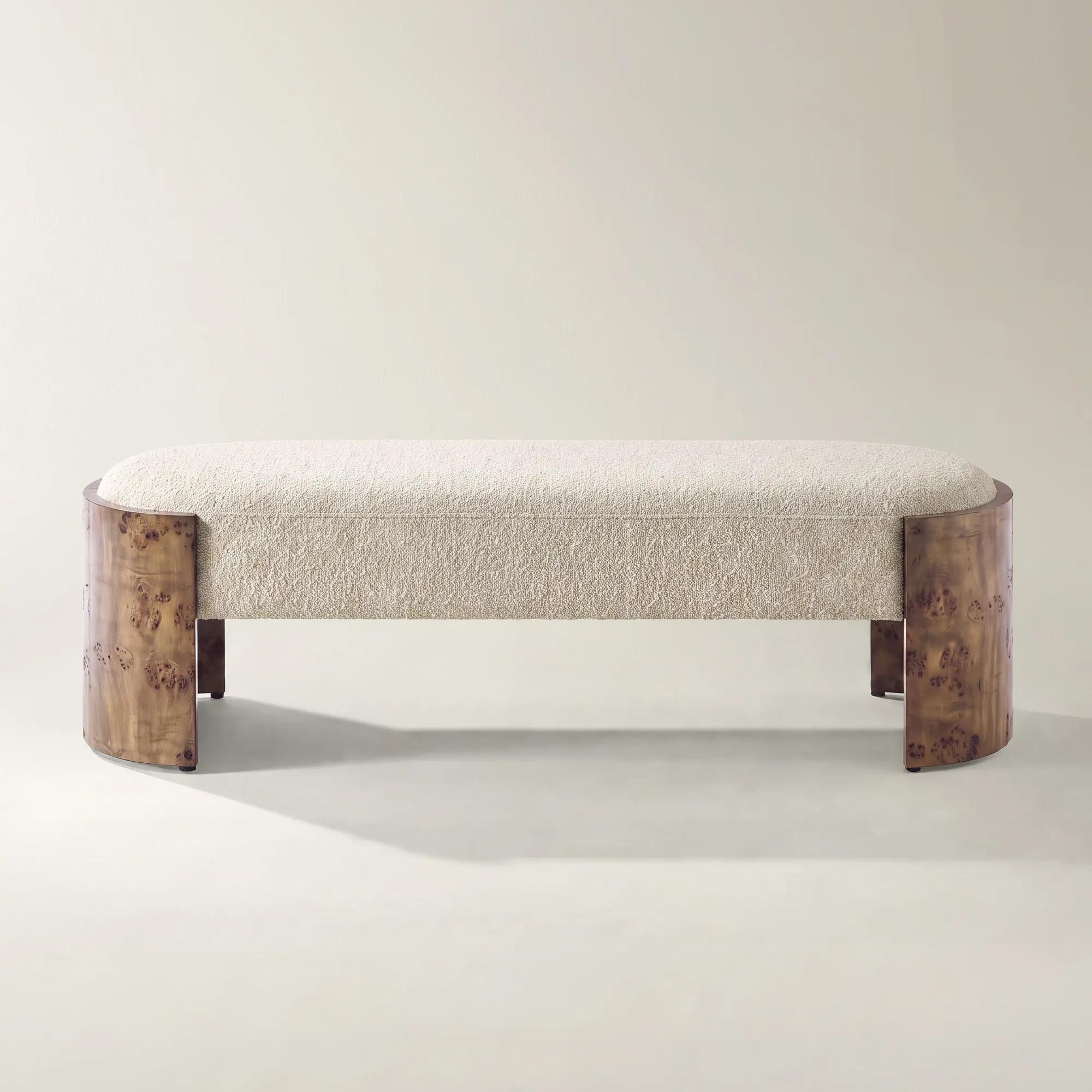 Cora Ivory Performance Boucle With Ash Wood Bench (60.6")$999
An ivory performance boucle bench with curved bookmatched ash burl panels and supportive foam cushioning.
Add To Cart -
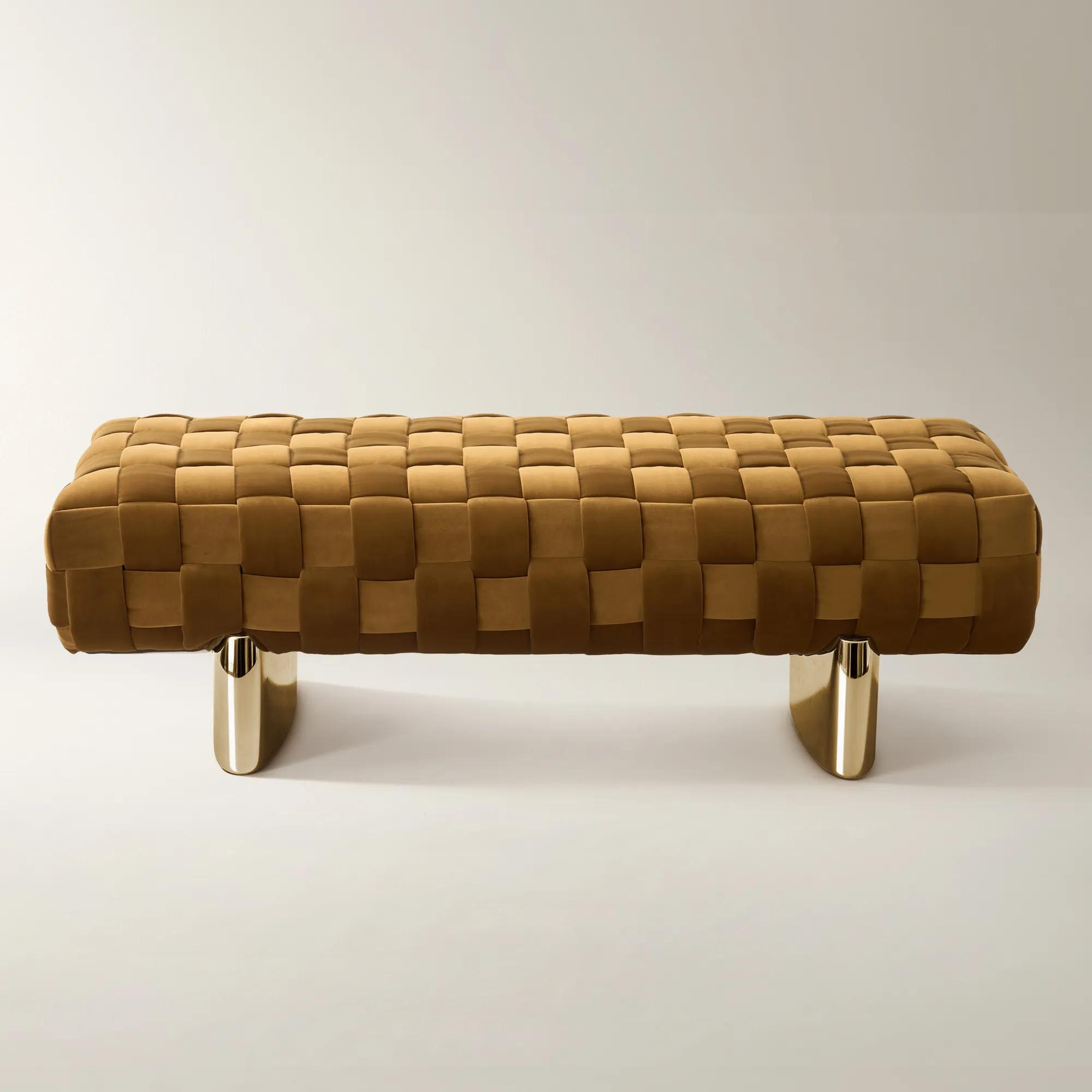
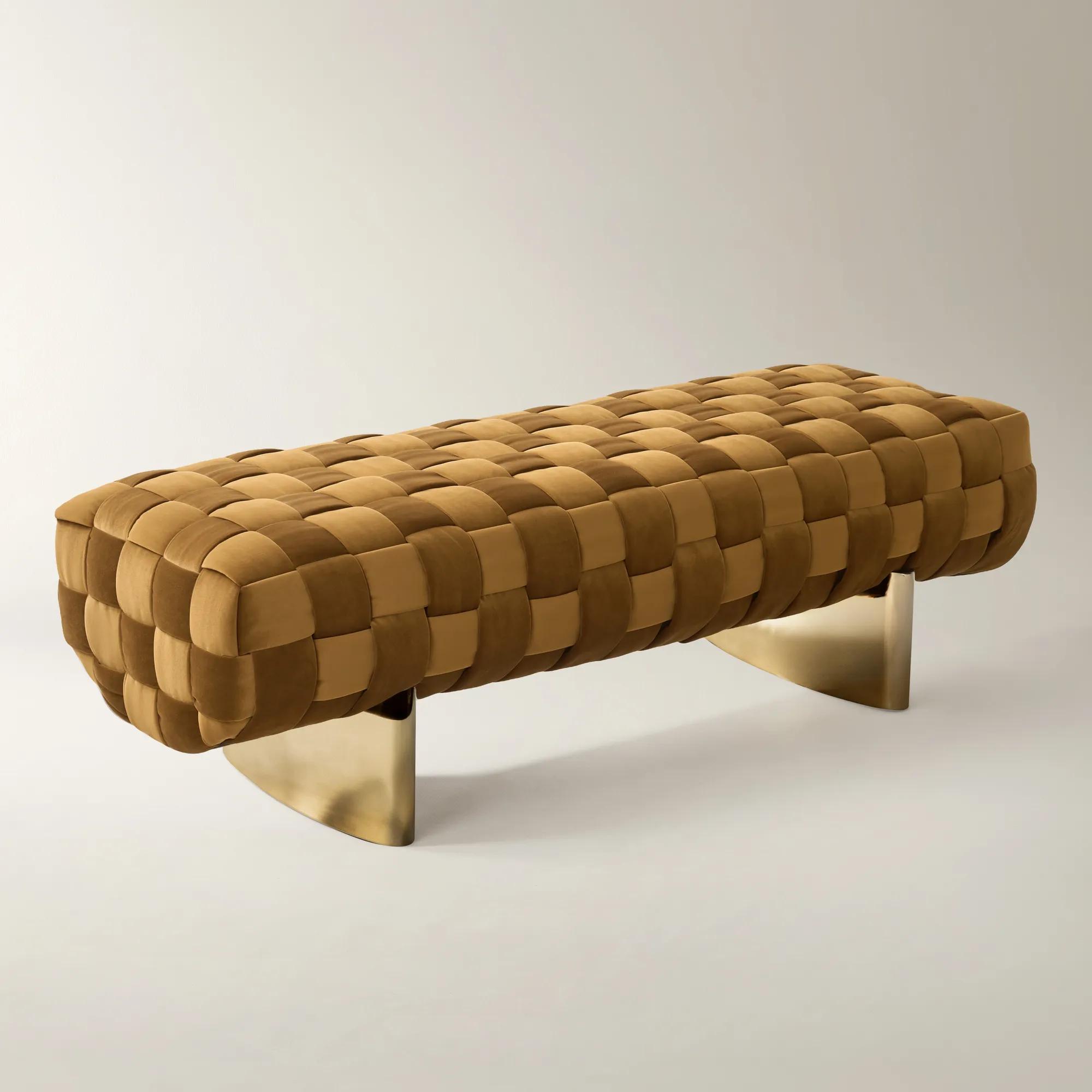 Dexter Woven Roasted Pecan Velvet Bench (64.2")$999
A woven roasted pecan velvet bench featuring plush upholstery and polished gold stainless steel legs for modern elegance.
Add To Cart -
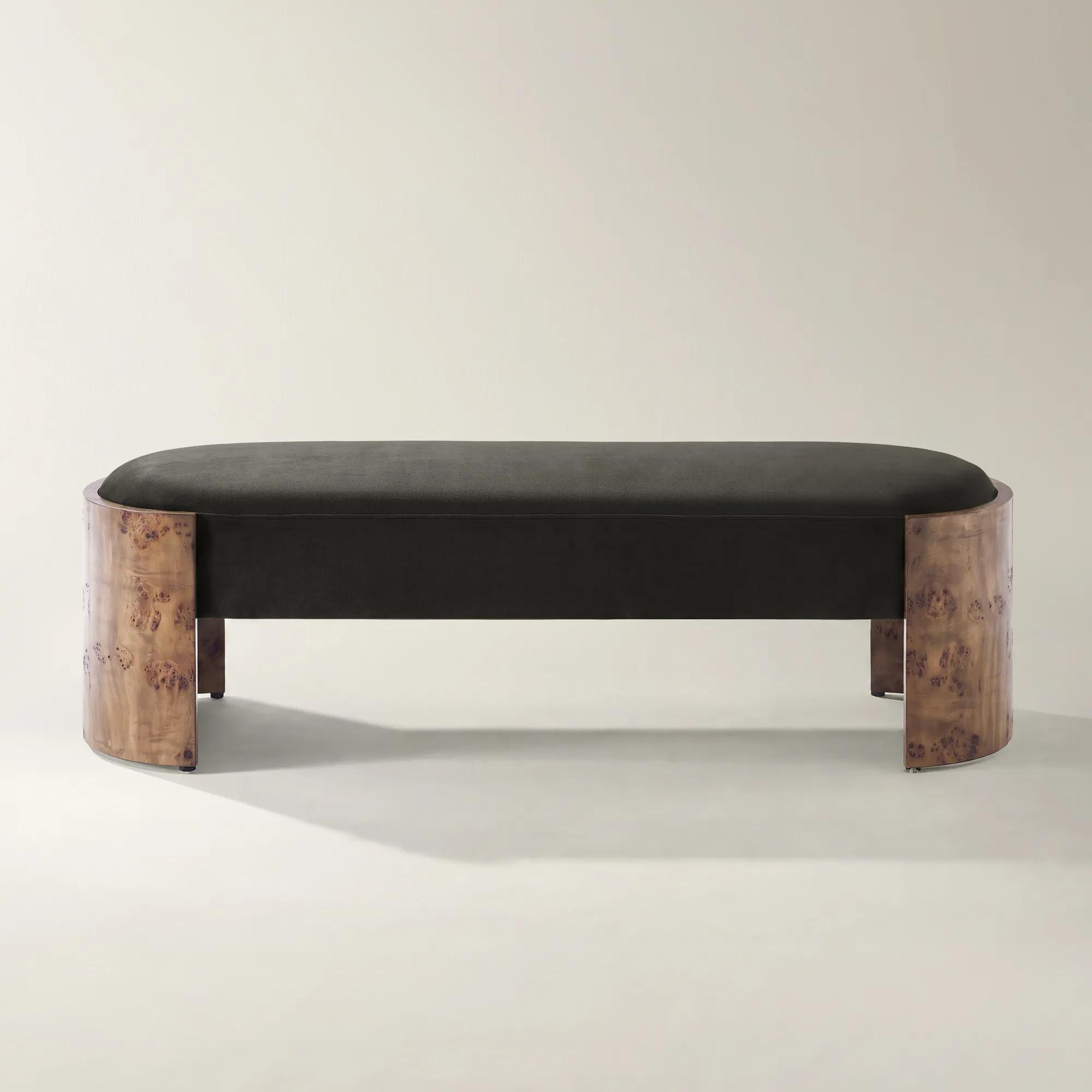 Cora Charcoal Velvet With Ash Wood Bench (60.6")$999
A sculpted charcoal velvet bench with curved bookmatched ash burl panels and supportive foam cushioning.
Add To Cart -
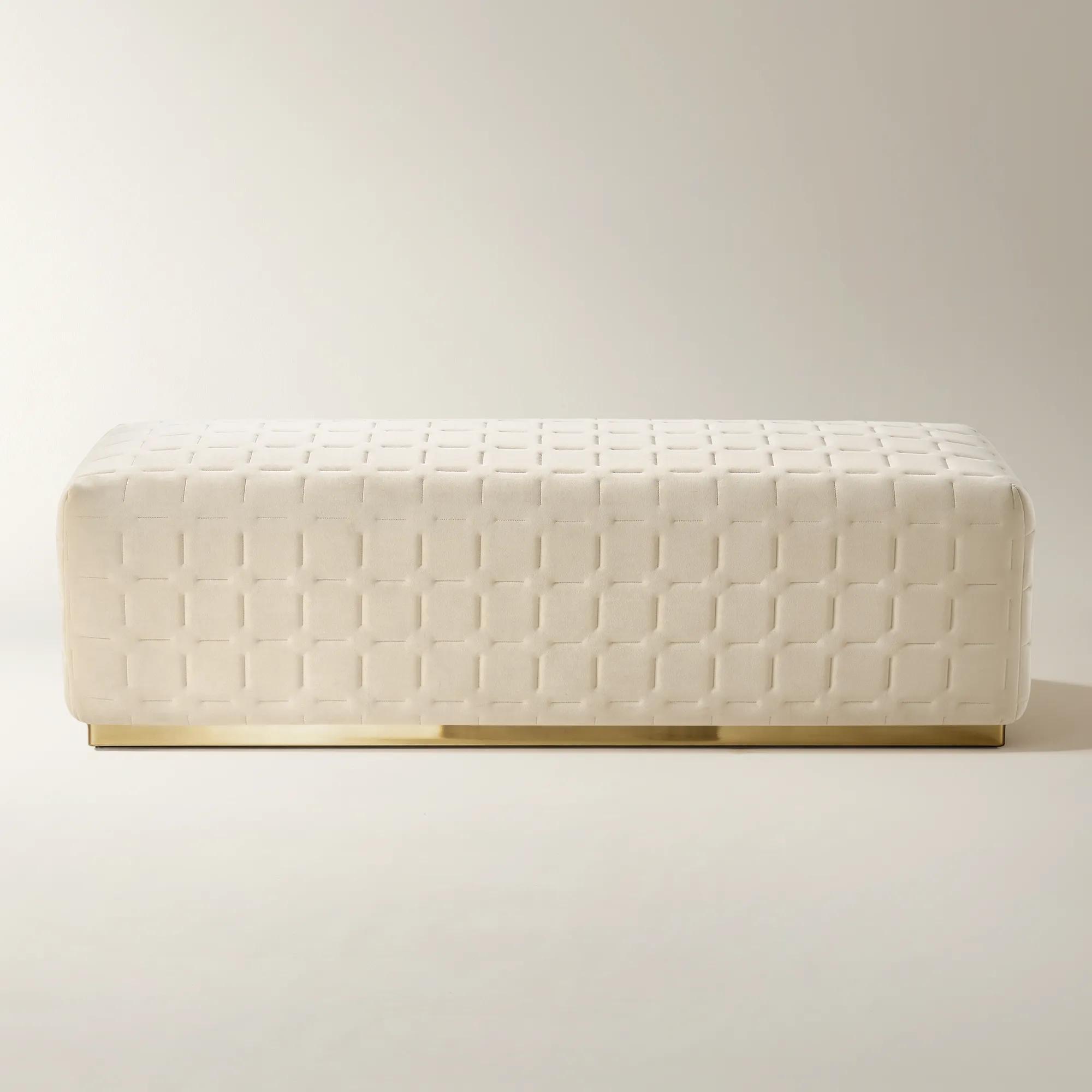
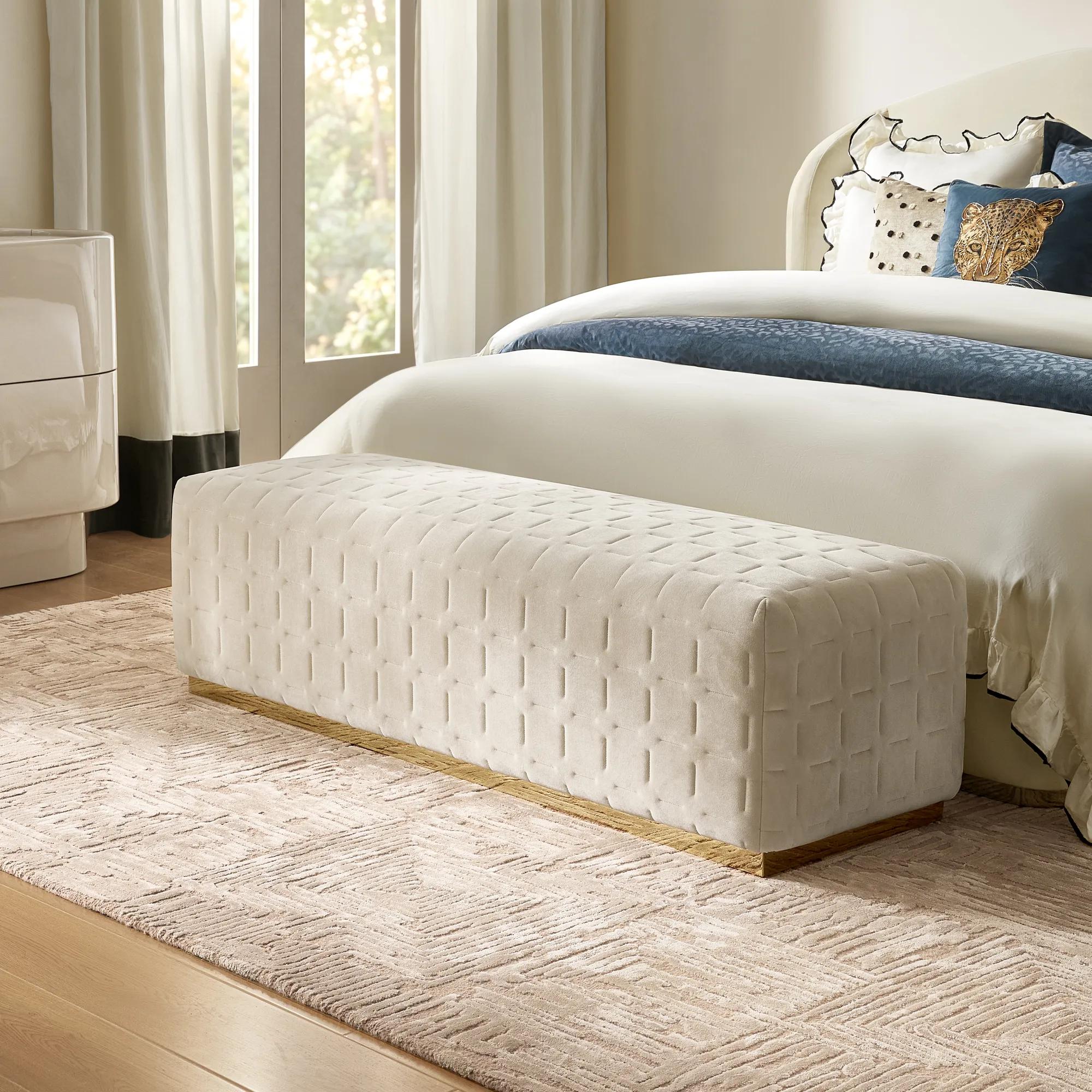 Vanta Quilted Oatmeal Velvet Bench (64.6")$899
A plush oatmeal velvet bench featuring checker quilted tufting and a sleek gold stainless steel base.
Add To Cart -
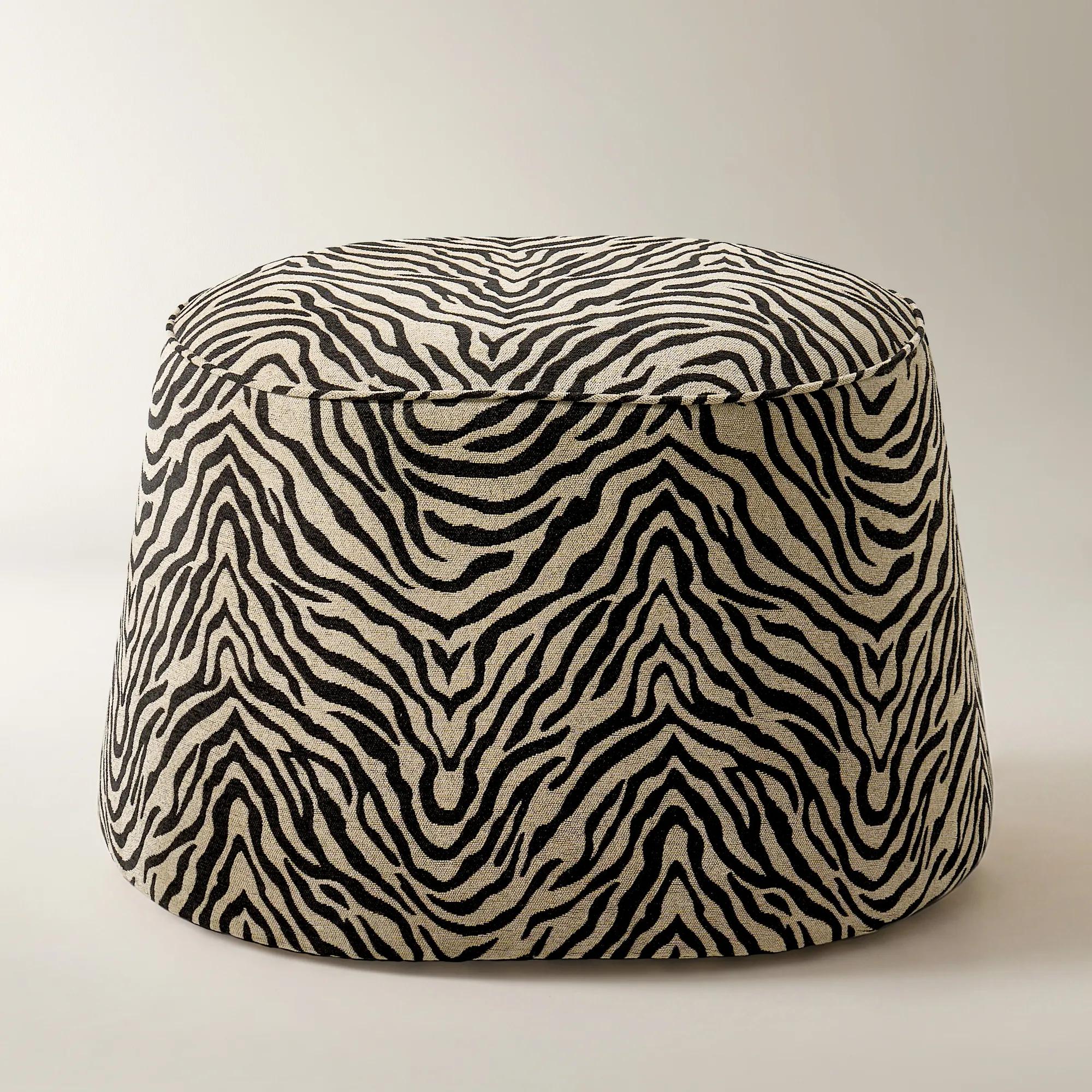
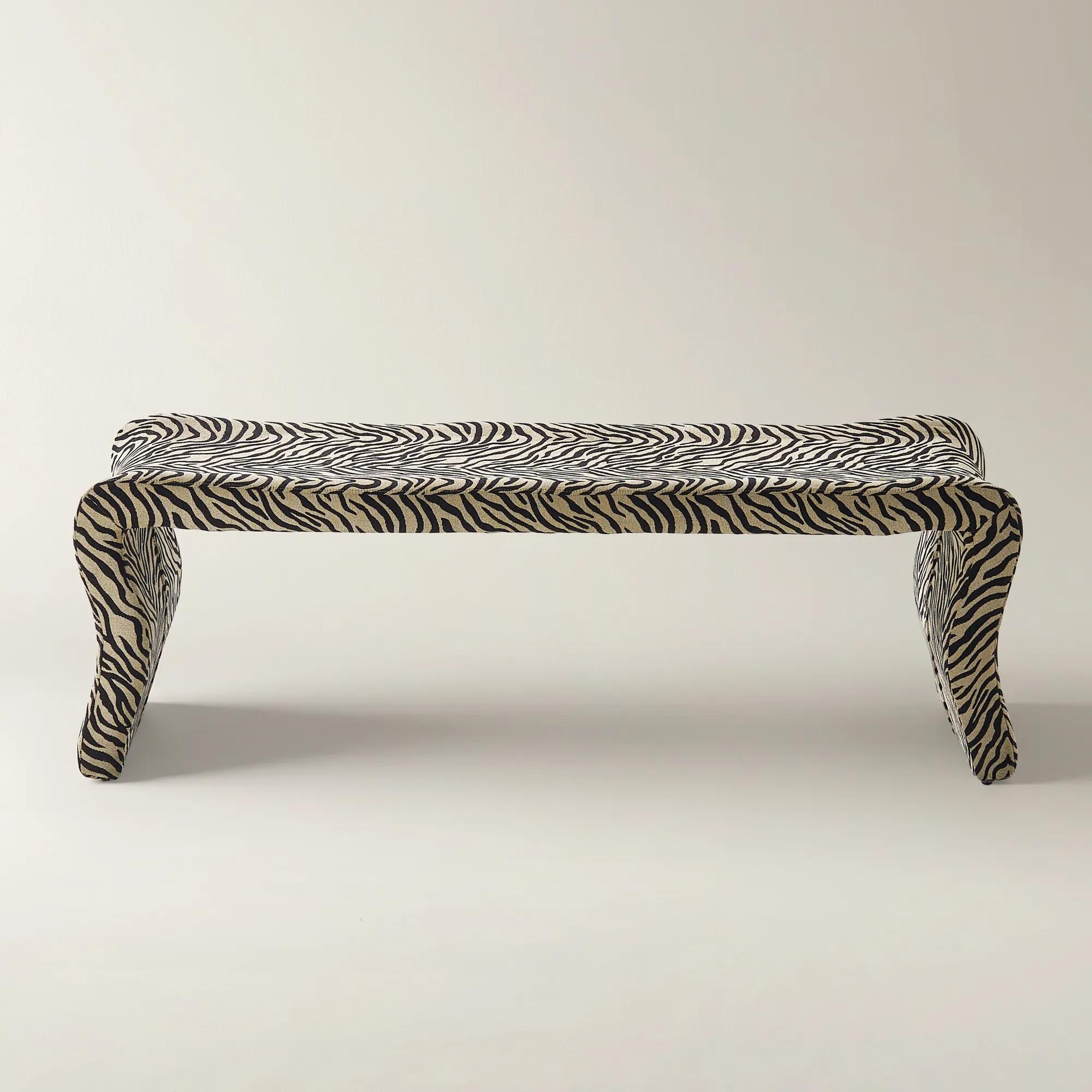 Romy Zebra Performance Chenille Bench (61.5")$899
A sculptural bench wrapped in zebra-patterned performance chenille with a wave-like silhouette and full foam construction.
Add To Cart -
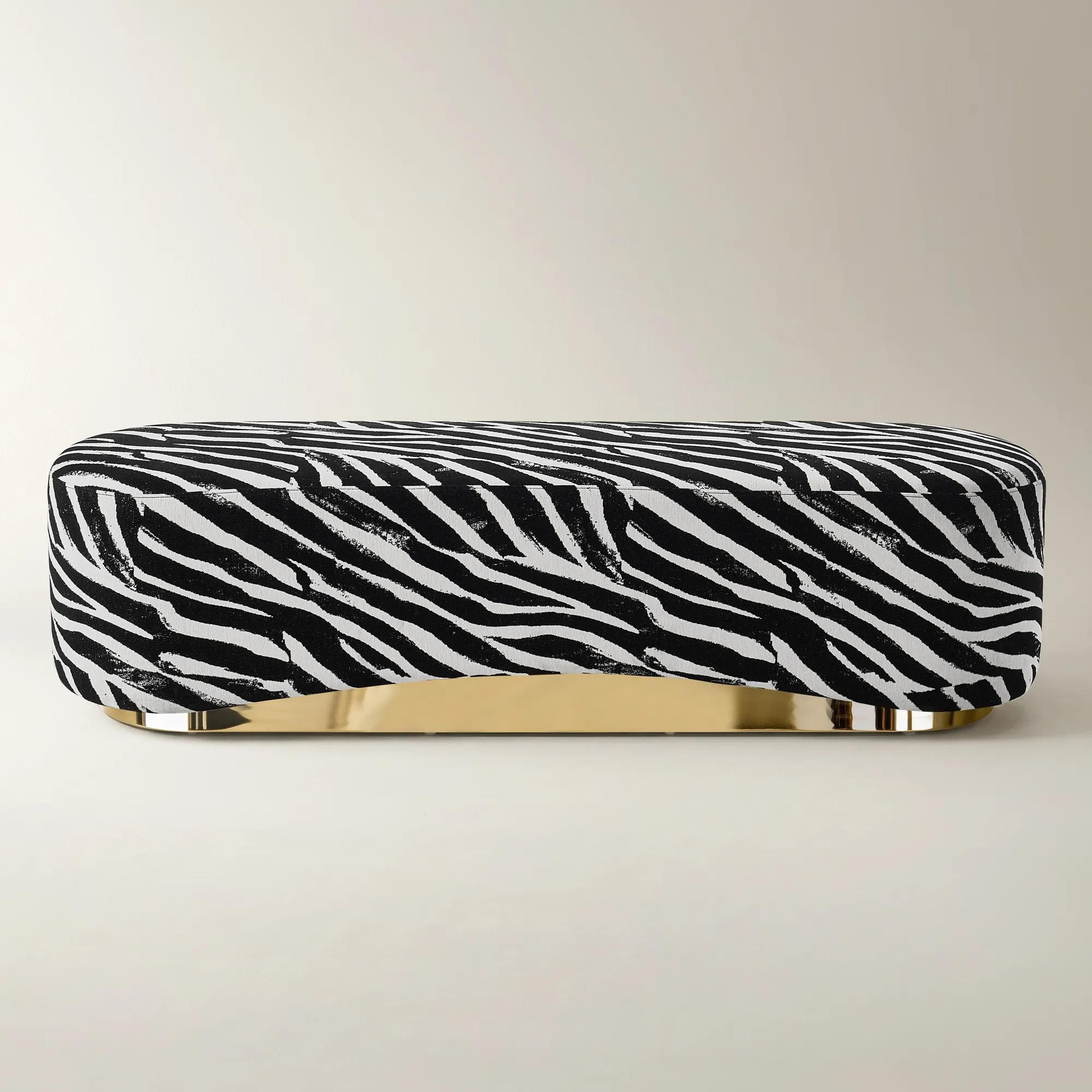
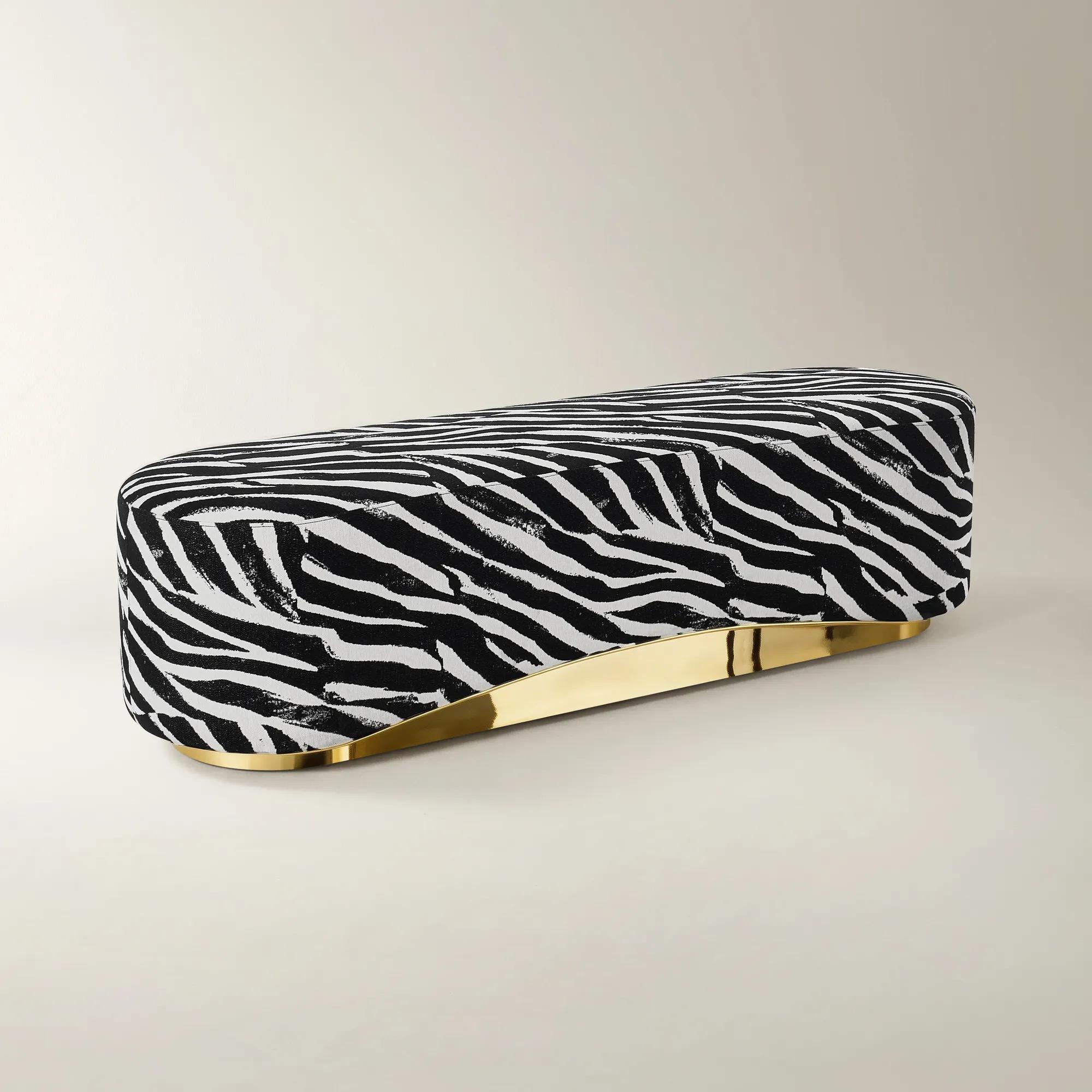 Kendra White/Black Performance Chenille Bench (70.47")$799
An elongated oval bench upholstered in white and black performance chenille with a polished gold stainless steel base.
Add To Cart -
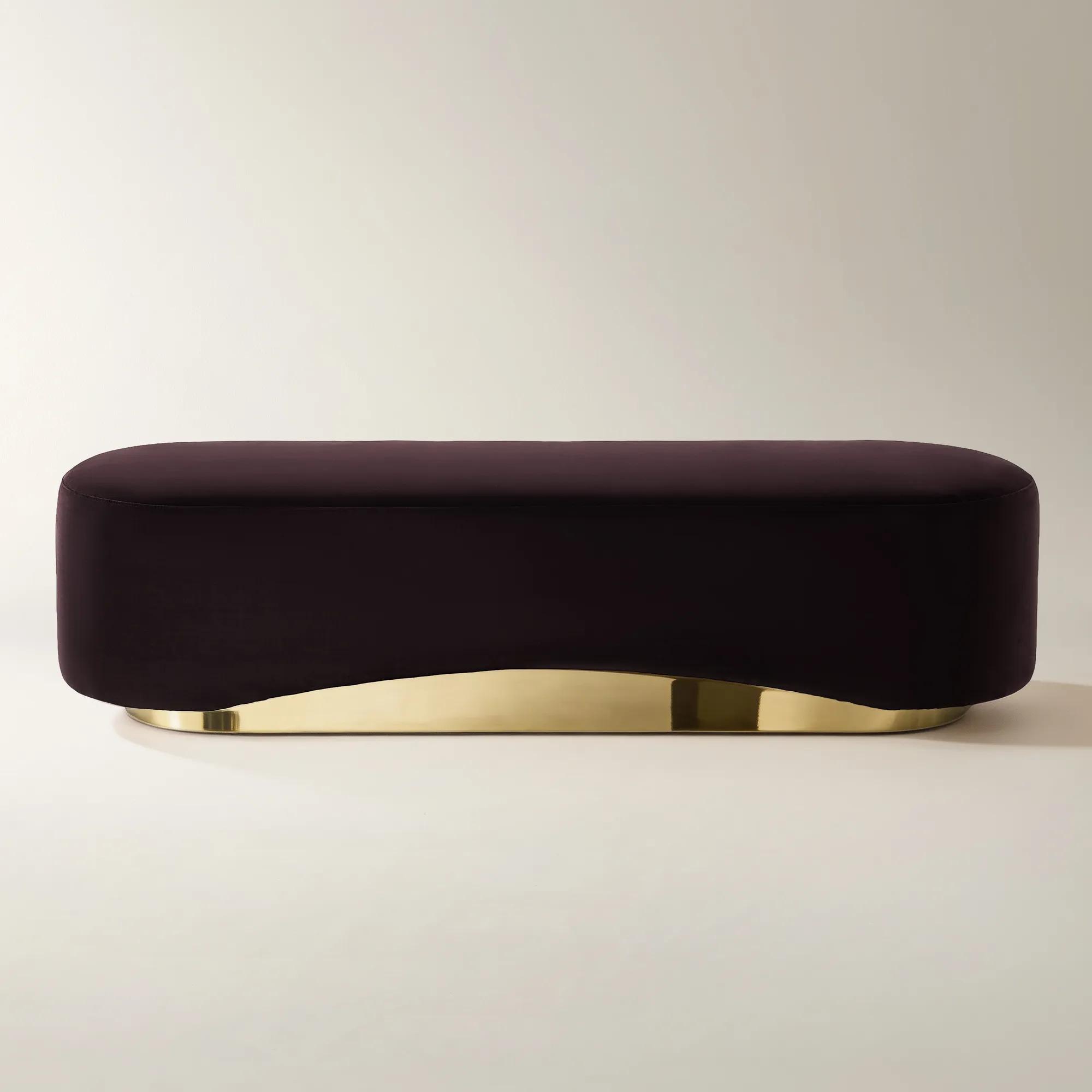 Kendra Fig Velvet Bench (70.47")$799
A plush fig velvet bench with an elongated oval silhouette and a polished gold stainless steel base.
Add To Cart -
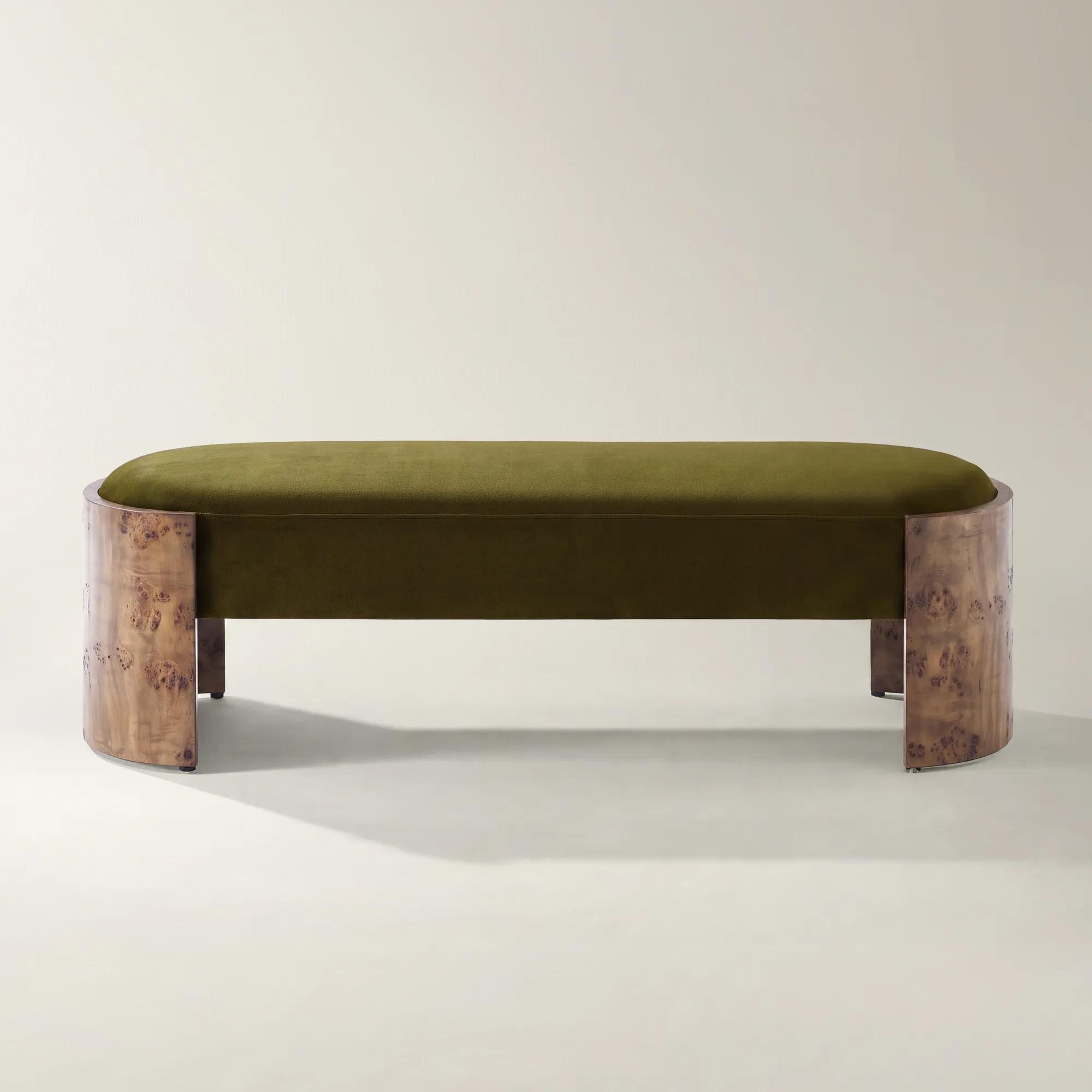 Cora Deep Olive Velvet With Ash Wood Bench (60.6")$999
A sculpted deep olive velvet bench featuring curved ash burl end panels and supportive foam cushioning.
Add To Cart -
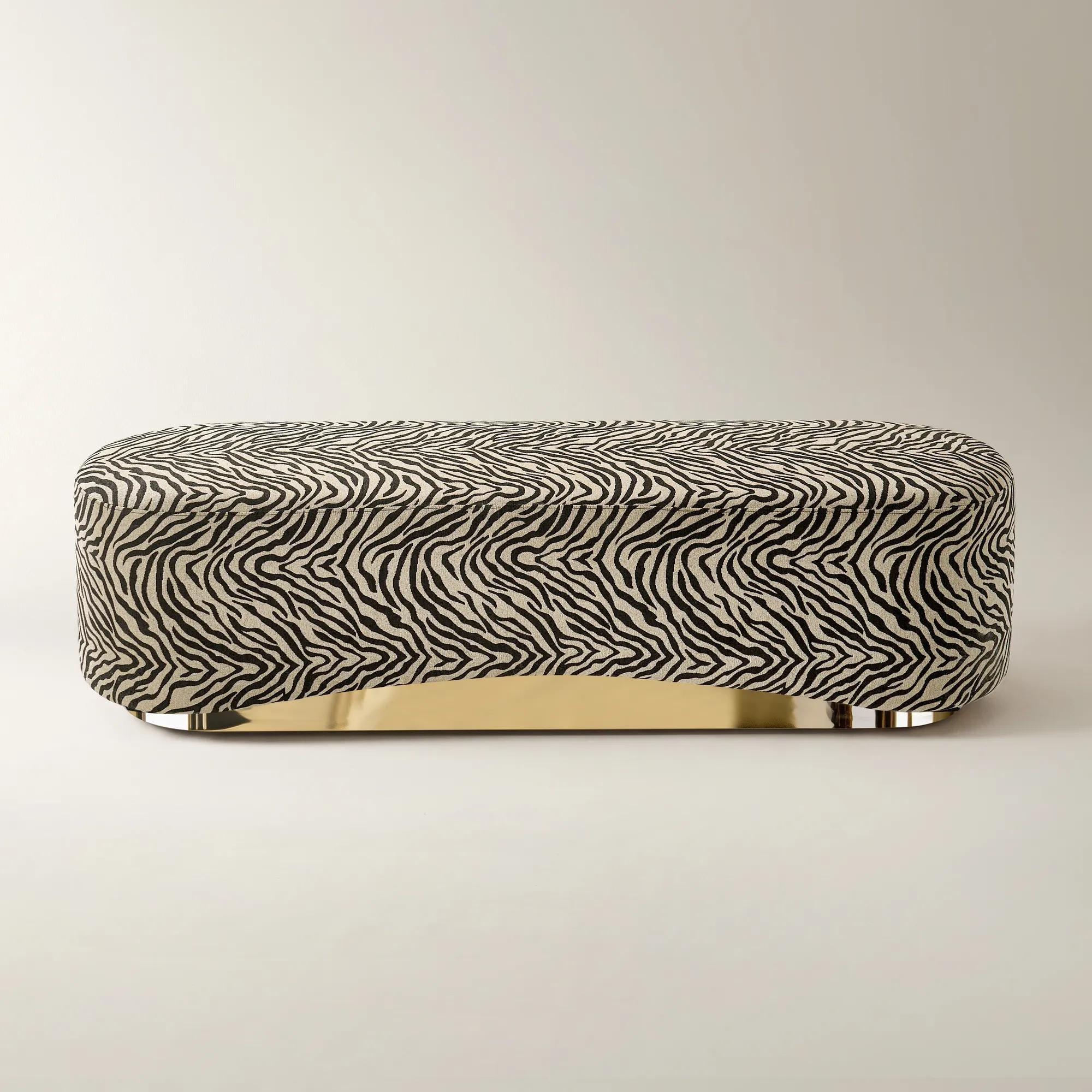
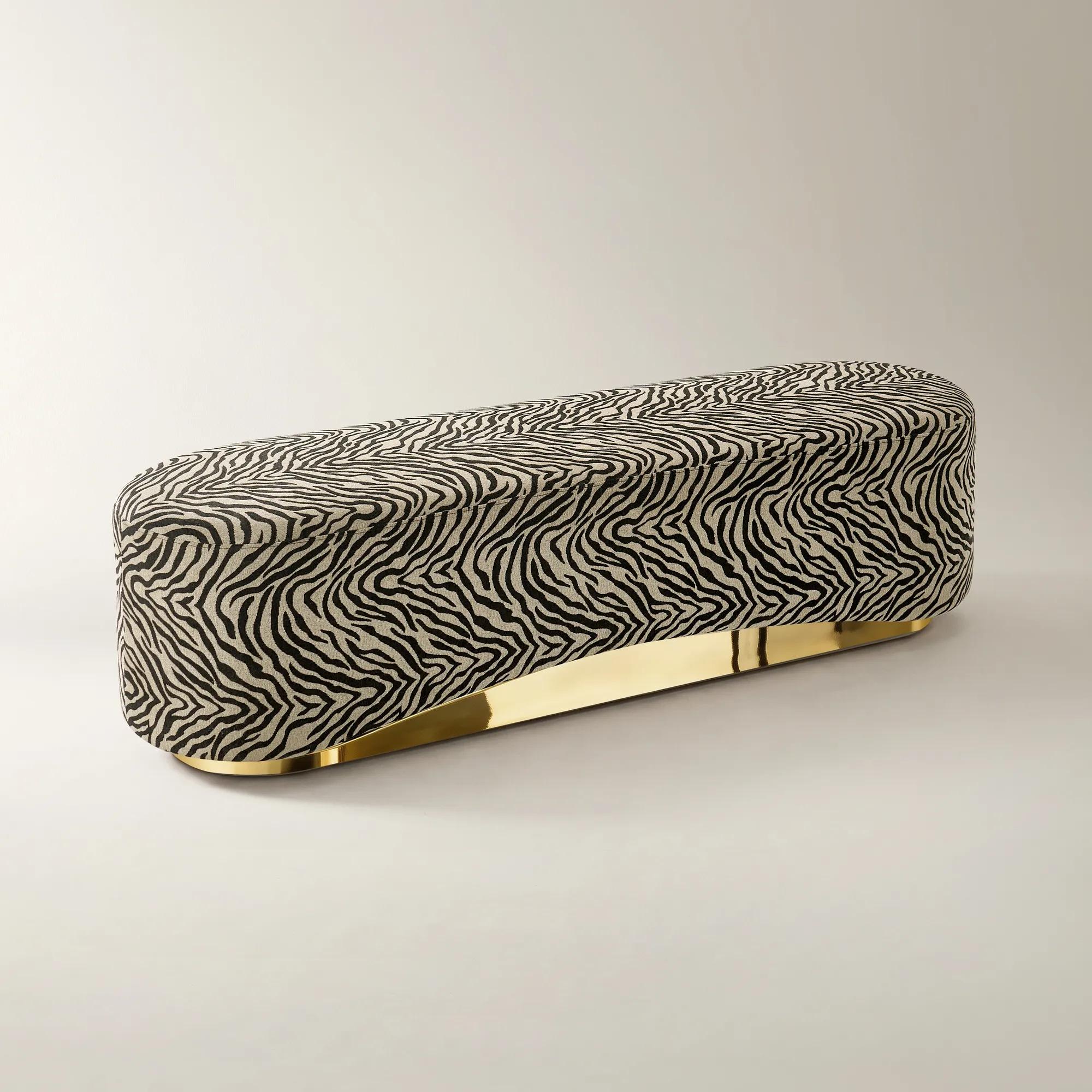 Kendra Zebra Performance Chenille Bench (70.47")$799
An elongated oval bench upholstered in textured zebra-pattern chenille with a polished gold stainless steel base.
Add To Cart -
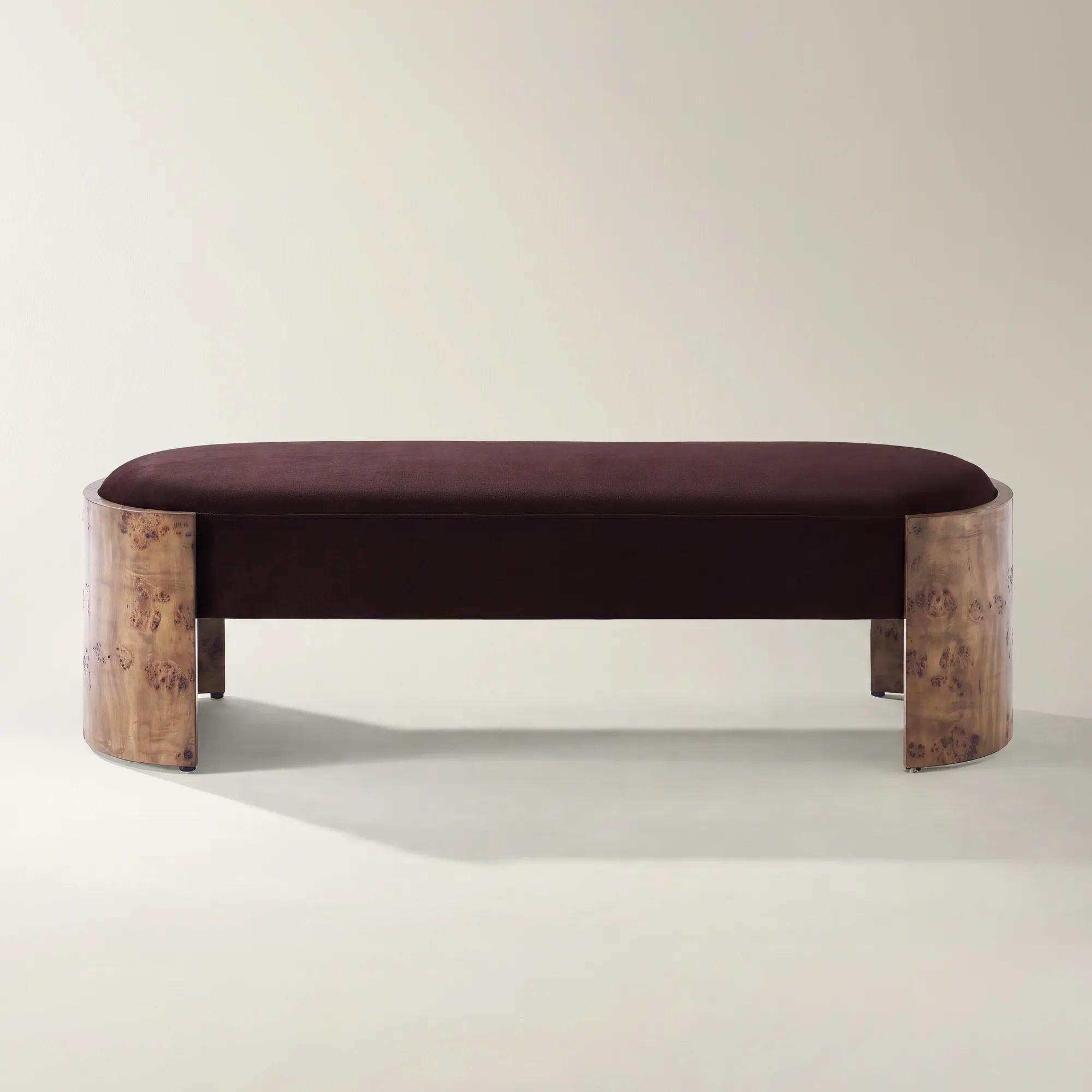 Cora Fig Velvet With Ash Wood Bench (60.6")$999
A sculptural bench with fig velvet upholstery, bookmatched ash burl panels, and supportive high-resiliency foam cushioning.
Add To Cart -
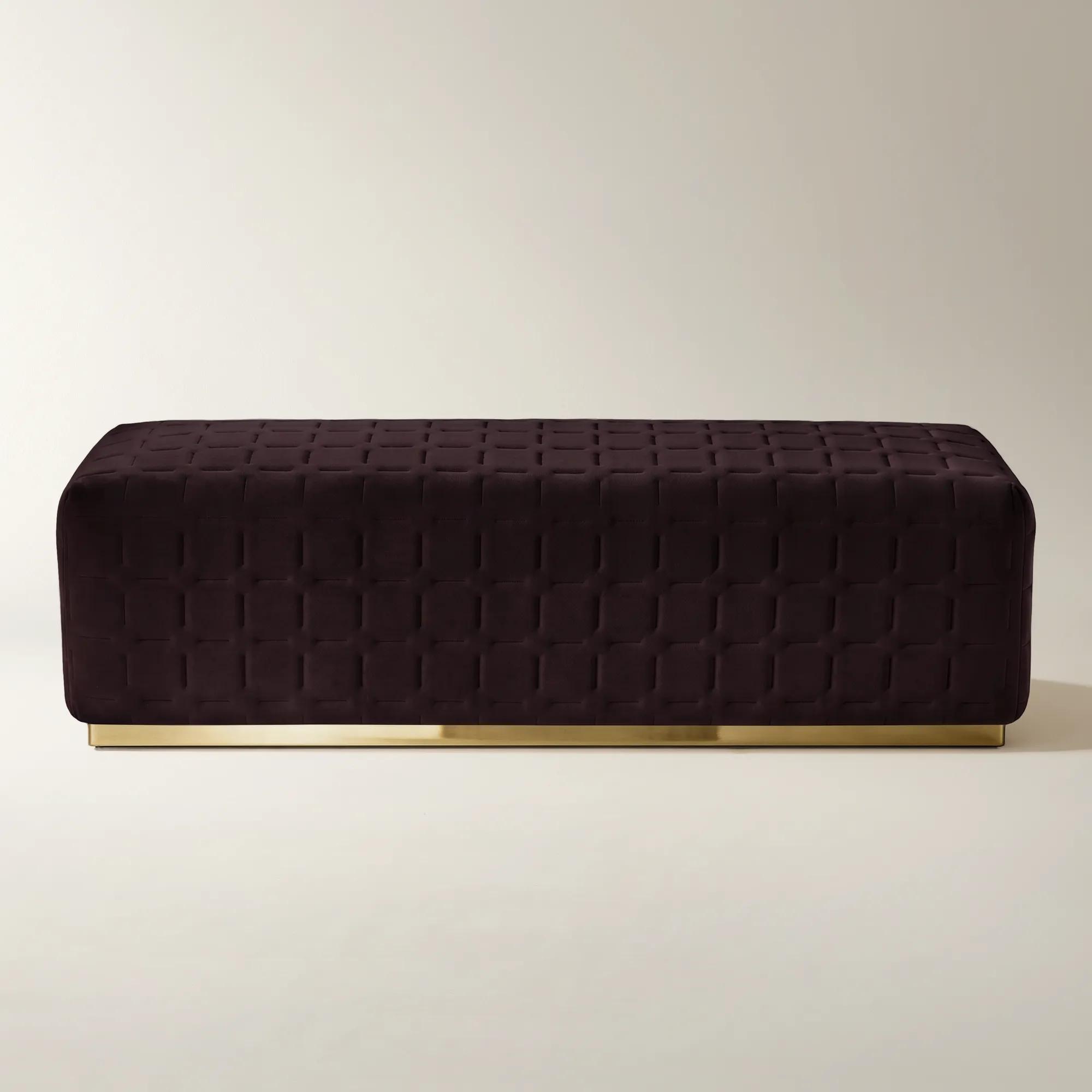
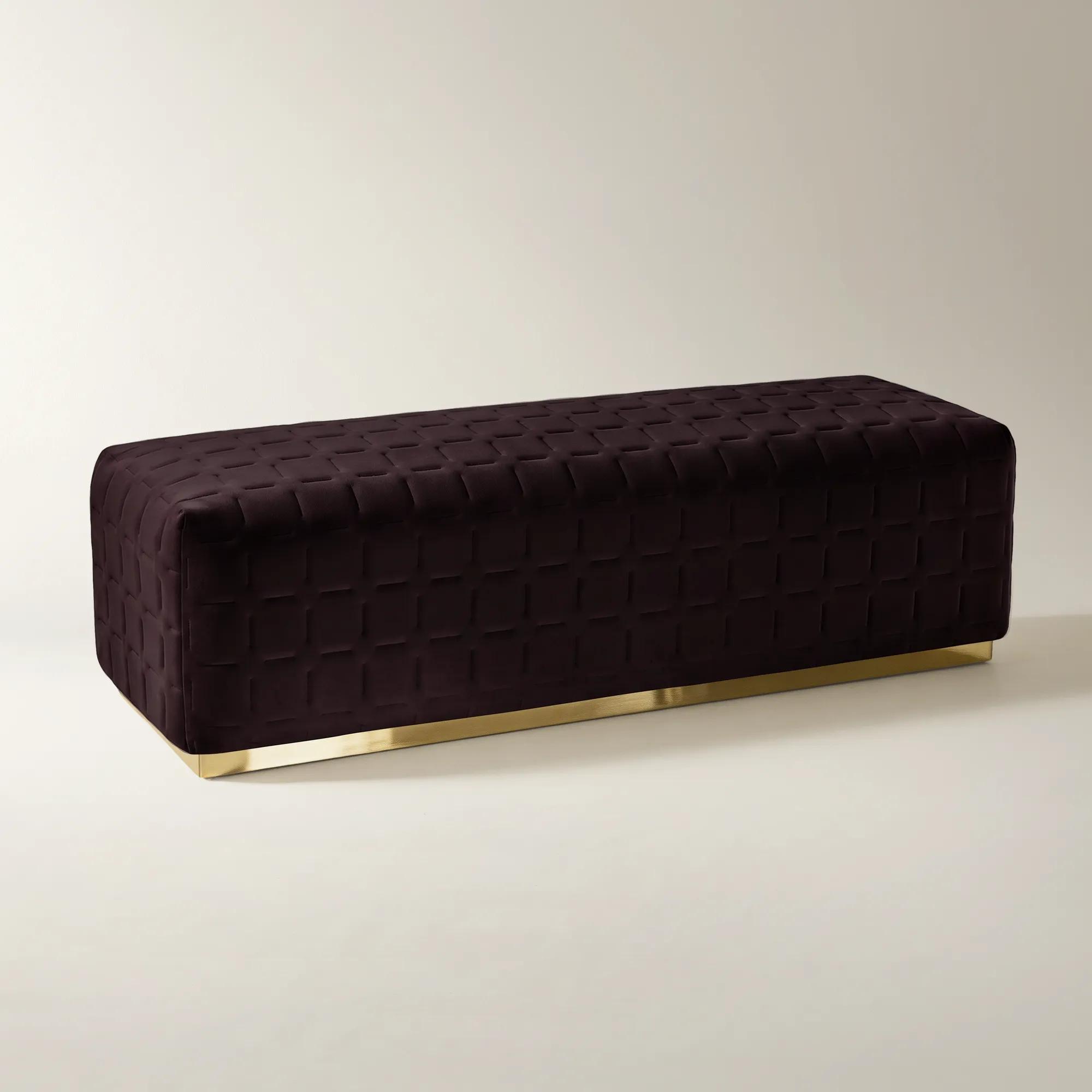 Vanta Quilted Fig Velvet Bench (64.6")$899
A plush fig velvet bench featuring checker quilted tufting and a sleek gold stainless steel base.
Add To Cart -
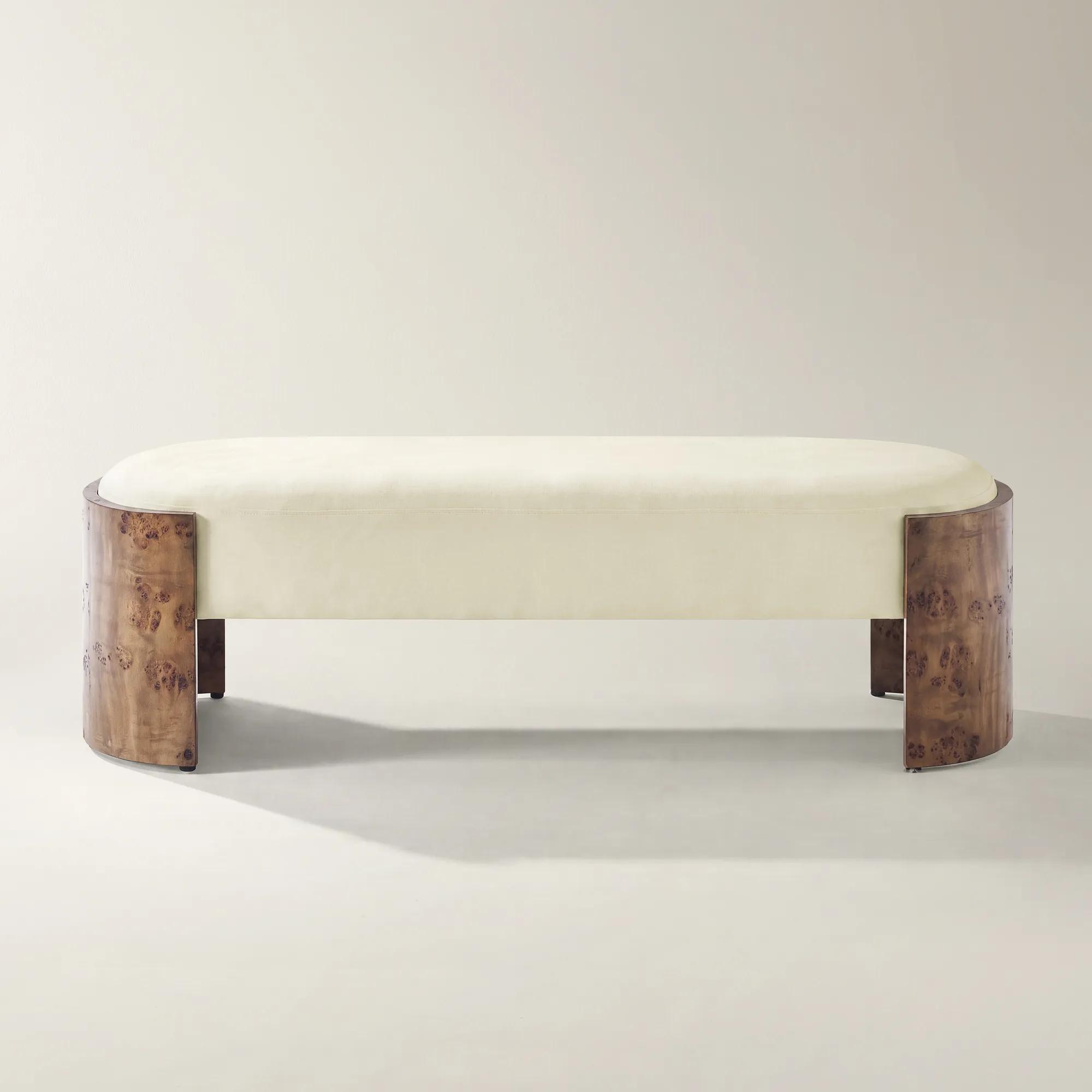 Cora Cloud Velvet With Ash Wood Bench (60.6")$999
A cloud velvet bench with bookmatched ash burl panels and supportive foam cushioning.
Add To Cart -
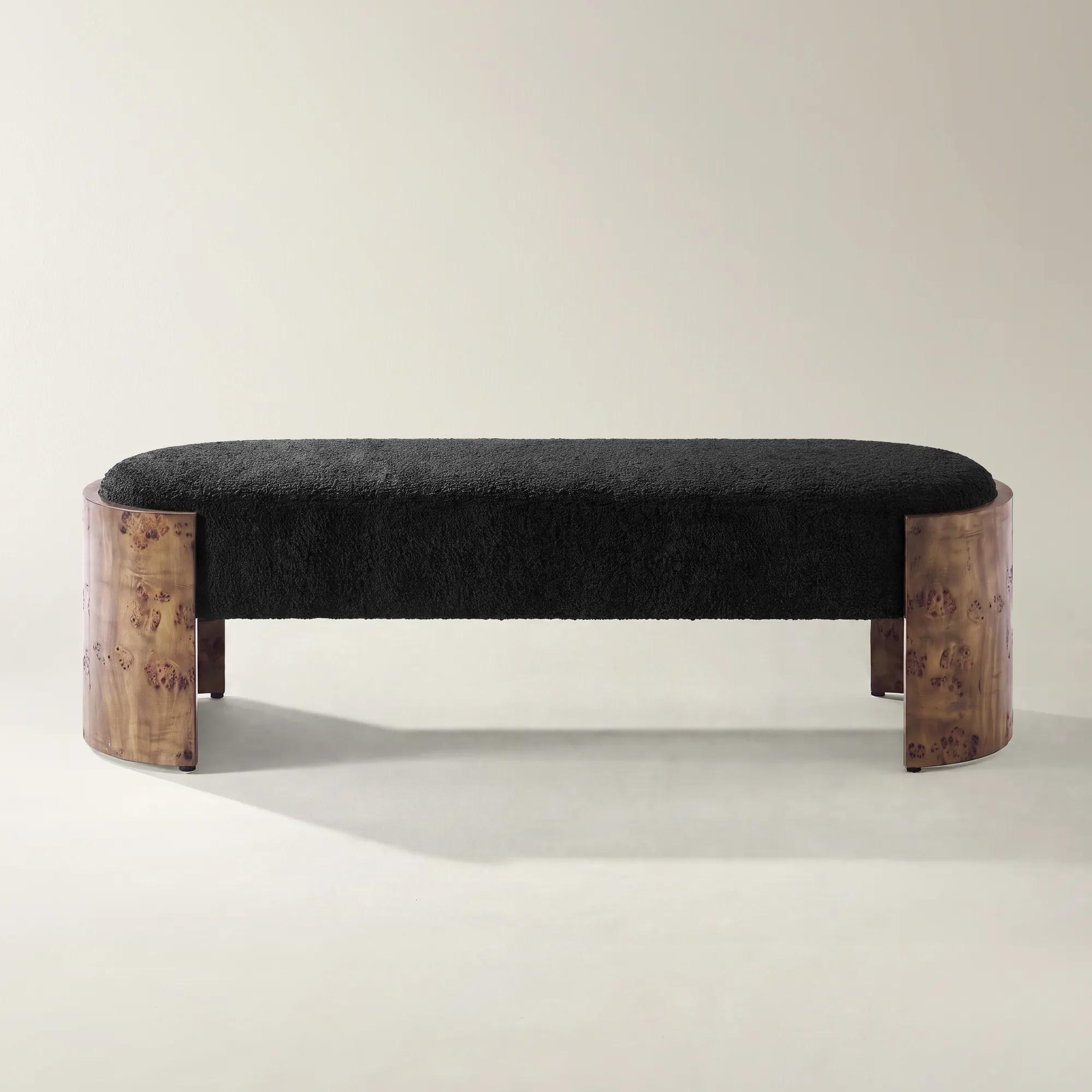 Cora Black Chenille With Ash Wood Bench (60.6")$999
A sculpted charcoal chenille bench featuring curved bookmatched ash burl panels and supportive foam cushioning.
Add To Cart -
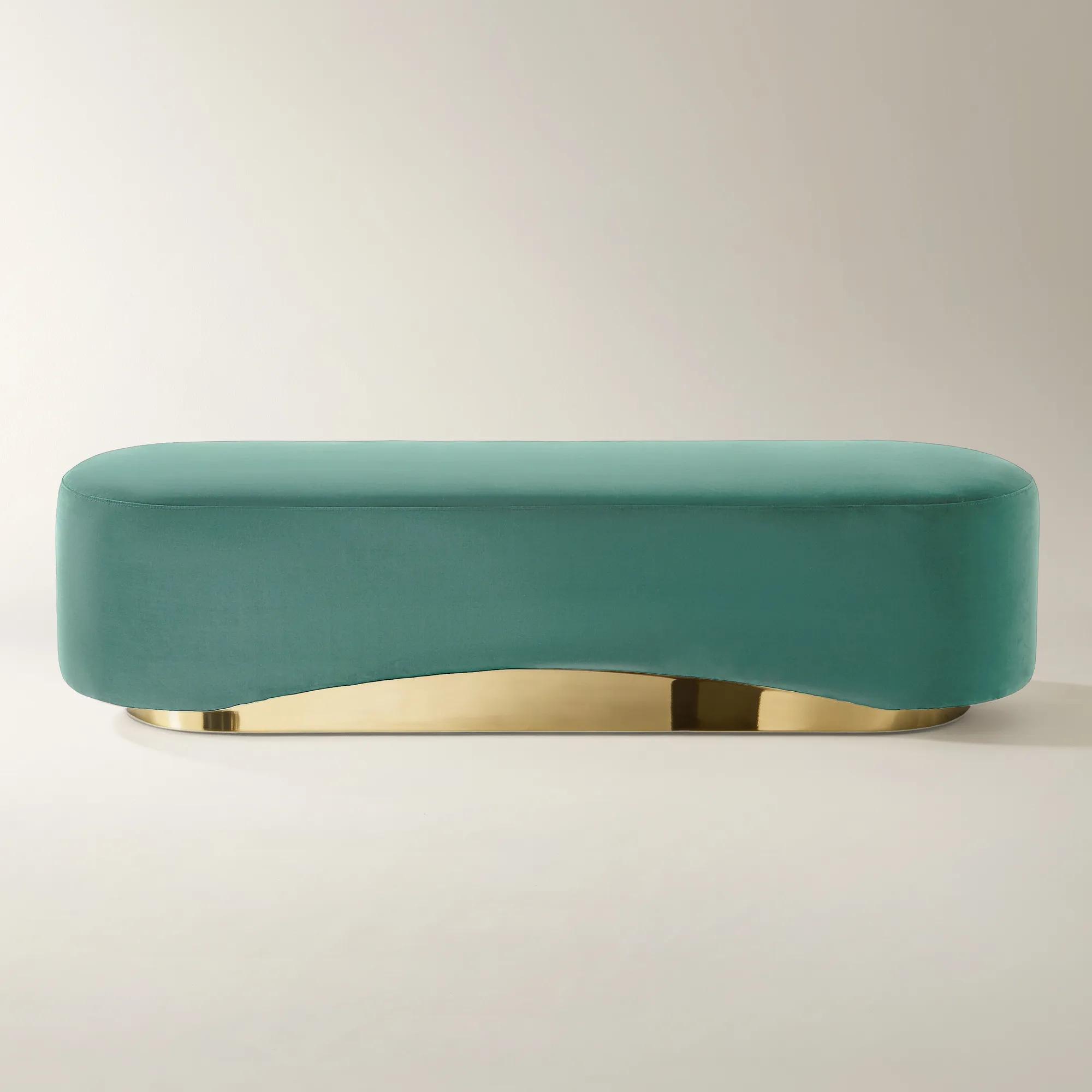 Kendra Ocean Teal Velvet Bench (70.47")$799
An elongated oval bench in ocean teal velvet with a plush seat and polished gold stainless steel base.
Add To Cart -
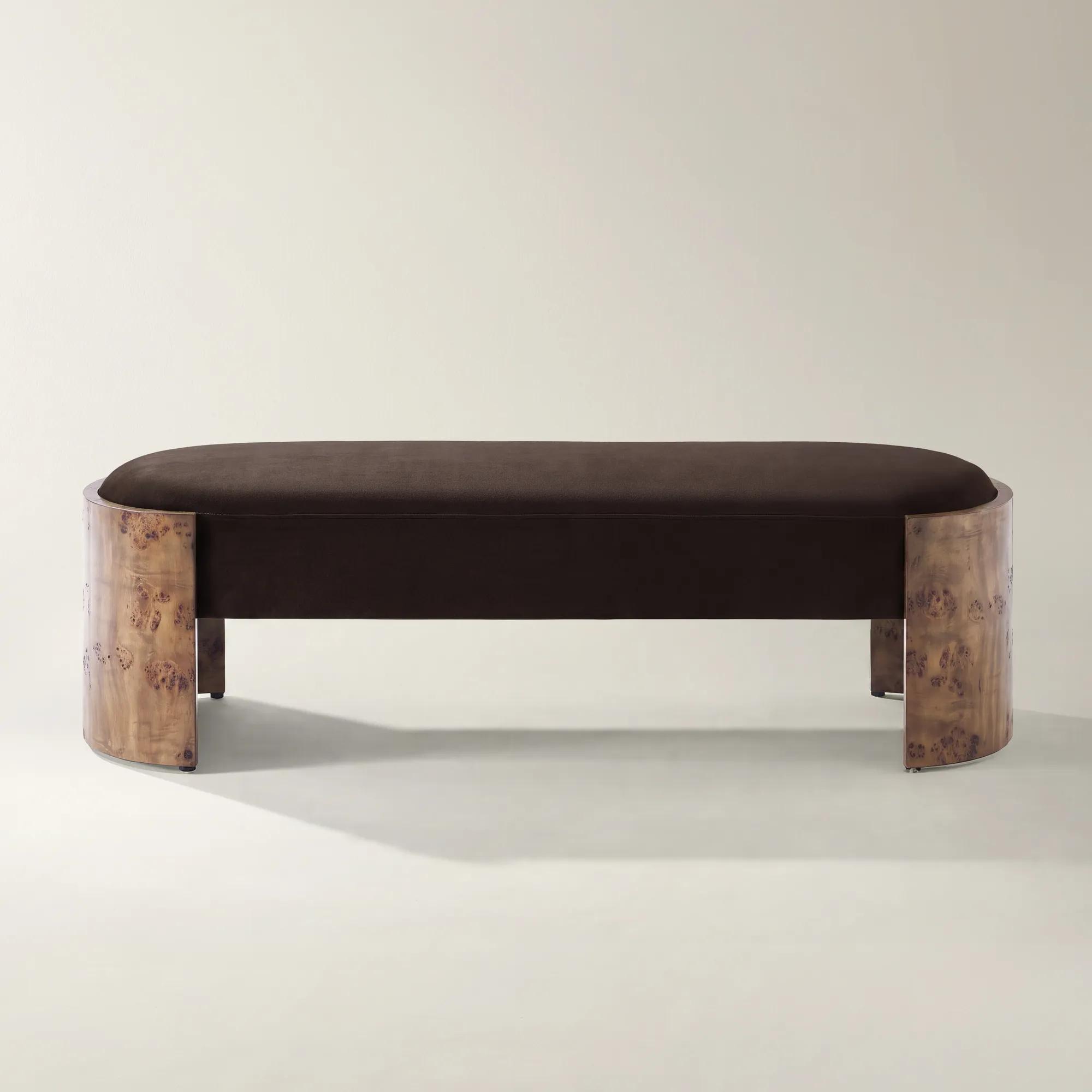 Cora Dark Chocolate Velvet With Ash Wood Bench (60.6")$999
A dark chocolate velvet bench with sculpted bookmatched ash burl end panels and high-resiliency foam cushioning.
Add To Cart -
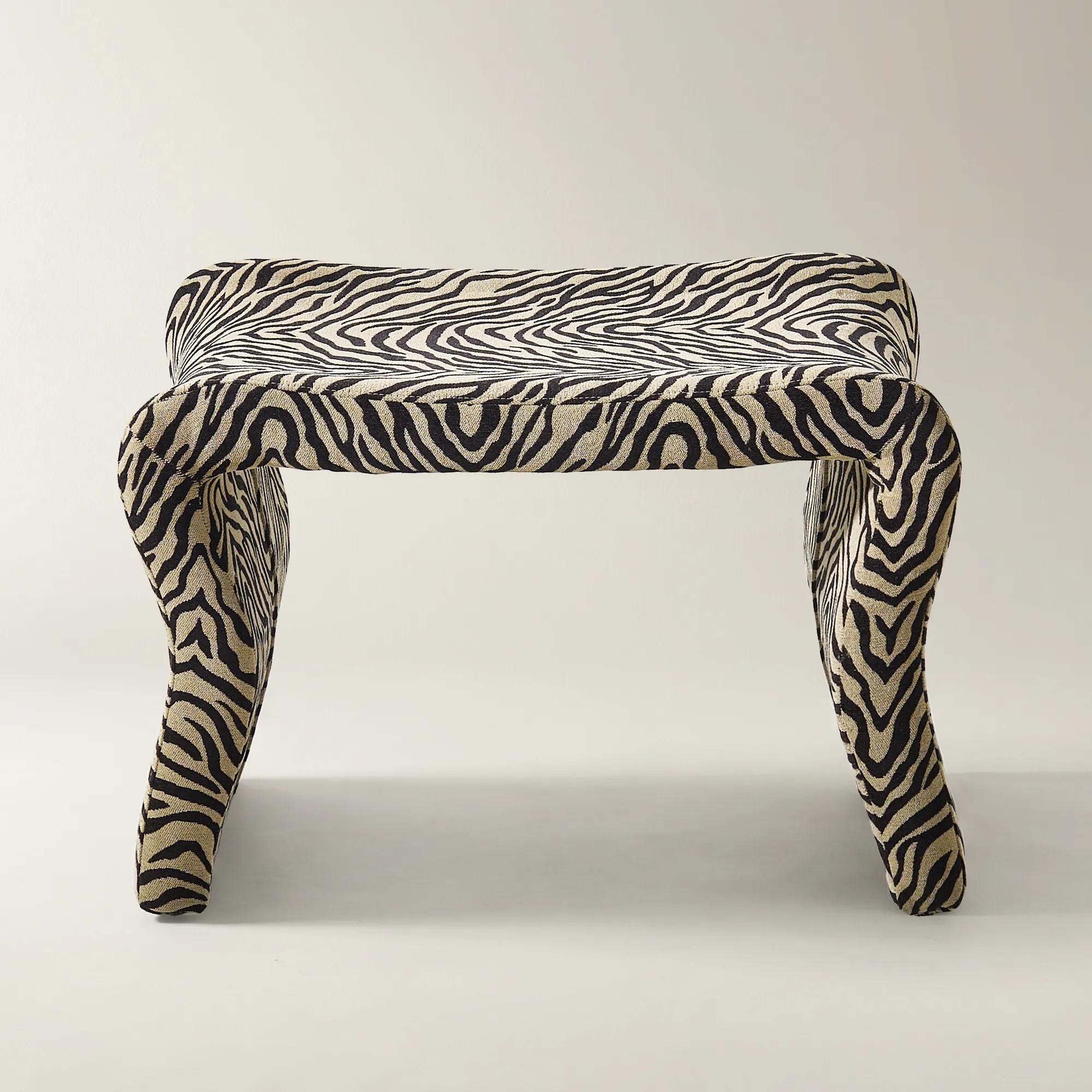
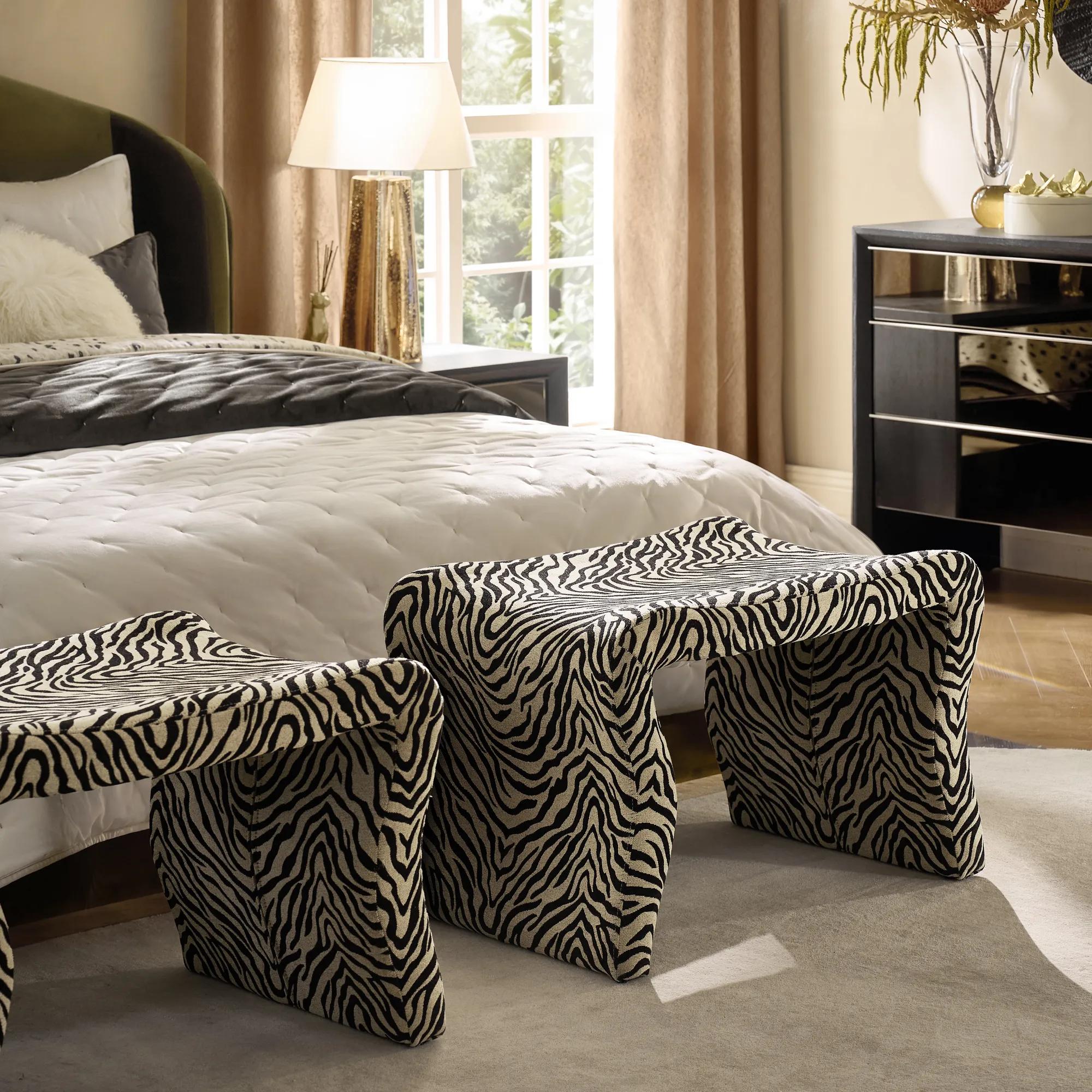 Romy Zebra Performance Chenille Bench (30.75")$499
A sculptural bench wrapped in zebra-patterned performance chenille with a wave-like silhouette and full foam construction.
Add To Cart -
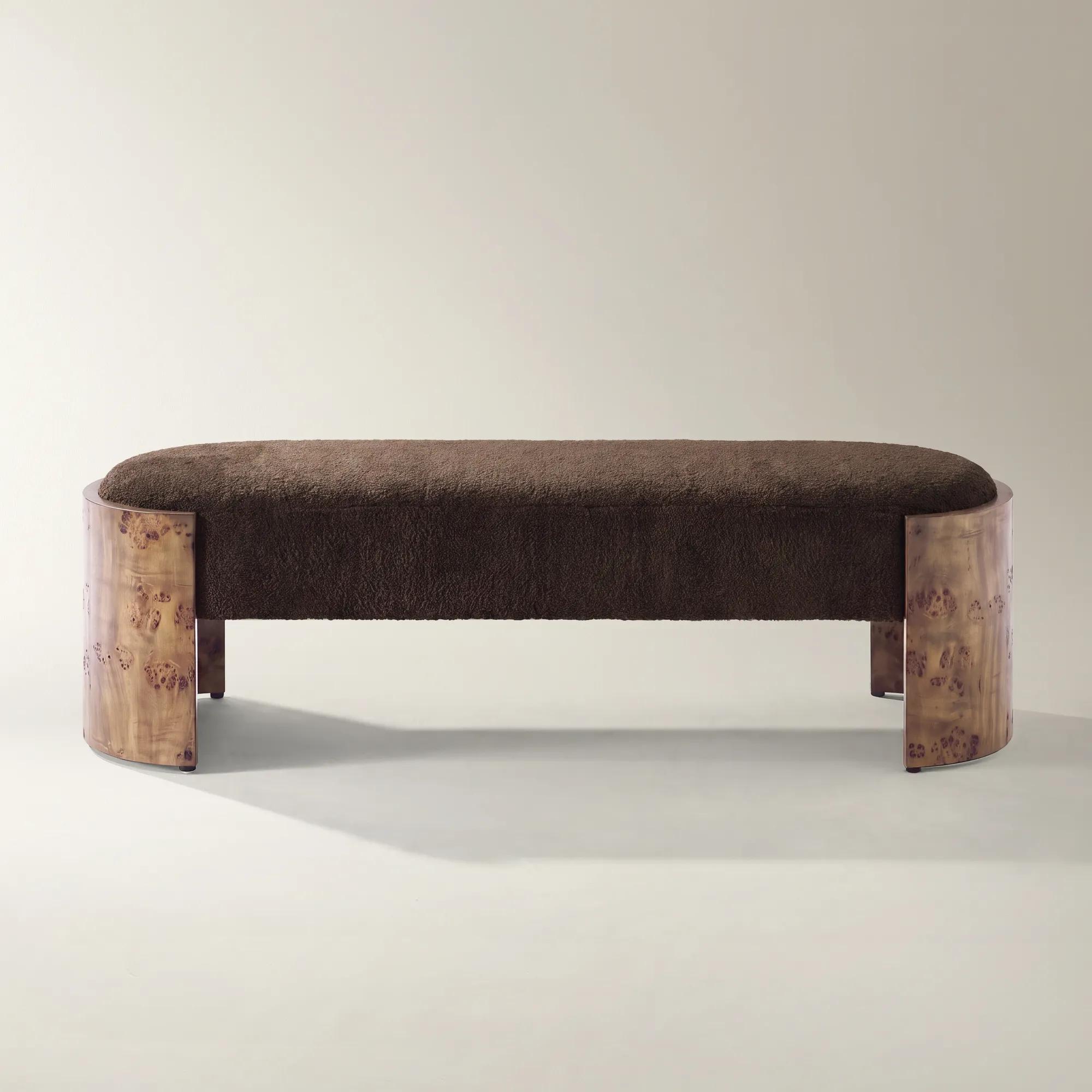 Cora Dark Chocolate Chenille With Ash Wood Bench (60.6")$999
A sculpted dark chocolate chenille bench with curved ash burl end panels and supportive foam cushioning.
Add To Cart -
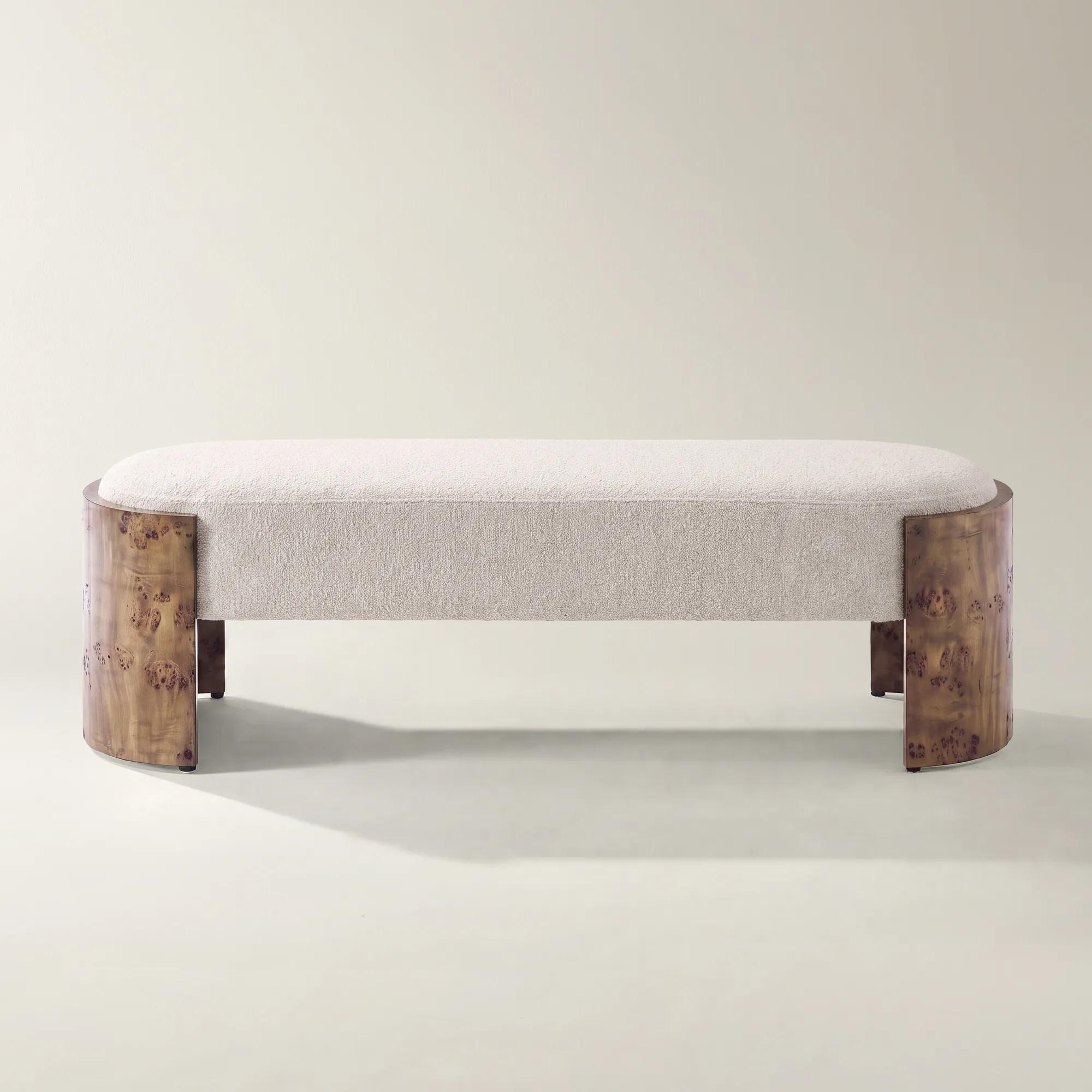 Cora Ivory Performance Boucle With Ash Wood Bench (60.6")$999
A sculpted ivory performance bouclé bench with curved bookmatched ash burl panels and supportive foam cushioning.
Add To Cart -
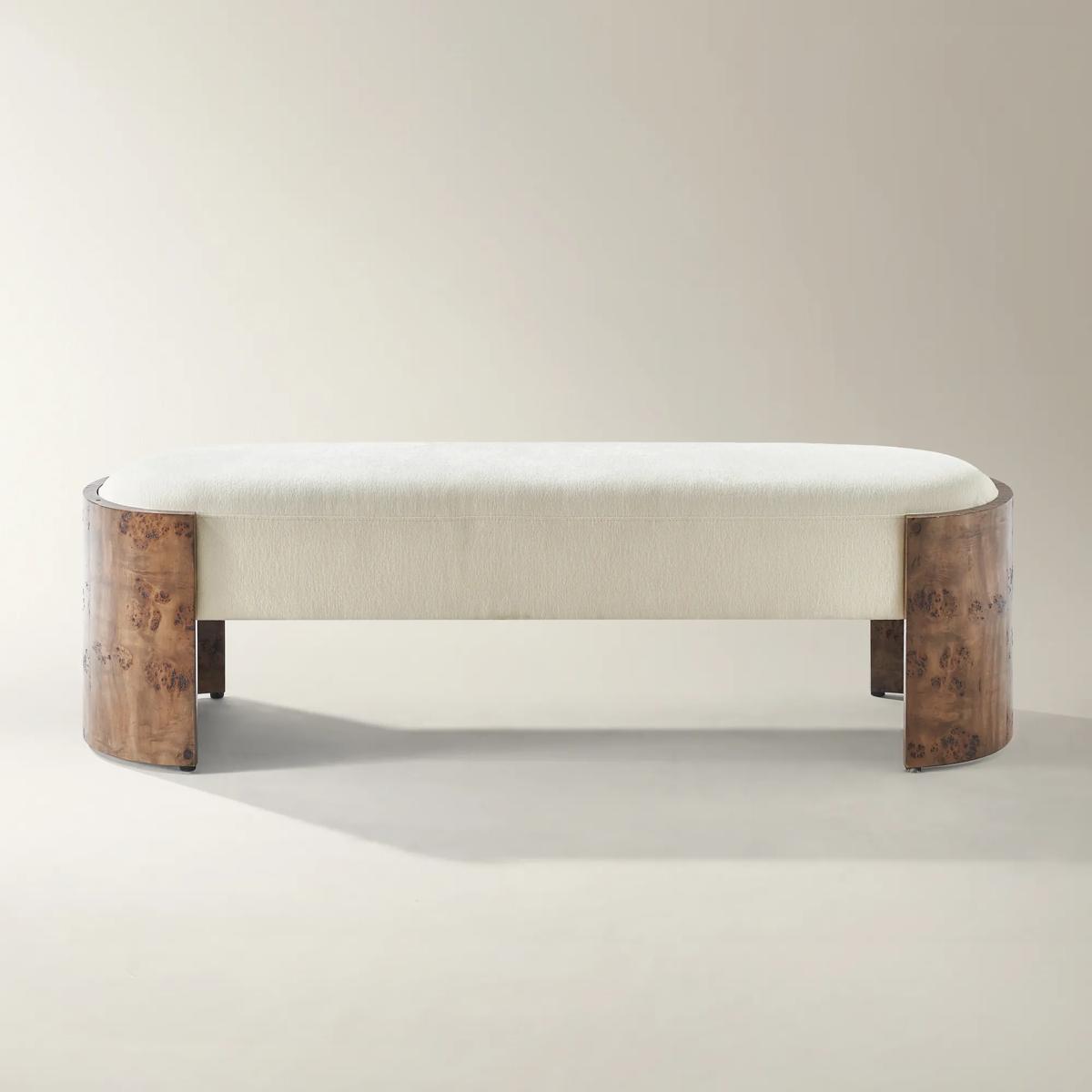 Cora Ivory Chenille With Ash Wood Bench (60.6")$999
An ivory chenille bench with curved ash burl veneer panels, blending plush comfort with striking wood artistry.
Add To Cart -
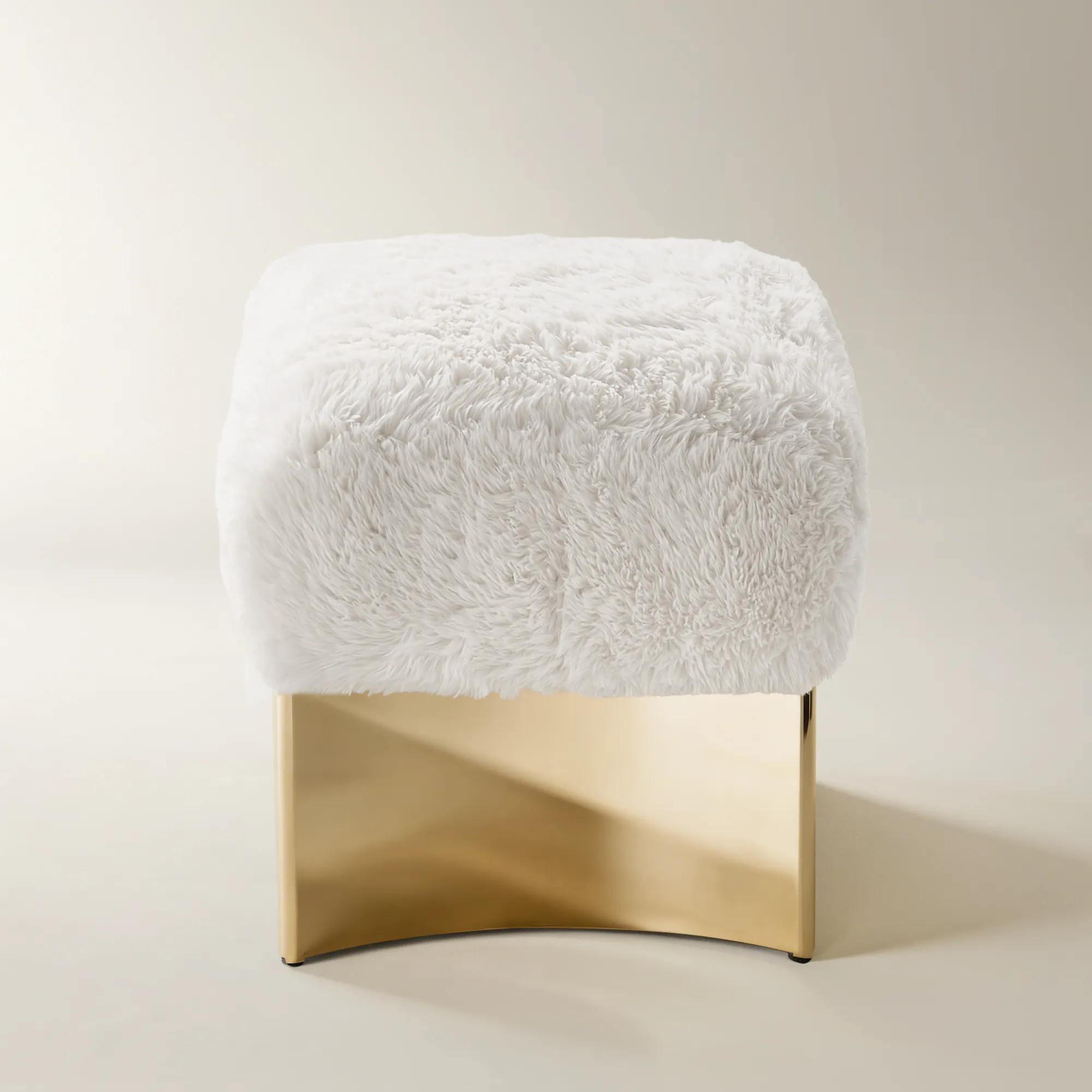
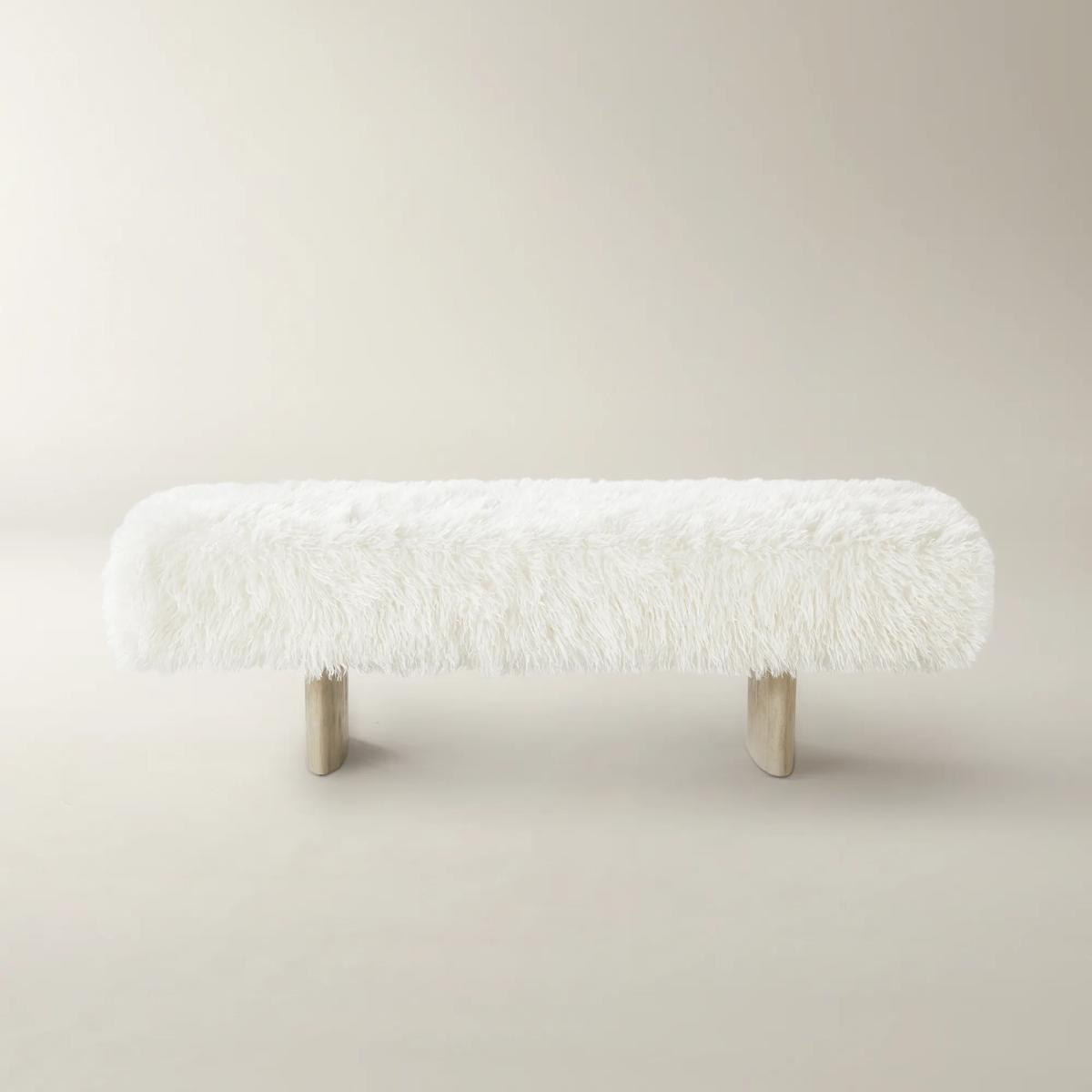 Micah Ivory Mongolian Faux Fur Bench With Rubberwood Legs (62.6")$699
An ivory faux Mongolian fur bench with high-density foam and sculptural solid rubberwood base for modern coziness.
Add To Cart

Custom Fabric Benches
Explore custom fabric benches for upholstered seating that complements your room’s palette and brings a tailored finish to your space. Consider dimensions, silhouette, and fabric as you choose a bench to anchor an entryway, accent the foot of a bed, or complete a living room seating arrangement.
Custom fabric benches are upholstered benches that let you select the covering to suit your space, pairing the character of a chosen textile with the shape and scale of a bench. Depending on the design, customization may also extend to finishes, trim, or other details; dimensions and construction options should always be confirmed rather than assumed. The appeal is personal expression with purpose: a long, sculptural seat at the foot of a bed, a richly textured welcome in an entryway, or an elegant landing place beside a living room window. Fabric changes the entire presence of the piece. Velvet catches light across its pile, giving a saturated color depth and a soft shimmer that shifts as someone moves through the room. Linen and linen-blend upholstery introduce a more relaxed texture, while tightly woven fabrics can bring crisp definition to a tailored silhouette. Bouclé creates a dimensional surface that feels especially expressive against smooth stone, polished metal, or lacquered furnishings. These textures do more than coordinate with a color scheme; they establish whether the bench feels sumptuous, architectural, or quietly dramatic. An ivory seat can illuminate a dark-paneled bedroom, while a deep jewel tone creates a deliberate focal point against pale walls. Pattern offers another layer of artistry, particularly when its scale complements the length of the seat rather than competing with nearby rugs or drapery. Fabric samples, when offered, are useful for judging undertones, texture, and sheen beside existing finishes. A textile that appears neutral on a screen may reveal warmer or cooler notes under the room’s lighting. On a broad upholstered surface, even subtle variations become part of the design. Smooth, closely fitted upholstery emphasizes a bench’s outline; tufting, channeling, welt, or a skirt changes its rhythm and visual weight. The most compelling combination connects with the surrounding room without repeating every detail, allowing the bench to feel intentionally chosen rather than simply matched. A little contrast—a plush seat against a linear bed frame, for example—often gives the arrangement its distinction.
Placement gives a custom fabric bench its purpose, and proportion makes that purpose feel effortless. At the foot of a bed, a bench creates a finished composition while providing a place to sit when dressing or to set a folded throw. A length that stays within the bed’s width often preserves a balanced outline, though the surrounding furniture and room dimensions matter more than a rigid formula. Leave enough circulation space between the bench and a dresser, doorway, or wall for drawers to open and people to pass comfortably. In an entryway, depth deserves particular attention: a generously cushioned seat should not crowd the path from the front door. The bench can offer a composed place to put on shoes, with art above it and a nearby tray for small essentials. In a living area, an upholstered bench can introduce seating without the visual height of another chair, keeping sightlines open across a conversation area. A backless silhouette looks especially graceful when viewed from multiple directions, so the finish on every visible side matters. For dining use, confirm that the bench is intended for that setting and compare its seat height with the underside of the table, accounting for cushion compression and any arms or surrounding supports. A bedroom accent bench and a dining bench may share a similar appearance without offering the same comfort or proportions. Seat depth, cushioning, and edge shape also affect the experience: a firmer, supportive seat can make sitting down and standing up easier, while deeper cushioning may invite a more leisurely pause. Households expecting frequent use should consider the stated seating capacity and weight limits rather than estimating from length alone. Any tray, books, or decorative objects should leave the bench ready for its primary role as seating; upholstery is not automatically a substitute for a hard tabletop. These practical details give expressive design room to succeed, whether the setting is a compact apartment entry or a spacious bedroom with layered textiles and gleaming accents.
Durability begins with the relationship between fabric, upholstery construction, and the way the bench will be used. A decorative bedroom bench has different demands from an entryway seat that receives daily attention from children, guests, and pets. Fiber content alone does not tell the whole story: weave, surface texture, backing, cushioning, and frame construction all contribute to performance. A tightly woven textile may be less prone to catching than an open, looped surface, while a pronounced pile may show pressure marks or changes in shading as part of its character. Performance fabrics can offer specific stain-resistance or cleaning benefits, but the term does not mean every spill, scratch, or cleaning method is harmless. Review the actual fabric specifications, including abrasion testing when provided, and remember that no single rating guarantees how upholstery will age in a particular home. Well-supported seating, secure joints, and neatly finished seams matter as much as an alluring surface. Care should follow the manufacturer’s directions and the upholstery cleaning code, since some fabrics permit water-based treatment, others require solvent-based care, and certain coverings call for professional attention. Gentle vacuuming with an appropriate upholstery attachment helps remove dust before it settles into the weave. Blot spills promptly without rubbing, avoid saturating the padding, and test any permitted cleaner in an inconspicuous area. Direct sunlight can alter some colors over time, so placement deserves consideration alongside the view. If cushions are removable or reversible, follow the care instructions for maintaining their shape; fixed upholstery should not be treated as though it has a washable cover. Explore Upholstered Benches with this balance of beauty and everyday use in mind. Thoughtful fabric selection gives a bench more than a distinctive appearance: it creates a seat that belongs to the room, responds to daily routines, and brings an unmistakably personal note to the composition. With the right proportions and a textile worth lingering over, a practical furnishing becomes an expressive detail that holds the entire space together.
FAQs
A custom fabric bench brings a more personal perspective to upholstered seating through fabric selected to complement your interior. It becomes part of the room’s visual story, whether your style favors tonal elegance, expressive contrast, or richly layered texture.
Begin with the mood you want to create. A fabric color drawn from your artwork or rug creates a composed, connected look, while a contrasting hue gives the bench a more dramatic presence. Consider the color alongside your room’s finishes and lighting before making your selection.
Texture adds depth beyond color. A smooth surface creates a polished impression, while a more pronounced weave introduces tactile richness. Consider how the upholstery will play against surrounding elements: gleaming metal, reflective accents, and sculptural furnishings each bring out a different side of the fabric.
An upholstered bench can lend a dressing area a salon-inspired mood, bring softness to an entryway, or create an elegant finishing note at the foot of a bed. Let its setting guide the styling, with nearby artwork or a distinctive mirror giving the arrangement an expressive point of view.
Matching upholstery creates continuity, but a deliberate contrast can feel equally sophisticated. Connect your bench to surrounding furniture through a shared undertone, repeated accent color, or complementary texture. The goal is a considered composition—not a room where every piece tells the same story.