Accent Chairs For Chic Interiors
Accent Chairs For Chic Interiors
-
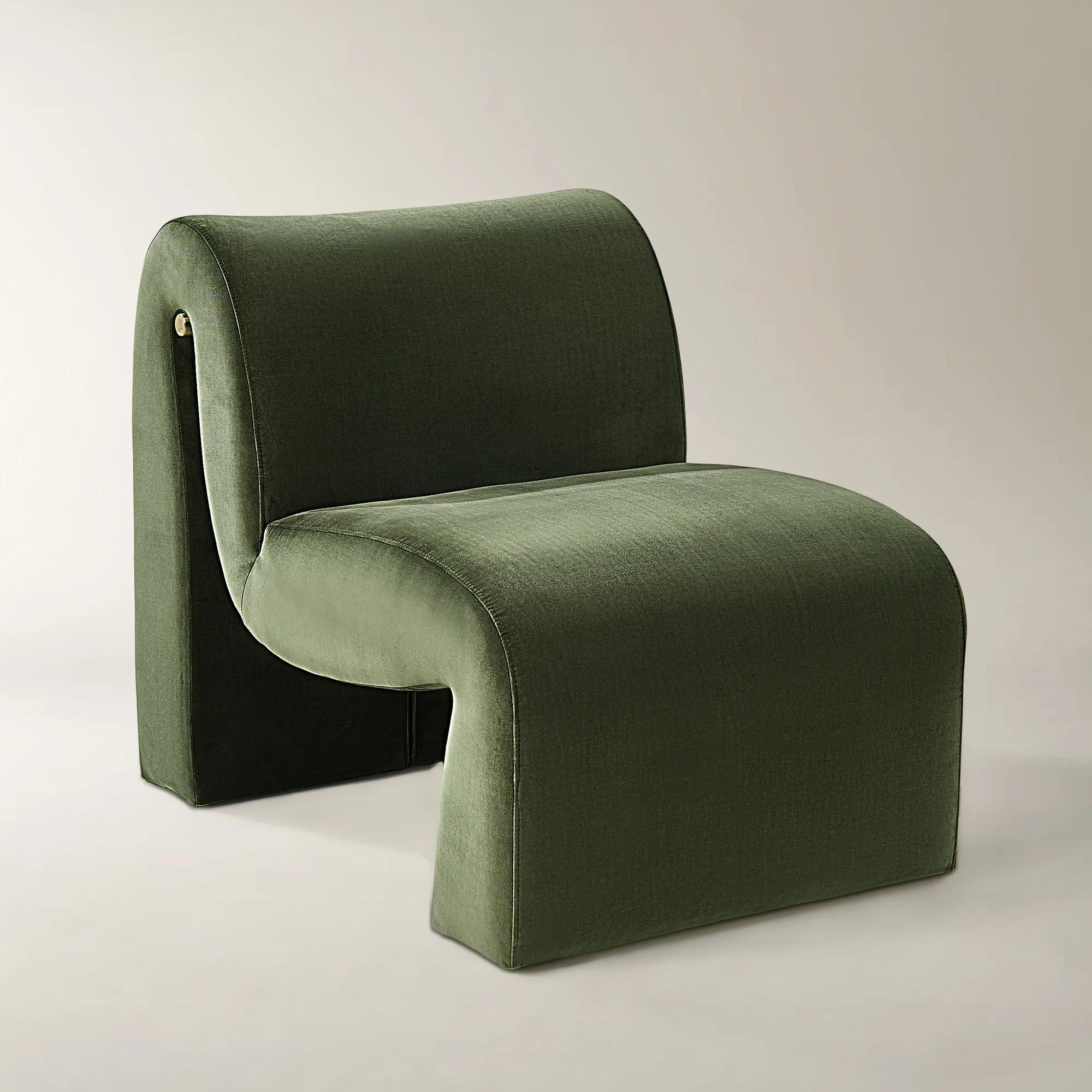
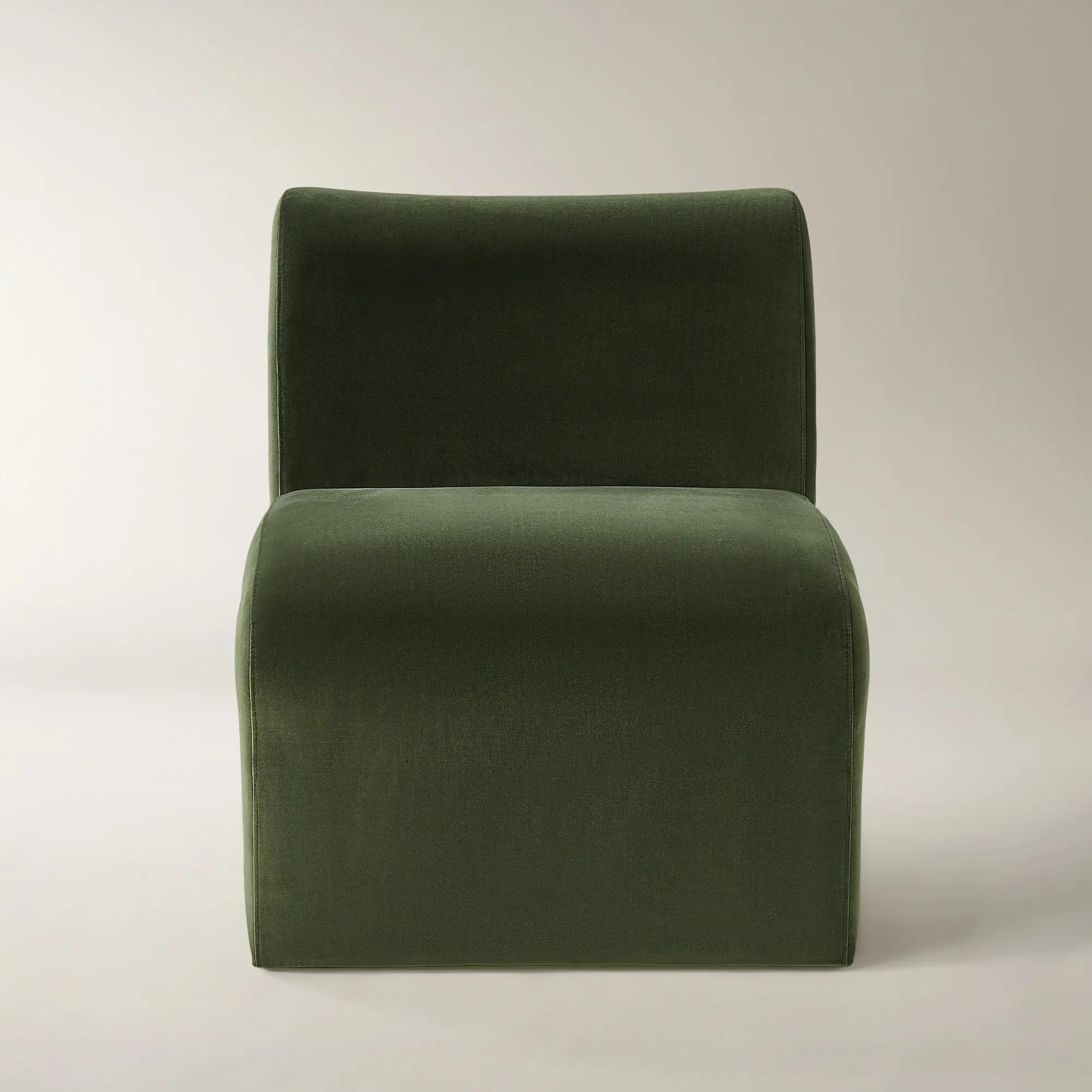 Cora Jade Green Velvet Accent Chair$899
A sculpted accent chair in jade green velvet with a gold stainless-steel inlay for refined glamour.
Add To Cart -
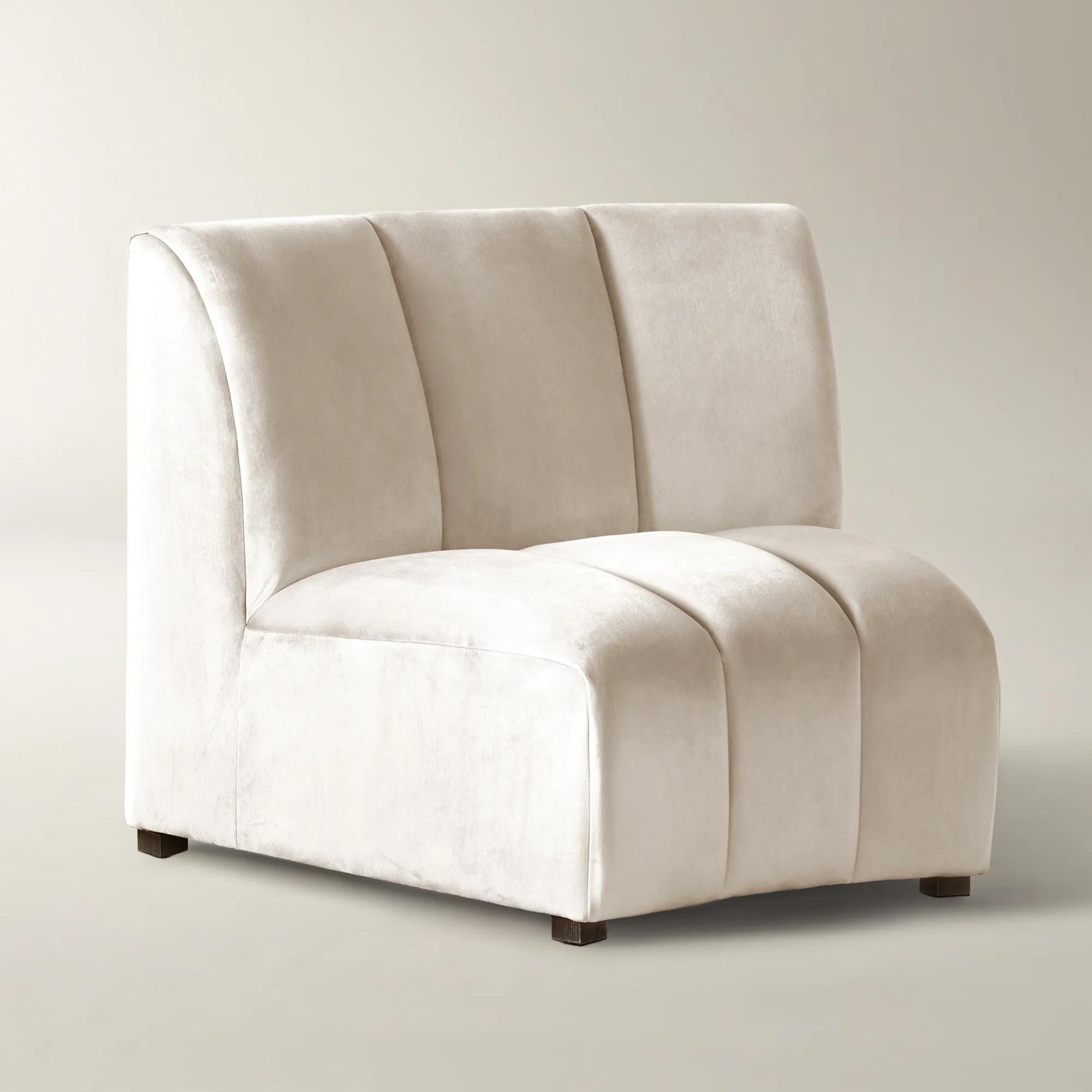
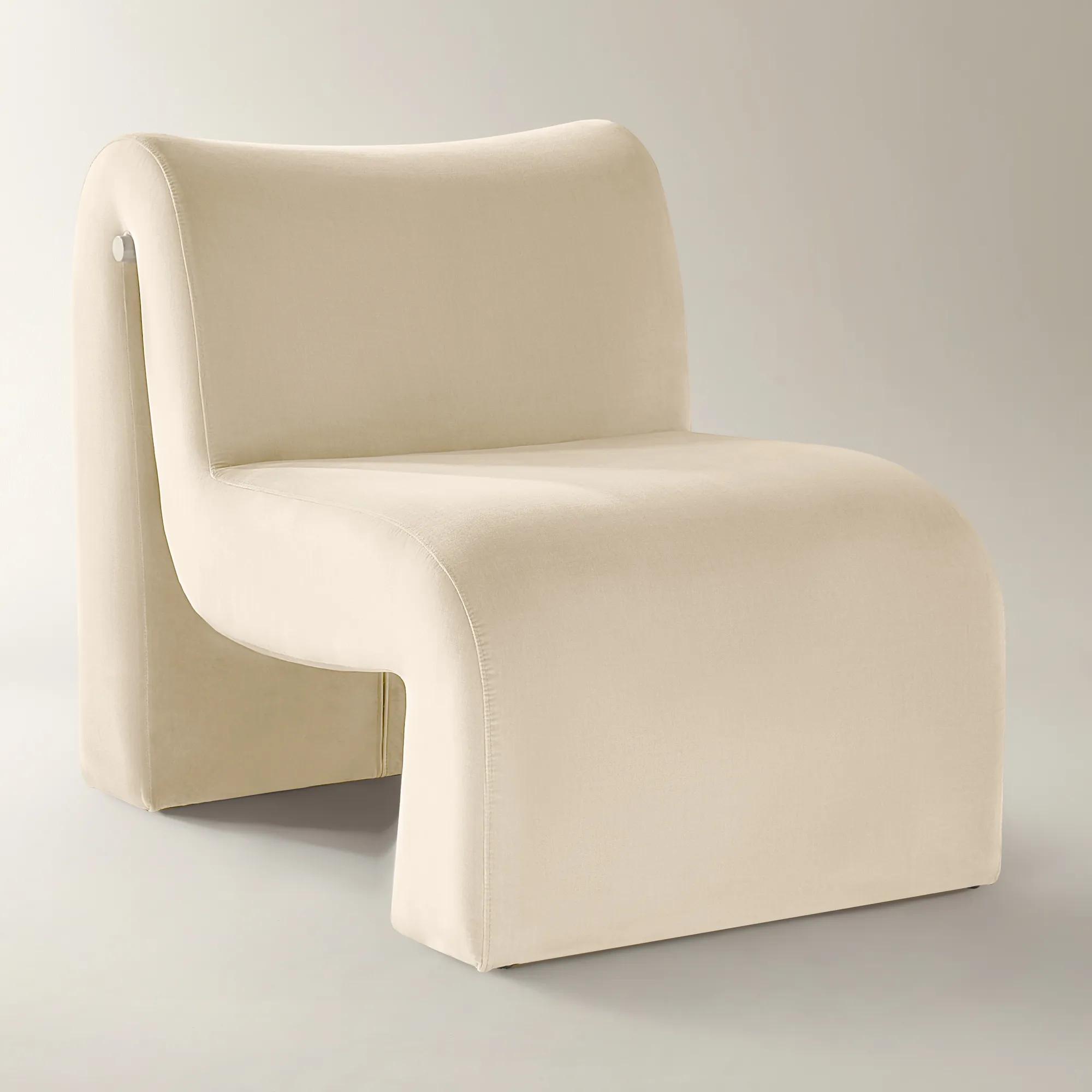 Cora Ivory Velvet Accent Chair$899
A sculpted ivory velvet chair featuring a continuous curved silhouette and a gold stainless-steel accent.
Add To Cart -
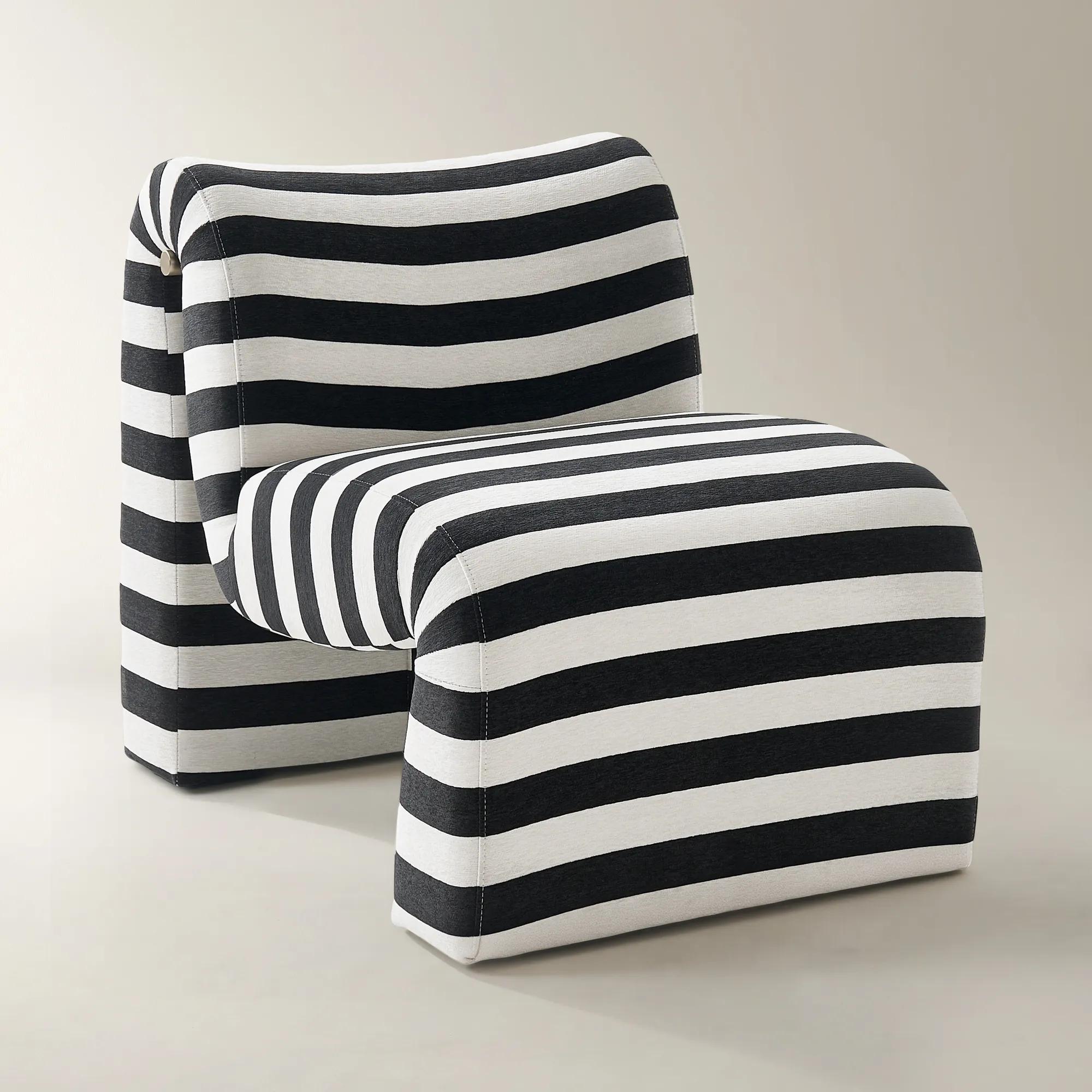 Cora Stripe Chenille Accent Chair$899
A bold black-and-white striped accent chair featuring water-repellent chenille and a gold stainless-steel inlay.
Add To Cart -
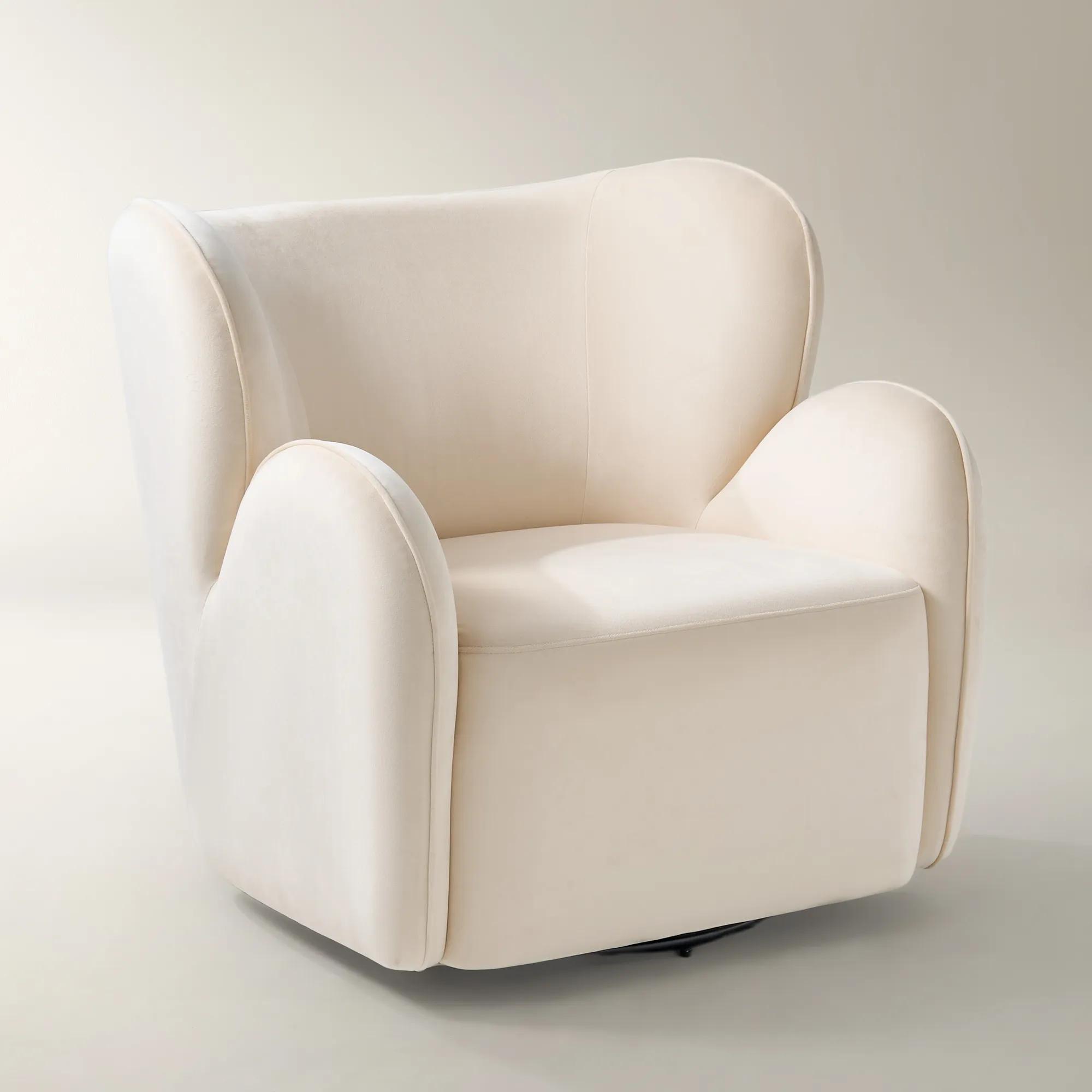
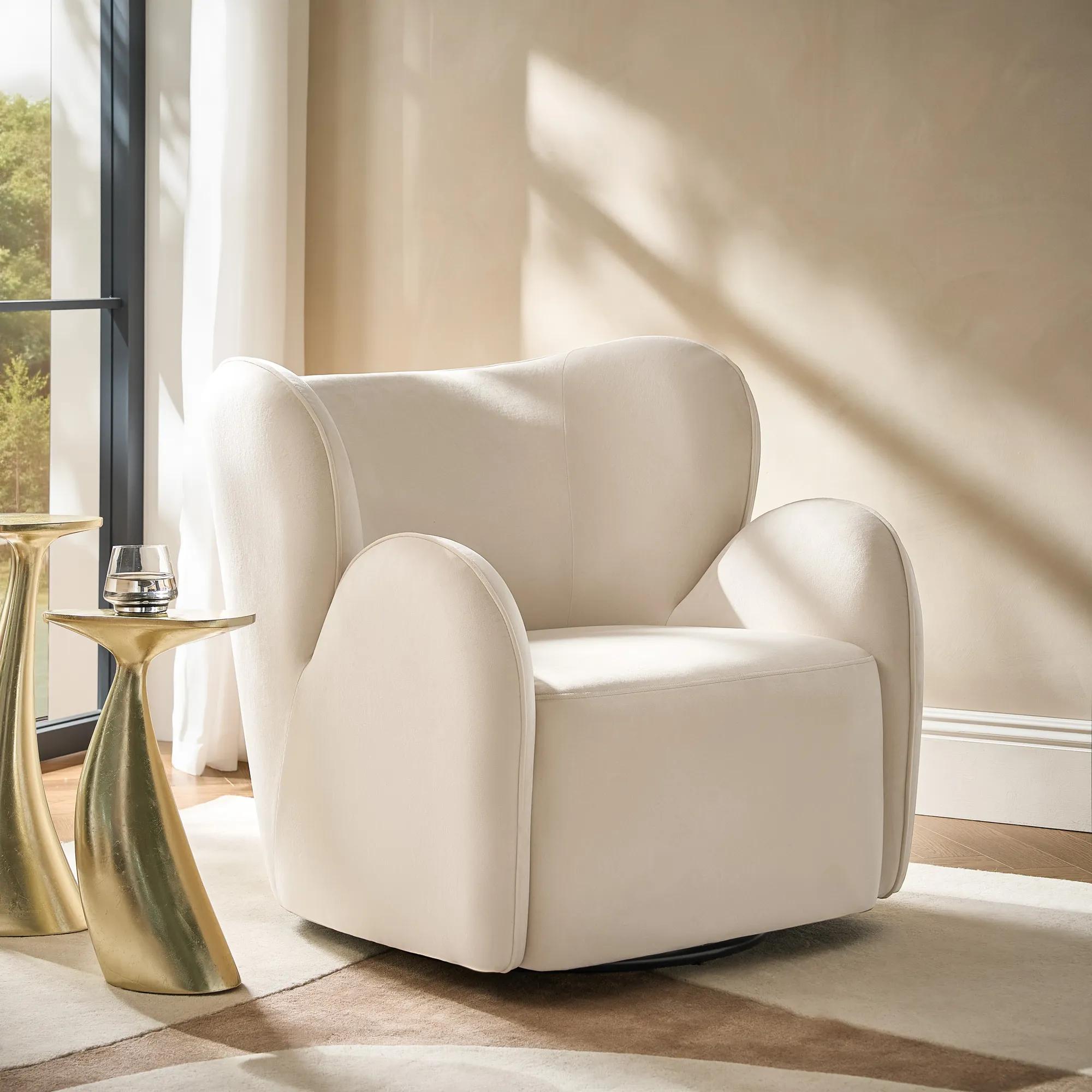 Ceres Ivory Velvet Swivel Accent Chair$799
An ivory velvet accent chair featuring a curved silhouette, 360° swivel, and plush, supportive cushioning.
Add To Cart -
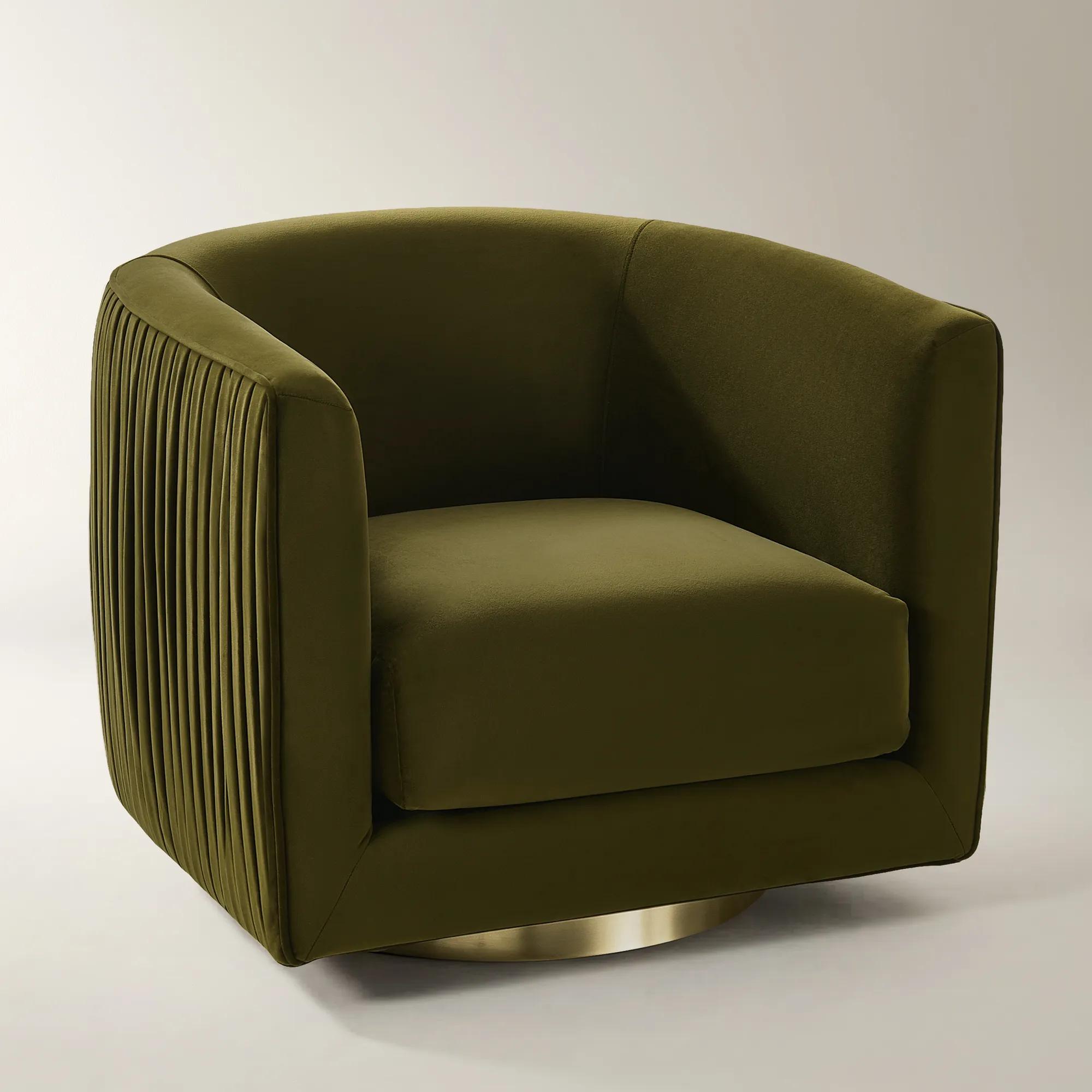
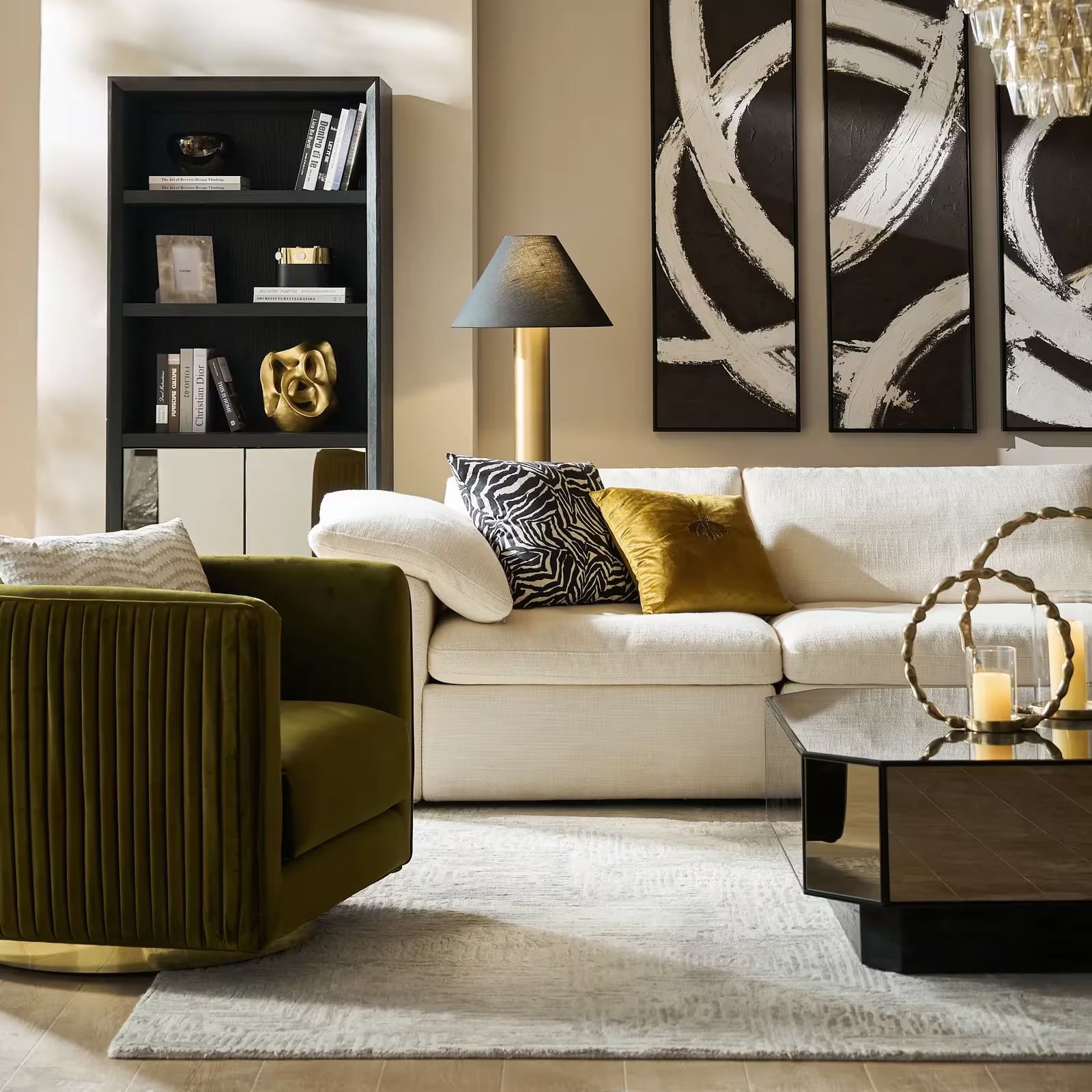 Lyssa Pleated Deep Olive Velvet Swivel Accent Chair$1099
A deep olive green velvet accent chair featuring pleated panels, smooth curves, and a 360-degree swivel base.
Add To Cart -
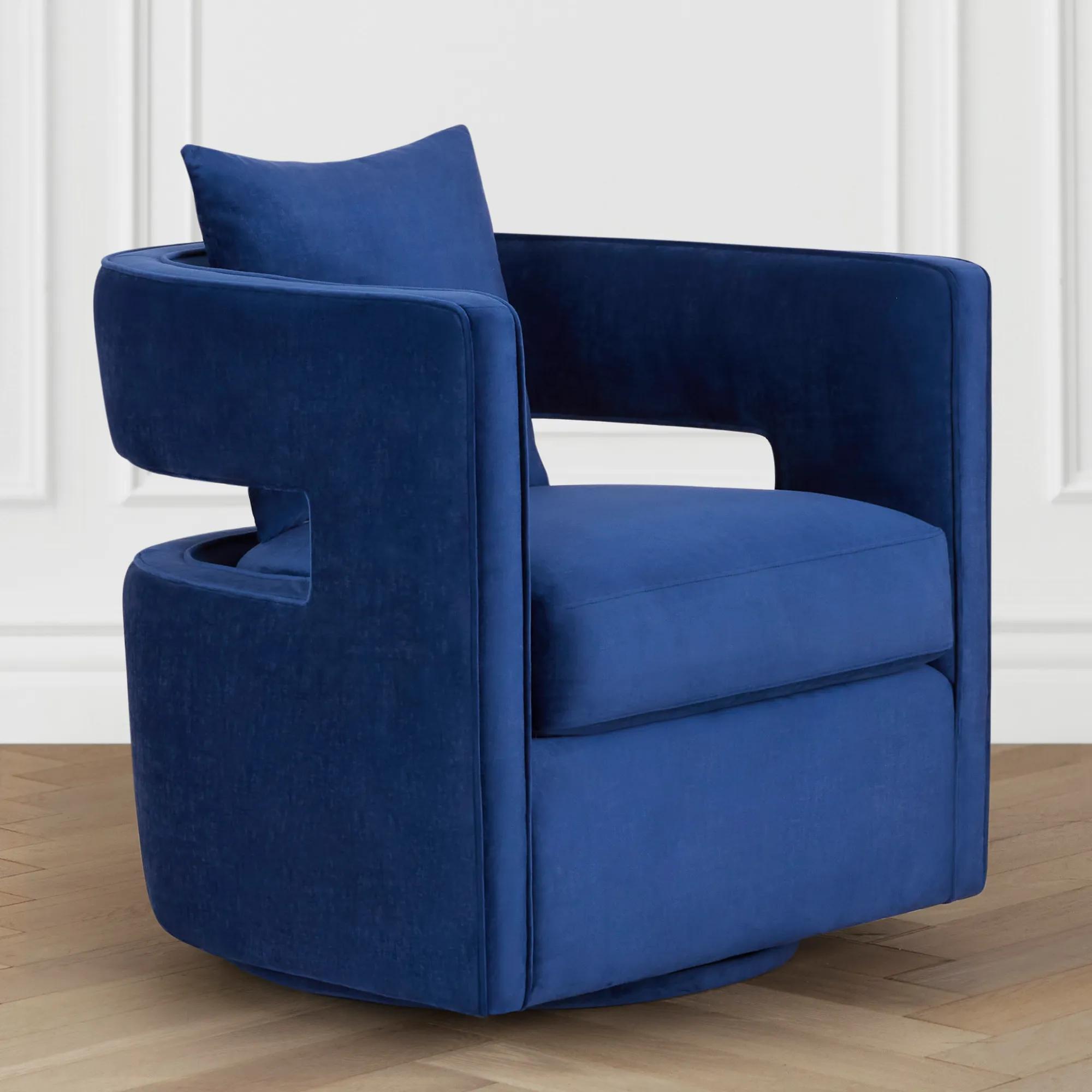
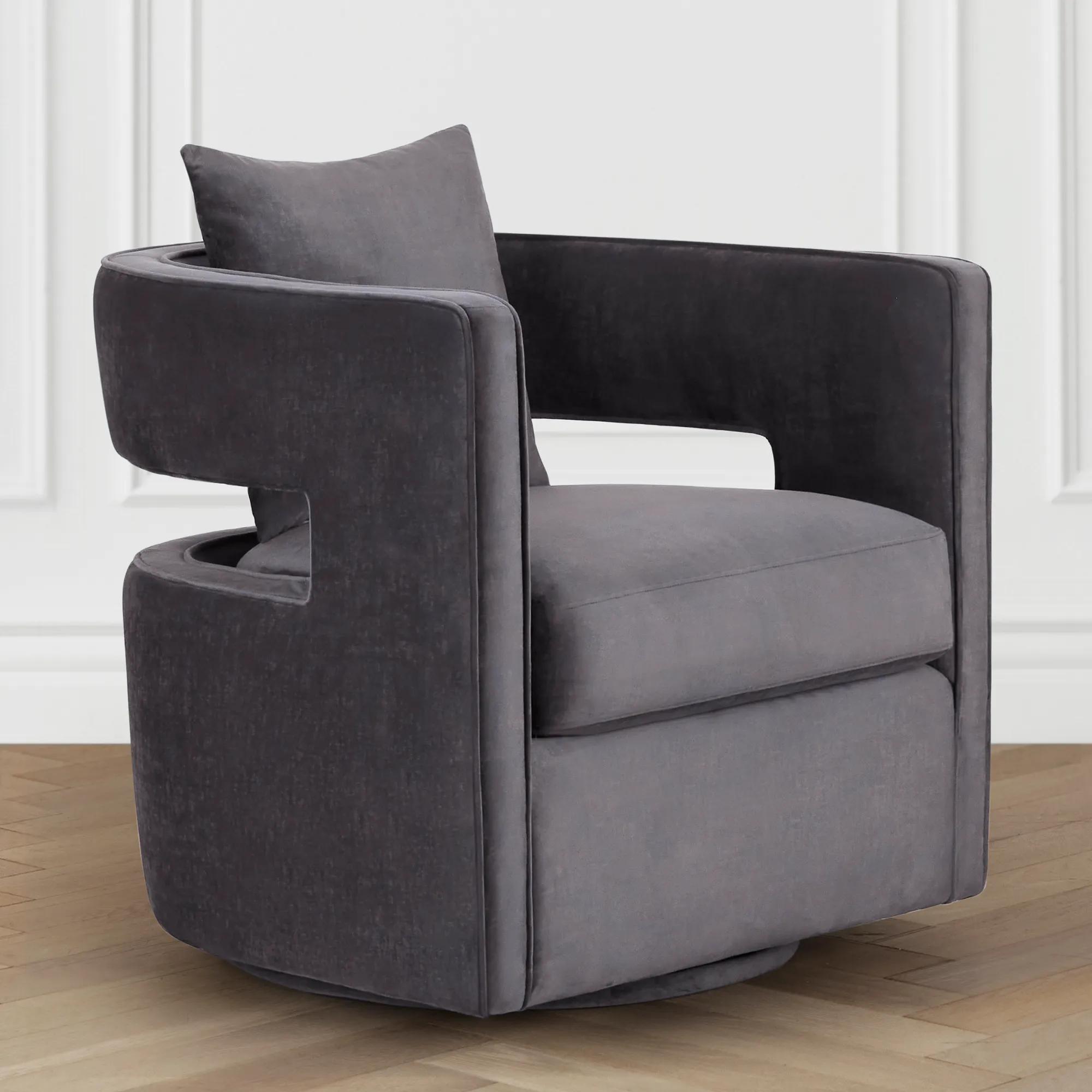 Lottie Grey Velvet Swivel Accent Chair$999
A glamorous grey velvet swivel chair featuring a barrel back, cutout arms, and plush foam cushioning.
Add To Cart -
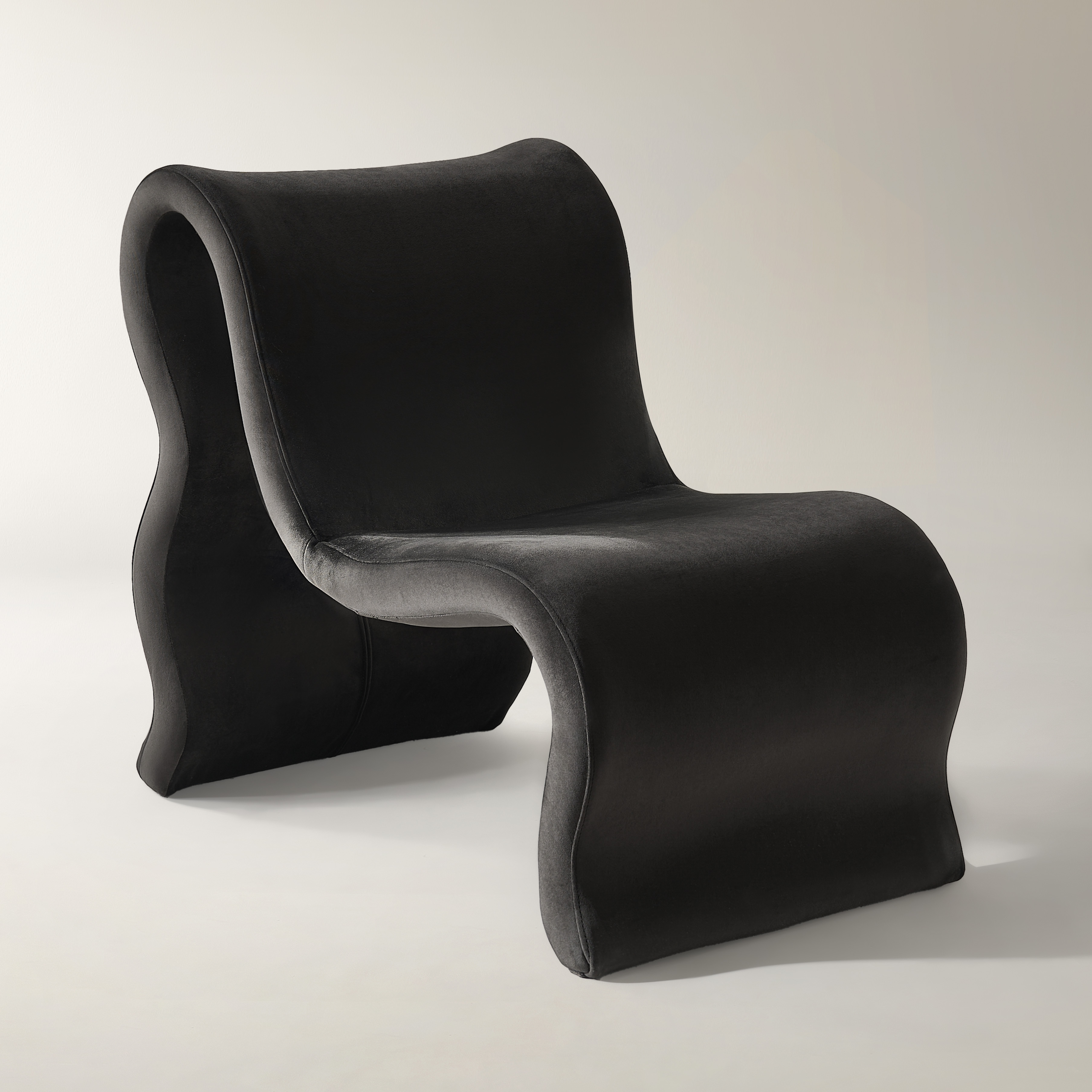 Romy Charcoal Velvet Accent Chair$999
A sculptural accent chair in charcoal velvet with a wave-like silhouette and full foam construction.
Add To Cart -
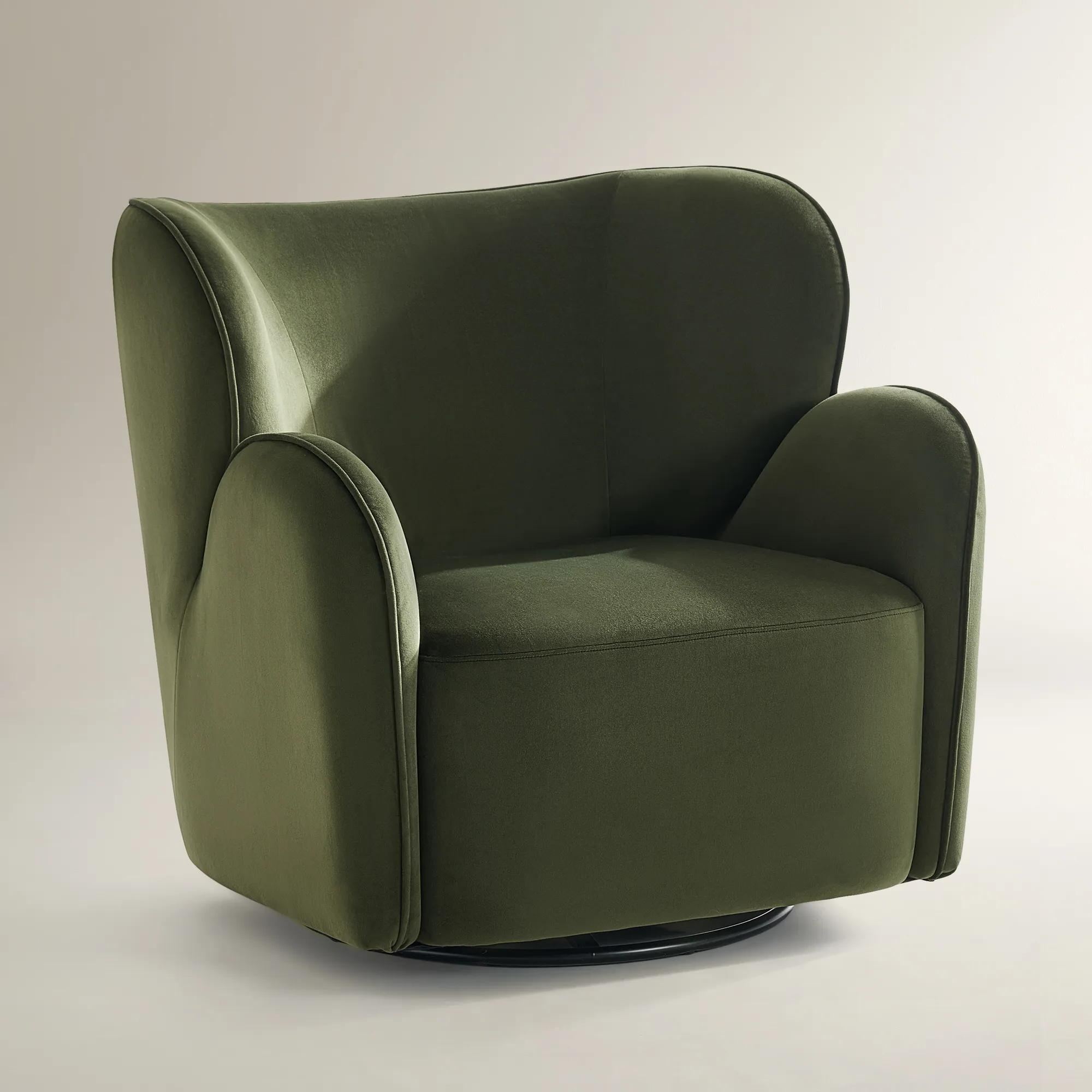
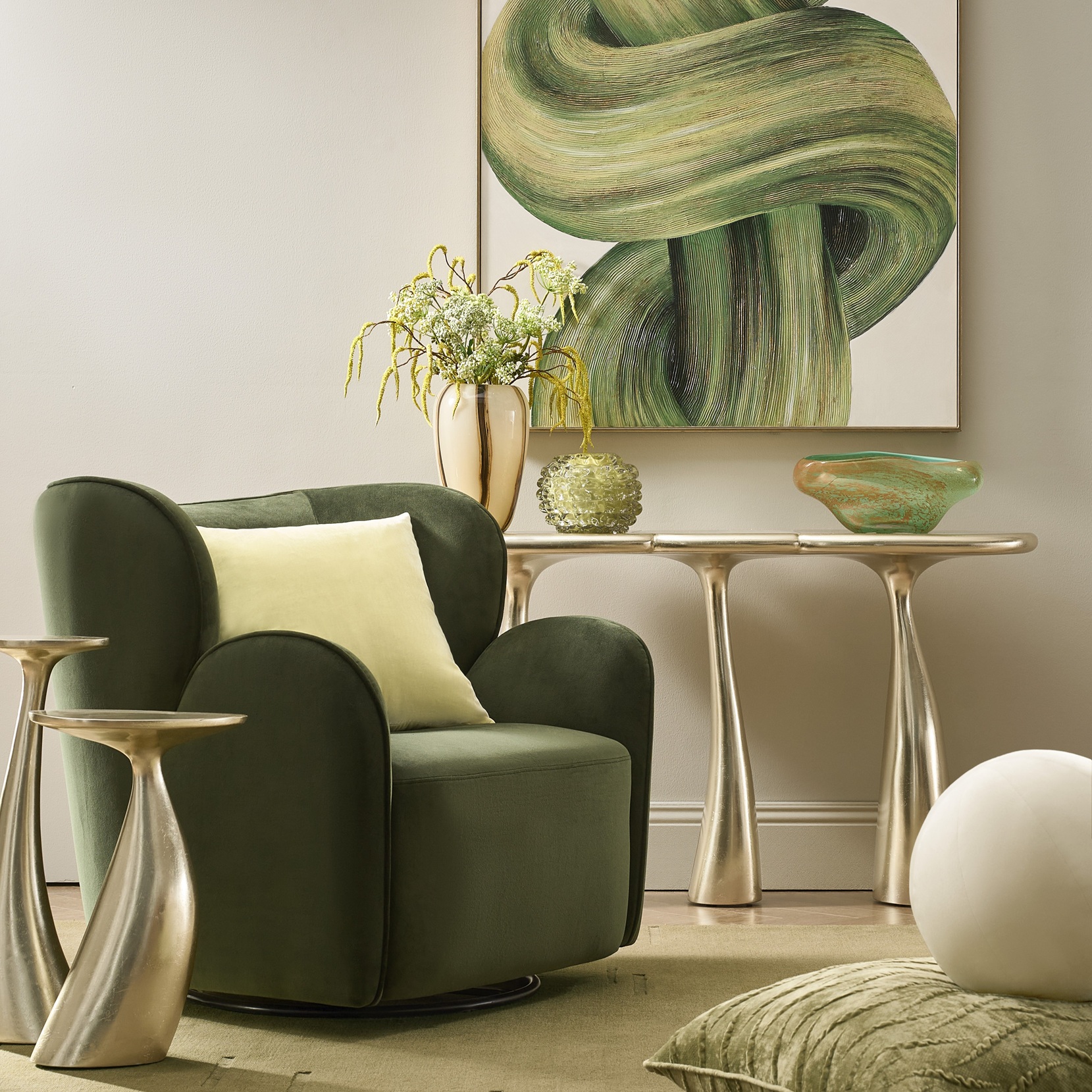 Ceres Jade Green Velvet Swivel Accent Chair$799
A plush jade green velvet chair with a curved silhouette, 360° swivel, and supportive foam cushioning.
Add To Cart -
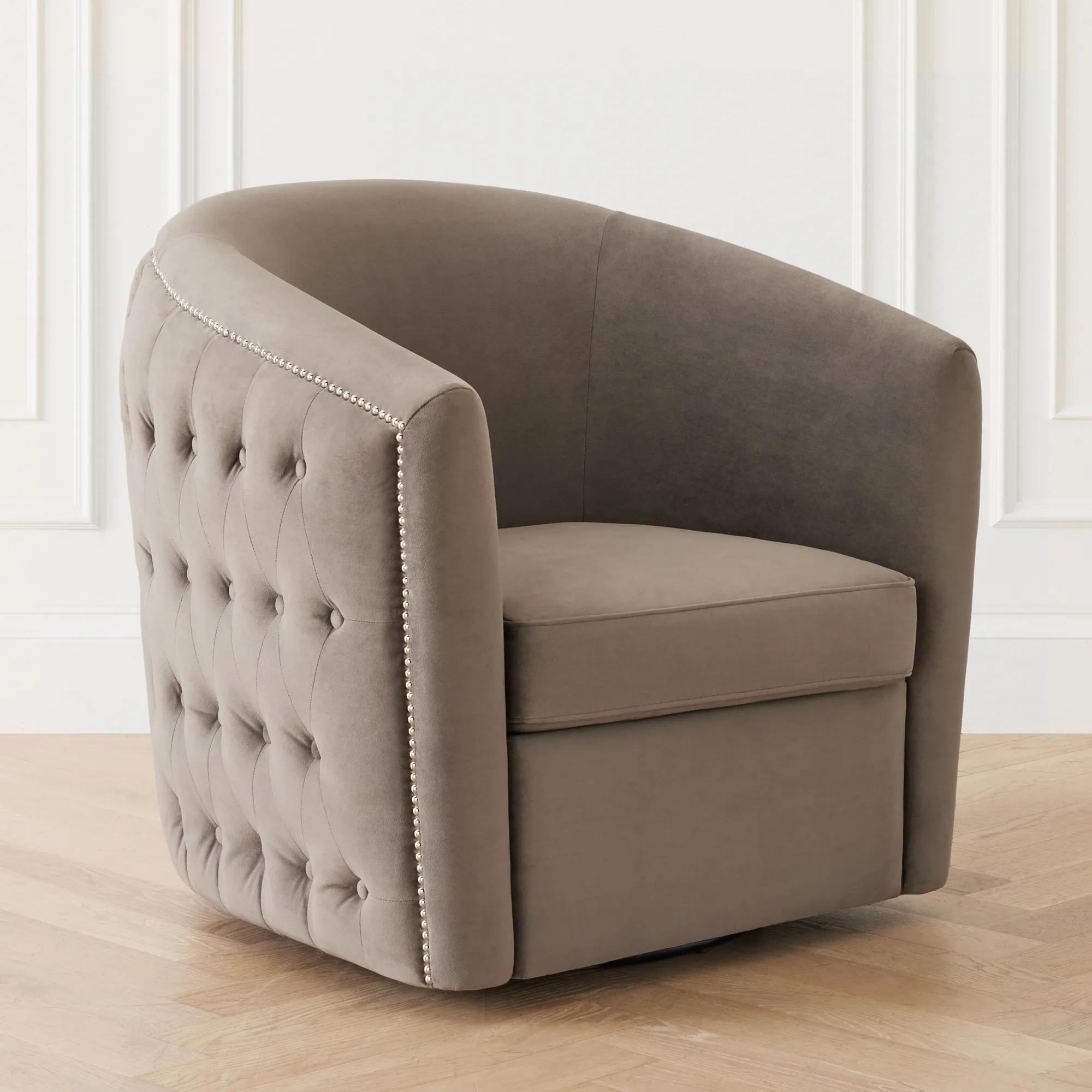
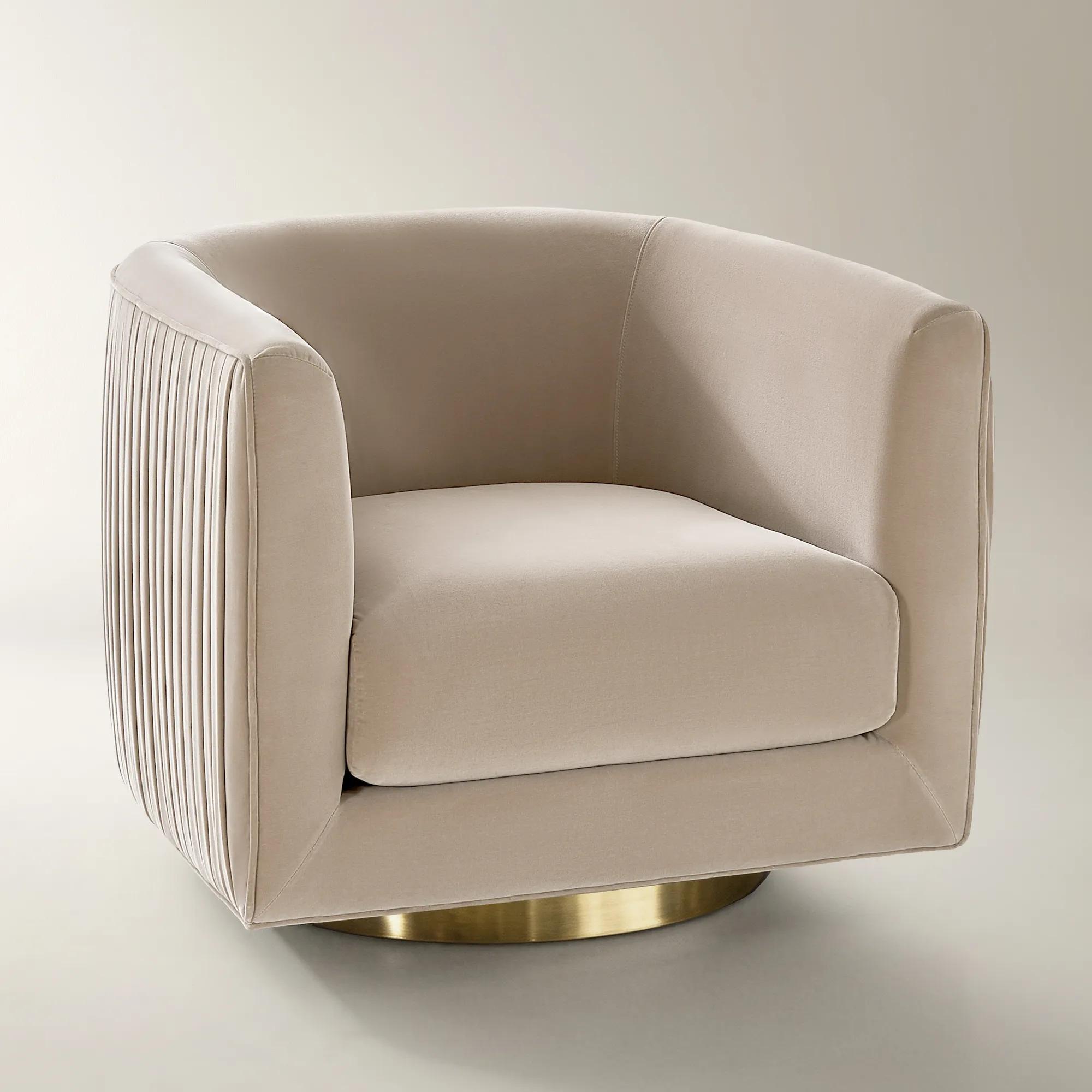 Lyssa Pleated Simply Taupe Velvet Swivel Accent Chair$1099
A softly curved taupe velvet accent chair featuring pleated detailing, 360° swivel, and a gold stainless steel base.
Add To Cart -
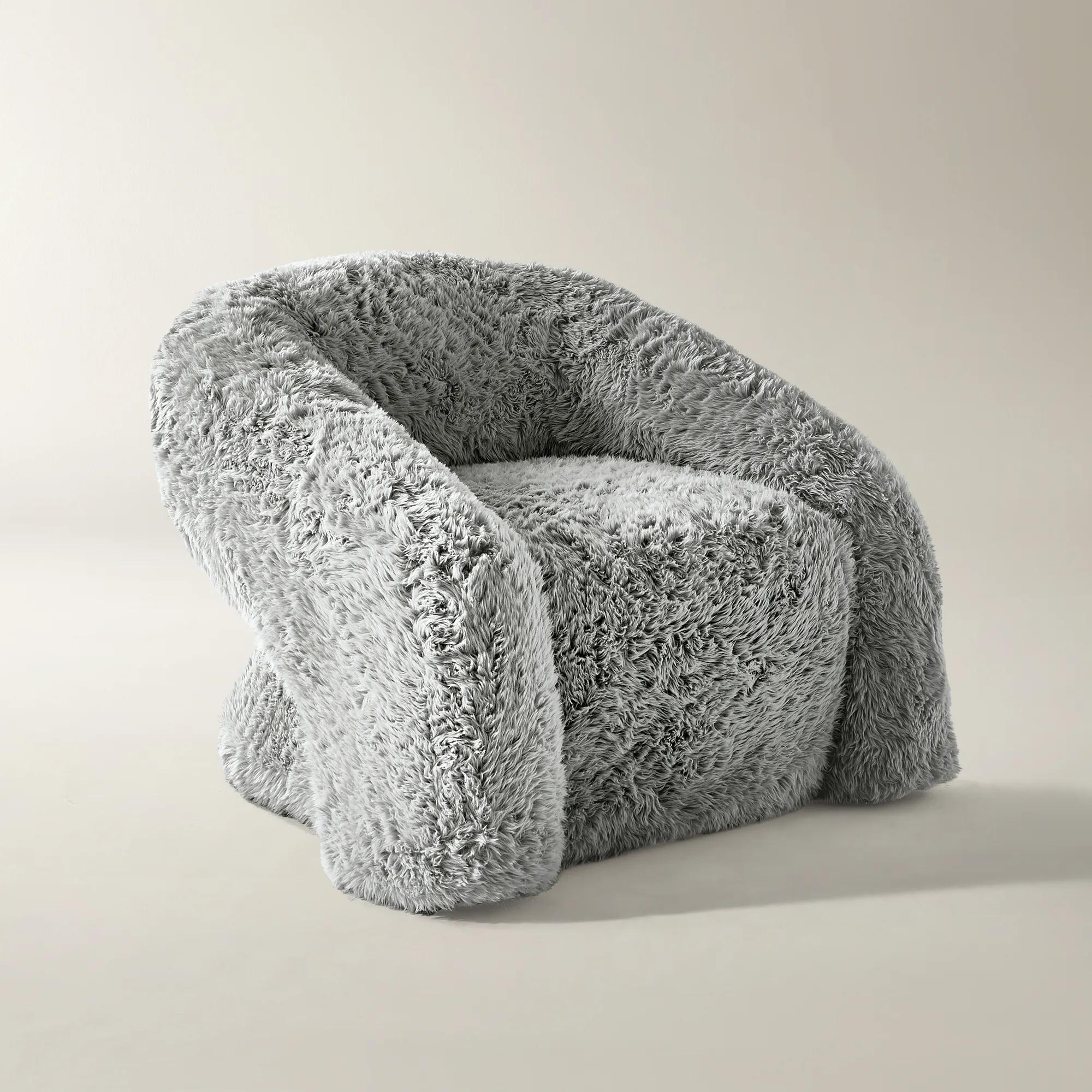
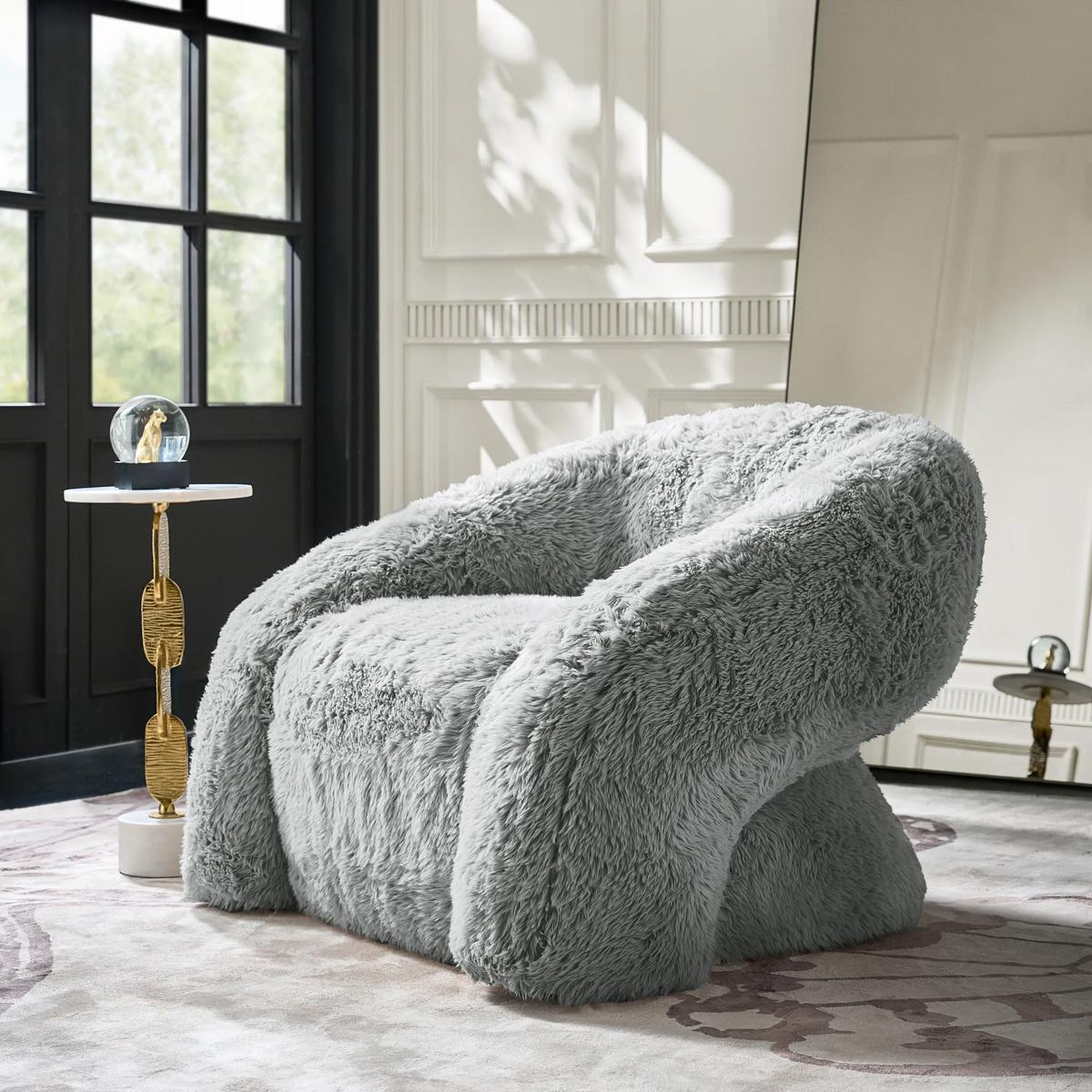 Misha Shadow Faux Fur Accent Chair$799
A cozy gray faux fur chair featuring high-resiliency foam and a sculptural, low-profile silhouette.
Add To Cart -
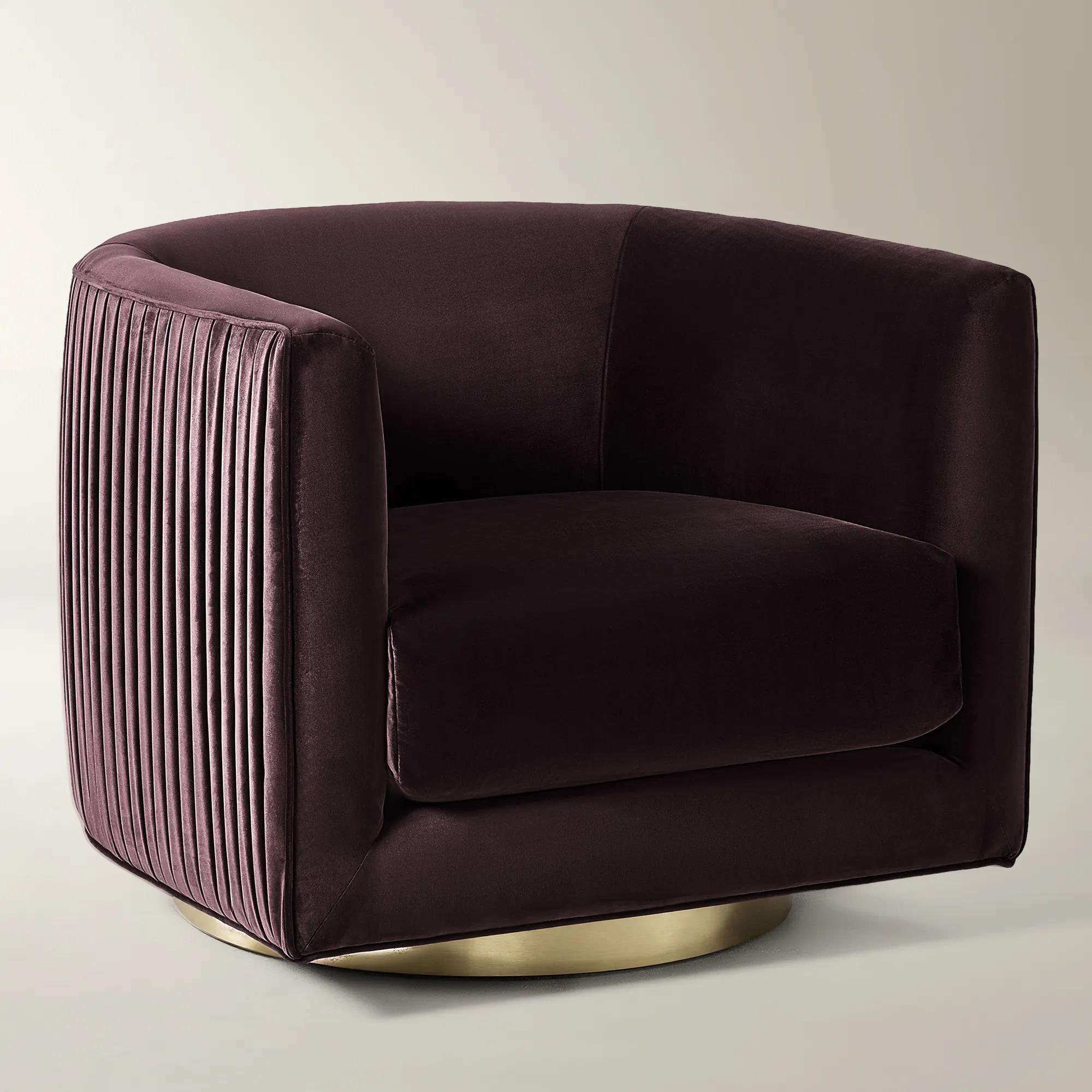 Lyssa Pleated Fig Velvet Swivel Accent Chair$1099
A fig-colored velvet accent chair featuring pleated detailing, a curved silhouette, and a smooth 360° swivel base.
Add To Cart -
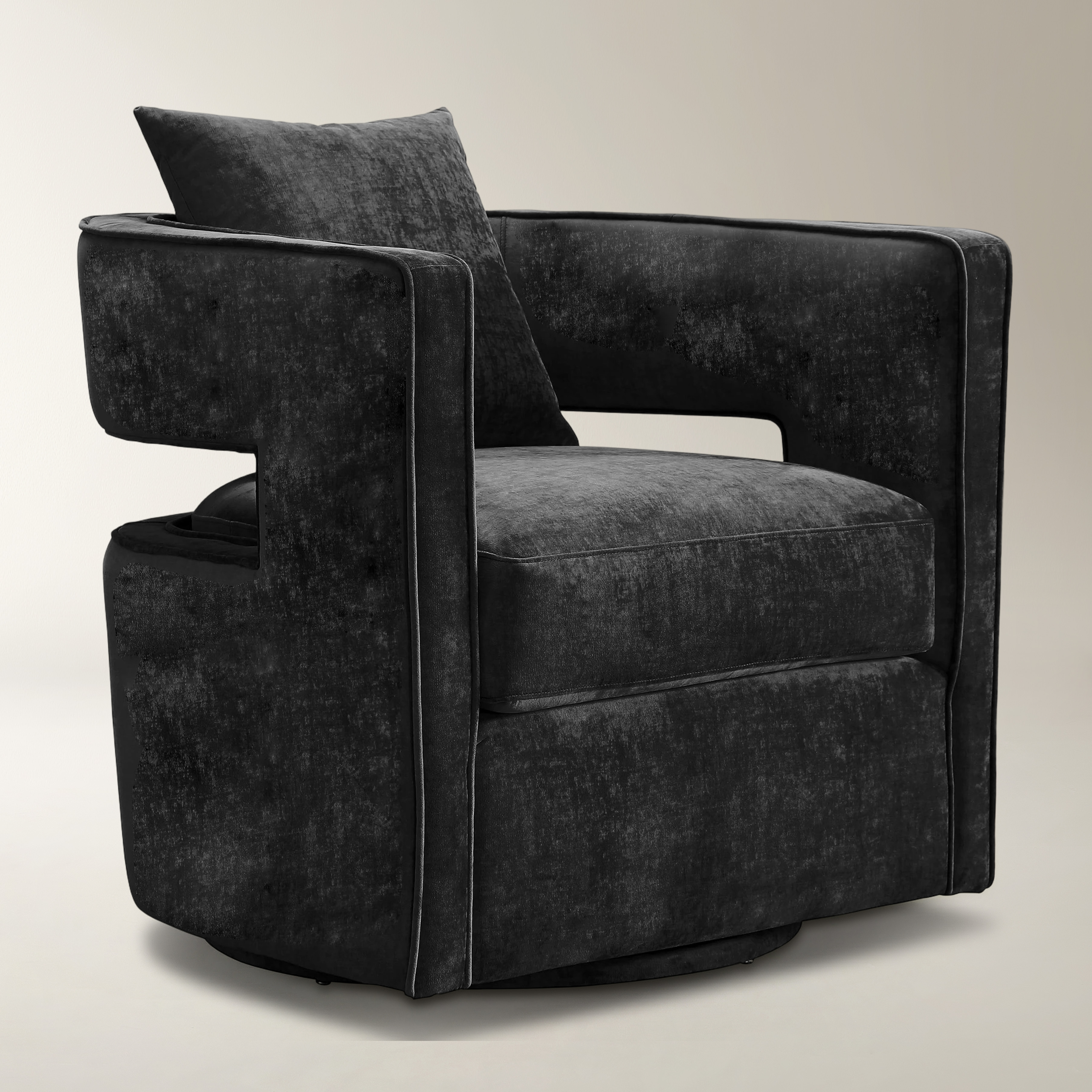 Lottie Black Velvet Swivel Accent Chair$999
A sculpted black velvet swivel chair with rounded barrel styling, supportive cushioning, and smooth movement.
Add To Cart -
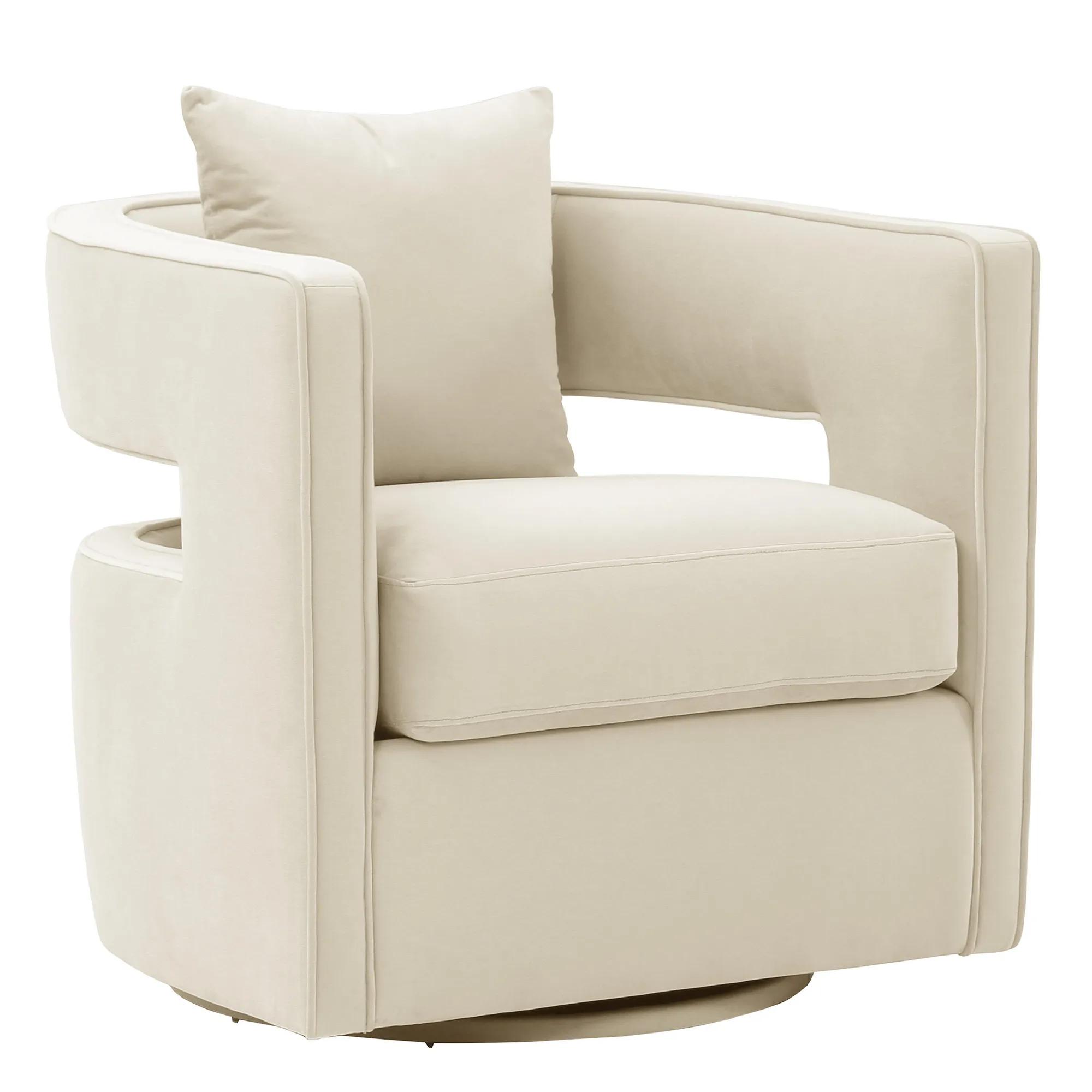
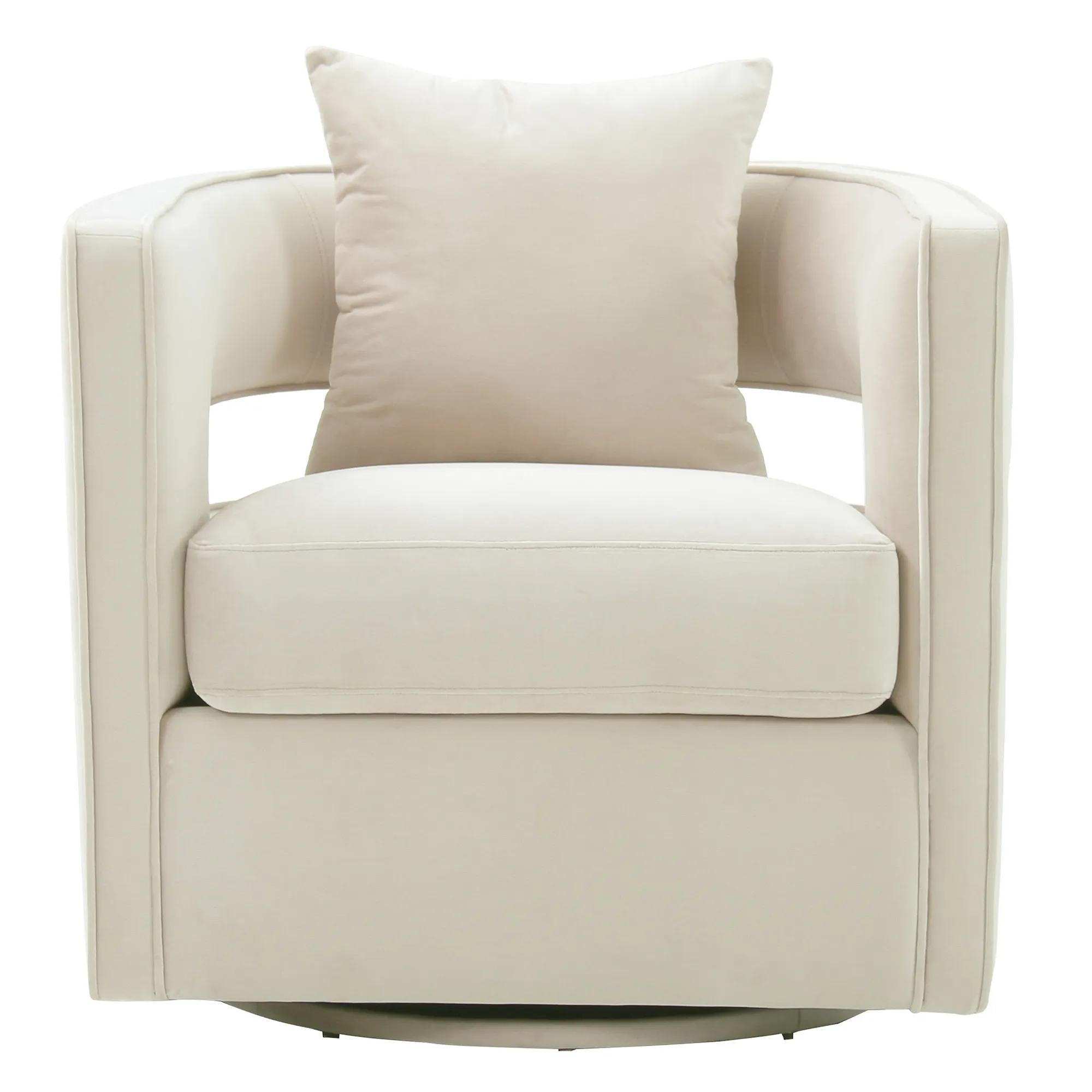 Lottie Cream Velvet Swivel Accent Chair$999
A glamorous cream velvet swivel chair featuring a barrel back, cutout arms, and plush foam cushioning.
Add To Cart -
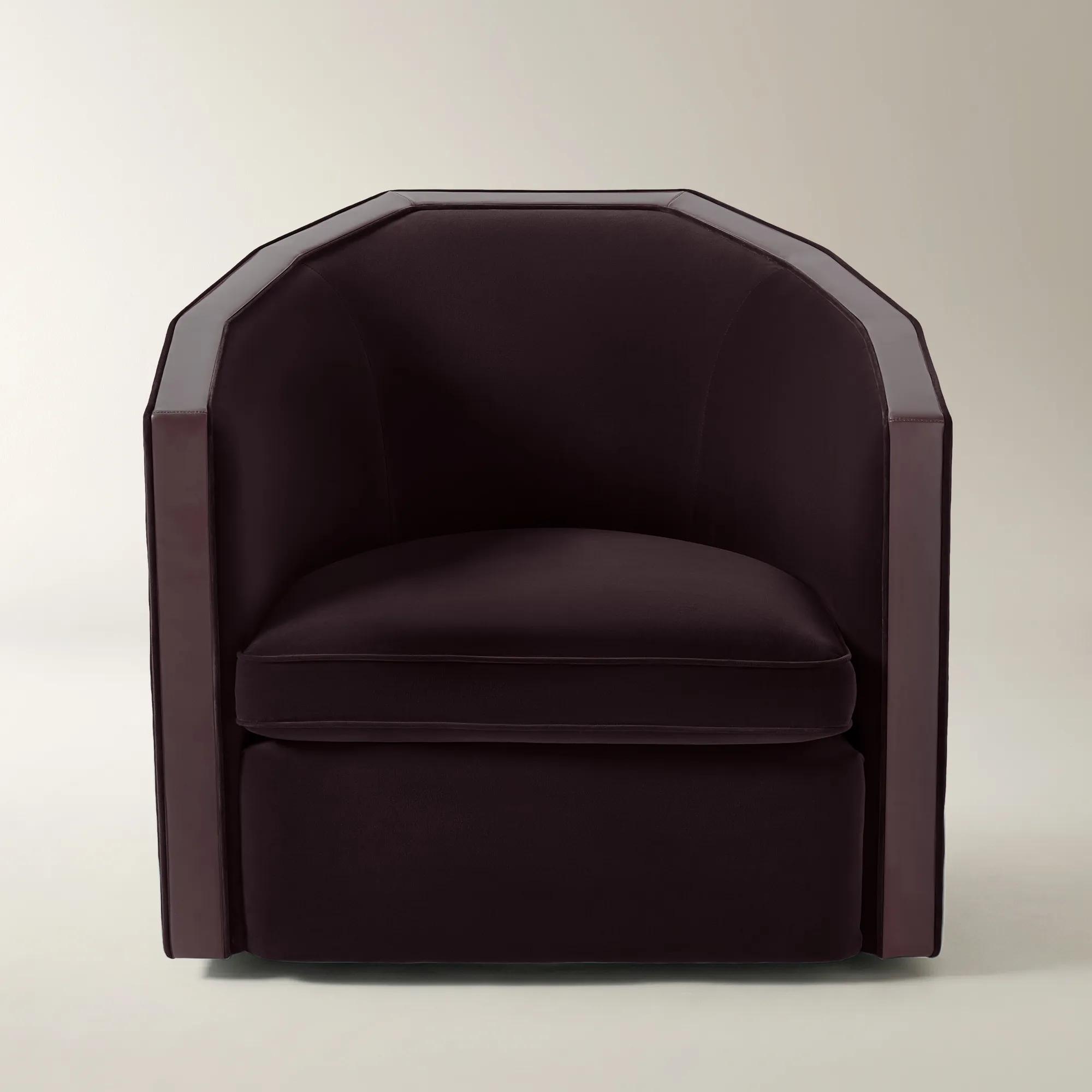
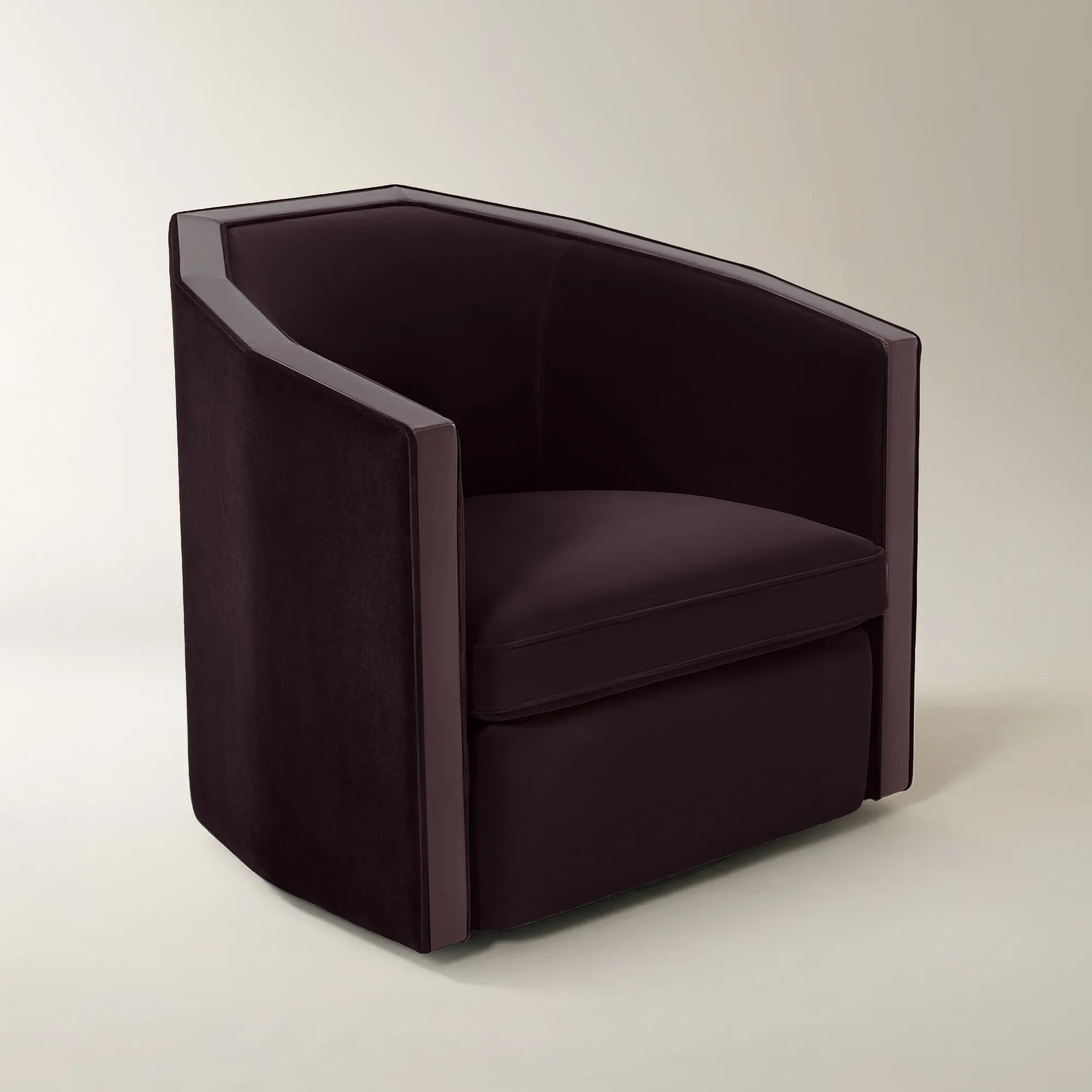 Vesper Fig Velvet With Leather Swivel Accent Chair$999
A modern accent chair featuring fig velvet upholstery, tonal leather trim, and a smooth 360° swivel base.
Add To Cart -
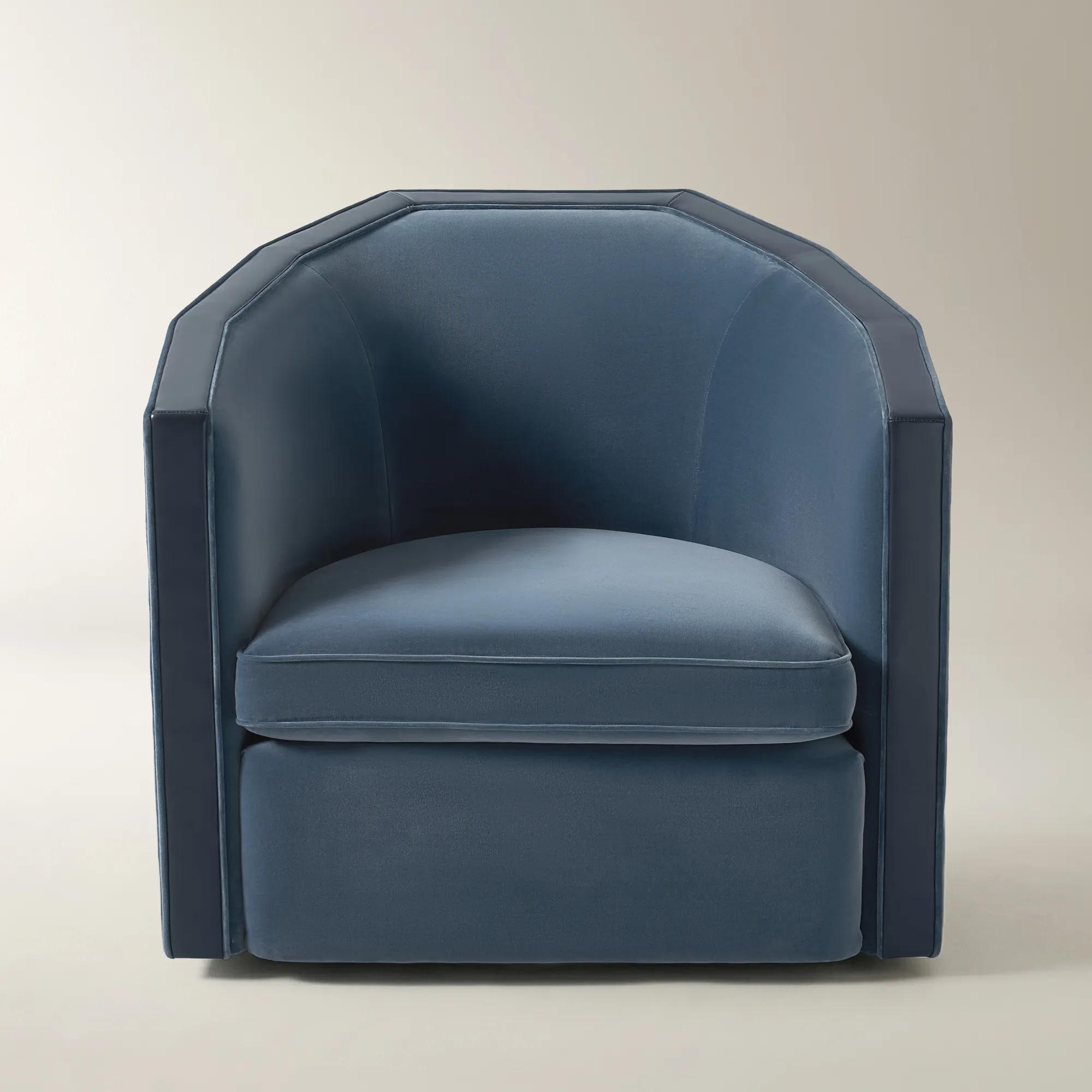 Vesper Dusty Blue Velvet With Leather Swivel Accent Chair$999
A modern accent chair in dusty blue velvet with tonal leather trim and a smooth 360-degree swivel base.
Add To Cart -
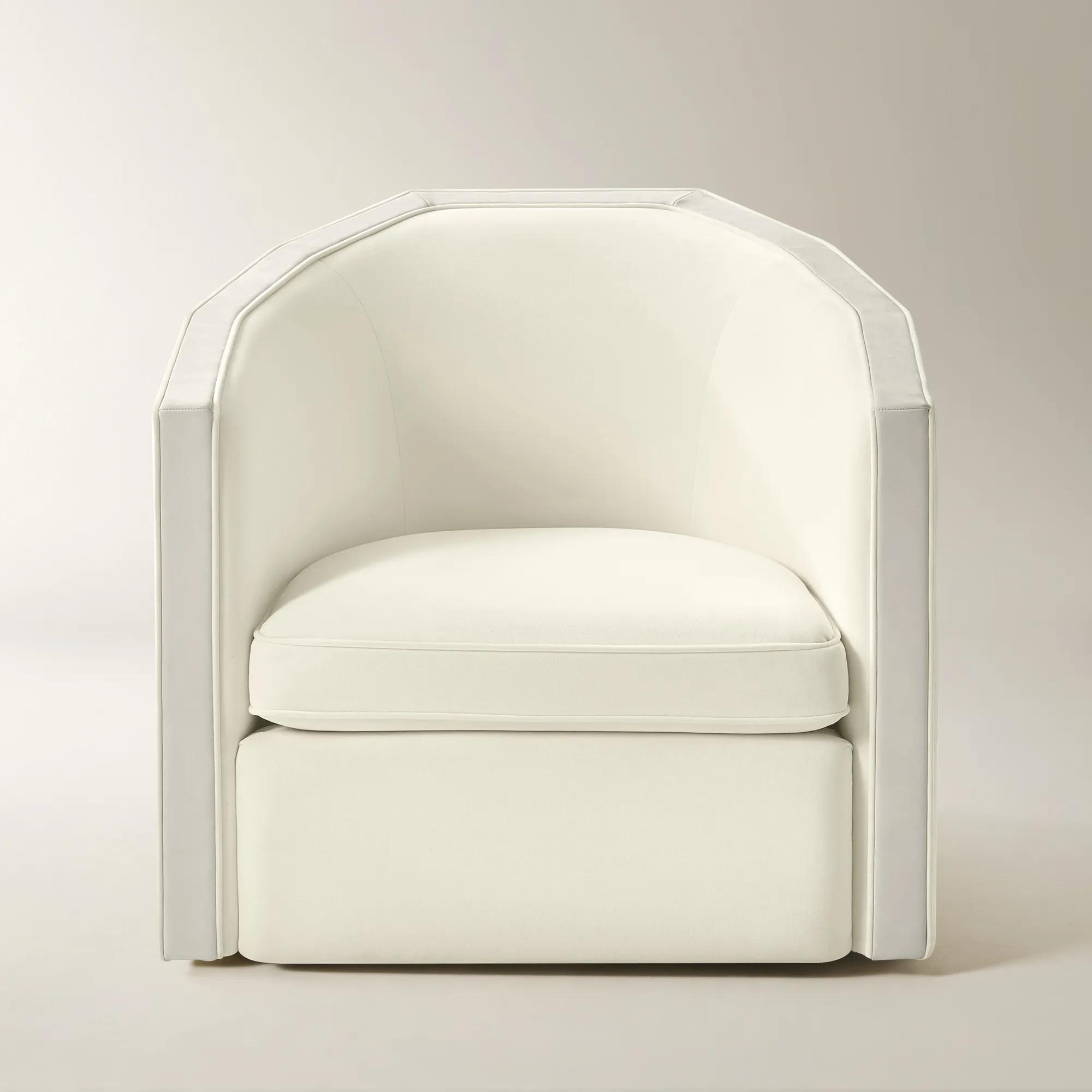 Vesper Cloud Velvet With Leather Swivel Accent Chair$999
A modern accent chair featuring cloud velvet upholstery, tonal leather trim, and a smooth 360° swivel base.
Add To Cart -

 Nia Lacquered Turtle Dove Faux Fur Accent Chair$899
A sculptural accent chair featuring a high-gloss sand-toned fiberglass frame and plush turtle dove faux fur upholstery.
Add To Cart -
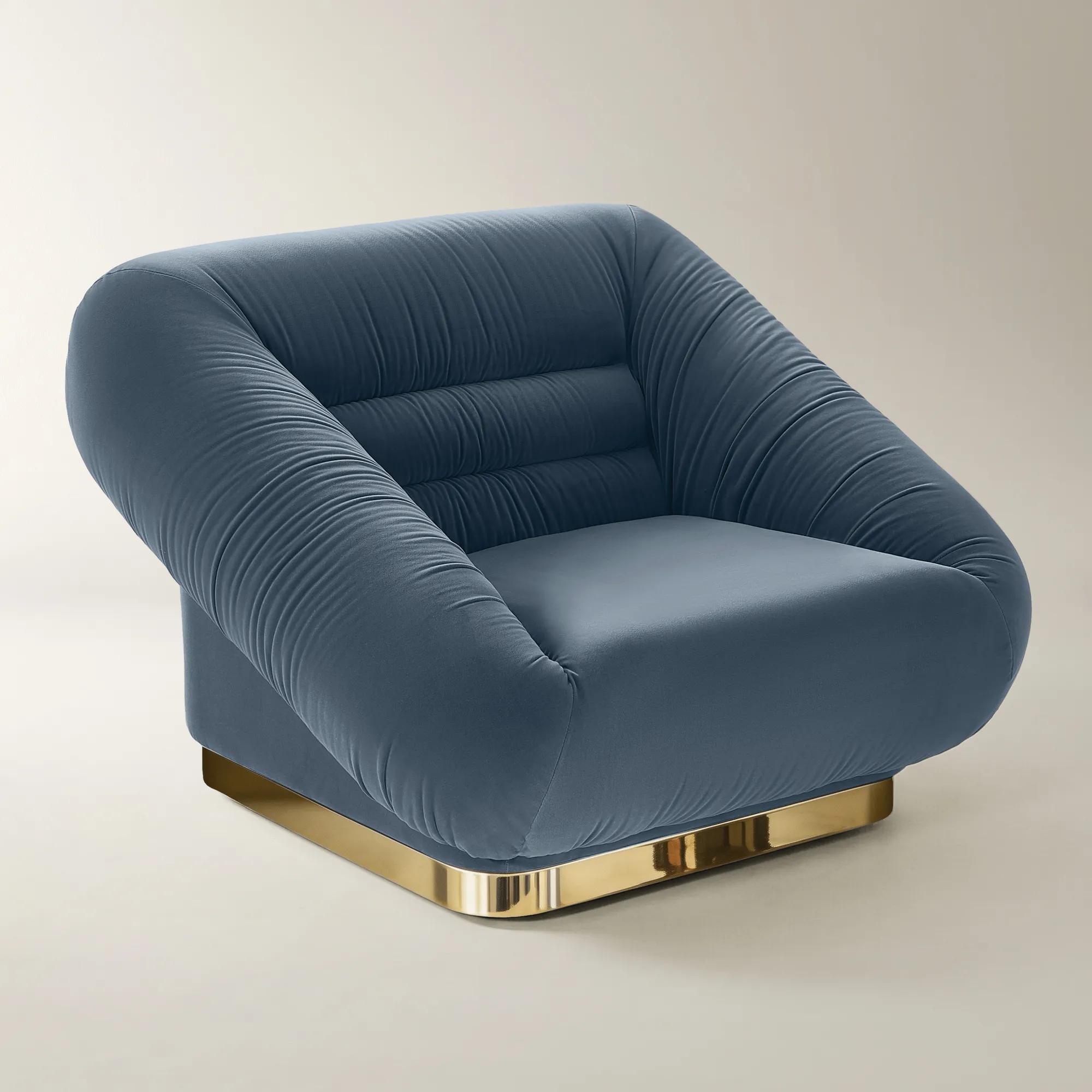 Dover Dusty Blue Velvet Swivel Accent Chair$1299
A sculptural blue velvet accent chair featuring soft gathered upholstery, gold-trimmed base, and smooth 360° swivel.
Add To Cart -
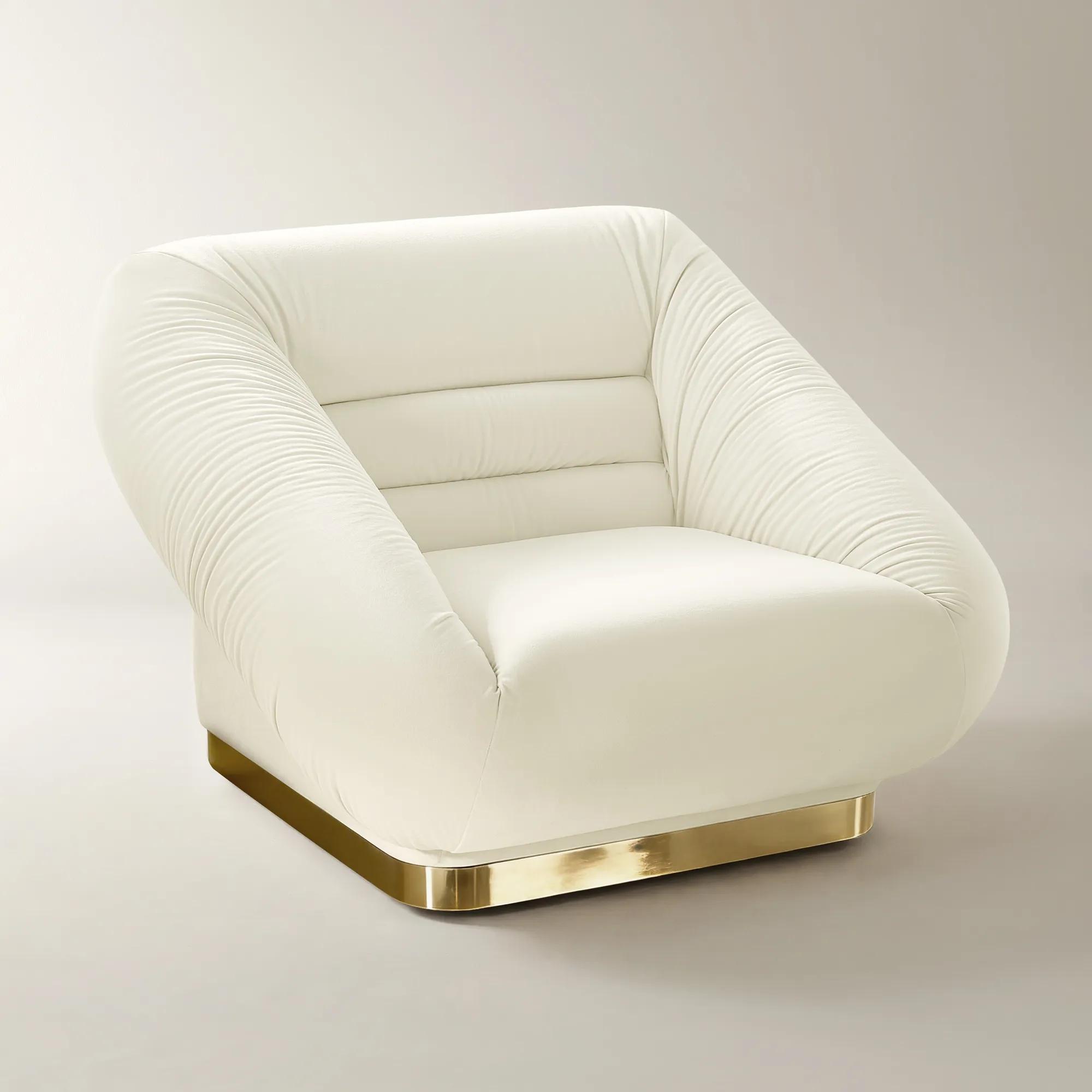 Dover Cloud Velvet Swivel Accent Chair$1299
A sculptural accent chair in cloud velvet with a gold-trimmed base and smooth 360° swivel function.
Add To Cart -
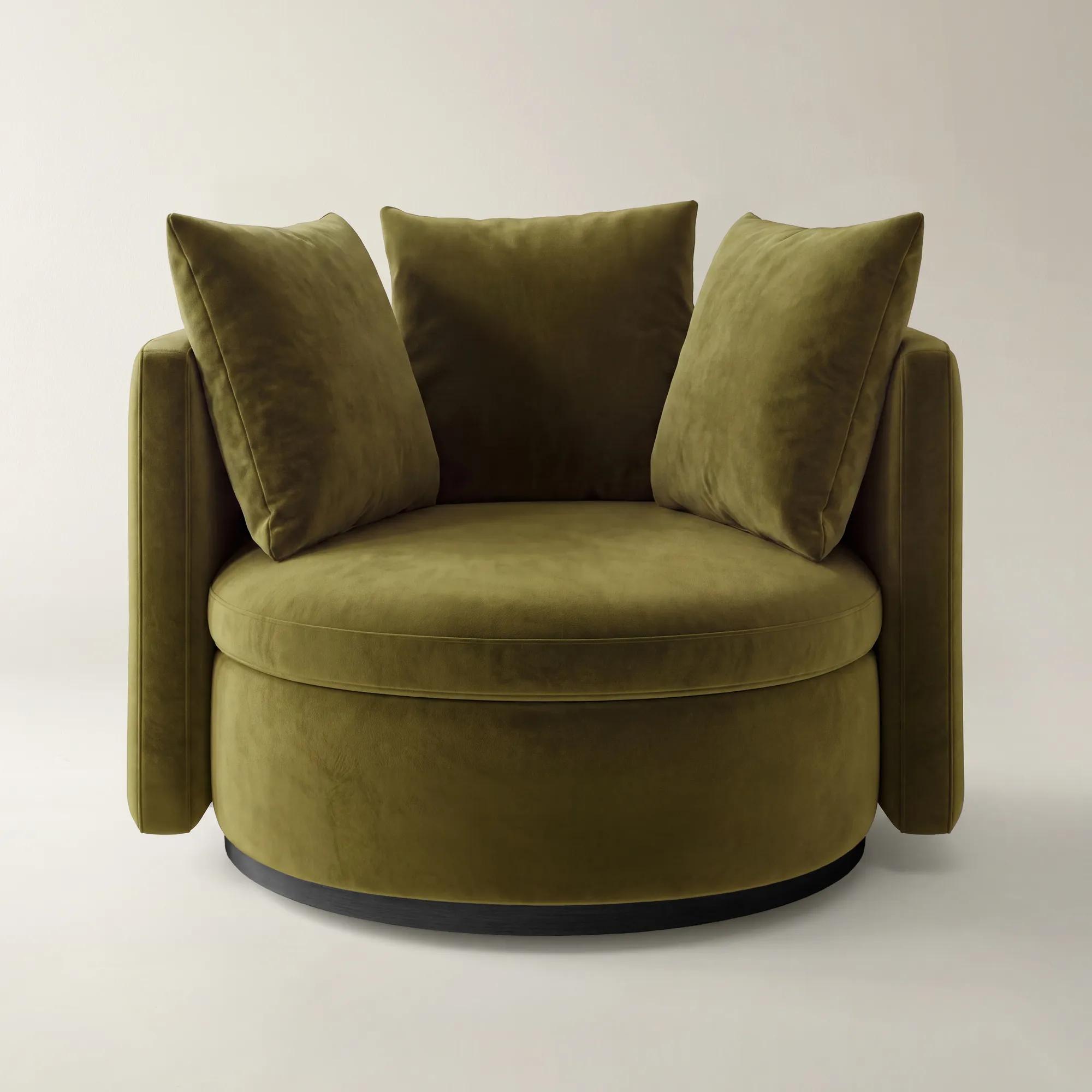
 Stria Deep Olive Velvet Swivel Accent Chair$1299
A deep olive velvet accent chair with enveloping curves, layered cushioning, and a concealed 360-degree swivel base.
Add To Cart -
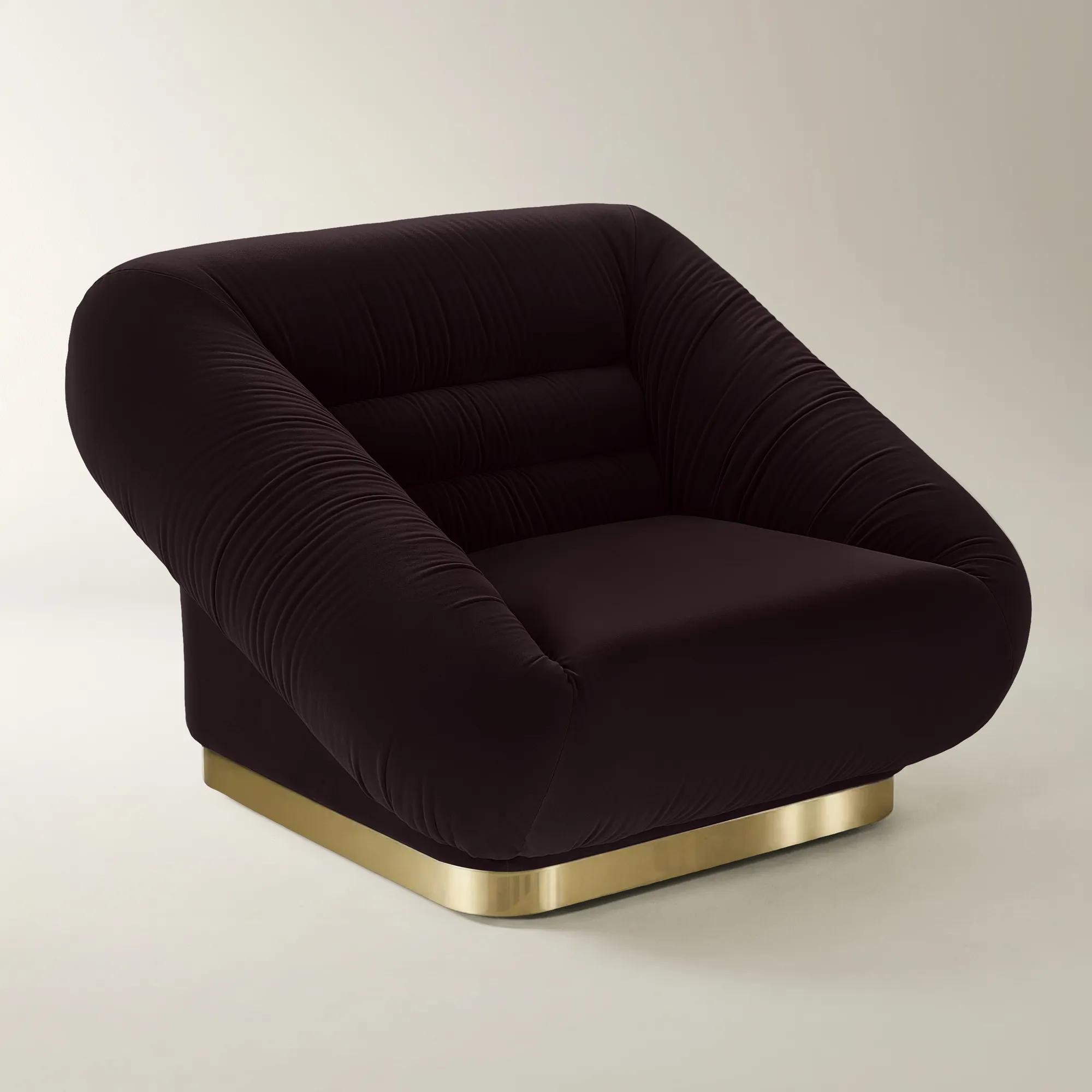 Dover Fig Velvet Swivel Accent Chair$1299
A sculptural fig velvet accent chair featuring soft gathered upholstery, gold-trimmed base, and smooth 360° swivel.
Add To Cart -
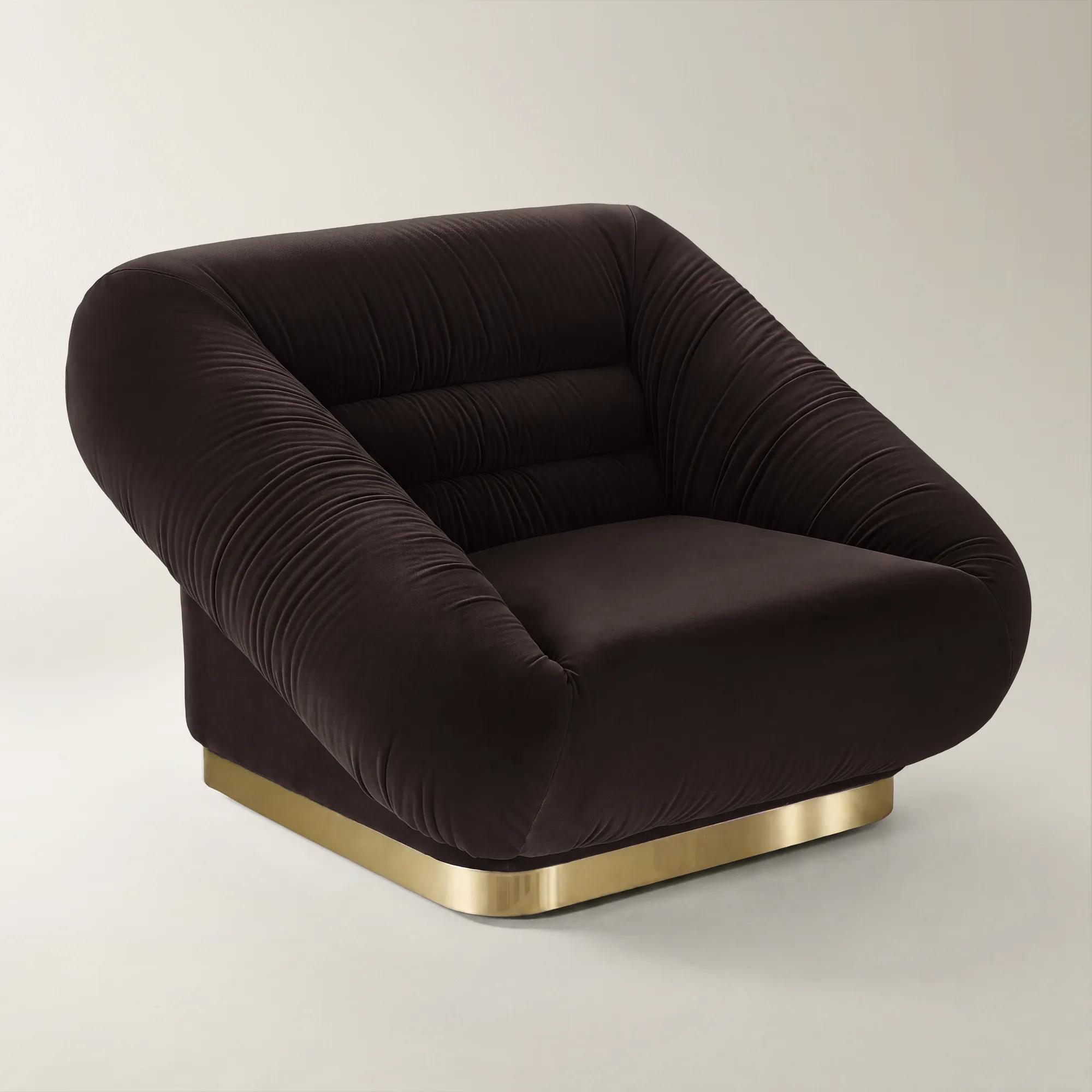
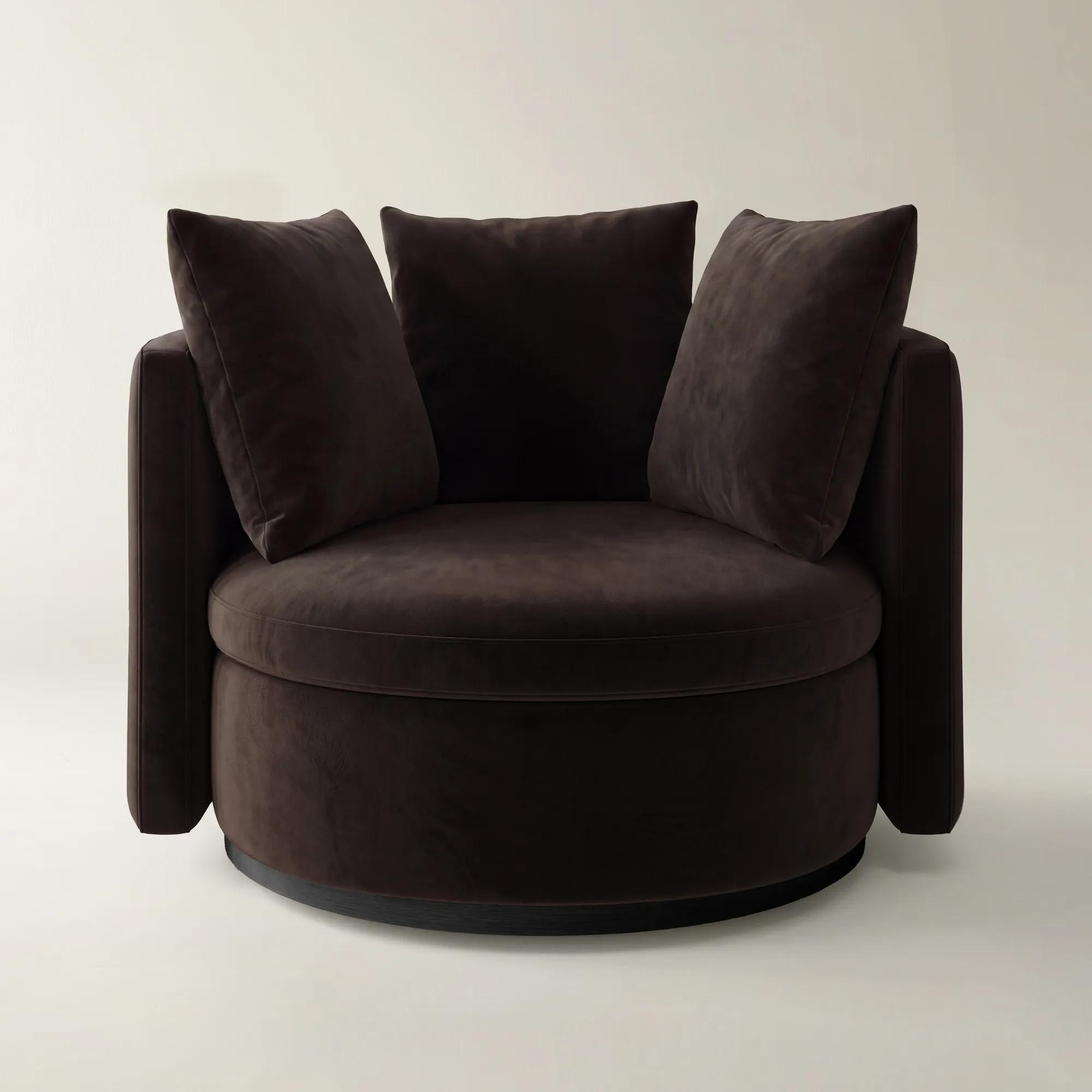 Stria Dark Chocolate Velvet Swivel Accent Chair$1299
A dark chocolate velvet accent chair with enveloping curves, plush cushioning, and a concealed 360-degree swivel.
Add To Cart -
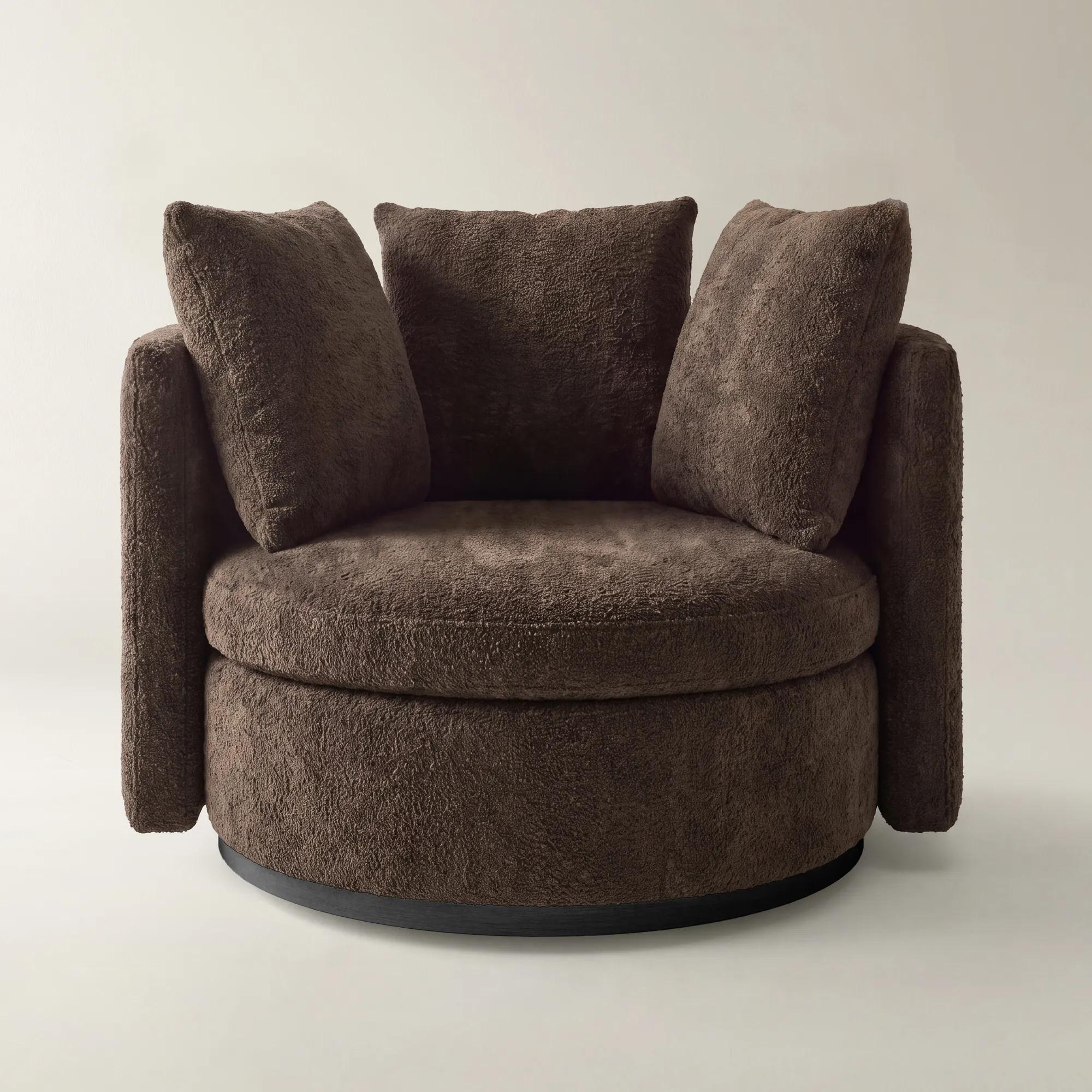 Stria Dark Chocolate Chenille Swivel Accent Chair$1399
A dark chocolate chenille accent chair featuring enveloping curves, layered cushioning, and a concealed 360-degree swivel.
Add To Cart -
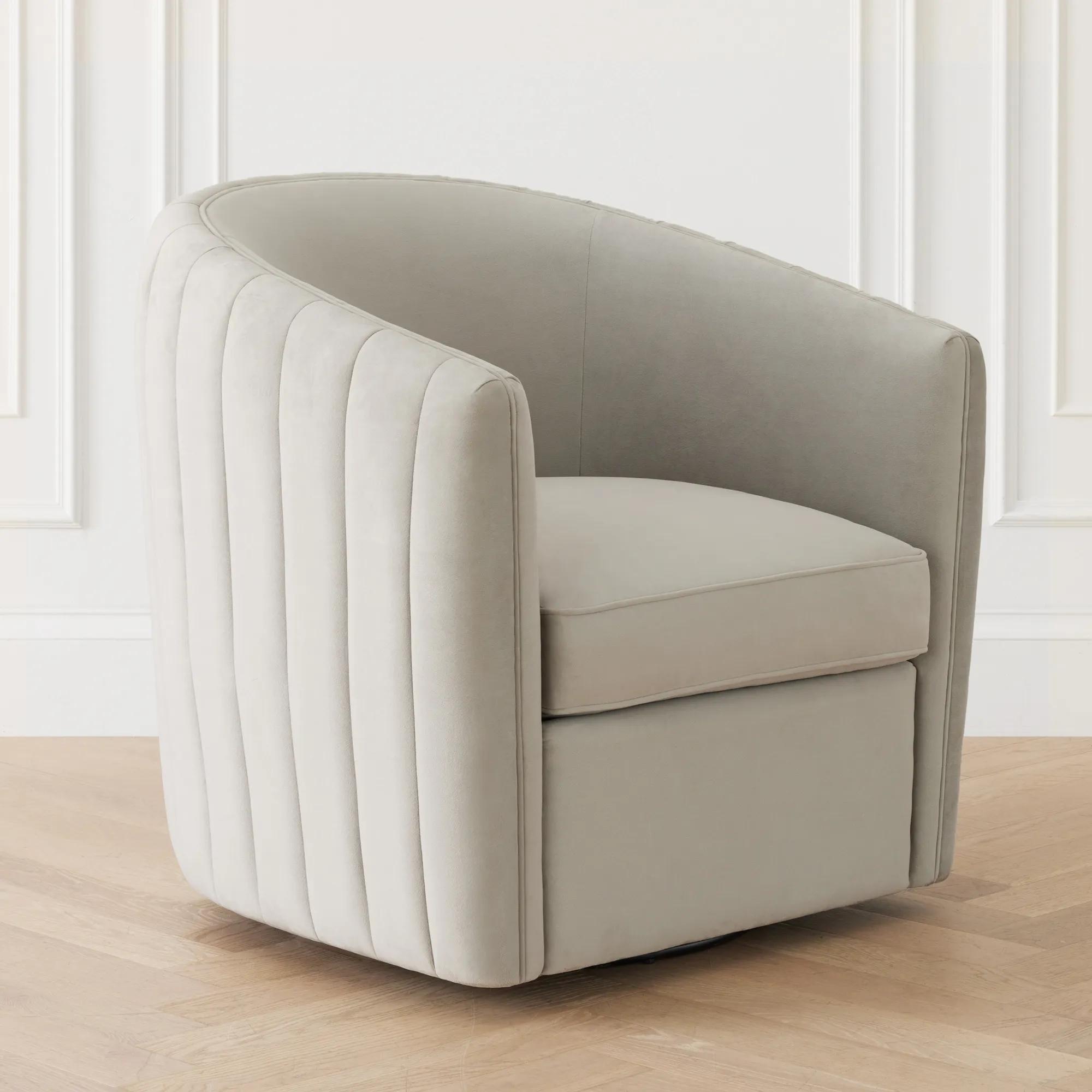
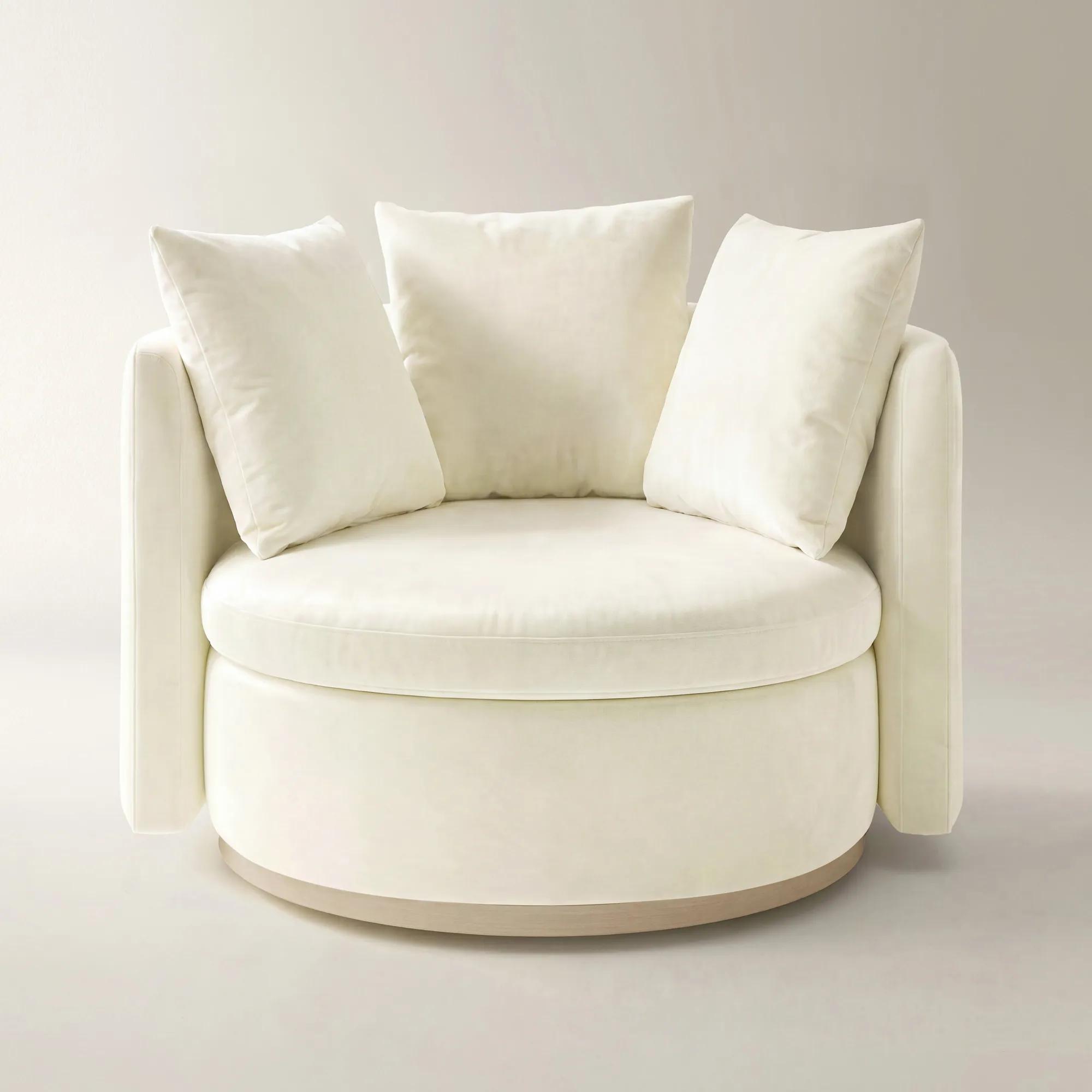 Stria Cloud Velvet Swivel Accent Chair$1299
A sculptural cloud-velvet accent chair with enveloping curves, layered cushioning, and a concealed 360-degree swivel base.
Add To Cart

Accent Chairs For Chic Interiors
Accent chairs for chic interiors are the exclamation point of a well-curated space—a single, striking seat that commands attention and invites admiration. Each silhouette is an opportunity to infuse your home with artistry and allure, transforming any corner into a captivating vignette. Whether poised in a sunlit reading nook or anchoring a glamorous living room, these statement pieces deliver drama and sophistication in equal measure. Elevate your décor with accent chairs that embody bold design, sumptuous comfort, and the unmistakable flair that defines truly chic interiors.
Accent chairs for chic interiors bring expressive silhouettes, rich upholstery, and considered contrast to a room while adding seating that feels as inviting as it looks. Unlike a sofa, which often establishes the largest visual presence in a living space, an accent chair can introduce a more concentrated gesture: a sweep of curved velvet, a sculptural wood frame, or a gleaming metal base beneath a generously upholstered seat. That smaller footprint gives color and texture room to be daring without overwhelming the composition. A deep blue chair can anchor a pale seating arrangement, while ivory bouclé creates a luminous counterpoint to dark cabinetry or richly stained floors. Velvet offers a particularly dimensional effect, with its pile catching light differently across the seat, arms, and back. Bouclé brings a nubby, looped surface that gives rounded forms tactile depth; linen and linen-blend upholstery offer a more tailored, woven expression. Leather introduces another kind of richness, ranging from smooth and polished to softly grained, depending on its finish. Each material changes not only the chair’s appearance but also the atmosphere surrounding it. Beside a sleek sofa, a textured chair creates a welcome interruption; against a patterned rug, a solid upholstered shape gives the eye somewhere to settle. Chic does not require every finish to match. A shared undertone, repeated curve, or subtle echo of metal can connect distinct pieces more convincingly than an entirely coordinated suite. Channel tufting lends rhythm and definition, a barrel back creates an enveloping outline, and exposed legs reveal more floor beneath the seat for a visually lighter composition. Mid-century-inspired forms contribute angular lines and warm wood, while generously curved contemporary chairs feel almost sculptural. The strongest statement is often the one that belongs unmistakably to the room yet brings something the room did not already have.
Proportion gives that statement its poise. An accent chair should relate to the height and depth of nearby seating as well as the dimensions of the space itself. A low, deeply reclined chair may look dramatic beside a tall sofa, but the difference can make conversation feel less natural; similar seated eye levels generally create a more comfortable gathering area. Overall width matters, yet seat width, seat depth, arm height, and back support determine how the chair feels in daily use. A deep seat invites lounging, especially with a supportive pillow, while a shallower seat and more upright back may better suit conversation or someone who prefers to sit with both feet comfortably on the floor. Firmness is equally personal: plush cushioning offers a sinking-in sensation, whereas a firmer seat can feel more supportive and easier to rise from. In a reading corner, enough back support, comfortable arms, and a nearby surface for a book make the chair feel genuinely purposeful rather than merely decorative. In a bedroom, a refined accent armchair can establish a private place to sit without competing with the bed’s scale. For living rooms that connect to dining or entertaining areas, a swivel chair can turn between conversations and views, although its full rotation still needs unobstructed clearance. Slender arms, exposed legs, and restrained overall dimensions can suit compact interiors, but a low profile alone does not guarantee a small footprint. Measuring the chair’s widest and deepest points, then marking those dimensions on the floor, helps reveal whether a doorway, drawer, or walking route will remain clear. Delivery paths deserve the same attention, including narrow halls and stair turns. Pairs of chairs create an elegant conversation setting opposite a sofa, while one distinctive chair beside a window can establish a quieter focal point. When a chair is visible from an adjoining room, the back becomes part of the design, making upholstery continuity, frame detailing, and silhouette especially important.
Lasting appeal depends on the relationship between expressive design and the way a household actually lives. A frequently used lounge chair needs more than a compelling outline: frame construction, joint reinforcement, cushion composition, and suspension all influence support and durability. Solid wood, engineered wood, and metal can each serve a well-made design, so a material name alone does not establish quality. Upholstery deserves similarly close consideration. Performance fabrics may offer stain resistance or easier cleaning, but those qualities vary by textile and treatment; they do not make a chair immune to spills, wear, or pet damage. Looped textures can catch on claws or jewelry, and velvet may develop shading or pressure marks as its pile shifts with use. Leather care depends on the finish, with some surfaces more susceptible to scratching, staining, or changes in color than others. The manufacturer’s care instructions should determine cleaning methods rather than assumptions about how a fabric looks. Regular gentle vacuuming with a suitable upholstery attachment helps remove dust, while promptly blotting a spill with a clean, absorbent cloth can limit its spread; rubbing may work it deeper into the surface. Any cleaner should be appropriate for the upholstery and tested in an inconspicuous area as directed. Rotating or turning loose cushions, when the design allows, can help distribute wear, and positioning seating away from prolonged direct sunlight can help preserve color. These practical details leave more room to enjoy the visual ones: a polished arm catching lamplight, a curved back framing a patterned pillow, or a richly colored seat reflected in a nearby mirror. For spaces that combine periods, artwork, and collected objects, Accent Chairs For Eclectic Decor offer a related direction for a more layered composition. Whether intended for lively conversation, unhurried reading, or a bedroom retreat, a thoughtfully chosen accent chair gives personal style a tangible form—beautiful to look at, comfortable to inhabit, and proportioned for the moments that unfold around it.
FAQs
Chic accent chairs often feature luxurious materials such as velvet, linen, leather, and bouclé, sometimes paired with metallic or lacquered finishes on legs and frames. These materials not only enhance the chair’s tactile appeal but also contribute to its visual drama, making each piece a work of art within your space.
A chic accent chair can be used to introduce a bold pop of color, a striking silhouette, or a new texture to your room. Place it where it will draw the eye—such as beside a fireplace, in a reading nook, or as a statement piece in an entryway—to create a focal point and elevate the overall design narrative.
Absolutely. A chic accent chair makes a memorable and thoughtful gift for housewarmings, weddings, or milestone celebrations. Its blend of beauty and function ensures it will be cherished and enjoyed for years, adding both comfort and style to the recipient’s home.
Chic accent chairs are remarkably versatile and can complement a range of design styles—from glamorous Hollywood Regency and contemporary minimalism to eclectic and modern classic interiors. Their statement-making presence allows them to either harmonize with or boldly contrast against your existing furnishings.
To preserve the beauty of your chic accent chair, regularly vacuum or gently brush the upholstery to remove dust and debris. For velvet and other delicate fabrics, use a soft upholstery brush. Avoid direct sunlight to prevent fading, and address spills promptly with a clean, damp cloth to maintain the chair’s pristine appearance.