White Window Panel Curtains
White Window Panel Curtains
-
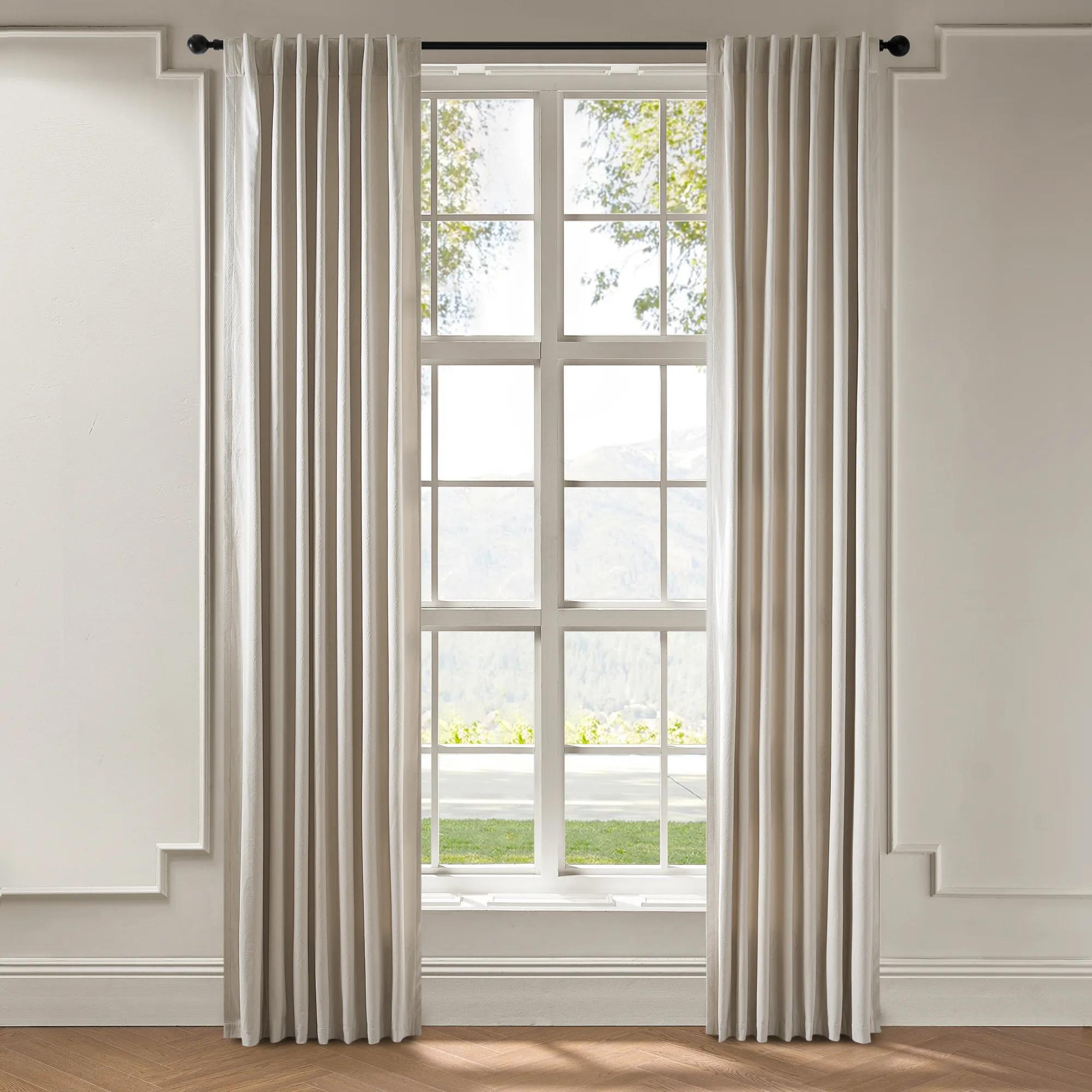
 Mabel White Velvet Swirl Window Curtain Panel$89
A crisp white velvet curtain featuring a tonal swirl texture and versatile dual hanging options.
Add To Cart -

 Adair Sand Solid Velvet Window Curtain Panel$89
A sand-colored velvet curtain offering room-darkening privacy and versatile hanging options for refined interiors.
Add To Cart -
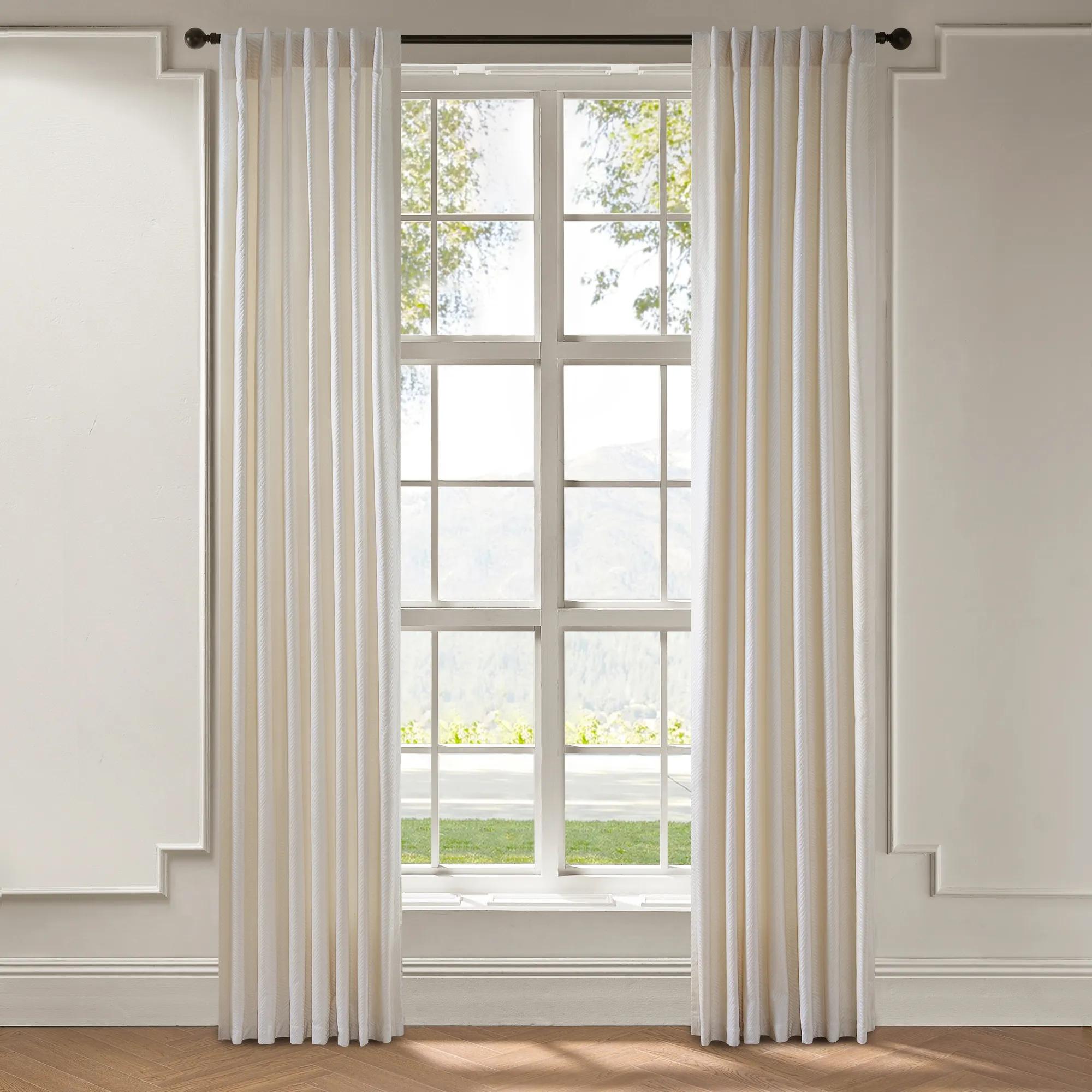
 Kenzo Chenille Curtain - White$119
A white chenille jacquard curtain featuring a subtle high-contrast pattern and soft, room-darkening texture.
Add To Cart -
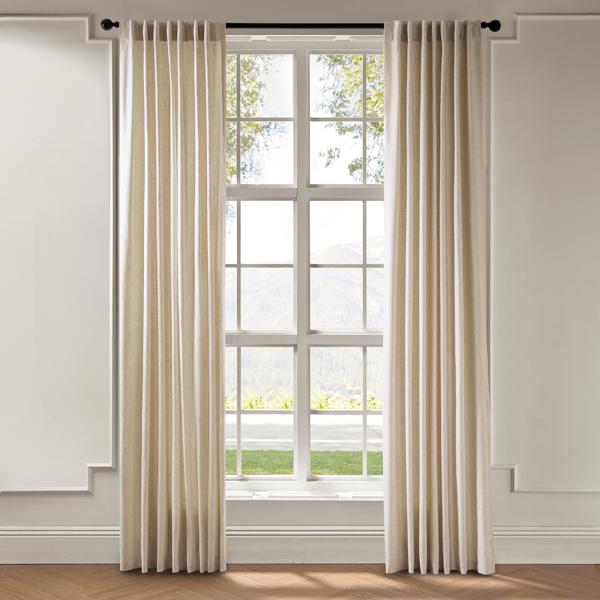
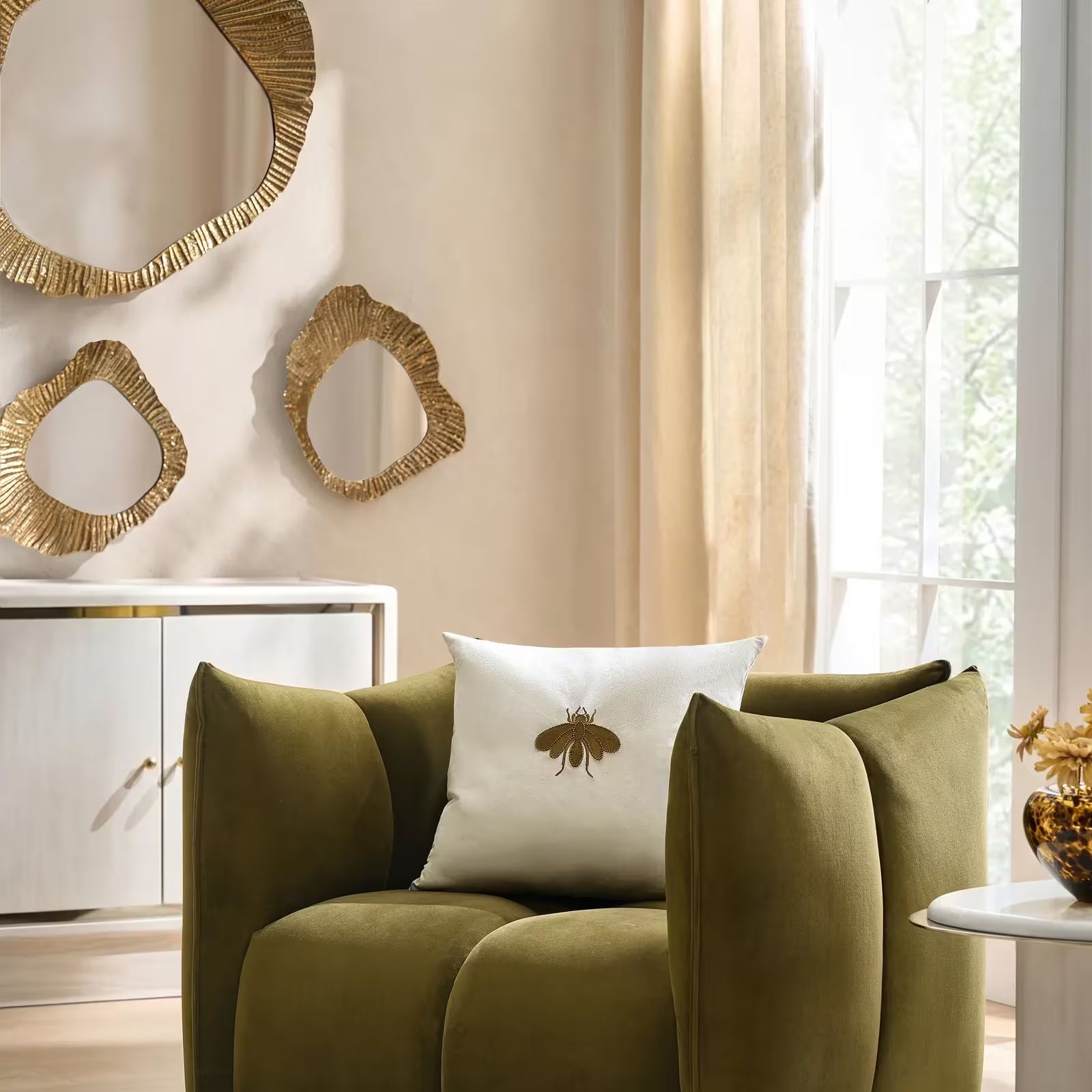 Anson Ivory Textured Window Curtain Panel$99
An elegant ivory curtain panel with a crushed, light-reflective texture for subtle shine and room darkening.
Add To Cart -

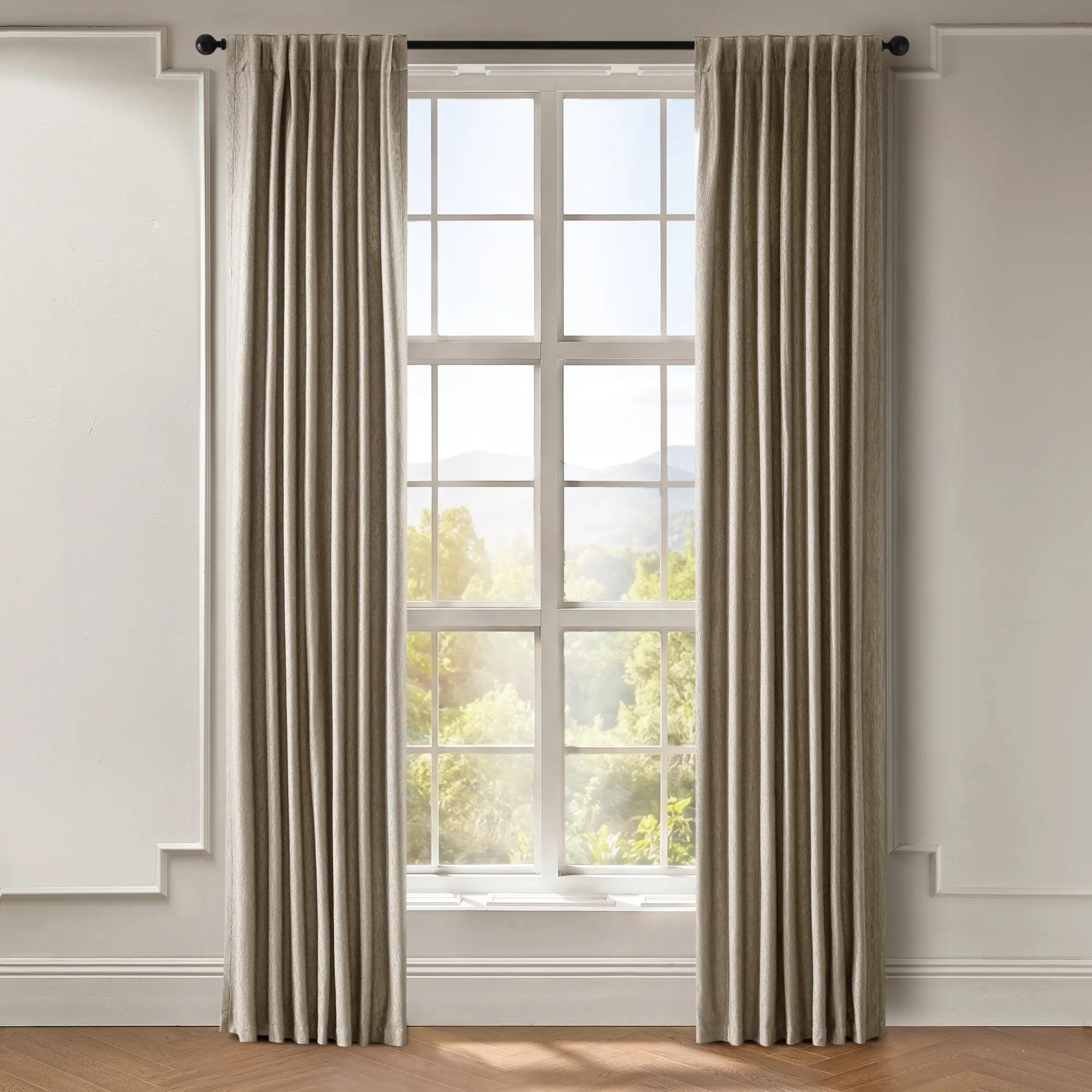
 Mabel Natural Velvet Swirl Window Curtain Panel$89
A warm neutral velvet curtain with a tonal swirl pattern, offering room-darkening privacy and versatile hanging options.
Add To Cart -
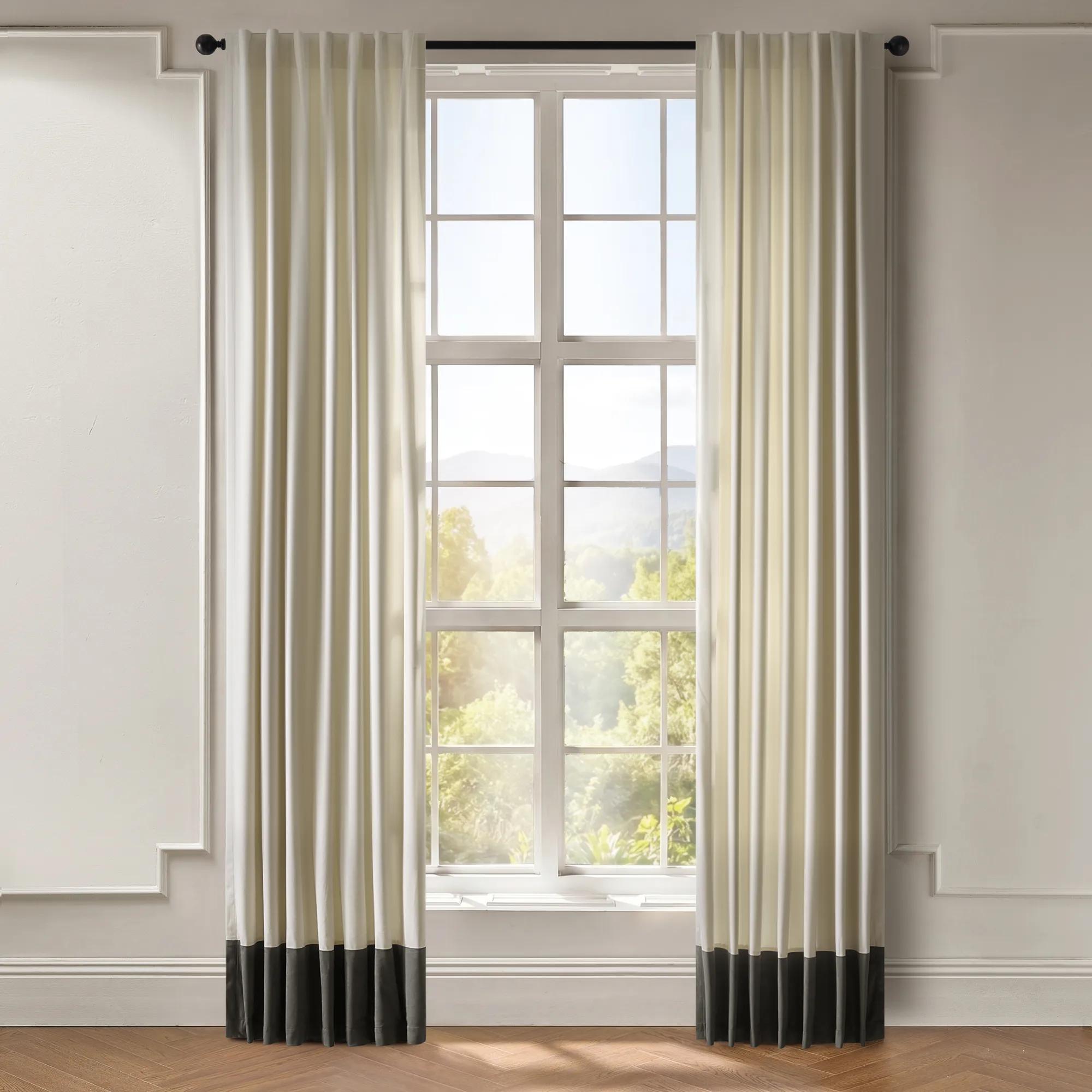
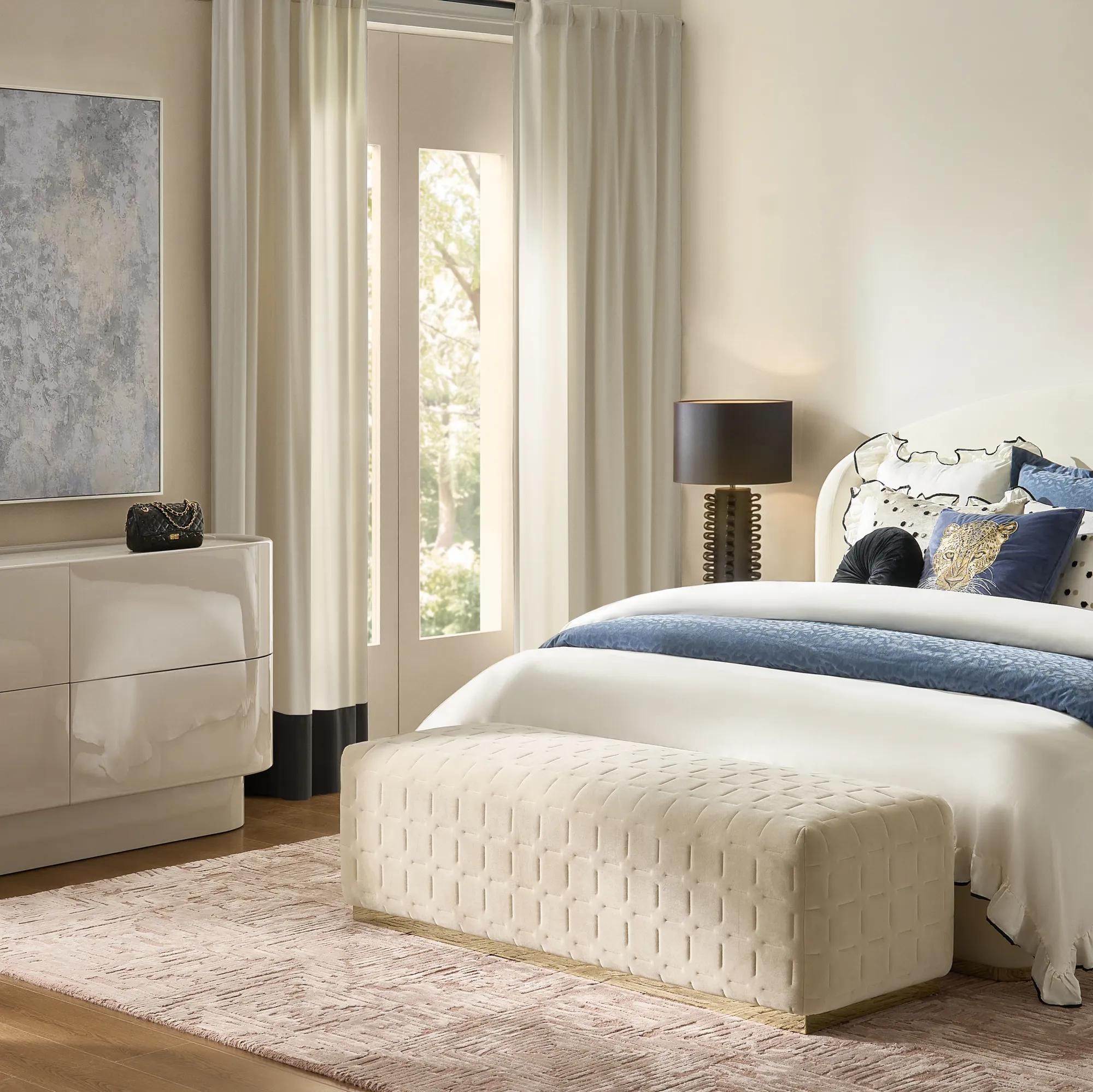 Bastien Ivory/Graphite Velvet Border Window Curtain Panel$89
A two-tone ivory and graphite velvet curtain panel with room-darkening design and versatile hanging options.
Add To Cart -
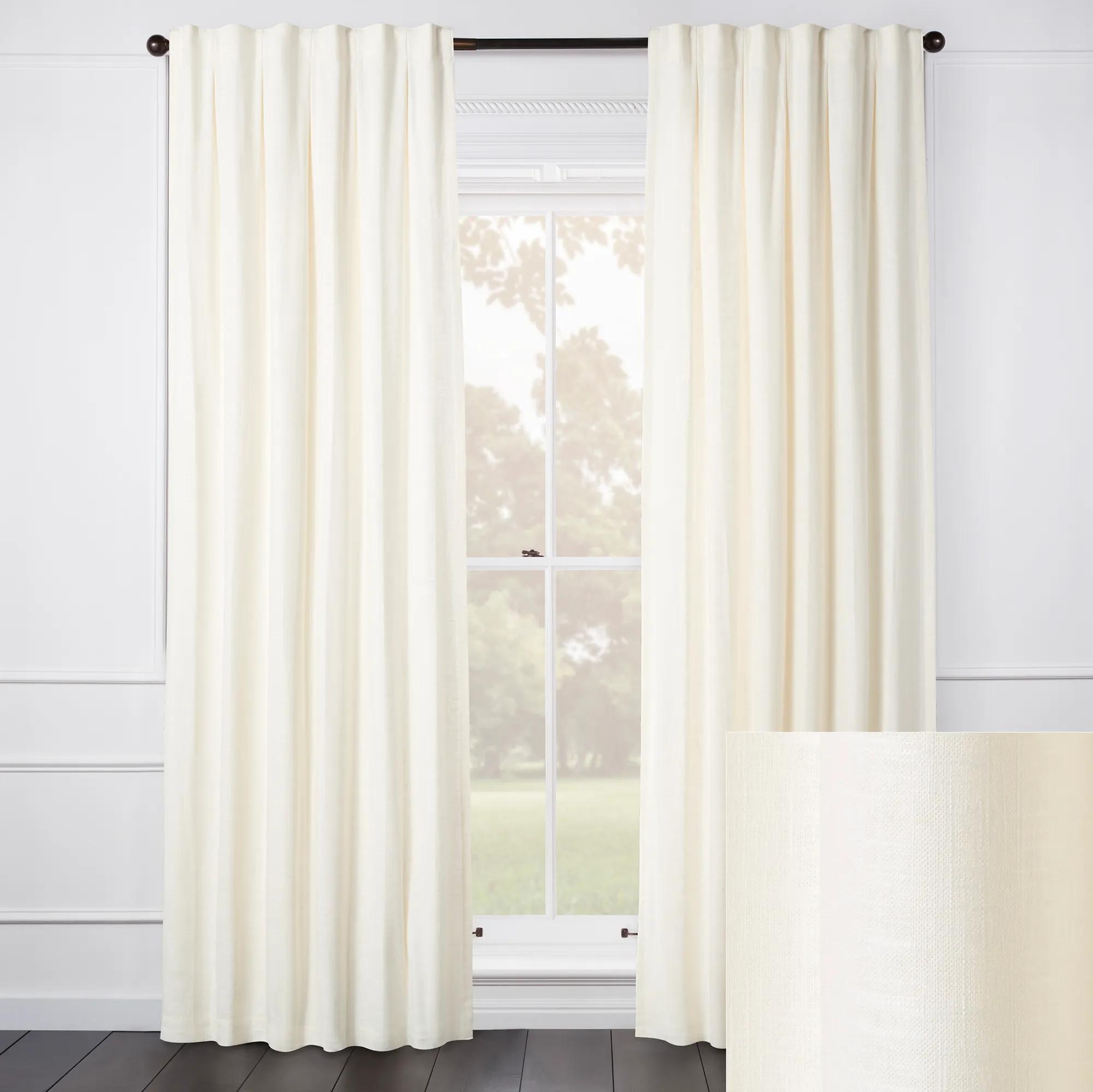
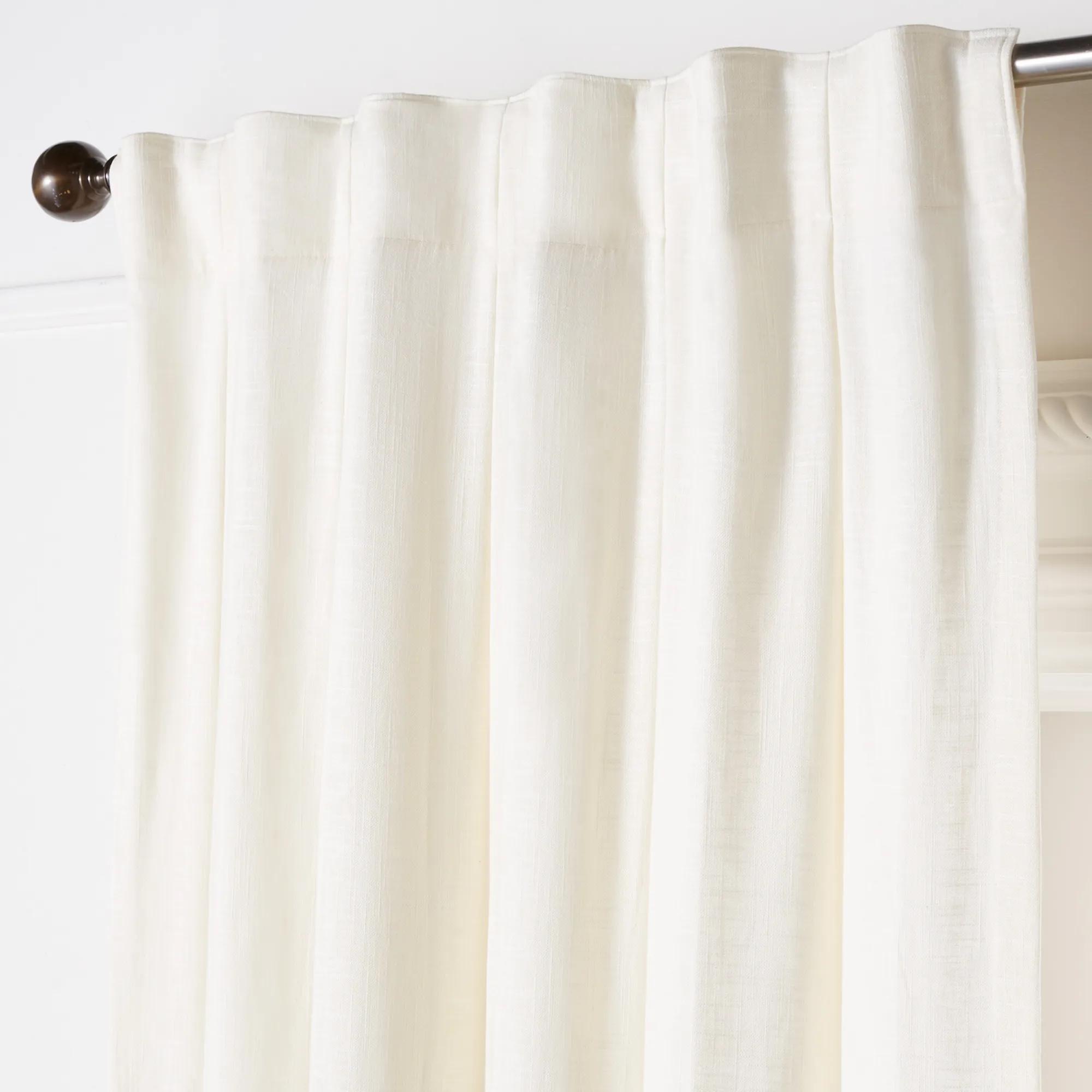 Audrey Linen Ivory Curtain - Custom$269
An ivory linen-blend curtain panel with lining, offering customizable lengths and two elegant header styles.
Add To Cart -
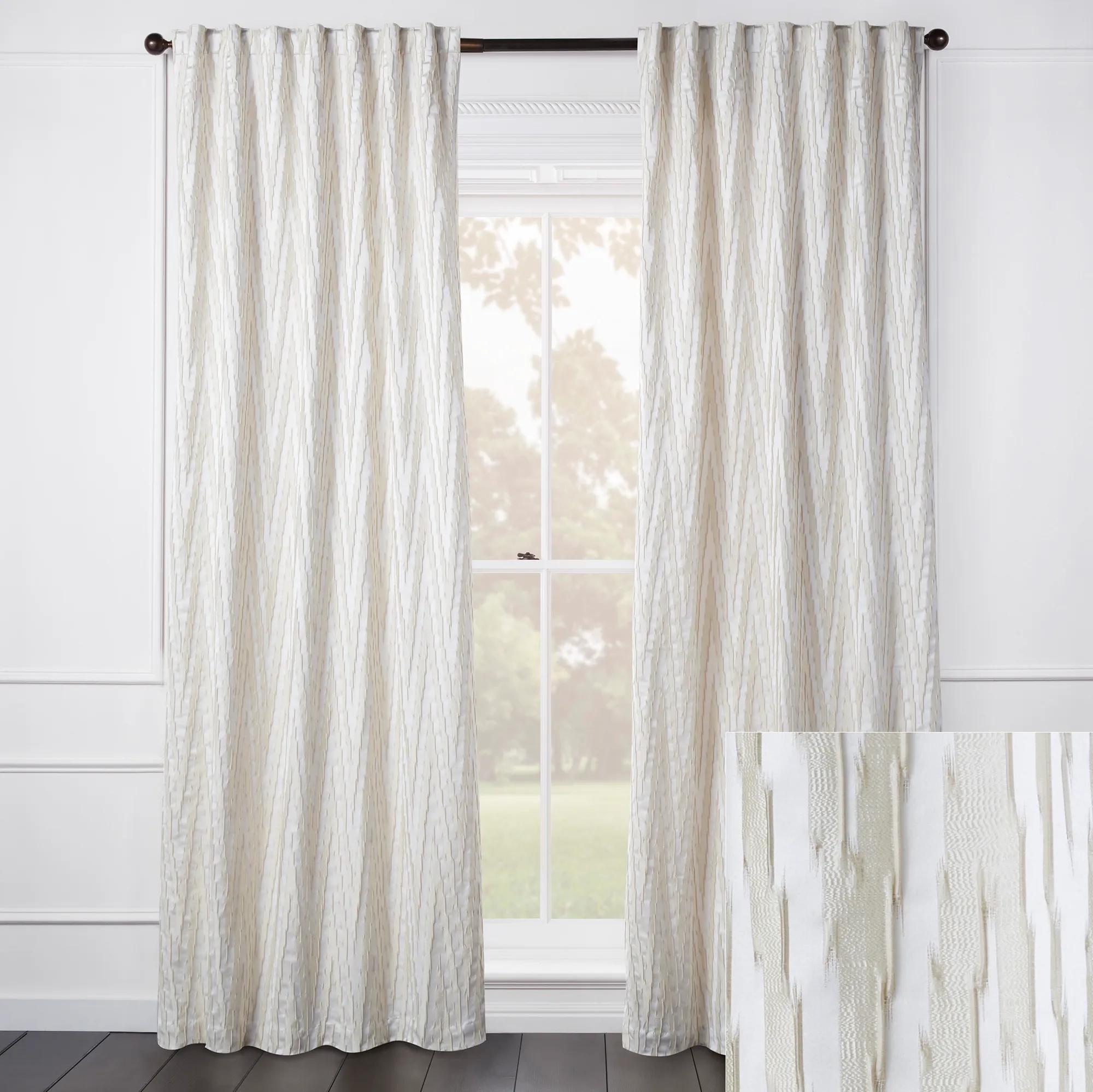
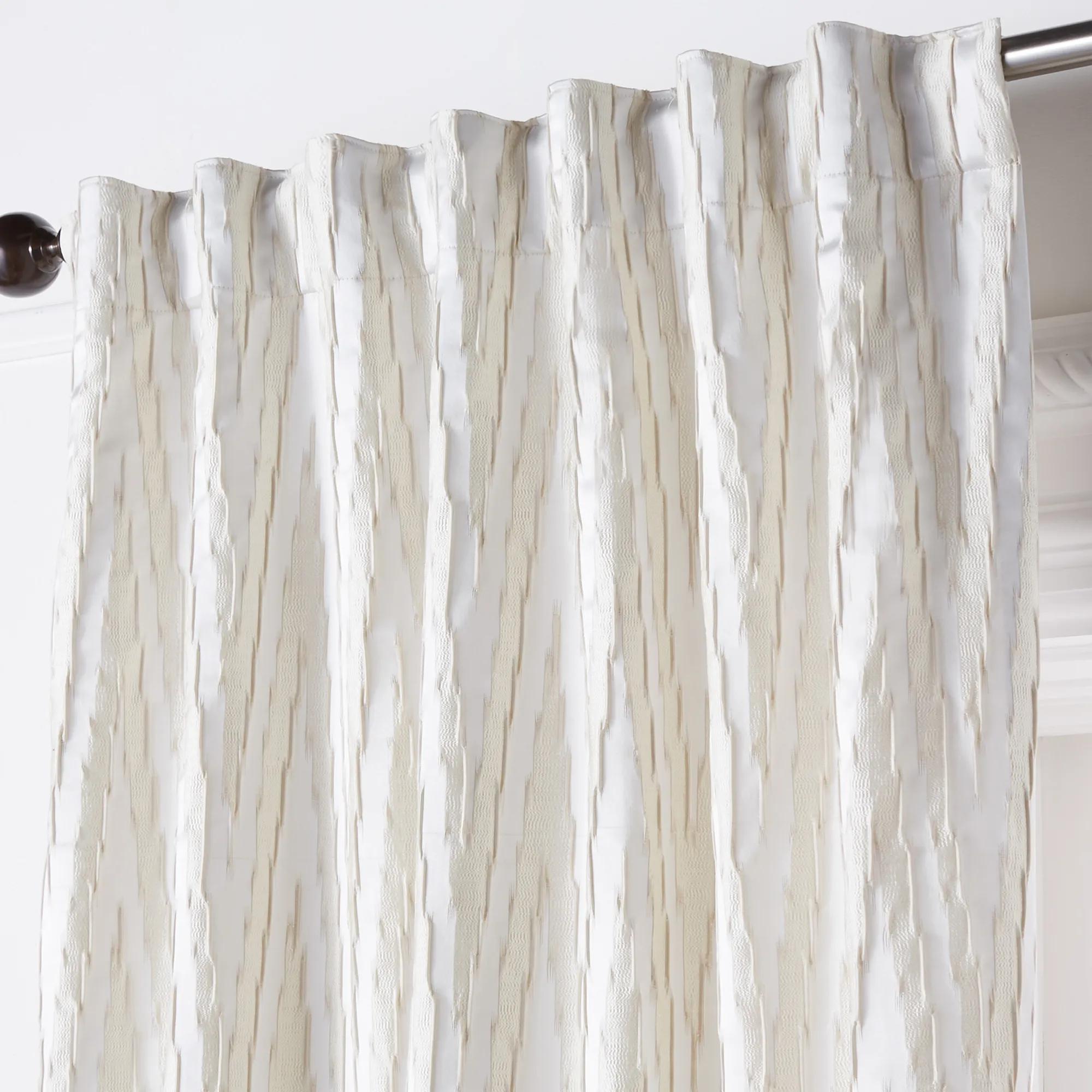 Minka Jacquard Pearl Window Curtain Panel Custom$299
A highly textured chevron curtain panel in pearl, crafted from polyester with customizable hanging options.
Add To Cart -
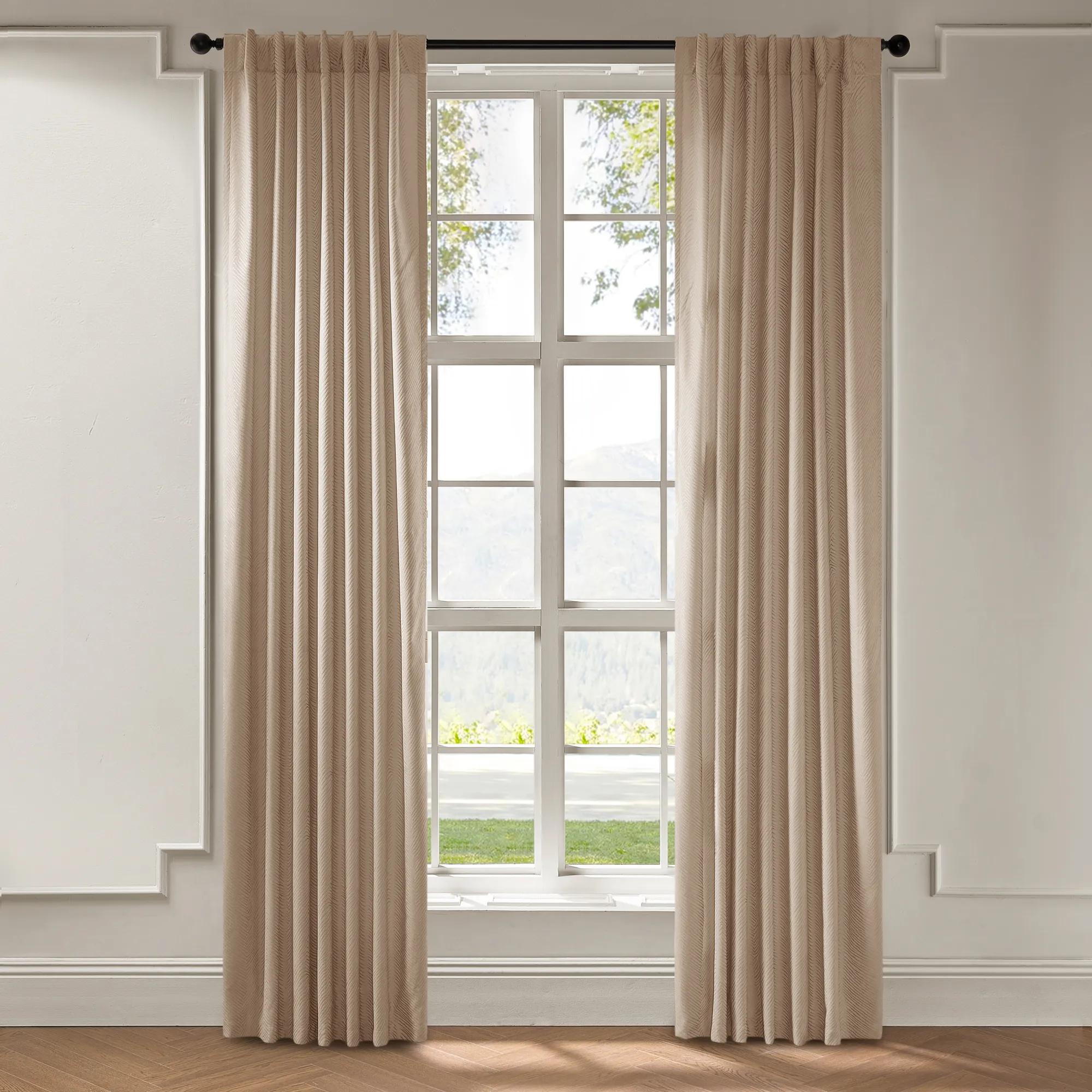 Kenzo Jacquard Beige Chenille Window Curtain Panel$139
A warm beige chenille jacquard curtain with a subtle sheen and versatile rod pocket or back tab hanging.
Add To Cart -
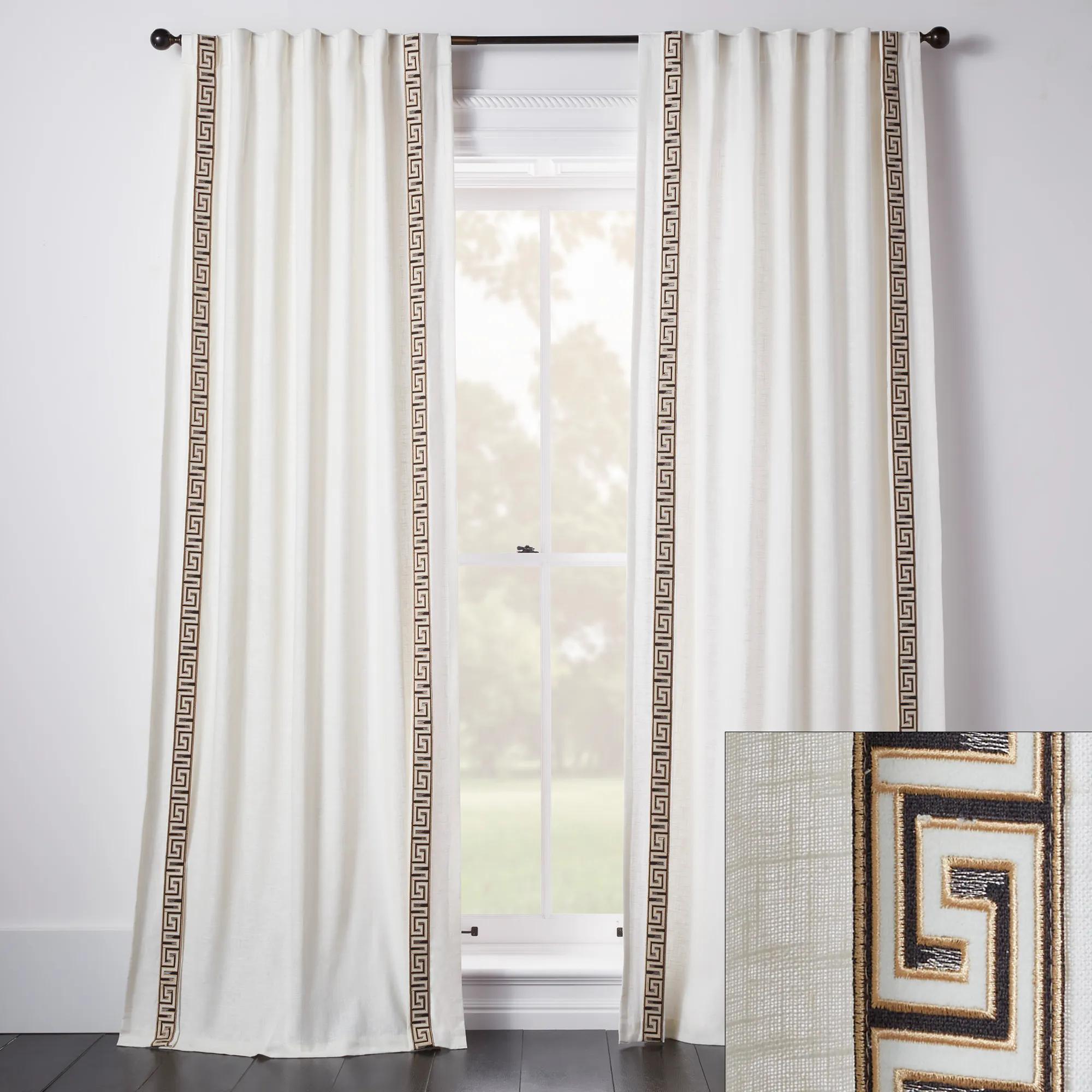 Chole Greek Key Border Velvet Widow Curtain Panels Custom$389
A white linen-blend curtain panel with black and gold velvet Greek key border and customizable options.
Add To Cart

White Window Panel Curtains
Explore white window panel curtains to frame your windows with a crisp, elegant backdrop for bold furnishings and expressive decor. As you compare panels, consider your window’s width, preferred curtain length, and desired coverage to create a beautifully proportioned look, whether tailored to the window or sweeping to the floor.
White window panel curtains frame a room with light, texture, and a sense of occasion. These fabric panels hang from a curtain rod or track to soften the edges of a window, filter daylight, and provide varying levels of privacy according to their weave and lining. In white, the effect feels luminous rather than visually heavy: a sweeping length of fabric can bring balance to a richly patterned rug, give sculptural furniture room to stand out, or create a serene backdrop for metallic accents. The character of the material makes all the difference. Cotton often has a soft, matte surface that complements tailored interiors, while linen brings visible fibers and subtle irregularities that lend depth to an otherwise restrained palette. Polyester and blended fabrics can offer fluid drape and resistance to wrinkling, although their finish and performance vary by construction. Sheer voile creates a delicate veil across the glass; an open, linen-look weave introduces texture; and a densely woven fabric establishes a more substantial frame. Embroidery, tonal patterns, and dimensional details can give white curtains a decorative presence without competing with artwork or upholstery. The shade of white also shapes the composition. A crisp white can sharpen the contrast against charcoal walls or black window frames, while a softer ivory-white may sit more comfortably beside cream upholstery, pale stone, and warm wood. Existing finishes matter here: two whites that appear similar separately can look noticeably different beside one another. Seen against the wall and in the room’s own light, the fabric should feel intentional, whether the desired effect is a seamless tonal envelope or a distinct architectural border. For a living room arranged around conversation, white panels soften the backdrop without interrupting the furniture arrangement. In a bedroom, their generous vertical lines can give an upholstered headboard and layered bedding an elegant setting. The appeal is not limited to a single decorating style; texture, fullness, and hardware determine whether the final impression is relaxed, tailored, or richly theatrical.
Proportion gives white window curtains their presence. A panel that hangs in generous folds reads very differently from the same fabric stretched almost flat, so the combined width of the panels matters as much as their length. For many decorative installations, a total fabric width around one and a half to two times the rod width creates an appealing degree of fullness, while lightweight sheers may benefit from more fabric for a richer gathering. Pleated styles and certain heading constructions have their own requirements, making the stated dimensions and installation details especially important. Panel measurements may describe a single panel rather than a pair, and the package quantity determines how much fabric is included. Length establishes the mood at floor level: panels that just meet the floor create a polished line, while a slight break brings a softer, more expressive finish. Fabric that pools deeply can look lavish in a formal setting, but it also occupies floor space and collects dust more readily, making it less practical beside an often-used door or in a busy family room. The hanging method changes both the appearance and the measurement. Rod-pocket curtains gather into soft folds and generally suit windows where the panels remain mostly in place. Grommet tops form broad, regular waves and display the rod, turning the hardware into part of the design. Back tabs conceal much of the support for a quieter presentation, while pleated panels can create a defined, architectural rhythm when paired with compatible hooks and rings. Measuring from the actual hanging point helps avoid an unintended gap at the floor, especially when rings or other hardware add length. Extending the rod beyond the window frame can give open panels somewhere to rest without covering as much glass, provided there is sufficient wall space. Substantial fabric and lining also call for appropriately rated rods, brackets, and secure mounting. The result should feel composed from top to bottom, with enough clearance for the curtains to move freely around furniture and doorways.
Light control and privacy depend on construction, not simply on the color white. Unlined sheers diffuse daylight beautifully, but they generally do not provide dependable privacy when interior lights make a room visible from outside. A denser weave or suitable lining can offer greater coverage, while room-darkening and blackout designs serve different light-control needs according to their stated specifications. Even a blackout panel can admit light around its edges, so width, placement, and overlap remain part of its performance. For bedrooms and street-facing living areas, White Window Panels For Privacy can support a more secluded atmosphere when the fabric opacity and window coverage match the setting. Layering a sheer panel with a more opaque curtain allows the room to retain a luminous backdrop while offering another level of coverage when needed. That flexibility is particularly useful in spaces that serve several purposes, such as a guest room that also functions as a home office. Care requirements deserve the same attention as appearance. Some cotton, polyester, and blended panels are machine washable, while other fabrics, linings, trims, or heading structures require professional cleaning; the care label is the authority for each curtain. White fabric can make dust, handling marks, and residue more noticeable, so routine attention helps preserve its clean, luminous finish. Gentle vacuuming with an appropriate upholstery attachment may suit some materials, and occasional repositioning can reduce repeated handling in one spot. Bleach is not automatically appropriate for a white curtain, particularly when fibers, decorative details, or specialized linings could be damaged. Washing, drying, ironing, and steaming should all follow the stated instructions to protect the fabric’s dimensions and drape. Durability also rests on construction: secure seams, reinforced headings, and hardware suited to the panel’s weight help curtains withstand regular opening and closing. With material, scale, and daily use considered together, white window panels become more than a finishing layer. They give the room a graceful frame, allowing bold furnishings and treasured objects to hold their own against a backdrop of softly sculpted fabric.
FAQs
White window panel curtains bring a crisp, composed backdrop to modern interiors, allowing sculptural furniture and expressive artwork to command attention. Pair them with sleek silhouettes for a tailored mood, or introduce curved furnishings and gleaming metallic accents for a more glamorous composition.
White curtains create striking contrast against charcoal, navy, or emerald walls, while soft neutrals establish a more tonal setting. For a richly layered look, carry the palette through decorative pillows, artwork, and accent pieces, letting the white panels provide a visual pause between bolder elements.
Consider white panels over a separate sheer layer for an airy, nuanced composition, or pair them with shades for a more architectural effect. Keep the palette tonal to emphasize texture, then introduce distinctive curtain hardware as a finishing accent.
The heading, texture, and hardware help define the overall mood. Pleated headings suggest tailored elegance, while a simpler heading creates a cleaner visual line. Subtle surface texture adds depth to an all-white scheme, and sculptural finials give the window treatment a jewelry-like finishing touch.
Bright white creates a crisp contrast that complements cool palettes and graphic interiors, while ivory introduces a creamy note alongside warm neutrals and golden accents. Consider the undertones in your walls, upholstery, and trim to create an intentional relationship rather than an almost-matching effect.