
White Window Curtains For Home Office
White Window Curtains For Home Office
-
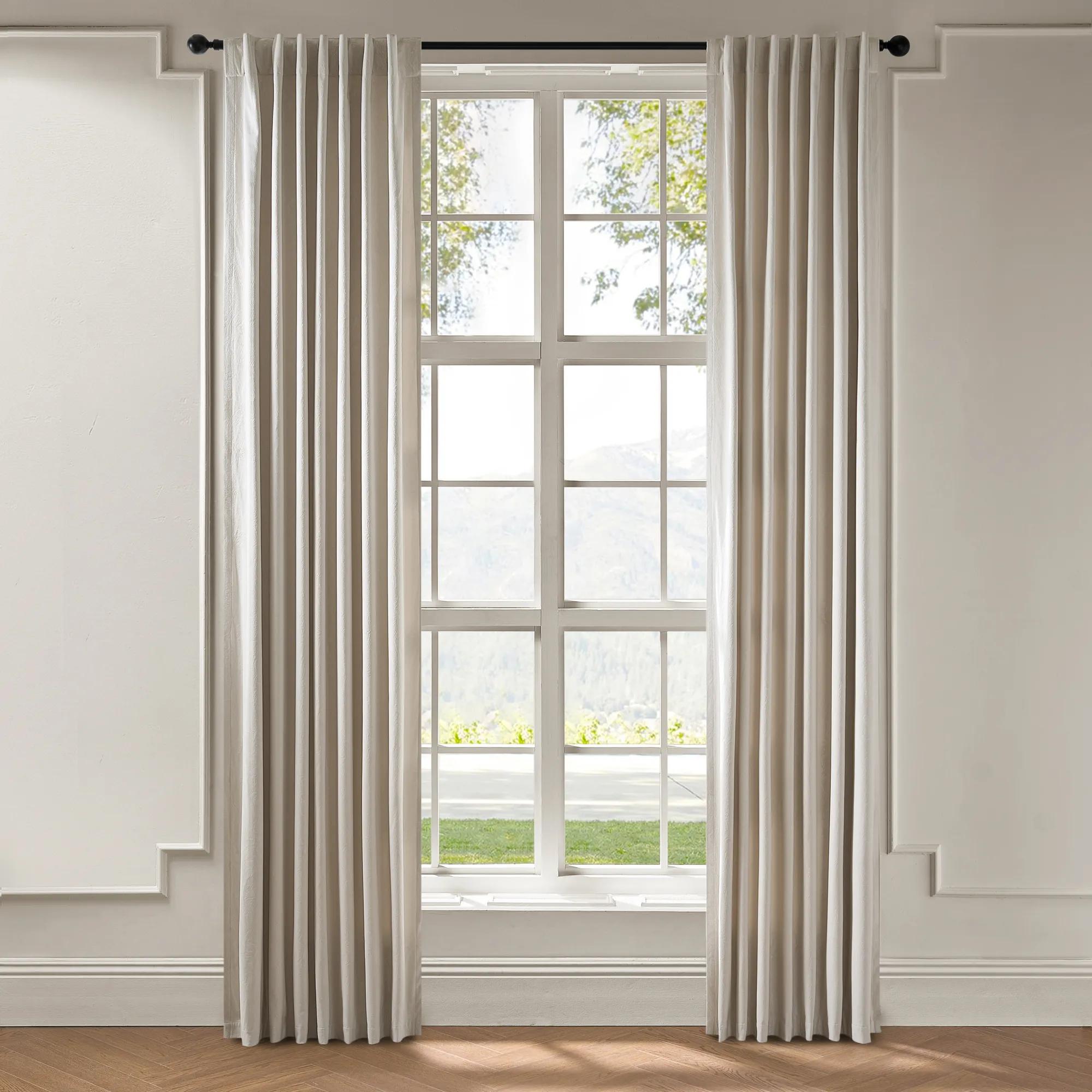
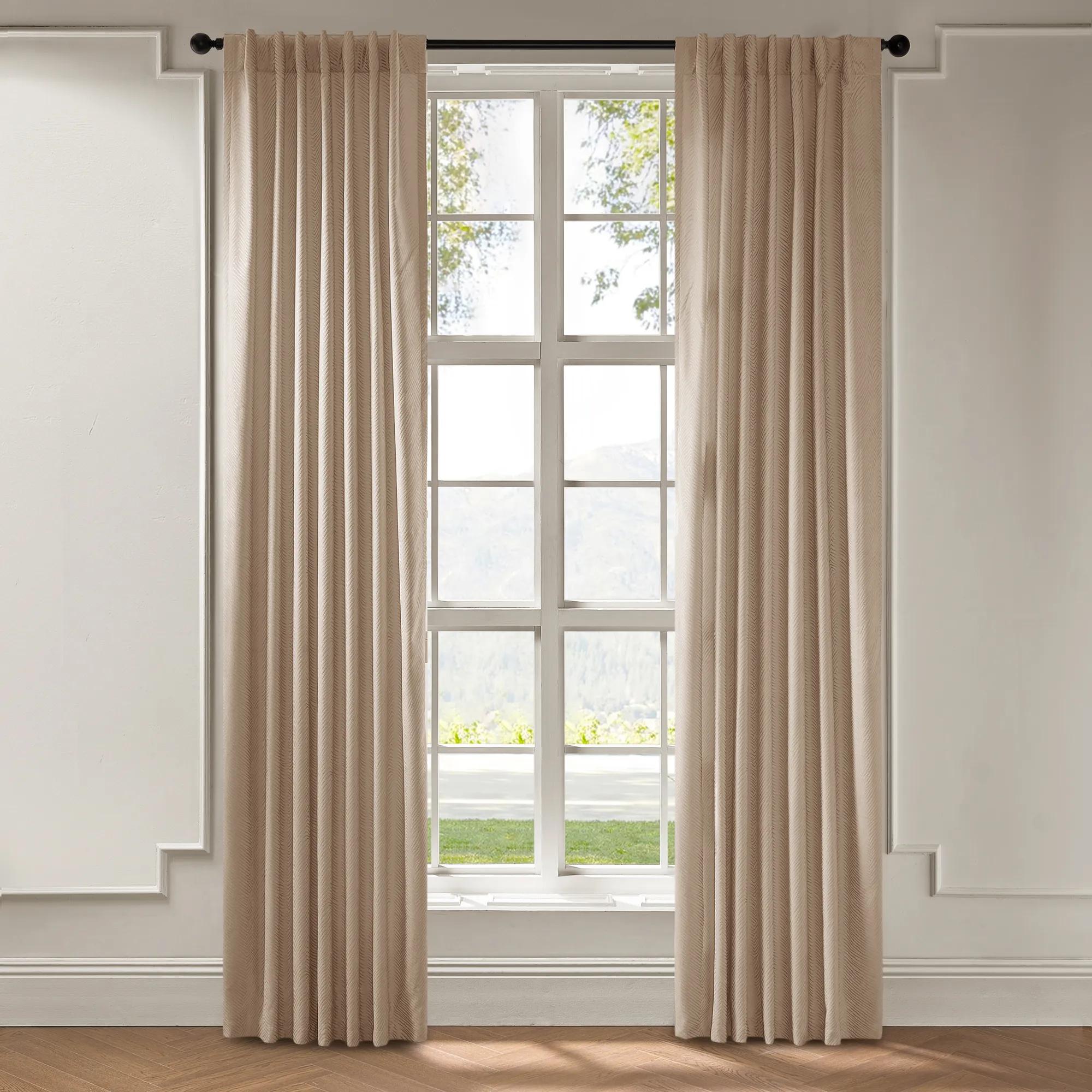
.jpeg?w=1200&h=1200) Mabel White Velvet Swirl Window Curtain Panel$99
Mabel White Velvet Swirl Window Curtain Panel$99A crisp white velvet curtain featuring a tonal swirl texture and versatile dual hanging options.
Add To Cart -
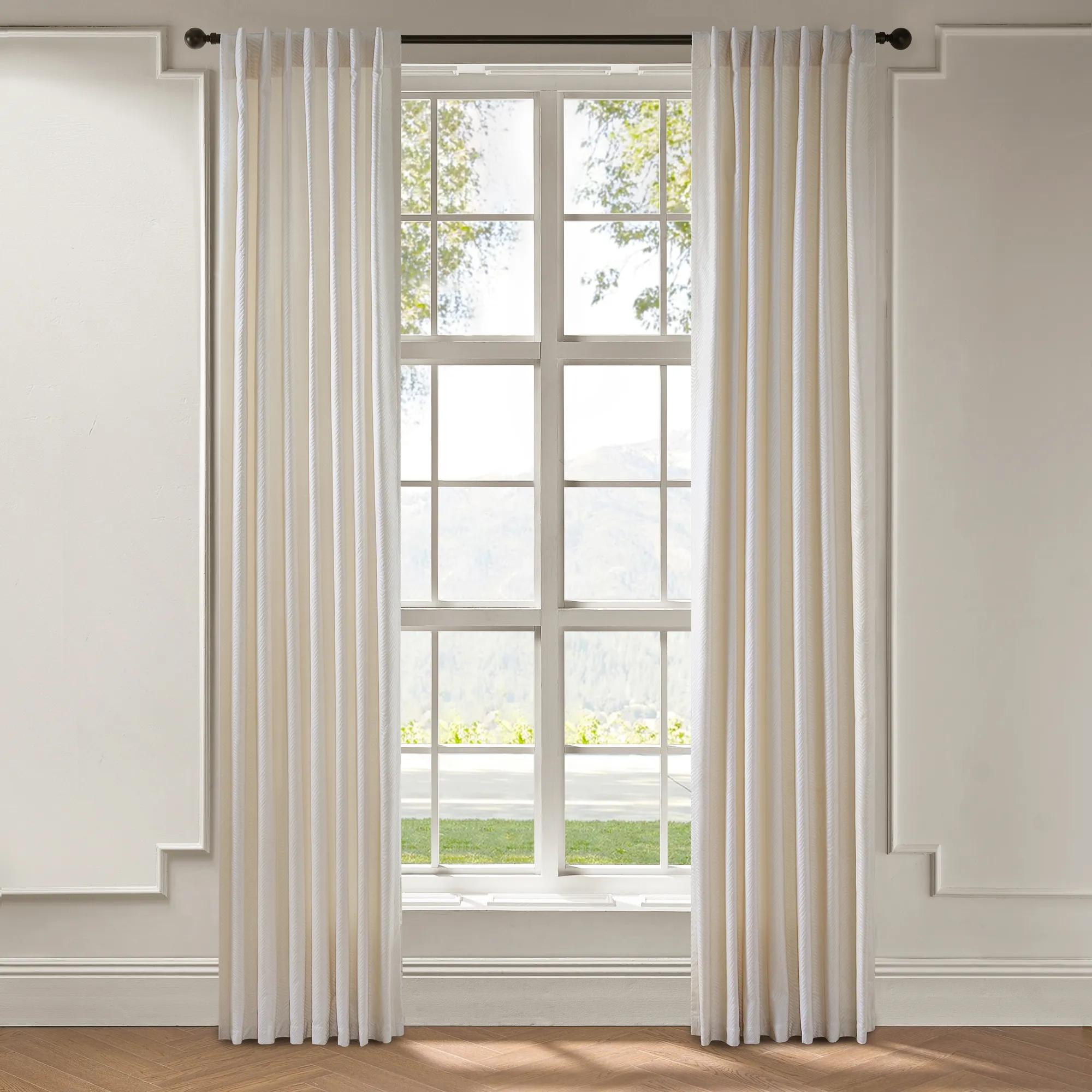
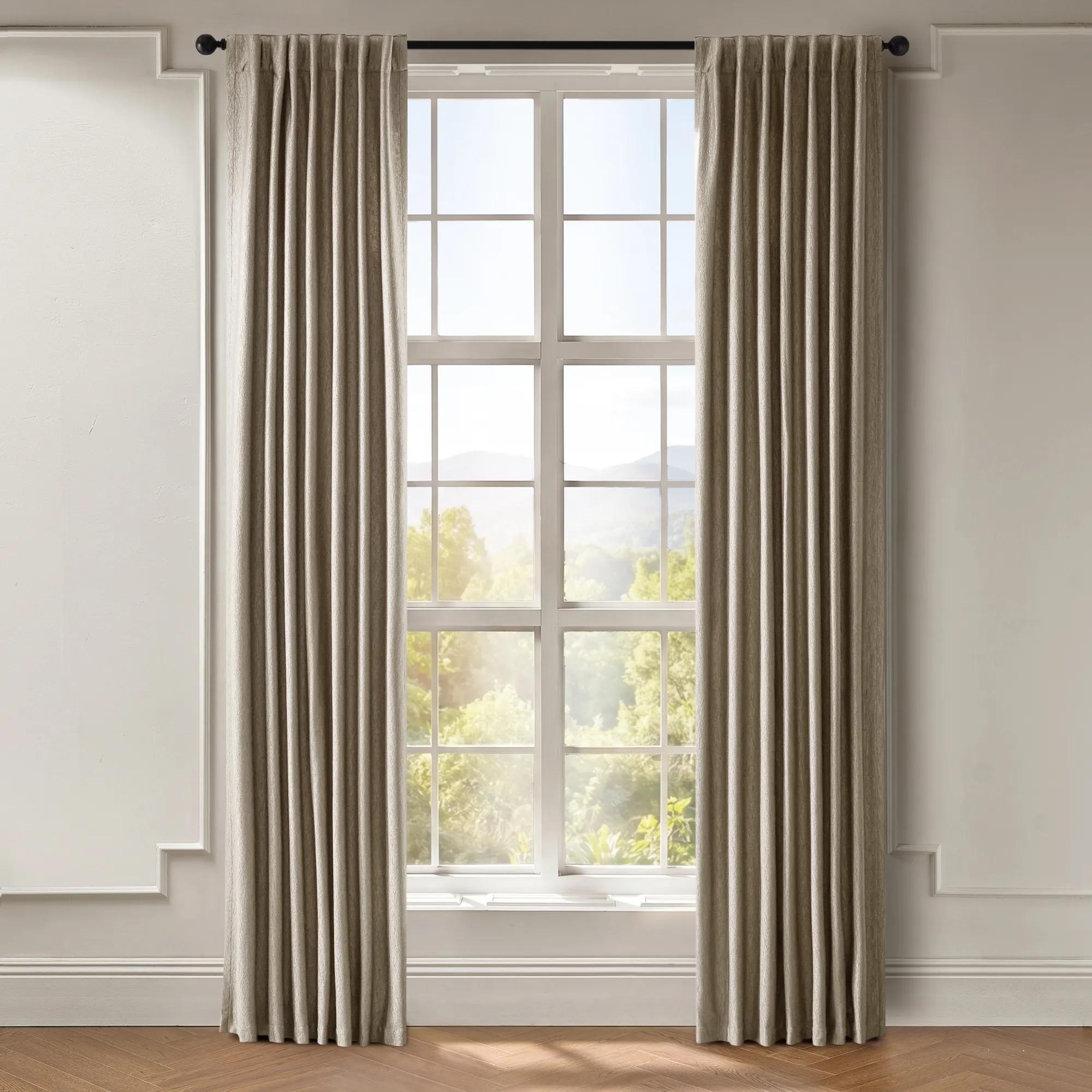
.jpeg?w=1200&h=1200) Kenzo Chenille Curtain - White$139
Kenzo Chenille Curtain - White$139A luxe white chenille jacquard curtain featuring a subtle high-contrast pattern and versatile dual construction.
Add To Cart -
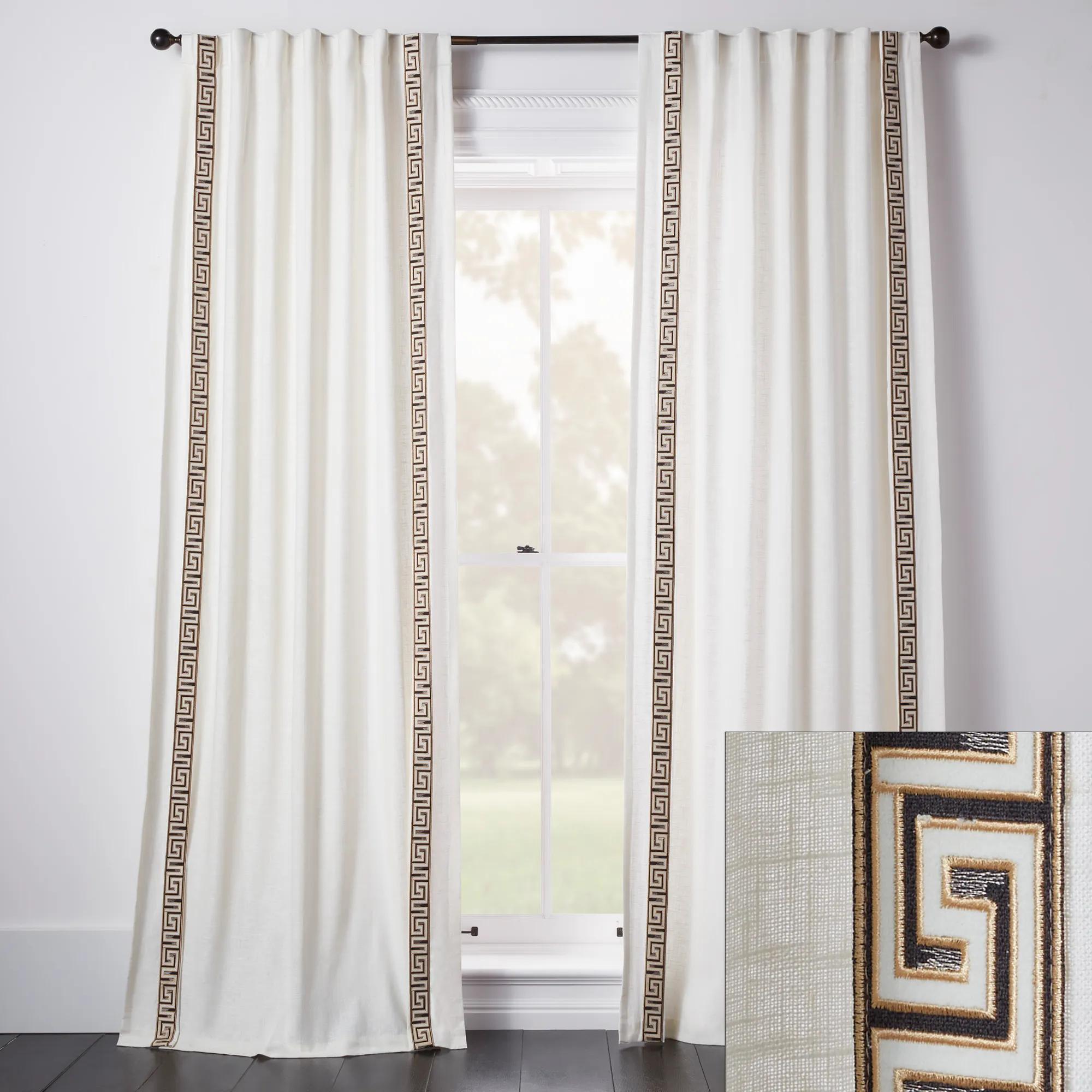 Chole Greek Key Border Velvet Widow Curtain Panels Custom$349
A white linen-blend curtain panel with black and gold velvet Greek key border and customizable options.
Add To Cart -
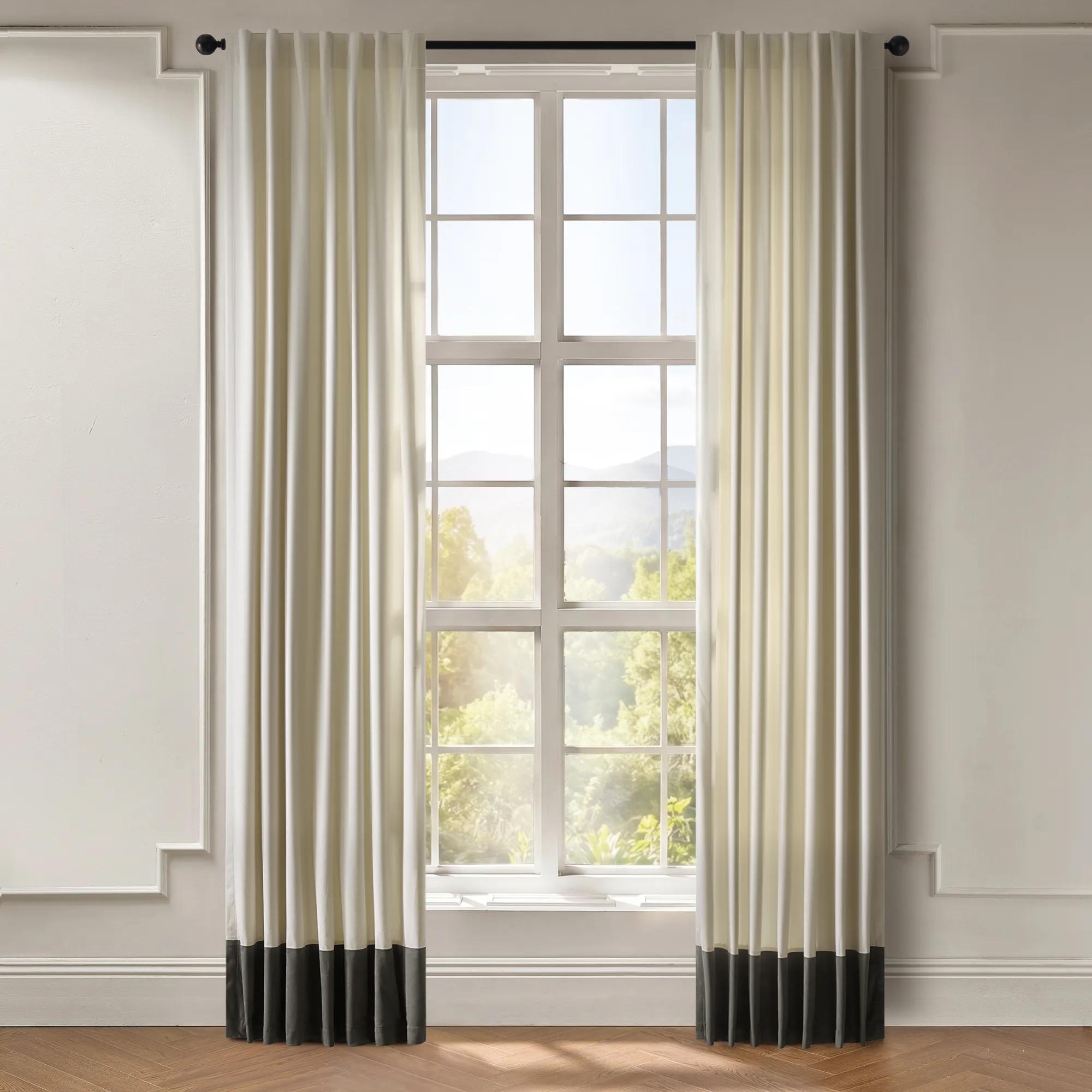
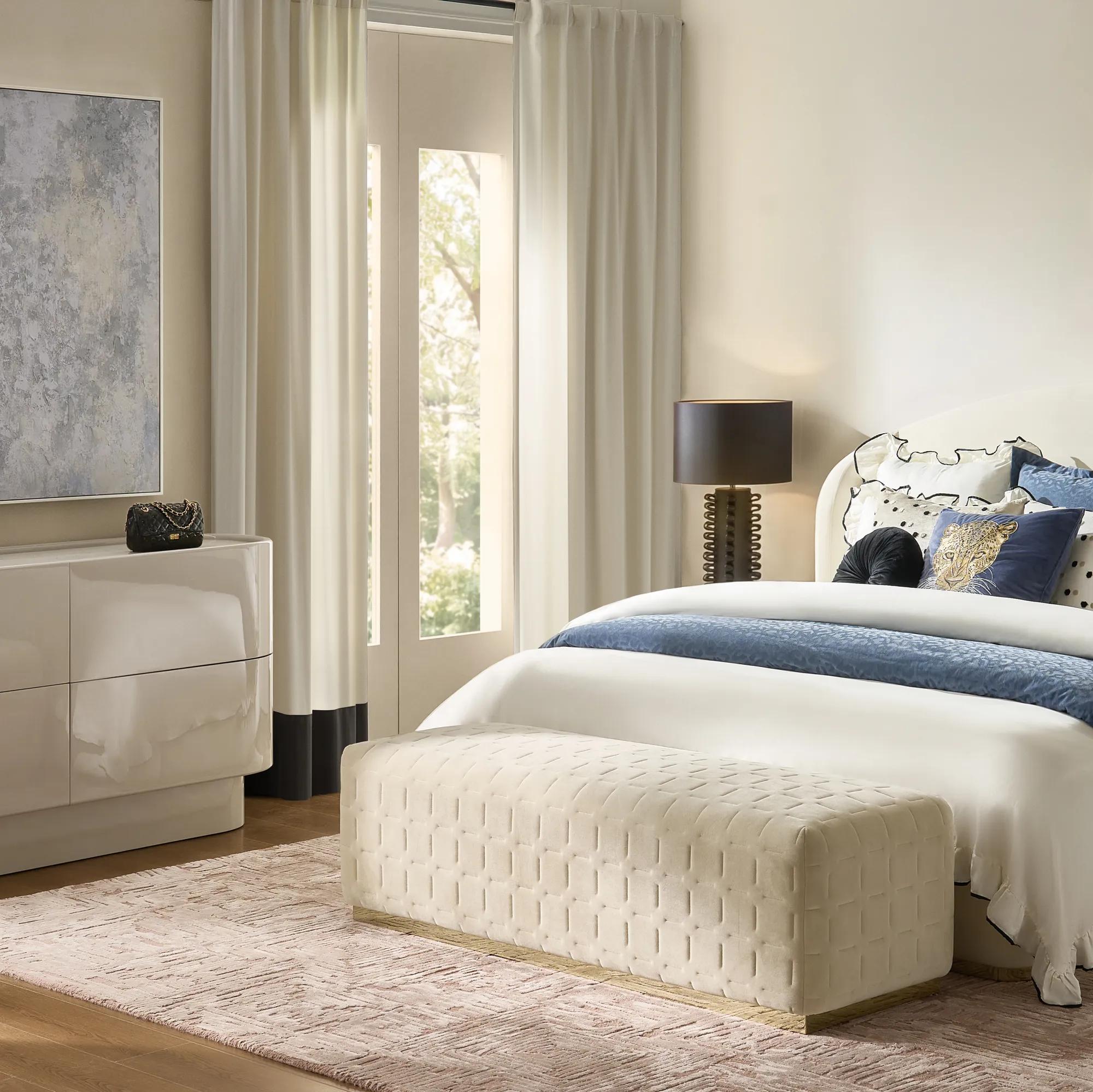 Bastien Ivory/Graphite Velvet Border Window Curtain Panel$99
A two-tone ivory and graphite velvet curtain panel with room-darkening design and versatile hanging options.
Add To Cart -
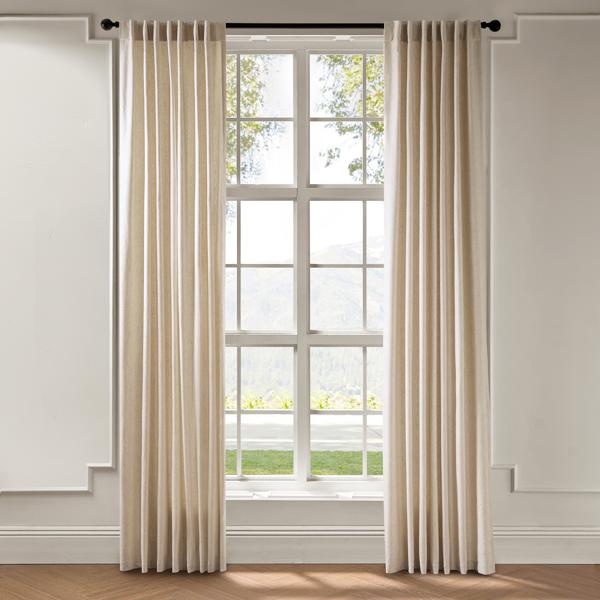
 Anson Ivory Textured Window Curtain Panel$89
An ivory polyester curtain with a crushed, light-reflective texture for elegant, room-darkening style.
Add To Cart -
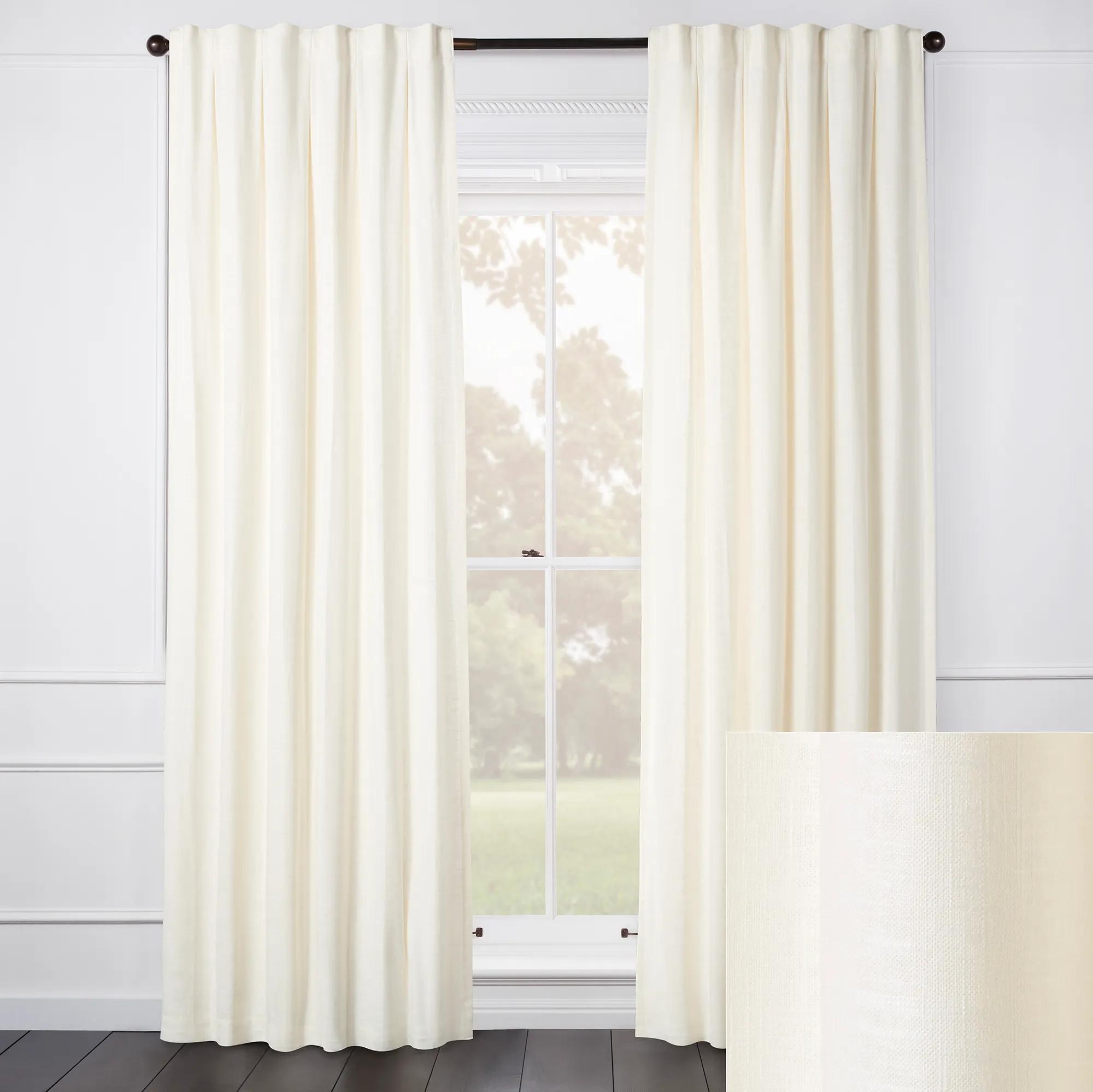
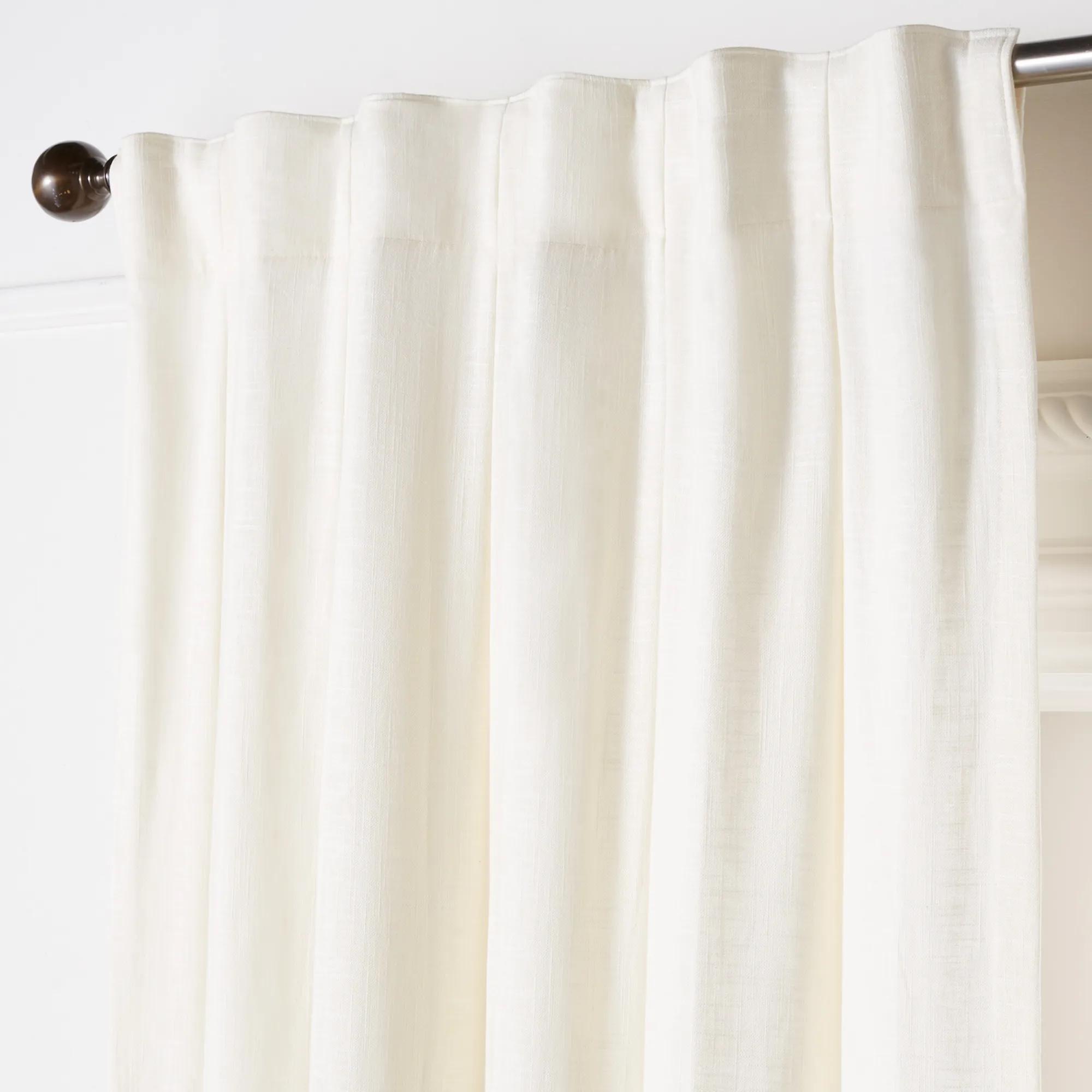 Audrey Linen Ivory Curtain - Custom$269
An ivory linen-blend curtain panel with lining, offering customizable lengths and two elegant header styles.
Add To Cart -
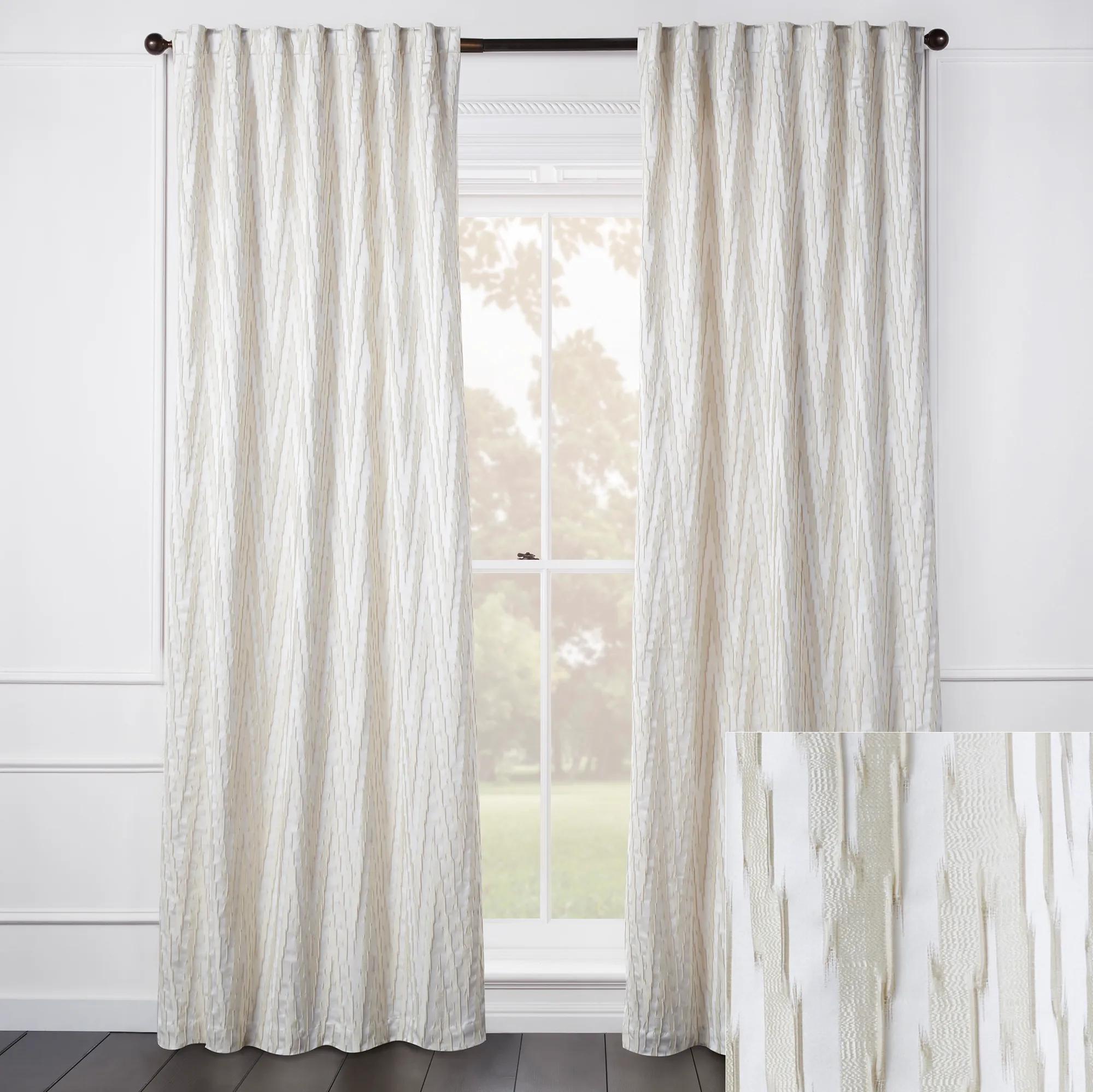
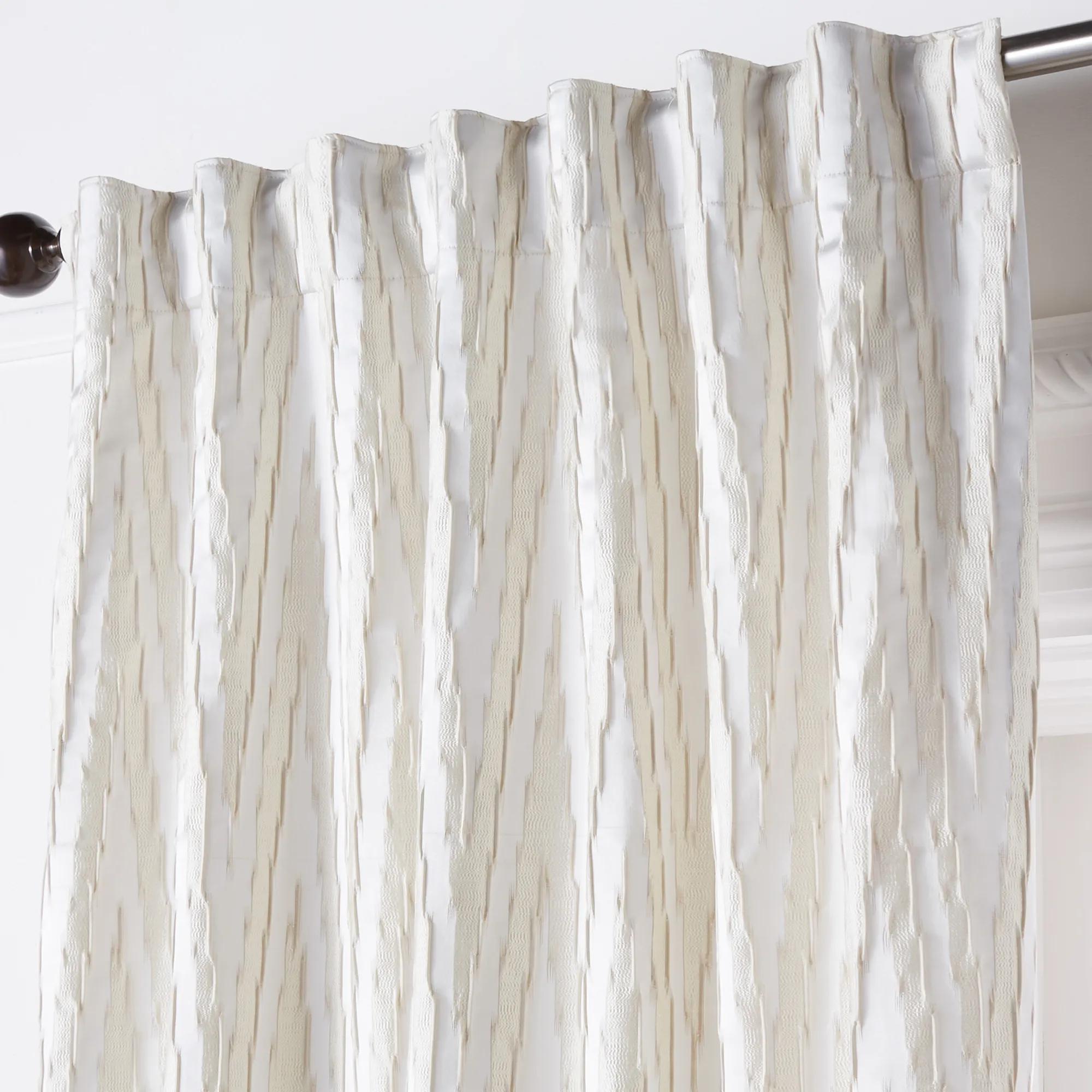 Minka Jacquard Pearl Window Curtain Panel Custom$289
A highly textured chevron curtain panel in pearl, grey, or natural polyester with customizable hanging options.
Add To Cart

White Window Curtains For Home Office
Transform your workspace into a sanctuary of light and inspiration with white window curtains for home office. Effortlessly elegant and endlessly versatile, these luminous draperies invite a sense of calm sophistication, diffusing daylight to create an atmosphere that’s both uplifting and serene. Whether framing a dramatic city view or softening the edges of your creative retreat, white window curtains for home office become the canvas for productivity and poise—elevating every moment spent at your desk with their airy allure.
White window curtains for a home office frame the workday with light, texture, and a sense of intention. Their appeal goes beyond a crisp backdrop: depending on fabric density and lining, white curtains can soften incoming daylight, help manage screen glare, and provide privacy while giving a workspace a polished, expressive character. Against a dark desk, pale fabric creates a striking contrast; beside warm wood and sculptural lighting, it lends the room an airy elegance without making the setting feel austere. The right shade of white is part of that effect. Optic white feels graphic alongside chrome, glass, and lacquered surfaces, while ivory and soft off-white bring a gentler note to brass accents and richly grained furniture. Comparing fabric samples with wall paint, upholstery, and flooring helps reveal undertones that may not be obvious on a screen. Texture adds another layer of distinction: a visible weave gives an otherwise restrained palette depth, while a smoother surface creates a more tailored impression. For a dedicated study, full-length panels can establish an architectural frame around the window, lending presence to even a modest workspace. In a living room office or guest room with a desk, white curtains help connect the work area to the surrounding furnishings rather than setting it apart as purely functional. They also create an understated background for artwork, an expressive desk chair, or a beautifully arranged bookcase. Remote professionals, independent creatives, and students can all appreciate that balance of visual composure and personal style. A room used for client calls may benefit from softly defined folds and a consistent backdrop, while a design studio might pair white drapery with oversized art and saturated accents. For a cohesive look in adjoining spaces, White Modern Window Curtains offer a related direction, with the same versatile palette carrying from the office into the larger interior. The result feels considered, not matched by formula.
Fabric construction determines how white home office curtains behave, so color alone should never stand in for a light-control specification. Sheer curtains diffuse daylight and soften the view through a window, but they generally offer limited privacy, especially when interior lights are on and it is darker outside. Light-filtering curtains admit a gentler glow, with visibility and glare control varying by weave, thickness, and lining. Room-darkening curtains reduce incoming light more substantially, while curtains specified as blackout are designed to block light through the fabric; light can still enter around the edges, above the rod, or between panels. For a desk facing a bright window, denser or lined curtains may make the screen easier to view than a delicate sheer. For a desk positioned beside the window, a light-filtering fabric may preserve welcome daylight while taking some intensity out of direct light. Layering sheer and opaque panels on separate rods or a double rod allows more flexibility: diffuse light during reading or paperwork, then draw the heavier layer when a presentation or detailed screen work calls for greater control. White fabric does not have to be translucent, and a substantial lining can provide privacy without changing the room’s pale, luminous palette. Linen and linen-blend curtains introduce subtle irregularity and a relaxed, dimensional drape, with natural creasing contributing to their character. Cotton can offer a soft hand and a clean, familiar finish, though shrinkage and wrinkling depend on the construction and treatment. Polyester and blended fabrics often provide shape retention and crease resistance, but performance should be confirmed in the care instructions rather than assumed from fiber content. Heavier woven or velvet curtains bring greater visual weight and sculptural folds, especially suited to an office with bold furniture silhouettes. Fabric may also soften some reflected sound within a room, though ordinary curtains should not be treated as soundproofing or a guarantee of clearer calls. Their most reliable contribution is the combination of adjustable light, tactile richness, and a more finished setting.
Proportion gives white office curtains their authority. Measuring the window, the planned rod position, and the surrounding wall space helps establish both the panel length and the total width needed for a graceful drape. A common starting point is a combined curtain width approximately one and a half to two times the rod width, although sheer fabrics, pleated constructions, and different heading styles may call for different fullness. Panels pulled nearly flat can look spare and may leave gaps, while generous folds create depth and a more substantial frame. Extending the rod beyond the window can provide room for the fabric to stack away from the glass when open, provided nearby walls, shelves, and furniture allow it. Mounting the rod above the window frame can emphasize height, but placement should respect ceiling clearance, hardware requirements, and secure installation. In an active home office, curtains that skim or sit just above the floor usually offer a cleaner arrangement than pooled fabric, particularly near a rolling chair. A shorter length may be more appropriate where built-in cabinetry or a desktop sits beneath the window. Keep fabric clear of vents and any heat source, following applicable safety clearances, and make sure panels do not interfere with drawers, cords, or frequently used equipment. Heading style matters in daily use as well as appearance: grommets create broad, regular folds, rings support an elegant sliding motion, and rod pockets offer a gathered effect that may be less convenient for frequent opening and closing. Hardware should be rated for the weight of the curtains and any lining. For lasting beauty, follow the fabric’s care label, since some panels are washable while others require professional cleaning. Gentle vacuuming with an appropriate attachment can remove surface dust between cleanings; prompt treatment of marks according to the care instructions helps preserve the clarity of white fabric. Check instructions before steaming, ironing, or using bleach, since finishes and linings may require special handling. Thoughtful fit and realistic care expectations let white curtains remain an expressive part of the office, bringing softness to strong lines and a deliberate finish to the space where ideas take shape.
FAQs
For a home office, white window curtains crafted from linen or cotton blends offer a refined balance of softness and structure. These fabrics allow natural light to filter through while maintaining privacy and a polished appearance. For a more dramatic effect, consider silk or velvet, which add a touch of luxury and texture to the workspace.
White window curtains brighten a home office by reflecting and diffusing natural light, creating an uplifting and serene environment. They visually expand the space, evoke a sense of calm, and provide a neutral backdrop that lets statement furnishings and art shine. The result is a workspace that feels both inviting and inspiring.
Absolutely. White window curtains are ideal for layering with roman shades, blackout panels, or decorative valances. This approach allows you to customize light control and privacy while adding depth and dimension to your window styling. Layered treatments also introduce tactile interest, enhancing the overall design narrative of your office.
To preserve their pristine appearance, regularly dust or gently vacuum your white window curtains. Many styles are machine washable, but always follow the care label for best results. Occasional steaming or ironing ensures they hang beautifully, while spot cleaning helps address any accidental marks from daily use.
Yes, white window curtains are the ultimate neutral, providing a sophisticated counterpoint to bold walls, vibrant rugs, or eclectic furnishings. Their clean lines and airy presence help balance dramatic hues and patterns, allowing your personal style to take center stage without overwhelming the space.

.jpeg?w=4130&h=4130)


