Silver Living Room Decorations
Silver Living Room Decorations
-
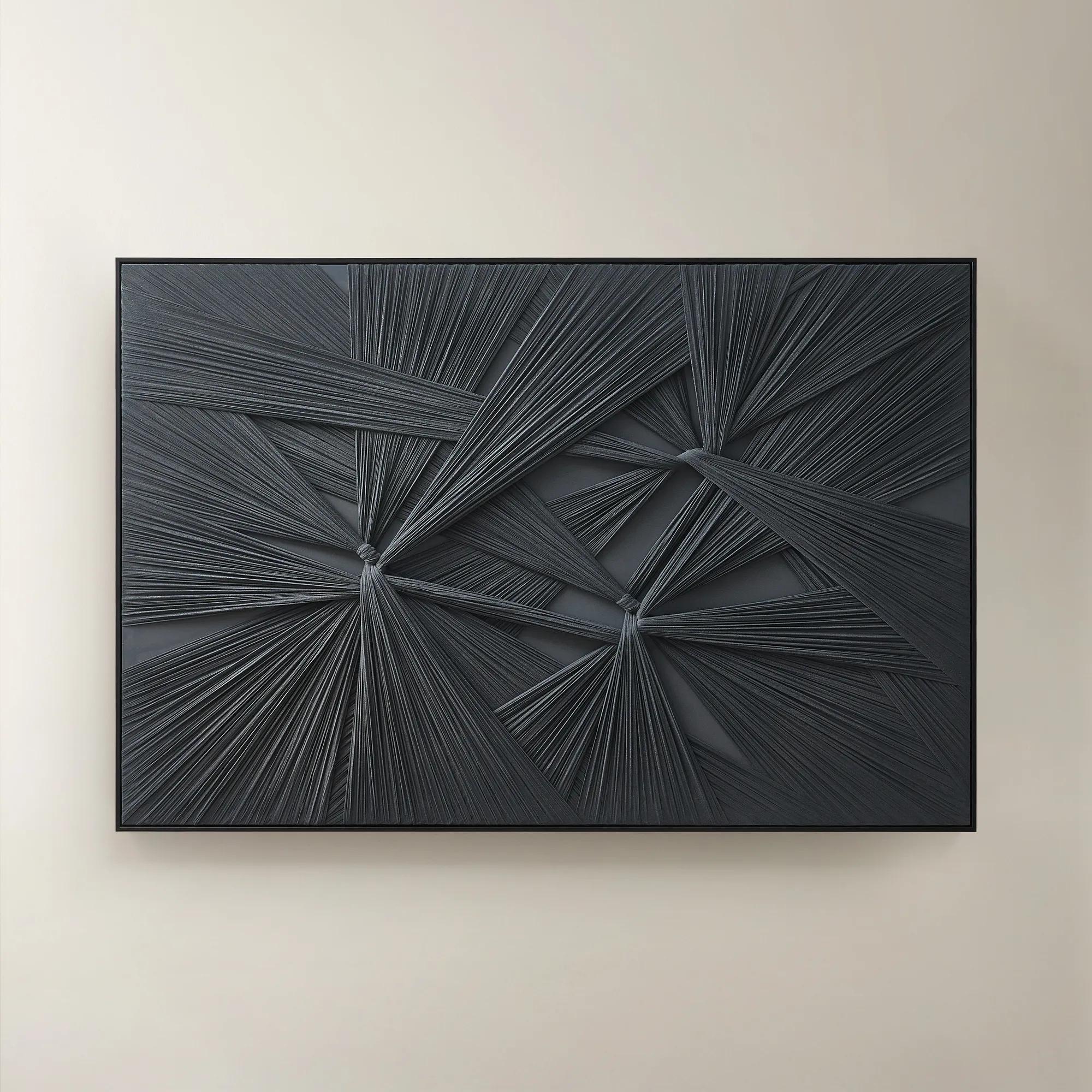
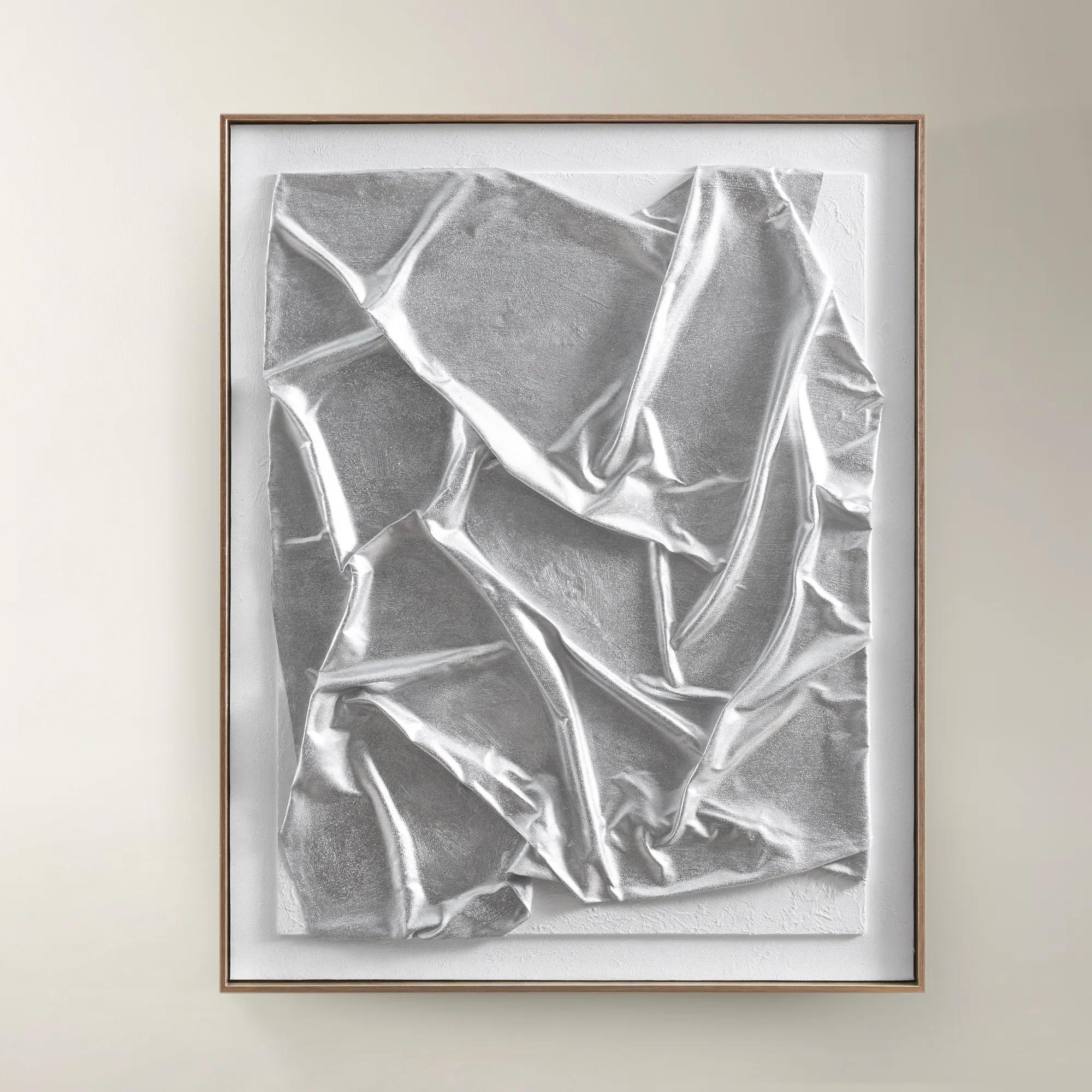 In the Mood Framed Painted Wall Art 31.5" x 39.5"$199
A hand-painted abstract canvas in shimmering silver tones, set in a warm champagne floater frame.
Add To Cart -
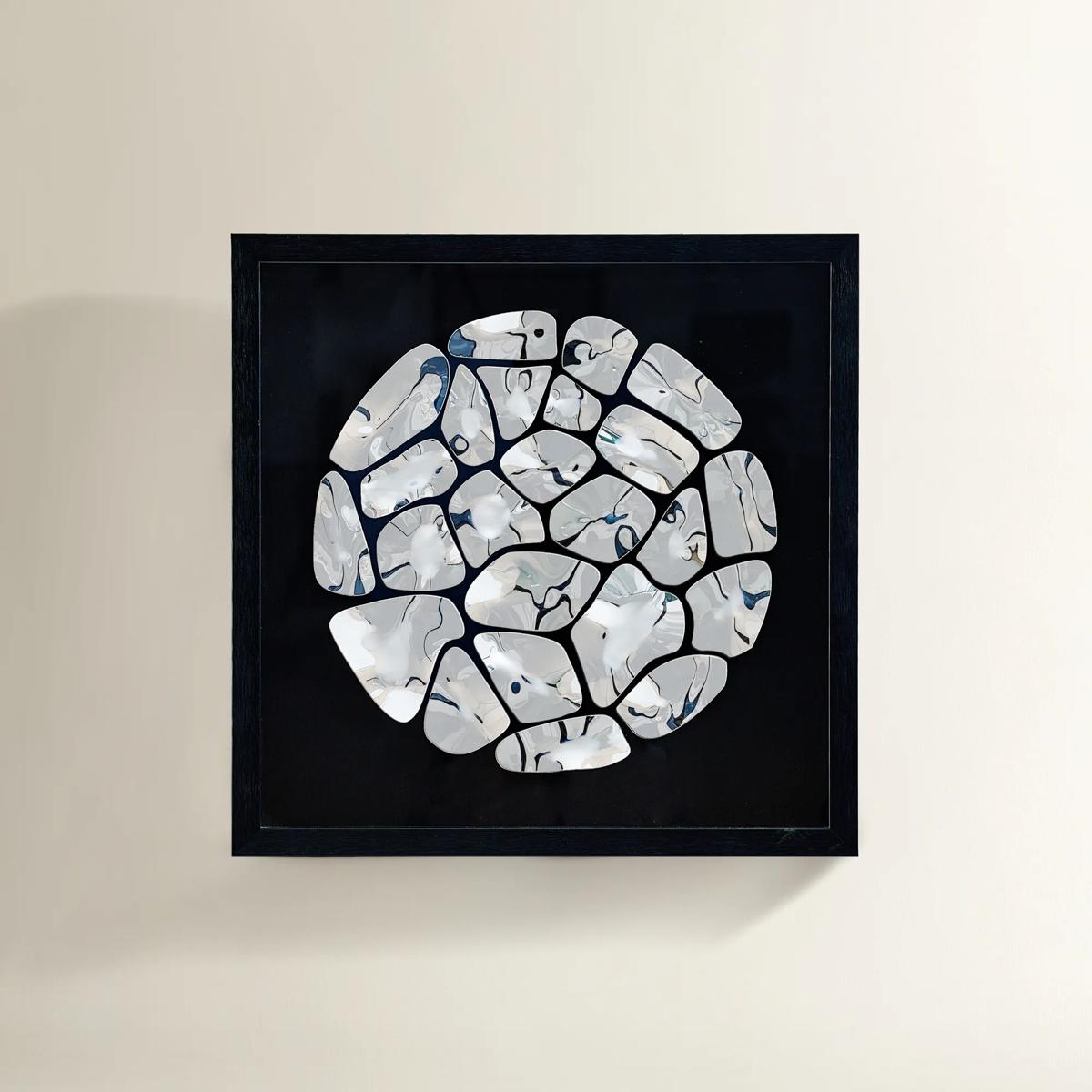
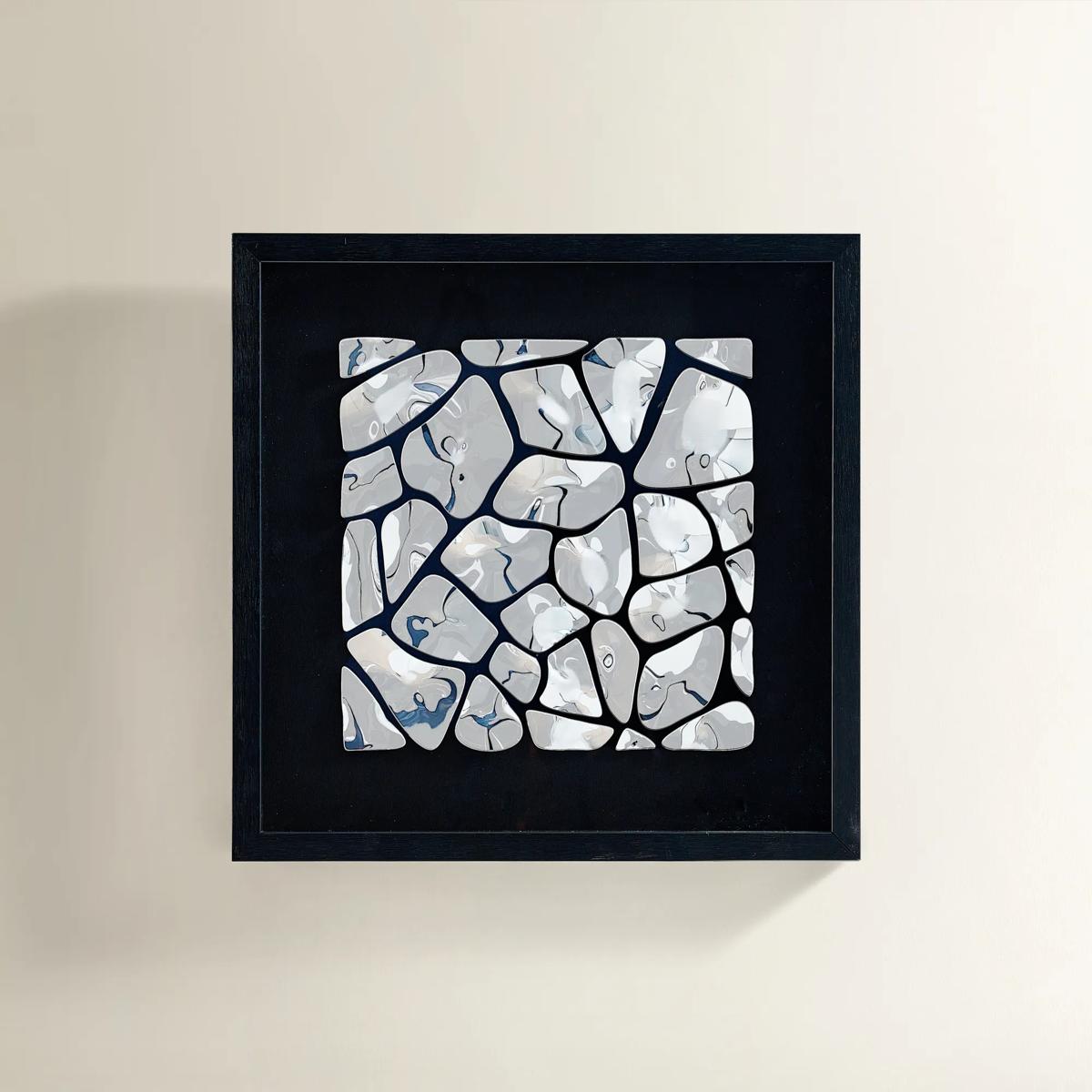 Reflect Silver And Black Shadowbox Art I$189
A dimensional metal wall art piece featuring polished silver and black forms in a sleek black frame.
Add To Cart -
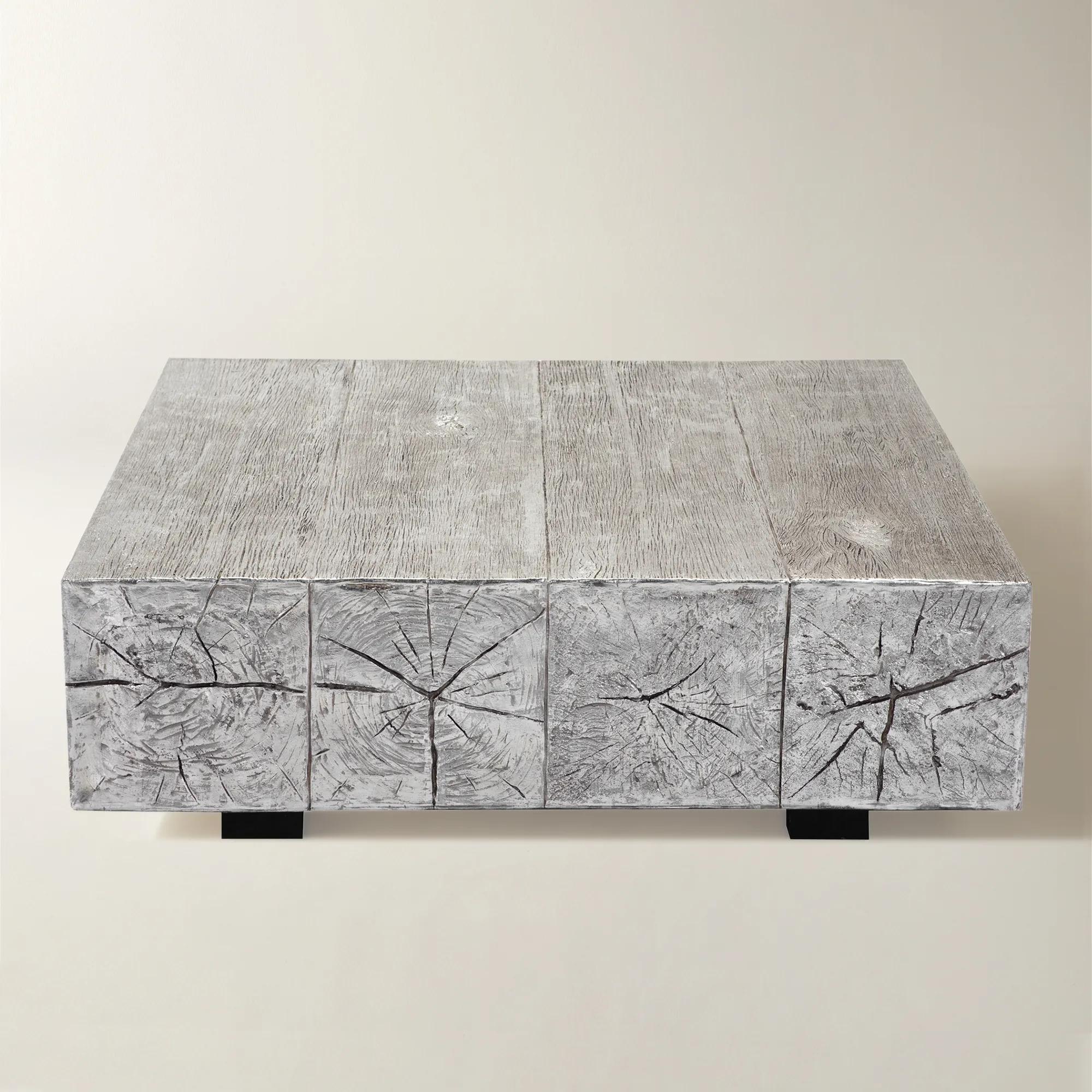
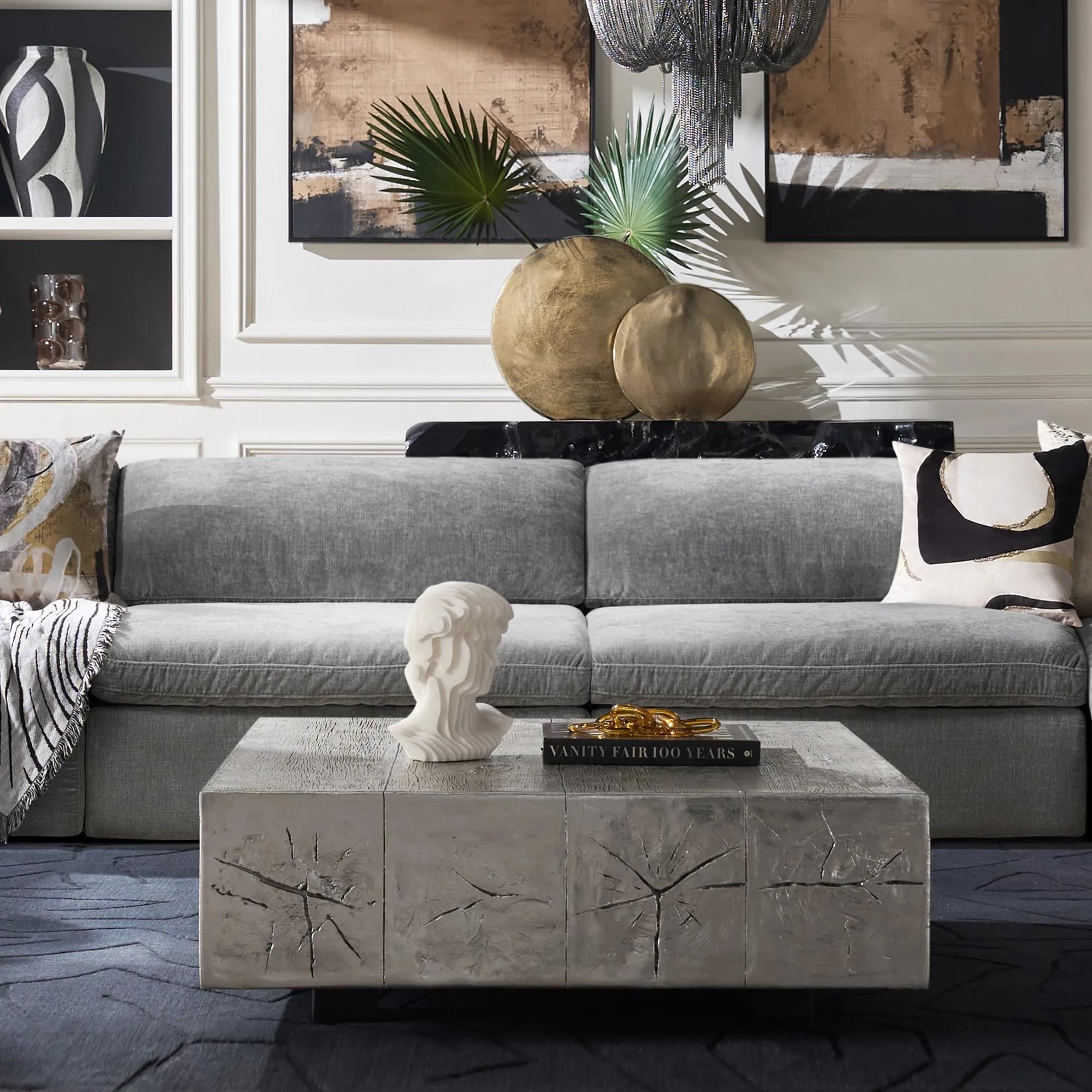 Timber Square Silver Resin Coffee Table (44")$1299
A hand-painted silver resin coffee table featuring authentic silver leaf and an antiqued, hand-rubbed oil finish.
Add To Cart -
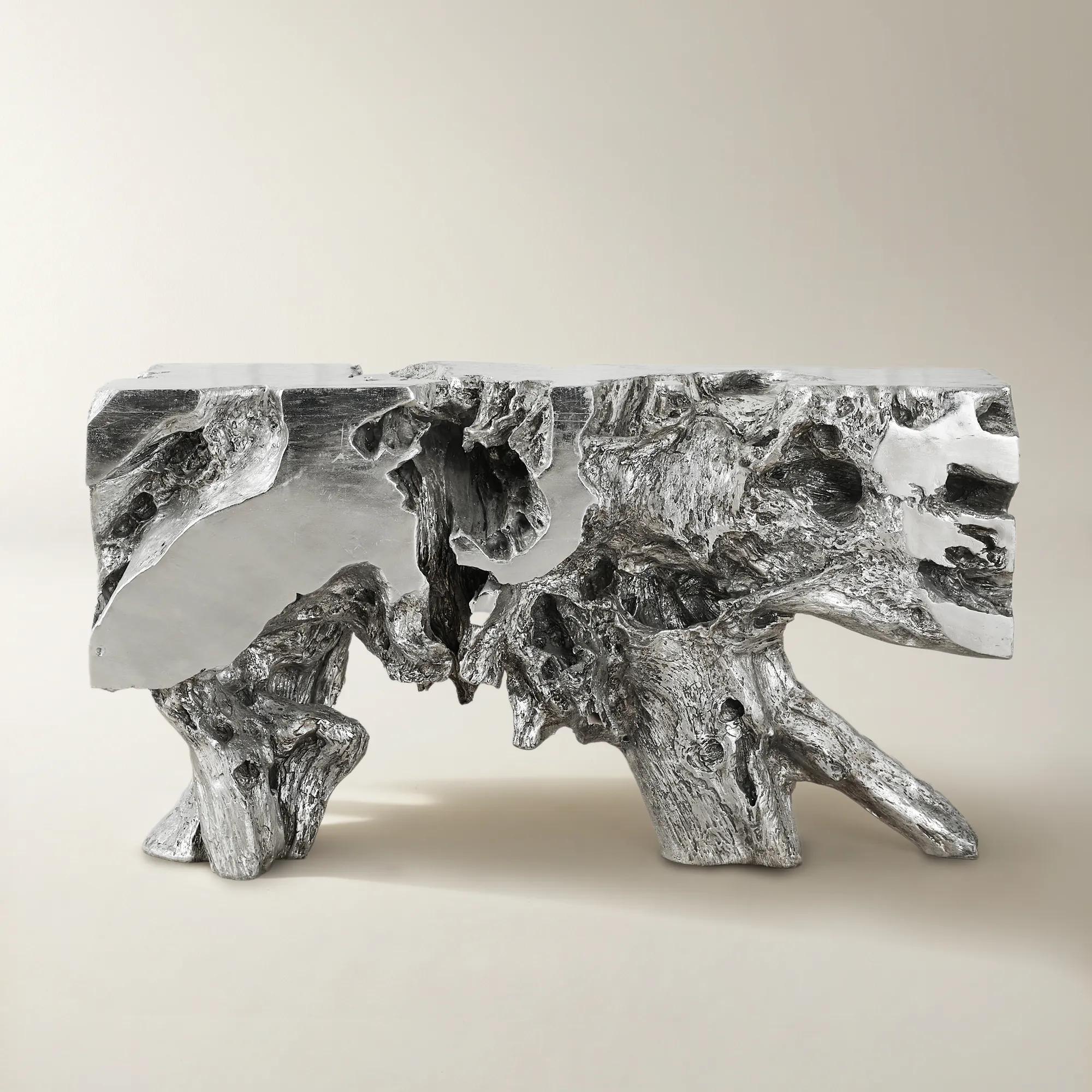
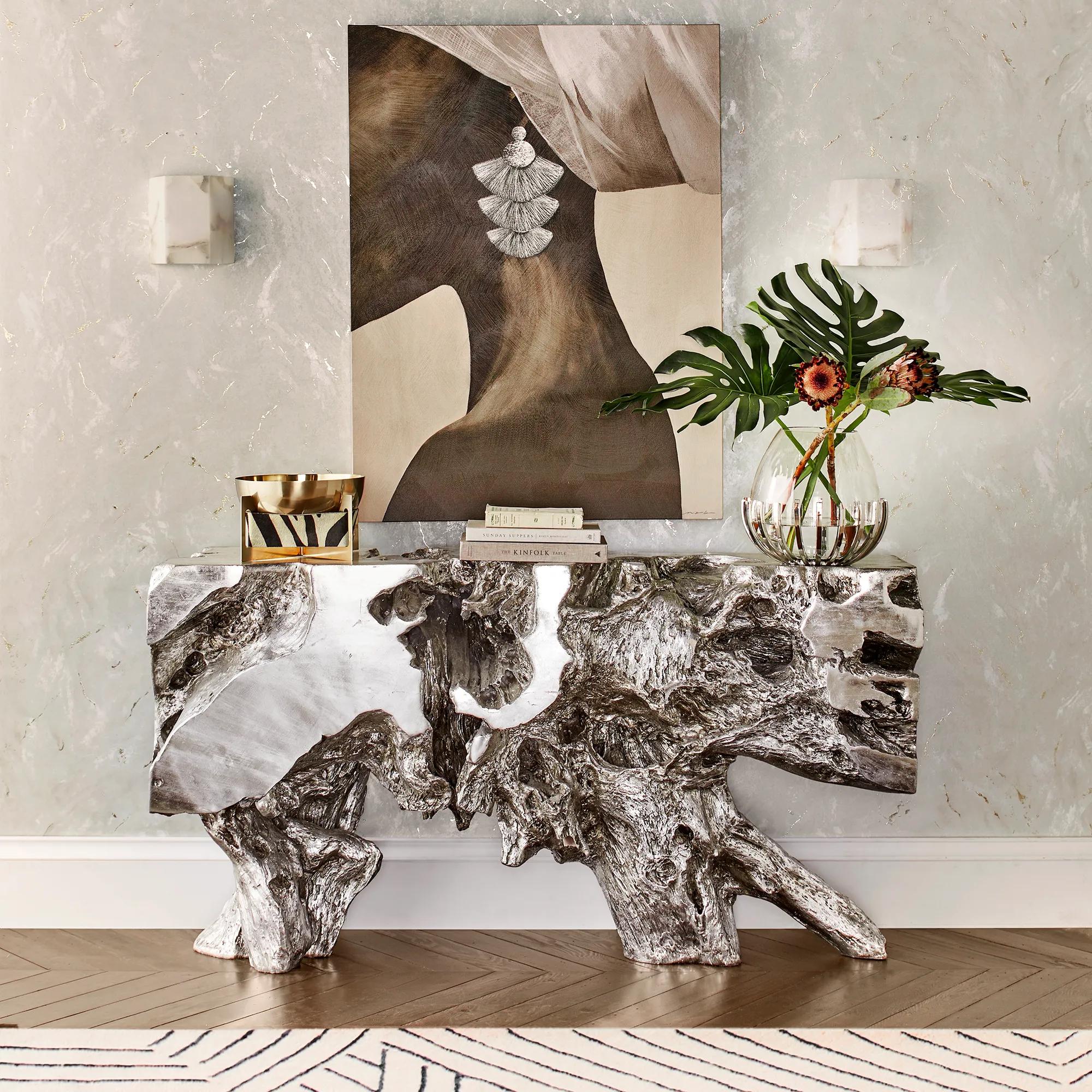 Sequoia Silver Resin Console Table (58")$1999
A sculptural console table featuring hand-applied silver leaf over resin and fiberglass with an iron core.
Add To Cart -
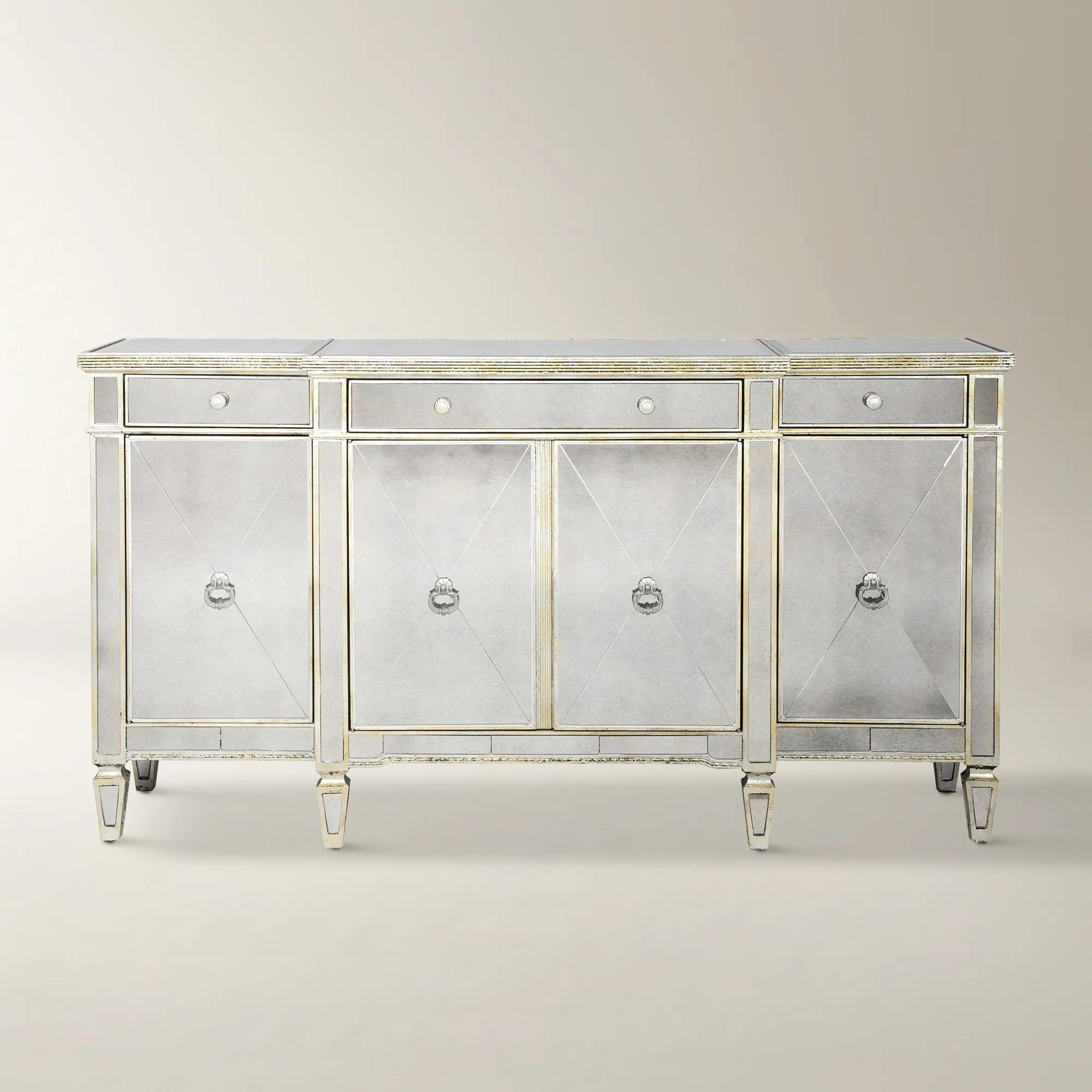
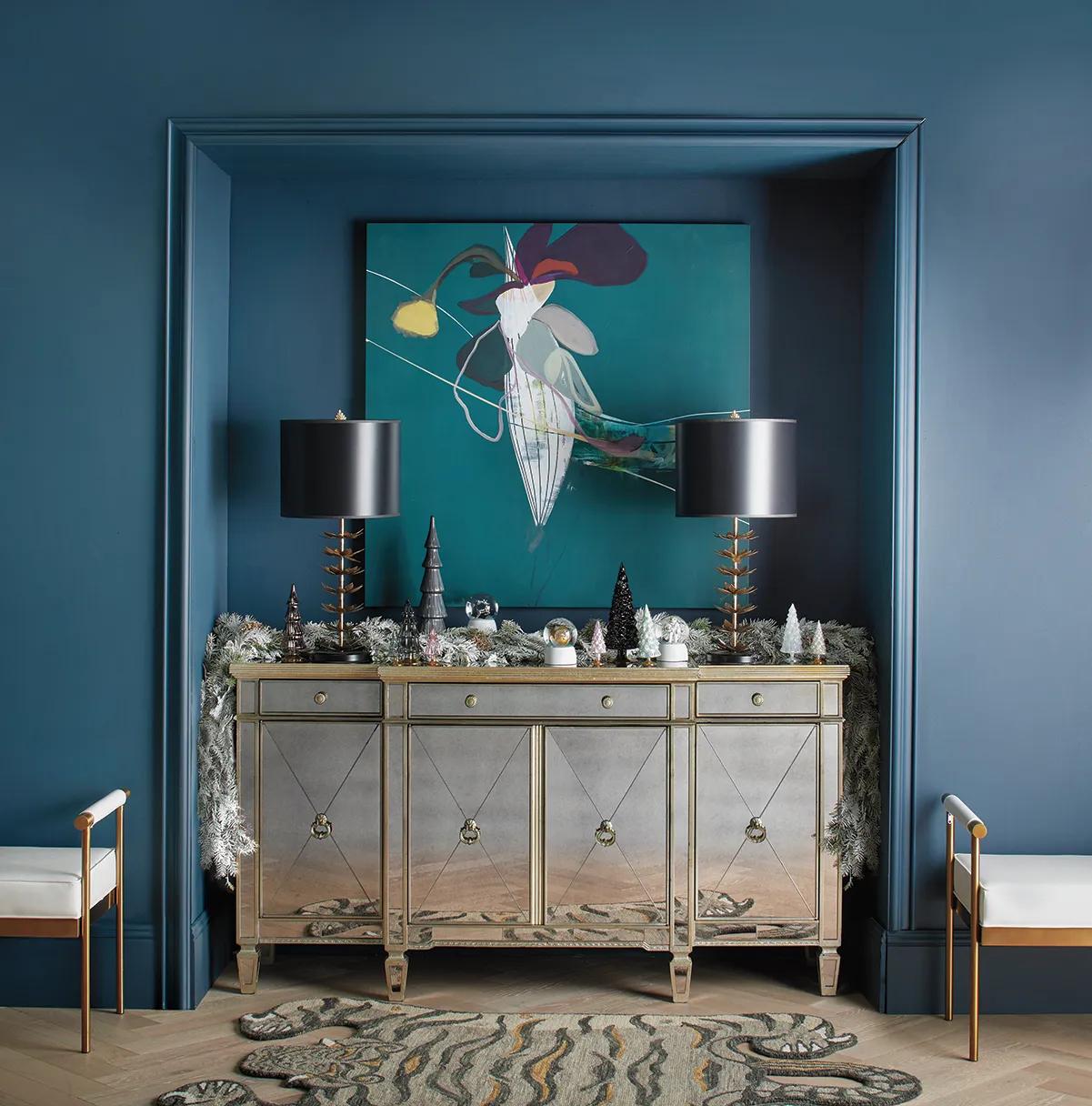 Borghese Mirrored Silver 3-Drawer Buffet (70")$2199
A sophisticated mirrored buffet featuring antique beveled glass, champagne gilt wood trim, and hand-applied silver leaf.
Add To Cart -
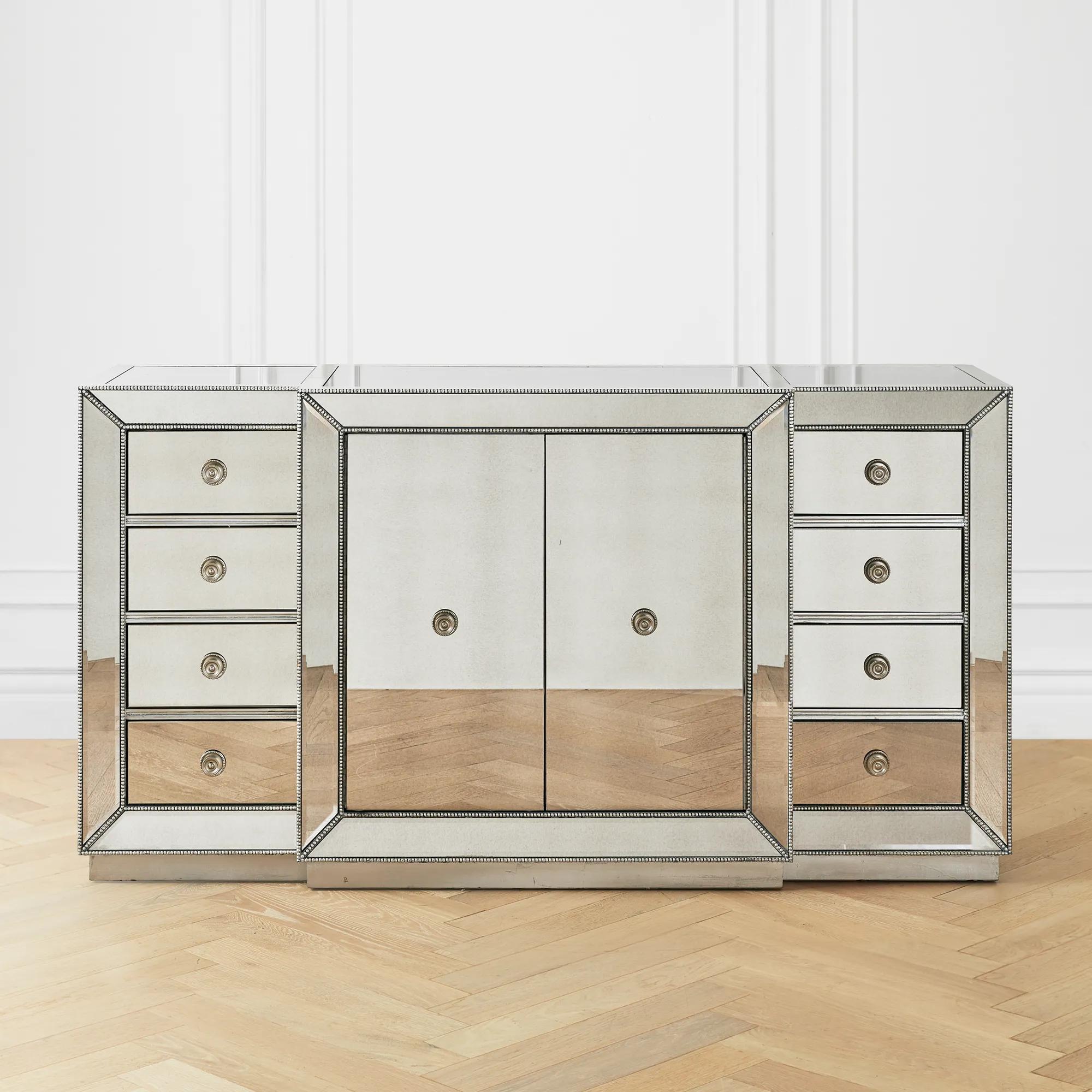 Omni Mirrored Silver 8-Drawer Buffet (72")$2499
A glamorous buffet featuring antique beveled mirrored panels, hand-applied silver leaf, and silver beaded trim.
Add To Cart -
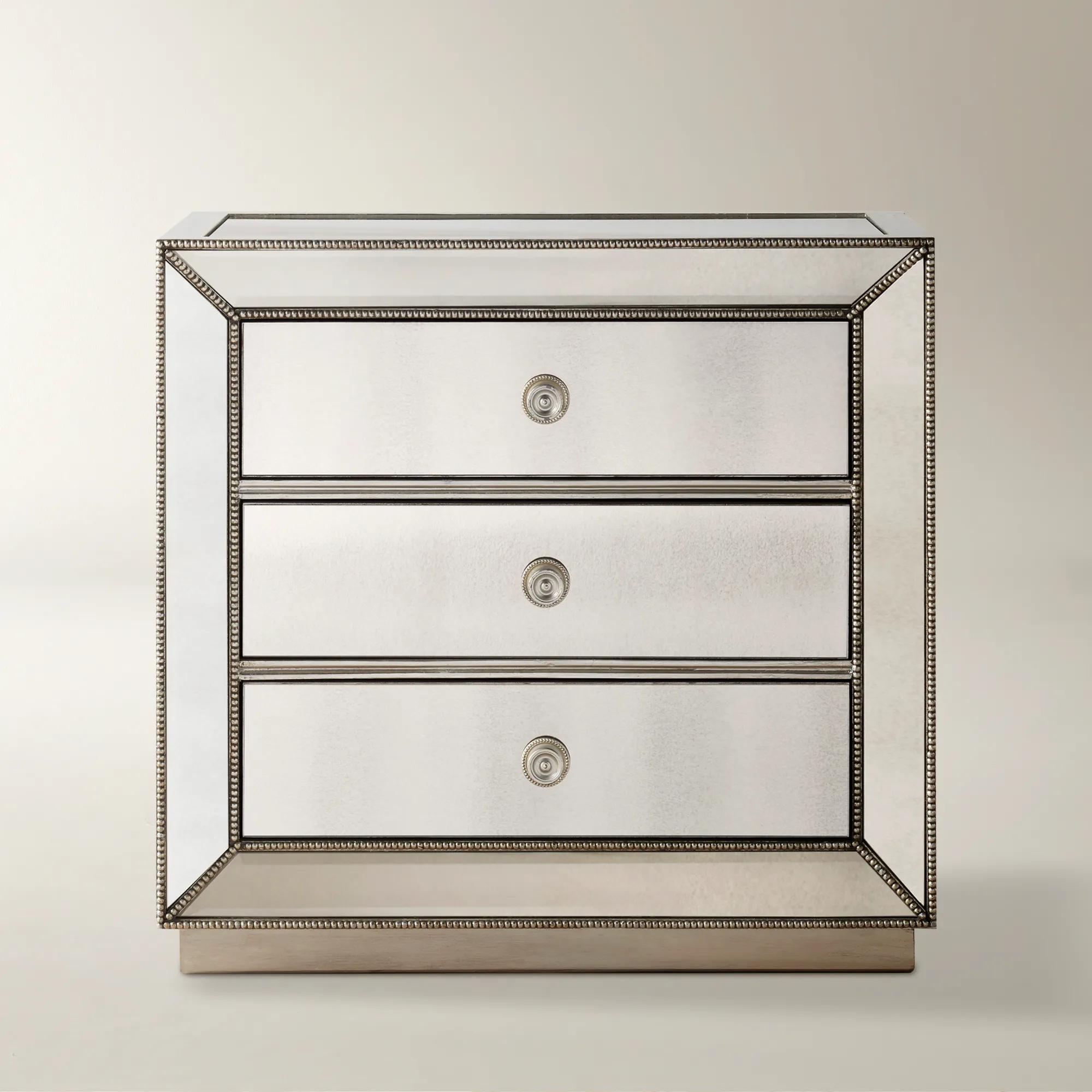
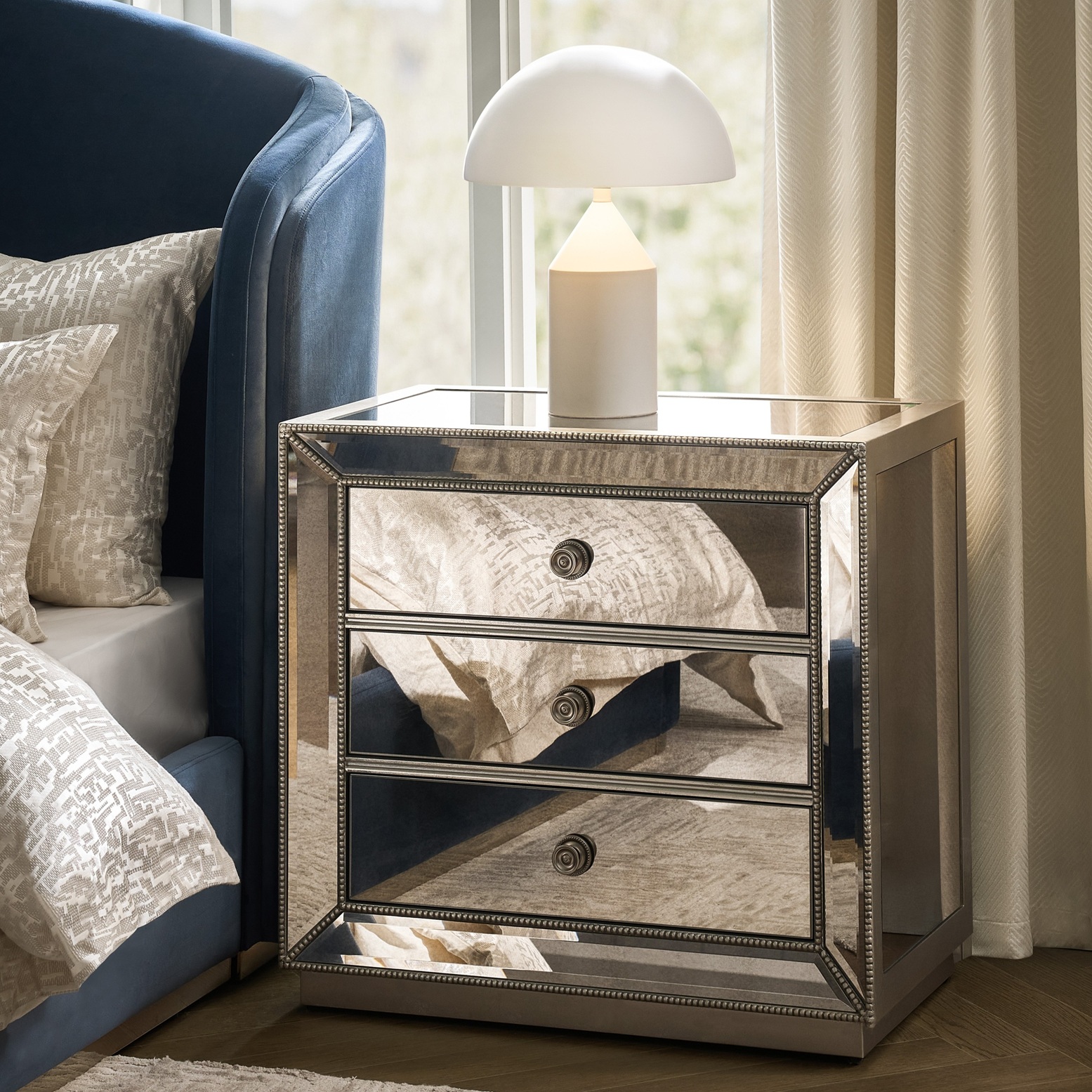 Omni Mirrored Silver 3-Drawer Nightstand (32")$1299
A glamorous chest featuring antiqued mirrored panels, hand-applied silver-leaf finish, and beaded trim.
Add To Cart -
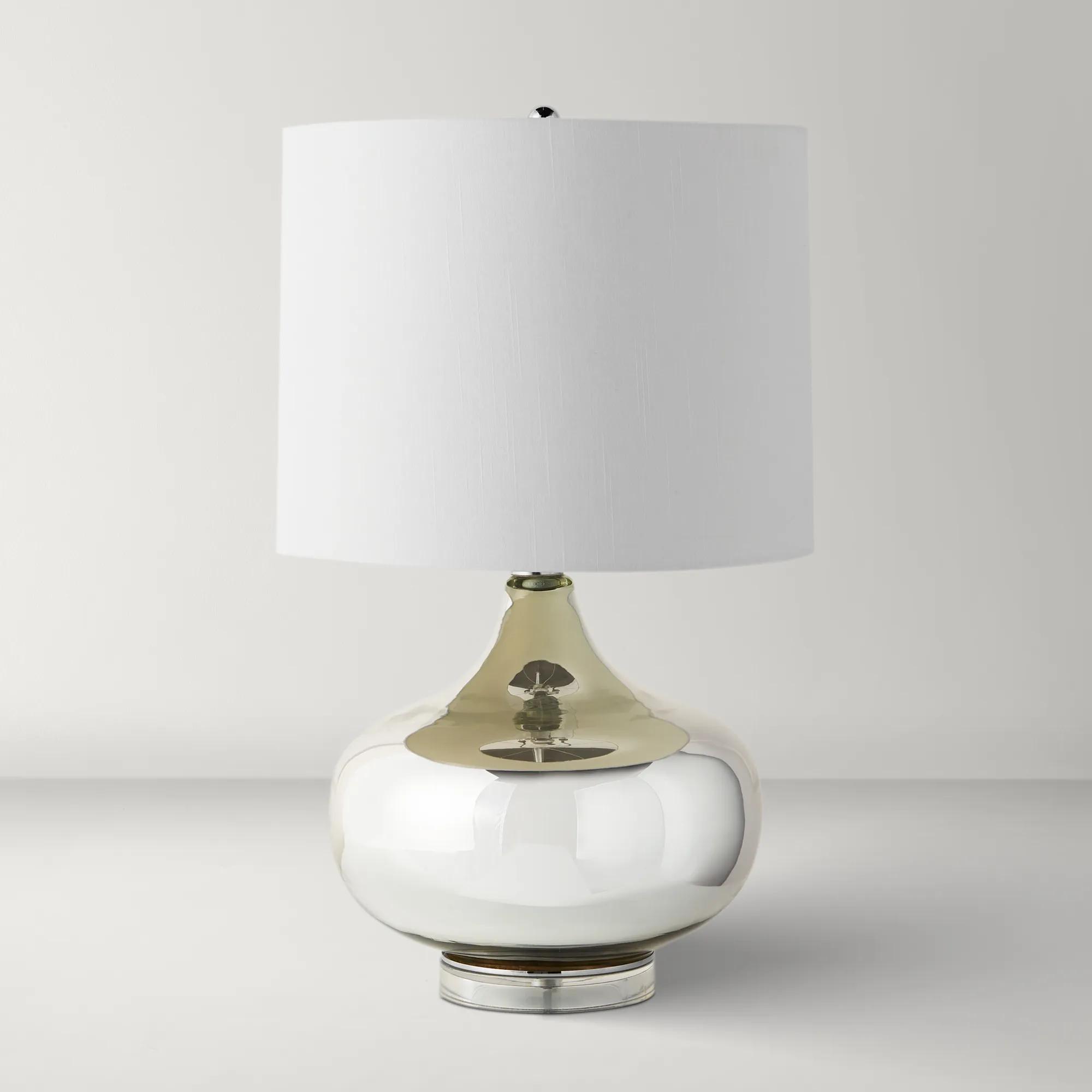 Sabrina Mirrored Silver Glass Table Lamp 27.5"$199
A contemporary lamp featuring a silver mirrored glass base, clear acrylic accents, and a white fabric shade.
Add To Cart -
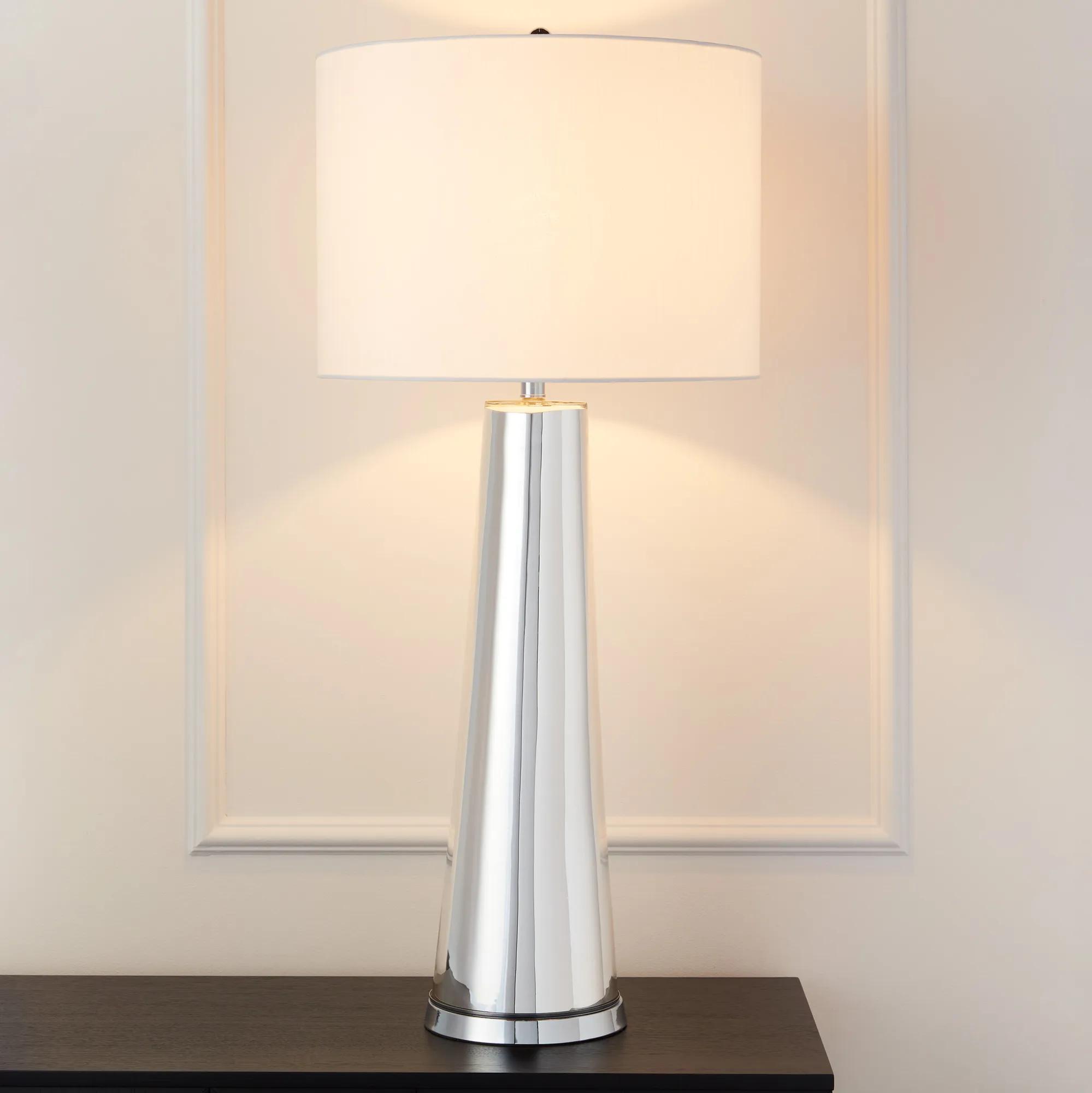 Century Silver Mirrored Glass Table Lamp 40"$299
A modern table lamp featuring a mirrored glass base and white drum shade with brushed chrome accents.
Add To Cart -
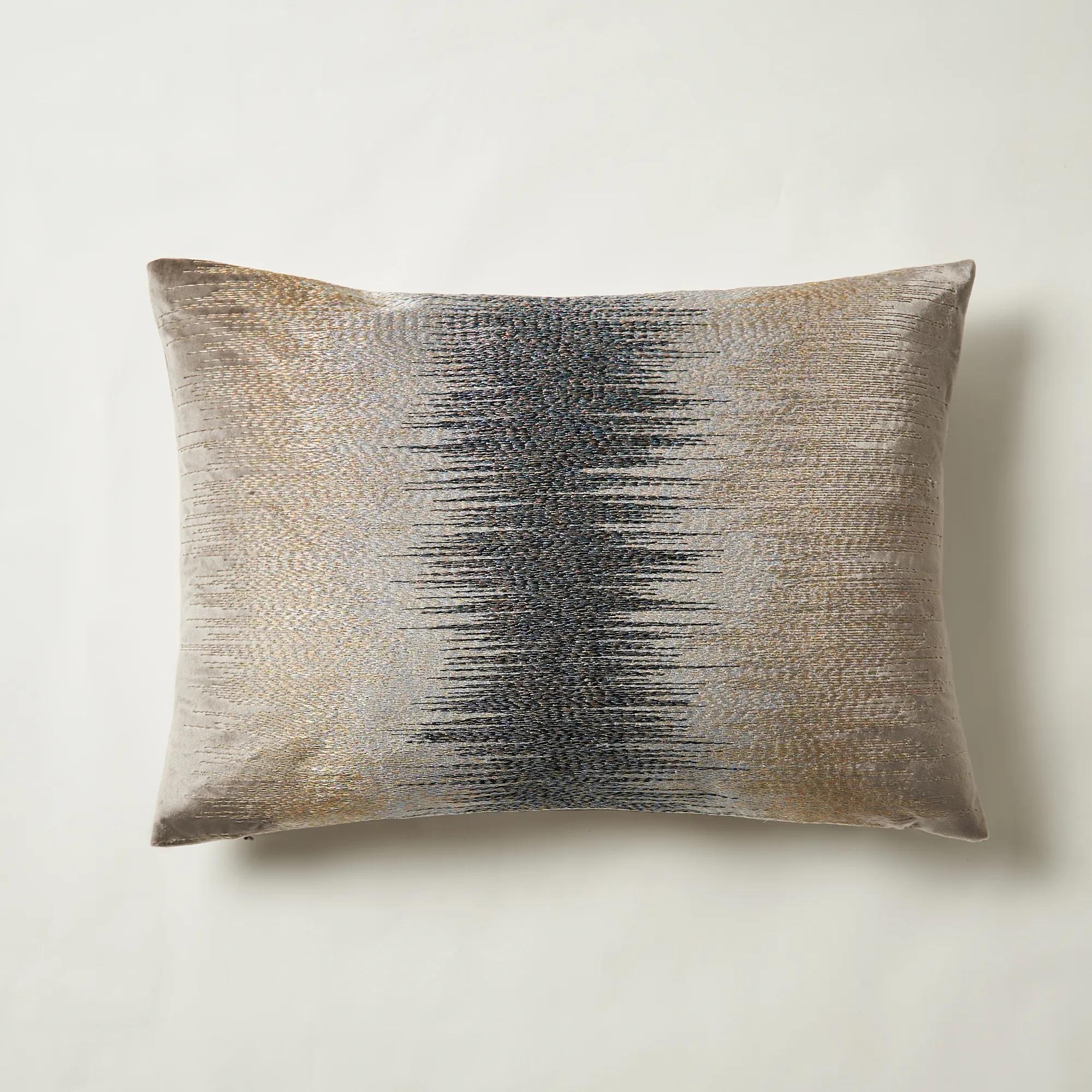
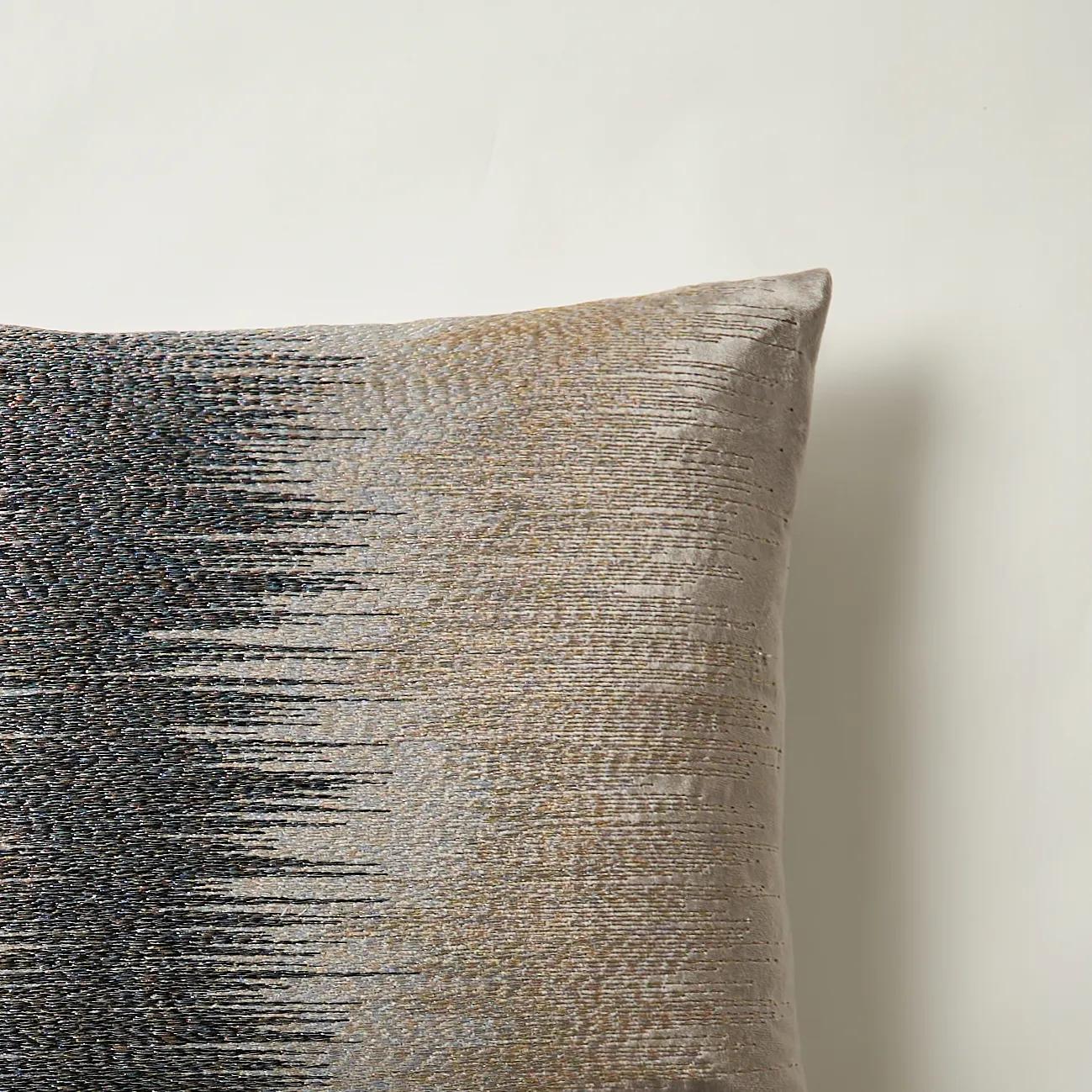 Leon Metallic Embroidered Grey/Charcoal/Silver Velvet Lumbar Pillow 14" x 20"$59
A soft grey, black, and silver velvet pillow featuring gradient metallic embroidery and a plush feather-down insert.
Add To Cart -
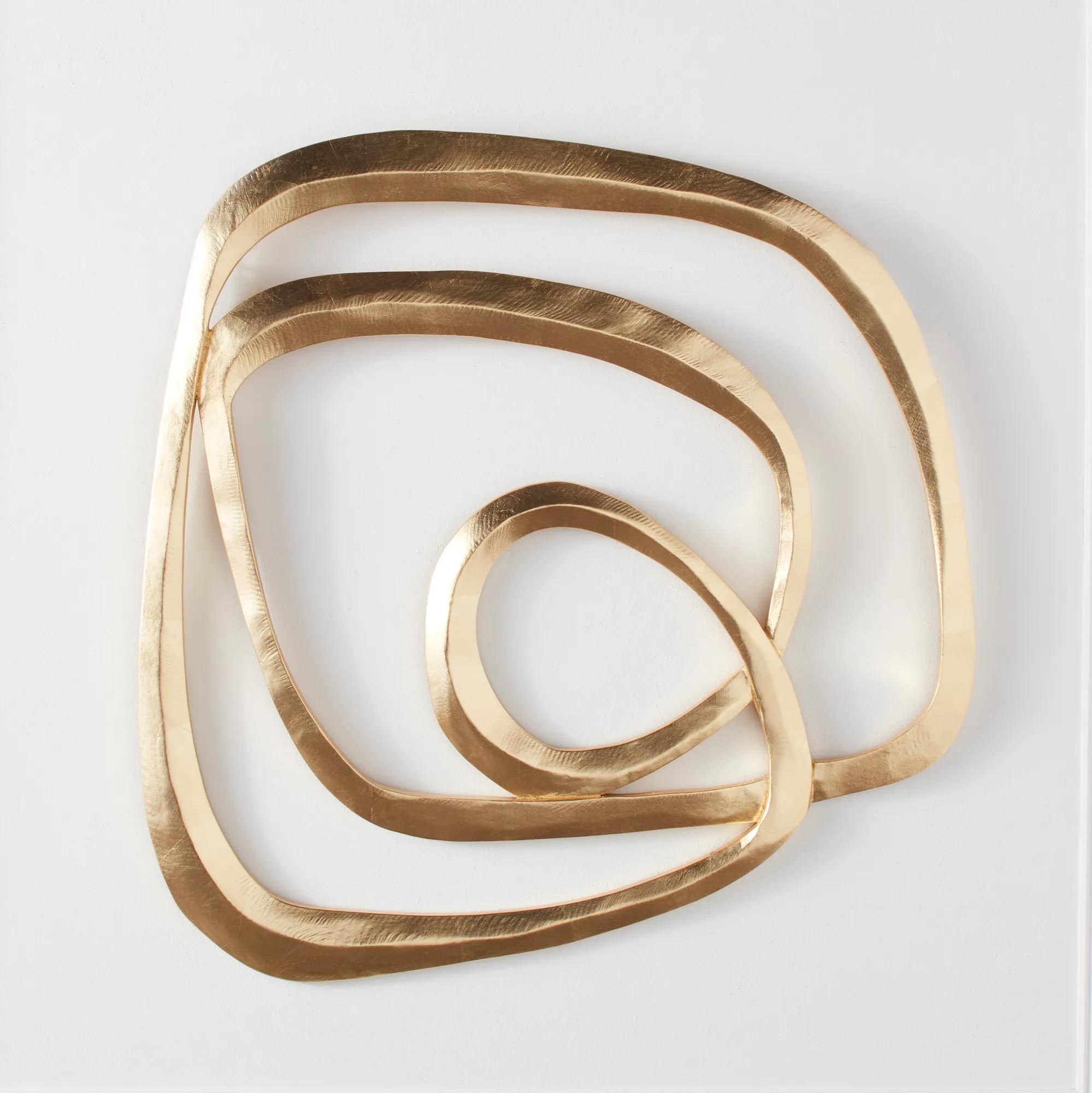
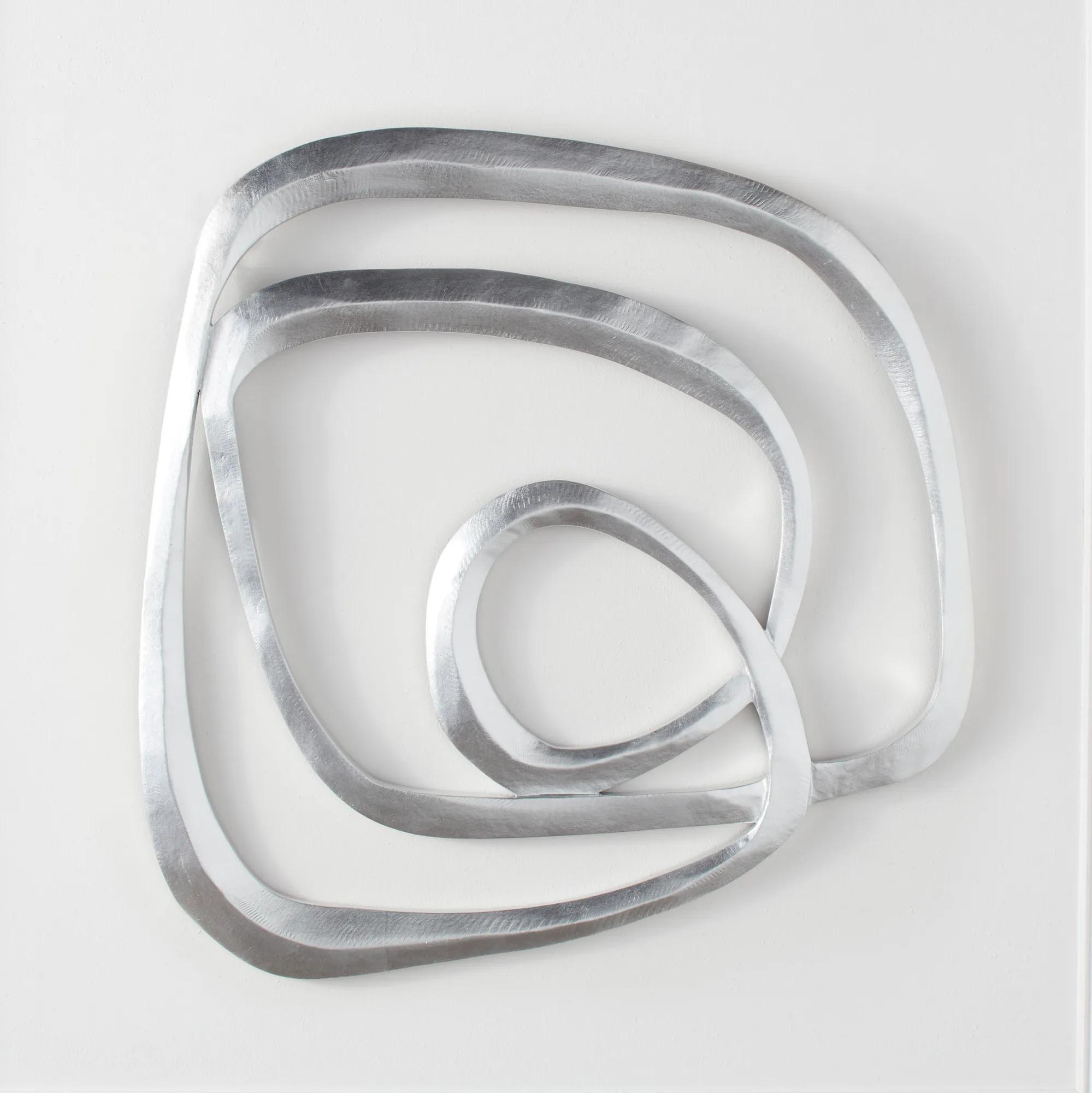 Infinity Silver Leaf Wood Wall Decor I 31.5" x 31.5"$299
A swirling wooden wall sculpture featuring a striking metallic silver finish for modern visual impact.
Add To Cart -
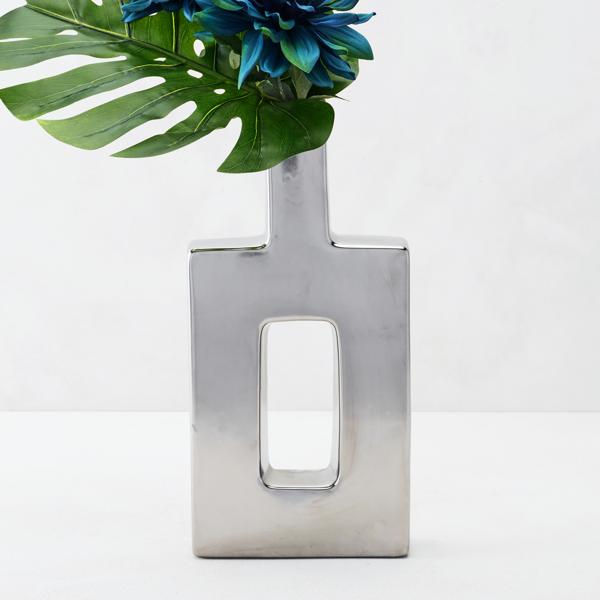
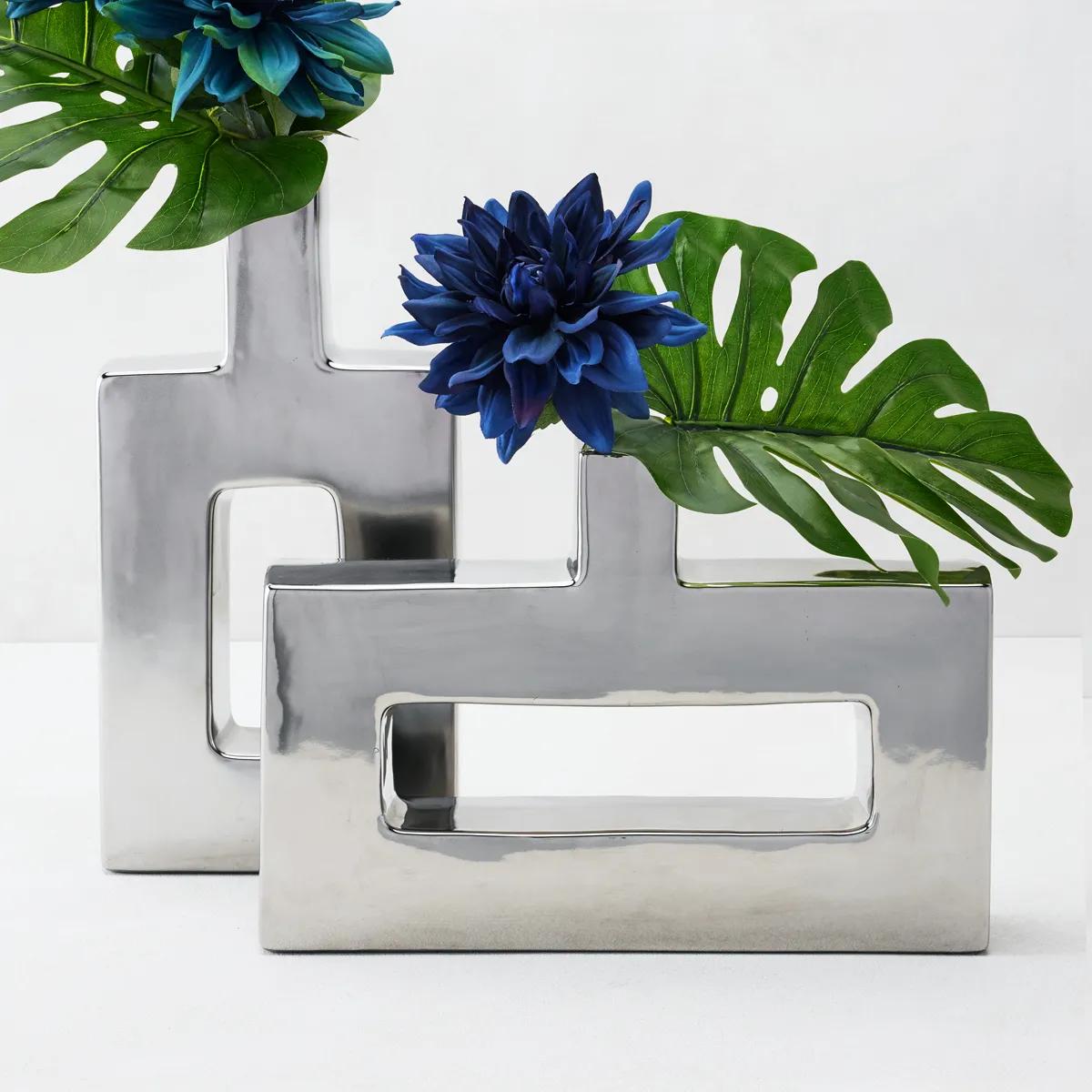 Miami Silver Ceramic High Gloss Vase 18.5"$69
A contemporary silver ceramic vase with a stylish gold glaze, perfect for decorative foliage or display.
Add To Cart -
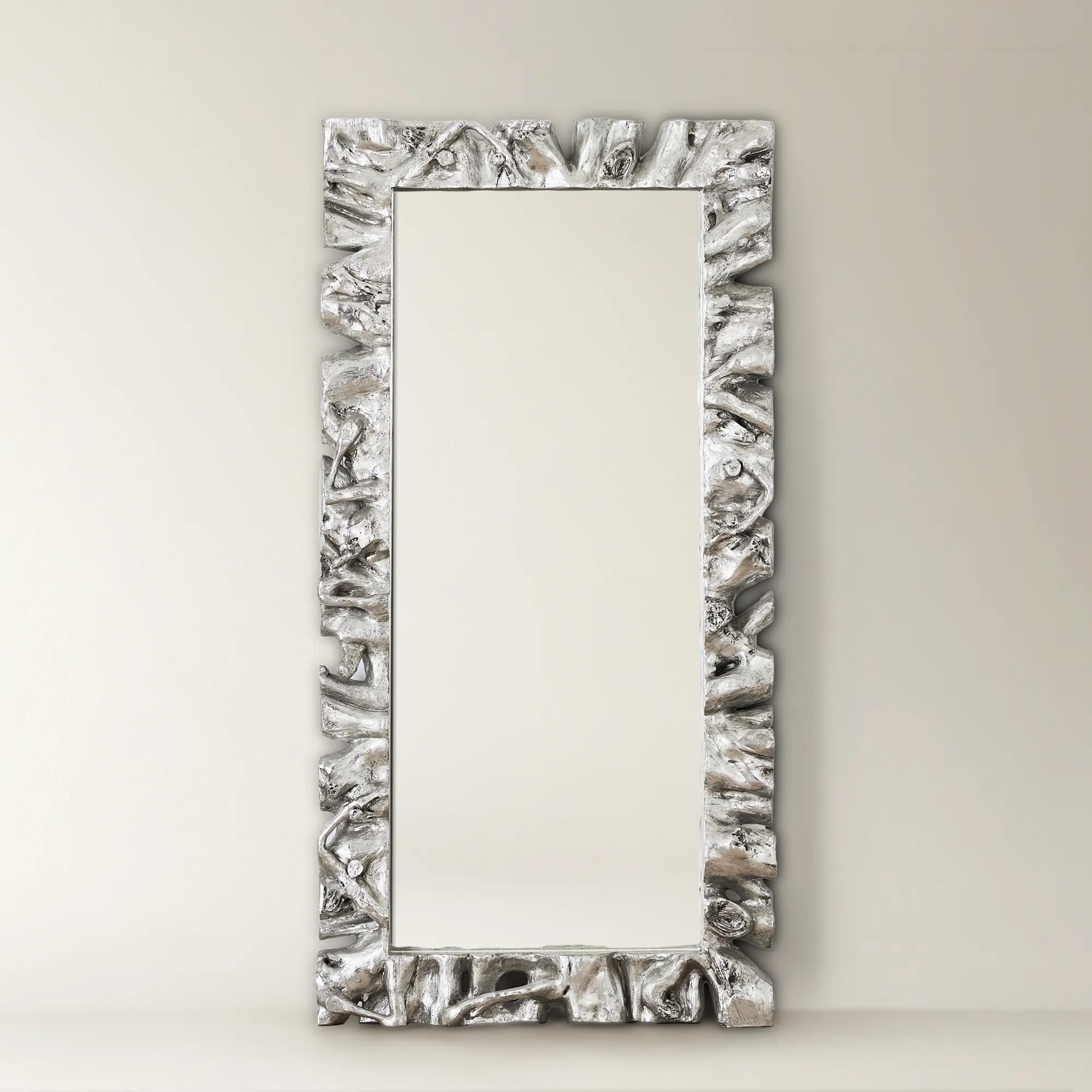 Sequoia Silver Resin Rectangular Floor Mirror 39'' x 78''$1399
A sculptural leaner mirror featuring acacia root-inspired fiber resin and a shimmering metallic leaf finish.
Add To Cart -
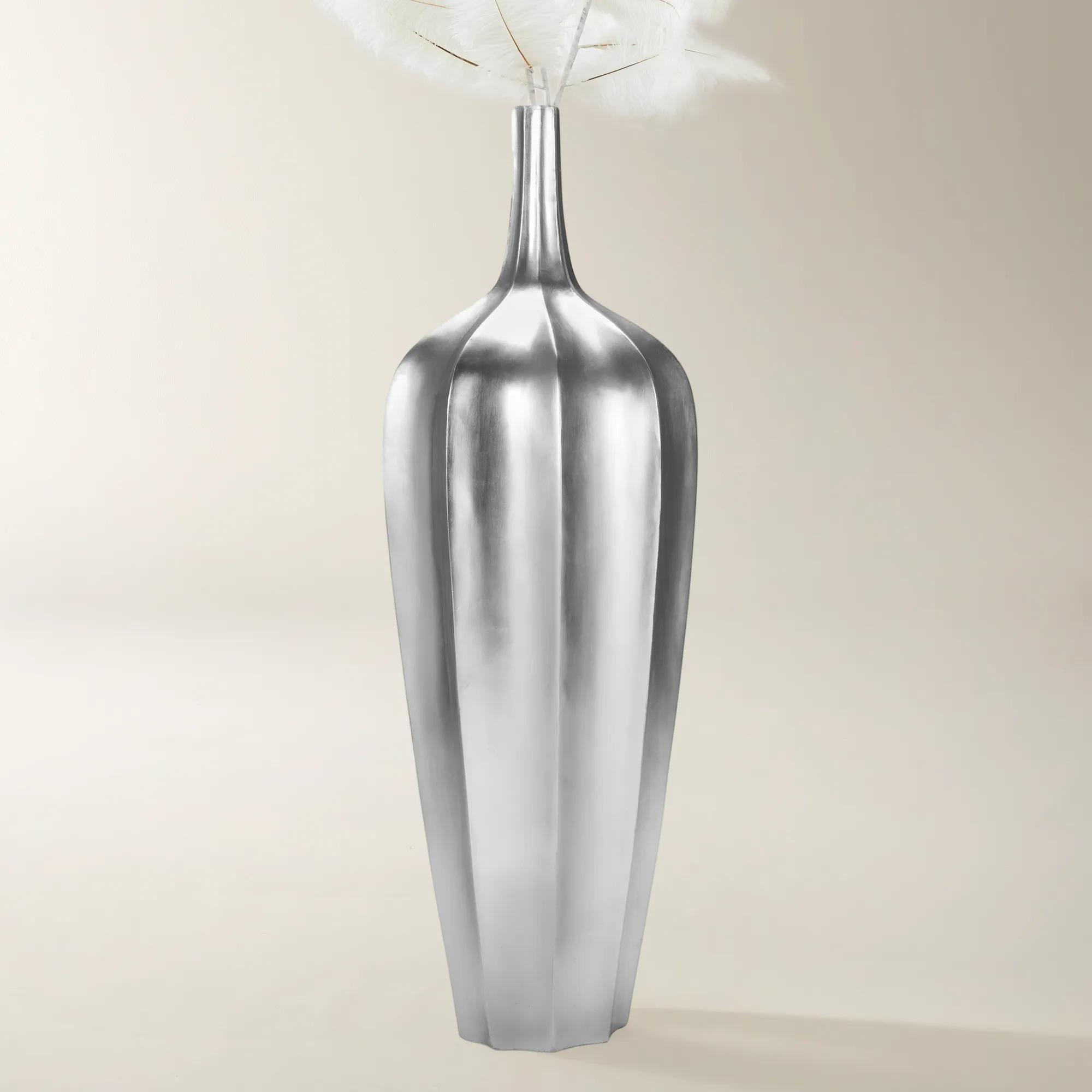
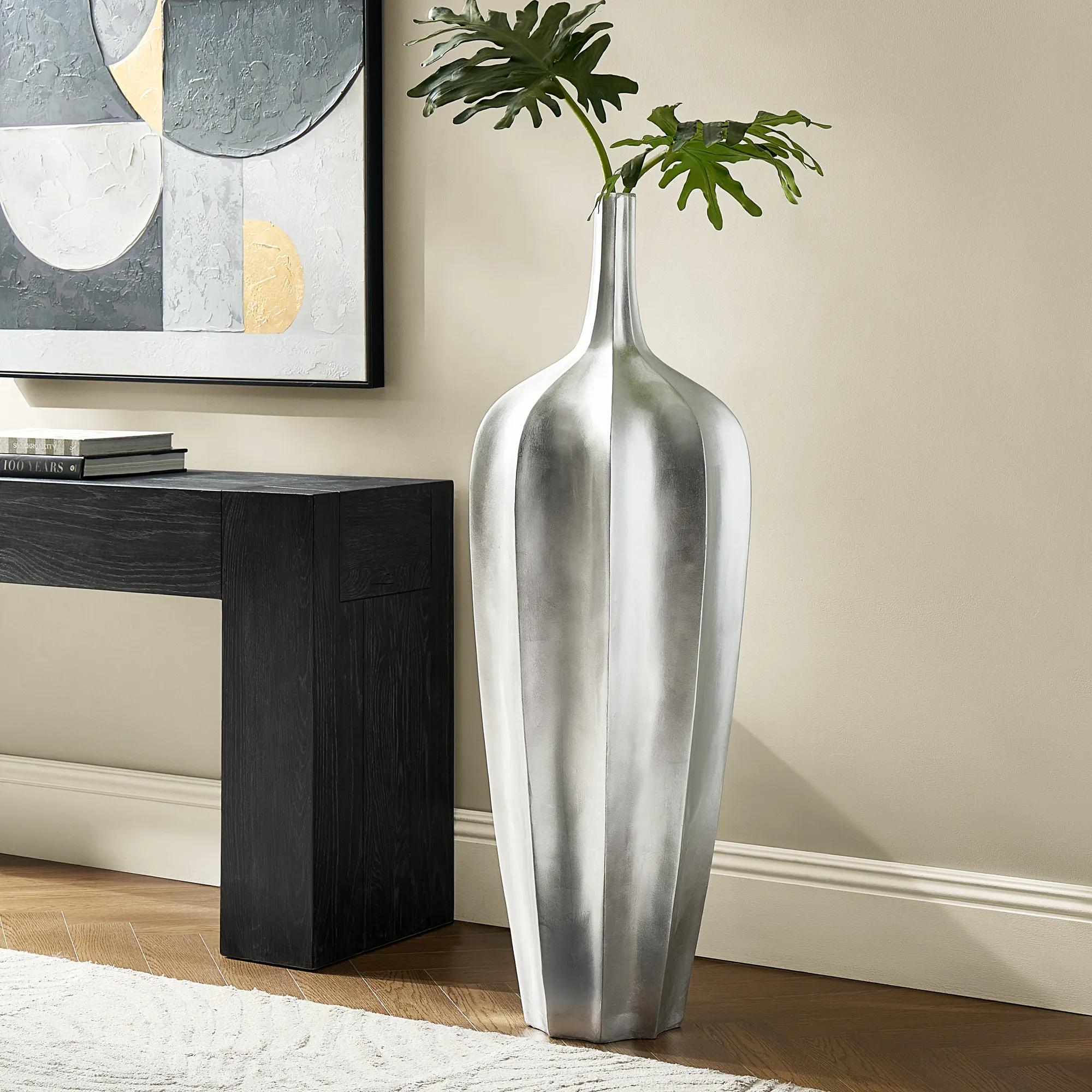 Accolade Silver Leaf Resin Floor Vase 48.75"$539
A fluted fiberglass vase featuring a lustrous metallic silver foil finish for a striking decorative accent.
Add To Cart -
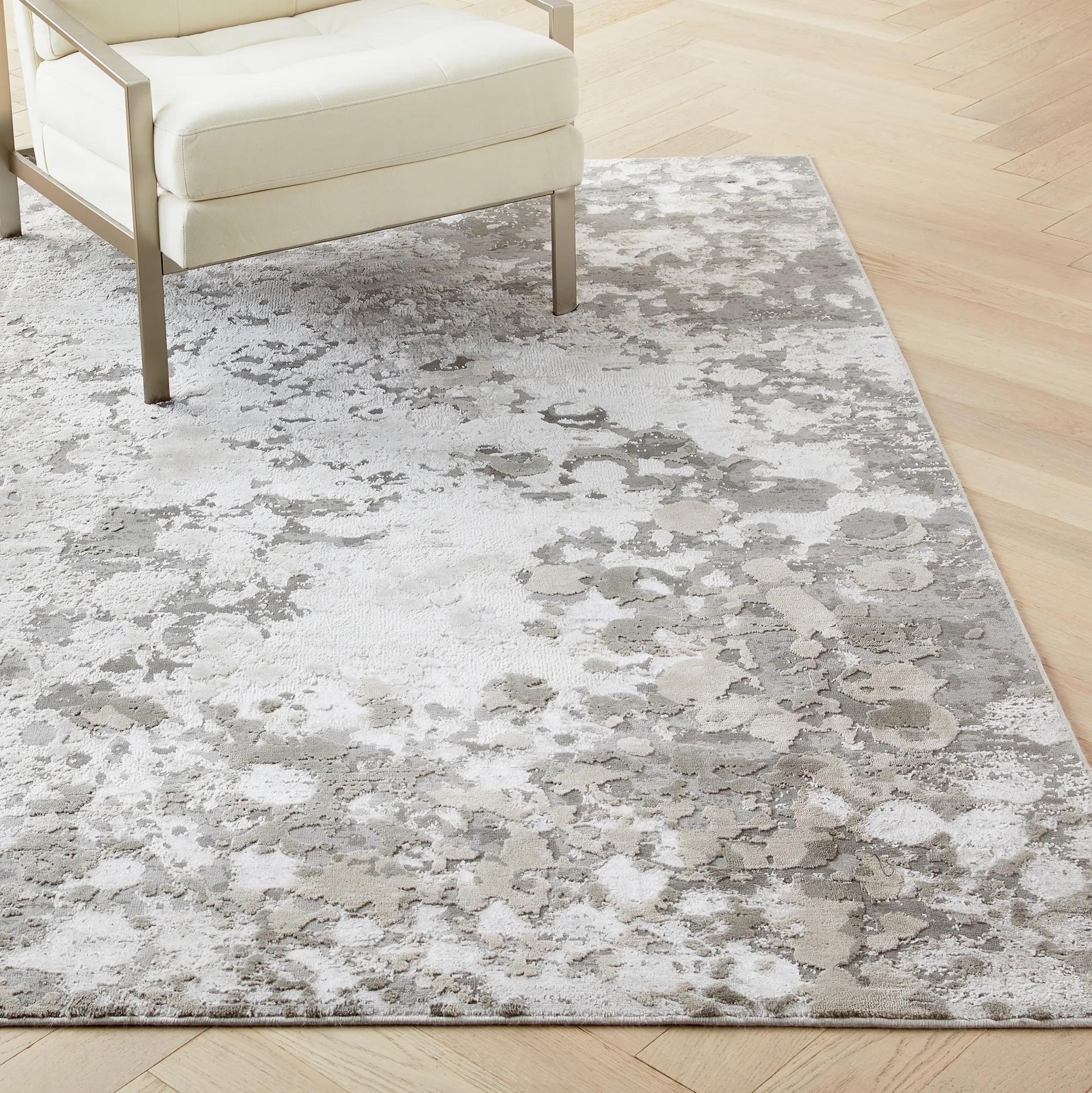 Mercury Power-Loomed Silver/Grey/Beige Rug$249
A neutral floor covering featuring a silver, grey, and beige palette with a textured polyester blend.
Add To Cart -
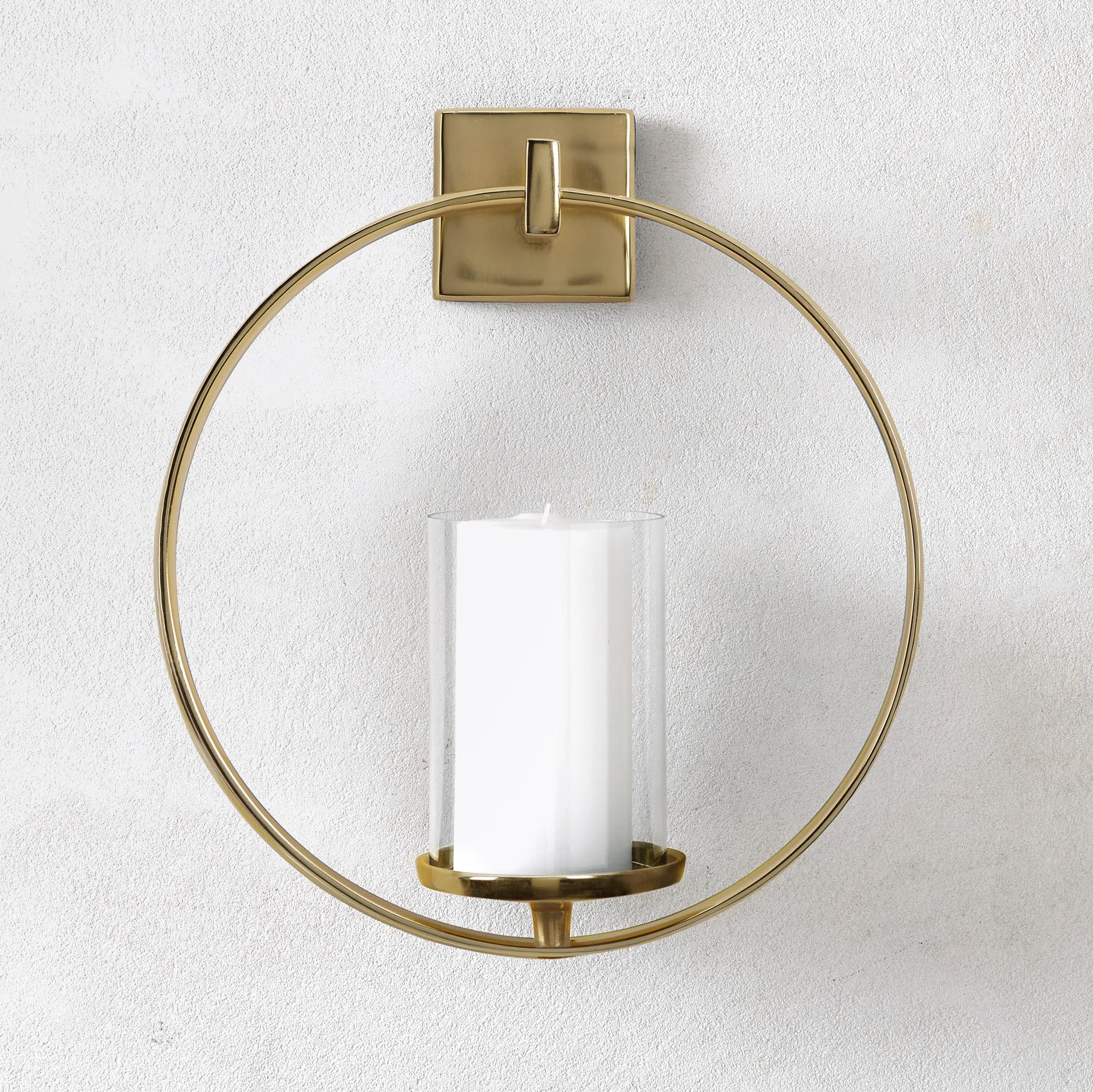
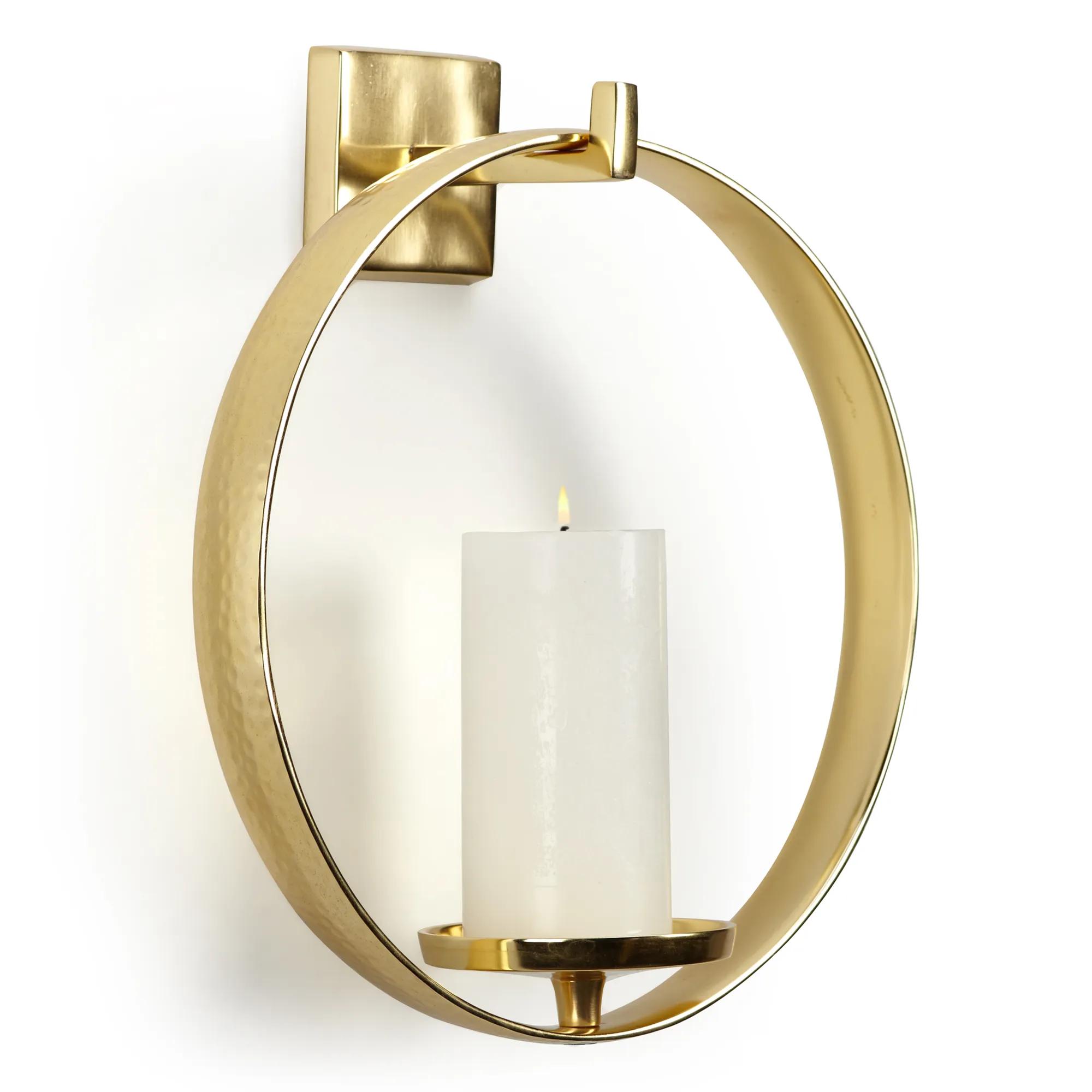 Cirque Hanging Sconce$79
A sleek aluminum wall sconce with a metallic finish, available in silver, gold, or black.
Add To Cart -
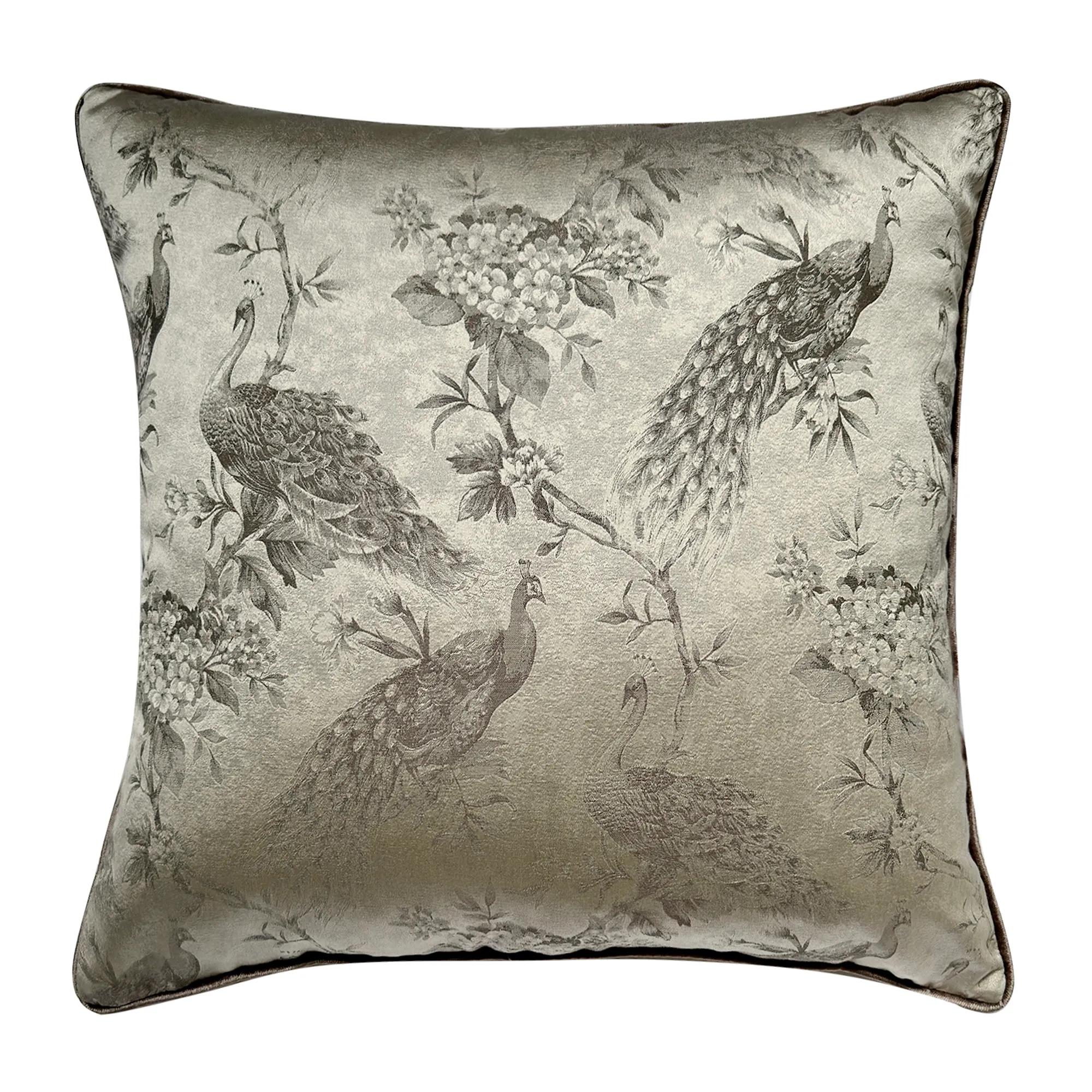
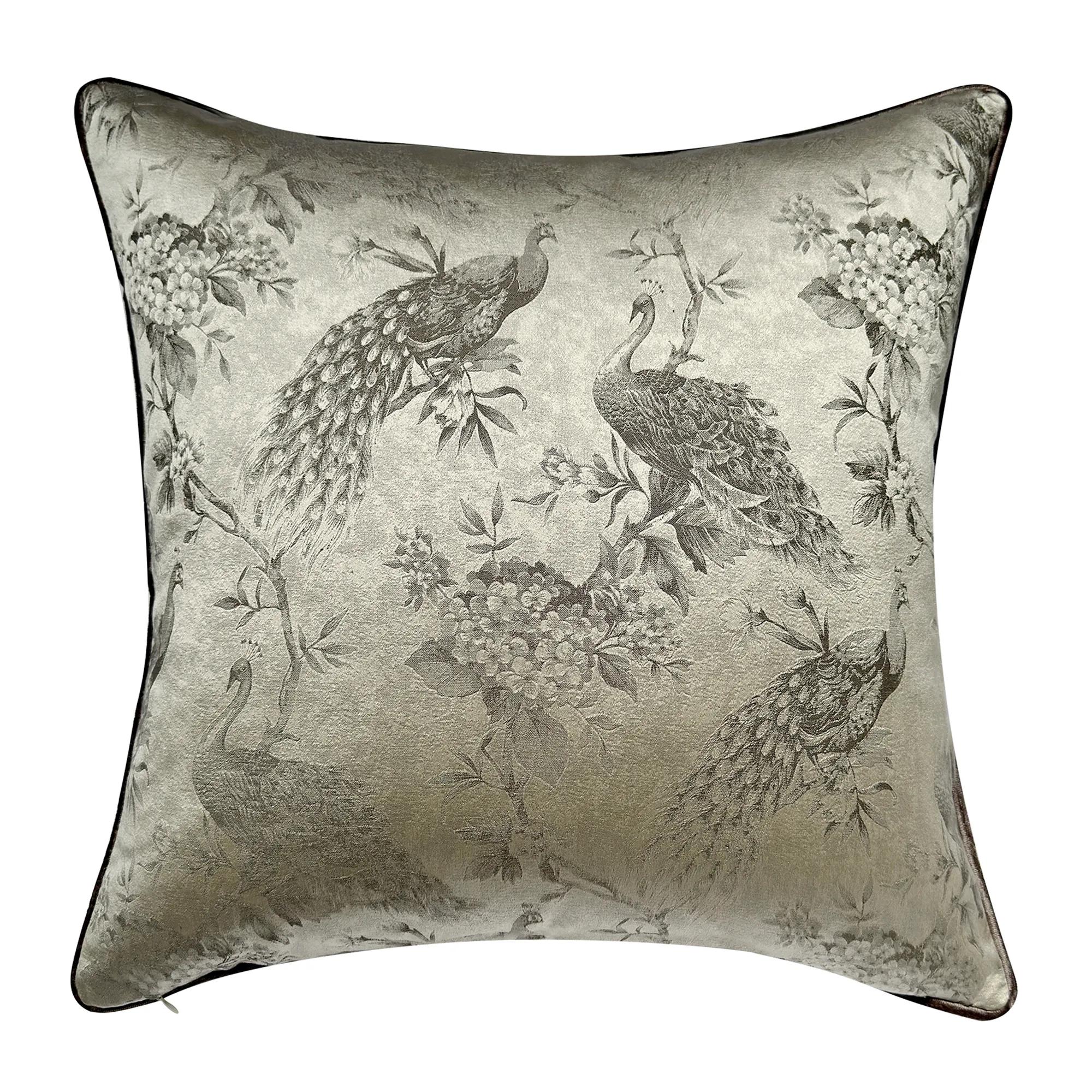 Peacock Silver Jacquard Pillow 20" x 20"$99
A silver jacquard pillow featuring an antique peacock pattern, plush feather down insert, and removable cover.
Add To Cart -
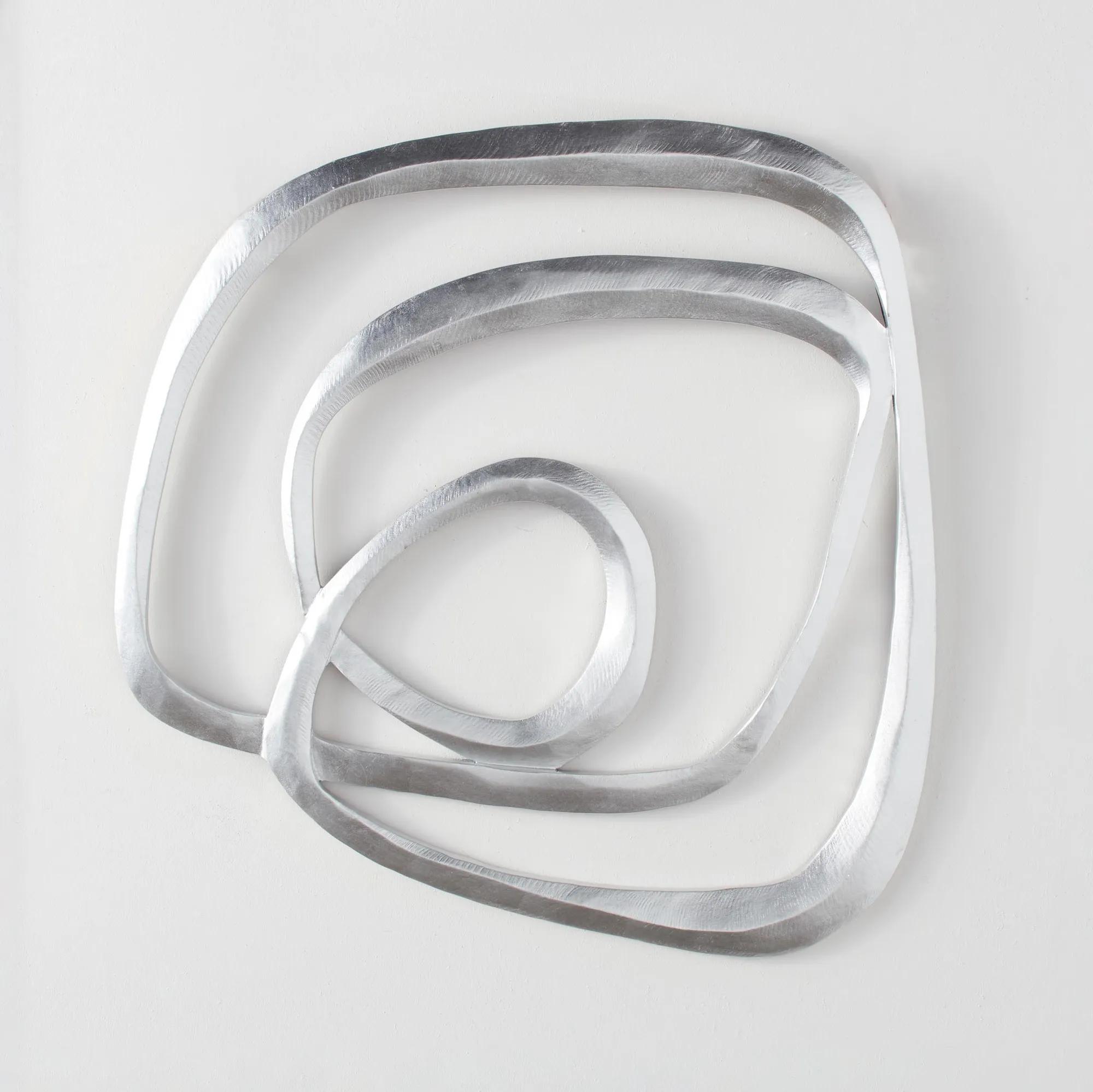 Infinity Silver Leaf Wood Wall Decor II 31.5" x 31.5"$299
A swirling wooden wall sculpture featuring a striking metallic silver finish for modern visual impact.
Add To Cart -
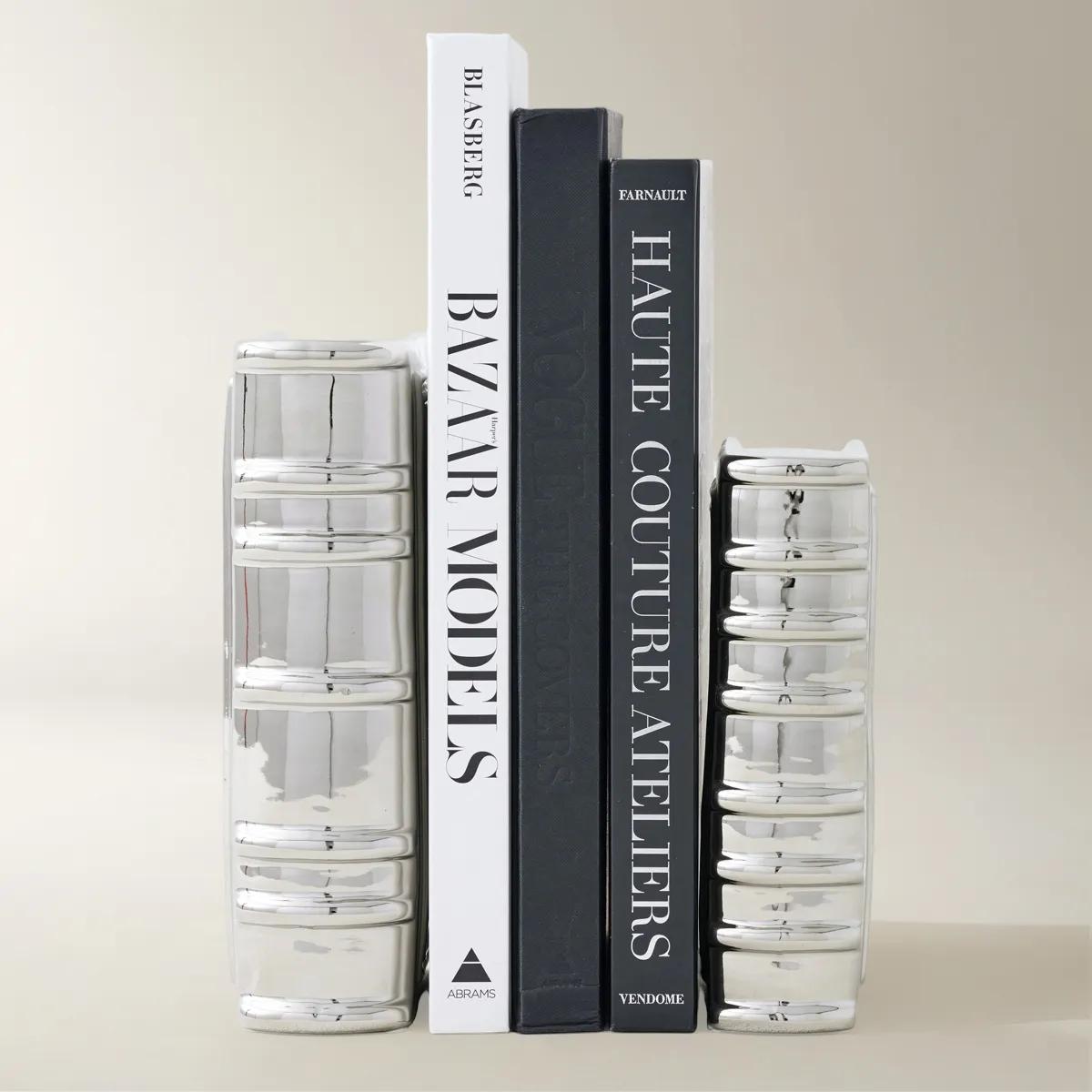
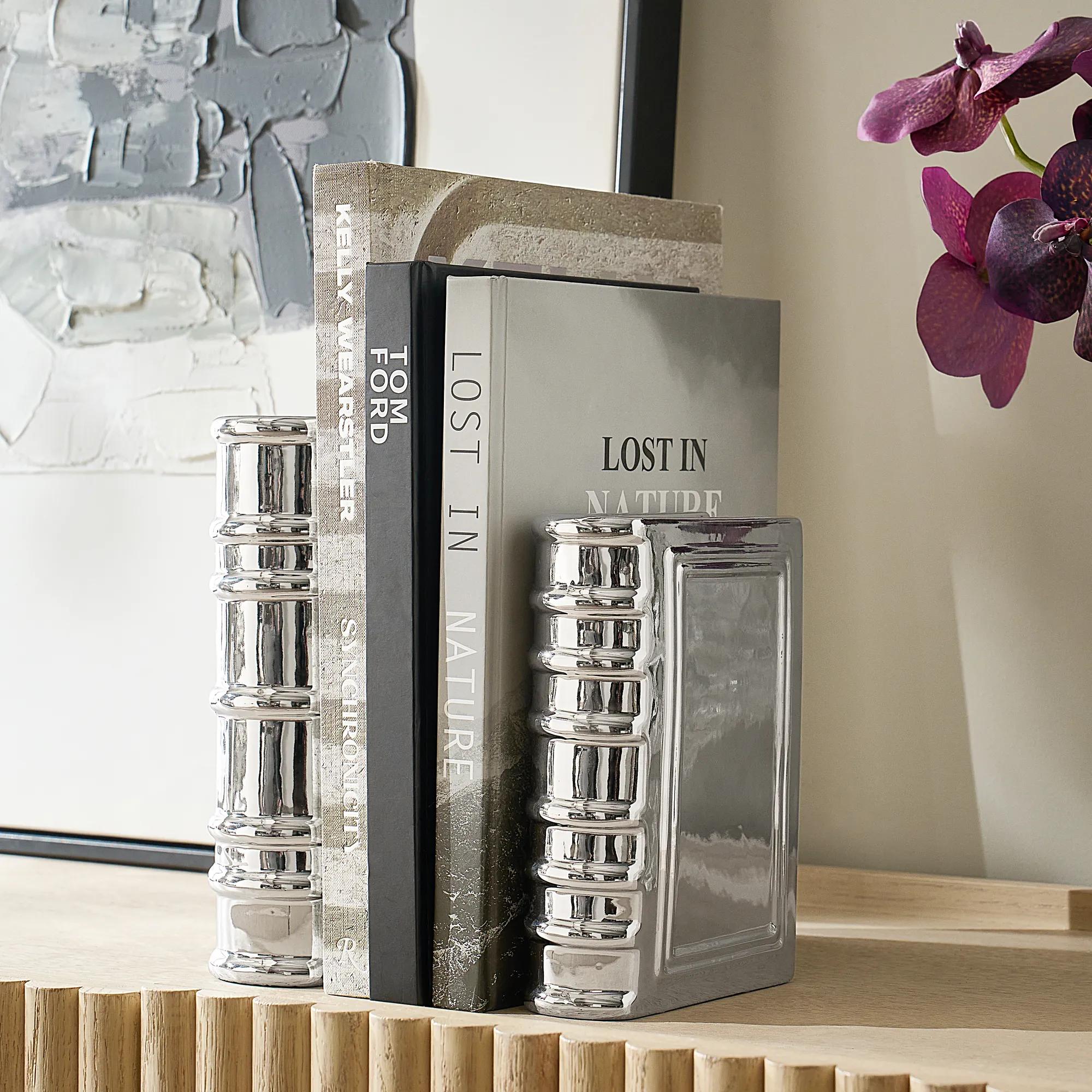 Silver Ceramic Bookends$49
A sleek silver ceramic accent that doubles as stylish bookends for modern decorative displays.
Add To Cart -
.jpeg?w=1200&h=1200)
 Odessey Collection$99
Odessey Collection$99A shiny silver porcelain accent piece perfect for adding modern elegance to any decorative display.
Add To Cart -
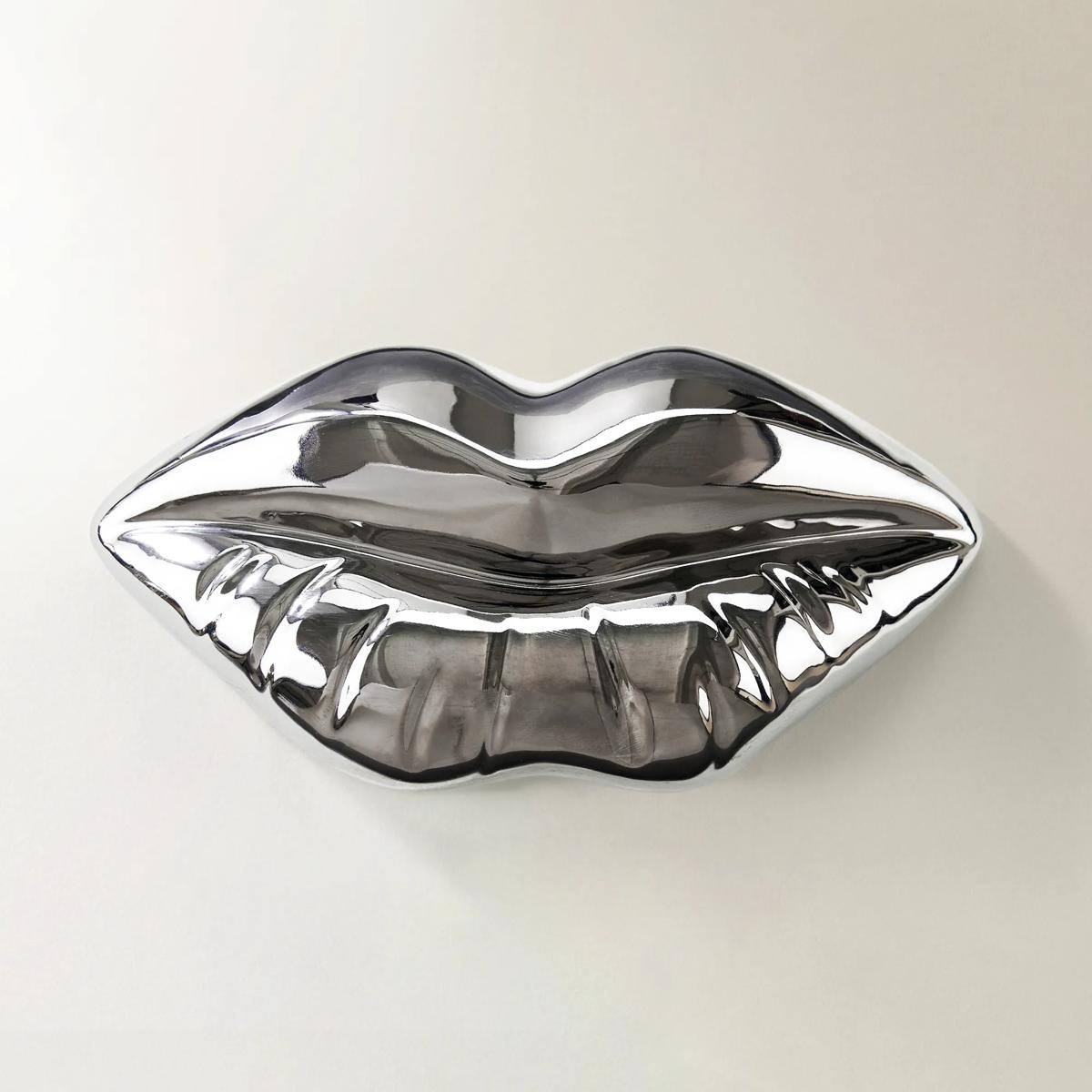 Chrome Lips Ceramic Decorative Object 5.25"$29
A high-shine silver ceramic sculpture that adds modern pop art flair and playful sophistication to any space.
Add To Cart -
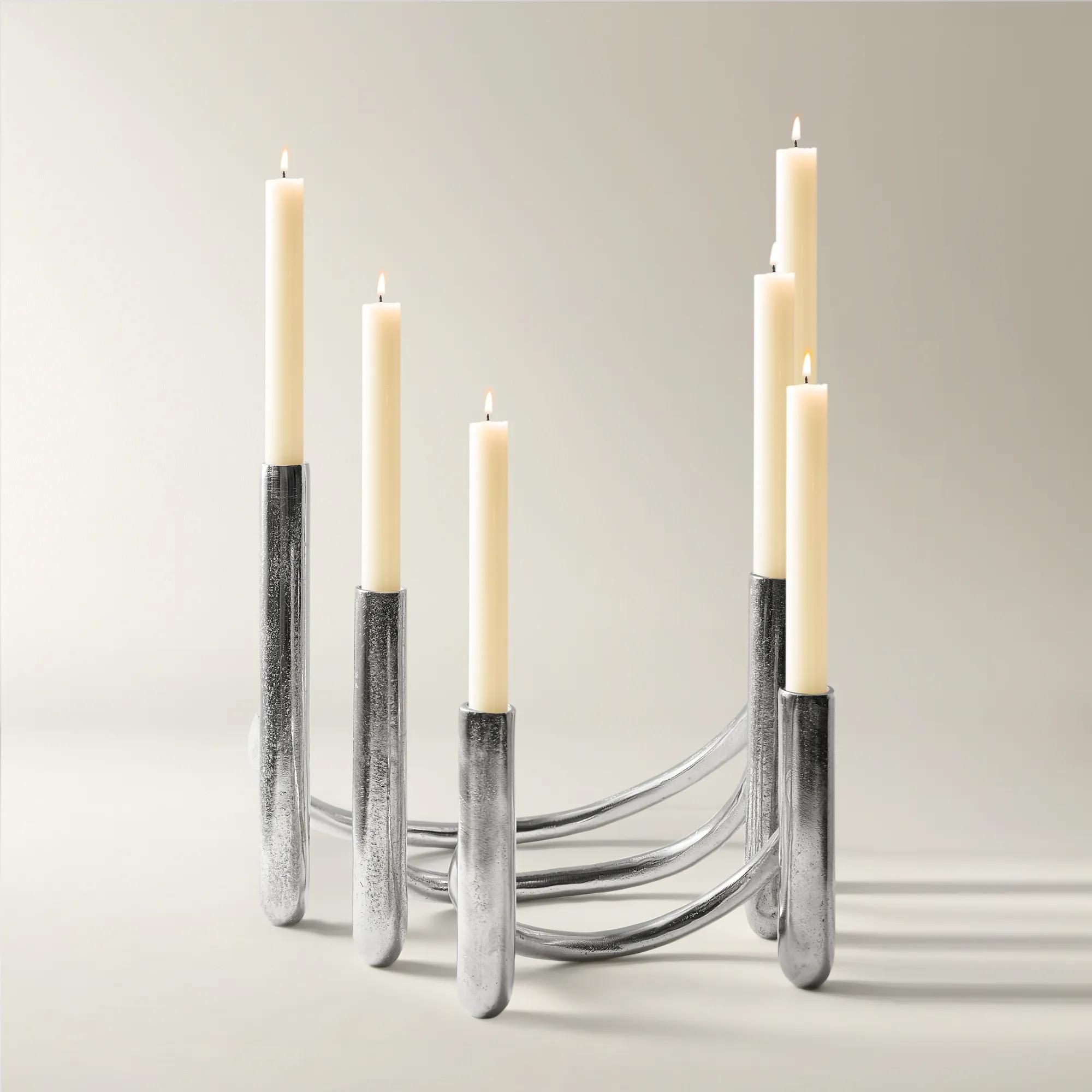 Pillaro Taper Holder - Set of 3$99
A set of three aluminum candleholders featuring sleek two-arm designs and a gleaming silver finish.
Add To Cart -
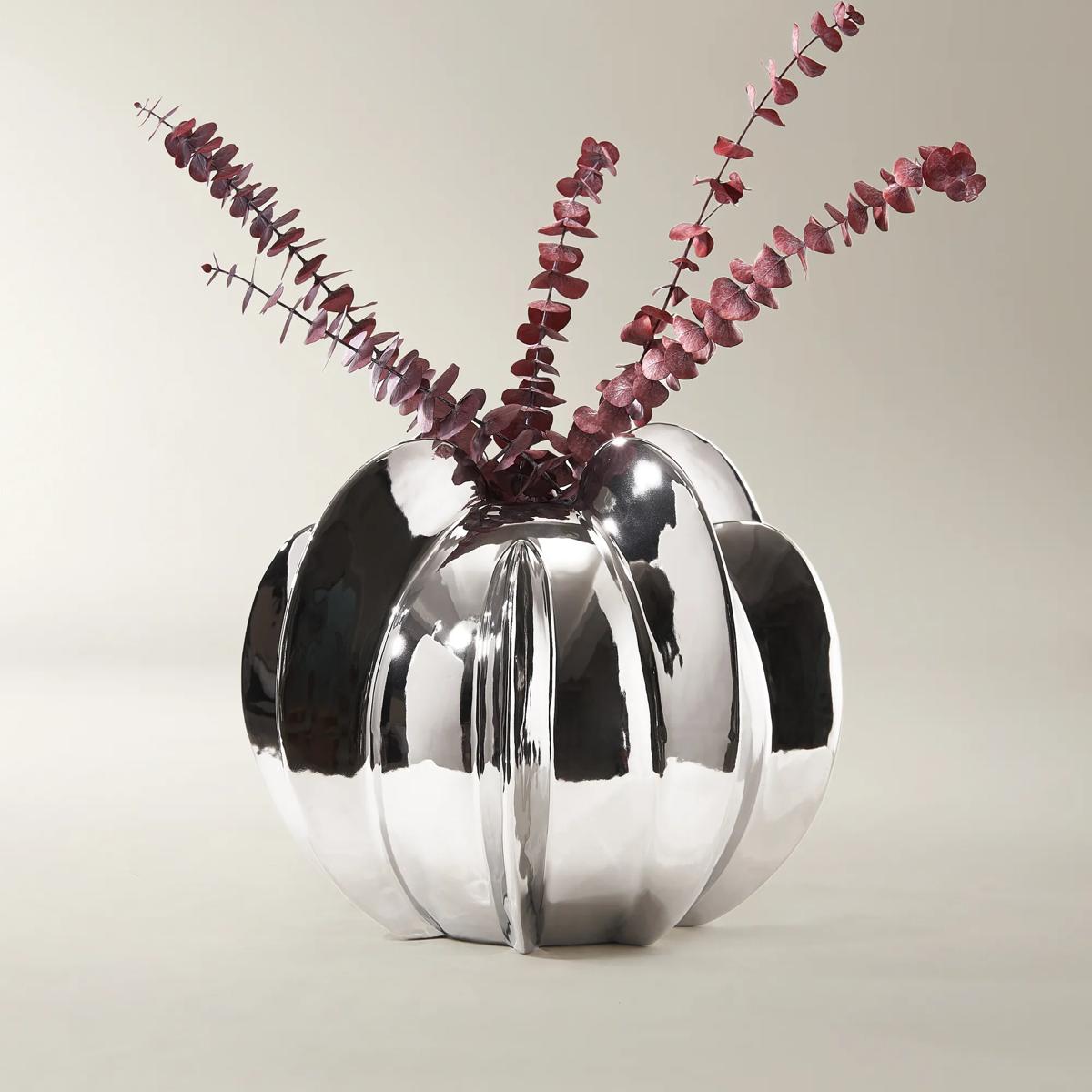
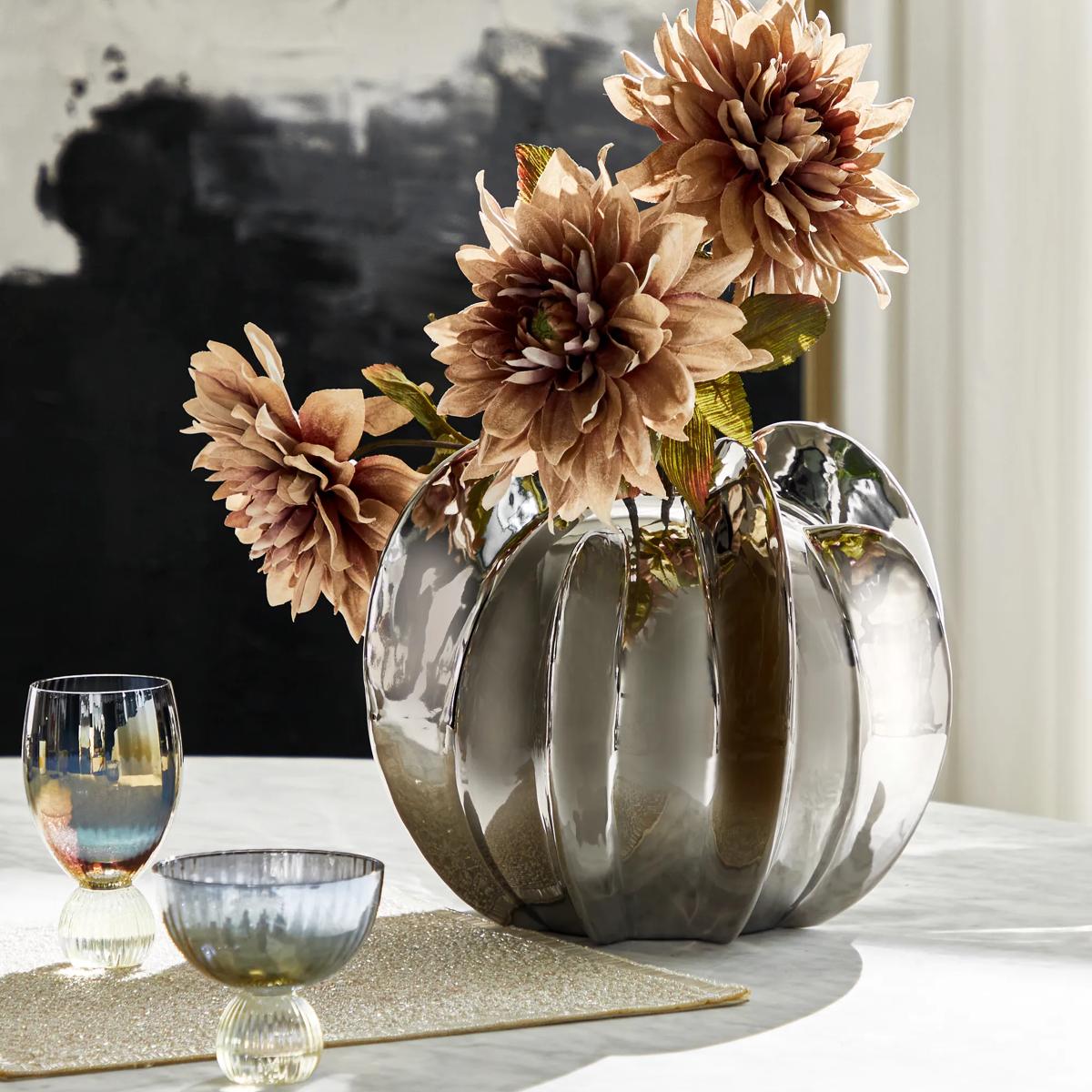 Voyage Vase$99
A reflective silver ceramic vase featuring a bold orb shape and dimensional vertical finned texture.
Add To Cart -
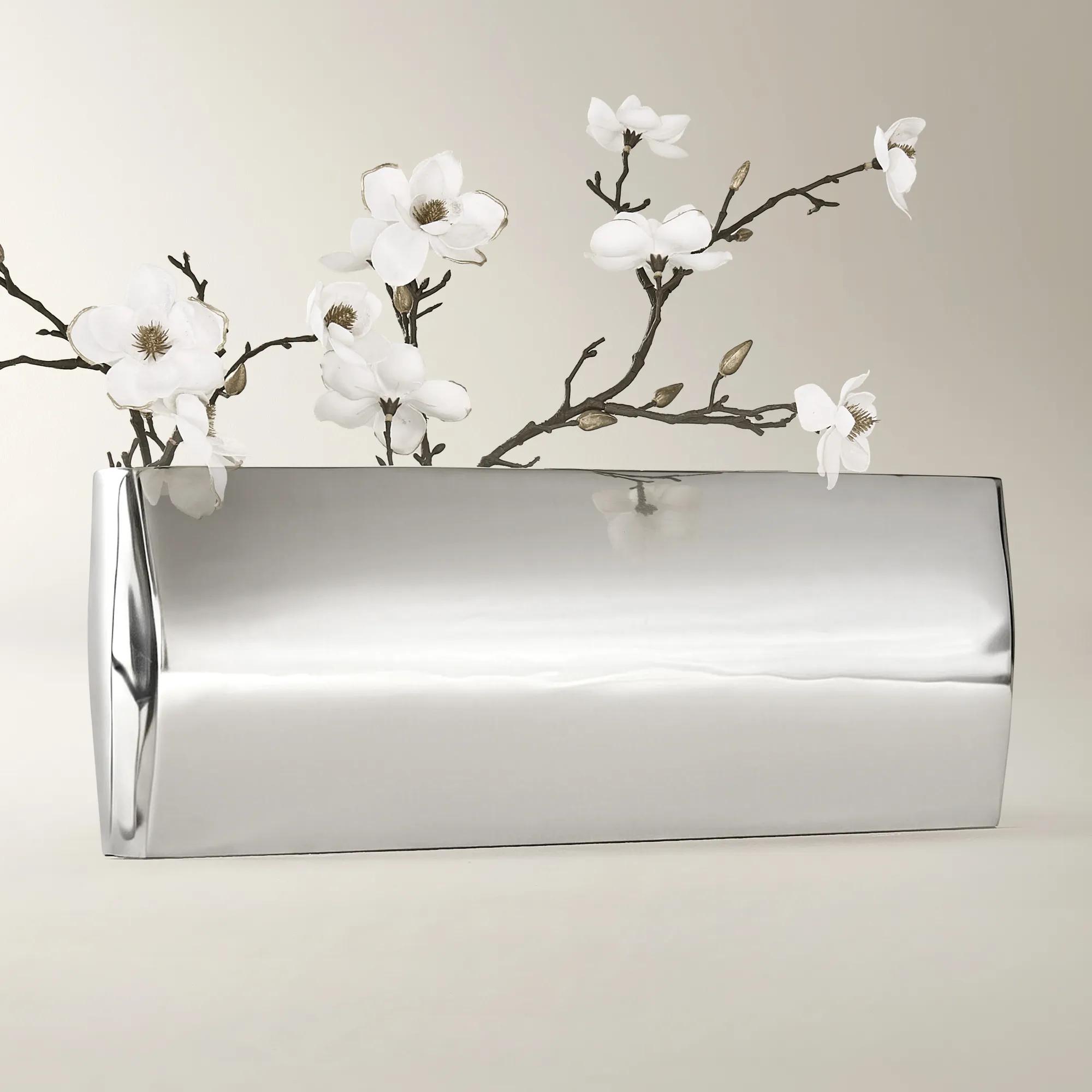 Forum Chrome Aluminum Vase 8.5"$149
A sculptural aluminum vase with a sleek chrome finish that adds modern glamour to any space.
Add To Cart

Silver Living Room Decorations
Silver Living Room Decorations invite a sense of luminous artistry into your home, transforming everyday spaces into dazzling showcases of style. Each accent catches the light and reflects your taste for the extraordinary, infusing the room with a whisper of opulence and intrigue. Whether you favor sculptural silhouettes or shimmering finishes, these radiant touches create an atmosphere where glamour reigns and every detail feels intentional. Silver Living Room Decorations are not just accessories—they are statements that elevate your space into a gallery of modern elegance.
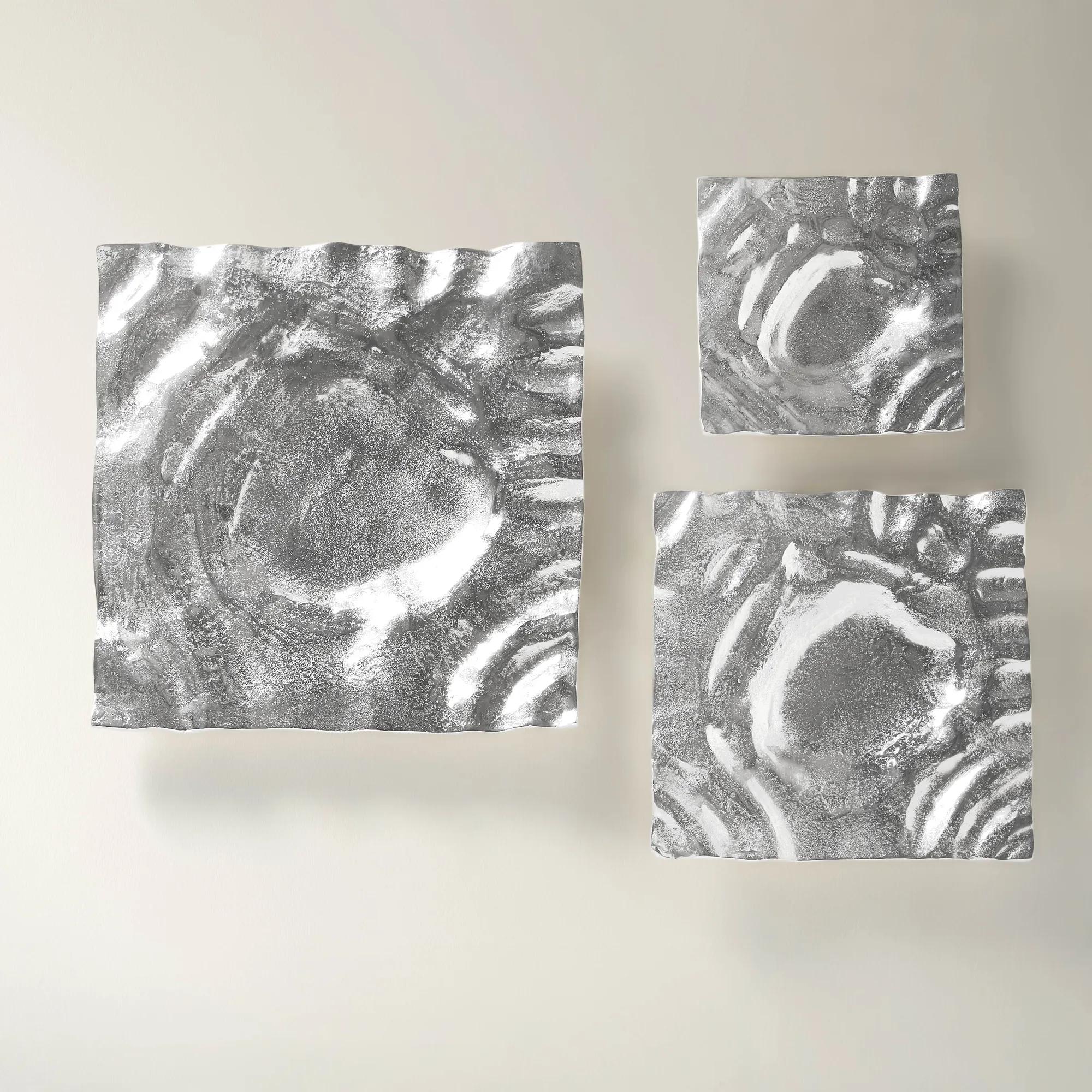
Silver living room decorations bring luminous color, sculptural dimension, and a distinctly glamorous finish to gathering spaces. The category spans silver-toned wall art, decorative mirrors, tabletop sculptures, vases, trays, lighting, and textiles, each offering a different expression of the same polished palette. A gleaming surface catches the movement of light; a brushed finish introduces a quieter metallic sheen; an antiqued treatment lends depth through darker recesses and subtle variations. Together, these effects give silver its versatility, allowing it to feel architectural against crisp white walls, lavish beside deep sapphire upholstery, or richly layered among charcoal, ivory, and warm wood. Silver is a color and finish description in home decor, not necessarily an indication that an object is made from solid silver. Its appearance may come from polished metal, silver-toned plating, mirrored glass, metallic glaze, decorative leaf, or shimmering textile threads. That distinction matters both visually and practically: a mirror-finish ceramic vase delivers a different weight, texture, and care experience than a brushed metal vessel. The most compelling arrangements let those differences show rather than insisting on an identical shine across every surface. Above a sofa, dimensional metallic wall decor can create a focal point with shadows as well as sparkle. On a console, an elongated tray can gather smaller accents into a composed display, while a substantial vase introduces height and an expressive silhouette. Reflective accessories can also carry light through a room, although their effect depends on placement and the light already present. A mirror positioned to reflect artwork or an attractive architectural detail becomes part of the room’s composition, rather than simply another bright surface. For people drawn to expressive interiors, silver offers drama without requiring a saturated color commitment. It can complement a beloved velvet sofa, sharpen the outline of a dark mantel, or lend definition to a neutral seating area while allowing the room’s existing character to remain unmistakably its own.
Material, proportion, and intended use shape how silver decor lives in a space long after its first impression. Polished metal often has a crisp, contemporary presence, while hammered or embossed surfaces scatter reflections into a more textured glow. Depending on the underlying metal and protective finish, decorative metal accents may resist everyday wear differently, so care instructions are more useful than appearance alone when assessing durability. Silver-glazed ceramic brings a fluid, almost liquid-looking surface to rounded forms, but it remains vulnerable to chips and breakage. Mirrored glass offers precise reflections and striking geometry, with edges and corners that deserve thoughtful placement away from busy walkways. Resin with a metallic finish can support intricate sculptural shapes without the weight of some metal or stone alternatives, though its surface still needs protection from scratches. Scale is equally important. A dramatic object on a narrow console should leave enough depth for a stable base, and an arrangement on a coffee table should preserve space for drinks, books, and comfortable conversation. In a room where guests sit facing one another, lower accents keep sightlines open; taller silhouettes often feel more at home on a mantel or against a wall. Wall decorations require hardware suited to their weight and the wall material, while decorative trays need sufficient support for anything placed inside them. A tray intended for display should not be assumed suitable for serving food or carrying heavy glassware. Similarly, a decorative vase may require a watertight liner before holding fresh flowers, and candleholders should be used only with the candle type and size specified for them. Soft furnishings bring another dimension to this metallic story. Silver Home Decor Pillows can introduce silver through woven pattern, embroidery, lustrous fabric, or embellished detail, creating a tactile counterpoint to harder reflective surfaces. On a generously proportioned sofa, layered pillow sizes can feel sumptuous; on a compact settee, fewer, well-scaled cushions preserve the seat’s graceful outline. For frequently used seating, texture, seam construction, removable covers, and the stated cleaning method deserve as much attention as the decorative face.
The character of a silver living room emerges through contrast: gleaming beside matte, angular beside curved, intricate beside expansive. A silver-toned sculpture gains definition against a dark shelf backing, while a pale upholstered chair can soften the presence of a mirrored accent nearby. Clear glass adds transparency without competing for color, and richly grained wood prevents a metallic arrangement from feeling visually uniform. Gold or brass can share the composition when the relationship feels deliberate, such as a dominant silver palette punctuated by a small amount of warmer metal. Repeating a finish in separated areas helps connect the room without covering every surface in shine. Silver-accented lighting adds another layer, pairing the reflective quality of a base or frame with the glow of the lamp itself. Shade opacity, bulb compatibility, and fixture dimensions influence that effect; silver alone does not determine how bright or flattering the illumination will be. Beside a reading chair, the light needs to serve the activity as elegantly as the silhouette serves the room. Everyday care helps preserve these distinctions in finish and texture. Gentle dusting with a soft cloth is often appropriate for hard decorative surfaces, but polishing compounds, abrasive pads, and household sprays can damage plating, metallic coatings, or decorative leaf. Glass cleaner belongs only on surfaces for which it is recommended, and liquid should not collect along mirrored seams or decorative edges. Textiles with metallic threads, beading, or embroidery may need spot cleaning or professional care rather than machine washing. Following the manufacturer’s directions protects both appearance and construction. In households with children or pets, stable bases, secure wall mounting, and less accessible placement for fragile accents make glamorous surroundings more compatible with daily life. For gifting, silver decor can suit a housewarming, wedding, or host celebration when chosen with the recipient’s space and habits in mind; a modestly scaled accent is often easier to integrate than a large statement piece. Whether furnishing an intimate sitting area or a spacious room for entertaining, silver decorations offer a way to make personal taste visible through light, form, and detail. Their appeal lies in that balance of radiance and intention: a room with presence, composed for the people who live in it.
FAQs
Start by layering silver decor in strategic accents such as decorative trays, vases, or picture frames. Balance these gleaming elements with plush textiles in neutral or complementary hues, and let silver serve as a highlight rather than the dominant color. Mixing matte and glossy finishes helps maintain visual interest while preventing the look from becoming too uniform.
Silver pairs beautifully with a range of palettes, from classic white and charcoal to bold jewel tones. A blue and silver living room exudes a serene, sophisticated vibe, while silver accents against deep emerald or blush pink create a sense of luxe drama. For a timeless look, combine silver with soft creams and subtle metallics.
Absolutely. Silver decor for living room settings offers remarkable versatility. In modern interiors, sleek metallic finishes and sculptural forms amplify a sense of chic minimalism. In traditional spaces, ornate silver pieces such as candlesticks or mirrored trays add a touch of vintage glamour, blending seamlessly with classic furnishings.
Lighting is essential for maximizing the reflective beauty of silver decorations. Position table lamps or sconces to cast soft illumination across metallic surfaces, creating a warm, inviting glow. Natural light also plays a role—placing silver accents near windows allows sunlight to dance across the room, magnifying their shimmer.
Yes, silver living room decor makes for elegant, thoughtful gifts. Items like silver photo frames, decorative bowls, or candleholders are timeless choices that suit a variety of tastes and occasions. Their versatility and enduring appeal ensure they will be cherished additions to any home.